


By Deomattie Seeram
Taan singing was brought to Guyana from India by our foreparents 176 years ago.
Taan singing is a skilful technique used in the performance of a raaga (one of the melodic modes used in Indian classical music) at the extreme level of emotion in Hindustani classical music.
Speed is very important while singing or playing taan.It involves the singing of very rapid melodic passages. An artist improvises notes at a very fast speed to take-up the mood of a raaga to an extreme level.
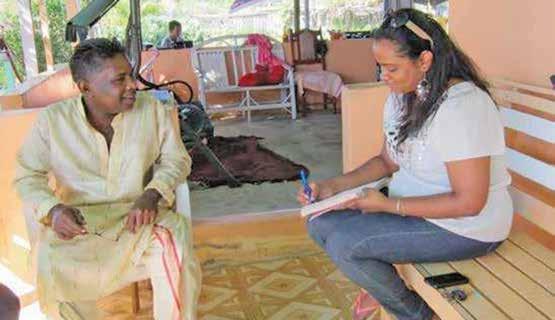
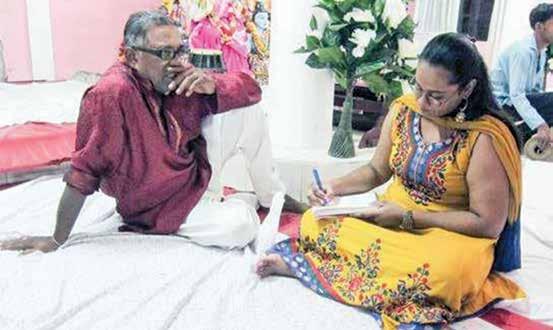
Speaking with two of the most versatile taan singers around Guyana: (the late) Pt. Arjune Balkaran of Bath Settlement, West Coast Berbice, and Pt. Nandalall of Strathavon, East Coast Berbice, I was able to gather some information about taan singing.
They both referred to taan singing as raaga or ragini (another melodic modes used in Indian classical music) with raagas being sung in the evenings and ragi-
nis being sung in the mornings; every hour each raaga changes.
Pt. Arjune has been singing taan for about 30 years now. He started singing taan in his early 20s. Taan is his favourite singing style and he can sing all the different types. He learnt this style of singing from Dasrat and Mohit Mangru who were both legendary taan singers back in the day. They were accompanied by a dholak player named Ramdhani.
Pt. Arjune noted that there are different types of taans :thumri, drupad, bihaag, dhamar and chaturang.
According to him, thumri consists of different beats and starts off slow but ends up a spicy pace. He said the thumri is sung at yajnas (sacred Hindu rituals) and details the story of Lord Rama and Lord Krishna. The dhrupad is sung at yajnas also and talks about the life of King Dasrath and
his sons. Chaturang is also sung at yajnas. Dhamar is usually sung at weddings and it is also a style used for Holi songs. The bihaag type usually starts off slowly and gradually becomes fast, and is sung at wakes. It talks about people who have passed on and about the relationship of the body with the soul.
Pt. Arjune said drumming is very important to taan singing. The drummer has to anticipate the beat from the time the taan singer begins his song. The singer has to be an ardent harmonium player.
Asking him about the lyrics and the availability of copies of the songs, he responded saying that these songs were composed in India in Awadi Hindi. He was never given a copy of the lyrics but had to learn by listening, and hence he sings from his memory.
Pt. Arjune recalls that (the late) Pt. Reepu Daman Persaud would hold a night of taan singing called ‘baitaygaana’. On this night, all the taan singers would gather and sing all the styles. He said that the first singer would start with a type



of taan singing, and every other singer will sing the same style until the circle goes back to him and then he starts again with another style and so it continues until they are done.
He expressed his interest in having a repeat of such nights. He also said that in the olden days on Saturday nights before a wedding, there would be taan singing all night.
Pt. Arjune indicated that thumri and drupad are his favourite types of taan singing. He also said that taan singing is strong and it makes him happy whenever he sings it. He is calling on the younger generation to take up taan singing and pledged his time to teaching whoever is interested.
Pt. Nandalall started singing taan from the age of eight. He learnt from Gangaram, Rattan and Frederick - all of whom passed on. He also followed in the company of Mohit Mangru and Dasrat Mangru, where he learnt differing techniques.
Asked if anyone in-
spired him, he mentioned Doonwah. He said that the styles he sings are mainly those of Doonwah.
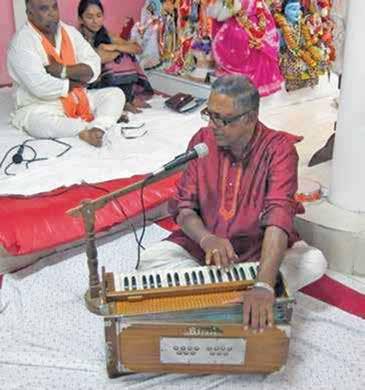
Pt. Nandalall said that for taan singing, the main instruments are the harmonium, dholak, dantal, jal, and sometimes the majeera is used. He added that taan generally sends out messages if one can understand the lyrics.
In the evening, the bidaapat style is sung and in the morning, the dandak, tilana, drupad, bihaag, chaita, thumri, dhamar and chaturang are sung.
Pt. Nandalall’s favourite styles are thumri, dandak, chaturang and tilana. Asked about the lyrics, he responded that lyrics are etched in his memory as he too was never given any copies.
Pt. Nandalall encourages young people to learn taan singing. He also expressed his interest in teaching taan to whoever is interested because he would like to revive this type of music with a rich history.(First published in Horizons Guyana Magazine 2014)
Wayne McWatt left Guyana at the age of 16 to live in the UK; his knowledge of his homeland and its history is what he has read, researched, garnered from accounts told by his parents, and information gathered during his occasional visits to the country.
During one of his visits to Guyana, in 2010, McWatt visited the Le Repentir Cemetery in search of a family vault built for the Sharples family. (McWatt’s
great grandfather was John Bradshaw Sharples, the architect builder in Guyana.)
In addition to locating the vault, McWatt stumbled upon another precious piece of Guyanese history – the tomb of William Dawes.
In some far-flung bit of land at the Le Repentir Cemetery lies the tomb of William Dawes, who died in Guyana on March 23, 1855. He was 69. The magnificent granite obelisk that marks his grave is carved with the insignia of his regiment


and the laurels of victory, depicting a military career.
Dawes, as the inscription states, was a veteran of the battles of Waterloo (1815), Toulouse (1814), Sahagun (1808), Vittoria (1813) and Orthes (Orthez) (1814). His epitaph reads: “His youth was spent in faith, full and active military service. His latter years in honourably discharging the civil duties intrusted [sic] to him.”
“I discovered the tomb of Dawes by chance as there was a clearing, which meant it was newly revealed. I was looking for a family vault built for the Sharples family. It was a great surprise to find that the vault contains both of John Bradshaw’s wives, who happened to be sisters. He himself chose to be buried at sea. He died February 1913. The vault was all overgrown so I got Pertab to repaint and tidy up,” McWatt recalled in

an interview with Guyana Times Sunday Magazine.
According to McWatt, Pertab is a young man whose family worked in the cemetery restoring graves and monuments.
McWatt said Pertab knew Le Repentir very well and was an enthusiastic guide.
“Le Repentir Cemetery gets a bad press – and deservingly so because of its poor management from the City Council and it is a disgrace to the nation. Having said that, it deserves better. It’s a very historic plantation site. Some might know the history of French planter Pierre de Saffon who named the plantations Le Repentir and La Penitence in remorse of having killed his brother in France,” McWatt narrated.
McWatt added that at the Le Repentir Cemetery gate in Louisa Row is the office where the burial registers are kept, which date back to the mid 19th century. He noted that the man in charge was retiring in 2011 and seemed quite conscientious and meticulous in holding the records.

McWatt hopes that the records are still there.
“These registers are important documents and should be digitised and kept in the archives. The information they provide is quite unique – including the last address of the deceased, date of death, date of burial, age at death, relation to kin – all linked to a grave number and location. I would like to know more about Dawes. He must have served in the early 19th century European wars, including Waterloo. There must be a record in the British Army records. It is of course interesting to know how and why he was in Guyana. There might be an obituary for him. I would love if someone who might have some informa-
tion shares it with me. I will continue searching for records on Dawes,” McWatt noted.
Dawes’s tomb can be easily located in the old Anglican part of the cemetery; not far from the main cemetery road. June this year marked the bicentenary of the 1815 Battle of Waterloo. The French army under the command of Napoleon was defeated by two of the armies of the Seventh Coalition: an Anglo-allied army under the command of the Duke of Wellington, and a Prussian army under the command of Prince Blücher.
To contact Wayne McWatt email demerara8@ aol.com (Photos and information by Wayne McWatt)

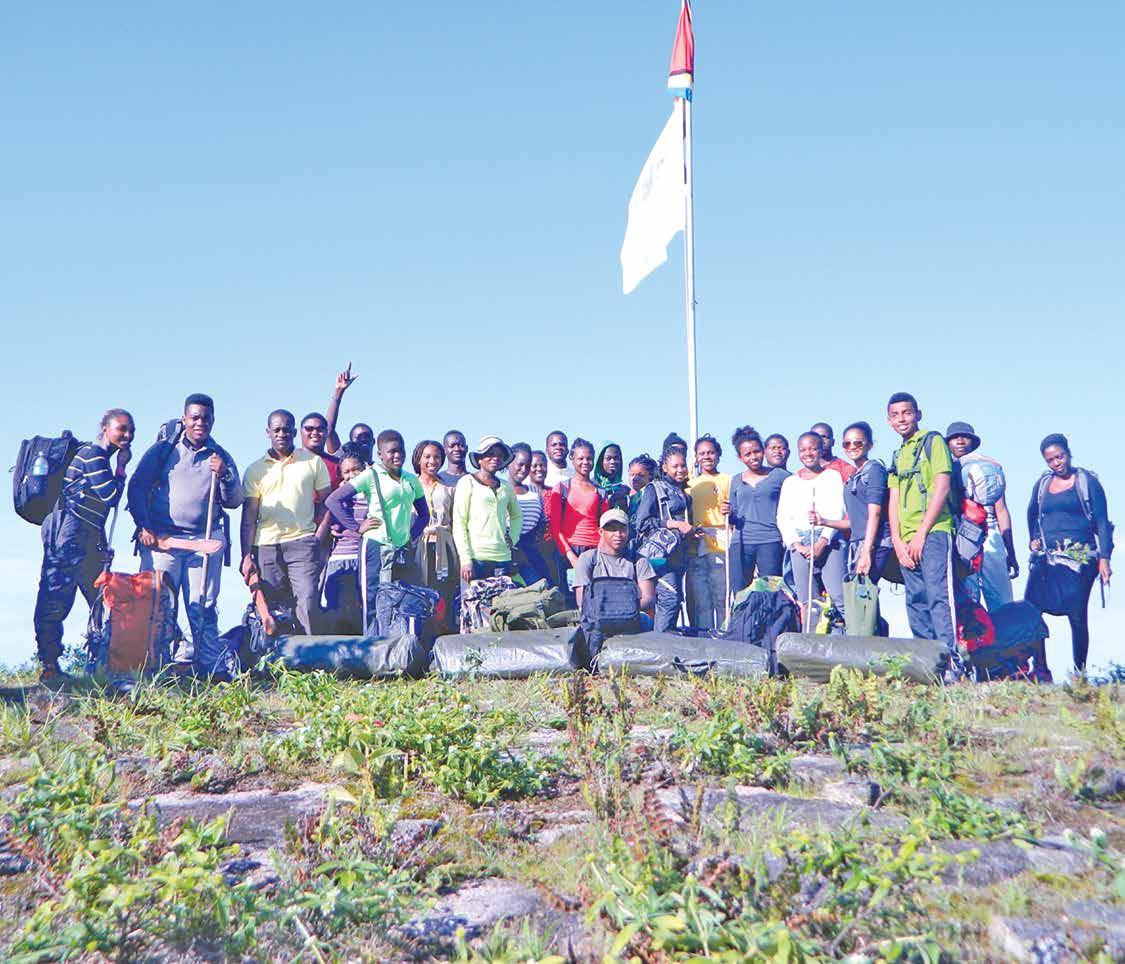
Accomplishing a daring feat to etch their names at the top of the Kanuku Mountain, a group of 28 persons, mostly youths from the First Assembly of God Church on Durban Street, has a renewed love for their country.
Chatting with Guyana Times Sunday Magazine, Celicia Paruag, communications officer for the church, disclosed that the aim of the expedition, called Expedition El Dorado, was to develop a sense of loyalty for their country.
“With the constant migration of youths, brain drain – which we believe is due to a lack of knowledge of their country – we want to instill a sense of pride and patriotism in our young ones. Pastor Wilbert Lee, a retired soldier, wanted to help youths to understand what Guyana can offer. He came up with Expedition El Dorado, which was not only an adventure, but an opportunity
to instill love for country. These youths could have used their holiday time to leave the country or do something else, but decided to go through rigorous training to complete their mission of climbing the Kanuku Mountain,” Paruag explained.
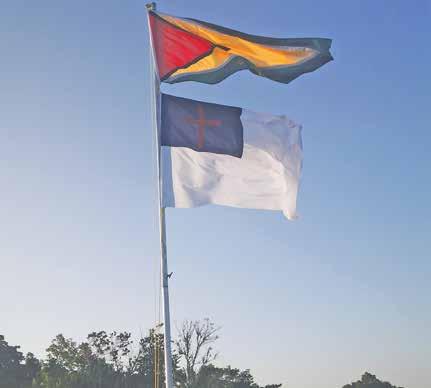
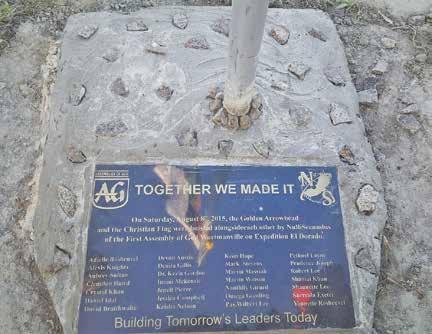
The youths, ages 13 to 21, prior to the week-long expedition, were seen walking the streets of Georgetown with loaded backpacks, weighing about 30 pounds. This is the amount of weight they would have had to carry on the trail to and up the mountain. Their hike up the Kanuku Mountain to Schomburgk's Peak was more than 3,000 feet high. At the peak they hoisted the Guyana flag, the Christian flag and placed a plaque with their names.
“They did this as a testimony for other youths that whatever you put your mind to is achievable. The youths held fundraising activities to go on the trip, and
were able to raise about $1.2 million. During their trip in Lethem, they also did some community work,” Paruag pointed out.
Nulli Secundus, Latin meaning “second to none”, is the name of the youth group that accomplished the feat of hiking the Kanuku Mountain. The group is regularly involved in community projects and outreaches.
One of the climbers, Adielle Rosheuvel, 20, said the experience is an unforgettable one that taught her determination.
“It was a wonderful opportunity to go out to see what Guyana offers, in such a location. It was a laborious hike up because of the weight we had to carry. But when we reached at the top, it was worth the work. The landscape is breathtaking. We camped at the top for a night. Seeing this part of Guyana makes me want to own my country even more. This experience has taught me that I have the will to go on even when I feel like giving up,” she revealed.
Her fellow climber, Martin Massiah, also stated that the past eight days and nights have been some of the toughest and most ex-
A plaque, with the names of all the participants is installed on the Kanuku Mountain
citing times he has had.
“From walking through the treetops at Iwokrama, to swimming near the banks of the Takatu River, to persistently evading the attacks of the relentless mosquitoes, sand flies and cuburos [sic] in Annai, and interacting with some members of our indigenous community in Lethem; this journey was one to behold. Though these events were quite entertaining and informative, they never served to distract us from our primary objective of planting the Golden Arrowhead and Christian flag alongside each other for the first time on Schomburgk's Peak on the Kanuku Mountain. With the grace of God, at 6 am on August 8 we achieved our primary
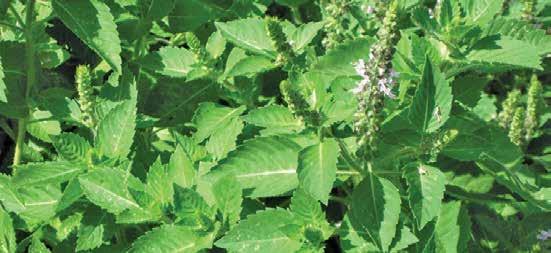
Tulsi or Tulasi (Ocimum tenuiflorum), also called Holy Basil, is a sacred plant in Hindu belief and is also known as a powerful herb that has been used for thousands of years in India to treat colds, coughs and flu.
Although tulsi can now be found on every continent, it is native to the Indian subcontinent.
Tulsi is a bushy shrub that grows about 18 inches in height. Its leaves are oval and serrated, with colours ranging from light green to dark purple, depending on the variety. The plant has delicate lavender-coloured flowers, and its fruits consist of tiny rust-coloured nuts.
Tulsi in legends
Quite a few myths and legends found in the Puranas or ancient scriptures point to the origin of importance of tulsi in religious
rituals. A garland solely made of tulsi leaves is the first offering to the Lord as part of the daily ritual. The plant is accorded the sixth place among the eight objects of worship in the ritual of the consecration of the Kalasha, the container of holy water.
According to one legend, Tulsi was the incarnation of a princess who fell in love with Lord Krishna, and so had a curse laid on her by his consort Radha. Tulsi is also mentioned in the stories of Meera and Radha immortalised in Jayadev's “Gita Govinda”. The story of Lord Krishna has it that when Krishna was weighed in gold, not even all the ornaments of Satyabhama could outweigh him. But a single tulsi leaf placed by Rukmani on the pan tilted the scale.
Tulsi worship
The tulsi plant is grown in or near almost every orthodox Hindu house.

objective, aided by Shamal Khan and Jessica Campbell, the youngest members on the Expedition El Dorado contingent,” Massiah recalled.
He added that Nulli Secundus is an organisation driven to inspire and engage young people so that they can” maximize their true potential and be the best that they can be.”
“Through this expedition, we have not only impacted the lives of the youth on our contingent, but we have also brought the vibrant pulse of the youth back to our great country Guyana. This land is our land and together we will transform it into the paradise that it was always meant to be,” Massiah declared.
Shamal Khan, 13, the youngest on the expedition, recollected that while the group was on a caiman watching trip on the Essequibo River, the boat he was in with 12 others capsized. A wave caused by another boat knocked over the boat Khan was in. Khan, who can swim, tried to assist those next to him, while the others held on to the boat. Luckily, there were no casualties.
Despite the challenges faced on the expedition, the group of youths say they would do it again, and encourages others like themselves to do the same. (Cover photo: The Team on Schumberg's Peak with the hoisted flags)
A person who waters and cares for the tulsi daily is believed to gain moksha (salvation) and the divine blessings of Bhagwan Vishnu. Traditionally, the daily worship and care of the plant is the responsibility of the women in the household. The plant is usually referred to as a “symbol of ideal wifehood and motherhood”. Devotees pray to the tulsi plant and circle it, chanting mantras.
One such mantra is: “Namastulsi kalyani namo Vishnupriye, Namo mokshprade devi nam sampatpradayike”, meaning: “I bow before you Tulsi, giver of auspiciousness, the darling of Vishnu, I bow before you Goddess, the giver of liberation and wealth.” A diya is also lit near the plant.
Importance in Hinduism
Each and every part of the tulsi plant is revered and considered sacred; even the soil around the plant is considered to be holy. The Padma Purana declares a person who
is cremated with tulsi twigs in his funeral pyre gains moksha and a place in Bhagwan Vishnu’s abode, Vaikuntha. If a tulsi stick is used to burn a lamp for Vishnu, it is like offering thousands of lamps. Water mixed with the tulsi leaves is given to the dying to raise their departing souls to the heavenly abode.
Ayurvedic properties
Tulsi has been used for thousands of years in Ayurveda for its diverse healing properties. It is mentioned in the “Charak Samhita”, an Ancient Ayurvedic text. Tulsi is said to balance the different processes in the body, and it is helpful for adapting to stress. Marked by its strong aroma and astringent taste, it is regarded in Ayurveda as a kind of “elixir of life” and believed to promote longevity. (Excerpted from Deomattie Seeram’s “Tulsi – Elixir of Life” article first published in Horizons Guyana Magazine 2014)
“Life hasn’t been an easy road, but we try to make the best of it.” This is a sentiment shared among the resilient women of the Turkeyen/Patterson Women Entrepreneur Group.
The group of about 15 women is presently engaged in life skills training at the B Field Community Centre. The women are mainly from the Sophia area and have become a support circle for each other.
In an interview with Guyana Times Sunday Magazine, Natasha Corrica and Keziah Williams revealed that the women’s group was initiated because of a course they are currently pursuing at the University of Guyana (UG). Corrica and Williams are part of a five-member group from UG who were given a project to complete for their Community Practice course as part of their Social Work programme.
“We have to work with a community surrounding UG. We chose Sophia and to work with the women. Some other groups have chosen to work with the elderly or youths. We were guided by social worker Colin Marks to meet with the women of Sophia. The Turkeyen/Patterson Women Entrepreneur Group is still in its initial stages of formation and we are working to get them formally registered. Marks has been doing a lot for the women. It is impressive that a man has so much interest in the development of women. He is very passionate about his work and he has been instrumental in starting the group. He wants them to become selfsufficient and learn a skill to become income earners,” Corrica noted.
According to Corrica, as part of the group’s project
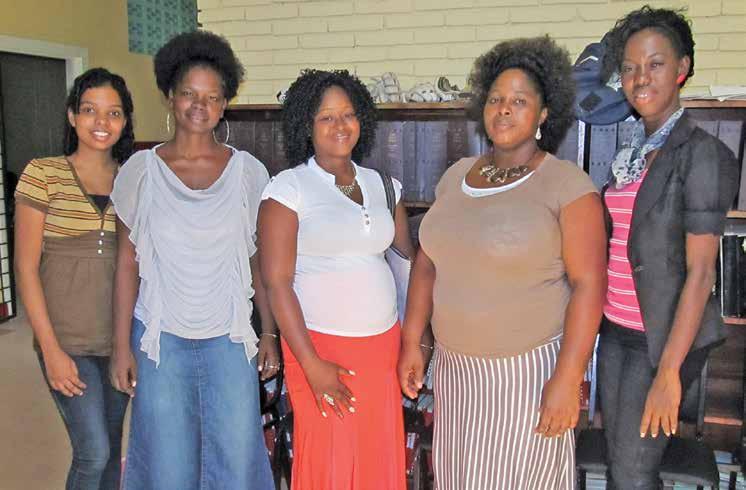
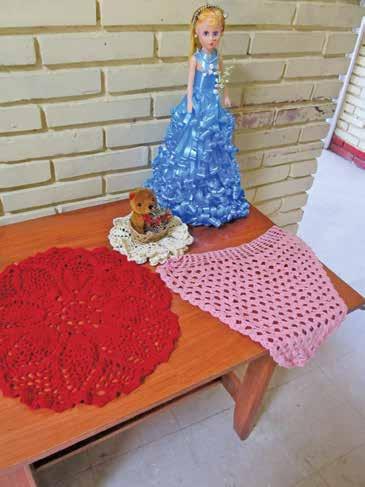
they had to help the women identify their needs. Corrica and her group members are required to meet two of those needs. Corrica said that the women identified the need for vocational skills training. Consequently, the UG students are working tirelessly to meet the women’s needs in areas of knitting and floral arrangement training.
“Most of them are single parents and/or unemployed. But they have the abilities and skills and want to develop that. Some of them want to learn knitting and floral arrangement, so we have brought in professionals to teach them. Some of them have a general knowledge of the areas, but want to have in-depth training.
The project’s duration is six weeks. We have three more weeks to go. After we
have completed training for the six weeks we will still contribute to the group in whatever way we can,” Corrica pointed out.
Training and materials are presently provided by the group of UG students. Relatives and friends of the students have also been sharing their knowledge in the areas of knitting and floral arrangement.
“I am very impressed with how gifted these women are. They are also warm, welcoming and hospitable. They show desire for betterment and to reach their full potential. They are an encouragement to me,” Corrica declared.
The Turkeyen/Patterson Women Entrepreneur Group would like to add cooking classes to their programme. However, they expressed a need for the kitchen at the community centre to be furnished as it lacks essentials to start the classes.
Kenya Roberts, an unemployed single parent with two children, disclosed that she has been job searching for a while, but to no avail. However, she is very happy to be part of the women’s group and is grateful for the training she has been receiving.
“Whatever little I can do to make a living, I am doing. I hope with the skills I learn I can start my own business and help other women to learn a skill,” Roberts stated.
Alexis Welcome, a single parent with seven children, and who is also unemployed, said she appreciates being a part of the Turkeyen/Patterson Women Entrepreneur Group because whatever skills the others know they share within the group.
“One of the women in the group knows sewing, so
I am learning that and also knitting. I will continue to learn more and share my knowledge with other women. I encourage women who are single parents or unemployed to join us to learn a skill. Use your spare time to develop yourself,” Welcome urged.
Ulanda Roberts, a single parent of three, and also unemployed, attended Carnegie School of Home Economics where she completed courses in catering, and studied Food and Nutrition, Mathematics and
English at Young Women Christian Association. Although she is qualified, Roberts said she is unable to secure a job.
“So far getting employment has not been easy. I make flower pots with cement and even do tiling, anything to make ends meet. I have learnt that no one will give you stuff just like that; you have to get up and get it. Learning with the women in the group has been fun. We live like family. Now, I am happy to be teaching some of the girls in the group to knit. We share our knowledge with each other. We are currently trying to get resources to start cooking classes at the centre. We also need financial support to get essentials for the centre. I want to encourage corporate Guyana and kind individuals to contribute in whatever way they can,” expressed Roberts.
Currently, the Turkeyen/Patterson Women Entrepreneur Group meets once weekly, but hopes that with more resources and finances they can expand the programme. For more information on how you can contribute, contact Ulanda on 219-3653 or 219-2136.

Part II
B y P etam B er P ersaud
The next major work
to tell the story of the heroes surfaced about four decades after Daly’s work (see part one) was published in the early 1940s. This work,“Dictionary of Guyanese Biography”(DGB) was compiled by Arthur and Elma Seymour.
One of the reasons Mr. Seymour gave for the publication of the DGB was his interest in the study of [the] “Carlyle principle of the human leader, the hero.” Added to that reason was the fact that Seymour wrote a critical introduction to Daly’s third volume.
There are several differences between the first set of three books and the second set of two books. Daly’s work did not include any females, although there were outstanding women around at that time, matching their male counterparts in many areas of human endeavour.
Daly’s work “Story of the Heroes” was a verbose appreciation of ‘his’ heroes, while the Seymours work cited more than 500 character sketches, including 24 women.
I will list the names of
the 24, going into short biography of a handful; apologising for not having enough space to celebrate each woman properly.
Juliet Alvarez (1903 –1982) was a social worker and the first librarian at the McKenzie branch of the National Library.
Emily Jane Baskett, an exceptional principal of Bishops’ High School, was awarded the Member of the British Empire (MBE) in 1931.
Dorothy Bayley (1908 – 1979) was Lord Mayor of Georgetown, serving the period 1967/1968.
Margaret Burns was a very successful businesswoman, cattle ranch owner and stall holder, who personally imported supplies from the UK.
Marie Penelope Clementi MBE wrote
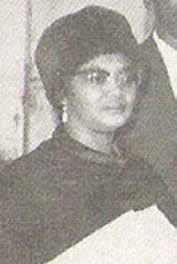
“Through British Guiana to the summit of Roraima” describing Kaieteur Falls as the“Mother of Mists.”
Doris Cooper MBE (1903 – 1975) was deputy principal of Berbice High School and a member of the New Amsterdam Town Council.
Lilian Dewar (1916 –1977) educator and first Guyanese principal of Bishops’ High School.
Shirley Field-Ridley (1937 – 1982) scholar, legal practitioner and politician, was one time Minister of Education.
Ruby Franker MBE (1905 – 1974) was appointed as first Guyanese librarian of the public free library, inaugurated the Public Lecture Series and the Public Discussion Circle on great books.
Alyce Fraser-Denny,


soprano soloist and music teacher. She was music director to Marcus Garvey’s Universal Negro Improvement Association.
Winifred Gaskin, journalist, minister of government, former chairman of the PNC.
Prof Elsa Vesta Goveia (1925- 1980) a Guiana scholar and pioneering historian.
Winifred Hale was an educator and historian.
Kathleen Ermine Harris (1902 – 1952) educator.
Amy Lawrence (1875 – 1956) health visitor;“a familiar sight with her bicycle, veil and weather boots, moving through the streets of the city.”
Patricia Adora Theresa Loncke (1945 – 1983) was a musician and painter; her compositions performed worldwide.
Ruby MacGregor was a music teacher and choral conductor.
Mildred Mansfield MBE (1892 – 1971) founded the Mildred Mansfield Youth Club (formerly Dorcas Club).
Stella Merriman (1913 – 1977) teacher and chief librarian of the National Library.
Iris Myers – Cattle rancher in the Rupununi who did anthropological studies on the Amerindians of Guyana.
Violet Elaine –Nurse inspector of midwives and superintendent of health visitors.
Marian G. Rockcliffe -founder/president of the Young Woman’s Mutual
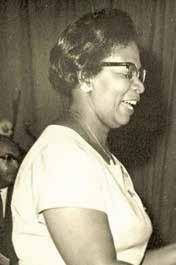
Improvement Association. Editor of the BG Women’s Centenary Effort.
Valerie M Rodway, 1919 – 1970, musical composer and music teacher.
Alice B. Singh MBE founder of BG Dramatic Society, Balak Ashaita Mandalee (a child welfare organisation)
Rajkumari Singh –poet, playwright, winner of numerous literary awards
Sister Uranie (Uranie Goulding) member of the Society of Companions of Jesus the Good Shepherd and Mother’s Union.
Dorothy Taitt - concert singer, contralto and music teacher; founder of the Woodbine Club, BG Philharmonic Society, mother of Helen Taitt.
Dr Ida Tengeley –first girl to win the Guiana Scholarship to study medicine at London University
Victor Vyfhuis - Lady Superintendent of the Saffon School
Rev. Louisa Ann Angoy– founder/president of Toastmasters (Linden) and commander of Girl Guides (Linden)
Hildred Margiane Britton– author and general secretary of BG Workers League.
Eleanor DaSilva –nurse, radio announcer, parliamentarian
Dr Hyacinth Davis –attended Hunter College and Howard University
Helda Beatrice Devonish– teacher, deacon, founder of School Coop Societies

Edna Jordon –music teacher and performer
Emily Jane Murray–first librarian of Georgetown library, 1909 – 1940.
Mary Nichol – started Girl Guides in Guyana Frederica Beatrice Potter –educator, social worker, captain of Girl Guides
Dorothy Rice –cane cutter who was part of the struggle for better wages
Marguerite Helena Rockcliffe– tour organizer of local, regional and international tours. Ursula Willems -Governing Director of Willem Timber and Trading Co.
Gertie Lucina Wood –music teacher and founder of BG Women’s League of Social Services.
A project sometimes takes on a life of its own, directing the flow. This project has just done so, causing a switch in my plan. So look out for the next instalment, which would focus on a female writer who published a three-volume set of biographies.
Responses to this author telephone (592) 2260065 or email: oraltradition2002@yahoo.com
What’s happening: The Guyana Annual Magazine 2014-2015 issue in now available at Guyenterprise Ltd., Lance Gibbs and Irving Streets;tel. # 226-9874, and from yours truly.

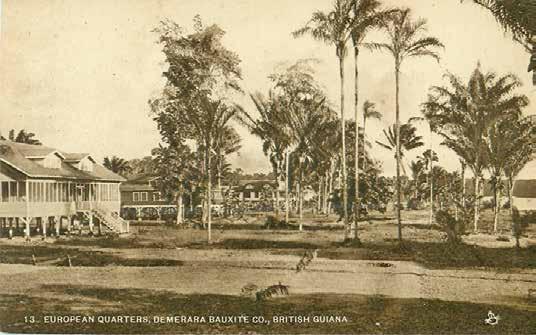
Rice cultivation in Guyana is said to have been introduced by Dutch governor Laurens Storm Gravesande in the early 18th century, after first importing rice mainly for domestic consumption.
Not long after, rice cultivated on the colony was also being used for supplementing the diet of the slaves.
Seed for the crop arrived from Carolina in North America and small fields were cultivated on Essequibo plantations.
When the French briefly took control of Guyana in 1782, seed was import-
ed from Louisiana, then a French colony.
Slaves also began cultivating rice on small plots on the plantations in farming areas designated to them. Sources say too that runaway slaves would survive partly on the rice they would grow in small clearings in the coastal swamps.
An 1810 report told of a large swathe of land destroyed in the Mahaicony backlands by planters after a group of runaway slaves were discovered growing rice there.
After slavery was abolished, slaves began acquir-
ing their own lands, and rice cultivation expanded on the colony, though mainly for personal consumption rather than on a large scale.
Guyana.org notes that in 1853, a company was formed to grow the crop on a large scale on the West Bank of Demerara but it experienced problems with the irregular supply of irrigation water and poor knowledge of cultivation methods.
It was forced to close operations after a few years.
When the Indian indentured workers arrived to replace slave labour on the plantations, the demand for
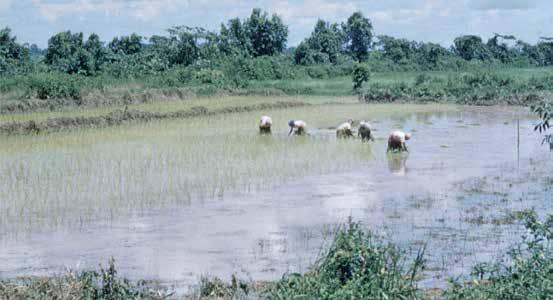

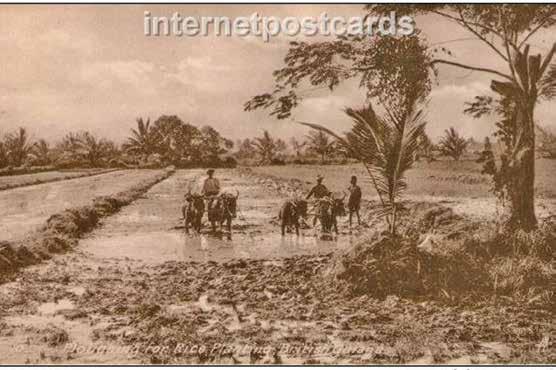
rice increased.
From around 1860, Indian immigrants on the West Coast Demerara, who were experienced in rice farming, began to cultivate the crop. By 1865 they had planted about 16 acres of rice but their efforts at first were not very successful, also because of poor irrigation.
They persisted however, and more Indians in other parts of the country joined in the enterprise, even though it was still done on small plots.
Those who had completed their indenture and opted to stay in the colony, turned to rice farming.By 1886, writes guyana.org, more than 200 acres of land in Anna Regina were under rice; by 1893, rice was cultivated on over 2,500 acres in different parts
of the country.
Much of the lands they acquired for rice cultivation was purchased from former slaves as well as the colonial government, and rice cultivation soared.
By 1896, according to the Guyana Rice Development Board (GRDB) Guyana was producing more rice than was needed for local consumption, and the first export shipment to Trinidad took place that same year.
By the time the importation of rice ended on the colony in 1917, guyana.org notes that more than 14,000 tons were already being exported to the islands of the West Indies.
However, the GRDB notes that between the two World Wars, the industry stagnated. In 1939 a single marketing organisation for
rice was established and by the end of the Second World War Guyana had secured a virtual monopoly of the West Indies market.
In 1946 the British Guiana Rice Marketing Board (BGRMB) was established; mandated to buy and sell all rice produced in the colony.In the same year, the British Guiana Rice Producers Association (BGRPA) was established. By 1956 Guyana had been labelled the “bread basket of the Caribbean”, and at independence in 1966, paddy production had reached 167,600 tons.
The post-independence Guyana rice industry has since had a turbulent history that has seen its decline and progress over the years. More than 500,000 tons were exported in 2014.
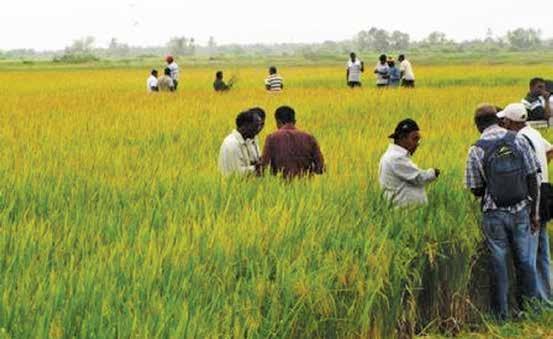


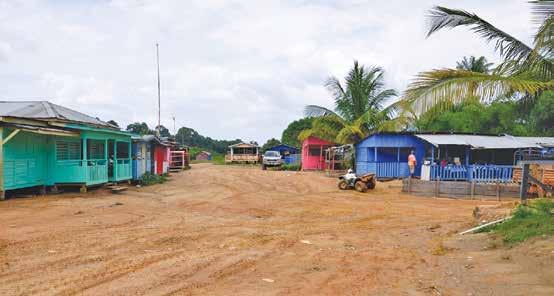
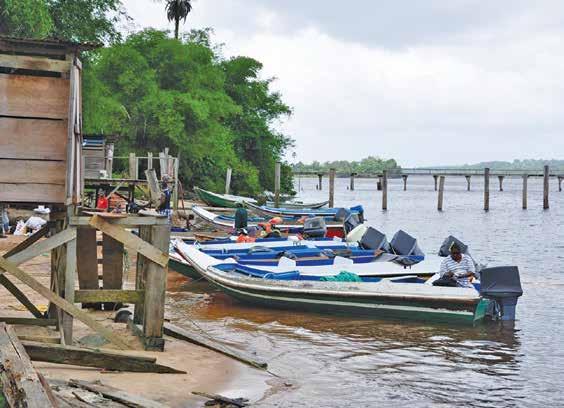
Itabali is a small community in the Mazaruni River, Region Seven, and a short distance by boat from Bartica.
Known for its tranquillity, Itabali’s trails are perfect for a cool, relaxing walk.
The community of Itabali is close-knit, with a growing populace and commercial area.
The Mazaruni River flows past the Itabali landing, an area buzzing with an influx of visitors, and the serene Puruni River. (Photos by Marco Basir)


We have all heard the saying “you are what you eat”, which is said to mean that if you eat unhealthy food you will be unhealthy, while to be fit and healthy you need to eat healthy food. It came down to us in varying phrases, beginning with the 1826 book Physiologie du Gout, ou Meditations de Gastronomie Transcendante in which author Anthelme Brillat-Savarin writes "Dis-moi ce que tu manges, je te dirai ce que tu es." [Tell me what you eat and I will tell you what you are].
Harvard University’s campus services notes that the food you put in your body can improve your health, increase memory, endurance, self esteem and just make you feel better.
Inc. magazine published an article that states that some nutrition experts specialize in finetuning the metabolic performance of business leaders.
"You're like an athlete in the workplace," Richard Chaifetz, CEO of ComPsych, a Chicagobased provider of corporate wellness and employee-assistance programs tells the mag, "so you should eat like an athlete."
Barbara Mendez, a New York City nutrition consultant says in the publication, "coffee depletes serotonin which contributes to a sense of well-being. If you have it on an empty stomach, that quick delivery to the bloodstream leads to more anxiety and stress.”
The answer for those who must have their coffee? Save the
coffee for midafternoon, when your hormonal and neural connections often need the boost.
And if you do just one thing, cut out fatty foods.
Andrew DiMichele, chief technical officer of Omada Health, an online diabetes-prevention program, gave up fries and chips at lunch, and found an almost immediate boost in productivity.
He shared an experience with Inc.: “A couple of weeks ago, I let this slide, and it was a stark reminder. Not only was I sleepy and un-attentive all afternoon, but I was in a miserable mood."
If you want brain food then drink water, avoid fatty foods and sugar.
A 2011 study in the British Journal of Nutrition found that

even mild dehydration in men reduced vigilance and memory and increased tension, anxiety, and fatigue.
A 2009 Cambridge University study found that high-fat diets made laboratory rats not just slower but dumber, while a 2013 UCLA study found that a diet high in fructose slows the brain, hampering memory and learning. Omega-3 fatty acids-found in salmon, walnuts, and flaxseed--can counteract the disruption
Frances Largeman-Roth, RD of Health Magazine, points out that salmon is a great source of mood-boosting omega-3 DHA fatty acids, and spinach is packed with magnesium, which has a relaxing effect and helps lower blood pressure.
Lots of lean protein, fruits and vegetables, and complex carbohydrates; no processed foods, and minimal white flour and sugar should take you on your way to good health and reveal the real you.
(Continued)
The trauma of victimization is a direct reaction to the aftermath of crime. Crime victims suffer a tremendous amount of physical and psychological trauma.
Shock and Numbness
Shock and numbness are usually considered a part of the initial stage of the crisis reaction. Victims are faced with a situation beyond their control, and some may almost immediately go into shock and become disoriented for a while.
Victims may experience
blame herself when confronted with an attacker because she is unable to put into practice what she has learned. A man may be criticized, or not believed, if he did not fight back when confronted. To question a victim's response to a criminal incident is to inflict a second injury on that crime victim and can cause emotional harm.
In many instances, physical and emotional paralyses occur whereby the victim is unable to make rational decisions such as reporting the incident to the police or obtaining medical attention.
pen to me?" Many will replay the disturbing event by dreaming, having nightmares or even fantasies about killing or causing bodily harm to the offender. Survivors or homicide victims may even express anger at their loved one, believing that if the victim had done something differently, he or she would not have been killed. During this period, victims must contend with a variety of stressful emotions, such as fear, despair, self-pity, and even guilt and shame for their anger and hostility.

what is referred to as the "fight or flight" syndrome. The "fight or flight" syndrome is a basic automatic physiological response that individuals have no control over. Because many victims do not understand this response, and their lack of control over it, they do not understand why they fled instead of fought, and vice versa.
A woman who takes a self-defence course may
The individual loses control, feels vulnerable, lonely, and confused; the sense of self becomes invalidated.
In this phase, victims' moods will fluctuate. As Steven Berglas states in his article "Why Did This Happen to Me?” victims almost always think, "This could not have happened to me!" or "Why did this hap-
If victims are to recover from the traumatic event, it is crucial that they are provided with the proper support during the initial impact stage and throughout the criminal justice process. Immediate crisis intervention is needed. Trained crisis interveners should inquire about the victim's welfare by asking if they feel safe, assuring victims that they are safe if that is true,
and determining if they are in need of medical attention. Victims will often blame themselves for the crime. The crisis intervener needs to assure the victim that they were not at fault. If these initial and crucial steps are missing, the trauma can have long-term effects on the healing and recovery process. After experiencing the initial traumatic reactions to victimization, victims will most likely undertake the task of rebuilding their equilibrium. Their
lives will never be the same, but they begin to regain some form of control and a
If you are experiencing complications from a previous trauma or victimization, please contact Gift From Within (GFW). GFW is an international non-profit organization dedicated to those who suffer post-traumatic stress disorder (PTSD), those at risk for PTSD, and those who care for traumatized individuals. GFW helps everyone with PTSD by sharing ideas, improving morale, and reducing the stigma of the diagnosis and its treatment. GFW was founded by Dr. Frank Ochberg, an expert in the field of traumatic stress. Please visit us at www. giftfromwithin.org

The Skeldon Collection is homage to the village of Skeldon, where US-based Guyanese designer Sarah Bacchus grew up as a young teenager.
“It is the place where women were resourceful in the clothing they wore, whether it was niceties received from family members abroad, buying from the local stores or just making sense of fashion from magazines available to them, using fabrics from the markets. Somehow, it always worked, seamlessly,” said Bacchus in an interview with Guyana Times Sunday Magazine.
The Skeldon Collection is certainly amped up from those olden days but the sense of fashion, style and exquisite feminine sophistication shines through.
Bacchus’s fashion label, 34-24-36, is always consistent with luxurious fabric choices- silks, cottons, linens and blends of these; colours that complement many complexions; and “seasonless wear” - clothing that can be worn year round to any events.
The Skeldon Collection used ruffles

(sometimes over-sized ruffles), rounded slits, sheer midriffs, ruching, cold shoulder and many very subtle details to make big statements.
“Using nude colour palettes is considered the new black and, keeping that in mind, it was an integral choice in lessening the use of too many black


pieces in the collection. Black was mixed with laces and done very elegantly; rich navy was exceptional; and the red, well it was red hot! For a fresh, clean feel of summer, or a destination wedding ensemble, the white pieces are crisp and a must-have in any closet,” the designer described.
The Skeldon Collection was showcased in Highbridge Park in New York City, part of the ECO Fashion in the Park event.
This is an initiative by founder Gina Constanza, who hascentred discussions around eco-friendly practices and educating the masses on clothing life. The Highbridge was closed for 40 years. Its grand reawakening and restoration was celebrated by several overseas designers showcasing various collections, and 34-24-36 opened the festivities.
The Skeldon Collection is said to be “a revival to what once was to what is current!”
For more information, visit 34-2436.com/Sarah Bacchus on Facebook. (Photos by Stealth Productions)






Charlotte Emma Aitchison, better known by her stage name Charli XCX, is an English singer and songwriter. Charli XCX released her debut single independently in 2008 and initially performed at warehouse raves in London. She signed to Asylum Records in 2010 and released two mixtapes, “Heartbreaks and Earthquakes” and “Super Ultra”, in 2012. Charli XCX's major label debut album, “True Romance”, was released in 2013, accompanied by singles including "You (Ha Ha Ha)" and "Nuclear Seasons". She rose to international prominence during 2013 and 2014 through featuring on two major hit singles: Icona Pop's "I Love It" and Iggy Azalea's "Fancy". Her 2014 single "Boom Clap" became a top ten hit in various countries and preceded the release of her second album, “Sucker”, which also features the singles "Break the Rules", "Doing It", and "Famous". She considers herself a feminist, and wrote her song "Body of My Own" as a “feminist statement”. Her music influences include Britney Spears, Avril Lavigne, Spice Girls, and Lil Wayne.

Pink is standing with Planned Parenthood amidst controversy following calls from Republicans in the U.S. to cut its federal funding. "Planned Parenthood was the only organization in my town growing up available to teach young girls @ sexual responsibility. I stand with PP," the "So What" songstress writes on Twitter.
She adds, "Do these Rep. hopefuls plan on visiting every town in America handing out pamphlets,hugs, life saving info +
screening?!whats their plan?" A fan comments on her posting, "I like the idea that someone might support people when they need help, but I don't like PP selling baby parts for cash," to which the "Sober" singer replies, "Are you for real? Did you hear that on Fox News?"
Anti-abortion group Center for Medical Progress previously released undercover videos which allegedly showed Planned Parenthood employees discussing the sale of fetal body parts for research. The organization has denied any wrongdoings and said the footage was edited.
President Cecile Richards said in a statement, "The allegation that Planned Parenthood profits in any way from tissue donation is not true. There is no financial benefit for tissue donation for either the patient or for Planned Parenthood. In some instances, actual costs, such as the cost to transport tissue to leading research centers, are reimbursed, which is standard across the medical field."
Republicans, including presidential candidate Rand Paul, wanted the government to cut federal funding, approximately US$500 million, which Planned Parenthood receives annually. (AceShowbiz)
Despite circulating rumors, Ariana Grande didn't get lip injections. MediaTakeOut previously claimed the "Love Me Harder" hitmaker's lips got "plumped up." According to the site, she has a "new look" after having "just got some lip injections."
The site then posted a supposed "Before" photo along with two new Snapchat photos of the "Problem" singer. "Ariana Grande showed off her latest PLASTIC SURGERY - lip injections. She posted the pics last night on SNAPCHAT," the site wrote. The supposed "Before" shot was taken in 2010 when Ariana wasn't even 17.

her lips. "There is no truth to this," the rep added.
Earlier this month, Ariana announced during the 2015 iHeartMedia Music Summit that a new single was on the works. According to her label Republic Records, she had a new track called "Focus on Me" coming out in a few weeks.
Beyonce Knowles is Vogue's cover girl for the highly-coveted September issue. "There's only one September Issue, and there's only one @beyonce," the magazine says on Instagram in a caption accompanying a picture that shows the singer giving a come-hither look at the camera.
Photographed by Mario Testino, Queen Bey sports wet hair and flaunts her curves in a figure-hugging dress by Marc Jacobs. "The word diva is used for so many female performers, and it often means they have reputations for being difficult, but she exudes charm and a lovable quality," the designer says.
For the spread in the inside pages, the mother of one shows off her killer body in haute couture gowns by several other famed designers like Versace, Stella McCartney, and Givenchy. "Her appeal crosses art forms, genders and generations," McCartney gushes.

TAriana posted on Instagram two pictures similar to the supposed "After" snaps. In the pictures, which were taken during her trip to Japan for her "Honeymoon" tour, the "One Last Time" songstress pouted to the camera, rocking pink lipstick and sharp eyeliner.
A representative has denied the lip injections rumor, telling Gossip Cop that the 22-year-old songstress has not had any work done to
"Focus on Me" will lead Ariana's upcoming third album "Moonlight" which is expected to be released later this year as a follow-up to her "My Everything" album. The 2014 project spawned a string of hits including "One Last Time", "Love Me Harder" featuring The Weeknd, "Break Free" with Zedd, Iggy Azaleaassisted "Problem" and "Bang Bang" which also appeared on Jessie J's album.
(AceShowbiz)
Rihanna and Lewis Hamilton's romance is heating up
Rihanna has been romantically linked to Lewis Hamilton and Karim Benzema, but she is allegedly focusing her attention on Lewis right now. The "Umbrella" hitmaker “hasn't put any label” on either Lewis or Karim.
A source tells E! News, "Rihanna and Lewis had a nice little getaway last weekend in Barbados. Rihanna also spent time with her friends and family but Lewis was the only romantic interest on her mind. They had lots of fun together around the island and also got some private romantic time."

he Duke and Duchess of Cambridge, Kate Middleton and Prince William, spoke out against unauthorized photos of their son, Prince George, in a letter released to Us Weekly on Friday, Aug. 14, after a photographer was found in the "boot of a vehicle" trying to take photos of the 2-yearold royal.
public discussion around the unauthorized photography of children. It is hoped that those who pay paparazzi photographers for their images of children will be able to better understand the distressing activity around a 2-year old boy that their money is fueling. We also feel that the readers who enjoy the publica-
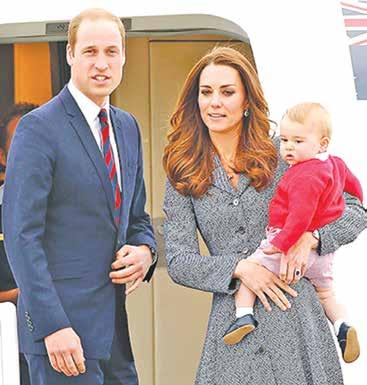
not at all uncommon," they shared. "A photographer rented a car and parked in a discreet location outside a children's play area. Already concealed by darkened windows, he took the added step of hanging sheets inside the vehicle and created a hide stocked with food and drinks to get him through a full day of surveillance.... Police discovered him lying down in the boot of the vehicle attempting to shoot photos with a long lens through a small gap in his hide."
The royal couple - also parents to Charlotte, 3 months - then detailed a list of disturbances from photographers attempting to capture unauthorized images of their kids.
Rihanna and Lewis were spotted hanging out together on a luxury yacht in Barbados on August 7. At
"Karim is fading out and looks like Rihanna has only one guy on her mind and that's Lewis," the source adds. "She is taking it very slow and just having fun, but she likes who he is and what he is about no label on them just yet."
that time, the "Diamonds" songstress wore tiny floral bikini paired with a purple and green bandana and bright pink lipstick. The British Formula One racing driver, meanwhile, donned a plan white top and printed black shorts. (AceShowbiz)
"In recent months, there have been an increasing number of incidents of paparazzi harassment of Prince George. And the tactics being used are increasingly dangerous," a Kensington Palace spokesperson noted in a statement.
"This letter is being published now to inform the
tions that fuel this market for the unauthorized photos deserve to understand the tactics deployed to obtain these photos."
Accompanying the statement was a letter from Kate Middleton and Prince William, detailing a rather scary encounter. "One recent incident – just last week – was disturbing, but
The parents of two said protecting their kids was of utmost priority. "All of this has left The Duke and Duchess concerned about their ability to provide a childhood for Prince George and Princess Charlotte that is free from harassment and surveillance… But they know every parent would object to anyone – particularly strangers – taking photos of their children without their permission," the letter read. "Every parent would understand their deep unease at only learning they had been followed and watched days later when photographs emerged... ...they feel strongly that both Prince George and Princess Charlotte should not grow up exclusively behind palace gates and in walled gardens." (US Magazine)

SAnand is an Indian actor. He made his acting debut in the highly successful Bollywood movie, “Student of the Year”. Anand’s subsequent hit was “Babloo Happy Hai”. The actor, who is new to Bollywood, is an ambassador for numerous brands and is seen regularly in television commercials.
Singer Sonu Nigam launched his father Agam Kumar Nigam's latest album "Phir Se Bewafaai".
The music and the lyrics of the album have been composed by Saawan Kumar Saawan.
"This is my sixth album... it is completely different from my previous five albums and this contains a distinct flavour. It is very close to our hearts. The situation this time was different as Sonuji's mother and my wife had passed away. And post that for the next one and half years, we were in despair. Saawan approached me for a project, when he played the songs it felt really close to my heart due to the situation we were in and we readied the album according to this," said Agam Kumar Nigam.

Sonu stressed the importance of launching an album when actually the industry is struggling and digital medium has taken over. "In today's generation, music albums are not made regularly. But despite this, it's his sixth album that is coming out, which definitely in-
dicates that his albums have a fixed and outstanding market. T-Series is again releasing this album and we just hope that this will be appreciated by people."
"People have started letting go, but he still aggressively sings. When he sings on the stage, the whole arena starts vibrating. That's the amount of power, emotions and passion in his songs. So he is an inspiration which makes us feel that if our father can do it, why not us? So we also have to tighten our belts and become like him," said Sonu, lauding his father's continuing determination.
Sonu, who had composed the music for Sunny Deol's “Singh Saab The Great”, is working on his single and will come out with his album soon. (IANS)
Jacqueline Fernandez: ‘Moving to India was a challenge’
For Sri Lankan beauty Jacqueline Fernandez, moving to India to have a career in Bollywood was a challenge.
The 30-year-old actress, who made her debut with “Aladin” opposite Riteish Deshmukh and Amitabh Bachchan, said the Hindi film industry has always been supportive of her.
"Moving to India was challenging being a foreigner. I don't have any family here. I didn't have anyone to guide me. But I never felt for a second that I am not welcome here. Industry has been very good to me. I am glad that destiny brought me here," she said.
The “Kick” actress came to India for the first time on a modelling assignment and she got the offer to star in the Sujoy Ghosh-directed 2009 fantasy drama.
Jacqueline credited modelling industry to help her understand Bollywood well. "Modelling industry was a good training ground. It is a medium that is about shedding your inhibitions, knowing your body, confidence and that are also the few characteristics which an actor requires. It definitely was a good starting point and a platform," she said.
Known for her glamorous avatar, Jacqueline in her upcoming outing “Brothers” will be seen playing a mother.
"'Brothers' is first of its kind. I am taking on a different role compared to the parts I played before in my career. I am taking on the role of a mother, who is going through a certain crisis of her own. This is a very big turning point for me in terms of my role."

When asked if she had any inhibitions about playing a mother at such an early stage of her career, Jacqueline said, "I didn't have any apprehension about playing the role of a mother. I don't know why actresses have apprehension to play a mother especially when we have mothers of all ages in our world and society." (PTI)
Aishwarya Rai Bachchan’s ‘Jazbaa’ to be released in
After various rumors regarding Aishwarya Rai Bachchan’s comeback in the Bollywood industry, the former Miss World confirmed her return. Reports stated that she agreed to work on an action film and fans are excited to see her on the big screen again.
Bachchan is making her comeback debut after five years with Sanjay Gupta’s “Jazbaa” and fans all over are excited to see her on the big screen again.
After seeing some behind-the-scene looks, new reports are stating that the movie will also make a debut in the Arabic market in Yemen, Oman, Qatar, Bahrain, Kuwait, Saudi Arabia as well as Southern parts of Iraq and Jordan.
“Releasing the film in Arabia was Essel Vision
Business Head Akash Chawal’s brainchild,” said director Sanjay Gupta. “Zee Arabia is the biggest satellite channel in the Arabian Peninsula and to have a platform as big as that is wonderful.”
Gupta also revealed that they will add certain songs in Arabic and the end credit song composed by SachinJigar will be shot with a top Arabic singer there, which will also release a promotional video in Arabia.
Bachchan recently revealed that she never felt absent from the Bollywood scene while working on the film because of the wonderful cast.
“You will see [me] more often now,” said Bachchan to Times of India when asked about her reason of not doing films or so long. “It’s lovely working with every-

one in ‘Jazbaa’ as the cast is so wonderful. From Irrfan Khan to Shabana-ji, everyone was lovely. I never felt the gap.”
In the mean time, the cast and crew recently released the movie’s first poster.
The image shows Rai as a distraught woman displaying grit and resolution against the odds. Director Sanjay Gupta released the poster showing the actress in the dust and grime of the city with distress on her face, but her body language says she’s a fighter.
The movie also stars Chandan Roy Sanyal, Anupam Kher and is set to release on Oct. 9, 2015. (Fashion and Style)
Abhay Deol: ‘Sex nothing to be ashamed of, police indecent’
In India, consenting adults having sex in their hotel rooms away from prying eyes is a crime. Or so it seems after Mumbai Police raided a hotel, dragged out 40 couples, arrested them and took them to police station and charged them with indecent behaviour in public.
A country that recently tried to ban porn has touched yet another low with the recent police action against the 40 couples whose only crime was that they dared to have sex behind closed doors without being married to each other.
Actor Abhay Deol was justifiably enraged at the police action and took to Facebook to share his anger.
The “Zindagi Na Milegi Dobara” star wrote, "Even I am baffled by our society's obsession with sex." He further said, "I enjoy it, I crave it, I pursue it. I don't hide the fact. I feel a tinge of shame admitting it. It always takes a moment for the logical part of my brain to put the shame aside, and I see reason."
"I have come to believe

my sense of shame comes from my upbringing. I was brought up by the same values as any other from my country, which may come as a surprise to those who think people born into the film industry are brought up with a different set of values (usually loose and privileged). So I get it. The taboo that comes with the topic of sex in my society," adds Deol.
The police took couples to the nearby police station, where they said they were insulted while some were even made to call their parent. They were also humiliated by the cops. He goes on to condemn
the police's action, "But booking young kids for a crime they didn't commit, physically and mentally abusing them publicly? To me it looks more like it was the police that was guilty of 'public indecency'. All this because they were young adults having sex. How liberated can you be!? They must be punished. By any law out there."
"Many believe moral policing is a way to get rid of 'western influences', like liberal views on sex (it always starts with those) within our society. That there are outdated British laws from the Victorian age on sex and sexuality still in effect in India today, is lost on those constantly claiming that liberal views on sex (such as premarital sex) come from Western countries, and conservative views come from India," writes Abhay. Abhay Deol goes on to explain about the purpose of his post, "This started off as a topic on sex. Sex is not something to be ashamed of why is it so hard for some people to digest that?"
(Hindustan Times)
Hrithik Roshan promotes ‘mom’ Zarine Khan’s first book
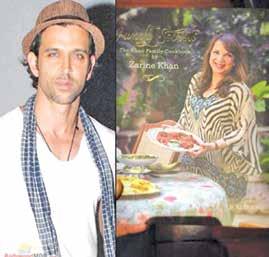
Actor Hrithik Roshan has lent his support to his former wife Sussanne Khan’s mother Zarine Khan, who has launched her first book titled “Family Secrets: The Khan Family Cookbook”. The book launch hosted by Sanjay and Zarine Khan along with the publishers Roli Books was held at their daughter Sussanne’s
Amitabh
concept store – The Charcoal Project – on Wednesday. Playing hosts were members of the Khan family – Zayed, Simone, Sussanne, and Farah Khan.
It was unveiled by actress-producer Dia Mirza and filmmaker Zoya Akhtar.
Though Hrithik didn’t attend the book launch, he did share an image of the book on Twitter and captioned it: “Food for the soul. Literally! Go get your copy. You will thank me. Well done mom. #livetoeat!”.
Published by Roli Books, “Family Secrets: The Khan Family Cookbook” gives a peek into the wholesome yet exotic home cooking of the Khan Family.
In the culinary book, Zarine has shared some of the most special recipes from her famous kitchen, handed down over the generations.
Speaking about the book, Zarine Khan said in a statement: “I am happy to release this book of simple home cooked recipes. I hope my readers enjoy making and eating the food in the company of their near and dear ones as much as we do!” (IANS)
Bachchan:
‘Maybe it was a mistake to remake Sholay’
Megastar Amitabh Bachchan, who was part of Ram Gopal Varma's "Aag", the remake version of "Sholay", says maybe it was a mistake to revisit the iconic film.
In 1975, director Ramesh Sippy made "Sholay" with Amitabh Bachchan, Dharmendra, Hema Malini, Jaya Badhuri, Sanjeev Kumar, Amjad Khan, Asrani, A K Hangal and others.
The action-adventure went on to become the biggest hit fim of Indian cinema. It completes 40 years on Saturday. Filmmaker Ram Gopal Varma helmed the remake of "Sholay" with Amitabh Bachchan, south star Mohanlal, Ajay Devgn,

Prashant Raj Sachdev and Sushmita Sen. The film drew a lot of criticism and bombed at the box office.
When asked what made him experiment with "Aag", Big B said, "That you ask him (Ram Gopal Varma). Whenever a film is made and I am part of it ...whatever mistakes would have happened (failure) or whatever good things would have happened I take responsibility for that.
"I feel an actor and a di-
rector should be held responsible for the failure of a film. I won't say I made a mistake. I worked on the film with all honesty... may be it was not a right decision... we accept that," he said. Bachchan, however, seemed to be uncertain on the concept of remakes.
"I can't put my finger on it. I feel if I am part of a remake film I take it as a compliment. Whether a film should be remade or not is the decision of producers and artists involved. Some films have been made and they have been successful but it is a debate... in a way it is like complimenting the original and in a way saying don't touch the original because that is the best." (PTI)


yana Whitehead is no stranger to the modelling and pageantry worlds. Hailing from East Berbice, Corentyne, Ayana’s pageantry history includes being in the top ten placements in the Miss Caraibes Hibiscus Pageant (2013-2014); second runner-up and awards for Miss Congeniality and Best Dressed in the Miss Universe Guyana Pageant (2013); first place winner at the Miss London Elite Saint Lucia Pageant (2012); and first place winner in the May Pole Queen Community Pageant Nabaclis (2003). Ayana believes pageantry is an avenue to inform people and make a change. Any form of publicity given is an opportunity to share with persons values that are important to her. Being involved in a pageant is significant to Ayana because it allows her “to do something extra”. Other than pageantry and modelling, the beauty enjoys being involved in humanitarian work. For more on her profile, visit http://ayanalwhitehead.weebly.com/


Do you love aquariums enough to incorporate them into your next manicure? If so, you're bang on trend.
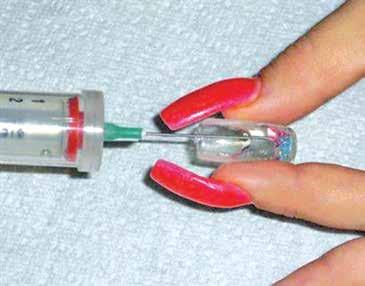
Aquarium nails are the latest big thing to hit nail art, but the look requires time, patience and a lot of glitter. The overall look is akin to wearing mini snow globes on your fingertips.
It is achieved by taking two transparent nail tips and attaching them together, but not before injecting oil, water and glitter particles into the hollow between the two using a syringe. Nail glitter, tinsel or beads are also inserted into the space created, giving the impression of floating inside the nail. Once the look is complete, the technique means
that your nails will 'move' when you do.
First the nails must be trimmed and filed to the desired size and shape. Once the first nail is applied then
a smaller tip is placed on top of it and fixed with adhesive, creating a sort of pocket into which the liquid is then squirted. Excess oil is then cleaned up before the opening is sealed and the aquarium filed, shaped and decorated.
If you don’t have the patience to get a full hand of aquarium nails then the technique can be used on individual nails to spice up an aquarium-themed manicure.
Nail expert Absolute Nails recommends mixing things up by applying an iridescent accessory, such as shells, to normal false nails using clear acrylic glue, for an extra boost. Additional details can be added to the design using foils, or 3D acrylic glue globes.
The trend is taking off fast on Instagram, where the hashtag #aquariumnails brings up various takes on the look.
Aquarium nails are the latest extreme manicure fad, coming on the back of the success of ‘Bubble nails’ or ‘Hump nails’ - a technique that involves sculpting acrylic gel onto the nail to create a dome shape, which is then filed down to create a short, square and very arched shape. (Yahoo)

For emerging artist Angelica DaSilva the only limit is her imagination
Using art as an “escape” and avenue of expressing her emotions, Angelica DaSilva is well on her way of becoming a notable Guyanese artist.
“I have always been passionate about art. From constantly visiting my mother's close friend, who is an artist, (Nicole Bissoo) I immediately fell in love with her paintings. Nicole has inspired me since I first saw her work. Another reason for my love is that I’m driven to become an established artist. I have also received great encouragement from my family and friends to do what I love - painting. Lastly, the works of great artists have also inspired me,” expressed DaSilva in an interview with Guyana Times Sunday Magazine
The budding artist said her passion for art developed at a very tender age.
This “passion” has been a driving force for her in wanting to pursue art as a career.
“When I was old enough to actually hold a crayon/ pencil I drew anywhere and everywhere, like every other normal child except I’m still doing the same thing up to now. Inprimary school, I drew in all my school books, but as I grew older I did it more seriously and at a higher level, even though I’m still an amateur,” DaSilva admitted.
DaSilva pointed out that

her interest in art also stems from her father, two of her great aunts and a few cousins who dabble in art, but merely as a hobby.
Exposure to art at Marian Academy High School at an early level inspiredher interest, andDaSilva decided she wanted to pursue it as a subject for CXC.
Most of her paintings,she disclosed, she learnt to do on her own, but was guided by her art teacher and godmother, who is an artist and also teaches at E R Burrowes School of Art.
Angelica’s inspiration when painting is listening to
music, the support from her parents and relatives, and a quote from Leonardo daVinci, an Italian painter, draftsman, sculptor, architect and engineer. Leonardo daVinci’s quote, “art is never finished, only abandoned”, pushes DaSilva to keep improving and completing her art pieces.
“Art does a lot for me: it is an escape from reality, where whatever you could think of could come to life. The only limit is your imagination. Art is a way to express my emotions. That is why my paintings communicate all types of emotions.

Although my pieces are an expression of self, I’m open to other interpretations,” DaSilva noted.
According to DaSilva, her focusover the past few years was “more or less people” and “fantasy” in the category of mixed media art, which was encouraged by her CXC art teacher, though limited to a theme during the CXC Visual Arts syllabus. DaSilva is now “willing and eager” to expand her art to capture the beauty of buildings, silhouettes, landscapes and “anything that challenges”her.
The emerging artist stated that even though she would like to advance in architecture, art is something she will never cease pursuing. Her goal is to study art at a university level.
“Being a young artist, my advice to youths would be to use the advice that I have been given my whole life, which is: ‘Dowhat you love and never give up; you can only get better’. Even though there may be some bumps on the road (art blocks) just relax, take a break and persevere. To those who have helped me, I say a big thank you. I thank God for this talent that he has blessed me with, though I know it’s only the beginning and I still have a long way before I can consider myself an accomplished artist,” she declared.






The launch of Apple's iPhone 7 – which could be called the iPhone 6s – is one of the most anticipated events of the technology calendar. But when will its release date be?
This year, rumours suggest the iPhone would launch September 9.
The launch of Apple's latest iPhone is always one
of the most hyped events in the technology calendar, and Apple usually holds a big event at its headquarters in Cupertino, California, during the first two weeks of September, where it unveils its latest gadgets.
Sources familiar with Apple’s plans have reportedly told BuzzFeed News that the company intends to hold

Anew invention from Cambridge University has the potential to change the way we look at technology.
Researchers from the university have developed a new robot that would be capable of having "baby-robots".
According to a CNBC report, the robot has been programmed to assemble smaller robots – which is not anything outstanding considering the machines used in assembly lines.
But what makes it unique is its ability to observe the progress of its creation and later make changes in following builds.
The robot can make the changes on its own without the requirement of re-programming or any human intervention at all.
NYC Today reported that the team released a video showing the mother robot building its own 'cube babies' before watching them taking their first steps.
The mother robot, after building, monitors the progress of its offspring and then selects which one performs the best among them.
The mother robot then selects the best baby robot and refines its design in the same way evolution works in real nature.
This might not seem like
this year's event during the week of September7, with Wednesday, September 9 being the most likely date.
Meanwhile, a leaked internal email from Vodafone in June revealed that the new handsets will go on sale on September 25, with preorders being accepted from September 18.
The new iPhone mod-
el will run iOS 9, the latest version of Apple's software for iPhone, iPad and iPod Touch, which was announced at the company's Worldwide Developers Conference (WWDC) in early June.
Updates and features include Siri becoming more proactive in recognising your behaviour, longer battery life and improvements to existing apps, including Maps and Notes.
The iPhone 7 (or 6s) is expected to look very similar to the iPhone 6, and come in the same 4.7-inch and 5.5inch size variants.
One of the most significant features of the iPhone 7 could be the addition of Force Touch technology,
Sthe "mother" robot tests each of its "children" to see which ones perform the best at certain tasks (Photo: University of Cambridge)
a very parent-like approach, but the ability to evolve every subsequent build is something that mimics a human's reasoning ability.
It is the first time that a process of natural selection has been built into a machine.
In five experiments, the mother-bot was allowed to continue building her children until 10 generations had been created; every time it used the fittest baby bot to inform the design of the next child.
Researchers found that preferential traits were passed down through generations so that the last cubebots performed their task twice as quickly as the first individuals.
Although the invention can prove to be a big step in the development of robotics, the prospect of a robot being able to produce other robots without the need of human intervention is leading people to think of a perfect recipe for human vs machine apocalypse.
Dr Fumiya Iida of Cambridge's Department of Engineering said, “Natural selection is basically based on reproduction, assessment, and so on. That's what this robot is doing - we can actually watch the improvement and diversification of the species.”
which is used in the Apple Watch and latest Macbook to enable users to more easily navigate the device.
Other rumoured features include a DSLRquality camera, a new processor – the A9 – produced by Samsung, and a scratchresistant sapphire glass screen.
There are also reports that Apple is planning to launch a third phone this year – an iPhone 6c, which would essentially be an iPhone 5c with an Touch ID sensor on its home button.

New software provides animal-eye view of world
cientists from the University of Exeter, England have developed the Multispectral Image Calibration and Analysis Toolbox, a piece of free software that lets you see the colours in photos the way that various animals would see them.
You start by selecting an animal from the provided list of species.
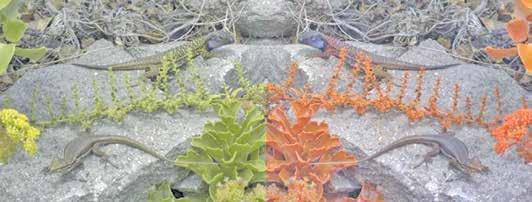
Based on that selection, the software will then advise you on the camera settings needed for taking your photo(s). Once you've got the shot and loaded it into your computer, the program automatically calibrates it, separates the colours into different layers, and ultimately outputs a version of the photo in which the colours appear as they would to that animal.
This means that if the chosen creature was one of a number of non-primate mammals, for ex-
Cample, the red spectrum would be missing – humans and old world monkeys are among the only mammals that are able to see blue, yellow and red primary colours. If the animal were a bird, reptile, amphibian or insect, however, the colours might be based on a mix of four or more primary colours. They also might include colours in the ultraviolet range, which we can't see without special full-spectrum cameras.
WalkCar: world’s smallest electric vehicle
ocoa Motors' new WalkCar is not much bigger than a laptop, and according to its developer, it’s also extremely simple to ride.
The portable electric vehicle is compact yet includes plenty of power and traction to provide a viable solution to portable electric powered mobility.
The tiny vehicle can provide a top speed of 6.2 mph with a range of 7.5 miles. It can also support up to 265 pounds and is powerful enough to push a wheelchair up a hill.
Billed as the world’s smallest electric vehicle, it incorporates a rechargeable battery which takes roughly three hours to charge from flat via USB.
All the rider needs to do to get going is step aboard, and step off to bring the unit to a stop. Turning and accelerating is also fairly intuitive, with the WalkCar responding to the user shifting his/her weight left, right, back and forward.
Best of all, there is no need to find a parking space, because it fits into a small bag when not in use.
The software has already been used to study colour change in crabs, and to understand how nightjar birds use camouflage to protect their eggs.
Development of the Multispectral Image Calibration and Analysis Toolbox was led by Dr. Jolyon Troscianko. It is available online for download, and was recently described in a paper published in the journal Methods in Ecology & Evolution.

the WalkCar is expected to launch during next spring when it will be available to purchase, priced at around us$800 or 100,000 yen


Bathroom window treatments are more than covering for a window frame: they need to beautify the space and provide privacy. Here are a few inexpensive but beautiful ideas.

Instead of creating a window covering, try designing the window itself. Whether custom designed glass or simply using the stick-on design of window film, it is a unique approach to ensuring privacy in



Ingredients:
1 cup uncooked rice
1 cup frozen peas, thawed
2 tablespoons carrots, finely diced 2 eggs, beaten
1⁄2 cup onion, diced 1 1⁄2 tablespoons butter
2 tbsp soy sauce salt pepper

Method:
Bring 2 cups water to a boil, add rice and a dash of salt, reduce heat and simmer in covered saucepan for 20 minutes.
Pour rice into a large bowl to let it cool in the refrigerator.
Scramble the eggs in a small pan over medium heat.
Separate the scrambled chunks of egg into small pea-size bits while cooking.
When rice has cooled to near room temperature, add peas, grated carrot, scrambled egg and diced onion to the bowl.
Carefully toss all of the ingredients together.
Melt butter in a large frying pan over medium/high heat.
When butter has completely melted, dump the bowl of rice and other ingredients into the pan and add soy sauce plus a dash of salt and pepper.
Cook rice for 6-8 minutes over heat, stirring often.
Serves 4
Lose the salt shaker and use a small bowl of kosher salt and add pinches as you cook and taste. It's easier to control the amount and ensures even coverage.
Chefs sear a piece of meat, poultry, or fish in a pan and then place it in the oven. Not only does this free up burners, it results in a much moister result.
When baking, only mix until all ingredients are incorporated. Over-mixing causes toughness by developing gluten in the flour. For light and fluffy cupcakes, only mix until the batter's come together.
To cut grease and dirt build up on kitchen cabinets, heat a slightly damp sponge in the microwave first for 20 to 30 seconds until it's hot. Put on a pair of rubber gloves, spray the cabinets with all-purpose cleaner containing orange oil then wipe off the cleaner with the hot sponge.
The best way to prevent stains is to treat spills immediately. That's why pros love stain pens, like Tide to Go and the Clorox Bleach Pen Gel, which are designed to remove small stains from upholstery, grout, caulk, porcelain and clothing (avoid the bleach pens for coloured fabric). Test it first on a tiny area to make sure it won't damage or discolour the finish.

The secret to a clean home is to never let your children or husband enter it.
You never know what you have…until you clean your room
A clean house is a sign of no Internet connection.
Instead of vacuuming the sofa, just flip over the cushions.
The definition of insanity is repeating the same behaviour and expecting different results. You should really stop cleaning the house.
Vacuuming can often weaken carpet fibres. Solution: reduce vacuum workload and save money on carpets.
Layers of dirty film on windows and screens provide a helpful filter against harmful and aging rays from the sun. Protect yourself.
A sign advertising a companywide skiing race: Let's see who can go downhill the fastest.
A sign on a long-established New Mexico dry cleaners: "38 years on the same spot."
In the offices of a loan company: "Ask about our plans for owning your home."
On a display of "I love you only" Valentine cards: "Now available in multi-packs."
In a Tacoma, Washington men's clothing store: "15 men's wool suits, $10. They won't last an hour!"
In a Maine restaurant: "Open 7 days a week and weekends."
On a roller coaster: "Watch your head."
Sign in a non-smoking area: "If we see you smoking we will assume you are on fire and take appropriate action."
Sign in an office: "We shoot every 3rd salesman, and the 2nd one just left."
Sign in beauty shop window: "Dye now!"
Sign on restaurant window: "Don't stand there and be hungry. Come in and get fed up."
Sign on restaurant window: "Great food (50,000 flies can't be wrong)."
1. When computing, whatever happens, behave as though you meant it to happen.
2. When you get to the point where you really understand your computer, it's probably obsolete.
3. The first place to look for information is in the section of the manual where you'd least expect to find it.
4. When the going gets tough, upgrade.
5. For every action, there is an equal and opposite malfunction.
6. To err is human...to blame your computer for your mistakes is even more human, it’s downright natural.
7. He who laughs last, probably has a back-up.
8. The number one cause of computer problems is computer solutions.
9. A complex system that doesn't work is invariably found to have evolved from a simpler system that worked just fine.
Parents like to believe that their wonderful children are a result of their remarkable parenting. Expert opinion indicates otherwise. Genes have an enormous influence. Peers and culture have an enormous influence.
But parenting styles inside the home, apart from extreme cases like abuse or neglect, have very little longterm influence on a person's personality or success in life, at least that social scientists have been able to detect.
This isn't to say parents and parenting aren't important. Parents supply the genes, except in cases of adoption (or remarriage). They control, at least to some extent, the peers and environments to which children are exposed. And of course they crucially affect a child's quality of life at home, which is not some minor detail.
TBut it's safe to say that your child’s long-term fate will not be meaningfully affected by the speed and timing of potty training, the brand of educational videos you purchase, or the precise tone of voice in which you discipline.
Another way of putting this same point is that an enormous amount of a child's fate is determined by luck, by accidents of birth, socioeconomics, and geography.
If they were born to stable, reasonably well-adjusted parents who have good jobs, a home in a safe neighbourhood, and a large reservoir of social capital upon which to draw, they should have a head start.
If they were born healthy and haven't been injured or suffered serious illness; have parents who haven't divorced, or been laid off, or faced a serious health
here lived a washerman's donkey, whose name was Uddhata.
During the day, the donkey would carry the washerman's bags, but during the night, he was set free to eat the green grass in a nearby field.
However, instead of grazing in the nearby fields, he crept into nearby farms and ate vegetables of his choice. Before day-break it would come back to the washerman's house.
One night, the donkey met a jackal while wandering in a nearby farm. They became good friends, and started meeting every night.
The donkey, being fat, was able to break the fences of the farms. While he ate on the vegetable, the jackal would enter through the broken fence and ate the poultry on the farm. Before day-break, they would return to their respective home to meet again next night. This continued for many days.
One night, the donkey said to the jackal, "Nephew, I feel like singing on nights like tonight, when the moon is full and beautiful. What raga (note combination) shall I sing?"
The jackal cautioned, "Uncle, we are here to steal. Thieves should keep as quiet as possible. I may add, your voice is not as pleasant as you think, and sounds like conch being blown! Your voice can be heard over a long distance. It will awaken the farmers who are sleeping, and you will have us caught."
The jackal assured, "Please uncle, eat as much as you like, and forget about singing!"
This annoyed the donkey and he said, "Dear nephew, it is because you are a wild animal that you don't appreciate music. I shall sing a melodious raga. Wait till you

crisis, and attend good schools alongside the children of other educated, engaged parents, they should have a head start.
This isn’t always the case.
If any one of those things had been different, parenting would be a greater challenge, no matter the parenting style. (To be continued) (Source: Vox: Science and Health: Most parenting advice is worthless. So here's some parenting advice, by David Roberts)
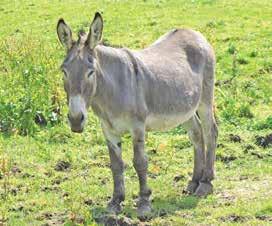
hear it!"
Observing that the donkey was determined to sing; the jackal did not risk staying there anymore. He said, "Uncle, if you must sing, please wait till I go outside the fence and keep a watch on the farmers."
He ran outside the fence, and hid himself. Then, the donkey started to bray at the top of his voice.
When the farmers heard the donkey braying, they could see easily in the full moon-lit farm that the donkey was in their farm.
The angry farmers chased the donkey with sticks, and beat him so hard that he fell on the ground. Then, they tied a wooden mortar around his neck and let him go.
When the donkey was returning through the broken fence, the jackal laughed, "Musical uncle! That was a great raga! I see the farmers have rewarded you with this necklace!"
The wise indeed say: There is always a proper place and time for doing anything.

By Grammar G
Afood’s etymological history that is. How a word originated or was derived is a fascinating aspect for linguists or the curious. Many times, word origins or derivations are lost to time so scholars have to speculate (but there are those that have definitive histories).
If you have ever wondered where names for certain foods came from, then feast on these meal time histories…
Burger (1939) is short for hamburger, which is said to have been introduced to the USA as the 1889 Hamburg steak of immigrants from Hamburg, Germany.
To make meats tenderer, German immigrants would grind up beefsteak, and the steak was named “hamburg steak”. That was later shortened and changed to “hamburger”.
While most agree on the German origin, there is debate about who actually created the first American hamburger – that is a

ground beef patty between two pieces of bread.
Over the years that has led to the “burger” suffix being added: beef burger, cheeseburger, fish burger, veggie burger etc.
The word snack has two suggested origins. One that it began around 1300 AD as “to bite or snap" (of a dog) probably from Middle Dutch or Flemish snacken "to snatch, snap; chatter". The meaning "have a mere bite or morsel, eat a light meal" is first attested 1807.
The other suggested origin stems from around 1400 AD, from "a snatch or snap" (especially that of a dog). Then later it came to mean "a snappish remark" (1550s); "a
Out of the night that covers me
Black as the pit from pole to pole, I thank whatever gods may be
For my unconquerable soul.
In the fell clutch of circumstance I have not winced or cried aloud. Under the bludgeonings of chance
My head is bloody, but unbowed.
Beyond this place of wrath and tears Looms but the horror of the shade, And yet the menace of the years Finds, and shall find me, unafraid.
It matters not how strait the gate, How charged with punishments the scroll. I am the master of my fate; I am the captain of my soul.
William Ernest Henley
share, portion, part". Its main modern meaning "a bite or morsel to eat hastily" is attested from 1757.
Some other sources say it was from the 1600s that its modern use came about to describe small portions of food hastily eaten or “snatched” on the go between meals. Pizza is Italian for “pie”. The word is thought to be from a loan-translation with Medieval Greek pitta ("cake, pie") which came from another Greek word meaning “pitch”; or from Latin pix , also meaning “pitch”.
The Italian pizza we know today – with tomato, cheese, and other toppings and seasonings – did not appear until the 16th century European discovery of tomatoes in the Americas. Before, it was a flatbread (Greek, Egyptian and Roman) with toppings like herbs, onion, and garlic, fish or oil; or the dish was sweet.
Take the given words, and by moving a single letter from one word to the other, make a pair of synonyms, or near synonyms. For example, given: Boast - Hip, move the 's' from 'Boast' to 'Hip' creating two synonyms: Boat - Ship.






The gri -
son is a member of the ferret family mustelidae that falls into one of two species: the greater grison ( Galictis vittata) and the lesser grison ( Galictis cuja).

Grisons can be found in most regions of Central and South America, but the lesser grison, a little smaller, inhabits only the southern part of South America. They are usually found near water and live in rocks, under tree roots or unused burrows.
Greater grisons (pictured) are generally found near streams, rivers or wetlands and are often described as large weasels.
Both are generally diurnal (active during daytime) and climb, swim and burrow expertly. While they are primarily carnivorous, feeding on small mammals, amphibians, birds; small reptiles, invertebrates and eggs, they would also eat fruit, and are often described as opportunistic hunters.


The objective of the game is to fill all the blank squares in a game with the correct numbers. Every row of 9 numbers must include all digits 1 through 9 in any order. Every column of 9 numbers must include all digits 1 through 9 in any order. Every 3 by 3 subsection of the 9 by 9 square must include all digits 1 through 9.
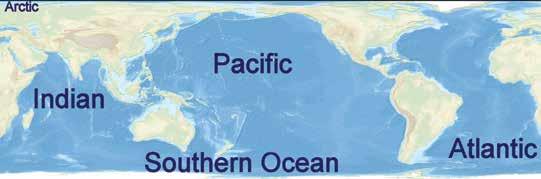
Some 71 per cent of Earth is covered by water that is described as salt water. This major body of salt water we call the ocean. Scientists have divided the ocean into five major oceans. Though mostly divided up by the world's seven continents, they are all connected.
The Pacific Ocean is the largest of the oceans, covering around one third of the Earth's surface. Its name is derived from Portuguese explorer Ferdinand Magellan who called it the Mar Pacifico, ("peaceful sea" in Portuguese).
The Atlantic Ocean is the world's second largest ocean. Its name is said to come from the Greeks who called it the Sea of Atlas.
The Indian Ocean is the third largest ocean in the world. It lies south of Asia, and India. It’s Earth’s warmest ocean.
The Arctic Ocean is in the northern part of the Earth, mainly around the North Pole. It is the smallest ocean in the world and most of the year, it is covered in ice.
The Southern Ocean is the second smallest of the oceans. It sits at the South Pole and the southern part of the Earth.

By Laurie Triefeldt

in small groups, in pairs or alone. During migration, the whales eat little or nothing, surviving on body reserves for four months or more.
Blue whales are toothless baleen whales. They strain their food from the water using 260 to 400 thin, fringed plates called baleen, which hang from each side of the mouth. A whale takes huge gulps of water and krill, closes its mouth and, using its sievelike baleen as a kind of filter, squirts the water out and swallows the krill.
They cruise the oceans at about 5 mph (8 kph), but can accelerate to more than 20 mph (32 kph) if they need to.
Communication
The blue whale is not only the largest animal on Earth; it is also the loudest. (The South American howler monkey is the second loudest.) Blue whales communicate and navigate using low, loud moans, pulses and whistles that can travel hundreds, maybe thousands of miles. The call of the blue whale reaches levels up to 188 decibels. (A jet engine reaches 140 decibels.)
You can visit the NOAA website to hear a blue whale call: 1.usa.gov/1NTqRpg
During the feeding season, a blue whale eats more than 4 tons (3.6 metric tons) of krill daily. Sometimes, two whales will work together to catch the krill. One whale will use its body to block the prey, forcing the school of krill into an easy-to-eat group.
It would take 40 elephants, each weighing 5 tons (4.5 metric tons), to equal the weight of a blue whale.
Blue whales are born weighing about 3 tons (2.7 metric tons). The calf nurses on its mother’s milk for several months and gains about 200 pounds (91 kilograms) every day A full-grown blue whale weighs in at about 200 tons (181 metric tons).
While sperm whales will dive thousands of feet deep, blue whales
These diving depths are due to the whales’ food source of krill living at shallow depths, and because blue whales need to surface every few minutes to breathe.
As you might expect, an animal this large has few predators, but sharks and killer whales have been known to attack them. Environmental changes, including habitat loss and toxins, are challenging this cetacean’s survival. Also, climate change is having a disastrous impact on krill populations, the blue whales’ major food source. Ship impacts and

The whaling industry of the early and mid-1900s destroyed almost 99 percent of the world’s whale population. Some populations have increased since the 1960s, when many countries passed laws to stop or limit the hunting of blue whales, but the species remains vulnerable. It is estimated that 10,000 to 25,000 blue whales swim our oceans today. Blue whales are currently classified as endangered on the Red List of the International Union for the Conservation of Nature.

For decades, South African mining houses have drawn in young black men for labour, only for many to return home sick, with little to show for years spent toiling underground.
Those who have contracted the preventable but incurable lung disease, silicosis, come home to die a slow and painful death. There are an estimated 288,000 cases of the condition in the country.
It is then the women in rural communities who are left to provide support and care under the most adverse conditions.
As part of its efforts to support pending litigation against the mining industry to secure long overdue compensation to minework-
1.
2.
3.

ers who contracted silicosis and for the women who took care of them, Sonke Gender Justice (Sonke) has been conducting research in the rural Eastern Cape.
The research is making visible how the gold mining industry’s failure to prevent silicosis has forced rural black women further into the margins of society.
Silicosis is a degenerative and incurable lung disease caused by inhaling silica dust, which is produced when mining gold.
Characterised by scarring of the lungs, which produces shortness of breath and fever, it first came to the attention of the gold mining industry more than one hundred years ago when it affected minority white miners who formed part of


Gold mining houses have not taken necessary precautions to prevent miners from inhaling this toxic dust.
A 2007 Global Occupational Health Network report said: “It is as simple as this; if occupational exposure to dust is avoided silicosis will cease to occur.”
The dust levels miners are exposed to in South Africa are four times higher than those permitted in Europe and North America.
With South Africa’s gold mines being the most profitable in the world, it appears that profits are more important than the preservation of life.
the work force.
New safety standards were then developed that led to South Africa’s mines gaining recognition for these occupational safety reforms. However, the scale of the pandemic as it has affected black miners has been minimised and ignored.
Research, including, more recently, Jock McCulloch’s critical study titled South Africa’s Gold Mines and the Politics of Silicosis, made the point that by 1911, black mineworkers were more at risk than their white counterparts, given the racialized division of labour that saw white workers occupy supervisory roles while black men remained underground doing manual work.
Uncovering the gender impact of silicosis
While the spotlight has been on the gold mining industry’s violation of miners’ health rights, and the dismal levels of compensation for the occupational diseases they have suffered, little attention has been paid to how this has impacted on women and girls.
When miners start to show symptoms of silicosis and are unable to work, they lose their jobs and return to their rural homes.
Sonke Gender Justice has undertaken research in the Eastern Cape – home to a majority of mineworkers –to explore the gendered impact of silicosis and how this disease is affecting communities. The preliminary findings are alarming.

Q: Is the Internet and the World Wide Web the same thing?
While many of us use the terms interchangeably, they are two separate things. In fact, in March this year the World Wide Web turned 26; the Internet is much older.
In 1958, according to NBC, the US defence department established the Advanced Research Projects Agency (ARPA), which in turn created the ARPANET in 1969, a network of mainframe computers at major universities.
The Internet is the infrastructure that connects networks across the world including both the hard -
In June 2015, Sonke researchers visited rural areas located in the Mbhashe and Mhlontlo municipal areas of the Eastern Cape to conduct in-depth interviews with carers, all women, who are looking after former mineworkers suffering from silicosis.
Zinhle Nkosi, one of the researchers on the team ex-
stress and poor diet. Patrick Godana, who is also part of Sonke’s research team says: “The poverty that these women endure is unbearable. Women are faced with the burden of care but also the direct impact of extreme poverty. When we visited their homes there was no smell of what was cooked in the
plained: “There are days when they have to care for their partners the whole day, especially in June when chest problems become worse because of the cold. They have to bath and feed them and help them to sit as most of them don’t have proper medication. They live on pain pills.”
Care work is physically and emotionally taxing work. Women who were interviewed suffer from depression, hypertension and diabetes mostly due to
ware (computers, servers, cables and more) and the software; it is commonly called a “network of networks.”
The Web was created in 1989 by Tim BernersLee. NBC states that the Web is another avenue for transmitting data over the Internet, in this case by
morning or the previous evening. It’s just dry”. With women and girls deemed responsible for cooking, cleaning and looking after sick people and the elderly, they lose the time that could be used to access education and work opportunities. They remain locked in poverty with scarcely any time for self-development. (Source: Silicosis: The price of gold. Text by Tanya Charles, photo essay by Thom Pierce, Mail & Guardian SA)
entering a string of characters called a uniform resource locator (URL) into a browser. This URL describes the location of a document written in HyperText Markup Language (HTML), full of the links and silly cat GIFs you know and love.







ARIES (March 21April 19)


TAURUS (April 20May 20)



(May 21June 20)

(June 21July 22)



LEO (July 23Aug. 22)

VIRGO (Aug. 23Sept. 22)



LIBRA (Sept. 23Oct. 23)

SCORPIO (Oct. 24Nov. 22)


SAGITTARIUS (Nov. 23Dec. 21)




(Jan. 20Feb. 19) (Dec. 22Jan. 19)


PISCES
(Feb. 20March 20)

Think before you speak. Jealousy is apparent. By keeping your private affairs to yourself, you will outwit anyone trying to meddle in your personal life. Focus on self-improvements.
You will gain a new perspective from someone with an interesting point of view. A younger family member will lead you on an intriguing adventure. Romance is in the stars.
You need to slow down. Trying to please everyone will lead to frustration and stress. Focus on what makes you happy. Secret information will be revealed.
You will have a full and productive day, provided you don’t let others interfere in your plans. Try to help others without sacrificing your own freedom.
If you are bored, look for a way to make a profit from something you love doing. Don’t reject the possibility of making a change in location or vocation.
Physical or mental challenges will sharpen your senses and test your ability and willpower. A piece of interesting and helpful information will come your way.
You may have high expectations, but remember that you don’t have to do everything yourself in order to reach your destination. Surround yourself with people whom you love to collaborate with.
Make a point to pay more attention to those who love you. Striving for success is important, but personal relationships need nurturing if you want your life to run smoothly.
A new acquaintance will transform your life. A personal affiliation should be reconsidered. Don’t toy with the affections of someone who has always stood by you.
You should pursue what you want today. You will gain the upper hand in a challenging situation by being direct and using the power of persuasion. You can outmaneuver your competition.
Joint ventures do not look promising. Check over your personal papers. Legal and financial affairs are best dealt with before problems become too big to handle on your own.
People you encounter will be demanding and time-consuming today. Set limits on what you will and won’t do, or you will have no time to achieve your personal responsibilities.