

The Miss Indigenous Heritage Pageant 2015 culminated
Peoples’ Affairs Ministry Valerie Garrido-Lowe poses with the new queen and the other delegates along
monday, september 28, 2015 | guyanatimesgy.com

monday, september 28, 2015 | guyanatimesgy.com
As the month of events
commemorating Education Month 2015 draws to a close, First Lady Sandra Granger has stated that much more needed to be done in the country to improve the education system.
She made this declaration while addressing a gathering at a Guyanese Diaspora Women’s Forum in Brooklyn, New York on Saturday evening.
In relation to education, the First Lady deemed this as the key to the development and success of a nation.
The First Lady quoted Malala Yousafzai, a young Pakistani activist for female education who addressed the United Nations General Assembly on September 25, stating “Education is hope, Education is development.”
According to reports, the First Lady committed to having her Office assist as much as possible in the drive to better the education system in Guyana.
Quite recently, a pilot project in this regard commenced in the village of Buxton, East
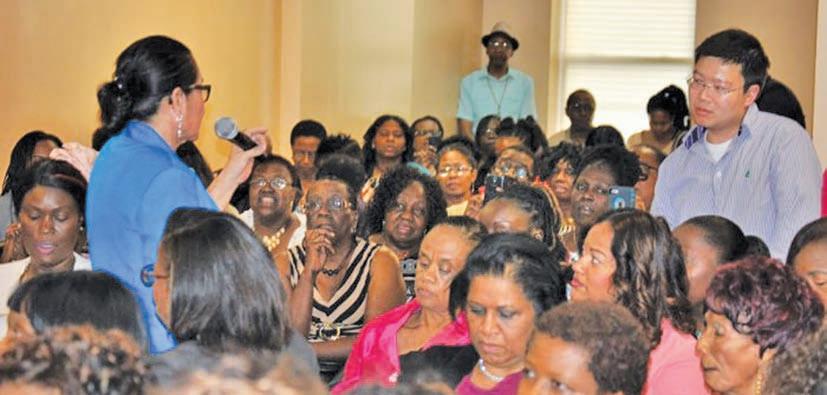
Coast Demerara (ECD).
It was noted that the Office of the First Lady will be looking at the possibility of implementing this project in other communities as well.
Guyana Times understands that Granger, while highlighting her future plans and some of the work that she has already begun, underscored the importance of raising awareness on adolescent sexual health and the effects of teenage pregnancy.
She explained that in terms of adolescent sexual health, there should be more done with regard to legislation as well as ensuring that more was done to highlight the negative effects this issue has on an individual, family members and the country on a whole.
Reminding the gathering that she herself was a mother and a grandmother, the First Lady stated that issues of this nature and others which
were closely related, inclusive of statutory rape and the trafficking of girls and young women, bother her “deeply”. As such, she has promised to use her office effectively to deal with these matters.
Guyana Times understands that following the First Lady’s address to the Diaspora, support was garnered from those in attendance with regard to projects which she has already commenced.

The Diaspora, with the aim of ensuring that development and success take place in Guyana, offered assistance to expand some of the First
Lady’s ongoing projects inclusive of the recently launched ICT project in Buxton and the remedial classes. (kristenm@ guyanatimesgy.com)
In observance of World Tourism Day, celebrated on September 27 under the international theme “One Billion Tourists – One Billion Opportunities”, the Tourism Ministry, through the Guyana Tourism Authority (GTA), has announced its intention to launch a new marketing strategy to increase Guyana’s global visibility under the brand, “Guyana – South America Undiscovered” .
The theme for this year’s observances, developed by the World Tourism Organisation (WTO), is premised on the undeniable fact that billions of people cross borders in search of new experiences and new exotic sights, for rest and relaxation, and often in search of ingredients to boost their business ventures.
The Tourism Ministry said that its development strategy included intensive citizen education, which would take place simultaneously with the upgrading of Guyana’s physical infrastructure, including all runways and community airstrips.
In a release, the Ministry stated: “Re-branding and marketing Guyana throughout the broad international tourist market can only bring us great benefits. Guyana is now set firmly on a path to development in which tourism is projected to be a major earner.”
The Tourism Ministry invites every citizen to join in this endeavour to make Guyana beautiful again and to share it with the world.
The Ministry stated that the ultimate objective is remarkably in consonance with the bedrock of the WTO’s global objective, to create opportunities for people to learn and earn, and noted that the tourism industry has a dual responsibility to contribute to the socio-economic development of the nation’s people while driving the renewal of the nation’s aesthetics.
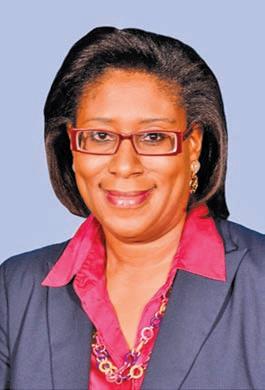
Tourism Minister Cathy Hughes stated that on the socio-economic front, the tourism industry presented numerous opportunities for citizens to create income generating tourism-related businesses with the added incentive of
creating jobs. She related that Guyana’s success with community tourism initiatives at Surama and Rockstone was testimony to the national potential for economic growth.
On the environmental front, the Minister said: “We recognise that a clean, manicured environment in town and hinterland are equally important to the tourist’s experiences which she or he subsequently communicates to the world. As such, every citizen bears some responsibility for the care of their environment.”
Minister Hughes stated that tourism in Guyana when compared to other Caribbean countries was still in its infancy. “Our product is uniquely different and as attractive to the potential One Billion tourists in search of a great vacation experience. While Trinidad and Tobago, Barbados, Grenada, St Vincent, The Bahamas and islands in the Eastern Caribbean offer white sandy beaches, sun and Caribbeanflavoured hotels, Guyana appeals to adventurers, to lovers of nature, to birding and wildlife aficionados.”
Hughes further stated that unlike its Caribbean neighbours, Guyana was lush with thousands of varieties of colourful vegetation, some of the largest living wild creatures, and hundreds of species of winged beings, which themselves add a different kaleidoscope of colour to the forests, some of which were still pristine and carefully preserved.
She stressed that ecotourism was Guyana’s product and that it attracted adventure seekers to the dense jungles, who revel in the numerous meandering rivers, tributaries and creeks and were awestruck by the rolling savannahs and the tiered and thundering waterfalls that dot the hinterland. She stated that many of the country’s visionary entrepreneurs were successfully operating innovative nature resorts that provide a constantly changing repertoire of nature tours.
The Tourism Minister noted that Guyana’s brand of tourism has already attracted television documentary producers of the ilk of National Geographic. Over the past year, Destination Guyana was featured in the television hit series “Naked and Afraid”; in the BBC television film “Britain’s Secret Slave Owners”; and in the Blue Paw documentary “The Source of the Essequibo”. The world’s leading news producer, CNN, featured Guyana in its production of “Big Earth - 101 Amazing Adventures of the World”. In addition, Guyana was featured in National Geographic’s “Best Trips 2014” and named in the American TV Special “Animal Planet”. (jpinder@guyanatimesgy.com)
monday, september 28, 2015

The Demerara Harbour Bridge will be closed to vehicular traffic on:
Monday, September 28 – 05:00h-06:30h and Tuesday, September 29 – 05:00h-06:30h
The Berbice River Bridge will be closed to vehicular traffic on:
Monday, September 28 – 16:20h-17:50h and Tuesday, September 29 – 05:00h-06:30h

Parika and Supenaam departure times – 05:00h, 11:00h and 16:00h daily.




Heavy rain showers can be expected, with partly cloudy conditions in the evening. Temperatures will range between 25 degrees and 31 degrees Celsius.
Winds: East North-easterly between 2.67 and 3.57 metres per second.
High Tide: 04:25h and 16:43h reaching maximum heights of 2.91 metres and 2.96 metres respectively.
Low Tide: 10:17h and 22:40h reaching minimum heights of 0.31 metre and 0.23 metre respectively.







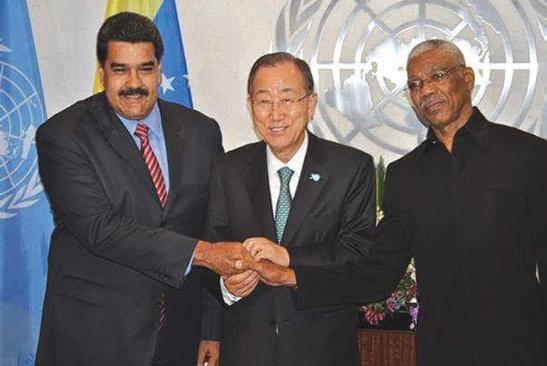
The highly-anticipated meeting between Guyanese
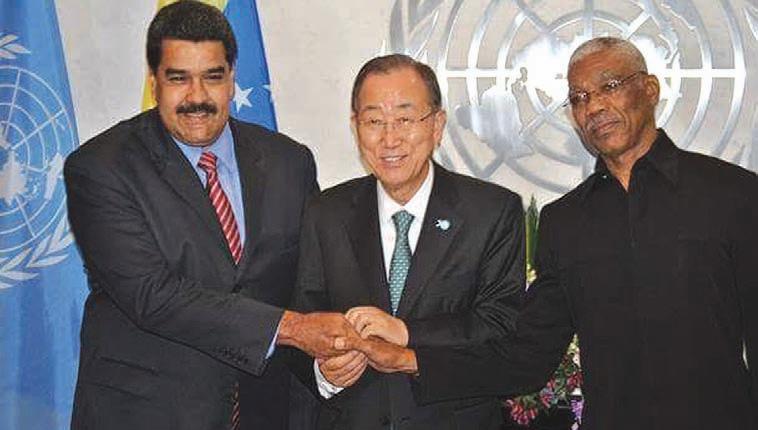
President David Granger and Venezuelan President Nicolás Maduro amid the ongoing border controversy saw the leaders agreeing to have a United Nations delegation visit the Spanishspeaking nation to investigate its claims to two-thirds of Guyana’s landmass.
“These are complex, sensitive issues. We will receive a special technical committee of the UN, to work on the circumstances and this Venezuelan claim,” Maduro told the press following the meeting on late Sunday evening in New York on the sidelines of the UN 70th General Assembly.
Based on reports, Maduro will be presenting several documents to support his country’s claims.
On the other hand, President Granger told the press that he was convinced that Guyana’s position on the border issue is a legal one, contending that Venezuela has no evidence to support its “spurious” claims.
Despite the difference in opinion regarding the claims, both Heads of Government agreed to arrive at a peaceful resolution, noting that the UN Secretary General Ban Ki-moon, who mediated the meeting, has a menu of measures which can be implemented to have the matter resolved once and for all. They also agreed to continue engaging in bilateral communication aimed at rebuilding a functional diplomatic relationship through the exchange of Ambassadors.
In light of the rekindled border controversy, Maduro has recalled Venezuela’s Ambassador to Guyana Reina Margarita Arratia Diaz and
has also recently refused to accept the credentials of Guyana’s new Ambassador to Venezuela Cheryl Miles. However, following the meeting, President Maduro said he was committed to having the Ambassadors resume their work.
President Granger told reporters that he believed all the provocations on the bor-
Venezuelan military appears to be scaling down its presence at the GuyanaVenezuela border.
This observation was made just moments before the historical meeting between President Maduro and President Granger to discuss the boundary controversy between the two states- with the intention of arriving at
der controversy came from Venezuela.
“It was the Venezuelans which withdrew their Ambassador from Georgetown. It was the Venezuelans which refused to give our nominees for ambassadorship, Ms Cheryl Miles, agreement. It was the Venezuelans which held military manoeuvres on the border. It was the Venezuelans that promulgated the decree on the 26th May…,” he stated.
Furthermore, Granger asserted that Guyana has always been open to dialogue on the matter and therefore, will continue to welcome more opportunities of this nature amid the ongoing controversy.
Meanwhile, the
an amicable resolution to the decades-old issue.
Venezuela had claimed that the increased military presence was for an “operations exercise”.
However, this move did not sit too well with the Guyana Government, which put the country on alert, saying its troops would be observing and defining Venezuela’s aggression.
The increased presence of Venezuelan military at the border was seen as a “provocative” move, given the fact that the Spanish-speaking nation had only just a few months ago issued a decree purporting to claim Guyana’s maritime space, and said it would issue Venezuelan identification cards to the people of Essequibo.
But just moments before the two Heads of State were scheduled to meet, the armed men were seen retreating from the area.
Minister of State Joseph Harmon confirmed this.
“The way we were responding to Venezuela is appropriate…as of yesterday, the reports we have, is that Venezuela has started to remove. They started scaling back – the gun boat that was in the Cuyuni is now removed and the armament they had there is now moved towards inland Venezuela,” Harmon had stated.
Given this development, it remains uncertain whether or not Guyana will follow suit and have its military scale down its presence at the border.
The Guyana-Venezuela border was settled since 1899 by an Arbitral Award which Venezuela is now claiming is null and void.
This move came in light of the recent announcement by US oil giant ExxonMobil of its discovery of a significant reserve of high quality crude oil in Guyana’s offshore waters.




Editor(ag): Michael Younge
Tel: 225-5128, 231-0397, 226-9921, 226-2102, 223-7230 or 223-7231. Fax: 225-5134
Mailing address: 238 Camp & Quamina Streets, Georgetown
Email: news@guyanatimesgy.com, sales@guyanatimesgy.com
Now that we have adopted the 17 new "Sustainable Development Goals" (SDG's) the next step would be to get them implemented. Even though the Washington Consensus made a frontal attack on the idea of an interventionist state starting from 1989, when the chickens came home to roost in 2008, even the US had to jump in feet first to rescue its corporations through massive investments. The sheepish rationale offered was that the failing corporations were "too big to fail" (TBTF).
While we may have been forced to accept the "conditionalities" of the IMF after the PNC signed on the dotted line in 1989, it is to the credit of the successor government of the PPP that they did not accept the "night watchman" state the Washington Consensus mandated. That straitjacket ignored the lessons of history as to the crucial role of the state as a dominant player in economic development especially in the Industrial Age. Some scholars even start from the Renaissance and include both Britain and its colonisation schemes that supplied raw material as well the US where the robber barons were facilitated in their activities.
After 2008, a much more chastened group of industrialised countries now accept that states in the lesser developed countries would have to go beyond their present frantic "Qualitative and Quantitative Easing" (QE) to stimulate their economies and in fact attempt to replicate the role of the state in their early industrialisation. But this has not been achieved without a fight that is still being waged of which the UNCTAD 2012 meet in Doha is instructive.
In 2008, amidst the debris of the collapsed northern economies, the Accra UNCTAD meet had agreed on the need for an "enabling state" - one that would directly intervene into the economy so that specified goals could be achieved as with the Eastern Tigers during the 20th century. However 4 years later in Doha, the new-liberals had regrouped and argued for at most an "effective state" - a trope for the night watchman state.
One of present tragedies of Guyana is that the politicians in the new government has not indicated where it stands in this debate and its implications for not only achieving the SDG's but to even getting started. Its statements on economic development has been ad hoc at best and reflexively antidevelopment at worse. Its evident discomfort is its refusal to accept that whether they look at Taiwan, Singapore, South Korea or post-WWII Japan, development meant assisting specific businesses to initiate a process of export-oriented manufacturing. And the creation of a class of individuals and families that inevitably became wealthy, whether it is Mitsui in Japan or Samsung in South Korea.
If they are not historically minded they can look at modern China, and note - as was pointed out in our editorial of yesterday - that one -third of the 1.8B persons lifted out of absolute poverty to give the MDG's some respectability, were from China but in which there were also 213 billionaires created simultaneously. Only the US has more billionaires.
One scholar offered some characteristics of the development state: "...a set of encompassing institutions where the state is both an initiator of development policies and builder of development institutions...The state provides disciplined support for export-oriented sectors through directed credit and other subsidies. The state also coordinates investment across sectors and within industries . It invests itself in areas where private risk absorption capacity is too low. This is important in building up a national system of innovation in particular. The state also steps in to manage sectoral and macroeconomic crises ensuring a relatively smooth accumulation process to proceed."
In our country the Minister directly responsible for "business" took time off to criticise the local businessmen without asking whether the Guyanese state - of which his APNU/AFC coalition are in charge for the next five years - was "enabling" that innovation process.

Dear Editor,
President Granger is back on the podium soliciting help for this and that, border here, political cooperation there. For once it’s not Nagamootoo; the last time he begged it was for Chinese help in resolving the Venezuela border controversy. But when Nagamootoo begs, it leaves many indifferent, for how can such a man even presume to be taken seriously given his repeated betrayals and sneakiness committed throughout his political career, to his fellow partisans and now his electorate?
When President Granger begs however, one’s ears perk up, due to his prolonged absence from the political scene since he was elected to presidency. This time, he speaks of high levels of political commitment needed in attaining Sustainable Development Goals, another invention of the (not so united) United Nations to keep the developing world busy as it is being toyed with by the West.
What is rather amusing, is the conviction with which President Granger spoke, again alluding to this PNC and coalition catch word “unity”. Does President Granger and
this PNC-led Government actually think that Guyanese do not know that “unity” cannot be materialized overnight or in five years? Do they not know that there is no “unity” in geopolitics, there is only national interest? If they don’t, then at least a good number of Guyanese who are still alive to tell the tale know it. They also know that a President who speaks of national unity while he conducted one of the greatest witch hunts witnessed in Guyana, and which targeted a grand majority of Amerindians and East Indians, cannot possibly be taken seriously. They know that a President who allows his Government to ruin the rice market because of exaggerated and misplaced pride cannot be taken seriously. What the President and the Government seem not to know, is that this false and arrogant pride which has cost us the rice market, is not “national” pride, because the people do not share this peacock pompous attitude. Rice farmers have not sacrificed their lands and families’ wellbeing for “national” pride. There is no “unity” when the people do not have their say in how this country is run.
There is no “unity” when people are fired without prior notice, when boards are dismissed even in a struggling rice industry. There is no “social cohesion” no “national unity” if the five and more people who compose Guyana’s rich cultural and ethnic diversity aren’t heard and respected. Absolutely not.
So as President Granger stands in front of his international counterparts, he should revise the fundamentals of national sovereignty and territorial integrity, where one of the founding principles require people to rally in support of the decisions made by the Government. Has President Granger been among the Essequibians recently, a county which gave significant support to the AFC, to listen to what they have to say?
For the sake of his enlightenment as he is busy traveling the world while rice farmers are on the verge of starving, many are half seriously joking about how welcomed the Venezuelan ID would be. Has President Granger heard this yet? Or has he truly gone deaf in his belief that national “unity” has already transformed this land? When wind of it does catch his ear, let him
ask himself why before accusing his AFC supporters of being unpatriotic, and let him remember that it’s their bellies and their families before anything else.
Sustainable Development Goals would never be attained without the support and cooperation of every single segment of the Guyanese population. They would never be achieved if the right economic policies are not implemented. Yet, President Granger instead of looking inward, is calling on the international actors to help Guyana in this challenge. Surely, he must have very little confidence in the competency of his administration.
Perhaps President Granger should learn the basics, which include promoting change from within. Perhaps, he needs advisors who are not old and outdated military men who have no idea about how to manage the social issues of this country.
This Government’s incoherence in wanting to address SGDs must first be rectified if we are to achieve any significant progress by 2030.
Sincerely,
Stacy Cheong
Dear Editor,
It seems as though the tourism sector is constantly evolving to find new ways to thrill tourists. Ecotourism and nature tourism are probably among the most recent developments, and quite applicable to Guyana which lacks white sandy beaches and blue waters. However, the developing trend in developing countries, is what is now being referred to as “volontourism”. It is a combination of volunteerism and tourism, where participants are predominantly Western young people looking to make a significant contribution to developing communities, while living like the “locals” and visiting their destinations.
Unfortunately, this practice has its setbacks for those destinations. For instance, volontourists engage primarily in teaching activities and passing on skills in communities. However, the majority of these volontourists are not at all qualified to teach, and some would have never taught before their arrival.
In Guyana, there is a steady flow of young foreigners, though not exactly volontourists, who come
to teach and experience a new lifestyle in hinterland communities especially through different international organisations, such as Peace Corps. The effects of their short stay in communities are just the same. Many who I would have encountered in the hinterland are teenagers or just past the age of 20, who dressed as hippies, go about backpacking in villages. While their efforts are noble, it is worth questioning if they have the necessary cultural sensitivity, expertise and appropriate approach in dealing with children from hinterland communities. These volunteers are seldom if ever, mentored or monitored by the Education Ministry or local authorities, to determine whether what they have to offer, is what is needed, or is adapted to our children in the hinterland. It leaves one to also question the Government’s commitment to providing a steady supply of trained and equipped teachers to hinterland communities. Shouldn’t our children receive quality education?
What’s more, is that these young people often indulge in heavy drinking and decadent behavior,
even within Amerindian communities, which contradicts the purpose of their visits, which is to gain experience from living in a hinterland community, while contributing some effort in exchange. The degrading image they create for themselves, and the possible negative consequences their irresponsible actions have other young people in the hinterland communities, should not be allowed.
Additionally, there are reports of these young volontourists/volunteers, who indulge in political activities against the Government, as was the case under the PPP/C. One would recall the threats made by a young Irish man in the presence of Government officials in Lethem, who under the influence of alcohol threatened to kill President Ramotar. He had volunteered to teach in Region Nine. One wonders what would have happened if a Guyanese lad threatened to kill the Queen in the presence of Government officials.
It is recommended that a proper system to monitor the actions and performances of these vol-
unteers/volontourists be implemented by the Government of Guyana to ensure that both sides benefit adequately. Also, it is advisable that these volunteers/volontourists be selected based on their qualifications and skills, and not just ardency in wanting to visit what many still call a “third world” country. Guyana, they should know, is now a middle income country, which, if the right policies are implemented, will continue to grow rapidly. As such, young people who come here to teach our children, should erase from their minds the patronising image of a devastated country. Our national literacy rate surpasses 85% and unless these young people are ready to make a long term, serious and competent commitment, our children should not be forced to make do with half measures. Finally, they should never be dispatched for, or engage in the politics of this country, whether on a local or national level.
Guyana is no longer the dump it was in the 70s.
Sincerely,
Alexi Williams
Dear Editor,
If you want to fight fire with fire, then you better have a bigger flame.
In recent days we have seen the Venezuela border controversy slowly beginning to morph into a potential crisis. We all know how it began and we also watched closely how the Government dealt with the issue step by step.
I don’t want to sound like an alarmist, but since military activities have become part of the issue, it is safe to say anything is possible. We are currently in a “battle ready” situation.
It could be noted that presently in another part of the world, NATO has almost tripled their forces on the Russian border with Europe, and Russia is doing the same. Many already believe that that situation will lead to the next Great War.
We are now sucked into an international trend that has already claimed countless lives in Iraq, Afghanistan, Libya, Algeria, Egypt, Syria, Lebanon, Ukraine and others. It is the new strategy for a form of global dominance that seeks to remove and take over countries who either are not in line
with the “world order” or to simply take natural resources. The powers that be, have everything to gain from our border controversy with Venezuela and we have nothing to gain but disaster. So why exactly are we so eager to match Venezuela with force or a show of force, when anyone who have read “the art of war” or understand any military strategy whatsoever, would know that you never aggravate the greater force with a show of “head on collision” when you very well know it would be a suicide mission?
We do not have anything close to match or restrain Venezuela militarily unless we are either secretly being backed by a greater power. And who would that be? Why we are we not being more willing to have bilateral talks with Maduro ? It this the only sensible way forward for Guyana. What other outcome do we expect from this situation?
Guyana is threading on thin ice here, we are being baited into a situation that we will have no control over and it’s either that our current Government is in over its head or it knows exactly what it’s doing. It is also concerning to
see our military marching through the street beating the “war drum” in some kind of effort to stir a patriotic stance that will only bring carnage to our citizens.
We have seen this played out before, the history books are filled with examples and there is always one thing that’s constant and that is help will not come until there is enough bloodshed to warrant support from the higher powers.
We must defend our borders but we must do so wisely but I am not confident that this Government is taking the right approach. International Relations dictates that bilateral talks is always the better option and it is up to the President to be creative enough to make good use of those talks and not simply say that “Venezuela already knows where we stand”.
The feeling of sudden and unpredictable changes are in the air for Guyana and it is not bringing happiness. Greedy eyes are looking at our country and our Government is shaping up to be the perfect puppet.
Malcolm Watkins
Dear Editor, I would like to expose the behaviour of some nurses at the Georgetown Public Hospital, and how some people, especially women, are being treated.
On Monday, August 31, I went to the hospital to see a patient who had just given birth. On my way to the maternity ward, I came across a woman who was experiencing labour pain and was looking for the labour ward. It seems as though she had come the wrong way and when she encountered an nurse who upon listening to the woman, asked her the following:
Nurse: “How much children you have?”
Patient: “12”
Nurse: “Do you have any boys?”
Patient: “Yes”
Nurse: “Do you have any girls?”
Patient: “Yes”
Nurse: “Oh so now you come fuh mek the antiman”.
These nurses seem only to be doing their jobs for money with little care for the humane requirements of their profession. Today, most of the care administered to patients is taken in charge by families and friends and not by the nurses, such as bathing and changing bed pans. This used to be the nurses’ responsibility.
The Health Minister needs to intervene, as we are all fed up of the attitude and quality of service provided by these nurses who are more of a health hazard than help to citizens.
Sincerely, Sandy Baldwin
The woman who was a poor soul considering how she was dressed and her physical condition, was speechless. The Minister of Health should look into this matter. If this is how patients in labour are treated, then the nurses have no place in that hospital. Too many women who give birth in that hospital are being treated like dogs even though nurses are there to provide care and not to judge or insult us.

Powerful girls grow up feeling secure in themselves. They learn to take action, making positive choices about their own lives and doing positive things for others. They think critically about the world around them. They express their feelings and acknowledge the feelings and thoughts of others in caring ways. Powerful girls feel good about themselves and grow up with a “can-do” attitude. Of course, strong girls may (like all of us) have times of insecurity and self-doubt, but these feelings aren’t paralysing because the girls have learned to work through their problems. Powerful girls will grow up to lead full, valuable lives. Here are some of our experts’ ideas to help you raise powerful daughters.
Encourage your daughter to pursue a passion
“Full engagement with an activity she loves will give her the opportunity to master challenges, which will boost her self-esteem and resilience and affirm intrinsic values rather than appearance,” says Rachel Simmons, author of Odd Girl Out. “Having a passion lets her go shoot baskets or play an instrument, for example, instead of being swept up in online drama.”
Let her have a voice in making decisions
“Whenever possible, let her make constructive choices about her life. Let her choose her own clothes, within appropriate limits. Give her a voice in what after-school
activities she participates in and how many she wants to do (as long as it works for the rest of the family, too). Remember that knowing what she cares about most will come from trying some things and finding she doesn’t like them, as well as from finding things she loves to do,” recommends Jane Katch, EdD, author of They Don’t Like Me. “Your daughter might need to make a commitment for a short time for an activity (one soccer season) but when that’s
issues on her own rather than fixing things for her
“When parents take over, girls don’t develop the coping skills they need to handle situations on their own. Ask your daughter to consider three strategies she might use to deal with a situation, and then ask her about the possible outcomes. Let her decide what she wants to do (within reason). Even if you disagree with her choice, you give your daughter a sense of control over her

over, it’s okay to try something different!”
Identify the values most important to your family
“Consider the ways you convey these values, especially by example. What are the moments in your daily life when you can model the values you want your daughter to learn?” asks Simmons. “What traits and strengths do you want your daughter to develop as she grows?” asks Meg White, MA. “See if these qualities are reflected in how you parent.”
Encourage her to solve
life and show her that she is responsible for her decisions,” says Simmons.
Encourage her to take physical risks
“Girls who avoid risks have poorer self-esteem than girls who can and do face challenges,” says JoAnn Deak, PhD, author of Girls Will Be Girls. “Urge your daughter to go beyond her comfort zone — for example, encourage a girl who’s scared to ride her bike downhill to find just a small hill to conquer first.” Catherine Steiner-Adair, EdD, co-author of Full of Ourselves: A Wellness

Program to Advance Girl Power, Health and Leadership, agrees.
“It’s important to help even non-athletic girls develop some physical competence and confidence when they’re young. Whether it’s through team or individual sports, girls need to form a physical relationship with their body that builds confidence.”
Get girls working together
“Girls who work cooperatively in school or who problem-solve together do much better in taking large risks or facing challenges. These girls report an incredible sense of accomplishment and feeling of competence, both of which give a huge boost to selfesteem,” says Deak. “Encourage your daughter to participate in team-building activities or join organisations that rely on teamwork.”
Let your daughter know you love her because of who she is, not because of what she weighs or how she looks.
“Encourage your girl to eat in healthy ways, but don’t over-obsess over what she eats. Listen to her opinions (about food, and other things) and show appreciation for her uniqueness, to help her develop herself into the person she wants to be,” says SteinerAdair. “Comment on the way she carries herself into a room or the ideas she is expressing before commenting on her looks. She needs you to know her insides and validate the developing person within, as well as noticing her emerging young womanhood,” adds White. (Excerpt from pbs.org)
(Continued from Saturday)
By Isadora Fox
Manners & Responsibility: 4
Basic Manners
Basic Table Manners
What to expect: By age 3, your child will be able to eat with a spoon and fork, stay seated at the table for 15 to 20 minutes, and wipe his mouth with a napkin.
What to do: During toddlerhood, offer your child his food on a small, no-break plate; encourage him to use his utensils; discourage him from throwing food by telling him, “We don’t throw food on the floor. If you don’t want any more, please say ‘no thank you.’”
Please and Thank You
What to expect: An 18-month-old may be able to say the words but not necessarily grasp their true meaning. By 2 1/2, children can link the word to the concept.
What to do: If your child hasn’t gotten into the habit, gently prompt him by saying, “What do we say after we get a gift?” or “What do we say when someone gives us a treat?”
Sharing
What to expect: At around 2, a child begins to understand the concept of sharing and turn-taking – though he won’t necessarily relish doing either!
What to do: Encourage your toddler to share with his friends on play dates by giving him two similar toys and helping him offer one to his
friend. '
Apologising
What to expect: Though a toddler of about 18 months has a basic understanding of empathy, he can’t really understand why he’s expected to apologise. By two and a half to three years old, he’ll understand the concept but may be too caught up in his own affairs to do it on his own.
What to do: When your child snatches a toy from a playmate, discourage the behaviour and play on his empathy: “We don’t hit; hitting hurts.” Then, prompt him to apologise: “When we hurt someone, we say, ‘I’m sorry.’”
Let’s Talk
Here are Sheryl Eberly’s tips on teaching the basic rules of polite conversation. Look at the party to whom you are speaking or who is speaking to you.
Tip: Tell your child to look for what colour the person’s eyes are.
Answer if you are asked a question.
Tip: Gently prompt your child to speak. Let him know that it’s okay to say “I don’t know.”
Don’t speak until the person you are speaking with is finished.
Tip: Encourage patience by telling your child to count to five before speaking. Don’t interrupt unless it’s an emergency; if a friend is sick, for instance, or someone needs to use the bathroom. If you must interrupt, say “Excuse me.”
Tip: Develop a signal your child can use to indicate that he needs you – raising his index finger, for example.
Play dates are a great opportunity to practise manners. Here’s how to ensure your child is on his best behaviour.
Set your child up for success. Young children behave well when they’re rested and comfortable. Plan play dates around naps and meals.
Gently remind him of your expectations. Before you go, tell your child that he has to share and say “please” and “thank you.”
Prompt him when he forgets to be mannerly. If your child takes a snack from your host without comment, for example, say, “Please thank Mrs. Jones for the cookie.”
Step in when things get hairy. During the play date, someone will inevitably hit, bite, or toy-snatch. If your child is the instigator, say, “That made your friend feel bad. Let’s make him feel better by saying that we’re sorry.”
Help him thank his host. When you leave, remind your child he had fun and prompt him to say “thank you.”(www.parents. com)

By Kristen MacKlingaM and indrawattie natraM
Frustrated rice farmers in the two major rice producing regions, with no hope of relief in sight from the Government ,have signalled their intentions to ‘rest’ their lands come the next crop, given the low prices and lack of government intervention.
In Region Two (Pomeroon-Supenaam), farmers have finally given up hope that the Government would be coming to their rescue in light of the crisis the rice industry has been facing over the past months due to the Venezuelan market for 200,000 tonnes of rice/paddy being lost.
The lack of action and unfavourable responses from the relevant authorities to inject funds into the industry have only made matters worse for those affected.
Some Essequibo farmers are contending that they may not be able to plant rice anytime in the near future. The poor prices they are being offered cannot offset their costs of production that they would have to outlay to and without intervention from the Administration, their future appears to be nothing short of ‘bleak’.
Guyana Times was able to speak with some of these rice farmers who are lamenting that the rice industry seemed to be in an unstoppable freefall.
One common cry from a majority of the affected rice farmers is that “rice is dead” as they continue to air their disappointment with regard to the treatment received from the A Partnership for National Unity/Alliance For Change (APNU/AFC) Administration.
Guyana Times understands that farmers are of the opinion that the only way they will be able to venture into the next crop is if the Government offers its immediate assistance and/
or they receive subsidies on every bag produced.
A female rice farmer from Walton Hall, Essequibo Coast, told this publication that she will definitely be “putting my land to rest”.
The reason for this drastic decision is that usually she would generate p an average of $1.3 million in revenues from her three acres.
However, this crop only brought her $500,000 in total as a result of being offered $1500 per bag of paddy.
The woman declared that this is ‘unprofitable’ and would not offset her cost of production. She strongly believes that the Government should intervene in the issue of low paddy prices.
“We are producing we are producing, but there is no money, no market. We lost almost $600 per bag for our harvest. What will happen to our family? Who really standing up for us?” she questioned.
Another farmer from Cullen, Essequibo confirmed that he will not be going back to the rice fields since this has proven to be unprofitable during the past months.
He told this newspaper that the present prices being offered to rice farmers were the lowest that he has ever received.
According to the man, this is ‘unfair’ and a ‘rip off.’
“Where is the representation from the Government or the RPA or the Rice Action Committee?” he asked.
He further explained that he received 350 bags from his field and obtained $700,000 for this. However, in the past for the same crop period he would usually receive around $2 million.
Many rice farmers have voiced similar concerns about the industry since a number of them have outstanding loans which they took from the banks.
They noted that the
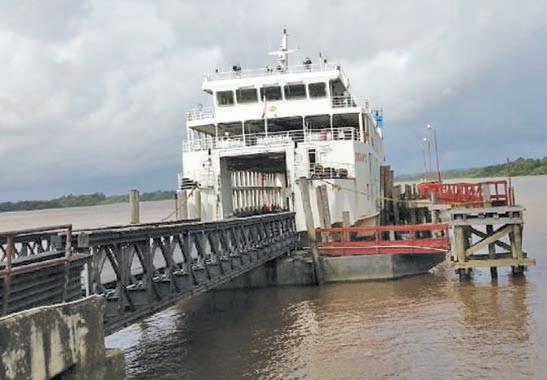
Even as they are charged exorbitant fares, businesspeople and vehicle owners using the Essequibo ferry service are bitterly complaining over the low standard being set by staff of the Transport and Harbours Department attached to the Supenaam Stelling in Region Two (Pomeroon-Supenaam).
According to a businessman, he was the first to join the line at Supenaam to board the ferry to Parika on Sunday morning, but one of the staff opened another gate allowing entry to seven other vehicles that came minutes after the boat started to load.
$2000 and less for a bag of Grade A paddy which they have obtained would definitely not give them a profit after their expenses are taken care of.
With this being the case, it is highly unlikely that a majority of rice farmers, especially in Essequibo, would return to their lands for the next crop, even if they wanted to.
Hundreds of rice farmers in Region Two last week staged a protest demanding assistance from the Agriculture Ministry and the Government of Guyana.
Calls were made for better paddy prices as well as concessions on fuel and vehicles, but to date no word has come from the APNU/ AFC Administration with regards to any of these demands.
Berbice
Meanwhile, in the Ancient County of Berbice, rice farmers are plagued with similar burdens and share the same views as those in Essequibo.
In Berbice, a notable number of rice farmers do not even own their own lands. They rent the lands from landlords who commonly reside outside of Guyana.
In addition to production costs, personal expenses and loans from the banks, these distraught farmers have to ensure they pay their rental fees for the lands on which they farm.
Many in Berbice are also contemplating ending their “rice farming days” as they are operating at major losses with the current situation in the industry.
It must be reminded that if the majority of rice farmers throughout the country cease to cultivate rice, which is a major revenue earner for Guyana, the economy would be adversely affected.
(kristenm@guyanatimesgy.com)
The businessman, who had perishables on his truck, said he asked two members of staff, whom he identified, what was going on and was ignored. He said it was then a security guard intervened, telling the staff that he, the businessman, was there before all other drivers. The businessman said his was the last vehicle to board the boat and he was told by staff that if the ambulance arrives, he would have to disembark.
The businessman is questioning on whose authority were the staff there allowing vehicles to ‘jump’ the legitimate line.
“Is this how the place is being run? Because you got money, you can give staff and get on the boat? What happen to people who made the sacrifice to wake up early and join the line? What goes for one, goes for all; once you got money you get on the boat? Who is monitoring the operations?” The businessman wanted to know.
He said many of his colleagues were denied access as a result of the “preferential treatment” that was given by the staff to friends and family.
Like that businessman, many others have voiced their concern over the operations at the Supenaam Stelling. Apart from calling for lower fees, passengers and businesses are calling
on the Public Infrastructure Ministry to examine the operations of the Stelling.
On a daily basis many persons venture to and from Regions Two and Three (Essequibo Islands-West Demerara) to conduct business and other activities on the ferry service.
There is the view that supervision should be strengthened at the facility and standards should be set. Commuters and vehicle owners are calling on Public Infrastructure Minister David Patterson to intervene in the matter and set proper standards.
Recently there have also been widespread calls for lowered fares for crossing the Essequibo River.

monday, september 28, 2015 | guyanatimesgy.com
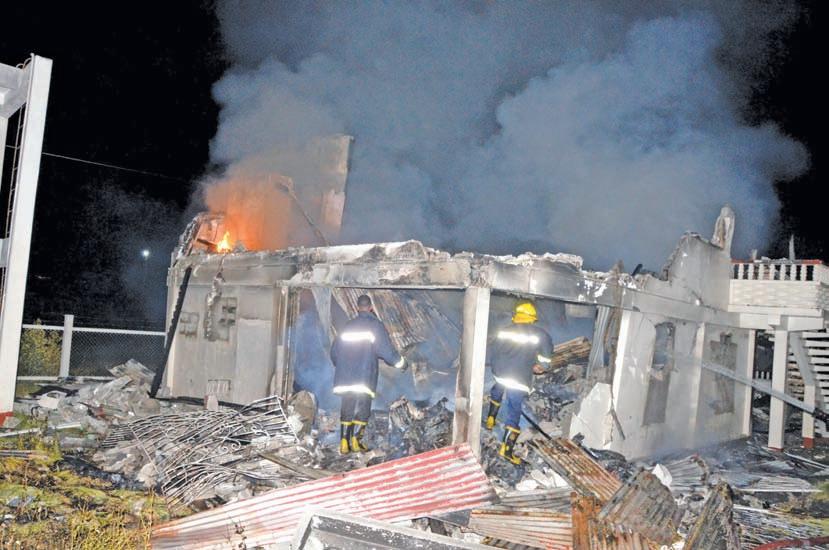
AGeorgetown businessman is now counting millions in losses after his Happy Acres, East Coast Demerara property went up in flames Saturday night.
Guyana Times was told that the Lot 167 Happy Acres house was being used as a bond. Information reaching this newspaper revealed that the fire started around 21:30h after a loud explosion was heard.
At the scene, persons were heard discussing how the loud blast had left residents of Happy Acres and the neighbouring Atlantic Gardens bewildered.
Residents said the explosion caused the glass windows of the building to shatter and flames immediately erupted.
“It all happened so fast... after the explosion, the fire began spreading and quickly engulfed the top part of the building and then spread to the bottom flat,” one neighbour remarked. According to persons at the scene, the Guyana Fire Service arrived promptly but only with one tender, thus the firemen could not contain the blaze and had to call for backup.
When this newspaper arrived at the scene, there were two fire tenders in
sight. After a fierce battle with the flames, the firefighters were able to put them out, but not before the building was completely destroyed.
Speaking with this newspaper, the distressed owner, who requested anonymity, said he was still trying to wrap his mind around the incident. The businessman explained that he was at an event on Saturday night when he received a call from a friend who lived in Happy Acres that his property was on fire.
“I immediately rushed to the scene – it took me about 20-25 minutes to get there. When we got there, the en-
tire building was already on fire, so we stood back and watched, leaving the fire people to do their job,” the man stated.
According to the owner, he bought the property just over a year ago and did some renovations, after which he used it as a bond.
The businessman outlined that the building stored items such as electrical appliances, stoves, cell phones and other devices.
He noted that he could not say what could have caused the fire, noting that the wiring of the building was fine. “I don’t know what happened, I honestly can’t say… it caught me off guard… I just waiting on the Fire Service to investigate and hopefully they can tell us what happened,” he told this newspaper, estimating his losses to be in the millions.
Meanwhile, Divisional Officer of the Guyana Fire Service, Compton Sparman, when contacted on Sunday, told Guyana Times that based on preliminary investigations there was an explosion and flames were then seen.
Sparman stated that he could not yet say what was the likely cause of the fire. He noted that the Fire Service is yet to talk to the owner of the building to get an idea of the items inside. The official noted that this would be done today.
Some three weeks after the Guyana Police Force closed the probe into the alleged multimillion-dollar fraud at the Public Service Ministry and sent the files to the Chambers of the Director of Public Prosecutions (DPP) for legal advice, those files are yet to be returned.
After months of intense investigation, the Police wrapped up the probe on September 7 and in excess of 20 files were sent to the DPP’s Chamber the same day for advice on the way forward.
Crime Chief Wendell Blanhum told Guyana Times on Sunday that the Police have not received the files from the DPP Chambers as yet. However, he noted that there were many files to be examined; hence, it will take some time for the DPP to review them.
Communications Officer at the DPP Chambers, Liz Rahaman, had confirmed at the time that “several” files were received from the Police
Force, adding that they were immediately given attention by DPP Shalimar Ali-Hack. Rahaman had explained that she could not say how long it would take to review the files, noting that the DPP usually would go through all the documents submitted before proffering legal advice to the Police on the evidence provided.
Back in July, the Fraud Branch was called in to investigate allegations of a multimillion-dollar fraud at the Ministry. This was done
after the A Partnership for National Unity/Alliance For Change (APNU/AFC) Administration had discovered more than $120 million missing from the Public Service Ministry’s bank account.
However, reports indicate that during the probe, which focused on records dating back two years, investigators found in excess of $400 million missing.
Sources told Guyana Times that funds were requested from the then Office of the President for various services and programmes at the Ministry, but no records were found to show that the monies were spent on such.
This newspaper was told that former subject Minister Dr Jennifer Westford and her then personal assistant Margaret Cummings, were said to be at the centre of the probe. Both women were questioned by investigators on the missing funds.
On July 29, the day before the probe commenced, both Westford and
Cummings appeared before the courts on fraud charges in relation to the alleged illegal transfer of several State-owned vehicles to private ownership. The former Minister and her personal assistant were granted bail in the sums of $800,000 and $1.2 million respectively.
The transfer of the Ministry vehicles was uncovered following a request from Commissioner General of the Guyana Revenue Authority (GRA), Khurshid Sattaur, who had written the Public Service Ministry’s Permanent Secretary Hydar Ally, requesting that he reissue a letter, dated April 14, 2015, requesting the transfer of registration for eight vehicles into the names of Westford, Wayne Walker, Delroy Lewis, Gary Beaton (Westford’s spouse) and Osbert McPherson.
A change of registration for two vehicles for Walker was sought; one for Lewis; one for Westford; three for Beaton and one for McPherson.

Lincoln Lewis doesn't do much trade unionising these days - at his age, he mostly reminisces about the "good old days". While warning about some of the pitfalls of "executive power sharing", he meandered off to remind us of his great strike of '99. That was when the TUC's urban unions attempted to replicate the 1963 strikes against the PPP government - which eventually led to the latter's ouster. The unions once again coordinated their street action with the PNC and literally shut down governmental operations from the hospital to the airport.
To keep the peace against the rambunctious marchers, the police on one occasion (when the strikers were obstructing a private wharf) were forced to fire pellets into the ground - the standard operating procedure. Reports showed that some pellets ricocheted into the nether flanks of 17 persons. Lewis now inflates this to 19...but then this can happen when we wax nostalgic, can't it?
Anyhow back to Lewis' main thesis, that if by some historical fluke - one that would be equivalent to Putin becoming President of the USA! - there were to be Executive power sharing in Guyana, wouldn't that be a recipe for collusion and worse? Now this is a very interesting philosophical posture: it's premised on a view of human nature that seems to accept the thesis that the lion can lie down with the lamb - but they'll all become wolves. And devour us poor lambs.
Most folks are very cynical that the PPP and the PNC (with one partner or other) can ever share Executive power with each other - and the results of the last elections reinforce their view. With just a bit more push (and getting Nagamootoo to accept his eunuching in the case of the PNC) from their ground troops and rational choice theory suggests they'll each keep pushing to be Numerous Uno! Oh sure they'll keep making the politically correct sounds about getting together under a big tent in a rainbow coalition - or whatever other buzzword is current. Fact of the matter is the PNC has shown that even when the demography don't favour them, they're not interested in any REAL divvying up of power. They come from the realist school of politics (Burnham insisted it was "Machiavellian") that insist power must reside "somewhere" - and not dispersed. And that "somewhere" is best in the bosom of the PNC.
So if Lewis worries that Granger may be straying from the Founder Leader's line - he needn't worry. Just as Burnham did unto D'Aguiar, so has Granger done unto Nagamootoo. But in one month rather than the 3 years it took Burnham. Progress!
If "hindsight is 20/20" then David Hinds seems to suffering from a severe case of myopia. Accepting the present ethnic nature of Guyanese political mobilization and voting, he insists that David Granger must visit AfricanGuyanese communities and Nagamootoo and Ramjattan (henceforth, N&R) must likewise tool down in their new (combined $44M) SUV's to Indian Guyanese enclaves.
He was alluding to Granger zipping down to Linden after his Interim Chairman interpreted "inattention" as "neglect". But this Eyewitness believes that Hinds' suggestion will tend to reify existing divisions and actually even deepen them. We can't have this. Since the PNC's supporters believe they've made a genuine alliance with the AFC - based on their ontological world view on race relations and not just a tactical mamaguying maneuver, right? - Granger can prove this by sending fellas like N&R to African -Guyanese areas. While he moseys over to Black Bush Polder and such other benighted places.
In the APNU/AFC coalition, all awe ah waan, no?
Sase Singh has also been rewarded with a column (well, actually a whole page) in the Kronic. This week he enthused about how to motivate "foreign" Guyanese to return home. If he returns from his basement in the Bronx wouldn't that unleash a demonstrator effect and a deluge of "returnees"?
Readers are invited to send their comments by email to eye@guyanatimesgy.com
monday, september 28, 2015 | guyanatimesgy.com

Family members of Tameca Carter, the nurse attached to the New Amsterdam Hospital who was poisoned after drinking a spiked drink two months ago, have expressed concerns over the “slothfulness” of the investigation.
They said since the incident happened not much
was done by the hospital authorities to help the situation and the Police have not placed anyone before the courts.
Carter, of Fort Ordinance, East Canje, Berbice, Region Six (East Berbice-Corentyne) on July 29, left work to attend the funeral service of another nurse, but not
Aso-far unidentified male became the latest road fatality when he was struck down on Saturday morning while riding a bicycle along the Railway Embankment.
The accident occurred around 10:30h in the vicinity of the Good Hope Bridge, East Coast Demerara.
According to Police, after the cyclist was hit, he was rushed to the Georgetown Public Hospital, where he succumbed while receiving medical attention. The dead man is of East Indian descent and his body is at the Hospital’s Mortuary awaiting identification.
Based on information reaching Guyana Times, the cyclist was riding on the southern side of the roadway when a black Toyota Tacoma, proceeding east, ended up in the wrong lane.
While in that lane, the driver reportedly swerved and struck the cyclist, then hit a parked car belonging to a nearby resident. Another resident told this newspaper that he was at home a few houses away when he heard a loud noise, followed by persons screaming.
The man said he was told by his neighbour that there
was an accident so he went to investigate. “When I got on the road, I saw the bicycle in the corner with the front wheel bend and the man lying on the road bleeding,” he recalled.
According to the resident, the man appeared to have suffered severe head injuries, as his head was “punctured”. He added that a vehicle had stopped and public-spirited persons along with the Tacoma driver placed the injured man in it and he was transported to the hospital.
This publication was told that the driver of the Tacoma is the owner of a popular auto sales company along the East Coast. The driver was arrested and taken into Police custody and is assisting with investigations.
On Sunday afternoon when Guyana Times contacted C Division (East Coast Demerara) Commander Marlon Chapman, he indicated that up to then no one had come forward to indentify the dead man. This newspaper was told the cyclist may be a resident of the Grass Track area of Lusignan, ECD, but was unable to confirm it.
before she placed some homemade passion fruit drink in the refrigerator at the Hospital. Upon her return, Carter consumed some of the drink and soon after collapsed and was rushed to the emergency unit where she started to vomit blood. The bottle of juice was impounded as evidence and the initial investigation revealed that someone may have laced it with pills.
Police had arrested one of her colleagues who was the prime suspect. The nurse upon her arrest allegedly claimed that she had direct contact with a prominent member of society and could not be prosecuted. The suspect was placed on station bail.
In an invited comment, a senior Police Officer told Guyana Times after the probe that all the necessary statements have already been obtained and the Police were currently awaiting a report from the analyst on what was found in the nurse’s drink. The source could not say whether the beverage was being analysed in Guyana.
Carter was eventually discharged from the hospital although she was still bleeding. She was subsequently taken to a private hospital where she was attended to by a team of doctors and given a different diagnosis and treatment. She continues to experience discomfort and swollen legs.
Gunmen early Sunday morning hit the Meadow Bank Wharf, Greater Georgetown, robbing a fish vendor of a quantity of cash and shooting a fisherman.
According to Police Public Relations Officer Ivelaw Whittaker, the incident occurred around 04:15h. The injured man was identified as 47-year-old Pooran Singh of Unity, East Coast Demerara (ECD), and the robbed vendor, 49-year-old Omar Esau of Providence, East Bank Demerara (EBD).
Guyana Times was made to understand that Esau, who frequents the Wharf, was sitting in his grey motor vehicle when he was confronted by two men. One of the men was armed and put the gun to the vendor’s head. They then ordered the man to hand over the cash, which he did. The men also relieved him of his cell phone.
As the gunmen were mak-
ing their escape, they discharge a round which went in the direction of Singh and grazed his abdomen.
Speaking to this newspaper, an eyewitness Mark (only name given) said that he was not sure what really transpired, noting that no one knew that the men had robbed Esau until after the shot was fired.
“We de standing going about we business and then all we hear is a gunshot and everybody get startled, cause we didn’t know what happen then we see a man (Singh) start holler, holding his belly,” the man related.
Mark further stated that it was then they learnt that two gunmen had robbed someone. He noted that the injured man was assisted by publicspirited citizens who took him to seek medical attention. He was treated and sent away.
The Police have since launched an investigation into the robbery and subsequent shooting.

The Akawaio village of Tasserene in the Upper Mazaruni, Region Seven (CuyuniMazaruni) is facing an aggravated mining dilemma, with 60 additional blocks issued by the Guyana Geology and Mines Commission (GGMC) to miners on land the community hopes to receive title.
The Tasserene Village Council had submitted a request for title to the lands to the then Amerindian Affairs Ministry in 2007. An Absolute Grant was issued at the 2012 National Toshaos’ Council (NTC) Conference, shortly after which it was withdrawn, following objections from the GGMC and the Guyana Gold and Diamond Miners’ Association (GGDMA).
Under the Amerindian Land Titling Project launched in June 2014, the GGMC was engaged by the Ministry to resolve the conflicts of interest and enable the Akawaio people to be able to benefit legally from their land on which they depend for their daily subsistence. However, in June 2015, the Indigenous Affairs Ministry dismissed the Amerindian Land Titling Project Unit and the project and all the work in progress were left in limbo.
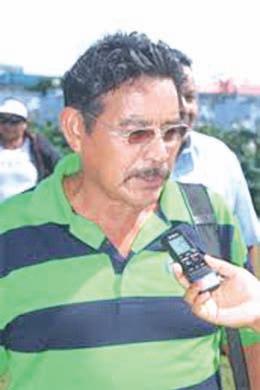
Former Toshao of Tasserene and Amerindian leader Alvin Joseph, during

an interview with this newspaper expressed his exasperation and fears that his village, which is among the first to have applied for title, would be unable to access legal ownership to their ancestral land. He stated: “what amazes me is that while we wait for the land they have a lot of mining licences being given out all the time within our proposed area”.
“Some time back we went to GGMC personnel, Donald Singh and what he said is that the GGMC [has] they have no objection to [any] no applications written to them (…) because we haven’t gotten our land as yet. They told us it [the land] still belongs to the State”. At that time, the Amerindian leader indicated that there were over 70 property own-
ers among whom figured “Alphonso and Ms Broomes” and that “most of the blocks are in operation”.
When questioned about how he felt in light of the situation, Joseph explained: “I feel that I’m in different world, that I’m not counting as one of the Guyanese. They keeping us down most of the time, they counting me like I am not one of them. This world [that] what they call “One nation, one people, one destiny” it is not true!”
The leader further indicated: “I won’t totally object to it [mining] but the community must have a revenue out of it. We don’t have any revenue out of it. They [the miners] only getting the benefit on the other side.
We don’t get a penny, not even a grain, and they [the miners] damaging our farmlands”. He explained that a lot of blocks have been given without informing the Council. “If Minister Broomes has blocks let she inform the Village Council. Let them [the miners] inform the Council”.
Joseph raised his concerns regarding the other risks involved in the rise in mining in Tasserene, by explaining that “there are about five, six, seven “bush shops” encouraging young girls to get away from home and leave parents and go there. These shops just sell alcohol, and this encourages
like human trafficking.”
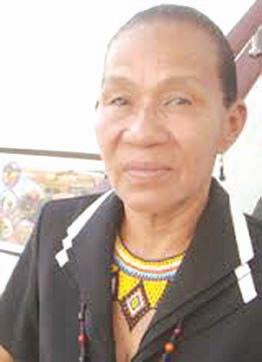
Indigenous rights activist Yvonne Pearson also interviewed by this newspaper confirmed that the area in which these shops are situated is indeed located within the proposed title area. Mrs Pearson stated that while mining blocks are indicated on the mineral map, claims aren’t and as such, there were more than 100 mining properties within the proposed title area. She further explained that the extensive work she conducted along with the Amerindian land titling team revealed that the village was willing to cooperate with the GGMC, and agreed to the blocks issued before the village asked for titled land, while those granted after were asked to
be relocated out of the proposed area.
“Let the community know what is happening, it’s not fair to them,” she said. Kangaruma, she explained, is in the same situation where “while the grass is growing the horse is starving””.
On Sunday, Guyana Times also contacted Anna Correia, who was the Project Manager for the Amerindian Land Titling Project, and who explained that up to when the project staff was dismissed in June 2015, visible efforts were being made by the GGMC to facilitate the land titling project. “There were at least five technical meetings between the GGMC and the Amerindian Affairs Ministry as well as other stakeholders to find a solution to this pending issue.
Former Toshaos Alvin Joseph and Alfred Joseph of Tasserene and Kangaruma frequently visited the project unit for updates and we were convinced that with the progress we were making by the end of this year they would have been granted title. We were able to deliver an Absolute Grant to Kambaru-Omanaik, a neighbouring village which waited for years for its title.”
She further explained that up to when the project was halted, the team was not aware of these addi-
tional 60 blocks which were granted to miners. “The Ministry is in possession of all the documents relative to the Tasserene/Kangaruma case which was entrusted to Minister Allicock’s office the very day he took over. They [the Ministry] are aware of this, and so are their advisors who have worked closely with the APA on issues related to land. Why is it then that this situation in Tasserene is getting worse?” she posited.
The village of Tasserene is home to approximately 380 Akawaios who depend on providing boat services and farming for their livelihood. Due to the number of mining properties issued by the GGMC, the villagers are unable to invest in and benefit fully from mining activities.
By IndrawattIe natram
Hundreds of residents living in Port Mourant, Corentyne, Region Six, (East BerbiceCorentyne) on Sunday benefited from a medical outreach and food hampers, compliments of the Guyana Sevashram Sangha of Cove and John Ashram. The outreach was a collaborative effort of the Health Ministry (Georgetown Public Hospital Corporation), Chest Institute, New GPC INC and Food For The Poor Inc.
The medical and pharmaceutical supplies were provided by New GPC INC. Food hampers along with clothing were shared to the needy and vulnerable in the Ashram’s ongoing seva (serving human being is like serving God).
The outreach attracted persons from Bangalesh and other environs who were entertained by popular Taan Singer Auntie Drupattie.
The medical team was spearheaded by Doctor Jeetendra Mohanlall. Dr Mohanlall coordinated the medical aspect of the outreach, ensuring that there were sufficient doctors, nurses and pharmacy assistants.
The team treated persons for hypertension, skin rash-
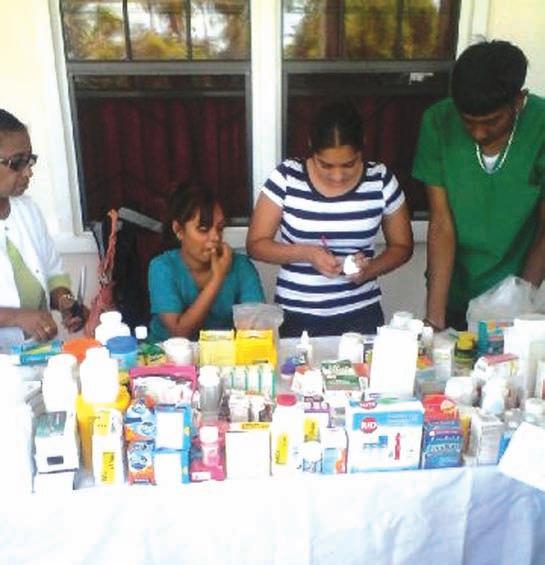
es, glucose and other conditions that were diagnosed. Necessary referrals were also made to the closest health facility and the Georgetown Public Hospital.
Speaking to beneficiaries, coordinator of the Sangha outreach and Administrative Head of the Guyana branch of the Sangha Swami Shivashanranandaji Maharaj said that the outreach was made possible through a pri-
vate-public partnership. The spiritual leader further said that medical outreaches are being hosted by the Ashram on a monthly basis, by extending its humanitarian services.
The Swami reminded persons that prayers are important and should be recited daily towards building one’s inner strength.
He further explained that the Sangha was estab-
lished in an effort to serve God through humanitarian services, outlining that the outreach is the Sangha’s programme to fulfil its mandate of service to the people of Guyana, wherever the need arises. He thanked the donors and volunteers who contributed to the success of the Sangha’s activities.
The Swami during his address to residents of Port Mourant, called on them to maintain a healthy lifestyle and to stay away from alcohol and drugs. He reminded that life is precious and giving praises to God is important. He advised that no matter what challenges they face they should always have a positive approach toward life. He said they should remain faithful and positive during their time on earth.
During the medical outreach, chanting along with singing of religious songs was conducted.
The Guyana Sevashram Sangha was established by Act of Parliament in 1956. But prior to this eventful legal proceedings, what was practically a series of miracles of human and spiritual input – well-documented and much lauded— had estab-
lished the Guyanese branch of the Sangha, which has become the pilgrimage site of thousands of Hindus the world over, especially those former students of all races who had received tuition in academics as well as spiritual knowledge at the institution during their formative years.
After the founder of the Guyana Sevashram Sangha, His Holiness Swami Purnanandaji Maharaj left these shores, an unschooled orphan named Seecharran,
who was transformed into a brilliant saint who has tutored thousands of persons, many of whom now straddle the globe as super-achievers in every profession, spiritual, and creative, continued to propagate the doctrines of Guru Maharaj, which is in itself a miracle.
Today, the Ashram is continues its service to mankind under the guidance of Swami Shivashankaranandaji Maharaj.

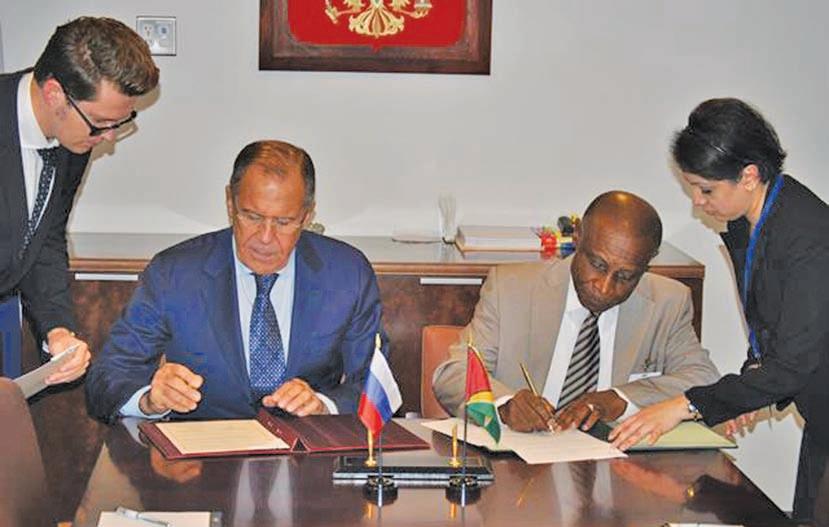
Guyanese can now enjoy a visa free visit to Russia after Foreign Affairs Minister Carl Greendige and his Russian counterpart Sergey Lavrov signed an agreement to facilitate travel for citizens between the two countries.
The signing took place on the sidelines of the United Nations’ 70th General Assembly at the UN Headquarters in New York. This new agreement will now afford citizens from
these two countries the opportunity to travel without a visa for a maximum stay of six months.
Minister Greenidge said it was a process that was aimed at encouraging movement between the two countries. This new development will also see a major boost for the local tourism and business industries as it affords citizens the opportunity to travel between the two countries without a visa and stay for a maximum of six
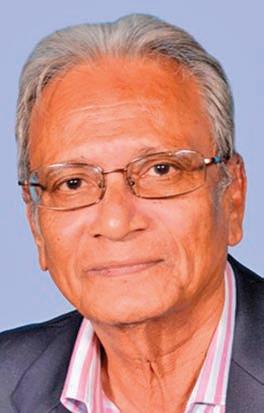
“If we are indeed training creative people for functional lives as creative people, then we need to urgently pursue the creation of accredited programmes being run under the aegis of the Institute of Creative Arts [ICA].” Education Minister, Dr Rupert Roopnaraine bluntly stated during his feature address at the second Convocation of the Institute on Tuesday evening at the National Cultural Centre.
The Minister added that before the end of this year there would be a caucus of Guyana’s best and brightest minds in artistic training, curriculum development and accreditation coming together to ensure students who pass through ICA programmes are provided with useful skills as soon as possible, as well as certification to prove it.
He indicated that at present, “The ICA’s institutional label is more aspirational than actual, and there remain gaps between the rhetoric of its establishment and the reality… while some of the goals set for it have been achieved, others have not.”
The Education Minister expressed the hope that the absence of creative writing at the Institute was one anomaly that would be soon corrected.
Another area of concern mentioned by the Minister
months.
In addition, the Minister said he views this move as one that will also remove a major barrier and one that will enhance business relations between the two countries.
Guyana already has a long list of countries where its citizens can travel without visas.
According to the Foreign Affairs Ministry, Guyanese do not require visas for entry into Antigua and
Argentina;
was the physical establishment of the Institute. He noted that as resourceful as it might appear, to have the functions of the Institute spread across four locations, it was counterproductive to have this situation exist in perpetuity. “Within the next two years, as part of an overall focus on the enhancement of cultural and creative industry infrastructure, I commit towards the establishment of a central location for the ICA — a campus if the resources allow for it,” Minister Roopnaraine announced.
Intellectual property
While addressing the matter of intellectual property policy reform, the Minister stated that it was absurd if this country’s legislation and general policy framework on intellectual property remained both out of date and completely ineffective.
“Just as we are required to and are in the process of creating petroleum management policy and legislation in expectation of the exploitation of our petroleum deposits, we have to prepare for the development and exploitation of our creative industries by putting in place basic policy and legislative measures,” he said.
Roopnaraine stated that there has been no evidence offered to support the claim that intellectual property legislation would be harmful to the small man, adding an economy that placed value on piracy at the expense of creative people was one that needed urgent reform. He added that failure to move forward on intellectual property reform was a de facto institutionalisation of intellectual piracy and any developing country that institutionalised intellectual piracy was ill prepared for advancement in the information age where a premium was placed on ideas.

monday, september 28, 2015 | guyanatimesgy.com
Investigators from the Criminal Investigations Department (CID) are expected to submit the case files on the investigation in to the alleged $6 million bribe accepted by Police Officers in Berbice to the Director of Public Prosecutions (DPP), for advice on the way forward.
Head of the CID Wendell Blanhum confirmed to Guyana Times on Sunday that the file would be completed and submitted to the DPP Chambers for legal advice. On Saturday, the Crime Chief had stated that the investigators have collected all the statements and are in the process of compiling the report.
CID ranks rushed to B Division (Berbice) on Wednesday morning after it was reported by senior officials within the Division that some ranks were allegedly involved in corruption. A Corporal and three Constables, including a female, have since been placed under close arrest for allegedly accepting $6 million in bribe in exchange for giving a free pass to a vehicle reportedly carrying cocaine and cash.
An Assistant Superintendent of Police was also implicated in the alleged corrupt act and was transferred from the Division to Police Headquarters, Eve Leary, pending investigations.
CID investigators returned to the Division
on Friday to conduct further investigations during which they recovered some of the money taken by the officers.
Police sources have revealed to this newspaper that $1,060,000 was handed over to investigators by two of the four ranks involved. The female and another of the Constables have been cooperating with investigators and led them to their cut of the money.
The source further indicated that the other two ranks are not cooperating with Police and have denied the allegation.
Meanwhile, in a previous interview, Blanhum had confirmed that the men who reportedly paid the bribe to the officers are assisting with investigations.
The Crime Chief explained that they have not held these persons since they are assisting Police with
He said he had committed in Parliament to initiate concrete measures towards intellectual property legislation within the upcoming year. He added that efforts toward this end could not be done under the sole responsibility of the Ministry, but it would also benefit from external expert advice, adequate research, technical assistance from international partners, and the committed involvement of stakeholders. “Only, when our creative people can be assured of living in a society in which adequate protection is placed on their invaluable work can the establishment of an Institute of Creative Arts truly make sense,” the Minister declared.
Fine art and drama
Meanwhile, in his report, the Principal of the Institute of Creative Arts, Dr James Rose explained that this is not the first Institute of Creative Arts. In the 1970s, an ICA was established
as the teaching arm of the National History and Arts Council. This original institute was armed with five departments, namely Art, Dance, Drama, Music and Creative Writing. That initiative, however, soon folded until the present incarnation was established in 2013.
Dr Rose announced that at the end of the 2014-15 academic year, the ICA boasted a combined full-time and part-time enrolment of 591 – the combined graduating class of 2015 numbered 75. He explained that since the first convocation last year, graduates have gone on to provide service in the secondary school system, excelled in fine art and drama, and have launched a professional theatre company.
The ICA, which includes the National School of Drama and Theatre Arts, National School of Dance, the ER Burrowes School of Art, and the National School of Music, presented certifi-
the corruption allegation.
“You can’t have your cake and eat it. We had to do a trade-off… Besides, we don’t have any evidence against them right now,” he pointed out. Additionally, Blanhum also confirmed reports that a known character from East Bank Demerara was the one who provided the bribe money to pay the ranks.
The incident occurred since September 10, but the senior officials in the Division only got word of it on Tuesday. Police sources revealed that the ranks involved are from the Whim Police Station.
On the day in question, the ranks were conducting a road block exercise at Salton, Corentyne, when they intercepted a minibus reportedly carrying a quantity of cocaine and a large sum of cash.
The ranks reportedly took the vehicle and its occupants to the Station; however before entering the compound, the officers allegedly negotiated a settlement with the occupants instead of arresting them and took some $6 million as pay-off for freeing the bus and its occupants.
Further reports indicated that the men reportedly went back to the station and informed the Assistant Superintendent about their misdeed and instead of taking disciplinary actions against the ranks, the senior officer took a portion of the bribe money.
from page 11
cates to the 2015 graduating class and special awards were presented to the most outstanding students in each class.
The awardees included the Valedictorian Subraj Singh (NSTAD), Quacy Welcome (Dance), Mark Junor (Dance), Laron Gulliver, Margaret Cornette and Nigel Butler from the ER Burrowes School of Art, Jomar Knights from the National School of Music, and LeTisha Chere DaSilva (NSTAD).
Aside from the students, four awardees were presented with Lifetime Achievement Awards by Prime Minister Moses Nagamootoo: Francis Quamina Farrier (Drama), Linda Griffith (Dance), Bernadette Persaud (Visual Arts), and Mangal Raghunandan (Drumming). Also present at the ceremony was Attorney General and Legal Affairs Minister Basil Williams.
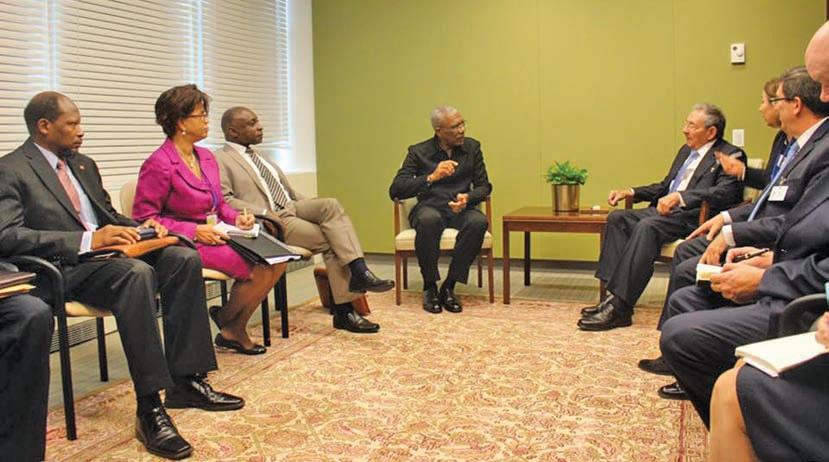
Hours before he entered into talks on the ongoing border controversy between Guyana and Venezuela, President David Granger asked the Cuban President Raul Castro for support amid the international disagreement.
According to a press release, President Granger is convinced the outcome of the historical meeting between him and Venezuela President Nicolas Maduro would be favourable towards Guyana- in terms of the region remaining a zone of peace since Cuba was formally briefed on the territorial threat Guyana faces from Venezuela.
On the sidelines of the United Nations 70th General Assembly, President Granger met with the Cuban Head of State, where he formally briefed the leader on the circum-
stances surrounding the border controversy and the impacts it has on Guyana’s development.
“We took the opportunity to thank the Cuban leader for the support they have given. They have played a very important role in the Caribbean and Africa, as well as a great humanitarian role. We were particularly concerned about the territorial controversy,” President Granger said.
According to reports, Granger told journalists that Guyana is fully aware of the closeness between Cuba and Venezuela and therefore, highlighted that Cuba could use its influence to aid in bringing a speedy end to the controversy.
“Guyana has lost territory to Venezuela, as you know, in the 1899 Tribunal award and we want to get ahead with our development and we believe that Cuba’s
weight in the Caribbean could influence the outcome in ensuring that the Caribbean remains a zone of peace,” he said.
Further, the President emphasised Guyana’s role in support of Cuba. “As you know Guyana, Trinidad, Barbados and Jamaica were instrumental in working for the normalisation of relations with Cuba since the early 1970s. We have a long tradition of friendship. We have many Cuba trained doctors and many points of contact between the two states,” President Granger said.
Guyana has already received support from several countries including most of the Caribbean Community (Caricom), the United Kingdom, the United States of America and international organisations such as the Commonwealth.
The Maritime Administration Department (MARAD) has honoured several river taxi Captains and Bowmen for professionalism and dedication toward the safety of passengers.
This was done on Friday as part of the Administration’s observance of World Maritime Day. This year’s theme was “Maritime Education and Training”. The recipients of the awards mostly operate in the Demerara and Essequibo Rivers.
Copping the Best Captains titles were: Roy King who plies the Vreeden-Hoop/ Georgetown route; Lennox Jordan, Bartica/ Parika; Jitindra Singh, Wakenaam/Parika; Vijay Shuhrajh, Supenaam/ Parika; and Mark Harris, Leguan/Parika route.
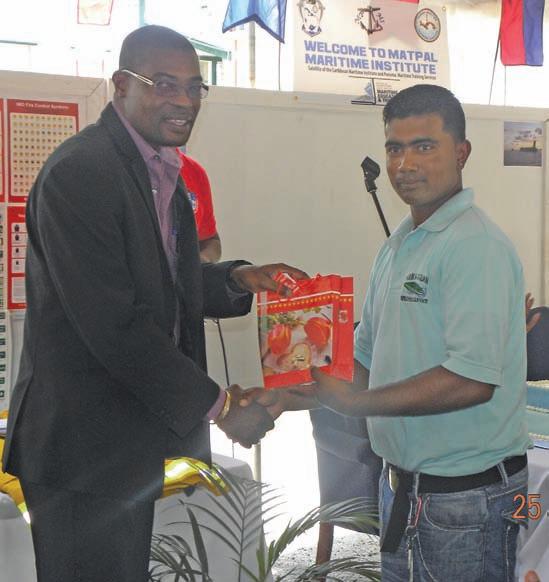
Minister David Patterson handing over a prize to the representative of SEA GLOW for being one of the Best Kept Vessel
Meanwhile, the Best Bowmen titles were given to Davindra Ramnauth –Vreed-en-Hoop/Georgetown route; Ganesh Persaud – the Bartica/Parika; Kenrick West – Wakenaam/ Parika; Colbert Baird Sr – Supenaam/Parika; and Charles Sookraj – Leguan/ Parika.
“The Randy”; “The Rock”; “Bekah H”; “Cea Gelee Classic Dad & Son” and “Sea Glow” were named the Best Kept Vessels.
During the ceremony, Public Security Minister David Patterson extended congratulations to the Captains and crew members. Additionally, the Minister pledged to have the Stellings repaired in the near future.
but Government “just paying lip service”
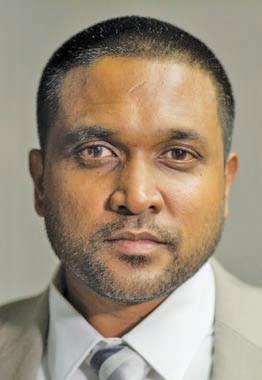
In light of the United Nations’ 17 Sustainable Development Goals (SDGs) adopted on September 25, one of which (#2) makes provisions for indigenous peoples’ development, the Tasserene land titling fiasco has raised questions regarding issues affecting Amerindian development. While significant progress was made in addressing Amerindian development, there are pending issues that demand particular attention from Government without which they could rapidly deteriorate.
Some of these issues that are being raised vehemently by villagers derive from mining on Amerindian territories or within the vicinity of Amerindian communities where the increase of alcohol and drug abuse is highly linked to the augmentation of mining. The mining environment is also believed to be favourable to the scourge of prostitution and trafficking in persons which directly affect and stymie Amerindian development.
During a recent interview with the Guyana Times, former Toshao Alvin Joseph of Tasserene indicated that the growing number of “bush shops” about “20 minutes away” from his community encourages “school aged girls to get away from home” and go where the miners are. He insisted that the Village Council wanted these shops off of their ancestral land.
People’s Progressive Party/Civic (PPP/C) Member of Parliament Norman Whittaker, during an invited comment to this newspaper, confirmed this by stating: “During a visit to Tasserene I did receive complaints about social problems which had to do with excessive alcohol consumption and use of marijuana and other drugs, as well as young ladies being encouraged to prostitute.”
The SDG 2.3 aims to “End hunger, achieve food security and improved nutrition and promote sustainable agriculture by 2030,
double the agricultural productivity and incomes of small-scale food producers, in particular women, indigenous peoples, family farmers, pastoralists and fishers, including through secure and equal access to land, other productive resources and inputs, knowledge, financial services, markets and opportunities for value addition and non-farm employment”.
In Guyana, however, untitled Amerindian communities situated on prime mining land have difficulties benefiting from these fundamental rights as they are unable to use, cultivate and exploit the lands to sustain their needs. Additionally, mining operations that use of heavy machinery such as excavators, dredges and bulldozers damage the infrastructure and the already fragile ecosystem on which Amerindians deeply depend.
With regard to Trafficking in Persons and forced prostitution which are on the rise in places like Bartica, Imbaimadai, Tasserene and Mahdia, Amerindians, in particular women and girls, have become increasingly vulnerable to the deprivation of their social and economic rights. There have been reports of a rise in teenage pregnancy and school dropout directly linked to mining, where young women prefer to work in mining areas to earn “quick money”.
In an invited comment, PPP/C Member of Parliament and former Permanent Secretary of the Amerindian Affairs Ministry, Nigel Dharamlall stated: “I think we did well with the eight MDGs [Millennium Development Goals]. However, I think now with the 17 SDGs, the current Government is just paying lip service and it is evident that their interpretation and policy directions will make these goals elusive, especially on eradicating poverty and eliminating hunger, fostering inclusivity and creating equal opportunities for women.” He went on to say that “the economic programmes of the regime are dismissive of the challenges of our farmers and of our Amerindian people and women in Guyana”.
He further posited that “the mass termination of jobs based on ethnicity, loss of the rice market and the hesitancy to frontally address the concerns of our Amerindian people with regards to their land and the constraints of mining on their ancestral lands are also expressive of this Government’s imminent failure at attaining SDGs.
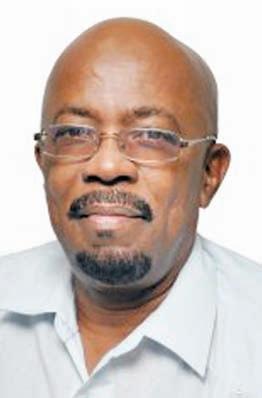
TThe management style of the Government seems very ad hoc and does not bode of any levels of consistency and continuity in dealing with Amerindian affairs”.
The Tasserene land titling process is reported to have made significant progress under the Amerindian Land Titling project, which received funding from the Low Carbon Development Strategy (LCDS). However, the project was abruptly halted by the Indigenous Affairs Ministry in June and to date it remains uncertain whether the project resumed. The villagers of Tasserene and Kangaruma are afraid that as they continue to wait for their lands to be titled, their means of subsistence and their future livelihood would be snatched from them.
hieves broke into the office of the Communities Ministry formerly the Housing and Water Ministry at New Amsterdam and removed a vault containing cash and transports.
The office, which is located at the Regional Democratic Council (RDC) Region Six (East Berbice-Corentyne) compound, was burglarised sometime between Saturday evening and Sunday midday. Reports are that the robbery was discovered when staff arrived at the office on Sunday at 11:45h.
The robbers entered the building by cutting a stiff mesh window and removing the louver panes before prising open the mesh. The vault which was situated in the supervisors’ office contained $4000 and 467 transports.
Initial reports suggest that the guard on duty found the door open and the mesh prised open, but made no reports claiming that she had no credit in her cellular phone to make calls. However, the guard hut is equipped with a telephone.
This publication understands that the guard who worked the night shift reported that everything was fine when
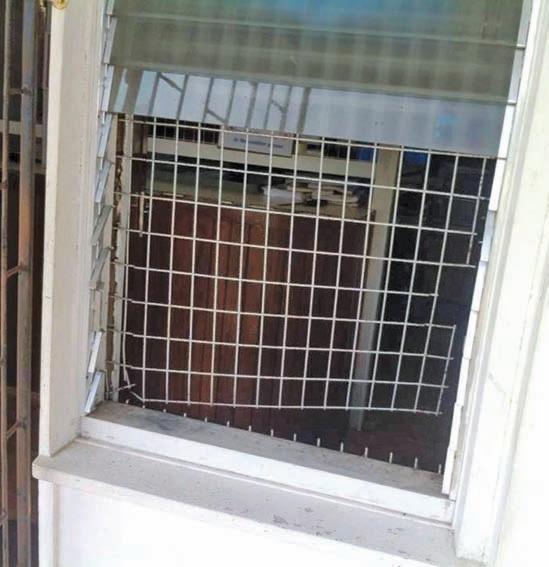
she handed over to the other guard at 07:00h. Investigators are working on a theory that the incident occurred during the dark hours and a proper handover was not done. The window was visible from several houses and from a major road.
A source close to the Ministry explained that arrangements were made to have staff show up at the office on Sunday midday to work. “We have a lot of backlog work to do and we have been working late until seven in the night (19:00h) every day and on Sundays,” one staffer explained.
The intruders also took away a laptop computer which belongs to a staff member. None of the other documents in the offices were interfered with.
Police visited the scene and were able to retrieve fingerprints. Evidence at the scene also suggests that the vault was lifted and taken over the back fence from where the thieves had entered. Police have launched an investigation and up to press time, one guard was in custody assisting with the investigation. Several other guards have been questioned.
Public Security
Minister Khemraj Ramjattan has said he was considering extending the Firearm Amnesty Programme given its success over the past few days.
Ramjattan made this comment to Guyana Times on Sunday during a telephone interview. He said he would be discussing the possibilities with the various stakeholders such as the Police Commissioner, Seelall Persaud.
“I am definitely considering it because if you notice in the later days of the amnesty, especially in the F Division (Interior locations), we have seen a number of guns coming in and I want this to continue,” he stated.
According to the Minister, he is overwhelmed by the success of the amnesty programme, calling it a “big success”. However, he noted that there are certain persons in Guyana who do not want to see the success of the programme, mentioning former Home Affairs Minister Clement Rohee.
Upon announcement of the amnesty programme, Rohee had commented that
the Government was wasting its time in this regard, as no success would be had from this crime fighting initiative.
But Ramjattan, on the other hand, outlined that to get over 1500 ammunitions and some 78 firearms during an amnesty was nothing simple. “At the same time I’m a bit disappointed that more has not come in, but knowing the culture of our people, they might be a bit sceptical, but by now people have come to appreciate that it is an amnesty in all sense,” he added.
Moreover, the Public Security Minister warned that at the end of the amnesty period Police will be cracking down on all those who are in possession of illegal weapons. He noted that over the past few months the Police have been gathering intelligence on where to find such persons.
The Public Security Minister went on to say the Police have been using their sources to gather information about persons who have illegal guns and even if these persons do not have the weapons in their possession, the Police know where to find them, warned Ramjattan.
“So I hope people have this in mind and take advantage of the amnesty. Don’t think after the amnesty is over and we start cracking down, you can come and ask to be lenient – we won’t have any of that. They better bring it in; it’s not going to be nice when the amnesty ends,” Ramjattan underscored.
The Firearm Amnesty Programme was launched on September 1 as part of Government’s plan to curb
the number of illegal firearms circulating in the country. Thus far the programme has yielded a total of 78 firearms, including –64 shotguns, six pistols, six air rifles, one revolver and one AK-47 rifle. Additionally a total of 1512 rounds of ammunition and ammunition components were handed over to the Police between September 1 and 26. With the exception of B (Berbice) and G (Essequibo Coast/Islands), all the other Divisions have seen some activity. In the A Division (Georgetown/East Bank Demerara) 12 firearms were handed over; C Division (East Coast Demerara) one firearm; D (West Coast Demerara) one firearm; E (Linden/Kwakwani) one; and in F Division (Interior Locations) a total of 63 firearms were submitted. The Firearm Amnesty Programme will run until September 30. Persons interested in handing over firearms, ammunition or explosives can do so between 09:00h and 16:00h daily at selected Police Stations identified in the various Police Divisions.
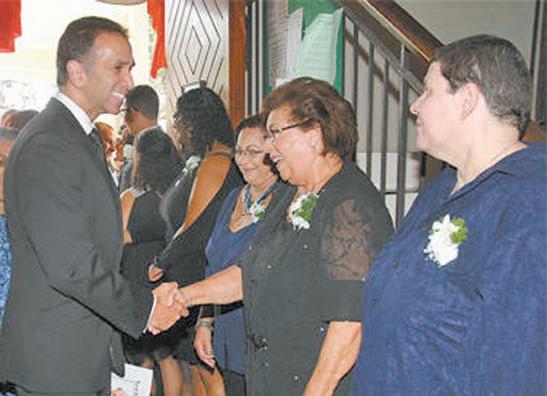
In what has been described as gross disrespect to the dead, Attorney General Faris Al-Rawi was served an election petition while attending the funeral service of PNM stalwart Errol Mahabir on Friday.
Al-Rawi, who expressed displeasure at the manner in which the petition was served, said he was shocked when a man walked up to
him and thrust the document in his face. He said he was in the middle of expressing his condolences to Yvonne Mahabir, the widow of the late former PNM deputy political leader and Minister Of Petroleum and Mines in the Cabinet of Dr Eric Williams, when the process server came holding the document. He informed Al-Rawi that he had a docu-
ment to serve concerning an Elections and Boundaries Commission matter.
Al-Rawi said he told the man that he was in a church. He explained he was a public officer and he was not in hiding so he did not understand why he had to be served this document at the funeral service.
However, Al-Rawi said, the man informed him he had to immediately serve the document, which was the election petition by the United National Congress with respect to San Fernando West.
Advising the man to wait for an appropriate time to serve the document, AlRawi said he was utterly amazed when the process server threw the document at his feet and left saying, “You are now served.”
Saying he was disturbed that the man would show such gross disrespect at a funeral service, Al-Rawi said he was never more surprised by the man’s behaviour. (Excerpt from Trinidad Guardian)
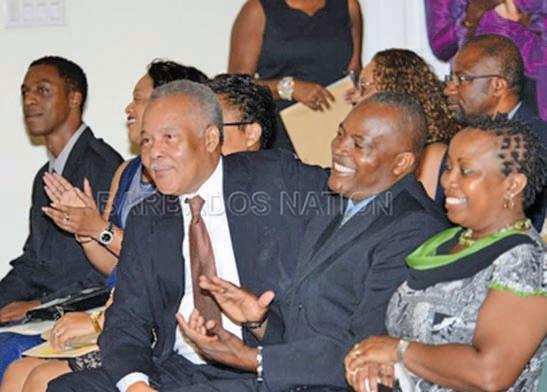
Barbados cannot sit on its laurels and think the measures that were used before to bring it out of previous economic difficulty will work this time around.
This view was expressed by former Prime Minister of Barbados Owen Arthur in his address at the Small Business Association’s awards ceremony and reception at Radisson Aquatica Resort on Saturday. The now sitting Independent member in the House of Assembly who
was leader and Minister of Finance of a Barbados Labour Party Government for 14 years said of Barbados that “a debt overhang is now the greatest single constraint to the future growth and the development of our nation”.
He said against that background “the one thing that is certain is that our country cannot entertain the complacency that comes on the belief that the policies and strategies which proved so successful in the past and for such a long period can help it to navigate its way forward in today’s world”.
Arthur said that “sadly . . . there is no national consensus that has been developed concerning the direction which the country should take or the policies and the measures that should take us safely there, our ship of state is drifting on an uncertain sea”. (JS) (Barbados Nation)
Cuban tourism official predicts three million tourist mark to be reached soon
Cuban tourism official Pablo Vazquez said in Panama that given the tourist boom witnessed by the island, marked by a 17 per cent growth, Cuba is nearing three million foreign vacationers this year.

Bolivia’s Congress has voted to amend the Constitution to allow the country’s President Evo Morales to run for reelection again in five years’ time.
The vote went through by a two-thirds majority in a Congress dominated by his supporters.
He has been in power since 2005, but the amendment discounts his first two terms, as those elections took place under a previous constitution.
The amendment is to go to a national referendum next February.
Speaking in New York where he has been participating in a meeting of the United Nations General Assembly, Morales said he had been invited to extend his term in office.
“It’s the feeling of the people, even of Congress; I understand perfectly. I’m not trying to stay in power forever. I also want to tell you, some have said, ‘Evo forever’.”
Morales has said that he wants to complete his government’s “Patriotic Agenda” by taking action on “13 pillars of action” by 2025.
They include the eradication of extreme poverty, ensuring health and education for all and ensuring Bolivia has an independent financial system and national control over food production and the exploitation of national resources.
Above all, Morales has put at the centre of national life the culture and ideology of the Andean indigenous majority – he himself is an Aymaran indian. He won a landslide victory in elections last year and his party, the Movement Towards Socialism (MAS) dominates Congress. (Excerpt from BBC News)

The parents of 43 students missing in Mexico have led a march of thousands of people in the capital to mark one year since their disappearance.
Many carried photos of their loved ones in Mexico City, demanding justice.
The parents want the Government to hand over the investigation to a special unit under international supervision.
They dispute the Government’s account that the students were handed over by Police in the city of Iguala to a criminal gang, which killed them.
A group of independent experts has suggested the students were killed because they unknowingly took control of a bus carrying illegal drugs, and the Government did nothing to protect them.
Meanwhile, President Enrique Pena Nieto has announced the creation of a special team to look into the case.
The marchers moved along Mexico City’s Paseo de la Reforma towards the city’s historic Zocalo Square.
“We came with a thirst for justice,” student Sofia Rojas told the AFP news agency.
“There can be no impuni-
ty. Behind the 43 are thousands of disappeared.”
Anti-crime activist Maria Guadalupe Vicencio from the state of Tamaulipas said the protest “sets an example for all Mexicans to wake up, and not be silent”.
The families are also demanding that the Government look into the possible role of the Army in the disappearance of the students.
The students disappeared on September 26, 2014, in Iguala in the southern Guerrero State.
They had gone there to gather for a commemoration in Mexico City. (Excerpt from BBC News)
Much needed focus will be brought to the Caribbean banking and financial services sector over the coming months with two important gatherings of the Region’s most influential industry practitioners.
and acts as a precursor to the Global Forum of the Organisation for Economic Cooperation and Development (OECD), scheduled to take place in Bridgetown, Barbados, late in October 2015.
ray of obstacles in this critical growth industry,” said Pamela Coke-Hamilton, Executive Director of CEDA who will be in attendance and deliver remarks at the workshop on October 1.
Cuban authorities are currently building new tourist facilities, marinas and other resorts on the cays to the north of central Villa Clara province and in eastern Holguin province, said Vazquez. This construction programme is joined by more than 11,000 private homes offering accommodations
The Cuban official, who is the representative for Venezuela and Central America, made his statement during the opening of Panama’s Tourist Fair, and he added that over 10,000 Panamanians have travelled to Cuba this year.
in coordination with the Ministry of Tourism, plus another 53 business projects included in the island’s tourist investment portfolio.
The Panamanian Tourist Fair, which was attended by tour-operators, travel agents, journalists, was the appropriate venue for Cuba to promote what is known as Tourism of Events, included on the island’s promotional strategy. (ACN)
The Caribbean Export Development Agency (CEDA), in conjunction with Caribbean-Central American Action (CCAA), will host a workshop on Caribbean Banking and the Caribbean International Financial Services Sector in Curacao, from September 30-October 1, 2015. The workshop will discuss in detail, the challenges facing the Caribbean Basin
“Caribbean financial institutions find themselves increasingly vulnerable to regulatory changes and new trends that threaten their very existence. Once seen as a growth industry for regional economies seeking to diversify from the dependency of the non-competitive agriculture base or the tourism-dependent economies; today the industry (traditional and offshore) is facing an ever increasing ar-
The Minister of Industry, International Business, Commerce and Small Business Development for Barbados, Donville Inniss, will also be attendance together with a number of other heavyweights in the Region’s institutions, including central bank governors and private sector financial institutions to discuss three key topics: correspondent banking, remittances and the offshore industry.(Excerpt from Caribbean News Now)
Russian President Vladimir Putin has warned that any attempts to overthrow the Government in Syria could lead to a failed state like Iraq or Libya.
Putin’s comments on Sunday come as the world’s leaders meet at the United Nations General Assembly in New York .
Speaking on the US network CBS, Putin said that “Syrians and only Syrians” should be able to decide the fate of their country.
“There’s no other solution to the Syrian crisis other than strengthening the effective Government structures and rendering them help in fighting terrorism, but at the same time urging them to engage in positive dialogue with the rational opposition and conduct reform,” Putin said.
Asked whether the Syrian President Bashar al-Assad should be forced to go first, Putin said: “It’s only the Syrian people who are entitled to decide who should govern their country, and how.”
Al Jazeera’s James Bays, reporting from the UN, said there was no
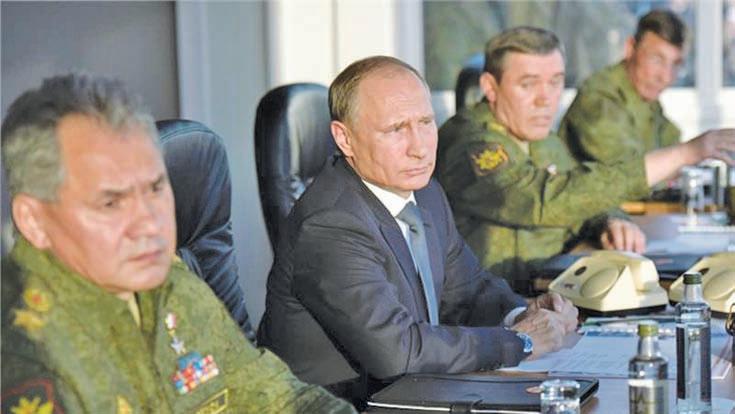
consensus between Western countries and Russia on how to proceed with the Syrian conflict and “there’s certainly a debate on which enemy to fight first”.
Bays said EU and US leaders were also divided on what role Assad, a close ally of Putin, would play after any fu-
ture settlement.
“Most of the Western countries say that ISIL was effectively created by Bashar al-Assad and he created the conditions in Syria that allowed ISIL to flourish,” our correspondent said. (Excerpt from Al Jazeera)
PM Modi urges Silicon Valley firms to invest in India
India’s Prime Minister, Narendra Modi has addressed more than 350 business leaders in the United States, urging them to help the country connect digitally while lifting people out of poverty.
Modi, the first Indian leader to visit the West Coast in more than 30 years, announced at a dinner on Saturday that Google would bring wireless internet to more than 500 Indian railway stations “in a short time”.
Modi also used the speech to sell technology executives on his Digital India initiative, which aims to connect thousands more Indian villages to the Internet, create more tech jobs and move more services online.
Modi hopes to attract funds and skills from US innovators to help India’s start-up scene grow, and will seek during the trip encourage some Indians who have thrived in Silicon Valley to bring their knowledge back home.
“We must bridge the digital divide and promote digi-
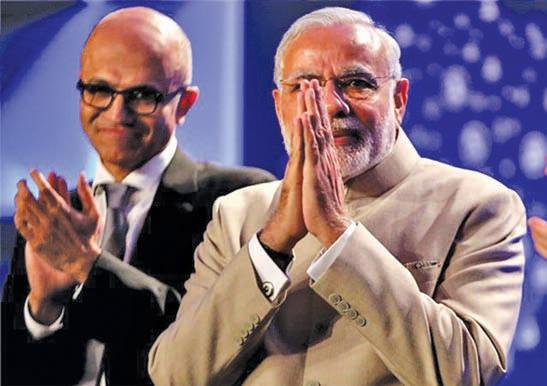
tal literacy in the same way that we seek to ensure general literacy,” Modi said, according to prepared remarks.
“Poverty is a massive problem in India and technology-based entrepreneurship can be an antidote.”
Satya Nadella and Sundar Pichai, the Indianborn Chief Executive Officers (CEOs) respectively of Microsoft and Google, were among those who moderated a panel before Modi’s speech.
Modi’s speech included references to numerous US tech companies he said have helped reshape India, including Facebook , its units Instagram and WhatsApp, and Twitter.
Modi has driven digitising of the Indian Government and has garnered a large social media following, making him the second-most followed world leader after United States President Barack Obama. (Excerpt from Al Jazeera)
group demands Chinese supporters of Hong Kong democracy be freed
Amnesty International called on Monday for the release of eight mainland Chinese activists who face long prison sentences for posting messages and pictures supporting Hong Kong’s 2014 pro-democracy protests.
Six of the activists, arrested after holding up banners with messages such as “Support Hong Kong’s fight for freedom”, face up to 15 years in prison.
They have been charged with “inciting subversion of state power”, “picking quarrels and provoking trouble” and “gathering a crowd to disrupt order in a public place”.
Human Rights Watch also issued a statement last week demanding the Hong Kong Government drop charges against Hong Kong activists, investigate its handling of the city’s pro-democracy protests and restart
the electoral reform process.
China’s Ministry of Foreign Affairs and its Liaison Office in Hong Kong did not respond to requests for comment. The Hong Kong Police and Justice Department also did not respond to requests for comment.
The Independent Police Complaints Council has said previously it was reviewing complaints from the protests. (Excerpt from Reuters)
Thousands of people have staged a mass demonstration in Congo’s capital Brazzaville to protest against plans by veteran ruler Denis Sassou Nguesso to try to extend his rule.
Sunday’s rally was the biggest since Sassou Nguesso returned to power in 1997, an AFP journalist said, with protesters stretching for almost a kilometre along a main boulevard in the city centre.
If a planned referendum is approved on changes to allow Sassou Nguesso to run again – dubbed a “constitutional coup” by the Opposition – he would be eligible to contest elections next year.
Sassou Ngeusso, a former rebel leader, announced on Tuesday plans for the referendum on the constitutional changes but gave no
dates for the vote.
The 72-year-old President had previously convened a “national dialogue”, which came out “by a large majority” in favour of amending the Constitution to remove an upper limit on the age of presidential candidates as well as the number of terms the Head of State can serve.
The changes effectively pave the way for him to stand for a third term in 2016. Opponents have branded the forum’s conclusions a “constitutional coup”.
Thousands gathered in Brazzaville’s central Boulevard des Armees for a two-hour rally during which they shouted slogans such as “No to a third term”, “No to a constitutional coup” and “No to a referendum”.
The protest ended peacefully with the crowds then dispersing. (Al Jazeera)
Catalans have started voting in an election described as the most important in Spain’s recent history, with opinion polls pointing to a win by supporters of a candidate who has pledged to declare the region independent.
Voting stations opened at 07:00 GMT on Sunday in Spain’s richest region of 7.5 million people where separatist feeling has increased in the recent years of economic crises.
Artur Mas, Catalonia’s nationalist President, told a crowd of tens of thousands of
supporters as he was wrapping up his election campaign on Friday that the vote would “lead to freedom”.
“Sunday is a special day for the future of Catalonia. It is an historic day,” he said.
Opinion polls show the conservative Mas and his left-wing allies in the proindependence list, Together For Yes, could win that majority and nearly half the votes overall.
For his part, Mariano Rajoy, Spanish Prime Minister, urged voters to return Catalonia to “normali-
ty”. “There is a majority of Catalans who love their people and love their land, and do not want to see it amputated from Spain and from Europe,” he told supporters.
Nationalists in Catalonia, which has its own language and cultural traditions, complain that they get less back from Madrid than they pay in taxes.
Mas has promised to launch a roadmap towards independence by 2017 if he wins a majority in the regional Parliament. (Al Jazeera)
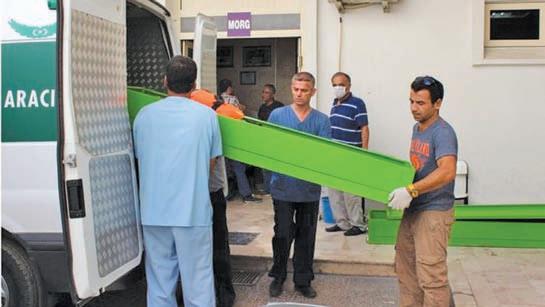
Seventeen migrants attempting to reach Greece by boat from Turkey have drowned after their boat sank off Turkey.
The victims, all thought to be Syrians, included five women and five children, local media said.
Another 20 people on the boat’s deck, who were wearing life jackets, survived, the news agency said.
Some 300,000 migrants and refugees have arrived in Greece so far this year, most
of them moving on to try to reach other European Union countries.
Those arriving in Greece have mostly set off from Turkey’s Aegean coast, according to the International Organisation for Migration.
Those who drowned on Sunday were trapped in the boat’s cabin as it sank, Turkey’s Dogan news agency reported.
The boat is thought to have set out from the village of Gumusluk near the Turkish
resort town of Bodrum, where three-year-old Syrian refugee Alan Kurdi died earlier this month.
Alan’s death made international headlines when an image of his body washed up on the beach in Bodrum was widely shared.
With several Greek islands within a few miles, thousands of people are attempting the dangerous journey every day.
Separately, 500 migrants have been rescued from the Mediterranean so far this weekend in seven operations involving the Italian Coast Guard and navy and a ship belonging to the charity Medecins Sans Frontieres.
A spokesman for the Coast Guard told the AFP news agency on Sunday that three of the seven operations were ongoing. The rescued migrants are thought to be largely from Nigeria, Ghana, Senegal and Sierra Leone and left Libya three days earlier.
(Excerpt from BBC News)
monday, september 28, 2015| guyanatimesgy.com
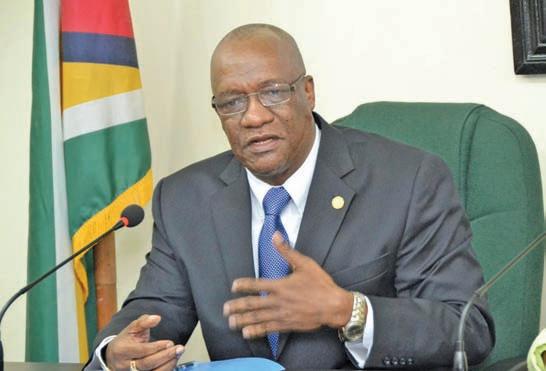
Guyana has been receiving much attention since the discovery of oil here by US oil giant ExxonMobil earlier this year and while this is good for the country, Government will not budge from its plan to have the proceeds placed into a Sovereign Wealth Fund (SWF), according to Minister of the Presidency, Joseph Harmon. Harmon was at the time speaking to Journalists last Wednesday at the Ministry of the Presidency, where he reported on an engagement last week between the Guyana Manufacturing and Services Association (GMSA) and several companies from the oil rich Trinidad and Tobago. The meeting was held under the theme, “Economic opportunities and threats to expediting oil and gas; it’s a new green carbon environment”.
During that forum, he said there was a presentation made by University of the West Indies Professor Dr Roger Hoosein who said the development of the oil and gas sector could also have detrimental impact on production and manufacturing. He cautioned that every government needed to be careful with the proceeds of the industry.
Police are investigating the discovery of a quantity of ammunition on Saturday at a house in the Whim Police Station Compound.
According to reports, officers stumbled on more than 100 rounds while searching the house which is currently unoccupied.
Guyana Times understands that at the time investigators were looking for cash after the lawmen had launched an investigation concerning the $6 million bribe which was allegedly collected by ranks at the station. Reports are that the Police do not use the type of rounds which were found in the house owned by the Force. The house was last used by a Police Inspector
President David Granger had already indicated that it was his hope to establish a Sovereign Wealth Fund, a pool of revenues derived from a country’s reserves that are set aside for investment purposes that will benefit the country’s economy and citizens. At least 16 companies from Trinidad interacted with the local GMSA looking at issues of how the oil and gas could be dealt with, and the fact that one should not wait until production starts before putting infrastructure in place.
The funding for the SWFs come from Central Bank reserves that accumulate as a result of budget and trade surpluses, and even from revenue generated from the exports of natural resources. The types of acceptable investments included in each SWF vary from country to country; countries with liquidity concerns limit investments to only very liquid public debt instruments. Some countries have created SWFs in diversifying their revenue streams. For example, the United Arab Emirates relies on oil exports for its wealth. Therefore, it devotes a portion of its reserves to an SWF that invests in other types of assets that can act
as a shield against oil-related risk.
In this regard, Minister of Governance Raphael Trotman had been meeting with representatives from the Commonwealth Secretariat who have lent their assistance to the establishment of the Fund.
The push for development of oil and gas in Guyana has intensified after the major oil find. Since then, downstream and upstream interests have visited Guyana to look at how the sector could be developed. “It is generating a great deal of excitement in the business sector,” Harmon said.
Government is already pursuing the commitment made by former Trinidad and Tobago Prime Minister Kamla Persad-Bissessar to assist Guyana in the oil and gas sector.
The former Trinidad leader had made the offer to President Granger in June, which was to be explored at two levels, One was the supply of oil and lubricants to Guyana to see if there could be favourable terms and concessions from the twin-island Republic for the supply, and the other is for actual assistance in the development of the Oil Sector itself, in terms of exploration, agreements, and interfacing with investors.
Manufacturers in Guyana, along with those from other Caribbean countries, may soon be able to use the Free Zone in Miramar, Florida in order to reduce production costs, allowing products to be more competitive on the international market.
This is in light of a recent discussion between Foreign Affairs Minister Carl Greenidge and Miramar’s Mayor Wayne Messam on developing trade ties, which was facilitated by Honorary Consul Roshan Ramzan Ali.
Guyana Times understands that sometime next year Mayor Messam is expected to visit Guyana to follow up on the talks which occurred during Minister Greenidge’s visit to South Florida recently.
It was reported that the two conversed about the possibility of manufacturers from Guyana shipping products such as jams, jellies, pepper sauces, condiments and fruit drinks in stainless steel containers to the Miramar Free Zone.
When these items arrive there they can then be bottled, thus reducing the cost Guyanese manufacturers would incur should they have to import glass or approved plastic containers for the same purpose.
Guyana Times was told that in some cases the cost of purchasing containers in the United States of America and having them shipped to Guyana results in the price
thus offered to the final consumer being “quite uncompetitive”.
Free Trade Zone
Mayor Messam, while addressing a gathering at the recent Florida Conference on Current Caribbean Issues held at the Miramar Civic Centre Complex, stated that it was his city’s intent to “strengthen business ties with the Caribbean Region”.
He reportedly cited the municipality’s Free Trade Zone as a facility which could serve as a catalyst for promoting mutually beneficial trade links.
During discussions with Minister Greenidge, the Mayor briefed Guyana’s Foreign Affairs Minister on the functions and operations of the Free Zone while identifying some of the business activities that could be of benefit from the use of the Zone.
It was then that the Guyanese Government official suggested that the Mayor and his team visit Guyana to meet with the private sector, including the Guyana Manufacturing Association and the Private Sector Commission to inform Guyanese businesspeople about the Free Zone.
Mayor Messam would also be able to meet with trade officials of the Georgetown headquartered Caribbean Community (Caricom) Secretariat.
It must be noted that al-
most 33 per cent of the estimated 125,000 population of the City of Miramar are Caribbean-Americans. This is reflected in the composition of the City’s leadership with the Mayor and all the City commissioners being of Caribbean descent.
According to Mayor Messam, the City and its Free Zone are in close proximity to major ports and airports, making it attractive for trade and other business links with the Caribbean. He stated that Miramar’s Free Zone could serve as a convenient point for the distribution of Caribbean products to other parts of the USA, and for export to international markets.
For a number of years, Florida has offered a number of incentives to Guyana and other Caribbean countries in order to attract investment in its cities. As such, this creates more opportunities of employment for those residing in Florida and ensures that they receive revenue for the roles they play in the manufacturing process. If Guyana were to take a page out of this book, the Government could use inducements to bring in revenue while creating a larger employment field for locals. This would ensure that a number of persons who complain about lack of job opportunities could benefit as well as the country on a whole. (kristenm@guyanatimesgy.com)
Globally, one million people die as a result of committing suicide every year. According to official statistics, in the last 45 years, suicide rates have increased by 60 per cent worldwide. It is one of the three leading causes of death among those in the 15-44 age group in some countries, and the second leading cause of death in the 10-24 age group.
who has been transferred.
Unconfirmed reports suggest that no arrest have been made for Saturday’s ammunition discovery. The find also comes during the one-month firearm amnesty. The Firearm Amnesty Programme was launched on September 1, as part of the Government’s plan to curb the number of illegal firearms circulating in the country. Thus far, the programme has yielded a total of 78 firearms, including 64 shotguns, six pistols, six air rifles, one revolver and one AK-47 rifle. Additionally, a total of 1512 rounds of ammunition and ammunition components were handed over to the Police between September 1 and 26.
In Guyana, there are more male deaths from suicide which is more prevalent in rural communities, with more than 75 per cent falling in the 15-44 age range.
The World Health Organisation (WHO) says that although traditionally suicide rates have been highest among elderly males, rates among young people have been increasing at such an alarming speed that they are now the group at highest risk in a third of countries in the world.
Reverend Kwame Gilbert in a recent report called “Suicide Desperate Measures” noted that Guyana was no different. “Region Six, in particular, has experienced the highest number of suicide rates
when compared to the rest of the country.”
Lecturer of the University of Guyana, Berbice Campus, Faculty of Social Sciences, Department of Sociology, Social Work Unit Paulette Henry feels that modern trends in agriculture is one of the leading factors which contribute to the rising suicide rate.
“The suicide rate for farmers throughout the world is higher than for the nonfarming population. Global data show a high correlation between the use of agrochemicals and suicide,” she said quoting Jason Motlagh of Chronicle Foreign Service Magazine.
According to a WHO 2009 release, several studies have indicated that pesticide use is associated with neurological disorders and worse mental health as well as with suicidal thoughts and behaviour.
In Japan, out of 102 patients who attempted suicide (intentionally and not spontaneously), 43 patients used agricultural chemicals as methods. (1993: Takeshi Sato, Masashi Takeichi Tomihide Hara: Suicide Attempts by Agrochemicals.)
In Guyana, 73 percent of suicides are from ingesting poisonous chemicals according to the WHO.
Henry is of the view that the growth of the agrochemical industry in Guyana is inherently linked to the growth of the agro chemical industry. This is one of the factors which must be addressed in order to address suicide in Guyana.
Reverend Gilbert in his report says Government and a few Non-Governmental Organisations (NGOs) have undertaken some useful initiatives in the past to address the issue of suicide.
“For example, a local NGO, St Francis Community Developers, has started its own programme to tackle suicide in the Black Bush Polder community. The organisation has since developed a comprehensive programme called “Reforming Education, Skills, and Capacity for Ultimate Empowerment (RESCUE).”
But Henry believes that is not enough. “There are 17 pieces of key legislation addressing the management of chemicals, wholly or partially, in Guyana,” she said, noting that there is
need for institutional capacity building and strengthening within the respective Governmental Institutions.
“We need the enforcement of legislation by the Pesticides and Toxic Chemicals Control Board (PTCCB), Ministry of Labour, the Food and Drug Department of the Ministry of Health, the Guyana Geology and Mines Commission, the Guyana Energy Agency, the Ministry of Public Security, the Environmental Protection Agency, and the Ministry of Business.”
Henry concludes by admitting that enforcement of existing legislation was often difficult due to limited human resources and budgetary constraints. She is also advocating resources for the enforcement of protocols with mechanisms to decentralise the sale of agro-chemicals, increased public education and improved management of chemicals, “since suicidal behaviour is often related to impulsive and the ready availability of a lethal method.”
It’s taken three years to write the script for the future of the world, but now it’s time for the muchanticipated performance to begin.
World leaders have negotiated and agreed an ambitious plan to end poverty and inequality in the next 15 years, adopting 17 Sustainable Development Goals (SDGs) at the United Nations as a roadmap to tackle the world’s most troubling problems.
While getting the 193 member nations to agree on priorities, scope and wording of the SDGs and their accompanying 169 targets was monumental, far more daunting is their implementation.
The toughest challenges are the sheer breadth of the agenda, finding ways to monitor and measure progress, and keeping the process transparent and accountable.
Added to those are the reluctance of some countries to address certain issues, with climate change and gender equality high up the agenda, not to mention the enormous trillion-dollar price tag, say those involved in the sweeping project.
“Having been in government, I know managing 10 targets is difficult. Managing 169 targets is challenging for the most efficient government,” said David Miliband, President and Chief Executive Officers (CEO) of the International Rescue Committee that runs humanitarian relief operations in more than 30
war-torn countries.
“The great danger is that the breadth of the targets becomes an excuse for not fulfilling the targets,” Miliband, a former British parliamentarian, told the Thomson Reuters Foundation.
Echoing that sentiment, Helen Clark, administrator of the United Nations Development Programme, said the role of the 169 targets is to bring the goals down to manageable bites.
The targets range from halting deforestation to raising living standards and reducing child mortality.
“These sub-goals spell out in great detail what we need to do so that every year there is stock taking as to what we’ve been able to do,” said Clark, New Zealand’s former Prime Minister.
Implementation will be monitored and reviewed with a set of global indicators to be agreed by next March.
Effective monitoring
“Setting these indicators means striking a delicate balance between what is manageable and what will actually demonstrate progress toward holistic goals,” said Susan Brown, Global and Regional Policy Director at the World Wildlife FundInternational.
Accountability and transparency are essential to coaxing private businesses to help put the goals into action, said Mogens Lykketoft, President of the UN General Assembly.
Residents of Friendship Squatting Area, East Bank Demerara late Sunday night were thrown into a state of panic after a fire erupted and destroyed a one-storey home around 11:00h.
When Guyana Times arrived at the scene shortly after the fire began, firefighters were working assiduously to douse the blaze with water from the nearby trenches.
Unfortunately, their efforts were in vain, as the home belonging to Wendell Lovell and his reputed wife was gutted.
Millions of the family’s hard-earned money went up in flames as the raging fire destroyed not only the house but a brand new Spacio vehicle.
The couple told this newspaper that they were asleep in their bedroom when they heard a loud crash outside their garage. Upon checking, they realised that the car was in flames.
Desperate efforts by Lovell and his nearby neighbours to put out the blaze were futile as they were
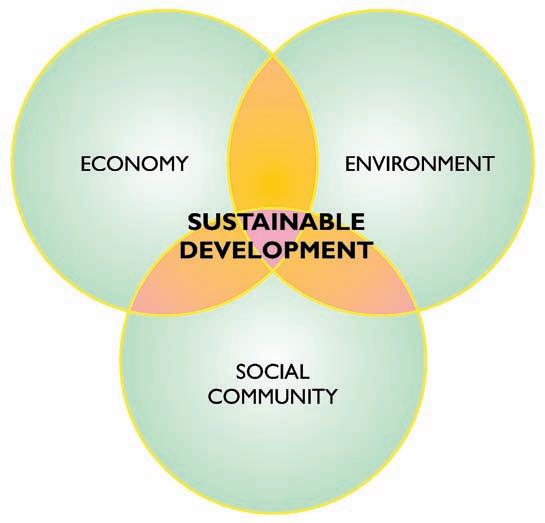
The Private Sector is expected to play a major role in enacting the SDGs which will cost an estimated $3 trillion a year at a time when most countries face budget constraints.
“We are far away from
reaching the scale required, the trillions of dollars required in the next 15 years to make a decisive impact,” Lykketoft said. With the SDGs relying heavily on the Private Sector, business will insist
on countries having stable regulatory and taxation frameworks, he said.
Kerry Adler, chief executive of SkyPower Global, a Canadian solar developer, said his company illustrates the need for requisite institutions and motivation to fight corruption.
“We will only work in countries where anti-corruption is the first thing that’s talked about in conversation before we decide to sell power,” he told a private forum of business leaders at the United Nations.
While adoption of the SDGs featured world leaders expounding at length at UN podiums on their commitments to lofty aspirations, the fact is plenty of countries cannot or will not meet some of the most critical goals without public pressure or political change, experts say.
The United States, for example, is among nations least likely to meet goals to end poverty and combat
climate change, according to a study by Bertelsmann Stiftung, a German social responsibility foundation. Holding the United States back are such issues as its income gap, consumption behaviour and environmental protection, it said.
“Fossil fuels are an economic time-bomb and the infrastructure and investments to support them will become stranded assets,” WWF’s Brown said.
“What we expect from large economies – like the US and China – is that they should be looking at the long term and making the right decisions in the shortterm.”
Other nations deemed likely to have trouble meeting the goals were Greece, Chile, Hungary, Turkey and Mexico, challenged by income gaps, lack of education, weak infrastructure, gender inequality, crime or extreme poverty, the German study said. (Excerpt from Reuters)
The global economy would grow by US$28 trillion by 2025 if women participated in the labour force to the same degree as men – a 26 per cent increase and almost equivalent to the combined Gross Domestic Products (GDP) of the US and China.
forced to abandon the scene and rush to safer ground.
The Fire Service was summoned and arrived shortly after to extinguish the flames.
The Guyana Police Force also arrived promptly on the scene. One person identified as Andrew Elvis who lives obliquely opposite the land where the fire occurred has thus far been arrested.
Elvis’s wife, Monica Murray, told this newspaper that her husband was innocent.
“We were in bed and we heard a noise, someone was screaming, and he got up to check. Our three children were asleep and he told me a fire started by the house over there. Then we hear a banging and I knew they would accuse him because we had problems before,” the woman tearfully explained.
She maintained that her husband could not have started the fire as he has been accused, because they were both sound asleep when shouts and screams began which alerted everyone that something terrible had taken place.
That’s just one of several conclusions in a new report by McKinsey Global Institute, an economic think-tank and research arm of consulting firm McKinsey & Company. The report, titled “The Power of Parity: How Advancing Women’s Equality Can Add $12 Trillion to Global Growth”, also found that even incremental progress on gender equality could have a big payoff. If every country matched the participation rates of the highest-performing countries in their region, global activity would increase by US$12 billion—equivalent to the GDPs of Japan, Germany, and the UK combined.
The 145-page report underscores what advocates of gender equality have long argued: ensuring equal labour force participation for men and women offers a potentially massive economic boon. “We would call it an opportunity cost— this is the value at stake,” says Anu Madgavkar, a senior fellow at the McKinsey Global Institute and one of the authors of the report.
The report, one of the most comprehensive ever authored on the cost of gender inequality, also found that 40 out of 95 surveyed countries had high or extremely high levels of gender inequality on at least half of 15 major indicators. According to the report, the three major factors holding women back are lower work

force participation, fewer hours worked, and the fact that women are disproportionately represented in low-productivity sectors like agriculture.
To be sure, the world’s women have made great strides –between 1980 and 2010, female participation in the labour force increased 20 per cent across 60 countries. In the United States, only 44 per cent of prime-age women in 1965 were working, compared to 74 per cent in 2010. But the report emphasises that globally, women still are vastly under-represented in the paid labour force, as well as in political and economic leadership positions.
One of the major global factors that keep women from full participation is the pervasive expectation that women are responsible for unpaid care. “When we looked at all the elements of gender inequality in work, unpaid care work was one of the top factors,” Madgavkar says, noting that violence, political inequality, lack of legal protections and blocked economic potential were also major global factors holding women back.
Women also do 75 per cent of the world’s unpaid work—if they got paid for the household chores and family care they provide, it would add an additional US$10 trillion to the global economy. In the US alone, women do US$1.5 trillion worth of unpaid care work every year. While men are three times more likely to be in leadership roles worldwide, women are three times more likely to do unpaid care work. And in some countries, such as India and Pakistan, women are 10 times more likely to be working without pay. That unpaid care keeps women from participating fully in paid work.
The report outlines several ways those care hours can be reduced. First, enhanced productivity can help women in poor countries get chores done more quickly. (Reducing time gathering firewood, for example, can free up some hours for paid work.)
Secondly, converting unpaid care work into jobs for other people can actually enhance the economy, especially
with services, like childcare and elder care, that are under-utilised in most of the world. Madgavkar notes that Scandinavian countries that have the highest female labour force participation also tend to have state subsidised childcare. Likewise, more equitable sharing of unpaid work between men and women would lead to greater equality in the paid labour force, and to more progressive social attitudes about women’s roles, the report argues. According to Madgavkar, when US women’s labour force participation rose 30 per cent between 1960 and 2010, it also led to a major attitude shift among American men; women spent less time on housework, more time on childcare, and men spent more time on both.
Madgavkar also notes that gender equality and GDP are not necessarily two sides of the same coin. While gender equality boosts GDP, strong economies don’t always boost female participation she says. “We tend to think that as a society gets more developed, gender equality rises,” she adds. “We found that while this is true to some extent, it’s not entirely true.”
Madgavkar compares South Asia and SubSaharan Africa as a major example of this even though South Asia’s GDP is higher than Sub-Saharan Africa’s, there are fewer women in the labour force because of social and cultural conventions that keep women at home. That region, the report suggests, could be leaving trillions on the table by not allowing women to contribute to the economy to their full potential.















ARIES (March 21April 19)


TAURUS (April 20May 20)


(May 21June 20)


CANCER
You are on an emotional roller coaster. Conversations with colleagues or family members will become heated if you don’t back down. Cool your jets before you say things you regret.
Anxiety and confusion will dog your day. Participating in a physical activity with friends will be a diversion from negative thoughts and feelings. Ask a trusted friend for advice.







LEO (July 23Aug. 22)
VIRGO (Aug. 23Sept. 22)
LIBRA (Sept. 23Oct. 23)

SCORPIO (Oct. 24Nov. 22)


SAGITTARIUS (Nov. 23Dec. 21)


CAPRICORN (June 21July 22)


AQUARIUS
(Jan. 20Feb. 19) (Dec. 22Jan. 19)


PISCES
(Feb. 20March 20)

Listen to and observe what is going on around you. Consider your next move before letting others know your plans. This is not a good time to implement an unexpected change.
You will be the main attraction today, so make the most of it. Everything will fall into place and go according to plan. You have all the right people on your side.
Money spent on improvements to your living quarters or appearance will pay off. Your situation will be competitive, making it important that you do whatever is necessary to stand out in a crowd.
Anger and tension will wear you down. Steer clear of anyone looking to start an argument. Surround yourself with people who build you up, not put you down.
You are in a high creative cycle. Your dependable reputation and a strong work ethic will help you gain recognition. A proposition, promotion or raise can be expected. You can’t do everything yourself. Being a contributing member of a team will bring you recognition and rewards. Focus and stamina will help get you to the finish line.
You will be bored if you don’t try something that offers mental or physical stimulation and adventure. Love and romance will play out well if you share your feelings.
You will run into problems if you are outspoken. Make sure you have your facts straight and the approval of everyone involved before you make promises that affect others.
Widen your circle of friends in order to encounter unique opinions and options. Your knowledge and understanding will grow if you consider incorporating the ideas you discuss with others into your everyday life.
Don’t sell yourself short. Make the most of every opportunity to learn something new. The more you know, the greater confidence you will have. You have what it takes to succeed.






It is so! The United States athletics team were even intimidated by a drink with Jamaican sprint sensation Usain Bolt’s image on the label.
For long, rumours circulated that members of the United States team, which participated in the World Championships in Beijing, China last month, refused to even take a sip of the sport energy fluid Gatorade, all because Bolt advertises the product and the producers of the commodity proudly display the Trelawny-born’s photograph on certain bottles.
Now, the Jamaica Administrative Athletics Association (JAAA) has confirmed earlier talk that the USA squad members flatly decided against even taking a sip.
“That’s a fact. It happened that way,” the JAAA’s Media Officer Dennis Gordon told journalists during a Jamaica Observer Press Club discussion at the newspaper’s offices in St Andrew on Friday. Teams from Jamaica and
the USA stayed at the same Kuntai Hotel in Beijing, approximately one hour from the Bird’s Nest Stadium, and the rivalry spilled over from the track to the hotel, leading to the Jamaicans being called hooligans, Jamaican officials said.
“The hype going into the 100m final suggested that (Justin) Gatlin would have triumphed. On the bus, they were chanting USA! USA! Coming back, after Bolt’s victory, our athletes took them on and were singing ‘We are the champions of the world’, and it never went over well with them,” Gordon pointed out.
Bolt, 29, who is the fastest man in history and the greatest sprinter of all time, had struggled with injury all season leading up to Beijing, while Gatlin went into the championship on the back of a 29-race unbeaten streak and high on confidence of toppling the Jamaican supremo.
For the first time in over seven years a final had been billed as the battle for the
soul of athletics. Bolt has never failed a drug test, while Gatlin has twice been banned for doping, so the match-up between the two was dubbed as a showdown between good and evil.
into second position, just one hundredth of a second back in 9.80 seconds.
While the thousands of spectators were celebrating yet another remarkable achievement for Bolt, Kuntai

But more importantly, it was Jamaica taking on the mighty USA in yet another battle to determine the true sprinting kingdom.
To Gatlin’s and the Americans’ shock, Bolt won in a nail-biting 9.79 seconds, edging his pretender
Hotel erupted in wild celebration from the Jamaicans, who shouted, jumped and cheered.
“The athletes who were at the hotel watching had an outburst and they (Americans) complained that they don’t want to share ho-
tel with us anymore because we are hooligans,” revealed Gordon.
“But the night when (Ashton) Eaton broke the world record in the decathlon, they (the Americans) assembled in the hallway and greeted him with one big cheer and we were not offended,” he added.
“So they said that all the Gatorade that had Bolt’s picture on it, they are not going to drink it. So we said, give it to us. I don’t know what they did, but they didn’t drink it,” said Gordon.
Meanwhile, after a series of interviews in the mixed zone following the 100m triumph, Bolt took his last sip of a bottle of Gatorade and playfully threw the empty bottle in the direction of a Jamaican media worker, and indicated at the same time that the Americans refused to consume the replenishing drink.
A young female Chinese volunteer snatched the empty bottle that the fastest man ever had just drank from. She was ecstatic.
Bolt, who also has international endorsements with Puma and Hublot watches, is said to receive between £2 million and £3 million a year from Gatorade, and is said to receive a bonus every time he is pictured sipping the drink. Jamaica, with a population of approximately 2.8 million, for the first time since the IAAF World Championships started in 1983, finished ahead of the USA, with a population of approximately 320 million, on the medals table.
With Bolt winning three gold, Jamaica ended with 12 medals overall -- seven gold, two silver, and three bronze -- to be second behind Kenya, with the Americans back in third. The rivalry between the two countries has intensified since 2008 when Bolt and Shelly-Ann Fraser-Pryce became the fastest human beings and Jamaica took over the title as the sprint capital of the world. The Americans have tried unsuccessfully for the last seven years to reclaim the throne.
Eight sports will find out today if they have been recommended for inclusion at the 2020 Tokyo Olympics.
Games hosts are being given a chance to bring in one or more sports popular in their country to boost ratings and attract greater sponsorship.
The shortlisted federations are: baseball/softball, bowling, karate, roller sports, sport climbing, squash, surfing and wushu.
A recommendation is due at about 10:15 BST, with a final decision next August.
The Tokyo 2020 organisers’ preferences will be considered by the International Olympic Committee (IOC).
A longer list of 26 possible was reduced in June, when bridge, chess and snooker were among those to miss out.
Baseball and softball, united under the World Baseball Softball Confederation (WBSC), are considered favourites to return to the Olympics for the first time since Asia last hosted the Summer Games, in Beijing in 2008.
Shortlisted sports
Baseball/softball
Combined bid of men’s baseball and women’s softball. Both sports hugely popular in Japan.
Governing body: Says it has a total of 65 million people playing in more than 140 countries - the majority of whom are young children and teenagers.
Selling point: “Worldclass venues throughout Japan. Adding baseball/softball would be a low-risk/ high-reward option, for both genders and youth.”
Bowling
Not to be confused with bowls, covers tenpin and ninepin bowling. Officials collected nearly one million signatures from Japanese bowlers in support of their bid.
Governing body: Says it is one of most popular sports among girls and women in regions like South East Asia and the Middle East.
Selling point: “Chance to reach out and engage with new audiences. Highly accessible sport - people can watch athletes at highest level, then go and practice
themselves.”
Karate
Has never been contested at the Olympics. Judo, its fellow homegrown martial art, first joined in 1964,
would not need a speciallybuilt venue and could take place over just three days.”
Roller sports
Covers areas such as roller hockey, skateboard-
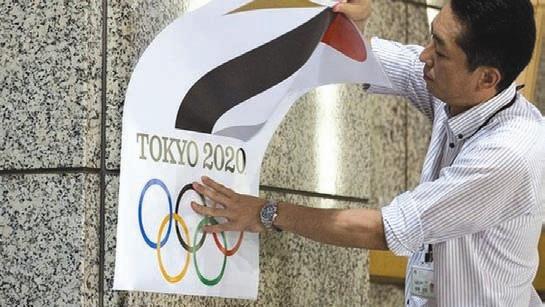
when Tokyo last hosted the Olympics, and was included from 1972 onwards.
Governing body: Says the sport, whose participants are 35% female, deserves a chance after unsuccessful bids to be a part of London 2012 and Rio 2016.
Selling point: “A sport with Japanese roots. Logistics of karate at an Olympic Games would appeal to the IOC as they
ing, speed skating and artistic skating.
Governing body: Under the tagline “Rolling to Tokyo” says it has submitted a flexible plan and claims to be the most popular youth sport.
Selling point: “Proposed a five-year set of eventsseminars, international cup, national and world championships, tours all throughout the country.”
Sport climbing
Last year sport climbing was chosen by the IOC as a demonstration sport at the Youth Olympic Games in Nanjing, China.
Governing body: Says climbing walls are present in more than 140 countries with 35 million climbers all around the world. Average age is 23 years old; 40% are under 20.
Selling point: “An unforgettable spectacle - fresh, young sport capitalising on the urban/action trend.”
Squash
Turned down for a main place at the 2020 Olympics, squash is pointing to a strong tradition in Japan, including current leading juniors Satomi Watanabe and Ryunosuke Tsukue.
Governing body: Says sport has had world champions, both men and women, from every continent.
Selling point: “A wonderfully gladiatorial sport played in 185 countries. Every squash player would regard participating in the Olympics as the pinnacle of their career.”
Surfing
International Surfing Association hailed its shortlisting as a “milestone” as it looks to create new surf parks.
Governing body: Points to technical advancements which can create artificial waves of up to two meters high at the push of a button, such as at the inland surf lagoon at Snowdonia in Wales.
Selling point: “Surfing has inherently youthful values and a blend of high performance, style and digital connectivity.”
Wushu
Commonly referred to as kung-fu, the collective term for the martial art practices which originated and developed in China, made popular by the likes of Bruce Lee and Jet Li.
Governing body: Says wushu is a fast-growing sport which promotes health, friendship and mutual respect.
Selling point: “Enjoys great popularity on You Tube among a dedicated, young tech-savvy audience. Will create an energy that global youth deeply connects with.” (BBC Sport)
West Indies head coach Phil Simmons caused headlines around the Caribbean on Friday by suggesting that “outside influences” were behind local stars Dwayne Bravo and Kieron Pollard’s nonselection to the regional one-day team to tour Sri Lanka.
With this information swirling in the air, West Indies Cricket Board (WICB) president Dave Cameron answered numerous questions at the highly anticipated WICB town hall meeting at the Chaguanas Borough Corporation on Friday evening.
Unlike previous town hall meetings around the region, the WICB president came without vicepresident Emmanuel Nathan.
In front an audience of approximately 85 attendees, the father of former national player Justin Guillen and Queen’s Park Cricket Club (QPCC) member, Jeffery Guillen began the session aggressively.
He asked the why nobody from the board or players have been offcially disciplined since the India tour pull out. Guillen reminded Cameron that in the corporate world, if a leader had cost an organisation US$42 million dollars, he should have done the humble thing and resigned.
Newsday had previously revealed that almost all of the 14 players who were part of the India tour are no longer part of
the Wavell Hinds-led West Indies Players Association (WIPA).
Cameron was asked if he is concerned that so much of the leading West Indies players are no longer part of the players’ representation body.
“I actually don’t have a problem with it because we have the new Collecting Bargaining Agreement/ Memorandum of Understanding (CBA/ MOU) and the payment structure.
In fact I think they should be concerned that they don’t have a player’s representative to speak to WICB on their behalf,” explained the WICB president.
Pressed to clarify if that means Bravo, Pollard or any senior players can’t speak to WICB, Cameron said, “Yes they can talk to
us, but it depends about what — there are rules of engagement that is all I am saying.” The aforementioned CBA/ MOU was one of the biggest reasons why the players pulled out of India tour and it has led to Bravo and Lendl Simmons retiring from Test cricket this year because of it.
Serious questions were posed to Cameron by Newsday about the accuracy of the December 13, 2014 Task Force report that was conducted by Michael Gordon (Chairman), Sir Wes Hall, Sir Richard Cheltenham and Gerard Pinard, which apportioned blame to the WICB, WIPA and the players. Sources close to the Task Force revealed to Newsday though that they only spoke to two players, nobody from the BCCI and



What is the main purpose of the National School Championships?
Wsome members from the WICB.
When questioned on whether the report was complete considering all parties were not spoken to yet the report stated “there was something more in the mortar than the pestle” that caused the players to pull out Cameron said: “That’s a good question, but you would have to ask Mr Gordon what they meant by that assumption about players.” Cameron, in seeming defence of the report, revealed that the Task Force did not also speak to all WICB members.
This response generated laughter from the audience as Newsday suggested that this assertion would make the report even more incomplete to which Cameron said nothing. (Trinidad
Newsday)
Dear Editor,
At this juncture in our history, there should be a renewed call for the completion and implementation of a National Sports Policy. The sports policy has been in draft for yearsand there has been no effort to complete it.
Sports has many benefits that can propel our development as a nation ranging from health, social, mental etc. It is good for learning accountability, leadership, dedication and conflict resolution skills. Sports attract tourism. It is also important to note that research shows that sports has great influence on crime
reduction. The aforementioned is a small fraction of the benefits a nation can attain from sports. Unfortunately, there is not a culture for sports in Guyana. Hence the reason most of our citizens fail appreciate sports and the benefits of sports. Consequently, most parents and students place little priority on sports and it is commonly known to attract persons who aren't academic inclined.
There is not a well coordinated sports programwithin the school system nor at the national level to nurture our elite and developing athletes and to attract new ones. Hence, the
few only go thus far and no further before vanishing from the sporting arena. As recent as February this year our national swimmer and Olympian, Niall Roberts, called it quits citing lack of opportunity as a primary reason. There is little or noincentive to participate in sports in Guyana. In fact, most times an expense is incurred to competitivelyparticipate sport in Guyana. These costs come in the form of supplements, gym fees, etc. Critics might argue that this isn’t unique to Guyana, however, there is light at the end of the tunnel in other nations. Our
national athletes are ambassadors to our country and they should be treated with utmost respect and compensated accordingly.
Guyana is yet to unveil its full sporting potential and enjoy the exponential benefits. It is therefore pertinent that policymakers begin to nurture the ethos of sports. They should urgently arrest this opportunity to create history while simultaneously bolstering the education system and fostering youth and sport development in Guyana.
Yours faithfully, Elton Bollers
hile I am a big supporter of the National Schools Championships and what it can possibly develop into, I must start this piece by asking what is the main purpose of the National Schools Athletics, Swimming, Cycling and Teachers Championships?

Why do I ask this question? Well, because another question has lingered in my mind: after the National Schools Championships end in November, then what?
There is simply no progressive move from that level to another, in essence the championships are held simply because it has become a staple on Guyana’s sporting calendar and in my opinion for no other meaningful purpose.
A national team is not identified, talent is definitely not recruited for developmental purposes that will fit into a progressive plan that might pay dividends a few years down the line; the zones are just rewarded with media coverage, the Athletics Association of Guyana (AAG) and the Guyana Olympic Association (the association responsible for Guyana’s next Olympians) are not actively involved and everything returns to the way it was before the start of the process in September.
Athletes that perform well at this event either have to join a club and become a staple in athletics through national competition, or if they are in a club when the championships are over it is back to regular programming.
The National Schools Championships in my estimation is supposed to be a means to an end; an arena where talent from all across Guyana can be seen, developed and produced into Guyana’s next Olympians.
Over the last two decades I can safely say the event that is regularly called the “Showcase of Guyana’s future Olympians” has not produced one single Olympian and this might go further back than just two decades.
Winston George, Aliann Pompey and Adam Harris have never competed at the event and they are Olympians dating back to 2008, while names such as Tai Payne, Deon Barker, Anton Francis, Kwame Caesar, Michelle Vaughn, Taz Morgan, Oliver Phillips, Rhobyn and Rhondell Allyene, Dianne Munroe and Keisha Burnette; all legends of the National School Championships are nothing but legends of the Championships; most never even sniffing what the Olympics could possibly be like.
The event will be celebrating its 55th year come November and in order for it to really progress to another level, then a few changes will have to be made.
The first is moving the event from November to possibly March/April, reasons I will explain in my next piece.
Nevertheless, “Nationals”, as it is so often called, needs to become an event that will not just provide Guyana’s best juniors with a chance to showcase their talent but also an event that will help move athletes from one stage to the next, an event that will help to develop talent for bigger and more meaningful events such as Carifta Games, Pan American Juniors, South American Youth, CAC Juniors, World Youth and Junior Championships.
It is supposed to be an event where stakeholders can spot talent and harvest it so that with a structural development plan, those very athletes can be seen representing Guyana at the Olympics.
It is high time we take this championships seriously for the purpose it was presumably created for – a means to brighter future in sport. (josepht@guyanatimesgy.com)

monday, september 28,

Car rentals
Need a car to rent? Then call 6111018 for the best cars at great prices.


SHALOM ENTERPRISE 2 CROAL
STREET, STABROEK. ENQUIRE ABOUT OUR DRIVING PACKAGE & INTERNATIONAL DRIVER'S PERMIT (JOIN US ON FACEBOOK) 2273869/622-8162/644-7052


Da Silva’s Optical. For Your Eyes Only, Look Better See Better. Phillip A Da Silva OD, Shannon L Da Silva OD, Natalie Da Silva OD. 248 South Road, Bourda. Phone: 227-3529, Linden: 444-6376, Corriverton: 3393536, Meten-Meer-Zorg: 275-0322, Grand Cayman Islands: (345) 9431515 for the perfect trendy touch.

Tain, Corentyne, Berbice, Opposite UG Campus. Tel: 675-5648
One property Ogle; One property Anna Catherina; One property Good Hope. Contact; 2223060/6735546/622-6448/679-0987
Upper & lower flat situated at Lot 90 M&TC Housing Scheme, New Amsterdam, Berbice. Contact 6479148
One two-storey concrete house, 3-bedroom located at 8th Street Foulis Enmore. Price 18 million neg. Tel: 256-3360/685-8485



Clean Garden earth. Also excavating, grading and leveling done. Call 6279977
For sale by lot: Lot (1): 2 bath tubs, bathroom fittings and fixtures & toilet set; shower fittings - $150,000 and Lot (2): 1 Dell desktop computer & HP scanner - $25,000. Call 225-2676 or 601-5285.
Puppies for sale. German shepherd and pitbull (mixed) $40,000 each. Contact: 269-0711 /621-7842 Puppies for Sale. Pure Breed Dachshund Pups. $15,000 each. Tel: 256-3360 / 685-8485


Balwant Persaud & Associates. Certified Immigration Consultants, 68 Sixth Street, Alberttown, Georgetown (Between Cummings & Lights Sts) Tel: 225-1540, 622-8308, 655-3105. Email: balwantpersaud@yahoo.ca


Two

LTwo bedroom upstairs apartment. $60,000 monthly with parking. Couples preferable. Tel 233-2607 / 644-7089

GR Taxi, 24 hours. Phone: 2257878, 219-5000 or 227-2100
Sunshine Cabs, 24hours. Phone: 227-1720, 227-1721, 660-6102


House plans & estimates, weeding of grass and spraying done within 48hrs. Call: 216-0671; 622-0267; 692-8464
K. LAKERAM - BUILDING CONTRACTOR, HOUSE PLAN, ESTIMATES, WEEDING & SPRAYING GRASS DONE WITHIN 48HRS. CARPENTRY, MASON, TILING, PAINTING, PLUMBING. PROMPT & AFFORDABLE GENERAL HOME MAINTENANCE. FREE ESTIMATES. TEL: 216-0671/622-0267/692-8464. EMAIL: klakeram.construction@ gmail.com
Khemraj & Son -landscaping & plant nursery. Lot 77 Independence Street, La Grange, West Bank Demerara. Landscaping, planting grass, weeding, killing wood ants, killing roaches, rats & mealy bug, treat plants, coconut trees and flowers, cleaning ceiling, grafting coconut plants: 18 months bearing period, treating land, grass & spraying grass, grafted papaya plants: 6 months bearing, grafted cherry plant, sour sop & sapodilla, cutting big trees & removing, treated mould for sale & flower plants for sale. Tel 627-5969/ 603-1134
Cab service and cooking gas delivery available, East Bank area. Tel: 2163326, 683-9910

Surinamese spiritualist. Resolving all problems. Money, love, blockage etc. Call 223-6834/600-7719
Suriname’s Astrology, Palmist and Hindustani Spiritual Healer, solve all purpose problems, 100% confidential guaranteed. Phone: 602-8997 FOR PERSON WITH STROKE AND PHYSICAL DISABILITIES WE HAVE HERBAL BATHS AND SPIRITUAL MASSAGE MEDICINE. CALL: 2200708/687-5653/612-6417
HEPHZIBAH MINISTRIES 24 hrs Prayer Line 322-5081,337-4510,3374259,337-4583,337-3070,337-5103. For healing, deliverance, financial difficulties, marriage issues call now. Jesus Cares.
Dutch spiritual healing in removing evil spirits, bad luck, evil sickness, spells, reuniting lovers and prosperity to business Call 612-6417, 6875653, 220-0708

Three Storey 75ft’x 30ft’ bldg, open floors, 2 offices, 2 washrooms, driveway. 25B Princess St, Charlestown. Tel: 223-0654, 225-0605
egendary former West Indies captain Clive Lloyd has paid special tribute to late Indian cricket administrator, Jagmohan Dalmiya, lauding him as someone who had “a deep passion” for the sport.
The 71-year-old Lloyd, the most successful captain in cricket history, described Dalmiya as someone who “loved cricket” and gave all he could “for the good of the game”.
“He did a lot for Indian cricket and world cricket. He was a very strong person and we got along very well,” said Lloyd, the current chairman of West Indies selectors.
the International Cricket Council, and was serving as head of the Board for Cricket Control of India (BCCI) at the time of his death last Sunday.
The 75-year-old has also been credited for transforming India cricket into financial giants but Lloyd said there was much more to
respect to the game and its players all across the world. He was very well respected everywhere he went because he put the game first and everyone could see he cared about cricket and had a deep passion for what was happening on an off the field.”
JUST ARRIVED: TOP QUALITY RECONDITIONED VEHICLES; TOYOTA NOAH; TOYOTA VOXY; TOYOTA IST (NEW SHAPE); SUZUKI SWIFT; DAIHATSU MOVE (660CC); MERCEDES BENZ C200 KOMPRESSOR; COROLLA AE100 WAGON; TOYOTA HIACE MINIBUS RZ; PITBULL-STYLE FREEZER VAN; LAND CRUISER (FULLY LOADED); MAZDA PROCEED 4WD EXTRA-CAB PICK-UP; TOYOTA HILUX 4WD EXTRA CAB PICKUPS - 3RZ, 5L, 3L SOLID DEFFERNTIAL; MITSUBISHI CANTER TRUCKS 4 TONS FREEZER; 3 TONS OPEN TRAY; 2 TONS 4WD; NISSAN ATLAS 2 TONS OPEN TRAY TRUCK. PRE-ORDER YOUR UNITS EARLY AND GET THE BEST PRICES. FULL AFTER SALES SERVICES AND FINANCING AVAILABLE. DEO MARAJ AUTO SALES, 2 CHIMNEY ROAD, CHATEAU MARGOT, ECD. 624-0762, 220-5177. A NAME AND SERVICE YOU CAN TRUST
BMW320 I; NISSAN MARCH - PMM SERIES, BLUEBIRD, 4-DOOR PICKUP; TOYOTA - AT212, AT192, RAUM, I.S.T, L-TOURING WAGON, EP71 STARLET, HILUX 4-RUNNER AND PICK-UP; HONDA 600RR. TEL 644-5096 / 697-1453

cars and drivers: Call: 2271720, 227-1721 or 660-6102

“He was very well respected and rose to the highest office in world cricket. He gave yeoman service to the game and brought it to where it is today. He was a very likeable person and it is indeed sad that he has passed on.
“We have lost a great administrator and a true family man, and someone who loved the great game of cricket.”
Dalmiya was a former president of cricket’s world governing body,
Clive Lloyd
Dalmiya’s legacy.
“One of his strengths was that he helped the game to reach a strong financial footing, and a lot of people talk about that aspect of his administration, but there was much more to him that just that,” Lloyd pointed out.
“He did so successfully, but he also brought great
Lloyd was the mastermind of West Indies’ world dominance in the 1970s and 1980s, and led the Caribbean side to back-toback triumphs in the 1975 and 1979 World Cups.
That era proved one of the greatest periods of dominance by a single team in the history of sports. After retirement, Lloyd worked as an ICC Match Referee and West Indies team manager. Lloyd said Dalmiya had always put the sport above his own self interests.
“His forté was that he thought about the game and not about himself and that’s the way it should always be – cricket first and everything else after,” Lloyd asserted.
“You must love the game and he certainly loved cricket and we as cricket people all over the world owe him a lot for what he has done for the game.” (CMC)
“The head coach’s comments about the selection of the West Indies one-day team to tour Sri Lanka are highly disturbing.”
Speaking to media in Barbados on Friday following the end of the West Indies camp for the upcoming Test series against Sri Lanka, Simmons lashed out at what he termed “too much interference from outside”, as he explained the continued absence of Trinidadian all-rounders Dwayne Bravo and Kieron Pollard from the ODI side.
Both players were dropped ahead of the ODI series in South Africa last January and also overlooked for the subsequent ICC Cricket World Cup in Australia and New Zealand.
Though the ODI side for Sri Lanka has not been announced by the WICB, Simmons took the unusual step of revealing that neither Bravo nor Pollard, would be a part of it.
Simmons said both he and chief selector Clive Lloyd had been in favour of the players’ re-inclusion, but the five-member selection panel had voted 3-2 against.
Courtney Walsh, Eldine Baptiste and Courtney Browne are the other selectors on the panel.
“That’s not the disappointing fact, the disappointing fact is that you can lose 3-2 in a vote-off but there is too much interference from outside in the selection of the ODI squad and it’s disappointing for me to know that in any aspect of life … [people would use] their position to get peo-
ple into a squad for in this case, get people left out of a squad,” Simmons chided.
“It is wrong and I don’t like it and that is my beef with the selection of the ODI team.”
Echoing Simmons’s sentiments, Mitchell said it was important the selection process ensured that West Indies always had their best sides available.
“Opposing teams, cricket lovers around the world and supporters of West Indies cricket expect to see the best West Indies teams on the field. Clive Lloyd, the chairman of selectors, recently made that same point,” Mitchell said.
“Together with the head coach, he urged selectors to bury their hatchets and trade the self-defeating, mean-spirited and losing culture of exclusion for a cooperative and winning culture of inclusion and unity.
The West Indies public expects and deserves nothing less.
“I fully endorse the sentiments and position taken by the Chairman of Selectors and the head coach, and I join with Simmons in condemning any act that undermined his leadership and the discretion of the board of selectors to field the best team.”
Simmons was appointed West Indies head coach in March after nearly eight years in charge of Ireland’s side. He subsequently presided over a 1-1 draw in a three-match series against England and a 2-0 defeat to Australia.
Mitchell said he believed
the Trinidadian had the ability to transform the fortunes of the Windies team once given adequate support, and urged leadership to avoid the dangers of “polarization, anger, hatred, resentment, exclusion and adversarial attitudes.”
“I believe that if Simmons is given the right tools to do his job, the liberty to make critical cricket decisions, the autonomy to create learning environments in which young players can grow and prosper, and the freedom to field the best teams, West Indies cricket will flourish,” Mitchell pointed out.
“Already the head coach and his coaching team have taken a great step forward by gaining the trust, respect and loyalty of the West Indies players. These are things that administrators and other West Indies coaches struggled with and failed to achieve during the last fifteen years.”
He added: “A sports organization needs good management and administration to function at its best, but throughout its ranks. The organization must not be divided unto itself.
“Only a few days ago, Pope Francis in a speech at the United Nations, reminded the world about the dangers of polarization, anger, hatred, resentment, exclusion and adversarial attitudes, and the benefits of inclusion, kindness, unity, cooperation and common purpose.
“We sincerely hope that his words were heard and heeded by our cricket administrators.” (CMC)
B y T reis T on J oseph
Incumbent President of the University of Guyana Student’s Society (UGSS) Joshua Griffith is confident in assuming his new role as the Senior Vice-President of the Guyana Rugby Football Union (GRFU).
While the Griffith’s election might have surprised some pundits of the rugby world in Guyana, the move to make Griffith Senior VP seemed liked move agreed upon by the clubs and players at the GRFU’s Annual General Meeting and elections which was held on Sunday at St Stanislaus.
Griffith who is a also a former national junior athlete over the 400 and 800 metres distances highlighted that he will be able to manage both his roles as UGSS President since

Joshua Griffith
he has a couple of weeks left along with that of the Senior VP role in the GRFU.
“My tenure as UGSS President has just about a couple of weeks but it’s all about time management and passion and if you love something you go after it,” Griffith noted.
While Griffith roles
as the new Senior VicePresident could last a few months due to the lateness of the elections and the GRFU having a mandate to have elections again next year which is expected to take place in January 2016, Griffith who thanked the voters noted his intention as the new Senior VP.
“One of the things we will be looking to do is to meet with the members of the clubs and to hear what the issues are and to see how best we can remedy those issues and also to have an overarching vision for the GRFU moving forward; a five year plan, a ten year plan, a vision statement, a strategic plan so that we take rugby to the next level locally, regionally and internationally,” Griffith told Guyana Times Sport at the AGM. (josepht@guyanatimesgy.com)
Former batting star
Brian Lara stroked a typically elegant unbeaten half-century but the WICB President’s XI still got the better of the UWI Vice-Chancellor’s XI by seven wickets in the Dominica Relief Celebrity charity game here Saturday night.
Opting to bat first at Kensington Oval, the ViceChancellor’s XI rallied to 154 for six off their 20 overs, with the left-handed Lara finishing on 63 and Dwayne Bravo, 35.
Off-spinner Stafanie Taylor, the West Indies Women’s captain, snared two for ten while leg-spinner Devendra Bishoo claimed two for 16.
In reply, the big-hitting Kieron Pollard struck a 22ball 49 and veteran lefthander Shiv Chanderpaul, an unbeaten 46, as the President’s XI coasted to their target with 32 balls remaining.
Ex-West Indies leftarm seamer Ian Bradshaw picked up two for 32.
The game, staged to raise funds for the rebuilding effort in Dominica following the devastation caused by Tropical Storm Erika, was a collaboration between the West Indies Cricket Board and the University of West Indies, and UWI Vice-Chancellor, Sir Hilary
Beckles, hailed the effort as a resounding success.
“Dominica won both sides. Heads Dominica won, tails Dominica won. We were doing this for Dominica,” Sir Hilary said.
“Dominica is one of the jewels of the Caribbean. It is one of the most beautiful islands with some great people and what has befallen them, all of us have to rally and we have rallied and I believe the people here represent the core of Caribbean decency.”
Lara, still showing much of the class that made him perhaps the finest batsman of the contemporary era, stroked eight fours and a
six off 53 balls as he put on 31 for the first wicket with fellow left-hander Darren Bravo (14).
The former West Indies captain also added 64 for the third wicket with Darren’s older brother, Dwayne Bravo, whose 35 came from 32 balls and included two fours and two sixes.
In reply, the President’s XI lost Garth Garvey in the second over for one with the score on six and though Marlon Samuels stroked a cameo 26 off 11 deliveries with five fours and a six, his side were still 34 for two in the third over.
However, Pollard and Chanderpaul then took charge of the innings, posting an entertaining 70 for the fourth wicket.
The right-handed Pollard crunched two fours and five massive sixes in a typical flurry of savage strokes while Chanderpaul, a lefthander, faced 38 balls and counted two fours and two sixes.
By the time Pollard retired at 132 for three in the 13th over, the President’s XI were well on their way to victory.
The contest also featured the likes of Jamaican sprint star Yohan Blake, exTrinidad and Tobago and Manchester United striker Dwight Yorke and legendary former fast bowler, Sir Curtly Ambrose. (CMC)
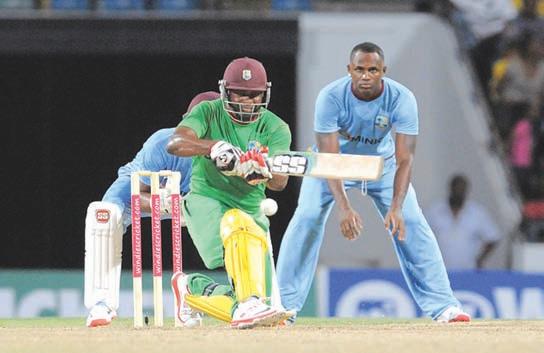

West Indies Cricket Board (WICB) President Dave Cameron has steered clear of trying to explain why the door has been closed on the T&T pair Dwayne Bravo and Keiron Pollard.
The two players have been overlooked since the West Indies tour of South Africa and some pundits have remarked that they are being punished for their roles in the aborted tour of India last October. Cameron was questioned about their omission from the tour at the WICB’s final Town Hall meeting at the Chaguanas Borough Corporation Building on Friday night.
Cameron said the decision to choose players was the responsibility of the selectors and he left it there. He made it clear that a number of players who have left the West Indies Players Association (Wipa) will not be victimised, as the WICB was a separate entity from the players association.
He did, however, mention: “It is sad to see the players giving up an opportunity to have a body represent them. This does not mean that those who I am hearing left, cannot speak to the board.”
Asked if Bravo and Pollard wanted to speak to the board, Cameron asked: “For what?”
Pressed further he said that they would have to understand that there are rules of engagement that are in place.
Apart from the Bravo and Pollard issue, Cameron handled the meeting well, which at times presented him with difficult questions.
Queen’s Park manager Jeffrey Guillen asked him
The West Indies Players’ Association (WIPA) would like to express its surprise and concern regarding an alleged statement circulating in the media from West Indies Senior Team Coach Phil Simmons. In this statement Coach Simmons made accusations of “outside influence” in the selection process of the West Indies Senior team. Coach Simmons also said, that the best ODI team was not selected to tour Sri Lanka in October/November of 2015. WIPA President and
and the severing of bi-lateral tours remain at the same but there is a meeting of the International Cricket Council (ICC) on October 10 where they are expected to deal with the matter. “We have an ICC board meeting on October 10 and we plan to deal with the matter. Hopefully when I get back to the region I would be able to report positively on the India situation because they are due to tour here next year.
how come he was still president of the WICB after his role in the board accumulating a debt of US$42M.
Cameron replied that whatever decision was made to deal with the aborted tour was a board decision but he took full responsibility as head of the organisation.
According to Cameron :”Looking at the India situation and what it has brought, probably it had to happen to force change in
Cameron used the opportunity to promote the work of the WICB and said that all sectors of the cricketing fraternity will receive assistance from the board.
… Ramdin stats failed him
One of the burning questions that members of the audience put to Cameron was the axing of Denesh Ramdin as captain of the West Indies Test team. Without coming out outright and saying that
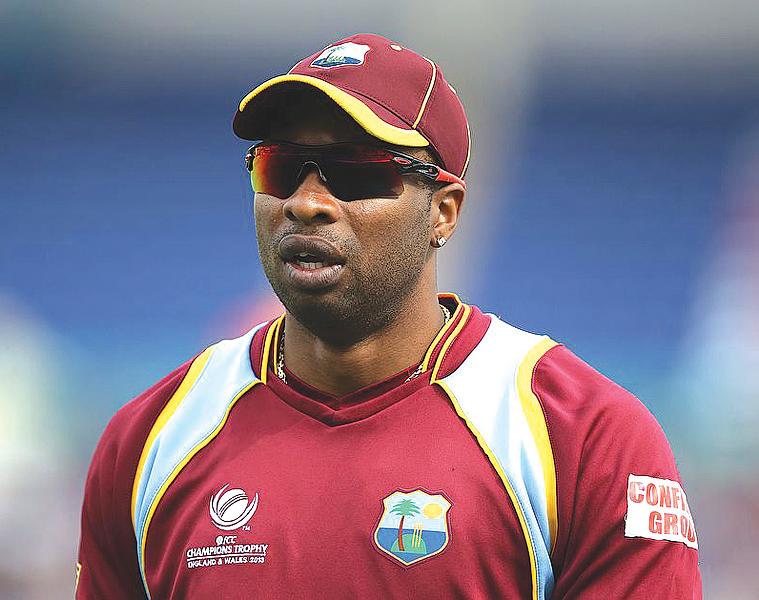
West Indies cricket. We at the WICB is now building a team and not individuals and we think this is the way to go.” One of the points of discussion over the India incident was the fact that the players went to India without signed contracts. Cameron assured all that the players have already gotten their contracts for the upcoming Sri Lankan tour, pointing to the fact that it was one of the lessons learnt.
The Jamaican added that the India situation in terms of the US$42M bill
Ramdin was dropped for his poor batting form, Cameron said: ”Numbers are a strange thing. I always tell people that if you use the players was initials but not their own initials and pick a team on numbers you would be surprised as to what you come up with. Ramdin’s average over a period leading into his captaincy showed he was averaging 40. When you take a look at his average while as captain it is 22. So sometimes we have to take a close look at these things in an effort to get answers. (Trinidad Guardian)

CEO Wavell Hinds said today after hearing of the statement, “The selection process at all times must be independent, transparent and fair. The people of
the Caribbean want the best possible team to represent them. We call on the WICB to address this fundamental policy with great urgency and clarity. (WIPA Release)

By TreisTon Joseph
uleen Josiah-Tanner
Eafter her win in the Courts 10k questioned the Athletics Association of Guyana’s (AAG) selection process, nothing that it was not satisfactory.
However, President of the AAG in a telephone interview shed some light on the process of their selection process.
“Once we have a games to attend or have to participate in we look for our top performers in those events or the athletes we believe will gain from those games,”
Hutson mentioned.
In addition, Hutson decided to clear the air on the questions posed by JosiahTanner by revealing the possible specifics that JosiahTanner’s questions were possibly rooted in.
“She was probably referring to the Caricom 10k which is a government event and not a AAG event, we helped the Government in selecting two athletes to represent Guyana and decided to go with athletes that were locally based.
“Not every event that Jamaica participates in, Usain Bolt goes to,” Hutson stressed.
Hutson also highlighted that after the selection, the offer was made to JosiahTanner to attend the event.
“We did offer to send Josiah-Tanner and her response was once she is not going as the selectee, then she is not going,” Hutson quipped.
Nevertheless, Hutson noted that once it pertained to track events, JosiahTanner have no records over the last couple of years of being a track athlete but called the 40 year old 10k runner, Guyana’s best female distance athlete as well as Guyana’s selectee for all three legs of the South American 10k.
“She is our number one pick to represent us at the South American 10k; an AAG event… the Caricom event is the only event Josiah-Tanner can say is an event that we did not select her when she was eligible.
“However, at this moment she will represent us at all 10k events,” Hutson noted.
The Caricom 10k was held earlier this year in Barbados where Cleveland Forde won the event while Andrea Foster finished second in the female category. (josepht@guyanatimesgy. com)
– “we gained valuable experience,” says Campbell
B y T reis T
Devon Davis was the only member of Guyana’s Central American and Caribbean (CAC) Bodybuilding and Fitness squad to finish in the top three in their respective category when the event concluded on Saturday at the Atlantis Resort in The Bahamas.
Davis grabbed a silver medal in the Bantamweight category in spite of the biased judging according to Emmerson Campbell who finished fourth in the Men’s Physique category.

Kerwin Clarke finished fourth in the Light Middleweight category, while Sylvester Andrews was fifth in Welterweight. Alisha Fortune who had two wardrobe malfunctions was unable to move past the prejudging stage on Friday. Nevertheless, Campbell called the judges decisions questionable, “the local athletes and a lot of the other Caribbean athletes collectively agreed that the judges’ decisions a lot of times were very questionable and they were not consistent in the way they judged our athletes… we quite just did not know what they were looking for.
“I mean Bahamas benefitted from a lot of hometown decisions and a lot of the Spanish light skin athletes won all of the bikini and men’s physique and they were not better than the other athletes… I just don’t know what the judges were quite looking for,” Campbell stressed.
In addition, Campbell pointed out that some of the judges admitted to the biased judging, “even some judges at the banquet admitted that they didn’t quite get a lot of things right, that they weren’t
The Guyana Rugby Football Union (GRFU) had a major shakeup in its executive administration albeit for a short period when the Annual General Meeting (AGM) and elections were held on Sunday at the St Stanislaus College.
While President of the GRFU Peter Green was re-elected unopposed, the major changes came at the positions of Senior and Junior Vice President, Secretary and Treasurer.
John Lewis who was the former Senior VicePresident was replaced by the incumbent President of the University of Guyana Student Society (UGSS) Joshua Griffith unopposed while Elwin Chase who is the current Coach of the national women’s rugby team was elected as Junior Vice-President unopposed, replacing Alwin Etwah.
Terrence Grant, a long-
consistent in the way they judged the competition,” Campbell revealed.
Campbell also noted that all of his team members should have got better finishes, “Devon Davis, there was no way he should have gotten second to the guy from The Bahamas that won, Kerwin Clarke got fourth… the guy that won was nowhere close to him, he had no legs, you cannot win a bodybuilding contest without legs.
“Andrews got fifth, it was unbelievable… the guy that got third ahead of me is just light skin, he has no cuts, no abs, no shoulders, nothing… I don’t know what the judges were quite looking for,” Campbell explained.
Nevertheless the Men’s Physique athlete was optimistic about Guyana’s chances in the future, “All is not lost, we didn’t take it as a loss because we gained valuable experience, it’s the first time out here competing at the games and we placed fourth and fifth but to be in the finals is an achievement so we will do much better next year and try to bring home some medals,” Campbell stated.
(josepht@guyanatimesgy.com)
serving member of the GRFU was replaced by Petal Adams unopposed as the Secretary while Keith White was named Treasurer after the former position holder Roger Pereira declined re-election.
The other elected members were Ryan Dey (Assistant Secretary Treasurer), Esan Griffith (Public Relations Officer) and Shane Grant-Stewart (Match Secretary).
The three committee members elected were, Daniel Anderson with 48
votes, Sabola Gray with 44 and Delroy Gordon with 39.
One motion was also past at the AGM to hold a special meeting on October 25.
Green in his remarks noted that he was “bemused” by his re-election but urged his new and almost totally different executive to work hard de -
spite the job might just be for the next three months since the election was overdue and the posts are up for election on an annual basis.
Griffith who was a surprise to be elected Senior Vice-President noted that he will commit to finding avenues for the development of the sport.
“Being the recently elected Vice-President of the GRFU, I’m humbled, appreciative and thankful for all those who voted as well as putting their trust in me to serve in this capacity.
“One of the things we will be looking to do is to meet with the members of the clubs and to hear what the issues are and to see how best we can remedy those issues and also to have an overarching vision for the GRFU moving forward; a five year plan, a ten year plan, a vision statement, a strategic plan so that we take rugby to the next level locally, regionally and internationally,” Griffith told Guyana Times Sport at the AGM. Meanwhile the GRFU will also be looking to make some amendments to their constitution that will have an executive in place for a two-year period.
The next rugby event will kick off on October 4 in the form of the Banks DIH Sevens tournament slated for the National Park Rugby Field. (josepht@ guyanatimesgy.com).



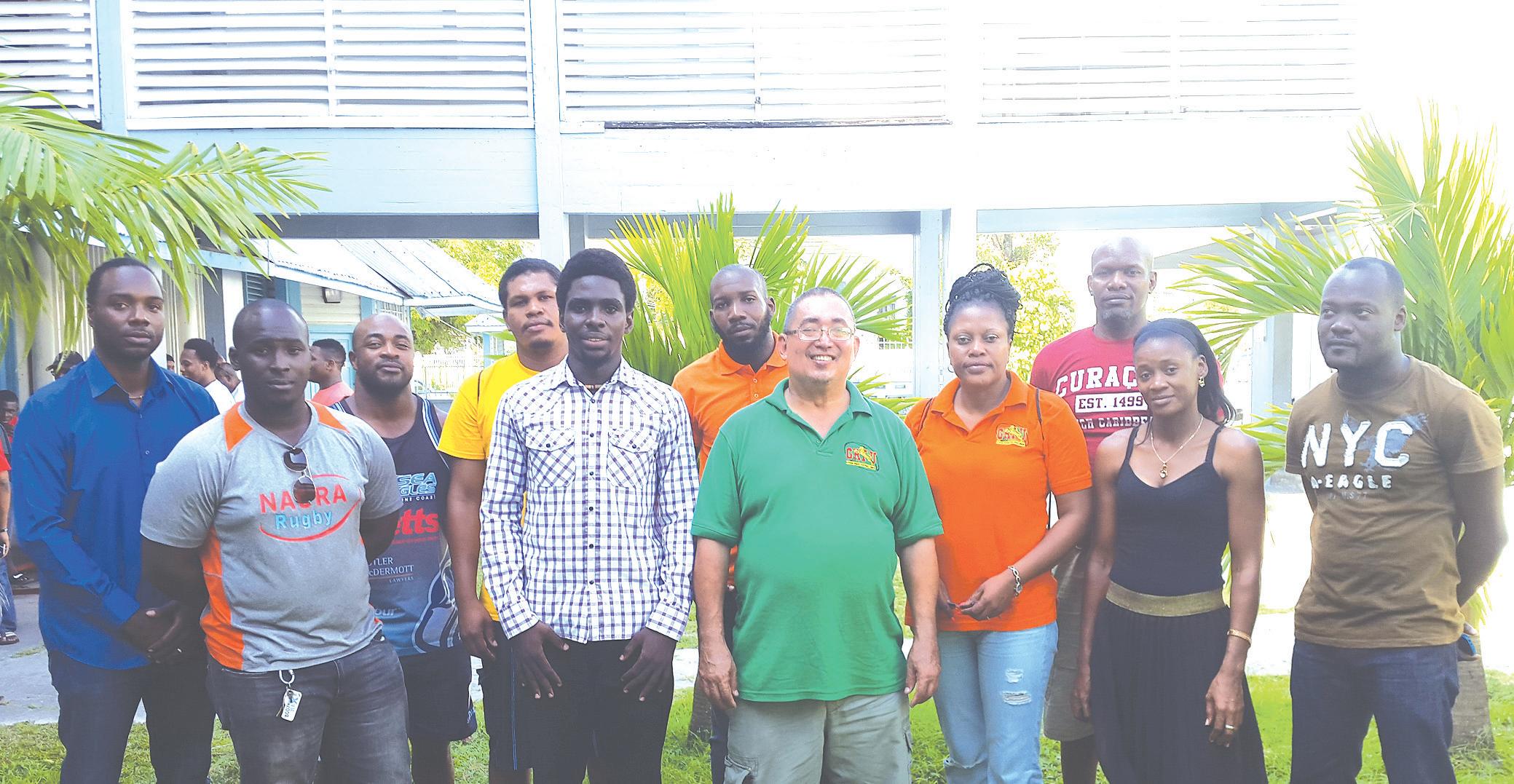

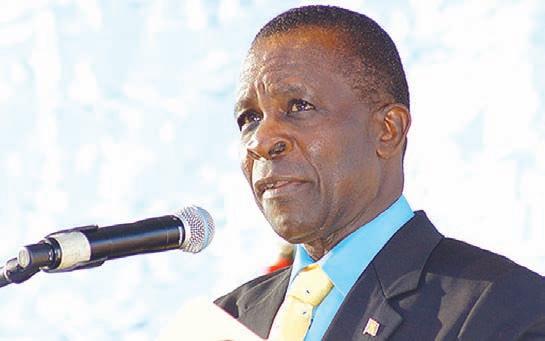
terference, fear, or favour”, and joined with Simmons condemning “any act that undermined his leadership and the discretion of the Board of Selectors to field the best team.”
“It is my view that West Indies cricket is fortunate to have a leadership team that includes head coach Phil Simmons, captain Jason Holder and chairman of selectors, Clive Lloyd,” Mitchell said in a statement.
“The team is now at an important crossroads, and it will require wisdom and good leadership to chart and follow the right path. It will therefore take the skill, motivation and priorities of the men who lead and the players who follow, to restore the team to world prominence.”
He continued: “To that end, the leadership unit must receive the full and unequivocal support and cooperation of the West Indies Cricket Board (WICB), and the backing of an independent selection panel, that is free of interference, fear, or favour.
Grenada’s Prime Minister Dr Keith Mitchell has labelled as “disturbing” claims by West Indies head coach, Phil Simmons, of outside interference in the selection of the One-Day International squad for Sri Lanka. Mitchell, the Chairman of CARICOM’s Sub Committee on Cricket Governance, said Sunday any selection panel needed to be “free of in-