

By Dmitri Allicock
The rivers and creeks of Guyana are natural highways and links to all of the regions.The need to bridge them and to improve transport and travel are both difficult and expensive. The early bridges were primarily attached to industries, like the 1830 Canje Bridge across Canje Creek to facilitate the sugar industry. That bridge was later replaced by the Swing Bridge in 1895. Then there’s
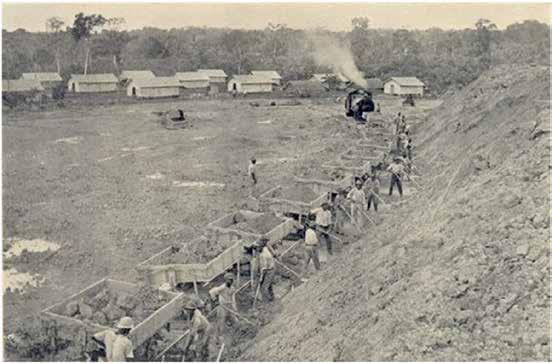
Demerara Bauxite Company (DEMBA), in 1916, started production at Akyma on the Demerara River south of Mackenzie. Initially, bauxite was mined by pick axes and mule carts and then loaded in large barges and towed down the river to Georgetown to ships moored midstream off Georgetown’s harbour.
In 1922 the operation was expanded, and processing and shipping facilities were fully established at Mackenzie, the head of
River would be established in this area later in 1939 to transport bauxite ore from the western bank from Hope Mines.
There was a slump in the bauxite industry between 1930 and 1936, but trade picked up just before 1939 and particularly during the Second World War when demand for aluminium was high.
The bauxite mines, called Hope, was established on the western bank of the river and a bridge had
the Potaro 1933 Denham Suspension Bridge, also known as the Garraway Stream Bridge, which linked Mahdia to Bartica and served the mining industry.
The first bridge across the Demerara was associated with bauxite. The
ocean navigation in the Demerara River.Those were the days of steam shovels digging bauxite where robust men loaded the precious ore by spade into orecars pulled by steam, and later diesel-powered locomotives on the rails. The first bridging of the Demerara
to be built to transport the ore to the bauxite plant at Mackenzie, located on the eastern shore. There was a railway already servicing the mines directly across the river from Hope Mines.
This bridge, known as Hope Bridge, was constructed in 1939 to facilitate the
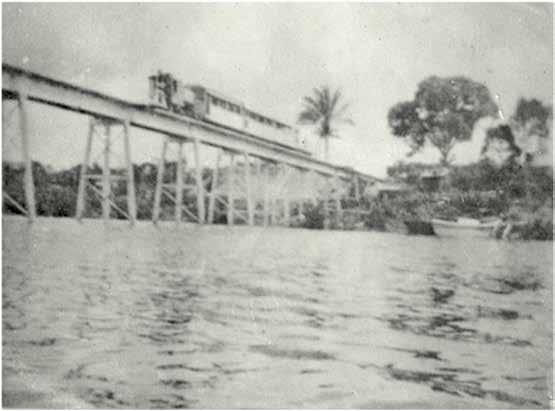
transportation of bauxite from Hope on the western shore of the river to Akyma on the opposite side of the river. It was erected some 14 miles from the Mackenzie Plant and was fitted with railway tracks as bauxite was hauled by locomotives to be processed.
Many of the older generations recalled the bridge that brought activity and life to the river and the expansion of the town that became the second largest town in Guyana. In 1922, the population of the Mackenzie area was less than 1,000 persons. Employment was dependent on not only bauxite mining, but also the timber industry and some independent gold prospecting. The primary timber industry was located along the Essequibo River
Before the fishing rod of today, indigenous people created ingenious fishing traps to sustain their daily lives. Some of these traps are extremely complex with one-way valves, bait chambers and
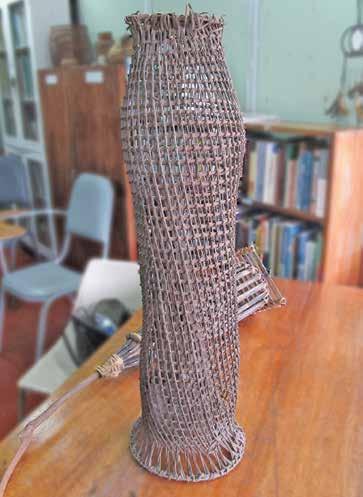
floats, while others were primitively basic. Nevertheless, all fishing traps had one common trait - all evidently adapted to specific functions and ultimately different species of fish.
According to the late Denis Williams in his book“Prehistoric Guyana”, “the second great petroglyph tradition of the Northern Amazonia is represented by the Fish Trap Series…” which show the frequency and importance of fishing in indigenous communities.
Fishing was good in those early times. As early as 2,000BC, small bands of “hunter-gatherers”, as Williams described them, would fish in pools, rivers and streams in the “productive rainforest” to trap their next meal.
and transported by railway to the Demerara River by the Wismar to Rockstone Railway.
The 1939 Hope Bridge was the first to span the Demerara River. After bauxite was exhausted at Hope, the bridge lay unused for some time before it was dismantle and transported to Mackenzie where it was used in building the 1968 Mackenzie/Wismar Bridge. This multipurpose bridge was also built by DEMBA, servicing the bauxite mines called Plumba at Christianburg, along with linking the town that became Linden in 1970. Today, the Linden Bridge connects the town and also serves as a pathway for traffic heading to Essequibo and Lethem.
Some metal piling and remnants of the old Hope Bridge were still in existence in the 1970s and was an important landmark, but it is said that it was uprooted and sold by scrap metal dealers, leaving nothing to mark the memory of the first bridge across the Demerara River.
Today, the 1978 majestic Demerara Harbour Bridge overshadows the earlier bridge further upstream. Then there are the spanking new 2008 Berbice Bridge and the 2009 Takutu Bridge, bringing comfort and connecting Guyana. Perhaps, in remembering the Hope Bridge, new ideas will be thought of to preserve history and to connect the coming generations to the treasured past.
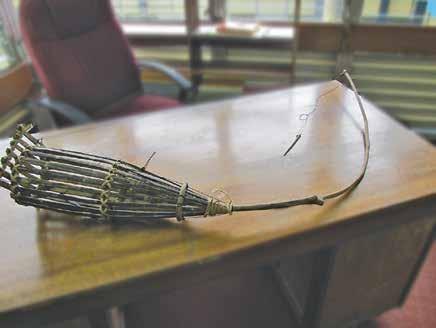
The stratification of food refuse at the Pedra Pintada rock shelter on the Parima River in Region Nine shows occupation there to have lasted between 2,000 BC and1, 000 BC. This ‘refuse’ was said to indicate the heavy reliance on fish, fresh water snails and various small reptiles and mammals. This is further exemplified by the exploitation of the Kassikaityu River (Upper Takutu-Upper Essequibo), as illustrated by the Kassikaityu petroglyphs, which indicated “four kinds of fish traps: the Maswah, Box Trap, Cylindrical Fall Trap and the Spring Basket Trap”.
Aside from selective harvesting, the different types of traps indicated location, design, and baiting procedure utilised by the indigenous community.
Fish trap locations also differed in accordance with various habitats. Certain traps were anchored on the river bed, while others were supported on the platform of the water current or just below the surface, and sometimes barriers across waterfalls.
Fish trap locations and designs were specific to particular water bodies, depending on the geographic area, surface shapes and features. Not to mention, the indigenous fish traps and baiting procedure “evidenced by petrographic data” implies a “wide knowledge of the habits and haunts of various fish species and of their respective food preferences”.
Notably, the indigenous community was monitored in their fishing exhibitions to limit exploitation. According to Williams, “selective extraction was guaranteed by the imposition on a nearby rock exposure of a range of fish traps known to be effective in taking particular species of a given pool”.
Hence, choosing a fish trap for fishing was crucial to the hunt, the species caught and the amount taken home at the end of a given fishing trip. (Information taken from “Prehistoric Guiana” byDenis Williams)
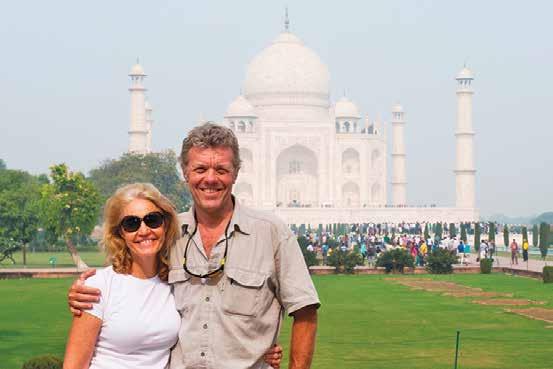
Pete Oxford, a British biologist, and his South African wife Reneé Bish have lived in Ecuador, South America since 1985 and 1992 respectively. Since childhood, Pete has known two things: he wanted to spend his life in nature and wanted to travel.
When Pete and Reneé met while he was working as a naturalist guide in the Amazon rainforest, it was immediately obvious that their combined wanderlust and passion for wildlife would stand them in great stead.
Pete began in tourism in 1987 while living in the
Galapagos Islands where he worked as a naturalist guide for three years. He subsequently decided to travel around the world and, after sailing across the Pacific in a 10 meter yacht, he worked catching crocodiles for six months in Australia followed by croc work in India and Zimbabwe, (where he
also did a stint in game capture).
He also worked on the high seas in the South Atlantic as an observer for the Falkland Islands Government fisheries, assigned to foreign flag vessels. Still fascinated by the country, he returned to
Ecuador and began work in the Amazon rainforest.
It was in the forest that Pete and Reneé met and where they lived for three years. Pete worked as a naturalist guide while Reneé set up community centres aimed at the local women.
The next stage in their
ond joint book project to provide photography for the book on the Rupununi. Pete and Reneé did not hesitate.
“During my subsequent extended visits in 2009 and 2010, my thoughts on the Rupununi matured. A relationship evolved. The area became intoxicating. I was
lives was to begin work as an expedition team in the ecotourism adventure industry, both on ships and remote wildlife destinations on land. They have vast experience around the world where they worked repeatedly on all oceans and every continent, revisiting all continents every consecutive year for eight years.
It was during this time that their photography developed and they soon found that they were selling images and feature articles to a wealth of international magazines.
Pete and Reneé work as a team, and today photography has become the vehicle by which they are able to spend their lives in the remaining wild places of the planet.
The couple first came to the northern Rupununi for six weeks during 2005. Several years later, Graham Watkins, author of “Rupununi – Rediscovering a Lost World” and a friend of the couple, invited them to collaborate on their sec-
drawn into its unexplainable and inextricable web, its infectious magnetism and allure. The spectacular wildlife, extraordinary biodiversity, and incomparable scenery remain the same; jaguars, tapirs, giant river otters, macaws and black caimans are still readily seen,” he said in “Rupununi – Rediscovering a Lost World”.
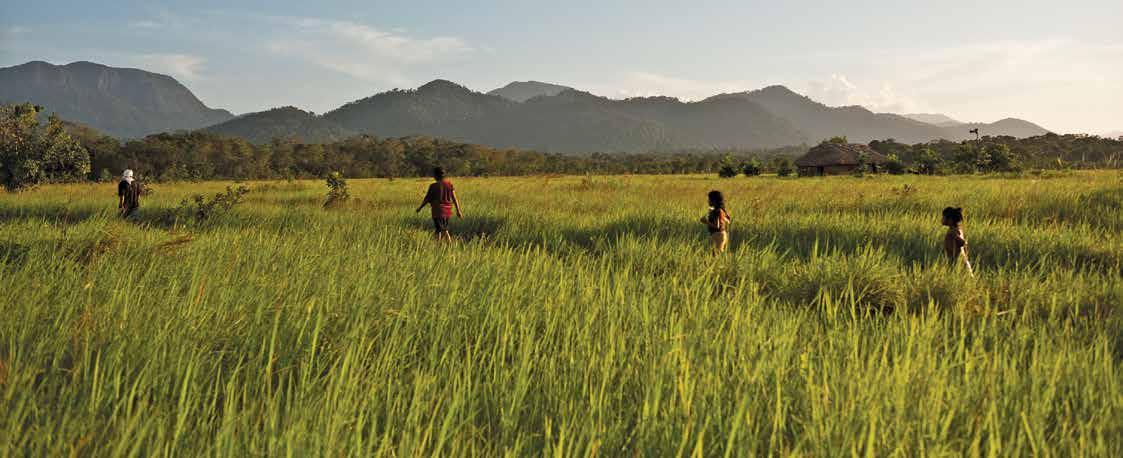
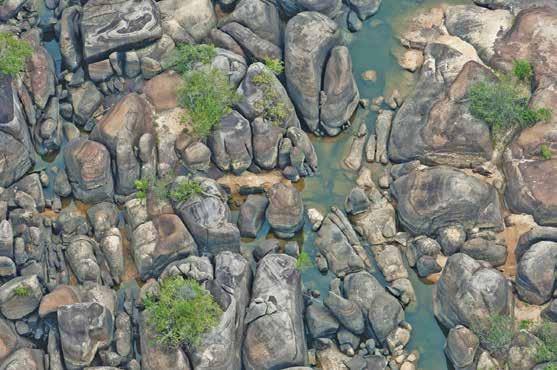
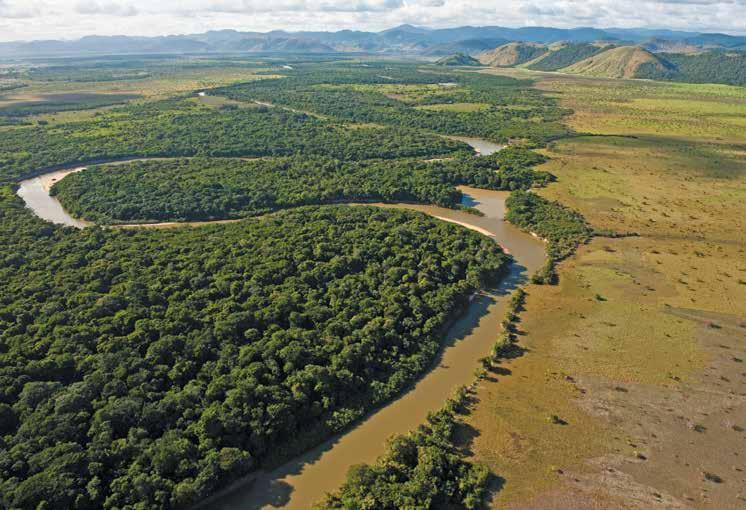
With the help of a military helicopter and expert pilot, Pete and his wife were able to capture some amazing shots of the Rupununi landscape.
“I did so many interesting things: watching jaguars at night on the Iwokrama road, playing in the water with giant river otters with Diane McTurk in the Rupununi, catching and marking black caiman with Caiman House, underwater photography in the lakes in the Rupununi, rescuing a giant anteater from a well; took a trip up the Rewa River looking for jaguars, and seeing tapirs
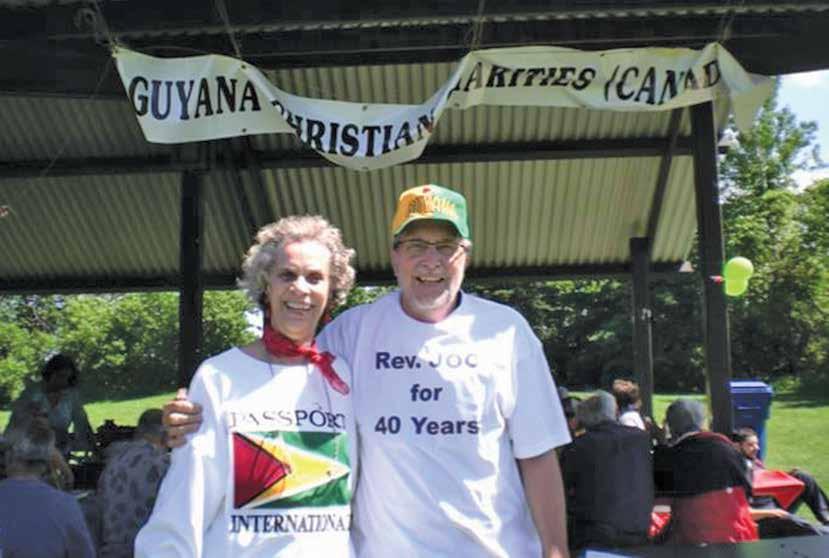
The Guyana Christian Charities (Canada)
Inc. celebrates almost three decades of service as a registered charity that has provided significantly to Guyana.
It all started in the late 1960s, when a group of past pupils and parents closely connected to the nuns who administer at St. Ann's Girls Orphanage in Georgetown and the St. John Bosco Boys Orphanage in Plaisance, learned that these two facilities were experiencing great difficulties obtaining funds to maintain their services and buildings.
To help cover some part of this deficit, a group of ladies organised and held a ‘Bring and Buy Sale’ in Canada. The proceeds assisted with Christmas parties for the orphans.
This became an annual feature and, with increasing support from the Guyanese community in Toronto, attendance rose. This increase ensured funding for additional special projects.
Following a further ap-
peal from the Ursuline Sisters in 1977, the late Vera Lopes, along with Anne Marie Reigber formed an extended group that assumed the name The Alleluia Committee of Guyana. These committed indi-
viduals expanded their efforts to raise and collect money for the maintenance of both the Georgetown and Plaisance Orphanages. Vera remained a dedicated supporter and benefactor up to her death.
In 1978, the group held

established as a registered charitable organisation in 1987 and complies with the rules of the Canada Revenue Agency.
In 1985, due to the critical shortage of medical and other supplies in Guyana, the first Valentine's Dance was held in Canada. The funds raised paid for a much needed shipment of donated medical items that was sent to St. Joseph's Mercy Hospital.
This annual event continues to be well received and hence, very successful. Two additional dances have been added, one
have attempted to keep up and to expand gradually. Assistance is being provided to an increasing number and variety of other charities and organisations.”
He further stated that while the organisation’s name might suggest it is entirely focused on one segment of the community, this is not the case. The organisation’s assistance is totally transparent and reaches the neediest in the community and has no regard to religious affiliation. Its assistance extends to about 100 charities, with no regard to race or creed.
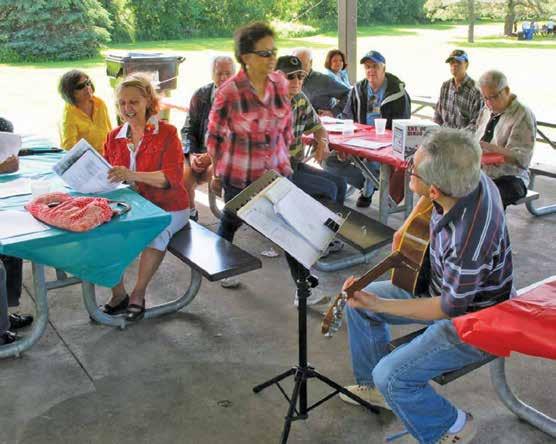
what had become its Annual Bake Sale at Holy Spirit Parish Hall on Sheppard Avenue. Remittances to the orphanages expanded to include items like food, clothing and school supplies.
Meanwhile, about 1980, another group of Guyanese, under the leadership of the late Mannie da Silva, was also busy organising. Mannie had received an urgent appeal from Fr. Harold Wong SJ for funds to replace the aging organ for the Brickdam Cathedral.
This new group was appropriately named The Organ Committee. Their first endeavour was a successful fundraising dance. This successful event became the forerunner of the very entertaining and popular Valentine Dance.
Eventually, these two groups, which comprised mostly of the same persons, decided they would be more effective if they merged. Out of this merger Guyana Christian Charities (Canada) Inc. was created, with Desmond De Barros assuming the role of first president.
The organisation was
in May and another in September. The proceeds from the Spring and Fall Dances are utilised primarily for humanitarian health efforts.
The organisation’s Food and Bake Sale event, held annually in late October, has steadily grown in popularity since the early efforts. The locations have changed as the numbers of supporters have increased.
From the earliest days at Holy Spirit Parish Hall on Sheppard Avenue, Scarborough, the organisation moved to L’Amoreaux Community Centre in 1994. When this facility became inadequate, it again moved to the much larger and well-appointed facilities of Sts. Peter and Paul Ukrainian Church Banquet Hall at Markham and Milner Avenue.
In an interview with Sunday Magazine , Dexter Gonsalves, treasurer, stated: “The mandate of Guyana Christian Charities continues to be a commitment to help the needy and the sick in our beloved Guyana. The need remains as great or greater today as on our earliest days. Our efforts
GCC was awarded by the previous Guyana government (PPP/C) and the Guyana Consulate in Toronto, ON, with the following awards: Most Outstanding Contribution to the Flood Relief Effort (2005); Selfless Service to Guyana and the Guyanese Community in Canada for over three decades (2003); Longest Serving Guyanese Organization (2002); Support towards rebuilding the Health Care System (1995); Valuable Contribution to the Health Care System (1994).
“Some of our members and dedicated volunteers give generously of their time year-round sorting and packing the many donations of clothing for all ages, medical and other supplies, wheel-chairs, toys, shoes and much more. We welcome all and any help that is offered. The harvest is ready but, alas, the workers are too few,” Gonsalves declared.
For more information, visit Guyana Christian Charities Canada, Inc. on Facebook.
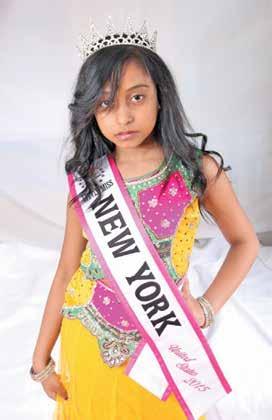
ENine-year-old Eliza Smith is using her talents for
liza Smith was born in No. 58 Village in Berbice, Guyana but currently resides in Queens, New York. She will be starting fifth grade in the upcoming school year, and has been awarded student of the month on numerous occasions.
The current Little Miss United States, and the first one ever of West Indian heritage, spends time promoting her platform of anti-bullying, “It Stops at Me”. This is a cause close to her heart since she has also been a victim of bullying.
Now, she wants to show children facing the same situation to never change who they are because “God made them to be different and who they are is beautiful”. She also wants to help children find the confidence to see that “beauty comes from within and not just on the outside”.
Eliza is also a model, dancer and actress. She currently attends the Ghungaroos Dance Academy where she is being trained by international dancer Dheeraj Gayaram. She also models and has walked in both New York fashion week and New Jersey fashion week.
Her print work includes Alexandria Olivia, Alize Lavie magazine, Just 4 U kid’s magazine, Just Kid’s magazine and also Big City Kids. She has been on show like the “Leftovers”, “Team Umizoomi”, “What not to wear”, and her latest project a role on the Aziz Ansari project.
Eliza was the first child to win the Zoii award where she competed against 73 children. She was also the first child to receive a New York fashion award at the age of seven and also East Coast Actors’ Top Model.
She began modelling in a pageant and since then has been modelling and competing in pageants. She has already won the titles Little Miss American Beauty, American Nation Petite Princess, and Little Miss New York Ambassador.
When she is not in school, Eliza is giving back to her community by participating in charity shows and walks like the
Susan G. Komen Breast Cancer Walk, walks for HIV/AIDS and many other charity events.
Additionally, Eliza’s goals for the future include pursuing a degree at Stanford University where she hopes to become a paediatric oncologist. She also wants to become a professional Bollywood dancer like her role models Nikita Gayaram and Dheeraj Gayaram.
Her advice to youths is to “always believe in you and never let anyone tell you that you’re not good enough”.
Follow Eliza’s activities on Little Miss New York United States 2015 Eliza Smith on Facebook. (www.guyanesegirlsrock.com)

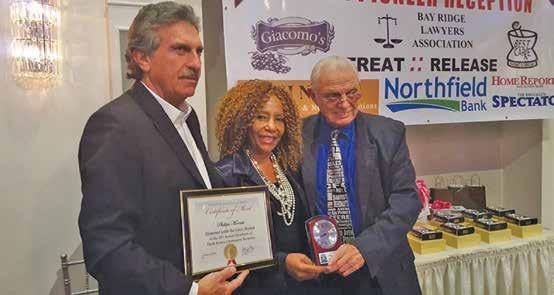
Receiving her Pioneer Award
Meet Phillipa Morrish, a certified social protocol consultant and the founder of Etiquette Training International, New York. Since 1999, Phillipa has worked internationally with corporations, organizations, law enforcement officers and private clients to help them become leaders in their field. She also works extensively with teens, and has been an etiquette teacher at Fontbonne Hall Academy, Brooklyn, since 2003.
Phillipa’s desire to bring the same instruction to the students of Guyana has resulted in “finishing school” courses being taught annually to Guyanese high school students. She has conducted workshops since 1999 to clients in the United States and the Caribbean, ranging from the Office of the President, to hotel and restaurant staff in Guyana. From law enforcement officers in Trinidad to hospitality students in Jamaica, she specializes in fostering a greater comprehension of differences in North and South American protocols.
A graduate of the University of Guyana and Universidad di Aruba, Phillipa earned a degree in English in 1981. In 1998, she graduated from the Ophelia De Vore School of Charm, New York City, winning the coveted Miss High Achiever trophy. In 2010 she obtained additional social protocol training at the prestigious Minding Manners in London.
Phillipa has been honoured for her com-
munity service by several civic and government organizations in New York City, including the US House of Representatives, the New York City Council, The American Council for Minority Women, and the Metropolitan Detention Centre in Brooklyn for creating The Chrysalis Program, which she teaches to female inmates.
She has taught etiquette to military wives at the Fort Hamilton Military Base, Brooklyn, and has been honoured by the installation for her volunteer work on behalf of military families. In 2011 she was selected as one of Brooklyn’s Outstanding Women by the Kings County District Attorney’s Office.
On October 26, 2015, the Merchants Association of Third Avenue Brooklyn honoured Phillipa with the Pioneer Civic Award. The Pioneer Award recognizes businesses that have remained true to the small town feel of Bay Ridge and to individuals who have worked on behalf of community-wide issues. The honours were handed out during at a cocktail reception at the Bay Ridge Manor in Brooklyn, New York.
Phillipa has also co-hosted several ‘Monday Manners’ etiquette shows on Brooklyn Cable Access Television and currently writes a weekly column “Etiquette Boss” for the Home Reporter and Spectator newspapers in New York City. (http://guyanesegirlsrock.com)

By PetamBer Persaud
(An extract of an interview with Dr. Viviane Baharally, a granddaughter of Canon John Peter Bennett, Georgetown, Guyana; October 2015.)
PP John Peter Bennett was a man of many parts – teacher, priest, educator, linguist, translator, writer and more. You knew him as all of the above and more –you knew him as a grandfather. Let’s talk about John Peter Bennett - the grandfather.
VB Let me see where to start – there is so much to speak about. He was a gentleman – I have never seen nor heard him scream, shout or quarrel. He was so jovial. He can be stern if he had to be. For instance, one such moment was when I asked him for a magazine, I said, Pappi – we call him Pappi, known by everyone in Kabakaburi as Pappi – I came home from school one day and asked him for an old magazine to paper my books. And he said, no magazine is ever too old - for him reading was everything. And I have great respect for National Geographic, Reader’s Digest, Telegraph, Newsweek – these were
some of his reading materials that I am familiar with, from which he learned a lot of things because from his biography we know he didn’t really go to school, he was more attracted to the books…
PP A very good attraction…
VB Yes, and this led him to work with the priest and the rest is history.
Yes, that was the sternest thing he ever said to me – no magazine is ever too old.
PP I like that – no magazine is too old. I know for I have clippings and magazines from way back.So what did you do?
VB Well, I had to get greaseproof paper to cover the books and that is not as attractive as the magazines with colours or flowers and foods etc. I can’t remember any other time when he was in a scolding mood.
He spent a lot of time in the garden, reading, talking with his wife, telling us stories… and that was before we started high school and he was able to move because as I said before, I knew him when he was recovering from his surgery which left him half paralyzed; so he
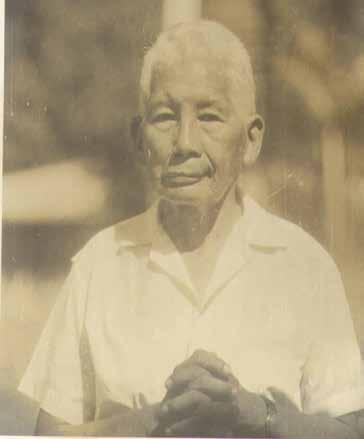
was learning to use his left hand because he was righthanded, but he managed to do everything for himself.
I just see him as this cool, calm individual who has put so much meaning to life.
PP And he did that
VB Yes, he lived, he lived his life and enjoyed ev-
ery day.
PP Long and fruitful life.
VB I wasn’t around when he eventually got blind in the 1990s, my older sister was telling me that that was very sad for him, you know what it would mean –no more reading. But he re-

covered from it, meaning he was learning to deal with it…
PP Remarkable man
VB Very, very remarkable – he would move about the house from place to place all by himself, he really wanted to do it all by himself.This is the man I know – he was easy to get along with, easy to talk to; you could learn so much from him by just interacting with him.
Every day we would make time to spend with him, once we were home from school –we left Kabakaburi to attend high school and then again for higher education, all of us, my other four siblings. So when we were on vacation, we would ensure we spend time with him and he looked forward to this…he looked forward to us reading to him …and it was always fun being around him. …
He taught me to type, touch typing…
PP Not looking at the keys…
VB Using the Pitman method – asdfg;lkjh…
PP So he was able to work after he became blind?
from page 3
VB Yes, (the) typewriter was his thing and he was able to manage his time –reading and typing…he ensured we were all able to type, he also gave each one of us a typewriter for our birthday, from the time we mastered the keys …
PP A man of many parts, we could say a man before his time…having the vision to do all of these things…a visionary…
VB Eventually I was able to type for him – before he got blind, he was working on translating the New Testament into Arawak. I worked on some of those manuscripts, some of which he wasn’t able to complete. Another thing I always remember about him – I would finish what he gave me to type and he would look at me and say, “Well you know what’s the reward for good work?More work…” PP I like that – the reward for good work is more work. (To be continued)
Responses to this author telephone (592) 226-0065 or email: oraltradition2002@ yahoo.com
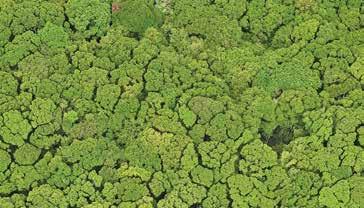
and giant anacondas, just a few to mention,”Pete recalled in an interview with Sunday Times Magazine.
Not wanting to be sucked into the commercial side of the business,Pete and his wife’s mission is to approach photography from a solidly ethical standpoint and, through their images, let photography be the communicator of a story – a conservation message. Pete is, in fact, very proud to be one of the founding members of the very prestigious International League of Conservation Photographers (www.ilcp.com) whose goal as a group is to further conservation through the use of photography.
“I was always impressed by the wildness of Guyana, its diversity and low population - a good recipe to be able to easily conserve the natural asset as long as there is political will. Guyana will, if allowed to, become a premier South American wildlife destination. I have no doubt and I can only hope that our book goes some way towards fulfilling that goal,” Pete expressed.
Pete’s images have been featured ten times in the Wildlife Photographer of the Year Awards. He is published in many international magazines, including National Geographic, BBC Wildlife, International Wildlife, GEO, Smithsonian, Nature’s Best, Airone and The Geographical, Terre Sauvage and Ranger Rick. Together, Pete and his wife have published 12 books on mostly Ecuadorian subjects ranging from the indigenous rainforest Huaorani culture to the Galapagos Islands.
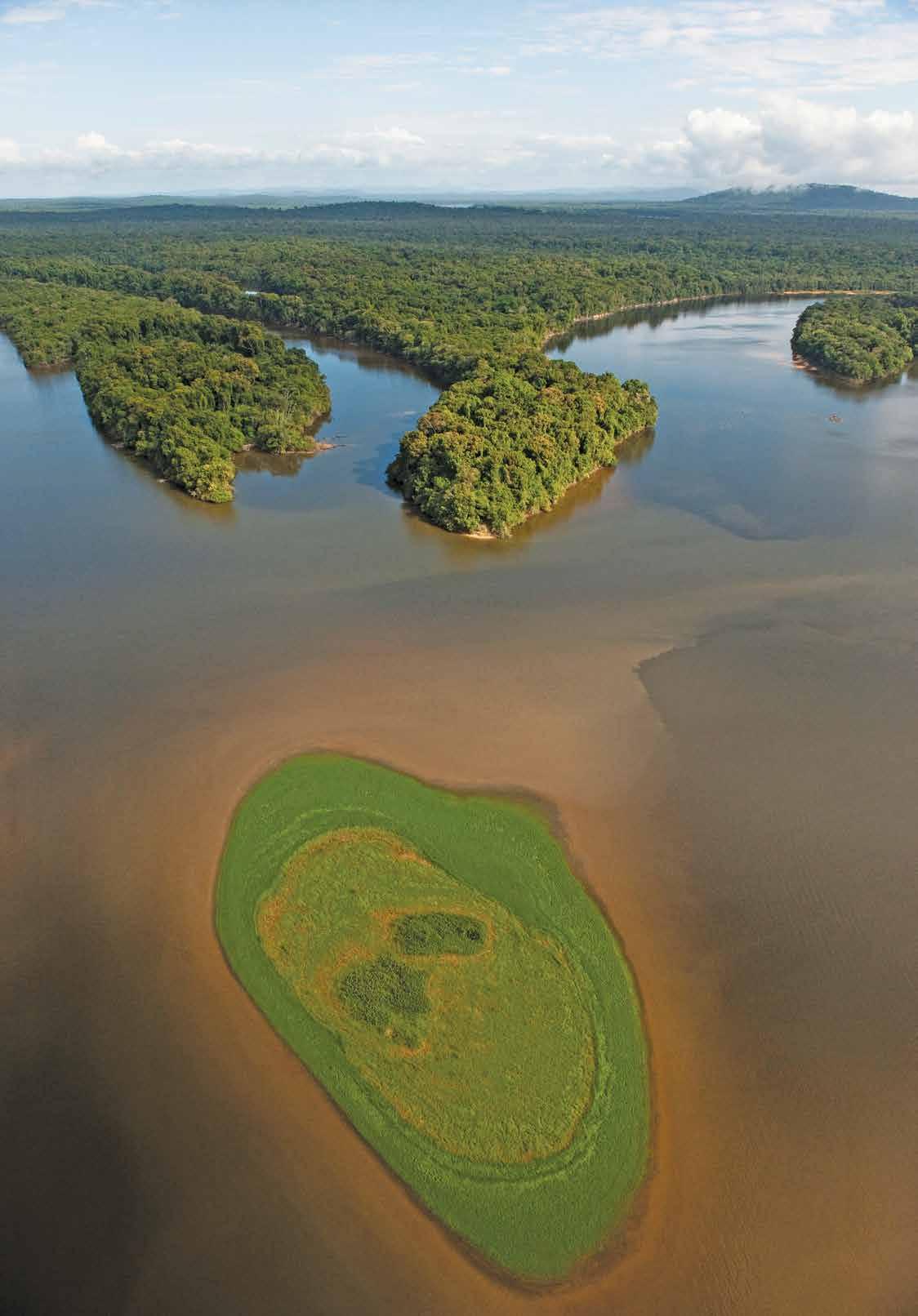
They reside in the Andean city of Quito, but continue to travel exhaustively around the world in pursuit of stories to tell through imagery. Pete Oxford can be contacted at pete@peteoxford.com or via his website at www.peteoxford. com, or travel with Pete and his partners at Focus Expeditions www.focusexpeditions.com (Cover photo: A river island on the Essequibo River that appears only during low water and is clothed with perennial grasses)
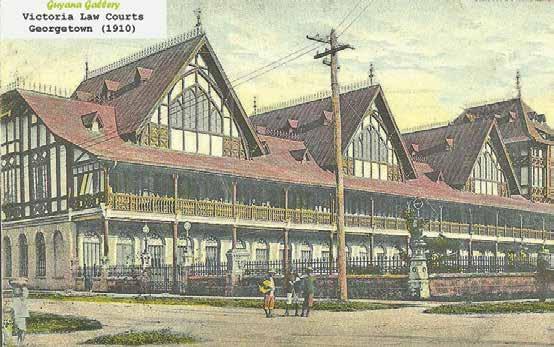
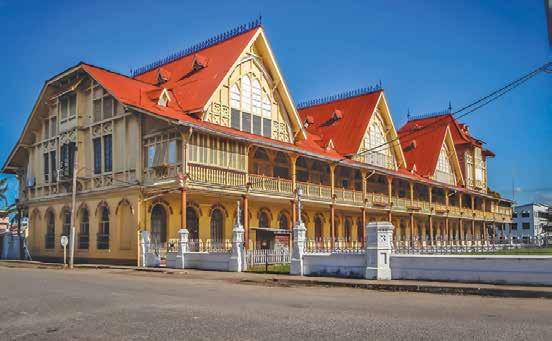
In February 1881, work began on the construction of a High Court for British Guiana, almost three years after its site at the corner of Croal Street and the Avenue of the Republic, in Georgetown, was first selected.
Several structural problems delayed the completion of the building until May 24, 1887 when it was formally declared open by Governor Henry Irving, and
named the Victoria Law Courts.Today it is known as the High Court.
The original edifice was designed by Baron Siccama, a civil engineer attached to the Public Works department, who did not live to see its completion.
The design is said to have completed by two architects during different periods of construction.
Joseph Hadfield is credited with the ground floor design
while Caesar Castellani designed the timbered upper floor.
Siccama’s original plan, according to historians, may have been re-designed due to the building’s earlier structural and foundation issues.
Despite the controversy and difficulty with its construction, it has been lauded for its European design specially adapted to the tropics.

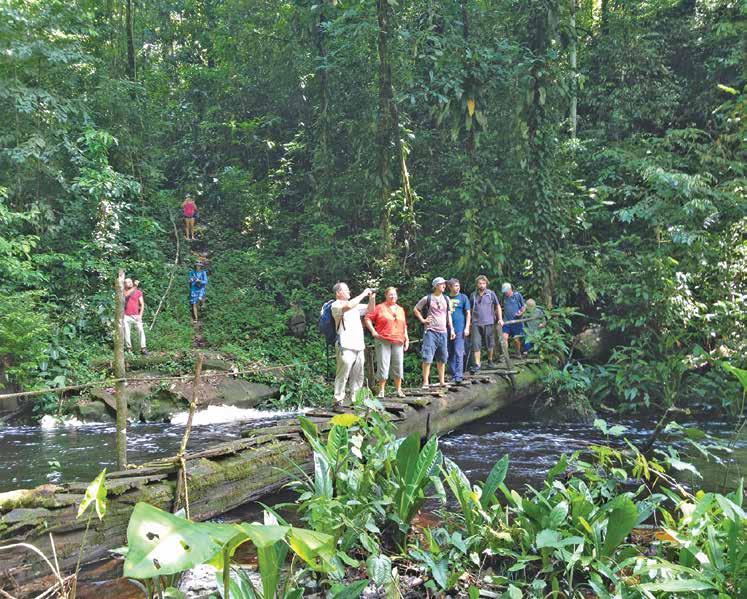
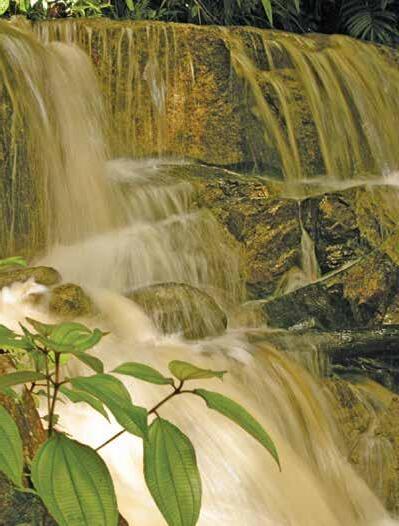
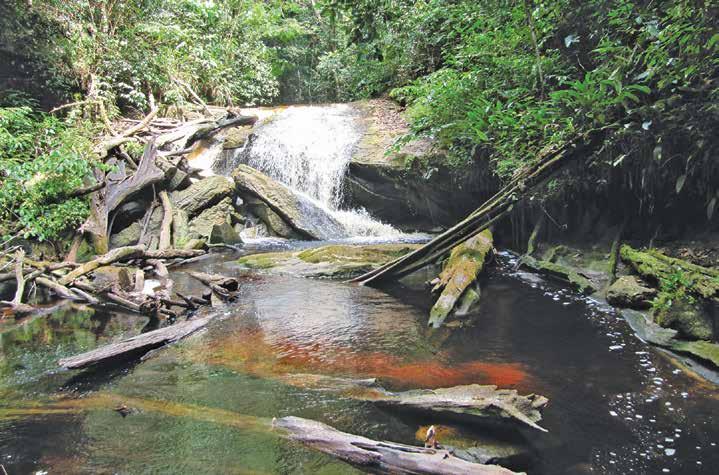
Located along the Mazaruni River, a tributary of the Essequibo River, is the cascading beauty Marshall Falls.
The Falls is within reach from Bartica by a boat, about 30 minutes of travel.
The boulders in the middle of the Mazaruni River create the effects of the Marshall Falls rapids. It is unbelievably scenic and exquisite, especially for nature lovers.
It has an immense amount of water falling to the wide pool below the Falls, creating a natural “Jacuzzi”of clean, cool water for a relaxing dip.
Marshall Falls is described as a “nature lover’s paradise”.

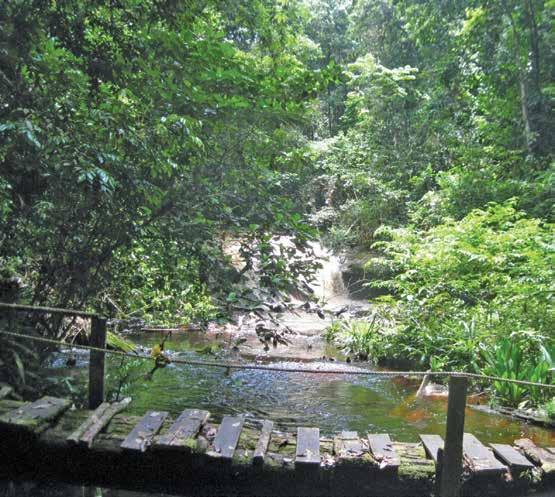
An overwhelming majority of people with mental and psychosocial disabilities are living in poverty, poor physical health, and are subject to human rights violations. Mental health issues cannot be considered in isolation from other areas of development, such as education, employment, emergency responses and human rights capacity building.
Development stakeholders - including governments, civil society, bilateral development agencies, research institutions and others - need to ensure that people with mental and psychosocial disabilities benefit from development ef-
“The biggest enemy of health in the developing world is poverty.”
Kofi Annan, former SecretaryGeneral of the United Nations
forts, just like any other group.
People with mental and psychosocial disabilities are a vulnerable group as a result of the way they are treated by society. They are subjected to stigma and discrimination on a daily basis, and they experience extremely high rates of physical and sexual victimization.
Frequently, people with mental disabilities encounter restrictions in the exercise of their political and civil rights, and in their ability to participate in public affairs. They also are restricted in their ability to access essential health and social care, including emergency relief services.
Most people with mental disabilities face disproportionate barriers in attending school and finding employment. As a result of all these factors, people with mental disability are much more likely to experience disability and die prematurely, compared with the general population.
Vulnerable groups often targeted by development groups also have high rates of mental disabilities. For instance, up to two thirds of people with HIV/AIDS have depression, while rates of mental disability among the homeless can be greater than 50%, but their mental health needs are commonly not addressed.
When you’re hungry and on the run, fast food can really hit the spot. It’s cheap, tasty, and, best of all, convenient. But it’s also loaded with calories, sodium, and fat—often enough in one meal for an entire day.
It’s extremely difficult to follow a healthy diet when
stead of butter, full-fat sour cream or cheese.
Keep your eye on portion size. Avoid supersized and value-sized items, and go for the smallest size when it comes to sandwiches, burgers, and sides.
Pay attention to the descriptions on the menu. Dishes labelled deep-fried,
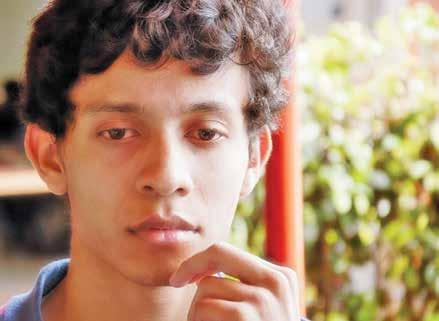
People with mental disabilities are not only missed by development programmes, but can be actively excluded from these programmes. This is in spite of the fact that an explicit goal of development is to reach the most vulnerable.
A number of principles and actions, consistent with the Convention on the Rights of
fries. A sandwich or burger should be plenty filling on its own. If your meal doesn’t sound complete without fries, choose the smallest size (which can be 400 calories less than a large serving).
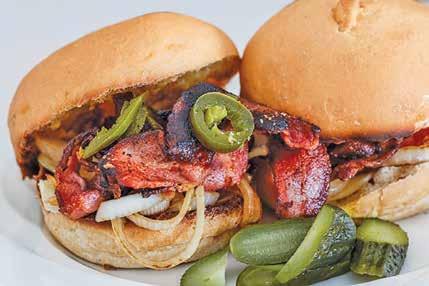
you’re eating regularly at fast food restaurants. Fast food is typically high in Trans fat, saturated fat, sodium, and calories. And it also tends to be low in nutrients and almost totally lacking in fruits, vegetables, and fibre.
Tips for eating fast food
Beware of topping burgers with cheese, special (mayonnaise-based) sauce and bacon — they add saturated fat and calories.
Pickles, onions, lettuce, tomato, mustard and catsup add flavour without the fat.
Steer clear of fried fish sandwiches.
A baked potato can be a healthy option, but have it with low-fat sour cream in-
pan-fried, basted, batterdipped, breaded, creamy, crispy, scalloped, or au gratin are usually high in calories, unhealthy fats, and sodium; same with items in Alfredo or cream sauce.
Be wise about sides. Watch menu items that come with one or more side dishes. Sides that can quickly send calories soaring include fries, chips, rice, noodles, onion rings, coleslaw, macaroni and cheese, biscuits, and mashed potatoes with gravy. Better bets are side salads with light dressing, baked potato (easy on the toppings), fresh fruit cups, corn on the cob, or apple slices. Pass on the French
Don't assume that healthy-sounding dishes are always your best option. For example, many fast food salads are a diet minefield, smothered in high-fat dressing and fried toppings. This is where reading the nutrition facts before you order can make a huge difference. Be careful when it comes to condiments and dressings. When choosing items, be aware of calorie – and fat –packed salad dressings, spreads, sauces, and sides such as sour cream. Mayonnaise – and oil –based sauces in particular add a lot of calories. Try holding the mayo and asking for a packet of ketchup or mustard you can add yourself—controlling how much you put on your sandwich.
Stick to zero-calorie beverages. Soda is a huge source of hidden calories. The average large soda packs around 300 calories, which can quickly gulp up a big portion of your daily calorie intake. Shakes are even worse, with up to 800 calories and a day’s worth of saturated fat. And don’t be fooled by lemonade and fruit
People with Disabilities, will substantially improve the lives of people with mental and psychosocial disabilities and thus improve development outcomes for these individuals, their families, and their communities.
These evidence-based strategies should be integrated into national development and sectoral strategies and plans. Specific actions include:
Mental health services should be integrated systematically into all health services including pri-
drinks, which add calories and sugar without much in the way of nutrients; order water, diet soda, or unsweetened tea instead. Keep fast food to the occasional treat
Keep your entire meal to 500 calories or less. The average adult eats 836 calories per fast food meal—and underestimates what they ate by 175 calories. So don’t guess. Most chains post nutritional info both on their websites and at the franchise location. Take advantage of this information.
Opt for foods that are lower in fat and higher in protein and fibre. Look for items with more good stuff, like fibre, whole grains, and high-quality protein. Also aim for options that are relatively low in saturated fats. And steer clear of all items
that contain Trans fats.
mary level care.
Mental health issues should be integrated into broader health policies, programmes, and partnerships.
Mental health should be included in services during and after emergencies.
Mental health issues should be taken into account within social services and housing development.
Mental health issues should be mainstreamed into education, and children with mental and psychosocial disabilities should be supported to access schooling.
Employment and income generating opportunities must be created for people with mental and psychosocial disabilities.
Human rights should be strengthened by developing policies and laws that protect the rights of people with mental and psychosocial disabilities.
There should be investment in developing the capacity of people with mental and psychosocial disabilities to participate in public affairs, including the support of service user-led movements.
Development actors should create mechanisms to involve people with mental and psychosocial disabilities in decision-making processes. (From: who.int)
Bring your own add-on items if you really want a health boost. Even when you order wisely it can be pretty tough to get enough fibre and other important vitamins and nutrients from a fast food menu.
If you plan ahead, you can bring healthy sides and toppings like dried fruit, nuts and seeds, carrot sticks, apple or pear slices, and cottage cheese or yogurt.
High sodium intake is a major contributor to cardiovascular disease. The American Heart Association recommends that adults stay under 1500 mg of sodium per day, and never take in more than 2,300 mg a day.
Unfortunately, that’s tough to do when eating fasting food, even when you’re eating lower calorie
meals. Your best bet: plan ahead if possible and eat low sodium in the meals leading up to and following your fast food meal. However, you can minimize some of the damage by requesting that your burger or meat be cooked without added salt.
This doesn’t mean you have to avoid fast food entirely. It’s OK to indulge a craving every once in awhile, but to stay healthy you can’t make it a regular habit. The key is moderation—both in how often you frequent fast food chains and what you order once you’re there.
There are always choices you can make that are healthier than others. Just remember that even the healthiest fast food options often have other nutritional drawbacks such as high sodium.

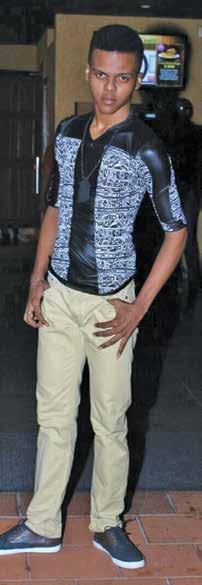
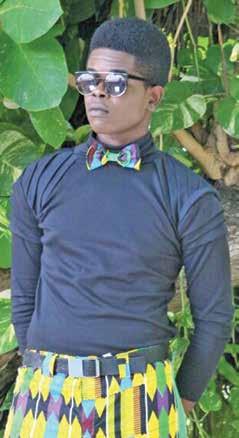
Mark Junor has become one of the most talented designers in the local fashion industry. With keen attention to details, creating the most chic outfits, Junor has set himself apart as a designer with a mission – to beautify.
Junor’s passion for the arts has propelled him into various fields to showcase his talents. He is a dancer at the National School of Dance for over five years, a freelance model, a makeup artist and the owner/founder of Kramronu J.
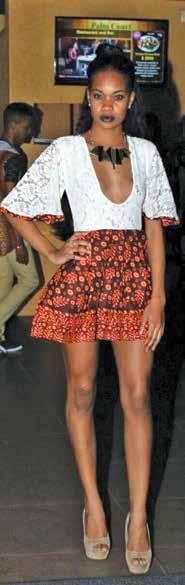
Designs.
“I am passionate about the arts and it’s my dream to change the course of trends today. While growing up, I did not understand when family and friends would tell me that my talent is magical. But it has become very clear, hence pursuing a career in the fashion industry,” Junor said in an interview with Sunday Magazine.
Junor mentioned that he focuses on creating “sexy, couture and flamboyant”

pieces with the aim of “making people feel comfortable while revealing beautiful skin”.
“The next five years I see my brand making presentations at Guyana Fashion Week, Caribbean Fashion Week, Suriname Fashion Week and the debut of my new collection at the upcoming fashion event Reflections 2015,” the designer declared.
For more information on the designer and his collections, visit Kram Ronuj. Design on Facebook.



Candice Patton is an American actress. Patton is best known for her role as Iris West in The CW television series “The Flash” and as her recurring role as Tori in the BET television series “The Game”. She was cast for many television series including the soap opera “The Bold and the Beautiful”. Patton received a role as Mercedes in the television series “Sorority Forever”. In May 2015, Patton ranked No. 61 in the Maxim Hot 100 List.
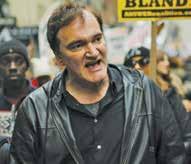
The police unions of New York and Los Angeles have banded together against filmmaker Quentin Tarantino, demanding a boycott of his movies after the Oscarwinning director described some police officers as "murderers" at a rally against police brutality in New York City over the weekend, reports Los Angeles Times.
Los Angeles Police Protective League President Craig Lally said: "There is no place for inflammatory rhetoric that makes police officers even bigger targets than we already are. Film director Quentin Tarantino took irresponsibility to a new and completely unacceptable level this past weekend by referring to police as murderers during an anti-police march in New York."
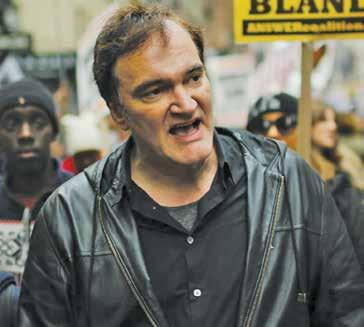
New York's largest police union was the first to call for a boycott of Mr Tarantino films after he pro-
tested against the deaths of unarmed suspects at police hands during a rally in on October 24.
"It's no surprise that someone who makes a living glorifying crime and violence is a cop-hater, too," Patrick Lynch, president of the Patrolmen's Benevolent Association, told news agency AFP.
"It's time for a boycott of Quentin Tarantino's films," he said.
Mr Tarantino's latest movie “The Hateful Eight” -- about bounty hunters in Wyoming after the American Civil War - will premiere in the United States on Christmas Day.
It follows a string of box office hits, including “Reservoir Dogs” and “Pulp Fiction”, which have earned the director two Oscars and scores of other awards around the world.
"The police officers that Quentin Tarantino calls 'murderers' aren't living in one of his depraved big screen fantasies - they're risking and sometimes sacrificing their lives to protect communities from real crime and mayhem," said Mr Lynch.
"New Yorkers need to send a message to this purveyor of degeneracy that he has no business coming to our city to peddle his slanderous 'Cop Fiction'," he added.
The 52-year-old director joined hundreds of people marching in New York last weekend, campaigning against perceived police brutality and the deaths of unarmed suspects in custody.
"This is not being dealt with in any way at all. That's why we are out here," Mr Tarantino told AFP and another reporter. "If it was being dealt with, then these murdering cops would be in jail or at least be facing charges," he added.
A database compiled by the Guardian newspaper says more than 930 people have been killed by police in the US so far this year, of whom 436 were white, 226 black and 143 Latino.
The National Law Enforcement Officers Memorial Fund estimates that one law enforcement officer is killed in the line of duty somewhere in the United States on average every 60 hours. (NDTV movies)

American TV series "Quantico" is involved in a lawsuit filed against producer Mark Gordon amid claims that the idea for the FBI drama was lifted from a 1999 documentary that aired on CNN.
Filmmakers Jamie Hellman, Barbara Leibovitz Hellman and business executive Paula Paizes, filed a 35 page complaint in Los Angeles Superior Court, which states that Gordon took the show's premise from their documentary "Quantico: The Making Of An FBI Agent", reported Deadline.
The complaint says Paizes and Gordon formed a business relationship in 2001 and she introduced him to the filmmakers.
In May 2002, Leibovitz and Hellman signed a deal with the Mark Gordon Company and "provided MGC with the film from the Documentary, information which was not included in the documentary, including all of their notes and transcripts related to the film."
The suit says the "Quantico Project" initially was discussed as a movie, with a storyline that "included a conspiracy inside the FBI Academy."
After Hellman and Leibovitz executed a
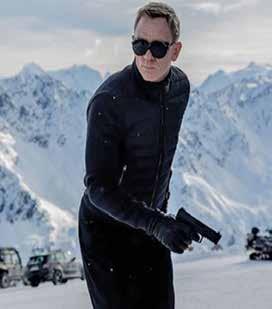
The latest Bond film "Spectre" has earned a record-breaking USD 9.2 million on its first full day. It became the biggest Tuesday gross of all time in the UK, and surpassed the collection of the 23rd Bond film "Skyfall" on its first day.
“Spectre” made USD 6.4 million on its opening night, bringing its two-day total to USD 15.6 million, reported Variety.
In the film Daniel Craig is playing James Bond for the fourth time. Sam Mendes has helmed the project, which revolves around Bond's mission to Mexico City.
The movie backed by EON Productions, MGM and Sony Pictures will have its worldwide release on November 6.
Speculations are high that this might be Craig's last Bond movie but the 47-yearold actor is yet to confirm these rumours.
three-month extension on their option with MGC, Gordon who was working on another project said in an February 2003 email to Paizes that he "would be happy to discuss this when I get back. It's a good idea."
But according to the lawsuit, "neither Gordon nor MGC made any further efforts to work with Plaintiffs to develop the 'Quantico Project.'"
Alleging breach of contract, fiduciary duty and more, the filing seeks a jury trial, actual and punitive damages and a "based on" credit for Hellman and Leibovitz and their documentary.
The Mark Gordon Company had no comment on the suit.
"Quantico" is one of the success stories of the fall broadcast season.
The ABC drama centred on a class of FBI recruits, one of whom is a sleeper terrorist, has held ratings week over week and is Sunday's top broadcast program among the advertiser-coveted adults 18-49 demographic.
“Quantico” is also Bollywood actress Priyanka Chopra's American TV debut. (zeenews)

Arjun Kumaraswamy, known by his stage name Arjun, is a British singersongwriter, record producer and actor born in Colombo, Sri Lanka. Not only can Arjun sing, but he can also play an array of instruments such as the guitar, piano, flute and drums: he gained fame through his online musical performances. Arjun won Best Urban Act at the 2012 UK Asian Music Awards. The album he produced for the Hindi film “Shivali” won two awards at Global Indian Awards in 2012. Arjun has produced and sung songs for Indian movies including “Vanakkam Chennai”, “Biriyani”, “Valeba Raja” and Bipasha Basu-starring hit Bollywood movie “Creature 3D”.
Bollywood actor Salman Khan's lawyer has argued in the Bombay High Court that the police might have tampered with the actor's Toyota Land Cruiser Lexus which was involved in the 2002 hit-andrun accident.
The Bombay High Court is currently hearing Mr Khan's appeal against the conviction and five-year sentence for crashing his car into a bakery in suburban Bandra on Sept. 28, 2002, killing one person and injuring four others.

While four to six prosecution witnesses testified at the trial that the front left tyre of the car had burst, the RTO officer who inspected the car said the tyre was in good condition but had only deflated, Mr Khan's lawyer
Amit Desai said, arguing before Justice AR Joshi.
"We strongly believe that

the tyre, a vital piece of evidence, has been tampered with," said advocate Desai.
He further said that Ashok Singh, the actor's family driver who was driving the car (the trial court rejected this claim and held that Mr Khan was driving the car) went to the Bandra police station and gave his version of the accident.
Mr Singh said that the tyre had burst but the police did not believe him and did
not make him prosecution witness, he said.
"PW-1 (panch witness Sambha Kanappa Gowda) has spoken about seeing the front left wheel punctured... the first informant and star witness late Ravindra Patil speaks about left front tyre punctured....PW-27
(Inspector Kisan Narayan Sengal, the investigating officer) says in his cross-examination that he did not send the tyre for examination,
which means he has also seen it in burst condition," advocate Desai said.
However, Rajendra Keskar, the RTO inspector who inspected the car, said the tyre was in a good condition. "Either he has not come to the site or he saw something else," said Mr Desai, alleging that the car might have been tampered with post-accident.(NDTV movies)
Abrawl broke out in front of international cricketer Harbhajan Singh and Bollywood actress Geeta Basra's wedding venue, when private security guards, hired by Singh's family, allegedly smashed the camera of few video journalists.
Harbhajan Singh, fondly called 'Bhajji' had to then come out to apologise to the cameramen, who narrated the entire incident to him.
Bhajji’s four bouncers were arrested by police late night after a drama of a few hours outside his residence when the bouncers snatched cameras and cassettes of camera persons of three news channels.
Harbhajan and Geeta Basra tied the knot in a grand ceremony on October 29, 2015. A lavish reception has also been planned for November 1.

The venue was kept private. The couple then headed for lunch at a five-star hotel, where about 1,500 invitees
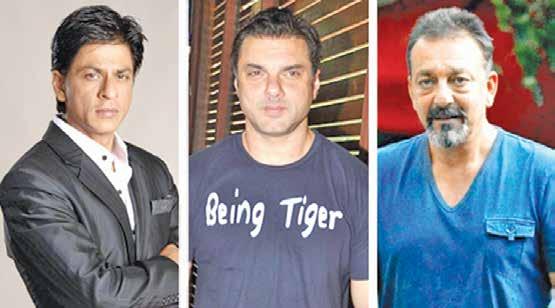
Shah Rukh Khan, Sohail Khan and Sanjay Duttwill have six former cricketing stars, who will be captaining the six participating teams (which have been named after the zodiac signs)in a brand new league that features retired cricket players.
The captains include Wasim Akram, Brian Lara, Adam Gilchrist, Mahela Jayawardene, Kumar Sangakkara and India's very own Virender Sehwag. This league is expected to have 260 retired players in all.
Sam Khan (the league's Chief Executive Director) said that there would be 18 matches, which would be starting January 26 next year, and these matches will be played in Dubai, Abu Dhabi and Sharjah. He added that they had been working on the project over the last three years and had met Sanjay Dutt only last month. Dutt, who was very excited to come aboard, will be represented by his wife Manyata Dutt, who will be the co-owner of his team. (bollywoodhungama)
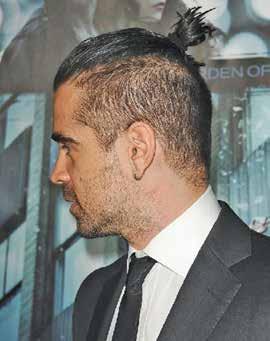
Everyone's wearing tidy topknots - a knot of hair arranged on the top of the head. Get some celebrity inspiration and try the look yourself.






Abel is a talented fashion designer who has her eyes set on the international catwalk.
Shevaun's first experience in fashion designing began in 2006 when she took part in a fashion show for a church then started designing her own clothing. Shevaun has a great passion for fashion and will be bringing out her best designs for the new local TV drama/mystery series, “WHO?” The designer graduated from Brickdam Secondary School and is now an entrepreneur. The 24-year-old loves to dance to keep fit and enjoys going to church. Her hope is to one day represent Guyana as “one of the best fashion designers”.
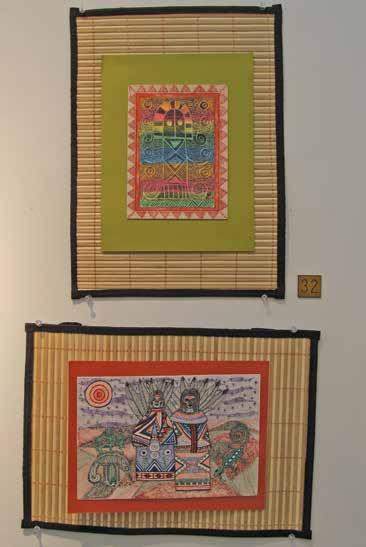
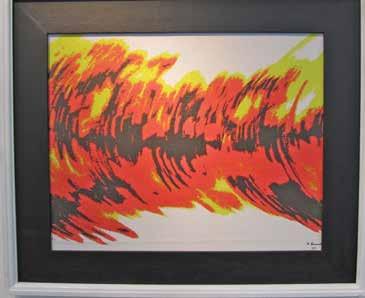
The year 1987 saw the formation of the Guyana Women Artists’ Association (GWAA), which was credited to Dr. Nesha Z. Hanif, who returned to Guyana into a very vibrant and active women artists' scene. The women of GWAA have revolutionized the local art scene with their talent, creating applauded pieces of paintings, crafts and fabrics.
Tara Bentinck is a textile designer and painter who enjoys experimenting with mixed media applications whether on fabric or on canvas. She was Best Graduating Student from the Burrowes School of Art in 2002. Bentinck has been a member of the Guyana Women Artists' Association (GWAA) since 2002. She has exhibited her work extensively in Guyana at the Sidewalk Café (2003 and 2004), numerous GWAA exhibitions, Guy-Expo 2007, Guyana Gift & Craft Show 2007, FEMINITION Woman's Exposition 2011, Red Entertainment-Kiss My Art 2013 and 2014, and Inter Guiana Cultural Festival (IGCF) Visual Arts Exhibitions 2012 (Guyana) and 2013 (Cayenne), and Carifesta XI 2013 (Suriname) and Carifesta XII (Haiti). Bentinck also took part in the National Gallery's National Drawing Competition in 2013. Bentinck is a fulltime visual arts teacher at Mae's and enjoys sharing her knowledge with students of all ages.
Myrna Bernard works in Caribbean Regional Administration in Georgetown and has had no formal art training beyond her years at Bishops' High School. She has in recent years pursued her interest in digital photogra-

phy and digital art through the use of manuals and books and also on-line tutorials. She has exhibited at the CARICOM Secretariat's annual staff talent celebrations from 2006 to 2012; at the GWAA's annual exhibitions from 2008 to 2012 and their exhibitions in Guyana at Carifesta X in 2008 at the International Conference Centre, Turkeyen, for International Women's Day (IWD) at the Brazilian Cultural Centre in 2011, for the Year of People of African Descent at the National Museum, Georgetown in 2012 and at the IGCF in Cayenne in 2013.
Anna Correia-Bevaun began her career in art in 1988 as a ceramist under the tutelage of her mother, leading Guyanese ceramist, the late Stephanie Correia. For years she explored this as her principal medium until, wishing to explore new techniques, material and approaches, she started pen and ink drawings in 2003. She took short courses in design (2002), batik and discharge (2004), Vedic Art (2005) and Watercolour (2005 to 2006). In 2007, Correia-
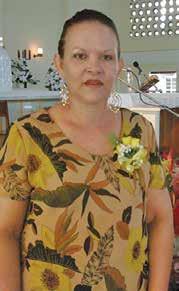
Bevaun won both the second and third prizes in the National Gallery's National Watercolour Competition (NWC); she also won the first and second prizes in the NWC in 2009. She has held the positions of secretary, vice-president and president in the GWA, which she joined in 1995. She has exhibited at GWAA's annual exhibitions since then and at Carifesta 2008 and 2013 and the IGCF 2011 in Suriname.
Jennifer Gibson is a Barbadian born textile artist/designer, who specializes in the Tulus Batik tech-

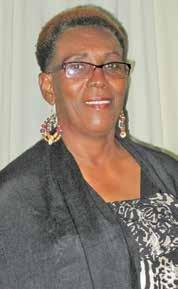
awarded “best in the area of textile art (Guyana)” by UNESCO 2012.
“My inspiration and motivation is drawn mainly from nature and experiences. I see art as a personal appreciation for God's creation and elevation for my life in general. I hope to showcase the diversity, and variations of the batik art form through my work,” Gibson declared.
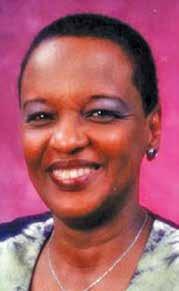
Aiesha Scottland is a young Guyanese textile artist who graduated from the Burrowes School of Art in 2010 as Best Graduating Diploma Student. Scottland

nique. She has been working with this cycle for over three decades. Gibson has taught textile decorating extensively in Barbados, Suriname and Guyana, her adopted home since 2000. Gibson has participated in several fashion and craft shows, expositions and exhibitions across the Caribbean, including the Barbados Investment Development Corporation national exhibitions in 1984 and 1985 (Most outstanding Award), 1987 (Bronze Medal), 1989 (1st prize), and other events in Antigua, St. Lucia, Jamaica and Suriname from the early to mid-1990s. She has exhibited in GWAA annual exhibitions in 2008, 2010, 2011 and 2013 and at the Feminition Exhibition at the National Stadium in 2011. She was
teaches visual arts at Christ Church Secondary School in Georgetown. She is also pursuing a degree in communication studies at the University of Guyana.
“I have a fondness for realistic drawings, and recently the subjects of my drawings are centred on natural hair movement. My recent textile work is focused on construction mainly in card weaving; I felt the urge to explore using the simple card weaving belts to create miniature relief sculpture-like pieces,” Scottlandmentioned.
Scottland has exhibited with the GWAA at the Guyana Bank for Trade and Industry Corporate Branch in 2011, as one of five selected Guyanese guest artists at the Art in Embassies exhibi-
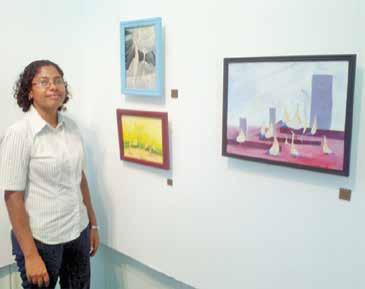
tion at the residence of the then American Ambassador to Guyana in 2012, and at the ninth National Drawing Competition 2013 and at the GWAA’sannual exhibition at the National Gallery 2013 and 2014, and Kiss My Art Festival in July 2014.
Dominique Hunter was born in Georgetown in 1987. She received her diploma from Burrowes in 2007 and was awarded Best Graduating Student and Best Painter. Later that year, she was invited to join GWAA and has since shown work at a number of their exhibitions.
Hunter won silver and bronze medals in the National Gallery's 7th and 8th Biennial National Drawing Competition (2008 and 2010 respectively). In 2010, two of her drawings were featured as part of the National Gallery's Republic Anniversary Exhibition.
Her first solo exhibition entitled "Introspection" was held at the National Gallery in 2015. Guyana's National
Gallery has since acquired several works as part of their National Collection.
In 2014, she was awarded second place with a silver medal at the Guyana Visual Arts Competition and Exhibition.
Hunter recently completed her BFA at the Barbados Community College and was the recipient of the Leslie's Legacy Foundation Award for Most Outstanding Work at Portfolio.
In May 2015 Hunter completed an internship at the Fresh Milk Barbados Art Platform where she worked under the tutelage of the establishment's director and independent artist, Annalee Davis.
The 27th annual exhibition of the GWAA is currently ongoing at Castellani House, Vlissengen Road. Admission is free. Gallery hours are 10am to 5pm on Mondays-Friday and 2pm to 6pm on Saturdays; the gallery is closed Sundays and holidays.


Since it went on sale in September, 30 percent of new iPhone buyers have been Android users
jumping ship, reports Apple in its quarterly earnings call. Apple sold 48 million iPhones during Q4, meaning
around 14 million of these new buyers are ex-Android fans. Apple released an
Android app to help Google fans transfer files and settings from an Androidbased smartphone to an iPhone.
Google fanboys blasted the free smartphone app with a slew of one-star reviews ridiculing “iSheep” who chose the Apple smartphone over an opensource alternative.
Apple CEO Tim Cook used the high number of Android switcher to reassure investors that the iPhone still had room to grow with the first quarter of 2016.
Emerging markets and a rapid expansion in China could also contribute to a growth next quarter, Mr Cook told Wall Street.
Apple reported a 99 per cent increase for its sales in Greater China during the latest quarter.
“Fiscal 2015 was
Apple’s most successful year ever, with revenue growing 28 per cent to nearly US$234 billion (some £153billion converted),” Tim Cook said in a statement.
“This continued success is the result of our commitment to making the best, most innovative products on earth, and it’s a testament to the tremendous execution by our teams
“We are heading into the holidays with our strongest product line-up yet, including iPhone 6s and iPhone 6s Plus, Apple Watch with an expanded lineup of cases and bands, the new iPad Pro and the allnew Apple TV which begins shipping this week.”
Apple posted iPad sales of 9.8 million units and Mac sales of 5.7 million units during the fourth quarter.


The Tokyo Motor Show became the location of Mitsubishi’s latest unveiling, a new vehicle called the eX Concept. It hits two targets with one reveal, giving the Japanese automaker a proposed entry into the fast-growing compact crossover market and a new showcase of Mitsubishi’s future powertrains and technology credibility as an electric vehicle concept.
The eX Concept employs Mitsubishi nextgeneration design language now seen on the 2016 Outlander sport utility crossover. However, the eX has a more wagon-like appeal built onto a coupe-style two-door body, akin to a European “shooting brake” design.
Mitsubishi says that the design changes seen on the eX are indications of where its new Dynamic Shield front design concept is headed in the future.
Side mirrors on the Mitsubishi eX Concept are noticeably absent, being replaced by cameras and Side View Monitors, which allows the exterior to be streamlined to improve fuel economy.
Similarly, the rear view mirror usually located at the top centre of the windscreen is replaced with a monitor mounted in the overhead console and HD camera attached to the rear of the vehicle. (gizmag)
WBYTe
BYTe Tech
ASA has analysed 14 years’ worth of data collected by its Thermosphere, Ionosphere, Mesosphere Energetics and Dynamics (TIMED) satellite, revealing a surprisingly fast increase in carbon dioxide (CO2) levels in the upper atmosphere.
The stats also reveal that the gas is more localized to the Northern Hemisphere than predicted by climate models.
Human activities like deforestation and burning fossil fuels are pumping huge amounts of carbon dioxide into the Earth’s atmosphere. The gas is responsible for raising temperatures close to Earth’s surface, but it has a very different effect in the upper atmosphere, reducing air density and actually having a cooling effect.
The 14 years of data collected by TIMED’s radiometer reveals that CO2 levels in the region, some 70 miles (113 km) above the Earth’s surface, are increasing at a much faster rate of 12 percent per decade.

Furthermore, while models indicated that gas would be equally spread across the planet at such an altitude, the results shows that levels are increasing much faster over the Northern Hemisphere.
Those findings, which were corroborated by data collected by the Canadian Space Agency’s SciSat-1 mission, indicate that we need to rethink our understanding of the Earth’s atmosphere.
“It seems clear that we don’t quite understand the
relationship between the lower atmosphere and the upper atmosphere,” says TIMED project scientists Diego Janches. “We tend to separate them into different fields – lower atmosphere is Earth science, upper atmosphere is heliophysics – but we need to understand the atmosphere as a complete system.” The researchers have published their findings in the journal Geophysical Research Letters.
hat inbox? You ask. The Facebook “Other inbox” that nobody uses. That inbox. Within 10 days, Facebook will roll out Message Requests. It works a lot like the Other inbox, except you can actually find it. Even better is the fact that even though any one of the 1.49 billion people on Facebook can initiate a conversation, you’ll be able to control whether they can do it a second time.
“If you’re friends on Facebook, if you have each other’s contact info in your phone and have these synced, or if you have an existing
open thread, the new messages from that sender will be routed to your inbox,” writes VP of messaging services at Facebook, David Marcus. “Everything else will now be a message request, minus spam attempts that we will continue to ruthlessly combat.”
Replying to a comment by a Facebook user, Marcus wrote, “What we’re doing with Message Requests is increasing the quality of your inbox, but also ensuring you don’t miss important messages that were previously lost in the “Other inbox” which wasn’t accessible on mobile…”
Microsoft Corporation has announced a number of improvements for Skype. The company has added video message filters for the mobile version of the application.
The Skype application for iPhone, iPad, and Android now allows you to “add more fun” to Skype video messages, as per the Skype team. Messages are short video clips, which can be sent to Skype contacts. You can now customize your video as you please.
You can send short clips, much like Snapchat. Unlike Snapchat, however, the recipients can open and see the video messages whenever they want to. The
recipients do not even have to be online to see the pictures.
Upgraded apps also contain Skype’s other recently added features such as a built-in Skype Translator to translate conversations in real time, as well as short clips called Mojis, which draw on Microsoft’s library of movies and shows to provide memorable movie and TV show quotes.
Skype’s latest video message option appears to be an extension of the Mojis, which Microsoft added earlier this year; only, the video messages are customizable by the user.






Ingredients
Marinade:
1/4 cup soy
2 tbsp seasoned rice vinegar
2 teaspoons brown sugar
2 tbsp olive oil
1 tsp dark sesame oil
3 cloves garlic, minced (about 1 tbsp)
1 tbsp grated ginger
Shrimp:
1 pound 16-20 count shrimp, peeled and deveined
1 tbsp canola, rice bran, or peanut oil, or some other high smoke point cooking oil
3 green onions, including onion greens, sliced on the diagonal
1 tbsp sesame seeds, toasted
Method
In a medium bowl whisk together the soy sauce, seasoned rice vinegar, and brown sugar until the sugar has dissolved. Then whisk in the olive oil, sesame oil, minced garlic, and grated ginger. Place the shrimp in the bowl with the marinade. Toss to coat with the marinade and chill until ready to cook.
Toast the sesame seeds in a small sauté pan on medium high heat until lightly browned.
3 Heat cooking oil in a large stick-free sauté pan or wok (can use seasoned cast iron) on high heat. When the oil is shimmering hot – almost smoking, use a slotted spoon to move the shrimp from the marinade into the hot pan.
Stir-fry for a minute. Add half of the sliced green onions. Continue to stir fry, turning the individual shrimp over if necessary, until the shrimp are pink and just cooked through. No more than 2 minutes max total cooking time, a minute on each side.
Remove shrimp from pan and transfer to a serving bowl. Place the remaining marinade in the hot sauté pan and simmer it until it has reduced to a syrup. Pour over the shrimp. Toss to coat. Sprinkle the shrimp with toasted sesame seeds and remaining green onions. Serve immediately. Serves 2 to 3.
Sear steak on a cast iron. A cast iron pan does not cost much to buy and lasts forever. It’s also the perfect conductor for very high heat. Roasting a chicken could not be simpler. All you need is salt and pepper, and some butter for good measure.
Thinking ahead is key for a successful marinade: The longer you marinate meat, the better it’s going to taste.
Fish sauce, lime juice and brown sugar can quickly make a tasty dressing for Asian noodles.
Freeze herbs in olive oil to prevent them from browning and getting freezer burn. Toss the cubes in a pan for sautéing meat and veggies, or use them as a sauce for pasta.
Line the bottom of your refrigerator’s crisper drawer with paper towels. They’ll absorb the excess moisture that causes vegetables to rot.
To make cottage cheese or sour cream last longer, place the container upside down in the fridge. Inverting the tub creates a vacuum that inhibits the growth of bacteria that causes food to spoil.
Keeping brown sugar in the freezer will stop it from hardening. But if you already have hardened sugar on your shelf, soften it by sealing in a bag with a slice of fresh bread or an apple — or by microwaving on high for 30 seconds.

Alternative Oscars
The Windbag Award: To Greer Garson. According to Oscar legend, she spent 90 rambling minutes at the podium after winning Best Actress in 1942 for Mrs. Miniver. But cooler heads say it was closer to seven minutes. Predictably, she began her speech by saying, “I’m practically unprepared.”
The Fairy Tale Disaster Award: To Rob Lowe. In perhaps the most embarrassing Oscar opening, the 1988 organizers scripted a songand-dance routine between Snow White and Lowe, who was introduced as her “blind date.” Disney was so distressed that it sued.
The Brevity Is the Soul of Wit Award: To Alfred Hitchcock and Joe Pesci. After winning the Irving Thalberg Memorial Award in 1967 in recognition of his illustrious career, Hitchcock muttered “Thank you,” and walked offstage. Twenty-three years later, after winning Best Supporting Actor for his work in “Goodfellas”, Joe Pesci did the same exact thing.
The Oscar D’Amore Award: To Cuba Gooding Jr., who exclaimed “I love you” 14 times — thanking everyone from God to Tom Cruise — after winning Best Supporting Actor for “Jerry Maguire” in 1996. Even after the orchestra interrupted him, he continued: “Everybody who was involved in this, I love you! I love you! I love you!”
The Nature Calls Award: To Meryl Streep, who left her just-claimed Oscar for “Kramer vs. Kramer” on the back of a toilet during the 1979 festivities.
The Au Naturel Award: To actor David Niven. In 1974, a streaker ran behind him as he was announcing the Best Picture award. The nudist flashed a peace sign — not to mention the Full Monty — to a shocked audience. Without missing a beat, Niven said the man would always be remembered “for his shortcomings.”
The Silent Oscar Award: To Hal Roach, who received a special honour in 1991 for bringing Laurel & Hardy and many other classics to the big screen. Billy Crystal introduced him, and the audience gave him a booming ovation. But when everyone sat down, Roach, a centenarian, began speaking without a mike. The audience and TV viewers just stared for several moments, unable to hear him. Crystal quipped, “I think that’s fitting since Mr. Roach started in silent film.” It was Roach’s last public appearance. He died six months later.
The Oscar Mayer Weiner Award: To Jack Palance, for dropping to the stage floor and doing one-armed pushups to celebrate his Best Supporting Actor award for “City Slickers”.
The Where Am I Now? Award: To Alice Brady, who won a Best Supporting Actress award for “In Old Chicago” in 1937. Brady wasn’t present, but a man walked up and accepted the award on her behalf. After the show, neither he nor the Oscar was ever seen again.
The Get This Over With Award: To Sir Laurence Olivier. In 1985, the 78-year-old Shakespearean forgot to name the Best Picture nominees. He simply opened the envelope and proclaimed, “Amadeus!”
Manner #9: Don’t call people mean names.
Manner # 10: Do not make fun of anyone for any reason. Ganging up on someone else is cruel.
Manner #11: Even if a play or an assembly seems boring, sit through it quietly. The performers and presenters are doing their best, and others in the audience may not share that opinion.
Manner #12: If you bump into somebody, immediately say “Excuse me” or “Sorry”.
Manner #13: Cover your mouth when you cough or sneeze, and don’t pick your nose in public.
Manner #14: As you walk through a door, look to see if you can hold it open for someone else.
Manner #15: If you come across a parent, a teacher, or a neighbour working on something, ask if you can help. If they say “yes”, do so -you may learn something new.
Manner #16: When someone helps you, say “thank you.” (To be continued)
There was a special bird named Sindhuka, who lived in a huge tree on the top of a mountain. When her droppings fell on the earth, they turned into gold.
One day, a hunter wandered to the top of the mountain. Not able to catch any bird, he decided to take some rest under the huge tree. From the top of the tree, the bird discharged its droppings, which fell near the hunter, and turned into gold. He was wonder-struck.
The hunter thought, “All these years I have been catching birds, but I have never heard of a bird’s droppings turn into gold. This is a special bird, which I will have to catch!”
He set up a trap on the tree, which the bird did not notice and she was caught. The hunter, who was waiting nearby, immediately put her in a cage and started homewards. On the other hand, the bird repented that she was careless, not to notice the trap.
to the king. The king was delighted to have a bird whose droppings turned into gold, and asked his attendants to treat the bird as the royal bird, “Take proper care of this bird. Put her in a lavish cage, and give her plenty of food and water.”
Suddenly, one of the king’s ministers requested, “O King, How can a bird’s droppings turn into gold? How can you trust this mere hunter who is not knowledgeable? I advise you to release the cage and let the bird go. As for the hunter, please punish him for forgery.”

One song can spark a moment, One flower can wake the dream

The king pondered over the words of his trusted and knowledgeable minister, and asked his guards to arrest the hunter and release the bird.
On his way, the hunter thought, “If I keep this bird, I will become rich, and everyone will be suspicious. Someday, someone will come to know the truth of the riches, and the bird, and report it to the king. I rather present the bird to the king, and be content with whatever he offers me in return.”
So he went straight to the palace and told the king everything. He gifted the bird
No sooner had the bird been freed, she flew up and perched at the top of a nearby gate. She discharged her droppings, which to the amazement of the king and his ministers, turned into gold.
Realizing he had made a mistake, the king ordered his guards to catch the bird.
But the bird was already free, she promised herself not to be careless again, and flew off where nobody can catch her again.
The wise indeed say: Check thoroughly even what seems to be impossible.

By Grammar G
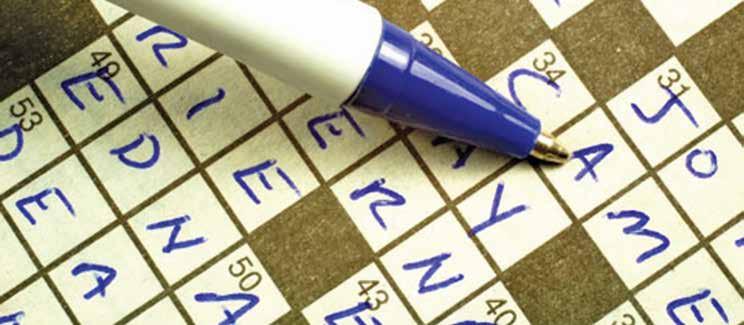
Want to do some Math in English? Then find yourself a ditloid and get busy because a ditloid, also known as an “equation analysis test”, is a type of puzzle in which wordplayers have to guess the phrase, quotation, fact or date from the clues, which are provided in numeric and alphabet form – like an equation.
For example, solve: 1. 26 = L of the A
2. 88 = PK
3. 200 = D for PG in M
The aim is to guess the initials and, with a bit of trivia knowledge helpful, solve the “equation”.
Let’s work on the examples: 1. 26 = L etters of the A lphabet
2. 88 = P iano K eys
3 200 = D ollars for P assing G o in M onopoly.
A Morgan Worthy is responsible for this mindbender when he introduced it in 1975 as a “linguistic equation” but it really became popular after Will Shortz introduced his “Equation Analysis Test” in 1981.
It was from Shortz that the name ditloid was coined, after one of his equations: 1 DITLOID. Solved, it states: “One Day In The Life Of Ivan Denisovich” (a book by Aleksandr Solzhenitsyn).
One tree can start a forest, One bird can herald spring.
One smile begins a friendship, One handclasp lifts a soul. One star can guide a ship at sea, One word can frame the goal.
One vote can change a nation, One sunbeam lights a room One candle wipes out darkness, One laugh will conquer gloom.
One step must start each journey. One word must start each prayer. One hope will raise our spirits, One touch can show you care.
One voice can speak with wisdom, One heart can know what’s true, One life can make a difference, You see, it’s up to you!
You may have noticed that this other equation isn’t really an “equation” at all. However, most equations, including his, use the “X = …” form.
Ready to try some more? Solve the following:

The blanks in the following sentences will be filled in with three different homonyms (words that are spelled differently but sound alike) to make valid sentences. The dashes indicate the number of letters in the words.
1. The cut on his _ _ _ _ won’t _ _ _ _ in time for the race, so _ _ ‘_ _ have to drop out.
2. A bloodthirsty pirate will wander the _ _ _ _ and essentially _ _ _ _ _ everything he _ _ _ _.
solution on page 23


solution on page 23

The South American Bushmaster (Lachesis muta) is described as a venomous pit viper that can be found in South America as well as on the Caribbean island of Trinidad, in the relatively cool, moist tropical forests from mountainous areas to coastal lowlands.
Known as “bushmaster” in Guyana, surucucu in Brazil, mapepire zanana or mapepire grande in Trinidad, these snakes can grow between 1.8 to 2.5 metres (6 to 8 feet) long, or grow as long as 3 metres (10 feet). They eat primarily mice and rats.
The largest recorded specimen was almost 3.65 m (12 feet) long, making it the largest of all vipers and the longest venomous snake in the western hemisphere.
According to Encyclopaedia Britannica, three species of bushmaster (genus Lachesis) are known to exist: (L. muta, L. stenophrys, and L. melanocephala)
The latter two can be found in Central America.
The scientific name Lachesis muta, means “silent fate.”
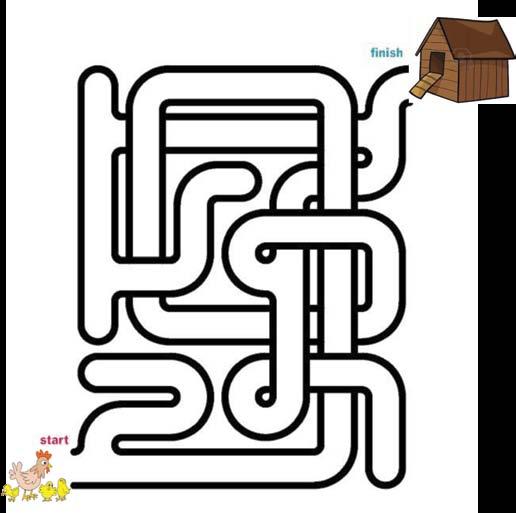
Help the chicken find her way home with her family

Scientists describe a comet as a small, dusty and icy world they call a planetesimal (an object formed from dust, rock, and other materials).
Comets come from two places called The Kuiper Belt (pronounced KAI-PER) and the Oort Cloud at the very cold edge of our Solar System where they hurtle around for billions of years. Once in a while they may collide, causing them to change direction into the Inner Solar System.
Warmed by the Inner Solar System, they begin to melt. Our Sun’s heat and radiation
produce a wind called the Solar Wind. The gas and dust that melt are blown away from the Sun by solar winds.
This means that if a comet is traveling towards the Sun the familiar “comet’s tail” would follow behind, but if the comet is traveling away from the Sun, then the “tail” would be in front of the comet.
After several thousand years in the Inner Solar System, comets eventually melt away to small chunks of dust and ice that can’t produce a tail anymore, or even melt completely.
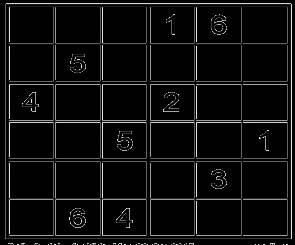
The objective of the game is to fill all the blank squares in a game with the correct numbers. Every row of 9 numbers must include all digits 1 through 9 in any order. Every column of 9 numbers must include all digits 1 through 9 in any order. Every 3 by 3 subsection of the 9 by 9 square must include all digits 1 through 9.


of
design of the
By Laurie Triefeldt

Washington, D.C., covers 68 square miles (177 sq. km) and is home to about 658,893 people. Officially, it is not a city or state, but a federal district, created to be the seat of government. Ironically, as home to the government of a powerful democracy, the district is limited to a nonvoting delegate in Congress and does not have full self-governing rights.
Most of the District of Columbia was burned to the ground during the War of 1812, when British forces took revenge after American forces had burned the city of York, now known as Toronto.
In the early 1900s, the McMillan Commission developed a plan to establish many of the parks, monuments and museums known today as the National Mall.
Construction on the U.S. Capitol Building began in 1793, when George Washington laid the first cornerstone. The building and dome that we see today are the result of several periods of building and restoration. The statue on top of the dome is 19.5 feet (6 m) tall and is called “The Statue of Freedom.”
Founded on July 16, 1790, the City of Washington was established by the Constitution of the United States to serve as the nation’s capital. The states of Maryland and Virginia donated land along the Potomac River, including the towns of Georgetown and Alexandria. In 1846, economics and issues such as slavery resulted in Congress returning the land south of the Potomac River back to Virginia.
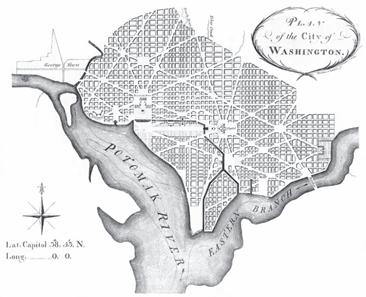
Charles L’Enfant’s design of the city.
Pierre Charles L’Enfant planned the city of Washington. He incor porated many grand boulevards and parade routes similar to those in Paris.
The Washington Monument is an obelisk built to commemorate George Washington. Made of marble, granite and bluestone gneiss, it stands 554 feet, 7 inches (169 m) tall. Construction began in 1848, but due to delays, it was not completed until 1888.
The White House was designed by James Hoban in the Neoclassical style and built between 1792 and 1800. The house has served as the residence of every U.S. president since. In 1814, during the War of 1812, the building was burned by the British army. Rebuilding began shortly after its destruction, and President James Monroe moved into the partially complete Executive Residence in 1817. The South Portico was added in 1824, and the North in 1829.
An earthquake and Hurricane Irene damaged the Washington Monument in 2011. It was closed for 32 months while repairs were implemented; it reopened to the public in 2014.
Washington (1732-1799)
and oversaw the initial plans and construction.
The Smithsonian Institution was established in 1846 and is a group of museums and research centers. The Smithsonian Institution Castle was designed by architect James Renwick Jr. and completed in 1855.
Built of sandstone quarried in Mar yland, the building has been reconstructed several times over the years.
George Washington commissioned Benjamin Banneker, a self-taught African-American mathematician, to provide the calculations for surveying and laying out the city.
in
second inaugural speech. The South wall is inscribed with the Gettysburg Address.
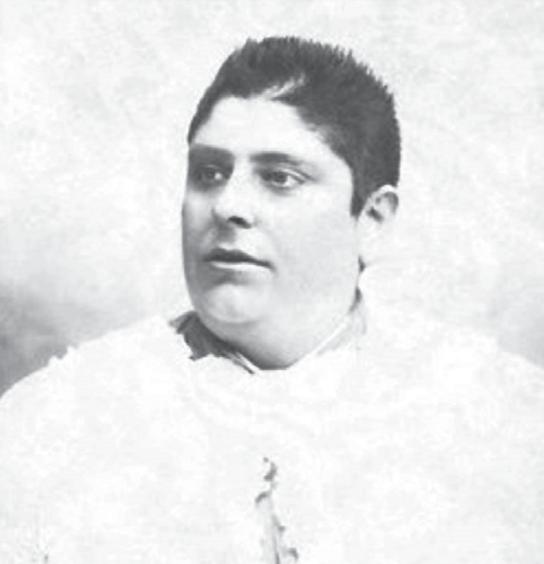
Q: What were the castrati?
In the 17th and 18th centuries, especially during a period known as the Baroque Period in Europe, about 4,000 men and boys were castrated.
This was because during this time, women were not allowed to sing – in accordance with the Catholic Church’s strict guidelines at the time. Therefore it was necessary for some men to have higher pitched voices to make up for the absence of women.
Young boys would undergo castration as young as eight years old to ensure that their vocal chords would not mature, which would then make the procedure futile.
They were handpicked based upon their singing capabilities, and castration was a means to keep their voices at a higher pitch. Many were willing to make the sacrifice for their singing careers.
These opera singers were known as the castrati, they comprised male singers who were sopranos and altos, making up 70 per cent of the singers at the time period.
The last known castrato was Alessandro Moreschi. Castration was outlawed in 1870 by the Italian government. Moreschi’s voice was the only captured and recorded voice of castrati in 1902.
You can hear his recording at wgs340.wordpress.com or on YouTube.
1. The cut on his HEEL won’t HEAL in time for the race, so HE’LL have to drop out.
2. A bloodthirsty pirate will wander the SEAS and essentially SEIZE everything he SEES.
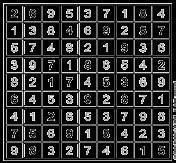

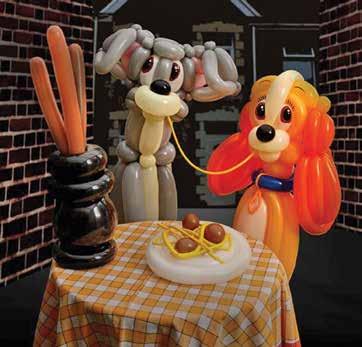
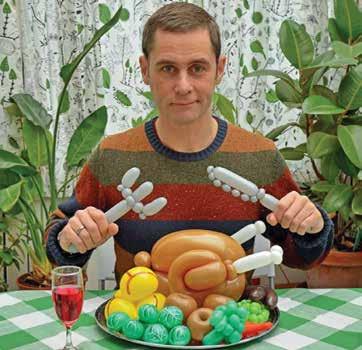
Creating regular balloon creations for his Facebook page, Rob Driscoll, also known as Bowtie Balloon Guy, works as a balloon artist and magician in Portsmouth, UK. He has performed with balloons since the
age of 19.
Starting his working life as a cabinet-maker, Rob soon became a leading children’s entertainer as Robbie the Wizard.
Now he’s a balloon expert, modelling and giving lectures all over Europe.
His passion for creating balloon sculptures led him to complete a number of personal challenges, posting the results on social media. All of his work is available on his website My Daily Balloon.
Models took to the catwalk in Paris Tuesday, dressed in sensational edible creations as part of an annual event to celebrate all things chocolate.
One model’s outfit consisted of a hat and dress made entirely out of chocolate butterflies that fluttered as she walked the runway.
Another design by French chocolatier, Jeffrey Cagnes, was inspired by ladybirds; it was a chocolate corset covered in red and gold chocolate coins tied up with bright red ribbons.
The fashion show marked the opening of the Salon du Chocolat, an event where the world’s greatest chocolatiers, pastry makers and confectioners are invited to show off their work under one tent.


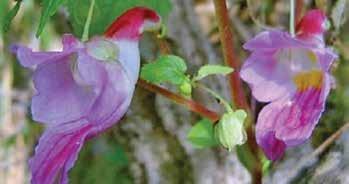





TAURUS (April 20May 20)








Take a deep breath and consider your words carefully before you respond to someone you love. You’ll be inclined to overreact, causing damage to an important relationship.
Do your best to spend more time with friends and relatives. A trip to see someone from your past will bring back fond memories and spark your imagination.
(May 21June 20)
Consider your career objectives. Discuss yours with someone you enjoy being with and it will lead to a viable partnership or collaboration, as well as provide the advancement you are seeking.

(June 21July 22)
Put yourself first and do what is best for you. Constantly trying to please others is time-consuming and frustrating. Don’t feel guilty taking time to relax and rejuvenate.

VIRGO (Aug. 23Sept. 22) ARIES (March 21April 19)

LEO (July 23Aug. 22)
A change of scenery will help calm your nerves. Reflect on what upsets you and find a solution. You are best not to ignore problems if you want to move forward.
Don’t fear stepping into the spotlight. Business or social functions will turn into opportunities to network and mingle with people who have similar interests and goals.
LIBRA (Sept. 23Oct. 23)

SCORPIO (Oct. 24Nov. 22)


SAGITTARIUS (Nov. 23Dec. 21)




(Jan. 20Feb. 19) (Dec. 22Jan. 19)


PISCES
(Feb. 20March 20)

Stick to what interests you the most and take care of your personal affairs. Don’t waste time trying to encourage uninterested people to take part in your pursuit.
Enjoy a social evening with someone you deem special. If you are single, you will meet a compatible partner if you get involved in educational or cultural functions.
You will be disappointed if you allow yourself to be used by a smooth-talking con artist. Keep a close watch on your hard-earned cash and keep your personal information a secret.
You will gain a new perspective if you see your current situation through the eyes of an elder or younger family member. Share your thoughts and concerns with those who care about you.
If you feel you aren’t making progress, it’s time to bring about change. Sticking to an unrewarding routine will lead to frustration and stress. Your skills and versatility should not be wasted.
Creative endeavors will bring satisfaction. Organize your thoughts before making a vital decision. Don’t allow others to meddle in your personal affairs. Take the time to be with someone you love.