






monDAY, DecemBeR 29, 2014 | guYAnAtimesgY.com
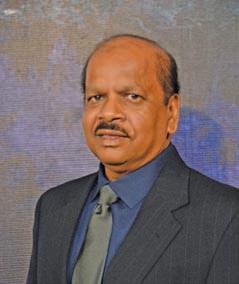
“Fortunately, we have been able to prevent Guyana from being blacklisted and that is a significant accomplishment in regard to the state of delinquency in which we are in ….” This was Attorney General (AG) and Legal Affairs Minister Anil Nandlall’s summation of the situation Guyana was faced with in 2014 with regard to the Anti-Money Laundering and Countering the Financing of Terrorism (AML/CFT) Bill. He was at the time speaking during a recent interview on the National Communications Network’s “Political Scope” as he addressed some developments in his sector.
Guyana’s limbo (probationary) state, owing to the non-passage of the AML/ CFT Bill, may last until September 2015 and was by dint of hard work, from the Legal Affairs Ministry, via its subject Minister. The AG explained that in many
ways, AML/CFT dominated life in the Legal Affairs Ministry, as he “… was confronted with the issue of the its non-passage that resulted in Guyana’s present situation of duress, that is, “… being put under very pronounced scrutiny and a very intense regime of evaluation and monitoring”.
Apart from this all-important Bill, the Legal Affairs Ministry is tasked onerously, on a daily basis, to advise and guide Government and all its subject ministries. This Bill directly engages the AG, and his aid is necessary for the Finance Ministry’s Financial Intelligence Unit (FIU), the agency that is leading the initiative, to make Guyana comply with all the very stringent evaluation processes, to which Guyana is now subjected as a country. However, it is the international forum that must first be tackled, and this is what can be energy-sapping and intellectually challenging.
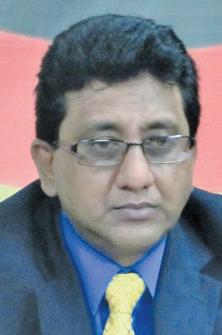
An example of this arduous work was manifested at the Plenary Meeting XL and Special Ministerial V Meeting of the Caribbean Financial Action Task Force (CFATF) that took place on November 24, 2014 in San Salvador, El Salvador. Guyana was represented mainly by the AG, along
with a team from the FIU. Guyana did provide the required update of its position, following the Financial Action Task Force (FATF) meeting in Paris, France in October 2014, another phase of hard work.
The AG provided that update, informing the meeting that Guyana had submitted an Action Plan after collaboration with the American Regional Review Group (ARRG). This Action Plan was submitted and approved by FATF at the Paris meeting, where a high-level commitment was given by President Donald Ramotar, pledging Guyana’s commitment to implementing this Action Plan.
At the ARRG engagement, after a presentation by the AG, who explained the challenges faced by the Executive Government in Parliament, Guyana, was granted until September 2015 to implement the legislative measures, and until

May 2015 to implement the non-legislative measures.
Huge challenge
This salvaging recommendation was impressive and was, therefore, accepted at the FATF meeting.
The work for the reprieve was vital. If it had been otiose and thus refused at FATF in Paris, then potentially all of the work of the People’s Progressive Party/ Civic (PPP/C) could have been jeopardised. The reason lies in the fact that even though the Joint Opposition members dominate the Parliamentary Committee and make recommendations, they still play political games –avoiding meetings and voting down the Bill – even after contributing significantly to its amendments.
The Minister pointed out that the Bill by itself is a huge challenge as when the recommendations come, they do so in very complex and technical language, so first one has to understand what is being sought to propagate as a law, then (documents) have to be subjected to scrutiny against the Constitution to see whether or not, they are going to be unconstitutional.
The process then becomes even more intense, Nandlall further explained, as “the recommendations come in a vague language and that
technical way of expression, so it has to be subject to all these analysis at various stages during that process … (then) you will have to send it back to CFATF for them to examine what you have done, and to ensure that you have satisfied requirements or recommendations that they want at that point in time to be implemented. So, it is quite a complicated and tedious task to get the draft done.”
“When you get the draft, you have to take it to the Parliament where you meet another ordeal, that is, of getting it passed … not because of complexity in the legislation bill, but because of political reason, as no one has really objected on merit to anything in these bills,” he said.
The Opposition parties, which have been rejecting all the clauses put forward under the AML/CFT requirements, have really rejected them for reasons unrelated to the Bill itself. He explained too that Guyana right now was still at the level of the CFATF Caribbean Latin American Region, where all the countries were obligated to take appropriate sanctions, to protect themselves from the money laundering and terrorist financing risks which Guyana itself poses (by having this Bill in limbo).

Aman was killed Friday night in his own home by another man suspected to be his wife’s paramour, Police have confirmed in a report.
Dead is Vibert Benjamin, 32, formerly of Manawrin, Region One (Barima-Waini).
The suspect, Donald Calender aka “Dandi”, is presently hospitalised and under guard at Suddie Public Hospital. The suspect who spoke to the media strongly denied the allegation made against him, saying that he was trying to save the woman’s life and they were just having a conversation.
Speaking with this newspaper, Calender said that he was speaking to the man’s wife, Katoowa Benjamin, at the step when Benjamin came home, saw them and became upset. He said that Benjamin then went for a knife and was trying to harm the woman at which point he intervened. The suspect noted during the heated argument and fight, he dealt
several stabs to Benjamin. “I was trying to save the woman; she was screaming; he wanted to stab her to death; I was around; I had to do something; I can’t watch a woman being stabbed and not do something,” the suspect said.
Calender is nursing stab wounds to his ears, hands and back. He stressed that he was just trying to help and did not know that it would have resulted into someone’s death. According to a Police report, about 22:00h last Friday Benjamin, of Good Hope, Essequibo Coast, had an altercation with another man at his home during which he was stabbed about his body. He was certified dead by doctors at Suddie Public Hospital. The knife which was used in the murder has been recovered and lodged at the Suddie Police Station. Police are continuing their Investigations. The body is presently at the Suddie Mortuary awaiting an autopsy.

The Demerara Harbour Bridge will be closed to vehicular traffic on: Monday, December 29 – 11:00h-12:30h and Tuesday, December 30 – 12:00h-13:30h
The Berbice River Bridge will be closed to vehicular traffic on: Monday, December 29 – 10:10h-11:40h and Tuesday, December 30 – 11:25h-12:55h

Parika departure: Monday, December 29 – 23:00h and 10:00h and Tuesday, December 30 – 12:00h
Supenaam departure: Monday, December 29 – 23:00h and 10:00h and Tuesday, December 30 – 12:00h

Weather: Thundery showers can be expected in the morning with heavy rain showers in the early afternoon. Thundery showers will return in the evening. Temperatures are expected to range between 24 degrees and 28 degrees Celsius.


Winds: East North-easterly between 4.47 and 5.36 metres per second.
High Tide: 10:30h and 23:05h reaching maximum heights of 2.35 metres and 2.30 metres respectively.
Low Tide: 03:56h and 16:33h reaching minimum heights of 0.85 metre and 0.87 metre respectively.






Head of the Presidential Secretariat and Secretary of the Defence Board, Dr Roger Luncheon said if he had his way he would make it constitutionally impossible for former military personnel to join political parties shortly after demitting office.
Dr Luncheon made the comments during a recent interview with the Government Information Agency (GINA). He was at the addressing the role of the military and the influence of former servicemen joining political par-
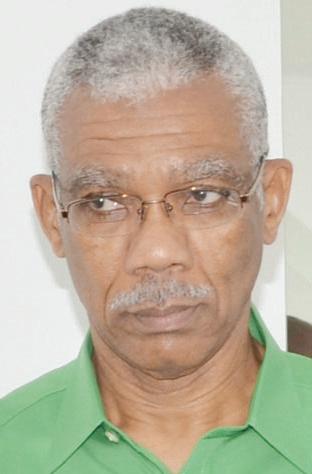
ties. A Partnership For National Unity (APNU) and the PNCR are currently being headed by Retired Brigadier David Granger and also has in its camp several other top commanders of the GDF and also a former Police Commissioner, Winston Felix (MP). One of Granger’s top aides is ex-GDF officer Joseph Harmon.
Responding to a question on how the body politic in Guyana has been affected by the ‘Granger factor’, Dr Luncheon expressed the view that “one may quibble whether indeed there is a one on one relationship between Granger, the militarisation and the success, but I would not

quibble, I would give David the edge and say yes. But I have said that what it has done is that it has generated enormous potential for unravelling what has happened over the last 23 years,” he said.
With the potential for increased divisiveness in the body politic, he explained that, “It is easy to cultivate and revive memories and the spectre of the military and a military dominated opposition, and for many... a military dominated government, I think sets a radical reversal of where and what we were doing,” Dr Luncheon said. Luncheon would have been referring to what academics have described as the PNC’s under Burnham “militarisation of Guyanese society” when Guyana had a 1:32 soldiercivilian ratio.
Moreover, Dr Luncheon noted that this is perhaps something that has to be continuously addressed, the impact of a military dominated opposition on the serving military. “I have absolutely no doubt in my mind that, (I have seen the facebook articles, I have seen the social media) it is divisive,” he said. He noted that a Chief -of -Staff can walk
off the job, respectful of the civilian military relationship, and next day be a strong architect of the opposition, but somehow it is not part of Guyana’s political traditions. Dr Luncheon was probably referring to former Chief of Staff Brigadier Edward Collins. Dr Luncheon said that he has examined this in Caricom and there are not many examples in the English speaking Caricom nations, of such actions. Even farther afield, the results have been mixed.
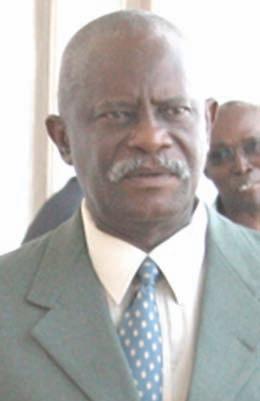
He said that a military dominated opposition, and further a military dominated government is disturbing. He views former military officers going into politics soon after leaving office as one that could be addressed constitutionally. “Were I to be given the authority by whatever possibility, I probably would have a constitutional amendment that would not allow this situation that sees within a reasonable time frame, serving members of the disciplined forces ensconce and actively engage in politics within days, weeks of their resignation, retirement, removal from service,” he said. Dr Luncheon shared that
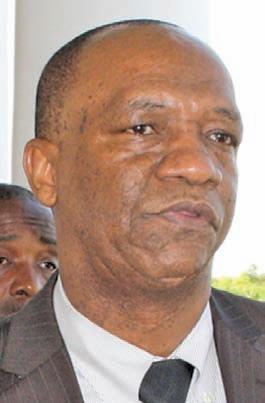
he had this discussion with the last Chief-of-Staff, Gary Best, noting that “... I think our history- what we have gone through and what other countries went through, ought to have some influence on how avidly we protect these constitutional rights of individuals particularly when there is a possibility of conflict with the general and public good,” Dr Luncheon said. Serving members of the Disciplined Forces actively engaging in politics within days of leaving their office puts a tremendous pressure on the Defence Secretariat, on Defence Headquarters and the leadership because now the potential for division exists and they now have to ensure that things do not go awry, Dr Luncheon said.
Changing the PNCcreated perception
Meanwhile, Dr Luncheon also said that much has been done by the current administration to change not only the role, but the (negative) perception that a significant portion of the population has had of the armed services. He said today, the PPPC Government has vastly restored the confidence of the Guyanese people in the military.



Editor: Nigel Williams
Tel: 225-5128, 231-0397, 226-9921, 226-2102, 223-7230 or 223-7231. Fax: 225-5134
Mailing address: 238 Camp & Quamina Streets, Georgetown
Email: news@guyanatimesgy.com, sales@guyanatimesgy.com
As the end of the year approaches, it appears that Guyanese using our roadways want to literally go out with a bang. In yesterday's edition of this newspaper, there was a very comprehensive article offering a perspective on the absolutely appalling number of traffic accidents and fatalities in our country.
The record for the most traffic deaths per 100,000 of population is held by Dominican Republic - 41. Guyana is not far below at 27 and with the exponential rate of increase, we should overtaking the Dominican Republic in the not too distant future.
When the number of vehicles on the roads increased in the developed countries they also passed through a stage in which their rate of accidents and deaths rose rapidly. However, in the last half century, they all took concrete steps to reduce - with very commendable results.
As a region, the European Union has the lowest overall rate worldwide at 5.5 per 100,000 - with Sweden clocking in at an incredible rate of 3. The US has a respectable rate of 11.4. The developing countries uniformly have very high rates with some notable exceptions such as Fiji at 6 per 100,000.
What the global statistics demonstrate is that without a planned and comprehensive approach to deal with the increasing number of vehicles as the developed countries did, the carnage on our roads will continue to escalate.
At the top of the list must be a commitment by the authorities to place safety on par with the demand for faster transportation. Take for instance, the fact that pedestrians constitute half of our fatalities in road accidents. This used to be the pattern in the developed countries until they moved to build sidewalks that separated pedestrians from vehicles.
Our roadways were all built originally in the horse and buggy era and when some were "upgraded" in the sixties, they accommodated vehicular traffic but not pedestrians. With the exponential increase in vehicles in the last two decades (140,000 +) these roads are treated like "highways" even though they are shared with pedestrians. The results are not surprising.
Even in the present, though we had the benefit of the experience of the developed countries, we yet did not incorporate sidewalks on the East Bank and East Coast Demerara roadways that are works in progress. The focus has been totally on increasing the number of driving lanes, with no provisions for pedestrians. The Mandela Ave and the West Coast Demerara roadways will be rebuilt next year, and we hope that sidewalks for pedestrians are part of the design.
In addition to incorporating road building techniques that address our changing road usage patterns - for example increased numbers of motor cycles - the traffic laws must also address drivers' behavioural patterns that contribute to road accidents. Speeding and driving under the influence of alcohol (DUI) are two major contributors to accidents.
In addition to equipping more traffic police with breathalysers, the penalties for violating the law must be increased significantly in tandem with a Zero Tolerance policy for infractions. In New York City, for instance, in addition to fines amounting to half the value of most vehicles, a person's vehicle can actually be forfeited and licences suspended for DUI violations.
But if there is one area that can make a significant dent in our vehicular accident rate it is in the issuance of drivers licences. It is common knowledge that a significant number of licences are sold by the traffic police responsible for issuing them. While there have been some positive responses to previous public outcry on the issue, the Police Force must be forced by their administrators to clean up their act
The failure in this area is not just the immoral act of bribery but in the deadly consequences of placing what are lethal weapons in the hands of individuals untrained in using them.
The fatal results should not be surprising.
Dear Editor,
The celebrations for Christmas in Austria can hardly be compared with Richmond Hill, New York or Guyana.
Austria has deep rooted traditions regarding the season – folk singing and dancing, going to mass, the Christmas market, lighting the tree, gluwine (a boiling hot, sweet wine), unique ornaments, visiting family and having dinner, gifting, and the like that people do during the season.
But the glamour found in other major cities or in Richmond Hill or Bel Air, Georgetown, is missing from the celebration.
Austria is a very religious Christian country, and people celebrated the holiday in much the same way religious Guyanese do – going to church. But unlike in Guyana where the celebration continues till New Year’s day, in Austria, the celebration is very short on on Christmas Eve.
Although I did not meet any Guyanese, I was told there is a young Guyanese woman married to an Austrian living in Vienna; there are very few minorities in Austria.
Many Christians believe Christmas’s customs and traditions originate from Germany and Austria and from there spread elsewhere in Europe. It is believed Austria is among the earliest places to celebrate the holiday.
But it has none of the glamour and ostentatious decorations of Richmond Hill or Trinidad or parts of Guyana. Celebrations are very simple and religious and nothing like
the fetes hosted by Richmond Hill Guyanese.
And unlike in North America, rest of Europe and the Caribbean, etc, Christmas is celebrated on December 24; there is not much focus on December 25 although the holiday is on that day.
Meals are simple (no curry mutton or dhal puri and no black cake or the kind of delicious cake we have in Guyana and Richmond Hill). The food is not tasty like Guyanese cuisine – Europeans generally eat a lot of meat for the holiday.
Presents are given under the Christmas tree on Christmas Eve and not on December 25 like in most other countries. But like the Caribbean and UK, Boxing Day is also a holiday. People go skiing in the Alps (snow most spectacular from the air) for the extended weekend.
The shops are closed countrywide unlike in New York. For the holiday, the main cities are very dull inundated with mostly foreigners walking the streets and patronizing fast food outlets. The cities are not very well lit lacking the beauty of say Oslo or Venice or Paris or Saigon.
Austria is famous for the Christmas market with its offerings of various types of decorations (most magnificent ornaments), foods and drinks. Austrians claim these special markets started in their country and spread elsewhere.
They are very famous in Innsbruck, near where the famed Ice man was found, Salzburg (home of the iconic Mozart), Vienna (home of the great Yohann Strauss) and
other cities.
From Austria, the Christmas market has become an integral part of the season in Germany and Switzerland and have found their way all over Europe and the US. The markets sell the most beautiful ornaments, hot wine and punch, ginger bread, chocolates, and an assortment of cold food and cheese.
The capital city of Vienna, indeed the major cities, is picturesque, beautifully decorated with Christmas trees and colorful lights everywhere. But they are no comparison to New York or parts of Guyana and or Trinidad – none of the spectacular colours or designs found in front of Guyanese homes in Richmond Hill.
The trees are no comparison to Rockefeller Center or with the one at Rahaman Park, Georgetown, or Saith Park, Trinidad. Unlike in our society when spectacular lights on the trees are lit for weeks, in Austria the tree is lit on Christmas Eve and is done for the year.
The trees are very small and were not lit up after December 24 when Christmas was celebrated with mass and a dinner at home although end of year celebrations continue through January 6 (main course roast duck and roast turkey with apricot cake and cookies).
Shops closed early (by 14:00h) on Christmas Eve and remain shut until after Boxing Day. Like New York, there are theatre performances and concerts for Christmas – only in the evening. However, most bars, restaurants, night clubs are closed and traffic is almost non-existent from December
24-26. People are at home or at church for December 24 and 25.
As in the US, there are wreaths decorated with ribbons hung in front of homes and businesses. On Christmas Eve, families went to church or pray at home, held candle lit dinners, read Christmas stories, and or sang carols together.
On at least one Sunday during the month of December, they prayed in church (mostly Catholics with some Protestants). Almost every family has a Christmas tree that is lit on Christmas Eve (and not necessarily on other nights).
But for public celebration, trees and streets are lit on other evenings. However, they are not as brilliantly illuminated as say like streets of Paris, Rome, Amsterdam, Singapore, Hanoi, or New York.
The trees are decorated with magnificent gold and silver ornaments and stars, sweets and candy wrapped in tinfoil, gilded nuts, and other goodies. But they are no match for some of the trees in New York or Paris. And there are not many carols.
I am told “Silent Night, Holy Night” was first sung on December 24 in Austria 200 years ago and is repeated again and again that evening only.
Presents are placed under the tree and young children believe that they were brought to them – as a reward for good behavior by Christ – as children do in Guyana. Santa Claus does not visit every year and like in Guyana.
continueD on page 5
The Local Governance Ministry continued to effectively carry out its mandate in 2014 with continued emphasis on the implementation of policies and development programmes, in accordance with the provision of good services to the Guyanese people.
To support its mandate, $24B was proposed and approved for the country’s ten Administrative Regions. Of this $1.765B was allocated to Region One, $2.638B-Region Two, $3.26B-Region Three, $3.547B-Region Four, $1.982B-Region Five, $4.48B-Region Six, $1.620-Region Seven, $944.77M-Region Eight, $1.461B-Region Nine and $2.225B-Region 10.

with the Ministry of Health had been engaged in several meetings aimed at enabling the system and those involved to become more responsive to the regions’ health needs.
maintenance, and for solid waste management among others.
Further, five mini excavators have been procured under the ‘Clean-up my country’ initiative which will be used primarily in NDCs, 45 tractors and trailers for the transportation of solid waste along with 6,000 bins which will be distributed to the neediest areas. A number of brush cutters were also bought.
The sum of $26.9B was also allocated to fund the current and capital estimates of the ten Regional Democratic Councils (RDCs), an increase over the 2013 allocation, the Government Information Agency (GINA) reported.
These allocations catered for various developmental
projects in the area of health, education, agriculture, finance and administration along with public works projects in the 10 regions, several of which were completed and commissioned during the year.
This saw the refurbish-
ing of schools to improve the quality of education in various regions, along with emphasis on the health care, agriculture and other key areas that are recognised as necessary for the people.
The Local Government Ministry in collaboration
Emphasis has been placed on the movement of health care providers along with pharmaceuticals as it relates to malaria, dengue and infections in Amerindian villages. The capital subvention to NDCs and municipalities increased by $77M, from $282M in 2013 to $350M in 2014, thus, providing avenues for more services in the regions, primarily in the areas of infrastructure, sanitation and environment.
In 2014, most of the resources were used for drainage works, road and bridge
The India Brazil South Africa Cooperation (IBSA) provided funding for three contracts that focused on the execution of additional projects under the Guyana Solid Waste Management Improvement Project.
Dear Editor,
The difficulty in getting flights to and from North America underscores a serious phenomenon as it relates to the paucity, even reluctance, of operators to continue to venture into the airline business serving Guyanese travellers particularly.
And credit must be given to Caribbean Airlines for
being there in both the high and low seasons, though their service can be taken up a few notches for the fares they charge.
Incompetence by some investors aside, the penalty against airlines for narcotics found on board is a discouragement to competition against the entrenched Caribbean Airlines.
When children promise to be good, St. Nicholas visit homes and bring gifts. Children are not allowed to see the tree until a tinkling bell is rung summoning them to the tree. Gifts are opened right after prayers on the December 24 evening.
Unlike in Guyana or the US, nativity scenes don’t have the baby Jesus until after Christmas Eve. Trees are adorned with fruits. Gifts are exchanged after Silent Night is sung and repeated.
Christmas carol are not as popular as in New York or the Caribbean and are not heard on radio or played in stores. However, TV stations air Christmas related programs on December 24. The 12 Days of Christmas end on January 6.
The main attraction for the season is the Christmas market which is seen everywhere. Prague, Czech Republic, also has Christmas markets that as as busy as those in Austria – staged to attract visitors.
But while Austria’s were closing after December 24,
from page 4
Prague’s remain open for the rest of the month. Austria markets are opened late November and close right after December 25. Some two million tourists visit the country for the holiday just to experience the markets; they are lovely but I found those in Germany, Nice and Paris far more attractive.
And leaving out the special markets which carry the most beautiful Christmas ornaments, Christmas season is more enjoyable in Guyana and in Richmond Hill than in Austria or in Prague (very cold on Saturday).
Nevertheless, observing the holiday in Austria and Czech is a lovely, memorable experience with well-disciplined, friendly people all in a Christmas or seasonal spirit.
Unlike in Guyana and Richmond Hill where people wish each other (including complete strangers) Merry Christmas, that was not heard in Austria.
Vishnu Bisram

It is known that narcotics have been traced from time to time to passengers using Caribbean Airlines but it is not public knowledge that Caribbean Airlines is being penalized.
In fact, that Caribbean Airlines is still airborne suggests that they either have the capacity to pay for enhanced security apparatus or to pay the fines whenever a breach is discovered or that there is some workable arrangement in place that does not sound the death knell. Speculation is justified in the circumstances.
But the accommodation
of other international operators, due diligence being done, must be encouraged in order to cater to rapidly growing Guyanese passenger traffic. We are no longer living in the time when visas to USA and Canada were a rarity.
Guyanese criss-cross the airspace with increasing frequency and in larger numbers. There is an expanding market in the airline industry. Is it sufficient that we must be constrained by what a single carrier dishes out?
Subject to any other mechanism being in place of which I am ignorant, I am
of the view that the present protocol where an airline alone is penalized for narcotics found on board should be revisited. For narcotics to get on board, whether on passengers or otherwise, the security system – moreso the human aspects of that system – would have failed deliberately or otherwise.
Airlines contract security organizations, equipment, baggage handlers, etc. The Government security apparatus also has more than a passing presence at our two international airports.
What are their responsibilities? Aren’t they stake-
holders in the scheme of things? Should they escape culpability? Were all stakeholders to be penalized, I think more detection would occur at source rather than at destination.
The distribution of penalty would then provide a more encouraging and enabling environment for new airlines to service a growing demand and to offer airtravellers more choices. If the situation is different from what I have written above, I would appreciate to be enlightened.
T Jadunauth



As Christmas draws closer and the season of indulgence intensifies, the following article may be more useful than ever.
When children melt down in the middle of a crowded store, at a holiday dinner with extended family, or at home, it can be extremely frustrating. But parents can help children learn self-control and teach them how to respond to situ ations without just acting on impulse.
Teaching selfcontrol skills is one of the most impor tant things that parents can do for their children be cause these are some of the most important skills for success later in life.
Helping children learn self-control
By learning self-control, chil dren can make ap propriate decisions and respond to stressful sit uations in ways that can yield positive outcomes.
dren learn to control their behaviour:
Up to Age 2
Infants and toddlers get frustrated by the large gap between the things they want to do and what they’re able to do. They often respond with temper tantrums. Try to prevent outbursts by distracting your little one with toys or other activities.
helps children improve their sense of self-control. And praise your child for not losing control in frustrating or difficult situations.
Ages 6 to 9
As children enter school, they’re better able to understand the idea of consequences and that they can choose good or bad behaviour. It may help your child to imagine a stop sign that
at first don’t end up being so awful. Urge children to take time to think before responding to a situation.
Ages 13 to 17
By now children should be able to control most of their actions. But remind teens to think about longterm consequences. Urge them to pause to evaluate upsetting situations before responding and talk through problems rather than losing control, slamming doors, or yelling. If necessary, discipline your teen by taking away certain privileges to reinforce the message that self-control is an important skill.

For example, if you say that you’re not serving ice cream until after dinner, your child may cry, plead, or even scream in the hopes that you will give in. But with self-control, your child can understand that a temper tantrum means you’ll take away the ice cream for good and that it’s wiser to wait patiently.
Here are a few suggestions on how to help chil-
two-year-old mark, try a brief timeout in a designated area – like a kitchen chair or bottom stair – to show the consequences for outbursts and teach that it’s better to take some time alone instead of throwing a tantrum.
Ages 3 to 5
You can continue to use timeouts, but rather than enforcing a specific time limit, end timeouts once your child has calmed down. This
about a situation before re sponding. Encourage your child to walk away from a frustrating situation for a few minutes to cool off instead of having an outburst.
Ages 10 to 12
Older children usually better understand their feelings. Encourage them to think about what’s causing them to lose control and then analyse it. Explain that sometimes the situations that are upsetting

By Patti Jones
TWhen children are out of control
As difficult as it may be, resist the urge to yell when you’re disciplining your children. Instead, be firm and matter of fact. During a child’s meltdown, stay calm and explain that yelling, throwing a tantrum, and slamming doors are unacceptable behaviours that have consequences – and say what those consequences are.
Your actions will show that tantrums won’t get the child the upper hand. For example, if your child gets upset in the grocery store after you’ve explained why you won’t buy candy, don’t give in – thus demonstrating that the tantrum was both unacceptable and ineffective. (Excerpt from kidshealth)
(Continued from Sunday)
hey’ll also learn to predict what will happen next based on their prior knowledge (“Uh oh! The wolf wants to blow the house down!”). Later, these lessons in recognising patterns, understanding sequences, and predicting
ulary. What’s more, reading aloud can provide fodder for family conversation. “It’s so much easier to talk about a tough issue outside the context of your immediate life,” Dr. Walter explains. “If the issue then comes up in personal life, you can say, ‘Remember what we talked about?’” For talking to ad-

outcomes will help children in other areas, from Maths and science to music and writing. And reading aloud doesn’t need to stop once children can read on their own; in fact, that’s when they develop reading comprehension skills, Dr Walter says. To practise, ask a child what she thinks will happen next or how she would end a story differently.
Experts suggest that parents continue the tradition even into the teenage years. By choosing books that are slightly above a teen’s skill level, you’ll continue to expose her to new words to add to her vocab-

olescents about death, she suggests reading Katherine Patterson’s classic Bridge to Terabithia; likewise, the Little House on the Prairie books offer families the opportunity to discuss racism.
Soothing snuggles To best confer reading’s cognitive benefits, a child’s experiences with books should be enjoyable, says Peter Gorski, MD, chair of the early childhood committee of the American Academy of Paediatrics. “More than anything, you want him to associate reading with emotional warmth and fun,” he says.
When children are cosy and comfortable, reading aloud to them can even lower their stress levels. When a child experiences any strain – such as being bullied or starting a new school – his brain tries to protect him by producing the hormone cortisol, which activates the body’s “fight or flight” response. In small doses, cortisol can actually help children handle normal stress. In larger amounts, however, it can block learning.
While there have been no scientific studies on how bedtime stories affect children with spiked cortisol levels, neuroscientists say it stands to reason that being read a familiar book while snuggling close to a parent can comfort a child, thus lowering his cortisol levels to help him concentrate better. To enhance the calming nature of storytime at your house, cuddle up with your child in a comfortable place, with his favourite blankets and stuffed animals nearby.
“Relax and just enjoy being with your child,” Dr Gorski says. “Just think of what that close time you’re spending together will do for your own cortisol levels!” (Parents.com)
By Vahnu Manikchand
AFirst Form student of President’s College was killed on Sunday morning after he was struck down by a speeding car at Paradise Village, Railway and Embankment Road, East Coast Demerara (ECD).
Dead is 12-year-old Kojo Junior McPherson of Lot 755 Fifth Street, Paradise Housing Scheme, ECD.
The accident occurred sometime around 08:15h. According to reports reaching Guyana Times, the child was riding a bicycle heading to neighbouring village Enmore when a speeding motor car, heading in the same direction hit him from behind.
The youth pitched off the bicycle and fell a distance away, hitting his head on a fire hydrant on the corner of the road.
Persons who witnessed the accident claimed that the child was in the corner riding but the driver, who is known to be a reckless driver, was driving his hire car at a fast rate.
Speaking with Guyana Times, the grieving father Kojo McPherson Snr called “Jeffery”, recalled that his son left home around 08:00h
the morning to go the shop. He said that sometime later, one of his friends came to get him with a motor cycle, informing him that his son was in an accident.
“I didn’t believe him cause the boy just left home but when we go on the road, I see meh son lying on the ground,” the man cried.
The man said his son was lying on his back and his head was cracked open and his brain was out.
The father recounted that with the assistant of his friend and other persons; his son was rushed to the Georgetown Public Hospital, but was pronounced dead on arrival (DOA).
The man said that the driver who hit his son is popular in the area and is known as “Iguana”.
He angrily pointed out that after his son was hit, the driver showed no remorse and claimed that he took his son for a dog.
“Oow man, me son went on a bicycle, how you could think that is a dog… that is pure nonsense. These drivers does be on the road driving wild, wild and don’t want to take responsibility for their actions,” the man vented.
He also alleged that the
man used to driver minibus before and was involved in an accident that killed five persons.
The upset father criticised the laws, stating that if the driver was brought to justice in the first case, his son would not have been killed at a time when he is now preparing to start his life.
Jeffery cried that his son was a good child with a bright future ahead of him.
“I had so much plans for my son, he was my life and he was in the peak of his youth. He wanted to be an Engineer and used to be all books. Everybody could tell you, he was a mannerly child. I never had any problems with him,” the father lamented.
He added that he brought up his son without a mother and the two used to live alone. The shattered man said he is hoping that he gets justice for his son and the driver be put away so that no other parent will have to go through what happened to him.
The man opined that the problem lies in the laws which provide for such offences to be bailable.
“It is murder,” he cried, adding that the authorities should take appropriate actions to fix the flaw.
The Police are continuing their investigations into the alleged murder of Tiana Raghbeer, 14, a student of Canje Secondary School who lived at 32 Reliance, East Canje, Region Six (East Berbice-Corentyne).
Her lifeless body was found on Saturday floating in a trench a village away from her home approximately 13 hours after she was reported missing.
According to her grandfather, they had a family get-together at his home after returning from a gymkhana earlier in the day, and everything was normal. He left his granddaughter with her dad and her brother having fun.
“I went to bed, I didn’t know she left home till the following morning,” the grandfather said.
He went on to say that around 13:30h the following day, he received a call informing him that a body was found in Adelphi Water Scheme, and when they visited the scene, their worst fear was confirmed.
Asked what may have prompted this vile act, the grandfather said he was not sure, but recalled an incident on Christmas Day when some relatives of his son’s ex-wife tried to beat him up, and Tiana came to his defence and threw a bottle at one of his assail-

ants, causing them to back and allowing his son to escape. They threatened her, but she took the threat lightly and did not report it to the Police.
The distraught grandfather said he was very shocked at Tiana’s death, describing her as an easygoing and happy girl.
Meanwhile, the teen’s father, Jaiprakash Raghbeer, who was still trying to come to grips with the death of his daughter, told this publication that the last time he saw his
...suspected

Days after colliding with a parked vehicle, causing the death of his 16-year-old daughter, the partly decomposed body of 62-year-old Alfred Branche of Rosignol, Region Five (Mahaica-Berbice) was found in a trench some two villages away from his home.
daughter was when she left to go downstairs to get some drinks for him.
He recalled that he noticed she was acting strange, but thought it was because of the beers she had earlier.
The grandfather said the teen was not a frequent drinker, but due to the holidays, it was an exception.
Jaiprakash recalled that after his daughter did not return, he sent his 10-year-old son to check up on her and he returned a few minutes later saying that she was “gone”.
With the help of others, they immediately started a search for her within the area, but were unsuccessful in locating her.
On their way back from the East Bank, they got a call about a body in a trench at Adelphi.
When they arrived on the scene, their worst fear was confirmed as they recognised the body as that of Tiana from the clothing.
This newspaper understands that the teen was known to leave the home frequently without informing anyone.
She leaves to mourn her parents, grandfather and her 10-year-old brother. Her parents separated several years ago and Tiana lived with her grandfather, brother and dad at their Reliance home.
Scores of curious onlookers gathered around the shallow trench at Cotton Tree Village, West Coast Berbice (WCB) on Sunday to catch a glimpse of Branche, who made good on his promise to end his life because “he could not live without his baby”.
Family members believe that he might have ingested a poisonous substance and might have succumbed at the scene. On Tuesday, Branche, his wife and daughter, Yonnette, 16, were returning from Georgetown and according to reports, he was allegedly speeding.
He reportedly lost control of his vehicle and slammed into a parked canter in

the vicinity of Number 29 Village, WCB.
The young Branche, a student of the New Amsterdam Multilateral School received injuries and was taken to the Fort Wellington Hospital where she was pronounced dead on arrival (DOA).
The family had just uplifted a barrel and other items sent to them by relatives overseas.
At the scene on Sunday, Branche’s wife Elsie was inconsolable. She told Guyana
Times that her husband who has been blaming himself for their daughter’s death disappeared from home on Christmas Eve Day.
“Ow Lord, ow Lord!” she cried, upon seeing her husband’s body faced up in the clump of bushes. “He said if anything happens to his daughter he we will have to bury him, I didn’t expect this from him,” Elsie said amid loud crying from other family members.
The woman, who cried out in pain, said “this is too much, too much, this is a big blow. Two dead in one week, my daughter, now my Alfred”.
She added: “Now I ain’t going back to that house, I ain’t want that house no more she wailed,” hitting her hand against her chest.
The younger Branche is expected to be buried on Tuesday, but family members say they may have to bury the senior Branche first because of his decomposed state.

B y T ajeram m oha B ir
Central Bank
Governor, Dr Gobind Ganga said the prudent fiscal policies implemented by Government have injected significant confidence in the economy, making Guyana the envy of the region.
Guyana has enjoyed eight years of consecutive economic growth, a highly sustainable balance of payment, a debt that is manageable, low interest rates, declining inflation and single digit increase in prices. The country’s economic performance has been recognised by several leading institutions monitoring development in the region.
In March this year, Caribbean Development Bank (CDB) Vice President (Operations), Dr Carla Barnett praised Guyana’s economic performance, which has and continues to withstand the effects of the global financial crisis.
Dr Barnett was at the time leading a delegation from the bank in talks with the Government with regards to its new country strategy.
She said that the financial crisis has impacted the region quite profoundly. In the case of the CDB, this impact is seen in the demand for additional borrowing. The CDB Vice President had explained that borrowing member countries had severely constrained capacities to borrow.
“In many of the countries we have seen growth decline, but Guyana is an exception, and in the last
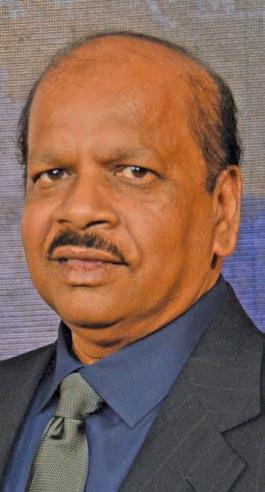
few years, we have seen the economy in Guyana actually expand,” Dr Barnett reported.
Last year, Guyana’s economy fared well on the upward trajectory; recording a growth of 5.2 per cent. While traditional sectors such as bauxite and rice, with the exception of sugar continue to contribute significantly to economic development, new and emerging sectors are flourishing as well.
These include to a large extent, tourism and mining. Last year, in agriculture, rice production reached over 535,000, a 27 per cent increase from the previous year. This year, production has topped 600,000 tonnes, the highest in the history of Guyana. In 2013, the International Monetary Fund (IMF) had also pointed out that the policies of the Government are designed to support the

country’s macroeconomic resilience and sustained growth.
Because of these prudent policies, the Economic Commission for Latin America and the Caribbean (ECLAC) had projected a 4.5 per cent growth rate for Guyana in 2014 — the highest prediction for the Caribbean and the eighth highest in the whole of Latin America. The projection is below the 5.6 per cent estimated by Finance Minister, Dr Ashni Singh during his presentation of the 2014 budget.
According to ECLAC, only Suriname was projected to grow above four per cent this year in the whole of the Caribbean, with a 4.4 per cent forecast. Trinidad and Tobago was at 2.2 per cent, Barbados 0.5 per cent and Jamaica 1.2 per cent.
The positive financial and macroeconomic variables Guyana currently enjoy, aside from the sound financial policies, can also be credited to a stable exchange rate, and together they have contributed to the IMF referring to Guyana as a model country for the region.
“We have had relative exchange rate stability, if you look at it from a nominal perspective, the movement, let us say 2006, 2007 to say 2008, 2009, is just a marginal increase,” Dr Ganga said, pointing out that in order for Guyana to be competitive, the exchange rate would have to be stable and the inflate rate low.
The Governor of Guyana’s apex final institution added: “You cannot look at a dollar or two dollar over a two or one-year period, if you look over the years, the depreciation would have been marginal, just about one per cent, and that is good for any economy because it is taking into consideration the competitiveness of our prices.”
Guyana’s inflation rate is around 1.2 per cent. Low inflation also means more disposable income in the pockets of the citizenry, which means they are able to purchase more. The stable and relatively lower price levels experienced during the past 11 months have continued during the current Christmas season, allowing everyone, whether they are rich or poor, to enjoy a decent level of disposable income.
Ranks of the Guyana Police Force while on patrol duty along the East Coast of Demerara recovered an unlicensed firearm and ammunition stashed away in some bushes.
According to information disclosed by the Police, the ranks were patrolling the Lusignan Railway and Embankment, East Coast
Demerara on Sunday morning when they made the discovery.
The Police did not say how the ranks were able to find the illegal weapons but they took the .22 revolver and two matching rounds into their possession.
Following the discovery, an investigation has been launched into the matter.


The Muckraker has achieved what no other paper has been able to do for over a decade - get a quote from Khemraj "Haul yuh ass" Ramjattan during the Christmas holidays! The AFC leader is such a lush that getting an intelligible sentence from him during his stupor-filled, non-stop holiday binge drinking has defied the very best of newspaper hacks. But maybe this explains the ridiculous claim he makes that the Attorney General is a "terrorist"!!!!
Ramjattan has to have been more than "pissing" drunk - if in fact the reporter didn't misinterpret his trademark lachrymose incoherent ramblings - to reach for that particular legal hook to "catch" the AG - which even the legal apprentice Lalloo Ram, rejected. Your Eyewitness knows on slow news days, the Muckraker has two "go-to" wankers they can always count on for a quote against their bête noir - the PPP (or anyone even remotely connected with that party) - Ramjattan and Harmon from APNU.
The Muckraker is obviously gonna extract its pound of flesh for financing the AFC and Ramjattan - but Jeez!!! - can't they draw the line somewhere?? How's Ramjattan going to ever live down this descent into the grotesque?? We know the Mook is consumed with hate...and with his reputation he can spew any sort of "schupidness" ...but a practicing lawyer?? Imagine how inebriated he must've been not to even tell the reporter "Haul yuh ass" - when the Mook's "terrorist" tag suggestion was proffered.
For the sake of argument let's accept that the AG mentioned in his phone call to Gildarie, the possibility of a terroristic act being committed against the KN. But where was the Actus reus of the AG?? But by the law Ramjattan cited, did the AG, "advocate, aid and abet, advise or incite or knowingly facilitate the commission of a terrorist act"?? We know that lawyers sometimes overreach in stretching the law to collect that fee from their client.... But isn't Ramjattan opening the Mook up to be sued for "vexatious prosecution" if he goes along this route??
But now that he's raised the issue of "terrorism" - albeit in a drunken stupor - isn't Ramjattan opening up a Pandora's Box and wouldn't be able to deal with the whirlwind unleashed?? Citizens affected by the indubitably terroristic acts committed at Linden in 2012 (murder, arson, threatening truckers, etc to make a POLITICAL point) are now gonna sue Ramjattan and his sidekick Nagamoogoo.
They're on record "advocating, aiding and abetting, advising, inciting and knowingly facilitating the commission of those terrorist acts".
When convicted the police will be able to "haul dey ass" to Camp Street jail for "40 to life"!!
Yesterday, your Eyewitness praised the festival of Kwanzaa as something that ought to be encouraged in Guyana. He received some feedback - via friends discussing the column without knowing that the Eyewitness lurked in their midst! One fella - whom he'd hitherto thought was well "educated" - complained that the festival wasn't "real" or "African".
So Your Eyewitness asked him what was "real" about Christmas - when it wasn't even celebrated the day Jesus was born. And most of the rituals and customs were "pagan". Or which one of those customs were from Jesus' native land of Palestine? What are these type of festivals meant to do? Inculcate some underlying value in its celebrants so that they can live better lives, that's what. And which one of the values that Kwanzaa promotes can be argued against.
Take the one we are supposed to reflect on and inculcate in action today "Ujamaa" - which promotes economic behaviour based on cooperation.
If the western model of economics is in tatters today, why can't the African perspective be a possible corrective?
Have you noticed the house slave over at the Muckraker's accusing the leaders of APNU of "selling out" to the government? They haven't been on the protest line with the Mook!!
By Jomo Paul
As the nation hold its breath for the announcement of the dissolution of the National Assembly and a possible date for the hosting of General and Regional Elections, President Donald Ramotar said the matter will not be addressed in his New Year’s Day message to the nation.
The announcement of the dissolution of Parliament and General Elections has to be made by President Donald Ramotar.
President Ramotar in a telephone interview with Guyana Times on Sunday said that it is an established custom for the President to address the nation on the dawn of a new year, but there was nothing extra “special” in his upcoming address.
He explained that there will be “no announcement for elections in my New Year’s message”. Earlier this month, the President had announced that Guyana will soon go to polls.
“I have considered and
I have consulted and this is my resolve. We will go to elections. I have also since written to the international community alerting them to the possibility of early elections and the desire for them to field observer missions,” he said.
When pressed for clarity on a timeline within which a date will be set for a return to the polls, the President had said that he will make the proclamation before the Mashramani celebrations, possibly in his New Year’s Message to the nation.
Once a date is set, political parties kick into campaign mode. Also once a proclamation, announcing a date, is made by the President to go to General and Regional Elections, constitutionally, the Guyana Elections Commission (GECOM) has three months within which to deliver.
Ramotar added that between now and the announcement of a date; he will be engaging GECOM, as well as any other stakeholder groups in talks. “I have an open door policy,” he said.
President’s decision to call General and Regional Elections in 2015 is receiving the support of civil society, with the exception of a few.
Former Georgetown Chamber of Commerce and Industry President Clinton Urling, who now heads the newly-formed social change advocate group Blue CAPS, offered his commendation to President Ramotar on Sunday.
Urling told Guyana Times that though the
President should have named a date for the elections, no longer can the country endure gridlock at the level of the National Assembly as the People’s Progressive Party/Civic (PPP/C), the A Partnership for National Unity (APNU) and the Alliance For Change (AFC) engage in a struggle for power at the expense of the electorate.
The results, whether it favours the ruling PPP/C or the Opposition, should be respected even if it returns a minority Government to power.
According to Urling, if the electorate votes another minority Government into office, it is clear that they are calling for “inclusive power”, and political parties should put aside their individual agendas and work in the best interest of Guyana.
The PPP/C has won every election since entering office in 1992; however, during the 2011 elections, it returned to power with a minority with the Opposition dominating the National Assembly.
ANew Amsterdam, Berbice man is now dead after he was set ablaze by another man during an argument at their mining camp in Ikawan, Cuyuni River.
Police in a statement said a team of ranks has been dispatched to Ikawan to conduct investigations into a report received that last Friday, miner Mikel Huntley of New Amsterdam, was involved in an argument with another man during which he was doused with gasoline and set on fire.
He succumbed to the injuries received. Guyana Times was unable to make contact with Huntley’s relatives.
Over the years there have been several incidents where miners were doused with gasoline by their colleagues during arguments. Only recently, a Timehri logger succumbed to burns days after the camp he and
others were staying at in Mabura, Region 10 (Upper Demerara-Berbice) was allegedly set alight by his employer.
David Campbell, 49, of 180 Hyde Park, Timehri, East Bank Demerara was a patient in the Burn Care Unit of the Georgetown Public Hospital at the time of his death.
According to the man’s nephew, Jason Persaud, he along with Campbell and two other individuals, Etwaroo Karan and Tyrone Campbell, were in the camp when his employer who was drinking, asked them to push a tractor.
“De man had alcohol in his head and come ask we to push start the tractor. Wha we go push? It was late at night, remember is bush we deh,” Persaud recounted. After the men refused, the employer said to them that if they would not help him, he was going to help himself.
“De man get vex and tell we that if we can’t help he, how he gun help heself and we went and sleep. Next thing you know, camp deh on fire,” Persaud recalled.
He also stated that after the camp began to burn, three of them managed to escape, leaving David Campbell behind. Campbell was subsequently seen dragging himself out of the burning camp.
He was taken to the Mackenzie Hospital but was transferred to the Georgetown Public Hospital. Their employer has since been charged with murder.
Back in August, a 27-year-old gold miner also succumbed in the Georgetown Public Hospital’s Intensive Care Unit after he was allegedly set on fire by a co-worker in the mining camp at Barakat Backdam, Cuyuni River.
Kester Anderson, who worked as a miner for the past two years, had sus-

The Litter Unit is currently doing a survey of the types and quantity of litter in the country in order to create a National Litter Index.
A National Litter Index is a report with detailed information on the litter found, the types and the volume.
This is in a bid to more aggressively tackle littering in Guyana. Environmental Protection Agency (EPA) Compliance and Enforcement Director Kemraj Parsram is overseeing this initiative.
He told Guyana Times that Litter Wardens are currently working on dumping sites, areas that are known for prohibited dumping in Georgetown.
Parsram stated that once a report has been finalised by the wardens on Georgetown, they will then be moving on to other regions.
The EPA said the “survey (National Litter Index) will identify the types and quantity of litter existing and create a baseline report that will guide annual monitoring and evaluate the effectiveness and impacts”.
tained first degree burns to the face, head, hands and abdomen.
He was first taken to the Bartica Hospital and was later air-dashed to the Georgetown Public Hospital where he succumbed.
According to information received, Anderson and a co-worker were involved in a heated argument during which the man poured gasoline on him and set him on fire.
This newspaper was told that the man accused of burning Anderson is on the run. Anderson’s mother, Quenella Griffith had told this newspaper that she was at home when a relative informed her of what had transpired in the camp.
“The person said that he and some man had an argument and the man throw gasoline on him and then light him on fire… that is all I know… I don’t even know who burnt him,” the mother said.
The Litter Wardens record and categorise the litter they find to reach a conclusion on the types and the quantity to identify the source of the litter found.
Parsram said once the report has been written up, the garbage can be traced back to the source: restaurants or other businesses.
With this information, Parsram said policies and legislation will be drafted to address littering. Also, while putting the litter index together, the Litter Wardens seek to identify reasons for dumping, informed Parsram.
He explained that the Litter Wardens go to areas where dumping is usually practiced. By doing this, it is hoped that a classification can be made about the types of areas that encourage dumping and the types that do not, in order to implement solutions to target the problems within the areas that practice littering.
Once this has been done, it will inform of the best ways to tackle the situation. Parsram stated that the options that the EPA have in such cases are to provide more education on better dumping of garbage and enforcement of the litter regulation for those who know, but do not follow it.
A third solution to tackle illegal disposal of garbage is the involvement of the community. Parsram said the community is brought together on the issue to help members be aware collectively on the illegal dumping of garbage. To date, the Litter Unit has issued over 200 letters which include clean up and litter removal orders, most of which have been complied with, the EPA said.
Australia’s National Litter Index, “Keep Australia Beautiful”, has been credited for the decrease in litter in that country. Eight years ago when there was no national index, littering in the country was quite a normal occurrence; however, litterpreventionprogram. com/news-reel.html states that litter is down 3.4 per cent or 56 items per km. The volume fell by 1.8 per cent from the 2008 report. Meanwhile, the EPA has reported that the establishment of an Environment Court is on the agenda to deal with litterers and illegal dumpers.
It is basically a survey done to garner options to target the garbage problem that plagues Guyana.


By IndrawattIe natram
Several vehicle own-
ers on the Essequibo Coast were over the weekend forced to cycle or catch public transportation because of a shortage of gasoline at pump stations.
And stakeholders in the sector said unless Government does something urgently, fuel smuggling will increase as local suppliers find ways to beat the system.
The gas shortage has thrown the region’s gas stations into chaos and many residents have referred to it as the “holiday spoiler”.
“Imagine this is the Christmas season and we have to go through this. No gas, we can’t use our vehicles,” John Satram told the Guyana Times while standing outside of his car at the Charity Market square.
Satram said that some-
thing needs to be done to ease the burden motorists and other stakeholders bear.
the entire Coast. “I drove to the end; luckily, I managed to get a restricted amount of $4000.”
Motorists at Supenaam said there were many minor accidents as drivers hassle each other for position in the long lines at the Amin Gas Station in Supenaam.
Prominent gas stations such as Dalchand, Rifi, and Aron in Anna Regina; Persaud in Johanna Cecilia; and David Shurland in Adventure were closed.
The Guyana Times enquired as to the reason only to find out that businessmen had limited quantities of gas on board and because of the long holiday, there were limited supplies.

Old people does always seh whah ever yuh don’t want fuh yuh self, yuh must never want fuh other people. De good book also advise people to do de same ting. Never do to some body else whah yuh would never do to yuh self.
But people nowadays does wanna do de opposite. In fact, nuff people does do tings to other people before de other people can do some ting to them. So dem put a whole new meanin to de golden rule.
That is why de golden rule ain’t mek outta gold any more. It mek out of a big stick instead. So de tings whah people don’t ever wanna do is whah dem does tell other people to do.
Two (Pomeroon-Supenaam) only one gas station located at
was in opera-
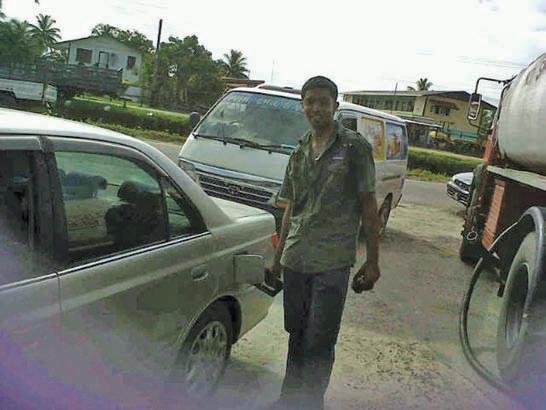
Satram said that usually in situations like this the state-owned Guyana Oil Company (GUYOIL) would be looked upon to lead the way regarding the prices.
For the entire Region
tion on Sunday and had gasoline available. Other gas stations only had diesel to supply consumers.
One taxi driver said that his day was spent in search of gasoline as he drove along

Rifi Gas Station, in the commercial centre of Anna Regina, promised that gas would be available to consumers today.
Meanwhile, contacted on the issue, an official knowledgeable of the trade in oil and who asked not to be named noted that the current situation will fuel smuggling, which is already something the administration has not been able to get a full handle on.
“We can see smuggling activities increasing here, because there are people out there craving for cheaper fuel and someone will tap into that market,” the official warned.
And that is why Rum Jhaat leh he friend Lalloo tek a certain case and he ain’t tek it he own self. Yet Rum Jhaat givin out advice now. But old people gon know why he ain’t give that advice all de time. That is de kinda hypocrites who livin in this country nowadays.
And imagine dem does do that to dem own friends, much less dem enemies. In fact, old people seh wid friends like that yuh don’t need enemies. So is tru tru story that a man in these times does have enemies and frienemies. De days fuh friends done since long time.
No wonder yuh does have to watch yuh back any where yuh go. But some people does watch yuh back more than whah yuh can watch yuh own back. Whether dem lookin out fuh yuh back, or dem just like yuh back is another story.
One chutney man sing, “Dem a watch meh”, but he fuhget to sing is which part dem watchin. In fact, de word is out that every body watchin fuh that same chutney man right now and can’t find he.
Ting-a-ling-a-ling…friend tell friend…mattie tell mattie! Some watchin fuh he fuh collect back dem money and some watchin fuh he to give he back whah belong to he. And that is definitely not money!
The “military-dominated”...
“I think that the professionalism that we have insisted, that the military has exhibited over these years, their record over these 23 years, has been such that we have been able to, by all intents and purposes removed from the immediacy of their engagement with the Guyanese people, those unpleasant historical antecedents.”
Reflecting on the change in the military from 1992, to now, Dr Luncheon said successive generations of Secretary to the Defence Board and Chief-of -Staff see this period as one that has built and has been building on the restoration of positive military tradition. He explained that this has been one of the goals of the administration.
The People’s Progressive Party Civic (PPP/C) in 1992 became the government, and recognised that the military situation was “untenable, this was an unhealthy situation in any evolving democracy that indeed any
military was indeed a disaster from day one,” Dr Luncheon said. T hose who are convergent with the history of the politics, of the Government in Guyana will remember the role that was aspired to the military as an agent of the then PNC party in subjugating the democracy of the country in denying free and fair election.
Healing the breach
“My specific mandate was to do all that was necessary to heal the breach, and I am pretty certain the same instruction was given to the then Minister of Home Affairs who dealt with the civilian agencies,” Dr Luncheon said, as he recalled one of his earlier encounters with the then President Cheddi Jagan, pertaining to his role as Secretary to the Defence Board. Dr Luncheon explained that the late President understood clearly the need to heal the breach between the large segments of the Guyanese
people and the military.
“We knew a patriotic military had to rise above that historical fact, and Dr Jagan said that one of our contributions was to contribute to that healing,” he said. “I want to believe, I have worked with every single Chief-of-Staff since 1992, and I have literally kept Dr Cheddi Jagan’s exhortation foremost in the administration’s engagement with the military establishment,” he continued.
There was a difficulty in changing the perception of the military to the public. Dr Luncheon noted, “It is not easy to eliminate, to remove from one’s consciousness, some of the issues that took place, but time is a great healer,” he said. “When what is being done currently supports the efforts to heal, support the efforts to undo, I think the opportunities that are realised can be quite significant as had happened in the Guyanese military example.”

The elections with its fierce campaigning will dominate the first part of 2015. People are already consumed with tension. But we are confident that Guyana’s democracy which started to flourish after the 1992 restoration is strong enough today to allow a robustly contested election that will see ideas for Guyana’s development dominate the discussion and not idle and violence-baiting rhetoric.
Further progress has been made toward the construction of the Corentyne River Bridge which will link Guyana and Suriname. A contract has been signed for the Corentyne Highway to be improved and extended at its eastern end as Guyana tries to ensure that the land transport component
of this important linkage is completed.
Guyana has always had vigorous trade and social and cultural relationship with Suriname. But the Corentyne River Bridge will still transform everyday life between our peoples and Guyana stands to benefit enormously.
The Single Market and Economy being a Caricom dream, the Corentyne River Bridge will be the first physical infrastructural link between two countries in this grouping. This should completely change the realities of trade between the two sister nations and provide a new dimension for the common economic space that we dream about for Caricom.
We would hope that the 2015 elections in Guyana will
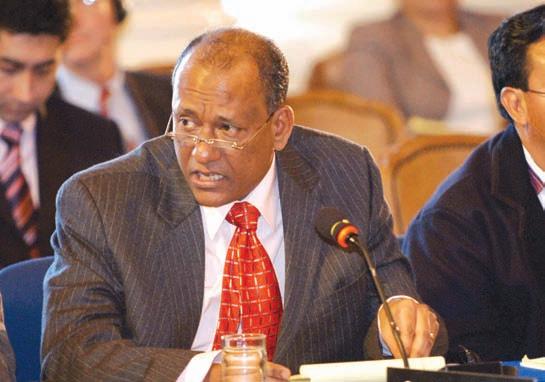
The Permanent Council of the Organization of American States (OAS) adopted last week by acclamation a declaration in support of the announcements made by the governments of Cuba and the United States last December 17, which includes the intention to resume diplomatic relations.
The declaration, adopted by acclamation, reflects the “deep satisfaction” of the member states at “the historic announcement” and reiterates “the commitment of the Americas to dialogue among sovereign states.”
The Permanent Council also expresses “its support for the implementation of measures conducive to the complete normalization of bilateral relations” between the two countries. The meeting was chaired by the Permanent Representative of Guyana to the OAS, Ambassador Bayney R
Karran, who explained the spirit that led to the adoption of the declaration, asserting that “this announcement marks the beginning of a new chapter in the bilateral relation of these two member states and, therefore, is of great importance to us all.”
The adopted declaration includes footnotes by Bolivia, Venezuela, and Nicaragua. At the meeting, the delegations of Bolivia, Venezuela, the United States, Belize (on behalf of CARICOM), Ecuador, Nicaragua, Guatemala, Haiti, Brazil, Costa Rica, Colombia, Guyana, Jamaica, Peru, Uruguay, Mexico, Grenada, Trinidad and Tobago, the Dominican Republic, Paraguay, Panama, Argentina, El Salvador, Chile, Saint Lucia, Saint Vincent and the Grenadines, and Suriname took the floor.

be seized by political parties to highlight ideas on how we could expand the benefits of the Bridge for advancing the common economic, social and cultural development of the two nations.
The Bridge is not the first physical link between Guyana and her South American neighbours. The Takatu Bridge already supports a stunning level of transport between Guyana and Brazil.
There are those who will argue and we will agree that the pursuit of our continental destiny started way before 1992. But before 1992, much of the policies and programmes and our diplomatic initiatives were still in the aspiration and talk stages.
Today, Guyana is a genuine link between Caricom and South America. Through being a Member of the RIO Group, UNASUR, CELAC
and other South American and Central American initiatives, Guyana is not only strengthening relations in the Continent, but also linking Caricom and South/Central America.
Guyana has been an important part of the PetroCaribe initiative. Venezuela has had a torrid political decade with US Government hostility. From a period of hostility between Guyana and Venezuela because Venezuela maintains a claim on a part of Guyana, since 1992, the PPP/C Government has transformed the relationship into a political, economic and social cooperation.
For sure the border claims by Venezuela remain as a concern for Guyana, but we have been able to change the relationship to one where two developing countries are working together for the com-
mon benefits of our peoples.
The 2015 elections must debate ideas on how to further improve the constantly expanding role Guyana is playing in making reality the dream of continental destiny. But the potential for SouthSouth Cooperation through the continental destiny train is enormous and 21st century Guyana can be very different from anything ever imagined.
There are some 42 million people in South and Central America and the Caribbean who live lives without enough to eat on a daily basis. Guyana can play a role in reducing and eliminating hunger in the Americas and in the process grow our economy. Will Guyana’s politicians explore these opportunities in their 2015 election campaign strategies?
Guyana has played an important role in the global warming and climate change
debates and is a major player in developing an alternative model to the fossil-fuel based economy and the unabated emission of carbon into the environment.
Our Low Carbon Development Strategy (LCDS) has become an admired economic and social model that provides a part of an answer to global warming and reversing the negative impacts of climate change. Our people would benefit tremendously from a debate over ideas for improving the LCDS.
Guyana needs hydroelectricity and a modern airport and to bring investments like the Marriott into reality, to ensure the completion of the Specialty Hospital and to open up new agricultural lands.
The Demerara Harbor Bridge must be reconstructed and new highways linking all parts of Guyana, linking all communities through better road, river and sea and air transportation. We need greater ethnic harmony in our country.
The 2015 elections must be about ideas. As we celebrate 2014 with a level of abandonment, we must see elections 2015 as exciting times, not filled with tension and fear.
Happy holidays and best wishes for 2015.
Readers are invited to send their comments by email or Facebook to times.notebook@gmail.com.

By Alexis Rodney
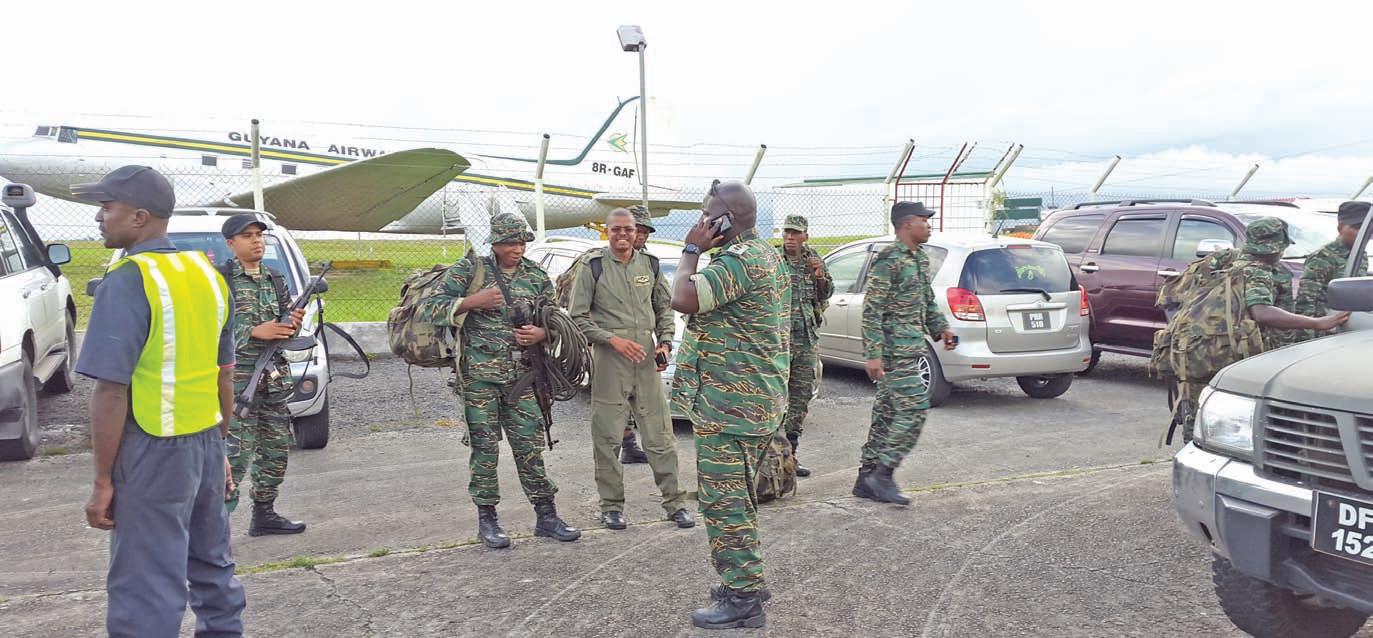
Officers of the Guyana Defence Force (GDF) Special Forces were on Sunday deployed in three aircraft to an area in Mahdia, Region Eight (Potaro-Siparuni) in an effort to locate a missing 8RGHE Highlander belonging to Air Service Limited (ASL).
On board the aircraft were Captain Nicky Persaud, 27, and Loader David Bisnauth, 51.
ASL’s Annette Arjune told this publication that the base had lost contact with the duo. She assured Guyana Times that a search has been launched for the missing men.
Transport Minister Robeson Benn said the Rescue Coordination Centre was activated while two sixwing aircraft and a helicopter were surveying the area in search of the men and plane.
Minister Benn reported that several organisations, including the Guyana Civil Aviation Authority (GCAA), the Guyana Defense Force (GDF) and representatives of ASL are involved in the search team.
Benn said he could not disclose the names of the missing men until the search has been completed. Police and other community members in Mahdia are also involved in the search, he said.
The Minister was also quoted in another section of the media that the plane went missing over Mahdia while shuttling fuel and other supplies to Karisparu, another gold-mining area.
He confirmed, according to the media reports
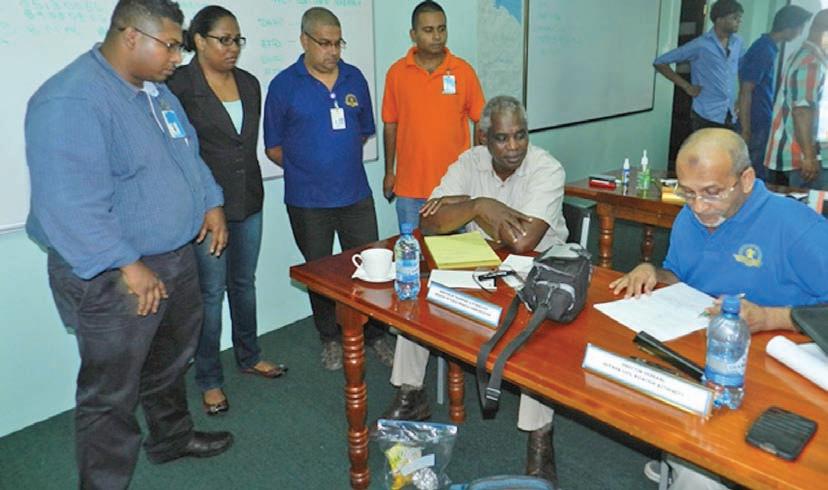
Transport Minister Robeson Benn is being briefed by Guyana Civil Aviation Authority Director Zulficar Mohamed in the presence of members of the Rescue Coordination Centre at the Timehri Control Tower
that an Emergency Locator Transmitter (ELT) signal was picked up by another aircraft that was travelling the Ogle-Lethem route around the same time.
That information, he said was being used to plot the probable location of the ASL craft. Benn, however, noted that there were issues of distance and height that had to be considered in calculating the precise location of the ELT signal.
Meanwhile, in an official statement, the GCAA said the Timehri Air Traffic Control lost communication around noon with the ASL Cessna Britten Norman Islander 8R-GHE that was operating on a flight between Mahdia and Karisparu, Region Eight. Captain Persaud and Loader 51 were onboard the twin-engine aircraft.
Routine cargo flight
The Cessna Britten Norman Islander took off from Mahdia at 15:42 UTC
(11:42 local time) on a routine local cargo flight and the last known position was Spot Tracker hit at 15:44 UTC (11:44 local time).
The aircraft was estimated to arrive at Karisparu at 16:00 UTC (12:00 local time), the GCAA statement added.
According to the GCAA, at 16:20h, the Timehri Air Traffic Control made contact with the aircraft operator to establish whether the aircraft landed before implementing a search and rescue operation.
“After no information was received, the Air Traffic Control commenced the ‘alert phase’ and the Rescue Coordination Centre at the Timehri Control Tower was activated,” the GCAA said.
In the meantime, two ASL Cessna 208 Caravan flying within the area were vectored to commence search for the missing plane.
A Piper Cherokee from Hinterland Aviation also joined the search efforts.
In excess of 400 children turned out at the North Ruimveldt Multilateral School last week as Real FM hosted its children’s party and drive.
The event saw children from all walks of life from various parts of the country in attendance. They were entertained by the North Ruimveldt Multilateral School Steel Pan Orchestra which played melodious Christmas songs, while they were treated with goodies.
Later in the day, Santa Clause showed up to meet and greet the children and assist in the sharing of gifts.
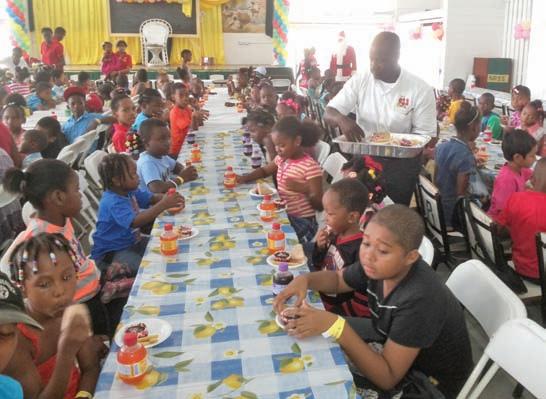
Chief Executive Officer of Real FM and organiser of the event, Maxwell Thom dubbed it a huge success and thanked the parents and guardians for sending out their children. Thom also expressed his gratitude to all the donors and volunteers who contributed to the initiative. He noted that it was a feeling of pride for his company to give back to the children of
underprivileged communities, especially at this time of the year. He added too that the party and drive, which was the first of its kind hosted by the station, is expected to be an annual event.
An ASL Bell Helicopter also departed Ogle Airport to join the search for the
will recommence search at sunrise today. The GCAA said another aircraft from ASL will depart early Monday morning to join the search efforts and take in the GCAA Coordinators and investigation team.
The GDF helicopter is also on standby to join the search and rescue operation. “To date, six hours and 40 minutes search time was logged by four fixed wing aircraft and two helicopters,” GCAA confirmed.
Previous crashes
Sunday’s disappearance of the ASL’s aircraft comes just about a year after the Pilot and the Cargo Loader of a Trans Guyana Airways died when their plane crashed in the densely forested, hilly Mazaruni, Region Seven (Cuyuni/

aircraft. Additionally, an ASL Caravan departed for Mahdia at 16:16h local time with a GDF Special Forces Unit to assist in the search and rescue operation.
The search continued until sunset and the two helicopters and one Cessna Caravan are at Mahdia and
Mazaruni) area.
The bodies of Pilot Blake Slater and Loader Dwayne Newton were found several days after a massive search. Slater was in control of the TGA 700 Cessna Caravan 8R-GHS at the time.
The aircraft, a single
engine 13-seater Cessna Caravan with registration number 8R-GHS had disappeared out of the sky about 10:56h on Saturday 20. The last contact with the Pilot of the aircraft was a “Mayday” (emergency call) which was transmitted to another aircraft within the area at the time. The aircraft had departed for Imbaimadai, Region Seven about 10:54h after overnighting at Olive Creek.
The plane was spotted the next day about 12:35h after an estimated 11 hours of searching by a GDF helicopter.
Then in March, later that month, four persons, including the Pilot, survived when a single-engine aircraft crashed after taking off at the decrepit Arau Airstrip, Kaikan, Region Seven.
Ivor Williams, 32, a gold miner of Bachelor’s Adventure, East Coast Demerara (ECD); Leon Bristol, a miner of Nabaclis, ECD; and Troy Daniels are the three passengers who were in the aircraft.
The Pilot was identified as Guyanese Bernard Singh. The GCAA in a statement had said that the injured passengers were employees of Singh and they were on their way to another region. Singh, the owner of the crashed aircraft, is also the owner of several mining camps in the interior. Also in September, a Cessna 206 aircraft belonging to the GDF crashed at Camp Jaguar after it ran off the airstrip.
Two months earlier in July, a Britten Norman Islander plane crashed while landing at the Monkey Mountain airstrip in the interior.
The body of an elderly man which was discovered early Saturday morning in Linden was partially buried behind his Wisroc, Linden home, relatives have confirmed.
Sixty-six-year-old Kingsley Joseph, a remigrant, was found with several chop wounds about his body behind his Third Phase, Wisroc Housing Scheme home. According to a release from the Police, the man was found in some bushes in the vicinity of his home, where he was living alone.
The Police stated that the man’s body bore “suspected marks of violence”. Joseph reportedly sustained chop wounds about his body including his hands, chest, and at the back of his head. However, the dead man’s cousin William Joseph told the Guyana Times that the man’s body was buried. He
related that on Saturday morning, Kingsley was supposed to go by his son and so his grandchild came to get him and saw evidence of foul play.
He said when the child got to the house the door was locked and there were what appeared to be spots of blood in front of the gate. The child returned home and informed her father who went to get the Police. The cousin continued that when the Police, along with the son, got to the scene, there was a trail of bloody footprints leading to the back of the house.
The Police followed the blood trail, which led them to a clump of bushes where Kingsley was buried in a shallow grave, his cousin disclosed. The man further revealed that the Police found a spade and other items, which they suspect the perpetrator used to dig the hole to bury
Kingsley.
The cousin opined that the man might have lost his life as a result of greed, as it seemed as it was a robbery that went wrong. He explained that Kingsley’s car was parked a distance away from the house and Police are working on the theory that he might have been attacked on his way home.
The man said that he last saw Kingsley about a week ago, noting that he was a quiet person and did not socialise much. The pensioner was reportedly attacked while trying to enter his yard. After killing the man, the perpetrator(s) dragged his body to the back of the yard where they buried him.
William told this newspaper that following intense investigations, Police have arrested a young man, who was assisting with further investigations.
By Vahnu Manikchand
Stakeholders are outraged at the number of road deaths over the Christmas holidays and are urging tougher sanctions to stop the carnage that has killed over 136 people for the year so far.
In November, National Road Safety Month was observed and the Guyana National Road Safety Council (GNRSC) had held several activities during the month to raise awareness as well as to get drivers and pedestrians to be more responsible on the country’s roadways. A recent statistics update by the Guyana Police Force revealed a staggering 32 per cent increase of road fatalities over the January-November period, that is, 130 fatalities from 121 road accidents were recorded. This increase was compared to 100 road fatalities from 90 accidents that were recorded during the same period last year.
GNRSC Chairman Dennis Pompey voiced his concerns over this alarming development despite the efforts made by his agency. Speaking with the Guyana Times, Pompey stated that all the work they have done during Road Safety Month and even before have gone in, because persons continue to use the roadways indiscriminately.
He pointed out that road users were becoming more undisciplined, refusing to adhere to the relevant traffic laws in place. Referring to the many accidents that occurred during the Christmas week, the Chairman highlighted that drunk driving was a big concern for authorities, since it was identified as the main cause of most road accidents and fatalities.
Pompey believes that in order to change this frightening culture, there needs to be more rigorous
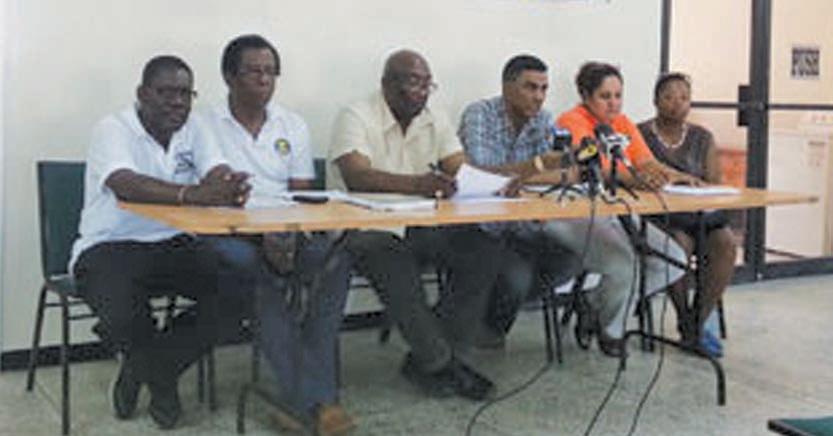
efforts by the Police to restrict delinquent drivers on the roadways. He said that more work needed to be done by the Police in enforcing the laws, stating that whatever they were doing presently was not working. “We have too small a population to have so many deaths on our roadways ... the Police ... need to be more stringent in enforcing the laws,” he stressed.
Demerit system
The GNRSC Chairman added that the legal system also needed to be examined. He referred to the fact that the Motor Vehicles and Road Traffic (Amendment) Bill 2014 was unanimously passed in the National Assembly back in May last, paving the way for the implementation of the Demerit Points System. This amendment allows the court to, in addition to any punishment for the offence, implement the Demerit Points System aimed at reducing the occurrences of road accidents and road fatalities by disqualifying reckless drivers for specified periods.
If a person accumulates 10 or more demerit points, but less than 16, the period of disqualification from holding a driver’s licence is set at six months. If that person acquires 12 demerit points or more over a 12-month period, the period of disqualification then
moves to one year. But if a person acquires a total of six or more but less than 10 demerit points due to traffic offences committed, the Bill requires the Licensing Authority notify the driver in writing.
Since the passage of the Bill, there has been no word on whether this new law was implemented and when contacted to confirm this, Home Affairs Minister Clement Rohee refused to answer any questions at the time. However, a senior officer attached to the Police Force’s Traffic Department told this newspaper that as far as he knows, the law has not been implemented.
Pompey went on to underscore the need for more patrols on the roadways, in particular, at locations where drivers tend to be more undisciplined such as night spots or alcohol outlets and when drivers tend to use the road indiscriminately.
Two weeks ago, acting Police Commissioner Seelall Persaud, during an address, acknowledged that traffic was one of the areas that the Force was unable to manage this year. He too recognised that more needed to done with regard to the education and enforcement aspects.
The acting Commissioner explained that Police have limited resources such as speed
Ranks of the Guyana Police Force have arrested three persons in relation to separate robberies committed last week at Port Mourant, Region Six (East BerbiceCorentyne) after a stolen cellular phone was discovered in the possession of one of them.
In a press release from Public Relations and Press Officer Ivelaw Whittaker,
it was disclosed that two robberies were committed on Tuesday at Tain and Anchorville, Port Mourant.
It was during the course of investigating these incidents that the Police made the arrests. According to Whittaker, the three men were arrested at Port Mourant and several suspicious items were also found in
their possession during the search.
The Police recovered two improvised shotguns, a knife, a toque and a cellular phone.
Further investigations conducted revealed that the cellphone was stolen during one of the robberies. The men were taken into Police custody and are assisting with investigations.
guns and breathalysers, but they will have to find means of reversing this situation, since speeding and drunk driving have been identified as the two main causes of fatal accidents.
“We plan to do some high-impact operations: bring all those equipment into one area and target heavy drivers,” Persaud outlined. He stressed that this would be done at various times and locations where drivers tend to be driving under the influence of alcohol or speeding.
With drunk driving named the main cause of road accidents, the GNRSC Chairman posited that alcohol was not the only sub-
stance that persons got high on. Recently, a much more frightening phenomenon has emerged – something known as “high” driving – driving under the influence of psychoactive drugs such as tobacco, cannabis, amphetamines, ecstasy, cocaine, and heroin.
Pompey outlined that there needed to be a system in place which the Police can use to detect whether drivers are under the influence of such drugs.
“You can’t blame alcohol alone and the Police do not have the capacity of doing such tests on the roads. Like they use the breathalysers to test alcohol levels, they need something that can do the same for drugs use,” he said.
The year ahead
The Chairman remarked that in January, the GNRSC will be hosting discussions on its action plan for the year 2015 and how it can more effectively carry out its mandate. However, Pompey stressed that road safety awareness was not only the responsibility of the Council but other stakeholders and agencies needed to get onboard and play their part.
He went on to express
concerns about persons continuing to pay corrupt officials for their drivers’ licences, saying that this would not be such a major issue if the issuer is changed. Pompey recommended that a committee be formed with representatives from various agencies to issue licences. This, he noted, will prove to be a more effective system.
Pompey disclosed that this frightening trend of increasing road accidents and fatalities is more worrisome, given the fact that Guyana was a signatory of the United Nations Decade of Action 2010-2020, which is aimed at reducing road accidents by 50 per cent. The GNRSC Chairman noted that Guyana was far from achieving this.
“We are nowhere close to that; instead we are increasing our figures and we need to change this,” he warned. Pompey explained that at the beginning of 2014, Guyana’s accident rate was low, but not significantly or anywhere close to a 50 per cent reduction. It was a decrease of between 25 and 30 per cent; however, given the alarming increases recorded throughout the year, the rate is expected to drop.
AUnited States-based publication has named Calypsonian, Slinger Francisco, popularly known as The Mighty Sparrow, as its “Person of the Year.”
“Any person, in any part of the world, regardless to sex, age and vocation, can emulate the virtues The Mighty Sparrow exemplified during 2014,” said Herman Hall, the Grenadian-born editor, publisher and founder of the Brooklyn, New York-based Everybody’s magazine.
“For those reasons, we unabashedly proclaim our readers’ selection of The Mighty Sparrow as the ‘2014 Person of the Year’,” he added. Hall said Sparrow was “overwhelmingly” selected by its readers and social media friends from among “many regional leaders and people of Caribbean heritage in the Diaspora”.
He said they included Tiffany Ford, of St. LucianGrenadian heritage, elected into municipal government in Toronto, Canada; Rodneyse Bichotte, the first Haitian-American elected to the New York State Assembly; Barbados Leader of the Opposition Mia
Ottley; the 2008 and 2014 Formula One Grand Prix World Champion, Lewis Hamilton of the UK, who is of Grenadian heritage; outgoing US Attorney-General Eric Holder, of Barbadian heritage; and Antigua and Barbuda’s newly elected Prime Minister Gaston Browne.
“Of all email messages received from Toronto, UK (United Kingdom), Jamaica, Guyana, Boston (Massachusetts) and other places, one name kept appearing often – The Mighty Sparrow,” Hall said. Hall said this “indomitable spirit has been the defining feature of Sparrow’s life work, as he continues demonstrat-
ing sheer grit and an ability, ‘inspired by God’ to, ‘survive through pain, sorrow and tears,’ rendered in one of his hits, ‘Survival’. “Sparrow’s timeless message and his health challenges testify to man’s will to survive,” he added.
The Mighty Sparrow, whose roots are in Gran Roi, a rural fishing village in Grenada, was born there to a poor working class family. The family migrated to Sparrow’s adopted homeland, Trinidad and Tobago, when he was one year old. At 20, Sparrow emerged as the leading calypsonian in Trinidad and Tobago with his record-breaking hit, “Jean and Dinah”. (CMC)
Cuba’s most prominent dissidents say they have been kept in the dark by American officials over a list of 53 political prisoners who will be released from jail as part of a deal to end decades of hostility between the United States and Cuba.
For years, dissident leaders have told the US which opponents of Cuba’s communist Government were being jailed or harassed, but they say they were not consulted when the list of prisoners to be freed was drawn up or even told who is on it.
The lack of information has stoked concern and frustration among the dissidents, who worry that the secret list is flawed and that genuine political prisoners who should be on it will be left to languish.
The International Monetary Fund (IMF) has advised the Jamaican Government to enact another wage restraint programme in order to meet the country’s planned 2015/16 budgetary targets.
“A key component to achieving the fiscal targets will be securing a new multi-year wage agreement, and the Government of Jamaica is now actively engaged with employee representatives to reach an agreement that facilitates achievement of the targeted wage bill of nine per cent of [Gross Domestic Product] GDP,” said a statement published on the IMF website on December 23 by Serge Dupont, IMF Executive Director for Jamaica, and Trevor Lessard, Alternate Executive Director.
The statement was one of three adjoining documents
which included the Sixth Review of Jamaica. The IMF added that budget revenues as a share of GDP are expected to decline in 2015/16 and that keeping wages lower would aid in balancing the books.
Specifically, Government’s bill for wages and salaries is set to dip towards J$158 billion for the next fiscal year ending March 2016 compared to J$160.8 billion for this fiscal year, according to the IMF document.
“The overall tax base is expected to be eroded by a lower Government wage bill and weaker imports (including due to lower oil prices) and, to a lesser extent, declining Government interest payments, all of which are important contributors to tax revenue,” stated the document. (Excerpt from Jamaica Observer)
“We’re concerned because we don’t agree with
the silence, because we have a right to know who they are. Who are they?” said Berta Soler, leader of the Ladies in White dissident group, which marches in Havana on Sundays to demand the release of prisoners.
“There are not just 53 political prisoners, there are more, and we are concerned that the US list might have common criminals on it,” she told Reuters in Havana.
US officials have so far been tight-lipped about how the list of 53 was assembled and who was consulted inside Cuba. It also is not clear if some prisoners were kept off the list because the Cuban Government refused to release them. (Excerpt from Reuters)
Antigua: New prison boss offers farmers free labour of
The new prison boss says he is offering farmers the free labour of prisoners to help them reduce costs and lower the price of food nationwide.
Superintendent Albert Wade is five weeks on the job. He says, “When they have reaping time or they have any other problems whatsoever on their farm, that they can approach the prison and we provide them with the labour which will cut down on their labour costs, which hopefully will allow them to reduce their produce also on the market, which ultimately will help the entire nation.
Wade adds his priority is getting the institution to be self-sustaining by improving the prison farm. He says this will free up funds to be used to improve other aspects of
the facility. “The prison farm is my number one priority. I believe that Her Majesty’s Prison can be self-sufficient. We have 15 acres of land up at the diamond’s area and only 6 or 7 acres are under cultivation. So once the prison farm is up to 90 per cent that will greatly reduce the Government’s food bill at the prison…” says Wade.
The superintendent says they also plan to sell surplus produce. Wade says he plans to put prisoners to work. “Approximately 80 per cent of inmates who are serving time, they are not working. They are not being employed. They sit around in the prison idling. The devil finds work for idle hands and so I have already increased the amount of men going to the prison farm ...”
(Excerpt from Antigua Observer)
New York pays tribute to the “Calypso Queen of the World”
Though she was barely able to walk because of gout, Tobago-born singer e was still able to woo her audience, as Brooklyn paid tribute to the Tobagoborn singer who “broke the glass ceiling” in the calypso genre.
“This woman, sometimes I sit and wonder what got that woman to sing calypso in the 1950s and survive,” said popular Grenadianborn radio personality Harold Pysadee, one of the Masters of Ceremonies at the grand tribute in honour of Calypso Rose, 74, renowned as the “Calypso Queen of the World”.
“Every woman you see singing calypso today is because of Calypso Rose,” added Pysadee at the event organised by the Brooklynbased Dee Vee International

Productions, headed by the Grenadian-born entertainment producer Derek Ventour.
“Calypso Rose has set the pace,” said Pysadee making reference to Rose’s attainment of an honorary doc-
torate from the University of the West Indies (UWI).
“[Calypso] Rose is a Caribbean Lady first of all.
Bronx-based Gus White, a former announcer with the now defunct Montserratbased Radio Antilles, said he
was “honoured to be part of this function” that honoured Calypso Rose.
“Dr McArtha Lewis, Calypso Rose, for what you have done, I’m truly grateful,” he said, while the Trinidad and Tobagoborn radio announcer Dave Elcock also gave his “heartfelt congratulations to our beloved McArtha Lewis, the indomitable Calypso Rose”.
Elcok said that Calypso Rose has won “countless” fans and over 23 awards, over the years, for her catchy songs, including the evergreen, signature “Fire, Fire”.
New York City Mayor Bill deBlasio said the tribute was “a wonderful opportunity to celebrate one of the Caribbean’s most creative and trailblazing artists. (Excerpt from CMC)
Mexico on Sunday called for an overhaul of the United Nations Security Council, envisaging more member countries across a wider geographical swathe, as the Government steps up efforts to raise its profile on the global stage.
Tasked with maintaining global peace, the UN Security Council meets when war looms and cooperates in efforts to solve international disputes, with measures ranging from sanctions to military action.
The Council has five permanent members – China, France, Russia, Britain and the United States – and 10 temporary members elected by the UN General Assembly for two-year terms.
In a statement, Mexico’s foreign Ministry said it wanted the 10 temporary members to grow to 26, with six members coming from Africa, five from Asia, four from Latin America and
the Caribbean, five from both Western and Eastern Europe, and one from small developing nations.
However, Mexico said it was against changing the five permanent members of the Council.
“The final aim of this process would be to have a more representative Council, that is more efficient, more transparent and that would be accountable ... to the UN General Assembly,” the Foreign Ministry Office statement said.
The proposal comes just a few months after Mexico said it was ready to take part in UN peace-keeping missions, after years of staying out of the world’s conflicts.
Mexico has traditionally pursued a low-key foreign policy. But since taking office in 2012, Mexican President Enrique Pena Nieto has sought to raise Mexico’s international standing. (Excerpt from Reuters)
Mexico calls for larger, more diverse UN Security Council PP will be back for a second term – Minister
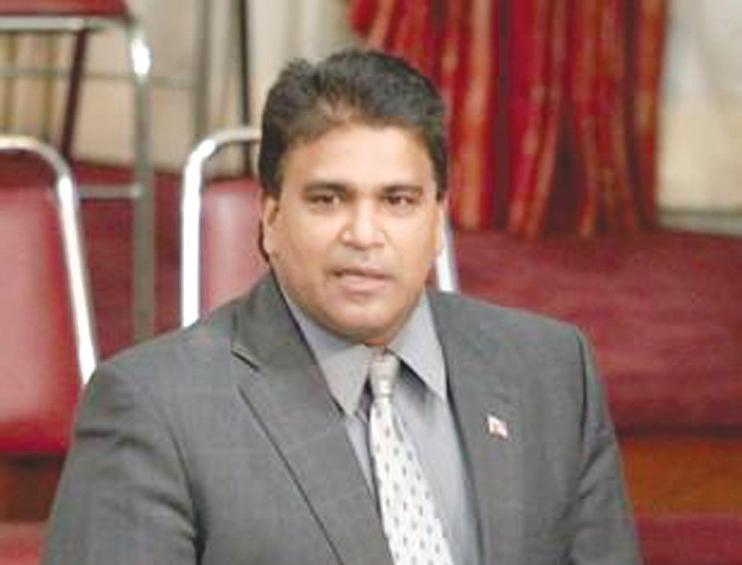
In spite of the several missteps and other negative aspects of the People’s Partnership Government for the four years so far, Housing and Urban Development Minister, Dr Roodal Moonilal is confident the party will be returned for a second term.
Moonilal, who indicated they were very heartened by the views of the people and the national community on the matter, said the party plans to initiate a very strong campaign for the 2015 general election soon.
He was critical of what he termed the intellectual dishonesty of the Opposition People’s National Movement, and claimed that the PNM was bent on destabilising the Government from day one. On allegations that some people were falsely collecting money on
the pretext of representing the Housing Development Corporation, he stressed he had zero tolerance for anyone carrying out such illegal activities.
When asked why the Opposition PNM has been allowed to take the head start in the 2015 general election stakes, he said:
“The PP political directorate has been extremely busy with the management of the Government and the affairs of the country and from day one, the PNM has politicised several national issues, they are campaigning and that is all they have to do.
“Soon, of course, we will initiate a very strong campaign and we are very heartened by the views of the people and the national community that we could be returned for a second term.”
(Excerpt from Trinidad Guardian)
AirAsia boss Tony Fernandes says he is “devastated” that a plane carrying 162 people from Indonesia to Singapore has gone missing.
AirAsia Indonesia flight QZ8501, an Airbus A320200, disappeared over the Java Sea an hour into its flight at 06:24 local time (23:24 GMT Saturday).
Bad weather was reported in the area, but no distress call was made and no wreckage has been sighted.
The search operation was halted for the night and resumed at about 23:00 GMT.

The plane had left Surabaya in eastern Java at 05:35 local time (22:35 GMT Saturday) and was due to arrive in Singapore at 08:30 (00:30 GMT).
Shocked relatives gathered at both airports, in Singapore and Surabaya, poring over the passenger manifests.
Fernandes, AirAsia’s chief executive, flew to
Surabaya and later told a press briefing: “We are very devastated by what’s happened, it’s unbelievable.
“Our concern right now is for the relatives and for the next of kin – there is nothing more important to us,
for our crew’s family, and for the passengers’ families.
“We hope that the aircraft is found quickly, and we can find out the cause of what has happened.”
An air and sea search was immediately launched, with vessels and aircraft from Indonesia, Singapore and Malaysia scouring an area near Belitung Island, but nothing was found before nightfall.
The Indonesian search and rescue force was scheduled to resume at dawn with 12 ships, three helicopters and five aircraft. There will also be two C-130 planes –one each from Malaysia and Singapore – and three ships from those nations. (Excerpt from BBC News)
At least one person has been killed and hundreds more remain trapped after an Italian ferry with almost 500 people on board caught fire off the Greek island of Corfu.
The Italian Navy said 190 of the 478 people on the ferry, sailing from the Greek port of Patras to Ancona in Italy, had been evacuated by late Sunday night. Most were airlifted by helicopter
to other merchant vessels sailing nearby.
“It will be a very difficult night. A night in which we hope we will be able to rescue all on board,” Greek Merchant Marine Minister Miltiadis Varvitsiotis said in Athens.
The Norman Atlantic, carrying 222 vehicles, 422 passengers and about 56 crew, was 44 nautical miles northwest of Corfu when it
sent a distress signal after a fire started on a car deck, Greek coast guard officials said.
The evacuation was being carried out in difficult conditions, with Italian and Greek military and coast guard rescue crews operating in gale-force winds and massive waves.
Italy and Greece sent Navy and Coast Guard vessels and helicopters to
Acrude bomb exploded outside a busy restaurant in India’s hightech capital of Bengaluru on Sunday, killing a woman and wounding a man, Police said.
The low-intensity blast occurred in the centre of Bengaluru packed with Sunday evening crowds, prompting a security alert in other Indian cities.
Police said the improvised explosive device had been placed between two flower-pots near the Coconut Grove restaurant.
Police Commissioner MN Reddy said nobody had yet claimed responsibility for the blast.
“Essentially, it was aimed at causing panic and fear,” Reddy told reporters.
He said a 38-year-old woman who was walking past the restaurant suffered shrapnel injuries to her head and neck and died in hospital shortly after the explosion. A man was wounded, but his condition was stable.
Soon after the blast, Police were ordered on high-
The Islamic State of Iraq and the Levant (ISIL) has killed 120 of its own members, most of them foreign fighters trying to return home, during the past six months, a Syrian monitoring group has said.
The Syrian Observatory for Human Rights said on Sunday that the group also killed 1175 civilians, including eight women and four children, in the same period.
er alert in Mumbai, Delhi and Pune, security officials said in New Delhi.
Bengaluru, which was formerly known as Bangalore, has been on a general alert since Police picked up an engineer for allegedly running a pro-Islamic State Twitter account that had tens of thousands of followers worldwide.
Following the arrest of Mehdi Masoor Biswas, state Police had received threats that there would be retaliation. (Excerpt from Reuters)
the extensive rescue operation, while nearby merchant ships lined up to form a barrier to protect the ferry from towering waves.
The Italian Coast Guard, which was coordinating the rescue operation, said flames visible from the outside of the ship had been extinguished about 16 hours after the blaze began. (Excerpt from Al Jazeera)
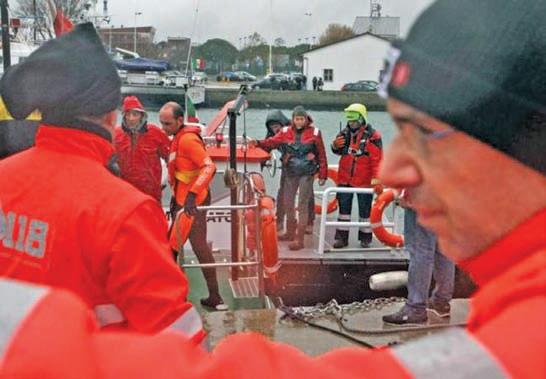
Two people have drowned and some others were missing at sea after two merchant ships collided in rough seas off the Italian Adriatic coast, the Italian Coast Guard has said.
A Turkish ship sank after colliding with a vessel carrying a Belize flag in poor visibility about a mile from the Italian Adriatic port of Ravenna, a coastguard official said on Sunday.
have saved four of the 11 crew members aboard the Turkish ship and have located and are trying to assist four others, the coastguard said. He said the cause of the collision had not yet been determined, and that the Coast Guard was concentrating on rescue efforts. Strong winds and choppy seas were complicating the search mission. (Al Jazeera)
NATO has formally ended its 13-year combat mission in Afghanistan – heralding the start of a new phase of support for local Afghan troops.
Commanders lowered the flag during a ceremony in Kabul – raising the flag of the new mission named Resolute Support.
“We have lifted the Afghan people out of the darkness of despair and given them hope for the future,” mission commander General John Campbell said.
No outright winner in Croatia’s presidential vote, run-off on Jan 11
NATO’s Afghan deployment began after the 9/11 attacks against the US.
From January 1, the alliance’s role will shift to a mainly training and support mission for the Afghan army.
Sunday’s ceremony was low-key – held inside a gymnasium at the alliance headquarters away from the public.
A military band played as the flag of the International Security and Assistance Force (ISAF) was lowered in
the presence of senior military personnel from both sides.
Unfurling the new flag, General Campbell said the mission “will serve as the bedrock of an enduring partnership” between NATO and Afghanistan.
“We honour coalition and Afghan fallen in this mighty struggle, those who paid the price for Afghanistan’s freedom,” he said, adding: “The road before us remains challenging but we will triumph.” (Excerpt from BBC News)
IHe said that 116 foreign fighters, who had joined Islamic State but later wanted to return home, were executed in the Syrian provinces of Deir Al-Zor, Raqqa and Hassakeh since November. Four other Islamic State fighters were killed on other charges, Abdulrahman said.
Abdulrahman, who gathers information from all sides of the Syrian conflict, said that the group had also executed 502 soldiers fighting for President Bashar al-Assad and 81 anti-Assad fighters.
The figures cannot independently be verified. (Excerpt from Al Jazeera)
Rami Abdulrahman, the head of the Syrian monitoring group, told Reuters news agency that 930 of the civilians were members of the Sheitaat, a Sunni Muslim tribe from eastern Syria that fought Islamic State for control of two oilfields in August.
vo Josipovic faces a tight run-off next month to try to win a second five-year term as Croatia’s President after failing to secure a majority from voters frustrated by the country’s economic malaise.
With 98 per cent of Sunday’s ballot papers counted in the European Union’s newest member, Josipovic was on top with 38.5 per cent, followed closely by Kolinda GrabarKitarovic from the HDZ, the main conservative opposition, on 37 per cent.
Josipovic is supported by the ruling Social Democrats (SDP), whose popularity has plunged since they took power in 2011 because of the
Government’s failure to halt six years of recession.
The former Yugoslav republic, which joined the EU in July last year, is enduring unemployment running at 19 per cent and no economic growth is expected in 2015. It remains stifled by high taxes and inefficient administration.
“I still think Josipovic can win in the second round…,” said Zeljko Trkanjec, a political analyst and editor at Jutarnji List daily.
“Given that the HDZ is very likely to win the parliamentary election (in late 2015), Josipovic would probably be a better choice, as some kind of a counterpoint to the HDZ,” he said. (Excerpt from Reuters)
The morning scene is increasingly routine for Kenyans. When it’s time to start the day, the power is already out. Somewhere nearby, the shell of a wrecked electrical transformer lies on its side underneath the pole where it had been fixed seven metres off the ground.
The culprit is an unusual one: A vandal who is selling the toxic oil, drawn from the transformer, to chefs who use it for frying food in roadside stalls. Five litres of the viscous, PCB-laden liquid sells for $60. It looks like cooking oil, but lasts much longer, users say.
Kenyans’ appetite for fried food and cheap frying oil is stalling the coun-
try’s urgent efforts to build a modern electrical grid, even as it sows the seeds of a public health crisis, experts say. And with utility companies reporting similar vandalism across East Africa and as far away as South Africa and Nigeria, the crime spree is becoming another thorn in ambitious plans to electrify Africa. Sudden blackouts darken businesses and communities across Africa. In a continent where 70 per cent of Africans are not yet connected to grid electricity, the World Bank says even those manufacturers who do have a connection lose 56 days a year, on average, to blackouts. (Excerpt from Al Jazeera)



Gabby Parsaram – Handin-Hand employee
“My resolution in 2015 is to complete the book I’ve started writing and do some more poetry because I mean Guyanese people need to start embracing the arts... because we need more of the arts in Guyana and my books will be to encourage that and I’d really like to get that off of the checklist of my resolutions, because I’ve started it but I never finished it so 2015 would be a great year for that.”
Shellon Grey – Vendor:
“I would like really to do something to make an impact in this country as a citizen, that is my biggest drive and goal. I don’t know where to turn, but I want to do something for the New Year, for 2015, for my fellow citizens in Guyana, so hopefully this year I get down to do something for this place and get working and to do something better for this place. I love this country, there’s no place better than Guyana.”
Dhanesh Prashad – Pandit
“Well, all I want to do is become a better person. I think everyone’s resolution



Denise McKenzie – Single Mother
Jasmine Nesha –Single Mother
“Me ah a Jehovah Witness so I can’t do anything, we can’t celebrate New Year, but I want to see a better country. I would like to see the whole country get better.”
“I want to change my entire life around for the New Year. I want to get a better job, so I can provide more for my children. I also want to spend more time with my children. I want to be a better mother to them. I want to own my own home and I want to basically have a better life, mostly so I can set a better future for my children. They are the love of my life and I want to be able to give them everything they will ever need. So for the New Year, I will be aiming for that, to be a better mother and a better person.”
Naomi Bevaun – Office of the President staffer
“Well, in 2015, well, there are so many things I want to accomplish, but I’d set my resolutions to be to get more active, work out more often, and eat healthier and maybe focus on developing my linguistic abilities in the foreign languages, particularly French. I also would like to become a better person, you know, reflect on 2014, see where I was wrong and aim to improve that.”
Jason Brasse – Student
“My New Year’s Resolution would be to spend more time at the gym: I have to build them muscles and be fit. Also, I want to focus more on my career and further my education, spend less time at the bar. I plan to spend more time with my friends and family and to be more trustworthy and helpful and be true to myself. Oh, I also want to be more adventurous and travel more. That’s basically it.”



Savita Ramkumar – Housewife
“I plan to get together with my family and friends and enjoy the New Year and also I’d like to see a better country with people living and working together as one.”
Cadeem Niles – Student
“My New Year Resolution probably would be I’d just continue to support more to the orphanage and continue to work on myself to be a better individual in aspects of bettering myself in education and start back gym.”
“My New Year’s Resolution would be to naturally improve myself, be a better person, make amends for all the wrongs I did in the previous year, like if I hurt anyone or neglected someone, I would reach out to them. I would be more appreciative of my loved ones and just strive for a better life; not that in 2014 my life was terrible but you should always aim higher.”
“My New Year resolution is to become a husband, because I’m getting married in May so I want to be a good husband and to be honest to you, I’m hoping to finish off college this year and I’m just hoping that everything works out.”

rice, wheat farming must become more
ereal-based farming systems must join the transition to sustainable agriculture if they are to meet unprecedented demand for maize, rice and wheat. That was one of the key messages to emerge from a meeting held by the Food and Agriculture Organisation (FAO) last week and attended by leading crop production specialists.
FAO estimates that over the next 35 years farmers will need to increase the annual production of maize, rice and wheat to 3 billion tonnes, or half a billion tonnes more than 2013’s record combined harvests. They will need to do that with less water, fossil fuel and agrochemicals, on farmland that has been widely degraded by decades of intensive crop production, and
in the face of droughts, new pest and disease threats, and extreme weather events provoked by climate change.
Experts at the meeting said that that challenge could only be met with ecofriendly agriculture that achieves higher productivity while conserving natural resources, adapting to climate change, and delivering economic benefits to the world’s 500 million smallscale family farms. The meeting focused on maize, rice and wheat because those three crops are fundamental to world food security, providing 50 percent of humanity’s dietary energy supply. Cereals are also increasingly vulnerable: climate trends since 1980 have reduced the annual global maize harvest by an estimated 23 million tonnes and the wheat harvest by
33 million tonnes. Green Revolution cereal yield increases, once averaging a spectacular 3 percent a year, have fallen to around 1 percent since 2000.
In Asia, the degradation of soils and the buildup of toxins in intensive paddy systems have raised concerns that the slowdown in yield growth reflects a deteriorating crop-growing environment. The FAO meeting agreed that agriculture can no longer rely on input-intensive agriculture to increase crop production. Improved varieties of maize, rice and wheat must go hand-in-hand with what FAO calls “Save and Grow” farming systems that keep soil healthy, integrate crop, tree and animal production, use water far more efficiently, and protect crops with integrated pest management.
Examples of ecosystembased farming
Papers presented at the meeting provided an inventory of proven ecosystembased farming technologies and practices, including: In Viet Nam, more than a million small-scale farmers have adopted the System of Rice Intensification, which produces high yields using less fertilizer, water and seed than conventional irrigated rice; In China, planting genetically diverse rice varieties in the same field has cut fungal disease incidence so significantly, compared to monocropped rice, that many farmers were able to stop spraying fungicide ; In southern India, site-specific nutrient management, which matches ni-
Tonya Williams –Cosmetologist
“Well, I hope the New Year gon be better than this year. I hope it filled with lots of joy and love: everybody must live as one and the crime rate must drop and wages and so must be in control.”
Rovindra Persaud –University Student
“I want to be able to dead-lift 300lbs, to pay more attention in and out of classes, to learn more martial arts, to learn to swim properly and not punk out after five minutes, to be an all-rounded and more peaceful person, to get a licence and lots more.”
trogen inputs to plants’ real needs, has reduced fertilizer applications and costs, while increasing wheat yields by 40 percent ; The elimination of soil tillage on wheat land in central Morocco cut water runoff volume by 30 percent and sediment loss by 70 percent, leading to increased water holding capacity that boosts crop productivity in drier seasons.
In Zimbabwe, conservation agriculture has helped smallholder farmers produce up to eight times more maize per hectare than the national average; Farmers in Zambia grow an acacia tree, Faidherbia albida, near maize fields and use its nitrogen-rich leaves as natural fertilizer and a protective mulch during the rainy season, resulting in a threefold increase in yields.
The challenge facing pol-
icymakers is to accelerate the adoption of “Save and Grow” farming systems. One clear need flagged by the meeting was greater support to smallholder farmers in adapting ecosystembased farming practices to local conditions, which will require the revision of national policies, considerable upgrading of extension services and approaches that reduce the transaction costs of knowledge sharing, such as farmers’ field schools. The FAO forum was attended by 50 crop production specialists from AfricaRice, CIMMYT, FAO, ICARDA, IWMI, IRRI, and agricultural development institutions in Asia and Latin America. Their findings will be presented in a policymakers’ guide, Save and Grow: Maize, rice and wheat to be published in 2015.
Countries of the Gulf Cooperation Council (GCC) will have to adjust the incentives of workers and firms to encourage them to work and produce in the non-oil tradable sector if these economies are to succeed in diversifying their economies, a new International Monetary Fundy (IMF) survey has found.
With oil prices declining by 40 percent since June, the importance of diversification is once again highlighted. While governments in the region have made some progress toward economic diversification in recent years, much remains to be done. The strategies pursued thus far have yielded mixed results, according to the report.
To make significant progress toward reducing their reliance on oil, GCC governments need to change the incentive structure of the economy to encourage individuals to work in the private sector and induce firms to look beyond domestic markets for new export opportunities, the authors say.
New growth model needed
The GCC growth model—which relies on oil as the main source of export and fiscal revenues — has delivered strong economic and social outcomes. Over the years, GCC governments have increased public sector employment and spending on infrastructure, health, and education. This has helped raise standards of living and support private sector activity, particularly in such sectors as construction, trade and retail, transport, and restaurants.
But the current growth model has weakness, the report points out. Greater diversification would reduce exposure to volatility in the
global oil market, help create private sector jobs, and establish the non-oil economy that will be needed in the future when the oil revenues dry up. Why have the diversification policies pursued to date by GCC governments fallen short of their goal?
The paper examines the experience of other oil-exporting countries and draws possible lessons for the GCC.
Case studies in success
Historical experience offers few examples of countries that have been able to successfully diversify away from oil, particularly when their oil production horizon is still long.
A number of obstacles often stand in the way of diversification, such as the economic volatility that is induced by the reliance on oil revenues or the corroding effect that oil revenues have on governance and institutions.
Economies rich in oil also often see a decline in competitiveness of other economic sectors caused by the appreciation of the real exchange rate as resource revenues enter an economy, a phenomenon known as Dutch disease. Success or failure appears to depend on the implementation of appropriate policies ahead of the fall in oil revenues.
Malaysia, Indonesia, and Mexico offer perhaps the best examples of countries that have been able to diversify away from oil, while Chile has had some success in diversification away from copper.
While each of these four countries followed its own path, a number of common themes are evident. First, diversification took a long time and took off only when oil revenues began to dwindle.
For example, Malaysia started its export-oriented strat-

egy in the early 1970s and experienced rapid growth in export sophistication in the 1980s–90s. It took more than 20 years to reach a level of sophistication comparable to some advanced economies.
Second, successful countries focused on putting in place the incentives to encourage firms to develop export markets and to support workers in acquiring the skills and education to get jobs in these new expanding areas.
In addition to focusing on creating a stable economic environment and a favourable climate for doing business, this entailed: Making investments in high-productivity industrial clusters, even when there was no prior comparative advantage.
The early experience of Malaysia, Mexico, and Indonesia showed that import substitution or reliance on labour intensive manufacturing led to inefficient firms with limited scope for income and productivity gains. Changing their approach and despite starting from a low-technology base, these countries increased their export sophistication by focusing on specific manufacturing clusters that led to an upgrading of technology. Chile used export subsidies
and public-private partnerships to establish new firms and upgrade technical skills in specific sectors. Additionally, the IMF said creating networks of local suppliers around existing export industries can expand the employment potential of a given sector, although care should be taken that the local source sectors are efficient and do not lead to a loss in competitiveness. Malaysia entered downstream and upstream activities based on rubber and palm oil to build linkages with the rest of the economy and upgrade research capabilities and technology.
Mexico developed linkages around the automobile sector. In addition, the survey highlighted that in the 1980s, Indonesia attracted foreign capital through the creation of free trade zones, provision of tax incentives, and the easing of tariff restrictions and non-tariff barriers.
Similar policies were implemented in Malaysia and Mexico. In Mexico, accession to the North American Free Trade Agreement played an important role in attracting foreign direct investment that facilitated the development of the automobile sector.
These one-year projects commenced in April, with the IBSA providing financing to the tune of US $1.9M while the Government of Guyana contributed US $475,000. The project is being implemented by the Ministry of Local Government with support from the United Nations Development Programme (UNDP).
Work was carried out on the tarmac at Annandale, East Coast Demerara at the cost of $14.4M; a sanitary block at Annandale was built at the cost of $2.2M and the New Amsterdam Market was extended at the cost of $3.1M. Also the Grove/Diamond market tarmac was fenced and two garbage disposal trucks and 30, 1100M bins along with two excavators were procured.
Under the Caribbean Local Economic
Development (CARILED) several projects were completed including the Canals’ Polder green initiative, and Tapakuma Women’s Agricultural Diversification project among many others. In addition, 29 persons were also trained in local economic development under this project. Emphasis was placed on women in business and accessing micro financing.
The Youth Empowerment, Inclusion and Reconciliation Project (YEIRP), executed by the Local Government Ministry is funded by the UNDP. This project addresses challenges of inadequate youth participation in governance, and the persistent social challenges which deprive youths of fulfillment of their rights. Under this project, commuters from Supenaam benefited from the training
and they have thus far submitted a project proposal for a waiting area in the region.
Further, several ICT hubs were constructed in various communities under this project. Other areas of focus include the rehabilitation of the children’s ward at the West Demerara Regional Hospital, and the Literacy enhancement projects.
During the course of the year, the Ministry conducted a series of institutional strengthening and capacity building training workshops. These educational activities sought to strengthen the work force of the Ministry and all of its connecting agencies.
A series of Monitoring and Evaluation workshops were held to enhance the skills of the persons working in this line of work while Regional Health Officers
Inner beauty can be defined in many ways.
However, one way to define it is that which we experience through our own character and not external appearance.
Basically it’s the true beauty of in all of us that goes way beyond our physical appearance.
Narine Dat Sookram
Surely it can get very confusing, because many people don’t buy into this easily. In some people’s minds, they really believe that people say this so it makes them feel better about themselves. And on one hand, it does not seem to make much sense too, because it cannot be seen.
The thing that really makes a person attractive is not his/ her physical appearance, but more so it’s a person’s inner beauty that makes them more appealing to others. There is no doubt that a good physical appearance can be a good thing, but it is also something that can easily be overlooked when other personalities are brought into the picture.
One thing we have to keep in mind is that first impressions do not always depend on our physical features. That is why we need to believe it from within ourselves, because that is where our true beauty lies.
One important thing to keep in mind is that inner beauty helps us to appreciate our outer beauty as well, because the thing is, if we appreciate ourselves, it is natural that that we will feel more confident about facing and interacting with other beautiful people that we are surrounded by.
The message here is that outer beauty can certainly give us short term attention, but it is the inner beauty that will make people stick around for a long time. In a sense, what other people see when they look at us is certainly a projection of what we really want them to see, because real beauty is within ourselves.
The thing is when we fill our thoughts with positive energy, it is most likely that we will appreciate the things that are around us a lot more.
One thing I know for sure is that when we feel beautiful, our own confidence brings out a glow of beauty that no outer beauty can compete with. However, on the other hand, if we feel ‘ugly’ for example, our inner beauty will reflect the same idea and project it on our outer beauty.
Therefore, if we feel beautiful on the inside, we will always seem appealing to anyone else. Of course it would have been better if we just use the word beauty rather than inner and outer beauty.
One thing for sure is that if we believe we are beautiful, then that will be what everyone else sees, because people can only see us as a projection of what we see when we look at ourselves in the mirror.
So the ball is in our hands, because we are all unique and beautiful if we choose to see it. But if we still feel otherwise, then we must learn to overcome it.
For questions, comments or feedback, email them to mcnarine@rogers.com.
were exposed to training in environmental health.
The sum of $1B was allocated in the National Budget for the ‘Clean up my country’ initiative, of which $500M was allocated for the clean-up of Georgetown. This project which began in August is almost completed. It focused on Le Repentir Cemetery, the main drainage canals and communities within the wards of Georgetown.
This undertaking by government is as a result of the mismanagement by the incumbent mayor and City Council. Thus far $498.9M has been spent on the cleaning of 28 communities, and an additional 24 on which works are still ongoing, and another 8 which were recently identified. This include the desilting of several canals, repairs to the Ruimveldt sluice, update
and replacement of lights at the Bourda, Stabroek and La Penitence markets, the reconstruction of a portion of the pavement and a sanitary block at La Penitence market among many others.
Further as it relates to the regional aspect, work is still ongoing and 130 skip metal bins and 44,500 metal barrels have been procured for distribution countrywide to ensure effective waste disposal.
The Ministry has been placing a lot of emphasis on the creation of new market space to avoid illegal vending and the removal of roadside vending. In this regard several market tarmacs were constructed and some refurbished, including Buxton and Mabaruma market tarmacs.
The Anna Regina Market, benefited from in-
frastructural work valued at $ 4.1 M through funding from the IBSA. Rehabilitation work was also done on the Annandale market along with the extension of the New Amsterdam Market under this project. Also under the cleanup campaign rehabilitation work was done on several markets including La Penitence, Stabroek, and Bourda.
The Ministry hopes to continue its success story of 2014 in the new year. Solid waste management will continue to be a key focus in the upcoming year as the Ministry plans to work along with its regional offices to tackle issues such as noise and dust nuisance along with illegal building on reserves and illegal vending.











MONDAY'S WORD
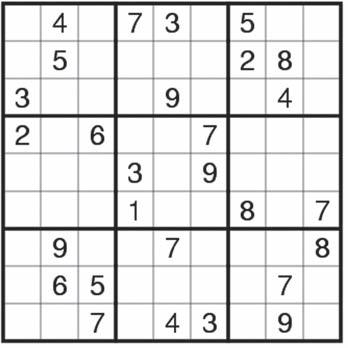



ARIES (March 21April 19)


TAURUS (April 20May 20)



GEMINI (May 21June 20)

CANCER
You are on the right path, so don’t let criticism or disparaging comments upset you. Your success will be enough to silence your critics and give you the edge you need.
Personal and business associates will be impressed with your knowledge and charisma. Beneficial changes lie ahead. A new partnership looks promising. End your day with a little relaxation or romance.
You will receive helpful advice from an elderly friend or relative. A partnership needs adjustment if you want to strengthen your bond before the end of the year.







LEO (July 23Aug. 22)
VIRGO (Aug. 23Sept. 22)
LIBRA (Sept. 23Oct. 23)



SCORPIO (Oct. 24Nov. 22)
SAGITTARIUS (Nov. 23Dec. 21)


CAPRICORN (June 21July 22)


AQUARIUS
(Jan. 20Feb. 19) (Dec. 22Jan. 19)


PISCES
(Feb. 20March 20)

You are dynamic and funloving, and you will attract favourable attention if you attend an event. Someone you meet will play an important role in your plans for the coming year.
Family members will be hard to deal with. This is a great time to get together with friends or colleagues. Socialise and have some fun, and mix business with pleasure to get ahead.
Stimulate your senses. Try something you have been dreaming about or visit someplace that intrigues you. The new perspective you get from doing something different will be enlightening.
Let everyone know what you have to offer. Your coworkers will be impressed with your suggestions to improve the workplace. Socialising with your peers will bring great results.
It’s a good time to make travel arrangements. The destination is not as important as who you will be spending time with. Strengthen a central relationship by nurturing it and making positive plans for the future.
Take the word “failure” out of your vocabulary. Focus on what you want, take charge, reach your destination and ring in the new year on a high note. A lot of issues can be resolved. Let your thoughts be known, and don’t hesitate to make a move. People will gravitate to you once your intentions are clear.
Include loved ones in your plans. Someone will use emotional blackmail to get you to do something. Say what’s on your mind and don’t let anyone impede your progress
Difficulties while travelling will prove stressful. Confiding in a close friend will help you find a solution to a relationship problem. Remain calm and don’t fight the inevitable.





Tim Southee bounced out the Sri Lanka tail to hand New Zealand a target of 105 to complete their fifth win in 2014 and make it their most successful year in Test history.
Sri Lanka had begun the day 10 runs behind and five wickets in hand and their best chance was if Angelo Mathews could shepherd the tail. But even he was unprepared for the bouncer, feathering
an edge to the keeper off a front-foot pull off the 19th delivery he faced on the fourth morning.
Tharindu Kaushal, the nightwatchman, managed a couple of pleasing strokes through square leg and cover off the front foot before a short ball in the off-stump corridor did him. He was caught in two minds and before he could pull the bat away, the edge flew to Mark Craig at second slip to give Southee his
Sri Lanka 2nd innings
(following on)
FDM Karunaratne b Boult 152
JK Silva c †Watling Southee 33
KC Sangakkara c †Watling b Boult 1
HDRL Thirimanne c †Watling
b Neesham 25
AD Mathews* c †Watling
b Southee 66
N Dickwella c Neesham b Boult 4
PHT Kaushal c Craig Southee 12
HAPW Jayawardene† c Southee
b Craig 23
KTGD Prasad c Taylor Southee 4
RMS Eranga not out 45
RAS Lakmal c Southee b Boult 16
Extras (b 4, lb 20, w 1, nb 1) 26
Total (all out; 154 overs; 655 mins) 407 (2.64 runs per over)
Fall of wickets 1-85 (Silva, 35.6 ov), 2-94 (Sangakkara, 42.2 ov), 3-181 (Thirimanne, 87.5
ov), 4-277 (Karunaratne, 116.3 ov), 5-287 (Dickwella, 122.3 ov), 6-307 (Kaushal, 128.4 ov), 7-320 (Mathews, 132.2 ov), 8-325 (Prasad, 136.4 ov), 9-348 (Jayawardene, 144.3 ov), 10-407 (Lakmal, 153.6 ov) Bowling: TA Boult (39-8-100-4); TG Southee (37-8-91-4); N Wagner (30-6-76-0); MD Craig (38-10-83-1); JDS Neesham (8-2-29-1); BB McCullum (1-03-0); KS Williamson (1-0-1-0) New Zealand 2nd innings (target: 105 runs)
TWM Latham not out 10 HD Rutherford not out 6
Extras 0
Total (0 wickets; 4.3 overs) 16 (3.55 runs per over)
To bat: KS Williamson, LRPL Taylor, BB McCullum*, JDS Neesham, BJ Watling†, MD Craig, TG Southee, N Wagner, TA Boult
Bowling: RAS Lakmal (2.3-110-0); PHT Kaushal (2-0-6-0)
first strike of the morning.
Dhammika Prasad was reluctant to get in line for most of his 17 balls and was not ready when Southee sprung the trap with the fuller lengthtwice. Ross Taylor grassed an absolute dolly, but before his face could grow red another came his way and he converted it.
Sri Lanka actually did well to stay standing till lunch and their finalwicket pair even forced the umpires to take a half hour’s extension. The lead had been 17 when Mathews was dismissed, but Shaminda Eranga and Suranga Lakmal conjured 59 runs in 57 balls. Their clear-the-front-legand-swing tactic frustrated New Zealand as they either watched the ball skirt past the outside edge or skim to the cow corner boundary. Boult broke through and earned himself and his fellow bowlers some well-deserved rest after 196 testing overs across the two innings.
As gamely as they had played in the second innings, Sri Lanka will have put together a recordbreaking performancethe lowest target they’ve successfully defended is 168 - to to stay in the contest. (Cricinfo)



JMourinho was angry at referee Anthony Taylor for not awarding a penalty during the 1-1 draw at Southampton.
Midfielder Cesc Fabregas was booked for diving after going down in the area under Matt Targett’s challenge.
After the game Mourinho told BBC Sport: “The media, commentators, other managers are all doing it [putting pressure on referees].”
n his news conference later, he added: “There is a campaign against Chelsea. I don’t know why there is this campaign and I do not care.
“Everybody knows it was a penalty. The referee made a mistake, people make mistakes and he made a big mistake. He is a good referee
and a good guy, he is young, he has years and years of football ahead of him but it is a big mistake.”
Referee Taylor deemed Fabregas to have taken a dive under pressure from Targett, but there appeared to be contact from the 19-year-old full-back.
Fabregas, who protested against the decision, said: “There was definitely contact, the referee didn’t have the best game of his life and I don’t think he will sleep that well tonight, he had an awful game.”
His manager Mourinho said recent pressure from managers on referees in the media led to the Blues not being awarded a penalty shortly after the break at St Mary’s Stadium.
West Ham manager Sam Allardyce accused Branislav Ivanovic of going down “looking for a penalty” in the Blues’ 2-0 victory on Friday.
And Mourinho said:
“After the game against West Ham, Sam is speaking about Branislav Ivanovic [diving], what is this? Then, you come here [Southampton] and you have a crucial decision and the referee makes the wrong decision. He made a mistake. He assumed it.
“Out of nothing, Allardyce starts speaking about Chelsea players diving, then another coach and another coach. The referee changes a penalty for a yellow card.
“[The] same happened with Diego Costa in the game against Burnley. That I can’t understand. The reality is there are penalties and penalties - this one was a huge one. Match after match coaches are telling Chelsea players are diving. I will go to the referee and wish him a good year and tell him he will be ashamed.” (BBC Sport)
Chelsea missed the chance to tighten their grip on the Premier League title race as they were held to a draw by Southampton at St Mary’s.
Sadio Mane gave Saints a deserved early lead but a superb equaliser seconds before half-time set up Jose Mourinho’s title pacesetters for a second-half siege.
Chelsea’s pressure duly arrived as they dominated possession and attacked constantly - but Southampton showed magnificent organisation and determination to ensure goalkeeper Fraser Forster was not seriously troubled.
Mourinho will have just cause for complaint, however, after referee Anthony Taylor waved away what looked a clear penalty when Cesc Fabregas went down under Matt Targett’s challenge, only to receive a caution for diving.
Southampton even survived Morgan Schneiderlin’s

late sending off, after a second yellow card for a reckless challenge on Fabregas.
The roars that rang around St Mary’s at the final whistle revealed a mixture of relief at Southampton claiming a point but also admiration for the manner in which their team had dug so deep as Chelsea pressed.
For Chelsea and Mourinho, there was disappointment at
the failure to fashion a victory and the casting aside of two points that will open the door a little further for reigning champions Manchester City.
The base of Nemanja Matic and John Mikel Obi provided the platform for Fabregas to play in a more advanced role and he posed problems for Southampton early on.
Australia will set out to build their lead after India’s final two wickets fell cheaply on the fourth morning of the Boxing Day Test at the MCG. Mitchell Johnson claimed both wickets, Umesh Yadav falling caught behind second ball of the day before Mohammed Shami was taken by Steven Smith in the slips.
India thus lost their final three wickets of the innings for three runs, leaving Australia with an advantage of 65 despite the stand of 262 between Virat Kohli and Ajinkya Rahane on day three. For one minute short of four hours, Ajinkya Rahane and Virat Kohli made the future of Indian Test cricket look very bright indeed. For the two hours or so either side, the rest of the touring side confirmed why that future is still some way short of being realised.
A hot and occasionally hot-tempered third day at the MCG had numerous fluctuations. First Australia prospered with a pair of early wickets to hasty strokes from Cheteshwar Pujara and M Vijay, and later they did so again through Nathan Lyon’s persevering spin and a sharp spell of reverse swing from the admirable Ryan Harris.
But its centrepiece was a stand of 262 between Rahane and Kohli, a union that was both substantial enough to leave Steven Smith wondering where his next wicket was coming from but also swift enough to keep open the prospect of an outright result in this match, which India must win to stay in contention for the Border-Gavaskar Trophy.
Rahane set the tone of the partnership, skating past 30 at better than a run a ball to shift momentum away from Australia. Kohli was a little more collected, but carried on beyond the loss of his partner and other members of India’s exceedingly collapsible tail to
169, his highest Test score. It was not until the last over of the day that Kohli fell, his edge clasped by a diving Brad Haddin.
The second exceptional Haddin catch of the day contrasted with some rather indifferent fielding by Australia through mid-afternoon, when at least three chances went down. Nathan Lyon missed the gentlest of return catches from Rahane in the final over before the second new ball became due, and after Mitchell Johnson took it an edge from Kohli’s bat was grassed by Shane Watson, diving to his left and into territory commonly reserved for Haddin.
Australian frustration with the Rahane-Kohli partnership was illustrated when Johnson fired a return at the stumps and caught Kohli in the lower backwords were exchanged at other times, and any visible acknowledgement of the Indian pair’s hundreds could best be described as low key. They were more generous to Rahane upon his departure, and Kohli was applauded by all sections of the ground as he led the players off at stumps.
Pujara had seemed unusually eager to see bat on ball, and from Harris’ second ball of the morning he aimed an uncharacteristic cut/glide to a ball he would have often left. The edge was thick and Haddin flew through the air, the milestone dismissal among his more spectacular, atoning for dropping the same batsman the previous evening.
Kohli was greeted by some fast stuff from Harris and Mitchell Johnson, but it was Vijay who was struck by the latter on the helmet with a short ball that reared up in defiance of an easypaced pitch. Vijay shrugged off the blow, though its proximity to the rear of his head and neck made for a queasy replay viewing.
He had played and missed at more than his share of deliveries during another innings of otherwise calm temper, but he became impatient when teased by Watson’s line and medium pace. Aiming a cut shot similar to Pujara’s, he too offered a thick outside edge that this time sailed as far as Shaun Marsh at first slip.
This wicket seemed to
India 1st innings
M Vijay c Marsh b Watson 68
S Dhawan c Smith b Harris 28
CA Pujara c †Haddin b Harris 25
V Kohli c †Haddin b Johnson 169
AM Rahane lbw b Lyon 147
KL Rahul c Hazlewood b Lyon 3
MS Dhoni*† c †Haddin b Harris 11
R Ashwin c & b Harris 0
Mohammed Shami c Smith b Johnson 12
UT Yadav c †Haddin b Johnson 0
I Sharma not out 0
Extras (lb 1, w 1) 2
Total (all out; 128.5 overs) 465 (3.60 runs per over)
Fall of wickets: 1-55 (Dhawan, 14.2 ov), 2-108 (Pujara, 37.2 ov), 3-147 (Vijay, 49.5 ov), 4-409 (Rahane, 107.4 ov), 5-415 (Rahul, 109.6 ov), 6-430 (Dhoni, 116.4 ov), 7-434 (Ashwin, 118.2 ov),
8-462 (Kohli, 126.2 ov), 9-462 (Yadav, 126.4 ov), 10-465 (Mohammed Shami, 128.5 ov)
Bowling: MG Johnson (30.56-135-3); RJ Harris (267-70-4); JR Hazlewood (25-6-75-0)SR Watson (163-65-1); NM Lyon (29-3-1082) SPD Smith (2-0-11-0)
Australia 2nd innings
DA Warner lbw b Ashwin 40
CJL Rogers not out 33
SR Watson not out 15
Extras (lb 1, nb 1) 2
Total: (1 wicket; 21.5 overs) 90 (4.12 runs per over)
To bat: SPD Smith*, SE Marsh, JA Burns, BJ Haddin†, MG Johnson, RJ Harris, JR Hazlewood, NM Lyon
Fall of wickets: 1-57 (Warner, 14.2 ov)
Bowling: UT Yadav (3-0-32-0); Mohammed Shami (6.6-133-0); I Sharma (5-2-10-0)
R Ashwin (7-1-14-1)
Manchester City missed a golden chance to close the gap on league leaders Chelsea as they surrendered a two-goal half-time lead against Burnley.
City were cruising when Fernandinho followed up David Silva’s opener with a fine curling shot.
tilt the morning towards Australia, but Kohli and Rahane responded with a counterattack of considerable verve. Rahane wasted very little time, and after a fortunate first boundary which bisected Haddin and Watson from a Lyon awaydrifter, he struck a quartet far more convincing to help raise a 50-stand in as many minutes.
They went on with it in the afternoon, mixing some handsome and inventive strokes with eager running between the wickets and manipulation of Smith’s fields. The certainty with which Rahane and Kohli played seemed to work against Australian concentration, so when chances arrived they were not quite sharp enough to take them.
Lyon in particular will wonder for a long time how he managed to hash Rahane’s bunted return catch: in the 80th over of the innings it would have been a pivotal blow. But the miss allowed the stand to go on past tea, and to a point where India began to ponder a first-innings lead.
Ultimately it was Lyon who broke the stand, winning an lbw verdict from Kumar Dharmasena against a sweeping Rahane, though replays suggested the ball had not straightened enough to flick off stump. Having waited so long for his debut innings, KL Rahul’s stay was short but action-filled as he was dropped by substitute Peter Siddle when he tried to flick Lyon over midwicket, then held at short fine leg when trying an ambitious sweep next ball.
Harris gained some sharp bend and proved too good for both Dhoni and R Ashwin, before a somewhat off-key Johnson tempted Kohli into error in the day’s final over. With Rahane, Kohli had made this India’s day, but the less flattering passages either side of their stand meant the match may still lean towards Australia.
(Cricinfo)
George Boyd scored straight after the break, turning home Danny Ings ‘ shot despite appearing to be offside.
Then Ashley Barnes reacted quickest in a crowded penalty area to smash home a loose ball to earn the visitors a draw.
It was a result that didn’t seem likely at the break, when, despite being without Yaya Toure, Manuel Pellegrini’s side
The first-half was not without its mishaps for City.
Fernando was shown a yellow card for fouling Scott Arfield, a booking that will rule him out of the New Year’s Day encounter with Sunderland, and Pablo Zabaleta needed a bandage applying to a wound sustained in a clash of heads with Eliaquim Mangala. It took an element of good fortune for Burnley to get back into the game at the start of the second period, with none of the officials spotting Boyd was in an offside position when he got the slightest of touches to Ings’ shot before it squeezed under Joe Hart. Both sides had chances after that. Heaton denied Nasri with a full-length

looked sure to cut Chelsea’s lead at the top of the Premier League to a single point and a club record 10th successive win.
Samir Nasri’s precise pass had been perfect for Jesus Navas to run on to. Silva had found enough space to collect his fellow countryman’s cross.
He spun round and beat Burnley keeper Tom Heaton by his left-hand post from eight yards for his fourth goal in three games.
Nasri then showed admirable patience in waiting for an opening before eventually rolling a pass back to Fernandinho, whose superb curling shot provided him with his first goal of the season when it crashed in off the underside of the crossbar.
save and, at the other end, Ings was narrowly wide with a shot from 25 yards before Arfield was denied by a well-timed tackle from Martin Demichelis.
Burnley kept going and their attacking intent was rewarded when a long freekick bounced off Michael Keane and Barnes wasted no time in driving a firsttime shot in to the roof of Hart’s net before the City keeper had a chance to react.
Rather than risk losing their point, the visitors, who have not won an away game in the league against City since 1963, opted for a safety-first strategy at the end, with manager Sean Dyche telling his players to take the ball towards the corner flag during five minutes of injury time.


Shalom Driving School, lot 2 Croal Street, Stabroek. Enjoy 20% discount. Phone: 227-3869, 622-8162, 644-7052, 227-3835



Learn transcendental meditation and gain deep rest, eliminate stress, increase creativity & Intelligence; improve memory, self confidence & relationship; improves health & longevity. Reduces Insomnia & Hypertension. Bring peace and happiness. For new introductory lecture contact the teacher Ashoke 609-3701, Sherlock at 225-2243 or Elton 609-3443
Why meditation? Sunday 4pm Monar Education Institute. 192 Lance Gibbs Street, Queenstown, Georgetown. Science of Spirituality. Tel: 225-0630 / 698-0582 www.sos. org


HEPHZIBAH MINISTRIES. 24hrs miracle line 322-5081/337-4510/3374259/337-4021/337-3070/3375103 For healing, deliverance, financial difficulties, marriage issues. Call now. Jesus cares.
Suriname’s Astrology, Palmist and Hindustani Spiritual Healer, solve all purpose problems, 100% confidential guaranteed. Phone: 679-4672



Healthworld Holistic Centre offers clinical psychotherapy for suicidal thoughts, attempted suicides, depression, stress, mood disorders, psychotic disorders, homicidal thoughts, hallucinations, loneliness, conflicts, anger management, relationship & sexual problems, paranoia and much more. Call +592-621-0552 and make that appointment now before it’s too late. 12:00-6:00PM. Mondays-Fridays. Email: healthworldhc@gmail.com


Immigration & Visa Services We handle all Canadian, USA and UK immigration and visa matters. Self sponsorships, holiday/ visitor’s visas, work permits, students visas, family, class, immigration forms, embassy enquiries, appeals for refused cases, US green card lottery, business class waivers, pardons, etc. Get your visa approved. High success rate. Balwant Persaud & Associates. Certified Immigration Consultants, 68 Sixth Street, Alberttown, Georgetown (Between Cummings & Lights Sts) Tel: 225-1540, 622-8308, 6553105. Email: balwantpersaud@ yahoo.ca

mobile: 6213249. We cut any type of key, service and repair all types of locks. Get your


Eccles: two flat executive concrete house; three bedrooms upper, two bedrooms lower (separate flats). Price negotiable. Tel: 602-2135
Eccles: Build your own home in a modernized, gated community. Lot size 60’x100’ $7.5M. Call: 2272913, Cell: 689-3033.
Eccles: Commercial lots $14M. Call: 227-2913, Cell: 689-3033
one two-storeyed concrete building with four apartments at Fort Ordinance Canje. Size: 50 x 30 feet. Contact Indera Gupta at Telephone: 627-3095 for further details.
One business/ residential transported property located at Friendship Public Road, East Bank Demerara. Property presently houses a variety store and beer garden. Price negotiable. Call 6618802 for more information.
Two storey house in good location; Lot 55 Section ‘B’ Non Pariel-First Street, ECD ($12m or best offer. Quick sale preferred. Contact 6518901.

For specialised repairs and servicing to all types of BMW vehicles, Lexus, Mercedes, Sedan etc. Diagnostic testing available. All job backed by three months warranty. Call 686-9995 for more information and location. Mobile emergency service available.
K. Lakeram, Building Contractor: carpentry, masonry, tiling, plumbing, painting, drawing of plans, etc free estimates, general home maintenance. We’re prompt & reliable. Section A Diamond, new Scheme, EBD. Phone: 216-0671, 622-0267, 692-8464. Email: klakeram.construction@gmail.com
l aND FOR Sale Da Silva’s Optical. For Your Eyes Only, Look Better See Better. Phillip A Da Silva OD, Shannon L Da Silva OD, Natalie Da Silva OD. 248 South Road, Bourda. Phone: 227-3529, Linden: 444-6376, Corriverton: 339-3536, Meten-Meer-Zorg: 2750322, Grand Cayman Islands: (345) 943-1515 for the perfect trendy touch.
32 Acres of transported land located at Lot 5 Plantation Content, Mahaicony, ECD; from the public road to sea shore. This property is ideal for residence, business, aquaculture, agriculture, etc. Price: $175,000 (USD) or best offer. For more information or to make an offer please call Pooran at 813319-4219 (Florida, USA) or email rpooran@tampabay.rr.com
Parfaite Harmonie $1.2M, $1.3M, $1.4M, $1.5M, $1.8M & $3M, Providence $6M (100ft x 50ft), Herstelling $5M (110ft x 56ft), Eccles $6m. Call 652-2018,218-5591

Dutch spiritual healing in removing evil spirit; bad luck; evil sickness; spells; reuniting lovers and prosperity to business etc, Call 612-6417, 220-0708.
Cleansing of spiritual problems of all kinds. Powerful Ifá protection against evil. Get help to overcome problems with love, relationships, legal, sexual, pregnancy, business, sickness, jobs, enemies, work, money. Call 592-690-1824 from 10:0016:00h Email:anew-life@live.com
JUST ARRIVED: TOP QUALITY RECONDITIONED VEHICLES; TOYOTA NOAH; TOYOTA VOXY; TOYOTA IST (NEW SHAPE); SUZUKI SWIFT; DAIHATSU MOVE (660CC); MERCEDES BENZ C200 KOMPRESSOR; COROLLA AE100 WAGON; TOYOTA HIACE MINIBUS RZ; PITBULL-STYLE FREEZER VAN; LAND CRUISER (FULLY LOADED); MAZDA PROCEED 4WD EXTRACAB PICK-UP; TOYOTA HILUX 4WD EXTRA CAB PICKUPS - 3RZ, 5L, 3L SOLID DEFFERNTIAL; MITSUBISHI CANTER TRUCKS 4 TONS FREEZER; 3 TONS OPEN TRAY; 2 TONS 4WD; NISSAN ATLAS 2 TONS OPEN TRAY TRUCK. PRE-ORDER YOUR UNITS EARLY AND GET THE BEST PRICES. FULL AFTER SALES SERVICES AND FINANCING AVAILABLE. DEO MARAJ AUTO SALES, 2 CHIMNEY ROAD, CHATEAU MARGOT, ECD. 624-0762, 220-5177. A NAME AND SERVICE YOU CAN TRUST
4x4 Nissan Titan fully powered Immaculate condition $3.5M. No reasonable offer refused. 622-7740
One PPP series Mazda Axela in excellent condition and one white 2007 unregistered BMW, Price negotiable. Call 679-5842.

We buy all low income and high income land in Eccles, Providence, Herstelling & Parfaite Harmony. Call 652-2018, 218-5591
India batsman Virat Kohli says Australia’s players called him a “spoilt brat” and that he had “no reason to respect” Mitchell Johnson.
Kohli scored 169 on the third day of the third Test during which he and Johnson exchanged plenty of verbals.
“They were calling me a spoilt brat. I said, ‘maybe that’s the way I am - you guys hate me, and I like that’. It worked in my favour I guess,” he said.
Kohli has hit three centuries but India are 2-0 down in the four-match series.
“It was going on throughout the day,” Kohli added.
“I like playing against Australia because it is very hard for them to stay calm.
“I don’t mind an argument on the field. It really excites me and brings the best out of me so they don’t seem to be learning the les-
son.” At one point during the third day, Johnson hit Kohli with the ball when throwing it at the stumps off his own bowling.
“I was really annoyed with him hitting me with the ball. I told him that’s not on and to ‘try and hit the stumps next time, not my body’,” Kohli said.
“You have got to send the right message across. I am not there to take to some unnecessary words or chat from someone.”
Kohli, who put on 262 with Ajinkya Rahane, hit Johnson for three successive fours in one over as he helped India to 462-8 in reply to Australia’s first innings 530.
Johnson did take Kohli’s wicket with the final ball of the day but ended up with figures of 1-133 from 29.2 overs.
“I respect quite a few of them. But someone who does not respect me, I’ve got no reason to respect him,” Kohli said.
“I’ve got a nice sort of friendship with a few of them but someone who is not backing off and is saying anything that comes to mouth - I’ve got no reason to respect him.”
Australia bowler Ryan Harris hopes Kohli’s attitude has a detrimental impact on the India player’s batting.
“We try not to say too much to him, but sometimes he brings it on himself I guess when he starts it,” Harris said. “It’s never personal, it’s always a bit of fun.
“It’s interesting to hear him say that. It’s probably a good thing. If he’s worrying about stuff like that, hopefully his batting goes down hill.” (BBC Sport)

South Africa had lost their three best batsmen for the addition of 30 runs, and into this situation were thrust Temba Bavuma, on debut, and Stiaan van Zyl, with one Test behind him. Taylor and Holder found both their edges and Holder had a big lbw shout turned down when Bavuma shouldered arms to an in-ducker, before a bowling change brought West Indies the breakthrough.
Before the Test began, Bavuma had suggested with surprising candour that his lack of height could be a disadvantage on bouncy pitches, and Shannon Gabriel produced a lifter that few batsmen could have done anything about. It followed Bavuma even as he tried to
sway out of the way, and was too quick for him to drop his hands and prevent a scrape of glove through to the keeper.
Kenroy Peters then completed a morning in which every West Indian seamer picked up a wicket. Van Zyl sliced and drove the leftarmer for two fours in three balls, and it was evident he would keep going after anything outside off stump. He sent the fifth ball rolling to the keeper off the inside edge, and then, chasing away from his body again, nicked the sixth to the keeper. (Cricinfo)
Swimmers from various swimming clubs in Guyana returned with six medals from the VOS Powerade Wedstrijden swim meet in Suriname.
The eight-member team performed in most of the junior categories with Dorado’s Reakwon Noel bagging the most medals at the meet.
Noel captured four of Guyana’s six medals, inclusive of three gold medals as well as one bronze medal in the under-8 category.
Noel won the boys’ 7-8 50 metres backstroke, freestyle and 100 metres individual
medley (IM) while touching the wall for third in the 50 metres breaststroke to end his outing at the meet.
Silver Shark’s Onika George won a bronze in the female 15-17 200 metres IM while her clubmate Nathan Hackett won bronze in the boys’ 11-12 100 metres backstroke.
The other swimmers that participated at the event were; Trumaine Cole (Silver Shark); Leon Seaton (Silver Shark); Danielle George (Silver Shark); Jadyn George (Silver Shark) and Amber De Goeas (Orca). Reakwon Noel
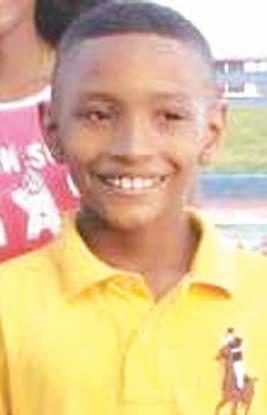
Our collective attention to doping sometimes reminds me of the Eye of Sauron in the “Lord of the Rings,” swiveling this way and that as events dictate. In track and field, our gaze has been steadily trained on bulkedup sprinters and throwers for decades.
The last year demonstrates that quiet on any front is illusory and no discipline is more immune than any other when it comes to performance-enhancing drug use. They all involve human beings and money and temptation.
Distance running has largely avoided our telescopic glare up to now. That time is over.
The Guyana Defence Force (GDF) topped Sunburst Camptown 2-0 on Friday to make their way to the semi-finals of the Georgetown Football Association (GFA) Banks Beer Cup.
The game started with both teams showing some signs of nerves as both teams exchanged possession steadily in the opening minutes.
However, as GDF settled into their offence, their rhythm and flow of passes seemed more fluent which quickly resulted in a goal from Selwyn Isaacs in the 26th minute of the game.
The half ended 1-0.
The second half was
much of the same as both teams struggled to mount any defining attack in the early stages.
However, with fatigue stepping in and Camptown unable to find that equaliser, GDF scored to ensure their win in the 89th minute with a goal from Delwyn Fraser.
Meanwhile in the opening quarterfinal of the evening, Western Tigers routed the Guyana Police Force (GPF) 7-0 to move on to the semifinal stage of the tournament.
Phillip Rowley opened the scoring for the winners with a goal in the 25th minute, while Joshua Britton scored his first in
the 29th.
The game started to become lopsided as Britton scored again in the 38th minute to make the score 3-0 before the halftime break.
Five minutes into the second half, Britton completed his hat-trick with a goal in the 50th minute.
Randolph Wagner netted in the 64th minute, while Andre Webber scored in the 70th minute for the Tigers.
Adding the finishing touch to an emphatic victory was Marvin Joseph, who was on target in the 76th minute to complete the scoring barrage by the Western Tigers.
By TreisTon Joseph
The good news is Guyana will be part of the Caribbean Basketball Confederation (CBC) Championships come 2015 in the British Virgin Islands (BVI).
The bad news is the road to a championship is very tumultuous.
While the organisers and the executives of the Guyana Amateur Basketball Federation (GABF) might not want to admit it, it must be said that Guyana will be fighting an uphill task if they are to win a championship at the event next year.
To be frank, Guyana’s championship hopes seem very bleak.
Touted to win the men’s division last year by some, according to the President of the GABF, Nigel Hinds, a number of situations unfolded that hampered Guyana’s path to the 2014 title even with the inclusion of the first Guyana-born NBA player in Rawle Marshall.
While there is no need
to revisit the issues that resulted in a sub-par showing by the national side earlier this year, the GABF will need to ensure that their players are unified and have trust in the association which cannot be said to be the case at this point due to the situation that unfolded earlier in the year.
Nevertheless, despite the off-court spat, it will be interesting to see the type of talent the GABF is able to put on the floor in 2015.
It is not quite clear the relationship between the Federation and its overseas players based on the issues that transpired at the 2014 championships.
However, it seems as though the Federation is headed in the direction of trying to mould a much younger core than they did this year which hints at a more localised team for 2015.
If this is the case, then it simply means that Guyana will be contending for a title in the next three years, at the earliest.
A fifth place finish at next year’s championships (Guyana’s 2014 final standing) might even be a moral victory for Guyana as if a potentially less experienced team is set to participate next year.
Obviously, Guyana will be entering a developmental process that will not be easy especially since the lack o funding will also play a role in how fast the core group develops in the coming years.
However, next year’s championships should be about exposing the younger talent, then building from the team there.
The road to a Caribbean title will be tough, but it is a process that can work once the GABF and the players are on the same page… something that will need to happen in order for the Guyana team to start performing at their maximum.
Whether Guyana win a title three years from now or not, the reality is not to expect a title in 2015.
Doping cases involving two of the world’s highestprofile female marathoners threaten to discredit winning results in nine major marathons since 2006. Five of those victories -- including repeat championships in Boston and Chicago the last two seasons -- belonged to Kenya’s Rita Jeptoo, whose ‘B’ sample analysis last week confirmed a positive result for erythropoietin, or EPO, in a sample collected out of competition last September. Kenyan authorities will hold a hearing next month to decide on what sanctions to impose, and Jeptoo can still appeal the findings to the Court of Arbitration for Sport.
Russia’s Lilya Shobukhova was stripped of her three Chicago championships (2009, 2010 and 2011) and her London 2010 victory last April after a biological passport conviction. She has appealed those disqualifications and her twoyear suspension. Earlier this month, German documentary makers and the French daily sports newspaper L’Equipe reported that Shobukhova had bribed Russian officials to cover up doping violations, then demanded reimbursement of the payoff when she was suspended anyway.
Last week, an arbitrator imposed a four-year ban on American distance runner Mo Trafeh, who was building the kind of résumé that points toward eventual success in the marathon. The 29-year-old Trafeh won national titles at 15 kilometers, 10 miles, 25 kilometers and the half-marathon in 2012 and 2013.
Trafeh didn’t test positive. Instead, he was detained at JFK Airport last February on a trip back from his native Morocco after Homeland Security agents confiscated six syringes of a substance later identified as EPO. A few days later, Trafeh missed a random doping control and hauled out the old sick-grandmother excuse.
In March, Trafeh told the U.S. Anti-Doping Agency he’d purchased and self-administered EPO since early 2012. He promised to work
with the agency to nab other athletes in return for a reduced sanction, then backed out of that agreement and released a statement saying he was retiring but had never used the performanceenhancing drug. He didn’t bother to show up for his arbitration hearing last month and was convicted in absentia.
The marathon is the original Olympic event, draped in myth and (for the men) usually accorded the special status of folding into the closing ceremony. It has the strongest connection to the masses. So many millions have run one. So many more have stood by the side of the road searching for one face in the multitude, huffing along the same course the spindly-legged pros conquered earlier in the day.
There is a romance to it, a “Wizard of Oz”-style journey that appeals to brain and heart and spirit. Marathons belong to all of us in a way other races don’t, and some of the event’s leading characters have acquired the patina of folk heroes.
Yes, cycling is that way, too, and suspicion flourishes over out-of-the-saddle attacks or out-of-whack power numbers on Tour de France mountainsides. It’s harder to make accusations based on a late kick or a crazy-fast split here or there over 26.2 miles.
The surge of East African marathon winners that began in the 1990s was frequently chalked up to genetics, home-country altitude training and greater competitive hunger bred in a poor country. Those factors undeniably play a part, but they also obscure some 2014 truths about doping.
First, smothering dominance is inherently suspect, whether by a country or an individual. Second, natural talent is not a prophylactic against cheating. Unfortunately, testing efficacy still varies wildly between countries. Finally, much PED jurisprudence is still imperfectly overseen by sport federations which both police and promote, and thus have a disincentive to topple their stars.
That aura, and a few other factors, have helped the marathon (and distance events in general) evade the magnifying glass applied to other endurance events. Busts of elite marathoners have been scarce in general and almost nonexistent in the United States; Eddy Hellebuyck, who told his story to Runner’s World a few years ago, is a notable exception.
Unlike sprint events on the track, a marathon start line doesn’t feature action figure physiques that lead to speculation. Everyone is scrawny. They only run the event a couple of times a year. The banned substances that would help them train harder and recover faster are less apt to transform them outwardly.
Every road course is different on a given day, with a zillion variables of conditions and group tactics.
An international effort to increase testing in Kenya is well-documented and starting to have some impact. The athletics federation there has suspended a few dozen athletes in recent years, including Jynocel Basweti, a runner who won 17 smaller-market marathons in the United States. He, like most Kenyans popped recently, was a baitfish rather than a big fish, but that is the case across sport.
Jeptoo’s case is a watershed because of her prominence, her nationality and the timing of her “A” sample announcement -- on the eve of the New York City Marathon, where she was set to pocket a $500,000 bonus for winning World Marathon Majors series. The six-race consortium implemented its own antidoping policy in 2013 as an overlay to established international practice. (ESPN)

Arsenal moved above West Ham in to the Premier League top five after inflicting a first home defeat on the Hammers since August.
Alex Song had a 20yard volley ruled out for offside for the hosts.
Santi Cazorla put the visitors ahead from the penalty spot, following a foul by Winston Reid, before Danny Welbeck put Arsenal further in front.
Cheikhou Kouyate’s header gave the hosts hope but West Ham were unable to avoid a second successive defeat.
It was Arsenal’s ninth win in a row in all competitions against West Ham as they moved level on points with fourthplaced Southampton and just three points behind Manchester United in third.
West Ham boss Sam Allardyce, who opted to rest key players Song and Diafra Sakho for the
2-0 defeat at Chelsea on Boxing Day, disagreed strongly with the decision to disallow Song’s goal, claiming Sakho was not in the eyeline of the goalkeeper when he was adjudged to be offside.
The Hammers had won six of their last seven league home games but, despite heavy late secondhalf pressure, lacked the quality needed for the leveller.
Former Arsenal man Song, on loan from Barcelona, almost made an instant impact with a low volley into the bottom corner of the net from 20 yards early on. Sakho was penalised for standing in an offside position in front of goal, though, despite not touching the ball.
While Allardyce’s men have exceeded expectations this season, Arsenal have had a mixed start to the campaign and they were very much on the back foot in the opening
stages.
But the Gunners had failed to score in only one of their last 11 away matches in the Premier League and they were at it again before the break.
Cazorla punished Reid’s high leg in the box to roll home the resulting penalty for the opener. The lead was doubled minutes later as Welbeck was on hand to slide the ball in to the net from close range after Alex Oxlade-Chamberlain’s low cross from the right.
Stunned by the deficit, West Ham restored hope soon after the break with Kouyate bundling Sakho’s cross from the right in to the net via Mathieu Debuchy.
But it was Arsenal who had the better chances, with Hammers keeper Adrian brilliantly denying Alexis Sanchez and Oxlade-Chamberlain, before the visitors survived a late aerial bombardment.
(BBC Sport)
It is the belief that Berbice cricket will benefit from Beharry’s talent, passion and considerable experience as an administrator of the game.
He outlined three important aspects he would love to see accomplished under his stewardship.
He pointed out that school cricket at the Under-15 and-17 levels is top priority. “One of my main aims is to have a robust schools system in place which produces players who are equipped for elite level at a younger age,” Beharry outlined.
He is of the opinion that strengthening cricket at the school level will ultimately sustain the sport in the county and in the future.
Another aspect, Beharry identified, as an important spoke in the wheel of improving Berbice’s cricket was the return of three-day cricket.
Further, Beharry pointed out that the relationship between clubs in Berbice is also at the top of his agenda.
“I want to try and bridge that gap: clubs in Berbice need to work together,” he said.
Beharry thanked outgoing President Keith Foster for his services to Berbice cricket during his tenure.
“He is to me a hero, and I am proud of the way he presided over the BCB during a difficult time,” Beharry said of Foster.
Foster was not qualified
eft-arm seamer
LKenroy Peters on Friday described his Test debut as one of “joy and butterflies,” and had dedicated his first Test wicket to seven-week old son Ethan. The 32-year-old, who arrived here earlier this week as a late replacement for the injured Kemar Roach, shared the new ball with Jerome Taylor on the opening morning of the Boxing Day second Test at St George’s Park.
Peters said he found out he had been included the final XI on Christmas Day but noted this did little to assuage the nerves. “The nerves start from the time you hear you are in the first XI. It was a mixture of emotions, joy and butterflies” said Peters. “I always tell myself once I bowl my first spell and I can be within the areas I want to bowl, the second spell is going to be easier because I would have already assessed the conditions and that’s basically what my first spell was all about.
“I was trying to assess the conditions, looking at the strengths of the batsmen and working towards the team plan. The more I bowled during the day I became more confident.”
He finished with one for 44 from 15 overs, claim-
ing century-maker Dean Elgar for 121, caught at the wicket off one that seamed away gently in the final session. Peters said his main focus from the start of the day had been getting among the wickets. “I remember when I played my first first-class game, it was against South Africa A. I was just finished playing Under-19 when I got the call,” Peters reminisced. “Now ten to 12 years later, I am making my (Test) debut against South Africa.
So when I was bowling (today) my only ambition was to get a wicket … because I wanted to do it for my son. I have a seven-week old son and I’m dedicating this to my son.”
South Africa finished the day in a strong position on 270 for two, with Faf du Plessis unbeaten on 99 and
captain Hashim Amla, who got a double hundred in the first Test at Centurion last week, unbeaten on 17. Both batsmen benefitted from missed chances as West Indies put down three catches. With AB de Villiers and Stiaan van Zyl, both of whom got hundreds in the first Test, still to come, South Africa appear headed for another large total but Peters said it was important that West Indies remained patient and took their chances. “The South African batsmen are excellent batsmen but they tend to sit on their back foot a lot because they have grown up on pitches that are pretty bouncy and which come through. My strength was to try and bowl a little fuller, just be patient and see if I can try and get success from just being patient,” the Vincentian explained. “When I was home I spoke to Nixon McLean and Ian Allen (former West Indies fast bowlers). When I came on tour I was speaking to Sir Curtly (Ambrose) and also the bowlers who played in the first game to assess the pitch, [to] see what the conditions are like and they kind of helped me to plan my game plan and this in turn helped me to bowl reasonably well today.”
(Trinidad Guardian)
Not even a dashing cameo from West Indies all-rounder Andre Russell could prevent Melbourne Renegades from a 35-run defeat to Perth Scorchers, in the Big Bash League on Boxing Day. Chasing a challenging 193 for victory at the WACA, Renegades finished on 157 for nine from their 20 overs, with Russell top-scoring with 43 from just 21 deliveries.
to seek re-election since his two-year three-term period expires at the end of the year.
The three associations:
West Berbice, Berbice River and Upper Corentyne, while the 14 clubs affiliated with the BCB: Kidonan, Whim, Port Mourant, Albion, Chesney, Rose Hall Community Centre, Young Warriors, Bermine, Police, Mental, Mount Sinai, and Blairmont clubs as well as Rose Hall Town Youth and Sport Club, were involved in the voting process.
According to the BCB’s constitution, the three associations are entitled to four votes each, while the 14 clubs affiliated with the BCB are entitled to two votes each.
West Indies all-rounder Dwayne Bravo, at the centre of swirling debate in the Caribbean over his axing from the one one-day squad, failed with 13. Renegades slipped to 43 for three in the eighth over before Bravo and Callum Ferguson, who hit 39, added 38 for the fourth wicket to steady the innings.
Bravo eventually holed out to long-off in the 13th over off left-arm spinner Ashton Agar, paving the way for Russell’s fireworks. The right-hander struck two fours and four sixes as he attempted to lift Renegades to an improbable win.
Dropped on 12 off seamer Yasir Arafat, Russell dominated the latter overs before being bowled off the last ball of the game by the same bowler. Earlier, Russell finished wicket-less from three overs which cost 26 runs while Bravo’s four cost 48 runs and yielded one wicket, as Perth raced to 192 for

Andre Russel
three off their 20 overs.
Opener Michael Klinger top scored with 105 while fellow opener Marcus Harris got 53, in a 103-run stand for the first wicket.
Meanwhile, Sydney Sixers moved to the summit of the Big Bash League after beating Sydney Thunder by 16 runs at ANZ Stadium in the first New South Wales derby of the campaign yesterday.
Riki Wessels (50 off 33 balls) anchored the Sixers’ innings, while England’s Michael Lumb (27 off 20) was one of a number of other batsmen to chip in as the
visitors posted 180 for seven from their 20 overs.
Sixers then dislodged the Thunder’s star men, Jacques Kallis and Michael Hussey, early on and coped with some lower-order brutality from Aiden Blizzard (80 not out off 42 deliveries) to win their third straight match and leapfrog Adelaide Strikers at the top of the standings.
The Sixers were restricted to 164 for five when the overs ran out. The Big Bash action continues today with Brisbane Heat taking on Melbourne Stars.


West Indies had the better of large swathes of day three, but Dale Steyn and Morne Morkel, with bat and ball respectively, made the high-impact contributions that ensured South Africa were still in control of the game at stumps.
Kraigg Brathwaite and Marlon Samuels put on an unbroken 92-run stand after Morkel had rocked West Indies with twin strikes just before tea, and West Indies were 71 short of the follow-on mark when rain and bad light brought play to a close.
After a wet outfield delayed the start of play, West Indies’ seamers scythed through South Africa’s middle order in rain-freshened conditions. It meant South Africa had lost five wickets for 74 runs starting with Faf du Plessis’ dismissal on the rain-soaked second day. Steyn counterattacked thereafter, and hastened South Africa’s declaration with a 28-ball 58 that lifted South Africa’s score from 369 to 417 in five manic overs after lunch.
Clearing his front leg against Jerome Taylor and stepping confidently down the track to Sulieman Benn, Steyn freed his arms and struck the ball with ferocious power. He swatted
Taylor for two big sixes either side of a clanging drive down the ground for four, before taking a blow to the left forearm at the nonstriker’s end when Vernon Philander attempted to partake of the fun with a meaty straight hit. That didn’t hamper Steyn in any way, though, as he carved Benn for a four and two big sixes in the arc between extra cover and long-off, before holing out attempting another big hit. Hashim Amla declared as soon as Jason Holder wrapped his hands around the ball at long-on.
West Indies began solidly in reply, moving past 50 without loss before Morkel arrived to ruin the taste of their tea. Coming on as first change, Morkel hit Devon Smith on the side of the helmet with a bouncer in his second over, but otherwise stuck to a fullish length, angling the ball into the lefthander from around the wicket and getting a couple to seam away. Smith, front foot striding hesitantly to the ball, poked at one of them and edged a catch to first slip. Morkel then suckered Leon Johnson, another left-hander, into driving away from his body at an even fuller ball and du Plessis at third slip took an excellent low catch.
Brathwaite had looked

assured at the other end, batting with more freedom than he is known to, striking four fours before tea including two in two balls against Vernon Philander, a crisp straight drive followed by a sweetly timed back-foot punch through the covers. He continued to look impressive after tea, cutting Steyn for two fours in an over and otherwise keeping the strike rolling over. He survived a tough chance when Imran Tahir failed to hold onto a rasping straight hit, but was otherwise untroubled in making his seventh Test half-century.
Samuels used his feet well to Tahir and hit him for five fours as he moved to 60 off 92 balls. He was less assured against the quicker bowlers at first, sending a thick edge flying wide of second slip off Steyn and having an lbw decision overturned after Morkel had struck him high on the pad with a sharp indipper that, according to Hawkeye, would have cleared the top of the stumps. Philander produced some reverse swing late in the day and had Samuels edging streakily to the third man boundary, but there was less help from the surface than there had been at the start of the morning.
There are few more daunting sights for a bowling side at 289 for 3 than Hashim Amla and AB de Villiers walking out to bat, but West Indies managed to dismiss both in the space of seven balls. Amla struck two fours off Taylor in the first over of the day, but Jason Holder brushed away the ominous signs with a ball that nipped back to get him lbw. There seemed to be doubts over the line of impact and the height, but Amla was shown to be right not to review, with Hawkeye saying umpire’s call on both count In the next over, Taylor produced the ball of the Test match. It was set up by the ball before, which angled in sharply towards de Villiers and struck him on the pad as he looked to work it into the leg side. The umpire ruled not out, West Indies reviewed, and Hawkeye showed it to be shaving leg stump, not enough of it to overturn the umpire’s decision. The next ball followed a similar trajectory three-fourths of its way to the batsman, angling in towards middle and off stump, but veered away late in the air, sneaked past the closed face of de Villiers’ bat, and crashed into off stump.
– 22 votes to 16
By Rajiv Bisnauth
Anil Beharry has been elected President of the Berbice Cricket Board (BCB), after whipping President of the Port Mourant Cricket Club (PMCC), Vicram Suebarran, 22 votes to 16 during the board’s Annual General Meeting (AGM) on Sunday.
Certainly it was no surprise for the top post, as election observers had pegged Beharry as the clear favourite to win.
Meanwhile, umpire Dhieranidranauth
Somwaru defeated Vemen Walter for first Vice President; Qualis Winter defeated Vemen Walter and David Black for second Vice
President; Vemen Walter was elected third Vice President – unopposed; Angela Haniff was elected Secretary –unopposed; Vicky Bharosay was elected Treasurer –unopposed; Plaffiana Millington was elected Assistant Secretary – unopposed and Ricardo Bachan was elected Assistant Treasurer –unopposed.
“It was a long process, and I want to thank those who have shown the faith and trust in me,” Beharry said after the election.
“As I take over the reins of the BCB, I want to assure all that I will execute the job at hand with the best of my ability so that the goals set out will be accomplished,” Beharry said. The newly elected BCB executives