




Women mistakenly diagnosed with HIV
Wife charged with murder of husband, to attend court today
Body of woman missing at Kaieteur found


monday, september 14, 2015 | guyanatimesgy.com
Rice farmers are at their wits’ end as they continue to battle with high production costs and poor prices for paddy, and the resultant huge losses they are enduring.
Guyana Times understands that farmers on Wakenaam Island in the Essequibo River are feeling the brunt of the situation.
On Sunday, this newspaper was reliably informed that the present cost per bag of “A” grade paddy on the island is $1800. However, this is non-profitable since this is far below the cost of production and the farmers have families to maintain, bills to pay and inputs to purchase for the next crop.
address their problems in a positive manner.
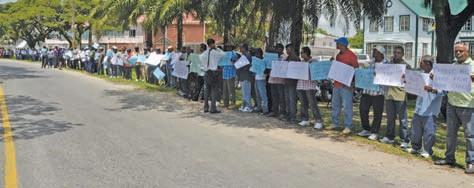
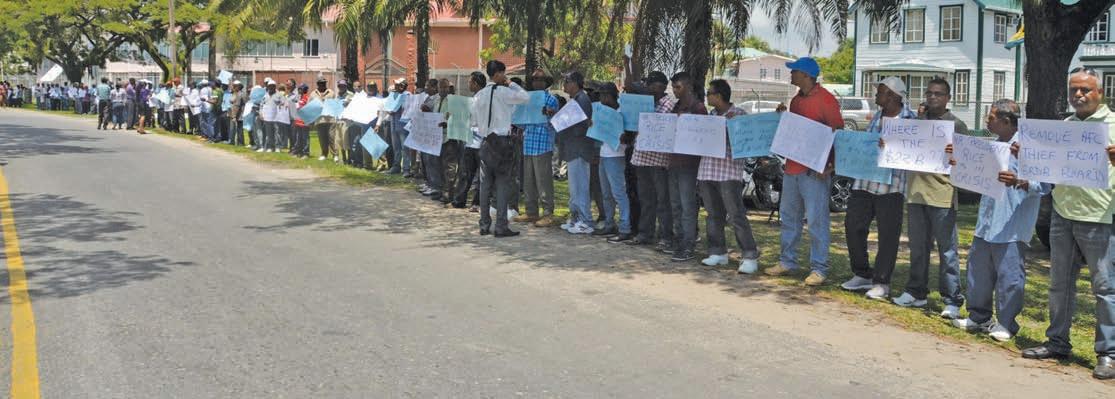
A number of rice farmers will be gathered in front of the office of Region Six Regional Executive Officer (REO) Veerasammy Ramayya today at 10:00h to protest against the false promises made by him and the Government, according to farmers.
According to information received, the one mill in Wakenaam is facing production issues, so rice farmers have to take their produce to the mills on Essequibo Coast. The average cost to transport the paddy is between $350 and $400 per bag, so doing so leaves farmers with $1400 to $1450 per bag of paddy without paying any other expense.nit was reported that one large farmer on the Essequibo Coast committed suicide because he was depressed over the dire situation in the rice industry and his personal difficulties.
native can yield them profits instead of losses.
In Corentyne, Berbice and other parts of the Ancient County, rice farmers are also facing severe hardships owing to the low prices they are being paid for their paddy.
This newspaper was told that an acre of paddy is currently yielding about 30 bags, so a price of $2500 would enable farmers to achieve the breakeven figure of$75,000. Many Wakenaam farmers are now frustrated as to what alter-
Guyana Times was told that the price being offered to the farmers in Berbice ranges between $1800 and $2000 per bag. However, this is also not enough to maintain farmers.
They are beyond upset and frustrated. Many of
them are lamenting their situation, stating that they have been “duped” by the A Partnership for National Unity/Alliance For Change (APNU/AFC) Government which promised them between $6000 and $9000 for a bag of paddy once it took office. The coalition had further said it had allocated $23 billion in the 2015 Budget for the rice industry.
A number of rice farmers throughout the country are currently contemplating using their land for other types of farming instead of pur-
suing rice because it is not “paying off”.
Should this happen on a large scale, Guyana would suffer tremendously since this staple is the leading agricultural foreign exchange earner.
Protest Guyana Times was informed on Sunday that the rice farmers in the meantime would continue with their protests and peaceful picketing in the hope the Government would finally
“We will continue to protest until our interests are taken into consideration. Ramayya during campaign time told us that we will get $6000 a bag for paddy. [Khemraj] Ramjattan had said $9000, but Monday (today) we will protest in front of Ramayya so he should give us the $6000 himself since he promised that,” one angry farmer told this publication.
On Thursday, close to 400 rice farmers from across the country protested outside the Agriculture Ministry hoping to send a message to the new Government that it has a responsibility to keep its promises. (kristenm@ guyanatimesgy.com)
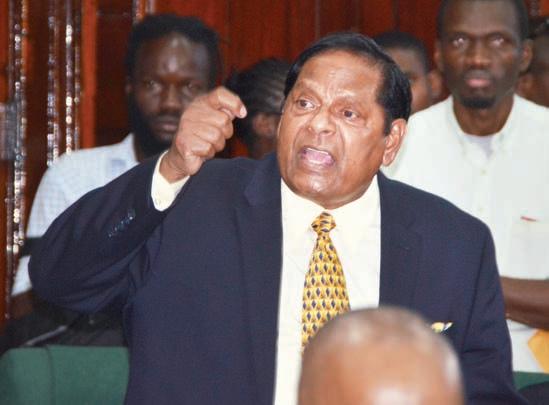
As the Opposition People’s Progressive Party/Civic (PPP/C) and the A Partnership for National Unity/Alliance For Change (APNU/AFC) Government continue to spar over the latter’s proposed national unity talks, Prime Minister Moses Nagamootoo has again criticised the Party and its leader Bharrat Jagdeo for its stance. The PPP/C had rejected the PM’s involvement, saying it would not engage with him.
In response, on Saturday, the Prime Minister on his Facebook page deemed the Opposition Leader a “loser” who was trying to sow mischief among the coalition partners, adding that he lacked “the imagination for this”.
“...My comment is that Jagdeo cannot be the loser and chooser at the same time. This is OUR [unity talks] initiative and Jagdeo must not choose our [the Administration’s] negotiators...,” Nagamootoo said in his post.
“I have fought for racial and national unity throughout my political life that now spans 53 years. In the national interest, my coalition team and I are ready to engage the PPP and are not side-tracked by the initial response. Those for unity must now take a stand! We are ready to embrace them,” the PM said.
This move by the Prime Minister will not put him in the ‘good books’ of the PPP/C

especially since the only reason the Opposition has rejected such talks is because PM Nagamootoo is slated to head the committee on the Administration’s side.
Initially, Opposition Leader Jagdeo had publicly stated that his Party would always work towards the best interests of the citizens of Guyana and as such, would inevitably be having talks with the APNU/AFC Government to achieve this. However, his Party was not interested in the proclamations about unity talks by the PM which were seen actions for political mileage by the PPP/C. In fact, the Opposition Leader said openly that if the Prime Minister would be leading
these talks, the Party would not engage him.
Jagdeo pointed out that the Prime Minister has a ‘down sized’ role under this Administration and, therefore, did not have authority nor the legitimacy to make certain offers to the PPP/C. If Nagamootoo could not achieve an equitable “unity” for his party within the new Government after an explicitly negotiated Cummingsburg Accord, the PPP reasoned, but he insisted he would accept whatever diminished role he received, how could he negotiate in good faith with the PPP that rejected him as their Presidential candidate?
If these talks were headed by President David
Granger himself or another senior member of the Government whom the Party deemed as ‘credible’ with enough authority, the PPP/C said it would not reject the talks.
However, the PM said via his post that if the coalition had named the President to lead its team, the Opposition Leader “would have reacted the way he wickedly alleged during the elections campaign that Granger had blood on his hands!”
Ironically, it appears as if the Prime Minister is of the opinion that he can now speak for the PPP/C and has the authority and credibility to say how the Party would react to such a move if it had been made, although the Opposition Leader has stated otherwise.
Dim view
In a recent press release by the PPP/C, the Party had stated that should PM Nagamootoo lead the unity talks, they would clearly be a non-starter which would end up “dead in the water”.
“Knowing the dim view the PPP holds of Moses Nagamootoo, the APNU/ AFC by insisting that he is their ‘best man’ who will head its team must know that that initiative will go
nowhere. Thus, by pushing Nagamootoo centre stage it is now clear that the coalition objective is not to have any talks at all, but to put the PPP/C on the defensive and to project the Party as refusing to engage in talks with the Government. The entire affair, therefore, smacks of a political gimmick,” the PPP/C maintained.
Although the Prime Minister has posited that the efforts by the coalition to engage in talks with the PPP/C are sincere, it was evident that the steps leading to this becoming a reality would be disastrous for the APNU/AFC coalition.
If the aim is to achieve a form of unity between the Opposition and the Government of the day, it was highly unlikely that this would occur with PM Nagamootoo leading the way for the coalition Administration. If the unity talks are to be peaceful based on some compromise and successful, then the Prime Minister with his constant criticism of Jagdeo is going down a path which will destroy the idea of unity talks before they become a reality. (kristenm@guyanatimesgy.com)

The Demerara Harbour Bridge will be closed to vehicular traffic on:
Monday, September 14 – 05:00h-06:30h and Tuesday, September 15 – 05:00h-06:30h
The Berbice River Bridge will be closed to vehicular traffic on:
Monday, September 14 – 17:00h-18:30h and Tuesday, September 15 – 05:00h-06:30h

Parika and Supenaam departure times – 05:00h, 11:00h and 16:00h daily.




Winds: Easterly to East North-easterly at 3.12 to 4.02 metres per second.
High Tide: 04:56h and 17:09h reaching maximum heights of 2.67 metres and 2.68 metres respectively.
Low Tide: 10:46h and 23:02 reaching minimum heights of 0.56 metre and 0.57 metre respectively.






The A Partnership for National Unity/ Alliance For Change (APNU/AFC) coalition
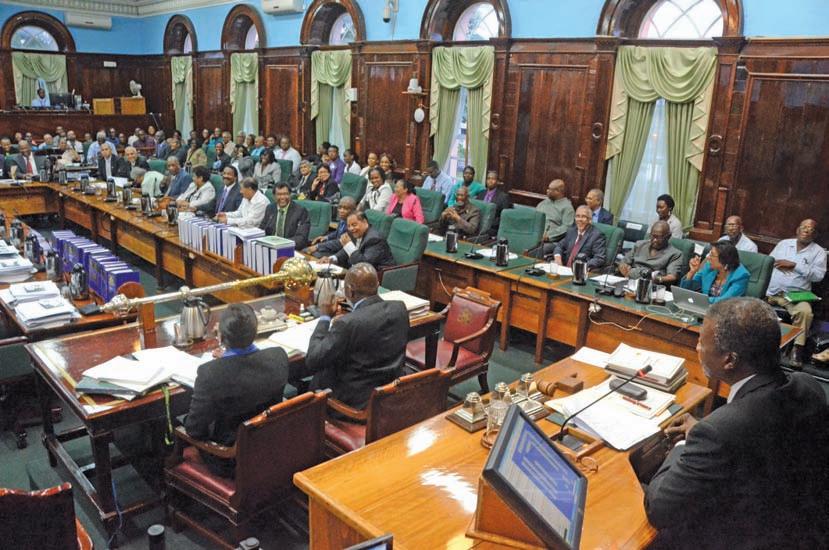
Government is still to accept the proposal made by former President and Opposition Leader Bharrat Jagdeo to have all Members of Parliament (MPs) become part of a process which would see them declaring their overseas assets.
Jagdeo had made the proposal at a time when Government itself had announced that it had established a Code of Conduct for all MPs. Against this backdrop, questions are being asked whether Government would accept the proposal of the former Guyanese leader.
Speaking to Journalists last Tuesday, Jagdeo said he was prepared to work with Government to unveil MPs’ assets around the world.
“Let’s put a huge penalty for those who lie or don’t submit accurate information or refuse to provide the information. We should table this, not to the Integrity Commission, but let’s pass a law to deposit these affidavits in the National Assembly so any member of the public can go in and check what assets we hold abroad. I am prepared to do that,” Jagdeo had declared.
He added that he was prepared to subject himself to the same scrutiny.
“In fact, I am advocating it; so I am not worried about a Christopher Ram and an Anand Goolsarran. They discovered that I am living in Pradoville and how much I paid for the land. I see a big revelation about this.
I’ve been living there for four years. I don’t think you could have any more things written about this or any more accusations levelled against me. We should do it, I am prepared to do this, but let us do it as every Member
of Parliament across the board,” Jagdeo said.
“I’m also prepared to work with them on declaring that every Member of Parliament must clear for the past 10 years their payment of taxes for them to make public, so that anybody could walk over the road and check this.”
Meanwhile, he had told Guyana Times in an exclusive interview last month that the accusations of the APNU/AFC Government with regard to the “Pradoville” situation were acts of desperation.
“I think they are becoming a bit desperate. They are not focusing on the economy, not focusing on job creation, absolutely no initiative to create wealth…The reason Pradoville is thrown into the Asset Recovery Unit is because they don’t have anything more,” the former President said.
He pointed out that the issue of “Pradoville” has been in the newspapers and media long before the 2015 General and Regional

Elections and since its establishment, he has already answered numerous questions publicly on his home there.
The former President reiterated that this is the Government’s demonstration of a “witch-hunt” and that the land price for “Pradoville” was comparable to what Government had been selling to developers.
“They will now have to put the land sold to Burnham’s family, Burnham Estate,
which is five acres of prime land in the Gardens, in the city. The land was given at zero cost and they didn’t pay a cent. We will see whether it was a corrupt act of the PPP concerning this land, this has to go to the Asset Recovery Unit as well,” he added.
He said that he was unmoved by the probe as those carrying out the investigations will find nothing unusual or sinister about the project.




Editor(ag): Michael Younge
Tel: 225-5128, 231-0397, 226-9921, 226-2102, 223-7230 or 223-7231. Fax: 225-5134
Mailing address: 238 Camp & Quamina Streets, Georgetown
Email: news@guyanatimesgy.com, sales@guyanatimesgy.com
Former Minister of Housing Irfaan Ali weighed in on the Government's role in catalysing private development of the housing/construction sector. Ali is eminently competent to speak on this subject, having led from the front since 2009 to continue and expand the most impressive housing drive seen in the entire Caribbean. But the former Minister was too kind: he upbraided the APNU/AFC Government for their lukewarm approach to this key driver of the economy, but in reality, the Government through its overall practice of "governance by witch hunting" has actually pulled the brake on this sector.
Fundamentally, the construction industry, whether focusing on housing or commercial buildings, is directly related to perceptions of the health of the economy. For most private home builders, a house is the largest single investment they will make, which will tie them up through a mortgage towards guaranteeing a set income flow for at least a decade and a half. If prospective homeowners are uncertain of holding on to their jobs, they will not make the investment.
Right now, mortgage applications to lending institutions have fallen precipitously and defaults on mortgages, as demonstrated by sales of the collateralising homes, have risen because of the stagnation in the economy and consequent job uncertainty. Commercial construction is also driven by perceptions on the state of economy, but in these cases not only will there be slowdown in building activity, but necessary renegotiations of loans by the banking sector because of slowdown in business rentals. The ripples spread farther.
The recent publicity on private developers being forced by the Government to comply with timelines to complete projects - which were optimistic to begin with because of the "bull market" when initiated - is an example of Government's inattention to the present "bearish" market conditions forcing a slowdown. If the developers were to proceed with the new housing stock, who will purchase the homes in the present climate of uncertainty? The same goes with numerous commercial buildings in Georgetown and its environs, that are now empty.
But the sudden dampening if the building boom has repercussions that go way beyond developers and banks. There are the upstream and downstream linkages in the industry that involve thousands of businesses and employees. The sudden appearance of hundreds of "sand trucks" on several thoroughfares of Georgetown soliciting work, is not coincidental: they are the tip of the iceberg of construction assets that now lie idle and not generating income to expand the economy. Overall, the sector was contributing at least 5% to GDP but more crucially that 5% was circulating very rapidly in the economy because much of it was in wages to thousands of skilled and seem-skilled persons, and it generated a powerful multiplier effect.
But as indicated above, the Government has not just stepped back in benign neglect of this sector. Because its clearly cynical view of the private sector and its market forces, it has initiated a "witch hunting" programme premised on an assumption that somehow, illicit forces are at work and must be rooted out. The heightened level of scrutiny and consequent need for investors to jump through hoops have added another layer to the cost of doing business in Guyana.
Another mixed signal that has added confusion to the sector has been an early announcement by the subject Minister that the Government was amending the previous administration's facilitation of home ownership for the poor through cheap house lots and mortgages. He declared that the Government itself would be entering the housing sector to construct 4000 homes for the poor to create nebulouslydefined "cohesive communities". Apart from Governments being notoriously inefficient players in the housing sector, the plan would remove what has been the primary factor in creating cohesive and stable communities for the poor: their personal stake in their homes.
Voices across the political spectrum have been raised that this Government must take a positive stance towards the "engine of growth" - the business community. It can start with construction interests.
Is the non-support of rice farmers a form of ethnic discrimination?
Dear Editor,
The rice industry is one of the most important in Guyana. It provides affordable high quality food for the entire population and contributes to food security in our country and across the Caribbean.
The rice industry, in fact, is a pillar of strength when it comes to Guyana’s economic development. Almost 50,000 persons directly depend on the rice industry for their livelihoods and another 50,000 depend in some way on the rice industry for a living. The industry is in the top 5 contributors to Guyana’s GDP and is the country’s top foreign currency earner. No industry contributes more to the reduction of poverty than the rice
industry and it is by far the most important economic activity for rural Guyana.
Yet farmers have been abandoned by the Government on the basis that they belong to the private sector. Farmers are owed about $1 billion for the first crop of paddy and the current harvest obtains between $1,500 to $2,200 per bag. This is about 25 - 50% lower than what was obtained for the first crop. This debt to farmers adds to the difficulties due to the price for paddy.
Yet the Government remains passive, and one wonders why it has adopted such a callous attitude towards. The mining industry has received governmental support as it is an important
industry to Guyana, but rice is no less important. Some argue that rice is even more important than the mining industry.
Perhaps, the Government’s indifference is in part due to its hatred for the PPP and the perception that rice farmers are PPP supporters.
Some also feel that since about 90% of rice farmers are East Indians, this is an open racial discriminatory move by the PNCled APNU/AFC. This type of ethnic discrimination occurred in the 1970s and 1980s. So far, the current situation of the rice industry reflects the ethnic leaning of the policies developed by this Government.
Although this
Government pretends to want social cohesion and national unity, and even went so far as to establish a Social Cohesion Ministry, it has shown remarkable insensitivity to the fact that more than 90% of those dismissed or forced to resign from the public service are Amerindians and East Indians, that more than 90% of the rice farmers are East Indians.
All Guyanese lives matter. We are so vulgarly loud in talking about our Guyaneseness, as the Prime Minister particularly likes to do, but we seem impervious to the plight that Guyanese East Indians face in their own country.
Dr Leslie Ramsammy
The PM does not have the goodwill
Dear Editor,
The Government seemed to miss a point when it decided to back the Prime Minister as leader of national unity. For unity to prevail in any circumstances, goodwill must be at the center of it all. There is no real unity if unsuitable persons are put in place to facilitate the process.
There is no goodwill between Opposition leader Jagdeo and Prime Minister Nagamootoo. Therefore, the idea was a failure from the beginning. The long history of bitter politics between the two politicians runs deep. It
was on the grounds of disagreement that Nagamootoo left the PPP/C, so how can he be the one to lead the unity train?
If the Government is serious about this, then it would have made a much wiser decision to ensure that the person tasked with this effort is accepted by the Opposition. Jagdeo had made it very clear prior to the Government’s official announcement that he doesn’t recognise the Prime Minister’s authority in such an initiative.
I believe that the President should be the one
leading this process since it is so critical to the country’s future. The Opposition already stated that it would work with this Government to support any initiative that is right for Guyana. The President should have taken that opportunity to start the process of fostering a real path towards a unified approach to governance. It is clear to all that the portfolio that the Nagamootoo currently holds doesn’t lend itself to vital roles of this nature and as such the Opposition may rightfully reject
Minister’s initiative. The platform on which this Government ran during elections, was based on doing things differently for the interest of the people. The impression was that they would not make the same mistakes of the past Government. Therefore, it is expected that a new approach and fresh ideas would have already born its fruits. However, we still await these results, and the Prime Minister leading unity talks is not a fresh idea.
Sincerely, Malcolm Watkins
Dear Editor,
Like so many in Guyana, I am perplexed over this call for social cohesion being pedaled by the Granger Administration.
Many wonder why this APNU/AFC felt the need to talk about social cohesion in Guyana, including myself.
There is a possibility that President Granger never had the full confidence of his party and was cast into the leadership role after much infighting. Perhaps, he isn’t in control, even now, of his Government. Over the period of his leadership, he has not changed the ethos of his Government into one of inclusiveness of all the ethnic groups. Signs of this is further emphasised in his immediate circle of advisors who seem to display a lack of interest for social cohesion.
Secondly, the President Granger seems to fail to personally embrace the nation and all its ethnic divisions, despite joining with the AFC in an attempt to unite the two major ethnic groups in the country. He was unable to address the lack of cohesion with any clarity and as such makes many wonder what he means when he says that
he is the President of all Guyanese.
To lead a country, a President must show humility, understanding, and confidence in presenting his Government’s policies. Our President however, doesn’t seem to exude any of those qualities.
Thirdly, since the Granger Administration assumed office, the manner in which it took control of the country and commenced the sweeping removal of personnel from State jobs, while it completely misrepresented the financial state of the economy, mishandled the economy, including the sectors of rice, sugar and construction, is devastating. How is this representative of national cohesion?
Then, the behaviour of the Government in Parliament is shocking to say the least. The APNU led Government was grooming itself for 23 years to accede to Government, yet it has learnt little about civility, decorum, or respect for the House of Parliament. To berate members of the Opposition with the utterance of defamatory words shows that the coalition is unprepared to be cohesive.
So this leaves me
wondering what exactly President Granger means when he talks about achieving social cohesion. Unity only works if there is something we are untied over. There is no unity in any strata of Guyanese society, simply because we are all concerned about our individual existence foremost before we indulge in looking out for our compatriots. There is a dearth of leadership from the Government and this is greatly affecting the economy. A faltering economy can rapidly deteriorate into a deep recession, leading to citizens enduring a depressive feeling of isolation and hardship. No amount of talk about social cohesion will give society any confidence or impetus to be united when economically we are all suffering. I do believe that President Granger must be aware of this malaise in Guyana and probably feels that if we “unite” then all will be well. However, it is time that the President and his Government review their methods and improve their capacity to govern successfully. The sooner the better.
Sincerely, Faoud Khan
Dear Editor,
Please permit me a space in your newspaper to express my concern on an issue which is affecting the ordinary stall holders and vendors of a section of the Stabroek market.
A meeting was held with officials of the City hall on September 11, 2015 and a decision was taken at the meeting. As a matter of fact, a decision in the form of an instruction was handed down to the vendors/stall holders that from Monday to Saturday business should commence at 2pm daily and until 7am the following morning.
It is commendable in the sense that this widespread selling at fancy hours is being regulated, so credit is given where it is due. However, I am particularly upset with the other part of the decision which has made it mandatory and almost compulsory that these same vendors/stall holders, take their rest day which is on
Sunday, to participate in a clean-up exercise of a section of Water Street.
My issue of contention is that the vendors/stall holders are now asked to go to the City Hall on Sunday mornings, collect a cap and jersey and commence cleaning of the identified section of Water Street, then are allowed to go sell at 2pm the said day.
I am particularly displeased about this new rule since the mornings are considered to be the peak hours for any business and by now doing this, it kills the intended business sales for the vendors/ stall holders on Sundays. If this is to become a written rule on the books of the city what will happen to those persons who have to attend church, take time for their families, attend to other personal business or just rest on this day, as we are all humans and need this.
I am therefore suggesting to those in the hi-
Dear Editor, I wrote the following letter over a month ago and hesitated to have it published because I thought things would get better with airline services to Guyana. Actually, things have gotten worse. Over the years, I have heard and read about how Guyanese have been treated rather poorly on various airlines, namely Caribbean and Dynamic Airlines. I recently experienced this “commercial terrorism” on board Caribbean Airlines. This “commercial terrorism” began in New York JFK airport in mid-July when I was booked to leave early in the morning only to find that the flight was delayed for eight hours. I was told along with my eightythree year old mother that we would be put on a direct
flight to Guyana. We eventually got on to that flight but ended up in Trinidad and then on to Guyana. We were lied to. The “commercial terrorism” continued on the return flight BW 550 on August 2, 2015 from Guyana. All went well to Trinidad but one hour after arrival about fifty of us were told that the flight was cancelled and that we would be on the next flight the next day. We left alone for hours while “they” worked out what to do with us. There was limited communication other than the flight was cancelled because of “a lack of staff”. I believe however, that we were bumped off because we are Guyanese, the new “Haitians in the Caribbean”. Passing through customs were abusive and disrespectful. One
custom officer asked mockingly for my wife’s passport who is my eighty-three mother while one Caribbean airline agent upon hearing that remark cracked up so loud one could hear him a mile away. My “commercial terrorism” experience, however, speaks to a larger national problem. In age of globalization, most nation States have their own national airlines to meet the needs of their citizens as well as to express basic pride. That Guyana does not have a national airline is a national embarrassment. More unsettling is that there is no indication that there will be one in the near future. I am not surprised.
Sincerely, Lomarsh Roopnarine
Station sold poor quality of seeds paddy to farmers at high price
Dear Editor,
One of the main source farmers expect to get high quality seed paddy from at the head of the rice production seed chain is the GRDB Burma Rice Research Station.
But this might not be the case, since many farmers are concerned and complain about the quality of the seed paddy purchased from GRBD Burma Rice Research over the past couple of seasons. There seems to have been a great decline in the quality produced and sold.
erarchy of the city to review and re-examine this new rule since it will bring some level of discomfort and inconvenience to these persons.
I know that there is a new Government in office but this leaves me to wonder if the administration of the city is in consultation with the Communities Minister, Ronald Bulkan, under whose purview this falls. If this was done and this is an initiative of the State, I am calling on President David Granger to review this policy as he says that his administration is for the people and this is the opposite to what his Government is preaching.
As I conclude, it is my hope that this matter can be seriously addressed and that the officials at the City Hall withdraw this decision in the interest of the ordinary citizens.
Sincerely,
Dave Singh
It is alleged by thousands of farmers that seed paddy sold to them by the GRDB Burma Rice Research Station have a high percentage of ‘red rice’ and ‘offtypes’, contamination with other weed seeds such as ‘monkey tail’. In some cases it also has high percentage of paddy bug damaged grains, shelled grains etc. More seriously, in some cases, the seeds have a very low
germination rate, which resulted in poor growth and establishment under field conditions.
This is a very serious problem and many farmers can confess that they have been a victim of this dreadful act, after they would have purchased the paddy and sown it in their rice field only to see and red rice and off-types showing up in their fields.
It is also alleged that many seed growers and farmers who purchase paddy from the Burma Rice Research Station received paddy that were far below the seed quality standard, in exchange for a very high price. Many might not know this because they were duped into believing that this is a certain ‘C3 seed class of paddy’, which might be lower than the ‘C grade’ of commercial grains normally sold to the mill.
I was reliable informed that the team of the Burma
Rice Research Station knows about these poor quality seeds, but yet try to keep it a secret from the Board and push for the sale of this paddy to the farmers at the premium prices.
It is my view, that these paddy that don’t attain the seed quality standard should not have been sold to farmers and sent to the mill as commercial grains.
Looking retrospectively at the situation in the rice industry one can possible conclude that these poor quality seeds sold to the farmers is one of the main contributing factors for the high increase in the ‘red rice’ and other serious weeds in the rice industry in Guyana.
The Government and the Rice Board should investigate this and have an independent body to certify the seeds before they are sold to farmers.
Sincerely, T
Ross
Dear Editor
I am writing concerning the parking situation. We need something to be done about the new no diagonal parking law. While I do understand that some places need the “no diagonal” parking, many of the places that have “no diagonal parking” don’t. For example, Sharon’s Building on King Street has a parking space to accommodate 9 to10 vehicles without impeding traffic flow, but due to the new
parking law it can only accommodate 4-5 vehicles. Also, if one would now see that the vehicles are now impeding traffic flow.
I also believe that there should be some exceptions to the law. Regent Street should indeed adhere to the no diagonal parking but the places that can accommodate diagonal parking should be allowed, because we already have a lack of parking space and this law has made it much times
worse. Places like Regent Electronics, DM Sales, Hamsons and 2 J’s General Store should be exceptions to the law. This new law will continue to cause a parking problem so there needs to be parking lots or parking meters implemented. Most citizens cannot afford to pay the $500 per hour to use a parking lot on Regent Street.
Sincerely, Concerned Citizen
By ChRistine sChoenwald
All the parents that I know would do anything for their children. They’re their children’s protectors and advocates, and would donate a kidney if they had to. Family and the success of their children are paramount to most parents.
Of course, there isn’t any magical formula that guarantees your child will kill it in life. But thanks to the folks at Business Insider, here are some things that parents of successful children have in common. Parents, take note:
Parents who teach their children social skills
Kindergartners who share, cooperate, and are helpful are more likely to have a college degree and a job 20 years later than children who lack those social skills. Also, children who get along well with others are less likely to have substance abuse problems and run-ins with the law.
“These are skills that probably portend their ability to do well in school, to pay attention, and to navigate their environment,” said Damon E Jones, a Research Assistant Professor of health and human development at Pennsylvania State University. He’s the lead author of a study published in the American Journal of Public Health.
Parents who have high expectations for their children
manage their child toward that goal irrespective of their income and other assets,” said UCLA Professor Neal Halfon in a study that appeared in the journal Pediatrics.
“The big surprise was what a strong role parents’ long-term goals for their children played in predicting their math and reading abilities.”
Families in which the mother is a working mom
There are significant benefits for children who have working moms, according to research out of
doesn’t say employed moms are better,” the study’s lead author Kathleen L McGinn told CNNmoney.
Parents who have a higher socioeconomic status
Unfortunately, it doesn’t take a study for us to know that growing up in poverty severely limits a child’s potential, and that the higher the income (because they can afford tutors and SAT tutorial classes), the higher the SAT scores for the children.
Parents who have college degrees

Harvard Business School. Daughters of working mothers grow up to earn more than their peers and are more likely to become bosses. Sons of working mothers also tended to pitch in more on household chores and childcare.
“Parents who saw college in their child’s future seemed to
“This research doesn’t say that children of employed moms are happier or better people, and it

Those children raised by parents who earned their graduate degrees were much more likely to go to college. Bowling Green State University psychologist Eric Dubow said that, “Parents’ educational level when the child was eight years old significantly predicted educational and occupational success for the child 40 years later.”
Parents who teach their children
Maths as early as possible
A study of 35,000 Canadian, British, and American preschoolers found that developing Math skills early on can predict not only future Math aptitude, but also future reading achievement.
Parents who have a relationship with their children
Positive parent-child relationships provide a foundation for children’s learning. With parents’ sensitive, responsive, and consistent care, young children will develop the skills they need to succeed in life.
Parents who aren’t stressed out
A parent’s stress level can affect a child in many different ways, including his or her risk of mood disorders, addiction, and even ADHD. The most important thing that parents can transmit to their children isn’t their ever-present undying love — it’s actually to provide them with a sense of calm and an absence of stress.
Parents who encourage trying over winning
Children who learn the importance of making mistakes, participating for the experience, and how effort is better than avoiding failure are better about working towards a goal, handling setbacks, and continuing on. They aren’t derailed by challenges and they develop focus.
One thing seems clear: being a parent is a tough job and not one to be taken lightly (Yahoo! News)

By Jill RigBy
Repairing the damage of overindulgence
Parents, you can begin to remedy the damage done by overindulgence by doing two things:
Help your children cultivate patience. The truth is parents often prevent their children from learning patience. We’ve gotten just as caught up in our fastfood society as anyone else. We’ve forgotten that real-life problems aren’t solved in 15 minutes, that it takes time to find solutions to everyday struggles. We’re the ones who try to speed things up for our children.
So don’t be so quick to solve your children’s problems for them. A bit of a struggle is good for them.
Give children opportunities to develop responsibility and to feel valuable. Your children need your help if they are going to learn necessary life skills. They need you to give them regular chores or duties and to hold them accountable for taking care of those duties. In so doing, you will help your children become adults, not just grown-ups. All children will at times engage in a power struggle when it comes to carrying out chores or duties. But if parents give in and don’t assign ageappropriate duties for their children, their children will grow up to be irresponsible, which is heartbreaking for the parent and tragic for the children. No matter the age of the child, any duties you assign them should encompass these purposes:
Help your child learn life skills
Help your child become a valuable member of the family
Help your child become a valuable member of society By giving your children opportunities to help and serve each other within the family, you’re preparing them to take care of themselves and go out and serve society. Now that I’ve asked you not to overindulge your children with their wants, I want to encourage you to overindulge them with love, real love. Love that moulds and shapes them into the young men and women they are meant to become. Patiently help them develop patience, and with persistence and persuasion give them ageappropriate responsibilities. As you do these things, you’ll be preparing their hearts and minds to accept the responsibilities God has planned for them.
The Government of Guyana is now awaiting Inter-American Development Bank (IDB) approval of several persons selected to head various aspects of the vaunted multimillion-dollar Citizens Security Programme (CSP) that was brought to a conclusion by PPPC’s Minister of Home Affairs Clement Rohee, before rolling out Phase Two.
This was disclosed to Guyana Times by Public Security Minister Khemraj Ramjattan on Saturday.
The US$22.2 million CSP adopted a multidimensional approach, which was aimed at preventing, reducing, and fighting crime by giving the populace an opportunity to have an input in the welfare and development of the Police Force, while developing themselves and their communities. The Programme was launched in 2008 and was to last seven years. Its first phase concluded in April last year under the PPP administration.
Under Phase One of the CSP, the first stage looked at equipping school dropouts between the ages of 14 and 25 with skills that would make them employable or enable them to enter in the field of business. Stage two catered for the provision of resources and training for residents of communities to aid the reformation process.
The third stage was the construction of the Forensic Laboratory, which was commissioned in July last year at a cost of $1.49 billion. The state-of-art building is located at Turkeyen, Greater Georgetown.
According to Minister Ramjattan, Phase Two will be rolled out after the IDB gives its no-objection to the five individuals who were selected by a panel, comprising the Ministry’s Permanent Secretary and others, a process that was approved by the IDB. These persons are to fill five top positions, such as project coordinator and financial co-coordinator under the CSP. They will be tasked with heading those specific aspects of the programme.
“If the IDB says yes, the Programme will commence immediately,” Ramjattan declared. He pointed out that the names were submitted to the IDB about three weeks ago and he was expecting a response anytime now. The Public Security Minister noted that he was told the process would take about two to three weeks, since the Bank would have to go through the CVs of the persons selected to be senior officials under the CSP.
Minister Ramjattan outlined some of the projects under Phase Two including institutional strengthening of the various law enforcement agencies such as the Guyana Police Force and the Guyana Prison Services as well as the Public Security Ministry.
He explained that one of the major projects under the Programme was the “Smart City” initiative, which would see the entire Georgetown under Closed Circuit Television (CCTV) surveillance. “We will be literally eyeing the whole city,” the Minister stated.
“Smart City” project
During a recent interview with this newspaper, Police Commissioner Seelall
Persaud had stated that the “Smart City” project will see all the emergency services, including Police, Ambulance and Fire coming together at one centralised location. He said these services would be operating in one room, using one emergency line.
The Top Cop added that the Street Camera Programme has also been expanded and the footage would be fed to a centre location at the same facility. This project is being led by and staffed with civilians but monitored by senior operatives from the health sector, Fire Department and the Police Force, Persaud said.
“(They) will action any emergency situation that will arise through calls, social media or something observed on the camera and they will take action. So it’s headed by a civil coordinator and at his co-ordination meetings, the various agencies will report on what actions they take,” the Commissioner noted.
According to Persaud, this is a huge leap for the protective services as it relates to dealing with crime and traffic situations in the city. He highlighted that there were a few cameras around Georgetown that drivers have been protesting against, because of the number of charges made out against them for breaching several traffic laws which was caught on camera.
“Once you breach, the camera picks it up and we use the footage to prosecute. So crime and traffic, evidence captured by the cameras will help us and those footage are live and we can prevent a whole lot of other crimes from happening,” the Top Cop noted.
The CSP specifically targets disadvantaged neighbourhoods of Regions Four (Demerara-Mahaica) and Six (East BerbiceCorentyne), while promoting capacity building in the Police Force and the Home Affairs Ministry (now Public Security Ministry) along with the modernisation of the Force.
Since the launch of the programme seven years ago, approximately 1000 youths have been trained in personal development, youth violence prevention and youth life skills, while some 1000 adults benefited from training programmes on intimate partner violence prevention, youth violence prevention, and child abuse prevention. Several sports facilities were established in those regions. They are now run and maintained by bodies set up to manage them.
Further, some 308 instructors of the Guyana Police Force were trained in various areas including crime investigation and detection, information management, recruitment training, case management, ethnic and human rights, and the strengthening of internal and external accountability mechanisms. Eighteen Police Stations, 12 of them in the regions mentioned, were upgraded to include a modern computerised data system and fully air-conditioned rooms.
The CSP programme also saw the establishment of several crime observatory systems and the implementation of eight new crime strategies and an institutional modernisation plan. (vahnum@guyanatimesgy. com)
Eight pregnant mothers were mistakenly declared HIV positive because officials deviated from the standard procedure of reporting the test results.
This is according to the Public Health Minister, Dr George Norton who explained that a probe into the matter found that there was a sudden change in the way in which officials are required to report the results of HIV testing.
“You don’t report by batch. What you do, whatever test you do, you report one test at time…In this case they did it in batches,” he explained, noting that the paperwork might have gotten mixed up.
It was recently reported that the state-run laboratory at the Georgetown Public Hospital Corporation (GPHC) wrongfully declared that eight pregnant women
were HIV positive. It remains uncertain how long ago this incident occurred or the duration of time these women were left to believe they had HIV. Moreover, it remains unclear how these women eventually found out that the results were incorrect.
Nonetheless, the errors were corrected and the women were handed their actual results.
The Guyana Times understands that the women and their family were completely shaken up over the incident and as a result were now attending counselling sessions to help recover from the shock.
It was reported too that several relationships were initially ruined after it was believed that the women were diagnosed with a Sexually Transmitted Disease (STD).


monday, september 14, 2015 | guyanatimesgy.com
As slain joiner Nathan Persaud is laid to rest today, his wife Gwendolyn Persaud, who confessed to hiring a hitman to kill him, will be appearing at the Georgetown Magistrates’ Courts charged with his murder.
This was according to Crime Chief Wendell Blanhum on Sunday during a telephone interview with Guyana Times. He also stated that the Police were hunting for the hired killer.
The main suspect, he disclosed, lives in Georgetown and although several visits were made to his home, the Police have come up empty handed. The Crime Chief also noted that the Police have sufficient evidence to institute charges against the mother of four for her husband’s murder.
The woman succumbed to pressure during interrogation on Friday evening and admitted that she of-
fered the suspect a huge sum of money along with airline tickets to a Caribbean destination of his choice.
She also told investigators that she received a tipoff that her now dead husband was planning to have her killed, so she reportedly took ‘first jump’ by contracting a man to get rid of him. The woman, according to reports, also admitted
that there was an ongoing feud between she and the now dead man over a property at Diamond, East Bank Demerara.
With him out of the picture, it would have meant that the property would have been given over to her. However, after the murder was committed, the woman was seen boarding a minibus with the killer who was carrying a blue haversack.
Hours after, she was arrested and interrogated. The main suspect was reportedly seen leaving the now dead man’s house moments after neighbours heard him screaming for help. His bloody body was subsequently found with a knife and hammer along with several pieces of clay brick close to it.
After the murder, persons in the neighbourhood informed the Police that the contract killer was enquiring about Persaud. He
was carrying a piece of paper with the man’s address written on it.
The four sons of the couple cannot come to grips with the murder and more so, the involvement of their mother. Nathan Jr stated that all preparations were in place for his father’s funeral today. He was unsure if anyone would go to the court to lend moral support to his mother as she was arraigned.
The 43-year-old joiner was found with his head bashed in on Thursday last in this living room. One of his sons recalled leaving him speaking with someone on the telephone, but less than two hours after, he received the devastating news.
He had initially told Guyana Times that his father had once confided in his four sons that his life was in danger, but they never took him seriously and encouraged him to stay positive.
Almost two weeks after the sudden disappearance of Gyaneshwarie Laleta Sivanand of Durban Backlands, Georgetown at the Kaieteur National Park, her body was reportedly sighted late Saturday afternoon along the gorge of the Potaro River.
The body was sighted by a staff member of the National Park who immediately informed the relevant authorities. Members of the Guyana Defence Force (GDF) Special Forces travelled into the area with the intention of retrieving the body. Up to late Sunday evening, the body was yet to be retrieved.
Once retrieved, the body will be brought to the Lyken Funeral Home in Georgetown where it will await a post-mortem examination later in the week.
A member of the team told Guyana Times that from the initial stages, they conducted searches in the same area where the wom-
an’s body was sighted, but came up empty-handed. He also said that at the time of the search, the water was high, but now it has receded.
“Once the water is at a particular level, it is impossible to see down to the bottom of the water… I can only presume that the woman’s body might have been hidden among the rocks and as the water went down, it became more visible,” he stated.
The body should not have decomposed much, he explained, owing to the coldness of the water that flows off the Kaieteur Falls citing a previous case.
When the Department of Natural Resources and the Environment (DNRE) was contacted, an official stated that the Minister was awaiting word from the GDF to determine whether or not the body found was that of the missing Sivanand.
Since she went missing on September 1, several search teams were established to look for her, but

they have come up emptyhanded.
It was reported that Sivanand was reportedly crying on her journey to the Park on the day she went missing. She later confided in the other passengers that she was depressed as a result of a break-up and was scheduled to leave for Miami on Friday last.
Sivanand has travelled to the Kaieteur National Park about eight times to conduct several research studies.
She was discovered missing after the tour guide realised that he had an extra chit after distributing same as they prepared to return to the Ogle International Airport. A search was immediately launched, but had to be called off owing to the terrain.
From reports gathered, the woman was last seen lagging behind the group as they trekked the trail of the National Park. When prompted to catch up with the group, she reportedly told them that she knew that area and could find her way.
In 2009, 23-year-old Aliya Bulkan jumped off the Kaieteur Falls after she reportedly encountered difficulties in her life. The United States-based university graduate had gone to the Falls with a group of friends who confirmed seeing her jump. After days of searching, her broken body was found along the rough terrain of the Potaro River.
Abeautician and a taxi driver were arrested on Friday evening in the vicinity of the Soesdyke/ Linden Highway Junction with a quantity of cocaine in milk packets and within the false walls of a suitcase after a tip was received by the Customs Anti-Narcotics Unit (CANU). The latest interception strengthens international categorisation of Guyana as a transshipment point for drugs to the US and other northern locales.
Chriscell Browne, of Lamaha Springs, North Ruimveldt, Georgetown, was
on her way to the Cheddi Jagan International Airport (CJIA) where she was due to board a Fly Jamaica flight destined for the John F Kennedy International Airport, New York.
CANU Head James Singh confirmed that the beautician and the taxi driver were being grilled about the cocaine, which weighed 12.3 kilograms (27 pounds).
Browne is not a first-time traveller. She has reportedly travelled to Canada, the US and Barbados among other destinations. From all reports received, she might
have been under surveillance for some time.
Meanwhile, the taxi driver is holding out that he was only hired to take Browne to the airport and knew nothing of the cocaine. Browne is expected to be charged this week.
In 2011, in a similar move, 65-year-old Maxine Batts, of 61 Eastern Park, New York City, was intercepted at Garden of Eden, East Bank Demerara, with 9.490 kg of cocaine in her wheelchair as she headed to the CJIA.
It was reported that Police, acting on informa-
tion, intercepted motor car HB 8912 on the East Bank Public Road. During a search of the taxi, the cocaine was found stashed in a wheelchair in the trunk.
The wheelchair was taken to the Criminal Investigations Department (CID), where a further search was conducted. In total, nine parcels of cocaine were found in the seat and back of the wheelchair. The elderly woman subsequently pleaded guilty to the charge and was sentenced to four years imprisonment and fined $30,000.

...on
It's been 4 months since the election. In that time one of the most partisan agendas in the history of this country was launched - but suddenly "national unity" is in the air! What's this? The "stick and the carrot" approach? For sure there's been a whole lotta "sticks" - in and out of Parliament. In Parliament the law's been amended to have the Government retake leadership of the Committees they'd awarded to themselves when THEY were the Opposition. The PPPC Opposition is now expected to become a "rubber stamp".
Out of Parliament, to stymie the PPPC from having the influence it earned by winning 7 out of 10 regions, the Government's gone back on its sanctimonious rhetoric of "non-politicisation" of bureaucratic appointments. It excused its selection of political REO's by baptising them "quasi political". There's been wholesale firings at all levels of Government of persons that are arbitrarily defined as "PPP".
And now comes the "national unity" spiel - announced by Moses Nagamootoo, who'd walked out of the PPP because he didn't get their Presidential Candidate nod. Which position, he maintained had been promised to him by Cheddi Jagan at a public meeting in the Rupununi. None of the dozens of persons also present heard the promise but that small detail never deterred Nagamootoo. So when Ramotar, who was his senior as General Secretary of the party was selected, he defected to the AFC. He sulked that the departing Predident Jagdeo didn't pick him - ignoring that none of his erstwhile comrades could stand his empty bombast, and gave him the thumbs down.
One of them was Ralph Ramkarran - who'd later stage his own disappearing act. So this week Ramkarran visits the issue of "national unity" and makes the claim that when Jagdeo said back in 2003 he was interested in national unity with the PNC, but that "trust" was needed, "This of course was a hoax, merely designed to placate the diplomatic community" that was pressuring Jagdeo.
The question that arises, of course, is how does Ramkarran know the PNC-led APNU isn't now "placating" the diplomatic community? But more importantly what's happened since 2003 to show that Jagdeo wasn't spot on to demand the need for "trust"? Slow fyaah...mo fyaah?
The Buxton Uprisings? The "Bannuhs heading them off" on tape? The hogging of all power in Parliament? The ongoing witch hunt?
Ramphal - a man who was there and should know - said that "national unity" was achieved in 1964 between PNC and UF. We know the size of the shaft the UF got then. Not nearly what the AFC's getting in this incarnation of "national unity".
Ramkarran shouldn't need a lamp to see in broad daylight.
This fella Nagamootoo just doesn't know when to chuckin his hand. That's an occupational hazard for folks with small egos (among other appurtenances) who feel that to admit they're wrong or misguided or just plain stupid, would be infra dig. As if their empty posturings give them any dignity!
Take Nagamootoo on the issue of Press Freedom. Today, the Stabber - which by no stretch of the imagination can be said to be unfriendly to his Government - really skinned him up. They showed how when in Opposition, they viciously went after the PPP for "controlling" the state media in particular and wanting to do the same for the media, in general. And oleaginously simpered as to how they wouldn't even HINT to the state media as to what they could carry.
So when the Stabber asked politely as to why his volte face, he snapped "No comment!!"
No comment on the virtues of a free press from the Czar of Information?
The head of the Burnham Foundation wants to rename Presidents College - the "Burnham Learned Community President's College."
When Burnham put his face on exercise books, Rodney said it scared schoolchildren from their schoolwork. Does Alexander want to destroy what's left of Presidents College?
Readers are invited to send their comments by email to eye@guyanatimesgy.com

Thirty-three persons in Berbice ended their lives by way of suicide so far this year. These figures were revealed by the Police in B Division (Berbice) as Guyana joined the rest of the world on Wednesday to observe World Suicide Prevention Day, which was held under the theme “Reaching out and saving lives”.
In Guyana, Black Bush Polder is considered the suicide capital of the country, and while only two successful attempts were recorded in that community so far this year, the figures in no way indicate the seriousness of the problem there.
In January, six persons attempted suicide in the four polders of Black Bush
uable skills and expertise.
“We have to focus on prevention of suicidal acts. We have to say yes to the great gift of life.”
According to the Social Protection Minister, the young are prone to attempt suicide. “More trained counsellors and experienced workers [are needed] who can provide a forum whereby those suffering from mental illness, depression, and abuse can relieve their stress and communicate their problems and difficulties in an atmosphere of confidentially.”
There is also need for more recreational facilities and for the family structure to be restored.
“We need to commit as a nation to remove ourselves from the top posi-
children…”
Mental health issues are also one of the problems which could result in suicide, the Regional Chairman told the gathering which comprised mostly school children.
The Pan-American Health Organisation (PAHO) recently put out some statistics that 19 and 33 per cent of the population suffer from mental health issues.
“And if you transfer those statistics to a Guyana situation it means that between 143,000 and 173,000 suffer from mental health illnesses. In Berbice, for example, we have one psychiatrist who is extremely busy. We do not have any clinics in Berbice which deals with mental health apart from

while in February there was one attempt.
There were two more in March, four each in April and May and five attempts in June, while in July there were eight suicide attempts. In the month of August, there were five attempts at suicide and so far for this month there have been two attempts.
As part of a series of activities held in Guyana in observance of World Suicide Prevention Day, the Mibicuri Community Developers (MCD) held a rally at the Black Bush Secondary School on Wednesday.
Speaking at the rally, Social Protection Minister Volda Lawrence said more needed to be done to address the issue which she said was a social problem. By the end of September, a two-day workshop will be held to formulate a suicide plan for Guyana Lawrence said.
She noted that suicide was costly for Guyana as a nation. Suicide, she added, robs the country of val-
tion for suicide in world circles, we can ill afford to bear this high cost of precious lives.”
Guyana is considered by the World Health Organisation (WHO) as the leading country for suicide in the world. Statistics indicate that 44 persons out of every 100,000 in Guyana attempt suicide; the average in the world is 11 out of every 100,000 persons.
Region Six (East Berbice-Corentyne)
Chairman David Armogan, referring to the figures, said Guyana has a suicide rate which is four times that of the world. He referred to rural poverty, alcohol abuse and easy access to agricultural chemicals as being the main contributory factors to the high suicide rate in Guyana.
“I believe that the family is very important in the reduction of suicide and I have seen the family unit disintegrating in our country.
Today parents do not have time to sit with their
the one at the National Psychiatric Hospital.
People don’t want to go there, because as soon as you past the gate people say that you are mad,” Armogan remarked.
He noted that suicide awareness was not enough to deal with the issue at hand. “We have to get back to the fundamentals. All must lend a helping hand and give a listening ear.”
He said counselling was needed for relatives of victims of suicide. “Because it seems to be a trend in families because they believe that is their way to get out of problems.”
Meanwhile Minister within the Public Health Ministry, Dr Karen Cummings, in addressing the gathering, noted that parents needed to look for warning signs in their children and referred to depression as one of the factors that contributed to self-harm.
She said Government must place more emphasis on the problem.
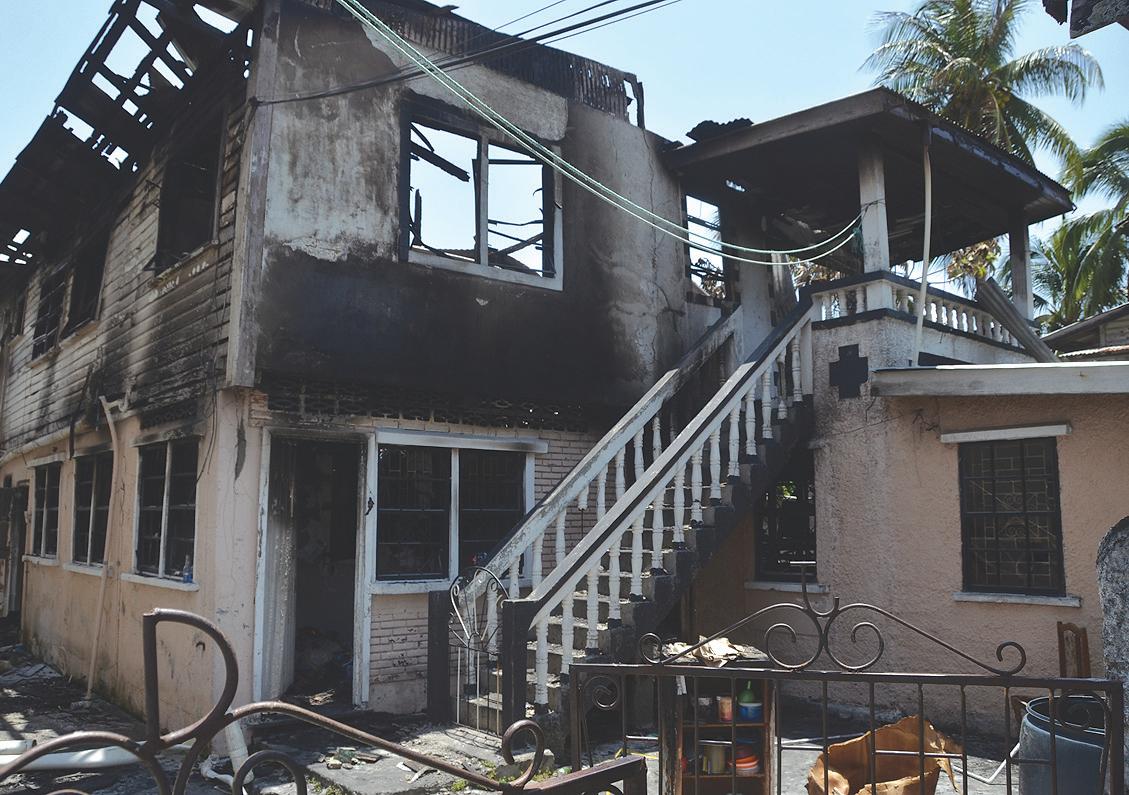
As the Guyana Fire Service continues its investigation into the fire that completely razed a William Street, Kitty property, preliminary results suggest that the fire might have been an act of arson.
Divisional Officer of the Guyana Fire Service, Compton Sparman when contacted on Sunday told Guyana Times that based on initial reports garnered by investigators, one of the apartments in the lower flat of the house was set alight by a man of unsound mind.
He stated that this has not been confirmed. The man was reportedly seen leaving the yard moments prior to the blaze and was heard telling people that “everything will be okay”.
Sparman said firefighters would return to the scene today to further their investigation, noting that the Police were briefed on the reports of arson. He admitted that the firefighters came in for heavy criticism on how they tackled the blaze, but they would have worked with whatever resources were available.
He stated that by the time the tenders arrived at the scene, the entire lower flat comprising five bedrooms was already engulfed in flames. He stated that the fire spread rapidly to the upper flat of the house. This, he noted, was as a direct result of the material that was kept in a storeroom in the upper flat of the building.
He explained that five vehicles responded, but after a while the water ran out and there was no working fire hydrant in the area. Sparman
noted that three additional vehicles had to be used to transport water from Vlissingen Road to the fire scene which was time-consuming.
He related that tapping into water sources in Georgetown has always been a major challenge to
water started to flow and they manage to contain the fire to one location. At least two other properties were scorched as a result of the intense flames.
The fire, which started about 17:45h, completely gutted the Lot 69
the Guyana Fire Service and hoped that this could be corrected. “There are several fire hydrants in the city, but if we are to check how many are in working order, you might be surprised… the small trenches in the area do not have water and all sort of things,” he added.
He told this publication that several water hoses were also damaged by vehicles that were allowed in the area despite ranks redirecting traffic. “This mess us up big time… the Police were there and did not take control of the situation… they all let vehicles through the barriers and this cause major damage to the water hoses…these were just some of the challenges we had on Saturday night,” he explained.
Eventually, after some time, he added that
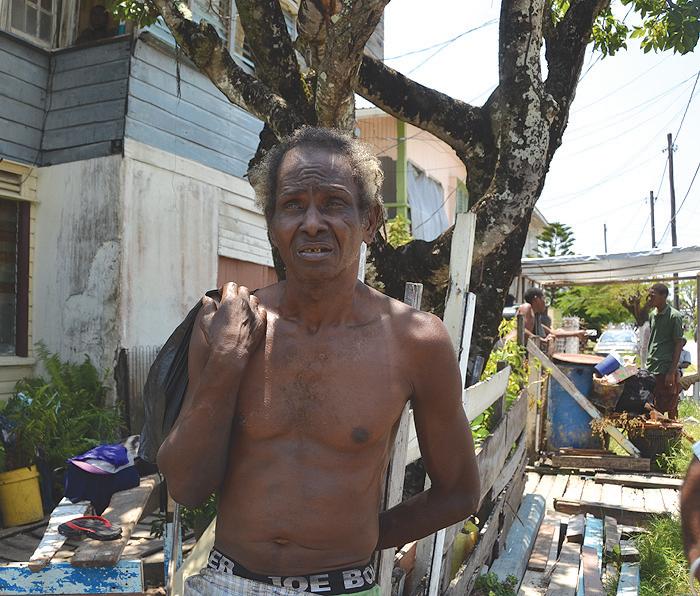
Street two-storey wooden and concrete structure, owned by overseas-based Guyanese Deloris Joseph. When Guyana Times visited the scene on Sunday, Patrick Joseph, who said he was the son of the owner, told this newspaper that he was not at home at the time of the fire. He said he was occupying a room in the lower flat of the building. Joseph, who was carrying a black bag containing clothes, said he has lost everything as a result of the fire. He could not say what might have started the fire, but claimed that the family has incurred millions in losses.
The top flat was occupied by Joseph’s son, Ronel Griffith while the three apartments on the lower flat were occupied by separate families.
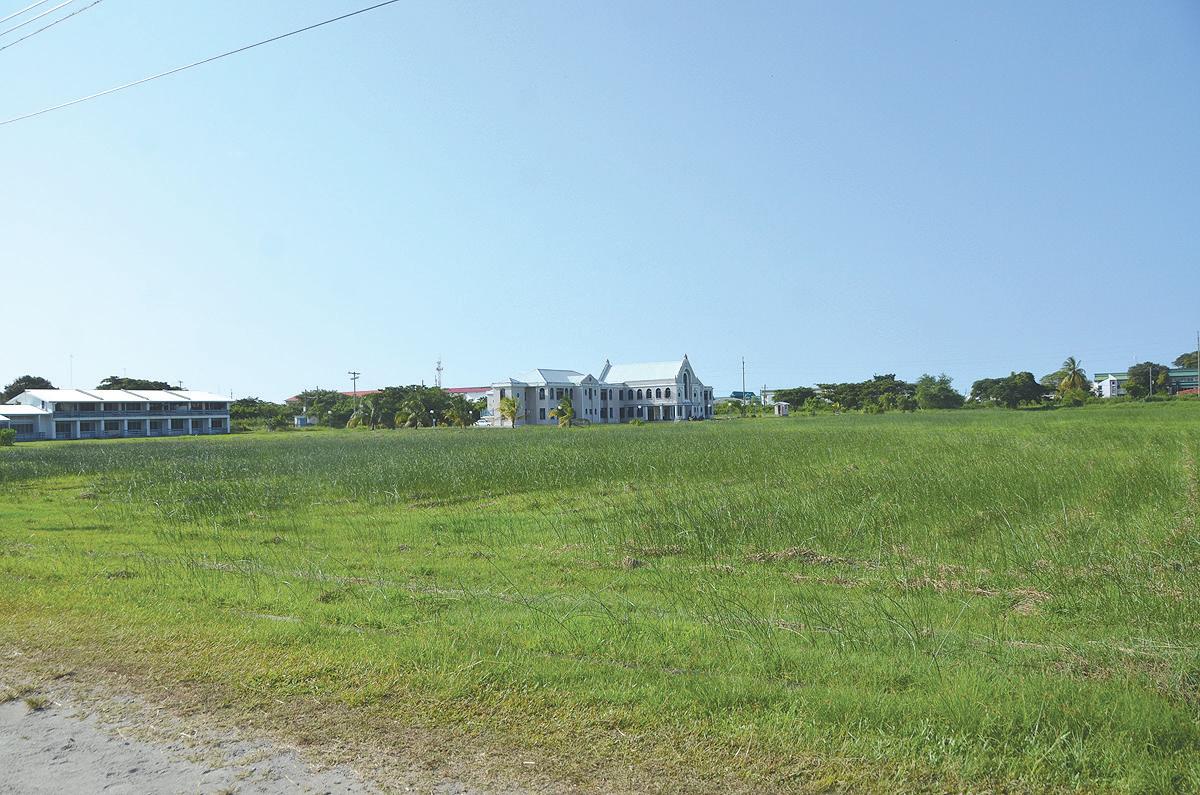
Two weeks into the new academic year and the administration of the University of Guyana Turkeyen campus has still not addressed several key issues concerning students’ welfare.
This is despite a massive strike at the University of Guyana earlier in the year which saw both students and staff demanding better conditions at the educational institution.
Guyana Times spoke to several students regarding their expectations and the conditions at the University, many vented their dissatisfaction with the current state of the institution.
One student said, “Since starting the 20152016 academic year at the University, I haven’t seen much improvement to the campus environment. There is evidence that work is being done on some buildings, but nothing that directly affects me.”
He stated that some of the fans in the classrooms that were installed were still in need of electrical
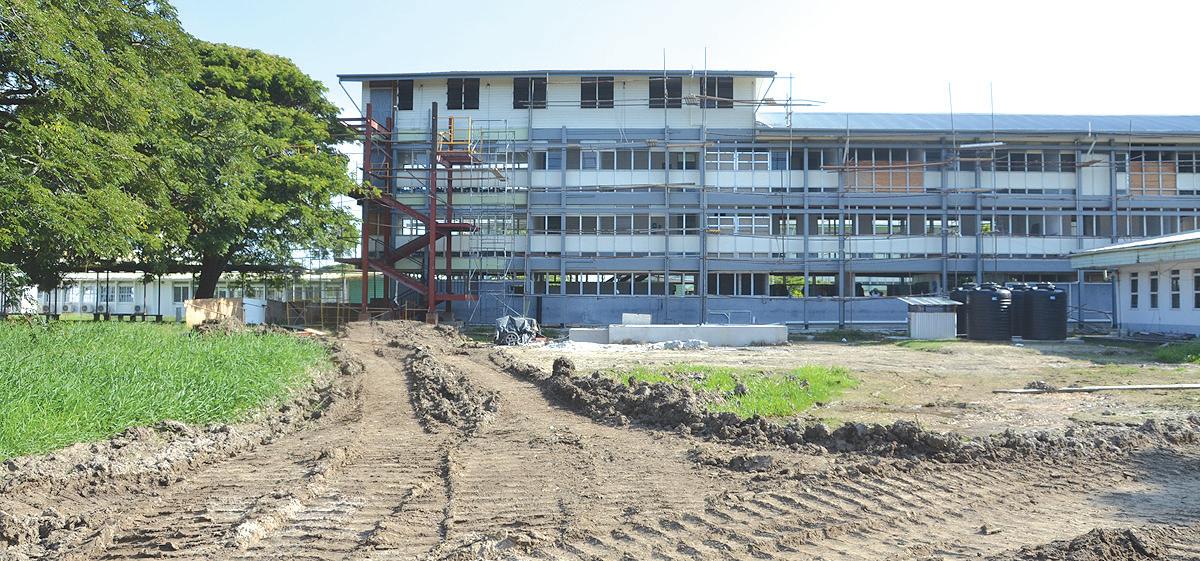
outlets to actually work.
“They are attached to our walls like white elephants. This leaves one to think what was being done all through the JulyAugust break? It feels like we have returned to campus the same way we left it. Since the semester is still in its youth, I am still hopeful that things will turn around, rather sooner than later,” the student stated.
The previous shutdown
of the campus was initiated by the workers over their salaries. This mushroomed to include the conditions that students had to endure on campus.
Other issues that were raised were the conditions of labs and sanitary facilities.
Currently, some washrooms have been renovated and stocked with toilet tissue, while there are currently other infrastructural improvements being

their legal education. However, no word yet has been given by the Government whether this “possibility” of free education would become a reality. Thus far, it seems it was merely a political gimmick.
The A Partnership for National Unity/Alliance For Change (APNU/AFC) manifesto had also promised to make the University of Guyana a major regional research facility. The University recently come in for criticism by former Berbice Campus Director Professor Daizal Samad, about its capacity as a place of research “… there are no statistics in this
done on campus.
With respect to the programmes, one student stated, “I can’t speak for all the programmes except for IR (International Relations) and Sociology which I have had exposure to. Those programmes offered at UG are stuck in the 60s. Those two programmes should have been redesigned to reflect a more Caribbean approach... but they are stuck in the age when we saw the world through Western eyes (US and UK)”.
She reiterated that University programmes must be designed in such a way that they met the needs of the students.
In addition, a female student expressed her concern over the security of the campus at nights, stating that “it’s very dark at nights, and walking out to catch the bus is very difficult. I hope more lights are set up to accommodate night students”.
Currently, UG has strict security in the day, as identification upon entering campus must be shown. On the other hand,
it was observed that security at the facility during the night was lacking thus posing a threat to the students.
In terms of classroom space, a student in the Department of Law who wished to remain anonymous said “the classrooms are heated and overpacked; the building needs to be extended, especially if the administration continues to allow over 80 students into the programme every academic year. We aren’t pigs; we are law students aspiring to enter a very noble and respectable profession.”
Since the removal of the “Spicy Dish” food outlet on the campus, the administration has renovated the building in which it was housed and is now using it as a classroom. However, it is simply too small to accommodate the increasing numbers on roll for the law class it primarily hosts.
During President David Granger’s elections campaign, he promised a return of free access to education from nursery to tertiary and the construction of a law school where Guyanese could complete
place….. the University of Guyana is useless because nothing is coming out of it, nothing at all.”
Weighing on UG’s capacity, Education Minister, Dr Rupert Roopnaraine said he would be a failure if at the end of five years, the University of Guyana was not a thriving University that met international standards. The lack of subvention and proper management were seen as responsible for the current state of UG. The Minister had said the subvention had not been enough. In retrospect, the cuts by the then Opposition to the UG subvention seemed contradictory.
In keeping with the admission by the Education Minster that more funding is needed, one would have expected that some amount of funds would be pledged towards improving the standards at UG. UG, over the years, has produced many talented persons and intellectuals, but an urgent paradigm shift needed to occur in society to realise the quintessential importance of this tertiary institution.

Government is yet to submit a project proposal to the India Exim Bank for the diversion of the remaining funds from the multimillion-dollar Specialty Hospital Project towards the improvement of the country’s primary health care services.
Speaking to Guyana Times, Public Health Minister, Dr George Norton disclosed that Government was able to acquire the approval of the Indian Government to divert some US$14 million from the project into primary health care. This will see modernisation and rehabilitation works being done at three major hospitals in the sector –the Bartica Hospital, the West Demerara Regional Hospital and the Suddie Hospital.
However, before the work can commence, Government was informed that it needed to design a project proposal to be submitted to the Indian Government for the funds to be released and plugged into this new project.
According to Dr Norton, Government has since appointed consultants to conduct a study and an evaluation of the three projects.
“We have started this and as soon as this process is completed, we will present the information to the Indian Government,” he stated.
The Public Health Minister pointed out that he could not say when this process was expected to be completed, but noted that the proposal would be presented to the Indian Government early next year.
Back in June, the A Partnership for National Unity/Alliance For Change (APNU/AFC) coalition had announced that it would be scrapping the controversial Specialty Hospital Project and diverting the remaining US$14 million of the initial US$18 million into the primary healthcare sector.
However, the Indian Government had objected to the redirection of the funds approved for the construction of a Specialty Hospital, insisting that the
new Administration would have to request a new line of credit to carry those plans.
Available funds
Finance Minister
Winston Jordan had previously explained to this newspaper that they were informed by Indian High Commissioner to Guyana, Venkatachalam Mahalingam, that this approach Government has taken was against the rules and procedures of the
The Social Protection Ministry is set to launch its annual Child Protection Week slated to be observed from September 20 to 26 under the theme “Strengthening Families to Protect Children”.
The focal point is the family, as the Unit needs help in keeping children safe from harm and abuse.
Director of Children Services, Ann Greene, described child protection as “everyone’s business and not just the Child Care and Protection Agency (CCPA). Child protection is shared responsibility”.
She stated that in most social environments, the role families and communities play in the protection of children was of extreme importance and as such, the Ministry was placing great emphasis on how the family unit could be strengthened to offer more protection for children.
During Child Protection Week 2015, she added, there would be activities throughout Guyana to remind individuals, community members, and local groups of their civil and moral responsibility to be part of the solution for children in need of protection.
CCPA Officers in their outreach sessions will be providing information on

child development, how to detect child abuse and what community members could do when recognising that a child is at risk.
Emphasis is also being placed on preventing child abuse.
The Week will start off with an “awareness walk” in Georgetown from the Cenotaph to the Kingston Seawall.
A major event for the Week is the “Breaking the silence on childhood sexual abuse” rally to be held in Rose Hall, Region Six (East Berbice-Corentyne) on September 23.
Social Protection Minister Volda Lawrence is
also set to launch the Sexual Offences Act in Braille to aid in the dissemination of information to protect the visibly impaired.
The first Child Protection Week was held in 2004. The Week is commemorated by nearly 120 countries worldwide at various times of the year. Since its implementation in Guyana, the Child Protection Week has been a tool in edifying and equipping the public about the issue of child abuse.
Greene is of the opinion that “there is still much silence on child sexual abuse and it must end”. Many times the perpetrators are known but disclosures are not made.
Recently a man was sentenced to 45 years in prison for raping his underage daughter twice.
Convictions of this nature are encouraging and show that strides are being made to deal with the issue of child sexual abuse. This conviction sends a stern message to would-be abusers.
The Ministry is urging that persons come out and take a stand against the scourge of child sexual abuse that robs children of their childhood – stand up, speak out and be part of the solution for social change in the way children are viewed and treated.
Exim Bank of India.
“He said that we cannot use the funds from the Specialty Hospital Project for any other projects than what it was intended for, even if the project is in the same health sector. So now we have to close that line of credit and make a request for a new one to fund the primary health care improvements, which is of priority for us,” the Finance Minister had stated.
Meanwhile, High Commissioner Mahalingham had indicated to Guyana Times on several occasions that the funds were available for Guyana, noting that his Government was just awaiting the new project proposal from Guyana before releasing the funds.
The previous People’s Progressive Party/Civic (PPP/C) Administration had entered into an agreement with the Indian Government to construct the Specialty Hospital, with a line of credit granted by India to the tune of US$18 million. Some US$4 million has been already expended on certain pre-
liminary works.
The Specialty Hospital was aimed at catering for complicated surgeries, ranging from heart operations, organ transplants to cosmetic surgeries. In 2012, the contract was awarded to Indiabased company, Surendra Engineering Corporation Limited, who was tasked with designing and building the controversial facility.
The current Administration, which was on the Opposition side of the House during the 10th Parliament, had heavily criticised the project.
The coalition had even cut the $1.25 billion that was budgeted for the Hospital in 2013. The PPP/C had only got $34.4 million as supplementary funding for the Hospital in the 10th Parliament because then coalition Member of Parliament (MP) Volda Lawrence was absent when the vote had been taken for the funds.
However, citing instances of alleged fraud and delays, the Donald Ramotar Administration last year
announced that it had terminated the contract of the company and subsequently filed a lawsuit against it for failing to honour its obligations. Government is yet to recover close to $1 billion from the company. The previous Administration was hoping that the hospital would be a pull factor towards bringing tourists and overseas-based Guyanese back to Guyana, a means of “health tourism”. However, the new coalition Government said with the current state of affairs in the health sector, it was better that the construction of the Hospital be put on the backburner.
“The current thinking is that the monies being spent on the Specialty Hospital are better spent on the primary healthcare system. We have hospitals that are in need of funding including at the West Demerara Regional Hospital (WDRH) and the Hospital at Mabaruma also,” Minister of State, Joseph Harmon had stated. (vahnum@guyanatimesgy.com )

monday, september 14, 2015 | guyanatimesgy.com
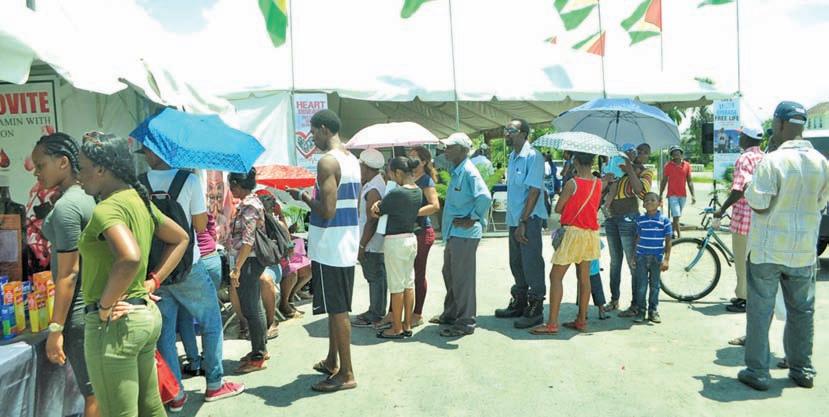
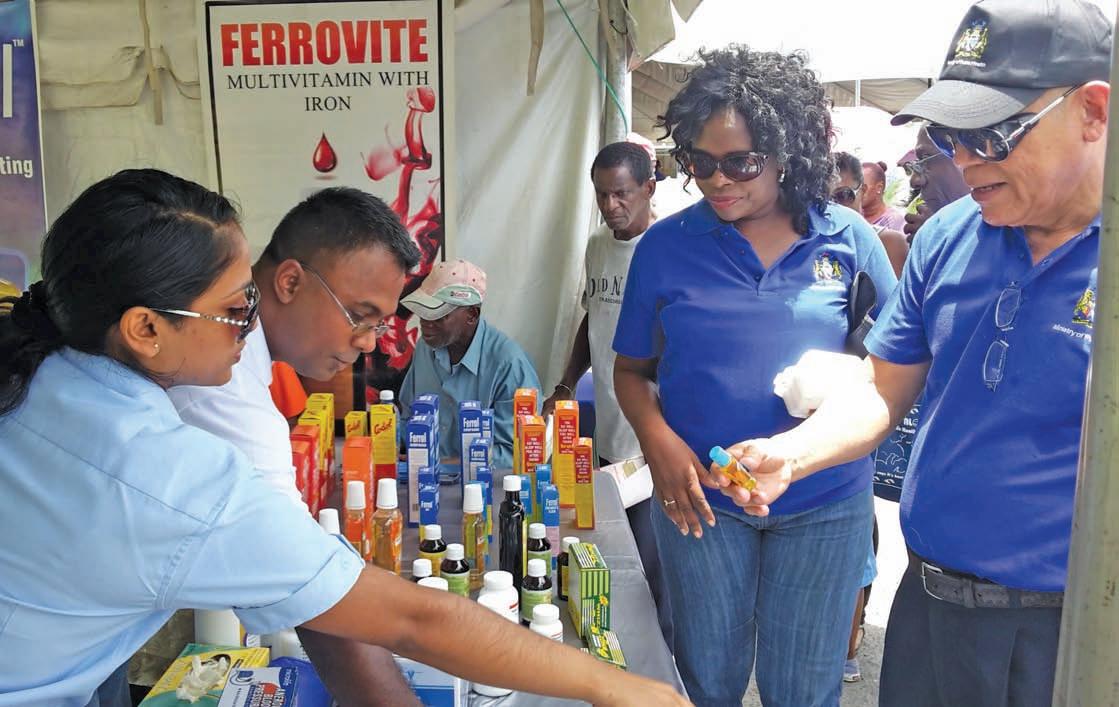
With focus being placed on NonCommunicable Diseases (NCDs), the Public Health Ministry is seeking to have Guyanese be aware of the best lifestyle practices that will extend their life expectancy through a series of activities.
On Saturday morning, the Ministry hosted a health fair with several departments along with pharmaceutical agencies educating the public on better lifestyle practices. This was done in commemoration of this year’s Caribbean Wellness Week held earlier this year. Scores of persons turned out to take advantage of the various services offered.
Speaking to Guyana Times, Health Minister, Dr George Norton stated that NCDs have a negative impact on countries around the world especially on State finances. “We have situation where we can correct all these early deaths or morbidity by simple means. If we concentrate on simple things like our lifestyle, on our diets, on our use of alcohol and tobacco then we can help our country so much especially economically in the provision of health care and our own health as well,” he stated.
According to Dr Norton, life expectancy is a major focus for his Ministry since Guyana has the shortest life expectancy in the Caribbean. He noted that this situation needed to be reversed. “A man in Guyana is only expected to live up to 64 years and all of the rest of Englishspeaking Caribbean is above 70 years. Everything that we can do or that contributes to that we have to correct,” the Minister pointed out.
The Public Health Minister went on to explain that aging was not a sickness or a disease, noting that one can age healthily. However, Dr Norton outlined that because of the lack of knowledge, persons often find difficulties in maintaining a healthy lifestyle; hence, health fairs such as this one provides the opportunity for them to be educated on issues that affect their lives.
Furthermore, the Minister stated that Guyanese needed to develop a culture where they are in-
formed of healthy lifestyle practices so that they can make choices accordingly. Dr Norton noted that with 10 per cent of this year’s budget being allocated to the Health Sector, funds would be used to increase public awareness on NCDs.
Senior Medex attached to the Ministry’s Regional Health Services Department, Sarah Daniels, explained that the health fair provided the opportunity for the Ministry to engage and educate the public on basic antiNCDs practices.
“We have an outpatient clinic here with two doctors on duty who are seeing patients with any conditions. We also have medications that are distributed to patients seen by the doctors,” she stated.
Apart from the various departments within the Ministry, there were several other entities that took part in the fair and had booths set up. These include the University of Guyana’s Bachelor in Science in Optometry Department along with companies such as Da Silva House of Optics, ANSA McAL with their line of pharmaceuticals, Medicare Pharmacy, International Pharmaceutical Agency (IPA) and NEW GPC INC. These companies had most of their products on display, while offering counselling and testing services to the public.
Speaking with this newspaper, Marketing Representative of NEW GPC Inc, Livasti Bhooplall, underscored the importance of having the public educated about NCDs. She noted that these diseases were killing most Guyanese, so stakeholders needed to come together and fight this “enemy”.
“NEW GPC INC believes that physical activity in schools and education on healthy eating are vital tools in the fight against NCDs. Our presence here is supporting the efforts of the Government and local stakeholders to help rid our nation of the scourge of NCDs in this dear land of ours,” she declared.
Bhooplall further outlined that NEW GPC INC manufactures Metformin for diabetes, atenolol and furosemide for high blood pressure, and
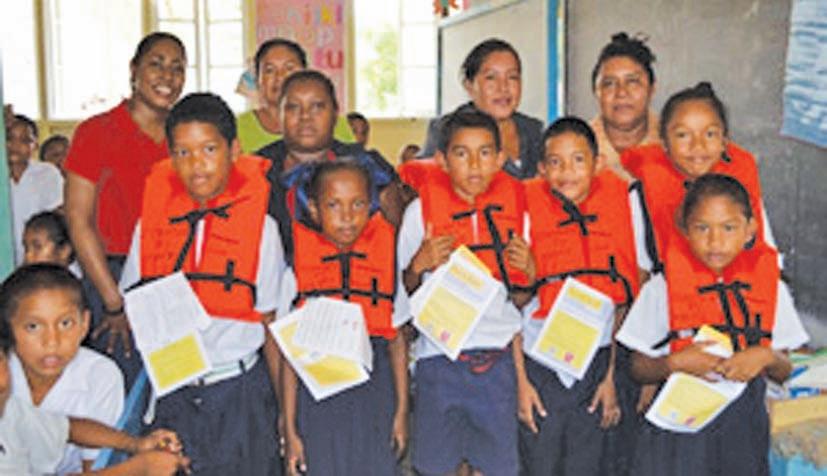
atorvastatin for cholesterol.
While NEW GPC INC was a pioneer with the production of Anti Retrovirals (ARVs) drugs and a partner in the fight against HIV/AIDS in Guyana, the company believes that the fight should be taken to NCDs.
Some of the services offered by the companies and the Ministry at the fair included blood pressure tests, sugar tests, eye care testing and dental services.
In 2014, the Pan American Health Organisation (PAHO) had cited NCDs as being the cause of about 60 to 70 per cent of Guyana’s mortality rate. (vahnum@guyanatimesgy.com)
Ateam from the Maritime Administration Department (MARAD) of the Public Infrastructure Ministry recently concluded its distribution of over 150 children lifejacket to school children along the CuyuniMazaruni River, Region Seven (Cuyuni-Mazaruni) in an effort to continue promote safety on the waterways.
On Thursday last, MARAD distributed 130 lifejackets to students of the Batavia Primary School, 35 to Kartabo Primary School, 9 to Makouria Primary School and 35 to the Holi
Name Primary School.
Additionally, lifejackets were distributed to the teachers.
MARAD has been involved in this initiative for several years whereby it distributes lifejackets to children who reside in riverine areas where their only means of transportation to schools is via the waterways.
Aside from the distribution, the MARAD team would engage the students on the safety procedures to follow whenever traversing on the waterways.
Thus far, MARAD has visited all the regions across
Guyana. The initiative will continue again next year when it will continue its mandate to promote safety.
In addition to distributing lifejackets, MARAD would hold sessions where it would provide first aid training to boat operators throughout the country. The boat operators working the Vreed-enHoop- Georgetown route and operators working the Parika- Bartica route have already completed their first aid training.
The next step, MARAD said, would be to provide customer training to the operators.
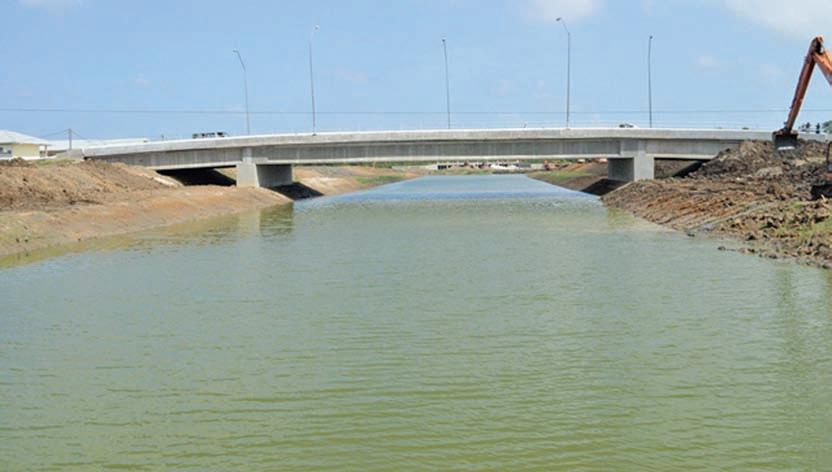
Contrary to persons’ beliefs that the establishment of the Hope/ Dochfour Canal along the East Coast of Demerara (ECD) will alleviate flooding for a number of communities and villages, retired Major General Joe Singh recently stated that this was not so.
He explained that while the Hope/Dochfour Canal alleviated flooding for farmers and villagers in Mahaica and Mahaicony, the rest of the East Coast cannot depend on it.
“In the case of the Coast contrary to some popular belief the Hope Canal is not going to help the East Coast of Demerara. It will
only provide stability for the 270 square miles of the East Demerara Water Conservancy (EDWC). It is designed in such a way,” Singh said.
He further stated that the country and the authorities in charge of drainage and flooding issues still encounter problems when it rains and there is a collection of water between the conservancy dam and the crown dam.
Problems also occur when there is a collection of water between the crown dam and the Railway Embankment Road, between the Railway Embankment Road and the East Coast Demerara
Highway, and between the said highway and the seawalls.
“So once you have an accumulation of water in those reservoirs unless you have enough culverts or conduits to move the water from those areas out to the Atlantic, you will get flooding. Buxton, for example, is the lowest area on that East Coast between here and Mahaica and it is always the last to drain. So we need to disabuse our minds of the Hope Canal as the answer to the East Coast, because it is not.”
He reiterated that the Hope/Dochfour Canal stabilises the EDWC and pre-
vents the kind of flooding that happened in the Mahaica Creek and major flooding would badly affect the cash crop and rice farmers close to the area.
Meanwhile, former Health Minister, Dr Bheri Ramsaran during the 2015 budget debates told the National Assembly that the said Canal was responsible for saving residents in the area a lot of money and from encountering illnesses. He mentioned that the diseases and infections that usually accompany flooding situations did not affect residents around the Hope/ Dochfour Canal because it prevented such flooding from occurring even while it was not fully operational.
The Hope Canal project was deemed as one of the largest infrastructural projects in Guyana’s history and was executed under the People’s Progressive Party/ Civic (PPP/C) Administration. It was said that the relief channel would have the capacity to withstand floods greater than that which occurred in 2005. It was also constructed to ease the pressure of water on the EDWC when it reaches maximum capacity, releasing the excess water into the Atlantic Ocean via a sluice. (kristenm@guyanatimesgy.com)

The report of the Commission of Inquiry (COI) into mining accidents was presented by Guyana Gold and Diamond Miners Association (GGDMA) executive Colin Sparman at the association’s Annual General Meeting on Friday.
The CoI was ordered by President David Granger after the death toll in the industry spiked in May when a Potaro mining pit collapsed and killed 10 miners. The miners were killed after the mining pit in which they were working caved in at Mowasi Backdam, Region Eight (Potaro-Siparuni). It was reported that 17 miners were working when the incident occurred. Seven of the men made it out of the pit alive, but the remaining 10 were found during a three-day search-and-rescue mission.
The report highlight -
ed that there have been, over the last 15 months, 28 deaths, most coming from pitfall cave-ins. Sparman also shared that from 2012 to 2015, 62 miners, particularly young men, lost their lives on the job. He added that in most civilised societies, this would be considered scandalous and unacceptable.
These accidents were said to be caused by neglect of safe mining practices, including shortcuts taken by workers, who sometimes treasured their finds over their own lives. Sparman added that the CoI determined there was a pervading culture of laxness towards to safety and that clear rules must be applied and enforced.
“As the Guyana Women Miners Organisation (GWMO) puts it, everyone is wired for gold and not for safety. A drastic change in culture involving edu-
cation and sensitisation at all levels – miners, operators, property owners and regulators, is required,” Sparman added.
The report recommended that the Guyana Geology and Mines Commission (GGMC) institute the proper framework in order to decrease the number of future accidents.
Speaking of the emergency rescue system, Sparman stated that whenever an accident occurred, the available emergency mechanism – the searchand- rescue recovery was inadequate and would need proper definition and manning. He added that there was poor reporting of these accidents, and most times GGMC would act on a report heard or seen in parts of the media.
The CoI was concluded in August and the report was with the Cabinet, according to reports.
Despite an increase in serious crime in Guyana, crime in Berbice has decreased. Police on Friday revealed that up to the end of August 2015, serious crime in the country had risen by 12 per cent when compared with what it was last year.
However, Acting Commander of B Division (Berbice), Senior Superintendent Errol Watts says serious crime in Berbice has dropped when the figures are compared with those for the corresponding period last year. “Crime is not on the increase in Berbice. We in the Police Force categorise serious crime in 11 areas…” He explained those areas were murder, robbery under arms, robbery under arms where firearms are used, robbery under arms
where other instruments are used, robbery with violence, robbery with aggravation, break and enter and larceny, burglary, rape, larceny from the person and kidnapping. So far this year, there have been 17 murders committed in the Division.
“I wish to point out that the only area where there is an increase is robbery under arms where firearms are used, as you are aware firearms is the weapon of choice for the criminals to get the victim to hand over their valuables. If you have a knife in front of someone and you ‘stick them up’ they will put up a fight but if you have a firearm, a man knows the danger of a firearm and he will easily hand over his valuables,” the Commander said.
He added that the Division has been giv-
en resources in the form of a Special Weapons And Tactics (SWAT) Unit which is headed by an Assistant Superintendent and included nine other ranks based at Whim, Corentyne. “We have two additional units which are based at Number 51 to deal with crime in that area and recently had the Joint Service Special Operations which is based in Stanleytown, New Amsterdam.”
In addition, Watts said that vehicles were handed over recently and more are expected shortly. “I think we are adequately equipped to deal with crime in Berbice.”
According to the Senior Superintendent, there are also other agents who are being used for intelligence purposes and other mechanisms at the disposal of the division to fight crime.
monday, september 14, 2015 |
The Education and Indigenous Peoples’ Affairs Ministries have collaborated to pay homage to late Father John Peter Bennett, who produced the Arawak-English dictionary, at the National Art Gallery, Castellani House, as the celebration of Amerindian Heritage Month.
The tribute took the form of an exhibition of artwork by indigenous artists called the “Moving Circle”.
In his remarks at the launch on Thursday, Indigenous Peoples’ Affairs Minister Sydney Allicock said that Guyana’s indigenous people have made major contributions to the country’s development.
He added that the talents that the country’s young-
ary, which was a “great contribution to preserve the Loko (Arawak) Culture”. He explained that this exhibition would be very interactive as some of the artists will be present to show how their pieces were created.
Early life
Bennett was born in Kabakaburi on November 30, 1914. He completed his formal schooling around the age of 12, but continued to read widely.
After working as a catechist in Massara, North Rupununi and as acting Head Teacher at St Monica, Pomeroon, Bennet attended Codrington College in Barbados from 1946-1949 to train for the priesthood.
He was ordained as a
have to be conducted in English. He also noted that in Kabakaburi, the use of the Arawak Language was rapidly disappearing. He started the Arawak dictionary in the late 1950s and received tremendous encouragement through correspondence from Jamaican lawyer, academic and politician, Richard Hart. They eventually met in 1992 after corresponding for more than 30 years.
The first edition of An Arawak-English Dictionary was published in 1989 and the second edition in 1994. Bennet was compiling an additional list of Loko words and their meanings which ended when he lost his sight in 1998. His other unpublished works include trans-

sters currently posses must be identified, so that the support and encouragement can be given, enabling them to achieve even greater excellence.
The Indigenous Minister told upcoming artists that his Ministry would support their endeavours without discriminating against age. He also stressed that art needed to be reintroduced into schools.
Also speaking at the function, Education Minister Dr Roopnaraine assured the artist present of the support of the Education Ministry also.
Internationally acclaimed artist George Simon shared, at the event’s launch that after reading Father Bennett’s work, he thought that it would be ideal to pay homage to the man that produced the Arawak-English diction-
priest later in 1949 and would serve as priest in several parts of Guyana: New Amsterdam, Port Mourant, Bartica, North Rupununi, Waramuri and other areas in the North West Region, and finally Kabakaburi and the entire Pomeroon parish. In 1976, he was made a Canon of the Anglican Church.
It was his contact with the various Amerindian peoples in the different villages he worked in that gave him the idea of starting his scholastic work on the Arawak Language. He noted that the Macushis of the North Rupununi, the Caribs of the Barama and Manawarin villages and the Warrus of Waramuri and Warapoka, for example, all spoke and sang in their respective languages. He realised that the church services did not
lations of some books of the Bible and Loko Stories, a collection of stories written in Arawak and English.
Bennett passed away in November 2011 several days before his 97th birthday. He dedicated his life to serving in his vocation as priest, but he also made a tremendous effort helping to preserve and to advocate the preservation of the Arawak Language.
Bennett continues to be an inspiration for many, especially his fellow indigenous brothers and sisters.
Chair of Castellani House, Alim Hosein stated that February 2016 will mark 25 years for the “Moving Circle” of indigenous artists in Guyana. The exhibition concludes on September 30. (jpinder@ guyanatimesgy.com)
Sterling nets $1.5B in first half of 2015
With the country’s economy in a slump most of this year, Sterling Products Limited has reported a 32 per cent decrease in its profit after tax at the end of the first six months of 2015.
According to the company’s Interim Financial Report, Sterling Products’ performance for the first half of the year showed third party revenue at $1.5 billion compared to $1.6 bil-
lion during the corresponding period last year. This has resulted in after tax profits being recorded at $49.2 million compared to $72.7 million reported for the same period in 2014, representing a 32 per cent reduction.
“We have seen a challenging first half of the year due to a downturn in the economy. We saw a consumption of goods and services slowed marked-
ly,” explained Chairman of the company’s Board of Directors, Dr Leslie Chin. Going forward, Chin noted that Sterling Products Limited will continue to be vigilant of the local business environment. Furthermore, the Chairman stated that management will make adjustments to its strategies whenever necessary in order to deliver acceptable returns to its shareholders and beneficiaries.

There was more flooding but no more loss of life as storm-hit Dominica was pounded by heavy rains associated with the remnants of Tropical Storm Grace on Friday.
Several roads were underwater and some trees toppled during the downpours.
There were also reports of residents stranded in some areas but, fortunately, no loss of life.
The rains came as Dominica continued the process of recovering from the widespread destruction caused by Tropical Storm Erika two weeks ago.
A flood warning had been issued before the bad weather came on Friday, amid con-
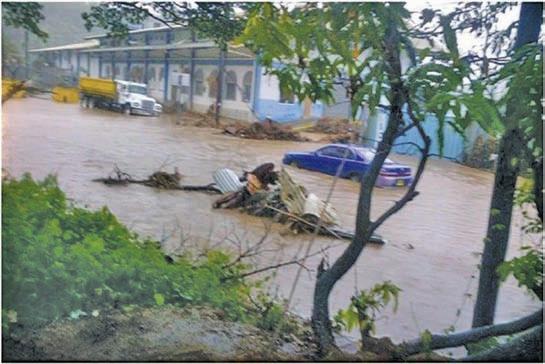
cerns that with the land still saturated by Erika’s rains, any additional rainfall was likely to cause further flooding and landslides. Erika resulted in more
than 30 deaths, destruction to infrastructure and nine communities being declared special disaster areas. (Caribbean360.com)
Within the next two years, Prime Minister Dr Keith Rowley will be forced to make the biggest decision in his life by taking drastic measures to keep T&T’s economy stable.
The prediction was made on Thursday by popular psychic Yesenia Gonzalez.
Sitting in a dimly lit room at her Mt Lambert home with a deck of tarot cards spread across a gold cloth, Gonzalez, who predicted on her Facebook page that the People’s National Movement (PNM) would have emerged victorious
on September 7 and Kamla Persad-Bissessar’s Cabinet would face repeated scandal, revealed fresh predictions for Rowley and his new Government.
In the next 24 months, Gonzalez said, Rowley would be faced with tough economic challenges and would have to take decisive action and implement drastic changes that could make him unpopular with the masses.
“His decisions and actions can lead to a tsunami of protests. But he is a strong leader and would do his best for the country’s survival,” Gonzalez said.
She also revealed that attempts would be made to have Persad-Bissessar removed as leader of the United National Congress (UNC), while Jack Warner’s extradition matter would drag on for years in court.
Gonzalez said Rowley’s decisions would hinge on a number of factors that would affect the country.
“The Prime Minister would face major challenges as oil prices would continue to be unstable and would further drop. The prices would fall very low, which would create history in the country.” (Excerpt from Trinidad Guardian)
While Clico policyholders were waiting with bated breath for word on payment of their money, a battle was being waged behind closed doors between former Clico Chairman Gerald Yetming and Central Bank Governor Jwala Rambarran.
Last week, their private battle was made public when details of Rambarran’s report on the circumstances that led to the June 5 dismissal of Yetming and Clico Managing Director Carolyn John were leaked.
In the report, he called for the Director of Public Prosecutions to investigate possible criminal liability on Yetming’s and John’s part following the release of funds to four ex-Clico Directors in May.
However, some three months before that report Yetming, in his report to former Finance Minister Larry Howai, called for Rambarran to be removed as Governor. Rambarran, he said, was “unfit” for office. He still maintains this call.
He said the action taken
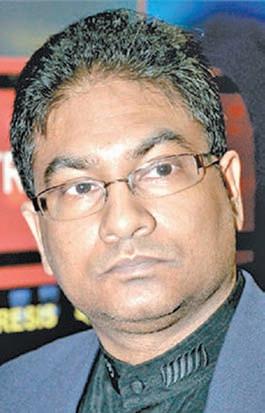
against him and John was “unjustified and unwarranted, and done in a most dishonest and deceitful fashion.”
The former Chairman contended that “the Governor, judged only by the manner in which my removal and that of Carolyn John was dealt with, is not fit to continue in the office at the Central Bank.”
Yetming also called for the dismissal of Central Bank officials: Inspector of Financial Institutions Carl
Supporters have rallied around the wife of Venezuela’s jailed Opposition Leader Leopoldo Lopez, calling for peaceful protests after he received a sentence of nearly 14 years in prison for his role in deadly anti-Government demonstrations.
The European Union denounced Friday’s sentence as “harsh”, while Washington said it was “deeply troubled” by the treatment of the UStrained economist.
The ruling, which critics say is politically motivated, is expected to fan tensions in Venezuela, where runaway inflation and shortages of basic goods fuelled
last year’s protests against President Nicolás Maduro’s socialist administration.
Lopez was accused of inciting the violence that led to 43 deaths and about 3000 people being wounded.
Judge Susana Barreiros found him guilty of “damage and arson, public incitement and conspiracy”, the Attorney General’s office said, according to the AFP news agency.
Lilian Tintori, Lopez’s wife, gave an impassioned speech on Friday before dozens of supporters in an eastern Caracas plaza, calling for people to take to the streets one week from Saturday, as the crowd chanted: “Yes we can!”
“I call on you,” she said, to come out on September 19 “to build our victory, to take over the streets peacefully and democratically, with strict discipline and no violence”.
Tintori, who spoke after visiting Lopez in prison, read a letter from her husband in which he said: “I do not regret the decision that I made. Great causes deserve great sacrifices.”
Lopez will serve out his sentence in the military prison of Ramo Verde, where he has been held since he turned himself in shortly after the protests. (Al Jazeera)
PAHO promotes safe, “smart” hospitals in Caribbean

In ensuring that hospitals can continue functioning during disasters and to reduce their environmental footprint, the Pan American Health Organisation (PAHO) says it is promoting safe, green and “smart” hospitals in the Caribbean.
Hiralal, Senior Manager (Legal & Corporate Secretariat Services) Nicole Chapman; Chief Actuary Michelle Chong Tai-Bell; and Special Adviser Neil Dingwall.
He said they were all apprised of who was going to be paid and did not raise any objection. (Excerpt from Trinidad Guardian)
PAHO said nearly seven in 10 hospitals in Latin America and the Caribbean are located in disasterprone areas, putting them at risk of becoming casualties themselves during hurricanes, earthquakes or flooding. PAHO said its “Smart Hospitals” programme, a multi-year initia-
tive financed by the United Kingdom’s Department for International Development (DFID), this past June launched a new phase that targets a dozen hospitals in Dominica, Grenada, St Lucia, and St Vincent and the Grenadines. When Tropical Storm Erika struck Dominica in late August, causing death and destruction, three hospitals on the island were in the process of being evaluated as part of the programme, PAHO said.
“Natural disasters can have a major impact on the health sector and on people’s lives, and we need to ensure that health facili-
ties are built to resist disasters while also being environmentally friendly,” said Dana Van Alphen, coordinator of the programme.
“A bonus is that hospitals that participate in this programme also see their operating costs decline and produce less pollution,” she added. PAHO said a hospital is considered “smart” when it links structural and operational safety with green interventions, at a reasonable cost-benefit ratio.
In “green” hospitals, air quality improves, water and energy costs decline, and people’s working conditions improve. (Excerpt from CMC)
Colombia has asked for an explanation from Venezuela after detecting two military airplanes that flew into its airspace late on Saturday, the Defence Ministry said.
The two aircraft entered Colombia’s northern La Guajira province, flew about 2.9 kilometres (1.8 miles) over the border and then circled above a military unit, Colombia’s Government said in a statement on Sunday.
The incident comes amid
a diplomatic row between the conservative administration of Juan Manuel Santos in Colombia and the socialist Government of Venezuela’s President Nicolás Maduro.
Maduro closed several major border crossings and deported 1300 Colombians last month in what he called a crackdown on smuggling and crime on the frontier.
As many as 16,000 Colombians have left neighbouring Venezuela, accord -
ing to the United Nations.
Maduro says he is protecting his country from criminals who smuggle everything from gasoline to flour across the border, but his political opponents say he is using Colombians as scapegoats to distract from Venezuela’s economic crisis.
Colombians were made to leave their homes in several Venezuelan border towns and forced in many cases to cross rivers and bridges with their belong -
ings on their backs.
Foreign Ministers from the two nations met on Saturday in Ecuador to try and smooth the way for the two leaders to meet and resolve the spat.
Santos has blamed the border crisis on Maduro and said last week that Venezuela’s socialist revolution had failed.
Venezuelan officials did not immediately respond to requests for comment. (Excerpt from Reuters)
Germany re-imposed border controls on Sunday after Europe’s most powerful nation acknowledged it could scarcely cope with thousands of asylum seekers arriving every day.
Berlin announced that the temporary measure would be taken first on the southern frontier with Austria, where migrant arrivals have soared since Chancellor Angela Merkel effectively opened German borders to refugees a week ago.
“The aim of these measures is to limit the current inflows to Germany and to return to orderly procedures when people enter the country,” said Interior Minister Thomas de Maiziere, adding that this was also necessary for security reasons.
Berlin took the step – which is allowed under Europe’s Schengen treaty as long as it remains temporary –a day before European Union Interior Ministers held an emergency meeting to discuss spreading asylum seekers around the 28-nation bloc.
A European Commission proposal that each country should accept refugees under a system of compulsory quotas is meeting strong resistance from some countries, especially in cen-

tral Europe. Slovakia said on Sunday it would try to block the plan.
Germany, Europe’s largest and richest economy, has become a magnet for many people fleeing war and poverty in Syria and other parts of the Middle East, Asia and Africa. Police said around 13,000 migrants arrived in the southern city of Munich alone on Saturday, and another 3000 on Sunday morning.
Now Germany has joined the list of smaller and poorer countries such as Greece and Hungary that are struggling to manage the huge flow of desperate people.
“This step became necessary. The great willingness to help that Germany has shown in recent weeks – by fulltime employees and especially by the many thousands of volunteers – must not be overstrained,” de Maiziere said.
Indian Police said on Sunday they were hunting for the owner of illegally stored explosives which accidentally detonated in the centre of a crowded town, killing at least 88 people.
Rajendra Kaswa, a local businessman, has been charged with illegally storing gelatin sticks and other explosives next to a restaurant and busy junction in the town of Petlawad in central India, officials said. He also faces charges of criminal negligence and culpable homicide.
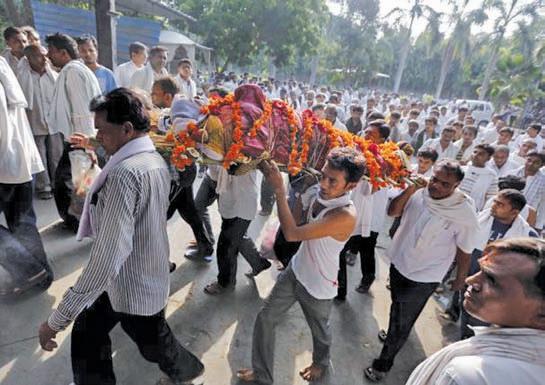
“He is on the run. One of his accomplices has already been arrested. He has been charged under the Explosives Act,” Divisional Commissioner Sanjay Dubey told Reuters by telephone from the site of Saturday’s blast, one of the deadliest in India in recent years.
The explosions ripped through the restaurant as labourers and children ate their breakfast, destroying the diner and nearby build-
ings and sending debris hurtling into the street where travellers queued for buses in the morning rush hour.
More than 100 were injured in the blasts, 15 of them seriously. (Excerpt from Reuters)
Israeli Police clashed with Palestinian youths after entering the al-Aqsa mosque complex in East Jerusalem.
Police say they entered the site “to prevent riots”. They were reported to have used tear gas and stun grenades, and were attacked with rocks and fireworks.
Similar clashes took place at the end of July.
Al-Aqsa is one of Islam’s holiest sites and is in the Temple Mount/Haram al-
Sharif site also revered by Jews.
The holy compound is a source of religious and political tension between Israel and the Palestinians. It is a frequent flashpoint for violence.
The clashes come hours before the start of the Jewish New Year, Rosh Hashanah.
Police were quoted in the Israeli media as saying the Palestinian youths who had barricaded themselves
into the mosque were planning disruption to prevent Jews visiting the site.
Security forces launched a surprise raid around 06:45h (03:45 GMT) in the hope of opening the site as planned, Haaretz newspaper reports.
The Police said in a statement that masked youths within the mosque “threw stones and fireworks” and that pipe bombs had been found.
(Excerpt from BBC News)
Libya’s rival Governments have reached a “consensus” on the main elements of a political agreement, a United Nations special envoy has told reporters.
Bernardino Leon said in Skhirat, Morocco, on Sunday that the two sides were able to “overcome their differences” on major outstanding issues, increasing the likelihood of signing a long-awaited agreement to form a unity government this month.
Leon said it was the first time “that we have the possibility to make it and to have this agreement with all the parties, all the key parties in Libya onboard” adding that both sides have made compromises.
“We know that it is going to require a lot of work, but we believe that it will be possible to reach this deadline of the 20th of September
with an agreement that will be signed,” said Leon.
The most recent text of the draft agreement was not immediately available, but outstanding issues had related to military and State appointments during an interim period and how to appoint members of the High Council of State.
Since the 2011 overthrow and killing of long-time dictator Muammar Gaddafi, Libya has slid into chaos. The country is divided between an Islamist-backed Government in Tripoli and the internationally recognised Government in Tobruk.
Leon has been trying to get the parties to present candidates for Prime Minister and two deputies to lead a national unity government to bring the wartorn country out of its crisis.
(Excerpt from Al Jazeera)
China has unveiled its plan to restructure its mammoth State enterprise sector, including partial privatisation, as data pointed to a cooling in the world’s second-largest economy.
The guidelines, jointly issued on Sunday by the Communist Party’s Central Committee and the State Council, China’s Cabinet, included moves to clean up and integrate some State firms, the official Xinhua news agency said. It did not elaborate.
Reform of underperforming State-owned enterprises is one of China’s most pressing needs. But if not handled well, the restructuring could lead to hundreds of thousands of people being laid off

and social instability.
Xinhua said the plans included introducing “mixed ownership” by bringing in private investment, and “decisive results” were expected by 2020.
The Government will not force “mixed ownership”, nor will it set a timetable, giving each firm the go-ahead only when conditions are mature, it said. (Excerpt from Al Jazeera)
Two engineering graduates in India have invented a device that improves communication for speech- and hearing-im-
paired people.
The prototype interprets sign language and translates it into words by turning finger movements into
signals that are then vocalised. The designers of the device are optimistic that it will take off. (Al Jazeera)
Thousands of students from private universities, including medical and engineering colleges, are protesting across Bangladesh against the Government’s decision to impose tax on tuition fees.
Students in Dhaka as well as Chittagong, Sylhet, Rajshahi and other small-
er cities across the country have been protesting on the streets since September 9.
Many of the students coming from lower-middle class fear that an increase in Value Added Tax by 7.5 per cent will put a huge burden on their families who struggle to earn money to support their children’s education in this poor
nation of nearly 160 million.
“We want complete withdrawal of VAT on education. Education is not a product,” Enamul Ahmed, a student of Independent University Bangladesh, told Al Jazeera. In a nation with per capita income of $1314, the tax hike is like a cruel joke to the students. (Excerpt from Al Jazeera)
monday, september 14, 2015| guyanatimesgy.com
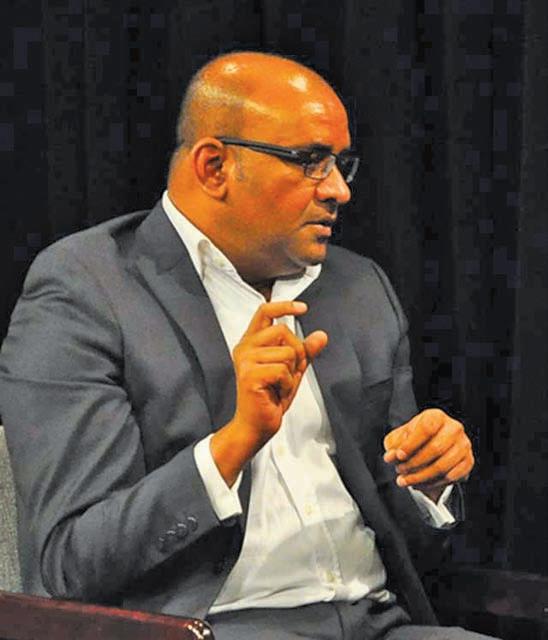
Former President Bharrat Jagdeo has again touted the benefits of Public- Private Partnership (PPP), noting that the mechanism will always remain a winning one for Guyana’s economy.
The former Guyanese leader, who is now leader of the Opposition People’s Progressive Party/Civic (PPP/C), was speaking to Journalists on Tuesday, when the issue of the Berbice Bridge came up for discussion. It was during this discussion that the former Head of State spoke of investments and PPPs, and how beneficial they are to the country.
“I believe that PublicPrivate Partnerships are
great investments and I think that more and more we should do this. We should create opportunities for this to happen. I would like to see, say the Marriott; why not sell shares in the Marriot to all Guyanese so that we all could own it. I think you can get, if you sell the shares, you may get more than the $ 8 million equity or the $12 million in equity that you need to raise to take to 100 per cent ownership.”
According to Jagdeo, Government needs to create opportunities for persons so that their money will not just sit in the commercial banks, but begin to be utilised in the public.
“If you look at our manifesto, we said that we wanted to improve the intermediation of capital and expand the range of capital economic opportunities in the financial sector available to people. When you settle the country, you can move to higher levels of sophistication,” he said.
He continued that Government also needed to provide more opportunities for persons to invest in development type activities where they would be able to get 10 and 20 per cent returns on their money, rather than the three per cent they receive from the bank.
Jagdeo had earlier told Journalists that the gridlock between the new A Partnership for National Unity/ Alliance For Change (APNU/AFC) coalition Government and the Berbice Bridge Company Inc (BBCI) could be easily resolved, if the new Administration would sit and work with everyone involved.
Government and the privately-owned BBCI are currently at loggerheads, because the latter has refused to agree to a proposal the new Administration has laid out which would eventually see a reduction in the toll for the Berbice Bridge. Government has offered to subsidise the loss the Bridge would incur, should it reduce the toll for motor cars and minibuses by some $300. However, the BBCI indicated that while it sup-
ports moves to make the Berbice crossing more affordable, it could go bankrupt if Government arbitrarily moves ahead with the toll reduction without fully honouring the legally binding agreement between the Company and the Government to have tolls adjusted within speci-
not by the taxpayer.
In other types, capital investment is made by the Private Sector on the basis of a contract with Government to provide agreed services and the cost of providing the service is borne wholly or in part by the Government.
Government contribu-
things could become “substantially worse” in the future.
“Government should do a consumer confidence survey and an investor’s confidence survey and you will see that if you had 10 persons that planned to expand, eight of them are saying they will wait and
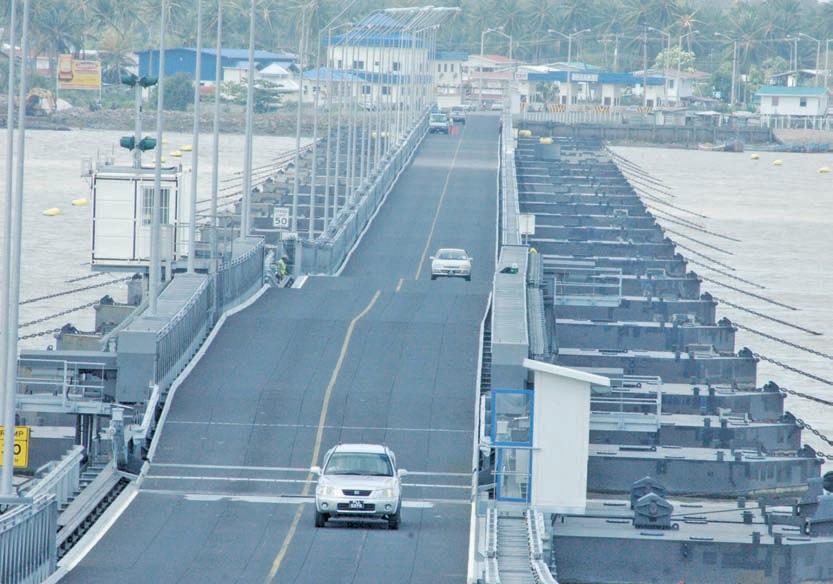
fied timeframes.
A PPP involves a contract between a public sector authority (Government or one of its arms) and a private party. The private party provides a public service or project and assumes substantial financial, technical and operational risk in the project.
In most types of PPPs, the cost of using the service is borne exclusively by the users of the service and
tions to a PPP may also be in kind, notably the transfer of existing assets. In projects that are aimed at creating public goods like in the infrastructure sector, the Government may provide a capital subsidy in the form of a one-time grant, so as to make it more attractive to the private investors.
Speaking directly to the economy, Jagdeo said with the current state of affairs,
see. If they do not, there will be no future growth in the economy,” he said. He also alluded to Government’s failure to consider the Amaila Falls Hydro Power Project for which, billions of dollars could have been saved overtime in the energy sector. A reliable power supply would likely boost manufacturing and other business sectors.
Republic Bank
Limited and the University of the West Indies (UWI) recently turned the sod for the construction of a new and bigger branch at the University’s St Augustine Campus in Trinidad and Tobago (T&T)
The ceremony was held at the construction site, located on Circular Road, opposite the UWI St Augustine Campus. The bank is looking to expand the existing branch located on campus, as such construction is slated to commence in the near future with the aim of having the facility completed in 2016.
Executive Director of Republic Bank, Derwin Howell, in sharing the inspiration behind the vision of the new Campus branch said, “It was in 1961, that we opened a small branch on campus… Over the course of the next five de-

cades, our relationship with both the University and the community continued to grow and moved even beyond our commitment to provide signature financial products and services… we are always eager to do more, especially in novel, groundbreaking
ways...both figuratively and literally.”
This addition to the banking facility will be almost three times the size of the existing branch, and will focus on providing superior customer service to students and staff of the UWI Campus and
the wider St Augustine Community.
In commemoration of the ceremony, St Augustine Campus’s Pro ViceChancellor and Principal, Professor Clement Sankat, presented a foundation stone for the Republic Bank UWI campus branch to
the Chairman of Republic Bank, Ronald Harford. The unveiling of the stone between the two visionaries of this project cemented the newest partnership between Republic Bank and the University of the West Indies.
Professor Sankat made
the point that “it is through these types of partnerships (commercial as well as philanthropic), that Universities such as ours can continue to be transformational and make a significant positive impact upon our collective development.”
The UWI St Augustine Campus has entered into a landmark private sector-university partnership with Republic Bank. Construction on prime land of the University is the first phase of a broader, more transformative partnership with the future development of a modern ‘Northern Plaza’ at the Campus entrance. This new-development is part of the Professor Sankat’s master-plan for the expansion of the UWI Campus, as it will create an innovative hub for the staff and students. (vahnum@guyanatimesgy.com)

Minister of Governance, with responsibility for Natural Resources and the Environment, Raphael Trotman Saturday toured the Barama Company Limited’s Buck Hall, Essequibo operations.
The tour was organised amidst discussions between the company and the Government of Guyana for a renewal of Barama’s operations agreement which expires in October 2016.
Minster Trotman had an opportunity to get a first-hand look at the company’s working environs and operations which currently exist.
Minister Trotman also
Chand said that Barama has been one of the longest standing foreign companies in Guyana and while the challenges were many, giving up on the country will never be a consideration.
Noting that more than $43 billion has been invested into its Guyana operations, Chand said that further growth and development can be expected through the company once the renewal of operations agreement is completed.
Minister Trotman said that the visit was timely and high on his agenda since the Government would like to build on the partnership which was es-
er not weaker,” he told the company representatives.
Further, he praised the company for choosing to stay and overcome the challenges faced in setting up its operations in Guyana.
“I want to congratulate you for achieving 24 years here. I know that it has been very difficult because sometimes you come to a country to invest; you see photographs and you see it on paper, but getting on the ground and transforming it from an idea into a reality is something completely different. We know that there were challenges, but you’ve overcome those,” Minister Trotman added.

took the opportunity to interact and listen to the concerns of some of the staff members.
At Buck Hall, Minister Trotman met with Chief Executive Officer of Barama Company Limited, Choo Siong Liew; General Manager, Mohindra Chand, and Senior Manager with responsibility for Human Resources, Patricia Mingo.
The Minister was briefed on the company’s operations, expansion plans and impact on the Guyanese economy.
General Manager
tablished with the country in 1991.
“This visit was high up on our agenda. On our last visit here, some anxieties were expressed by the Managing Director and the General Manager and the investors back in Malaysia about whether the agreement will be renewed with the Government. We have given an assurance that yes, there will be a renewal but like all agreements there will be a need for negotiations to see how best we can make it stronger. We want to make it strong-
Parents and guardians of students attending the Saraswat Primary School in De Willem, West Coast Demerara are appalled at the state of the school.
They said the unkempt playfield and unmaintained drainage are not only hazardous for the students but unhealthy as well. Additionally, the worried parents also raised concerns about the return of a teacher who was accused of sexually assaulting a student some four years ago.
Speaking to Guyana Times, one woman pointed out that the school yard was an “eye sore” with the weeds on the playground almost six feet high. “It is despicable! The condition of the school makes it inhabitable. The children are now confined to the classrooms and the school building because of the tall grass, they cannot go out to play in the field. School opened and that was the condition they had to go to school in and this will make two weeks now and nothing was done,” the irate mother stated.
She added that the condition of the playfield is also hazardous to the children since snakes and other harmful animals can breed in the bushes, which she said is like a “jungle”.
The woman, who has two children attending the school, explained that no cleaning was done at the institution by the school’s administration or the Neighbourhood Democratic Council (NDC) or Regional Democratic Council (RDC). According to the parent, the NDC is cash strapped and previously when this was the case, the Parent-
Teachers Association (PTA) would partner with the school to have the compound cleaned especially before the opening of school.
However, she explained that the PTA was changed and a new Headteacher has been placed at the institution and no one seems to be “conscious” of these issues.
Meanwhile, another par-
just want the school compound to be cleaned for our children, nothing else,” the parent declared.
Moreover, many parents are perturbed about the return of a male teacher, who was previously arrested for sexually molesting a male student of the school.
One woman, who had a son attending the school
ent highlighted that drainage around the school has not been maintained, so the drains overflow whenever it rains heavily. The man disclosed that concrete drains were constructed in the school compound, but students would litter the compound and most of the time the garbage would end up in the drains blocking them.
“They don’t clean the drain, so when it rain heavy, like last week, the water build up in the drain and flood the yard because it don’t get to flow out into the drain outside, which would be dry sometimes,” the man stated.
The father of a Grade Two child called on the school administration to ensure that the environs of the school were kept so that the children would be in clean and safe surroundings. “We
at the time of the incident back in 2011 and another in school presently, said that the teacher’s return have many of the parents uneasy. “We don’t know how he come back here, we don’t know if they settle the matter or what but what we saying is that even if nothing ain’t come out the matter for whatever reason, they should not bring him back here, put him at another school or something. We don’t want him back here because everybody even the children know what happened and it’s making everybody uncomfortable,” the mother strongly opined.
The parents are urging the administration of the school, the PTA and even the Education Ministry to look into these issues and have them resolved as soon as possible.
Criminals were planning to take out businessman
Police in Berbice were able to thwart two robberies, Acting Commander of B Division, Senior Superintendent Errol Watts has said. He said in one of the robberies the criminals had planned to take out a Corentyne businessman during the heist, while in the other they planned to hijack cash as it was being transported to a commercial bank in New Amsterdam.
Minister Trotman was accompanied by Permanent Secretary at the Department of Natural Resources and the Environment, Joslyn McKenzie; Ministerial Adviser Clayton Hall; Technical Legal Officers of NRE, Tamara Khan and Joanna Homer; Technical Assistant Teresa Gaime; Technical Assistant Imole McDonald; Technical Officer, Environment , Euileen Watson; and Technical Officer, Mining Jerome Agard.
According to the acting Commander, armed robberies are receiving the full attention of the Division. Watts said based on intelligence the Police received, the criminals were planning to rob one business as money was being transporting. “I subsequently advised the person to take note of their conduct in terms of escorting money from your business place to the bank….”
He said that based on information, the robbery was planned for 10:30h. “When I went to the business place
I spoke with the Security Manager and the General Manager and they confirmed that indeed at 10:30h they left the premises. We had our resources out to prevent the robbery. Had it not been for the information we received from intelligence sources, the company would have been robbed.”
The other robbery which the Police were recently able to prevent was at Rose Hall Town, Corentyne. “The males planned to wear female garments to execute the robbery. The people were saying that the businessman is armed and the plan was to take him out first. They don’t have to answer to the human rights body about the use of force… We have to answer about the use of force because we are in the Police Force,” The Senior Superintendent added.
He further explained that during investigations it was revealed that there
was communication between a member of staff and a particular person who had criminal intentions. Watts noted that on many occasions when businesses are robbed, it has been proven that employees are in collusion with the criminals.
According to the Senior Superintendent, the Force is held accountable for any robbery by the Administration. He is appealing to businesses to ensure that whenever they are transporting cash, they use the private security services. He said if there was a serious problem with escorting large sums of cash and the Police were called on to assist, they would provide assistance. “… a camera being at a bank will not prevent any robbery, all the criminal needs to do is put on a tope and go with the money.
“Don’t make yourselves easy targets for the criminal elements,” Watts advised.













ARIES (March 21April 19)


TAURUS (April 20May 20)


(May 21June 20)





You can maneuver your way through any roadblocks. Be realistic and proactive. Don’t make the mistake of thinking a bad situation will change if you ignore it.
Someone will take advantage of your generosity. Your current actions will be instrumental in helping you meet your personal and professional goals.
Express your thoughts. Your creativity and innovative ideas will gain recognition. Compassion will be needed if you are called upon to help a friend in need.
Socializing and entertainment will take precedence today. Let your thoughts and feelings be known. Communication will be the necessary ingredient when it comes to making an important professional decision.





LEO (July 23Aug. 22)
Love is on the rise. You can outmaneuver the competition. Your charisma will help you make a favorable impression on the people who will influence your future.
VIRGO (Aug. 23Sept. 22)
Don’t allow minor disagreements to turn into major problems. The sooner you resolve your differences, the better. A romantic relationship will hit a stalemate if you don’t rekindle the flame.
LIBRA (Sept. 23Oct. 23)
Strive to be receptive to change and perceptive regarding the needs of others. The more thoughtful and patient you are, the easier it will be to balance your life.


SCORPIO (Oct. 24Nov. 22)
You will feel overwhelmed with responsibilities. Don’t hesitate to delegate some tasks to ease your workload. You have people who owe you favors and are willing to come to your aid.


CAPRICORN (June 21July 22)
SAGITTARIUS (Nov. 23Dec. 21)
If you try to do everything at once, you will fall short. Your ideas and plans will become a reality if you give yourself time to develop and expand your interests.


(Jan. 20Feb. 19) (Dec. 22Jan. 19)
If you ask the right questions, you will be privy to some valuable advice. Investment deals or contractual commitments must be carefully researched if you intend to make money.
AQUARIUS


PISCES
(Feb. 20March 20)

You can force a win from your current tough situation. Decide what’s most important to you and devise a plan to make your dreams come true. Don’t let doubt or fear deter you.
Deception is apparent. Don’t lead anyone on. You will be tempted to stray into unfamiliar territory. Consider the consequences before you take a risk you are likely to regret.




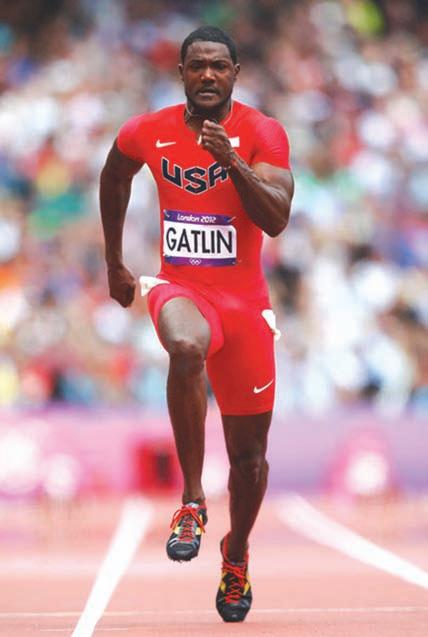
American sprinter
Justin Gatlin is unfazed by his losses to Usain Bolt at last month’s World Championships in Beijing and says once he can continue to improve, beating the Olympic and World champion will remain a possibility.
Gatlin entered last month’s World Championships as the favourite in both sprints
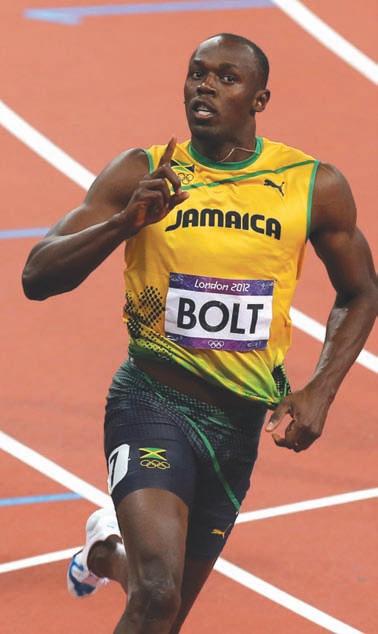
only to be trounced by the 29-year-old Jamaican superstar.
The 33-year-old Gatlin said he was already eyeing next year’s Olympics in Rio.
“It’s all about growth and getting better and better,” Gatlin said on Thursday ahead of the season-ending IAAF Diamond League meet.
“The margin of the race is getting smaller and smaller. I just have to make sure
I step my game up. So next year I hope to do even better.”
While Bolt struggled for form this season, Gatlin wrote all the headlines. He clocked a world-leading 9.74 seconds in Doha in May and then posted another worldleading 19.57 seconds in the 200 metres at the US National Trials in Oregon the following month. (Barbados Nation)
Mayweather went on the back foot in the second but Berto was chasing shadows, before the champion came out punching in the third, catching his rival cold with a snapping left hook.
After the first nine minutes of action Berto had barely laid a glove on Mayweather, and Mayweather made the challenger’s knees sag with a flashing overhand right with a minute left in the fourth.
Berto continued to venture forward in the fifth but even when he managed to manoeuvre Mayweather onto the ropes, he was unable to land with any meaningful blows.
Berto might have done enough to win the sixth and certainly won the seventh, during which he landed with a clubbing left hook.
Mayweather was happy to coast through the eighth, winning it on the back foot while drawing boos from the crowd as he mugged on the ropes.
A fight broke out towards the end of the ninth, with both men trading blows on the bell, and the rivals were broken apart and warned for trading words in the 10th.
Mayweather looked like he might open up in the 11th, landing with a cute uppercut, but he was showboating again towards the end of the round.
And the fact there were boos ringing around the arena as the final round was drawing to a close rather summed up Mayweather’s career - to many he is a genius, but he leaves many more boxing fans cold.
Mayweather made $34m (£22m) for his latest outing but few expect him to fulfil his promise to retire.
MGM’s new arena opens next April and a rematch against Manny Pacquiao, whom Mayweather beat in May in the richest fight in history, or against the winner of Miguel Cotto-Saul Alvarez might prove too tempting to turn down.
Speaking in a 45-minute post-fight news conference, Mayweather said: “I had a game plan from the very beginning. I always knew what I wanted to do - be outspoken, be one of a kind. To be in the sport for 19 years and to be world champion for 18 years, I’ve had a remarkable career.
“It’s all about that IQ. I’m 10 steps ahead of any fighter, I take whatever is your best attribute and take that away from you, make you do what you don’t want to do.
“Every championMuhammad Ali, Sugar Ray Robinson, Sugar Ray Leonard, Larry Holmes, the list goes on and on - they opened up the doors and paved the way for where I am today and I’m appreciative.
“But now the young fighters say, ‘We want to be like Mayweather’. It’s not cool to take punishment in the ring. I’m not perfect but I strived to be a perfectionist.” (BBC Sport)


The long-awaited town-hall meeting scheduled for Trinidad and Tobago and organised by the West Indies Cricket Board (WICB) will be staged on September 25 in the auditorium of the Chaguanas Borough Corporation.
This was confirmed by Azim Bassarath, president of the T&T Cricket Board (TTCB), who said he was extremely pleased that the inter-active session with WICB president and vice president Wycliffe “Dave” Cameron and Emmanuel Nanthan will finally take place.
The TTCB and the WICB had traded words on the venue proposed by the WICB for the local town hall meeting and the decision to stage the session in Chaguanas represented a significant triumph for the local cricket organisation.
General Secretary of
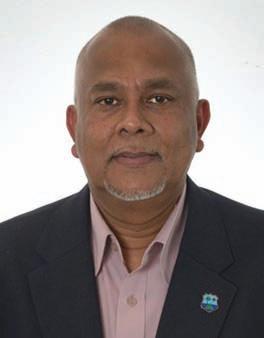
the TTCB Arjoon Ramlal had written to Cameron suggesting that holding the meeting between the top WICB officials and the major local stake-holders at a venue in north Trinidad would pose serious logistical problems with accessibility for interested parties in other parts of the country, and availability of parking accommodation being the primary concerns.
Ramlal had also stressed that the main objective of the consultation is to attract participation from the widest cross-section of the multi-racially blessed, ethnically mixed, culturally rich and socially diverse population and that hosting the momentous event in Port-ofSpain will not achieve the polycentric objective.
Bassarath said he is looking forward to an interesting and informative session on September 25 in Chaguanas and that everything will be put in place by the local organisation to make the initiative successful.
Antigua, headquarters of WICB, hosted the latest town hall meeting yesterday.
The WICB has so far met with stake-holders in Barbados, Dominica, St Lucia, Guyana and Jamaica. (Jamaica Observer)
David Nakhid, got the full backing of T&T Football Association (TTFA) to be the next FIFA president.
A unanimous decision was taken by the TTFA Executive Committee to support the former National Senior Team captain. The former Grasshoppers FC midfielder met with members of the TTFA for discussions on his bid to be the next FIFA President, which he launched last month.
The TTFA, led by President Raymond Tim Kee, reviewed the manifesto for change proposed by Nakhid and believes it provides the basis for a fresh start for FIFA. The local governing body believes that it is the right time for new blood to be brought in and that Nakhid is capable of leading the world governing body.
“At a meeting of the Executive Committee on Thursday, there was a unanimous decision taken to back Mr Nakhid in the next FIFA Presidential
election. We are one for improved governance and transparency at FIFA and it is our belief that Mr Nakhid has the right intentions and qualities for the position,” Tim Kee
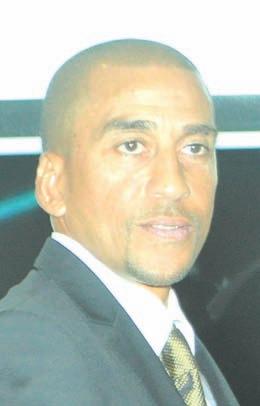
said.
“The focus now has to be on the best interest of the region and the world.
The executive committee was impressed by Mr Nakhid’s vision for the development of Caribbean football and he displayed
the best understanding of the unique needs and great potential of the region.”
Nakhid, who is based in Lebanon where he runs the David Nakhid International Football School, needs the backing of five national associations in order to be a candidate. The TTFA is now among those associations that will be backing the 51-year-old American University graduate.
Nakhid also met with members of the Caribbean Football Union last month to gather support.
With just six months to go before FIFA elects a new president, the pool of candidates has grown to seven. The other men in the race are France’s Michel Platini, Jordan’s Prince Ali Bin Al Hussein, former Nigerian player Segun Odegbami, Chung MongJoon of South Korea, former Brazilian player Zico and Musa Bility of Liberia. The election to find a successor to Sepp Blatter will be held in Zurich on February 26. (Trinidad Guardian)

It wasn’t a dead rubber, but neither was it a particularly competitive finish to the series. Led by a strong performance from their fast bowlers, who rolled England for 138, Australia cruised to an eight-wicket victory in the final ODI Old Trafford and ended their three-month tour of England, which featured the disappointment of another failed Ashes campaign, with a 3-2 win in the one-day series.
Mitchell Marsh and John Hastings might hardly be the most intimidating pair of fast bowlers but it was they who caused England’s collapse, between them collecting seven of the nine wickets that fell. Aaron Finch and George Bailey then steered Australia past their target with ease. In the end, the fans barely saw half the amount of overs they expected - 57.2 in total, made up of 33 in England’s innings and 24.2 in the chase.
It was not only the result that was of concern for England, though. James Taylor captained England in the field after Eoin Morgan was struck on the helmet by a short delivery from Mitchell Starc and was forced to retire hurt during England’s innings. Morgan was accompanied off the field by England’s medical staff and took no further part in the game.
But there was little Taylor could do with such small total on the board. Two wickets fell before the delayed lunch break - Joe Burns slashed at a wide one and edged David Willey behind for a duck, and Steven Smith edged behind off Mark Wood for 12 - but after the resumption it was a procession towards the target. Finch and Bailey ensured there were no further wobbles.
Finch struck 11 fours and one six on his way to an unbeaten 70 from 64 balls, and Bailey ended up not out on 41 from 45 deliveries. The winning runs came with a thick edge to the third-man boundary from Bailey, and Australia
had something to celebrate at last. It was their bowlers who had set the victory up in the early stages of the day. In an eventful first over Jason Roy was twice given out lbw off Starc by umpire Joel Wilson. The first Roy reviewed and was found to have inside-edged onto his pad; the second he chose not to review and should have – replays suggested Starc’s delivery would have swung well down leg. Roy had scored 4 and Alex Hales managed only 4 as well, before he slashed Hastings to point and was caught by a juggling Glenn Maxwell. Taylor made it 22 for 3 when he edged behind off Hastings.
The sixth ball that Morgan faced was quick and short from Starc and Morgan turned his head and ducked, and was struck flush on the side of the helmet. He appeared in some discomfort and after several minutes of assessment by England’s medical staff on the field, he retired hurt and did not return. England were effectively 22 for 4, and as it turned out, Australia’s best bowlers of the game had not even entered the attack.
Marsh picked up three lbws through the middle overs, using his tight delivery line from close to the stumps to ensure his deliv-
eries often pitched in line. Jonny Bairstow was given not out but found to be out on review for 10, and both Willey and Ben Stokes were lbw to balls that pitched on leg, straightened, and would have struck either leg or middle stump.
Stokes was frustrated to depart for 42; he had been the only England batsman who looked like he might push the score up to something more competitive.
Stokes struck six fours and one six, down the ground off Marsh, but his departure left England at 85 for 7 and gave Marsh his fourth wicket - Moeen Ali had earlier edged behind driving loosely for 5.
Hastings returned to claim a third wicket when Wood holed out to deep extra cover, and at 106 for 8 England were asking a lot of Adil Rashid and Reece Topley, a man who in 104 previous first-class, one-day and T20 matches combined had managed only 103 runs. It was credit to Rashid and Topley that they put on 32, the second best partnership of the innings.
Rashid struck five boundaries and finished unbeaten on 35; Topley remarkably got off the mark with a five, a badly-judged single that was joined by four overthrows when Maxwell’s ping at the stumps from point missed. Topley was the last man out, lbw to Ashton Agar for 6, and Morgan did not return to the crease at the fall of the ninth wicket.
Hastings finished with 3 for 21 from his ten overs and Marsh picked up 4 for 27, outshining the much quicker Starc and Pat Cummins, while Agar was fortunate to even get a bowl at the end of the innings, and sent down two overs.
The strong bowling effort ensured that Australia got their hands on some sort of trophy on this tour - just not the one they most wanted. (Cricinfo)
England innings (50 overs
maximum)
JJ Roy lbw b Starc 4
AD Hales c Maxwell b Hastings 4
JWA Taylor c †Wade b Hastings 12
EJG Morgan* retired hurt 1
BA Stokes lbw b Marsh 42
JM Bairstow† lbw b Marsh 10
MM Ali c †Wade b Marsh 5
DJ Willey lbw b Marsh 0
AU Rashid not out 35
MA Wood c Agar b Hastings 13
RJW Topley lbw b Agar 6
Extras (lb-1, w-5) 6
Total (all out; 33 overs) 138
Fall of wickets: 1-4 (Roy, 0.4 ov), 2-13 (Hales, 3.6 ov), 3-22 (Taylor, 5.5 ov), 3-22* (Morgan, retired not out), 4-56 (Bairstow, 13.3 ov), 5-72 (Ali, 17.1 ov), 6-72 (Willey, 17.3 ov), 7-85 (Stokes, 19.6 ov), 8-106 (Wood, 23.1
BCB president Nazmul Hassan has said fast bowler Shahadat Hossain is likely to be kept out of cricket until a decision is reached on the Women and Children Repression Prevention Act case against him. Hassan said Shahadat had come looking for him but he did not meet the fast bowler.
ESPNcricinfo also learned from a BCB source that Shahadat had been temporarily suspended by the board.
Hassan did not specify when or where Shahadat tried to meet him. Dhaka police have been looking for the fast bowler for the last five days but have not been able to find him. Shahadat and his wife are wanted on charges of allegedly assaulting their housemaid.

Nazmul Hassan on Shahadat Hossain: “Unless the investigation ends or there is a decision on the matter, BCB doesn’t want to keep any attachment with him.”
“Unless the investigation ends or there is a decision on the matter, BCB doesn’t want to keep any attachment with him,” Hassan said. “We are quiet, and we will remain quiet. He is more than likely to stay outside cricket.
“There is no reason to give Shahadat Hossain any leeway, it is quite clear. I don’t know whether you know this, but he came to see me. I didn’t meet him. What would I have told him? I don’t have anything to do. It is totally up to the law of the land.” (Cricinfo)
‘Smith’s desire to score runs like Tendulkar’s’ – Waugh
Former Australia captain Steve Waugh has thrown his weight behind Steven Smith making the No.3 position his own in Test matches. Smith himself had admitted to being uncertain about his batting spot immediately after being named captain, noting it would depend on the team’s make-up.
That line of thinking, however, has been met with opposition from the likes of Ian Chappell and Ricky Ponting who have backed Smith to continue batting at No.3.
Waugh felt Smith was improving at No.3, and likened his appetite for run-making to Sachin Tendulkar’s. “I don’t mind him batting at number three. He is improving all the time,” Waugh, who is in India to launch his company’s property portal, told ESPNcricinfo.
“His last year has been quite phenomenal. His technique will tighten up a bit. But, he has got a great eye and he has got good placement of the ball. Never seen a batsman hit the gaps as well as he does.”
ov), 9-138 (Topley, 32.6 ov)
Bowling: MA Starc 9-1-441 (1-w), JW Hastings 10-221-3, PJ Cummins 6-0-330 (3-w), MR Marsh 6-0-27-4 (1-w), AC Agar 2-0-12-1
Australia innings (target: 139 runs from 50 overs)
JA Burns c †Bairstow b Willey 0 AJ Finch not out 70 SPD Smith* c †Bairstow b Wood 12
GJ Bailey not out 41
Extras (lb-10, w-6, nb-1) 17
Total (2 wickets; 24.2 overs) 140
Fall of wickets: 1-2 (Burns, 2.2 ov), 2-31 (Smith, 9.1 ov)
Bowling: DJ Willey 6-3-131 (2-w), RJW Topley 5.2-133-0 (1-nb, 3-w), MA Wood 5-1-25-1, AU Rashid 4-034-0, MM Ali 4-0-25-0
Smith first moved up to No.3 against West Indies in June and has since amassed 791 runs in 13 innings at an average of 71.90. He has scored three centuries, including a double-hundred at Lord’s and a 199 in Kingston.
“He has got really good hands and that compensates perhaps for his footwork not being as sharp as some of the other players,” Waugh said. “He is not technically a perfect player, but he has got that inner desire more to score runs, a bit like a Tendulkar. Once he gets a hundred he wants to go on and get a big score every time.”
Waugh said Smith the captain needed to find his own leadership style - one that perhaps conformed to
his batting philosophy. “I think he’s pretty much an aggressive batsman with a good mindset. I think he takes it into the captaincy as well. He loves batting, he loves scoring runs and the other guys they like his leadership, they follow what he is doing.
“Allan Border was a leader by what he did on the field; he led by example. Mark Taylor was more of a talker. I guess I was a pretty aggressive captain. We tried to win at all costs. And then you have got
of swing we seem to be struggling as a batting unit. That’s all about just working a little bit harder, and putting more value on your wicket,” Waugh said.
“I think Indian batsmen do that very well. Australians, we have got to learn to do that, and perhaps it’s about acknowledging the tough moments in the game where you just got to get through whichever way you can. And, it’s ok to lose a session, but you can’t lose it disastrously. You can’t
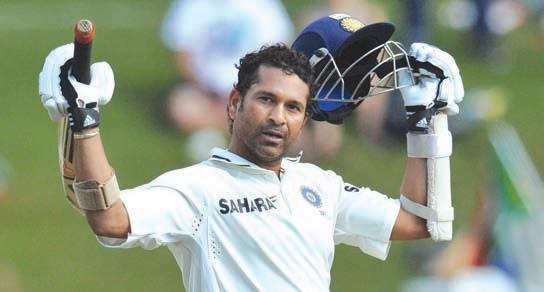
Michael Clarke and Ricky Ponting. But he [Smith] has got to do it his way. He can’t copy what I’ve done or what Mark Taylor has done or Ricky Ponting. He has got to find out what his style is.”
Smith’s golden run, though, has not altogether rubbed onto Australia, who trudge through a difficult phase marked by the Ashes loss and the retirement of players like Clarke, Chris Rogers and Brad Haddin. In two of their three defeats against England, they lasted no more than three days, which included an embarrassing capitulation for 60 in the first innings at Trent Bridge.
Waugh admitted Australia needed to “mature” as a Test side. “We are very good on flat wickets at the moment, but when the ball turns or if there is a bit
lose seven or eight wickets. That is what the team’s been doing. “ Waugh, however, believed Australia, with quality personnel at their disposal, would bounce back soon.
“We won’t be far away. We have got an exceptional crop of young bowlers who, when they get their maturity and strength together, will be able to take 20 wickets.
“The batsmen will come through. I think Usman Khawaja will have a good year this year. He has not picked as yet, but I believe he is a quality Test player. I think Joe Burns can do well. We just need people like the Marsh brothers to lift a bit because they have got a lot of talent. If they can do that, along with Smith and [David] Warner and some other players, we won’t be far away.” (Cricinfo)


Need a car to rent? Then call 6111018 for the best cars at great prices.


SHALOM ENTERPRISE 2 CROAL STREET, STABROEK. ENQUIRE ABOUT OUR DRIVING PACKAGE & INTERNATIONAL DRIVER'S PERMIT (JOIN US ON FACEBOOK) 2273869/622-8162/644-7052



Clean Garden earth. Also excavating, grading and leveling done. Call 6279977
For sale by lot: Lot (1): 2 bath tubs, bathroom fittings and fixtures & toilet set; shower fittings - $150,000 and Lot (2): 1 Dell desktop computer & HP scanner - $25,000. Call 225-2676 or 601-5285.
Puppies for sale. German shepherd and pitbull (mixed) $40,000 each. Contact: 269-0711 /621-7842 Puppies for Sale. Pure Breed Dachshund Pups. $15,000 each. Tel: 256-3360 / 685-8485 CAr rENtAlS


forms, embassy enquiries, appeals for refused cases, US green card lottery, business class waivers, pardons, etc. Get your visa approved. High success rate. Balwant Persaud & Associates. Certified Immigration Consultants, 68 Sixth Street, Alberttown, Georgetown (Between Cummings & Lights Sts) Tel: 225-1540, 622-8308, 655-3105. Email: balwantpersaud@yahoo.ca



Da Silva’s Optical. For Your Eyes Only, Look Better See Better. Phillip A Da Silva OD, Shannon L Da Silva OD, Natalie Da Silva OD. 248 South Road, Bourda. Phone: 227-3529, Linden: 444-6376, Corriverton: 339-3536, Meten-Meer-Zorg: 275-0322, Grand Cayman Islands: (345) 943-1515 for the perfect trendy touch.

Tain, Corentyne, Berbice, Opposite UG Campus. Tel: 675-5648 One property Ogle; One property Anna Catherina; One property Good Hope. Contact; 222-

House plans & estimates, weeding of grass and spraying done within 48hrs. Call: 216-0671; 622-0267; 692-8464
Technician specialized in repairs and servicing to all commercial and domestic appliances such as Air Conditioning units, Treadmill machines, refrigerators, pressure fryers, convection ovens, dryers, stoves, washing machines, pressure pumps, gas grills, fabrication of appliances, etc. On-the-spot repairs rendered. Tel: 684-2119
Khemraj & Son -landscaping & plant nursery. Lot 77 Independence Street, La Grange, West Bank Demerara. Landscaping, planting grass, weeding, killing wood ants, killing roaches, rats & mealy bug, treat plants, coconut trees and flowers, cleaning ceiling, grafting coconut plants: 18 months bearing period, treating land, grass & spraying grass, grafted papaya plants: 6 months bearing, grafted cherry plant, sour sop & sapodilla, cutting big trees & removing, treated mould for sale & flower plants for sale. Tel 627-5969/ 603-1134
Cab service and cooking gas delivery available, East Bank area. Tel: 2163326, 683-9910
K. LAKERAM - BUILDING CONTRACTOR, HOUSE PLAN, ESTIMATES, WEEDING & SPRAYING GRASS DONE WITHIN 48HRS. CARPENTRY, MASON, TILING, PAINTING, PLUMBING. PROMPT & AFFORDABLE GENERAL HOME MAINTENANCE. FREE ESTIMATES. TEL: 216-0671/622-0267/692-8464. EMAIL: klakeram.construction@ gmail.com

Surinamese spiritualist. Resolving all problems. Money, love, blockage etc. Call 223-6834/600-7719
Suriname’s Astrology, Palmist and Hindustani Spiritual Healer, solve all purpose problems, 100% confidential guaranteed. Phone: 602-8997
HEPHZIBAH MINISTRIES 24 hrs Prayer Line 322-5081,337-4510,3374259,337-4583,337-3070,337-5103. For healing, deliverance, financial difficulties, marriage issues call now. Jesus Cares.
Dutch spiritual healing in removing evil spirits, bad luck, evil sickness, spells, reuniting lovers and prosperity to business Call 612-6417, 6875653, 220-0708

Two bedroom upstairs apartment. $60,000 monthly with parking. Couples preferable. Tel 233-2607 / 644-7089
Three Storey 75ft’x 30ft’ bldg, open floors, 2 offices, 2 washrooms, driveway. 25B Princess St, Charlestown. Tel: 223-0654, 225-0605
Two Self-contained single bedroom furnished apartments for rental. Selfcontained 7 bedroom bungalow idea for family/ guests/ students local or overseas long/ short term rental. Contact: 622-7097 / 624-7111

Immediate vacancy for one cook to prepare cutters at R&V Sports Bar, preferably from country area. $18,000 per week , free meals and accommodation provided if necessary. Tel: 684-2119
5 waitresses needed at R&V Sports Bar, preferably from country area. $18,000 per week , free meals and accommodation provided if necessary. Tel: 684-2119
One Junior Accountant.
Qualification: Certified Accountant Technician, 2 years experience. Contact tel # 592-673-5475 or email kevin@expresstruckingcorp.com

JUST ARRIVED: TOP QUALITY RECONDITIONED VEHICLES; TOYOTA NOAH; TOYOTA VOXY; TOYOTA IST (NEW SHAPE); SUZUKI SWIFT; DAIHATSU MOVE (660CC); MERCEDES BENZ C200 KOMPRESSOR; COROLLA AE100 WAGON; TOYOTA HIACE MINIBUS RZ; PITBULL-STYLE FREEZER VAN; LAND CRUISER (FULLY LOADED); MAZDA PROCEED 4WD EXTRACAB PICK-UP; TOYOTA HILUX 4WD EXTRA CAB PICKUPS3RZ, 5L, 3L SOLID DEFFERNTIAL; MITSUBISHI CANTER TRUCKS 4 TONS FREEZER; 3 TONS OPEN TRAY; 2 TONS 4WD; NISSAN ATLAS 2 TONS OPEN TRAY TRUCK. PRE-ORDER YOUR UNITS EARLY AND GET THE BEST PRICES. FULL AFTER SALES SERVICES AND FINANCING AVAILABLE. DEO MARAJ AUTO SALES, 2 CHIMNEY ROAD, CHATEAU MARGOT, ECD. 624-0762, 220-5177. A NAME AND SERVICE YOU CAN TRUST BMW320 I; NISSAN MARCH - PMM SERIES, BLUEBIRD, 4-DOOR PICKUP; TOYOTA - AT212, AT192, RAUM, I.S.T, L-TOURING WAGON, EP71 STARLET, HILUX 4-RUNNER AND PICK-UP; HONDA 600RR. TEL 644-5096 / 697-1453

GR Taxi, 24 hours. Phone: 2257878, 219-5000 or 227-2100

Patanjalee “Pur”
Persaud upstaged a strong field to win the inaugural Silvie’s General Store’s golf tournament on Saturday last at the Lusignan Golf Course, East Coast Demerara.
Persaud ended with Net 67 and Gross 87 to win ahead of Troy Cadogan and Patrick Prashad.
Cadogan in second place chalked up Net 69 and Gross 93, while Prashad finished third with Net 69 and Gross 78.
Nearest-to-the-Pin was Roy Cummings, while Best Gross of the day was won by Prashad.
Club Captain Chatterpaul Deo was pleased with the good turnout and the highly competitive performance of the golfers.
He expressed gratitude to Silvie’s General Store for
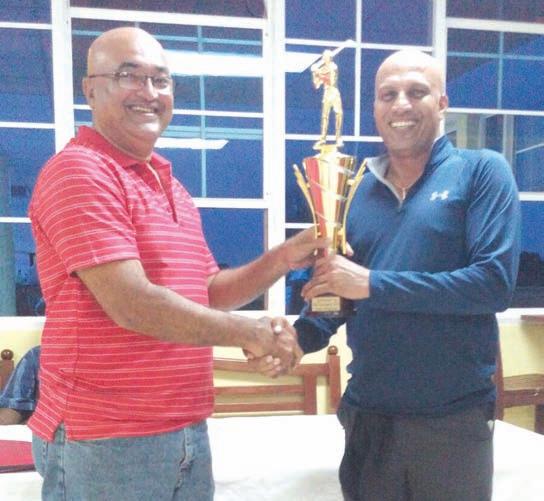
coming onboard and said he is looking forward to a long and great relationship between the compa-
ny and the Lusignan Golf Club. (rajivb@guyanatimesgy.com)
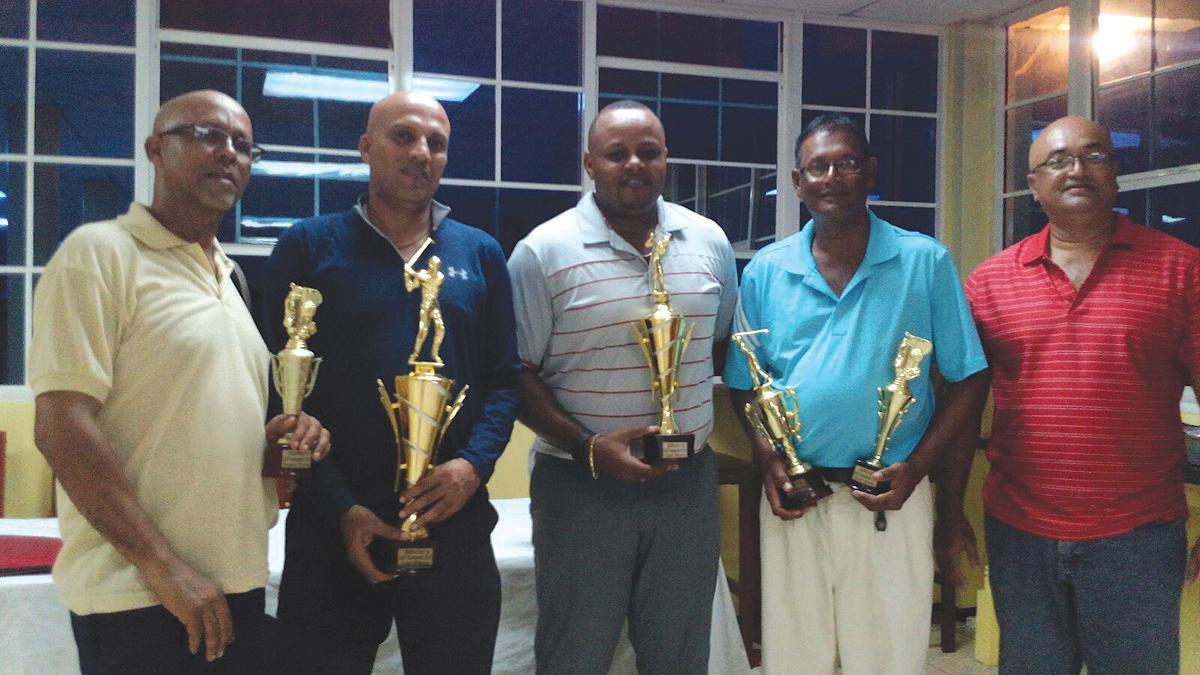
Britain’s Mo Farah won the Great North Run for the second year in a row in a thrilling finish ahead of Stanley Biwott of Kenya on Sunday.

Kenyan Mary Keitany retained the women’s title she won in record time last year.
Six-time Paralympic gold medallist David Weir claimed a record-equalling sixth men’s wheelchair crown.
And fellow Briton Shelly Woods won her seventh wheelchair title after her main rival crashed close to the finish.
Farah, 32, was made to work hard as Biwott, runner-up at the 2014 London Marathon, led for much of the race.
But the Olympic and world 5,000m and 10,000m champion produced a trademark sprint finish to take the lead in the final 400 metres and win in 59 minutes 22 seconds - the fastest half marathon by a British athlete.
“The crowd were amazing,” said Farah. “If it wasn’t for them edging me towards the end it definitely would have been a different result.
“I want to come back and see if I can do a hat-trick.”

Keitany enjoyed a more comfortable morning as she won in 1:07.32, nearly threeand-a-half minutes ahead of British runner-up Gemma Steel.
The 2012 London Marathon winner, who beat Paula Radcliffe’s previous record when she won last year , said: “It’s a really amazing day for me. I love the city and the people here.”
Briton Alyson Dixon, 36, finished fourth, behind twotime New York marathon winner Jelena Prokopcuka of Latvia.
Weir dominated the men’s wheelchair race from the start, finishing in 42.46, one minute and 58 seconds ahead of fellow Briton Simon
Lawson.
The 36-year-old said: “I had a bit of a problem in the first three or four miles with stomach cramps.
“I got a second wind after that but it cost me a minute - otherwise I could have broken the record. But was it was a fun day.”
There was drama in the women’s wheelchair race when leader Margriet van den Broek hit a hay bale near the end.
Woods capitalised to win in 53.38, just ahead of course record holder and 2009 winner Amanda McGrory of the United States, with Van den Broek of the Netherlands finishing third. (BBC Sport)

B y A keem G reene
The days of a lethal four-prong pace attack in the regional side are long gone. In the eighties and early nineties, the West Indian team was one of the most feared teams in cricket.
It was not just the Clive Lloyds, the Gordon Greenidges, the Gary Sobers, and the Brian Laras just to name a few, who took the world by storm with their phenomenal batting exploits.
It was the fear of having to face up to four genuine quick bowlers, who can be devastating in any conditions. The names Andy Roberts, Michael Holding, Joel Garner, Colin Croft, Courtney Walsh and Curtly Ambrose on any team sheet would send shivers through opposition batsmen.
These men dominated the game for a long time, and they did not do it by simple brute force; a large degree of their success was due to skill, and thoughtful bowling, and not to mention, superb fitness levels.
Assessing these players figures, one would see their respective average was in the twenties, and their strike rate was in the low fifties. Perhaps the most impressive aspect of the West Indies’ pace attack was the manner in which they dominated in every country they played in.
In fact, nowhere did they concede more than 26 runs per wicket. Even on the slow wickets of India,
‘home’ matches played, the bowlers went at an average of 31.17. The team won four of those matches, lost five and drew one.
These figures would have included spinners, but the last time a paceman took a five-wicket haul in an innings was Taylor in June 2015 when he claimed 6-47 against Australia.
Prior to that, Roach had 5-42 against Bangladesh last year. No other quick bowler has been able to achieve a five-for in an in -
the rejuvenated Taylor is left to carry the bowling department.
The key to Test cricket is not just having batsmen, who can bat for long hours and put big runs on the board, but having a bowling department that can take 20 wickets to win the match. Now with only one potent and dependable paceman, the selectors must be looking for more formidable strike men to add to the team.
According to the ICC
Beaton, who had a stint at the Sagicor High Performance Centre in 2013, has played a couple of West Indies “A” team games. Indian star batsman Yuvraj Singh was in high praise of Beaton when the West Indies “A” team toured India in 2013.
“Beaton is the future fast bowler for the West Indies. He reminds me of Curtly. Obviously, Curtly was great, but I think he has lot of potential,” Yuvraj said.
the region, is the ability to be consistent, as after a good string of deliveries, a boundary ball soon arrives. His First-Class record is certainly impressive, having played 30 games and taken 70 wickets at an average of 26.75.
Undoubtedly, there is a talent pool in the region; however, it is the transition to international cricket that has proven difficult.
they averaged 25.41, and their strike rate there was the best among all countries. Individually, there were 19 instances of a fast bowler taking 25 or more wickets in a series, prior to 1995.
Ambrose, Walsh and Bishop were probably the last lethal pace trio for West Indies, and the numbers show they were every bit as good as their predecessors - in 37 Tests they averaged 11 wickets per Test, and less than 24 runs per wicket.
West Indies’ results, though, had started to fall off. From 1994 to 1996, they played 25 Tests, won 10, lost eight and drew seven.
Decline
Currently, the regional side holds the likes of Jerome Taylor, Shannon Gabriel, Kemar Roach and Jason Holder, who are more of the constant names in the Test team.
The West Indies have played 18 Test matches in the last two years with the bowling department averaging 38.88, with the highest opposition team score being 609 and the lowest 123.
A breakdown in these figures will reveal that of the 18 matches played, eight were ‘away’ games and the regional side lost six and drew two games. In those ‘away’ games, the bowling department had an average of 50.88 going at a run rate of 3.63. Conversely, in the 10

nings other than these two over the last two year.
Gabriel is still young in his international career, but the tall and robust player would be ideally suited for the duties of fast bowling. However, like many others who have come and gone, consistency continues to be the main issue.
Gabriel certainly can rough-up batsmen with his speed, but an unusual bowling action, and being prone to dropping the ball short, makes him release the pressure he would have added on the opposition batsmen.
Holder seems to have a long Test career ahead of him, but with the additional burden of captaincy and his lack of genuine pace, his workload in Test cricket will certainly be reduced.
With Roach not bowling with the type of potency he burst onto the scene with,
Test rankings, the highest ranked West Indies Test bowler is Roach in 13th, while Taylor is 24th. In the top 10, seven of the players are fast bowlers.
The options
The likes of Ronsford Beaton, Delorn Johnson and Sheldon Cottrell are certainly worthy players of accession to the regional side. The Guyanese bred Beaton has impressed in the shorter formats of the game with his pace and aggression, but like many bowlers in the region, consistency has affected his game.
Beaton, who has played 26 First-Class games, has 47 wickets at an average of 33.82.
These figures for a young man, who is only 22, signals he is great prospect for the future, but sooner rather than later a chance should be given to this young talent.
The first thing to note about Beaton is that he has the requisite physique for a fast bowler, especially height. In addition, he has a smooth, loose-limbed bowling action, which seems to give him that extra bounce to go with his pace.
Another exciting prospect is Johnson, who has played 31 First-Class games, and has taken 81 wickets at a commendable average of 25.37. The 26-year-old, who usually turns out for the Windward Islands in domestic cricket, has two five-wicket hauls and has a taste of the regional “A” team duties.
His left-arm bowling style would certainly be an asset to the regional side. Cottrell, also a left-arm paceman, who has already played two Test matches for the West Indies, is a raw talent with the ability swing the ball.
Cottrell, who is popular for his salute when celebrating a wicket, is a bowler who can be extremely aggressive and attack batsmen with his high speeds.
The reoccurring issue, like with most bowlers in
Many Caribbean pitches are not helpful for the complete development, and the mediocre batting displayed by most batsmen, hardly gives these bowlers a true examination of patience and skill.
The WICB’s selectors need to look at the upcoming Professional Cricket League Four-day tournament keenly to properly examine the talent base in the region. Assessment should not just be based on match performances, but other key essentials, such as fitness and having the work ethics and understanding of the game.
Too many times, young talents have burst on the international scene and soon after they are gone. International cricket calls for lots of determination, especially in the Test format.
The talent is there, it simply needs correct nurturing. Many former legends of the game are still around to give the necessary advice to help them formulate a regimen for success. In the end, the discipline and dedication of players is what usually determines how successful they become. (akeemg@ guyanatimesgy.com)

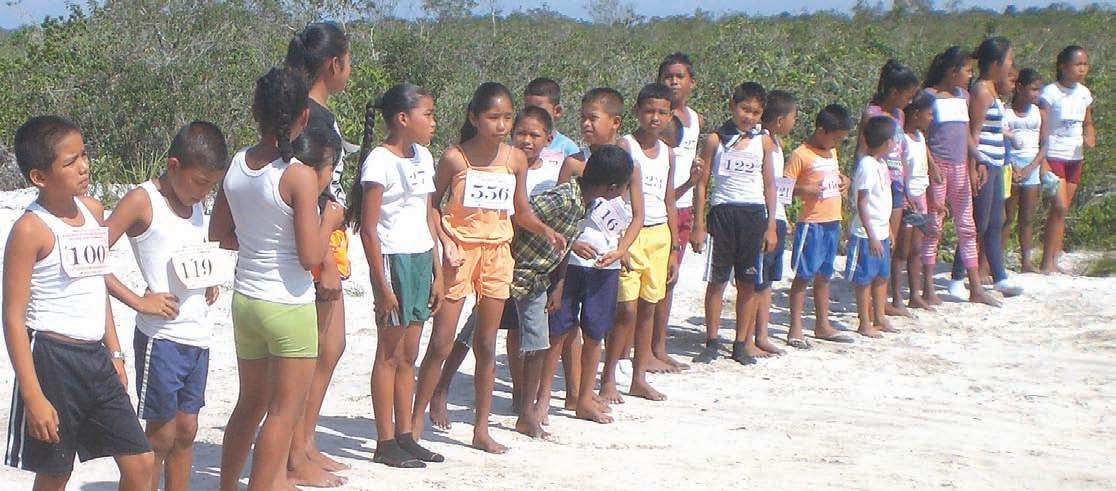
Kelon Kattow, in a time of 24 minutes, captured the Primary School Boys title in the St Cuthbert’s Mission Indigenous Month celebration five-mile trail run on Saturday.
The outstanding performance of Team Gillette Evolution in 2015 continued on Sunday when Raul Leal pulled off another victory for the Ansa McAl sponsored team, this time in the fifth annual Powerade 50-mile road race on the West Demerara roadway.
Competing from Wales Police Station to Bushy Park, Parika, and back to
the course in a time of one hour, 55 minutes, 10 seconds (01h: 55m: 10s). His club mate Orville Hinds had won last year’s event, but was 45 seconds slower. The fast-improving Jamal John of Team Coco’s copped second, followed by the talented Raphael Leung of United Bike Shop, Paul DeNobrega of Team Alanis and Berbician Andrew Hicks. Linden’s Shaquille
In the second spot was John Ponsamy in a time of 26 minutes and Aldin Dundas third in 27 minutes.
In the Girls’ category, Hilary Henry clocked 25 minutes to win the event, while Beyonce Dundas in 31 minutes finished second. Bachibu Keukian took third in 32 minutes.
Director of Sport Christopher Jones, in ad-
The day’s event was held in memory of village councillor Telford Taylor, who passed away last year, and was sponsored by the Ministry of Education’s Department of Sport and the National Sports Commission.

race was
dressing the hundreds present, stated that the Ministry and the government of Guyana are committed to serving the people, not just in Georgetown and the coastland, but all corners of the country.
“And so today, this sponsorship is just a small gesture from the NSC [National Sports Commission]. You can be assured that we will be supporting your sports programme and will also make this event a Ministry of Education one,” Jones said Jones in first address to the residents of St Cuthbert’s Mission he committed his support for the for the hinterlands areas being my first visit to this mission. “I am impressed with the amount of talent I saw in this mission,” he said.
Meanwhile, in other results from the one day programme, Serena Keukain won the Secondary School Girls five-mile race in 48 minutes, with Ansa Williams finishing second in 49 minutes. Third was Nazema Wiliams one minute later.
Adestructive spell from fast bowling from Keon Sinclair and an attacking half-century from West Indies player Assad Fudadin led Rose Hall Town (RHT) Gizmos and Gadgets to an easy nine-wicket victory over Upper Corentyne in the opening round of the Berbice Cricket Board (BCB)/Tenelec Inc. 50-over cricket tournament.
Playing at the Area “H” ground, the match was com-

pleted in less than two hours as Sinclair claimed 6-30 from 10 impressive overs, while Fudadin blazed 56 not out from just 20 balls, with three fours and six massive sixes.
Batting first after losing the toss, Upper Corentyne were bundled out for a meagre 82 from 22.1 overs as only L. Latchman (11), A. Persaud (12) and Balram Samaroo (21*) reached double-figures.
Supporting the hostile Sinclair were off-spinner Rajiv Ivan (2-0), Fudadin (1-12) and 14-year-old Keith Simpson (1-1) on his first division debut.
In response, Fudadin and Vidal Crandon added 51 for the first wicket before Crandon was trapped leg before by off-spinner Derick Chatterpaul for 22 (4x4s). However, Fudadin, who took 24 runs from off-spinner Samaroo’s only over, batted well to take RHT Gizmos and Gadgets to an early victory.
Berbice senior player Jason Sinclair was unbeaten on three when victory was achieved at 84-1 from eight overs. RHT Gizmos and Gadgets will next play Albion in the second round at the Albion ground. (aramzan@guyanatimesgy. com)
In the Secondary School Boys five-miler, Elmos William clocked 47 minutes to win ahead of Moses Dundas in 47:02 and Shawn Wong third in 48 minutes.
The senior male category was won by Eno David in 36 minutes, ahead of Devon Dundas and Paul Abrams in that order.
They were also prizes for the youngest girl Britney Punsamy, youngest boy Chrisley Shuman and oldest male participant Paul Abrams.
A total of 67 participants started the race, with 28 in the primary division. A total of 18 females competed. The event was organised by Sports Officer of the NSC, Alistair Munroe, and formed part of a series of event organised as part of Amerindian Heritage month celebrations.

Schoonord for the finish, Leal did well to outsprint four other riders at the end to chalk up his third victory of the season, and second within a month.
On August 15, he was the top rider in the National Sport Commission’s evaluation race at the inner circuit of the National Park.
On Sunday, Leal braved the blazing sunshine to be the first rider to complete
Agard rounded off the top six podium spots. John, Leung and Hicks were the top three juniors, while Jude Bently won the Veterans race ahead of Talim Shaw and Shameer Baksh. Ozia Mcaulay was the leading Mountain Bike rider, followed by Keon Thomas and Julio Melville. (aramzan@guyanatimesgy.com)


By AvenAsh RAmzAn
West Indies Test opener Rajendra Chandrika is looking to make maximum use of the opportunity in Sri Lanka when the Caribbean side tours the island in October.
The Jason Holder-led West Indies are slated to play two Tests, three One-Day Internationals and two T20Is, but it is highly expected that the right-handed Chandrika, who made his international debut earlier this year, will only feature in the Test segment.
As part of preparations for that series, Chandrika and
the High Performance Centre in Barbados.
“I’m feeling good at the moment and looking forward to the series,” Chandrika, 26, told this publication on Sunday.
Chandrika had a tough Test debut in June this year when he fell for a double duck against Australia at Sabina Park in Jamaica. Fortunate to get a second call-up, the elegant batsman is gearing up to increase his knowledge on playing on unfamiliar conditions, whether he breaks into the final XI or not.
“It’s an experience I’m really looking forward. Of course, I would love to make the start-
August.
Squad
Opening batsman Kraigg Brathwaite will be Holder’s deputy on the tour. The squad contains two uncapped players in fast bowler Carlos Brathwaite and left-arm spinner Jomel Warrican, both of whom play for Barbados.
In a like-for-like selection, Warrican replaces Veerasammy Permaul, who was part of West Indies’ squad during their home series against Australia. Denesh Ramdin, who was replaced by Holder as captain, retains his place as wicketkeeper.

the batsmen, who have been selected for the 44-day tour, last week completed an 11day batting camp under the watchful eyes of West Indies Head Coach Phil Simmons at

ing XI, but whether I play or not, the aim is to learn from my first overseas tour, and hopefully it will help to improve my career,” the former West Indies Under-19 and “A” team player explained.
While no structured regional cricket has been played since the Australia series, Chandrika has been appearing in domestic games for the Enterprise Busta Sports Club.
In his first match since Test debut, he cracked a fluent hundred for the club against the visiting GEML Cosmos team of Trinidad and Tobago in a limited-over match in
West Indies are scheduled to land in Sri Lanka on October 1, with the series starting 13 days later.
West Indies squad: Jason Holder (Captain), Kraigg Brathwaite (vicecaptain), Devendra Bishoo, Jermaine Blackwood, Carlos Brathwaite, Darren Bravo, Rajindra Chandrika, Shane Dowrich, Shannon Gabriel, Shai Hope, Denesh Ramdin , Kemar Roach, Marlon Samuels, Jerome Taylor, Jomel Warrican (aramzan@ guyanatimesgy.com)



Floyd Mayweather made it 49 straight wins with a wide points victory over Andre Berto in Las Vegas.
The challenger was game but his fellow American, defending his WBC and WBA welterweight titles, was simply too difficult to hit at the MGM Grand.
Mayweather, 38, was awarded the verdict 120108, 118-110 and 117-111.
Mayweather was adamant it was his last fight, but having equalled Rocky Marciano’s career record of 49-0, he might decide to have one more.
“My career is over,
that’s official,” said fiveweight world champion Mayweather, widely regarded as the greatest fighter of his generation.
“You’ve got to know when to hang them up. I’m close to 40 now. There’s nothing left to prove in the sport of boxing. Now I just want to spend time with my family.
“I am leaving the sport with all my faculties, I’m still sharp and smart. I’ve accomplished everything in this sport, there’s nothing else to accomplish.”
The 32-year-old Berto is a two-time welterweight world champion and came into the fight having
lost only three of his 33 professional bouts.
But those three defeats came in his previous six contests and pretty much nobody gave him a chance against Mayweather, who was engaging in his 26th world title fight and whose unbeaten streak goes back to 1996.
The pattern for the fight, as with so many of Mayweather’s previous fights, was set in the opening round, the champion establishing his lightning jab and repeatedly making Berto miss.