

APNU cautious about AFC’s secret talks Coalition negotiations… Bandits snatch cellphone, cash from cop
Suspected Sophia arsonist nabbed in Linden
Region 6 leading in healthcare delivery ...PAHO praises response to Chikungunya
Family crushed by death of Christmas Day mom


tuesDAY, JANuARY 6, 2015 | guYANAtimesgY.com

The Demerara Harbour Bridge will be closed to vehicular traffic on:
Tuesday, January 6 –05:00h-06:30h
Wednesday, January 7 – 05:00h-06:30h
The Berbice River Bridge will be closed to vehicular traffic on:
Tuesday, January 6 – 05:15-06:45
Wednesday, January 7 – 05:50h-07:20h

The Management of the Transport and Harbour Department wishes to notify the general public that vessels operating the Parika/Supenaam services will no longer be operating according to tidal conditions. The new daily schedules are as follows: Parika departure – 06:00h, 11:00h and 16:00h Supenaam departure – 06:00h, 11:00h and 16:00h


Thundery showers can be expected in the morning with light rain showers prevailing over the remainder of the day. Thundery showers will return in the evening over coastal regions and near inland locations. Temperatures are expected to range between 23 degrees and 27 degrees Celsius.
Winds: East North-easterly between 3.57 metres and 4.02 metres per second.
High Tide: 05:02h and 17:14h reaching maximum heights of 2.53 metres and 2.65 metres respectively.
Low Tide: 10:49h and 23:14h reaching minimum heights of 0.68 metre and 0.58 metre respectively.
The above-normal high tide advisory is in effect until January 9.







By Devina Samaroo
Against revelations that Publisher of the Kaieteur News Glenn Lall and a group of businessmen have been pumping millions into the Opposition parties, A Partnership for National Unity (APNU) and Alliance for Change (AFC), and in the context of the resurrection of several small parties ahead of this year’s elections, calls are being made again for some level of campaign financing regulations.
In most countries, including the Caribbean, there are elections campaign regulations, but despite a bill be-
ing tabled four years ago in this Parliament, there has been no movement toward enacting the requisite legislation.
Gail Teixeira of the People’s Progressive Party/ Civic (PPP/C) had said previously that the People’s National Congress Reform (PNCR) had downplayed the proposal by the Organisation of American States (OAS) for a model regarding campaign financing for the 2011 elections.
Teixeira had said then that the party said it was not necessary for the elections of that year. It was in that same year APNU announced ahead of the 2011 elections that it had secured some US$6M campaign funds, but failed to disclose from where the money was secured.
The AFC has also been accused previously of being financed from questionable sources. Questions were raised as to how the party was able to secure the services of US-based political consultant Dick Morris for the AFC’s 2006 elections campaign, whose fees would

have run into the tens of millions.
In its final report following the 2011 elections, the OAS had recommended that in order to instil more equitable campaigning conditions, a legal review was necessary to require disclosure of campaign expenditures prior to the elections, determine criteria for private and foreign contributions, and consider instituting public financing for campaigns.
Fearful of backlash
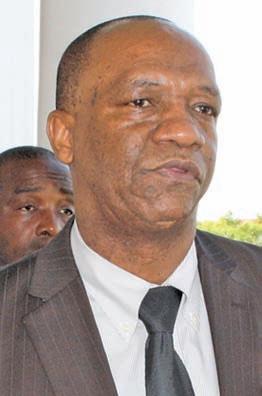
Speaking to Guyana Times on Monday, APNU’s General Secretary Joseph Harmon attempted to justify why APNU, and possibly all other the other political parties, refuse to reveal the sources of their funds.
He explained that persons who financially support political parties request their identities to be guarded in the event the party that they support loses. “In a country like ours, there may be some sort of recrimination if you support a party that doesn’t win,” he said.
Considering Guyana’s society is small, Harmon said the prospect of an intimate connection between political parties and their financial supporters with public knowledge increases the chances of conflicts surfacing.
Harmon concluded that while the policy is good, to have such practice in Guyana would create difficulties. He stated that APNU always prepares financial statements at the
end of its campaigns, but decides it best not to publish them because of potential problems.
“I don’t think it is in the best interest to disclose that information to other politi-
cal parties because it will cause unnecessary conflicts,” he said.
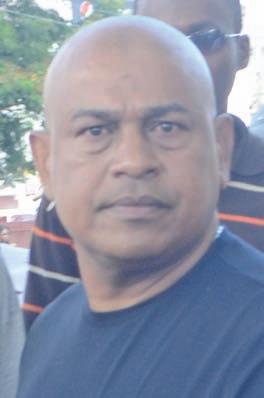
Leader of APNU David Granger made it clear that he will not discuss matters involving campaign financing and also dismissed claims that his coalition was being in-part funded by Lall or the newly established Funding a United Committee for Opposition Presidency (FUCOP).
Guyana Times was told by several businessmen that they were forced by Lall to join FUCOP. Political observers say that the ongoing coalition talks between APNU and, the AFC following the explicit rejection of AFC Leader Khemraj Ramjattan to even consider that move, is a clear sign that Lall and FUCOP, which
is funding both entities, might be calling the shots.
Weighing in on the subject, Executive Member of the recently resurrected United Republican Party (URP) Vishnu Bandhu supported the calls for political parties to disclose their sources of funding, but offered an explanation as to why it would be unwise to do so under the current political atmosphere.
“Political parties should be accountable to show how the money is spent…they should disclose the persons and businesses…but our situation in Guyana is ticklish so people have to be very careful when they disclose names.”
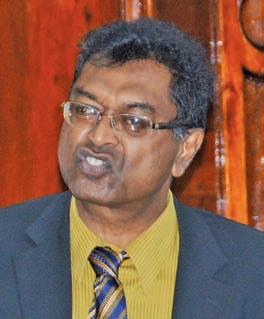
He noted that persons fear victimization if their names are revealed to the public. “If one party sees that you support another party, then it can cause problems, they can be intimidated,” he said.
"Such systems work well in other countries because the political arena completely differs. We are accustomed to a different kind of politics," he said.



Editor: Nigel Williams
Tel: 225-5128, 231-0397, 226-9921, 226-2102, 223-7230 or 223-7231. Fax: 225-5134
Mailing address: 238 Camp & Quamina Streets, Georgetown
Email: news@guyanatimesgy.com, sales@guyanatimesgy.com
Over the last two decades in Guyana there have been a steady drumbeat of calls to modify our political institutions - the Constitution, electoral system, parliament, etc - on the assumption that these changes will resolve whatever it is that ails our body politic. The Constitution especially has received great attention recently - almost exclusively by the Opposition - not least possibly because it establishes most of the institutions of the state.
Without getting too pedantic, we can stipulate that “institutions” in general are the rules, law, custom or practice that structure our behaviour around some value. In politics the value is better governance for our country so that our citizens live happier lives.
The Opposition’s calls for change, however, has focused exclusively on the Constitution, while studiously ignoring the fact that even though there were massive changes in 19992000, nothing was altered in our political behaviour.
One would have expected that, at a minimum, the Opposition would have questioned as to why this has been so. If they had, they would have had to concede that informal patterns of behaviour and norms by politicians are even more important in structuring political behaviour than the formal rules adumbrated in Constitutions.
For this reason, based on our history, it is certain no matter what changes are made to our political institutions, not much will change until the Opposition comes clean on what is actually motivating their calls for institutional change.
In Guyana, at the most fundamental level, the Opposition People’s National Congress (PNC) - including its various incarnations, the PNC-Reform, PNC-R1G, and APNU - has never accepted the legitimacy of the PPP/C to govern Guyana. Thus while the formal electoral rules of the institution that constituted the mechanism to form the Government consistently catapulted the PPP/C into control of the State, one reason or another was always found to remove them from office.
In the 1950s, the Constitution was simply suspended and the PPP arbitrarily thrown out after 100 days of being elected into Government. In 1957 and 1961 the PPP won again but in 1964, new electoral rules were imposed at the urging of the PNC to remove the PPP.
The reasons given for changing the formal rules of electing Governments by Proportional Representation have since then been shown to be completely false as far as inducing the changes in political behaviour (formation of coalitions) that were posited.
For the next 28 years, all formal rules governing our political institutions were subverted through the simple device of rigging the elections and awarding control to the PNC. Because it suited the prejudices of CariCom, the UK and the US, no one talked about changing the political institutions of the country, excepting the Opposition which was routinely ignored.
With the return of “free and fair” elections in 1992, the PPP/C was returned to office - but not surprisingly the demands for “constitutional change” also returned. The PPP/C initiated the process in 1996, but the PNC decided to catalyse the process by launching massive street protests, arson and mayhem following the 1997 elections.
The PNC arbitrarily decided that the PPP/C’s Janet Jagan, one of the pioneers fighting for the independence of Guyana, was “unsuitable” to govern Guyana.
She had to step down along with the 171 Constitutional changes that were introduced in 2000, as mentioned above. These significantly reduced the powers of the President and boosted the powers of the Opposition in Parliament.
But once again, a PPP/C government in office - installed by the formal institutional rules - was offensive to the norms of the PNC. An armed insurrection was launched from their stronghold of Buxton, which was only quelled, and the PPP/C government saved, through the intervention of non-state actors.
So when one hears about the Opposition’s calls for “constitutional change”, know that this is all poppycock, unless they change their informal norm of rejecting the PPP/C as suitable to govern Guyana.
A new year, but the same things are here with us
Dear Editor,
The year has only just started and it appears that the same things are happening in this dear and beautiful land we call Guyana. I suppose some things are just not meant to change. Very often, the real problem in any country are the people who are elected to serve, whether they are in the Government, or in the Opposition.
In politics, the politicians in Guyana have started going at each other all over again. “What next?” is the question that keeps coming up in one’s mind. The Opposition essentially wants to behave like the Government and the Government continues to think they are doing every thing right.
Neither of these statements is true and on the one hand, the Opposition politicians, in paarticular Khemraj Ramjattan and David Granger, are always on the offensive. When one listens to them, you would have to conclude that the Government is not doing any thing good, or right.
Right now, Ramjattan and Granger are supposedly in talks about a grand coalition, but they can never seem to agree on how to talk, when to talk, where to talk, or about any kind of talks about the
talks they are supposed to have. Would these two men have cooperated better were they in Government? Hardly likely, but I leave you to be the judge. Freedie Kissoon falls in the same category, but it is doubtful who listens to him these days, or perhaps for a long time now. Freddie seems to be like a big baby craving for attention but is not getting any. And that must be a bother to him.
It is so difficult to follow his writings as they are scattered every where. Freddie always promises to give more attention to a particular subject in another column but never does. Every column is too short for Freddie to express himself fully or to properly analyse a subject matter, yet he never does elsewhere or in any other column.
At best, Freddie is a half academic, a half writer and a half politician. Some say he is also a half man, hence the nickname “Man Kisser”. He constantly refers to the sexuality of other men, a clear indication that he is perhaps uncomfortable with his own sexuality, as indeed another letter writer in this newspaper has pointed out several times.
In the final analysis, when you examine the Opposition’s statements carefully, they are not offering solutions, or
better options than what Government is proposing. On the surface, the prorogation of Parliament can never really be a good thing, but when one looks at what the President was faced with, he had no choice but to take the decision he did.
If the Government is so bad and corrupt, how come the Guyana economy has continued to show positive growth for the last nine years? The Government must be doing some things right for this state of affairs to have prevailed for so long, despite the economic meltdown in 2008.
On the other hand, the Government would do well to undertake an intense self-examination to evaluate what has gone right and what has gone wrong.
Just as how the Opposition ought to accept that the Government has done some things right, the Government ought to also recognise that it has not done every thing right, and certainly some things have gone woefully wrong.
The Opposition must allow the Government to govern, and the Government must recognise its weaknesses and mistakes. Elections or not, hopefully this will happen in the new year.
Annalisa Ally
Rice farmers claim the industry will come crashing down
Dear Editor,
On New Year’s Day I decided to travel to the northern side of the Essequibo Coast to wish one of my best friends a happy New Year.
I ran into some discontented millers and rice farmers, and was told by the millers that there is favouritism in the allocation of quotas for rice and paddy for the Venezuelan market.
One miller told me that he did not receive any quotas because one time he had been outspoken against the Government, although he was a big buyer of farmers’ paddy and was paying promptly for their produce.
He had observed that two major players who had influence had a vested interest in a particular rice miller’s operations in the northern part of the coast.
They told me that this miller had received more quotas than all the millers in the country for supplying rice and paddy to the Venezuelan market, and they were wondering if these two persons had shares in this private mill.
According to these discontented millers and farmers, this rice miller had received bail-outs from Government and others did not.
Farmers from Wakenaam were encouraged to sell their paddy to this miller rather than other millers, and this marginalization they claimed was putting them out of business and soon they would have to close their operations including their expansion which was done lately to improve their mills on the assumption of fair quotas and market share on the international and local market.
One miller told me that he has the most modern operation which can produce extra long grain rice with 80 per cent or more kernels after milling, with a length of 7.0 mm.
Long grain rice with 80 per cent or more of kernels after milling with a length of 6.99 mm, medium grain and short grain can compete on the international and local market, while the favoured miller has an outdated operation which is producing a lower quality of rice.
The farmers said they have lost confidence in these two people in the rice industry since they have not been representing their cause for decades and they cannot remember the last time they were seen picketing the rice millers for outstanding payments due to farmers.
Rice farmers also claimed that very soon the rice industry will come crashing down like the Guyana Sugar Corporation (GuySuCo). What is saving the industry is the fact that farmers are using their own money with prudent management to cultivate their crops.
The Government continues to boast of a bonanza year for rice and paddy, but the truth is the economy is slowing down. We are faced with price drops for key exports like rice, sugar and gold, as well as projected production and revenue shortfalls due to mismanagement.
Our performance in the economic sphere up to the end of 2014 has not been positive.
Mohamed Khan
resident Donald Ramotar has promised to deliver a bridge across the Corentyne River and a road linking Guyana and Brazil should be reelected President this year’s elections.
In his New Year address Ramotar said: “during the next term of office, my Government will work with
ternational financial institutions. Dr Luncheon said the two countries have signalled strong support for the establishment of land linkages across the Corentyne River. The initiative was identified as one of a series of projects that would further physically integrate South America at a recent Union of South American Nations
forward to harnessing our country’s vast hydropower potential. The time for realising this dream is long overdue. “At the heart of all these developments, will be our aim to improve the quality of life, enjoyed by every Guyanese citizen. Opportunities will be created for persons to find gainful employment, and to acquire the skills neces-
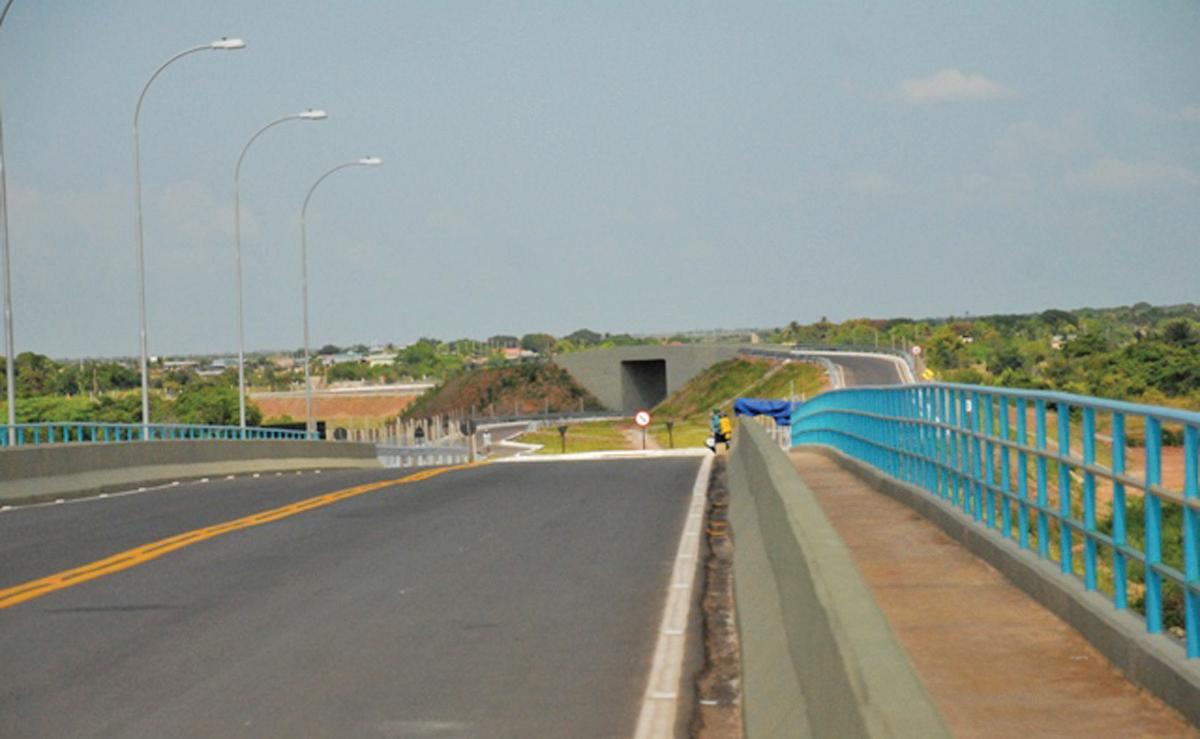
our partners to bridge the Corentyne River and to complete the road from Brazil along with the accompanying deep water harbour.”
Back in 2013 Cabinet Secretary Dr Roger Luncheon had said that some preliminary works have been completed and ground work will begin shortly on the bridge project. He had said that a final decision is yet to be made regarding the construction of the bridge, but discussions are continuing and officials are now looking to finalise preliminary studies to continue with the project. Funding for the project has been an ongoing deliberation between Suriname, Guyana and in-
(UNASUR) meeting. During his presidential campaign, Surinamese President Desi Bouterse had promised to build a bridge across the Corentyne River, should he be elected. Bouterse had said that it is necessary for technical assessments to be done before the project meets the construction phase.
Affordable energy
Meanwhile, Ramotar also declared emphatically that “high amongst (the) priorities will be to ensure the achievement of more affordable and more reliable energy.” The reason he proffered is manifold, and what it can realise when completed. “For too long, Guyanese have looked
sary to take up those opportunities. Amongst the initiatives we will pursue, is the aim of achieving Universal Computer Literacy, (so) ensuring that each and every one can assume his/her rightful place in the modern, technology-driven world,” he stated in his address to the nation.
New road link
The idea of road/bridge networking was also mentioned. The President explained that “… the feasibility study for the East Coast-East Bank bypass road has been completed and (in discussion are the) next steps to advance this project, that has awe-
Several passengers of Caribbean Airlines travelling from New York to the Cheddi Jagan International Airport were expected to receive their luggage late Monday due to some glitch
In a statement Caribbean Airlines advised that passenger baggage from BW527 which originated at John F. Kennedy International Airport, New York on Monday will be dispatched Monday tonight.
The flight was on the last stop of its New York to Port of Spain (Trinidad) to Georgetown (Guyana) route. On arrival at Cheddi Jagan International Airport, (Timehri) the cargo doors could not be opened and as a result, the crews could not access the customers’ bags.
While passengers were allowed to disembark, unfortunately their bags could not be retrieved. The plane was flown back to Trinidad, where the Caribbean Airlines maintenance crews used the necessary expertise and tools to open the doors.
Caribbean Airlines regrets this inconvenience and wishes to advise customers that

some ramifications. It is set to … catalyse US$65 million in investment, building 20 kilometres of roads and supporting infrastructure. Furthermore, in the first half of 2015, we will be constructing an alternative link between Diamond and Eccles that will greatly relieve traffic congestion for commuters on the East Bank of Demerara.” This of course means thousands of job opportunities. Unreliable and unaffordable electricity continues to be the biggest impediment to investment and job creation in Guyana. My Government will deliver the Amaila Falls Hydropower Project to the Guyanese people, along with all its attendant benefits.”
He said “Within months, (he is expecting) to achieve financial closure and (so) commence construction…”
The flagship of the LCDS is the AFHP, he said, and added that, “I am pleased to announce that Norway has transferred earnings from our partnership of approximately US$80 million to the Inter-American Development Bank to fund part of Guyana’s equity share in the project. This is a significant accomplishment. It demonstrates that all partners have strong confidence in Amaila. The project is once again moving forward.” The President repeated that Guyana is one of the very few countries in the world, receiving compensation for the sustainable management of the forests. Under this LCDS and in partnership with Norway, Guyana recently received its fourth payment, bringing the total earned thus far
to US$150 million. It is the funds earned from this kind of prudent management that the AFHP is becoming more and more visible. In 2015, he stated the Government will continue to break new development ground under the LCDS. “We will launch initiatives targeted at flood prevention dealing with both coastal community drainage systems and the larger conservancies. We will catalyse the ecotourism sector through several interventions so that Guyanese can more fully take advantage of our country’s natural and cultural assets,” he said.
In addition, work will advance on a Biodiversity Centre that will showcase Guyana’s unique biodiversity to the world and to school children, some of whom have not had the opportunity to travel to interior locations.
Housing The areas of works to be continued include just about every sector, as each has seen significant progress in the recent past. For example, the housing sector has seen impressive growth over the past five years.
The President detailed that, “From 2009 to 2014 the budgetary allocation to the sector has grown by 400%.
In 2009, the Ministry was implementing 51 projects, now in 2014; there are 170 projects under implementation. The sector has been a boom for job creation, directly creating 3,500 jobs in 2014, a figure that is projected to grow to 4,250 in 2015.’
“In just the past three years we have increased monthly Old Age Pension by 75 percent to $13,125. This is
light years from where we came when it was a paltry few hundred dollars and our seniors were subjected to the humiliating means test.” Now the criterion is just age. President Ramotar reminded all that “Over just the two and a half years to mid-year 2014, the size of the economy increased by 25 percent to $650 billion, (and) our country has attracted more than US$629 million in foreign direct investment, credit to the private sector has grown by 41.5 percent to $190.5 billion, and total deposits in the commercial banks has grown by 22.1 percent to $334.6 billion.” All of this was achieved despite the fact that the international environment was not favourable for some of the important sectors of the economy, he said, as he mentioned the notable fall on the international market for the price of gold, the decline in sugar price on the world market by 60 percent, and rice facing similar challenges of market availability, unfavourable price movement, and late payments. Ramotar also lamented the fallout with the opposition. “The Opposition displayed remarkable recklessness and disregard for the welfare of our people by twice opposing the passage of the Anti-Money Laundering Bill in the National Assembly. In so doing they are endangering our Financial Sector, exposing it to International sanctions. I ask how can one speak about fighting drug traffickers and money launderers, how can one speak about fighting corruption and oppose the passage of the AMF/CFT Bill.”

Huge progress has been made in many critical areas involving children’s health. Yet there is still important work to be done, and most of it doesn’t involve expensive new drugs or surgical procedures. Instead, it’s about the basics. We have identified five issues that desperately need the world’s attention for the sake of children and their families, and suggest some ways that you and your family can help. Continued from monday
The world has been captivated by the story of Pakistan-born Malala Yousafzai. In 2009, the Taliban banned girls from attending school in her region. When she was 11, Malala started a blog in which she wrote about life under Taliban rule and spoke passionately about continuing her own education despite the ban. When she was 15, Malala was attacked on her school bus by Taliban gunmen, who shot her in the head. Amazingly, she survived and recuperated in the UK, where she and her family are now based.
Since then, Malala has become an even more prominent activist for girls’ education, speaking worldwide, including an appearance before the UN General Assembly on her 16th birthday. She released a best-
To many of us, polio is a distant memory — if we remember it at all.
After all, since the polio vaccine was introduced in 1955, cases plummeted and the disease was declared eliminated in the Unites States in 1979. Global immunisation was so successful that polio was about to join smallpox as the only infectious diseases to have been wiped out.
But in three countries
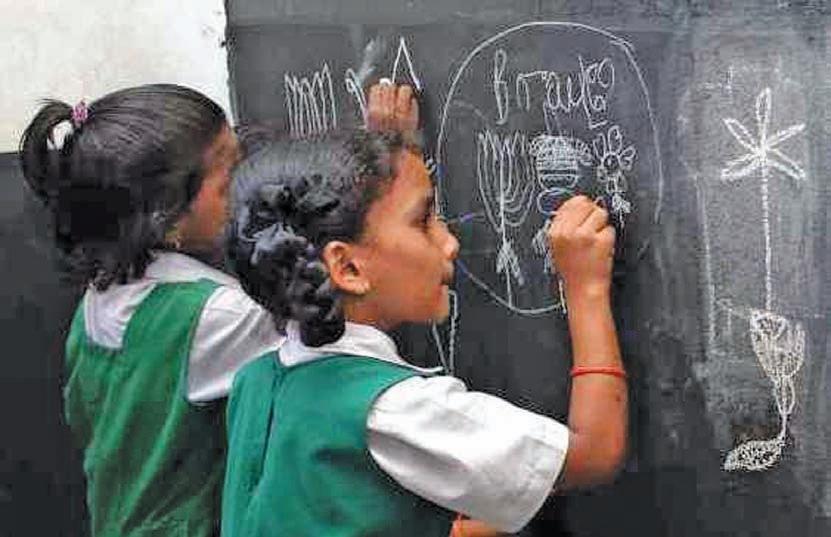
selling memoir (“I Am Malala”), has become the face of a movement despite ongoing threats against her and last year won the Nobel
— Afghanistan, Nigeria, and Pakistan — polio has never been wiped out. Nigerian cases have dropped 65 per cent and the rate of immunisation rose by 29 per cent. More problematic are vaccination efforts in Afghanistan and Pakistan — in addition to trying to reach villages in remote locations, workers have encountered violence and re-
Peace Prize. Her activism is tied to Millennium Development Goals Two (“Achieve universal primary education”) and
Three (“Eliminate gender disparity in primary and secondary education, preferably by 2005, and in all levels of educationa no later
than 2015”). While primary-school enrolment in developing countries has risen to 90 per cent, worldwide: 57 million children are not enrolled in school 122 million young people (ages 15 to 24) lack basic reading and writing skills; almost 61 per cent of these are females • 799 million adults are illiterate, two thirds of whom are women
In Malala’s homeland, fewer than half of Pakistani women are literate, the literacy rate in some rural areas is as low as seven per cent, and more than three million girls are not in school.
The link to the cycle of poverty is clear. Girls who receive little or no education face limited job pros-
sistance. The Taliban, claiming the vaccines are part of a Western plot against Muslims, have attacked and killed vaccination workers in both countries.
Sixty cents is the cost of protecting one child from polio.
Now, cases of polio have been reported in Syria, with

health experts attributing missed vaccinations to the ongoing civil war (immunisation rates dropped from 90 per cent in 2010 to 68 per cent in 2012). Health officials are scrambling to get vaccines to Syrian children and others in the Middle East.
The virus strain causing the Syrian outbreak has also
been detected in sewers in Egypt, Israel, the West Bank, and Gaza Strip.
Polio basics. The poliovirus is highly contagious. It spreads through contact with the stool (poop) of an infected person and through droplets from a sneeze or cough. The poliovirus requires an unvaccinated host to survive — if there is no one to infect, the

pects, putting them at an increased risk of trafficking and sexual exploitation. They’re also more likely than educated girls to contract HIV/AIDS. Educated girls are better able to find good jobs, keeping themselves and, later, their own children out of poverty.
Not surprisingly, Malala has inspired people around the world to help. Here are a few easy ways to pitch in:
CARE.org: You can donate to help poor families send girls to school.
UNICEF’s Stand With Malala campaign: Contributions go to support UNICEF’s education programmes in Pakistan. Global Education Fund: This group works to educate all children. You can donate, spread the word, start a fundraiser, host an event, and much more.
virus will die out. Polio mainly affects children younger than five. While it usually causes no symptoms, 1 in 200 infections leads to paralysis (usually in the legs), and up to five per cent of those who are paralysed die when the virus affects their breathing muscles. The lack of symptoms also means that an outbreak can go undetected until someone who’s infected does develop paralysis.
The two forms of vaccine are oral polio vaccine (OPV) and inactivated polio vaccine (IPV). Because it is not a shot, OPV is easy to administer and can be given by volunteers. The average cost of one dose of OPV is 60 cents.
Polio cases in faraway countries might not seem like a global concern. But as long as polio is present anywhere, outbreaks are still a risk. In fact, health experts warn that Syrian refugees could unwittingly carry the virus to parts of Europe. Until the disease is finally wiped out, it is a threat to all. End Polio Now: Rotary International; UNICEF; the World Health Organisation (WHO); the Centres for Disease Control and Prevention (CDC); and the Bill & Melinda Gates Foundation are at the forefront of the Global Polio Eradication Initiative. To help, you can donate, share your voice on social media, raise awareness, or become an advocate.
Shot@Life: Through this United Nations Foundation programme, you can help children be vaccinated against polio, as well as measles, pneumonia, or diarrhoea, for as little as US$5. (kidshealth.org)
APartnership for National Unity (APNU) said it was in favour of non-disclosure of negotiations on a preelections coalition with the Alliance For Change (AFC), but remained cautious given earlier pussyfooting by the minority Opposition party.
APNU General Secretary Joseph Harmon on Monday confirmed that the party was in receipt of a proposal from the AFC stipulating the way forward on the coalition talks.
The AFC, over the weekend, said a draft proposal stipulating that talks could only be held in secret was submitted to APNU for the party’s consideration.
Secret
However, when contacted by the Guyana Times on Monday, Harmon explained that from where he stood as APNU’s General Secretary, secret talks would not be an issue.
He opined that he was in favour of the AFC’s stated prerequisite to dialogue, that is, a secret agreement on the part of both parties.
According to Harmon, APNU will be discussing the agreement in the near future, but he was unable to say when this will be.
“I agree that we need not have these discussions in the public domain,” said the APNU Member of Parliament.
He explained that APNU has many partners and some of them are on vacation out of the jurisdiction; hence, they would not be able to discuss the AFC’s proposal.
When further pressed about a possible timeframe for APNU to give
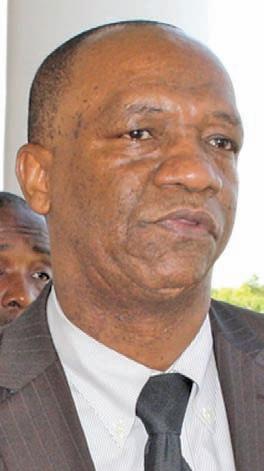
an answer to the AFC, Harmon said that he was not willing to publicly put a timeframe on the party’s in-house discussion on the issue.
“We are going to get back to the AFC very soon on the matter,” he said.
Co-Chair of APNU, Dr Rupert Roopnaraine said that from his view, the electorate was very much “interested” in what the future holds in terms of an APNU/AFC coalition contesting the next General And Regional Elections.
In an invited comment to the Guyana Times, Dr Roopnaraine said: “Voters, I believe, are interested in whatever alliance that can secure a victory at the upcoming elections.”
Political points
Political observers have noted that the announcement of coalition talks by the AFC is just a way of gaining political points and the notion to form a broad coalition with APNU may not be genuine.
Many persons have pointed to the “mixed signals” coming from the smaller political party.
Roopnaraine told Guyana Times that mixed signals were not uncommon in the political sphere.
The AFC release had said that “in the last meeting of the General Secretaries of both parties, the AFC tabled a non-disclosure agreement for the review and signing by the APNU, with the clear understanding that on the return of the signed document, the AFC would release to APNU, our Draft Memorandum of Understanding (MoU) which would form the template for our negotiations”.
Announcement
The party added: “It should be noted that we don’t intend to negotiate agreement within the public space and, therefore, will not be commenting further on this matter until there is a substantive announcement to be made.”
The AFC indicated that while it awaited a response from APNU on the non-disclosure agreement, it was prepared to “issue a draft MoU to the APNU within 24 hours of receiving the signed non-disclosure document”.
Thereafter, negotiations between the two parties could commence. This means that as early as Wednesday, APNU and the AFC could commence talks on a possible alliance to contest the next General and Regional Elections, which are expected before the end of 2015.
“In the meantime, we have continued to meet with serious-minded groups and individuals and are finalising our campaign team and strategy and subsequent structure and plan for Government,” the release said.
APolice Constable attached to the Impact Base at Stabroek Market Square was robbed by two men on bicycles along Avenue of the Republic, Georgetown in the wee hours of Monday.
The Policeman, whose identity was not released, was reportedly walking along the Avenue of the Republic when the two
men confronted him. One of them reportedly choked him and relieved him of a Samsung Galaxy Phone and an undisclosed sum of cash.
After the robbery, the two men fled the scene on the pedal cycle. The Police Rank was not hurt. Another rank told the Guyana Times that an investigation has been launched into the
By Bhisham mohamed
Asenior rank within the Guyana Police Force on Monday told the Guyana Times that Ryan Couchman of Lot 1360 Diamond Housing Scheme, East Bank Demerara (EBD) and his accomplices concocted a fight with the intention of robbing a Police rank of his jewellery on Sunday evening when he was fatally shot.
Couchman, a known robber, was shot at least three times while he was at a bar in Soesdyke, EBD, following an attempted robbery on a Police rank.
The source explained that the Police rank and his girlfriend, along with a female friend, were at the Splashmin’s Fun Park and Resort on Sunday and on their way home in the evening, they stopped at “Patsy’s Shop”, at the junction to purchase a bottle of water.
At the time, the Policeman, who is attached to C Division (East Coast Demerara) was wearing a gold chain. As the rank moved to the counter area, Couchman and his two accomplices started to punch each other in order to create a scene.
As part of the act, the rank stated, Couchman reportedly picked up a broken bottle and started to advance on the Police rank who hurried back to his car.
As he attempted to enter his car, Couchman walked up to him and tried to grab the chain, but the Policeman stretched, pulled out his firearm, and discharged at least four rounds at Couchman.
The Police rank reportedly sustained a gash to his face with the broken bottle and was treated at a medical institution and sent away.
The Police source said all
statements taken from persons around the area, in particular the two females who were in the Policeman’s car, were consistent with what the rank related to his superiors.
The senior Police rank also rejected allegations that the rank was in the company of the now dead man at the creek.
He explained that it was not normal for Police ranks to be associated with criminals and gangs, noting that if they were seen or caught doing so, there were serious disciplinary consequences.
However, the Police’s version of events appears to differ from that of some eyewitnesses.
One witness told the Guyana Times that the Policeman and the men were arguing when a fight broke out and he walked to his car, collected his firearm, and pumped three bullets into Couchman. A fter doing so, he entered a dark blue Toyota Premio motor car bearing registration number PSS 5586.
The eyewitness added that persons around were hesitant to lend assistance to the injured man, but af-
terwards a public-spirited citizen, along with one of the ‘so-called’ accomplices with whom Couchman was liming rushed off with him to the hospital.
Couchman died on his way to the East Bank Regional Hospital, commonly known as the Diamond Diagnostic Centre. His car was left at the scene, but was later collected by his relatives.
Police stated that Couchman was a known character and was arrested multiple times for armed robbery.
In 2008, Couchman was slapped with two robbery under arms charges and was remanded to prison by then Magistrate Hazel Octive-Hamilton. It was alleged that on July 9, 2008, at Thomas Street, Couchman used a gun to rob Assif Bacchus of a quantity of Guyana and US currency and a cellphone, all to the value of $473,000. It was also alleged that on the same day and place, Couchman used a gun to rob Jovia Rahaman of $1.7 million.
In January 2011, Couchman and four others allegedly posed as customers and robbed a group of Bel Air diamond dealers of over $4.9 million in articles. He was remanded on that charge after he made his court appearance at the Georgetown Magistrates’ Courts.
In December 2013, the then 33-year-old dredge owner was charged for discharging a loaded firearm at Jarred Hamilton with intent to maim, disfigure or cause actual bodily harm. He was placed on $150,000 bail by the presiding Magistrate when he made his court appearance in January 2014. (bhisham@ guyanatimesgy.com)
The man fingered as the arsonist behind the Sophia blaze that has resulted in the deaths of two persons so far was caught in Linden, Region 10 (Upper Demerara-Berbice).
alleged robbery. The rank stated that it was quite surprising that bandits were now turning their attention to Police ranks, especially those who do not carry a firearm. He said that recently another Constable was relieved of his personal belongings. He was not in uniform at the time of the robbery. Investigations are continuing.
According to information reaching the Guyana Times, suspected arsonist Gavin Graham was en route to Mahdia, Region Eight (Potaro-Siparuni) when he was apprehended by Police on Monday.
It is alleged that Graham doused a home at C Field, Sophia, Greater Georgetown with gasoline before setting it on fire on Friday night. He was reportedly angry after his former lover refused to mend their relationship of five years.
Meanwhile, two of the
fire victims, Graham’s former spouse, Tibola Abrams and her reputed husband, Sean Whyte, continue to be treated for first- and seconddegree burns in the Burns Unit of the Georgetown Public Hospital.
Even as they make funeral arrangements for 68-yearold Clifford Sampson, the family’s patriarch, the seven other survivors are assisting the Police with the investigation. On Monday, they reported to the Turkeyen Police Station.
Sampson, a bus driver who plied the Georgetown-C Field, Sophia route, succumbed to his injuries Saturday afternoon while receiving treatment at the public hospital.
The other seven victims: Aletha Buelow, Tyrice
Buelow, Troy Buelow, Weldon Webster, Ashanti Giame, Candacy Buelow and her reputed husband were discharged on Saturday after being treated for the injuries sustained. Graham shared a relationship with Abrams that ended after the suspected arsonist became abusive. The separation resulted in Graham allegedly issuing a series of threats which landed the former lovers in court. Abrams had also filed a restraining order against him. Around 19:30h on Friday, Graham reportedly visited the house with the intention of “patching up” the relationship, but when Abrams refused, he became very annoyed and issued additional threats.
tuesDAY, JANuARY 6, 2015 | guYANAtimesgY.com
Kaieteur News
Publisher Glenn Lall
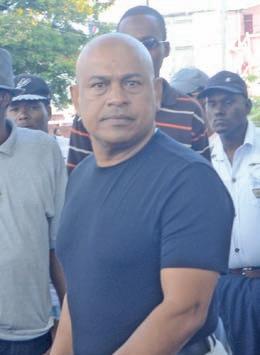
and his wife, Bhena, will make their third appearance in the Georgetown Magistrates’ Courts in the tax case against them on Thursday, January 8.
On November 24, the case was adjourned by Magistrate Judy Latchman to January 8, 2015.
The Lalls’ co-accused, remigrant couple Naroontandeo and Gharbassi Brijnanan are both expected to appear in court during this hearing.
The four are charged with attempting to defraud the Guyana Revenue Authority (GRA) and by extension, the State of over $100 million in
taxes payable on the import of two luxury SUV vehicles from the US. The Brijnanans imported the vehicles under the Government’s Remigrant Scheme allegedly for the Lalls.
The allegations against the pair read that between June 18, 2013 and September 20, 2013, at Lot 200-201 Camp Street, Georgetown, Demerara, a place in the Georgetown Magisterial District, they made and subscribed to false declarations on two Lexus LX 570 motor vehicles to be US$44,158 respectively, contrary to Section 217 (1a) of the Customs Act, Chapter 82:01. In addition to those
charges, they were slapped with two counts of aiding and abetting in a conspiracy to defraud the Government of due taxes. To all the
charges, the Lalls pleaded not guilty.
During their first court appearance before Chief Magistrate Priya SewnarineBeharry, the couple were released on their own recognisance as their Attorney, Khemraj Ramjattan, successfully submitted a bail application.
Attorney Sandil Kissoon, representing the GRA, made no objections to bail being granted, but objected to the duo being released on their own recognisance. But Ramjattan told the court that the two were well-known business persons with millions in assets; hence, they were unlikely to flee the jurisdiction.
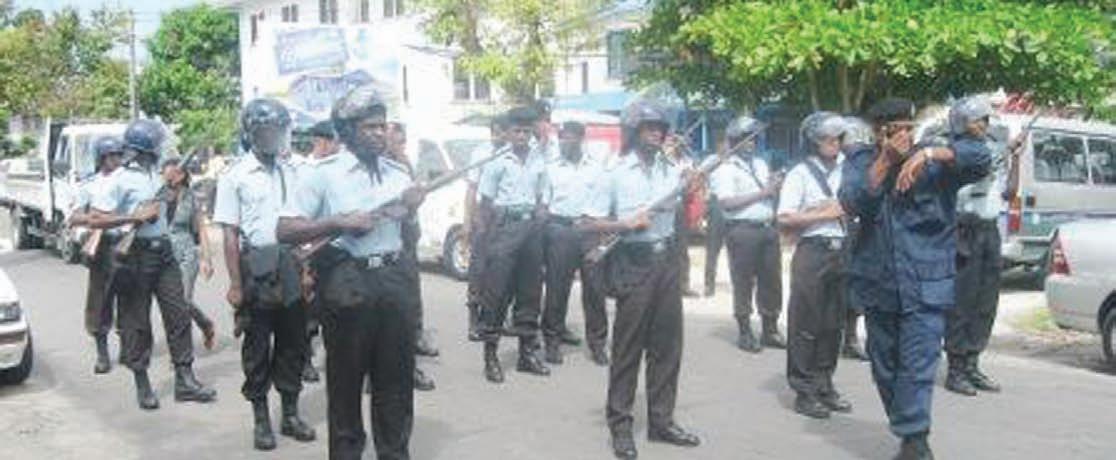
Ranks of the Guyana Police Force will from this month undergo training in crowd control, which observers say could become useful in light of elections slated for this year.
Guyana’s history has been dotted with post-lections violence and police are often called out to restore order.
Speaking recently at a forum, Home Affairs Minister, Clement Rohee said that plans are underway for the Force to receive Crowd Control Training in January 2015. This training, he said was recommended over the years and is provided for
Bandhu explained that in several states in the US, opposing political parties are assisted with funding from the governing body for campaigning purposes.
“If I’m an Opposition party and I raise $100,000, the Government would match that and give me $100,000,” he said.
Bandhu said such practices should be applied here and claimed the current Government utilises state resources for campaigning purposes.
He also noted that he is “positively sure” PNCR/
in the Guyana Police Force Strategic Plan. Notably, he said the Linden Commission of Inquiry had made a recommendation for the Guyana Police Force to receive this type of training.
Following the 2011 elections some eleven persons were shot and injured with rubber bullets by ranks of the Guyana Police Force during a march between Winter Place and Louisa Row.
Among those injured are 75 year-old Sarah Johnson, Joan Baveghems who is a former People’s National Congress Reform Parliamentarian, former Army Chief Brigadier Edward Collins, APNU’s
APNU and AFC would be no different if they were in power.
“They have no difference, they’re all the same, they’re one tree but with different branches,” he said.
Since 2009, the OAS has been insisting on the introduction of campaign financing laws.
These laws are not intended just to capture the quantum of funding to political parties, but also the nature of the source of the funding.
Since that time Chairman of Guyana
Youth Leader James Bond, Brentnol Holder, Neil Mattis and his 10 year-old son Johnny Mattis, Lurlene Nestor and Laurine Mingo. These persons were all treated for pellet shots about their bodies at the Georgetown Public Hospital Corporation (GPHC) and sent away.
Back in August September last year ranks of ‘A’ Division (GeorgetownEast Bank Demerara) received Special Riot Training sessions in anticipation of having to deal with crowd control and unauthorised mass street protests. The ranks which were drawn from several policing locations within ‘A’ Division,
Elections Commission (GECOM) Chairman, Dr Steve Surujbally said there must be limits on campaign financing, lest the country runs the risk of becoming a “narco-state”.
He said if the financing of election campaigns remain unlimited, the state can be infiltrated by drug lords or criminal elements.
He said although the battle has been a rough one, a system must be institutionalised to put a brake on campaign financing.
“We must, with all the wars, we must because if
had their training in the Brickdam Station compound.
Meanwhile, Rohee said some seventy seven officers and ranks of the Force participated in a number of overseas training courses, some of which included Leadership, Management and Development, Money Laundering, Fingerprint, Intelligence, Kidnapping, Travel Document and Security and Security and Extortion Negotiation.
A number of these courses were made possible through collaboration between the Guyana Police Force and its regional and hemispheric counterparts.
we don’t, the effects would be very destructive to the state,” Dr Surujbally stressed.
In May 2013, the OAS hosted a symposium in Barbados where 42 participants, representing electoral management bodies, governing and Opposition parties from 14 OAS member states in the Caribbean, discussed measures to strengthen the regulation of political parties and political financing in the Region.
Recently, a similar meeting was held in Trinidad and Tobago.

ell, mouth open and story had to jump out sooner rather than later on the pre-nuptial talks between PNC/APNU and AFC. The six-week deadline for their talks are up and only now we're learning that AFC's demanding that all the proposals, etc should be "SECRET". That's right. They don't want anyone... including (and maybe ESPECIALLY their supporters) to know what they're proposing or accepting from the PNC/ APNU.
These are the same fellas who're all over the Government like a cheap suit for being "secretive" when Government officials are negotiating deals like the Marriott. And now they want coalition talks to be secret!!!
In negotiations with commercial entities, the latter most often demand secrecy because they don't want their competition to get wind of their plans. But a coalition that's been brewing for YEARS???!! What do they have to hide?!!
Well, one reason for Ramjattan and Nagamootoo playing ducks and drakes about hitching up with the PNC/ APNU is frankly they were scared stiff about how their Berbice supporters would judge such a betrayal.
Ramjattan already confessed to this. Berbicians well remember the vicious racist victimisation they suffered at the hands of the PNC. They only voted for the AFC because they'd promised to support either the PPP/C or the PNC/APNU in Parliament depending on their stance on various issues.
But Prezzie's announcement that elections will be definitely held this year forced the AFC out of the closet. After conniving with PNC/APNU to prevent the PPP/C from further developing the country since 2011, the AFC knows their duplicity's been exposed. So the only reason they could possibly want the negotiations to be secret at this time is that they're so ashamed of what's gonna be revealed in SELLOUT to PNC/APNU, they wanna keep it under wraps until the last minute.
What could it be?? With the AFC that's not hard to figure out - it always has to do with the chance to make a buck and getting their hands on power. The latter condition, of course, guarantees the former goal. Ramjattan had earlier backed Nagamootoo as the AFC's Presidential Candidate. Because he knew that Nagamootoo had as much a chance of becoming President as a snowball has surviving in hell!!
But now that the coalition's out in the open, Ramjattan's gonna demand HE be made the Presidential Candidate. Hence, the secrecy. Taking letters from each party’s name, your Eyewitness understands it'll be called a "Partnership Alliance for National Trust - Yes!" (PANTY).
The new Big Dick (Morris) poll showed that if Ramjattan wears PANTY's obvious banner on the hustings, he'll win the election!!
But he also wants to keep secret that PANTY will be funded by FUCOP.
Ramjattan's a very bitter little man who just can't stop lying. Interviewed recently, he claimed he'd left the PPP/C THEN formed the AFC. First of all he never LEFT the PPP/C. He was ignominiously EXPELLED after he "carried news" to the US Embassy. Then he formed the AFC and still squatted on his PPP/C seat - until he got his duty-free car allowance.
Last week, the wanker projected the bitch-slapping he'd received from everyone in the PPP/C's Ex-Co after his betrayal, by claiming that former President Bharrat Jagdeo had "verbally slapped" Ramotar - who was General Secretary of the PPP/C at the time!! Even his buddy Nagamootoo and Ralph Ramkarran had voted at the time to expel him!!
Ramjattan's problem is before Jagdeo returned from studies in the USSR. He thought he was the "young lion" in the party. He's still bitter at Jagdeo for exposing him as a "young hyena" who eats the leavings of the lion!!
Carl Greenidge is upset at President Ramotar's trumpeting the economic gains of this country in the last two-and-a-half years.
Poor Carl. He's still the only Finance Minister who confessed that the country was "bankrupt" under his watch!!
The National Insurance Scheme (NIS) on Friday announced that it has agreed to increase all Old Age Pensions by five per cent, with effect from January 1, 2015.
The Scheme disclosed that the minimum rate for old age and invalidity pension will be increased from $19,770 to $21,532 per month from January 1.
In addition, the insurable earnings that attract NIS contributions will be increased from $158,159 to $170,812 per month or from $36,498 to $39,418 per week, effective from January 1.
The announcement also revealed that the minimum insurable ceiling for self employed persons contributing to the Scheme will be increased from $49,384 to $53,334 per month as of January 1. Old age pensioners will be issued with pension order books which will contain six benefit payment vouchers each. These payment vouchers will become eligible for encashment on a monthly basis.
However, 2015 will also see new books being prepared and issued, when life certificates are submitted, which attest to the pensioner being alive.
To qualify for Old Age

Pension, the insured person must have paid no less than 150 contributions or paid and been credited with not less than 750 contributions and has to be no less than 60 years of age.
To qualify for an Old Age Grant, the insured person must have paid more than 50 contributions and has to be above the age of 60. An Old Age Grant is a lump-sum payment equal to one-twelfth the average annual insurable earnings for each group of 50 contributions, whether paid or credited or paid and credited.
An Old Age Pension is paid to the insured person, for as long as he or she is alive while an Old Age Grant is a single
payment. A claim for old age benefit must be made by completing a few forms. These forms must be taken.
Meanwhile, the Old Age Pension programme which assists some 42,000 senior citizens will see an added increase in the monthly amounts disbursed.
In 2011, Finance Minister, Dr Ashni Singh had disclosed that “efforts will be placed on providing more opportunities for improving the physical and social well-being of the elderly in social services and health care. In addition, there will be continued financial support in the form of Old Age Pensions and water payment subsidies for senior citizens.”
Afather of three from Golden Fleece Village in Region Two (Pomeroon-Supenaam) has ended his life tragically over unresolved domestic issues.
He ingested a quantity of poisonous substance. Dead is Edward Junior Joseph, 33, a carpenter. According to information reaching the Guyana Times, the man and his reputed wife had a heated argument which made him angry. After the argument, he went and consumed the quantity of poisonous substance. He was later discovered by his wife’s relatives at the back of their house and after several hours, he was taken to the Suddie Public Hospital. After battling for almost four days, he lost his life on
January 4.
He leaves to mourn his reputed wife and three children.
Joseph was living in England and after falling in love with his present spouse, he moved to Guyana and was living with her at their Golden Fleece residence. His family are presently preparing for his funeral.
The General Register Office (GRO) last year did significant work in registering the births of babies and ensuring that they received a birth certificate, the Home Affairs Ministry has said.
In a statement, the Ministry said that throughout 2014, the staff worked assiduously to ensure the general public received birth certificates in a timely manner to facilitate registrations at schools and the acquisition of passports and national identification cards.
To ensure that Guyana achieves UNICEF’s 2015 Goal in respect of Universal Birth Registration, the GRO visited all administrative regions, with significant work being done in the Soesdyke/Linden Highway, Kato, Kabakaburi, Chuing Mouth, Itabali, Batavia, Karrau, Bartica, Port Kaituma, Shulinab, St Ignatius, Karasabai and Annai areas. The objectives were to ensure that: systems
were in place for birth registration at health centres in the villages; the staff at the health centres was trained in birth registration; the villagers were educated on the process of birth registration and registration was conducted for children whose births were not registered, thus allowing them to obtain birth certificates.
With the re-introduction of bedside birth registration, especially at public institutions, registration increased significantly. The GRO, in collaboration with the Education Ministry, ensured that all children in the school system were in possession of birth certificates. During 2014, 1382 affidavits and 375 court orders were received at the GRO to effect correction to birth records.
Handouts were distributed and television advertisements aired to educate the public on birth registration in order to decrease these costly corrections. In 2014 the
BY ANDREW CARMICHAEL
Region Six (East Berbice/Corentyne) is being considered the leader in healthcare delivery in Guyana by the Pan-American Health Organisation (PAHO), the World Health Organisation (WHO) and the Government of Guyana.
Several programmes being implemented by that region’s health department have resulted in Region Six being declared ‘top health care deliverer’. The recent Chikungunya outbreak was handled well by Region Six, PAHO/WHO Country Representative, Dr William Adu-Krow says, noting that other regions and other countries could adopt the mythology used by Region Six.
“I want to see if we can have a consultant to the region to capture everything; what was done, how it was done, what were the lessons learnt and how do we make others learn from this.” Dr Adu-Krow is of the belief that had the Chikungunya outbreak occurred in another part of the country first, it might not have been detected that early.
Healthcare delivery in Region Six falls under the ambit of the Berbice Regional Health Authority (BRHA). Dr Adu-Krow says the BRHA is doing wonderfully and has been acting on suggestions and implementing programmes. “And that is what I have come to realise, that most things get done here (Region Six) and the challenge is for us in the country to take what is done here well and replicate them elsewhere. That is something we at PAHO need
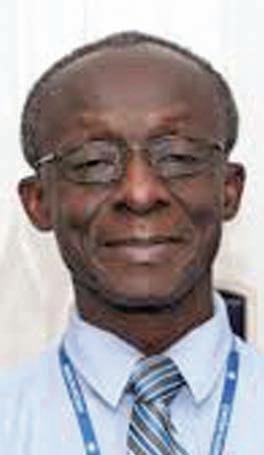
PAHO/WHO Country Representative, Dr William
Adu-Krow
to do as a partner organisation.” Dr Adu-Krow said. At the time, the PAHO Country Representative WAS speaking with this publication after a meeting with health officials in New Amsterdam.
Dr. Adu-Krow says PAHO is there for agencies to approach with proposals and indicate the role PAHO can play in making the proposal become a reality. “Every work that we get involved in we put in some resources and the resources could be technical skills which it can garner form any part of the world.”
However Pan-American Health Organisation (PAHO) Resident Country Representative, Dr Miahali Choo says it is difficult to compare one Region with another because each region has its specific characteristics and as a result there can be no first, second or third region. “The Malaria programme is only in Region Eight.” She noted that PAHO has done most of its work
in Region Six and then to a lesser extent in Region Four. This she admitted is because of the BRHA’s commitment in ensuring the best health delivery is delivered.
PAHO aids all administrative regions in Guyana with capacity building but it is what each individual region dose with the resources available that makes a difference and when Region Six stands out, Dr Adu-Krow explained.
Dr Choo in noting that all regions had personnel trained in the care for the elderly programme, added that only in Region Six the programme has taken off. “There is good leadership and a group of professionals that are pushing the programme.”
The care for the elderly programme, she explained, incorporates non-communicable diseases management, monitoring and education. This is because the elderly are more at risk to such ailments.
Despite a recent survey which indicating that percentage of persons who were dissatisfied with the hospital care they received, 90 per cent of them indicated that the New Amsterdam Hospital provided a level of care below that of their expectation.
On the other hand, Prime Minister Samuel Hinds lauded the delivery of health care in Region Six. During a recent visit to the Sanvoort Health Centre, he said Region Six is leading in health, adding “Maybe sometime we can have a slogan that says in matters of health and providing health to our citizens we can take the lead from Region Six.”
process of computerising the GRO commenced with the attachment of a Chief Computer Programmer under the auspices of the International Organisation for Migration (IOM). Information Management Software was developed and servers and network equipment installed.
The system was tested to satisfaction and records are now being inputted, with a view to producing in the near future, electronic birth certificates. Additionally, the GRO has established a website to advise the general public on all services offered by the Office.
The address can be obtained from the Home Affairs Ministry’s website. As is relates to training, senior officers of the GRO attended a conference held by the Guyana Police Force Immigration Department to discuss, share and learn how to identify authentic and false documents such as passports and foreign birth certificates.

The Guyana Power and Light (GPL) has promised improved services this year, amid widespread discontent by customers over the services the company provides.
Despite the setbacks of frequent blackouts, Government said that it is evident that the interventions it has made to modernise the energy sector are paying off, as there were some remarkable achievements within this sector in the year just gone by.
Prime Minister Samuel Hinds, who is tasked with the responsibility for this sector, said electricity supply has drastically increased over the years, coming from a place where 10 megawatts of generation was available to meet a demand of 33 megawatts, to one where 140 megawatts of Wartsila units are available to meet a demand of 108 megawatts.
The Prime Minister said Guyanese can take satisfaction and pride in the fact that the local transmission lines are as modern as they can get. In an effort to propel the growth of this sector, the 2014 National Budget allocated
to be a success for the utility company. In addition, several new sub stations were commissioned, while some existing ones were upgraded to better meet the demands of citizens.
Lethem’s power plant has been relocated, while the power supply in Culvert City benefitted from an upgrade along with those in Mahdia and Linden.
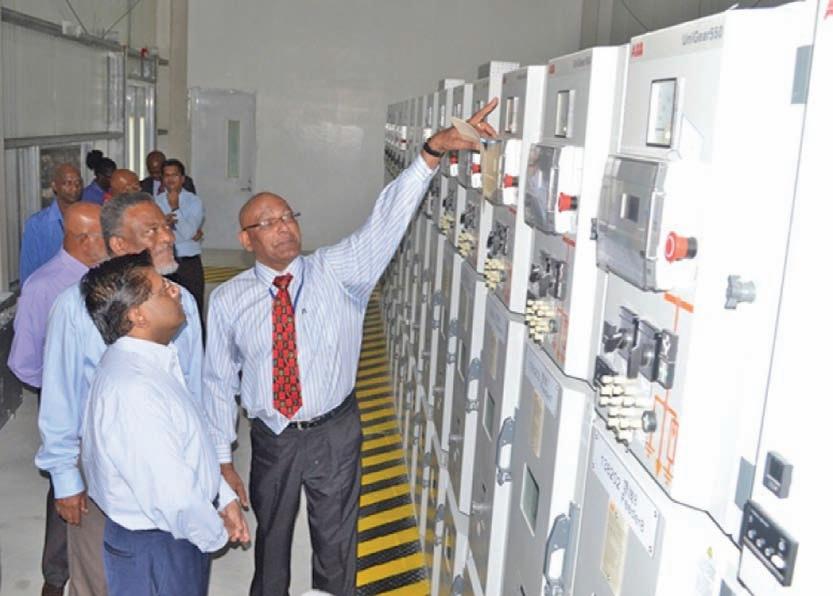
stations to a Supervisory Control and Data Acquisition (SCADA) system at Sophia. However, all of this was not accomplished without its share of challenges to the utility company. Key among these was the construction of new facilities, in many instances in proximity to live operating facilities. GPL had to develop strategies to over-
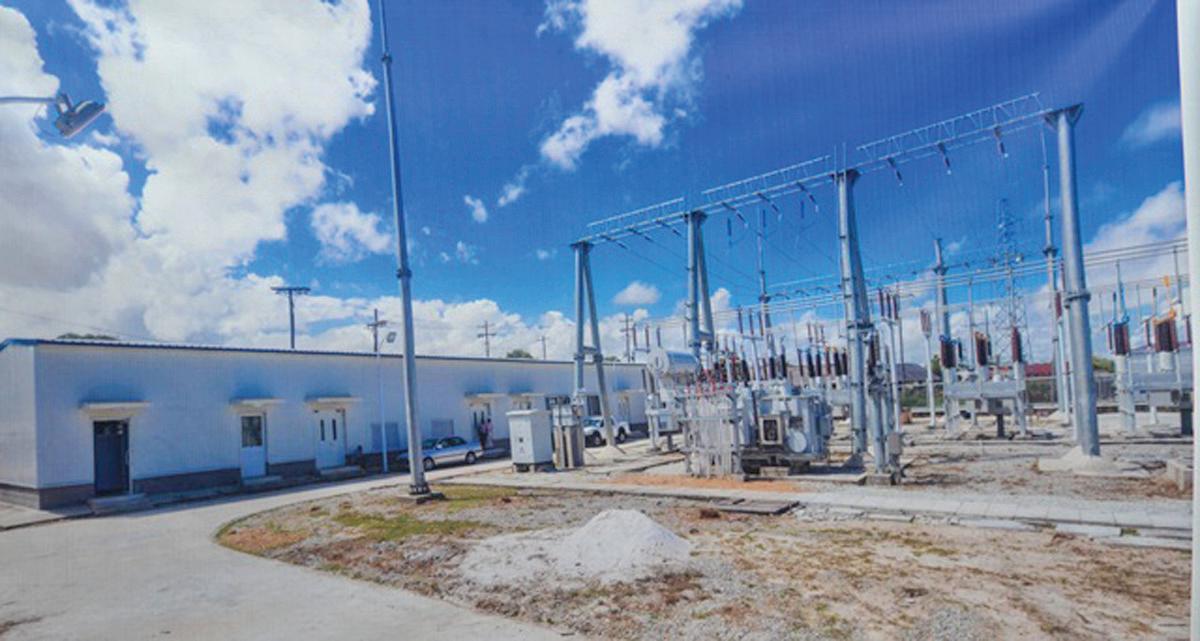
a total of $7.7 Billion. Of that amount, in excess of $200 M was used for the implementation of activities, targeting improved management capacity and capabilities, operational efficiency, and loss reduction.
GPL’s Chief Executive Officer Bharat Dindyal, said that in an effort to curb electricity theft, the company has brought in smart meters, which have been installed in some sections of Georgetown and these are being monitored. In 2014 too, the utility company continued its pre-paid meter drive, in an effort to curb loss reduction and this programme has proven
In 2014 also, Columbia, South Backlands, New Sophia (Liliendaal), Good Hope, ECD, Vreed-enHoop, Edinburgh, and Golden Grove benefited from new sub-stations.
These inputs all fall under the US$42.8M Infrastructure Development Project (IDP), which also caters for three existing substations; their upgrade and expansion, including, Onverwagt, Sophia, and Canefield, with approximately 96 kilometres of 69 KV overhead transmission lines.
New Sophia
This IDP also saw the construction of a fiber optic network, liking all the sub-
come these challenges, including constructing temporary arrangements in sub stations, distributing feeders, and diverting existing transmission lines.
As was promised at the beginning of 2014, power supply was upgraded in Leguan and Wakenaam, and as such, the residents there are benefitting from 24 hours of power supply.
In the past, residents of Leguan only got electricity during the evening, from 16:00 hours, to 08:00 hours the following morning, on holidays and weekends. The same has been the trend on the neighbouring island of Wakenaam.
The residents of these two islands have welcomed
the commissioning of the 24- hour energy supply.
Vreed-en-Hoop
It must be noted too that in 2014, the electricity sector continued with a focus on the Hinterland Electrification Programme. To date, over 80% of the hinterland communities are being provided with electricity. There are also grid systems in Mahdia, Region Eight, Port Kaituma, Region One, Lethem Region Nine, and most recently Matthews Ridge and Moruca in Region One.
Over the last eight years, over US$150M was injected into the GPL itself, with more than half of that amount being spent on enhancing its distribution systems. Meanwhile, moving forward, Chairman of the GPL Board, Winston Brassington, while acknowledging the many achievements, highlighted the fact that going forward, the focus will be shifted to building a better distribution system.
He made reference to the US $65M InterAmerican Development Bank, European Union funded project, which is underway.
This project has three key areas of focus, including helping to improve management at GPL, strengthening overall institutional capacity to design and plan, and executing and helping to reduce losses, via an integrated approach to technical and commercial loss reduction. Meanwhile, Dindyal said that 2015 promises to be better, as the company will be seeking to improve its services in every aspect.

e more some people live is de more some of dem does get stupiddy. Some times it does be de other way around – dem stupiddy from de time dem born, but de more dem live is de more people gettin to find out de secret bout who stupiddy bad and how bad dem stupiddy.
Is no wonder some body coulda sing a song bout people like dem: “A stupiddy yuh stupiddy, a pagalee yuh pagalee”. That song is a true story that come from a lotta people real life story, not just Rum Jhaat, Lalloo and wishhe-was Rambo. If that song ever mek a movie, dem three gon sure be star boys.
Rum Jhaat fuh one is a man who like do tings in secret, but pagalee-ness is a hard ting to hide. After all, not every ting does remain a secret – like how he fall down Old Year’s Night and couldn’ta get up till de day after New Year’s...in de afternoon.
Even before he get kick outta de Pee-P-P, he used to run to de US Embassy in secret. Then he do secret wuk fuh de Feathers people in secret. Not even de Feathers people realise how much secret money he collect from dem. That is why he was keeping secret fuh people like No Gel Hughly. Now Rum Jhaat wanna hold talks wid Green Jah in secret. All de time Rum Jhaat been keepin every ting a secret bout de coalition.
But whah he couldn’t keep a secret is how dem people in Berbice cuss he up and chase he out when he was tryin to get dem to cuss out de Pee-P-P. One man seh that is when he realise that Rum Jhaat can run faster away from a 22 than whah he can run fuh a bottle or wid a bottle down de road.
Ting-a-ling-a-ling…friend tell friend…mattie tell mattie! He always thought Rum Jhaat was always de fastest whenever a bottle deh in de mix. But Rum Jhaat still de fastest wid de drinkin part. And that is no secret!
Brazil has added US$17 million in funding to projects undertaken in its ongoing partnership with FAO, highlighting the Latin American country’s role as a key regional and global contributor to the fight against hunger.
The decisions, added to ongoing projects have increased the portfolio of Brazilfunded projects through FAO to over US$100 million. The latest projects approved during the month of December range from school-lunch programs and family-farming policies to fishery advisory services in Latin America and Africa. FAO Director-General José Graziano da Silva is currently on an official visit to Brazil, where he will attend the inauguration of new President Dilma Rousseff on January 1. Recently Graziano da Silva met in Brasilia with a slate of new cabinet members. The recent funding pledges made by Brazil include $5million to support a new project for fisheries in Africa, US$4million from for a new Regional Project for Africa, designed to promote exchange and dialogue on family farming policies; $3.5 million to expand the geographic coverage of the ongoing school-feeding project in Latin America and the Caribbean; and $4.3 mil-
lion for a project focusing on promoting small-scale aquaculture to achieve food security and alleviate poverty risks around Latin America and $5 million cash contribution added to $5 million in kind contribution for the strengthening of fisheries and aquaculture in Africa.
FAO is poised to sign a new memorandum of understanding with the Brazilian Agricultural Research Corporation (EMBRAPA), a key public research agency in Brazil’s evolution from food importer to major agricultural producer. The agreement will further FAO’s sponsorship of South-South cooperation. Brazil is currently supporting over 27 projects with FAO for a total amount of almost US$100 million and is one of the top 10 contributors to the Organization, along with the Group of Seven advanced industrial nations, Norway and Saudi Arabia. Brazil is a strong promoter of South-South cooperation, sharing its experience with “Zero Fome” (Zero Hunger) policies with countries in Latin America, the Caribbean and Africa, and as the latest contributions underscore, its partnership with FAO is diversified and spans a wide array of ministries and governmental institutions.
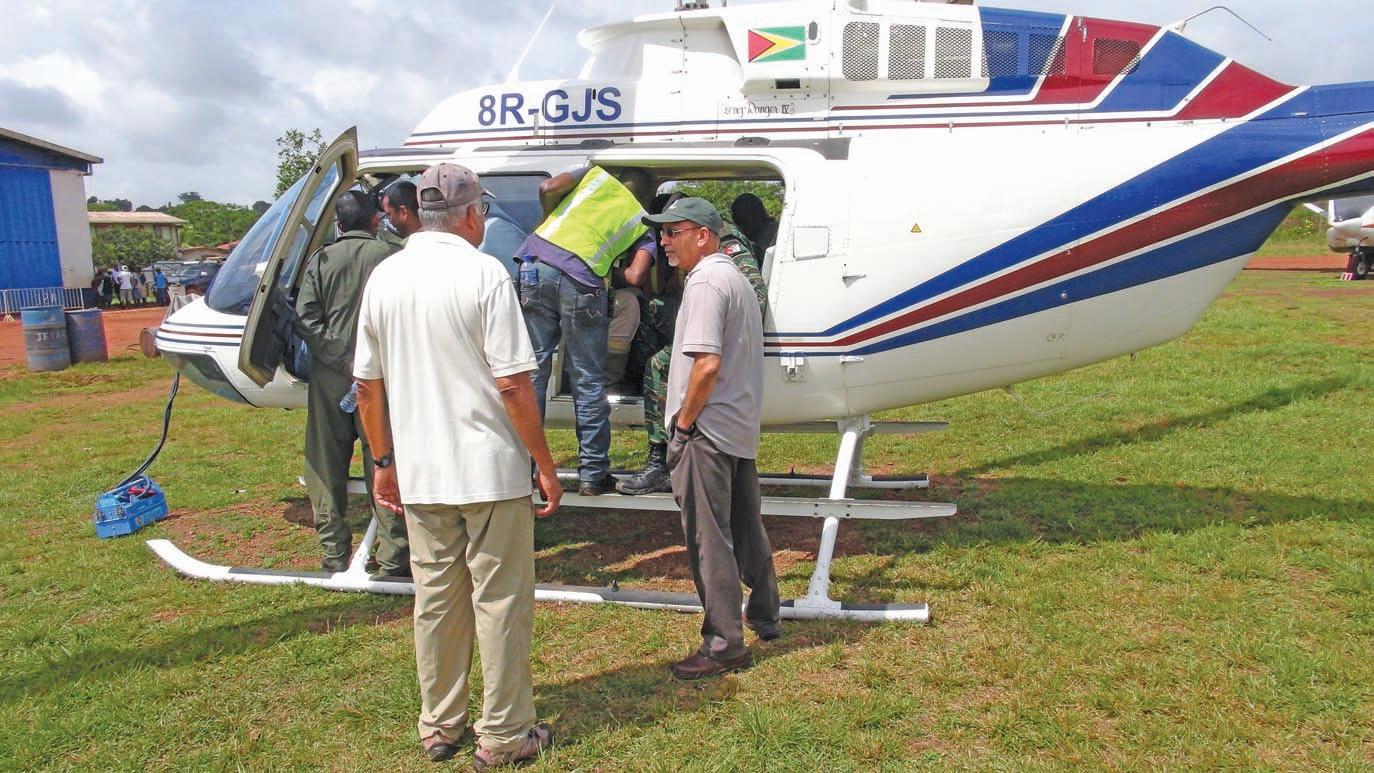
...but still no sighting of missing plane
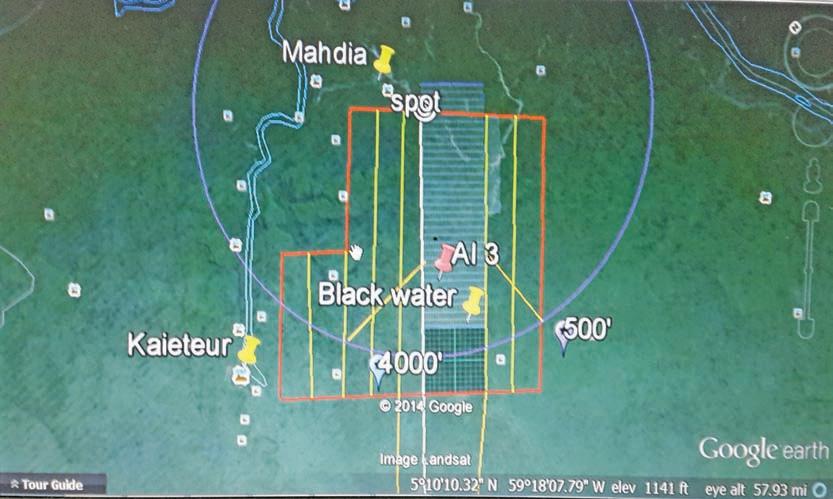
Another day has passed with no sign of the missing Air Services Limited (ASL) Britten Norman Islander plane, which disappeared from radar after taking off from Mahdia Airstrip, Region Eight (PotaroSiparuni).
According to the head of the Guyana Civil Aviation Authority (GCAA), Zulficar Mohamed, they will not give up until the wreckage is located.
Speaking to the Guyana Times on Monday, the Director General related that although their efforts to locate the missing aircraft have proven futile thus far, they were still working with several leads and were optimistic that the wreckage would soon be found.
On Monday evening, the search team was shuttled back from Black Water to Mahdia after another day without any success. The search ended about 16:00h and will continue this morning as soon as the sun rises.
There were some hopes that the sighting of a few broken trees from the air in the Black Water area might have been an indication of the crash site, but after two days on foot, members of the Guyana Defence Force (GDF); the Guyana Geology and Mines Commission (GGMC) and the Guyana Forestry Commission (GFC) came to a dead end.
The new area of interest, according to information received, will be the Ibini Mountain Range, which is within the 10-mile radius of the last transmitted signal via “Spot Tracker”.
The GCAA head stated that while they were exhausting all possible areas
of interest, the search team has been expanding.
Of recent, a Canadian aircraft has joined the search team with a metal detector but after two days traversing the area, there has not even been a beep on the monitor.
Reward for information
A member of the search party, who is stationed at Mahdia, stated that while there was some frustration on the ground about not finding the aircraft, they were continuing to gather information as it becomes available and work with such.
He reiterated that the search was not an easy task, explaining that the vast jungle was a challenge.
He was, however, surprised that with the most modern detector, they were unable to locate the wreckage.
There are currently over 24 persons on the search team who trek the area by foot on a daily basis.
A team, he added, has been in the area for the past two days and returned without spotting any trace of the plane.
Guyana Times understands that a $5 million reward is being offered to anyone with information that can lead the search party to the crash site.
On Sunday, December 28, the Timehri Control Tower lost communication with the Cessna Britten Norman Islander that was flying between Mahdia and Karisparu, Region Eight, with its pilot 27-year-old Nicky Persaud and loader, 51-year-old David Bisnauth on board.
Based on records, the aircraft took off from Mahdia
With an allocation of $1.1 billion for 2014, the Region Five (Mahaica-Berbice) Administration was able to achieve a lot of work in the education sector.
Region Five Chairman Bindrabhan Bisnauth said in 2014, a lot of focus was placed on improving the environment of several schools as “…we renovated all our sanitary blocks… and we tried to improve the environs of the schools and we created better spaces for our children”.
Some of the schools that benefited from new tarmacs include the Fort Wellington, Number Eight and Novar Secondary Schools, and Belladrum, Blairmont, and Cotton Tree Primary Schools.
The establishment of the two A List Secondary Schools in the region (in 2013) has paved the way for students
about 11:42h on a routine local cargo flight and the last known position was marked by “Spot Tracker” at 11:44h.
At 16:20h, Timehri Air Traffic Control Tower made contact with the aircraft operator to establish whether the aircraft had landed before implementing a searchand-rescue operation. After no information was received, Air Traffic Control commenced an ‘Alert Phase’ and the Rescue Coordination Centre (RCC) at the Cheddi Jagan International Airport (CJIA) was activated.
Moments after the aircraft was reported missing, two ASL Cessna 208 Caravans flying within the area were vectored to commence a search operation and were later joined by three Belle helicopters.
After the first few days with no success, the RCC got into contact with Surinamese aviation experts as well as those from the United States Mission Coordination Centre.
As the search intensified, Suriname provided an Emergency Locator Transmitter (ELT) to zero in on or enhance any signal from the wreckage site.
The RCC had plotted a grid with the most probable flight path of the aircraft and where it was most likely to have flown and determined the overall area of interest for possible crash sites which is being flown systematically to ensure coverage of the entire area.
To date, systematic flyovers have been carried out, but, all have proven futile.
The family members of Persaud and Bisnauth have joined the search party in the hope of finding their loved ones.
writing the National Grade Six Assessment (NGSA), to be placed at secondary schools within the region.
“We have established two additional secondary schools. Previously, they were primary tops: the Woodley Park Secondary and the Novar Secondary School, and we have extended the building that was accommodating the upper primary level.”
Qualified teachers
The Woodley Park Secondary can accommodate an additional 350 students, while the extension at the Novar Secondary will cater for 250 more students.
“We have the capacity to accommodate every school child who is of the age for secondary school. Our Government has taken a decision that we must make secondary education universal; in Region Five, we have
achieved nursery and primary and secondary education.”
Also, additional sanitary blocks were constructed for the schools mentioned throughout the region.
“We are not only looking for betterment for our students on the coast, but also for those in the riverine areas: the Mahaicony, Abary and the Mahaica Rivers that fall under us and to that extent we also took some decisions to rehabilitate and to make better facilities available for students and teachers.”
Scarcity of qualified teachers, Bisnauth said, is now a thing of the past as the region has constructed new living quarters at Gordon Table while enclosing another at Mora Point. Also 11,406 of the region’s children benefited from the Government’s “Because we Care” $10,000 cash grant.

Vendors selling on the roadside of the old Anna Regina Market on Saturday vented their disgust over the huge pile of garbage in front of their stalls. The huge build-up of garbage was as a result of workers attached to the Anna Regina municipality going on strike.
The workers downed their tools on December 20 refusing to conduct any work for the council. They went on strike after the Council owed them $1.7 million in retroactive payments and leave passage for the 2012-2013 period.
According to vendors, the stench emanating from the “stockpile” of gar-
bage is unbearable and calls were made for the Council to do something over the matter. The huge pile of garbage is also creating a traffic hazard.
According to one vendor, Lynette Wilson, she has to stand all day to sell and the smell from the garbage is making her sick. The vegetable seller said that she made a report to the Council and over a week now nothing has been done about the garbage, “We tell them but day and day, more and more are being dumped, it will eventually block the entrance”.
The garbage is also attracting animals, (dogs, donkeys and rodents)
which can eventually spread diseases. The vendors who are paying their market rates regularly are calling on the Anna Regina Interim Management Committee (IMC) to step up and find a solution of disposing the garbage. Meanwhile, Town Clerk Dianne Critchlow said that the Council was in no position to pay the workers all the money owed to them at one go. She said she was aware of all the challenges faced by vendors and the Council is contemplating of hiring temporary staff to assist in cleaning and carrying out other duties of the Council while the workers are on strike.
tuesDAY, JANuARY 6, 2015 | guYANAtimesgY.com
In conjunction with the Agriculture Ministry, the Guyana Sugar Corporation (GuySuCo) is in the process of finalising the sugar production target for 2015. According to GuySuCo’s Chief Executive Officer (CEO), Dr Rajendra Singh, the target will be disclosed before the commencement of the first crop in February.
He said the target would be higher than the 2014 target, which was originally set at 216, 000 tonnes.
In 2014, for the first time since 2005, the Corporation was able to surpass its target. In 2013, GuySuCo had set an ambitious target of 240,000 tonnes, but this figure was
subsequently revised to 190,000 tonnes. Despite this significant reduction, the industry fell short in achieving the target.
According to the CEO, 2014 was the turning point for the industry, which has been stymied by poor weather conditions, a dwindling labour force and a problematic multimillion-dollar sugar factory.
It is anticipated that the industry’s efficiency rate will increase this year with the injection of the US$7.5 million provided by the Caribbean Development Bank (CDB).
Dr Singh said the loan, which was approved on December 11, will be completely utilised in the area of

IDB loans totalled more than US$13 billion in 2014
Latin America and the Caribbean’s economic growth might recover modestly to 2.2 percent in 2015, up from 1.3 percent in 2014, its lowest rate since last decade’s global financial crisis, the Inter-American Development Bank (IDB) has said. Despite the slowdown, the region has managed to maintain its gains against poverty, said InterAmerican Development Bank President Luis Alberto Moreno.
In his year-end report to the Board of Executive Directors, which represents the IDB’s 48 member countries, Moreno noted that in a scenario marked by sluggish global growth, falling commodity prices and limited fiscal manoeuvring room, Latin American and Caribbean countries must prioritize reforms that will ensure sustained and inclusive growth over the medium and long term.
“Now, more than ever, the answer lies in internal sources of growth, which brings us up against a huge challenge: increasing productivity,” he said. “This factor explains why the region continues to trail behind other regions of the world.” Moreno listed a series of reforms and investments the region needs to undertake, ranging from strengthening trade integration to upgrading its infrastructure and public services. Other bottlenecks to productivity are the high proportion of informal jobs in its labour markets, the limited access to

financial services, the poor quality of education, and the low levels of innovation in its productive activities.
Safeguarding social gains achieved over the past few years will also be critical, Moreno added. Poverty has dropped to historically low levels (27.6 percent in 2014). “We cannot turn back,” he emphasised. To that end, countries will have to closely monitor their labour markets and social welfare programs, in order to protect the most disadvantaged among their population. They will also need to reduce the risks posed by natural disasters, which disproportionately harm the poor.
The IDB has much to contribute to the pursuit of this reform agenda, Moreno said, as it remains one of the region’s leading sources of long-term financing
mechanisation.
According to the CDB, the loan will be used to reduce operational costs and simultaneously improve mechanisation.
High operational costs have always been a major stumbling block for GuySuCo. In 1995, GuySuCo was producing sugar at a relatively high cost; today, the situation remains the same.
In 1995-1996, the cost of production was US$0.23 per pound with the figures dropping to US$0.22 in 1997.
When compared with Guatemala, the United States, North East Brazil and India, the cost in Guyana was most unfavourable.
Mid last year, the cost of
production stood at US$0.34 per pound. It is anticipated that this would be reduced to US$0.26 per pound by the end of 2017.
GuySuCo, in keeping with its 2013-2017 Strategic Plan, will continue to accelerate its Mechanisation Programme to cushion the impact of a dwindling labour force.
Gradually, sugar workers are downing their tools as they seek to capitalise on emerging commercial activities that are transforming Guyana’s economical landscape.
In 1995, GuySuCo’s labour force stood at 24,000, but today it has dropped to 16,000.
The worrying labour situation has left GuySuCo no choice but to find alternative means of producing sugar. The Corporation has already moved to mechanise more than 30 per cent of its 48,000 hectares of fields.
In addition to mechanisation, the Corporation has been working closely with private farmers. GuySuCo has been leasing land to private farmers.
This model has been successfully implemented for a number of years at the Wales Estate, where private farmers are working closely with the Corporation.
At that estate, 40 per cent of the sugar is provided by private farmers.
The Ministry of Home Affairs this year will be conducting a Citizens Perception Survey on the Guyana Police as complaints continue to be made about ranks conduct and their integrity.
and technical assistance. In 2014, it approved more than US$13 billion allocated to projects involving institutional development (43 percent), infrastructure and the environment (38 percent), social sectors (16 percent), and trade and regional integration (4 percent).
Moreno also highlighted the IDB’s increasing support for private sector-led projects, which received about US$2.8 billion in loans and guarantees in 2014, up from US$2.1 billion the previous year. He added that the IDB has made progress in the preparation of a proposal to merge all of its private sector activities in order to gain operational efficiencies. The proposal is due to be presented to the IDB’s Board of Governors at their next Annual Meeting, scheduled to take place in March in Busan, Korea.
In his year end review last week Home Affairs Minister, Clement Rohee said that in 2014 the ministry made a decision to conduct the survey which, he said would provide baseline information on how citizen view the performance of the Guyana Police Force, and through which the Force would be able to measure the success of interventions in that regard. According to Rohee the ministry has already advertised for a Firm to conduct this survey, applications were received, applicants were interviewed and one suitably qualified was selected. Work will begin in the New Year.
Additionally, Rohee said in an effort to ensure that the Strategic Management Department was working in accordance with its Terms of Reference, the Ministry of Home Affairs in July 2014 hired a Consultant to conduct a Management Audit of the Department to assess the state of the implementation of the Strategic Plan.
The purpose was to review the management planning methods and practices in the Department, examine how management was utilizing employees’ skills, assess the arrangements for internal and external communication and relate
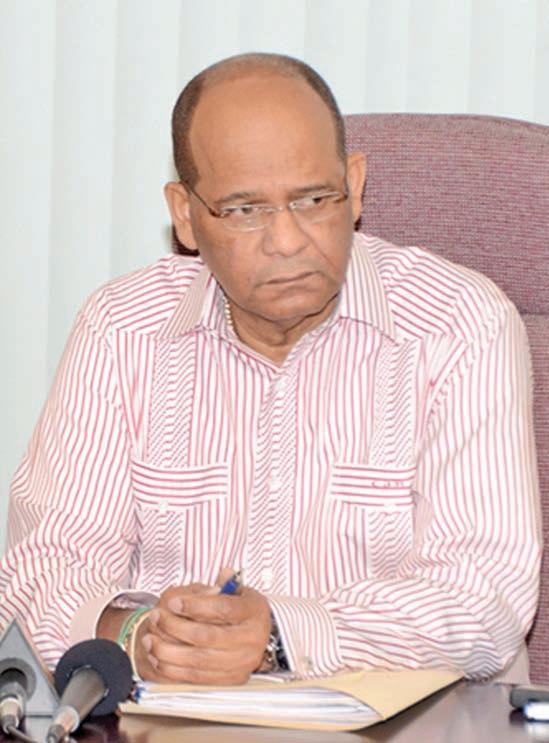
these to the Department’s current output.
The results of the audit indicated that there were no major variations in the work of the Department and recommendations were made including the following: a format should be developed for monthly reporting from the Department to the Assistant Commissioner Administration; the Department must be kept informed about the work of the Executive Leadership Team and the Department must be involved in Leadership team and policy board meetings
Meanwhile, Rohee announced that additional Data Entry Clerks were
recruited to boost the expansion of the Integrated Crime Information System and to date, a total of eighty one Clerks were employed covering Police Divisions ‘A’ to ‘F’, as well as the Georgetown, Lusignan, Timehri and New Amsterdam Prisons and the Customs Anti Narcotic Unit Headquarters. These clerks he said enter data from reports collected by the Constituent Agencies under the Ministry to allow for analysis for operational and policy decision making. Never in the history of Security Sector has there been such a massive ICT Wide Area Network.
The Ministry of Tourism is projecting a 15 per cent increase in tourist arrivals this New Year and has scheduled several FAM trips.
The tourism sector is very important for showcasing a country’s cultural diversity, as well as its socio-economic potential. And with the attention “Destination Guyana” is receiving, there is no doubt that the sector will be propelled to greater heights in 2015, the ministry said.
In 2014, the sector, through a series of tourism activities, experienced great strides in promoting Guyana as a prime tourist destination. The activities provided perfect opportunities for thousands of tourists and locals to experience the country’s rich, diverse culture. Guyana is now internationally recognised as a viable eco-tourism destination, as well as a bird watching sanctuary. The country has already been featured in many British Broadcasting Corporation’s (BBC’s) programmes on these two areas (eco-tourism and bird-watching). No doubt it has been getting the attention of thousands of visitors, coming here eventually to experience its tropical delights, inclusive of the rich flora and fauna, and its cultural diversity.
Tourist arrivals
The Guyana Tourism Authority (GTA) recorded another growing year of arrivals, and as of November 2014, Guyana scored a 13 per cent increase in its tourist arrivals, as opposed to the same period in 2013. The country also recorded several record months including July, August, September and October, topping the ‘best-ever’ since 1995. This increase repre-
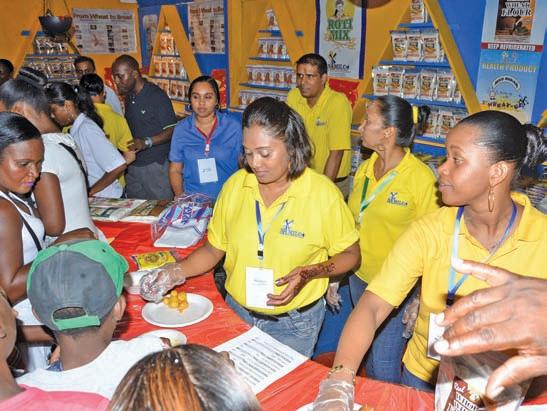
sents visitors from across the Caribbean Region, especially from Suriname, and Jamaica, and from Brazil. Several tourists have come to Guyana on ‘familiarisation trips’.
Investments
From January to July 2014, nine new and continuing projects were undertaken. The total value of the investment ranging from hotels to airlines, amounted to GYD $ 9,783,500,000. In fact, Jags Aviation recently added a new Cessna Caravan to its fleet. It now boosts the local airlines seating capacity and adds a new level of comfort and luxury. The spin-off from these projects will see 200 persons being hired soon. Guyana continues to receive international recognition and several new documentaries were completed over the year. These add to the major publications featuring the country. They usually highlight several aspects of the growing tourism industry. Guyana was also featured in several renowned magazines, namely the National Geographic. In addition, the Guyana Tourism Authority (GTA) also provided an endorse-
ment letter to Discovery Channel TV, whose officials visited Guyana in October to film episodes of “Naked and Afraid.” The GTA also requested temporary importation of film equipment for the film company. Further GTA provided an endorsement letter to BBC Television, to film Britain’s Secret Slave Owners in October.
An endorsement letter was also provided to CNN, to film “Big Earth” (August 14-20) in Guyana. Big Earth was commissioned by AlArab Channel, to produce a documentary in collaboration with CNN. Big Earth Productions featured Guyana in its “101 Amazing Adventures of the World” book, and is known for its exhilarating television productions, which feature extreme sports and travel adventures.
The Guyana Festival which featured the heart of Guyana through “sound, taste and soul” showcased the country’s culture, as well as tourism potential. This Festival was held from August 08-10 at the Guyana National Stadium, Providence, and it offered
a mixture of the country’s traditional music, dance, food, art and craft. In addition, the 2014 International British Bird Watching Fair, held in Rutland, England, had over 35 international bird watching companies selling Guyana. At the Fair, there were 20 international birding companies selling “Destination Guyana.”
In 2013, there were 16 companies selling Guyana. This is the tenth year the country has been attending the event. The 12th Pakaraima Mountain Safari was hosted under the auspices of the Ministry of Tourism, and the GTA, in collaboration with the private sector, particularly Rainforest Tours, whose owner, Frank Singh, became integrally involved from the beginning. This event continues to grow each year, attracting larger participation from neighbouring countries. This year, a convoy of 20 vehicles, with over 70 adventure seekers, loaded with fuel, food stuff and other supplies, took part.
Expos
GUYEXPO 2014 created great opportunities for the local promotion of tourism. This annual event began in 1995 and is now an annual expo, going back to 2004. The event showcases locally produced goods and services, while serving as an initiative for the creation of new markets, exports, and awareness for exhibitors. In 2014, the expo saw another very successful year, with 116 international exhibitors participating. The annual Moruca Expo, in its 10th year, served to showcase a variety of products and craft, produced by the community. The event also showcased the country’s eco-tourism potential.
Former National Security Minister Martin Joseph, drowned in the waters off Tobago on Monday. Joseph, 65, was reportedly staying at the Sky Lark villas, in the Mt Irving area. Early on Monday, he was with friends bathing in the sea, when he disappeared at around 07:30h. His body was found a short time later, according to police. According to the head of communications at the Police Service, Ellen Lewis, Joseph arrived in Tobago on January 1, and was to leave on Tuesday. She said he was staying at a guest house at Mt Irving, Tobago. She said Joseph got into difficulties within five minutes of entering the water
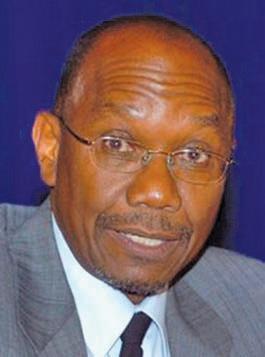
at Grange Bay, on Tobago’s north western. According to the Parliament’s website, Joseph has a background in management. From 1995 to 2002, he was the Member of Parliament for the St. Ann’s
East Constituency.
His appointment as a Cabinet minister began in 2001 when he assumed the portfolio of Minister of Public Utilities and the Environment. In October 2002, he was made a Government Senator and was given the portfolio of Minister of Housing, an appointment he held until November 2003. Joseph was appointed Minister of National Security in November 2003.
Joseph’s formal education includes a Masters of Science in Economics from the University of Maryland, College Park, USA; a Bachelor of Arts in Geography and Regional Science: Minor in Economics, George Washington
continues to blame doctors at GPHC
BY DEVINA SAMAROO
Marina Persaud, 19, of 1107 Section C Diamond, East Bank Demerara, made her family proud when she was featured in a national news paper for giving birth to a healthy bouncing baby girl on Christmas Day.
“We told her that she’s blessed to have a baby born on Christmas Day and she went in the papers and make us proud,” her moth er Lenette Persaud told Guyana Times Little did she know her dearest daughter was going to be in the news again, this time, for a tragic reason.
Persaud died on December 30, 2014, five days after giving birth to her first child and two days after her first wedding anniversary. The teenager was discharged from the medical institution on December 26 and returned home - feeling dizzy, nauseated, and terribly sick. At first, her family members thought nothing of it, concluding it was merely post-birth sickness.

her daughter’s death, she desperately cried and begged the doctors to attend to her daughter but they reportedly told her, “Look, look, I don’t want nobody cry pun me around here”.
University, Washington D.C. USA; and an Associate Degree, Marine Sciences, University of the District of Columbia, Washington, D.C. Joseph’s professional accomplishments include participation on Committees to reform the structure by which the Parliament is managed; Chairman of the Board of Directors of the Public Transport Service Corporation (1992-1995); Member of the Board of Directors of the National Flour Mills Company Limited (1992-1995); Associate Faculty Member of Henley’s Management College, United Kingdom, and Lecturer in Strategic Management at the Institute of Business of the University of the West Indies.
As the situation worsened, Persaud was taken to the Diamond Diagnostic Centre on December 30 after which she was transferred to the Georgetown Public Hospital Corporation (GPHC).
At the GPHC, her mother related that the doctors took quite some time before they attended to the young lady. “They told us that you have to be in a real critical condition to get looked after first,” she said.
“My daughter could hardly breathe and they telling me she’s not critical,” the angry mother related. She noted that when her daughter finally received medical attention, it was too late. The inconsolable mother lamented on the immense agony she endured as she watched her daughter slowly die.
“I couldn’t stay inside, you could imagine what it is to watch your daughter like that, I couldn’t watch. I hear the machine stop and them still pumping infection out of her. I had to leave.”
She explained that after several minutes elapsed, the doctors came out the room and delivered the news that her daughter has passed away.
“I just looked at them and said thanks for the good news. That’s it. I said thanks for killing my daughter… because that’s what they do there,” the mother said as she broke down in tears.
She noted that prior to
The persistent mother did not take no for an answer, so the doctors finally allowed her to see her daughter. Family members said they were completely dissatisfied with the service received.
Her mother stated that the doctors told her Persaud could have survived if only she was looked after earlier. “How they gonna tell me that. Look how long I bring her and they weren’t looking at her. I had to open my mouth for them to look her after.”
Persaud, who is the youngest of 10 children, leaves to mourn her mother, father, husband, brothers, sisters and other family members.
“My belly is empty, a part of me is ripped, she will never come back here again. No mother can describe that feeling when they lose a child,” the mother cried uncontrollably.
Meanwhile, although she was told her daughter died as a result of a hole in her intestine, she finds that theory hard to believe.
She expressed that many at the GPHC advised her not to speak to the media about the situation. “Why they tell me not to speak to the media? You can’t tell me not to do that if some foul play isn’t involved.”
Moreover, her mother explained that the baby is safe and is currently staying with her father.
However, she does not feel the young man is capable and in a secure position to care for the child; therefore a battle for custody of the infant will most likely ensue in the near future. Marina Persaud’s body was laid to rest on January 3.
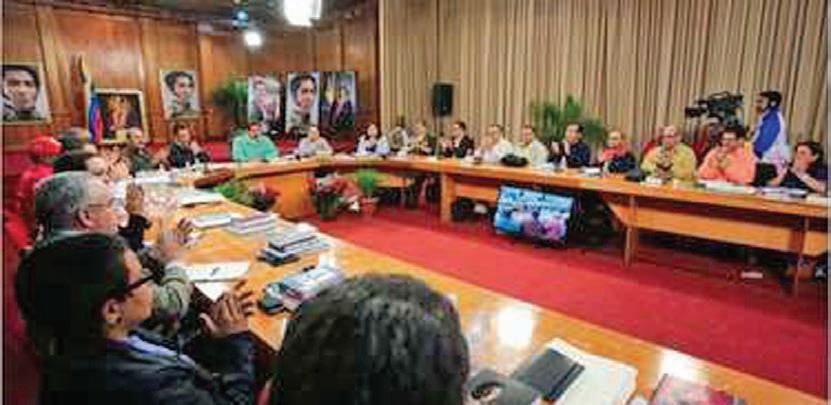
Venezuelan President Nicolas Maduro is beginning an international tour to try to stem the impact of falling oil prices and a deepening recession.
Maduro goes first to China – a major source of loans for Venezuela – for talks with the Chinese President, Xi Jinping.
He will then travel to various Opec member countries to press for cuts in oil output that would boost prices. Venezuelan oil prices have dropped by half since June.
The country gets most of its foreign currency from oil exports and is estimated to have the largest oil reserves in the world.
Before he left Venezuela Maduro announced a number of new mechanisms aimed at addressing the country’s economic crisis.
He said he would create a strategic reserve, appoint a new board to run the organisation that manages currency exchange controls, and create new agencies to manage the distribution of commodities.
President Maduro has
said his country is suffering the consequences of an economic war launched by US President Barack Obama “to destroy” the oil producers’ cartel, Opec.
He has also accused the US of flooding the markets with oil as part of an economic war against Russia.
The Venezuelan Opposition blames the country’s economic crisis and shortages of many staples, such as corn oil and milk, on the socialist policies of Maduro and his late predecessor, Hugo Chávez. (BBC News)
Medical doctors on Sunday blamed the lack of resources for the poor healthcare received by citizens at the nation’s public hospitals.
The doctors, who all requested anonymity, were responding to yesterday Sunday Observer story which exposed the conditions under which doctors have to work at the Kingston Public Hospital (KPH) and Spanish Town
Hospital as well as the poor treatment received by patients, mostly poor Jamaicans.
One surgeon at the KPH told the Jamaica Observer on a number of occasions surgeries have had to be cancelled or postponed because of a shortage of equipment and the malfunctioning of others.
“The elevator is always a problem, as it hardly ever works. The issue gets worse
The Head of the Pesticides and Toxic Chemicals Control Board is petitioning Government to sign on to a Convention for the restriction and eventual banning of mercury.
Dr Malverne Spencer said he is in talks with the Health Minster to ban the use of the toxic compound, which is common in many pesticides, by signing on to the Minamata Convention. The Minister is, in turn, expected to take the discussion to Cabinet.
Mercury has been linked to several health issues in humans including, most recently, autism. And according to US autism advocacy organisation, ‘Autism Speaks,’ autism rates have risen from about one in 5000 in the 1970’s to
about one in 50 today.
The Minamata Convention on Mercury is a global treaty to protect human health and the environment from the adverse effects of mercury. It was agreed at the fifth session of the Intergovernmental Negotiating Committee in Geneva, Switzerland in January 2013.
Major highlights of the convention include a ban on new mercury mines coupled with the phase-out of existing ones. It also seeks to place control measures on air emissions, and international regulation of the informal artisanal and small-scale gold mining sector.
Spencer said the nation is at a crossroads regarding whether or not it will sign the Convention. (Antigua Observer)
when you have to tell a patient ‘I’m sorry, I can’t do your surgery again because the elevator isn’t working’,” the surgeon said.
In June last year elective surgeries were cancelled at the KPH because of repairs being carried out on one of the main elevators at the hospital, according to the surgeon. He said that, to date, the elevator does not function properly.
(Excerpt from Jamaica Observer)
Amajor black group here says it will host the next summit of the Caribbean Community (Caricom) Reparations Commission early this year.
The New York-based Institute of the Black World 21st Century (IBW) said on Saturday that the summit will take place from April 9-12.
The Caricom Commission is chaired by Sir Hilary Beckles, Vice-Chancellor Designate of the University of the West Indies. Inspired by the creation of the Caricom Commission, a National African American Reparations Commission is being established as part of an effort to intensify the
Reparations movement in the US, the IBW said.
It said the Commission will be dedicated to the memory of Audley Moore, one of the foremost proponents of Reparations in the history of Africans in America and a mentor to generations of Reparations activists.
IBW said in addition to the Caricom and African American Commissions, representatives of Reparations movements from Central and South America, Canada and Europe are expected to participate in what is emerging as a Pan African Reparations Summit.
It said the programmes for the Summit will in-
clude formal business sessions; a dialogue between leaders of the Caribbean Diaspora in the US and the Caricom Commission; meetings between the newly-formed African American Commission and the Caribbean Commission; Rallies in Harlem, considered the symbolic Capital of Black America; Brooklyn, home to the largest Caribbean community in the US; and a tribute to Congressman John Conyers, Dean of the Congressional Black Caucus and Sponsor of HR40, the Reparations Study Bill, which he has introduced in the US Congress since 1989.
In response to what has been described as a “bloody start to the new year”, National Security Minister Gary Griffith said on Friday he joined the Trinidad and Tobago community in condemning those responsible for committing “these heinous crimes”.
He said he was recommitted to further intensifying the demolition and onslaught against the criminal gangs and the illegal arms and ammunition trade that are at the heart of all violent crimes in the country.
“It is an atrocity of epic proportions that these acts of violence were not only allowed to take root but to flourish. As Minister of National Security, with the mandate to defend this nation, I renew my promise to escalate the offensive until the battle is won, and will commit all the necessary resources available to dis-
The National Minimum Wage Advisory Commission will this month start preliminary discussions on increasing the national minimum wage, as well as minimum rates for private security personnel.
According to head of the Hugh Lawson Shearer Trade Union Education Institute, Danny Roberts – a member of the commission – the three commissioners had hoped to have a preliminary meeting in December but were unable to do so.
“We intend to address the issue this year and we expect to have our first preliminary meeting early this month,” Roberts told the Jamaica Observer. The other members of the commission are
Silvera Castro and Bernita Locke.
Roberts said that he has an issue with the coverage that the Minimum Wage Order provides for persons who earn low wages and he wants the Government to address it by amending Section 2. He said that the provision precludes the benefit of a national minimum wage to be paid to individuals employed by Government on special employment projects or individuals employed in certain basic schools or day care centres.
“This discriminatory provision should be removed so that all categories of workers can enjoy the benefits of the national minimum wage,” Roberts said.
(Excerpt from Jamaica Observer)
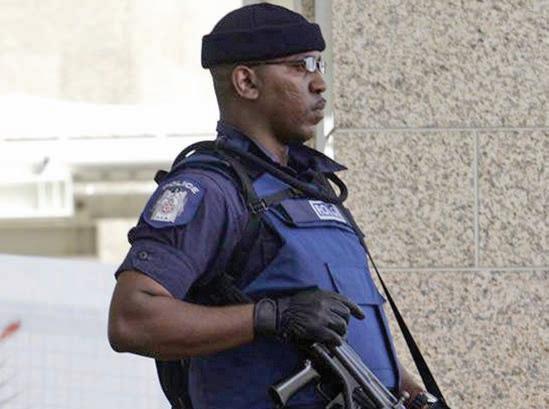
Over the last four days Police confirmed that 11 murders were recorded
mantle and annihilate organised crime and criminal gangs operating in the underworld,” he said in a statement.
He maintained 2014 recorded an historic 31-year drop in serious crimes.
“This is a clear indication that we are on the right path to defending this nation, and I can assure citizens, this year will be no different as the ministry will be equipping all its law enforcement and defence agencies with the requisite arms and ammunition to defend all law-abiding citizens,” Griffith said. (Excerpt from Caribbean News Now)
The Labour, Social Security and Human Resource Development Ministry of and its stakeholders will develop a comprehensive framework on small and medium enterprise (SME) development.
This disclosure has come from the Minister with that portfolio, Senator Dr Esther Byer, who said they would also develop and adopt publicprivate coordinating mechanisms to increase opportunities for entrepreneurship and the development to innovative goods and services.
Byer made the comments over the weekend, as she addressed the Preview of Bank on Me Season Two at Scotiabank’s Haggatt Hall branch. She told her audience: “The Ministry will also be looking at international best
practices, particularly from African states, where there are significant parallels to the Caribbean context and where entrepreneurship has been instrumental to their development,” she disclosed. She said Government was aware that, if adequately facilitated, entrepreneurship could easily become the key plank in its plan to facilitate meaningful employment creation on a significant scale.
She pointed out that the promotion of entrepreneurship was a part of the Barbados Growth and Development Strategy 20132020. She underscored the important role entrepreneurs and entrepreneurship played in economic growth, and the role stakeholders who facilitate the entrepreneurial process need to play. (Excerpt from Nation News)
An Indonesian na-
val patrol vessel has found what could be the tail of a crashed AirAsia passenger jet, the section where the crucial black box voice and flight data recorders are located, officials said on Monday.
News of the possible breakthrough came as the Transport Ministry in Jakarta said some officials on duty at the time of the accident will be moved to other roles. It also announced it was tightening rules on pre-flight procedures.
Ships and aircraft scouring the northern Java Sea for debris and bodies from the Airbus A320-200 have widened their search to allow for currents eight days after Flight QZ8501 plunged into the water en route from Indonesia’s second-biggest city of Surabaya to Singapore with 162 peo-
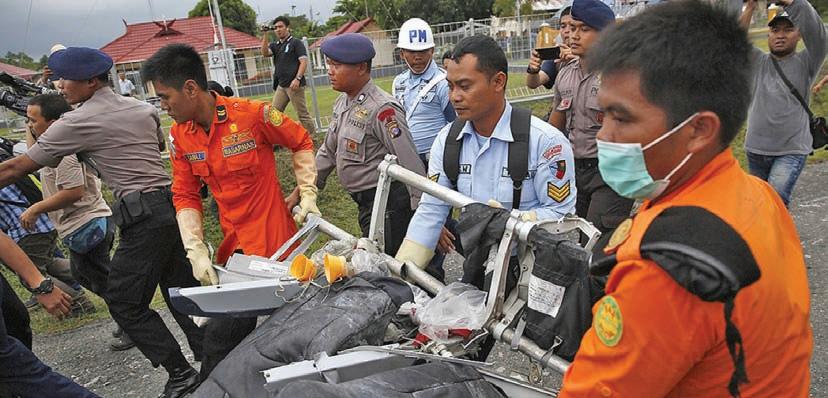
ple on board.
“We found what has a high probability of being the tail of the plane,” Yayan Sofyan?, captain of the patrol vessel, told reporters.
He was speaking after his ship returned to the port in Surabaya on
Monday, and it was not immediately clear if he was referring to one of the five large objects pinpointed by search vessels over the weekend.
Indonesia’s meteorological agency has said seasonal tropical storms prob-
Saudi Arabia is on alert for jihadi attacks after a general and another soldier were killed by a suicide bomber on the country’s border with Iraq.
The Interior Ministry in Riyadh blamed “terrorist elements” for the early morning incident on Monday but did not name any group, though it is thought likely to be Islamic State (Isis), which controls large areas of neighbouring Iraq as well as Syria.

that Saudi
ably contributed to the December 28, 2014 crash and the weather has persistently hampered efforts to recover bodies and find the cockpit voice and flight data recorders that should explain why the plane crashed into the sea. (Excerpt from Reuters)
Jury selection has begun in the US trial of Boston Marathon bombing suspect Dzhokhar Tsarnaev, who is accused of killing three people and injuring more than 260 in April 2013.
Tsarnaev faces the possibility of the death penalty if he is convicted of detonating a pair of homemade bombs. The attack near the marathon’s finish line was the largest on American soil since 9/11.
Tsarnaev has pleaded not guilty to all 30 charges against him. His trial is expected to last at least three months.
Jury selection alone is expected to take several weeks as Judge George O’Toole se-
lects 12 jurors and six alternates from about 1200 prospective jurors who have been summoned to the court in Boston.
The process could be made more complicated if potential jurors express objections to the death penalty.
Testimony is unlikely to begin until February, the Boston Globe reported, and a verdict may not be announced until late spring or early summer.
Tsarnaev’s lawyers say they have not had sufficient time to prepare for the trial. They also argue that appointing impartial jurors in the same city where the bombs were detonated is impossible. (Excerpt from BBC News)
The UN has expressed concern over new Lebanese restrictions on Syrian refugees aimed at slowing the influx of asylum seekers escaping civil war.
The UN wants the government to clarify whether the “most vulnerable refugees” can still gain access to Lebanon. Travel between the two countries was previously largely unrestricted, but now Syrians will have to obtain a visa.
there is “no more capacity”.
“We have enough. There’s no capacity anymore to host more displaced,’’ Interior Minister Nohad Machnouk said at a news conference on Monday.
Millions of Syrians have been displaced by the civil war as rebel forces try to oust President Bashar al-Assad. Activists say more than 76,000 people were killed in Syria’s conflict in 2014, including almost 18,000 civilians.
ter Lebanon will have to fulfil certain criteria in order to be granted a visa at the border. Previously, Syrians could automatically stay in Lebanon for up to six months.
The Ministry said in a statement that a border patrol at al-Suwaif, near the city of Arar, was fired on. Border guards returned fire and killed two of four attackers. But during attempts to persuade another two to surrender, one attacker detonated an explosive belt and killed himself and two of the border guards – one of whom was the commander of northern border forces, General Oudah al-Belawi.
The Ministry said that Saudi security forces were “determined to thwart… plots to undermine the security and stability of the homeland”. It referred to the attackers as “Kharijites”, a derogatory term for apostates.
The attack came amid uncertainty in Riyadh over news that King Abdullah, who is thought to be 91, has been hospitalised with pneumonia. The next in line to the throne, Crown Prince Salman bin Abdulaziz Al Saud, is in his late 70s and also said to be in poor health. (Excerpt from The Guardian)
Turkish authorities have detained at least 34 Police Officers in a new wave of raids over the illegal eavesdropping of senior Government officials including current President Recep Tayyip Erdogan, according to state media.
On Monday, Police conducted raids in 13 cities across Turkey and detained officers accused of tapping the phones of important figures including businessmen, politicians and Government officials, Anatolia news agency reported.
The dawn raids, target-
ing mostly Police intelligence unit officers, were carried out simultaneously in mainly eastern and Southeastern cities including Erzurum, Gaziantep, Hatay and Tunceli.
The swoop was the latest in a series of raids since July last year which saw dozens of other policemen arrested for allegedly tapping the phones of Erdogan and other officials.
A trial opened on Friday of 13 suspects accused of setting up bugs to eavesdrop on Erdogan while he was Prime Minister, including
his former top bodyguard and the head of the Prime Minister’s security department.
The case is linked to last year’s corruption allegations against Erdogan and his inner circle that were based on phone-tapped telephone conversations and a series of leaked recordings.
Erdogan has blamed Fethullah Gulen, a USbased Turkish Muslim leader, of concocting the corruption scandal and has purged thousands of his followers from the police and the judiciary. (Excerpt from Al Jazeera)
There are more than a million Syrians in Lebanon, and a senior minister says
Under the new measures, Syrians wishing to en-
Khalil Jebara, an adviser to Machnouk, told the BBC that Lebanon “will only allow refugees under very limited and exceptional cases.” Lawmaker Basem Shabb told the BBC that the Government had done “all that it could” to support Syrian refugees. (Excerpt
Transgender woman elected District Mayor in Indian state of Chhattisgarh
Atransgender woman in central India has become the country’s first to win civic polls and be declared Mayor.
Madhu Bai Kinnar won the municipal election in Raigarh in the central state of Chhattisgarh on Sunday, beating her rival from the Bharatiya Janata party (BJP) by more than 4500 votes, according to the State Election Commission.
Video footage showed Kinnar, 35, wearing a saree, folding her hands and greeting supporters who placed marigold garlands around her neck amid a blaze of camera flashes.
Kinnar had been earning a living by singing and dancing on trains, the Press Trust of India reported, but she stopped when asked to represent her community.
“People have shown faith in me,” Kinnar told reporters after winning the election.
“I consider this win as love and blessings of people for me. I’ll put in my best efforts to accomplish their dreams,” she said after the winning results were announced.
Kinnar’s win comes nine months after India’s highest court ruled that transgender people be legally recognised as genderneutral.
Often known as hijras, in South Asia,

transgender people are classified as those who have had sex-change operations or who regard themselves as the opposite of their
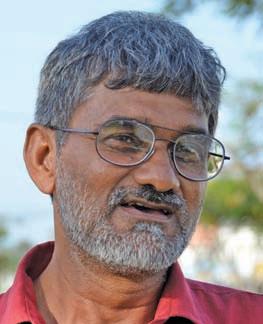
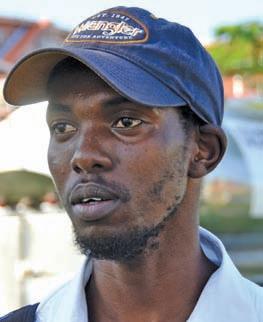
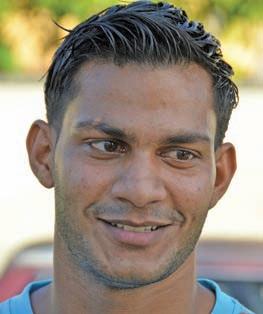
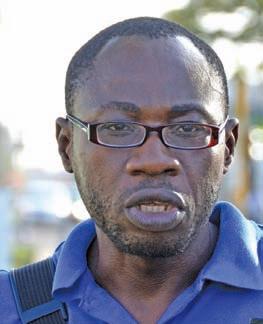
Ashraf Alli – Father
“I don’t see a problem, you know, if you’re military, you’re part of the country. If you’re military, you ought to be more concerned about the country, because your purpose is to defend the country so that’s what their military background brings. So, as a military person, I don’t think they should be prevented from joining political parties.”

Christopher James
“When it comes to political situations in Guyana, people should be free to do what they like. But when it comes to encroaching on individual independence, then you will have a problem. It is the extent to which they will enforce their political power, because it would be wrong if they are exploiting the situation or making life for others uncomfortable. There should be no problem; I’m a nurse, and if I want to go into a party and use my status to coordinate that party, so if the person is retired and they want to affiliate themselves with that party, then that’s their personal thing. But if they take that power they believe they still possess that is former and try to execute it under the political covering, then that’s wrong.”
Mahindra Singh – Instructor at Buddy's Gym
“Ex-military persons joining political parties? Why should that be a problem? I mean, these persons, they may have accumulated experience and knowledge that would be useful for a party, or to run a country. I mean, everything has its advantage and its disadvantage, but I don’t think they should be prevented from joining political parties.”
Ruben Henry – Administrative Staff at Government Technical Institute
“Well, I don’t have a problem, because I’m sure there are military Governments around the world and I don’t see anything wrong with men in military going into Government, and they have a right to exercise their freedom. If it’s constitutionally okay, then I don’t see the problem.”
Alicia Daniels – Teacher
“It’s their choice. Everyone is entitled to their own choice. If I want to join a political party regardless of my former profession, then it’s my choice. I don’t see anything wrong.”

Toolsiram Harichand –University of Guyana Student
“Ex-military people joining political parties shouldn’t be. It won’t be good for the country. These military people from these backgrounds, you don’t have a stable mind and it won’t work to run a country.”
Alel Chung
“Everybody got to have their own choice, man. It’s their mind; it’s your mindset. It’s not your profession, because where you work before won’t really tell people of what your mind is, because some people may come out from a good job, but their mind will be bad.”
“Well, I don’t know. I guess in some cases, I could see where the problem would come in, because people may think they will be dictators and some may think they will be controlling and everything and make the country like a training base, but then, it could actually be a good thing, because then they can practise their leadership skills which is what is needed to run a country. But then, it depends on your mindset because you can have a bad mind and good leadership skills so therefore, you can be a good leader in bad things. So, I don’t know; it doesn’t matter your background I guess, it’s the person you are.”

George Persaud –Lab Technician
“It’s something very significant, because, as you would know, being involved in the military, especially as a senior ranking officer, in the event you decide to go into politics, it will be easier for you to manage people and resources and the determination in getting things done will be of a greater interest, because he/she will understand the demands and need for leadership, which is a factor of being involved in politics. It’s all about your leadership ability skills that will determine what can be done.”

Alicia Vanderstoop –Dairy Queen Employee
“Ex-military people shouldn’t join political parties. It will cause corruption; it will cause corruption in society. Because of their background, they are not fit to be a leader: they will have this military style of running things and it won’t be good for society. It will cause corruption.”
Althea Lewis – University of Guyana Student
“I think there is a problem there, especially like if you’re in command, when you take over, there will be some sort of dictatorship, because you will be controlling, because that’s the background you came from and that may probably pose a problem. So when you run for President, you might put what you learnt into practice with the country, so that thought process will never work.”
Newly appointed Caribbean Community (Caricom) Chairman, Prime Minister Perry Christie, will address the two day meeting of the China- Community of Latin American and Caribbean countries (ChinaCELAC) in Beijing later this week, according to an official statement issued here.
It said that Christie, who took over the chairmanship of the 15-member regional grouping on January 1st will “deliver a statement on behalf of Caricom and is scheduled to meet with the President and Premier of China for discussions on regional issues” during the January 8 - 9 meeting.
Foreign ministers or representatives from China and
CELAC, together with heads of some Latin American regional organizations will attend.
The second CELAC summit, last January, did important groundwork to establish the forum.
The meeting will discuss guiding principles of cooperation, major cooperative areas and institution building issues, said spokesperson Hua Chunying. The two sides will use the forum for collective dialogue on politics, economics, trade and culture.
China is willing to engage in dialogue with other Latin American organizations to build a cooperative network enabling the two sides to complement each other with their own advantag-
es, she said. Established in December 2011 in Caracas, Venezuela, CELAC comprises all countries in North and South Americas but the United States and Canada.
Meanwhile, Christie has said in an address to mark the new year five-year plan of Caricom characterised a “bold step that demonstrates our determination to provide the best options for the growth and development of our people”.
Christie said the Plan is an important part of the Reform Process in our Community “and we stand to be judged both by its success and the actions we take in its implementation. In repositioning our Community, as this Plan seeks to do, we will be aim-
ing at making it more resilient to the internal and external factors which hinder our efforts at attaining sustainable development in a rapidly changing world.”
He said there can be no more vivid demonstration of the dynamic nature of the global environment that we face than the recent rapprochement between Cuba and the United States.
“Those of us who have consistently called for an end to the isolation of our sister Caribbean country and, in particular, the cessation of the economic, trade and financial embargo are heartened by the initiatives announced by President Obama and President Castro. In my view this rapprochement underscores the urgency of a summit between the American President and the Heads of the Community.”
According to Christie this
year also marks the beginning of negotiations for the United Nations Post2015 Development Agenda which seeks to find a more effective route to the sustainable development of all States.
This is of keen interest to our Community as it is important that the concerns of small vulnerable states like ours must be taken into account and acted upon, the chairman said.
“We have taken action in this regard by ensuring that our concerns and interests are part of the platform for the negotiations agreed to last September in Samoa by the grouping of Small Island Developing States (SIDS).”
Weeks after failing at seeking out the presence of politicians, including President Donald Ramotar, to attend a civil society summit, considered a 'sham', Chairman of the Guyana National Council on Public Policy (GNCPP), Dr Phillip Mozart Thomas seems to be avoiding media queries over recent allegations.
Thomas, who declared that the council, through a three-day public consultation was successful in establishing the Guyana National Civil Society Council (GNCSC), has been accused by the management of the Guyana International Conference Centre of fraud, presenting an invalid cheque to the organisation.
Thomas on December 17 commenced a three-day civil society summit at the Conference Centre, supposedly bringing together a wide cross section of society, including representatives of several organisations who had been selected to form part of the GNCSC.
The summit got off to a disappointing start, as a few 'big names' that were reportedly slated to address the audience, never showed up. Among them was the President, who in a telephone interview with Guyana Times had disassociated himself from the organisation and Thomas.
Thomas had boasted grave success, notwithstanding the warning given by the Office of the President (OP) to Guyanese citizens, the evening before the summit.
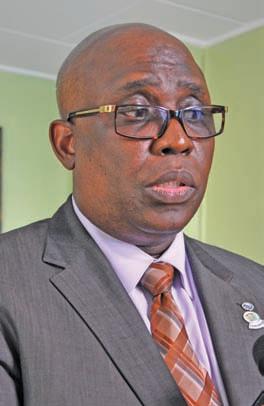
But Thomas had reportedly crumbled under pressure and told Guyana Times that a decision was taken to move the second and third days of the summit to the Secretariat of the GNCPP, because of the damage done by the OP statement.
Despite all this, the Conference Centre said the GNCPP owes it a total $4,208,360 for the services provided to the organisation for its civil society summit held between December 17 and 19 last. It said too that the GNCPP might very well be bankrupt.
Management of the Centre said it was informed by Scotia Bank that the GNCPP Chairman’s bank account was frozen.
It said that Thomas had deposited a cheque on the first day of the summit but found that it was bounced. The source stated that the money owed covers the cost for catering and for the provision of the venue.
Efforts made by this publication to contact
Thomas for his response in relation to the allegation of his organisation’s bankruptcy were unsuccessful.
Thomas had promised to return a call to this publication to respond to the allegation, but he never did. When contacted several times subsequently, both of his mobile phones were turned off.
Guyana Times had earlier queried about the GNCPP’s source of funding. Thomas had told this publication that it was being funded through assistance from council members and stakeholders.
Through investigations by this newspaper, it was revealed that Dr Thomas’ organisation may have a hidden mandate which is being pursued by the GNCPP towards supporting an Opposition elections agenda.
Research showed that Thomas at one point had exhibited interest in running for a key leadership position in the People’s National Congress Reform (PNCR) after he struggled to get his civil society initiative off the ground.
He had also filed a bold court case against the Guyana Elections Commission (GECOM) challenging aspects of the country’s electoral system and laws.
A very interesting list had appeared in the daily newspapers and on television with the names of persons and organisations that had reportedly either joined the GNCPP as sponsors or were nominated for various positions.
Another list appeared soon after with the names of politicians and parliamentarians who were invited to attend what was billed as a “historic” summit in Guyana.
But history and time favour the ploys of no man or entity. Following the publication of their names without permission, GNCPP’s civil society sponsors and nominees started an outcry.
Some rushed to publicly disassociate themselves, while others privately expressed concerns over the GNCPP’s move.
Soon after, OP urged civil society entities to stay away as it questioned not only the legitimacy of the agenda being pursued but the legality of the entity itself.
OP also questioned the credentials of Dr Thomas.
The end result was shameful as none of the planned speakers and sponsors turned up to the event.
Dr Thomas’ GNCPP Summit suffered possibly the biggest boycott in the history of this country.
Dr Thomas has since admitted that his organisation might have been too “rash” in its approach to seek consultations with Government over the recently concluded Civil Society Summit.
He claimed however, that the summit was “phenomenally successful” and noted that that might have probably been one of the major contributing factors to the Government’s stern criticism of him and the organisation.
About 28.5 million Latin American and Caribbean people live outside the countries where they were born, 70 per cent of them in the United States, while a majority of the immigrant population of 7.6 million people originated from other countries in the region, according to a new study by the Economic Commission for Latin America and the Caribbean (ECLAC).
The document Trends and Patterns in Latin American and Caribbean Migration in 2010 and Challenges for a Regional Agenda (only available in Spanish), published today, concludes that emigration to destinations outside the region declined between 2000 and 2010 (based on census data) while intraregional migration flows have grown.
The 28.5 million Latin
American and Caribbean emigrants represent 4 per cent of the region’s total population, exceeding the 26 million emigrants registered in censuses from the year 2000.
With regard to their native countries, 11.8 million come from Mexico (40 per cent of the total), with Colombia lagging far behind with 2 million emigrants and El Salvador with 1.3 million.
In terms of destination countries, the United States ranks first as home to 20.8 million Latin American and Caribbean emigrants (70 per cent of the total), which includes nearly all of the 12 million Mexicans who live outside their country. Spain is the second most-common destination with 2.4 million people (8 per cent of the total). Meanwhile, the immigrant population living in Latin
America and the Caribbean is estimated at 7.6 million people, which is the equivalent of just 1.1 per cent of the region’s total. Of those, a majority were born in other countries of the region (intraregional migration).
The study emphasizes that migratory flows within the region rose at an annual rate of nearly 3.5 per cent between 2000 and 2010, marking an acceleration from the previous 20 years when they grew at a pace of roughly 1per cent. Argentina, Venezuela, Costa Rica and the Dominican Republic concentrated the greatest number of these people.
The number of immigrants who were born outside the region fell between 2000 and 2010 in Argentina, Brazil, Ecuador and Uruguay, which indicates that in those cases the arrival of immigrants did

AFlorida judge said Miami-Dade County can immediately start issuing marriage licenses to same-sex couples, meaning Florida's first samesex weddings may begin shortly.
Circuit Judge Sarah Zabel on Monday lifted a stay on her July ruling that Florida's samesex marriage ban violates equal protections under the US Constitution.
Miami-Dade County Clerk Harvey Ruvin said he will begin issuing licenses immediately, so the first gay and lesbian weddings could take place Monday afternoon. A gay rights group already lined up two couples to be the first.
Same-sex marriages were expected to begin statewide after midnight Tuesday, when a separate ruling by a federal judge takes effect, covering all 67 Florida counties.
Osceola County is planning post-midnight nuptials, and other counties plan to issue licenses to gay couples during regular business hours.
not compensate for the mortality rate or that group’s reemigration. In contrast, in other countries the presence of this group of immigrants increased, such as in the Dominican Republic (11.3 per cent), Bolivia (7.4 per cent), Mexico (7.1 per cent) and Panama (6.2 per cent).
The document indicates that immigration from overseas, especially on the part of Spaniards, would have intensified during recent years due to the global economic crisis, but it was still a far cry from the high rate of Latin American and Caribbean emigration to Europe.
With regard to returning migrants, the document cites 2010 census figures from six countries with available data. The greatest flows were seen in Mexico (860,000 people, a number that could possibly include
forced repatriations), while only about 100,000 people returned to their places of origin in the other nations being studied.
This report analyzes a sample of 10 countries in the region whose 2010 census data was available by early 2014 in the data bank of ECLAC’s research project called Investigation of International Migration in Latin America (IMILA). In some cases, these statistics are complemented by others from the United Nations Population Division and the Organisation for Economic Co-operation and Development (OECD). In light of the dynamism that continues to be seen in migration in Latin America and the Caribbean, the report signals that intergovernmental forums—both in and outside the region—are including in their agendas
The Osceola County clerk’s office announced that all 30 early-bird marriage licenses issued for midnight on Tuesday have been reserved online. Anyone still hoping to obtain a marriage license on Tuesday needs to wait until 8 a.m. Orlando Mayor Buddy Dyer is scheduled to officiate a 9 a.m. mass ceremony at City Hall.
"I'm absolutely thrilled that the judge made the decision that she did. It was the right decision and now people who want to get married in MiamiDade can do so today," Orlando attorney Mary Meeks said. Meeks was involved in the landmark case.
"In the big picture, does it matter today or tomorrow? I'm lifting the stay," Zabel said.
Volusia, Seminole, Polk and Brevard counties will also be issuing same-sex marriage licenses Tuesday during regular office hours. Florida becomes the 36th U.S. state where same-sex marriages are legal statewide. (WESH Orlando)
a common stance to defend migrants’ human rights and reject the restrictive, unilateral measures used by some developed countries that are destinations for Latin American and Caribbean emigrants.
In this context, ECLAC proposes building an agenda on this issue that fully includes migration in post2015 development strategies and drafting regional plans to take advantage of the benefits of migration. That agenda should also allow for greater dialogue and cooperation on migration, human rights and development in global forums, while also making progress on protecting the rights of migrants—particularly children, adolescents, women, low-skilled workers and people who are in irregular situations or have been forced to seek refuge.














ARIES (March 21April 19)


TAURUS (April 20May 20)



GEMINI (May 21June 20)

CANCER
If you share important information, you will discover that a confidante has ulterior motives. Don’t disclose details that could be used against you. Listen and observe.
Communicate with others and educate yourself. Upgrade your skills and apply for a better position. Keep abreast of current trends and take advantage of a changing job market.
A heated discussion will cause a rift with someone you are close to. Keep your emotions under control in order to avoid alienation. Time is on your side, but diplomacy is required.







LEO (July 23Aug. 22)
VIRGO (Aug. 23Sept. 22)
Set goals and talk to people who you think can contribute to them, but get promises in writing. Someone will try to take advantage of you if you aren’t precise.
Your personal life will benefit if you spend more time with the people who make you feel good. Consider a short trip or excursion. Change your environment if you are seeking some enlightenment.
Someone in your circle will undermine you if you are too generous and accommodating. If you believe everything you hear, you will make an impractical move. Get the facts before you react.



LIBRA (Sept. 23Oct. 23)
Strive to reach your goals. An upsetting confrontation will distract you from making an important decision that will affect your future. Keep the peace if possible, but don’t let it cost you.
SCORPIO (Oct. 24Nov. 22)
Trust your judgment. What works for a friend or relative may not be the right thing for you. Use the information you gather, but modify your plans to suit your situation.


CAPRICORN (June 21July 22)
SAGITTARIUS (Nov. 23Dec. 21)
Exaggeration will backfire. You are better off fairly presenting your case and refraining from making promises that you know you cannot honor. Better to be honest and offer less.


(Jan. 20Feb. 19) (Dec. 22Jan. 19)
Tell people where you stand. Unless you voice your opinions, you will be told what to do and when to do it. It’s up to you to maintain control of your life.
AQUARIUS


PISCES
(Feb. 20March 20)

Don’t let fear prevent you from heading in a new direction. If you are realistic and driven, you will accomplish some amazing things. Someone with experience will offer sound advice.
Your partner, family and friends value your time. Be vocal about your feelings for the people you love. A note or phone call will be a kind and reassuring gesture.




Former President of the Essequibo Cricket Board (ECB) Prince Holder will be the sole challenger against incumbent Fizul Bacchus when voting members of the Board cast their ballots to select a President at their Annual General Meeting (AGM) in that county on January 11.
This was confirmed for Guyana Times Sport on Monday by ECB Honorary Secretary Aotto Christiani. Holder took over from former President Sheikh Asif Ahmad, who had relinquished his position with immediate effect on June 25, 2012, for six months before Fizul Bacchus was elected at the last election.
Ahmad had claimed then that his decision to demit office was based on certain Board members not honouring their commitments as they were not in support of his decisions.
Ahmad and some Board members were at log-
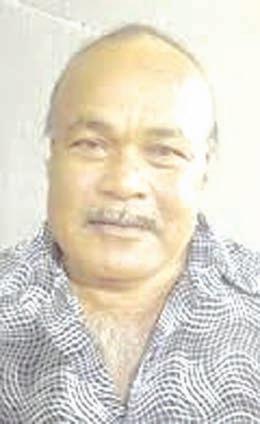
gerheads ever since the ECB had endorsed the Government-implemented Interim Management Committee (IMC) and more so when the ECB denounced its membership and withdrew its two directors from the DEB Essential Organisation Inc, which was created in 2011 by some executives of the Guyana Cricket Board (GCB).
The ECB has eight re-
gional cricket committees: Bartica Cricket Committee (BCC); Central Essequibo Cricket Committee (CECC); East Bank Essequibo Cricket Committee (EBECC); Leguan Cricket Committee (LCC); North Essequibo Cricket Committee (NECC); Pomeroon Cricket Committee (PCC); South Essequibo Cricket Committee (SECC); and the Wakenaam Cricket Committee (WCC).
Each of the area committees manages cricket within its geographical area while the ECB manages all levels of cricket among the various committees.
The Board’s head office is located at its hostel and indoor practice facility at Anna Regina on the Essequibo Coast.
The ECB has seen eight Presidents to date: Kayman Sankar, Beni Sankar, Hakim Khan, Milton Dookie, Alvin Johnson, Sheikh Asif Ahmad, Prince Holder and Fizul Bacchus.
For some, it is about the one that got away. For Stuart Williams, it is about the one moment that did: Marlon Samuels’ dismissal.
“We were building nicely. It was just an awful shot,” Williams said.
After declaring himself a cannibal, in spin terms at least, Samuels got hold of Simon Harmer and was playing him comfortably, even with the shot that led to his downfall. He responded to a brief period of being tied down by launching Harmer down the ground but forgot that there was a long-on with legs chasing after it. Dean Elgar is one of the quicker men on the outfield and made good ground to take the catch almost straight down the wicket.
That was the catalyst for another collapse - this
time seven for 33 - which saw West Indies tumble from a fighting position to a flagging one. “I think we just missed the moment. That’s the moment in the game where everything fell away,” Williams said. “This is international cricket and we just have to seize the moment. You have to respect your opposition at all times and we didn’t do that.”
South Africa knew that Samuels’ default position is defiance, which could stretch to disrespect if he is feeling in the mood. They also knew that if they got him out of the away, the rest would fall. “He was one of their stand-out batters so it was important to put him under pressure early on,” Morne Morkel said. “We know him - if he hits, he hits. But [if] he misses, he is out.”
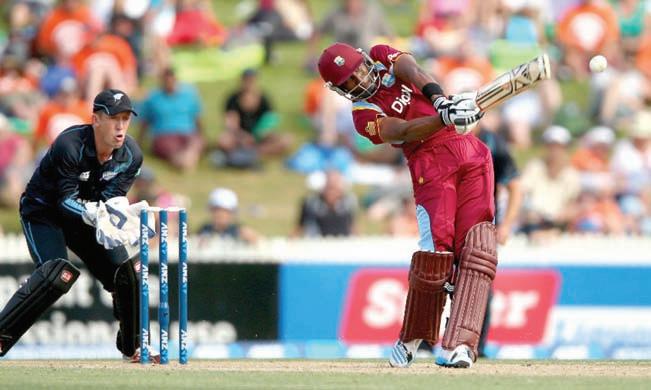

Pakistan off-spinner
Mohammad Hafeez failed an unofficial test of his bowling action in India after six of his deliveries were found to have elbow extension of over 15 degrees, according to a laboratory report obtained by the Associated Press yesterday.
Hafeez had opted for unofficial testing at a laboratory accredited by the Inter-national Cricket Council (ICC) in Chennai earlier this week, before going to the ICC for an official test of his bowling action.
According to the report, four of Hafeezs six deliveries over the wicket were beyond the 15 degrees elbow extension permitted under ICC rules.
His first two deliveries, around the wicket, were also measured at 17 and 19 degrees.
Hafeez was suspended last month from bowling in international cricket after an independent analysis found the off-spinners bowling action to be illegal.
He was reported after Pakistan won the first Test against New Zealand in Abu Dhabi and was tested at the National Cricket

Performance Centre in Loughborough.
World Cup Hafeez still has a chance to make it to the World Cup next month solely as a batsman.
Saeed Ajmal, another suspended Pakistani bowler, ruled himself out of the World Cup last week after the Pakistan Cricket Board determined he needed more time to correct his bowling action.
Pakistan are expected to name their World Cup squad by next Wednesday.
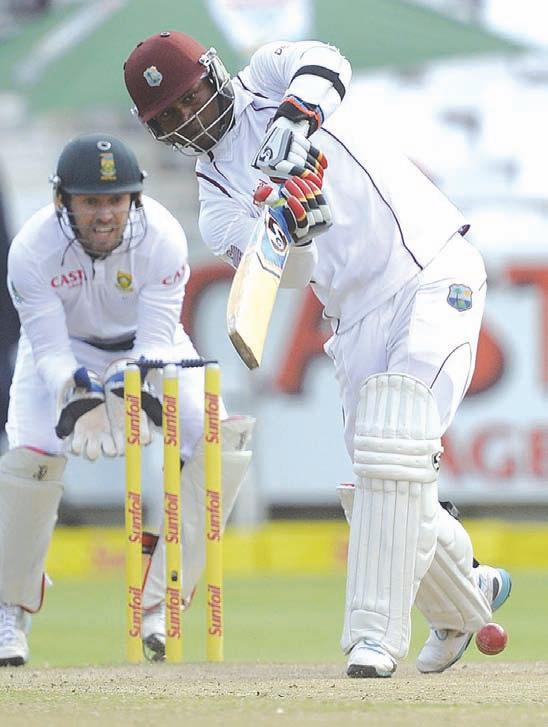
Despite that, Samuels remains the highest runscorer for West Indies in South Africa for a second tour in succession and Williams conceded that he remains the biggest positive for them. “We have some positives like Marlon averaging over 50,” Williams said. “And in the first innings of this game, we bowled out South Africa. We had three run outs. Even though we don’t have a bowler who took five or six wickets, we still worked hard.”
The small improvements West Indies made along the way is a good sign for Williams, even though he admitted to frustration with the lower order. “In the first game, South Africa played well and we didn’t. Then, in Port Elizabeth we showed some improvement and then in three-and-a-half
days here, we were in the game and we obviously had a competition,” he said. “But our lower order never really fronted up and we spoke about it all along. It’s difficult; it’s stressful but you still have to find a way.”
Williams hoped that West Indies would bat out the day and bat until lunch tomorrow to get a lead of “close to 230 or 240.” That, he believed, would have been enough to push for victory. Now, they only have 115 more runs to defend and Williams has promised “ a fight” and that his men would learn from the team they may eventually be beaten by. “They’re not No. 1 in the world by mistake. What I will take from here is consistency, especially in the bowlers. If we can learn from that, we will be on the right track.” (Cricinfo)
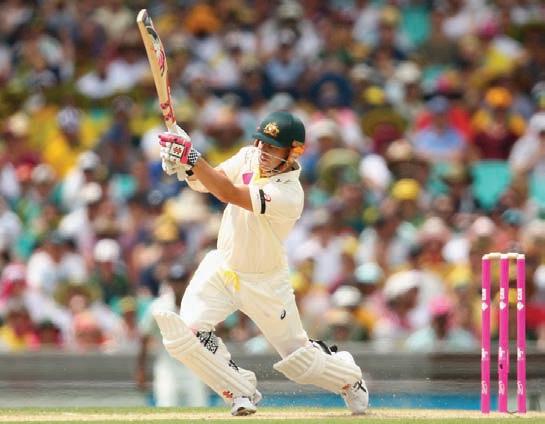
overs on the first day of the SCG Test against India
David Warner and Chris Rogers compiled their first century opening partnership of the series to give Australia the perfect start after Steven Smith won the toss and chose to bat in Sydney. India made four changes to their team, including Bhuvneshwar Kumar for his first Test of the tour and leaving out Ishant Sharma, but nothing worked for them in the first session.
Despite the initially overcast conditions there was little swing available and nor did the ball turn much, although just before lunch R Ashwin jagged one away from the bat of Rogers, narrowly missing off stump and the edge, and perhaps showing what could be to come later in the game. At lunch, Rogers was on 52 and Warner had 63.
Warner had moved to 63 with a single just before the break and in what was already an emotional Test, at
the venue where he saw his friend Phillip Hughes felled by a bouncer in November, he removed his helmet and gloves and got down on the ground to kiss the turf beside the pitch. Hughes will forever be 63 not out, and Warner was too at lunch. He had reached his half-century from just 45 deliveries but generally was in control, going after anything loose from the Indians, and there were plenty of opportunities. He struck nine boundaries but had also had a couple of strokes of luck, including an inside edge just past leg stump off Umesh Yadav and a cut that lobbed centimetres short of KL Rahul at point on 62 off Ashwin.
Rahul had retained his place despite his inauspicious debut in Melbourne, but things didn’t get any better for him in Sydney. He was stationed at second slip when he dropped a regulation chance off the bowling of Mohammed Shami to give Rogers a re-
prieve on 19, and next ball Rogers slashed a cut for four through point.
Rogers played confidently and was especially impressive when driving on the front foot. He reached his fifth half-century from consecutive Test innings and has the chance to go on for his first hundred of the home summer, having already helped Warner raise their sixth century opening stand in only 31 innings together at the top of the order.
They were operating against an inexperienced India line-up - for the first time since September 2001 India were playing a Test with no members of their side having more than 50 Test caps to his name. Shikhar Dhawan, Cheteshwar Pujara and Ishant Sharma were all left out, along with the retired MS Dhoni, and Bhuvneshwar, Rohit Sharma, Suresh Raina and Wriddhiman Saha came in. (ESPNcricinfo)
Australia 1st innings
CJL Rogers not out 52
DA Warner not out 63
Extras: (lb 3, w 5) 8
Total: (no wicket; 28 overs) 123
To bat: SR Watson, SPD Smith*, SE Marsh, JA Burns, BJ Haddin†, MA Starc, RJ Harris, NM Lyon, JR Hazlewood
Bowling: B Kumar 8-030-0, UT Yadav 6-0-42-0, Mohammed Shami 6-031-0, R Ashwin 8-3-17-0
India team: M Vijay, KL Rahul, RG Sharma, V Kohli*, AM Rahane, SK Raina, WP Saha†, R Ashwin, Mohammed Shami, UT Yadav, B Kumar (Score as of lunch on day 1)
Arsenal striker Lukas
Podolski has joined Inter Milan on loan until the end of the season.
The 29-year-old, who joined Arsenal in 2012, was greeted by fans in Milan at the weekend and the Gunners confirmed his move to Serie A on Monday.
Inter Milan tweeted: “Podolski will wear the number 11 shirt. He is in the squad for Juventus v Inter and on his way to Turin with the team.”
Podolski had not started a Premier League game for Arsenal this season.
Despite playing four times during the Gunners’ run to the last-16 of the Champions League, scoring three times, he played just 99 minutes in the Premier League.
“I can’t express in words my gratitude towards Arsenal fans for all they have done for me,” wrote

Podolski on Instagram ahead of completing his move.
“Please know my heart always holds a place for you. I’ve loved every minute playing for Arsenal and I hope I have left my mark on the club and fans alike. Hopefully we shall meet again.”
Since his £11m move from Cologne to north London, Podolski struck 31 goals in 82 games.
Kane Williamson added to his already burgeoning reputation as one of the World’s best young batsmen with a fighting second-innings century at the Basin Reserve that kept Sri Lanka wicketless for second session in a row. He received plenty of solid support from BJ Watling, who completed a chance-less half-century - his ninth in Tests, and their unbeaten 166-run stand slowly, but surely, tilted the scales in New Zealand’s favour.
Sri Lanka did not help their chances by letting slip by another opportunity to dismiss Williamson. The batsman had been dropped twice on the third day on 29 and 60. Soon after he reached his hundred, Rangana Herath extracted the outside edge with a delivery that reared sharply off an otherwise benign pitch but Prasanna Jayawardene, the wicketkeeper, could not hold on to the deflection.
It was a tough chance, and the only one the bowlers were able to generate all morning. There was hardly any swing, seam or spin from the pitch. Sri Lanka’s bowlers tried different lines, bowled from either sides of the stumps, the captain set up leg-side traps, managed to keep the boundary count to three in the session, but Williamson and Watling turned the strike over with ease to add 72 runs and stretch the lead closer to 200.
Plenty of singles were collected square of the pitch on both sides. The first boundary came in the 13th over of the morning as Wiliamson stepped out to drive Herath to wide long-on, moving to 99 with

that shot. An over later, he clipped one to the leg side to complete his ninth century - and his third in second innings. His second boundary of the day, one with more flourish, came late in the session as he punched Nuwan Pradeep through covers.
The situation was familiar for Watling and he played his role perfectly too. Last year, he was part of the record stand on this ground with Brendon McCullum and he continued to reprise that effort in this match, reaching his half-century off 145 balls in the third over of the day.
A light drizzle made frequent appearances throughout the morning but neither the weather, nor the frequent changes of the Kookaburra balltwo in the session - made any effect in the two batsmen’s concentration.
(ESPNcricinfo)
New Zealand 1st innings 221 Sri Lanka 1st innings 356 New Zealand 2nd innings (O/N 253-5) New Zealand 2nd innings TWM Latham c †Jayawardene b Pradeep
He will now work under former Manchester City boss Roberto Mancini and alongside ex-Manchester United defender Nemanja Vidic at the San Siro with Inter currently 11th in Italy’s top tier.
Podolski was an unused substitute in Arsenal’s 2-1 win at West Ham on 28 December, with his last action coming in the 4-1 victory over Newcastle on 13 December. (BBC.com)
(Taylor,
(McCullum,
(Neesham,
RAS Lakmal 26-3-
Pradeep 27-4-773, HMRKB Herath 41-8-861, KTGD Prasad 23-1-66-1, AD Mathews 11-3-29-0 (Score as of lunch on day 4)
West Indies all-rounder Kieron Pollard had a game to forget, but Adelaide Strikers still did enough to beat Brisbane Heat by five wickets in the Big Bash League here yesterday.
Sent in, Brisbane rattled up 152 for six, with opener Peter Forrest top scoring with 33 from 31 balls and Nathan Reardon getting an unbeaten 31 from 30 balls.
Chris Lyn slammed 28 from 16 deliveries, while opener Jimmy Peirson got 27. two for 26
Left-armer Craig Simmons snatched two for 26, while seamer Ben Laughlin took two for 31.
Pollard, however, leaked 11 runs from his one over, giving up two boundaries on either side of the wicket to Forrest in the sixth over of the innings.
In reply, Strikers slumped to 63 for four in the tenth over, before Travis Head struck 57 not out off 40 balls in an unbroken 87-run, fifthwicket stand with Alex Ross, who scored 36, to

steer the visitors to victory with seven balls to spare. Pollard was the fourth wicket to fall, holding out to long on off left-armer James Hopes in the tenth over, after he had made just six.
aged just 28 runs from three innings in the glitzy Twenty20 tournament. (Jamaica


Shalom Driving School, lot 2 Croal Street, Stabroek. Enjoy 20% discount. Phone: 227-3869, 622-8162, 644-7052, 227-3835



Learn transcendental meditation and gain deep rest, eliminate stress, increase creativity & Intelligence; improve memory, self confidence & relationship; improves health & longevity. Reduces Insomnia & Hypertension. Bring peace and happiness. For new introductory lecture contact the teacher Ashoke 609-3701, Sherlock at 225-2243 or Elton 609-3443
Why meditation? Sunday 4pm Monar Education Institute. 192 Lance Gibbs Street, Queenstown, Georgetown. Science of Spirituality. Tel: 225-0630 / 698-0582 www.sos. org


HEPHZIBAH MINISTRIES. 24hrs miracle line 322-5081/337-4510/3374259/337-4021/337-3070/3375103 For healing, deliverance, financial difficulties, marriage issues. Call now. Jesus cares.
Suriname’s Astrology, Palmist and Hindustani Spiritual Healer, solve all purpose problems, 100% confidential guaranteed. Phone: 679-4672


THealthworld Holistic Centre offers clinical psychotherapy for suicidal thoughts, attempted suicides, depression, stress, mood disorders, psychotic disorders, homicidal thoughts, hallucinations, loneliness, conflicts, anger management, relationship & sexual problems, paranoia and much more. Call +592-621-0552 and make that appointment now before it’s too late. 12:00-6:00PM. Mondays-Fridays. Email: healthworldhc@gmail.com


Immigration & Visa Services We handle all Canadian, USA and UK immigration and visa matters. Self sponsorships, holiday/ visitor’s visas, work permits, students visas, family, class, immigration forms, embassy enquiries, appeals for refused cases, US green card lottery, business class waivers, pardons, etc. Get your visa approved. High success rate. Balwant Persaud & Associates. Certified Immigration Consultants, 68 Sixth Street, Alberttown, Georgetown (Between Cummings & Lights Sts) Tel: 225-1540, 622-8308, 6553105. Email: balwantpersaud@ yahoo.ca

vice and repair all types of locks. Get your extra key today.


Eccles: two flat executive concrete house; three bedrooms upper, two bedrooms lower (separate flats). Price negotiable. Tel: 602-2135
Eccles: Build your own home in a modernized, gated community. Lot size 60’x100’ $7.5M. Call: 2272913, Cell: 689-3033.
Eccles: Commercial lots $14M. Call: 227-2913, Cell: 689-3033
one two-storeyed concrete building with four apartments at Fort Ordinance Canje. Size: 50 x 30 feet. Contact Indera Gupta at Telephone: 627-3095 for further details.
One business/ residential transported property located at Friendship Public Road, East Bank Demerara. Property presently houses a variety store and beer garden. Price negotiable. Call 6618802 for more information.
Two storey house in good location; Lot 55 Section ‘B’ Non Pariel-First Street, ECD ($12m or best offer. Quick sale preferred. Contact 6518901.

For specialised repairs and servicing to all types of BMW vehicles, Lexus, Mercedes, Sedan etc. Diagnostic testing available. All job backed by three months warranty. Call 686-9995 for more information and location. Mobile emergency service available.
K. Lakeram, Building Contractor: carpentry, masonry, tiling, plumbing, painting, drawing of plans, etc free estimates, general home maintenance. We’re prompt & reliable. Section A Diamond, new Scheme, EBD. Phone: 216-0671, 622-0267, 692-8464. Email: klakeram.construction@gmail.com
aND FOR Sale Da Silva’s Optical. For Your Eyes Only, Look Better See Better. Phillip A Da Silva OD, Shannon L Da Silva OD, Natalie Da Silva OD. 248 South Road, Bourda. Phone: 227-3529, Linden: 444-6376, Corriverton: 339-3536, Meten-Meer-Zorg: 2750322, Grand Cayman Islands: (345) 943-1515 for the perfect trendy touch.
32 Acres of transported land located at Lot 5 Plantation Content, Mahaicony, ECD; from the public road to sea shore. This property is ideal for residence, business, aquaculture, agriculture, etc. Price: $175,000 (USD) or best offer. For more information or to make an offer please call Pooran at 813319-4219 (Florida, USA) or email rpooran@tampabay.rr.com Parfaite Harmonie $1.2M, $1.3M, $1.4M, $1.5M, $1.8M & $3M, Providence $6M (100ft x 50ft), Herstelling $5M (110ft x 56ft), Eccles $6m. Call 652-2018,218-5591

Dutch spiritual healing in removing evil spirit; bad luck; evil sickness; spells; reuniting lovers and prosperity to business etc, Call 612-6417, 220-0708.
Cleansing of spiritual problems of all kinds. Powerful Ifá protection against evil. Get help to overcome problems with love, relationships, legal, sexual, pregnancy, business, sickness, jobs, enemies, work, money. Call 592-690-1824 from 10:0016:00h Email:anew-life@live.com
JUST ARRIVED: TOP QUALITY RECONDITIONED VEHICLES; TOYOTA NOAH; TOYOTA VOXY; TOYOTA IST (NEW SHAPE); SUZUKI SWIFT; DAIHATSU MOVE (660CC); MERCEDES BENZ C200 KOMPRESSOR; COROLLA AE100 WAGON; TOYOTA HIACE MINIBUS RZ; PITBULL-STYLE FREEZER VAN; LAND CRUISER (FULLY LOADED); MAZDA PROCEED 4WD EXTRACAB PICK-UP; TOYOTA HILUX 4WD EXTRA CAB PICKUPS - 3RZ, 5L, 3L SOLID DEFFERNTIAL; MITSUBISHI CANTER TRUCKS 4 TONS FREEZER; 3 TONS OPEN TRAY; 2 TONS 4WD; NISSAN ATLAS 2 TONS OPEN TRAY TRUCK. PRE-ORDER YOUR UNITS
EARLY AND GET THE BEST PRICES. FULL AFTER SALES SERVICES AND FINANCING AVAILABLE. DEO MARAJ AUTO SALES, 2 CHIMNEY ROAD, CHATEAU MARGOT, ECD. 624-0762, 220-5177. A NAME AND SERVICE YOU CAN TRUST
4x4 Nissan Titan fully powered Immaculate condition $3.5M. No reasonable offer refused. 622-7740
One PPP series Mazda Axela in excellent condition and one white 2007 unregistered BMW, Price negotiable. Call 679-5842.

We buy all low income and high income land in Eccles, Providence, Herstelling & Parfaite Harmony. Call 652-2018, 218-5591
wo young ski racers training with the U.S. development-level ski team were killed in an avalanche in the Austrian Alps on Monday, the U.S. Ski and Snowboard Association (USSA) said on its website.
Ronnie Berlack, 20, and Bryce Astle, 19, were caught by the av-
alanche while free-skiing in Soelden, in the Tyrol region, USSA said in a statement. Four other team members skiing with them survived.
Berlack, from Franconia, New Hampshire, had been on the U.S. development team since 2013 and Astle, from Sandy, Utah, had been invited to train
with it this season.
The Austrian broadcaster ORF said neither man was wearing avalanche emergency gear.
The danger level on the mountain at the time was rated at three on a scale of five, meaning there was a “considerable” risk of avalanche, according to the Austrian news agency APA. (Reuters)
“Arrogant”, “brainless” and “inexcusable” were just three words on commentators’ lips. Even West Indies’ coach Stuart Williams called it “awful”.
In Samuels’ defence, it was exactly the sort of shot that had first indicated West Indian potential for victory. If he had broken Harmer, the sole spinner, he might have exposed South Africa in a single session that had the potential to extend for up to four hours.
Harmer, though, is not easily broken. He has had an excellent debut Test, taking seven wickets in the match and going at three runs per over. He has shown enough attacking potential, too, to suggest that he might prove himself a more adaptable spin bowler than some who have answered the Proteas’ needs.
- with, of course, the potential for an extra half hour if they did not bowl their overs fast enough. Statisticians mulled over whether this must be the longest session in Test history and share prices for Ceylon Tea fell on the Colombo exchange.
There was not the merest hint that South Africa’s bowlers felt the need to pace themselves. The longest session depended entirely on West Indies’ ability to survive it. At 88 for 2 at start of play, they were only four runs behind and had played gamely in this Test, but few imagined they might carry it through to something substantial. That suspicion deepened with the departure of Leon Johnson in the third over of the day.

Dale Steyn was deadly once the ball started to reverse, his pace unnerving, his accuracy immaculate and his eyes so dead they might have won the part of the oldest character in the Twilight fantasy series. He bowled Jermaine Blackwood with a wicked outswinger to follow a couple of inswingers and was on a hat-trick after picking up Denesh Ramdin first ball, Ramdin finding Harmer in front of square leg as he played too early. It was worldclass fare.
Morne Morkel’s hostility deserved a greater reward than two toporder wickets. Vernon Philander had a wicketless Newlands Test. Initially so destructive here, with 30 wickets in his first four Tests, he has managed only one in his last two appearances.
The rain was teeming down in Cape Town at the scheduled start of play. When things got underway at 3pm, there was quite a shock in store, especially for the South African bowlers: a single session of 53 overs or three-and-a-half hours
Two aerial drives against Steyn, the first whizzing over Hashim Amla at first slip, took West Indies into the lead, but Morkel unpinned him with a rising delivery around off stump.
Samuels and Chanderpaul are the oddest couple at the crease. One dances; one sits back and observes. One is forever vulnerable to conceit; one measures risk by a single grain.
Samuels was eager to dismiss Harmer from his presence; Chanderpaul watched every ball intently, as if slow turn was really fast turn, leaping from the cracks, his caution encouraged, on 33, when Harmer found a thin edge and AB de Villiers dropped an inviting chance. Still at three down, it was possible to imagine that Chanderpaul’s reprieve might be costly. But the rush of wickets following Samuels’ dismissal soon revealed a familiar truth. Harmer’s agony was shelved as Holder clipped him carelessly to short midwicket and, two balls later, Taylor’s ungodly wind-up plopped into the hands of deep midwicket. It was as if Steyn had spooked minds and Harmer shared the rewards.
When Steyn picked off Benn, all that was left was for West Indies to complete their innings in a manner that summed up the disarray of the previous hour. This they duly achieved as Chanderpaul and Shannon Gabriel were lost in confusion in midwicket, leaving Bavuma’s direct hit from backward point to end proceedings. (Cricinfo)
79.5 ov)
Bowling: DW Steyn (23.5-3-753); VD Philander (16-4-27-0); M Morkel (14-7-182); SR Harmer (24-7-824); S van Zyl (2-0-6-0) South Africa 2nd innings (target: 124 runs) D Elgar not out 5 AN Petersen b Benn
Ibelieved in keeping the game as simple as possible and my approach to batting was pretty straight-forward. Sometimes you can get very focussed on all the changes that need to be made for the different formats of the game. But I always believed that when you have a proper understanding of the longer version of the game, it makes the shorter version of the game easier.
That’s the way I always looked at it and even do so now.
I am not sure that many batsmen think like that in the present day. Today, there are certain players who are described as Test cricketers and others as ODI cricketers (or even Twenty20 cricketers). I find it rather ludicrous. I wouldn’t want to be left out of an ODI team because I am just a Test cricketer and had only reasonable success in shorter formats.
It is, after all, all about making the necessary adjustments. It is about being smart enough to know how to make those changes from one format to the next.
Two names from modern day cricket come to my mind, Sachin Tendulkar and Kumar Sangakkara. They are batsmen who made that adjustment across all formats quite easily. If you love cricket, you can accomplish that, and then basically you can achieve anything.
This was the belief I had during my playing days that
there is nothing I couldn’t accomplish.
Playing cricket on a regular basis in England meant that I wasn’t a newcomer to the ODI format when I made my debut for the West Indies in the ICC Cricket World
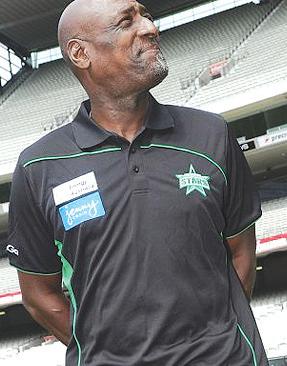
Cup 1975. That experience of playing different formats in English conditions, whether county championship matches or limited-overs matches, was of enormous help.
Like I mentioned before, my approach to batting was quite simple and it was about playing attacking cricket. I thought a fast bowler is someone who is running in at me as fast as he can. He is a guy with a killer-instinct. And I always felt that I am the man to go out and deal with this individual.
I thought that there was no one I could not face.
Of course, there are times when you will have that fear inside you. But you do not show it. Because if you do, it
will show your opponent that you are vulnerable. And that’s where I would keep things simple.
The chewing-gum, for example, was my greatest comfort zone in the middle. When you are on the field with 11 other players, plus two umpires, you are outnumbered to a degree. You are out there on your own. I felt that the chewing-gum was my companion. I had got a mouth-guard (like they use in boxing) made but I never used it. My dentist at that time was very annoyed with me. He said, ‘I have never seen you use the mouth guard, you are always chewing gum’. I told him that I wanted to be comfortable at the crease.
Chewing gum also made me look cool and wearing that mouth guard impeded my comfort zone. The chewing of gum helped take my mind away from stuff like not wearing that guard or even a helmet. I never wore a helmet when batting and I never faced a bowler against whom I thought I should be wearing one.
There was always this chance that I might get hurt. But then, in my mind, I thought about racing drivers. Just because he gets in an accident and he survives, is a racing driver going to quit his profession? Racing is a more dangerous sport than the one I am involved with. If I did get hit while batting, well, tough luck!
If something worse happened, then, at least, I was in my comfort zone and I enjoyed
playing cricket, so it gave me satisfaction. That was always my thought.
My outlook on batting never changed throughout my career. Even when preparing for an ICC Cricket World Cup, I didn’t change anything. Perhaps, I felt a little change in 1987, because I was captain and when you lead there is more responsibility on your shoulders. Even then, my batting approach didn’t change overall. I never wanted to complicate things, because when you do that, you struggle.
For example, as a batsman I scored 138 not out in the ICC Cricket World Cup 1979 final against England, or 119 against India in the ICC Cricket World Cup 1983 at The Oval, or the 181 I scored off just 125 balls against Sri Lanka in the ICC Cricket World Cup 1987.
Those were great knocks. However, I wanted to achieve more, on a collective basis, by winning that ICC Cricket World Cup 1987. That to me would have been a bigger statement.
While I did have a few personal achievements as a batsman, I always felt more proud of what I could achieve in a team environment. For me, it was always about the team. And so, even though I didn’t make a contribution with the bat in the 1975 final, those three run-outs that I affected to help my team beat Australia, remain my greatest personal achievement in the ICC Cricket World Cup. (ICC)

Steven Gerrard demonstrated the quality and leadership Liverpool will miss when he leaves Anfield as he inspired them to an FA Cup third-round victory at AFC Wimbledon.
Gerrard, playing his first game since announcing he would leave in the summer to play in the United States, illustrated the hole he will leave behind.
Liverpool’s captain, who will celebrate his 35th birthday on FA Cup final day on 30 May, headed them in front, then came to their aid, as he has done so often, when they slumped into trouble.
Adebayo Akinfenwa’s equaliser revived memories of the original Wimbledon’s FA Cup final win against Liverpool at Wembley in 1988 - until Gerrard stepped in to restore order with a superb trademark free-kick
just after the hour.
It helped to steady Liverpool, whose defence had looked horribly vulnerable under pressure from Neal Ardley’s side, who are currently 12th in League Two.
Irrespective of the outcome, this FA Cup night was a credit to the rebirth of AFC Wimbledon, who started life in the Combined Counties League in 2002 and went through five promotions before returning to the Football League in 2011.
But AFC Wimbledonlike so many teams before them since Gerrard made his Liverpool debut in 1998 - discovered that this is the player who can be relied upon to help the Reds through moments of adversity.
This was another example as he took his Liverpool tally to 182 goals in 696 appearances for the club.
Gerrard took the applause of the visiting fans, waiting to acclaim him followings news of his impending departure, before the game and was able to calm their early nerves with a goal after Sean Rigg had almost given AFC Wimbledon a shock lead with a shot across the face of goal.
Gerrard timed his arrival in the area perfectly in the 12th minute to meet Javier Manquillo’s cross and direct a low header beyond keeper James Shea into the bottom corner.
Liverpool then enjoyed a period of relatively control but, as has happened so often this season, they were undone by the vulnerability of their defence and the uncertainty of goalkeeper Simon Mignolet.
The Belgian keeper did well to turn over from 10 yards as Rigg threatened
Mo Farah has withdrawn from the Great Edinburgh XCountry international challenge race because of illness.
The Olympic and world champion over 5,000m and 10,000m was due to compete for Great Britain and Northern Ireland, who face the United States and Europe, at Saturday’s event in Holyrood Park.
Farah said:
“Unfortunately, I have to cancel my participation as I had the flu over Christmas and New Year.”
He said he had “to take some days off training”.
Farah pulled out of last year’s Commonwealth Games in Glasgow to re-
cover from illness ahead of winning double gold at the European Championships.
The 31-year-old Englishman said in November that his American coach, Alberto Salazar, viewed cross country as an important part of his schedule.
But Farah’s priority this season is more success on the track.
“My main goal for 2015 is the IAAF World Track and Field Championships in Beijing and I will keep training hard to defend my 5,000m and 10,000m titles,” he added.
Saturday’s Edinburgh event, which will be televised live on BBC One and BBC One HD, will feature performances from some of the world’s best athletes.
Among them will be Gemma Steel, Britain’s European cross-county champion, two-time European champion Fionnuala Britton and Kenyan Asbel Kiprop, the former Olympic and twotime world 1500m champion.
Scots Callum Hawkins, Andrew Butchart and Luke Caldwell were due to face Farah in the 8km men’s race. (BBC Sport)
Tagain but the weakness in Liverpool’s rearguard was exposed when a long kick from Shea found its way through to the feet of Matt Tubbs, who pulled a poor finish across the face of goal.
AFC Wimbledon’s confidence and threat was growing and it resulted in an equaliser nine minutes before the break.
Mignolet missed George Francomb’s corner, Mamadou Sakho bundled the ball on to his own bar and Akinfenwa was the first to react to poke in from six yards.
Gerrard came to Liverpool’s rescue in the opening moments of the second half when he cleared off the line from Adam Barrett as AFC Wimbledon picked up where they had left off.
And when Liverpool needed inspiration at the other end, Gerrard provided it with a superb free-kick that was in from the moment it left his foot curled beyond the reach of the despairing Shea.
Gerrard was denied a hat-trick by a stoppagetime goalline clearance from Callum Kennedy as Liverpool secured a home tie against Bolton Wanderers in the fourth round.
Now will this FA Cup campaign become a personal mission for Gerrard to end his career in England with a silver-lined Wembley farewell?
he 2014 calendar year began with Australia at the SCG in celebration mode. The Ashes had been won and a 5-0 clean-sweep was there for the taking. The 2015 calendar year begins with Australia at the SCG, another series already in their grasp, but this time the mood is more subdued. It is the first time the Australians have played at the ground since their team-mate Phillip Hughes was struck down there by a bouncer on November 25, and died two days later.
Nearly half of Australia’s XI for this Test - David Warner, Shane Watson, Nathan Lyon, Brad Haddin and Mitchell Starc - were on the ground when Hughes collapsed. If the Adelaide Test was about raw emotion, this one will be about memories.
A permanent memorial plaque for Hughes will also be unveiled at the ground.
On field, this Test will be about trying to finish the series on a high. Australia will raise the BorderGavaskar Trophy after the match no matter what happens, but they can do so with a 3-0 series win. India, on the other hand, could drop to seventh on the ICC Test rankings if they lose in Sydney. It is their first Test in the post-MS Dhoni era, with Virat Kohli officially the captain after temporarily taking the reins in Adelaide
earlier in the series. India have been in all three Tests so far and have performed better here than Australia did in India in 2013, yet they have still found themselves on the losing side. Here is one more chance to change that.
There has been something of the hokey pokey to Mitchell Starc’s Test career so far - in, out, in, out, in, out. He has not played two consecutive Tests in a series since his first two matches in 2011. He gets another opportunity at the SCG as the replacement for Johnson, and after struggling to find his line and length at the Gabba it is an important match for Starc, whose bowling average of 36.22 from 14 Tests is underwhelming. At the SCG his record is also disappointing - his first-class bowling average there is 42.15. It is time for Starc to shake it all about.
Virat Kohli has been the batsman who has worried Australia most this series, but Ajinkya Rahane is also causing them major problems at No.5. His 348 runs for the series have come at 58.00 and his century at the MCG was sublime, confirming why he is one of the most promising Test batsmen in world cricket. Of his 1026 Test runs, 1018 have come outside India and his average in the first innings of Tests is 62.66 - more than half the time he passes fifty in the first innings. (Cricinfo)
Sensei Anthony Parris
and Sifu Glenn Forte
will assume the leadership of the country’s largest multi-discipline martial arts organisation for 2015.
They will also be guiding the Trinidad and Tobago Karate Federation (TTKF) and are expected to take the group to the next level.
They both are considered pioneers of martial arts not only in Trinidad and Tobago, but in the wider Caribbean region as well.
Among the first order of business for the two leading men is re-structuring all committees with a view to advancing technical standards as soon as possible.
Bangladesh named a 15-member squad for this years cricket World Cup yesterday, leaving out experienced leftarm spinner Abdur Razzak.
The Bangladesh selection panel, led by Faruque Ahmed, included Soumya Sarkar, Taijul Islam and Sabbir Rahman, who all made their debuts in the series against Zimbabwe in November and December.
Pace spearhead Mashrafe Bin Mortaza missed the last World Cup due to injury, but this time will lead the side. Allrounder Shakib Al Hasan will act as his deputy.
Just five players Tamim Iqbal, Mushfiqur Rahim, Shakib Al Hasan, Mahmudullah, and Rubel Hossain survived from the 2011 World Cup squad.
top World Cup wicket taker Razzak, with 20 wickets
to his name over the past two tournaments, remains Bangladeshs top World Cup wicket taker. He also has taken 207 ODI wickets for Bangladesh. Bangladesh has been drawn in Pool A, along with Afghanistan, hosts Australia and New Zealand, England, Scotland, and Sri Lanka. It will open the tournament against Afghanistan on February 18 at Canberra.
Squad: Mashrafe Bin Mortaza (Captain), Shakib Al Hasan (Vice Captain), Tamim Iqbal, Anamul Haque, Mominul Hoque, Mushfiqur Rahim, Mahmudullah, Nasir Hossain, Shabbir Rahaman, Soumya Sarkar, Rubel Hossain, Taskin Ahmed, Al Amin Hossain, Taijul Islam, Arafat Sunny. (Jamaican Gleaner)
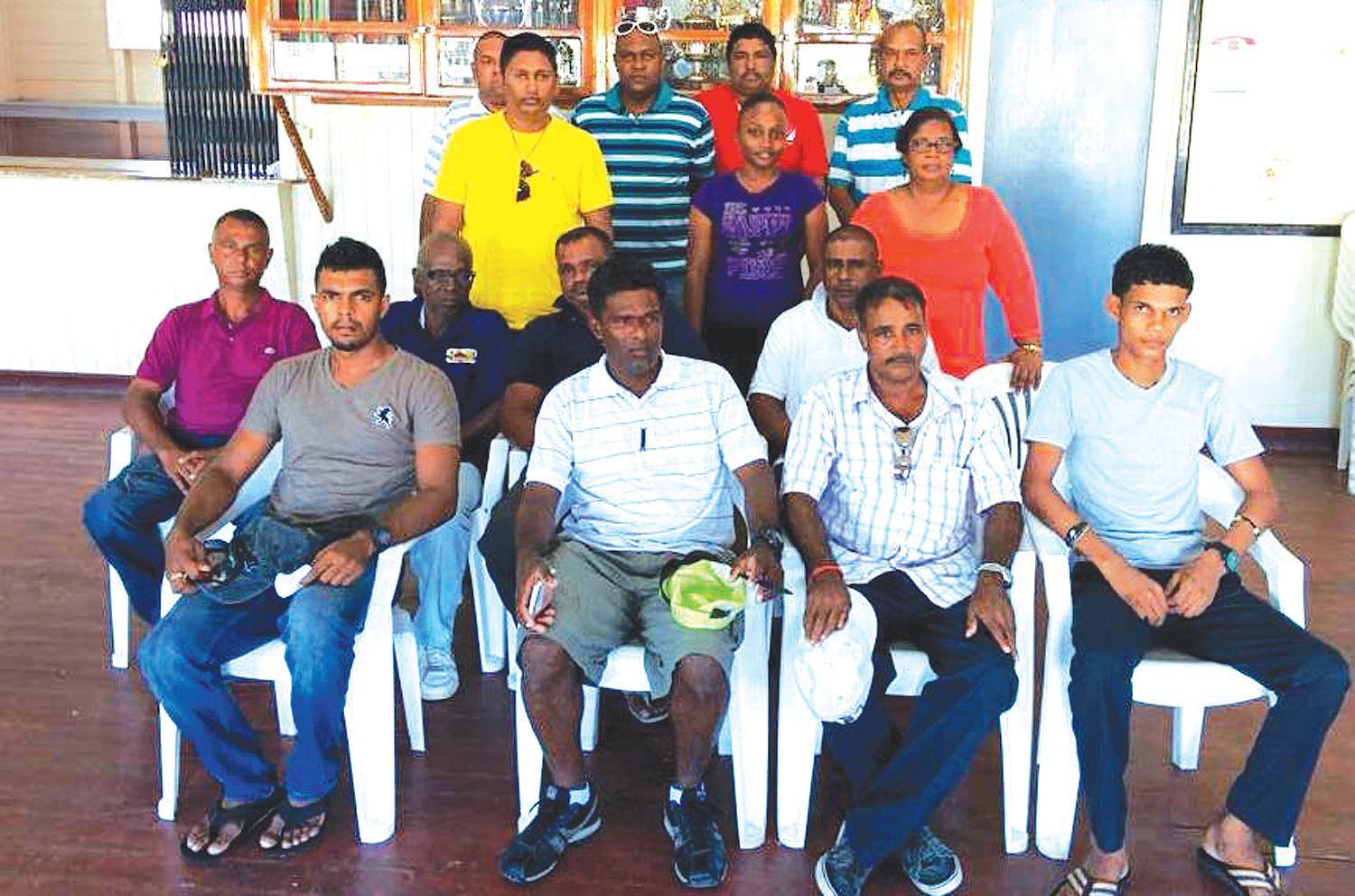
Raffik and Sons Construction Service of Williamsburg, Corentyne, Berbice has renewed its sponsorship of the Second Division T/20 Cricket Competition for teams in the Central/Lower Corentyne area.
The construction giant is a good friend of the board and responded without hesitation when approached for renewal of sponsorship for the 2015 tournament.
There are twenty-eight teams in the area and they will be divided into four Zones of seven each.
The draw was done in the presence of representatives of some of the teams and the Zones are:
Zone A: Courtland,
Belvedere Battlesteel, Tain Block Four, Letter Kenny Star, Toopoo Rising Star, Mibicuri Jaguars and Big Stars.
Zone B: Albion, Tamarind Root, Belvedere United, Albion Travellers, Fyrish, Fyrish Road and Fyrish Strykers.
Zone C: Rose Hall Town, Yakasari Caribs, Cheskoy Riders, Young Adventurers, Guysuco Training School, Jai Hind and Whim National.
Zone D: Port Pourant, Mibicuri Strikers, Kildonan, Chesney, Sand Reef, No 1 Road and Kennard Memorial.
The fixtures will be done soon. However, any other team that wishes to partic-
ipate can still do so by contacting Carl Moore on telephone number 614-8364.
BCB recently elected president Anil Beharry in his address to the representatives of the teams urged them to get the young males and females involved in meaningful activities.
The board has recognised the importance of playing the game in the villages and call on other village elders and leaders to take control of their villages.
Beharry promised that his executive will play their part but they can't do it alone.
He reiterated that this lovely game of cricket must
only bring people together and not to divide.
First Vice-president, Dhirendranauth Somwaru echoed similar sentiments, and added that there is a new trend in the villages these days where lots of criminals are breeding.
Third Vice-president Vemen Walters thanked the sponsor and said that this is a good tournament for the village teams. He said that first division clubs and the board selectors can use it for talent spotting.
Other members of the board and representatives of the teams were high in praise for Mohamed Raffik for his renewal of the sponsorship.
ABritain will play Poland on Wednesday and Australia on Friday, with the group winners reaching Saturday’s final.
The format guarantees all the players at least three singles matches as they prepare for the Australian Open, which begins in Melbourne on 19 January.
“It was a bit of an eyeopener when we arrived at the practice court this morning and it was 44 degrees outside,” said Murray, who arrived in Perth on Sunday after winning an exhibition event in Abu Dhabi.
“I’m from a small town in Scotland and the weather is not quite like that there. The conditions here are fantastic to get ready for Melbourne.” Murray, 27, had felt soreness in his left shoulder during the Abu Dhabi event and admitted he was still
dealing with the issue.
“I had the problem in Abu Dhabi a couple of days ago and haven’t had much time to serve after that,” he said. “We flew straight from
I am not sure exactly what it was and I had a scan in Abu Dhabi and that was all clear.
“But it’s still a little bit sore today.”

World number one
there and arrived yesterday.
“It doesn’t really make sense for a right-handed player to have a problem with their left arm. So
Serena Williams began her season with a victory in Monday’s opening tie as the United States beat Italy 3-0.
The 33-year-old made a dreadful start against Flavia Pennetta, dropping the opening set to love, but after asking for a coffee at the changeover she stormed back to win 0-6 6-3 6-0.
“I’m so jet lagged and Flavia played really, really well and yeah, everyone needs coffee every now and then,” said Williams.
“I am a coffee drinker. I didn’t have mine this morning and I was just feeling it, so I just had to get some coffee into me.
“I just asked them to get me a shot of espresso. I asked them if it was legal, because I’ve never done it before.”
John Isner then beat Fabio Fognini 5-7 7-5 7-6 (7-4), before Williams and Isner teamed up to win the mixed doubles 6-2

South Africa were left needing 124 to win the third Test at Newlands and take the series 2-0 after a monumental West Indies collapse on the fourth day. West Indies’ last seven wickets tumbled for only 33 runs in 15 overs as not for the first time in the series they were blown aside.
The ball before Marlon Samuels self-destructed to cries of condemnation from all quarters West Indies seemed to be making a fist of it. Samuels and Shiv Chanderpaul put up prolonged resistance in a fourthwicket stand of 87 in 28 overs, which was enough to take them into a lead of 90, but once Samuels perished attempting to strike Simon Harmer straight for six, it all became very messy.
West Indies did at least take an unexpected wicket in the three overs remaining. If they were disorientated with the bat, that seemed nothing compared to their bizarre tactics in the field as 2.3 overs were shared by Jerome Taylor, Samuels of all people, and a second spinner, Sulieman Benn. Benn’s third delivery, though, a quicker arm ball, left Alviro Petersen transfixed. Comprehensively bowled for 0, his Test career remained as troubled at the end of the series as it had been at the start.
It would be easy to condemn Samuels for the manner of his departure as he holed out to straight long-on, with Dean Elgar, one of several boundary outriders, making good ground to take the catch.
turn to page 21

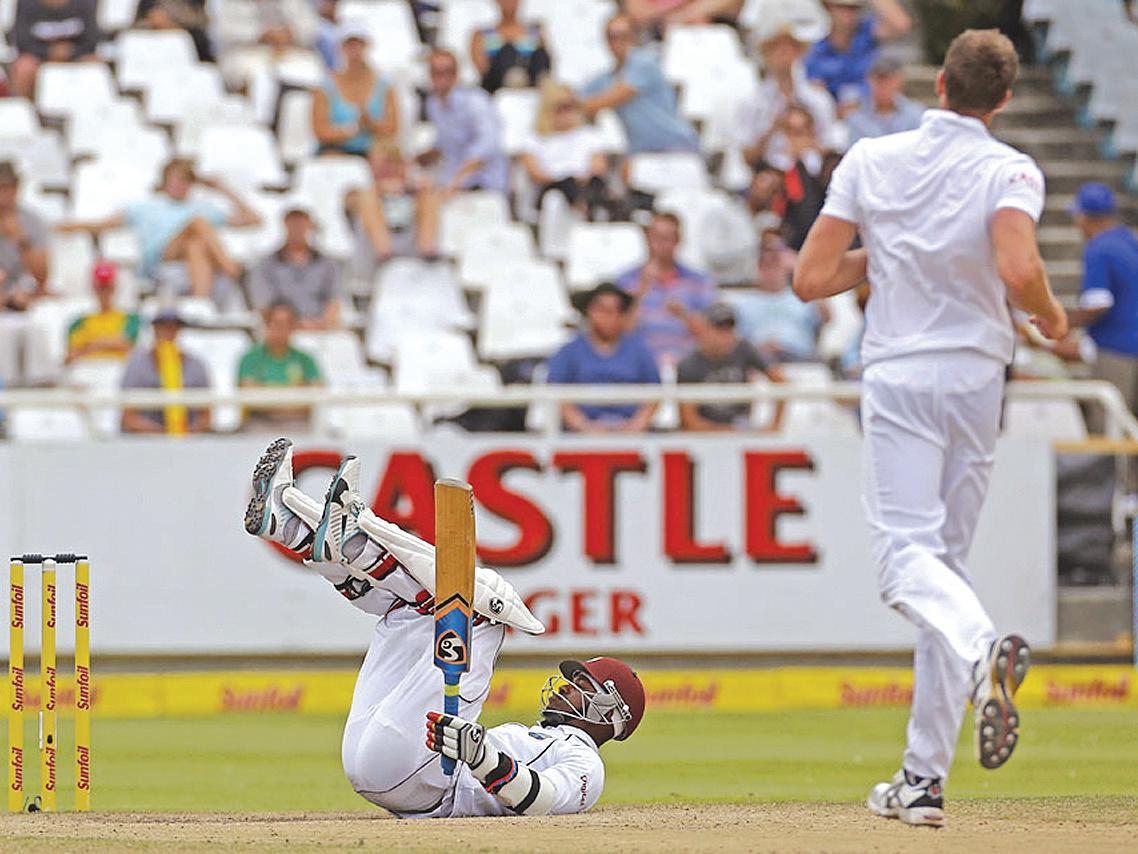
After two days of intense fitness training, the Guyana Jaguars named their 14-man squad for the 2015 NAGICO Super50 Tournament in Trinidad and Tobago.
Guyana has been in form lately, especially with the ball, during the West Indies Cricket Board (WICB) Four-Day Regional Tournament that is currently on hold to facilitate the playing of the 50-over tournament.
The Guyanese will need to come into zone with their batting and continue their dominance with the ball to have a chance of winning the tournament as players vie for selection to the upcoming World Cup.
With Trinidad also confirming that five of their senior players will be home for the tournament, Guyana will definitely need to put on some of their best performances during
the tournament.
Christopher Barnwell has been named as Captain while Veerasammy Permaul has been named as Vice Captain.
The inclusion of experienced batsman Shivnarine Chanderpaul will also give the Guyanese side some stability in the middle order.
The 14-member squad was named as: Rajendra Chandrika; Trevon Griffith; Shivnarine Chanderpaul; Vishaul Singh; Christopher Barnwell (Captain); Raymon Reifer; Anthony Bramble; Veerasammy Permaul (Vice Captain); Devendra Bishoo; Ronsford Beaton; Paul Wintz; Steven Jacobs; Royston Crandon; and Jonathan Foo.
The Coach of the team was confirmed as Esuan Crandon, while Rayon Griffith was named as Assistant Coach.
Some of Guyana’s top distance athletes dominated the Bigi Broki Waka Suriname distance events on Sunday morning over the Wijdenbosch Bridge.
Distance king Cleveland Forde won the 10k race in 34 minutes ahead of fellow Guyanese Cleveland Thomas in windy conditions.
In the 5k version of the event, Lionel D’Andrade won the race in 17mins 07s while Aloeboetoe Gilberto was second in 17:24. Vorswijk Rochini was third in the event with a time of 17:39.
D’Andrade was happy with his performance, “It was a good race, just a little difficult with the bridge, because it’s very high,” he noted.
D’Andrade will be competing in mid January at an event in Trinidad and Tobago where he is based.
Meanwhile, local distance star Alika Morgan
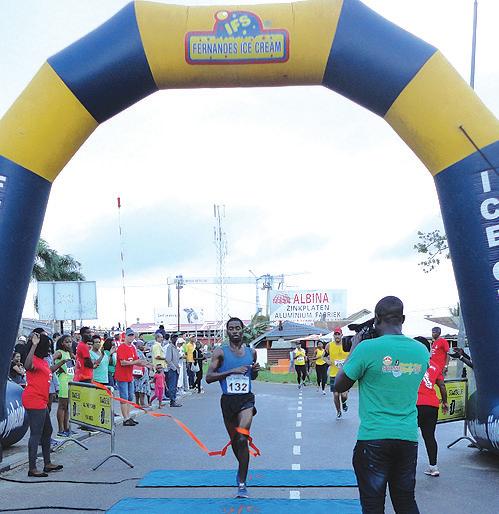
Cleveland Forde crosses the finish line way ahead of the rest
won the female version of the 10k event in 41:45 to top her countrymate Andrea Foster.
Morgan, who was also pleased with her perfor-
mance, highlighted that while she had a good start to the season, she simply wanted to finish the year 2015 “injury free”. (Treiston Joseph)