

By Isahak BasIr, CCh
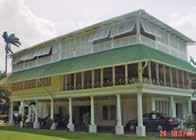
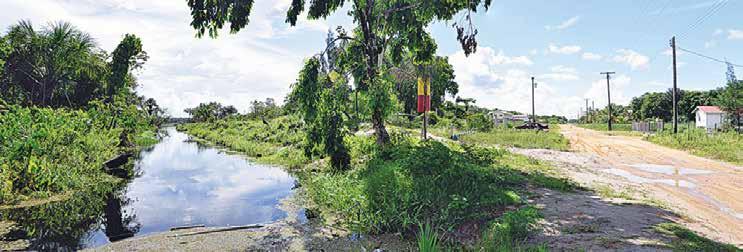
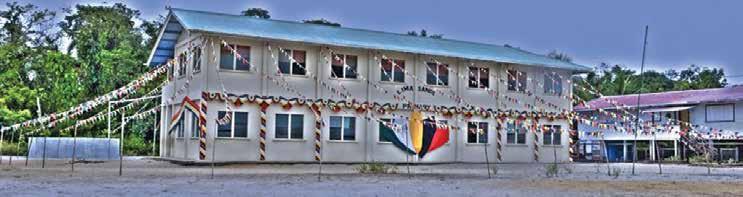
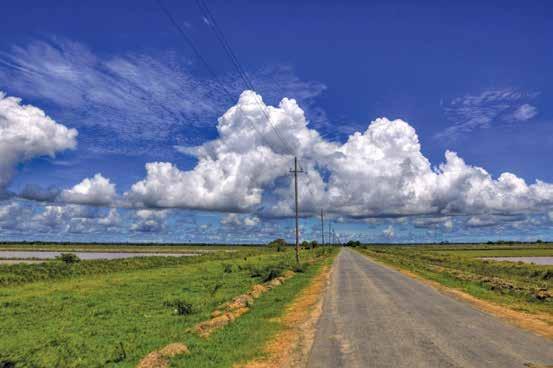
Lima Sands is a stretch of impetus flat sands, half kilometre wide and a length of 10 kilometres, bordering the Tapakuma Project, and located five kilometres west of Anna Regina, Region Two, on the Essequibo Coast. It was first occupied by the Dutch in 1640, when sugar cultivation on the Essequibo Coast was prominent.
The plutocracy from Richmond to Paradise, comprising 11 estate owners, decided in 1788 to use about 150 slaves to manually dig a canal north-west of the Tapakuma Lake landing to the back of Lima estate, so as to avoid the high charges and sabotage of water supply from Anna Regina owners and slave masters.
This canal was supplied by water from the nine kilometres wide Tapakuma Lake. This effort was met with armed opposition that forced the location of the canal further inland. However, the canal was completed about eight miles, cutting the Lima Sands.
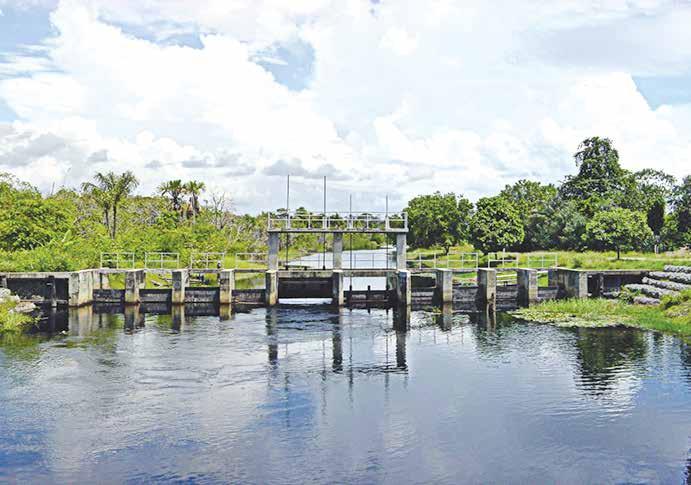
The area is historical, where a high level sand dam was built by slave labourers and it is still visible today. The wooden koker structure, built in the 1920s, still exists.
The stretch of land led to a creek known as Manieuro Canal. Manieuro is an Arawak word meaning “hiding place”, as escaped slaves would seek refuge in the area since it is more than 30 feet above sea level. From surrounding sub-soil vegetation, it appears that this area was the foreshore of the Atlantic Ocean.
By 1923, the British government attempted to use this area with adjacent canal to expand the Tapakuma Lake, but the project was abandoned because of poor engineering skills. However, the PPP government later made a success story in 1961 and built the Tapakuma Project, making 45,000 acres of land available to the landless during that period.
With Hampton Court in 1934 the last sugar estate to be closed, dozens of buffalos were abandoned. This is the domesticated water buffalo from Asia that was used to pull cane punts along the canals. As such, these huge animals made Lima Sands their haven, only to march at night, destroying rice crops between Anna Regina and Dartmouth.
Lima Sands is exposed to 36 square miles of open savannah, which offers a well for these animals that are water-loving and good swim-

mers. The last buffalo, also known as ‘Baisa’, was killed by Sirnauth Ali in 1954 at Danielstown.
One daughter of a veteran resident from 1959, Mrs Moonwattie, who operates a fruit store, said that the area is a prime destination for natural livelihood. The entrance to this unique scheme is filled with awara trees, a huge apiculture project, the gateway
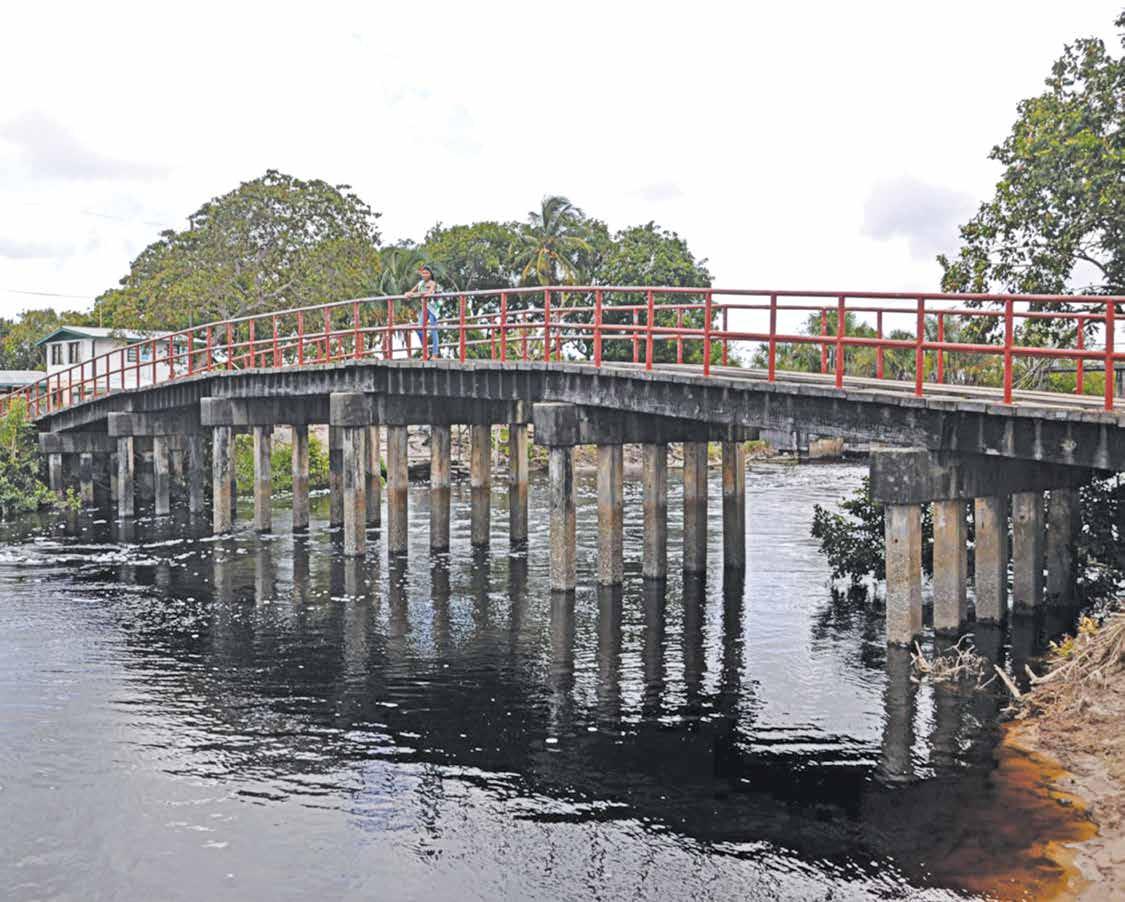
to the Mainstay Resort, two high bridges and a nearby spa known as Feather Beach, at the precincts of Red Lock.
One cannot escape the imposing image of the four-door water regulator, as well as the huge Chinese lock. This lock was built around 1860, to facilitate ingress and egress to the Pomeroon River up to 1909. With sheds usually
painted with red oak during the colonial period, the area was known as Red Lock.
In 1993, the Ministry of Housing established a housing scheme in collaboration with the Food for the Poor’s programme. The area is now quickly developing, with a current population of 2,000 residents, social amenities, shops, medical clinic, schools,
churches, playground, Holiday Inn and electricity. The area has well-maintained sand-loam road and a regular mini bus service from the Anna Regina terminus, which takes 20 minutes and affords commuters, farmers, school children and tours an easy and safe ride around. (Photos by
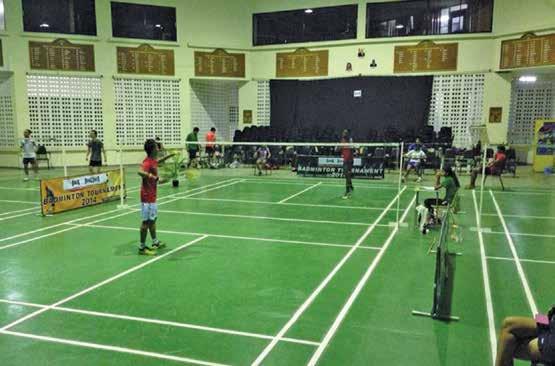
Placing their country on the international badminton list of champions, the Yonex Badminton Club (Guyana) is an energetic group known for their talent and sportsmanship.
Speaking with Guyana Times Sunday Magazine, Gokarn Ramdhani, badminton coach and president of Yonex Badminton Club, said that the club started in the late 70s for junior players and was housed in Queen’s College, where 99 per cent of its players were from.
The club was founded by the late Philip-Small, a former Queen’s College student and national player for Guyana. Ramdhani took over in 1985 after the death of Philip-Small and now serves as the club’s president and head coach.
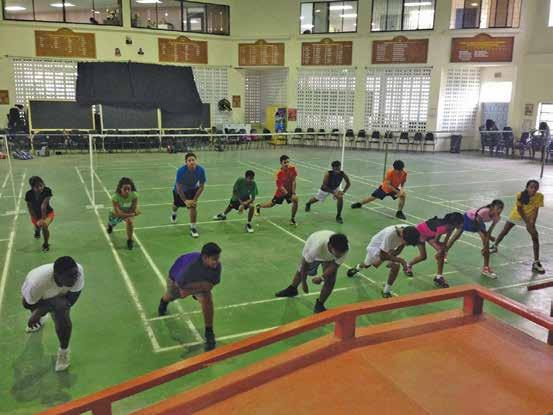
Yonex Badminton Club, which plays three times a week, is run by a management committee and head coach. Membership varies from 40 to 60 members, with junior players from various schools in Georgetown and 75 per cent of the senior players being
former Queen’s College students. The age range of the club’s players is from six to adult.
“Our club has been training players to get on the national team and represent Guyana at international competitions. Our club also produces 90 per cent of all players that represent Guyana,” Ramdhani explained.
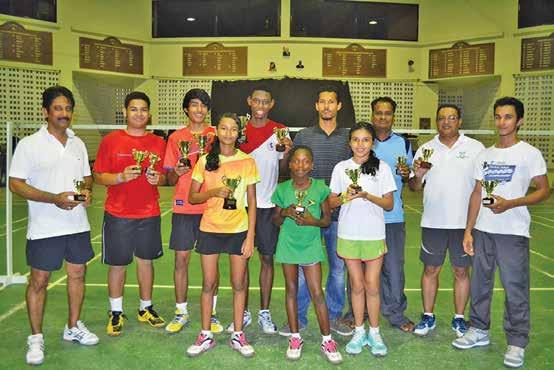
The Yonex Badminton Club’s most notable wins were at the Caribbean Games, Pan American Championships Suriname International and South American championships.
Over the last seven years the club has dominated the junior level at international matches. The club’s most recent victories include Caribbean championships 2014 in Jamaica, IGG in Suriname, and on the local scene the GUMAC Open Doubles and the Trophy Stall Age Group Tournament.
“It’s not just about badminton. Club’s players learn to be disciplined, fit and healthy, and be social, which helps them to relate to others when in the
open world,” the badminton coach pointed out.
Ramdhani added that training involves good health and discipline. Members practice three times a week for two hours and for the other non-playing days, light weights and running.
“We are trying to get more uniformed, trying to get more playing days, and looking to acquire a syntactic court for us to train. Also, we are doing a junior drive to attract more players to get involved. We have a few upcoming local competitions, and internationally we have the Panam Games in Canada, the Panam Juniors in Mexico, IGG Games, the Caribbean Championships in Dominican Republic and the Suriname Open,” Ramdhani outlined.
Yonex Badminton Club has been playing over the years at the Queen’s College badminton court and is instrumental in helping its players to get into colleges overseas via its recommendations.
For those who are not familiar with badminton, it is
by either two
players (singles) or two opposing pairs (doubles), who take positions on opposite halves of a rectangular court divided by a net.
Players score points by striking a shuttlecock with their racquet so that it passes over the net and lands in their opponents' half of the court. Each side may only strike the shuttle-
cock once before it passes over the net.
A rally ends once the shuttlecock has struck the floor, or if a fault has been called by either the umpire or service judge or, in their absence, the offending player, at any time during the rally.
The shuttlecock is a feathered or (mainly in noncompetitive matches) plastic projectile whose unique
aerodynamic properties cause it to fly differently from the balls used in most racquet sports. Because shuttlecock flight is affected by wind, competitive badminton is played indoors.
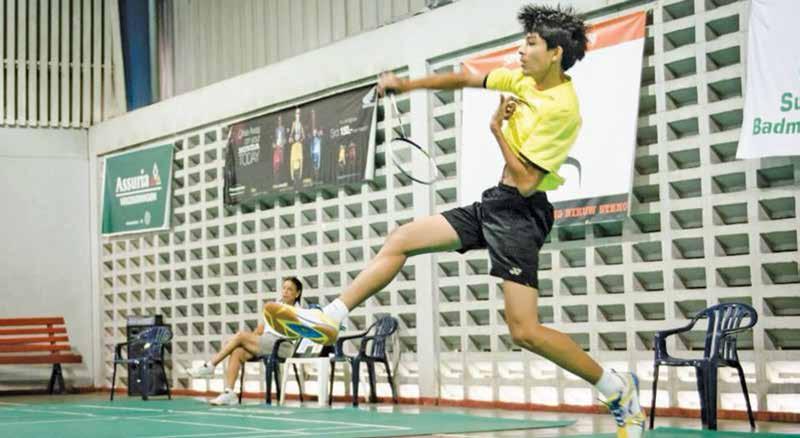
For more information on the group, visit Yonex Badminton Club (Guyana) on Facebook. (Cover photo- Badminton champion Narayan Ramdhani in action)

Often, when people explore the rainforest, there is much interest in the birds and other rainforest animals. But the world of plants is equally enchanting, and Guyana’s forests, with an excess of 8,000 plant species, present a haven for plant lovers.
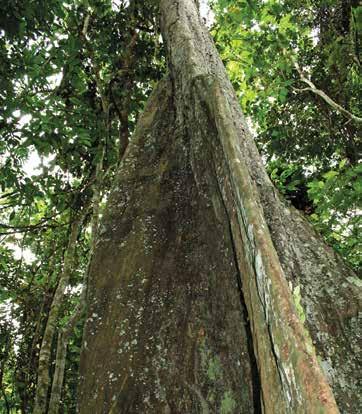
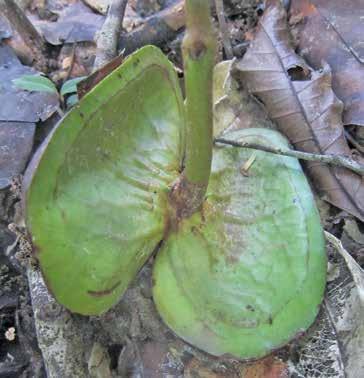
One such encounter if you visit the Iwokrama forest is the imposing Mora tree (Mora excelsa). This species is an icon of the Mora forest type, found along creeks and rivers, and adapted to the seasonal flooding. The large kidney bean-like seeds are endowed with an airspace that allows floatation for dispersal. The large spreading buttresses are impressive to many tourists and often present a nice scene for photographs.
The Mora tree is an ‘emergent’, so it towers over many of the other forest species, making it easy to identify. During the year, the species shed some of their
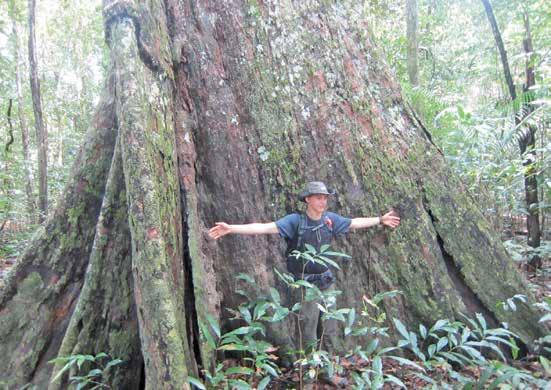
leaves (semi deciduous) and as new leaves emerge, they exhibit a red colour, giving a glimpse of an autumn experience. This is ecologically important as the red colouration is caused by a chem-
ical called anthocyanin, and it protects the young leaves against insect attacks.
Mora is a very heavy and dense wood and is suitable for heavy construction work, jetties and foreshore work.

The wood is also suitable for both traditional and mosaic flooring.
You can see the Mora tree on several trails in the Iwokrama forest, including around the Iwokrama River Lodge and also on the Turtle Mountain hike.
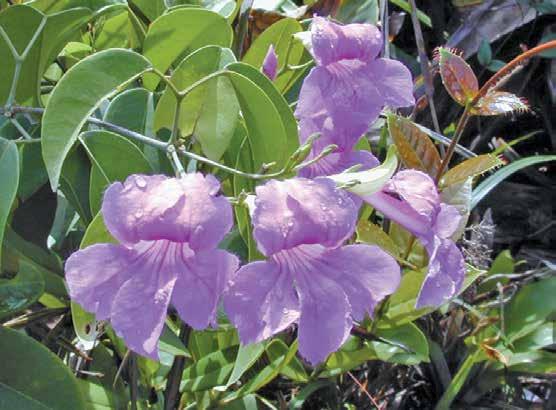
Also on the trail to Iwokrama, a variety of flora can be seen such as the elegant Vochysia sp, huge tree fungi, the sunny-looking Compositae sp, and the stunning Bignonia.
The Iwokrama Forest is a vast wilderness of nearly one million acres – a protected area and homeland of the Makushi people who have used the forest for generations. A unique blend of technology, ancient culture, and traditional knowledge, Iwokrama fulfils its mandate and promise to the world.
Iwokrama International Centre, which protects the Iwokrama forest, promotes conservation and the sustainable and equitable use of tropical rainforests in a manner that will lead to lasting ecological, economic and social benefits to the people of Guyana and to the world in general by undertaking research, training and the development and dissemination of technologies.
Ecotourism is one of the important components of
Iwokrama’s strategy for financial self-sufficiency. Visits to Iwokrama directly contribute to the communities in and surrounding the Iwokrama forest. Tourism there supports the development of an eco-friendly sustainable model, which is being shared locally, nationally and internationally.
The Iwokrama forest and the Rupununi wetlands and savannahs offer visitors exceptional natural and cultural experience set in a learning context. Iwokrama is a place for all ages and all interests and you choose what you want to do.
At Iwokrama, you can retrace the footsteps of the Makushi people, wander the
extensive trail system and discover the unforgettable flora, fauna and Amerindian history so special to this tropical paradise. The Iwokrama forest is an extraordinary destination for naturalists, birders and anyone seeking an authentic retreat to the jungle. For more of the tours that Iwokrama offers, call the Iwokrama office on (592) 2251504 to speak with Chauncy or Diana or email tourism@iwokrama.org. Visit http://iwokramariverlodge. com or check out Iwokrama International Centre for Rainforest Conservation and Development on Facebook.
Joyce Ferdinand-Lalljie was a Guyanese child prodigy who began playing one of her mother’s piano pieces when she was just three years old. She and her younger sister, Mavis, both became concert pianists and were known as the “two Ferdinand girls”. Joyce is credited as being the first black woman to play a full piano concerto.
In his article on radio in British Guiana for the 1951 Chronicle Christmas Annual, Albert E L Isaacs described Joyce Ferdinand- Lalljie (later Joyce Ferdinand-Saunders) as one of the “Big Finds” of local radio (and stage) during 1951. Isaacs’ article stated that Joyce FerdinandLalljie’s genius was shared with the people of British Guiana through the radio programme Berbice Calling, produced by Olga Lopes-Seale on ZFY.
Joyce was born in 1923 in New Amsterdam, Berbice. Her mother, Edith Ferdinand, was an important musical personality in New Amsterdam. She was a music teacher and organist at both St Patrick’s Anglican Church and Mission Chapel Congregational Church. Joyce’s other teacher in British Guiana was Mrs Ruby McGregor. It was under her tutelage that Joyce earned the Licentiate of the Royal Schools of Music (Piano Performing) in 1948.
By 1951, Joyce was the toast of the nation. She dominated classical music and was celebrated for her performances on the British Council broadcasts. As mentioned earlier, Isaacs described her as one of the

“big finds”, and the Guiana Times voted her ‘Musician of the Year’ in 1951.
Charles Knights remembers her as the first Guyanese to perform a piano concerto with the British Guiana Philharmonic Orchestra. This was before the performance by Winifred Atwell, the celebrated Trinidadian pianist.
In 1946, Joyce married Rev William Lalljie. He was very supportive of her and encouraged her to continue her musical career. Joyce’s musical career took her to the United
Kingdom, the United States, and back to Guyana.
Before leaving for the UK on a British Council scholarship in the early 1960s, Joyce relocated to Georgetown, where she established herself as an innovative teacher, performer and composer.
The British Council scholarship enabled Joyce to study at the Trinity College of Music in London. There she completed diploma programmes in piano education and the teaching of music in schools. She was awarded the Fellowship of the Trinity College

of Music in 1964.
Between 1964 and 1976, Joyce taught music in Birmingham.
According to the Snijders and Loncke, editors of “One Hundred Years of Classical Music in the Guianas: Selected Pieces for Pianoforte”, Joyce returned to Guyana in 1976 to accept an appointment as a lecturer at the Cyril Potter Teachers’ Training College.
Although her stay in Guyana was relatively short, she did engage in a number of activities that influenced her music creativity. Among
the activities were renewing her contact with Guyanese folk music and her engagement with ‘Broadcast to Schools’.
In the late 1980s, Joyce made another trip to Guyana. The period following those visits has been marked by compositions celebrating the Guyanese landscape.
In her correspondence with the editors of “One Hundred Years of Classical Music in the Guianas: Selected Pieces for Pianoforte”, she explained: “The effect on me was profound, and thoughts of Guyana and the difference in life-style produced acute nostalgia. I was compelled to use the only means of expression at my disposal, and it was this feeling that impelled me into composing.”
Joyce has composed for viola, flute, voice, and pianoforte. Her “Carousel for Flute” was premiered by Guyanese flautist Keith Waithe. Among her compositions for pianoforte are “Odyssey of the Demerara River”, “Three O’Clock in Bourda”, “The Legend of Kai”, “Stabroek Blues”, “Water Lily Canal by Moonlight”, and “Janie Gal”.
In a Jan 2015 letter to a local newspaper, in which E B John wrote that he learnt about the passing of Joyce Ferdinand-Lalljie, he stated that Joyce’s “devotion to Guyanese music and song was steadfast, and not long ago she recorded Seymour’s “Legend of Kaieteur” there in Birmingham”.
Joyce is, without doubt, a Guyanese music legend. (www.guyanesegirlsrock.com)

By PetamBer Persaud
Caribbean Literature is going through another exciting phase with the flourishing of annual literary festivals, augmented publishing opportunities and generous literary awards; all stimulating creativity and encouraging more productivity and production.
One of the more significant awards to be offered in the region in recent times is the Burt Award for Caribbean Literature. This award was established by CODE (the Canadian Organisation for Development through Education) with the generous support of Canadian philanthropist William Burt and the Literary Prizes Foundation, in partnership with the ‘NGC Bocas Lit. Fest’ of Trinidad and Tobago. The mandate of CODE is profoundly captured in the following statement: “If you can read and write, you can learn to do, and be, anything”.
The award is designed to operate on three vital levels of a vibrant literary landscape –staging writers’ workshops, offering huge monetary prizes, transforming manuscripts into books that are printed in the thousands.
The above is spelt out in the objective of the award which is "to champion literacy, build language skills and foster the love and habit of reading by ensuring that young Caribbean readers have access to books that they want to read".
‘Burt’ burst unto Guyana's literature-scape in 2014 with a bang, yet not too many persons were cognizant of this advent. One year later, however, the scenario has changed for the better.

One year ago, during the month of March 2014, a workshop on writing for young adults was held in Georgetown, Guyana, under the patronage of CODE, the Burt Award and local partner, the Guyana Book Foundation.
The Guyana Book Foundation was a progeny of an organization called Education Renewal formed by a group of educators led by Olga Bone. By the early 90's, Education Renewal was tasked with the responsibility of distributing books, which were donated by CODE, and this led to the formation of the Guyana Book Foundation (GBF), established in 1990 as a not-for-profit NGO.
The main facilitator for the workshop was Richard Scrimger, ably supported by Dr Paloma Mohamed and Vanda Radzik, all experienced in that area of literature. Radzik on many occasions adjudicated the Henry Josiah Writing Short Story for Children and the Rajkumari Singh Writing Poetry for Children. Mohamed has
been working in this area forever through various media – poetry, essay, drama, video and film. Her book, “Caribbean Mythology and Modern Life: 5 Plays for Young People”, is a significant contribution to our small cache of writing for children. Scrimger has written scores of books for children and he is a consummate teacher on the subject.
Participants were inspired and enthused so much so that one year after that stimulating session comes more happy news - one of the participants, Imam Baksh, was shortlisted for the 2015 Burt Award for Caribbean Literature with his manuscript submission, “Children of the Spider”.
Baksh’s talent and skill in writing for children came to public attention through The Guyana Annual magazine to which he faithfully submitted entries annually via the Henry Josiah Writing Stories for Children, winning the competition on many occasions.
One year later, I am hap-


py to have read the three books that got the judges’ nod for the 2014 Burt Award. All three listed below are deserving of high praise but one has the making of becoming a classic of the Caribbean.
“All over again” by A-Dziko Simba Gegele will be read all over again and again because the story is told in a conversational tone not unlike the one employed by master storyteller, Paul Keens-Douglas. This novel is about an adolescent boy who was growing with two voices in his head, one “evilish” the other goodish, in the process finding out the difference between good and bad. Many of the situations leading to this realization were set up by his little sister, his touchstone/ nemesis.
“Musical Youth”, by Joanne C. Hillhouse, is a series of conversations on various subjects: racism, “shadeism”, relationships – man/ woman, family, consequences of liaisons – sins of grandparents/parents falling on their descendants. It is also a love
story of two gifted musicians who find their way through music while working on summer musical. The story is fast paced and engaging, a writer doing an excellent job with her tools of trade right down to a song titled “Melanin” written by the two protagonists.
“Inner City Girl” by Colleen Smith-Dennis is evocative writing that suited the nature of a local girl makes good, a story of redemption. The story makes you cringe from the hardship women still face. Set against the backdrop of grave poverty, drugs, kidnap, rape/incest, an adolescent girl who is well read and good at sport prevailed against the odds to triumph over the ills of her community.
These three prize-winning books are now available locally, entrusted to the Guyana Book Foundation for distribution to libraries and schools. Responses to this author telephone (592) 226-0065 or email: oraltradition2002@yahoo.com


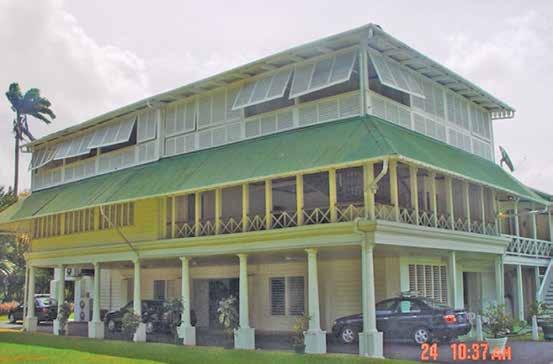
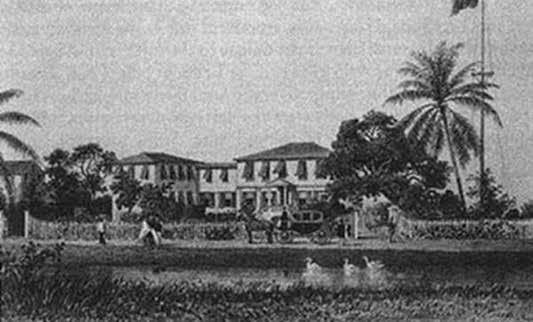
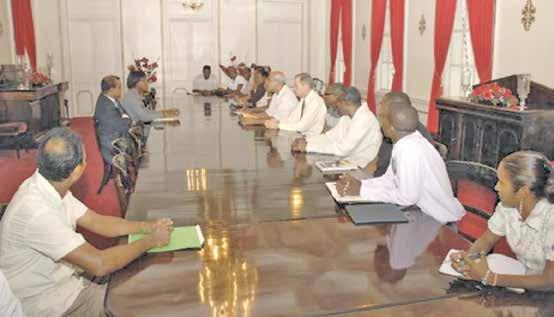
State House, once known as Government House, has been the official residence of several colonial governors and Guyanese presidents over the years.
It is said to have had its origins in the 1820s, when the building was originally owned by William Percy Austin, the first Anglican Bishop of Guyana.
Ordinances were passed in 1852 and 1863 allowing the purchase of the property to establish an official residence for the governor of what was then British Guiana.
After independence, the country’s first president, Arthur Chung used State House as his official residence in the 1970s.
It would be decades later, in the 1990s, that the building was again used by a sitting president when the fourth president, Cheddi Jagan, chose the building for his official residence.
It remains the official presidential residence today.
With a lush, green landscape and treelined driveway, State House is located from Main Street at the front to Carmichael Street along New Market Street.It has over the years undergone several additions and changes.
The original building faced Carmichael Street but by 1894,its main entrance was on Main Street.
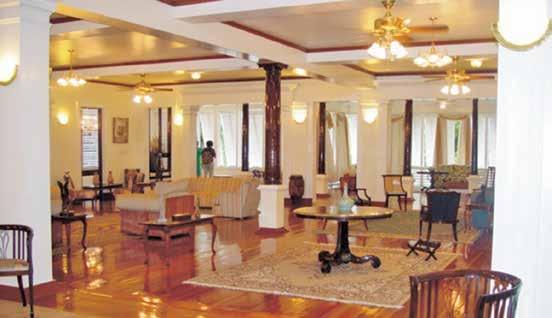
The building is often described as the house with its 100 windows, and is said to have once been called “The Grande Dame of Main Street” for its graceful interior and exterior wooden architectural elements and design, some of which are credited to Caesar Castellani, an architect known for designing several buildings in Guyana.


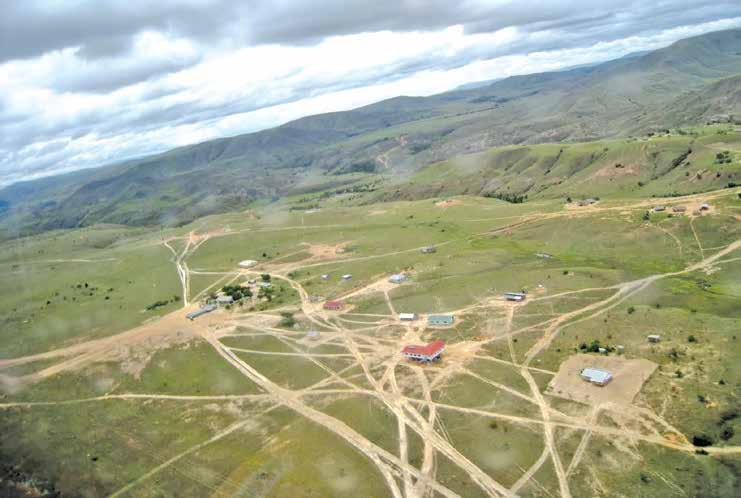
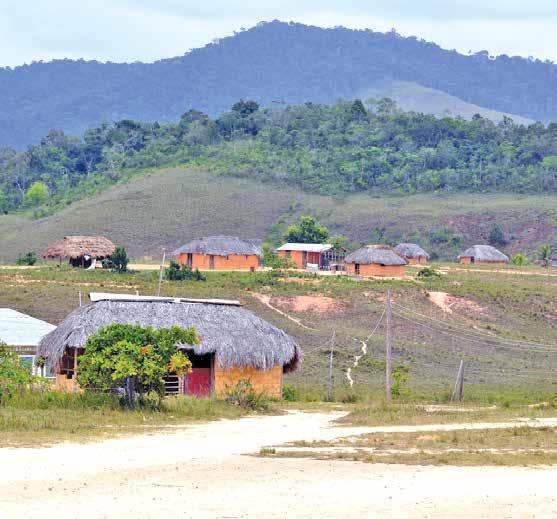

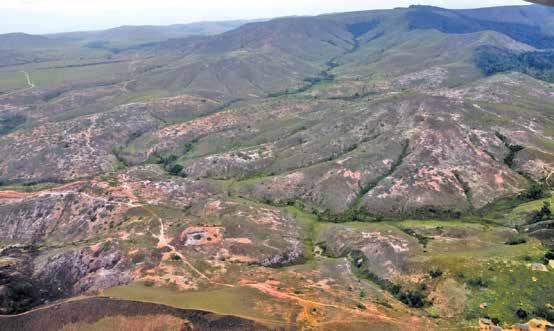
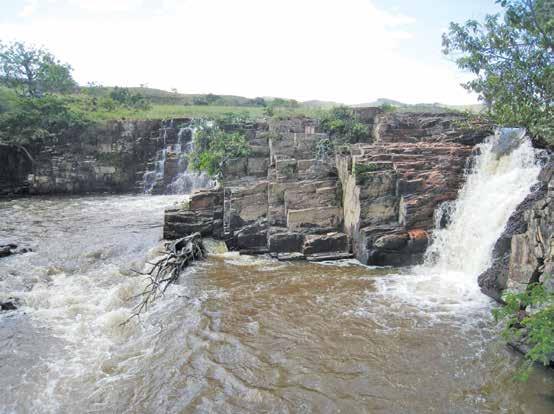
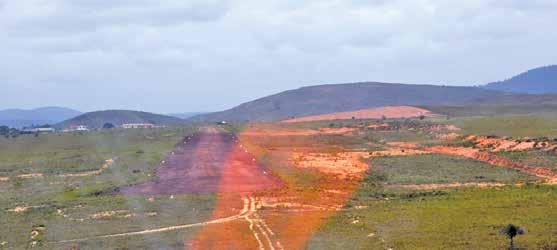
Kato,in Region Eight, is located in the heart of the Guyana interior and is known for its stunning nature vistas.
In the village there are government buildings such as the nursery and primary schools; a guest house, police outpost; medical facilities and school dormitories. Neighbouring is Paramakatoi.
Kato itself is a dispersed village of some 2,000 mainly indigenous persons. It is a very traditional village made up of a close-knit, self-sufficient community that cherishes its indigenous heritage.
The World Health Organisation (WHO) states that most of the 6.9 million children under five years old who die each year can be saved with access to simple, affordable interventions.
Saying that this number amounts to close to 800 children every hour, WHO notes that the risk of death is highest in the first month of life.
The international health organization lists preterm birth, birth asphyxia and infections as the cause of most newborn deaths, and points out that quality care during pregnancy, skilled attention during delivery, and strong neonatal care are key to reducing such deaths.
From one month to five years, WHO states that the main causes of death are pneumonia, diar-

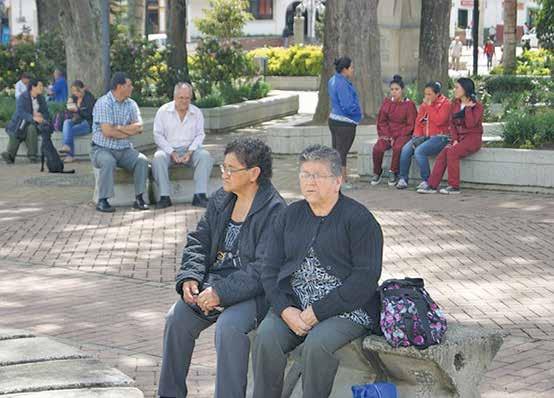
Adults today arelooking not only to extend their lives, but also to enjoy theirextra years.The US Centers forDisease Control and Prevention (CDC), has developed some keys to preventing some ofthe most common health issues facing older adults.
As an older adult, regular physical activity is one of themost important things you can do for your health. It canprevent many of the health problems that seem to comewith age. It also helps your muscles grow stronger soyou can keep doing your day-to-day activities withoutbecoming dependent on others.
Older adults need atleast an equivalent mix of moderate and vigorousintensity aerobic activity and musclestrengtheningactivities 2 or more days a week that works all majormuscle groups.
High blood pressure is often called the ‘silent killer,’because it usually has no noticeable warning signs orsymptoms until other serious problems arise such asheart failure and stoke.
There are several things you cando to keep your blood pressure healthy includingmaintaining a healthy weight and diet, staying active,quitting smoking, controlling your alcohol consumption,and working to prevent or control your diabetes.
Theseactions should become part of
your regular lifestyle, butyou should also discuss with your health care providerthe best ways for you to address your specific high bloodpressure issues.
Depression is a common and debilitating illness. Expertsknow that about 80 percent of older adults have at leastone chronic health condition, and 50 percent have two ormore.
Depression is more common in people who alsohave other illnesses (such as heart disease or cancer) orwhose function becomes limited.
Most adults see an improvement in theirsymptoms when treated with antidepressant drugs,psychotherapy, or a combination of both.
A traumatic brain injury (TBI) is caused by a blow orjolt to the head or a penetrating head injury that disruptsthe normal function of the bran. TBIs often result inlong-term cognitive, emotional, and/or functionalimpairments.
You canhelp prevent TBIs in your home by removing trippinghazards in the walkways, using nonslip mats in theshower, installing grab bars next to the toilet andimproving lighting.
Cancer Screening
Therisk formost cancers increases as you age. CDC supportsscreening for breast, cervical, and colorectal (colon) cancers.
rhoea, malaria and measles; malnutrition is responsible for about one-third of all child deaths.
WHO finds that the major risk factors for pneumonia are malnutrition and indoor air pollution, and addressing these factors is essential to preventing the illness, while antibiotics and oxygen are the simple but vital tools for effectively managing the sickness among children.
In addition, in developing countries, diarrhoeal diseases are a major cause of morbidity and mortality among young children.
Breastfeeding, says WHO, helps prevent diarrhoea among babies and toddlers, while safe, cost-effective Oral Rehydration Salts (ORS) combined with zinc supplements can save young lives.
According to the organisation, one child dies every minute from
malaria, when insecticide-treated mosquito nets can prevent transmission and reduce deaths.
With more than 90 per cent of children infected with HIV from mother-to-child transmission, WHO notes that antiretrovirals, safer deliveries and feeding practices can help reduce these infections.
Some 20 per cent of worldwide deaths that occur among children under five are preventable if feeding guidelines are followed, says WHO. The agency recommends breastfeeding exclusively for the first six months, followed by ageappropriate and safe foods from six months, with continued breastfeeding up to two years or beyond.
Countries that invest in strong health care systems can deliver quality care and prevent many child deaths.
Simply put, nutrient dense foods are those that contain large amounts of vitamins, minerals, amino acids, antioxidants and enzymes compared to the number of calories. These are the opposite of 'empty calories'.
Anything that is described often as a 'superfood' then, is going to be considered very much one of our nutrient dense foods. A good example is spinach, which is often referred to as the 'first superfood' thanks to its high content of iron, phytoecdysteroids, calcium and other nutrients. Eat a plate full of spinach and you will likely feel full, despite not having eaten that many calories.
Meat is also nutrient dense containing a lot of amino acids (protein) and lots of minerals. The calories mostly come from the fat, but with lean meat, you won't get that much. As with spinach, it's very difficult to 'over-eat' if you stick to meat.
The same is also true of most vegetables in fact: things like carrots, broccoli, cauliflower, sweet potatoes… they're all high in various nutrients and low in calories making them a great way to fill yourself up.
While fruits are very high in nutrients, they're also actually quite high in calories. While you should make sure to get some fruits in your diet for varieties sake, you shouldn't rely on them to fight hunger: vegetables are preferable if you're trying to fight the flab.
Eat nutrient dense foods and you'll give your body more of what it needs with every meal. The result of this is that you'll be healthier; think stronger bones, better skin, more energy and generally greater 'well-be-
ing' all around.
At the same time though, eating nutrient dense foods will also help you to feel fuller. Many cravings are actually result of our body running low on certain nutrient and then telling us to eat in order to try and get them – problem is that we often misinterpret this communication and end up eating the wrong stuff.
If you eat nutrient dense meals, you'll get fuller from each meal that you eat and you won't crave other foods so quickly. The result will be that you find it much easier to stick to a low calorie diet than you otherwise might and that you can eat as much as you wantbecause you won't want much.
If you eat a diet high in nutrient rich foods, you'll find that by extension, you end up eating fewer calories, feeling less hungry and actually improving your health as well – and you don't have to starve yourself in order to get there.(By Adam Sinicki, healthguidance.org)









ForChristian Sobers, music has always been a significant part of his life. Both his parents, Sean and Michelle Sobers, are music aficionados. But it wasn’t until Sobers was 16 that music began to matter to him. As a self-taught musician, Sobers researched books, self-help guides and even YouTube for guidance. As he progressed, the musician took a few online courses to sharpen his talents; he has been able to gain much knowledge from performing and working with other musicians. Every day he learns about music, which he views as an “unending” field, and is constantly challenging himself to explore and understand it even more. Since he began with acoustic guitar, Sobers has learnt bass, piano and drums – which he loves. Now, through Music Unlimited, a flourishing music school he founded that aims to promote self-development through the lyrical power of music, Sobers shares his passion for music and helps others find their inspiration through it. Music Unlimited offers courses in guitar, piano, drums, and vocal coaching. There are also live and online courses available. The passionate musician credits music as his “saviour” because it changed who he was and gave him purpose. He is also convinced that the possibilities with music are vast and it gives room for exploring one’s creativity through different genres and artists, both past and present. Visit Music Unlimited on Facebook for more information.
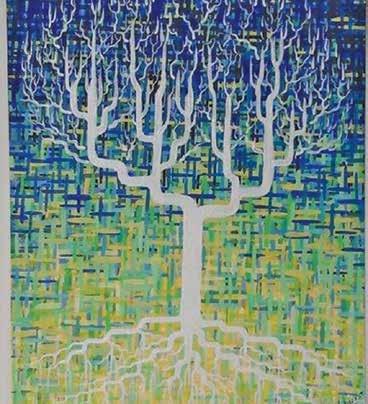
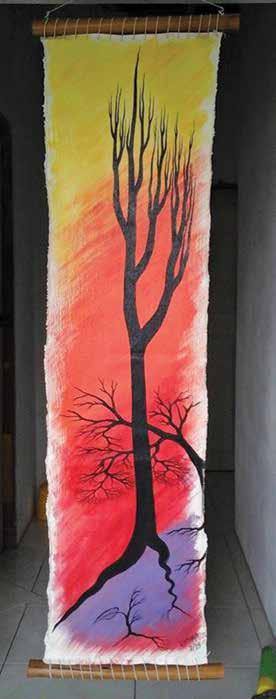
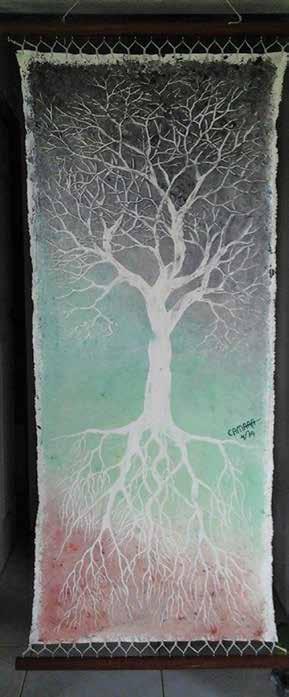
Using art as a means of communicating his humanity, emotions, philosophy and life, Kodzo Wilkinson, a Surinamese national born to Guyanese parents, is a young artist on the rise.
In an interview with Guyana Times Sunday Magazine, the artist said that he was inspired to pursue art because of the urge to say and show what is on his mind or what is happening at the said time in his life.

“As a child I was reserved and observing. Now I feel the need or urge to speak my mind. I was always into art, although I saw my two older brothers’ (Everton and Henk) talents better than mine as a child. I have many interests, but art is my comfort. I drew leisurely and as a hobby,” the artist explained.
Wilkinson mentioned that he enjoys the art process because he can manipulate colour and shapes in any way he pleases, within the constraints of the medium.
“Art can be therapeutic; however, I don't see it so. If I don’t enjoy doing it I will not, although I once was enraged and decided to pick up a brush and started to paint my frustrations away. It was a pivotal learning point for me. It was the first time I learnt how to convert a negative into a positive,” Wilkinson disclosed.
To date, the artist has held two solo exhibitions: “Camara” in Suriname on July 4, 2014 and “Camara 2” here in Guyana on March

21, 2015. Additionally, he participated in Suriname's National Art Fair in November 2014 and in a few local art competitions hosted by Castellani House, sponsored by Republic Bank.
Initially in his art career, the artist revealed he “detested the idea of art academia”, but soon realised that he knew very little about art. He then enrolled at E.R. Burrowes School of Art, which helped to broaden his knowledge.
After graduating from the art institution, he felt that he still knew little about art and did a lot of personal studies, since he needed to equip himself as a teacher in order to furnish students with up-to-date information. Wilkinson was an admired teacher at Queen’s College and Marian Academy in Guyana.
Through art, the artist said, he enjoys “freeing” himself.
“I enjoy being uninhibited during the process, as an idea comes and changes my previous mindset, I acknowledge it and go along. Nothing is perfect, we are limitless, so why be “pigeonholed” or “boxed” in?” Wilkinson asked.
The artist admires the work and legacy of late Guyanese veteran artist

Philip Moore. He also appreciates the life and work of Dutch artist Vincent van Gogh (1853–1890).
Wilkinson’s artistic style is described as bold, daring,
unique and intriguing.
“I hope to travel with my art pieces and exhibit wherever I go. I am also interested in designing simple fashionable clothing,” he stated.
Apple and Beats are to go into direct compe-
tition with Spotify by developing a new streaming service.
The tech giant is developing its own subscription streaming service, and looks set to launch a radio station fronted by Zane Lowe Apple plans to revamp and relaunch iTunes Radio, with Lowe taking a figurehead role at a project designed to resemble a conventional radio station.

AThe New York Times reports that Apple and Beats are working on a subscription streaming service, with
Trent Reznor of Nine Inch Nails taking a key role in redesigning the company’s music app.
One Apple insider said the new app will be similar to the existing Beats Music streaming service, with curated playlists. Jimmy Iovine, the legendary record industry executive who runs Beats with Dr Dre, is reported to be pushing for big albums to be premiered exclusively through Apple.
The radio station looks likely to be global, and the
NYT suggests it will have geographically targeted programming.

n Android keyboard extension that lets you swiftly get one-tap access to text lexicon has beencreated by developer Prem Adithya.
Called Lazyboard, the app also features what looks similar to kamoji (Japanese emoji)and other emoticons.
““I realized that on an off day, I type ‘k,’ ‘kk,’ ‘hmm’ and ‘lol’ more than anything else,” Adithya tells Wired.
“I also saw that these words were used in politely turning down an annoying conversation—or a conversation that I didn’t want to have with an annoying person. So then I thought, ‘Hey, what if there was a keyboard with just the essential words required to reply to people quickly?’” That became Lazyboard, a suite of canned replies such as “no,” “yeah,” “oh,” “haha,” and “cool.”
BYTe Tech

She is also working on Lazyboard Pro, which will let users customize and program their own shortcuts says Wired.
Ford Motors on Tuesday unveiled a new technology that can scan traffic signs and automatically adjust a vehicle's speed accordingly.
The Intelligent Speed Limiter was demonstrated in Germany, but it will be available worldwide in the newest edition of Ford's S-Max cars.
The technology features a camera mounted on the windshield that works with a recognition system that can read roadside signs. When the system determines that the driver is exceeding the posted speed limit, the car can adjust the speed without applying the brakes.
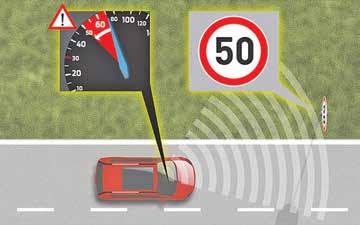
posted speed. A driver can temporarily override the system by pressing firmly on the accelerator.
Ford is not the only automaker to provide drivers with an option for curbing their speed.

In a new patent awarded today to Google Tuesday, the company outlined a system for external airbags and bumpers that could deploy in the event of an accident.
One idea suggested in the patent is to mount airbags on the outside of the cars, to create a buffer for pedestrians. These airbags would deploy when the car senses
BYTe Tech
BYTe
Lthat a collision with another vehicle is imminent.
The patent notes that using traditional car bumpers and airbags would most likely cause a person to bounce off and injure himself or herself in the resultant collision with the ground.
Google’s solution for preventing pedestrian injuries of this sort is bumpers made out of a “visco-elastic material.”
While the patent doesn’t specify what that material could be, it most likely would be of a consistency somewhere between that of an earplug and memory foam.
Google is not the only company working on external airbags: Volvo has pedestrian-sensing airbags on some of its vehicles, but they don’t have the memory-foam-like bumpers behind them.
It’s still unclear whether these bumpers in fact will be included in Google’s driverless cars; the company wasn’t immediately available to comment.(Quartz)
eatherman multi-tools can certainly come in handy, but they are one more thing that has to be stuffed in a pocket or hung on a belt. That's where the Leatherman Tread comes in.
It's a stainless steel bracelet that incorporates 25 tools within its links. Additionally, because none of those tools are knives, it shouldn't cause problems going through airport security.
Some of the tools on offer include various types of screwdrivers, a cutting hook,
hex drives, box wrenches, and a carbide glass breaker. The clasp also incorporates a bottle opener and #2 square drive. In order to use any of those, the Tread has to first be removed from the wrist and then folded back to expose the needed tool.
Official pricing has yet to be announced, although the company estimates that the stand-alone bracelet will sell for US$150 to $200 come this summer. A version that includes a Swiss-made waterproof watch is coming in the fall.(Gizmag)
Instead, the Intelligent Speed Limiter smoothly controls engine torque by electronically adjusting the amount of fuel that is delivered. That results in a gradual decrease to the legally
AThe technology is being introduced by Ford as a way to help prevent drivers from exceeding posted limits unintentionally.
At present, Ford is offering its Intelligent Speed Limiter as much for convenience as safety, and drivers do have the ability to override it or turn it off.
ccording to The Telegraph, all 650 Members of Parliament (MP) in Great Britain will be given an iPad Air 2 and a laptop after the May election.
Each MP will be giv en a 16GB Wi-Fi + Cellular iPad Air 2, which costs £499 (US$744).
Apple's tablet was chosen by the commission in part because it's already pop ular among MPs — 209 members in the House of Commons possess an iPad, including Prime Minister David Cameron.
"BMW now has a warning system that is displayed to the driver when they are exceeding the speed limit, but it is a warning only and doesn't actually decelerate the car," said Praveen Chandrasekar, automotive and transportation research manager at Frost & Sullivan.

Despite that, some MPs aren't happy with the decision.
Twitter on Thursday launched Periscope, the live streaming app it acquired back in February.
Periscope lets users easily stream footage from their devices to their followers. Viewers can comment and send "hearts" to the streamer. The footage can be then replayed later.
A large part of Twitter's appeal is its popularity with celebrities, and it looks like the company's hoping this star power can provide
Shadow Cabinet Office minister Chi Onwurah complained that MPs — like Nigel Mills who was caught playing Candy Crush — would use the tablet to play games and listen to music, and that “locking some of the most powerful people in the country into a platform that most of my constituents can't afford seems like a mistake.” (The Verge)
a similar draw to Periscope.
"Breaking Bad" actor Aaron Paul, astronaut Chris Hadfield, magician David Blaine, high-profile businessman Mark Cuban and skateboarder Tony Hawk are among those already using the platform.
Periscope videos aren't integrated directly into Twitter - you have to install the separate app. Greater integration may come later, however.(Times of India)


Because kitchen cabinetry can be a major investment, its design, colour and style ideas should be carefully considered before purchasing.

If you are renovating your kitchen and wish to save costs, repainting or restaining your current cabinets,once they are still in good condition, is a smart option



Ingredients
150 g oil
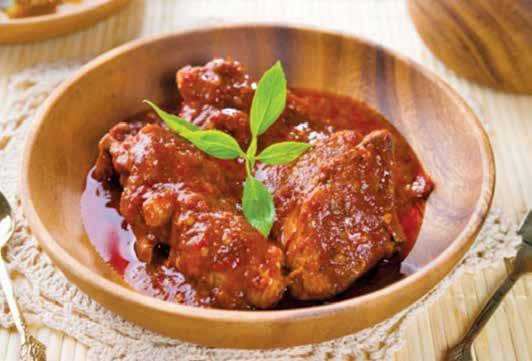
600 g mutton -- cleaned and cut
200 g onions
50 g whole garam masala
80 g ginger-garlic paste
Method
25 g red chilli powder
Salt to taste
15 g turmeric
20 g coriander powder
15 g coriander seeds- roasted and crushed
150 g yogurt
6 whole red chillies
Heat oil; add sliced onions and sautéuntil they turn brown. Then add ginger-garlic paste, garam masala, red chilli powder, salt, turmeric, coriander powder.
Add yogurt and mutton.
Add coriander seeds and allow them to cook.
Garnish with pounded coriander seeds and whole red chillies. Serves 4
Arunny-yolked
fried egg adds instant richness to pasta, rice and grain dishes, even pizza.
Spritz your cheese grater with non-stick spray before using it to make shredding and cleaning easier.
Add dried fruit to oatmeal before you add the milk or water. The fruit will cook and plump up slightly, adding a juicier, more intense taste.
Make sure the lettuce is completely dry, it helps the dressing stick.
Don’t add Styrofoam packaging to landfills, use leftover Styrofoam peanuts as great drainage in the bottom of a pot.
Line the tops of cupboards with sheets of wax paper to protect cupboards from grease build-up and no more messy clean up jobs.
When stirring anything hot, always use a wooden spoon. It never gets hot nor does it scratch the cookware.
Apply spray starch to doors and to painted walls along hallways and stairways where fingerprints accumulate. The coating will resist marks better.
While we don’t want to disregard what is otherwise an amazing tool for connecting with others, we have to be aware of and minimize the risks of your children’s -- and your -- social media involvement.
Privacy. Most social media sites ask for quite a bit of personal information in order to help connect you with people you might know. Post as little personally identifiable information as possible while still giving enough to be able to find friends and family members online.
I A good man never dies -
In worthy deed and prayer
And helpful hands, and honest eyes,
If smiles or tears be there:
Who lives for you and me -
Lives for the world he tries
To help - he lives eternally.
A good man never dies.
II Who lives to bravely take
His share of toil and stress,
And, for his weaker fellows' sake,
Makes every burden less, -
He may, at last, seem worn -
Lie fallen - hands and eyes
Folded - yet, though we mourn and mourn,
A good man never dies.
James Whitcomb Riley
Online reputation. When we post pictures of questionable behaviour or engage in racy online conversations, we stand to gain an unfavourable reputation in real life as well. Be cautious about what you share online, and remember that deleting something is no guarantee that it doesn’t exist somewhere on the Internet.
Cyberbullying. It is a growing problem, but it doesn’t just impact kids. Adults can be “attacked” online as well and subjected to cyberbullying. Beware of interactions online that could lead to cyberbul-
lying for your kids or yourself. Catfishing. Catfishing happens when someone creates an exaggerated or just inaccurate profile on social media and attempts to “reel in” unsuspecting “victims” who might be taken advantage of. When we connect with someone we don’t know in real life, and who seems too good to be true, we can get caught in a bad situation. Be very cautious when someone wants to connect with you and you don’t know or can’t connect to that person in real life.
(Source: about parenting)
sToRy TImE

Once, two merchants lost a camel. They met a traveller and asked him if he had seen it. The man replied he had not." But was your camel blind in the right eye?"
Said he to them.
"Yes, he was", replied the merchants.
"Was it lame in one left foot?" The man asked again.
"Certainly it was", said the merchants.
"Was its front tooth missing?”said he to them.
“Indeed, I" said they.
"Was it loaded with honey on one side and with wheat on the other?"
"That is just how it was loaded," they answered. "Please take us to it."
"But I have not seen your camel," said the man "and I do not know where it is"
The merchants got angry and

Don’t Be Rude
“Will this ointment make me smart?’ “No, this is ordinary medicine, not a miracle drug.”
“Y
ou’re half an hour late. I’ve been standing here like a fool waiting on you”
“I can’t help it how you stand.”
“Is that your story? What kind of an idiot do you think I am?”
D
D
D
“I don’t know. What other kinds are there?”
Did you hear…?
id you hear about the man who drank five gallons of tea?
He drowned in his tepee!
id you hear the joke about the roof?
Never mind, it's over your head!
id you hear the joke about the bed?
It hasn't been made up yet... Riddles
What could you call the small rivers that flow into the Nile? Juveniles.
Why was the math book sad?
Because it had too many problems.
What happened when a faucet, egg, and a lettuce ran a race?
Well, the egg got beat, the lettuce was a head, and the faucet is still running!

said, "Then how could you tell us so exactly every-
By Grammar G
thing about our camel?"
"That is my secret," said the man.
replied that he had not seen it. At this, the king asked him how he knew so much about it. The man answered that the camel had eaten grass only on the left side of the path. So he knew that it was blind.
The marks of its one left foot were faint. This showed that the camel was lame. While eating grass, it had left a little turf in the middle.
So he learnt that it had lost front teeth. There were ants carrying grains of corn on one side of the path and
flies eating honey on the other. The king was satisfied with his explanation and let him go.(GAYATRI ROY)
was.

An alternade is a word where each set of alternate letters within it also spells a word. In other words, the letters in odd-numbered positions and the letters in even-numbered positions would spell words.
For example, allied provides us with ale and lid (allied/ allied).
More examples: parrot > pro and art board > bad and or waist > wit and as
Three-word alternades are also possible, and each of the smaller words use each third letter of the long word: Lacerated > let/are/cad (lacerated/lacerated/lacerated)
More examples: similarly > sir/ill/may tabulated>tut/ale/bad
There are also reverse alternades, made by reading the letters backward: thickest > tech/skit.
In addition, alternades can be made from more than one word or a phrase: safe water > set/awe/far (using each third letter) and legal tenders > legend/alters (when letters are used in pairs or triplets -legal tenders/ legal tenders.)
Can you think of a few alternades? See page 23 for a few.
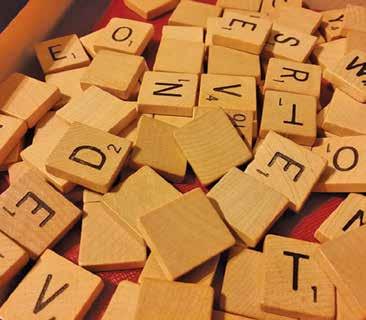
Fill in the blank below with a single letter to turn these pairs of words into synonyms. Example: _tumble and _rip. Answer: Stumble and Trip
1) _cold and _hide
2) _amble and _ager
3) _earning and _raving
4) _ally and _core
5) _aver and _alter



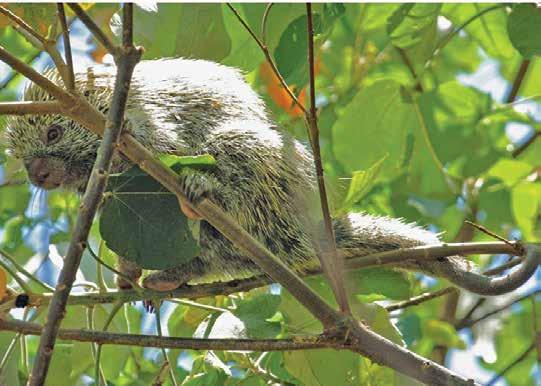
The Spiny Tree porcupine (Sphiggurus spinosus) is also known as the Paraguayan hairy dwarf porcupine and can be found in Argentina, Brazil, Paraguay and Uruguay in South America.
It is the smaller of the two Paraguayan porcupines; the other is the Prehensiletailed Porcupine.A nocturnal creature, the spiny tree
porcupine lives in trees,and eats fruits, roots, vegetables and ant pupae.
A young or baby Paraguay hairy dwarf porcupine is called a 'pup' and has fluffy hair, but develops short brown quills as adults.
The female is called a “sow” and the male a “boar”. A group of Paraguay hairy dwarf porcupines is called a “prickle” or “family”.
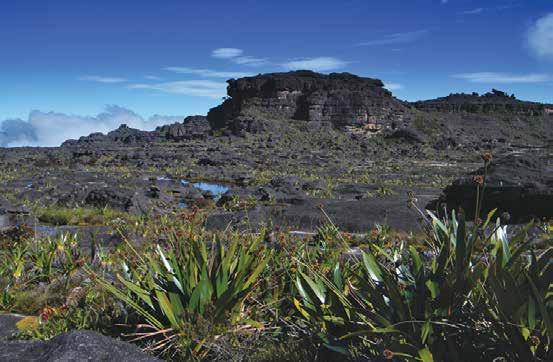
Roraima is located at the triple border of Guyana, Venezuela and Brazil in South America.
A stone monument stands at the tripoint on its summit, placed there in 1931.
It is the highest tabletop mountain or tepui of the Pakaraima Mountain chain and is more than 1.8 billion years old, containing some of the oldest formations on Earth.
Mount Roraima is about 9 miles (14 kilometres) long and 3 miles (5 kilometres) wide. Its wide, flat summit at 9,094 feet (2,772 meters) up, gives it its term “tabletop”.
Tepui is said to mean “house of the gods” in one indigenous Indian language.

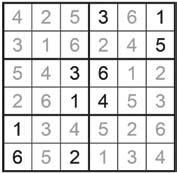
The objective of the game is to fill all the blank squares in a game with the correct numbers. Every row of 9 numbers must include all digits 1 through 9 in any order. Every column of 9 numbers must include all digits 1 through 9 in any order. Every 3 by 3 subsection of the 9 by 9 square must include all digits 1 through 9.


When a woman becomes president of the United States, it will be up to her to determine if her husband or a family member will take on the unofficial role of White House host.
Martha Washington burned all letters between herself and her husband before her death.
Louisa Adams has gone down in history as the only foreignborn first lady; she was born in England.
Pat Nixon visited 83 nations, making her more traveled than any previous first lady. She went with her husband on his historic visits to China and the Soviet Union, but she also traveled alone as a goodwill ambassador to South America and Africa.
Nancy Reagan created a controversy when she purchased new china for the White House at a time when the national economy was in a recession. She was also criticized for seeking the advice of an astrologer.
Barbara Bush and Abigail Adams are the only first ladies who were both the wife of a president and the mother of president.
According to a recent poll by US News & World Report, 36 percent of Americans list Jacqueline Kennedy as the ideal first lady. Eleanor Roosevelt was the second-favorite first lady.
Michelle Obama is not only the first African-American first lady, but also the first African-American woman to serve two terms as first lady
Hillary Rodham Clinton’s election to the Senate marked the first time that the wife of a president was elected to public office. She is also the first former first lady to seek the presidency. Rosalynn Carter was the first first lady to sit in Cabinet meetings and also the first to officially represent the government while traveling abroad.
Laura Bush is the only first lady to give birth to twins, and the first to substitute for a president in his weekly radio address.
The modern first lady is intelligent and well-educated. She is expected to excel at the arts of diplomacy, leadership and communication. While her duty as White House hostess and political spouse continues, the job of first lady is more often one of role model, activist and social champion.
Hillary Clinton (1947- )
Wife of Bill Clinton, 42nd president of the United States from 1993 to 2001. While an active supporter of her husband’s political career, Hillary has become a political powerhouse in her own right. She became a U.S. senator in 2001 and was a Democratic presidential candidate in 2008. When Barack Obama won the nomination, Hillary campaigned on his behalf. In 2009, Hillary Clinton became the 67th secretary of state, the third woman and the only former first lady to serve in this role. Her experience with national and foreign politics makes her a strong candidate in the next presidential election. If she enters and wins this election, she would become the first female U.S. president.
Laura Bush (1946- )
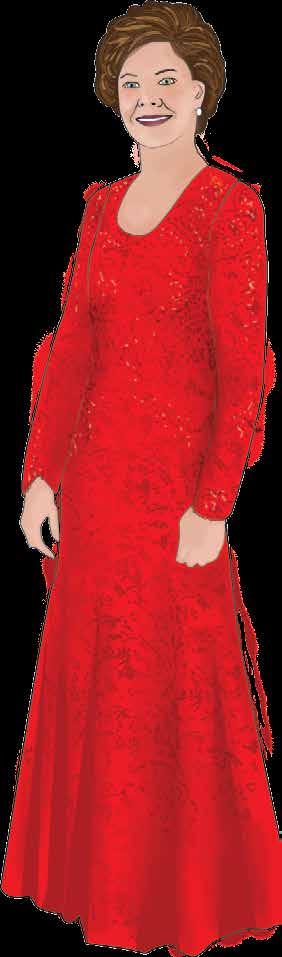
Wife of George W. Bush, 43rd president of the United States from 2001 to 2009. As first lady, this former teacher and librarian was a strong advocate of education reform and the well-being of women and families around the world. She continues to raise awareness of breast cancer and heart disease.
Michelle Obama (1964- )
Wife of Barack Obama, 44th president of the United States from 2009 to present. A graduate of Princeton University and Harvard Law School, this first lady is admired for her intelligence, caring and commitment. During her time in the White House, Michelle has worked to end childhood obesity and has encouraged young people to attend college. She is also an advocate for veterans and their families, helping to create wellness, education and employment opportunities.
Clinton

Eleanor Rosalynn Carter (1927- )
Wife of Jimmy Carter, 39th president of the United States from 1977 to 1981. Rosalynn was actively involved in her husband’s political career, playing a vital role in both of his presidential campaigns. As first lady, she championed the mentally ill.


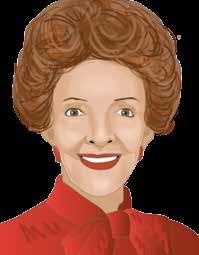
Nancy Reagan (1921- )
Wife of Ronald Reagan, 40th president of the United States from 1981 to 1989. Like her husband, Nancy had a career as an actor before politics. This first lady upgraded and redecorated many rooms in the White House. She founded and continues to work with the “Just Say No” drug awareness and education campaign. She has also supported work to help find a cure for Alzheimer’s disease.
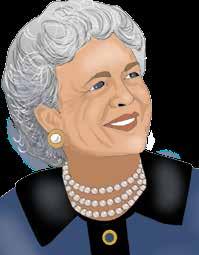
Bush (1925- )
Wife of George H.W. Bush, 41st president of the United States from 1989 to 1993. Barbara is also the mother of the 43rd president, George W. Bush. Dedicated to a life of public service, this first lady has continued to promote literacy among adults and children.
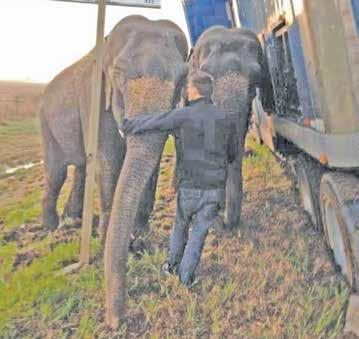
Two elephants inside an 18-wheeler truck came to the rescue when their vehicle became stuck at the side of a Louisiana, New Orleans road and in danger of overturning.
Sheriff's deputies in Natchitoches Parish on Tuesday morning received a call about a stuck truck and arriving on the scene, saw two elephants bracing the vehicle to prevent it from overturning.
The truck's driver, also an elephant trainer, walked the elephants out of the cargo compartment and
directed them to help prop up the vehicle, sheriff's Captain Tony Moran said in an interview.
"It's creative," said Moran, who said the responding deputies were "just astonished to see it."
Leaning side-by-side, the elephants pushed with their weight against the truck, the sheriff's photos showed.
The truck was carrying three elephants from Florida. After a stop in New Orleans, they were on their way to a circus near Dallas.
The truck had pulled over on an
interstate shoulder near Powhatan, Louisiana, about an hour south of Shreveport. The ground was soft after recent rains, the Natchitoches Parish Sheriff's Office said in a statement.
After summoning aid to right the truck, the driver walked the elephants back onto the truck, using spoken commands, Moran said. The elephants were unharmed and continued on their way.
Authorities did not issue any citations in the incident. (Toronto Sun)
Along with two dozen of her fellow “dancing grannies,” 60-year-old Zhang Jinsu twirls and steps her way every night across a central Beijing plaza, sometimes gliding over the pavement like a butterfly, at other times marching with a plastic rifle.
But when new Chinese government instructions on such hugely popular — and loud — senior dances take hold, Zhang may need to learn a new routine.
Zhang is part of a senior health trend that’s filled squares and apartment courtyards across China,
winning the admiration of medical experts but upsetting neighbours over the noise level.
“It’s never quiet,” said Gan Xuehua, a 31-year-old man whose apartment in the southern city of Nanchang overlooks a plaza where the women dance. “These grannies play music all day ... and every night from 7 to 9. It culminates with 70 to 80 people gathering with two 75-centimeter-tall (2½-foottall) speakers. The music is really loud!”
This week, Chinese officials stepped into the fray by announcing the imminent
friend > fin and red diaries > dais and ire
tea leaf > feat and ale (backward alternade) benevolentness > belts/evens/none
1) Scold and Chide
2) Gamble and Wager
3) Yearning and Craving
4) Tally and Score 5) Waver and Falter
SUDOKU KID SUDOKU

arrival of new regulations on where seniors can dance and how loud they can blast their music.
To some, the squaredance clampdown was a step too far for an increasingly restrictive government that has tightened controls on everything from college classroom lectures to the lavish spending of top government officials.
“You’re even going to tell us how to dance?” asked Yang Tao on the social media service Weibo.
As a precaution, Zhang said her fellow dancers who gather in front of the Raffles Center in downtown Beijing have already stopped all dances by 9:30 pm.
“There have been people who have criticized us, but we all came to an understanding and solved the problem,” Zhang said. “We do more theatrical dancing, different from the plaza dancing where everyone stands in their own square meter. These new regulations have been discussed for a year now, but we’ve chosen an appropriate place to dance.”
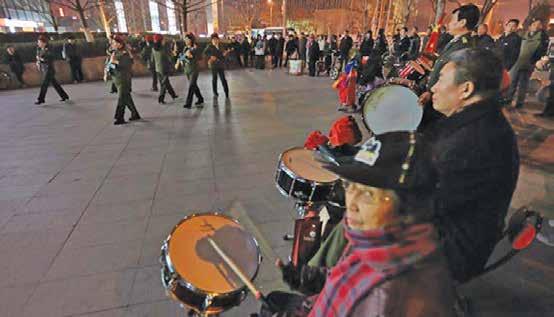
At a square outside a shopping mall in Beijing, Chinese women holding toy guns dance to a revolutionary song during their daily exercises
Gan, whose apartment overlooked the dancing women, started an online discussion group about noise pollution. He said he’s complained to local authorities, police and even the National People’s Congress.
“There’s nothing that can stop them from dancing. I thought it would be an easy problem to solve because everyone knows it’s not good to
disturb others, but I was too naive,” he said.
The dances’ popularity also reflect China’s rapid aging society, and meeting the health needs of that growing elderly population will be one of China’s biggest challenges, Chen said.
For 52-year-old Huang Shihui, the nightly dances have gotten her out of the house and introduced her to
a whole new set of friends. She said she didn’t mind the restrictions, as long as the music didn’t stop. “If I didn’t dance, I’d just eat and watch TV,” she said before donning a red beret and olive-green military uniform to hit the plaza. “To dance, everybody’s together, everybody’s much happier.”(Source: Khaleej Times)
According to The Norway Post, representatives of Taliban and Afghan authorities have in secret recently participated in a seminar for peace mediation in Oslo, public broadcaster NRK reports.
These seminars are arranged by the Norwegian Defence College (Forsvarets Høgskole). Participants come from all parts of the world.
According to NRK, the Norwegian Department of
Foreign Affairs has refused to comment on the story.
“This is an international course. We have made an agreement with all the participants not to comment on their presence here,” says spokesperson Veslemøy Lothe Salvesen to NRK.
“Whether or not they just needed to meet in a neutral place, or wanted to learn how to proceed, this is good news,’ says Afghan expert Kate Clark.




ARIES (March 21April 19)


TAURUS (April 20May 20)



(May 21June 20)

(June 21July 22)



LEO (July 23Aug. 22)

VIRGO (Aug. 23Sept. 22)



LIBRA (Sept. 23Oct. 23)

SCORPIO (Oct. 24Nov. 22)


(Nov. 23Dec. 21)




(Jan. 20Feb. 19) (Dec. 22Jan. 19)


PISCES
(Feb. 20March 20)

Get in the mood and plan to have some fun. Do something with friends or the youngsters in your circle. Improvising instead of following strict rules will win you respect and popularity.
Not everyone will agree with your plans. Let someone else make the decisions if you want to avoid criticism. Take care of unfinished tasks in order to avoid aggravating a delicate situation.
You may feel stuck in a rut. Arrange to do something new and exciting with your friends. A change of pace and scenery will be refreshing and rejuvenating.
Take a realistic look at your cash flow. Decreasing your spending and increasing your revenue should be a priority. Positive changes will help you control and improve your finances.
You will feel stressed if you don't take a break. Listen to some music, go to a library or museum, or enjoy spending time with a comforting friend.
An emotional dilemma will prey on your mind. If the situation is too overwhelming, ask someone you trust for advice. Sharing your experiences will help put your mind at ease.
Your genuinely helpful and compassionate nature will bring comfort to others. Reach out to people who need a helping hand. Your gesture will raise your profile and popularity.
Headstrong tactics or unreasonable demands will lead to stormy confrontations at home. You should distance yourself from a situation that has the potential to explode.
You have a thirst for knowledge. Getting together with others who harbor interesting ideas or hail from different cultures will have an impact on a decision that you need to make.
There are several options available that could increase your cash flow. Look into various possibilities and prepare to make some personal adjustments. One of your skills will prove to be quite valuable.
Your overactive imagination will spur emotional distress. Stick to the facts and refuse to imagine the worst. The real situation will turn out to be far less disturbing than you anticipate.
Pump up your energy level and get moving. Once you complete your responsibilities, you will feel good and have plenty of time to enjoy your favorite hobby.