


Gokarn ramdhani

Gokarn ramdhani

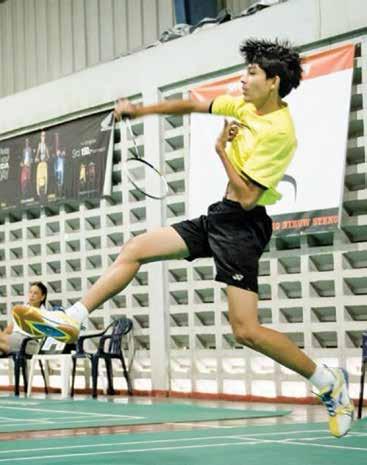
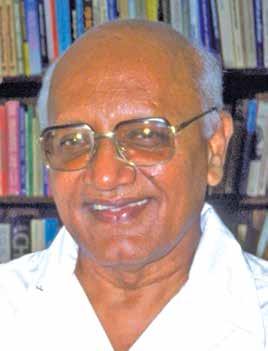
Gokarn Ramdhani is a notable figure in the local sports sector, workingpersistentlyto develop badminton in Guyana, the Caribbean and Central America,enthusiastically working with youths to build their confidence.
Ramdhani started to play badminton while attending the Ilorin Grammar School in Kwara State, Nigeria in the late 70s and continued playing at the Queens College from 1980 to 1984.
At the time he joined the Yonex Badminton Club, which was a junior club formed and operated by the late Philip Small, a past student of Queens College where the club was situated.
Ramdhani was crowned Junior Champion for Guyana in 1983 and represented Guyana at
the Curacao Easter International Tournament in 1985/1986 where he earned abronze medal.
During his senior years on the national team, Ramdhani was the National Doubles Champion for more than tenyears and runnerup in singles on many occasions. He also attended the Caribbean championships during the years and the Canadian open.
His best achievement was at the Curacao International Championships where he was crowned Doubles Champion in 1997.
The badminton champion also served as secretary of the Guyana Badminton Association in the late 80s; was president for many years, and continues to do so to date.
Additionally, he is the president of the Yonex
Badminton Club, a position he held since 1986, and is responsible for coaching the players, most of whom made the national team to represent Guyana at international tournaments.
Ramdhani went on to coach the national team, which has,over the years, won many titles at the Pan American Championships, the Caribbean Championships, the South American Championships, the Trinidad Clubs Championships, and the Suriname Easter International Championships.
He runs and coaches the Marian Academy Badminton Club voluntarily once a week, which he calls his “pet project”, because it is there he finds his potential players for the future.
Ramdhani also volun-

tarily taught and marked the books of the 1A Queens College Composition Class 2010, where the students did badminton as their topic for a term.
He produced the National Junior Sportswoman for the year 2002 and the Runnerup Junior Sportswoman for the year 2003 for badminton.
Notably, Ramdhani furthered his studies to become a qualified and professional badminton coach by attending the Hungarian University of Physical Education in 1999;holds a Level One Badminton World Diploma in Colorado Springs 2003; a Level Two and Three World Badminton Diploma in Lima Peru 2005 and 2006; and studied the modern day coaching methods in Changsha China in 2011.
He also served as ChefDe-Mission at the South American Games 2010 in Medellin Colombia, Commonwealth Youth Games 2011in Isle of Man and in the South American Games 2014 in Santiago Chile.
Currently, Ramdhani serves on the boards of the Guyana Badminton Association (president), Yonex Badminton Club (president), Caribbean Regional Badminton Federation (secretary general), Central America & Caribbean Badminton Associations (secretary
sport by getting players motivated by monthly tournaments, and kept the club running all year round and carried teams to international championships on a regular basis to keep them in training,” the badminton coach explained. Ramdhani added that his love for the sport stems from the fact that it keeps players fit and is fun for all. He also stated that when players excel in the game, especially winning tournaments,
Ramdhani’s two children, Narayan Ramdhani and Priyanna Ramdhani, have closely followed his example. They are local, regional and international champions, and are known as disciplined and dedicated individuals. Their zeal for badminton is seen in their attitude to help their father continue to develop the sport.
“I encouraged my kids to play badminton in order to continue the legacy in the
general), Pan American Badminton Federation (council member), and on Guyana Olympic Association (council member).
In an interview with Guyana Times Sunday Magazine, Ramdhani revealed that he “saw badminton being played and thought it was the right game” for him.
“Then by playing, it made me aware of myself that I can do a sport that can make me an all- rounded person. I developed the
it is one of the best feelings experienced.
“If you want to be successful in badminton then you need to be disciplined, never give up and work harder. In order for badminton to be even more developed, the schools have to carry on the programmes we introduced, more halls are needed and more sponsors have to get on-board. Most of all, lessons after classes have to be done in such a way to leave some time for sports,” Ramdhani declared.
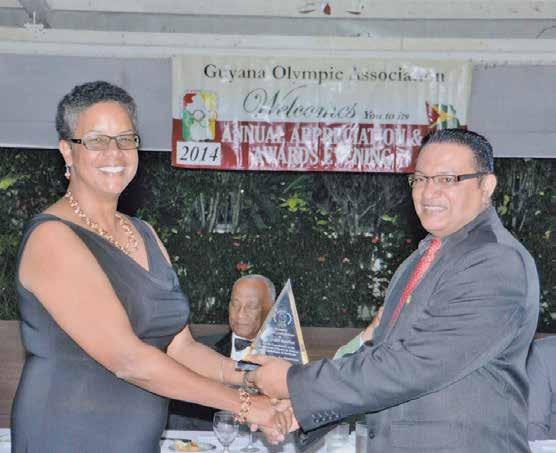
sport and to get badminton to a higher level internationally. They also help to motivate youths like themselves,” Ramdhani pointed out. Recently, Ramdhani received an award from the Guyana Olympic Association for his contribution to the development of badminton.
For more information on badminton and how children can benefit from the sport, visit Yonex Badminton Club (Guyana) on Facebook.
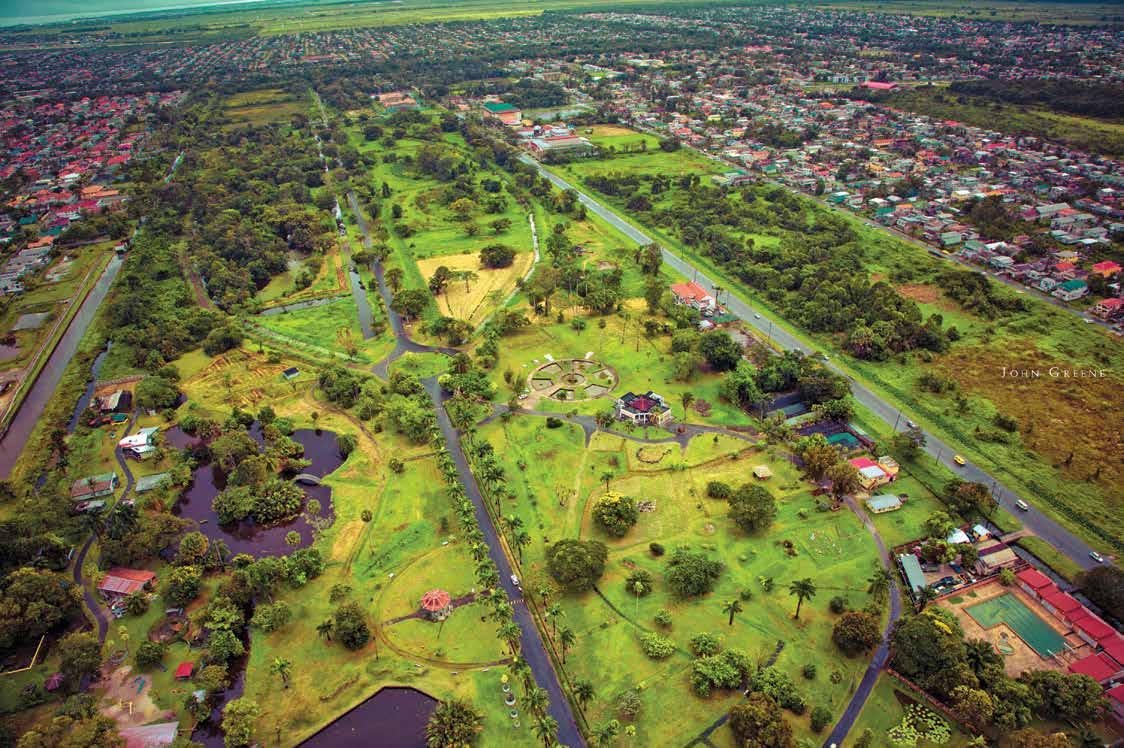
Guyana’s Zoological Park was opened in 1952 and has been, since that time, one of the premiere entertainment facilities for families in Georgetown.
The Park affords locals and tourists alike the chance to experience Guyana’s diverse animal collection in a safe and accessible environment.
Occupying approximately four acres of land, the zoo currently serves as an animal sanctuary, catering to unwanted, injured and abandoned animals that may be unable to survive on their own in the wild.
Visitors may also benefit from its educational and recreational facilities, which strive to enhance knowledge of and appreciation for wildlife in Guyana.
Much of the zoo’s infrastructure was designed in the 1950s and has not been updated since, though current international standards for minimum enclosure sizes have since been revised.
As such, a full-scalemaster plan was designed for rehabilitation of the current zoo.
The new vision for the zoo would feature the four major eco-systems in Guyana –coastal wetlands, savannah,
mountain highlands and lowland rainforests. Animal life native to these eco-systems would then be featured in each walk-through exhibit.
Visitors will experience a trek from the coast to the highlands, progressing along a main visitors’ pathway with short loop trails into habitats.
Several activities have already been completed or initiated in the next steps towards making this plan a reality.
In fact, one of the first large infrastructural projects to come on stream as part of this “master plan” was the Petting Zoo.
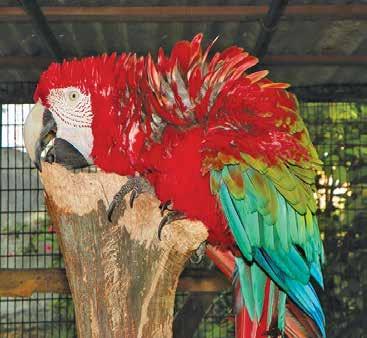
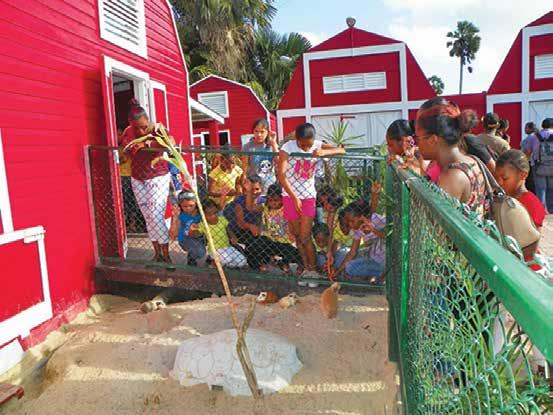
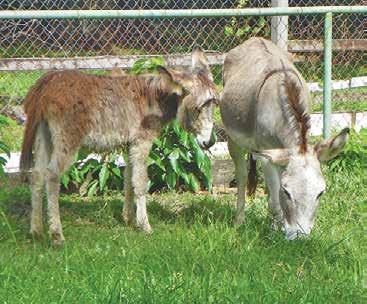
This facility is the first of its kind in Guyana, and features rehabilitated rescued animals such as ponies, donkeys, sheep, goats, ducks, guinea pigs, chickens and rabbits.
Many of these animals were rescued from cruel circumstances some time ago. However, with committed care from the enthusiastic staff of the Guyana Zoo, these animals are now
healthy and happy.
Visitors can interact, pet and feed these animals in a safe environment. Volunteers are on hand to educate visitors about the importance of being kind and showing love and care to animals, as well as answer questions visitors may have about the animals or zoo.
Although the zoo has an important contemporary role in Guyana, as mentioned earlier, it retains much of its original design and infrastructure. As a re-
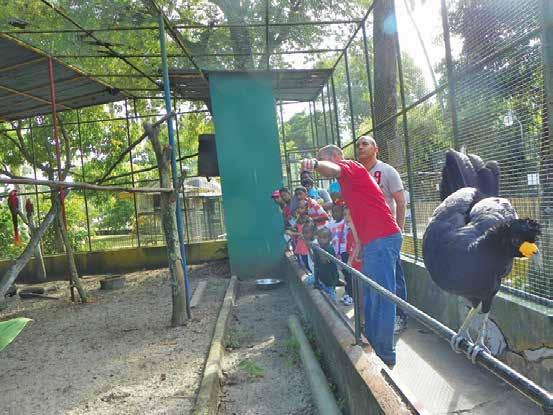
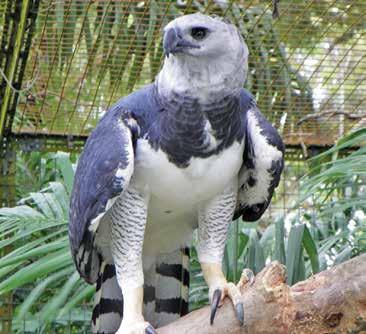
sult, the zoo’s 45 species of animals are housed in enclosures that are not in line with current best practices and understanding in zoo husbandry, and are becoming increasingly difficult and expensive to maintain.
Recognizing the need for urgent action, the Ministry of Natural Resources and the Environment (MNRE) and the Protected Areas Commission (PAC) have recently launched a project to rehabilitate and modernize the Guyana Zoo.
The first major achievement in this process was the development of a zoning plan for the Guyana Zoo, in collaboration with PJA Architects and Landscape Architects (PJA), a Seattlebased firm that specializes in zoo design.
The ministry is now working with PJA to develop a full-scale master plan and concept designs for the rehabilitation of the zoo.
The vision of the modernized zoo is to connect Guyanese and visitors to the country with the rich natural world that exists just beyond the limits of Guyana’s urban landscape.
This vision would be achieved by providing an educational and engaging experience through exposure to live animal and plant species, by creating connections between people and animals, and by educational programs and interpretive graphics that inform visitors of the biodiversity and uniqueness of Guyana and its protected areas.
Established in 2012 under the Ministry of Natural Resources and the Environment, the Protected Areas Commission currently manages both hinterland-protected areas (Shell Beach, Kanuku Mountains, Kaieteur National Park) as well as urban parks (Zoo, National Park, Botanical Gardens, Joe Vieira Park).
In an effort to rehabilitate and maintain the three urban green spaces in Georgetown (the zoo, Botanical Gardens and National Park), the PAC launched the Three Parks

Initiative. This initiative serves primarily as an enhancement and improvement mechanism for these urban parks.
The work of the PAC is funded in large part by the Government of Guyana, with maintained strong linkages with development partners such as WWF, CI-Guyana, Frankfurt Zoological Society, GT&T, German government, and the Government of Argentina.
However, the PAC is hoping to attract more partnerships with corporate Guyana to complete several improvement projects within the urban parks including the zoo.
At present, animals housed in the zoo are donated, rescued or left injured or abandoned at the zoo. Sadly, many of these animals were previous ‘exotic’ pets that became too large or unmanageable for their caretakers and were dropped off at the zoo.
Many of the animals were also rescued from cruel
circumstances, leaving them both physically and psychologically scarred. Both of these injuries take many hours of dedicated care and treatment to successfully rehabilitate the animal into a group dynamic.
PAC has two trained animal health technicians as well as zookeepers, and a superb management staff that make the welfare of their charges a daily priority. It takes a special kind of dedication and passion for animals to work at the zoo.
The costs of caring for all the animals in the zoo significantly outweigh the revenue earned. This cost significantly increases when animals are in need of emergency medical care or round the clock observation and care.
While we are striving on a daily basis to continuously improve the enclosures and operations of the zoo, as with all things, there is always room to do more. (From text by Annalise Bayney, MSc, Protected Areas Officer)
For some indigenous Guyanese, their Catholic faith had begun from their contactwith Venezuelan and BrazilianCatholics, even before the official arrival of Jesuitpriests in Georgetown.
In the north-west of what was then British Guiana, 18th century Spanish Franciscans had begun ministering indigenous groups in territories around the Venezuela-Guyana border, while other groups had contact with Catholic Brazilians who traded with them for cattle in the south
west of Guyana.
After the Venezuelan Bolivar revolution destroyed their Catholic mission, the indigenous tribes fled to Moruca in North West British Guiana for refuge, and set up their community.
When an 1830 letter to Bishop Hynes expressed concern for the Catholic Indians there and invited the bishop to visit the region, Hynes arrived on a three- day visit that paved the way for missions to develop other indigenous communities in the northwest.
The Santa Rosa Mission at Moruca was the principal mission established which was followed by another mission at Morawhanna.
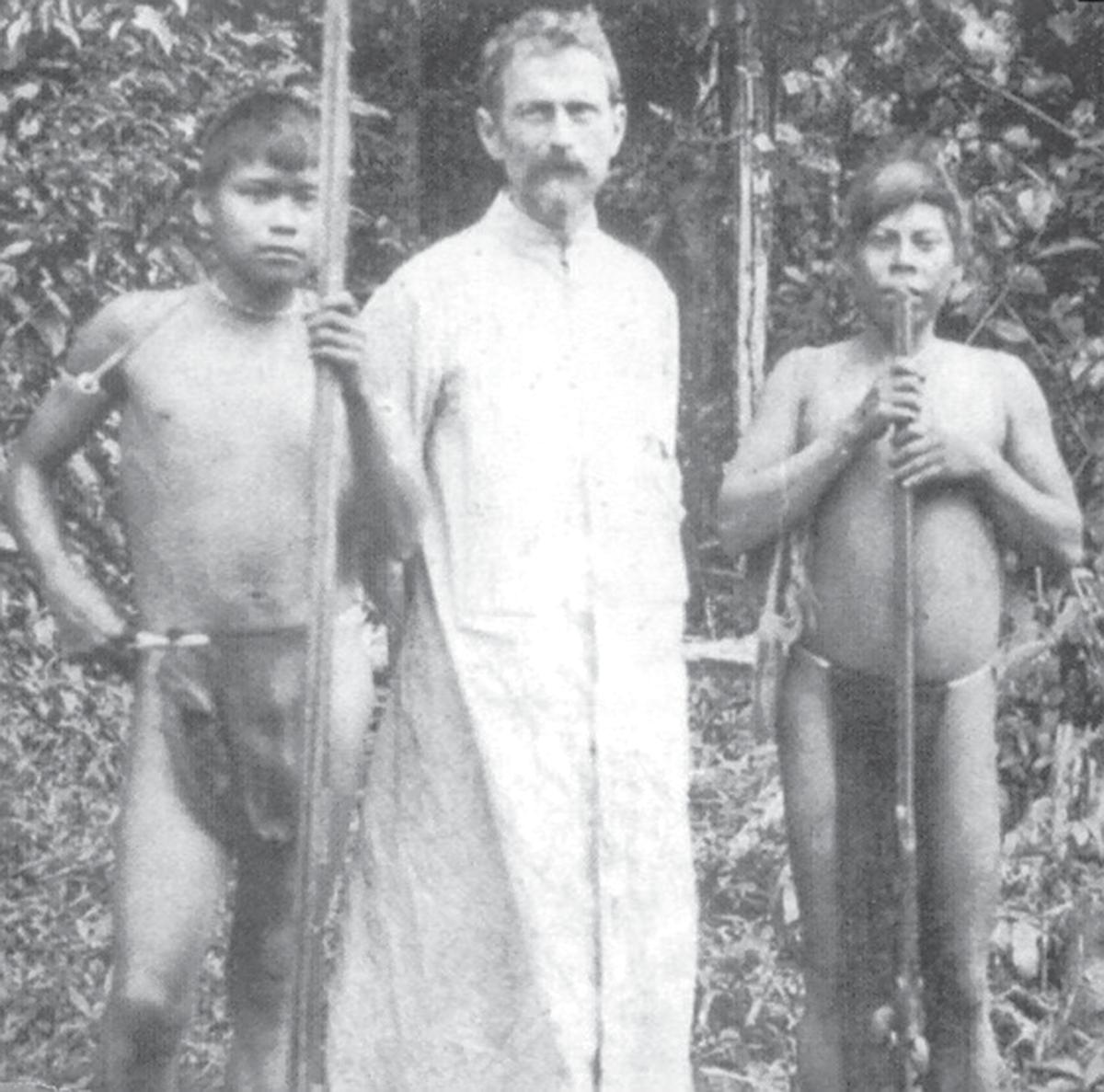
In 1909, Catholic priest Fr Cuthbert Cary-Elwes SJ, arrived further inland with plans to minister to the southern interior communities and, at Zariwa on the right bank of the Takatu River just above the Moku-Moku River, a base was established that became known as St Ignatius Mission.
On January22, 1931, Fr William Banham went on an expedition to choose a site for a central house among the Patamona people of the Pakaraimas. However, it wasn’t until 1957 that a church and presbytery at Kurukabaru was established.
Meanwhile, the church in New Amsterdam served as a base for work throughout Berbice, while centres at Abram’s Zuil and Henrietta served a similar purpose in Essequibo.
According to the Jesuit Mission in Guyana,the Jesuits presently workin the interior out of three centres: Aishalton, deep in south Rupununi,St Ignatius in Central Rupununi, and Kurukabaru in the Pakaraimas. A fourth centre at Karasabai in the foothills of the Pakaraimas is planned.

In Berbice, the Church ministers to parishes in Springlands and Port Mourant,and has responsibility for some of the smaller agricultural communities scattered down along the coast, such as that at Black Bush Polder.
Once a month, at least one of the Jesuits makes the two-hour boat journey down the Corentyne River to Siparuta, an isolated Arawak Amerindian community.
The Catholic Church continues to work on the coastlands and interior of Guyana, bringing the word of God to more persons, establishing places of worship and providing not only spiritual guidance but also social and humanitarian services such as educational and charitable programmes to the less fortunate in the country.

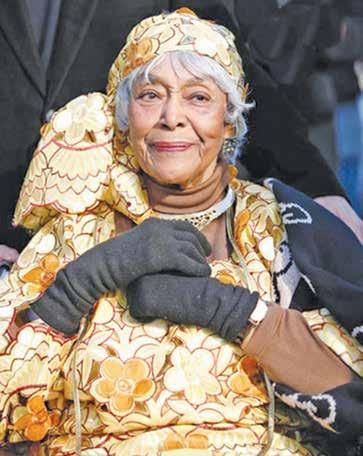
Cecile Nobrega was a teacher who spearheaded a 15-year campaign for England’s first public monument to black women. Nobrega, who died at age 94, was the driving force behind the first statue of a black woman to go on permanent display in England.
Cecile Elise Doreen Burgan was born in Guyana (then a British colony) on 1 June 1919 to Canon William Burgan and his wife Imelda; in 1949, the Canon would become the first black man to preach at Westminster Abbey.
At Bishops High School, in Guyana, Nobrega showed herself a gifted child — she had composed classical music and written poetry from an early age, and later produced a choral work called Twilight which was performed by national choirs in Guyana and Cuba.
In Guyana, she started two schools — a kindergarten and a vocational school for teenage girls. She also wrote plays, one of which, Stabroek Fantasy (also known as Carib Gold), was particularly successful.
In 1969, however, she found herself professionally at odds with the Guyana
government and immigrated to Britain, where she retrained as a specialist teacher, working in Hertfordshire and Brent. She was active in the National Union of Teachers and in the Adult Literacy Programme, and campaigned for children with severe learning difficulties.
Her work with the International Alliance of Women (IAW) and the Commonwealth Countries League gave her the opportunity to travel, and it was at IAW conferences in New York, Kenya, Greece, Japan and India that she began to shape the idea for her sculpture, The Bronze Woman.
The Bronze Woman — a 10ft-tall monument to motherhood-showing a black woman holding aloft her baby — was unveiled in October 2008 in Stockwell Memorial Gardens, south London. The original artist was to have been Ian Walters, creator of the statue of Nelson Mandela in London’s Parliament Square, but he died after completing only the clay maquette. The project was taken on and completed by Aleix Barbat, then still a student at the Heatherley School of Fine Art in Chelsea.
Nobrega — a Guyana-
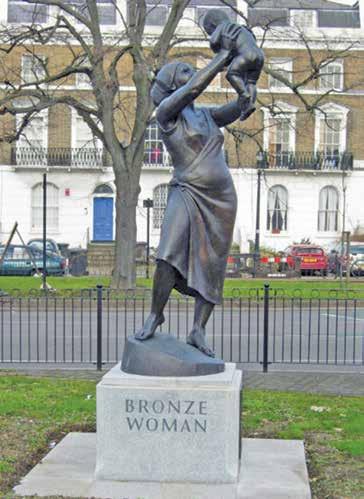
born teacher, poet and playwright — had campaigned for “The Bronze Woman Project” since 1994. Although she did not describe herself as a feminist, she felt that women — particularly women from the underdeveloped world and
those descended from the victims of the transatlantic slave trade — received insufficient recognition for their contribution to the family and to society in general. She launched the project as a charitable organisation
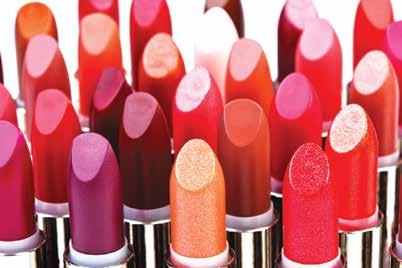
Lipsticks and lip glosses of all colours and types are essential for every woman’s handbag. But have you ever thought about its origin?
Most histories of lipstick start with Cleopatra VII, the last pharaoh of ancient Egypt, who reigned between 51 and 30 B.C. and is perhaps most famous for her relationships with Roman rulers Julius Caesar and Mark Antony. Cleopatra used crushed ants and carmine in a base of beeswax to colour her lips. However, women in ancient Mesopotamia, as far back as 3,000 B.C., were tinting their lips with red clay, iron oxide (rust), henna, seaweed, iodine and bromine mannite (a compound consisting of a halogen element and an alcohol sugar). Some of these pigments, such as the bromine mannite, were highly toxic.
During the Roman Empire, lipstick was used to indicate social status. Even men wore lip paint to suggest their rank.
Abu al-Quasim al-Zahrwai, a Muslim Andalusian known as the father of modern surgery, is credited with creating the first lipstick that was actually a stick, sometime around A.D. 900. He created a wax base for the pigment, perfumed it and pressed it into a mould.
Although lipstick remained generally popular among women during the Middle Ages, its popularity began to die out among the upper class until it was considered fit only for prostitutes and lowerclass women.
Lipstick was once again considered acceptable in Europe during the Elizabethan era (the mid-1500s) because of Queen Elizabeth I, who
wore very pale face powder set off with bright red lips. Her lipstick was made from beeswax and crushed, dried flowers such as roses or geraniums.
Lipstick went back out of fashion just a few hundred years later.
In 1770, a law was passed essentially stating that made-up women were witches who attempted to lure men into marriage, and they could be burned at the stake.
The attitude that makeup of any kind was a form of deception was not uncommon. During Queen Victoria's reign, between 1837 and 1901, women who wanted to colour their lips resorted to rubbing them against dyed crepe paper or ribbons.
Some sneaked preparations purchased from France or elsewhere.
The tide began to turn again in the late 1890s. For the first time, rouge (French word for “red”) for lips and cheeks was made available.
During the rise of the film industry, lipstick was made and marketed to actresses, who needed dark colours for their mouths to stand out on blackandwhite film. By 1915, the
modern push-up tube was commonplace; prior to this, lip colour came in a small pot. Modern cosmetic giants such as Elizabeth Arden and Estee Lauder began selling lipsticks in their salons.
Now lipsticks are available in various shapes, colours, sizes, and textures. Lipsticks even have a day when it is celebrated for beautifying women worldwide. July 29 is known as National Lipstick Day.
and set about raising the money needed, subsequently enlisting the help of an organisation called Olmec, originally set up as a charitable subsidiary of a south London housing association.
The unveiling of the statue, on October 8, 2008, came shortly after the 200th anniversary of the abolition of the Slave Trade, and the 60th anniversary of the arrival at Tilbury of the first Caribbean immigrants in the steamship Empire
Windrush
A resident of Lambeth, south London, for her last 22 years, Nobrega slowed down towards the end of her life, giving up driving, her computer, and playing the piano; but she remained active in her local pensioners’ group and in tai chi classes.
Her husband of 52 years, Romeo Nobrega, an accountant, died in 1994. Cecile Nobrega died Nov 19, 2013. They are survived by their two sons and one daughter.

By PetamBer Persaud
Since the first appearance of the book in whatever form and under whatever name, there was no turning back on literacy, language and literature. The book was created to accurately store and transmit information in order to encourage debate, encourage dialogue, remove ignorance, improve knowledge, to entertain, and to inspire with the purpose of mirroring society and to act as a barometer to society, among other things.
Since then every aspect of the book took hold of the human imagination with such a passion since that now we have ebooks.
Since the advent of the book, there were numerous modifications to almost every aspect of the book, in keeping with fluctuating supply and demand.
Changes were made to instruments of writing, methods and styles of printing, translation, copyright, critical reviews, marketing and distribution, among others. The story of the many manifestations of the book is a fascinating journey. All begging the question what is the future of books.
Along with the proliferation of books, there has been, and continues to be, scholarships on various aspects of the book, bringing to bear various schools of thought. However, the scholarship on Guyanese books is still in its infancy.
For World Book Day 2015, (celebrated Apr 23) it would be useful to remind ourselves of some of these landmarks.
The first major book on Guyanese booksis“Bibliography of Literature from Guyana” by
Robert E. McDowell, published by Sable Publishing Corp. Arlington, 1975. This book is only 117 pages but extremely rich in information on Guyanese writing to the time of publication. The minute detailed entries have not since being replicated in a single volume. Of course, there are many other smaller and larger offerings on Guyanese books but none matching the magnitude of that pioneering book on Guyanese books.
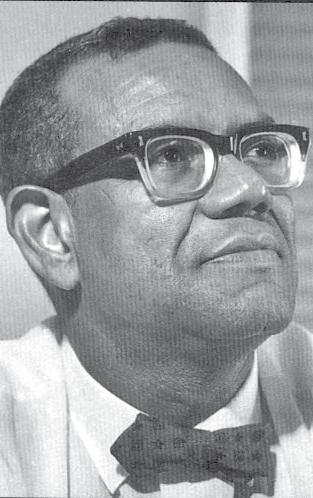
The next major book on Guyanese books is “The Making of Guyanese Literature” by A. J. Seymour, published in 1978. This compilation was done by a man who was intimately involved in the life and literature of Guyana. Seymour, a Guyanese, was writing our story, telling our story in literature.
To have two such books
appearing so close to each other in a short span of time signals that there was something good to research and report on – Guyanese literature was given an identity, it was now a force to reckon with; Guyanese literature was on the move.
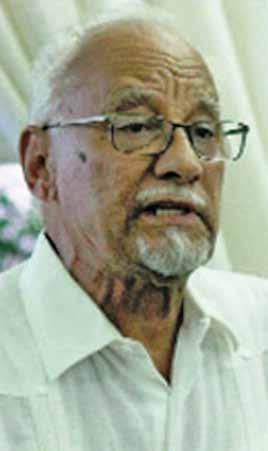
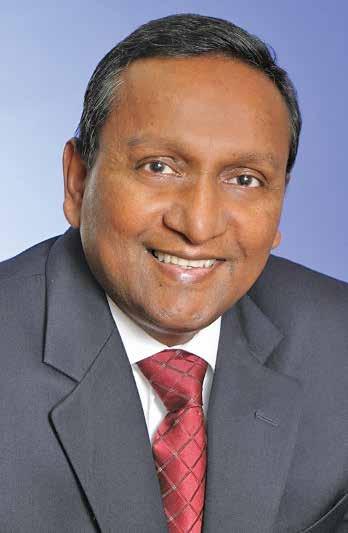
However, we had to wait until the new millennium for the next major books on Guyanese books. Those two books are “Bibliography of Guyana and Guyanese Writers” by Lal Balkaran, which is into its fourth edition, and “An Introduction to Guyanese Literature” by Petamber Persaud, which is into its third printing.
Balkaran’s book contains almost 1,800 titles and more than 1,000 writers. This “guide of books on Guyana by Guyanese and non-Guyanese writers and on other subjects by Guyanese writers” contains an alphabetical listing of writers, an index by book title and classification by category.
Persaud’s book is an upto-date guide featuring significant literary landmarks
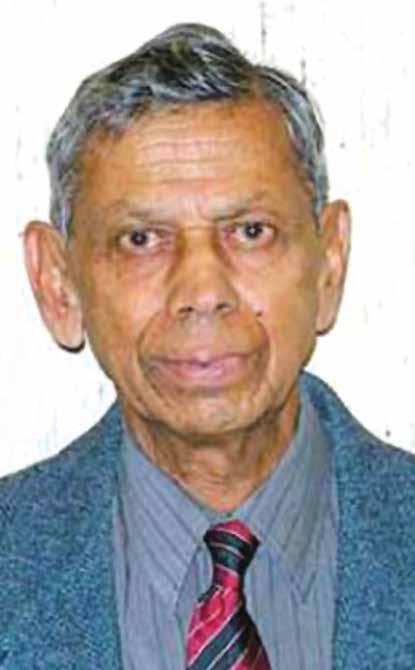
from the 16th century to the new millennium. It is divided into three sections dealing with oral literature, a chronological outline of the written word and a collection of essays, articles, transcripts of interviews, and book reviews… [it]is an attempt at bringing to the fore little known facts about lesser known aspects of our literature. The big books, the big authors and the big success stories in Guyanese Literature are also featured.
Apart from those single volumes on the subject, there are other similar books referring to Guyanese books; these include,
“They Came in Ships” complied by Ian McDonald, Lloyd Searwar, Joel Benjamin and Laxhmie Kallicharan
“Anancy and the Great House: Ways of Reading West Indian Fiction” by Joyce Jonas
“West Indian Literature” edited by Bruce King
“A Reader’s Guide to West Indian and Black
“The West Indian Novel” by Michael Gilkes
“Passion and Exile: Essays in Caribbean Literature” by Frank Birbalsingh It would be remiss of me not to mention some of magazines and journals that speak to the subject like The Guyana Annual bookshelf section, Kyk-over-al and the Arts Journal. Mention must be made of all the newspapers that from time to time make available space for new books and emerging writers. In addition,of vital importance to this issue is the National Bibliography produced annually by the National Library.
The above is just a peek at we have to offer as a Guyanese literature… Happy World Book Day, every day.
Responses to this author telephone (592) 226-0065 or email: oraltradition2002@ yahoo.com
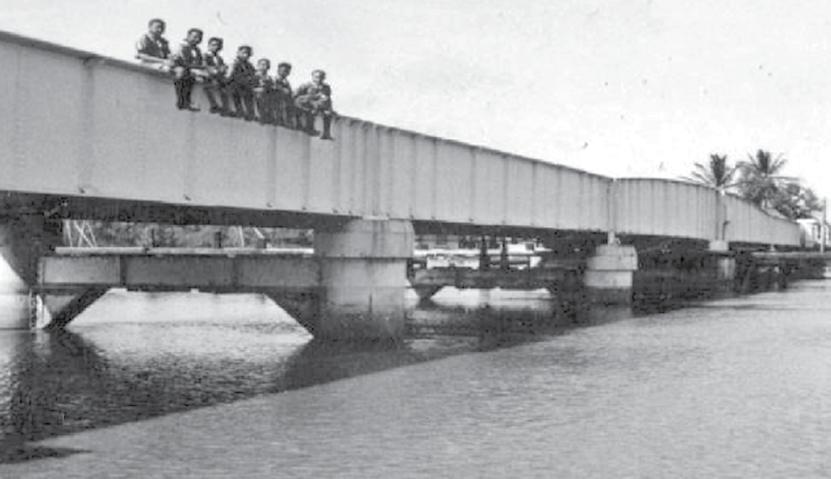
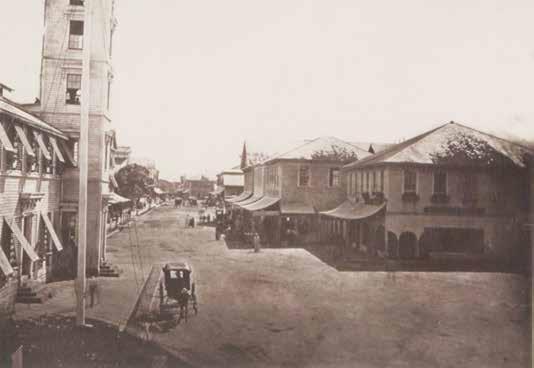
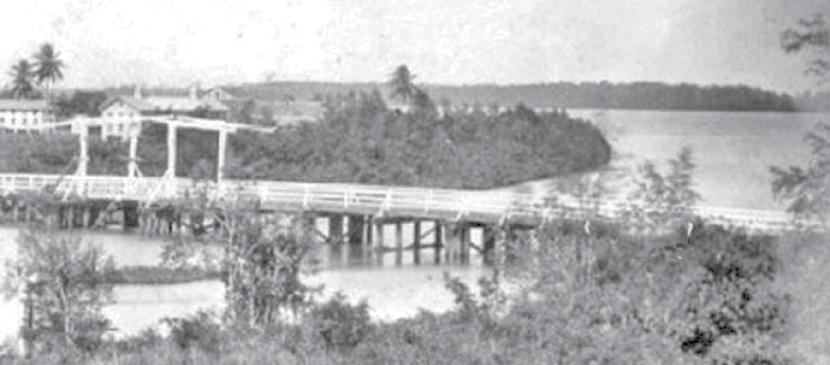
The bridge that currently crosses the Canje River (known too as Canje Creek), a tributary of the Berbice River, is reported to be the third such structure known to have been built, and serves asa vital connection along the Corentyne Road.
The original structure was built in 1830, a year before the colonies of Berbice, Demerara and Essequibo
were united under British rule. A wooden construction, it was built by slaves who, it is said, were given their freedom three years before emancipation. They were also given land in New Amsterdam.
Then, in the mid-1890s, an iron and concrete structure, designed in 1891 by English civil engineer Joseph Westwood, was built to replace the wooden bridge.
The 336 feet long new bridge allowed for a roadway width for traffic of 17 feet.
Considered a marvel of engineering at the time, it was the largest bridge in the colony then. The bridge was designed to swing open to allow seagoing vessels through.
The swing span from the centreturned on a single pivot that could be operated by just one person. It

would then swing back into its original position to allow traffic to cross once again.
The structure took four years to build and was said to be commissioned in 1898.
However, by the early 1970s, the bridge was considered antiquated and inadequate for the traffic of the time.
According to a 1972 recommendation to construct a new bridge over the Canje
River, which was presented by the US Department of State Agency for International Development, among other things, the swing bridge had become “drastically inconsistent with the high standard 50 miles per-hour design speed of the Corentyne Road on both sides of the bridge.”
While the recommendation advised of a new swing bridge to be built, this did
not happen. Instead the current fixed Canje River bridge, some 0.38 kilometres (approx. 1,250 feet) long and 33 feet wide, was built with a 45 feet high crossover.
The swing bridge was decommissioned in 1975/76 while the current Canje Bridge is said to have become operational in 1978, after an 18-month construction period.




With a cold, there is not much you can do but make yourself more comfortable and less miserable while the illness runs its course.
The folks at Mayo Clinic, who,after researching popular home remedies, have written a book on the subject, and have some tips:
Drink lots of fluids.
Water, juice, clear broth or warm lemon water are all good choices. They help replace fluids lost during mucus production or fever. Avoid alcohol and caffeine, which can cause dehydration, and cigarette smoke, which can aggravate your symptoms.
Try chicken soup. Generations of parents have
spooned chicken soup into their sick children's mouths. Now scientists have put chicken soup to the test, discovering that it does seem to help relieve cold and flu symptoms in two ways.
First, it acts as an antiinflammatory by inhibiting the movement of neutrophils — immune system cells that help the body's response to inflammation.
Second, it temporarily speeds up the movement of mucus through the nose, helping relieve congestion and limiting the time viruses are in contact with the nasal lining.
Get some rest. If possible, stay home from work or school if you have a fever or a bad cough or are drowsy af-

ter taking medications. This will give you a chance to rest as well as reduce the chances that you'll infect others.
Wear a mask when you have a cold if you live or work with someone with a chronic disease or compromised immune system.
Adjust your room's temperature and humidity. Keep your room warm, but not overheated. If the air is dry, a cool-mist humidifier or vaporizer can moisten the air and help ease congestion and coughing. Be sure to keep the humidifier clean to prevent the growth of bacteria and molds.
Soothe your throat. A saltwater gargle — 1/4 to 1/2 teaspoon salt dissolved in an 8-ounce glass of warm water
— can temporarily relieve a sore or scratchy throat. Use saline nasal drops. To help relieve nasal congestion, try saline nasal drops. You can buy these drops over-the-counter, and they're effective, safe and non-irritating, even for children.
In infants, experts recommend instilling several saline drops into one nostril, then gently suctioning that nostril with a bulb syringe (insert the bulb syringe about 1/4 to 1/2 inch, or about 6 to 12 millimetres).
Doing this before feeding your baby can improve your child's ability to nurse or take a bottle, and, before bedtime, it may improve sleep. Saline nasal sprays may be used in older children.
Conventional wisdom says “slow and steady wins the race” and that is true with weight loss plans: it is healthier to lose weight slowly.
However, the following foods, which are now being called “super foods”, have been scientifically proven to help you lose weight quicker than other foods.
In fact, these super foods have been scientifically proven to toss that flab in six weeks or less.
According to the New York Times bestseller “Zero Belly Diet”, these are its “zero belly super foods”:
Proven to work in just six weeks…
Zero Belly Superfood #7
Grapefruit: Eating half a grapefruit before a meal can enhance your body’s fatburning performance.
A study published in the journal Metabolism found that this “warm-up” tactic could help whittle your middleby up to an inchin just six weeks. The scientists attribute the powerful effects to the grapefruits’ fat-burning phytochemicals.
The fruit can interact negatively with certain medications, so as long as you get the green-light from your M.D, plan to have half of a grapefruit before your morning meal and add a few segments your starter salads to reap the benefits.
Proven to work in just four weeks…
Zero Belly Superfood #6
Pistachios: UCLA Centre for Human Nutrition researchers divided study participants into two groups, each of which were
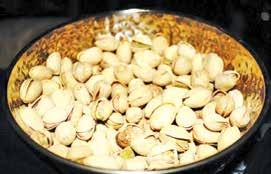
fed a nearly identical low-calorie diet for 12-weeks. The only difference between the groups was what they were given to eat as an afternoon snack.
One group ate 220-calories of pretzels while the other group munched on 240-calories worth of pistachios. Just four weeks into the study, the pistachio group had reduced their BMI by a point, while the pretzel-eating group stayed the same.
Zero Belly Superfood #5
Avocado Oil: Penn State University researchers compared those who consumed avocado oil with those who consumed a flaxsafflower oil blend. Those on the avocado oil diet—just three tablespoons daily did the trick—lost nearly 2 percent of their belly fat in just one month.
Zero Belly Superfood #4
Legumes: In one four-week Spanish study, researchers found that eating a calorie-restricted diet that includes four weekly servings of legumes aids weight loss more effectively than an equivalent diet that

doesn’t include beans. Those who consumed the legume-rich diet also saw improvements in their “bad” LDL cholesterol levels and systolic blood-pressure.
Zero Belly Superfood #3
Vitamin D-Fortified Yogurt: According to a Nutrition Journal study, when you supplement your diet with a combination of vitamin D and calcium, you can double your weight loss results.
Just four weeks into the 12-week experiment, subjects who had taken these two nutrients—found in abundance in some yogurts—lost two times more fat than the other group.
Proven to work in just two weeks…
Zero Belly Superfood #2
Green Tea: A study published in The Journal of Nutrition found that after just two weeks, exercisers who sipped four to five cups of green tea each day and logged 25-minutes at the gym lost more belly fat than their non-tea-drinking counterparts.
What makes the drink so powerful? It contains catechins, an antioxidant that hin-
According to Mayo Clinic, while some stress relief tools are very tangible: exercising more, eating healthy foods and talking with friends, a less tangible — but no less useful — way to find stress relief is through spirituality. Taking the path less travelled by exploring your spirituality, they say, can lead to a clearer life purpose, better personal relationships and enhanced stress management skills. For many, spirituality takes the form of religious observance, prayer, meditation or a belief in a high -
er power. For others, it can be found in nature, music, art or a secular community. Spirituality is different for everyone At its core, spirituality helps to give our lives context. It's not necessarily connected to a specific belief system or religious worship.
Instead, it arises from your connection with yourself and with others, the development of your personal value system, and your search for meaning in life. Uncovering your spirituality may take some selfdiscovery. Here are some
questions to ask yourself to discover what experiences and values define you:
What are your important relationships?
What do you value most in your life?
What people give you a sense of community?
What inspires you and gives you hope?
What brings you joy?
What are your proudest achievements?
The answers to such questions help you identify the most important people and experiences in your life.
With this information,
you can focus your search for spirituality on the relationships and activities in life that have helped define you as a person and those that continue to inspire your personal growth.
Spirituality can help you: feel a sense of purpose; connect to the world; release control; expand your support network and lead a healthier life.
Staying connected to your inner spirit and the lives of those around you can enhance your quality of life, both mentally and physically.
Your personal concept of spirituality may change
ders the storage of belly fat and aids rapid weight loss.
Zero Belly Superfood #1
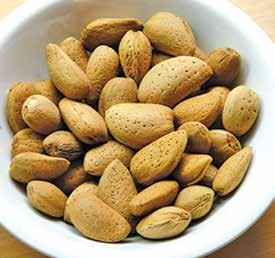
Almonds: A study of overweight and obese adults found that, combined with a calorie-restricted diet, consuming a little more than a quarter cup of the nuts can decrease weight more effectively than a snack comprised of complex carbohydrates and safflower oil—after just two weeks.
In addition, after 24 weeks, those who ate the nuts experienced a 62 per cent greater reduction in weight and BMI.
For optimal results, eat your daily serving before you hit the gym. A study printed in The Journal of the International Society of Sports Nutrition found that almonds, rich in the amino acid L-arginine, could actually help you burn more fat and carbs during workouts.(Yahoo Health)

with your age and life experiences, but it always forms the basis of your well-being, helps you cope
and affirms your purpose in life. (Source: Mayo Clinic)


Katy Perry is known for her bold fashion choices, but this may be among her most unusual - a surgical face mask.
In truth, her whole trippy school girl outfit is quite weird, but the mask is definitely the piece de la resistance.
She was seen with the mask during her tour in Japan, which is traditionally worn to prevent illness and disease. The item was first publically worn after the outbreak of Spanish influenza in 1918 to stop the pandemic spreading further.
Perry has not caught a terrible illness but is adopting the facial attire as a fashion accessory like many young Japanese fashion followers. A piece in The Japan Times says that many now wear surgical masks because they think it makes them look more attractive and emphasises their eyes. It stipulates that the piece creates "an illusion of better skin colour or just lends an air of mystery".
This form of usage has been called Date Masuku - "date," pronounced "dah-teh,"

meaning "just for show. Celebrities sometimes wear them to disguise themselves (I mean, a pair of sunglasses and hat would do), while others wear them to "create a psychological barrier against the rest of the world, either because they are shy, antisocial or simply want to concentrate". This seems extreme, but whatever works.
Other stars to have worn a surgical mask include Michael Jackson and that's about it.
(Glamour)

Three more women came forward with their sexual assault accusations against Bill Cosby in a press conference held by Gloria Allred on April 23. Janice BakerKinney, Marcella Tate and Autumn Burns made the total of Bill alleged victims to 38 women.
Janice told reporters that she was 24 and was working as a bartender in the showrooms at Harrah's in Reno when Bill allegedly drugged and sexually assaulted her in May 1982. A friend invited her for a "pizza party" at a house where the comedian was staying. He later offered her a pill and advised her to take two pills.
After taking the pills, Janice's vision became blurry and she passed out. She woke up later on a couch in the living room with her jeans unzipped and her blouse opened. Bill alleged-
Lly asked her if she was okay but he then put his hand inside her blouse. She woke up the next morning naked in bed and Bill was touching her belly and genital area. When she walked out the front door, Bill allegedly told her, "This is between you and me," before putting his fingers to his mouth like a "shhh" sign.
Marcela said she met Bill at Faces in Chicago through mutual friends in 1975 when she was 27 and a model for Wilhelmina Agency. According to the second accuser, Bill called her one night, asking her to drive him from the airport to Playboy Mansion. "When we arrived at the Playboy Mansion he asked if I would like to see the mansion and have a glass of wine before I left," she recalled, "Mr. Cosby brought me a drink and that was my last clear memory. The next cloudy memory I have is that I was
ess than a month after having her daughter North West being baptized, Kanye West has come to such realization that it was a memorable experience for the whole family. A source close to the family told PEOPLE, "He thought it was a really cool and emotional experience."
It was his wife Kim Kardashian who came up with the idea to have North being baptized in the Holy Land and the music mogul thought it was a good idea. "When Kim brought him the idea to have North baptized there in Jerusalem, he thought it was such an incredible idea," said the source. "He was so happy she suggested it."
Kanye and Kim paid a visit to Israel earlier this month following a five-day trip to Armenia. The mega-watt couple then had North being baptized at the Cathedral of Sts.
in a different room. I was in bed. Bill Cosby was next to me and it didn't appear he was wearing anything."
Marcela believed she was "targeted and drugged by Bill Cosby." She told reporters, "I feel that Mr. Cosby has no regard for women or their safety."
Autumn claimed she was 20, working as a game starter at Sahara in Las Vegas and a model when she met Bill in 1970. The comedian allegedly approached her and offered gigs as a model and actress. One night, Bill gave her US$500 to gamble with or do whatever she wanted with.
After his performance, he invited her to his room where he made her a scotch on the rocks. "I felt woozy and he asked me to come into the bedroom," she said, before adding that Bill, naked in bed, asked her to sit on the edge. She said Bill grabbed her from the back of her neck and struck his erect penis down the throat. He then lifted her and had sex with her.
During the conference, Gloria said she had more alleged victims of Bill coming forward. According to her, protests are planned for the comedian's upcoming May 2 show at the Cobb Centre in Atlanta. (AceShowbiz)

in the
"It was such a beautiful experience for my family to have North baptized in Jerusalem," Kim told PEOPLE exclusively in this week's issue. "Kanye and I are so thankful," she added. (AceShowbiz)
Aishwarya Rai Bachchan's 'racist ad' withdrawn by Kalyan
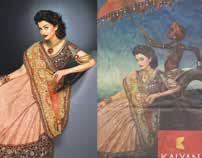
Aishwarya Rai Bachchan has earned the wrath of activists for an "offensive" advertisement for a jewellery brand. After her publicist responded to an open letter alleging involvement in a “racist ad”, the jewellers' company Kalyan, plans to withdraw the advertisement.
"The creative was intended to present the royalty, timeless beauty and elegance. However, if we have inadvertently hurt the sentiments of any individual or organisation, we deeply regret the same. We have started the process of withdrawing this creative from our campaign," Kalyan Jewellers said via their Facebook page.
A day after a Kalyan jewellers' ad appeared in the newspapers, several activists wrote an open letter to Aishwarya Rai Bachchan, slamming her for featuring in a “racist” advertisement. The ad shows Aishwarya reclining under a parasol held over her head by what the letter describes as “a dark-skinned slave-boy”. The publicist of the actor, however, said the actual image was changed by the brand.
The open letter by feminist activist Farah Naqvi, Nisha Agrawal (CEO, Oxfam India), Enakshi Ganguly & Bharti Ali (co-directors, HAQ: Centre for Child Rights), Madhu Mehra (executive director, Partners for Law in Development), Shantha Sinha (former chairperson, National Commission for Protection of Child Rights), Harsh Mander (centre for equity studies) and Mridula Bajaj (executive director, Mobile Creches), the writers alleged that Aishwarya represented "aristocracy from a bygone era".
In the ad, the 41-year-old actor is seen decked in jewels along with the child, "dark and emaciated", holding an oversize umbrella over her head. A group comprising a feminist activist, a former chairperson of National Commission for Protection of Child Rights among others had written an open letter to slam the former beauty queen's recent print ad, which they felt also promoted child labour.
"We wish to convey our dismay at the concept of this advertisement, and that you have, perhaps unthinkingly, associated with such a regressive portrayal of a child to sell a product...," the letter read. They asked Aishwarya, who is the national brand ambassador for Kalyan Jewellers, to cease to
Aamir

associate herself with "this offensive image by ensuring that further use of this advertisement is stopped".
"As an influential member of the Indian film industry and a popular star with a large fan following, we trust that you wish to use your image in a manner that promotes progressive thought and action, and would not knowingly promote regressive images that are racist and go against child rights," it further read.
Addressing the writers of the letter, Aishwarya's statement read, "On the onset we would like to thank you on drawing our attention to the observation of the perception of the advertisement. Here is an attachment of the shot taken by somebody during the shoot. The final layout of the ad is entirely the prerogative of the creative team for a brand. However we shall forward your article as a viewpoint that can be taken into consideration by the creative team of professional working on the brand visual communication. Thank you once again," it added. (PTI)
Aamir Khan is the only Bollywood personality to have been invited to the threeday Women In The World Summit, which kicked off on Wednesday (April 22) in New York, USA.
The actor, who spoke at the event, addressed the issue of tackling taboos in India. He interacted with Zainab Salbi, an IraqiAmerican humanitarian, entrepreneur and author, who also happens to be the daughter of ex-Iraqi dictator Saddam Hussein’s personal pilot.
"At the event, Aamir spoke to Zainab and other guests about the topic, and also his own work. For the major part of the show, the talk was about cultural taboos that he is highlighting through his TV show," says an insider.
The event will also see participation from other big names like Helen Mirren, Meryl Streep, Freida Pinto and Hilary Clinton, among others.
When we contacted Aamir, he sent us a brief re-

ply, saying, "It has been an enriching experience."
Aamir, who is currently busy preparing for his next, a wrestling-based film, especially took out time to travel to New York for the event. "Once he is back, Aamir will immediately resume work on the project," says an insider. The shoot is expected to begin in September this year. The actor has already beefed up to weigh 90 kg for the part. (Hindustan Times)

Rajkummar Rao is an Indian actor who appears in Hindi films. He made his film debut in the 2010 experimental film “Love Sex aur Dhokha” and achieved success in 2013 with the drama film “Kai Po Che!” for which he was nominated the Filmfare Award for Best Supporting Actor. He was awarded the National Film Award for Best Actor and the Filmfare Critics Award for Best Actor for his portrayal of Shahid Azmi in the 2013 biographical film “Shahid”. In 2014, Rao portrayed the leading man in the box office hit “Queen”. As of April 2015, Rao will be featured with Emraan Hashmi and Vidya Balan in “Hamari Adhuri Kahani”, an upcoming romance film.



Nalicia Ramdyal was born in Guyana, but ventured to the United States at age five. She is a fulltime college student who is extremely ambitious about her education and the goals she has set for her future. Aside from her studies, she enjoys kickboxing and working out. Nalicia also competes for pageants and is a freelance model, aiming to become a professional model. She currently holds the Miss Woodhaven title, the community that she is more than honoured to represent in the US. Other than modelling and pageantry, the beauty enjoys devoting her time being involved in community and volunteer work. Being the determined young woman that she is, she never gives up on her goals. Nalicia was a state finalist for the Miss New York USA 2014 pageant and represented Guyana for the Miss Caribbean Queen Pageant, in which she placed first runner-up. Nalicia invests her time and effort into helping others as much as she can. She is a women’s rights advocate and one of her main platforms is shedding light on domestic violence. She has collaborated with numerous organisations to spread awareness on domestic violence and is always looking for avenues to help the cause. Nalicia is currently vying for the Miss Global International Guyana crown and will use the platform she is given in this pageant to promote her fight against domestic violence. To learn more about the pageant, visit Miss Global International Guyana on Facebook.
From a suit that is also a bed to a fashionable selfie hat, here are some weird fashion trends everyone is talking about.
King Jim, a Japanese company specializing in office equipment and supplies, started selling something called the “Wearable Futon Air Mat Set”.
It's a jumpsuit made of nylon, polyethylene and polyester that can double between as an overcoat and a bed, for those times when you're not sure where you're going to sleep.
The product is available in Japan for about US$40 from supplier King Jim - and that includes an air mattress.
Designed by Christian Cowan-Sanluis and tech product group Acer, the sparkling pink, wide-brim headgear contains a dropdown tablet to snap selfies anywhere on the go.

As Acer explains, "The sombrero style hat spins 360-degrees and has an integrated Acer Iconia A1-840 tablet which enables struggling selfie takers to find their best angle."
For those seriously interested in the limited-edition hat, you'll have to set up a consultation with Cowan-Sanluis first. Check out Acer UK on Facebook for more info.
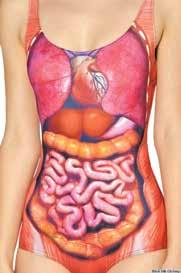
Black Milk Clothing, the bearer of weird, yet awesome apparel is selling a limited supply of a swimsuit called "Dem Guts," which displays internal organs and tissues of the human body - including the heart, lungs, large intestine and muscle tissue. This shocking piece will give wearers the opportunity to let it all hang out on the beach.
You can have this ‘bare all’ swimsuit for only US$13 from Amazon.

“Art is the most intense mode of individualism that the world has known,” said Irish writer and poet Oscar Wilde.
Artists around the world use art as a medium to not only create something admirable but to express their deepest emotions. This is how effervescent Guyanese artist Sheliza Rampersaud also views art.
“Art allows me to express myself. I don't think there was any real inspiration,because initially art was just a hobby. I then grew and learnt more about it - the different forms and aspects. Eventually, it became more than just a hobby, it became a passion,” the artist explained in an interview with Guyana Times Sunday Magazine
She recalled attending an art exhibition at Castellani House where she saw a variety of paintings from famous Guyanese artists. She pointed out the paintings that captured her attention were by notable Guyanese artist Ron Savory, his “Creek” series.
“I remember looking at those paintings and thinking someday I wanted to paint like that. Savory’s work truly inspired me.”
Rampersaud attended Montrose Primary where she developed a love for art. There she was taught to “draw and colour”, but art was only a hobby.
“After I graduated from primary school, I attended Tutorial High School where I was introduced to a more advanced level of art. It was there that art became more than just a hobby. I knew that art was something I wanted to pursue. In Fourth Form, I chose to go in the art stream where visual art became one of the main subjects that was taught. I did paint-
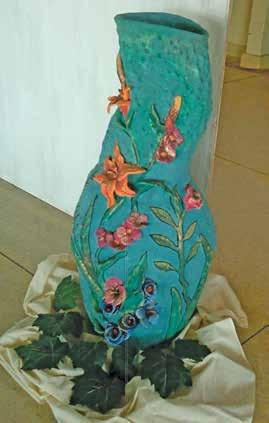

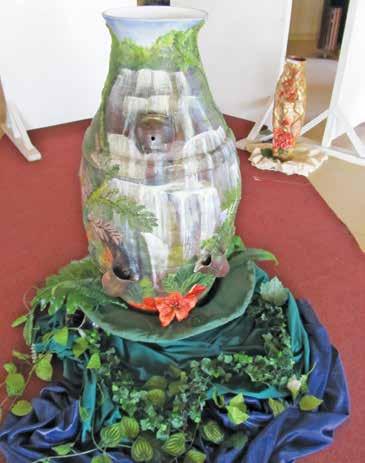
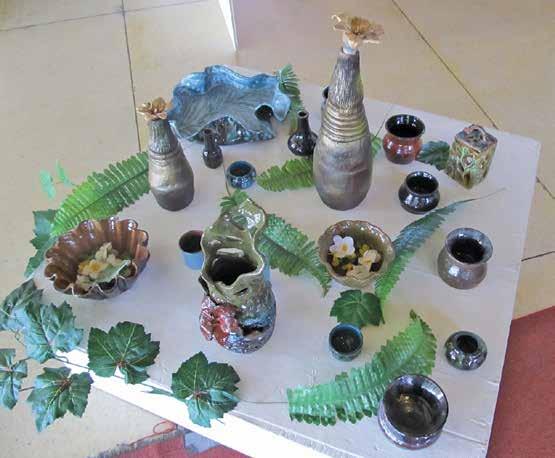
ing, a bit of textile and craft and experimented with other aspects of art. Consequently, from then on, art became a part of me. My art teacher, Miss Suton, told us (fellow artist Tammy Walker and I) that we could further our study in art. After I graduated from Tutorial in 2011, I decided to do just that and, in that same year, I enrolled at the BurrowesSchool of Arts as a major in painting and minor in ceramic,” she reminisced.
The young artist revealed that she enjoys painting landscapes and sceneries. She has experimented with other areas of art, such as abstract,still life, portraits, among others, but found herself feeling “free and comfortable” with capturing the beauty of various landscapes.
“Nature became a centre piece for me.I found the beauty of nature and admire the role it plays in our life and the environment. It became more of an escape for me, thus I incorporated it in my paintings and also my ceramics pieces,” Rampersaud noted.
Although very young in her art career, Rampersaud is determined to prove her talents to the world. Last year, she was part of a local art exhibitionat the National Cultural Centre, along with other students from Burrowes.
“For me, personally, art gives me the freedom of expressing myself and finding out new things. I hope I can keep furthering my studies in art, but as for now I have not decided completely about what the next step is,” Rampersaud disclosed.
The artist identified “Hidden” as one of her favourite pieces she has done thus far. “It is my favourite piece because it was the first introspective piece that I have done and it was

of Divinity" (2014)
challenging when I first started painting it. As a matter of fact, this piece was always a challenge for me; it meant that I had to express my emotions on canvas and it had to be able to tell a story. As a student in Burrowes, I wasnot always prepared to share my emotions with everyone. However, my painting tutor, Ms Nikki B Williams, encouraged me to do that. It was also the first complete figure painting that I did, so that also made it challenging, but I did it. After a while I decided to go back to that painting and I made some changes to it, which varied from the original piece. Some people may think this painting is just a girl sitting by a window with chains on her body, but to me it holds a deeper meaning.”

For more information on the artist’s work, call 692-7858.


Apple released iOS 8.3 last week, but it didn't really divulge many of the newest features that you can use in your workflow now. After upgrading your device, here are some of the coolest features you'll find in the latest iOS update.
1. Password not required for free downloads. With the iTunes App Store, if you don't have Touch ID enabled for purchases, you can easily tweak the password settings so that you no longer have to enter the password when down-
loading free items from the iBook Store or iTunes App Store.
2. Wireless CarPlay. If you utilize CarPlay in a compatible car, you'll love this new feature. With iOS 8.3 and compatible CarPlay systems, you can now use CarPlay from your device without the need to plug your device into your car. Consult your particular CarPlay system to find out how to enable this feature.
3. Report iMessage spam. If a sender is not in your contact list in iOS,
and you receive an iMessage from them, you can now report their message to Apple as a junk message.
Visit http://www.techrepublic.com/article/5-coolnew-features-in-ios-8-3/ for more information.

Anew light bulb from Philips means that efficient bulbs with a 10-year lifespan cost as little as US$2.50 apiece. Similar bulbs cost US$25 or more not long ago.
The new bulb is called the Philips LED A19, and uses just 8.5-watts to produce the 60-watt equivalent output.
As with virtually every emerging tech and consumer product, prices for LED bulbs have dropped steadily as manufacturing has ramped up and the products have been embraced in the mainstream.
When This Old House published a guide to LED bulbs a year ago, most of the 60W equivalent bulbs it recommended sold at retail for $20, some went as

high as $35, and one outlier was priced at a comparatively cheap $10. The bulb will be available at The Home Depot
stores from the beginning of May in a two-for-one pack for the first 90 days, but is available now online.
Tech companies Google Inc, Apple Inc, Amazon, Microsoft Corporation, Comcast, Facebook Inc and Amazon. com Inc, spend near record amounts on persuasion tactics used by many corporations in Washington D.C. Based on industry results, Google is at the head of the pack in the Internet and computer sector. The company spent a massive US$5.47 million on federal lobbying within the first three months of 2015, quite near the record high US$5.5 million spent by Google in second quarter of 2014.
With the recent EU charges filed as antitrust claims, the company may potentially have to spend more money lobbying against the US$6 billion EU allegations. Google has been slowly increasing the amount it spends to influence policy and issues it encounters regarding lawfulness.
Since the middle of 2011, it has spent around a million dollars monthly on both areas that apply to its
businesses. Areas like security and advertisements are all related to the company’s federal lobbying expenditures. Other sectors include tax reformations and drone technology advancements.
Social media giant Facebook spent a considerable US$2.44 million compared to US$2.7 million a year prior, a considerable amount marking the fourth largest lobbying quarter in the company’s history.
E-commerce titan Amazon spent US$1.91 million in lobbying. The company focused its lobbying expenditures on issues like breach notifications, postal reformation, security in the cloud, and training immigrant workers.
Tech behemoth Microsoft’s US$1.9 million was the company’s personal first quarter lowest expenditure on lobbying since 2012.
Apple Inc spent approximately US$1.24 million, a slight higher from last year's US$1.07 million. A report from Bloomberg explained that Apple’s lob-
bying expenditure was utilized on “taxation and consumer privacy”, along with “issues related to mobile payments.”
Other lobby areas included international trade and barter, copyrights, patents, and digital textbooks.
Comcast spent almost US$4.62 million in the first quarter, the closest to Google in reference to first quarter lobbying expenditures.
The tech sector and its companies continue to remain attentive and concerned regarding the promotion of their respective decisions in Washington.
The recent fallout in reference to the Snowden revelations on privacy issues, and the US increasing focus on digital economy have added a sense of scrutiny to the outlook of the sector.
Many tech companies, aside from Google, are expected to face some inspection by the EU, and the furious lobbying suggests these American companies are seeking US backing against the European Commission. (Bidness)

In what will likely be the opening move in a global transition to digital radio, Norway has announced it will shut down its FM band. Norway will start turning off FM radio on Jan. 11, 2017, and plans to stop transmission of the last FM signal to the country's northernmost regions by Dec. 13 of that year.
The announcement, made by their Ministry of Culture, makes Norway the first country to do away entirely with FM radio. The move is intended to save money and allow a full transition to digital radio, which Norway argues will give listeners "access to more diverse and pluralistic radio content and enjoy better sound quality and new functionality."
In its statement, the Norwegian government
Anew free tool to combat some of the most popular ransomware being used right now by hackers has been developed by the Netherlandsbased National High Tech Crime Unit and cyber security firm, Kaspersky.
CoinVault is the latest ransomware campaign being carried out by malicious hackers. The software locks all of the victim’s files and holds them hostage until a ransom is paid in bitcoin.
“The National High Tech Crime Unit (NHTCU) of the Netherlands’ police, the Netherlands’ National Prosecutors Office and Kaspersky Lab have been working together to fight the CoinVault ransomware campaign,” Kaspersky said on its website. “During our joint investigation we have been able to obtain data that can help you to decrypt the files being held hostage on your PC. We provide both decryption keys and the decryption application.”
The firm noted that
said the cost of transmitting national radio channels through the FM network is eight times higher than via the Digital Audio Broadcasting (DAB) system, the standard digital radio technology used across Europe. By shutting off FM, Norway's national radio channels will save more than US$25 million a year, according to official figures "releasing funds for investment in radio content," argued Minister of Culture Thorhild Widvey.
"This is an important day for everyone who loves radio," said Thor Gjermund Eriksen, head of public broadcasting network NRK, in a statement. "The minister's decision allows us to concentrate our resources even more upon what is most important, namely to create high-
quality and diverse radio content to our listeners."
The DAB system in Norway already offers 22 national channels, compared to just five on the FM band, and has the capacity for 20 more. A recent survey by TNS Gallup found that 55 per cent of Norwegian households have at least one DABequipped radio.
Norway has long been a digital radio pioneer. NRK launched the world's first DAB channel on June 1, 1995. Other Scandinavian countries as well as the U.K. are thought to be considering an FM switch-off by 2022. The digital rollout in other European countries has been slower, with old FM radio still proving more popular in several territories. (Hollywood Reporter)

the investigation into CoinVault is ongoing and new decryption keys will be added in the future.
Visit https://noransom. kaspersky.com/ for more information on how to combat CoinVault and for download links for Kaspersky’s “Noransom” tool.
Ransomware is mali-
cious software that hackers use to hold your computer hostage, blocking access to all of your files unless you agree to pay a ransom. Only when the ransom is paid are your files finally freed, and failure to pay will likely result in the permanent loss of all data on your PC.


A refreshing shower after a tiring day is something to look forward to. Deciding how you want to design your shower though can be confusing, given the many materials and design options available. Inspire yourself with these shower enclosure ideas.

Today’s shower doors are seamless glass doors, though framed glass doors are still popular. They can be found in a variety of finishes that include etched, frosted, pebbled and rain
Traditional showers use tile, but there are a host of other materials such as natural and manufactured stone, marble, glass tile, glass block and acrylic. Contemporary showers tend to favour stone and tile combinations


A solid acrylic shower base and its accompanying acrylic wall that mimics tile is usually a low maintenance, low cost and high performance option

Ingredients:
Two to four cloves of garlic, minced
Olive oil (or any oil) for pan-frying chicken and mixing marinade
One or two chickens, cut into serving sized pieces, or similar amount of chicken breasts
Spices:
1/4 tsp black pepper
1/4 tsp ground ginger
Pinch of saffron
1 tsp cumin (optional)
1 tsp turmeric (optional)
1 stick of cinnamon or a few pinches of ground cinnamon (optional)
1 tsp coriander (optional)
2 onions, finely chopped
2 cups chicken broth or stock (or water)
1 cup green olives
2 preserved lemons, cut into slices (see Greatest Cooking Tips below) Salt, to taste
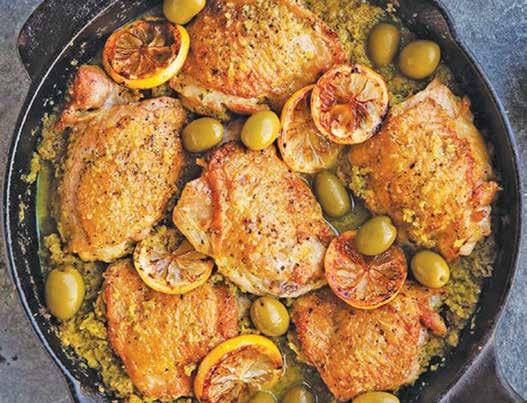
Method:
Mix the garlic, some black pepper, and a spoonful of oil. Rub the chicken with the mixture and set aside for a few hours or overnight.
Heat the oil in a large Dutch oven (or tagine cooking pot, if you have one).
Fry the chicken until all sides begin to brown. Add spices.
(The black pepper, ginger, and saffron are most typical. If you have no saffron, consider one or two of the optional spices, which can be added according to your liking.)
Add onions. Stir-fry over high heat for a few minutes.
Add chicken broth, stock, or water. Bring to broil. Reduce heat. Cover, but leave a crack for steam to escape. Simmer over low heat for thirty minutes or more.
Add olives and preserved lemons. Add salt and adjust seasoning. Continue to simmer. Remove chicken and set aside. If necessary, bring sauce to boil, stirring continuously, until thickened.
Serve chicken, covered with sauce, over couscous or rice.
Have green tea with mint with or after the meal.
Preserved Lemons
You will need lemons and kosher salt.
Cut slits into lemons, cutting through the skin and into the fruit.
Pack alternating layers of lemons and salt in a clean glass jar. (The jar and lid should be sterilized in boiling water.) Cover tightly and set aside.
After one day, add more salt if possible. Set in cool, dark place for two to three weeks. During this time check every few days and, if needed, add salt as necessary to keep lemons tightly packed.
After the two to three week period, remove lemons from the salt and store them in a tightly sealed container in the refrigerator. They may be kept in refrigerator for a few months.
Save your fingernails when trying to add keys on your key ring by using a staple remover instead.
To save space in your closet or wardrobe, put one hanger hook through one tab from a canned beverage and add another hanger hook through the other part of the tab. You now have space for two outfits where there was only one.
To remove hard water stains from your bathroom fixtures, cut a lemon in half, and give your faucets a good rub down. Let it sit on there for a few minutes or longer then rinse with warm water.

Parents of children with special needs are said to be often more flexible, compassionate, stubborn and resilient than other parents. According to Parenting.com, they have to be.
It defines "Special Needs" as an umbrella underneath which an array of diagnoses are placed: Children with special needs may have mild learning disabilities or profound cognitive impairment; food allergies or terminal illness; developmental de-
lays that catch up quickly or remain entrenched; occasional panic attacks or serious psychiatric problems.
The designation is useful for getting needed services, setting appropriate goals, and gaining understanding for a child and stressed family.
"Special needs" are commonly defined by what a child can't do -- by milestones unmet, foods banned, activities avoided, experiences denied.
Concerns with a special needs

child may differ; for example, caring for one with a terminal illness may be different from one with developmental delays.
There are however, some common concerns that link parents of challenged children, including getting appropriate care and accommodations; promoting acceptance in the extended family, school and community; planning for an uncertain future, and adjusting routines and expectations.
Ascience teacher tells his class, "Oxygen is a must for breathing and life. It was discovered in 1773."
A student responds, "Thank God I was born after 1773! Otherwise I would have died without it."
George W. Bush and his VP running mate, Dick Cheney, were talking, when George W. said, "I hate all the dumb jokes people tell about me."
Wise Old Cheney, feeling sorry for his old boss, said, sage-like, "Oh, they are only jokes. There are a lot of stupid people out there. Here, I'll prove it to you."
Cheney took George W. outside and hailed a taxi driver. "Please take me to 29 Nickel Street to see if I'm home," said Cheney.
The cab driver, without saying a word, drove them to Nickel Street, and when they finally got out, Cheney looked at George W. and said, "See! That guy was really stupid!"
"No kidding," replied George W., "There was a pay phone just around the corner. You could have called instead."
Two hillbilly brothers have a ranch. They have just lost their bull. They need to buy another, but only have $500.
One brother tells the other "I will go to the market and see if I can find one for under that amount. If I can, I will send you a telegram."
He goes to the market and finds one for $499. Having only one dollar left, he goes to the telegraph office and finds out that it costs one dollar per word. He is stumped on how to tell the other brother to bring the truck and trailer.
Finally, he tells the telegraph operator to send the word "comfortable."
Sceptical, the operator asks, "How will he know to come with the trailer from just that word?"
The hillbilly replies, "He reads slow: 'Come for ta bull.'"
Achildasked his mother, "How were people born?"
So his mother said, "Adam and Eve made babies, then their babies became adults and made babies, and so on."
The child then went to his father, asked him the same question and he told him, "We were monkeys then we evolved to become like we are now."
The child ran back to his mother and said, "You lied to me!"
His mother replied, "No, your dad was talking about his side of the family."
While roses are so red, While lilies are so white, Shall a woman exalt her face
Because it gives delight?
She's not so sweet as a rose, A lily's straighter than she, And if she were as red or white She'd be but one of three.
Whether she flush in love's summer Or in its winter grow pale, Whether she flaunt her beauty Or hide it away in a veil, Be she red or white, And stand she erect or bowed, Time will win the race he runs with her And hide her away in a shroud.
Christina Georgina Rossetti

There lived an old farmer with his three sons in a village.
The father asked his sons to work in the field along with him. But the young fellows were lazy. They did not want to work in the sun and the rains in the field like their father.
One day the farmer fell sick. He was about to die. So he called his sons, and told them, "Sons, before I die, I want to tell you some secret. Under the ground in our field, there are some hidden treasures. If you dig the land properly, you will surely find them."
So saying, the old farmer died. The boys performed the funeral rites of their father.
Then, one day all the three brothers went to the field and began to dig the
land thoroughly from one end to the other in order to find the hidden treasures. But they did not find anything. They were disheartened.
Now the eldest brother told the other two to sow seeds in the land, as the land had already been ploughed thoroughly. And they did so. After a few months, they found good crops in their field. They reaped the harvest, and made large profit by selling them. Now the eldest brother told his two brothers, “Brothers, I've understood what our father had meant by the 'hidden treasures'. The hidden treasures are the good crops that we found, only by digging the land properly and sowing the seeds there.” (Sai Shruthi)

By Grammar G
Deesis (pronounced DEE-uh-sis/ duh-EE-sis) is a figure of speech that expresses strong emotion.
From Greek for “prayer” or “supplication”, it is said to be an expression of desire put in strong form by invoking, usually, a supreme being. It is also said to be a call for the heavens to witness an earthly action or a situation.
The most common expressions include “for God’s sake…”; “as God is my witness...”, “for the love of God…”, and “would God that I had…”
Parents might say to a child, “For God’s sake, put on a clean shirt.” Or “As God is my witness, the next time you slam that door I will …”
Of course there are both secular and religious folks who frown upon utterances of divinities so casually, with the latter finding such mention profane.
The English language, so versatile it is, has come up with more acceptable forms of deesis. These include, “Jeeze”, “Jeezums” and even “Jeepers” which are all euphemisms for Jesus.
Then there is “for goodness sake…”, “my gosh” or “by gosh” that avoids “saying the Lord’s name in vain”, as the more religious call it.
In each of the cases below, scramble the letters and then add X at the end to make a new word.
Example: hobeos + x = shoebox
1) real + x =
2) torah + x =
3) compel + x =
4) claim + x =
5) nasty + x =



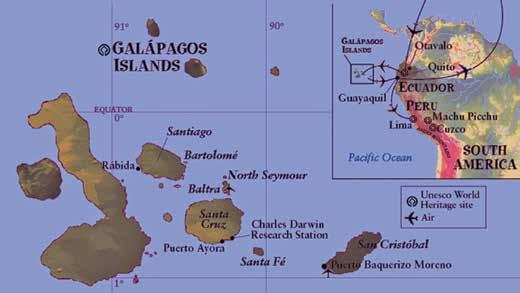
The Galapagos Islands is an archipelago (a chain, cluster or collection of islands) comprising 19 islands in the Pacific Ocean, some 1,000 km from the South American continent.
Its name derives from 16th century explorers who first saw its giant tortoises and so named it Insulae de los Galopegos (Island of the Tortoises). Its waters are a haven for marine wildlife, while its islands support many unusual land species not found anywhere else in the world.
The islands are famous for their role in Charles Darwin’s theory of evolution, and include well-known inhabitants such as the giant tortoise, the marine iguana and the finches that bear his name.
Ecuador annexed the Galapagos Islands in 1831, and named them the Archipelago of Ecuador.
Just 3 per cent of the archipelago is inhabited by people, as 97 per cent of the total emerged surface (7,665,100 ha) was declared a National Park in 1959.

The objective of the game is to fill all the blank squares in a game with the correct numbers. Every row of 9 numbers must include all digits 1 through 9 in any order. Every column of 9 numbers must include all digits 1 through 9 in any order. Every 3 by 3 subsection of the 9 by 9 square must include all digits 1 through 9.

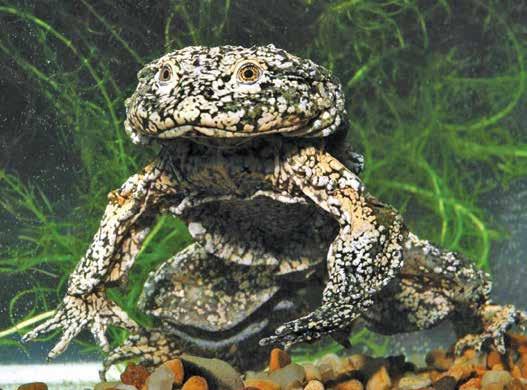
The Titicaca water frog (Telmatobius coleus) is the world’s largest, truly aquatic frog. Found only in the freshwaters of Lake Titicaca of Peru and Bolivia, which lies at an elevation of 3,810 metres (12, 500 ft), it weighs about one kg (2.2 lbs) and is recognizable by its many folds of skin that hang loosely about its body.
The multiple folds in the skin of the frog enable it to breathe underwater, without needing to surface for air. As a result, it spends its life in water, though on rare occasions it may go on land.
Titicaca water frogs’ colourings vary from olive green, dark green or black backs with pearl or white undersides. They eat mainly amphipods (shrimp-like crustaceans), snails, insects, tadpoles and fish.
Previously common in the lake, the Titicaca water frog is said to have been reduced by some 80 per cent due to over-exploitation for food or medicine, habitat degradation from domestic and agricultural water pollution, and invasive species.
By Laurie Triefeldt
In Italy, the 14th century marked the end of the Dark Ages and the beginning of the Renaissance. Scholars, scientists, leaders, writers, artists and inventors of the day turned away from the recent past and began to think in new ways. These people looked to the art and culture of ancient Greece and Rome for inspiration and created a movement that celebrated humanity and learning.
The Middle Ages, also known as the Dark Ages, began in the fifth century and lasted through the 13th century. During this time, Europe often experienced wars, famines and deadly diseases. Medieval people were almost entirely focused on basic survival and God. Because life was so difficult, the people lost much of the world's past knowledge and culture. The Renaissance would usher in new ways of thinking about life and God.
The word renaissance is French for “rebirth” or “revival.” It is derived from the Latin word rinascere. “Renaissance” has been used to describe a number of cultural revivals, but it is usually identified with Italy and the 14th through 16th centuries.
The Renaissance began in Italy in the early 1300s. Trade had brought great wealth to Italy, and the political environment of Europe became more stable. Scholars studied Greek and Roman antiquities, seeking to revive the wisdom and beauty found in classical writing and art. They became interested in the study of humanity and started to question the world around them. The idea that mankind was beautiful and that society was good was called humanism. Renaissance painters and sculptors reflected these concepts by painting in a realistic manner that tried to bring man closer to God through beauty. By the late 1400s, Renaissance thinking had spread throughout most of Europe.
Life for most women changed little during the Renaissance; they had few legal rights and were expected to focus on family and household. But some wealthy Italian ladies of this time were educated along with their brothers and would become spirited thinkers and rulers.
Some biographers claim that the great painter and inventor Leonardo da Vinci and the brilliant sculptor and painter Michelangelo disliked each other, but there is little evidence that this was the case.
Leonardo did once note that sculptors were covered in marble, much like bakers were covered in flour.
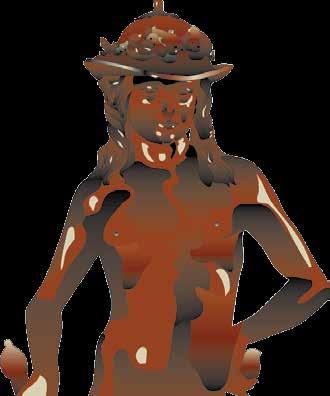
During the Renaissance, Italy was divided into several city-states ruled by aristocratic and merchant families. In the 15th century, the most powerful family in Florence was the Medicis. Cosimo Medici inherited a vast fortune and established a political dynasty that would influence history for hundreds of years. Cosimo was a banker and crafty politician, but also a great patron of the arts and science. Under Medici influence, the city of Florence flourished. Later generations became popes and religious leaders or married into European royalty
Q: What are the different kinds of government?
An individual or a group of individuals may govern a country in a way that reflects an ideology; it is these beliefs that shape the type of government. Sometimes these governments act together.
A capitalist government allows a free-market economy, where people can own their own businesses and property and are free to choose private or government-run (public) health care or education. However, the government overlooks all health, education and welfare services.
With a commu nist government, the government owns the businesses and farms, and provides its people's healthcare, education and welfare services.
and usually rules by force using the country’s military to enforce its dictates.
With a republic government, a country has no monarch and its leader is usually an elected president.
When a legitimate government is overthrown by
into a democracy after the dictator dies, for instance. This transition process may take several years.
A monarchy has a king or queen that, traditionally, governs all aspects of the population. A constitutional monarchy like the UK, on the other hand, which also has a democratic government, limits the power of its monarchy.

force, the new ruling group is often called a revolutionary government.
A democratic government allows the country’s people to elect their government freely and without fear so that the population has a say in who runs the country.
In a dictatorship government, a single person rules; this person is not elected by the population
In a totalitarian government, the state is ruled by one political party that forces its population to do as it dictates and often restricts its people from leaving the country.
When a country is in the process of changing from one type of government to another, it is called a transitional government. A dictatorship may turn
climax


In a government system, there may be what is called a federal government. In this type of system, a central government shares power with a number of small local governments.
There is also a regional or local government, which is a government or council that controls a smaller area within a country. Some local governments have limited powers and are mainly controlled by the central government, while others can make their own laws, like individual states in the USA.
Incidentally, anarchy is a situation where there is no government. This can happen after a civil war in a country, when a government has been removed and rival groups are fighting to take its place.
rab youth support for the Arab Spring is declining in the region, along with the hope for democracy that it entailed, a new survey finds.
The 7th Annual ASDA’A Burson-Marsteller Arab Youth Survey 2015 was conducted by international polling firm Penn Schoen Berland, and explored the attitudes of Arab youth in 16 Middle East and North African countries.
The survey took place in Bahrain, Kuwait, Oman, Qatar, Saudi Arabia, UAE, Algeria, Egypt, Iraq, Jordan, Lebanon, Libya, Morocco, the Palestinian territories, Tunisia, and Yemen.
Only 15 per cent of Arab youth in 2015 believe the biggest obstacle facing the Middle East is a “lack of democracy,” compared to 41 per cent in 2012, according to results posted on the survey website, arabyouthsurvey.com.
Following the Arab Spring, which broke out in Tunisia in December 2010, many hoped or presumed that the uprisings would lead to a change toward democracy in the region.
Now, just 38 per cent agree that the Arab world is better off following the Arab Spring compared to 72 per cent in 2012.
The survey found that 39 per cent agree with the statement “democracy will never work in the region,” with another 36 per cent saying it would work, and 25 per cent undecided.
An equal number of Arab men and women from the ages of 18-24 were interviewed in 3,500 faceto-face interviews from January 20 to February 12, 2015.
Asked how concerned you are about the rise of Islamic State, an overwhelming number (73 per cent) said they are worried, but only 47 per cent are confident in their own government’s ability to deal with it.
Youth from Algeria (83 per cent) and the Gulf states of UAE (71 per cent), Kuwait (77 per cent), Saudi Arabia (77 per cent), and Qatar (70 per cent) are the most confident in their government’s ability to deal with Islamic State.
Lebanon (21 per cent), Bahrain (26 per cent), Libya (31 per cent), Iraq (24 per cent), and Jordan (20 per cent) are the least confident.
Asked what you believe is the biggest obstacle in the Middle East, 37 per cent said it is the rise of Islamic State, while the Palestinian-Israeli conflict came in fourth at 23
per cent-- more than the threat of a nuclear Iran at 8 per cent.
Nearly three in four (73 per cent) agree that the Arabic language is central to their identity, but around half (47 per cent) say it is losing its stature, with 63 per cent saying knowledge of English “can advance one’s career more than knowing Arabic.”
In the Gulf states, the number was even higher at 74 per cent.
Asked in which country you would like to live, UAE (20 per cent) comes in first place, followed by the US (13 per cent), Germany (10 per cent), Canada (10 per cent), and Qatar and Saudi Arabia (8 per cent).
When asked who their country’s best ally is, Arab youth mostly chose Saudi Arabia (30 per cent), followed by the US (23 per cent) and UAE (22 per cent).
While television continues to be the main source of news for 60 per cent of youth, 40 per cent receive their news from online sources, including 25 per cent from social media, according to the survey.
The survey questioned 200 people from each country or area, and the margin of error was +/- 1.65 per cent. (Jerusalem Post)
The Russian Orthodox Church has launched a music channel to serve as a virtuous Christian alternative to dozens of other such networks on Russian television, the Church said in a press release this week.
The channel, MuzSoyuz, began broadcasting online in January, and was launched as an Internet channel for smart TVs over Easter. It is planned to be launched later on cable and satellite television, the Moscow Patriarchate said Tuesday on its website.
Despite the official separation of Church and State, the Orthodox Church has received staunch support from the federal government in recent years, including a controversial 2013 ban on insulting the sentiments of religious believers, as well as funding for theological projects that promote national identity.
In a high-profile scandal earlier this year, a representative of the Orthodox Church complained about the use of religious imag-

ery in a production of the Wagner opera "Tannhauser" at a Novosibirsk theatre, prompting prosecutors to investigate the opera's director for insulting the feelings of religious believers.
Though a court threw out the case against the di-
Last week a prosecutor in the




ARIES (March 21April 26)


TAURUS (April 20May 20)



(May 21June 20)

(June 21July 22)



LEO (July 23Aug. 22)

VIRGO (Aug. 23Sept. 22)



LIBRA (Sept. 23Oct. 23)

SCORPIO (Oct. 24Nov. 22)


SAGITTARIUS (Nov. 23Dec. 21)




(Jan. 20Feb. 19) (Dec. 22Jan. 19)


PISCES
(Feb. 20March 20)

Plan a play day. Sports events or physical activity will motivate you to take action and turn your dreams into reality. Become the spark that gets everyone around you moving.
Give a wide berth to unhappy or disagreeable friends or relatives. Take time to indulge in personal pleasures that will distance you from discord. You need to lift your spirits and repair your soul.
Make the most of your day by staying active. The more you take on, the more you will accomplish. Travel, education and romance will all play a part in helping you achieve satisfaction and happiness.
Don’t dwell on what you once had or did. Use your experience to move forward in a positive manner. Plan for your future by looking into savings plans or solid investments.
Put your innovative ideas into play. Don’t give in to pressure, opposition or complaints. If you are assertive, you will triumph over your adversaries. Put love first.
You can avoid mishaps by learning more about the people you will have to deal with to get ahead. Doing rigorous and extensive research and asking direct questions will help you make a wise choice.
Take a leadership position. Align yourself with an institution or agency that you believe in. Use your charisma and mediation skills to drum up support and interest.
Unanticipated changes will take you by surprise. If you have valid concerns, speak your mind. Don’t feel that you have to settle for less or agree to something that doesn’t work for you.
Your adventurous spirit needs a new challenge. Get out and explore new places and people. Participating in community events will spark ideas and possibilities. Love is highlighted.
Increase your wealth by taking a practical approach to your personal spending and budgetary matters. A trusted adviser will help you to devise a realistic financial plan for your future.
You will become downhearted if you take on too much. Use your time wisely in order to avoid disappointment or criticism. Improving your skills or using your attributes diversely will bring good results.
Take a moment to review what you have already completed and what still needs to be done. Rest and rejuvenation will prepare you to take on new projects.