




By Dmitri Allicock
The town of Linden is split down the middle by the Demerara River. Over the years, the town grew and expanded unevenly as bauxite dominated. The notable eastern bank development was the Amelia’s Ward housing scheme that followed the Linden/Soesdyke Highway opening at the end of the 1960s.
On the western bank, the population was always more numerous. The population has increased significantly from west Watooka to Christianburg, and westward to include Wismar Hill, Half Mile, One Mile and the Rockstone Housing Scheme.
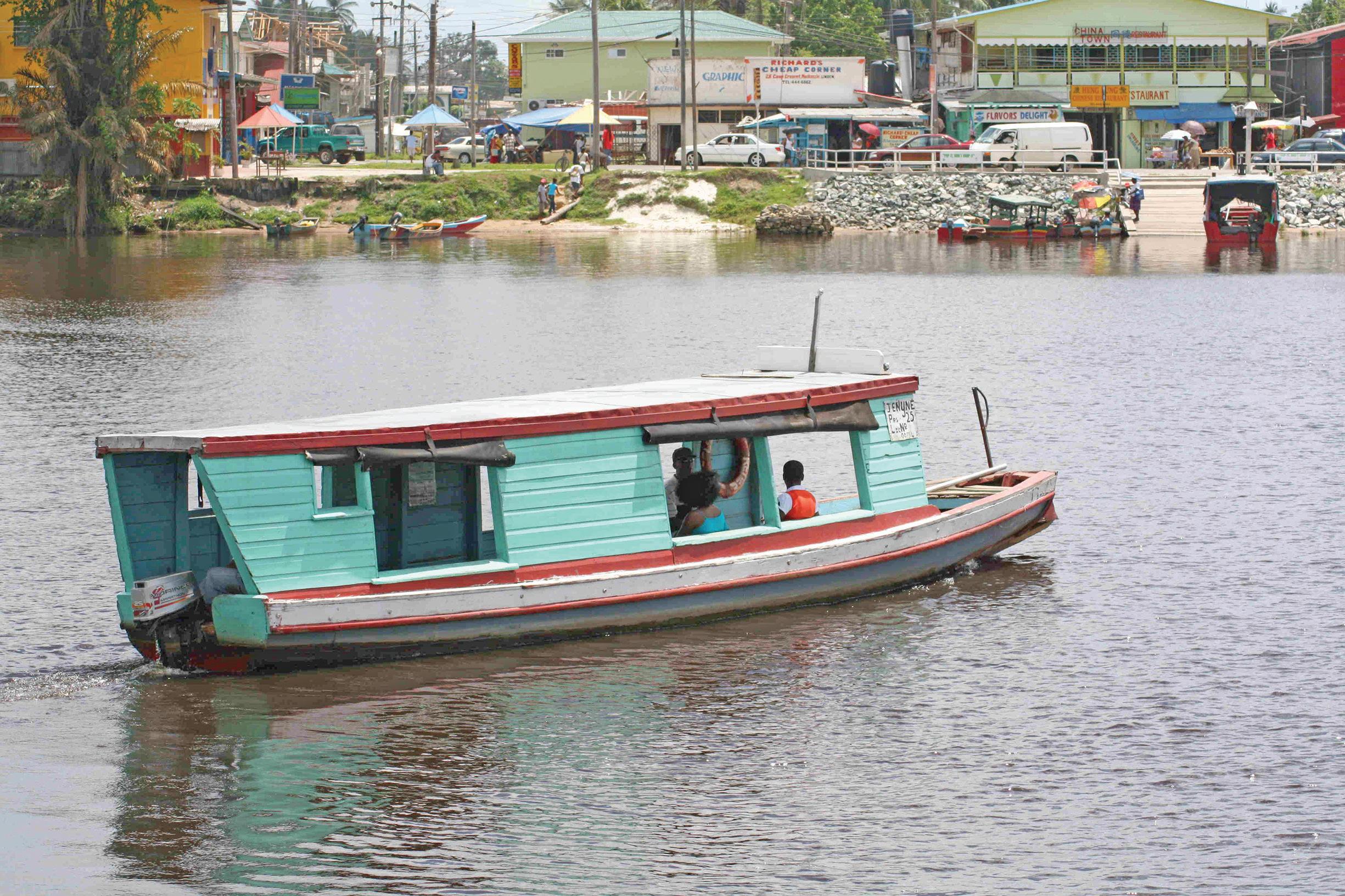
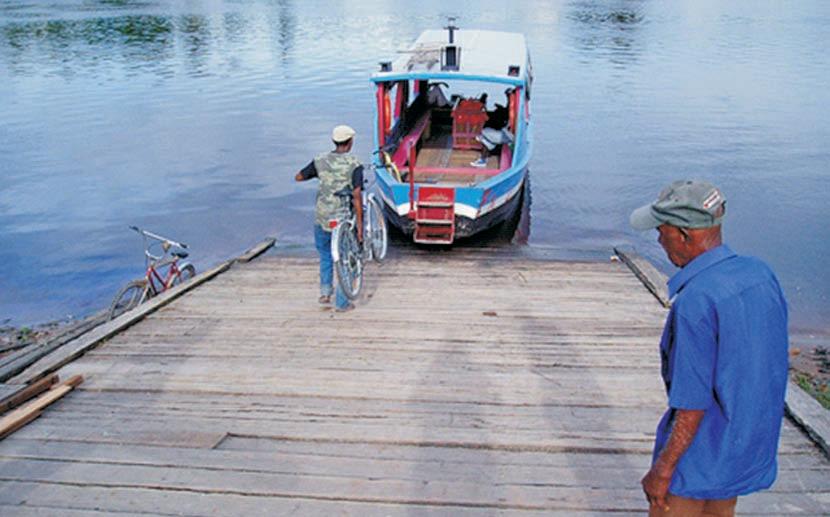
The ferry boat system, which was born with the bauxite industry, had the enormous responsibility of connecting the daily lives of the people. At its peak, over a dozen privately-owned ferry owners existed from
Cakatara to Speightland. Some of the owners in 1972 were from the Cakatara end: Quamina, Kennedy, and Obermuller. More centrally located were Rigby, Major and Dutchie boat landing, at Speightland: Chester, Adams and a few others.
Except for the period before ‘Major’ owned that particular, very well built landing that once belonged to Demba in 1939, very little oversight or central control occurred. There were laws and rules on the books, but few paid much attention, and there was little enforcement.
Effects of WWII
Demba boat landing was called the ‘Wismar boat landing’, and later became the property of Major. It was constructed and used during the Second World War to control access to the Mackenzie shore, providing extra security for the bauxite plant as
British Guiana sought to safeguard all its interests. The world at war was also real in British Guiana. German submarine activities off the Atlantic Coast of Guyana resulted in many ships torpedoed and sunk, most laden with supplies of bauxite and other materials, severely affecting trade.
This boat landing was the only one allowed, as passengers and all traffic required a pass of identification to be at Mackenzie. Frequent mandatory blackouts were also implemented with the sound of any unidentified aircraft passing over head at night. The fear of sabotage or bombing was very real as the allies attempted to protect vital raw materials and resources.
Safety and comfort issues
The early ferry boats were without engine or roof in the 1920s and early 1930s. All able-bodied passengers were

given a large paddle and had to assist with rowing the small boat across the river. Many might still remember the old diesel engines that filled most of the back of the boat with smoke and which had to be hand cranked many times before the sputtering and gush-
with a bottle of liquor in one hand played cat and mouse with the passing bauxite ships that blew their horn endlessly to clear the river. Many engines failed and boats drifted up and down the river. Little or no life jackets were on the boats. Some boats had to be bailed out to stay afloat.
Memorable characters
There were many countless mishaps and drowning. Three bauxite workers had drowned while crossing the river in the early 1970s, which I remembered well. A bearded, tall man named Churchill, with a large hook and rope, would usually lead the body recovery effort. The ghastly site of Churchill, with his hook and coil of rope fishing the river bottom for the unfortunate victim to an audience of hundreds of onlookers at the side of the river, was a haunting sight.
I respect the kind and de-
A must for school
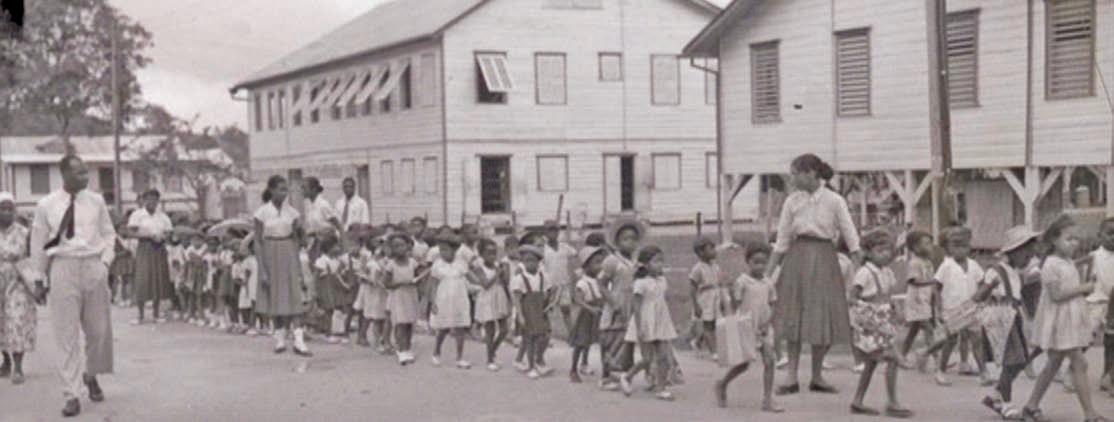
The ferry boat played an integral part of a young child’s life as it was used to ferry students daily to attend school. In the mid 1960s and 1970s, most of the community’s children went to Christianburg, St Aidan’s or Mackenzie primary schools before a secondary education was possible.
The story of schools in Guyana is of structure, uniforms, and what is now known as corporal punishment. As children, we judged our teachers by the feared cane they used to mete out punishment and discipline. The untimely and unpredictable ferry boat decided daily if a child was going to be punished for tardiness.
Any excuse that the ferry broke down or that the boat aimlessly drifted, guaranteed only an extra lash from the cane and a short lecture that other students were timely and maybe you should have
ing thick black smoke assured that the engine had started.
Zahra Freeth in her 1960s book “Run Softly Demerara” notes, “There is no bridge over the Demerara, and the normal way to reach Wismar from North Mackenzie was in one of the small ferryboats powered by outboard motors, which ply back and forth across the river all day long. The fare for crossing was eight cents- four pence, which one handed to the ferryman who crouched in the shade of a rough wooden shelter at the stern of the boat. The passengers sat on the thwarts, a position in which the women among them were constantly concerned to keep their skirts from trailing in the bilges. When one reached the further bank in the ferry, the small boat nosed its prows on the boards of a ramp, where one disembarked and clambered up on to the road, a broad unpaved track where after rain the pedestrian sank ankle deep into black ooze.”
For the most part, the ferry system worked, but there were serious problems. There was no safety training of the boat operators. You had untrained and, at times, lewd characters who couldn’t work elsewhere operating unsafe boats.
On regular occasions, loud, foul and half-naked operators
cent Mr Quamina, and was a good friend to all his children, whom I admired and still often remember. He had a boat that stood out from the rest. This small, shallow and greenheart-made boat had a round bottom. The ominous bow of the boat was warped and pointed downwards. It sank many times. After it was recovered, it was moored for months before it was again back in service. By then, I guessed many would have forgotten the last tragedy. One morning on my way to school, Mr Quamina repeatedly begged the passengers, who were mainly bauxite workers, “Please reduce the load guys! There are too much people in the boat!”
The boat operator and Mr Quamina stood helplessly with hands on hips. Not a single passenger disembarked. Most of the passengers were either late or in a hurry to cross the river.
Then the frustrated Mr Quamina said these magical words, “It’s alright, take the load across, it is long overdue since I sold another boat load to the fair-maid (water spirit).” The boat then safely crossed the river mostly empty as the appeal to the fears of the spooks worked very well. Mr Quamina quietly smiled in relief.
caught the earlier ferry. There were ways around this, and in very creative ways we simply avoided the headmaster who stood at the entrance of the school compound. Childhood imagination and play also surrounded the ferry system. We played and built sand castles on the Mackenzie shore while waiting for the boat. Ducks and drakes was a favorite game we enjoyed as we expertly skimmed the flat bush seed called Iresoura (which was found with other interesting debris and drift wood on the beaches) over the water.
We would be so involved in play that our last priority was catching the boat, which would come and go many times.
Current improvements
The substandard ferry boats did successfully transport the many thousands of residence including our family members. The current boat service has less landings and owners, but provided a vastly improved service. Massive and very well built boats, which are fully equipped with life jackets and working engines, are now operated by what appears to be more professional individuals. This was very gratifying to see. (Cover
Behind Project COBRA lies a very simple idea. This idea suggests that human development policies and projects need to serve primarily the people they intend to strengthen.
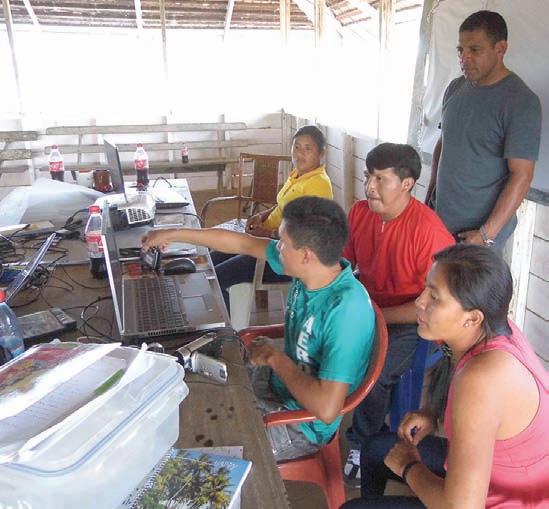
The Project was an EUfunded initiative launched at the end of 2011 that aimed to engage with indigenous communities of the Guiana Shield, South America, whose territories will be affected by conservation and climate funding streams, to learn how and under what conditions they have established local solutions to challenges, in the absence of external incentives. The originality of the project was its use of visual technologies, such as laptops and video cameras to showcase these solutions.
Additionally, the Project
their interest in maintaining a close cooperation and work together on future projects.
To this end, COBRA’s website (http://projectcobra.org) is being transformed into a platform for publishing news relevant to the work of the network as well as projects that emanate from Project COBRA. The remodeled website is currently being worked on and will be uploaded before the end of the year.
“In addition, a smaller group of us are setting up a UK-registered social enterprise named ‘Cobra Collective for Community Owned Solutions’, which will seek to build on and share the methods and techniques for documenting these solutions, notably through trainings, implementation and research. We are looking at a
of indigenous forest farms store carbon while allowing the rapid recovery of forest once the land is left fallow).
Indigenous traditional farming systems are essentially based on diversity. In order to build a buffer against crop failures, they grow a wide range of different crops in their fields and each family has at least two fields that are located apart from each other, normally in locations that differ slightly in their topography, pest exposure, climate and soil type. Farm management and harvesting is done not only by families but also by other community members, which enables a broad transfer of traditional farming knowledge and sharing the risks. Paulette’s practice of forest farming can be described as a “com-
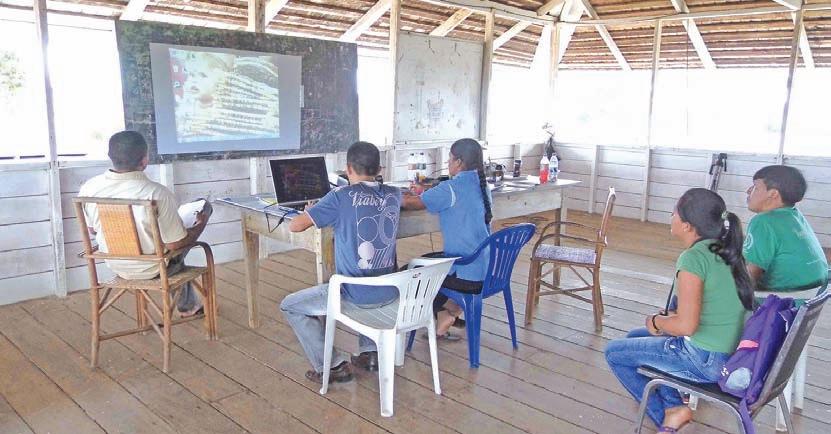
aimed at increasing confidence across indigenous communities and strengthening their position as stakeholders by discussing the challenges facing their community; identifying their own solutions to these challenges; recording these solutions using visual technologies; sharing their results with other communities; and implementing best practices from other communities.
In an interview with Sunday Times Magazine, Geraud de Ville said over the course of the Project, himself and a team worked with ten communities across the Guiana Shield produced a large amount of video and photo outputs which have been shared with communities as well as published on the Project’s Media Gate. One of the major outputs of the Project was the Practitioner’s Handbook, a hands-on tutorial based on experience with working in communities. Some of these outputs were presented during an indigenous film festival organised in September 2014 in Georgetown by North Rupununi District Development Board and Iwokrama.
Having reached the end of the EU funding, Geraud mentioned that the Cobra partners have expressed
formal launch in the beginning of 2016. In the meantime, we are consulting with international funders and NGOs to raise the funds needed to launch our operations,” noted Geraud.
Working with indigenous communities Recently, the work of Paulette Allicock, an indigenous Machusi farmer from the North Rupununi, was highlighted by Project COBRA.
In her forest farm, she grows a great variety of crops, including several varieties of the staple, cassava, as well as pumpkins, melons, greens, and nuts. Her method of farming in the forest is closely attuned with the dynamics of the surrounding natural environment and the guardian spirits that will protect her crops.
Paulette is an example of the numerous indigenous communities in the Guiana Shield, South America, and worldwide, who rely heavily on their local forest for basic existence needs and have over generations developed solutions to cope with crop failures and harsh environmental conditions (such as floods, droughts, and plagues) to successfully feed themselves while enhancing the natural environment (the dark charcoal rich soil
munity owned solutions” –it’s a practice that she has learned from her own community, can carry out without external support, and can provide long-term benefits to her wider community and the environment.
This community-owned solution was one of many researched and documented using participatory video by indigenous researchers across the Guiana Shield. These indigenous solutions were identified, recorded and shared through the support of Project COBRA. The Project showed that using a community owned solutions approach fosters holistic strategies for facing up to environmental and social challenges and nurtures healthy people-nature relationships.
Paulette’s localised food production system not only provides the basis of her family’s nutrition, but also contributes to the wider economy and sustains a living, practised, indigenous culture. As food is grown, harvested, processed, and consumed and sold, people are making associations with the protection and conservation of the environment, maintenance of local culture, and income and livelihood benefits.
Project COBRA has
shown that the world’s pressing environmental problems cannot be addressed without the active participation of local communities, building on their detailed knowledge of their local environment and traditional practices that have worked for millennia.
“This is what keeps us together with one mind, in English it is known as togetherness. This is the way of the Machusi, so let us maintain our farming practices,” Paulette declared.
For more details, visit Project COBRA on Facebook.

Wanting to give back to her country of birth, US-based Guyanese Rubina Onique Persaud founded the Guyana Kidney Donor Bank. She passionately gives back in a unique way – trying to source kidney donors. Through her organisation, Persaud hopes to help persons in need of a kidney get a “second chance at life”.
The Guyana Kidney Donor Bank organisation was founded on September 30, 2015 by Persaud and her daughter Tiffiny Foo.
In an interview with Sunday Times Magazine, Persaud said her objective is to “ensure her fellow Guyanese who are suffering from the end-stage of kidney failure is provided with the gift of a second life”. Persaud added that she will try to achieve this by bringing suit-

ed donors and recipients together.
“In September 2015, I
was contacted via Facebook regarding a kidney donation. This individual’s fa-

ther was dying of kidney failure and she was willing to do anything, including paying someone to do a kidney transplant. I immediately informed her that kidney donations that way are illegal, but I will research local organisations in Guyana. I quickly learned that there are limited sources in Guyana. I was heartbroken for her, and I wanted so badly to help. Even though I don’t know her personally, I felt compelled to help in any way I could, thus Guyana Kidney Donor Bank organisation was born. Within 24 hours I created the marketing materials and I’m still trying to source someone who would help her. I feel that God is responsible for this good work!”
Persaud declared.
Using social media, Persaud has been assiduously sharing pertinent information on being a kidney donor. She has spent late nights researching on what Guyana has to offer and plans on visiting next year to meet with relevant organisations.
Guyana Kidney Donor Bank’s mission is to create public awareness on the demand for kidney donations in Guyana; educate donors on the process of transplant

the organisation plans on coordinating an annual gala event to raise funding and other resources to spread awareness on kidney donations. Local public meetings, yearly marathons and other fundraising events are currently being planned.
“Although I have limited experience working with kidney donors, through my line of work I get to help various charitable organisations. I own and operate my own sign company in Atlanta, US, for 14 years. Prior to that, I was the COO for a sign company in Chicago, which is similar to mine. I have spent years volunteering, working with elderly and children. I network with many nonprofit organisations through my current line of business.
Guyana Kidney Donor Bank will have a board of direc-

and the quality of their life after transplant; and provide training to health care professionals in transplant coordination.
“We will utilise a computer programme, which will keep track of donors and recipients. Hospital personnel would be able to log on and see the database of donors. We will also work with the Government of Guyana on working on policies that will increase organ donations in Guyana. We will network with other kidney donor organisations in Guyana. Additionally, we will have events to raise resources to promote kidney donations,” Persaud outlined.
Persaud mentioned that
tors and volunteers with extensive experience, including kidney transplant and donor experiences,” Persaud noted. Currently, Guyana Kidney Donor Bank is based in Atlanta, Georgia, US, but will be opening an office in March/April 2016 in Georgetown.
“We are in the middle of putting together a Board of Directors. There will be an event in March or April 2016 that will announce the opening of the local office in Guyana,” Persaud pointed out.
For more information on the organisation, visit Guyana Kidney Donor Bank on Facebook.
Recently admitted to the Bar, Nirvana Singh, who has received numerous accolades throughout her academic life, is focused on making an indelible mark on Guyana’s legal system.
In an interview with Sunday Times Magazine the 23-year-old talks about her journey in pursuing law, what she intends on accomplishing through her career as a lawyer and her advice to youths.
Sunday Times Magazine: Tell us a bit about yourself.
Nirvana Singh: I am the youngest daughter of Fazia Singh and the late Vejai Singh, attorney-at-law. My father graduated from the Norman Manley Law School in 1985 and practised law in Guyana for 13 years before passing away in 1999. My sister, Ravina Singh, was admitted to the Bar in Guyana in 2002 and to the Bar in Ontario, Canada in 2007. My other sister, Devani Singh, recently obtained her PhD in Medieval Literature from the University of Cambridge in the United Kingdom.
I attended the Mae’s Primary School until 2003 and secured a place at Queen’s College at the Secondary School Entrance Examination. However, my family migrated to Canada and I began attending the Woodlands School in Mississauga, Canada, where I was enrolled in the school’s Enhanced (IntellectualGifted) Learning Program.

Student. I went on to obtain my Legal Education Certificate from the Hugh Wooding Law School in Trinidad and Tobago. I was there awarded a Certificate of Merit for attaining ‘A’ grades in nine courses out of eleven. While attending the Hugh Wooding Law School, I was also elected Secretary of the Student Representative Council 20142015.
I was admitted to the

In 2010, I graduated with six years of Honours from the Woodlands School and won awards for being the best student in Business and Philosophy. I was also a prize winner in the French for the Future National Essay Contest, which was hosted by the University of Ottawa, Canada.
After returning to Guyana to pursue my Bachelor of Laws, I graduated with Distinction from the University of Guyana in 2013. I was awarded the McKay and Moore Prize for Second Best Graduating Law
Bar in Guyana on October 12, 2015. My petition was presented by Mr. Edward Luckhoo, S.C. before Justice Diana Insanally.
Sunday Times Magazine: Were you always interested in pursuing law?
Nirvana Singh: For as long as I can remember I have wanted to become a lawyer. When I was about five years old, after observing my father working in his chambers and going to court, I proclaimed to my family that I too would be a lawyer. After my father passed away and as I grew older, the idea
still remained with me. As I started learning more about the profession and the practice of law, I knew that this was the career I wanted to pursue.
Sunday Times Magazine: How do you intend on contributing to the legal system?
Nirvana Singh: I intend to contribute to the legal system in Guyana by promoting access to justice. I hope to do so by lending support to the Guyana Legal Aid Clinic –where I was a volunteer in 2011 – in order to assist in making legal services available to persons of limited means.
Lastly, as an officer of the court, I intend to do my part to uphold the high standards of the profession by treating the court, my clients and my colleagues with candour, fairness and respect.
Sunday Times Magazine: What challenges did you face on your journey of becoming a lawyer?
Nirvana Singh: One challenge for me was moving to Trinidad and Tobago to attend the Hugh Wooding Law School. It was the first occasion on which I was away from home for an extended period of time and I was forced to learn how to live on my own in a different country while balancing the demands of law school.
Sunday Times Magazine: Who or what is your motivation?
Nirvana Singh: My motivation to succeed comes from my family. Over the past five years, their support has been unyielding and I am extremely grateful to have such a strong support system. I could not have achieved any of this were it not for the love and encouragement they provided me along the way. This IS especially true of my moth-
er to whom I looked for constant reassurance and whose strength and tenacity I hope to one day emulate.
Sunday Times Magazine: What are your current and future plans?
Nirvana Singh: I am currently in private practice (Family’s Chambers - used to be my father’s chambers and subsequently became my sister’s chambers). At the moment, I am focused on learning as much as I can about the profession from senior practitioners, by observing court proceedings, conducting legal research and drafting documents. I am particularly interested in Family Law. As a result, I look forward to the Family Court becoming operational, as it will aid the justice system by facilitating the speedy resolution of family-related disputes.
Sunday Times
Magazine: What awards have you received thus far in your academic life?
Nirvana Singh: At the Hugh Wooding Law School I received the Phelps and Co. Prize for Best Performance in Civil Procedure and Practice I, the Oswald J. Wilson & Co. Prize for Best Performance in Landlord and Tenant, the Cameron and Shepherd Prize for Best Performance in Civil Procedure and Practice I and II by a Guyanese student, the National Insurance Property Development Company Prize for Outstanding Performance in Civil Procedure and Practice II, and the Fitzwilliam Stone, FurnessSmith & Morgan Prize for Best Performance in Civil Procedure and Practice II.
I was awarded the Cameron and Shepherd prize at a presentation on December 2, 2015 by Mr. Ralph Ramkarran, Senior
Counsel in the presence of the partners and staff of the firm. (My sister, Ravina Singh, was the first recipient of the Cameron and Shepherd Prize in 2002.)
Sunday Times Magazine: What’s your advice for youths who want to pursue law?
Nirvana Singh: My advice would first be for them to completely commit to their decision to pursue this career path. This means understanding that the journey will be very difficult and strenuous and it is one that often requires sleepless nights and leaves little room for a social life. However, once that commitment has been made, I would tell them not to give up or lose hope – even when the volume of work seems daunting or impossible – as many students have gone through the same process before them and have emerged successful.

By PetamBer Persaud
The results of the 2014 edition of the Guyana Prize for Literature were announced Sunday Nov. 29, 2015.
Between the announcement of the competition and the announcement of its results, there had been much speculation, as is the case with most competitions.
Many of the old grievances over, and objections to, the Prize resurfaced; one call even going as far as lobbying for the revamping the system and naming person/s that ought to be removed from the system.
That was before the official announcement of the winners. Now, debate is rife, especially on social media.
The speculation and the debate can be very useful in volatile situations; the speculation and debate are adding to the conversation and adding a whole new dimension to our literature (but those issues are for another article).
If for the sake of writing this article, we accept the judges’ report as final, then the official winners would be stated as follows:
Book of Fiction
David Dabydeen, “Johnson’s Dictionary” (Peepal Tree Press)
“This novel depicts and juxtaposes, in Dabydeen’s richly textured and sensuous prose, the two worlds of 18th century London and British Guyana (Demerara). It also contains several echoes of previous Dabydeen literary and scholarly works that depict the 18th century: William Hogarth, William Turner, Samuel Johnson...Adam Smith...The novel transforms past and present into the sensuous, imaginative world(s) of the author and is a tour de force of Imperial will, art, literature and human sensuality--a compelling read.”
Dabydeen is a multiple winner of the Prize: this is his fifth win, he previously won in 1992, 2000, 2004, and 2010.
Subraj Singh, “Rebelle and Other Stories” (manuscript)
“A first collection of wonderfully written short stories, rich with the flavour, culture and folklore of coastal Guyana.”
Singh graduated recently from the University of Guyana (UG) with a distinction in English Literature. He had initially started university as Biology major, but switched to Literature later. In 2014, Singh won the Walter Rodney Prize for Creative Writing (Short Story) for his entry, “Rebelle”.
Singh is currently involved in drama, winning awards as an actor, as a playwright and as a director.
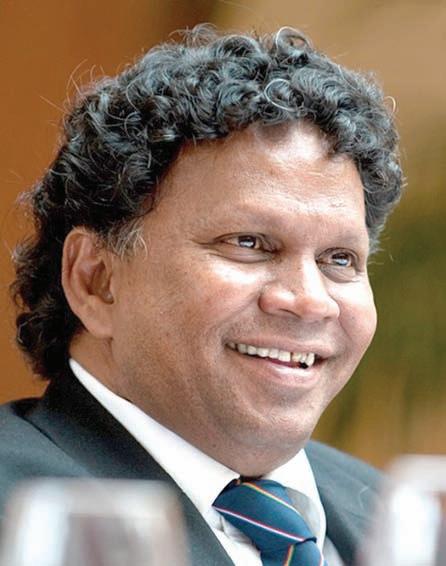

Maggie Harris, “60 Years of Loving” (Cane Arrow Press)
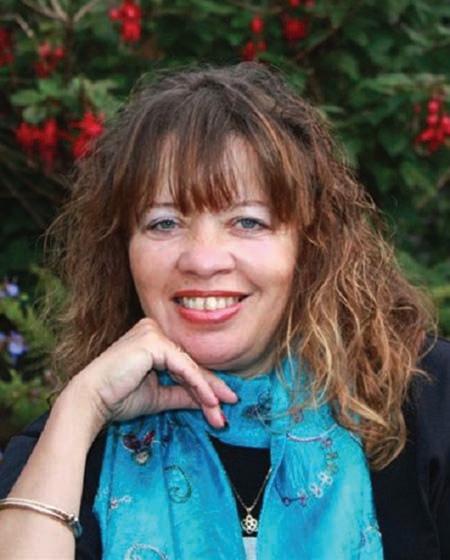
“This is Harris’s sixth collection of poetry and it evokes her 60 years of life in Guyana and the UK. These 74 richly textured, mature and celebratory poems sparkle and impress with a language that resonates with original imagery and insight.”
Harris won the Prize in 1999 for her first collection of poems, “Limbolands”.
Stanley Niamatali, “The Hinterlands” (Caribbean Press)
“A wonderful debut collection of poems centred around the author’s haunting memories of life on a sawmill in the Berbice river. The poet, now living in the US, straddles two cultures and his poems depict and question the values of both.”
Niamatali, “the youngest of thirteen children, was a part of his family’s sawmilling and logging business in Guyana. He obtained his BA and MA at West Virginia University and PhD at the University of Georgia. He is a professor of English at Montgomery
College, Maryland. His poetry has been published by Oberon, Full Circle, and The Caribbean Writer.”
Best Book of Drama
Harold Bascom, “Desperate for Relevance”.
“Desperate for Relevance” is an “interesting drama script in which most of the characters are dead Caribbean writers. Funny in parts, it is also in parts a sad and poignant commentary on the plight of our writers and societies...The writing makes the reader long to see it powerfully enacted on the local stage.”
Bascom is a multiple winner, winning the Prize in 1994, 1996 and 2010. Congratulations to the winners. The fact that some writers are multiple winners should be viewed on two levels as inspiration and challenge by other writers to do better.
Congratulations go out to all the winners, especially to
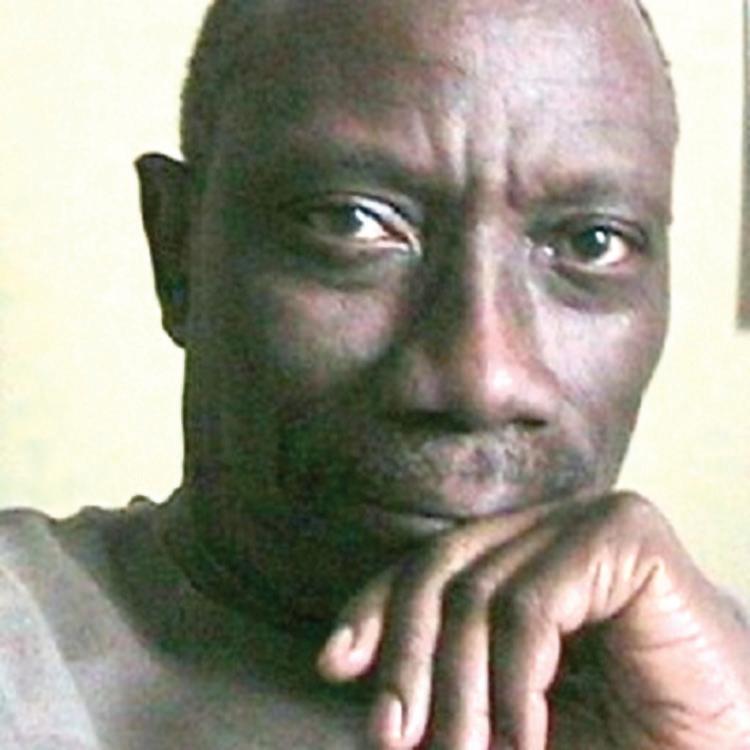
the locally-based writers who made the shortlist, and to Subraj Singh who won in the Best First Book of Fiction category. And the eventual winner in all of this is Guyana. This is the El Dorado of Guyana unfolding, giving shape of Guyanese Literature.
Responses to this author telephone (592) 226-0065 or email: oraltradition2002@yahoo.com.
In 1782, Mr J. Mclnroy set up in business in Georgetown, the capital of Grenada. In 1789 Charles Stewart Parker was sent to Grenada to work under George Robertson, merchant, for a trial period. A co-partnership was then formed between them and one Daniel Gordon, with trading interests in Grenada and Demerara in what is now Guyana.
After a dispute with Gordon, this was dissolved and a new co-partnership agreement made. Two firms were formed: Robertson Parker & Co. in Grenada and McInroy Sandbach and Co. in Demerara. The partners were George Robertson, Charles Stewart Parker and James McInroy with equal shares each, and Samuel Sandbach with a half share.
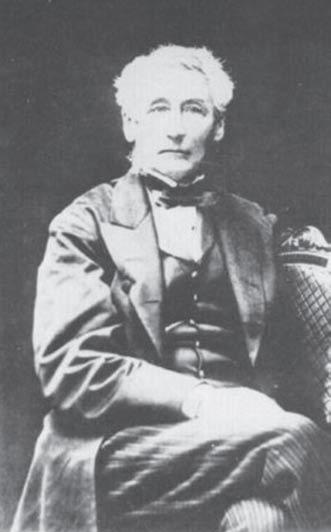
Robertson and Parker went to live on two cotton estates in Demerara which already belonged to the firm. Robertson died on one of the properties in 1799. In 1802, the remaining three partners were in Britain and formed the company of Mclnroy, Parker & Company in Glasgow. George Rainy, brother-in-law of Charles Stewart Parker became a partner in about 1811.
Charles Parker’s interest was mainly in the Demerara cotton estates of Woodlands, and L’Amitié. The latter, purchased in 1800, employed fifty slaves, and was bought with Gilbert Robertson, nephew of George. Charles settled in Scotland, making periodic trips to Demerara.

According to a December 1900 ad in the St John Daily Sun, the company traded in sugar, molasses, rum, greenheart, wallaba shingles, charcoal, coconuts, cotton and cocoa, to name a few, from their lot 8-11 Werk-en-Rust depot and dock. According to Rodway (J Rodway: ‘History of British Guiana’, 1893) however, their interests also included, “prime Gold Coast negroes” for the slave trade.
By 1813 Liverpool had become the partners’ headquarters, and the same year saw Phillip Frederick Tinne join the partnership, which was then renamed Sandbach, Tinne & Company. Tinne, who died in Holland in 1844, was succeed-
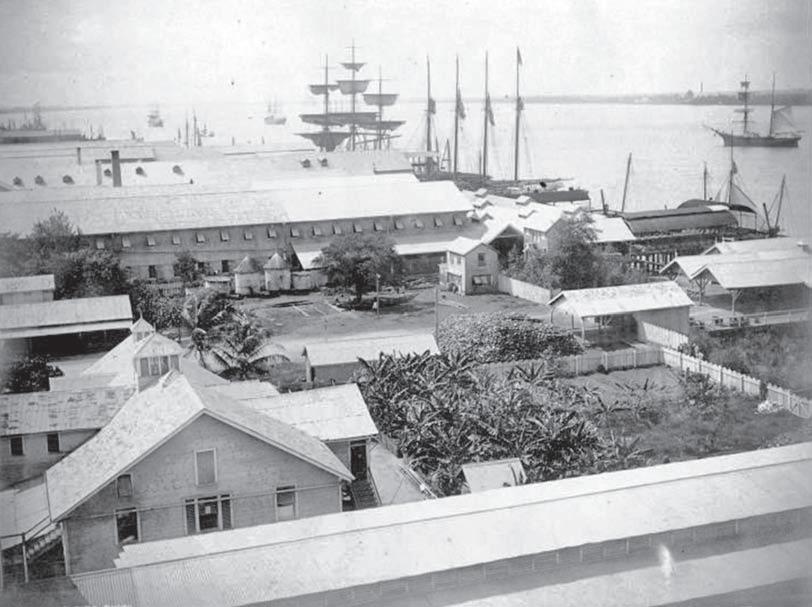
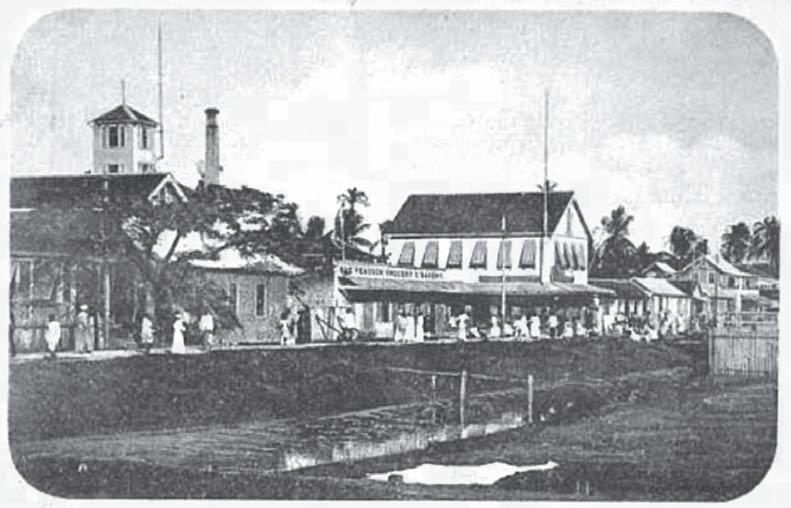
of their ships, known as Orealla, was called a ‘coolie’ ship, and for twenty years carried emigrants and Indian workers.
Following the dissolution of that conglomerate in 1854, Plantation Leonora was transferred to Sandbach, Tinne and Company, the London and Liverpool-based parent company of Sandbach Parker. Subsequently in 1891 all of Sandbach plantation holdings in the colony came under direct control of the Demerara Company Limited, a limited liability Company.
In addition to Plantation Leonora the Demerara Company by the year 1939 also owned and controlled Plantations Diamond, Farm, Providence, Ruimveldt and Cornelia Ida.
Sandbach, Parker & Co., Ltd., Head Office and Hardware Store, Water St. (no date) Old photos show two separate structures of the company’s building in Water Street but there is no information on whether the building was later redesigned or there were two separate buildings
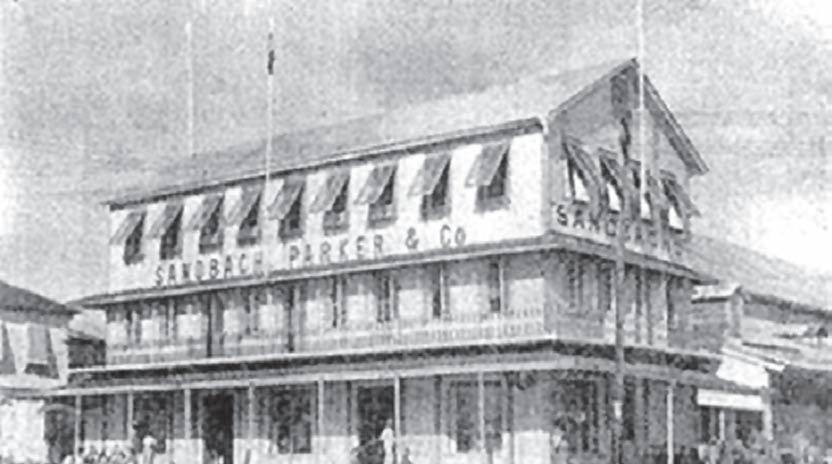
ed in the company by his son John Abraham Tinne, who had married a daughter of Samuel Sandbach.
During the first half of the nineteenth century, ownership of Plantation Leonora was in the hands of Mc Inroy, Sandbach and Company. Their finances received a boost from the bounty (about £100,000), which the firm received from the government, in October 1835 for giving up their slaves on the plantations.
They then turned to shipping indentured labourers from India to the colony. One
Of the remaining twenty-one sugar plantations in the country at the time, fifteen were under the control of Booker Brothers, Mc Connell and Company Limited while three each were in the hands of Curtis Campbell and S. Davson respectively.
Nationalisation claimed both the Bookers Group in 1976, which at the time had owned 80 percent of the sugar industry, and the Demerara Company in 1975, which had owned 20 percent. The government merged the two and formed Guysuco in 1976.
The prime minister’s residence, which is situated at 44 Main Street, Cummingsburg, was built for Sandbach in the nineteenth century. Samuel Sandbach died in 1851.
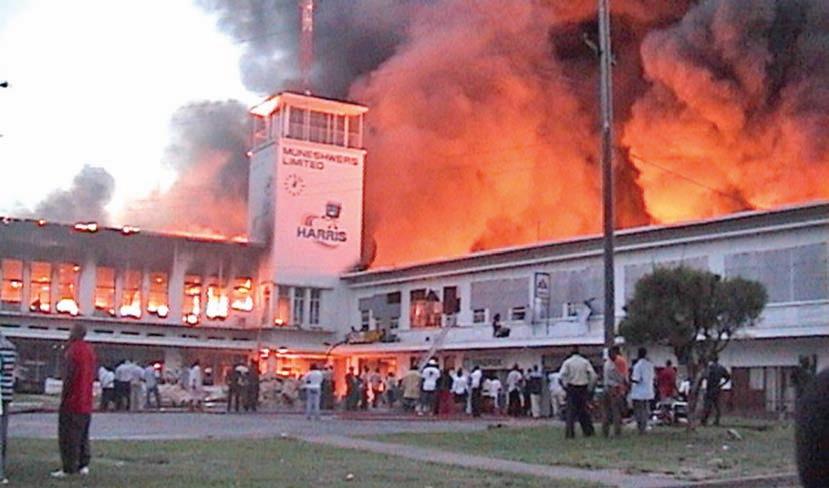
In Dec 2003, the Sandbach Parker building in Georgetown, under new ownership since 1945 and now known as Muneshwers, was substantially destroyed by fire and replaced with a concrete structure.
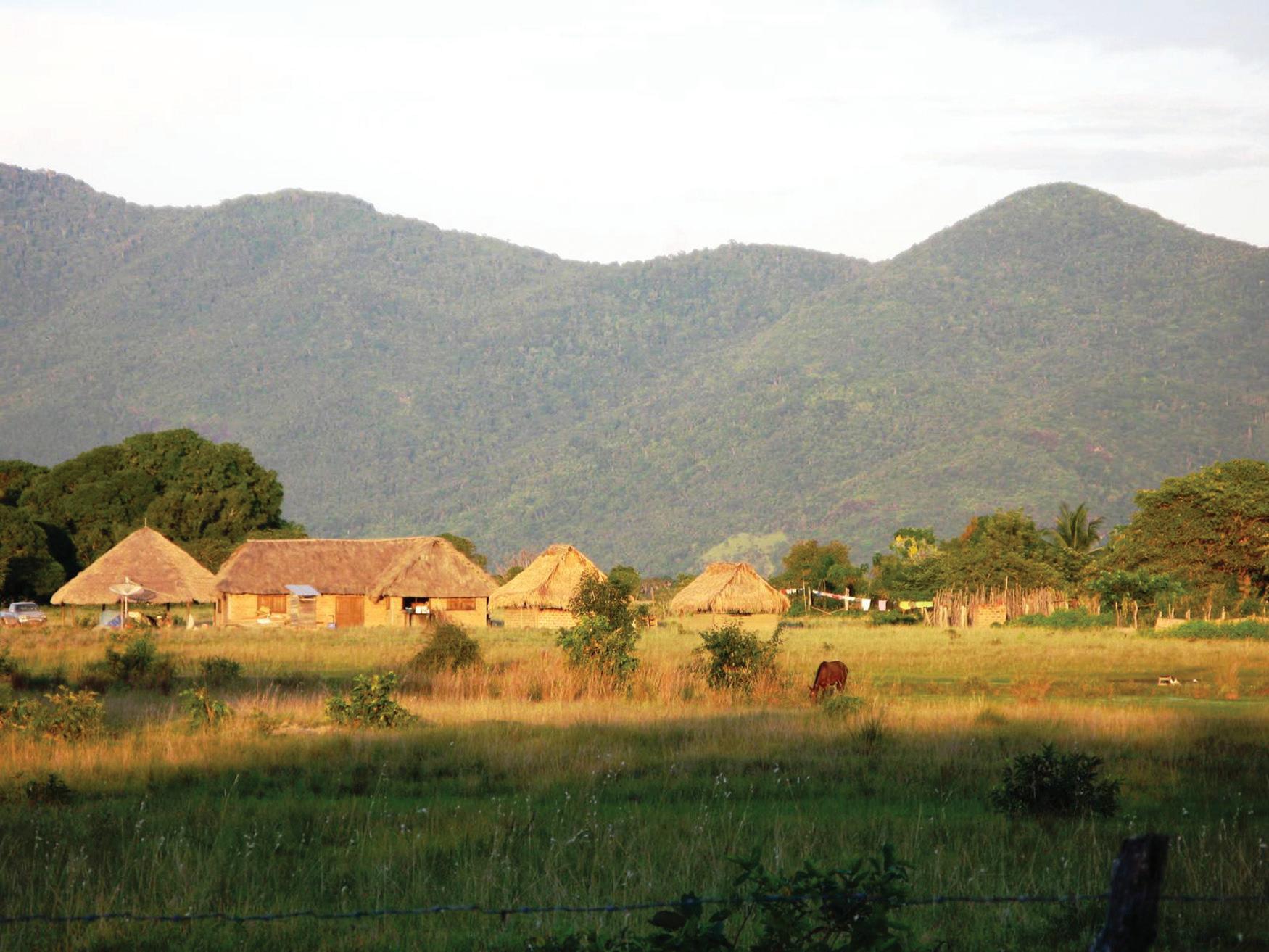
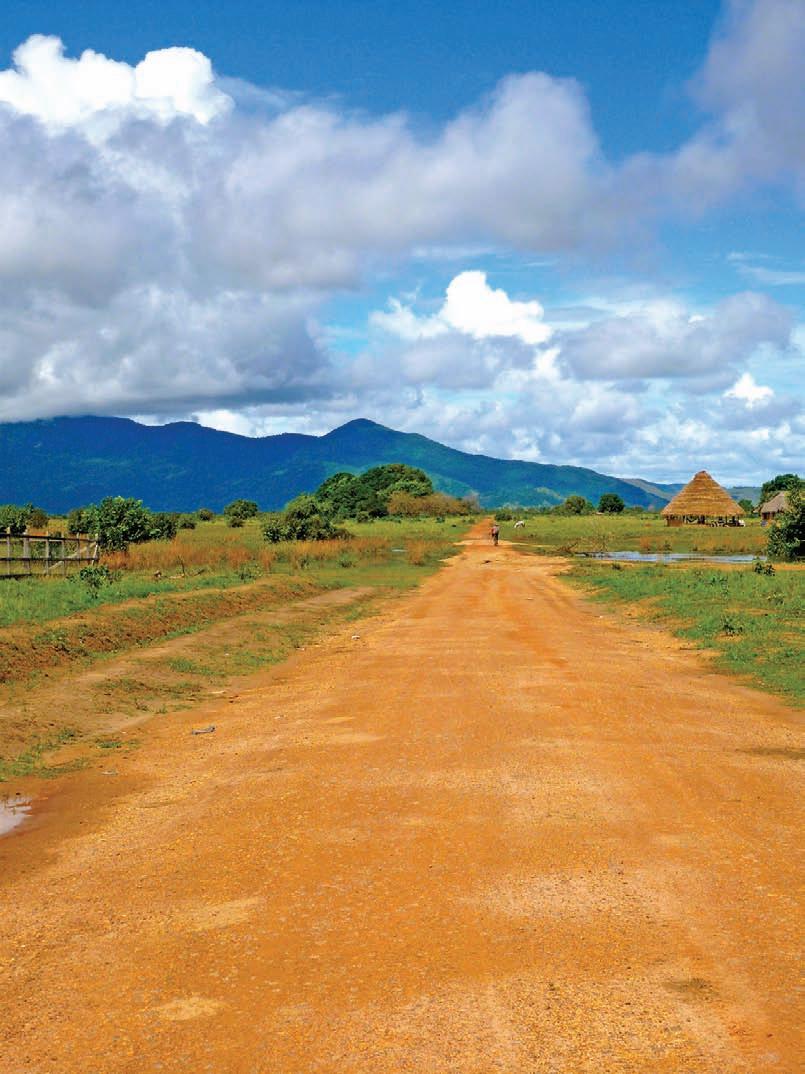
Shulinab is a community situated in the spectacular natural beauty of South Central Rupununi, Region Nine. Also known as Makushi Village, Shulinab lies along the main South Savannah road, about 35 miles south of Lethem and about 12 miles southeast of Parikwarinawa village.
Shulinab has a population of approximately 500 people. It has several active organisations, and serves as headquarters for the South Central People’s Development Association.
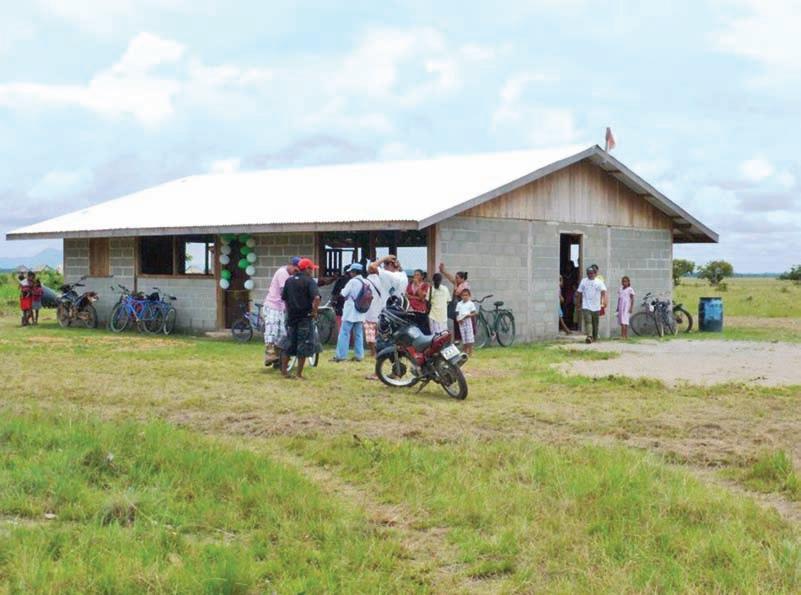
The establishment of the Shulinab Industrial Arts Centre, financed by the New Zealand government, focuses on carpentry and joinery, and enables community members to tap into the construction industry and capitalise on the growing markets at Lethem and in Brazil.
Farming is a very important activity within the community, and is done along the banks of the Saurab, Shulinab and Sawariwau Rivers. Shulinab has a welcoming community spirit, and village members eagerly share their life events, projects and personality with the rest of world.


Boost your immune system, stay healthy, fight the pesky flu bug (and others), and treat the symptoms if you do come down with something with these home remedies.
Green tea is known to have many properties that can help keep you in tip-top health – and therefore better prepared to ward off cold and flu bugs. The jury is out on how many cups of tea are optimal, but 2-3 per day are often recommended. If you do come down with cold or flu symptoms (or feel them coming on), consider 3-4 cups of green tea per day to expedite ridding your body of those nasty bugs and give your body’s defenses an extra jolt.


Ginger’s health benefits have long been touted. Steep several slices of fresh ginger root in hot water and sip for an extra health boost or to soothe a cough or scratchy throat.
Honey is known to bolster the immune system. A daily dose of honey can help you to feel energetic and stay healthy. It also has antibacterial and antimicrobial properties; if you do develop a sore or scratchy throat, honey will soothe and help heal. Use it in your tea, coffee, plain hot water or by itself. You can even gargle with honey (and lemon) in salt water when the mixture is at room temperature. (Do not give honey to children under 1 year of age.)
Lemons are loaded with vitamin C, which is known to support the body’s natural defenses. Lemon (and lime) juice is reported to decrease the strength of the cold and flu virus in the body and reduce phlegm. Add lemon juice to your tea or make hot or cold lemonade with honey to stay well, build resistance to cold and flu, and speed up healing if you do succumb.
Garlic may be known to ward off vampires, but it can also ward off colds and flu.
Garlic contains the immune-boosting compound allicin, also know to relieve cold and flu symptoms. Chop or crush 1-2 gloves of fresh garlic and “steep” them in hot water; then, drink it like a tea. This may also help others keep their distance from you (unless they’re attracted to the smell of garlic), preventing further spread of the virus (wink, wink).
Peppermint tea is laced with nutrients that help the body fight off illness. It also
can act as an expectorant, helping the body to cough up mucous.
Salt water in homemade saline nasal sprays, nasal washes, and gargles has long been used effectively to soothe sore throats, and keep respiratory passages moist, decongested and free of invading pathogens. If you do get a sore throat, gargle with half a teaspoon of salt mixed with 1 cup of warm water, four times per day. For nasal washing, use a neti pot or bulb syringe with a quarter teaspoon salt in 1 cup of warm water. Tip head to one side over sink or basin and gently introduce solution to higher nostril. Allow solution to drain from the other nostril. Repeat procedure by then tipping head to opposite side. Note: Although many use warm tap water in their neti pots, distilled, sterile, or previously boiled water is recommended for purity/safety. Be sure to clean and dry the neti pot after each use to prevent the introduction of harmful bacteria into the nasal passages/sinuses.
Steam can help to relieve stuffiness and congestion. Boil a pot of water on the stove and then slowly breathe in the steam. Be careful as steam can cause burns. If the steam makes your nasal passages burn, pull your head back slightly and breathe in more slowly.
The truth is many of the old standard home remedies, when used regularly and properly, can be your body’s best – and least expensive – defense against colds and the flu, also helping to minimize their impact if they do take hold.



Nelsion Nurse recently released his latest chic collection, Pure Essence, at his fashion event Reflections. The allwhite collection is the designer’s vehicle of showcasing his originality and tells his story of “keeping creativity pure”.

“Art is unquestionably one of the purest and highest elements in human happiness. It trains the mind through the eye, and the eye through the mind. As the sun colours flowers, so does art to life. When you’re socially awkward, you’re isolated more than usual and when you’re isolated more than usual, your creativity is less compromised by what has already been said and done. All your hope in life starts to depend on your craft, so you try to perfect it. One reason I stay isolated more than the average person is to keep my creativity as pure as possible. Sometimes beauty lies in the simplicity of life and this I try to showcase through my latest collection,” the designer said in an interview with Sunday Times Magazine
For more information, visit Nandre’s Kreations on Facebook. (Photos by Helio Phoeli)










Victoria Dawn Justice is an American actress and singer. She debuted as an actress at the age of ten and has since appeared in several films and television series including the Nickelodeon series “Zoey 101” and “Victorious”. She has made appearances in several theatrical releases, including “Unknown” as well as the 2006 thriller “The Garden”. She has appeared in several Nickelodeon series, including “True Jackson”, “The Penguins of Madagascar” and “iCarly”. In 2015, she starred in the lead role in the MTV series, “Eye Candy”. Aside from acting, Justice is involved in her musical career. She has performed several songs for the soundtrack to the Nickelodeon musical “Spectacular!” in which she starred.
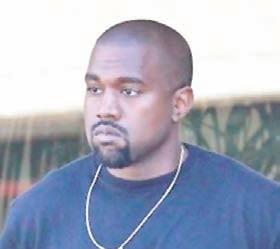
Kanye West talked about what happened during the backlash in 2009 after he interrupted Taylor Swift’s Best Female Video of the Year acceptance speech at the VMAs. Speaking at the Footwear News 29th Annual Achievement Awards where he received an award for Shoe of the Year, the rapper said he went into hiding during that moment and it ended up becoming his creative rebirth.
“After the infamous Taylor Swift moment, I sort of did a little self-exile, just to get away from paparazzi…,” Kanye said during his acceptance speech. He globetrotted with his creative director pal, Virgil Abloh, from Japan to Italy where they brainstormed ideas at the Fendi headquarters but ended up getting kicked out for playing music too loud.
“I went to Hawaii and took all the creative energy that I wanted to express and we put it into an album called My Beautiful Dark Twisted Fantasy,” he added. “We have all these rules of what people can do in the studio, and I’m constantly

concerned about what I’m wearing. But, it’s hard to really get fresh in Hawaii because you can’t layer up and everything.”
The rapper went on a 20-minute rant on the stage. “I have absolutely no plans for what I’m going to say,” he began his speech. “So this could land completely wrong. But it doesn’t really f**king matter, does it? If you don’t like 10-minute profanity-ridden speeches that end with a presidential bid, you can go to the bathroom.”
Kanye also talked about his expecting wife Kim Kardashian and their growing family. “I’m waiting on
Oprah Winfrey has signed a deal with Flatiron Books to launch her own memoir “The Life You Want”. Set to be released in January 2017, the book promises to reveal never-before-told stories about Oprah.
Oprah is currently in the very earliest stages of the writing process. In a statement, the former host of “The Oprah Winfrey Show” says, “All of my experiences, even the painful ones, have been there to teach me something about life. I’m still learning and I hope my story inspires other people to live the highest, fullest expression of themselves.”
As part of the deal, Oprah is also starting her own publishing imprint at Macmillan, which will focus

on nonfiction and publish a handful of titles a year chosen by the talk show host.
Bob Miller, president and publisher of Flatiron Books, says, “We’re deeply honored to publish ‘The Life You Want,’ which is such a remarkable combination of Oprah’s life story and the lessons we can
all draw from it for our personal growth. We’re also thrilled to give a home to Oprah’s imprint titles. We all know how extraordinary Oprah’s instincts are when it comes to choosing books, instincts borne of her lifelong love of reading and the power of the written word.”
my son to arrive any day now,” the 38-year-old father proudly announced, “and I look at my daughter and I look at my wife and she’s rich and I don’t plan on being broke.” (AceShowbiz) Taylor Swift throws in US$50,000 for cause
(AceShowbiz)
Taylor Swift is all about philanthropy and preserving arts. The “Wildest Dreams” singer has donated US$50,000 to the Seattle Symphony Orchestra on Thursday, December 4 as a token for fellow Grammy winner John Luther Adams. Swift penned a letter


to music director Ludovic Morlot, saying she was inspired by Adams’ “Become
Gwen Stefani congratulated her beau Blake Shelton for being recognized as the Artist of the Year at the 2015 CMT Awards. The blonde beauty posted on Instagram on Thursday, December 3 a sweet post in honor of his win and called him “Michael Jackson of Country Music.”
“Congrats @blakeshelton,” Gwen wrote alongside a video originally posted by user @Makegirlz which showed a nail artist impressively painting a portrait of Blake. His song “Lonely Tonight” could be heard playing in the background. The “Used to Love
Though she’s become one to watch on the red carpet, Davis says in the December issue of InStyle that high fashion didn’t always come easily to her.
“Back in the day, my style was whatever was different and cheap,” she says. “I was an artist, and I wanted my clothes to reflect that. I now understand fashion in a way that I don’t even have a language for. I know designers. Before, you could’ve put a gun to my head
Ocean” which reminded her of going to a local symphony with her grandmother. The Symphony commissioned the piece and performed it at Carnegie Hall in 2014 during Spring for Music Festival.
“I was thrilled to hear that Taylor was moved by ‘Become Ocean’,” Morlot said in a statement. “This is a powerful piece with a unique soundscape. We’re especially thankful that she wishes to support our musicians, and that she shares our belief that all people should be able to experience symphonic music.”
Swift’s donation would go to a cause called “Link Up: Seattle Symphony” that works with elementary school students, and to bolster the musicians’ pension fund. Besides winning Grammys, the composition won the 2014 Pulitzer Prize for music. Adams said in an email, “I’m delighted. Through her generosity and her open ears, Taylor Swift is inviting her fans to experience a new and different kind of music.” (AceShowbiz)
You” singer also put the hashtags “CMT Artist of the Year” and “Michael Jackson of Country Music.”
At the awards show held on Wednesday, Blake candidly addressed his divorce from Miranda Lambert and new romance with Gwen during his acceptance speech. “There’s too many people to stand up here and name, but more importantly, I want to say that this has been a crazy year, from the way it started to how it’s ending is so awesome for me,” he told the crowd, before concluding, “So thank you all. This is a great way to end it for me. Thank you so much.”
Similar to Gwen who made public her congratulatory message, Blake previously wasn’t shy to show his support to Gwen who performed at the 2015 American Music Awards last month. Prior to her performance, he tweeted, “Prepare for greatness.. #AmericanMusicAwards.” Following his first tweet about AMAs, a fan tweeted to Blake, “I thought her performance was the best of show... fabulous.” The fan added thumbs-up emoji to her post. In response to his fan’s tweet, Blake simply replied, “Agreed...” (AceShowbiz)
and asked me to name just one designer and I would’ve been dead.”
But that doesn’t mean she’s taking Hollywood’s obsession with looks too seriously. “What’s released me most from the fear of aging is selfawareness,” she says. “I’ve never determined my value based on my looks or anything physical. I’ve been through a lot in life, and what has gotten me through is strength of character and faith.”
She derives much of her joy from daughter Genesis Tennon, whom she adopted in 2011. “I always tell Genesis she was born from my heart, not my belly,” she says, saying her advice for potential adoptive parents is, “There are so many ways to mother rather than to carry a child in your body. So many children need parents, and so many of us want to mother. Know that you will experience motherhood to the full extent.” (PEOPLE)

Mohit Malik is an Indian television actor and dancer. He is well known for played the role of Bharat in Zee TV’s show “Banoo Main Teri Dulhann”. Malik also played the lead role in “Doli Armaano Ki” on Zee TV. The actor made his television debut with TV show “Miilee” as Aaoni on Star Plus. Following that show, he appeared in various TV series such as “Pari Hoon Main”, “Banoo Main Teri Dulhann”, “Godh Bharaai” and others. In 2015 Malik participated in Indian dance series “Jhalak Dikhhla Jaa”, in which he was awarded third place.
The prosecution on December 3 wrapped up its arguments before the Bombay high court in the 2002 hit-and-run case, in which Bollywood superstar Salman Khan was convicted and sentenced to five-year imprisonment, and urged the court not to show any leniency to the actor.
The prosecution, while concluding its arguments, asked the court to uphold the sentence awarded to him in May this year by a sessions court for ramming his car into a shop in suburban Bandra, killing one person and injuring four others. The trial court had on May 6 held Salman guilty of culpable homicide not amounting to murder, upholding the police’s case that he was drunk and was driving the car
Right from the very start of her Bollywood career, Sonam Kapoor has spoken her mind, without worrying about the consequences. Even now, she says she isn’t scared of voicing her opinions.
“I am completely fearless. Actually, people are now appreciating me for that. I have been given a platform, and I am blessed to be where I am. If I don’t use this [platform], then it will be very unfortunate. Even if my words influence only three-four people, why shouldn’t I speak my mind anyway? Fame can be a great thing if it is used con-

when the incident took place on September 28, 2002.
Justice A R Joshi is hearing the actor’s appeal against the conviction.
Public prosecutors
Sandeep Shinde and Purnima Kantharia had in their arguments earlier said the actor was drunk at the time of the incident and his breath smelt of alcohol even when he was brought

structively,” says the actor. She adds, “If I am saying something isn’t okay, it doesn’t matter whether I am right or wrong. I am sharing with you my opinion. Parents in India often tell their children, “Beta, chup
to the hospital for medical check-up the next day. The prosecution had also discarded the defence theory that Salman’s driver Ashok Singh was driving the car at the time of the incident and that he had lost control of the vehicle after its tyre burst.
The prosecution maintained that only three persons were present in the car ---Salman Khan who was driving the vehicle, his bodyguard and policeman Ravindra Patil, and the actor’s friend, singer Kamaal Khan.
While concluding the arguments, Shinde cited several judgements of the Supreme Court regarding the 1999 Sanjeev Nanda case and 2005 Alistair Pereira case. (Hindustan Times)
raho (Keep quiet)”. But, it’s okay to have opinions. Young people need to be opinion makers. They must have a voice,” she says.
The “Raanjhanaa” (2013) star calls herself a “feminist”, and asserts that she has been one even before she entered the film industry. “A lot of actresses say they are not feminists. It’s really offensive, and one shouldn’t say that. I don’t judge them, but they clearly have no idea what being a feminist is all about. I also feel that when you don’t take a stand, you are, in a way, siding with the person who’s in the wrong,” she says. (Hindustan Times)

AFirst Information Report (FIR) was on December 4 lodged against Bollywood actor Aamir Khan and his wife Kiran Rao in Bihar’s Muzaffarpur district on a court directive for their controversial remarks on “intolerance.”
Advocate Sudhir Kumar Ojha filed the FIR against Khan and his wife at Town police station under sections 153 (Wantonly giving provocation with intent to cause riot), 153A (Promoting enmity between different groups on grounds of religion, race, place of birth, residence, language, etc), 153B (Imputations, assertions prejudicial to national-integration) and 154 (Sedition) of IPC.
The FIR was registered on the direction of the chief judicial magistrate, Muzaffarpur district, Sushma Trivedi, on a complaint filed by Ojha last week charging the actor
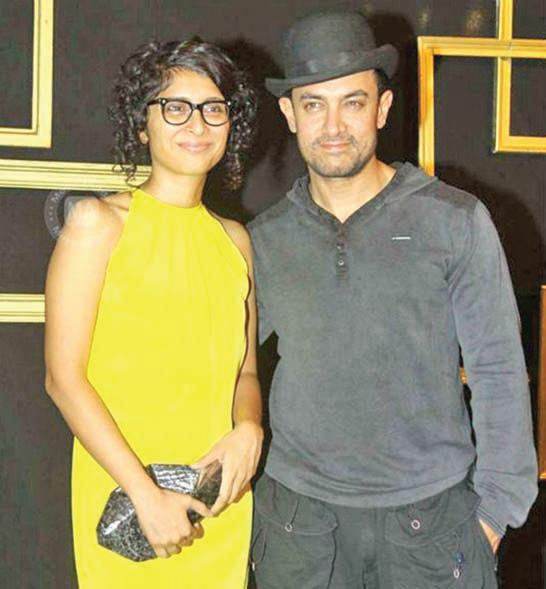
with hurting the sentiments of the people by claiming that an atmosphere of intolerance prevailed in the country.
Khan had, during a function in Delhi recently, court-
ed controversy by saying that Kiran Rao was considering whether to move out of the country with their child due to the prevalence of an atmosphere of “intolerance.” (Hindustan Times)

After the success of “Quantico”, Priyanka Chopra has plans to go where no Bollywood star has gone before -- to become a de facto international star. The actor is managing her career both in India and America with aplomb and already making plans for the future.
Abroad she is busy with her American show “Quantico” while back home here in India she has a film “Bajirao Mastani” up for release. “If I have to dominate globally then I have to pay the price for it... I have to manage things. It was my choice to do things that I am doing and be responsible to-
wards it,” Priyanka said.
Talking about her hit ABC drama, she said, “Quantico is the biggest show in the US. I am an Indian star first then an international personality.”
However, the journey has taken a toll on her. “I am proud of all the work I am doing. It is exciting work that is coming out. I am physically tired. My mother says when you are young you should work very hard,” she added. She is looking forward to the release of Sanjay Leela Bhansali’s “Bajirao Mastani”. “I did the film for Sanjay sir and I have just followed him. I was the first person to be cast in this film. I was shooting for Mary Kom and Sanjay sir told me about Bajirao Mastani and he was clear he wanted me in it,” she said. (PTI)
Sunny Deol set to remake Tom Hardy’s ‘Legend in India’
Sunny Deol is best known for his roles in action films such as “Arjun” (1985), “Ghayal” (1990), “Ghatak”, among others. Despite spending almost three decades in the industry, he has rarely attempted taking on a dark role in his career.
But, that might change now. Apparently, the actor is in talks with a Hollywood production house to buy the remake rights of a Tom Hardy film.
A source close to him said, “Recently, Sunny was in the US with his sons, Karan and Rajvir. During an outing, the three went
to watch a recently released film starring Hardy, in which he has a double role.
The movie captures the rise and fall of two UK-based gangsters, known as the Kray twins. It charts their gruesome career, from their rise to downfall, and eventual imprisonment in 1969.
Sunny liked the movie a lot and felt that the film should be made in India too.”
Talking about his plans, Deol says, “I have been a fan of Hardy since the days of ‘Sucker Punch’ (2008). I recently saw ‘Legend’ in the US along with my kids, and we were absolutely thrilled by Hardy’s performance.

e it corals, reds, or something a little bolder, bright lips are having something of a moment with the A-list celebrities. So follow their lead and dare to go a shade bolder.








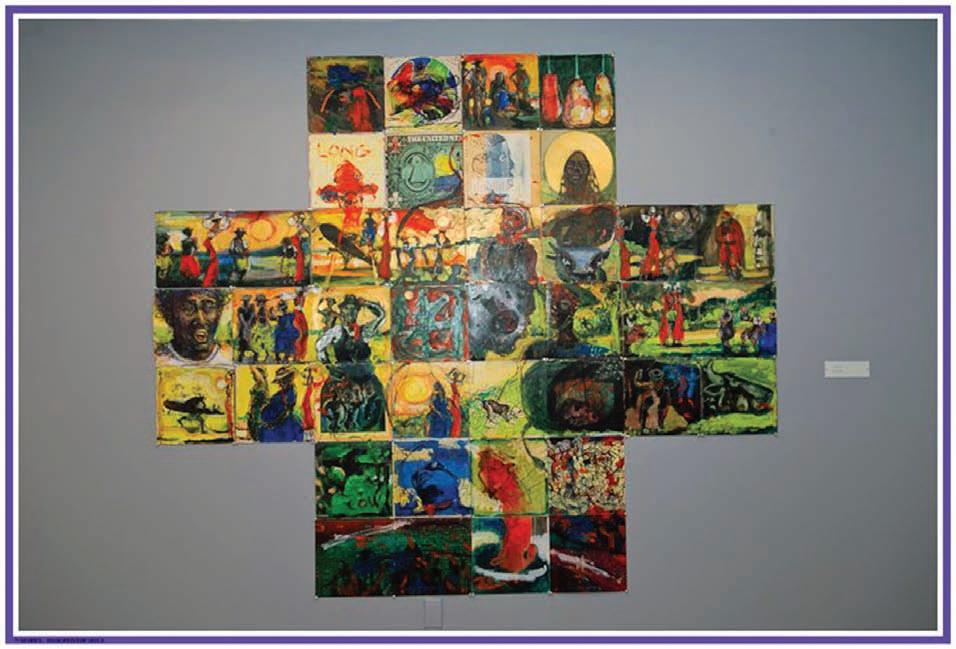
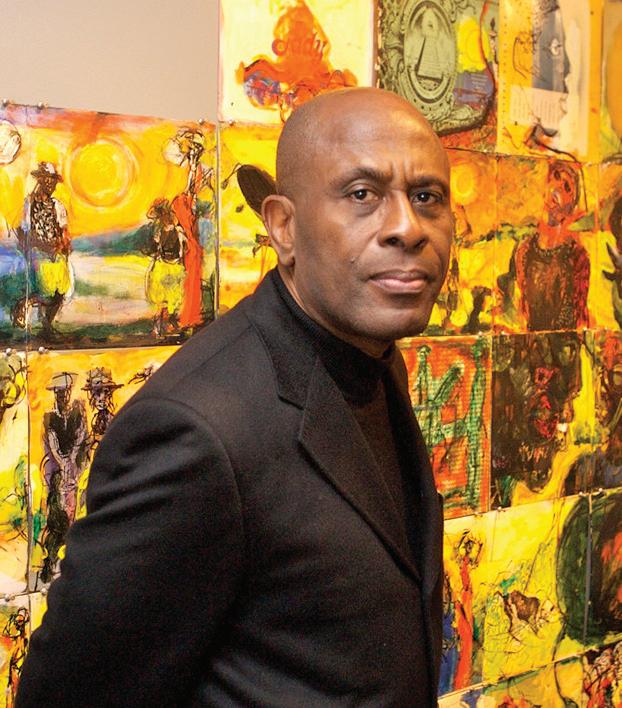
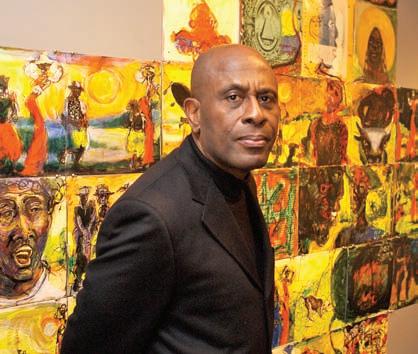
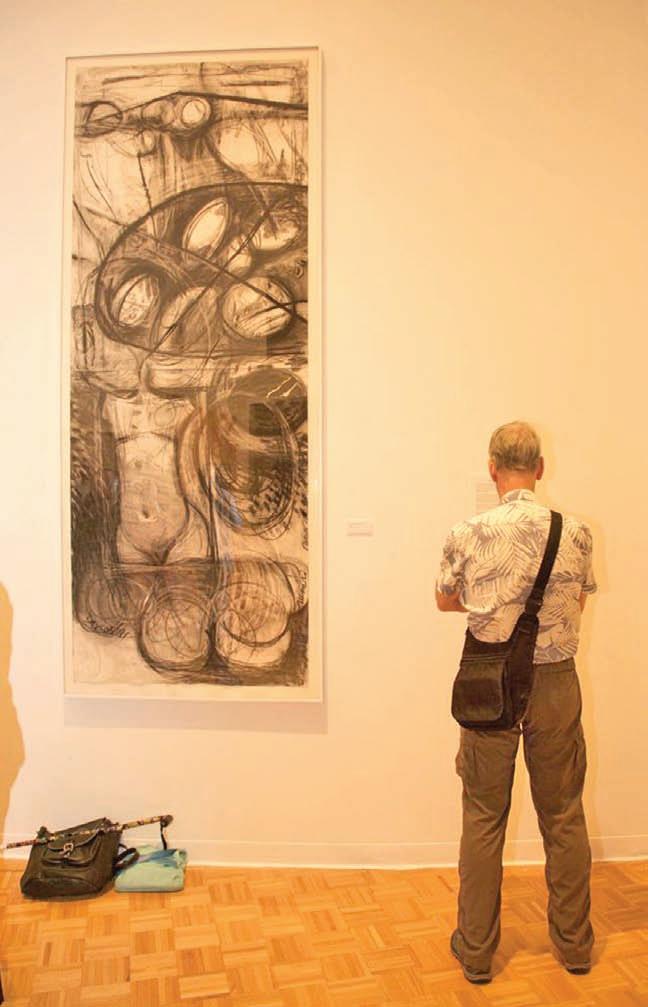
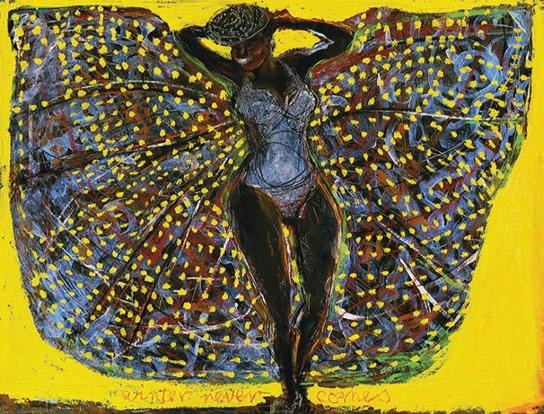
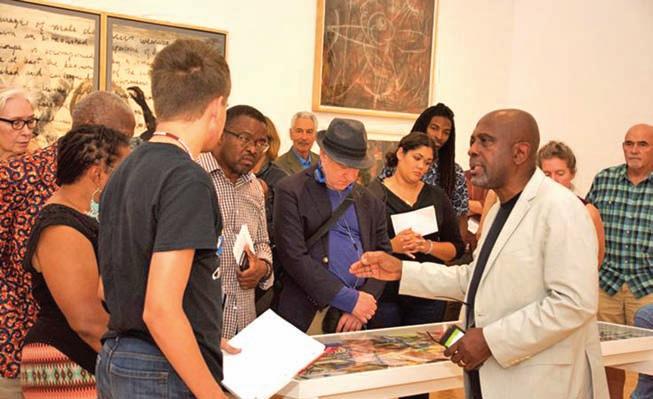
The Ramapo College Art Galleries, US, recently presented an ambitious mid-career survey exhibition by USbased Guyanese artist Victor Davson. The exhibition, Victor Davson, Full Circle, spanned 30 years and five bodies of work that move back and forth between abstraction and figuration.
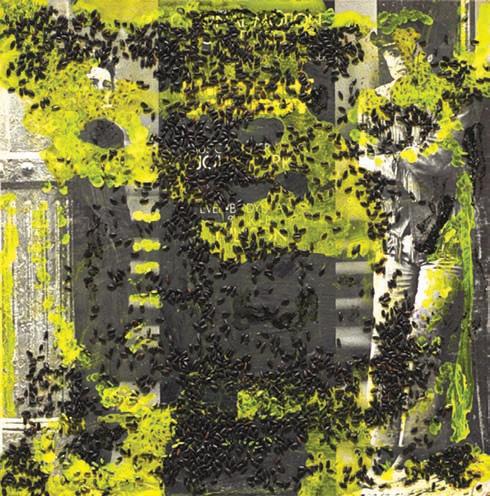
“This compelling exhibition offers visitors a firsttime opportunity to experience the scope of the artist’s oeuvre. A cavalcade of imagery is offered -- from the earlier accomplishments in formal abstraction, to pieces informed with literary and political references, to the layered imagery from popular culture seen in the Dub Factor: Heroes album covers series. Loose narratives touching upon his youth in Guyana are peppered throughout. There is a sort of sense of kismet about having Victor Davson’s exhibition here at Ramapo at this moment. The Ramapo College Art Galleries present varied contemporary exhibitions, but we have been striving for new ways to link our renowned Caribbean collection with other artists and communities. Joining the contemporary art world that Davson champions to his Caribbean heritage in an exciting project like this one helps us meet that goal. It has truly been a privilege to curate
Victor Davson: Full Circle and pay tribute to such a magnificent artist,” says Sydney O. Jenkins, Director of the Ramapo College Art Galleries and Exhibition Curator.
Davson is a practicing artist and founding director since 1983 of Aljira, a Centre for Contemporary Art in Newark, New Jersey. He was born in Georgetown and, since immigrating to the United States in 1973, has received a BFA degree from Pratt Institute, Brooklyn, New York; co-founded Aljira, a Centre for Contemporary Art and established himself in his practice as an artist.
Notable solo exhibitions include Dub Factor Redux, Maplewood Art Center,
Maplewood, NJ; Bad Cow Comin’: Recollections and Transformation, Rush Arts Gallery, New York, NY; Hero and Monster, The Tomasulo Gallery, Cranford, NJ; Bad Cow Comin’ and Limbo/ Anansi, DHR Gallery One, Newark, NJ; Bad Cow Comin’: Recollections, Tompkins College Center Gallery at Cedar Crest College, Allentown, PA; and The Chain Link Series, Jersey City Museum, Jersey City, NJ.
Morristown, NJ; The Act of
Notable group exhibitions include African-American Artists and Abstraction, Cuban National Museum, Havana, Cuba; Timehri Transitions: Expanding Concepts in Guyana Art, The Wilmer Jennings Gallery at Kenkeleba House, NYC; Contemporary Expressions: Art from the Guyana Diaspora, Five Myles Gallery, Brooklyn, NY; Drawn to New York, The Bertha V.B. Lederer Gallery, State University of New York, Geneseo; This Twittering World, Francis Kyle Gallery, London, England; African American Artists from the Permanent Collection, The New Jersey State Museum, Trenton, NJ; Present Continuous, Nathan Cummings Foundation, New York, NY; La Línea: Dibujos Contemporáneous, Museo de Art Moderno de la Republica Dominicana, Santo Domingo; Diverse Representations II, Morris Museum,
Drawing: Medium/Method/ Meaning, Tompkins College Center Gallery at Cedar Crest College, Allentown, PA; and Jonction Internacional, Nice, France.
Davson has received a Pollock-Krasner Foundation grant; a Rutgers Center for
tor of Aljira, a Center for Contemporary Art, Davson leads a vital hub for creative excellence in Newark New Jersey’s downtown arts district.
Notable highlights in the organization’s history include: the founding of Emerge, a professional de-
Ecuador; a major award from the Andy Warhol Foundation for the Visual Arts—becoming one of only eight institutions nationwide selected to participate in the foundation’s second year stabilization initiative for small to midsize organizations; and designation as a Major Arts Institution by The New Jersey State Council on the Arts every year since 2003. He is a past trustee of Art Pride New Jersey and a current member of the Advisory Council of the Brodsky Center for Innovative Editions.
Davson has been honoured by the Newark Arts Council as well as the Brodsky Center for Innovative Editions for both his work as a visual artist and his leadership in the arts. He received a leadership award from Prudential Foundation for his contribution to the Newark community.
Innovative Print and Paper fellowship and three fellowships from the New Jersey State Council on the Arts. His work is in the permanent collections of the Newark Museum, The Montclair Art Museum, the New Jersey State Museum, and the National Collection of Fine Arts, Guyana. As executive direc-
velopment program for visual artists; the founding of Aljira Design, a graphic design studio that for eighteen years earned revenue to support the organization’s exhibitions and public programs; an invitation to organize the United States representation at the IV Biennale International de Pintura in
He was one of fifteen non-profit leaders in the arts, nationwide, selected to participate in Leadership 2000, a program of arts and economic development training for outstanding community leaders, sponsored by the Lila Wallace-Reader’s Digest Fund and Manchester Craftsmen’s Guild, and run by faculty from the Harvard Business School.
He has served on panels for the National Endowment for the Arts and the New Jersey State Council on the Arts. He is a graduate of The Getty Museum Management Institute and has done graduate work in museum management at New York University Gallatin.
For more information, visit www.victordavson.com

Samsung has agreed to pay Apple
US$548m as part of a deal to settle a longrunning patent dispute. The arrangement was revealed in papers filed to a California court by both companies on Thursday.
The dispute began in 2011 when Apple said Samsung was using some of its patented technologies without permission.

patents and a $382m chunk for allegations that Samsung copied Apple’s packaging materials.
The payment does not mean the end of the row as, next year, a US court will decide if Apple deserves more damages.
A joint case management statement filed to the California court revealed that Samsung had agreed to pay Apple within 10 days of receiving an invoice.
The payment is part of a bigger $1bn damages award that Apple was granted in 2012 by a jury that considered the case. That total was reduced on appeal to $930m. Further legal action split this total into two parts - a $548m chunk for technology
BYTe
A jury is due to decide on the second damages award in 2016.
Despite agreeing to pay the first part of the settlement, Samsung said it reserved the right to get its money back if there were further developments in the case. The US Patent and Trademark Office (USPTO) is currently reviewing some of the patents Apple used in the court case.
Apple has disputed Samsung’s right to a refund if the patents are ruled invalid.
One of the patents in the case, covering ways to add
the “pinch to zoom” feature to smartphones, has already been ruled invalid by the USPTO. Apple is appealing against this decision.
Soon after the USPTO made the decision to invalidate the pinch patent, Samsung lodged a call to review the entire case with the US appeals court. This call was rejected.
“After years of not getting a cent, more than half a billion dollars is significant,” wrote patent expert Florian Mueller in a blogpost.
However, he added, the continuing uncertainty about the validity of some Apple patents and Samsung’s plans to file fresh appeals meant the case was a long way from reaching resolution. (BBC)

Who said drones had to look like quadcopter airplanes? Fleye, a new Kickstarter project, wants to make the world’s safest drone in the form of a spherical flying machine with a camera.
With blades covered in the plastic exterior, you can touch it, push it or bump into it without losing an eye.
The Fleye will be controlled via an iOS or Android app with four flying modes including selfie, panorama, hover and manual. In selfie mode, the drone will record 1080p video (30 fps) while flying toward you.
In manual, you can program a route and the drone will fly it autonomously. It’s even smart enough to react to and avoid obstacles it may encounter along the path.
This little drone is able to accomplish these feats by relying on its Linux-powered, dual-core ARM A9 CPU with 512MB of RAM. It also features two GPUs. The whole 9-inch package weighs 16 ounces.
The Fleye should offer 10 minutes of flying time with a maximum speed of 10 miles per hour, thanks to the 1500-mAh battery. Inside, the ball features a 3-axis accelerometer, a gyrometer and magnetometer.
Other sensors included are a pressure based altimeter, GPS and sonar that can track ground distance at up to 10 feet.
The company is making the SDK open to developers, hoping other folks will find specific uses for this camera ball. (Excerpted from Discovery)
Facebook has begun rolling out a new feature on its social network which allows users to stream live video.
A select group of celebrities and high profile users have been able to use the service for several months.
Live streaming via mobile phones has become one of the big technology trends of the year, with Twitter-owned Periscope and Meerkat proving popular.
Last year, Amazon paid $1bn for live streaming game site Twitch.
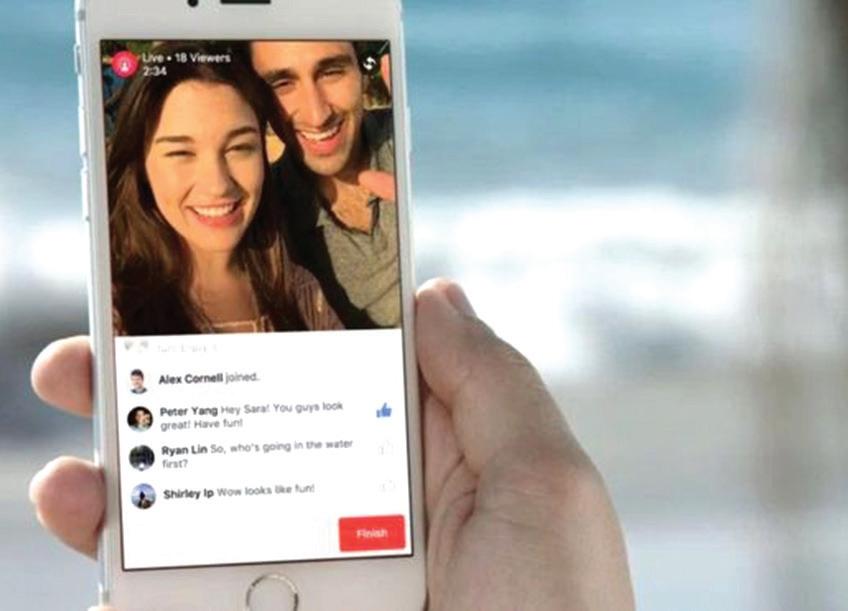
Initially Facebook’s live video feature will be available only to a small percentage of people in the US and will be limited to iPhones.
The tech giant said that “over time, the company plans to bring it to all users” but it did not give specific timescales.
In a blogpost introducing the service, Facebook said: “Live lets you show the people you care about what you’re seeing in real time - whether visiting a new place, cooking your favourite recipe or just want to share some thoughts.”
The stream will display the number of live viewers, the names of friends who are watching and real-time comments as they are written. The video will be saved to users’ timelines until they choose to delete them.
Facebook has also updated the way people can share photo collages - allowing users
Tech BYTe
to mix photos and videos.
Ian Maude, an analyst with research firm Enders said of the streaming service: “Facebook has a vast audience to promote services to so there is nothing stopping it from becoming a significant player in video streaming.”
He said that Britain, like many other countries, had become “a nation of sharers”.
“We like to tell what what we are doing all the time.”
Privacy advocates have raised concerns about such services but Mr Maude believes that Facebook will be keen to avoid any controversy.
“They will be cognisant of the privacy concerns and I believe there are restrictions on how the content can be shared, so that it won’t be automatically broadcast to everyone.” (BBC)

Anew kind of paper has the remarkable ability to store energy like a supercapacitor. It comes from researchers at Sweden’s Linköping University’s Laboratory of Organic Electronics and it has the potential to turn a new chapter for renewable energy.
The so-called “power paper” was made from cellulose fibers that were subjected to high-pressure water until they broke down into fibers as thin as 20 nanometers in diameter. Next, the fibers were coated in an electrically charged polymer and fashioned into a round sheet.
Each sheet, which is 15 centimeters in diameter and a few tenths of a millimeter thick can store as much as supercapacitors currently available on the market. The material can be recharged hundreds of times and each charge only takes a few seconds.
The paper is waterproof and was created with no dangerous chemicals or materials. It’s also quite strong:
Just for kicks, the researchers made an origami swan using one piece of power paper.
The researchers also teamed up with KTH Royal Institute of Technology, Innventia, the Technical University of Denmark and the University of Kentucky to develop the paper.
The power paper currently holds four world records: highest charge and capacitance in organic electronics, highest measured current in an organic conductor, highest capacity to simultaneously conduct ions and electrons and highest transconductance in a transistor.



Holiday lights are festive and magical when done right. Here is some advice from the pros to make your Christmas lights truly twinkle...

For
Whether you mix them with greenery or use alone, pick a focal point if you plan on hanging lights indoors (besides on the Christmas tree) and outdoors – the door frame, a window, a lush plant or tree…




Ingredients
1 (3 1/2-lb) trimmed and tied centre-cut beef tenderloin roast at room temperature
4 teaspoons kosher salt
1 teaspoon black pepper
2 garlic cloves, finely chopped
6 (3- to 4-inch) fresh rosemary sprigs
3 tablespoons extra-virgin olive oil
Accompaniment: coarse-grain or Dijon mustard
Method
Put oven rack in middle position and preheat oven to 350°F.
Pat tenderloin dry, then coat all sides with salt, pepper, and garlic. Tuck rosemary sprigs under strings on all sides of roast, leaving a few inches between each. Heat oil in a flameproof heavy roasting pan over high heat until hot but not smoking, then brown tenderloin on all sides (but not ends), about 10 minutes total.
Transfer pan to oven and roast until thermometer inserted diagonally 2 inches into centre of meat registers 120°F, 25 to 30 minutes.
Transfer beef to a cutting board and let stand 15 minutes. (Temperature of meat will rise to about 130°F.) Discard string and rosemary sprigs before slicing.
Makes 8 to 12 servings
When you're browning meat, blot the surface dry with a paper towel so the meat doesn't release moisture when it hits the hot oil. Too much moisture makes the meat steam instead of sear, and you will lose that rich brown crust.
Scrambled eggs should be cooked slowly, over mediumlow heat. Go hotter, and you’ll have overly dry eggs. Remove your eggs from the stovetop before they’re finished cooking. Eggs are a protein, and like all proteins, they will continue to cook after you remove them from the heat. If you’re serving them at the table, consider transferring them to a serving platter—that hot skillet will do nothing but continue to cook the eggs.
Keep brown sugar soft by storing with a couple of marshmallows.
Repurpose an old picture frame as a serving tray.
Create a thrifty watering can by puncturing holes in the top (the cover) of a used plastic bottle.
Add half a teaspoon of baking soda to the water when hard-boiling eggs to make the shells incredibly easy to peel off.
Use a tension rod and shower hooks to store saucepans inside a cupboard.

Great one-liners
“I never forget a face, but in your case I’d be glad to make an exception.” Groucho Marx (1890-1977)
“My wife sent her photograph to the Lonely Hearts Club. They sent it back saying they weren’t that lonely.” Les Dawson (1931-1993) -
“I don’t like country music, but I don’t mean to denigrate those who do. And for the people who like country music, denigrate means ‘put down’.” Bob Newhart (1929-) -
“I think football would become an even better game if someone could invent a ball that kicks back.” Eric Morecambe (1926-1984)
“I have kleptomania. But when it gets bad, I take something for it.” Ken Dodd (1927-)
The gift
A guy bought his wife a beautiful diamond ring for Christmas.
After hearing about this extravagant gift, a friend of his said, “I thought she wanted one of those sporty four-wheel-drive vehicles.”
“She did,” he replied. “But where was I going to find a fake Jeep?”
It was Christmas and the judge was in a merry mood as he asked the prisoner,
“What are you charged with?”
“Doing my Christmas shopping early”, replied the defendant.
“That’s no offense”, said the judge. “How early were you doing this shopping?”
“Before the store opened.”
To: All Employees
From: Management
Subject: Office conduct during the Christmas season
Effective immediately, employees should keep in mind the following guidelines in compliance with FROLIC (the Federal Revelry Office and Leisure Industry Council). Running aluminium foil through the paper shredder to make tinsel is discouraged.
Playing Jingle Bells on the push-button phone is forbidden (it runs up an incredible long distance bill)
Work requests are not to be filed under “Bah humbug.”
All fruitcake is to be eaten BEFORE July 25. Egg nog will NOT be dispensed in vending machines.
In spite of all this, the staff is encouraged to have a Happy Holiday.

The tradition of giving gifts at Christmas has become a way people celebrate with one another on the occasion of the birth of the Christian Jesus.
When it comes to buying presents for our children, we're usually motivated by good intentions and a desire to demonstrate love. Yet in our over-scheduled existence – where both parents may work and family members pass like ships in the night – we can be misguided by a false definition of "love."
Love isn't represented by "stuff." It's about relationships – communication and personal involvement. Unfortunately, it's much easier to substitute storebought "stuff" for the investment of time it takes to develop and nurture healthy

relationships.
Rev. Paul S. Frank, pastor emeritus at St. Timothy Lutheran Church in Hendersonville, Tennessee, U.S.A, explains that when a parent can't be physically present, he or she introduces an object to hold a child's attention and to satisfy the need for love.
As a child grows to ad-
olescence, peer pressure takes over, leaving parents trapped in a frenzied race to "keep up with the Joneses."
"Parents experience false confidence in their ability to demonstrate love when they buy their children everything they want," Rev. Frank says. "Many adults cannot remember quality time or family events from
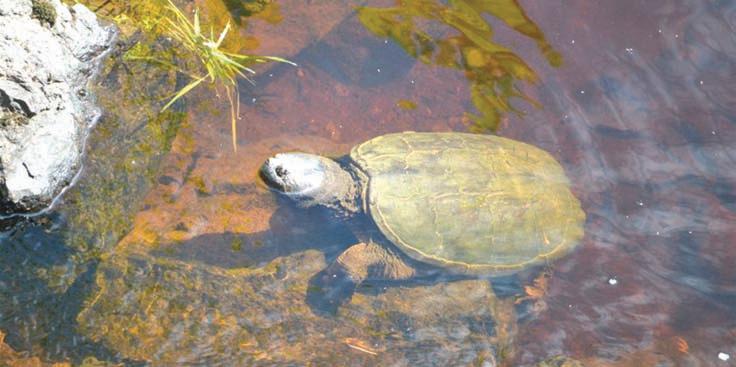
Turtles used to live on the land, they say, until the time a clever turtle was caught by some hunters.
They brought him to their village and placed the turtle before the Chief, who said, "How shall we cook him?"
"You'll have to kill me first," said the turtle, "and take me out of this shell."
"We'll break your shell with sticks," they said.
"That'll never work," said the turtle, "Why don't you throw me in the water and drown me?!"
They were congratulating themselves on their success in drowning the turtle, when two little green eyes poked up in the water and the laughing turtle said, "Don't get those cooking pots out too fast, foolish people!”
As he swam away he said, "I think I'll spend most of my time from now on, safely in the water."
It has been that way ever since!
(A Tale from West Africa)

By Grammar G
For many persons, the use of Xmas suggests either a non-Christian modernity or lazy shorthand for the word Christmas.
In actual fact it is neither. Xmas is indeed more Christian than most of us know.
According to the BBC, it seems Christmas has been abbreviated for at least the past 1,000 years. Abbreviations used as Christian symbols have a long history in the church.
Before Xmas, there was XPmas, according to Inge Milfull, assistant editor of etymology at Oxford English Dictionaries (OED). She found references in the Anglo Saxon Chronicle as far back as 1021, and says the P was prob-
ably dropped later.
The first two letters of the word Christ (cristoς, or as it would be written in older manuscripts, CΡ ISTOΣ) are the Greek letters chi (c or C) and rho (r or R): KRistos (Christ).
Evidence of the ‘X’ first being used as “Christ” is practically non-existent, though arguments abound: some claim that it began in the first century AD along with the other symbols. Others think that it came into widespread use by the thirteenth century, along with many other abbreviations and symbols for Christianity.
What is known is that by the fifteenth century, Xmas emerged as a widely used symbol for Christmas.
their childhood years, but are quick to recall a bicycle, video game, or action figure hero they received. Christian parents need to take back family time and quality time with their children, in order to have a lasting effect upon the moulding of a child's heart, mind, and soul."
Make charity a line item on the Christmas gift budget and serve together as a family in a homeless shelter or by delivering hot meals to lonely senior citizens.
Parents have the unique opportunity to model the true spirit of Christmas for their children: sacrificing self (in contrast to satisfying self). It's a joy we can all share with one another at Christmas – and every other day of the year. (Parenting
How often we wish for another chance
To make a fresh beginning. A chance to blot out our mistakes And change failure into winning.
It does not take a new day
To make a brand new start, It only takes a deep desire
To try with all our heart.
To live a little better
And to always be forgiving And to add a little sunshine
To the world in which we're living.
So never give up in despair And think that you are through, For there's always a tomorrow And the hope of starting new.
Helen Steiner Rice

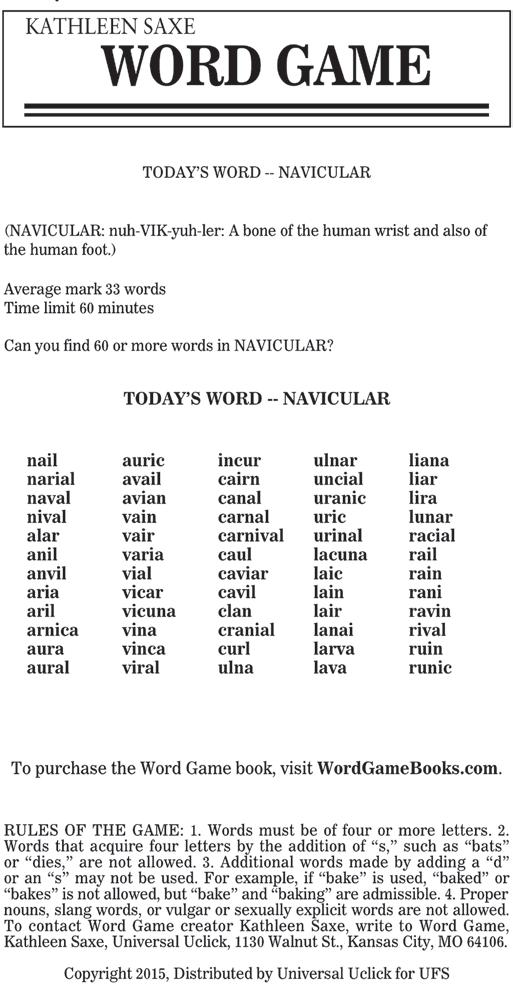
In this teaser you must place a 3-letter word on the dashes to complete a word on the left and to begin another word with those letters on the right. Example: ear _ _ _ me = earTHY / THYme
1. feat _ _ _ oic
2. cour _ _ _ nda
3. disp _ _ _ over



The Amazon Kingfisher (Chloroceryle amazon) is native to large, slowflowing rivers from northern Mexico south to central Argentina in South America where it prefers lowland regions.
It is a large and heavy bird for its genus, standing about 30 cm tall (11.8 in.) and weighing 98 – 140g (3.1 – 4.9 oz.), with the females heavier than males. It is considered the largest of its kind in South America.
Amazon Kingfishers hunt fish and crustaceans from a perch, diving into the water to catch their prey, returning to the same perch before stunning their prey and swallowing it head first. Sometimes they hover to sight prey in the water beneath.
Solitary except during the breeding season, the Amazon Kingfisher sometimes hunts at dusk or after sunset, as the
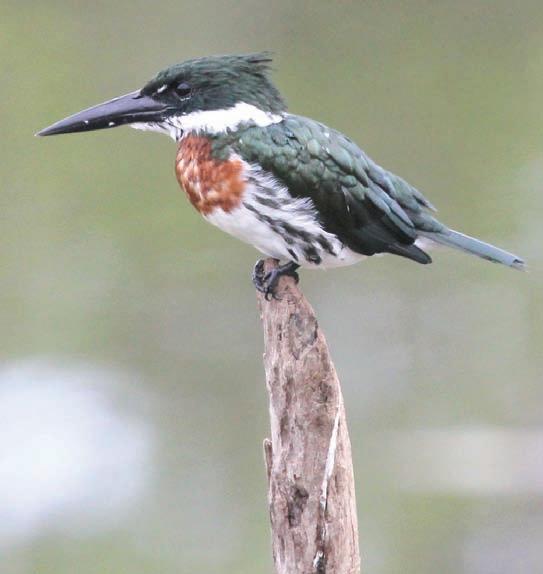
Kingfishers don’t move their eyes to pursue their prey or watch for predators, they realign their head instead
male and female share turns incubating their eggs. The pair nest in hollow trees or in burrows they dig themselves, often in riverbanks or lakesides.
Kingfishers have very
aerodynamic builds and it is said that the shape of many kingfishers is so aerodynamic that they were used as a model for designing high speed trains in Japan.


The objective of the game is to fill all the blank squares in a game with the correct numbers. Every row of 9 numbers must include all digits 1 through 9 in any order. Every column of 9 numbers must include all digits 1 through 9 in any order. Every 3 by 3 subsection of the 9 by 9 square must include all digits 1 through 9.
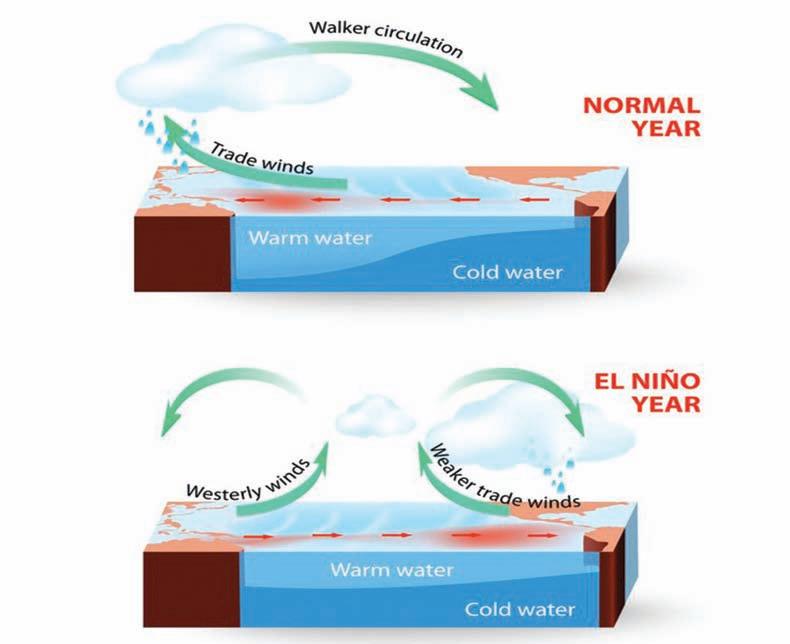
The Walker circulation is an ocean-based system of air circulation that influences weather on Earth. During an El Niño year, Walker Circulation is disrupted
El Niño is a climate pattern that describes the unusual warming of surface waters in the eastern tropical Pacific Ocean. It is the “warm phase” of a larger phenomenon called the El Niño-Southern Oscillation (ENSO), occurring every 2-7 years.
El Niño has an impact on ocean temperatures, the speed and strength of ocean currents, the health of coastal fisheries, and local weather in many parts of the world. As El Niño brings rain to South America, it brings droughts to Indonesia and Australia. Some regions as far north as the U.S. may experience longer, colder
winters because of El Niño. El Niño was recognized by fishers off the coast of Peru as the appearance of unusually warm water. Spanish immigrants called it El Niño, meaning “the little boy” in Spanish.
According to National Geographic, when capitalized, El Niño means the Christ Child, and was used because the phenomenon often arrived around Christmas. It soon came to describe irregular and intense climate changes rather than just the warming of coastal surface waters.

About 135 million years ago, New Zealand was attached to Australia. The land rests on top of two moving tectonic plates: the IndoAustralian Plate and the Pacific Plate. Due to plate activity, New Zealand continues to drift away from Australia. Earthquakes and volcanic activity are also caused by the tectonic movement of these plates.
Because New Zealand is so isolated, the islands developed unique plant and animal life. The country still has large areas of untouched forests, along with an abundance of marine and bird life.
According to legend, New Zealand was fished from the sea by the god Maui. To this day, the North Island is known to the Maori people as “Te Ika a Maui” or “Maui’s fish.” The South Island is known as “Te Waka a Maui” or “Maui’s canoe,” and Stewart Island or Rakiura is known as “Te Punga a Maui” or “Maui’s anchor.”
The first people to make New Zealand their home were the Maori. They arrived around A.D. 700, from the Polynesian Islands. The Maori were sometimes called the moa hunters because they relied on this large, flightless bird for food — it was hunted to extinction by 1500. Europeans began to settle in the countr y in the late 1700s. The Maori call the white people “pakeha” (pronounced PAH-keh-ha).
Of the 17 species of penguin, six live and breed in New Zealand. They are the blue, erect-crested, fiordland, rockhopper, Snares and yellow-eyed. Extinction threatens many of these populations. Limited breeding ranges, predators and habitat destruction contribute to their vulnerability.
By Laurie Triefeldt
The Maori people named this land Aotearoa, for the fluffy white clouds that so often hover overhead. The clouds were a welcome sign to seafarers that land was near.

Agriculture Apples, barley, cattle, kiwi fruit, milk, onions, potatoes, sheep, wheat, wool, forestry
Manufacturing Food products, chemicals, iron, steel, machinery, motor vehicles, paper, textiles, wood products
Mining Coal, silver, iron ore, limestone and gold.
Wellington is the most southerly capital city in the world.
New Zealand generates about 10 percent of its electricity from geother mal volcanic heat. About 55 percent of the country’s electricity is generated by water flowing through hydroelectric dams. Thir ty percent of New Zealand’s land is forested. Forestry accounts for 12 percent of New Zealand’s exports.
Lake Taupo is New Zealand’s largest lake, at 238 square miles (616 sq. km). Lake Taupo formed in the crater created by a huge volcano that erupted 26,500 years ago.
New Zealand is one of the top five dairy exporters in the world.
New Zealand was one of the first nations to adopt universal suffrage. In 1893, it became legal for all male and female citizens of New Zealand to vote.
Before humans arrived, the only mammals found in New Zealand were those that could swim there (seals, sea lions, whales) or fly there (bats).

Q: What is this thing they call ‘Santa’s shadow’?
In wake of the movie trailer “Krampus” comes this question.
Well, Krampus is considered “Santa’s shadow” –more often described as the Christmas Devil, punish-
er of naughty children, or simply “bad Santa”. Krampus was created as a counterpart to kindly St. Nicholas, who rewarded children with sweets. Krampus, in contrast, would beat “wicked” children and take them away
1. featHER / HERoic
2. courAGE / AGEnda
3. dispLAY / LAYover
4. keePER / PERsist
5. runOFF / OFFice


to his lair.
This goes back to European folklore: Halfgoat, half-demon, this monstrous beast called Krampus is derived from the German word krampen meaning claw, and said to be the son of Hel in Norse mythology.
The legend is part of a centuries-old Christmas tradition in Germany, where Christmas celebrations begin in early December.
According to folklore, Krampus shows up the night before December 6, known as Krampusnacht , or Krampus Night.
December 6 also happens to be Nikolaustag , or St. Nicholas Day, when German children look outside their door to see if the shoe or boot they’d left out the night before contains either presents (a reward for good behaviour) or a rod (bad behaviour).
National Geographic notes that Krampus’s frightening presence was suppressed for many years: the Catholic Church forbade the raucous celebrations it became, and fascists in World War II Europe found Krampus despicable because it was considered a creation of the Social Democrats.
With the new “antiChristmas” celebrations in the West, Krampus appears to be making a comeback.
Brazilian police are hunting for a Sao Paulo Santa Claus who kicked off the Christmas shopping season by stealing a helicopter.
The thief rented the air-
English researchers discovered that objects with “watching eyes” printed on them can help discourage littering.
A study out of Newcastle University in Northeast England found that people were less likely to carelessly discard pamphlets with eyes clearly printed on them than similar pamphlets where the eyes were obscured.
According to the study, written by professors Melissa Bateson and Daniel Nettle of the Centre for Behaviour and Evolution only 4.7 per cent of people dropped the pamphlet with eyes while 15.6 per cent dropped the pamphlet when the eyes were obscured.
“Our work shows that the presence of eye images can encourage co-operative be-
After the Spanish Lotto and John Lewis ads come the German grocery chain EDEKA ad to tear up the Internet once again.
Some people have gone to social media saying they liked the commercial, calling it a “tear-jerker”, “touching”, and that it helped them appreciate their family more. Others are calling it manipulative.
As of Wednesday morning, the commercial had been seen almost 21 million times on YouTube.
Like the other popular
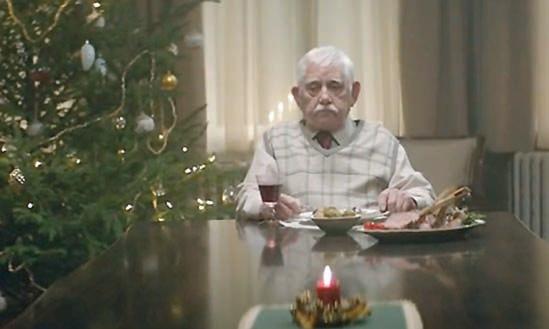
ads it too focuses on the elderly at Christmas.
The Telegraph (UK) writes that the advert may be a bit bleak, and perhaps

SSerbian officials offered the veteran American actor and producer a job training Serbian special police forces in Aikido, a Japanese martial art that Mr Seagal is famous for in his blockbuster movies.
“When you have such a famous star coming to Serbia, who loves our country and our people, our desire is to have him back
craft late Friday from an air taxi service at the Campo Marte airport in Sao Paulo for a Black Friday “surprise,” the Sao Paulo state security secretariat said on Saturday.
During the flight, the
emotionally manipulative, but it is certainly a reminder that we should not neglect our families over the festive period.
again,” the mayor of Belgrade, Sinisa Mali, said after meeting the actor.
Mr Seagal has received the royal treatment during his three-day stay in the Serbian capital, including meeting with Serbian Prime Minister Aleksandar Vucic and the country’s pro-Russian president, Tomislav Nikolic.
The action hero is among the Western celebrities who have socialised with Russian President Vladimir Putin and praised him as well as Russia despite the deep chill in diplomatic relations between Moscow and the West.
Serbia - a traditional Russian ally - has officially sought EU membership but has been struggling to overcome strong opposition from pro-Kremlin nationalists.
While in Belgrade, Mr Seagal, 63, received an award from the Belgrade-based Brothers Karic Foundation for his humanitarian work and said he was proud to get the same honour that Mr Putin was once given.
The head of the Karic family, Bogoljub Karic, was given asylum in Russia after he fled Serbia when its previous government charged him with corruption and the embezzlement of millions of dollars in state funds.
Santa forced the pilot to fly to a small farm outside of Sao Paulo city, where they were met by a third person, the secretariat said.
The pilot was tied up and the two perpetrators flew
away. After several hours, the pilot managed to escape and alert police. There has been no sign of the helicopter, a Robinson model 44, authorities said.

haviour and we think this is because people feel they are being watched,” Nettle told Neuroscience News.
The study used pamphlets warning against bike theft with the message “Cycle thieves are watching you.” written in large text. One set of pamphlets featured a stern set of male eyes while the other had the eyes
obstructed by a bicycle lock.
The pamphlets were then placed on various bikes in such a way that the owner would have to remove them before riding.
The same pamphlets were used in an experiment regarding bike theft but were re-used for this experiment to determine if the message played a factor in
people’s behaviour.
“As we care what other people think about us, we behave better and more honestly when we feel we are being observed,” Nettle said. “This is reinforced by our results as we show that we didn’t need to include a message about littering, people know it is antisocial so it was enough to have an image of the eyes.”
Bateson mentioned that the data could lead to some practical developments in industries such as fast food.
“In the fight against anti-social littering, this study could be a real help,” she said. “Fast food retailers might want to think about using it on packaging to discourage people discourage people discarding the wrappers.”
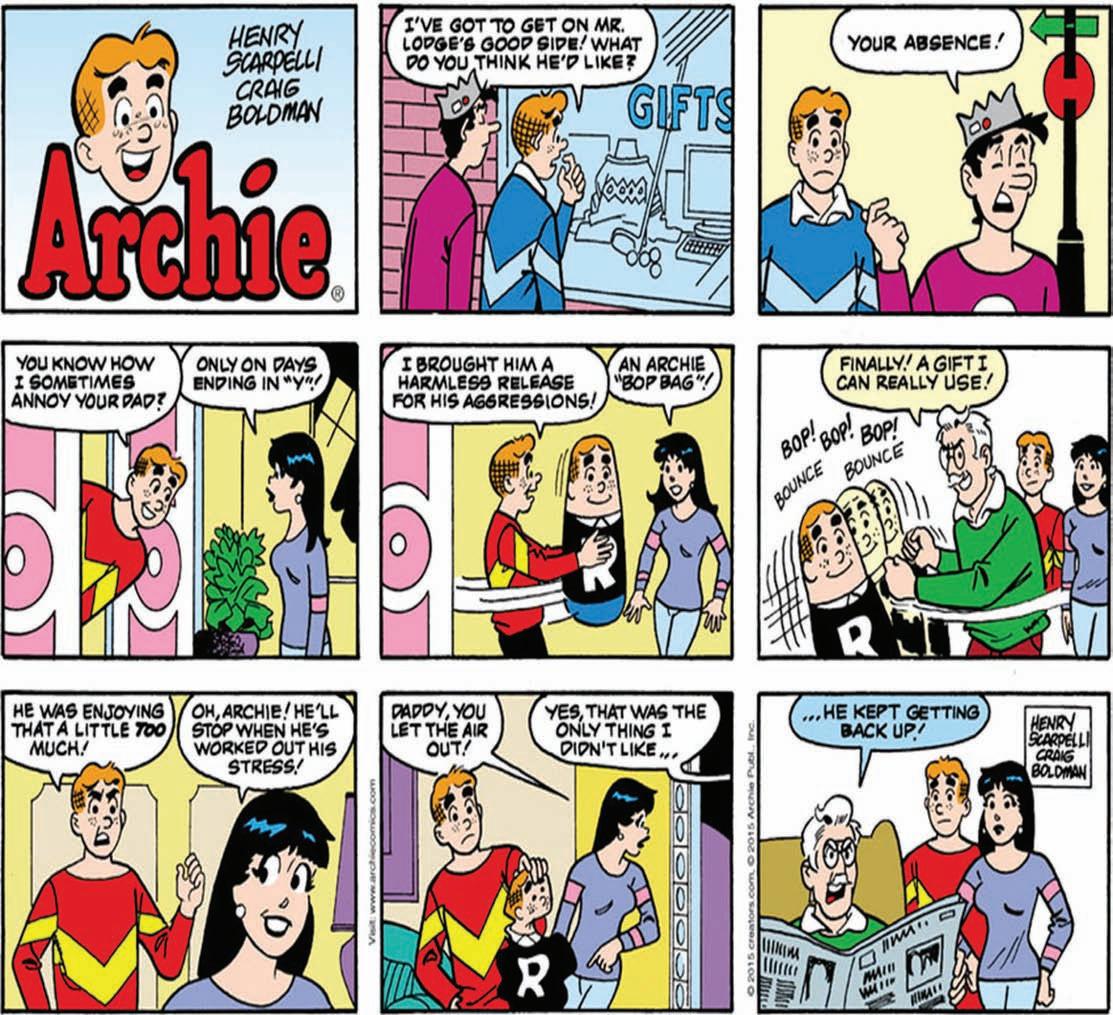
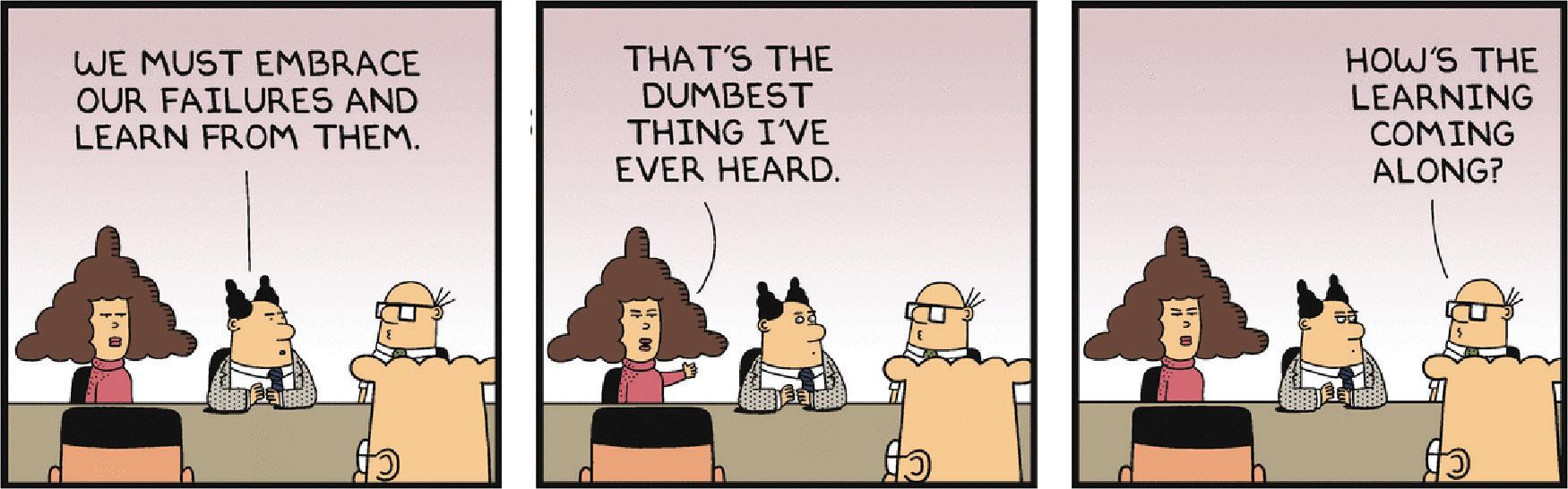
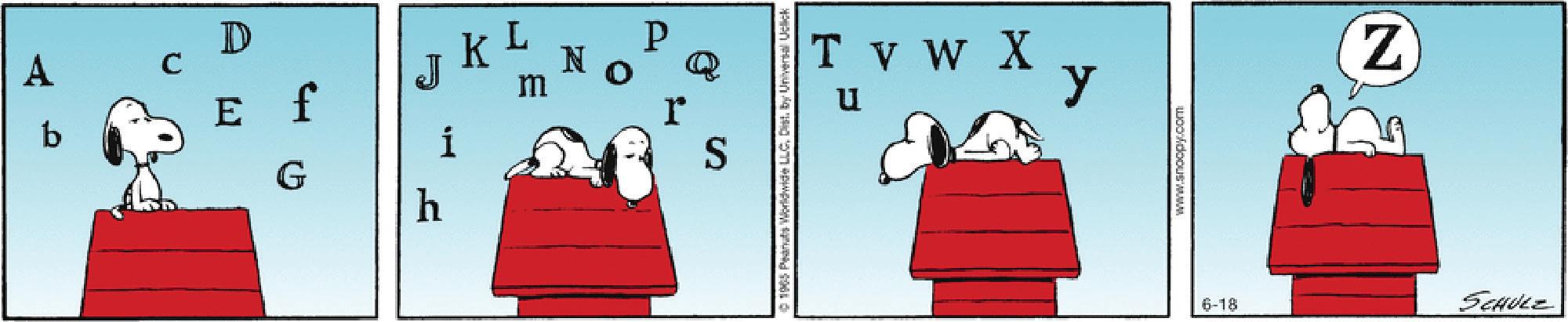


ARIES (March 21April 19)


TAURUS (April 20May 20)



GEMINI (May 21June 20)

(June 21July 22)



LEO (July 23Aug. 22)

VIRGO (Aug. 23Sept. 22)



LIBRA (Sept. 23Oct. 23)

SCORPIO (Oct. 24Nov. 22)


SAGITTARIUS (Nov. 23Dec. 21)




(Jan. 20Feb. 19) (Dec. 22Jan. 19)


PISCES
(Feb. 20March 20)

Take control and use your energy wisely. Too much free time will make you anxious and emotionally unpredictable. Strive to get things done and to keep busy. Choose peace over battle.
Opportunities to meet new people are present. Keep an open mind in order to find out valuable information. Be sure to include the people you love in any event or activity you attend.
Minor mishaps are apparent if you aren’t careful. Choose your words wisely and your actions carefully. Not everyone will agree with your tactics. Stick to the truth.
Don’t let moodiness dominate your day. It takes effort to please others, but it’s necessary if you want others to please you. Don’t jump to conclusions. Project a happy, amiable attitude.
You can chat your way in or out of anything. Your insightful approach to life will put you in the spotlight, giving you the perfect opportunity to present and promote.
Don’t take on too much or lose sight of practical matters. Take one step at a time, adding detail and accuracy to everything you do or say.
An emotional situation will fester if you don’t deal with it openly and honestly. Don’t waste time mincing words when you should be presenting the facts.
You’ll be offered help or something unexpected from an unusual source. Don’t question what’s being offered, but do find out what’s expected in return. A celebration is in order.
Taking on too much or boasting about what you can do will result in added pressure and stress. Think before you speak, and listen to others’ advice.
Manage your time and balance your life to work harmoniously with your goals as well as with the needs of those you love. Don’t let anger lead to mishaps.
Listen and learn. The information you gain will end up helping you in a time of need. High energy will kick in. Take advantage of it and get some things done.
An unreasonable point of view will get you in trouble. Someone will be eager to make you look bad. Stick to what you know. Don’t pretend to have something you don’t.