


Since the 2012 Mt Kamakusa expedition to Guyana, at least three undescribed plant species have been discovered among its collections.
In 2013, research botanist and associate curator at the Smithsonian Institute(SI),Kenneth Wurdack in his report noted that many more would emerge from the cryptogams (plants and fungi that reproduce by spores not seeds), which have never been studied from theregion.
Notable among these three is a new species of Tryssophyton (Melastomataceae), a tuberous epiphyte (a plant that grows upon another plant, harmlessly deriving moisture and nutrients from the air, rain and sometimes surrounding debris, instead of being parasitic). With whorled leaves and bright purple flowers, Wurdack states that it appears to be endemic to the summit.
For about five weeks in May-June 2012, a small team of US scientists,along with several local personnel and Amerindian guides were based in Imbaimadai, Region Seven, before trekking to Mt Kamakusa, a
5,511 feet high (1,691 meters) tepui believed to be the third highest tepui within Guyana not bordering another country.
It is however, one of the least explored or surveyed regions. The last and so far only known scientific expedition was in 1960 when botanist Stephen Tillet reached the lower slopes of the mountain to collect some 40 plant specimens.
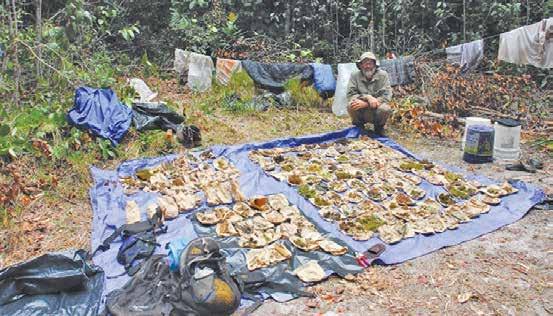
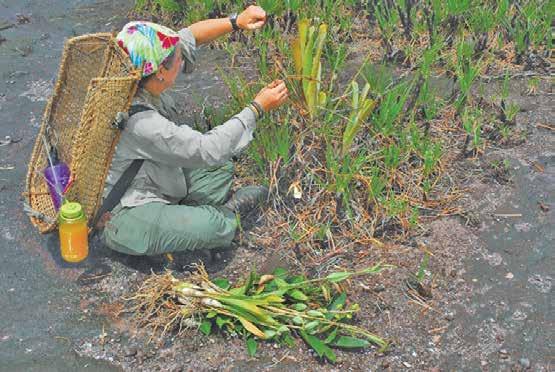
During the 2012 expedition, more than 1,100 collections were made under Karen Redden, Kenneth Wurdack or Erin Tripp, which spanned the range of elevations encountered (1,600-5,511 feet).
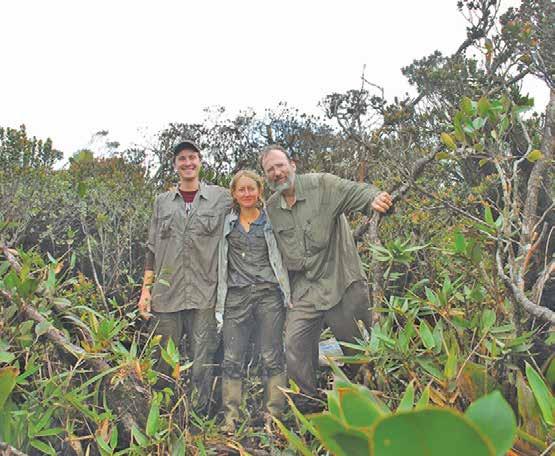
Redden (University of the District of Columbia and SI Research Associate), Wurdack (SI), Tripp (University of Colorado, Boulder), and graduate student Aleksandar Radosavljevic (Chicago Botanic Garden and Northwestern University) were the American expedition members who reached the study area after a 28 mile (45 km) overland hike.
Starting at Imbaimadai and making a western approach, Wurdack in his report noted it was “one of the longest approaches on
foot by any BDG expedition to date.” This was due, he said, to the Partang rapids and eastern flank cliffs that made it impossible to reach the mountain by an other route.
Describing the climb to its summit, Wurdack states that it required a 2.5 hour near vertical scramble of 1,500 feet elevation over one linear mile, as they traversed three of four total escarpments of the tepui.
The Amerindian contingent first reached the summit June 5 by cutting a line, and the U.S. contingent followed, to begin collecting specimens June 7-8.
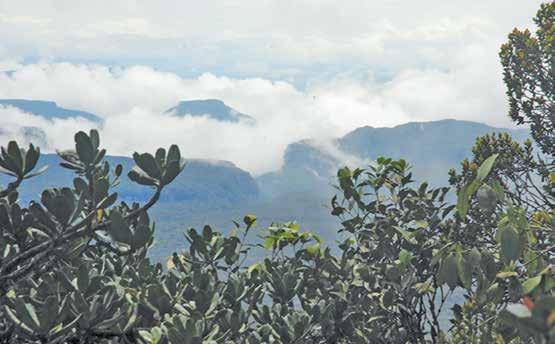
The exposed rocky summit of Kamakusa, Wurdack reveals, was blanketed by nearly impenetrable shrub thicket.
The 2012 expedition, part of the Smithsonian Institution’s Biological Diversity of the Guiana Shield Program (BDG), was supported by the National Geographic Society (NGS/ Waitt Grant to Redden, PI). It looked to document plant diversity in the region for scientific studies as well as for ensuring data for future conservation planning.
(Photos credit: Erin Tripp and Ken Wurdack)

By Lennox J Hernandez
The Dutch arrived in the Caribbean as slave traders, for the Spanish especially, in the early 1600s. Historians agree that the first European settlements in Guyana were Dutch, beginning circa 1616, with a small fort on an island the Dutch named Kijkoveral, located in the Mazaruni River, near the mouth of the Cuyuni River.
In fact, according to Andrew Gravette, in his book “Architectural Heritage of the Caribbean” (2000) “the first structure to be built by the Dutch in the Caribbean was that at Fort Kyk-overal.”
Another writer, Carolien Loomans, in an article enti-
tled Georgetown (Guyana) Town on Plantation Structure, notes that the earliest permanent plantation settlement in Guyana was on the Pomeroon River (Essequibo) since 1624, then in Berbice since 1627 and in Demerary (Demerara) since 1746.
Apart from the existing sites discussed here, there are a number of sites located on historic maps, but nothing remains there today.
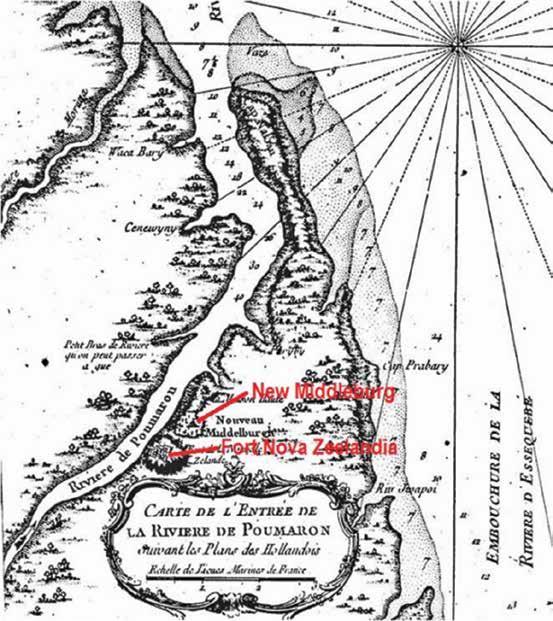
Fort Nova Zeelandia, for example, on the right bank of the Pomeroon River (near Cabacaburi) alongside a settlement named New Middleburg. Fort St Andries (St Andrew) on the right bank of the Berbice River, opposite Crab Island, and Fort Willem Frederick (orig-
inally built by the French as Fort Le Dauphin) at the mouth of the Demerara River on its right bank.
The existing Dutch built heritage comprises mainly forts and accompanying structures, three of which are well known: Fort Kijkoveral on the Mazaruni River; Fort Zeelandia on the Essequibo River; and Fort Nassau on the Berbice River.
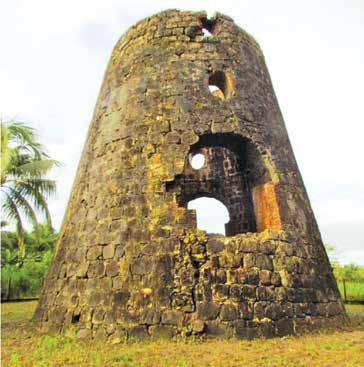
There are other historic Dutch artefacts, however, such as the windmill on Hog Island in the Essequibo River. Built of brick and granite block, with coral in the mortar, this artefact is located on the northeast coast of the island, and is said to be on a former Dutch estate named Lyksburg.
Windmills were used along the coast of Essequibo and Demerara during that time; this particular one was constructed c 1768 and according to the late Joel Benjamin, was “partly made from materials from Fort Kijkoveral which had been demolished not long before.”
Kijkoveral, meaning “See-over-all”, is an island of about 0.61 hectares (1.5 acres) that provided the Dutch with a commanding view of the Essequibo River and any invading ships. All that remains today are brick foundations, a brick archway, and a brick revetment on the southeastern side of the island.
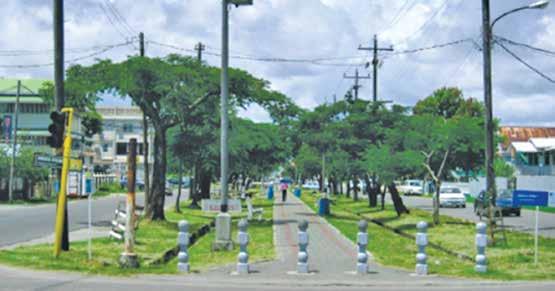
The greatest evidence of Dutch presence in Guyana is the remains of their mid18th century fort and administrative complex on Fort Island near the mouth of the Essequibo River. The brick Fort Zeelandia (17401744), a brick wharf and an administrative building that housed a church, the Court of Policy and a slave vendue (public place for the sale of slaves at an auction) are the extant remains.
While the administrative building is intact, the river has claimed most of the eastern rampart and bastions of the fort. The third important fort is Fort Nassau on the Berbice River. We know little of the early forts immediately after the Dutch arrived in 1627, but by the 1670s, the Dutch headquarters was on, or near, the present Fort Nassau site.
The ruins are spread along the right bank of the Berbice River for about 1,250 metres (4,100 ft) in an east-west bend of the river from the Torani creek, westwards. The major ruins at the site are the grave plots, the Court of Assembly building steps, the bridge, the warehouse, and the Lutheran church, but nothing is higher than three courses of brick above ground.
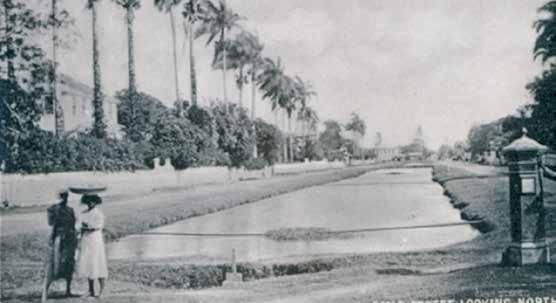
Of great historic and environmental importance to Guyana, is the Dutchbuilt system of canals in Georgetown, some of which were later filled in by the
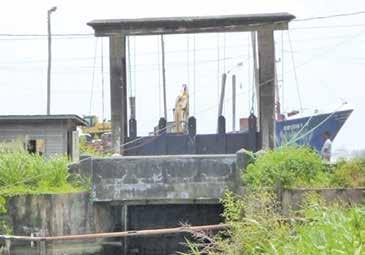
English and post-independence Guyana, to create avenues.
Georgetown is unique in having a grid pattern that originated according to the layout of former plantations, giving us now a number of parallel lanes of roads separated by avenues.
Loomans tells us that in 1746, Andries Pieterse, from Essequibo, received permission to lay out a sugar plantation on the “uninhabited river Demerary.” The land at the river mouth could easily be inundated by water from the sea, as well as by rainwater from inland, hence, ditches and broad canals were dug, connected to kokers (sluices) at the entry to the Demerara River.
These kokers were opened at low tide to drain the surplus water on the land and were closed at high tide to keep the salt water out.
James Rodway, writing of the canals and many drainage ditches in 1920,
commented, “We may say that these extensive lines of drainage were more necessary then than they would be now, and yet now and again we can see that our sluices are far too few for a very heavy rainfall.” This observation is probably of even greater significance today.
Loomans sums up Georgetown’s layout: “the former plantation structure is still clearly recognizable in the city in the shape of the east-west broad drainage canals and green structures. Here used to be the boundaries between the plantations with their drainage canals.”
A map of Georgetown in 1904 seen in a 2004 Master’s thesis entitled Conservation Plan for Georgetown, Guyana, by Bjorn van Raaij, Delft University of Technology, shows the Main Street canal filled in while the parallel streets east of Main Street – Carmichael, Waterloo, Camp, etc – are still canals.
In 1652, Jesuit Denis Meland arrived on the mainland of South America where he first met the indigenous Indians of the Guianas --at the time the name given to the north coastlands of the continent. He wrote back to his superiors of the wonderful opportunity that had arisen to spread the word of God.
Later, between 1683 and 1686, three Franciscan priests and a brother attempted to introduce the Catholic faith into the Corentyne but were unsuccessful as the Dutch refused their efforts to minister among the indigenous and African slave populations.
Then in 1769, English Jesuit James Chamberlain arrived in Demerara, also a Dutch possession at that time. Despite labouring for 10 years, he made little
success;Leonard Neale, from Maryland, took over in 1779. He too would leave, discouraged, in 1783. In 1805, after the col-
onies were united under British rule, Englishman Charles Waterton arrived to manage his uncle’s coffee and sugar plantations,
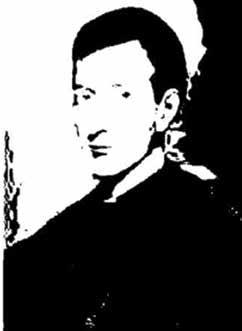
and saw the great need for a more significant presence of the Church for the Catholic population.
Despite his 1817 letter to

Church officials in Rome, little was accomplished. It wasn’t until1819 that James Buckley was appointed first Vicar Apostolic in Trinidad and took on the responsibility of overseeing all English and Dutch Caribbean religious affairs.
In 1824,Buckley sent Fr. Joseph Anthony Rendon to Georgetown for the Easter season and in 1825, the cornerstone was laid for a chapel in Brickdam.
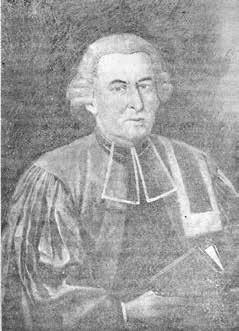
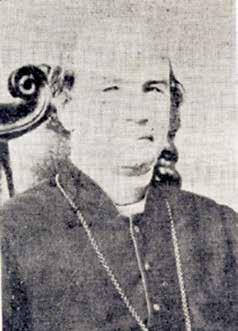
John Thomas Hynes OP, 1799-1869
Buckley then recruited 27-year-old Irish priest,Fr John Thomas Hynes, OP (Order of Preachers), who was ordained to the priesthood in 1822,to work in British Guiana.
On Sept 19,1826, Hynes, along with another priest, Denis O’Callaghan,arrived to begin the first organized attempt to establish the Catholic Church in Guyana.
Hynes worked tirelessly for eight years after his arrival then returned to Europe in 1834 after seeing an increase in Catholic parishioners. His replacement, William Clancy, arrived in 1837 and was appointed Vicar Apostolic.
Hynes was nominated to be Bishop England’s assistant bishop in Charleston, USA but did not receive the position. He was however appointed bishop in Rome on July 22, 1838.
According to Hynes' diaries, Clancy began causing problems in the colony so that by 1843, a British Guiana delegation was reported to be arriving in Rome to complain about “the degraded state of that Vicariate to the Holy See.”
On Aug 9, 1843, Hynes received notice that he was once again to be sent to British Guiana, though he had applied to go to New Brunswick. He was appointed Apostolic Administrator of British Guiana on Sept 12, 1843.
In July 1844, Bishop Hynes returned from Rome to British Guiana to take over from Clancy.Hynes’ di-
aries tell of the conflict between himself and Clancy.
In his Sat July 13, 1844 entry, he notes upon his arrival: “Sent message through Mr. T. Burke to Dr Clancy to surrender the church - received a flat refusal.”
According to the book“Macnamara's Irish Colony and the United States Taking of California in 1846” it took a scandal to return Hynes to British Guiana where he faced the threat of an implosion of the Church, created by Clancy. Hynes immediately went back to work among his parishioners, and on Sept 21, 1846, he was appointed Vicar Apostolic of British Guiana.
His return was after emancipation and during the influx of indentured immigrants, particularly Catholic Portuguese from Madeira, which greatly increased the need for Catholic ministering.
Recognizing the need, in 1847, Bishop Hynes arranged for Ursuline sisters to come to minister to the rapidly growing number of Catholics.
On June 29, 1847, six sisters and two postulants (persons who apply to serve in a religious order) arrived from the Ursuline convent in Athlone.On August 31, 1847, they opened St Roses School for girls, and by 1851, St Ann’s orphanage. However, Hynes was finding it harder to attract Catholic clergy to minister on a regular basis. Eventually, a request was made by the Holy See to the General of the Jesuits,for the British Guiana Catholics.
The Jesuit influence
On March 24, 1857, in a ceremony at Meadowbank Church, Bishop Hynes and four priests handed over the care of the Church in Guiana to the three arriving Jesuit missionaries: James Etheridge SJ and two Italians, Aloysius Emiliani from the Roman Province, and Fr Clement Negri from Naples.
James Jones, Frederick de Betham, Henry Segrave and Peter Sherlock from the English Province; another Italian, Joseph Pavarelli and a Maltese, Benedict Schembri would arrive eight months later, in November.
On Oct 25, 1857, Bishop Hynes left the colony for Ireland before heading to Rome. He is said to have resigned as Vicar Apostolic in 1858 and retired to Monkstown, south Dublin in Ireland where he lived from 1861-68.
John Hynes died March 30, 1869 in Paris, France and was buried at St Finbarr’s cemetery in Cork, Ireland, the only bishop to be buried there. (To be continued)
In many countries, the wife of the head of state is often referred to by the unofficial title of “First lady”.
The title is said to have originated in the US where it came into general use by the end of the 19th century. By the following century,the term also came into global use, without translation, even in countries where the head of state’s wife was not prominent or played an active role in the state.
The first lady does not receive a salary for her role as hostess to the many ceremonies and occasions she must attend as protocol demands, but in the US especially, her character and appearance play a significant role in her acceptance by the public.
In addition, the first lady often uses her influence to bring awareness to social or cultural issues of concern to the nation her husband has been elected to lead.
From its independence in 1966, Guyana has been graced with seven first ladies, one of whom briefly held the title when her husband became president.
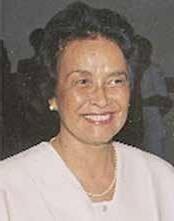
The premier first lady in Guyana’s history was Doreen Chung, wife of then newly independent Guyana’s first president, Arthur Chung.
Born Doreen Ng- SeeQuan, at Windsor Forest, WCD, Mrs Chung served as first lady from March 1970 to October 1980. She died Sept 2009, aged 77.
When a new constitution was introduced in Guyana in 1980, Forbes Burnham became president and his wife, Viola Burnham first lady.
Mrs Burnham was born Nov 26, 1930 and in 1967 married Forbes Burnham.
As first lady, she was active in the Guyana public service and in women’s rights, and in 1984 received the country’s second highest honour, the Order of Roraima.
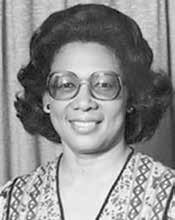
She also served as vice president and deputy prime minister from 1985, after her husband died, to 1991.
Viola Burnham died in Oct 2003 at 72 years-old.
Upon the death of Forbes Burnham, Hugh Desmond Hoyte became president, and his wife Joyce Hoyte would take up the mantle of Guyana’s next first lady from August 1985 to October 1992.
Despite her low public profile, those who knew her say she was committed to her husband’s political career and was very charitable.
While little is documented about her life, her most personal tragedy has been made most public: in April 1985, a road accident claimed the lives of both their daughters, leaving Mrs Hoyte with a lifelong anguish from which some say she never recovered.
After former president Hoyte passed away in Dec 2002, she remained alone at their North Road home until her death in Feb 2011 at the age of 77.
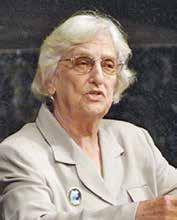
At the change of government in 1992, Americanborn Janet Jagan became the country’s next first lady as wife of the now late President Cheddi Jagan.
Mrs Jagan played an active role from 1943, when she arrived in Guyana, in many aspects of Guyana’s political history, before and after President Jagan came to office, including becoming the first female president of the nation in Dec 1997,after his March 6, 1997 death.
Born Oct 1920, Mrs Jagan was active in the then Opposition People’s Progressive Party, and remained committed to helping the poor even after the party came into office in 1992.
As first lady, she was the Guyana representative at the UN for three months in 1993, and chaired the National Commission on the Rights of a Child.
After resigning from the presidency in 1999, Mrs Jagan died in Aug 2009 at 88 years old.
From March 6, 1997 to Dec 19, 1997, after the death of President Cheddi Jagan, Yvonne Hinds, wife of Prime Minister Sam Hinds, who became president at the time, assumed the role of first lady.
Even before her appointment, and continuing pres-
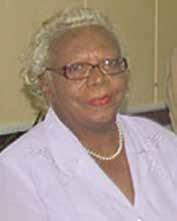
ently, Mrs Hinds, as chairperson of the Guyana Relief Committee, played a significant role in the social welfare of the poor and those who suffer tragedy in their lives.
She relinquished her almost 300-day role of first lady when former first lady Janet Jagan became Guyana’s president in Dec 1997.
First generation Britishborn Varshni Jagdeo mar-
ried former president, Bharrat Jagdeo in 1998 and became Guyana’s first lady when he became president of Guyana in 1999. However, they divorced in 2007.
As first lady, she took an active interest in the welfare of children, and in charitable work.She became patron of the Kids First Fund, a charitable NGO that provides emergency medical assistance for poor and needy
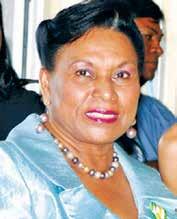
children.
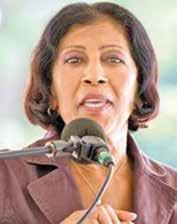
After President Jagdeo demitted office in Dec 2011, current president, Donald Ramotar took office and his wife, Deolatchmee Ramotar has become Guyana’s seventh, and current, first lady.
Mrs Ramotar was born July 26, 1949, and grew up on the Essequibo Coast.
After finishing school, she taught briefly at the primary school in whose village she

grew up. She then moved to Georgetown to start studying at the Government Technical Institute, before opting for a career in nursing.
She retired in 2010 and, after her husband was elected president in 2011, has since focused on promoting relevant social issues in Guyana, while hosting several religious and cultural events.

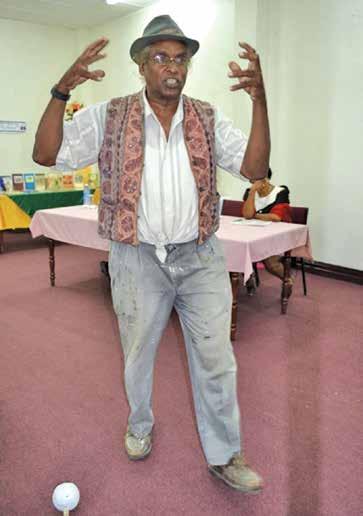
By PetamBer Persaud
Each storyteller has his/ her own signature; some are recognizable in a flash while others are revealed incre-
mentally: sound-by-sound, word-by-word, episode by episode, during the performance. Such a signature or trademark is intended to make an audience more in-
clined to the delivery and its author- or less inclinedan undesirable response to any storyteller worth her/ his salt. A signature usually comes at the end of whatever is being offered, but in oral literature anything gives, so for World Storytelling Day 2015, my signature was revealed at the beginning like a prelude of what’s to come…
“Wen laas yuh siddown pon a good session of storytelling? Wen laas yuh hear from Auntie Cumsie. Or from Peter Kempadoo (memba Jarai?) or Peter Jailall?
Wen laas yuh hear from Marc Mathews, Ken Corsbie an ‘all a dem boy…? Wen laas yuh hear bout Nancy Tory, Stupidy-Bill and Sensible-Bill?
Wen laas yuh siddown round de fiah-side waiting foh de sada roti to swell up?
Wen laas yuh siddown round the coal-pot waiting fuh de cow face fuh geh saaf-saaf?
Wen laas yuh siddown round the mud oven waiting foh de salara foh done…?
Wen laas yuh siddown waiting, hungry foh mo story, more storytelling…? Wen laas, wen laas yuh siddown in de hammock swinging between two trees and tell story to de granpickanie?

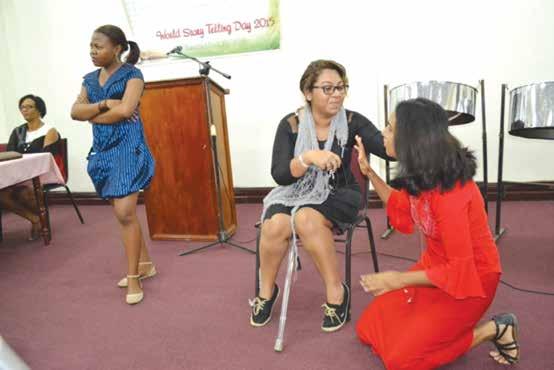
Wen laas yuh siddown in de moonlight an hear ‘bout moongazer, massacuraman, kanaima and sukantie? Wen laas yuh siddown in de backdam, under de silk cotton tree and see white lady an Dutch man pon white horse calling yuh foh show yuh weh dem bury dem treasure?
Wen laas yuh siddown pon de koker, near de black water canal an hear ‘bout wata mooma, mermaid, wata baby? Wen laas yuh siddown pon de sea walls an spirits chase yuh way?
Wen laas yuh siddown pon de back step drying hair in de hot sun and suddenly feel cold-cold an yuh know jumbie deh bout, an yuh spit and fire off two cuss words?
Wen laas yuh hear dis waan about Banwarie and Balgobin…?
Yuh already know about Balgobin but just a little refresher – Balgobin is a quiet boy who appears to be stupid but he always gets the correct answers, very often stumping the teachers and school inspectors…
Now yuh dying waiting, hungry waiting foh know who is Banwarie…
Remember wah ah seh ‘bout signature earlier? Well, Banwarie signature was “bear yuh chafe” – bear your punishment, better days coming…
Banwarie was Balgobin’s uncle – Balgobin’s father and Banwarie were jahaji bai or ship-brothers, a term used to describe men crossing the kala pani on the same ship from India to Guyana.
Banwarie was well read; having knowledge of all the best literature of his time like the Mahabarata, the Puranas, the Panchatantra, the Hitopadesa, and the Upanishads.
And he used his knowledge to good effect becoming the spokesman of his group, a sage, riddler and storyteller. He was also humane and had an endearing humour…”
That was part of my contribution to World
Storytelling Day 2015, but there were other contributions coming from representatives of foreign agencies based here, like Mexico, China, The Confucius Institute, Russia and Argentina among others.
There were other contributions came from local entertainers, dramatists, storytellers, and readers including Ron Robinson, Al Creighton, Lavonne George, Michael Khan, and Vanda Radzik.
It was an evening well spent. The entertainment was grand and the education was timely, warranting more such sessions in order to reclaim our community spirit and reap all the benefits thereof.
What benefits? Enhance comprehension skills and expression skills, enhance listening skills and oral delivery/interaction, help with lateral and critical thinking, and most importantly, expand the imagination, encouraging creativity.
World Storytelling Day 2015 was celebrated in Guyana under the auspices of the Ministry of Culture, Youth and Sport. The event was staged in the Conference Room of the National Library on Thursday, March 19, 2015. (Photos by Jason Yhap)
Responses to this author telephone (592) 226-0065 or email: oraltradition2002@ yahoo.com


When the 1763 Berbice Rebellion was ending, after the Dutch succeeded in eventually quelling the uprising one year later, many then free Africans were terrified at the prospect of becoming slaves once more. They wanted to get as far as possible from the brutal place that would enslave them again.
They formed a plan in which about 18 slaves comprising men, women and children would use a Sandcofa tree, hide in its dugout trunk and someone would roll it out into the Berbice River. The tides, they thought, would carry them far from their harsh surroundings to some safe place where they could start a new life.
Tragically, however, the person whom they had entrusted to roll the log into the river betrayed them. The Creole slave told Dutch authorities of the escape plot and the Dutch carried out their inhuman punishment.
They waited until the group entered the tree trunk then they lit both ends and rolled the log into the river. Trapped in the trunk on the river, the Africans suffered terrible deaths as the Dutch forced others to watch the horrific scene from shore. They wanted the occasion to serve as a warning to anyone who har-
boured thoughts of escape.
Descendants from Glasgow to Gangaram along the Berbice River are still talking about this event in villages hundreds of years later. They call the tree trunk the ‘Seamaster log’ and claim that it appears in the river from the 24th to 25th February each year.
Witnesses describe it as “extremely large with a rough trunk” of about “200 feet long”. Bobbing up and down in the water, it always appears travelling against the tide moving toward the Atlantic Ocean.
Some claim it would either give off a stench of burning bodies, or one could hear screams coming from within.
It has been reported that when this period in February arrives, the East Indians of Gangaram to Betsy Village and the blacks would perform rituals in respect for the lives dreadfully lost that day so long ago.
The event has since taken on the status of a legend, and the log is now presumed to have the power to bestow good or evil upon those who appease or displease it by their words or actions. As such, puja rites are performed where food and flowers would be offered, and flags planted along
the route the log is said to have taken.
In addition, some puja ceremonies appeal to the log to keep evil from their village, and ritual animal sacrifices that involve draining its blood into the ground or river would substitute for flowers and food.
One Christian sect pays homage to the place where it is believed the log originated. They visit a place called Raganite, Upper Berbice where it is believed a lime factory once stood and from where the log emerges and returns to each February.
Drumming, prayer, song and dance illustrate respect for the log, and altars keep candles and perfumed rainwater while food and flowers are offered in reverence to the log. It is the firm belief that the Seamaster log should never be touched by humans for fear of death by fire or drowning.
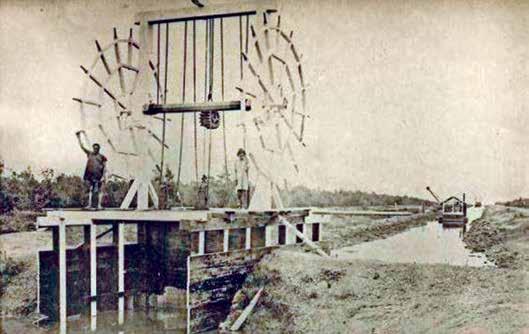
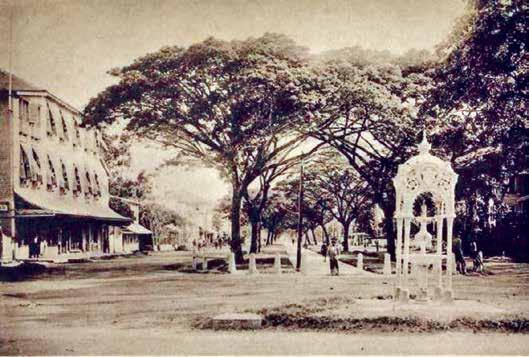
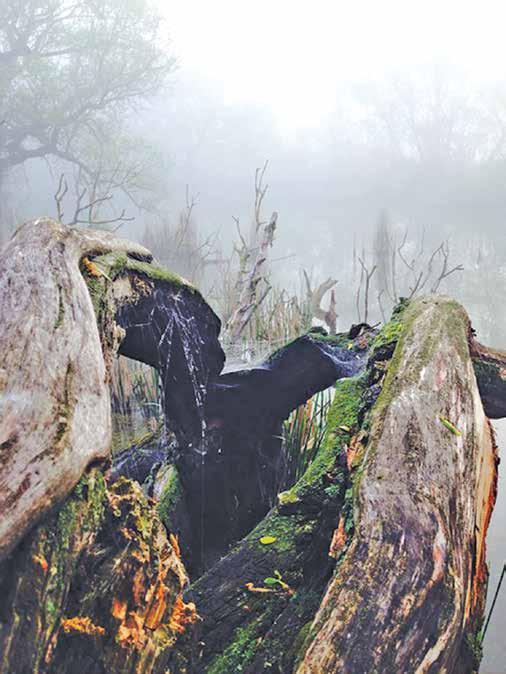
There are claims that in 1985, the

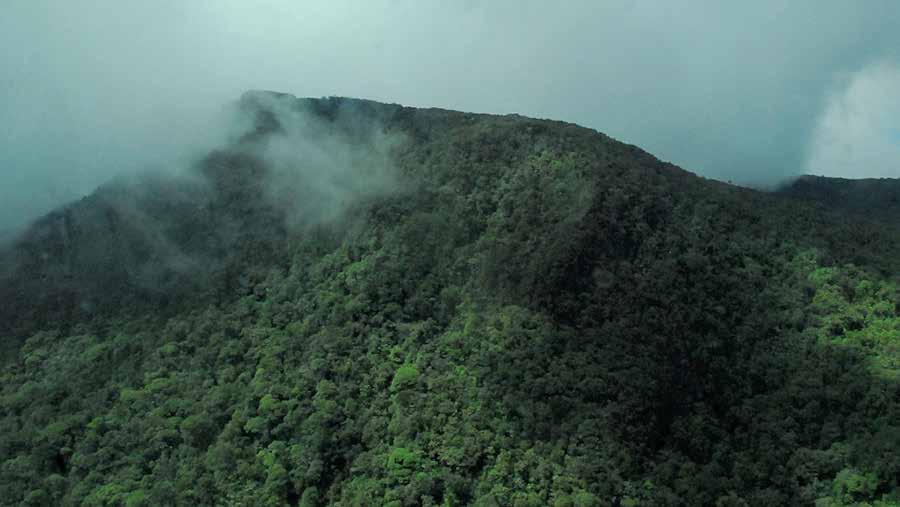
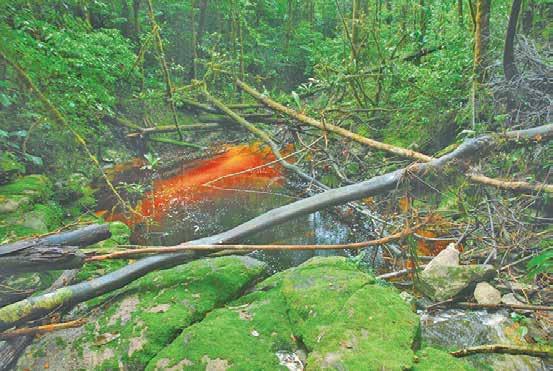
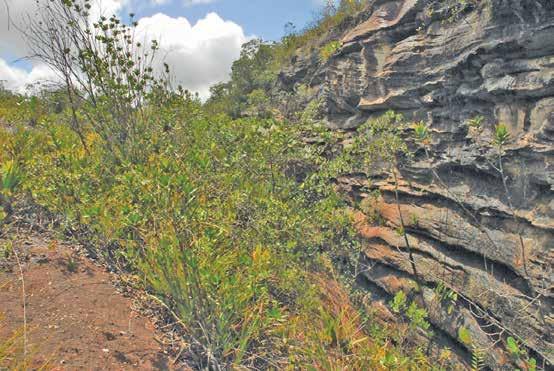
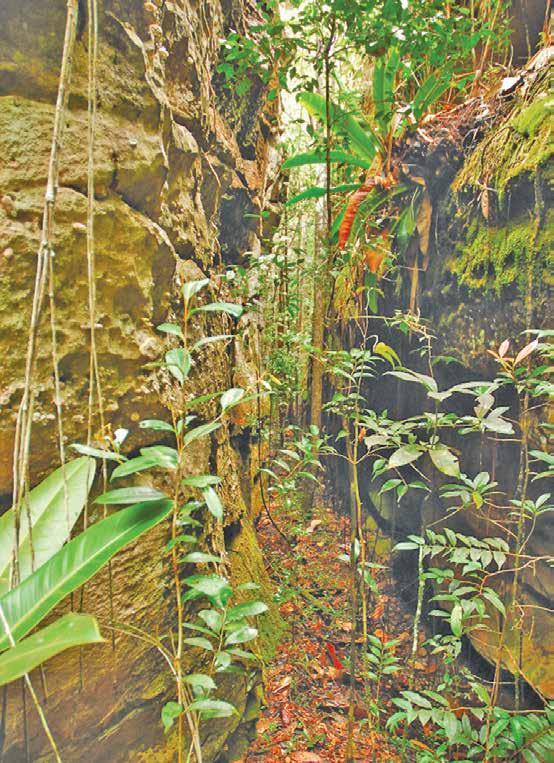
Mt. Kamakusa is a little explored tabletop mountain or tepui at the extreme eastern edge of the Pakaraima Mountains, about 18 air miles northeast of Imbaimadai and 14 miles west of Kamakusa village.
Its east-facing sheer cliffs, with a rapid drop of more than 5,000 feet to the lowland jungle, directly intercept Caribbean tropical trade winds and give rise to an environment that is among the wettest on Earth.
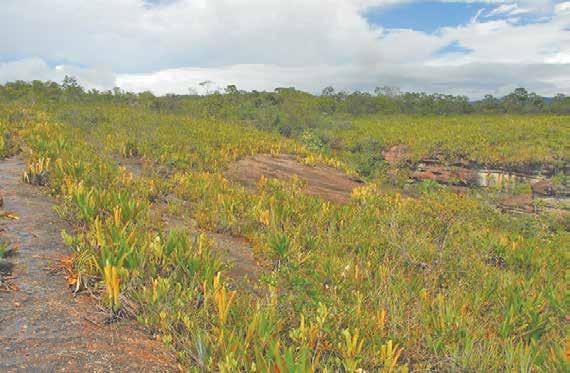
The western slopes form the headwaters of the Partang River, a tributary of the upper Mazaruni River, and create a small rain shadow that gives way to an extensive mosaic of savannas, scrub, and short canopy forests. (Text:Kenneth Wurdack.Photos by Erin. Tripp and Ken Wurdack)
In theory, adults should get some seven to eight hours sleep each night to be thoroughly refreshed the next morning; but for many the reality is anything but. Others may feel they are getting seven to eight hours sleep but still wake up fatigued the next day.
Sleep apnoea may be the cause of the latter. Sleep apnoea briefly obstructs breathing during the night that wakes you up each time, though you may not be aware you are waking up; this causes the fatigue you may feel in the morning, despite getting the seven to eight hours in bed.
Medical experts advise you lose weight if you are overweight and stop smoking, if you do, to help prevent sleep apnoea. WebMD suggests too that a CPAP (continuous positive airway pressure)device may be necessary to help with your breathing during sleep.
Eating too little and not eating a balanced meal can also cause sleeping problems and fatigue. Ensure you eat small, regular and nutritious mealsthroughout the day.
Among women, anaemia can cause fatigue as monthly menstruation can cause iron deficiency. Iron supplements and ironrich foods can prevent anaemia.
While depression is considered an emotional disorder, it has physical effects as well. Fatigue along with headaches and a loss of appetite for more than a few weeks can point to depression and requires medical intervention.
An underactive thyroid gland that causes your metabolism to slow down and you to gain weight could also be causing your fatigue. A blood test can confirm whether this is your problem and synthetic hormones are prescribed.
While moderate intake of caffeine is said to improve concentration and alertness, too much can cause nervousness and increased heart rate and blood pressure, which in some persons can cause fatigue.
UTIs (urinary tract infections) may also cause fatigue as the only symptom. A urine test can confirm an infection and antibiotics usually clear it up within a week says WebMD.
Diabetes can also cause fatigue as high levels of sugar remain in the bloodstream instead of entering cells to be converted to energy. Even though you are eating enough, you still feel lethargic or fatigued. Diet and exercise, insulin therapy and medications can help your body process the sugar.
Dehydration can also bring about fatigue. Not drinking enough water can leave you dehydrated; once you feel thirsty, you are already dehydrated. Drink water throughout the day, and light coloured urine would illustrate that you are getting enough water in your system.
Heart disease can also cause fatigue that means you can no longer perform your regular tasks such as housework or simple yard chores. Lifestyle changes, medications and therapeutic interventions can help your heart disease and restore energy.

If you work at nights, your natural sleep cycle can be interrupted. You may feel tired when you have to work and be awake when you should be sleeping during the day. Darkening your room in daylight hours and keeping it quiet and cool so that you can get your rest is essential. If that isn’t working, medication, after consultation with your doctor, may help.
Some doctors believe that unknown food allergies can be responsible for sleepiness. A mild intolerance to foods could make you fatigued, and it would take the process of elimination to find the culprit, or a food allergy test.
CFS (Chronic fatigue syndrome) and fibromyalgia may produce exhaustion as one of its main symptoms. Fatigue that lasts more than six months and prevents you from your daily chores may point to CFS or fibromyalgia. A mild exercise programme, better sleep habits and changing the daily routine has shown to benefit some patients.
Exercise may also fight fatigue that is not linked to any medical condition. Research has shown that tired but otherwise healthy adults who exercised moderately three times a week can get an energy boost from their workout and fight fatigue.
Athousand-year-old AngloSaxon potion for eye infectionsfound in a manuscript in the British Library has been found to kill the modern-day superbug MRSA,(Methicillin-Resistant Staphylococcus aureus) a type of staph bacterium that does not respond to commonly used antibiotic treatments.
In a research collaboration at The University of Nottingham, scientists grew the bacteria, added the recipe to them “like a topical ointment”, left it for 24 hours --and discovered that it killed the MRSA.
The 10th-century remedy was in a leather-bound volume of “Bald's Leechbook”, widely considered to be one of the earliest known medical textbooks.
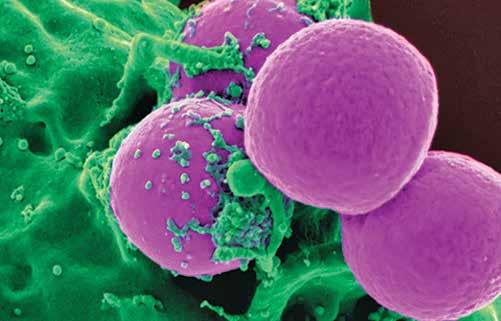

Dr Christina Lee, an AngloSaxon expert from the School of English, enlisted the help of microbiologists from University’s Centre for Biomolecular Sciences to recreate the potion for eye infections from Bald’s Leechbook to see if it really works as an antibacterial remedy.
According to the University of Nottingham’s website, early results on the 'potion', tested in vitro at Nottingham and backed up by mouse model tests at a university in the United States, are, in the words of the US collaborator, “astonishing”.
The solution has had remarkable effects on MRSA, which is one of the most antibiotic-resistant bugs, costing modern health services billions.
The team now has good, replicated data showing that Bald’s eye salve kills up to 90 per cent of MRSA bacteria in ‘in vivo’ wound biopsies from mouse models.
They believe the bactericidal effect of the recipe is not due to a single ingredient but the combination used, and brewing methods/container material used. Further research is planned to investigate how and why this works.
Bald’s recipe calls for two species of Allium (garlic and onion or leek), wine and oxgall (bile from a cow’s stomach). It describes a very specific method of making the topical solution including the use of a brass vessel to brew it in, a straining to purify it and an instruction to leave the mixture for nine days before use.



Jacqueline Wood is a Canadian actress, disc jockey, singer and television host. She is best known for playing the role of Olivia Castle on “Final Destination 5”. She currently portrays the character of Steffy Forrester on the long-running American soap opera “The Bold and the Beautiful”. Wood's performance in “The Bold and the Beautiful” has been met with critical acclaim, having garnered two Daytime Emmy Award nominations in 2012 and 2013. In 2013, Wood starred in Lifetime television film “Her Husband's Betrayal”, a suspense thriller. Apart from acting, Wood is an occasional disc jockey and singer. She released her debut single “After Hours” in 2012.

Embracing the mermaid hair trend (that she helped to jumpstart!), Kylie Jenner revealed via Instagram on Thursday, April 9, that she, too, is now rocking long, aqua tresses.
Joining a group of bluehaired ladies that includes Hilary Duff and Jourdan Dunn, Jenner, 17, worked her new colour in a bathroom selfie. "The road trip begins…" Kendall Jenner's little sister captioned the shot.
While the Instagram queen, who also boasts a line of colorful hair extensions, stayed mum on her destination, we suspect that she might be taking her freespirited 'do to the annual Coachella Valley Music and Arts Festival, where rainbow-bright hair will fit right in. (US Magazine)
Before she ever posed for major fashion magazines including Vogue and Harper's Bazaar, the Somalia-born supermodel, 59, faced many barriers — like figuring out how to travel to the U.S. to launch her career.
At the time, her supermodel dreams clashed with her studies at University of Nairobi. "So I lied and said I was 19 to get the passport, because [otherwise] I had to have permission from my parents, and my parents would never have let me come," Iman (born Iman Mohamed Abdulmajid) said.
For the daughter of a diplomat and a gynecologist, Iman's situation presented quite the challenge, but her crazy idea brought her to the Big Apple without her parents ever knowing.
"You know how they found out? I was in Newsweek a week later," David Bowie's wife of 23 years said. "It's the only

magazine my father reads, and the next thing, he's reading, and there's a picture of me in New York, [saying,] 'She's the hottest model now.'"
The legendary model, who’s walked for designers
including Versace, Calvin Klein, and Donna Karan, doesn't regret her risky choice. "I broke the law!" she said. "But nobody can touch me now, I'm 60 years old, it's too late. The time has passed." (US Magazine)

After solidifying partnerships with Walt Disney and Star Wars in the past, SMS is now confirming its new partnerships with Reebok and Marvel.
“Those brands don’t go anywhere,” 50, SMS Audio’s CEO and founder, said. “They’re not going away.”
Thanks to this partnership, it seems like we might
have some Spider-Man, Daredevil and X-Men headphones soon. But what will these Marvel headphones look like?
“It won’t look toy-like,” Brian Nohe, SMS’ president, explained. “All that stuff we do, it’s classy. Like on ‘The Avengers‘ headphones, it won’t be a picture of Thor running around. It will be a little symbol, and have the same coloUrways.”
50 understands that SMS may not be as popular in the States as its main competitor Beats By Dre. While he praised the company for its work, he also criticized Beats’ quality and said he has other plans for SMS.
“Beats is Nike, and we’re Adidas,” he said. “It’s more international.” (MTV News)
One Direction has unveiled its poster for its On the Road Again tour. Sadly, Zayn has been cut yet again. U.K. newspaper The Sun also snapped some photos of the foursome since going back on tour, and the boys look just as good as they did before Zayn's sudden departure! In one photo they're all smiles while onstage during a concert, and in another they're smiling against a wall while Harry goofily sticks out his tongue.
Regardless of their smiles, the boys did admit that performing without Zayn really hurt at first. "It's been a tough few weeks, probably the toughest since the band was formed five years ago," Liam was quoted as saying. "We're gutted that Zayn chose to leave, but now after a few performances as a four piece, we're feeling confident and are determined to carry on stronger than ever."
Harry also reassured fans that they wouldn't be splitting anytime soon as they're working their next album! "It's very exciting to be working on our fifth album," Styles told The Sun. "it shows how incredible the fans have been. A huge thank you to them for everything they've done for us. All the love to them."
Just days after Zayn officially parted

ways, Louis also promised fans that 1D was "going to work harder than ever to deliver the best album we've ever made for you guys!" (eOnline)

Sylvester Stallone has thanked British police after a man was arrested on suspicion of leaking top films online, including Expendables 3.
The 26-year-old from Halifax was arrested at his workplace in Leeds on Thursday and is being questioned by detectives from the Police Intellectual Property Crime Unit (PIPCU).
The suspect is believed to be involved in obtaining high-quality films, only available at the cinema or
unfinished-unreleased movies, and posting them on the internet.
His actions are estimated to be costing the film industry millions of pounds.
“Expendables 3” was reportedly downloaded over 2 million times in the first week it was posted online.
At the film's premiere in London last summer Stallone said that online piracy made him "sad".
"I think it's unfortunate because, it isn't about me, I'm OK, but really there's
thousands of people that won't make movies, that won't get a chance because they've lost a lot of money, that's the trouble."
Following news of the arrest, the star said: "I'd like to thank the Police Intellectual Property Crime Unit (PIPCU) at the City of London Police for working with US Homeland Security Investigations to apprehend the suspect in this case. It is important to protect the rights of creatives around the world from theft."
Amazon Studios has reportedly signed a deal with Spike Lee to produce his next film which could star Samuel L Jackson and Kanye West.
Sources have told TheWrap the Oscarnominated director is in talks with a number of actors for his new film, which is called Chiraq.
Little is known about the film but the title is thought to be a blend of Chicago's name and Iraq to reference the escalation in violent crime the US city has seen in recent years.

West is from Chicago, and other natives of the city, rapper Common and actor
roles.

Adhyayan Suman is an Indian actor. He is the only son of Bollywood actor and director Shekhar Suman. He debuted in the Bollywood film industry in “Haal–e–dil”. His second film “Raaz –The Mystery Continues” was a box office hit. Suman’s most recent movie was in his father’s directorial venture “Heartless”, a romantic medical thriller. The actor is currently working on a few films scheduled to be released this year.
Hit-And-Run CAse
Alleging that "evidence had been manufactured to falsely implicate him" in the 2002 hit-and-run case, Bollywood actor Salman Khan told the trial court that there were circumstances to show that he was not driving the car which rammed into a shop killing one person and injuring four.
His lawyer Srikant Shivade told Judge D W Deshpande that it was Ashok Singh and not Mr Khan, who was driving the Toyota Land Cruiser SUV at the relevant time and this had been brought out in the examination of this defence witness.
"Merely because Salman Khan got down from the driver's side does not mean that he was driving. We have explained this in crossexamination (of defence witness) and also in the statement of the accused (Mr Khan)," said his lawyer Srikant Shivade who commenced final arguments on April 10.
There is no evidence on record to show that Mr Khan was driving the car. All that has emerged in the examination of witnesses is that he got down from the right hand side of the car. This is because the left door got jammed in the impact of the mishap and did not open, Mr Khan's lawyer said.
There is no reason why Mr Khan's statement in the court and Mr Singh's testimony should not be accepted, he argued while picking holes in the prosecution's case.

Arguing before Judge D W Deshpande, Mr Khan's lawyer referred to evidence of three witnesses - Rain Bar Manager, Mr Khan's police bodyguard Ravindra Patil and dairy-owner Ramshrey Pandey - who said there were four persons in the car, though prosecution has claimed there were three persons.
Besides Mr Khan, his police bodyguard Ravindra Patil and singer friend Kamal Khan, the fourth person was Ashok Singh, Mr Khan's driver, who was driving the car at the relevant time", said Mr Shivade.
However, the police suppressed this evidence and have not mentioned Ashok Singh in the First Information Report, the defence lawyer said. (NDTV)

Nargis Fakhri is angry over the "false stories" in the media that she has declined a film with actor Bobby Deol citing date issues.
Fakhri lashed out at the media for such false reports and cleared that she was not offered any such film.
"Unverified info seems 2b the media norm. How can i decline work that I've never been offered?!...," the actress tweeted Thursday.
Rumours are abuzz that Fakhri was offered a film being made under Bobby Deol's home production. However, she reportedly turned it down due to date issues.
Meanwhile, as of now, the "Main Tera Hero" actress has no film in her kitty. (Santabanta)
Disha

Ganguly (23), who has acted in many Bengali serials was found hanging at her home in Behala’s Parnashree area of Kolkata on Thursday (April 9) evening. The reason behind the death is unknown but police suspect it to be a case of suicide. However no suicide note has been recovered from the scene, we are told.
Disha, who used to stay alone starred in shows like Kanakanjali and Tumi Ashbe Bole. Her parents, who are currently in Nairobi, have been informed and will reach Kolkata soon.
The cops were informed of her
death after a friend called-on Disha in the afternoon but did not get any response. When the
in her house, they found Disha’s body hanging from the ceiling fan. Her dupatta was found tied around her neck.
A number of Disha’s friends are being interrogated by the police. (bollywoodlife)
Los Angeles: Freida Pinto and actor Dev Patel may no longer be romantically involved, but the actress says they are still 'best friends'.
The “Slumdog Millionaire” co-stars ended their six-year relationship last September, but the 30-year-old actress insists that they are still close.
"Dev and I are best friends. That's never going to change," Pinto said.
She stressed that she and the 24-year-old actor are 'facing' and 'dealing with' the reasons for their break-up.
"Everybody has their own little discoveries to make. Their own surprises, their own disappointments, and they're all part and parcel of life. There is no way one person can sit down and

go, 'But why did this happen to me?' Or, 'It was all going well, what the hell happened?' Or, 'No, this just can't be'... the denial of it.
"Running away from it is not going to help you find your answers. So we're facing it. And we're dealing," Pinto told USA Today newspaper, reports femalefirst.
Since splitting from Patel, Pinto has relocated from London to Los Angeles and is enjoying being in the US.
"LA is a great place to be. You can stamp on it what you want to make of this place," she said. (ZeeNews
The Central Board of Film Certification's snipping scissors may have scared away several filmmakers but Indian TV and film producer Ekta Kapoor is going ahead with an erotica titled XXX.
Starring all new faces, it is a compilation of five different stories, each one exploring a different aspect of sexuality. And to ensure that none of the debutants can later demur about shooting explicit, sex-charged scenes or mouthing titillating lines, the producer has inserted what is being referred to as the 'nudity clause' in their contract.
Confirming this, director Ken Ghosh told Mirror, "We have already had lots of discussions on how things would be shot and we do not want any problems during the filming. So we decided it was best to put in on paper as a techno-legal clause."
Reportedly, adult star, Sunny Leone had refused to perform a few sequences for Ragini MMS, produced under Ekta's banner. And keeping that in mind, this time she's taken steps to ensure that there will be no last-minute tears and tantrums.
"We are pushing the envelope with this film. Erotica as a genre has been passed off under the guise of thrillers, murder mysteries and horror films for years. This time it's

a straight and in-your-face genre. So, we have to be a little cautious," he reasons. Ask him if they are looking at full-frontal nudity and Ken retorts, "We are keeping all our options open."
This 'nudity clause' will not be restricted to XXX alone. Any actor who signs up with Ekta will have to toe this line. (Mumbai Mirror)
World Cup 2015 was a disappointment. Not because India lost the semi finals but because people lost their sense of sportsmanship. In a country like ours’, girlfriend Anushka Sharma was held responsible for Virat Kohli’s poor performance. So much that she was ridiculed on the social media with hates and abuses. While up till now this subject was left as an open debate, Virat has FINALLY opened up on the whole controversy, giving it back to all his haters.
At a promotional event of his IPL side Royal Challengers Bangalore, Kohli said, “At a human level, I would say I was hurt and the people who said those things and the way they said should be ashamed of themselves. To see those reactions after just one match was very disappointing for me personally. It makes you lose faith in a lot of people. It’s a good thing in a way. You get to know who’s with you and who’s not. It was not in my control. But the reactions were very disappointing.”

Kohli, who is heading the Royal Challenger’s Bangalore in the ongoing Indian Premier League, also dropped sarcasm on his contemporaries saying, “ In last five years, the number of
matches I’ve helped India win and the consistently I’ve played is more than anyone else in the team. I don’t think there’s anybody else in the team who has done better than me.”

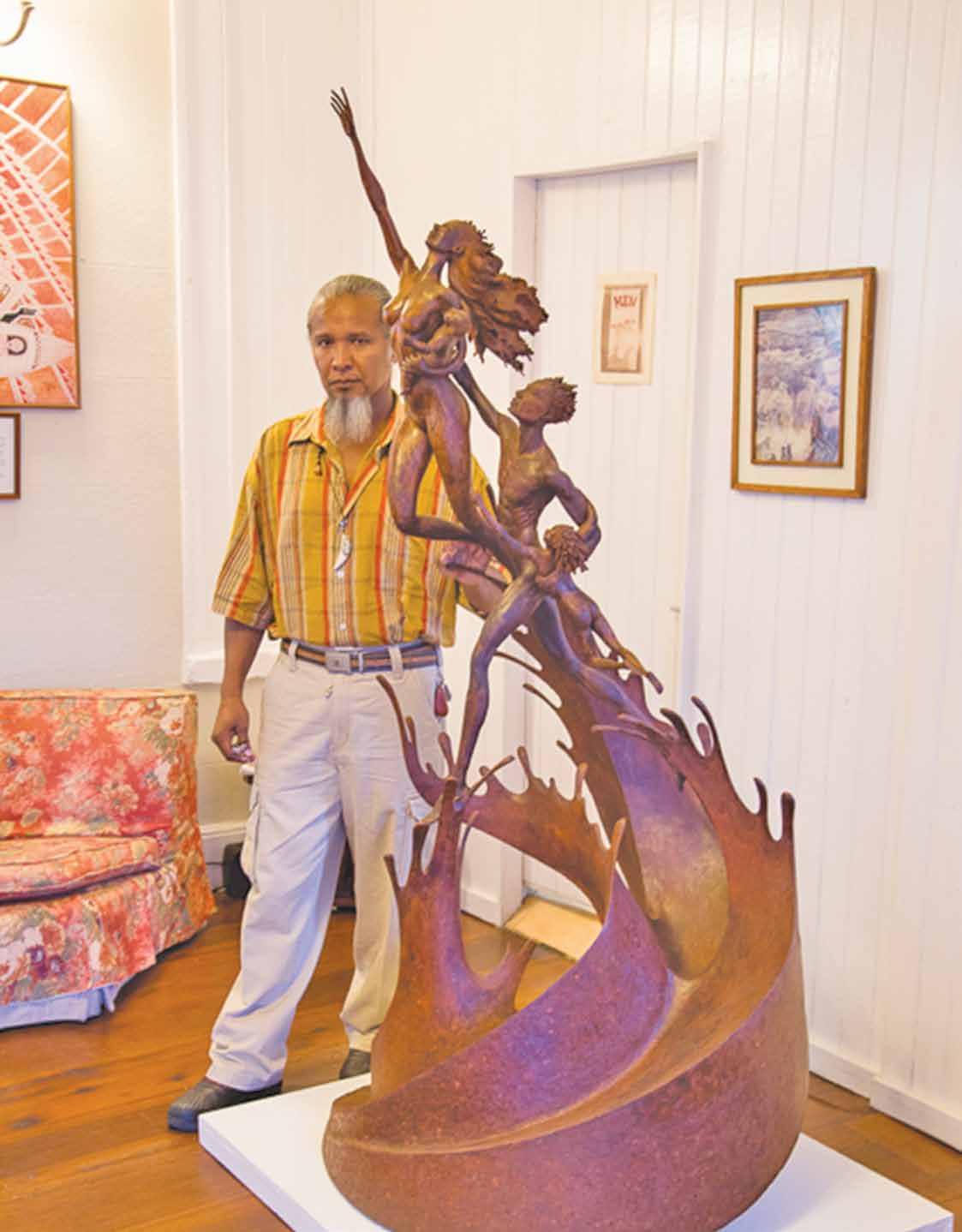
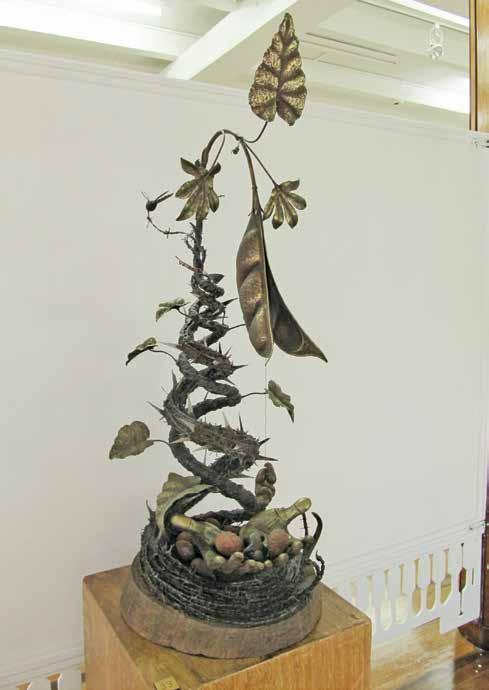
Guyanese veteran artist Winslow Craig is widely known for his supreme craftsmanship, inventiveness and insight.
Craig was born at Caria Caria on the Essequibo River. He studied at the E R Burrowes School of Art and graduated with distinction in 1989. In 1996 he was awarded the Commonwealth Arts and Crafts Award (1996). He was recently awarded the portfolio for the design and model of the Indian Arrival Monument to be erected at Palmyra, Berbice and is working on a steel sculpture for the athletics track at Leonora.
The artist has exhibited extensively at home and abroad, notably in New Zealand, Belize, China, Trinidad and Tobago, Suriname, Venezuela and the USA.
Craig is known for his thought-provoking, magnificent sculptures. Some of his art pieces are part of the National Collection housed at Castellani House.
His most recent piece “Saving Seeds” is a tribute to his father who died last year. According to Akima McPherson, artist and lecturer at the University of Guyana, “while it [“Saving Seeds”] stands in tribute to the man his father was, it speaks to the role Craig envisions for fathers – a role he feels is not being performed adequately by today’s fathers”.
“Saving Seeds proposes an antidote for the ill which has befallen our times whereby mothers raise boys without appropriate male role present...” McPherson explained.
She went on to say that over the years “Craig has revisited, reworked, expanded and conflated early themes of social and moral responsibility, bonded families, concern for youth, reliance on the Divine, overcoming adversity and victory on struggle. And whereas, some of his early explorations of these themes were largely derivation of his Christian faith and familiarity with Biblical verse, today his explorations are derivative of his experiences as a father and a partner, a brother and an uncle”. (Cover photo- Winslow Craig with 'Saving Seeds' at Moray House Trust (Photo by Michael C Lam))
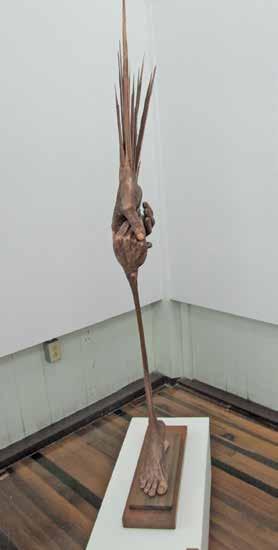
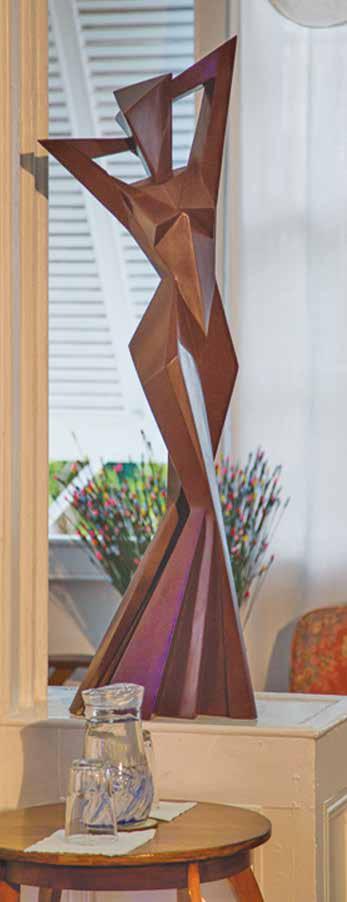
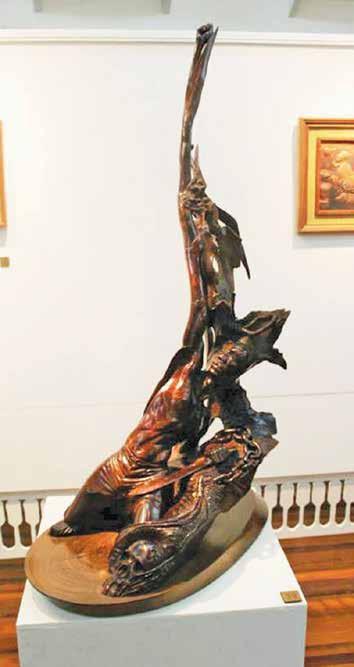
'Seeds
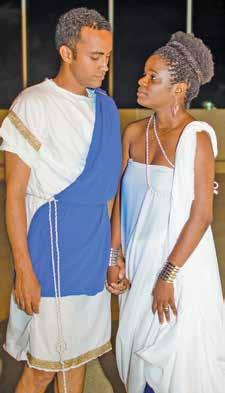
Shakespeare’s ‘Julius Caesar’ at the NCC
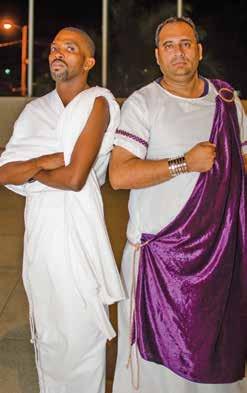
The highly acclaimed Shakespeare tragedy ‘Julius Caesar’ takes to the National Cultural Centre stage April 30.
Staged by GEMS Theatre Productions, in collaboration with National School of Theatre Arts and Drama, the play is directed by veteran theatre personality Derek Gomes, with Gem Madhoo producer.
In a press release, Madhoo said a high profile cast has been selected to present this production, including Ajay Baksh, Mark Luke-Edwards, Sean Thompson, Michael Ignatius, Lloyda Nicholas Garrett, Nirmala Narine, Paul Budnah, Max Massiah, Kirk Jardine and Chris Gopaul. Newcomers are John Fraser, Luigi Ferreira, Gibran Azeez, Patrick Chanderban, Stephen Asif
Mohamed, Scott Adams Delon Sancho and students of the National School of Theatre Arts and Drama.
The release notes that “Julius Caesar” is currently on the CSEC Syllabus and all schools are invited to attend, and approval has been granted by the Ministry of Education for schools to attend.
The play opens Thurs April 30 at 10.00hours and continues Sat May 2nd at 10.00a.m. Tickets for these shows are $500 each.
There will be one evening performance for the public to attend on Mon, May 4 at 20.00hours.
Tickets for this show are $2,500 (adults /reserved) and $1,000 for children below 16 years old (unreserved).
All tickets are available at the National Cultural Centre.

“The New York Times has developed a new form of storytelling to help readers catch up in seconds on Apple Watch. One-sentence stories, crafted specially for small screens, will provide the news at a glance across many Times sections, including Business, Politics, Science, Tech and The Arts,” the news
Torganization announced Tuesday according to the Washington Times.
“One-sentence stories are accompanied by The Times’s award-winning photography and short, bulleted summaries. Editors on three continents will be dedicated to The Times’s core mobile apps, including Watch, 24 hours a day,” The Times concluded.

wo groundbreak-
ing concept tires unveiled by The Goodyear Tire & Rubber Company at this year’s 85th Geneva International Motor Show could radically change the role of car tires in the future.
Although the two tires are concept products, the futuristic technologies stretch the imagination and provide a glimpse of what practical innovations may be on the horizon.
According to the Goodyear website, the first concept – named “BHO3” – offers the possibility of charging the batteries of
Tech BYTe Tech
BYTe

AGoodyear’s BHO3 tire concept
electric cars by transforming the heat generated by the rolling tire into electrical energy. The second concept – named “Triple Tube” – contains three
tubes that adjust tire inflation pressure in response to changing road conditions, delivering new levels of performance and versatility.
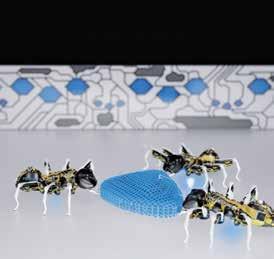
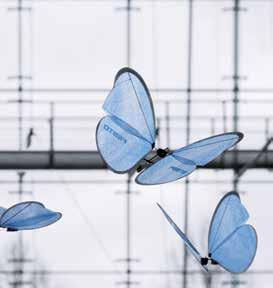
s a taste of things to come at the April 13, 2015 Hannover Messe trade show in Germany, tech company Festo, known for its biomimetic creations,has now revealed more biomimetic creations: a small colony of ants and big blue robotic butterflies.
Festo sees the development of its BionicANTs, where the latter half of the name stands for Autonomous Networking Technologies, as an indication of things to come on the factory floor, where production systems of the future are founded on adaptable and intelligent components that are able to work under a higher overall control hierarchy.
Meanwhile, the eMotionButterflies bring together expertise gained from the company's BionicOpter and eMotionSpheres projects. They exhibit collective behaviour and are able to autonomously avoid crashing into each other in real-time thanks to a networked external guidance and monitoring system.
An indoor GPS system with ten strategically-positioned infrared cameras is installed in the space where the butterfly bots are to fly. Each flapping robot has two IR markers on its torso and is tracked by the system. Positional data is then sent to a master computer for processing.
Festo says that they were designed to demonstrate functional integration, ultralightweight construction and communication between individual systems.
The butterflies can stay in the air for roughly 4 minutes before needing a recharge (which takes 15 minutes).Each eMotionButterfly has a flight speed of up to 2.5 meters per second (about 8 feet per second) (GIZMAG)
FFacebook breaking European law by tracking visitors, users: Report
acebook is tracking the browsing history of all its users, even those who no longer have an account or those who opt out of tracking in Europe, according to a new report published Tuesday from the Belgian Privacy Commission.
The new report was compiled after a preliminary study reportedly found that despite an update to its privacy policy in January, Facebook was in violation of European law.
The tracking is reportedly used to target advertising toward users, and monitors the users through its social plug-ins such as the “Like” widget, which has been placed on over 13 million sites, including health and government website.
When a user visits a site containing one of these plug-ins, it reportedly detects and sends the cookies back to Facebook, even if the user does not interact with the plug-ins in any way.
Facebook also reportedly places persistent tracking cookies on users’ computers
Gif they visit any pages on the facebook.com domain, including fan pages and others that do not require an account, effectively allowing Facebook to track non-users.
EU privacy law requires that users’ consent be acquired before cookies or tracking services are used, unless it is necessary for either the networking needed for connecting to the service, or to deliver a service specifically requested by the user.
However, Facebook disputed the findings of the report in a statement to the Verge. “This report contains factual inaccuracies," a spokesman said. "The authors have never contacted us, nor sought to clarify any assumptions upon which their report is based. Neither did they invite our comment on the report before making it public. We have explained in detail the inaccuracies in the earlier draft report ... and have offered to meet with [the report's commissioning body] to explain why it is incorrect, but they have declined to meet or engage with us."(IBI Times)
oogle has identified and disabled 192 Chrome browser extensions that injected rogue ads into Web pages opened by users without being upfront about it. The company will scan for similar policy violations in future.
The action followed a study that the company conducted together with researchers from University of California Berkeley and which found that more than five percent of Web users who accessed Google websites had an “ad injector” installed.
The deceptive Chrome ex tensions were detected as part of that study, but the researchers also found ad injectors af fecting browsers such as Internet Explorer and Mozilla Firefox, on both Windows and Mac OS X.

Google does not specifically ban ex tensions published on the Chrome Web Store from injecting ads into Web traffic, as long as they clearly inform users about what they do, but the study found that around a third of extensions with such functionality were actually malware. (Source: PC World)


The pathway or driveway at a home’s entrance is the first thing to be noticed by visitors and passersby. A well-designed and constructed driveway or path improves the look and value of a home.Stone, tile, pebbles and concrete are some of the materials used for paving driveways and paths.
Pavers, or paving stones, are common on driveways. Interlocking pavers come in a variety of colours, shapes and textures

Pathways may be smaller but they can be just as beautiful. A mix of materials displays a neat design



Ingredients
For beef mixture: ½ lb beef sirloin thinly sliced
tsp fresh crushed ginger
tsp 5 spice powder
3 cloves garlic,
shrimp mixture:
Method
Mix beef with ingredients listed. Mix shrimpwith ingredients listed. Spread rice on a baking sheet and sprinkle soy sauce and 5 spice powder and mix with a fork.
In a wok on high heat, add 1 tbsp canola oil. When oil is hot add beef and stir-fry for 2-3 minutes. Remove beef from the wok using a large spoon and place into a bowl.
Return wok to the fire and add 1 tbsp canola oil. When oil is hot, add shrimp. Stir-fry until shrimp turns pink, about 3 minutes. Add shrimp to same bowl with beef.
Return wok to heat, and add 1 tbsp canola oil. When oil is hot add ½ tsp crushed ginger and stir for about 10 seconds. Add onion, carrots and peas and stir-fry for 1 minute. Remove and place in bowl with shrimp and beef. Place wok back on to high heat; add 1 tablespoon canola oil and ½ tsp sesame oil. Add ½ tsp ginger to hot oil and stir for 10 seconds. Add rice, stirfry for 1 minute. Add beef, shrimp and vegetables to rice and stir well. Stir-fry for an additional minute or two. Remove from heat and sprinkle with scallion.
Serve hot.(Recipe and photo: www. jehncancook.com)

in a plastic bag or container.
Lettuce keeps better if you store in refrigerator without washing first so that the leaves are dry. Wash the day you are going to use.

To keep your marriage brimming With love in the loving cup, Whenever you're wrong, admit it; Whenever you're right, shut up.
Ogden Nash
Whosever room this is should be ashamed!
His underwear is hanging on the lamp.
His raincoat is there in the overstuffed chair, And the chair is becoming quite mucky and damp.
His workbook is wedged in the window, His sweater's been thrown on the floor.
His scarf and one ski are beneath the TV, And his pants have been carelessly hung on the door.
His books are all jammed in the closet,
His vest has been left in the hall.
A lizard named Ed is asleep in his bed, And his smelly old sock has been stuck to the wall.
Whosever room this is should be ashamed!
Donald or Robert or Willie or-Huh? You say it's mine? Oh, dear, I knew it looked familiar!
Shel Silverstein
The Bikini
I've decided to get into shape, Though knowing I'll never be skinny, Would just like to lose a few pounds, So I could wear a bright red bikini.
The way to lose weight, I'm told, Is to join a class at the gym, After a few weeks, they're sure, I 'd be on the right track to slim.
At first I was a quite sceptical, When told loose clothing to wear, If ever I had any such clothing, I wouldn't need to be there.
The first class was absolute agony, Perspiring and jumping around, Then onto the treadmill I went, Hoping I'd walk off a pound.
At last that class was over, I'd really been put through a test, With aching limbs, I was thankful, I could finally go home to rest.
Dreaming of that gorgeous bikini, Encouraged me to lose weight, But after gym, I'd be so hungry, I piled up the food on my plate.
After six weeks of gym classes, That bikini might be within reach. Weighing, I stepped on the scales, With visions of me at the beach.
The hand of the scales moved forward,
Just couldn't believe what I saw, Expecting to have lost a few pounds, I weighed even more than before!
Well, that put an end to my dreaming, Of seeing a bright red bikini on me, It's back to my dark one-piece swimsuit, Which covers me from neck to knee.
Vivien Wade
Many children look forward to going to school. Some though, just dread going to school. For these children, going to school may become so stressful that they have temper tantrums or complain of headaches, stomachaches or chest pain,but get better later in the morning once they stay home.
While for some there is an easily identifiable reason for school refusal, such as being bullied, death in the family, or move to a new neighbourhood,unfortunately, it is not always easy to recognize why others are avoiding school.
The main goal in managing school refusal is getting kids back in school.
A visit to your paediatrician is usually a good first step when your kids don't want to go to school. This can help ensure that your child doesn't have a physical condition causing his symptoms.
One of the most important things for parents is to be open to the idea that a child's symptoms might be caused by school refusal and not a physical problem. This will help get your child back in school faster and avoid unnecessary medical tests.
Speaking with his school teachers, a child psychiatrist and/or a child psychologist or taking family therapyif there are any stressors at home, like a divorce, separation, discipline problems, death in the family, new sibling, or a recent move, may also help.

There was a king in Scotland. His name was Robert Bruce. He fought many battles and won them. But once he was badly defeated.
He ran away from the battle field to save his life. He took shelter in a cave where he hid himself. He was immersed in deep sorrow and out of disappointment he gave up all hope and struggle.
But one day he saw a spider in that cave. It was trying to reach the roof of the cave where it had a cobweb. It made six attempts to reach its web but every time it slipped down.
Now the king got interested and watched the spider carefully. He was astonished to see that spider did not lose heart but continued its efforts to reach up at the top. At the seventh attempt the spider was successful in its attempt of reaching its web.
A bell tolls on in my heart
As though in my ears a knell
Had ceased for awhile to swell, But the sense of it would not part From the spirit that bears its part In the chime of the soundless bell.
Ah dear dead singer of sorrow,
The burden is now not thine
That grief bade sound for a sign
Through the songs of the night whose morrow
Has risen, and I may not borrow
A beam from its radiant shrine. The burden has dropped from thee
That grief on thy life bound fast;
The winter is over and past Whose end thou wast fain to see.
Shall sorrow not comfort me
That is thine no longer, at last? Good day, good night, and good morrow,
Men living and mourning say.
For thee we could only pray That night of the day might borrow
Such comfort as dreams lend sorrow: Death gives thee at last good day.
Algernon Charles Swinburne

incident boosted up the spirit of King Bruce. He gained new strength and fresh courage. He gathered his forces and fought another battle.
This time he fought with new vigour and enthusiasm and was ultimately successful in making


By Grammar G
Apalindrome is a series of letters that reads the same backwards and forwards. It can be one word, phrase, sentence or paragraph-- or book.
Author Lawrence Levine once wrote an almost 32,000 word novel in palindrome. (“Dr Awkward & Olson in Oslo” (1986)).
Single word examples of palindromes include kayak, level, noonand peep;sentences or phrases include “Too bad I hid a boot”; “A nut for a jar of tuna”; “Never odd or even”,“Pull up” and “Madam, I am Adam.”
Several everyday expressions are palindromes as well: toot, wow, huh, hah
Then there are

semordnilaps. These are words which, when written backwardsspell a wordjust not the same word: desserts is a semordnilap of stressed,as is
wolf and flow reviled and deliver,and warts and straw.
You may notice that semordnilap is palindromes in reverse.
Palindrome comes
from Greek palin meaning “over again” and odia “an ode or song”. Can you think of some palindromes and semordnilaps?
Can you rank the following series of words in the proper order?
admission, cook, governor, league, message, mustard, pepper, punishment



CrEaturE COrNEr
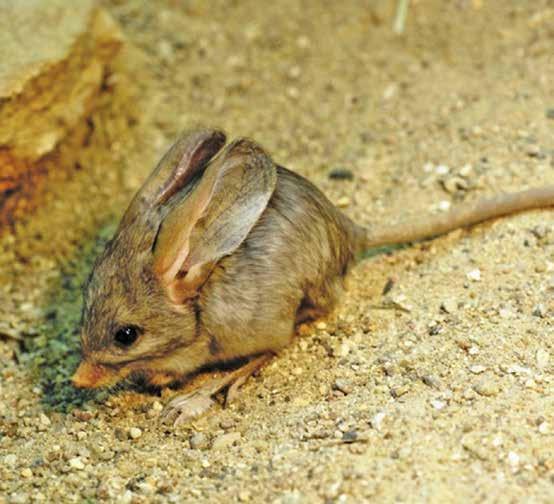
The long-eared jerboa (Euchoreutes naso) is a nocturnal mouse-like creature that can be found in China’s arid regions, and desert habitats in Mongolia. Insects comprise 95 per cent of its diet in its desert habitats and in arid regions, green plants constitute the bulk of its diet though it may consume insects and lizards.
The long-eared jerboa is distinguished from other jerboas by its enormous ears, which are about a third larger than the head. It has one of the largest ear-to-body ratios in the animal kingdom.
Its ear-size may help it keep cool in the hot desert, say scientists. As the blood moves through the ear, the heat easily dissipates from the blood vessel across the skin, and into the air.
The long-eared jerboa was first caught on film in the wild in 2007 during a Zoological Society of London expedition to the Gobi.
It weighs between 24 - 38 g (0.84 - 1.34 oz) and is about 95-107 mm (3.7 - 4.2 ins) long, not including its tail, which is 147-180 mm (5.8 - 7.0 ins) long.
The objective of the game is to fill all the blank squares in a game with the correct numbers. Every row of 9 numbers must include all digits 1 through 9 in any order. Every column of 9 numbers must include all digits 1 through 9 in any order. Every 3 by 3 subsection of the 9 by 9 square must include all digits 1 through 9. GEOZONE

ewa is located in the heart of the Rupununi region, at the confluence of the Rewa and Rupununi rivers just outside Iwokrama. The Rewa River joins the mighty Essequibo River several miles down.
The river and its surrounding rainforests are said to have one of the most diverse wildlife populations, of which its first 20 miles in the deep south is uninhabited by humans.
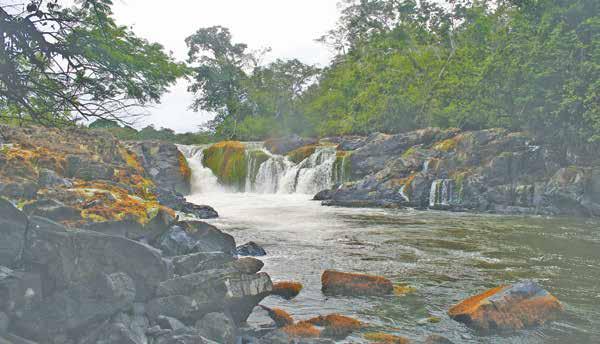
The river is especially known for its arapaima population and other rich fish populations like the

peacock bass, pacu and piranha, as well as its giant river turtles. It also hosts several waterfalls, some still unnamed (pictured).
Rewa village is the base for all sightseeing tours along the river. The isolated village comprises some 250 inhabitants who take an active role in the area’s tourism and conservation activities.
Recent oil explorations and timber concessions have been allocated in the region, and conservation and preservation of untouched areas have for some become a concern.
calculating tool is still used today
China’s recorded history goes back more than 3,500 years, the oldest living civilization in the world. The country has been a leader in innovation for centuries and has been responsible for many historic inventions and discoveries, including paper, printing, silk, fine pottery, the compass and bank notes, just to name a few.
With a population of nearly 1.4 billion, China is the most highly populated country in the world. It is also one of the largest, covering more than 3.5 million square miles (5.6 million sq. km); only Canada and Russia are bigger.
Beijing (once called Peking) is China’s capital city.
China’s longest river is the Yangtze. It is almost 4,000 miles (6,300 km) long — only the Nile and the Amazon are longer. Thousands of people live on the Yangtze in boats called junks. This river often floods, sometimes causing great devastation.
In a word
Written Chinese has more than 60,000 characters that are based on pictures that people started using thousands of years ago to communicate. Over time, the pictures became simple brush strokes.

To read basic Chinese, you must learn around 4,000 characters.
The official language of China is Mandarin, but there are many dialects, and people do not always understand each other when speaking. However, the written symbols are the same everywhere, so people can always communicate by writing.
According to legend, tea was discovered by the Chinese emperor Shennong in 2437 B.C. Used as a medicine and enjoyed as a beverage for centuries, tea was also an important trade item.
By Laurie Triefeldt
Opium is a drug made from poppies. The Chinese had been using opium as a medicine for centuries, but in the 17th century, people began to smoke opium mixed with tobacco. The drug was highly addictive, and addicts could not live without the opium. They would lie, cheat and steal to get more, and some even sold their families to support their addiction.
Dragons in many different forms are a popular Chinese icon and symbol of good luck, strength and power.
on a scale of eight notes.
Early Chinese kites were used to measure distances, test the wind, lift men and communicate.
One of the earliest written records of kite-flying dates to about 200 B.C., when the Chinese general Han Hsin flew a kite over a city he was attacking to measure how far his army would have to tunnel. Kites were banned in 18th-century China because they distracted shopkeepers from their jobs.
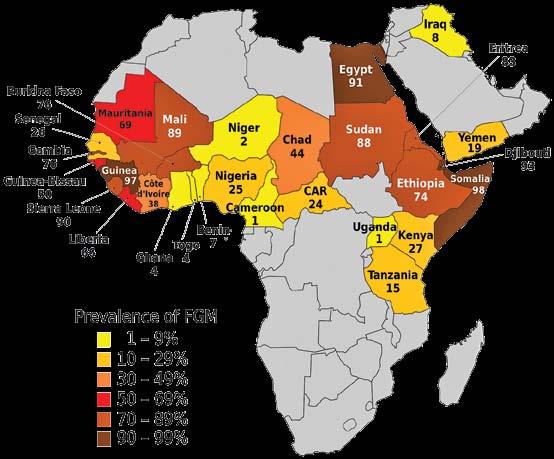
Anew Safe House designed to shelter women from Gender Based Violence (GBV) was opened March 13 in Mugumu town, Serengeti District in Mara Region of Tanzania in Africa.
It caters especially for Tanzanian girls fleeing female genital mutilation (FGM) practices, illegal in Tanzania but still considered an important passage to womanhood by traditionalists in the area.
It becomes the second rescue centre targeting girls who refuse to undergo the harmful cultural practice in the region.
The region’s first rescue centre, called Termination of Female Genital Mutilation (TFGM) Masanga Centre,
was established by Musoma Diocese of Roman Catholic Church at Masanga village in Tarime District in 2008.
About 800 girls were saved from undergoing the cut December last year.
FGM is being conducted on child brides and causes massive school dropouts among girls, says the Tanzania Daily News, hence the need for safe houses for girls.
The new centre operates under the Serengeti We Can Live Without HIV/AIDS, GBV Project, run by Mara Diocese of Anglican Church of Tanzania. Assistance for the safe house for the girls was in response to a request to the
North Mara Gold Mine general manager Gary Chapman in January this year when former Mozambican and South African first lady, Graca Machel visited Mara Region and appealed for concerted efforts in protection of schoolgirls.
Ms Machel insisted that the on-going war against FGM and child marriages in Mara Region must be won regardless of time length. She congratulated those girls refusing to undergo the cut in the area and wanted each of the girls to be documented for making history by inspiring positive changes.(Source: Tanzania Daily News)
It's been described as the image that broke the internet's heart.
When a photographer pointed his camera lens at a young girl in Syria, the child mistook it for a gun and raised her tiny hands above her head, as if to surrender. The haunting image of the child, with fear in her eyes and her lips pursed, was tweeted March by Nadia Abu Shaban, a photojournalist based in Gaza, and has been shared nearly 20,000 times since then.
known of the image's origins or the circumstances of the child.
Shaban did not take the photo herself, and did not know who had. Little was
rank to form a phrase. (private) message, (corporal) punishment, (sergeant) pepper, (lieutenant) governor,
cook, (major) league, (colonel) mustard, (general) admission
SUDOKU KID SUDOKU


This led some to speculate that the image had been staged; that the child was in fact a boy; and that the photograph was taken in 2012.
But now, the BBC has tracked down the photographer, Osman Sagirli, who recounted how he had taken the image of the fouryear-old girl, Hudea, at the Atmeh refugee camp in Syria in December last year.
Sagirli, who was working in Tanzania when the BBC spoke to him last week, said Hudea, her mother and two siblings had travelled about 150 kilometres from their home in Hama in Syria to the refugee camp, which is close to the border with Turkey.
"I was using a telephoto lens, and she thought it was a weapon," Sagirli told the BBC. "I realised she was terrified after I took it, and looked at the picture, because she bit her lips and raised her hands. Normally kids run away, hide their
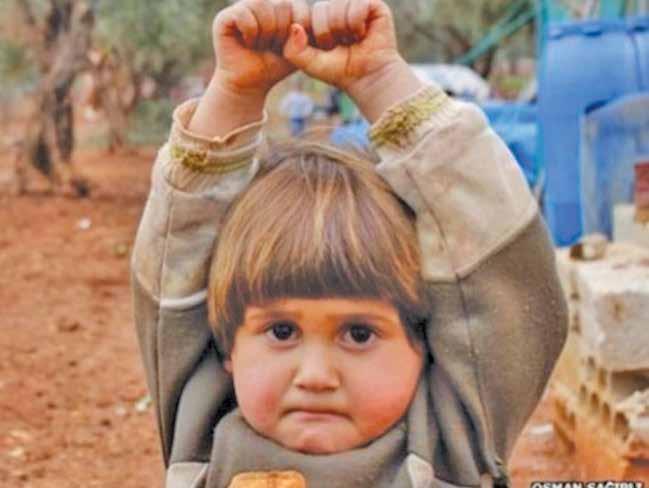
faces or smile when they see a camera.
"You know there are displaced people in the camps. It makes more sense to see what they have suffered not through adults, but through children. It is the children
who reflect the feelings with their innocence."
The photograph of Hudea was first published in January in the Turkish newspaper Türkiye, the BBC reported. At that time it was shared widely among Turkish speaking social media users, but it was only when Shaban tweeted the photograph that it was exposed to an Englishspeaking audience.(Samoan Observer)
John Doe and Jane Doe as a substitute name has its origins during the 14th century reign of British King Edward III, where the name is said to have been used to identify an unknown party in a legal action.
The name John Doe (plaintiff) may have identified a hypothetical landowner in a legal action for evicting a tenant (defendant) -- who was identified as a Richard Roe. Doe and Roe, are a female and male deer respectively andit is suggested that at the time deer were common in the region, leading to their

name use.
This became the standard so that by the 18th century it was being used in legal commentaries. It is supposed that John and Jane were common first names at the time so came to represent the public.
Today, John Doe and Jane Doe remain substitute names for persons whose identities are unknown and/or are, for one reason or the other, not to be named or disclosed.
The term is reported to be generally obsolete in the UK, but is still used in the US to describe unidentified, anonymous or hypothetical parties.





TAURUS (April 20May 20)








Make sure you accurately communicate what you have to offer before you enter into a joint venture. Don't assume the other party has your best interest at heart. Do some thorough research before taking the plunge.
Spend time with the young people in your life. You can be a positive role model if you treat them with respect and listen to their ideas without being judgmental.
(May 21June 20)
Reconsider your medical, financial or contractual options. Look over documents and make needed amendments. Romance is on the horizon.

(June 21July 22)
You can't ignore hurt feelings by overspending or overindulging. If you are uncertain about a situation, do a little soul-searching and consider your motives and choices.

VIRGO (Aug. 23Sept. 22) ARIES (March 21April 19)

LEO (July 23Aug. 22)
Keep your thoughts and feelings hidden until you feel comfortable enough to discuss them. You have plenty to gain via an ironclad plan and careful strategy.
Self-improvement projects take time and energy. Thinking that you could enhance your appearance via a product that promises the impossible is foolish. A proper diet and regular exercise are the best ways to success.
LIBRA (Sept. 23Oct. 23)

SCORPIO (Oct. 24Nov. 22)


SAGITTARIUS (Nov. 23Dec. 21)




(Jan. 20Feb. 19) (Dec. 22Jan. 19)


PISCES
(Feb. 20March 20)

Face facts and do your best to cut ties with people who are constantly upsetting or depressing you. Surround yourself with positive, upbeat people who are on your wavelength.
A joint venture will turn sour if you aren't on the same page as your partner. Be clear about your expectations before a misunderstanding occurs. It's better to be safe than sorry.
You have the compassion necessary to help someone less fortunate. Align yourself with an agency or organization that will utilize your skills. Your service will make a difference.
Emotional outbursts will develop if you are pushy. Give others a chance to make decisions without your interference. If you give someone leeway, you'll get what you want in the end.
If you want to discover the truth, go on a fact-finding mission. Don't make a decision until you understand the ramifications. Not everyone will have your best interests at heart.
Fundraising events will bring you into contact with people who share your ideals and principles. Get in touch with your community representatives to determine how you can help.