

Bribery allegations blight Berbice traffic enforcement
By Shiran ramnauth
Effective traffic enforcement in Berbice is being compromised by allegations of corrupt policing, although several minibus and hire car drivers have been charged. However, the Division’s Traffic Chief Calvin Brutus said the number of reports of corruption made involving traffic ranks do not support the accusation.
See page 2
“The only thing police ah do is hide in a bus shed or behind the bush and vehicles parked on the roadside with dem speed gun to collect wan couple thousand dollars” – driver


Bribery allegations blight Berbice traffic enforcement
By Shiran ramnaught

Effective traffic enforcement in Berbice is being compromised by allegations of corrupt policing, although several minibus and hire car drivers have been charged. However, B Division’s Traffic Chief Calvin Brutus said the number of reports of corruption made involving traffic ranks do not support the accusation.
Corruption among traffic ranks across the country is a longstanding issue. Drivers of all categories of vehicles, more specifically minibus and hire car drivers, are alleging harassment from traffic ranks, especially the junior ones on the roadways.
“The only thing police ah do is hide in a bus shed or behind the bush and vehicles parked on the roadside with dem speed gun to collect wan couple thousand dollars,” one driver declared to Berbice Times
Constant requests
He said drivers on the Corentyne are constantly being asked to give traffic ranks money, buy BBQ tickets, or go along with other forms of bribes.
Brian Anthony, a driver who plies the New Amsterdam to Adventure route said there is a popular phrase used by traffic officers: “leff or right” that has nothing to do with the road safety drill when crossing the road, but typically means drivers have a choice to “leff” a bribe with them or they will “write” a charge ticket.
“They wilfully hide all over and put radar gun out and them nah even mek you see the reading is wha dem tell you is
He noted that despite the lack of information from alleged victims, measures have been implemented to curb corrupt behaviour by ranks. “We hold instruction classes and this is a topic we address and we continue to reiterate and emphasise to our ranks, among other things, not to become involved in bribery and corrupt practice,” he said.
that, some ah dem you gatta carry dem ah Chinese restaurant and buy food and beer for them and dem friends, they using the law to make money,” Anthony said.
Another driver said the situation is so bad that he has had to withdraw cash from the bank to give ranks.
One complaint
In an interview to address these allegations, Brutus disclosed that for the entire year of 2013 there was only one complaint in the latter part of December of alleged corrupt practices of the traffic police. However, it was not made to the traffic department of the division or the Guyana Police Force, but was revealed in a letter to Home Affairs Minister Clement Rohee.
The case was subsequently referred to the police for investigation. Brutus revealed that presently the B Division’s arm of the Office of Professional Responsibility (OPR) is carrying out that investigation. He said the force has a policy where when such allegations are made against ranks, it is immediately investigated by the OPR, which is decentralised throughout the divisions in the country.
“We have heard rumours of police officers being corrupted; however, no one has really come forward and given us tangible and sufficient information… we only hear people gossiping and talking… from time to time you hear these things being said on the roadways, but no one has been coming forwards to us,” he pointed out.
Enforcement
On the issue of traffic enforcement, Brutus said for as long as there is no respect for the rule of law on the roadways, they will remain unsafe places. “It is important for all road users to be aware of the dangers of corruption – and not to endorse corruption through their own conduct. Corruption not only is to be found in the actions of the officials who ask for or receive the bribes or benefit – but also on the part of those who offer the bribe,” the traffic officer noted.
He said that the department has been encouraging drivers to report these matters, explaining that if they are uncomfortable reporting corruption to police ranks, they can go to someone in authority for instance, the chairman, overseers, or someone who can really come forward and assist to eradicate this scourge.
“They should not encourage it and if that happens… as I understand all of us are not strong as we would like to be…but you must make an effort to report it.” He explained that in the whole scenario of a corrupt transaction, there are two parties, “the giver” and “the taker”, as it takes two to tango.
“If you are found to be in contravention to the traffic laws, then you should go and defend yourself in the court and desist from offering or giving any police rank money; to the alleged rogue officers: never portray a negative image of the organisation and desist from any form of bribery and corruption,” he cautioned.
Corentyne gets new policing group
Anew Community Policing Group (CPG) was recently established at Number 76 Village on the Corentyne, Region Six, according to a release from the Home Affairs Ministry.
The membership include: Azeez Khan – Chairman, Keshwar Daiaram – Vice Chairman, Sheneza Ozeer –Treasurer, Winston Caleira – Assistant Secretary/ Treasurer, and Andrea Pindel – Public Relations

Officer. Other committee members include: Patrick Singh, Marlon Grant, Hugh Norah, Rajendra Deepaul, Naxine April, Checran and Sahadeo. This adds to the 266 CPGs that are active across Guyana with a total
membership of over 4000.
Recently, a decision was taken to divide police divisions A, B, C, D, and F into community policing divisions. This arrangement aims to allow community policing executives and the


police to have a better span of control and consequently, greater supervision over the groups.
The new divisions are as follows: A Division –A1 (Georgetown) and A2 (East Bank Demerara); B Division – B1 (West Coast Berbice), B2 (Lower Corentyne) and B3 (Upper Corentyne); C Division – C1 (Unity to Good Hope), C2 (Good Hope to Conversation Tree) and C3 (Unity to Abary); D Division – D1 (West Coast Demerara) and D2 (West Bank Demerara); F Division – F1 (Bartica) and F2 (Lethem).
Several taxi drivers have alleged that they are being made to pay bribes to police
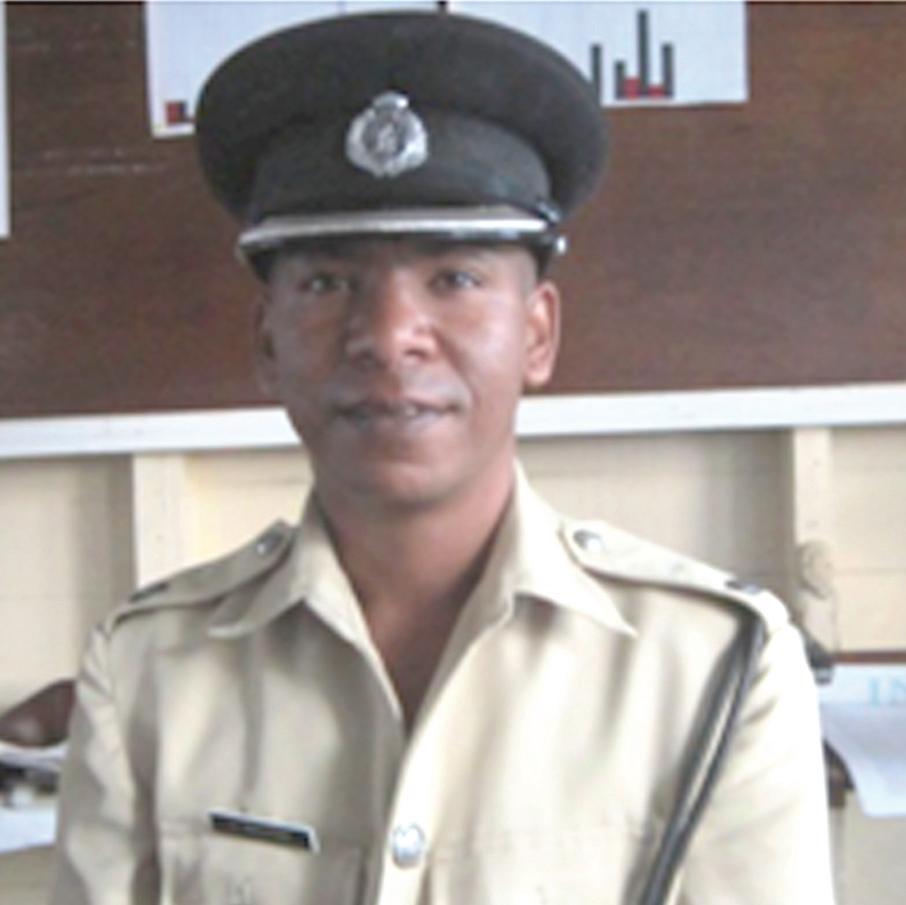
B Division Traffic Chief Calvin Brutus
Probe launched into death of Bath Settlement dancer
The Berbice Regional Health Authority (BRHA) has launched an investigation into the death of a Bath Settlement dancer which occurred last year November.
According to BRHA Public Relations Officer (PRO) Michael Itwaru, an investigation into the circumstances surrounding the death of Varshanie Devi Persaud has commenced. He said when completed the findings and recommendations will be sent to Chief Medical Officer, Dr Shamdeo Persaud.
The 11-year-old died at the Georgetown Public Hospital on November 21 last under questionable circumstances, forcing her parents to call for an investigation.
She had left home the day before she died with her mother to visit the Fort Wellington Hospital after complaining of a tummy ache. At the time, it did not seem serious. After being examined by doctors at Fort Wellington Hospital, her mother was advised to take her to the Mahaicony Hospital to get a blood test.
The doctors had suspected that she had leptospirosis and sickle cell. The
tests were done and the results were all negative. According to Bassmattie Persaud, she and her daughter then returned to the Fort Wellington Hospital where Varshanie was given saline.
“About quarter past three in the afternoon, they tell us to go to New Amsterdam Hospital. I had to catch a car and carry she till to New Amsterdam,” she said.
She said when she got there, another blood sample was taken. “Up to then she was alright, and walking and talking alright.”
Without confirming a diagnosis, the doctors told her mother that they were admitting Varshanie for the night. By the following morning, she noticed that the girl’s right eye was getting red and inflamed.
Persaud said when he went to the hospital to visit his sick child, he asked the doctors if they had a diagnosis and they responded, “Suspected sickle cell. They keep giving her injections.”
Later, as her condition deteriorated, they told her that they suspected something else and were transferring her to Georgetown. By then, they had her on

a stretcher.
She was then transferred to the GPHC Intensive Care Unit. Later that day, she died. According to her father, Fathel Persaud, the medical personnel at the New Amsterdam Hospital seem not to be aware that they could have utilised the services at the lab to find out what was wrong.
He is also of the view his daughter may have received an injection which led to her demise. The 11-year-old was considered one of the better dancers in Region Five.
More scientific approach needed to fight crime in Berbice – Joseph
“Safety and security is everybody’s business and not the police alone…police cannot do it alone we know for a fact we cannot…. so we need the support of the residents.”
These were the words of B Division Commander Brian Joseph as he addressed the measures and strategies being implemented to make Berbice safer.
Though boasting a dip in reported crime last year, Berbicians are still wary of the constant home invasions and street robberies. Joseph said crime analysts at the Guyana Police Force (GPF) constantly review all police reports, with the goal of identifying patterns as they emerge.
“Those reports are sent to us so we are aware of the specific areas where crimes are rampant and we put our human and other resources into those areas and it is bearing fruit,” he explained.
He noted that the number three subdivision, West Berbice has been very quiet recently, but the number one subdivision, New Amsterdam, has been problematic, along with Corentyne.
“We have put a number of initiatives in place as we recognised through our analysis on areas affected and we placed much emphasis on those areas primarily, hence there has been tremendous reduction of criminal activities there,” he remarked.
He also said support from the Community Policing Groups (CPGs) has played a pivotal role in curbing crimes and safeguarding residents. “They (CPGs) have been coming out in full support when called upon… some members of the various communities in Berbice have also been assisting the police and giving much-needed information and

this is most welcomed in our efforts to fight crime and ensure security,” he disclosed.
He said too that the ranks of B Division continue to render their support and protection of business owners and rice farmers.
Safety
“Whenever we are informed of financial activities being conducted in certain areas, we tend to send out people there to stake out the area to ensure all activities are conducted in a safe manner and persons are safe…. other than that, we are advising persons doing financial transactions to go plastic or use cheques and desist from moving around with excess cash,” he stated.
The commander said he recognised that there have been a few minor problems within the force; however the ranks

have been working assiduously to rectify the same.
“Regarding safety and protection for residents, we have a lot of patrols out there on a 24-hour basis and we have been advising members of the public at our various community outreaches that during the hours of darkness or when at home to secure their home and surroundings.
“We know in the country area when we get home at night, we want to get breeze as we say, so we leave our homes open and there are a lot of the crimes and home robberies are committed in Berbice, perpetrators come in through the open doors and commit the acts, so we have been advising them to ensure their homes are secured at all times,” he emphasised.
Joseph also appealed to residents to alert the police if they notice any strangers in their area so they can investigate.
“We have had incidents of persons complaining about response time, police taking long to respond and we have recognised that in some instances, it was true and we are working to address all those issues,” he said.
Joseph acknowledged that there are problems with the 911 system; however, discussions and recommendations have been made at the ministerial level and with GT&T.
He advised Berbicians to assist in stamping out the issue of corrupt police officers. “Yes, definitely the police will continue to work to protect you and serve you, but we want to advise you that if you notice any policeman involved in any illegal activity to report it to the nearest police station or speak to any senior officer within the division…,” he added.


It is important to have students go beyond the textbook to study a good mix of topics based on real-world issues. It could be as simple as the water condition in their communities or even the history of their village. This can be done by analysing information on the Internet and perhaps doing interviews with professionals.
Project-based learning calls for more time compared to traditional bookbased instruction, where students are just memorising facts from only one source.
However, with hands-on learning, students apply original information just like learning principles covered in traditional courses, but they are learning them in more meaningful ways. And presenting the student’s work to audiences beyond the teacher, including parents and community groups, is very empowering to the students.
When students work together in a team setting and directed by trained teachers, students get the opportunity to learn the skills necessary to collaborate and resolve conflicts among themselves.
It is also important to have each member of the group responsible for learning the top of the course as well as helping other teammates to learn, because we have to look at the big picture and realise that not everyone will get the same academic support from home.
In fact, cooperative learning will develop a good sense of social and emotional skills for the student, which will provide a valuable base for the students as they move forward with their own individual lives in society regardless of what profession they have chosen.
Also partnering with different community organisations, including business, other educational institutes and government agencies can be of benefit, because they can provide needed materials and experiences for both the students and the educators.
This way, students will be exposed to the world of work through school-to-career programmes and practicums. It is not a bad thing to have schools recruit professionals to act as instructors and mentors for students. Everyone can benefit from this, especially the students, because they will get to see what is happening in the ‘real’ world.
The student’s assessment should be expanded beyond just test scores and they should be provided with a more detailed academic profile of their strengths and weaknesses. This should be happening on an ongoing basis as well.
The assessment should be utilised by both the teachers and the parents, including students as well, where they can use the assessment to monitor academic progress to focus on areas that the students need improvement on. The ideal tests should be an opportunity for students to learn from their mistakes and retake the test if possible to improve their scores. This in itself can help to boost the student’s confidence.
We cannot ignore the fact that when schoolwork involves parents, students tend to learn more. There is an old saying that “parents are a child’s first teachers”, which can surely instil values that encourage school learning.
Encourage the schools to build strong relations with parents and welcome their active participation in the school. Teachers should also inform parents of the school’s academic goals and the significance of high expectations for every student and if possible some ideas in assisting the students with their homework and coursework lessons, because, after all, it takes a village to raise a child.

Narine Dat Sookram
Varshanie Devi Persaud
B Division Commander Brian Joseph

The results of the 2013 Index of Economic Freedom saw Guyana attaining an overall score of 55.7.
This places Guyana at number 121 in the world ranking and number 22 in the regional rankings. This score is 1.9 points higher than last year’s, reflecting notable increases in control of government spending and investor freedom. Over the 20-year history of the index, Guyana has advanced its economic freedom score by 10 points.
Enhancements made in seven of the ten economic freedoms have made that advancement possible, notably the progressive strides made in the management of public spending, monetary freedom and equally important, freedom from corruption.
Regardless of these progressions, Guyana, however, remains “Mostly Unfree” in the area of economic freedom. Also included in this category were neighbouring countries Suriname and Brazil who scored 54.2 and 56.9 respectively. Venezuela, however, placed 176 with 36.3 points land-
ing in the economically repressed category.
Guyana fell back into the economically repressed category in 2009, but has since progressed from that state in 2012. This year, Guyana recorded its highest score in eight years. All the same, economic growth in the whole continues to be held back by institutional weaknesses in the economy.
Long-standing constraints on economic freedom include fragile protection of property rights and below-average levels of openness and integration into the world market according to the survey.
The index also spoke about several key matters affecting Guyana’s development, including crime and limited governance.
It noted that Guyana is the transshipment point for cocaine to the USA and Europe originating from other South American countries.
It also said anti-narcotics efforts are undermined by corruption that reaches into high levels of the government. The survey sees the judicial system as slow and ineffective in enforcing

contracts or resolving disputes.
It saw Guyana as having a small under-developed financial sector and political unrest as a deterrent to foreign investment. Political
unrest has been a deterrent to foreign investment.
It referred to the banking system as being plagued by inefficiency and a poor financial regulatory framework.
Corrskel Trackers Cycling Club wants to make it big
The Corrskel Trackers Cycling Club located at Skeldon, Corentyne got its first shot at glory when several of its riders participated in their first ever cycling competition – the Second Annual Wilbur Benjamin 40-mile road race in Berbice.
The club, which is hoping to make an impression in Berbice, has since intensified its training for members who did exceptionally well in the competition that saw the participation of several cycling clubs in and around the ancient county.
During an interview with Berbice Times, 17-year-old Alvin Singh said that he is willing to work hard to make his club proud, noting that he wants to be one of the best cyclists the club has produced.
“I like the Corrskel Trackers because it is a very nice club and it keeps my body fit by riding and I enjoy riding… cycling is what I
want to take up as a career so that when I get older I can share what I have learnt to others… I also hope that with the training provided by my coach I will be a champion someday,” he stated.
Another young cyclist disclosed that although he has been a member of the cycling club, he is doing the sport as a hobby with the hope of becoming a champion cyclist in the region and inspiring young children who may want to take up cycle racing in the future.
He said he is really interested in cycling since he finds it beneficial, adding that he will continue riding never mind some of the challenges.
“I really find this cycling club really challenging when compared to the other clubs in Berbice.
Because of the fact that the existing clubs would always be leading, hence our coach decided to invite us every day in the afternoon to do

training,” he said.
Additionally, he advised that persons who may want to take up the sport as a profession have to be disciplined. “They need to read up a lot about cycling and keep riding as often as possible,” he said.
Healthy diet
The young man said practising a healthy diet is also vital in order to develop and become a well rounded athlete.
Meanwhile, the club has begun rigorous training to keep the cyclist fit and ready for any upcoming cycling competitions countrywide, according to the club’s coach Joshua Sukhnandan.
Sukhnandan said he is looking forward for the club to do extremely well in its future endeavours, adding that so far he has been working with the cyclist every day in the week to ensure his team is better equipped with
the necessary skills in cycling in order to perform at their best during their participation in any upcoming cycling competition.
He noted that the cyclists are well-grounded and disciplined young Berbicians who are willing to work hard to accomplish the club’s goal which is to produce several champions in 2014.
The club was established last year with the aim of keeping youths off the streets and from getting involved in criminal activities. Thus far the club has approximately 17 male riders, two of whom participated in the second annual Wilbur Benjamin 40-mile road race, specifically the beginner’s category of the competition.
Seventeen-year-old Baresh Sahadeo received a trophy for coming in second place while his colleague Reon Rodrigues placed third in the said category and was also awarded with a trophy.

Simply the
Truth

In Berbice, there is a young girl dying of cancer in the brain. Her mother has done the best she could do. Her cousin has done all she could do. They have withstood all of this horror with grace under pressure.
There was no screaming and shouting, no big meetings and placarding. There was the quiet simplicity of grief. They blamed no one. For them, they did what they could and placed it all into the hands of divinity. They worked and they prayed and they took this child to medical doctors. The medical doctors did as much as they could do. They took the girl to private hospitals. This luxury cost money that they did not have.
There was a doctor who, in the final stages, was contacted. This doctor of medicine, an oncologist, gave free consultations and free medication to a child whom he did not know at all. He was simply asked to be of help. He helped. His help was too late, but he did what he could have done. Free of charge.
The doctor’s name is Carl Niamatally. He gave of his time, his rare expertise (in this nation, especially). He gave it all for free. But this Dr Niamatally gave comfort by telling the family the truth and by being gentle in the telling.
I have a son who had a tumour in his head. He was three years old. My son was saved by a neurosurgeon in Morocco, Africa. He was the personal surgeon of King Hassan II. Like our own Dr Niamatally, this fine man showed compassion. My son’s ailment was discovered early. Action was taken. My son was cured.
This doctor did not save my son, because I was the senior professor at the King’s University. He just did what he had to do as a professional and a person. This Moroccan doctor has been honoured by the Kingdom of Morocco. That country shall surely be better because it honours those that serve and serve well.
Guyana’s Dr Niamatally showed the identical compassion to a child born into a poor family on the West Coast of Berbice. Sadly, his intervention was asked too late and came too late. He is willing to serve and give of his expertise and experience. He is not honoured here in Guyana.
When a country has such greatness and compassion in an individual and lets it go to waste, it falls prey to doom. Dr Niamatally (like several persons I know) has not and should not be asked to be held up and honoured. We, as a nation under God, should do so. It should be as natural as breathing.
Let us cease sidelining our best and our brightest! We did that to Dr Walter Rodney. We are doing that to the only bona fide international full professor in Guyana. We hold up mediocrity as genius and import more mediocrity. Our young behold, and they despair. When the young despair, a nation perishes.
For our small part, we Berbicians honour you, Dr Niamatally. No big noise. No screaming. But respect and gratitude, Sir!

Professor Daizal Samad
Established in 1957
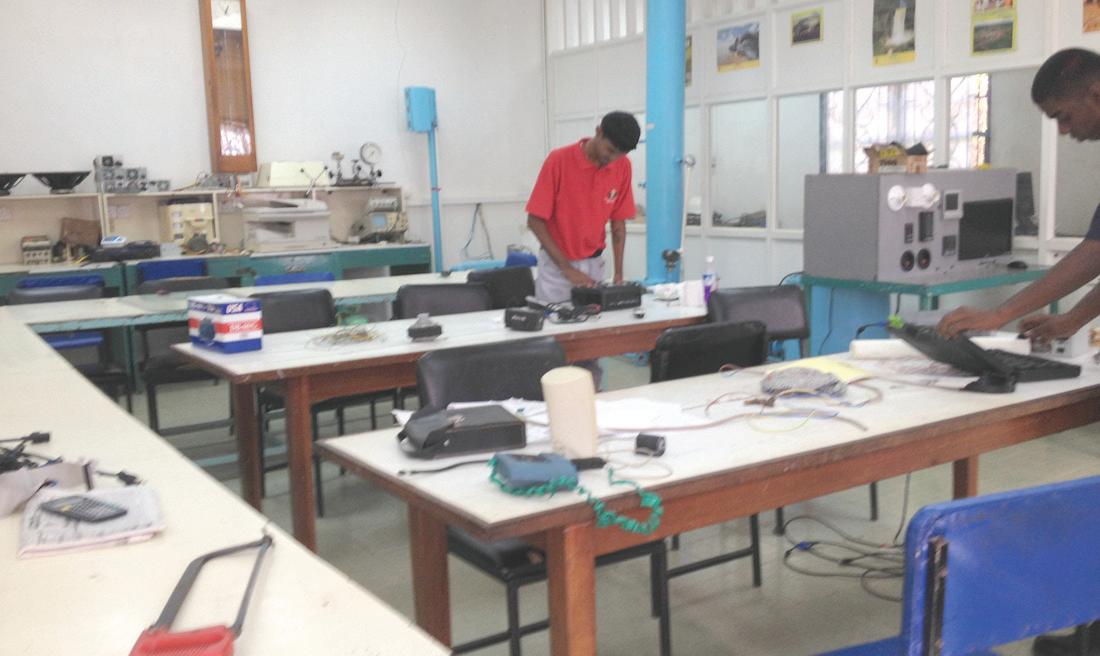
with just eight students under the then Bookers Estate, the Port Mourant Training Centre (PMTC) has over the years provided the Guyana Sugar Corporation (GuySuCo) with over 2800 graduates in various disciplines of work.
With the capacity to accommodate 130 students at the time, the PMTC stands proud as a pioneer in technical education that has stood the test of time.
The apprenticeship training is a four year programme with the first two years spent at the centre, where they are taught industrial and practical work. The third and fourth year is spent at the various sugar estates across Guyana where they put their skills to the test.
The key to the success of the centre, according to PMTC Manager Jainarine Sukhpaul, is discipline. The centre stands on the pillars of discipline, honour and tradition, he emphasised during an interview with Berbice Times
He said, that even though students come from various backgrounds, they strongly maintain the institution’s code of conduct. Currently the centre has 118 apprentices inclusive of eight females. Sukhpaul who was also an apprentice graduated in 1999 from PMTC after which he worked his way up to the chief instructor and manager of the centre.
ing the cost to train them and others want to take them from us”, he complained.
However, GuySuCo has now taken the position for an apprentice to repay the company if they want to leave at the end of the four year period.
Courses offered by the centre includes: general engineering, fitting and machinery, electrical installation, auto electrician, instrumental studies, sugar processing, agricultural mechanic and information technology.
The manager boasts
ity of technical training.
According to Chief Instructor Mohammed Mursalim who has been at the centre for the past 23 years, his vision is to encourage the development and to maintain the reputation of the institution. Since its opening, the number of apprentices had been growing. He noted these skills acquired by the apprentice are recognised worldwide and their competencies are in demand.
He added that a number of graduates would have gone on to hold successful careers within the corporation and around the world.
“The PMTC continues to lead the way and year after year remains committed to training more young people,” Mursalim said.
The institution is currently in the process of recruiting persons for the 2014 academic year. Applications are open to persons between the ages of 15-17 years and the closing date is February 28 .
When asked what are some of the challenges faced, he pointed to the issue of brain-drain. He disclosed that GuySuCo spends $1.4 million per apprentice per year.
“When a person would have completed the four year programme, you would find that other companies would want to hire them… which they would go… we are pay-
that their certificates are recognised by the Board of Industrial (BIT), GuySuCo, Craft and Technician Certificate. “Our level of competence at this centre is admirable, we can compare ourselves to university level because while they touch on the academic side we provide the technical…and many times the ones who further their studies at UG tend to excel.”
The PMTC has 10 instructors who are committed to providing the highest qual-
The manager, said members of the centre are currently visiting schools so as to sensitise them on the various training programmes being offered. He added that once recruited an apprentice becomes a resident at the Apprentice Hostel located a stone’s throw away from the workshop. Additionally, the manager noted that though the main purpose is to equip apprentice with a specific skill set, individuals are well rounded and are set for life after coming out of the programme as they are given life lessons and general knowledge.
“The centre pays keen attention to religious aspects of life and observes major religious holidays with programmes to mark each,” he stressed, noting that recently the centre attracted the attention of residents near and far with its Christmas tree that was made from recycled plastic bottles.
For over six years the calls for proper drainage in Lancaster Village, Corentyne have been ignored with the Lancaster/ Hogstye Neighbourhood Democratic Council (NDC) unable to respond to the plight of residents.
Residents say they are frustrated over the situation and are demanding that the relevant authorities take immediate actions.
Odetta Corlette of Lot 9, Lancaster Village related to Berbice Times that in her street the drainage is poor, with excess water having no outlet.

had to make a passage way. I even had to pay a boy to dig and full up this track”.
She noted that the situation is unbearable.
“A couple of hours rain and this place flood, my children have to take out their school shoes and walk in that dirty water and when they reach the road they wash their foot and put on their shoes… it’s hard for the children,” she explained.
She pointed out that there is also a cow pen in close proximity and when it rains, the water and the animal waste would mix with the water.
“When the rain falls we would experience terrible flooding and it is the same dirty water we have to walk in...my skin would get itchy and I have to end up at the doctor”, she said.
“It’s very hard for her two children especially when they have to go to school,” Corlette said. She noted also people with diabetes cannot leave their homes either when it floods. She said a report was made to the NDC on six occasions but to date, nothing has been done.
“At one time I even went to a PPP/C [People’s Progressive Party/Civic]community meeting in 2011, I raised the concern and they said they would look into to it. But as usual, only promises,” she said.
Another resident, Sharmilla Kilhai said, “We don’t have drainage, this place is call a savannah, we don’t even have a street we
Kilhai who has been living in the area for over 17 years is appealing to the relevant authority to look into the matter so that they can live in comfort.
Chandrawattie Apaiya said the drainage in the area is terrible and she would appreciate it if the NDC can address their concerns as it has been years since they have been experiencing this problem.
In addition, she said, they also need to do something about the street, because that is only a small track and it is impassable during the rainy season.
Meanwhile Overseer, Lancaster/Hogstye NDC Sita Ramjachan in an invited comment said, presently there is a mini excavator in the village doing works. She claimed that whenever a complaint is made, her office would take the necessary actions.

Odanna Corlette
Chief Instructor Mohammed Mursalim
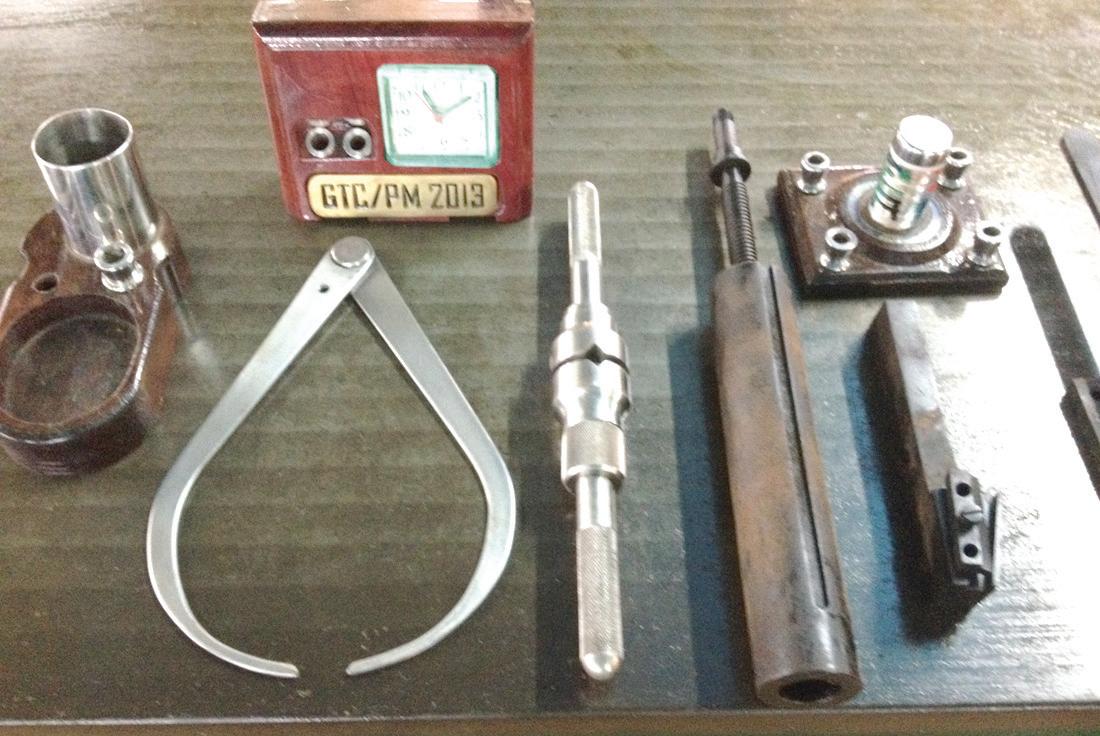
Equipment made by apprentices
Charwayne Holmes, Region Three – fitting and machinery student

Established in 1875 the Edinburgh Primary is one of the schools which continue to show great improvements in Berbice.
In 1899 the school became grant-in-aid. This meant that government gave an annual grant towards the maintenance of the school building.
Due to erosion of the Berbice riverbank and the flooding of the school compound during high tides, the building was re-sited to its present position at Lot 1 Edinburgh, East Bank Berbice.
This exercise was carried out in April 1926, when Charles Benjamin Giddings was headmaster. Minor repairs were necessary after the building was moved some 150 yards east. Overcrowding at that time also led to an extension of the school building.
Under the headship of Ramdai Singh from September 1, 2004 to August 31, 2006, a request was made to the Regional Democratic Council for an extension to the building due to the overcrowding of the school.
The construction of the extension of two class rooms to the northern side of the current building started in March, 2006 but is yet to be completed and handed over. Despite this the Edinburgh Primary continues to make the Region Six Department of Education proud.
In 2011, it was judged as the eighth best school in the region. That year four students gained places at senior secondary schools in Georgetown.
In 2009, for the first time, the school had a student that finished in the top 10 of the National Grade Six Assessment (NGSA).
That year Roman Arjune topped the region and was ninth overall.
In 2013, Shanice Henry topped the school with 525 marks and was in the region’s top 10. The school for the first time had 22 per cent of its students gain places in senior secondary schools around the country.
The school’s first time to boast came in 2006 when the department of Education named the Edinburgh Primary as the fifth top school in the region.
The school has also seen success in the field of sport. Some of the names that have done the school and the region proud at the National Cycling and Athletics Championships are cyclist Devon Henry who excelled in 1998, Romaine Gladston who is now a teacher at the said school who was unstoppable in the girls’ 1000 and 2000 meters events and Brian Christopher at the U-10 level.
In 2005, current regional athlete Melissa Byass, then a student of Edinburgh Primary, broke onto the arena, becoming the champion girl at the regional level.
Sadly, the East Bank Berbice school has been overlooked whenever there are football and basketball competitions held in the region. In 2007, Edinburgh won the regional windball cricket competition for boys and since then has always reached the final. The girls have always reached the final but are yet to hold the title.
In culture, Edinburgh Primary boasts several titles at the National Mashramani Costume Finals. With an enrolment of 290 and 13 teachers, the school is one that has and continues to make Region Six proud.



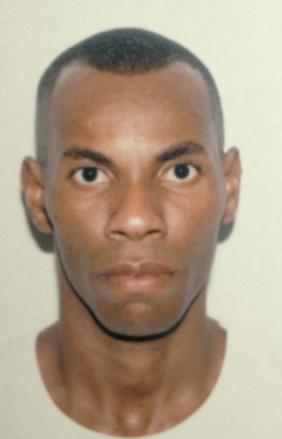
It was a typical Sunday morning on August 8, 2010 when people were slowly making their way to their Sunday chores that the badly mutilated body of ex-policeman Sheldon “Mosey” Matheson was discovered in a crouching position leaning on a small roadside shop in Kildonan, Corentyne.
His throat was slashed and there were multiple chop wounds about his body. His death sent shockwaves across his hometown of Alness village as word spread of his demise.
Who would do such a thing to “Mosey” was the question that everyone who knew him asked at that time and now almost two and a half years later that question has still not been answered.
The ex-policeman turned taxi driver was a 32-year-old father of one and was last seen at a family reunion the night before by his uncle Earl Matheson. According to his adopted aunt Clarissa Hintzen, he left his home around 19:00h to attend a family reunion.
Around 03:30h on Sunday morning, he telephoned his cousin, Itasha Mendonca with whom he was living at the time and asked for someone to pick him up at Limlair as he was walking home.
She said that there was no one at home at the time who was old enough to pick him up with a bicycle as he requested. That was the last that was heard from him.
Mystery
How he ended up in Kildonan two villages in the opposite direction from Limlair is a mystery. The family members are still faced with a lingering question: What would have happened if they had sent their young cousin, would “Mosey” still be alive or would the cousin have been dead too?
The post-mortem that was conducted by Dr Nehaul Singh at the New Amsterdam Hospital the following day revealed that Matheson died from shock and haemorrhage due to multiple incise wounds.
Robbery was certainly not a motive as his ID card, wallet, driver’s licence, chain and a slipper were found a few metres away from his body. It rained the night so any evidence of a blood trail was washed out. There were no signs of a struggle at the spot where he was found.
His family are at their wits’ end trying to come to grips with the motive behind this heinous act.
While numerous leads and theories were followed, including a triangular

love affair gone sour, and several suspects detained and questioned by the police, no one was charged and the matter never made it to the court, as there was not sufficient evidence to lay a charge.
Suspect
However, the family have their own views and feel strongly that the main suspect is a male living a few villages away.
They were told that the man, who is a farmer in the backlands, is reported to be having sleepless nights and losing his mind due to nightmares. They believe that he will confess soon as he cannot take it much longer.
The family are of the opinion that Matheson was murdered elsewhere and the perpetrator/s were trying to get the body to the foreshore a few hundred metres away but time caught up with them and they decided to leave the body by the roadside stall.
Sheldon was described as a quiet, hardworking, and mannerly young man who always made the time to help out others. He is survived by his daughter, his parents, sister and brother.
The family are asking anyone who can answer the questions as to by whom and why Matheson was murdered to come forward and report the matter to the nearest police station or make contact with any relative of the late Matheson so that they may be able to bring closure to this case.

Sheldon “Mosey” Matheson
Rodger Wilsom conducting a session with his Grade Six class
Teachers and students pose for Berbice Times in front of the school


Three sassy and intelligent young Berbicians are hoping to grab the title of being Guyana’s Next Top Model 2014.
Eighteen-year-old Techinna Williams of Tucber Park, New Amsterdam; 17-year-old Yonnick Alexander of Smythfield, New Amsterdam; and 17-year-old Shadeka Williams of Number Seven Village, West Coast Berbice were all selected from the Berbice audition as the most suitable candidates to participate in the televised quest for Guyana’s Next Top Model.
During an interview with Berbice Times, the beautiful and outspoken Williams said she has loved pageantry, fashion and modelling, since she was a young girl growing up. Williams said she learnt about the competition by watching a television programme, adding that she was looking for a modelling agency to work with for a long time, so she did not hesitate to jump at the opportunity.
Challenge
In addition, Williams disclosed that the only challenge she has had thus far while being part of the modelling competition is the lack of support from her fellow Berbicians. She said, however, that she will not allow this to affect her in any way since she has what it takes to be Guyana’s Next Top Model. For Alexander, modelling is something she never had any interest in, but she is now optimistic that she will make an impression in the competition. “I was asked by a friend to audition and I took up the challenge and was eventually selected as a contestant in the competition,” she told Berbice Times Alexander noted that she is hoping to gain exposure and experience so she can share what she would have learnt in the

competition with other persons who have an interest in modelling and pageantry.
Meanwhile, Techinna Williams is confident that she will win the coveted title of Guyana’s Next Top Model, owing to her past experience in pageantry and modelling, which will set her apart from the rest of the contestants.
Pageantry
“This is not the first time I have been involved in modelling and pageantry… since I was attending school I have been participating in several pageants across the region, and this is what I want to do as a career with the hope of making a name for myself in the fashion industry as well as modelling,” she added.
Whether the young ladies win or lose, they will use the opportunity to encourage young aspiring models to not give up.
The Guyana’s Next Top Model contest got off to an elegant and classy start two weeks ago when the contestants were introduced to the public during the official launching at the Millennium Manor Hotel in Georgetown.
The three Berbicians are among the 15 models who will compete in weekly segments until April 20. The contestants were selected from Georgetown, Berbice, and Linden, and are all new faces to the fashion industry.
The contestants will be judged weekly by a professional panel on various assigned tasks. Viewers will also have a chance to call and text into the weekly shows, and favourites will advance in the competition. The competition will allow local designers and make-up artists to show their talent.
There will be several surprises on the finals of the competition, which has a prize purse of $1 million.
APort Mourant cane harvester was on Wednesday sentenced to 10 years in jail for killing his wife.
Kumar Singh, 46, had earlier pleaded guilty to the lesser count of manslaughter when he appeared before Justice Diana Insanally at the Berbice Assizes.
The state’s case, which was presented by state prosecutor Renita Singh, is that the defendant unlawfully killed his wife, Yasmattie Samaroo at John’s Village, Port Mourant on July 23, 2010.
In giving the facts of the case, she said on the day in question, Singh stabbed his wife with a knife. She said the couple had been living together for approximately 26 years when they had marital differences which resulted in separation.
On July 23, the defendant left home to go to the shop and noticed his wife and daughter on the road. She said he joined them and they went to the shop. At the shop he pleaded with her to return home and she became physically abusive.
“He continued to plead … she took out a knife from her bag and tried to bore him and he grabbed the knife from her hand and they both fell on the ground.”
In a caution statement given to police, Singh said he then saw blood coming from her neck. “The accused then said to Samaroo that he was going to kill himself and he went home and took a rope and hung himself but was rescued later by the police.”
When police arrived at his home, the door was locked and they broke in and saw the accused hanging from a rafter. Officers removed the rope.
He was unconscious at the time. Singh was taken to the New Amsterdam Hospital, the prosecutor said. In a report presented by Probation Officer Claudia Monroe, it was noted that the defendant dropped out of school at the age of 12 hence he is semi-illiterate.
“He was a hard-working individual but became abusive when under the influence of alcohol which was a weekly
Awoman was refused bail when she appeared at the Skeldon Magistrate’s Court last week charged for trying to take 1.5 kilograms of marijuana out of the country.
Ljudah Hoyte of 54 Queens Grove, West Coast Demerara and of Waterloo Street, Nickerie, Suriname appeared before Magistrate Rabindranauth Singh on Wednesday and pledged not guilty to having on her person 1.5kg marijuana for the purpose of trafficking.

which suggested that Hoyte was on her way to the bordering town with a quantity of the illegal drug to take to Suriname, BASS officers were on the lookout and found the accused in a street a few minutes away from a boat landing.
occurrence, when he collects wages.”
She said members of the deceased’s family had accused the defendant of making sexual advances towards two family members. Monroe said members of the community viewed Singh as an abusive man.
“Checks at the Whim Police Station confirmed that the defendant was charged for damaging a cellular phone belonging to his wife,” she told the court.
Under cross examination by Defence Attorney Kim Kyte-John, Monroe admitted that Samaroo was also abusive to Singh. “He showed me a mark on his hand, he said that his wife took a knife and chopped him on his hand.” Kyte-John told the court that both the accused and the deceased tried to seek help from the Welfare Department. The court was told that the deceased was also a patient of a psychiatric doctor. The defence argued that the defendant has thrown himself on the mercy of the court and that the facts as presented by the prosecution raised the question of self-defence. “The doctors evidently suggest that the fatal injury could have been caused by her falling on the knife,” the defence argued.
Asked if he had anything to say, Singh said that he is now a baptized Christian, and begged the court for leniency. In giving her ruling Justice Insanally said it was a very unfortunate incident. She said that consideration will be taken of the fact that the defendant sought help from the probation department and the fact that psychiatric help was also sought.
Given the facts, a 17-year sentence was imposed with two years being deduced for the plea of guilty, three and a half years being deduced for the time Singh has already spent in jail and a further one and a half years for the mitigating factors, leaving the defendant with a jail sentence of 10 years.
After receiving his sentence, Singh looked towards the ceiling and whispered, “Thank you.”
Hoyte was refused bail and asked to return to court in February when police are expected to have a report available. The 36-yearold Hoyte was arrested at Number 79 Village, Corriverton on Wednesday by members of the Berbice Anti Smuggling Squad (BASS).
The officers discovered two parcels wrapped with tape in a haversack which she was carrying at the time.
Acting on information
The accused was taken to the Skeldon Police Station where the contents of the parcels were examined. Moments later she was standing before the Berbice magistrate.

Shadeka Williams
Techinna Williams Yonnick Alexander
Basketball – on the mark, still to ‘set and go’
The
Berbice Basketball Association (BBA) is seek ing to tap into resources that are available for the devel opment of the sport in the re gion.
The recently re suscitated body will, however, first have to hold elections before the next step can be taken. This is accord ing to President of the Interim Management Committee, Keith Myers.
After several years of dormancy, the body was resus citated late last year and has so far been able to assist in coordinating events on the West Coast of Berbice to have teams affiliated to the sub-association.

However, Myers noted that having teams is not enough if the sport is to be developed to the level where it will be recognised internationally. “What we need
lish themselves into clubs,” he said. He said those clubs will need to affiliate themselves with the BBA. The association recently took part in elections for officers for the governing body and Clement De Nobrega was elected as treasurer of the Guyana
Basketball Association.
De Nobrega holds a similar post on the sub-association’s executive.
Other office bearers are: Norman Semple – Vice President; Petra Ford –Secretary and Eli Hazel –Public Relations Officer.

Corentyne schools benefit from cricket gear

The Port Mourant Secondary School and Corentyne Comprehensive Secondary School recently received a quantity of cricket gear from Food For The Poor.
The gear which includes bats, balls, wicketkeeping pads and gloves, along with protective gear and stumps, were handed over to the schools by St Francis Community Developers President Alex Foster.
The schools were selected by the St Francis group.
“I trust that this will be used to enhance cricket within the school system and can create a revolution so that we can continue to produce young cricketers in Berbice and then for
the Berbice Cricket Board then the Guyana Cricket Board and the West Indies Cricket Board,” Foster said at the handing over ceremony at the club’s office in Port Mourant.
He said if all the gear is utilised properly they can produce cricketers of an international standard and also establish the foundation that Berbice schools can be larger recipients.
Sports Master of Corentyne Comprehensive Secondary School Carl Vanier pledged his school’s commitment to have the gear used for its intended purpose.
“What we will like to see is that there is more cricket being played in the school level so that the equipment
could be put to good use.”
Meanwhile, Sports Master of Port Mourant Secondary Rohan Eshwaru also thanked Food for the Poor Guyana saying that it will go a far way towards the development of sports not only in the school but also in the community.
Regional Education Officer Volika Jaikishun noted that the equipment will be used to enhance the Physical Education programme at both schools.
Meanwhile in an effort to allow the students of Port Mourant Secondary to be able to properly utilise the equipment, the Region Six Administration has committed itself towards resuscitating the school’s playground.
Baseball being introduced at an early age
Plans are moving apace to make the sport of baseball a popular one in Berbice. Currently, the game is being introduced at the primary school level. This is, however, not being done through the Department of Education; it is in fact a commitment by teachers.
Practice sessions take place on Sundays at the All Saints School Ground in New Amsterdam. All Saints Phoenix Baseball Team Manager Heathcliff Peters says there are currently 20 players in the team. “We have sessions for three hours on Sundays; when the weather is bad, we do the theoretical aspect of the game,” he said. There are six girls and four boys in the team. While Peters is still looking for more
players, he says that over the past two months the boys and girls continue to impress him.
“I have already been able to identify two pitchers and two catchers. But these are only boys. We still need to find a pitcher and a catcher for the girls.” One of the immediate goals is to be able to participate in the U-14 Pony League, which will be held in Georgetown.
“What we are
ting and pitching Asked by s whether parents porting the new initiative, Peters said

Just send ing their children out to practice is support from parents, and yes, some of them do come out and watch the practice sessions,” he said. Peters is extremely grateful for the support he has received from Robin Singh. All of the equipment currently being used for practice session has been donated by Singh. Peters is now calling on corporate sponsors to come on board.
St Francis Community Developers President Alex Foster hands over the cricket gear to Carl Vanier of Comprehensive Secondary