Policy Brief
Water and Gender in the Caribbean: Advancing Inclusive and Resilient Water Governance
World Water Day 2026
Developed by Paulette Bynoe, Christopher Corbin, Reginald Burke, Angela Franklin, Ignatius Jean, Terrence Smith, Trevor Thompson and Roxanne Graham Victor
Designed by Chetwynd Osborne
Executive Summary
Water governance in the Caribbean is deeply shaped by gender dynamics, yet these dynamics remain insufficiently addressed in policy and practice. While women and girls are central to water use, management, and household resilience, they remain underrepresented in technical, managerial, and decision-making roles across the sector.
At the same time, structural inequalities including limited access to infrastructure, time poverty, unpaid care burdens, and exposure to health risks place a disproportionate burden on them.
Despite global commitments under the 2030 Agenda for Sustainable Development particularly Sustainable Development Goals (SDGs) 5 (Gender Equality) and 6 (Clean Water and Sanitation)—progress toward gender-inclusive water governance in Caribbean Small Island Developing States (SIDS) remains uneven. Climate variability, fiscal constraints, and institutional fragmentation further complicate implementation. This policy brief argues that addressing gender inequality is not peripheral but central to achieving water security, climate resilience, and sustainable development. It outlines key
structural challenges and identifies strategic policy priorities to advance inclusive, evidence-based, and resilient water governance across the Caribbean.
1. Framing the Issue: Beyond Household Water Roles
Discussions of water and gender in the Caribbean have traditionally focused on women’s roles within the household particularly in water collection, sanitation, hygiene, and caregiving. While these responsibilities are critical to household and community wellbeing, this narrow framing obscures the broader institutional and economic dimensions of water governance.
Water governance encompasses interconnected systems: water resource management, infrastructure planning, service delivery, environmental protection, disaster risk management, and regulatory oversight. Across these domains, women remain significantly underrepresented, particularly in science, technology, engineering, and mathematics (STEM) roles and senior leadership positions.
Available regional evidence reflects persistent gender imbalances:
• Women occupy less than 20% of technical roles in many water utilities globally, with similar patterns evident in the Caribbean.
• In Barbados, women comprise just over one-quarter of the workforce in the national water authority, with concentration in administrative rather than operational or engineering roles.
• Across CARICOM, women hold approximately one-quarter of ministerial portfolios linked to water, environment, or infrastructure.
These disparities reveal a systemic disconnect that those most directly affected by water insecurity are often excluded from shaping policy, investment decisions, and institutional priorities. This exclusion reduces the effectiveness, equity, and sustainability of water governance systems.
2. Gendered Dimensions of Water Insecurity
Water insecurity in the Caribbean is not gender-neutral. It is experienced differently across gender, age, geography, and socioeconomic status, with women and girls bearing a disproportionate share of the burden.
Time Poverty and Economic Constraints
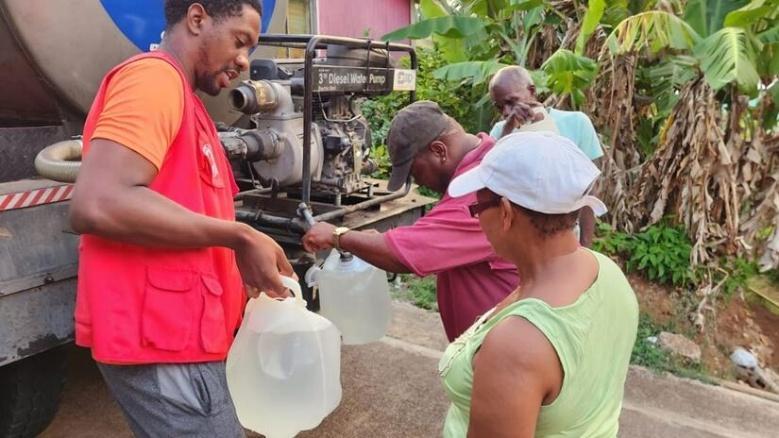
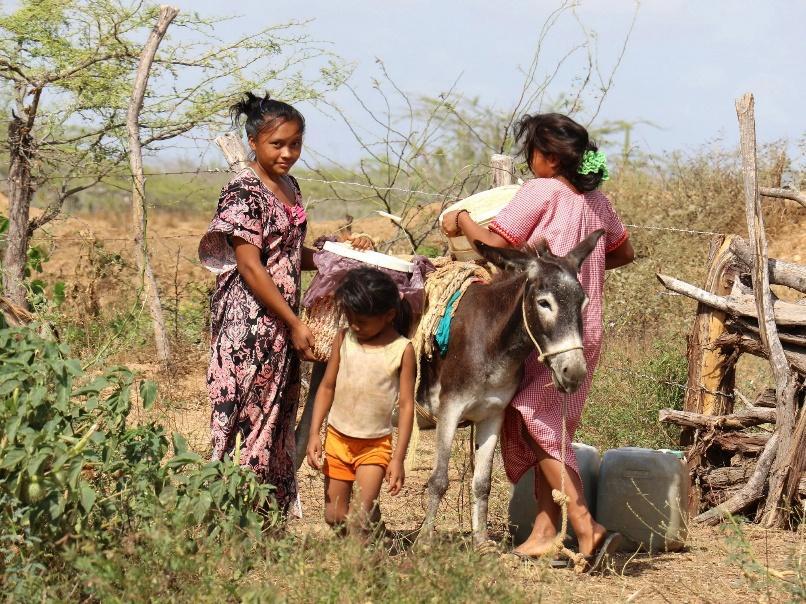
In water-insecure households, women and girls are primarily responsible for water collection in the majority of cases. This responsibility extends beyond fetching water to include cooking, cleaning, sanitation, small-scale agriculture, and caregiving. The cumulative effect is significant:
• Women spend substantially more time on water-related tasks than men.
• This contributes to “time poverty,” limiting access to paid employment, education, and civic participation.
• For girls, water collection responsibilities can reduce school attendance and academic performance, reinforcing intergenerational inequality.
Health and Safety Risks
Women’s disproportionate exposure to unsafe water sources increases vulnerability to waterborne diseases such as gastroenteritis, leptospirosis, and skin infections. Inadequate water, sanitation, and hygiene (WASH) services also heighten the risks associated with menstrual health management, maternal health, and childcare. In some contexts, long distances to water sources expose women and girls to safety risks, particularly in isolated or poorly lit areas.
Rural and Climate Vulnerabilities
Gender disparities are especially pronounced in rural and peri-urban communities, where infrastructure gaps are more acute. For example:
• In Jamaica and parts of Haiti, rural women often balance unpaid care work with income-generating activities, despite unreliable water access.
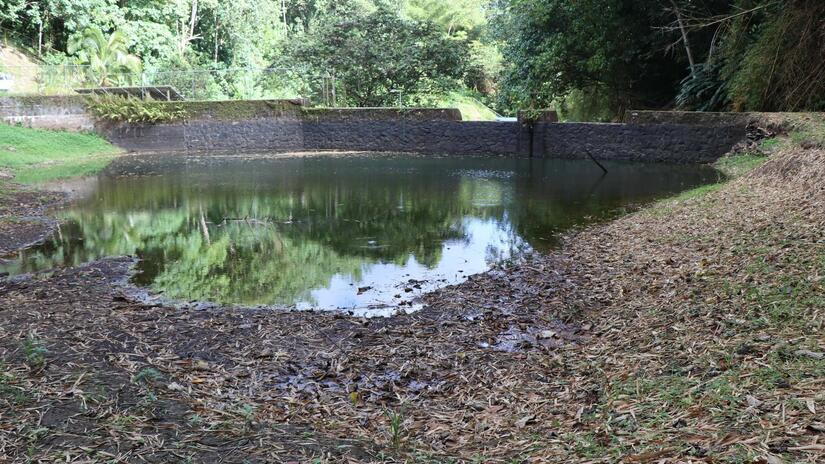
• In drought-prone regions of countries such as Guyana and Trinidad and Tobago, seasonal water shortages intensify household burdens. Climate change exacerbates these challenges by increasing the frequency and intensity of droughts, altering rainfall patterns, and placing additional stress on already fragile water systems. Women, as primary managers of household water, are often the first to absorb these shocks.
3. Institutional and Policy Constraints
Although Caribbean states have endorsed international frameworks recognizing the importance of gender equality, implementation within the water sector remains inconsistent and fragmented.
Weak Gender Mainstreaming
Many national water policies and legal frameworks predate current gender equality commitments and lack:
• Explicit gender provisions
• Enforcement mechanisms
• Accountability frameworks for inclusive participation
As a result, gender considerations are often treated as optional rather than integral to planning and decision-making.
Data Gaps and Knowledge Constraints
A critical barrier is the limited availability of sex-disaggregated and gender-sensitive data. Without such data:
• Gender disparities remain invisible in national statistics
• Policymakers cannot accurately assess needs or monitor progress
• Investments risk reinforcing existing inequalities
Financing and Budgeting Limitations
Gender-responsive budgeting is not yet systematically embedded in water sector planning. Infrastructure investments often prioritize technical efficiency without considering differentiated social impacts. This leads to:
• Underinvestment in community-level access solutions
• Limited attention to affordability and service reliability
• Missed opportunities to reduce unpaid care burdens
Fragmented Governance
Water governance in the Caribbean is typically distributed across multiple ministries (water, health, agriculture, environment, and finance), often with weak coordination mechanisms. This fragmentation:
• Complicates integrated planning
• Limits policy coherence
• Reduces the effectiveness of gender mainstreaming efforts
4. Policy Directions for Inclusive Water Governance
Advancing gender-responsive water governance requires a shift from rhetorical commitment to operational integration.
(i) Strengthen Representation and Leadership
• Establish targets or quotas for women’s participation in water governance bodies
• Support leadership pipelines through training, mentorship, and scholarships in STEM fields
• Ensure meaningful not symbolic participation in decision-making processes
(ii) Invest in Gender-Responsive Infrastructure
• Prioritize reliable, safely managed water services in underserved communities
• Design infrastructure that reduces time burdens and improves accessibility
• Integrate gender considerations into climate-resilient water systems
(iii) Institutionalize Gender Data Systems
• Mandate the collection of sex-disaggregated data across water utilities and agencies
• Incorporate gender indicators into national monitoring frameworks for SDGs
• Use data to inform targeted interventions and resource allocation
(iv) Embed Gender in Climate and Finance Mechanisms
• Integrate gender analysis into climate adaptation and resilience projects
• Align water investments with gender-responsive climate finance frameworks
• Ensure that funding proposals demonstrate inclusive benefits
(v) Strengthen Cross-Sectoral
Coordination
• Align water policy with health, education, agriculture, and energy strategies
• Establish inter-ministerial coordination mechanisms with gender expertise
• Promote integrated water resource management (IWRM) approaches with a gender lens
(vi) Opportunities for Transformation
The Caribbean is at a pivotal moment. Increased investment in climate resilience, disaster risk reduction, and sustainable infrastructure creates a window to address entrenched gender inequalities within the water sector.
Promising developments include:
• Community-based water governance models that elevate women’s leadership
• Gender-responsive climate adaptation projects supported by international partners
• Expanding training programmes for women in technical and engineering roles
• Improvements in digital data systems for monitoring service delivery and equity Regional collaboration through CARICOM and other platforms offers opportunities for:
• Knowledge sharing
• Policy harmonization
• Scaling of best practices across SIDS contexts
However, these opportunities will only translate into systemic change with sustained political commitment, institutional reform, and adequate financing.
5. Conclusion
Gender equality is not an adjunct to water governance it is a prerequisite for its effectiveness, sustainability, and resilience. In the Caribbean, where water systems face increasing pressure from climate change, population dynamics, and resource constraints, inclusive governance is essential.
While progress has been made, critical gaps persist in policy implementation, data systems, financing, and institutional coordination. Addressing these gaps requires a comprehensive approach that embeds gender considerations across all dimensions of water governance.
By strengthening legal frameworks, investing in data and human capacity, and fostering cross-sectoral and regional collaboration, Caribbean countries can advance equitable and sustainable water management. In doing so, they will not only meet global commitments but also build more resilient societies and economies.
Key Message
Where water flows, equality grows.

Bibliography
1. Albert Poyotte, V. (2022). Gender Assessment and Action Plan: The R's (Reduce, Reuse and Recycle) for Climate Resilience Wastewater Systems in Barbados. Belmopan: Caribbean Community Climate Change Centre.
2. Caribbean Development Bank. (2018). Integrating gender equality into water sector operations: Technical guidance note (CDB5_Integrating Gender Equality into Water Sector Operations).
https://www.caribank.org/sites/default/files/publicationresources/CDB5_INTEGRATING%20GENDER%20EQUALITY%20INTO%20WA TER%20SECTOR%20OPERATIONS_final.pdf
3. Caribbean Development Bank. (n.d.). Third Water (South Ambergris Caye Water and Sewerage Expansion) Project Developing a gender policy and operational strategy for human resource management
https://www.caribank.org/publication_types/contract-awards/third-water-southambergris-caye-water-and-sewerage-expansion-project-developing-genderpolicy-and-0
4. Cashman, A. (2012). Water policy development and governance in the Caribbean: An overview of regional progress. Water Policy, 14(1), 14–30.
5. Global Water Partnership–Caribbean. (2024). Regional Action Framework for Integrated Water Resources Management in the Caribbean Community Region.
6. Global Water Partnership–Caribbean. (2025, March 8). Water management: Supporting gender responsive investments (P. Bynoe).
https://www.gwp.org/en/GWP-Caribbean/WE-ACT/news-page/News-andActivities/2024/2025/water-management-supporting-gender-responsiveinvestments by-professor-paulette-bynoe-phd-aa chair-gwp-c/
7. International Institute for Sustainable Development & UN Women. (2021). Gender‑responsive resilience building in the Caribbean. https://wrd.unwomen.org/practice/resources/gender-responsive-resiliencebuilding-caribbean
8. Kayser, G. L., Rao, N., Jose, R., & Raj, A. (2019, May 14). Water, sanitation and hygiene: measuring gender equality and empowerment. Bulletin of the World Health Organisation, pp. 438-440.
9. McGill University CARIWIN. (n.d.). CARIWIN gender and water issues. https://www.mcgill.ca/cariwin/gender-and-water
10.Oluwasanya, G., Omoniyi, A., Qadir, M., & Madani, K. (2024). Quantifying women in the water workforce. Nature Water, 2, 805–806. https://doi.org/10.1038/s44221-024-00308-4
11.UN Women. (2023). Strengthening public finance management systems for gender equality and women’s empowerment. UN Women Headquarters. https://www.unwomen.org/sites/default/files/2023-06/Strengthening-publicfinance-management-systems-for-gender-equality-and-womens-empowermenten.pdf
12.UNESCO World Water Assessment Programme. (2026). The United Nations World Water Development Report 2026: Water for all people—Equal rights and opportunities. UNESCO on behalf of UN-Water.
13.United Nations Children's Fund and World Health Organisation. (2023). Progress on household drinking water, sanitation and hygiene 2000-2022: a special focus on gender. New York: United Nations Children's Fund (UNICEF) and World Health Organisation (WHO).
14.United Nations Development Programme. (2023). Strengthening resilient water resource management in the Eastern Caribbean (Water for Resilience Project). https://www.undp.org/barbados/projects/water-resilience
15.United Nations Development Programme. (2023, March 24). UNDP and Canada sign agreement to boost water resilience. https://www.undp.org/barbados/pressreleases/undp-and-canada-sign-agreement-boost-water-resilience
16.United Nations Development Programme. (n.d.). EnGenDER: Enabling gender‑responsive disaster recovery, climate and environmental resilience in the Caribbean. https://www.undp.org/barbados/engender
17.United Nations Economic Commission for Latin America and the Caribbean. (2019). Symposium on mainstreaming gender in water resources management, climate change and disaster risk reduction policies in the Caribbean https://www.cepal.org/en/events/symposium-mainstreaming-gender-waterresources-management-climate-change-and-disaster-risk
18.UNESCO. (2023). Water Management and Gender in the Jamaica Breadbasket. Kingston: UNESCO Publishing.
19.UN-Water. (2021). Progress on integrated water resources management: Global baseline for SDG indicator 6.5.1. United Nations. https://www.sdg6data.org/indicator/6.5.1