

Sunday, December 7, 2025

Sunday, December 7, 2025
Domestic violence survivor and GBV advocate is inspiring other women to leave and highlighting support systems that can make all the difference

By Frederick Halley
MEET Brandon Willabus, the remarkable 16-year-old whose birthday wish came true in the most unforgettable way with a special meeting with His Excellency, President Dr. Irfaan Ali.
To celebrate this milestone birthday, Brandon travelled to Guyana from Brooklyn, New York with his parents, Winston and Dimple Willabus. Both Winston and Dimple are proud Guyanese by birth, and with Brandon enjoying a break from school for the Thanksgiving holiday, they decided there was no better place to mark his 16th year than in the land of their roots.

Quietly, they added a meaningful surprise: A request for Brandon to meet the President, a wish the Office of the President graciously approved. Filled with anticipation, Brandon embarked on this memorable journey, excited not only to celebrate his birthday but also to fulfil


his dream of meeting President Ali.
During their conversation, Brandon enthusiastically posed the thoughtful questions he had prepared for an article he intends to write for his school’s newspaper. This meeting was especially significant to Brandon. Back in September, he attended President Ali’s Meet and Greet in New York with his parents but did not get the chance to speak with him.
His interest in meeting the President was sparked by research he has been conduct-
ing on Guyana, particularly its recent oil and gas discoveries, and he hoped to gain deeper insights directly from the nation’s leader.
A student at Poly Prep Country Day School in Brooklyn, New York, Brandon is an accomplished young scholar and leader, serving as Chair of the Civic Committee and Vice-President of the Model United Nations.
Although he had visited Guyana once before at the age of four, this trip held a special significance and in
many ways. Brandon is no stranger to Guyana’s literary and cultural landscape. He appeared on the cover of his sister Anaya Willabus’ first published book, The Day Mohan Found His Confidence, which was released ten years ago.
For Brandon and his family, this journey became more than a birthday celebration. It was a heartfelt reconnection with heritage, an inspiring moment of leadership and learning, and a memory that will stay with them for a lifetime.


“Speaking
By Shaniya Harding
FOR 17 years, Bibi Ahamad says her marriage was marked by domestic violence, and for almost two decades she lived under the shadow of physical, verbal, emotional, psychological, and financial abuse. Today, at 57, Bibi speaks openly about the trauma she endured, working as an activist for women’s rights and against gender-based and domestic violence.
Speaking to the Pepperpot Magazine this week, Bibi says she will continue to share her story, hoping to inspire other women to leave abusive relationships. And while rebuilding is hard, Bibi says there are more resources today to help survivors than ever before, and with a larger community and support base, she is encouraging other women to take the first step.
Bibi’s story is well known, having been told on many platforms before, but she says she will continue sharing it, hoping to inspire other women. Bibi’s journey of abuse lasted for 17 years, during which she says she endured all forms of abuse, sharing, “I have had all forms of abuse—physical, sexual, verbal, emotional, psychological, financial.
I went through it all for a number of years. Even while I was pregnant, I was physically and verbally abused numerous times.” Throughout those years, Bibi says she tried to repair her marriage, adding, “I tried everything—family counselling, individual counselling. That did not work.”
Like many women, Bibi wanted to save her marriage, but the real turning point came when she realised the impact the abuse was
inspiring other women to leave and highlighting support systems that can make all the difference
would be the last time Bibi or her daughter endured trauma at the hands of her husband, but the rebuilding process is what she says is the part not many women talk about.
having on her daughter. “I had a young child at that time living in the home with the abuser, who is her father. I realised not only I was being affected by the forms of abuse, but at times it was affecting her,” she shared. While Bibi wanted to leave the marriage, her daughter made the decision much harder. “I could not just make a rash decision because I had to think of my daughter, how it would impact her and emotionally how this would affect her.”
One of the major hurdles Bibi encountered in leaving was the stigma. Coming from a traditional Guyanese background more than 25 years ago, the stigma of a child growing up without her father was a lot more prominent than it is today. That stigma, Bibi says, was one of the leading reasons she stayed, and is still one of the leading reasons other women stay today. Citing an incident where she reported her husband and eventually dropped the case, Bibi shared, “The stigma at that time was hard for her to have a father who is in prison. How is he going to support her? So I dropped the case.”
The weight of the abuse would eventually become too much to bear just a few years later, however. Motivated by her love for her daughter, Bibi later left the marriage in what she described as a moment of bravery and self-assurance she had not had in years. “Eventually, I could not take it anymore—my daughter was scared,” she added. “One morning I got up and I said to my husband, listen, let me tell you something—you are not coming back here. Take your clothes and go. I mean that, and I am serious. I do not know how I got that courage that morning to do it. I told God that I did.” That moment of bravery
While the main aim in domestic violence cases is to escape, the rebuilding is one area that Bibi says should be talked about more. As she added, “Rebuilding is not easy. You need support; survivors need emotional support. You need that because you cannot cope on your own.” Recounting her journey, Bibi said getting over the emotional and psychological trauma was the hardest hurdle.
She described the time following her leaving as filled with emotional turmoil and traumatic moments, questions, and self-doubt. “Emotional support is important. Even though I would try on my own, there are times when it pops back up in my head. Some people can become depressed; some can even turn to alcohol or drugs,” she added. While counselling, emotional support, and family backing helped carve a new path, Bibi says forgiveness is the true key to moving forward. “The biggest part of the healing is forgiveness. You have to forgive your perpetrator; unless you do that forgiveness, you’re not moving on. You might move on physically, but emotionally you’re stuck.”
While stories like Bibi’s are a stark reminder of the work still needed to end domestic violence, her work today is a glimmer of hope to women currently facing a similar situation. As Bibi explained, the support services for survivors of domestic violence have seen impressive development in recent years.
“In Guyana here, at the time when I left my abusive relationship, we had no system in place to help a person like me. I could not report my abuse because there was no 9-1-4 number, or the iMatter app, for example. You can chat, you can get help, and you
TURN TO PAGE VII

By Michel Outridge
JENNIFER Jeffrey is a very enterprising woman who turned adversity into several small businesses to support herself and her children.
As a single parent who was often faced with many challenges as a woman, she became the sole breadwinner of the home when the father of her children abandoned his responsibilities.
The mother of four told the Pepperpot Magazine that she is the co-owner of Cosmos Farms, a family-operated business that produces fresh organic fruits and vegetables for the local market.
As a cash crop farmer, she cultivates coconuts, mangoes, pepper, ginger, tomatoes, callaloo, and sorrel among other crops.
Jeffrey is the eldest of five sisters and two brothers, and she became independent when she realised no one was coming to help her.
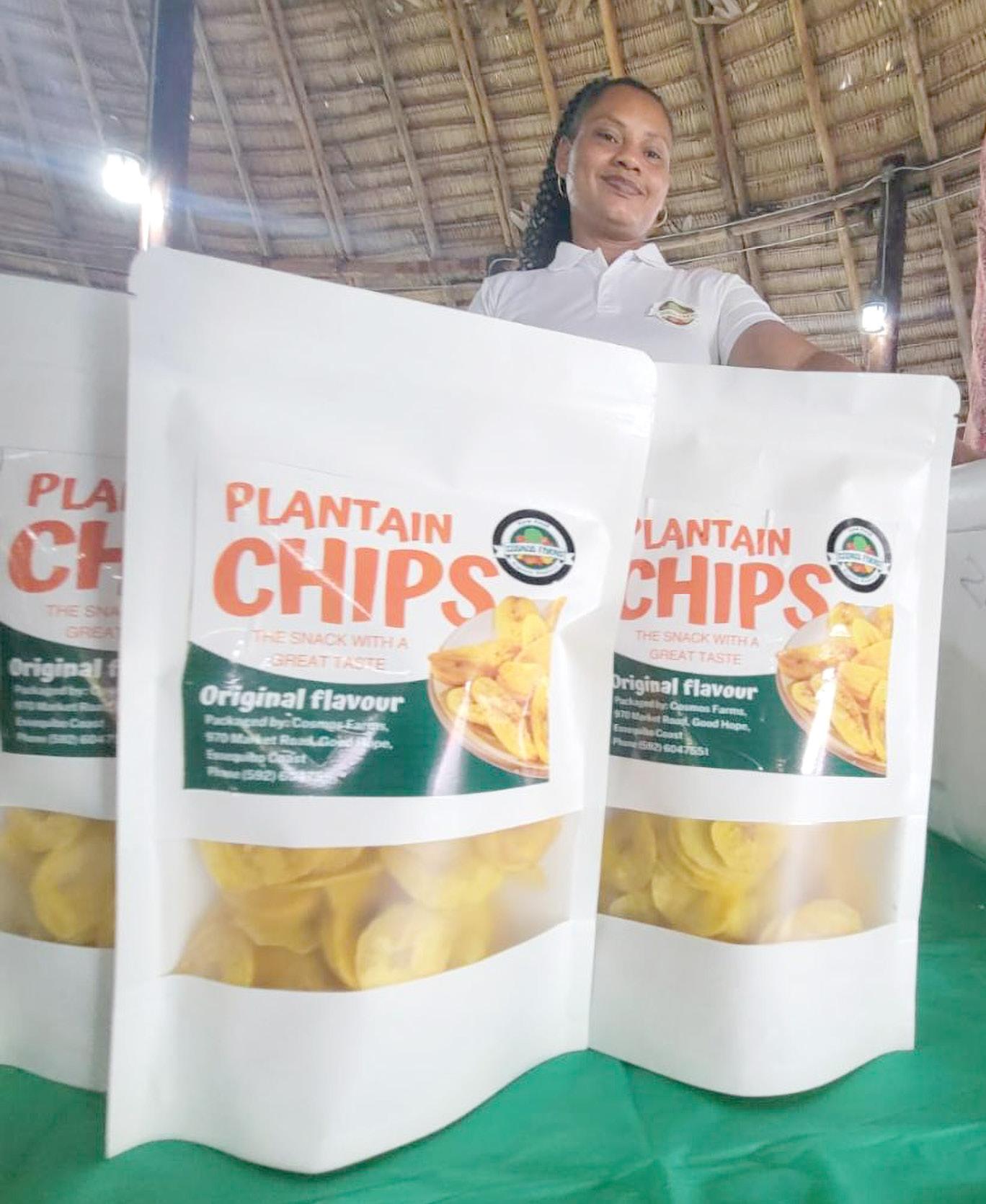
She started making fried plantain chips from scratch and selling them with fresh homemade mango sour, and established the Red Tent Barbeque and Fish Shop small business at Supenaam Stelling, Essequibo Coast, Region Three (Essequibo Islands–West Demerara).
Having access to land that was just there, Jeffrey began planting crops to earn, and would even use the organic crops in her waterfront business as ingredients for the menu she offers.
Jeffrey is also a poultry farmer with some meat birds, layer birds, Creole birds, and some baby chickens presently in her homemade pen, and she would sell the eggs garnered from the layers at $1,800 per tray.
She added that her parents had always been farmers, who raised her to use the land to plant crops to feed themselves.
Jeffrey told the Guyana Chronicle that the Red Tent shop is open daily from 4 a.m. to 12 a.m., and she provides employment for two people in that venture.
showcase farm-fresh produce, handmade goods, and agro-processed delicacies to a lively crowd.
According to the Commission’s Chairperson, Indranie Chandarpal, about 50 women participated in this year’s market, which she described as a success.
The initiative, now in its third year, celebrates women farmers and agro-processors and was designed to foster community spirit while promoting women’s economic empowerment.
Jeffrey has three acres of seasonal crops at her residence in Good Hope Village, Essequibo Coast, and is supported in the venture by her mother, Margaret Roberts, 59.
sorrel and other fruits.
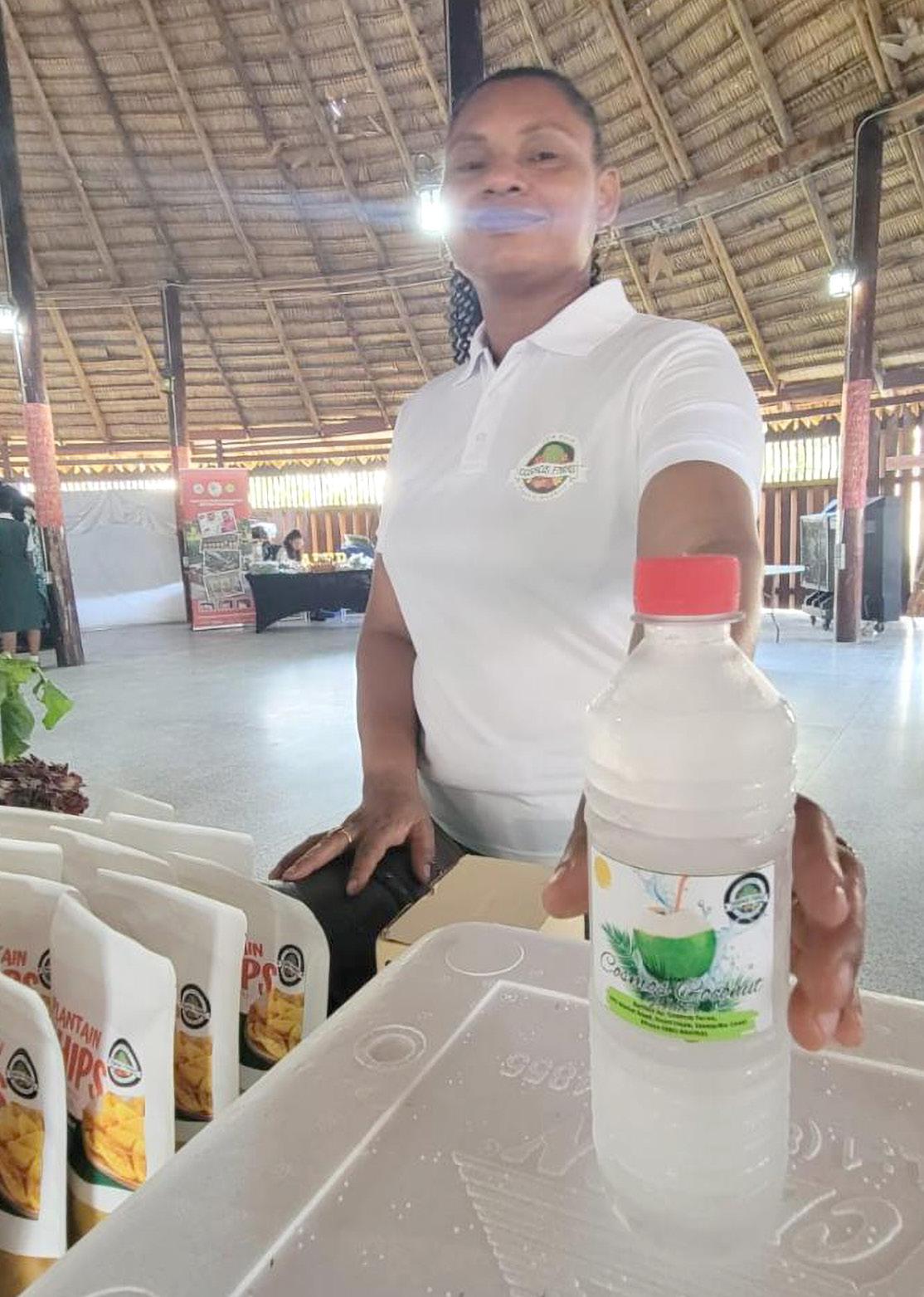
In addition, she began utilising the coconuts produced on her farm to make coconut oil, use the coconuts to water the farm, sell the water, and make fresh juices, including
The 44-year-old explained that she grew up in a family that derived its livelihood from farming; it had been part of them for a long time, so when she turned to farming to supplement her income, it was nothing new.
She is also a skilled seamstress who uses her spare time to make dresses and other outfits for customers on a made-to-order basis, using the raw materials they bring in.
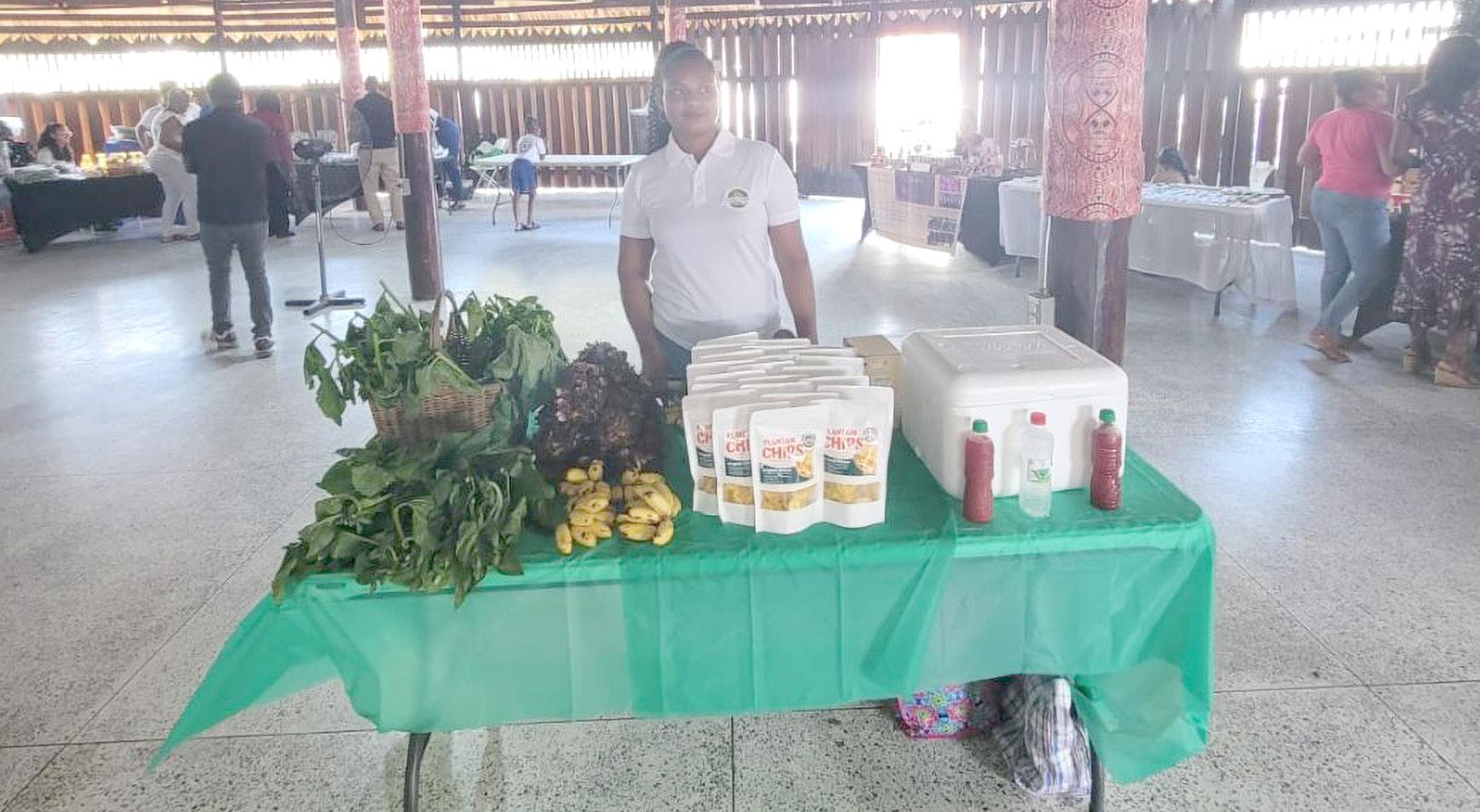
Jeffrey was one of the many women entrepreneurs selected to participate in the first-ever all-women’s night market at Umana Yana, Georgetown.
The event gave her an opportunity to market her products and also network with other women who owned their own businesses.
She benefited from training at the National Agricultural Research and Extension Institute (NAREI) and from several women’s seminars aimed at empowering women in business, and the experience was very enlightening.
Jeffrey provides steady employment for a total of six people, drawn from the village and surrounding communities.
Earlier this year, the Women and Gender Equality Commission (WGEC) hosted a Women’s Night Market at the historic Umana Yana in Kingston, Georgetown—an event that saw more than 50 local women
Chandarpal said the event provided an ideal place to market, make connections, and buy farmfresh vegetables, fruits, and other products, some of which are handmade.
She added that following the recent observance of Women’s Day, the night market was part of ongoing efforts to honour women and showcase their contributions to local production.
The atmosphere at the Umana Yana was lively yet relaxed, with a steady flow of visitors browsing stalls and sampling a wide variety of goods.
From farm-fresh produce, green seasonings, coconut water, fruit juices, and honey-based products, to pastries, cheesecakes, wines, pickles, and handmade crafts, the event reflected the diversity and ingenuity of local women entrepreneurs.
There were also food trucks offering freshly prepared meals, adding to the festive experience. Security was visible, ensuring a safe and family-friendly environment.
One of those women participants included Jennifer Jeffrey, who had for sale fresh plantain chips with sour, coconut water, organic callaloo, dried sorrel, and ginger.
By Michel Outridge
AS dawn spills over the winding waterways of the Essequibo Coast, Roopan Ramotar—known affectionately as “Fowl Cock”— steps out onto the land he calls home.
The morning air is rich with the scent of wet earth and coconut trees swaying gently in the breeze.
Here, on the lush plains of Land of Plenty Village, Ramotar’s vision for agriculture and community is unfolding through improved animal breeds and plant varieties, coupled with modern architecture.
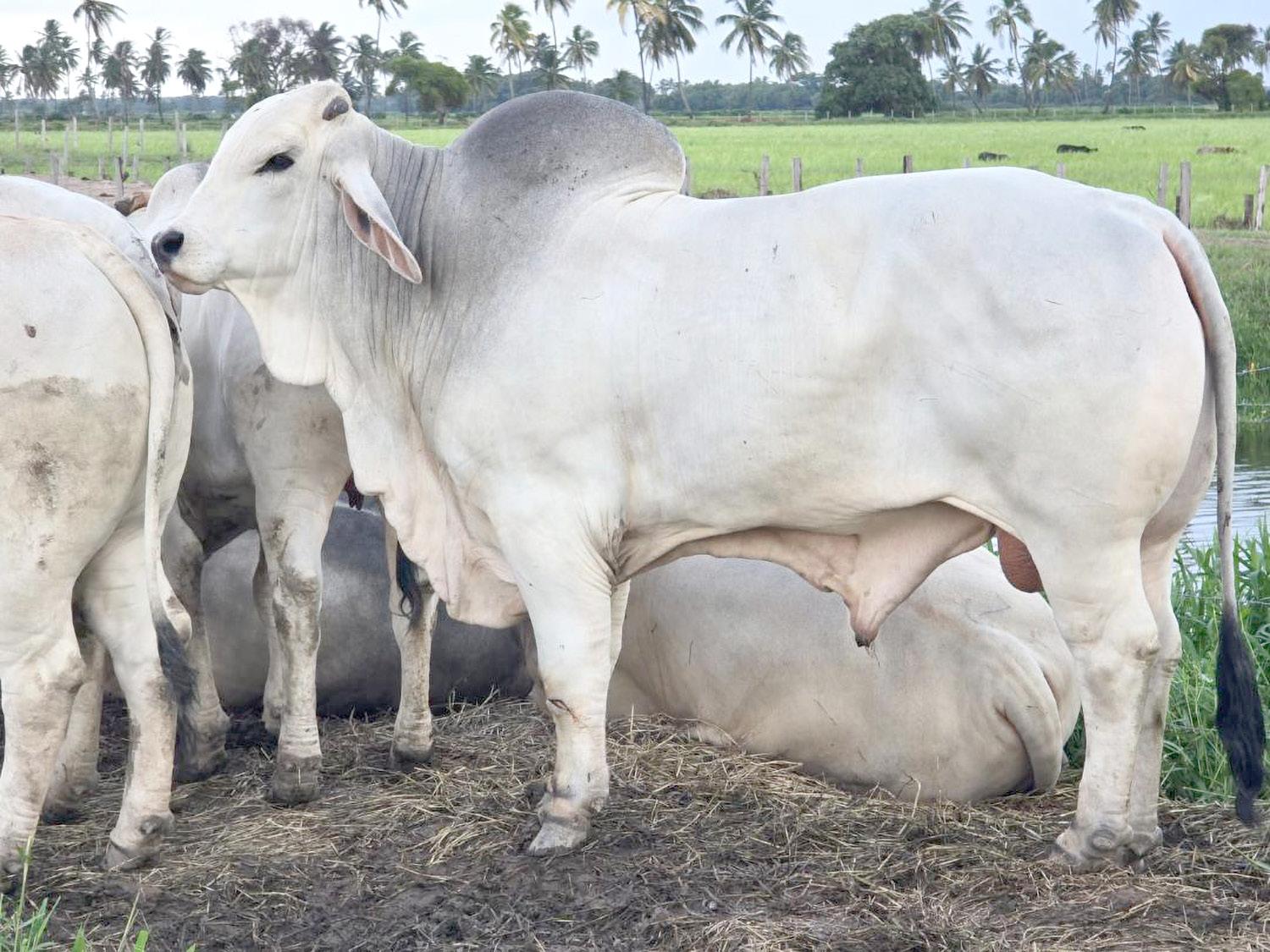
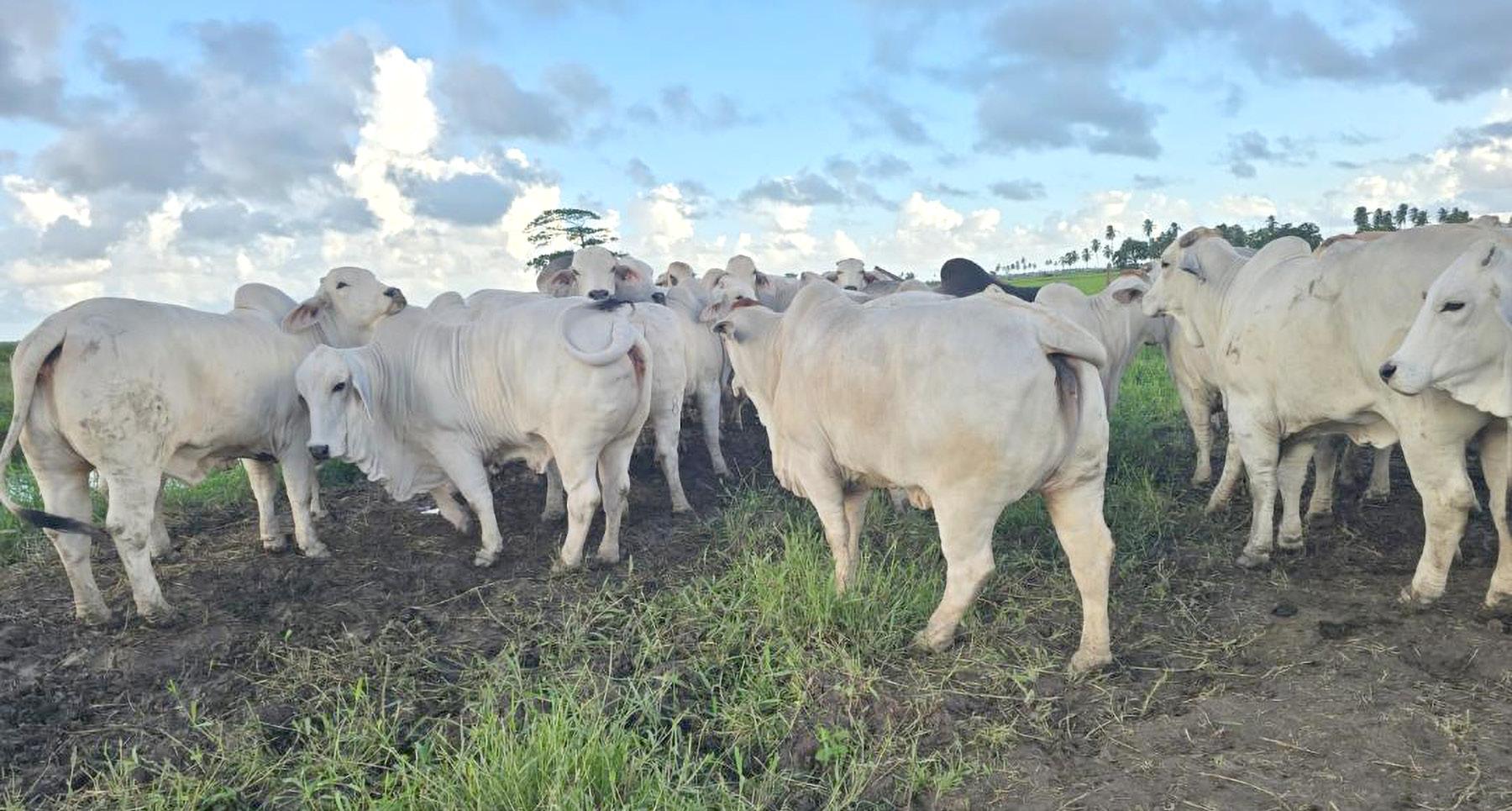
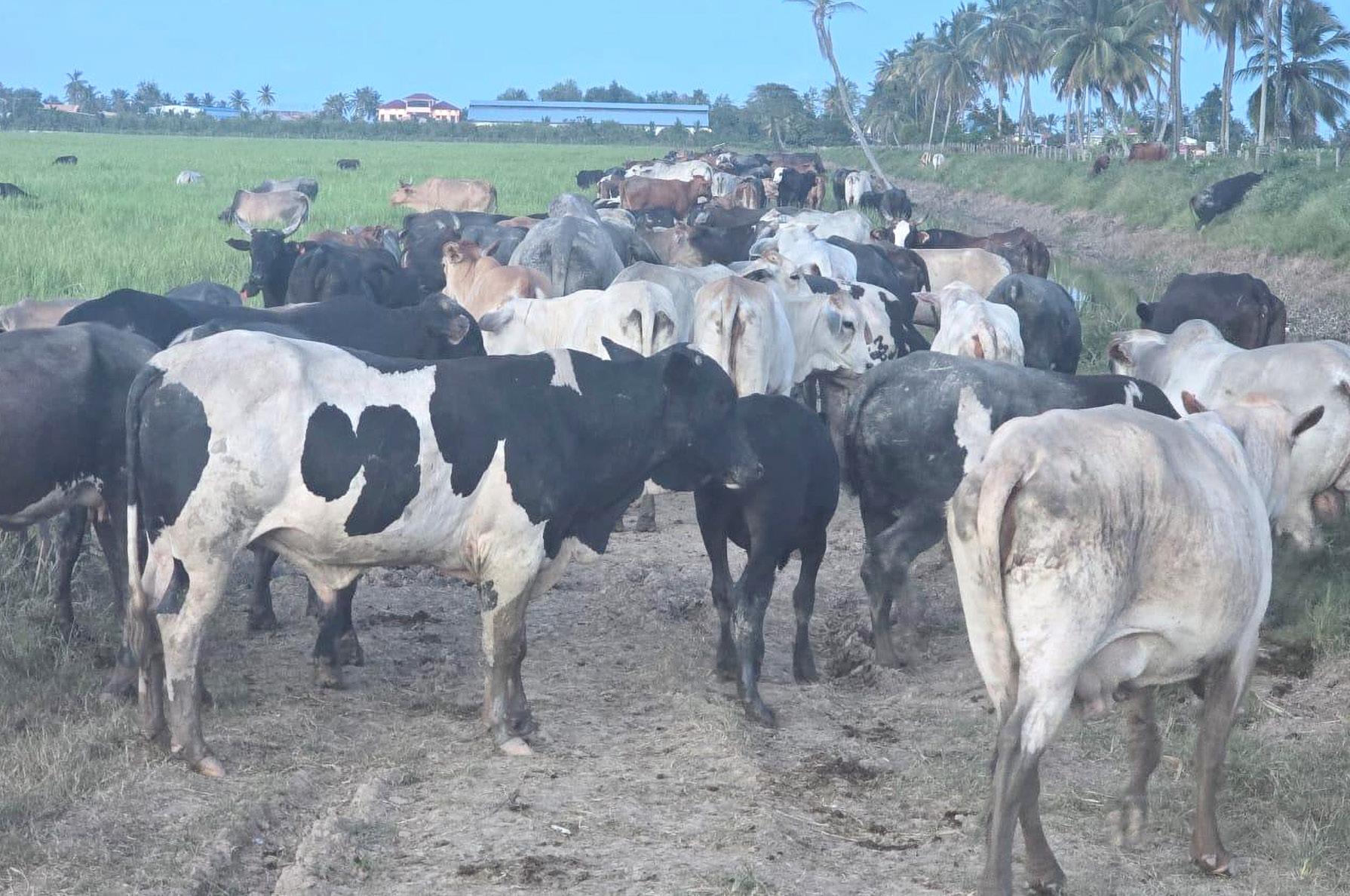
Farming runs in his blood. “I grew up around cows,” he recalls, a quiet smile on his face as he walks past his herd of Zebu and Holstein cattle.
“It’s part of who I am.” As a boy, he learned the rhythms of rural life—feeding animals, tending to crops, and helping his family harvest rice.
Today, those early lessons have blossomed into large-scale agricultural enterprises that honour his roots while embracing innovation.
Ramotar oversees 300 local cows, and recently imported Brahman bulls through the guidance of the Guyana Livestock Development Authority (GLDA).
One bull was acquired from the Ministry of Agriculture, and 25 high-quality female cows now graze alongside his herd. “The process was seamless,” he says.
“From the permits to verifying the animals’ health and quarantine, GLDA supported me every step of
the way. Their technical expertise and farm visits were invaluable.”
Quarantine and veterinary oversight, he emphasises, are critical. “Introducing new breeds is not just about my farm—it’s about protecting all livestock in the region,” he explains, walking among the Brahman bulls with careful pride.
But Ramotar’s vision extends far beyond cattle. He cultivates rice on hundreds of acres, manages goats and sheep, and has invested deeply in coconuts.
From his Pomeroon plantation, he harvests high-yielding, improved coconut varieties used to produce Rooster coconut water, now exported to the Caribbean, Canada, and the United States.
“We are producing coconuts at a scale that will sustain production for the next 30 to 40 years,” he notes, tracing his fingers along the lush coconut fronds.
For him, diversification is about more than business—it’s about community. “I’ve created employment for dozens of people, and I’ll continue investing in this rapidly growing economy,” he says.
“Region Two has fertile lands, unpolluted waterways, and eco-friendly practices. It’s Guyana’s untapped agricultural frontier.”
That frontier, he believes, is also a canvas for agro-tourism.
Ramotar is developing Rooster’s Hotel in Anna Regina, slated to open between late December 2025 and January 2026.
The hotel, which already features a completed boardwalk, will offer visitors a modern retreat

amidst the sweeping vistas of his farmland, livestock, and coconut estates.
“Coupling agriculture with tourism shows what Region Two can offer,” he says, a glint of pride in his eyes. “Our lands are productive, our water is clean, and the experience is unique.”
Government support has been
key to his success. He praises the policies of President Dr Irfaan Ali and Minister of Agriculture Zulfikar Mustapha for making technical support, improved crop and livestock varieties, and financing more accessible.
“The government is doing a good job in agriculture and food security. Guyana has always been
considered the food basket of the Caribbean, and now, we can produce locally to feed ourselves,” he says.
Ramotar’s commitment to development doesn’t stop with agriculture. He owns 400 acres at Land of Plenty Village and has interests in gold mining, construction, logging, and sawmilling.
Yet, despite his extensive portfolio, he remains grounded. “I’m a simple man,” he says. “I’ve spent years putting in the work to realise my visions.”
From the breathtaking scenery of his coconut groves in the Pomeroon to the lush green rice fields and pastures with healthy cattle and small ruminants—or the tower of hope at the construction site of Rooster’s Hotel—it’s clear that Ramotar is building more than a farm or a business—he’s cultivating a legacy.
Through high-yield livestock and coconut varieties, eco-friendly practices, job creation, and agro-tourism, he is transforming Region Two into a beacon of sustainable prosperity.
His modern hotel, thriving livestock, coconut estates, and refreshing Rooster coconut water are a testament to what vision, dedication, and strategic diversification can achieve.
In the heart of Guyana’s Essequibo Coast, Roopan “Fowl Cock” Ramotar is doing more than farming—he is redefining what agriculture can mean for a community, a region, and a country.
By Michel Outridge
TEFFON Telford always dreamed of owning a business. It didn’t have to be large-scale, just something he could build with his own hands and grow over time.
At 33, the former chef turned poultry farmer pursued that vision with determination. But just as his dream began to unfold, an unexpected catastrophe brought everything crashing down.
Four years ago, Telford made a major life decision: He invested all his savings, secured a hefty loan, and acquired agricultural land at Garden of Eden, East Bank Demerara, to establish a poultry farm.
The father of one recalled waking up one morning and telling his wife that it was time to do something meaningful with the land.
He had always reared a few chickens for personal use, so the idea felt natural. “I had a lot of ideas swirling in my head,” he said, describing the excitement of mov-
ing from hobbyist to farmer. After conducting his own research, he decided to rear layer birds, which he found to be more resilient than broilers.
Telford’s transition into agriculture was also influenced by his years as a professional chef. Having worked in top hotels and restaurants, he had crossed paths with President Dr. Irfaan Ali on several occasions.
When he sought guidance to develop his farm, he reached out to the President’s Office. But progress was slow in the early post-pandemic period.
Disheartened, Telford briefly migrated to the British Virgin Islands (BVI), where he remained unemployed for four months before returning home.
Back in Guyana, he revived his culinary career by launching a home-based catering business, a venture that quickly regained traction due to his strong reputation in the food industry.
Still, the dream of building a thriving poultry farm lingered. After another meeting with President Ali, he was advised on securing financing, and soon after, he obtained a substantial loan.
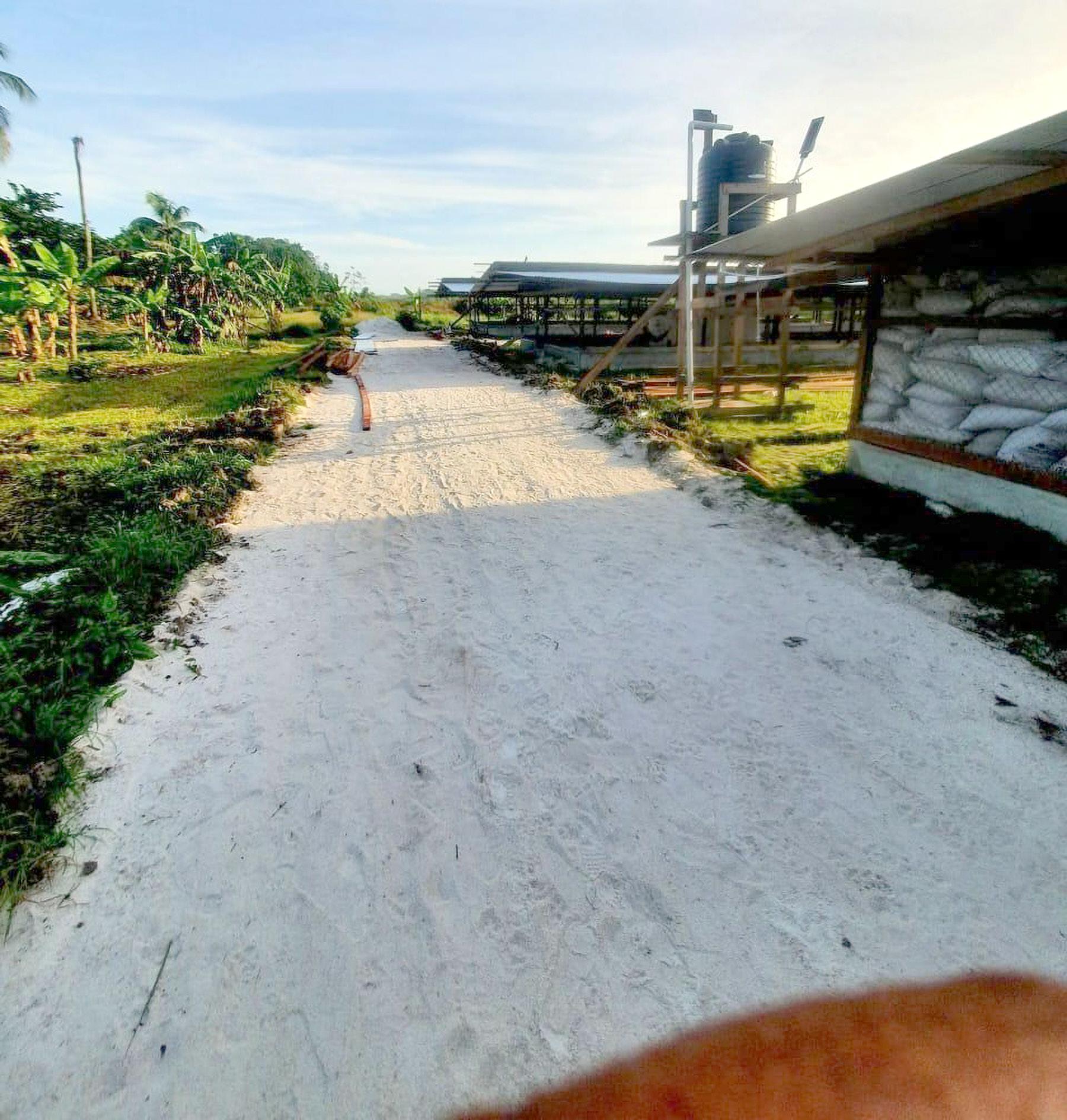
With renewed hope, Telford constructed three large pens, each costing $6 million, and prepared to house 9,000 to 10,000 layer birds.
Through the Guyana Livestock Development Authority (GLDA), he received 1,000 layer birds as his initial stock.
He later purchased another 1,000 birds through a private overseas supplier, trusting that all importation, quarantine, and biosecurity protocols had been properly followed.
Two months into laying, disaster struck. Birds from the imported batch began dying rapidly. After consultations with GLDA’s technical team, the cause was confirmed: Inclusion Body Hepatitis (IBH), a viral disease in poultry.
The loss was devastating.
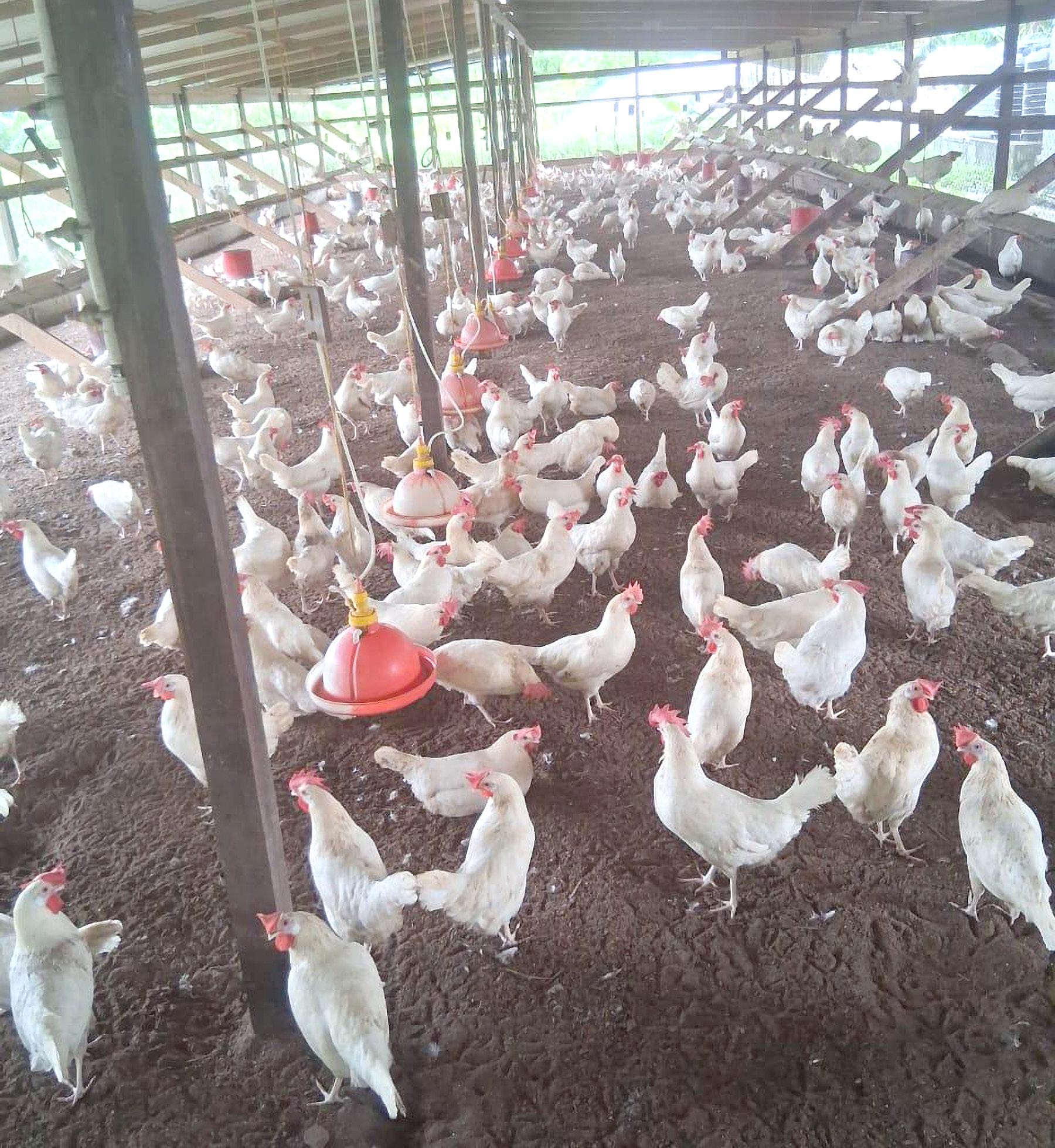

Telford had invested $7 million in acquiring birds, preparing the farm, and establishing operations. “Watching them die one after the other, it broke me,” he recalled.
The experience opened his eyes to the importance of adhering strictly to GLDA’s importation and quarantine protocols.
While the process may seem lengthy, he now describes it as seamless, supported by knowledgeable staff, including Dr. Dwight Walrond, Dr. Tihul, and the Region Four Livestock Extension team.
“GLDA has always been there. Their team is willing to provide advice, field support, and technical guidance whenever needed,”

he said, adding that training from Dr. Nauth and Mr. Bhagwandin strengthened his knowledge of biosecurity and best farming practices.
He now considers record-keeping, feeding protocols, and strict biosecurity measures to be the lifelines of his operation.
Despite the enormity of his financial losses, Telford did not give up. During a community meeting with President Ali, he shared his ordeal, and once again, help came.
He received 500 locally sourced birds from GLDA in February 2025, supplied through Edun Hatchery.
“These birds are robust and healthy,” he noted, praising the TURN TO PAGE XVIII
By Michel Outridge
ON any given morning, as the first hush of sunlight settles over the quiet streets, Alicia Fytte Butts steps outside with her signature soft smile—steady, warm, and grounding.
It’s a simple ritual, but one that steadies her spirit. Before the rush of work, before the responsibilities of motherhood gather around her like eager little hands, she takes a moment to breathe in the cool air and reconnect with the earth that has always felt like home.
In these tender dawn minutes, with her two young sons stirring inside, Alicia prepares herself; mind, heart, and purpose, for another day shaping Guyana’s livestock sector in her own gentle, determined way.
Raised in Canefield, Berbice, Alicia’s childhood unfolded between open fields, animals that always seemed to find her, and a curiosity that never seemed to rest.
She was the girl who nursed every stray, who asked questions no one else thought to ask, who saw science not as a subject, but as a language through which she could understand life.
That curiosity led her first to the Guyana School of Agriculture (GSA), and later
to the University of Guyana (UG), where she completed her degree in General Agriculture.
Even the programme she did not complete—Veterinary Public Health—played its part, stitching together the foundations that shaped the focused scholar she would become.
Her academic path eventually led her to a Master’s in Animal Nutrition and even a certification in Bee Nutrition from the University of Florida—quiet milestones that hinted at her later influence.
Her personal life, however, is where Alicia’s true strength is most visible. She is the devoted mother of two energetic boys, one of whom is on the autism spectrum.
Their home is filled with small triumphs—new words, new routines, a good day at school, a successful potty-training breakthrough.
Alicia and her husband celebrate each one. She carries those victories with her, tucked close like a pulse of inspiration, giving her the resilience she brings to her work every single day.
Her colleagues often see the warm, patient guidance she offers to farmers and staff—but few know that it comes from the same deep well of tenderness she draws on at home.
‘Do not...
can read up about your rights.” She added, “The support system that the ministry has in place now—there was nothing like that in place before.
I can testify to that.”
Today, Bibi is the co-founder of WeCare Guyana, an organisation focused on helping victims of violence, including women, children, and people with disabilities.
With better access to the national 914 emergency hotline, the iMatter safety app, shelters and temporary housing options, police gender-based violence units, and more advocates than ever, Guyana is moving steadily
FROM PAGE III
forward in ending domestic violence.
Reiterating the importance of continued support, compassion, and motivation, Bibi is appealing to those facing domestic or gender-based violence to leave, ensuring them that rebuilding and regaining a life after abuse is possible.
“Get out of the relationship. Seek help. You can seek help through WeCare Guyana, the Ministry of Human Services—which I highly recommend because they have more systems in place to help survivors. Do not stay. Do not become a statistic.”
A defining moment in her career arrived in 2017 when Alicia presented her research on black pepper as a growth promoter in broiler diets.
Her presentation was calm, confident, and deeply thoughtful—traits that immediately caught the attention of Dr Dwight Walrond, then Deputy CEO of the Guyana Livestock Development Authority.
There was something almost effortless in the way Alicia bridged science and simplicity, making her findings accessible without ever diluting their value.
Dr Walrond recognised her potential immediately, and soon Alicia found herself stepping into a role at GLDA—an opportunity that would open doors she once only quietly hoped for.
From the very beginning, Alicia proved herself.
She joined the Giant King
Grass Yield Project, meticulously analysing cutting frequencies and nutritive values. Her work was precise, but what stood out even more was her presence— calm, polite, unfailingly supportive.
Whether she was testing forage samples or helping a farmer understand feed formulation, Alicia brought with her a warmth that made people feel seen and valued.
Her training sessions across Regions Two, Three, Four, Five, Six, Seven, and 10 are remembered not just for the knowledge she shared, but for the way she shared it: gently, patiently, and always with a kind smile.
Her compassion extended beyond routine duties. During the devastating 2019 and 2021 floods, Alicia stepped in to support emergency feed distribution, helping safeguard livestock in Regions Five and Six.
Her proudest achievement and transformative period, however, remains TURN TO PAGE XVII



I RECENTLY viewed some videos on social me-
dia about a student from one school freely entering into another school and attacking multiple stu -

dents, teachers, and security officers. According to the reports, the student in question was under the influence of a controlled substance.
Multiple police officers had scuffles with the student. It was absolutely terrifying for the students, as many went to social media to voice their concerns. It ended with the student in handcuffs and
seriously.

several teachers, students, and staff injured during the process.
These security threats are becoming increasingly concerning, with an increase in incidents in schools in Guyana and across the world.
I wanted to highlight this incident because I believe it is a major cause for concern, and many parents and guardians remain worried about the safety of their children in schools in Guyana.
Let me first say that many schools in Guyana already have security guards. This trend has been going on since I was in nursery school until university. Although I must add that the level of security one feels depends on the security guards and the companies employed as well.
You might feel safe and secure when a certain security guard is on duty. Personally, it had nothing to do with gender, looks, or physical build — instead, I felt safe knowing they took their work
A security guard is often the first person people greet, the first person they encounter or talk to upon entering a premise. As such, they ought to be attentive at all times. I have seen many instances of guards paying more attention to their mobile phones than to people entering or leaving the premises. This happens in both private and public spaces. As such, for the safety of our children in Guyana, I hope we consider training more security guards in self-defence and other physical defence strategies, in assessing certain behavioural traits, and in conflict resolution. Wearing a shirt with the word “security” isn’t enough to protect our children — we need more.
I also want to highlight that school infrastructure is very important for student and teacher safety. There should be multiple points of entry and exit for classrooms or buildings.
As such, if a threat of violence blocks one entrance, the students and teachers have an alternative entrance to use. This is also essential for fire safety — not just for acts of violence. I also want to highlight that some schools, especially those in communities away from the TURN TO PAGE XIII

BY recording all their transactions and regularly updating their accounts, entrepreneurs can boost their credit rating.
As the world becomes increasingly globalised, more and more organisations are acquiring their products and services on credit. Furthermore, to maintain their competitive edge, suppliers are encouraged to offer credit to customers; these creditors, in turn, can be seen in a business’s accounts payable.
Of course, business owners want to—and should— pay their expenses on time. After all, doing so will not only improve their relationships with their suppliers, customers, and employees but also improve their credit standing. Thus, business owners must understand the importance of accounts payable to help them manage their finances.
Success is never guaranteed, but by arming themselves with the proper tools, entrepreneurs can increase their chances of achieving success.
Indeed, to establish themselves as legitimate business owners, entrepreneurs should learn the differences between sales and tax invoices, maintain good credit, use accounts payable to improve their business’s cash flow, and utilise the latest technologies and services to record all their transactions. Being an entrepreneur is by no means easy, but if you put in the necessary work, you will be able to maintain good credit, which, in turn, will improve your business’s financial standing.
Employees who process sales and tax invoices must be aware that there is a difference between the two. They share some characteristics,
but there are a few things that set them apart. Organisations that are value-added tax (VAT) registered will be entitled to reclaim VAT paid when acquiring goods and services. When VAT is received from customers, the organisation has a responsibility to remit the net VAT balance to the revenue authority on the established due dates.
Some suppliers will prepare manual invoices and then send them to credit customers with their drivers or office attendants/assistants. Other organisations have an Integrated Information System and internet access, so when they prepare an invoice, it is sent to the credit customer electronically.
Suppliers may be willing to offer credit to certain customers. However, customers who want to benefit from credit purchases must build their relationships with suppliers. Oftentimes, suppliers assess their customers and evaluate who meets their requirements to qualify for credit. Suppliers are also willing to offer different discount percentages to repeat customers and to those who purchase large quantities. Management must ensure that they have an Integrated Information System to record their inventory and accounts payable transactions. With an increase in the quantity of goods and services purchased on credit, the accounts payable balance will increase. The accounts payable policies and procedures will guide employees in processing suppliers’ invoices, regulate payments to suppliers, and determine the approval levels of officers in the organisation to authorise suppliers’ payments.
When suppliers’ statements are received by management, someone within the organisation must be
responsible for reconciling the accounts payable balance with the suppliers’ statement. Every effort must be made to reconcile suppliers’ statements and settle the outstanding balance according to the due dates. The ages of accounts payable balances are important for guiding management on when suppliers’ payments are due. Management must strive to pay suppliers on time so they can benefit from future credit purchases. The organisation’s accounts payable turnover ratio can be used to assess whether the company is paying suppliers in line with industry standards.
Accounts payable has an important role in any organisation. Most organisations depend on someone to provide the goods and services they need. Sometimes, those goods and services are fully paid for by customers, but on other occasions customers collect goods and pay for them at a later date, which gives rise to accounts payable.
Every organisation looks forward to having enough goods available to it. There are times when organisations want some goods, but they plan to pay later for the benefit they receive now.
Many suppliers will not give credit to every customer who approaches them. However, many suppliers want to sell more of their goods, so they are willing to find customers who can purchase more goods on credit.
Suppliers will often take time to evaluate each customer before deciding to accept or reject them as credit customers. Suppliers that have been in operation for many years have gained extensive experience with credit customers, and they may
take time to determine which customers should be eligible for credit.
Every customer seeking to benefit from credit must make a great effort to convince their supplier that they are a good customer who de-
serves credit privileges. One way of winning a supplier’s confidence is to be a good cash customer. When a supplier knows that their customers often purchase goods and always pay on time, they may be willing to extend credit to
those customers.
Every customer who needs credit must understand that the supplier has to protect their own interests. Sadly, many suppliers have had bad experiences with TURN TO PAGE XV


MUSICIANS, like other artists and communicators, impact us in that profound way that either irritates or helps us to stay in touch with our awareness of the world around us and our own feelings at times, and its inner impact, especially when we are doubtful of our ability to hold on to a sensible method to wrestle with one’s angel and thus inherit the blessing of the hard work we labour on.
The Jamaican singer and songwriter Jimmy Cliff has passed away, and I offer my condolences to his family and countrymen. I can remember talking with my Godfather, when he assured me that whatever
you do in this life, try to let it be an asset in some way to other humans, who will learn and be inspired by it.
There will always be music to dance with exclusively, while other melodies beckon us to listen and learn. At eleven to twelve years old, few of us understood this ‘Vietnam war thing’ that crossed over in adult language. For my friends and me, it was a Jimmy Cliff song (I state this from memory) because our top music stores are gone. They provided, in their era, cassettes and pop music data. I presume that the song “Vietnam” was by Jimmy Cliff, and the sad deployment of Mrs. Brown’s young son to Vietnam. And the
news of his death in combat, resonated with our young minds.
Other Jimmy Cliff songs were like a parental statement: “Better days are coming”. When I wanted to know who sang a pop tune, there was always the late Pepe Morison. The impact of songs like the classic “You Can Get It If You Really Want” inspired many in GT long before Swamp Dogg’s hair-raising “Sam Stone” defined the Vietnam combat experience in a frightening, distinct way.
With lyrics and melodies, the musician becomes a people’s hero when he resonates the experience through feelings. Jimmy Cliff, one
of the heralds, with Eric Donaldson, Marcia Aitkins, John Holt, Prince Buster, The Melodians, Ken Boothe, Dennis Brown, and even Bob Marley, who I was told had touched these shores before, were known mostly from the radio. And lest we forget the ‘Punch boxes’ that most 11–13-year-old schoolboys explored (a bob, 25c, for a threesong play). Many top GT musicians have indicated that Marley, without locks, came to GT before the utterance of the Bob Marley and the Wailers Rasta era.
It cannot be doubted that the musician, like the artist, is pivotal to the social evolution of a people’s
sense of being. The bard, especially in his lyrics, shows that what we have witnessed, we know and have experienced. My mother sang and won top place in something she described as the Ovaltine Song Competition, but the guys who ran it stole the cash prizes; the main character died overseas some years ago.
All of this information came before I attained manhood and offered my art services commercially, but it never left my mind — with an understanding of the cultural business that goes with it from its genesis — as I now pass it to my offspring.


HE had just walked into Bistro Café and Bar on Middle Street with a few friends. Alisa didn’t look his way, hoping he wouldn’t notice her, but halfway through their cocktails, as they chatted quietly, the bartender brought three cocktails to their table. Tricia stopped him, saying in a pleasant tone, “We didn’t order any more.”
The bartender just smiled a little and said, “Compliments of the gentleman at the bar.”
“We’re just having a little fun,” they both laughed. Alisa noticed that almost every woman in the café was glancing at him, and when she turned to look, his eyes met hers, and that new feeling surged through her again.
“Okay, this is crazy,” she said to herself, “It won’t be a good thing for me.”
They finished their drinks and left, with little smiles of ‘thanks’ to him for the round of drinks.
And so the commendations continued everywhere she drove him, and he asked her one day, “So how do you feel now, about your job?”
“Great,” she replied, “I am comfortable with the way things are.”
“Glad to hear, and I must say you’re doing a really good job.”
Now, the dream and ambition she had put on hold, she could now breathe new life into, but where to start? She had become comfort-
able with her job as Sebastian’s personal driver, accustomed to his warm smile and smooth voice, and she also enjoyed getting to drive all the luxury vehicles owned by the wealthy family. She especially liked the Porsche and was surprised TURN TO PAGE XVI
The three girls turned to look, and Alisa’s boss, Sebastian, raised his glass with a pleasant smile; he had noticed her.
On Monday morning, Alisa had to leave for work an hour earlier to make a trip up the Linden Highway in the G-Wagon. She was enthusiastic and ready to go,
Her father’s health had improved to the point where he was becoming self-sufficient, and her mother was now stress-free.
“You have made a great sacrifice for us, child,” her father said to her, “You can now reapply for a managerial job or start your business.”

“Gosh,” Alisa groaned slightly. “Is that a good thing?”
“Yes, it is,” Sandy assured her. “He’s not a stranger.”
Tricia glanced at him and gushed, “Boy, he is handsome!”
“And rich,” Sandy added.
“Okay, you guys stop that now,” Alisa said with a little stern tone.
and he looked at her with a little smile that said, ‘Good morning.’
It was a long but good day, for she got to see places she had never visited before and met some wonderful people. She won hearts among the younger and older women for being a female driver.
“There’s nothing a woman can’t do, is there?” an older woman stated.
“I have decided I will go into business,” she informed them, “but not just yet. This is a good, payable job, and I will work and save until I’m ready for that venture.”
Somehow, when she looked back, she felt like she had grown so much over the past months into a more confident and vibrant woman, and that, to herself, was quite amazing.


THE proud Chief Koko, the new great-grandmother, carefully stepped back into the benab, and placed Onida into the specially made hammock beside her mother. The other women sat around the lifeless body of the new mother, and were cautioned by Chief Koko to keep their weeping as silent as possible.
The members of the settlement waited for a few minutes, speaking amongst themselves until Chief Koko reappeared at the top of the stairway.
She said solemnly, “Today, we welcome the start of a new millennium as we are
told by the President of Kayana. We do not agree that this is the year 2000 as we know that our world is much older than this. But, we follow the laws of this country which was stolen from our peoples by others who have forced their ways upon us.”
An elderly man, proudly wearing the tribe’s red markings on his forehead and cheeks, along with a single feather of the magnificent Harpy eagle neatly placed and tied at the back of his head of straight grey hair, slowly stood up. He said, “You are right, O Noble Chief Koko. Let us rejoice at the coming of our
future Chief, the beautiful Onida of Kayana.”
Chief Koko said, “This is the moment that our ancestors had told us about. Our Onida is the one who will save us from our present troubles. She must be looked after with care by all of us. She must be fed to grow stronger than our strongest warrior.
She must be taught our ways, about our peoples from all over this, our land. She must also be taught the language and ways of our invaders, and she must be listened to, and obeyed.”
The entire gathering raised their arms aloft in


unison and in full agreement. She continued, “But today is also a very sad one for us all. Before we celebrate our Onida, we must now prepare to bury her young mother who gave all of her strength to her baby and lost her own life. Our Onida does not have a father nor a mother, or grandparents, but I shall be her guardian with your support. Now, please
go and rest until the early morning, and we will prepare to bless and honour the Great Spirit who has brought us our Onida of Kayana.”
The members of the settlement looked at each other in silence, and quietly turned away towards their houses. Each of the oldest dwellings was made of neatly cut timber frames set out in a circular shape with a floor space
enough to accommodate a sleeping area for a family of up to six.
The roofs were made of thatch and were shaped in a conical fashion, tightly secured to a central main post at its apex. The timber rafters were also held tightly across from the middle of the cone and were strong enough to support the hammocks used for resting and sleeping. All the newer houses were built with boarded walls and in a square shape, on stilts, as the community made efforts to improve the structures over the last twenty years.
The next morning was lit up by the bright rays of a golden sun, piercing through gaps in the canopy of tall greenheart, purpleheart, and other trees, onto the site of the settlement. Cockerels announced the arrival of the new dawn, and the pet dogs barked their approval.
The group of Howler monkeys gathered restlessly amongst the trees, grunting and calling as if in animated conversations. The red and blue macaws, which were tamed by the young boys and girls of the tribe and looked after as pets, stood on their perches near to each house, occasionally squawking in anticipation of their early treats of cut fruits including bananas and oranges. Pigs and piglets, kept by the residents mainly for trading and food when necessary, grunted as they entered the shallow
TURN TO PAGE XIX


PETER Jailall’s Jottings:
A Teacher’s Logbook is a thoughtful, at times enigmatic, meditation on public school education — rich with incisive observations and sharp bon mots about the teaching profession. Far from a conventional manual, this compact volume presents a fusion of genres and ideas, all orbiting a central concern: how best to educate the next generation for the greater good.
Jottings resists easy classification. It is not merely a primer, nor is it a palimpsest of past experiences. Instead, it possesses a distinctly anthological character. The book brings together a wide range of writings — interviews, case studies, poetry, confessions, vignettes, polemics, critiques of political rhetoric, and collaborative reflections with colleagues. These diverse entries coalesce around key themes in education and social responsibility. The interviews, in particular, stand out for their insight and depth, revealing complex educational issues often obscured by bureaucratic jargon or political soundbites.
Jailall articulates strong,
well-reasoned opinions on the state of education, many of which challenge the narratives propagated by politicians in both Canada — his adopted home — and Guyana — his birthplace. His views are shaped by nearly fifty years of experience in classrooms across both countries.
As such, the book becomes a reflection of the adaptive, student-centred pedagogy he champions: flexible, responsive, and deeply humanistic. Although just over 130 pages, the book reads like a jazz solo — filled with unexpected riffs and variations on its central theme. Its title, Jottings, is apt; the brevity and economy of language evoke the precision of a sonnet or even a limerick. Jailall, a respected poet with six published collections, integrates poetry not only as a literary form but as a pedagogical tool — particularly for encouraging self-expression among young learners.
At the heart of Jailall’s educational vision is a belief in the transformative power of learning. He embraces a holistic, community-based approach in which parents, teachers, politicians, and so-
ciety all share responsibility for the outcomes of public education. This “it takes a village” philosophy is not only practical but grounded in his own lived experience. Citing what Derek Walcott once referred to as a “sound colonial education”, Jailall reflects on his schooling in Guyana as a model of discipline and rigour — qualities he believes still hold value today.
Throughout the book, he draws on both local and international examples to illustrate how a robust educational framework can be implemented in practice.
A central tenet of Jailall’s pedagogy is the recognition that students learn in diverse ways. Teachers, therefore, must employ a variety of methods tailored to individual learning styles. This requires thoughtful evaluation—not as an added burden, but as a necessary step toward ensuring meaningful, equitable education. Jailall insists that quality education demands effort, but that such effort is a professional and moral imperative.
Though Jottings does not attempt to answer every question it raises, it succeeds as
coastlands, are penetrable through the fencing. The entire school compound should be securely fenced — to ensure unwanted people do not enter through cracks or breaks in the fence.
I also observed, on a few occasions in the past, instances where students brought weapons onto the school premises. I propose installing metal detectors at school entrances. The simplest party or club usually has guards or metal detectors to ensure everyone in the space is free of weapons. As such, if these private businesses can take these measures — I believe it should be standard practice for public buildings, includ-
ing schools. Finally, I want to highlight that we often do not want to think of the worst, much less plan for it, but as I have always stressed in this column, “prevention is always better than a cure”. As such, I urge the relevant authorities to consider frequent drills to address threats of violence, which should be conducted by experts and professionals, such as members of the joint services. I know we often have fire drills in public spaces, but we should also have one specifically for threats of violence.
I also want to point out the importance of counselling for students after these encounters.
FROM PAGE VIII
I hope the guidance counsellors and school welfare staff reading this column understand that a child can still be affected by violence simply by viewing it or observing it happening to others. As such, I hope counselling is available for those students who were recently affected by the act of violence in the specific school I mentioned earlier. I want us all to consider these recommendations seriously as a nation, because our children’s safety and lives depend on it. Collectively, we can make the spaces our children spend most of their time in safer and more secure.
a dynamic compendium of reflections, strategies, and provocations for educators seeking to innovate within — and sometimes against — the system.
Its thematic breadth and resistance to easy summary are strengths rather than weaknesses. What ultimately
resonates most is Jailall’s clear-eyed, impassioned advocacy for common-sense reforms and his unwavering support for teachers, students, and community engagement.
In his most impassioned passages, Jailall directs his ire at the political scapegoating of educators.
His rebuttals to political narratives are among the book’s most urgent and compelling sections. At its core, Jottings is a rallying cry for child-centred education — and a critique of the bureaucratic and political obstacles that too often stand in its way.


The cup used a clever mechanism that triggered a hidden siphon when overfilled. When the siphon was triggered, all the fluid would drain through the cup’s base. So, if a student were to lack decorum and overfill his cup with drink, the cup would be emptied in a shocking, embarrassing display.
HUNDREDS of thousands of years ago, an ancient Greek philosopher named Pythagoras lived. Today, we know him mainly for his mathematical theorem, but he was also responsible for a rather amusing innovation called the ‘Greedy Cup’. Pythagoras supposedly created the cup to prank his students and teach them the importance of moderation and self-restraint.
The invention of the Greedy Cup may have been intended to teach a lesson about greed, but it is also a striking metaphor for the dangers of overfilling a vessel beyond its intended capacity. Over the past few decades, several systematic changes have eradicated, or at least lessened, the limitations and harshness of expected societal roles.

The younger generations have been given the gift of freedom in their choices and a reduced level of judgement when they make choices that reflect their desires. Although there are still many obstacles that we face today, and tangible evidence of discrimination and prejudice, we are no longer completely limited by factors such as our race, gender, religion, and beliefs.
There have been concerted efforts to shift those factors from holding power over our ability to access facilities like education and healthcare. More importantly, there have been changes to ensure they do not limit our opportunities for career growth and for society as a whole.
Ultimately, this has all culminated in a rather unexpected problem. Now that
we have gained access to so many opportunities, we have begun to oversaturate our lives with different pursuits and passions.
Life has become more and more competitive. Every day, the standard for young people is rising so that achievements which would have been celebrated as great feats in the past are now TURN TO PAGE XV

FROM PAGE IX
customers who collected goods from them on credit but did not fully settle their outstanding balances. Therefore, those suppliers are mindful not to expose their operations to such risk.
Good cash customers must also show that they are purchasing large quantities of goods. Sometimes, because of the volume they have purchased, the supplier may consider them good customers and grant them credit.
Many suppliers may start new customers with small credit limits for purchases. This allows the suppliers to determine the customer’s ability to settle their credit balance in a timely manner. If it is proven that customers who took credit were able to settle their small balances early, they may eventually be entitled to larger portions of credit.
The ability to benefit from credit purchases will grow over time. Therefore, customers who are seeking credit purchases must be patient. As they remain patient and wait for their opportu-
nities, they must continue to purchase goods from the supplier and settle any outstanding balance on or before the due date.
There are several steps organisations must take to build strong relationships with suppliers (also called vendors). Their relationships will grow progressively and not immediately. Most of the time, suppliers enjoy good relationships with customers who have repeatedly purchased goods and services from them. First-time customers may not be able to benefit from a good relationship with suppliers due to lack of familiarity.
For more information about Geary Reid and his books:
Amazon: http://www.amazon.com/author/gearyreid Website: www.reidnlearn. com
Facebook: Reid n Learn Email: info@reidnlearn. com
Mobile: +592-645-2240
viewed as nothing more than the bare minimum. It almost seems as if the obstacles have been finally removed from our paths, but now, the finish line has been shifted farther away from us.
Young people are pushed to take on greater burdens — more subjects in school, more difficult jobs, more competitive fields. These greater burdens have become a prerequisite for living a meaningful life in today’s era. To put it simply, those who are not running at full speed will simply never move forward at all.
So, the only way for us to live a meaningful life in this new world is to fill our lives with as much as we possibly can. We are called to use every moment to become better versions of ourselves or to further our skills in a productive manner. Unfortunately, much like Pythagoras’ Cup, our lives too will eventually reach their limit. When this occurs, the benefits we had previously acquired through the changes in our world will be siphoned out and removed once more. We will arrive
FROM PAGE XIV
in the same place, unable to move forward or achieve our goals. Only this time, it will be for a different reason.
Fortunately, there is a solution to this systemic problem at an individual level. We can overcome the pressure and competition of today’s world simply by building our own paths and defining our own success. If the world suddenly does not have the space to accommodate the talent that was previously excluded from contributing, then we must find a way to expand it.
Rather than compete for spots, we can try creating our own establishments and our own spaces. If following our passions suddenly becomes an arduous, intense task, we must find a different way to pursue them. At the same time, we must remember that our choices and our time are precious. As such, we must ensure that we only make choices and spend our time on things that bring us satisfaction rather than on things that we are pressured to do. In essence, we must find a way to fill our cups without spilling them!









































STUDY SUCCESS
December 7th, 2025
Welcome, dear reading friend. It is important to recognise that graphic organisers like diagrams, illustrations, and other visual signposts, help to enhance meaning and understanding across all types of texts.
Use them. Create one to track essential details of your material. Identify the key aspects you wish to analyse, such as themes, or evidence
and use them as column headers. As you read, fill the columns. Note that strong reading comprehension skills increase the pleasure and effectiveness of reading. Be wise.
Love you.
THE PASSAGE
Comprehending the passage
Instructions: 1. Read the two passages that follow and then continue with 2.–5.
Note: Here is where you

For it is your business, when the wall next door catches fire.
HORACE (65-8 B.C.) “Epistles” 84
can start learning to construct your own graphic organiser(s); just follow your reading instruction, or what you have in mind to find in the material you are reading.
Generally, a graphic organiser used for knowledge and understanding (comprehension), can be a table, chart, picture, diagram, Venn diagram using intersecting circles, map, and more for specific purposes.
Passage A
“Mother!” I said again.
But this time I spoke it very low, like a lament, sadly, as if it were a lament for myself.
“Yes, here I am,” said my mother. “I’ve come to see you.”
“Yes, you’ve come to see me.”
And suddenly, I passed from sadness to joy. Why was I worrying about it? What was I worrying about? My mother was there. She was here in front of me. I only had to go a couple of steps, and I would be at her side; I would certainly have done so if there had not been that absurd order forbidding me beyond the gate.
“I am glad to see you,” went on my mother. She smiled. At once I understood why she was smiling. …
(Camara Laye’s “African Child”)
Passage B
There was no storm that day, nor the next. It merely rained, heavy black rain that hid the valley and broke the flower-heads with the weight of its falling. Ralph Stephens was confined to the house and so as not to annoy him Christopher, almost entirely to his bedroom. In turns he painted and read and talked to Gip; but it was all rather
boring. He wished school would begin again.
Not that that would help, of course, because he wouldn’t anyhow be able to go to school. Even if the buggy did not leak, it would be impossible to keep the rain from blowing in. And then he caught a chill and developed tonsilitis.
The wetting and the tonsilitis were unpleasant, but the horse’s behaviour on the slippery road was what he feared most of all. Normally, the most tractable of mares, Popsy, had a habit on rainy days of putting four feet together and sliding down Carrington Hill. Sometimes the manoeuvre was successful; sometimes the harness broke and Popsy fell on her haunches. Once she had smashed the buggy against the hill face….
Instructions (Continued)
2. Read each piece and get a general understanding of what each is saying and how the points are expressed. Note these carefully.
3. i) Note the many details each passage contains. ii) Note their clarity of expression. iii) Note how topics are linked.
4. You should have observed that in passage A, each speaker is given a new line and therefore a new paragraph. Their utterances are not long and empty. Each contains information that leads to the building up of some aspects of the story.
5. i) You should have observed also that in Passage B, the writer varies the sentence structures, making the writing more interesting to the understanding mind.
ii) You can now go as far as identifying the sentence types used.
iii) Remember that Study Success above states: “strong TURN TO PAGE XXXIX

reading comprehension skills increase the pleasure and effectiveness of reading”. This will help you prepare for your upcoming exam.
Making sense of a passage
Directions: Read the following extract carefully, and then answer items 1-5.
Look for the answer that is MOST ACCURATE according to the passage.
Aristotle, the Greek philosopher, summed up the four chief qualities of money some 2,000 years ago. It must be lasting and easy to recognise, to divide, and to carry about. In other words, it must be “durable, distinct, divisible and portable”. When we think of money today, we picture it either as round, flat pieces of metal which we call coins, or as printed notes.
But there are still parts of the world today where coins and notes are of no use. They will buy nothing, and a traveller might starve if he had none of the particular local ‘money’ to exchange for food.
Among isolated peoples, who are not often reached by traders from outside, commerce usually means barter. There is a direct exchange of goods. For this kind of simple trading, money is not needed, but there is often some thing that everyone wants, and everybody can use. These things – salt, shells or metals – are still used as money in out-of-theway parts of the world today.
Salt may seem rather a strange substance to use as money, but in countries where the food of the people is mainly vegetable, it is of-
ten an absolute necessity…. Cowrie sea shells have been used as money at some time or another over the greater part of the Old World. In Africa four or five thousand went for one Maria Theresa dollar, an Australian silver coin which was once accepted as currency in many parts of Africa.
1. Aristotle said money should be
(A) made of metal. (B) durable, distinct, divisible and portable.
(C) 2,000 years old. (D) made of high-quality material.
2. Nowadays we think of money as (A) made of either metal or paper. (B) pieces of metal.
(C) printed notepaper. (D) useful for starving travellers.
3. In some parts of the world a traveller might starve (A) even if his money was of the local kind.
(B) even if he had no coins or notes.
(C) if he had not known the local rate of exchange. (D) even if he had plenty of coins and notes.
4. Barter usually takes the place of money transactions where
(A) there is only salt. (B) the people’s trading needs are very simple.
(C) metal tools are used. (D) money is unknown.
5. Four or five thousand cowrie shells used to be
(A) as valuable as a Marie Theresa dollar.
(B) valued because they were easy to carry.
(C) useful currency in South America.
(D) the maximum one man could carry.