
Sunday, August 2nd, 2026
‘Beauty With a

Sunday, August 2nd, 2026
‘Beauty With a
Miss World Guyana heads to the 73rd Miss World Festival on a mission to help young women know their worth, voice and value

Miss World Guyana heads to the 73rd Miss World Festival on a mission to help young women know their worth, voice and value
By Shaniya Harding
FOR Kelcia Marie Nelson, representing Guyana at the Miss World competition is about much more than wearing a crown or sash. It is the culmination of years of stepping outside her comfort zone, overcoming self-doubt and building a platform dedicated to empowering young women.
On August 7, 2026, the 27-yearold will leave for Vietnam to join contestants from around the world for the 73rd Miss World Festival, with the grand finale set for September 5. Sitting down with Pepperpot Magazine earlier this week, Nelson shared that she is heading into
the competition carrying not only Guyana’s colours but a purpose that began long before she entered pageantry.
Born and raised in Linden, Nelson describes her upbringing as the foundation of who she has become. She attended St Joseph High School, spent a year at a British high school overseas and completed a year of pre-medical studies at Texila before pursuing higher education in Canada. In 2024, she graduated from the University of Prince Edward Island with a Bachelor of Arts in Applied Communication, Leadership and Culture, training that gave her the communication and leadership skills now setting her

apart on the pageant stage.
She shared, “I am an Executive Assistant and Communications Lead for a group of pharmacies in Canada. My career is new.”
While today she is the picture of grace and confidence, Nelson admits that the young woman now preparing to compete internationally once considered herself very shy until performing arts helped her discover confidence in high school. It was not until the COVID-19 pandemic, while reflecting on her next challenge, that pageantry became a consideration.
She began modelling through photo shoots and advertisements before entering Miss Universe Guyana 2024. Though she did not win, the experience proved to be one of growth.
“I did Miss Universe Guyana in 2024. Unfortunately, I did not win, but I had such a great experience. I met so many amazing girls, I formed a sisterhood and I fell in love with pageantry there,” she said.
Nelson’s shift to Miss World was inspired by both her Miss Universe experience and a childhood memory. As a teenager watching the pageant with her mother in 2015, she remembers being captivated by the Beauty With a Purpose segment rather than the glamour alone, drawn to women who used their platforms to serve others and create real impact.

“After Miss Universe, I deviated and I applied for Miss World because I felt like that was more up my alley. I tried Miss Universe and it was such a great experience, but I feel like that was not for me. I deviated into Miss World, which felt like home,” she said.
Like many first-time contestants, Nelson’s greatest obstacle was not another competitor but herself. Surrounded by talented, accomplished women in her first
pageant, she began to question her own ability to win.
“When I did Miss Universe the first time, I was doubting myself. I was doubting whether I was going to win, whether I was not going to win and whether I was a strong contender. This was even after I had put in the work, practised and trained. It was just me doubting myself,” she said.
By the time she entered Miss
TURN TO PAGE XI

By Michel Outridge
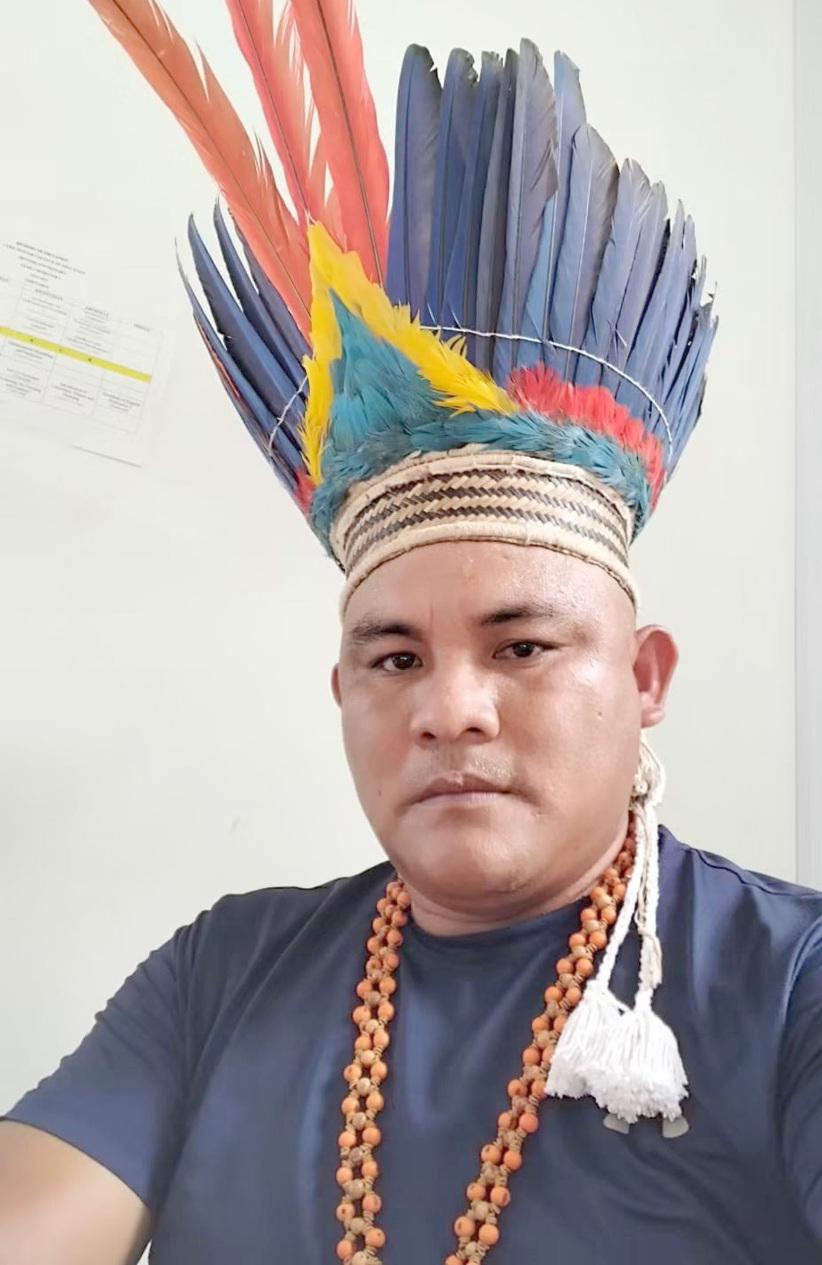
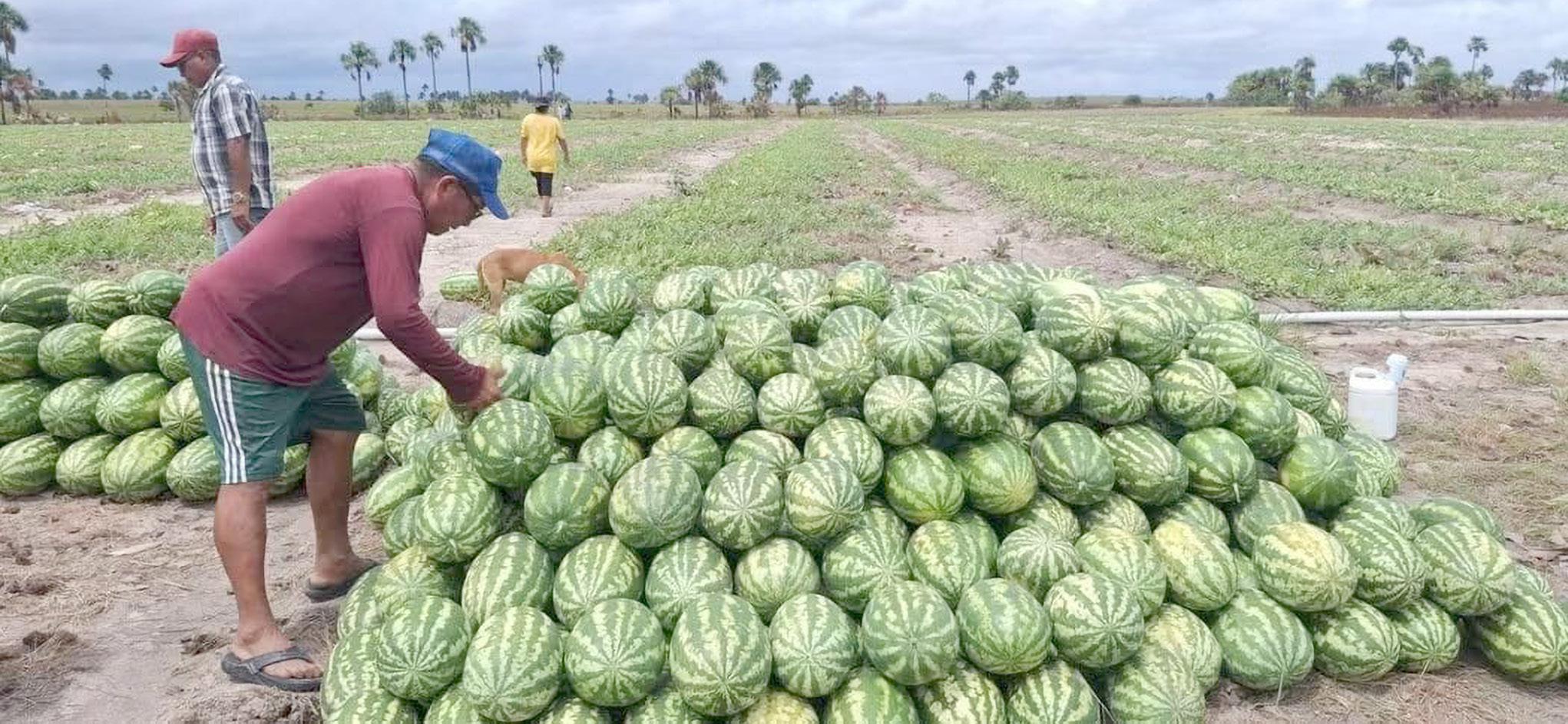
NESTLED in the heart of the Rupununi savannahs, where the majestic Kanuku Mountains overlook endless grasslands, and the Rupununi River winds through one of Guyana’s most breathtaking landscapes, the Indigenous village of Yupukari is quietly writing a new chapter in community development
Long celebrated for its rich Indigenous culture, wildlife conservation and ecotourism, the village is now gaining recognition for another reason: its determination to become a model of sustainable livestock production under the leadership of Toshao Russian Dorrick.
For Dorrick, agriculture is more than an occupation; it is the pathway to economic empowerment, food security and community resilience.
His vision is to transform Yupukari into a thriving livestock-producing community that creates employment, improves household incomes and secures a brighter future for more than 1,700 residents living in Yupukari and its three satellite villages.
Predominantly inhabited by the Macushi, Wapishana and Arawak peoples, the community has long depended on farming, cattle rearing, fishing and hunting to sustain its livelihoods.
Today, however, those traditional practices are being strengthened
through improved livestock management, modern agricultural techniques and strategic government investment.
The significance of Yupukari’s transformation is amplified by the rich livestock heritage of the Rupununi savannahs, long regarded as the cradle of Guyana’s cattle industry.
For generations, the region has produced some of the country’s highest-quality beef cattle, with ranching serving as the economic backbone of many Indigenous and farming communities.
While the sector experienced periods of decline due to prolonged droughts, inadequate infrastructure and shifting economic conditions, it is now undergoing a strong resurgence.
Under the leadership of President Dr Irfaan Ali and the PPP/C Government, strategic investments in agriculture have revitalised the livestock industry through improved infrastructure, expanded veterinary and extension services, enhanced breeding programmes and greater support for farmers.
As a result, the Rupununi is steadily reclaiming its position as one of Guyana’s premier cattle-producing regions, contributing significantly to national food security, rural economic growth and the country’s broader agricultural-development agenda.
Recognising the enormous po-
tential of Region Nine, the Ministry of Agriculture, through the Guyana Livestock Development Authority (GLDA), has significantly expanded its support services throughout the region.
Farmers now benefit from enhanced veterinary care, livestock extension services, artificial-insemination programmes, disease surveillance, pasture-development advice and technical training.
These interventions are improving livestock productivity while equipping communities like Yupukari with the knowledge and resources required to develop commercially viable and climate-resilient livestock enterprises.
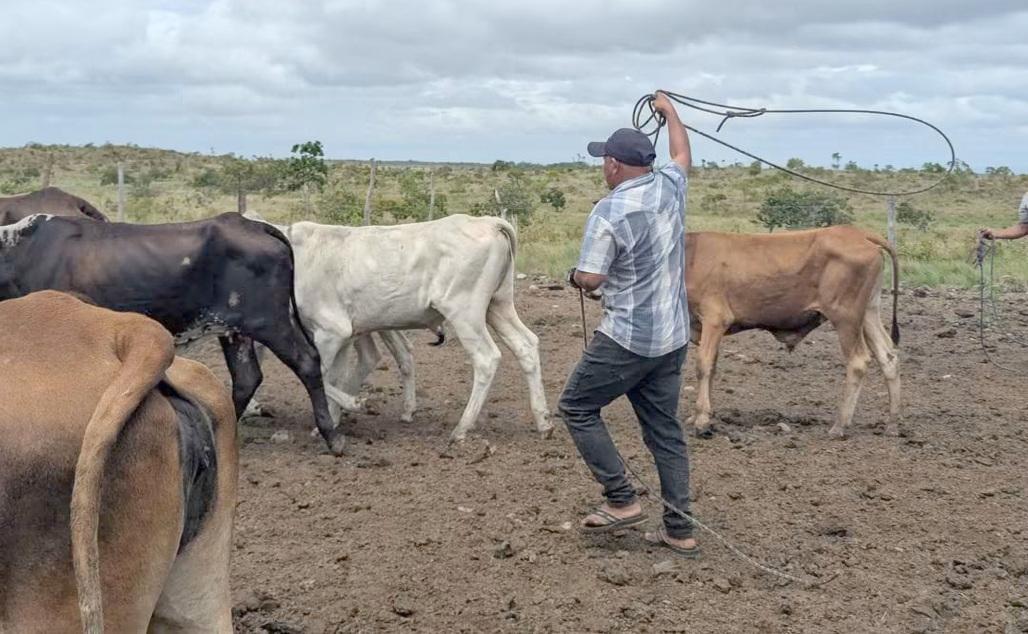
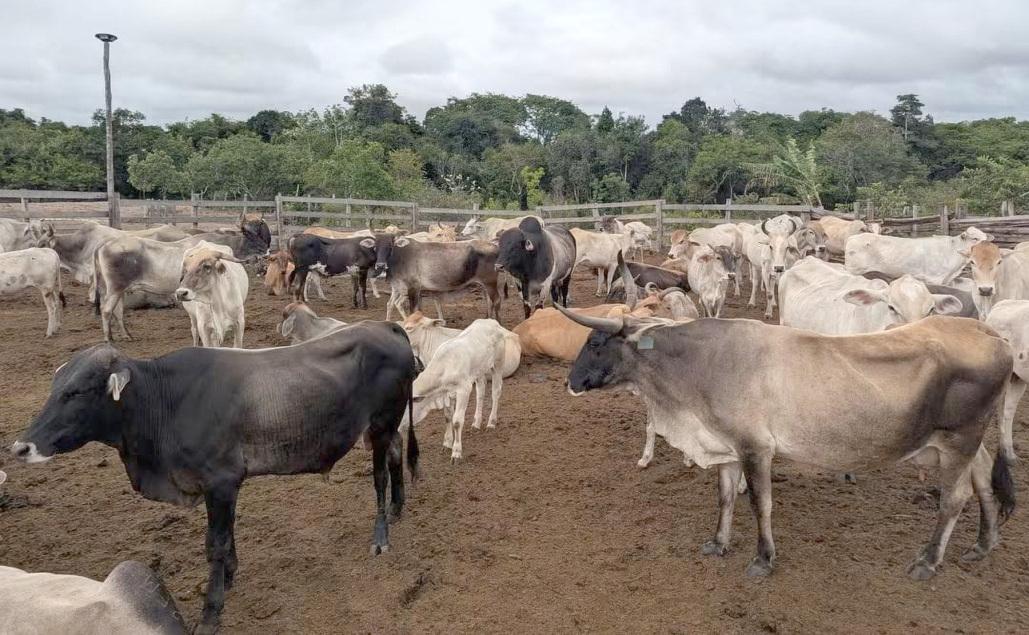
At the centre of Yupukari’s own agricultural success story is its community cattle ranch, a project that has become a symbol of resilience, vision and the long-term benefits of strategic government investment.
The ranch was established approximately 22 years ago through a Presidential Grant awarded during the administration of then President, now Vice President, Dr Bharrat Jagdeo, together with Her Excellency Carolyn Rodrigues, Guyana’s first female Minister of Amerindian Affairs. Supported through government hinterland-development initiatives and the Low Carbon Development Strategy (LCDS), the investment enabled the Village Council to establish a community-owned livestock enterprise
capable of generating income and creating employment opportunities.
More than two decades later, that investment continues to transform lives. What began as a modest community project has evolved into one of Yupukari’s most valuable communal assets, providing employment, supporting community activities and supplying beef for village functions.
The ranch stands as tangible evidence of how visionary government policies, when combined with committed local leadership, can create sustainable economic opportunities for Indigenous communities.
Building upon this foundation, Dorrick is now spearheading an ambitious expansion programme designed to transform the community ranch into one of the largest Indigenous-managed livestock operations in the Rupununi.
The village currently manages
approximately 107 heads of cattle, but its long-term objective is to increase the herd to nearly 2,000 animals.
Such an expansion, he believes, will substantially increase beef and dairy production while creating employment, generating income and strengthening the community’s contribution to Guyana’s national food-security agenda.
However, Dorrick is quick to emphasise that sustainable livestock development is not simply about increasing cattle numbers.
Instead, the community is pursuing a carefully planned strategy centred on improving livestock genetics, strengthening animal husbandry and enhancing climate resilience.
He explained that his community is working towards a strategic and phased approach to livestock TURN TO PAGE XIX
AT a time when many young people are pursuing careers in urban industries, agriculture is often overlooked as a pathway to entrepreneurship.
For Shevanie Ragnauth Famey, better known as “VL”, farming is more than an occupation; it is a livelihood built on independence, resilience and a commitment to sustainable food production.
From humble beginnings in the riverine community of Maria’s Lodge, West Bank Demerara, Famey has transformed her lifelong connection to agriculture into a thriving, integrated farming enterprise.
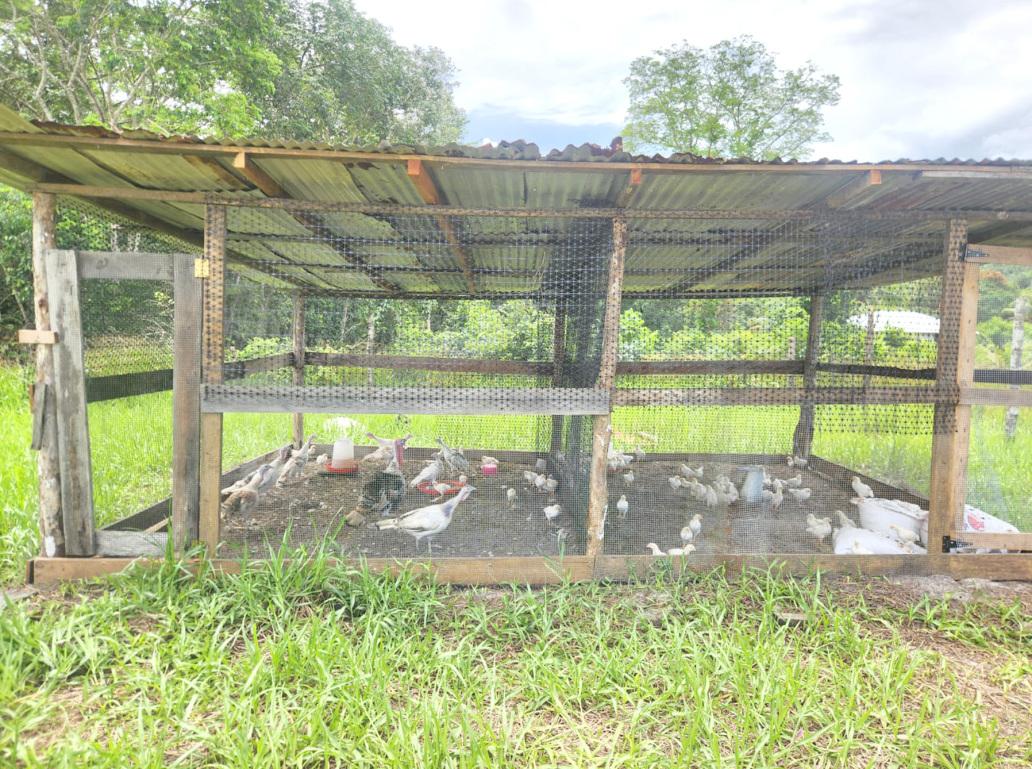
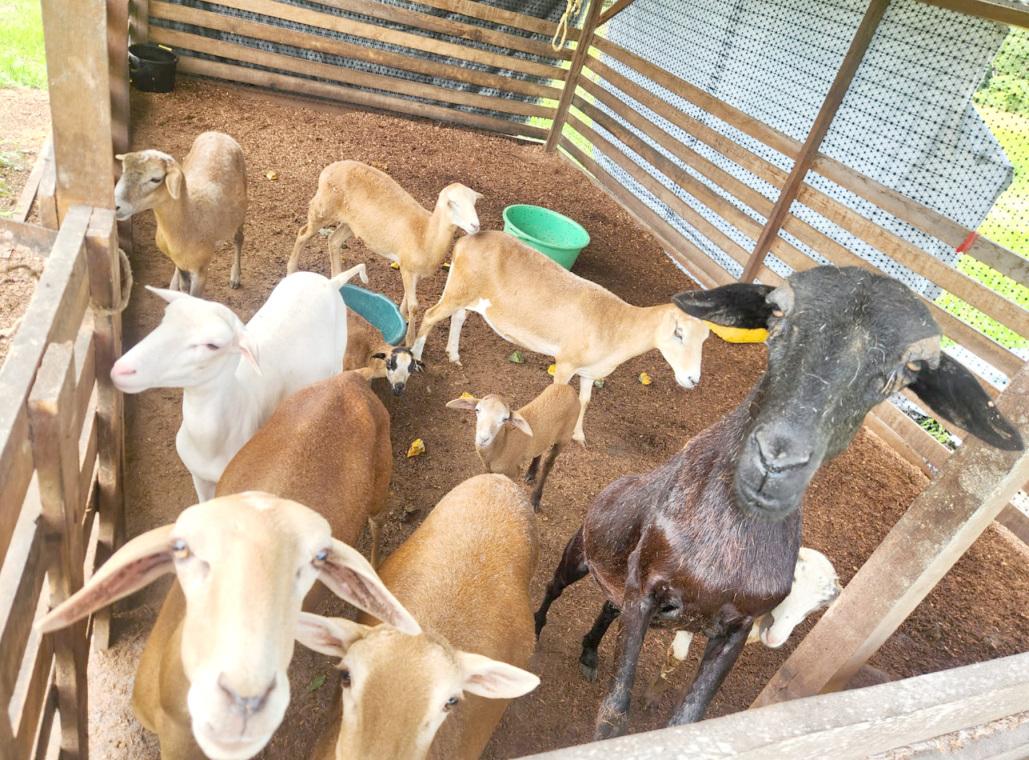
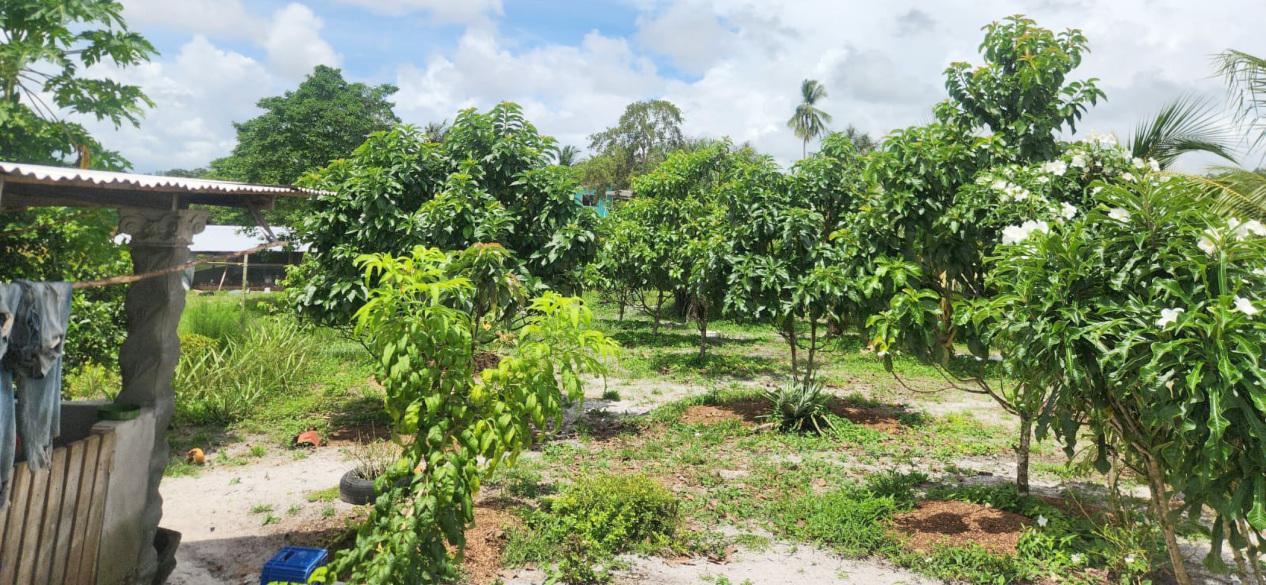
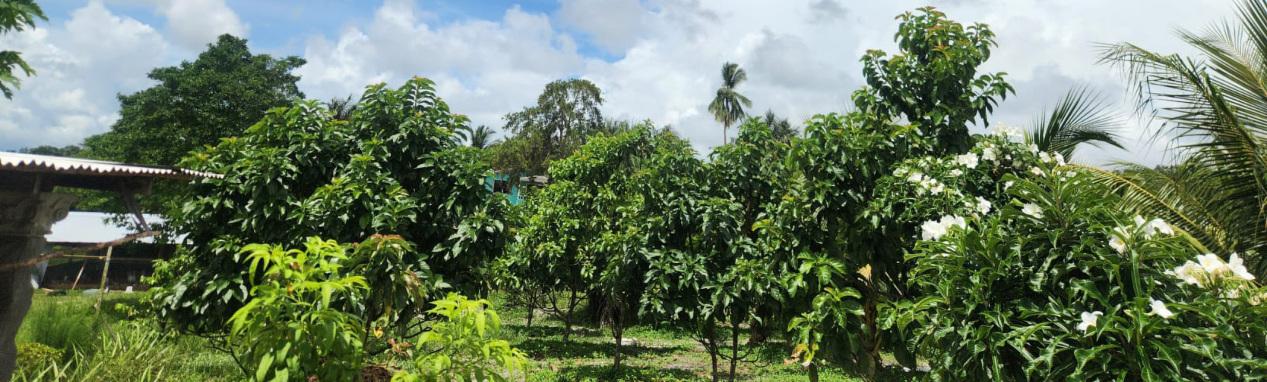
Together with her husband of six years, she manages a five-acre farm at Long Creek, along the Soesdyke-Linden Highway, where they cultivate citrus, pear and other perennial crops while rearing layers, broilers, turkeys and sheep.
Unlike many of her peers, Famey never aspired to work for someone else. Instead, she chose entrepreneurship, believing that farming offered the opportunity to build a meaningful and independent future.
That decision has steadily paid dividends. Five years ago, the couple began their livestock enterprise with just four sheep.
Today, their flock has grown to eleven animals, while their diversified farming system provides multiple income streams and reduces production risks.
For Famey, however, success in agriculture is not measured solely by expansion. She believes farming is a continuous learning process that requires patience, adaptability and sound management.
“Being a farmer isn’t about being perfect,” she said. “It’s about learning every day, improving your practices and making the best use of the knowledge available.”
Her appreciation for agriculture began long before she established her own farm. Raised alongside her three siblings in Maria’s Lodge, she grew up in a farming household where both parents relied on agriculture to support the family.
Her father worked as a foreman at the former Wales Sugar Estate, while her mother managed the household and contributed through farming activities.
Perhaps the resilience that defines Famey’s approach to farming was shaped by those early experiences.
Growing up in the remote riverine community of Maria’s Lodge, the family faced significant infrastructural challenges.
The village lacked electricity, potable water and reliable transportation, forcing residents to depend on boats powered by outboard engines as their primary means of travel.
Transporting produce required crossing the Demerara River to Supply Koker before continuing by public transportation to the market, an expensive and time-consuming process that eventually prompted the family to relocate to Hillfoot, along the Soesdyke-Linden Highway.
Those experiences instilled in her the perseverance that continues to guide her farming journey today.
Although she inherited valuable practical knowledge from her parents, Famey believes modern agriculture requires continuous education.
A graduate of Alpine Secondary School, where she excelled in Agricultural Science at the Caribbean Secondary Education Certificate (CSEC) examinations, she continues to invest in expanding her technical knowledge through farmer-training programmes.
She credits the Guyana Livestock Development Authority (GLDA) with playing a pivotal role in strengthening her farming operation. According to Famey, the

regular technical support provided by GLDA veterinarian Dr Nauth and livestock officer Mr Bhagwandin has enabled her to combine traditional farming practices with improved production techniques.
“The extension support has made a significant difference,” she explained. “Every visit helps us improve how we manage our animals and our farm.”
She encourages more farmers to participate in GLDA’s training programmes, noting that access to technical knowledge is essential for improving productivity, animal health and farm profitability.
Despite the progress achieved, farming along the Soesdyke-Linden Highway remains challenging. Although nearby creeks provide water for livestock and irrigation, the absence of electricity limits opportunities for mechanisation and
value-added production, including cold storage.
Nevertheless, Famey remains optimistic.
“We work with what we have while hoping conditions continue to improve,” she said.
Environmental stewardship is another defining feature of her farming philosophy. She operates an integrated production system in which livestock and crop enterprises complement one another. Livestock manure is recycled as organic fertiliser for her perennial crops, reducing dependence on synthetic fertilisers while improving soil health.
She is equally committed to responsible animal-health management. Veterinary medicines are administered only when necessary and under the guidance of GLDA TURN TO PAGE VIII
By Frederick Halley
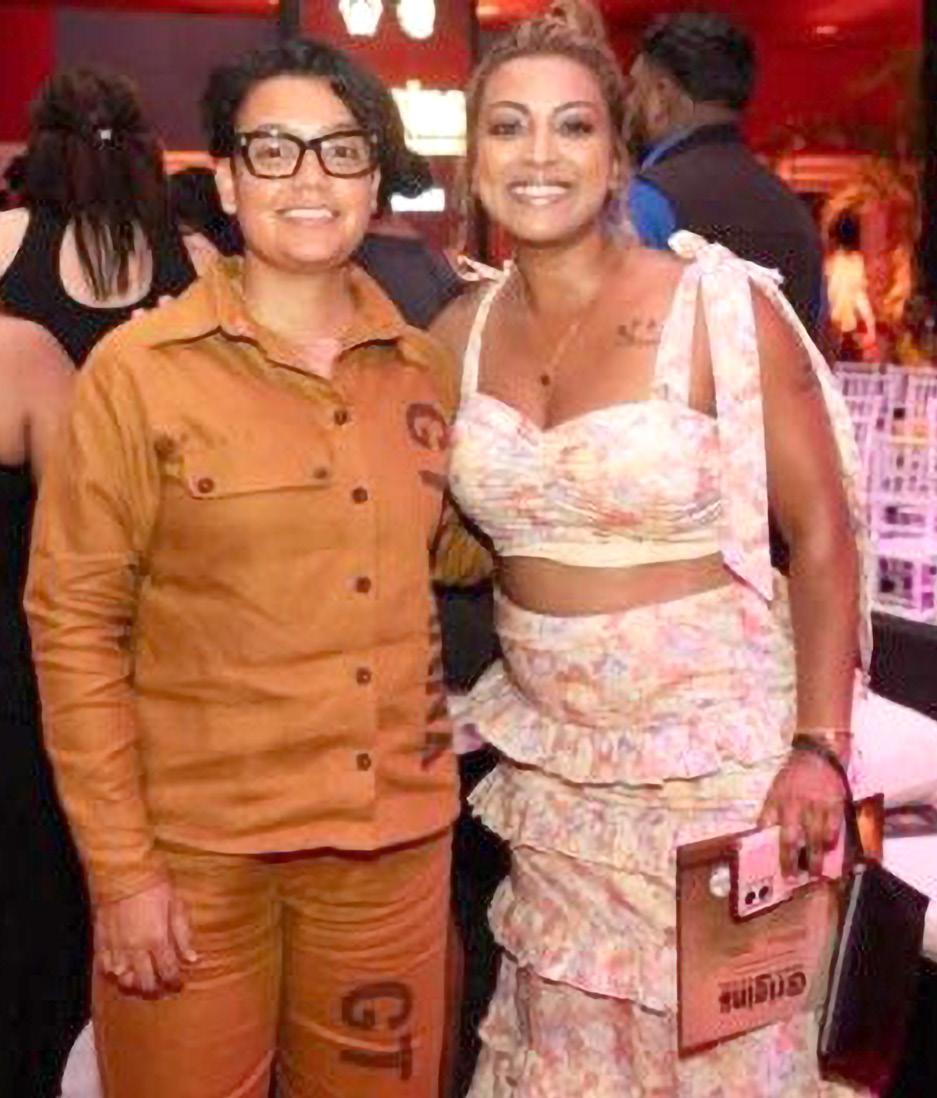
CANADIAN cultural producer and international event strategist, Vanessa Sonia Lachman, continues to build meaningful bridges between Guyana and the global diaspora through fashion, culture and creative collaboration.
Founder of Threads of the World, a multicultural fashion and cultural platform based in Canada, Lachman recently returned from a productive visit to Guyana, where she engaged with industry professionals, media representatives, creatives and emerging talent.
The visit formed part of a broader commitment to strengthening international cultural exchange while creating new opportunities for Guyanese creatives to be recognised on regional and international stages.
One of the highlights of the visit was Threads Across Borders: A Fashion Social, hosted in partnership with Tribe Gastronomic Lounge in Georgetown. Rather than presenting a traditional runway event, the evening was designed as a platform for dialogue, networking and collaboration, bringing together professionals from across the fashion, media and creative industries.
The gathering created a space
for meaningful conversations surrounding the future of Guyanese fashion, creative entrepreneurship and the importance of fostering stronger relationships between local talent and the diaspora. Lachman also participated in an editorial-style discussion featuring members of Guyana’s modelling community, where topics ranged from professionalism within the industry to the evolving role of fashion as a vehicle for cultural storytelling.
The conversation highlighted the importance of mentorship, collaboration and the creation of sustainable pathways for emerging creatives seeking to build careers both locally and internationally.
During her stay, Lachman was interviewed by HGPTV, where she shared insights into her work as a producer, the evolution of Threads of the World and her passion for using fashion as a platform to unite cultures. The interview explored the growing relationship between Canada and Guyana within the creative industries and emphasised the importance of building authentic partnerships that celebrate Caribbean excellence while expanding international visibility.
The visit also allowed Lachman to reconnect with the country of
her heritage in a deeper and more intentional way. While Guyana continues to experience rapid economic growth, she believes its creative industries are equally deserving of investment, strategic development and international exposure.
“Fashion has the ability to tell stories that transcend language,” Lachman has often expressed throughout her career. “When culture is presented with authenticity, it creates opportunities for people to better understand one another.”
Her recent experiences reinforced the tremendous potential that exists within Guyana’s creative landscape. From established professionals to emerging designers, photographers, models, make-up artists and entrepreneurs, she observed a growing generation eager to contribute to the country’s cultural identity while positioning Guyana within the wider global fashion conversation.
Upon returning to Canada, Lachman immediately transitioned into producing the fourth edition of SwimWeek Toronto, a three-day multicultural fashion festival celebrating international designers and cultural representation. The festival featured runway presentations, TURN TO PAGE IX

BY Michel Outridge
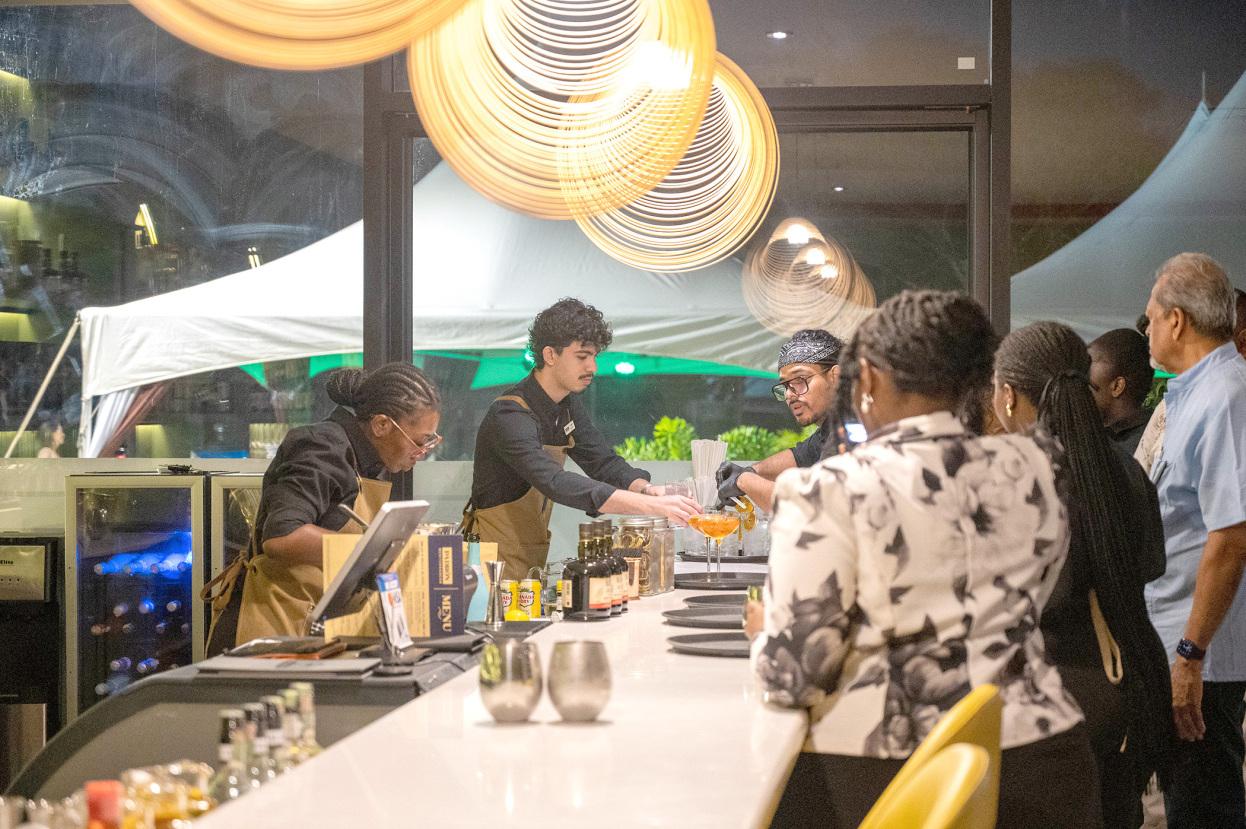
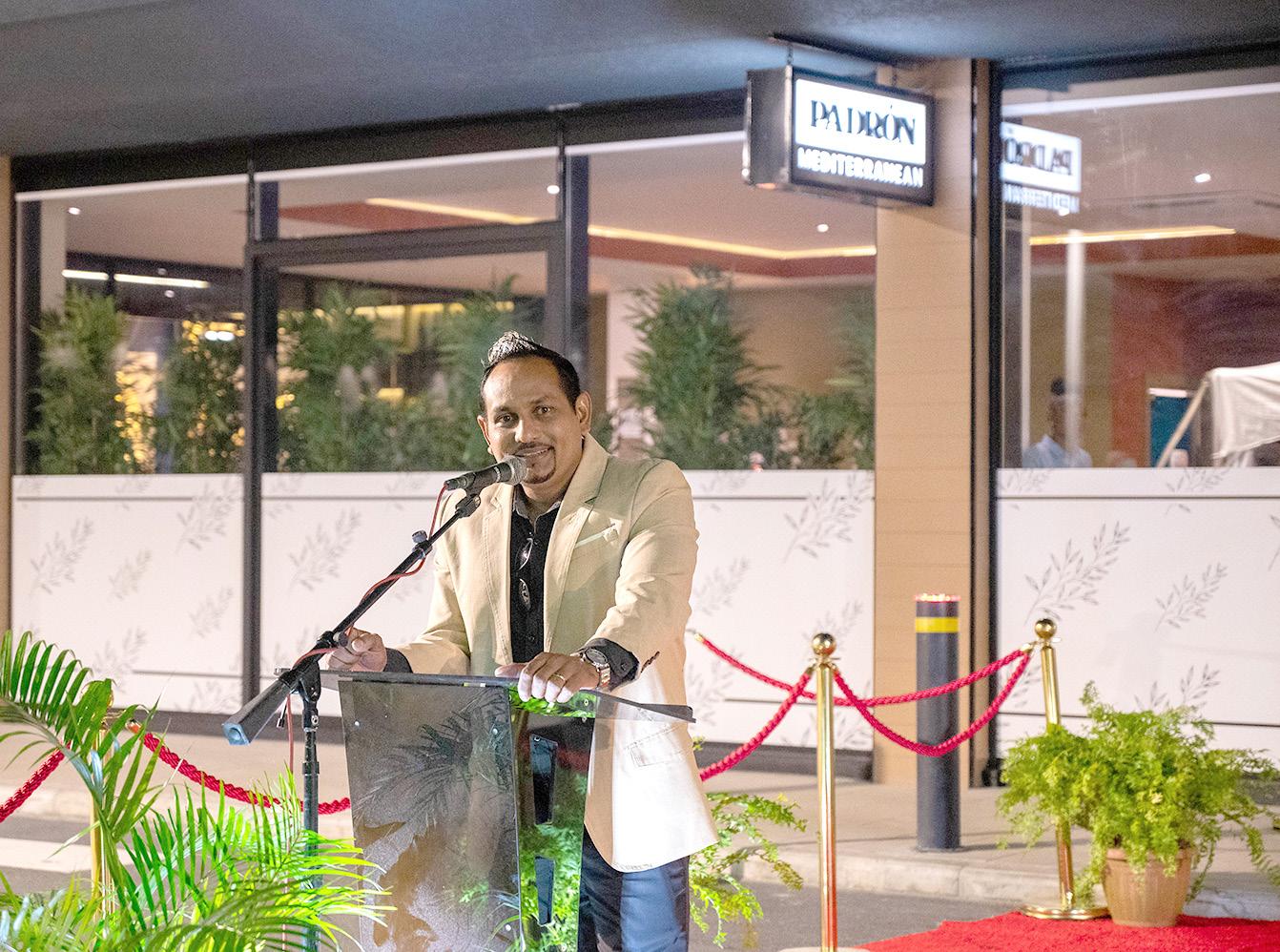
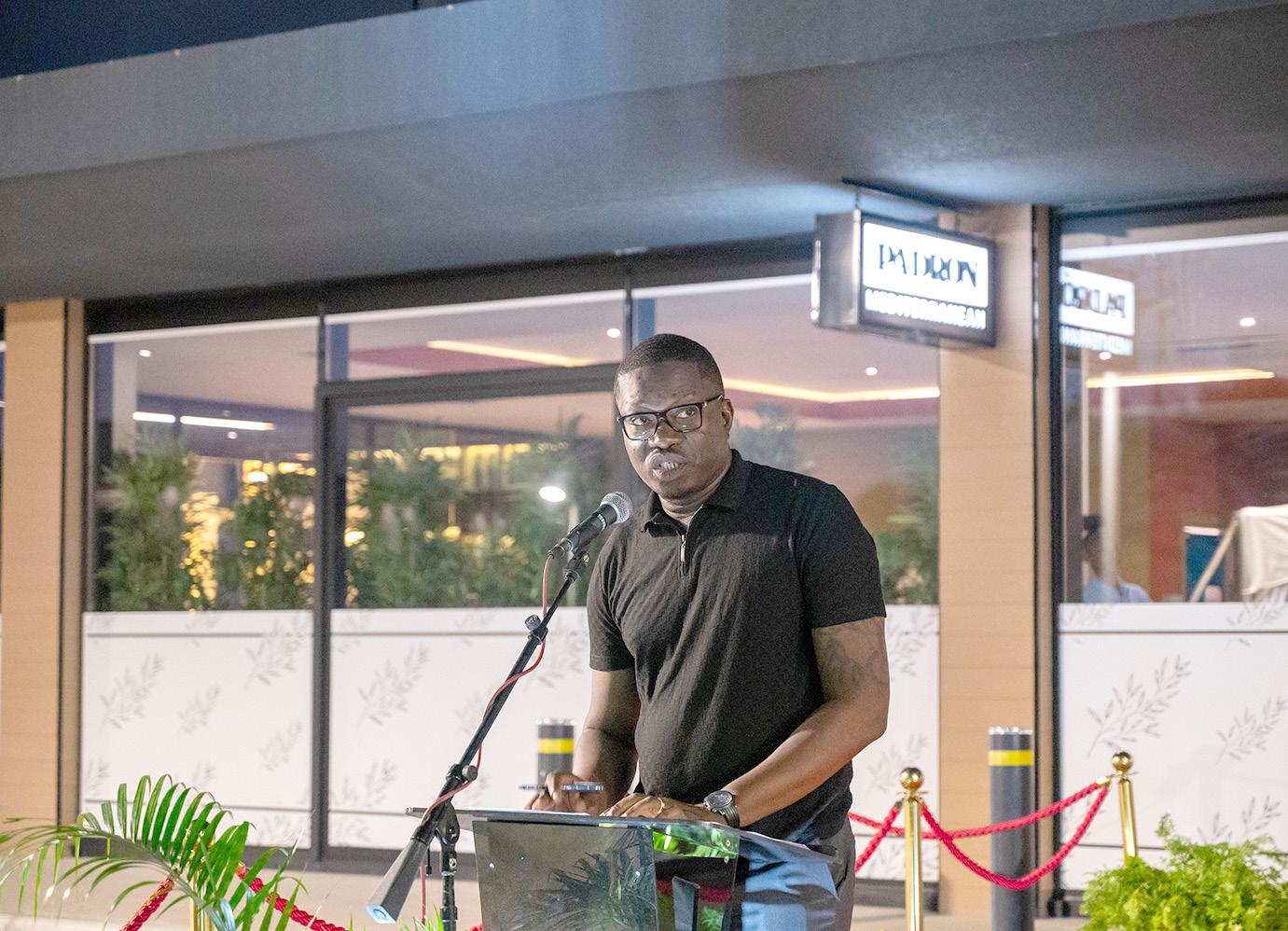
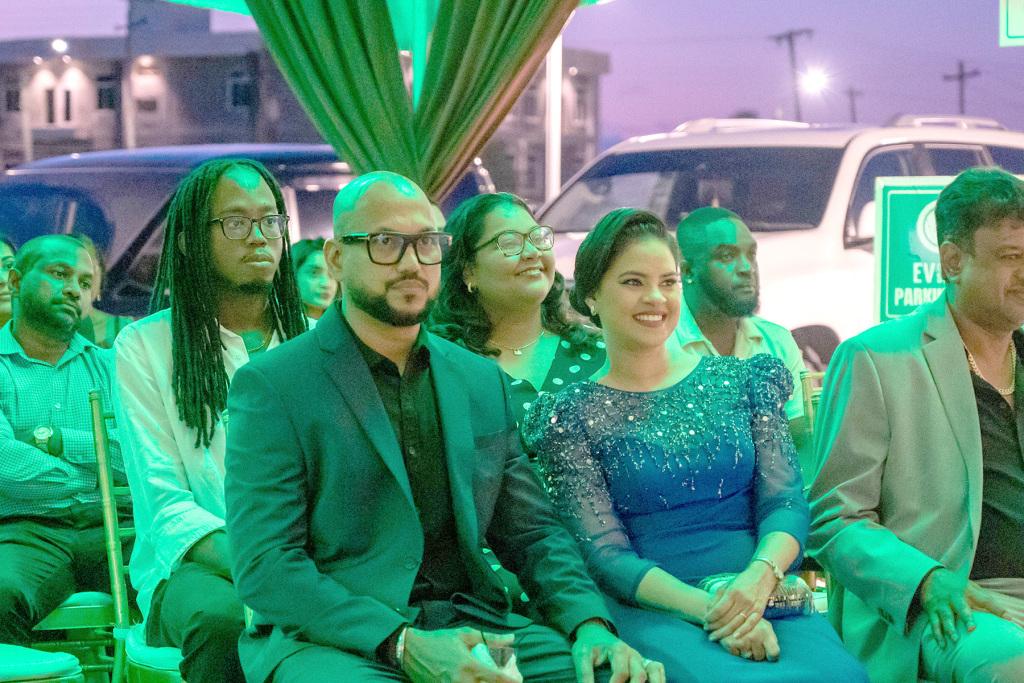
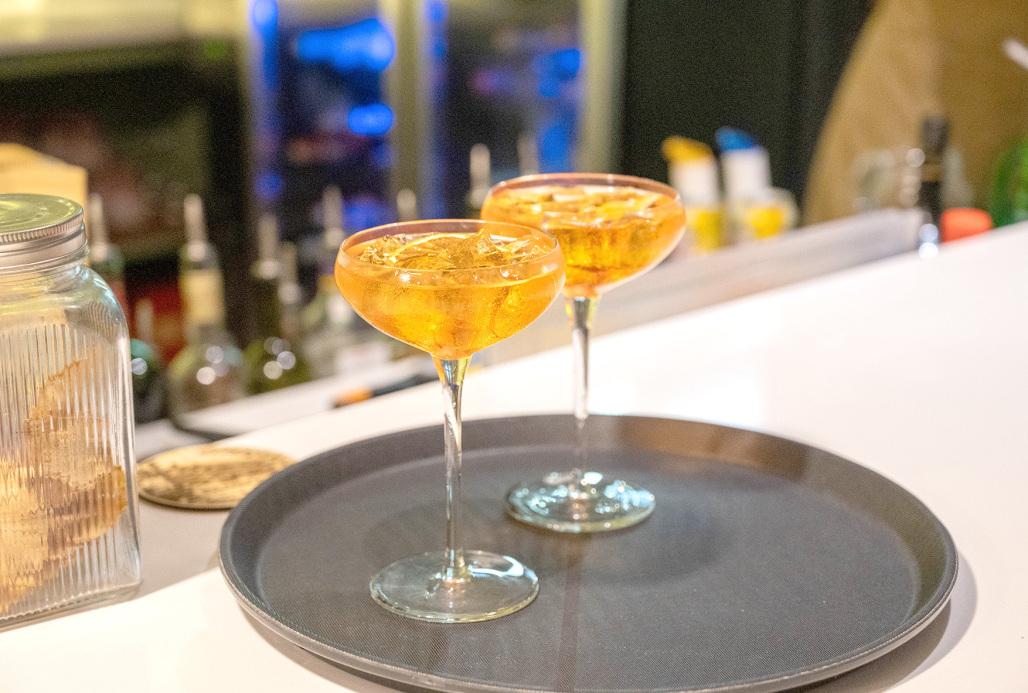
PADRON Mediterranean, on Tuesday night, brought together the vibrant flavours, warmth and hospitality of the Mediterranean, offering a fresh culinary experience in Guyana.
It is the newest dining experience to be launched at the AC Hotel by Marriott, Ogle, East Coast Demerara.
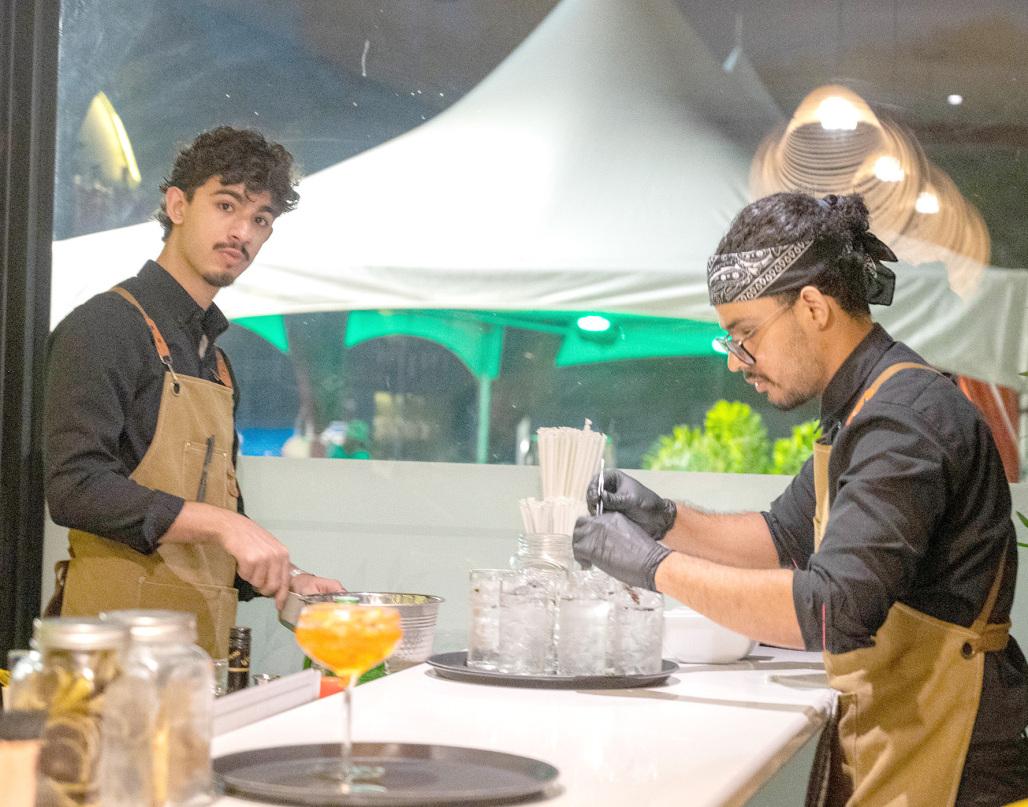
The introduction of Padrón Mediterranean to the Guyanese community brings a wide array of dishes and a different type of fine dining in a spacious, luxurious setting, which includes a well-stocked bar and a daily menu of different dishes.
According to Yonnick David, Managing Director of Fusion Hospitality Inc., Nikkei Guyana, Bloom Café and Padrón Mediterranean, Guyana is a country where culinary traditions are as richly layered as its cultural heritage.
He said at the opening ceremony that Guyana’s dining landscape welcomed a new addition on Tuesday night with the official opening of Padrón Mediterranean, a restaurant that seeks to transport diners to the sun-drenched coasts of the Mediterranean while celebrating Guyana’s emergence as one of the Caribbean’s most dynamic destinations.
David added that the restaurant was founded by Javid Rahaman, Victor Padrón, Reginald Persaud and Yonnick David.
It is a collaboration between Fusion Hospitality and 592 Hospitality, bringing together expertise in hospitality, culinary innovation and development to create a destination that adds to the country’s evolving culinary story.
He related that, for the team behind Fusion Hospitality, whose acclaimed Nikkei restaurant introduced Guyana to the vibrant fusion of Peruvian and Japanese cuisine, Padrón Mediterranean continues a philosophy built on exploration rather than repetition.
“Evolution has always been at the heart of what we do,” said Yonnick David during the restaurant’s official opening ceremony. “We never set out simply to open restaurants. We wanted to change the hospitality conversation in Guyana by creating dining experiences that could stand proudly alongside those anywhere in the world.”

David reported that this philosophy has already reshaped local expectations. Nikkei, once viewed as an ambitious experiment, has gone on to earn Restaurant of the Year honours for two consecutive years, demonstrating Guyanese diners’ growing appetite for global cuisines delivered with exceptional service and uncompromising quality.
He disclosed that Padrón Mediterranean now turns its attention to another culinary tradition renowned for its simplicity, generosity and celebration of fresh ingredients.
David stated that the menu draws inspiration from the diverse flavours of Spain, Greece, Italy, Morocco and the broader Mediterranean basin, offering dishes that reflect centuries of shared culinary history while embracing contemporary presentation and hospitality.
He told the gathering that at the centre of the kitchen is acclaimed chef and co-owner Victor Padrón, whose culinary philosophy combines authenticity with creativity, inviting guests to experience Mediterranean cuisine through carefully crafted plates that balance tradition with modern refinement.
He noted that, best known for its success in real-estate development, the company has played a significant role in shaping Guyana’s communities and workspaces.
However, its partnership with
Meanwhile, President of the Tourism and Hospitality Association of Guyana (THAG), Mitra Rajkumar, said that, as Guyana’s economy continues to expand, fuelled by increasing international investment, tourism and business travel, its hospitality sector is evolving to meet rising expectations.
In brief remarks, he stated that restaurants have become more than places to dine; they are destinations where cultures meet, business relationships are forged, milestones are celebrated and visitors experience the country’s growing confidence.
“Padrón Mediterranean is part of a larger story,” David said. “Every great restaurant raises the standard for everyone. Competition inspires innovation, innovation strengthens our industry, and ultimately Guyana benefits.”
The founders also paid tribute to the individuals whose work made the opening possible, from chefs and kitchen brigades to servers, bartenders, managers and support staff, recognising them as the foundation of the restaurant’s vision.

Fusion Hospitality represents a natural progression, bringing together visionary development and hospitality expertise to create spaces that foster community as much as cuisine.
David pointed out that the opening also marks 592 Hospitality’s debut in the food and beverage sector.
With the ribbon-cutting, Padrón Mediterranean opens not simply as another restaurant but as an invitation to discover the warmth, generosity and timeless flavours of the Mediterranean without leaving Georgetown.



UPON glancing in the mirror, one might imagine that it is a shimmering doorway. Hidden behind it is an entire universe waiting to be unlocked. We might think that if only we were more perceptive, kinder, more intelligent or more beautiful, then we could be the person worthy of opening this elusive door.
If only we could bridge the gap between who we are and who we yearn to be, then the mirror might open itself up to us. However, we can never seem to become this better version of ourselves. So, as we peer into the mirror every day, hoping to see a magical universe opening up to us, we are instead greeted
by our own reflections. Strangely, our own reflections often seem like closed doors. When we see ourselves, we seem to see wounds and flaws: obstacles that we have tried again and again to overcome but have continually failed to do so.
Eventually, these wounds and flaws become ingrained in who we are, and we begin to see them as pieces of ourselves that are as unchangeable as the shape of our teeth or the length of our fingers. Eventually, we forget that wounds can be healed and flaws can be corrected, so we learn to live with them as if they are natural parts of ourselves. All human beings are shaped by the experiences
they encounter during the course of their lives, especially the earlier parts of them. If a seedling’s root is forced to grow around a rock, then the shape of this curve will remain even as it grows into a hardened tree. If a young bird remains caged as it grows, it will forget its instinct of flight by the time it is grown. If we, as children, are hurt or frightened, then we will allow the memory of this pain to guide the way we behave, even when we have become adults with no reason to fear the same things. The only real way we can overcome the fears that subconsciously shape us is by facing the wounds at the heart of those fears.
You may have noticed that you have a few flaws. You may suddenly become detached and avoidant with people who show you kindness and love. You may tend to respond with anger to those who are curious about you and are interested in knowing more about your life. You may even sabotage the good things that happen to you for seemingly no good reason, often leaving everyone around you feeling confused and hurt. When we notice these flaws, we often try to fix them without first attempting to understand why they exist in the first place. This is why we are generally unsuccessful in correcting them.
As we peer into the mirror every day, hoping to see a universe open up to us, what we often realise is that our reflections are a universe. They are a universe that remains unlocked for our entire lives because we do not realise just how much there is to uncover right within us. Although it may not feel like it sometimes, we are in complete control of who we are at all times.
Even if we have been hurt in the past or faced pain that no one else seems to have needed to survive, we still can become extraordinary people. In fact, the very memories that seem to hinder us from growing may give us the strength needed to face
the obstacles in our present lives.
The first step to becoming better people is having the courage to face our wounds. This is a painful process that can make us feel vulnerable and force us to step out of our comfort zones, but we must become good people. Too often, it is easy for us to use our pain as an excuse to become stagnant or, worse yet, destructive to the world around us. However, we cannot seek justice from places and people who are not responsible for the injustice we experienced in the past. What we can do is learn to find peace and healing right within ourselves.
veterinarian Dr Nauth, and recommended withdrawal periods are strictly observed before livestock are marketed, ensuring both food safety and consumer confidence.
Looking ahead, Famey intends to expand her layer enterprise to meet the growing demand for locally produced eggs.
She hopes to access financing through the Guyana Development Bank to increase production capacity and invest in additional infrastructure.
Improving the genetic quality of her sheep flock is another priority. She is hopeful of acquiring an improved breeding ram, particularly a Barbados Black Belly ram, through the Guyana Livestock Development Authority’s genetic-improvement programme to strengthen productivity and enhance flock performance.
While acknowledging that farming may not be regarded as the most attractive career by many millennials, Famey believes the profession offers rewards that extend beyond financial gain.
She also believes responsible farming requires balancing profitability with affordability.
“As farmers, we have a responsibility to manage production costs so consumers can continue accessing safe, high-quality local food at affordable prices.”
For Famey, agriculture is more than a business; it is a long-term investment in Guyana’s future. Her journey demonstrates how determination, continuous learning, sustainable farming practices and effective extension services can transform modest beginnings into a resilient agricultural enterprise.
As Guyana advances its food-security agenda, young farmers like Shevanie “VL” Famey exemplify the innovation, commitment and entrepreneurial spirit needed to strengthen the country’s agricultural sector.
Her story is a reminder that, while farming demands perseverance and hard work, it remains one of the most rewarding avenues for building livelihoods, supporting communities and contributing to national development.
“Farming is challenging, but it gives you independence,” she said. “You’re producing healthy food for your family and your community and contributing to national food security.”

PEOPLE are sometimes sick and then die, not because of lack of food, but because of the lack of love!
Everyone needs love. Young children need love, and it is the same for elderly people. Some people behave as though they can operate in isolation, but they too need love.
Love can sometimes be stronger than medication. When a child is sick and receives the attention of either parent, it is amazing to see the recovery of that child.
Medication often heals the physical parts of people. However, when someone is broken hearted or depressed, medicine may not cause them to recover.
As love is cultivated, the duration for people to be restored to good health varies. Many medications may require people to use them for a certain number of days, for example, two times daily for seven days. But with love, it may be the connection with someone they respect and love, and after one interaction or conversation, all the challenges disappear. People need more love and less medicine!
It is difficult to love someone without having a relationship with them. This relationship is not restricted to companionship but includes many other types of relationships. People without companions may still have access to many different relationships. The challenge for some is that they do not establish relationships with others, so there is no one to share the love with them.
Forgive others
Because death is often sudden, do not hold negative thoughts about others in your heart. It is worrying to see how some people hold on to negative feelings about others
for years. When this happens, the person who has treated their heart like a garbage receptacle may soon suffer from an illness that medical professionals may not have any medication for.
Forgiving must be something every human wants to do for others. Many animals forgive each other because they have to co-exist in the same area and they may need each other’s help.
People sometimes go to work depressed because someone has not forgiven them. They could be distracted because of this, leading to accidents, as their heart is heavy.
The mistakes some people make, and which cause some of them to live the way they do, may have something to do with a lack of forgiveness. In many intimate relationships, if something affects one person and the other person chooses not to forgive them, the offended partner may be belittled or uncomfortable, and that can happen for an extended period. When such things happen, it often affects the relationship, and over time, both people no longer see joy in each other. If they are to forgive each other and work toward improvements, then that joy will quickly return to them, and they will begin to enjoy each other’s company.
People must practise forgiveness every day! They should try to not let the day end without them seeking to forgive the person who offended them. Life is too precious to hurt others or to hold the hurt others caused within your heart.
If someone you know died suddenly because you did not forgive them, how will you feel? Every person has a purpose, so forgive others and allow them to live
to their full potential. Be a source of encouragement and help them to become better. Be the shoulder they can lean on. Be willing to see beyond people’s faults and to help them, as your best efforts will not make you perfect.
You cannot help people when they are gone
There is no question whether people will die. When they die, there is nothing that you can do to help them, even if they are close friends or family members. When a person dies, the body that allows the spirit to operate is no longer available. Therefore, you are unable to touch them. They are unable to spend time with you. Even if you cook their favourite food, they are unable to consume it. Dead people cannot do the things that living people can do.
Death is often sudden Love everyone, as you may not have the opportunity to wish them goodbye before
they depart to a place where many others have gone, and many more people will go. When a woman is pregnant, there is some possible time frame when the baby will be delivered. For example, seven months or nine months. Many babies are born within less time than average. However, their birth is predicted within a certain time frame. Unlike birth, death does not provide a timetable.
If a person enrolls at a learning institution, they will know of the cost and duration of their studies. Once they study according to the timeline and timetable given to them by the learning institution, then their studies are expected to be completed at a specific time. Death has no timetable and often does not warn when it will impact someone’s life.
There are people who go to bed one evening, and when others are expecting them to wake up for another day to continue with life,
they receive the depressing news that that person did not see another day. A workmate sometimes speaks with one of their colleagues at the end of their workday, and the next news they hear about that person is that that person did not live to see another day.
While death is universal and will happen, no one knows when it will happen and who it will happen to. There is an old saying that death does not respect people—even rich people die and leave behind all they have. People who own banks will also die. The richest man and woman will even die.
Money may help to prolong the life of people that have a medical issue, but it does not stop death.
No spending in the grave
Money is made to meet the financial needs of people and must be spent on earth.
To spend money, a person must be alive. Some people have a lot of money they have been saving for many years,
and when they die, someone else misuses the fund and spends it quickly, without accomplishing anything of substance.
Savings are excellent, and people must have some savings. However, what importance will saving have if you cannot enjoy what you worked for? It is always important to make sacrifices, and those who save have something to show for it. But save some money and spend some. Here is the link to the book cover, if you will need to include the book cover, https://reidnlearn.com/ wp-content/uploads/2021/11/ f1b47f_ead129ed9db947b989d8147adca7b599_mv2scaled.jpeg.webp
For more information about Geary Reid and his books, please use these contact information, Amazon: http://www.amazon.com/ author/gearyreid, Website: www.reidnlearn.com, Facebook: ReidnLearn, Email: info@reidnlearn.com, Mobile #: 592-645-2240.
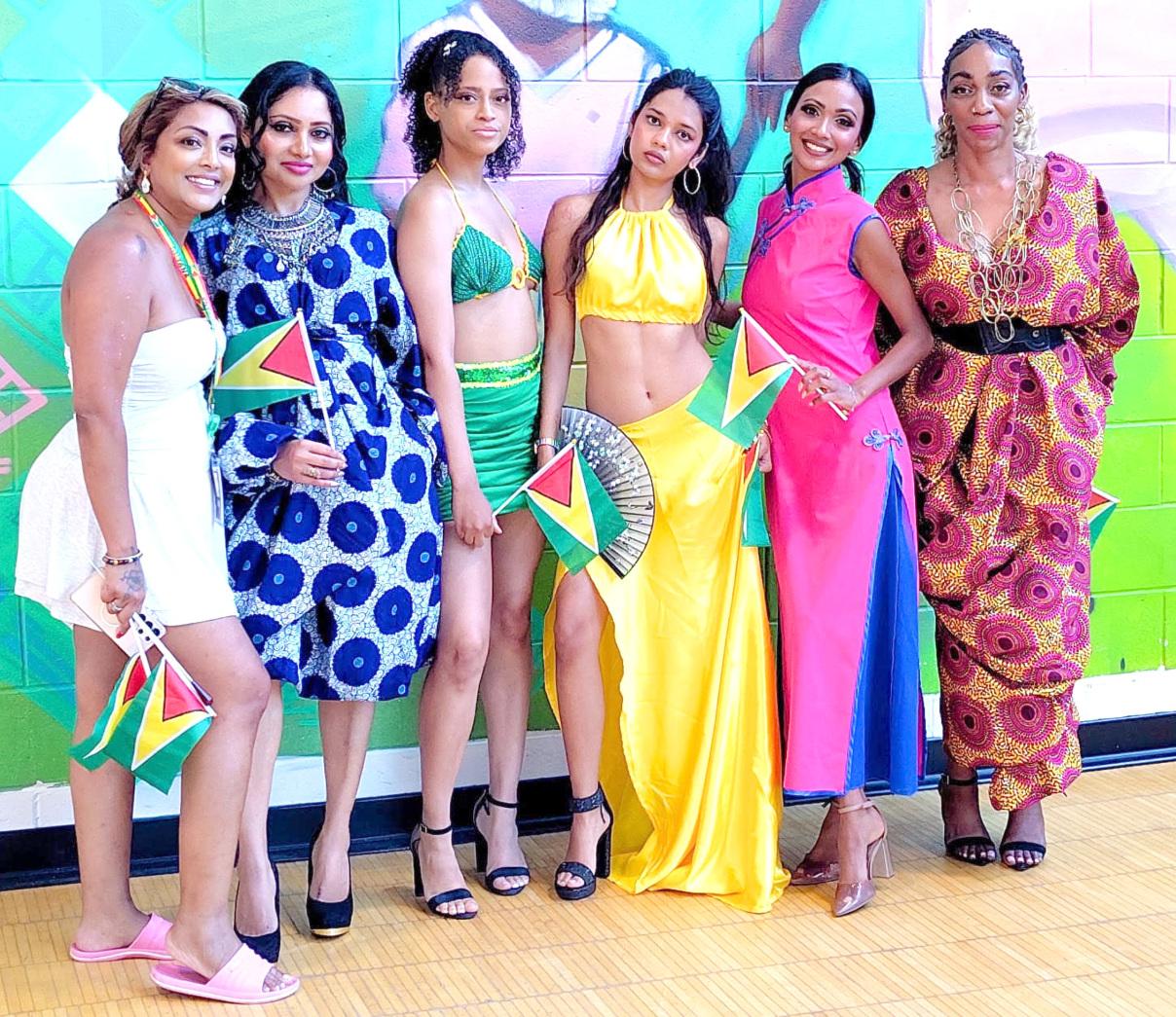
community cultural activations, editorial experiences and a luxury yacht showcase, welcoming designers and participants from numerous countries under the theme of unity through fashion. Among the festival’s highlights were cultural runway presentations celebrating Caribbean heritage, including Guyanese representation, further demonstrating Lachman’s commitment to ensuring that Caribbean culture maintains a visible presence within Canada’s evolving fashion landscape.
Through Threads of the World, she has consistently created opportunities for communities to celebrate their heritage while introducing audiences to diverse traditions through fashion, music and storytelling.
Over nearly a decade of producing multicultural events, Lachman has
remained committed to using fashion as more than entertainment. Her work has become a platform for community-building, cultural diplomacy, entrepreneurship and international collaboration.
With more than one hundred productions to her credit, she continues to advocate for initiatives that connect people across borders while elevating underrepresented voices. Looking ahead, Lachman believes Guyana is entering an exciting chapter creatively.
As international interest in the country continues to grow, she sees increasing opportunities for the nation’s fashion, arts and cultural sectors to evolve alongside its economic development.
She envisions editorial storytelling, creative partnerships and thoughtfully curated cultural experiences playing an
increasingly significant role in showcasing Guyana to global audiences. While she remains reserved about specific projects currently in development, Lachman acknowledges that her recent visit represents only the beginning of a broader journey.
Her focus remains on cultivating genuine relationships, creating platforms that empower creatives and building initiatives that celebrate Guyana with authenticity, professionalism and international relevance.
For Lachman, the objective extends beyond producing events. It is about creating lasting cultural connections that honour heritage, inspire collaboration and position Guyana’s creative community to be recognised among the world’s emerging cultural destinations. FROM PAGE V

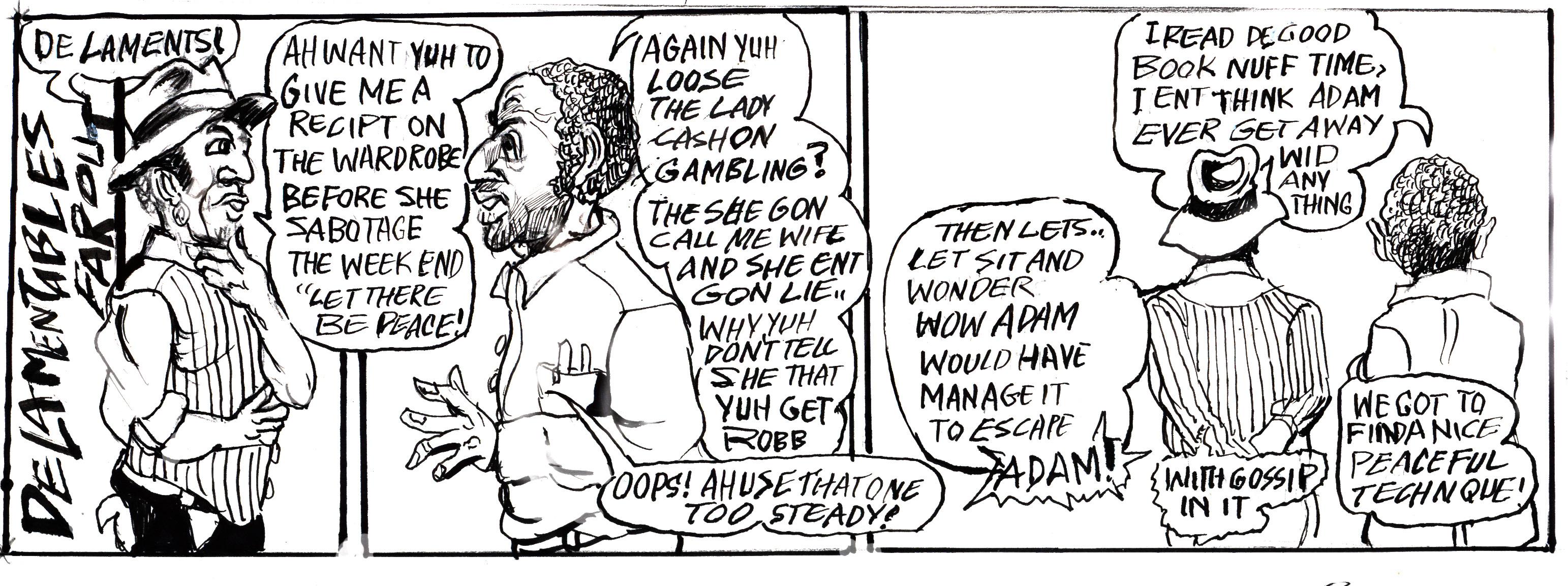
THE realms that we once knew, into semblances we can heed and understand. Though torn, they can yet be revisited to return to a more balanced ethic that we can interpret above the offensive illusion against its lack of the ‘heckling tribe’ towards judgement of the feelings.
The blame of man, then woman, is a terrible onslaught. Reasoning is not conferred, but vengeance is sought. Today, guilt is judgement and is swiftly used as an entity to destroy, to condemn, and is placed as a shield to bury the shield holder’s guilt, whether it be guilt embraced or alive to be explored.
We have got to be wiser than the inner insult thrown at us or our own ‘ego gone wild’ through deception or revealed contempt.
The inner decency is why the stray cat or other animal will embrace your kindness and breach thousands of years to respond favourably to, and befriend, your
gesture: the long-distrusted embrace of humankind, a creature not yet sure of the more ancient of our animal world.
The pageantry of human change can be transferred carefully, with the caution of an artist, to our adult entertainment, with all the suspicions and vexations, beginning with who
is responsible for the forbidden fruit, which we must concede was a delicacy of multiple grace and sensuality.
We’ve got to contemplate the alternative and summon our human gifts to explore change… in an age that has drifted into another age…
World Guyana, her mindset had shifted.
“By the time I stepped into Miss World, it was different because I had already gotten over that initial selfdoubt. I already had the mindset of, ‘I want them to see me for me, regardless of who I am competing against,’” she said.
When Nelson was crowned Miss World Guyana on May 24, she described the moment as overwhelming: confirmation that every sacrifice and hour of preparation had been worthwhile.
“There are different categories and fast-track events, including the interview, introduction video, Beauty With a Purpose, head-to-head, sports and fitness. None of that was omitted from the selection process. I submitted my Beauty With a Purpose video, my introduction video, my sports, my talent and everything else that was required,” she added.
“There were months of interviews, follow-ups and judging before the winner was announced. We had a coronation on May 24, where the previous queen handed over her crown to me.”
With Vietnam now on the horizon, Nelson’s days are filled with training sessions, rehearsals and preparation for the various aspects of the competition, each one bringing her a step closer to making history for Guyana.
“That journey to Vietnam looks like a lot of practice, a lot of late nights and early
mornings, but it is all a part of the journey,” she added.
“It is a very versatile competition where contestants get to show different sides of themselves. Miss World wants to see that a queen is well-rounded, that she’s fit, has talent and can speak well. I have been working with trainers and coaches to get me to that level, hopefully to make history for Guyana,” she said.
While grace, poise and articulate expression matter, at the core of Nelson’s Miss World journey is ‘Her First Lesson’, the Beauty With a Purpose project she developed before earning the national title. Her commitment to service dates back more than a decade, to her teens, when she began tutoring and volunteering with young people, a passion that eventually inspired the initiative.
Her First Lesson is an early-intervention programme for girls aged 13 to 19 that seeks to interrupt cycles of toxic dependency and domestic vulnerability before they begin. It is built around three protective pillars: the Worth Shield, helping girls recognise their inherent worth; the Voice Shield, teaching them to set boundaries and speak up; and the Value Shield, encouraging them to recognise the value of their time, education and labour.
Through school visits and youth sessions across Guyana, Nelson delivers workshops built around these principles. The programme
has expanded to include an interactive game; a book, Her First Lesson, which is also available on Amazon; and an online platform at herfirstlesson.org, where young women, parents, educators and community partners can access resources.
Although the programme has already reached hundreds of girls, Nelson believes its greatest impact is yet to come. She hopes to expand into schools throughout Berbice, Essequibo, Linden and Georgetown, train other women to deliver the curriculum, and place her book in schools and bookstores through collaboration with the Ministry of Education.
“So far, I have reached about 200 young women, but compared to the population across Guyana, that’s nowhere close to the goals we are trying to meet,” she added. “I would also like to do more one-on-one mentorship. When I went into schools, I delivered the programme like a conversation. I shared my story and my experiences and gave them the information raw and honestly. That made a lot of the girls open up about what they were going through,” she said.
As she prepares to represent Guyana on the international stage, Nelson says the journey is one she cannot complete alone.
“As I prepare to represent Guyana, I cannot do this alone, so I am counting on their support in whatever way they can support me, whether

that is interacting with me on social media, sharing my content so I get more coverage, or through sponsorship. All support is welcome,” she added. “I am so grateful to be carrying the spirit of Guyana and representing an entire nation on the international stage.” Those interested in partnering with or sponsoring Nelson’s Miss World journey can reach the Miss World Guyana team at team@missworldguyana.gy or follow her on Facebook (Kelcia Nelson) and Instagram (@kelciaaaaa).
More than competing for a crown, Nelson hopes to carry the Golden Arrowhead, Guyana’s national flag, while embodying a beauty measured not by appearance but by purpose, service and the impact she leaves behind.



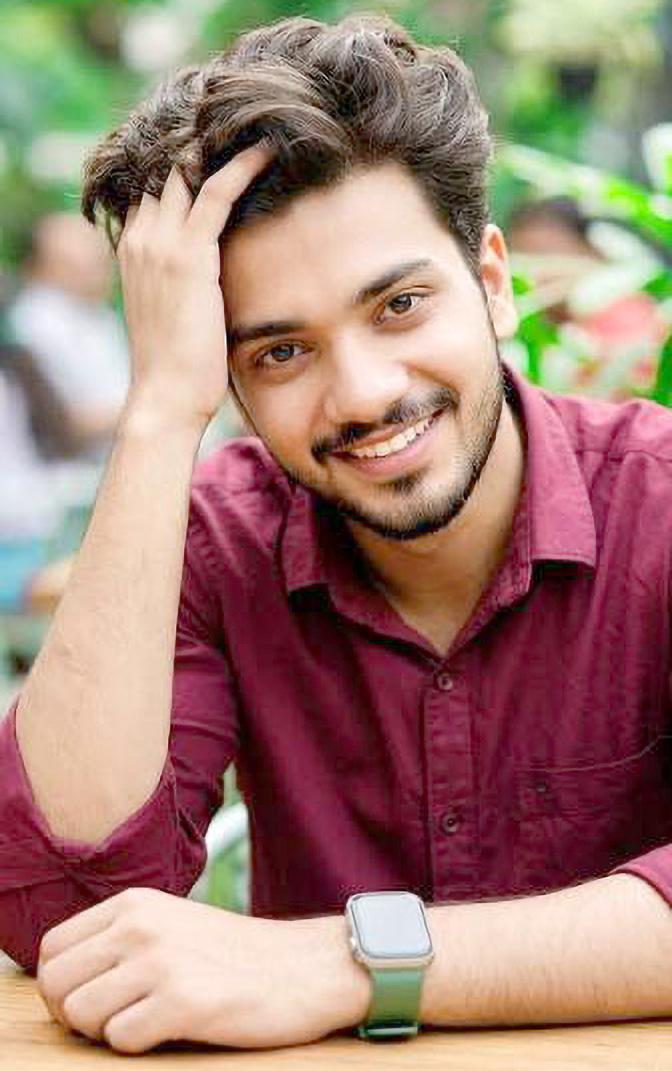
FROM a young age, I grew up with an aspiration to be successful in life, to date beautiful girls, and to travel and see the extraordinary beauty of the world. As the years went by, through studies and hard work, I accomplished all of that and more. Then I felt a new desire in my heart.
I wanted a beautiful love story that would be uniquely different. How different, I didn’t know, but I lived with the hope that when I saw her, I would recognise her.
As a civil engineer, I have
gested I go with them to a wedding in our beautiful home country, Guyana. That aroused a little guilt in me because I hadn’t gone back for over sixteen years.
“Such a long time,” I mused.
I consented to the trip and, on arrival, was awed by the astounding developments.
“One time after another,” I expressed.
During the days that followed, leading up to the wedding, I quite enjoyed the friendly people, music,
travelled to many countries and met wonderful women from all walks of life, but nowhere did I see her. I believe that patience is a virtue, and I assured myself that one day I would see her.
I had just reached a new chapter in my life, aged thirty, and was taking a long-overdue break from work when my family sug-
food, Banks beer and Demerara rum. It simply blew my mind—no place like home.
The wedding was a splendid three-day affair. The vibrant décor and fabulous Indian outfits worn by the guests, not to forget the tassa drums, were quite impressive. During that wedding period, I met many beautiful, TURN TO PAGE XX









THE Caribbean poet, novelist, essayist, anthologist, playwright and much more, Ian McDonald, died recently. He was, as his book covers attest, “Antiguan by ancestry, Trinidadian by birth, Guyanese by adoption, and West Indian by conviction.”
It seems to me that he was always there and always would be. This is the way we think about writers we love, as if they were relatives whose work forms the homilies of our entire lives.
Dr McDonald was ninety-three, a sage-like poet to generations. He was prolific, writing and editing close to a dozen collections of poetry and criticism alongside a single novel, The Hummingbird Tree, which was adapted into a BBC television show in 1994. He also wrote weekly articles on literature for Stabroek News.
As a poet, he was a keen observer of nature in a fine, granular way. He could track the flight of the sun or a bird in verses that seemed effortless. One of my favourite pieces from his Guyana Prize-winning collection, Between Silence and Silence (Peepal Tree, 2003), a deeply introspective book, is “It Passes”, where his exquisite gaze zeroes in on nature at work:
Before the sun burst upward
Pouring gold oil over the earth
Darkness clings among the branches still.
In the quick-silver light
A Hummingbird passes, Pierces bloom after bloom
For the hidden, old syrup
Clear as lit water.
Disturbed by the gleaming bird
Flowers shiver down.
One gold petal falls shimmering
In a night-spun web:
Quick, the spider glides to embrace
Its golden and flutter prey.
Thousands of years pass; It happens again for me.
Murmuring in the soft room,
My wife cradles a new-born child.
Night leaves behind a tender wind
Like a song once heard.
I wish I did not have to die.
The adage that humans are also part of nature aligns with the continuity of things: the birth of a child, the bloom of flowers and the predator at work.
The wish “not to die” is, of course, against nature, but one understands the poet’s sentiment. He apprehends that, at the exquisite moment of his son’s birth, his replacement, the recognition that he will be taken from them, or they
from him, is absolute. He cannot stop it, nor can they. It is the business of nature to take that which we most want to keep. The reality of things dismisses human wishes; what must happen will happen.
McDonald’s poetry has a directness that lets you follow the circuitous logic of his thoughts without ever getting lost. His is a verse in which linguistic density is ironed out. Instead, a startling image, a sudden turn of phrase and fine emotionality define his poetry. His aim was elation that makes you feel lithe and teaches you how to see.
Here is an excerpt from “The Sand Truck Driver”; everything is so beautiful before the puppy gets squashed:
I take the Seawall’s pleasant air; Fishing boats come in, grey sails snapping Under a peaceful sky.
A truck hurdles down the public road.
A small dog, crossing, begins to hurry up.
The sand-truck driver, crouched intently down, Swings the wheel fast, swerving for the animal, Follows it, fleeing, to the utmost edge of the curb, Crushes the puppy into squealing pulp and blood:
An entrail-vivid mess scatters on the stone.
In McDonald’s poems, fate deals roughly with beauty and innocence, or it remains dispassionate, owing no fealty to anyone or anything.
There is much of this in Between Silence and Silence, alongside a palpable undercurrent of fear and a good amount of quiet TURN TO PAGE XXI


I ASKED someone a question with complete confidence because history seemed to support my argument. I was trying to get his opinion on a ‘what if’ situation. Had we, as humans, been able to bridge the gap between science, medicine more strictly speaking, and spirituality, where would we be in terms of advancement and achievement? I believed science and spirituality occupied opposite sides of the same conversation. Science explored evidence through observation, while spirituality explored meaning through experience. I believed humanity had spent centuries building a wall between those two worlds.
The person I was speaking to at the time responded calmly and confidently. He smiled gently and said, “There is no gap.”
His answer lingered in my thoughts long after our conversation ended because it challenged more than my opinion. It challenged the way I had organised knowledge itself.
I took that conversation home with me. Every meaningful conversation deserves reflection because wisdom often comes through introspection. The more I thought about his answer, the more I realised that my understanding came largely from history. History tells fascinating stories of brilliant minds challenging accepted ideas. Few names shine brighter than Nicolaus Copernicus, the Polish astronomer whose work transformed humanity’s understanding of the universe.
For centuries, people believed the Earth occupied the centre of creation. The heavens revolved around humanity, and every sunrise reinforced that belief. Then Copernicus looked upwards with curious eyes and asked a different question. He proposed that the Earth revolved
around the Sun. His calculations revealed remarkable consistency, and his observations painted a universe far larger than anyone had imagined.
His groundbreaking work, On the Revolutions of the Heavenly Spheres, appeared in print in 1543, the year of his death. According to historical tradition, the first printed copy reached him on his deathbed. His ideas planted a seed that continued growing long after he closed his eyes for the final time.
History remembers the conflict that followed. Galileo Galilei later defended the heliocentric model with stern courage, and his confrontation with the Roman Inquisition became one of history’s defining moments. Those events created the powerful image of science standing on one side and religion standing on the other. Generations inherited that picture, and many people accepted it as an unchanging truth. But perhaps that picture tells only part of the story.
Science has always searched for truth. Spirituality has always searched for truth. Their methods differ beautifully, yet their destinations share similarities. Science asks questions through observation, experimentation and measurement, while spirituality asks questions through reflection, contemplation and experience. Both journeys begin with curiosity, both journeys require humility and both journeys invite humanity to keep learning.
Remembering this brought me back to Dr Mahadeo’s smile and words: “There is no gap.” The sentence gathered greater meaning every time I repeated it.
Medicine offers one of the clearest examples of this partnership. A physician studies anatomy, physiology, chemistry, genetics and pharmacology. Every diagnosis draws upon years of disciplined scientific study. Every
treatment follows evidence gathered through careful research, and every medical breakthrough represents countless hours of observation and discovery. Science provides exceptional tools for healing the human body. Healing, however, reaches beyond biology alone. Every physician has witnessed patients whose courage transformed their recovery. Every nurse has cared for someone whose hope remained stronger than fear. Every family member has watched love strengthen a weary heart. Every hospital has stories that medical textbooks alone could never fully explain.
Modern neuroscience continues to reveal fascinating insights into the relationship between the mind and the body. Scientists studying neuroplasticity have demonstrated that the brain changes throughout life. New experiences create new neural pathways, repeated thoughts strengthen existing pathways and learning reshapes the architecture of the brain itself.
The human brain remains dynamic, constantly adapting
through experience.
Ancient spiritual traditions have encouraged mindful awareness, gratitude, compassion, forgiveness and meditation for thousands of years. Those practices encouraged people to cultivate their thoughts with intention. Today’s neuroscientists observe measurable changes in brain activity among people who practise mindfulness consistently. Functional MRI scans reveal changes in areas associated with attention, emotional regulation, empathy and self-awareness. The language differs, yet the destination feels unmistakably similar.
So, here we have science describing the process and spirituality describing the experience. One explores the mechanism; the other explores the meaning.
Dr Andrew Huberman frequently explains how focused attention influences the brain’s ability to change. Attention strengthens learning because the brain prioritises what receives consistent focus. Dr Richard Davidson’s research at the University of
Wisconsin has demonstrated that long-term meditation influences measurable patterns of brain activity associated with emotional resilience and compassion. Jon Kabat-Zinn introduced mindfulness into medical settings decades ago, allowing physicians to study practices once viewed primarily through spiritual traditions. Each discovery strengthens a bridge that waited for humanity to notice. Perhaps the bridge always existed, but humanity approached it from opposite directions.
Every meaningful scientific discovery begins with curiosity, in the same way that every spiritual awakening begins with curiosity. Every beautiful question a child asks before learning complicated answers is born of curiosity. It inspires exploration because wonder remains one of humanity’s greatest gifts.
Albert Einstein expressed this spirit beautifully when he wrote, “The most beautiful thing we can experience is the mysterious.” Those words came from one of history’s
greatest scientific minds. Einstein appreciated mathematics, physics, imagination and mystery with equal enthusiasm. His curiosity embraced both precision and awe.
It’s a perspective that feels refreshing in today’s world because society often encourages people to choose sides. One group celebrates science. Another group celebrates spirituality. Human experience welcomes a richer conversation. A surgeon entering an operating theatre carries years of scientific knowledge.
That same surgeon may also carry compassion, purpose, gratitude, faith or silent prayer before making the first incision. Those qualities work together because healing welcomes every sincere effort.
Every sunrise reminds us that truth is patient. The Sun rises whether humanity understands astrophysics or simply pauses to admire its beauty. A flower blooms whether someone studies botany or just appreciates its fragrance. Water quenches TURN TO PAGE XVIII
thirst whether someone understands molecular chemistry or simply drinks from a glass. Reality embraces both explanation and experience, and certainly, wisdom grows most where those two perspectives meet.
Dr Mahadeo answered my question within seconds, yet I continue discovering the depth of his answer every day. Medicine continues
teaching one incredible lesson: every patient arrives with a diagnosis, and every patient also arrives with a story. A physician studies laboratory results, imaging and vital signs; those measurements guide treatment with direct precision. Every conversation beside the hospital bed reveals something equally important: hope inspires perseverance,
fear influences recovery, love strengthens resilience and purpose encourages endurance. Science measures the body with accuracy, while spirituality nurtures the soul living within that body. Both aspects contribute to healing because every human being represents far more than muscles, organs, bones and blood.
The greatest discoveries often emerge when curios -
ity replaces certainty. Humanity once believed the Earth occupied the centre of everything; Copernicus expanded that understanding. Humanity once believed invisible microorganisms belonged only to the imagination; Louis Pasteur revealed another truth. Humanity once believed the brain remained fixed after childhood; modern neuroscience demonstrated

the extraordinary gift of neuroplasticity.
Every generation expands its understanding because every generation asks another question. I am sure that the next great discovery already waits before us. Consciousness deserves the same curiosity that scientists once reserved for the stars.
Researchers continue studying meditation, compassion, gratitude, forgiveness and social connection because each of those experiences produces measurable biological changes. Hormones respond, brain activity changes, heart-rate variability improves, and immune function responds to chronic stress and emotional well-being, and so on. Every new discovery reminds us that the mind and body participate in the same conversation every second of every day. The body listens to the mind with attention, and the mind continually responds to the body’s signals. This relationship forms one beautifully integrated system.
I, too, smile now when I remember my conversation with Dr Mahadeo because I realised that I had arrived expecting a debate. I imagined science standing proudly on one side of a bridge while spirituality stood patiently on the other. His answer removed the bridge altogether: “There is no gap.”
I suppose humanity created categories because categories simplify complicated ideas. We place physics in one classroom and philosophy in another. We teach biology during one hour and ethics during the next. We study anatomy through microscopes and purpose through reflection. Every discipline contributes another piece of the same amazing puzzle called life.
A telescope reveals galaxies beyond imagination. A microscope reveals worlds hidden inside a single drop of water. A moment of reflection reveals the landscape of the human heart. Each instrument explores reality through a different lens. Every lens contributes another chapter to humanity’s endless search for truth.
The future of science excites me because it comes with the possibility of embracing the whole person. Precision medicine, artificial intelligence, genetics, neuroscience, nutrition, psychology and public health continue transforming health-
care around the world. Compassion, presence, empathy, forgiveness, gratitude, community and purpose continue transforming lives in ways that statistics alone never fully capture. The greatest healthcare systems will always celebrate both excellence in science and excellence in humanity because every patient deserves both. This idea brought me back to my original question.
The scholar searched through charts and skies, The sage looked deep through heavenly eyes. Each sought the truth with steady grace, Each found its light in different space.
One held a lens, one closed their eyes, One mapped the stars that filled the skies.
One traced the pulse through vein and bone, One heard the soul’s enduring tone.
The atom danced with silent flame,
The planets played the selfsame game.
Creation whispered soft and clear, Its song reached every listening ear.
The healer learned each nerve and vein,
The mystic softened hidden pain.
One touched the body worn and tired,
One lit the hope that hearts required.
The mind grew strong through thoughts each day, The heart revealed a gentler way.
Together both became the key, That opened doors to simply be.
The truth has worn ten thousand names, Through sacred books and science’s claims. Its light has shone through every age, Across the lab and temple stage.
So walk with wonder, free from fear, Let wisdom draw creation near. For every path sincerely trod, Leads hearts toward truth, and truth toward God.
Romella Dasratt
development.
“Priority will be given to developing improved pastures, strengthening herd-management systems and constructing modern livestock-handling facilities. By putting these essential foundations in place first, the village will be well positioned to expand its cattle population sustainably while maintaining high standards of animal welfare, productivity and environmental stewardship.”
The decision to introduce Brazilian breeding animals reflects the community’s commitment to improving productivity rather than merely increasing herd size.
Given the proximity to Brazil and the availability of superior genetics, incorporating improved breeding stock offers significant opportunities to strengthen livestock production. At the same time, Dorrick is adamant that these improvements must never compromise Guyana’s internationally recognised animal-health standards.
Dorrick emphasised that the people of Yupukari remain firmly committed to complying with the legal animal-importation protocols administered by the Guyana Livestock Development Authority.
He stressed that every breeding animal must undergo the Authority’s mandatory inspection, quarantine and certification process before being introduced into the community.
“We are committed to doing things the right way,” he explained. “Every breeding animal that comes into Guyana should first be properly inspected, quarantined and certified by the GLDA before entering our community. Those procedures are essential because they protect our livestock, our farmers and the entire country from dangerous animal diseases.”
According to Dorrick, maintaining strict biosecurity is everyone’s responsibility. He believes that diseases introduced through uncontrolled animal movements could devastate livestock production throughout Guyana, threatening farmers’ livelihoods, food security and future export opportunities.
For that reason, he commended the GLDA for maintaining rigorous veteri-
nary inspections, quarantine facilities and certification procedures, describing them as indispensable safeguards for the country’s growing livestock industry.
The community’s livestock-expansion programme also reflects a growing awareness that climate resilience is now fundamental to agricultural success.
With forecasts indicating the possible return of El Niño conditions, Yupukari has prioritised pasture development, improved water management and enhanced livestock nutrition before the onset of the dry season.
“We don’t want our animals eating dry grass,”
ana’s Low Carbon Development Strategy.
Rather than viewing the funding as short-term assistance, the Village Council has deliberately invested in productive assets that will strengthen agriculture over the long term.
Pasture development, improved breeding programmes, livestock infrastructure and capacity-building are all being prioritised to ensure that the ranch remains economically viable for future generations.
For Dorrick, these investments represent more than agricultural development; they are investments in economic independence.
hinterland.
Equally important to the village’s progress has been the Government’s commitment to free education and expanded scholarship opportunities.
Increased access to tertiary education has enabled young people from remote Indigenous communities to acquire specialised agricultural training before returning home to contribute to local development.
One outstanding example is Wendy Lawrence, who graduated from the Guyana School of Agriculture in 2025. Today, she serves as Yupukari’s Crop Extension Officer, working alongside
erinary services, livestock advisory support, artificial insemination services, and guidance on animal health and pasture management.
“The GLDA team is always willing to assist whenever we need support,” Dorrick said. “Their advice has helped us improve our livestock management and gives us confidence that we are moving in the right direction.”
The impact of these collective efforts is already evident. Each year, the community ranch provides beef for village activities, while many individual farmers market cattle throughout the Rupununi.
while reducing dependence on external sources of basic food supplies.
Ultimately, the story unfolding in Yupukari is about much more than cattle production.
Although the community continues to enjoy international recognition for its black caiman research, river-turtle conservation, butterfly farming and ecotourism initiatives, it is also becoming a powerful example of how Indigenous leadership, strategic government policies and community determination can drive sustainable development.
Under the stewardship of Toshao Russian Dorrick,
Dorrick explained. “We are putting things in place to ensure they receive proper nutrition through improved pasture development and supplementary feeding.”
His comments reflect a broader philosophy of preparedness. By investing in adequate pastures, reliable water sources and improved feeding systems, the village is positioning itself to withstand increasingly unpredictable climatic conditions while maintaining healthy and productive livestock.
Combined with superior genetics and improved animal husbandry, these measures will allow the community to sustain livestock production despite the challenges posed by prolonged droughts and changing weather patterns.
Central to achieving this vision is the strategic use of funds received under Guy-
“The opportunities are there,” he said confidently. “Guyana is growing rapidly, and the demand for quality beef and dairy products continues to increase. We want Yupukari to be ready to supply those markets.
By using our LCDS resources wisely, we are building a sustainable livestock-production system that creates jobs, strengthens food security and generates income for our people.”
The village’s agricultural ambitions extend beyond cattle production. Through support from the Hinterland Sustainable Agriculture Development Programme, Yupukari is also preparing to establish a community poultry project that will diversify food production, create additional employment opportunities and reduce dependence on imported poultry products entering the
farmers and Community Service Officers to promote Good Agricultural Practices and strengthen agricultural productivity throughout the community.
Her success has inspired Dorrick to encourage more young people to pursue studies in livestock development and agriculture.
“Education is one of the greatest investments we can make,” he said. “We want more of our young people to attend the Guyana School of Agriculture and return home with the skills needed to develop our livestock sector.”
Throughout this transformation, the Guyana Livestock Development Authority has remained one of the community’s strongest partners.
Dorrick praised the Region Nine Extension Team, headed by Dr Halley, for consistently providing vet-
The village also contributes beef and milk to the Government’s school-feeding programme, ensuring that local children benefit from nutritious, locally produced food.
This commitment to strengthening Indigenous agriculture was further demonstrated during the National Toshaos Council (NTC) Conference, held at the Arthur Chung Conference Centre in Georgetown from July 20 to 24, 2026.
During the conference, Dorrick advocated greater investment in livestock development across hinterland communities, including expanded breeding programmes, pasture development, infrastructure and technical support.
He expressed pride that Yupukari is moving more aggressively towards achieving its own food security
Yupukari is demonstrating that when visionary local leadership is matched by sound public policy, technical support and educational opportunity, even the most remote communities can become engines of agricultural innovation and economic growth.
The strengthening of the community ranch is therefore far more than a livestock success story; it is a testament to the transformative power of partnership, perseverance and purposeful investment.
As Guyana advances its national food-security agenda, Yupukari stands as compelling evidence that the future of the country’s livestock industry will be built not only in its cities but across the vast savannahs where Indigenous communities continue to lead the way.
glamorous girls, but recognised none as the one my heart desired.
“Where are you?” I asked, still holding on to hope.
Three days before my two weeks of vacation came to an end, I travelled up to the city with my family from the Corentyne for some shopping and sightseeing.
The minivan stopped at a traffic light and, turning to glance at the car that had stopped alongside, I saw her: an older but strikingly beautiful woman with dark-brown, lustrous hair. Then the light changed, and she drove away.
“Follow that car,” I urged my cousin.
He responded with surprise. “What? Why?”
“The woman who’s driving. I think I know her.”
He followed the car, a white Lexus that stopped at a café, and after seeing her walk in, I followed, saying to my family, “Just give me a few moments.”
I entered the café, looked around and saw her sitting alone at a table. She was on her phone and, taking a deep breath, I walked up to
the table and said in a quiet, pleasant tone, “Excuse me.”
She looked up with mild curiosity. “Yes?”
“I saw you by the traffic light and thought you were someone I knew.”
“And am I?”
“No,” I answered a little apologetically.
She smiled, a warm little smile that almost stunned me because of the incredible rush of feelings I felt within.
“It happens sometimes.”
For that brief moment, my eyes held hers, and I said before I lost the chance, “You’re beautiful, in a unique way.”
At that moment, a friend joined her, so she didn’t respond except with a surprised look in her eyes. The friend looked at me and said, “Hi, handsome.”
I smiled and left with a happy feeling in my heart, for I had found her.
I couldn’t stop thinking of her and, lying in bed that night, I reflected on the short moment when I met her. I knew the surprised look in her eyes was because of the compliment I had paid her, an older woman.
I had waited so long to find her that age did not factor into my mind, nor did the possibility that she could have a husband and children. I just knew I had to see her again, so, with one day left, I extended my stay for one more week.
I booked in at the Marriott Hotel and met with a couple of businessmen to discuss prospects for investing in Guyana’s future. The next morning, after breakfast, I arranged for a hotel taxi to take me around town to look for her.
All I had to go on was the colour and model of the car, as I had not noted the licence plate number.
The taxi driver said to me, a little bemused, “Sir, there are many white Lexus vehicles in the city.”
“Well then, regard this as a challenge.”
The first day was unsuccessful and so tiring that I postponed another business meeting scheduled for that night.
On the second day, I continued my search and, around 2 p.m., noticed a car like hers parked at the side of a small
gift shop. It was a neat little shop nestled between two big buildings that a stranger to the city would have missed.
I noted the name and business number and, taking a deep breath, said, “Please let it be her.”
I went inside and looked around at a beautiful, intricate little shop that reflected the owner’s personality. There were several customers, and I saw her attending to a classy-looking elderly lady.
The lady finished her purchase, turned around, looked at me and said, “Oh, what a handsome young man you are.”
She was smiling at the lady’s reaction and asked, “How can I help you?”
“Do you remember me?” I asked.
“Yep, the guy from the café,” she answered with a little tease in her voice.
I laughed a little. “Yeah, that’s me. I didn’t get to introduce myself before. I’m Aarav, and I’m a civil engineer from the US. I would like a little of your time to talk.”
“About what?”
“You.”
She smiled patiently and said, “I don’t think we would have much to talk about.”
“The fact that I’m attracted to you means there would be much to talk about.”
She looked at me for a short moment, then asked, “How old are you?”
“Thirty.”
She paused a little, shaking her head. “I’m forty-five.”
“That doesn’t matter.”
She looked at me in disbelief. “A fifteen-year difference doesn’t matter?”
“It doesn’t define my life or how I feel.”
She sighed and said, “You know I could have a husband and children.”
I glanced at her hand, saw no ring and asked, “Do you?”
She didn’t answer. She attended to another customer, then came back to where I was still waiting and said quietly, “Divorced with two children, but I can’t be seen with someone fifteen years younger than me.”
Her tone was gently dismissive, but I wasn’t giving up. Taking a deep breath, I said to her, “Since the first time I saw you at the traffic
light, I felt a sudden attraction to you that I’ve never felt for anyone, so I followed you to the café just to see you and talk to you a little. Then I extended my stay and came to the city to search for you. I searched for two days so I could get to talk to you a little more and get to know you.”
She looked at me, at a loss for words, and I continued, “I leave in two days, so if we can have dinner, that would be great.”
She didn’t answer, and I could see in her eyes that she was battling doubts in her mind. She finally said, “I’m not sure it’s something I want to do.”
Her answer was a stab of disappointment for me, but I smiled with understanding and told her, “You should live your life for yourself and not for what society would think because, at the end of the day, you are the one who needs to feel happy.”
From the look in her eyes, I knew my words had touched her, and I left with the invitation still extended.
“Dinner at the Marriott at 8 p.m. I’ll wait for you.”
To be continued…

domesticity.
The closing couplet of “We Do Not Stop for Strangers” captures the terror of a world where basic acts of human kindness risk your life: What has happened to me? / What has happened to the wide world?
These lines signify the terror of a time when stopping for strangers in need, like any good Samaritan, is to put your life at risk. Yet there are also antidotes to despair: love and family in poems like “Shadows Will Hide the Sun” and “Small Poem for All Fathers”. Without them, there is the madness captured in “Canticle of the Main Street Madman”:
The old man blesses stones and men,
A supermarket clerk for years, They say he went mad.
All day he signs the cross on things:
Food, trees, earth, and the rubbish trucks.
He stands in Main Street blessing men. He lifts his eyes toward the sun
Blessing that great medallion too.
All night heaven’s holy stars are blessed.
I’ve seen him bent down
very low, Giving benediction to a lump of shit.
McDonald is very good at verbal portraiture, in which image and idea meld into a stark and memorable devastation. It is there in “Yusman Ali, Charcoal Seller” and “Jaffo the Calypsonian” from Jaffo the Calypsonian (Peepal Tree, 1994). These portraits, psychologically acute and often despairing, possess an unrelenting bleakness: the character hurts, there is no surcease for that hurt, only more hurt and then death. Not even animals are spared this stark reality; in “Temple Bullock”, from the same collection, the bullock, like Yusman or Jaffo, takes a beating.
Between Silence and Silence is a wonderful read. Besides its salient focus on the love of family, it is a stark portrait of a particular time and place, a portrait of Guyana, its politics and its daily observances. It is McDonald’s most comprehensive collection, surpassing Mercy Ward (Peterloo Press, 1998), a dark book, and Essequibo (Peterloo Press, 1992), a truth-telling collection rooted in actual living.
Between Silence and Silence bears only a passing
resemblance to River Dancer (Hansib, 2016), which explores the dynamic of a loving family, the poet’s growing realisation of his exit from the continuation of things and the fear of leaving his wife and sons. These are leitmotifs across several of his later collections.
River Dancer is less formal than his previous work. It dispenses with most traditional grammar so that the poems seem like naked distillations of thoughts and feelings, unadorned, powerful and full of keen emotion. They read almost like confessions, with no gap between the personae and the poet.
In the preface to the collection, which also features an introduction by renowned literary critic Kenneth Ramchand, McDonald admits to a period of great productivity when these poems came in abundance, were “sifted” and were finally committed to paper. The sifted poems that constitute the corpus of River Dancer sifted out grammar, too. There isn’t a full stop or comma anywhere: no real punctuation, just the “best words” remaining. It is a book of fine feelings and moods; the poems possess a certain precision, stripped of
fluff or frills.
The elegiac tone, seemingly directed at the self, is visible in the very first poem, “Going Away”: I sit alone in this green and quiet place
Over the seawall far out grey clouds merge
With silver blushsmudged sea
White-winged birds pale shadows
Weave patterns in the darkening air
Tomorrow, I leave here for a while
Fine drops of rain begin to fall I won’t move
Until the hummingbirds appear
Bright jewels gleaming in the dying light
Branch of crystals shaking in the gloom
When I will return in my eighties nothing is certain
This theme continues in “35th Anniversary”, in which the poet’s future absence is prefigured, becoming a source of terror and sadness for his wife. It is a poignant and deeply moving piece:
I found my wife secretly crying
What has happened I thought
What sadness has come upon her
Not long before I embraced her
Said how much I loved her
Life is good you make it good my love
Talked about our children’s children
For a while and she smiled
Squeezed my hand at the kitchen door
“Join me in the garden when you’re done
There is a poem I want to read to you”
And she was late coming to me
I found my wife secretly crying
“I cannot bear the thought I grow cold as death
I cannot bear the thought
There will come a day”
And I held her close
Close as I could but never
“35th Anniversary” is not a happy poem; it is a piece that fulfils the promise of all life: that it ends sometime in the future, a loved one leaves and a loved one is left behind.
McDonald was a superb image-maker; his rendering of landscape is, as Kenneth Ramchand points out in his introduction, marked by a dexterity present in all his collections and in his novel.
River Dancer is an in -
trospective collection, with poems that read almost like a biography. The reader can trace the poet’s life from his birth in Antigua to his long residence in Guyana. It is the opposite of Jaffo the Calypsonian, where the poems are outward-looking, focusing on other people, places and things. River Dancer remains intimate and close to the vest: a collection of distinct, candid intimacy.
I knew Ian McDonald, who was a gentle, kind sort of person. He was not my close friend, but he was friendly and very supportive of my work. I was often impressed by his assessments of my poetry, as he pointed out dimensions I hadn’t seen, making my work seem more profound than I intended. I was always shy around him, as I am around most writers I esteem, but he was disarming and knew how to set you at ease. I once asked him why he didn’t write more fiction. He said something to the effect that he might, but poetry was his true domain.
Poetry was indeed his domain, and he did it exceptionally well for the time he had on Earth: almost all of his long, highly productive life.



























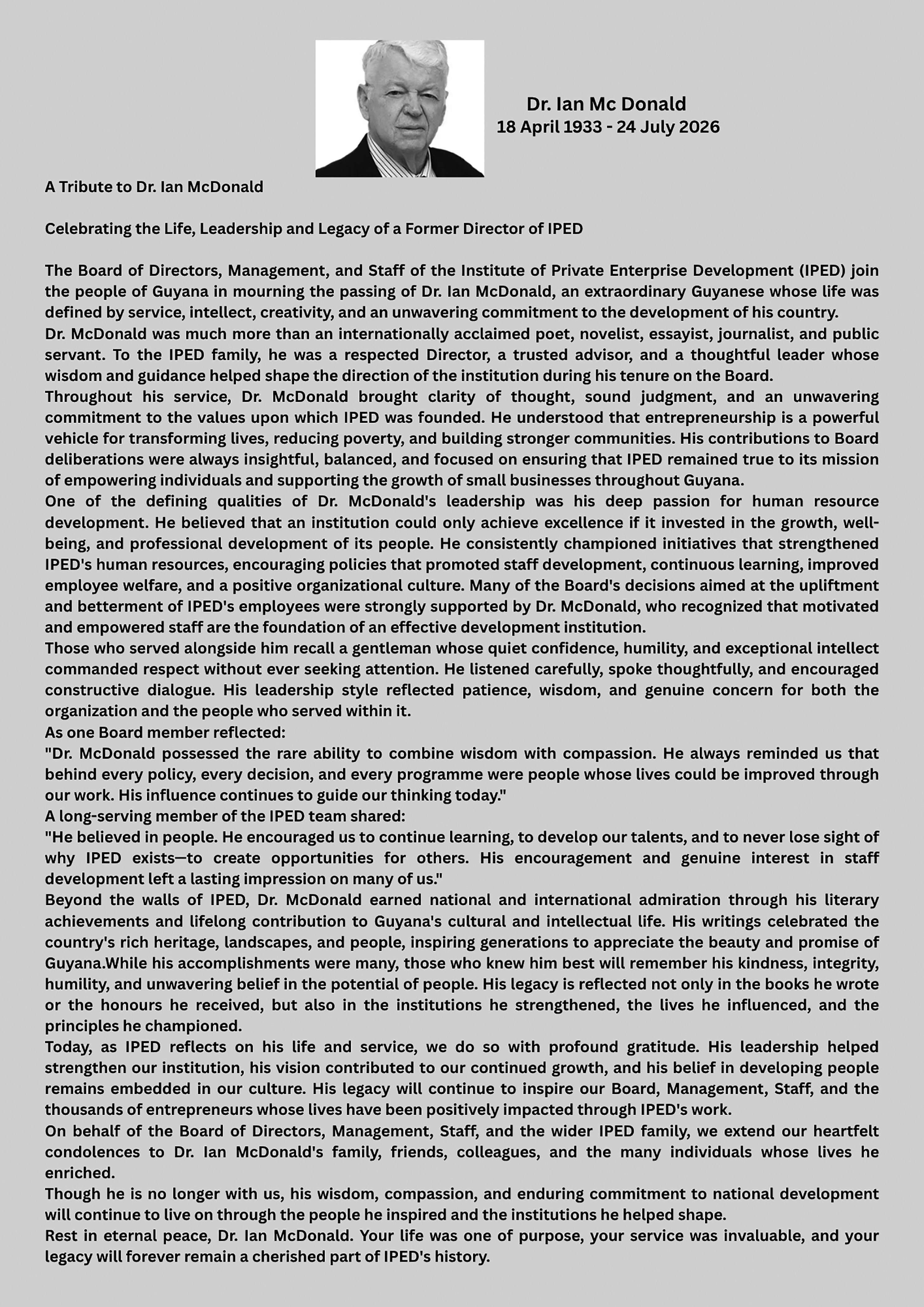



















Dear student, Welcome, dear friend. We have always advocated that you revise continuously as time marches you toward an examination. Research evidence has shown good practice whereas some students begin revision from the very first week of study and even increase time and seriousness some six to eight weeks before an examination. These students have earned great success. They have revealed that regularly reviewing previously
studied course content often leads to higher examination scores. Be wise. With love.
1.. Monitoring your writing progress
You should fall into the habit of periodically reviewing your writing for overall accuracy.
To do this, read the selected text aloud, proofread it sentence by sentence and from the end to the beginning, and consult digital tools or a dictionary. These meth-
ods help identify errors in flow and phrasing.
NOTE: √ Reading aloud helps you detect missing words and awkward phrasing.
√ Reading from the last sentence to the first helps uncover hidden typos. √ Checking pieces helps you look closely at basic grammar, verb tenses, and punctuation marks.
√ Spell-check flags possible errors with red underlines.
√ Reviewing grammar helps identify run-on sentences and agreement errors. There are TEN errors in the following essay. Some

are misspellings. Others are problems with homophones or other incorrect words used unwittingly. Write the corrections beside each sentence. If a sentence has no errors, write NONE. Compare and discuss your findings with your study partners.
[1]. When I was younger, I was thought that things should be fair. [2]. That lesson was tested when I started working as a referee. [3]. I past the referee course easily and thought the actual game would be easy. [4]. I knew everything that I could about the game: everything, that is, accept how to deal with fans.
[5] The presence of a large crowd disagreeing with every decision can be daunting, especially when half the fans can site the rule book word for word. [6]. Some fans had no trouble telling me that they had played the game or being a referee in the passed and that every call I made was ronge. [7]. A calm referee is an important presents at a game, and I made an effort to understand the fans. [8]. I kept thinking about the passed lessons I had learned and eventually managed to except the idea that some fans would not like my calls.
IMPROVING WRITING
2.. Revising punctuation marks whether within or end of sentence
Instruction: Each of the following sentences contains one or more question marks in square brackets, [?], to indicate possible missing punctuation opportunities. Indicate what punctuation mark you would use at each given point [?]. Write O.K. for any sentence that requires no added punctuation usage.
1. Jasmaine requested another copy of the procedures manual [?] one that has the most recent discount policy.
2. Jackson Lambert [?] not Robert Simpson [?] is the executive you should be looking for.
3. George Thompson [?]
The world is charged with the grandeur of God. It will flame out like shining from shook foil.
GERARD MANLEY HOPKINS (1844-1889) “God’s Grandeur”
he is the director of marketing [?] will be speaking at this morning’s meeting.
4. Kathy Simmons insisted that we can buy these fabrics at cheaper prices [?] consequently [?] we are exploring other possible suppliers.
5. Remember [?] all purchase requisitions must be signed by your department head and by the controller.
6. In a recent survey, employers indicated that they highly value [?] applicants with good speaking and writing communication skills.
7. We plan to put on television and radio [?] commercials for this new chain of stores [?] in addition [?] we will have many full-page ads in major newspapers.
THE PASSAGE
Finding the main idea in a passage
Note: The stem of a multiple-choice question contains the problem that you must answer. Sometimes the stem is in the form of a question, and at other times the stem is an incomplete sentence, or a complete one. The stem or lead-in provides context and instruction for guidance.
Passage: For years, my home office was a mess. Papers were piled on my desktop in a disorganised way. It always took me a long time to find important forms and documents, if I found them at all.
I hired an office consultant and that changed my pro-
fessional life. The consultant convinced me that everything must have a proper place. At her suggestion, I bought manilla folders, labelled them by topic, and filed each paper in its appropriate folder.
Then I organised the folders in a file drawer alphabetically. What an improvement! Working in an efficiently organised office increased my productivity and saved me time. I can finally see the top of my desk!
1. What is the main idea of the passage?
(A) Papers should be discarded. (B) The consultant gave the author bad advice. (C) A messy office is a creative office. (D) Keeping papers filed properly avoids clutter and saves time.
2. Which of these steps is part of the author’s reorganisation?
(A) File papers in a different room. (B) Organise furniture and space. (C) Buy a new desk. (D) Label folders by topics.
3. What lesson did the author learn?
(A) Blue folders are a boon to office work. (B) Every office needs a big file drawer. (C) Check your “To Do” list each morning. (D) It is more efficient to keep an organised office.
4. Choose the best title for this passage.
(A) Clutter is Better. (B) My Office is a Mess (C) How to Have an Efficient Office (D) Tomorrow is Another Day.


EVIDENCE-BASED dentistry and the assessment of dental care within the community have become of greater interest since the introduction of the purchaser-provider split. There seems to be so many definitions of health services research that health professionals providing care to patients are unsure of what this new subject is all about. Indeed, some of the more cynical have suggested that it is a surrogate measure for rationing healthcare, and perhaps it is.
When the Minister of Health initiated the formation of a National Oversight Committee for Chronic Non-Communicable Diseases, I recall writing in this column in late 1998 with a very similar suggestion. I had proposed
the formation of a National Centre for Disease Control, which would combat and control chronic diseases holistically.
Obviously, dental caries and periodontal disease would be included. One major reason is to equilibrate priority at the administrative level, and another is to emphasise the interrelation among the conditions. Health services research for developmental change is an important key to success. There is no doubt that ‘doctor knows best’ is no longer an acceptable reason for offering a particular solution to a patient’s ills.
Governments and insurance companies want to know that clinical treatment works and are looking for treatment that gives the most benefit

for the least cost. Detailed studies must be done before huge healthcare investments to ensure a balance between maximum population coverage, minimum costs and the best clinical care.
Dental health services research may well be able to help all concerned by making sure that practitioners, patients and funding agencies work together for the greatest health gain.
This may be a utopian ideal, but there is no doubt that health services research has much to offer.
One point should be made quite clear. Health services research is not a management tool dealing with data collection. What the discipline represents is an ethos of accountability and inquiry in relation to dental health
services. It is about trying to define and redefine the best way in which optimal oral health can be delivered to the greatest number of people. It therefore encompasses health promotion, disease prevention and service delivery involving general health, in both the public and private sectors.
The development of health services research has been driven by a growing recognition amongst healthcare administrators, politicians and clinicians that increasing the resources dedicated to a service does not necessarily lead to greater ‘health output’. For example, having more dentists per head of population does not necessarily decrease the amount of dental ill health suffered by the public. Brazil is a classic
example.
Many factors impinge upon this mission to find the means of providing dental care to as many people as possible at the most acceptable cost. Dentistry cannot expect to command national resources unless the amount of benefit accrued per dollar spent can be measured and, even more importantly, justified.
The ultimate assessment of any dental health service to be instituted, therefore, should be expressed in the form of the benefit and the cost to the patient and the funding agency providing it. There are far more dentists working in the private sector than in the public sector, so the government should monitor the private sector to ensure that we are all ‘on the
same page’.
In the final analysis, all chronic diseases affecting the population should be considered equally, and there must be absolute justification from all angles viewed, based on the input of all involved. There must be an umbrella body to deal with all chronic diseases. If dentistry is not included in this administrative body, then an important link in the chain would be missing.
This is the modern approach. It costs far less to treat all chronic diseases under one umbrella because they are intertwined. For example, the comprehensive treatment of type 2 diabetes can go a long way towards eliminating many dental problems, thus saving the state funds.