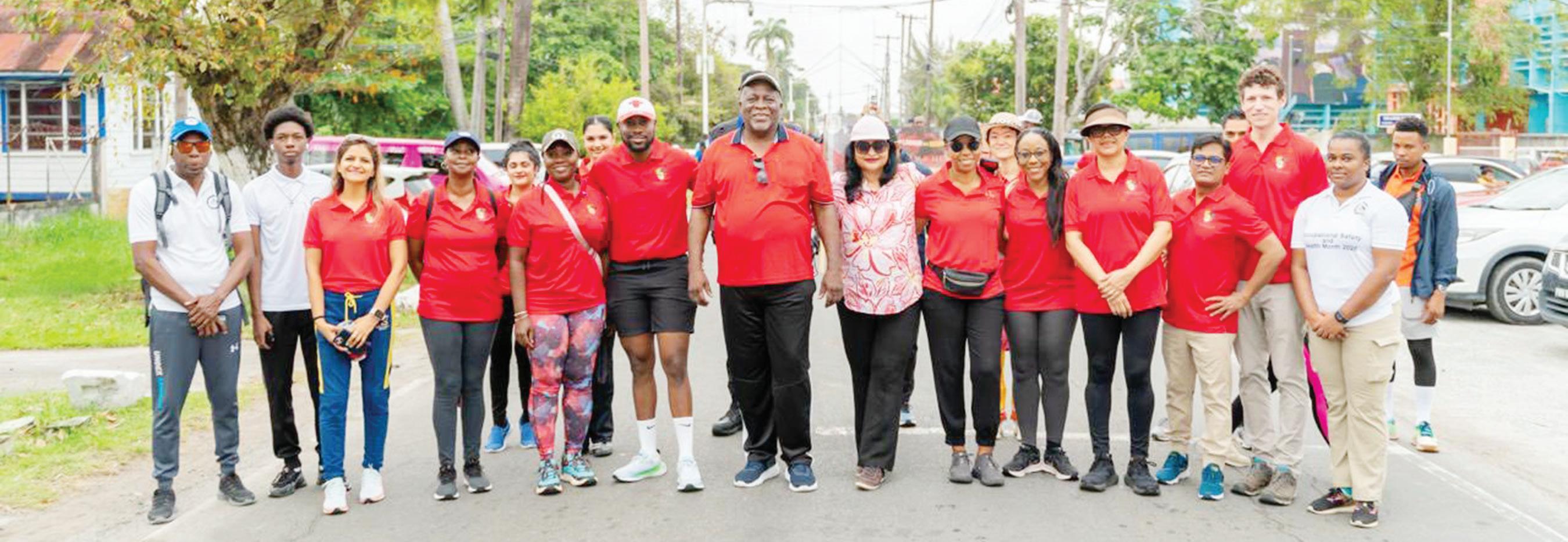
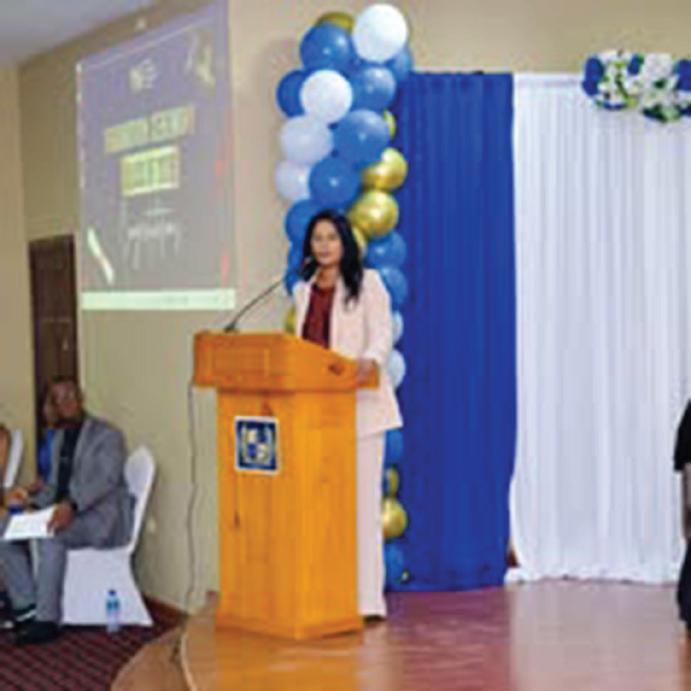
Prime Minister, Brigadier (Ret’d), Mark Phillips, on Sunday morning joined the Ministry of Labour and Manpower Planning for the 2026 Occupational Safety and Health (OSH) Walk, held as part of a month of activities in
workplaces, in keeping with
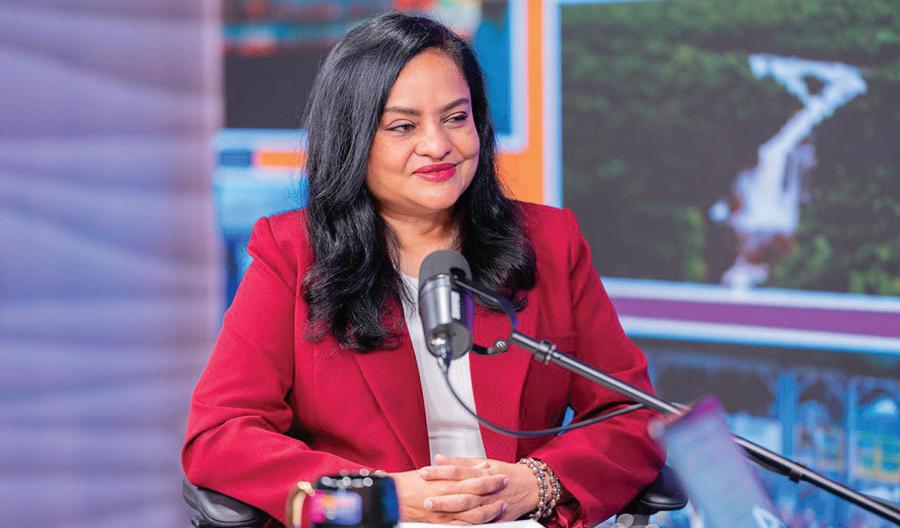
Dr Vindhya Persaud; other government officials; and members of the diplomatic corps also participated in the walk (OPM photos)
Guyana attracting major international financing as investors interest climbs - Finance Minister
SENIOR Minister within the Office of the President with responsibility for Finance, Dr Ashni Singh, recently said Guyana is increasingly attracting major international financing as investor confidence in the country continues to grow.
The minister made this known while speaking at the opening of the Four Points by Sheraton hotel, during which he noted that deliberate policy decisions and a conducive investment climate drive this.
Dr Singh pointed to a significant rise in funding from international partners, particularly the private sector arm of the Inter-American Development Bank (IDB Invest),
as evidence of this trend.
He revealed that prior to August 2020, cumulative approvals by IDB Invest for projects in Guyana totalled just US$6 million across four projects. However, since the current administration assumed office, approvals have surged to more than US$260 million.
“That too did not happen by accident,”
Dr Singh said, as he attributed the increase to the government’s proactive efforts to engage regional and international financiers and to create an environment that supports bankable investments.
According to the finance minister, one of the administration’s early priorities was to address the limitations within the
local financial system, which he said lacked the balance sheet capacity to meet the rapidly growing
financing needs of the private sector, particularly in the non-oil economy.
Against this backdrop,
he explained that President Dr Irfaan Ali had mandated a strategy to attract regional banks, international financial institutions, and multilateral agencies to support Guyana’s expanding economic landscape.
“We need to get regional banks on board… we need to get international banks, and we need to get the private sector arms of multilateral institutions on board,” Dr Singh said, recalling early discussions.
The minister noted that the Four Points by Sheraton project itself stands as a clear example of this approach in action, having been co-financed by regional banks and IDB Invest.
To this end, he em -
phasised that such opportunities are not limited to the hospitality sector, noting that similar investment prospects exist across multiple industries in Guyana.
“Opportunities like this are replicated in every single sector of the economy,” he said.
He went on to add that the government remains committed to aggressively pursuing financing to support continued private sector expansion.
He also underscored that while the oil and gas sector has played a catalytic role in Guyana’s rapid growth, the country’s development trajectory is being shaped by broader economic diversification and strategic planning.
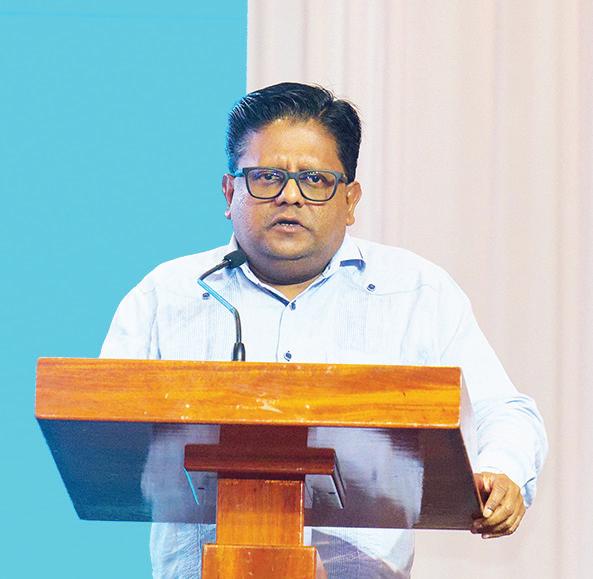
Senior Minister within the Office of the President with responsibility for Finance, Dr Ashni Singh (Delano Williams photo)
- President Ali says, highlights connection to enhanced public services and expansion of businesses
Dr Irfaan Ali has underscored the far-reaching impact of investment on Guyana’s economy, highlighting that the benefits extend well beyond individual projects to support jobs, businesses, and public services across the country.
The Head of State made this known while speaking at the recently opened Four Points by Sheraton hotel, during which he used that project as an example of how investment injects value at multiple levels of the economy, from construction to long-term operations.
“Investment is not a slogan… investment changes lives and makes a real difference in the lives of people,” Ali said.
Against this backdrop, he explained that even before operations began at the hotel, the construction phase generated employment for a wide cross-sec-
tion of local workers, including engineers, carpenters, electricians, and truck drivers, among others.
These wages, he noted, translated directly into spending across the economy.
“That income paid rent and purchased groceries. It covered transportation. It assisted children to go to school… and supported small shops, market vendors, taxi drivers, restaurants, and service providers,” the President outlined.
Beyond direct employment, Dr Ali pointed to the wider supply chain that benefits from such projects, including the procurement of cement, steel, furniture, and equipment, as well as services such as catering and transportation.
He went on to note that these activities allow businesses to expand, hire additional staff and contribute taxes, which in turn support critical
public services such as healthcare, education, and infrastructure.
Highlighting what he described as the “multiplier effect,” the President noted that spending generated by investment continues to circulate throughout the economy.
“$1 spent does not stop at $1, it moves, it circulates, it multiplies,” he
said as he explained that money flows from workers to shopkeepers, wholesalers, transport providers, and other sectors in a continuous cycle of economic activity.
President Ali added that the benefits accelerate once projects become operational. In the case of the hotel, he said, permanent employment will be created across a range of
roles, including front desk staff, housekeeping teams, chefs, managers, and security personnel.
He further noted that visitors staying at such facilities contribute to economic activity by utilising local services, dining in restaurants, hiring transportation and purchasing goods.
“Every occupied room creates opportunity far
beyond these walls,” the President said.
Meanwhile, pushing back against criticism of investments, President Ali noted that he is appalled when he hears malicious attempts to question the impact of investments.
“When I hear the malicious attempts… to question the impact and role of investment… I’m appalled,” he said, arguing that such views ignore the jobs created, taxes paid, skills transferred and opportunities generated.
President Ali maintained that foreign investment complements local enterprise rather than displacing it, adding that sectors such as agriculture, manufacturing and transportation all stand to benefit from increased economic activity.
“Foreign investment does not exclude local investment… in many cases, it stimulates it,” he said.
Guyana condemns violence following incident at White House Correspondents’ Dinner
PRESIDENT, Dr Irfaan Ali has expressed deep concern over a reported shooting incident, which occurred at the White House Correspondents’ Dinner in Washington, D.C., extending solidarity with the United States.
The Head of State further welcomed confirmation that President Donald J Trump, First Lady Melania Trump, and other attendees were safe following the disturbance.
In a public statement, President Ali said, “We are deeply concerned about the shooting incident at the White House Correspondents’ Dinner. We are relieved that President Donald J Trump, First Lady Melania Trump and all attendees are safe following the swift response of security personnel. We condemn all acts of violence and stand in solidarity with the people of the United States at this time.”
The incident, which occurred on Saturday evening, prompted a security response at the high-profile annual media event.
Reports indicated that the situation caused panic and led to an emergency evacuation of those present.
President Ali’s remarks added to international expressions of concern of several heads of state around the world following the disruption of the
event, which traditionally brings together political leaders, journalists, and public figures.
He reiterated Guyana’s firm stance against all forms of violence, emphasising the importance of peace and stability in moments of crisis.
Since the incident, additional details have been released surrounding the suspect who was apprehended, along with other information.
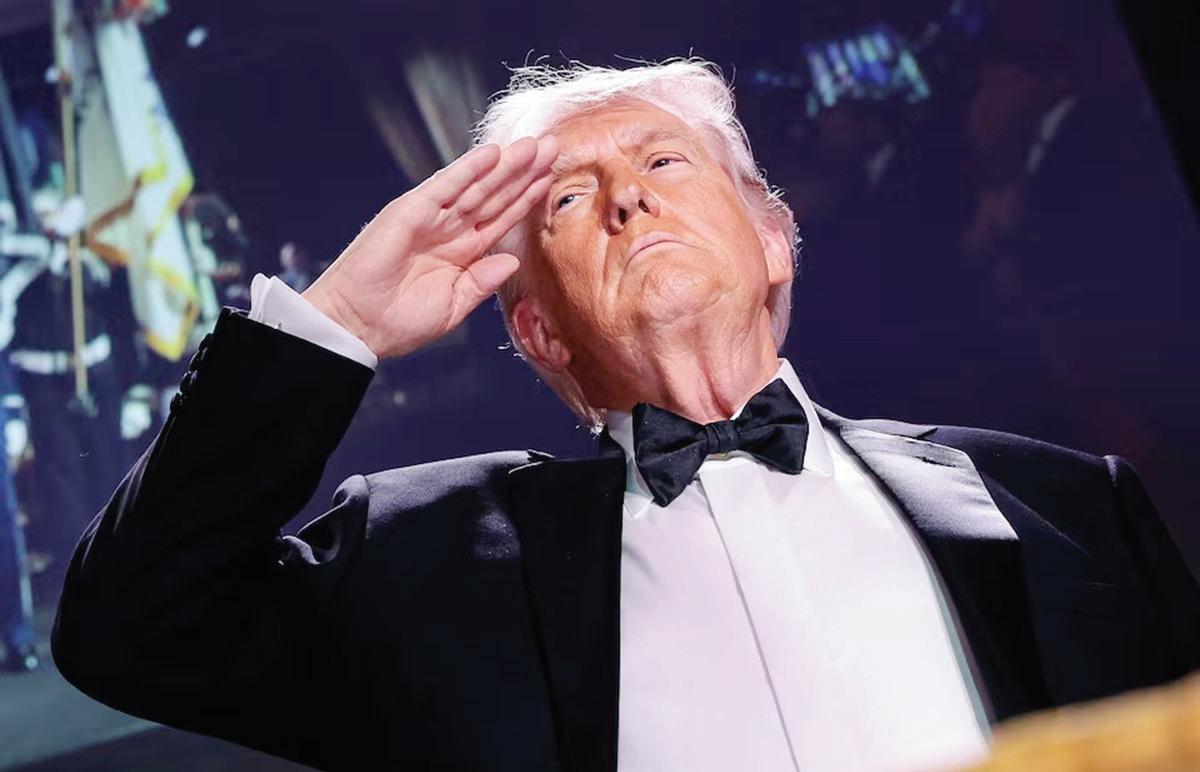
U.S. President Donald Trump salutes during the annual White House Correspondents’ Association dinner in Washington, D.C., U.S. on April 25, 2026 (REUTERS/Jonathan Ernst)
PRESIDENT
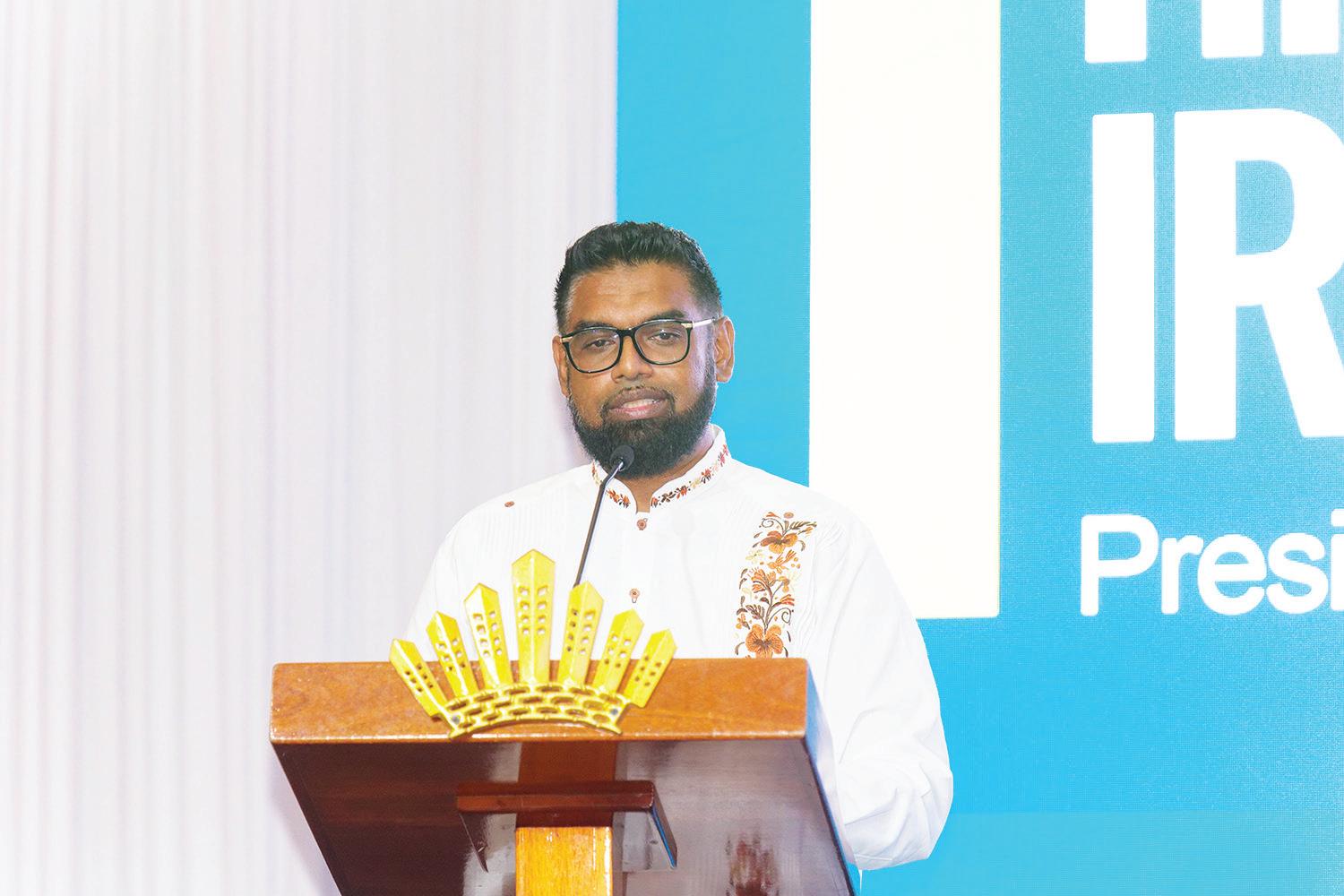
President Dr Irfaan Ali
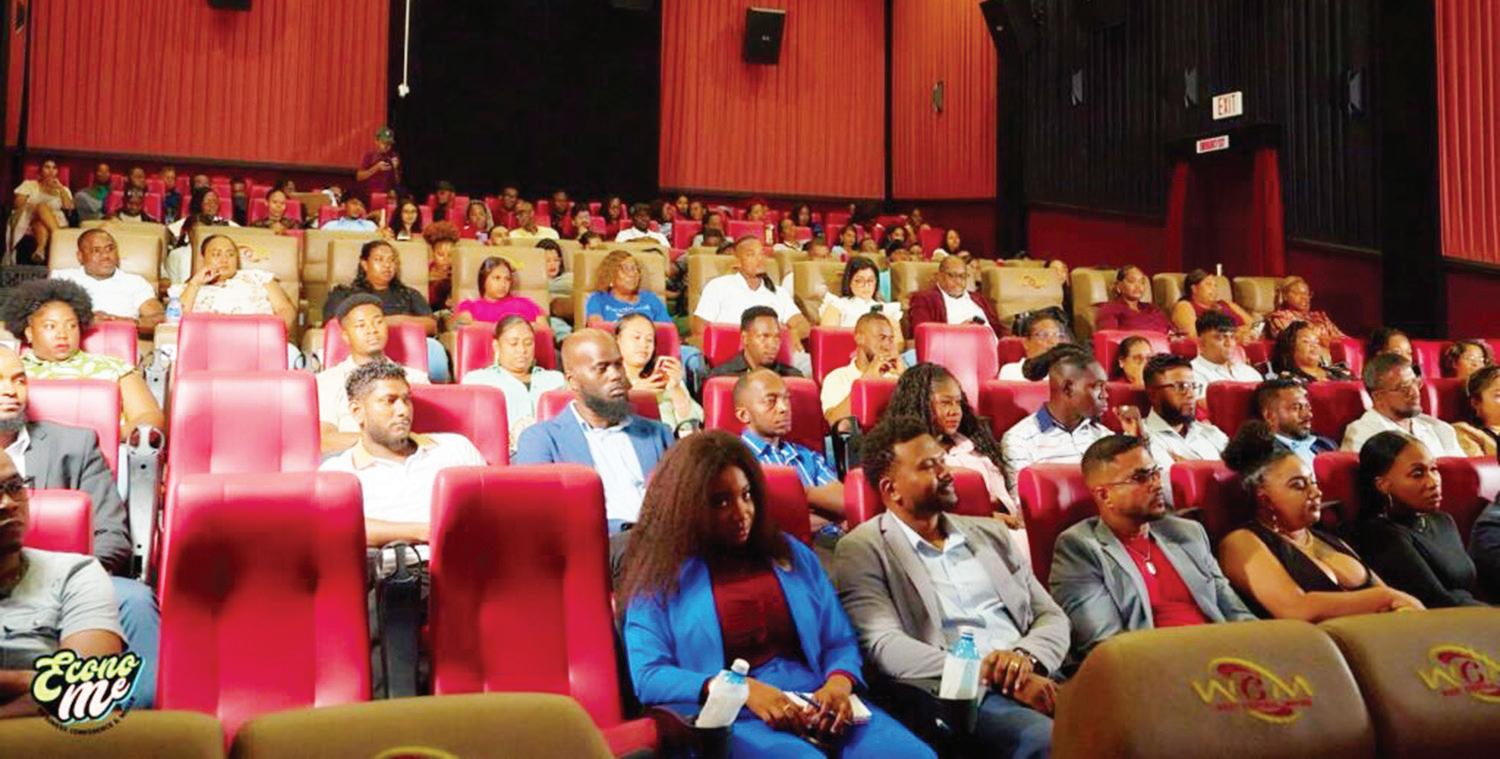
Over 120 persons pack West Central Mall Theatre for ‘Untapped Waters’ Business Forum
THE West Central Mall Theatre reached maximum capacity on Saturday evening as more than 120 entrepreneurs, professionals and business-minded citizens gathered for “Untapped Waters: Investment Opportunities in Region 3,” a high-impact business forum hosted by ECONOME in collaboration with the Region Three Chamber of Commerce and Industry.
According to a press release, the overwhelming turnout underscored the growing national interest in Region Three as one of Guyana’s most promising economic frontiers. The event created a dynamic platform for practical discussion on investment, enterprise development, procurement opportunities, and long-term regional growth.
The programme featured contributions from key leaders and stakeholders, including the Hon
Thandi McAllister; Mr. Michael Munroe, Director of the Local Content Secretariat; John Edghill, Senior Director of Investment at GO-Invest; Mr Theon Alleyne, Secretary of the Region Three Chamber of Commerce and Mr Khishan Singh, Junior Vice President of the Guyana Youth Entre-
preneurship Chamber.
One of the evening’s stand-out moments came from John Edghill, whose presentation painted a compelling picture of Region Three’s economic potential. He highlighted the region’s strategic transformation through infrastructural expansion, housing growth, industri-
al development, logistics corridors, and increasing population movement, the release said, adding that his insights emphasised that Region Three is no longer simply a transit region, but an emerging economic zone with significant investment promise.
Mr Edghill outlined that opportunities are rapidly forming across multiple sectors as development accelerates. He pointed to expanding prospects in logistics and warehousing, agro-processing and export services, housing and community support businesses, mobility and vehicle services, tourism ventures, and industrial support services linked to the Wales development corridor. He stressed that enterprises best positioned to succeed will be those that save time, make life easier, and consistently deliver value for money.
Michael Munroe, Director of the Local Content Secretariat, also delivered valuable insights on navigating procurement pathways, qualification requirements, and how Guyanese businesses can strategically position
themselves for opportunities tied to national development, the release said.
Founder of ECONOME, Matthew Gaul, noted that the event forms part of a wider mission to decentralise opportunities and bring high-level business conversations directly into communities across Guyana.
“Too often, opportunity is discussed only in Georgetown. We wanted to show that serious growth conversations belong in every region, especially Region Three, where transformation is visibly underway,” he was quoted as saying.
The event concluded with an interactive Q&A session and networking segment, where attendees engaged speakers directly and explored possible next steps for investment and collaboration.
With a full theatre, strong audience engagement, and positive feedback from participants, Untapped Waters has already been regarded as one of the most impactful regional business forums held this year, the release added.
The recently held ‘Untapped Waters’ Business Forum attracted scores of persons
South Pacific islanders strive to rescue their home from toxic legacy
MORE than 80 years after World War Two, the Solomon Islands remain one of the most heavily mine-contaminated places in the Pacific.
Today, the UN is supporting the process of making the land safe to walk and build on again, but the risk to public health from corroding munitions is growing.
For many years, islanders have suspected that this toxic legacy has been harming them and their children, and now a UN-partnered study has found strong evidence to back this up, by confirming the presence of heavy metals such as lead, arsenic, cadmium and explosive residues.
Leading the study –funded by the Government of Japan and supported by the UN Development Programme (UNDP) – Dr Stacey Pizzino from the University of Queensland explained that the risk for islanders is growing as unexploded ordnance – known as UXO – is part of daily life there.
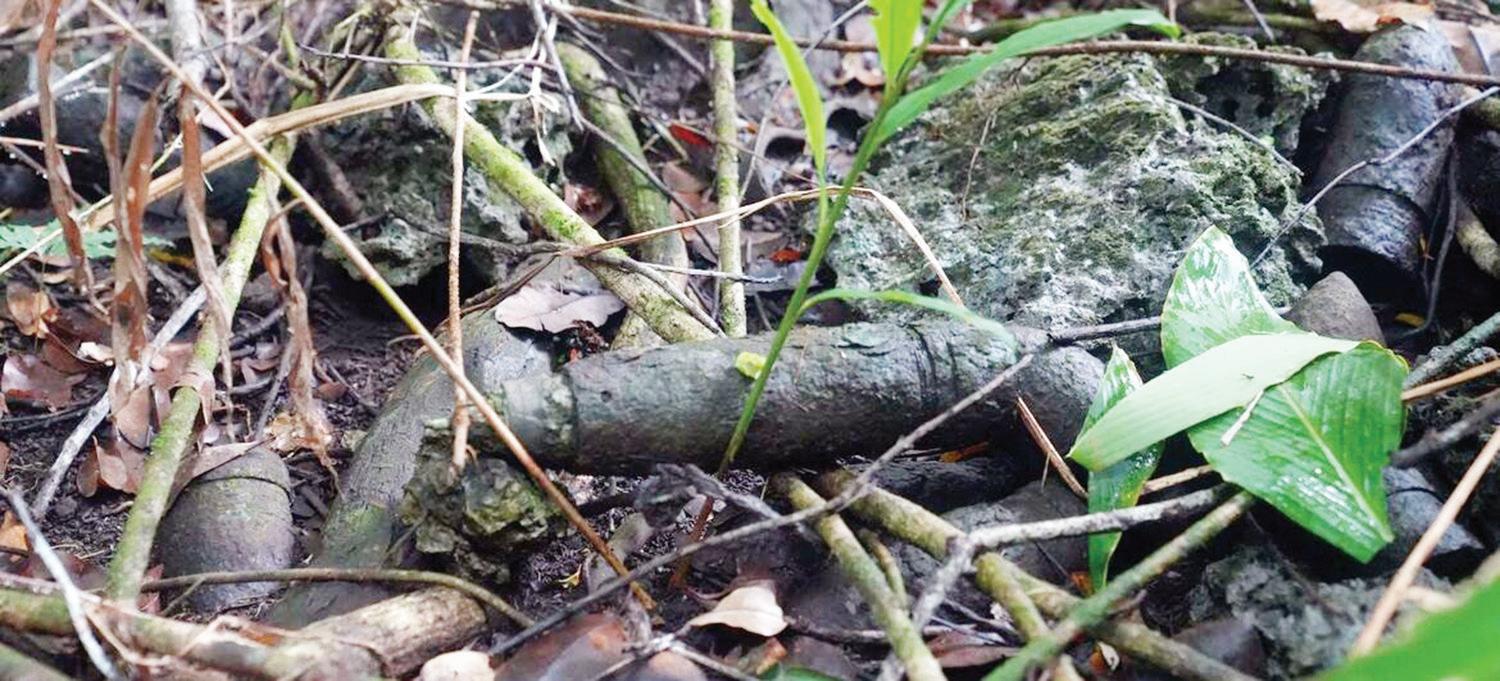
“You can see UXO in the reefs when you're travelling, when you look down off a boat,” she told journalists in Geneva. “Unexploded ordnance are used as anchors in the canoes and children are interacting with devices on a regular basis.
“In one area that we were in, we were
More than 80 years after World War Two, the Solomon Islands remains one of the most heavily minecontaminated places in the Pacific (UNDP)
hearing explosions on a fairly regular basis and the children were playing with the devices and harvesting the explosives out of them to create bangers, to blow up coconuts.”
Dr Pizzino noted reports of sore eyes, rashes and breastfeeding babies developing mouth ulcers, boils, and rashes, after their mothers had eaten suspected contaminated seafoods.
LETHAL
DISCOVERY
In another case, she described how a mother brought a bag of munitions confiscated from children that they had found underwater, on a reef.
Testing of the dust in the bag containing the devices showed “incredibly high levels of lead…There's no safe level of lead for children,” said Dr Pizzino. “It has health impacts in terms of brain development.”
The UN study’s findings are the first of their kind in the Pacific.
FOOD CHAIN THREAT
At Lever’s Point and other sites, soil samples revealed elevated levels of heavy metals. The highly explosive compounds TNT and PETN were also detected. In some locations, traces were found in marine life, including shellfish.
The episode highlights the long-term consequences of unexploded ordnance and the need to protect public health, urgently.
Making areas safe is a slow and complex operation because the contamination threat is vast.
But it changes everything.
“The Explosive Ordnance Device unit comes and blasts lots of bombs,” said Fred, a farmer from Gavatu island. “When we know the area is clear, we
can relax. We can plant crops. We don’t worry for the children.”
For UNDP, making the land and reefs safe is central to development.
“Unexploded ordnance had always been an important issue,” says UNDP Deputy Resident Representative Raluca Eddon.
“Time is running out
as more hazardous chemicals leak into the environment, harming reefs, sea life and coastal communities.”
Another islander, Billy, who’s a farmer and fisherman, agrees. “Now we understand there might be an even greater risk,” he says. “We want the bombs to be removed. We want to live in safety.”
While UNDP’s research does not claim to represent the entire country nor establish a definitive causal link, the combined environmental evidence, community reports and observed health patterns point to a “credible and growing risk”, the agency says. (UN News)
The Commonwealth Must Catch Up
WHEN Vice-President Dr Bharrat Jagdeo spoke at a Commonwealth roundtable last Saturday on sustainable urbanisation, he was not just fulfilling a diplomatic duty; he was sounding an alarm that the developing world can no longer be ignored.
This is a message Guyana, a small developing nation experiencing its own remarkable transformation, is in a unique position to deliver.
That moment had a historical significance. Twelve years ago, Jagdeo led the effort that created the Commonwealth Climate Finance Access Hub,
which he presented at the 2014 CHOGM in Colombo.
Now based in Mauritius, that Hub has mobilised nearly US$500 million in climate finance, supported over 100 projects, and deployed expert advisers in more than 15 countries. It is a clear success story; however, as the Vice President rightly points out, that level of success is still insufficient, given the scale of the challenges we face.
Climate change does not wait for bureaucratic processes. Rising seas, stronger storms, and the relentless pressures of rapid urbanisation are changing communi-
ties faster than governments, especially smaller ones, can react.
Jagdeo's appeal for "new thinking, new tools, and a step change" in how the international community supports developing countries is not just talk; it is a necessity.
The way cities are designed and built, whether they are livable, economically vibrant, and resilient, will shape the lives of millions across the Commonwealth's 56-member countries, which together make up about one-third of the world's population.
What makes this intervention particularly striking
The things Mr Bisram gets away with can only happen in Guyana
I DON’T mind if someone says they have published 100 books and was an adviser to four American presidents and once advised Presidents Putin and Mandela. Such a person you may laugh at, but it is nobody’s business if the person wants to keep on boasting about their imagination.
What becomes disturbing is when prominent society personalities actually see some value in such a wild imagination, constantly relate to such a person. We will examine the minds of two such persons below: Vincent Alexander and Timothy Jonas, two political figures who constantly chastise the PPP government.
Let’s start the contextualisation process. It begins with Mr Vishu Bisram. Over the past 20 years, I have received emails and telephone calls from people asking me to investigate Mr Bisram because he is far from what he says he is. Over those 20 years, I have made two
enquiries about Mr Bisram, where he works and the functionalism of the surveys, he said he does.
I have never succeeded is getting information on Mr Bisram’s place of occupation. In my protracted investigation on the nature of Mr Bisram’s surveys, I succeeded in getting all the newspapers in Guyana to refuse to carry the results of his polls as news items and relegating his poll results to the letter section, where the results of the polls are penned by Mr Bisram himself as letters to the editor.
David DeCaires when he edited the letter pages of Stabroek News told me as a matter of journalistic professionalism, he could no longer carry Bisram’s surveys as news items because he was suspicious after Bisram failed to provide answers to the very questions I have asked Mr Bisram. Since then, Mr Bisaram’s surveys were/ are only carried as letters written by Bisram himself. For the past 10 years,
I have ignored the things people sent me on Bisram. I simply could not be bothered with who Bisram says he is. But yesterday (Sunday), I got an interesting email from a well-known Indian-rights activist asking me not to name him because he doesn’t want Bisram to know he sent me the email.
He implored that I do a column on Bisram because of a few lines in what Bisram wrote about his work experience. I found it of immense interest and thought it was newsworthy. So here it is. I quote Bisram’s biographical note about himself after he noted that he has six master’s degrees and six doctorates: “Dr Bisram taught for over 40 years in various subjects in the US. He was a guest lecturer at universities in Mauritius, India, Fiji, South Africa, Guyana, Trinidad, Suriname, the USA, and other countries.”
Something is not right here. Something is eerie here. If you have six master’s degrees and six doctorates
is Jagdeo's pointed remarks about artificial intelligence.
After attending the AI Summit in New Delhi with Heads of Government and technology leaders from Microsoft, Google, and OpenAI, he returned with a crucial insight: AI is already transforming planning and decision-making worldwide, but it risks leaving small and developing nations behind. His argument is sound and urgent.
If AI models are not trained on data from smaller and developing countries, those systems will not effectively serve those populations.
The divide between the
Global North and Global South is not just about finance; it is increasingly about data. This is where the Commonwealth's mission becomes vital.
An organisation with the geographic and demographic reach to bridge that data gap, covering the Caribbean, the Pacific, Africa, and South Asia, has a special duty to act. The necessary structure is already in place. What is now needed is the political will to expand it and to ensure that the next generation of climate and development solutions is created with, not just for, the world's smaller states.
Guyana's journey, from the pioneering Low Carbon Development Strategy to its now globally recognised role in green growth, shows what is possible when developing nations are given the right tools and opportunities to lead. VP Jagdeo's message at the Commonwealth roundtable was not one of asking for handouts.
It was a call from a proven problem-solver, reminding the global community that the developing world has valuable ideas worth investing in, and that the time to invest is now.
and you said you’ve worked for over 40 years in the US, why not name one institution you have served in the US? Something is ghoulish here. Why would you state the universities that you did guest lectures at outside of your country of residence and not the university or universities you once served where you live? I taught for 26 consecutive years at UG, and I do not know of Mr Bisram ever gracing any classroom at UG as a guest lecturer. Bisram went on: “He published countless articles on various subjects in the mass media, journals, and books.” I cannot find any academic article Bisram has written in a peer-reviewed journal or academic article in any book despite extensive Google search. My problem as a public intellectual and
social activist in Guyana is not centred on Bisram, but on people like Alexander and Jonas.
Quite often, Alexander and Jonas, separately, are the guests of Bisram on a programme named ‘Globe Span.’ So, what is wrong with that? If there was a questionable podcast host that was closely aligned with the PPP, do you think both men would have wanted to be interviewed by the PPPaligned personality if there were questions about their intellectual standing?
There is no question in my mind that they would have shunned their potential interviewer. This is the kind of hypocrisy that overflows in this country. Nothing about Bisram appears to be in order but the Stabroek News and Kaieteur News
have published a letter by him once a week for years now. These same newspapers would have rejected a PPP supporter sending letters to them who announced that he had six master’s degrees and six doctorates. These two newspapers would have rejected his missives because he would have been deemed a fake who is a front for the PPP. The aberrations that take place in this country you wouldn’t find elsewhere. Alexander, Jonas, and Bisram need to answer questions. But who will ask?
DISCLAIMER: The views and opinions expressed in this column are solely those of the author and do not necessarily reflect the official policy or position of the Guyana National Newspapers Limited.
Chokepoints and conflict: How the Hormuz crisis is exposing global shipping vulnerabilities
THE blockading of ships in the Strait of Hormuz as a result of the conflict between the United States and Iran has demonstrated how ships and seafarers have become “leverage in geopolitical disputes,” according to the head of the UN’s International Maritime Organization (IMO).
Since conflict began with the US-Israeli bombing of Iran in late February, up to 20,000 seafarers have been stranded on some 2,000 vessels in the Persian Gulf, which is bordered by Iran to the north, unable to pass safely through the narrow waterway.
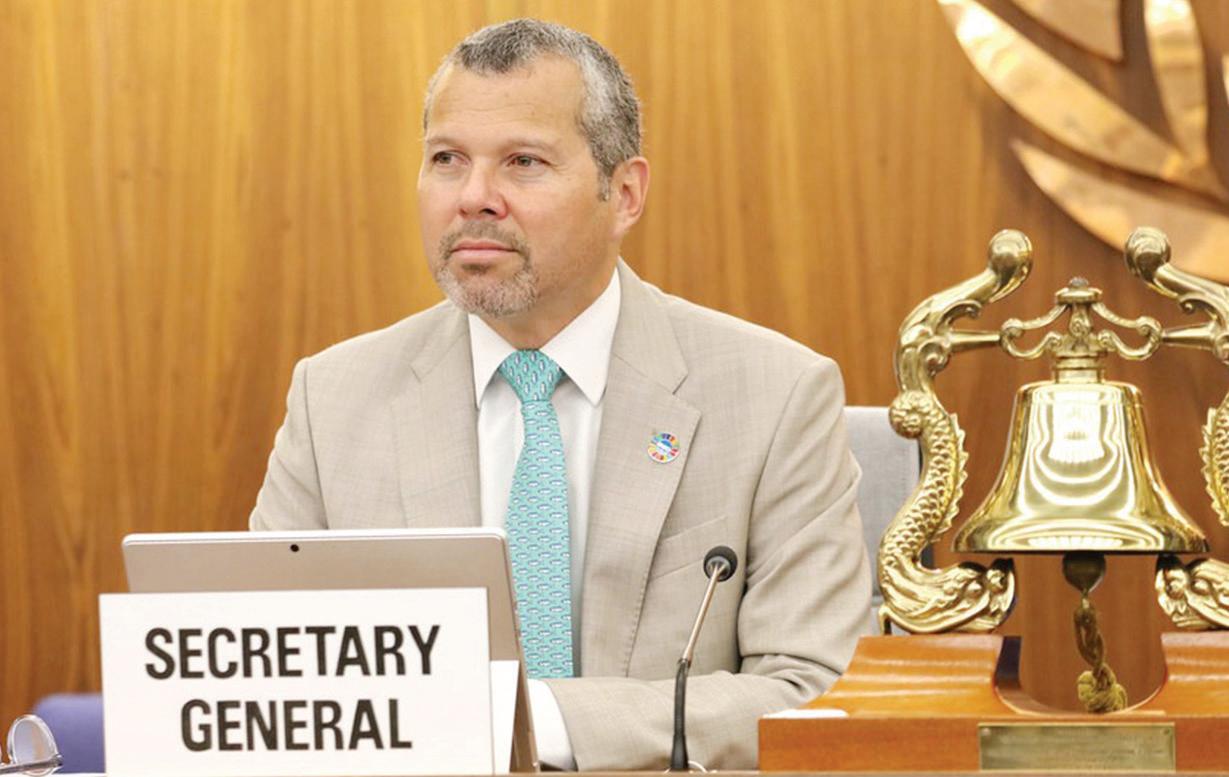
Arsenio Dominguez, Secretary-General of the IMO spoke to UN News ahead of a key meeting about maritime security due to take place in the Security Council on Monday.
UN News: What is maritime security?
Arsenio Dominguez: Maritime security covers the protection of ships, ports, seafarers, and maritime infrastructure from any type of security threat, such as piracy, terrorism and cyberattacks.
For states with a coastline, it encompasses, in addition, a wide range of illicit activities that may involve the sea, ships, ports or coasts, including arms and drug trafficking, the illegal trade in wildlife, crude-oil theft, human trafficking and smuggling and the illegal dumping of toxic waste.
UN News: Why is maritime security so important?
Arsenio Dominguez: Maritime security is essential because it protects global trade, ensures the safety of seafarers, and keeps supply chains functioning. Without maritime security, maritime development stalls – and without maritime development, sustainable development becomes impossible.
UN News: What has the current crisis in the Strait of Hormuz told us about the threat to shipping and seafarers in conflict situations?
Arsenio Dominguez: It shows that ships and crews are highly exposed in conflict zones, often becoming leverage in geopolitical disputes.
Commercial shipping has been unjustifiably targeted, detained, or attacked, highlighting how fragile freedom of navigation can be.
UN News: What mechanisms can realistically protect seafarers caught in geopolitical conflicts?
Arsenio Dominguez: Information sharing is crucial. Dis-information and misinformation can make it extremely challenging for risk-based voyage planning.
Ship operators and companies must ensure risk assessments are taken before any voyage through or in a conflict area.
Diplomacy and de-escalation of conflict is essential, while the case for naval es-
Arsenio Dominguez, Secretary-General of the International Maritime Organization
APNU+AFC either lied about corruption or were incompetent
DESPITE the different headline, today’s column is the second one of three parts. Though dealing with stand-alone topics, when taken together, it expresses a complete thought. Please keep the original context from last week when the conclusion is presented next week.
After examining aspects of the predicament facing the Mohameds, I now come to allegations and charges brought against PPP officials by the APNU+AFC government. Those charges must be taken in their proper political context. The context is that the APNU+AFC,
while in opposition between 2011 to 2015, spoke convincingly of corruption in the PPP government.
The Ramotar-led PPP government was extremely lacklustre in providing robust responses to these claims, in fact, they employed one jejune response, “bring the evidence.” This political misalignment and mis-framing of the messaging by the PPP resulted in strong voices to “jail dem.”
Khemraj Ramjattan took lyrical declarative centre stage, “We will fire, fry and jail corrupt PPP officials.”
The APNU+AFC won power in 2015 by anchor-
ing a large part of their campaign on the “jail dem” theme. When they got into power and did rudimentary investigations, it was clear that they found no real evidence of endemic state corruption. As a result, they turned to the infamous “forensic audits.”
Based on law, only the Auditor General or the Public Accounts Committee can procure services of external auditors for government accounts. The APNU+AFC government, in breach of the Audit Act, directly usurped the functions of the Audit Office and employed auditors without any pub-
lic tendering process. As a matter of fact, every person who was handed these so called forensic audits were either card-carrying members of the coalition parties or a publicly sworn enemy of the PPP. In fact, it is on public record, one of the individuals hired to conduct the audits described the entirety of the process. They were each called by the Minister of Finance and told that there were a number of named entities to be audited and asked which ones they preferred. Each of them was given the fiat to conduct the audits after making a choice, based solely on personal whim; classic “ab na bab na A-B-C.”
When these Oprah Winfrey-styled audits - “you get an audit, you get an audit, everyone gets an audit”were illegally allocated, they came back empty; there was no credible or provable evidence of corruption. This excursion however raided the treasury in excess of a billion dollars. If we throw in the useless State Asset Recovery Agency (SARA), we may tip the five-billion-dollar mark. With all that funding and the huge salaries, SARA was only able to recover two semi-derelict vehicles parked in the yards of two officials. As it turned out, the vehicles broke down and the relevant parts did not make economic sense to procure. The related state officials simply did not get around to towing those vehicles back to the relevant government compound.
The APNU+AFC government was under self-imposed public pressure to prove the existence of widespread, rampant corruption it said existed. They did the next logical thing, trump up some charges against
PPP officials. Some of the victims being Anil Nandlall – accused of removing a volume of books from his office; Ashni Singh/Winston Brassington – selling land to Movie Towne without first getting a valuation; Nigel Dharamlall, Dharamkumar Seeraj, Madanlall Ramraj – making clerical errors in journal entries; Irfaan Ali –being the housing minister acting on a Cabinet decision, authorised the sale of house lots allegedly below the assumed valuation made by the APNU government. Then you had the Jennifer Westford case. It may be interesting to note that Dexter Todd was her attorney in 2018.
In total, there were in the vicinity of 120 individual charges involving over 30 persons.
There is more intrigue in these cases. By law, the office of the Director of Public Prosecutions is independent and not subject to interference by any other authority and is the sole agency tasked with employing external attorneys to prosecute any criminal matter as special prosecutors. These provisions were completely ignored, and special prosecutors were directly employed by the office of the Attorney General, thereby usurping the functions of the DPP. Each of the prosecutors had direct professional or family affiliation to persons in government. One special prosecutor was the brother of a serving minister, while several others were associates in the chambers of a senior minister of government.
Like the audits, these appointments were also handed out in Oprah Winfrey style, and guess what? None of the charges against the 30+ persons or any of
the 120+ counts resulted in a single conviction. Yes, you read that right, not a single conviction. The charges were never meant to secure convictions; they were brought to stave off embarrassment from and satiate the appetite of a small but vociferous lunatic fringe. The charges were also meant to fool the population that the APNU+AFC government cared about corruption and to deflect from its own corrupt shortcomings.
When the PPP was returned to office in 2020, the charges remaining were the famed “19 fraud charges” and the “law book” charges. For the first time, the DPP had direct control of the cases. Upon examination, the DPP found insufficient evidence and both cases were withdrawn. About the “law books” case, Anil Nandlall sued Basil Williams in civil court where he challenged Williams to show evidence that the books were improperly removed, suffice it to say, Nandlall won judgement in excess of G$10M
The APNU+AFC is left with a mutually exclusive claim of its own record. If it continues to claim that the pre-2015 PPP was corrupt, it must naturally accept that they were incompetent and didn’t know what they were doing. Conversely, if they were competent and this competence could not succeed in proving corruption, then the claim of corruption must be abandoned.
DISCLAIMER: The views and opinions expressed in this column are solely those of the author and do not necessarily reflect the official policy or position of the Guyana National Newspapers Limited.
‘Serve with integrity, compassion, readiness’
- Minister Parag urges newest batch of Texila-trained doctors
EDUCATION Minister Sonia Parag recently urged graduates of the Texila American University College of Medicine to uphold the highest standards of integrity and compassion amid Guyana’s expanding healthcare sector.
Delivering remarks at
velopment, she shared, “Today, after the last five years, we are already commissioning six new smart hospitals, five-level hospitals, and I do not mean five-level as in five floors.
I mean five levels as in the standards that it is supposed to set,” she added, “You will have another
the university’s 18th graduation ceremony on Friday evening, where 44 students successfully completed their programme, Minister Parag emphasised that the responsibility of the medical profession extends far beyond academic achievement, noting that doctors play a critical role in saving lives, serving communities and upholding the standards of integrity within the healthcare sector.
Speaking to the graduates as Guyana heads into its 60th Independence Anniversary, Minister Parag said the graduation highlights not just a milestone for the graduates and the institution, but also showcases the development of the sector.
Highlighting the strides in medicine and education the nation has made over the last few decades, Minister Parag said that Guyana has developed from health huts in the hinterland regions to nation-wide state-of-the-art hospitals, which will help advance the careers of the graduates.
Speaking on this de -
will always be pinned to. And if you do not act ethically and with integrity, that name falls and the oath that you will be taking later on this evening will mean nothing.”
Moreover, as Guyana ramps up digitisation across its healthcare system, Minister Parag said
six hospitals that will be commissioned very soon, because they are already being constructed. In addition to that, health centres are being built and also being upgraded,” she said. Citing the importance of the graduates, Minister Parag noted that they have an integral role in the development of the sector, adding that they now have the opportunity to work in a developing medical sector and health landscape. She added that the new doctors will have the opportunity to work with compassion with patients all across Guyana, adding, “For you who are graduating here today, you get to apply your skills and you get to apply your compassion in perhaps any one of those, if not all of those hospitals, across our country, and give back to the people of this country, which is ultimately what this profession is about, self-service and service to the people,” she said. She added, however, that public service must be backed by integrity, “You will take a Hippocratic Oath, that oath is what your name
Guyana’s medical professionals, which are both major factors in creating and sustaining a world-class standard of health.
As she shared, “We want doctors with integrity. We want doctors who are committed. And we want doctors who will evolve with time. That means that research is a necessary part of your profession and your development.”
Moreover, she added that this comes as the government continues plans
for the creation of a national research centre, adding, “We are going to open a national research centre here in Guyana that will also help you.”
Additionally, Minister Parag stressed the importance of professional readiness, noting that while graduates have completed their academic journey, the real demands of the profession lie ahead.
She reminded them that success in the field requires not only knowl-
edge, but sound judgement and ethical conduct at all times, cautioning against practices that undermine the profession.
She used the opportunity to encourage the new doctors to take up the challenge and serve across Guyana, including in hinterland and rural communities, highlighting that these regions offer invaluable experience and play a crucial role in strengthening the country’s healthcare system.
the role of doctors remains vital to the holistic development of the sector.
Sharing insight into the upcoming steps, Minister Parag noted that Guyana’s health sector will see the introduction of new procedures through the use of technology. “Very soon, in the upcoming months, you will see a ground-breaking procedure happening with the Georgetown Public Hospital in Guyana using technology,” she shared.
While not giving details on the venture, she added that artificial intelligence will also play a role in this development, noting, “You all will be heading into an era that we are using AI, that is being digitised, that you are using technology. Robots will become your assistants.”
However, she was keen to note that while there will be advancement in technology, research remains vital.
Minister Parag told the graduating class that research within the field remains a priority as it ensures the continued development of the sector, as well as the integrity and continued learning of
Minister of Education, Sonia Parag, addressing graduates at the Texila American University College of Medicine’s eighth graduation ceremony held on Friday
A section of the graduating class of 44 students during the Texila American University College of Medicine graduation ceremony (Ministry of Education photos)
Chokepoints and conflict: How the Hormuz...
corts is limited. Naval escorts are never a sustainable solution.
UN News: How have the threats to maritime security evolved over the past few years?
Arsenio Dominguez: Looking back at maritime security historically, the hijacking of the Italian cruise ship Achille Lauro, in October 1985, was a significant terrorist act.
The events of September 11 (2001) in the United States of Amer-
ica raised the question of the vulnerability of ships and, in particular, the possibility of shipping being used as a vector of terrorist activity.
Incidents of piracy and armed robbery against ships were first highlighted at IMO in the late 1980s, with a surge of reported incidents in Asia
With the rise of Somalia-based piracy in the early 2010s, focus turned to piracy and armed robbery at sea in
the Gulf of Aden and the wider Western Indian Ocean, as well as on the Gulf of Guinea in West Africa.
The need for co-operation, capacity building and information sharing is more important than ever.
UN News: What are the new emerging challenges and how vulnerable is the shipping industry?
Arsenio Dominguez: There are a number of new challenges including cyberattacks
on navigation, cargo systems, and port operations, the sabotage of undersea cables, pipelines, and port infrastructure, drone attacks on vessels and vulnerabilities related to autonomous vessels.
Increasing sophistication by criminals operating in the supply chain continues to present unique challenges to the global maritime trading environment.
UN News: To what extent is it becoming more challenging to protect ships and seafarers?
Arsenio Dominguez: More recently, international shipping and seafarers have become caught up in geopolitical conflicts which are not their responsibility. Ships of different flags and seafarers of many different nationalities have been caught up.
Ships have been subject to uncrewed aerial and surface projectiles.
These are civilian merchant vessels without the capabilities to defend themselves from these attacks.
Civilian seafarers are not combatants and should never be a target.
UN News: What are the other potential maritime chokepoints, globally, that could be vulnerable in a time of conflict?
Arsenio Dominguez: Key global waterways for international shipping include: Suez Canal Bab el - Mandeb Strait Strait of Hormuz Straits of Malacca and Singapore
The Strait of Istanbul, the Strait of Çanakkale and the Marmara Sea Panama Canal
Any disruption in these areas would have major global consequences for trade and for food security for populations worldwide.
UN News: What role is the UN playing?
Arsenio Dominguez: IMO works with international partners to support states to build their capacity to prepare for, counter and respond to security threats.
This work focuses on the meaningful implementation of relevant IMO security instruments, effective information sharing, regional co-operation/ coordination, and legal/ legislative reform (such as national legislation to prosecute criminal acts).
More generally, IMO works to pro mote freedom of navigation through international law (UNCLOS), facilitate diplomatic respons es to maritime crises, advocate for seafarer safety and humani tarian protections and to support maritime capacity‑building for vulnerable states. (UN News)
Extreme heat is pushing agrifood systems to the brink worldwide
- new FAO-WMO report assesses risks, identifies adaptation options
EXTREME heat events currently threaten the livelihoods and health of over a billion people, causing half a trillion work hours to be lost annually, with the prospect for damage to livestock herds and crop yields set to soar higher in the future. Agricultural workers and agrifood systems are on the frontlines, absorbing the greatest impacts from extreme heat.
The frequency, intensity and duration of extreme heat events have risen sharply over the past half century, with worrying impacts on agrifood systems and landscapes, according to “Extreme heat and agriculture,” a new report from the Food and Agriculture Organization of the United Nations (FAO) and the World Meteorological Organization (WMO).
Extreme heat refers to situations where daytime and nighttime temperatures rise above their usual ranges for a protracted period, leading to physiological stress and direct physical damages to food crops, livestock, fish, trees, and human beings.
The report examines how extreme heat ripples through agricultural systems and how heatwaves can interact with other climatological variables, including rain, solar radiation, humidity, wind, and drought – to trigger compound effects that wreak havoc on individuals and entire ecosystems.
“This work highlights how extreme heat is a major risk multiplier, exerting mounting pressure on crops, livestock, fisheries and forests, and on the communities and
economies that depend upon them.” said FAO Director-General QU Dongyu.
“Extreme heat is increasingly defining the conditions under which agrifood systems operate,” said WMO Secretary-General Celeste Saulo. More than simply an isolated climatic hazard, it acts “as a compounding risk factor that magnifies existing weaknesses across agricultural systems.”
The joint FAO-WMO report’s sections describe the physical science of extreme heat, the vulnerabilities, observed and projected impacts on agriculture, adaptation strategies, case studies, and offer policy recommendations.
PLANTS, ANIMALS, FISH, TREES, AND HUMANS
The impact of extreme heat events is relative to the context of when and where they occur. The report cites how in the spring of 2025, a part of Kyrgyzstan’s Fergana mountain range endured a protracted stretch of 30.8 degrees Celsius, 10 degrees higher than usual. This caused a thermal shock on fruit and wheat crops, contributing to a locust outbreak, heightened evaporation that reduced irrigation capacity, and eventually a 25 percent decline in cereal harvests.
Rising average global temperatures and more frequent and intense extreme heat events narrow the “thermal safety margin” species rely on for biological processes that support photosynthesis, cellular regeneration, reproduction and ultimately staying alive.
Extreme heat intensity roughly doubles at 2 degrees Celsius of global
warming, and quadruples at 3 degrees, relative to 1.5 degrees increase in average global temperatures, according to the report.
For the most common livestock species,
TURN TO PAGE 12
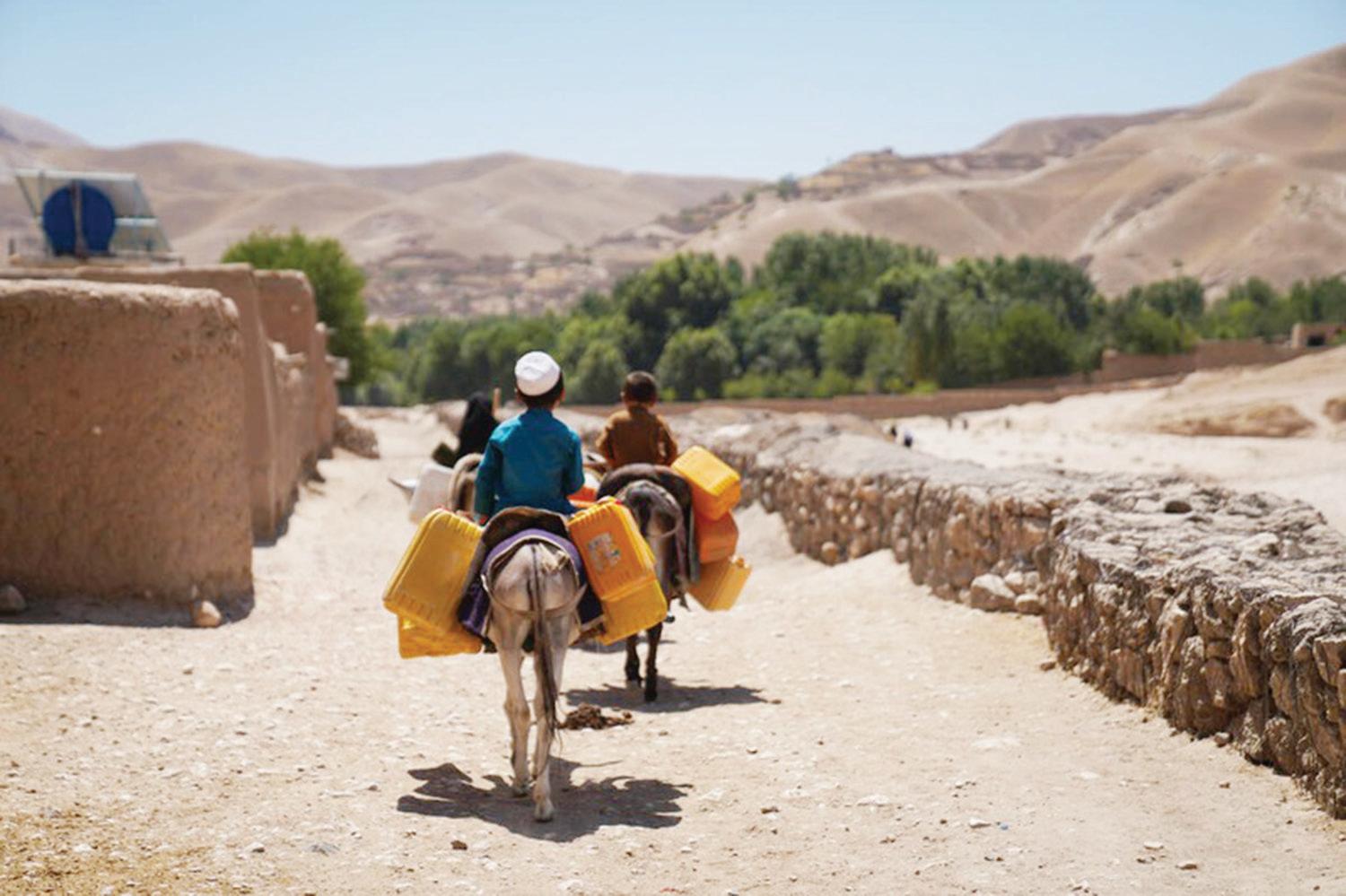
Collecting water in Afghanistan
Extreme heat is pushing agrifood...
FROM PAGE 11
stress begins at above 25 degrees Celsius, and a bit lower for chickens and pigs, which are unable to cool themselves by sweating. Above that threshold, animals begin to suffer, initially seeking shade, drinking more water, eating, and moving less, while if exposure persists, they begin
to suffer from digestive tract breakdowns, organ failure, and cardiovascular shock. Even when not lethal, extreme heat reduces dairy yields as well as fat and protein content – which inter alia worsens the carbon footprint of animal-sourced foods. Fish can suffer cardiac failure as they struggle to maintain el-
evated respiration rates in waters where extreme heat events drive dissolved oxygen levels lower. In 2024, 91 percent of the global ocean experienced at least one marine heatwave.
For most major agricultural crops, yield declines begin to occur above 30 degrees Celsius –lower for some crops
such as potatoes and barley - leading to weakened cell walls, sterile pollens, and the production of toxic oxidative compounds. Under extreme temperatures rates of tree photosynthesis and respiration diverge, creating an energy imbalance, resulting in reduced growth and less carbon removal from the atmosphere. Ev-
idence points to a strong correlation between heat waves and wildfires, with longer and more intense fire seasons.
Critically extreme heat also takes a toll on humans, especially agricultural laborers, for whom it can be fatal. The number of days each year when it is simply too hot to work may rise to 250 in much of South Asia, tropical Sub-Saharan Africa, and parts of Central and South America, according to the report.
COMPOUND EFFECTS
The full danger of extreme heat lies not only in its direct impacts, but also in its role as a risk multiplier, amplifying the effect of water stress, serving as a trigger of flash droughts, and elevating the risk of wildfires, or fostering the spread of pests and diseases. The report offers a comprehensive look at such compound effects.
Flash droughts are often triggered by extreme heat events that deplete moisture from the topsoil and root zone. Notable cases occurred in the United States of America in 2012 and 2017, the Russian Federation in 2010, Australia in 2018 and 2019, China in 2022, and Brazil in late 2023 and 2024, which saw soybean yields fall by as much as 20 percent as temperatures averaged as much as 7 degrees higher for protracted periods. Data show they are starting earlier, lasting longer, and exposing more and more cropland, forested areas and human populations to their impacts. They can leave lasting effects such as hardened soils with reduced ability to absorb water and greater vulnerability to erosion.
Numerous case studies are presented in the report, including that of a monumental heatwave covering 3 million square
kilometers in North America in 2021, when peak temperatures rose to four standard deviations above normal, leading to major yield drops in fruit orchards and Christmas tree plantations and a calamitous spike in forest fires. Remote sensing analysis and ground surveys revealed multiple feedback loops were activated, such as dry soil conditions exacerbating the heating effect of solar radiation.
KEY RECOMMENDATIONS
The report points to the need for innovation and the implementation of adaptative measures such as selective breeding and crop choices adjusted to the new climate reality, adjusting planting windows and altering management practices that can shelter crops and agricultural activities from the impacts of extreme heat. Early warning systems are a particularly important tool in aiding farmers in their efforts to respond to extreme heat.
Access to financial services – cash transfers, insurance and payment schemes, shock-responsive social protection schemes, and other forms – underpins all categories of adaptation options. Technical solutions are necessary but by themselves will be insufficient without addressing pervasive socio-economic barriers in low- and middle-income countries, including limited access to information, education, awareness, and training.
“Protecting the future of agriculture and ensuring global food security will require not only building onfarm resilience but also exercising international solidarity and collective political will for risk sharing, and a decisive transition away from a high-emissions future,” the report says. (FAO)
Yarrowkabra, nearby villages transformed through gov’t investment
YARROWKABRA
and surrounding communities along the Soesdyke-Linden Highway are in a far better position owing to the government’s targeted investment in development projects.
Minister within the Office of the Prime Minister, Kwame McCoy, made the remarks during a community engagement at the Hauraruni/Yarrowkabra Neighbourhood
the country,” the minister said.
To this end, Minister McCoy highlighted the ongoing construction of the Soesdyke-Linden Highway, which he said will be fitted with streetlights and road signage to improve safety for motorists and residents.
He also noted that settlements along the highway are becoming more formalised, while new housing schemes are being developed.
deliver on everything that we promise,” he emphasised.
The minister also highlighted works underway at Hauraruni, where homes for young professionals are being constructed.
About 444 houses were planned for the area, with the first 250 expected to become available within the next few months.
Minister McCoy assured residents that this development will not
Democratic Council (NDC) last Friday.
He explained that the work being done was only part of a wider plan to expand opportunities and improve infrastructure in the area and across Guyana.
“This is not the end of it. Continuously, we are working to build out the opportunities and the infrastructure along this corridor, like it is in other parts of
Among them is the Hyde Park housing development in Yarrowkabra, where 500 homes are planned for single parents and women.
“We [government] launched just a few months ago the programme where the first 27 women-led households have been allocated those houses, and we will continually work to fulfil our commitment as a trustworthy government to
leave anyone without access to housing or land.
“No one will be displaced to the level where they have no access to land and a house that they can call their own. That is the bottom line,” he said.
Residents were encouraged to work along with the government to further promote growth in their communities.
(DPI)
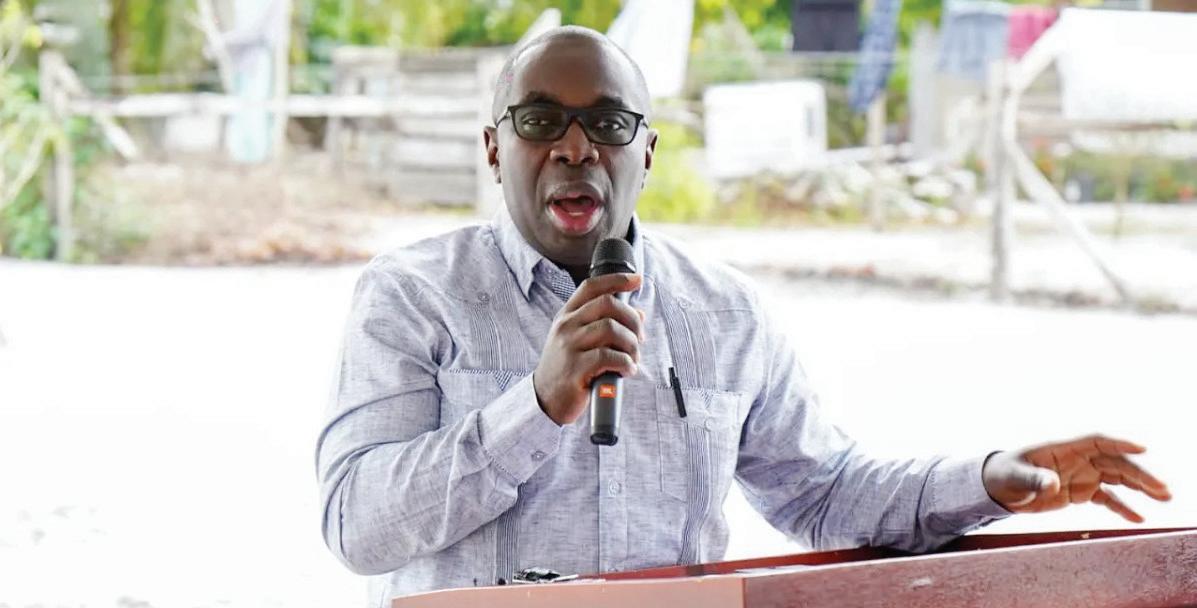
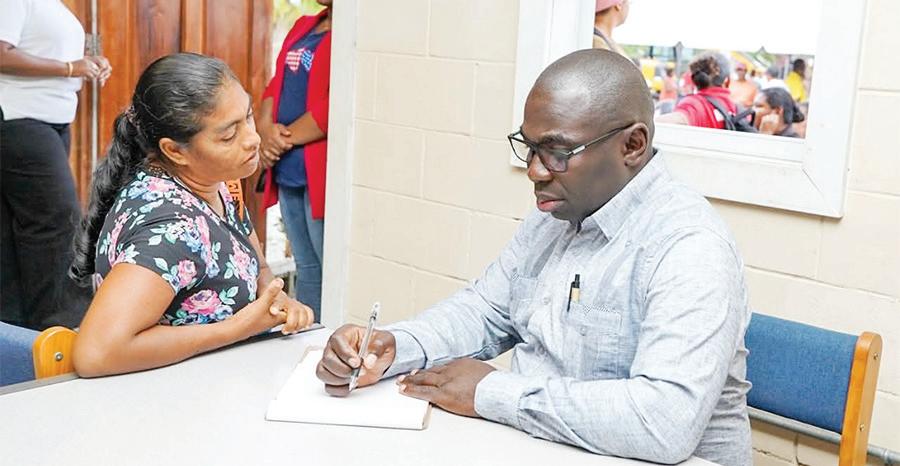
Minister within the Office of the Prime Minister, Kwame McCoy, during a community engagement at the Hauraruni/Yarrowkabra NDC
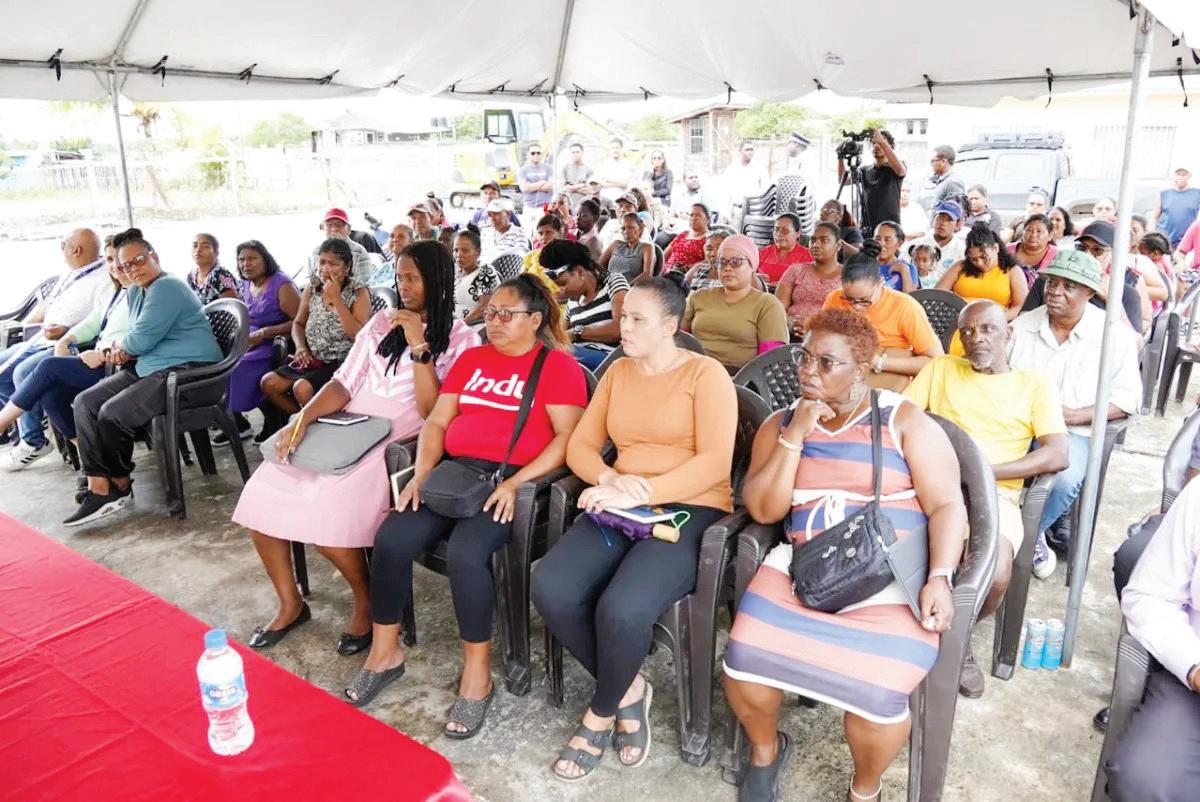
Residents of Yarrowkabra and surrounding areas at the community engagement on Friday
Childcare reforms, care-economy model, stronger protection services among priority areas
- Minister Persaud says
THE Ministry of Human Services and Social Security is prioritising the comprehensive development of robust, transparent, and accountable systems, Minister Dr Vind-
hya Persaud affirmed on Sunday, highlighting an ‘ambitious’ plan that builds on reforms achieved over the past five years.
During an interview on
the most recent episode of the ‘Starting Point’ podcast, she said the focus is on strengthening systems, expanding social protection, and deepening empowerment programmes across Guyana.
This is occurring as the ministry moves to consolidate key reforms in its second-term priorities.
At the heart of this push, Minister Persaud outlined
Minister of Human Services and Social Security, Minister Vindhya Persaud, speaking on the ‘Starting Point’ podcast
a focus on building robust, transparent, and accountable systems to improve delivery for vulnerable groups, including pensioners, persons living with disabilities, and low-income households.
Citing the major aims of the ministry as ambitious, Minister Persaud noted that comprehensively developing robust, transparent, and accountable systems require relearning and repositioning within the ministry and sector at large.
“I believe in strengthening systems overall. So, I have been focused on having robust, transparent, and accountable systems. Now, this is an ambitious challenge because it is relearning, it is reshaping, and it is in doing that to strengthen systems that would have been put in place in the last five years or to build on that,” she said. Moreover, accountability and evaluation within these systems are also important, as she added: “It is also making sure that the persons who have the responsibility to ensure all of this happen within the construct of what I said that they are aware of the serious nature of their responsibilities. So, it goes without saying, monitoring and evaluation and impact analysis are also very critical.”
Minister Persaud shared that the aim also involves work to build on the systems and milestones already achieved, to ensure that the beneficiaries of these systems, primarily vulnerable groups, can continue to benefit and achieve a state of independence.
This is where the ministry’s empowerment programmes are important, Minister Persaud said, adding that these initiatives could be a powerful driving force for vulnerable groups such as single mothers.
“I want to intensify this because I believe that with our country moving at the rate that it is, we need to ensure that people understand that there is space for them to be financially independent, economically empowered, and to have a really strong role in Guyana's development,” she said, adding, “They must see themselves like that. And so, it is creating that ecosystem around these populations to give them that opportunity to be there.”
Moving ahead, another major area of priority will be the strengthening of the country’s childcare system. As Minister Persaud shared, her first two years leading the ministry highlighted major issues in this regard.
She further explained that the last five years have seen the ministry assess policies and implement programmes, adding that the goal was to create a structured approach and response.
“What would have happened in the last five years would have been to look at policies and to look at programmes. We had practice, but not a lot of documented policies. So, it was working on that to create that kind of structured approach and that kind of measurable approach to understand how we were doing,” she said. Reflecting on the last six months, Minister Persaud said the ministry has worked to build out the care economy, a project outlined by President, Dr Irfaan Ali, and one that she says is very close to her heart.
The minister said that the development of the care economy will allow more mothers to join the workforce, while ensuring good, structured care for the nation’s children. “I think it will be dismantling a struc-
Stricter occupational safety, health standards to be enforced
MORE protocols and standards in occupational safety and health will continue to be enforced as the Ministry of Labour and Manpower Planning intensifies efforts to safeguard workers across all sectors.
Minister of Labour and Manpower Planning Keoma Griffith said on Sunday morning that the government will continue to fulfil its mandate to ensure that employees at every agency across Guyana are protected.
Speaking to the large crowd that participated in the Oc -
cupational Safety and Health (OSH) walk, the labour minister stated that the aim is to make sure “our workers are protected and that they work in the best environment possible.”
Representatives from 51 agencies participated in the morning exercise. The walk forms part of the labour ministry’s ongoing efforts to promote safer, healthier workplaces, aligned with
this year’s OSH month theme: “Good Psychosocial Working Environments: A Pathway to Thriving Workers and Strong Organisations.”
Minister Griffith also highlighted that the Decent Work Country Programme signed last year ensures all workers have physical structures and psychosocial consideration in place to enable them to perform at their best.
Minister of Human
S ervices and Social Security, Dr Vindhya Persaud, said more attention must be given to employees, particularly regarding their mental health and well-being.
Dr Persaud stressed the importance of ensuring workplaces are free from sexual exploitation, harassment, and other negative influences that undermine dignity and productivity.
Minister Persaud
also referenced the launch of the Gender Equality and Empowerment Seal, which holds agencies accountable for maintaining standards related to workplace environment, mental health, and well-being.
OSH month is dedicated to raising awareness about the importance of creating safe, healthy, and decent working conditions. (DPI)
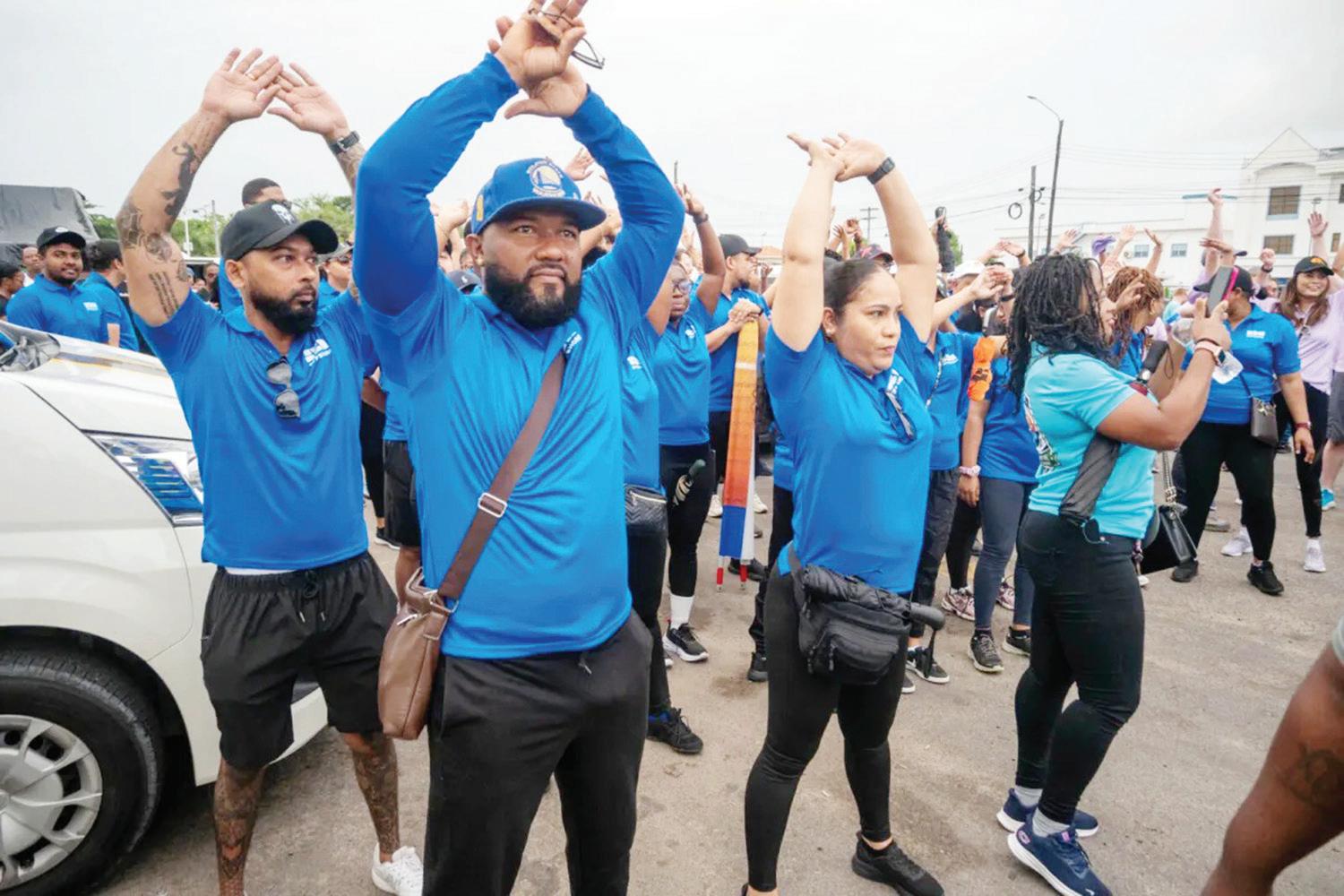
Persons participating in the warm-up exercise
Childcare reforms, care-economy model...
FROM PAGE 14
tural barrier that for a long time would have prevented
women especially from entering the labour force and from really moving to that
state of independence, but at the same time providing much-needed care and sup-
port for children,” she said.
At the same time, Minister Persaud noted that
steps are also being taken in working with boys and men to bridge the gap
caused by gender-based violence. “We are also looking at working with men and boys in particular and really tackling and closing the gap when it comes to our roadmap on addressing gender-based violence,” she added.
However, beyond childcare, Minister Persaud said that child protection is also a vital point of focus of the ministry.
She explained that the issue of efficiency and impact requires the implementation of stronger response systems.
Last year, the ministry launched its rapid response programme. However, she noted that there are still some limitations within the system, such as the lack of child protection officers. While noting that the lack of officers creates major hurdles, she noted that the ministry is focused on bolstering its response system and creating a tracking system, adding, “It is looking at that rapid response. It's also looking at creating a digital tracking system. We have started that process, and we will be improving on it this year and next year, so that every case that comes to our attention is tracked.”
A further development in the child-protection pipeline is the planned establishment of a dedicated Forensic Interview (FI) unit.
“We are moving to have our own FI unit pretty soon as a state, to be able to have better access and faster resolution of these things,” Minister Persaud shared.
She further clarified that once a forensic interview is completed, the case file is transferred directly to the police and the Director of Public Prosecutions (DPP), rather than remain with Child Protection Agency. This streamlined process, she emphasised, is just one of many steps designed to ensure greater legal action and swifter accountability, marking a significant step forward in the ministry's efforts to deliver timely justice and comprehensive protection for the country's children.
Unidentified man fatally shot on North Road
THE police in Regional Division # 4 ‘A’ are investigating an alleged murder committed on an unidentified male sporting dreadlocks, which occurred on Sunday, April 26, 2026, at about 07:45hrs, on North Road, between Alexander and Camp Streets, Georgetown. “Enquiries disclosed that the deceased was standing in front of a bar in the vicinity when an altercation reportedly occurred between him and another male, who was allegedly armed
with a handgun.
The confrontation reportedly escalated, during which the suspect dealt the deceased several blows to his head. A loud explosion was then heard, after which the suspect reportedly walked away
from the scene, leaving the deceased lying motionless on the roadway,” the police said in a statement.
Emergency Medical Technicians were summoned to the scene, where the man was pronounced dead
by a doctor on duty.
One suspected .32 spent shell and one brown leather holster were recovered in the vicinity of the body. CCTV cameras in the area were identified and will be reviewed as part of the ongoing investigation. The body was subsequently escorted to the Memorial Gardens Funeral Home, where it awaits identification and a post-mortem examination.
No arrests have been made.
Dr Vasnie Ganeshnauth gives EHR system positive review
- says it has improved patient experience, care
AT the Festival City Polyclinic, Dr Vasnie Ganeshnauth has witnessed firsthand the transformation of patient care through the implementation of the Electronic Health Record (EHR) system. Reflecting on her experience, she describes a shift not just in workflow, but in the overall quality, efficiency, and continuity of care delivered to patients.
From the moment a patient enters the clinic, the difference is evident. Dr Ganeshnauth explained that the EHR system has streamlined the entire process, from the clerical desk to the consultation room. Patients who book appointments online can now see a doctor at their scheduled time, significantly reducing long wait times. Even walk-in patients benefit from the improved system, as clerks can quickly register them and seamlessly transition them to nursing staff and physicians.
“Once the patient is entered into the system, everyone along the chain can access the information they need,” she shared. “The nurse can retrieve the patient’s name, record vital signs, and send them to us. When they arrive, we already have access to their information, including previous visits.”
This accessibility has proven to be one of the system’s greatest strengths. In the past, paper records often posed challenges, files could be misplaced, and retrieving patient histories could be time-consuming. Now, physicians can instantly review a patient’s medical history, diagnoses, and prior treatment plans, enabling more informed, continuous care.
Patients, too, have noticed the improvement. According to Dr Ganeshnauth, many express relief at not having to explain their medical history during each visit repeatedly. “They’re more comfortable because we can pick up exactly where we left off,” she noted. “It makes the entire interaction smoother and more reassuring for them.”
Efficiency extends beyond consultations. The EHR system has also enhanced pharmaceutical services, where patients now
receive clearly printed medication labels with instructions. This eliminates the confusion that sometimes arises from handwritten prescriptions and ensures that patients fully understand how to take their medication.
Data security remains a critical priority, and Dr Ganeshnauth emphasised that patient confidentiality is well protected. Each patient is assigned a unique identification number, and access to records is strictly limited to authorised healthcare professionals within the system.
For Dr Ganeshnauth, the benefits are both practical and impactful. “I don’t have to write as much anymore,” she said with a smile. “It saves time, improves accessibility, and allows me to focus more on the patient rather than paperwork.”
“Without that record, it would have been much more difficult.”
As more departments prepare to adopt the system, including urgent care services, Dr Ganeshnauth encourages her colleagues to embrace the transition. While acknowledging that the initial learning curve can feel overwhelming, she insists that familiarity comes quickly.
“Once you get used to it, everything becomes simple,” she said. “In just a few minutes, you can complete a consultation. It reduces writing, saves time, and makes referrals between departments seamless. Ultimately, it makes your job easier.”
Her testimony reflects a broader shift within the Georgetown Public Hospital Corporation, one that prioritises efficiency, accuracy, and patient-centred care through digital innovation.
For both healthcare providers and patients, the EHR system is proving to be more than just a technological upgrade; it is a vital tool shaping the future of healthcare delivery. (GPHC)
She recalled a particularly meaningful case involving an elderly patient with hearing difficulties. During a follow-up visit, the patient arrived alone and was unable to communicate her medical history clearly. Thanks to the EHR system, Dr Ganeshnauth was able to review notes from the previous visit, when the patient’s granddaughter had provided detailed information and continue care without interruption. “It allowed me to manage her effectively,” she explained.
Dr Vasnie Ganeshnauth
Faith-based initiatives are critical to national, community development - Minister Mustapha
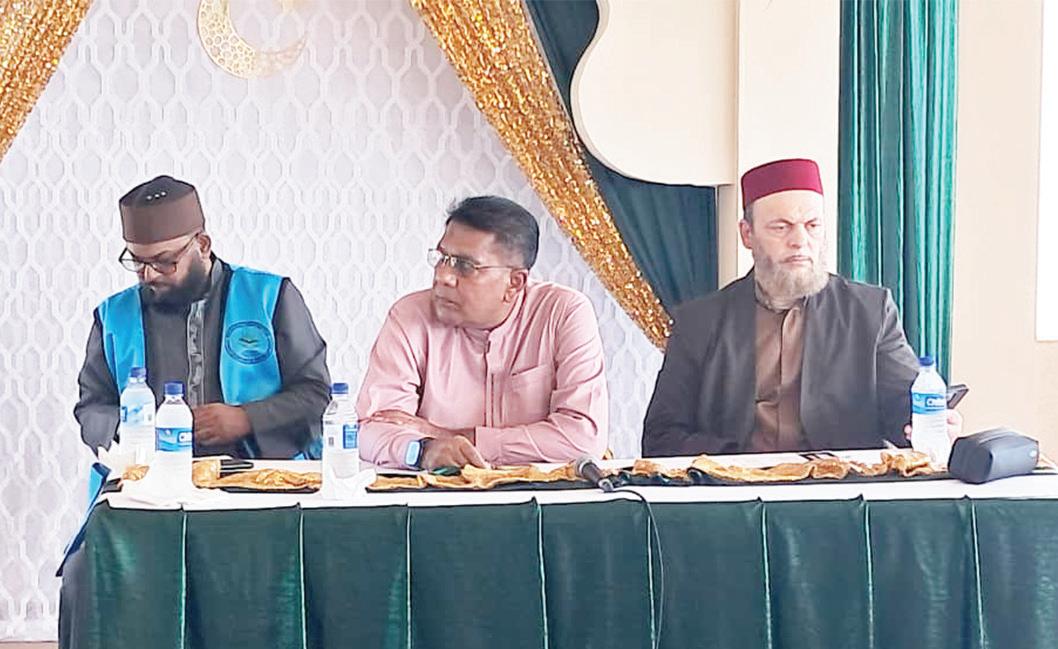
AGRICULTURE Minister, Zulfikar Mustapha, recently attended the opening of the Islamic Centre in Region Five, where he underscored the importance of faithbased initiatives in national development and community upliftment.
In representing President Mohamed Irfaan Ali at the event, Minister Mustapha in his remarks said the establishment of the centre aligns seamlessly with the government’s vision of inclusive growth, human capital development, and an
improved quality of life for all Guyanese.
“This centre stands as a shining example of that principle—faith translated into action, and values transformed into lasting benefit for people. This centre aligns seamlessly with the government’s vision of inclusive growth, human capital development, and an improved quality of life for all Guyanese. This achievement reflects the strength and resilience of a community that has come together with a shared purpose. It demonstrates what is possible when there
is unity, vision, and a commitment to improving the lives of others,” he said.
Minister Mustapha further noted that the centre will serve as a hub for empowerment through the provision of computer training, sewing, and other skillsbased programmes. These initiatives, he said, are aimed at equipping individuals, particularly young people with the tools needed to become self-reliant and confident contributors to society.
He added that such opportunities will not
only foster entrepreneurship, but will also support job creation and encourage greater
economic participation within Region Five and beyond, reinforcing the government’s commit-
ment to inclusive and sustainable development across all communities.
Agriculture Minister Zulfikar Mustapha at the opening of the Islamic Centre in Region Five
Site engineer arrested after excavation works trigger hours-long power outage
- contractors, machine operators again reminded to exercise extreme caution near transmission infrastructure
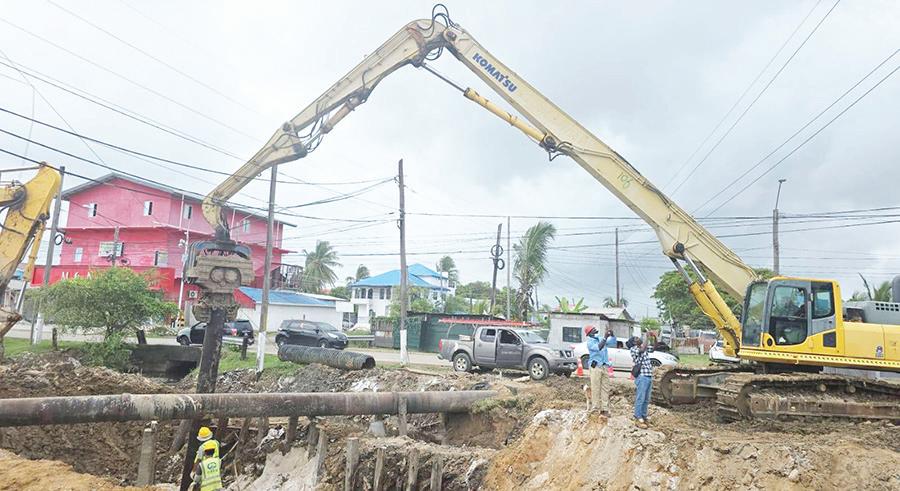
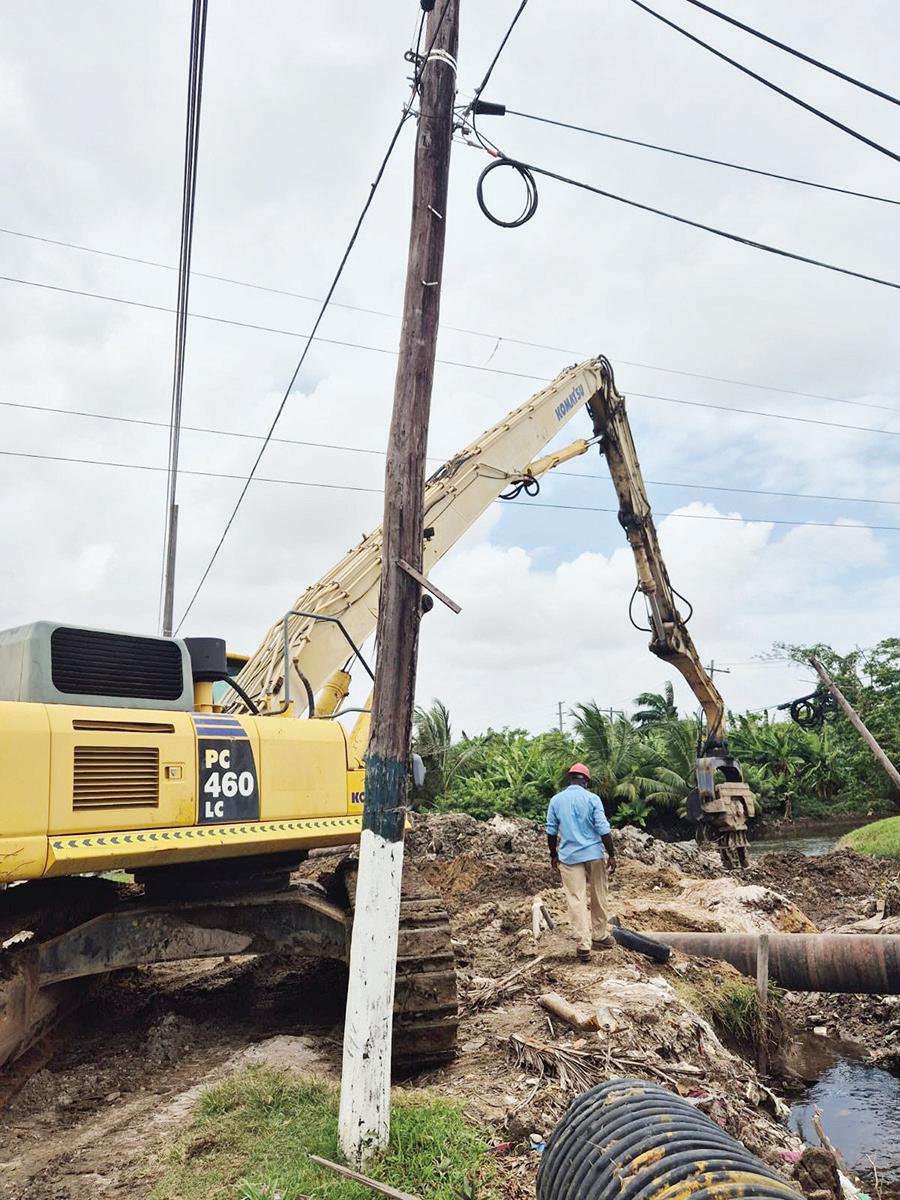
SEVERAL parts of Demerara were without electricity for hours on Sunday after a high-voltage transmission line was struck by heavy-duty machinery, prompting an investigation which resulted in the arrest of the site engineer, Xiou Wei, a national of China.
According to several updates issued by the Guyana
Power and Light Inc (GPL), the interruption occurred at approximately 08:50hrs and affected several areas across Georgetown, East Bank, East Coast and West Demerara.
The utility company said its teams were immediately deployed to assess the L10 Transmission Line, which links the Sophia and new Georgetown substations.
Following reports of the disturbance, GPL shared that it conducted inspections on its L10 Transmission Line, which confirmed that an excavator had made contact with its network at Sophia.
“Based on our initial assessment, this incident is likely the cause of the system disturbance affecting several TURN TO PAGE 21
The excavator that struck a 69,000-volt transmission line, triggering a major power outage across Demerara on Sunday (Guyana Power and Light Inc photo)
Site engineer...
Damaged site and machinery at Sophia, where the excavator made contact with GPL’s transmission infrastructure, causing widespread electricity disruption and prompting investigations that have led to the arrest of the site engineer
FROM PAGE 20
sections of Demerara,” the utility said, adding that its priority was to restore power “as quickly and safely as possible,” GPL said in a statement.
GPL confirmed that investigations established the disruption was caused by heavy-duty machinery coming into contact with the 69,000-volt transmission line, which caused it to trip. Moreover, the utility company also disclosed that checks at Dennis Street revealed that China Railway First Group was conducting road-expansion works in the area at the time of the incident.
“Contact with electrical infrastructure poses a grave risk to life,” GPL warned, stressing that such incidents can result in severe injury or death, as well as widespread outages and damage to the national grid. The company urged contractors and members of the public to strictly adhere to safety protocols when operating near electrical lines.
Efforts were immediately made to remove the excavator from the line while power-restoration work began in affected communities.
By mid-morning, GPL confirmed that the machinery involved had been removed and that “all efforts are underway to have power re -
stored to several sections of Demerara.”
Meanwhile, in a Facebook post, GPL confirmed that the Guyana Police Force arrested Xiou Wei in connection with “the incident that continues to inconvenience our valued customers,” GPL stated.
By late Sunday afternoon, GPL reported that power supply for approximately 90 per cent of its customers had been restored, with most areas in Georgetown, West Demerara and East Demerara back online.
The utility company assured the public that remaining sections would be re-energised progressively.
Throughout the series of updates following the incident, GPL repeatedly urged contractors and operators to exercise extreme caution when working near transmission infrastructure, warning that breaches not only endanger lives, but also cause significant disruption to essential services.
The utility company also apologised to affected customers, thanking them for their patience as restoration teams worked to fully normalise supply across the national grid.
Investigations into the circumstances surrounding contact with the 69,000-volt line are ongoing.
Rinku, Narine win KKR error-strewn Super Over game
(ESPNCRICINFO) - In a battle between the bottom-placed teams, momentum shifted hands multiple times before Kolkata Knight Riders (KKR) beat Lucknow Super Giants (LSG) in the Super Over, with Rinku Singh playing a pivotal role throughout the game.
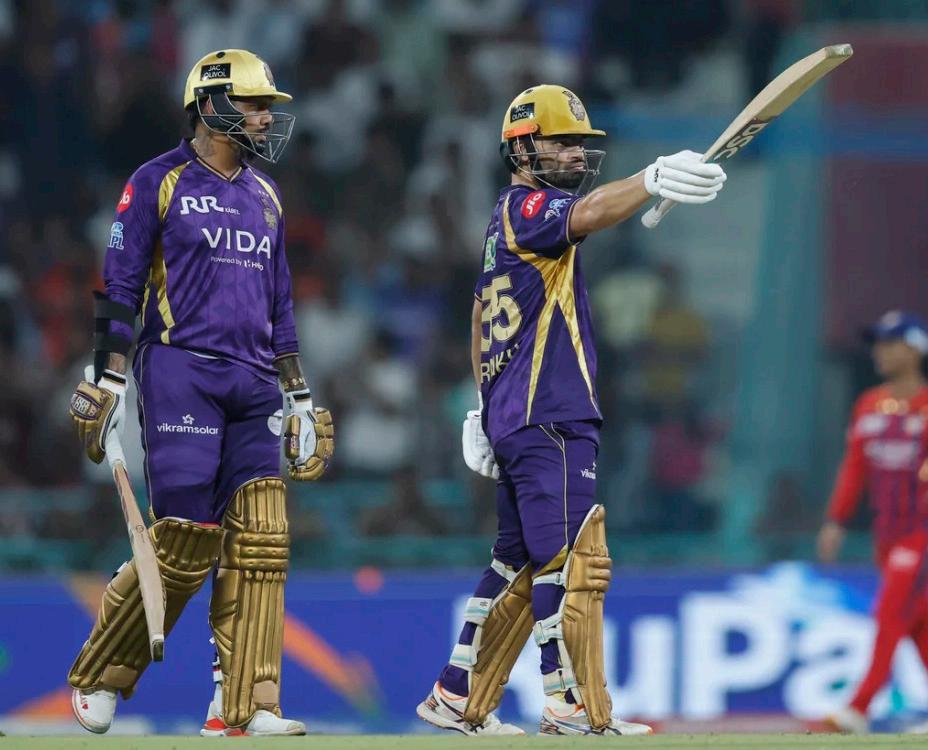
Before the Super Over (effectively four balls across both innings), the 20th over of each innings in regulation time had the biggest say in an error-strewn game. After 19 overs, KKR were 129 for 7. Rinku smashed Digvesh Rathi for four successive sixes in a 26-run over to take them to 155 for 7. Rinku finished on 83 not out off 51 balls, his highest score in T20s.
In the chase, LSG needed 17 from six balls with Himmat Singh and Mohammed
Shami at the crease. Kartik Tyagi conceded successive no-balls off beamers before dismissing Himmat, but served up a half-volley with seven needed from one ball, and Shami launched it over long-off to tie the game.
The Super Over was an anti-climax. Sunil Narine bowled Nicholas Pooran first ball and had Aiden Markram caught off the third, with Rishabh Pant managing a single in between. Here, too, Rinku had a hand to play. When Markram launched Narine towards long-on, Rovman Powell sprinted round to his left, caught the ball at the boundary, and flicked the ball towards longoff, where Rinku completed the catch. This was in addition to his four catches earlier in the match.
Then, taking strike in KKR's Super Over, he drove
Prince Yadav's first ball through cover point for four to seal the win.
MOHSIN GETS KKR OPENERS CHEAPLY
Before all that, Mohsin Khan's maiden five-for in T20 cricket had KKR reeling. In the second over of the innings, he had Tim Seifert caught at extra cover with a 142.4kph delivery. It was the second successive duck for Seifert, and a third wicket-maiden for Mohsin in this IPL.
In his next over, Mohsin slipped in a slower ball at 124.6kph. Ajinkya Rahane charged down the pitch but ended up miscuing the ball to Aiden Markram, who back-pedalled from mid-off to take the catch.
RAGHUVANSHI GETS OUT OBSTRUCTING
Rabada and Sudharsan crush CSK
(ESPNCRICINFO) - A powerplay burst from the best new-ball attack in the IPL broke Chennai Super Kings. Kagiso Rabada picked up 3 for 25 to spearhead an eight-wicket win for Gujarat Titans and push them up to fifth place on the points table. CSK had held that position
ENGLISH RACING TIPS
BATH
09:00 hrs Moon Over The Sea
09:30 hrs Rating 10:00 hrs Leucothea 10:30 hrs Solar Invincible 11:00 hrs The Feminine Urge
There seemed to be a misconception about the pitch. At the toss, Ruturaj Gaikwad spoke about it being dry and not minding defending a total, the implication being spin might come into play later. What happened
15:00 hrs Forever Perfect 15:30 hrs Forever Noah
SOUTH AFRICA RACING TIPS
KENILWORTH
08:15 hrs Big Deal
08:50 hrs Burning Desire
09:25 hrs Fort Yukon
10:00 hrs The US Of A
10:35 hrs Shesgotclass
11:10 hrs Hampstesd Heat
IRISH RACING TIPS
NAAS
12:10 hrs Livenka
12:45 hrs Fontaine Khaled
13:15 hrs Howd'yadoit
13:45 hrs Force Noir
14:15 hrs Bucanero Fuerte
14:45 hrs Felix Guido
15:15 hrs Glyfada
AMERICAN RACING TIPS
FINGER LAKES
Race 1 Dio Double Gee
Race 2 White Sport Coat
Race 3 Lady Serenity
Race 4 Kings Dancer
Race 5 Khali's Storm
Race 6 Mambagigi
Race 7 Not For Hire Race 8 Shakeitforthebird
THE FIELD
Angkrish Raghuvanshi pushed the last ball of the fifth over towards mid-on and set off for a single. Cameron Green sent him back while Shami went for a direct hit at the striker's end. Raghuvanshi made a big U-turn and ended up taking the throw on his body as he dived to make
was the exact opposite. GT bowled Rabada and Mohammed Siraj right through the powerplay and CSK were unable to cope with the pace and bounce on offer. CSK even brought in Sarfaraz Khan as the Impact Player at the four-over mark but it didn't work out as he fell for a golden duck.
They were 28 for 3, the third-lowest six-over score this season. Rabada was magnificent, as he usually is when someone ticks him off. Two boundaries by Sanju Samson in his first over made him mad. Two wickets in his second over, including Samson's, made him happy. Siraj and Jason Holder went at less than run a ball. Rabada picked up 3 for 25 from four overs. GT's spinners though leaked 43 runs in four overs. Rashid Khan bowled only six balls and gave away 21 runs.
GAIKWAD FIFTY
This was an under-strength GT attack too with Prasidh Krishna not playing. Still, they denied CSK a boundary for 31 balls between overs 3.5 and 9.1. They made them wait 11.6 overs to bring up fifty, making it their second-slowest in the IPL. Gaikwad was out there for all of it. He got off the mark with two boundaries. But with all the help the quicks were getting and wickets falling at the other end, he set his stall out to play the full
ground. The LSG players appealed for obstructing the field, and the TV umpire gave it out, saying the batter "clearly changed his direction". Raghuvanshi wasn't happy. He first argued with the on-field umpires, and then flung his helmet in anger as he neared the boundary line.
Sai
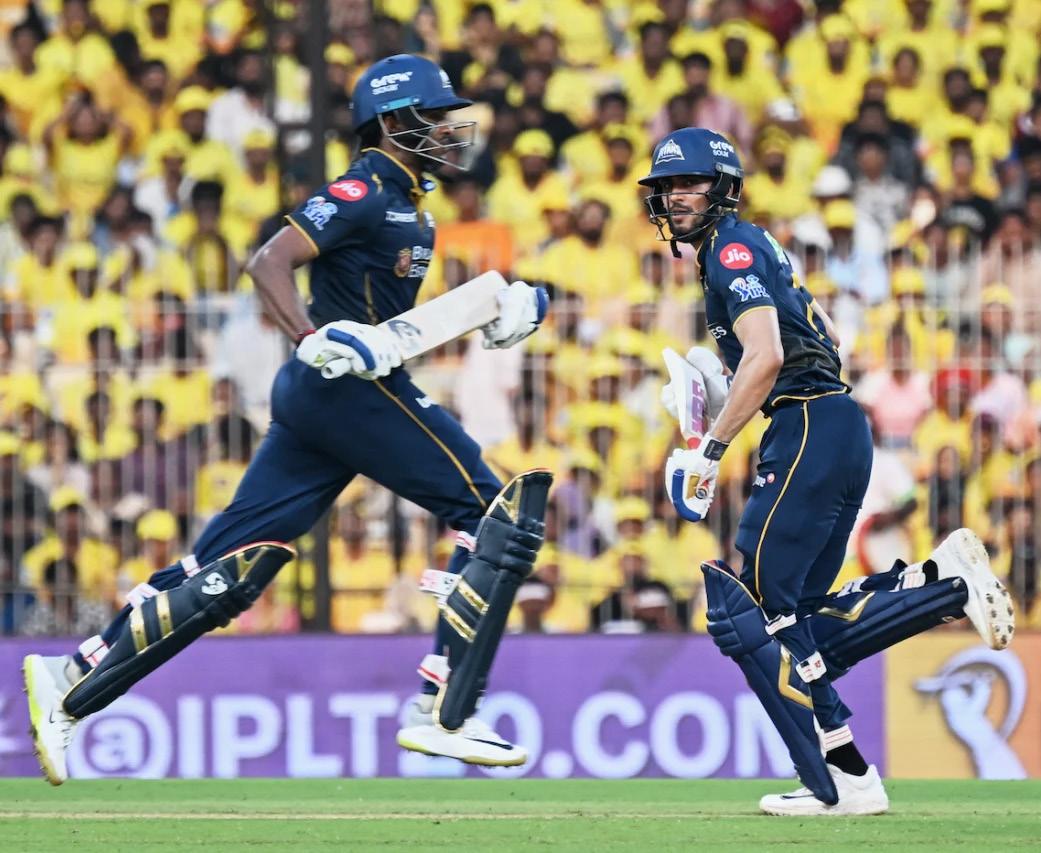
Gill were part of another fifty-plus stand (Apr 26, 2026 Associated Press)
20 overs. Gaikead scored 74 of CSK's 158. He played out 30 dot balls, the joint-second highest in an IPL innings.
GT'S PERFECT CHASE
There had been heat warnings in Chennai on Sunday. Shubman Gill braved bowling first in those conditions and his team reaped the benefits of it later. Aware of what they needed to chase, and how the pitch was difficult to bat on, GT batted within themselves and there aren't many teams that do that better than them. Sai Sudharsan led the way, backing up his hundred in the previous game with 87 off 46 in this one. He hit seven sixes. CSK hit six. GT brought up hundred quicker than CSK
brought up their fifty earlier in the day. This kind of advantage almost always results in victory.
A crowd of 31,506 came to Chepauk. They roared for the fifty coming up even though it took 72 balls. They go gaga for Dewald Brevis' entry, when he takes the knee just as he enters the field. He's made 64 runs in 53 balls this season. He's flattering to deceive. MS Dhoni isn't attending a single match day but his disembodied voice keeps ringing out over the loud speakers saying "start the whistles". And they do start. There is belief in Chennai but it started to fade around the 14th over of the chase when people started heading for the exit.
Singh brought up a fighting fifty for KKR (Apr 26, 2026 BCCI)
B
Sudharsan and Shubman
Cricket West Indies championship...
Harpy Eagles bowled out for 242
At the Coolidge Cricket Ground in Antigua, led by an impressive bowling performance by Ryan John and Darel Cyrus, the Windward Islands Volcanoes were able to restrict the progress of the Guyana Harpy Eagles after opening day of the third round of matches in the West Indies Championship on Sunday.
The two bowlers shared seven wickets between them and were the main reasons why the Harpy Eagles were bowled out for 242 runs.
Volcanoes would have ended the day in the driver’s seat had the Harpy Eagles not claimed the key wicket of Ackeem Auguste late in the day to see them finish on 22 for one, trailing by 220 runs.
All in all, the Harpy Eagles would have been happy to get up to their eventual total after a disappointing showing from their top order.
Gilon Tyson trapped Matthew Nandu lbw for a duck, John bowled Kevlon Anderson for five, while Shadrack Descarte dismissed skipper Tevin Imlach for five to reduce the Harpy Eagles to 20 for three.
It took a patient, dogged half century from opener Tagenarine Chanderpaul and a counterattacking knock of 64 from Keemo Paul, along with supportive innings from Kemol Savory and Gudakesh Motie rescue them.
Chanderpaul scored 69 off 212 balls and first shared a 53-run partnership with Savory, who made 35, and then added a further 76 with Paul, who needed just 57 balls and smashed five fours and four sixes.
However, Cyrus and John returned to finish off the tail and snap up the Harpy Eagles’ last four wickets for the addition of only 17 runs.
John finished with 4-28 and Cyrus took 3-79, while Gilon Tyson claimed 2-40.
For the third straight match, the Pride’s batters bettered the Jamaica Scorpion’s bowlers on their way to finishing the day on 320 for five.
Meanwhile, the Red Force were similarly impressive, with their batsmen propeling them to 260 for three in their rain-shortened contest against the Leeward Islands Hurricanes.
Elsewhere, defending
champions Guyana Harpy Eagles shared opening day honours with the Windward Islands Volcanoes.
At the Antigua Recreation Ground in Antigua: Unbeaten half centuries by captain Joshua Da Silva and Amir Jangoo ensured that the Trinidad and Tobago Red Force claimed bragging rights after day one against the Leeward Islands Hurricanes.
Da Silva finished on 72 not out, while Jangoo was 69 not out, helping to carry the visitors to 247 for three.
The start of the match was delayed by over and hour due to rain, but when play finally got underway T&T suffered an immediate setback when opener Evin Lewis picked up an injury and was forced to retired hurt.
Oshane Thomas then piled on the pressure by dismissing Cephas Cooper for six with 27 runs on the board.
Jyd Goolie, who made 36 and Jason Mohammed, who scored a brisk 47, added 61 runs for the second wicket before medium pacer Cameron Pennyfeather had Goolie caught.
The Red Force then found themselves 115 for three after Thomas returned to snare the wicket of Mohammed three runs short of a well-deserved half century.
However, from thereon the visitors took control of the contest with Da Silva and Jangoo sharing an unbroken partnership of 132 for the fourth wicket.
Da Silva has so far faced 125 deliveries and struck eight fours in his two hour and 20-minute stay at the crease,
while Jangoo’s three hour stay included 137 balls and also contained eight fours.
Thomas has taken 2-44 for the Hurricanes.
At Sabina Park in Jamaica: Needing a win to have any chance of advancing to the knockout round of the competition, Barbados Pride made an encouraging start in their do or die contest against the Jamaica Scorpions.
The Pride was yet again bolstered by its batting unit, with three batters scoring half centuries which saw them accumulate a healthy 346 for five after day one.
Their dependable opening pair featuring captain Kraigg Brathwaite and Shayne Moseley gave them a solid start in putting on 55 runs.
Their stand was eventually broken when Moseley was run out by Marquino Mindley for 23.
It brought Jonathan Drakes to the crease and together with his skipper they batted the visitors into a comfortable position during a partnership of 145 runs.
Odean Smith finally got the breakthrough for the Scorpions by prising out Brathwaite after he had scored 74 from 164 balls and hit seven fours,
And seven runs later they struck again, when Drakes, who had progressed nicely to 94 and looked set to complete his fourth first class century, was stumped off the bowling of offspinner Brad Barnes to leave the score 207 for three. In all, he faced 148 balls and hit 12 fours and one six.
The in-form Kevin Wickham, scorer of three consec-
(2) Blessing Muzarabani-4/41 (KKR vs SRH, Eden Gardens, Match # 6)
Today’s Quiz:
(1) How many teams contested the inaugural IPL (2008)?
(2) How many matches were scheduled in IPL 2008?
Answers in tomorrow’s issue
utive centuries to start the tournament, was caught and bowled by Barnes for just five and Khari Campbell trapped Kyle Mayers lbw for one, as the Scorpions fought back at 254 for five.
However, there was no further success for the home side for the remainder of the day, with West Indies Test captain Roston Chase and Leniko Boucher sharing an unbroken partnership of 92 runs.
Chase has so far scored a run-a-ball 82 with 12 fours and one six, while Boucher is 40 not out off just 46 balls.
Barnes has been the Red Force’s best bowler so far with 2-56.
Boxer Harvey gets support from former Windies Captain Sarwan
By Sean Devers
RISING talent Ken Harvey secured a bronze medal at the fourth edition of the South American Youth Games in Panama City and former West Indies Captain Ramnaresh Sarwan has provided the young Boxer with free use of his GYM53 at the Amazona Mall in Providence East Bank Demerara.
This was announced by GBA President Steve Ninvalle at the Pegasus Suite on the completion of the Amateur segment of the World Title and National title fights on Saturday.
“The fight was close, and even though we would’ve
loved for him to advance to fight for the gold medal, we are extremely proud of his performance and how he represented Guyana and the work we’ve been doing at the boxing association.”
“He has shown that he can compete with the best in South America, and he has now positioned himself as one of the best,” said Ninvalle.
He highlighted the GBA’s structured youth development programme, which focuses on identifying promising talent and gradually exposing them to regional and international competition.
“Harvey’s success reflects not only his individual dedication, but also the col-
lective effort of his coaches at both the national level and within his Berbice-based gym.
As Guyana continues to invest in its boxing future, Harvey’s bronze medal stands as a proud achievement and a strong signal of greater success on the international stage” informed Ninvalle, who is also the director Sports at the NSC Harvey, from the Andrew Lewis Gym in Albouystown, earned Guyana’s first medal at this year’s prestigious regional event.
It is Guyana’s first medal since the 2017 Games in Chile, after the country failed to reach the podium at the 2022 edition in Argentina.
YBG’s Regional Basketball Conference… St.
Rose’s
High and Tutorial High take massive wins
ST. Rose’s and Tutorial High Schools took massive wins in the latest round of action in the Youth Basketball Guyana Georgetown Regional Conference at the Cliff Anderson Sports Hall.
Tutorial High came up against North Georgetown Secondary, whom they dominated to win the contest 55-5.
Keion Lynch was awesome from an offensive standpoint as he shot his way to a game-high 24 points coupled with 6 rebounds and 3 steals.
It was, however, not a one-man show, as he got crucial support from the likes of Xavier Scott with 10 points, Julian Charles with 9 points and Andre Holder, who scored 7 points.
Chase's Academy also emerged with a vital win, beating School of the Nations 23-10.
Chase's Academy's Sur Sampson led with an allround effort, scoring 15 points and 8 rebounds.
Darius Chester also supports it with some vital minutes and points.
St. Rose’s High thrashed The Bishops High B 51-8.
St. Rose's High School had Christian Williams and Shaquan Callendar working in tandem to overcome The Bishops High School’s ‘B’ team.
Christian Williams would finish with 17 points, with Shaquan Callendar scoring 15 points in the win.
Queen’s College also edged The Bishops High 31-26 when the two teams met at the sports hall. Darren Dublin had 14
points in the win to go with 4 steals, with Deshawn Gurrick supporting with 10 points.
On the losing side, The Bishops High's Kemol Pickering fought hard without success, ending with 14 points and 6 rebounds.
The Regionals are sponsored by Edward B. Beharry Ltd, G-Boats Inc., National Sports Commission, Ministry of Education and Banks DIH Ltd.
Competing in the 60kg division, the young Caribbean champion announced his arrival on the continental stage with authority.
His path to the podium included a dominant stoppage victory over Paraguay’s Edgar Miranda in the quarter-finals.
That win propelled Harvey into the semi-finals, where he faced Brazil’s Dos Santos Maicon in a closely contested bout for a place in the gold medal match.
Despite a spirited showing, Harvey was narrowly edged on the judges’ scorecards, losing 2-3 in a decision that highlighted the fine margins at elite-level competition.
Rugby Americas North Championship… Guyana falters in opening '15s' clash against Bermuda
GUYANA’S national rugby team, nicknamed the ‘Green Machine', had a tough start to their Rugby Americas North 15s Championship when they went up against a competitive Bermuda national team.
Guyana lost a hardfought contest, 9-5, at the National Park Rugby playfield.
Winger Lionel Holder showed a glimpse of his excellent speed with a try early on, which gave Guyana the lead, 5-0.
They held their lead until a blunder in defense opened the door for Bermuda as they scored a penalty to make it 5-3; Guyana as Guyana went into the half with a slight lead.
Guyana suffered another penalty after the resumption as Bermuda edged ahead 6-5 as before the tourists got a breakthrough, scoring another penalty to take the score to 9-6.
As the clock wound down, the locals made a number of desperate moves
to score a try without avail.
The green machine looked rusty in the final minutes, making many mistakes which contributed to them not scoring a second try.
Bermuda would hold their own until the end.
The Men’s Tier 2 competition sees teams playing home and away for ranking points and bragging rights.
Guyana now will have to regroup and travel to Barbados and then Trinidad and Tobago for their next two encounters.
GBA President Steve Ninvalle makes the presentation to Harvey on Saturday night at the Pegasus Suites (Sean Devers photo)
Guyana locked in battle with Bermuda at RAN 15's
Dharry’s the eighth Guyanese to win a World Title
By Sean Devers
ON a night in which thunderstorms were forecast, the rains God allowed Elton Dharry to notch his name into Guyana’s Boxing history when he beat Salim Kassim of Tanzania.
The first male World Title fight on local soil saw Dharry become the eighth Guyanese, fighting under the Golden Arrow Head, to win a World Title.
The 40-year-old showed that experience can overcome youth when he earned a unanimous decision over a 22-year-old in the wee hours of yesterday morning to take the International Boxing Organisation (IBO) Super Bantamweight title at the Pegasus Suites on the GBBC and Briso Promotions ‘Lion and the Bull’ Card that lived up to all the hype.
Fighting out of the Gleason Boxing Gym in Brooklyn, Dharry improved his ‘Pro’ record to 33 fights, 26 wins 15 Kos, six losses and a draw while the African pugilist suffered his first defeat in a 14-bout career[r1.1] that began in 2023.
Watched by a capacity crowd, which included several prominent Guyanese, members of the Government, and President Irfaan Ali, Dharry and Kassim provided plenty of entertainment in a gruelling contest which went the full 12 rounds.
After a first round of ‘feeling out’ each other, Dharry was caught with a wicked right which sent
him to the canvas to the dismay of the raucous partisan crowd…and the Guyanese, who waited almost seven years for a second shot at a World title after his loss in Australia, knew he was in for a fight.
Dharry got up after receiving an 8-count and fought back with some good combinations to the head and body, but Kassim counterpunched towards the end of an enthralling round.
The third round saw a clash of heads, which resulted in Kassin requiring medical attention for the swelling over his right eye.
Dharry closed round 5 with some good body shots, followed by a crunching right hook that staggered Kassim, who was saved by the bell.
At the halfway stage, Kassim, with hopes of being the first man from his Country to win a world title, seemed to find his second wind and began dancing out of range of Dharry’s punches. This tactic caused some spectators to scream, “Like you need running shoes?
As the eighth stanza commenced, Kassim was on his bicycle, but Dharry caught him on the ropes with brutal uppercuts to the mid-section, but the young African showed lots of intestinal fortitude and refused to go down.
By the 10th round, Dharry, 18 years older than Kassim, was beginning to tire. He was caught with a straight right from the
southpaw on his nose bridge, which resulted in bleeding.
Dharry retaliated with a right cross that rocked Kassim’s head back as he stumbled to the ropes. Kassim tried to counter-attack but missed with some big swings.
In the penultimate round, Kassim, who weighed in at 121.6 to Dharry’s 122, hit Dharry with shots to the body but failed to hurt him.
The least punches in the fight were thrown in the final
round despite the chatting off ‘Dharry, Dharry’ urging Dharry to push for a knockout.
But Kassim, would go the full distance with the fighter from the Island of Leguan in the Essequibo River.
In the undercard for the National Featherweight title, the 39-year-old Dexter Marques tried to use his vast experience against twotime Olympian 26-year-old Keevin Allicock but despite Marques’ ploy of tying his
man up, Allicock was too fast for Marques.
The fight was arguable prematurely stopped by the ring doctor due to cut over right eye in 1:10 seconds of the fifth round.
In the opening round, Allicock threw more punches than Marques who tried to counter punch and had his moments in the longest fight in Allicock’s fledging professional career.
The fight showed why Allicock is rated as the best
Amateur pugilist in the Caribbean with his fast hands, clinical jabs and excellent ring craftsmanship.
However, it also showed up his inability to properly ‘time’ his knock-out punch.
Allicock delivered punches in bunches to Marques in a clinical display of skill. A right to the head stopped the fight even as Marques protested the decision as Allicock remained unbeaten in his four fights.
Desmond Amsterdam was brutal in his destruction of Jamaican Kevin Hylton in their Super Middleweight clash to take his record to three first-round knock outs in his three fights. His fight scheduled for six rounds, was over in 2:1 second of the first round.
The other professional fight of the night saw lightweights Richard Howard Jnr and Septon Barton putting on an impressive display on debut over four rounds.
In the Amateur fights, Imotex Vanderstoop beat Richard DaSilva, Itavius Vanderstoop beat Josh Chestier, Joyner Madray beat Travolta Harris and Jofes Jackman beat Oasis Prince.
In a moment of humour, Ring Announcer and Standup Comedian ‘Chow Pow’ invited ‘Doggie’ (with full boxing robe) and called for ‘Guyana Critic’ before declaring ‘Doggie’ the winner by Walkover. This evoked peals of laughter from those present including President Ali.
New IBO World Champion says President Ali is President for the people
By Sean Devers
USA-based Guyanese Elton Dharry beat Tanzania’s 22-year-old Salmin Kassim by unanimous decision with the judges scoring the contest 117-109, 117-109, 118109 in their International Boxing Organisation (IBO) super-bantamweight world title fight at Pegasus Suites yesterday morning.
It took the 40-year-old Dharry almost 22 years and
33 fights to win a World Title since he defeated Mark Fernandes at the Cliff Anderson Sports Hall on debut. He is first male to win a World Title on home soil and is Guyana’s eighth World Champion, joining Andrew Lewis, Wayne Braithwaite, Vivian Harris, Gary Sinclair and Andrew Murray and females Shondell Alfred and Gwendoline O’Neil. In an emotional outburst moments after winning the
IBO belt Dharry, who migrated to New York at the age 13, bemoaned the fact the has fought for the Guyanese people and put his heart and soul into his fights, he feels that he has not gotten the type of support from the Guyanese public.
“Allow me to vent a bit. I am I so proud and elated to have finally a World title to my name at the end of my career. This is for Guyana” said Dharry,
who born on the Essequibo Island of Leguan.
“This is my second chance to fight for a World title and it nearly did not happen. When I got a back injury and the fight was postponed, I wanted to give up but President Ali called and told me how important it was for me win a World Title for Guyana. And that inspired and motivated to do this.
I want to thank you for the inspiration. You are a
President of the people… One Guyana” posited Dharry speaking directly to President Ali.
“This was life-long dream to win a World Title” added Dharry whose biggest loss was in a 2019 WBA interim title fight against Andrew Moloney in Australia when the fight was stopped in the ninth round due a cut.
Dharry, who is also a personal fitness and boxing trainer when not in the ring
himself, will be spending some time with family in Leguan. Dharry learnt to box in the US at Gleasons Boxing Gym, under the guidance of the late Lennox Blackmore. Leon Moore and Don Saxb are his present trainners. He fought in the US Nationals, the Metro Finals and the Olympic Box-Offs in 2003 and 2004 before turning pro.
Marques is stunned by Allicock during their bout for the National Featherweight Title
Dharry scores with a crunching right to Kassim’s head during their IBO World Title fight at the Pegasus Suites (Sean Devers photos)
President Irfaan Ali with the new super-bantamweight champion Elton Dharry and his fans