



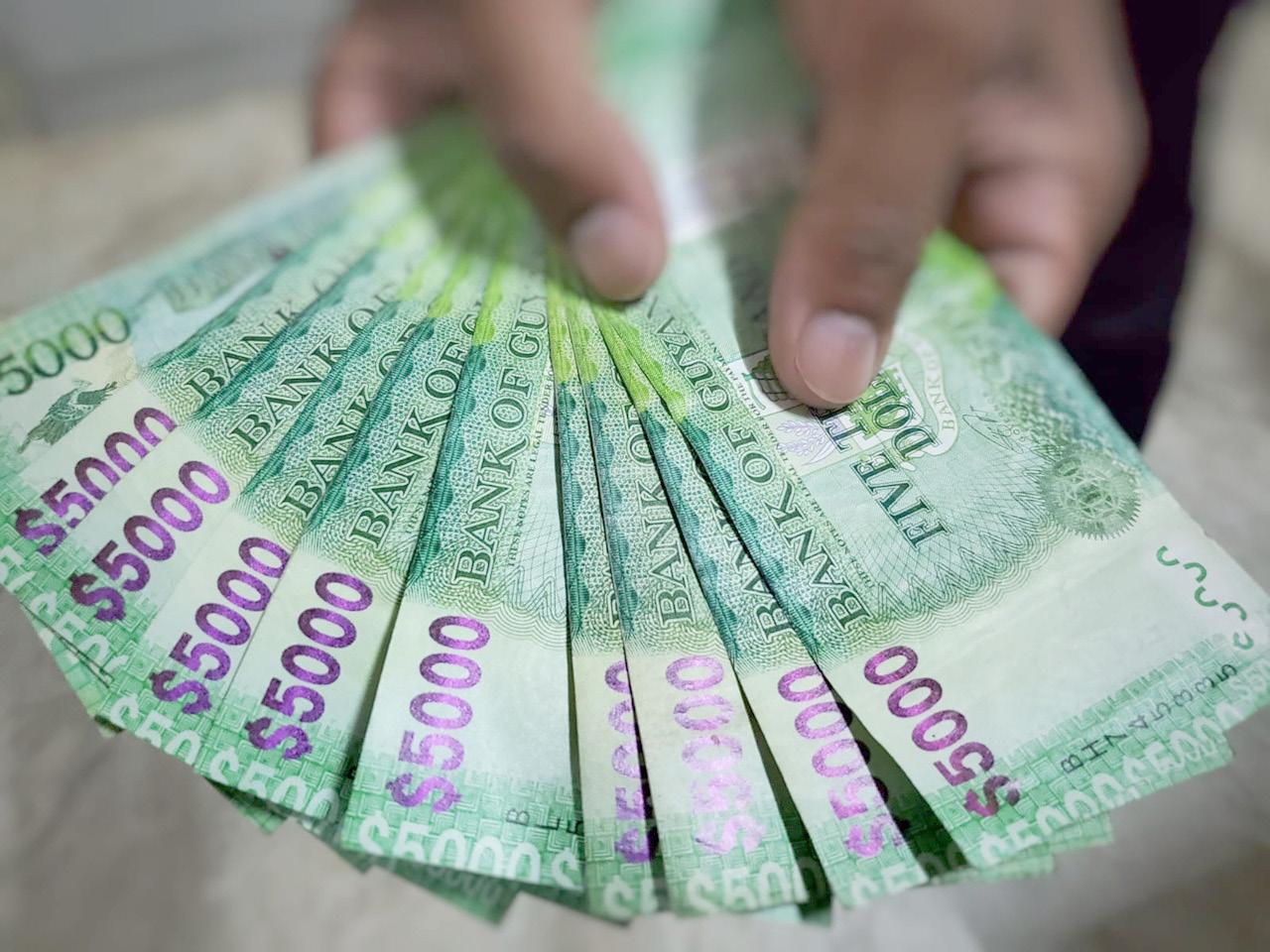
SENIOR Minister within the Office of the President with responsibility for Finance, Dr. Ashni Singh, on Wednesday, reported that more than 241,000 Guyanese have thus far benefitted from the Government’s national cash grant initiative, with the majority receiving payments directly into their bank accounts.
Dr Singh made this known while providing an update on the rollout of the cash grant during which he said, “A grand total of 241,614 persons have now received their cash grants.” He explained that of
this figure, 218,227 persons were paid through direct bank transfers. “To be more precise, 218,227 persons have received credit, direct credit, of their cash grant into their bank accounts or their NBS account,” he stated.
The Finance Minister went on to add that the government had initially facilitated payments to public servants, teachers and members of the disciplined services, while also launching an online portal to allow citizens to register and submit their banking information for direct deposits.
“As of today, you will
be very pleased to know that using those facilities, a total of 216,839 persons have been paid their cash grants directly into their bank accounts,” he said.
Further to this, Dr Singh highlighted that persons banking with the New Building Society (NBS) can now also access direct payments.
“We were able to put in place a workaround solution that has now enabled us to include the New Building Society on the portal,” he explained.
To this end, he added that 1,388 NBS customers have already received payments.
He further noted that special arrangements were implemented to ensure persons in hinterland and remote communities were not left behind.
Additionally, he highlighted the convenience
of the system, pointing out that thousands of recipients did not have to leave their homes.
“218,227 persons got their cash grants directly into their accounts, without having to leave their home and without having to join a line,” he said. Further, the minister encouraged persons who have not yet registered to utilise the online portal and register to receive their cash grant.

By Shaniya Harding
GUYANA is working towards defining itself as a regional leader in digital healthcare, with President Dr. Irfaan Ali signalling that the nation is ready to take up the mantle of regional leadership through the creation of a telemedicine hub.
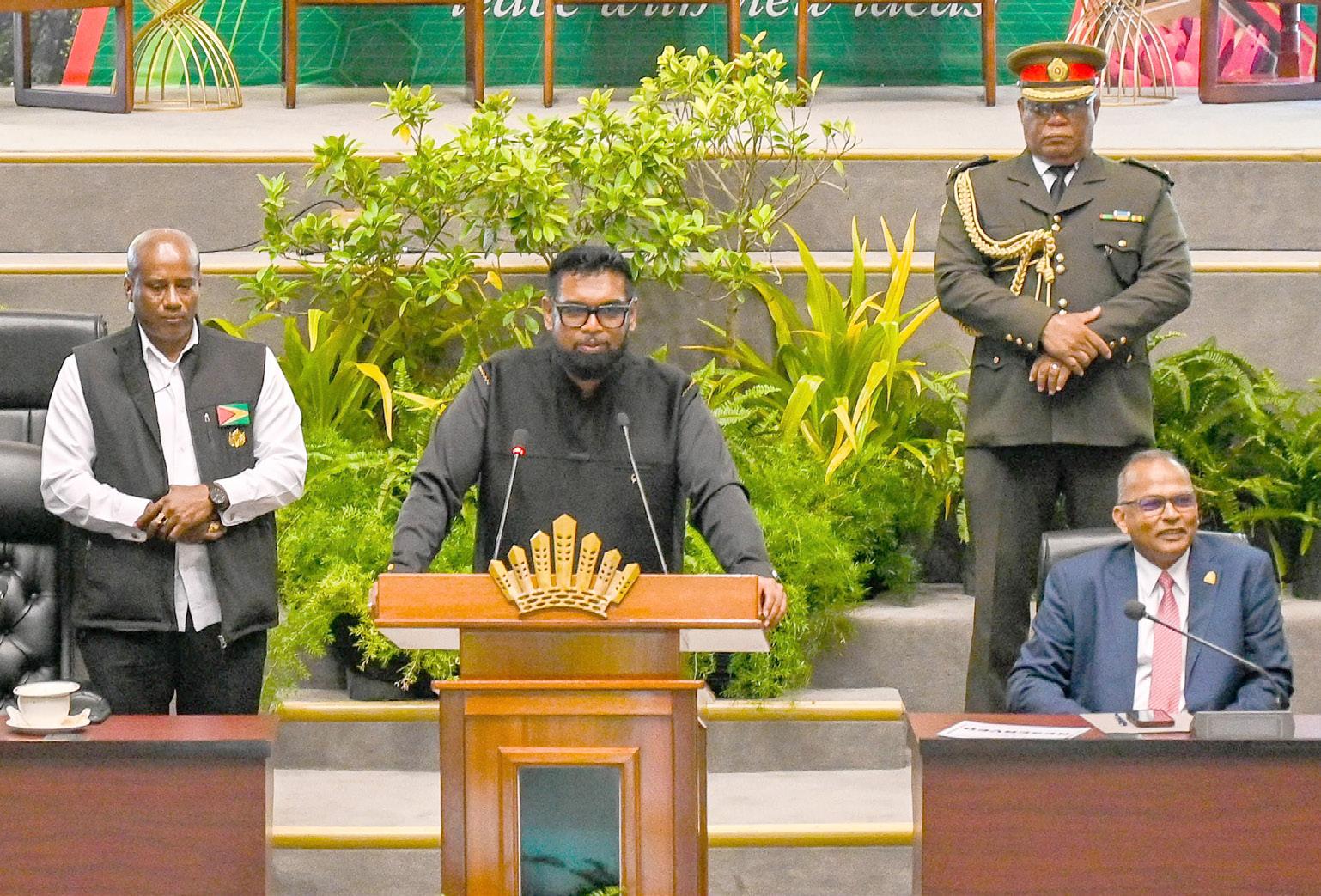
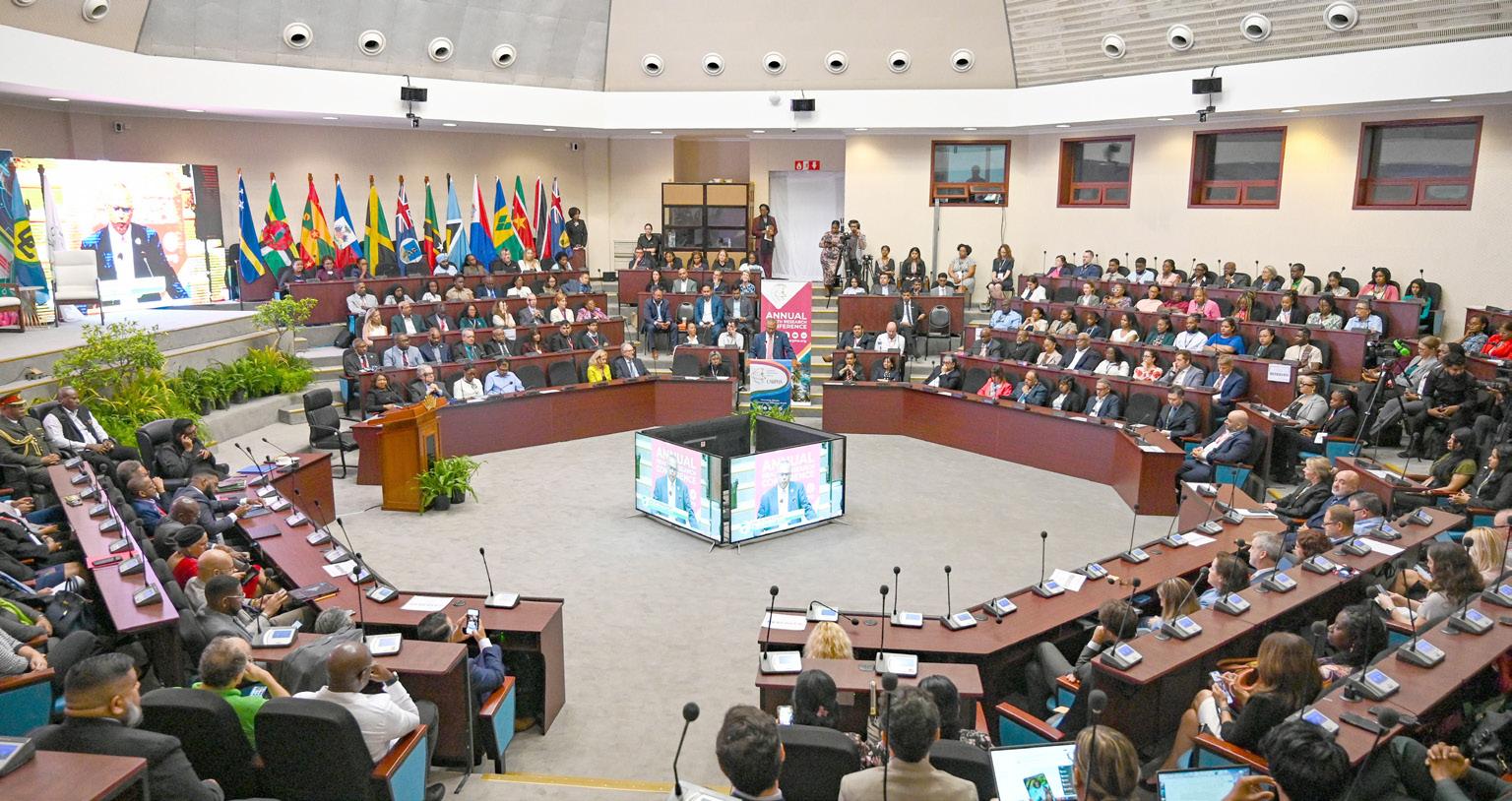
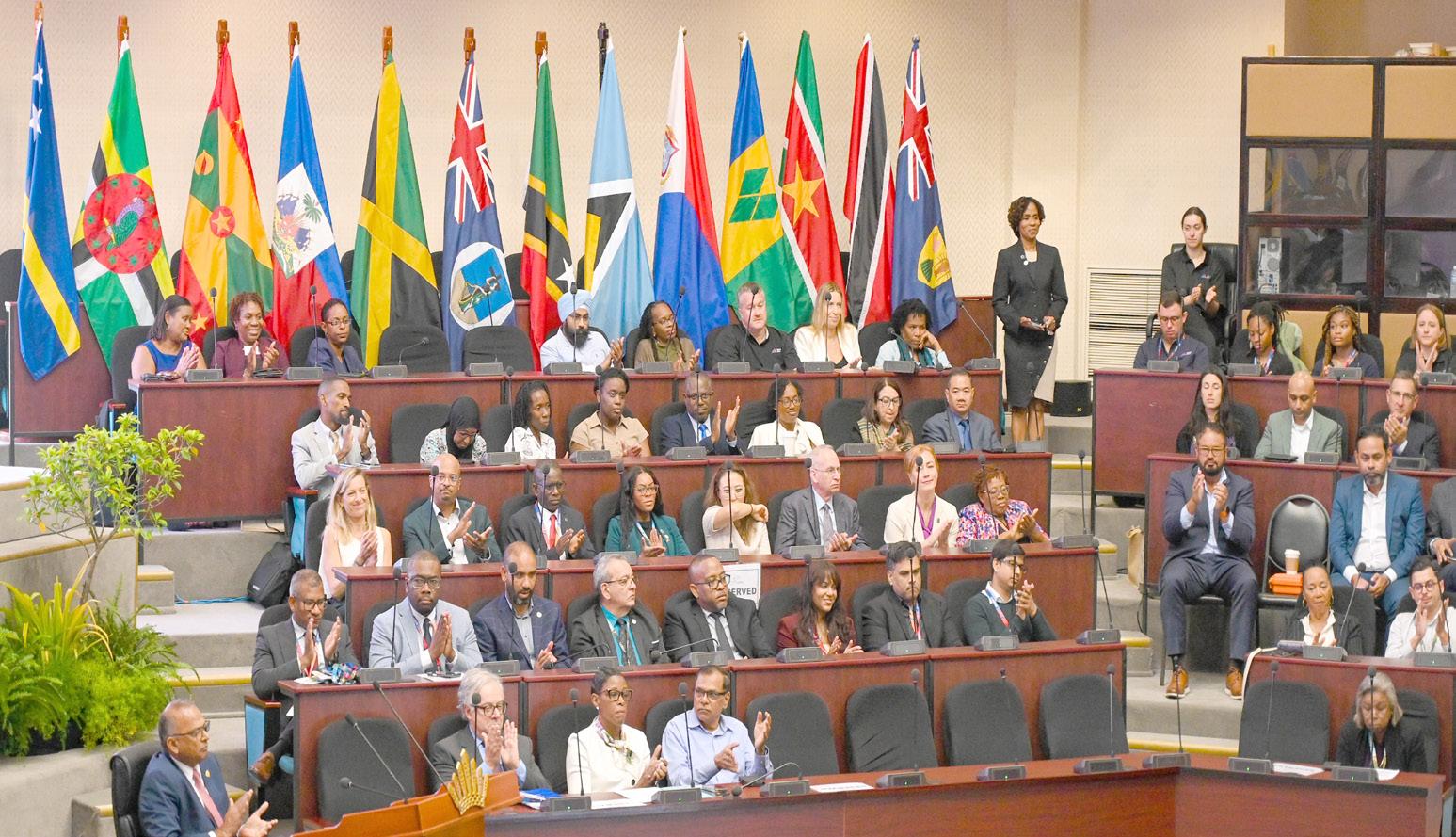
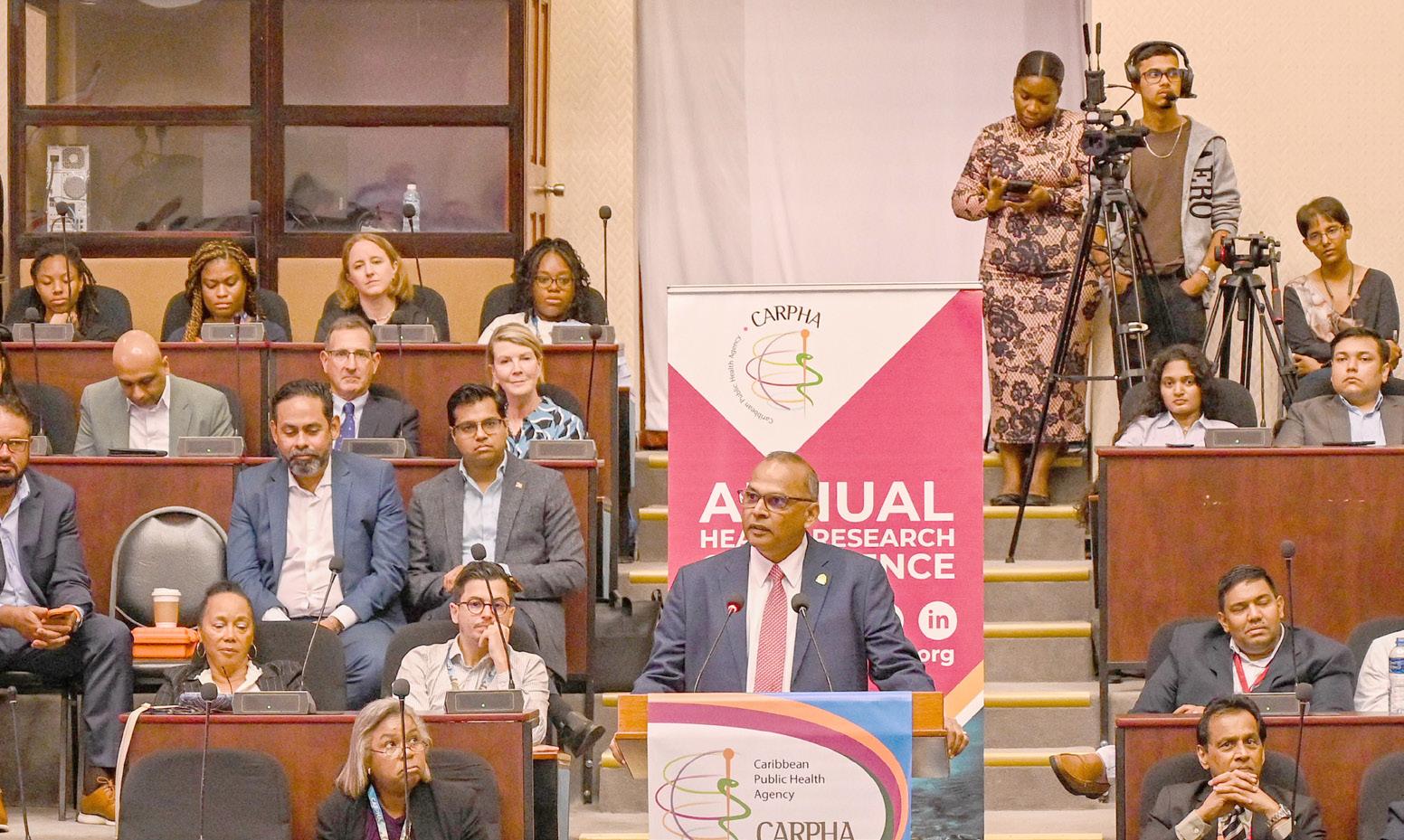
Speaking at the opening of the 70th Annual Health Research Conference hosted by the Caribbean Public Health Agency (CARPHA) at the Arthur Chung Conference Centre, the Head of State addressed hundreds of healthcare leaders and stakeholders from across the region, calling for stronger Caribbean collaboration and faster adoption of innovation in healthcare systems.
He underscored that while the region is not short on ideas or technology, the real challenge lies in building the systems, regulations, and human capacity needed to scale solutions such as telemedicine, artificial intelligence, and digital diagnostics across member states.
The landmark conference, celebrated under the theme, ‘Innovations in Health’, brings together regional and international health leaders to examine how innovation and data can strengthen public health systems, with a focus on improving coordination and response across the Caribbean.
Giving the feature address, President Ali highlighted that Guyana is working towards building a “worldclass health people system,” going beyond just healthcare.
Highlighting the recent achievements Guyana has seen in the development and implementation of digitisation, the President said Guyana was able to leverage telemedicine because of its geographic realities. This step, he explained, has been significantly successful for Guyana, highlighting major strides in the reduction in the need for medical evacuation and greater access to specialist staff in the hinterland.
Looking beyond local strides, however, the Head of State shared that the next step is to take these successes outside of the country and implement them at the re -
gional level.
Highlighting the success that Guyana has had at the national level, President Ali emphasised that Guyana is ready to invest in the region.
As he stated, “We are ready to deploy this investment for the rest of the region. We are ready to partner with the rest of the region in creating a telemedicine hub here in Guyana to support the rest of the region. Whether it is for clinical care, research, or educational purposes,” he said He shared survey findings from the conference, highlighting that the main priorities for modern healthcare are improved patient access, better health outcomes, and
greater efficiency. Moreover, the President highlighted the finding of gaps as among the main priorities for the conference. The President noted that while the world has advanced in the areas of AI, telemedicine, and data systems, the real issue is not a lack of ideas but weak systems to implement, scale, and sustain innovation. Giving a detailed overview of where Guyana stands in its development of the health sector, President Ali shared that there are a number of challenges facing both Guyana and the region. He said the first challenge he noted is scaling innovation, noting that many successful pilot projects never expand due to
care closer to patients,” he said. Innovation now, the President noted, depends on governance, infrastructure, financing, workforce capacity, and public trust, not just invention.
The digital divide is also an area that the Head of State pinpointed, explaining that digital transformation requires connectivity, trained personnel, data systems, and integration across sectors, not just devices and software. He emphasised that healthcare digitisation must be linked to broader systems, adding, “Digital transformation is often presented as a technological leap forward. But in reality, it depends on much more than devices and software. It requires reliable connectivity, interoperable data systems, training personnel, organisational readiness, and regulatory coherence,” moreover, he added that in many settings, these foundations are unevenly distributed and lack personnel who are trained in data analysis
regional leaders to combine public and private resources with stronger accountability. Furthermore, the challenge of human capital is also a major issue within the region’s health sector. As the Head of State shared, workforce shortages and training gaps create challenges in achieving sustainable development. Innovation, President Ali added, depends heavily on people, and without investment in skills and education, technology will not deliver results
weak systems.
He pointed out that the Caribbean has the potential to be a global testing ground for new technologies. Citing the recent successes of local pilots, the Head of State shared that, “The persistent difficulty of moving from pilot projects to population-wide systems across low, middle, and even high-income countries is a problem. There is no shortage of successful demonstrations,” he added, “Telemedicine pilots that improve access in remote communities. Mobile health applications that improve adherence. AI tools that enhance diagnostic accuracy. And community-based diagnostic innovations that bring
Further delivering an insightful address, the Head of State identified several other major challenges Guyana is working to combat, highlighting in particular the areas of regulation, inequality in research, and the role of national data. On the note of regulation, the President highlighted that systems are often too slow in keeping up with technological change. Similarly, the President noted that regions like the Caribbean are often under-researched despite being equipped with resources.
Equitable and innovative research, the Head of State added, is vital in creating a diverse healthcare sector.
“Healthcare innovation is not done in a vacuum. It is linked to the interest of every citizen. It is linked to your digital ID card. It is linked to your school records. It is linked to your early clinic card. It is linked to your travel history.”
Among the other areas of collaboration President Ali highlighted was financing. Pointing to the decline in global health funding and ongoing hurdles in the sector, he stressed the need for sustainable, blended financing models, urging fellow
Highlighting Guyana’s progress, President Ali outlined several key initiatives, including partnerships with leading international institutions to digitise health records and modernise patient management systems and the expansion of primary and secondary healthcare through the construction of 12 new hospitals. He also noted the acquisition of advanced medical technologies and the use of AI in diagnostics. Speaking on the expansion of telemedicine services in hinterland region, the head of state added, “Distance should be a challenge of geography, not the basis of inequality.”
Additional efforts include outlined partnerships with private healthcare providers under a public-supported, private-delivered model; exploration of 3D printing for customised medical tools and the introduction of robotics for surgery and drones for the delivery of blood and anti-venom supplies. Moreover, President Ali referenced expanded hybrid training for healthcare workers and the development of a life sciences park to support research, pharmaceutical manufacturing and the creation of a biobank.
Closing his address, President Ali emphasised that the region must move decisively from discussion to action, urging Caribbean nations to build resilient, integrated systems that can sustain innovation and deliver real improvements in healthcare.
He stressed that Guyana stands ready to work with regional partners to transform shared challenges into opportunities, positioning the Caribbean as a leader in modern, data-driven healthcare
THE International Court of Justice (ICJ) will begin oral hearings on Monday, May 4, in the long-standing border controversy between Guyana and Venezuela, a case widely regarded as one of the most significant in the country’s history.
Speaking on his weekly podcast “Issues in the News,” Attorney General and Minister of Legal Affairs, Mohabir Anil Nandlall, SC, revealed that the hearing will take place from May 4 to 8, and it is anticipated to be carried over to the following week.
Minister Nandlall and a team of international legal experts will defend Guyana’s territorial rights on the global stage.
The hearings mark a critical stage in Guyana’s pursuit of a final, peaceful, and legally binding resolution to the decades-old controversy over the Essequibo region, which comprises more than two-thirds of Guyana’s landmass.
Guyana moved to the ICJ in 2018, seeking confirmation that the 1899 Arbitral Award, which definitively established the boundary between the two countries, is valid and legally binding.
That award was accepted and respected for over 60 years before Venezuela, in 1962, declared it invalid and renewed claims to the territory.
The case is being heard under the framework of the 1966 Geneva Agreement, which provides for a peaceful resolution of the controversy.
After years of failed bilateral efforts, the matter was referred to the ICJ by the United Nations Secretary-General.
In a major development, the ICJ has already ruled that it has jurisdiction to hear the case, clearing the way for the current hearings on the merits, where both countries will present full legal arguments.
Guyana has consistently maintained that the judicial process is the only legitimate path to resolving the controversy, while Venezuela has historically challenged the court’s authority, though it has since filed written submissions.
The upcoming hearings will see both sides present oral arguments following the completion of written pleadings in 2025.
A final judgement from the court is expected to be binding on both countries and will bring legal clarity to the long-standing issue. (DPI)

GLOBAL oil prices fell and rose again on Wednesday after US President Donald Trump said he would extend a ceasefire with Iran until peace talks between the two countries have progressed.
He added that the US will continue to blockade Iran’s ports until Tehran presents a “unified proposal.”
After opening higher in Asia, the global benchmark wholesale oil price dipped to $97.60 (£72.14) a barrel.
But the price rose again as reports of ships being attacked in the Strait of Hormuz emerged, with the
price briefly hitting $100 a barrel before falling back slightly.
Energy markets have been volatile since the US and Israel attacked Iran on 28 February and Tehran responded with threats to target vessels in the key Strait of Hormuz waterway.
The initial two-week ceasefire had been due to expire on Wednesday evening Washington time. Trump did not give a new deadline for the ceasefire extension.
Trump said on Truth Social that the Iranian government has been “seri -
ously fractured” and that the US will hold off from launching new attacks after Pakistan called for more time for Tehran to agree a deal.
Vice President JD Vance, who is leading the US negotiations, had been expected to fly to Islamabad in Pakistan for talks on Tuesday.
The White House has now said he will not be going.
Iran has also not decided whether to send a delegation to Pakistan for talks with the US, a foreign ministry spokesperson told the BBC.
Traders remain cautious about what will happen next in the war, said associate professor Jiajia Yang from Australia’s James Cook University.
“This is less about barrels [of oil] and more about expectations,” Yang said.
The cost of crude has soared since the start of the conflict due to the Strait of Hormuz, through which a fifth of the world’s energy usually passes, being effectively closed by Iran.
Earlier this month, the US also said it would intercept ships headed to or from Iranian ports. (BBC)
WHILE the Aubrey Barker four-lane road was being constructed, more than $700 million was invested in 57 projects, including the upgrading of roads, culverts and drains in South Georgetown.
This important update was provided by Minister of Public Works Bishop Juan Edghill on Monday during the commissioning ceremony
of the $6 billion Aubrey Barker Road.
Areas such as Kaikan and Blue Mountain Streets experienced flooding weeks after heavy rainfall.
Minister Edghill stated that the investment was part of the government’s wider efforts to improve infrastructure and address long-standing flooding concerns in the area.

Other projects completed during construction include replacing a bridge connecting Lamaha Springs, which often got damaged because of its aqua panel structure.
Minister Edghill said the improved road network has significantly increased connectivity between communities.
“You could come through Aubrey Barker Road, go through Lamaha Springs,
cross the ‘Blocka’, and you are in Sophia…People who are going to the University of Guyana don’t have to go all the way out and then come around or go all the way to Sheriff Street and then come back,” he said.
These developments formed part of the government’s broader plan to modernise transport networks and improve residents’ daily lives. (DPI)
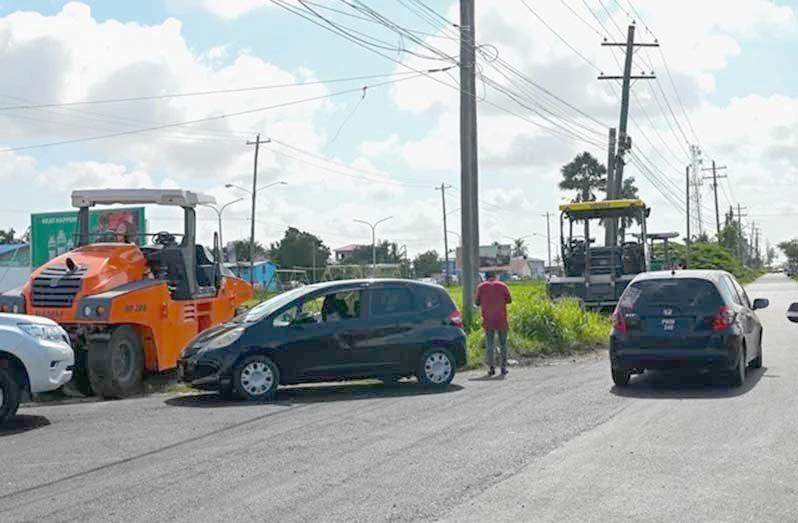
While the Aubrey Barker four-lane road was being constructed, more than $700 million was invested in 57 projects, including the upgrading of roads, culverts and drains in South Georgetown

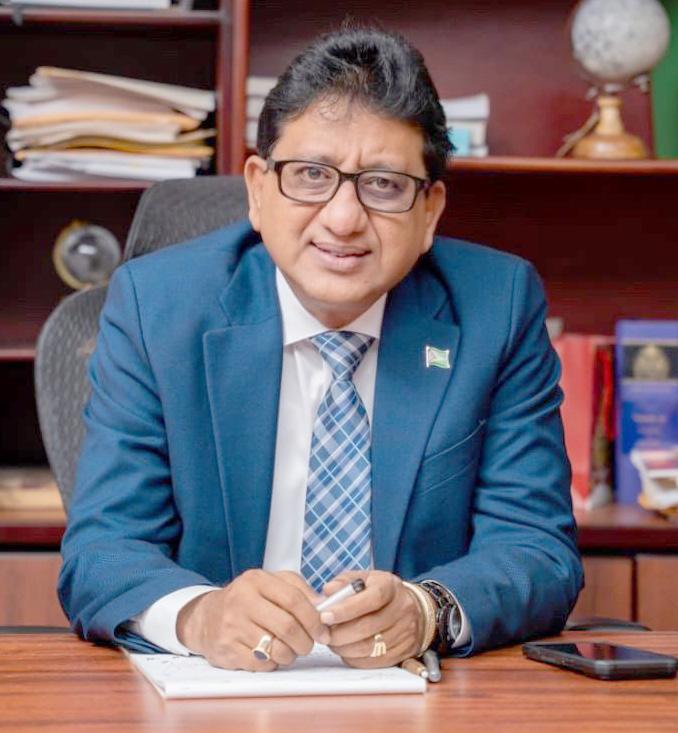
and Minister of Legal Affairs, Anil Nandlall, says Guyana has already started gearing up for its next assessment by the Caribbean Financial Action Task Force (CFATF), even as the country continues to build on what he described as a strong performance in its last evaluation.
Speaking on his Issues in the News programme, Nandlall explained that Guyana, as a member of the CFATF, is required to undergo periodic reviews to ensure compliance with international standards on anti-money laundering and countering the financing of terrorism.
“The Caribbean Financial Action Task Force is that regional institution that monitors, evaluates and ensures compliance of countries… with international rules and regulations regarding anti-money laundering and countering the financing of
terrorism,” he said.
He noted that the process, conducted every three years, involves a comprehensive examination of a country’s financial system, legal framework, law enforcement network and accountability structures.
“Each country… must undergo what is called a mutual evaluation peer assessment exercise, where the country’s financial system, the country’s legal framework, the country’s law enforcement network, the country’s accountability architecture are all examined,” Nandlall explained.
According to the Attorney General, Guyana performed exceptionally well during its last review in 2024.
“We acquitted ourselves with distinction. In fact, we topped the independent English-speaking Caribbean. We got the highest score,” he disclosed.
However, he warned that
failure to meet the required standards can trigger serious consequences under the
CFATF’s penalty regime, recalling a previous period when Guyana faced such
measures.
“If for whatever reason there is refusal to comply or failure to comply, then there is a penalty position… that kicks in,” he said.
With the next evaluation set for 2027, Nandlall said preparations are already underway under his ministerial portfolio.
“We have already begun our preparation for that mutual evaluation exercise that will take place next year,” he stated.
As part of those efforts, Guyana will participate in a regional conference in Trinidad and Tobago later this year, where progress will be assessed.
“From May the 24th to the 28th we will be attending that conference… [where] we will update the CFATF on the work that we have done so far… and what we plan to do to ensure that we comply with all of our outstanding obligations,” he said.
The Attorney General added that the country’s delegation will include representatives from several key agencies, reflecting the multi-agency approach required to meet international standards. These include the Bank of Guyana, Guyana Revenue Authority, Guyana Gold Board, the Special Organised Crime Unit (SOCU), the Guyana Police Force and the Office of the Director of Public Prosecutions.
“A whole set of organisations normally attend these conferences because their agencies are all part of the framework that have to ensure that they comply with these international standards,” Nandlall said.
He emphasised that compliance is an ongoing process, especially in a global environment marked by cross-border financial crime, terrorism financing, gold smuggling and tax evasion.
THE Caribbean Public Health Agency (CARPHA) on Tuesday signed a Memorandum of Understanding (MoU) aimed at strengthening the public health system across the Caribbean through research and training.
The agreement, which was signed on the sidelines of regional health meetings being held in Guyana entails just around five key areas of collaboration which include, joint public health research and evidence generation, student training, capacity building in epidemiology, public health and analysis and digital innovation.
Giving brief remarks during the signing ceremony, Executive Director of CARPHA, Dr Lisa Indar stated, “This MoU concretises the well-established, long-standing relationship with CARPHA and SGU. It will also position CARPHA and SGU as key regional leaders in
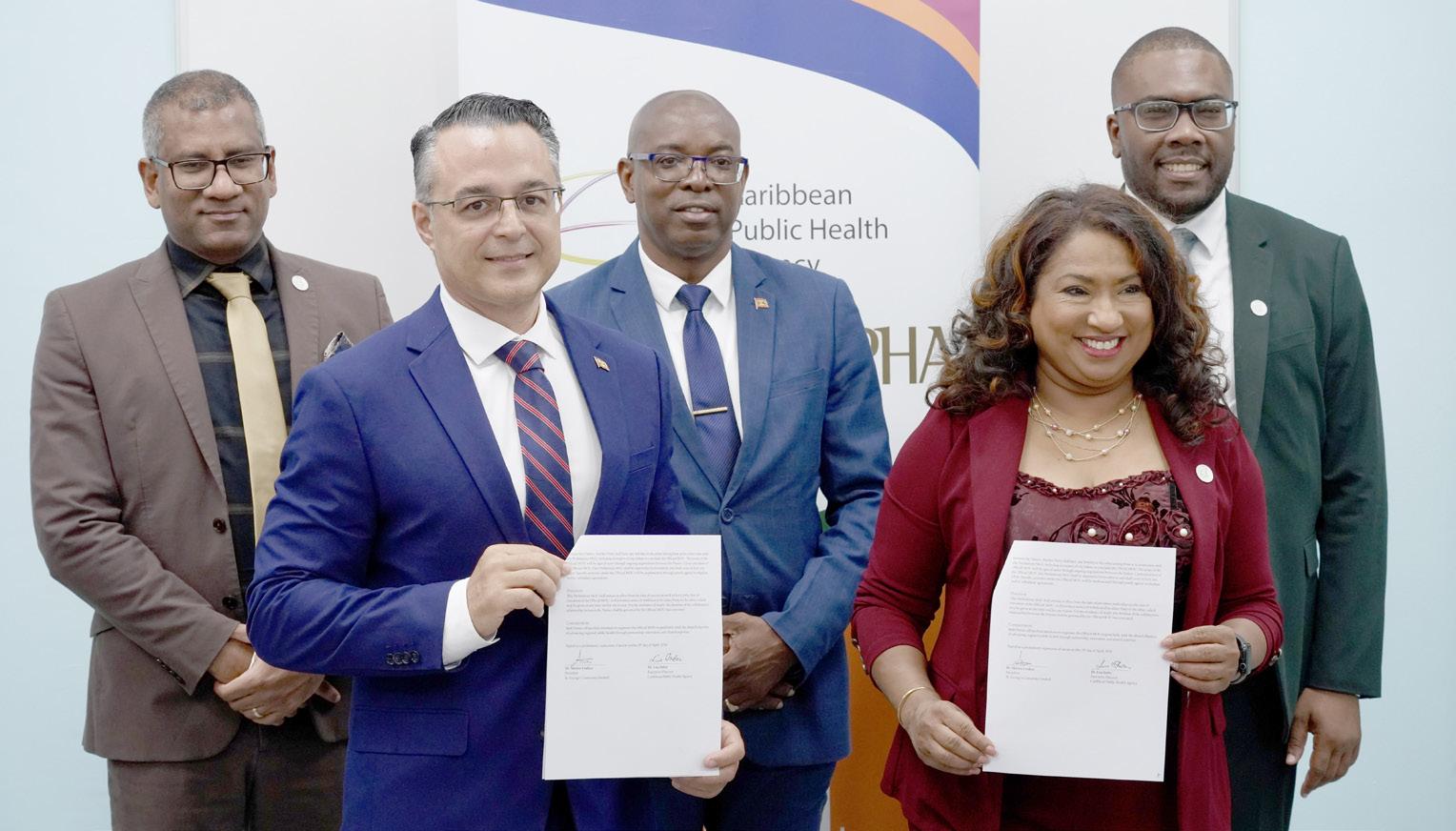
public health research and practice across the Caribbean and support the translation of research findings into evidence-informed policy recommendations for our Member States.”
She went on to note that it also exemplifies the agency’s innovations in partnerships to collectively address
public health in the Caribbean region.
Meanwhile, President and Dean of the School of Medicine at the St George’s University, Professor Marios Loukas, stated, “This partnership between SGU and CARPHA marks a defining moment for public health in the Caribbean. By
aligning SGU’s academic and research strength with CARPHA’s regional leadership, we are building an integrated platform to drive innovation, expand research capacity, and accelerate the translation of evidence into policy and practice.”
The collaboration, the professor stated, strengthens
a more resilient, equitable and healthier Caribbean, thus positioning the region as a global leader in public health innovation.
The MoU further for-
malised the agreement for five years to advance joint regional research and public health innovations for strengthening regional capacity.


GUYANA’s most recent step toward long-term growth may be taking root, literally, in the soil of Region 10.
The country is changing the way it thinks about land restoration, community development, and economic diversification with the start of a bamboo pilot project at Three Friends/Old Coomacka Mines, which is being led by Minister of Natural Resources, Vickram Bharrat.
At first glance, it might seem like planting bamboo on a mined-out bauxite site is just a symbol.
But in reality, it means a bigger and more strategic shift: one that acknowledges that Guyana’s future prosperity can’t depend only on extractive industries, but must also include renewable, nature-based solutions that are good for both people and the environment.
The European Union paid for the work of the Guyana Forestry Commission, the International Bamboo and Rattan Organization, and Expertise France.
This shows that people around the world trust Guyana to take care of its environment.
More importantly, it shows that people around the world are starting to realize that bamboo, which is often ignored in the area, can be a powerful tool for restoring things and making economies more stable.
The fact that this project is part of the National Forest Restoration Initiative (NFRI) and the Guyana Geology and Mines Commission shows that the government is making smart policy choices.
It recognizes that fixing up damaged land is not only good for the environment, but also good for business.
Guyana is broadening its development lens by adding non-timber forest products and agro-forestry systems.
This means that it is moving away from traditional forestry and toward more diverse and sustainable paths.
The usefulness of bamboo is what makes it so appealing. It grows quickly, so it gives back relatively quickly in areas that have been damaged by mining.
It makes the soil more stable, increases
biodiversity, and most importantly, it can be turned into a wide range of useful products, such as building materials, furniture, and crafts.
This is more than an environmental project for communities like Maria Elizabeth/Three Friends, Coomacka, and the areas around them; it could be an economic lifeline.
The promise is clear, but how well it is carried out will determine its success. Pilot projects can get people excited, but for them to have a lasting effect, there needs to be ongoing investment, market growth, and community involvement.
The initiative’s plan for training in propagation and product development is an important step, but it needs to be paired with access to financing, infrastructure, and markets for a bamboo industry to become viable.
This project also teaches us something more general. Guyana has long been known for its rich natural resources, especially in mining and forestry.
But because the world is moving toward sustainability, things need to be adjusted.
The bamboo pilot project and others like it show that the country is starting to find a balance between extraction and regeneration.
This could improve its reputation for protecting the environment and open up new economic opportunities.
The planting of almost 500 bamboo seedlings at Coomacka is a small step in the right direction. But if it is done right, it could be the start of a new, nature-based industry based on sustainability, resilience, and giving people power in their communities.
At the end of the day, the number of seedlings planted won’t be the most important thing about this project.
What will matter is the jobs created, the land restored, and the businesses built.
Bamboo may be the first step, but the idea behind it is much bigger: a future for Guyana that is greener and more varied.
AT least Moses Bhagwan showed more courage than his political acolytes in that he replied to me, giving me a chance to express myself on a certain period in contemporary Guyanese history so that I could contribute to the writing of the history of this country.
I hope to hear Bhagwan’s thoughts on the contents of this column so that the recording of history can go on. I thank Nigel Westmaas for writing about me. I offered 11 columns in response to what he wrote. I hope he sees his obligation to those who follow him and his political comrades like Bhagwan, Kwayana, etc. and responds to me so we can separate facts from alternative facts. Bhagwan had a mouthful to say about me. Some of his fulminations are petty insults, which I have been receiving the past 51 years since I became a UG freshman. I doubt I can challenge the alternative facts of Bhagwan in one column, so the debate here will take another column or maybe two.
First things, first. I am accusing Bhagwan of lying on Roger Luncheon. A statement he attributed to Roger Luncheon in 1993 is so infantile and silly that no decent Guyanese and non-Guyanese familiar with the politics of Roger Luncheon would believe Bhagwan. In lying on Luncheon, I think Bhagwan has permanently damaged his legacy (whatever was left of it).
From all appearances, with the exception of Maurice Odle, the WPA people who are still alive and still involved in politics, like Bonita Bone, Moses Bhagwan, David Hinds, Tacuma Ogunseye, Clive Thomas, and Eusi
Kwayana, have been engaged in self-destructive politics since the WPA lost the 1992 general elections. When you analyse the reactionary transformation of their politics, it is a story that maybe has not got a parallel in any other country.
Bhagwan noted that when a delegation of the WPA met with President Cheddi Jagan and Roger Luncheon, Secretary to the Cabinet, to clarify the PPP’s Government offer to Dr. Clive Thomas, Luncheon blurted out, “he’s black and bright.” Is Bhagwan suffering from mental deterioration? Why would Luncheon say such a stupid thing and say it to a delegation of WPA leaders? I don’t believe that. I am accusing Bhagwan of crass behaviour that should lead to young Guyanese erasing his memory from Guyana’s history. From 1992 until April 21, 2026, the WPA has never accused the PPP leadership of saying what Bhagwan said Luncheon uttered.
Why, in all those decades of anti-PPP politics, have Rupert Roopnaraine, David Hinds, Kwayana, Thomas, and Westmaas never highlighted that Luncheon exclamation? Think of the political capital that would have come to the total anti-PPP opposition had they milked that so-called utterance from Luncheon. David Hinds almost on a daily basis says that PPP uses Black Guyanese as tokens. That Luncheon thing was a gold mine for him. The reason why it was never repeated since 1993 is because it was never uttered.
I am accusing Bhagwan of lying. More importantly, Bhagwan has a dangerous mind.

He knows how racist the WPA has become, so he has given the WPA fuel to spread their racist flame. That was Bhagwan’s intention anyway. Wait and see how Hinds is going to use this fictional thing about Luncheon. He has already. He has circulated Bhagwan’s reply to me. Moses Bhagwan, at age 92, has no respect for his age. Let’s move on to more infantile expressions of Bhagwan. He advised me that I could have used a primary source in the form of him, who is living, to write about that 1993 episode. Bhagwan should stick to propagandistic politics and not dabble in the study of history. There are different primary sources, the most reliable of which are the actual documents from governments, institutions, and individuals. One form of primary source that the researcher has to be careful with is a living primary source, that is, the person who is
still alive. You have to be careful in assessing what the individual says because he or she can lie more brutally than Dracula. A living primary source that Bhagwan knows well is a man named Hamilton Green. This PNC stalwart has been around longer than Bhagwan. I interviewed Green three times and have read the millions of words he has written. There is a line in a famous calypso that goes like this: “lies, yuh hear lies.”
Green is a liar, Bhagwan is a liar, Kwayana is a liar, Clive Thomas is a liar, Nigel Westmaas is a liar and I am so fed up reading their lies that I am beginning to think I could lie too.
Part 2 coming up.
DISCLAIMER: The views and opinions expressed in this column are solely those of the author and do not necessarily reflect the official policy or position of the Guyana National Newspapers Limited.
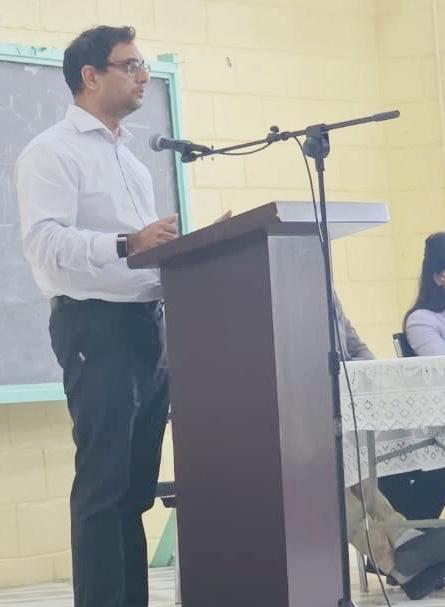
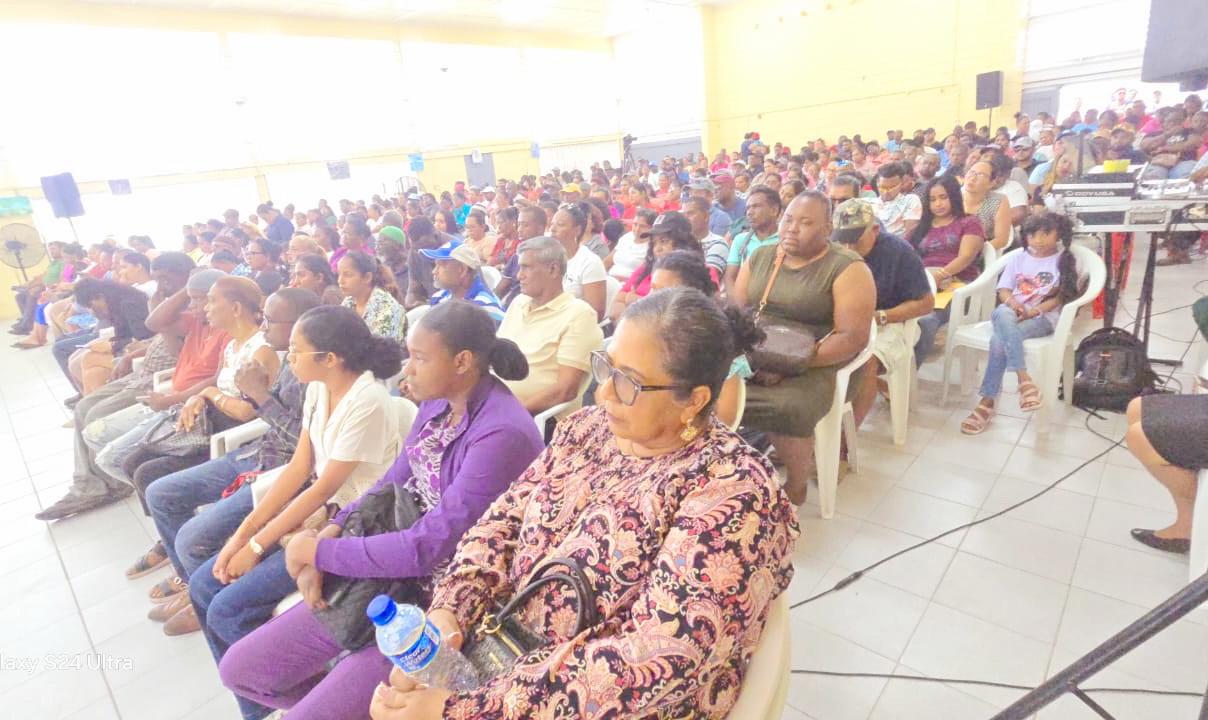
Two were on Wednesday urged to capitalise on a wave of new economic opportunities, as Minister of the Public Service, Government Efficiency and Implementation, Zulfikar Ally, outlined a suite of initiatives designed to expand access to financing, strengthen small businesses and modernise service delivery.
Speaking to a large gathering at Anna Regina Secondary School, Minister Ally highlighted the establishment of the Guyana Development Bank, a flagship initiative that will offer interest-free, collateral-free loans to support individuals seeking to start or expand businesses.
The minister said the move directly addresses longstanding barriers, particularly high interest rates and stringent collateral requirements, faced by many Guyanese in accessing credit through traditional financial institutions.
Under the programme, small and medium-sized enterprises (SMEs) will be eligible for loans of up to $10 million without the need for collateral, significantly lowering the threshold for entrepreneurship. The bank is expected to become fully operational
before the end of the first quarter of 2026, supported by an initial government investment of US$200 million.
Minister Ally explained that the initiative stems from concerns raised by citizens and reflects a policy response by President, Dr Irfaan Ali to expand access to capital while reducing financial risk for borrowers.
TWELVE Guyanese nationals were deported from the United States to Guyana on Tuesday, April 21, 2026, with two of them now in police custody over serious offences.
Authorities said that upon arrival, all twelve individuals were interviewed and profiled as part of standard procedures.
Following the processing exercise, ten of the deportees were released into the care of relatives, with instructions to report at a later date.
However, a 42-year-old male, whose address is unknown, is being held in connection with a murder offence, while a 35-year-old male of no fixed address is in custody in relation to a domestic violence matter. Police said the process was handled in keeping with established protocols.
“The simplified process ensures that more Guyanese can benefit without putting their personal or family assets at risk,” he said, noting that government will also provide training in business development, financial literacy and project planning to help applicants manage and grow their ventures effectively.
In addition to financ -
ing, the minister underscored the growing importance of digital transformation, pointing to the Electronic Identification (E-ID) system as a tool to improve access to public services by making transactions faster, more secure and more efficient. He encouraged residents to adopt online platforms to reduce wait times and improve productivity.
Attention was also drawn to the Skills Connect platform, a digital marketplace designed to link skilled workers with clients. Through the platform, tradespeople such as electricians, plumbers, mechanics, carpenters and painters can advertise their
services and connect directly with customers.
“You can go on this app and simply indicate that you’re looking for an electrician, and you’ll be able to find professionals in your area,” Minister Ally said. He added that planned enhancements to the platform will include draft contract templates outlining pricing and scope of work, aimed at reducing disputes and promoting professionalism across the sector.
Residents were encouraged to register and participate in the digital platforms as part of the government’s broader push to expand economic
inclusion and modernise service delivery.
Also present at the engagement were Minister within the Ministry of Public Works, Deodat Indar, Nigel Dharamlall, Regional Executive Officer Susan Saywack, and Regional Vice Chairman Humace Oodit.
Minister Ally stressed that as Guyana continues its rapid development, citizens must take advantage of the opportunities available, emphasising that the government’s goal is to build a diversified and resilient economy in which all Guyanese can participate meaningfully.

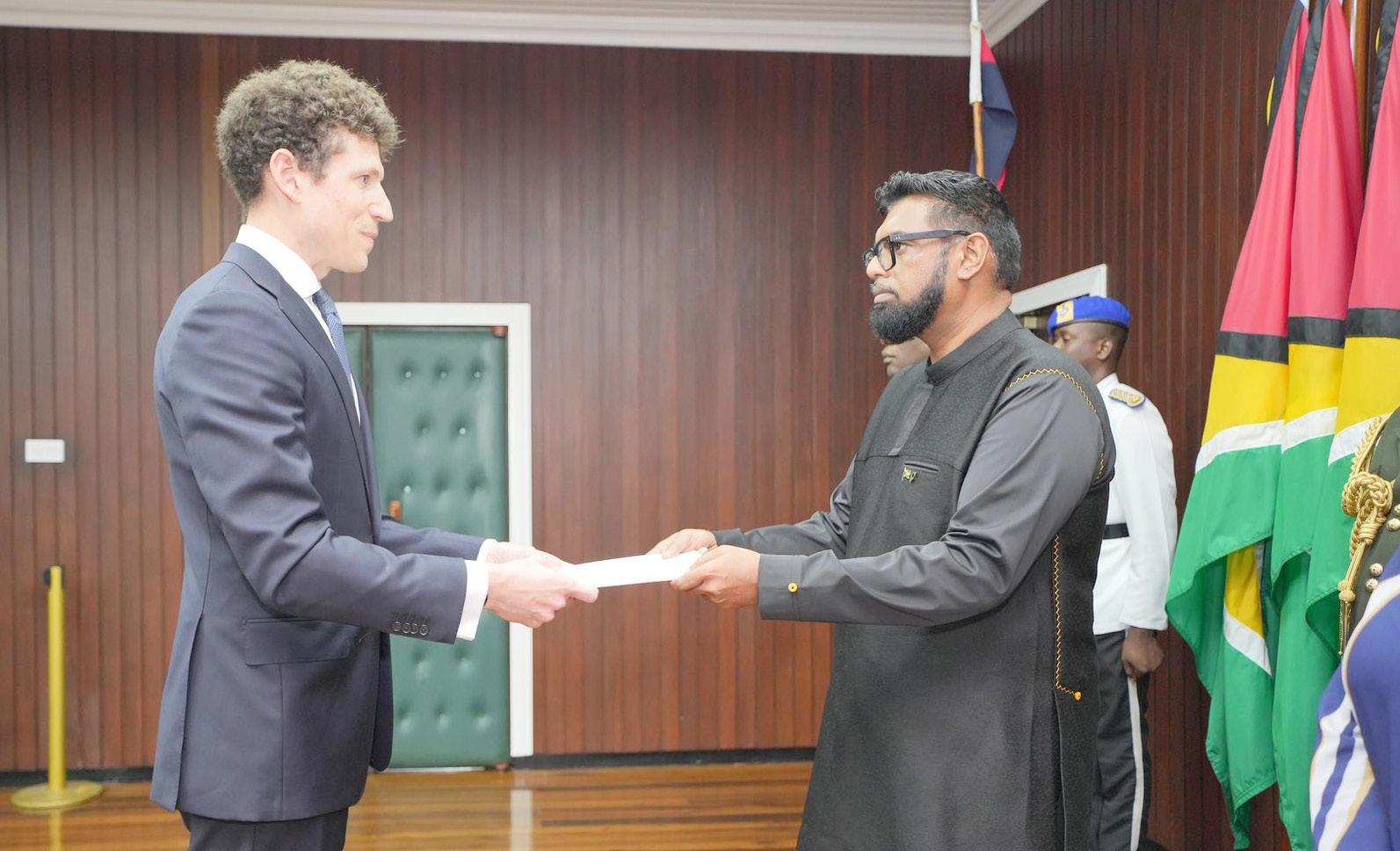
GUYANA and the United Kingdom have signalled renewed commitment to strengthening bilateral co-operation across key development sectors, following the presentation of Letters of Credence by the UK’s new High Commissioner Joseph Guy Fisher, MBE, to President, Dr Irfaan Ali, on Wednesday.
The ceremony, held in Georgetown, formally marked Fisher’s assumption of duties as Britain’s top diplomat in Guyana and set the stage for expanded engagement between the two countries, which have main-
tained diplomatic relations since 1966 and continue to collaborate closely on trade, security, climate action and development priorities.
Following the formal presentation, President Ali and High Commissioner Fisher held discussions described as productive, focusing on broadening co-operation in healthcare, education, security, climate change, biodiversity, environmental services, tourism, and infrastructural development.
The meeting comes against the backdrop of a steadily deepening Guyana–UK partnership in recent
years, including collaboration on defence and security, climate resilience, and economic-development initiatives.
In 2025, both countries strengthened defence co-operation through a memorandum of understanding aimed at training, cybersecurity, and capacity building between their armed forces.
The newly accredited High Commissioner is expected to play a central role in advancing the next phase of Guyana–UK relations, as both countries explore new areas of co-operation in a rapidly evolving global environment.

mission (CDC) on Wednesday issued a weather advisory warning of prolonged rainfall and potential flooding across several regions, with residents urged to take precautionary measures as conditions are expected to intensify over the coming days.
According to the CDC, the Hydrometeorological Service has forecast periods of above-normal rainfall between April 22 and April 25, with Regions Five, Six, Seven, Eight and Nine likely to experience the heaviest downpours.
The agency cautioned that the anticipated weather conditions could lead to widespread impacts, including coastal flooding, drainage overflow, road inundation and agricultural losses affecting crops and

livestock. Riverine flooding is also a concern, which may result in isolated communities and disruptions to transportation networks, including airstrips and interior trails.
In view of the advisory, the CDC is urging citizens to avoid flood-prone areas and exercise extreme caution when travelling during periods of heavy rainfall, particularly in areas where water accumulation is likely. Residents are also advised to keep drains and waterways
clear to minimise flooding risks and to secure important documents and household items.
Preparedness measures include the use of sandbags and elevating furniture in low-lying homes, especially for those residing on ground floors. The commission further encouraged the public to remain vigilant and monitor official forecasts and updates as the situation develops.
Authorities have also called on citizens to report flooding, rising water levels or related incidents to the National Emergency Monitoring System (NEMS) via its emergency contact lines.
The CDC emphasised that timely public co-operation and preparedness will be critical in reducing the potential impact of the anticipated weather system.

GUYANA’S Minister of Health, Dr Frank Anthony, has called on Caribbean nations to take a decisive leadership role in shaping their own healthcare future by strengthening research, producing regional data and embracing innovation to drive evidence-based policy and better health outcomes.
Delivering remarks at the 70th Annual Health Research Conference hosted by the Caribbean Public Health Agency, Minister Anthony urged stakeholders to move beyond discussion and ensure that research directly informs decision-making across the region.
He warned that failure to generate and publish Caribbean-based findings would leave the region vulnerable to external narratives. “If we do not generate our own data, others will define our realities for us. If we do not publish our findings, our stories remain untold,” he said, underscoring the importance of ownership in scientific knowledge.
Held under the theme, “Innovation in Health,” the conference—recognised as the longest-running health-research forum in the English-speaking Caribbean—has attracted more than 400 participants, including chief medical officers, researchers, policymakers, and public health practitioners. Anthony described the gathering as a critical platform for advancing Caribbean
science, fostering collaboration, and strengthening the region’s research capacity.
The minister highlighted the urgency of strengthening research systems amid rapidly evolving global health challenges, including the resurgence of infectious diseases, the growing burden of non-communicable diseases, antimicrobial resistance, and the spread of misinformation. He stressed that research remains the most effective tool to navigate uncertainty and counter false narratives.
“In such a world, research is not optional, it is essential. It is how we move from assumption to evidence and transform challenges into solutions,” he stated.
Anthony also placed strong emphasis on publication, noting that research which is not shared widely fails to achieve its full impact.
He said publishing scientific findings allows Caribbean voices to influence global discourse, guide clinical practice, and shape public policy.
“Publication is not merely an academic exercise; it is an act of influence,” he said, calling for a stronger culture of writing, peer-reviewed output, and mentorship for emerging researchers across the region.
Turning to innovation, the minister said progress must extend beyond advanced technologies to include practical, scalable solutions that improve everyday healthcare
delivery. He pointed to examples such as telemedicine services in remote communities, integrated digital health systems, the use of artificial intelligence in diagnostics and new models of care designed to bring services closer to patients.
He further urged governments to create enabling environments for research by investing in laboratories, data systems, training, and partnerships at both regional and international levels. Importantly, he said, research must be translated into tangible action that improves lives.
“The ultimate goal of research is not publication alone—it is impact. It is better health outcomes, stronger systems, and longer, healthier lives for our people,” Anthony said.
Looking ahead, the minister encouraged regional leaders to recommit to core principles, including science-driven decision-making, collaboration, innovation, and the amplification of Caribbean voices through publication.
“CARPHA has given us a platform. Now it is up to us to use it—to push boundaries, challenge assumptions, and create knowledge that transforms lives,” he said.
“Let this conference be more than a meeting of minds. Let it be a catalyst for bold research, stronger partnerships, and a Caribbean that leads, not follows, in the global health landscape.”

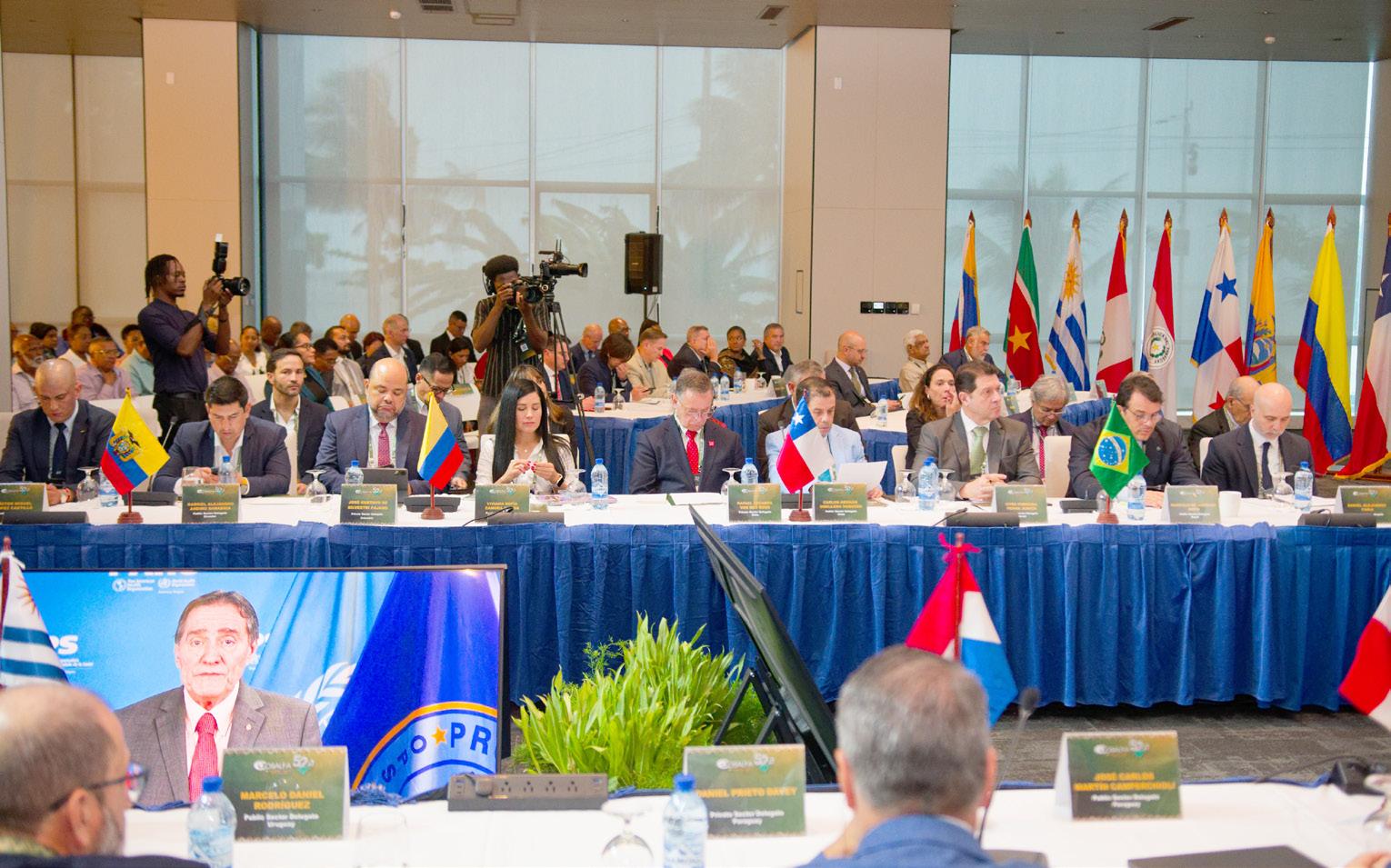
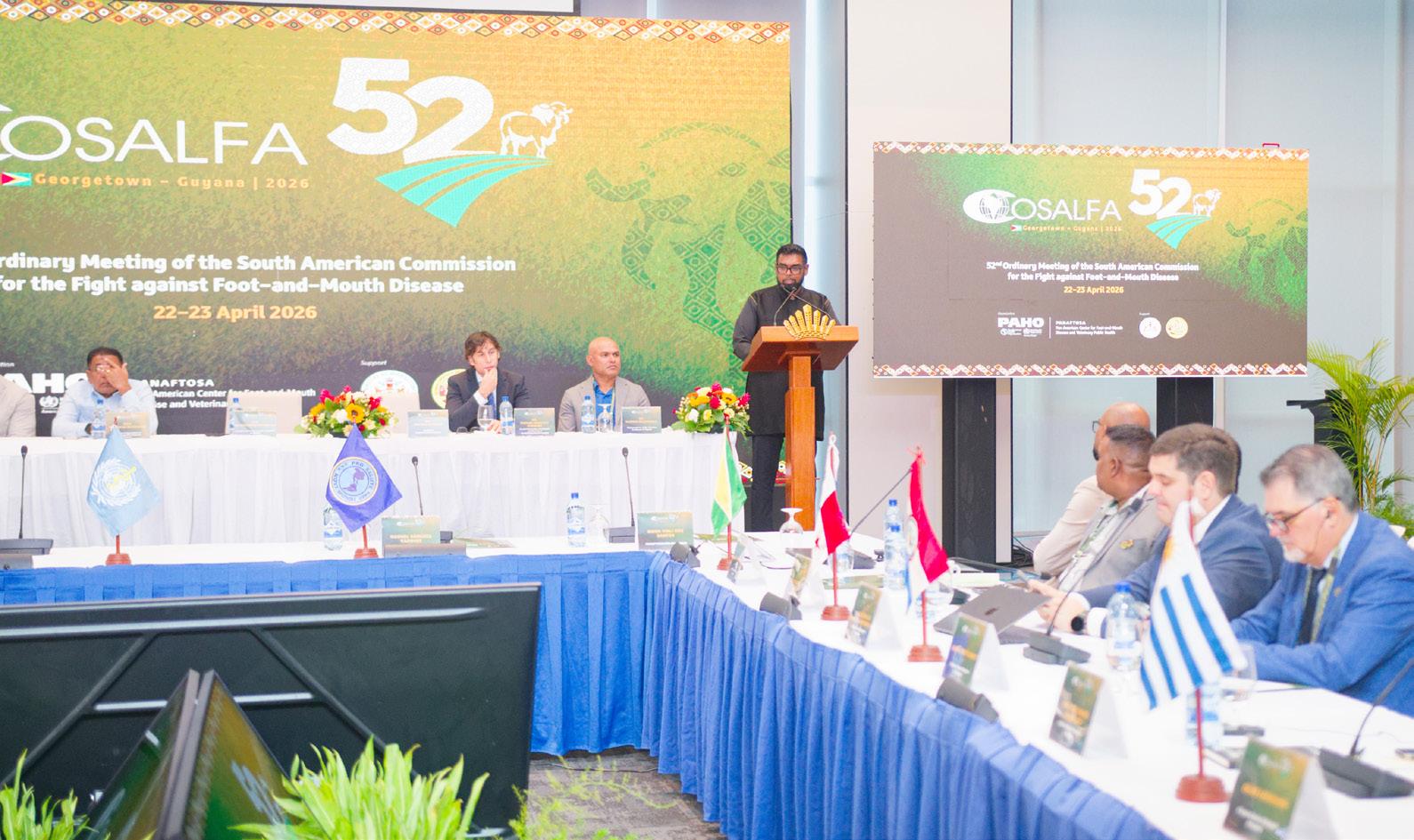
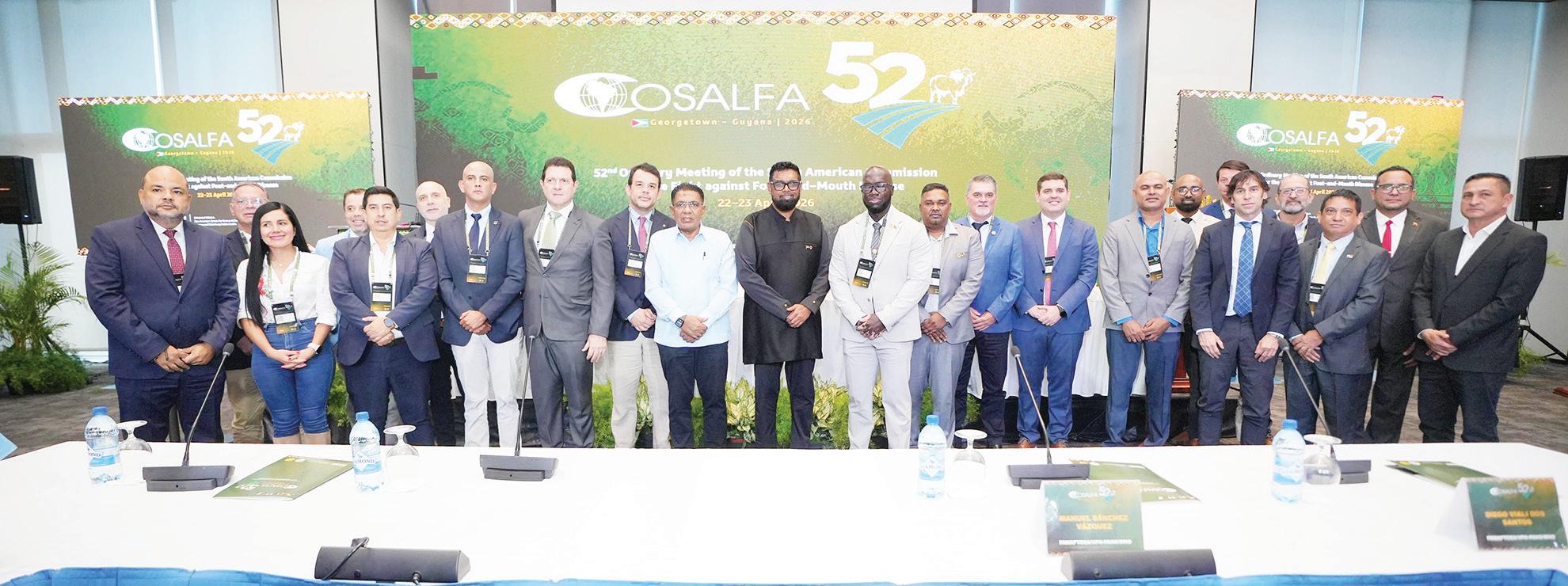
PRESIDENT, Dr Irfaan Ali has noted that the Caribbean and wider Latin American region must urgently strengthen animal-health systems as global instability and disease threats continue to expose vulnerabilities in food production and supply chains.
The Head of State made this known while delivering remarks at the opening of the 52nd Meeting of the South American Commission for the Fight against Foot-and-Mouth Disease (COSALFA), during which he stated that the region can no longer
treat food security and animal health as aspirational goals but as matters of survival.
He stated that resilience has become even more vital in an era when external shocks can disrupt access to food and markets beyond shores here, as he pointed to
the ongoing geopolitical tensions in parts of the world that have already affected global supply chains.
President Ali added that international shipping networks are facing disruptions, fertiliser supplies are tightening and grain shipments are
- President Ali notes - global shocks, disease threats underscore urgency at COSALFA 52
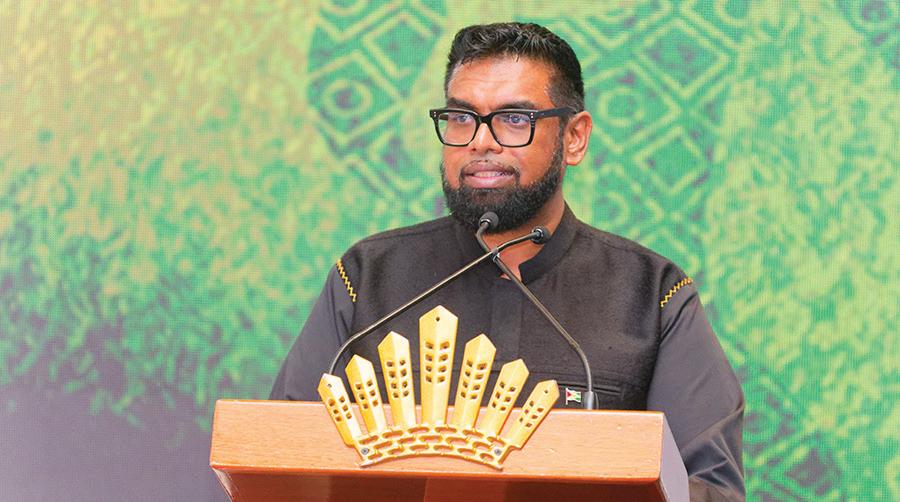
to build systems that are “proactive, interconnected, and resilient to shocks, both biological and geopolitical.”
He went on to highlight Guyana’s position as one of the countries in the region designated free of FMD without vaccination, noting that it is a strategic advantage that strengthens food security, protects livestock industries, and opens export opportunities.
being delayed, while livestock-trade logistics are becoming increasingly uncertain.
“For our region, which still imports far too much of what we consume, this is not a distant crisis. It is a present reality,” he said.
“Higher costs, delayed deliveries, and mounting food-insecurity risks are now daily challenges,” the president added.
Against this backdrop, Dr Ali stressed that strengthening animal-health systems is critical to building resilience, warning that a single outbreak of Foot-and-Mouth Disease (FMD) could have devastating consequences.
“We are acutely aware that a single outbreak of foot-and-mouth disease would devastate food security, rural livelihoods, and trade across Latin America and the Caribbean,” he said.
To this end, he stated that vigilance is not optional; it is survival.
However, he cautioned that vigilance alone is not enough and further urged countries
Additionally, Dr Ali said Guyana is pursuing an ambitious agenda to become a net exporter of safe, high-quality agricultural products, while contributing to CARICOM’s broader goal of reducing food imports among other things.
Meanwhile, Minister of Agriculture Zulfikar Mustapha too emphasised that while the region has made significant progress in controlling FMD, the risks remain high and require constant vigilance and stronger systems.
“The reality is this: the closer we get to full eradication, the higher the stakes become,” Mustapha said. “One breach, one lapse in cross-border coordination, one weakness in early detection can undo years of effort.”
He noted that COSALFA 52 comes at a critical juncture as countries prepare to transition from the 2021–2025 action plan to a new strategic framework for 2026–2030.
“This is not a routine meeting. It is a moment to sharpen our collective resolve,” the Agriculture
Minister said.
He went on to add that the region must guard against complacency after decades of investment and progress.
Mustapha outlined Guyana’s ongoing efforts to strengthen its veterinary and surveillance systems, including expanding diagnostic capacity and improving national monitoring frameworks.
He said the meeting provides an opportunity for countries to deepen collaboration, accelerate the adoption of new technologies, and ensure that all states have the systems necessary to protect their livestock sub-sectors.
Adding to this, Director of the Pan African Foot-and-Mouth Disease and Veterinary Public Health Centre (PANAFTOSA), Manuel Sánchez, warned that while the Americas have maintained strong sanitary stability, the global risk environment is becoming more complex.
He stated that FMD continues to circulate in parts of Africa, the Middle East, and Asia, with outbreaks occurring in countries previously recognised as disease-free, further highlighting the persistent global threat.
While the Americas have not recorded intra-regional introductions since 2018, the director cautioned that the region’s risk profile is shifting, stressing that COSALFA remains critical for coordinated action, preparedness, and sustained vigilance.
A NEW partnership aimed at strengthening mental health support for adolescents in Region Two was formalised on Wednesday, as the United Nations Children’s Fund and Republic Bank signed an agreement to expand access to youth-focused services in schools and communities.
The agreement, signed at Republic Bank’s Con-
to Make a Difference” programme, which focuses on creating lasting social impact, particularly among young people.
He explained that the partnership will support the development of youth-friendly mental health facilities in schools and at the primary healthcare level across Region Two (Essequibo Islands-West Demerara).
are supported and empowered.
He noted that while adolescence is a period of opportunity, it is also marked by vulnerability, with young people facing pressures related to academics, social expectations, family dynamics, and the influence of digital environments.


ference Centre on New Market Street in Georgetown, brings together public and private sector stakeholders to address growing concerns about adolescent mental health in Guyana.
Representatives from the Ministry of Education and the Ministry of Health were among those in attendance, underscoring the collaborative nature of the initiative. A symbolic green bow and heart pin presentation marked the signing ceremony.
Republic Bank Director, Toussant Boyce, said the initiative falls under the bank’s “Power
These services, he noted, will also be inclusive of persons living with disabilities.
Dr. Boyce emphasised that many adolescents remain reluctant to seek help, often due to stigma, and stressed that the programme aims to change that perception.
“Seeking help is not a sign of weakness but strength,” he told the gathering, adding that the initiative is designed to foster a healthier future for young people.
UNICEF’s Representative for Guyana and Suriname, Javier Cordoba, described the agreement as a critical step toward ensuring that adolescents
Cordoba highlighted that across the Caribbean, many adolescents struggle in silence due to stigma, limited services, and lack of awareness. He warned that strengthening mental health systems in Guyana is not only important but urgent.
“This partnership reflects a shared commitment to ensure that every child and young person is supported, heard and empowered to thrive,” he said.
Under the initiative, UNICEF and Republic Bank, in coordination with government agencies, will work to expand mental health awareness, promote positive coping strategies, and create safe spaces for adolescents in schools, homes, and communities.
UNICEF Health Officer, Joann Simpson, revealed that recent data indicate significant mental health challenges among Guyanese youth. She reported that approximately 17.5 per cent of boys are affected by mental health disorders, with broader regional data pointing to high levels of adolescent vulnerability.
Simpson also highlighted ongoing concerns, including stigma, selfharm, and limited access to community-based support services.
Over the next year, the programme is expected to reach approximately 6,500 individuals in Region Two, delivering coping skills training and wellbeing services through schools and primary healthcare systems.

The initiative will also focus on early detection and intervention, with plans to train 15 primary healthcare workers and 25 guidance counsellors. Additionally, peer educators and teachers will be equipped to identify early signs of mental
health challenges among students.
Special provisions will be made to ensure accessibility, including the issuance of identification cards to persons living with disabilities to facilitate access to services.
Officials say the partnership represents a significant step toward addressing gaps in adolescent mental health care, while reinforcing the role of cross-sector collaboration in building a more resilient and supportive environment for Guyana’s youth.
A SIGNIFICANT drop in serious crime and expanded policing infrastructure are signalling improved public safety in Region Seven, as the Government of Guyana ramps up investment in law enforcement across hinterland communities.
Data from the Guyana Police Force show that between January 1 and April 19, 2026, Regional Police Division #7 recorded a 30 per cent decrease in serious crimes, alongside an over-
all clear-up rate of 157.1 per cent. The figure reflects not only progress in solving current cases but also the resolution of matters from previous years.
Authorities say the improved performance is the result of sustained investment in policing infrastructure, operational resources, and officer support across key communities, including Ekereku, Kamarang, and Bartica.
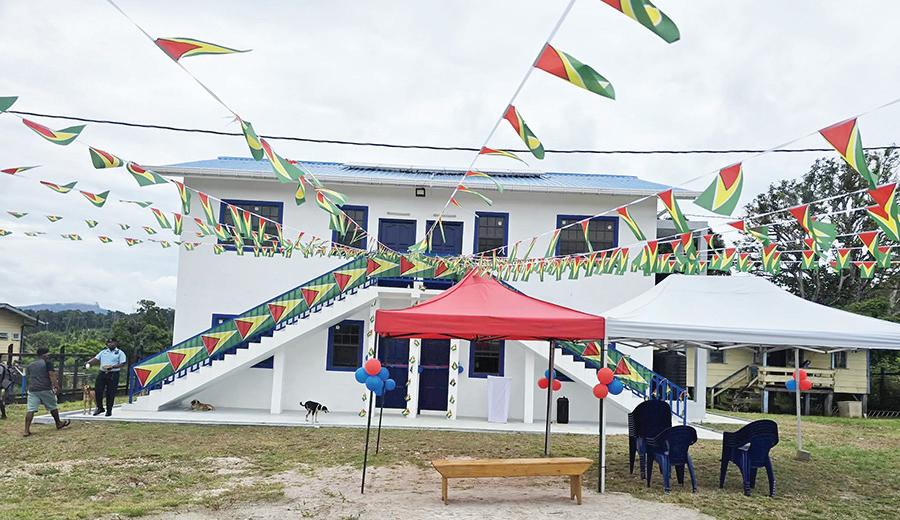
As part of the expansion, new Police Officers’ Living

Quarters were commissioned in Kamarang at a cost of $97.2 million. The facility is aimed at improving conditions for ranks stationed in remote areas, where access and terrain have historically posed challenges to effective policing.
Minister of Home Affairs, Oneidge Walrond underscored the importance of investing in the welfare of officers, noting that improved accommodation enhances service delivery and con -
tributes to stronger, safer communities.
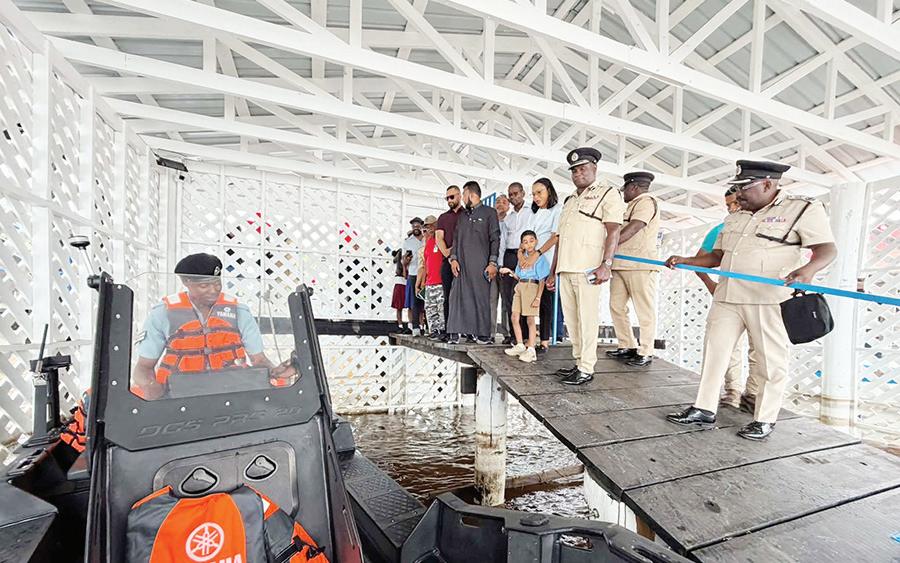
Meanwhile, in Bartica, marine policing capacity has been bolstered with the construction of a new boat house valued at $34 million. The facility includes a watchtower, ramp, fixed walkway, and floating walkway, designed to improve the deployment and operational efficiency of police vessels along critical riverain routes.
“This is development with purpose. This is infra-
structure designed not merely to exist, but to function,” the minister said during the commissioning.
Officials emphasised that the initiatives form part of a broader strategy to strengthen national security, particularly in hinterland and riverain regions where geographic constraints have traditionally limited law enforcement reach.
The recent upgrades and improved crime statistics, authorities say, demonstrate
the impact of targeted investment and coordinated policing efforts, with Region Seven emerging as a model for enhanced public safety and increased community confidence.
The government has indicated that further investments in security infrastructure and frontline resources will continue, as efforts intensify to ensure equitable access to safety and essential services across all regions of Guyana.

FARMERS along the Essequibo Coast are set to benefit from a new income stream following the launch of a brackish water shrimp farming initiative in Region Two, a move government officials say could significantly transform the region’s agricultural sector.
The project, introduced for the first time in the region, aims to complement traditional rice cultivation by providing farmers with an additional, high-value agricultural activity. Minister of Agriculture, Zulfikar Mustapha, described the initiative as a “game-changer,” noting its potential to boost incomes and expand production opportunities.
While new to Region Two, the model has already demonstrated success in Region Six, where shrimp farming has evolved from a small-scale subsistence activity into a growing industry with support from the Ministry of Agriculture.
Minister Mustapha said production in Region Six surged following targeted investments and technical assistance introduced after discussions in 2025 with President Irfaan Ali and Vice President Bharrat Jagdeo. Monthly output increased from approximately 10,000 kilograms to about 140,000 kilograms, underscoring the sector’s growth potential.
Now, authorities are seeking to replicate that success in Region Two. During a visit to Cozier, the Agriculture Minister highlighted the suitability of lands in the area and stressed that shrimp farming is intended to complement—not replace—rice production.
“This is another area of revenue generation,” he said, pointing to one of the project’s key advantages: farmers are not required to purchase shrimp larvae, as these are naturally sourced from the ocean, reducing start-up costs.
Officials estimate that a five-acre pond can yield about 1,000 kilograms of
shrimp every six weeks. With multiple ponds managed collaboratively, production could reach up to 8,000 kilograms over the same period, potentially generating earnings of approximately $4.4 million at current market prices.
Minister within the Ministry of Public Works, Madanlall Ramraj, who has responsibility for Region Two, said the initiative forms part of broader efforts to introduce innovative projects that enhance livelihoods.
He noted that after visiting Cozier earlier this year, he became convinced of the area’s potential for shrimp production and is encouraging farmers to organise themselves into groups to accelerate implementation.
Once groups are established, the government has committed to providing support, including machinery to develop ponds and related infrastructure.
Farmers have been given a two-month timeline to identify suitable lands and begin preparations.
Preliminary assessments have already been conducted by technical teams from Region Six, including soil and pH testing to confirm the area’s suitability for shrimp farming.
Farmers attending the launch welcomed the initiative, expressing optimism about the opportunities it presents. One participant, Leo Narine, described the project as a major boost, noting that the support being provided offers a clear pathway for growth and improved livelihoods.
Also present at the launch was Director General at the Ministry of Agriculture, Dhaneshwar Deonarine.
The initiative forms part of Guyana’s broader push to expand food production and diversify agriculture, with officials positioning shrimp farming as a viable and profitable addition to the country’s evolving agricultural landscape.
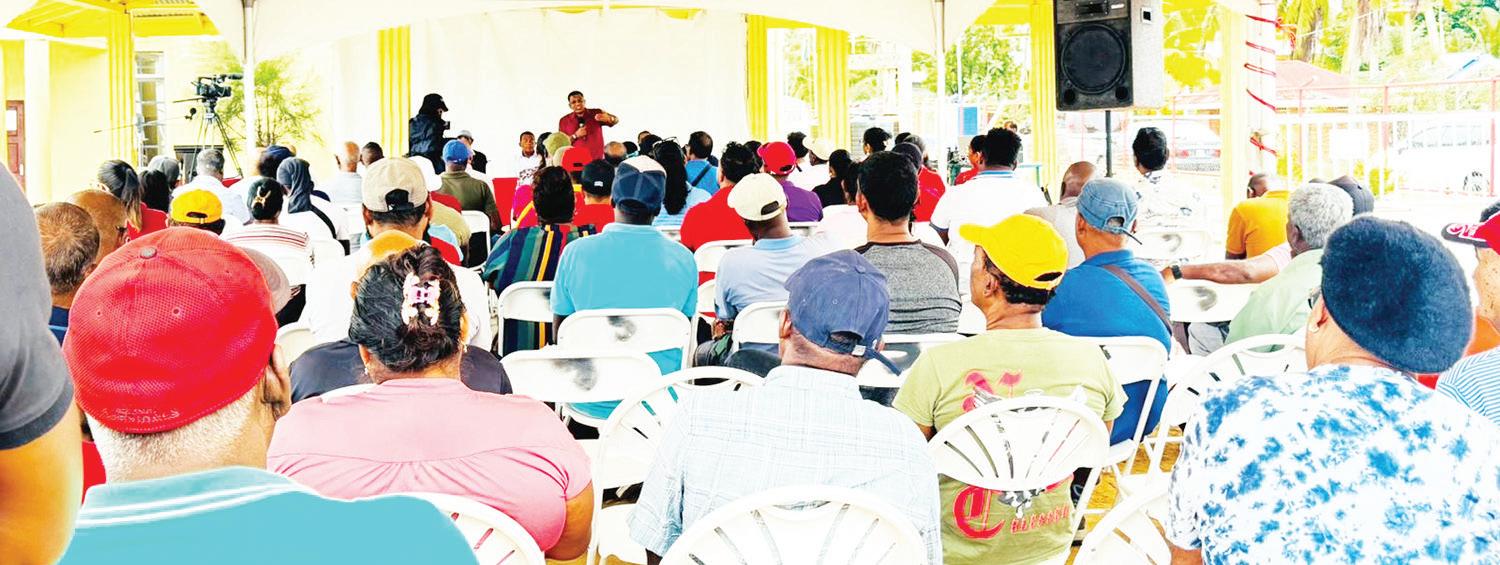
Minister of Agriculture, Zulfikar Mustapha, speaking to the gathering described the initiative as a “game-changer,” noting its potential to boost incomes and expand production opportunities

GUYANA has taken a significant step toward restoring degraded lands and expanding economic opportunities for forest-dependent communities with the launch of a bamboo pilot project in Region Ten, where nearly 500 plants are being established at a former bauxite mining site.
Minister of Natu -
ral Resources, Vickram Bharrat, on Wednesday, planted the first bamboo seedlings at Three Friends/Old Coomacka Mines, marking the official start of the initiative spearheaded by the Guyana Forestry Commission (GFC) in collaboration with international partners.
The project, titled “Piloting Bamboo for Res -
toration & Sustainable Livelihoods in Guyana,” is funded by the European Union under its Euroclima programme and implemented with technical support from Expertise France and the International Bamboo and Rattan Organisation (INBAR). It aims to rehabilitate mined-out lands while creating new income-generating opportunities for
communities.
The initiative builds on the National Forest Restoration Initiative (NFRI), launched in 2023 through a partnership between the GFC and the Guyana Geology and Mines Commission (GGMC) under the Ministry of Natural Resources. The NFRI promotes diversified restoration approaches, including non-timber forest

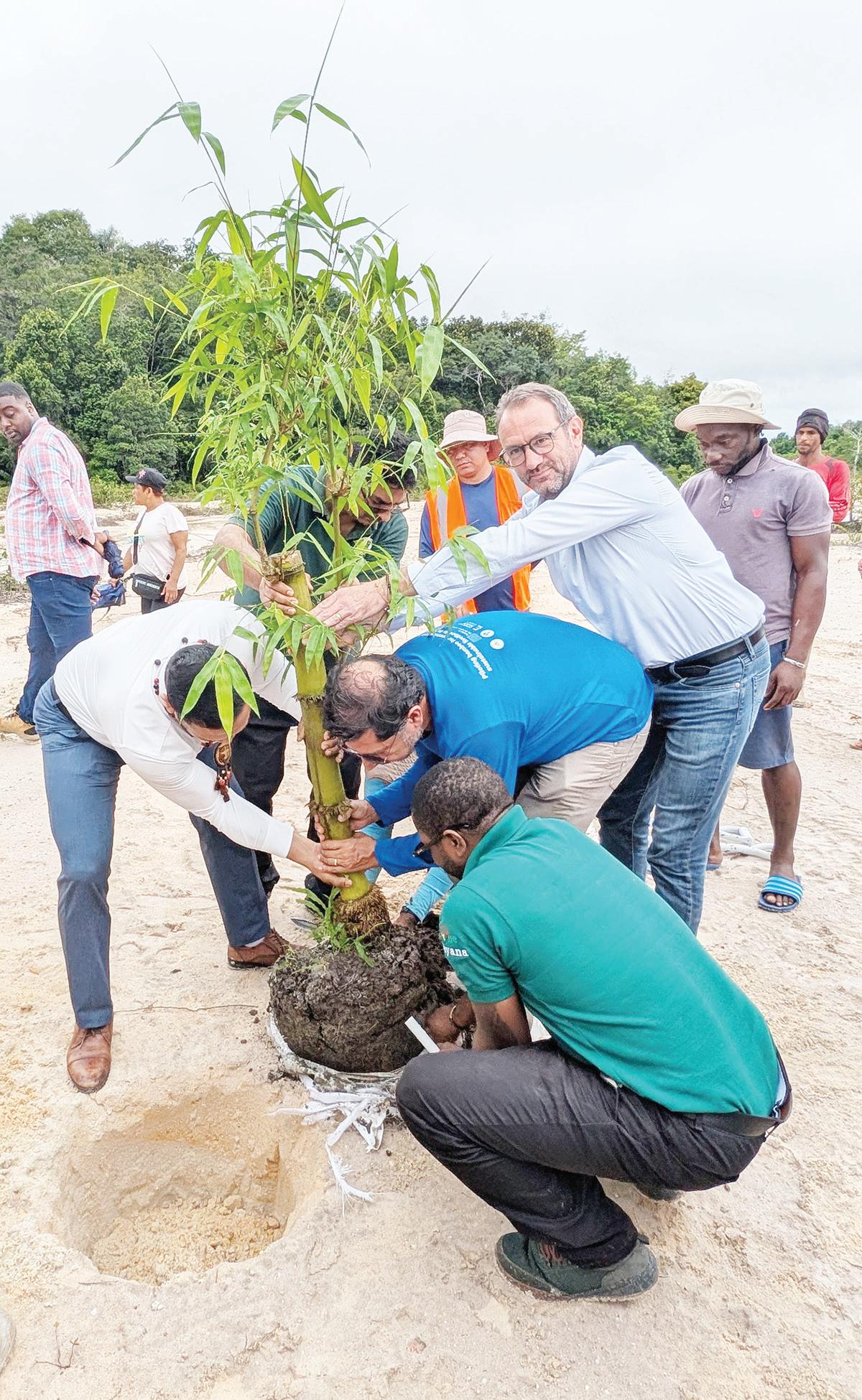
Minister Vickram Bharrat plants first bamboo at a Region 10 pilot site in Three Friends/Old Coomacka Mines
products and agroforestry systems, alongside traditional reforestation.
Minister Bharrat underscored bamboo’s potential as a fast-growing species capable of delivering short- to medium-term environmental and economic benefits.
He noted that the crop offers a practical solution for revegetation while supporting sustainable livelihoods through value-added industries.
The pilot will see the cultivation of Bambusa vulgaris var. vulgaris at the Coomacka site, with technical guidance from INBAR. The species is being tested for its suitability in rehabilitating mined lands and its potential for commercial use.
Communities across Region Ten, including Maria Elizabeth/Three Friends, Coomacka, Old England/Siberien, Nottinghamshire, and Richmond Hill, have played
a central role in shaping the project. Their involvement is expected to continue through hands-on training in bamboo propagation, management, and product development.
Officials say the initiative goes beyond environmental restoration, positioning bamboo as an underutilised but viable resource that could support a new, sustainable industry in Guyana. The project also seeks to build technical capacity at multiple levels and foster partnerships among government agencies, international organisations, and local stakeholders.
The Coomacka planting exercise is the first of several planned rollouts, with similar activities expected to be replicated in other parts of the country as Guyana advances its broader forest restoration and economic diversification agenda.
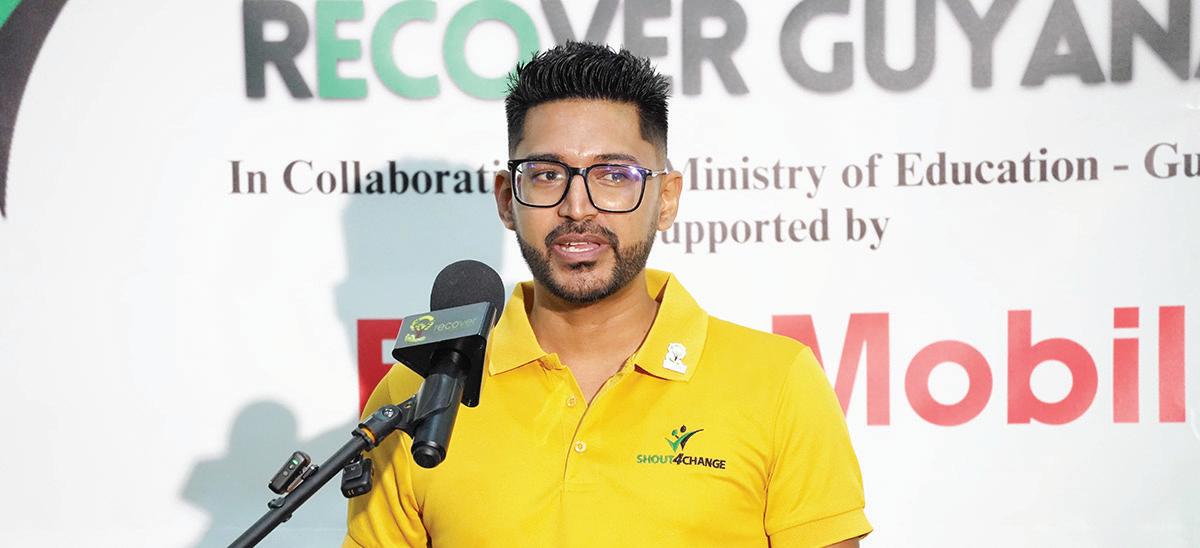
TWENTY secondary schools from across Guyana have been shortlisted to compete for more than $4 million in cash and prizes under the fourth edition of Recover Guyana’s national youth environmental speech competition, launched in observance of Earth Day 2026.
The initiative, branded SHOUT4Change, is being executed through a partnership between Recover Guyana and the Ministry of Education, with support from ExxonMobil Guyana. It forms part of activities marking this year’s global Earth Day theme, “Our Power, Our Planet,” which underscores the role of collective action in advancing environmental sustainability.
Among the schools selected for the competition are J.C. Chandisingh Secondary School, School of the Nations, St. Joseph’s High School, Linden Foundation Secondary, Charity Secondary School, Friendship Secondary School, Hope Secondary School and Bladen Hall Secondary, along with several others representing regions nationwide.
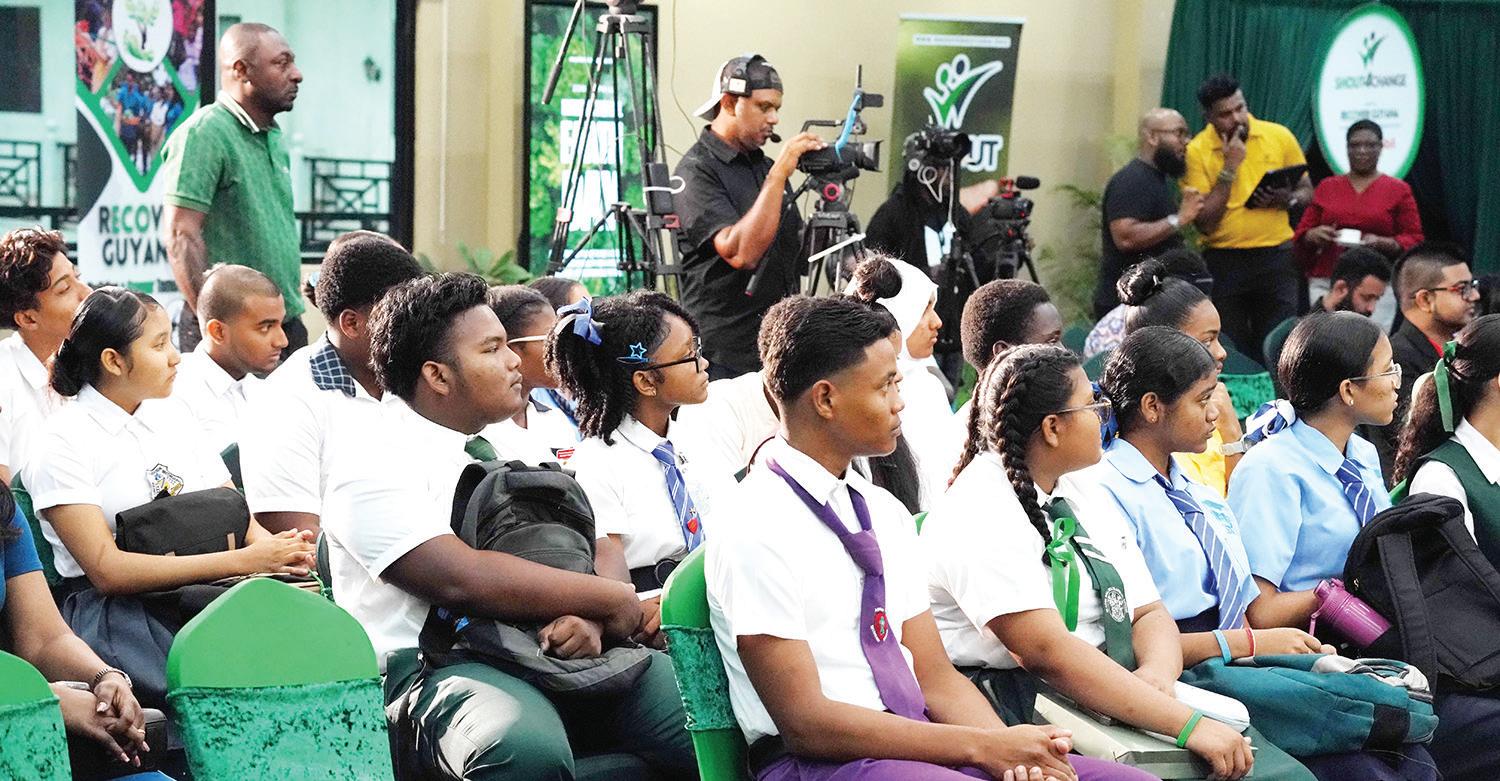
According to organisers, the programme continues to expand beyond its origins as a speech contest into a broader platform for youth engagement, leadership development and community-based environmental action.
SHOUT Project Lead, Dr. Dave Lalltoo, said the initiative now represents “the evolution of a national movement,” noting that its fourth edition builds on previous successes while deepening its national reach and impact.
“This is no longer just about speaking on environ-
mental issues,” Dr. Lalltoo explained. “We are empowering students to design solutions by integrating science, technology, engineering and mathematics into the competition.”
He said this year’s programme is guided by four key priorities: strengthening its foundation, expanding participation across Guyana, embedding STEM principles at its core, and maintaining high standards of governance through strategic partnerships. Participants are required
to apply practical skills such as budgeting, scientific validation and technological research to support their ideas, ensuring that their advocacy is both informed and solution-driven.
The competition unfolds in four phases. The first phase, already completed, involved the submission of one-minute vision videos. In the second phase, the top 20 finalists will deliver 90-second prepared speeches focused on STEM-related environmental solutions.
The third phase will
see the top 10 contestants compete in an impromptu segment designed to test critical thinking and depth of knowledge, while the final round will require the top four participants to respond to a comprehensive environmental question to determine the 2026 national youth environmental speaker.
The winning school will receive a $1 million grant to support an environmental advancement project, along with one year of free fibre internet service from One Communications. Individual prizes will also be awarded to the top four students, including laptops, internet service and education vouchers valued at up to $100,000.
In addition, the teacher of the winning student will be rewarded with a trip to
Kaieteur Falls in recognition of their mentorship.
Recover Guyana said the SHOUT initiative forms part of its wider efforts to build environmentally conscious communities, alongside programmes such as ENGAGE, a nationwide green entrepreneurship initiative supported by Scotiabank Guyana, and FLOW, a national sustainability programme targeting more than 100 secondary schools, technical institutions and special needs schools.
Organisers emphasised that by investing in young people, the initiative aims to foster long-term behavioural change and equip the next generation with the tools needed to address Guyana’s environmental challenges.
SMALL-BUSINESS owners in Region Five have welcomed the Ministry of Tourism, Industry and Commerce’s (MINTIC) Community Business Clinic, describing the initiative as an accessible and practical platform that is helping en-
location.
The outreach initiative was supported by several agencies, including the Guyana Revenue Authority; the National Insurance Scheme; the Deeds and Commercial Registry; the Local Content Secretariat; the Guyana National Bureau of

trepreneurs formalise and expand their operations.
The clinic, held on Tuesday at the Rosignol Ferry Stelling Tarmac, provided free, on-the-spot support to micro and small-business operators, allowing them to engage directly with key regulatory and support agencies in a single
Standards; the Guyana Tourism Authority; the Small Business Bureau; the Competition and Consumer Affairs Commission and the Department of Commerce.
Participants said the clinic offered valuable guidance and simplified what are often complex processes of business
registration, compliance and growth planning.
Marissa Brutus, a New Amsterdam-based entrepreneur, described the experience as “very informative,” noting that she is now preparing to become officially licensed and is aiming to collaborate with the Guyana Tourism Authority as an Airbnb host.
Another participant, Jason Vanderstoop, highlighted the
value of direct engagement with agencies, particularly in the tourism and hospitality sectors.
“One of the major activities here today was the information provided on tourism, hospitality and entertainment,” he said, adding that similar events should be held more frequently to support emerging entrepreneurs.
Other attendees echoed
these sentiments, pointing to the clarity of the process and the hands-on assistance provided by staff, which helped them better understand each step required to establish and grow their businesses.
MINTIC said the Community Business Clinic forms part of a broader effort to improve access to business- development services by creating a one-stop platform where entre-
preneurs can receive guidance, resolve administrative requirements and build connections with key institutions.
The Rosignol event marked the ministry’s second such clinic, with officials indicating that the initiative will continue as part of ongoing efforts to strengthen small-business development and foster economic growth at the community level.

SENIOR Minister in the Office of the President with responsibility for Finance, Dr Ashni Singh, has underscored Guyana’s unprecedented economic growth and called for continued flexibility in international policy guidance during high-level talks with the International Monetary Fund (IMF).
Dr Singh met with Nigel Chalk, Director of the Western Hemisphere Department at the International Monetary Fund, as he concluded Guyana’s participation in the 2026 Spring Meetings of the IMF and World Bank Group in Washington, D.C.
During the discussions, the Finance Min-
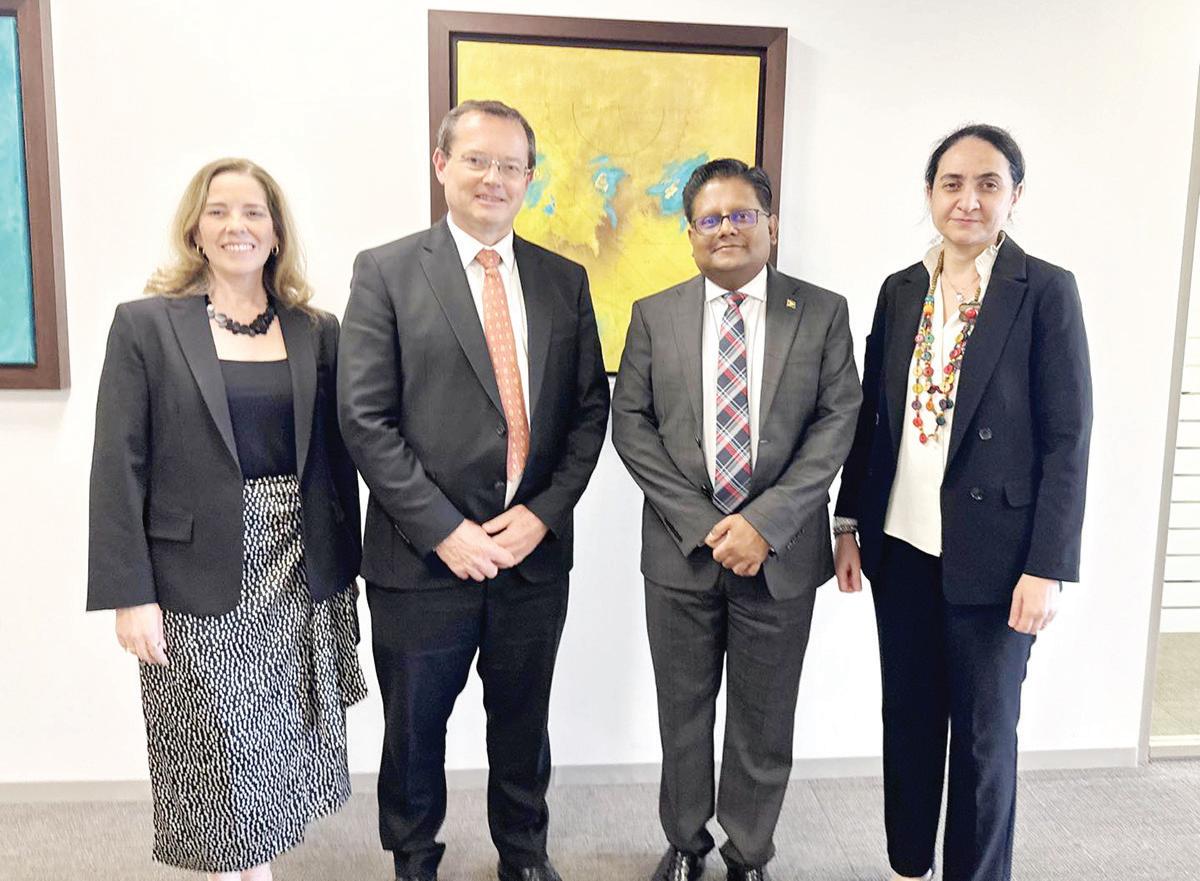
ister highlighted Guyana’s “historically unprecedented” economic trajectory, pointing to the government’s firm commitment to ensuring that rapid growth translates into broad-based, inclusive development. He emphasised the importance of maintaining a strong non-oil economy alongside the country’s expanding petroleum sector, noting that sustained growth must improve the overall wellbeing of all Guyanese.
The meeting also addressed the government’s ongoing push to expand critical infrastructure, which Dr Singh described as essential for diversifying the economy, enhancing competitiveness, and
unlocking long-term opportunities for increased trade and regional integration.
As Guyana continues its transformation, Dr Singh urged the IMF to maintain a flexible approach in its policy advice, acknowledging both the evolving global economic environment and the country’s unique pace of growth, one he noted has few modern parallels.
The engagement forms part of Guyana’s broader efforts to strengthen collaboration with international financial institutions while charting a development path that balances rapid expansion with longterm sustainability.

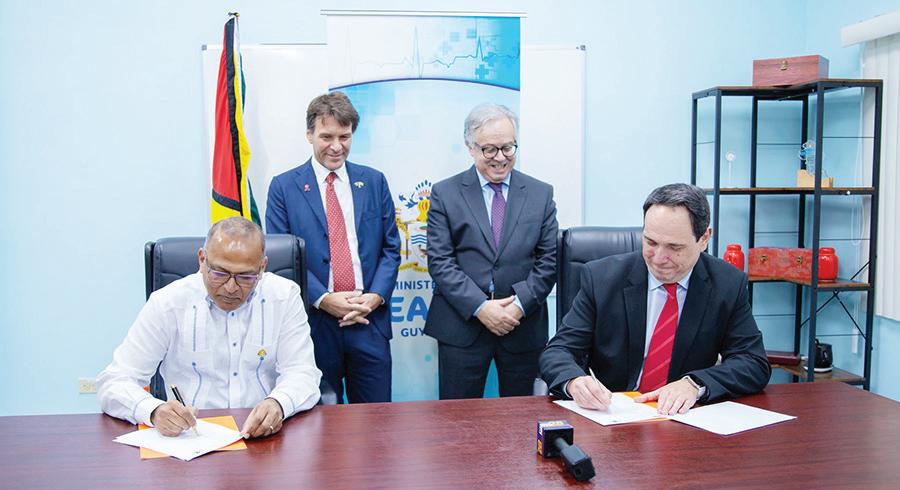
GUYANA has taken a major step toward strengthening global health security and advancing its biotechnology sector, following the signing of a Memorandum of Understanding (MoU) with the European Union and Belgium-based Bioparc Charleroi to develop a world-class bio-innovation ecosystem.
Minister of Health, Dr Frank Anthony, on Tuesday, participated in the official signing, describing the agreement as a transformative initiative that will move Guyana beyond traditional healthcare and into the forefront of biotechnology development.
The partnership with European Union and Bioparc Charleroi aims to replicate Belgium’s successful biotech model locally, positioning Guyana as a leading “BioHub” for the Caribbean.
According to the Ministry of Health, the agreement will focus on three key pillars: innovation, resilience, and economic
growth. Under the innovation component, Guyana will harness its vast Amazonian biodiversity to support discovery sci-

ence and research. The resilience aspect will see the development of regional capacity for vaccine and pharmaceutical
manufacturing, enhancing preparedness for future pandemics.
Additionally, the initiative is expected to stim-
ulate economic growth by fostering a high-tech environment conducive to startups, research institutions, and the creation of skilled employment opportunities.
Dr Anthony emphasised that the agreement represents a forward-looking approach to national development, noting that it goes beyond routine healthcare delivery.
“This is about breaking the mould and embracing the future of biotechnology,” he said, adding that the collaboration will not only benefit Guyanese citizens but also strengthen health and scientific capacity across the wider Caribbean.
The MoU signals a deepening of international co-operation in health and science, as Guyana continues to expand its role in regional and global public health innovation.
LEADING economists and policymakers convened in Chile this week to examine emerging global economic ideas and their implications for Latin America and the Caribbean, amid growing calls for a shift in development strategies to address inequality, instability and technological change.
The high-level seminar, hosted by the Economic Commission for Latin America and the Caribbean (ECLAC) in collaboration with the London School of Economics and Political Science (LSE), brought together international experts at ECLAC’s headquarters in Santiago on April 21, 2026.
Held under the theme “The London Consensus in Latin America and the Caribbean,” the forum explored new frontiers in economic thinking, focusing on
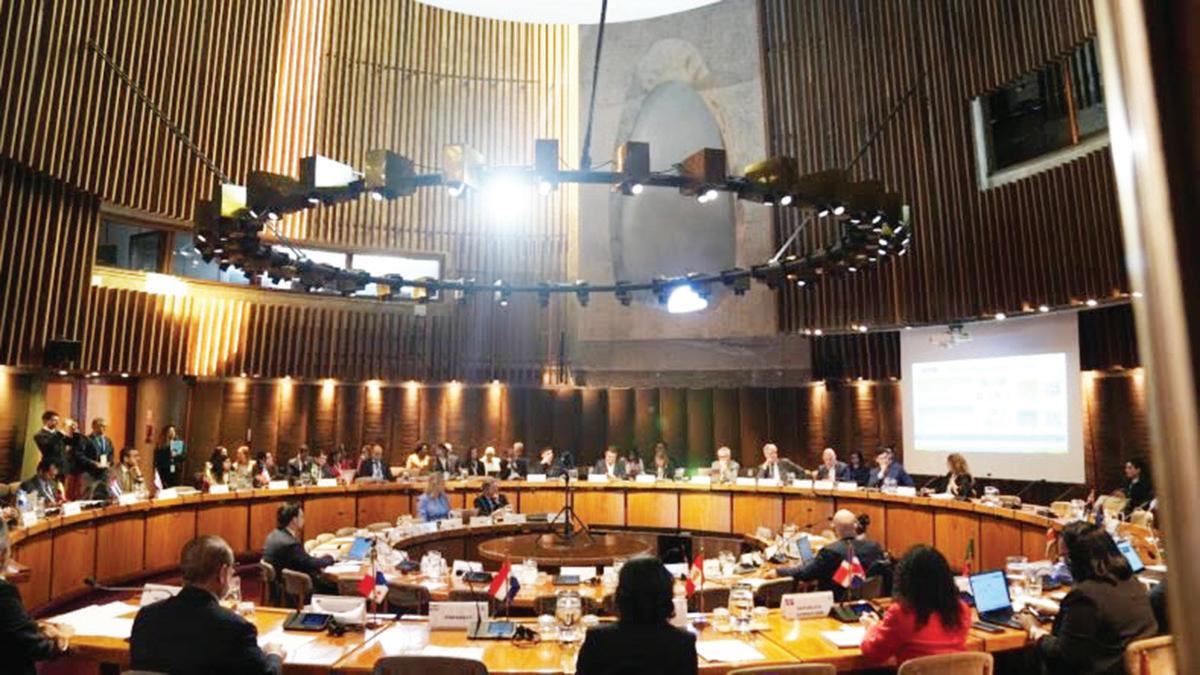
productive development policies, macroeconomic stability with equity, and shifting global trade and investment dynamics.
Opening the discussions, ECLAC Executive Secretary, José Manuel Salazar-Xirinachs, emphasised the evolving nature of economic thought over the past three decades and the importance of adapting policy frameworks to current realities.
He noted that ideas
and narratives play a decisive role in shaping policy direction, influencing whether societies mobilise or stagnate in the face of challenges. According to Salazar-Xirinachs, updating the region’s development narrative is critical to addressing persistent structural issues such as inequality, low social mobility and environmental vulnerability.
The seminar also highlighted key principles emerging from the
“London Consensus,” a body of work that builds on lessons from the Washington Consensus while proposing a more nuanced approach to development. These include prioritising well-being, strengthening resilience, recognising the importance of structural conditions for growth, and reaffirming the role of the State alongside markets.
Delivering the keynote address, Andrés Velasco, Dean of the
LSE School of Public Policy and co-editor of The London Consensus: Economic Principles for the 21st Century, outlined how the framework distinguishes between broad economic principles and context-specific policies.
He argued that effective policymaking must be adaptable, grounded in local realities, and guided by principles that can inform tailored solutions. Velasco also underscored the growing importance of productivity and the need to harness technological advancements, including artificial intelligence, to complement human skills and drive economic progress.
Throughout the day, panel discussions examined policy approaches to boosting productivity, maintaining macroeconomic stability, and strengthening international integration. Participants included representatives from major global and regional institutions, such as the World Bank and the Development Bank of Latin America and the Caribbean.
The event provided a platform to assess how the London Consensus aligns with ECLAC’s long-standing focus on productive development, inclusive growth and structural transformation, while fostering dialogue on how the region can navigate an increasingly complex and rapidly changing global economic landscape.
The keynote was followed by commentary from prominent economists, including Ricardo Hausmann and Barbara Stallings, who joined ECLAC leadership in analysing the framework’s relevance to regional development.
GUYANA is intensifying preparations to host the Caribbean Shipping Association’s 56th Annual General Meeting, Conference and Exhibition later this year, a landmark event expected to draw more than 400 regional and international delegates and spotlight the country’s growing maritime ambitions.
The preparations were discussed on Wednesday during a meeting between Minister of Tourism, Industry and Commerce, Susan Rodrigues and Chairman of the Shipping Association of Guyana, Komal Singh, along with other association members. Deputy Director of
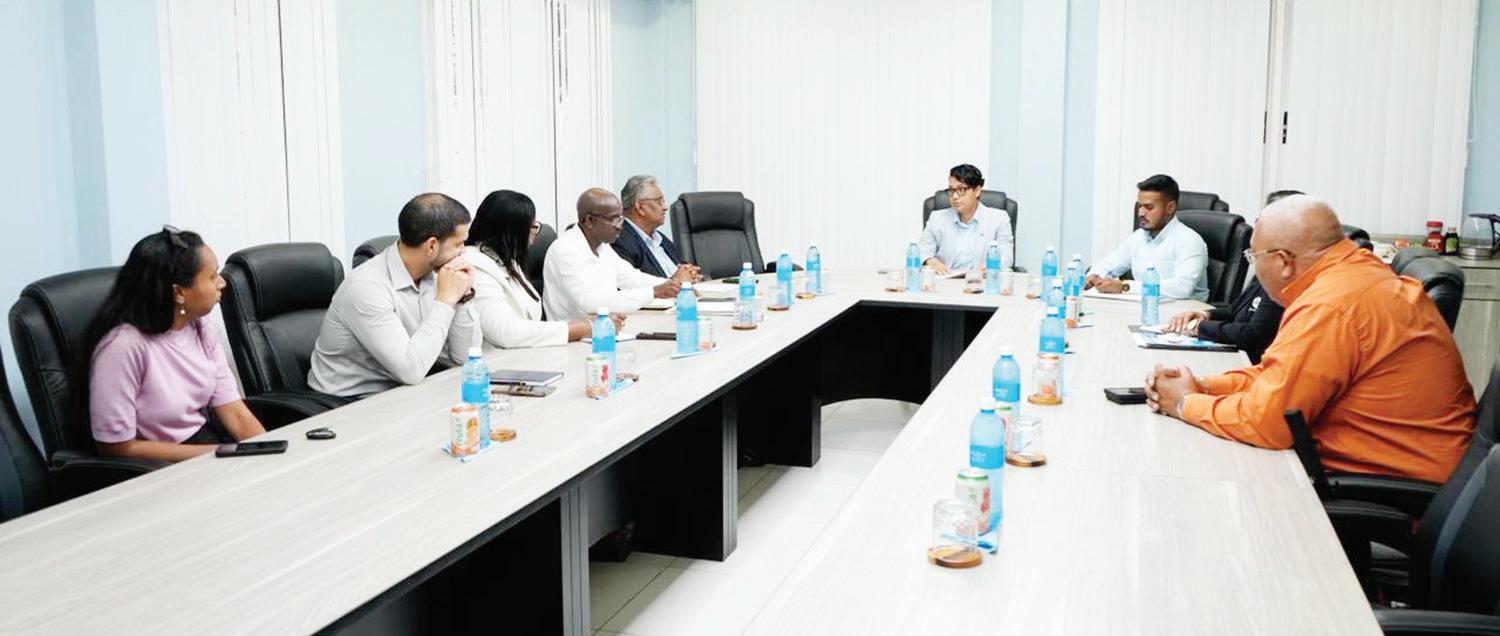
the Guyana Tourism Authority, Liloutie Mangra, also attended the meeting.
The high-level discussions focused on logistical
and strategic preparations for the conference, which will be held in Guyana for the first time from October 25 to 28.
Officials described the upcoming event as a significant opportunity to strengthen regional co-operation in the shipping
and logistics sector, while advancing dialogue on the future of maritime trade in the Caribbean.
Beyond its technical
focus, the conference is also expected to serve as a platform for Guyana to showcase its expanding maritime infrastructure and growing capabilities in logistics and trade facilitation. Government officials see the hosting of the event as further positioning Guyana as an emerging hub for regional connectivity and commerce.
The Caribbean Shipping Association meeting is regarded as one of the region’s premier maritime gatherings, bringing together industry leaders, policymakers, and stakeholders from across the Caribbean and beyond.
SENIOR Minister
in the Office of the President with responsibility for Finance, Dr Ashni Singh, has called for intensified regional collaboration to strengthen food security and remove barriers to intra-Caribbean trade, warning that resilience in the sector is critical to the region’s long-term economic stability.
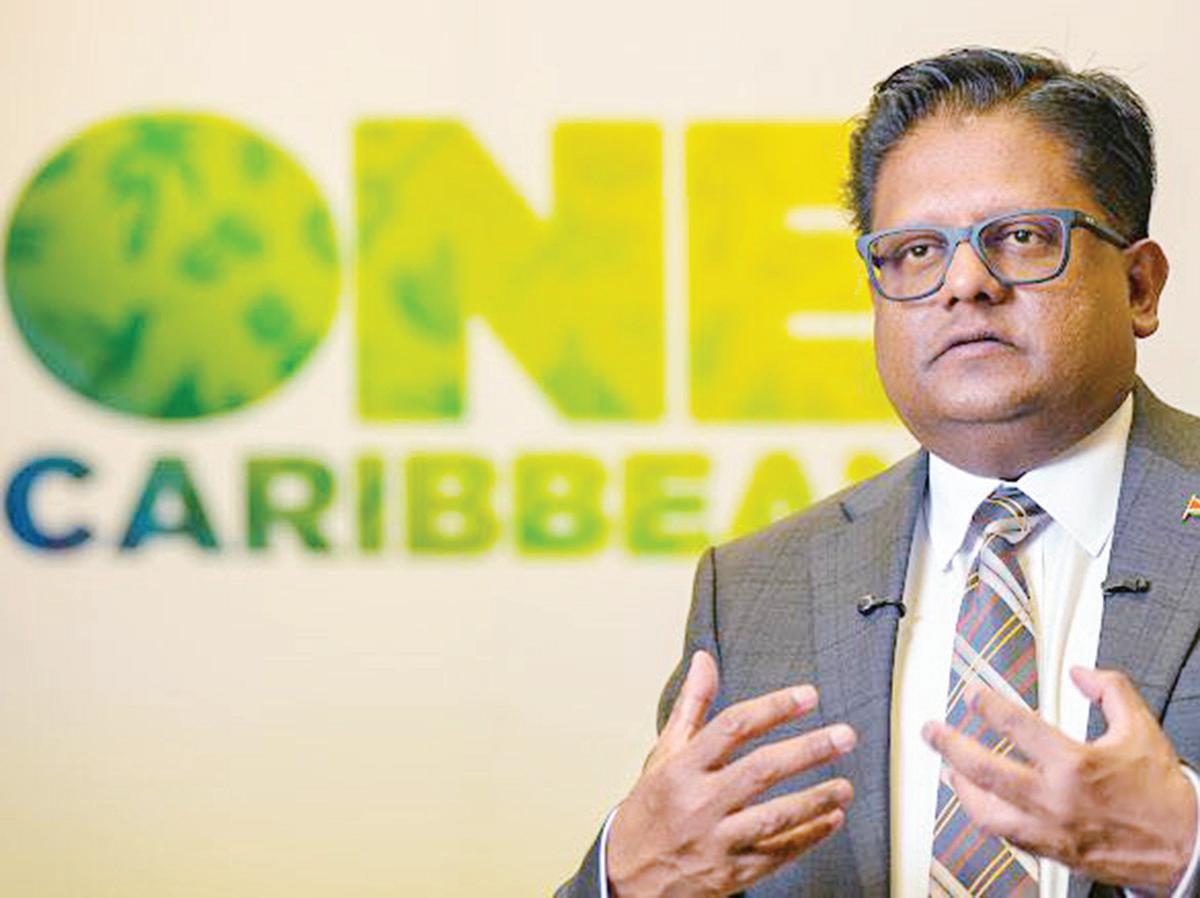
Dr Singh made the remarks while attending the One Caribbean Ministerial Dialogue, convened by the Inter-American Development Bank (IDB) Group under the theme “Building Resilience through Regional Collaboration,” in Port of Spain, Trinidad and Tobago.
LEADING an open-floor discussion on building food resilience, the Finance Minister stressed that food security must be treated not only as a humanitarian concern but as a core economic priority for Caribbean nations.
He pointed to the Caribbean Community (CARICOM) target of reducing the region’s food import bill by 25 per cent, an initiative now extended to
2030—as a clear signal of the region’s commitment.
According to Dr Singh, the revised goal includes cutting food imports by an estimated 4.6 million tonnes by 2030, alongside efforts to develop a resilient, competitive and climate-smart agri-food system across member states.
Despite the Caribbean’s natural advantages in agriculture, he noted that the region remains vulnerable to external shocks, particularly those linked to climate change. As a result, Guyana and its regional partners are shifting focus toward building climate-resilient agricultural systems, expanding agro-processing capacity, and improving transportation infrastructure to facilitate more efficient movement of goods.
Dr Singh also used the forum to highlight persistent challenges affecting intra-regional trade, urging CARICOM member states to redouble efforts to dismantle internal barriers that hinder the free flow of agricultural produce and other goods.
Further, he ex -

pressed appreciation for the IDB’s One Caribbean initiative, noting that the institution’s continued support is essential for advancing both public
infrastructure projects and private sector development, which are key to achieving sustained economic resilience in the region.


THE University of Guyana has received 27 applications for the position of Vice-Chancellor and Principal following an extensive inter-
noting that it comes at a time of rapid national transformation. He pointed to Guyana’s ongoing economic expansion, driven by developments in the

national recruitment process, Chancellor Sir Ronald Sanders announced on Wednesday.
The applications were submitted in response to a widely circulated call issued by a Council-appointed Search Committee, which closed on April 18, 2026. The Committee will now move to the next phase of the selection process, involving a detailed review of submissions and the shortlisting of candidates.
The appointment comes as the tenure of the current Vice-Chancellor is set to conclude in July 2026, marking the end of seven years in office.
According to the Chancellor, the selection process is being guided by the same procedures used in appointing the current office holder, ensuring continuity, fairness and adherence to established governance standards.
Sir Ronald underscored the significance of the appointment,
energy sector, infrastructure and broader efforts at economic diversification and global engagement.
“In these circumstances, the University of Guyana must play a leading role in developing advanced human capital, strengthening research capacity, fostering innovation, and contributing independent expertise to national and regional development,” he said.
He added that the University Council is seeking a “transformational academic leader” capable of positioning the institution as a centre of research excellence, professional training and regional influence in an evolving economic landscape.
The Council has also committed to maintaining transparency throughout the process, with plans to publicly announce shortlisted candidates and host lectures as part of the final assessment stage.


MANCHESTER City continued their charge towards the Premier League title with victory at Turf Moor to move Pep Guardiola's side top of the table and relegate Burnley back to the championship.
City have hit form at the right time and are looking in ominous mood, clawing back nine points on Arsenal in less than two weeks to narrowly climb to the summit on goals scored.
Guardiola's men had not been in the number one spot since the opening week of the campaign, but an 11-game unbeaten streak has led to them overtaking the Gunners with five games left.
Top scorer Erling Haaland grabbed the opener after just five minutes, running clear following Jeremy Doku's pass and dinking a delightful finish over the advancing Martin Dubravka, and he struck the post in the second half.
(Thursday, April 23, 2026)
COMPLIMENTS OF CUMMINGS ELECTRICAL COMPANY LTD
83 Garnett Street, Campbellville, Georgetown (Tel: 225-6158)
Answers to yesterday’s quiz:
(1) Shubman Gill-890 runs (GT)
(2) Mohammad Shami-28 wickets (GT)
Today’s Quiz:
(1) Who cracked the highest score in IPL 2023?
(2) Who had the best bowling figures in a single game?
Answers in tomorrow’s issue
The visitors could have scored moments before, but the excellent Rayan Cherki's thumping effort was brilliantly tipped on to the crossbar by Dubravka.
City were being wasteful in front of goal, knowing goal difference could play a factor come May, with Nico O'Reilly's header being batted out by Dubravka and Rayan Ait-Nouri blazing over after a fine team move.
The Clarets, meanwhile, had their chances to
prolong an inevitable ending to the season - Jaidon Anthony cutting inside and curling a shot at goal which was pushed away by Gianluigi Donnarumma, while Zian Flemming dragged wide from a promising position.
But the loss means Scott Parker's side will join bottom club Wolves in the second tier next season, dropping down into the championship for the second time in three years. (BBC Sport)

ED Smith, the former England batter and ex-national selector, will join the England and Wales Cricket Board (ECB) as a Non-Executive Director from October 1, 2026, bringing a blend of cricketing experience and strategic insight to the role.
Smith, who served as England Men's National Selector between 2018 and 2021 - a period that included their triumph at the ICC Men's

Cricket World Cup 2019will take up the position after completing his current tenure as Marylebone Cricket Club (MCC) President His appointment, which will be ratified at the ECB’s Annual General Meeting in May, follows the conclusion of Zahida Manzoor's threeyear term.
In his role as a non-executive board member, Smith

ENGLISH RACING TIPS
PERTH
08:40hrs Dunsy Rock
09:10hrs Joeybottles
09:40hrs Lets Mingle
10:10hrs Slanagaibhgoleir
10:40hrs American Mike
11:10hrs Fouroneohfever
11:40hrs Shadowfax Of Rohan
12:15hrs Loulou Madrik
BEVERLEY
08:52hrs Fighter's Spirit
09:22hrs Beautiful Rainbow
09:52hrs I'm Next 10:22hrs Milteye
10:52hrs Roland Garros
11:22hrs No Knee Never
11:52hrs Hashtagnotions
12:25hrs Smoker Bellamy
SOUTHWELL
11:57hrs Golden View
12:30hrs Nlue Deveron
13:00hrs Swinging London
13:30hrs Marnier
14:00hrs Raspoutine
"will provide scrutiny and challenge, looking at the longterm strategy and governance of the whole game, including performance cricket," stated an ECB release.
ECB Chair Richard Thompson welcomed the move, saying: "I'm very pleased to welcome Ed Smith to the ECB Board as a non-executive director. Ed brings sharp thinking and a real
14:30hrs Red Spells Danger
15:00hrs Mwafaq
15:30hrs Fircombe Hall
IRISH RACING TIPS
DUNDALK
12:10hrs Real Encounter
12:45hrs Plushy
13:15hrs Push Harder
13:45hrs Comfort Line
14:15hrs Druids Glen
14:45hrs Sir Callisto 15:15hrs Copper Craft
SOUTH AFRICA RACING TIPS
TUFFFONTEIN
08:20hrs Millennium Warrior
08:55hrs Into Dancing
09:35hrs Kensal Green
10:10hrs Six Of All 10:45hrs Plumbago Park
AMERICAN RACING TIPS
AQUEDUCT
Race 1 Counter Move
Race 2 Blossoming Erudite
Race 3 Marketplaceofideas
Race 4 Saratoga Party
Race 5 On The Ledge
Race 6 Smallchangegeep
Race 7 Bostontonian

Ed Smith was England's Men's National Selectors between 2018 and 2021, during which the team won the ODI World Cup in 2019
depth of domestic and international cricketing experience. Alongside his cricket background, he has a strong strategic mindset and an independent voice that will add real value to our Board discussions.
"Our sincere thanks go to Baroness Manzoor for her significant contribution, commitment and deep care shown throughout her three years on the ECB Board."
Smith added: "I am delighted to be joining the ECB Board. Having been involved in the England Men's set up before as National Selector, I am pleased to be able to contribute again to English Cricket, this time as a Non-Executive Director. It is an extremely important period for both the England Men's and Women's teams and I am looking forward to working with Richard and the Board." (Cricbuzz)
OKLAHOMA City Thunder star Shai Gilgeous-Alexander was the runaway winner in the Clutch Player of the Year award balloting, revealed Tuesday night.
Gilgeous-Alexander received 96 of 100 first-place votes in balloting for the Jerry West Trophy. He had 484 total points, well ahead of Denver Nuggets standout Jamal Murray (117) and Minnesota Timberwolves star Anthony Edwards (116).
Gilgeous-Alexander is

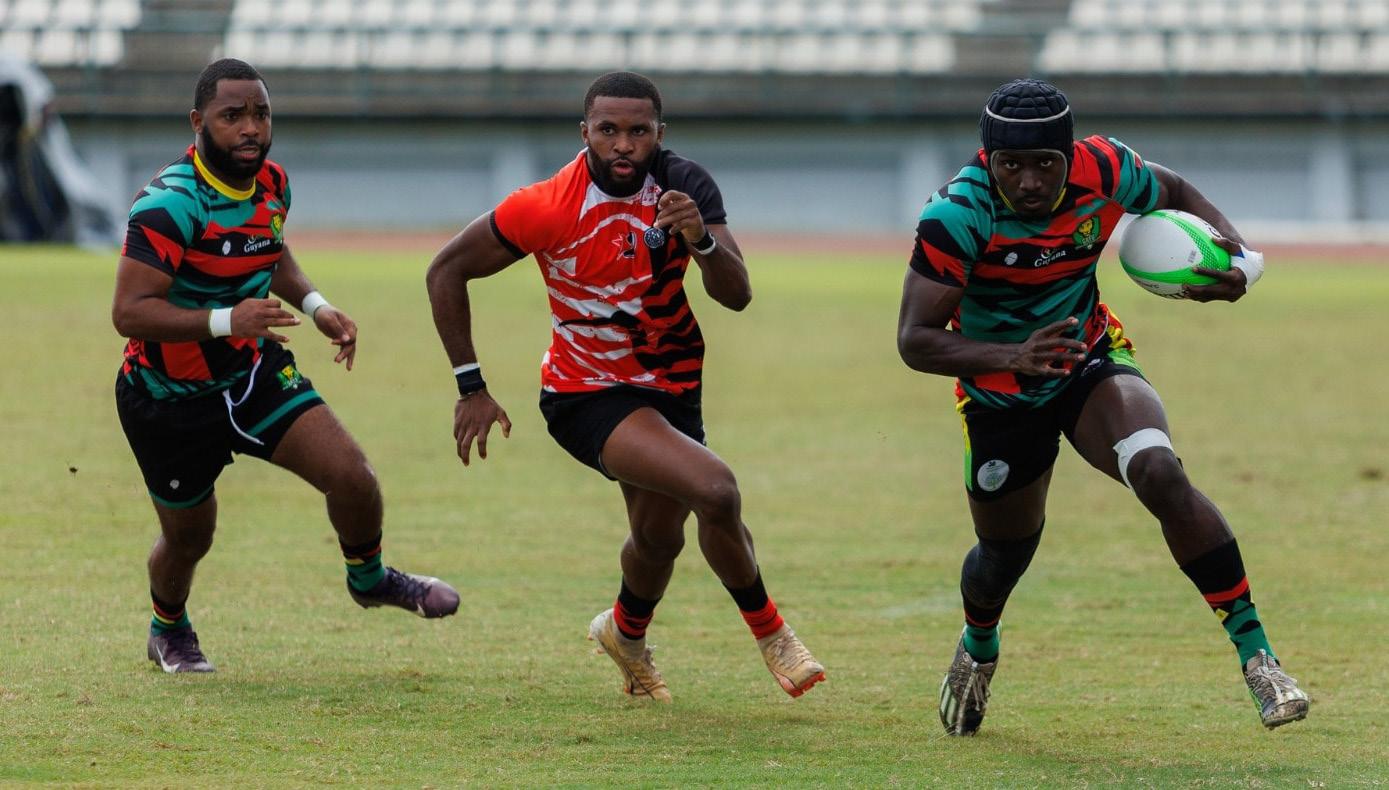
THE Guyana Rugby Union (GRU) has officially unveiled a powerhouse 30man squad tasked with defending home turf in the opening leg of their highly anticipated 15s campaign.
The "Green Machine" is set to face off against Bermuda this Saturday, April 25th, at the National Park Rugby Field.
While the initial roster features a deep pool of talent, head coach Claudius Butts is expected to trim the list to a final match-day 22 by Friday.
The squad is spearheaded by captain Rondel McArther, who will lead a formidable front row alongside Makayah Smith and Devon Charles.
Experience remains a cornerstone of the selection, with seasoned veteran Godfrey Broomes named as vice-captain to provide
tactical leadership from the backline.
The coaching staff, which includes assistants Elwin Chase and Ryan Hinkson, has opted for a blend of physical presence in the forwards and explosive speed on the wings, featuring players such as Owen Adonis and Godfrey Pollydore.
The clash against Bermuda marks the beginning of a critical home stretch for the Guyanese side as they look to assert dominance in the regional standings.
Following the April 25th encounter, the National Park will remain the centre of the rugby universe in Guyana for two more major fixtures.
The Green Machine is scheduled to host Barbados on June 6, followed by a high-stakes rivalry match against Trinidad and Tobago
on June 26.
With kick-off scheduled for 16:00h, the GRU is expecting a massive turnout to support the national team.
Squad: Rondel McArther (C), Makayah Smith, Devon Charles, James Osborne, Phibian Joseph, Shawn David, Christian Klass, Sebastian Manifile, Osie McKenzie, Godfrey Broomes (VC) , Owen Adonis, Odida Douglas, Rickford Cummings, Godfrey Pollydore, Lionel Holder, Ryan Skinner, Quason Butters, Kelvin Grant, Renaldo Niles, Osbert Robertson, Michael Edwards, Gavin McPherson, Vallon Adams, Michael Barrow, Akino James, Kevon David, Marlon Small, Adrian Hall, Jonathan Garnett and Jamal Junior.
the reigning league MVP and is favoured to win the award again this season.
But he liked receiving the Jerry West Trophy too.
"This award means a lot," Gilgeous-Alexander said of the Clutch Player award on NBC Sports. "To get this award, you have to help your team win games late and what I'm about more than anything is winning games."
Gilgeous-Alexander led the NBA with 175 points that occurred in clutch time,
defined as games that were within five points in the final five minutes of regulation or overtime.
He 60.9% from the field (39 of 64) during clutch time and made a league-best 16 go-ahead field goals.
Fourth-place Cade Cunningham (50 points) of the Detroit Pistons received one first-place vote, fifth-place Jalen Brunson (42 points) of the New York Knicks landed two and sixth-place Nikola Jokic (37 points) of Denver received one.
This was the fourth season in which the award was given out. De'Aaron Fox (then with the Sacramento Kings) won the 2023 award, followed by Stephen Curry of the Golden State Warriors in 2024 and Brunson last season. Fox now plays for the San Antonio Spurs. West was known as "Mr. Clutch" during his stellar career (1960-74) with the Los Angeles Lakers due to his many lategame exploits. He died in 2024. (Reuters)
VJ Edgecombe and Tyrese Maxey combined to make 11 3-pointers and score 59 total points as the Philadelphia 76ers bounced back to even their Eastern Conference playoff series with the host Boston Celtics in a 111-97 decision on Tuesday.
Seventh-seeded Philadelphia shook off a dismal Game 1 performance, which included making just four 3-pointers in Sunday's 12391 loss, with a complete reversal on the offensive end. The 76ers will host Game 3 on Friday.
The Sixers shot a torrid 19 of 39 (48.7%) from beyond the arc in Game 2, with Quentin Grimes, Kelly Oubre Jr. and Paul George each adding a pair of triples to supplement Edgecombe and Maxey.
Grimes and George were key to Philadelphia surging in the middle quarters. Grimes knocked down the second of his two 3-pointers off the bench to ignite a 13-4 run in the second period, which gave the Sixers the lead after trailing by as many as 13 late in the first quarter.
George scored the first five points of the second half as Philadelphia stormed out of intermission with a 7-2 spurt that pushed the advantage to 13, giving the Sixers a cushion to weather Boston's comeback efforts.
"In the second quarter, we gave up a free-throw (offensive) rebound," Celtics

VJ Edgecombe's historic night helped carry the Sixers to a series splitting win over the Celtics
coach Joe Mazzulla said. "We gave up two catch-andshoot 3-pointers to Grimes. When he makes shots, they're a different team."
Philadelphia being a different team from Sunday's debacle was a theme that Edgecombe also noted in his postgame media availability.
"This is who we are. Game 1 isn't who we are," Edgecombe said in his interview with Peacock. "We let our offense dictate our defense (on Sunday), and we didn't do that tonight."
The rookie Edgecombe finished 12 of 20 from the floor, including 6 of 10 from beyond the arc, and grabbed a team-high 10 rebounds.
Maxey, meanwhile, knocked down back-to-back critical 3-pointers in the fourth quarter after Boston cut the deficit to two. The pair of triples jump-started
an 11-0 run that put the game away.
"He just wanted them," Sixers coach Nick Nurse said of Maxey's decisive shot attempts. "He looked at me for a play call, and I looked at him and called it. He was like, 'Nah, I got it.'"
Maxey capped his 29point effort with an exclamation-mark 3-pointer with 69 seconds remaining. After his stepback attempt went down, Maxey flexed toward a stunned Boston crowd.
With their offense clicking, the Sixers defense carried over to limit the Celtics to 35 of 89 (39.3%) from the floor. Philadelphia's game plan focused on shutting down the rest of the lineup around stars Jaylen Brown and Jayson Tatum.
Brown went for a gamehigh 36 points and Tatum finished with 19 points to go with his game-high 14 rebounds. No other Celtic reached double-figures scoring, however, a stark contrast from Game 1 when the entire Boston starting five notched at least 10 points.
While Brown shot 5 of 12 from long distance, Boston's other shooters combined to go just 8 of 38. Philadelphia, meanwhile, got 19 points from George and 12 from Oubre. After foul trouble limited him in Game 1, Andre Drummond came off the bench to provide quality minutes on the interior with 10 points and eight rebounds. (Reuters)
THE long-running standoff between USA Cricket (USAC) and American Cricket Enterprises (ACE) may finally be nearing resolution. After months of legal battles and a complete breakdown in trust, the two sides have signed a proposed settlement that could reset cricket's governance and funding structure in the United States.
At its core, the deal offers USAC a financial lifeline and restores ACE, the owners of MLC as their commercial partner as per their binding agreement in 2019. The proposed agreement is built around a funding package from ACE totalling more than $1.1 million designed to keep the board operational through bankruptcy and into its next phase.
While the courtroom clash escalated in 2025, the roots of this conflict stretch back several years. This was, in many ways, a historic tus-
sle between former USAC Chairman Venu Pisike, fellow director Srinivas Salver and ACE over finalising a long form commercial agreement. Despite Pisike himself being part of the board that unanimously approved the original 2019 ACE deal, what followed was years of friction over control and structure of not just the contract but the cricket board as well.
In September 2025, the International Cricket Council (ICC) suspended USA Cricket after issuing repeated warnings over the previous 12 months. Those warnings centred on governance failures, persistent internal conflicts, lack of structural clarity, and an inability to meet administrative standards expected of a national governing body. Amidst tensions with the ICC, tensions reached breaking point with ACE as well. USAC attempted to ter-
minate the ACE agreement in September 2025, a move that ACE challenged immediately as 'unlawful'. What followed next added another layer of drama. In October 2025, just moments before a scheduled court hearing in the matter, USAC filed for bankruptcy protection.
The timing was significant. By entering bankruptcy, USA Cricket shifted the battleground. The rationale, at least strategically, was clear. Bankruptcy proceedings create a framework where existing contractual disputes can be paused, restructured, or challenged under court supervision.
In practical terms, it bought USAC time and leverage in a fight it was otherwise struggling to sustain. But it also marked the point of no return for Pisike and company.
By early 2026, the bankruptcy court took the extraordinary step of remov -
ing USA Cricket's existing leadership and appointing a trustee to take control of the organisation. That decision fundamentally reset the dynamics.
Negotiations with ACE were no longer being driven by the same board that had overseen the breakdown but by a court-appointed figure tasked with finding a viable path forward. This settlement now on the table is the first major outcome of that shift.
If the settlement is approved, the focus will shift firmly to the ICC and how it chooses to rebuild USAC. While nothing is official, indications suggest a more controlled, hands-on approach.
The ICC is expected to play a central role in appointing leadership, including a CEO, while overseeing a restructured governance model. Rather than immediately restoring a fully elected board, the preference appears
ST JOHN’S, Antigua, (CMC )–
The second-round match between the Leeward Islands Hurricanes and Trinidad and Tobago Red Force was abandoned on the third day after it was determined that the pitch at the Sir Viv Richards Stadium was unfit and dangerous.
The decision was made after on-field umpires Leslie Reifer and Zahid Bassarath suggested that play be stopped after Hurricanes’ batter Jeremiah Louis was struck by a delivery from fast bowler Jayden Seales.
At the time the home side was 140 for seven in their second innings, an overall lead of 96 runs.
Following consultation with match referee Johnathan Blades, it was decided that the match would be abandoned in the interest of the players’ safety.
Louis was reported to be in stable condition after being taken for medical treatment.
In a subsequent statement, Cricket West Indies (CWI) said the decision was taken in accordance with the rules of the competition.
“Cricket West Indies has announced that the second match of the Leeward Islands vs Trinidad and Tobago bilateral series in the 2026 West

Indies Championship has been abandoned as a draw due to dangerous pitch conditions at the Sir Viv Richards Stadium.
“Play was halted on the first session of the third day after the pitch began to exhibit unpredictable and uneven behaviour, raising serious concerns for player safety.
During this period, Leeward Islands player Jeremiah Louis was struck while batting. He was immediately attended to by medical personnel and subsequently transported to hospital to be evaluated for a possible concussion and is reported to be in stable condition,”
the statement read.
“The decision to abandon the match was made in accordance with the official playing conditions governing the competition. Under these conditions, when on-field umpires determine that it is dangerous or unreasonable for play to continue, play must be stopped and the CWI Match Referee consulted.
“Following discussions with the curator, it was determined that the pitch could not be safely repaired without creating an unfair advantage and was therefore deemed unfit to resume, resulting in the match being abandoned

to be for a transitional setup anchored by independent directors appointed by the ICC.
Elections for other director roles could be deferred until after the Olympic cycle. A deliberate move to avoid the factional infighting and governance breakdowns that plagued the organisation previously.
The US has long presented a unique governance challenge for the International Cricket Council. Multiple suspensions, fractured boards, abandoned agreements and recurring misgovernance have played out in what is, paradoxically,
the sport's most valuable untapped media market often described as cricket's "sleeping giant."
What is required is nothing short of a lasting fix to a cycle that has repeated itself too often. Yet, with the Olympics looming, the ICC's immediate priority appears to be stability over structural reform.
There have been many false dawns for cricket in America. This, perhaps, is its most consequential one yet and its success will depend on whether the lessons of the past are finally acted upon. (Cricbuzz)
as a draw. Both teams will be awarded points earned up until the abandonment of the contest in accordance with the championship’s playing conditions,” it further added.
CWI said while the Sir Viv Richards Stadium was set to host the finals next month, it gave the assurance that the necessary work would be done to ensure it was in prime condition.
“CWI further advises that no matches are scheduled at the Sir Viv Richards Stadium until the championship final, set for May 17–20, and confirms that all necessary resources and expertise will be deployed to ensure the preparation of a safe and competitive playing surface for that fixture.
“It is also important to note that the surface used for the Leeward Islands vs Trinidad and Tobago match is one of six pitches available at the venue and differs from the one used for match one of the Guyana vs Windward Islands series,” CWI said.
“CWI will continue to prioritise player safety while ensuring the highest standards of pitch preparation and match operations across all venues.”
JOFRA Archer took three wickets in Rajasthan Royals' brilliant bowling performance as they beat the struggling Lucknow Super Giants by 40 runs.
Chasing just 160, Lucknow were bowled out for 119 as Archer finished with 3-20 and fellow seamers Brijesh Sharma and Nandre Burger also took two wickets each.
(Scores: Rajasthan Royals 159 for 6 (Jadeja 43*, Mohsin 2-17) beat Lucknow Super Giants 119 (Marsh 55, Archer 3-20, Burger 2-27, Brijesh 2-18) by 40 runs)
Lucknow's chase started dreadfully as they slipped to 11-3 with Ayush Badoni, captain Rishabh Pant and Aiden Markram all making ducks.
Australia's Mitchell Marsh made 55 as they attempted to rebuild but his departure saw them fall to 105-6, and that left too much for the lower order as they lost their last five wickets for 14 runs.
The batting effort was unfortunate for Lucknow's bowlers, who produced a fine display of their own to restrict Rajasthan to 159-6. Their explosive top or -

der of Yashasvi Jaiswal, teenage sensation Vaibhav Sooryavanshi and Dhruv Jurel all fell cheaply to expose a middle order which has not been needed very often in the tournament so far.
But Ravindra Jadeja's experience proved the difference, as he finished unbeaten on 43 from 29 balls to rescue the innings from 110-6 with impact player Shubham Dubey also making 19 not out.
Rajasthan remain second in the table while Lucknow are seventh with just two wins in seven games. (BBC Sport)
AFTER playing a decisive role as coach for the provincial women’s team which emerged victorious in the Cricket Ontario women’s tournament, former Guyana wicket-keeper/batsman Azib Ali Hanif continues to make a name for himself on the Canadian circuit as an outstanding coach.
The 47-year-old Hanif, who was a tower of strength during the “glory days” of Hawaiian Arctic Cricket Club (HACC) in the Scarborough Cricket Association (SCA), has been elevated to the coach of Canada’s women’s Under-19 team which is due to participate in the World Cup Qualifiers from August 7-17 in Canada.
Prior to competing in the qualifiers, the team, under the guidance of Hanif, will be heading to Trinidad & Tobago for a series of warm-up matches between May 14-24.
Hanif will also be serving as mentor for Canada’s Noor Cricket Youth Club during
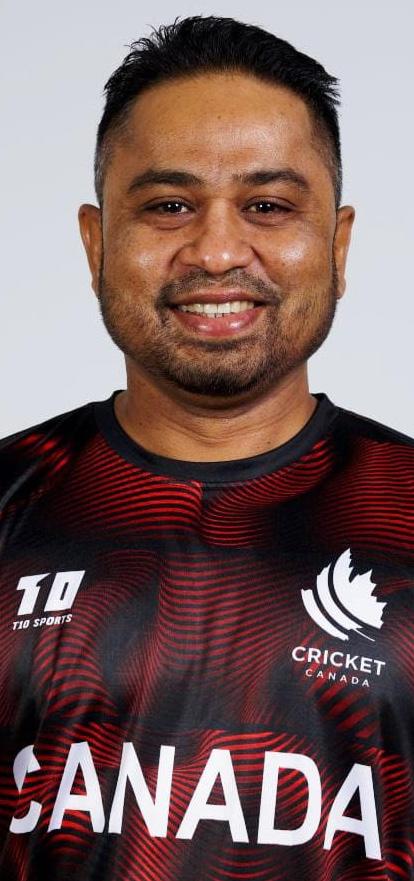
their tour of Guyana in early May. The team, which is being coached by Abdool Samad who also served as batting coach for the Canadian team during the T20 World Cup, is scheduled to play matches against the Georgetown Cricket Club, Everest Cricket Club, Albion
Sports Club and Cotton Tree Cricket Club.
Haniff, who is also a qualified International Cricket Council (ICC) coach, has been working for Cricket Ontario for the past five years, pointed out that his experience off the field as a former national player enables him to guide his team mentally and physically and be prepared for each game.
Following is the schedule for the tour of Trinidad & Tobago: Day 1 - May 15 - Training and acclimation; Day 2 - May 16 - T&T U19-W - 2 official games morning and afternoon; Day 3 - May 17 - Beach practice; Day Day 4 - May 18 - Practice game; Day 5 - May 19 - T&T U19-W - 1 official game; Day 6 - May 20 - Practice game - D/N match; Day 7 - May 21 - Practice game; Day 8May 22 - Practice game; Day 9 - May 23 - T&T U19-W - 2 official games - morning and afternoon; May 24 Departure from T&T.
seph (46) and Nial Smith (37) were done making life miserable for the bowlers, the Eagles had soared to 491.
In first-class cricket, 157.1 overs of sustained pressure is often enough to break the spirit of any opposition, and with a lead of 340 runs, the writing was effectively on the wall of the historic ARG.
The second innings was a familiar tale of Guyana’s slow-bowling stranglehold. While Akeem Auguste of -
fered a lone, defiant 91 to delay the inevitable, he found no allies at the other end.
Gudakesh Motie reminded everyone of his international pedigree with a surgical 5 for 51, finding the turn and bounce that has become his trademark.
Permaul, not content with his heroics with the bat, wrapped up the proceedings with 4 for 20. The inningsand-141-run margin was not just a victory; it was a statement of intent.
KINGSTON, Jamaica, ( CMC )– Legendary sprinter Usain Bolt has advised teenaged sensation Gout Gout to stay focused on track and field and to surround himself with the right people.
The rising 18-year-old Australian star retained his 200m title at the Australian Athletics Championships earlier this month in a World Under-20 record time of 19.67 seconds. It bested the old mark of 19.69 set by USA sprinter Erriyon Knighton and bettered Bolt’s time of 19.93 from 2004 – the Jamaican’s fastest time as a teenager.
Gout, who also claimed the Under-20 100m title, previously set the quickest time by a 16-year-old over 200m when he ran 20.04 in

2024.
In a recent interview with CNN, Bolt, who is widely regarded as the greatest sprinter of all time and the current 100m and 200m world record holder, encouraged Gout to remain focused on his promising career.
“At that young age, because I was there, you start getting put left and right
and then you forget track and field.
“Hopefully, he has the right set of people to guide him and keep him focused on track and field because the rest of the stuff will always be there,” Bolt, an eight-time Olympic gold medalist said.
“But if you mess up on track and field, then it all goes away.”
EBO McNeil secured Guyana’s first track medal of the South American Youth Games in Panama with a gritty performance in the Men's 1500m final.
It is Guyana’s second medal of the Games, following boxer Ken Harvey’s bronze.
(From back page)
As the Eagles prepare for their final assignment at the Coolidge Cricket Ground, starting April 26, the objective is twofold.
Beyond the collective hunt for silverware and the "top of the table" finish Imlach covets, there is the matter of individual milestones.
"Guys would have had their personal goals, stuff they want to achieve within the three games, so we’ll be looking to do that," Imlach said.
The four winners will advance to the semi-final of the championship and by extension the World Cup. However, all is not lost if the Reggae Girlz lose against Costa Rica, as the four losing quarter-finalists will compete in two play-in matches to determine the two CONCA-
CAF representatives in the FIFA Intercontinental Playoffs set for February 2027. If the United States beat El Salvador and Jamaica beat Costa Rica, then Jamaica will also secure automatic qualification to the 2028 Olympic Games, which will be staged in the United States.
(From back page)
The Reggae Girlz won bronze medals in the last two editions of the CONCACAF W Championship, in 2018 and 2022, and will be hunting their third consecutive appearance at the FIFA World Cup, having first historically qualified in 2019.
McNeil produced a personal best time of 4:07.03 to clinch the bronze medal in a high-quality race at the Estadio Rommel Fernandez.
The Guyanese athlete maintained a steady pace throughout the four-lap contest to finish behind Peru’s Thiago Goyzueta Carnero, who took gold in 4:01.86, and Ecuador’s Leymer Baño Pacheco, who claimed silver in 4:03.46.
McNeil’s podium finish marks a significant milestone for the national contingent on a day where several of his teammates also excelled in qualifying rounds.
In the sprint hurdles and flat events, Guyana enjoyed

Ebo McNeil produced a personal best time of 4:07.03 to clinch bronze
a productive session, with three more athletes booking their places in Thursday's gold-medal deciders.
Ezekiel Millington laid down a massive marker in the Boys 100m, storming to victory in the second semifinal with a blistering time of 10.60.
gramme on Tuesday, Sir Curtly had high praise for Wickham.
“I worked with him
He was followed by Ade Sealy, who looked composed in the Boys 400m semifinals, clocking 49.07 to finish second and secure his lane for the final.
The success extended to the Girls 400m, where Akeelah Dover produced a strong run of 55.85 to finish second in her semifinal heat.
Dover’s performance ensures she will be among the favourites for a medal when she returns to the track on Thursday.
There were also spirited performances from Joanna Anthon, who placed fifth in her 400m semifinal in 1:01.06, and Angel Jeffrey, who finished fourth in the Girls 100m semifinals with a time of 12.48.
In the field, Guyana’s long jumpers faced a difficult afternoon as they narrowly missed out on the podium in a competitive final, as David Williams (6.89m) finished fourth and Jarel Campbell (6.49 m) was eighth.
(From back page)
with the Under-19s a few years ago and I told Floyd Reifer that this guy has so much talent that if
he gets an opportunity I believe he will go really far. He is a wonderful talent,” Sir Curtly said.

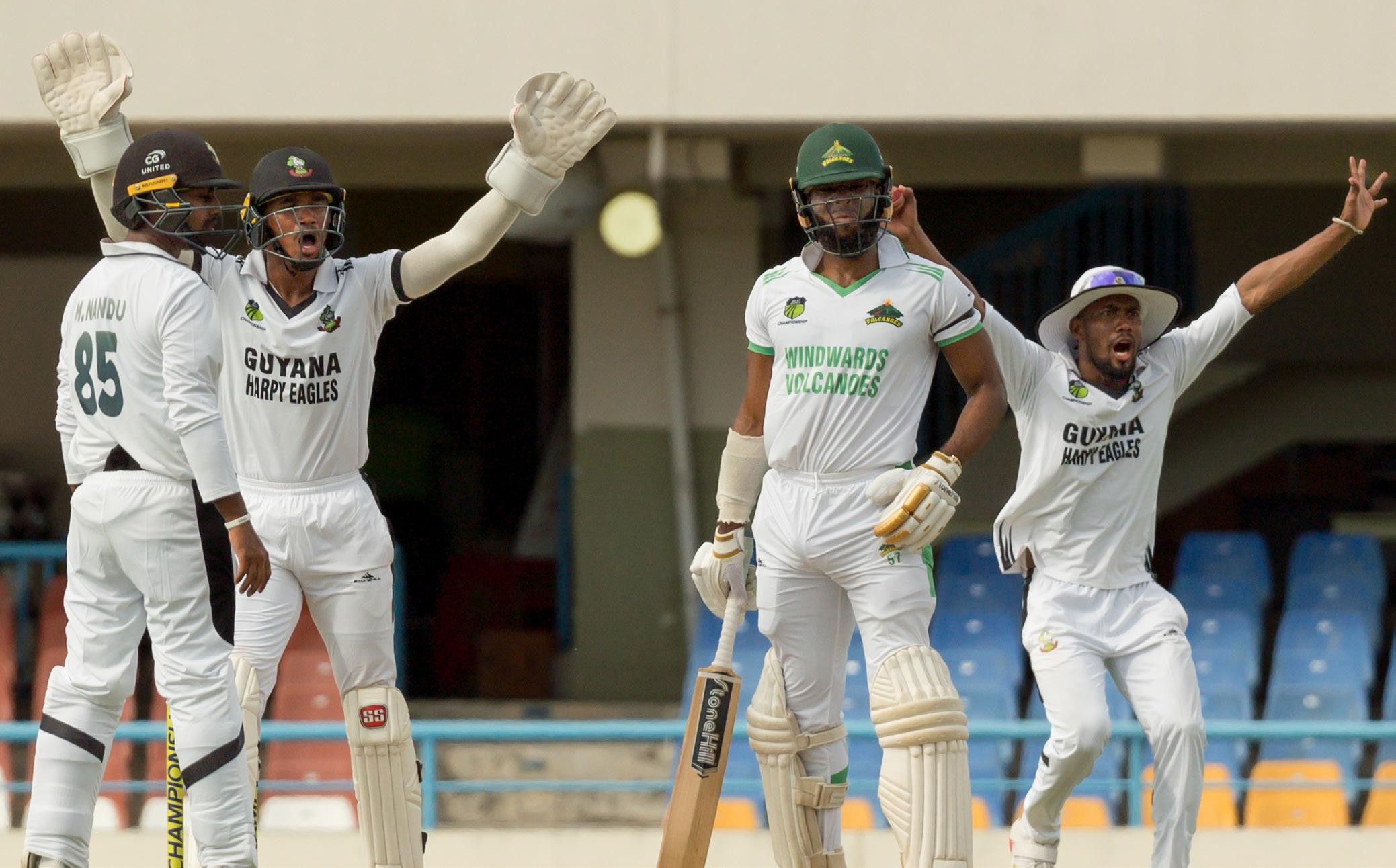
THE scent of a successful title defence is beginning to waft through the Guyana Harpy Eagles camp, and captain Tevin Imlach isn't trying to hide his satisfaction.
Following a ruthless dismantling of the Windward Islands Volcanoes at the Antigua Recreation Ground (ARG), Imlach’s men find themselves hitting their
stride at the business end of the CWI Regional Four-Day Championship.
The mood, as Imlach described it on Wednesday, is "very good," a predictable byproduct of back-to-back victories that have seen the Eagles transition from a slow start into a relentless, welloiled machine.
"We play to win, and we’ve done that over the past
two games," Imlach noted, emphasising that the squad’s trajectory is pointing north just as the stakes reach their peak. For a team that prides itself on clinical execution, the "getting better" part of his assessment should serve as a warning to the rest of the circuit.
If the Volcanoes thought they had seen the last of Guyana’s resistance after
KINGSTON, Jamaica, (CMC)
– Jamaica’s Reggae Girlz and Costa Rica will clash in the quarter-finals of the CONCACAF Women’s Championship, with the winner booking their spot at next year’s FIFA World Cup.
The all-important clash between the fourth ranked Reggae Girlz and the fifth-ranked Costa Rica will take place on November 27 at the Texas Health Mansfield Stadium in Mansfield, Texas.
Top-seeded United States will face El Salvador, the eighth seed; second-seeded Canada take on Panama who are ranked seventh and third-ranked Mexico play sixth-ranked Haiti.
(Turn to page 27)

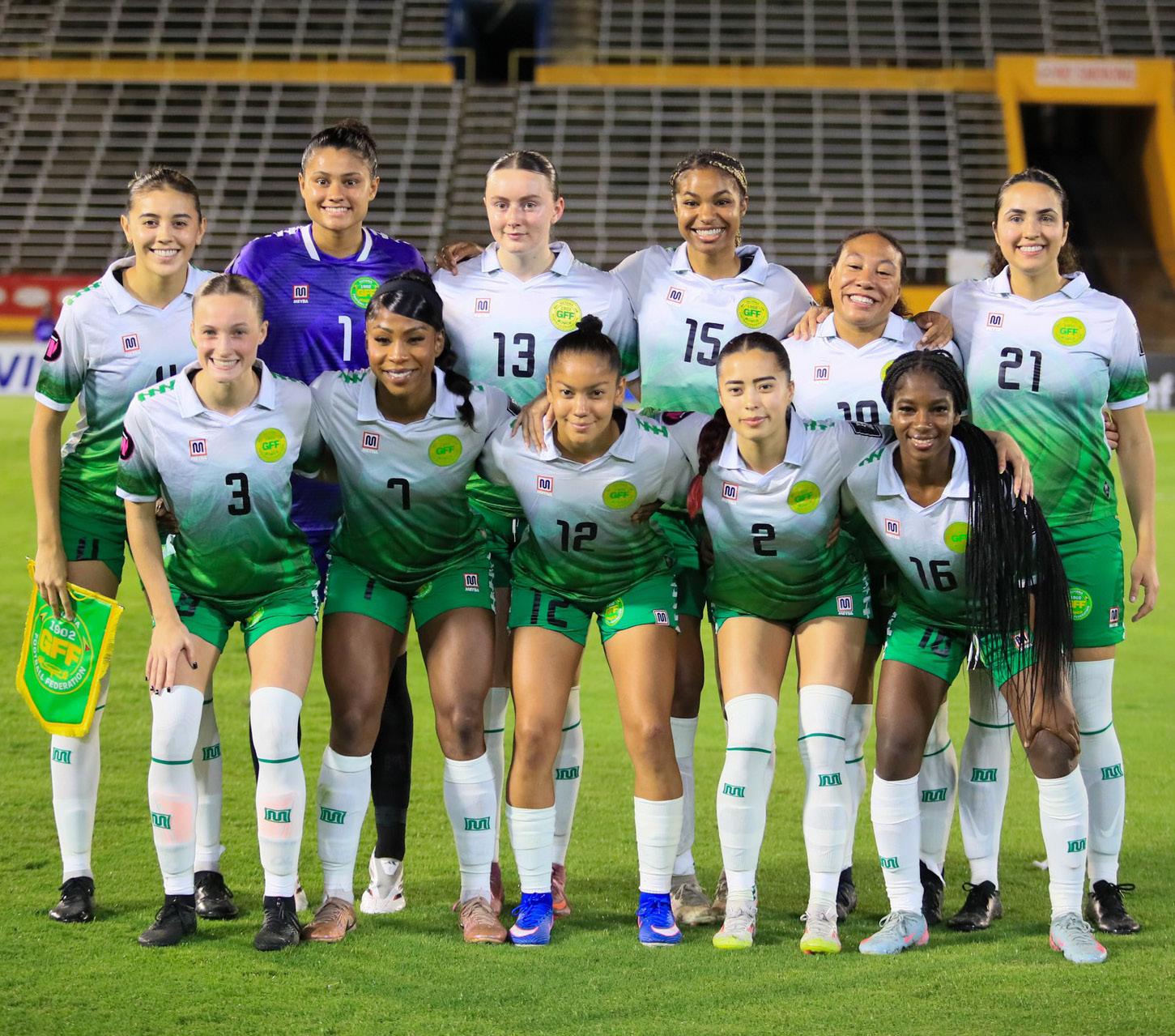
GUYANA’S Lady Jags are looking toward a brighter future despite their campaign for a spot in the World Cup and Olympics coming to an end with a recent 2-0 loss to Jamaica.
Kemol Savory’s sturdy 72, they were sorely mistaken. Day two belonged to the veteran craft of Veerasammy Permaul.
His 82 was more than just a typical lower-order contribution; it was a masterclass in game management that demoralised a tiring Windwards attack.
By the time Shamar Jo-
(Turn to page 27)
The match in Kingston, Jamaica, proved to be a final hurdle the Lady Jags couldn't clear. After a competitive first half, Jamaica sealed the victory late in the game, a result that head coach Omar Khan described as a "bummer" but a fair outcome given the quality of the opposition.
Guyana's journey through the qualifiers was a mixed bag in dominant wins against Dominica (3-0) and Antigua (4-0), but also a tough 3-1 loss to Nicaragua, followed by the final 2-0 defeat against Jamaica.
With only the group winners progressing to the championships, Guyana finished
behind both Jamaica and Nicaragua, missing out on the next stage of qualification for the global mega-events.
Despite the exit, Coach Omar Khan remains resolute and optimistic about the programme's direction.
"We are in a rebuilding phase. I'm very happy with how we organised and worked in the first half against a top team like Jamaica. The level is going up, and the reactions from the crowd and our opponents show we are on the right track."
Khan emphasised that the priority now is keeping the group together.
He expressed a strong desire for more frequent opportunities for the squad to train and compete as a unit, stating that "playing more teams like Jamaica" is the only way to elevate the programme to the next level.
BRIDGETOWN, Barbados, (CMC)
– One of the greatest West Indies fast bowlers of all time, Sir Curtly Ambrose has described Barbados Pride batsman Kevin Wickham as a “special talent” who has great potential.
The 23-year-old has made a record-breaking start to the 2026 West Indies Championship, scoring three successive centuries against the Jamaica Scorpions in their bilateral series.
He began the tournament by scoring 153 in the first innings and followed it up with an unbeaten knock of 108 in the second innings.
In so doing, Wickham joined Ryan Hinds and his current captain Kraigg Brathwaite as the only Barbadians in the modern era to score centuries in both innings of a firstclass match.
He continued his blistering form by blasting 105 in the first innings of the second match on Tuesday.
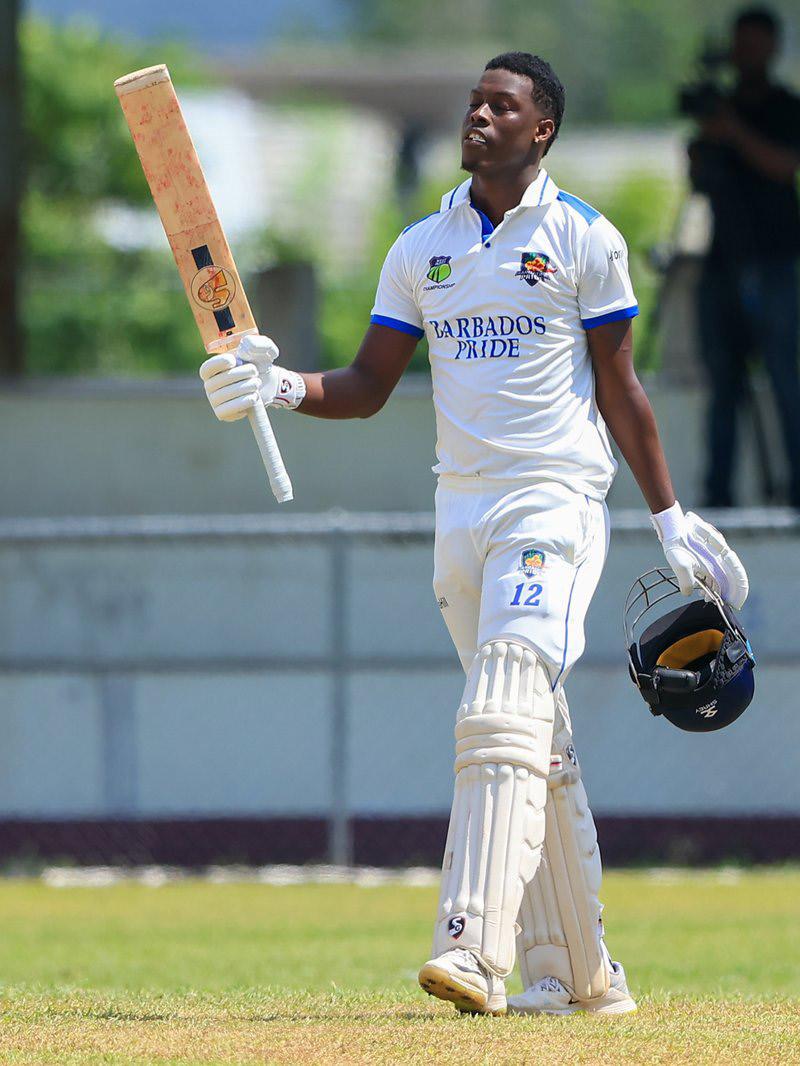
(Turn to page 27)
Speaking on the Mason and Guest radio pro -