Georgia Tech’s Bachelor of Science in Computer Science, based on the first-of-its-kind Thread curriculum, teaches students not only about technology but how to think about and apply technology to create real-world impact and tackle important societal problems.
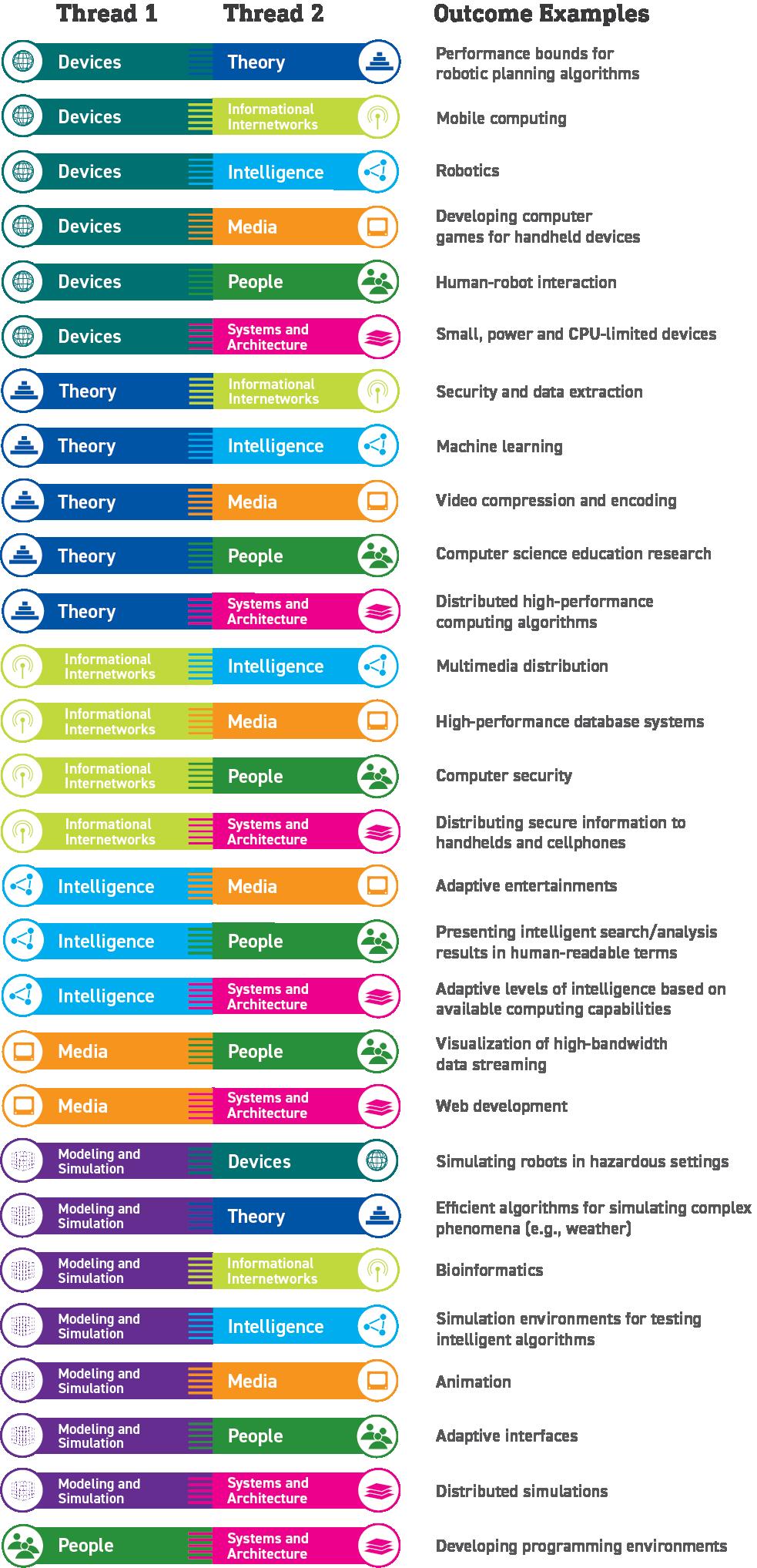
The 9 Threads — 36 Possible Degrees
Each thread is associated with a set of introductory and specialized courses from computing and other fields. Students select at least two threads to weave together a custom degree reflecting their own interests and real-world opportunities.
Theory: Defining the fundamental powers and limitations of computing, the theory and mathematics that underlie all of computer science.
Artificial Intelligence: Designing and implementing artifacts that exhibit various levels of intelligence, as well as understanding and modeling natural cognitive agents such as humans, ants or bees.
Information Internetworks: Capturing, representing, organizing, transforming, managing and presenting information securely and efficiently.
Systems and Architecture: Creating and evaluating computer architectures, systems and languages across a variety of paradigms and approaches.
People: The theoretical and computational foundations for designing, building and evaluating systems that treat the human as a central component.
Media: Understanding and developing the technical and computational capabilities of systems in order to exploit their abilities to provide creative outlets.
Modeling and Simulation: Expressing, specifying, creating, understanding and exploiting computational models that represent cognitive and physical processes.
Devices: Creating and evaluating computational artifacts that are embedded in physical objects and interact in the physical world, typically in real time.
Shaping the Future of Digital Media
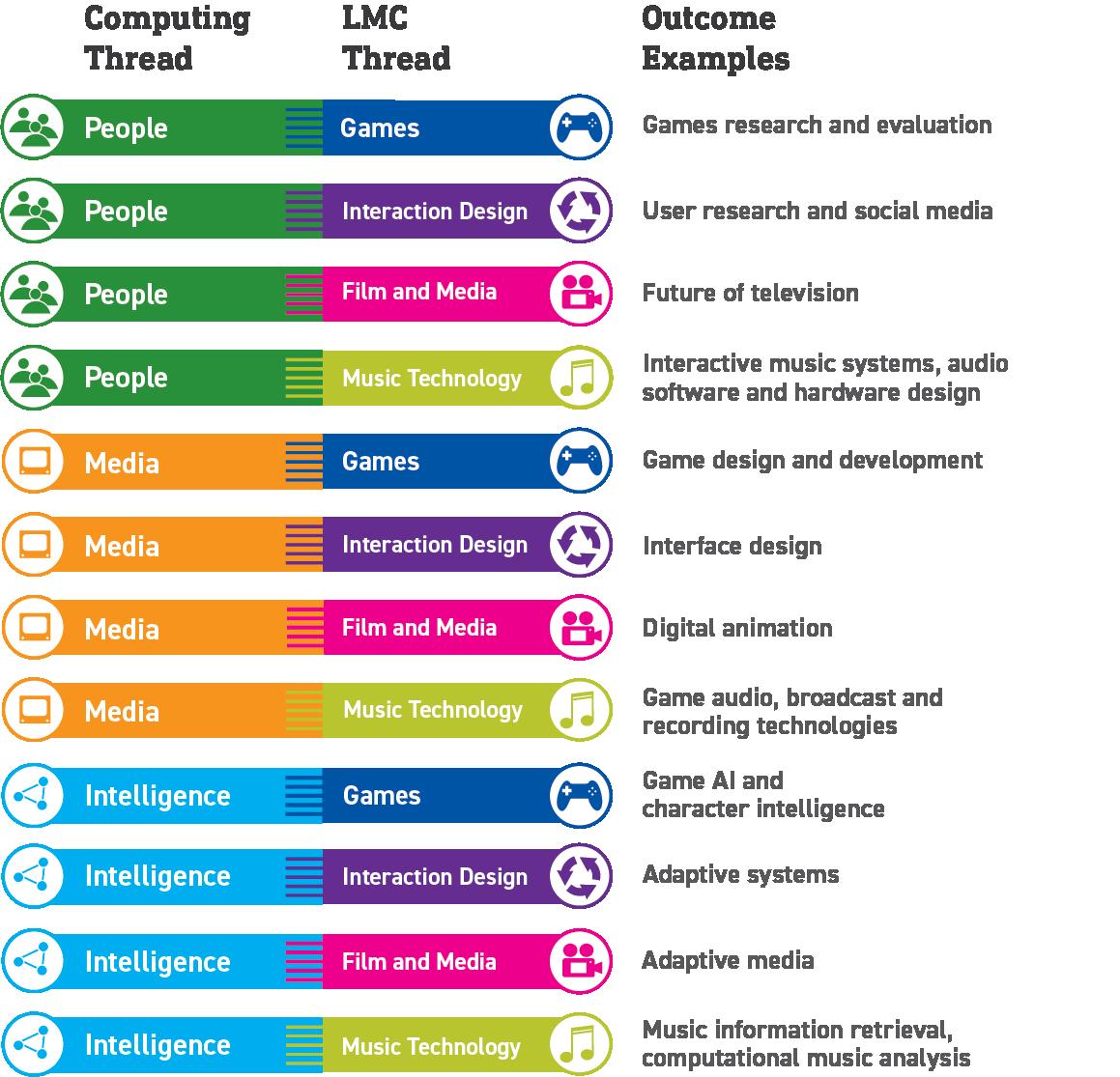
Computational Media (CM) prepares you to participate in shaping the future of digital media for our society. Offered jointly by the College of Computing, the School of Literature, Media, and Communication (LMC), and the School of Music, this degree gives you multiple perspectives on the digital revolution.
Computer engineering (CompE) covers a broad set of areas, ranging from design of microprocessors to cloud computing and everything in between. Courses throughout the program, especially those in the junior and senior years, emphasize an open-ended, design-oriented approach to solving engineering problems.
The Computing Threads
Media: Understanding and developing the technical and computational capabilities of systems in order to exploit their abilities to provide creative outlets.
People: The theoretical and computational foundations for designing, building and evaluating systems that treat the human as a central component.
Intelligence: Designing and implementing artifacts that exhibit various levels of intelligence as well as understanding and modeling natural cognitive agents such as humans, ants or bees.
The LMC Threads
Interaction Design: Building and critically analyzing interactive systems for commerce, education, entertainment, social media and personal expression.
Film and Media: Studying the history and creating new forms of cinema, electronic media and performance art.
Games: Building and critically analyzing the broad and growing variety of videogame genres—everything from mainstream role-playing games to casual games, independent games, serious games and art games.
Music Technology Thread
Music Technology: Use technology to create and perform music; create new algorithms for music generation and analysis; conduct scientific experiments in music perception; and design and develop transformative music products.
New Thread: Cybersecurity & Privacy
The Cybersecurity & Privacy thread is where computing meets malicious actors who exploit it for nefarious purposes. This thread deals with securing computing systems against various kinds of threats. It instills a security mindset that focuses on threats people and systems may face, how their vulnerabilities may be exploited, and how to detect, prevent or mitigate attacks that target information systems. Students also learn how cybersecurity and privacy impact people, organizations and society. The student who pursues the Cybersecurity thread can combine it with other threads as follows:
n Information & Internetwork, to build and manage real-world networked systems that enable access to sensitive information securely. It can be combined with
n Systems & Architecture, to develop secure systems that resist, detect and mitigate attacks and respond to them.
n People, to build human-facing systems that function securely.
“I’m president of Women at the College of Computing(W@CC), and we’ve had a wonderful experience with our CAP partners. They are so intentional –hosting engaging socials, workshops, and resume review sprints. CAP truly serves as a bridge between W@ CC and life-changing professional opportunities.”
“CAP has been pivotal in my professional development. I made connections at company recruiting events and alumni networking opportunities that have already aided me in landing further professional opportunities. Thanks to CAP, I feel very equipped going into industry.”
College of Computing Student profiles
Today’s job market is highly competitive. Our students want to design mobile apps and video games; develop software for major corporations; create interactive designs and marketing campaigns; use machine learning and data analytics to address real world challenges; start their own businesses; and much more.
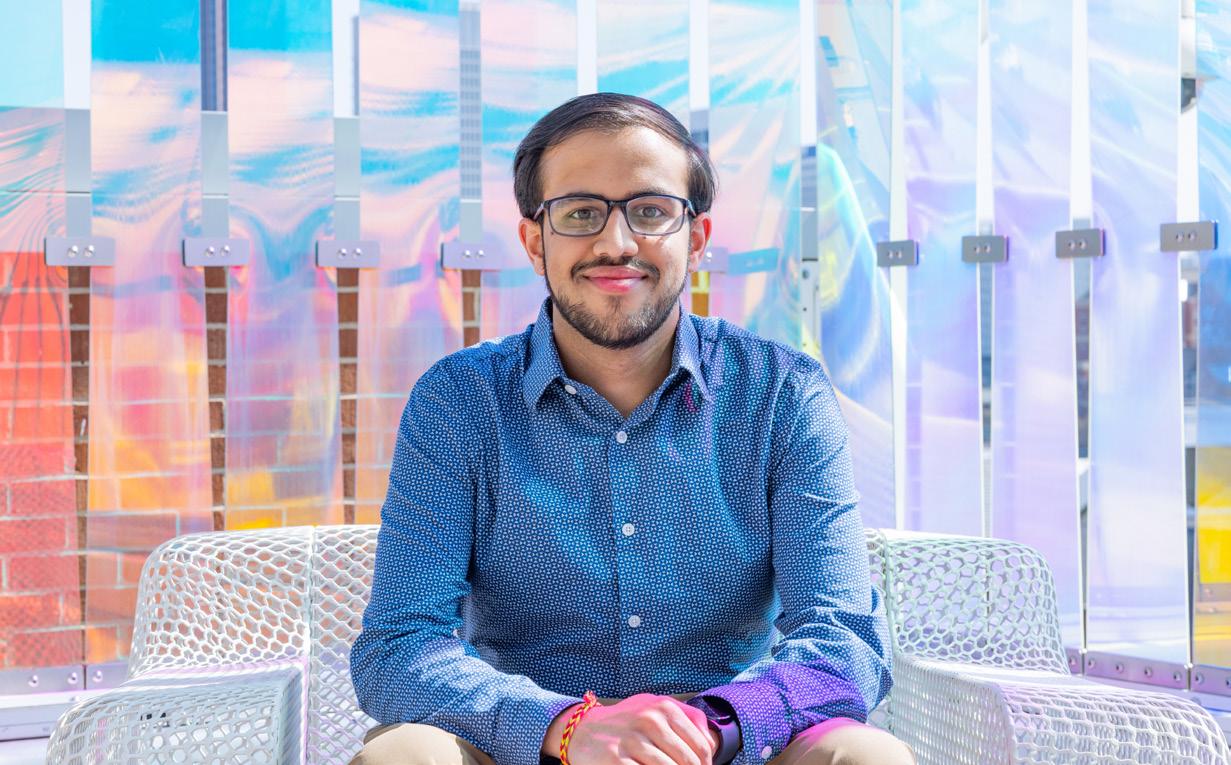
Parth (Third Year)
“Through mentorship and panel discussions from corporate partners, I’ve bridged the gap between classroom instruction and real-world implementation. Now, as president of the Big Data Big Impact club, I’ve worked with CAP to create opportunities for my peers to connect with industry professionals.”
These students work in healthcare, sports, finance, retail, entertainment and countless other industries. Each student’s career path looks different and Career Services is along for the journey. As we provide guidance and resources for early career seekers, these students continue to seek out opportunities to engage beyond the classroom to enhance their professional toolkits including internships, co-ops, and fellowship programs.
Our mission in Career Services at the College of Computing is to open doors for student opportunities in diverse fields and industries. The possibilities are endless as we look at research and technical knowledge weave into every fiber of the workforce.
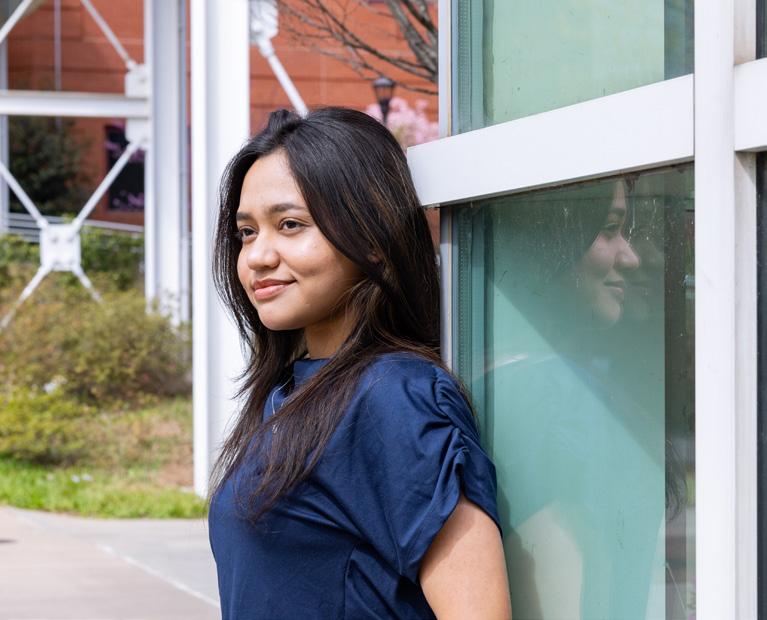
Ekta
(Fall 2026 graduate)
“I am an international student, graduating one year early this semester, and the CAP program played a significant role in making this possible. CAP helped me secure interviews, clarify my trajectory, and build lasting professional connections. I am deeply grateful.”
Muskan (Third Year)
Alexandra (Third Year)
Areas of Engagement
TThe Computing Affiliates Program directly supports students as they explore career pathways, gain exposure to industry, and prepare for life beyond the classroom.
These efforts come to life through four areas of engagement:
he program reinvests a significant portion of its funding into students by connecting them with employers, expanding access to experiential learning opportunities and providing mentorship and professional development resources that support their career goals.
In recognition of a company’s generosity and shared commitment to advancing student success and career outcomes, organizations are invited to engage with students through the following opportunities.
Tech Tower $20K Invitation to:
n 1 Fall Career Fair (valued at $1,500)
n 1 Spring Career Fair (valued at $1,500)
n Unlimited events of their choice per academic year
Talent Engagement
Opportunities & Recruiting
Students connect with organizations through career fairs, informal conversations, and targeted outreach efforts that create pathways to meaningful opportunities. These interactions provide organizations with opportunities to share insights about their work and inspire future technologists, while helping students gain greater clarity around career pathways and the skills needed to thrive in a rapidly evolving industry.
n Career Fairs
n Day in the Lobby
n Talent engagement and recruiting
n Campus presence
n Experiential learning
n Professional Development
Ramblin’ Wreck $11K Invitation to:
n 1 Fall Career Fair (valued at $1,500)
n 1 Spring Career Fair (valued at $1,500)
n Up to 6 events of their choice per academic year
Industry Connection & Campus Presence
Campus visibility fosters awareness and sparks curiosity among students about the innovations shaping the world. Through storytelling, hosted talks, and participation in campus events, organizations contribute to a vibrant learning environment that encourages exploration and strengthens connections between academic knowledge and real-world applications.
n Coffee Chats
n Tech Talk
n Office Hours
n Teaching Assistants (TA) Programming
n Student Organization Engagement
n Graduate Student Mixer
Experiential Learning & Innovation
Buzz $5K
Invitation to:
n 1 Fall Career Fair (valued at $1,500)
n 2 events of their choice per academic year
Students collaborate with organizations on projects and challenges that apply classroom concepts to real-world problems. These experiences cultivate creativity, teamwork, and technical depth while demonstrating how computing drives solutions across industries. Through authentic learning experiences, organizations help shape the next generation of problemsolvers.
n Capstone
n Industry Insights
n College of Computing Hackathon
Professional Development & Mentorship
Guidance from experienced professionals helps students build confidence and develop practical skills beyond the classroom. Through résumé reviews, interview preparation, and candid conversations, students gain valuable tools to navigate their career journeys. These engagements foster a culture of mentorship that strengthens the computing community and prepares graduates to lead with impact.