The Australian Geologist
Newsletter No. 9
March 1976
EDITORIAL
The forthcoming Congress is already taking precedence over more mundane geological matters in Sydney, although its impact is still only slight in other parts of Australia.
There is no doubt that numerically it will be quite a big conference. In addition the organization of the past few years is bearing fruit and present indications suggest that it will be a big conference in other ways. It will be an opportunity particularly to renew or establish new friendships, for visitors to learn something of our geology and mines,and for Australian geologists to participate more fully in the work of international bodies, specially those concerned with using geology for the advancement of mankind.
There are still some members of the Society who couldn't care less about the Congress. Fortunately their numbers are dwindling, and their insularity and short sightedness is becoming submerged, and hopefully drowned, in the enthusiasm of the majority for the August meeting.
Elsewhere in this issue is information on the Congress. Other matters of Society interest are also aired, particularly the idea of a professional body which asks you to return a questionnaire. Your co-operation would be appreciated.
My thanks go to numerous correspondents for sending material. My apologies go to some, whose items had to be left for the next issue.
from the President (continued from page 2)
It is clear that the Society as a scientific society is not constituted to act as a regulating authority for the practice of geology. It is largely for this reason that the Society has pressed for the establishment of Registration Boards which can so function. Deregistration of a geologist by such a board would provide prima facie evidence of professional misconduct, but the Society would need to proceed with its own independent enquiry were it to exclude such a deregistered geologist.
Mr. Adamson asked that the various State Committees on geological legislation continue to press for the passing of the relevant legislation."
It was hoped that the Ministers of Mines would be able to agree to uniform State legislation at their meeting held in Brisbane toward the end of last year. The Society is still awaiting official notification as to the outcome of this meeting, but it is understood that further problems have emerged. The Executive will report to the membership through "The Australian Geologist" as soon as it is able.
Mr. Warner, convener of the Committee on Professional Representation, has provided a questionnaire which we hope will be returned by the majority of members. Thus we hope to gauge the feelings of the membership in regard to professionalism.
G. M. Philip
Department of Geology and Geophysics, The University of Sydney, N.S.W. 2rr.06.
Letter to the Editor
Sir:
I write this as a private member of the Society and neither as an office bearer nor one involved in legislative activities seeking registration of geologists.
A. c. M. Laing's letter to the Editor (Newsletter No. 8, December 1975) is just about as loose as it could be and, unfortunately, is typical of the statements by too many of our profession who speak or write without having investigated a situation -a little like the prospectus containing glowing geological statements based on little more than imagination.
First he says we need a "body to speak in the same way as doctors have". I don't know of any body that speaks for doctors. If there is one, I presume it speaks for Ph.D.s who are geologists. No statute that I know relates to "doctors" although there may be references to medical practitioners or surgeons or physicians.
Next, reference is made to "salary relativity in relation to other professions". What relativity? The relativity of 1935, when a graduate geologist in N.S . W. Government employ was paid £273 p.a. less two shillings in each pound as Unemployment Relief Tax? Every employed person except Public Servants paid only one shilling in the pound. Does he mean the relativity of today or does he mean (and it seems to me that he does) the relativity of the mining boom when "geologists" good, bad, indifferent, qualified, unqualified, experienced or inexperienced could almost write their own ticket for salary?
The very word "geologist" is already pre-empted as a generic term. To suggest that the community would suddenly use it in no way other than to describe a qualified geologist is quite unreal. To use it with a qualifying wordregistered geologist, professional geologist - would be more sensible.
The comparison with the City Engineer of Heidelberg is again probably unreal. I don't know how the City of Heidelberg fixes the salary of its City Engineer, but I do know that there was for decades, many of them, a practice widely observed in Australia that a City Engineer's salary was a fixed percentage of the Council's expenditure on engineering works. for one, would not wish to see geologists' salaries fixed by reference to exploration expenditure, even using, as the base rate, salaries paid during the period 1968-1972. Lest it be thought otherwise, I am not now employed by an exploration or mining company.
At last I agree with one point! Of course companies hire geologists when metal (and other mined products) are highly priced and they sack them when prices are low! I~ :there any other way of observing the rule of "Supply and Demand"? One could, of course, join the Public Service AND STAY IN IT DURING TIMES OF HIGH DEMAND.
The point of an overseas slump swamping our market with geologists may be partly true, but in the main it has been our peak that has attracted overseas geologists. When registration of geologists was first proposed in Australia, I was assailed by many overseas geologists who accused us of trying to prevent their practising in Australia. I denied it then, I deny it now. Provided their qualific~tions are comparable with our standards (and some are not) I see no reason why they should not be registered to practise on an equal footing with Australians.
The reference to the Rae Senate inquiry is an appropriate example of the second paragraph of this letter. It is not necessary that "we as a body" do anything including attempts "to inquire into the conduct of those of our members accused". Indeed it would be disastrous to the individuals conducting such an inquiry anQ it could spell more than disaster to our Society, if that is what is meant by "we". The previous sentence is true even though "our" findings might be just as true. Let Mr. Laing inquire as to the fate of larger Societies than ours, Societies that have set out to discipline its members without having the statutory authority to do so.
I could almost agree with the point made concerning the exclusion of geologists, or rather geology, from environmental appointments EXCEPT that
(continued bottom of page 6)
PROFESSIONAL REPRESENTATION
Two letters in the December, 1975 issue of the Australian Geologist concerned the need for professional representation of geologists in Australia. At the last Council meeting of the Society (Adelaide, May 1975) Council approved the appointment of a Committee to investigate this matter. In particular the Committee was asked to examine:-
(!) The need for professional representation of geologists in the various fields of geology.
(2) The ability of existing organisaitons and organisational structures to cater for these needs.
(3) Changes which would be required in the rules, procedures and attitudes of the Geological Society of Australia Inc. if that organisation were to adopt the role of a fully professional body.
A questionnaire is included in this issue of the Newsletter which will attempt to clarify membership opinion on the first two aspects. The third question would be resolved, if necessary, in committee.
A number of personal questions such as age, salary levels, membership of other organisations etc., are included in the questionnaire to determine if particular sections of the membership hold particularly strong view~ one way or the other. These questions are not intended to pry, and you may omit your name and address if you wish. Name and address were included on the form, as the Committee may wish to contact respondents who introduce novel ideas in their comments. Naturally, all replies will be treated as strictly confidential, and will be destroyed after the Committee presents its final report to Council, probably in 1977.
The following definitions may assist in answering the later questions of the questionnaire . The Geological Society of London, Working Party on Professional Recognition defined a Learned Society as one which "exists for the main purposes of extending, refining and disseminating knowledge; it may also encourage the practical application of this knowledge. On the other hand a Professional Body exists primarily to maintain and protect standards of training, practical competence and ethics within a specific field.--------It is quite distinct from the more specific and direct action on behalf of an individual, which could be provided by a Trades Union".
The Committee i~ looking to a high percentage response to the questionnaire to ensure that an unbiassed opinion can be presented to Council. It may well be to your advantage to provide a few minutes of your time (and an 189 stamp) to complete and return the questionnaire, before 30th June, 1976.
Ken Warner Convener, Committee on Professional Representation.
Being Conventional
The second convention of the Geological Society of Australia is likely to be held during the first week of February 1977, at the Department of Earth Science, Monash University, Clayton, Victoria. Previous plans for the second convention had to be abandoned . Details of the forthcoming event will be given in the next issue.
Letter to the Editor.
Sir:
I refer to Frank Canavan's letter in the December 1975 issue of the Society's newsletter and would like to lend support to his last paragraph concerning the teaching of children about the economic impact of geology at primary and secondary school levels. Most of us with school age children must be aware of the average child's lack of understanding of the importance of the oil and mining industries to their general prosperity and well being. It is, unfortunately, still true that their main exposure to information about the mining industry deals with the alleged adverse environmental impacts of mining activities and little is said concerning the day-to-day effect which the industry has on their lives.
Some State Education Departments are making an effort to remedy this situation but some of the material that I have seen appears to put too much emphasis on railways and earth moving equipment rather than the fundamental impact that such activities have on the availability of every day living requirements.
The Australian Mining Industry Council has given considerable thought to the problem of communicating with children but they are probably not the right organisation to effect a cure to the fundamental problem, although they obviously have a rol~ to play in providing information.
If everyone agrees with Canavan that there is a problem, it would seem that the cure for it must lie within the membership of our own Society and in particular, with those members of it who are in the teaching profession other than at tertiary level.
I would suggest that as a first step such members of the Society might care to identify themselves to their local executive and that sub-committees could be set up in each State to forward the Society's objectives within the respective State Education Departments, with the ultimate objective of improving the standard of communication through_J:hemselves between the science, geology and their wards.
B. K. Welch, Adelaide.
(continued from Page 4)
suspect that Mr. Laing would seek to exclude all scientists except geologists from such appointments.
My personal opinions as to the proposal that the Geological Society circulate a questionnaire to all members are
(i) to Mr. Laing's (a):- the Society is already well advanced in its endeavours to obtain State registration of geologists.
(ii) to Mr. Laing's (b) :- to amend the constitution of G.S.A. as proposed would be to convert it from a learned body to an industrial body and this would destroy its basic character. It was created and continues to exist having as "its object the advancement of the geological sciences" - NOT the geologist.
(iii) to Mr. Laing's (c):- the proposal is an absurdity and impossible of achievement.
K. G. Mosher. Sydney
A seminar 'Planning for Urban Conservation' is being held by the National Trust of Australia (N.S.W.), May 8-9, 1976, at Mitchell College of Advanced Education, Bathurst. Contact the National Trust, Observatory Hill, Sydney, 2000.
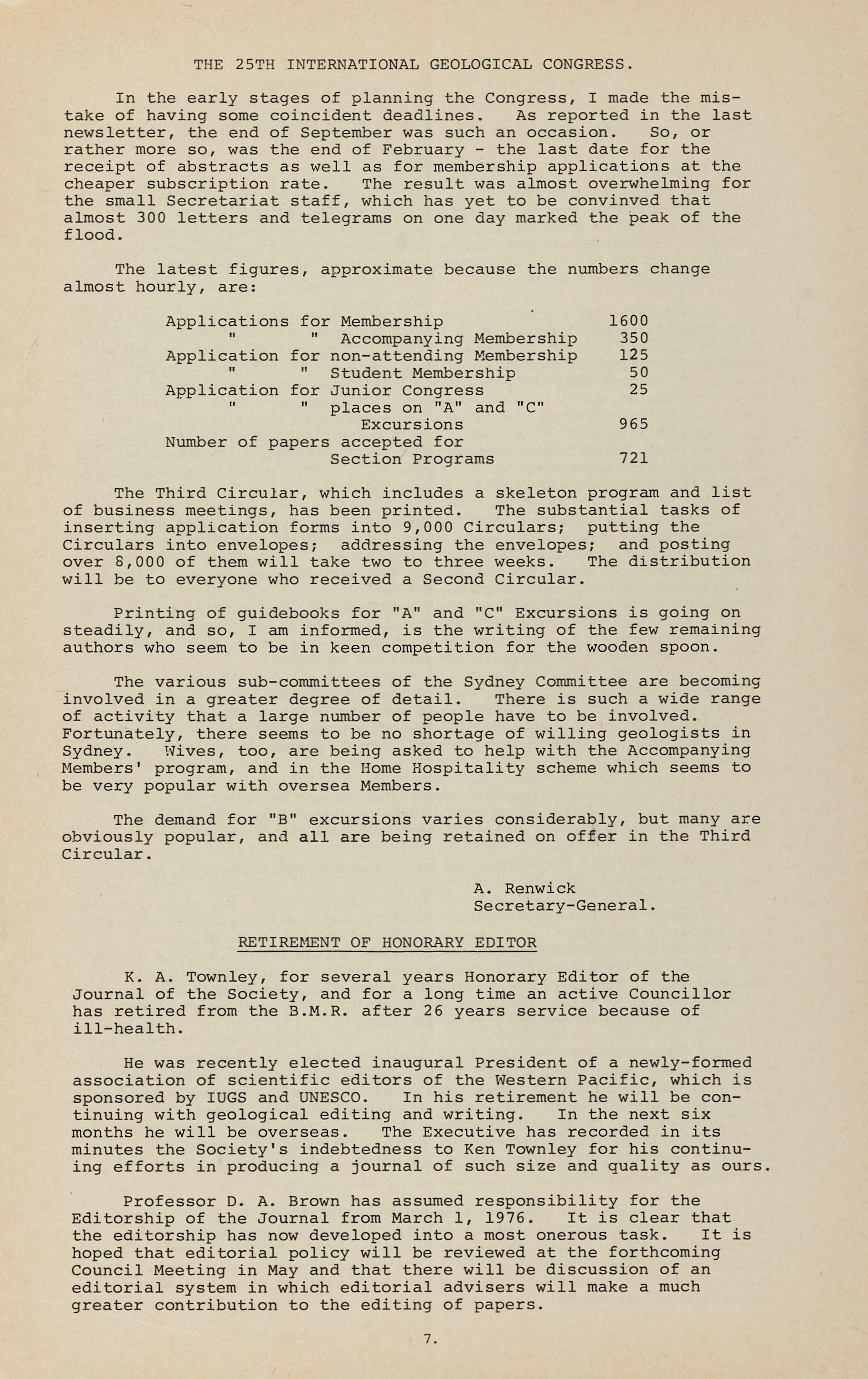
THE 25TH INTERNATIONAL GEOLOGICAL CONGRESS.
In the early stages of planning the Congress, I made the mistake of having some coincident deadlines. As reported in the last newsletter, the end of September was such an occasion. So, or rather more so, was the end of February - the last date for the receipt of abstracts as well as for membership applications at the cheaper subscription rate. The result was almost overwhelming for the small Secretariat staff, which has yet to be convinved that almost 300 letters and telegrams on one day marked the peak of the flood.
The latest figures, approximate because the numbers change almost hourly, are:
Applications for Membership " Accompanying Membership
Application for non-attending Membership Student Membership
Application for Junior Congress places on "A" and "C" Excursions
Number of papers accepted for Section Programs 1600 350 125 so 25 965 721
The Third Circular, which includes a skeleton program and list of business meetings, has been printed. The substantial tasks of inserting application forms into 9,000 Circulars; putting the Circulars into envelopes; addressing the envelopes; and posting over 8,000 of them will take two to three weeks. The distribution will be to everyone who received a Second Circular.
Printing of guidebooks for "A" and "C" Excursions is going on steadily, and so, I am informed, is the writing of the few remaining authors who seem to be in keen competition for the wooden spoon.
The various sub-committees of the Sydney Committee are becoming involved in a greater degree of detail. There is such a wide range of activity that a large number of people have to be involved. Fortunately, there seems to be no shortage of willing geologists in Sydney. Wives, too, are being asked to help with the Accompanying Members' program, and in the Home Hospitality scheme which seems to be very popular with oversea Members.
The demand for "B" excursions varies considerably, but many are obviously popular, and all are being retained on offer in the Third Circular.
A. Renwick Secretary-General.
RETIREMENT OF HONORARY EDITOR
K. A. Townley, for several years Honorary Editor of the Journal of the Society, and for a long time an active Councillor has retired from the B.M.R. after 26 years service because of ill-health.
He was recently elected inaugural President of a newly-formed association of scientific editors of the Western Pacific, which is sponsored by IUGS and UNESCO. In his retirement he will be continuing with geological editing and writing. In the next six months he will be overseas. The Executive has recorded in its minutes the Society's indebtedness to Ken Townley for his continuing efforts in producing a journal of such size and quality as ours.
Professor D. A. Brown has assumed responsibility for the Editorship of the Journal from March 1, 1976. It is clear that the editorship has now developed into a most onerous task. It is hoped that editorial policy will be reviewed at the forthcoming Council Meeting in May and that there will be discussion of an editorial system in which editorial advisers will make a much greater contribution to the editing of papers.
MEETING OF INTERNATIONAL SUBCOMMISSION ON PERMIAN STRATIGRAPHY, MOSCOW, 8-13 SEPTEMBER, 1975.
The Subcommission is part of the International Commission on Stratigraphy of the International Union of Geological Sciences and the meeting was held in conjunction with the International Congress on Carboniferous Stratigraphy and Geology The meeting, in effect , took the form of a symposium on the world correlation of the Permian, and business meetings of the Subcommission took up only a minor part of the time
The attendance at the meeting was made up of approximately 50 of the established Sov i et workers together with some 20 or 30 outside workers on the Permian. It is of interest that more women were present at the sessions than men and more women than men spoke . The Soviet workers gave a comprehensive account of the Permian of the USSR and its relationships. Accounts were also given of the Permian in western Europe, Gondwanaland and North America. More informal discussions were held on world correlation and subdivision of the Permian The importance of climate, i.e , climatic zonation and fluctuations in the climate, is apparent for understanding Permian world relationships and it seems clear that the relationships between Australia and the Soviet Union are of particular significance in understanding the Permian on a world scale.
No formal decisions were taken but there was some agreement that for the moment a primary twofold subdivision of the Permian should be retained based on the classical Ural Mountains-Russian Platform area. It was agreed that supplementary scales were useful for the Tethyan and North American regions Further supplementary regional scales might be desirable. It was felt that further work should allow a single unified World Time Scale for the Permian, the outlines of which were already discernible, but that this could be based only on additional understanding of such groups as brachiopods, pelecypods, gastropods and plants, in addition to fusulinids, annnonoids and conodonts.
Some workers argued that the base of the Permian should be placed at the boundary of the Asselian and Sakmarian because the fauna! changes were more distinctive. Although the basis of this argument was admitted, the general feeling was that the reasons were not sufficient to change the boundary already generally accepted
None of those present proposed support for schemes not based primarily on stratigraphical sequences but on combinations of stages from many different parts of the wcrld based on supposed palaeontological relationships.
The following list of titular members of the Sub-Commission is to be submitted to IUGS for approval :
Chairman: D. L. Stepanov (USSR) ; vice-chairman: w. A Nassichuk (Canada); vice-chairman & secretary : s. V. Neyen (USSR); members: B. E Balme, J.M. Dickins & J B. Waterhouse (Australia) ; R. E Grant & Ch. A. Ross (USA) ; H. Visscher (The Netherlands) ; F. Kahler (Austria); H. Kozur (DDR) , v. I. Ustritsky & E Ya Leven (USSR), M. Minato (Japan) ; corresponding members: N Newell (USA); H. Taraz (Iran) , D. B Smith (UK), s. Nastaseanu (Romania) A list of corresponding members will be extended.
Nine working groups have been tentatively organized. A. ~egional (1) North America - Grant, Furnish, Glenister; (2) Continental Permian of Europe - Fa l ke et al ; (3) Gondwana-Laurasia correlation - Ustritsky, Meyen, Dickins; (4) Boreal biostratigraphy - Ustritsky, Nassichuk; (5) Tethyan - Leven, Minato : B Palaeontological (6) Fusulinid-ammonoid zonation - Ross; (7) Conodonts & other non-fusulinid micropalaeontology - Kozur; (8) Permo-Carboniferous boundary - Ross & a Soviet spec i al i st to be named; (9) PalaeoclimatologyUstritsky , Stehli, Dickins
No par ticular enthusiasm was e v ident for special attention to the boundaries of the Permian and the Carboniferous and the Triassic, perhaps partly because considerable work is alread y b e i ng undertaken on this. Action, however, is to be taken on setting up working g r o up s on the Carbonifero us-Permian boundary and the Permian-Triassic boundary jointl y with the Subcommissions on Carboniferous and Triassi c stratigraphy
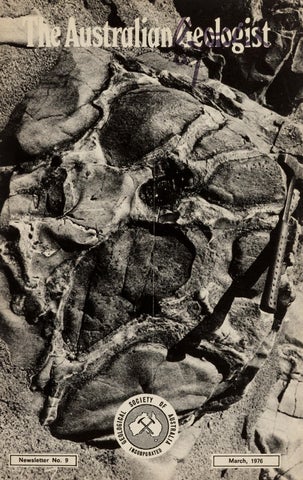
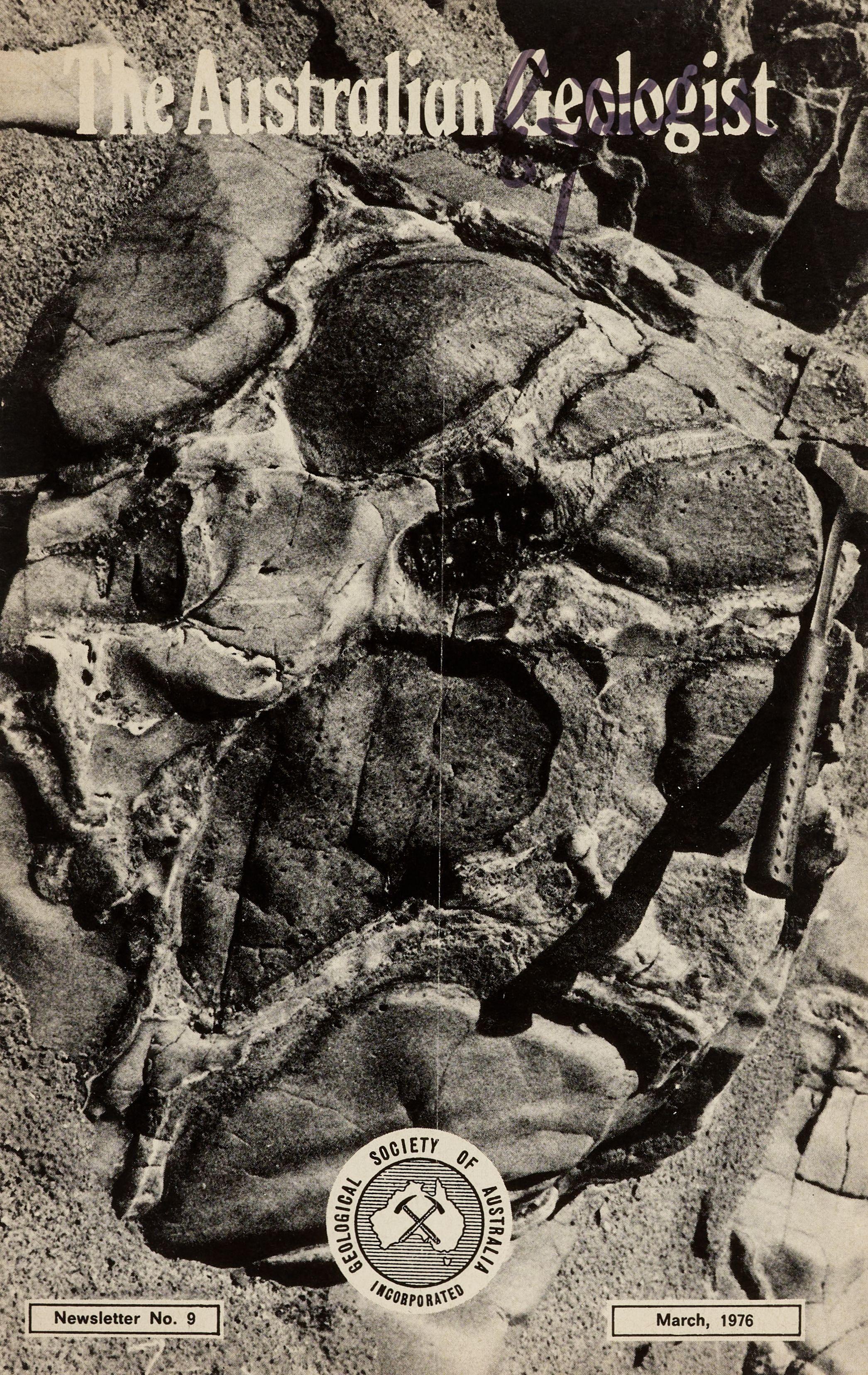
PROTEROZOIC PILLOW LAVAS IN THE CENTRAL GEORGETOWN INLIER, NORTH QUEENSLAND
Ian Withnall 1 , Brian Oversby 2 , John Bain 2 and Max Baker 1
Basic igneous rocks of Middle? Proterozoic age are common in the central Georgetown Inlier; they were all originally thought to be intrusive and assigned to a single unit, the "Cobbold Dolerite" (White, 1959, 1965). In 1973, Dr. M. J. Rubenach of James Cook University drew our attention to outcrops of metabasalt with apparent pillow structures in "Cobbold Dolerite" in the Gilbert River near "Gilberton" homestead (Gilberton 1:100,000 Sheet area). These outcrops suggested that extrusive rocks occurred in the "Cobbold Dolerite", but whether they constituted a significant proportion of the unit was unknown. During the 1975 field season, we mapped the Gilberton 1:100,000 Sheet area as part of the joint BMR-GSQ Georgetown Project; many areas of "Cobbold Dolerite" were found to consist partly or wholly of metamorphosed basalt flows.
Aphyric metabasalt flows occur in the greenschist facies Etheridge Formation (mainly phyllitic siltstone and quartzite) throughout the northwestern part of the Gilberton Sheet area. Although the massive varieties could possibly be confused with fine grained metadolerite, pillowed, hyaloclastic, autobrecciated, and amygdaloidal flows are common and unambiguously indicate an extrusive origin (see cover photo). The primary structures are well preserved and generally undistorted, even though the sequence has been tightly folded. The metabasalts are commonly intruded by metadolerite anp metagabbro sills. They are well exposed along the Agate Creek - Ortona track and in the Gilbert River 3 km west-southwest and 2.5 km southeast of Gilberton. Metabasalt in the Gilbert River 10 km west of "Gilberton" contains chalcopyrite in the amygdales.
The discovery that extrusive metabasalts were common in "Cobbold Dolerite" of the Gilberton 1:100,000 Sheet area prompted us to re-examine the unit in its nominated type area (White, 1959, p. 446) in upper Cobbold Creek (North Head 1 : 100,000 Sheet area). Here also, and at "South Head" about 15 km southwest, the "Cobbold Dolerite" was found to consist of metabasalt flows with minor metasediments and only subsidiary metadolerite and metagabbro sills.
Extrusive rocks probably occur in the "Cobbold Dolerite" at other localities including the higher grade metamorphics of the Georgetown, Forsayth, and Gilberton 1:100,000 Sheet areas, which we have now mapped. Occurrences in the more highly deformed amphibolite grade terranes (e.g. Robertson River and Einasleigh Metamorphics) might be difficult to identify with certainty because of distortion and destruction of diagnostic primary structures.
The name "Cobbold Dolerite" is clearly inappropriate because the unit is mostly extrusive metabasalt in its type area. We intend to formally revise the nomenclature of this and other units in the central Georgetown Inlier in due course. It is possible that most, if not all, of the metamorphosed basic igneous rocks assigned to the "Cobbold Dolerite" are magmatic. However additional data, especially chemical, will have to be obtained before we attempt to reach mqre definite conclusions as to the relationships of the various basic rocks and their tectonic significance. These data and conclusions will be presented, along with others arising from the Georgetown Project, in future BMR, GSQ and other publications.
References omitted (by Editor), without reference (to authors)
1 Geological Survey of Queensland
2 Bureau of Mineral Resources.
GEOLOGY TAKEN TO TASK
Due to the generous assistance of the Third Task Force, Lavarack Barracks, Townsville, The Department of Geology & Mineralogy, University of Queensland, was able to take its second and third level students into an isolated area of the Broken River Embayment, North Queensland. The army provided transport and logistic support for the 40 students and 5 staff.
Camp was set up on the Broken River 20km (2~ hours drive) north of Wandovale Homestead, 220km northwest of Charters Towers almost on the spot where the old stage coach route from Charters Towers to Einasleigh crossed the Broken River. This was also the spot from which R. L. Jack measured the sequences last century.
There is excellent exposure on the Broken River; Silurian and Devonian limestones and flysch sediments conformably overlying a structurally complex sequence of sediments, plutonic rocks and basalts showing pillow structures. This offered a great variety of rock types, fossils and geological structures within a relatively small area.
This excellent geology, coupled with the army support of 6-wheel vehicles to negotiate the rough country, of camp facilities including tents, a huge mess hall, cooking facilities, communications centre, R.A.P., hot showers and other home comforts, and of all sleeping and eating equipment, made for a most enjoyable and instructive field mapping excursion. The experience was worthwhile not only for the students - the Army benefitted greatly from the exercise of supporting such a group in this remote area.
Working together for 10 days developed mutual respect between the army personnel and the students, and each learnt a great deal from the other.
John s. Jell.
MPy Birthday
A.A.P. (Association of Australasian Palaeontologists) announces the following new office-bearers:
President: K. s. w. Campbell
Vice-President: G. Playford
Treasurer: J. Shergold
Secretary:
M. R. Walter
Editor: B. Runnegar
The Association's Journal Alcheringa was l'a'unched in December. It has two aims: to publish high quality interpretive palaeontology and biostratigraphy, and to provide a medium for the documentation of fossils from the Australasian area.
The same title is possessed by a journal on ethnopoetics published by Boston University. Only the future can decide if there will be any confusion in the minds of likely contributors.
There is also no truth in the rumour that the next meeting of A.A.P. will be held at the Alcheringa Winery near Berri, S.A.
Wishing Them Well
The National Water Well Association of Australia will be holding its Sixth Annual Convention in Adelaide, S.A., October 17th t h rough October 20th, and the N.W.W.A. is calling for papers on the general theme: "Groundwater Exploration"
Those i n terested in submitting papers, contact: Executive Secretary, N.W.W.A., P.O. Box 91, St. Ives, N.S.W. 2075.
ENVIRONMENTAL EDUCATION IN THE EARTH SCIENCES IN VICTORIA
Report on a meeting of the Victorian Quaternary Group, July 1975. E. B. Joyce, Department of Geology, University of Melbourne.
With ten speakers representing both teachers and those working in the environmental field, an afternoon seminar sponsored by the Victorian Quaternary Group attracted a total attendance of thirty-six. The aim of the seminar was to bring together those involved in teaching Environmental Geology and related sciences with those who carry out research or applied work in this field or employ such workers. Out of the discussion it was hoped some conclusions might be reached on teaching aims and methods, and the future needs of employees and employers.
Following an introduction by the Chairman, Professor E. S. Hills, the ten speakers each gave a five-minute talk and handed out prepared papers. Some of the points the speakers made are summarized below.
The new syllabus in Earth Science introduced for Higher School Certificate in 1976 was discussed by Roger Winwood of the Yarra Valley School. It includes two optional units (a) Land Form Studies, and (b) Geology and Man. These will allow students to select environmental aspects of Earth Science if they wish. It is hoped that this new course will encourage more students to take up earth science in the sixth year of their secondary education. It is worth noting that great interest has already been shown by students in another new HSC subject entitled Agricultural and Environmental Science which began in 1975; this subject has an ecological approach to the environment.
Noel Schleiger of the State College of Victoria at Coburg demonstrated how aspects of sedimentology and palaeontology can be used in a course on mathematics for future primary teachers to draw attention to aspects of their local environment such as a beach or a drainage basin.
Alby Link of the Department of Applied Geology at Royal Melbourne Institute of Technology discussed teaching in the Colleges of Advanced Edaction in Victoria. At RMIT environmental aspects are found in such subjects as Geology, Engineering Geology and Rock Mechanics, and Hydrology. He also mentioned the Diploma in Agricultural Science- Soil Science at Dookie Agricultural College, and the new Graduate Diploma in Water Science to be introduced at the Caulfield Institute of Technology in 1976 . RMIT plans to introduce a Graduate Diploma in Environmental Studies in 1976 and a Master's degree which could include environmental studies is also being proposed.
Teaching and research at the Department of Geography in the Arts Faculty at Monash University was described by Geoff.Robinson. A number of units are available in the three years of the B.A. degree course and students may major in physical geography. A two year Master of Environmental Science course at Monash began in 1974 and is based on a dissertation and course work. Many students are working and taking this course on a part-time basis. The course includes a unit in Environmental Geology co-ordinated by Jim Peterson, and students in the M.Env.Sci. course often take other environmental units from the Geography undergraduate course.
Jack Massey of the Department of Geography at the University of Melbourne discussed how students may take a three year course for B.A. or B.Sc with physical geography units in each year, and with particular interest in the coastal environment in third year.
Bernie Joyce of the Department of Geology at the University of Melbourne listed the environmental aspects in each of the three years leading to B.Sc. Three units in third year, one a compulsory core unit and the other two optional, cover Quaternary geology, soil studies, and modern process studies. Such a landscape approach is seen as the obvious basis for environmental geology studies. The content of the process studies unit is currently being altered to fit the new title of "Engineering and Environmental Geology" which will come into use in 1977.
The School of Earth Sciences at the University of Melbourne includes a Department of Geology and also a Department of Meteorology. Two units in
Meteorology of particular interest to students in geology are "Climatology", and "Climate, Weather and Man".
Research at the University of Melbourne in Geography and Earth Sciences often has an environmental content, but particular mention might be made of postgraduate work on coasts in Geography, and in Geology on marine sediments in Western Port, fluvial deposits in Northern Victoria, and volcanic deposits in Western Victoria and in the Department of Meteorology on glaciers, ice sheets and climate. Active research work on environmental problems is also going on in the Centre for Environmental Studies at Melbourne which is headed by the geologist George Seddon and staffed by workers from engineering and other disciplines.
Dick Piesse of the Environment Studies Association of Victoria outlined the course work organized by the Association for school students, teachers and others interested in the environment. The ESAV brings together experts in various fields with course members and organizes the necessary equipment and other facilities. An ultimate aim of the ESAV is to see the establishment of a residential Field Study Centre with a permanent professional staff, similar to the scheme established in the U.K. Meanwhile courses are run in Education Department camps, or using other established accommodation, or camping out.
Colin Laing is an environmental geologist with the Victorian Mines Department who is concerned mainly with Land Conservation Council Study Groups considering the future use of crown land in Victoria. As well as preparing geological aspects of reports, he advises on the establishment of extractive industries and mining in the areas concerned. Further positions for environmental geologists in the Mines Department may be created as this work expands. The preparation of impact statements on proposed developments involves assessing the arguments of planners, developers, business men and legislators. Colin Laing considers that a separate subject is developing in this field and an environmental science course should be available to those training to be geologists, and environmental aspects of present subjects should receive special attention.
Quentin Farmar-Bowers is the Environmental Studies Officer with the State Rivers and Water Supply Commission of Victoria, and sees his work in future as the co-ordination of the environmental evaluation of SRWSC projects. He spoke on the future development of Environmental Impact Statements; although at present legislation for Victoria is still being drawn up, the Ministry for Conservation already provides some guidance. Geologists may become co-ordinators of such evaluation by a multi-disciplinary team, but are more likely to be specialist members of the team, working most of their time on SRWSC projects, and joining a team as a geological consultant when a project evaluation is required. The special qualifications of a team co-ordinator are most likely to come from work experience rather than from formal education, as the field is evolving so rapidly at present.
ran Reid of Broken Hill Proprietary Co. Ltd. said that his company did not employ any specifically environmentally-trained workers at present. However geologists proposing new projects must give some indication of the likely environmental effects, even such effects as the tracks, camp sites and excavations associated with the initial explorations. Most problems of course arise at the development stage, which are not the geologist's direct responsibility. Where environmental geologists are required by BHP in the future, it is likely that members of the present geological staff will be trained for the new work.
In the general discussion that followed the end of the talks, Jack Massey put the case for environmental specialists who may have to work on occasion on their own rather than in a team. Professor Hills commented that so-called integrated surveys often consisted of separate specialist surveys, and the final integration left much to be desired. Quentin Farmar-Bowers said that teams may start off as individuals but if kept together for a period better integration can be achieved. He agreed that training a person to integrate the specialist work presented difficulties. Colin Laing pointed out that many environmental surveys were carried out locally by small consultant teams, who did not employ geologists themselves, but came to the Mines Department for geological advice; Alby Link agreed that often projects which needed a geologist did not use one.
Dick Piesse said that courses such as those run by the ESAV were often able to help specialists get a general view of problems; in two or three days even
teenagers and adults with no specialist training can study a problem in a particular area under specialist guidance and at the end be able to challenge the views of the expert, or the politician or developer. Geoff Robinson who has acted as a leader on ESAV courses agreed on the value of taking training to the local people as a way of informing them on environmental matters and giving them the ability to contribute to environmental decision-making.
Roger Winwood said that more in-service training in environmental science for teachers was needed. To gain experience they ideally needed the type of training associated with a Field Study Centre. Children had difficulty in assessing the environment, and for them the best approach was initially through a subject approach stressing, for example, geology and biology.
Bernie Joyce mentioned the recent discussion in the "Australian Geologist", the Newsletter of the Geological Society of Australia, (No. 4, [ ,ecember 1974 and No. 5, March 1975) on whether specific training was required for those planning to become environmental geologists.
One of the aims of this meeting had been to find out the present and future needs of employers, and the type of training they would like their employees to have. It appeared from the discussion that in the immediate future employers would prefer to have fairly traditionally-trained geologists as employees, and then when the need arose for environmental geologists some type of in-service experience would provide the best training.
These comments should not preclude earth science education at Tertiary level from changing some of the emphasis in the courses being given, if only to the extent that the case studies used in teaching in the future will be increasingly conscious of the environment. Also as school students with environmental training begin arriving at Tertiary institutes a demand from them for environmentally-oriented education will probably be felt, even if employers are not requesting it.
One of the questions that remained unanswered was whether the new emphasis on the environment has created more job opportunities for geologists, or just led to a redistribution of duties among present employees. Logically it would seem that more geologists will be needed in the future if the traditional work of the geologist is to continue alongside the new demands being made on his or her time. However in the present state of the employment market for geologists it seems rather difficult to document this.
MONASH UNIVERSITY - DEPARTMENT OF EARTH SCIENCES
is offering a
GRADUATE DIPLOMA IN ENGINEERING GEOLOGY
Questions regarding the diploma should be forwarded to:
Professor B. E. Hobbs, Department of Earth Sciences, Monash University, CLAYTON. Victoria 3168.
(continued from page 8)
Phone: 541-3791.
Together with s. V. Meyen and v. I. Ustritsky, I have been asked to take responsibility for organising the Working Group on Gondwana-Laurasia Correlations and with F. G. Stehli and V. I. Ustritsky for the Working Group on Palaeoclimate.
It is proposed to hold the next meeting of the Subcommission at the IGC in Sydney. The main topics for discussion would be Upper Permian and GondwanaLaurasian Relationships.
I would be pleased to have any comments, questions or proposals for the work of the Subcommission and the two working groups with which I am concerned. • J. M. DICKINS.
The Bureau of Mineral Resources, Geology & Geophysics announces a new publication
B.M.R. Journal of Australian Geology & Geophysics to be issued quarterly. The first issue is March 1976. Annual subscription is $10, single issues $3. While the journal will contain articles from within B.M.R., discussion on these articles is invited from anyone.
The FIFTH BMR SYMPOSIUM will be held 28-29 April 1976 at the B.M.R. Building, Constitution Avenue, Canberra, A.C.T.
An interesting series of papers covering among others mineralisation, plate tectonics and petroleum exploration will be presented.
INTERNATIONAL SYMPOSIUM ON GEODYNAMICS IN SOUTH-WEST PACIFIC
Noumea - New Caledonia 27 August - 2 September 1976
Presentation of papers will be in English.
Abstracts in English (maximum length 1 page 21 x 29.7 cm) must be received by the organizing Committee before 30 June 1976. Address: J. DUBOIS, ORSTOM, BP.AS Cedex, Noumea, New Caledonia.
Registration fee: Australian $20 including transportation from airport to Noumea but no meals.
Excursions: 28-29 August 1976 and 2 September 1976.
2ND INTERNATIONAL SYMPOSIUM ON WATER-ROCK INTERACTION
The above Symposium will be held in Strasbourg, France, from 17-25 August, 1977. Following lectures and discussion (17th-2lst), there will be a field trip (22nd-25th).
The following topics have been selected for discussion:
1. near surface environments; 2. saline environments; environments; 4. experimental and theoretical models; and case histories.
3. elevated-temperature 5. practical applications
Other papers relevant to the main theme of the geochemistry of water-rock interactions will also be considered.
Further details can be obtained from: Dr. D. J. Swaine, c.s.I.R.O. Division of Mineralogy, P.O. Box 136, NORTH RYDE, N.S.W. 2113.
A CENTRAL SCIENCE LABORATORY has been set up at the University of Tasmania. This is the first University facility in Australia to house a number of pieces of major scientific equipment of use in a diverse range of disciplines. Equipment in use includes a scanning electron microanalyser, a Laser Raman Spectrophotometer and a neutron generator
Third Australian Conference on Coastal and Ocean Engineering will be held in Melbourne, April 18-21, 1977. Synopses of papers are required not later than April 30, 1976. The Conference Manager is c/o The Institution of Engineers, Australia, 157 Gloucester Street, Sydney 2000.
FOR SALE: Australian Journal of Science, Vol. 25(3) to Vol. 32(12) (i. e. 1963 until end of series in 1970), continuing as "Search", Vol. 1, 1970 to Vol. 6, 1975. Also "Quaternary Research", Vol. 1 (l~ol. 3 (4), 1970-73. Contact: E. B. Joyce, Ge ol o gy, University of Melbour ne , Parkville, Vic. 3052. 14.
NEW APPOINTMENTS IN QUEENSLAND DEPARTMENT OF MINES
Mr. J. T. Woods, formerly Chief Government Geologist in the Geological Survey of Queensland, was appointed Under Secretary of the Queensland Department of Mines in December, 1975. He replaced Mr. E. K. Healy , I.S.O., who retired after serving 48 years with the Department, including 14 years as Under Secretary. Mr. Woods, who had been Chief Government Geologist for seven years, and the Director of the Queensland Museum for some years before that, is the first technical head in the Department's history.
Mr. R. J. Allen, formerly Principal Geologist in the Petroleum Geology Section of the Geological Survey, was appointed Chief Government Geologist in February 1976. Mr. Allen spent three years with Mines Administration Pty. Ltd., joined the Survey in 1958, and was appointed Principal Geologist in 1967.
MINERALOGICAL SOCIETIES
Following the formation recently of a Mineralogical Society in New South Wales a group of mineralogy enthusiasts recently held a preliminary meeting in Melbourne with a view to forming a MINERALOGICAL SOCIETY OF VICTORIA.
The Society will be a non-profit-making org anization and will be established with the objects of advancing mineralogy as a scienc~ and increasing the knowledge of minerals, their occurrences and associations, etc. It will endeavour to promote the proper collection, care and preservation of mineral specimens and foster co-operation between the professional and non-professional in the field of mineralogy and various fields of earth sciences.
It is emphasised that the Society will not be catering for those interested in the cutting and polishing of stones - this avenue will be left in the capable hands of the lapidary clubs.
A magazine devoted to articles of a mineralogical nature has also been launched recently. Entitled 'The Australian Mineralogist', it appears eve~y two months as the centrefold of Australian Gems & Crafts Magazine. Two issues have appeared so far. Contributions are eagerly sought.
For details about the Victorian Society contact Bill Birch, Curator of Minerals at the National Museum of Victoria.
IGCP PROJECT
GENESIS OF MANGANESE ORE DEPOSITS
on behalf of the IAGOD Commission _pn Manganese the President of the Commission submitted a project proposal to the Board of the International Geological Correlation Programme (UNESCO-IUGS) entitled "Genesis of Manganese Ore Deposits".
The main objective of this project is a comparative study of manganese ore deposits of different origin including the study of their geological, mineralogical, geochemical and palaeogeographical peculiarities and their relations to prospecting methods as well as the summary of the modern methods of analysis applied to the manganese ores and minerals, respe~tively.
AUSTRALIAN THESAURUS OF EARTH SCIENCES AND RELATED TERMS
The First working edition of this Thesaurus is now available from:
The Director, Australian Mineral Foundation P.O. Box 97, GLENSIDE South Australia 5065.
The cost of the 440 page tome is $35-00, plus $2-50 postage (for 2-5 copies add extra $1-50) in Australia. Send the r e quired remittance with orders.
THE GEOLOGY OF WESTERN AUSTRALIA
A review of Memoir No. 2, (1975), Geological Survey of Western Australia.
In 1958, the Journal of the Geological Society of Australia broke new ground by devoting a complete issue to the Phanerozoic stratigraphy of Western Australia (McWhae et al., 1958). The issue adhered rigidly to the then newly evolved Australian Code of Stratigraphic Nomenclature, and proved remarkably durable. Despite additions to stratigraphic knowledge provided by Commonwealth and State publications, and scientific journals, it remained until 1975 the basic reference for Western Australia Phanerozoic , stratigraphy. That role has now been taken over, and extended to cover Precambrian rocks, by Memoir No. 2 of the Geological Survey of Western Australia, entitled "The Geology of Western Australia", which appeared toward the end of 1975.
The volume begins with a preface by J. H. Lord in which tqe history of the Geological Survsy is outlined. The section dealing with the Precambrian is then introduced with a discussion of the problems of Precambrian time-rock nomenclature. This is no place to review the nomenclature adopted, and it is sufficient to say that the Precambrian rocks of Western Australia are divided regionally in the first instance, and are then described in some detail as sequences comprising the various cratonic elements, namely blocks, provinces and basins. There is also a brief but useful summary of information about Precambrian rocks encountered at the bottoms of holes drilled through thick Phanerozoic strata. The Phanerozoic rocks are treated basin by basin. A concluding chapter, with maps, shows the palaeogeographic development of Western Australia from the Archaean to the Quaternary.
Memoir No. 2 is the work of thirteen authors whose contributions have been welded into a tersely written stylistically homogeneous whole, with few misprints or errors, by the editorial panel of A. F. Trendall, P. E. Playford, and R.R. Connolly. A few references extend to 1973, but the preface explains that the text accords with the 1971 State Geological Map (published in 1973), and that, in general, it "may be regarded as expressing the geological opinions of authors as at 1971". This four year lag was apparently unavoidable, but it is a pity, because there has been . a great deal of 1:250,000 mapping done since 1971. Nevertheless, the volume will be the basic reference to Western Australian geology for many years, and access to it will be indispensqble for most geologists working in the State.
Memoir No. 2 contains 541 pages and lists over 800 references. It is clearly printed on good-quality paper, and the text is amplified by 84 figures (some half-tone) and 24 tables. There is an index listing all formations, and a gazetteer showing the latitude and longitude of localities mentioned in the text. A pocket contains the 1973 Geological Map of Western Australia (which sells separately for $2), and a detailed correlation chart of Phanerozoic units. The volume is very sound value at $15 (hard cover) and $12 (soft cover), both prices exclusive of postage. Moreover, if ten or more copies are bought, the prices are discounted to $12 and $10 respectively. Copies may be ordered from the Geological Survey of Western Australia, Mineral House, 66 Adelaide Terrace, Perth, 6000. They are also available from the Australian Government Publis hing Service, Mt. Newman House, 200 St. George's Terrace, Perth, 6000.
Reference
McWhae, J. R.H., Playford, P. E., Lindner, A. W., Glenister, B. F., and Balme, B. E., 1958. The stratigraphy of Western Australia. J. geol. Soc. Aust., 4., (2): 1-161.
J.E. Glover.