Earth Sciences History Group (ASpecialist Group of the Geological Society of AustraliaInc.)
Email Bulletin No. 50 April 24 2016
AESC2016 Uncover Earth’s Past to Discover Our Future
Adelaide 26–30 June 2016
Website: www.aesc2016.gsa.org.au
Email: aesc2016@aomevents.com the official convention email address managed by All Occasions Events.
Key Dates:
Call for Abstract submissions: Closed Close Early Bird Registration: 22 April 2016
Early Bird Registrations
Early Bird Full Registration Member
Early Bird Student/ Retired Member Registration
Early Bird One Day Only Member
Standard Registrations
Full Registration Member
$625.00
$275.00
$350.00
$725.00
Student/ Retired Member $355.00
One Day Only Member
Late Registrations (2 weeks from convention)
Full Registration Member
$410.00
$925.00
As previously advised, in recognition of the ongoing remembrances marking the centenary of World War 1, the ESHG has convened a session on the war records of Australian geologists and their contributions to geology before, during or after their service The session entitled War Records of Australian Geologists will be part of the Geoscience and Society: Education, Integration and Translation of Earth Science for Societal Benefit theme. Four papers were received on T.W. Edgeworth David, Leslie Blake, Cecil Morton and Walter H Bryan. In addition another paper on Robert Bedford has been accepted, although not related to the theme of World War 1. The time allotted for the session is on the Thursday afternoon (30 June) of the AESC.
Appropriate papers from these sessions, and any others that members wish to submit after the AESC will be published in the ESHG Newsletter as was done so successfully after the AESC Canberra meeting of 2010, and also for the 34th IGC Brisbane 2012.
The Geotourism and Geological Heritage Standing Committees is also convening sessions Recent advances in Geotourism in Australia and beyond and Geoheritage under the Geoscience and Society theme
Business Meeting
Time has been allotted to the ESHG on Wednesday 29 June from 2:30 to 3:30pm during the AESC.
INHIGEO News Circulars
The ESHG receives copies of the News Circulars of the International Commission on the History of Geological Sciences (INHIGEO) of which the ESHG is an affiliate. The INHIGEO circular for March is attached with this edition of the Email Bulletin.
41st INHIGEO SYMPOSIUM - CAPE TOWN, SOUTH AFRICA
The 41st INHIGEO Symposium will be part of 35th International Geological Congress scheduled in Cape Town, South Africa, 27 August–4 September 2016. The conference website is http://www.35igc.org/
Symposia
A “History of Geoscience” theme is listed under a Core Topic of “Geoscience and Society” with the INHIGEO Secretary General being the designated co-ordinator.
The historical symposia suggestions under the “History of Geoscience” theme for the 41st INHIGEO conference are listed as:
1. General contributions on the history of geology
2. Historical studies of Gondwana
3. Local (indigenous) understanding of geology
4. History of fossil man investigations
5. History of geology over the past 50 years
Field Trips
A one day pre Congress field trip is being planned around Cape Town by INHIGEO Vice President North America, Greg Good on Saturday 27 August 2016. It will cater primarily for INHIGEO members.
The exact itinerary of this pre Congress field trip is not yet worked out, but the idea is to visit several historical sites near Cape Town visited by John Herschel and Charles Darwin in their geological fieldwork.
Otherwise a general day excursion for all Congress participants during the Congress will visit the historically important “Sea Point contact”.
Critical Dates
1 May 2016 -Accommodation bookings close
31 May 2016 - Early Bird Registrations close
1 July 2016 - Fifth Circular released - Preliminary Programme
Australian Mining History Association 22nd Annual Conference
Web: http://www.mininghistory.asn.au
Cobar Bowling and Golf Club
COBAR 16th October to 21st October 2016
For registration and details, follow the link https://cloudstor.aarnet.edu au/plus/index.php/s/THmnCMcPB7TnCbG
Contributions for the ESHG Newsletter
No articles have yet been received for the ESHG Newsletter, so we are holding over publication until after the AESC, when hopefully we will be able to publish papers presented during the session on Australian geologists in World War 1. However, articles on other topics will be welcome and if you already have an article for the newsletter, you are still welcome submit it to the Newsletter Editor, Mr John Draper at jdraper@hn.ozemail.com.au
Books of interest
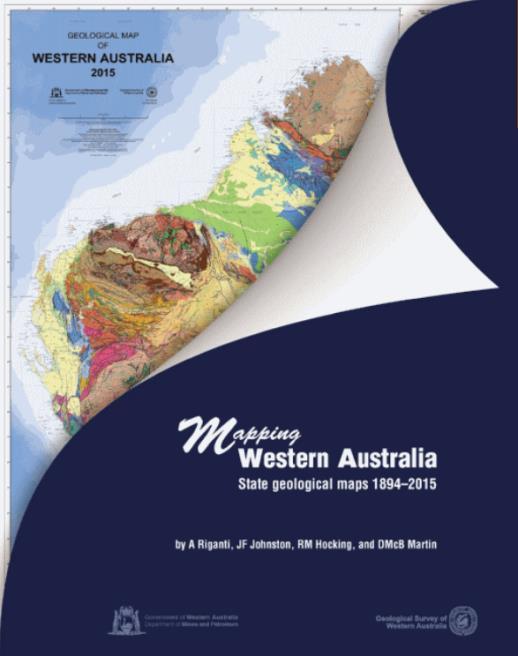
Mapping Western Australia
State geological maps 1894–2015
The ‘Geological map of Western Australia’ released in December 2015 is the 14th in a series that began with the Harry P Woodward map of 1894, published six years after the Geological Survey of Western Australia (GSWA) was established. Since then, ‘State’ maps have been published roughly every 10 years, with a longer hiatus between the 2015 map and the previous edition of 1998.
To celebrate the launch of the latest map in the series, GSWA released a book that visually documents the milestones in the geological understanding of Western Australia through the lens of each State map, starting from the early days of exploration with camels and horses, up to the helicopter and computer-aided mapping of today.
The first part of the book details some of the very early geological explorations and resulting maps conducted by Government Geologists prior to the establishment of the Geological Survey, from Ferdinand von Sommer to Henry YL Brown and to Edward T Hardman, and including Rev. CG Nicolay’s map illustrating the geological collections held at the Geological Reference Museum in Fremantle.
Each State map is then illustrated with a two-page spread. An image of each map is complemented by text that describes the main features, including:
changes in coverage from one map to the next, with details of GSWA’s work conducted in the intervening years that translated into more meticulous interpretations
the evolution of legend layouts from broad lithological and temporal subdivisions to progressively more detailed stratigraphic columns and tectonic sketches, reflecting improved geological knowledge of the State as well as the evolution of significant geological concepts over the last 125 years
comments on the maps’peripheral information, such as usage of different logos and patronage, historical costs, etc.
The text is also matched by additional images that illustrate historical aspects of field work, emblematic geological locations, or crucial analytical and remote-sensing techniques that in the last century have assisted geologists in unravelling the geological framework of Western Australia (e.g. aerial photography, geophysical imagery, and geochronology). The longer section on the 2015 State map focuses on the digital approach used for the first time to compile and deliver a State map that can be viewed in conjunction with many other datasets.
As stated in the introduction, the book’s journey is ‘… a tribute to the passion of all the geologists who, since the 19th century, have mapped (every part of the) State’.
Available for purchase from DMP’s eBookshop $11 incl. GST www.dmp.wa.gov.au/ebookshop
Or download PDF free from DMP's eBookshop
http://dmpbookshop.eruditetechnologies.com.au/product/mapping-western-australia-state-geological-maps18942015.do
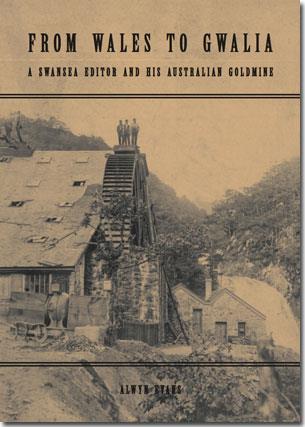
From Wales to Gwalia a Swansea editor and his Australian goldmine by Alwyn Evans
A long awaited history of the Sons of Gwalia goldmine at Leonora. Assiduous research into the Welsh and Australian origins of this famous mine by Alwyn Evans for a thesis, now modified for general reading has resulted in an essential reference for any and all interested in WA mining history. An appendix on the exaggerated role of Hoover is of interest as an independent analysis divorced from the adulatory propaganda.
ISBN 978-0-85905-630-4, (2016, New), A4, heavily illustrated – b&w and colour, well referenced and indexed, 184pp, 515 grams, $50.00* + POST
Hesperian Press PO Box 317
Victoria Park, Western Australia 6979
Retail Location 65 Oats St, Carlisle Western Australia (Rear of building)
www.hesperianpress.com e: books@hesperianpress.com
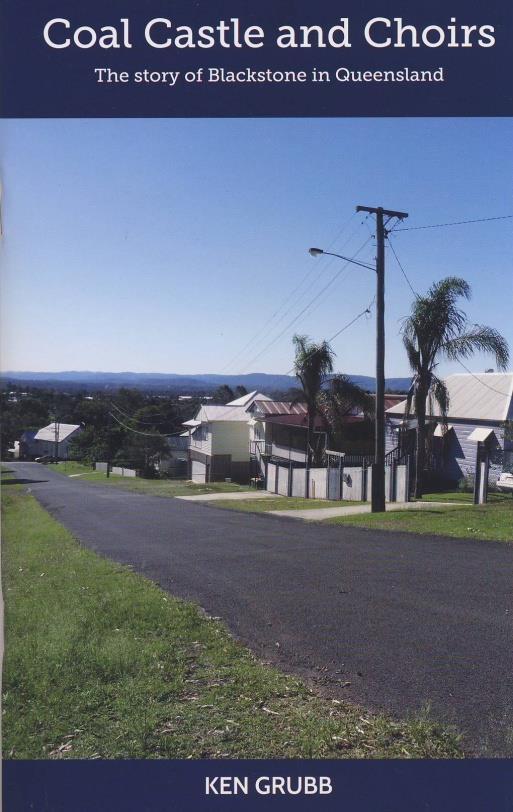
This recent booklet by Ken Grubb provides an insight to the Ipswich suburb of Blackstone and provides a concise and informative explanation of the district’s coal mining heritage, including the significant contribution made by the Welsh coal mining families, and their legacy in cultural and sporting pursuits as well as the built environment.
Ken Grubb is an Engineering geologist who has been involved in coal mining studies in the Ipswich region over a 30-year period, and now specialises on investigating abandoned coal mine sites for development.
The booklet can be obtained from the Willis Haenke Historical Foundation for $5
www.haenkefoundation.org.au
PO Box 423, Ipswich, QLD 4305
Phone 0418 741 915
Coal Castle and Choirs the story of Blackstone in Queensland by Ken Grubb
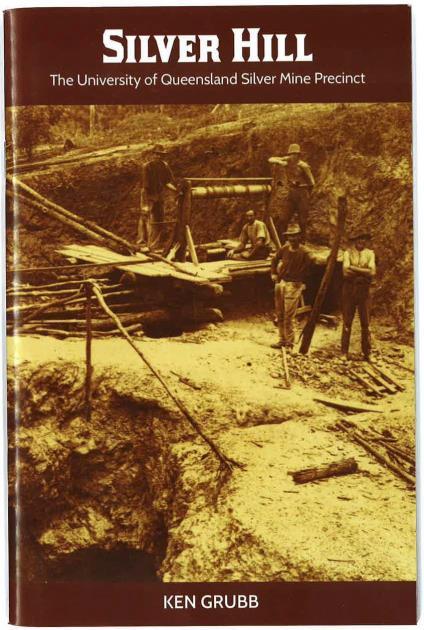
Silver Hill The University of Queensland Silver Mine Precinct by Ken Grubb
Articles of interest
Ken Grubb’s previous booklet is about the University of Queensland Experimental Mine.history The booklet was first published in October 2013 and reprinted with minor changes in March 2014. The silver mine, located at Finney's Hill in the Brisbane suburb of Indooroopilly, was discovered in 1918 and up until it closed in 1929, produced 227 oz of silver and 1796 tons of lead. The mine was acquired by UQ in 1951 and rehabilitated for use in training geology and mining engineering students It subsequently became the University Experimental mine and is the site of the Julius Kruttschnitt Mineral Research Centre (JKMRC).
Copies of this booklet can be purchased at the JKMRC reception for $10 (cash point sales), Tel. (07) 3365 5888.
On the subject of geologists who served in war, Roger Bateman drew my attention to a paper on the life and remarkable career of James Richardson, who showed amazing resilience, surviving the ordeals of Changi and the infamous Burma railway as a POW in World War 2.
After becoming a petroleum geologist for Shell after the war, he moved to Western Australia in 1970 and began a new career as a consultant to the mineral exploration industry during the nickel boom. It is well worth a read.
Richard J. Howarth, R.J., 2015: Geology behind barbed wire: James Alfred Richardson (1914–2007) and the Richardson Award of the Geologists’ Association Proceedings of the Geologists’ Association 126 (2015) 282–294
ABSTRACT: The Richardson Award, for the best paper published annually in the Proceedings of the Geologists’ Association, was established in 1996. This paper describes the life of the Richardson family: James (‘Jim’) Richardson, the instigator of the Award, his wife Doris and their only son, Gwyn (who died in infancy). The focus is mainly on Richardson’s education in the United Kingdom and early career as a field and mining geologist with the Geological Survey Department of the Federated Malay States (Malaysia) and how, having been caught up in WWII, he and his geological colleagues kept thoughts of geology alive during their time as Prisoners of War under the Japanese in Singapore, Thailand and Burma (1942–45). One of the relatively few survivors of the infamous ‘Death Railway’, his subsequent career as a petroleum geologist in the Netherlands, Venezuela, USA and Australia; and as a geologist involved in mineral exploration, artist and local historian in Australia is also described.
ESHG Committee:
Chair Ian Withnall
Secretary John Jell
Treasurer Paul Blake
Newsletter Editor John Draper
Assistant Editor Cec Murray
WA representative John Blockley
NSW representative David Branagan
Victorian representative Roger Pierson
Tasmanian representative Carol Bacon
SA representative Jim Jago