RIVA INSIDE, INSIDE RIVA. From our boats to our boutique, with the same care and craftmanship.
www.rivaboutique.it
PATAGONIA - EXPLORE THE WORLD TO EXPLORE OURSELVES
WWW.LARUSMIANI.COM
S I N C E
1 9 2 2
2014 Bugatti Veyron 16.4 Grand Sport Vitesse ‘Jean-Pierre Wimille’ Sold for a record-breaking CHF4,505,000 at The Zurich Auction 2026
The pursuit of mechanical perfection doesn’t end at the wrist. For buying or selling enquiries: EMEA +44 (0) 20 7851 7070 NORTH AMERICA +1 519 352 4575 info@rmsothebys.com
N.3 EDITORIAL
| PAG. 15
Beyond possession Oltre il possesso
MARK WEGH
| PAG. 38
A double dream Doppio sogno
SENSATIONAL SALES AUTOMOTIVE
| PAG. 21
WATCHES
| PAG. 23
ART
| PAG. 24
AUCTIONS
| PAG. 26
RONNIE KESSEL
| PA G. 58
Burning ice Ghiaccio bollente GUGLIELMO MIANI 70
| PAG.
Private passions Passioni private
NOT TO BE MISSED BOOKS
| PAG. 130 TIME ON SHOW
AUTOMOTIVE GIACOMO AGOSTINI First the dream, then the legend Prima il sogno poi la legenda
| PAG. 30
The Time Club
| PAG. 44
EXHIBITORS
| PAG. 53
THE QUINTESSENTIAL KITCHEN
+39 02 6347 1479 | OFFICINEGULLO.COM
N.3 LAURENT
WATCHES ROBERTO BOLLA
| PAG. 80
The man who saw watch
ASSCHER
| PAG. 104
In focus
collecting come of age L’uomo che ha visto il collezionismo
In evidenza
di orologi raggiungere la maturità CARLA AND NICHOLAS BIEBUYCK
| PAG. 88
A journey into heritage
| PAG. 114
Sense of place
Viaggio nell’heritage
Spirito del luogow
ART
ANDREAS
PATRIZIA SANDRETTO RE REBAUDENGO
ANTONIO SERSALE
| PAG. 96
KAUFMANN
Beyond the collection
The second light
Oltre la collezione
Seconda luce
| PAG. 122
PUBLISHERS Paolo Borgomanero, Auro Montanari, Pier Luigi Santi CONTRIBUTORS Giacomo Agostini, Laurent Asscher, Nicholas Biebuyck, Roberto Bolla, Andreas Kaufmann, Ronnie Kessel Guglielmo Miani, Patrizia Sandretto Re Rebaudengo, Carla and Antonio Sersale, Mark Wegh EDITOR IN CHIEF Matteo Parigi Bini EDITORS Teresa Favi, Francesca Lombardi, Virginia Mammoli, Martina Olivieri ART EDITORS Melania Branca, Clelia Giardina PHOTOGRAPHERS Davide Bianchet, Brechenmacher & Baumann, Lorenzo Bringheli, Dirk Bruniecki, De Pasquale + Maffini Andrea Dughetti (cover), Nicola Fornaciari, Riccardo Ghilardi, Kiri Huhtanen, Andrea Klainguti, Bin Jiam Sebastiano Pellion di Persano, Tom Powel Imaging, Stefano Trovati ADVERTISING AND MARKETING DIRECTOR Alex Vittorio Lana ADVERTISING Alessandra Nardelli COPYRIGHT BY © connect@timetocollect.it
PAOLO GOBBI Watches Editor For almost four decades, he has written about modern and vintage watches. Editor-inchief of Handmade and watch editor for leading publications
KARLINA NATHAN Art Editor Monaco-based cultural advisor and founder of The Intelligent Eye, she advises collectors on building purposedriven art collections
PUBLISHING COMPANY
Alex Vittorio Lana & Matteo Parigi Bini via Cristoforo Landino, 2 - 50129 Firenze - Italy - ph +39 055 0498097 www.gruppoeditoriale.com | redazione@gruppoeditoriale.com N.3 Finished printing October 2026 PRINT Cartografica Toscana
The Art of Elegance MADE BY LEICA
DAS WESENTLICHE
14
editorial
BEYOND POSSESSION TEXT TERESA FAVI
Collectors turning private passion into a legacy to be shared Collezionisti che trasformano la passione privata in un patrimonio da condividere
Collecting means recognising, in a form, a mechanism or a work of art, something that touches us deeply and captivates us to such an extent that, once we have encountered an object for the first time, we can no longer do without it. And, at times, it also means finding a way to share that discovery with others. Giacomo Agostini has brought together in the AgoMuseum the motorbikes, helmets and trophies from his fifteen world titles: not a monument to victory, but the story of a young man who refused to give up on his dream. Guglielmo Miani, with FuoriConcorso, transforms cars into the protagonists of a dialogue between design, architecture and memory. Andreas Kaufmann has brought Leica back into the future without severing its ties to a century of photography: because an extraordinary object must live on.
Collezionare significa riconoscere in una forma, in un meccanismo, in un’opera d’arte qualcosa che ci riguarda profondamente e che ci rapisce al punto da non poter più fare a meno di un oggetto, dopo averlo incontrato la prima volta. E, talvolta, significa anche trovare il modo di restituire agli altri quella scoperta. Giacomo Agostini ha raccolto nell’AgoMuseum le moto, i caschi e i trofei di quindici titoli mondiali: non un monumento alla vittoria, ma il racconto di un ragazzo che non ha voluto rinunciare al suo sogno. Guglielmo Miani, con FuoriConcorso, trasforma le automobili in protagoniste di un dialogo tra design, architettura e memoria. Andreas Kaufmann ha riportato Leica nel futuro senza recidere il legame con un secolo di fotografia: perché un oggetto straordinario deve continuare a vivere.
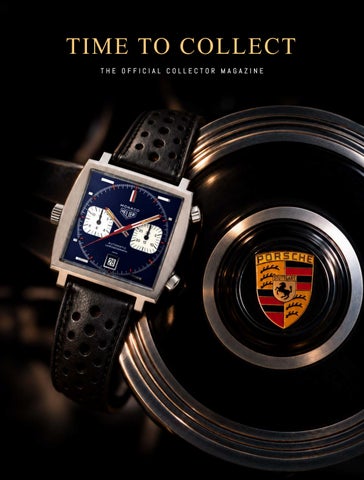
The TAG Heuer Monaco, the star of our cover, became an icon on Steve McQueen’s wrist in the 1971 film Le Mans, with its distinctive square case and blue dial 15
The Porsche 356A (1958) of our cover is one of the exemplars of the model that laid the foundations for the brand’s sporting legacy, is instantly recognisable by its rounded bodywork, circular headlights and timeless design. Produced from 1948 to 1965, it remains one of the most iconic cars in Porsche history (ph. Andrea Dughetti) 16
Ronnie Kessel knows this, as he races legendary cars on the ice of St. Moritz; Mark Wegh, guardian of Porsche’s authenticity, knows this too. Nicholas Biebuyck reinterprets TAG Heuer’s heritage, whilst Roberto Bolla takes us back to the dawn of watch collecting. And then there is art, where a private gesture becomes a collective experience: Carla and Antonio Sersale turn Le Sirenuse into a home filled with creativity; Laurent Asscheropens his collection in Venice; Patrizia Sandretto Re Rebaudengo has, for thirty years, been turning her passion into opportunities for artists and the public. Different stories, a shared conviction: the value of a collection lies not only in what it holds, but in what it manages to convey. It is a legacy of ideas, encounters and stories to be experienced.
Lo sa Ronnie Kessel, che fa correre vetture leggendarie sul ghiaccio di St. Moritz; lo sa Mark Wegh, custode dell’autenticità Porsche. Nicholas Biebuyck rilegge l’heritage di TAG Heuer, mentre Roberto Bolla ci riporta agli albori del collezionismo orologiero. E poi c’è l’arte, dove il gesto privato diventa esperienza collettiva: Carla e Antonio Sersale fanno di Le Sirenuse una casa abitata dalla creatività; Laurent Asscher apre a Venezia la sua collezione; Patrizia Sandretto Re Rebaudengo, da trent’anni, trasforma la passione in opportunità per gli artisti e il pubblico. Storie differenti, una convinzione comune: il valore di una collezione non sta soltanto in ciò che custodisce, ma in ciò che riesce a trasmettere. È un patrimonio di idee, incontri e storie da vivere.
17
editorial
18
editorial
19
EXPERT IN TIME
EXCLUSIVE TIMEPIECES
Speciali st
Monaco Legend group is an auction house with a private sales department focused on exclusive and vintage watches.
DIRECT ACCESS
www.monacolegendauctions.com
info@monacolegendgroup.com (+377) 97 77 53 35
CARS S E NSATIO NAL SAL ES
Shelby Cobra Daytona Coupe (1964)
Gooding Christie’s $ 42,905,000 Sale date August 2026 Among the most important American automobiles ever built, this Cobra Daytona is one of only six created to challenge Ferrari’s 250 GTO. It debuted at the 1964 Tour de France and played a key role in Shelby American’s historic 1965 FIA GT Championship. It later raced successfully in Japan through 1968 and, from 1975 to 1998, belonged to Carroll Shelby himself – the only Daytona Coupe ever owned by its creator.
McLaren F1 GTR (1996)
RM Sotheby’s $ 34,655,000 Sale date August 2026 Known as ‘The Pop Art F1,’ chassis 10R is one of the most recognizable McLaren F1s ever built, distinguished by its factory scarletand-yellow livery. One of only two F1 GTR Short-Tail prototypes, it was retained by McLaren before being acquired in 1999 by Pink Floyd’s Nick Mason, who owned it for 25 years. Later converted by the factory for road use, it stands as an icon of 1990s British automotive and pop culture.
Ferrari Luce ‘Tailor Made’ (2026)
Ferrari 250 GTO Bianco Speciale (1962)
RM Sotheby’s $ 40,000,000 Sale date August 2026 Ferrari Luce is an advanced expression of the marque’s research into design, materials and color. Created through the Tailor Made program, ‘Chassis 0’ features an exclusive Madreperla Semi-Gloss finish with iridescent reflections shifting from green to violet, complemented by Perla Le Mans metallic leather and Grigio Corvara interior details. A unique synthesis of innovation, craftsmanship and light, it will benefit The Ferrari Foundation.
Mecum $ 38,500,000 Sale date January 2026 A once-in-a-lifetime offering, this unique right-hand-drive Ferrari 250 GTO, chassis 3729GT, was finished in Bianco Speciale. It was the only one of the 36 Ferrari 250 GTOs ever produced to be painted white – Enzo Ferrari famously disliked white cars. It became the most valuable car ever sold by Mecum and one of the most expensive Ferraris ever auctioned: a landmark sale for one of Maranello’s most coveted creations.
Ferrari 250 GT SWB California Spider by Scaglietti (1961)
Chevrolet Corvette Grand Sport (1963)
RM Sotheby’s €16,655,000 Sale date April 2026 The 26th of just 56 short-wheelbase examples built, this Ferrari 250 GT SWB California Spider is one of only 39 originally fitted with covered headlamps. Shown at the 1961 Frankfurt Motor Show, it was Ferrari Classiche certified in 2019 with its matching-numbers engine, gearbox, rear axle and coachwork. Extensively restored by leading Italian specialists, it is accompanied by a rare silver hardtop, tools, manuals and comprehensive documentation.
RM Sotheby’s $ 18,705,000 Sale date August 2026 The first of only three Grand Sport coupes – and one of just five examples ever built – this Corvette ranks among America’s most significant competition cars. Raced at Sebring and the Bahamas Speed Week by legends including A.J. Foyt and Jim Hall, it was restored to its authentic 1964 Sebring livery. It shares this auction result with the 1963 Ferrari 250 P sold by Gooding Christie’s on August 2026.
21
ITALIAN ORGANIC EXCELLENCE MINERAL WATERS, ORGANIC SODAS, TEAS, MIXERS & MOCKTAILS
Discover the full range at www.galvanina.com
WATCHES S E NS ATIONAL SAL ES
F.P. Journe Souscription Chronomètre à Résonance no. 007
Rolex Submariner Prototype Ref. 1680
Audemars Piguet Grosse Pièce No. 16869
Phillips New York $13,922,000 Sale date June 2026 Setting a world record for an independent maker’s watch MOVEMENT: Manual, cal. 1499, 36 jewels DIAL: Platinum, 18K pink gold CASE: 38mm YEAR: c. 2000
Christie’s Geneva CHF 635,000 Sale date May 2026 For, setting a high watermark for rare white-gold tool watch prototypes MOVEMENT: Automatic DIAL: Black ‘nipple’ CASE: 40 mm REMARK: One of only three known 18k white gold Submariner prototypes
Sotheby’s New York $ 7,730,000 Sale date December 2025 Set the all-time record for the most expensive Audemars Piguet timepiece ever sold at auction DIAL 1: Front; white enamel dial, Roman numerals DIAL 2: Back; sidereal time, silvered/gold dial, 24-hour scale CASE: 85 mm
Patek Philippe Ref. 1518 in Stainless Steel
Patek Philippe Ref. 2499 First Series in Pink Gold
Patek Philippe Ref. 2523 ‘South America’ World Time
Phillips Geneva $ 17,600,000 Sale date November 2025 Phillips Watches ‘Decade One’ auction in Geneva this exceptionally rare steel perpetual calendar chronograph set the global high for the year MOVEMENT: Manual, cal. 13’’’130 Q, 23 jewels DIAL: Stern Frères silvered CASE: 35mm YEAR: 1943
Phillips Hong Kong $ 10,255,212 (HK$80,370,000) Sale date May 2026 The most expensive wristwatch ever sold at auction in Asia MOVEMENT: Cal. 13-130 Q manual winding, 23 jewels DIAL: Silvered CASE: 36,2 mm
Phillips Geneva $10,200,000 Sale date May 2026 Sold by Phillips Geneva highlighting intense demand for vintage cloisonné enamel world-time watches DIAL: Cloisonné enamel map of South America CASE: 18k yellow gold, 36mm circular case REMARK:One of two known yellow gold examples with a South America enamel map, and the only one auctioned since 1988 23
ART S ENSATIO N AL SAL ES
Gustav Klimt Portrait of Elisabeth Lederer (1914-16)
Jackson Pollock Number 7A (1948)
Constantin Brâncuși Danaïde (1913)
Christie’s New York $ 181,185,000 Sale date May 2026 Representing a new auction record for Pollock and the headline lot for the S.I. Newhouse Collection sale. Oil and enamel on canvas. 35 x 131½ in. (88.9 x 334 cm) Sotheby’s New York $ 236,400,000 Sale date November 2025 The top auction result of 2025, a new Klimt record and one of the highest prices ever achieved at auction. Headline lot from the Leonard A. Lauder sale. Oil on canvas, 71 x 51 ⅜ in. (180.4 x 130.5 cm)
Mark Rothko – No. 15 (Two Greens and Red Stripe) (1964)
Christie’s New York $ 98,385,000 Sale date May 2026 A new auction record for Rothko, and headline lot from Agnes Gund’s collection. Oil on canvas 93 x 69 in. (236.2 x 175.3 cm.)
24
Christie’s New York $ 107,585,000 Sale date May 2026 A new auction record for Brâncuși and one of the most important sculpture sales in history. Again from the S.I. Newhouse Collection. Bronze with gold leaf and black patina. Height (excluding base): 10⅞ in (27.1 cm) Marlene Dumas Miss January (1997)
Christie’s New York $ 13,600,000 Sale date May 2025 The new auction record for a living female artist – a genuinely important milestone in the contemporary market
Frida Kahlo El sueño (La cama) (1940)
Sotheby’s New York $ 54,700,000 Sale date November 2025 Not just a new auction record for Kahlo, but the highest price ever achieved at auction for a work by a female artist. It is also the highest price ever achieved for a work of Latin American art. Oil on canvas 29 ⅛ x 38 ⅝ in. (74 x 98 cm)
©2026 Marriott International, Inc. All Rights Reserved. All names, marks and logos are the trademarks of Marriott International, Inc., or its affiliates.
A REFINED VERSION OF ITS ICONIC SELF Discover the beauty of the floating city at The Gritti Palace, a Luxury Collection Hotel, Venice. This palatial retreat is where history and culture are met with renewed Venetian elegance on Venice’s Grand Canal. EXPLORE THE DESTINATION AT THEGRITTIPALACE.COM
save us
AUCTION CALENDAR WATC H E S Antiquorum • Important Modern & Vintage Timepieces Geneve Hong Kong Artcurial • Horlogerie de Collection Paris • Le Temps est Féminin Paris Bonhams • London Watches London • London Fine Watches London Cambi • Orologi da Polso Milan Christie’s • Rare Watches Including Watches for ELA Geneva • Important Watches Hong Kong New York • Watches Online: The New York Edit Online, New York
Monaco Legend Group • Exclusive Timepieces Munich
• RM Sotheby’s | Arizona
Pandolfini • Watches Milan
Paris
Phillips • The Geneva Watch Auction: XXIV Geneva • The Hong Kong Watch Auction: XXIII Hong Kong • The New York Watch Auction: XV New York
• RM Sotheby’s | The Cavallino Auction
Sotheby’s • Important Watches Geneva New York • Fine Watches Geneva London New York
• Amazonia Dream
CA R S
Phoenix • RM Sotheby’s | Paris • RM Sotheby’s | Miami Miami Boca Raton
C O NTEM P O RARY ART Artcurial Online Only • Iconoclasts Paris • Un Hiver Marocain Marrakech Bonhams
Artcurial Motorcars • Collection Thierry Dehaeck Paris
• Prints & Multiples
Bonhams • The Scottsdale Auction Scottsdale
Online, Paris
• Post-War & Contemporary Art
Finarte • Orologi Milan
Gooding & Company • Rétromobile New York Auctions New York • Rétromobile Paris Auction Paris • Amelia Island Auctions Amelia Island
Heritage Auctions • Contemporary Classics Watches Dallas • Watches & Fine Timepieces Dallas
RM Sotheby’s • RM Sotheby’s | Munich Munich • RM Sotheby’s | Abu Dhabi Abu Dhabi
• Editions: David Hockney
Dorotheum • Wrist and Pocket Watches Vienna • Watches and men’s accessories Online, Vienna
Los Angeles Online, London • 20th and 21st Century Art Evening Sale New York New York • Modern & Contemporary Middle Eastern Art London • Modern & Contemporary South Asia Art New York London • Made in California and Beyond Online, Los Angeles 27
save us
AUCTION CALENDAR Cambi • Arte Moderna e Contemporanea Milan Christie’s • Post-War and Contemporary Art Online, New York • 20/21 Century Art-Art Contemporain Online, Paris • First Open | Post-War & Contemporary Art Online, New York Dorotheum • Contemporary Art I Vienna • Contemporary Art II Online, Vienna • Modern and Contemporary Art Online, Vienna • Austrian Contemporary Art Online, Vienna Finarte • Arte Moderna e Contemporanea Milan • Tout de Suite/Arte Moderna e Contemporanea Milan Pandolfini • Modern and Contemporary Art Milan Phillips • Modern & Contemporary Art Evening Sale New York • Modern & Contemporary Art: Morning Session New York • Modern & Contemporary Art:Afternoon Session New York Sotheby’s • Modern & Contemporary Discoveries Cologne • The Now & Contemporary Auction New York • Contemporary Day Auction New York • Modern & Contemporary Art Milan 28
IMP R ESSIO NIST & M O DER N A R T Artcurial • Tableaux, Gravures & Sculptures Online only Bonhams • Modern & Contemporary African Art London • Modern British and Irish Art London Online • 20th and 21st Century Art Evening Sale New York • Impressionist & Modern Art New York • Modern & Contemporary Middle Eastern Art London • Modern & Contemporary South Asia Art New York Cambi • Arte Moderna e Contemporanea Milan Christie’s • Impressionist and Modern Works on Paper Sale Online, New York • Impressionist and Modern Art Day Sale Online, New York • 20/21 Century Art-Art Impressionniste et Moderne Online, Paris Dorotheum • Modern Art Vienna • Modern and Contemporary Art Online, Vienna • Austrian Modern Art Online, Vienna Philipps • Modern & Contemporary Art Evening Sale New York • Modern & Contemporary Art: Morning Session New York
• Modern & Contemporary Art: Afternoon Session New York Sotheby’s • Modern & Contemporary Discoveries Cologne • Modern Evening Auction New York • Modern Day Auction New York • Modern & Contemporary Art Milan
OL D M A STER S Artcurial • Maîtres anciens & du XIXe siècle Paris Bonhams • Old Master and 19th Century Paintings Paris • Old Master Paintings London Cambi • Old Masters Genoa Christie’s • Maîtres Anciens: Peintures - Dessins Sculpture Paris • Old Masters Evening Sale London • Old Masters to Modern Day Sale: Paintings, Drawings, Sculpture London Dorotheum • Old Master Paintings Online, Vienna Pandolfini • Arcade | Dipinti dal XVI al XVIII secolo Florence
©2026 Marriott International, Inc. All Rights Reserved. All names, marks and logos are the trademarks of Marriott International, Inc., or its affiliates.
C RA F T YOUR F L O R E N T I N E S T O RY Florence has long enchanted the world’s most discerning travelers with its extraordinary legacy of art, culture, and beauty. From its privileged setting on the Arno, The Excelsior, Florence provides an elegant gateway to the city’s most authentic and exclusive experiences, where every moment is infused with timeless Italian refinement. EXPLORE THE DESTINATION AT EXCELSIORFLORENCE.COM
motorcycling
30
FIRST THE DREAM, THEN THE LEGEND
motorcycling
TEXT MATTEO PARIGI BINI PHOTO ANDREA DUGHETTI
The story of Giacomo Agostini, the most decorated rider in the history of the Motorcycle World Championship Il racconto di Giacomo Agostini, il pilota più titolato nella storia del motomondiale
His name is linked to a unique era in motorcycle racing, but the legend of Giacomo Agostini knows neither track nor time. 15 world titles, more than 300 wins and the intact elegance of a champion who turned speed into a legend and his own style into an unmistakable trait. We met with him in Bergamo, at the AgoMuseum, which collects and tells the story of his extraordinary career through his original motorcycles, helmets, suits and trophies gathered by Agostini himself. Could you tell us about the beginnings? I started with a Moto Morini. I was a privateer, while the others had official bikes. My mechanic was the village baker: when I asked him to change the spark plug, he didn’t even know where it was! (he smiles, editor’s note). But I had a huge passion and, above all, I was willing to learn. My first race was the Trento Bondone. In my category, there were forty of us, and I came in second (behind Attilio Damiani, the reigning Italian champion, editor’s note). From there, people started looking at me differently, and some
Il suo nome è legato a un’epoca irripetibile del motociclismo, ma il mito di Giacomo Agostini non conosce pista né tempo. 15 titoli mondiali, più di 300 vittorie l’eleganza intatta di un campione che ha fatto della velocità una leggenda e del proprio stile un tratto inconfondibile. Lo abbiamo incontrato a Bergamo, nell’AgoMuseum, il nuovo museo che raccoglie e racconta la sua straordinaria carriera attraverso le moto originali, i caschi, le tute e i trofei collezionati dallo stesso Agostini nel corso degli anni. Ci racconta gli inizi della sua carriera? Ho cominciato con una Moto Morini. Ero un privato, mentre gli altri avevano le moto ufficiali. Il mio meccanico era il panettiere del paese: quando gli chiedevo di cambiare la candela, non sapeva nemmeno dove fosse! (sorride, ndr) Però avevo una passione enorme e, soprattutto, avevo voglia di imparare. La prima gara fu la Trento Bondone. Nella mia categoria eravamo quaranta e arrivai secondo (dietro Attilio Damiani, campione italiano in carica, ndr). Da lì cominciarono
Giacomo Agostini at his AgoMuseum in Bergamo. The space, spanning over 300 square meters, chronicles the entire legendary career of the 15-time world champion 31
motorcycling
With Yamaha, Agostini won two world titles: in 1974 and 1975 32
mechanics offered to tune my bike. But we needed more money, and my dad didn’t want to help, so I had to manage on my own. After first place at the Bologna-San Luca race, Alfonso Morini called me and said: “Come work with us”. I immediately won two Italian hill climb titles and then the Italian championship. Why did your father not want to support you? He used to say that motorcycle racing was too dangerous. At eighteen, I thought he would buy me a Topolino or a 500 car, but instead he took me to Alfa Romeo and gave me a red Giulietta Sprint. He probably hoped that, by having a nice car, I would forget about two wheels. It did not work. Motorcycling was my true passion. How did the transition from Morini to MV Agusta occur? With Morini, I had won basically everything in Italy. So, I told Alfonso Morini that I wanted to compete in the World Championship. He told me that the company was too small to take it on, and then MV Agusta arrived, and my life changed. With them, I won 13 world titles. By adding the other 2 wins with Yamaha, you reach a total of 15. Which was the most exciting one? The first World Championship is always special. Winning in Monza, in front of the Italian crowd, was incredible. There were about 140,000 people, and in the end, there was a track invasion. At the moment I was happy, of course, but I believe I truly understood what had happened only the following day. When I saw the newspapers and the images on television, I started to cry. I thought about how I had started off: a motorcycle bought in installments, my father who did not want me to race, a mechanic-baker. And suddenly I was world champion. And the win that has proven your value the most? Daytona. It was the first race with Yamaha, the first time on a two-stroke bike, the first time on that high track and the first time in
a guardarmi in maniera diversa e alcuni meccanici si proposero per mettermi a punto la moto. Servivano però altri soldi e mio padre non voleva aiutarmi, quindi dovetti arrangiarmi. Dopo il primo posto alla Bologna-San Luca, Alfonso Morini mi chiamò e mi disse: “Vieni a lavorare con noi”. Vinsi subito due titoli italiani della montagna e poi il campionato italiano. Perché suo padre non la voleva supportare? Sosteneva che la motocicletta fosse troppo pericolosa. A diciotto anni pensavo mi comprasse una Topolino o una 500 e invece mi portò all’Alfa Romeo e mi regalò una Giulietta Sprint rossa. Probabilmente sperava che, avendo una bella macchina, dimenticassi le due ruote. Non funzionò. La moto era la mia vera passione. Come avvenne il passaggio dalla Morini alla MV Agusta? Con la Morini avevo vinto praticamente tutto in Italia. A quel punto dissi ad Alfonso Morini che volevo fare il Mondiale. Lui mi spiegò che l’azienda era troppo piccola per affrontarlo, arrivò così la MV Agusta e da lì cambiò la mia vita. Con loro ho vinto 13 titoli mondiali. Più gli altri 2 vinti con Yamaha, arriviamo a quota 15. Qual è stata la vittoria più emozionante? Il primo Mondiale è sempre speciale. Vincere a Monza, davanti al pubblico italiano, fu qualcosa di incredibile. C’erano circa 140.000 persone e alla fine ci fu un’invasione di pista. Sul momento ero felice, naturalmente, ma credo di aver capito veramente cosa fosse successo soltanto il giorno dopo. Quando vidi i giornali e le immagini in televisione, mi misi a piangere. Pensai a come avevo cominciato: una moto comprata a rate, mio padre che non voleva che corressi, un meccanico-panettiere. E d’improvviso ero campione del mondo. E la vittoria che più di tutte ha dimostrato il suo valore? Daytona. Era la prima gara con la Yamaha, la prima volta con una moto a due tempi,
The museum opened on June 16, 2026, on the occasion of his 84th birthday, sixty years after his first world title. It features approximately 380 items, including trophies, awards, iconic motorcycles he raced on, racing suits, helmets, boots, and movie posters
motorcycling
the United States. It was a very important race, and many were eager to see what I would do without the MV Agusta. Some thought: “Now let’s see if it was him or the bike”. By winning at Daytona, I believe I provided a fairly clear answer. In the 1960s, Enzo Ferrari offered you the opportunity to race for his team. Why didn’t you accept? Because I asked myself: “What do I really love?”. I enjoyed driving cars and had the opportunity to drive important vehicles. However, I was in the midst of my motorcycling career and the answer was: “I love two wheels”. What has been the most dangerous race? The Tourist Trophy. It was madness; you raced between walls, houses, trees and sidewalks. When I return there, I look around and think: “Was I crazy?”. However, when you are twenty, you think with the mind of a twenty-year-old. You do not consider things the way you do later on. During one of the Tourist Trophy races, you even happened to break the chain... I was in the lead with several seconds advantage. I stopped, picked up the chain and returned to the pits. Mike Hailwood, who later won the race, came to me and said: “ ‘Today, you are the winner”. It was a very kind gesture. The final result does not always tell the whole story of a race. You have also had rather frightening accidents throughout your career… Yes, several, but fortunately without serious consequences. Once at Sachsenring, I hit a patch of oil on the last lap. The motorcycle skidded; I managed not to fall immediately, but I entered a ditch and rode along it until the motorcycle got stuck and I was thrown off. Another time at Vallelunga, the oil pump broke, the engine seized and I fell. The suit was completely worn through on the asphalt. How have motorcycles changed? The biggest difference is the electronics. In our time, riders was wrist, sensitivity and the ability to feel the bike between their legs. Today, you have mapping,
la prima volta su quella pista sopraelevata e la prima volta negli Stati Uniti. Era una gara importantissima e molti aspettavano di vedere cosa avrei fatto senza la MV Agusta. Qualcuno pensava: “Adesso vediamo se era lui o la moto”. Vincendo a Daytona credo di aver dato una risposta abbastanza chiara. Negli anni ’60 Enzo Ferrari gli propose di correre per la sua scuderia. Perché non accettò? Perché mi sono chiesto: “Cosa amo davvero?”. Mi piaceva correre in macchina e avevo l’opportunità di guidare vetture importanti. Ero però nel pieno della mia carriera motociclistica, e la risposta è stata: “io amo le due ruote”. Qual è stata la gara più pericolosa? Il Tourist Trophy. Era una follia, correvi tra muri, case, alberi, marciapiedi. Ancora oggi, quando torno lì, mi guardo intorno e penso: “Ma come facevo? Ero matto?”. Però quando hai vent’anni ragioni con la testa di un ventenne. Non pensi alle cose come le pensi dopo. Durante uno dei Tourist Trophy le capitò anche di rompere la catena... Ero davanti a tutti con diversi secondi di vantaggio. Mi fermai, raccolsi la catena e tornai ai box. Mike Hailwood, che vinse poi la gara, venne da me e mi disse: “Oggi il vincitore sei tu”. Fu un gesto molto bello. Non sempre il risultato finale racconta tutta la storia di una gara. Nella sua carriera ha avuto anche incidenti piuttosto spaventosi… Sì, diversi, ma per fortuna senza gravi conseguenze. Una volta al Sachsenring presi una striscia d’olio all’ultimo giro. La moto si mise di traverso; riuscii a non cadere subito, ma finii largo, entrai in un fosso e lo percorsi per un bel tratto fino a quando la moto si piantò e io volai. Un’altra volta a Vallelunga si ruppe la pompa dell’olio, il motore si bloccò e caddi. La tuta si consumò completamente sull’asfalto. Come sono cambiate le moto? La differenza più grande è l’elettronica. Ai nostri tempi il pilota era polso,
Born in Brescia in 1942, Giacomo Agostini had to fight even against his father’s wishes – his father had hoped he would become an accountant – in order to pursue his true passion. Thankfully, he listened to his instincts, because he ended up winning everything there was to win: 15 world titles and 123 Grand Prix victories 35
motorcycling
Today, Giacomo Agostini visits his museum to personally share with visitors and fans the details and anecdotes behind each motorcycle and trophy. Special packages are also organized, such as a full-day experience in the company of the champion 36
electronics, lowering systems, wings and controls. Technology plays a significant role. Too much, in my opinion, because it risks diminishing the rider’s value. Safety was also very different. Completely. The suits were light and thin and the helmets were coconut shells: everything was much more rudimentary. With drum brakes, when it rained, water would get in and it could become extremely dangerous. In Finland, I reached the end of a long straight, I hit the brake and the wheel locked. I stood upright by a miracle. From that moment on, when it rained, I would tape over the drum cooling vents to prevent water from getting in. These were things you learned firsthand. Who was your most formidable rival? I have had many: Mike Hailwood, Phil Read, Renzo Pasolini, Kenny Roberts. Hailwood was a really strong rival. One interesting thing about him is that he wasn’t very good at setting up the bike. Once I tried his and I was a second, a second and a half slower. He tried mine and told me: “Fantastic”. I have always worked closely with the mechanics; we constantly exchanged information. Do you have a good relationship with Valentino Rossi? Yes, I have always had it. Sometimes I jokingly say that I brought him luck by giving him the yellow and number 46. You have immediately begun collecting your motorcycles, along with helmets, suits and trophies... Luckily. And with 15 World Championships, 18 Italian titles, 123 Grand Prix counting towards the World Championship and 313 total wins, let’s say I have put something together (he smiles, editor’s note). And so came the idea of starting a museum. Have you ever been made significant offers for your memorabilia? Yes, I have. Once in Japan, a man wanted to buy one of my helmets. At first, he offered me $80,000, then $100,000, and finally reached $140,000. But I did not sell it. There are things that are priceless.
sensibilità, capacità di sentire la moto in mezzo alle gambe. Oggi hai mappature, elettronica, abbassatori, ali, controlli. La tecnologia interviene tantissimo. Secondo me troppo, perché rischia di sminuire il valore del pilota. Anche la sicurezza era molto diversa. Completamente. Le tute erano leggere e sottili e i caschi erano noci di cocco: tutto era molto più rudimentale. Con i freni a tamburo, quando pioveva, entrava l’acqua e poteva diventare pericolosissimo. In Finlandia arrivai alla fine di un lungo rettilineo, toccai il freno e la ruota si bloccò. Rimasi in piedi per miracolo. Da quel momento, quando pioveva, mettevo del nastro sulle prese di raffreddamento del tamburo per impedire all’acqua di entrare. Imparavi sulla tua pelle. Chi è stato il rivale più temibile? Ne ho avuti tanti: Mike Hailwood, Phil Read, Renzo Pasolini, e poi Kenny Roberts. Hailwood era davvero forte. Una cosa curiosa è che non era bravissimo nel mettere a punto la moto. Una volta provai la sua e andavo un secondo, un secondo e mezzo più piano. Lui provò la mia e mi disse: “Fantastica”. Io ho sempre lavorato molto con i meccanici, ci scambiavamo continuamente informazioni. Ha un buon rapporto con Valentino? Sì, sempre avuto. A volte scherzo dicendo che gli ho portato bene, passandogli il giallo e il 46. Ha iniziato fin da subito a collezionare le sue moto, insieme ai caschi, le tute, i trofei... Fortunatamente. E con 15 Mondiali, 18 titoli italiani, 123 GP validi per il Mondiale e 313 vittorie complessive, diciamo che qualcosa ho messo insieme (sorride, ndr). Da qui, l’idea di aprire un museo. Ti hanno mai fatto offerte importanti per i tuoi cimeli? Sì. Una volta in Giappone un uomo voleva comprare uno dei miei caschi. All’inizio mi offrì 80.000 dollari, poi 100.000, alla fine arrivò a 140.000. Ma non l’ho venduto. Ci sono cose che non hanno prezzo.
37
automotive
A DOUBLE DREAM TEXT TERESA FAVI PHOTO COURTESY OF PORSCHE CENTRUM GELDERLAND
Mark Wegh talks to us about collecting, restoration and Porsche culture, balancing absolute loyalty with personalisation Mark Wegh ci parla di collezionismo, restauro e cultura Porsche, tra fedeltà assoluta e personalizzazione Mark Wegh’s connection with cars began many years before he turned it into a successful business. Born and raised in the Netherlands amidst cars and garages – his father was in charge of a Volkswagen centre – Mark has retained from those years an instinctive familiarity with the world of motoring: not just with its performance, but with everything surrounding it, from mechanics to nostalgia, from passion to collecting. In 2006, he founded Porsche Centrum Gelderland in Heteren, essentially starting from scratch. Since then, the centre has expanded, grown in scale and, above all, transformed its identity. The sale of new cars has been complemented by the classic Porsche market, restoration, collections, events and an increasingly sophisticated customisation service. Over time, Wegh has transformed what could have been a successful dealership into a centre for research and the preservation of automotive heritage, and it is through his engagement with classic cars that his vision has begun to make a real difference.
Il legame tra Mark Wegh e le automobili è nato molti anni prima che lui lo trasformasse in un’impresa di successo. Nato e cresciuto nei Paesi Bassi tra automobili e officine – suo padre era responsabile di un centro Volkswagen –, Mark ha una familiarità istintiva con il mondo dell’automobile: dalla meccanica alla memoria, dal desiderio al collezionismo. Ma quando nel 2026 ha fondato il Porsche Centrum Gelderland a Heteren, è partito sostanzialmente da zero. Da allora il centro si è allargato, ha cambiato scala e identità. Alla vendita delle vetture nuove si è affiancato il mercato delle Porsche storiche, il restauro, le collezioni, gli eventi e un’attività sempre più sofisticata di personalizzazione. Wegh ha trasformato una concessionaria di successo in un luogo di ricerca e cultura conservativa ed è nel rapporto con le auto storiche che la sua visione ha cominciato a fare la differenza. Infatti, con la creazione del Porsche Classic Center Gelderland (2015), primo centro Porsche Classic ufficiale
Mark Wegh, the Dutch entrepreneur, has turned Porsche Classic Center Gelderland into a world-leading reference for the restoration of historic Porsches 39
automotive
Mark Wegh’s philosophy rests on two distinct approaches: preserving the originality of classic Porsches with absolute respect for their history, while pushing customisation to the limit in contemporary models, making every car unique 40
With the creation, in 2015, of the Porsche Classic Centre Gelderland, the world’s first Porsche Classic Centre and now an international benchmark for classic Porsches, Mark laid the foundations for a new school of thought: a classic Porsche must be respected for what it has been. In almost complete contrast, when it comes to contemporary cars, Wegh has instead focused on the concept of uniqueness. In 2025, he inaugurated the Porsche Exclusive Manufaktur Center, the first of its kind in the world: a space where colours, materials and details are selected to create increasingly personalised cars. This is where our conversation begins: at the fine line between preserving a car exactly as it was and transforming it into something that truly belongs to the person driving it. When did your passion for Porsche begin? Was there a particular car or moment that sparked it? Actually, before Porsche, I loved Volkswagen above all else. Then, of course, Porsche came along. As a boy, I had a picture of a 911 hanging above my bed: it was a 993, a car that fascinated me deeply. I think it all started there. In 2006, you founded Porsche Centrum Gelderland from scratch. What was your initial vision? And when did you realise it could become more than just a dealership? I had a very clear idea of what I wanted to achieve for Porsche and decided to build the centre entirely from scratch. Right from the start, the plan was to create something special, going beyond the traditional concept of a dealership. Over time, this vision expanded and led us to develop increasingly specialised expertise, particularly in the world of classic cars. In 2015, in fact, the Porsche Classic Centre Gelderland was also established. What does it mean to you to restore a car whilst respecting its history? In our restorations, the starting point is always the original specification,
al mondo e oggi un punto di riferimento internazionale per le Porsche storiche, Mark ha posto le basi di una nuova scuola di pensiero: una Porsche d’epoca va rispettata per ciò che è stata. Quasi all’opposto, sulle vetture contemporanee Wegh ha lavorato sul concetto di unicità. Nel 2025 ha inaugurato il Porsche Exclusive Manufaktur, il primo al mondo nel suo genere: uno spazio nel quale colori, materiali e dettagli vengono scelti per costruire automobili sempre più personali. È da qui che parte la nostra conversazione: dal confine sottile tra il conservare un’auto esattamente com’era e trasformarla in qualcosa che appartenga, davvero, a chi la guida. Quando è nata la sua passione per Porsche? C’è stata un’auto o un momento particolare che l’ha accesa? In realtà, prima di Porsche amavo soprattutto Volkswagen. Poi, naturalmente, è arrivata Porsche. Da ragazzo avevo appesa sopra il letto l’immagine di una 911: era una 993, una macchina che mi affascinava profondamente. Credo che tutto sia cominciato da lì. Nel 2006 ha fondato Porsche Centrum Gelderland partendo da zero. Qual era la sua visione iniziale? E quando ha capito che avrebbe potuto diventare qualcosa di più che una semplice concessionaria? Avevo un’idea molto precisa di ciò che volevo realizzare per Porsche e decisi di costruire il centro partendo completamente da zero. Fin dall’inizio il progetto era quello di creare qualcosa di speciale, andando oltre il concetto tradizionale di concessionaria. Con il tempo questa visione si è ampliata e ci ha portati a sviluppare competenze sempre più specifiche, soprattutto nel mondo delle vetture storiche. Nel 2015, infatti, si è aggiunto anche il Porsche Classic Center Gelderland. Che cosa significa per voi restaurare un’auto rispettandone la storia? Nei restauri il punto di partenza è
41
automotive
The latest addition to Mark Wegh’s Porsche universe, Porsche Exclusive Manufaktur, opened in 2025 as the first of its kind worldwide, offering endless customisation options through colours, materials and details 42
reconstructed using documentation, factory data, and the correct materials and specifications. Put simply, we restore the car exactly to its original specification, just as Porsche built it at the time. We do not carry out ‘restomods’ and we do not alter classic cars, leaving no room for arbitrary reinterpretations. Our aim is to preserve their authenticity, reconstructing them as faithfully as possible to the configuration in which they left the factory. An almost philological approach, then. Absolutely. That is the philosophy I believe in. When it comes to a classic Porsche, originality comes first and foremost for me. Gelderland brings together classic cars, new Porsches, restoration and customisation. Where do you draw the line between preserving a Porsche and reinterpreting it according to a collector’s wishes? The distinction is very clear for us. On classic cars, we always maintain the original specification. Customisations, on the other hand, apply to new Porsches, on which we can work to meet specific customer requests. They are two different worlds. When you restore a classic Porsche, how do you determine precisely what its original specification was? We start with the car’s data and the Porsche documentation from the time of its manufacture. We reconstruct the specifications the car was built to and base the entire restoration process on that. The aim is to return a car to the customer that is as faithful to the original as possible. Time to Collect was launched in connection with an event also dedicated to vintage watches. What watch are you wearing on your wrist today? Today I’m wearing an IWC, a watch linked to the world of aviation. It’s a brand I greatly appreciate and which, of course, has a rich history.
sempre la configurazione originale, ricostruita attraverso documentazione, dati di fabbrica, materiali e specifiche corrette. In poche parole riportiamo l’auto esattamente alle sua configurazione originale, così come Porsche l’aveva costruita all’epoca. Non realizziamo restomod e non alteriamo le automobili storiche, senza concedere spazio alle reinterpretaziono gratuite. Il nostro obiettivo è preservarne l’autenticità, ricostruendole nel modo più fedele possibile alla configurazione con cui erano uscite dalla fabbrica. Un approccio, dunque, quasi filologico. Assolutamente. È la filosofia in cui credo. Quando si tratta di una Porsche classica, per me l’originalità viene prima di tutto. Gelderland riunisce auto storiche, nuove Porsche, restauro e personalizzazione. Dove pone il confine tra conservare una Porsche e reinterpretarla secondo i desideri di un collezionista? La distinzione per noi è molto netta. Sulle auto storiche manteniamo sempre la configurazione originale. Le personalizzazioni riguardano invece le Porsche nuove, sulle quali possiamo lavorare per soddisfare richieste particolari del cliente. Sono due mondi differenti. Quando restaurate una Porsche classica, come fate a stabilire con precisione quale fosse la sua configurazione originale? Partiamo dai dati della vettura e dalla documentazione Porsche relativa al momento della sua costruzione. Ricostruiamo le specifiche con cui l’automobile è nata e da lì impostiamo tutto il lavoro di restauro. L’obiettivo è restituire al cliente una vettura quanto più possibile conforme a quella originale. Time to Collect nasce in relazione a una manifestazione dedicata anche all’orologeria vintage. Che orologio porta oggi al polso? Indosso un IWC legato al mondo dell’aviazione. È un marchio che apprezzo moltissimo e che vanta una ricca storia.
automotive
43
THE TIME CLUB Time on Show, the gentle revolution of collecting Time on Show, la rivoluzione gentile del collezionismo
Some images from the exclusive edition of Time on Show, held at BolognaFiere alongside Auto e Moto d’Epoca. Below right: Pier Luigi Santi, Luca Cordero di Montezemolo and Auro Montanari
46
Started as a casual idea from a shared passion for classic cars and objects that tell the story of time through materials, Time on Show has, in just a few years, grown into something missing in the world of high-end watchmaking: not a trade show, but a place for selection, discussion and connection. The idea of Paolo Borgomanero, Auro Montanari and Pier Luigi Santi was both simple and ambitious at the same time: creating an event where top international dealers could meet collectors and enthusiasts in an environment more like a private club than a commercial exhibition. The story of Time on Show begins in Bologna, with a precise formula: a few exhibitors, selected through a committee composed of great experts in the field and offerings exclusively devoted to rare and vintage watchmaking. A deliberately limited number of dealers, a maximum of fourteen, in order to preserve the standard of quality and attention that is at the core of the project. Not a crowded showcase, but a rigorous selection in which every presence has a role and every piece on display reflects a very high level of research. Auro Montanari, one of the world’s greatest watch collectors, Paolo Borgomanero, long passionate about classic cars, and Pier Luigi Santi, the driving force behind the project, have created a model that has managed to meet a new demand in contemporary collecting: the desire to meet in more personal settings, where human connection matters as much as the object itself. “When we started – Santi recounts – we wanted to bring a content reflecting the excellence related to the world of classic cars. Then we realized that the world of watches had the same appeal: two universes in which research, rarity and passion naturally come together”.
Nato quasi per gioco da una passione condivisa per le auto storiche e per gli oggetti capaci di raccontare il tempo attraverso la materia, Time on Show è diventato in pochi anni qualcosa che nel mondo dell’alta orologeria mancava: non una fiera, ma un luogo di selezione, confronto e relazione. L’intuizione di Paolo Borgomanero, Auro Montanari e Pier Luigi Santi, è stata semplice e ambiziosa allo stesso tempo: creare un appuntamento dove i migliori dealer internazionali potessero incontrare collezionisti e appassionati in un ambiente più vicino a un club privato che a un’esposizione commerciale. La storia di Time on Show nasce a Bologna, con una formula precisa: pochi espositori, scelti attraverso un comitato di selezione composto da grandi conoscitori del settore, e una proposta esclusivamente dedicata all’orologeria rara e vintage. Un numero volutamente limitato di dealer, massimo quattordici, per preservare quella dimensione di qualità e attenzione che rappresenta il cuore del progetto. Non una vetrina affollata, ma una selezione rigorosa dove ogni presenza ha un ruolo e ogni pezzo esposto racconta un livello altissimo di ricerca. Auro Montanari, uno dei più importanti collezionisti di orologi al mondo, Paolo Borgomanero, da sempre appassionato d’auto d’epoca, e Pier Luigi Santi, forza motrice del progetto, hanno costruito un modello che ha saputo intercettare una nuova esigenza del collezionismo contemporaneo: il desiderio di incontrarsi in contesti più personali, dove il rapporto umano conta quanto l’oggetto stesso. “Quando abbiamo iniziato – racconta Santi – volevamo portare un contenuto di eccellenza affine al mondo delle auto storiche. Poi abbiamo capito che il mondo degli orologi aveva la stessa forza attrattiva: due universi dove ricerca, rarità e passione si incontrano naturalmente”. Una filosofia immediatamente riconoscibile anche
On the preceding pages, Time on Show founders and organisers (from left): Paolo Borgomanero, Auro Montanari and Pier Luigi Santi (ph. Andrea Dughetti) 47
Paolo Gobbi, Sandro and Giulio Fratini during one of the many talks held at Time on Show 48
A philosophy immediately recognizable also in the partnership with Riva, a brand symbolizing Italian luxury boating, which has accompanied Time on Show since the first shows with its Riva Lounge. The result was a rapid success. After the partnership with Auto e Moto d’Epoca in Bologna, the Parisian collaboration with Rétromobile, the most important European event devoted to classic cars, was added, and Time on Show found an even broader international audience. The formula remained unchanged: strict selection, world-class dealers and an atmosphere far removed from the traditional trade show process. In 2026, the project takes a further leap and lands in the United States where, from November 19 to 22, it is the star of the first Rétromobile New York show, organized together with Rétromobile Paris and Dupont Registry, in the heart of Manhattan. A natural progression for a format that focuses on global collecting and finds one of the world’s most important markets in the American city.
nella partnership con Riva, marchio simbolo della nautica italiana di lusso, che ha accompagnato Time on Show fin dalle prime edizioni con la sua Riva Lounge. Il risultato è stato un successo rapido. Dopo la partnershiop con Auto e Moto d’Epoca a Bologna si è aggiunta quella parigina con Rétromobile, il più importante appuntamento europeo dedicato alle auto storiche, dove Time on Show ha trovato un pubblico internazionale ancora più ampio. La formula è rimasta invariata: selezione estrema, dealer di riferimento mondiale e un’atmosfera lontana dai tradizionali meccanismi fieristici. Nel 2026 il progetto compie un ulteriore salto e approda negli Stati Uniti, dove dal 19 al 22 novembre è protagonista della prima edizione di Rétromobile New York, organizzata insieme a Rétromobile Paris e a Dupont Registry, nel cuore di Manhattan. Un passaggio naturale per un format che guarda al collezionismo globale e che trova nella città americana uno dei mercati più importanti al mondo. Ma la crescita non si ferma qui.
Nel 1956 l’etichetta della Carta Geografica diventa il simbolo del legame tra Livio Felluga e Rosazzo. Con essa Livio Felluga racconta al mondo l’unicità delle colline friulane, territorio vocato alla produzione di vini d’eccellenza.
Livio Felluga un patto tra uomo, natura e tempo.
49
P I A Z Z A A B B A Z I A , 5 M A N Z A N O, L O C . R O S A Z Z O ( U D ), I TA L I A | + 3 9 3 4 5 0 7 6 1 0 0 8 | E S P E R I E N Z E @ L I V I O F E L L U G A . I T | I N F O @ L I V I O F E L L U G A . I T
watches
50
The founders of Time on Show, three named businessman and collectors who conceived an event celebrating watchmaking through culture, research, rarity and craftsmanship, bringing vintage horology into dialogue with the worlds of classic cars and luxury design
But the growth does not stop here. Time on Show is also developing new collaborations with international events related to the lifestyle world and classic cars, such as The I.C.E. St. Moritz and FuoriConcorso on Lake Como, places where car enthusiasts and high-end watchmaking audiences naturally come together. This is the true strength of the project: having understood that collecting today goes beyond the mere purchase to embrace the communities that form around objects. Dealers become the stars, collectors meet and major brands find a setting consistent with their positioning. Time on Show has thus quickly transitioned from a niche event to an international powerhouse. Growth has been achieved not by chasing numbers, but by focusing on the quality of attendance, on attention to detail and on the ability to create an environment where the value of a watch is not only what is shown on the price tag, but that which comes from its history, rarity and the person who chooses it.
Time on Show sta sviluppando anche nuove collaborazioni con eventi internazionali legati al mondo lifestyle e delle auto d’epoca, come The I.C.E. St. Moritz e FuoriConcorso sul lago di Como, luoghi dove il pubblico degli appassionati di automobili e quello dell’alta orologeria si incontrano naturalmente. È questa la vera forza del progetto: aver compreso che il collezionismo oggi non vive soltanto attraverso l’acquisto, ma attraverso le comunità che si creano attorno agli oggetti. I dealer diventano protagonisti, i collezionisti si incontrano, i grandi marchi trovano un contesto coerente con il loro posizionamento. Time on Show è così passato in breve tempo da appuntamento di nicchia a riferimento internazionale. Una crescita costruita senza inseguire i numeri, ma puntando sulla qualità delle presenze, sulla cura dei dettagli e sulla capacità di creare un ambiente dove il valore di un orologio non è soltanto quello indicato sul cartellino, ma quello che nasce dalla sua storia, dalla sua rarità e dalla persona che lo sceglie. 51
time on show
simply
52
erfect.
time on show
MEMBERS OF THE CLUB ALESSIO ZENGA ANDREA FOFFI BONANNO WATCHES CACCIARI E SALVATI CASO WATCHES LEMA WATCHES & CARS MATTIOLI & STEFANI MONACO LEGEND GROUP MR. TEMPO PREZIOSO MURATORI PIRETTI TEMPUS OROLOGI
53
time on show
ALESSIO ZENGA
ANDREA FOFFI
Founded in 2023, Zenga specializes in highly collectible Patek Philippe and exceptional pocket watches. Expertise and transparency led to the discovery of the unique whitegold Cartier Cheich.
Since 2002, Andrea Foffi has been a trusted name among vintage watch enthusiasts. Each timepiece is carefully selected for its authenticity, originality and condition, ensuring quality and confidence in every purchase.
-
-
Dal 2023, Zenga si distingue nell’alto collezionismo di Patek Philippe e orologi da tasca di pregio. Competenza e trasparenza guidano una ricerca coronata dalla scoperta dell’unico Cartier Cheich in oro bianco.
Dal 2002 Andrea Foffi è un riferimento per gli appassionati di orologi vintage e d’epoca. Una selezione rigorosa, attenta ad autenticità, originalità e condizioni, garantisce qualità e sicurezza nell’acquisto.
BONANNO WATCHES
CACCIARI E SALVATI
Founded in Rome in 1998, Bonanno Watches specializes in vintage and collectible fine watches, from rare references and highly complicated timepieces to unique pieces, with its Certified Pre-Owned program.
A historic Bologna maison, Cacciari e Salvati blends fine jewelry and vintage watchmaking across generations. Claudio Salvati’s passion inspires a pursuit of rare pieces, bridging tradition and contemporary taste.
-
-
Fondata a Roma nel 1998, Bonanno Watches è specializzata in alta orologeria vintage e da collezione: referenze rare, grandi complicazioni e pezzi unici, con il programma Certified Pre-Owned.
Storica maison bolognese, Cacciari e Salvati coniuga da generazioni alta gioielleria e orologeria vintage. La passione di Claudio Salvati guida una ricerca di pezzi rari, tra tradizione e gusto contemporaneo.
54
time on show
CASO WATCHES
LEMA WATCHES & CARS
For 35 years, Caso Watches has selected exceptional collectible timepieces, guided by taste and passion rather than trends. A philosophy that has fostered a close-knit community of collectors and friends.
Born twenty years ago from a passion for vintage watches, LeMa is now in its second generation. The pursuit of rare and unique timepieces, each with a story to tell, defines its identity.
-
-
Da 35 anni Caso Watches seleziona orologi da collezione di assoluta qualità, seguendo il gusto e la passione più che le mode. Una filosofia che ha creato nel tempo una rete di collezionisti e amici.
Nata vent’anni fa dalla passione per l’orologeria vintage, LeMa è oggi alla seconda generazione. La ricerca di esemplari rari e unici, ciascuno con una storia da raccontare, ne definisce l’identità.
MATTIOLI & STEFANI
MONACO LEGEND GROUP
Three generations of master watchmakers and a passion renewed since 2002. Mattioli & Stefani curates rare collectible timepieces, combining expertise, discretion and highly personalized service.
Since 2015, Monaco Legend Group has been a leading name in the international collectible watch market. Its Exclusive Timepieces auctions in Monaco and Lugano are complemented by exceptional private sales.
-
-
Tre generazioni di maestri orologiai e una passione che si rinnova dal 2002. Mattioli & Stefani seleziona rarità dell’alta orologeria da collezione, con competenza, riservatezza e un servizio su misura.
Dal 2015, Monaco Legend Group è protagonista nel mercato internazionale degli orologi da collezione. Le aste Exclusive Timepieces a Monaco e Lugano affiancano un servizio di private sales d’eccellenza.
55
time on show
MR. TEMPO PREZIOSO
MURATORI
Since 1992, Mr. Tempo Prezioso has celebrated fine watchmaking through a quest for vintage Rolex watches, rare timepieces and Patek Philippe grand complications. A family legacy of passion and expertise.
Since the 1960s, Muratori has passed down its passion for vintage watches and jewelry through three generations. A legacy of expertise and reliability, built on lasting relationships of trust with its clients.
-
-
Dal 1992, Mr. Tempo Prezioso coltiva la cultura dell’alta orologeria attraverso una ricerca di Rolex vintage, rarità e grandi complicazioni Patek Philippe. Una storia familiare di passione e competenza.
Dagli anni Sessanta, Muratori tramanda di generazione in generazione la passione per orologi e gioielli d’epoca. Una storia di competenza e affidabilità, fondata su un rapporto di fiducia con i clienti.
PIRETTI
TEMPUS OROLOGI
In the heart of Bologna, at Galleria Cavour, Piretti offers a selection of collectible watches and vintage and contemporary jewelry. Prestigious brands and expert advice distinguish its offering.
In the heart of Padua, Tempus has embodied Elvio Piva’s passion for fine Swiss watchmaking since 2003. Rare and vintage timepieces, bespoke sourcing and specialist technical services define its identity.
-
-
Nel cuore di Bologna, in Galleria Cavour, Piretti propone una selezione di orologi da collezione e gioielli d’epoca e moderni. Prestigiosi marchi e consulenze specializzate ne distinguono l’offerta.
Nel cuore di Padova, Tempus custodisce dal 2003 la passione di Elvio Piva per l’alta orologeria svizzera. Segnatempo vintage e rari, ricerca su misura e assistenza tecnica specializzata ne esprimono l’identità.
56
time on show
THE WORLD’S FINEST MODEL CARS HAVE JUSTLY EARNED THEIR STATUS AS AUTOMOTIVE ART
Amalgam’s master craftspeople create the world’s finest model cars at 1:8 and 1:18 scale, hand-built over hundreds of hours with breathtaking precision. Through close partnerships with Ferrari, Aston Martin, Lamborghini, Porsche and other legendary marques, Amalgam gains exclusive access to original design data and finishes, ensuring every curve and stitch is exact. These are not toys but works of art, miniature expressions of performance, beauty and engineering excellence. These works of art are created for those who appreciate perfection in every detail.
If you would like to have a perfect model, scan the QR to see Amalgam’s full collection or contact our Representative for Central and Southern Europe, Jason Franz. jason.franz@amalgam.com. JASON FRANZ
AmalgamCollection.com
ALL MODELS
57
automotive
58
automotive
BURNING ICE TEXT TERESA FAVI PHOTO COURTESY THE I.C.E. ST. MORITZ
Ronnie Kessel, the brilliant mastermind behind The I.C.E. St. Moritz Ronnie Kessel, il geniale ideatore di The I.C.E. St. Moritz
59
automotive
Son of the Swiss driver Loris Kessel, a Formula 1 racing star in the 1970s, Ronnie Kessel grew up among race tracks, pits and automobiles. An entrepreneur, collector and the driving force behind The I.C.E. St. Moritz, he transformed an intuition sparked by looking at frozen lake of the Engadine into one of the most remarkable events on the international collector car calendar. Established in 2019, the Concours brings legendary cars, drivers, designers, collectors and leading figures of global luxury to Saint Moritz every winter, thus combining elegance, automotive culture and activity on the snow. The I.C.E. was born out of a sort of childhood image. When did you realize that this dream could become reality? My history with Saint Moritz begins long before the event. My father was originally from the Lugano area, but after my grandmother’s second marriage, he moved to Engadine. I started attending the race tracks basically as a child: the first time I was two months old. I would follow my father at the races, experience life in the pits, but at the same time I spent a lot of time in Engadine. I remember those frozen lakes, the horses running on the white surface, that incredible scenery. I often thought: it would be extraordinary to see cars on this surface. The idea stayed there until Marco Makaus, a historic organizer and an important figure in the world of Ferrari and the Mille Miglia, told me that he wanted to bring cars onto the ice. We looked at each other and said: let’s do it. In 2019 we presented the project to the town council and, in 2020, we held the first official event. Why did you choose to call it The I.C.E.? I.C.E., actually, beyond the wordplay, is The I.C.E. (International Concourse of Elegance) is an exclusive concours d’elegance for classic cars, race cars, and supercars held annually in late January on the completely frozen surface of Lake St. Moritz in Switzerland 60
the acronym for International Concours of Elegance. But, they are static events: the car is displayed and judged. We added a crucial dynamic element. The cars have to move, they need to be driven
Figlio del pilota svizzero Loris Kessel, protagonista della Formula 1 degli anni Settanta, Ronnie Kessel è cresciuto tra circuiti, box e automobili. Imprenditore, collezionista e anima della The I.C.E. St. Moritz, ha trasformato un’intuizione nata davanti al lago ghiacciato dell’Engadina in uno degli appuntamenti più sorprendenti del calendario internazionale delle auto da collezione. Nato nel 2019, il concorso porta ogni inverno a Saint Moritz vetture leggendarie, piloti, designer, collezionisti e protagonisti del lusso mondiale, unendo eleganza, cultura automobilistica e dinamismo sulla neve. The I.C.E. nasce quasi da un’immagine d’infanzia. Quando ha capito che il sogno poteva diventare realtà? La mia storia con Saint Moritz nasce ben prima dell’evento. Mio padre era originario della zona di Lugano, ma dopo il secondo matrimonio di mia nonna si trasferì in Engadina. Io ho iniziato a frequentare i circuiti praticamente da bambino: la prima volta avevo due mesi. Seguivo mio padre nelle gare, vivevo il mondo dei box, ma allo stesso tempo trascorrevo molto tempo in Engadina. Ricordo quei laghi ghiacciati, i cavalli che correvano sul bianco, quella scenografia incredibile. Pensavo spesso: sarebbe straordinario poter vedere delle automobili su questa superficie. Era un’idea rimasta lì, fino a quando Marco Makaus, storico organizzatore e figura importante del mondo Ferrari e della Mille Miglia, mi disse che voleva portare delle macchine sul ghiaccio. Ci siamo guardati e abbiamo detto: facciamolo. Nel 2019 abbiamo presentato il progetto al Comune e nel 2020 abbiamo avuto la prima edizione ufficiale. Perché ha scelto di chiamarlo The I.C.E.? I.C.E. al di là del gioco semantico è l’acronimo di International Concours of Elegance. Ma i tradizionali concorsi di eleganza sono eventi statici. Noi invece abbiamo aggiunto una parte dinamica fondamentale. Le automobili devono muoversi ed essere guidate sul lago
More than 50 rare and prestigious cars are divided into various thematic categories (such as Barchettas on the Lake, Open Wheels, Icons on Wheels, Birth of the Hypercar, and Legendary Liveries). The event was conceived and founded by Ronnie Kessel – son of the famous race car driver Loris Kessel – (pictured left) together with Marco Makaus
The location is unique. The cars parade and perform dynamic laps directly on the frozen surface of Lake St. Moritz
62
automotive
on the frozen lake. The car is not merely an object to admire, it has to express the reason why it was created.
A Concours d’Elégance therefore, but with a particular philosophy. Our goal is to bring the public closer to models that are normally accessible only to a few collectors. Bringing a Ferrari, a Pagani, a Lamborghini or a Porsche to the lake means allowing people to see these artworks in motion. How much does Saint Moritz count in the event’s success? It is crucial. First of all because there is a very strong personal connection, but also because the location is unique. There are not many cities in the world where, by descending a few steps from the city center, one reaches directly a frozen lake. Saint Moritz also has an international audience accustomed to excellence, making it the ideal place for an event that focuses on automobiles, design, art and collecting. In recent years, car collecting has changed. Who is the new generation of collectors showing up at The I.C.E. St. Moritz? More than changing, collecting is progressing. It is also a generational matter. The new collectors are younger and have different references compared to the past. In the past, attention was mainly focused on pre-war cars or those from the 1950s and 1960s. Today, many young people look at cars from the 1980s, 1990s and 2000s. They grew up with video games like Gran Turismo, with the myth of the Ferrari Enzo, Pagani Zonda and the first hypercars. For them, those vehicles represent the same excitement that historic cars represented for previous generations. You grew up alongside a racing driver father. How much has this legacy influenced your professional life? My father was the starting point of everything. Before becoming a Ferrari dealer in the ‘90s, he was a racing driver. I was lucky enough to race myself,
ghiacciato. Non soltanto oggetti da ammirare, ma devono esprimere il motivo per cui sono nate. Concorso di eleganza, ma con una filosofia particolare. Il nostro obiettivo è avvicinare il pubblico a modelli che normalmente sono accessibili soltanto a pochi collezionisti. Portare una Ferrari, una Pagani, una Lamborghini o una Porsche sul lago significa permettere alle persone di vedere delle opere d’arte in movimento. Saint Moritz quanto conta nel successo dell’evento? È fondamentale. Esiste un legame personale molto forte, ma è anche un location unica. Non ci sono molte città al mondo dove, scendendo poche scale dal centro, si arriva direttamente su un lago ghiacciato. Saint Moritz ha inoltre un pubblico internazionale abituato all’eccellenza, quindi è il luogo ideale per un evento che parla di automobili, design, arte e collezionismo. Negli ultimi anni il collezionismo automobilistico è cambiato. Qual è la nuova generazione di collezionisti che arriva a The I.C.E. St. Moritz? Più che cambiare, il collezionismo sta progredendo. È una questione anche generazionale. I nuovi collezionisti sono più giovani e hanno riferimenti diversi rispetto al passato. Un tempo l’attenzione era concentrata soprattutto sulle vetture anteguerra o degli anni Cinquanta e Sessanta. Oggi molti ragazzi guardano alle auto degli anni Ottanta, Novanta e Duemila. Sono cresciuti con videogiochi come Gran Turismo, con il mito della Ferrari Enzo, della Pagani Zonda, delle prime hypercar. Quelle vetture per loro rappresentano la stessa emozione che le auto storiche rappresentavano per le generazioni precedenti. Avere un padre pilota, quanto ha influito sulla sua vita professionale? Mio padre è stato il punto di partenza di tutto. Prima di diventare concessionario Ferrari negli anni Novanta era un pilota.
In addition to the dynamic car exhibition, the event combines design, culture, and high society in the heart of the famous Engadine mountain resort 63
automotive
64
automotive
65
66
automotive
and that experience shaped me: when you’re in a race, you have to aim to win, you have to learn discipline and focus. Then I changed roles: I took off the helmet and started managing a business. Today, our business revolves around what I call ‘Cars’: Classic, Auto, Racing and Service. We sell important cars like Ferrari, Pagani and other exclusive brands, handle restorations, maintenance, transport and everything collectors need. And above all, we have a real racing team, Kessel Racing. What is your most important sports memory? Definitely the 2008 race in Valencia, when I had the opportunity to race alongside my father. It was the inaugural race of the city circuit that would later enter the Formula 1 calendar. Starting alongside him, managing to climb onto the podium with a Ferrari 430 GT3 was a special moment. Then, at a team level, the 24 Hours of Le Mans, which we have been competing in for about ten years: it is one of the most important races in the GT world. What cars have left a mark among those seen on the frozen lake? We have had extraordinary cars, from Ferraris to Lamborghinis, from Porsches to the most modern hypercars. But what excites me most is seeing Formula 1 and open-wheel cars on ice. It is an incredible contrast: a car designed for the track, in a completely different environment. We have also had extraordinary drivers, from Arturo Merzario to Tom Kristensen and Emanuele Pirro. Seeing them having fun behind the wheel confirms the spirit of the event. Does The I.C.E.’s jury reflect this multidisciplinary idea? Yes, it does. We have about ten judges, and they are not only automotive experts. There are designers, architects, journalists and personalities from the art world. Norman Foster, for example,
Ho avuto la fortuna di correre anch’io e questa esperienza mi ha formato: quando sei in gara devi puntare a vincere, devi imparare disciplina e concentrazione. Poi ho cambiato ruolo: ho tolto il casco e ho iniziato a gestire una struttura. Oggi la nostra attività ruota intorno a quello che chiamo ‘Cars’: Classic, Auto, Racing e Service. Vendiamo vetture importanti come Ferrari, Pagani e altri marchi esclusivi, gestiamo restauri, manutenzione, trasporto e tutto ciò che serve ai collezionisti. E soprattutto abbiamo una vera e propria scuderia da competizione, la Kessel Racing. Qual è il ricordo sportivo più importante? La gara del 2008 a Valencia, quando ho avuto l’opportunità di correre con mio padre. Era la gara inaugurale del circuito cittadino che poi sarebbe entrato nel calendario della Formula 1. Essere al via con lui, riuscire a salire sul podio, con una Ferrari 430 GT3, è stato un momento speciale. A livello di squadra, invece, c’è la 24 Ore di Le Mans, che disputiamo da circa dieci anni: una delle gare più importanti del mondo GT. Quali – tra i modelli sul lago ghiacciato – hanno lasciato un segno? Vetture straordinarie, dalle Ferrari alle Lamborghini, dalle Porsche alle hypercar più moderne. Ma ciò che mi emoziona di più è vedere le Formula 1 e le vetture open wheel sul ghiaccio, un contrasto incredibile: una macchina nata per la pista, in un ambiente completamente diverso. Abbiamo avuto anche piloti straordinari, da Arturo Merzario a Tom Kristensen, fino a Emanuele Pirro. La giuria di The I.C.E. riflette questa idea multidisciplinare? Sì. Abbiamo circa dieci giudici e non sono soltanto esperti automobilistici. Ci sono designer, architetti, giornalisti, personalità del mondo dell’arte. Norman Foster, per esempio, guarda soprattutto alla forma e al design della vettura. Gli specialisti automotive valutano conservazione, restauro e tecnica. Altri giudicano anche
Today, Kessel’s business revolves around the four pillars encapsulated in the word ‘Cars’: Classic, Auto, Racing, and Service 67
automotive
From the sale of Ferraris, Pagani, and other exceptional brands to the management of restorations, maintenance, and transportation, the Kessel Group supports these cars at every stage of their life. But above all, it owns a real racing team, Kessel Racing
photos by Davide Bianchet, Nicola Fornaciari, Andrea Klainguti 68
focuses mainly on the car’s shape and design. Automotive experts assess the car’s preservation, restoration and technical aspects. Others also evaluate the relationship between the owner and the car, because for us, the way a person interprets their vehicle also matters. What are the most representative categories? Our signature categories are Barchetta on the Lake, devoted to the most iconic cars, Icons on Wheels and Racing Legends. Then, each year we introduce different categories: from the hypercars of the 2000s to concept cars and oneoffs. We have a limit of about fifty cars, because we want to respect the lake and maintain a scale that allows each automobile to have the proper space. You are a collector yourself. What is your personal relationship with cars? My cars primarily have sentimental value. I collect vehicles connected to my father’s history, those that bring me back to moments we experienced together. It is also a professional choice: being a dealer, I do not wish to compete with my clients with vintage Ferraris or Paganis. I prefer to preserve pieces that tell a part of my family’s history. And what about watches? I have a very strong relationship with the concept of time. My motto is ‘Time is not refundable’. In racing, one fights against time; in restoration, deadlines must be respected; in life, time is what we hold most precious. Watches fascinate me for this very reason, even though my heart remains with automobiles. Where do you see The I.C.E.’s future? The direction is to continue expanding the concept of the culture of collecting. The automobile remains the star, but we want to engage increasingly with art, design, watchmaking and other related fields. Our goal is for The I.C.E. to be recognized not only as an automotive event, but as an international cultural event as well.
il rapporto tra proprietario e automobile, perché per noi conta anche il modo in cui una persona interpreta la propria vettura. Le categorie più rappresentative? Le nostre categorie simbolo sono Barchetta on the Lake, dedicata alle vetture più iconiche, Icons on Wheels e Racing Legends. Poi ogni anno introduciamo categorie diverse: dalle hypercar degli anni Duemila alle concept car e alle one-off. Abbiamo un limite di circa cinquanta vetture, perché vogliamo rispettare il lago e mantenere una dimensione che permetta a ogni automobile di avere il giusto spazio. Lei è anche un collezionista. Qual è il rapporto personale con le automobili? Le mie automobili hanno soprattutto un valore affettivo. Colleziono vetture legate alla storia di mio padre, quelle che mi riportano a momenti vissuti insieme. È anche una scelta professionale: essendo concessionario, non voglio entrare in competizione con i miei clienti con Ferrari o Pagani d’epoca. Preferisco conservare pezzi che raccontano una parte della mia famiglia. E con gli orologi? Ho un rapporto molto forte con il concetto di tempo. Il mio motto è ‘Time is not refundable’: il tempo non può essere restituito. Nelle corse si lotta contro il tempo, nel restauro bisogna rispettare le scadenze, nella vita il tempo è ciò che abbiamo di più prezioso. Gli orologi mi affascinano proprio per questo motivo, anche se il mio cuore rimane nelle automobili. Dove vede il futuro di The I.C.E.? La direzione è quella di continuare ad allargare il concetto di cultura del collezionismo. L’automobile rimane protagonista, ma vogliamo dialogare sempre di più con arte, design, orologeria e altri mondi affini. Il nostro obiettivo è che The I.C.E. venga riconosciuto non soltanto come un appuntamento automobilistico, ma come un evento culturale internazionale.
automotive
69
70
automotive
PRIVATE PASSIONS TEXT MATTEO PARIGI BINI PHOTO COURTESY OF FUORICONCORSO
Guglielmo Miani, a master of elegance and the soul of FuoriConcorso Guglielmo Miani, magister elegantiae e anima di FuoriConcorso
Guglielmo Miani possesses an elegance that seems to come from afar, made up of details and a natural familiarity with beautiful things. Something deeply Milanese, with that touch of dandyism that is never mannered, but always a light and personal way of conceiving style. A suit cut to perfection, a watch chosen for the history it carries on the wrist, a car capable of evoking an era: in his universe, objects are not merely beautiful; they have character and memory. President and soul of Larusmiani, the family fashion house founded in 1922 and a symbol of a certain Milanese style, Guglielmo has transformed the passions of a lifetime – fashion, cars, watches, yachting – into a personal exercise in curiosity. FuoriConcorso was born out of his way of conceiving collecting in 2019 on Lake Como: a sophisticated staging of automotive culture, where cars interact with villas, gardens, photography, design and high-end watchmaking.
Guglielmo Miani ha un’eleganza che sembra venire da lontano, fatta di dettagli e di una naturale familiarità con le cose belle. Qualcosa di profondamente milanese, con quel tratto da dandy che non diventa mai posa, ma resta un modo lieve e personale di concepire lo stile. Un abito tagliato alla perfezione, un orologio scelto per la storia che porta al polso, un’automobile capace di evocare un’epoca: nel suo universo gli oggetti non sono semplicemente belli, hanno carattere e memoria. Presidente e anima di Larusmiani, la maison di famiglia fondata nel 1922 e simbolo di un certo stile meneghino, Guglielmo ha trasformato le passioni di una vita – moda, motori, orologi, nautica – in un personale esercizio di ricerca. Dal suo modo di concepire il collezionismo nel 2019 è nato FuoriConcorso, sul lago di Como: una sofisticata messa in scena della cultura automobilistica, dove le vetture dialogano con ville, giardini, fotografia, design e alta orologeria.
FuoriConcorso is a prestigious international event dedicated to automotive culture and collecting, held annually on the shores of Lake Como in May 71
automotive
Guglielmo Miani, a well-known entrepreneur and manager, president and CEO of the Larusmiani brand. A passionate enthusiast of cars, he is also the founder of FuoriConcorso 72
FuoriConcorso was started in 2019 with an approach different from traditional elegance competitions. What was the initial idea? Sharing automotive culture with enthusiasts and new audiences. The starting point is cars capable of telling the history of the automotive world, but the most important difference is the absence of competition. In contests, someone wins and many lose; at FuoriConcorso, collectors make their cars available for the pleasure of sharing them. They do not have to prove that their car is better than another: they can tell its story and bring it to life. Each show revolves around a specific theme. Why? Because the theme gives cultural depth to the event. We do not just want to place beautiful cars on a lawn. Every year we choose a specific subject: a season, an automobile manufacturer, a type of vehicle, a moment in racing history. For some collectors, it is a subject known almost obsessively, for others, a discovery. Collecting is made up of niches and personal passions, which we try to transform into a coherent narrative. How important is the relationship between automobiles and places such as Villa del Grumello, Villa Sucota and Villa Olmo? It is crucial. The placement of each car is carefully studied because vistors must have the sensation of stepping into a film. The vehicles must interact with the architecture, gardens, lake and light. Every detail has a purpose, from the flowers next to a car to the composition of the grid. We want the audience to remember not only the models, but also the atmosphere. This year you have also brought watchmaking to Villa Olmo. Why did you open the world of automobiles to other forms of expression? Cars and watches are related to
FuoriConcorso nasce nel 2019 con un’impostazione diversa dai tradizionali concorsi d’eleganza. Qual era l’idea iniziale? Condividere la cultura automobilistica con collezionisti, appassionati e avvicinare anche un nuovo pubblico. Il punto di partenza sono auto capaci di raccontare la storia dell’automotive, ma la differenza più importante è l’assenza della competizione. Nei concorsi qualcuno vince e molti perdono; a FuoriConcorso i collezionisti mettono a disposizione le proprie vetture per il piacere di condividerle. Non devono dimostrare che la loro auto è migliore di un’altra: possono raccontarla e farla vivere. Ogni edizione ruota intorno a un tema preciso. Perché? Perché il tema dà profondità culturale all’evento. Non vogliamo soltanto disporre belle automobili su un prato. Ogni anno scegliamo un argomento specifico da approfondire: una stagione, una casa automobilistica, una tipologia di vettura, un momento della storia delle corse. Per alcuni collezionisti è materia conosciuta in modo quasi maniacale, per altri una scoperta. Il collezionismo è fatto di conoscenza, nicchie e passioni personali, che trasformiamo in un racconto coerente. Quanto conta il rapporto tra le automobili e luoghi come Villa del Grumello, Villa Sucota e Villa Olmo? È fondamentale. Il posizionamento di ogni automobile viene studiato attentamente: il visitatore deve avere la sensazione di tuffarsi in un film. Le vetture devono dialogare con architettura, giardini, lago e luce. Ogni dettaglio ha una ragione, dai fiori accanto a un’auto alla composizione della griglia di partenza. Vogliamo che il pubblico ricordi non soltanto i modelli, ma l’atmosfera. Quest’anno avete portato a Villa Olmo anche l’orologeria. Perché aprire il mondo dell’auto ad altri linguaggi? Auto e orologi hanno a che fare con meccanica, precisione, performance,
73
Between Villa Grumello and Villa Sucota, an extraordinary selection of iconic automobiles, concept cars and prototypes brings to life a different chapter of automotive history each year
74
automotive
mechanics, precision, performance, materials and personality. Time on Show’s joining us was therefore natural. I did not want a trade show within another event, but a dialogue. A car and a watch can share the same obsession with detail and the courage to introduce a new solution. FuoriConcorso is not only for those who know engines and chassis numbers: it allows one to enter automotive culture also through aesthetics and lifestyle, with an authentic curatorship. Does the presence of photography also go in the same direction? The world of automobiles does not exist in isolation. It has always been connected to fashion, photography, cinema, architecture and design: a car tells the story of an era just like a dress or an image. For this reason, the exhibition dedicated to the great photographer Helmut Newton offered us the opportunity for a different point of view. What distinguishes a collector from a mere enthusiast? Collectors are detail-obsessed individuals: they want to know the history, variations, materials and the people who created the object. Enthusiasts can love something without feeling the need to own it; collectors seeks precisely that particular item because it represents a memory or a moment from their life. My purchases are nearly always personal: a car seen as a boy, a watch desired at eighteen, an object that tells the story of an era. One does not collect only things, but emotions and fragments of memory. When did your passion for engines begin? The person who passed on to me what I call the gasoline disease was Renato della Valle, a great lover of cars, boats and anything that had an engine. His passion was contagious. Ever since I was a child, I collected scale model cars,
materiali e personalità. L’ingresso di Time on Show è stato quindi naturale. Non volevo una fiera dentro un’altra manifestazione, ma un dialogo. Un’automobile e un orologio possono condividere la stessa ossessione per il dettaglio e il coraggio di introdurre una soluzione nuova. FuoriConcorso non è soltanto per chi conosce motori e numeri di telaio: permette di entrare nella cultura dell’automobile anche attraverso estetica e lifestyle, con una attenta curatela. Anche la presenza della fotografia si muove nella stessa direzione? Il mondo dell’automobile non vive isolato. È sempre stato legata a moda, fotografia, cinema, architettura e design: una vettura racconta un’epoca come un abito o un’immagine. Per questo le mostre dedicate ai grandi fotografi, come Helmut Newton, Rene Staud e Riocam ci hanno offerto l’occasione di un punto di vista diverso. Che cosa distingue un collezionista da un semplice appassionato? Il collezionista è un maniaco dei dettagli: vuole conoscere storia, varianti, materiali e persone che hanno realizzato l’oggetto. L’appassionato può amare qualcosa senza sentire il bisogno di possederla o necessariamente conoscerne ogni dettaglio; il collezionista ricerca proprio quell’esemplare perché rappresenta un ricordo o un momento della sua vita. I miei acquisti sono quasi sempre personali: un’auto vista da ragazzo, un orologio desiderato a diciott’anni, un oggetto che racconta un’epoca. Non si collezionano soltanto cose, ma emozioni e frammenti di memoria. Quando è nata la sua passione per i motori? A trasmettermi quella che chiamo la malattia della benzina è stato Renato della Valle, grande amante di auto, barche e di qualsiasi cosa avesse un motore. La sua passione era contagiosa. Io, fin da bambino collezionavo automobili in scala, le montavo e cercavo modelli specifici. 75
automotive
‘FuoriConcorso was created to share automotive culture with collectors and enthusiasts, as well as to attract a new audience. The starting point is cars that tell the story of the automotive industry, but the most important difference is the absence of competition’ 76
assembled them and sought specific models. By the age of five or six, I was already interested in understanding what made them different. The transition to real cars was the natural continuation of that pursuit. What are you looking for today in a collector’s car? In recent years, I have focused on recordbreaking or high-performance cars. I am interested in some very lightweight McLarens and models such as the Ferrari 430 Scuderia, developed with a decisive contribution from Michael Schumacher. I look for projects in which someone had the courage to carry a vision to its ultimate extremes. I am intrigued by cars born out of an almost irrational ambition, when the goal was not to create a good product, but the utmost possible. Is this what also fascinates you about certain models that date back to the 1990s? Yes, it is. For example, the Continentals marked Bentley’s return to the spirit of the Bentley Boys, characterized by power, elegance and competition. They are among the last cars built entirely by hand and, at the time, they cost as much as an apartment in Manhattan. I own four of them: three Continentals and a very rare RT Mulliner. One is a one-off with two fixed seats. Even the revival of Bugatti, initiated by Ferdinand Piëch, reflects the visionary madness of those who decide to go beyond economic logic. These are projects born out of the obsession with creating the absolute best. And when it comes to wristwatches, what do you prefer? I am particularly interested in watches with a unique or pioneering history. When I was eighteen, I saw a steel chronograph in the Bulgari window on Via della Spiga. I chose that one, while many of my peers preferred more traditional models. Since then, I have continued to seek Bulgari men’s watches from that era. I also own a Zenith produced in two hundred pieces,
A cinque o sei anni mi interessava già capire che cosa le rendesse diverse. Il passaggio alle auto vere è stato la continuazione naturale di quella ricerca. Che cosa cerca oggi in una vettura da collezione? Negli ultimi anni mi sono concentrato su auto da record o dalle prestazioni elevate. Mi interessano alcune McLaren e Porsche molto leggere e modelli specifici come la Ferrari 430 Scuderia, sviluppata con un contributo determinante di Michael Schumacher. Cerco progetti nei quali qualcuno abbia avuto il coraggio di portare una visione fino alle estreme conseguenze. Mi affascinano le automobili nate da un’ambizione quasi irrazionale, quando l’obiettivo non era creare profitto o semplicemente un buon prodotto, ma il massimo possibile. È questo che la affascina anche di certi modelli che risalgono agli anni Novanta? Sì. Per esempio, le Continental segnarono il ritorno di Bentley allo spirito dei Bentley Boys, fatto di potenza, eleganza e competizione. Sono tra le ultime automobili costruite interamente a mano e all’epoca costavano quanto un appartamento a Manhattan. Io ne possiedo quattro: tre Continental e una RT Mulliner molto rara. Una è una one-off a due posti secchi. Anche la rinascita di Bugatti, con la Veyron, voluta da Ferdinand Piëch, racconta la follia visionaria di chi decide di spingersi oltre la logica economica. Sono progetti nati dall’ossessione di creare il massimo. E negli orologi da polso, cosa privilegia? Cerco soprattutto orologi con una storia particolare o pionieristica. A diciott’anni vidi nella vetrina di Bulgari di Milano un cronografo in acciaio con quadrante nero. Scelsi quello, mentre molti coetanei desideravano marchi e modelli più tradizionali. Da allora ho continuato a cercare Bulgari da uomo di quell’epoca. Possiedo poi vari Audemars Piguet Royal Oak, per me tra i più bei design dell’orologeria, ma anche orologi
collect
78
automotive
among the first made of titanium, and I look for the earliest models in forged carbon. I am drawn to the materials, the design and the stories of those who dared. FuoriConcorso was born alongside Villa d’Este’s Concours d’Elegance. What is the relationship between the two events today? FuoriConcorso was born as an independent side event, hence the name, but over time it has found its own identity. The two events are separate but complementary. Villa d’Este represents the tradition of the great classic competition, selective and aimed at knowledgeable enthusiasts. FuoriConcorso engages a younger generation and people interested in fashion, design and contemporary experiences. Is this the way to bring millennials closer to collecting? Young people do not necessarily have to enter the world of automobiles through the same codes as previous generations. They can approach it through a photograph, a watch, a film or the story of a character. Once they have entered, they may discover the pleasure of also delving into the technical aspects. FuoriConcorso aims to create this bridge: it does not lower the cultural level, but changes the entrance door. How do you envision the future of automobile collecting? We will continue to collect the cars that excited us as children: those hung on the walls of our rooms, seen during holidays or dreamed of while looking at a speedometer. Each generation will have different points of reference, but the emotional mechanism will remain the same. With the increase in regulations on speed and emissions, interest in racing cars could grow. If the only place where it will truly be possible to drive remains the track, competition vehicles could become the new focus of collecting.
come uno Zenith prodotto in duecento esemplari, il primo in titanio, e il primo modello in carbonio forgiato di AP. Mi attraggono i materiali, il design e le storie di chi ha osato ma che al tempo stesso sono diventati pezzi timeless. FuoriConcorso nasce accanto al Concorso d’Eleganza di Villa d’Este. Qual è oggi il rapporto tra i due eventi? FuoriConcorso è nato come evento collaterale indipendente, da qui il nome, ma nel tempo ha trovato una propria identità. I due appuntamenti sono separati ma complementari. Villa d’Este rappresenta la tradizione del grande concorso classico, FuoriConcorso intercetta anche una generazione più giovane e persone interessate alla moda, al design e alle esperienze contemporanee. È questo il modo per avvicinare i millennial al collezionismo? I giovani non devono necessariamente entrare nel mondo dell’auto attraverso gli stessi codici delle generazioni precedenti. Possono avvicinarsi grazie a una fotografia, a un orologio, a un film o al racconto di un personaggio. Una volta entrati, scopriranno magari il piacere di approfondire anche gli aspetti tecnici. FuoriConcorso vuole creare questo ponte: non abbassa il livello culturale, ma cambia la porta d’ingresso. Come immagina il collezionismo automobilistico del futuro? Continueremo a collezionare le automobili che ci hanno emozionato da ragazzi: quelle appese alle pareti della camera, viste durante le vacanze o sognate guardando un conta-chilometri. Ogni generazione avrà riferimenti diversi, ma il meccanismo emotivo resterà lo stesso. Con l’aumento delle regolamentazioni su velocità ed emissioni potrebbe crescere l’interesse per le auto da corsa. Se l’unico luogo in cui sarà possibile guidare davvero resterà la pista, allora le vetture da competizione potrebbero diventare ancora più preponderanti nel collezionismo di auto.
The Automotive Gallery at Larusmiani boutique in Milan 79
THE MAN WHO SAW WATCH COLLECTING COME OF AGE TEXT PAOLO GOBBI
From his years at Alitalia to his first major Patek Philippe watches, Roberto Bolla recounts the birth of Italian collecting throug intuition, encounters and opportunities unlikely to come again Dagli anni di Alitalia ai primi grandi Patek Philippe, Roberto Bolla racconta la nascita del collezionismo italiano tra intuizioni, incontri e occasioni irripetibili
xx
watches
Two historic advertisements for the famous Breitling Navitimer pilot’s chronograph
Roberto Bolla, one of Italy’s leading antique dealers specializing in fine timepieces 82
Roberto Bolla witnessed the birth of Italian watch collecting when vintage watches had yet to establish a defined market and many of today’s most soughtafter timepieces were considered simply second-hand. First an Alitalia pilot, then a dealer in fine antique watches, he built an internationally recognised business in Rome during the 1980s, crossing paths with figures such as Giorgio de Chirico, Franz Hausmann, Osvaldo Patrizzi and Gabriele Tortella. His story partly mirrors that of a world learning to recognise the historical, technical and aesthetic value of vintage watches. Patek Philippe pieces purchased when the great references were still affordable, fairs, the early Geneva auctions, clients to educate and one enduring rule: choose only what he would have wanted to keep for himself. In this conversation, Bolla retraces half a century of watchmaking through encounters, insights, mistakes and opportunities that now seem to belong to another age. Before watches, there were aeroplanes. Was the passion already there? Absolutely not. The first watch I bought was a rose gold Rolex I spotted in Rome. Only later did I learn it was an Empire. When I got home, I tried to set the time, but the crown would not move. I did not know it needed to be unscrewed: I grabbed it with pliers and pulled it off. I joined Alitalia in 1968, aged nineteen. How did you make the transition to watches? Through a series of coincidences. On a flight to Paris, I met Giorgio de Chirico and Isabella Far. She asked me to get her some cigars; I brought them over, and de Chirico gave me a watercolour as a thank-you. I wanted to return the gesture. In a workshop in Monteverde, I saw a pocket watch with moon phases. I paid 60,000 lire for it and took it to Hausmann. Franz Hausmann explained that it was a rose gold Patek Philippe
Roberto Bolla ha attraversato la nascita del collezionismo orologiero italiano quando il vintage non aveva ancora un mercato definito e molti dei segnatempo oggi più ricercati erano considerati semplicemente usati. Prima pilota Alitalia, poi antiquario di Alta Orologeria, ha costruito a Roma negli anni Ottanta un’attività di respiro internazionale, incrociando figure come Giorgio de Chirico, Franz Hausmann, Osvaldo Patrizzi e Gabriele Tortella. La sua storia coincide in parte con quella di un mondo che stava imparando a riconoscere il valore storico, tecnico ed estetico degli orologi d’epoca. Patek Philippe acquistati quando le grandi referenze erano ancora accessibili, fiere, aste ginevrine agli inizi, clienti da educare e una regola rimasta costante: scegliere soltanto ciò che avrebbe voluto conservare per sé. In questa conversazione Bolla ripercorre mezzo secolo di orologeria attraverso incontri, intuizioni, errori e occasioni che oggi sembrano appartenere a un’altra epoca. Prima degli orologi c’erano gli aeroplani. La passione era già presente? Assolutamente no. Il primo orologio che acquistai fu un Rolex in oro rosa visto a Roma. Solo dopo seppi che era un Empire. Arrivato a casa cercai di regolare l’ora, ma la corona non si muoveva. Non sapevo che dovesse essere svitata: la presi con una pinza e la strappai. Entrai in Alitalia nel 1968, a diciannove anni. Come avvenne il passaggio agli orologi? Per una serie di coincidenze. Su un volo per Parigi conobbi Giorgio de Chirico e Isabella Far. Lei mi chiese di procurarle alcuni sigari; glieli portai e de Chirico, per ringraziarmi, mi regalò un acquerello. Volevo ricambiare. In un laboratorio di Monteverde vidi un orologio da tasca con fasi lunari. Lo pagai 60.000 lire e lo portai da Hausmann. Franz Hausmann mi spiegò che era un Patek Philippe in oro rosa
83
watches
with a minute repeater and perpetual calendar. I sold it in Nice for three and a half million lire and used part of the proceeds to buy a Patek Philippe wristwatch for de Chirico. That was how my relationship with Hausmann began. What did Franz Hausmann teach you? He suggested an arrangement: since I travelled frequently, I would look for watches; in exchange for first refusal, he would teach me what to look for before buying them. At the time, the focus was mainly on pocket watches, repeaters, automata and enamel dials. The market was just beginning, and that was my good fortune. How were vintage watches regarded back then? There was almost no collecting culture. I remember a white gold Patek Philippe ref. 3448 sitting in a shop window on Via Frattina for around two years, priced at twelve million lire. In Milan, I offered Gobbi a ref. 1518 for nine million, and they replied that, for slightly more, they could supply me with a new perpetual calendar. That was the prevailing attitude: why spend so much on an old watch. Your first shop in Rome opened on Via Borgognona. Was it a leap into the unknown? No, it was a carefully planned decision. I took over a small space on Via Borgognona from Augusto Torlonia, but I did not leave Alitalia without a safety net. I waited until I had completed fifteen years of service, the minimum required for a pension from the flight personnel pension fund. The market was still uncertain. When did you realise the market was changing? The auction marking Patek Philippe’s 150th anniversary played an important role. The contribution of Osvaldo Patrizzi, Gabriele Tortella and Philippe Stern was decisive. I have kept the early Antiquorum catalogues: initially, they were almost entirely devoted to pocket
con ripetizione minuti e calendario perpetuo. Lo vendetti a Nizza per tre milioni e mezzo di lire e con parte della somma acquistai un Patek Philippe da polso per de Chirico. Da lì nacque il mio rapporto con Hausmann. Che cosa le insegnò Franz Hausmann? Mi propose un accordo: io, viaggiando spesso, avrei cercato orologi; in cambio della prima scelta, lui mi avrebbe spiegato cosa osservare prima di acquistarli. All’epoca si parlava soprattutto di orologi da tasca, ripetizioni, automi e quadranti smaltati. Il mercato era agli inizi e questa fu la mia fortuna. Qual era allora l’atteggiamento verso gli orologi d’epoca? Mancava quasi del tutto una cultura del collezionismo. Ricordo un Patek Philippe ref. 3448 in oro bianco rimasto circa due anni in una vetrina di via Frattina a dodici milioni di lire. A Milano proposi a Gobbi un ref. 1518 a nove milioni e mi risposero che, per poco di più, avrebbero potuto fornirmi un calendario perpetuo nuovo. La mentalità era questa: perché spendere tanto per un orologio vecchio? Il suo primo negozio romano nacque in via Borgognona. Fu un salto nel buio? No, fu una scelta programmata. Rilevai da Augusto Torlonia un piccolo spazio in via Borgognona, ma non lasciai Alitalia senza protezioni. Aspettai di avere quindici anni di servizio, il minimo per una pensione del Fondo Volo. Il mercato era ancora incerto. Quando capì che il mercato stava cambiando? L’asta per il centocinquantesimo anniversario di Patek Philippe ebbe un ruolo importante. Il contributo di Osvaldo Patrizzi, Gabriele Tortella e Philippe Stern fu decisivo. Ho conservato i primi cataloghi di Antiquorum: all’inizio erano quasi tutti dedicati agli orologi da tasca, quelli da polso occupavano poche pagine finali.
In the 1980s, Roberto Bolla was the first person in Rome to establish an internationally renowned business specializing in vintage timepieces, opening his first store on Via Borgognona 85
86
watches
watches, with wristwatches occupying just a few pages at the back. Then the proportions reversed. It reflected a shift in taste. Are there watches you regret having sold? More than one. If I could recover a single watch, I would choose a platinum Patek Philippe Calatrava ref. 96 with moon phases below 12 o’clock, a highly unusual piece with indications in Italian. I also regret
Poi le proporzioni si invertirono. Era il segno di un cambiamento nel gusto. Esistono orologi che si è pentito di aver venduto? Più di uno. Se potessi recuperarne uno sceglierei un Patek Philippe Calatrava ref. 96 in platino con fasi lunari sotto il 12, un pezzo particolarissimo con indicazioni in italiano. Rimpiango anche un ref. 1579 e un cronografo ref. 1463 in acciaio con quadrante grigio.
‘THE FIRST RULE IS TO BUY WHAT YOU LIKE, WITHIN YOUR MEANS, RATHER THAN STARTING SOLELY WITH THE EXPECTATION THAT IT WILL INCREASE IN VALUE’ selling a ref. 1579 and a steel ref. 1463 chronograph with a grey dial. What would you suggest to someone starting a collection today? The first rule is to buy what you like, within your means, rather than starting solely with the expectation that it will increase in value. It is better to buy a watch, wear it, understand it and enjoy it. Today there are books and archives we never had, but there is still much to discover. Watchmaking remains a living world. After so many years, do you still enjoy it? My relationship with the market has changed, but the pleasure remains. I saw great Patek Philippe and Rolex watches when they were still in almost original condition, witnessed the birth of modern auctions and watched vintage timepieces become internationally recognised collectors’ objects. I made mistakes; that is part of the journey. If I could start all over again, the answer would be simple: yes.
Two vintage advertisements for the iconic Patek Philippe Nautilus watch
Che cosa suggerirebbe oggi a chi vuole iniziare una collezione? La prima regola è acquistare ciò che piace, compatibilmente con le proprie possibilità, senza partire soltanto dalla previsione di un aumento di valore. È meglio comprare un orologio, indossarlo, capirlo e goderne. Oggi esistono libri e archivi che noi non avevamo, ma ci sono ancora molte cose da scoprire. L’orologeria rimane un mondo vivo. Dopo tanti anni, si diverte ancora? Il rapporto con il mercato è cambiato, ma il piacere resta. Ho visto grandi Patek Philippe e Rolex quando erano ancora in condizioni quasi originarie, assistito alla nascita delle aste moderne e alla trasformazione dell’orologio d’epoca in un oggetto riconosciuto internazionalmente. Ho commesso errori, fa parte del percorso. Se potessi ricominciare, la risposta sarebbe semplice: sì. 87
watches
A JOURNEY INTO HERITAGE TEXT PAOLO GOBBI
Nicholas Biebuyck: the past races towards TAG Heuer’s future Nicholas Biebuyck, il passato corre verso il futuro di TAG Heuer
Preserving the past does not mean turning it into an unchanging museum, but understanding its essence in order to build the future. Nicholas Biebuyck, Heritage Director at TAG Heuer, describes his work from a collector’s perspective: attention to detail, historical rigour and direct dialogue with the community of enthusiasts. From the archives to Formula 1 racetracks, from major classics such as the Carrera, Monaco and Autavia to the pre-owned market, what emerges is the portrait of a brand that uses its history as a living resource. A heritage to be protected, studied and shared, without merely repeating what has already been done. You were a collector before becoming a Heritage Director. How important is it to preserve an enthusiast’s perspective? It is essential, first and foremost, to maintain the enthusiast’s perspective and take it into account in the way we present the brand, tell its stories
Custodire il passato non significa trasformarlo in un museo immobile, ma comprenderne l’essenza per costruire il futuro. Nicholas Biebuyck, Heritage Director di TAG Heuer, racconta il proprio lavoro partendo dallo sguardo del collezionista: attenzione ai dettagli, rigore storico e dialogo diretto con la comunità degli appassionati. Dagli archivi alle piste di Formula 1, dai grandi classici come Carrera, Monaco e Autavia al mercato del secondo polso, emerge il ritratto di una marca che utilizza la propria storia come uno strumento vivo. Un patrimonio da proteggere, studiare e condividere, senza limitarsi a ripetere ciò che è già stato. Lei nasce come collezionista prima ancora che come Heritage Director. Quanto conta conservare lo sguardo dell’appassionato? È fondamentale mantenere prima di tutto la prospettiva dell’appassionato e tenerne conto nel modo in cui
Jean Campiche, the historic and legendary Swiss timekeeper for Heuer at the Paul Ricard Circuit 89
watches
Nicholas Biebuyck, Heritage Director at TAG Heuer
Heuer Original Monaco 1133B (1969) in its original Box 90
and manage launches. Building an authentic connection with collectors requires deep knowledge: that is precisely what we are focused on. What is the true strength of vintage Heuer today? The vintage market represents only one part of the story. We need to preserve the brand’s DNA, but above all use this heritage to support contemporary production. That is what we have done with the Carrera Glassbox, the new Monaco and the Formula 1: models inspired by historic watches, but conceived for the present. Autavia, Carrera and Monaco are the three main gateways into the Heuer world. Why do they remain so important? All three were born during the brand’s golden age, the 1960s. The Autavia and Carrera collections in particular underwent a considerable evolution between the earliest models and those that followed. Their design was remarkable for the period and shares several qualities with other sports watches that later became icons. The Monaco, of course, has a strong aesthetic identity as well as its association with Steve McQueen. They are three pillars, each with a distinct personality and history. What makes the relationship between Heuer and its collectors so distinctive? I am very proud of the Collector Summit we organise every October: it allows us to meet enthusiasts in person. We also have a very active WhatsApp group comprising fifty or sixty collectors who are well known within the international community and constantly share ideas and content. I have known many of them for ten or fifteen years. Friendship comes before investment
presentiamo il marchio, raccontiamo le storie e gestiamo i lanci. Per creare un legame autentico con i collezionisti è necessaria una conoscenza profonda: è proprio su questo che ci siamo concentrati. Qual è oggi la vera forza del vintage Heuer? Il mercato del vintage rappresenta soltanto una parte della storia. Dobbiamo preservare il DNA del marchio, ma soprattutto utilizzare questo patrimonio per sostenere la produzione contemporanea. È quanto abbiamo fatto con il Carrera Glassbox, con il nuovo Monaco e con il Formula 1: modelli ispirati agli orologi storici, ma pensati per il presente. Autavia, Carrera e Monaco sono le tre grandi porte d’ingresso nel mondo Heuer. Perché restano così importanti? Tutti e tre nascono nell’età dell’oro del marchio, gli anni Sessanta. Soprattutto nelle collezioni Autavia e Carrera si osserva una grande evoluzione fra i primi modelli e quelli successivi. Il loro design era notevole per l’epoca e presenta diversi punti di contatto con altri orologi sportivi diventati iconici. Il Monaco, naturalmente, possiede una forte identità estetica e il legame con Steve McQueen. Sono tre pilastri, ciascuno con una personalità e una storia differenti. Che cosa rende particolare il rapporto tra Heuer e i suoi collezionisti? Sono molto orgoglioso del Collector Summit che organizziamo ogni ottobre: ci permette di incontrare personalmente gli appassionati. Abbiamo inoltre un gruppo WhatsApp molto attivo, formato da cinquanta o sessanta collezionisti conosciuti nella comunità internazionale, che condividono continuamente idee e contenuti.
1 3
5
2 4
1. Steve McQueen wearing the iconic Heuer Monaco 1133B in the cult film Le Mans, 1971 2. Heuer Silverstone 3. Heuer Carrera Full Gold 1158 4. Jean Campiche 5. Jack Heuer, Jacky Ickx, Clay Regazzoni, Ronnie Peterson
watches
or financial value: it is this bond that holds the community together. Where is the dividing line between celebrating the past and repeating it? We will never be the brand that takes a watch from the archives, laser-scans it and produces a copy. I spend a great deal of time in the archives with the designers, searching for the essence of the original models. We study the case and movement to understand what makes them special, then
Molti li conosco da dieci o quindici anni. Prima ancora dell’investimento o del valore economico viene l’amicizia: è questo legame a tenere unita la comunità. Dove passa il confine tra celebrare il passato e ripeterlo? Non saremo mai il marchio che prende un orologio dall’archivio, lo sottopone a scansione laser e ne realizza una copia. Trascorro molto tempo negli archivi con i designer,
TAG HEUER’S CONNECTION TO THE WORLD OF MOTORSPORTS EXTENDS TO THE ENTIRE UNIVERSE OF SPORTS CARS, LEGENDARY DRIVERS, AND RACING interpret them with respect. The Carrera Glassbox is a good example. How has collectors’ growing expertise changed the way historical heritage is presented? In the past, an attractive photograph of a vintage watch on a model’s wrist might have been enough. Today we have to check every detail: condition, reference number, dimensions, calibre and even the box. The public pays far greater attention to such particulars. That is why we need to adopt the collector’s point of view and provide accurate information. How do you build trust around a historic watch? We do not have a production archive that allows us to certify individual watches, so we adopt an almost forensic approach. We completely dismantle the watches and examine every
alla ricerca dell’essenza dei modelli originali. Studiamo la cassa e il movimento per comprendere che cosa li renda speciali, poi li interpretiamo con rispetto. Il Carrera Glassbox è un buon esempio. In che modo la crescente competenza dei collezionisti ha cambiato il racconto del patrimonio storico? In passato poteva bastare una bella fotografia di un orologio vintage al polso di un modello. Oggi dobbiamo verificare ogni particolare: stato di conservazione, referenza, dimensioni, calibro e persino scatola. Il pubblico presta molta più attenzione ai dettagli. Per questo è necessario adottare il punto di vista del collezionista e fornire informazioni accurate. Come si costruisce fiducia intorno a un orologio storico? Non disponiamo di un archivio 93
94
watches
component, the movement and the work carried out over the years. We can also use instruments such as mass spectrometers to verify the composition of the cases. We look for alterations, replaced components and traces of past interventions, comparing them with what would be expected from the period. Every detail can help establish whether a watch has remained coherent with its original configuration.
di produzione che ci consenta di certificare gli esemplari, quindi adottiamo un approccio quasi forense. Smontiamo gli orologi, analizziamo ogni componente, il movimento e gli interventi compiuti nel tempo. Possiamo anche utilizzare strumenti come gli spettrometri di massa per verificare la composizione delle casse. Al di sopra di tutto, però, c’è la provenienza.
‘I SPEND A GREAT DEAL OF TIME WITH THE DESIGNERS, SEARCHING FOR THE ESSENCE OF THE ORIGINAL MODELS. WE STUDY THE CASE AND MOVEMENT TO UNDERSTAND WHAT MAKES THEM SPECIAL, THEN INTERPRET THEM WITH RESPECT’ Above everything else, however, is provenance. I have received several pieces directly from the families of their original owners, accompanied by documents and photographs. Whenever our degree of certainty is insufficient, we say so openly. What role can maisons play in the pre-owned market? Programmes such as Rolex Certified Pre-Owned, Zenith Icons and Richard Mille’s approach show that brands can create value through a carefully curated selection of authenticated and serviced watches. The ecosystem, however, also includes specialist dealers and auction houses. What matters is sharing the objective of building a transparent and fair market. Watches with undisclosed problems are still offered for sale far too often: those who sell them must be meticulous and responsible.
Ho ricevuto alcuni pezzi direttamente dalle famiglie dei proprietari originari, accompagnati da documenti e fotografie. Quando il nostro grado di certezza non è sufficiente, lo dichiariamo apertamente. Quale ruolo possono avere le maison nel mercato del secondo polso? Programmi come il Certified Pre-Owned di Rolex, Icons di Zenith o l’approccio di Richard Mille dimostrano che i marchi possono creare valore attraverso una selezione accurata di orologi autenticati e revisionati. L’ecosistema comprende però anche dealer specializzati e case d’asta. L’importante è condividere l’obiettivo di costruire un mercato trasparente e corretto. Ancora troppo spesso vengono proposti esemplari con problemi non dichiarati: chi vende deve essere scrupoloso e responsabile.
Vintage illustration of the V Carrera Panamericana 95
art
BEYOND THE COLLECTION TEXT KARLINA NATHAN PHOTO COURTESY OF FONDAZIONE SANDRETTO RE REBAUDENGO
Patrizia Sandretto Re Rebaudengo tells us about the Foundation’s 30-year history Patrizia Sandretto Re Rebaudengo ci racconta i 30 anni della Fondazione
Few collectors have done more to demonstrate that the true value of a collection lies not only in the works it contains, but in the relationships it creates. Over the past three decades, Patrizia Sandretto Re Rebaudengo has transformed a personal passion into a public institution dedicated to supporting artists, fostering dialogue and broadening access to contemporary art. What began with a formative introduction to London’s contemporary art scene in 1992 evolved into Fondazione Sandretto Re Rebaudengo, one of Europe’s leading collector-led institutions, with locations in Guarene, Turin and Venice, as well as Madrid. What first drew you to contemporary art? Art had been part of my life ever since I was a child. I grew up surrounded by paintings and objects of antique art.
Sono pochi i collezionisti che si sono adoperati per dimostrare che il vero valore di una collezione risiede non solo nelle opere che contiene, ma anche nelle relazioni che crea. Negli ultimi trent’anni, Patrizia Sandretto Re Rebaudengo ha trasformato una passione personale in un’istituzione pubblica dedicata a sostenere gli artisti, favorire il dialogo e ampliare l’accesso all’arte contemporanea. Ciò che è iniziato con un’introduzione formativa alla scena dell’arte contemporanea londinese nel 1992 si è evoluto nella Fondazione Sandretto Re Rebaudengo, una delle principali istituzioni europee guidate da collezionisti, con sedi a Guarene, Torino e Venezia, oltre che a Madrid. Cosa l’ha attratta inizialmente dell’arte contemporanea? L’arte ha fatto parte della mia vita fin dall’infanzia. Sono cresciuta circondata da dipinti e oggetti di arte antica.
Patrizia Sandretto Re Rebaudengo is an Italian collector and patron of contemporary art. In 1995, she founded the Fondazione Sandretto Re Rebaudengo, now one of Europe’s leading contemporary art institutions (ph. Riccardo Ghilardi) 97
art
Adrián Villar Rojas, Rinascimento. Torino, Fondazione Sandretto Re Rebaudengo, 2015 98
My passion for contemporary art began in the early 1990s through visiting museums and galleries, meeting artists and acquiring my first works. A trip to London in 1992 proved to be a turning point. It was the era of the Young British Artists, and I was fortunate to meet gallery owners who were especially welcoming towards aspiring new collectors. I spent that week visiting exhibitions, museums and galleries, and above all meeting artists in their studios, including Julian Opie and Anish Kapoor. Meeting artists opened an entirely new world to me. Looking back at your earliest acquisitions, do you recognise the same instincts that guide your decisions today? I remember being at Lisson Gallery in London when Nicholas Logsdail asked me: “What did you like? What do you want to buy?” It felt natural to ask him what he would recommend. Nicholas replied: “You have a mind. Use your own mind and buy what you like.” At that moment, I understood that building a collection requires observation, study and curiosity. That experience profoundly shaped the way I have collected ever since. Even today, my collection is grounded in dialogue with the artist and in a deep understanding of their practice. For me, purchasing a work of art is above all a cultural investment in personal growth. I have focused on the works themselves rather than on famous names, and I have always been drawn to works with a political and social dimension. I have never considered art simply as decoration or as a way to furnish my home.
La mia passione per l’arte contemporanea è iniziata nei primi anni ‘90, visitando musei e gallerie, incontrando artisti e acquistando le mie prime opere. Un viaggio a Londra nel 1992 si rivelò un punto di svolta. Era l’epoca dei Young British Artists, ed ebbi la fortuna di incontrare proprietari di gallerie che erano particolarmente accoglienti nei confronti dei nuovi collezionisti emergenti. Trascorsi quella settimana visitando mostre, musei e gallerie e, soprattutto, incontrando artisti nei loro studi, tra cui Julian Opie e Anish Kapoor. Incontrare gli artisti mi aprì un mondo completamente nuovo. Guardando indietro ai suoi primi acquisti, riconosce lo stesso istinto che guida le sue decisioni oggi? Ricordo il giorno che mi trovai alla Lisson Gallery di Londra quando Nicholas Logsdail mi chiese: “Cosa le è piaciuto? Cosa vuole comprare?” Mi sembrò naturale chiedergli cosa mi consigliava. Nicholas rispose: “Ha una mente. Usi la sua mente e compri ciò che le piace”. In quel momento, compresi che costruire una collezione richiede osservazione, studio e curiosità. Quell’esperienza ha profondamente plasmato il modo in cui ho collezionato da allora. Anche oggi, la mia collezione si basa sul dialogo con l’artista e su una profonda comprensione del suo lavoro. Per me, acquistare un’opera d’arte è soprattutto un investimento culturale nella crescita personale. Mi sono concentrata sulle opere stesse piuttosto che sui nomi famosi, e sono sempre stata attratta da opere con una dimensione politica e sociale. Non ho mai considerato l’arte semplicemente come decorazione o come un modo per arredare la mia casa.
art
Above: Maurizio Cattelan, Bidibidobidiboo, 1996, Collezione Sandretto Re Rebaudengo Below: Mark Manders, Silent Studio. Torino, Fondazione Sandretto Re Rebaudengo, 2024 100
What was your original vision? By travelling extensively, I came into contact with international institutions devoted to contemporary art and began to notice the lack of similar structures in Italy. At that time, what was most lacking were flexible, experimental institutions dedicated to younger generations of artists and capable of supporting their research. This is why I decided to establish the Fondazione Sandretto Re Rebaudengo. The transition from collecting to patronage came naturally. I soon realised that collecting could no longer mean simply maintaining a personal relationship with artworks but also creating a context in which they could generate knowledge, dialogue and experience. But I quickly understood that the value of a collection does not depend solely on the quality of the works, but on the ability to build relationships with artists, curators, institutions and the public. The most important decision was accepting that a foundation is not built to affirm oneself, but to create possibilities for others. The Foundation has grown from Guarene to Turin, Madrid and, most recently, Venice. What principles have guided that evolution? Each location emerged organically. I have always believed that a cultural institution should grow only when there is a genuine project-based necessity, when a new place can add meaning rather than simply expand a presence. Guarene was the first public step for the collection, where contemporary art entered into dialogue with landscape and history.
Qual è stata la sua visione originale? Viaggiando molto, entrai in contatto con istituzioni internazionali dedicate all’arte contemporanea e cominciai a notare la mancanza di strutture simili in Italia. In quel periodo, ciò che mancava di più erano istituzioni flessibili e sperimentali dedicate alle nuove generazioni di artisti e capaci di sostenere la loro ricerca. Per questo motivo decisi di fondare la Fondazione Sandretto Re Rebaudengo. Il passaggio dalla collezione al mecenatismo avvenne naturalmente. Ben presto mi resi conto che collezionare non poteva più significare semplicemente mantenere un rapporto personale con le opere d’arte, ma anche creare un contesto in cui potessero generare conoscenza, dialogo ed esperienza. Ma ho rapidamente compreso che il valore di una collezione non dipende unicamente dalla qualità delle opere, ma dalla capacità di costruire relazioni con artisti, curatori, istituzioni e pubblico. La decisione più importante è stata accettare che una fondazione non si costruisce per affermare se stessi, ma per creare possibilità per gli altri. La Fondazione è cresciuta da Guarene a Torino, Madrid e, più recentemente, Venezia. Quali principi hanno guidato quell’evoluzione? Ogni luogo è emerso in modo organico. Ho sempre creduto che un’istituzione culturale debba crescere solo quando vi è una reale necessità basata su progetti, quando un luogo nuovo può aggiungere significato piuttosto che semplicemente espandere una presenza. Guarene è stato il primo passo pubblico per la collezione, dove l’arte contemporanea è entrata in dialogo con il paesaggio e la storia.
102
art
Turin reflected the need for a permanent institution capable of producing exhibitions, supporting artists and building an ongoing dialogue with the public. Venice, through the Island of San Giacomo, represents the Foundation’s most distinctive and contemplative chapter. I never think about growth in terms of geographical expansion. The real question is whether a new chapter can generate new possibilities for artists, the public and research. When future generations look back on your contribution to the arts, what do you hope they will consider your most enduring legacy? I hope they will see not only the collection itself, but also the spirit with which it was built. A legacy is never purely material. It is made of care, attention, passion and a constant commitment to artists and culture. Through the Foundation, I have always tried to share what I have learned from artists, my travels and more than thirty years devoted to contemporary art. Supporting artists, creating dialogue and making art accessible to diverse audiences have always been at the heart of my work. As the years go by, I think more and more about the future of the collection and the Foundation. I feel fortunate to have two children who share this passion for art, especially my eldest son, Eugenio. I know that what I am building will not end with me but will continue to evolve through future generations. I hope that this continuity, this possibility of keeping alive a vision and a commitment to art and artists, may become my most lasting legacy.
Torino rifletteva la necessità di un’istituzione permanente capace di produrre mostre, supportare gli artisti e costruire un dialogo continuo con il pubblico. Venezia, attraverso l’Isola di San Giacomo, rappresenta il capitolo più distintivo e contemplativo della Fondazione. Non penso mai alla crescita in termini di espansione geografica. La vera domanda è se un nuovo capitolo possa generare nuove possibilità per gli artisti, il pubblico e la ricerca. Quando le generazioni future guarderanno al suo contributo alle arti, cosa spera che considerino il suo lascito più duraturo? Spero che vedano non solo la collezione stessa, ma anche lo spirito con cui è stata costruita. Un’eredità non è mai puramente materiale. È fatta di cura, attenzione, passione e di un impegno costante verso gli artisti e la cultura. Attraverso la Fondazione, ho sempre cercato di condividere ciò che ho imparato dagli artisti, dai miei viaggi e da più di trent’anni dedicati all’arte contemporanea. Sostenere gli artisti, creare dialogo e rendere l’arte accessibile a pubblici diversi sono sempre stati al centro del mio lavoro. Con il passare degli anni, penso sempre di più al futuro della collezione e della Fondazione. Mi sento fortunata ad avere due figli che condividono questa passione per l’arte, in particolare mio figlio maggiore, Eugenio. So che ciò che sto costruendo non finirà con me, ma continuerà a evolversi attraverso le generazioni future. Spero che questa continuità, questa possibilità di mantenere viva una visione e un impegno nei confronti dell’arte e degli artisti, possa diventare la mia eredità più duratura.
Above: Goshka Macuga, Plus Ultra, 2009. Soft Picture, Torino, Fondazione Sandretto Re Rebaudengo, 2013. Below: Martine Syms, Neural Swamp, produced by the Fondazione Sandretto Re Rebaudengo and by Philadelphia Museum of Art for the program The Future Fields Commission in Time-Based Media, Torino, Fondazione Sandretto Re Rebaudengo, 2021 103
THE EVOLUTION OF A COLLECTOR’S EYE xx xx
art
IN FOCUS TEXT KARLINA NATHAN PHOTO COURTESY OF AMA COLLECTION
Laurent Asscher. The evolution of a collector’s eye Laurent Asscher. L’evoluzione dell’occhio di un collezionista
In little more than a decade, Laurent Asscher has assembled one of Europe’s most ambitious private contemporary art collections. His approach to collecting quickly evolved from instinctive enthusiasm into a deeply considered pursuit, shaped by discernment and an increasingly refined eye. What distinguishes Asscher is not simply the scale of his collection, but the evolution of the collector himself. That evolution has extended beyond collecting to AMA Venezia, the private foundation he established in Venice to share his collection with a wider public. Your collecting journey has gathered momentum very quickly. Was there a defining moment when collecting became much more than simply acquiring beautiful objects? The turning point came with my first Basquiat. I bought one at auction and, the very next day, saw another example that I believed was much stronger. I sold the first immediately and bought the second instead.
In poco più di un decennio, Laurent Asscher ha riunito una delle più ambiziose collezioni private di arte contemporanea in Europa. Il suo approccio al collezionismo si è rapidamente evoluto, passando dall’entusiasmo istintivo a una ricerca profondamente ponderata, guidata dal discernimento e da un occhio sempre più raffinato. Ciò che distingue Asscher non è soltanto la dimensione della sua collezione, ma anche l’evoluzione del collezionista stesso. Questo percorso lo ha portato oltre il collezionismo, fino ad AMA Venezia, la fondazione privata che ha istituito a Venezia per condividere la sua collezione con un pubblico più ampio. Il suo percorso da collezionista ha acquisito slancio molto rapidamente. C’è stato un momento decisivo in cui collezionare è diventato molto più che semplicemente acquisire oggetti belli? La svolta è arrivata con il mio primo Basquiat. Ne acquistai uno all’asta e, il giorno dopo, vidi un altro esemplare che ritenevo più importante.
Cy Twombly, Untitled (Bacchus 1st Version I), 2004 at Palazzo Molin, Venezia (ph. De Pasquale + Maffini) 105
art
Laurent Asscher at home with artworks by J.M. Basquiat, Irony of Negro Policeman, 1981, and Cy Twombly, Untitled (Rome), 1961 in the background (ph. Sebastiano Pellion di Persano) 106
That decision established the way I’ve collected ever since. Once I knew what I wanted, I became completely immersed and everything developed very quickly from there. How has your approach to collecting evolved over time? There are two types of collectors. Some will receive a call at three in the morning about an extraordinary painting on the other side of the world and immediately board a plane to see it. I’m one of those collectors. Others are far more methodical, buying one or two paintings a year after careful consideration. At the beginning, though, I collected much more broadly. Today I know exactly what I want to collect. My collection is centred around a relatively small group of established artists, while I continue to collect younger artists because I believe it’s important to support artists of your own generation. With established artists, you need to know exactly why you want the work. With younger artists, you’re investing in the future. As a collection matures, I believe it should become more focused, not more expansive. What qualities do you look for in a young artist? How do you distinguish between lasting significance and the excitement of the moment? I’m looking for someone who has created a body of work I’ve never seen before, not repeating what already exists. That’s much harder to find, but originality is always the starting point. Talent alone, however, isn’t enough. An artist also needs the right ecosystem around them. They need strong galleries, curators and museum support. I pay close attention to how that develops. When an artist begins entering museum collections, is represented by a serious gallery and
Vendetti immediatamente il primo e acquistai il secondo. Quella decisione ha stabilito il modo in cui ho collezionato da allora. Una volta che ho capito ciò che desideravo, mi sono immerso totalmente e tutto si è sviluppato molto rapidamente da lì. Come si è evoluto nel tempo il suo approccio al collezionismo? Esistono due tipi di collezionisti. Alcuni ricevono una telefonata alle tre del mattino riguardo a un dipinto straordinario dall’altra parte del mondo e prendono immediatamente un aereo per vederlo. Io sono uno di questi. Altri sono molto più metodici, acquistando uno o due dipinti all’anno dopo un’attenta valutazione. All’inizio, però, collezionavo in modo molto più generico. Oggi so esattamente cosa voglio collezionare. La mia collezione è incentrata su un gruppo relativamente piccolo di artisti affermati, mentre continuo a collezionare artisti emergenti perché ritengo sia importante sostenere gli artisti della propria generazione. Con gli artisti affermati, è necessario sapere esattamente perché si desidera l’opera. Con gli artisti emergenti, si investe nel futuro. Con il maturare di una collezione, credo che essa debba diventare più mirata, non più estesa. Quali qualità cerca in un giovane artista? Come distingue tra importanza duratura e l’entusiasmo del momento? Cerco qualcuno che abbia creato un corpus di opere che non ho mai visto prima, che non si limiti a ripetere qualcosa che già esiste. L’originalità è sempre il punto di partenza. Il talento, però, non basta. Un artista ha bisogno di gallerie solide, curatori e musei che lo seguano. Quando comincia a entrare nelle collezioni dei musei, è rappresentato da una galleria autorevole e suscita l’interesse di curatori rispettati, sono
108
art
attracts the attention of respected curators, those are signs that they’re moving in the right direction. That’s when I decide whether to go deeper. You’ve spoken about the importance of visiting artists’ studios. How does seeing an artist at work influence your understanding of their practice? When you spend time in an artist’s studio, you see what they’re working on over the next twelve months. You understand where the practice is
segnali che indicano che sta andando nella direzione giusta. È allora che decido se approfondire la ricerca. Ha parlato spesso dell’importanza di visitare gli studi degli artisti. In che modo vedere un artista al lavoro influenza la comprensione del suo lavoro? Quando trascorri del tempo nello studio di un artista, vedi su cosa lavorerà nei prossimi dodici mesi. Comprendi in quale direzione sta andando il lavoro, se
LAURENT ASSCHER DISCUSSES SUPPORTING ARTISTS OF HIS OWN GENERATION, REFINING THE COLLECTOR’S EYE AND WHY THE FINEST COLLECTIONS BECOME MORE FOCUSED RATHER THAN MORE EXPANSIVE heading, whether they’re experimenting with new ideas, how they produce their work and the rhythm of that production. That tells you far more than simply meeting the artist. The studio visit isn’t about building a personal relationship. It’s about understanding the direction of the work. Venice has become home to an extraordinary concentration of private foundations. What made it the right place for AMA? Unlike Paris, London or New York, people come to Venice specifically for art. They make time to visit the Biennale, museums and private foundations. The growing number of foundations has helped make Venice one of the world’s leading destinations for contemporary art. At AMA, we present one exhibition each year of around twenty-five works. We’d rather do fewer things exceptionally well.
sta sperimentando nuove idee, come produce il suo lavoro e il ritmo di quella produzione. Questo ti dice molto di più che incontrare semplicemente l’artista. La visita allo studio non riguarda la costruzione di una relazione personale. Riguarda la comprensione della direzione del lavoro. Venezia è diventata la sede di un’eccezionale concentrazione di fondazioni private. Cosa ne ha fatto il luogo ideale per AMA? A differenza di Parigi, Londra o New York, a Venezia si viene specificamente per l’arte. Chi arriva in città mette in programma la Biennale, i musei e le fondazioni private. Il numero crescente di fondazioni ha contribuito a fare di Venezia una delle principali destinazioni per l’arte contemporanea. Ad AMA presentiamo una mostra all’anno, con circa venticinque opere. Preferiamo fare meno cose, ma farle in modo eccellente.
Brice Marden, Attendant 4 (Monk) and The Attended, 1996–99 at Palazzo Molin, Venezia (ph. De Pasquale + Maffini) 109
art
Christopher Wool, Untitled, 1993 at Palazzo Molin, Venezia (ph. De Pasquale + Maffini) 110
Many collectors today are creating foundations during their lifetimes rather than leaving that responsibility to future generations. Do you think the role of the collector is changing? I do. Someone once told me that every important painting will eventually end up in a museum. Great works ultimately become part of a wider cultural story. What has changed is that collectors no longer want artworks sitting in storage. Once your collection outgrows your home, you naturally begin thinking about how to share it. That’s why we’re seeing so many foundations created by living collectors. In the past, they were often established after a collector’s death. Today, people want to share their collections while they’re still here. Collectors increasingly want their works to be seen rather than simply owned. Through your board roles with Fair Warning and Gagosian, you’ve had a close view of today’s market. What changes have you observed in recent years? The strongest collectors are still collecting with real conviction. What has changed is the middle of the market. Buyers increasingly gravitate towards either emerging artists or established museum-quality names. Fair Warning has also introduced me to many younger artists I might not otherwise have discovered. The most challenging area is the middle, where artists have become expensive, but their long-term position is still uncertain. That’s where collectors have become much more selective. One thing that hasn’t changed is the strength of the American market. Europe remains important, but American collectors continue to lead the market.
Molti collezionisti oggi stanno creando fondazioni durante la loro vita piuttosto che lasciare quella responsabilità alle generazioni future. Pensa che il ruolo del collezionista stia cambiando? Sì. Una volta qualcuno mi disse che ogni dipinto importante, prima o poi, finirà in un museo. Le grandi opere entrano inevitabilmente a far parte di una storia culturale più ampia. Oggi i collezionisti non vogliono più che le opere rimangano nei depositi. Quando una collezione supera le dimensioni della propria casa, viene naturale chiedersi come condividerla. È per questo che vediamo tante fondazioni create da collezionisti ancora in vita. In passato venivano spesso istituite dopo la loro morte; oggi le persone vogliono condividere le proprie collezioni mentre sono ancora qui. I collezionisti desiderano che le loro opere vengano viste, non semplicemente possedute. Attraverso i suoi ruoli nel consiglio di Fair Warning e Gagosian, ha avuto una visione diretta del mercato odierno. Quali cambiamenti ha osservato negli ultimi anni? I collezionisti più solidi continuano a collezionare con grande convinzione. Quello che è cambiato è la fascia intermedia del mercato: gli acquirenti tendono sempre più verso gli artisti emergenti oppure verso nomi affermati, con opere di livello museale. Fair Warning mi ha inoltre permesso di conoscere molti artisti più giovani che altrimenti non avrei scoperto. La fascia più difficile è quella intermedia, dove gli artisti hanno raggiunto prezzi elevati, ma la loro posizione nel lungo periodo resta incerta. È qui che i collezionisti sono diventati più selettivi. Una cosa non è cambiata: la forza del mercato americano. L’Europa resta importante, ma i collezionisti americani continuano a guidare il mercato.
112
art
If you were starting your collection again today, knowing everything you know now, would you collect differently? Yes. I made mistakes, particularly buying younger artists because they were fashionable or recommended to me. I wouldn’t do that today. I also wish I’d bought more Basquiat works. At the beginning I was intimidated by the prices. Today, of course, they’ve become almost
Se dovesse ricominciare la sua collezione oggi, sapendo tutto ciò che sa adesso, collezionerebbe in modo diverso? Sì. Ho commesso degli errori, soprattutto acquistando artisti più giovani perché erano di moda o perché qualcuno me li aveva consigliati. Oggi non lo farei. Rimpiango anche di non aver acquistato più opere di Basquiat. All’inizio ero intimorito dai prezzi. Oggi sono diventate quasi impossibili da acquistare. Nessuna
IN LITTLE MORE THAN A DECADE, LAURENT ASSCHER HAS BUILT A MAJOR CONTEMPORARY ART COLLECTION, REFINING HIS EYE WHILE SUPPORTING ARTISTS OF HIS GENERATION impossible. No collection is ever perfect. Every collector makes mistakes and learns from them. The important thing is to understand why you collect. Some people collect for decoration, others to build a legacy or to pass something on to the next generation. Once you understand your purpose, your decisions become much clearer. What still excites you most about collecting? There’s always another work you’re hoping to acquire. I’m currently waiting for a monumental painting by Jenny Saville, the largest single-panel work she has ever made. I commissioned it more than seven years ago and I’m still waiting. Every few months I’m told it’s almost finished, and then she asks for a little more time. That’s the pleasure of collecting. There’s always something new to discover, another artist to follow and another work to live with. The collection is never really finished.
collezione è perfetta. Ogni collezionista commette errori e impara da essi. La cosa importante è capire perché si colleziona. C’è chi lo fa per arredare, chi per costruire un’eredità o per lasciare qualcosa alla generazione successiva. Una volta compreso il proprio scopo, le decisioni diventano più chiare. Cosa la entusiasma di più del collezionare ancora oggi? C’è sempre un’altra opera che speri di riuscire ad acquistare. In questo momento sto aspettando un dipinto monumentale di Jenny Saville, il più grande lavoro su un’unica tela che abbia mai realizzato. Gliel’ho commissionato più di sette anni fa e sto ancora aspettando. Ogni pochi mesi mi dicono che è quasi finito, poi lei chiede ancora un po’ di tempo. È questo il piacere del collezionismo. C’è sempre qualcosa di nuovo da scoprire, un altro artista da seguire, un’altra opera con cui convivere. Una collezione, in fondo, non è mai davvero finita.
Cropped view of ED RUSCHA Venezia, Venice, 2026 at AMA Venezia for the exhibition AURA (ph. Sebastiano Pellion di Persano) 113
114
art
SENSE OF PLACE TEXT KARLINA NATHAN
Carla and Antonio Sersale: Art and Collecting at Le Sirenuse Carla e Antonio Sersale: arte e collezionismo a Le Sirenuse
The best collections aren’t assembled to signal status or completeness, but to deepen the character of the place they inhabit. They evolve over time, shaped by generations of instinct, curiosity and lived experience. Few places embody that philosophy more naturally than Le Sirenuse. Originally a family home overlooking Positano, the house has evolved over seventy-five years into one of Italy’s most celebrated hotels. Along the way, inherited antiques have entered into dialogue with contemporary commissions, creating a collection that feels less assembled than lived with. At Le Sirenuse, the collection has never been conceived as something separate from the house. It is another way of furnishing it, not simply with objects, but with ideas. Karlina Nathan spoke with Carla and Antonio Sersale about family legacy, collecting across generations, and how art can shape a collection and the character of a place.
Le migliori collezioni non vengono create per segnalare la propria posizione sociale o compiutezza, ma per approfondire il carattere del luogo che abitano. Si evolvono nel tempo, plasmate da generazioni di istinto, curiosità ed esperienza vissuta. Pochi luoghi incarnano questa filosofia in modo più naturale di Le Sirenuse. Originariamente una casa di famiglia affacciata su Positano, la residenza si è evoluta in settantacinque anni fino a diventare uno degli hotel più celebri d’Italia. Lungo il percorso, ad oggetti di antiquariato ereditati si sono affiancate opere contemporanee, creando una collezione che appare più vissuta che collezionata. A Le Sirenuse, la collezione non è mai stata concepita come qualcosa di separato dalla casa. È un altro modo di arredarla, non semplicemente con oggetti, ma con idee. Karlina Nathan ha parlato con Carla e Antonio Sersale del patrimonio familiare, del collezionismo attraverso le generazioni e di come l’arte possa influenzare una collezione e il carattere di un luogo.
Antonio and Carla Sersale, the owners of Le Sirenuse, one of the most iconic and beautiful hotels on the Amalfi Coast, where art plays a central role in shaping its distinctive atmosphere (ph. Lorenzo Bringheli) 115
art
Martin Creed created a site-specific neon installation titled Don’t worry (ph. Brechenmacher & Baumann) 116
Le Sirenuse is often described as a hotel, yet its origins lie in a family home shaped by generations of taste, curiosity and collecting. Looking back, what role did art and beauty play in your family life growing up? Le Sirenuse began as Villa Giulietta, the house where the Sersale family took refuge during the Second World War to escape the bombings of Naples. When the war ended, four siblings, Aldo, Paolo, Anna and Franco, transformed the family home into a small hotel. Aldo oversaw the day-to-day running of the hotel, while Paolo, who also served as Mayor of Positano from 1944 to 1960, became the driving force behind much of its aesthetic identity. He had a great passion for antiques and acquired many of the furniture pieces and paintings that continue to define Le Sirenuse today. Contemporary art arrived relatively late in the story of Le Sirenuse. What prompted that shift, and what did it offer that felt missing from the conversation already taking place within the house? Our introduction to contemporary art came through meeting Sam Keller and Tracey Emin. The conversations we had with them were fascinating and opened our eyes to an entirely new world. We spent several years visiting galleries, museums and artists’ studios across Europe and the United States, gradually shaping the vision for what would become the Le Sirenuse collection. The programme officially began in 2015, the year Franco Sersale passed away. We inaugurated Martin Creed’s Don’t worry neon and opened Franco’s Bar with Giuseppe Ducrot’s monumental fountain alongside graffiti by Karl Holmqvist. Contemporary art brought a new energy to the house. It allowed us not only to celebrate Le Sirenuse’s history, but also to engage with the present, creating an ongoing dialogue between tradition and contemporary creativity.
Le Sirenuse è spesso descritto come un hotel. In realtà è una casa plasmata da generazioni di gusto, curiosità e collezionismo. Che ruolo hanno avuto l’arte e la bellezza nella vita familiare? Le Sirenuse iniziò come Villa Giulietta, la casa in cui la famiglia Sersale si rifugiò durante la Seconda guerra mondiale per sfuggire ai bombardamenti di Napoli. Quando la guerra finì, quattro fratelli, Aldo, Paolo, Anna e Franco, trasformarono la casa in un piccolo hotel. Aldo supervisionava la gestione quotidiana, mentre Paolo, che ricoprì anche il ruolo di sindaco di Positano dal 1944 al 1960, divenne la forza trainante della sua identità estetica. Aveva una passione per gli oggetti d’antiquariato e acquistò molti dei mobili e dei dipinti che continuano a caratterizzare Le Sirenuse ancora oggi. L’arte contemporanea è arrivata relativamente tardi nella vostra storia. Cosa ha portato a questo cambiamento? Il nostro avvicinamento all’arte contemporanea è avvenuto attraverso l’incontro con Sam Keller e Tracey Emin. Le conversazioni che abbiamo avuto con loro sono state affascinanti e ci hanno aperto gli occhi su un mondo completamente nuovo. Abbiamo trascorso diversi anni visitando gallerie, musei e studi di artisti in tutta Europa e negli Stati Uniti, plasmando gradualmente la visione di ciò che sarebbe diventata la collezione Le Sirenuse. Il programma è iniziato ufficialmente nel 2015, l’anno in cui Franco Sersale è venuto a mancare. Abbiamo inaugurato il neon Don’t worry di Martin Creed e aperto il Franco’s Bar con la monumentale fontana di Giuseppe Ducrot accanto ai graffiti di Karl Holmqvist. L’arte contemporanea ha portato una nuova energia alla casa. Ci ha permesso non solo di celebrare la storia di Le Sirenuse, ma anche di interagire con il presente, creando un dialogo continuo tra tradizione e creatività contemporanea.
117
1 2
4
3
1. The spectacular fountain made of yellow clay by Giuseppe Ducrot 2. View of the Li Galli Islands from Room 65 by Caroline Bachmann (ph. Roberto Salomone) 3. The Eruption of 2020 by Caragh Thuring (ph. Brechenmacher & Baumann) 4. The site-specific mural Amalfi Dr. by Alex Israel
art
The artists represented at Le Sirenuse are stylistically diverse, yet the collection feels remarkably coherent. What qualities consistently draw you to an artist, and how do you know when a work belongs at Le Sirenuse? We have never wanted to impose strict boundaries on the collection. Instead, we are naturally drawn to certain artists and ways of seeing the world. We love colour, optimism and works that communicate with clarity and generosity, while remaining open to new ideas, mediums and forms of expression. For us, it always begins with a simple instinctive response: we either love the work or we do not. We approach every acquisition as though we were collecting for our own home, because in many ways that is exactly what we are doing. Instinct is always our starting point, although we also consider the broader context and how a work might contribute to the atmosphere and character of the house. From the very beginning, commissioning artists has been central to the evolution of the collection. What does a successful commission offer that even the most extraordinary acquisition cannot? For us, a successful commission creates something that an acquisition never can: a relationship with the artist. We spend time together, often with their gallerists, and those conversations become part of the work’s history. That human connection is one of the greatest privileges of the entire process. The artist always comes first. We invite them to stay at Le Sirenuse for a few days and spend time together in the house. During those visits, ideas begin to emerge naturally. Seeing an artist present a proposal is always an emotional moment. Ideas evolve over months, sometimes years before a work finally finds its place. When the work is finally installed,
Gli artisti rappresentati a Le Sirenuse sono stilisticamente diversi, eppure la collezione appare straordinariamente coerente. Cosa vi attrae in un artista e come capite quando un’opera appartiene a Le Sirenuse? Non abbiamo mai voluto imporre limiti rigidi alla collezione. Al contrario, siamo naturalmente attratti da certi artisti e modi di vedere il mondo. Amiamo il colore, l’ottimismo e le opere che comunicano con chiarezza e generosità, pur rimanendo aperti a nuove idee, media e forme di espressione. Per noi, tutto ha sempre inizio con una semplice risposta istintiva: o amiamo l’opera o non la amiamo. Affrontiamo ogni acquisizione come se stessimo collezionando per casa nostra, perché, in fondo, è ciò che stiamo facendo. L’istinto è sempre il nostro punto di partenza, sebbene valutiamo anche il contesto più ampio e come un’opera può contribuire all’atmosfera e al carattere della casa. Fin dall’inizio, commissionare opere è stato fondamentale per la collezione. Che cosa può offrire una committenza ben riuscita che neanche l’acquisizione più straordinaria può dare? Per noi, una commissione riuscita crea qualcosa che un’acquisizione non potrà mai creare: un rapporto con l’artista. Trascorriamo del tempo insieme, spesso con i loro galleristi, e quelle conversazioni diventano parte della storia dell’opera. Quel legame umano è uno dei più grandi privilegi dell’intero processo. L’artista viene sempre al primo posto. Lo invitiamo a soggiornare a Le Sirenuse per qualche giorno e a trascorrere del tempo insieme nella casa. Durante quelle visite, le idee cominciano a emergere in modo naturale. Vedere un artista presentare una proposta è sempre un momento emozionante. Le idee si evolvono nel corso di mesi, a volte anni, prima che un’opera trovi finalmente il suo posto. Quando l’opera
The Artists at Le Sirenuse program transforms the luxurious hotel in Positano into a vibrant contemporary art gallery featuring works created specifically for the hotel’s spaces 119
art
Swiss artist Nicolas Party transformed the iconic swimming pool at Le Sirenuse into a massive, site-specific mosaic work of art (ph. Brechenmacher & Baumann) 120
we often rethink the surrounding room or space so that everything sits together naturally. Those are some of the most rewarding moments of the entire journey. Nicolas Party’s swimming pool marked a turning point. It demonstrated how ambitious a sitespecific commission could become and how profoundly it could transform the experience of a place. Looking back over the last decade, have your collecting decisions become more intentional, or do you still rely primarily on instinct and discovery? We remain focused on artists whose work speaks to us. We do not think strategically in terms of investment. We buy what we love, and we trust that instinct. Over time, we have become more confident in our choices. The collection has gradually expanded to include ceramics, painting, Formica, bronze, glass tiles at the bottom of the swimming pool, as well as visual and sound works. The mediums continue to evolve, but the language remains consistent. It is a language of joy, positivity, colour and openness. The process remains full of discovery: meeting new artists, deepening existing relationships, commissioning ambitious new works and allowing ourselves to be surprised by new directions. What is your advice for building a collection that reflects your own point of view rather than following the market? Trust your instinct. Do not rush. Buy only what you truly love. What do you envision for your collection? I hope Le Sirenuse will always be remembered as a beautiful house, a place where art and hospitality enhance one another, and where beauty brings joy to every visitor. That includes people who know a great deal about art, and those who know nothing about it at all. The important thing is simply that they feel something.
viene finalmente installata, spesso ripensiamo la stanza o lo spazio circostante affinché tutto si integri in modo naturale. Questi sono alcuni dei momenti più gratificanti dell’intero percorso. La piscina di Nicolas Party ha segnato una svolta. Ha dimostrato quanto possa diventare ambiziosa una commissione site-specific e quanto profondamente possa trasformare l’esperienza di un luogo. Negli ultimi dieci anni, il vostro modo di collezionare è diventato più intenzionale o vi affidate ancora all’istinto? Rimaniamo concentrati sugli artisti il cui lavoro ci parla. Non pensiamo strategicamente in termini di investimento. Compriamo ciò che amiamo e ci fidiamo di quell’istinto. Col tempo, siamo diventati più sicuri nelle nostre scelte. La collezione si è gradualmente ampliata per includere ceramiche, pittura, formica, bronzo, piastrelle di vetro sul fondo della piscina, oltre a opere visive e sonore. I mezzi continuano a evolversi, ma il linguaggio rimane coerente. È un linguaggio di gioia, positività, colore e apertura. Il processo rimane pieno di scoperte: incontrare nuovi artisti, approfondire relazioni esistenti, commissionare nuove opere ambiziose e permetterci di essere sorpresi da nuove direzioni. Qual è il vostro consiglio per costruire una collezione che rifletta il proprio punto di vista, anziché seguire il mercato? Fidatevi del vostro istinto. Non abbiate fretta. Acquistate solo ciò che amate veramente. Cosa sognate per la vostra collezione? Spero che Le Sirenuse venga sempre ricordata come una casa bellissima, un luogo in cui arte e ospitalità si valorizzano a vicenda, e dove la bellezza porta gioia a ogni visitatore. Questo include persone che conoscono molto di arte quanto quelle che non ne sanno nulla. L’importante è che semplicemente provino qualcosa.
photography
THE SECOND LIGHT TEXT TERESA FAVI PHOTO COURTESY LEICA CAMERA AG
A special conversation with Andreas Kaufmann, the man who brought Leica into the future without losing its past Un incontro speciale con Andreas Kaufmann, l’uomo che ha riportato Leica al futuro senza perdere il suo passato Andreas Kaufmann is the man who brought Leica back to the center of contemporary photography. In 2004, he acquired 27% of Leica Camera and, in 2006, he increased his stake to 96.5%. Under his leadership, the company faced the digital revolution without abandoning mechanical precision, optical culture and its heritage. New products were born, along with a global network of Leica Stores and Galleries and, in Wetzlar (50 km north of Frankfurt) where the headquarters are located in the modern Leitz Park complex, a museum and historical archives. Kaufmann also brought Leica into smartphones and, in recent years, into high-end watchmaking, but he speaks as a photographer and a collector: for him, a camera is valuable as long as it continues to inspire the desire to be used. Mr. Kaufmann, what makes Leica a unique brand, not just in photography but in the world of collectible items as well? History and know-how. The Leitz family
Andreas Kaufmann è l’uomo che ha riportato Leica al centro della fotografia contemporanea. Nel 2004 acquista il 27% di Leica Camera e nel 2006 porta la sua partecipazione al 96,5%. Sotto la sua guida l’azienda affronta la rivoluzione digitale senza rinunciare alla precisione meccanica, alla cultura ottica e al proprio patrimonio. Nascono nuovi prodotti, una rete globale di Leica Store e di Galleries e, a Wetzlar (50 km a nord di Francoforte) dove ha sede l’headquarter nel moderno complesso del Leitz-Park insieme a un museo e un archivio storico. Kaufmann ha portato Leica anche negli smartphone e, da pochi anni, anche nell’alta orologeria, ma parla da fotografo e da collezionista: per lui, una macchina vale se continua a far venire la voglia di essere usata. Dr. Kaufmann cosa rende Leica un marchio unico, non solo nella fotografia ma nell’universo degli oggetti da collezione? La storia e il know-how. La famiglia
Andreas Kaufmann, Austrian entrepreneur and Chairman of Leica Camera AG’s Supervisory Board, played a key role in the iconic brand’s revival (ph. Dirk Bruniecki) 123
photography
built a company founded on optics, mechanics and precision. In 1925, the Leica I brought the 35 mm format to the market and made it possible to have a high-quality photographic system in a pocket-sized camera. That spirit is still here. Today, Leica combines optics, mechanics, electronics, software, design and selective distribution. Why did you choose to invest in this very company twenty-two years ago? I was already active in the optics sector. I had a company in Wetzlar, directly connected to Leica, and Isny Optics, which produced components for Leica. I was familiar with the people, technology and market. Leica had very competent and passionate personnel, but it was undercapitalized. And there was a huge technical challenge: bringing the M-system into the digital age. What was the most crucial element in the relaunch process? Bringing together technique, history and desire. In 2005, the engineers at Leica told me: “Now we can do it.” The microlens technology was advanced enough to handle the M sensor, with its very short flange distance. Within a few months, the M8 arrived; in 2009, the M9 marked the first mature stage of the transformation. In less than five years, we had projected Leica into modernity. We built a new business model, with direct distribution and the Leica Stores. We opened the first one in Tokyo, in Ginza. Leica’s history is linked to legendary photojournalists such as Capa, Cartier-Bresson, Salgado, Erwitt. To whom among them is it most closely associated, and why? Henri Cartier-Bresson. I had the opportunity to meet him and to show him one of the first digital Leicas, the M8. He tried it and said it was not for him. I would have liked to let him try a Leica Monochrom. It is a question that will never be answered. 124
Leitz ha costruito un’azienda fondata su ottica, meccanica e precisione. Nel 1925 la Leica I porta sul mercato il formato 35 mm e rende possibile avere un sistema fotografico di alta qualità in una macchina da tasca. Quello spirito è ancora qui. Oggi Leica riunisce ottica, meccanica, elettronica, software, design e distribuzione selettiva. Perché ventidue anni fa scelse di investire proprio in questa azienda? Ero già attivo nel settore dell’ottica. Avevo una società a Wetzlar, direttamente collegata a Leica, e Isny Optics, che produceva componenti per Leica. Conoscevo persone, tecnologia e mercato. Leica aveva personale molto competente e appassionato, ma era sottocapitalizzata. E c’era una sfida tecnica enorme: portare il sistema M nel digitale. Nel rilancio, cosa è stato essenziale? Tenere insieme tecnica, storia e desiderio. Nel 2005 gli ingegneri Leica mi dissero: “Ora possiamo farlo”. La tecnologia delle microlenti era abbastanza avanzata per affrontare il sensore della M, con il suo tiraggio molto ridotto. In pochi mesi arrivò la M8; nel 2009 la M9 portò la trasformazione a una prima maturità. In meno di cinque anni avevamo proiettato Leica nella modernità. Abbiamo costruito un modello di business nuovo, con distribuzione diretta e i Leica Store. Il primo lo abbiamo aperto a Tokyo, a Ginza. La storia della Leica è legata a fotoreport leggendari come Capa, Cartier-Bresson, Salgado, Erwitt. A chi, tra questi, è più legato e perché? Henri Cartier-Bresson. Ho avuto la possibilità di incontrarlo e di mostrargli una delle prime Leica digitali, la M8. La provò e disse che non faceva per lui. Mi sarebbe piaciuto fargli provare una Leica Monochrom. È una domanda a cui non avremo risposta.
photography
125
Today, Leica’s world comes together at Leitz-Park in Wetzlar: headquarters, production, research and development, galleries and the Ernst Leitz Museum, where innovation meets photographic heritage
126
photography
Today, vintage Leicas reach extraordinary auction figures. What do these prices say about the relationship with collectors? Leica has been producing cameras for more than a hundred years. Many brands have disappeared; Leica continues to exist. Then there are the photographers, the images they have taken, the quality and the design. As early as 1935, we had 16 dealers in China, and in the 1950s a network in Asia. When an object retains its history and continues to function, collectors are not merely buying metal and glass. What is the most valuable Leica in your personal collection? The first one. It is certainly not the one with the greatest economic value, but it is the one that takes me back to the moment when I started using the Leica. I own about 80 of them. What do you look for in a collectible Leica? I am interested only in pieces that can still teach me something. I am eager to learn. Leica’s expansion beyond photography is a fascinating reality. After linking its name to the smartphone sector, culminating in the creation of the Leitz Phone, about a decade ago you also ventured into the world of high-end mechanical watchmaking. Why? The connection with watchmaking is longstanding. In 1863, at the age of 20, the company’s founder, Ernst Leitz I, gained valuable experience working for a Swiss watchmaker in Neuchâtel. It was this expertise that laid the foundation for the establishment, in 1870, of the company named Ernst Leitz, which later became Leica. In 2015, we decided to seriously pursue the project. We worked with Achim Heine, Reinhard Meis and Andreas Strehler and developed a specific movement, produced in Germany. The crown is pressed like the shutter button
Oggi le Leica vintage raggiungono cifre straordinarie alle aste. Che cosa dicono questi prezzi del rapporto con i collezionisti? Leica produce fotocamere da più di cento anni. Molti marchi sono scomparsi; Leica continua a esistere. Poi ci sono i fotografi, le immagini che hanno scattato, la qualità e il design. Già nel 1935 avevamo 16 dealer in Cina e negli anni Cinquanta una rete in Asia. Quando un oggetto conserva la propria storia e continua a funzionare, il collezionista non compra soltanto metallo e vetro. La Leica più importante della sua collezione personale? La prima. Non è certo quella dal valore economico maggiore, ma è quella che mi riporta al momento in cui ho iniziato a usare la Leica. Ne possiedo circa 80. Cosa ricerca in una Leica da collezione? Mi interessano solo i pezzi che possono ancora insegnarmi qualcosa. Ho sete di imparare. L’espansione di Leica oltre la fotografia è una realtà affascinante. Dopo aver legato il proprio nome al settore degli smartphone culminata con la creazione del Leitz Phone, una decina d’anni fa siete sbarcati anche nel mondo dell’alta orologeria meccanica. Perché? Il legame con l’orologeria è antico. Nel 1863, all’età di 20 anni, il fondatore dell’azienda Ernst Leitz I acquisì una preziosa esperienza lavorando per un costruttore svizzero di orologi a Neuchâtel. Furono queste competenze a gettare le basi per la fondazione, nel 1870, dell’azienda denominata Ernst Leitz, che in seguito divenne Leica. Nel 2015 abbiamo deciso di affrontare seriamente il progetto. Abbiamo lavorato con Achim Heine, Reinhard Meis e Andreas Strehler e sviluppato un movimento specifico, prodotto in Germania. La corona si preme come il pulsante di scatto di una 127
photography
Precision at every stage: during production, each Leica M6 undergoes meticulous measuring and calibration to ensure the mechanical accuracy, reliability and performance that define the Leica standard 128
of a camera: the watch stops, the hand returns to zero and an indicator changes color. The watch has no logo, in full Leica style. What have you learned from the smartphone world? We began working with phone manufacturers in 2006. In 2016, the Huawei P9 arrived, the first coengineered product that demonstrated what a camera could do inside a smartphone. The lens is only a part: the sensor, processor and software also matter. In the Leitz Phone 2, we tried to reproduce the performance of some historic lenses through software. Every lens has corrections, but also flaws, which give it character. Today in Wetzlar, Leica has a museum, archives, the Leitz Park and, worldwide, the Galleries. Because a photographic factory cannot be separated from what it has produced. The Leitz Park brings architecture, production, photography and art together. The museum displays the technical evolution, from Oskar Barnack’s prototypes to digital models. The archives preserve documents, photographs, patents, prototypes and production records. The Leica Galleries take photography beyond Wetzlar: they are parts of the same system. Mr. Kaufmann, after so many years of hard work, research, study, strategies and great effort … do you still remember your first photograph? Certainly, but it is not a well-taken photo. I was very young, I had an inexpensive camera and I had not closed the back properly. When we developed the film, we realized that the light had struck it. Some family images remain, and I still keep that camera. Perhaps this is why I am interested in photographs in which I can understand how a person looked through the camera: composition, light, distance.
macchina fotografica: l’orologio si ferma, la lancetta torna a zero e un indicatore cambia colore. Nessun logo sull’orologio, in pieno stile Leica. Dal mondo smartphone cosa avete imparato? Abbiamo cominciato a lavorare con i produttori di telefoni nel 2006. Nel 2016 è arrivato il Huawei P9, il primo prodotto co-ingegnerizzato che ha mostrato cosa poteva fare una fotocamera dentro uno smartphone. L’ottica è solo una parte: contano anche sensore, processore e software. Nel Leitz Phone 2 abbiamo cercato di riprodurre via software la resa di alcune ottiche storiche. Ogni lente ha correzioni, ma anche difetti: sono questi a dargli il carattere. A Wetzlar oggi Leica vanta un museo, un archivio, il Leitz-Park, nel mondo le Galleries. Perché una fabbrica fotografica non può essere separata da ciò che ha prodotto. Il Leitz-Park riunisce architettura, produzione, fotografia e arte. Il museo mostra l’evoluzione tecnica, dai prototipi di Oskar Barnack ai modelli digitali. L’archivio conserva documenti, fotografie, brevetti, prototipi e registri di produzione. Le Leica Galleries portano la fotografia fuori da Wetzlar: sono parti dello stesso sistema. Dr. Kaufmann dopo tanti anni di lavoro, di ricerca, di studio, di strategie e di duro lavoro… Se la ricorda ancora la sua prima fotografia? Certo, ma non è una foto ben riuscita. Ero molto giovane, avevo una macchina economica e non avevo chiuso correttamente il dorso. Quando sviluppammo il rullino, la luce aveva colpito la pellicola. Alcune immagini di famiglia sono rimaste e conservo ancora quella macchina. Forse è per questo che mi interessano fotografie in cui posso capire come una persona ha guardato: composizione, luce, distanza.
129
BOOKS NOT TO BE MISSED
Ways of Seeing John Berger, 1972 Penguin Classics
Seven Days in the Art World Sarah Thornton, 2008 Granta Publications
Collecting Contemporary, Adam Lindemann, 2006 Taschen
It transformed the way we look at images. John Berger challenges conventions of art, power and perception, revealing how visual culture shapes not only what we see, but also how we understand it.
Sarah Thornton steps inside the places where contemporary art is made, judged and valued: auctions, fairs, studios, schools and biennials. A sharp, engaging portrait of the rituals, ambitions and people shaping the art world.
Adam Lindemann explores contemporary collecting through artists, galleries, auctions and the market. A sharp guide to the passions, strategies and dynamics that turn a work of art into an object of desire.
Boom: Mad Money, Mega Dealers, and the Rise of Contemporary Art Michael Shnayerson, 2019 - PublicAffairs
Caveat Emptor, The Secret Life of an American Art Forger, 2012 Ken Perenyi
I sold my Andy Warhol (Too Soon) Richard Polsky, 2009 Other Press
Michael Shnayerson traces the meteoric rise of contemporary art through megadealers, collectors and vast fortunes. A sharp portrait of the market forces that turned art into a global phenomenon.
Ken Perenyi takes readers inside the world of art forgery, blending technique, market intrigue and deception. A gripping memoir about the fragile line between authenticity, desire and illusion.
Richard Polsky looks at the contemporary art market with wit, moving through collectors, dealers and auctions. A sharp memoir about value, instinct and regret, sparked by a Warhol sold too soon.
130
PORTO ROTONDO - MILANO - CORTINA - BOLOGNA
salvati_official
www.rivaclassiche.com
We’re inspired by the allure of water and the lines of the horizon. Elegance, passion and craftmanship are what creates and have always created our iconic boats. Find the same love for the craft and high-end materials with our Riva Boutique products.
www.rivaboutique.it