EDITORIAL OFFICE via Cristoforo Landino, 2 - 50129 Firenze - Italy ph +39.055.0498097 - redazione@gruppoeditoriale.com
SOCIETÀ EDITRICE
Alex Vittorio Lana & Matteo Parigi Bini via Cristoforo Landino, 2 - 50129 Firenze - Italy ph +39 055 0498097 www.gruppoeditoriale.com
PROPRIETÀ DELLA TESTATA FM publishing srl
Registrazione Tribunale di Prato - n° 9/2006 del 15.12.2006 Spedizione in abbonamento postale 45% art. 2, lettera b - legge 662/96 - Filiale di Firenze - Contiene IP
STAMPA Baroni & Gori
Questo periodico è associato alla Unione Stampa Periodica Italiana
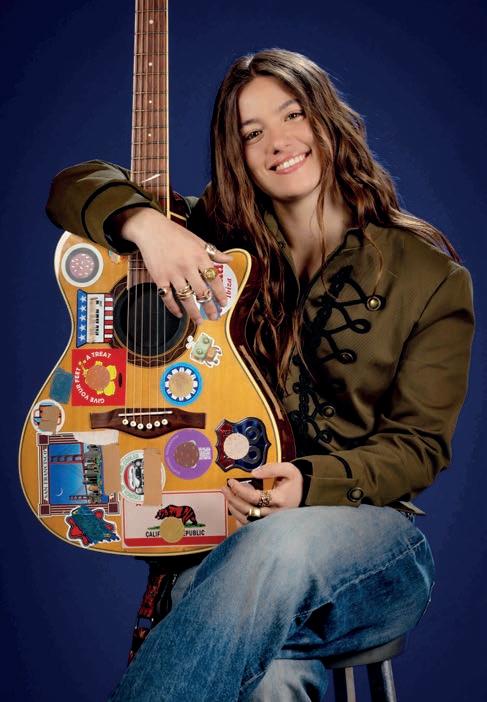
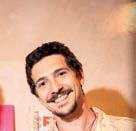
It comes from the guitar. In kindergarten, there was a nun who, when she played it, managed to gather everyone around her: it seemed like something special to me. I started with the electric guitar, then my father passed on his love for songwriting to me. I absorbed infuences from Italy, France, and London, and it was there that I decided to study music.
What did Amici experience teach you on a personal level?
It taught me to fully embrace my emotions without feeling the need to defend myself, to trust others, to be patient, and to build things slowly. And I discovered that not being liked by everyone isn’t a problem – it can actually be a source of motivation.
How does one of your songs come about?
It always starts with an emotion – sometimes to express it, other times it’s the music itself that helps me understand it. Some songs come all at once, others take more time, but they always stem from the need to give shape to something I feel inside. At frst I wrote in English, partly because of my surroundings, partly because in Italian things seemed even more real, and that scared me.
Which song is closest to your story?
Wanda. After a volunteer trip to Cameroon, I contracted malaria, and in the hospital I met this 91-year-old woman full of energy and a zest for life. She made me realize that I wanted to go back to living intensely, making mistakes, and loving too hard, without fear of disappointment.
What’s your relationship with your city, Florence?
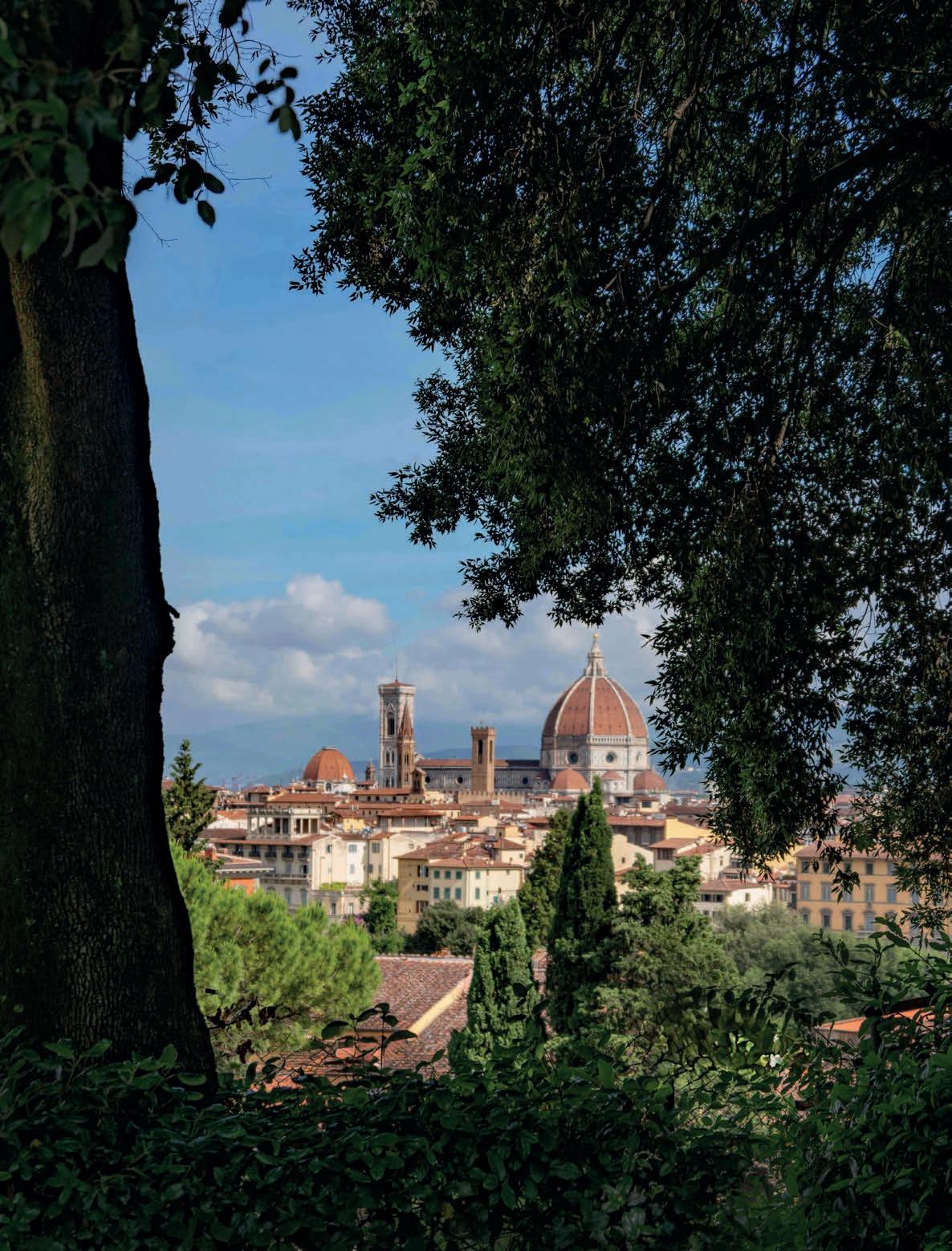
It inspires me every day, not just because of its beauty but because of the atmosphere you breathe in while walking through its streets and countryside. I particularly love a spot above Pian dei Giullari: a glimpse of infnity that helps me refect.
MY SONGS ALWAYS STEM FROM THE NEED TO GIVE SHAPE TO SOMETHING I FEEL INSIDE
UNFILTERED
LE EMOZIONI IN MUSICA
text Martina Olivieri
Dove nasce la tua passione per la musica?
Nasce dalla chitarra. All’asilo c’era una suora che suonandola riusciva a riunire tutti attorno a lei: mi sembrava qualcosa di speciale. Ho iniziato con la chitarra elettrica, poi mio padre mi ha trasmesso l’amore per il cantautorato. Ho assorbito infuenze tra Italia, Francia e Londra, e proprio lì ho deciso di studiare musica.
Cosa ti ha lasciato l’esperienza ad Amici a livello personale?
Mi ha insegnato a vivere a pieno le emozioni, senza sentire il bisogno di difendermi, ad affdarmi agli altri, ad avere pazienza e a costruire le cose con calma. E ho scoperto che non piacere a tutti non è un problema, ma può essere uno stimolo.
Come nasce una tua canzone?
Nasce sempre da un’emozione, a volte per raccontarla, altre volte è proprio la musica che mi permette di comprenderla.
Alcuni brani arrivano di getto, altri richiedono più tempo, ma nascono sempre dall’esigenza di dare forma a qualcosa che sento dentro. Inizialmente scrivevo in inglese, un po’ per l’ambiente, un po’ perché in italiano le cose sembravano ancora più vere e questo mi spaventava
La canzone più vicina alla tua storia?
Wanda. Dopo un viaggio di volontariato in Camerun ho contratto la malaria e in ospedale ho conosciuto questa donna di 91 anni piena di energia e voglia di vivere. Mi ha fatto capire che volevo tornare a vivere intensamente, sbagliare e amare troppo forte, senza paura delle delusioni.
Che rapporto hai con la tua città, Firenze?
Mi ispira ogni giorno, non solo per la sua bellezza ma per l’atmosfera che si respira camminando tra le sue strade e le campagne. Amo particolarmente un punto sopra Pian dei Giullari: uno squarcio sull’infnito che mi aiuta a rifettere.
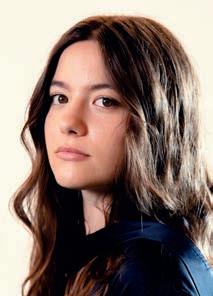
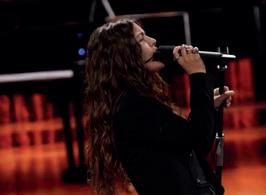
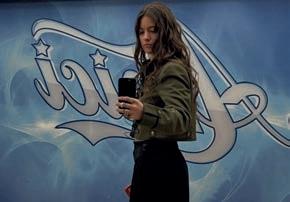
ELENA D’ELIA: EXPRESSING HERSELF AND TURNING EMOTIONS INTO MUSIC
ELENA D’ELIA: MOSTRARSI E TRASFORMARE
@ELENAD.ELIA
What makes Florence impossible to leave?
There is something almost mystical about Florence. I often feel that the city never gives you what you think you want – it gives you what you need. Before moving here, I lived in Moscow, London, Paris, New York and Zurich. Each city shaped me in different ways, but Florence became the place where I felt most able to grow into myself. It has a rare balance between intimacy and grandeur. It is small enough to feel human and alive, yet rich enough to contain entire worlds within it. In a world increasingly driven by speed, Florence reminds us that depth requires presence.
Where does a new piece begin?
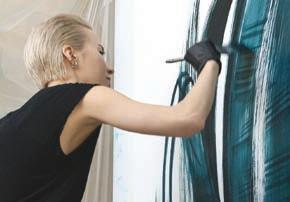
Usually with something I don’t fully understand yet - a feeling, a question or an experience that refuses to leave me. My work is very intentional, but painting is also a form of investigation. Many of my paintings exist between fguration and abstraction, clarity and ambiguity, exploring experiences we feel with great certainty but cannot easily articulate. Which themes return most often in your work?
Emotional complexity, self-awareness and the invisible forces that shape our inner lives. I want to create a space where recognition becomes possible. What interests me is what becomes visible when we stop looking away and allow life to be as contradictory and layered as it really is.
Tell us about Eros and Ashes at Spazio Sassetti with Yulia Bas. Eros and Ashes explored what remains when the structures we once relied on no longer hold. At its core, it was a refection on transformation after loss, and the journey from uncertainty toward a new sense of wholeness. Themes that will be present in my next appearance in Florence as part of a collective exhibition with Aria Art Gallery.
A
MEANINGFUL RELATIONSHIP WITH
LIFE BEGINS WHEN WE LEARN TO EMBRACE IT IN ITS ENTIRETY
THE INTERIOR SPACE
PALINA ADRIANA AND THE ART OF REVEALING WHAT WORDS CANNOT CAPTURE
PALINA ADRIANA E L’ARTE DI MOSTRARE
CIÒ CHE SFUGGE ALLE PAROLE
photo Margarita Mikheeva
Perché Firenze è una città da cui è impossibile andarsene?
C’è qualcosa di quasi mistico in Firenze. Spesso ho la sensazione che la città non ti dia mai ciò che pensi di volere, ma piuttosto ciò di cui hai bisogno. Prima di trasferirmi qui, ho vissuto a Mosca, Londra, Parigi, New York e Zurigo. Ogni città mi ha plasmata, ma Firenze è dove mi sono sentita più libera di crescere e diventare me stessa. Ha un raro equilibrio tra intimità e grandiosità: abbastanza piccola da essere umana, ma abbastanza ricca da racchiudere interi mondi. In un mondo sempre più veloce, Firenze ci ricorda che la profondità richiede presenza.
Da dove nasce una nuova opera?
Di solito da qualcosa che non capisco ancora del tutto: una sensazione, una domanda o un’esperienza che non mi abbandona. Il mio lavoro è molto intenzionale, ma la pittura è anche una forma di indagine. Molti dei miei dipinti si collocano tra fgurazione e astrazione, chiarezza e ambiguità, esplorando esperienze che sentiamo con grande certezza ma che non riusciamo a esprimere facilmente.
Quali temi ricorrono più spesso nel tuo lavoro?
La complessità emotiva, la consapevolezza di sé e le forze invisibili che plasmano la nostra vita interiore. Voglio creare uno spazio in cui il riconoscimento diventi possibile. Ciò che mi interessa è ciò che diventa visibile quando smettiamo di distogliere lo sguardo e permettiamo alla vita di essere contraddittoria e stratifcata come è in realtà.
Raccontaci di Eros and Ashes allo Spazio Sassetti con Yulia Bas. Eros and Ashes ha esplorato ciò che rimane quando le strutture su cui facevamo affdamento non reggono più. Al suo centro, era una rifessione sulla trasformazione dopo la perdita e sul viaggio dall’incertezza verso un nuovo senso di completezza. Temi che saranno presenti nella mia prossima apparizione a Firenze in una mostra collettiva con l’Aria Art Gallery.
@PALINAADRIANA
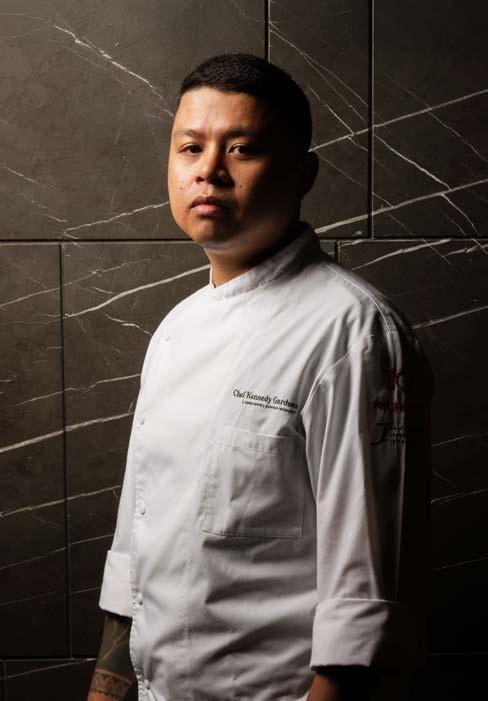
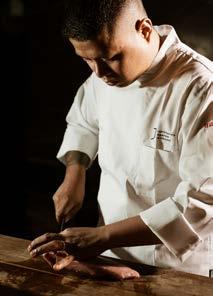
You started out in Portici in 2014 with a large communal table instead of the classic private tables: is breaking the mold part of J. Co’s DNA?
There was a need for a place capable of combining quality, international identity, and a glamorous atmosphere, transforming dinner into a complete experience—not just a gastronomic one. In Portici, we provided a concrete answer to a real need among the public.
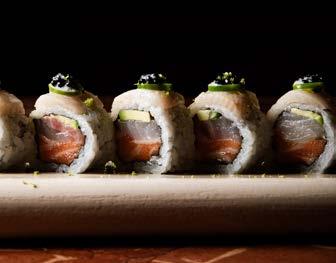
Sushi is one of the most popular dishes in Italy, but how important is the quality of the ingredients?
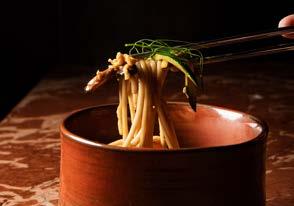
In Japanese cuisine, ingredient quality comes frst. Our goal is to enhance each element, balancing technique, favor, and purity to express the essence of contemporary Japanese cuisine. Which dish best refects the philosophy of your restaurants?
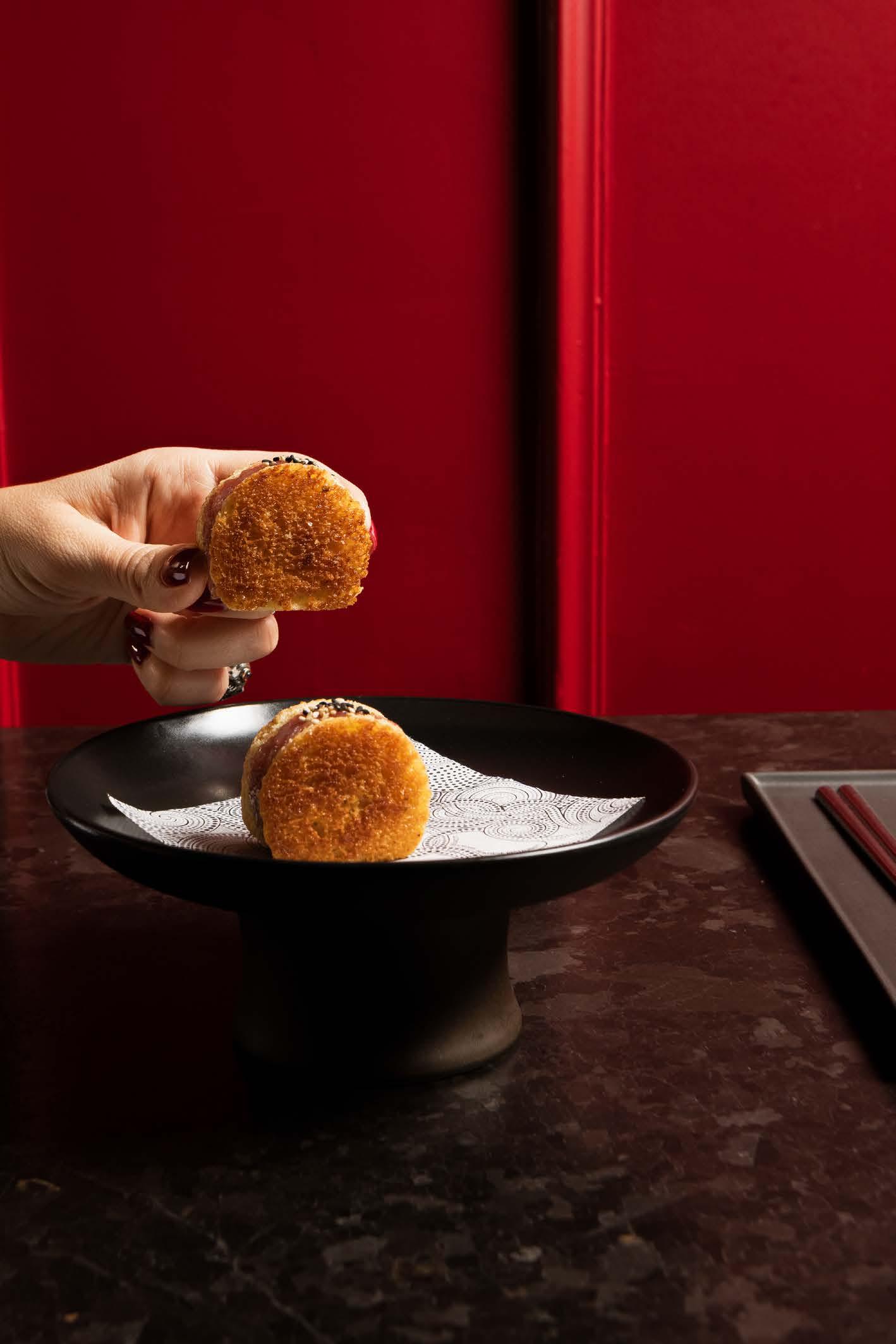
Some dishes defne J, like the Akamisando, a sandwich with tuna tartare, wasabi mayonnaise, and sesame. Florence will have its own identity, with room for experimentation.
How do you create the unique atmosphere that characterizes your restaurants?
At J, service is at the heart of the experience: dining room and kitchen work seamlessly together, guiding guests with care and discretion. J Florence reinterprets the brand’s signature codes within the unique setting of the former Teatro Comunale.
From the land of pizza to the land of lampredotto: what are your favorite spots in Florence?
I’m still at the beginning of my discovery of Florence, but I’ve already had the pleasure of visiting the Atelier dei Nerli, the perfect embodiment of a contemporary living room. But I’m certain that Florence still has so much more to reveal to me.
FROM
THE VERY BEGINNING, WE’VE SOUGHT TO OFFER SOMETHING DIFFERENT FROM TRADITIONAL MODELS
TRADITION WITH A MODERN TWIST
KENNEDY GARDUCE AND THE J CONTEMPORARY
JAPANESE RESTAURANT FIRENZE
KENNEDY GARDUCE E IL J CONTEMPORARY
JAPANESE RESTAURANT FIRENZE
text Serena Marzucchi
Siete partiti da Portici nel 2014 con un grande tavolo conviviale al posto dei classici tavoli privati: rompere gli schemi è nel DNA di J. Co?
Mancava un luogo capace di unire qualità, identità internazionale e atmosfera glamour, trasformando la cena in un’esperienza completa e non solo gastronomica. A Portici abbiamo dato una risposta concreta a un’esigenza reale del pubblico.
Il sushi è uno dei piatti più popolari in Italia, ma quanto conta la qualità della materia prima?
Nella cucina giapponese non esistono grandi artifci dietro cui nascondersi: la qualità della materia prima è il punto di partenza di ogni piatto. Il nostro obiettivo è valorizzare ogni ingrediente, mantenendo quell’equilibrio tra tecnica, gusto e purezza che rappresenta l’essenza della cucina giapponese contemporanea.
Il piatto che rispecchia la flosofa dei vostri ristoranti?
Alcuni piatti sono veri e propri simboli di J come l’Akamisando, un sandwich con tartare di tonno, maionese al wasabi e sesamo tostato. Firenze avrà una propria identità gastronomica e il menu lascerà spazio a nuove sperimentazioni.
Come si crea l’atmosfera unica che caratterizza i vostri locali?
Al J il servizio ha un ruolo centrale: la sala lavora in perfetta sintonia con la cucina e accompagna l’ospite con attenzione e discrezione. J Firenze riprende i codici distintivi del brand reinterpretandoli nel contesto unico dell’ex Teatro Comunale. Dalla terra della pizza alla terra del lampredotto: quali sono i suoi luoghi del cuore a Firenze?
Sono ancora all’inizio della mia scoperta di Firenze, ma ho già avuto il piacere di conoscere l’Atelier dei Nerli, espressione perfetta di un salotto contemporaneo. Ma sono certo che Firenze abbia ancora moltissimo da raccontarmi.
@ JJAPANESERESTAURANT
You can find Serafino Consoli in Florence exclusively at COI with a selection of the best Italian jewelry brands.
SHOWROOM Via Por S. Maria, 8 - 2nd floor BOUTIQUE Ponte Vecchio, 18 coi-florence.com
ECLECTIC CALENDAR
SUMMER EXHIBITIONS LE MOSTRE DELL’ESTATE
JUNE
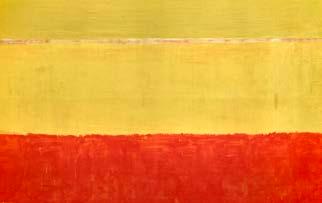
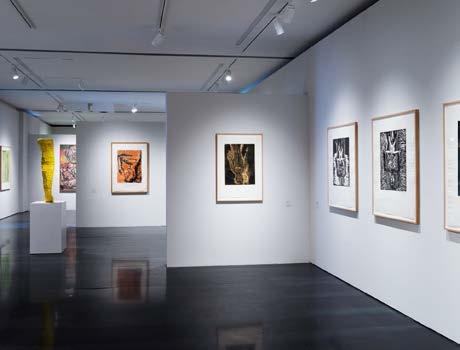
Starting June 5, Florence offers a rich and diverse exhibition calendar. At Palazzo Strozzi, until August 23, Rothko in Florence continues – a major exhibition dedicated to the master of American modern art and his special connection to the city. At the Museo Novecento, until September 13, Georg Baselitz. AVANTI! explores a central aspect of the artist’s work, with a particular focus on printmaking. Also at the Museo Novecento, until October 4, Ottone Rosai. Poet First
constructs a poetic journey through photographs, Polaroids, ink drawings, and ceramics, exploring the themes of memory and transformation.
AUGUST
On August 2, Superfex. There Are Other Fish In The Sea closes in the courtyard of Palazzo Strozzi, an installation that invites refection on the relationship between humans, the environment, and marine species, transforming the palace’s open space into a place of vision and awareness.
GIUGNO
Dal 5 giugno Firenze propone un calendario espositivo ricco e trasversale.
A Palazzo Strozzi, fno al 23 agosto, prosegue Rothko a Firenze, grande mostra dedicata al maestro dell’arte moderna americana e al suo speciale legame con la città. Al Museo Novecento, fno al 13 settembre, Georg Baselitz. AVANTI! approfondisce una parte centrale della ricerca dell’artista, con particolare attenzione all’incisione. Sempre al Museo Novecento, fno
giugno al 3 ottobre, Maura Banfo. Fino a qui costruisce un percorso poetico tra fotografe, polaroid, chine e ceramiche, intorno ai temi della memoria e della trasformazione.
AGOSTO
Il 2 agosto si chiude nel cortile di Palazzo Strozzi Superfex. There Are Other Fish In The Sea, installazione che invita a rifettere sul rapporto tra uomo, ambiente e specie marine, trasformando lo spazio aperto del palazzo in un luogo di visione e consapevolezza.
and Foremost reinterprets the fgure of the Florentine artist through works and documents. At Palazzo Medici Riccardi, until August 25, Florence Déco. Atmospheres of the 1920s recounts the city’s tastes and transformations during the 9 s. At the Project Space of Palazzo Strozzi, until August 23, Jean-Marie Appriou. Canto Infnito brings the French artist’s sculptural work to Florence. At the Crumb Gallery, from June 11 to October 3, Maura Banfo. Fino a qui
SEPTEMBER
The month of September opens the new season with two major events. At Palazzo Strozzi, from September 25 to January 24, 2027, Broken. The Power of the Fragment explores the allure of the fragment from archaeology to contemporary art. At Palazzo Corsini, from September 26 to October 4, the BIAF – Florence International Antiques Biennale returns, a key event for ancient art, collecting, and the international market.
al 4 ottobre, Ottone Rosai. Poeta innanzitutto rilegge la fgura dell’artista forentino attraverso opere e documenti.
A Palazzo Medici Riccardi, fno al 25 agosto, Firenze Déco. Atmosfere degli anni Venti racconta il gusto e le trasformazioni della città negli anni Venti. Nel Project Space di Palazzo Strozzi, fno al 23 agosto, Jean-Marie Appriou Canto Infnito porta a Firenze la ricerca scultorea dell’artista francese. Alla Crumb Gallery, dall’11
SETTEMBRE
Il mese di settembre apre la nuova stagione con due appuntamenti importanti. A Palazzo Strozzi, dal 25 settembre al 24 gennaio 2027, Broken. Il potere del frammento esplora il fascino del frammento dall’archeologia all’arte contemporanea. A Palazzo Corsini, dal 26 settembre al 4 ottobre, torna la BIAF – Biennale Internazionale dell’Antiquariato di Firenze, punto di riferimento per l’arte antica, il collezionismo e il mercato internazionale.
Museo Novecento Palazzo Strozzi
Palazzo Strozzi
Palazzo Medici Riccardi
AGENDA EVENT
ON STAGE
THE FESTIVALS, CONCERTS, AND SHOWS YOU WON’T WANT TO MISS THIS SUMMER
I FESTIVAL, I CONCERTI E GLI SPETTACOLI DA NON PERDERE QUEST’ESTATE
JUNE
From June 23 to July 28, the Florence Dance Performing Arts Festival brings the Chiostro Maggiore di Santa Maria Novella to life with dance and music, featuring both major international names and new works. It opens on the 23rd with La prima danza in the Cappellone degli Spagnoli, followed in the Chiostro Verde by The Butterfy Dream. On the 28th, in the Medici Park of Pratolino, the Musart Festival also kicks off with Ben Harper & The Innocent Criminals.
Chorus of the Maggio Musicale Fiorentino, will provide a live soundtrack for A Fistful of Dollars.
SEPTEMBER
From September 4 to 6, at the Parco delle Cascine, Decibel Open Air returns – one of the fagship events of the European electronic music scene – with three stages, and international guests such as Paul Kalkbrenner and Holy Priest. From September 5 to 13, the Florence Jazz Festival brings 9 concerts to over venues across the Oltrarno district and historic villas, featuring
JULY
On the 1st, from Portugal, the Vortice Dance Company brings Orff’s Carmina Burana to the Chiostro Maggiore of Santa Maria Novella in a powerful multimedia production. At the Cavea del Maggio, from the 11th to the 18th, Rossini’s Il barbiere di Siviglia will be staged, directed by Damiano Michieletto; on the 16th, Paolo Fresu reinterprets La bohème with the Maggio Orchestra, while on the 23rd, Morricone’s music, performed by the Orchestra and
GIUGNO
Dal 23 giugno al 28 luglio, il Florence Dance Performing Arts Festival anima il Chiostro Maggiore di Santa Maria Novella con danza e musica, tra grandi nomi internazionali e nuove creazioni.
Si apre il 23 con La prima danza nel Cappellone degli Spagnoli, seguita nel Chiostro Verde da The Butterfy Dream. Il 28, nel Parco Mediceo di Pratolino, prende il via anche il Musart Festival con Ben Harper & The Innocent Criminals.
Fabrizio Bosso, DJ Gruff, Alborosie, C’mon Tigre, Casino Royale, and Shai Maestro. From September 10 to 20, also at the Cascine, Open Air Circus celebrates contemporary circus with Italian and international companies, workshops, and performances. On September 12, the Cavea del Maggio hosts the Lattexplus Festival, while from the 24th to the 26th, Genius Loci reopens Santa Croce with concerts, talks, flms, and gatherings, culminating in the traditional dawn concert.
LUGLIO
del Maggio Musicale Fiorentino accompagna dal vivo Per un pugno di dollari. SETTEMBRE
Dal 4 al 6 settembre, al Parco delle Cascine, torna Decibel Open Air, tra gli appuntamenti di riferimento della scena elettronica europea, con tre giornate di live, tre stage e ospiti internazionali come Paul Kalkbrenner e Holy Priest. Dal 5 al 13, Firenze Jazz Festival porta 9 concerti in oltre luoghi tra Oltrarno e ville storiche, con Fabrizio Bosso, DJ Gruff, Albo-
Il 1°, dal Portogallo, la Vortice Dance Company porta a Santa Maria Novella i Carmina Burana di Orff in una potente versione multimediale nel Chiostro Maggiore. Alla Cavea del Maggio, dall’11 al 18, va in scena Il barbiere di Siviglia di Rossini con la regia di Damiano Michieletto; il 16 Paolo Fresu rilegge La bohème con l’Orchestra del Maggio, mentre il 23 la musica di Morricone eseguita dall’Orchestra e dal Coro
rosie, C’mon Tigre, Casino Royale e Shai Maestro. Dal 10 al 20, sempre alle Cascine, Open Air Circus celebra il circo contemporaneo con compagnie italiane e internazionali, laboratori e spettacoli per famiglie. Il 12 settembre la Cavea del Maggio ospita il Lattexplus Festival (musica elettronica), mentre dal 24 al 26 Genius Loci riapre la basilica di Santa Croce tra concerti, talk, cinema e incontri, fno al tradizionale concerto all’alba.
Lattexplus Festival Cavea del Maggio
Musart Festival Firenze Jazz Festival
LUXURY GAMES
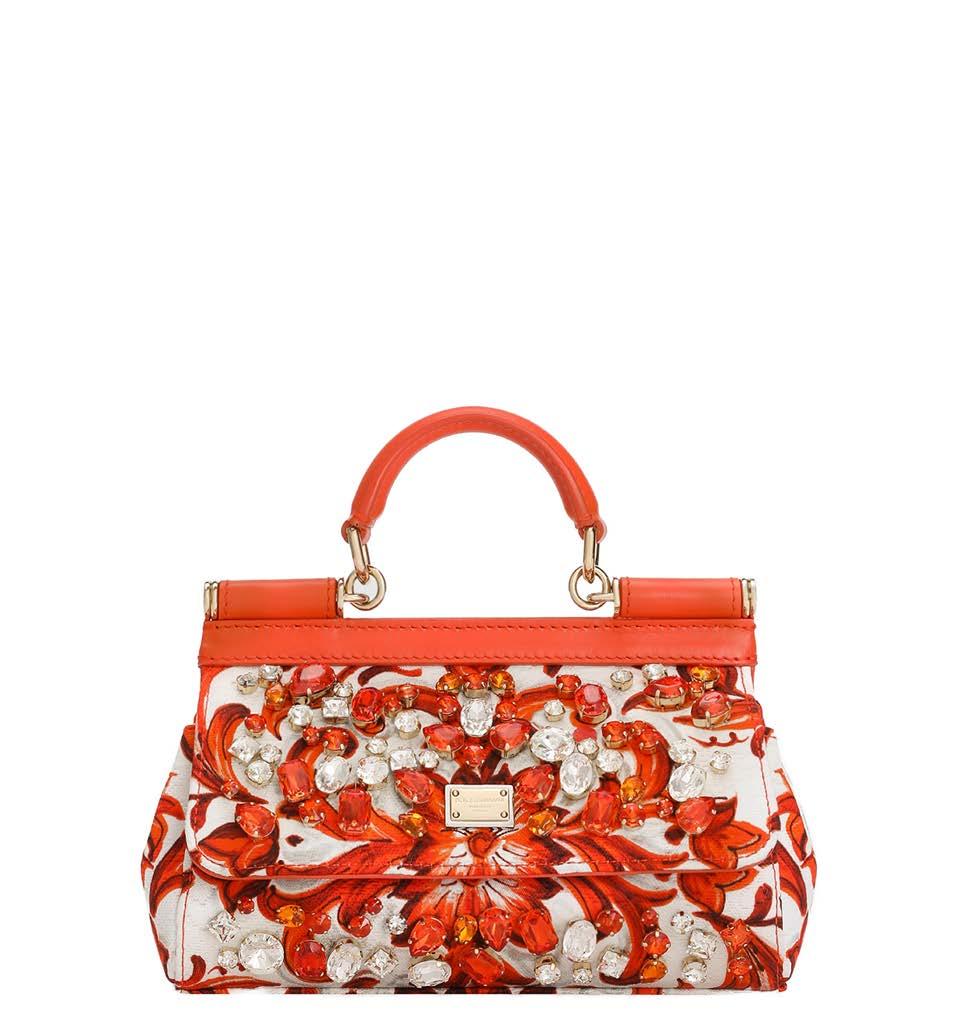
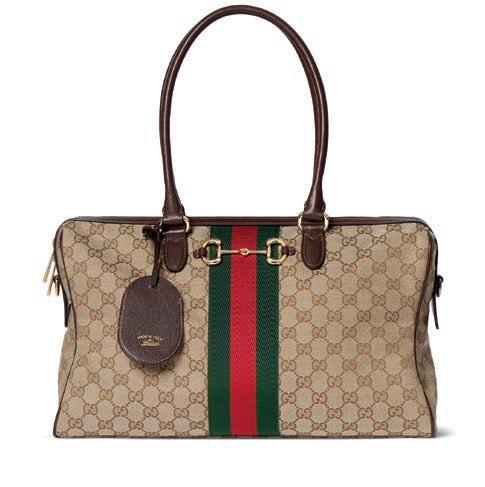
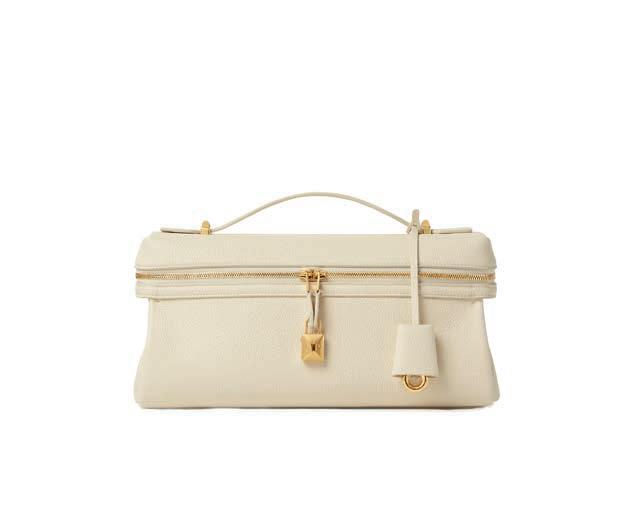
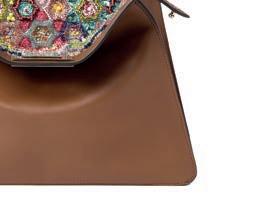
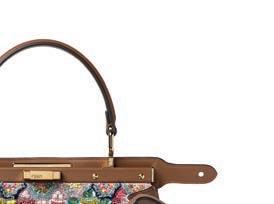
Focus on color, leather, a single handle, and precious stones. Dolce&Gabbana’s new luxury bag is a ‘stone therapy’ – the most sparkling of the season. Place your bets. At r Piazza della Signoria. Puntare sul colore, pelle, monomanico e pietre preziose. La nuova borsa de luxe di Dolce&Gabbana è una ‘stone therapy’, la più sparkling di stagione. Faites vos jeux. In piazza della Signoria, r.
A TIMELESS CLASSIC
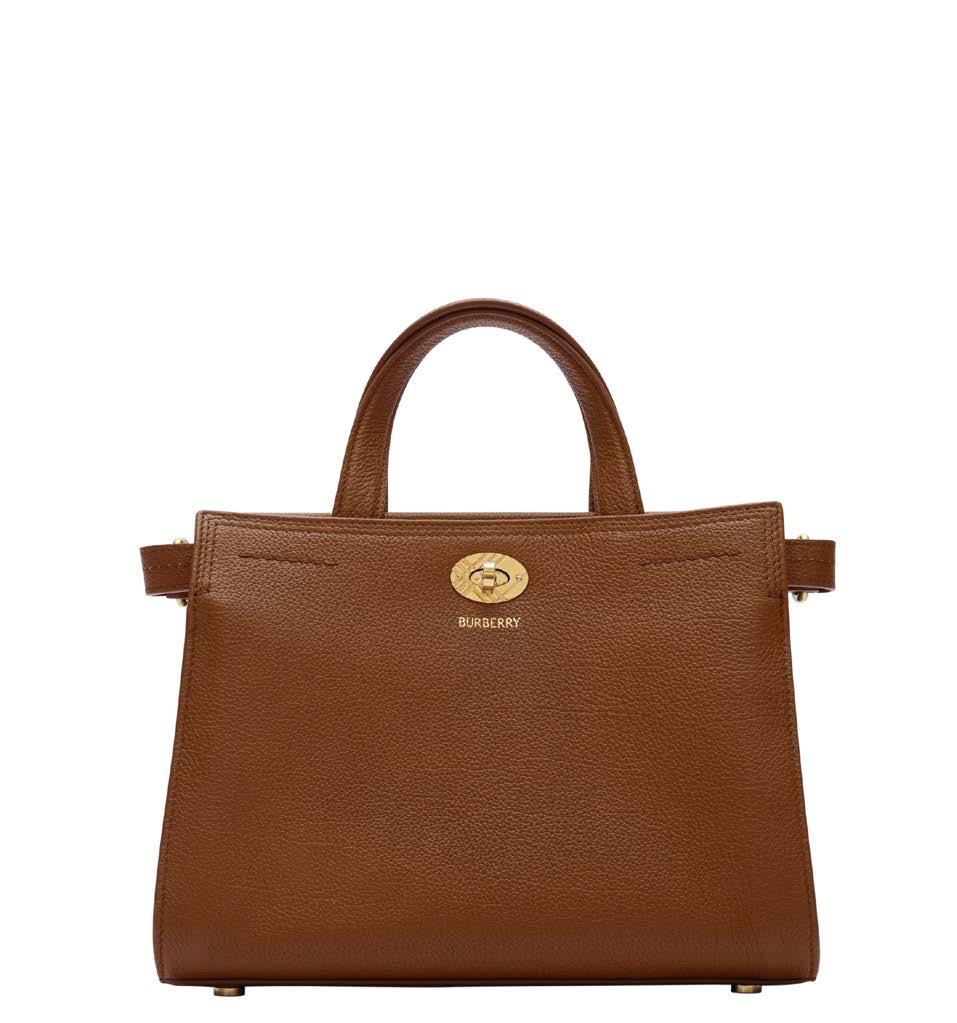
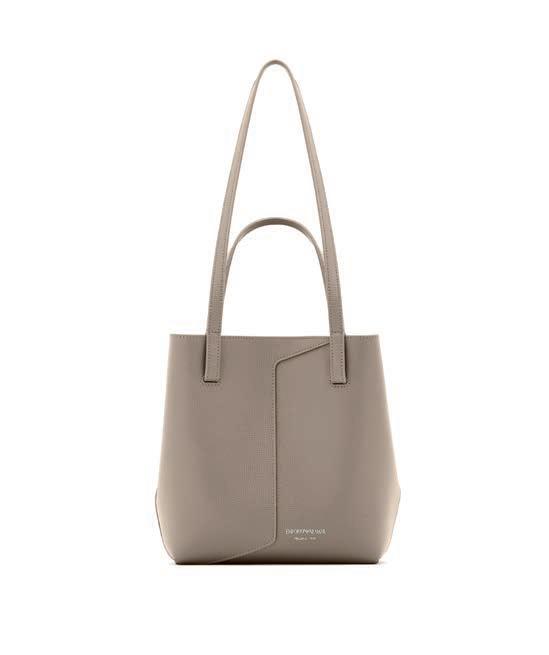
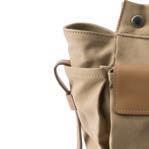
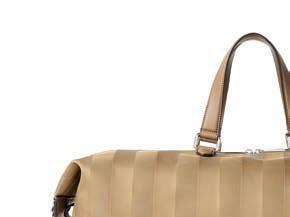
A timeless tote made in Italy from grainy calf leather, with Burberry Check side panels and a matching signature sand beige lining. At 9r Via de’ Tornabuoni.
Una borsa tote intramontabile realizzata in Italia in pelle di vitello martellata, con pannelli laterali nel motivo Burberry Check e fodera abbinata nel caratteristico color sabbia. In via de’ Tornabuoni, 9r.
FLUFFY TRENDS
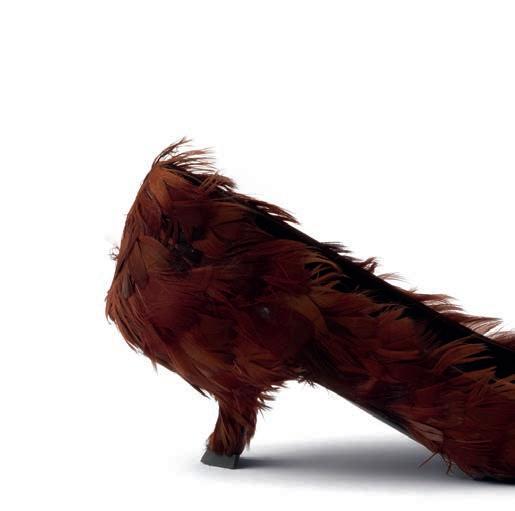
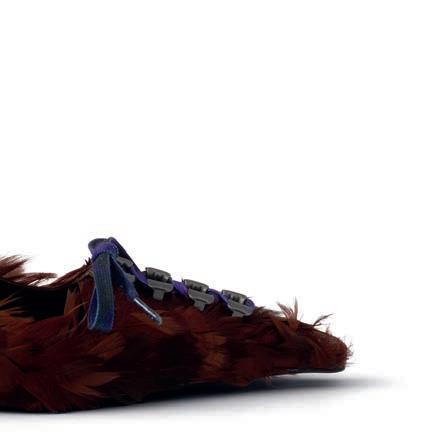
An almost exotic detail, with a soothing flow and a sense of lightness. Exquisitely delicate feathers take center stage once again on Prada’s shoes. Winter wants us to be birds of paradise. At r- r Via de’ Tornabuoni. Dettaglio quasi esotico, dal movimento rilassante e desiderio di leggerezza. Sulle scarpe di Prada torna a essere protagonista un delicatissimo plumage. L’inverno ci vuole come uccelli del paradiso. In via de’ Tornabuoni, r- r.
Liquides Imaginaires
Clive
THE ART OF
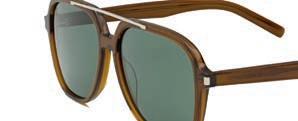
EYE CONTACT
luxury eyewear & fragrances
Masunaga
Ophy
Anna Karin Karlsson
Anne et Valentin
Akoni Bird & Cage
Chrome Hearts
Dita Eyewear Eyevan
Jacques Marie Mage
Profumum Roma
COMFORT ZONE
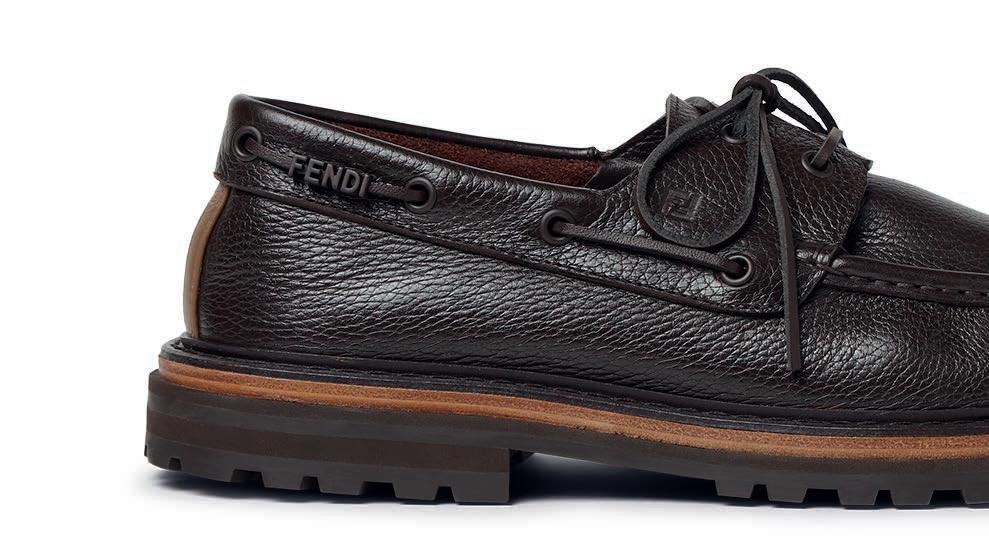
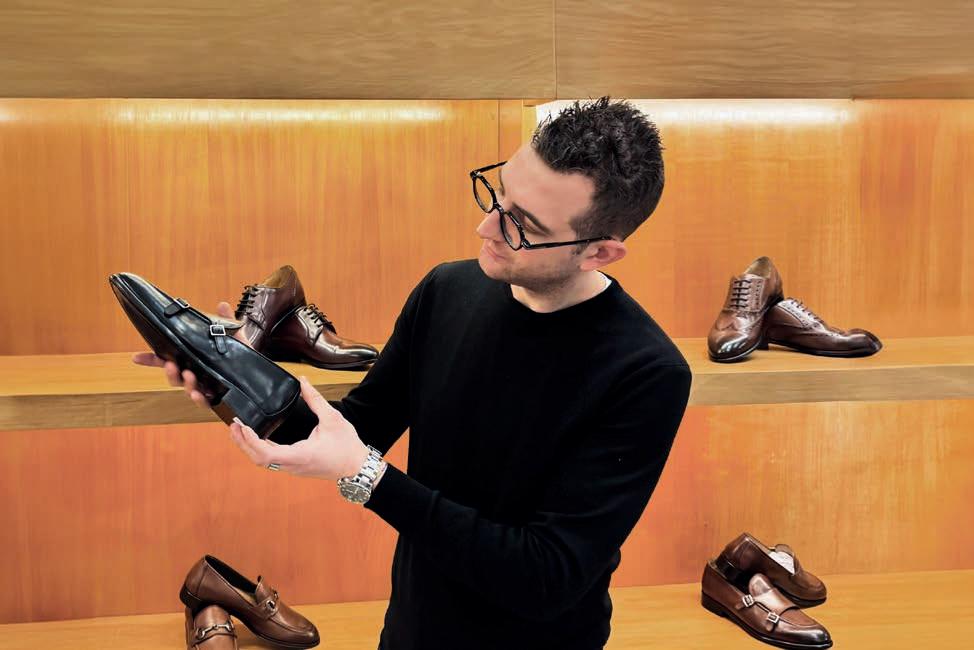
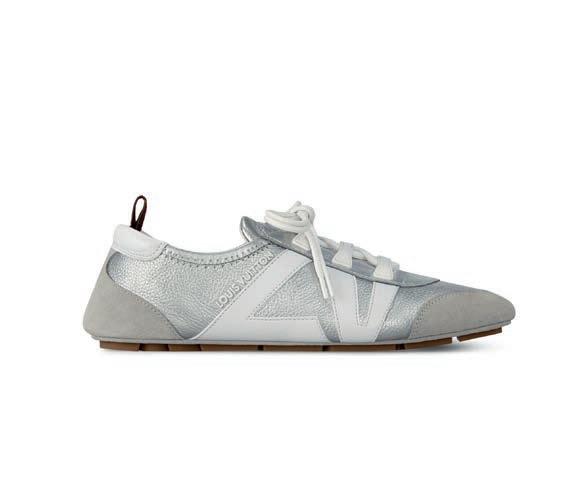
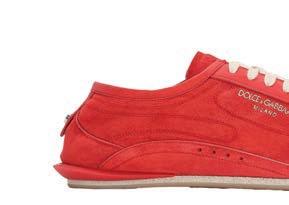
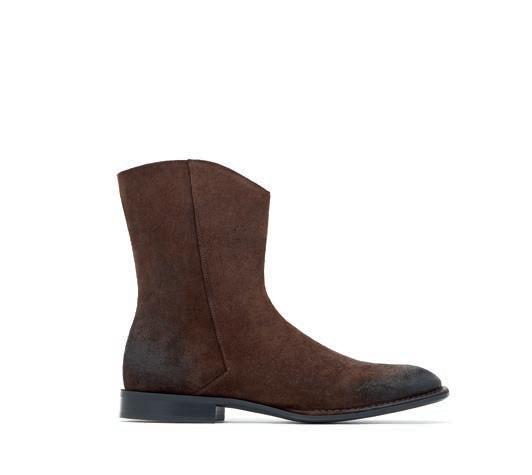
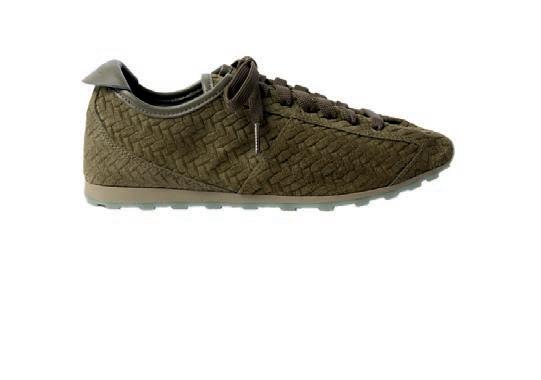
Choosing the right shoe isn’t just about style – it’s also about comfort. These Fendi shoes feature laces, visible stitching, supple leather, and rubber soles that offer greater flexibility. At r Via de’ Tornabuoni.
La scelta giusta di una scarpa non dipende solo dallo stile ma anche dal grado di comfort. Queste di Fendi hanno lacci, impunture a vista, cuoio pastoso e suole di gomma che offrono maggiore flessibilità. In via de’ Tornabuoni, r.
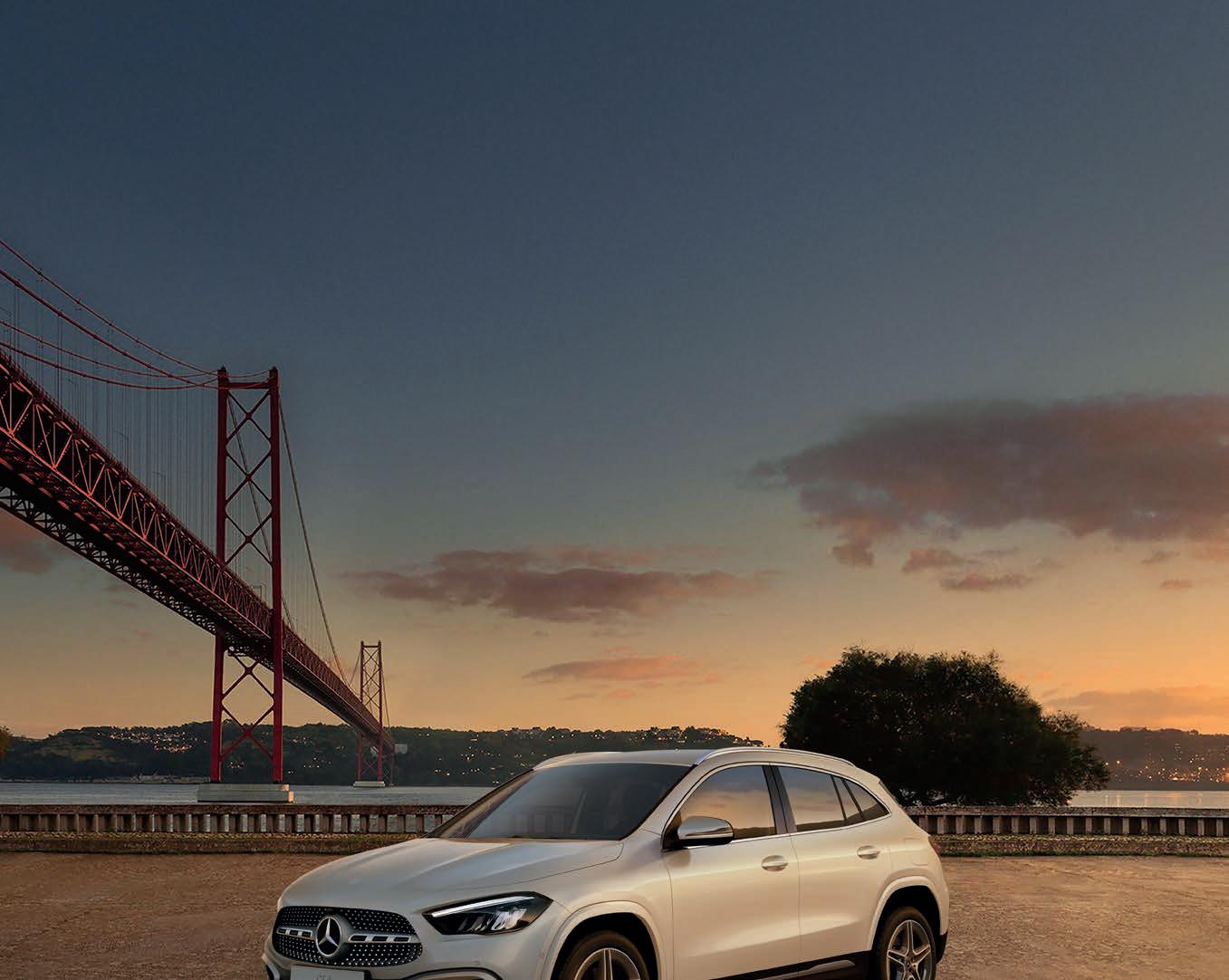
GLA EDITION 140 ANNI E GAMMA GLA.
Oggi con TAN 3,90%*. Solo con Mercedes-Benz Financial.
Scopri l’offerta da GMG SPA
Welcome home.
*L’offerta del TAN 3,90% è applicabile a leasing fino a un massimo di 48 mesi. Offerta valida per gamma GLA e soggetta a disponibilità limitata per contratti ed immatricolazioni entro il 30/06/2026 e non è cumulabile con altre iniziative in corso. Salvo approvazione Mercedes-Benz Financial Services Italia S.p.A. Esempio di leasing myDrivePass per GLA 200 d AMG Line Extra. 35 canoni da 325€. Anticipo 10.980€, riscatto finale 27.150€ e chilometraggio totale 60.000 km, durata 36 mesi. Prezzo chiavi in mano 45.864 € (IVA e Messa su strada incluse, contributo Dealer incluso, IPT esclusa), TAN 3,90%, TAEG 4,74% - TAE 3,97%. Importo totale finanziato 34.884€, importo totale dovuto dal consumatore 39.170€ (anticipo escluso) incluse spese istruttoria 463,60€, imposta di bollo 16€ e spese d’incasso SEPA 4,88€. Valori IVA inclusa. La vettura raffigurata è una GLA AMG Line Extra con vernice disponibile a richiesta. Fogli informativi disponibili presso la concessionaria Mercedes-Benz e sul sito internet della Società nella sezione Trasparenza. Messaggio pubblicitario con finalità promozionale. Gamma GLA : Benzina, Diesel WLTP ciclo misto. Emissioni CO2 (g/km): val max. 230 ( 45S 4MATIC+) - val min. 64 (250e); Consumo (l/100 Km): val max 10.1( 45S 4MATIC+) - val min. 2.8 (250e).
MISES EN TETE
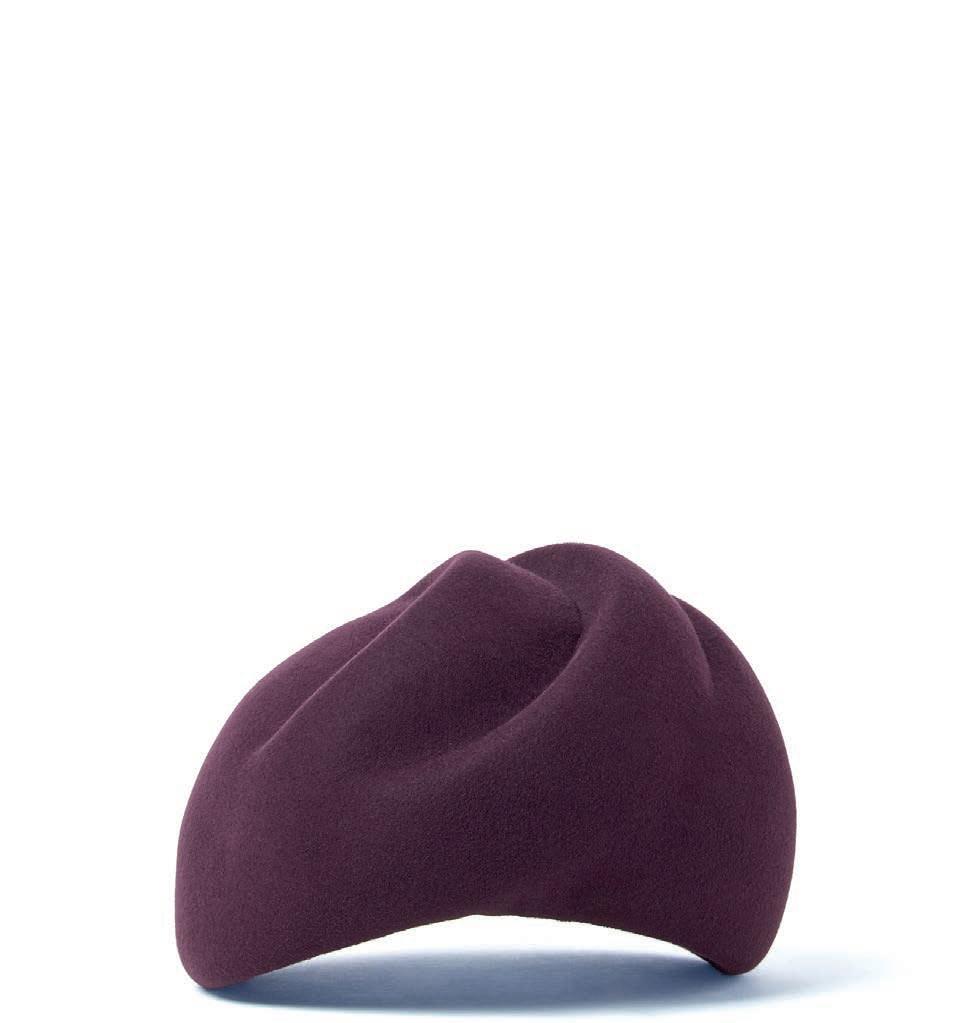
The theme: a throwback to the past. Refined and ultra-feminine, Loro Piana’s stiff, structured headband covers only part of the head – just like a 9 s femme fatale. At / r Via de’ Tornabuoni. Parola d’ordine: ritorno al passato. Raffinata e iper femminile la fascia di Loro Piana rigida e modellata copre solo parte della testa. Come la femme fatale degli anni Quaranta. In via de’ Tornabuoni, / r.
Founded in 1980 by Gabriele Mangani, Giotto is the essence of Florentine artisanship in the form of leather goods made entirely by hand using superb quality Italian hides. The company is headed by Daniele Mangani, who draw on Gabriele’s teachings and continue his tradition with dedication and enormous passion. Thanks to its many years of experience, today Giotto refects the very best of Made in Italy values. Tradition and innovation, quality and resilience, style and comfort: these are the essential elements of every Giotto creation, alongside the excellence of the best Italian leather.
SPECIAL ONE
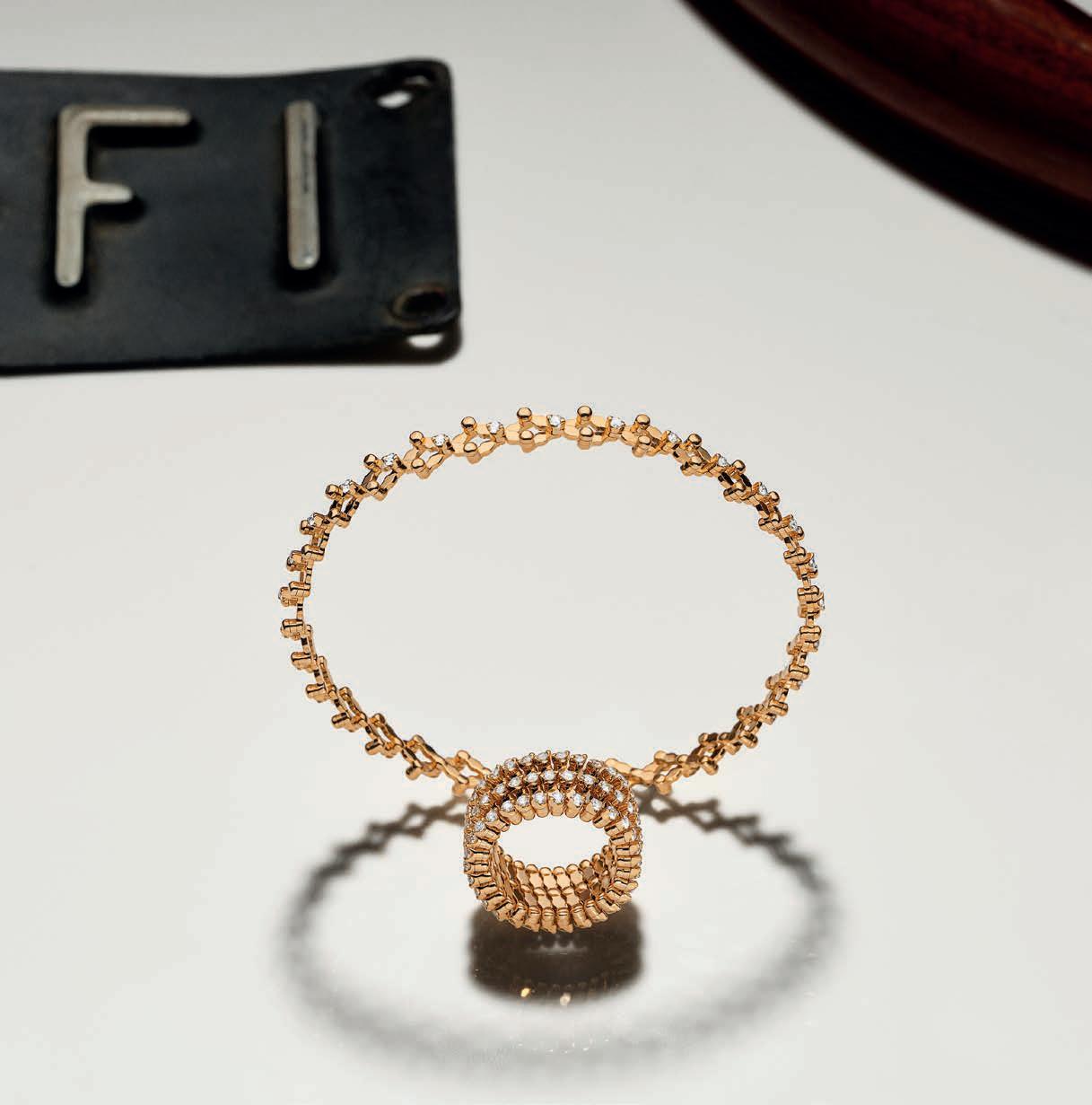
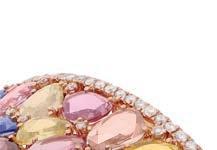
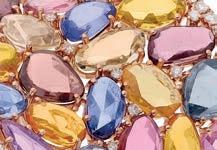
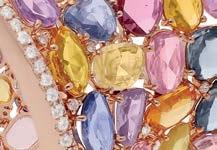
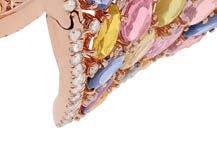
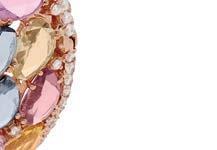
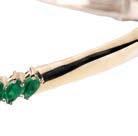
Almost like a star-studded night sky: this Sethi Gioielli bracelet, encrusted with precious stones, is all you need to dress for the most elegant of evenings. Ponte Vecchio, 11r.
Quasi come un cielo notturno costellato di stelle: questo bracciale Sethi Gioielli, tempestato di pietre preziose, è tutto ciò che ti serve in occasione delle serate più eleganti. Ponte Vecchio, 11r.
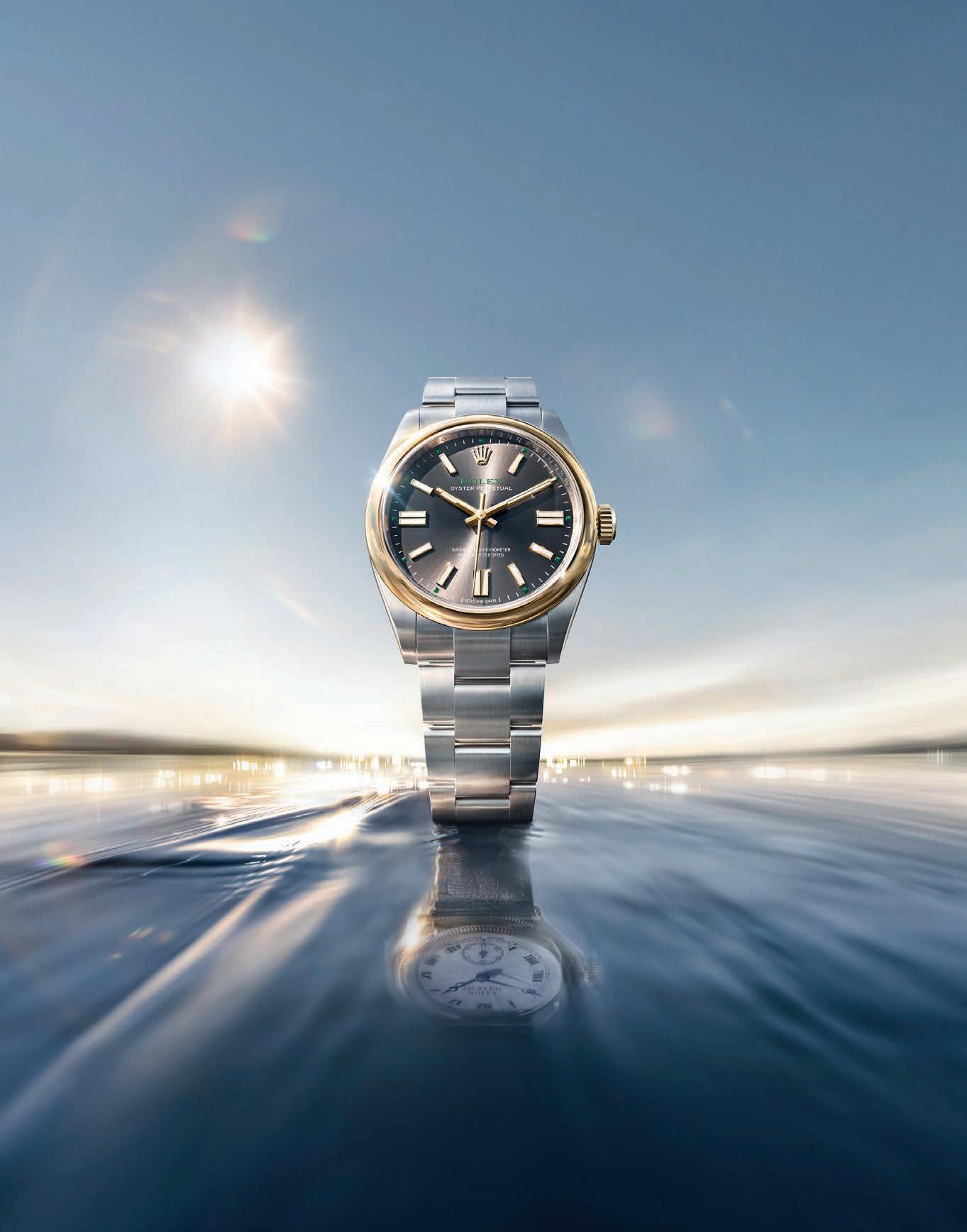
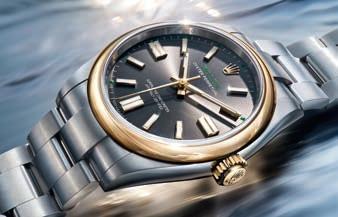
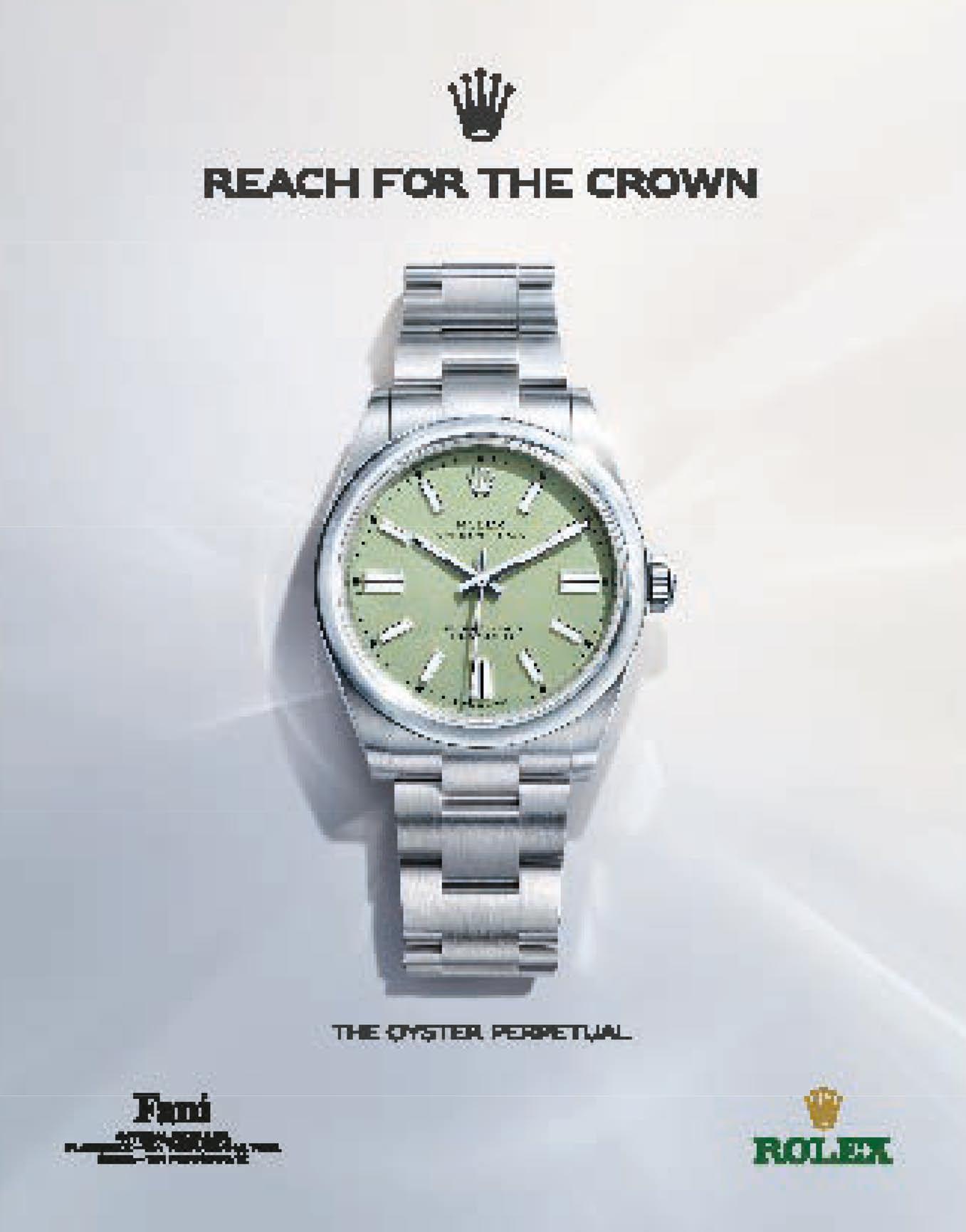
Rolex Oyster Perpetual 41 Fani - Florence, Via de’ Tornabuoni, 72r
THE ECHO OF ORIGINS
THE NEW ROLEX MODELS TO CELEBRATE THE TIMELESS ICONIC WATCH I NUOVI MODELLI ROLEX PER CELEBRARE UN’ICONA SENZA TEMPO
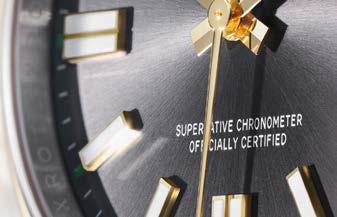
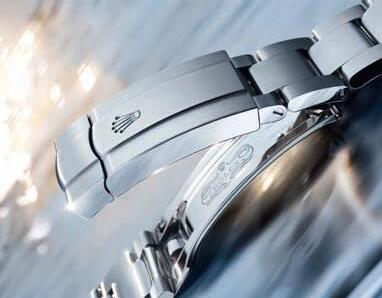
Rolex’s frst waterproof wristwatch has a brand new style. The famous company will celebrate the one hundredth anniversary of the Oyster with a new line that is a mix of tradition and contemporaneity available in four new models. One of them is the Oyster Perpetual 41 in the yellow Rolesor version, offering for the frst time in the collection a combination of Oystersteel and yellow gold. This mix produces an elegant, delicate, yet powerful effect with the addition of details celebrating the anniversary: the number ‘100’ on the crown, the words ‘100 years’ marking the 6 o’clock position on the slate dial and Rolex green shades. The true essence of Oyster remains: precision, water-resistance and reliability. A classic piece which continues to evolve, but is always faithful to its original concept of a timeless watch.
Il primo orologio da polso impermeabile di Rolex si reinventa. La maison celebra infatti i cento anni dell’Oyster con una rilettura che unisce memoria e contemporaneità, reinterpretata in quattro nuovi modelli.
Tra questi, l’Oyster Perpetual 41 in versione Rolesor giallo, che introduce per la prima volta nella collezione l’incontro tra acciaio Oystersteel e oro giallo. Un abbinamento elegante, discreto, ma d’effetto, accompagnato da dettagli celebrativi del centenario: il ‘100’ sulla corona, e, sul quadrante ardesia, la scritta ‘100 years’ a ore 6 e accenni verdi Rolex.
Rimane intatta l’anima dell’Oyster: precisione, impermeabilità e affdabilità quotidiana. Un classico che continua a evolversi, restando fedele alla sua idea originaria di orologio senza tempo.
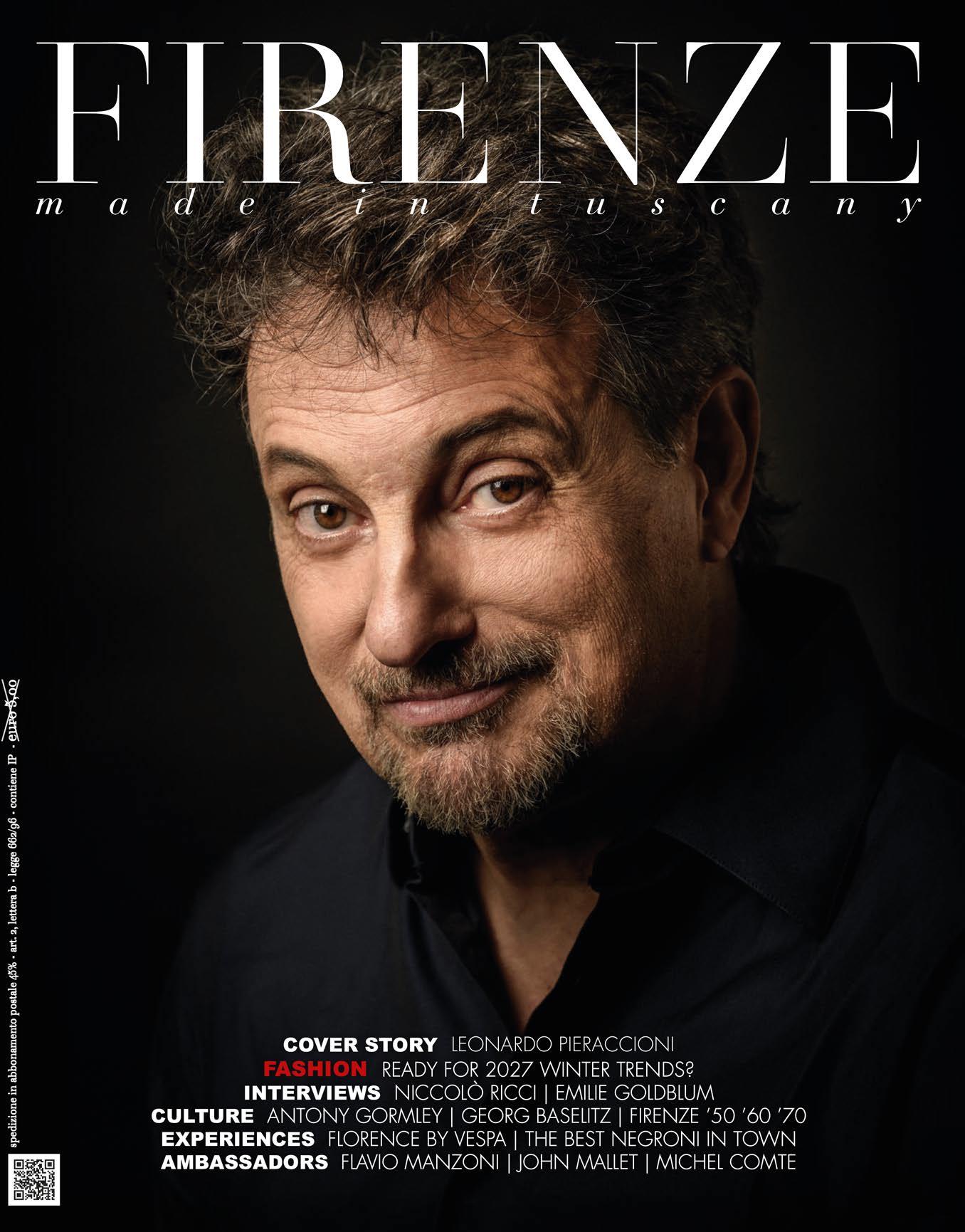
Leonardo Pieraccioni, Florentine actor, film director, and screenwriter. His directorial debut with The Graduates, followed just one year later by The Cyclone, which over 75 billion lire at the box office
LIKE A CYCLONE
THIRTY YEARS AFTER HIS BIG BREAK, LEONARDO PIERACCIONI TALKS ABOUT HIS EARLY DAYS, HIS CAREER, AND HIS LOVE FOR FLORENCE
A TRENT’ANNI DAL SUO GRANDE SUCCESSO, LEONARDO PIERACCIONI
CI RACCONTA GLI ESORDI, LA CARRIERA E L’AMORE PER FIRENZE
text Matteo Parigi Bini photo Leonardo Baldini
xxA true Florentine, Leonardo Pieraccioni is one of the most beloved faces of Italian comedy. An actor, flm director, and screenwriter, he won over audiences from his very frst flm, I laureati (The Graduates), followed just one year later by Il ciclone (The Cyclone), a true cultural phenomenon and box-offce smash – grossing over 75 billion old lire – that has gone down in the history of Italian cinema. Thirty years after that flm made an entire generation laugh and fall in love, Pieraccioni continues to portray Tuscany with his unmistakable irony, the affectionate gaze of someone who has known it all his life, and, above all, with a desire to keep having fun.
When did you realize that the world of entertainment would become your path?
I remember that even at fve or six years old, in Lido di Camaiore, I’d throw myself into the waves and pretend to be a shipwrecked sailor in front of a camera. I started thinking about cabaret back in school, when I’d make the whole class laugh by giving the wrong answers on purpose. Even my teacher couldn’t resist my pop quizzes on The Betrothed, with the ‘bravi’ coming every two minutes, though she couldn’t help but give me a D.
In 1995, your frst flm as a director, The Graduates, was released. How did your approach to directing and screenwriting come about?
I’m a huge fan of Francesco Nuti. When I saw Madonna che silenzio c’è stasera (What a Ghostly Silence There Is Tonight), I was blown away, and since then I’ve never missed one of his flms. That’s how I got to know Giovanni Veronesi, who wrote many of his screenplays. The day I met Francesco Nuti and told him that I also wrote screenplays, he replied: “I’m in Rome; I only go back to Narnali (a small town near Florence, ed.) for Christmas. If you want, come visit me.” It was just a casual remark, but I actually showed up at his house for Christmas. He was very kind: he started reading my scripts and encouraged me. The thing that scared me the most, though, was directing. I’d shot lots of short flms, but a movie with seventy people on set was a whole different ballgame.
Fiorentino doc, Leonardo Pieraccioni è uno dei volti più amati della commedia italiana. Attore, regista e sceneggiatore, ha conquistato il pubblico fn dal suo primo flm, I laureati, seguito solo un anno dopo da Il ciclone, vero fenomeno di costume e campione d’incassi – oltre 75 miliardi di vecchie lire al botteghino – entrato nella storia del cinema italiano. A trent’anni da quel flm che ha fatto ridere e innamorare un’intera generazione, Pieraccioni continua a raccontare la Toscana con la sua inconfondibile ironia, lo sguardo affettuoso di chi la conosce da sempre e, soprattutto, con la voglia di divertirsi ancora.
Quando hai capito che il mondo dello spettacolo sarebbe diventato la tua strada?
Ricordo che già a cinque o sei anni, a Lido di Camaiore, mi buttavo in mezzo alle onde e facevo fnta di essere un naufrago davanti a una cinepresa. Al cabaret ho cominciato a pensare a scuola, quando facevo ridere tutta la classe dando le risposte sbagliate apposta. Alle mie interrogazioni su I Promessi Sposi, con i bravi che arrivavano ogni due minuti, non resisteva neanche la professoressa, anche se poi non poteva esimersi dal darmi quattro.
Nel 1995 esce il tuo primo flm da regista, I laureati Come nasce il tuo approccio alla regia e alla sceneggiatura?
Sono un grandissimo fan di Francesco Nuti. Quando vidi Madonna che silenzio c’è stasera rimasi folgorato e da allora non mi sono mai perso un suo flm. È così che mi sono avvicinato a Giovanni Veronesi, che scriveva molte delle sue sceneggiature. Il giorno che conobbi Francesco Nuti e gli dissi che anch’io scrivevo sceneggiature, mi rispose: “Guarda, io sto a Roma, torno a Narnali (piccolo paese vicino Firenze, ndr) solo a Natale, se vuoi, vieni a trovarmi”. Era una frase buttata lì, ma io a Natale mi presentai davvero a casa sua. Fu gentilissimo: si mise a leggere i miei soggetti e mi incoraggiò. La cosa che più mi spaventava, però, era la regia.
‘IT WAS ONLY MANY YEARS LATER THAT WITH THE CYCLONE I REALIZED I WAS RECOUNTING MY OWN CHILDHOOD’
‘SOLO MOLTI ANNI DOPO HO REALIZZATO CHE CON IL CICLONE STAVO RACCONTANDO LA MIA INFANZIA’
It was Vittorio Cecchi Gori who convinced me: “You make a comedy with a wide shot and a close-up. And if the actors are good, the movie’s done.” I thought: he’s putting up the money... so I took the plunge.
This year The Cyclone turns 30: how did that now-iconic flm come about?
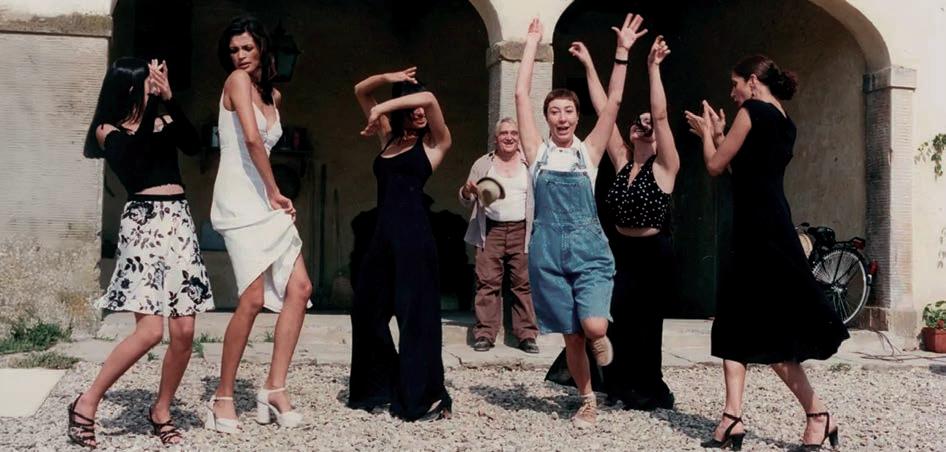
I was in Rome, parked with the car still running, and amid the noise of my old diesel Volvo, I had an intuition: I imagined a farmhouse with me, my brother, my sister, and my father. At one point we hear a great commotion in the farmyard; we go out and fnd David Copperfeld having landed by parachute. Then I understood: Copperfeld represented a disruptive element that turned everyone’s life upside down. From there came the idea of the fve famenco dancers. It was only many years later that I realized I was recounting my own childhood. Our cottage, where every summer fve sisters would arrive – the daughters of a friend of my mother’s – all of them beautiful. They drove me, my cousins, and the gamekeeper’s daughter, who lived upstairs, wild. Do you remember the premiere at the Ariston in Florence? How did it feel?
It was an amazing feeling. Everyone laughed, from start to fnish. Sitting next to me was Roberto Cavalli, who had a great voice and an equally powerful laugh. I thought that if everyone in Italy had laughed even half as much as Roberto, it would have been a success.
How did you manage to get Mario Monicelli to voice Grandpa Gino?
For me, Monicelli, along with Dino Risi, is one of the greatest masters of all time. When I pitched the flm to him, he was a bit noncommittal. But when he saw it, he said to me, “All right, let’s do it.” For me, it was like showing a painting to Michelangelo and having him say it wasn’t bad. A huge compliment.
What does Leonardo the director ask of Leonardo the actor?
Actually, Leonardo the screenwriter does the work frst, for Leonardo the actor: I never write things that don’t feel like mine. I always try to put lines in my mouth that belong to me and make me feel at ease. Then the director just tries to make me look a little better than I am.
At 17, you appeared on Un ciak per artisti domani, a show hosted by Carlo Conti. How did your frst meeting go?
If I’m not mistaken, it was 98 . The friend I went with didn’t have much success, and Carlo gave me an introduction
Avevo girato tanti cortometraggi, ma un flm con settanta persone sul set era tutta un’altra cosa. A convincermi fu Vittorio Cecchi Gori: “La commedia si fa con un’inquadratura larga e una stretta. E se gli attori sono bravi, il flm è fatto”. Pensai: i soldi ce li mette lui... e mi buttai.
Quest’anno Il ciclone compie 30 anni: come è nato quel flm diventato iconico?
Ero a Roma, parcheggiato con la macchina ancora accesa, e sotto il rumore della mia vecchia Volvo diesel, mi venne un’intuizione: immaginai un casolare con me, mio fratello, mia sorella e mio padre. A un certo punto sentiamo un gran frastuono nell’aia, usciamo e troviamo David Copperfeld atterrato col paracadute. Poi capii: Copperfeld rappresentava un elemento di rottura che sconvolgeva la vita di tutti. Da lì nacque l’idea delle cinque ballerine di famenco. Solo molti anni dopo ho realizzato che stavo raccontando la mia infanzia. Il nostro casolare, dove ogni estate arrivavano cinque sorelle, fglie di un’amica di mia madre, tutte bellissime. Facevano impazzire me, i miei cugini e la fglia del guardacaccia, che abitava al piano superiore. Ricordi la prima all’Ariston di Firenze? Che sensazione hai avuto?
Una sensazione eccezionale. Risero tutti, dall’inizio alla fne. Accanto a me c’era Roberto Cavalli, che aveva una gran voce e una risata altrettanto potente. Pensai che se tutti in Italia avessero riso anche solo la metà di Roberto, sarebbe stato un successo.
Come sei riuscito a far doppiare la voce del nonno Gino a Mario Monicelli?
Per me Monicelli, insieme a Dino Risi, è uno dei più grandi maestri di sempre. Quando gli proposi il flm fece un po’ il vago. Quando poi però lo vide, mi disse: “Va bene, facciamolo”. Per me è stato come mostrare un quadro a Michelangelo e sentirsi dire che non era male. Un premio enorme.
Cosa chiede il Leonardo regista al Leonardo attore? In realtà il lavoro lo fa prima il Leonardo sceneggiatore, per il Leonardo attore: non scrivo mai cose che non sento mie. Cerco sempre di mettermi in bocca battute che mi appartengano e che mi facciano sentire a mio agio. Poi il regista cerca solo di farmi apparire un po’ più bello di quello che sono.
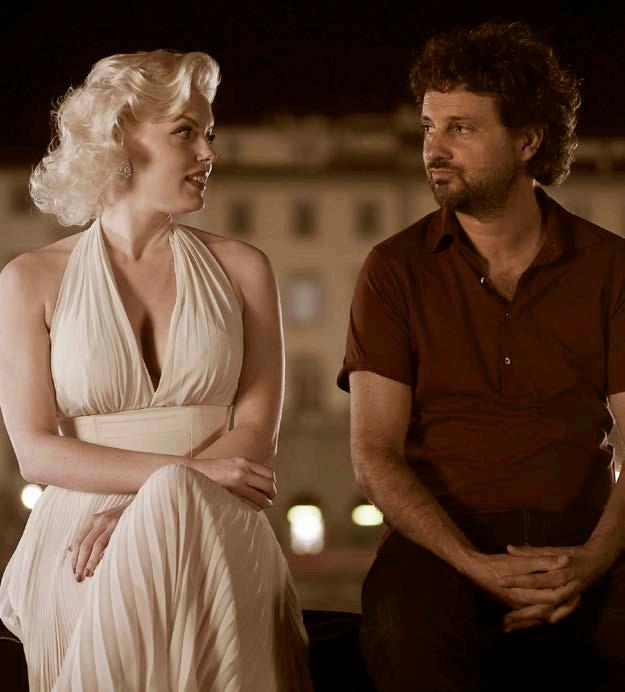
2. 4. Me and Marilyn, with Suzie Kennedy
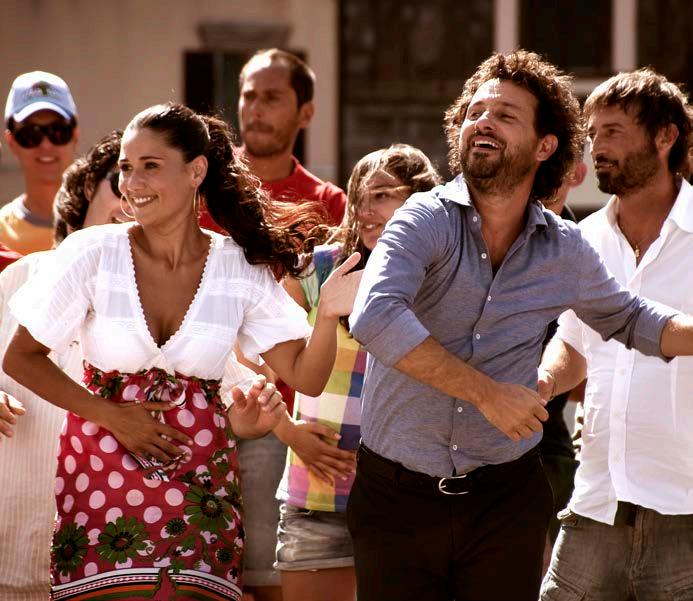
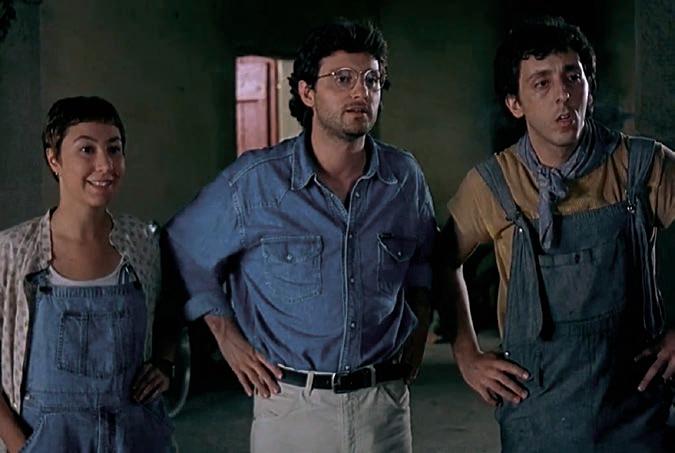
1. 3. 5. Some iconic scenes from The Cyclone, with Leonardo Pieraccioni, Lorena Forteza, Barbara Enrichi and Massimo Ceccherini
‘WITH FLORENCE I HAVE A PATHOLOGICAL RELATIONSHIP. IT’S ONE OF THOSE LOVES THAT’S TOO INTENSE’
‘CON FIRENZE HO UN RAPPORTO MORBOSO.
È UNO DI QUEGLI AMORI TROPPO FORTI’
that I still hold against him today: “You have one minute to make us laugh.” A line that would have frozen anyone. But that minute turned into four, then fve, then six.
Leonardo Pieraccioni, Carlo Conti, Giorgio Panariello, Massimo Ceccherini: what was your common denominator?
The desire to have fun, to tell stories. Carlo worked at a bank, Panariello in radio, I worked in a warehouse, and Ceccherini... let’s just say he robbed banks! Obviously, I’m joking. We put on shows without making practically any money, but we had a blast. It was an investment driven by passion.
Versilia has been central to your career. What is your most emotional memory from those years?
Back then, we cut our teeth at La Capannina in Forte dei Marmi. Carlo would spin records and I’d do a ffteenminute cabaret act. My strongest memory, however, is tied to the fnal take of The Graduates, on the pier in Viareggio. I walked away alone and started crying. Everyone thought I was emotional because we’d fnished the flm. In reality, I was crying out of fear that it would be my frst and last. Then, however, I realized something: I’d had so much fun that I wanted to make another one right away. And that’s still how it is for me today. You were born in Florence, where you still live today. What’s your relationship with your city?
A pathological relationship. It’s one of those loves that’s too intense. Every time I’m happy to leave because I’m even happier to return. Every now and then I go up to the Boboli Gardens, look at it, and think, “How lucky I am to live in a place like this.” Maybe that’s where I really started telling stories, when as a boy I’d go to Boboli to skip school and imagine what was happening under all those roofs.
Today, after so many flms and successes, what are you really looking for when you write or direct?
I’m always looking for the same thing: to have fun. Every time I start a flm, I’m convinced it’s the best one, the most successful one, but you don’t know until it comes out. Films are like declarations of love: only afterward do you fnd out if a light comes on in the other person’s eyes or if they look at you thinking it would have been better to stay home.
A 17 anni partecipi a Un ciak per artisti domani, un programma presentato da Carlo Conti. Come andò il vostro primo incontro?
Se non sbaglio era il 98 . L’amico con cui ero andato non ebbe un grande successo e Carlo mi fece una presentazione che ancora oggi gli rinfaccio: “Hai un minuto di tempo per farci ridere”. Una frase che avrebbe gelato chiunque. Però quel minuto diventò quattro, poi cinque, poi sei. Leonardo Pieraccioni, Carlo Conti, Giorgio Panariello, Massimo Ceccherini: qual è stato il vostro denominatore comune?
La voglia di divertirsi, di raccontare storie. Carlo lavorava in banca, Panariello in radio, io in magazzino e Ceccherini... diciamo che faceva le rapine in banca! Ovviamente scherzo. Facevamo spettacoli senza guadagnare praticamente nulla, ma ci divertivamo da matti. Era un investimento fatto per passione. La Versilia è stata centrale nella tua carriera. Qual è il ricordo più emozionante di quegli anni?
Ai tempi la gavetta si faceva a La Capannina di Forte dei Marmi. Carlo metteva i dischi e io facevo un quarto d’ora di cabaret. Il ricordo più forte, però, è legato all’ultimo ciak de I laureati, sul molo di Viareggio. Mi allontanai da solo e mi misi a piangere. Tutti pensarono che fossi emozionato per aver fnito il flm. In realtà piangevo dalla paura che fosse il primo e l’ultimo. Poi, però, mi resi conto di una cosa: mi ero divertito talmente tanto che volevo subito rifarne un altro. E così mi succede ancora oggi.
Sei nato a Firenze, dove vivi ancora oggi, che rapporto hai con la tua città?
Un rapporto morboso. È uno di quegli amori troppo forti. Ogni volta sono contento di partire perché sono ancora più felice di tornare. Ogni tanto salgo al Giardino di Boboli, la guardo e penso “Ma che fortuna vivere in un posto così”. Forse è lì che ho iniziato davvero a raccontare storie, quando da ragazzo andavo a Boboli per saltare scuola e immaginavo cosa stesse succedendo sotto tutti quei tetti.
Oggi, dopo tanti flm e successi, cosa cerchi davvero quando scrivi o dirigi?
Cerco sempre la stessa cosa: divertirmi. Ogni volta che inizio un flm sono convinto che sia il più bello, il più riuscito, ma non lo sai fnché non esce. I flm sono come le dichiarazioni d’amore: soltanto dopo scopri se negli occhi dell’altra persona si accende una luce oppure se ti guarda pensando che sarebbe stato meglio restare a casa.
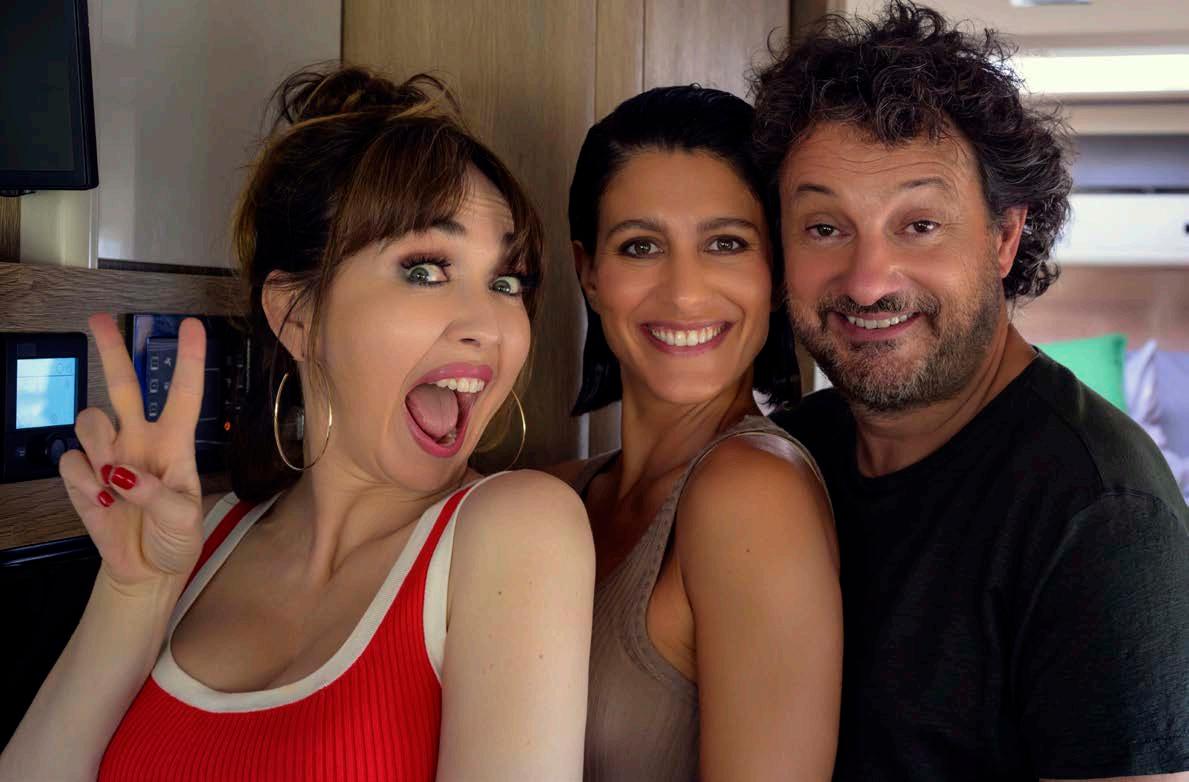
Above: Chiara Francini, Giulia Bevilacqua and Leonardo Pieraccioni, cast of Pare parecchio Parigi
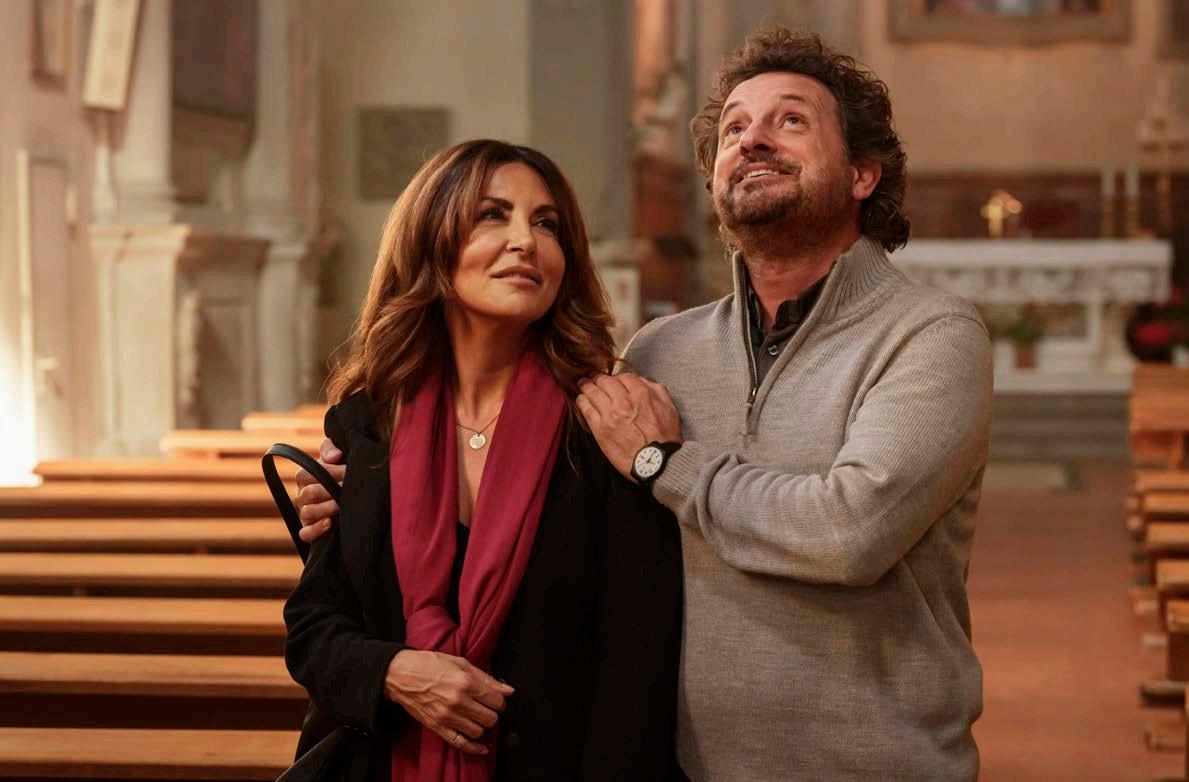
Below: Il sesso degli angeli, with Sabrina Ferilli
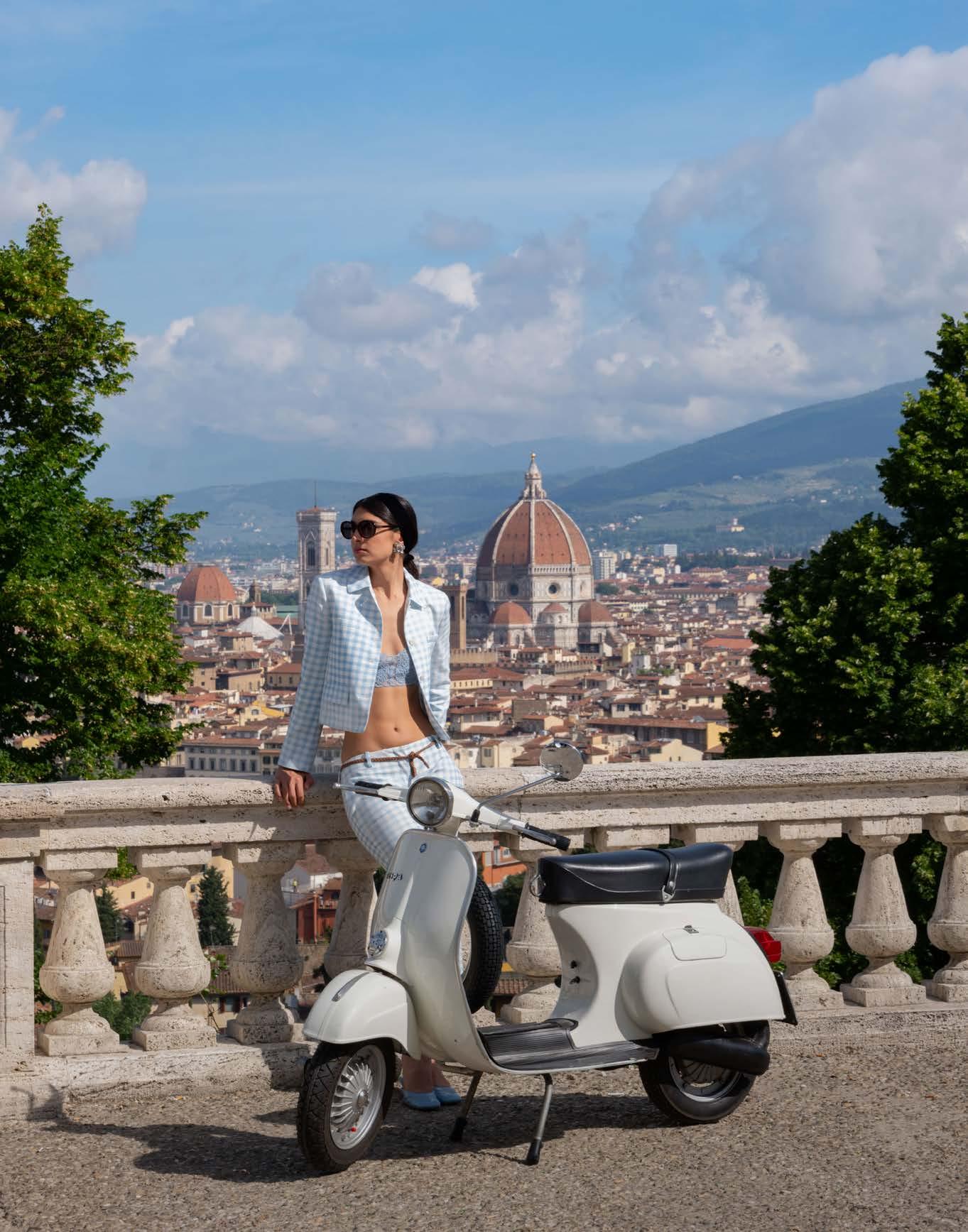
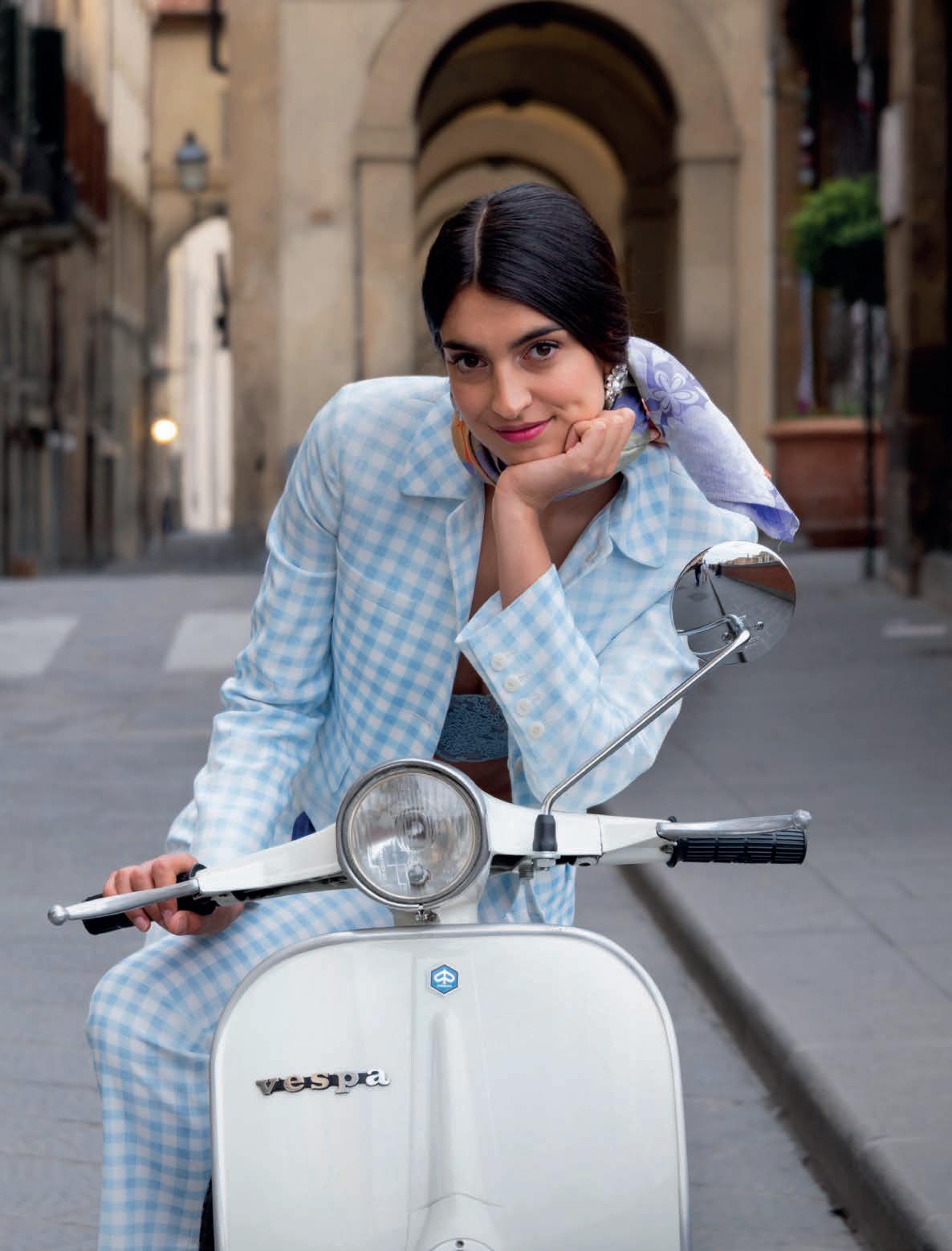
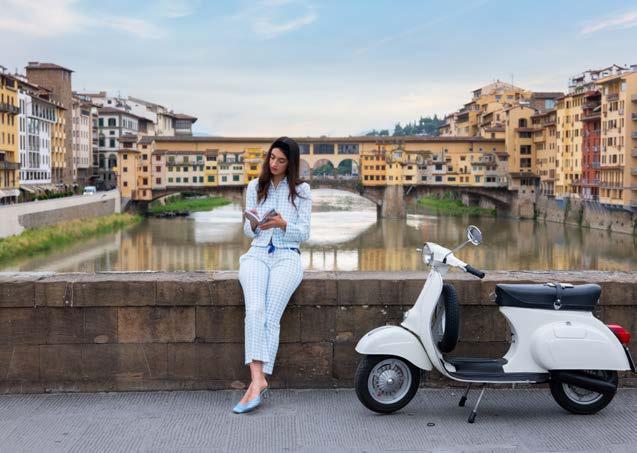
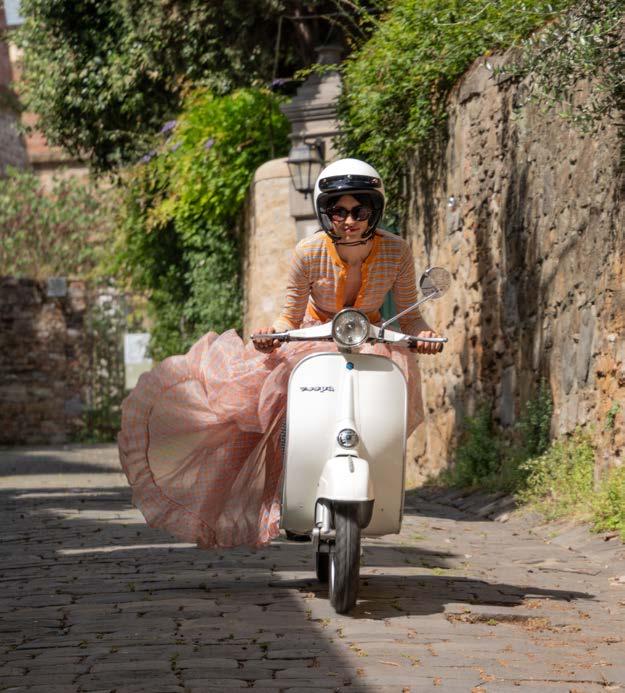
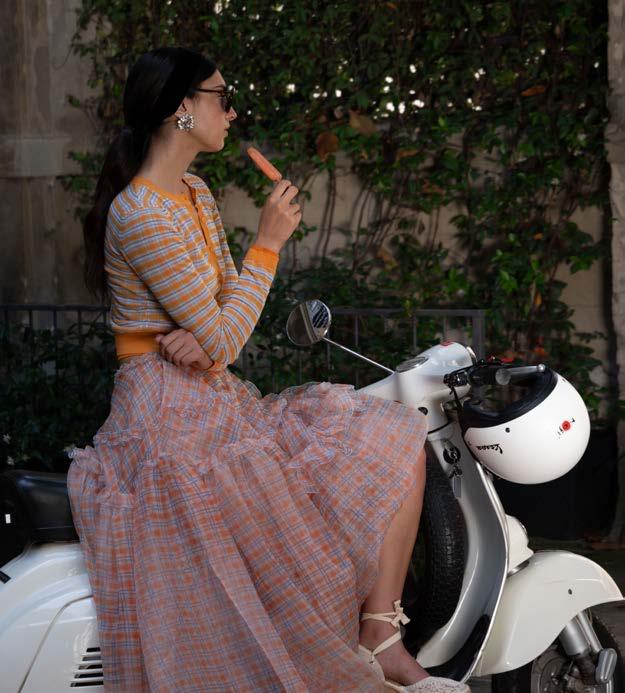
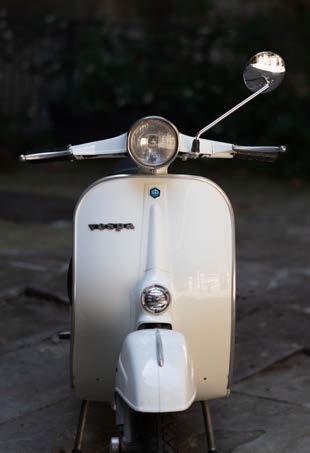
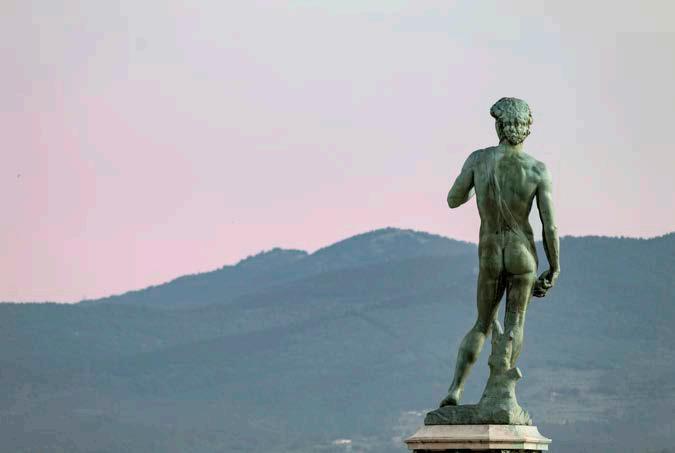
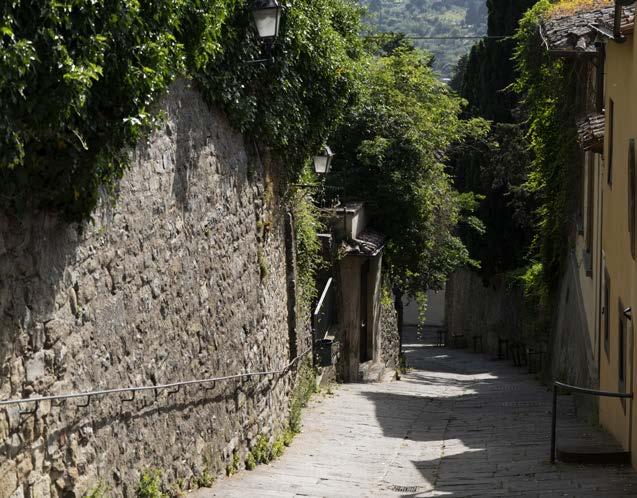
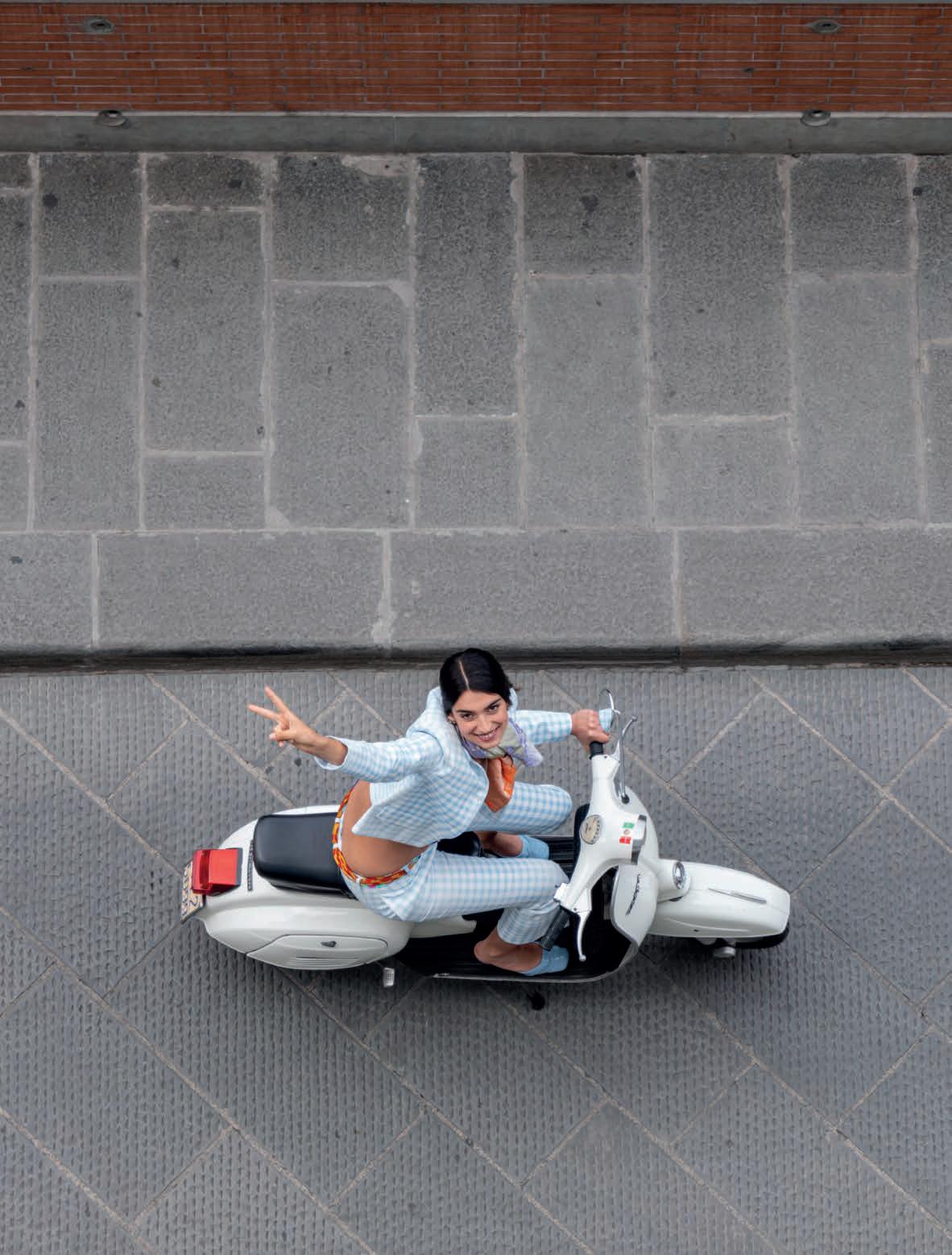
From the Arno riverbanks to Piazzale Michelangelo, Florence unfolds slowlyfrom a vintage Vespa, revealing iconic views and hidden corners
FULL SPEED AHEAD!
AMID THE WONDERS OF THE CITY AND THE HILLS: FLORENCE BY VESPA, CELEBRATING 8 YEARS OF AN ITALIAN LEGEND TRA MERAVIGLIE DI CITTÀ E DI COLLINA: FIRENZE IN VESPA, PER FESTEGGIARE GLI OTTANT’ANNI DI UNA LEGGENDA ITALIANA text Teresa Favi photo Lorenzo Cotrozzi makeup&hair Pimpi outfit Ermanno Scervino
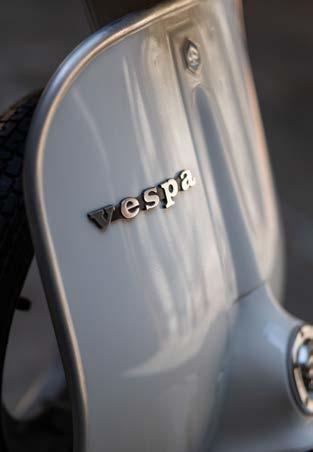
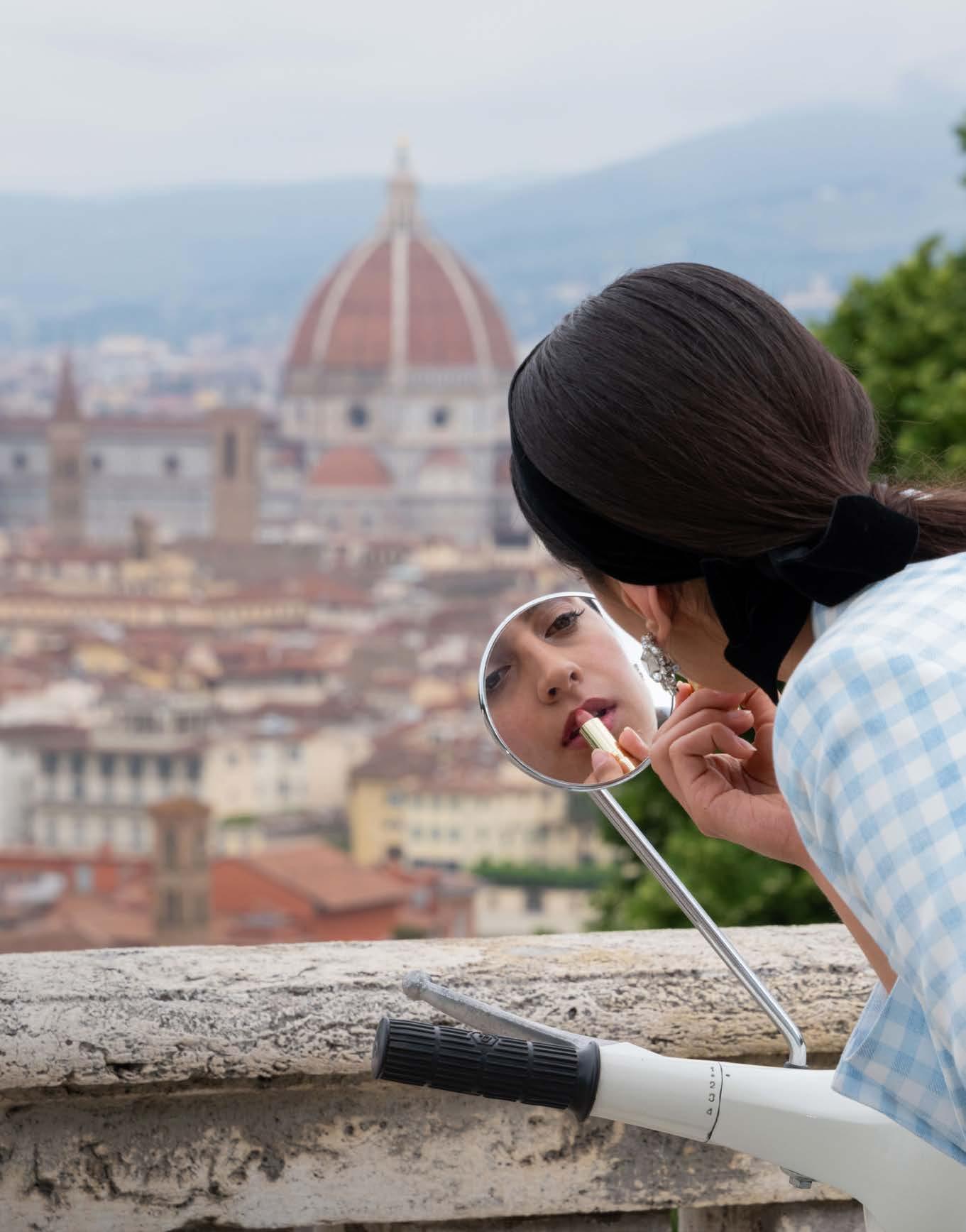
Some birthdays deserve a cake. And then there are anniversaries that deserve a trip. The 80th anniversary of the Vespa falls into the second category, because few objects in the world have managed to become universal symbols of freedom, elegance, and Italian style quite like the legendary scooter born in Tuscany: the original patent was fled in Florence on April , 9 6.
An icon that has spanned generations, trends, and borders, sharing with the world an all-Italian idea of style: spontaneous, sophisticated, and one-of-a-kind.
To celebrate this anniversary, we immersed ourselves in the streets of Florence’s historic center and surrounding areas, a city that, more than any other, seems made to be experienced aboard a Vespa: it isn’t just a place to visit, but one to be explored, admired, and listened to. And above all, it must be discovered slowly, leaving the noise of the world behind.
Florence welcomes the traveler like a perfect stage set. The sun refecting on the Arno River, the silhouette of Brunelleschi’s Dome and Giotto’s Bell Tower emerging from the terracottacolored rooftops, and the ancient stones that still seem to hold the secrets of the Renaissance. But step just a few meters away from the most-traveled streets to fnd a different dimension: narrow, cobblestone alleys climbing upward, facades in ochre yellow, sunset pink, and burnt red that chase one another like brushstrokes in a grand urban fresco.
Ci sono compleanni che meritano una torta. E poi ci sono anniversari che meritano un viaggio. Gli 80 anni della Vespa appartengono alla seconda categoria, perché pochi oggetti al mondo sono riusciti a trasformarsi in simboli universali di libertà, eleganza e italianità come il leggendario scooter nato in Toscana: il brevetto storico fu depositato a Firenze il aprile 9 6.
Un’icona che ha attraversato generazioni, mode e confni, raccontando al mondo un’idea di stile tutta italiana: spontanea, sofsticata e irripetibile.
Per celebrare questo anniversario, ci siamo immersi nelle strade del centro storico e dei dintorni di Firenze, una città che più di ogni altra sembra fatta per essere vissuta a bordo di una Vespa: non si limita a essere visitata, ma va percorsa, ammirata e ascoltata.
WE RODE AROUND FLORENCE AND INTO THE HILLS SURROUNDING THE CITY ON A VINTAGE VESPA, TO CELEBRATE OF THE LEGENDARY SCOOTER BORN
IN TUSCAN
80 YEARS AGO
It is precisely here that the Vespa reveals its most authentic character. Agile, elegant, and perfectly at home among the city’s historic streets, it becomes the ideal vehicle for connecting masterpieces of art, panoramic views, and hidden corners into a single itinerary.
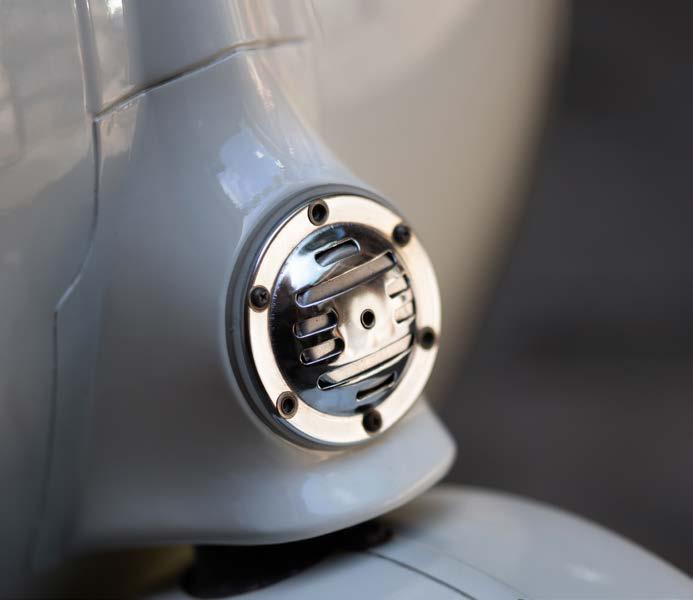
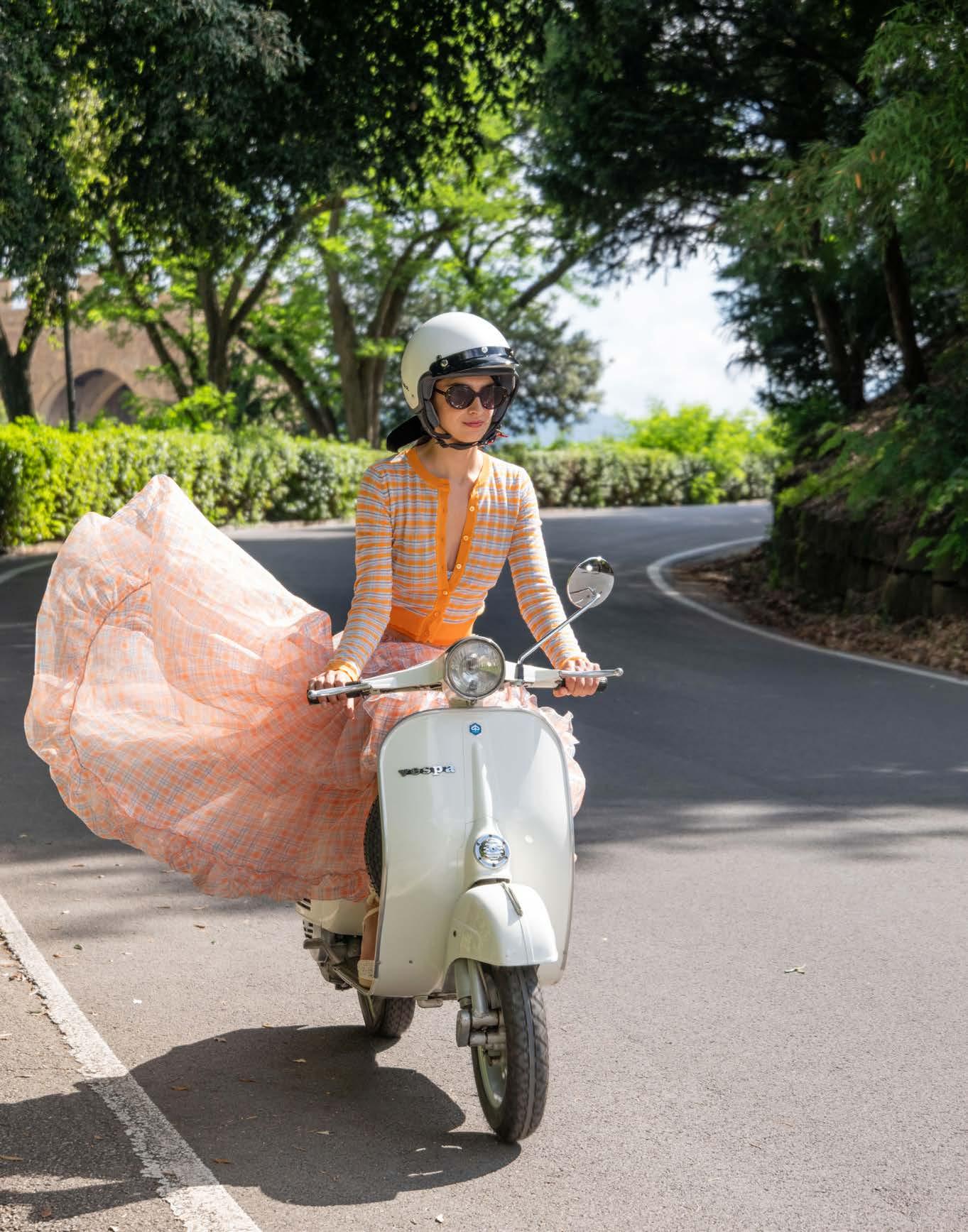
Our travel companion is a vintage white Vespa Primavera, with its unmistakable gentle rumble. Guiding us on this journey is Towns of Italy, a tour operator founded in Florence twenty years ago with the goal of offering visitors authentic and memorable experiences. What began as a local
E soprattutto va scoperta lentamente, lasciandoci alle spalle il rumore del mondo.
Firenze accoglie il viaggiatore come una scenografa perfetta.
Il sole che si rifette sull’Arno, il proflo della Cupola del Brunelleschi e del Campanile di Giotto emergono tra i tetti color terracotta e le pietre antiche sembrano custodire ancora i segreti del Rinascimento.
Ma basta allontanarsi di pochi metri dalle vie più battute per ritrovare una dimensione diversa: stradine strette e acciottolate che salgono verso l’alto, facciate dal colore giallo ocra, rosa tramonto e rosso bruciato che si rincorrono come pennellate di un grande affresco urbano.
È proprio qui che la Vespa mostra il suo carattere più autentico. Agile, elegante, perfettamente a suo agio tra le strade storiche della città, diventa il mezzo ideale per collegare in un unico itinerario capolavori d’arte, scorci panoramici e angoli nascosti
La nostra compagna di viaggio è una Vespa Primavera bianca d'epoca, con il suo inconfondibile rombo gentile. Ad accompagnarci in questo itinerario c’è l’esperienza di Towns of Italy, tour operator nato proprio a Firenze
A route through hills, historic villas, and panoramic viewpoints, where every curve reveals a new perspective on Florence’s beauty
More than a means of transport, the Vespa is a way of experiencing the landscape, turning Florence into something to ride through, not just admire
Winding roads, sunlit hills, and quiet villages frame a journey where time seems to slow down. Between olive groves and cypress trees, every curve opens a new view, inviting travelers to experience the landscape not as a backdrop, but as a living, ever-changing story
Vespa is the most authentic way to read the landscape, turning every curve into a new perspective
on Florence
venture has now become a leading brand in experiential tourism, sharing its expertise throughout Italy and transforming every itinerary into a story to be lived.
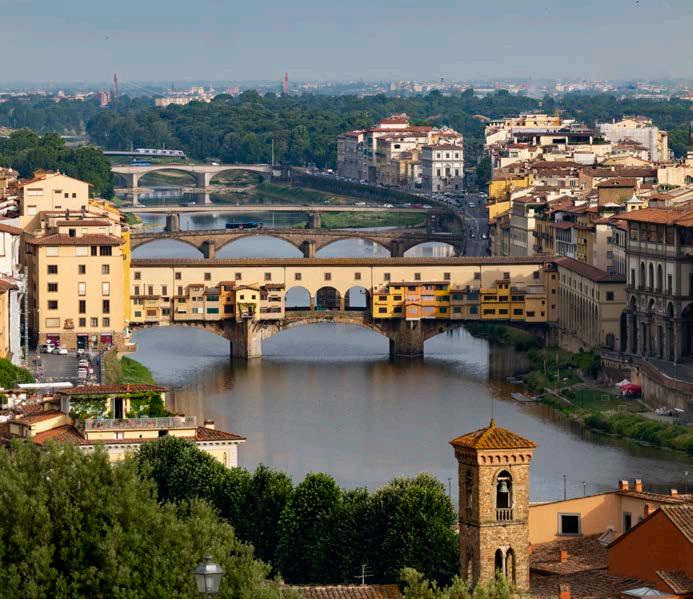
From the elegant Arno riverbanks, with the Ponte Vecchio in the background, to the famous Piazzale Michelangelo
The climb winds up Viale Michelangelo, fanked by early th-century villas—often in Art Nouveau style—built with discretion so as not to disrupt the visual continuity of the walk. Amid linden and cypress trees: a path that, curve after curve, offers increasingly spectacular views.
Once at the top, the panorama suddenly opens up. Florence appears in its entirety, crossed by the Arno and framed by the hills.
It is one of those places that still manage to surprise, even those who think they have already seen it all.
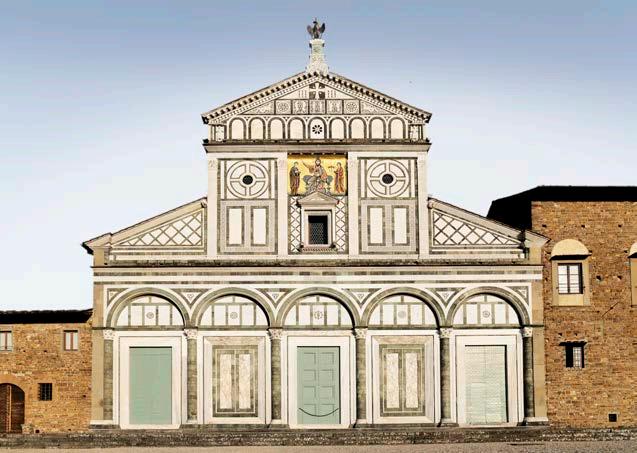
From here, a road climbs further toward the Basilica of San Miniato al Monte, perhaps the most evocative place in the entire city. Ancient, solemn, and steeped in silence, it dominates Florence from above like a stone sentinel. The churchyard offers a magical view of the city and the surrounding hills, a landscape that has continued to enchant for centuries.
vent’anni fa con l’obiettivo di offrire ai visitatori esperienze autentiche e memorabili. Quella che era iniziata come una scommessa locale è oggi diventata un brand leader del turismo esperienziale che esporta il proprio knowhow in tutta Italia, trasformando ogni itinerario in un racconto da vivere.
Dai lungarni eleganti, con Ponte Vecchio sullo sfondo, al celebre Piazzale Michelangelo. La salita si arrampica lungo viale Michelangelo, e fancheggia i villini d'inizio Novecento, spesso in stile liberty, costruiti con discrezione proprio per non disturbare la continuità visiva della passeggiata. tra tigli e cipressi: un percorso che regala, curva dopo curva, vedute sempre più spettacolari.
Arrivati in cima, il panorama si apre improvvisamente. Firenze appare nella sua interezza, attraversata dall’Arno e incorniciata dalle colline.
BETWEEN PONTE VECCHIO AND THE WINDING RAMPE LEADING UP TO PIAZZALE MICHELANGELO, THE VESPA GLIDES
THROUGH FLORENCE LIKE
A THREAD CONNECTING PAST AND PRESENT
Just below the square, the so-called Rampe stretch toward the city: an extraordinary feat of hydraulic engineering that winds along a wide paved road. Curve after curve, the path invites visitors to explore it, especially in summer, thanks to its charming water features. Along this enchanting route, be sure to stop at the romantic Rose Garden, a small haven suspended between nature and the view, where the scent of blooming fowers blends with the privileged vista of the city, offering a moment of tranquility before continuing the descent toward the heart of Florence. In 89 , Mark Twain wrote: “On the plain lies Florence, pink and gray and brown... All around, the horizon is a silhouette of imposing, blue-tinged hills, whitewashed by a snowfall of villas.” More than a century later, the feeling
È uno di quei luoghi che riescono ancora a sorprendere, anche chi pensa di aver già visto tutto.
Da qui una strada sale ancora verso la Basilica di San Miniato al Monte, forse il luogo più suggestivo dell’intera città. Antichissima, solenne, immersa nel silenzio, domina Firenze dall’alto come una sentinella di pietra. Il sagrato offre una prospettiva magica sulla città e sulle colline circostanti, un paesaggio che continua a incantare da secoli.
Proprio sotto al Piazzale si protendono verso la città le cosiddette Rampe: una straordinaria opera di architettura idraulica che si snoda lungo una larga strada asfaltata. Curva dopo curva, il percorso invita i visitatori a percorrerlo soprattutto d’estate, grazie ai suoi suggestivi giochi d’acqua. Lungo questo affascinante tragitto ricordatevi di fare una sosta al romantico Giardino delle Rose, un piccolo angolo sospeso tra natura e panorama, dove il profumo delle foriture si mescola alla vista privilegiata sulla città, regalando un momento di quiete prima di proseguire la discesa verso il cuore di Firenze.
Nel 89 Mark Twain scriveva: “Nella pianura c’è Firenze,
Special thanks to Towns of Italy, founded in Florence in 2006, for offering authentic and memorable experiences of Italy through its culture, traditions, and people. A pioneer of experiential tourism, it now operates cooking schools and tours in various Italian cities, including the iconic Vespa Tour in Chianti
More than a means of transport, the Vespa is a way of experiencing the landscape, turning Florence into something to ride through, not just admire
is surprisingly the same. One of Florence’s great secrets is its ring of hills. A parallel world of olive groves, countryside, historic villas, and scenic roads that seem to have been drawn by an artist.
The Vespa’s wheels glide lightly between neat rows of cypress trees, stone walls, and hidden gardens, while the city is visible everywhere in the background, like a reassuring presence.
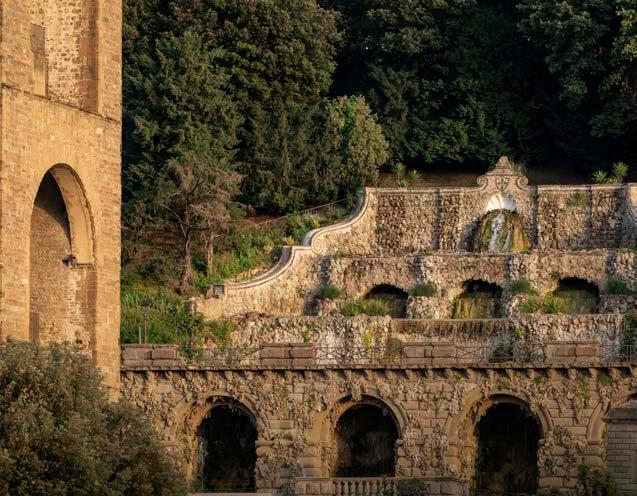
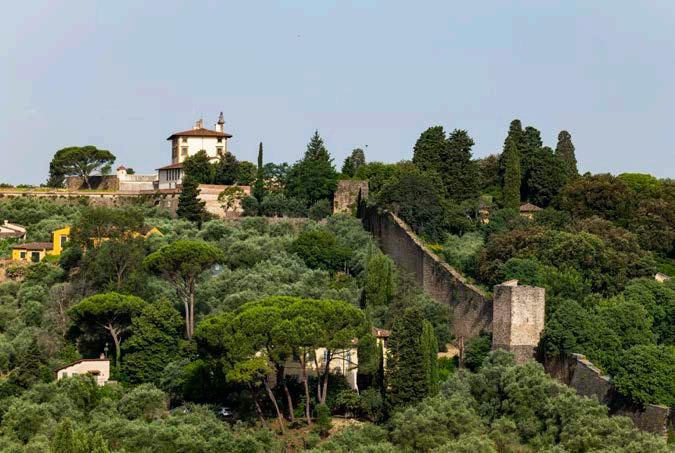
One of the most fascinating vantage points is Forte Belvedere, the imposing fortress commissioned by the Medici at the end of the 6th century. From up here, the view takes in a 6 -degree panorama of Florence: the Ponte Vecchio, Palazzo Pitti, the bell towers, and, above all, the green mosaic of the hills surrounding the city. Today, the fortress’s spaces host contemporary art exhibitions, creating a continuous dialogue between past and present.
Then the road, with its steep descents and dizzying ascents, takes us to the opposite side, to the hill overlooking Fiesole, the most aristocratic of the villages that watch over Florence from above.
rosa e grigia e marrone... Tutt’intorno l’orizzonte è un proflo di colline imponenti e azzurre, imbiancate da una nevicata di ville”. A più di un secolo di distanza, la sensazione è sorprendentemente la stessa. Uno dei grandi segreti di Firenze è il suo anello di colline. Un mondo parallelo fatto di oliveti, campagna, ville storiche e strade panoramiche che sembrano disegnate da un artista. Le ruote della Vespa scorrono leggere tra flari ordinati di cipressi, muri in pietra e giardini nascosti, mentre la città è ovunque visibile sullo sfondo, come una presenza rassicurante.
Uno dei punti panoramici più affascinanti c’è Forte Belvedere, la poderosa fortezza voluta dai Medici alla fne del Cinquecento. Da quassù lo sguardo abbraccia Firenze a 6 gradi: il Ponte Vecchio, Palazzo Pitti, i campanili e, soprattutto, il mosaico verde delle colline che circondano la città.
FROM FORTE BELVEDERE TO FIESOLE, THE JOURNEY CONTINUES
THROUGH HISTORIC
VILLAS, CYPRESS-LINED ROADS, AND SWEEPING PANORAMAS
Renaissance villas alternate with shady gardens and treelined avenues. The most breathtaking viewpoint is reached by a short walk to the Convent of San Francesco. From up there, Florence appears almost unreal, suspended between light and history. It is in moments like these that one understands the deepest meaning of the Vespa. Not merely a means of transportation, but a way of looking at the world.
For eighty years, it has accompanied travelers, dreamers, and lovers of beauty along roads both large and small, transforming every journey into an experience.
And Florence, with its golden stones, its cypress-scented hills, and its timeless artistic heritage, seems to be the perfect place to celebrate its legend. Because some stories never grow old. They simply keep on riding, light and elegant, toward the next horizon.
Oggi gli spazi della fortezza ospitano esposizioni d’arte contemporanea, creando un dialogo continuo tra passato e presente.
Poi la strada tra erte discese e vertiginose salite ci porta sul versante opposto, sulla collina da cui si affaccia Fiesole, il più aristocratico dei borghi che vegliano dall’alto su Firenze. Le ville rinascimentali si alternano a giardini ombrosi e viali alberati. Il punto panoramico più emozionante si raggiunge con una breve passeggiata fno al convento di San Francesco. Da lassù Firenze appare quasi irreale, sospesa tra luce e storia. È in momenti come questi che si comprende il signifcato più profondo della Vespa. Non soltanto un mezzo di trasporto, ma un modo di guardare il mondo. Da ottant›anni accompagna viaggiatori, sognatori e amanti del bello lungo strade grandi e piccole, trasformando ogni percorso in un›esperienza. E Firenze, con le sue pietre dorate, le sue colline profumate di cipresso e il suo patrimonio artistico senza tempo, sembra essere il luogo perfetto per celebrarne la leggenda. Perché alcune storie non invecchiano mai. Continuano semplicemente a correre, leggere ed eleganti, verso il prossimo orizzonte.
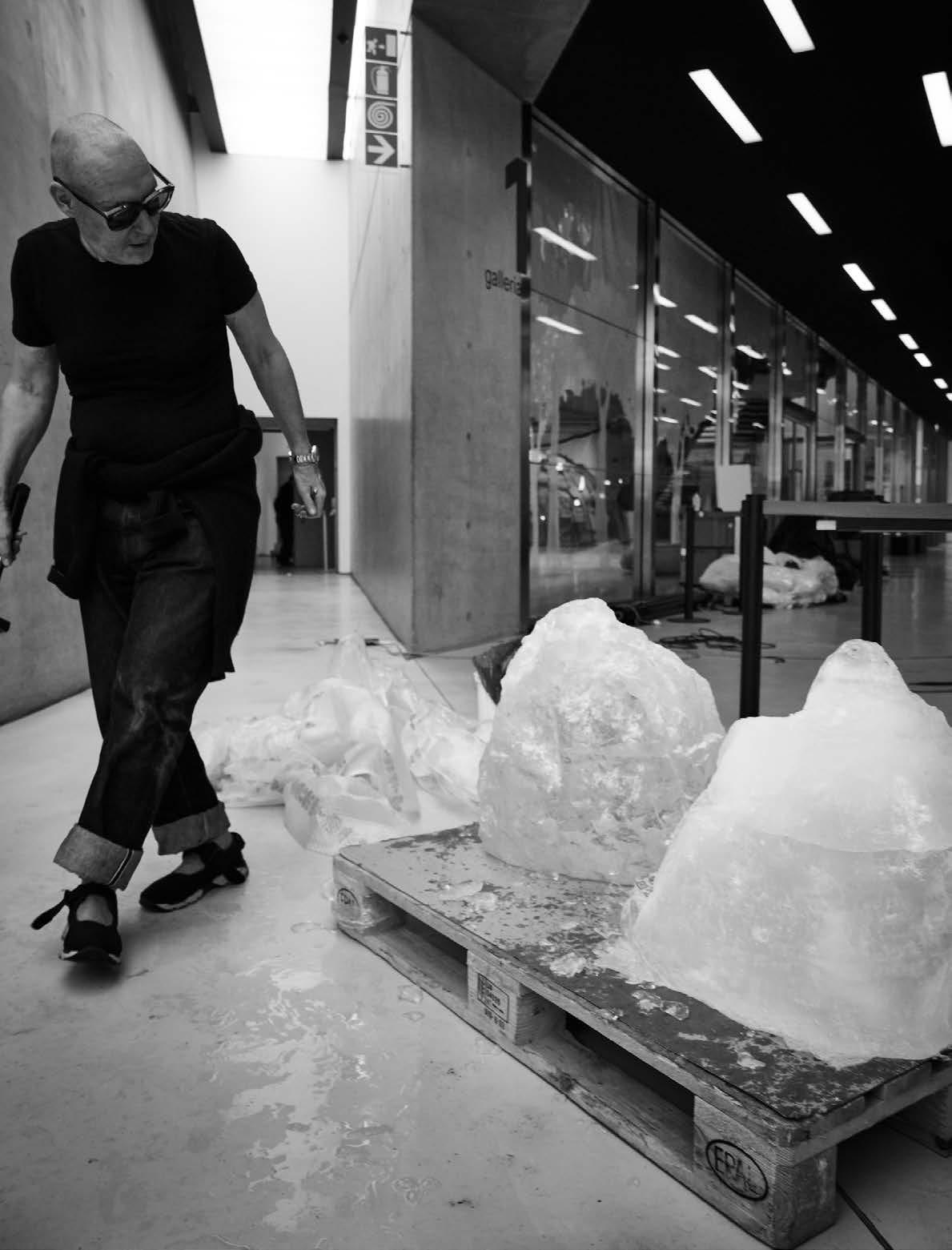
Along Lungarno Accaiuoli, beneath the windows of the Portrait Firenze Hotel
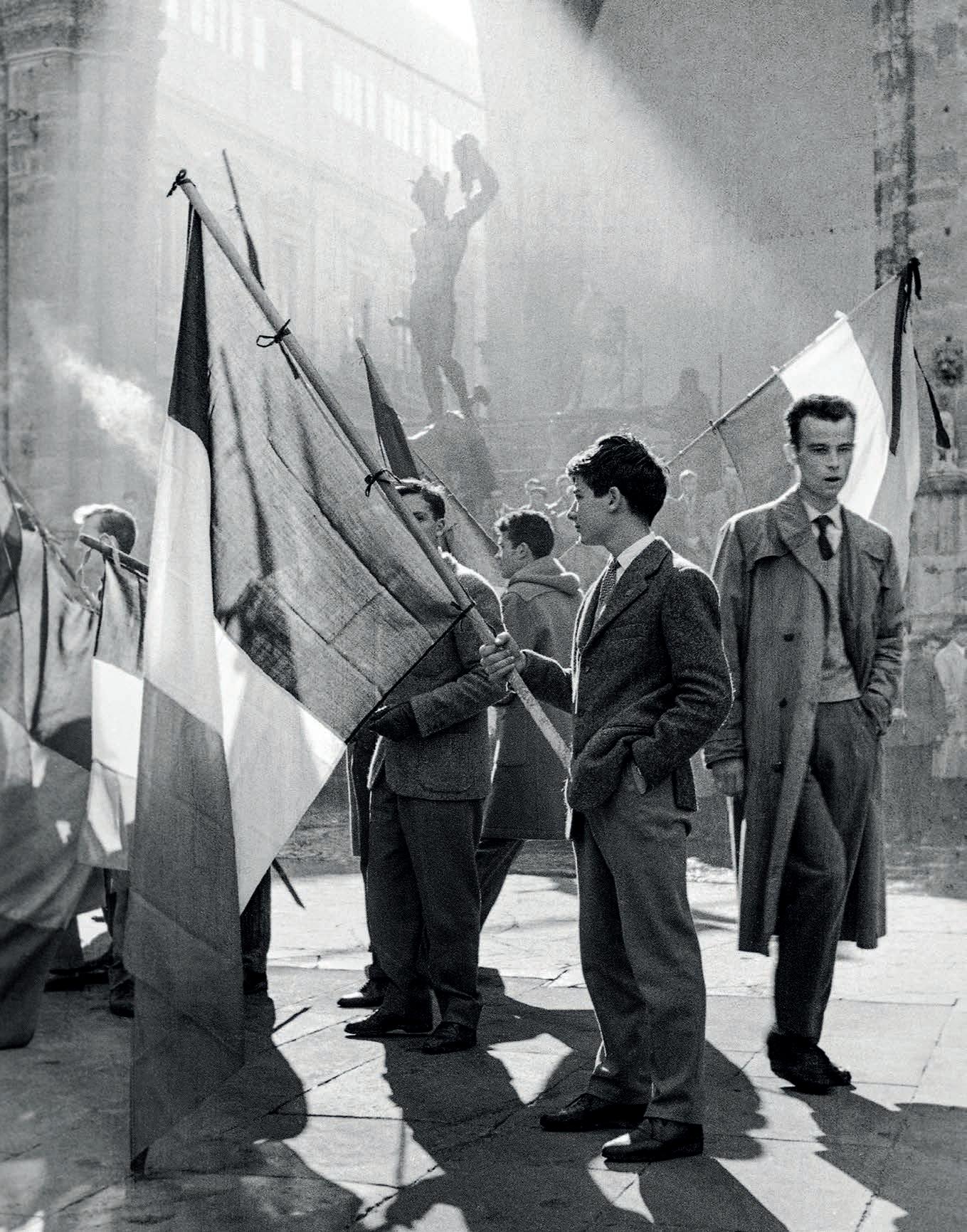
Students demonstrate against the Communist invasion of Budapest. Wednesday
1956 (ph. Orlando Orlandini)
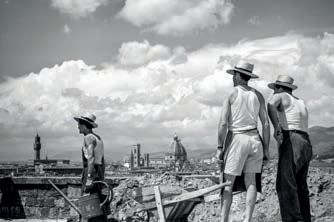
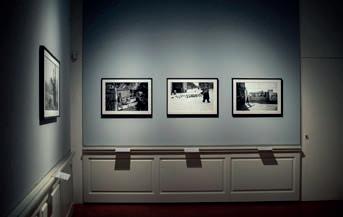
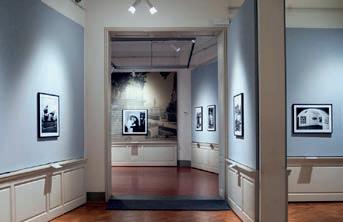
For many Florentines, the photographs from the Archivio Foto Locch i are much more than mere images: they are fragments of shared memory. Faces, places, events, and moments of daily life that have helped shape the city’s identity. The exhibition Firenze ’50 ’60 ’70. Images from the Archivio Foto Locchi , on view at Villa Bardini until October 18 , invites visitors to do just that: to see Florence through the eyes of those who documented it day after day for decades.
The exhibition – sponsored by Fondazione CR Firenze and the Archivio Foto Locchi, and curated by Giovanna Uzzani – features 150 photographs selected from the , digitized images in an archive that, following recent acquisitions (Archivio Foto Levi, Archivio Italfotogieffe, Archivio Foto Bazzechi), now holds over million photographs.
An extraordinary heritage documenting the city’s history from the postwar period to the 9 s, spanning three profoundly different decades. The 1950s appear as a season of rebirth and optimism, when Florence established itself as the international capital of elegance and culture. The 1960s brought with them the tensions of change, the 9 fl ood, and the fi rst youth protests. The 1970s depict a more refl ective and conceptual city, where the Florentine fairy tale gives way to a new urban and social complexity.
150 PHOTOGRAPHS SELECTED FROM THE 300,000 DIGITIZED IMAGES IN AN ARCHIVE THAT HOLDS OVER 5 MILLION PHOTOGRAPHS
Per molti fi orentini le fotografi e dell’ Archivio Foto Locchi sono molto più di semplici immagini: sono frammenti di memoria condivisa. Volti, luoghi, eventi, momenti di vita quotidiana che hanno contribuito a costruire l’identità della città. La mostra Firenze ’50 ’60 ’70. Immagini dall’Archivio Foto Locchi , ospitata a Villa Bardini fi no al 18 ottobre , invita proprio a questo: a guardare Firenze attraverso gli occhi di chi l’ha raccontata giorno dopo giorno per decenni. L’esposizione – promossa da Fondazione CR Firenze e Archivio Foto Locchi, e a cura di Giovanna Uzzani – raccoglie 150 fotografi e tra le mila digitalizzate di un archivio che, a seguito delle recenti acquisizioni (Archivio Foto Levi, Archivio Italfotogieffe, Archivio Foto Bazzechi), conserva oltre milioni di scatti. Un patrimonio straordinario che documenta la storia cittadina dal dopoguerra agli anni Settanta, attraversando tre decenni profondamente diversi tra loro. Gli anni Cinquanta appaiono come una stagione di rinascita e ottimismo, quando Firenze si afferma come capitale internazionale dell’eleganza e della cultura. Gli anni Sessanta portano con sé le tensioni del cambiamento, l’alluvione del 9 e le prime contestazioni giovanili. I Settanta narrano una città più rifl essiva e concettuale, laddove la fi aba fi orentina sfuma in una nuova complessità urbana e sociale.
The exhibition is also a tribute to the history of Foto Locchi , founded in 9 by Tullio Locchi as a studio for art and photographic technique, and which over the years became an indispensable presence in Florentine life. From the famous bulletin boards overlooking Piazza della Repubblica, where citizens would stop to look for news or recognize a
Il percorso è anche un omaggio alla storia di Foto Locchi , nato come studio d’arte e tecnica fotografica nel 9 da Tullio Locchi e diventato negli anni una presenza imprescindibile nella vita fi orentina. Dalle celebri bacheche affacciate su piazza della Repubblica, dove i cittadini si fermavano per cercare notizie o riconoscere un volto familiare, fi no ai grandi eventi che hanno segnato la storia della
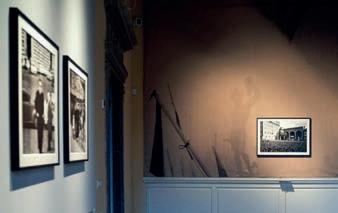
The exhibition at Villa Bardini
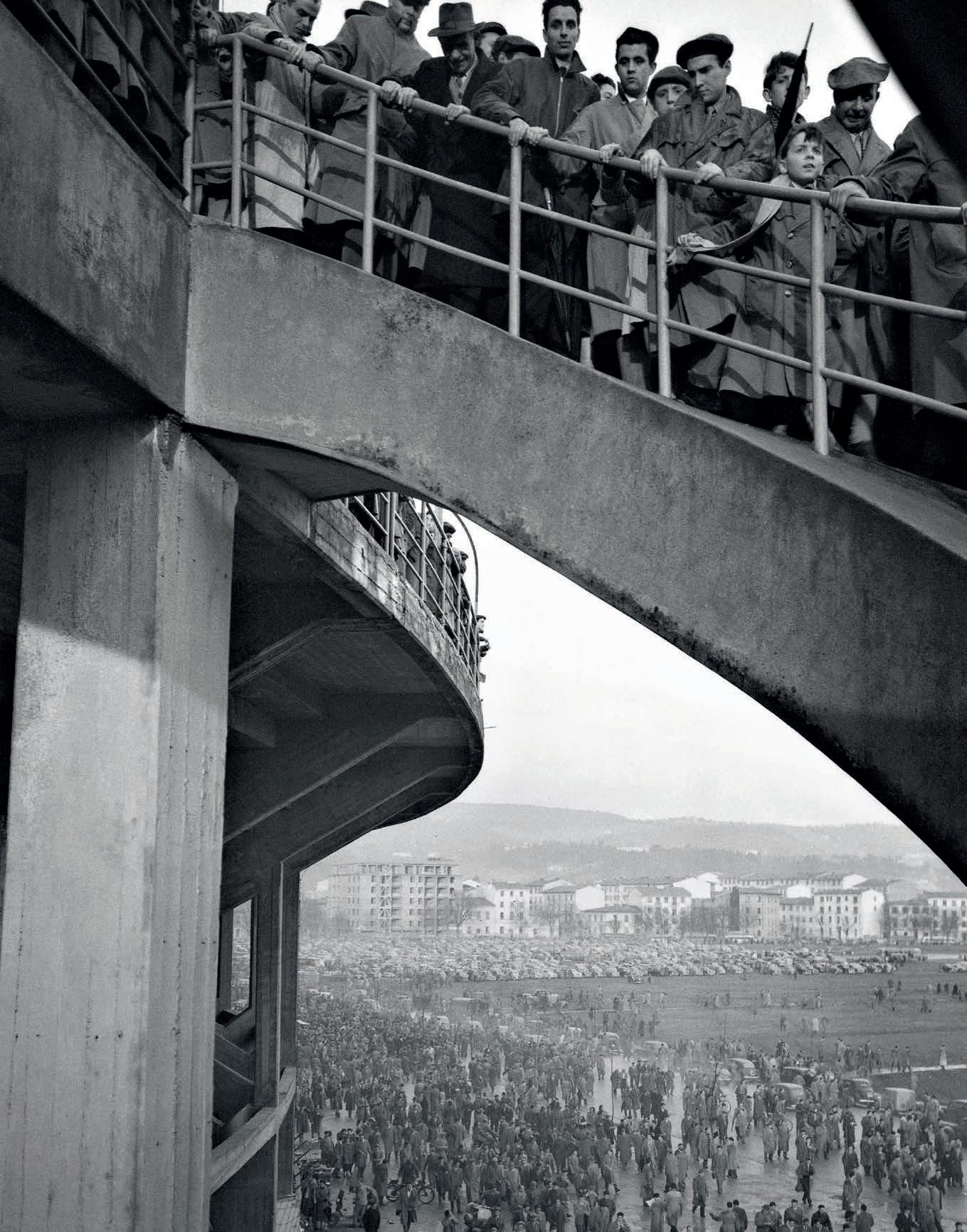
Arriving at the football stadium for the Fiorentina-Juventus match (1-1).
Sunday 14 February 1954
(ph. Giuliano Pacinotti)
familiar face, to the major events that have marked the city’s history, the agency’s photographers have crafted a unique visual narrative, defi ning what can be called ‘the Foto Locchi style’, capable of combining the rigor of photojournalism with a keen compositional sensibility, transforming news into storytelling. Thanks to its large team of master photographers, the agency has documented throughout its long history the most intense, exalted, yet also diffi cult moments in the life of Florence. The exhibition unfolds across ten thematic sections
There are images of postwar reconstruction, workers’ struggles , the fi gure of Don Milani and the revolutionary Barbiana School, the Isolotto community gathering around Don Mazzi, the drama of the fl ood , and the squares mobilizing in 1968 . But alongside the grand narrative, everyday life emerges: diving into the Arno , sunbathing on the riverbank, Sundays at the stadium , picnics in the countryside, and the fi rst signs of modernity peeking out from the city streets.
città, i fotografi dell’agenzia hanno costruito una narrazione visiva unica, delimitando quello che si può defi nire ‘lo stile Foto Locchi’, capace di unire il rigore del fotogiornalismo a una spiccata sensibilità compositiva, trasformando la cronaca in racconto. Grazie alla folta squadra dei suoi maestri fotografi , lo studio, ha così documentato, nel corso della sua lunga attività, i momenti più intensi, alti ma anche diffi cili della vita di Firenze.
THE NARRATIVE STYLE TYPICAL OF PHOTOJOURNALISM IS ENLIVENED BY LYRICAL INSIGHTS, UNIQUE PHOTOGRAPHIC QUALITY AND A DISTINCTIVE SENSE OF COMPOSITION, IN PURSUIT OF PURE VISUAL EMOTION
La mostra si sviluppa attraverso dieci sezioni tematiche . Ci sono le immagini della ricostruzione del dopoguerra , le lotte operaie , la fi gura di don Milani e la rivoluzionaria Scuola di Barbiana, la comunità dell’Isolotto che si raccoglie intorno a don Mazzi, il dramma dell’ alluvion e e le piazze che si mobilitano nel Sessantotto
Ma accanto alla grande storia emerge quella quotidiana: i tuffi in Arno , i bagni di sole sull’argine, le domeniche allo stadio , i picnic fuori porta, le prime insegne della modernità che fanno capolino tra le strade cittadine.
Florentine Siesta. Exclusive shoot for La Nazione. Thursday 28 July 1955 (ph. Giuliano Pacinotti)
VIVI L’IMPOSSIBILE
in Via Curzio Malaparte 10 a Firenze, oppure in Via E.Rossi 21/23 ad Arezzo
Scrolling through the photographs, the Florence of literary cafés, the Teatro della Pergola , the Giubbe Rosse , and the Seeber bookstore also comes to mind. A city that, in those same years, became a favorite destination for the international jet set: Hollywood actors, writers, artists, and fashion designers arrived here, drawn by a rare balance between monumental beauty and a human scale.
Sports are not left out, with a section dedicated to Fiorentina ’s fi rst Scudetto in 9 –, the 9 – season with victories in the Cup Winners’ Cup and the Coppa Italia, and the second Scudetto in 9 9, up to 9 , the year in which the barely eighteenyear-old Giancarlo Antognoni made his debut on the team. Alongside soccer are the exploits of Gino Bartali at the Giro d’Italia and the Mille Miglia , featuring Tazio Nuvolari in the legendary Ferrari Spider Corsa.
Then there are the shots taken during the legendary editions of the Maggio Musicale Fiorentino , on stage and in the intimacy of the dressing rooms,
Saturday 5 May 1951 (ph. Fulvio Frighi)
Scorrendo le fotografi e riaffi ora anche la Firenze dei caffè letterari, del Teatro della Pergola , delle Giubbe Rosse e della libreria Seeber . Una città che negli stessi anni diventa meta privilegiata del jet set internazionale: attori hollywoodiani, scrittori, artisti e stilisti arrivano qui attratti da un equilibrio raro tra bellezza monumentale e dimensione umana.
A COLLECTIVE NARRATIVE WOVEN FROM GRAND EVENTS AND SMALL GESTURES, CAPABLE OF EVOKING THE ATMOSPHERE OF AN ERA
Non manca lo sport, con una sezione dedicata alla Fiorentina del primo scudetto del 9 - , della stagione 9 - con la vittoria della Coppa delle Coppe e della Coppa Italia, e ancora il secondo scudetto del 9 9, fino al 9 , anno in cui debutta in squadra l’appena diciottenne Giancarlo Antognoni. Accanto al calcio compaiono le imprese di Gino Bartali al Giro d’Italia e la Mille Miglia, con Tazio Nuvolari nella leggendaria Ferrari Spider Corsa.
Ecco poi le riprese in occasione delle mitiche edizioni del Maggio Musicale Fiorentino , sul palco e nell’intimità dei camerini, a caccia degli scatti che commuovono per vibrazione; e la vita d’arte che,
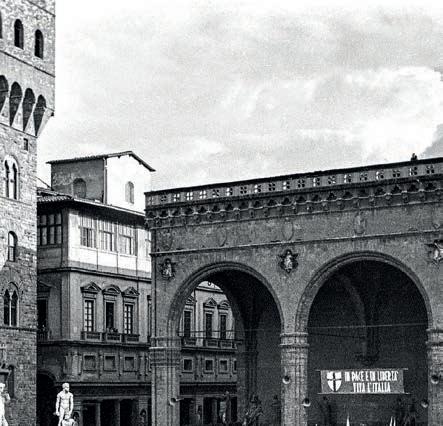
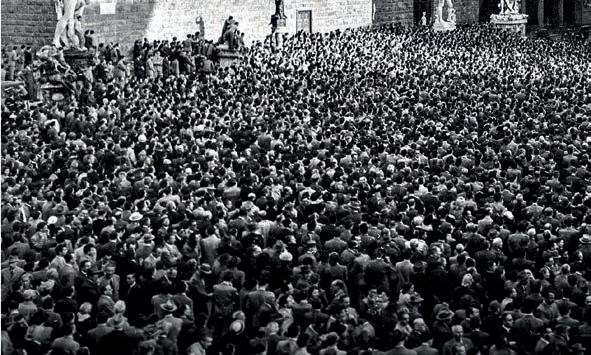
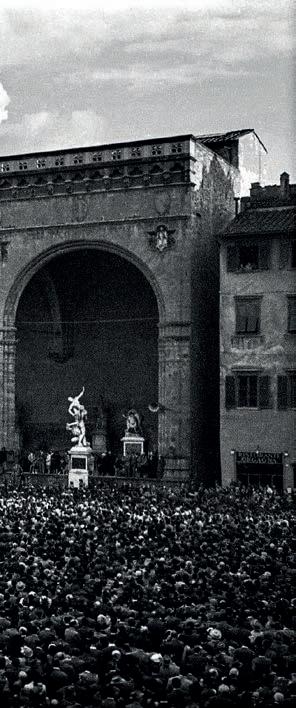
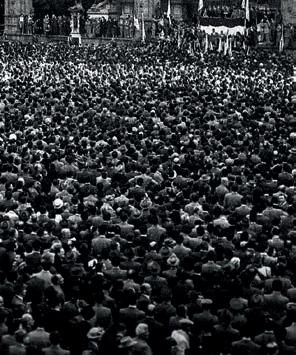
Alcide De Gasperi addresses a rally in Piazza della Signoria.
in search of images that move us with their vibrancy; and the life of art that, from the city streets, ventures into the hallowed halls of exhibitions and the intimacy of artists’ studios, all the way to the terraces of Forte Belvedere.
The fi nal thematic section is dedicated to the invention of ‘Made in Italy’ , when the latest fashion creations from extraordinary fashion houses – now established on the international scene – were presented on the prestigious catwalk of the Sala Bianca in Palazzo Pitti , in showrooms, and even against the backdrop of the Renaissance city: the Florentine identity had become a brand.
HOLLYWOOD ACTORS, ARTISTS, AND FASHION DESIGNERS, GINO BARTALI
AT THE GIRO D’ITALIA, TAZIO NUVOLARI
dalle vie della città, si addentra nei luoghi consacrati delle mostre e nell’intimità degli studi degli artisti, fi no agli spalti del Forte Belvedere. L’ultima sezione tematica è dedicata all’invenzione del Made in Italy , quando sulla prestigiosa passerella della Sala Bianca di Palazzo Pitti , negli showroom, fi nanche nella cornice della città rinascimentale si presentano le ultime creazioni di moda delle straordinarie maison, ormai accreditate sulla scena internazionale: l’identità fi orentina è ormai un brand.
DURING THE MILLE MIGLIA, FIORENTINA’S FIRST SCUDETTO IN 1955–56...
More than just a photography exhibition, Firenze ’50 ’60 ’70 is a journey into the memory of a city that changes without losing itself.
A collective narrative woven from grand events and small gestures, capable of evoking the atmosphere of an era and, at the same time, reminding us how much the past continues to engage with the present.
Parte del percorso, anche tre quotidiani a corredo delle fotografi e: La Nazione del giugno 9 , La Nazione del gennaio 9 , La Nazione del novembre 9 .
Più che una semplice mostra fotografi ca, Firenze ’50 ’60 ’70 è un viaggio nella memoria di una città che cambia senza perdere sé stessa.
Un racconto corale fatto di grandi eventi e piccoli gesti, capace di restituire l’atmosfera di un’epoca e, allo stesso tempo, di ricordarci quanto il passato continui a dialogare con il presente.
Sylva Koscina tours Florence; here we see her at Piazzale Michelangelo. Tuesday 11 December 1956 (ph. Mario Semprini)
A complete IB continuum school from Early Years to High School. 11 to 15 years
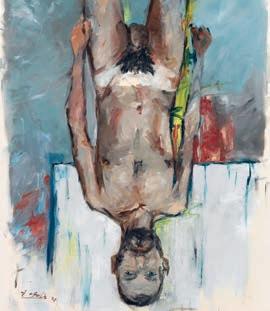
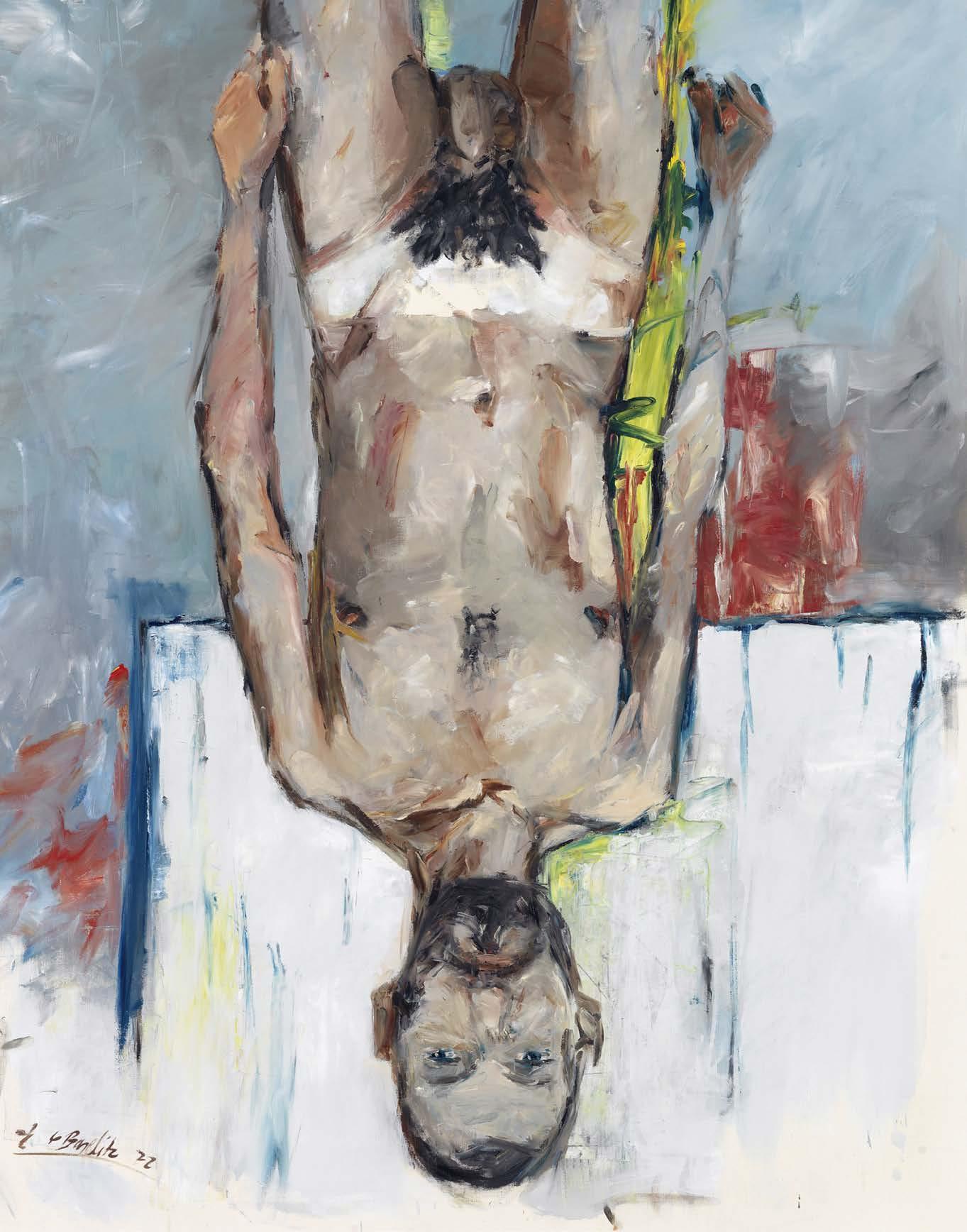
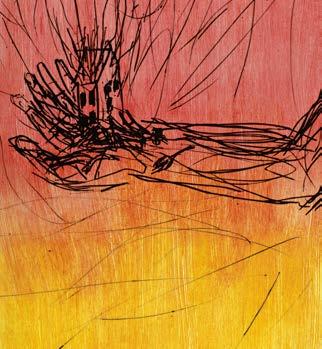
Georg Baselitz, Finger Painting – Nude, 1972. Oil on canvas, 200 × 162 cm. Private collection, (courtesy Skarstedt)
THE WORLD TURNED UPSIDE DOWN
THE VISION OF AN EXTRAORDINARY ARTIST: GEORG BASELITZ IN THE WORDS OF SERGIO RISALITI
LA VISIONE DI UN ARTISTA STRAORDINARIO:
GEORGE
BASELITZ NELLE PAROLE DI SERGIO RISALITI
text Sergio Risaliti
Sergio Risaliti, director of the Museo Novecento, has repeatedly described Georg Baselitz as a giant who has overturned the perspective through which we view and represent reality. His passing occurred just as his latest exhibition was underway at the Museo Novecento. “The death of an artist changes the perspective through which we interpret the unfolding of his career; it allows us to reverse the meaning: now looking back means projecting his story into the future,” says the director. Together with Sergio, who has repeatedly highlighted the artist’s creative power, revolutionary spirit, and extraordinary generosity right up until the fnal moments of his life, we decided to celebrate him through the beautiful exhibition still underway, recounting his connection to Florence.
From the critical text of the exhibition George Baselitz. Avanti! by Sergio Risaliti
‘THE DEATH OF AN ARTIST CHANGES THE PERSPECTIVE THROUGH WHICH WE INTERPRET THE UNFOLDING OF HIS CAREER: NOW LOOKING BACK MEANS PROJECTING HIS STORY INTO THE FUTURE’
Leaving aside the conceptual preamble – his love and hate for Duchamp, the inversion of the subject, the overturning of the pissoir in fountain, from masculine into feminine – and let’s turn instead to art history with the intent of exploring some hidden sources. We know that Baselitz did not lack the courage to work at the press as early as 965, at a time when few cared about old methodologies or traditional practices such as woodcut printing, Mannerist painting, and so on. These were years in which the imperative was to start from zero, and being radical seemed to mean being iconoclastic. We also know that artists have their mysterious sources of inspiration. They may be struck by a work from a previous era, by a detail, or by a tech-
Sergio Risaliti, direttore del Museo Novecento, ha più volte defnito Georg Baselitz come un gigante che ha ribaltato la prospettiva con cui guardiamo e rappresentiamo la realtà. La sua scomparsa è avvenuta proprio quando era in corso la sua ultima mostra al Museo Novecento. ‘La morte di una artista cambia la prospettiva con cui interpretiamo lo svolgersi della sua carriera , ci permette di invertire il senso: ora guardare indietro signifca proiettare nel futuro la sua storia’ racconta il direttore. Con Sergio, che ha più volte evidenziato la potenza creativa, lo spirito rivoluzionario e la straordinaria generosità fno agli ultimi momenti di vita di questo artista, abbiamo pensato di celebrarlo con la bellissima mostra ancora in corso, raccontando il suo legame con Firenze.
Dal testo critico della mostra George Baselitz. Avanti! di Sergio Risaliti
Tralasciamo la premessa concettuale: il suo amore e odio per Duchamp, l’inversione, il capovolgimento del pissoir in fountain, del maschile in femminile. E rivolgiamoci alla storia dell’arte intenzionati a sondare qualche sorgente carsica. Abbiamo compreso che a Baselitz non è mancato il coraggio di mettersi al torchio già nel 965, quando a nessuno preoccupavano le vecchie metodologie, le pratiche tradizionali come l’incisione sul legno, la pittura manierista eccetera. Erano tempi in cui l’imperativo era l’azzeramento ed essere radicali pareva signifcare essere iconoclasti. Sappiamo che gli artisti hanno le loro misteriose fonti d’ispirazione. Possono essere colpiti da un’opera di epoca precedente, da un dettaglio, da una tecnica. Possono
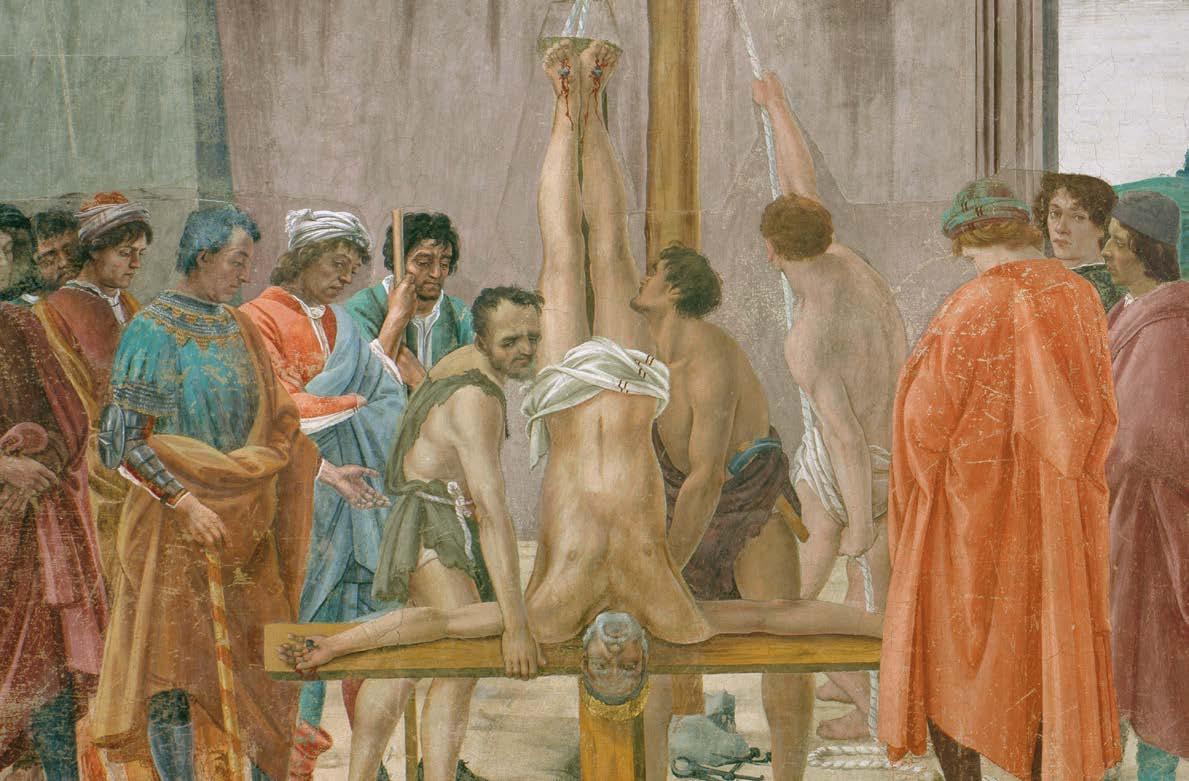
nique. They may copy or borrow from others, as Picasso famously asserted. It is therefore far from implausible to suppose that Baselitz may have been deeply impressed by an image conceived by Filippino Lippi in one of the frescoes on the walls of the Carmine Church, perhaps during his stay at Villa Romana in 965. After all, no major artist who lived in or passed through Florence could have failed to visit the Brancacci Chapel, where Masolino da Panicale and Masaccio also worked. There are drawings, for example, that attest to how the young Michelangelo Buonarroti was struck by Masaccio’s remarkably realistic fgures –indeed, Masaccio was already regarded as the foremost interpreter of the new Renaissance avant-garde movement as early as the 5th century. In this case, we are interested in the upsidedown fgure of Peter on the Cross – a detail that forces the viewers to tilt their head, compelling an effort to see it properly. The image of Peter, however, recurs elsewhere; other paintings feature the same iconography. A small predella attributed to Giotto di Bondone is preserved in the Vatican Museums, where another panel by Jacopo di Cione is also housed. A Crucifxion of Peter – which
‘IT IS NOT FAR-FETCHED TO SUPPOSE THAT BASELITZ MIGHT HAVE BEEN DEEPLY IMPRESSED BY THE IMAGE CREATED BY FILIPPINO LIPPI IN THE CHURCH OF THE CARMINE IN FLORENCE’
copiare o rubare dagli altri come sosteneva Picasso. Non è peregrino supporre allora che Baselitz possa essere rimasto molto colpito dall’immagine coniata da Filippino Lippi in uno degli affreschi eseguiti sulle pareti della chiesa del Carmine a Firenze. Potrebbe essere accaduto al tempo in cui soggiornò a Villa Romana nel 965. D’altronde nessun grande artista vissuto o passato da Firenze può aver mancato di visitare la Cappella Brancacci dove hanno lavorato anche Masolino e Masaccio. Esistono ad esempio alcuni disegni che certifcano come il giovane Michelangelo sia rimasto colpito dalle fgure così realistiche di Masaccio, considerato già nel Quattrocento il maggiore interprete della nuova avanguardia rinascimentale. Nel nostro caso ci interessiamo alla fgura capovolta di Pietro crocifsso. Un particolare che costringe il visitatore a piegare la testa, costringendolo a uno sforzo per vedere meglio. Quella di Pietro è tuttavia un’immagine ricorrente in altri luoghi, si trovano altri dipinti con identica iconografa. Una piccola predella attribuita a Giotto è conservata nei Musei Vaticani, dove si trova anche una tavoletta di Jacopo di Cione. Una Crocifssione di Pietro è custodita a Berlino,
Filippino Lippi, Crucifixion of Peter, details, 1492. Fresco, 230 × 598 cm. Florence, church of Santa Maria del Carmine, Brancacci Chape
can also be found in Berlin at the Staatliche Museen –is attributed to Masaccio and it may well have served as a source of inspiration for Filippino Lippi when he worked at the Carmine after 48 . This image could also have struck the young Baselitz. One of Baselitz’s frst inverted fgures, Fingermalerei, an oil on canvas from 97 , shows some obvious similarities with the fgure devised by Filippino Lippi in the Renaissance, yet there are naturally some differences. Baselitz did not paint a crucifxion but rather an artist in the studio. The upper limbs run along the sides. Moreover, the loincloth that in the Renaissance fresco covers the martyr’s genitals is omitted in the oil on canvas, and the male organ does not hang downward, defying gravity. This last detail clearly shows that Baselitz is unconcerned with scientifc or anatomical correctness, focusing solely on pictorial and conceptual coherence. On this matter, it has been said: “An object painted upside down is suitable for painting precisely because it is unsuitable as an object. I have no notion about the solidity of the depiction. I don’t correct the accuracy of representation. My relationship to the object is arbitrary”.
‘AN OBJECT PAINTED UPSIDE DOWN IS SUITABLE FOR PAINTING PRECISELY BECAUSE IT IS UNSUITABLE AS AN OBJECT’
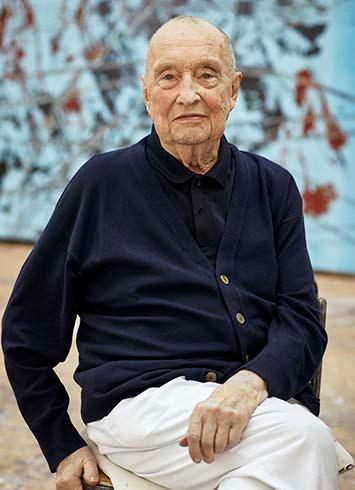
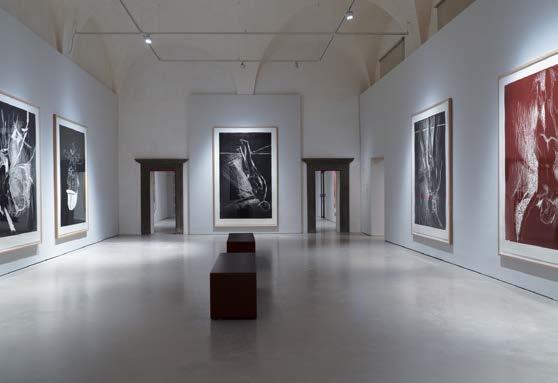
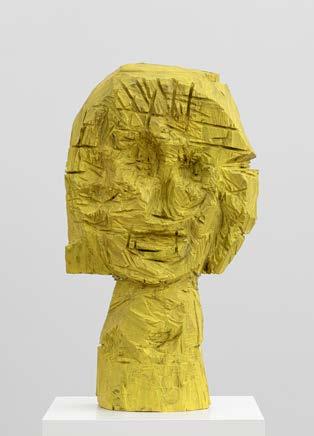
Top left: Georg Baselitz. Until 13 September Museo Novecento hosts, for the first time in Italy, a large-scale exhibition project that foregrounds a fundamental yet often less explored dimension of Baselitz’s practice: printmaking
allo Staatliche Museen ed è attribuita a Masaccio. Probabilmente potrebbe essere stata la fonte di ispirazione per lo stesso Filippino che al Carmine intervenne dopo il 48 . Anche questa immagine avrebbe potuto colpire il giovane Baselitz. Una delle sue prime fgure rovesciate, Fingermalerei, un olio su tela del 97 , presenta alcune evidenti somiglianze con quella coniata da Filippino Lippi in epoca rinascimentale. Come è ovvio ci sono delle differenze. Baselitz non ha infatti dipinto una crocifssione ma un artista nello studio. Gli arti superiori corrono lungo i fanchi. Inoltre, il perizoma che nell’affresco rinascimentale copre i genitali del martire, nell’olio su tela è stato evitato e il sesso maschile non pende, contraddicendo la gravità. Segno evidente, quest’ultimo, che Baselitz non si preoccupa di incongruenze di ordine scientifco ma solo di congruenza pittorica e contenutistica. A tal proposito si è espresso in questi termini: “Un oggetto dipinto a testa in giù è adatto alla pittura proprio perché è inadatto come oggetto. Non ho alcuna idea della solidità della raffgurazione. Non correggo la ‘correttezza’ della rappresentazione. Il mio rapporto con l’oggetto è arbitrario”.
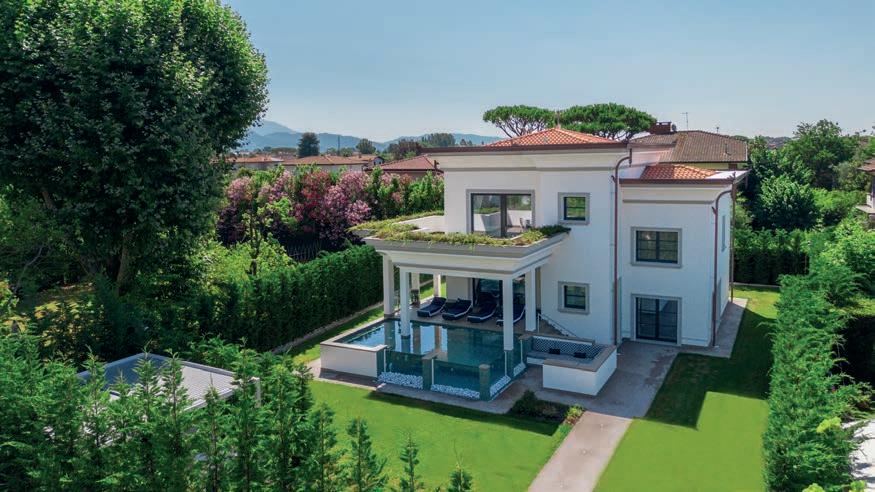
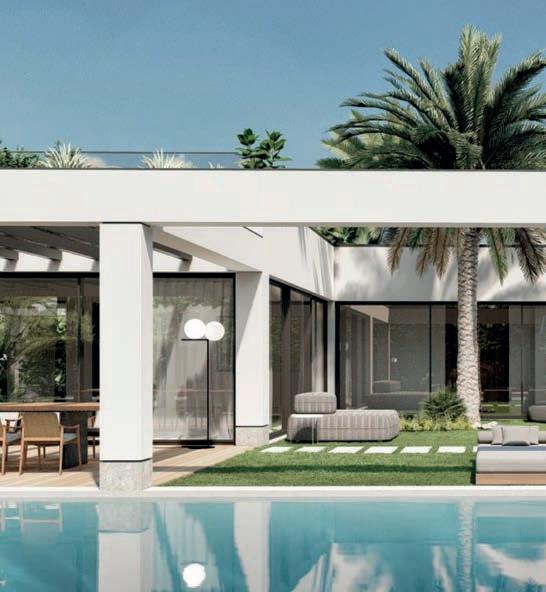
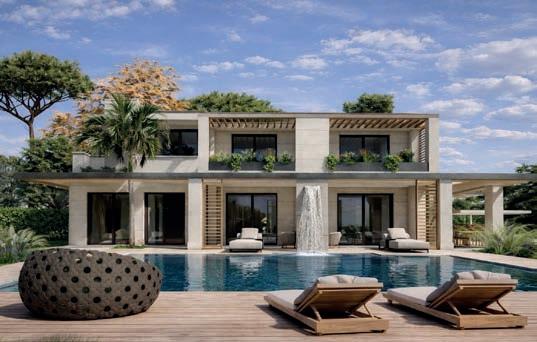
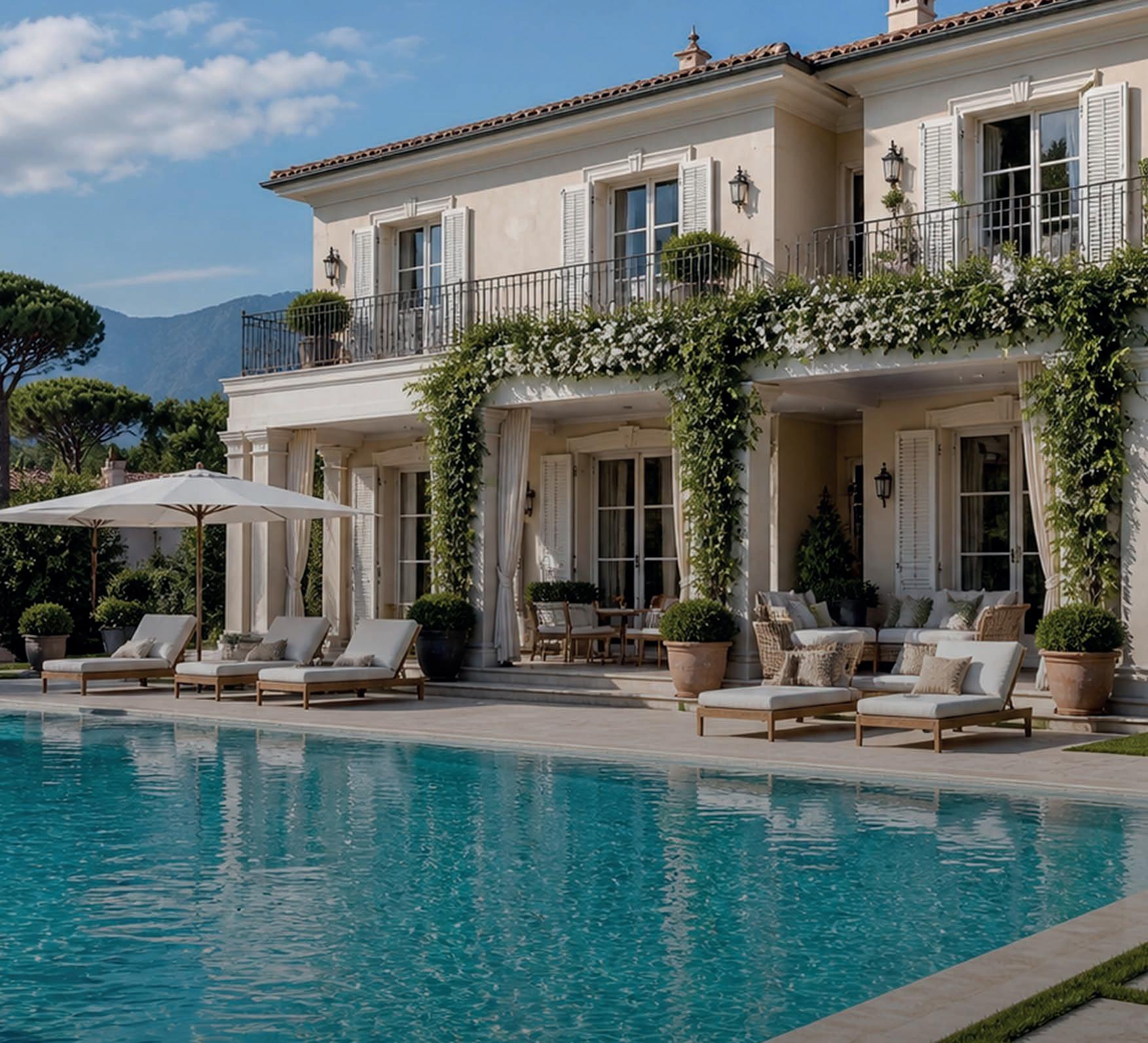
A MODERN VILLA IN ONE OF THE MOST SOUGHT-AFTER STREETS OF FORTE DEI MARMI
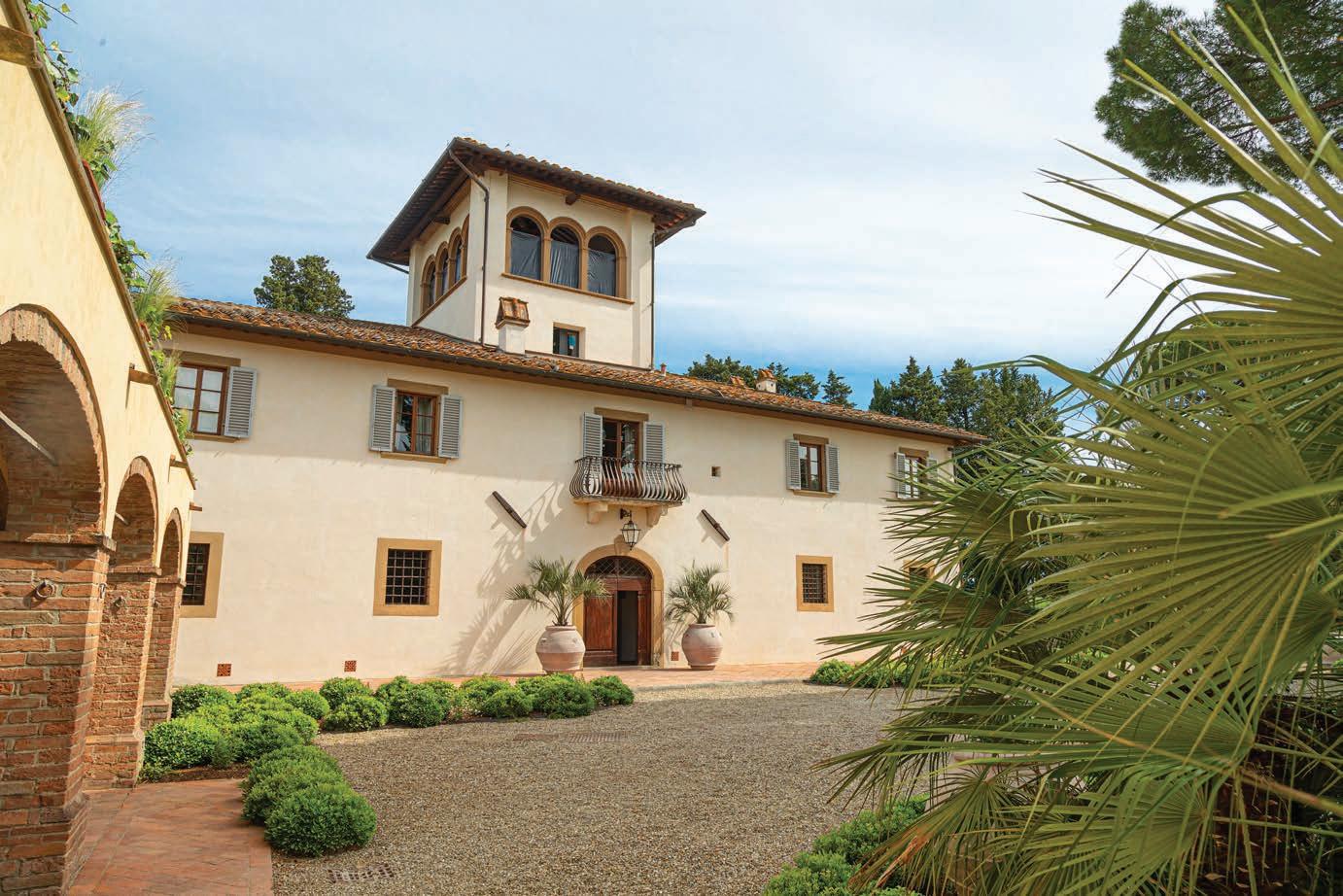
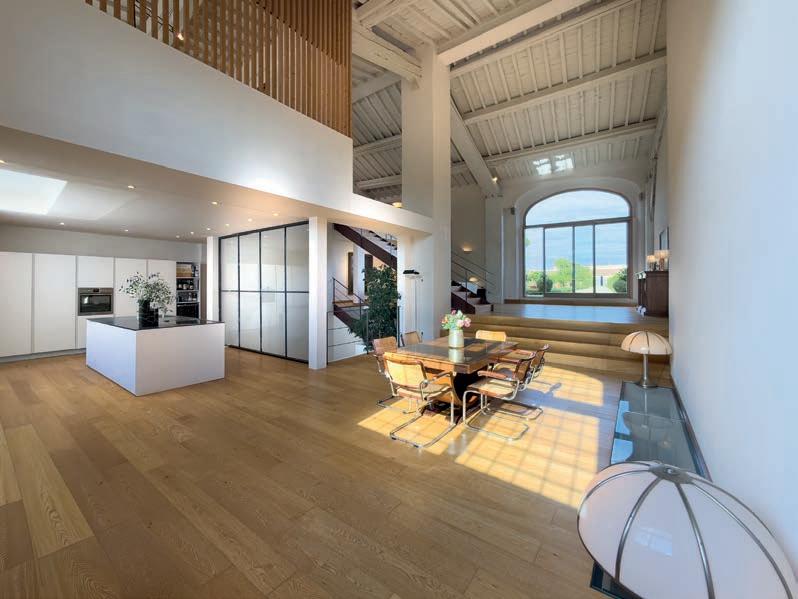
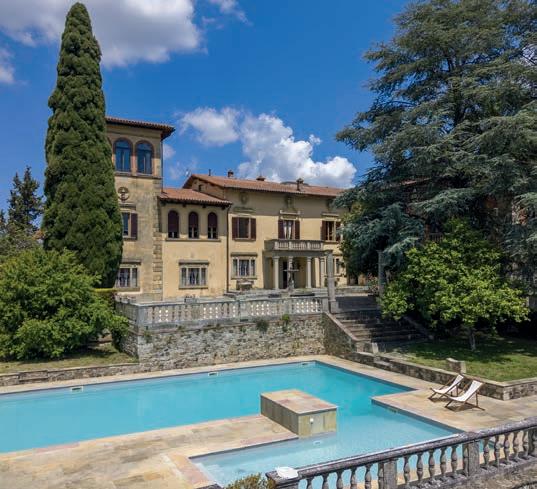
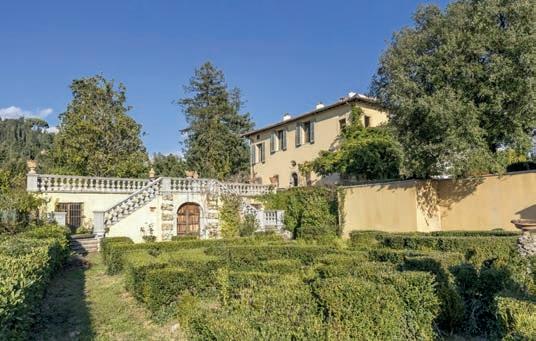
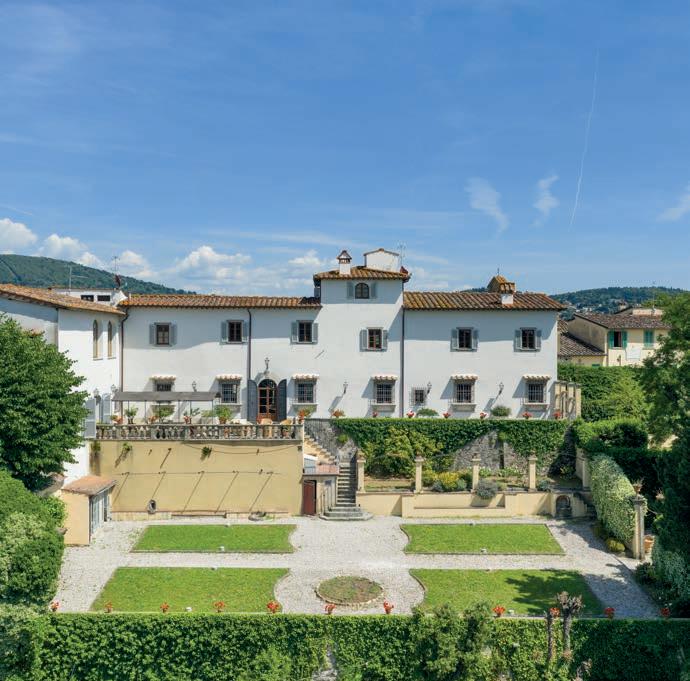
IN THE HEART OF THE MOST PICTURESQUE AND PANORAMIC HILLS OF FLORENCE, IN PIAN DEI GIULLARI, AN EXCLUSIVE LOFT ON THREE LEVELS IS AVAIBLE FOR THE RENT WITHIN A HISTORIC 15TH CENTURY VILLA
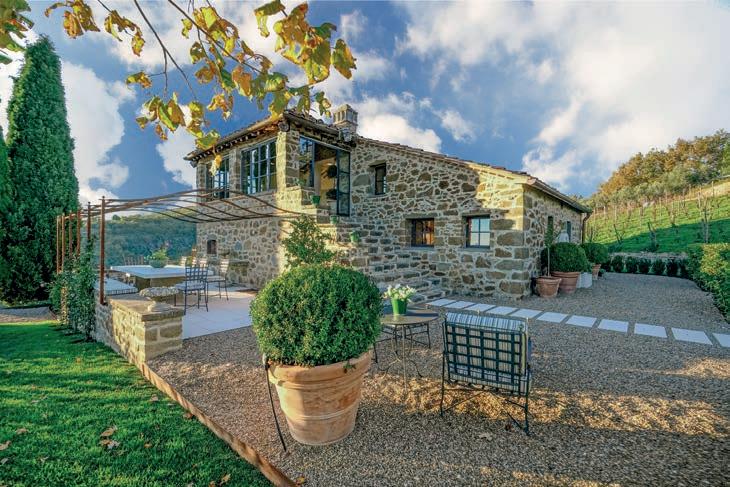
A SPLENDID LUXURY FARMHOUSE NESTLED AMONG HILLS, VINEYARDS,AND ANCIENT OLIVE GROVES, IN THE HEART OF CHIANTI CLASIICO, JUST MINUTES FROM GAIOLE IN CHIANTI
GALLERIA CONTINUA’S NEW EXHIBITION IN SAN GIMIGNANO IS A JOURNEY TO DISCOVER A GREAT CONTEMPORARY ARTIST, ANTONY GORMLEY
LA NUOVA MOSTRA DI GALLERIA CONTINUA A SAN GIMIGNANO È UN VIAGGIO
ALLA SCOPERTA DI UN GRANDE ARTISTA CONTEMPORANEO, ANTONY GORMLEY
text Francesca Lombardi photo Ela Bialkowska, OKNO Studio
“Please get rid of these pre-conditions and see if you can really enter in!”
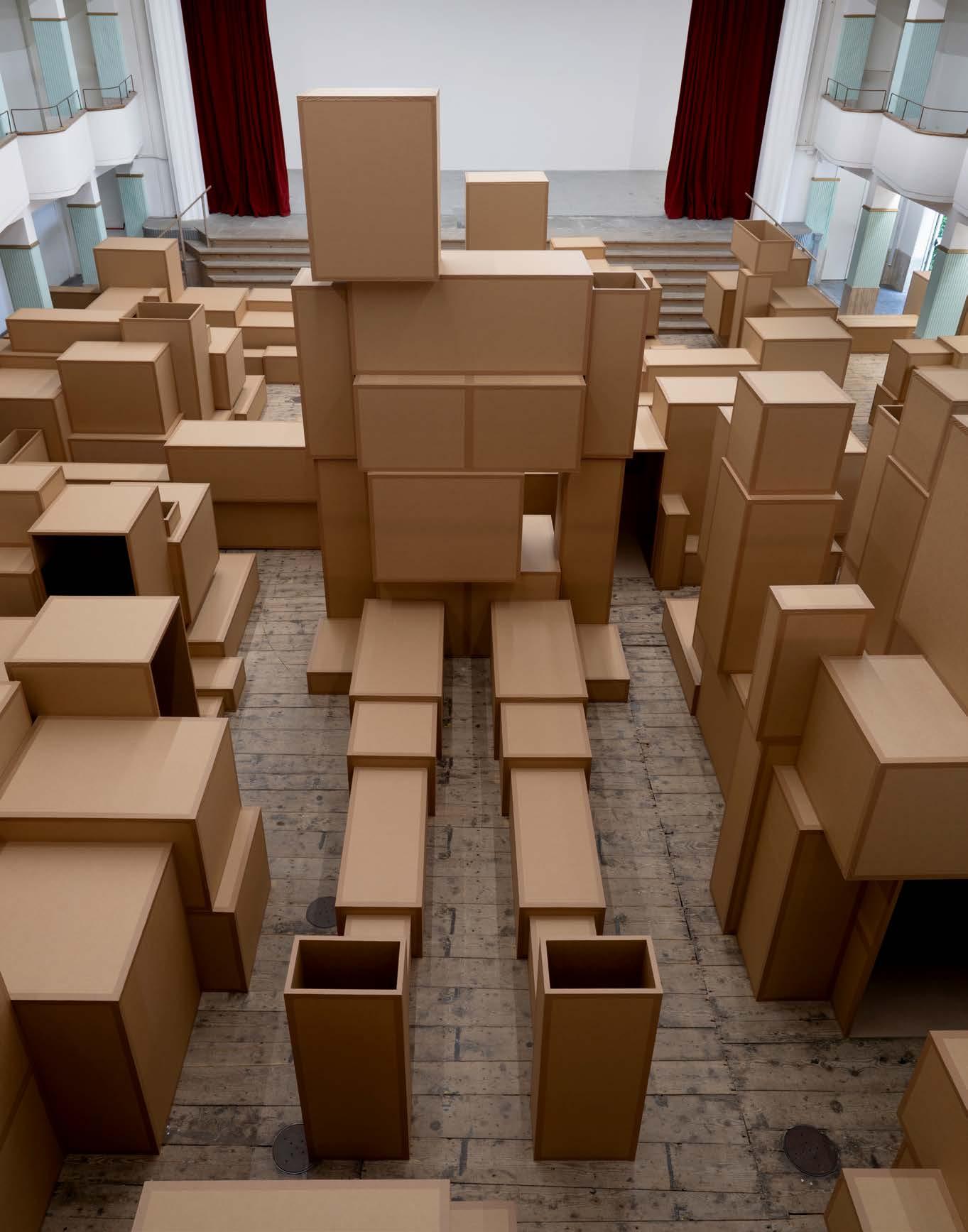
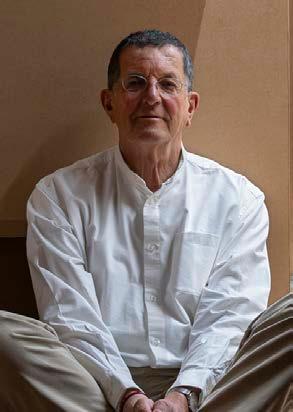
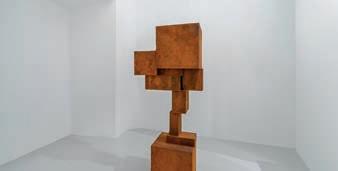
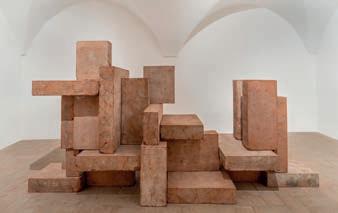
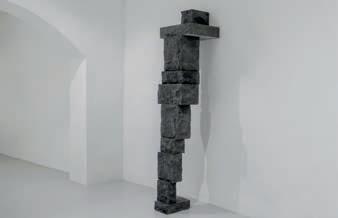
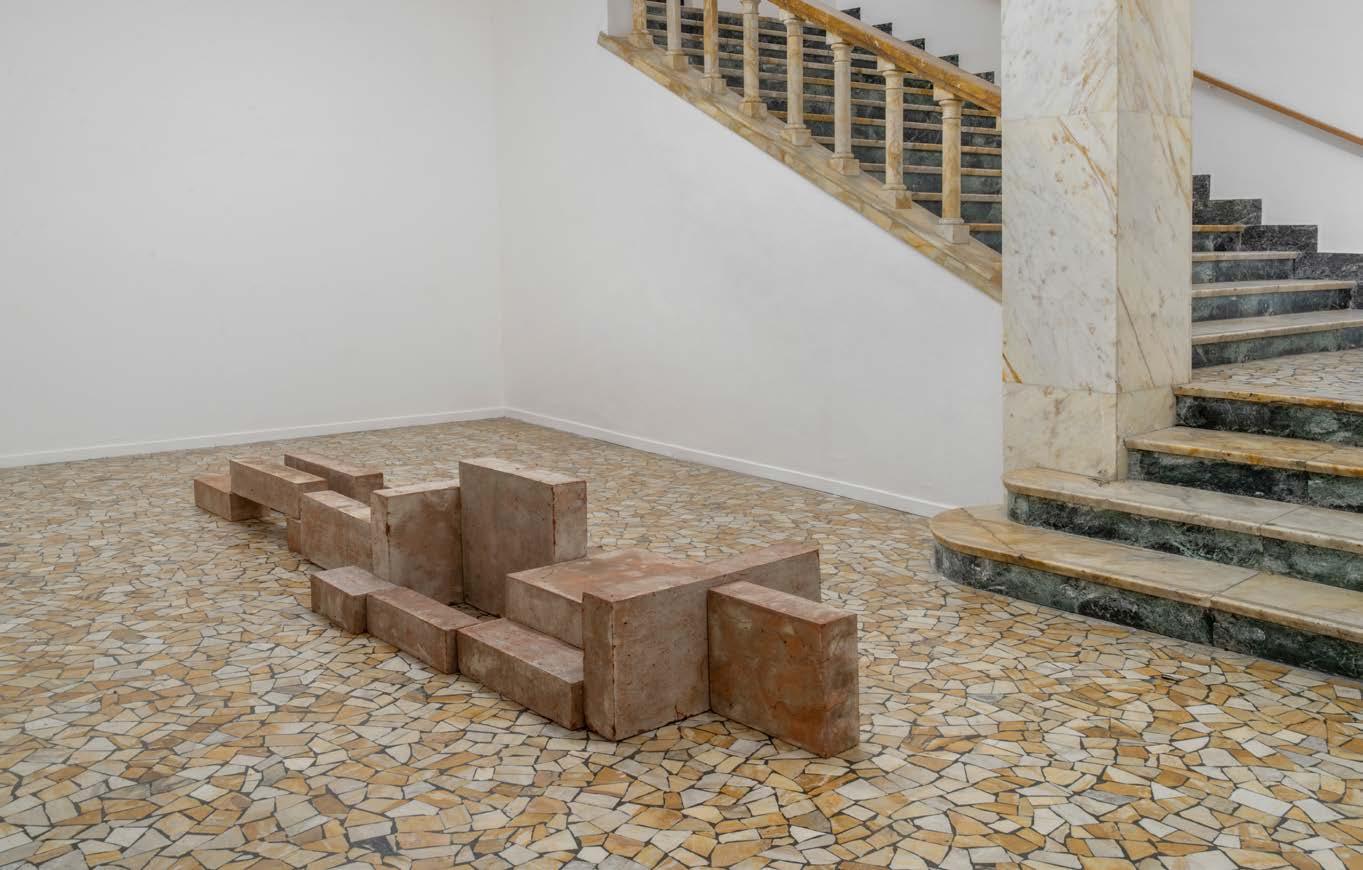
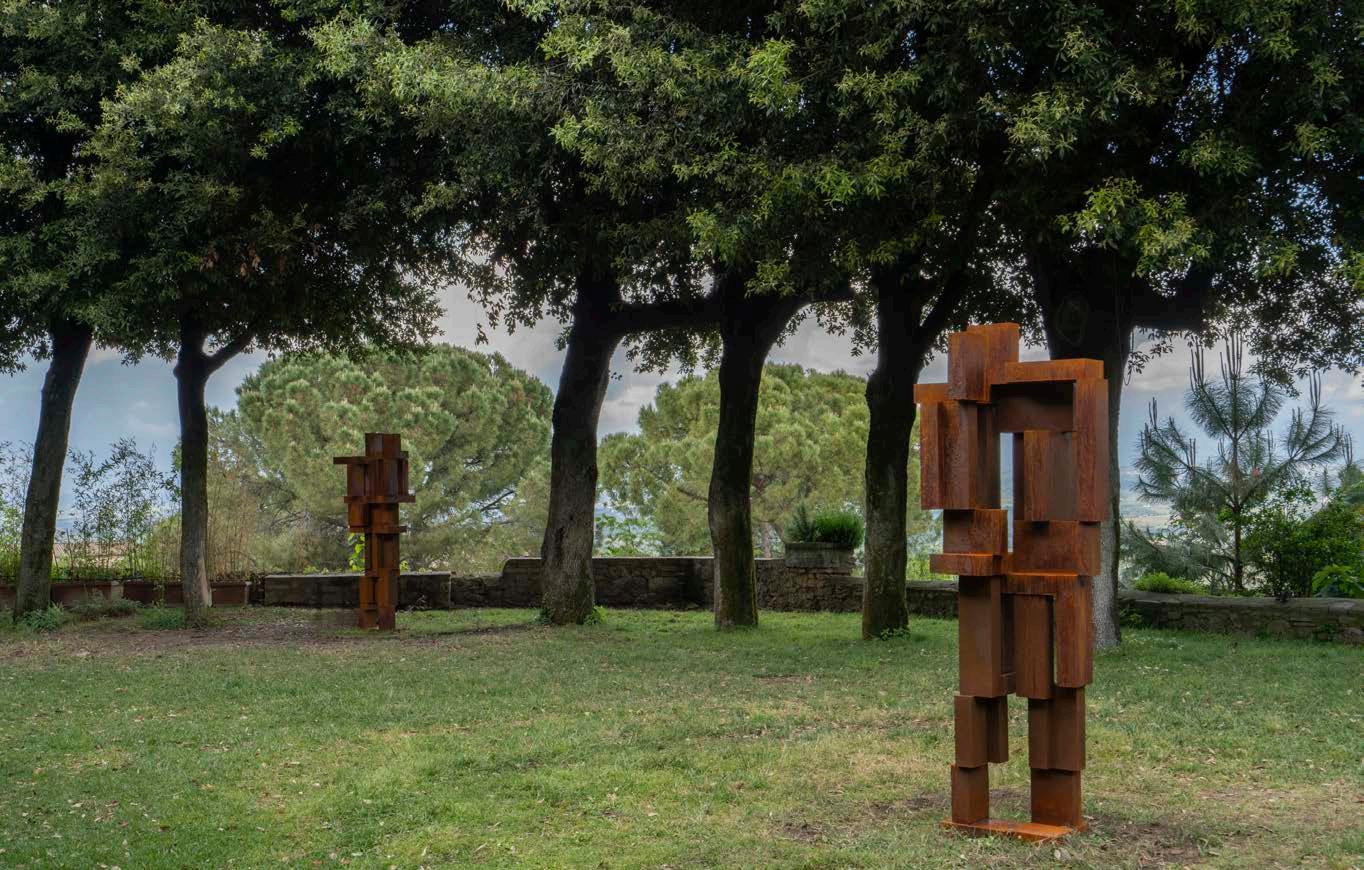
This story begins with an invitation. No, we haven’t fallen into a world of paradoxes, chasing a white rabbit – it is an actual exhortation to undertake a very particular journey. Proposing it, on a hot Saturday in May, is Antony Gormley. We are in San Gimignano, at the Galleria Continua, a place – one of the few – where it seems still possible to truly put people at the centre, to build geographies of emotions, and investigate one’s own perceptions. What Holds Us, is the celebrated British sculptor’s latest exhibition, that explores our condition as urban animals through the resonance of a range of different materials, from primordial stone and clay to industrial cement and iron, culminating in the most universal and fragile medium, cardboard. For this exhibition, on at the Galleria until 13 September 2026, Gormley works with the entire building, inside and out, engaging the viewer in an experiential journey. The main space of the theatre in which the gallery is housed, is entirely occupied by a site-specifc installation, Innercity ( 6). Fifteen giant buildings constructed from cardboard create an urban labyrinth that invites us to move between and through their open and closed spaces, which either deny us access or suggest that we crawl inside them. “Downstairs, I really want you all to go on a journey on your hands and knees. I’m not going to take you through the whole show, because I think it’s important that each
GORMLEY IS WIDELY ACCLAIMED FOR HIS SCULPTURES, THAT INVESTIGATE THE RELATIONSHIP OF BODY TO SPACE
“Per favore, liberatevi di queste precondizioni e vedete se riuscite davvero a entrare!” Questo racconto inizia con un invito. No, non siamo caduti in un mondo di paradossi inseguendo un coniglio bianco: è una vera e propria esortazione a intraprendere un viaggio molto particolare. A proporlo è Antony Gormley, in un caldo sabato di maggio. Siamo a San Gimignano, alla Galleria Continua, un luogo – uno dei pochi – dove ancora sembra possibile mettere realmente al centro le persone, costruire geografe di emozioni, indagare le proprie percezioni. What Holds Us, è la nuova mostra del celebre scultore britannico che esplora la nostra condizione di animali urbani attraverso l’eco di una gamma di materiali diversi, dai più primordiali come la pietra e l’argilla a quelli industriali come il cemento e il ferro, per culminare nel medium più diffuso e fragile: il cartone.
Per questa mostra, in Galleria fno al 13 settembre, Gormley lavora con l’intero edifcio, dentro e fuori e coinvolge lo spettatore in un percorso esperienziale. Lo spazio principale del teatro, dove ha sede la galleria, è interamente occupato da un’installazione site-specifc, Innercity ( 6). Quindici giganteschi edifci corporei costruiti in cartone creano un labirinto urbano che ci invita a muoverci tra e attraverso spazi aperti e chiusi, che ora ci negano l’accesso, ora ci suggeriscono di esplorare al loro interno.: “Al piano di sotto vorrei davvero che tutti voi intraprendeste un viaggio a quattro zampe. Non vi guiderò attraverso l’intera mostra, perché penso sia importante che ognuno di voi compia
of you do that journey for yourselves. I’m hoping that because of the scale and the impermanence of Innercity, each of us will return to the state of being a child, having to bend down and go on your hands and knees to explore these interiors”, says Gormley. He continues: “I chose cardboard for both practical and environmental reasons. I didn’t want to create another work that couldn’t be owned and would then become another burden to be preserved. But using that material, I realized there was also a metaphorical dimension. It’s like the rituals of Christmas, it evokes the need to wrap things to maintain the surprise and anticipation of what lies within.
Here is an installation that offers the same promise as an unopened box, but the revelation is that nothing is enclosed, and nothing is revealed, but in another sense everything is revealed, and what is given back to you is yourself.”
As we walk through the large auditorium flled with boxes, we wonder what it feels like to dwell in a body and explore ourselves. The artist explains further. “Well, I have to say, that this is now an articulated position that I can make a thesis about but at the time it was an intuition. I was blessed by two random things that happened in my life. One was being sent for enforced rest. As a child, from the age of fve to about ten, after lunch every day, I was sent upstairs to have an enforced rest. Anyway, I would lie there with my eyes closed, and I would be in this space that was hot because the light was coming through my eyelids. It was red, it was hot: a tiny space, claustrophobic, hot, hot, hot. But over time, this space transformed from a tight, red, claustrophobic enclosure to becoming cooler and expanding and becoming darker and bluer. Anyway, this was somewhere, in the end, that I used to look forward to returning to.
The other blessing was that of meeting S.N. Goenka in Dalhousie in 97 in the western Himalayas, a peripatetic Burmese teacher of Vipassana. This experience with this space, the space of the darkness of the body that I had experienced as a child. When you close your eyes, where are you? In a space without objects, without a bounding condition and capable of infnite expansion, yet that we spend most of our lives escaping from.”
quel viaggio da solo. Spero che, grazie alle dimensioni e alla natura temporanea di Innercity, ognuno di noi torni allo stato di bambino, dovendo chinarsi e muoversi a quattro zampe per esplorare questi interni”, racconta Gormley.
E continua: “Ho scelto il cartone sia per ragioni pratiche che ambientali. Non volevo realizzare un’altra opera che non potesse essere posseduta e che sarebbe poi diventata un altro peso da conservare. Ma utilizzando quel materiale, mi sono reso conto cahe c’era anche una dimensione metaforica. È come nei rituali del Natale, rievoca il bisogno di incartare le cose per mantenere la sorpresa e l’attesa di ciò che si trova nella confezione. Ecco un’installazione in cui viene offerta la stessa promessa di una scatola non aperta, ma la rivelazione è che nulla è racchiuso, e nulla viene svelato, ma in un altro senso tutto viene svelato, e quello che ti viene restituito è te stesso”.
Percorrendo la grande platea piena di scatole ci si chiede cosa si prova a dimorare in un corpo a esplorare se stessi? Ci spiega ancora l’artista: “Devo dire che questa è una posizione articolata su cui potrei scrivere una tesi, ma è iniziata con una un’intuizione. Sono stato benedetto da due cose casuali che sono successe nella mia vita. Una era l’essere mandato a riposare forzatamente.
Da bambino, dai cinque ai dieci anni circa, ogni giorno dopo pranzo venivo mandato al piano di sopra a riposare forzatamente.
Me ne stavo lì sdraiato con gli occhi chiusi, e mi trovavo in questo spazio che era caldo perché la luce mi fltrava attraverso le palpebre. Con il tempo, questo spazio si è trasformato da un recinto stretto, rosso e claustrofobico a un luogo più fresco, che si espandeva e diventava più scuro e più blu. Comunque, alla fne, questo era un posto in cui non vedevo l’ora di tornare. L’altra benedizione è stata quella di incontrare S.N. Goenka a Dalhousie nel 97 , nell’Himalaya occidentale, un insegnante birmano itinerante di Vipassana. Questa esperienza mi ha ricollegato a quello spazio, lo spazio dell’oscurità del corpo che avevo sperimentato da bambino. Quando chiudi gli occhi, dove sei? In uno spazio senza oggetti, senza limiti e capace di espansione infnita, eppure da cui passiamo gran parte della nostra vita a fuggire”.
OUR INTERVIEW WITH EMILIE GOLDBLUM, DANCER AND PERSONAL TRAINER, AS WELL AS THE ELEGANT WIFE OF HOLLYWOOD ACTOR JEFF GOLDBLUM IL NOSTRO INCONTRO CON EMILIE GOLDBLUM, BALLERINA E PERSONAL TRAINER
OLTRE CHE RAFFINATA MOGLIE DELL’ATTORE HOLLYWOODIANO JEFF GOLDBLUM
text Teresa Favi
She is Emilie Goldblum, a Canadian, former rhythmic gymnastics champion and dancer in numerous Hollywood productions, and her husband is actor Jeff Goldblum, star of flms such as Jurassic Park and The Fly
Together they have two sons. It was she who insisted that the whole family move to Florence during the school year: she wanted her children to grow up immersed in European culture. Emilie – a wiry woman with ivory skin and long raven hair – joins us at the offce. Why Florence, specifcally, as the base for your new life in Europe?
The answer is simple. Florence showed us a different way of life, and we fell in love with it.
Do you remember your frst time in Florence?
My love for this city blossomed during my frst walk downtown.
There were students everywhere, an international yet deeply authentic atmosphere.
I thought, “We have to live here.”
EMILIE GOLDBLUM, GYMNAST AND DANCER, WIFE OF ACTOR JEFF GOLDBLUM
When we fnally moved here, at frst we explored Florence as tourists: museums, guides, classic itineraries. But then I started to really feel like part of the city through the people.
How do you manage to feel like part of the city?
Tennis was important. I started playing at the Carraia Tennis Club and moved to Match Ball Club once Carraia closed: many friendships grew from there. My ftness classes also played a huge role. It was an authentic way to build connections.
Lei è Emilie Goldblum, canadese, ex campionessa di ginnastica ritmica e ballerina in numerose produzioni hollywoodiane, e suo marito è l’attore Jeff Goldblum, star di flm come Jurassic Park e La mosca. Insieme, hanno due fgli. È stata lei a insistere, perché tutta la famiglia si trasferisse a Firenze durante i mesi scolastici: voleva che i suoi ragazzi crescessero a contatto con la cultura europea. Emilie – un flo d’acciaio dalla pelle eburnea e una lunga chioma corvina – ci raggiunge alla nostra redazione.
Perché proprio Firenze come base della vostra nuova vita in Europa?
La risposta è semplice. Firenze ci ha mostrato un modo diverso di vivere e ce ne siamo innamorati.
Ricorda la sua prima volta a Firenze?
Il mio amore per questa città è sbocciato durante la mia prima passeggiata nel centro storico. C’erano studenti ovunque, un’atmosfera internazionale ma profondamente autentica.
Ho pensato: “Dobbiamo vivere qui”. Quando poi ci siamo fnalmente trasferiti, all’inizio visitavamo Firenze da turisti: musei, guide, itinerari classici. Poi però ho iniziato a sentirmi davvero parte della città attraverso le persone.
Come riuscite a sentirvi parte della città?
Il tennis, per esempio, è stato importante. Ho iniziato a giocare al Circolo Tennis Carraia, poi sono passata al Match Ball Firenze Country Club, quando il primo ha chiuso: in entrambi sono nate molte amicizie. Anche i miei corsi di ftness hanno giocato un ruolo enorme. È stato un modo autentico di creare connessioni.
A glimpse of Palazzo Bianca Cappello, located on Via Maggio in the Oltrarno district (ph. Letizia Francini)
and Jeff
at the
garden attending a Firenze Made in Tuscany cocktail party, during the Summer 2025 (ph. Newpress Photo)
2. Emilie’s dance performance during one of her husband Jeff Goldblum’s concerts, as he is not only a famous Hollywood actor but also a jazz musician, one of his great passions
3. A moment of Emilie practicing aerial dance inside a deconsecrated church in the heart of Florence
4. Alongside and acrossthe Arno River (ph. Lorenzo Cotrozzi)
5. Ponte Santa Trinita (ph. Lorenzo Cotrozzi)
6. Palazzo Strozzi courtyard (ph. Ottavia Poli)
1. Emilie
Goldblum
Salviatino Hotel's
‘FLORENCE
SHOWED ME A DIFFERENT WAY OF LIVING, AND I FELL IN LOVE WITH IT’
‘FIRENZE MI HA MOSTRATO UN MODO DIVERSO DI VIVERE E ME NE SONO INNAMORATA’
How would you describe your training method?
It’s hard to put it into a specifc category. It’s a fusion of disciplines like yoga, cardio, dance, light weights, and Pilates. I come from a background in rhythmic gymnastics, so ballet has always played a fundamental role in my training. I seek a balance between strength, elegance, and fuidity. I teach privately, mostly through word of mouth.
Is dance still part of your life?
Yes. I performed with Jeff at a few concerts this year, with him on the piano. We’re heading to the Royal Albert Hall in London on June 30, then maybe Paris and Los Angeles. Movement is essential to me. I’m also trying to incorporate aerial performances into our shows again.
Emilie, what’s it like living alongside an iconic fgure like Jeff Goldblum?
For me, it’s normal. Sure, when we go out together, people get excited, and he’s constantly being stopped. But I see all of this as a huge compliment to him. He’s an incredibly funny person, he brings a lightness to everything he does. He always manages to see the bright side of life.
You met many years ago.
Almost ffteen years ago, at the gym.
What do you love about Italian life?
Everything about daily life. Going to the market, cooking, discovering traditional dishes. The frst time I ate ribollita, I had a sort of epiphany. It reminded me of certain French recipes born from the idea of repurposing stale bread and turning it into something wonderful. I’m fascinated by this culture of sophisticated simplicity.
How important is philanthropic work to you?
Very important. I work with the Los Angeles Regional Food Bank, Oceana, and Children’s Hospital Los Angeles. When we’re in Los Angeles, we also take our children to volunteer. We pack boxes of food together with the other volunteers. I believe it’s important to grow up knowing that you can make a tangible difference in others’ lives. It’s a gesture that helps those who receive, but it also changes those who give.
Would you like to share ‘your’ secret Florence with us?
Of course. I love strolling across the Santa Trinita Bridge to Via de’ Tornabuoni. There’s something deeply cinematic about that light, that atmosphere. I love Palazzo Strozzi, its wonderful exhibitions. I love the Santo Spirito area, the market, the energy of the neighborhood. And then the walks along the Arno, especially at sunset.
Come descriverebbe il suo metodo di allenamento?
È diffcile inserirlo in una categoria precisa. È una fusione di discipline come yoga, cardio, danza, piccoli pesi e pilates. Vengo dalla ginnastica ritmica, quindi il balletto ha sempre avuto un ruolo fondamentale nella mia formazione. Cerco un equilibrio tra forza, eleganza e fuidità. Insegno privatamente, soprattutto per passaparola.
La danza è ancora parte della sua vita?
Sì. Mi sono esibita quest’anno con Jeff durante alcuni concerti, con lui al pianoforte. Ci aspetta la Royal Albert Hall di Londra il 30 giugno, poi forse Parigi e Los Angeles. Per me il movimento è essenziale. Sto anche cercando di integrare di nuovo le performance aeree nei nostri spettacoli.
Emilie, ma com’è vivere accanto a una fgura iconica come Jeff Goldblum?
Per me è normale. Certo, quando usciamo insieme la gente si emoziona, viene fermato continuamente. Ma tutto questo lo vivo come un grande complimento verso di lui. Jeff è una persona divertente, infonde leggerezza in tutto ciò che fa, riesce sempre a vedere il lato positivo della vita.
Vi siete conosciuti molti anni fa.
Quasi quindici anni fa, in palestra.
Cosa ama della vita italiana?
Tutto ciò che riguarda il quotidiano. Andare al mercato, cucinare, scoprire piatti tradizionali. La prima volta che ho mangiato la ribollita ho avuto una specie di illuminazione. Mi ha ricordato certe ricette francesi nate dall’idea di recuperare il pane vecchio e trasformarlo in qualcosa di meraviglioso. Mi affascina questa cultura della semplicità sofsticata.
Quanto conta per lei l’impegno flantropico?
Moltissimo. Collaboro con la Los Angeles Regional Food Bank, con Oceana e con il Children’s Hospital di Los Angeles. Quando siamo a Los Angeles portiamo anche i nostri fgli a fare volontariato. Prepariamo scatole di cibo insieme agli altri volontari. Credo sia importante crescere sapendo che si può contribuire concretamente alla vita degli altri. È un gesto che aiuta chi riceve, ma cambia anche chi dona.
Le va di salutarci con la ‘sua’ Firenze segreta?
Ma certo. Adoro passeggiare attraversando il ponte Santa Trinita fno a via de’ Tornabuoni. C’è qualcosa di profondamente cinematografco in quella luce, in quell’atmosfera. Amo Palazzo Strozzi, le sue mostre meravigliose. Amo la zona di Santo Spirito, il mercato, l’energia del quartiere. E poi le passeggiate lungo l’Arno, specialmente al tramonto.
SILENCE
THE RAREST THING
ON LUXURY, SPACE, AND THE ARCHITECTURE OF QUIET
An address to pronounce aloud. A house to display. Then priorities changed. Or perhaps we simply rediscovered what truly matters: the most authentic luxury has never needed attention. It has always offered space, privacy and distance from noise. It has given back something the modern world makes increasingly rare: time for oneself. Silence is not the absence of sound. It is a quality that belongs to certain places. The courtyard of a Florentine palazzo. The maritime pine filtering the afternoon light in Forte dei Marmi. The view across a valley that has remained unchanged for centuries. These are places that do not ask for attention. They receive it. Dreamer exists to find these places. We do not seek them for their size, nor for what they contain, but for what they give back: quiet, time and a different relationship with the world. Some things are not found on property portals. They are found discreetly, at the right moment, through the right people.
Un indirizzo da pronunciare ad alta voce. Una casa da mostrare. Poi le priorità sono cambiate. O forse abbiamo semplicemente riscoperto ciò che conta davvero: il lusso più autentico non ha mai avuto bisogno di attirare attenzione. Ha sempre offerto spazio, privacy e distanza dal rumore. Ha restituito qualcosa che il mondo moderno rende ogni giorno più raro: il tempo per sé stessi. Il silenzio non è assenza di suono. È una qualità che appartiene a certi luoghi. Il cortile di un palazzo fiorentino. Il pino marittimo che filtra la luce del pomeriggio a Forte dei Marmi. La vista su una valle rimasta immutata per secoli. Sono luoghi che non chiedono attenzione. La ricevono. Dreamer esiste per trovare questi luoghi. Non li cerchiamo per le metrature o per ciò che possiedono, ma per ciò che restituiscono: quiete, tempo e una diversa relazione con il mondo. Alcune cose non si trovano sui portali immobiliari. Si trovano con discrezione, nel momento giusto, attraverso le persone giuste.
THE MOST IMPORTANT THINGS NEVER NEED TO BE SHOUTED
Chiara Chiti Marketing Director
I envisioned Dreamer believing that certain places deserved something more than a listing. They deserved a story told well. A counterpart who truly understood them. The time required to find the right person. Silence — real silence, the kind belonging to architecture and places that endure - is what has always convinced me the most. It is not absence. It is precision. The ability to say only what truly matters. This editorial is a small example of how we work. With care. With discretion. With the conviction that things done well do not need to make noise to be heard.
Ho immaginato Dreamer credendo che certi luoghi meritassero qualcosa di più di un annuncio. Meritano una storia raccontata bene. Un interlocutore che li conosca davvero. Il tempo necessario per trovare la persona giusta. Il silenzio, quello vero, quello dell'architettura e dei luoghi che durano, è la cosa che mi ha sempre convinta di più. Non è assenza. È precisione. La capacità di dire solo ciò che conta. Questo editoriale è un piccolo esempio di come lavoriamo. Con cura. Con discrezione. Con la convinzione che le cose fatte bene non abbiano bisogno di fare rumore per essere sentite.
WHERE SILENCE LIVES
FLORENCE. FORTE DEI MARMI.
TWO CITIES, ONE QUIET FREQUENCY
FLORENCE
The Florence that reveals itself the least is often the one worth the most. The Florence that truly matters is the one of inner courtyards, palazzi that face the street with discreet façades and open inward onto proportions the tourist never sees. Hidden corners that separate the noise of the city center from a silence that belongs not to acoustics, but to architecture. Private homes, off-market residences, palazzi that have remained in the same families’ hands for generations: they belong to this logic. They are not bought. They are encountered. Dreamer operates in this market with the discretion it deserves.
La Firenze che non si mostra è quella che vale di più. La Firenze che conta è quella dei cortili interni, dei palazzi che danno sulla strada con una facciata discreta e si aprono dentro su proporzioni che il turista non vedrà mai. Androni che separano il rumore del centro da un silenzio che non appartiene all'acustica ma all'architettura. Il lusso fiorentino ha sempre funzionato così: non urla, non espone. Costruisce muri spessi e lascia il silenzio dentro. Dimore già ricettive, residenze off-market, palazzi ancora nelle mani delle stesse famiglie da generazioni: appartengono tutti a questa logica. Dreamer lavora su questo mercato con la discrezione che merita.
FORTE DEI MARMI
There is a version of Forte dei Marmi that does not belong to summer. It is the March version. The empty seafront promenade. The bicycle. The maritime pine filtering a kind of light that August never sees. La Capannina closed. The rhythm returning to a human scale. Forte dei Marmi is silence with style. It is not the French Riviera putting itself on display; it is Versilia knowing how to remain quiet. The villas among the pine trees, the residences a few steps from the sea, the properties that live beautifully twelve months a year: they exist in a different relationship with time. Slower. Truer. This is the version Dreamer represents. All year round.
C'è una versione di Forte dei Marmi che non appartiene all'estate. È la versione di marzo. Il lungomare deserto. La bicicletta. Il pino marittimo che filtra una luce che d'agosto non si vede. La Capannina chiusa. Il ritmo che torna a misura d'uomo. Forte dei Marmi è silenzio con stile. Non è la Costa Azzurra che si esibisce, è la Versilia che sa tacere. Le ville nel pineto, le residenze a pochi passi dal mare, le proprietà che vivono bene dodici mesi all'anno: esistono in un rapporto diverso con il tempo. Più lento. Più vero. È questa versione che Dreamer rappresenta. Tutto l'anno.
REF 15817
Florence Center
€ 2,000,000
REF 13395
Forte dei Marmi
€ 12,000,000
THE HOUSES THAT KEPT THEIR SECRET
FROM CASTLES TO COASTAL VILLAS, A CURATED SELECTION OF PROPERTIES WHERE SILENCE BECAME A WAY OF LIVING
THE ESTATE THAT STILL LISTENS TO THE LAND
First documented in the 14th century, this historic estate unfolds across vineyards, olive groves and rolling Chianti hills.
Still dedicated to wine production, it preserves a rare continuity between land, architecture and agricultural heritage, shaped by centuries rather than trends.
REF 6813
THE ICONIC COLLECTION
Chianti Classico
10,000,000€
Documentata per la prima volta nel XIV secolo, questa tenuta storica si estende tra vigneti, oliveti e colline del Chianti. Ancora oggi dedicata alla produzione vinicola, conserva un raro equilibrio tra territorio, architettura e tradizione agricola, modellato dai secoli più che dalle mode.
WHERE THE SEA ARRIVES BEFORE THE NOISE
Just moments from the shoreline, the villa is surrounded by a private park where a swimming pool and tennis court create a rare sense of space and privacy. Here, Forte dei Marmi reveals its most exclusive side: not the rhythm of the season, but the privilege of living close to the sea without surrendering to its noise.
REF 6748
THE ICONIC COLLECTION
Forte dei Marmi
8,500,000 €
A pochi passi dal mare, la villa è immersa in un parco privato dove piscina e campo da tennis costruiscono una rara sensazione di spazio e riservatezza. Qui Forte dei Marmi mostra il suo volto più esclusivo: non il ritmo della stagione, ma il privilegio di vivere vicino al mare senza rinunciare alla quiete.
THE VILLA HIDDEN AMONG THE LEMON TREES
In the Florentine hills, it moves between garden, pool, and historic lemon house. A property that doesn’t escape the city, only redefines distance.
Nelle colline fiorentine vive tra giardino, piscina e limonaia storica. Una proprietà che non sfugge alla città, ma ridefinisce la distanza.
REF 1620
Florence Hills
Price on Request
THE VILLA THAT LETS THE SEA ARRIVE QUIETLY
A short distance from sea, the villa composes Forte dei Marmi through balance, openness, privacy. Pool, garden, and light define a property conceived not around visibility, but quiet confidence in living well.
Vicino al mare, la villa interpreta Forte dei Marmi attraverso equilibrio, apertura e privacy. Piscina, giardino e luce definiscono una proprietà pensata non per la visibilità, ma per vivere bene.
REF 13395
Forte dei Marmi
€ 12,000,000
THE APARTMENT THAT LOWERS ITS VOICE
At the heart of a historic palazzo in Florence, silence becomes measured design and controlled light, a rare private well-being. A home that distances itself from the city rather than impressing it.
Nel cuore di un palazzo storico a Firenze, il silenzio diventa design misurato e luce controllata, un raro benessere privato. Una casa che si prende le distanze dalla città invece di cercare di impressionarla.
REF 17006
Florence Center
€ 1,855,000
THE VILLA THAT LIVES BEYOND THE SEASON
Between pine trees, sea air, and private space, villa interprets Forte dei Marmi quieter lens. A property designed not for spectacle of summer, but for privilege of living well all year round
Tra pineta, luce marina e spazio privato, la villa interpreta Forte dei Marmi attraverso una grammatica silenziosa. Una proprietà pensata non per lo spettacolo dell’estate, ma per il privilegio di vivere bene dodici mesi l’anno.
REF 13667
Forte dei Marmi
Price on Request
THE ARCHITECTURE OF STAYING
ON PERMANENCE, CUSTODIANSHIP, AND THE BUILDINGS THAT OUTLAST THEIR OWNERS
Great estates do not exist because they have been preserved. They exist because they have been inhabited. It is a distinction that often goes unnoticed. We tend to think that the value of a historic building lies in its integrity — in its ability not to change, to keep the past safely out of reach of the present. But that is not how it works. The houses that endure are the ones that have continued to live. Not restored from a distance, but inhabited from within. There is a kind of silence that belongs only to these places. It is not the silence of the museum - muffled, artificial, guarded. It is the silence of something that has no need to explain itself. A residence with centuries of uninterrupted occupation does not tell its story. It carries it. In every brick, every proportion, every courtyard that has continued to welcome generation after generation. Dreamer built The Iconic Collection around this belief. We do not select properties for what they display. We select them for what they preserve: a quality of living that cannot be created from scratch, purchased by the square metre, or replicated. The value of an exceptional place is measured by what remains when you enter. By what the place removes. By the specific, irreproducible silence of that threshold.
Le grandi dimore non esistono perché sono state conservate. Esistono perché sono state abitate. È una distinzione che sfugge spesso. Si tende a pensare che il valore di un edificio storico stia nell'integrità, nella capacità di non cambiare, di tenere il passato fuori dalla portata del presente. Ma non funziona così. Le case che durano sono quelle che hanno continuato a vivere. Non restaurate da lontano, ma abitate da vicino. C'è un tipo di silenzio che appartiene solo a questi luoghi. Non è il silenzio del museo, ovattato, artificiale, presidiato. È il silenzio di qualcosa che non ha bisogno di spiegarsi. Una dimora con secoli di occupazione ininterrotta non racconta la sua storia. La porta addosso. In ogni mattone, in ogni proporzione, in ogni corte che ha continuato ad accogliere generazione dopo generazione. Dreamer ha costruito
The Iconic Collection intorno a questa convinzione. Non selezioniamo proprietà per ciò che mostrano. Le selezioniamo per ciò che custodiscono: una qualità dell'abitare che non si costruisce ex novo, non si acquista a metro quadro, non si replica. Il valore di un luogo eccezionale si misura in quello che rimane quando si entra. In quello che il luogo rimuove. Nel silenzio specifico e irriproducibile di quella soglia.
REF 13233
Forte dei Marmi
€ 4,800,000
REF 15594 - THE ICONIC COLLECTION
Florence
€ 7,800,000
YOUR PROPERTY HAS A STORY THAT A LISTING CANNOT HOLD
ON DISCRETION, SELECTION, AND THE RIGHT KIND OF ATTENTION
There is a way of presenting a property that preserves its value, and a way that erodes it. The difference lies not in price or images, but in context, narrative, and audience. Dreamer works with a carefully selected portfolio, giving each property editorial positioning and a curated international audience, including the Dreamer Private Club. If you own a prestigious property and are considering how to entrust it, speak with us. We don’t create listings. We create presentations.
C’è un modo di presentare una proprietà che ne preserva il valore, e uno che lo erode. La differenza non sta in foto o prezzo, ma in contesto, racconto e interlocutore.
Dreamer lavora con una selezione ristretta di immobili, offrendo a ciascuno posizionamento editoriale e pubblico internazionale, incluso il Dreamer Private Club. Se avete una proprietà di pregio e valutate a chi affidarla, parlate con noi. Non facciamo annunci. Facciamo presentazioni.
€ 5,500,000
DREAMER LUXURY REAL ESTATE
A luxury boutique rooted in Florence, with presence in Forte dei Marmi. Focused on iconic properties and ultra-prime clients, it combines advisory, international reach, and curated positioning to connect exceptional assets to global audience.
Una boutique del lusso immobiliare a Firenze e a Forte dei Marmi. Specializzata in proprietà iconiche e clientela ultra-prime, unisce consulenza strategica, respiro internazionale e posizionamento curato per collegare asset straordinari a un pubblico globale.
Niccolò Ricci, CEO of Stefano Ricci maison, and, from January 2026, President of Polimoda (ph. Massimo Sestini)
THE SCHOOL OF BEAUTY
NICCOLÒ RICCI, POLIMODA’S NEW PRESIDENT, DISCUSSES THE NEW DIRECTION OF THIS INCREASINGLY INTERNATIONAL INSTITUTION
NICCOLÒ
RICCI, NUOVO PRESIDENTE DEL POLIMODA, RACCONTA IL NUOVO CORSO DI QUESTA ECCELLENZA SEMPRE PIÙ INTERNAZIONALE
text Matteo Parigi
Bini
Having led the Florentine fashion house Stefano Ricci for nearly twenty years, Niccolò Ricci took over the prestigious role of president of Polimoda from Ferruccio Ferragamo in January. Between internationalization, education, and the promotion of Italian craftsmanship, he explains how one of the world’s most prestigious fashion schools is changing. What does it mean to have become president of an institution like Polimoda in Florence?
It is an honor and a challenge that I embrace with an eye toward the future. Polimoda is a fashion school, as its historic name suggests, but in my view, it can increasingly become a school of beauty in every sense of the word. Our family has always been committed to giving back to the local community, and I believe that through a role like this, we can do something tangible for Florence. And then, to think that forty years ago, my father Stefano helped facilitate contact between Alan Fishman of the FIT and Councilor Alberto Amorosi – which led to Polimoda’s frst international agreement – makes it all even more meaningful.
Polimoda is among the world’s leading fashion institutes. What do you bring from your international experience as CEO of Stefano Ricci for nearly twenty years?
The awareness that we must bridge the gap between young people’s education and real-world apprenticeship. Because one thing is earning a diploma – and today, fnally, even a university degree – but another is knowing how to get your hands dirty in the working world. There are trades that can only be learned by working alongside master artisans. Creativity alone is no longer enough. And not everyone can become a designer – the numbers speak for themselves. Just as marketing is now a mature and well-structured sector in all companies. Young people bring new energy and new skills, and they must be helped to realize their potential. Added to this is an imperative on our part: to expand our educational offerings. A few months after your appointment, Polimoda received recognition from the MUR: what does this mean for Polimoda? Recognition by the MUR represents a historic milestone for Polimoda. Today, one of our programs has become a
Da quasi vent’anni alla guida della maison forentina Stefano Ricci, Niccolò Ricci da gennaio ha raccolto, dalle mani di Ferruccio Ferragamo, il prestigioso ruolo di presidente del Polimoda. Tra internazionalizzazione, formazione e valorizzazione del saper fare italiano, racconta come sta cambiando una delle scuole di moda più prestigiose al mondo.
Cosa signifca essere diventato Presidente di un’istituzione come il Polimoda di Firenze?
È un onore e una sfda che raccolgo guardando al futuro. Il Polimoda è la scuola della moda, come indica il suo nome storico, ma ai miei occhi può diventare sempre più la scuola del bello a 360 gradi. Da sempre la nostra famiglia è impegnata nel restituire valore al territorio e credo che anche attraverso un incarico come questo si possa fare qualcosa di concreto per Firenze. E poi pensare che quarant’anni fa mio padre Stefano contribuì a facilitare il contatto tra Alan Fishman del FIT e l’assessore Alberto Amorosi, dal quale nacque il primo accordo internazionale del Polimoda, rende tutto ancora più coerente.
Il Polimoda è tra i primi istituti di moda al mondo. Cosa porti della tua esperienza internazionale come CEO della Stefano Ricci da quasi venti anni?
La consapevolezza di dover ridurre le distanze tra la formazione dei giovani e il vero apprendistato. Perché un aspetto è conseguire un diploma, oggi fnalmente anche un titolo universitario, altro è saper mettere le mani nel mondo del lavoro. Ci sono mestieri che si imparano solo affancando i maestri artigiani. La creatività da sola non basta più. E non tutti possono diventare stilisti, lo dicono i numeri. Così come il marketing è ormai un settore maturo e ben strutturato in tutte le società. I giovani portano nuove energie e nuove competenze, e vanno aiutati a realizzarsi. A questo si aggiunge un imperativo, da parte nostra: ampliare l’offerta formativa. Dopo pochi mesi dal tuo insediamento, è arrivato il riconoscimento del MUR: che cosa rappresenta per il Polimoda? Il riconoscimento da parte del MUR rappresenta un passaggio storico per il Polimoda. Oggi uno dei nostri corsi è diventato a tutti gli effetti universitario, ed è un traguardo
‘IF WE WANT OUR SCHOOL TO STRENGTHEN ITS GLOBAL VISION, WE MUST SPEAK AN INTERNATIONAL LANGUAGE’
‘SE VOGLIAMO CHE LA NOSTRA SCUOLA POTENZI LA PROPRIA VISIONE, DOBBIAMO PARLARE UNA LINGUA INTERNAZIONALE’
full-fedged university degree, and this is an important achievement that further highlights the work done over the years. The other programs remain diploma courses, retaining their signifcant educational and professional value, recognized by the industry internationally. How important is it for Polimoda to be rooted in the city that was the cradle of Italian style?
Fundamental. Because Florence was not only the cradle of Made in Italy – starting with Roberto Capucci, continuing with the brilliant intuition of Giovanni Battista Giorgini, and the challenges launched by Emilio Pucci – but above all the production hub for the world’s most prized leather goods, starting with Gucci and Ferragamo. This is where Giorgio Armani and Valentino Garavani made their debuts. Today, the major French luxury giants also produce here. Manufacturing is one of Florence’s driving forces, with the city’s name encompassing a territory that stretches from the Valdarno to the tanneries and includes Scandicci as well as nearby Prato. Only by specializing in excellence can we continue to offer collections that the world will never be able to replicate.
At the same time, the opening of Polimoda’s frst overseas offce has been announced. Why did you choose Austin, and what role will this American offce play?
If we want our school to strengthen its global vision, we must speak an international language. And the United States has always been the primary point of reference. Austin is a hub for young people, with its schools and its creativity festivals. It is a point of reference for those who are already living in the future. And this is where our mission begins: to make ourselves known frsthand, develop synergies, and position ourselves as a training center increasingly rooted at the international level. Will there also be Polimoda schools abroad in the future?
Among the projects for the coming years is certainly the development of a more structured international presence for Polimoda. But today our priorities have been very clear: obtaining accreditation from the Ministry, opening the frst offce in Austin, and expanding the school’s educational offerings. Returning to Florence, there is also news regarding the Manifattura Tabacchi…
This year, thanks to our partnership with the Florence Center for Italian Fashion, we will host the pre-opening dinner for Pitti Immagine Uomo at the Manifattura Tabacchi, where the Polimoda Graduate Show 2026 will also take place. This is a symbolic gesture that I, together with the Board of Directors,
importante che valorizza ulteriormente il lavoro fatto in questi anni. Gli altri percorsi restano diplomi, mantenendo il loro grande valore formativo e professionale, riconosciuto dal settore a livello internazionale.
Quanto è importante per il Polimoda essere radicato nella città che è stata culla dello stile italiano?
Fondamentale. Perché Firenze non è stata solo la culla del Made in Italy, a iniziare da Roberto Capucci per proseguire con la felice intuizione di Giovanni Battista Giorgini e le sfde lanciate da Emilio Pucci, ma soprattutto la sede produttiva della pelletteria più apprezzata del mondo, a iniziare da Gucci e Ferragamo. Qui hanno debuttato Giorgio Armani e Valentino Garavani. Qui oggi producono anche i grandi colossi del lusso francese. La manifattura è uno dei motori di Firenze, intendendo con il nome della città un territorio che dal Valdarno arriva alle concerie e ingloba Scandicci ma anche la vicina Prato. Solo specializzandoci nell’eccellenza possiamo continuare a proporre linee che il mondo non sarà mai in grado di replicare. Allo stesso tempo, è stata annunciata l’apertura del primo uffcio all’estero del Polimoda. Perché avete scelto Austin e che funzione avrà questa sede americana?
Se vogliamo che la nostra scuola potenzi la propria visione globale, dobbiamo parlare una lingua internazionale. E gli Stati Uniti sono da sempre il primo punto di riferimento. Austin è una capitale dei giovani, con le sue scuole, i suoi festival di creatività. È un punto di riferimento per chi vive già nel futuro. E da qui parte la nostra missione: farci conoscere in presa diretta, sviluppare sinergie e proporci come centro di formazione sempre più radicato a livello internazionale. In futuro ci saranno anche delle vere e proprie scuole Polimoda all’estero?
Tra i progetti dei prossimi anni c’è sicuramente anche quello di sviluppare una presenza internazionale più strutturata del Polimoda. Ma oggi le nostre priorità sono state molto chiare: ottenere l’accreditamento del Ministero, aprire il primo uffcio a Austin e ampliare l’offerta formativa della scuola.
Tornando a Firenze, ci sono novità anche per la Manifattura Tabacchi…
Quest’anno, grazie alla partnership con il Centro di Firenze per la Moda Italiana, ospiteremo alla Manifattura Tabacchi la cena di pre-apertura di Pitti Immagine Uomo, dove si terrà anche il Polimoda Graduate Show 2026. Un gesto simbolico che ho voluto insieme al CdA per rafforzare il legame della città.
Polimoda’s Manifattura Campus at Manifattura Tabacchi
(above ph. Andrea Pugiotto)
ph. DSL
Studio
wanted to undertake to strengthen the city’s connection. The renovation of the Manifattura Tabacchi is proceeding rapidly, and in addition to the two buildings we already use for the Manifattura Campus, a third structure is being added where we will relocate our library – one of the most important in Europe – thus bringing the total space to over 11,000 square meters. We intend to open it not only to Polimoda students but also to other institutions, starting with the university.
What are the plans regarding the course offerings?
We have asked the faculty, led by Massimiliano Giornetti, to evaluate programs that increasingly focus on the world of lifestyle and Italian excellence in the broadest sense. As a school, we will also appoint another senior executive with an operational and managerial role to guide the institution’s growth and strategic development.
What sets Polimoda apart from other training schools? Its extraordinary ability to attract talent. And it is precisely on this point that we must redouble our efforts. We must succeed in fnding new talent, we must be able to support them, and, through a scholarship system, assist them if they lack the means to complete their studies. I envision a merit-based system tied to academic performance and sustained commitment. This year Polimoda turns forty. What are the most important events to celebrate this anniversary?
The Graduate Show, the fashion show featuring the year’s best collections. In the coming weeks, we will also announce other initiatives related to the 40th anniversary, including a major institutional event scheduled for October, coinciding with the start of the new academic year, designed to tell the story of Polimoda but above all to outline its vision for the future.
Il recupero della Manifattura Tabacchi procede spedito e, oltre ai due immobili che già utilizziamo per il Manifattura Campus, si aggiunge una terza struttura dove trasferiremo la nostra biblioteca, una delle più importanti d’Europa, portando così gli spazi a oltre 11.000 metri quadrati. La vogliamo aprire non solo agli studenti del Polimoda, ma anche ad altre istituzioni, a iniziare dall’università.
I progetti per quanto riguarda gli indirizzi dei corsi?
Abbiamo chiesto alla faculty, guidata da Massimiliano Giornetti, di valutare percorsi che guardino sempre più al mondo del lifestyle e dell’eccellenza italiana in senso ampio. Come scuola ci doteremo inoltre di un’altra fgura apicale di direzione, con un ruolo operativo e manageriale, che possa accompagnare la crescita e lo sviluppo strategico dell’istituzione. Cosa distingue il Polimoda dalle altre scuole di formazione?
La sua capacità straordinaria di attrarre talenti. Ed è proprio su questo punto che dobbiamo impegnarci maggiormente. Dobbiamo riuscire a trovare i nuovi talenti, dobbiamo essere capaci di affancarli e, con un sistema di borse di studio, sostenerli se non hanno le possibilità di completare gli studi. Penso a un sistema premiale, legato al rendimento scolastico e alla continuità dell’impegno.
Quest’anno il Polimoda compie quarant’anni. Gli eventi più importanti per celebrare questo anniversario?
Il Graduate Show, la sflata delle migliori collezioni dell’anno. Nelle prossime settimane annunceremo inoltre altre iniziative legate ai quarant’anni, tra cui un importante evento istituzionale previsto nel mese di ottobre, in concomitanza con l’avvio del nuovo anno accademico, pensato per raccontare la storia del Polimoda ma soprattutto la sua visione futura.
Polimoda’s Villa Favard campus (ph. DSL Studio)
THE FUTURE OF HEALTHCARE, TODAY
FLORENCE IS INCREASINGLY A LEADING CENTER FOR SCIENTIFIC RESEARCH IN HEALTHCARE, THANKS TO FONDAZIONE CR FIRENZE FIRENZE SEMPRE PIÙ UN CENTRO D’AVANGUARDIA NELLA RICERCA SCIENTIFICA SANITARIA, GRAZIE A FONDAZIONE CR FIRENZE
Scientifc research is advancing rapidly, but transforming insights and discoveries into concrete treatments requires investment, technology, and vision. It is within this context that the initiatives supported by the Fondazione CR Firenze take place, as the foundation continues to focus on medical and scientifc innovation as a tool capable of improving quality of life and strengthening the region’s healthcare excellence.
Starting with the Careggi University Hospital, which, thanks to Fondazione CR Firenze, can now count on two new state-of-the-art instruments for cell analysis, donated by the Foundation to the Mario Serio Department of Experimental and Clinical Biomedical Sciences at the University of Florence. These instruments, selected through the Grandi Attrezzature call for proposals, are capable of ‘reading’ cells with a level of detail that was unthinkable just a few years ago. Thanks to advanced technologies – the CosMx system for multi-omic spatial analysis and the Oni Nanoimager for super-resolution microscopy – these instruments make it possible to visualize structures invisible to traditional microscopes, observe how genes act directly within tissues, and gain a deeper understanding of the behavior of tumors and infammatory diseases, as well as characterize extracellular vesicles, which are increasingly important for the diagnosis and monitoring of various pathologies. A revolution destined, therefore, to have very tangible impacts.
FROM ROBOTIC SURGERY TO NEW PLATFORMS FOR CELLULAR RESEARCH: FONDAZIONE CR FIRENZE’S COMMITMENT TO THE HEALTHCARE OF THE FUTURE
La ricerca scientifca corre veloce, ma per trasformare intuizioni e scoperte in cure concrete ha bisogno di investimenti, tecnologie e visione. È in questa prospettiva che si inseriscono le iniziative sostenute da Fondazione CR Firenze, che continua a puntare sull’innovazione medica e scientifca come strumento capace di migliorare la qualità della vita e rafforzare l’eccellenza sanitaria del territorio. A cominciare dall’Azienda Ospedaliero-Universitaria di Careggi, che grazie a Fondazione CR Firenze può oggi contare su due nuove strumentazioni di ultima generazione per l’analisi delle cellule, donate dalla Fondazione al Dipartimento di Scienze Biomediche Sperimentali e Cliniche Mario Serio dell’Università di Firenze. Apparecchiature vincitrici del bando Grandi Attrezzature, capaci di ‘leggere’ le cellule con un livello di dettaglio fno a pochi anni fa impensabile.
Grazie a tecnologie avanzate – il sistema CosMx per analisi spaziale multi-omica e l’Oni Nanoimager per microscopia a super-risoluzione – questi strumenti permettono di visualizzare strutture invisibili ai microscopi tradizionali, osservare come agiscono i geni direttamente nei tessuti e comprendere più a fondo il comportamento di tumori e malattie infammatorie, oltre a caratterizzare le vescicole extracellulari, sempre più rilevanti per la diagnosi e il monitoraggio di diverse patologie. Una rivoluzione destinata, dunque, ad avere ricadute molto tangibili.
“Investire in tecnologie innovative come queste signifca rafforzare in modo concreto la capacità del nostro territorio di fare ricerca di eccellenza e, soprattutto, di
Above on right: Bernabò Bocca, President of Fondazione CR Firenze
Below on left: Andrea Minervini, Director of Minimally Invasive Robotic Urologic Oncology and Andrology, Careggi University Hospital
“Investing in innovative technologies like these means concretely strengthening our region’s capacity to conduct world-class research and, above all, to translate it into real benefts for people,” says Maria Oliva Scaramuzzi, Vice President of Fondazione CR Firenze
Such advanced tools allow us to understand the mechanisms of diseases with a new depth, paving the way for earlier diagnoses and increasingly personalized therapies. With the Major Equipment call for proposals, the Foundation aims to support precisely this leap in quality: enabling researchers to work with the best available technologies and fostering an open, collaborative, and internationally competitive scientifc ecosystem.”
The same approach also guides another major initiative supported by the Foundation: the purchase of the new Da Vinci – Single Port Robot for Careggi, now one of the most advanced technologies in the world in the feld of robotic surgery. An investment of over two million euros that will place Florence among the very few Italian centers equipped with this cutting-edge system. The difference, once again, lies in the technology’s ability to become almost invisible to the patient, while still having tangible effects on daily life. The new robot allows for minimally invasive procedures through a single incision of just three centimeters, reducing pain, recovery time, and hospital stays. In many cases, patients will be able to return home as early as the day after surgery.
trasformarla in benefci reali per le persone – afferma Maria Oliva Scaramuzzi, Vice Presidente di Fondazione CR Firenze – Strumenti così avanzati consentono di leggere i meccanismi delle malattie con una profondità nuova, aprendo la strada a diagnosi più precoci e a terapie sempre più personalizzate. Con il bando Grandi Attrezzature la Fondazione vuole sostenere proprio questo salto di qualità: mettere i ricercatori nelle condizioni di lavorare con le migliori tecnologie disponibili e favorire un ecosistema scientifco aperto, collaborativo e competitivo a livello internazionale”.
Lo stesso approccio guida anche un’altra importante iniziativa sostenuta dalla Fondazione: l’acquisto del nuovo Robot Da Vinci – Single Port per Careggi, oggi una delle tecnologie più avanzate al mondo nel campo della chirurgia robotica. Un investimento di oltre due milioni di euro che porterà Firenze tra i pochissimi centri italiani dotati di questo sistema all’avanguardia. La differenza, ancora una volta, sta nella capacità della tecnologia di diventare quasi invisibile agli occhi del paziente, lasciando però effetti tangibili sulla vita quotidiana. Il nuovo robot permette infatti di eseguire interventi mini-invasivi attraverso una sola incisione di appena tre centimetri, riducendo dolore, tempi di recupero e permanenza in ospedale. In molti casi sarà possibile tornare a casa già il giorno successivo all’operazione.
“Con l’acquisto del nuovo Robot Da Vinci – Single Port, Fondazione CR Firenze compie un investimento strate-
The new Da Vinci – Single Port Robot for Careggi
“With the purchase of the new Da Vinci Single Port Robot, Fondazione CR Firenze is making a strategic investment in public healthcare in our region, providing the Careggi University Hospital with a technology that radically changes the paradigm of minimally invasive surgery,” states Bernabò Bocca, President of Fondazione CR Firenze. “This system represents the highest standard currently available in terms of precision, effectiveness, and quality of care, reducing the impact on the patient and signifcantly improving recovery times.
It is a gesture that demonstrates our commitment to being close to people, investing in technologies capable of restoring well-being, dignity, and quality of life.” The system will be used in six different departments –from general surgery to urology and pediatrics – with over 650 procedures planned each year
WITH THE DA VINCI ROBOT, IT IS NOT ONLY SURGICAL PRECISION THAT CHANGES:
LESS TRAUMA, SHORTER WAIT TIMES, AND A FASTER RETURN TO INDEPENDENCE AND NORMAL LIFE
Through these initiatives, Fondazione CR Firenze demonstrates how technology and research can truly improve people’s lives. And that a city like Florence has a duty to invest not only in its artistic and cultural heritage, but also in its scientifc heritage, building a future where excellence, care, and knowledge can advance together.
gico a favore della sanità pubblica del nostro territorio, mettendo a disposizione dell’Azienda OspedalieroUniversitaria di Careggi una tecnologia che cambia radicalmente il paradigma della chirurgia mininvasiva – afferma Bernabò Bocca, Presidente di Fondazione CR Firenze –. Questo sistema rappresenta il massimo livello oggi disponibile per precisione, effcacia e qualità di cura, riducendo l’impatto sul paziente e migliorando signifcativamente i tempi di recupero. È un gesto che testimonia la nostra volontà di essere vicini alle persone, investendo su tecnologie capaci di restituire benessere, dignità e qualità della vita”.
Il sistema sarà utilizzato in sei diverse unità operative – dalla chirurgia generale all’urologia, fno alla pediatria – con oltre 650 interventi previsti ogni anno.
Con queste iniziative Fondazione CR Firenze racconta la possibilità che tecnologia e ricerca migliorino davvero la vita delle persone. E che una città come Firenze ha il dovere di investire non solo sul proprio patrimonio artistico e culturale, ma anche su quello scientifco, costruendo un futuro in cui eccellenza, cura e conoscenza possano procedere insieme.
Cocktails in Florence, a guide to the best cocktail bars in Florence by Gruppo Editoriale
ONE NEGRONI AT A TIME
A GUIDE TO THE BEST SPOTS TO ENJOY THE KING OF FLORENTINE APERITIFS UNA GUIDA AI MIGLIORI INDIRIZZI DOVE DEGUSTARE IL RE DELL’APERITIVO FIORENTINO text Martina Olivieri photo Michele Tamasco
If there is one cocktail that captures the soul of Florence, it is undoubtedly the Negroni. Born in the Tuscan capital over a century ago and having become one of the most famous drinks in the world, it continues to inspire bartenders and enthusiasts today thanks to its extraordinary ability to reinvent itself without losing its identity. This great classic is one of the central themes of the book Cocktails in Florence. Ten years after the launch of Florence Cocktail Week, the event conceived and directed by Paola Mencarelli celebrates this important anniversary with a book published by Gruppo Editoriale, a project that traces the evolution of Florentine mixology through 59 cocktail bars and hotel bars. A portrait of a Florence that is increasingly taking center stage on the international mixed-drink scene. Among timeless classics and signature creations, the star remains the Negroni, a symbol of tradition and a starting point for surprising interpretations. Here is a selection of venues where you can enjoy some of Florence’s most interesting Negronis, following the recommendations of Cocktails in Florence. Inside the Four Seasons Hotel Firenze, in the heart of Palazzo della Gherardesca, the Atrium Bar is one of the iconic spots to enjoy a fne Negroni. Overlooking the Giardino della Gherardesca, it is an elegant Florentine lounge featuring historic furnishings, soft lighting, and live music. Here, the Negroni becomes an experience, thanks in part to the famous cart that pays homage to the cocktail. Be sure to try the Vintage Negroni, aged in oak barrels: smooth, bit-
Se c’è un cocktail che racconta l’anima di Firenze, quello è senza dubbio il Negroni. Nato nel capoluogo toscano oltre un secolo fa e diventato uno dei drink più celebri al mondo, continua ancora oggi a ispirare bartender e appassionati grazie alla sua straordinaria capacità di reinventarsi senza perdere la propria identità. Questo grande classico è uno dei fli conduttori del libro Cocktails in Florence. A dieci anni dalla nascita della Florence Cocktail Week, la manifestazione ideata e diretta da Paola Mencarelli celebra questo importante anniversario con il volume edito da Gruppo Editoriale, un progetto che racconta l’evoluzione della mixology forentina attraverso 59 cocktail bar e bar d’hotel della città e che restituisce il ritratto di una Firenze sempre più protagonista sulla scena internazionale del bere miscelato. Tra classici intramontabili e creazioni d’autore, il protagonista resta il Negroni, simbolo della tradizione e punto di partenza per interpretazioni sorprendenti.
Ecco una selezione dei locali dove bere alcuni dei Negroni più interessanti, seguendo i suggerimenti di Cocktails in Florence. All’interno del Four Seasons Hotel Firenze, nel cuore di Palazzo della Gherardesca, l’Atrium Bar è uno dei luoghi simbolo dove bere un buon Negroni. Affacciato sul Giardino della Gherardesca, è un elegante salotto forentino tra arredi storici, luci soffuse e musica dal vivo. Qui il Negroni diventa esperienza, anche grazie al celebre carrello che omaggia il cocktail. Da provare il Vintage Negroni, affnato in botti di rovere: morbido, amaro ed elegante, ispirato ai profumi del giardino e alla storia dell’hotel.
Atrium Bar - Four Seasons Hotel Firenze
4.
5.
6.
1. Caffè dell’Oro
2. Caffè Giubbe Rosse
3. Caffè Concerto Paszkowski
Rivoire
La Ménagère
Magnifico Café Il Tornabuoni Hotel
ter, and elegant, inspired by the garden’s scents and the hotel’s history. In the heart of Piazza della Signoria, Gucci Giardino is an all-day café and cocktail bar that interprets mixology as a cultural and aesthetic experience. Under the guidance of Martina Bonci, every drink is born from a focus on seasonality, sustainability, and balance of favors.
The Mémoire di Negroni is a tribute to Florence and the Maison: the classic cocktail takes on a purple hue thanks to blue pea fowers and is enriched with yuzu sake, for a more contemporary profle.
At Giacosa 1815, tradition is respected but also freely reinterpreted through research inspired by perfumery and cosmetics. Don’t miss the Cosmo Negroni, a velvety and aromatic drink with a dramatic garnish that creates a true cosmo in the glass. Stepping into Caffè Gilli 1733 in Piazza della Repubblica means immersing in the history of Florence: founded in 1733, it is an urban salon amid Art Nouveau mosaics and period furnishings, where past and present coexist. The Centennial Negroni pays homage to the cocktail born in the city with an elegant reinterpretation: gin and sweet vermouth are balanced with Bitter Campari, accompanied by a Negroni jelly.
Nel cuore di piazza della Signoria, Gucci Giardino è un all-day café e cocktail bar che interpreta la mixology come esperienza culturale ed estetica. Sotto la guida di Martina Bonci, ogni drink nasce da una ricerca su stagionalità, sostenibilità ed equilibrio dei sapori. Il Mémoire di Negroni è un omaggio a Firenze e alla Maison: il classico cocktail si tinge di viola grazie ai fori di pisello blu e si arricchisce di sake allo yuzu, per un proflo più contemporaneo.
BORN IN FLORENCE, NEGRONI IS A SYMBOL OF TRADITION AND A STARTING POINT FOR SURPRISING INTERPRETATIONS
Da Giacosa 1815 la tradizione viene rispettata ma anche reinterpretata con libertà attraverso una ricerca che si ispira anche a profumeria e cosmesi. Da provare il Cosmo Negroni, un drink vellutato e aromatico, con una garnish scenografca che crea un vero cosmo nel bicchiere.
Entrare da Caffè Gilli 1733 in piazza della Repubblica signifca immergersi nella storia di Firenze: fondato nel 1733, è oggi un salotto urbano tra mosaici Liberty e arredi d’epoca, dove passato e presente convivono. Il Negroni del Centenario rende omaggio al cocktail nato in città con una reinterpretazione elegante: gin e vermouth dolce si bilanciano con Bitter Campari, affancati da una gelatina di Negroni.
Gucci Giardino
Al ristorante “Il Piccolo Principe,” lo Chef Giuseppe Mancino propone un itinerario gastronomico che unisce la ricchezza del Mar Tirreno ai prodotti della campagna toscana reinterpretati con un approccio contemporaneo e una tecnica rafnata.
Giuseppe Mancino ofers a gastronomic journey that combines the richness of the Tyrrhenian Sea with the products of the Tuscan countryside, reinterpreted through a contemporary approa-
We remain in Piazza della Repubblica, but move to Caffè Concerto Paszkowski, which began as a brewery in the late 19th century and has evolved over time into an elegant Viennese-style café. Today, the venue focuses on innovation, and the Negroni che Passione is a prime example: a fresh and vibrant take on the classic cocktail, enriched with passion fruit for a perfect balance between bitterness and exotic notes. In an elegant setting with 1950s charm, the drink list at Caffè dell’Oro follows a cohesive journey through memory, local heritage, and gastronomic culture.
The Negroni Oro is one of the most iconic interpretations: a white Negroni with hints of bergamot, embellished with gold dust, paying homage to the goldsmith’s workshops of Ponte Vecchio, which the venue overlooks. The Eye Cocktail Bar, inside Palazzo Portinari Salviati, interprets mixology as an emotional experience even before a sensory one. In an intimate setting of velvet, soft lighting, and a striking golden bottle rack, you can sip the EVO Negroni, a refned twist on the classic that pays homage to Tuscan extra virgin olive oil. Overlooking Piazza della Signoria, Rivoire is a Florentine aperitif institution. Here, tradition and elegance come together in a classic Negroni, prepared with a recipe that highlights the balance between gin, vermouth, and bitters, enriched with vinous notes and aromatic scents. A cocktail that tells the story of Florence sip by sip and can also be discovered through the special Negroni Experience. A historic café in Piazza della Repubblica and a gathering place for artists and intellectuals since
Rimaniamo in piazza della Repubblica, ma ci spostiamo al Caffè Concerto Paszkowski, nato come birrifcio a fne Ottocento e divenuto nel tempo un elegante caffè in stile viennese. Oggi il locale punta sull’innovazione e il Negroni che Passione ne è l’esempio: una versione fresca e vibrante del classico cocktail, arricchita da frutto della passione per un equilibrio perfetto tra amarezza e note esotiche. In un ambiente elegante dal fascino anni ’50, la drink list del Caffè dell’Oro segue un percorso coerente tra memoria, territorio e cultura gastronomica. Il Negroni Oro è una delle interpretazioni più iconiche: un Negroni bianco ai sentori di bergamotto, impreziosito da polvere d’oro, che omaggia le botteghe orafe di Ponte Vecchio, su cui si affaccia il locale. L’Eye Cocktail Bar, all’interno di Palazzo Portinari Salviati, interpreta la mixology come un’esperienza emotiva prima ancora che sensoriale. In un ambiente intimo tra velluti, luci soffuse e una scenografca bottigliera dorata si può sorseggiare l’EVO Negroni, un raffnato twist sul classico che omaggia l’olio extravergine toscano. Affacciato su piazza della Signoria, Rivoire è una delle istituzioni dell’aperitivo forentino. Qui tradizione ed eleganza si ritrovano nel celebre Negroni classico, preparato con una ricetta che valorizza l’equilibrio tra gin, vermouth e bitter, arricchito da note vinose e profumi aromatici. Un cocktail che racconta la storia di Firenze sorso dopo sorso e che può essere scoperto anche attraverso la speciale Negroni Experience. Storico caffè di piazza della Repubblica e ritrovo di artisti e intellettuali fn dalla fne
Caffè Gilli 1733
1815
the late 19th century, Caffè Giubbe Rosse continues to tell the story of Florence through mixology as well. Be sure to try Il Fosco, a tribute to bartender Fosco Scarselli, a fgure linked to the history of the Negroni. The cocktail combines vermouth, cocoa bitters, pomegranate gin, and cherry bitters in an enveloping and aromatic blend, topped with a dark chocolate medallion that enhances its elegant character. La Ménagère is a multifaceted space where a restaurant, bistro, forist, and concept store coexist in a single setting. The bar’s philosophy is to adapt to the different moments of the day through a constantly evolving mixology. The Lumière Negroni is the venue’s signature: a reinterpretation of the Florentine classic that takes on a blue hue, maintaining the structure and character of the Negroni but with a more foral and surprising profle. Inside Il Tornabuoni Hotel, the Magnifico Café offers mixology that emphasizes local ingredients and seasonality. The Magnifico Negroni is a tribute to the tradition of the Italian aperitif: a balanced twist on the classic that highlights artisanal ingredients and aromatic notes, for a contemporary version that remains true to its roots.
A SELECTION OF VENUES WHERE YOU CAN ENJOY SOME OF FLORENCE’S MOST INTERESTING NEGRONIS, FOLLOWING THE RECOMMENDATIONS
OF COCKTAILS IN FLORENCE
dell’Ottocento, il Caffè Giubbe Rosse continua a raccontare Firenze anche attraverso la mixology. Da provare Il Fosco, omaggio al bartender Fosco Scarselli, fgura legata alla storia del Negroni. Il cocktail unisce vermouth, bitter al cacao, gin al melograno e cherry bitter in una miscela avvolgente e aromatica, completata da un medaglione di cioccolato fondente che ne esalta il carattere elegante. La Ménagère è uno spazio poliedrico dove ristorante, bistrot, foraio e concept store convivono in un unico ambiente. La flosofa del bar è quella di adattarsi ai diversi momenti della giornata attraverso una mixology in continua evoluzione. Il Lumière Negroni è la frma del locale: una reinterpretazione del classico forentino che si colora di blu, mantenendo struttura e carattere del Negroni ma con un proflo più foreale e sorprendente. All’interno de Il Tornabuoni Hotel, il Magnifico Café offre una mixology attenta al territorio e alla stagionalità. Il Magnifico Negroni è un omaggio alla tradizione dell’aperitivo italiano: un twist equilibrato sul classico che valorizza ingredienti artigianali e note aromatiche, per una verisone contemporanea ma fedele alle sue radici.
Giacosa
Silver step it.louisvuitton.com
Pinky dolcegabbana.com
MIU MIU
FERRAGAMO Le sac ferragamo.com
MUST
LOCMAN ITALY A touch of blue
FENDI Silver detail fendi.com
GYPSY SUMMER
PRACTICAL OUTFITS WITH SOPHISTICATED, DETAILS. FOR HIM, UNPREDICTABLE DAYS ABITI PRATICI, DETTAGLI RICERCATI E MAI SCONTATI. PER LUI GIORNI IMPREVEDIBILI
6
EMPORIO ARMANI Weaves armani.it
BOTTEGA DI SGUARDI Blue eyes bottegadisguardi.com
U.S. POLO ASSN. Military style uspoloassn.it 1 2 3 4 5
GIORGIO ARMANI Tribal armani.it
7 8
GIN LA MONASTICA Divine lamonastica.com
ARMANDO POGGI GOLD Chains apoggi.com
FRATELLI PICCINI With strength fratellipiccini.it
TAVANTI Precious colors tavantijewels.com
GIOIELLI Emeralds fanigioielli.it
it.alcozershop.com
CAPUTI GIUGGIÙ Maxi, 2 angelacaputi.com
LORO PIANA Treasure chest it.loropiana.com
Ladylike armani.com
MARA Winter orange maxmara.com
Winter orange, 2 ferragamo.com
Precious armani.com 2
Caramel dolcegabbana.com
ARMANI Elegant and lived armani.com
The ones who never give in to frenzied shopping are the ‘high-heeled ladies’ from The Devil Wears Prada 1; for us mere mortals, what temptations have designers concocted to lure us into breaking the current trend of frugality? What will we be unable to do without this coming winter, and what will be the must-have item for which we’ll set aside our guilt? Everything continues to change at a dizzying pace; everything evolves to explore new paths. The key players change, the creative directors. And then there are the bloggers, the infuencers, and legions of followers. We prefer the high professionalism of fashion journalists: the only ones who ofer a curated selection of the looks emerging from the runways, fltered through the DNA of the magazines they work for. So here’s what Fashion has in store for us: the magnifcent pieces, symbols of the upcoming 2026/2027 winter season. From coats to accessories, featuring must-have items – the ones to grab right away and wear often. The winter staple is the COAT; the new version evokes a robe de chambre, with elongated lapels, cinched at the waist by a belt, and a hem that skims the ankle; the TRENCH COAT, a comforting, unforgettable classic, is also presented as a duster in beige tones with belts, pockets, and large buttons. The SUIT: structured jackets, pronounced shoulders, an efortless yet characterful style paired with straight-leg yet wide-cut men’s trousers or a SKIRT that happily reveals the legs, using the belt as an embellishment. JACKET is embellished with overlapping rufes at the hem. A NEO-ROMANTIC LOOK for dresses and skirts that sometimes reinterpret fufy or rufed skirts. NAPPA, LEATHER, and PATENT LEATHER still dominate the winter, but this time they symbolize the most refned and modern chic during the day in all-black, broken up by a WHITE SHIRT FUR takes on color, accentuating collars and cufs, but we love it paired with jeans as a stole draped over the shoulders. TOTAL BLACK – darkness beyond the runway, a color that never leaves us – is found in every collection that walked the runway. Denim, JEANS from head to toe, a new sophisticated and avantgarde casual look, tailored or distressed. The big comeback of the KNITWEAR: the cardigan instead of a coat, blazers, dresses with midi hems – all knitted in chunky or fne stitches – the wrap top cinches at the waist. Love at frst sight for RED – strawberry and ruby – it lifts your spirits, exuding great charm and personality. DRAPING, PLEATS, and RUFFLES adorn dresses and shirts. The EVENING comes alive with feathers, in gold or studded with crystals.
Readyfothi fahio?
From the A/W 2026/27 runways Feature and text Marta Innocenti Ciulli Gucci
newromatic
Ermanno Scervino
Fendi
Emporio Armani
Loro Piana
Gucci
Prada
Prada
Dolce&Gabbana
Dolce&Gabbana
Ermanno Scervino
Dior
Louis Vuitton
Louis Vuitton Fendi Chanel
Emporio Armani
FASHION CATWALKS
Louis Vuitton
Chanel
jacke
FASHION CATWALKS
Gucci
Giorgio Armani
Fendi
Dior
Chanel
Chanel
Dior
Emporio Armani
Emporio Armani
Louis Vuitton
Prada
Dolce&Gabbana
Ermanno Scervino
Ermanno Scervino
Fendi
Louis Vuitton
FASHION CATWALKS
Prada
Gucci
Fendi
Dior
Max Mara
Fendi
Prada
Fendi
Giorgio Armani
Dior
Gucci
Dolce&Gabbana
Dolce&Gabbana
Louis Vuitton
Dolce&Gabbana
Dior
Electric Rights
TURIN 1988: THE WORLD OF ROCK IGNITES HUMAN RIGHTS
TORINO 1988: IL ROCK MONDIALE ACCENDE I DIRITTI UMANI
text Bob Salton illustration Melania Branca
On September 15, 1988, Turin’s Stadio Comunale became a hub for rock music and human rights. The Human Rights Now! world tour, launched to mark the 40th anniversary of the Universal Declaration of Human Rights, brought an unforgettable lineup to the stage: Tracy Chapman, Youssou N’Dour, Peter Gabriel, Sting, and Bruce Springsteen. Following in the footsteps of Live Aid, Turin transformed the concert into a global political manifesto. Youssou N’Dour opened with African rhythms that set the stadium ablaze, followed by Italian guest Claudio Baglioni. Then Tracy Chapman takes the stage and the Comunale erupts with enthusiasm. Gabriel reaches an emotional peak with Biko, dedicated to South African activist Steve Biko. Sting alternates between Police and solo material, while Springsteen closes like a rock preacher. A spine-tingling finale: Chimes of Freedom by Bob Dylan, sung by everyone together. Unforgettable.
From the momentum
of Live
Aid to a historic event: five global stars, a political night, and ‘Chimes of Freedom’ sung together
Il 15 settembre 1988 lo Stadio Comunale di Torino diventa una capitale del rock e dei diritti umani. Il tour mondiale Human Rights Now! , nato per il 40° anniversario della Dichiarazione Universale dei Diritti Umani, porta sul palco un cast irripetibile: Tracy Chapman, Youssou N’Dour, Peter Gabriel, Sting e Bruce Springsteen. Nel solco del Live Aid, Torino trasforma il concerto in un manifesto politico globale. Youssou N’Dour apre con ritmi africani che incendiano lo stadio, seguito dall’ospite italiano Claudio Baglioni. Poi arriva Tracy Chapman e il Comunale esplode di entusiasmo. Gabriel tocca il vertice emotivo con Biko , dedicata all’attivista sudafricano Steve Biko. Sting alterna Police e carriera solista, Springsteen chiude come un predicatore rock. Finale da pelle d’oca: Chimes of Freedom di Bob Dylan cantata da tutti insieme. Indimenticabile.
Ferrari F12 Berlinetta
CREATIVE DIALOGUES
FROM HIS FLORENTINE TRAINING TO LEADING FERRARI’S DESIGN.
FLAVIO MANZONI: ART, INTUITION, AND MODELS THAT DEFINED AN ERA
DALLA FORMAZIONE FIORENTINA ALLA GUIDA DEL DESIGN FERRARI.
FLAVIO MANZONI : ARTE, INTUIZIONE E MODELLI CHE HANNO SEGNATO UN’EPOCA
text Matteo Parigi Bini
photo Guglielmo Galliano drawing Flavio Manzoni
Before Ferrari experience, from 2001 to 2006,
Flavio Manzoni worked at the Fiat Group as Head of Design for Lancia, Fiat, and commercial vehicles
TRAVEL EXPERIENCES
Flavio Manzoni is an award-winning architect and car designer, the creator of some of the most iconic cars of recent decades. After starting his career at the Fiat Group, where he led the design of Lancia, Fiat – including work on the new Fiat 5 – and commercial vehicles, he has served as Ferrari’s Chief Design Offcer since . It is here that he has created models such as the FXX-K, Monza SP , and Purosangue, for which he won the prestigious Compasso d’Oro award. We sit down with him to revisit his formative years in Florence, his career, and the deep connection between art and design.
What led you to choose Florence to pursue your passion for industrial design and automotive design?
I was born in Nuoro, Sardinia, where I nurtured this passion as a self-taught artist until I was eighteen. A decisive event infuenced my choice of university: the magazine Autosprint published some of my drawings created a few years earlier. It was the journalist who wrote the feature who suggested I study architecture, and then specialize in automotive design. It seemed like the ideal path to me: a broad education that would leave multiple paths open to me. There were three options: Turin, Rome, and Florence. I chose Florence because it is a city of art that offers constant inspiration for those who wish to work in a creative feld. Studying at the University of Florence gave me the opportunity to meet masters such as Achille Castiglioni, Adolfo Natalini, Giovanni Klaus Koenig, and Roberto Segoni, my thesis advisor. From them I learned that design unites imagination and function, poetry and practicality. It’s a city I’m still very attached to: my wife is Florentine, and two of my brothers live there – Maurizio, an architect and designer, and Cristiano, a pianist and opera conductor. One might think this drive for creativity comes from the family...
FLAVIO MANZONI, ARCHITECT
AND CAR DESIGNER.
FERRARI’S CHIEF
DESIGN OFFICER SINCE 2010
Flavio Manzoni è un architetto e car designer pluripremiato, autore di alcune delle automobili più iconiche degli ultimi decenni. Dopo gli inizi nel Gruppo Fiat, dove ha guidato il design di Lancia, Fiat – lavorando anche alla nuova Fiat 5 – e dei veicoli commerciali, dal è Chief Design Offcer di Ferrari. È qui che ha frmato modelli come FXX-K, Monza SP e Purosangue, con cui ha vinto il prestigioso Compasso d’Oro. Con lui ripercorriamo gli anni forentini della sua formazione, la sua carriera e il legame profondo tra arte e progetto. Cosa ti ha spinto a scegliere Firenze per seguire la tua passione per il disegno industriale e l’automotive design?
Yes, mainly from our father. He was a surveyor and passed on to us a love for all the arts. He taught me perspective
Sono nato a Nuoro, in Sardegna, dove fno ai diciotto anni ho coltivato questa passione da autodidatta. A infuenzare la mia scelta universitaria fu un episodio decisivo: la rivista Autosprint pubblicò alcuni miei disegni realizzati qualche anno prima. Fu il giornalista che si occupò del servizio a suggerirmi di studiare architettura, per poi specializzarmi nel design automobilistico. Mi sembrò il percorso ideale: una formazione ampia, capace di lasciarmi aperte più strade. Le opzioni erano tre: Torino, Roma e Firenze. Scelsi Firenze perché è una città d’arte che offre nutrimento continuo per chi desidera lavorare in un settore creativo. Studiare all’Università di Firenze mi ha dato l’opportunità di incontrare maestri come Achille Castiglioni, Adolfo Natalini, Giovanni Klaus Koenig e Roberto Segoni, relatore della mia tesi. Da loro ho imparato che il design unisce immaginazione e funzione, poesia e concretezza. È una città a cui sono tuttora legato: mia moglie è forentina e due miei fratelli vivono lì, Maurizio, architetto e designer, e Cristiano, pianista e maestro d’opera. Viene da pensare che questa spinta alla creatività arrivi dalla famiglia... Sì, principalmente da nostro padre. Era geometra e ci ha trasmesso l’amore per tutte le arti. Mi insegnò la prospettiva
Ferrari Daytona SP3
when I was still a child: a gesture that had a profound impact on my path. Ours was a sort of home-studio. I watched him work on his projects, and he often involved me. I owe much of who I am today to him.
Is drawing still the starting point of your work today?
Absolutely yes. Drawing is the most direct way to transfer what I imagine onto paper. It’s an immediate transition between mind and hand. An almost real-time process. Even in an era dominated by technology, it remains for me the most immediate form of creative expression.
In automotive design, there’s a lot of talk about cross-pollination between different disciplines. How important is inspiration from other felds to you?
Research must create unexpected connections, bridges between different languages. I strongly believe in the concepts of cross-fertilization and serendipity: insights born in one feld that, when applied elsewhere, generate surprising results. On several occasions, music and reading have been the spark that ignited some of my projects.
Let’s talk about your career. Can you tell us about your beginnings?
During my years in Florence, I was very involved in academia; I was also a university teaching assistant. I almost considered combining teaching with my professional work. However, after reviewing my thesis, which was dedicated to a Lancia project, the company decided to hire me. I spent six years at the Lancia Style Center, then three in Spain, before returning to Italy as director of the Lancia Style Center and subsequently of design for Lancia, Fiat, and commercial vehicles.
quando ero ancora bambino: un gesto che ha inciso profondamente sul mio percorso. La nostra era una sorta di casa-studio. Lo osservavo lavorare ai suoi progetti e spesso mi coinvolgeva. Molto di ciò che sono oggi lo devo a lui. Il disegno resta ancora oggi il punto di partenza del tuo lavoro?
Assolutamente sì. Il disegno è il mezzo più diretto per trasferire su carta ciò che immagino. È un passaggio immediato tra mente e mano. Un processo quasi in tempo reale. Anche in un’epoca dominata dalla tecnologia, rimane per me la forma più immediata di espressione creativa.
Nel design automobilistico si parla molto di contaminazione tra discipline diverse. Quanto è importante per te l’ispirazione che arriva da altri mondi?
La ricerca deve creare connessioni inattese, ponti tra linguaggi diversi. Credo molto nei concetti di cross fertilization e serendipity: intuizioni nate in un campo che, applicate altrove, generano risultati sorprendenti. Più volte a far scattare la scintilla di alcuni miei progetti sono state la musica e la lettura.
Passiamo alla tua carriera. Ci racconti gli inizi?
Durante gli anni forentini ero molto impegnato in ambito accademico, sono stato anche assistente universitario. Ho quasi pensato di conciliare docenza e professione. Esaminata però la mia tesi, dedicata a un progetto Lancia, l’azienda decise di assumermi. Ho trascorso sei anni nel Centro Stile Lancia, poi tre in Spagna, prima di tornare in Italia come direttore del Centro Stile Lancia e successivamente del design di Lancia, Fiat e veicoli commerciali. In quegli anni ho lavorato a progetti come la Lancia Fulvia del ,
Ferrari Purosangue
In Ferrari, he has created models such as the FXX-K, Monza SP1, and Purosangue
Ferrari Design. Creative Journeys recounts the creative genesis of fifteen cars designed over the past sixteen years
During those years, I worked on projects such as the Lancia Fulvia, the new Fiat 5 , and the Maserati GT. For the latter, I designed the interiors, while the exteriors were created by Giorgetto Giugiaro, frst a mentor and now a dear friend.
In 2010, you joined Ferrari as Chief Design Offcer, and the in-house Design Center was established. What are the most iconic models created during these years?
There is a book titled Ferrari Design. Creative Journeys – a catalog of the exhibition of the same name that was recently held at MAUTO, the Turin Automobile Museum – which recounts the creative genesis of ffteen cars designed over the past sixteen years. At frst, it was a process of assimilating the Ferrari identity; then we began to build a new language. An example of this is the Ferrari F Berlinetta, with its wind-sculpted side profle – what we called the ‘aero bridge.’ Then came cars like the Monza, an expression of an almost essential formal purity, which infuenced cars like the Roma and the Daytona SP . And fnally the Purosangue, which represented a huge challenge: to create something unprecedented in Ferrari’s history, yet one that fully embodied its spirit. Returning to Florence, how important was its artistic tradition to you?
Fundamental. The Purosangue, for example, was conceived while I was reading Irving Stone’s The Agony and the Ecstasy, dedicated to the life and work of Michelangelo. I was struck by the idea of creation as an act of love, passed on to the young artist by Ghirlandaio, and the way Michelangelo freed form from matter, as if it were already alive within the marble. It was a tremendous source of inspiration.
la nuova Fiat 5 e la Maserati GT. Su quest’ultima ho progettato gli interni, mentre gli esterni erano frmati da Giorgetto Giugiaro, prima un mentore e oggi un caro amico.
Nel 2010 arrivi in Ferrari come Chief Design Offcer e nasce il Centro Stile interno. Quali sono i modelli più iconici nati in questi anni?
C’è un libro Ferrari Design. Creative Journeys – catalogo dell’omonima mostra che si è appena tenuta al MAUTO, il Museo dell’Automobile di Torino – dove si racconta la genesi creativa di quindici vetture progettate negli ultimi sedici anni. All’inizio è stato un percorso di assimilazione dell’identità Ferrari, poi abbiamo iniziato a costruire un linguaggio nuovo. Ne è un esempio la Ferrari F Berlinetta, con la fancata scavata dal vento, quello che abbiamo chiamato ‘aero bridge’. Poi sono arrivate vetture come la Monza, espressione di una purezza formale quasi essenziale, che ha infuenzato automobili come la Roma e la Daytona SP . E infne la Purosangue, che ha rappresentato una sfda enorme: creare qualcosa di inedito nella storia della Ferrari, che però ne incarnasse pienamente lo spirito.
Tornando a Firenze, quanto è stata importante per te la sua tradizione artistica?
Fondamentale. La Purosangue, per esempio, è nata mentre leggevo Il tormento e l’estasi di Irving Stone, dedicato alla vita e all’opera di Michelangelo. Mi colpirono l’idea della creazione come atto d’amore, trasmessa al giovane artista dal Ghirlandaio, e il modo in cui Michelangelo liberava la forma dalla materia, come se fosse già viva dentro il marmo. Fu una grandissima fonte di ispirazione.
Ferrari Roma
THE ART OF MEMORY
JOHN MALLET ON MAIOLICA, MEMORY, AND A LIFE SPENT LOOKING CLOSELY
JOHN MALLET SULLA MAIOLICA, LA MEMORIA E UNA VITA TRASCORSA A OSSERVARE DA VICINO
by Slim Greige
Princess Margaret during her visit to Rome with Sir Victor Mallet, Lady Mallet, and a young John Mallet. Princess Elizabeth and Prince Philip also visited Rome, staying at Villa Wolkonsky as the guests of Sir Victor during his tenure as British Ambassador to Italy
A young John Mallet at Villa Wolkonsky, in Rome
John Mallet receives me at his London residence, where, at ninety-fve, he still works, surrounded by ceramics, books, and papers. His is a worldly life devoted to objects, history, and the discipline of looking closely. Meeting him, one realises that scholarship, at its best, is never dry, but alive: amused, exacting, sustained by a long memory. Former Keeper of Ceramics at the Victoria and Albert Museum in London, Mallet is regarded as one of the foremost experts on Renaissance maiolica – especially the richly decorated maiolica istoriata, where functional objects become narrative surfaces.
Son of the diplomat Sir Victor Mallet and descended from Jacques Mallet du Pan, he carries not only understanding, but memory – of museums, Venice, post-war Rome, and an Italy seen across time.
What frst drew you to ceramics?
JOHN MALLET, ONE OF THE WORLD’S FOREMOST EXPERTS ON RENAISSANCE
It seemed a wonderful excuse to spend more time in Italy, and to handle ceramics rather than only seeing them behind glass. Ceramics have an extraordinary honesty. They are fragile, useful, decorative, historical. A plate can tell you about taste, trade, politics, religion, and domestic life. With Renaissance maiolica, especially istoriata pieces, one is not simply looking at an object, but at a civilisation speaking in colour. Which museums in Italy still move you?
There are many. Museo Internazionale delle Ceramiche in Faenza, of course. I have a special affection for the Museo della Ceramica in Deruta, one of the principal places of manufacture. In Venice, the Museo Correr has wonderful things, including the earliest service by Nicola da Urbino - perhaps the greatest of all istoriato painters. The Museo di Capodimonte also holds remarkable Italian maiolica.
What has a life spent with objects taught you?
To discriminate – and, above all, to enjoy.
John Mallet mi riceve nella sua residenza londinese, dove, a novantacinque anni, lavora circondato da ceramiche, libri e carte. La sua è una vita di respiro internazionale, dedicata agli oggetti, alla storia e alla disciplina dell’osservare da vicino. Incontrandolo, si comprende che la conoscenza, nel suo senso più alto, non è mai arida, ma viva: arguta, precisa, sorretta da una lunga memoria.
Già Keeper del Dipartimento di Ceramiche al Victoria and Albert Museum di Londra, John Mallet è considerato uno dei massimi esperti di maiolica rinascimentale – soprattutto della maiolica istoriata, riccamente decorata, in cui oggetti d’uso diventano superfci narrative. Figlio del diplomatico Sir Victor Mallet e discendente di Jacques Mallet du Pan, porta con sé non solo conoscenza, ma memoria – di musei, Venezia, la Roma del dopoguerra e un’Italia osservata attraverso il tempo. Cosa l’ha portata verso la ceramica?
Mi sembrava un ottimo pretesto per trascorrere più tempo in Italia e per poter maneggiare le ceramiche, invece di limitarmi a osservarle dietro un vetro. Le ceramiche hanno un’onestà straordinaria. Sono fragili, utili, decorative, storiche. Un piatto può raccontare il gusto, il commercio, la politica, la religione e la vita domestica. Con la maiolica rinascimentale, e in particolare con i pezzi istoriati, non si guarda semplicemente un oggetto, ma una civiltà che parla attraverso il colore.
Quali musei in Italia la colpiscono ancora oggi?
Ce ne sono molti. Il Museo Internazionale delle Ceramiche di Faenza, naturalmente. Ho un affetto particolare per il Museo della Ceramica di Deruta, uno dei principali centri di produzione. A Venezia, il Museo Correr conserva opere straordinarie, tra cui il più antico servizio di Nicola da Urbino – forse il più grande tra i pittori di istoriato. Anche il Museo di Capodimonte ospita esempi notevoli di maiolica italiana.
ph. Slim Greige
SAN GIORGIO MAGGIORE
VENICE
The island monastery long associated with Vittorio Cini and one of Venice’s most serene architectural settings, host to Homo Faber, the celebrated biennial September exhibition dedicated to craftsmanship and the decorative art.
Favourite places
2 1
3
PONTE SANT’ANGELO ROME
Adorned with Bernini’s angels, it is among the fnest expressions of Italian sculpture.Baroque
The former home of Vittorio Cini, transformed into a museum in 984 and home to one of Italy’s most remarkable private collections.
MUSEO REGIONALE DELLA CERAMICA DERUTA
Home to one of Italy’s most important collections of Renaissance maiolica.
4 5
One of the architectural masterpieces of Guarino Guarini, I admire it for its extraordinary sense of movement, light, and proportion.
PALAZZO CARIGNANO TURIN
courtesy Fondazione Cini
Museo di Capodimonte, in Naples
2. Capodimonte porcelain is a traditional product of Neapolitan craftsmanship (ph. Dario Garofalo)
3. A plaque in the historic center of Deruta features a quote by John Mallet, about the opening of the Ceramics Museum (ph. Francesco Tomassini
4. 6. Deruta, in Umbria, is one of Italy’s principal centers for ceramic production
5. Museo Correr, in Venice, hosts the earliest service by Nicola da Urbino
1. Fondazione Giorgio Cini, on the Isola di San Giorgio Maggiore (ph. Slim Greige)
Some of your memories of Venice go back to 1948. What remains most vivid?
My great-uncle, Sir Louis Mallet, had a home in Venice. What has always remained is the joy of arriving. I used to stay on the Giudecca, at Pensione Casa Frollo – nothing grand in those days. Owned by the Volpi family, it was a place where writers and artists gathered. I remember sitting in its garden with my Lettera portable typewriter, watching a lizard and feeling, briefly, like St Jerome in a Bellini. I understand Casa Frollo has since changed ownership and has recently reopened as a distinguished hotel.
I was once introduced through my father to Count Vittorio Cini at Palazzo Cini in Dorsoduro for drinks. I remember his great elegance and civic pride. He was engaged in the restoration of the Isola di San Giorgio Maggiore, where his Fondazione Cini remains.
Do you also remember post-war Rome?
Yes, very vividly. My father was Ambassador, and we lived at Villa Wolkonsky. The surrounding garden, with its ancient Roman aqueduct, was very handy for cocktail parties. For me, it was also a good place for painting, which was then my passion. One met politicians, cultural fgures, aristocrats, and diplomats from other embassies. Among the distinguished guests who came to stay were the then Princess Elizabeth and Prince Philip, as well as Princess Margaret.
You’ve also spoken of Turin. What draws you to it?
Turin is a wonderful city. I have a great love for the Italian Baroque – the churches and buildings by Guarini with Palazzo Carignano among the fnest examples. Turin’s extraordinary architecture should not be overlooked.
What stays with you from that architecture?
Guarini’s architecture of movement, of classical forms set into motion, made to swing and almost dance. One fnds something of this already at Hadrian’s Villa, but in Rome, Bernini and Borromini remain the great masters of this idea: architecture as a living ensemble of structure, stucco, sculpture, and painting.
You returned to Italy many times. Where would you go now?
Everywhere!
Cosa le ha insegnato una vita trascorsa tra gli oggetti?
A discernere – e, soprattutto, a godere.
Alcuni suoi ricordi di Venezia risalgono al 1948. Cosa le è rimasto più vivido?
Mio prozio, Sir Louis Mallet, aveva una casa a Venezia. Ciò che è sempre rimasto è la gioia dell’arrivo. Soggiornavo alla Giudecca, alla Pensione Casa Frollo – nulla di grandioso, a quei tempi. Di proprietà della famiglia Volpi, era un luogo in cui scrittori e artisti si ritrovavano. Ricordo di essermi seduto nel giardino con la mia Lettera , osservando una lucertola e sentendomi, per un attimo, come San Girolamo in un dipinto di Bellini. So che Casa Frollo ha cambiato proprietà e che ha da poco riaperto come hotel di pregio.
Una volta fui presentato, tramite mio padre, al conte Vittorio Cini a Palazzo Cini, in Dorsoduro, per un cocktail. Ricordo la sua grande eleganza e il suo senso civico. Era impegnato nel restauro dell’Isola di San Giorgio Maggiore, dove ancora oggi si trova la Fondazione Cini. Ricorda anche la Roma del dopoguerra?
Sì, molto bene. Mio padre era ambasciatore e vivevamo a Villa Wolkonsky. Il giardino circostante, con l’antico acquedotto romano, era perfetto per ricevimenti. Per me era anche un luogo ideale per dipingere, che allora era la mia passione. Si incontravano politici, fgure culturali, aristocratici e diplomatici di altre ambasciate. Tra gli ospiti più illustri che soggiornarono da noi vi furono l’allora principessa Elisabetta con il principe Filippo, così come la principessa Margaret.
Ha parlato anche di Torino. Cosa la attrae di questa città?
Torino è una città straordinaria. Ho una grande passione per il barocco italiano – per le chiese e gli edifci di Guarini, tra cui spicca Palazzo Carignano. L’architettura di Torino non dovrebbe essere trascurata.
Cosa le rimane di quell’architettura?
L’architettura del movimento di Guarini, forme classiche messe in moto, fatte oscillare, quasi danzare. Qualcosa di simile si trova già a Villa Adriana, ma a Roma Bernini e Borromini restano i grandi maestri di questa idea: l’architettura come insieme vivo di struttura, stucco, scultura e pittura.
È tornato molte volte in Italia. Dove andrebbe oggi?
Ovunque!
Michel Comte, installation detail from the Light project
WHAT REMAINS
MICHEL COMTE ON TIME, DISAPPEARANCE, AND FIFTY YEARS OF SEEING MICHEL COMTE SUL TEMPO, SU CIÒ CHE SCOMPARE E CINQUANT’ANNI DI SGUARDI
by Slim Greige photo courtesy Michel Comte Studio
1. Kunsthaus Zürich Marina Abramović (2024)
2. MAXXI The Fall (2017)
3. Triennale di Milano Black Light, White Light, (2017) Installation view
4. Christopher Lee in Michel Comte’s The Girl from Nagasaki (2013) (courtesy of the artist)
5. Triennale di Milano Revenant, from the series Black Light, White Light, (2017)
For over ffty years, world-renowned photographer and artist Michel Comte has worked at the centre of a world built on images. From fashion and flm, to global campaigns, his work has been defned by a way of seeing that goes beyond what is immediately visible. And yet, over time, something shifted. Not that his path had ever followed a linear trajectory. It has moved between worlds: fashion, celebrities, sports champions, confict, humanitarian missions, and nature, each demanding a different way of seeing. The work of Michel Comte today is no longer about creating images, but about leaving traces of what time does to what we think we can hold. In recent years, this shift has taken form in works that move beyond the image itself. Inspired by his grandfather, Alfred Comte, the Swiss aviation pioneer and co-founder of Swissair, who began photographing glaciers in 9 , Michel, a mountain climber himself, has continued this lineage for over forty years. In his installation Light, exhibited at the Triennale in Milan and the MAXXI Museum in Rome, among other venues, glaciers appear as living landscapes, sites of transformation, where presence and disappearance coexist. From the end of this year, Michel Comte will present Monumental – his newest project – across the world, beginning at the Palais de Tokyo in Paris and the Palazzo delle Esposizioni in Rome. A body of work that reads as his answer to ffty years of seeing. This extends to Michel’s horn eyewear collection, created in collaboration with Optiker Zwicker and also available through Studio Michel Comte. Was there a moment when the image stopped being enough?
TRAVEL EXPERIENCES ph.
MICHEL COMTE, WORLD
RENOWNED SWISS
PHOTOGRAPHER,
Da oltre cinquant’anni, il fotografo e artista di fama mondiale Michel Comte opera al centro di un mondo costruito sulle immagini. Dalla moda al cinema, fno alle campagne globali, il suo lavoro è stato defnito da uno sguardo che va oltre ciò che è immediatamente visibile. Eppure, nel tempo, qualcosa è cambiato. Non che il suo percorso abbia mai seguito una traiettoria lineare. Si è mosso tra mondi diversi: moda, celebrità, campioni sportivi, confitti, missioni umanitarie e natura, ognuno dei quali richiede un modo differente di vedere. Il lavoro di Michel Comte oggi non riguarda più la creazione di immagini, ma il lasciare tracce di ciò che il tempo fa a ciò che crediamo di poter trattenere. Negli ultimi anni, questo cambiamento ha preso forma in opere che vanno oltre l’immagine stessa. Ispirato da suo nonno, Alfred Comte – pioniere svizzero dell’aviazione e cofondatore di Swissair – che iniziò a fotografare i ghiacciai nel 9 , Michel, lui stesso alpinista, ha proseguito questa linea per oltre quarant’anni. Nella sua installazione Light, esposta alla Triennale di Milano e al MAXXI di Roma, tra gli altri spazi, i ghiacciai appaiono come paesaggi viventi, luoghi di trasformazione, in cui presenza e scomparsa coesistono. Dalla fne di quest’anno, Michel Comte presenterà Monumental – il suo progetto più recente – in tutto il mondo, a partire dal Palais de Tokyo di Parigi e dal Palazzo delle Esposizioni di Roma. Un corpus di opere che si legge come la sua risposta a cinquant’anni di sguardo. Lo stesso sguardo attraversa anche la collezione di occhiali in corno di Michel, realizzata con Optiker Zwicker e disponibile attraverso Studio Michel Comte. Quando l’immagine ha smesso di essere suffciente?
There was no single moment. But something shifted after my accident in Los Angeles. I lost part of my eyesight, so it changed the way I see. You begin to notice things differently: cycles, time, what returns, what disappears. It deepens your perception even further.
Non c’è stato un momento preciso. Ma qualcosa è cambiato dopo il mio incidente a Los Angeles. Ho perso parte della vista, e questo ha modifcato il mio modo di vedere. Si cominciano a notare le cose in modo diverso: i cicli, il tempo, ciò che ritorna, ciò che scompare. La percezione si approfondisce ulteriormente.
NINO - ROME
When I am in Rome, I go there at least once a day (Via Borgognona, ).
CASTELLO DI DONNAFUGATA
RAGUSA
Sicily is real. And raw.
Favourite places
A place I have many fond memories of, and always return to when in Milan (Via Bagutta, ).
VILLA D’ESTE - LAKE COMO
The frst time I went was with my grandfather (Via Regina, 4 , Cernobbio).
PALAZZO FARNESE CAPRAROLA
A beautiful discovery. Friends took me there one day. It stands in the middle of the Tuscia countryside (Piazza Farnese, ).
ph. Slim Greige
Stromboli, photographed during the making of Michel Comte’s film
The Girl from Nagasaki
Michel Comte at the MAXXI Museum in Rome, with one of his glacier installations, where ice becomes memory, matter, and warning
You stepped away from a world many spend a lifetime trying to enter. What did you feel was missing?
I started as an art restorer for Andy Warhol and Yves Klein. I grew up close to that world: my mother was ftted by Coco Chanel, and my godfather was the maison’s accountant. Then Karl Lagerfeld noticed my work and asked me to shoot for Chloé and Chanel. That was the beginning of an incredible era. Then came the 99 s: the Ritz, fying to work on the Concorde every week. I loved that time. Yet after a while, you begin to feel the weight of it. I took more than a thousand fights. At some point, that stays with you, and all those fights, considering the environment, gave me a bad conscience.
You have been working with glaciers for decades. Are you documenting them, or witnessing their disappearance?
My grandfather photographed glaciers over a century ago. I have returned to them many times. You don’t just document them: you see what is no longer there.
Your work feels less about the present and more about what is slipping away.
I observe what changes, and what disappears. And try to capture the present.
Your installations are often monumental. Is scale a way to make us fnally look?
Sometimes scale is necessary. Not to impress, but to make people stop. To really look and feel something.
Do you feel a responsibility to address what is happening to the natural world, or did that emerge on its own?
It wasn’t a decision. It emerged. You become aware of what is happening, and you cannot ignore it.
What still gives you a sense of wonder?
Looking at the stars. And small things, like a butterfy. It has a very short life. But it exists completely
You know Italy well. What does Italy give you that other places cannot?
Italy is raw. Real. Especially the South. I almost feel like I am Italian!
Where do you return, again and again?
Sicily, especially Noto and Palermo, so real and raw. The castle at Donnafugata. Stromboli. Or Naples. I have been climbing for forty years, and I have walked the volcano Vesuvius fve times. I like places that are not constructed. What is disappearing today that we are not ready to admit? Humanity is disappearing. Not suddenly, but slowly. And we are not ready to see it.
Ti sei allontanato da un mondo in cui molti cercano di entrare per tutta la vita. Cosa sentiva che mancava?
Ho iniziato come restauratore d’arte per Andy Warhol e Yves Klein. Sono cresciuto vicino a quel mondo: mia madre veniva vestita da Coco Chanel, e il mio padrino era il contabile della maison. Poi Karl Lagerfeld ha notato il mio lavoro e mi ha chiesto di fotografare per Chloé e Chanel. È stato l’inizio di un’epoca straordinaria. Poi sono arrivati gli anni ’9 : il Ritz, i voli settimanali sul Concorde. Amavo quel periodo. Ma dopo un po’, si inizia a sentirne il peso. Ho preso più di mille voli.
A un certo punto, questo ti segna, e tutti quei voli, considerando l’ambiente, mi hanno fatto venire i rimorsi di coscienza. Lavori con i ghiacciai da decenni. Li documenti, o assisti alla loro scomparsa?
Mio nonno li fotografava più di un secolo fa. Io ci sono tornato molte volte. Non li documento soltanto: vedo ciò che non c’è più.
Il tuo lavoro sembra meno legato al presente e più a ciò che sta svanendo.
Osservo ciò che cambia, e ciò che scompare. E cerco di catturare il presente.
Le tue installazioni sono spesso monumentali. La dimensione è un modo per farci fnalmente guardare?
A volte la dimensione è necessaria. Non per impressionare, ma per far fermare le persone. Per guardare davvero e sentire qualcosa.
Senti una responsabilità nel raccontare ciò che accade al mondo naturale, o è qualcosa che è emerso da sé?
Non è stata una decisione. È emerso. Si diventa consapevoli di ciò che accade, e non lo si può ignorare.
Cosa ti dà ancora un senso di meraviglia?
Guardare le stelle. E le piccole cose, come una farfalla. Ha una vita molto breve. Ma esiste completamente.
Conosci bene l’Italia. Cosa ti offre in più di altri luoghi?
L’Italia è cruda. Vera. Soprattutto il Sud. Anche se svizzero, mi sento italiano!
Dove torni quando visiti nuovamente l’Italia?
La Sicilia, in particolare Noto e Palermo, così vere, così crude. Il castello di Donnafugata. Stromboli. Oppure Napoli. Sono quarant’anni che pratico alpinismo, e ho camminato sul Vesuvio cinque volte. Mi piacciono i luoghi che non sono costruiti.
Cosa sta scomparendo che non siamo pronti ad ammettere?
L’umanità sta scomparendo. Non improvvisamente, ma lentamente. E non siamo pronti a vederlo.
Two Michelin stars, an elegant and intimate dining room, the sea just a few steps away, and the creative vision of chef Giuseppe Mancino
THE
WHERE THE SEA MEETS HAUTE CUISINE
AT
THE
GRAND HOTEL PRINCIPE
DI
PIEMONTE,
RESTAURANT
IL PICCOLO
PRINCIPE
CELEBRATES THE FLAVORS OF THE REGION AL GRAND HOTEL PRINCIPE DI PIEMONTE, IL RISTORANTE IL PICCOLO PRINCIPE RACCONTA I SAPORI DEL TERRITORIO
Overlooking the Viareggio waterfront, within the historic Grand Hotel Principe di Piemonte, the restaurant Il Piccolo Principe is today one of the iconic destinations of Italian haute cuisine. Two Michelin stars, an elegant and intimate dining room, the sea just a few steps away, and the creative vision of chef Giuseppe Mancino: everything here embodies a concept of gastronomy that blends memory, terroir, and imagination. The restaurant’s very name evokes the timeless charm of Saint-Exupéry’s work. A poetic reference that naturally ties into the identity of the Principe di Piemonte and Mancino’s cuisine, conceived as a journey of discovery, surprise, and emotion.
Born in Sarno, in the province of Salerno, the chef found in Viareggio the ideal place to develop his personal vision of cuisine, rooted in respect for ingredients and balance. The sea enters the menu with absolute freshness, alongside vegetables, herbs, and ingredients from the Tuscan hinterland. Iconic dishes such as Pasta in bianco, simple only in appearance; the Bistecca di mare, which combines Viareggio fsh and Chianina marrow; or the Triglia alla pizzaiola showcase a cuisine capable of surprising without ever losing its identity. The spaces also contribute to the experience. The redesign has given the restaurant an intimate and theatrical atmosphere, featuring light tones, sophisticated details, and understated elegance. In the dining room, the service attends to guests with precision and ease, while the wine cellar - with over 1,400 labels from around the world - is one of the restaurant’s greatest strengths. A place where haute cuisine meets the light of the Tyrrhenian Sea and transforms every dinner into a complete sensory experience, suspended between luxury, landscape, and fne dining.
EVERY DINNER
BECOMES A COMPLETE SENSORY EXPERIENCE, COMBINING LUXURY, SCENIC BEAUTY AND FINE DINING
Affacciato sul lungomare di Viareggio, all’interno dello storico Grand Hotel Principe di Piemonte, il ristorante Il Piccolo Principe è oggi uno degli indirizzi simbolo dell’alta cucina italiana. Due stelle Michelin, una sala elegante e raccolta, il mare a pochi passi e la visione creativa dello chef Giuseppe Mancino: tutto qui racconta un’idea di gastronomia che unisce memoria, territorio e immaginazione. Il nome stesso del ristorante richiama il fascino senza tempo dell’opera di Saint-Exupéry. Un riferimento poetico che si lega naturalmente all’identità del Principe di Piemonte e alla cucina di Mancino, concepita come un viaggio fatto di scoperta, sorpresa ed emozione. Nato a Sarno, in provincia di Salerno, lo chef ha trovato proprio a Viareggio il luogo ideale per sviluppare la sua personale idea di cucina, che si fonda sul rispetto della materia prima e sull’equilibrio. Il mare entra nei menu con una freschezza assoluta, accanto a ortaggi, erbe e ingredienti dell’entroterra toscano. Piatti iconici come la Pasta in bianco, essenziale solo in apparenza, la Bistecca di mare, che unisce pesce di Viareggio e midollo di Chianina, o la Triglia alla pizzaiola raccontano una cucina capace di sorprendere senza mai perdere identità. Anche gli spazi contribuiscono all’esperienza. Il restyling ha dato al ristorante un’atmosfera intima e teatrale, giocata su tonalità chiare, dettagli sofsticati e un’eleganza discreta. In sala, il servizio accompagna l’ospite con precisione e naturalezza, mentre la cantina - con oltre 1400 etichette provenienti da tutto il mondo - rappresenta uno dei grandi punti di forza del locale. Un luogo dove l’alta cucina incontra la luce del Tirreno e trasforma ogni cena in un’esperienza sensoriale completa, sospesa tra lusso, paesaggio e alta gastronomia.
FIRENZE MADE IN TUSCANY
NEW ISSUE
In the Magazzini Bracchi’s Florentine showroom, the cocktail party for the new issue of Firenze made in Tuscany, in collaboration with Kora Marine, Official Dealer of Azimut Yachts in northwestern Italy, and Dreamer Luxury Real Estate.
Daniela Izzi, Lavinia Rinaldi
Angelica Manetti, Andrea Longinotti Buitoni, Luigi Fragola, Martina Bianchi
Simonetta Sancristoforo Cattaneo, Francesco Montanella, Matteo Parigi Bini, Chiara Chiti
Giacomo Montanelli, Benedetta Gaggini
Gabriele Giorgini, Alex V. Lana
Alessandra Buccioni, Debora De Maio Valeria Sagliocchi
THE ETERNAL CITY COCKTAIL PARTY
In the elegant setting of Lumen Cocktails & Cuisine at The St. Regis Rome, a special event for to launch the spring issue of Roma the Eternal City Sponsored by the Gran Canaria Tourist Board. Ginarte-based cocktails.
SHOT
Jessica Oliviero, Simone Scibelli
Paola D’Ammassa, Alessandro Zappacosta, Rocchina Sileo, Marco Marverti
On the occasion of the Salone del Mobile in Milan, at Sag’80, the cocktail party for the opening of the Soft Nostalgia exhibition and the launch of the new issue of Milano the city of style
For guests, glasses of Calafuria rosé from the Tormaresca winery.
Alessandra Scappaticci, Valentina Chiarella
Matteo Parigi Bini, Uli Weber, Federica Zanella, Alex V. Lana
Matteo Parigi Bini, Giampiero Panepinto, Alex V. Lana
Bahar Pourmoghadam, Marco Cattivelli
Annalisa Ignesti
Romina Rando, Nunzia Frasca
Sara Mance, Martina Lampugnani, Alice Brotto
Maria Persichetti, Giuseppe Panico, Francesco Baglietto
SPECIAL EVENT
On the island of the exclusive San Clemente Palace Venice, a magical evening was held to presentation the new issue of Venezia made in Veneto, featuring a wine tasting from the Maeli winery.
Monika Bacardi, Antonia Sautter
Matteo Parigi Bini, Selim Uyar, Alex V. Lana
Manuela and Piero Rosa Salva
VENEZIA MADE IN VENETO
Alex V. Lana, Christina Estrada
Roberto Dazzo, Maja Nikolic
Elena Bortolato, Andrea Piazza
Luca Carraro, Elena Magro
Luca Regazzo, Stefano Cappelli, Angela Salatino
Paola Mencarelli
Cristoforo Burgisser, Patrizia Tyfaniuk
CHEFS FOR LIFE FOR THE MEYER FOUNDATION
The event organized by the charitable initiative Chefs for Life at the Ferragamo family’s Viesca Toscana estate to benefit the Meyer Children’s Hospital Foundation in Florence for the creation of the new biobank.
Teresa Sancristoforo Cattaneo
Bobo Cerea, Ofelia Passaponti
Diego Toscani, Alessandro Benedetti, Ferruccio Ferragamo
Cocktail Week celebrates its first ten years with Cocktails in Florence, the guide with best cocktail bars in the city. A book conceived by Paola Mencarelli, published by Gruppo Editoriale, and presented at Magazzini Bracchi in Florence.
Candela Ferros, Denis Giuliani
Federica Bucci, Mehran Lashgari
Sébastien Jenvrin
Florence
Martina Olivieri, Pamela Pettinelli
Ruth Claramonte Navarro, Francisco Jaen Martos
Alessandro Fresoli, Nicola Spaggiari
Paola Mencarelli, Federico S. Bellanca
Penelope Vaglini, Paola Mencarelli, Chiara Degli Innocenti
Veronica Gaido
Matteo Parigi Bini, Mike Tamasco, Paola Mencarelli, Veronica Gaido, Alex V. Lana
Gianni Fontana
APERIFLOW BY CIAOGYM
At the CiaoGym store in Rome, the presentation of the new Fili del Tempo collection, a men’s and women’s line entirely made in Italy, designed for luxury, glamorous, and sportswear outfits. Attendees included personalities from the worlds of entertainment and sports. Media partner: Roma the Eternal City.
At the Monocle boutique, a private presentation featuring a refined selection of archival designs by Jacques Marie Mage: limited editions, discontinued models, and rare pieces crafted for enthusiasts, collectors, and true connoisseurs of designer eyewear.
The grand opening of the first indoor Pickleball court (PPA-certified) located within a 5-star luxury hotel in Europe, the result of a partnership between the Prince Spa at the Parco dei Principi Grand Hotel & Spa in Rome and JAYKAY.
Anna Safroncik
Jimmy Ghione
Alessio Lazzazera, Giovanni Naldi, Gianluca Zambrotta Giacomo Bettarini
Imma Battaglia, Eva Grimaldi
Tardelli Marco
Arianna Mihajlovi , Fabiola Sciabbarrassi
Mara Santangelo
Lorenzo Lanza
Marco Delvecchio
Matteo Cugliari
PENSA CHE FORTUNA, MARIA FITTIPALDI MENARINI’S AUTOBIOGRAPHY
The presentation at Villa Bertelli in Forte dei Marmi for the book published by Gruppo Editoriale, Pensa che fortuna. Storia intima e imperfetta di Maria Fittipaldi Menarini, featuring Niccolò Agliardi and Domenico Savini, and a tasting of Donne Fittipaldi wines from Bolgheri and Fiore 1827’s Panettone d’Estate.
Arturo Artom, Maria Fittipaldi Menarini, Domenico Savini
Moreschina Fabbricotti, Lorenzo Tonini
Federica and Gianni Torti
MILANO 10_11
BAR-GIARDINO-RISTORANTE
Via Sant’Andrea, 10 ph. +39 02 367995850 lungarnocollection.com
Inspired by traditional Italian cuisine, the menu evokes cherished memories of Sunday lunches and festive celebrations, offering an authentic gastronomic experience rooted in pure conviviality. Ispirato alla tradizionale cucina italiana, il menu richiama alla mente ricordi preziosi di pranzi domenicali e di giornate di festa, per un’esperienza gastronomica autentica e di pura convivialità.
ANTICA TRATTORIA
DELLA PESA
Via Pasubio, 10 ph. +39 02 6555741 anticatrattoriadellapesa.com
On the crest of the wave since 1880, it is a stronghold of authentic and romantically vintage Milaneseness. As well as the Trattoria, there is a Bistro and Piccolo della Pesa, perfect for enjoying a drink. Sulla cresta dell’onda dal 1880, è un baluardo di autentica milanesità romanticamente vintage. Oltre alla Trattoria, ci sono il Bistrot e il Piccolo della Pesa, perfetto per un aperitivo.
Located on the seventh floor of the Armani Hotel Milano, it offers a fascinating panoramic view. The menu offers dishes created with superb high-quality products, raw materials selected with care and expert technique.
Situato al settimo piano dell’Armani Hotel Milano, regala una suggestiva vista panoramica. Il menù propone piatti creati con prodotti ricercati, materie prime artigianali selezionate con cura e tecnica.
BEEFBAR
Corso Venezia, 11 ph. +39 02 50037500 beefbar.com
Located in the former Archbishop’s Seminary, converted thanks to the project that created Portrait Milano of the Lungarno Collection group, Beefbar Milano founded by Riccardo Giraudi uses only the best meat cuts in the world to prepare traditional recipes which enhance their flavours. The dishes are prepared by executive chef Thierry Paludetto.
Situato nell’ex Seminario Arcivescovile, riconvertito grazie al progetto che ha dato vita a Portrait Milano del gruppo Lungarno Collection, Beefbar Milano fondato da Riccardo Giraudi utilizza solo i migliori tagli di carne del mondo per preparare ricette tradizionali che ne esaltano i sapori. I piatti sono preparati dall’executive chef Thierry Paludetto.
THE GO-TO MILANO RESTAURANTS
BERTON
Via Mike Bongiorno, 13 ph. + 39 02 67075801 ristoranteberton.com
What Chef Andrea Berton offers is not only good food, but a true gastronomic experience that combines creativity with attention to the taste and elegance of the dishes. 1 Michelin star.
Quello che offre lo chef Andrea Berton non è solo buona cucina, ma una vera esperienza gastronomica che abbina la creatività all’attenzione per il gusto e l’eleganza delle portate. 1 stella Michelin.
BICE MILANO
Via Borgospesso, 12 ph. +39 02 76002572 bicemilano.it
Aymbol of Milan’s traditional restaurant scene since 1926, inside a sophisticated and elegant venue. Cult: Pappardella al telefono, topped with melted mozzarella. Simbolo della ristorazione milanese dal 1926, all’interno di una location raffinata ed elegante. Amatissime le sue Pappardella al telefono, con mozzarella filante.
BULLONA
Via Piero della Francesca, 64 ph. + 39 344 0841891 bullona.com
It is entirely dedicated to fish, both raw and cooked. In its raw dishes, great prime ingredients, including Galician sea urchins. Among its eclectic cooked dishes, the homemade spaghetti, perfectly al dente, are praiseworthy. Not just food: the beating heart of Bullana, music and entertainment.
È tutto dedicato al pesce, sia crudo sia cotto. Nel crudo grandi materie prime, inclusi i ricci galiziani di riferimento. Nel cotto piatti eclettici, encomiabili gli spaghetti fatti in casa perfettamente al dente. Non solo cibo: cuore pulsante di Bullana, la musica e l’intrattenimento.
CERESIO 7
Via Ceresio, 7 ph. + 39 02 31039221 ceresio7.com
A restaurant with breathtaking views of Milan. Frequented from morning, for enjoying its two swimming pools and lunch served at tables arranged out on the terrace, until evening. At dinnertime, the great classics of Italian cuisine reinterpreted in a contemporary key by Chef Elio Sironi, such as spaghetti with cheese and black pepper, lime and fish roe.
Un locale con vista mozzafiato su Milano. Frequentato dalla mattina con le piscine e il lunch sui tavolini in terrazza, fino alla sera. A cena, i grandi classici della cucina italiana reinterpretati in chiave contemporanea dallo chef Elio Sironi, come gli spaghetti cacio e pepe, lime e bottarga.
CRACCO
Galleria Vittorio Emanuele II ph. +39 02 876774 ristorantecracco.it
Five floors of luxury and elegance. A breathtaking view of the ‘salotto buono’ of Milan. And a starred menu by chef Carlo Cracco. 1 Michelin star.
Cinque piani di lusso ed eleganza. Una vista mozzafiato sul salotto buono di Milano. E un menu stellato firmato dallo chef Carlo Cracco. 1 stella Michelin.
Healthy, delicate, light and conceived only with seasonal products, Davide Oldani’s cuisine is characterized by the respectful interpretation of Italian cuisine, both Mediterranean and Northern Italian, but stripped of unnecessary fats and superfluous ambitions. 2 Michelin stars.
Sana, delicata, leggera e concepita solo con prodotti di stagione, la cucina di Davide Oldani al D’O è caratterizzata dall’interpretazione rispettosa della cucina italiana, mediterranea e del nord d’Italia, ma spogliata da eventuali grassi e velleità superflue. 2 stelle Michelin.
DA GIACOMO
Via P. Sottocorno, 6 corner via Cellini, 30 ph. +39 02 76023313 giacomoristorante.com
The ambience is reminiscent of an early 20-century Milanese trattoria, while the restaurant is famous for its outstanding fish cuisine, from tuna to scampi, spider crab to bream. To sink your teeth into some meat, the answer is next door: Giacomo Bistrot. Also by the same family, try Giacomo Arengario, located in the Museo del Novecento. L’atmosfera è quella delle trattorie milanesi dei primi del Novecento, la cucina però è rinomata per i suoi ottimi piatti di pesce, dal tonno agli scampi, granseole, branzini. Per chi preferisce invece un menu a base di carne, la risposta è subito accanto: Giacomo Bistrot. Della stessa famiglia, infine, Giacomo Arengario, all’interno del Museo del Novecento. EL PORTEÑO ARENA
Viale Elvezia, 4 ph. +39 02 34537275 elporteno.it Argentine specialties – starting with the famous grilled meats –just a stone’s throw from the Arena Civica in Parco Sempione. IThere are three other locations in the city: El Porteño Darsena, the original location; El Porteño Gourmet; and El Porteño Prohibido, which features live entertainment.
Specialità argentine – a cominciare dalle famose grigliate di carne – a due passi dall’Arena Civica di Parco Sempione. Altre 3 le location in città: El Porteño Darsena, l’indirizzo storico, El Porteño Gourmet e El Porteño Prohibido, con spettacoli dal vivo. ENRICO BARTOLINI – MUDEC Via Tortona, 56 ph. +39 02 84293701 enricobartolini.net
Chef Enrico Bartolini and his contemporary classic cuisine are the protagonists of this restaurant on the third floor of Milan’s Museum of Cultures. Along with the great classics, such as risotto with red turnips and gorgonzola and button-shaped pasta filled with oil and lime, there are also tasting menus, and daily specials. 3 Michelin stars.
Lo chef Enrico Bartolini e la sua cucina ‘contemporary classic’ sono i protagonisti del ristorante stellato al terzo piano del Museo delle Culture di Milano. Insieme ai grandi classici, come il risotto alle rape rosse e gorgonzola e i bottoni farciti di olio e lime, anche menu degustazioni, e proposte del giorno. 3 stelle Michelin. IL LUOGO AIMO E NADIA
Via Privata Montecuccoli, 6 ph. +39 02 416886 aimoenadia.com
A fixture on the Milanese scene for over 60 years, the restaurant – run by Stefania, the daughter of Aimo and Nadia – remains a destination for those seeking quality cuisine. It offers Italian tradition with a modern twist, crafted by chefs Alessandro Negrini (from Lombardy) and Fabio Pisani (from Puglia). One Michelin star. Also not to be missed is Voce di Aimo e Nadia at the Gallerie d’Italia museum.
Da oltre 60 anni sulla scena milanese, il ristorante – guidato da Stefania, figlia di Aimo e Nadia – è ancora oggi meta di chi cerca cucina di qualità. Tradizione italiana in chiave moderna, firmata dagli chef Alessandro Negrini (lombardo) e Fabio Pisani (pugliese). 1 stella Michelin. Da non perdere anche Voce di Aimo e Nadia, nel museo delle Gallerie d’Italia.
As well as being an exclusive hotel, the Bvlgari Hotel Milano is one of the places-to-be in the city for aperitifs and exceptional taste experiences, which here bear the signature of the three-starred Niko Romito chef.
Oltre a esclusivo hotel, il Bvlgari Hotel Milano è uno dei place-tobe della città anche per aperitivi e esperienze di gusto d’eccezione, che qui portano la firma di Niko Romito, chef tristellato.
INNOCENTI EVASIONI
Via Candiani, 66 ph. + 39 02 33001882 innocentievasioni.com
The Chef Tommaso Arrigoni and his suspended world, where elegance, harmony and taste coexist in a delicate balance.
Lo chef Tommaso Arrigoni e il suo mondo sospeso, dove eleganza, armonia e gusto convivono in un delicato equilibrio.
IYO
Via Piero della Francesca, 74 ph. +39 02 45476898 iyo.it
The dishes range from the traditional Japanese to westernized creative dishes. 1 Michelin. Also starred is Iyo Kaiseki, in Porta Nuova Food Court.
Le proposte vanno dai classici del Sol Levante a interpretazioni creative e occidentalizzate. 1 stella Michelin. Stellato anche Iyo Kaiseki, all’interno di Porta Nuova Food Court.
LA LATTERIA
Via S. Marco, 24 ph. + 39 02 6597653
A historic address in Brera that has won over the international jet set. But there are no exceptions: no reservations. The cuisine is straightforward and typical, with all the quintessential Milanese dishes. Indirizzo storico in Brera, che ha conquistato il jet set internazionale. Nessuna eccezione però: niente prenotazioni. La cucina è schietta e tipica, con tutti i piatti milanesi per eccellenza.
LANGOSTERIA
Via Savona, 10 ph. +39 02 58111649 langosteria.com
A winning formula: the finest seafood ingredients, sourced from around the world, and a balance between authentic flavors and a contemporary, cosmopolitan approach. A flurry of colors and combinations to make each dish unique.
Una formula vincente: eccellenza assoluta degli ingredienti di mare, selezionati da ogni parte del mondo, ed equilibrio tra sapori autentici e approccio contemporaneo e cosmopolita. Un turbinio di colori e accostamenti, a rendere unico ogni piatto.
LANGOSTERIA MONTENAPOLEONE
Corso Giacomo Matteotti, 9 ph. +39 02 76018167 langosteria.com
The famous brand’s location in the Quadrilatero della Moda, inside Palazzo Fendi, where Ally’s Bar – Langosteria’s first cocktail bar – is also located on the sixth floor. Restaurant guests can also enjoy the renowned seafood cuisine on terraces offering spectacular views.
L’indirizzo nel Quadrilatero della moda del celebre brand, all’interno di Palazzo Fendi, dove al sesto piano si trova anche Ally’s Bar, il primo cocktail bar targato Langosteria. Per gli ospiti del ristorante, la rinomata cucina di mare si può gustare anche su terrazze con vista scenografica.
PALAZZO PARIGI RESTAURANT
Corso di Porta Nuova, 1 ph. + 39 02 62562167 palazzoparigi.com
The qualitative and creative standards of Palazzo Parigi set it apart from all other restaurants. You can choose between the Ristorante Gastronomico or a casual meal at the elegant Caffé Parigi. L’esperienza enogastronomica di Palazzo Parigi si distingue e si discosta da ogni altra per i suoi elevati canoni qualitativi e creativi. Si può scegliere tra il Ristorante Gastronomico o un pasto informale nell’elegante Caffé Parigi.
PEPE - BARRA ITALIANA
Corso Giacomo Matteotti, 9 ph. +39 02 80025890
pepe.it
Langosteria Montenapoleone is home to PEPE – barra italiana on the fourth floor of Palazzo Fendi: traditional Italian recipes, designed to be shared ‘at the bar’.
Langosteria Montenapoleone ospita, al quarto piano di Palazzo Fendi, PEPE – barra italiana: ricette della tradizione italiana, da condividere ‘alla barra’.
PHILIPP’S RESTAURANT
Via Daniele Manin, 21 ph. +39 02 6556 3700 philippsclub.com
Helmed by executive chef Roberto Conti, it is the culinary heartbeat of The Plein Hotel dedicated to Italian flavours and flair; offering elevated menus, warm hospitality, dramatic design and timeless elegance. Guidato dall’executive chef Roberto Conti, è il cuore culinario del The Plein Hotel, dedicato ai sapori e allo stile italiano. Propone menu raffinati, un’accoglienza calorosa, un design scenografico e un’eleganza senza tempo.
RATANÀ
Via Gaetano de Castillia, 28 ph. +39 02 87128855 ratana.it
Traditional Milanese and Lombard dishes are revisited here with whimsy and creativity by chef Cesare Battisti. Right in line with the local cuisine, the menu is mainly meat, except for freshwater fish. There is a lovely outdoor space with tables. Piatti della tradizione milanese e lombarda rivisitati con estro e creatività dallo chef Cesare Battisti. Come vuole la cucina locale il menu è soprattutto di carne, fatta eccezione per i pesci di acqua dolce. Delizioso lo spazio esterno.
RISTORANTE ACANTO
Piazza della Repubblica, 17 ph. + 39 02 62302026 dorchestercollection.com Restaurant of the Hotel Principe di Savoia. Protagonist of the menu: re-interpretations of the classics of Italian cuisine with surprising presentations, where local and seasonal ingredients meet innovative techniques, for a perfect combination of tradition and modernity.
Ristorante dell’Hotel Principe di Savoia. Protagonista del menu: reinterpretazioni dei classici della cucina italiana con presentazioni sorprendenti, dove ingredienti locali e di stagione incontrano tecniche innovative, per un connubio perfetto tra tradizione e modernità.
RISTORANTE MORELLI
Via Aristotile Fioravanti, 4 ph. +39 02 80010918 morellimilano.it
Sophisticated atmosphere and refined furnishings. One unique experience is the table in the kitchen, available by reservation, where surprise menus are offered. Next to this in the same location is the less formal Bulk, mixology bar and bistrot with garden.
Atmosfera sofisticata e arredi ricercati. Esperienza unica quella del tavolo in cucina (su prenotazione), dove vengono proposti menu a sorpresa. Lo affianca nella stessa location il più informale Bulk, mixology bar e bistrot con giardino.
SETA
Via Andegari, 9 ph. +39 02 87318897 mandarinoriental.com
Opened in 2015, it immediately shot to the top of haute cuisine thanks to chef Antonio Guida. The menu embraces land and sea, North and South (starting in Puglia, the chef’s home), with exotic forays into a series of dishes where the quality of the ingredients and immediacy of taste take center stage. The room’s large windows overlook the hotel courtyard, creating an evocative continuum between the interior and exterior. 2 Michelin star.
Aperto nel 2015, è subito balzato ai primi posti dell’alta cucina grazie allo chef Antonio Guida. Il menu abbraccia terra e mare, Nord e Sud (a partire dalla Puglia, patria dello chef), con incursioni esotiche, in un susseguirsi di proposte in cui la qualità delle materie e l’immediatezza del gusto sono al centro della scena. Le ampie vetrate del locale si affacciano sulla corte dell’hotel creando un suggestivo continuum tra interno esterno. 2 Stelle Michelin.
On the seventh floor of the Hotel Excelsior Gallia there is one of the most beautiful terraces in Milan. From the à la carte menu to the tasting menu, a wide choice of dishes is offered, with proposals based on excellent ingredients.
Al settimo piano dell’Hotel Excelsior Gallia c’è una delle più belle terrazze di Milano. Spaziando fra il menu à la carte o quello degustazione la scelta è ampia, con proposte a base di ingredienti di eccellenza.
THE CLUB
Via Palestro, 24 ph. +39 02 25564230 casaciprianimilano.com
It is the private club, open to members and by invitation, of the Casa Cipriani Milano hotel, the Milanese address signed Harry’s Bar, with classics like the original carpaccio, calf’s liver alla Veneziana and the famous vanilla meringue cake.
È il club privato, aperto ai soci e su invito, dell’hotel Casa Cipriani Milano, indirizzo meneghino firmato Harry’s Bar, con grandi classici come il Carpaccio originale, il fegato alla veneziana e la famosa torta meringata alla crema.
TRIPPA
Via Giorgio Vasari, 1 ph. +39 327 6687908 trippamilano.it
An authentic Italian trattoria serving fifth quarter dishes (liver, lungs, tripe…), but that’s not all. A celebration of fresh ingredients and seasonal flavors, set in a retro-style atmosphere that evokes the taverns of yesteryear. The veal with tuna sauce is a must-try. Una verace trattoria italiana con piatti a base di quinto quarto (fegato, polmoni, trippa…), ma non solo. Un inno alla materia prima e alla stagionalità, in un contesto dal sapore rétro che evoca le osterie di un tempo. Il vitello tonnato è un must.
ZELO Via Gesù, 8 Ph. +39 02 77081478 fourseasons.com
A point of reference in the city’s gourmet panorama is the restaurant of the Four Seasons Hotel Milano. At the helm is Chef Fabrizio Borraccino, awarded his first Michelin star during his experience as Executive Chef of the restaurant Poggio Rosso at the Relais & Chateaux Borgo San Felice. Punto di riferimento nel panorama gourmet della città, è il ristorante del Four Seasons Hotel Milano. Alla sua guida, lo chef Fabrizio Borraccino, insignito della prima stella Michelin durante la sua esperienza come Executive Chef del ristorante Poggio Rosso del Relaix & Chateaux Borgo San Felice.
FIRENZE
ALASSIO
Via San Gallo, 97 ph. +39 0550986092 thehoxton.com
At the heart of The Hoxton Hotel, Florence, Alassio evokes the scents and flavors of the Ligurian Riviera with cuisine that blends tradition and creativity. For warm weather, there’s the beautiful courtyard loggia.
Nel cuore dell’hotel The Hoxton, Florence, Alassio rievoca i profumi e i sapori della Riviera ligure con una cucina che fonde tradizione e creatività. Per la bella stagione, il bellissimo loggiato del cortile.
ANTESI
Via Doccia, 4 (Fiesole) ph. +39 055 5678200 belmond.com
Creative menu, combination of contemporary sensibilities and deep respect for ingredients, under the cross-vaulted loggia at Renaissance Villa San Michele, exclusive A Belmond Hotel, with stunning views over Florence and the surrounding hills.
Cucina d’autore che combina sensibilità contemporanea e rispetto profondo per la materia prima, sotto le volte del loggiato della rinascimentale Villa San Michele, esclusivo A Belmond Hotel, con vista scenografica su Firenze.
An elegant blend of bohemian restaurant, art gallery and contemporary design, created by Daniele Cavalli, the son of fashion designer Roberto Cavalli. The food plays with tradition and creativity Elegante mix tra un locale bohémienne e una galleria d’arte e modernariato, intuizione di Daniele Cavalli, figlio dello stilista Roberto Cavalli. La cucina gioca tra tradizione e creatività ATTO DI VITO MOLLICA Via del Corso, 6 ph. +39 055 5353555 attodivitomollica.com
Temple of taste by chef Vito Mollica, in the extraordinary setting of the historic Palazzo Portinari Salviati. In the the Emperors’ Court, the most ancient nucleus, the Atto Restaurant, in the Corte Cosimo I, Salotto Portinari. Seasonal menus with a traditional flair but international flavor. One Michelin star. Tempio del gusto dello chef Vito Mollica, nella straordinaria cornice dello storico Palazzo Portinari Salviati. Menù stagionali di impronta tradizionale ma dal gusto internazionale. Nella Corte degli Imperatori, il nucleo più antico, il Ristorante Atto, nella Corte Cosimo I, il Salotto Portinari. 1 stella Michelin.
Overlooking the charming square of Santo Spirito, Borgo Antico offers Tuscan cuisine between tradition and innovation, as well as excellent pizzas baked in a woodfired oven.
Affacciato sull’incantevole piazza di Santo Spirito, Borgo Antico propone una cucina toscana tra tradizione e innovazione, oltre a ottime pizze cotte nel forno a legna.
BORGO SAN JACOPO
Borgo San Jacopo, 62r ph +39 055 281661 lungarnocollection.com
One Michelin starred located near Ponte Vecchio and with lovely views over the River Arno. In the kitchen the creative executive chef Claudio Mengoni.
Una stella Michelin a una spanna da Ponte Vecchio, con splendida vista sull’Arno. In cucina il creativo executive chef Claudio Mengoni.
BUCA DELL’ORAFO
Via de’ Girolami, 28r ph +39 055 213619 bucadellorafo.com
In Florence they are called buche: basement workshops and cellars converted into restaurants. The signature dishes are artichoke frittata (in winter and springtime) and chine of pork with potatoes.
A Firenze si chiamano ‘buche’, sono degli ex-laboratori e cantine seminterrate trasformati in ristoranti. I veri cult sono il tortino di carciofi (in inverno e primavera) e l’arista di maiale con le patate.
BUCA LAPI
Via Trebbio, 1r ph +39 055 213768 bucalapi.com
One of the city’s oldest and bestknown buche, in the former cellars of stately Palazzo Antinori. The kitchen is on show, a typical Tuscan and country atmosphere. Among the must-tries are barbecued steak, pasta and homemade desserts.
Una delle buche più storiche e famose della città, in quelle che erano le cantine del nobile Palazzo Antinori. Cucina a vista, atmosfera rustica rappresentativa della massima espressione toscana. Tra i must la bistecca al carbone e la pasta e i dolci fatti in casa.
BUCA MARIO
Piazza degli Ottaviani, 16r ph +39 055 214179 bucamario.com
This buca is based in the sixteenth-century Palazzo Niccolini and counts celebrities such as Anthony Hopkins, Justin Bieber, Kirsten Dunst, Andrea Bocelli. Traditional dishes like artichoke flan, ribollita, pappardelle with wild boar meat sauce and barbecued steak.
Da questa ‘buca’ che occupa i sotterranei del cinquecentesco palazzo Niccolini sono passati personaggi come Anthony Hopkins, Justin Bieber, Kirsten Dunst, Andrea Bocelli. Ricette della tradizione tra le quali spiccano lo sformatino di carciofi, la ribollita, le pappardelle al ragù di cinghiale e la bistecca alla brace.
The Lungarno Collection restaurant and bistro, just steps away from Portrait Firenze, offers the best view of Ponte Vecchio. A ‘living room with kitchen’ , soft and welcoming.
Ristorante e bistrot della Lungarno Collection, a un passo dal Portrait Firenze, è la vista più bella su Ponte Vecchio. Un ‘salotto con cucina’, morbido ed accogliente.
CANTINETTA ANTINORI
Piazza degli Antinori, 3 ph +39 055 292234 cantinetta-antinori.com
One of Florence’s best known restaurants since 1957. A familiar atmosphere characterizes this intimate and comfortable place where one can taste a wide selection of MarchesiAntinori wines paired with Tuscan traditional dishes. Dal 1957, uno dei ristoranti più conosciuti di Firenze. Un contesto familiare e un’atmosfera confortevole caratterizzano l’ambiente accogliente e intimo, dove è possibile degustare un’ampia selezione di vini Marchesi Antinori in abbinamento a specialità della cucina toscana.
CECCHINI IN CITTÁ
Via Palazzuolo, 9/A ph- +39 055 29669 55 25hours-hotels.com
The Florentine address of Dario Cecchini, the celebrated butcher-poet from Panzano in Chianti, who has chosen the 25hours Hotel Piazza San Paolino and its spectacular spaces to bring his cuisine to the city.
L’indirizzo fiorentino di Dario Cecchini, il celebre macellaiopoeta di Panzano in Chianti, che ha scelto il 25hours Hotel Piazza San Paolino e i suoi spettacolari spazi, per portare la sua cucina in città.
CESTELLO
Piazza di Cestello, 8 ph +39 055 2645364 cestelloristoclub.com
A superb fish restaurant overlooking the lovely Piazza di Cestello with a terrace where meals can be enjoyed in summer in the shade of the homonymous church.
Con una splendida vista sulla piazza del Cestello, dove d’estate si estende un fresco dehor all’ombra della omonima Chiesa, ecco un eccellente ristorante di pesce.
CIBRÈO RISTORANTE
Via Andrea del Verrocchio, 8 ph +39 055 2341100 cibreo.com
The original restaurant of chef Fabio Picchi is now run by his son Giulio, and it’s been a landmark since 1979 for anyone seeking true Florentine cuisine. Don’t leave without trying the timbale of tortellini and the pigeon filled with mostarda.
È il ristorante storico dello chef
Fabio Picchi, oggi gestito dal figlio Giulio. Dal 1979 punto di riferimento per chi cerca la cucina fiorentina doc. Assolutamente da provare, il timballo di tortellini e il piccione ripieno di mostarde.
CIBRÈO RISTORANTE & COCKTAIL BAR
Via de’ Vecchietti, 5 ph + 39 055 2665651 cibreo.com
The Cibrèo approach in a more international guise, set in the Helvetia & Bristol hotel. Iconic dishes include the famous antipasti platter and surprises like fried steak. La cucina del Cibrèo in veste più internazionale, negli spazi dell’hotel Helvetia & Bristol. Piatti iconici come il famoso vassoio di antipasti e sorprese come la bistecca fritta.
Superb modern Tuscan cuisine served on one of Florence’s most spectacular terraces. Cult dishes are the pasta alla trabaccolara with seafood and tomato, and the selection of raw fish.
Un’ottima cucina toscana moderna, da gustare in una delle terrazze più spettacolari di Firenze. Piatti cult, la trabaccolara e la selezione di crudi.
DA GIACOMO AL SALVIATINO Via del Salviatino, 21 (Fiesole) ph. +39 055 9041111 salviatino.com
The historic Milanese restaurant –renowned for its seafood but not only – dishes has arrived in Florence, in the beautiful setting of Hotel Il Salviatino. Cuisine is focused on authentic Italian tradition, offering a menu that combines simplicity and refinement, using aromatic herbs, vegetables from the hotel’s organic garden.
Lo storico ristorante milanese – celebre per la sua cucina di mare, ma non solo – a Firenze si trova nella bellissima cornice dell’hotel Il Salviatino. Cucina incentrata sulla più autentica tradizione italiana, proponendo un menu che coniuga semplicità e raffinatezza, utilizzando erbe aromatiche e verdure dell’orto biologico dell’hotel.
ENOTECA PINCHIORRI
Via Ghibellina, 87 ph + 39 055 242757 enotecapinchiorri.it
This historic three-Michelin-starred restaurant has an unparalleled wine cellar. It’s a unique place, created by Giorgio Pinchiorri and Annie Feolde. In the kitchen, chef Riccardo Monco deploys creativity, technique and respect for ingredients.
Storico ristorante tre stelle Michelin e cantina insuperabile. Un luogo unico creato da Giorgio Pinchiorri e Annie Feolde. In cucina lo chef Riccardo Monco: rispetto delle materie prime, creatività e tecnica.
FUOR D’ACQUA
Via Pisana, 37 ph +39 055 222299 fuordacqua.it
Only freshly-caught fish on a daily basis. Both simple or more elaborate dishes prepared as per tradition, such as Catalan-style seafood, Trabaccolara paccheri and warm and cold appetizers, which are the restaurant’s specialty along with raw fish dishes. Solo il pescato del giorno. Ricette semplici o elaborate secondo la tradizione come la Catalana, i paccheri alla Trabaccolara. Da non perdere i grandi piatti di cruditè.
GARBO OSTERIA TOSCANA
Via Faenza, 62 ph. + 39 055 281122 garbofirenze.com
Here, tradition is found in every dish, from homemade pasta to meat entrees. A genuine culinary experience where passion and flavors tell the story of true Tuscan cuisine.
Un ristorante dove la tradizione si ritrova in ogni piatto, dalla pasta fatta in casa ai secondi di carne. Un’esperienza culinaria autentica, dove passione e sapori raccontano la storia della vera cucina toscana.
GUCCI OSTERIA
DA MASSIMO BOTTURA
Piazza della Signoria, 10 ph. +39 055 0621744 gucciosteria.com
The award-winning restaurant arising from a partnership between the Florentine fashion label and chef Massimo Bottura, set in the fourteenth-century Palazzo della Mercanzia. In the kitchen, Takahiko Kondo create Gucci interpretations of classic dishes like tortellini al parmigiano.
Il ristorante stellato nato dal connubio tra la maison fiorentina e lo chef Bottura, all’interno del trecentesco Palazzo della Mercanzia. In cucina, Takahiko Kondo, capace di tradurre in stile Gucci anche grandi classici come i tortellini al Parmigiano.
HARRY’S BAR FIRENZE
Via Il Prato, 40/42 ph. +39 055 2052105
Via Il Prato, 54r ph. +39 055 2396700 harrysbarfirenze.it
The Venetian legend, in Florence since 1953, has found its home in elegant Sina Villa Medici, with its gorgeous garden and an intimate dining room boasting the original furnishings of this historic residence beside the Arno. The menu includes the timeless classics such as beef carpaccio and the ever-popular Bellini. Il mito veneziano, a Firenze dal 1953, ha trovato casa nel raffinato hotel Sina Villa Medici, con due location: il bellissimo giardino e un intimo salotto con gli arredi di quella che era la storica sede sul lungarno. In menu i grandi classici come il carpaccio di manzo e l’intramontabile Bellini.
Everything here is an expression of Xin Ge Liu, from the environments, which combine East and West with Seventies vibes, to the dishes, works of art to be enjoyed with the eyes and palate that takes on even more flavor when in company.
Tutto qui è espressione di Xin Ge Liu, dagli ambienti, che uniscono Oriente e Occidente con Seventies vibes, ai piatti, opere d’arte da gustare con gli occhi e il palato e pensate per essere condivisi.
The restaurant of Four Seasons Hotel Firenze, one Michelin-starred, the domain of Executive Chef Paolo Lavezzini. In the wonderful setting of Palazzo della Gherardesca, overlooking the hotel’s garden, enchanting alternative for the warm season. Il ristorante del Four Seasons Hotel Firenze, una stella Michelin, guidato dell’Executive Chef Paolo Lavezzini. Nella splendida cornice del Palazzo della Gherardesca, affacciato sull’omonimo giardino, incantevole alternativa per la bella stagione.
IL SANTO BEVITORE
Via S. Spirito, 64r ph. +39 055 211264 ilsantobevitore.com
In the Oltrarno area, a restaurant that stands out for its creative cuisine, but in an informal setting. Enjoy a pre-dinner drink at Santino’s, the small wine bar next door.
Nel cuore dell’Oltrarno, un ristorante che si contraddistingue per la sua cucina creativa, curata ma informale. Per un aperitivo fermatevi al Santino, piccola enoteca proprio accanto al ristorante.
IL VERROCCHIO
Via della Massa, 24 (Candeli) ph. +39 055 62611 villalamassa.com
We’re at the ancient Florentine residence of Villa La Massa, now a hotel, in the hills just outside the city. The original menu is explicitly bound to the Tuscan landscape, to be enjoyed on the magnificent terrace with breathtaking views.
Siamo a Villa La Massa, antica dimora fiorentina, oggi hotel sulle colline appena fuori dal centro città. Menu originale con espliciti richiami al territorio toscano, da gustare anche sulla magnifica terrazza con vista mozzafiato.
IRENE
Piazza della Repubblica, 7 ph. + 39 055 2735891 roccofortehotels.com
The Savoy Hotel’s restaurant, offering the best of Tuscan food and wine. Simple but elegant dishes, according to the philosophy of Chef Fulvio Pierangelini, the creative director of all Rocco Forte restaurants. Il ristorante dell’Hotel Savoy offre il meglio dell’enogastronomia toscana. Piatti semplici ma eleganti, secondo la filosofia dello chef Fulvio Pierangelini, direttore creativo di tutti i ristoranti Rocco Forte Hotels.
Elegant restaurant and sushi bar. The menu includes unexpected dishes, such as an endless choice of carpaccio, chirashi and maki rolls, to be enjoyed in the sophisticated Tatami room.
Elegante ristorante e sushi bar. Il menu riserva molte sorprese tra cui un’ampia scelta di carpacci, chirashi e maki, da gustare magari nella raffinata sala Tatami.
LA BISTECCA
OSTERIA FIORENTINA
Piazza della Repubblica,12 ph. +39 055 2776364 osterialabistecca.it
A landmark for lovers of Italian cuisine, especially Tuscan. The queen is her, the Florentine steak, but other great traditional classics, both land and sea, are also not to be missed. Un punto di riferimento per gli amanti della cucina italiana, specialmente toscana. La regina è lei, la bistecca alla fiorentina, ma da non perdere anche altri grandi classici della tradizione, sia di terra che di mare.
LA GAMELLA
Via delle Forbici, 21/B ph. +39 055 0931514 aubergeresorts.com
Is the main restaurant of the Collegio alla Querce hotel. A culinary haven that celebrates meticulous attention to flavor, the restaurant merges an artful approach to seafood-driven cuisine combined with Tuscan country comforts.
È il main restaurant dell’hotel Collegio alla Querce. Un vero santuario culinario, dove la ricerca del sapore si unisce a un tocco artistico nella cucina di mare, arricchita dai sapori autentici della tradizione toscana.
Established by Prince Dimitri Habsburg-Lorraine and his son Soldano, La Giostra is a cozy restaurant hidden from view and a favorite with world-famous celebrities. Traditional Tuscan and Lorraine cuisine.
Nato dalla passione del Principe
Dimitri d’Asburgo Lorena e del figlio Soldano, La Giostra è un ristorante intimo e nascosto, frequentato da personaggi famosi di tutto il mondo. I piatti rivisitano la tradizione toscana e lorenese.
LA TENDA ROSSA
Via dei Magazzini, 4 ph. +39 055 0136633
The refined Baroque setting welcomes guests in an intimate and elegant atmosphere. The cuisine reinterprets Tuscan tradition with innovation and creativity, using fresh seasonal ingredients.
L’ambiente barocco e raffinato accoglie gli ospiti in un’atmosfera intima ed elegante. La cucina reinterpreta la tradizione toscana con innovazione e creatività, utilizzando ingredienti freschi di stagione.
Restaurant at Villa Cora hotel, where you can enjoy the creative dishes of Chef Mattia Nesi. In summer in the garden by the pool, in winter in the oriental atmosphere of the Moresca Room.
Ristorante dell’hotel Villa Cora, dove gustare i creativi piatti dello Chef Mattia Nesi. D’estate nel giardino accanto alla piscina, d’inverno nell’atmosfera orientale della Sala Moresca.
LOCALE FIRENZE
Via delle Seggiole, 12r ph. +39 055 9067188 localefirenze.it
The ancient Palazzo delle Seggiole has been turned into a new restaurant and wine bar. Open every day, from happy hour to late night, its main attractions are the Winter garden and the long lost atmosphere combined with a modern minimalist design.
L’antico Palazzo delle Seggiole si trasforma in un nuovo ristorante e wine bar. Aperto tutti i giorni, dall’aperitivo fino a tarda notte, si contraddistingue per il suo giardino d’inverno e un’atmosfera d’antan che sposa arredi minimal contemporanei.
LUCA’S RESTAURANT
Via Dei Cavalieri, 2/C ph. +39 055 0105200 lagemmahotel.com
It is the restaurant of Hotel La Gemma, where the award-winning Chef Paulo Airaudo takes classical Florentine cuisine and transforms this into exceptional modern gastronomy. 1 Michelin star. È il ristorante dell’Hotel Gemma, dove il pluripremiato chef Paulo Airaudo prende la classica cucina fiorentina e la trasforma in un’eccezionale gastronomia moderna. 1 stella Michelin.
MARINA DI SANTOSPIRITO
Via Maffia, 1/c ph. +39 338 2844182 marinadisantospirito.it
A classic Oltrarno favourite for lovers of seafood. Stone floors, a lived-in atmosphere and cooking based on excellent ingredients. Un classico dell’Oltrarno per chi ama la cucina di mare. Pavimenti in pietra, atmosfera vissuta bene, e una cucina che parte da materia prima eccellente.
MUSEO DELLA BISTECCA
Via dei Lamberti, 5r ph. +39 055 213381 museodellabistecca.it
Here the steak is a work of art, so much so that the atmosphere resembles that of a museum where you can have a multi-sensory experience that takes you on a journey to discover the flavors of quality meat from all over the world. Qui la bistecca è un’opera d’arte, tanto che l’atmosfera ricorda quella di un museo dove vivere un’esperienza multisensoriale alla scoperta dei sapori delle migliori carni, provenienti da tutto il mondo.
ONDE
Via Gino Capponi, 46 ph. +39 05526261 ondefirenze.com
The contemporary fish osteria at Four Seasons Hotel Firenze is led by Paolo Lavezzini, the chef at the hotel’s Michelin-starred restaurant. All the flavour of the Mediterranean with a touch of glamour, served in Palazzo Del Nero and Gherardesca garden.
L’osteria di mare contemporanea del Four Seasons Hotel Firenze, guidata da Paolo Lavezzini, chef del ristorante stellato dell’hotel. Tutto il sapore del Mediterraneo, con un tocco glamour, in Palazzo Del Nero e nel giardino della Gherardesca.
ORA D’ARIA
Via dei Georgofili, 11r ph +39 055 2001699 oradariaristorante.com
At lunchtime it is informal, with its tapas that allow you to enjoy gourmet dishes in small portions and at reasonable prices. In the evening, it is an upscale restaurant, with two tasting menus and one à la carte. The genius is Chef Marco Stabile.
THE GO-TO FIRENZE RESTAURANTS
È il ristorante dello chef Marco Stabile, a fianco degli Uffizi: cucina del territorio proposta in maniera semplice e diretta ma mai banali, attraverso sorprendenti menu degustazione.
OSTERIA BELGUARDO
Piazza degli Scarlatti, 1r ph. +39 055 2654541 osteriabelguardo.it
A traditional osteria with a modern slant, named after the Maremma winery owned by the Mazzei family and producing superb wines for over six centuries
Un’osteria di tradizione con slanci moderni, che porta il nome della cantina maremmana di proprietà famiglia Mazzei, eccellenza vitivinicola da oltre sei secoli.
OSTERIA DEL PROCONSOLO
Via del Proconsolo, 59/r ph. +39 055 213069 osteriadelproconsolo.com
Just a short walk from the Duomo, a restaurant-pizzeria where you can discover the authentic Tuscan flavors - Fiorentina steak but not onlyalong with tasty wood-fired pizzas.
A pochi passi dal Duomo, un ristorante-pizzeria dove scoprire gli autentici sapori toscani - bistecca alla Fiorentina ma non solo - insieme a gustose pizze cotte a legna.
The place to be for truffle connoisseurs. White or black and depending on the season, it’s always the star of the menu, including desserts. Unbeatable views of Ponte Vecchio from the terrace of Hotel Hermitage. Il place to be per gli appassionati del tartufo. Dal bianco al nero, a seconda della stagione, è sempre lui il protagonista del menu, dessert compresi. Vista unica su Ponte Vecchio, dall’alto dell’Hotel Hermitage e della sua terrazza.
PICTEAU BISTROT & BAR
Borgo San Jacopo, 14 ph. +39 055 27264997 lungarnocollection.com
A refined cocktail bar and bistro overlooking the Arno. From the terrace an incredible view of the Ponte Vecchio, inside a collection of 20th-century artworks. Equally wonderful are the dishes of chef Claudio Mengoni. Un elegante cocktail bar e bistrot che si affaccia sull’Arno. Dalla terrazza un incredibile vista su Ponte Vecchio, all’interno una collezione di opere d’arte del XX secolo. Altrettanto meravigliosi, i piatti dello chef Claudio Mengoni.
More than a restaurant and more than a cocktail bar: a culinary journey of flavour and exclusivity on elegant Lungarno Vespucci.
Più di un ristorante, più di un cocktail bar: un viaggio culinario all’insegna del gusto e dell’esclusività sull’elegante lungarno Vespucci. REGINA BISTECCA AL DUOMO Via Ricasoli, 14r ph. +39 055 2693772 reginabistecca.com
Housed in the charming spaces of a former antiquarian bookstore, as the name implies, she is the queen: Florentine steak, accompanied, however, by all the best of tradition Nei suggestivi spazzi di un’ex libreria antiquaria, come dice il nome, la regina è lei: la bistecca alla fiorentina, accompagnata però da tutto il meglio della tradizione.
RISTORANTE FRESCOBALDI
Piazza della Signoria, 31 ph. +39 055 284724 frescobaldifirenze.it
It is the restaurant by Frescobaldi, one of Italy’s most prestigious wineries. Traditional Tuscan dishes with a contemporary twist. Outdoor seating with view of Palazzo Vecchio. È il ristorante targato Frescobaldi, cantina tra le più prestigiose d’Italia. Piatti della tradizione toscana con piglio contemporaneo. Dehors affacciato su Palazzo Vecchio.
SANTA ELISABETTA
Piazza Santa Elisabetta, 3 ph. +39 055 2737673 ristorantesantaelisabetta.it
On the first floor of the Byzantine Pagliazza Tower, today part of Hotel Brunelleschi, dishes that delights the palate with enjoyable contrasts and technique. Two Michelin stars. Al primo piano della torre bizantina della Pagliazza, oggi parte dell’hotel Brunelleschi, piatti che sorprendono il palato con piacevoli contrasti e grande tecnica. Due stelle Michelin. SAPORIUM FIRENZE
The philosophy and haute cuisine of Borgo Santo Pietro in Florence. A sensory journey based on the earthdish concept and the products from the estate of the renowned restaurant in Chiusdino. One Michelin star.
La filosofia e l’alta cucina di Borgo Santo Pietro a Firenze. Un viaggio sensoriale basato sul concetto terrapiatto, realizzato grazie ai prodotti della straordinaria tenuta del rinomato ristorante a Chiusdino. 1 stella Michelin.
SERRAE VILLA FIESOLE
Via Frà Giovanni da Fiesole
Detto l’Angelico, 35 (Fiesole) ph. +39 055 597252 ristoranteserrae.it
Chef Antonello Sardi’s cuisine is modern, sophisticated and at the same time simple, linear style. 1 Michelin star.
La cucina dello chef Antonello Sardi è moderna, ricercata e al tempo stesso semplice e lineare. 1 stella Michelin.
Italian, contemporary, unconventional. This is the restaurant at W Florence – a spin-off of the award-winning Trattoria Contemporanea di Davide Marzullo –where tradition turns daring. Italiano, contemporaneo, non con- venzionale. È il ristorante dell’hotel W Florence – emanazione della stellata Trattoria Contemporanea di Davide Marzullo – dove la tradizione si fa audace.
TRATTORIA CAMMILLO
Borgo San Jacopo, 57r ph +39 055 212427
One of Florence’s most typical restaurants, frequented by both locals and tourists.
Una delle trattorie più tipiche di Firenze, frequentata da un’affezionata clientela fiorentina e internazionale.
TRATTORIA DA BURDE
Via Pistoiese, 154 ph. +39 055 317206 landing.vinodaburde.eu
It’s worth getting out of the historic center of Florence for this trattoria with more than a century of history. Don’t miss the steak and peposo. Vale la pena uscire dal centro storico di Firenze per questa trattoria con più di un secolo di storia. Da non perdere la bistecca e il peposo.
TRATTORIA DA SOSTANZA
Via Del Porcellana, 25r ph +39 055 212691
Typical trattoria. In addition to the classic Florentine-style steak, the must tries are artichoke pie and butter chicken breast. All dishes are cooked on a wood-fired stove. Tipica trattoria fiorentina. Oltre alla classica bistecca, tra i piatti cult c’è il tortino di carciofi e il petto di pollo al burro. Tutto cotto su cucina senza fornelli, con brace di legna.
TREDICI GOBBI
Via Porcellana, 9r ph +39 055 285015 casatrattoria.com
A genuine traditional Tuscan cooking. The house specialties are the rigatoni served in a large glass bowl and the beef tagliata served on a wooden cutting board. Una cucina che interpreta le antiche ricette della tradizione toscana. Specialità della casa, i rigatoni serviti nella zuppiera in vetro e l’immancabile tagliata di manzo servita sul ceppo.
Contemporary and sophisticated Tuscan cuisine in the elegant winter garden of The St. Regis Florence. A culinary experience. Cucina toscana contemporanea e sofisticata nell’elegantissimo giardino d’inverno dell’hotel The St. Regis Florence.
Versilia address of the historic Florentine trattoria. Perfect for enjoy delicious Tuscan dishes in an informal setting. A word of advice? Don’t miss their famous rigatoni! Indirizzo in Versilia della storica trattoria fiorentina. Perfetta per chi vuole assaporare golosi piatti toscani in un ambiente informale. Un consiglio?
Historic bathing resort that the Bocelli family have transformed into one of Versilia’s gems. Chef Mirko Caldino’s cooking is exquisite, based on the freshness of the prime ingredients. Storico beach club trasformato dalla famiglia Bocelli in un tesoro della Versilia. Una cucina raffinata, quella dello chef Mirko Caldino, basata sulla freschezza delle materie prime.
BAGNO PIERO
Via Arenile, 1 (Forte dei Marmi) ph. +39 0584 1848480 bagnopiero.it
A retreat has always been favored by entrepreneurs and people of culture. For lunch and dinner it is also home to some excellent seafood. Un buen retiro da sempre amato da importanti imprenditori e personaggi della cultura, a pranzo e cena è anche luogo di ottima cucina di mare.
Chef Gianluca Brio invites you on a journey through authentic flavors and meticulous attention to detail in a refined setting with an exclusive atmosphere and ocean views. Lo chef Gianluca Brio propone un viaggio tra sapori autentici e cura del dettaglio in un ambiente raffinato e esclusivo vista mare.
Chic-retro atmosphere in perfect 1960s Forte-Marmian style. The menu is based mainly on seafood, refined dishes and typical specialties. Atmosfera chic-retrò in perfetto stile fortemarmiano anni ’60. Il menu si basa soprattutto su frutti di mare, piatti raffinati e specialità tipiche.
BAGNO SILVIO
Viale Italico (Forte dei Marmi) ph. +39 0584 82878
Delicious fish dishes made using 0-km ingredients. The pasta and sweets are made in-house. The Acciughina is a must-try at Silvio, as well as raw selections, clam spaghetti and not to mention the fritto imperiale.
Deliziosi piatti di pesce con materie prime a km zero. Pasta e dolci di produzione propria. Da non perdere Acciughina alla Silvio, il crudo, lo spaghettino alle arselle e il fritto imperiale.
BISTROT
Via Franceschi, 14 (Forte dei Marmi) ph. +39 0584 89879 bistrotforte.it
Established in 1990 and once popular among the jet set who spent their summer holidays on the Tuscan riviera, the Versilia. One Michelin star. Bistrot rinasce nel 1990, dagli echi dei tempi andati in cui era meta ambita dei Vip che frequentavano la costa versiliese durante la stagione estiva. Una stella Michelin.
The Tuscan coast location of the famous Milanese brand, specializing in seafood cuisine. Ultra-chic, with a table by the pool.
L’indirizzo sulla costa toscana del celebre brand milanese, vocato alla cucine di mare. Ultra chic, un tavolo a bordo piscina.
D’ORIA
Piazza G. Marconi, 6 (Forte dei Marmi) ph. +39 0584 637846 doriaristorante.it
Fresh seafood dishes prepared with great care, along with excellent fine meats and an extensive wine list.
Piatti a base di pesce fresco, preparati con grande cura, insieme a ottime proposte di carni pregiate e un’ampia carta dei vini.
ENOTECA MARCUCCI
Via Garibaldi, 40 (Pietrasanta) ph +39 0584 791962 enotecamarcucci.com
Very popular restaurant a in charming Pietrasanta. Extensive wine list. Locale molto amato nell’incantevole Pietrasanta. Ampia carta dei vini.
FILIPPO
Via Padre E. Barsanti, 45 (Pietrasanta) ph. +39 0584 70010 filippopietrasanta.it
Via Sant’Elme, 6 (Forte dei Marmi) ph. +39 0584 81376
filippofortedeimarmi.it
Filippo is synonymous with authenticity, taste, creativity and excitement. From meatballs to salt-crusted fish, from tortelli alla lucchese to the cold cuts, the experience is unique.
Filippo in Versilia è sinonimo di genuinità, gusto, creatività ed emozioni. Dalle polpettine al pescato in crosta di sale, dai tordelli alla lucchese,al crudo, un’esperienza davvero unica.
The gourmet restaurant of the Grand Hotel Principe di Piemonte. Two Michelin starred. Refined cuisine paired with a fine wine selection.
È il ristorante gourmet del Grand Hotel Principe di Piemonte. Due stelle Michelin, cucina raffinata accompagnata da una cantina di pregio.
LA MAGNOLIA
Viale E. Morin, 46 (Forte dei Marmi) ph +39 0584 787052 hotelbyron.net
Starred restaurant of the Byron Hotel. In summertime, on the pull deck, to enjoy the excellent international and regional cuisine, by Marco Bernardo. Ristorante stellato dell’Hotel Byron. In estate anche a bordo piscina per gustare l’ottima cucina regionale e internazionale dello chef Marco Bernardo.
LORENZO
Via Carducci, 61 (Forte dei Marmi) ph +39 0584 874030 ristorantelorenzo.com
A must for seafood lovers, Lorenzo is famous for its mayonnaise prepared tableside. The seafood is master of the menu, with every dish guaranteed fresh. One Michelin star. Gli amanti del mare non possono mancarlo. Famosissima la sua maionese preparata in sala. Su tutto regna il pesce, una vera garanzia di freschezza. Una stella Michelin.
We are on the terrace of the Hotel Principe Forte dei Marmi, in the home of chef Valentino Cassanelli. Italian cuisine with great creativity. One Michelin star.
Siamo sulla terrazza dell’Hotel Principe Forte dei Marmi, nella casa dello chef Valentino Cassanelli, capace di esaltare la cucina italiana con grande creatività. Una stella Michelin.
MAITÒ
Via Arenile, 27 (Forte dei Marmi) ph +39 0584 1786241 maito.mymaito.com
On the promenade. Elegant restaurant with excellent fish dishes. Carefully selected wine list.
Sul lungomare. Raffinato locale con ottime proposte di cucina marinara.
An restaurant on the beach, informal atmosphere, excellent fish specialties. Atmosfera informale e ottime specialità di pesce sulla spiaggia.
PARADIS PIETRASANTA
Piazza F. Crispi 11 (Pietrasanta) ph +39 0584 1811031 paradispietrasanta.it
The dishes ‘tell’ an extraordinary freshness of the raw materials that come from the sea or from the nearby Paradis Agricole. For dinners in summer, a charming garden. I piatti ‘raccontano’ una straordinaria freschezza delle materie prime che provengono dal mare o dal vicino Paradis Agricole. Per le cene in estate, un affascinante giardino.
PESCE BARACCA
Via Franceschi, 2 (Forte dei Marmi) ph. +39 0584 1716337 pescebaracca.it
A restaurant, a fish shop and a street food bar. Exclusively daily catch. to be chosen from the seafood counter. Ristorante, pescheria e street food. Solo pescato del giorno, da scegliere dal grande banco del pesce.
POZZO DI BUGIA
Via Federigi, 544 (Seravezza) ph. +39 0584 743696 trattoriapozzodibugia.it
A luxury trattoria with a truly unique atmosphere. Creator and patron Gaius Giannelli, pirate of taste. Typical and bewitching cuisine. For summer, a beautiful garden with olive trees. La trattoria di lusso di Gaio Giannelli, pirata del gusto. Cucina tipica ammaliante. Per l’estate, un bel giardino con gli olivi.
ROMANO
Via Mazzini, 120 (Viareggio) ph +39 0584 31382 romanoristorante.it
A starred restaurant loved for over 60 years, now run by chef Nicola Gronchi.
Stella Michelin per questo ristorante amato da più di 60 anni, oggi guidato dallo chef Nicola Gronchi.
From the hills to the sea: Osteria Vignaccio has chosen Bagno Roma for its spin off in Marina di Pietrasanta. It’s the perfect spot for lunch with a view of the sea, featuring specialties from both the coast and the inland region.
Dalle colline al mare: l’Osteria Vignaccio ha scelto il Bagno Roma per il suo spin-off a Marina di Pietrasanta. Ideale per un pranzo con vista mare, con specialità di costa e entroterra.
ROMA
ACHILLI AL PARLAMENTO
Via Prefetti, 15 ph. +39 06 6873446 achilli.restaurant
An Old England-style club in the heart of Rome, whose dishes are made by Chef Pierluigi Gallo. Its strength lies in its extraordinary wine cellar, with over 6,000 labels, some of which simply cannot be found elsewhere. It is also famous for its Cognac and Armagnac collection with vintages from 1800. 1 Michelin star.
Un club stile Old England trapiantato nel cuore di Roma, la cui cucina è firmata dallo Chef Pierluigi Gallo. Il punto di forza risiede nella straordinaria cantina, che conta oltre 6.000 etichette, alcune semplicemente introvabili. Famoso anche per la sua collezione di Cognac e Armagnac con annate a partire dal 1800. 1 stella Michelin.
ACQUOLINA
Via del Vantaggio, 14 ph +39 06 3201590 acquolinaristorante.it
Two starred restaurant on the ground floor of The First Luxury Art Hotel. The name plays on the double meaning recalling the aquatic environment and the flavour and scent of ‘acquolina’ in the mouth. A lit staircase leads to the garden and reveals a spacious terrace, where is Acquaroof, hotel’s roofgarden. Ristorante bistellato al piano terra del The First Luxury Art Hotel. Il nome gioca sul doppio senso che ricorda l’ambiente acquatico e le sensazioni gusto-olfattive dell’acquolina in bocca. Una scalinata illuminata conduce al giardino e apre alla vista di una spaziosa terrazza, dove si trova Acquaroof, il roofgarden dell’hotel.
ALL’ORO RESTAURANT
Via Giuseppe Pisanelli, 25 ph.39 06 97996907 ristorantealloro.it
Inside the boutique hotel The H’All a stone’s throw from Piazza del Popolo, is the kingdom of Chef Di Giacinto. Creative cuisine rooted in the flavors of tradition. Every product is strictly home-made: bread, breadsticks, paste and pastries are created using modern techniques while respecting the true ‘tastes’ of the Italian tradition. 1 Michelin star.
All’interno del boutique hotel The H’All a due passi da piazza del Popolo, è il degno spazio lo chef Di Giacinto. Una cucina creativa radicata ai sapori della tradizione. Tutto rigorosamente fatto in casa, dal pane ai grissini, alle molteplici paste e sfoglie, ai dolci, giocando con tecniche moderne ma rispettando quelli che sono i sapori veri della tradizione italiana. 1 stella Michelin.
ANTICA PESA
Via Garibaldi, 18 ph +39 06 5809236 anticapesa.it
In the heart of Trastevere, this family run restaurant conceives their dishes following two main guidelines: the renewing of Roman traditional cuisine and the elaboration of typical products of the Lazio region. The setting is one of the most charming, lit fireplace during the winter in their artistic main room, and inside garden for the summer months. Their wine list is among the most rich between Roman restaurants.
Nel cuore di Trastevere, questo ristorante a conduzione familiare crea i suoi piatti seguendo due linee guida: la rivisitazione della tradizionale cucina romana e l’utilizzo e elaborazione dei prodotti tipici del Lazio. L’ambiente è piacevolissimo, con il caminetto acceso in inverno nella sala principale e giardino interno per i mesi estivi. La lista dei vini è tra le più ricche di Roma.
ARMANDO AL PANTHEON
Salita dei Crescenzi, 31 ph. +39 06 68803034 armandoalpantheon.it
In the Trastevere area, the go-to place for real Neapolitan-style pizza, the one with a high and soft edge, made according to Pier Daniele Seu’s recipe.
Baluardo della cucina romana dal 1961. Le specialità locali eseguite nella loro pura ed essenziale forma e supportate da materie di prima qualità. Una storia di tradizione, quella della famiglia Gargioli, che tramanda i propri segreti di generazione in generazione.
AROMA
Via Labicana, 125 ph +39 06 97615109 aromarestaurant.it
Magnificently set on the terrace of Palazzo Manfredi with a unique view of the Coliseum of Imperial Rome! Chef Giuseppe di Iorio will lead you through an unforgettable culinary experience, where he combines perfectly modern and traditional cuisine. 1 Michelin star.
Magnificamente ubicato sulla terrazza di Palazzo Manfredi con vista impareggiabile del Colosseo. Chef Giuseppe di Iorio vi farà vivere un’esperienza culinaria indimenticabile, la perfetta combinazione di cucina moderna e tradizionale. 1 stella Michelin.
BIVIUM
RESTAURANT-CAFÉ-BAR
Piazza di San Marcello ph. +39 06 86814000 sixsenses.com
The restaurant at the Six Senses Rome hotel offers modern Italian food with a Roman touch. The menu features dishes made with the very best ingredients, rigo-
rously seasonal, that the city and small local producers can provide. È il ristorante dell’hotel Six Senses, dove i piatti sono preparati con i migliori ingredienti, rigorosamente stagionali, che la città e le piccole comunità agricole circostanti hanno da offrire.
BUBI’S
Via Giovanni V. Gravina, 7 ph +39 06 32600510 - bubis.it
This bar and restaurant close to Piazza del Popolo offers an outdoor area surrounded by green nature and overlooks a private road; it’s ideal for lunches, aperitifs and dinners.
Ristorante e bar a due passi da piazza del Popolo con spazio esterno immerso nel verde su una strada privata, perfetto per pranzi, aperitivi e cena.
CHECCHINO DAL 1887
Via di Monte Testaccio, 30 ph. +39 06 5743816 checchino-dal-1887.com
Historic restaurant in the heart of Testaccio, for over 130 years run by the same family, now in its sixth generation. Great Roman cuisine and great wine and spirits list. Two times on the Times of London’s 50 best restaurants in the world list. Storico ristorante nel cuore di Testaccio, da oltre 130 anni condotto dalla stessa famiglia, giunta alla sesta generazione. Grande cucina romana e grande carta dei vini e distillati. 2 volte nella classifica 50 best restaurant in the world del Times di Londra.
DAL BOLOGNESE
Piazza del Popolo, 1 ph. +39 06 3222799 roma.dalbolognese.it
A corner of pure Emilian cooking in piazza del Popolo. A tradition handed down across three generations so that you can have the experience of a luxury trattoria in the heart of Rome. Fresh, homemade pasta reigns supreme, of course, but the superb choice charcuterie and the semi-mythical Carrello dei Bolliti are also ultra-famous. Un angolo di pura cucina emiliana in piazza del Popolo. Una tradizione che si tramanda da 3 generazioni per offrire l’esperienza di una trattoria di lusso nel cuore di Roma. Regina, naturalmente, la pasta fresca fatta in casa, ma ultra famosi sono anche gli ottimi salumi selezionati e l’ormai mitico Carrello dei Bolliti.
DA FRANCESCO
Piazza del Fico, 29 ph. +39 06 6864009 dafrancesco.it
For more than 60 years quality, hospitality and tradition have guided this historic restaurant, where the arrival of the third generation has brought contemporary influences, but without ever abandoning the typicality of Roman cuisine.
Da oltre 60 anni qualità, accoglienza e tradizione guidano questo storico ristorante, dove l’arrivo della terza generazione ha portato influenze contemporanee, senza però mai abbandonare la tipicità della cucina romana.
ENOTECA LA TORRE
Lungotevere delle Armi, 22 ph. +39 06 45668304 enotecalatorreroma.com
One of the youngest Two Michelin-Starred chef in Italy, Domenico Stile offers vivid, concreted and strongly influenced by the Mediterranean dishes to be enjoyed in a romantic and historic setting. Tra i più giovani chef in Italia a ottenere due stelle Michelin, Domenico Stile propone piatti vivaci, concreti e di chiara ispirazione mediterranea, da gustare nella cornice di una romantica dimora storica.
FELICE A TESTACCIO
Via Mastro Giorgio, 29 ph +39 06 5746800 feliceatestaccio.com
Ancient flavors and unique tastes are those served in the restaurant opened by Felice in 1936 now in the hands of his son Franco. A temple of Roman cuisine where you can feel at home. Among the cult dishes are their iconic tonnarelli alla Cacio e Pepe. Sapori antichi e gusti unici sono quelli serviti nel ristorante aperto da Felice nel 1936 oggi nelle mani del figlio Franco. Un tempio della cucina romana dove sentirsi a casa. Tra i piatti cult, i loro iconici tonnarelli alla Cacio e Pepe.
FLAVIO
AL VELAVEVODETTO
Via di Monte Testaccio, 97 ph. +39 06 5744194 ristorantevelavevodetto.it
A vocation focused on traditional dishes , that of Flavio De Maio, Roman from Garbatella, for many ‘the king of carbonara’. Una vocazione incentrata sui piatti della tradizione , quella di Flavio De Maio, romano della Garbatella, per molti ‘il re della carbonara’.
FINGER’S ROMA
Via Francesco Carrara, 12/15 ph. +39 06 3234453
fingersrestaurants.com
A luxury Japanese restaurant offering a fabulous culinary experience, thanks to the fusion creations of chef Roberto Okabe. To round off the evening, Finger’s Roma has a spacious lounge area devoted to mixology, where you can sample innovative cocktails.
Un esclusivo ristorante giapponese che offre una favolosa esperienza culinaria, grazie alle creazioni fusion dello chef Roberto Okabe. Per concludere la serata, Finger’s Roma dispone di un’ampia area lounge dedicata alla mixology, dove è possibile degustare cocktail innovativi.
GIANO RESTAURANT
Via Liguria, 28 ph. 06 894121 gianorestaurant.com
Food by chef Ciccio Sultano reinterpreted for the W Rome in an original fusion of Sicilian tradition and the food culture of the capital. La cucina dello chef Ciccio Sultano a Roma, nel ristorante dell’hotel W Rome, qui riproposta in un’originale fusione tra la tradizione siciliana e la cultura della capitale.
HOSTARIA DA PIETRO
Via Gesù e Maria, 18 ph +39 06 3208816 hostariadapietro.it
An excellent family run, traditional Trattoria, just a few minutes walking from the Hotel de Russie, with very friendly service in a warm and casual ambience.
Un’ottima trattoria tipica a conduzione familiare, a pochi minuti dall’ Hotel de Russie, con un servizio molto cordiale in un ambiente caldo e informale.
I SOFÀ
Via Giulia, 62 ph. +39 06 68661846 isofa.it
It is the pride of the Hotel Indigo Rome - St. George, where the chef offers a menu made with seasonal local products. Tasty ‘Roman’ recipes for an authentic, genuine dining experience. The view from the Roof is spectacular. È il fiore all’occhiello dell’Hotel
Indigo Rome - St. George, dove lo chef propone un menù fatto di prodotti a Km 0 e di stagione.
Gustose ricette ‘romanesche’ per un’esperienza autentica e genuina. Spettacolare il panorama dal Roof.
IL FALCHETTO
Via di Montecatini, 12 ph. +39 06 6791160 ristoranteilfalchetto.com
Born at the end of 19th century as distillery, Il Falchetto is one of the most ancient restaurant situated in Rome. On the menu are the great classics of the Roman table, together with fresh fish dishes, that you can enjoy and choise by the fish showcase.
Nato alla fine dell’800 come distilleria, Il Falchetto è uno dei più antichi ristoranti di Roma. In menu, i grandi classici della tavola romana, ma anche piatti di pesce fresco da scegliere personalmente nella vetrina a vista.
IL PAGLIACCIO
Via dei Banchi Vecchi, 129/A ph +39 06 68809595 ristoranteilpagliaccio.com
A peaceful oasis placed in the heart of Rome, in the characteristic roman frame of via dei Banchi Vecchi, just next to via Giulia. Tastes and colours enhance the capacities of Chef Antony Genovese, always trying to express the best of culinary art. The environments are
cosy and elegant, the daily brightness makes it perfect for businesslunch, while the soft lights in the evening makes it an ideal place for romantic dinner. 2 Michelin stars. Un’oasi di tranquillità nel cuore di Roma, nella pittoresca Via dei Banchi Vecchi, a pochi passi da Via Giulia. I sapori e colori esaltano il talento di Chef Antony Genovese, che esprime il meglio dell’arte culinaria. L’atmosfera è confortevole ed elegante, l’ambiente luminoso lo rende perfetto per pranzi d’affari, mentre le luci soffuse di sera creano lo scenario ideale per una cena romantica. 2 stelle Michelin.
IL RISTORANTE NIKO ROMITO
Via di Ripetta, 73 ph +39 06 36080410 bulgarihotels.com
The main restaurant of Rome’s Bulgari Hotel presents the concept of contemporary Italian cuisine developed by chef Niko Romito seasoned here with magnificent views of the Mausoleum of Augustus. Anche il main restaurant del Bulgari Hotel di Roma presenta il concetto di cucina italiana contemporanea sviluppato da Chef Niko Romito, qui ‘condita’ con una vista magnifica sul Mausoleo di Augusto.
IMÀGO
Piazza Trinità dei Monti, 6 ph. +39 06 69934726 hotelhasslerroma.com
Restaurant at the Hassler Hotel in Rome: a location where magnificent views of the Eternal City and flavors come together to create a unique dining experience. Chef Andrea Antonini’s fine dining offering that tips its hat to the global stage but never forgets home All to be accompanied by one of the 1,500 labels from the cellar. 1 Michelin star. Ristorante dell’hotel Hassler di Roma: una location dove la magnifica vista sulla Città Eterna e i sapori si fondono per creare un’esperienza culinaria unica. La proposta dello chef Andrea Antonini strizza l’occhio al mondo senza dimenticare casa. Il tutto da accompagnare con una delle 1500 etichette della cantina. 1 stella Michelin.
J.K. CAFÈ
Via di Monte d’Oro, 30 ph +39 06 982634 jkroma.com
Located in the heart of Rome, just steps from Piazza di Spagna, Via Condotti and all the main sights, J.K. Cafe Lounge, Bar & Restaurant, at JK Place Rome, offers Italian and international specialities.The bar and roof garden are the favourite spots for relaxing in ‘J.K.’ style.
Situato nel cuore di Roma, a pochi minuti a piedi da Piazza di
Spagna e da Via Condotti e da tutte le principali attrazioni, il J.K. Cafe Lounge, Bar & Restaurant, del JK Place Rome, offre specialità italiane e internazionali. Qui il bar e il roof garden sono i luoghi perfetti per rilassarsi in stile ‘J.K.’.
LO’STERIA
Via dei Prati della Farnesina, 61 ph. +39 06 33218749
We are in Ponte Milvio. Opened in 2012, despite its ‘young age’ it is for all intents and purposes an authentic Roman trattoria. Don’t miss: Carbonara and amatriciana, increasingly cited among the best in Rome.
Siamo a Ponte Milvio. Aperta nel 2012, nonostante la sua ‘giovane età’ è a tutti gli effetti un autentica trattoria romana. Da non perdere: Carbonara e amatriciana, sempre più spesso citate tra le migliori di Roma.
LA PERGOLA
Via Alberto Cadlolo, 101 ph +39 06 35092152 romecavalieri.com
Perched upon Monte Mario, within the Rome Cavalieri Waldorf Astoria Hotel, la Pergola offers, by far, the best views of the Eternal City. Heinz Beck, the celebrated German Chef, creates perfect ‘Alta cucina’ dishes while using only fresh and local ingredients. 3 Michelin stars.
Appollaiato su Monte Mario, il ristorante del Rome Cavalieri Waldorf Astoria Hotel, La Pergola, offre la più bella vista della città eterna. Heinz Beck, il famoso Chef tedesco, crea piatti perfetti d’alta cucina usando solo ingredienti freschi e locali. Tre stelle Michelin.
LA PIGNA
Piazza della Pigna, 45 ph +39 06 6785555 lapignaroma.it
Cocktail bar and restaurant a few steps from the Pantheon. The cuisine starts from seasonal raw materials and from Roman and Mediterranean cuisine, of which, however, it is a respectful evolution. Cocktail bar e ristorante a pochi passi dal Pantheon. La cucina parte dalla materia prima di stagione e dalla tradizione romana e mediterranea, di cui però è una rispettosa evoluzione.
LA TERRAZZA
Via Ludovisi, 49 ph. +39 06 47812752 dorchestercollection.com
On the top floor of the Hotel Eden, it offers a seasonal Mediterranean cuisine, creative and innovative, accompanied by breathtaking views of Rome. Heading the kitchen crew, chef Salvatore Bianco, who also curates the menu at the hotel’s second restaurant, Il Giardino, an oasis of tranquility on the top floor. 1 Michelin star.
All’ultimo piano dell’Hotel Eden, offre una cucina mediterranea stagionale, creativa ed innovativa, accompagnata da una vista mozzafiato su Roma. A capo della brigata di cucina, lo Chef Salvatore Bianco, che cura anche il menu del secondo ristorante dell’hotel, Il Giardino, oasi di tranquillità all’ultimo piano. Una stella Michelin. LE JARDIN DE RUSSIE
Via del Babuino, 9 ph +39 06 32888870 roccofortehotels.com
Located within the Hotel de Russie, this restaurant is an essential part of our secret garden, where the charming history of old times meets the genie of two famous Chefs, Fulvio Pierangelini and Alessandro Buffolino. This creates a perfect combination where to experience excellent Mediterranean tastes, enjoy the peaceful garden and do some celebrities spotting.
Il ristorante dell’ Hotel de Russie è una parte essenziale del giardino segreto, laddove il fascino della storia incontra il genio dei due famosi Chef, Fulvio Pierangelini e Alessandro Buffolino.
Ciò crea l’ambiente perfetto per gustare eccellenti sapori mediterranei, godere della quiete del giardino e andare a caccia di volti noti.
LUMEN
Via Orlando V. Emanuele, 3 ph +39 06 47092740 marriott.it
The elegant restaurant of the iconic St. Regis Rome, which in 2018 was renovated making its public areas and guestrooms even more exquisite under the expert guidance of French architect PierreYves Rochon. For the spaces dedicated to dining, refined details in Belle Époque and contemporary style. Cuisine, cocktails and signature dishes.
L’elegante ristorante dell’iconico The St. Regis Rome, che nel 2018 ha rinnovato e reso ancora più preziosi i suoi ambienti sotto la sapiente guida dell’architetto Pierre-Yves Rochon. Per lo spazio dedicato al gusto, raffinati det- tagli in stile Belle Époque e contemporaneo. Cucina, cocktail e serviti d’autore.
MOSAICO
Via Sistina, 69 ph. + 39 06 97793712 roccofortehotels.com
In the Mosaico resturant at Hotel de la Ville kitchen, the cult of raw materials blends with the myriad cultures that once defined the Roman Empire. For those looking for traditional but elegant Roman dishes, there’s Da Sistina. Sip on a cocktail while enjoying the breathtaking view offered at Cielo Bar or a ‘spicy drink’ at Julep Bar.
Al ristorante Mosaico dell’Hotel de la Ville il culto delle materie prime s’intreccia con la miriade di culture che facevano parte dell’Impero Romano, mentre per chi cerca i piatti di una tradizionale, ma ricercata, trattoria romana, c’è il Da Sistina. Cocktail con vista mozzafiato al Cielo Bar e ‘spicy drink’ al Julep Bar. NOBU ROMA Via Vittorio Veneto, 155 ph. 06 99183000 nobuhotels.com
The Roman address where you can enjoy world-famous dishes by chef Nobu Matsuhisa, inside the Nobu Hotel Roma. Japanese cuisine with South American influences.
L’indirizzo romano dove gustare i piatti di fama mondiale dello chef Nobu Matsuhisa, all’interno del Nobu Hotel Roma. Cucina giapponese con influenze sudamericane
OSTERIA DEL SOSTEGNO
Via delle Colonnelle, 5 ph. +39 06 6793842 ilsostegno.it
In a delightful little street near the Pantheon, under a beam that supports an ancient palace, an intimate restaurant offers the very best of Rome’s culinary repertoire. In un delizioso vicolo a due passi dal Pantheon, sotto una trave che sostiene un antico palazzo, un intimo ristorante che propone il meglio del repertorio romanesco.
PACIFICO
Lungotevere Arnaldo da Brescia, 2 ph. +39 06 3207042 palazzodama.com
It is the restaurant of Palazzo Dama, which has brought the cuisine of Peruvian Chef Jaime Pesaque to Rome. Diners can enjoy being served in the traditional space of the restaurant, or outdoors in the poolside garden.
È il ristorante di Palazzo Dama, che ha portato a Roma la cucina dello chef peruviano Jaime Pesaque, che qui può essere gustata sia nello spazio tradizionale del ristorante che nel giardino intorno alla piscina.
PIANOSTRADA
Via delle Zoccolette, 22 ph. +39 06 89572296
Interesting and never obvious cuisine. Besides the first and second courses, there are also excellent fried delicacies and street food too. Delightful internal courtyard. Cucina mai banale. Oltre ai primi e ai secondi, in menu anche ottime fritture e una lista di proposte street food. Incantevole il cortile interno.
A stone’s throw from Campo de’ Fiori, this traditional restaurant has always kept its quality at the highest
standards. Fabrizio Leggiero menu is a unique combination between earth and sea. In fine weather, choose a table in the charming square. A pochi passi da Campo de’ Fiori, questo ristorante tradizionale ha sempre mantenuto alto lo standard di qualità. Il menù di Fabrizio Leggiero è una ricca proposta di piatti mare e terra. Nella bella stagione scegliete un tavolo nell’incantevole piazza.
RHINOCEROS
LE RESTAU & ROOFBAR
Via del Velabro, 9 ph. +39 06 6798902 rhinocerosroma.com
Spectacular restaurant with panoramic terrace in Alda Fendi’s palace redesigned by archistar Jean Nouvel A taste and lifestyle experience.
Spettacolare ristorante con terrazza panoramica nel palazzo di Alda Fendi ridisegnato dall’archistar Jean Nouvel Un’esperienza di gusto e lifestyle.
RISTORANTE
CAFÈ ROMANO
Via Bocca di Leone 14 ph. +39 06 699811 collezione.starhotels.com
is the restaurant of the historic Hotel d’Inghilterra - now Starhotels Collezione - favorite destination of the famous Grand Tour. A journey into refined Romanity, the perfect all-day dining venue for a tasty break in the capital, a light lunch or a more important dinner, a unique combination of cosmopolitan style, elegant atmosphere and excellent cuisine.
È il ristorante dello storico Hotel d’Inghilterra - oggi Starhotels Collezione - meta prediletta del celebre Grand Tour. Un viaggio nella raffinata romanità, il locale all day dining perfetto per una pausa gustosa nella capitale, un pranzo leggero o per una cena più importante, combinazione unica fra stile cosmopolita, atmosfera elegante ed ottima cucina.
A passion for good food and a desire to share it is in the DNA of Alessandro Camponeschi, the third generation of a family that has left its mark on Roman haute cuisine. The setting is the 16thcentury Mandosi Mignanelli palace, with elegant dehors on Piazza Farnese.
La passione per il buon cibo e il desiderio di condividerlo è nel DNA di Alessandro Camponeschi, terza generazione di una famiglia che ha lasciato il segno nell’alta cucina romana. Fa da cornice il cinquecentesco palazzo Mandosi Mignanelli, con elegante dehors su piazza Farnese.
RISTORANTE VATTANI
Via del Viminale, 2 ph. +39 06 4818229 vattani-elegant-italian-restaurantcocktail-bar.menu-world.com
A refined restaurant and cocktail bar right in the centre of Rome, with an elegant and exquisitely retro style. Traditional Roman cooking and fresh Mediterranean and seafood dishes.. Outdoor seating is available.
Un raffinato ristorante e cocktail bar nel cuore di Roma, con uno stile elegante e squisitamente retrò. Cucina tradizionale romana e freschi piatti mediterranei e di pesce. Disponibili tavoli all’aperto.
SALUMERIA
ROSCIOLI
Via dei Giubbonari, 21 ph +39 06 6875287 salumeriaroscioli.it
Roscioli is a restaurant, gourmet shop, deli and wine bar all rolled into one. A multipurpose gourmet shop, an unusual restaurant where the quality of the raw material is the key factor. An ideal spot for gourmet food fans from around the world.
Roscioli è insieme ristorante, una gastronomia, una salumeria e un wine bar. Una gastronomia polifunzionale, un ristorante atipico, dove la qualità delle materie prime è la parola d’ordine. Il luogo ideale per gli appassionati di gastronomia di tutto il mondo.
TAVERNA TRILUSSA
Via del Politeama, 23/25 ph +39 06 5818918 tavernatrilussa.com
A family-run, typically Roman trattoria with a pleasant, informal atmosphere, situated right in the heart of Trastevere. Rome’s most famous dish are the ‘Bucatini all’ Amatriciana’, thick spaghetti with tomato sauce, bacon and Pecorino cheese but once there you should not miss to try the ‘Ravioli Mimosa’ which taste will enchant you! The recipe is still secret… Una tipica trattoria romana a conduzione familiare con un’atmosfera piacevole e informale, situata nel cuore di Trastevere. Il piatto romano più famoso è bucatini all’ amatriciana, spaghetti grossi con salsa di pomodoro, pancetta e pecorino, ma assaggiate i ravioli mimosa, il sapore vi conquisterà!
La ricetta è ancora segreta... TERRAZZA BORROMINI
Via di Santa Maria dell’Anima, 30 ph. +39 06 68215459 terrazzaborromini.com
On the 4th floor of the historic Palazzo Pamphilj, in elegant dining rooms overlooking Piazza Navona and a magnificent terrace, a restaurant inspired by Roman cuisine creates harmonious combinations of seasonal flavors.
Al quarto piano dello storico Palazzo Pamphilj, in eleganti sale affacciate su piazza Navona e su una magnifica terrazza, un ristorante che ispirandosi alla cucina romana crea armoniose combinazioni di sapori stagionali.
TRATTORIA SORA LELLA
Via di Ponte Quattro Capi, 16 ph +39 06 6861601 trattoriasoralella.it
A historical Roman trattoria, since 1959 on Tiber Island. Founded by one of the most beloved figures in Roman cinema, Elena Fabrizi, aka Sora Lella. Today the trattoria is run by her grandchildren, Renato, Mauro, Simone and Elena. Trattoria storica romana, dal 1959 sull’Isola Tiberina. Fondata da uno dei personaggi più amati del cinema romano, Elena Fabrizi, alias Sora Lella. Oggi la trattoria è gestita dai suoi nipoti: Renato, Mauro, Simone ed Elena.
TULLIO
Via di S. Nicola da Tolentino, 26 ph +39 06 4745560 tullioristorante.it
A traditional family run restaurant in downtown area, just off the Piazza Barberini. The best in town for the typical ‘bistecca Fiorentina’, their menu also offers a variety of Italian seasonal specialities and fresh fish. Large ‘collectors’ selection of wines. Un tradizionale ristorante a conduzione familiare in pieno centro, vicino a Piazza Barberini. È il migliore ristorante della città per la bistecca alla fiorentina e il menù offre vari piatti tipici italiani e stagionali.
ZIA RESTAURANT
Via Goffredo Mameli, 45 ph. +39 06 2348 8093 ziarestaurant.com
A sincere and energetic cuisine, that of the chef Antonio, with its feet firmly planted on the ground (the great French technique) and its gaze towards the horizon (the territory of Lazio, the Apennines, the sea, Italy). One Michelin star. Una cucina sincera ed energica, quella dello chef Antonio, con i piedi ben piantati a terra (la grande tecnica francese) e lo sguardo verso l’orizzonte (il territorio laziale, l’Appennino, il mare, l’Italia). Una stella michelin.
ZUMA Palazzo Fendi
Via della Fontanella di Borghese, 48 ph. +39 06 99266622 zumarestaurant.com
The restaurant of the world famous chef Rainer Becker, in the beautiful setting of Palazzo Fendi. Impeccable service, izakaya cooking and breathtaking views.
Il ristorante dello chef di fama mondiale Rainer Becker nella bellissima cornice di Palazzo Fendi. Servizio impeccabile, cucina izakaya e vista mozzafiato.
NAPOLI
A FIGLIA DO MARENARO
Via Foria, 180/182 ph. +39 081 440827 afigliadomarenaro.eu
Here, since 1955, the watchword has been the sea. Octopus salad, mussel soup, linguine baked in foil, spaghetti with clams: every dish follows family recipes, many of which are still secret. Alongside the seafood cuisine, His Majesty the Neapolitan pizza. Qui, dal 1955, la parola d’ordine è mare. Polpo all’insalata, zuppa di cozze, linguine al cartoccio, spaghetti con le vongole: ogni piatto segue ricette di famiglia, molte ancora segrete. Accanto alla cucina di mare, sua maestà la pizza napoletana.
ARIA RESTAURANT
Via Loggia dei Pisani, 2 ph. +39 081 84 30 195 ariarestaurant.it
An elegant dining room in the heart of Naples. Chef Paolo Barrale’s culinary concept offers Mediterranean cuisine open to international influences, without ever losing its connection to the local region. One Michelin star. Elegante salotto nel cuore di Napoli. Il progetto gastronomico dello chef Paolo Barrale propone una cucina mediterranea aperta a contaminazioni internazionali, senza mai perdere il legame con il territorio. Una stella Michelin. CICCIOTTO
A MARECHIARO DAL 1942
Calata Ponticello a Marechiaro, 32 ph. +39 081 5751165 trattoriadacicciotto.it
Hospitality and tradition spanning four generations. Raw or grilled fish, unparalleled fried dishes, octopus soppressata, lobster schiaffoni, and crab linguine, on the shores of Marechiaro Bay. Ospitalità e tradizione da quattro generazioni. Pesce crudo o alla brace, inimitabili fritti, soppressata di polpo, schiaffoni all’aragosta e linguine ai granchi, sulle sponde della baia di Marechiaro.
CIRO A MERGELLINA
Via Mergellina, 21 ph. +39 081 681780 ciroamergellina.com
A history of hospitality and tradition that began in 1897 and has been passed down through five generations. The menu celebrates classic Neapolitan cuisine through top-quality ingredients prepared with skill. Signature dishes: fried sea bass and pasta with peas. Una storia di ospitalità e tradizio-
ne iniziata nel 1897 e tramandata da cinque generazioni. Il menu celebra la cucina tipica napoletana attraverso ingredienti di prima scelta lavorati con sapienza. Piatti cult: spigola fritta e la pasta e piselli.
COCO LOCO
Via Cappella Vecchia, 5 ph. +39 081 7641722
This is chef and owner Diego Nuzzo’s restaurant specializing in fish and shellfish, tucked away in a quaint alley in Naples. Among the most beloved dishes is pasta with sea urchins.
È il ristorante specializzato in pesce e crostacei dello chef e patron Diego Nuzzo, nascosto in un caratteristico vicolo di Napoli. Tra i piatti più amati, la pasta ai ricci di mare.
CONCETTINA AI TRE SANTI
Via Arena della Sanità, 7bis ph. +39 081 290037 concettinaaitresanti.com
In the authentic Sanità neighborhood, you can enjoy authentic Neapolitan pizza crafted by Ciro Oliva, Concettina’s grandson. A family tradition that began in 1951, it has remained essentially unchanged to this day but with a contemporary twist. Nel verace rione Sanità si gusta l’autentica pizza napoletana firmata da Ciro Oliva, nipote di Concettina. Una tradizione di famiglia iniziata nel 1951, arrivata fino a oggi intatta nella sostanza ma con un twist contemporaneo.
DA DORA
Via Ferdinando Palasciano, 30 ph. +39 081 680519
For those who love seafood, what better guarantee than a restaurant run by a family of fishermen active since 1973? That’s the case at Da Dora, in the Chiaia neighborhood: dishes that taste of home, family, and Sundays at the table. Per chi ama la cucina di mare, quale garanzia migliore di un ristorante gestito da una famiglia di pescatori attiva dal 1973? È così da Da Dora, nel quartiere Chiaia: piatti che sanno di casa, famiglia e domeniche a tavola.
DIEGO
Piazzetta Ascensione, 29 ph. +39 351 3639584
The menu features only fresh catch and vegetables of the day. Simple cooking methods that respect the ingredients and crudités prepared with great care.
In menu solo pescato e verdure del giorno. Cotture essenziali che rispettano la materia prima e crudités preparate con grande cura.
GEORGE RESTAURANT
Corso Vittorio Emanuele, 135 ph. +39 081 7612474 georgerestaurant.it
Naples’ first two-Michelin-star restaurant in 2026. Chef Domenico Candela creates an elegant cuisine, steeped in the aromas and colors of Campania’s traditions, reinterpreted with creative flair. Located inside the Grand Hotel Parker’s, with an enchanting view of the sea.
Il primo due stelle Michelin 2026 di Napoli. Lo chef Domenico Candela firma una cucina elegante, intrisa di profumi e colori della tradizione campana, riletti con estro creativo. All’interno del Grand Hotel Parker’s, con incantevole vista sul mare.
IL RISTORANTE
ALAIN DUCASSE NAPOLI
Via Cristoforo Colombo, 45 ph. +39 081 6041580 theromeocollection.com
The cuisine of Michelin-starred chef Alain Ducasse on the ninth floor of the Romeo Hotel Naples. French haute cuisine reinterpreted by executive chef Alessandro Lucassino with a contemporary sensibility.
La cucina dello chef stellato Alain Ducasse al nono piano del Romeo Hotel Napoli. L’haute cuisine francese reinterpretata dall’executive chef Alessandro Lucassino con sensibilità contemporanea.
J CONTEMPORARY JAPANESE
RESTAURANT
Via Agostino Depretis, 24 ph. +39 081 5800543 j-japaneserestaurant.com
A balance between Japanese tradition and modernity, both in the menu and the design. Four hundred square meters spread over two floors, both featuring an elegant cocktail bar.
Equilibrio tra tradizione giapponese e contemporaneità, sia nel menu che nel design. Quattrocento metri quadrati distribuiti su due piani, entrambi con elegante cocktail bar.
KUKAI
Via Chiaia, 148 ph. +39 081 19571890 kukai.it
Neo Japanese Cuisine in the heart of Via Chiaia. A restaurant that transports you to Japan, with contemporary and surprising twists.
Neo Japanese Cuisine nel cuore di via Chiaia. Un ristorante che trasporta in Giappone, con variazioni contemporanee e sorprendenti.
L’ANTICA PIZZERIA
DA MICHELE
Via Cesare Sersale, 1 ph. +39 081 5539204 damichele.net
One of the absolute temples of Neapolitan pizza. It does not accept reservations, so it will be easy to spot by the line of ‘pilgrims’ in front of the sign. A tradition started in 1870 by the Condurro family and now in its fifth generation of master pizzaiolos. Uno dei templi assoluti della pizza napoletana. Non accetta prenotazioni, quindi sarà facile individuarlo dalla fila di ‘pellegrini’ davanti all’insegna. Una tradizione iniziata nel 1870 dalla famiglia Condurro e arrivata oggi alla quinta generazione di maestri pizzaioli.
In Borgo Marinari, in the shadow of Castel dell’Ovo, tradition comes to the table with respect and a measured desire to innovate. A spot beloved even by celebrities passing through Naples. A Borgo Marinari, all’ombra di Castel dell’Ovo, la tradizione arriva in tavola con rispetto e una misurata voglia di innovare. Un indirizzo amato anche dalle celebrità di passaggio a Napoli.
MIMÌ ALLA FERROVIA
Via Alfonso d’ Aragona 19/21 ph. +39 081 5538525 mimiallaferrovia.it
Since 1943, home to traditional Neapolitan cuisine – from eggplant parmigiana to mixed pasta with potatoes, provola cheese, and guanciale, to spaghetti with the catch of the day – now also reinterpreted with a modern twist.
Dal 1943 casa della cucina tradizionale partenopea – dalla parmigiana di melanzane alla pasta mista con patate, provola e guanciale, fino agli spaghetti con il pescato del giorno – oggi reinterpretata anche in chiave moderna.
PALAZZO PETRUCCI
Via Posillipo, 16C ph. +39 081 5757538 palazzopetrucci.it
A privileged view of the Gulf of Naples from the beach at Posillipo Bay, nestled between Mount Vesuvius and the island of Capri. Refined cuisine, rooted in Neapolitan culinary tradition, featuring authentic flavors and dishes from both land and sea.
Vista privilegiata sul golfo di Napoli, dalla spiaggia della Baia di Posillipo, incastonata tra il Vesuvio e l’isola di Capri. Una cucina raffinata, nata dalla tradizione gastronomica partenopea, tra sapori autentici e proposte di mare e di terra.
RISTORANTE EUROPEO
MATTOZZI
Via Marchese Campodisola, 4 ph. +39 081 5521323
A legend of Neapolitan dining: Alfonso Mattozzi, owner of this historic restaurant, which is also a renowned pizzeria with an old-fashioned oven. One of the signature dishes: la genovese pasta. Una leggenda della ristorazione napoletana: Alfonso Mattozzi, patron di questo storico ristorante, che è anche rinomata pizzeria con antico forno. Tra i piatti cult: la genovese.
ROSIELLO
Via Santo Strato, 10 ph. +39 081 7691288 ristoranterosiello.it
In the splendid setting of Posillipo, a restaurant overlooking the sea of Naples, run by the same family since 1933. Dishes prepared in harmony with the rhythms of land and sea, featuring seasonal vegetables and the catch of the day. The terrace, shaded by a wisteria pergola, is enchanting.
Nella splendida cornice di Posillipo, un ristorante affacciato sul mare di Napoli, gestito dalla stessa famiglia dal 1933. Piatti preparati seguendo il ritmo della terra e del mare, tra verdure di stagione e pescato del giorno. Incantevole la terrazza all’ombra di un pergolato di glicine.
SCICCHITANO RISTORANTE
Via Nazario Sauro, 15 Via Foria, 180 ph. +39 081 976 7330 +39 350 1246872 scicchitanoristorante.com
The restaurant of Giuseppe Scicchitano, a third-generation restaurateur, known for his creativity in crafting seafood dishes and his theatrical presence in the dining room.
Il ristorante di Giuseppe Scicchitano, terza generazione di ristoratori, noto per la sua inventiva nella creazione di piatti di mare e per la presenza teatrale in sala.
TANDEM NAPLES
Via Paladino, 51 ph. +39 081 19002468 tandemnapoli.it
The first restaurant entirely dedicated to Neapolitan and Genoese
ragù, now with locations throughout the city. On Via Paladino, nestled among the characteristic alleys, is the original location where it all began.
Il primo ristorante interamente dedicato al ragù napoletano e la genovese, oggi presente in diverse zone della città. In via Paladino, tra caratteristici vicoli, l’indirizzo dove tutto è cominciato.
The Politelli family’s restaurant offers innovative cuisine that expands on tradition without ever betraying it. Don’t miss the vermicelli with spider crab, prepared according to a secret recipe and served directly in the shell.
Il ristorante della famiglia Politelli propone una cucina innovativa, capace di ampliare la tradizione senza mai tradirla. Da non perdere i vermicelli alla granseola, preparati secondo una ricetta segreta e serviti direttamente nel carapace.
URUBAMBA
Via Gaetano Filangieri, 16C ph. +39 349 8139574 urubamba.it
Nikkei cuisine – a fusion of Peruvian and Japanese traditions – in Naples. Purple furnishings, velvets, and soft lighting create a glamorous and enveloping atmosphere, from the ground floor all the way up to the rooftop. Perfect for those who love fusion cuisine or even just a perfectly crafted cocktail.
La cucina Nikkei – incontro tra tradizione peruviana e giapponese – a Napoli. Arredi porpora, velluti e luci soffuse creano un’atmosfera glamour e avvolgente, dal piano terra fino al rooftop. Perfetto per chi ama la cucina fusion o anche solo un cocktail preparato a regola d’arte.
ZI TERESA
Borgo Marinari, 1 ph. +39 081 7642565 ziteresa.it
A traditional restaurant in one of Naples’ most picturesque settings, at the foot of Castel dell’Ovo. The hostess and chef is Carmela Abbate, whose cuisine is firmly rooted in Neapolitan tradition. Ristorante tipico in uno degli scenari più suggestivi di Napoli, ai piedi di Castel dell’Ovo. Padrona di casa e chef è Carmela Abbate, con una cucina saldamente ancorata alla tradizione partenopea.
JUST OUTSIDE NAPOLI
COKU
Via Cocumella, 7 - Sant’Agnello ph. +39 081 8782933
The first Robata restaurant in Italy, bringing together two distant traditions – Mediterranean and Japanese grilling – in a contemporary style. Local ingredients reinterpreted through marinades and Asian recipes, to be enjoyed on a terrace overlooking the sea at the historic Grand Hotel La Cocumella.
Il primo Robata restaurant in Italia, capace di avvicinare in chiave contemporanea due tradizioni lontane: quella mediterranea e quella della griglia giapponese. Materie prime locali reinterpretate attraverso marinature e ricette orientali, da gustare su una terrazza affacciata sul mare dello storico Grand Hotel La Cocumella.
It feels like stepping right into the sea from the terrace of this restaurant and beach club on the Amalfi Coast. The sound of the waves, the sea breeze, and the catch of the day accompany a cuisine rooted in local traditions.
Sembra di entrare in mare dalla terrazza di questo ristorante e beach club della Costiera Amalfitana. Il suono delle onde, la brezza marina e il pescato del giorno accompagnano una cucina legata alle tradizioni del territorio.
LO SCOGLIO DA TOMMASO
Piazza delle Sirene, 15 - Massa Lubrense
ph. +39 081 8081026 hotelloscoglio.com
Founded in 1958 by the De Simone family and now run by the third generation, Lo Scoglio showcases local cuisine through fresh seafood and produce from the family farm. The location is stunning, right on the beach in Nerano.
Fondato nel 1958 dalla famiglia De Simone e oggi guidato dalla terza generazione, Lo Scoglio racconta la cucina locale attraverso prodotti freschi del mare e della fattoria di famiglia. Bellissima la posizione, direttamente sulla spiaggia di Nerano.
PUNTONAVE
Via Libero Bovio, 23 - Monterusciello
ph. +39 081 5241845 puntonave.it
From a gathering place for Phlegraean fishermen to a restaurant recognized for Italian excellence. This is the story of this temple
of seafood cuisine in a small hamlet of Pozzuoli, just outside Naples. Da ritrovo di pescatori flegrei a ristorante premiato come eccellenza italiana. È la storia di questo tempio della cucina di mare in una piccola frazione di Pozzuoli, poco fuori Napoli.
The cuisine is a tribute to simplicity, interpreted with extreme care. In the warmer months, diners can enjoy their meal in an elegant Mediterranean garden. Here, you can experience a Naples that is both authentic and contemporary at the same time.
Mattoni faccia a vista dal gusto industriale si alternano a boiserie e colori vivaci. La cucina è un omaggio alla semplicità, interpretata con estrema cura. Nella bella stagione si cena in un elegante giardino mediterraneo. Qui si assaggia una Napoli autentica e contemporanea allo stesso tempo.
RE SANTI E LEONI
Via Anfiteatro Laterizio, 92 - Nola ph. +39 081 2781526 resantieleoni.com
Located inside a late 19th-century bourgeois palace, just behind Nola’s central square, Re Santi e Leoni offers cuisine that is simple in its ingredients yet creative in its execution. One Michelin star.
All’interno di un palazzo borghese di fine Ottocento, alle spalle della piazza centrale di Nola, Re Santi e Leoni propone una cucina semplice negli ingredienti ma creativa nell’esecuzione. Una stella Michelin.
A historic Michelin-starred restaurant in the heart of Sorrento. The main dining room, with its stone vaulted ceiling, blends seamlessly with contemporary furnishings and works of art. The menu features dishes that draw on Campania’s culinary traditions with an international flair.
Storico ristorante stellato nel cuore di Sorrento. La sala principale, con volta in pietra, dialoga con arredi contemporanei e opere d’arte. In menu, piatti che attraversano la tradizione gastronomica campana con un soffio internazionale.
CAPRI
A-MA-RE CAPRI
Via Grotta Azzurra ph. +39 081 9780111 jumeirah.com
Traditional cuisine and wood-fired pizzas are served on terraces overlooking the waters of the Blue Grotto. Cucina tradizionale e pizza d’autore servite su terrazze sospese sulle acque della Grotta Azzurra. AURORA
Via Fuorlovado, 18 ph. +39 081 8370181 auroracapri.com
Two steps from the famous Piazzetta, excellent cooking in a characteristic restaurant. Water Pizza as an entrée and filet of “pezzogna” (a type of sea bream) in potato with stuffed chicory, are a speciality.
A due passi dalla famosa Piazzetta, ottima cucina in ristorante d’atmosfera, come la Pizza all’acqua come entré e il filetto di pezzogna in crosta di patate con scarola farcita.
CASA PAOLINO
Via Campo di Teste, 4 ph. +39 081 8376102 paolinocapri.com
The second location of the historic Paolino restaurant. A modern menu that reinterprets and features the family’s classic dishes. The bar area is charming, perfect for aperitifs or evening cocktails.
Seconda location dello storico ristorante Paolino. Menù moderno che reinterpreta e include i grandi classici della famiglia. Incantevole la zona bar, per aperitivi o cocktail serali.
CASA TUA
Via Vittorio Emanuele, 39 ph. +39 081 18187426 casatualife.com
Casa Tua in Capri has chosen the Hotel La Palma and its splendid terrace. An elegant all-day dining experience celebrating the warmth and authenticity of Italian and Mediterranean cuisine.
Casa Tua a Capri ha scelto l’Hotel La Palma e la sua splendida terrazza. Un’elegante esperienza culinaria che dura tutto il giorno e celebra il calore e l’autenticità della cucina italiana e mediterranea.
CONCETTINA AI TRE SANTI
Via Madre Serafina, 6 ph. +39 081 9762872 concettinaaitresanti.com
From the Sanità district of Naples, the famous pizza of Ciro Oliva, Concettina’s grandson, has landed on Capri. A family tradition that began in 1951. Simplicity and freshness the basic ingredients for the pizzas and the atmosphere.
Dal rione Sanità di Napoli, la famosa pizza di Ciro Oliva, nipote di Concettina, è sbarcata a Capri. Una tradizione di famiglia, che ha inizio nel 1951. Semplicità e freschezza gli ingredienti base per le pizze e per l’atmosfera.
DA LUIGI AI FARAGLIONI
Via Faraglioni, 5 ph. +39 081 8370591 luigiaifaraglioni.com
Within one of Capri’s most exclusive beach clubs, this restaurant offers a lunch that is the best of Mediterranean cuisine, enjoyed on a lovely terrace overlooking the sea. All’interno di uno dei beach club più esclusivi di Capri, un ristorante che propone a pranzo il meglio della cucina mediterranea da gustare su un’incantevole terrazza sul mare.
IL RICCIO
Via Gradola, 4-6 ph. +39 081 8371380 jumeirah.com
It’s the Capri Palace Jumeirah’s Restaurant and Beach Club. The light and healthy cooking based on local fish dishes is still the same. Just true flavour. È il ristorante e beach club del Capri Palace Jumeirah. La cucina è quella verace del mare nostrum. Pochi fronzoli e sapori autentici.
JKITCHEN
Via Prov. Marina Grande, 225 ph. +39 081 8384001 jkcapri.com
The restaurant of the splendid JK Place Capri. Creative and surprising proposals with the fil rouge of Mediterranean dishes, clever elaborations.
Il ristorante dello splendido J.K. Place Capri. Proposte creative e sorprendenti legate dal fil rouge della cucina mediterranea, sapientemente elaborate.
L’OLIVO
Via Capodimonte, 14 ph. +39 081 9780560 jumeirah.com
The two-Michelin-star restaurant at the Capri Palace Jumeirah, led by Executive Culinary Chef Andrea Migliaccio. The cuisine offers a modern take on the region’s traditional flavors. To round out the experience, desserts created by master pastry chef Pierre Hermé.
Il ristorante due stelle Michelin del Capri Palace Jumeirah, sotto la guida dell’Executive Culinary Chef Andrea Migliaccio. Una cucina che interpreta in chiave moderna i sapori della tradizione del territorio. Per concludere, proposte firmate dal maestro pasticcere Pierre Hermé.
LA CANZONE DEL MARE
Via Marina Piccola, 93 ph. +39 081 8370104 lacanzonedelmare.com
A favorite venue from the golden age of the 1950s to today for the likes of Audrey Hepburn, Liz Taylor, Sophia Loren, Jackie Kennedy, Aristotle Onassis and Gianni Versace. Scenario privilegiato della golden age locale dove dagli anni ’50 ad oggi sono passati, tra gli Audrey Hepburn, Liz Taylor, Sophia Loren, Jackie Kennedy, Aristotile Onassis e Gianni Versace.
LA COLOMBAIA
Via Camerelle, 2 ph. +39 081 8370788 colombaiarestaurant.com
An oasis of haute cuisine, in the picturesque setting of the Grand Hotel Quisisana, on the splendid swimming pool, overlooking the Faraglioni. A journey through time through flavours and according to the seasons.
Un’oasi di alta cucina nella suggestiva cornice del Grand Hotel Quisisana, sulla splendida piscina che si affaccia sui Faraglioni. Un viaggio nel tempo attraverso i sapori e secondo le stagioni.
LE MONZÙ
Via Tragara, 57 ph. +39 081 8370844 manfredihotels.com
‘Monzù’ dialect mangle of the French ‘Monsieur’ they were the names of the great chefs that worked in the courts of important aristocratic Neapolitan families between the XIII and the XIX century. The chef Antonio Pedana, proposes innovative interpretations of the traditional historic dishes. One Michelin star. I Monzù - storpiatura dialettale del francese ‘Monsieur’- erano i nomi dei grandi cuochi che lavoravano presso le corti delle famiglie aristocratiche napoletane tra il XIII ed il XIX secolo. Lo chef Antonio Pedana propone raffinate reinterpretazione di piatti tradizionali. Una stella Michelin.
On the splendid south side, on the Punta Carena sea, a comfortable and atmospheric restaurant, ideal for special, not-to-be-forgotten occasions.
Sullo splendido versante meridionale, sul mare di Punta Carena, ambiente confortevole e ricco di atmosfera per occasioni particolari e indimenticabili.
LUCE CAPRI
Via Sella Orta 10 ph. +39 347 8397976 luce-capri.com
A simple but decisive cuisine, in an environment curated with elegance and attention.
Una cucina senza fronzoli, chiara e decisa, in un ambiente curato con eleganza e attenzione ai dettagli.
MARE BY CASA TUA
Via Vittorio Emanuele, 39 ph. +39 081 18187426 casatualife.com
Beach club and restaurant at Marina Piccola signed by Casa Tua, centered around sea inspired dishes and a relaxed atmosphere by the water.
Beach club e ristorante a Marina Piccola, firmato Casa Tua. Piatti ispirati al mare e atmosfera rilassata in riva al mare.
MHARE CAPRI
Vicolo Sella Orta, 10/A mhare.com
Mediterranean cuisine with a Capri vibe. A lush garden setting, a charming courtyard, and live music with a piano bar in the dining room. Cucina mediterranea con lo spirito di Capri. Atmosfera verde nel giardino, charme nella corte e musica dal vivo con piano bar nella sala interna.
PAOLINO
Via Palazzo a Mare, 11 ph. +39 081 8376102 paolinocapri.com
A very popular restaurant – even among actors, politicians, musicians, and soccer players – especially for the magnificent buffets of appetizers and desserts and for the terrace shaded by lemon trees. Don’t miss the ravioli capresi. Open only for dinner. Ristorante molto popolare, anche tra attori, politici, musicisti, calciatori, soprattutto per i magnifici buffet di antipasti e dessert e per la sua terrazza contornata da alberi di limone. Da non perdere, i ravioli capresi. Solo a cena.
TORRE SARACENA
Via Via Krupp - Marina Piccola ph. +39 081 8370646 torresaracenacapri.com
Nestled in the Marina Piccola bay, the restaurant of the bathing establishment having the same name is one of the favorites of Carpi’s habitués, with terrace overlooking the Faraglioni.
A Marina Piccola, il ristorante dell’omonimo beach club è uno dei preferiti dagli habitué dell’isola e non, con terrazza di fronte ai Faraglioni.
VILLA VERDE
Via Sella Orta, 6 ph. +39 081 837 7024 villaverde-capri.com
Exaltation of flavors and the aroma of the Mediterranean cuisine. Beautiful is the large outdoor terrace. I sapori e i profumi della cucina mediterranea esaltati al loro massimo livello. Bellissima la grande terrazza.
ZIQÙ RESTAURANT
Via Prov. Marina Grande, 191 ph. +39 081 8376630 villamarinacapri.com
Unmissable restaurant at Villa Marina Capri Hotel & Spa. The cuisine enhances the local flavours and aromas with the innovative touch of the Chef. Imperdibile ristorante di Villa Marina Capri Hotel & Spa. La cucina esalta i sapori e gli aromi locali con il tocco innovativo dello chef.
ZUMA CAPRI
Via Capodimonte, 14 ph. +39 081 18925454 zumarestaurant.com
Zuma’s Capri address, that has brought his contemporary izakaya cuisine to the rooftop of the luxurious Capri Palace Jumeirah.
L’indirizzo caprese di Zuma, che ha portato la sua cucina izakaya contemporanea sul tetto del lussuoso Capri Palace Jumeirah.
by Sicily Lifestyle
MODICA ACCURSIO RADICI
Via Grimaldi, 55 ph. +39 331 2369404 accursioristorante.it
‘The Chef of the two Sicilies’, is how Chef Accursio Craparo describes himself. He helms this restaurant serving simple but creative cooking.
‘Il cuoco delle due Sicilie’, così è chiamano lo chef Accursio Craparo, a timone di questo ristorante dalla cucina è semplice ma creativa.
NOTO CROCIFISSO
Via Principe Umberto, 41 ph. +39 0931 968608 ristorantecrocifisso.it
Purity of its ingredients, which express themselves to their fullest. Owner and chef is Marco Baglieri, whose twin bedrocks are his native land and his mother’s cooking, reimagined in an original, innovative guise.
Qui a regnare è la pulizia dei sapori e la materia prima, chiamata a esprimersi ai suoi massimi livelli.
Patron e chef è Marco Baglieri, le cui bussole sono la sua terra e la cucina della madre, rielaborata in una veste originale e innovativa.
OSTERIA VILLA DORATA
Via Rocco Pirri, 19 ph. +39 334 7933384 osteriavilladorata.com
The bistro occupies the cellars of the 18th-century Palazzo Nicolaci, made dynamic and contemporary thanks to the furnishings curated by the owner Cristina Summa. The menu reflects the sustainability approach of chefs Ida Brenna, Matteo Carnaghi, and Viviana Varese, with respect for the territory and its products. Il bistrot occupa le cantine del settecentesco Palazzo Nicolaci, rese dinamiche e contemporanee grazie agli arredi curati dalla proprietaria Cristina Summa. Il menu riflette l’approccio alla sostenibilità di chef Ida Brenna, Matteo Carnaghi e Viviana Varese, con un rispetto per il territorio e i suoi prodotti.
In the modern high-tech setting of Palazzo Castrone, the MEC Restaurant comes to life from the idea of architect Giuseppe Forello to create a unique space where one can immerse themselves in the energy of the Apple universe, and enjoy the innovative culinary experiences of chef Carmelo Trentacosti. One Michelin star. Nella moderna cornice high-tech di Palazzo Castrone, il MEC Restaurant prende vita dall’idea dell’architetto Giuseppe Forello di creare uno spazio unico dove immergersi nell’energia esplosiva dell’universo Apple, e vivere le esperienze culinarie innovative dello chef Carmelo Trentacosti. Una stella Michelin.
RISTORANTE GAGINI
Via Cassari, 35 ph. +39 091589918 gaginirestaurant.com
A veritable laboratory of taste within the 16th-century walls that once housed the workshop of the great Sicilian Renaissance sculptor, Antonello Gagini. An unprecedented gastronomic experience. One Michelin star. Un vero e proprio laboratorio del gusto all’interno delle mura cinquecentesche che un tempo ospitavano il laboratorio del grande scultore del Rinascimento siciliano, Antonello Gagini. Un’esperienza gastronomica senza precedenti. Una stella Michelin.
RAGUSA
DUOMO
Via Cap. Bocchieri, 31 ph. +39 0932 651265 cicciosultano.it
Ciccio Sultano’s restaurant in the Palazzo La Rocca, a few yards from the Cathedral of San Giorgio, boasts no fewer than two Michelin stars. The menu is a celebration of quality local produce, articulated in recipes that play with unusual pairings and supremely well-balanced contrasts.
Sono ben due le stelle Michelin del ristorante di Ciccio Sultano a pochi metri dal Duomo di San Giorgio, all’interno di Palazzo La Rocca. Il menu è un tripudio di eccellenze locali elaborate in ricette che giocano su accostamenti inaspettati e contrasti ben equilibrati.
LOCANDA DON SERAFINO
Via Avv. G. Ottaviano, 13 ph. +39 0932 248778 locandadonserafino.it
A little gem of hospitality, but also a Michelin-starred restaurant in a unique location, dug into the rock of old lower Ragusa, next to the Chiesa dei Miracoli. The treasure trove of delicacies prepared by chef Vincenzo Candiano.
Una piccola perla di ospitalità, ma anche ristorante stellato racchiuso in una location unica, scavato nella roccia negli antichi bassi adiacente la Chiesa dei Miracoli. Scrigno delle prelibatezze dello chef Vincenzo Candiano.
SIRACUSA
CORTILE SPIRITO SANTO
Via Salomone, 21 ph:+39 0931 1815404 cortilespiritosanto.com
We are in the outdoor courtyard of Palazzo Salomone Luxury Suites, where chef Giuseppe Torrisi offers both seafood and land dishes, following the Sicilian gastronomic traditions, while also adding a touch of innovation. One Michelin star. Nel cortile esterno di Palazzo Salomone Luxury Suites, lo chef Giuseppe Torrisi propone piatti di mare e terra, seguendo le tradizioni gastronomiche siciliane, con un tocco di innovazione. Una stella Michelin.
RISTORANTE DON CAMILLO
Via della Maestranza, 96 ph. +39 0931 67133 ristorantedoncamillosiracusa.it
Chef and owner is Giovanni Guarneri, son of Don Camillo. The cuisine follows tradition, but with a personal touch and modern techniques. Chef e padrone è Giovanni Guarneri, figlio di Don Camillo. Il solco è quello della tradizione, ma con un tocco personale e moderne tecniche di cottura.
TERRAZZA PLEMMIRIO
Via del Faro Massolivieri, 26 ph. +39 0931 721222 minareto.com
Overlooking the bay of the Plemmirio Marine Reserve, the Minareto hotel’s restaurant offers a range of dishes, from simple, expertly prepared fare to fine dining options. The culinary experience also extends to the Ortigia Island with Area M restaurant. Affacciato sulla baia della riserva marina del Plemmirio, il ristorante dell’hotel Minareto spazia tra piatti semplici eseguiti a regola d’arte e proposte fine dining. L’esperienza enogastronomica del Minareto si estende anche alla vicinissima Isola di Ortigia con il ristorante Area M.
TAORMINA
RISTORANTE ST. GEORGE
Viale San Pancrazio, 46 ph. +39 0942 23537 theashbeehotel.it
Restaurant of Ashbee Hotel, with breathtaking garden and terrace. The cuisine is the result of collaboration between Heinz Beck and resident chef Salvatore Iuliano. Two Michelin stars.
Ristorante dell’Ashbee Hotel, con giardino e terrazza mozzafiato. La cucina è frutto della collaborazione tra Heinz Beck e il resident chef Salvatore Iuliano. Due stelle Michelin.
NUNZIATINA
Via Roma, 12 ph. +39 0942 573105 nunziatinataormina.it
A dining proposal based on sharing and the utmost attention to native raw materials.
Una proposta gastronomica basata sulla condivisione e sulla massima attenzione alle materie prime autoctone.
OSTERIA ROSSO DIVINO
Vico De Spuches, 8 ph. +39 0942 628653
The best of the sea in a welcoming ambience, with tables in a charming lane of Taormina.
Tutto il meglio del mare servito in un ambiente accogliente e familiare, con tavolini esterni in un caratteristico vicolo di Taormina.
RISTORANTE OTTO GELENG
Via Teatro Greco, 59 ph. +39 0942 6270200 belmond.com
At the Grand Hotel Timeo, A Belmond Hotel, Taormina, one of Sicily’s most exclusive Michelin-starred
restaurants. Chef Roberto Toro’s menu speaks of the Mediterranean tradition, all served in a ambience that recalls an ancient Sicilian villa. Siamo nel Grand Hotel Timeo a Belmond Hotel Taormina, in uno dei ristoranti stellati più esclusivi della Sicilia, dove il menu fa rivivere la tradizione mediterranea, grazie ai piatti dello chef Roberto Toro, serviti in un ambiente unico che ricorda un’antica villa siciliana.
VINERIA MODÌ
Via Calapitrulli, 13 ph. +39 0942 23658 vineriamodi.com
A voyage through the flavors of modern Sicily, guided by the chef Dadila Grillo. Her dishes dare to be bold - think octopus, teriayaki salsa and citrus - but always with the utmost taste and tastiness. One Michelin star. Un viaggio nei sapori della Sicilia contemporanea, guidati dalla chef Dalila Grillo. I suoi piatti, come il Polpo, salsa teriayaki, agrumi, non hanno paura di osare, ma sempre con gusto. 1 stella Michelin.
The restaurant at Capofaro Resort, nestled in a vineyard overlooking the sea. The cuisine of chef Matteo Manco, from Salento, speaks of innovation, but always through the memory of tradition.
Il ristorante di Capofaro Resort, immerso in una vigna affacciata sul mare. La cucina dello chef Matteo Manco, originario del Salento, parla di innovazione, ma sempre attraverso il ricordo della tradizione.
SIGNUM
Via Scalo, 15 - Malfa Salina Island ph. +39 090 9844222 hotelsignum.it
Michelin-starred restaurant, piloted by chef Martina Caruso, co-owner with her brother, who runs the hotel of which it is part. Light, vibrant flavors, which tell a modern tale of Sicily’s food heritage at its finest. Enchanting terrace.
Ristorante stellato della chef Martina Caruso, patron insieme al fratello, che gestisce invece l’albergo di cui fa parte. Sapori vibranti e leggeri, che raccontano con modernità il meglio del patrimonio agroalimentare dell’isola. Incantevole la terrazza.
EOLIE - VULCANO IL CAPPERO
Località Vulcanello ph. +39 090 9852555 therasiaresort.it
A unique view over all the Aeolian islands from the Vulcanello promontory: the perfect backdrop to Onofrio Pagnotto’s dishes. 1 Michelin star. Una vista unica sulle Eolie, dal promontorio di Vulcanello, accompagna alla perfezione i piatti dello chef Onofrio Pagnotto. 1 stella Michelin.
www.collezionerobertocasamonti.com T. +39 055 602030 info@collezionerobertocasamonti.com prenotazioni@collezionerobertocasamonti.com
orari: da martedì a sabato: 10.00-13.00, 14.00-19.00 chiuso lunedì, domenica e festivi ingresso per gruppi su prenotazione