








School has started for almost all students in the region. It may look a lot different in the 2020-2021 school year, but it still signals the end of the summer.
Our school systems have done an amazing job getting ready for what will truly be a unique and a one of a kind year that will be remembered by our kids forever.
Thank you to our district leaders, teachers and school staff for working so hard to get our children the education they need in a safe manner that will allow the school year to proceed.
I will be honest, 2020 has been a crazy ride so far this year. We are not quite sure we can handle another four months like
the first eight! However, we truly believe that together, our community can work together to overcome the struggles we have had endured this year and work together to make the future brighter than our past. We can get through this together!
We hope that you and your family are safe and healthy and we hope that the beginning of the school year will help get things back to normal.
Take Care, Stay Safe and good luck!

The Eagan Family
Andrea, Josh, Anika and Evelyn

Proud Members of the Parenting Media Association since 2013! Learn more at www.parentmedia.org.






Contact Us: P.O. Box 4484, Roanoke, VA 24015 540-251-1660 www.roanoke.family
Publishers
Josh & Andrea Eagan
josh@virginiafamily.com • Anika and Evelyn’s Parents
Creative Director
Tracy Fisher tracy@virginiafamily.com • Charlotte and Evelyn’s Mom
Community Relations Director
Jeanne Lawrence
jeanne@virginiafamily.com • Parker and Connor’s Mom
Editor
Jacqueline Moon
jackie@virginiafamily.com • Elijah’s Mom, and Luke and Blair’s Stepmom
Sales Assistants
Ani & Evie Eagan
sales@virginiafamily.com • Bauer and Chloe’s Owners
Webmaster
John Morris • COV Designs john@covdesigns.com

Cristy Carr • Gene Marano • Sandi Schwartz
Lauren Pittard • Dr. Scott Edmonds
Rachel Levine • Jacqueline Moon
We welcome reader comments, submissions, and the support of advertisers.
We reserve the right to refuse or edit any materials submitted to us as we deem inappropriate for our audience. Please include a self-addressed, stamped envelope with any submission to be returned. We do not accept responsibility for unsolicited materials.
Roanoke Valley Family and www.roanoke.family are published by MoFat Publishing. Roanoke Valley Family is published monthly. The views and the opinions expressed by the writers and advertisers do not necessarily represent those of Roanoke Valley Family, its staff, or its contributors. While multiple businesses, schools, and organizations are represented in our pages, and magazines are often distributed to students according to the policies and procedures of each school district, this is not a publication coordinated or endorsed by any public or private school district, nor is it a publication with any religious or political objectives. As a mass media outlet, it is our oath and responsibility to communicate with due diligence, through our content, the plurality of views and opinions reflected in our audience of Central and Southwest Virginia. Readers are strongly encouraged to verify information with programs and businesses directly. Parents are urged to thoroughly research any decisions involving their children. Copyright 2019 by MoFat Publishing, LLC. All rights reserved. All material, including artwork, advertisements, and editorials, may not be reproduced without the expressed written consent of the publisher.



jackie@virginiafamily.com © Copyright 2020 Mofat Publishing /roanokevalleyfamily @rvfamilymag @roanokefamily /roanokefamily




Think of yourself as your child’s homework manager and not their subsitute teacher.
Read on page 28
10 Fun At Home
As the state slowly and safely opens up, we will share our favorite events, businesses and promotions with our readers!
32 Rachel Reads sciusa quam aut audae voluptum, inverrupta vel endem que volupta id quiatur ibusanit et voluptiosti
8 News & Notes
Ratus. Harchitem verrovit et rendunt, ommo et etusciusa quam aut audae voluptum, inverrupta vel endem que volupta id quiatur ibusanit et voluptiosti
Discover how to create healthy and productive learning spaces at home.
Read on page 18

22 Healthy Eyes
Protecting your child’s eyes from strain and injury is easier than you’d think.
12 Literacy and Reading
Kids Soar tell us how 20 minutes a day can help develop your child’s reading ability.
36 Copper Penny Science
Have fun with our monthly science experiment from the Science Museum of Western VA

Tennis star Lance Beheler shares what he’s learned on and off the court.
Read on page 30
38 Home is Where the Art Is
Our new monthly craft column from our friends at the Taubman Museum. This month, learn how to make a paper starburst.
26 Create a Reading Nook
Realtor Curtis Burchett, gives us great ideas on how to create a comfortable reading nook for your family!
34 Activity Pages
Roanoke Valley Family Magazine to proud to partner with local businesses, restaurants and services and provide great deals to our audience!













The Roanoke Arts Commission and the City’s Stormwater Utility is partnering again to transform six storm drains in the City of Roanoke into works of art. The six inlet art locations will be along Melrose Avenue NW, Colonial Avenue SW, Garden City Boulevard SE, Ferncliff Avenue NW, Midvale Avenue, and Indian Village Lane SE.
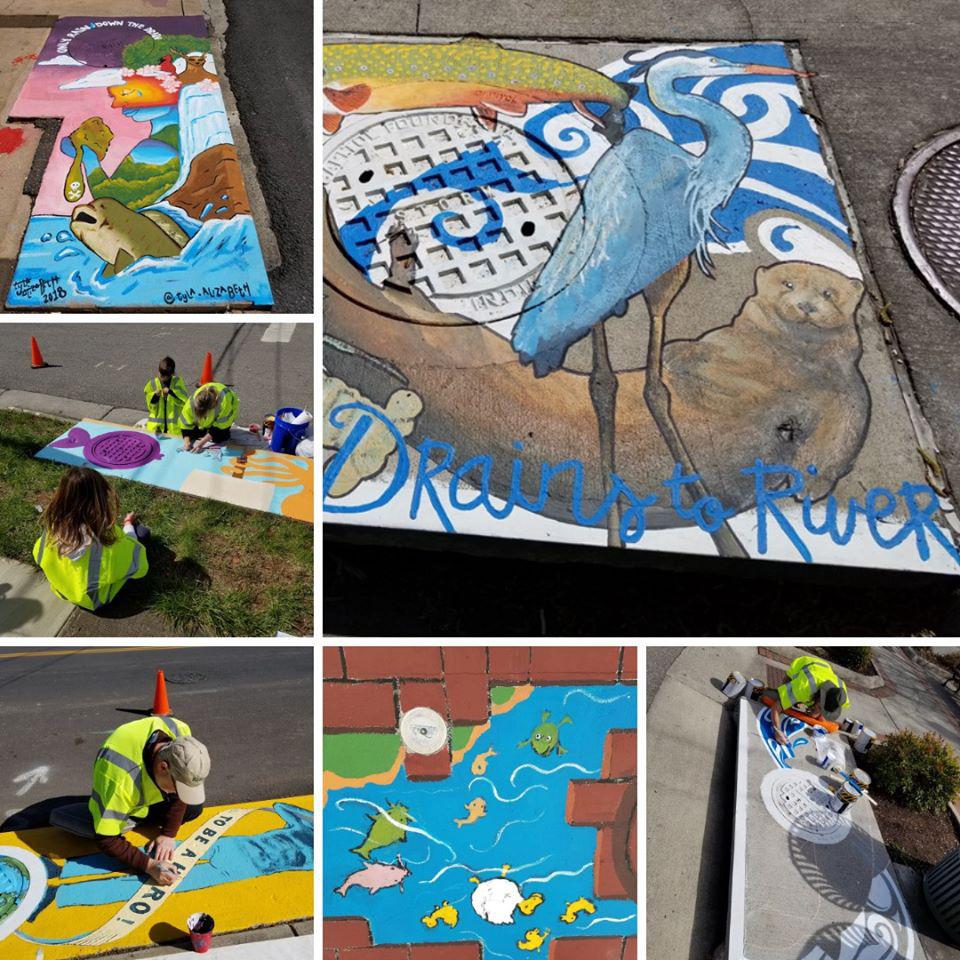
Creating Inlet Art will not only draw attention to storm drains “hidden” within the City sidewalks but will also raise awareness about storm water pollution. Few people realize that litter, trash, and other pollution sources like sediment, bacteria, oils, and yard waste left on City streets wash untreated into the nearest creek, stream, or the

Jamil Preston sells water & other treats daily on 10th street. Principal Duncan of Round Hill Elem. stopped by to congratulate this rising 4th grader. She also bought some snow ice. Great job Jamil. @RoanokeSchools
Roanoke River. Raising awareness through visual expression has been successfully implemented in other communities, and the City believes adding to the project will be an effective next step in preventing stormwater pollution from entering Roanoke’s waterways.
More information can be found at https://www.roanokeva. gov/2290/Stormdrain-Inlet-Art, or you may contact Danielle DeHart, Environmental Specialist with the Stormwater Division, at (540) 8535915 or send an email to danielle. dehart@roanokeva.gov.
There’s no place quite like the Harrison Museum of African American Culture! Their commitment to preserving and celebrating African American history and art, for all who pass though their doors, is simply inspiring! @centerinthesquare

Does your teen need some extra cash? Babysitting is a great job for fall or winter break, and we have just the thing to help make it happen. This course will cover basic first aid and provide knowledge on care, safety, emergency preparedness, activity selection, and how to approach a variety of behaviors. At the end of this course participants will revive a certificate for babysitter training and first aid.
Roanoke CPR is providing first aid training and certification. Red Cross will provide

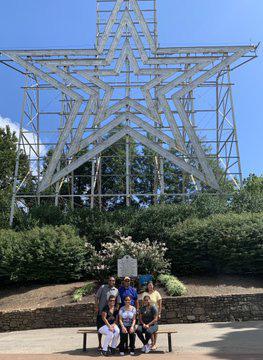
What do you call a weekend in Roanoke with family and friends? I call it priceless.
@VerlettaWhite
course material for babysitter training and certification.
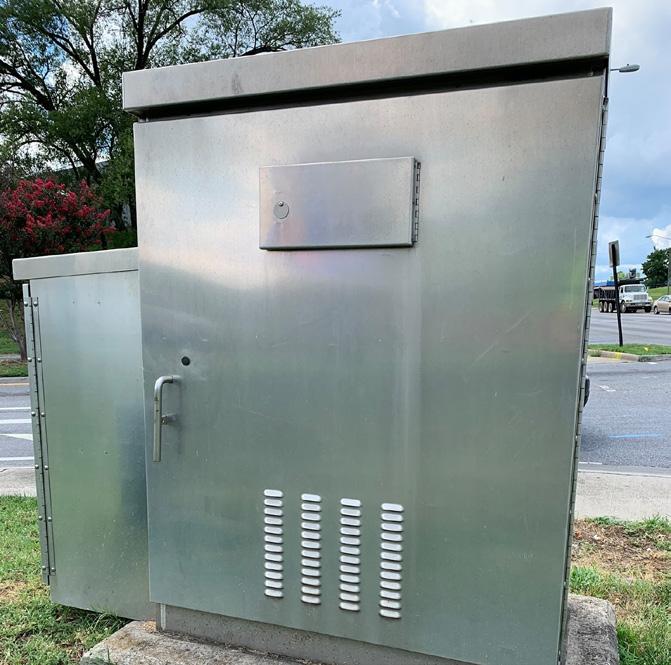
Calling area artists! The City of Roanoke invites you to help us spread the word about pedestrian safety through art! The City of Roanoke launched the Color Your Corner Contest and is now seeking five Roanoke artists of any age to help design artwork to support the Roanoke Pedestrian Safety Campaign.
Babysitter Training, Hosted by PLAY Roanoke
When: Saturday, September 26, 2020 Time: 10 am - 5 pm
Location: Fishburn Mansion, 714 13th St SW, Roanoke, VA
Register at PlayRoanoke.com. Registration closes September 18.
Interested residents will submit a description and a concept sketch online. Five artists will be selected by a Roanoke Arts Commission Panel. Each will receive a $200 stipend, and all installation costs will be covered by the City. The winning art will be placed on a vinyl wrap and paid for and installed by the City. Submit your artwork by September 30 for the chance to have it featured on one of five signal cabinets! For more information, visit planroanoke.org/PedestrianSafety.
The City of Roanoke has developed a task force to identify areas that Coronavirus Relief Fund monies needed to be spent in our community. Recovery Funds are available to cover expenses incurred during and directly related to the COVID-19 pandemic for nonprofit organizations, mental health/substance abuse providers and nonprofit food
banks/food pantries/food delivery services.
If you have any questions, please contact the City of Roanoke Department Human Services at humanservices@roanokeva.gov or call (540) 853-2894. To apply for local CARES Act funding, visit roanokeva.gov.


Congratulations to Uyen Tran (RVGS/Fleming) and London Paige (RVGS/ Fleming) for their recent awards at the NAACP National ACT-SO competition! Uyen
won a Gold medal in the Chemistry/Biochemistry division. London won a Bronze medal in the Biology/MIcrobiology division. Both students represented the local Roanoke Branch NAACP at the National competition for these prestigious awards. @RVGSLabRats

You do not have to list a reason nor do you have to apply for a ballot. Visit 317 Kimball Avenue, Roanoke VA 24016 during September 18-October 31 Monday through Friday (as well as two saturdays on 10/24 and 10/31)
More information is available at elections.virginia.gov/casting-aballot/absentee-voting
September 6
Take time out of your busy life, and relax with a good book. Cozy up on a chair, indoors or out. It doesn’t matter where you read that book, as long as
you can do so in a comfortable manner. If you doze off along the way, we won’t tell anyone.
September 7 Labor Day
Dedicated in honor of the American worker, the first Labor Day was held celebrated in New York City on September 5, 1882 and was started by the Central Labor Union in New York City. In 1884, it was moved to the first Monday in September where it is celebrated today. Labor Day quickly became popular and one state after another voted it as a holiday. On June 28, 1894, the U.S. congress voted it a national holiday.
September 13
National Grandparent’s Day
National Grandparent’s Day originated in 1978. Then President Jimmy Carter declared it to be the first Sunday after Labor Day.

If you can, enjoy the day with them. That is the greatest gift they can receive from you. If you can’t see them, call them, or skype. When you call, make sure you have the time for a long conversation. Remember, grandparents will always ask about you first and listen intently to everything you have to say. They are never rushed or in a hurry. They are there just for you.
September 16
National Play-Doh Day
National Play-Doh Day celebrates a great childhood play toy. Invented in the mid 1950s, it has entertained millions of children, and allowed them to express their creativity, both at home and in the classroom. The invention was simple. A school teacher
wanted a safe modeling clay for her pre-schoolers. She asked her brother-in-law Joseph McVicker, who worked at a chemical company, to come up with something. The result was simple....flour, water and food coloring!
September 19
International Talk Like a Pirate Day
Ahoy, Matey! It’s a day just for fun, a day to let out the pirate in each of us. Practice up your “pirate-speak” in anticipation of this day. The conversation will be lively, and you don’t want to be left behind. Today, everyone will be talking the talk, if not walking the walk.


September 25
National Comic Book Day
Share a comic book with a friend today. We don’t know of anyone who doesn’t like a good comic book. Comic books tell an ongoing story, provide humor,
or offer intrigue and suspense. In all comic books, good eventually prevails over evil. So, comic books always make us feel good. Historically, local comic book and hobby shops provide free preview comics during this holiday.


by: Sarah Howell, Kids Soar
Three out of every five children grow up struggling to read. They fall behind in school making them more likely to drop out of high school, hold a low paying job, and live in poverty as an adult. Kids Soar, a local nonprofit, provides an after-school literacy program so that children can soar to success and break the cycle of poverty in their families and in our community. Reading gives every child the chance for a better future.
We all know that time with our children is precious. However, what if I told you that your time with them is even more valuable than you might have thought? Beginning at an early age, children are constantly learning. According to the Reading Foundation, “between birth to age 5, a child learns at a speed un-
matched the rest of his or her life! It is during these years – when more than 85 percent of a child’s brain is formed.” As your children are growing and developing at such a rapid rate, one of the best things you can do is read to them. “Reading builds brains, fostering early learning and creating connections in the brain that promote language, cognitive, and social and emotional development” (read20minutes.com).
However, reading isn’t just beneficial for kids under the age of 5. In fact, establishing a habit of reading each day can make a big difference in your child’s academic achievement. Let’s look at a couple of examples of what reading can do:
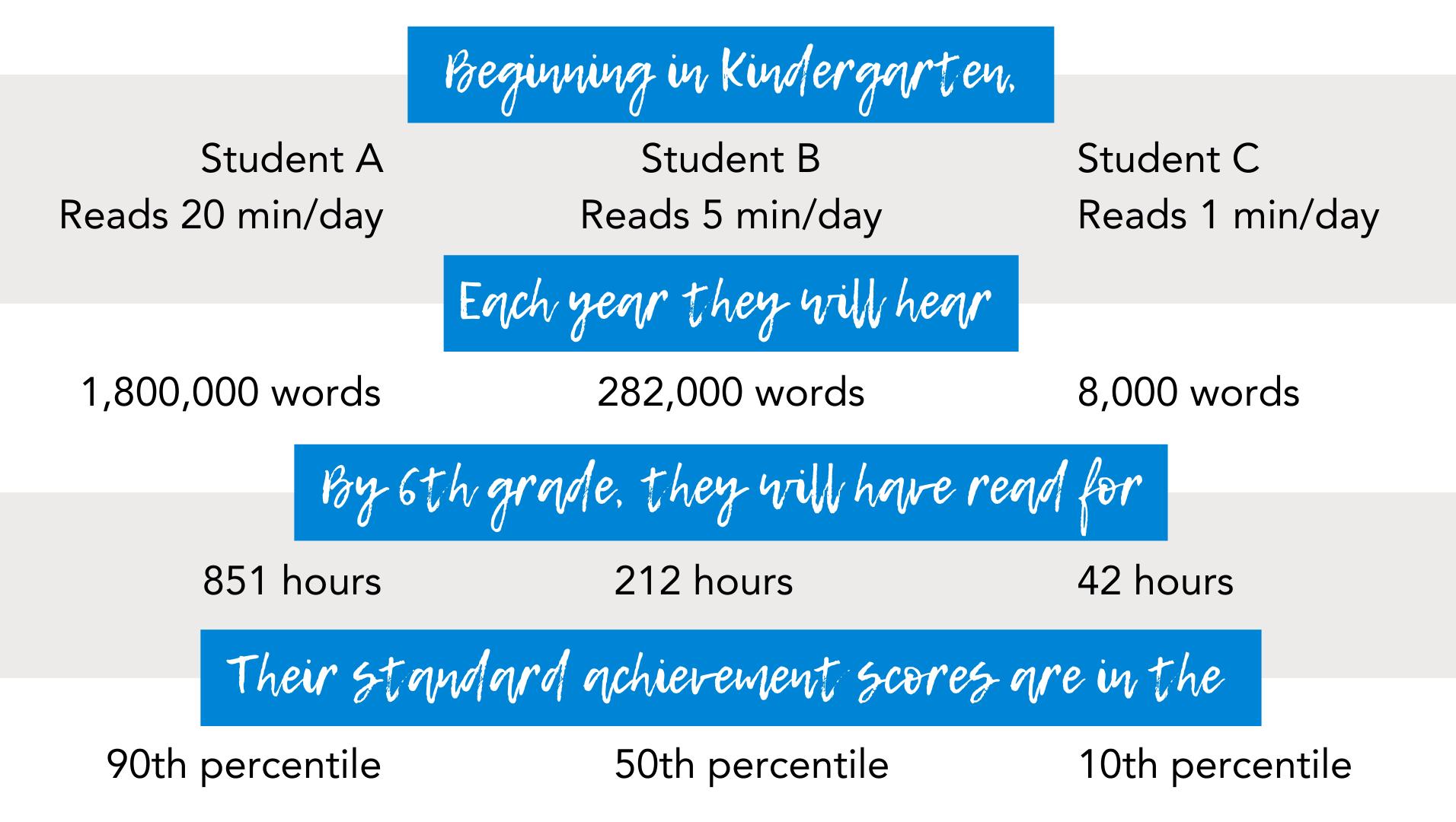
It’s amazing the difference in each of these areas between reading 20 minutes a day versus reading just 5 minutes a day. Developing this habit in your child will require time, effort, and discipline from you. You will need to set reminders each day to help you remember when it’s time for them to read. If your child is younger, then you will have to be the one doing the reading. But, as they get older, and as you have helped them develop the skill to sit still for 20 minutes and read, they will be able to become more self-sufficient. Put in the work at the beginning and you (and your child) will be able to reap great rewards!
Here are some helpful ways you can promote a habit of reading in your family:
1- Start out each day with reading. If you (or your children) are early risers, make reading a part of your morning. Set aside 20 minutes to read with your children at the breakfast table, or before you even get out of bed. If your children are able to read by themselves, they can read while eating breakfast or on the drive to school. This is a great way to get their mind going and their day started.
2- End your day with reading. There’s nothing like a good bedtime story. You can read several books with your younger children before they get in bed, or you can read several chapters of a longer story together with your older children each evening. Once you get in the habit of reading daily, you will find yourself looking forward to that time with your children.
3- Find stories or topics your children are interested in. If you have children who are able to read on their own, it might be a battle getting them to sit down and read by themselves. See if you can find books that go hand in hand with their interests. Does your child like to play with toy horses? Find books about horses. Is your child fascinated by insects? Find books about insects. There are so many books out there, you’ll be able to find one to match any interest.
4- Read aloud to your children. Having multiple children at different ages and reading levels shouldn’t mean you always have to carve out time to read with each one individually. Find a book that might interest several of your children and read it aloud, or have your oldest read aloud to the whole family. Not only will this benefit all your children, but it also creates a fun, family event and memories that will last a lifetime.
5- Reward your children for reading. Make reading fun! Give them small rewards or prizes each time they finish a book. Maybe they get to choose what to eat for dinner that night. Maybe they get to pick out a toy next time you’re at the store. You can decide! If your child is reading larger books that take a longer time to finish, make the prize a little bigger. If you are reading short books and finish one or two each day, let them get a prize at the end of each week. Creating an environment that rewards reading will help your child learn to love reading.
6- Look for summer or school year reading programs. It’s not hard to find a summer reading program at a church or library that encourages children to read and offers prizes when they meet certain benchmarks. Check with your child’s school library and see if they offer any reading programs throughout the school year. These programs offer motivation through prizes and competition (even if the competition is just against themself.) Look for other fun ways to motivate your child to continue reading.
In an effort to help encourage children in the Roanoke Valley to develop a habit of reading, Kids Soar developed its Book Buddy program. Previously vetted volunteers are matched up with each child who signs up and they read together over the phone one day a week for at least 20 minutes. Sometimes you just need a break; sometimes your child does better reading with an adult who isn’t you. Whatever the reason, this program is for you. This free program is dedicated to helping every child develop the skills needed to succeed in school and create in each child a love for reading. Any child can sign up for this program, even if they don’t participate in our after-school literacy program. You can sign your child up at: kidsoar.org/book-buddy
If you’d like more information about Kids Soar, you can visit: kidsoar.org. There you will find information about our program as well as volunteer and donation opportunities.
“I have a passion for teaching kids to become readers, to become comfortable with a book, not daunted. Books shouldn’t be daunting, they should be funny, exciting and wonderful; and learning to be a reader gives a terrific advantage.” - Roald Dahl





Let’s go on an
Raphine, Virginia
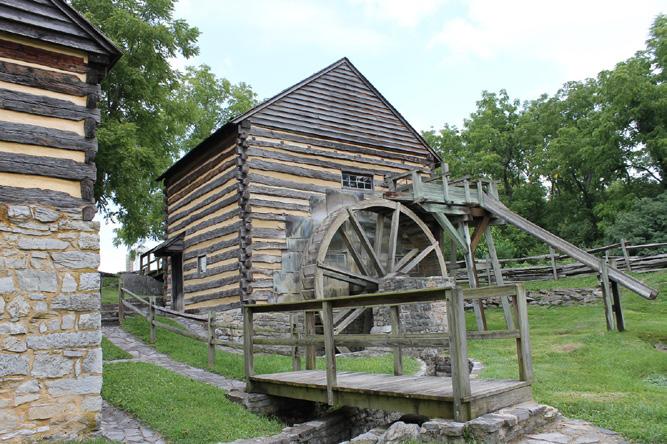
Heading north along the beautiful Blue Ridge for an hour or so brings you to a scenic and historic landmark: the McCormick Farm, located just off I-81 near Raphine, Virginia. Still farmland today, this is the land which nearly 200 years ago belonged to Cyrus McCormick, entrepreneur, inventor, and one of the fathers of modern agriculture. Eight original buildings from the early 1800s still stand on the 620 acre property, including a grist mill, workshop, and farmhouse. Born on this farm, Cyrus McCormick designed and built his original mechanical reaper here in 1831 at only twenty-two years of age, and successfully demonstrated it on farmland nearby. In the years and decades that followed, he (in partnership with his brothers) continued to refine and improve his design. Initially each of his reapers was built by hand in the workshop still standing next to the grist mill. Eventually, as business boomed, McCormick’s reapers went into mass production, and McCormick formed what would become the International Harvester company. McCor-
mick’s breakthroughs increased farmers’ productivity twentyfold in a few short years, and sparked an agricultural revolution worldwide.
The mill and workshop house a small free museum brimming with historical artifacts, including miniature models of McCormick reapers. Due to Covid concerns, the buildings are currently closed; however, the property is still an excellent place to visit. The neatly kept grounds are a perfect picnic area, and the well-preserved building exteriors, mill wheel, creek, and pond are fascinating to explore. Just across the road, the half-mile Marl Creek Interpretive Trail winds along the creek to the original mill pond and features many informative signposts about nature and agriculture. The peace and beauty of the farmland framed by the Blue Ridge mountains makes this a restful place to enjoy nature and history.
The property has been designated as a National Historic Landmark as well as a state landmark. After remaining in the McCormick family for well over 100 years, the farm was donated to Virginia Tech, which continues to operate it as an agricultural research facility as well as maintain the grounds.

New Castle, Virginia
There are quite a few limitations on adventuring for young families. You need an activity that’s not too challenging but not too boring… something that requires a bit of effort but plenty of reward. You need to build young characters without losing adult sanity. Just such an adventure awaits at Hanging Rock Overlook.
Hanging Rock Overlook is located about an hour northwest of Roanoke on Rt 311, between New Castle and Paint Bank, at the top of Pott’s Mountain. Admittedly, one of the character-building parts of this adventure is the drive to get there. It’s a beautiful but long and winding country drive, and when you finally reach the top of Pott’s Mountain, your drive is far from over. At the sharp bend at the mountain’s summit, Potts Mountain Road (Forest Road 177) bears off to the right. You need to follow this gravel/dirt road for 3.5 miles to reach the trailhead. Every time we’ve traversed this forest road, there’s been a new adven-
ture in the form of fallen brush, puddles, or washouts. However, we have successfully done it several times – in a Toyota sedan, at that.
But once you get there, good things are in store. From the parking area, an easy, level trail runs half a mile through woods where we’ve seen interesting flowers, salamanders, and snakes at various times. (The informational sign warns of bear, which we’ve never seen.) Before long, the woods give way to a rocky outcrop, and you step out to see this before you:
We’ve visited several times at different seasons, and this panoramic view still takes our breath away every time. You can see for miles south, east, and west.
Many people who have visited Hanging Rock believe this view surpasses McAfee’s Knob. And yet, buried deep within Shawver’s Wilderness Area, Hanging Rock is still not widely known. This means that you will likely enjoy most of the hike in peaceful solitude and you can linger at the summit. Unless, of course, you have family members who want to find a way down to the bottom of the outcrop. Then you may have to interrupt your meditation for a few minutes of
Cyrus McCormick Farm 128 McCormick Farm Circle, Raphine, VA
Time from Roanoke: 1 – 1.25 hr
Activity Options: Trails, Pond, Picnic Area, Museum (museum currently closed)
Nearby Food: Edelweiss German Restaurant
Nearby Attractions: Frontier Culture Museum (Staunton), Natural Bridge, Virginia Safari Park
crawling and scrambling.
We have found Hanging Rock to be an escape from the stress of normal life into the peace, vastness and beauty of the wilderness. In addition to the stress you’ll shed, you’ll also drop at least ten to fifteen degrees on the trip up from the Roanoke valley… a real benefit during the sweltering summer months.


Hanging Rock Overlook, Potts Mountain Rd, New Castle, VA
Time from Roanoke: 1 – 1.25 hr
Activity Options: Trails, Picnicking, beautiful views
Nearby Food: Paint Bank General Store, Swinging Bridge Restaurant
Nearby Attractions: Paint Bank Fish Hatchery, Paint Bank General Store and grounds
Treat yourself and your family to this hidden gem of a hike! Also, to make the drive worthwhile, drop by Paint Bank, only 10 minutes down the other side of Pott’s Mountain. The Fish Hatchery is an interesting stop for young ones, the food and decor at the Swinging Bridge Restaurant are kid-friendly, and the General Store and grounds are fun to explore. Be sure to pick up some 15 cent stick candy for the ride home!






By Lauren Pittard
Virtual learning is tough. Personally, I have been completing my doctorate online while working full-time, and I really have to stay committed to my own mini-deadlines, or else I become overwhelmed. Now consider working full time and helping a child navigate online virtual learning ... simultaneously?? Talk about being overstimulated!
The good news is occupational therapists are able to help navigate and balance the many things that occupy your family’s time. This means I have some strategies for you to consider during your virtual learning endeavors. There are various ways to help maximize the learning environment, but first, take a deep breath and acknowledge that you are not alone in this major change.
Your child’s seat is the foundation of their learning space. When you are positioned better, your body is prepared to focus better. When sitting in a chair at a table, keep an eye out for the typical functional seated position, also known as the 90-90-90 rule, meaning 90-degree bends at each of the hips, knees, and ankles. You can create a functional seated position by having your child sit up tall with their back against the back of the chair, elbows even with the desk surface (they should not have to lift up their arms or slouch down to reach the tabletop), thighs supported on the chair with a small gap between the edge of the seat and their knees, and feet are supported on the floor.
However, your kitchen table may not have child-sized seats designed for sitting in for several hours (with movement breaks provided, of course). To help create the optimal position, you can add pillows behind your child’s back and/or underneath your child’s bottom so their back and knees are situated correctly. You can even DIY a lumbar roll to help support the natural curve of the spine. Rolling up a towel is often recommended, but that can unroll or squish easily and create a distraction. If you feel like you are readjusting a towel roll too much, try making a lumbar roll from a single-wrapped roll of paper towels (no need for disproportionate giant rolls here). With your child’s back against the back of the chair or pillow, have them lean over then place the DIY lumbar roll on the small of their back. If their feet do not reach the floor, add a stool or book to support their feet. Creating a functional seated position is very important. Without proper positioning, your child could experience inattention, a case of the wiggles, boredom, discomfort, or even long-term pain.
Alternative seating is an option that can help facilitate healthy and functional seated positions without a traditional chair and table combo. Lying belly-down on the floor can give your child’s lower back a break
while strengthening their neck. Standing at a table can also act as a functional position for virtual work. When standing, just remember that elbows are comfortably resting on the surface - no shrugged shoulders, no slouching. Sometimes a slant board can help prevent slouching and reduce strain on the eyes and neck during table-top tasks. If you don’t want to spend money on a slant board, you can try a sturdy 3” binder with a chip clip hot glued in the middle of the highest part of the slant.
Does your child need a little extra motivation to stay focused? No worries, there is an infinite number of seating modifications! Wiggle cushions are a fun way to provide a little extra movement. Let me give you a pro tip: do NOT inflate the wiggle cushion all the way; too much air could create a bouncy situation and increase distractions. Also, if it’s overinflated, your child’s muscles may be working too hard to stay balanced, which prevents them from focusing on their work. A little bit of air can make a level-surfaced wiggle cushion to give your child enough wiggle to rock sideto-side, allowing them to get their muscles working just enough to be attentive in class. If your child has a standing desk, you can even stand on the level-surfaced wiggle cushion.
A weighted lap buddy can be made from a tube sock and a big ol’ bag of dried beans. Pour the beans in and tie (or sew) the top closed -- tada! A weighted lap buddy! Your son or daughter could design their own weighted lap buddy with a Sharpie. The extra weight can help the body calm and it gives the opportunity to fidget. Speaking of fidgets, keep some nearby! A few of my favorites include a Tangle fidget, an infinity cube, a silicone bracelet, and a squishy, unfrozen gel ice pack. Fidgets are enough to keep the hands and mind engaged, without causing a distraction. If the fidget becomes a distraction for your child or their siblings/ pod partners, then it is not the right choice for a fidget. Try to find fidgets that are quiet and can easily fit in your child’s hand. For fidgety feet, you can try using an oldfashioned wooden foot massager to provide extra sensory input and keep those feet on the floor.
You can limit visual distractions by limiting the things your child sees. You may want to consider having your child sit in a desk that faces the wall while they work. Alternatively, you can create visual barriers using a tripod board or a room divider so those eyes can keep gravitating back to the assignment. Earplugs or noise-canceling headphones can prevent a child from getting distracted by household noises. This will help limit distractions if you
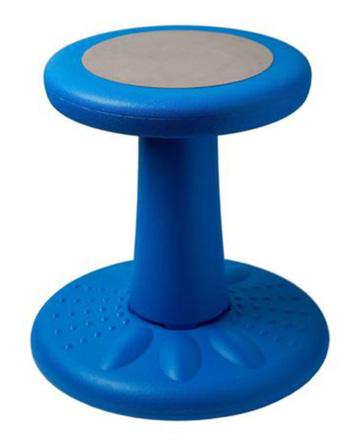
Studico’s Active Chair $55 • Activechairs.com
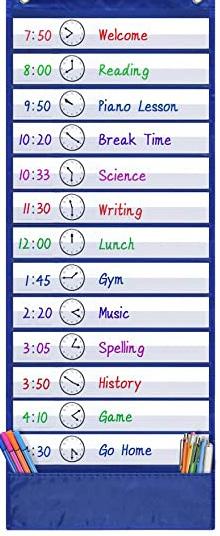
This kids wobble chair keeps children and teens in motion, engaging their stomach and back muscles, working their legs and arms...almost as if they were running around the yard! Chairs come in a wide variety of colors and sizes for ages 3-16+. VNOM’s Dry Erase Overthe-Door Pocket Schedule $13 • Amazon. com Keeping track of classes, video conferences, assignments and chores can be overwhelming. This schedule allows your family to have visual cues to remind them of which class or assignment everyone should be working on. With the customizable cards you can include chores, meal plans, jobs and sport schedules as well.
need to make any business calls or if their sibling needs to read things out loud to learn better. Headphones will be helpful when your child is participating in a virtual meeting with their teacher and listening to assignments on their computer.
Limit distractions by preventing distractions. Have you noticed a trend of when your child gets frustrated? Try taking a movement break and/or having a snack as a way to hit the “refresh” button before the hardest tasks. You could download the “Go Noodle” app, which has some fun brain breaks that their teacher may have included in the classroom. Some movements that give a kid’s body a break from sitting include wheelbarrow walks, bear walks, crab walks, superman position, and stretching backward over a yoga ball or ottoman. It could also be great to include some quality family time by choosing a time to walk around the block. After all, adults need movement breaks too. Breaks aren’t just for movements, they can also help with your eyes. For every twenty minutes spent looking at a screen, your child should look 20 feet away for 20 seconds. You can include “break cards” in the workspace for you or your child to announce that it is a good time to move so they focus better upon returning to their desk.
Staying organized and making clear expectations for the day or week can help your family stay on task and prevent distractions. Keeping your school supplies organized in one area can help prevent you or your child from running to look for that one item you just had yesterday. I recommend a rolling cart or a school supplies caddy to store your paper, pencils, chargers, fidgets, break cards, etc.
For every two minutes of planning, you can save 10 minutes of time in the future (and even more time if you consider how many arguments and tantrums are prevented). Create a calendar of due dates and create a visual schedule each day of the expectations. The visual schedule can include words and/or pictures. My favorite visual schedules are on dry erase boards. However, you can also print one or draw/ write it out on paper and put the paper in a sheet protector so you can create a dry-erase checklist. You can even make a reusable visual schedule by drawing/writing tasks on index cards, pinning them to a surface, placing them into an empty tissue box when the task is complete, then putting them back up the next day.
Let’s face it, 2020 is weird. Don’t worry about the “normal” school schedule we have used for decades. When you are
creating your child’s schedule, take time to consider your own work schedule, the times of day your child performs their best, and their teacher’s deadlines. It is important to remember that every child is different so these ideas for a virtual learning home makeover may not be appropriate for your child’s individual needs and abilities. If you need extra support to create and/ or implement modifications, I am here for you. Please feel free to reach out. A free phone consultation may be all you need to help optimize your learning environment at home. If you have any other concerns, an occupational therapy evaluation may be beneficial to help incorporate sensory, motor, and/or environmental strategies into your routine so your family can live life to the fullest.
Lauren Pittard, MSOT, OTR/L, is a local pediatric occupational therapist. She is the proud owner of Kidable Therapy LLC, where OT services are provided in the comfort of your home, and an enthusiastic co-host for Grow Outside, a nature-based day camp for kids of all abilities. Learn more by checking out www.kidabletherapy.com or bit.ly/ growoutsidecamp. You can also contact her directly at Lauren@kidabletherapy.com.

By Dr. Scott Edmonds, chief eye care officer, UnitedHealthcare
September marks back-to-school season and Children’s Eye Health and Safety Month, an ideal time to get your child’s eyes checked and focus on healthy vision habits.
This takes on added importance given the COVID-19 pandemic, which has prompted many people to spend more time on digital devices and required a move to distance learning for millions of students nationwide, including in the Roanoke Valley. In fact, children now spend an average of 13 hours per day on digital devices, potentially contributing to digital eye strain and increasing the risk of nearsightedness among young people.
Children may be especially at risk, as their still-developing eyes generally allow for more high-energy blue light to reach their retinas. Additionally, children may hold devices closer to their face, leading to a
higher amount of potentially harmful blue light exposure.
Good eye health is important for everyone and especially for students, in part because 80% of what children learn is through their eyes. With that in mind, here are three eye health tips to consider as part of back-toschool season:
Reduce the risk of digital eye strain: Digital eye strain may be caused by prolonged use of computers, smartphones or tablets, potentially causing symptoms such as sore, tired, watery or dry eyes, headache, or sore neck, shoulder or back. To help reduce the risk, encourage your child to practice healthy vision habits by keeping computer screens at least 30 inches away from their eyes; resting their eyes every 20 minutes; and blinking frequently to avoid dry eyes.
Encourage your child to practice healthy vision habits by keeping computer screens at least 30 inches away from their eyes
Practice the 20/20/20 rule: every 20 minutes, take 20 seconds and look at something 20 feet away. Getting outside and away from digital screens may also reduce the risk of nearsightedness, which affects 41% of Americans – up from 25% in 1970. Also, look for digital devices that include blue-light blocking technology or obtain glasses with premium anti-reflective coating, which mayhelp prevent potentially harmful reflective glare and reduce the risk of digital eye strain.
Look for warning signs of eye issues: The inability to see clearly may affect a child’s physical, emotional and social development, which in turn may affect academic and athletic performance and, ultimately, self-esteem. Unfortunately, sometimes children may not be aware and
won’t complain if their vision isn’t normal, so it’s important to look for possible signs of vision problems.
Red flags may include squinting while reading or watching television; difficulty hitting or catching a ball while playing sports; or issues watching 3D movies such as discomfort or dizziness. These potential warning signs may indicate an underlying vision problem that might require glasses or other treatments from an eye care professional.
Get a comprehensive eye exam:
The American Optometric Association recommends that a child’s first comprehensive eye exam should occur between 6 months and 12 months, again at age 3 and before entering school at
age 5 or 6. It’s important to remember that a school’s vision screening is not a substitute for a comprehensive eye exam. Vision screenings at school usually focus on measuring acuity levels and might miss common conditions such as poor eye alignment, focusing problems and farsightedness. Plus, a comprehensive eye exam may uncover other health conditions not usually associated with the eyes, including diabetes and juvenile rheumatoid arthritis.
As families plan back-to-school health and safety strategies, including immunizations and the flu vaccine, considering these tips may help make sure your child is ready to learn – either in person or remotely.
Remember: a public school’s vision screening is not a substitute for a comprehensive eye exam


At today’s Carilion, you have more choices than ever before to get the care you need.
From virtual visits and mail-order prescriptions to online registration and 24/7 MyChart messaging, you can now get the same expert medical care you expect from Carilion without leaving home.
And when you do visit our facilities, we are right here by your side—together with the screening, testing and safety protocols we’ve developed to keep you and your care team safe.
As always, and like never before, you can count on Carilion to see you safely.

Encourage reading time for the entire family

Now that the kids are back in school - whether part time or virtually, they will spend a great deal of their day in front of a computer working on classwork. One of the most important things kids receive at school is the exposure to a library of books and the constant reinforcement of the importance of reading. Encouraging children and young adults to learn to love reading helps develop imagination, vocabulary, critical thinking skills and also helps to reduce stress. In this issue, we wanted to show you how to create a lovely, inviting reading nook in your own home - here are some pointers to get you started.
Establish a space
Maybe you have a space in your home you’ve never quite known what to do with - examples could include a space with an odd angle, under a dormer window, a wide hallway over a slanted ceiling, a random nook or big closet, a room that’s just rarely used - maybe even a window seat. Pick a spot that’s not in the middle of lots of everyday activity, but not so far away that smaller children will be too far out of sight.
The basics
Grab a comfy chair, or big throw pillow for seatingthat’s step one. Next, add a small table or stand and a lamp - and we’re almost there. It doesn’t take a lot to create the space, but now we want to make it inviting so everyone will want to use it.
Now let’s make it cozy
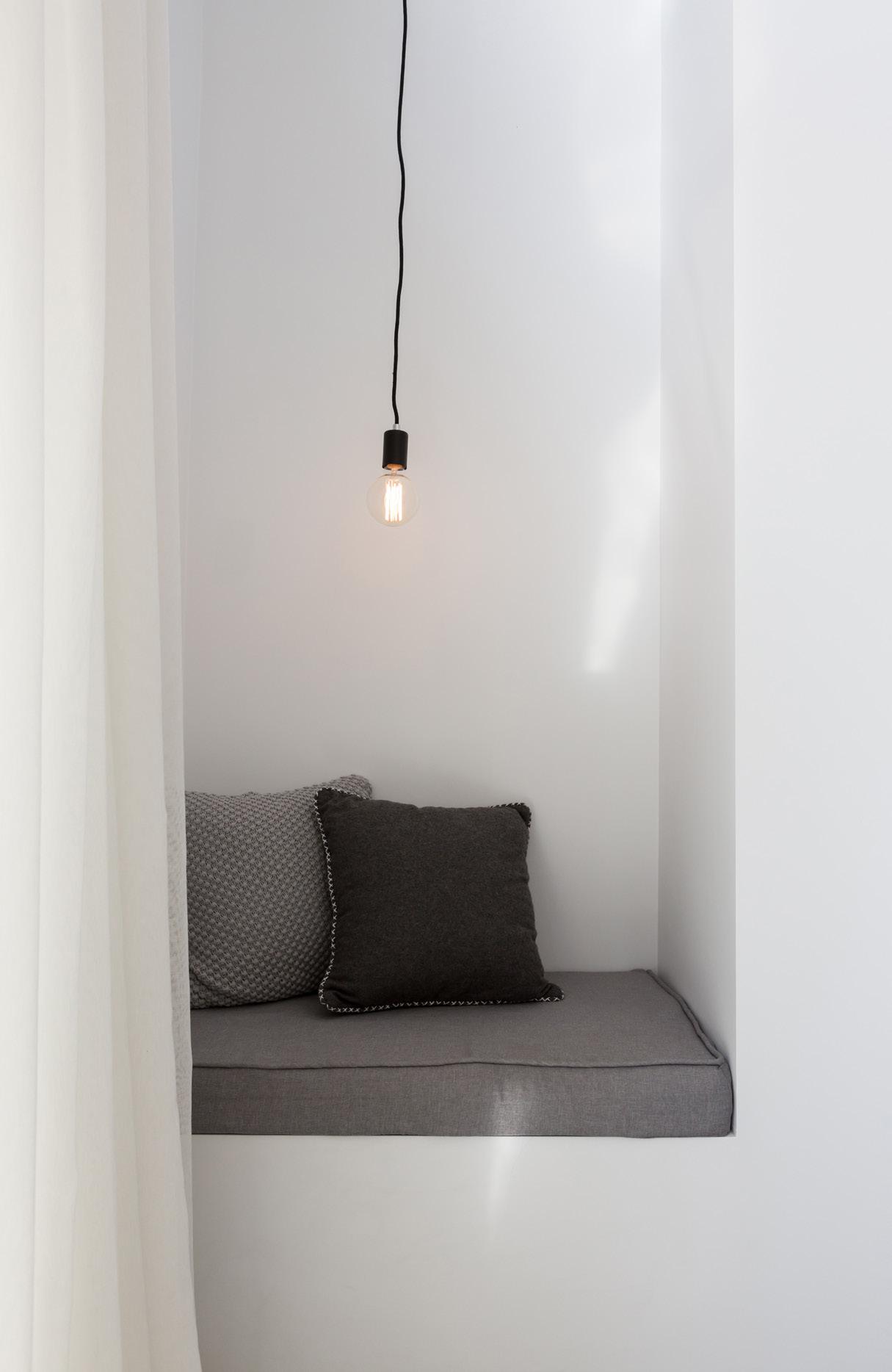
Add soft materials into the mix like a few throw pillows and a blanket - who doesn’t love to cozy up
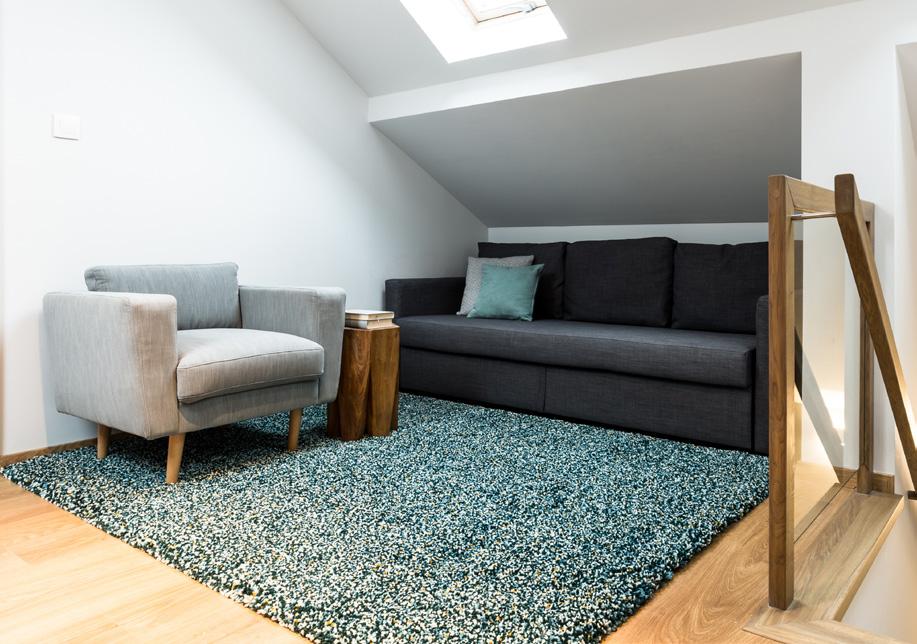

with a comfy pillow and blanket when reading? Many reading nooks ending up being napping areas, too! If space allows, you can add a small bookshelf for storage, or even stack a few books neatly under a small table.
If distractions are going to be a problem, you could consider a foldable decorative partition, or even a curtain for some separation and privacy.
For the final touches, add a scented candle, a coaster for drinks, a family photo or two and maybe a plant.
Finally, enjoy the space. Invite your little ones with you when you spend time reading. They’ll come to remember the time fondly and hopefully start their own love of books and reading.

By Sandra Gordon
Homework and headaches go together like macaroni and cheese, especially now that there seems to be so much to do early on. Cathy McFarland knows the frustration too well.
“When Maddie, my 8 year old, didn’t understand her math homework, she’d cry and get so upset she’d hyperventilate,” McFarland says. Nightly math meltdowns became the norm. “I finally decided math wasn’t worth ruining our relationship over. I can be the enforcer with piano practice, nightly reading, baths and bedtime, but I don’t need to be the math czar anymore.”
McFarland hired a tutor at $80 per hour.
Tutoring is certainly one (costly) answer. “A tutor can be helpful if your child needs personalized remedial help because she’s below grade level and the lessons are out of your league,” says Lisa Jacobson, chief executive of Inspirica, a global tutoring and test-prep firm. You might also consider hiring a tutor if you don’t have the time or energy to help with homework, it’s a hot button for you and your child or if your child wants to prepare for college-entrance tests.
Otherwise, it’s worth putting on your thinking cap and trying to tackle your child’s homework issues yourself. “Kids should be able to sit down, do their homework and get it done without fighting, whining, crying, begging or negotiating,” says Michael Maloney, author of Teach Your Children Well and director of QLC Learning Centers. Sound impossible? It might not be, especially if you try these smart strategies.
Get the big picture. To minimize resentment, understand why your child has homework. “It’s not just busy work,” says Michelle Albright, PhD, a psychologist who specializes in families and schools, to promote children’s physical, social and emotional health and wellbeing. Research shows homework is especially beneficial as a review before a unit test. It also helps kids practice concepts they learn in school, develop self-sufficiency and instill the idea that learning is a process that doesn’t end with the dismissal bell.
Develop a routine. Kids crave consistency, so make doing homework automatic by creating a routine that fits their personality. Serious students may prefer to do homework right after school. Other kids might need to burn off steam by running around or vegging in front of the TV or computer for 45 minutes (set a kitchen timer) before getting down to business. Whatever formula you choose, stick to it. You might need two homework routines— one for when your child comes right home from school and another for when he has after-school activities.
Choose a homework hub. Some kids work best in their bedrooms. Others like to do their homework in the kitchen while you’re making dinner. Anywhere is fine as long as there are no distractions. “Some kids do well with classical music in the background, but if you want to watch the evening news and your child likes to do homework at the kitchen counter, keep the TV off,” Albright says. If you have more than one child, see if they’ll do their homework simultaneously. They might motivate and even help each other.
Emphasize effort. Praise your kids when they complete their homework by saying things like, “You worked so hard! Good job!” rather than “You’re so smart!” Effortbased praise “teaches your child that if she tries hard, she will learn things,” says Helen Eckmann, Ed.D., co-author of Simple Principles to Excel at School. “Effort is what pays off, not brain power, self-confidence, or any other innate quality,” Eckmann says.
Strive for neat and complete. Studies show that when parents stay positive while assisting with their child’s homework, kids are more self-motivated and self-directed. That’s the goal: to have your child do her homework because she feel it’s important, not because you’re looking over her shoulder. How to get there? “Think of yourself as your child’s homework manager, not your child’s substitute teacher,” Albright says. “Your job is to see that homework gets done neatly and provide some support, not to edit your child’s homework or help him do it.” And keep in mind that if you get too involved, kids and teens can become resentful and shut down by not doing their assignments or turning them in, sabotaging their own success.
Let your child teach you. To help kids of all ages study for tests and quizzes, review by asking them to teach you about the subject they’re studying. You might say, for example, “Teach me about the Cold War.” “If your child can explain it to you, he really knows it,” Albright says. You’ll smarten up too. Our kids are learning interesting stuff!
Recognize your child’s motivation sweet spot. Some people work best 24 to 48 hours before a deadline. Others hunker down two to three days before something is due. How do you work best? How does your child? “It’s often very different,” Albright says. Viva la difference. “Observe your kids to get a sense of their motivation sweet spot in terms of timing,” she says. If your child is a last-minute kind of person but you’re not, so be it. Forcing your child to work on an assignment before he’s ready can derail motivation. “Assignments can take longer too,” Albright says.
Get busy yourself. If your kids have to do 20 minutes of reading daily, grab a book yourself and sit down next to them. It’s a nice way to model reading.
Keep your child’s teacher posted. Many teachers, especially in the elementary grades, have a policy about how long the homework they assign should take, such as 15 minutes per night. If your child’s
homework drags out much longer than it should, let the teacher know. She may be able to tell you where your child can take short cuts. “Not every aspect of homework deserves 100 percent effort,” Albright says.
Stay a step ahead. Resources, such as the Core Knowledge series: “What Your Preschooler Needs to Know,” which covers up to the sixth grade, can help you track the skills your child needs through elementary school. Knowing what’s down the road can help you build activities into a young child’s day that use the concepts he’ll be learning about. Counting change at the self-checkout, for example, can help teach addition; so can having your child add up the numbers on mailboxes when you’re out for a walk and penciling out the tip on your dinner tab. Playing word games can help teach spelling. If you’re worried about penmanship, have your child practice writing your grocery list or a letter to Grandma. And so on. The idea? By the time the subject is covered in school, your child will already be familiar with it.
Think of yourself as your child’s homework manager, not your child’s substitute teacher.
Cave Spring graduate learned as he honed his game as a youth
By Gene Marrano
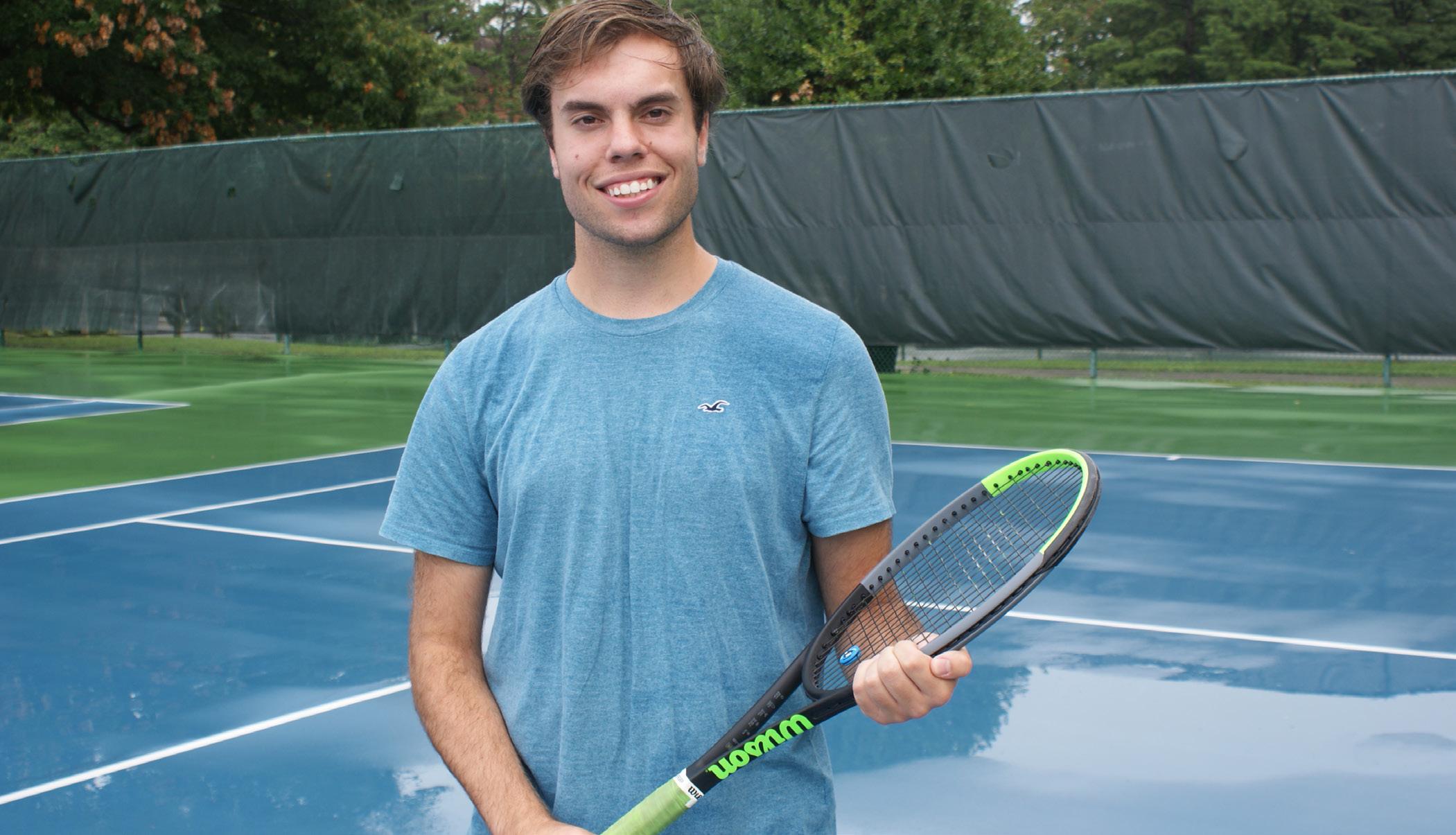
Lance Beheler is headed to Roanoke College this fall and plans to play tennis for the NCAA Division III school while pursing his studies. He’s already played team tennis for 7 years – all four years at Cave Spring High School and three before that in middle school. He was the number oneranked singles player for the Knights all four years in high school, and part of the number one-ranked doubles team as junior and senior. Doubles is “less nerve-wracking … and fun too,” although singles (playing one on one versus an opponent) is Beheler’s breadand-butter.
“They’re planning to have a spring season,” he says of his future Maroons squad, not sure if there will be any
practice sessions this Fall at Roanoke College due to COVID-19 safety precautions. Lance’s high school senior year on the courts was canceled after a few early scrimmages as schools went virtual.
His start in tennis? Beheler says it came in kindergarten and was also virtual – on the Nintendo Wii game.
“[After that] I wanted to play tennis.”
Lance first honed his skills at Sun Tennis in southwest Roanoke County and since 5th grade has taken lessons at Hunting Hills Country Club, where John Barker is the head pro. (You don’t have to be a HVCC member to take lessons there.)
“You have to be mentally strong and learn from mistakes – you can’t dwell
on them, you have to move on,” are some of the life takeaways Beheler has gleaned from tennis. “Sometimes when I was younger, I had a difficult time with that. I would beat myself up about a mistake.”
He recommends tennis as a great sport for parents to expose their young children to, also noting there is “no great strain on the body. You see a lot of older people playing; it’s a lifelong sport.” Beheler played baseball and basketball when he was younger but tennis “was much more enjoyable for me.” The sport is a family affair as well: his kid sister Josie, a year younger, was a member of Cave Spring High School’s state championship team as a freshman. “She probably started
around third grade.” (His father coaches baseball at Cave Spring.)
John Barker has been mentoring Beheler at Hunting Hills CC since the 5th grade: “he’s very coachable – and he’s right, when Lance was young, he had a temper. Not so much towards other players, he was too hard on himself. That was the hardest thing [to deal with]. He always had the talent – he’s a completely different person on the court [now].”
coordination necessary to truly become a top-notch tennis player was always there says Barker.
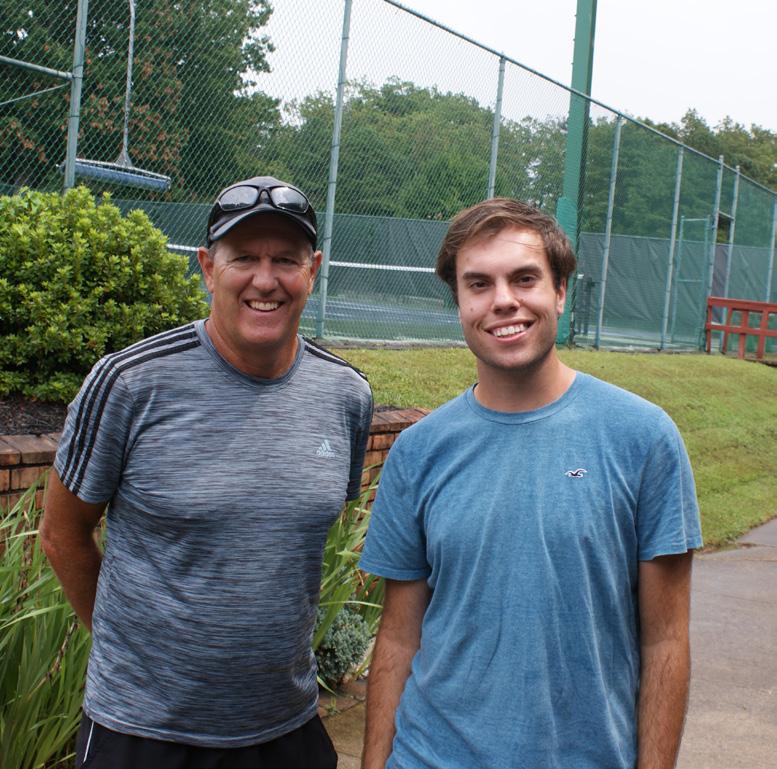
Barker had seen his young protégé meltdown a few times in matches before that growth started happening. The physical talent, the hand-eye
“The thing I worked on most with him was his mental attitude. He turned it around. Tennis [encompasses] a lot of things you have to deal with in life,” which Barker says includes, “making sure you have a routine each day so you can excel.” Lance concurs. “You kind of have to discipline yourself and learn from that – move to the next point and not think [about mistakes] in the back of your head.”
The United States Tennis Association has just restarted local tournament and league play in the Roanoke Valley,
which gives players of all ages more opportunities to hone their games. Local “junior bashes” at country clubs in the area also provide competition. Barker is coaching an 8-year-old girl now “that’s going to be exceptional.” Now says Barker about Beheler, “when he’s on the court you can’t tell if he’s winning or losing.” The proud coach even says Lance’s best playing days on the court may be ahead of him at Roanoke College. “He just keeps getting better and better.”
Lance Beheler urges parents who may have played when they were younger to introduce their children to the tennis racquet and local courts (there are plenty in area parks) if they are so inclined. “If you start at a younger age its always easier to get better as you move along.” NORTH CROSS SCHOOL was founded on the belief that a classroom is a concept, not a room. With small groups, teachers are inspired and empowered to curate lessons, not follow them. Children pursue their best in a community that supports and respects curiosity and innovation.







By Rachel Levine
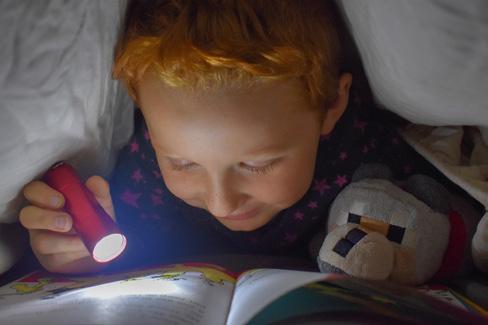
Reading your first chapter book is a transformative moment. You have worked hard learning your letter sounds, blending, and memorizing sight words, and now all your effort has paid off! Suddenly you have ownership of your reading. You can go to the J section of the library for the first time and find new books to explore. You can stay up late reading by flashlight and tell your parents about your new favorite book the next day. Becoming an independent reader is a satisfying step forward into the big beautiful world. Check out these fabulous early chapter books as your new reader spreads their wings!
The Mouse and the Motorcycle by
Beverly Cleary
Being a young mouse is dangerous, as Ralph’s mother is always reminding him. She wants Ralph to stay safe and close to home, but Ralph’s heart calls him toward adventure. Everything changes when Ralph meets a boy named Keith who owns a toy motorcycle. Keith and Ralph discover that Ralph can actually make the motorcycle run. Speed, freedom, and more than a few perilous capers await.

The Stories Julian Tells by Ann Carmeron
Julian and his little brother Huey are always getting into small troubles that feel big when you’re a kid. They secretly eat their mother’s homemade lemon pudding, plant a garden with cornstalks as tall as their house, debate pulling out loose teeth, and tell fantastic stories to each other that they wish were true. Their loving parents guide Julian and Huey on their way with good humor and compassion. This book is magic. The words flow like poetry while also perfectly capturing the sweet ups and downs of childhood.
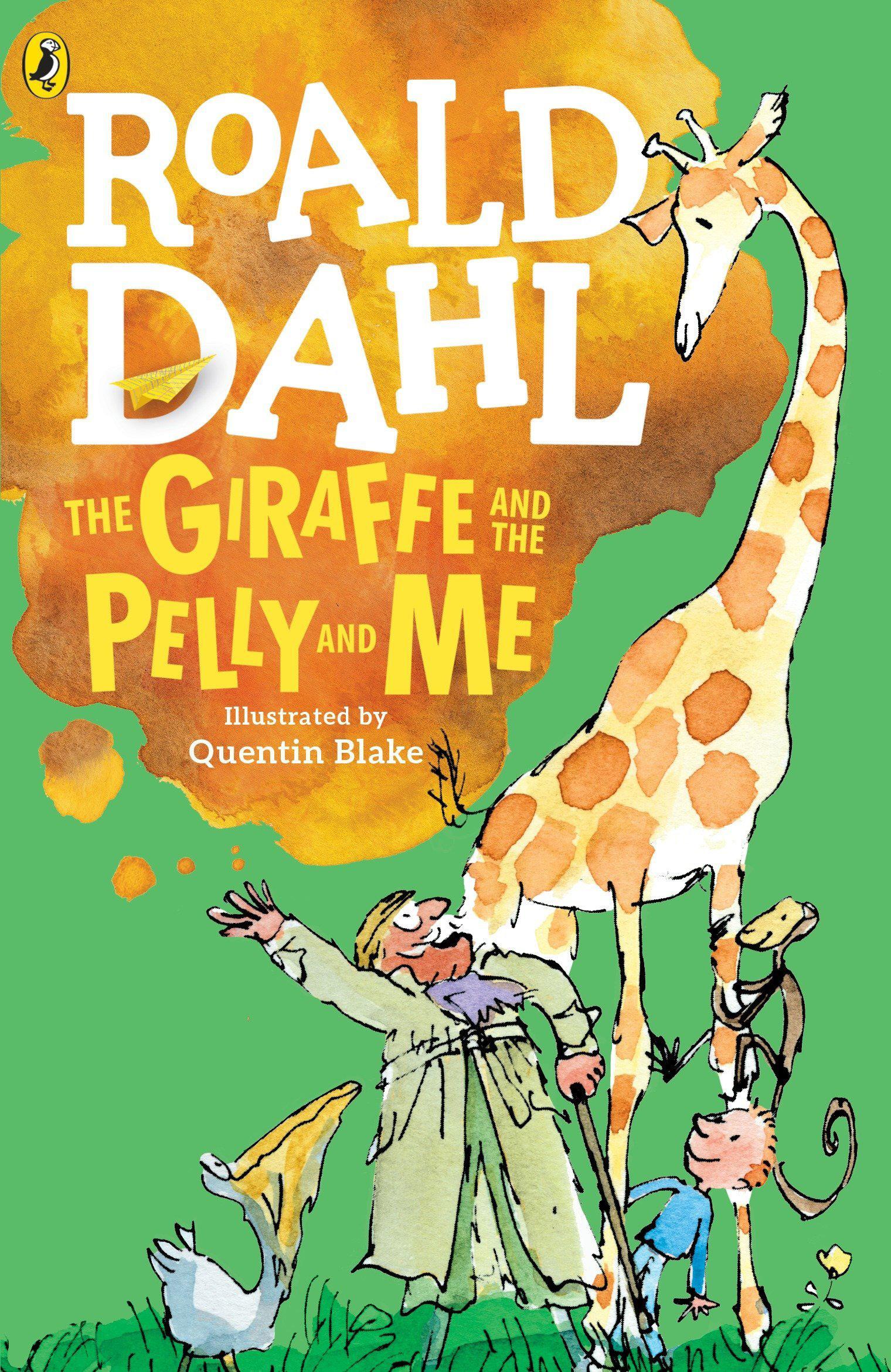

The Giraffe, and the Pelly, and Me by
Roald Dahl
Can you imagine if a talking and singing giraffe, pelican, and monkey all moved into your town? What would you do? For young Billy, the answer is obvious. He quickly befriends the singing menagerie and his life will never be the same. Readers should be prepared for mansions, opera singers, a Duke, jewel thieves, candy beyond your wildest dreams, and a little lesson about the power of teamwork!

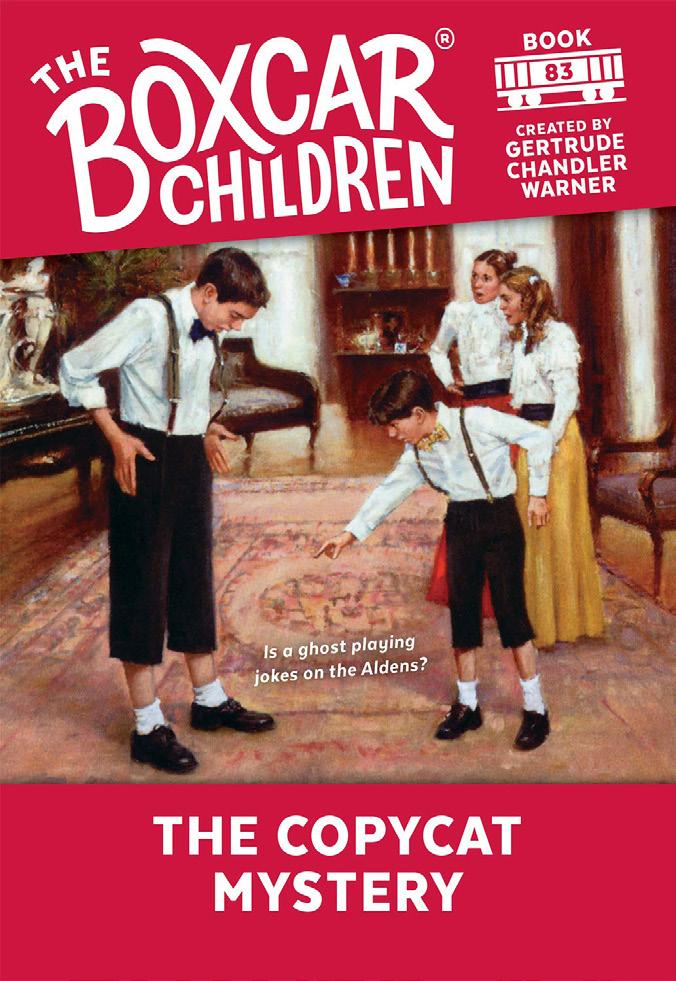
created by Gertrude Chandler Warner There are over 150 Boxcar Children books, but the original one is still the best. Every child should read it at least once! Henry, Jessie, Violet, and Benny are all alone in the world. The four siblings must find shelter, food, water, and all of life’s necessities on their own. They work together to make a cozy home in an abandoned train car, bathe in the creek, and enjoy simple meals of bread and milk. Their bravery and determination are inspiring and children love imagining that it is they themselves living in that homey train car.
by Mo Willems
Diva is an elegant little dog who lives a quiet life in Paris. One day she meets Flea, a cat-about-town without a home. Diva’s life is cozy and boring while Flea’s life is interesting but lonely. Their sweet friendship expands both of their horizons and together they find life to be much richer and fuller than before. Delightful illustrations enhance this charming tale of the two friends exploring Paris.







Sept 15 - Oct 9
This beautiful production is completely FREE & streamed via Broadway On Demand Join MMT’s mailing list for your FREE access code to watch the show! m i l l m o u
L E A R N M O R E !

A few dull or old pennies (pre-1983 works best)
1/4 cup white vinegar
Non-metal bowl or cup
Paper towel

1. Mix the salt and vinegar in the bowl.
2. Add the pennies to the mixture and leave them in for at least 10 seconds.
3. Pull the pennies out. What do you notice?
4. Place the pennies on a paper towel and leave them overnight.
Presented by:

5. Check your pennies in an hour, after two hours, and in the morning. What has happened? Try flipping your pennies over and looking at the paper towel beneath them. Is it green?


Try rinsing the pennies off before placing them on the paper towel to dry. Do they turn green if you rinse them?
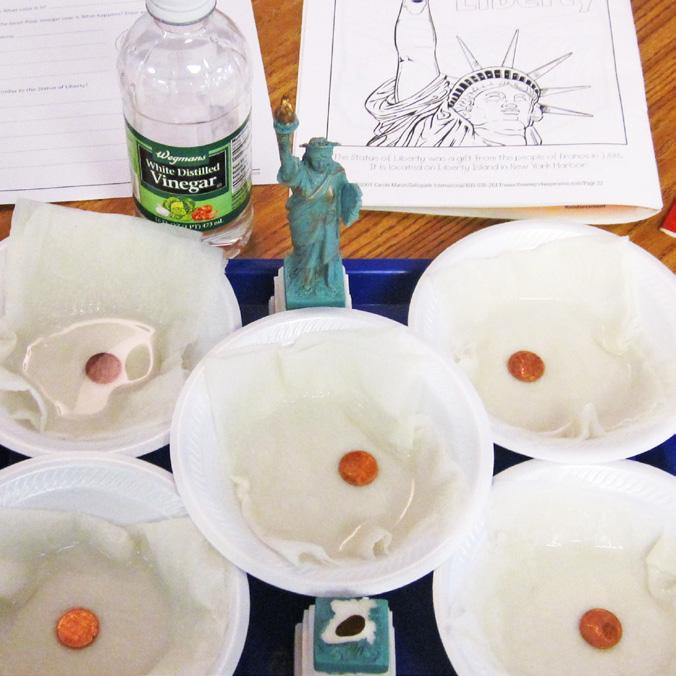
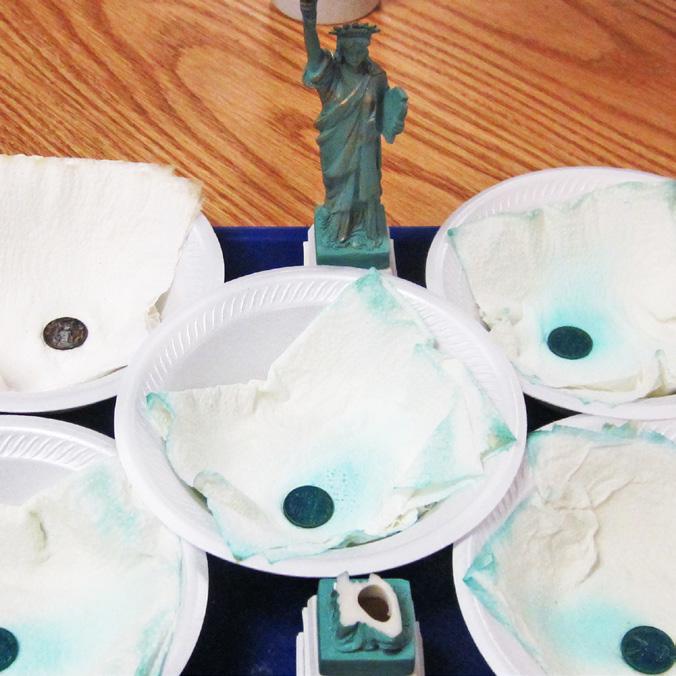
This is the same reaction that happened to the Statue of Liberty — when it was first built, the monument was covered in copper, but it turned green over time.
There is some very cool chemistry happening here. Pennies are coated in copper, and when copper mixes with oxygen in air, it becomes copper oxide. Copper oxide is what makes pennies look dull. When we mixed the pennies in the salt and vinegar, the copper oxide dissolved — copper oxide dissolves in acid, and vinegar is an acid. The salt helps make this happen even faster. When we left the pennies to dry, the copper reacted with air and salt to create malachite, which has a green color. This is the same reaction that happened to the Statue of Liberty — when it was first built, the monument was covered in copper, but it turned green over time. So why did we need to use pre-1983 pennies? Pennies made in 1982 or earlier have more copper than newer pennies, and so this reaction works better with older pennies.


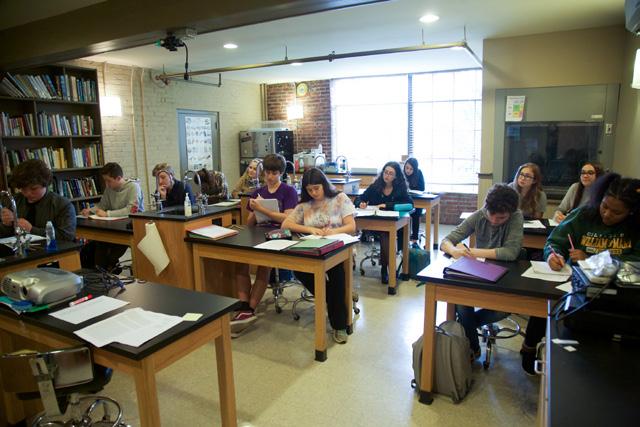
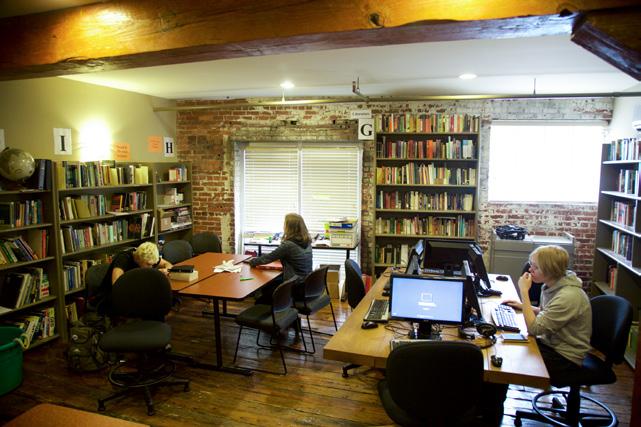
Community High offers…
• Small class sizes
• Highly qualified faculty
• Individualized attention
• College preparatory environment
• Unique, student-driven liberal arts curriculum
• Diverse arts offerings
• Affordable tuition and needbased financial aid
• Strong, close-knit community …and much more!
Schedule a visit today!

Bring the Taubman Museum of Art to you with this fun activity inspired by the exhibitions Celestial Centennial: The Art and Legacy of Dorothy Gillespie, on view through September 13 and Dorothy Gillespie: Still Enchanting Virginia’s Blue Ridge, on view through November 8.

Dorothy Gillespie is the most nationally recognized artist who was born in the Roanoke Valley. She was a painter and sculptor who had a vibrant artistic career and was known for her works with paper and later sculptures made from aluminum.

Image Credit: Dorothy Gillespie (American, 1920-2012), Royal Crest Remembered, 1990, Enamel on anodized aluminum, Radford University Art Museum, Gift of Richard and Doris Israel, 1995
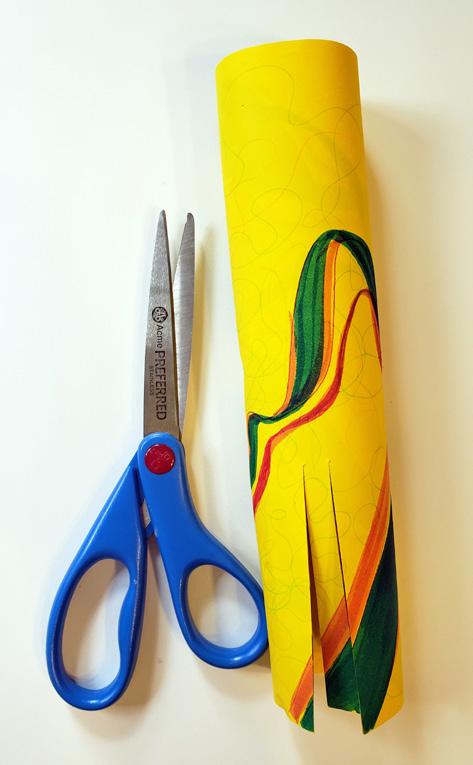
Materials Needed: Paper Coloring materials Scissors Glue stick or tape
1
2
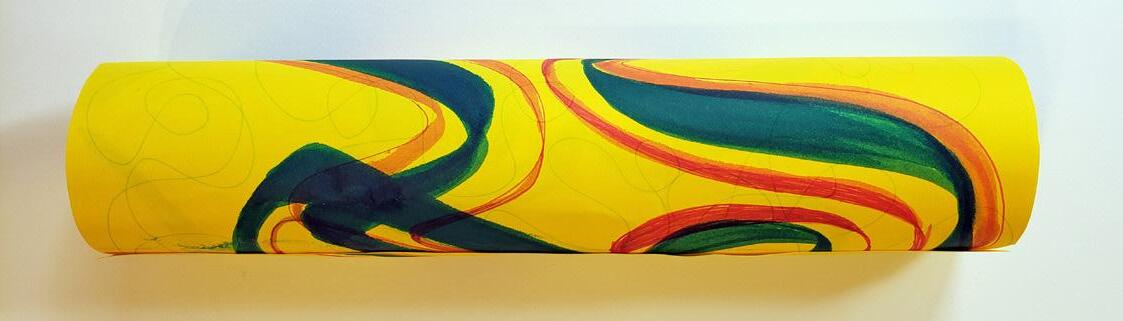
Decorate both sides of a sheet of paper. Try to mimic Dorothy’s ribbonlike lines, or create your own pattern.
Roll your paper into a tube and secure the end with tape or glue.

3
4
On one end of the tube, cut strips, stopping close to halfway down. Repeat on the other side, but make sure not to touch the cuts on the opposite end.
Carefully curl and twist the strips to create a starburst!