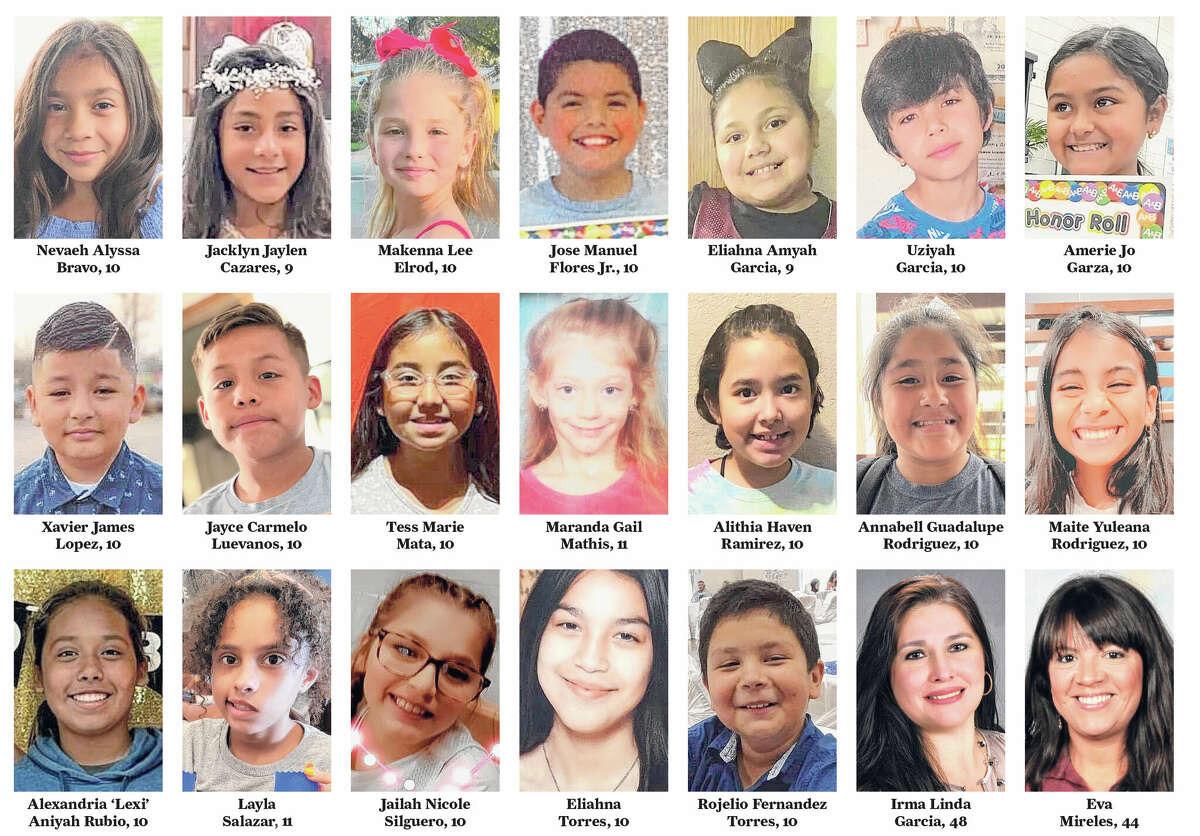
We tried to come up with something that was more powerful than this, but we simply can’t.
Be safe, hug your kids.
The Eagan Family
Andrea, Josh, Ani and Evie
Contact Us: P.O. Box 4484, Roanoke, VA 24015 540-251-1660
www.roanoke.family
Publishers
Josh & Andrea Eagan josh@virginiafamily.com
• Anika and Evelyn’s Parents
Creative Director
Tracy Fisher tracy@virginiafamily.com
• Charlotte and Evelyn’s Mom
Contributors
Kimberly Emory • Jamie Lober
Susan Baldani • Georgianne Vecellio
Rachel Levine • Jacqueline Moon • Grace Partin
We welcome reader comments, submissions, and the support of advertisers.
We reserve the right to refuse or edit any materials submitted to us as we deem inappropriate for our audience. Please include a self-addressed, stamped envelope with any submission to be returned. We do not accept responsibility for unsolicited materials.
Roanoke Valley Family and www.roanoke.family are published by MoFat Publishing. Roanoke Valley Family is published monthly. The views and the opinions expressed by the writers and advertisers do not necessarily represent those of Roanoke Valley Family, its staff, or its contributors. While multiple businesses, schools, and organizations are represented in our pages, and magazines are often distributed to students according to the policies and procedures of each school district, this is not a publication coordinated or endorsed by any public or private school district, nor is it a publication with any religious or political objectives. As a mass media outlet, it is our oath and responsibility to communicate with due diligence, through our content, the plurality of views and opinions reflected in our audience of Central and Southwest Virginia. Readers are strongly encouraged to verify information with programs and businesses directly. Parents are urged to thoroughly research any decisions involving their children. Copyright 2019 by MoFat Publishing, LLC. All rights reserved. All material, including artwork, advertisements, and editorials, may not be reproduced without the expressed written consent of the publisher.
Submit Your Ideas
Share your story ideas with us by emailing jeanne@virginiafamily.com
As the weather gets warmer, so do the opportunities for summer family fun! Roanoke’s local pools, family fun centers and libraries are now open!
Delta Dental Party in Elmwood: The Best Beach Party in the Valley Returns! Downtown Roanoke, Inc is excited to announce Party in Elmwood will return for 2022 bringing multiple weeks of outdoor, live music to Elmwood Park.
T-Rex Trail
Now-Aug 14 | Explore Park
Party In Elmwood
Every Thursday - 5:30-8:30 Elmwood Park
Join in every Thursday from 5:30pm to 8:30pm in Elmwood Park. Admission is $5 per person at the gate. Kids under 12 are free! Food and beverages served on-site. Lawn chairs welcome. No outside food, drinks, or coolers, please.
Visit the Party in Elmwood FBpage for updates due to weather.
City Market Saturday
Every Saturday - 11AM-2PM | Market Square
Movies in Longwood: Raya
DOWNTOWN ROANOKE UPCOMING EVENTS
2
9 June
Delta Dental Party in Elmwood
Q99 and Delta Dental Night at the best beach party in the valley! 5:30 pm - 8:30 pm, Elmwood Park
Member One City Market Saturday Local market vendors 11:00 am - 2:00 pm, Market Square
Delta Dental Party in Elmwood
The best beach party in the valley! 5:30 pm - 8:30 pm, Elmwood Park
Member One City Market Saturday
16 June
23 June
Delta Dental Party in Elmwood
Delta Dental Night at the best beach party in the valley! 5:30 pm - 8:30 pm, Elmwood Park
Member One City Market Saturday Father’s Day free coloring poster giveaway! 11:00 am - 2:00
Delta Dental Party in Elmwood
The best beach party in the valley! 5:30 pm - 8:30 pm, Elmwood Park
Overlooked Areas When Buying a Home
Tips Before Making an Offer
Buying a house can quickly turn into an emotional decision. You find a home that would be perfect for raising your young family – schools are close by, and your commute to work is only 10 minutes away. However, before you fall in love with the home and the excitement builds, you still have work to do.
Despite all your preparations, there are still some aspects of buying a home that are commonly overlooked. Unchecked, these areas could knock your budget off track or even decrease your future property value. Before you make an offer on your dream home, review the following four areas that are often missed by first-time homebuyers.
Property Taxes
It’s no secret that you’ll have to pay property taxes on your new home. However, what catches people off guard is how much they will be paying. While property tax laws will vary by state, when purchasing a home, the estimated property taxes are typically based on the current home’s last tax bill.
Example: Most states have restrictions on how much property taxes can increase each year (e.g., 3% annually). If the previous homeowner lived in the home for 10+ years, their property taxes might be much lower than other homes in the area.
After buying a home, the city, county, or state will likely reassess your home’s value to current market
KIDS SQUARE SUMMER CAMPS
How to prevent the next school shooting
by Jo Coles
Iam a school psychologist, a former Marine, a survivor of gun violence and I have a concealed carry permit. I am also one of the professionals called when students experience a mental health crisis.
I believe that guns should only be carried by qualified police officers in our schools. Teachers are already assigned to gather, shelter and protect students in a crisis situation. We are qualified to provide first aid and emotional support for students in well-rehearsed lockdown situations.
When a student shows up in school with the intention of shooting fellow
“ We should do everything we can to keep our children safe. ”
classmates, the system has already failed that student.
Picture this: You are a first-grade student. You are told to hide under your desk, to be quiet, as your teacher covers the windows with paper, as she turns the lights off and locks the door. No one says exactly what these drills are for, but you know. You see the pictures on the magazines and newspapers at the store, you hear the people talking on the news about school shootings.
For today’s high school students, these active shooter drills have been a part of life since they first began attending
school. It’s no wonder that, in the wake of yet another mass shooting, students are the ones leading a new wave of protests against government inaction on this issue.
Schoolchildren have been bearing the brunt of the inaction of our nation’s politicians throughout their lives.
We should do everything we can to keep our children safe. Some wellintentioned people are proposing that we train teachers to carry firearms on campus, so that educators may hunt an active shooter if needed. This idea, if implemented, could have disastrous consequences.
An experienced shooter can sometimes fire multiple shots per second, usually when a firearm is enhanced with a bump stock. At that rate, skilled marksmanship isn’t required to hit a moving target. There is no outrunning this kind of firepower. There isn’t time to shoot back. Simply put: These are weapons of war, and they are being used to target our children, often by other students.
“
When a student shows up with the intention of shooting fellow classmates, the system has already failed. ”
This proposal to arm tens of thousands of teachers will only benefit gun manufacturers and will likely result in more accidents, injuries and deaths. I fear it will also make what is sometimes the only safe space in a child’s life a more hostile environment, as it changes the dynamics of the relationship between teachers and their students. We tell children to “use your words” to solve playground disputes. We want to show them a better way to problem solve than the use of force.
For some children, school is the only place where they will receive regular meals, where the heat is turned on, where there are trusted adults to talk to. Schools are frequently the only place where students receive mental health interventions. There is so much stigma regarding mental illness in our culture, and the debate around gun violence has only added to that stigma. Statistically, people with mental illness are more likely to be victims of violence rather than the perpetrators of it.
A growing body of research suggests students of color and students with disabilities face significant disparities in discipline and suspensions in public schools. I fear that arming teachers will only make school an even more hostile place for these children who are already marginalized.
I work with students in crisis, who are struggling with mental health challenges or a lack of self-regulation skills. What they need is more help from those professionals trained to provide it — from the mental health professionals and their teachers, whom they see five days each week. They need curriculum that provides coping and social-emotional skills.
Rather than arming educators and school psychologists with guns, arm us with more resources to do our jobs.
I’m tired of the political gridlock around an issue that isn’t political — gun violence is a public health threat. Last year, in the wake of the tragedy at Marjory Stoneman Douglas High School in Florida, everyone from Walmart to Dick’s Sporting Goods to the Florida Legislature came to realize that there’s no reason that people under age 21 should be able to purchase semiautomatic rifles.
But not the Washington State Legislature. Our elected officials failed to take even a single floor vote on Substitute Senate Bill 6620, which would’ve raised the age to
purchase semi-automatic rifles to 21 and strengthened the background check on those rifles — that’s already the law for handguns in our state. The school safety bill also would have added school safety measures, like funding for more campus resource officers.
If Washington’s legislators can’t muster the same moral courage that major corporations are showing — to say nothing of our students — then it’s time for new legislators.
Let the police and SWAT teams handle the tactical approach for disarming a student with a gun on campus. Don’t complicate it with even more firearms in our currently gun-free zoned schools. Let’s not act like an active shooting is the best place for an intervention to begin.
Preventing school shootings starts long before a troubled student fires a gun. It starts before a student accesses a firearm. It starts with educators, counselors, school psychologists, peers and parents. It starts
with adults who vote for reasonable, common-sense restrictions to address the easy access of these lethal assault weapons to teens and people in crisis.
Jo Coles is a district-level school psychologist who holds dual master’s degrees from the University of Idaho in education and counseling. She is an ardent advocate for public and school safety, testifying frequently before the Washington State Legislature.
Kids Eat Free
cheap or
Every Day
• Mama Maria’s
11 AM - 2 PM • 3 & under free buffet with paid adult W. Main St., Salem (540) 389-2848
• Golden Corral
All Day • 3 & under free buffet with paid adult 1441 Towne Square Blvd., Roanoke (540) 563-8826
IHop
4PM-10PM • 12 & Under All Locations
• Shoney’s
All Day • 4 & under, free kids meal with adult entree purchase. Drink not included 2673 Lee Highway, Troutville (540) 992-6400
Monday
• Famous Anthony’s 3 PM - Close • 1 child per paid adult All Locations in Roanoke, Salem, & Vinton (540) 362-1400
• Buffalo Wild Wings
4 PM - 9 PM • 12 & under, 1 child per paid adult All Locations (540) 725-9464
• El Rio Mexican Grill
All Day • 10 & under, 1 child per paid adult 4208 Electric Rd., Roanoke (540) 685-4343
• Firehouse Subs All Day • 11 & under, 2 children per paid adult combo,dine in Blacksburg (540) 961-0371
• The Green Goat
All Day • 12 & under, 1 child per paid adult 802 Wiley Dr. SW, Roanoke (540) 904-6091
Tuesday
• Denny’s
4 PM - 10 PM • 12 & under, 1 child per paid adult All Locations Roanoke & Salem (540) 389-5074
• Macado’s
4 PM - 9 PM • 12 & under, $1 child meal per paid adult All Locations in Roanoke & Salem (540) 776-9884
• McAlister’s Deli
5 PM - Close • 2 children per paid adult 2063 Colonial Ave., Roanoke (540) 204-4407
• Town Center Tap House All Day • 12 & under, 2 children per paid adult
90 Town Center St., Daleville (540) 591-9991
• Firehouse Subs
All Day • 12 & under, 1 child per paid adult Colonial Ave, Town Square
& Salem only (540) 345-3131
• Pizza Hut
5 PM - Close • 10 & under, free buffet per paid adult 1016 Hershberger Rd., Roanoke (540) 362-3834
• K&W
All Day • 12 & under, 1 child per paid adult Hershberger Rd. Roanoke (540) 563-4977
Wednesday
• Dogwood
4 PM - Close • 10 & under, per paid adult
106 E. Lee Ave., Vinton (540) 343-6549
Thursday
• The Roanoker
4:30 PM - Close • 10 & under, 2 children per paid adult
2522 Colonial Ave., Roanoke (540) 344-7746
• Jerry’s Family Restaurant
4 PM - Close • 6 & under, 1 child per adult meal purchase
1340 E. Washington Ave., Vinton (540) 343-4400
Friday
See Everyday Deals!
Saturday
• Famous Anthony’s
12 PM - Close • 1 child per adult meal
All Locations Roanoke, Salem, Vinton (540) 362-1400
Sunday
• Pizza Den
5 PM - 8:30 PM • 10 & under free buffet per paid adult buffet and drink purchase Salem (540) 389-1111
• Local Roots
5 PM -7 PM • 5 & under eat for free, discount for ages 5-7 per paid adult 1314 Grandin Rd., Roanoke (540) 206-2610
• T.G.I.Fridays
All Day • 12 & under 1 with paying adult 4869 Valley View Blvd., Roanoke (540) 362-1475
• Moe’s Southwestern Grill
All Day • 1 free per paid adult
All Roanoke & Blacksburg locations
• Firehouse Subs
All Day • 12 and Under 1 free per paid adult Keagy Road, Roanoke 540-204-4471
• Rodeo Grande
All Day • 12 and Under 1 free per paid adult Valley View, Roanoke 540-206-2296
• Lew’s Restaurant SW All Day • 12 and Under 2 free per paid adult Walnut Avenue, Roanoke 540-682-5925
Roanoke Valley Family Magazine publishes these deals for informational purposes only. A Listing here does not guarantee a discount at any of the mentioned restaurants. Promotions often change without notice and we recommend calling the restaurant to confirm any discount before arrival.
Meet Your Neighbors Mary Kerr
by Angela Evans
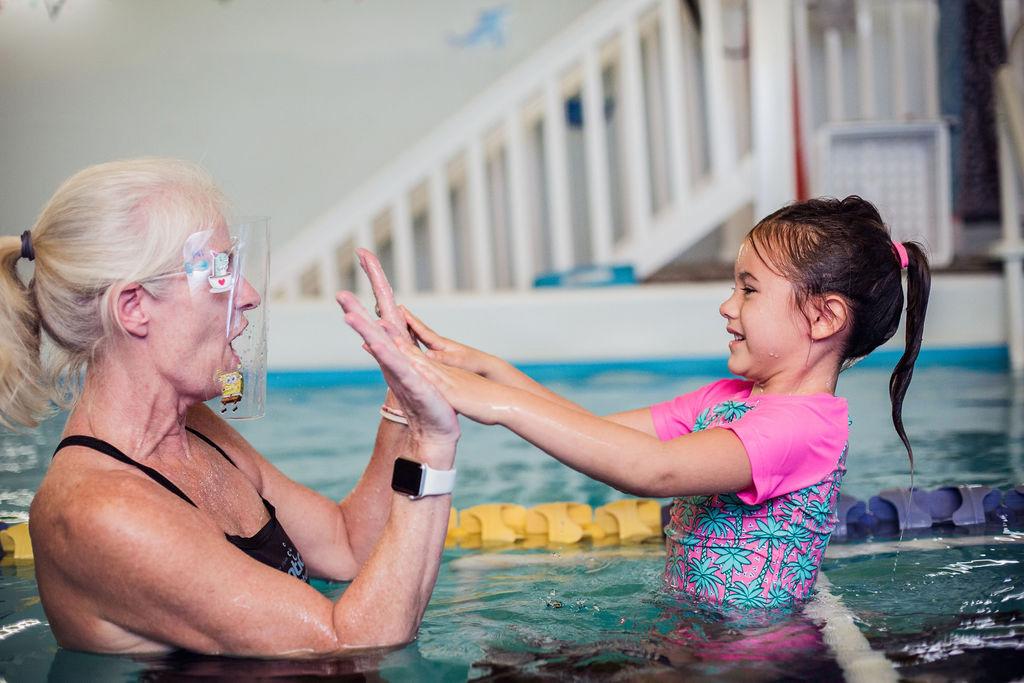
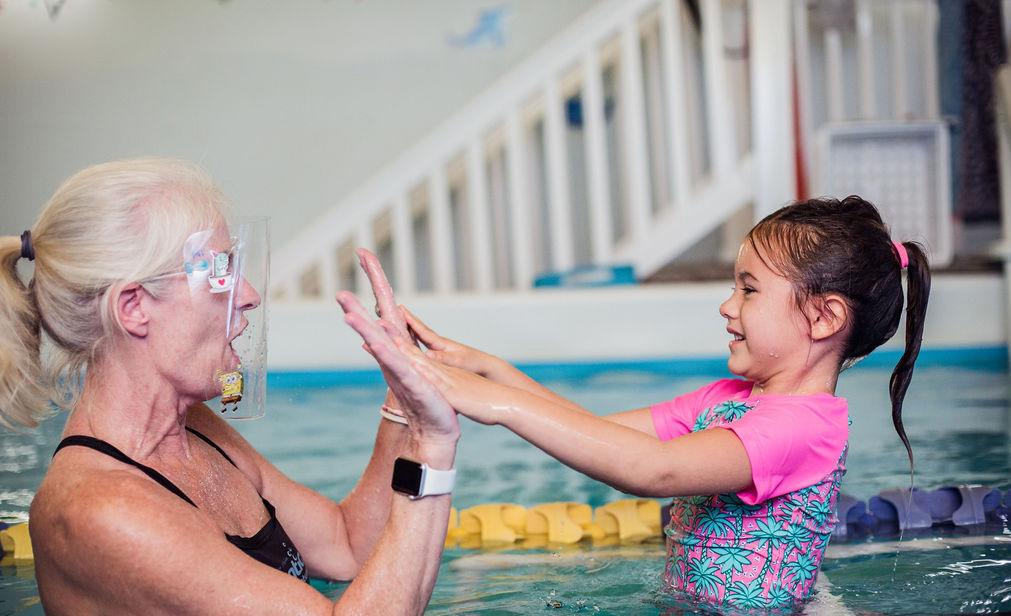
A tragedy more than thirty years ago changed Mary Kerr’s life forever. When she was a college student, a friend’s young daughter drowned. Kerr, already a competitive swimmer and teacher, dedicated the rest of her life to prevent future drownings. Her business, Aquatic Adventures Swim School, aims to train people of all ages to swim and potentially saves lives.
Mary Kerr grew up in Highland Mills, New York, just fifty miles from New York City. She was a competitive swimmer from age 4 to 18. She began teaching as a summer job in 1984. After the drowning of her friend’s young child, Kerr says she immediately began educating herself in all areas of aquatics. She started the business in Charlotte, North Carolina in 1993. Aquatic Adventures came to Roanoke in 2004 when her husband took a new job here, and they moved here. “I love the Roanoke area. It reminds me of where I grew up, a beautiful place, and a wonderful community,” Kerr said.
Aquatic Adventures
Kerr and her husband Mitch have been married for 22 years. They have four children, two girls and two boys, who are adults now. When they were growing up, Kerr says her children loved playing sports which meant they spent many years driving from one activity to another. “I would not change a thing about that,” she said. Nowadays, Kerr says the family loves the outdoors. She says they enjoy hiking, biking, camping, skiing, and snowboarding. When they are not being active outdoors, she says they are usually somewhere listening to music. Some of their favorite spots in the area include McAfee Knob and Tinker Cliffs. “I can’t resist a spot with a view,” she said.
Kerr says the past few years have been challenging for their family. Tragedy has struck their tight knit family several times again. Kerr says their oldest son, Donovan, died on June 29th, 2019. Shortly afterwards, they lost one of his closest friends. One month later, a child in their aquatic program, four-yearold Rowan Price, lost her battle with cancer. Kerr said, “We lost three bright young lives in three months. We were
devastated but determined to move forward in honor of them,” she said.
Despite pandemic challenges in 2020, the Kerr family found new happiness in the year. “In 2020, our first grandchild was born, bringing some much needed joy into our lives. Each day we look for inspiration as we navigate our journey through grief. We find light in the dark and continue to support each other and those we love. I want to say that our lives are simple, but there is no such thing. We prefer a little chaos over quiet, in all honesty, which is probably why our crazy house includes one black lab, two pit bulls, and three cats,” Kerr said.
Outside of her work at Aquatic Adventures Swim School, Kerr serves as the current president of the Roanoke Foundation for Recovery. She says it is a non-profit organization that works to remove the financial barrier to accessing treatment and recovery resources. The organization also provides resources and education to inform the community
about addiction and end the negative stigma.
Much of her time is spent with her first love, swimming and educating others about water safety. Aquatic Adventures offers swim lessons for all ages and abilities. The instructors are all certified with U.S. Swim School Association, World Wide Swim School, Swim Angel Fish, and through her in-house fifty hour training program. Kerr said, “Our clients are part of our family. We are so grateful for all of the love and support they have shown us over the years, especially during the Covid pandemic. We feel fortunate to have such beautiful people walk through our doors each week and enjoy watching the children grow in and out of water.”
Aquatic Adventures Swim School is committed to make sure all can receive swim lessons no matter the cost. They have a partner non-profit, Hope Floats, and fundraise for it. This provides swim scholarships to at-risk children in the community. “Our swim school believes that learning to swim is an essential life skill. We want to help give this opportunity to those who may not be able to afford lessons. Our community is
important to us, and we will often assist with fundraising events to help others,” she said.
Kerr says she could not do all that Aquatic Adventures does without her staff. “I am so thankful for the fantastic people who work at Aquatic Adventures. It takes a particular person to teach a child, and I have a staff full! They care about each child and their success. The attitude of our staff goes beyond the pool. They are a team, working together and supporting each other. They often inspire me,” she said.
Despite the tragedies in her life and recent loss of loved ones, Kerr says doing things that save lives helps her move forward. “It is such an honor to be able to do something that can change and save lives. After nearly forty years, I still get the same excitement when one of our students overcomes a challenge or reaches a goal. I love to help people and appreciate the opportunities and support to continue to do what I love through the years,” Kerr said.
Kerr says she is rewarded each time a student achieves success and she loves each time a student learns to not only swim, but to love the water!
Aquatic Adventures Swim School
2007 Electric Rd, Roanoke, Virginia, 24018
www.aquaticadventuresswimschool. com
Email: info@ijustswim.com
540 989 0520
6PM • SATURDAY OCTOBER 21ST
Anxiety Don’t Stress It.
by Kaylee Golder
Have you ever seen your teenager stress over the smallest of things? Maybe their worry even sends you into a panic of your own. When should you, as a parent, start to be concerned? If you fear your teen is stressing too much, then you might want to delve a little deeper into what anxiety and stress really are.
Often, high school students have a thousand stressors. They are thrown headfirst into a brand-new school with an endless number of possibilities. It can seem quite overwhelming at times. Freshmen often struggle with entering this new realm, and seniors struggle to say goodbye to their four-year sanctuary.
When students enter high school, some of them worry about how they are going to spend the next four years tackling the schoolwork and struggles that may arise. So what can be done to help?
Heather Garnett, one of Lord Botetourt High School’s counselors, said she’ll often talk to students about what classes they’ve completed and what they have to take in the upcoming years. “It’s just as easy as doing some time management things and working
on a plan towards something,” said Garnett, who believes that coming up with a plan can make students feel more relaxed by having an idea for their future.
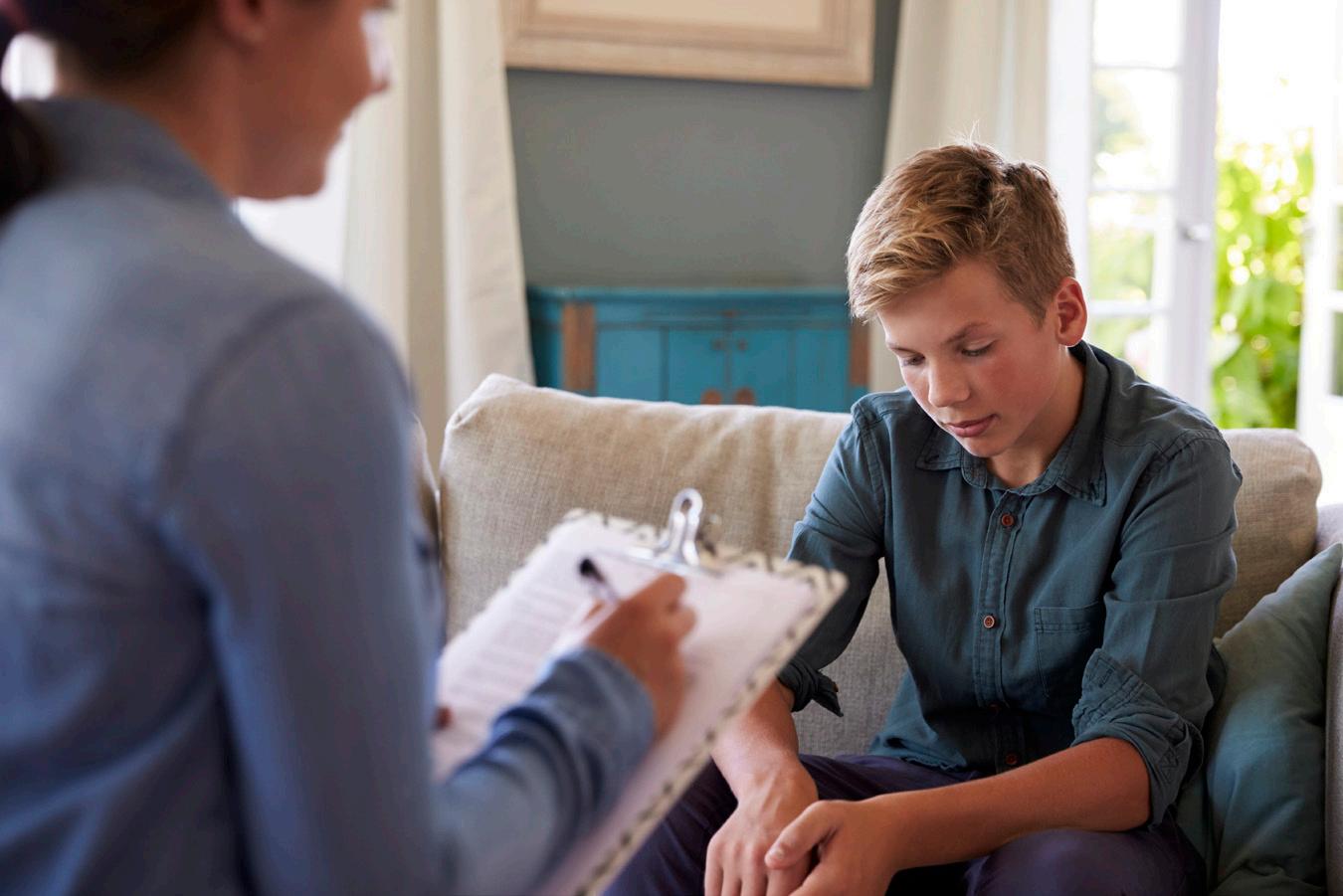
But sometimes, having a plan alone can’t improve some students’ stress. When trying to ease parents’ concerns about their child’s anxiety, Garnett said she communicates with parents and focuses on how much the anxiety is interfering with their son or daughter’s daily routine.
Furthermore, there’s a difference between diagnosed anxiety and the natural anxiety that everybody is going to experience. Ashley Hatcher, the school’s Student Assistance Program (SAP) counselor, elaborates that natural anxiety is quite common for a high school student; on the other hand, diagnosed anxiety has a “whole spectrum of diagnosed anxieties.” Specific anxieties, such as agoraphobia or arachnophobia, aren’t going to be an overbearing struggle for students on a day-to-day basis, whereas social anxiety affects a teen’s ability to communicate with peers and instructors every day.
Often, a line exists between normal, everyday stressors and anxiety that is diagnosed. When anxiety is affecting a child’s needs, part of Hatcher’s and Garnett’s role is to help the parents understand that it isn’t their child’s choice to feel this way. It’s how their brain is wired and how their neurochemicals are working with each other.
In fact, Hatcher says, “Coping skills are endless and numberless, so you really do need a diverse toolbox of different ones to go to at different times.” For example, some students use journaling while others use exercise to channel their fears. Therefore, some methods that decrease one person’s stress level might ultimately increase another’s. Parents can’t expect a one-size-fits-all solution, because every situation is different, just like every kid is unique.
listening ears for those who need it, and it can make a large impact in little ways.
There seems to be a common census between the two counselors when it comes to common coping skills: it really just depends on the student and how well they can handle it. Hatcher also expresses that it is unhealthy to believe there is an easy fix, because what works for one person may not work for another.
According to Garnett, “Do you have somebody to talk to?” is one of the vital questions she asks. “By talking to someone,” she says, ”you’re able to lessen that stress because you’re sharing your feelings; you’re acknowledging what’s going on.”
Having a strong support system, whether it’s friends or family, lets a student have people to rely on. Sometimes, this system can be nothing more than just lending an ear.
Where else can your student go for advice or help for their nervewracking days, and who can they talk to? Many students become involved in their community, and Garnett states that “building that network where students feel like they have support is probably one of the more important things.” There are so many quick and accessible resources, such as mobile apps, for students to go to for more support. Plus, students always have resources at school, like the counseling department, the nurse, the SAP office, and teachers who are willing to lend a helping hand.
The important thing is that your student feels as if he or she has someone to support them through these life-changing years, whether it is family, friends, or professional help. Natural anxieties are a part of a high schooler’s school year, but if the anxiety interferes with their daily life, it may be best to seek further help, whether in or out of school. Your teen might not know it now, but there are always helping hands, open minds, and
“ By talking to someone you’re able to lessen that stress because you’re sharing your feelings; you’re acknowledging what’s going on. ”
KIDS SQUARE SUMMER CAMPS
Follow these guidelines to get a handle on your family’s financial situation.
Family Budget Basics
by Kimberly Emory
I grew up in a pretty typical household. Both of my parents worked — though, during my early elementary years, my mom worked from home, where she ran a daycare. We eventually moved to another town and into a larger house. My brother and I never did without, and we often had luxuries that, looking back, other kids didn’t — such as going on regular vacations, having no problem affording church trips, and my parents paying for my college.
However, growing up, my parents never really discussed money with me. I had an allowance and eventually my own job, but my money was mostly “fun” money. Cell phones were certainly not as expensive as they are now, and my parents helped me out with a car, insurance, and maintenance, while I paid for my own gas.
When it came to budgeting as an adult, and especially after being married and having two incomes (and two sets of wants and priorities), I didn’t have much to go on.
So, if you’re like me and don’t have much experience, that’s okay! You can still learn and get control of your finances.
Choose your method.
You need to decide how you’re going to keep track of your budget. In today’s modern world, most people do it electronically. There are many great apps out there to create and track your budget, most of them free.
I use EveryDollar; you must sign up for it on a computer, and once situated, you can use the mobile app to create each new month’s budget and track expenses. You can also pay a fee and connect it to your bank account, which will download all your transactions.
Then, all you have to do is drop them into the correct categories. There’s also Mint. com, which is free, and You Need A Budget, which is a paid service. Some people prefer to create excel spreadsheets, and others
just like good, old-fashioned paper and pencil. Do what feels right to you, and if something isn’t working, try a different method or app. The important thing is you must write down your budget in some form or fashion.
Decide your time frame.
Every family and situation is different. Some families have one income, some have two (or more, if you have a side hustle). Some folks get paid once a month, some twice a month, some every week, and others whenever they make a sale. You need to decide how budgeting will work for you — will you budget for a month at a time, two weeks, or even weekly?
Create your budget: fixed expenses.
Write down all expenses that you know about. This includes rent or mortgage,
electric, water, phone, loan payments, insurance, daycare, etc. Do not include anything that comes out of your paycheck automatically, such as health insurance premiums or 401k contributions. Every family is different, so anything you pay monthly should be included. This might be gym memberships, Amazon Prime, Netflix/ Hulu/Disney +/etc., medical expenses, or kids’ lessons/activities. Don’t leave anything out.
Add to the budget: variable expenses.
Most of the bills you listed in step three don’t vary too much. Other expenses, like gas, groceries, and eating out, can be very different from month to month. If you know how much you spend on these categories each month, great — put that number into your budget! If not, it’s time to track.
Either keep receipts for a month on all food and gas purchases (and anything else that may fall into this category for your family) or look back electronically on bank and/or credit card statements and write everything down for that category — you might be surprised at the final number. Whichever method you use, decide if you like that number and want to keep it that way. Or, if it’s too high, decide what you think is reasonable and realistic, and set your budget that way. If you’ve been spending $500 a month at the grocery store, it’s probably not realistic to set your budget at $250. Set it at $500 and challenge yourself to lower it in increments of $20, $25, or even $50 until you can get it where you want it.
Start some sinking funds.
There are certain expenses that most families have that are either sporadic or limited to a few times a year. For these, I create sinking funds. I budget in a set amount per month to set aside for certain purposes. When I need money for that expense, I don’t have to add it to the budget — I just have to pull the money I’ve been saving! This category is very broad and can include anything you want. The ones my family has are school expenses (back-toschool shopping, field trips, and yearbooks),
kids’ clothes, haircuts, gifts (including Christmas), birthday parties (for my kids), car maintenance, family photos (school pictures and our yearly family session), kids’ activities (like equipment needs or trophy money), and the generous fund (for things like buying canned goods for school drives or filling shoeboxes for underprivileged kids). It also helps to have a miscellaneous fund for all the things you forgot about! Don’t forget to save!
Of course, it always helps to have some money saved for a rainy day — because we all know it’s going to rain sometime! Try to set aside money in savings for an emergency fund. It’s best to have three to six months of expenses saved in case of a job loss, medical emergency, or necessary home or car repair. This is also a good category to save for big things, like the new furniture you’ve been wanting, a cruise for your family in the summer, or even a car! If you’re able to save for retirement and/ or your kids’ college funds, this is where it would go, as well.
Be generous on purpose.
While opportunities can arise spontaneously to be generous, it helps to budget in the causes you love. Whether you are giving to a church, supporting a child in another country, or donating to the animal shelter, put it in your budget and you can increase your generosity — not just “whenever you have extra money.”
Make sure every dollar is accounted for.
This is YOUR money. You’re in charge! You can put anything in your budget that you want! So many people see a budget as restrictive: “I’m on a budget, so I can’t do this or that.” However, a budget gives you permission — and therefore freedom — to spend! If you want it there, put it there! Just tell all of your money where to go, whether to a bill, into savings, or an envelope for a certain expense. If you have money left over after budgeting, put it somewhere or it will “disappear” and you won’t know what you did with it.
Have a budget meeting every month.
If you’re married, you and your spouse need to be on the same page with the budget. One person usually ends up making the budget, but both spouses need to approve the budget and follow it. Making a budget is no good if you don’t stick to it! Talk it out and tweak what you both feel needs tweaking. Discuss and compromise where necessary. And remember: every month is different, so make sure you both bring up potential expenses and account for them beforehand. If you forget something, you need to meet again to go over the budget and figure out how to make it work.
Track expenses and stick with it!
Now you need to track your expenses. As bills get paid and automatic deductions drop, be sure to record them. As you make trips to the grocery store or gas station, track those expenses and check to see how much you have left in the budget in those categories. I like to use cash envelopes for things like groceries, gas, eating out, and certain sinking funds, so I just put the money in the envelope, and when it runs out, I don’t spend on that anymore (or make adjustments where necessary). Budgeting can often take a few months to figure out. With so many variables (and us being human and all), mistakes happen and things get forgotten. Adjust categories as needed, and pretty soon, you’ll have it all figured out!
Do your numbers not add up?
If your outgo is more than income, then there are certain things you can do to help. Get a side hustle and increase your income, even if it’s just for a while to get things under control.
Get rid of debt.
Student loans, car payments, and credit card interest is dead weight. Pay that stuff off so you have fewer payments and more money to put toward things that are important to you!
Stop eating out — or majorly cut back.
It’s way more expensive to eat out, and it’s not as good for your health, either. Pack your lunch from home and brew your coffee there, too. It helps to budget an amount and use cash envelopes for this category — once it’s gone, eating at home is your only option.
Cut down your grocery budget.
This is usually one of our biggest expenses, yet there are SO many ways to save at the grocery store. My article Grocery Goals from the June 2018 issue can help with more details (find it online at issuu.com/ growingupinthevalley/docs/june_issuu).
Cancel subscriptions.
Do you actually go to the gym? Do you need Netflix AND Hulu? Do you use Amazon Prime enough to justify keeping it? Get rid of
things that you don’t use or can do without — even if temporarily.
Sell, sell, sell!
What’s lying around your house that you don’t need anymore? Can you have a yard sale or start listing things on Facebook Marketplace to make extra money? Sometimes this might include selling a big-ticket item, like a rarely used boat or camper, a car that is too expensive (and you need to change to a more affordable older, used model), or even a house that is too expensive or large when something smaller with a more affordable mortgage would do.
Buy secondhand.
Most of my kids’ clothes come from consignment stores, and they don’t care a bit. You can also find great deals on Facebook Marketplace or yard sale groups — just don’t buy needlessly.
Stay away from stores and malls, and unsubscribe from emails from retailers.
They just tempt you to buy things you don’t really need. Go to a store with a purpose, shop from a list, and get out!
The majority of Americans live paycheck to paycheck. Creating and sticking to a budget can stop that crazy cycle and lead you to financial peace and freedom. Even if you didn’t learn it when you were young, it’s not too late to change — and to show your own kids a different way to control your finances.
8 freezer pop molds or paper cups (3 ounces each) and wooden pop sticks
1 can (15 ounces) sliced peaches in extra-light syrup or juice, drained and chopped
Directions
In a small bowl, combine yogurt, brown sugar, and cinnamon,fold in granola. Divide half of yogurt mixture among molds or paper cups. Top with with half of peaches; repeat layers. Top molds with holders. If using cups, top with foil and insert sticks through foil. Freeze until firm.
These delicious frozen treats have no preservatives but tons of fruit and flavor! The Greek yogurt adds protein to a summer treat that is normally pure sugar.
Other fruits can be used in place of peaches. Apples, strawberries, blueberries are three delicious options!
Directions:
1. Pour milk into the shallow dish so that it covers the surface to a depth of a few centimeters.
2. Place a few drops of food coloring into the milk. Do not mix the drops, but allow them to sit where they land. Use at least two different colors.
3. Dip the cotton swab or toothpick into the milk. Does anything happen?
4. Dip the cotton swab or toothpick into the dish soap so that the end is covered.
5. Now dip the soap-covered swab into the milk and watch what happens! The colors should begin to swirl and mix!
Experiment provided by
What’s happening?
If you remember our Better Butter experiment from November, then you might recall that milk, though it looks like one liquid, is actually a colloid made up of tiny bits of fat suspended in liquid. This means that milk has a very high surface tension — a word scientists use to talk about how well molecules at the top of a liquid stick together. We can see that milk has a high surface tension when we try to rinse the last bits of it out of a container--it can be really hard to get it all out because of how well it sticks together.
surface tension is a force present within the surface layer of a liquid that causes the layer to behave as an elastic sheet. It is the force that supports insects that walk on water, for example.
of the milk, it floats on top because of the surface tension. When we add soap, though, the fat starts to break up, which lessens the surface tension in the places the soap has touched. The places the soap hasn’t reached still have a high surface tension, and this difference causes the milk and food coloring to get pulled towards it. Essentially, the soap breaks the surface tension and dissolves the fat, which causes a bunch of swirling. In milks with a higher fat content, you should see more swirling, so different milks should have different reactions. These reactions should keep going until all of the milk has mixed with soap.
When we add the food coloring to the top
TRY THIS:
Try this same experiment with water, halfand-half, or even whipping cream. Do different liquids result in different patterns? Which liquids move the most?
TODAY TTODAY ODAY
Rachel’s Reads
June is National Safety Month, and a great opportunity to talk about safety with our kids! Keeping our children safe is our number one priority as parents, but having the required discussions can seem overwhelming, awkward, and scary. Thankfully, there are some great books to help us get the conversations started. Find I Said NO! in our Little Libraries this month!
Miles is the Boss of His Body
by Samantha Kurtzman-Counter and Abbie Schiller
There have been a lot of discussions recently about respecting the right of children to set boundaries about being hugged, tickled, etc. Teaching kids that their bodies belong to them helps give children the words to talk about situations that make them uncomfortable. Miles is the Boss of His Body jumps into this issue head-on. Miles’ family keeps patting him on the head, tickling him, and pinching his cheeks. They are acting out of affection, but Miles doesn’t like it. He eventually tells his family how he is feeling, and they come up with alternatives that respect Miles’ boundaries and wishes.
I Said NO!
by Zach and Kimberly King
What should a child do if he’s in a situation that makes him uncomfortable? I Said NO! by Zach and Kimberly King gives kids tools for how to handle “red flag” situations. Zach King unfortunately had a scary experience at a sleepover. That experience inspired him and his mother to write I Said NO! to help other kids. They talk through specific manipulations abusers often use with kids, fact check them, and show kids how to respond. This one-of-a-kind book gives kids actual concrete and practical advice to help them stay safe and know how to get help if something goes wrong. It is a must-read for families.
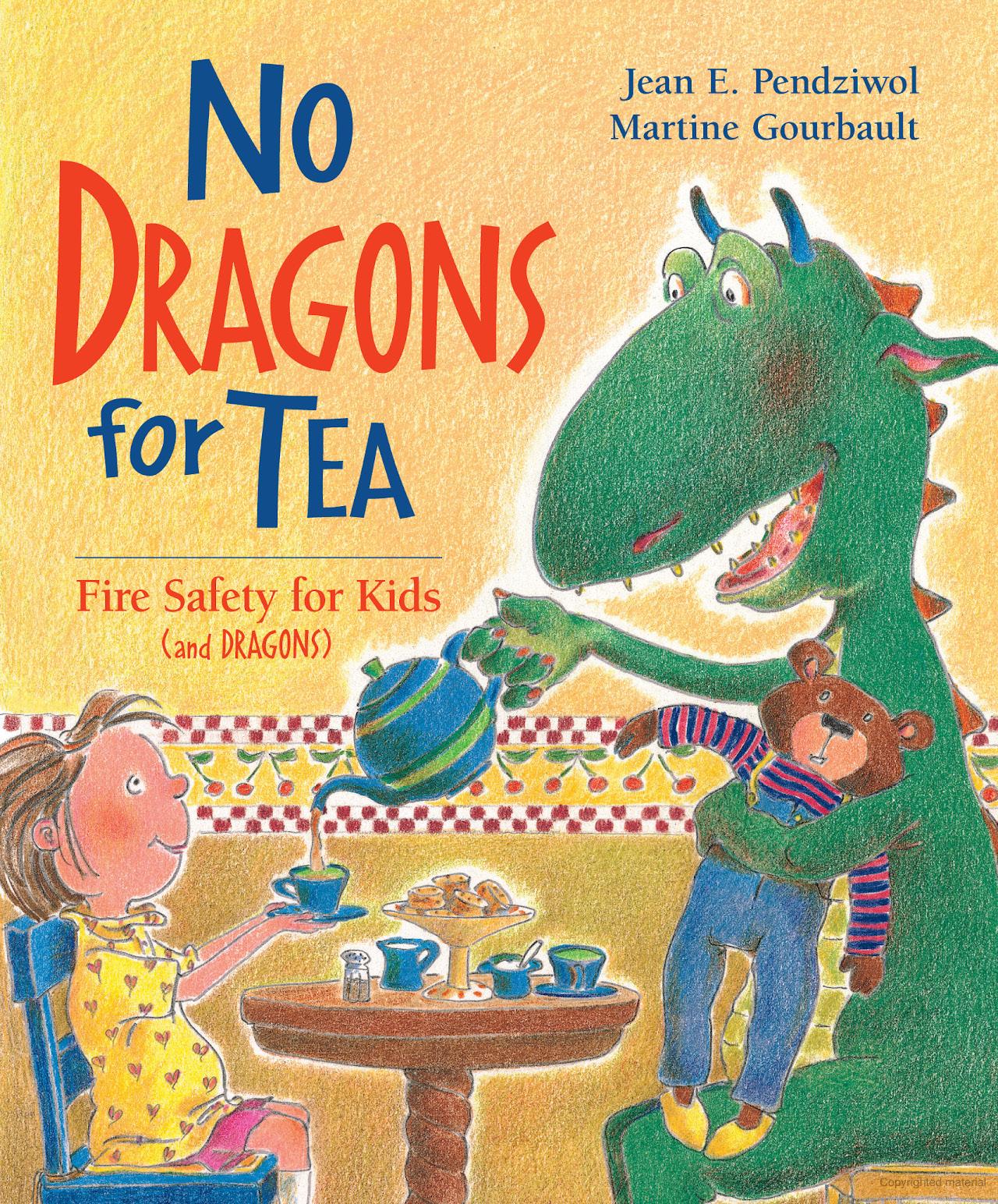
No Dragons for Tea
by Jean Pendziwol
No Dragons for Tea is the charming tale of a girl who invites her new dragon friend over for a tea party. It turns out that dragons make dangerous houseguests, and her new friend accidentally starts a fire. The girl confidently follows fire-safety guidelines to get herself and the dragon out of the house. Together, they decide to be safe and have playdates at the beach in the future! The book ends with a helpful checklist of fire-safety topics to discuss further with your family.
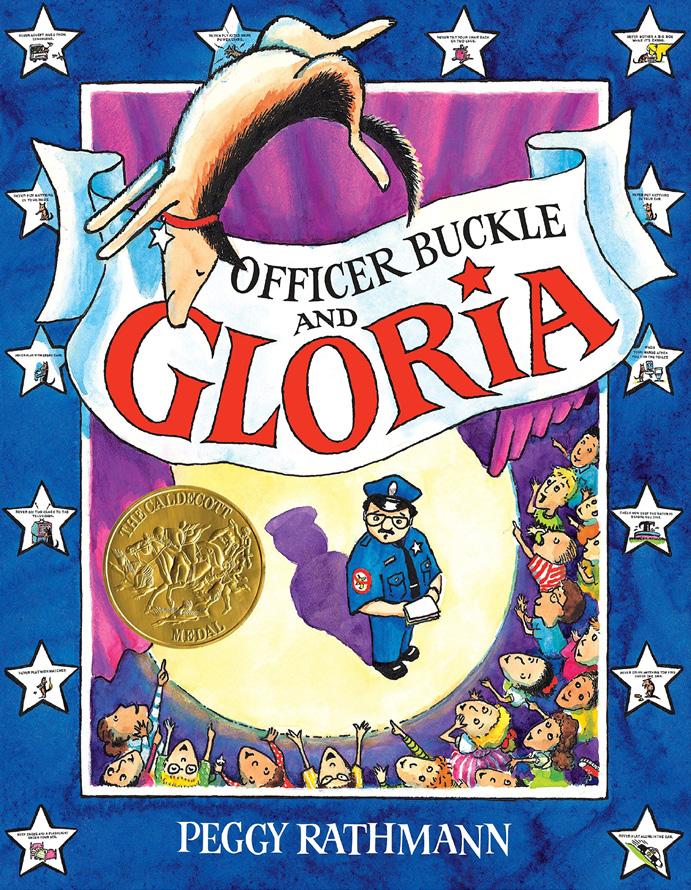
Officer Buckle and Gloria
by Peggy Rathmann
The Caldecott Award-winning book Officer Buckle and Gloria by Peggy Rathmann is beloved by kids and adults alike. Officer Buckle travels to schools to teach students safety rules, but no one pays any attention to him until he gets a dog named Gloria. Gloria turns the program around and gets kids excited about safety — until Officer Buckle’s pride is hurt and it all falls apart. Thankfully, safety and friendship win in the end in this sweet and funny story.
On the Internet
by Dr. Jillian Roberts
Talking to our kids about internet safety is new territory for most parents. The brand new book On the Internet gives families a place to begin. It explains in kid-friendly ways about how some people put inappropriate or unkind things online, and how to talk to a grown-up if they see something that makes them uncomfortable.
Match the Shadows
Bring the Taubman Museum of Art to you with this fun activity inspired by the exhibition Outside Eyes: New Perspectives on the Collection, on view through December 26, 2021.
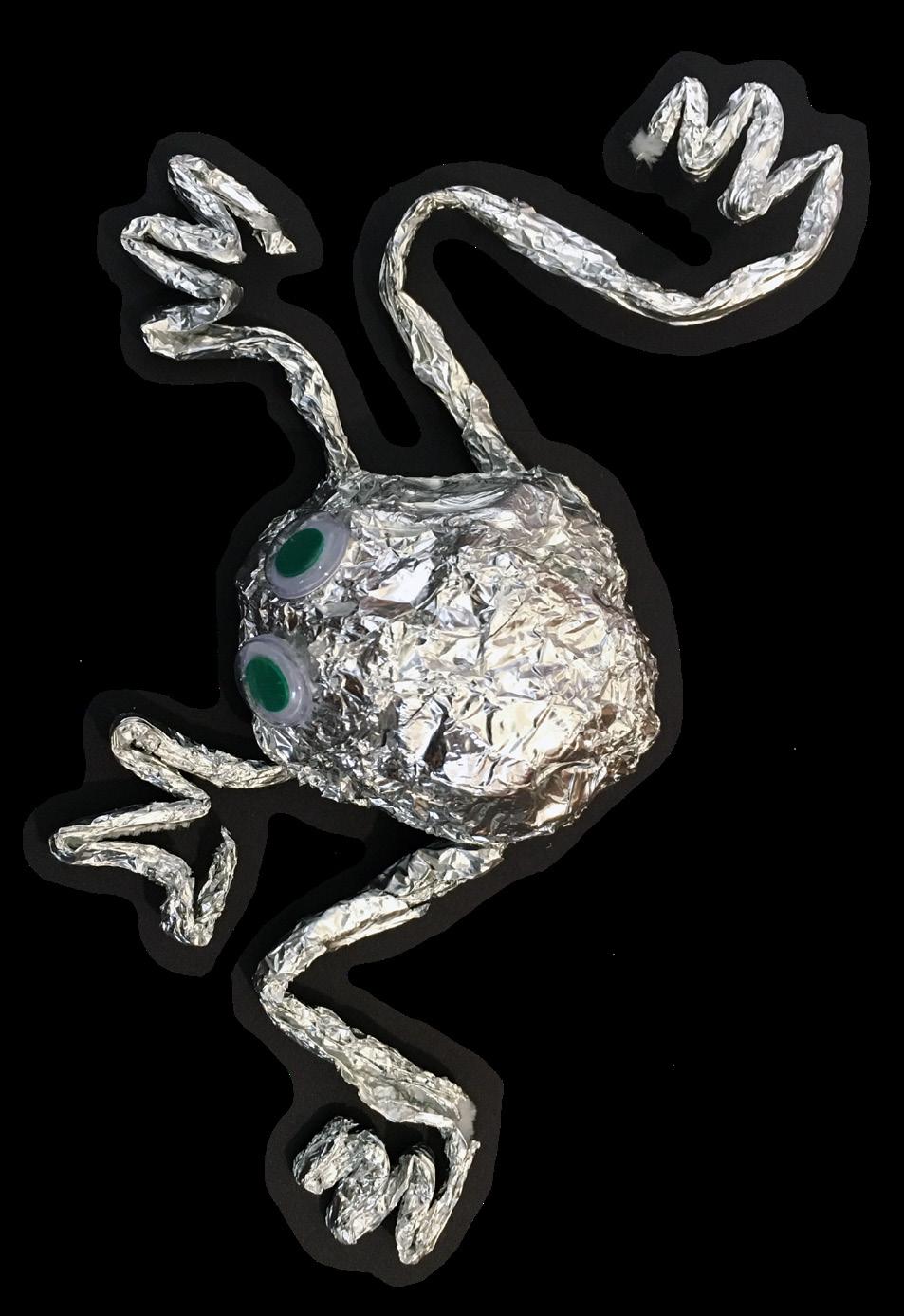
The exhibition includes this photograph by Lawrence Beck, which features a pond full of water lilies. A water lily is a plant that grows in water and frogs can often be found sitting on the waxy leaves that are called lily pads. The large leaves keep them hidden from predators in the water such as fish and snakes. Make your own frog sculpture with just a few materials!
Materials Needed:
2
4
Crumple up a large piece of foil to create the frog’s body. Wrap the 3 pipe cleaners in foil.
Take a pipe cleaner and insert it into one side of the body to create a back leg. Insert another pipe cleaner on the opposite side.
Cut the third pipe cleaner in half and insert each half into the body to create the front legs.
Carefully bend all the pipe cleaners to complete the legs and webbed feet. Glue on two googly eyes.
5 Optional: Draw a lily pad for your frog to sit on!
FUN FACT These sparkling lilies are made from gemstones, gold wire, and crystals! The artist, Mindy Lam, was inspired by Lawrence Beck’s photograph above. You can see these and many more in the popup exhibition Opulence and Fantasy: Couture Gowns and Jewelry of Mindy Lam through June 13, 2021.
Above: Lawrence Beck (American, born 1962), Sterling Forest Water Lily I, 2007, C-print photograph, mounted on aluminum, Taubman Museum of Art, Gift of Mitchell Kaneff, 2018.004; Left: Mindy Lam, Lotus Dream #1-#6, Peridot, citrine, watermelon tourmaline, 14kt. gold-filled wire, Swarovski crystals, assorted vintage brooches, Courtesy of the Artist; Photos by Boyd Pearman Photography
Freedom First has been serving the Roanoke and New River Valleys since 1956, and we recently expanded our services to the Greater Lynchburg Area! If you’re looking to buy a home or refinance your current mortgage, our expert Mortgage Team is ready to help you. Contact them today for more information on how to get started, or visit www.freedomfirst. com/mortgage to check today’s rates and get pre-qualified.