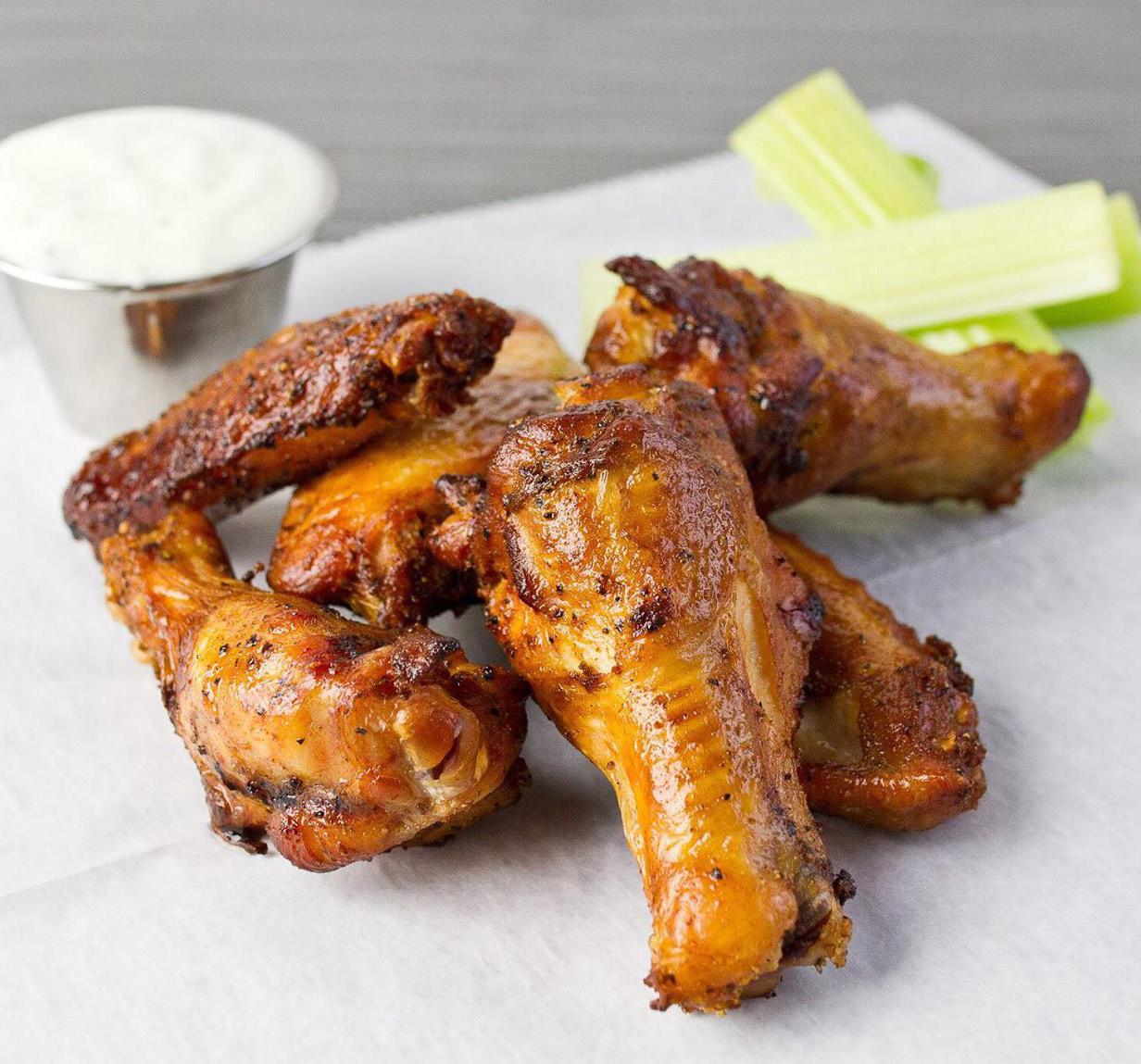
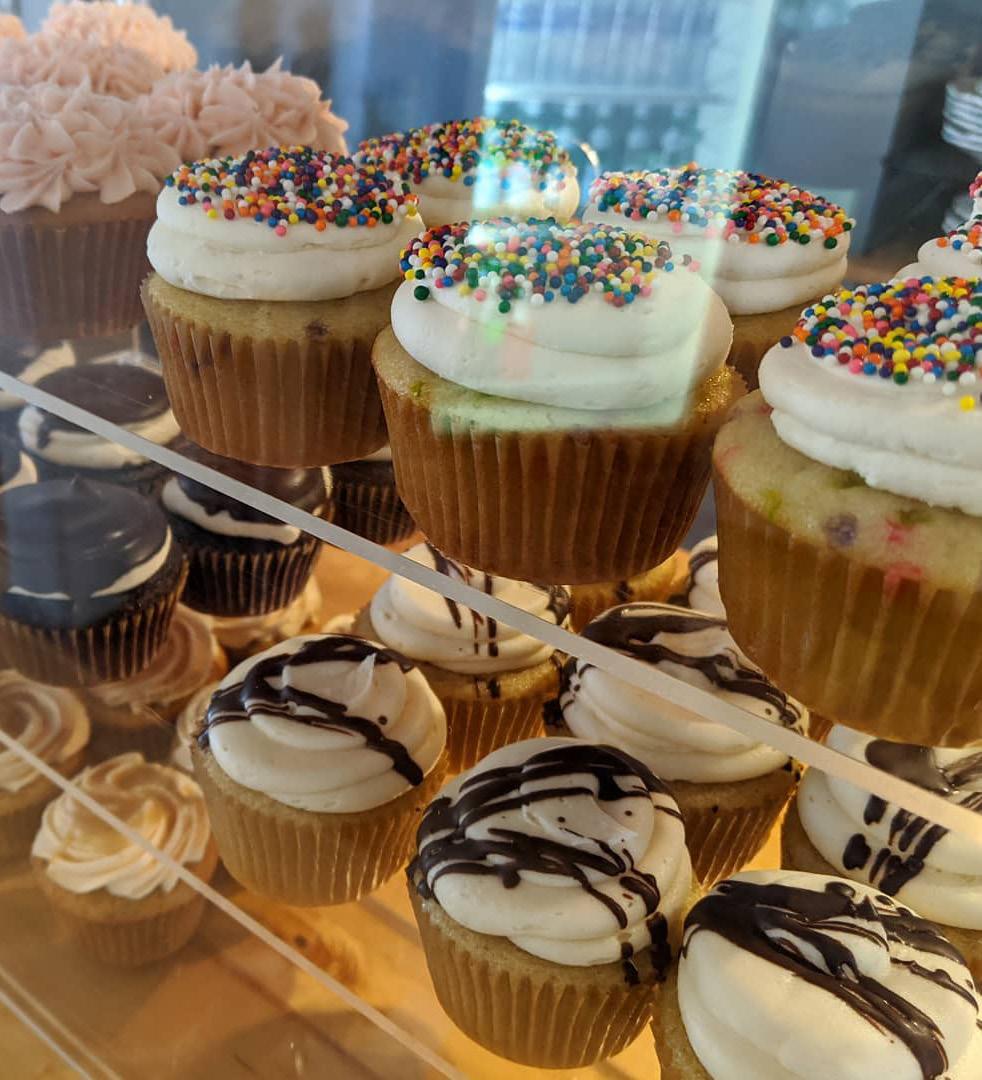
Sometimes when school is out for a long time, kids can go hungry. The following restaurants and businesses have free (or cheap) children’s meals available.
Cheesesteak Factory & Jerk House
Evie’s Bistro
Wokology
Our Daily Bread- Salem
Angelle’s Diner
Papa’s Pizza
El Rio - Rocky Mount
Hokie House
Burger King
Feeding Southwest Virginia
Note: ALL public school systems also have lunch programs in place for their students.
Support Local Stay Safe & Restaurants
While we shouldn’t eat IN our favorite local restaurants, many have adapted their menu for curbside pick up or delivery! Delivery services like GrubHub or UberEats have lowered or eliminated delivery fees and they have no-contact delivery options.
The Village Grill
1802 Memorial Avenue SW, Roanoke (540) 767-0057
Family Style Menu Pick Up Starting 3/21/2020
Scratch Biscuit Company
1820 Memorial Avenue SW, Roanoke (540) 855-0882
Pick Up & 5-Mile Radius Delivery Available
Sweet Donkey Coffee
2108 Broadway Avenue SW, Roanoke (540) 491-0004
Pick Up & Cloosiv Delivery
Pastel
2123 Crystal Spring Avenue SW, Roanoke (540) 204-3100
Pick Up & At-Home Baking Jars Available
Bobby’s Hot & Cheesy and Bubblecakes
2071 Colonial Avenue, Roanoke (540) 795-4217
Pick Up, DoorDash & Grubhub Delivery Available
Fork in the Alley
2123 Crystal Spring Ave SW, Roanoke (540) 982-3675
Pick-Up Available
Evie’s Bakery & Bistro
1212 4th St SW Roanoke (540) 343-4543 Pick Up Available
New York Pizza 708 Hardy Rd Vinton (540) 342-2933
Pick Up, DoorDash & Grubhub Delivery Available Wall Street Tavern
32 Market Sq SE Roanoke (540) 342-9555
Take and Bake Kits Available Pick Up, GrubHub Delivery Available
This is not a complete list of every local restaurant in our area- call your family’s favorite and see what options they have available to keep you safe AND fed. Email suggestions to josh@virginiafamily.com.
At Home Entertainment
Dozens of local and national artists, businesses, libraries, and museums are providing tons of entertainment and educational videos for families to use during this pandemic and time of social distancing. We’ve gathered some of our favorites to share with you.
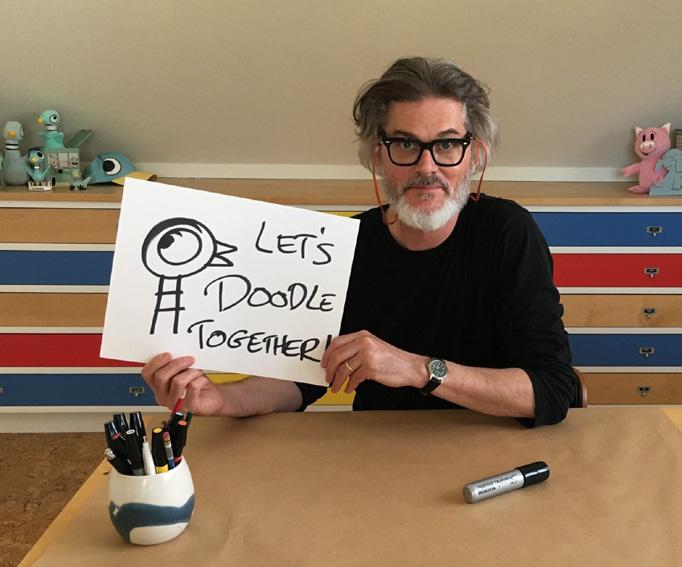
Lunch Doodles with Mo Willems kennedy-center.org | Daily, 1 PM EST
Draw with one of our favorite children’s author- of Elephant and Piggie fame! You can send your family’s questions and art to LUNCHDOODLES@kennedy-center.org
Beginner Virtual Karate Class with Super Kicks Karate
Join our local masters as they lead your family through a beginner karate class at home! These classes are a great way for the entire family to get some physical movement during the day.
Join them on Facebook Live every weekday at 4:30 PM EST.
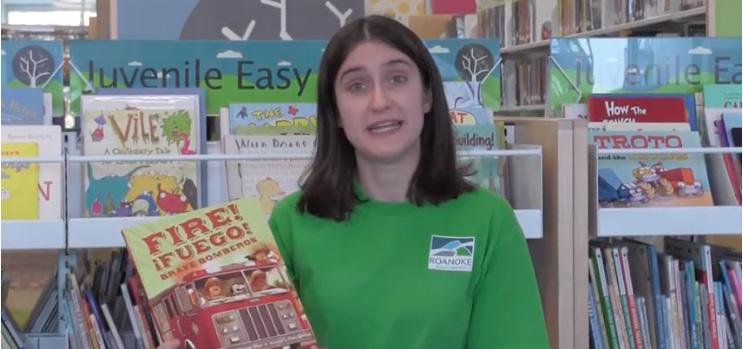
Morning Story Time with Roanoke Public Library
Join our local librarians as they read children’s books aloud on their Youtube channel, Roanoke Public Libaries, every morning at 10 AM EST!
Boredom Busters with Kids Square Children’s Museum
One of Roanoke Valley Family’s FAVORITE local museums is going on Facebook Live DAILY (times vary, follow their facebook page for details) and giving families great play-along ideas! Science experiments, pretend-play, story times, puppet shows and more! Not only that, they are giving away boredom buster kits, doing live shout outs to local kids and tons of fun surprises to keep every local family entertained while the museum is closed.
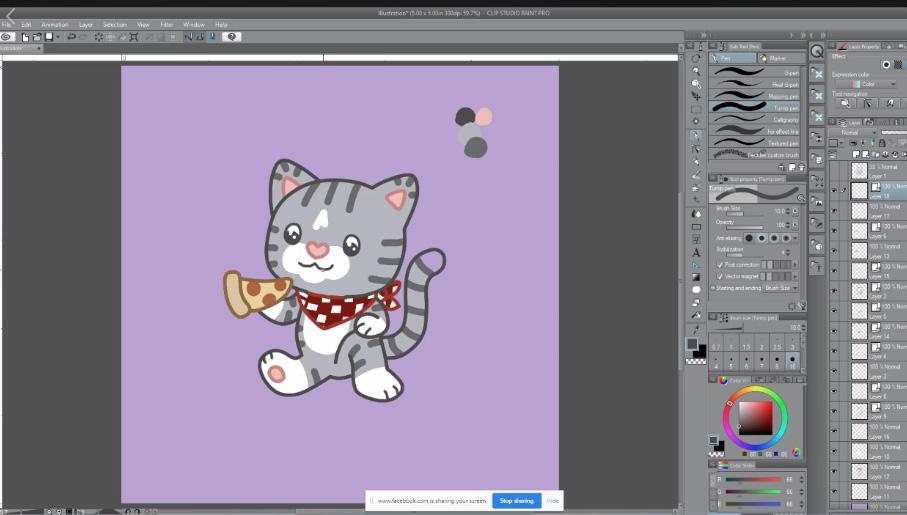
Virtual Draw Along with BeckaDoodles
Love kitties? local artist BeckaDoodles will be livestreaming as she draws her adorable signature kittens! Your family can draw along and share your art with others! Join her on her Facebook page, BeckaDoodles The Art of Cute.
Dinner with Jim Gaffigan
Nightly on Youtube and Instagram @jimgaffigan
We love Jim Gaffigan for his comedy, which often features his large and exciting family! They’ve invited fans to join them for dinner conversation and charades.
Virtual Zoo Visits Across America
Zoos across the country have closed to the public, but the animals are still having lots of fun! The following zoos and aquariums have live stream videos of animal exhibits, up-close animal investigations and even silly videos of penguins touring the zoos themselves! We’ve listed their social media handles and most common hashtags they use to share their videos.
As of printing, our local zoo- Mill Mountain Zoo was continuing their regular feed of animal photos and behind the scene videos of their exhibit expansions and animal care!
Awesome March and April Holidays
March 26th – Make up Your Own Holiday Day
April 2nd – International Children’s Book Day
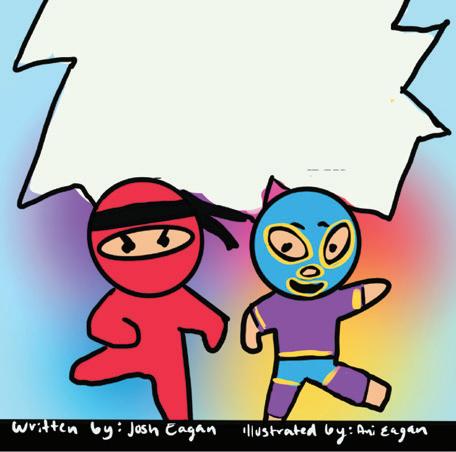
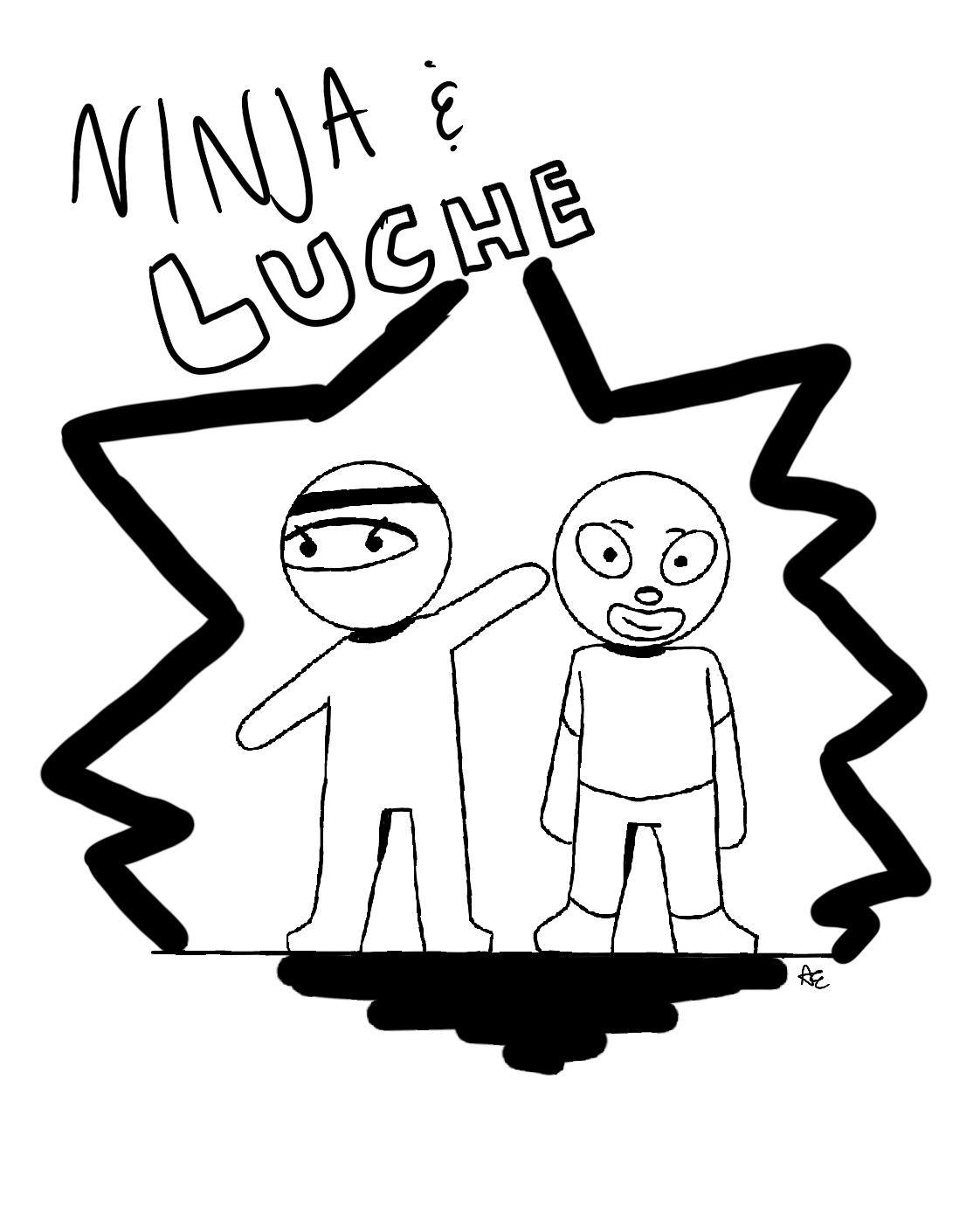
COLORING PAGE WITH NINJA AND LUCHE
Ninja and Luche Storytime on FACEBOOK LIVE FRIDAY March 27th
April 10th – National Siblings Day
April 14th – International Moment of Laughter Day
April 18th – International Juggler’s Day
April 20th – Lookalike Day
The Adventures of
The Great Piggy Rescue
Written by: Josh Eagan • llustrated by: Ani Eagan
Color this page and share it on facebook using #ninjaluche - the first 20 Kids to do so will win a copy of our publisher’s debut children’s book, The Adventures of Ninja and Luche - The Great Piggy Rescue! Deadline April 20, 2020 for entries!
The Adventures of
The Great Piggy Rescue
Written by: Josh Eagan • llustrated by: Ani Eagan
What is an Adaptation?
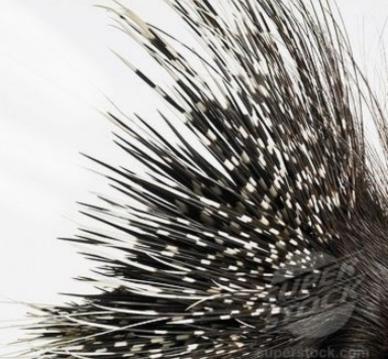
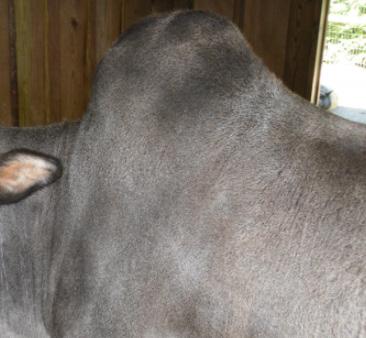
Physical features or physical adaptations allow animals to obtain food, keep safe, build homes, withstand weather, and attract mates. The shape of a bird’s beak, the type of fur a mammal has and the shape of an animal’s nose or ears are all examples of physical adaptations.
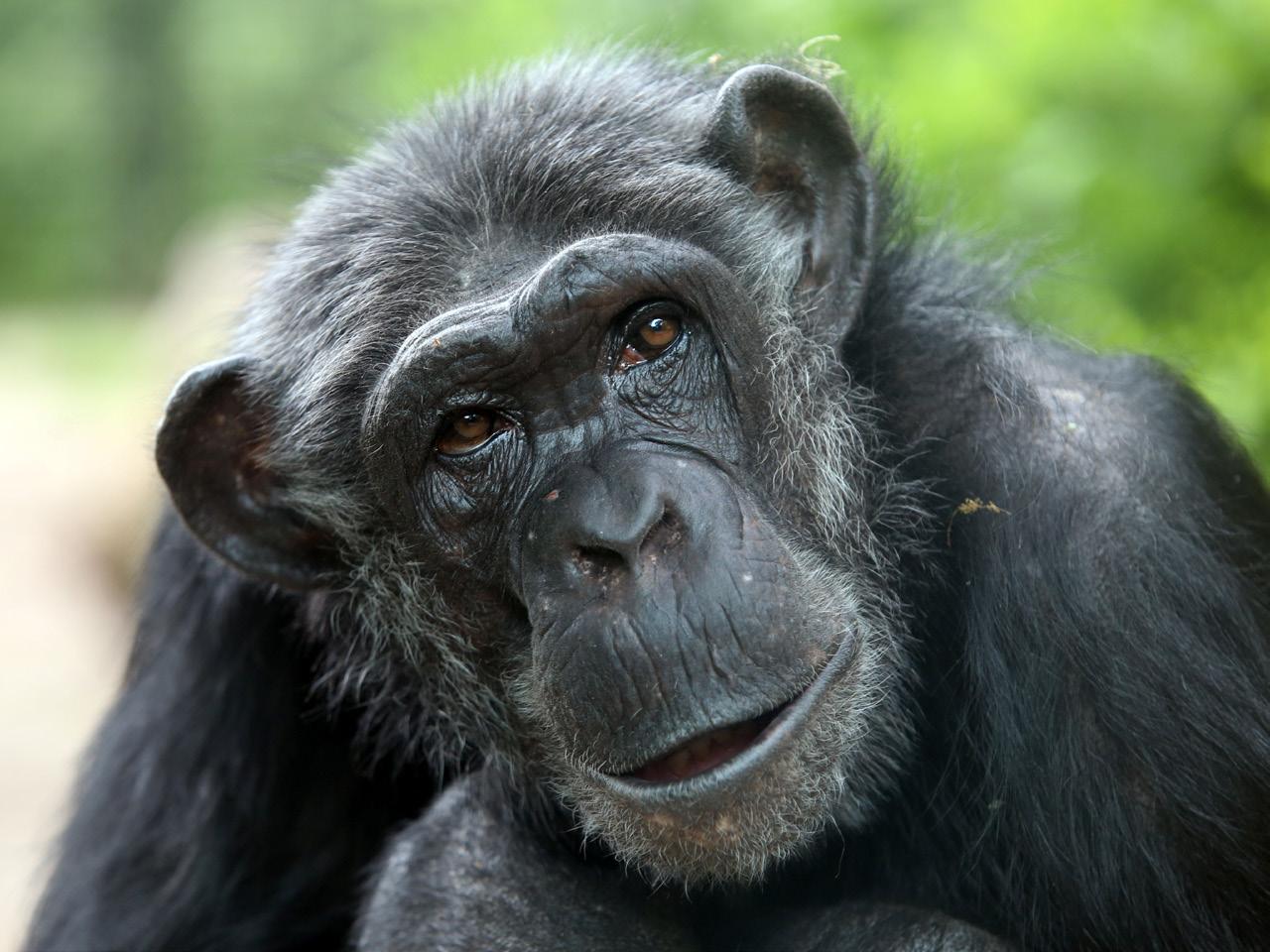
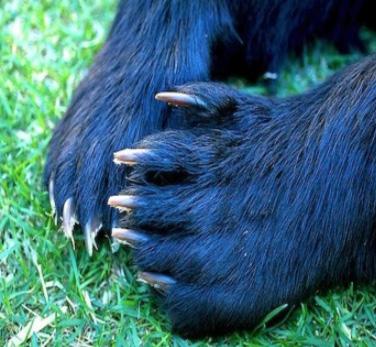
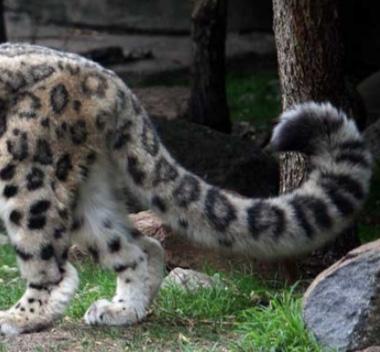
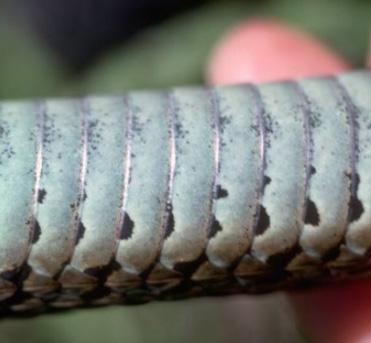
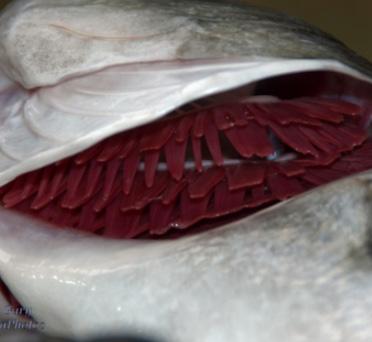
Look at the pictures below. See if you can identify the animal each adaptation comes from and what they use that adaptation for. The answers are listed in very small print at the bottom.
A
E
Answer Key
B C
F G
A. Porcupine—quills are used for protection and defense
D
H
B. Bear—claws are used for many different things, including catching and holding prey, as well as digging and climbing
C. Snow Leopard—tail is used for balance and also as a blanket or muffler to wrap around its face or body
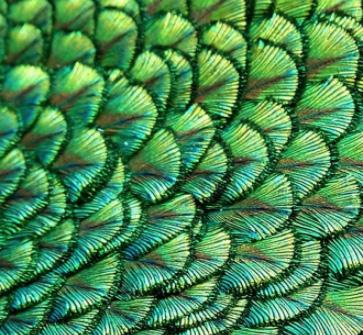
D. Peacock—feathers help birds with insulation, water-proofing and flight
E. Dwarf Zebu—hump or dewlap has stored fat and muscle that the zebu can live off of if food is scarce
F. Snake—belly scales are used to grip and grab into surfaces, allowing the snake to move itself along many different types or terrain
G. Fish—gills allow fish to draw oxygen from the water to breathe
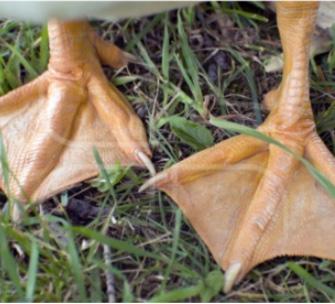
H. Duck—webbed-toes help them swim well
Home Made Rain Guage
Article Provided by:
With spring comes spring showers, but have you ever wondered how to measure the amount of rain that falls?
Supplies:
Two-liter bottle with labels removed
Scissors
Ruler
Permanent marker
Masking tape
Pebbles
1 cup of water
Directions:
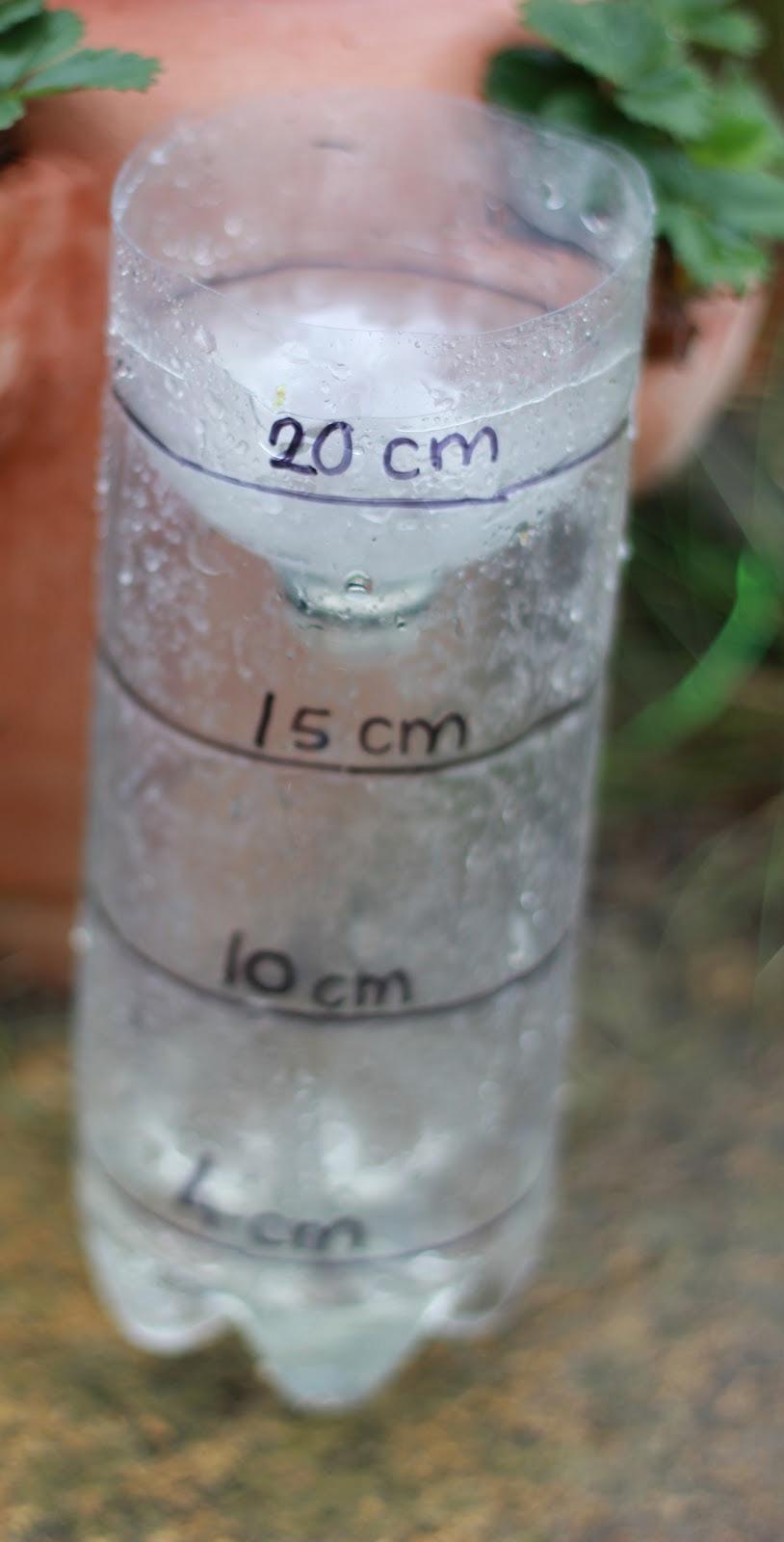
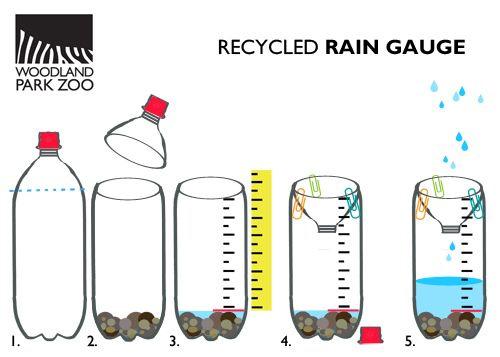
With an adult’s help, remove the bottle cap and cut off the top of the bottle just below where it starts to get wide.
Place a layer of pebbles in the bottom of the bottle.
Pour water into the bottle until it reaches the top of the pebbles. The water and pebbles together will make sure that your rain gauge doesn’t blow over in the wind.
Place the cut-off top of the bottle inside the bottom part, so that the top is upside down inside the bottle, forming a funnel. Tape it in place. (Since the edges can be sharp, you can also tape all around the edges.)
Place a long piece of tape in a vertical line from the top edge of the bottle to the bottom.
With the permanent marker, make a line on the tape at the top of the pebbles and water.
Line up the ‘0’ of your ruler with the pebble/water mark and draw and label lines every centimeter on the masking tape line. This will create a ruler on the side of your bottle.
Find somewhere outside that you can put your rain gauge where there are no trees hanging overhead. Double-check your rain gauge every so often to make sure the water hasn’t evaporated and still reaches all the way to your ‘0’ mark.
Check your rain gauge after it rains and see how high the water is. That’s how much it has rained! Try comparing this with the weather report in the newspaper, on TV, or online to see how accurate your measurements were.
To reset your rain gauge, pour out the water until it only reaches to your ‘0’ mark.
Try this:
Try catching more rain by changing the size of your funnel. Can you design something that will make your rain
gauge collect more rain?
What’s happening:
Rain gauges measure the amount of rain that falls by collecting it over a small area throughout a specific amount of time. Meteorologists (scientists who study the weather) use one of a few different types of rain gauges. The one we have built is closest to a standard rain gauge. Standard rain gauges all use a very specific funnel size and collection container size, which lets scientists compare their measurements. If you alter the size of the container or the funnel, then two things can change: the height of the rainwater you measure and/or the amount of rain you collect. A lot of people want to collect rain over a large area because they harvest rainwater to reuse it. One inch of rain may not seem like much, but if it is collected over an entire roof, then the amount of water might be enough to fill a third of a swimming pool!