Volume 1, Issue 2 Fall 2026
GRIT
GLAM
We search the world to bring you a curated collection of vintage home decor items and antiques to add warmth, style, and an earthy-but-glamorous patina to your home.
GRIT
GLAM
Decorative Objects
Pottery & Glass
Lighting
GRIT
Jewelry & Watches
GLAM
Kitchen & Dining
Fashion & Textiles
Art & Sculpture
Bespoke Candles
We premiere a new collection on the first Friday of every month. Please stop by and see what we have in store. Visit our website at gritandglam.com.
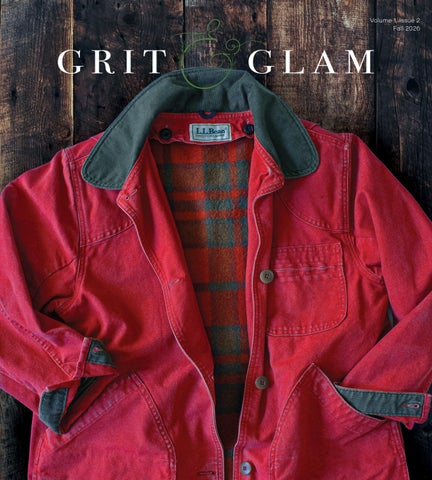
Letter from the Editor Fall is a golden hour when we hit pause after the hectic days of summer but before the even more hectic winter holidays begin. These few precious weeks are about warm days illuminated by the softer, slanting rays of the sun, followed by cooler nights when you can finally slip into a cozy sweater. Speaking of fall fits, do you, like me, circle stores like a shark hunting for perfect fall clothes? This season the Martha Stewart-approved barn jacket tops my must-have list. The faded L.L. Bean red barn jacket on the cover belonged to my mother. It sat on a peg by the door for more than 20 years as her grab and go for errands, dog walking and seasonal gardening. It is a treasure that now hangs in my mudroom getting more gritty and glammy with every year of wear. (My mother would be delighted to know that her “raggedy jacket” would fetch $$$ on eBay!) In this issue we also focus on the importance of fall gardening. We know you have been working in the garden since early spring, but experts always remind us that fall is the best time for planting trees, shrubs and many hardy perennials. And that includes swoon-worthy old garden heirloom roses, surprisingly durable shrubs that, planted now, will yield a flowery crop next summer. Autumn is also the season for “cleaning” the yard. Don’t do it! Fallen leaves, branches and such left in place provide critical habitat and food for birds and pollinators. Read more in the following pages. With fall comes cooking comfort food like our upside-down chocolate pear cake and warm farro vegetable salad, feathering your nest with a fragrant linen spray you can make and gathering colorful fall blooms and leaves for seasonal arrangements. But enough work. It’s also a time to just breathe. Kate Karam Editor-in-Chief PS I was feeling nostalgic and dug out this photo from 2019. Please forgive the skinny jeans and suede booties! Cover: Vintage L.L. Bean field jacket by Lynn Karlin Photography
1
recipes
Weeknight Supper Roasted Fall Vegetable Farro Salad
2
Seasonal Sweet Treat Fresh Pear Chocolate Almond Upside Down Cake
3
Maple Syrup Mustard/Garlic
Sherry Vinegar Salt/Pepper
Olive Oil
Warm Farro Salad with Roasted Vegetables and Crispy Chickpeas This is a colorful, easy, hearty dinner made from grains, legumes and fall vegetables that can be whipped up on a weeknight with pantry staples and fresh produce. If you want to up the protein, add cooked crumbled ground chicken or turkey sausage just before serving. Recipe by Erica Clark for Stone Kitchen Creative | Images by Lynn Karlin of Lynn Karlin Photography
Salad
Step 1: Preheat oven to 400F and line 2 large rimmed baking sheets
12 ounces butternut squash (about ½ of a small squash)
with foil. Peel, seed, and chop the butternut squash and the beets
1 pound red and/or gold beets (about 3 medium)
into ½-inch chunks. Trim and halve the Brussels sprouts (quarter
12 ounces Brussels sprouts (about 16 sprouts)
them if extra-large). Halve and peel the onion, then cut into ½-inch
1 red onion
thick wedges. Spread the squash, beets, brussels sprouts, onion and
One 15.5-ounce can chickpeas, drained and rinsed
chickpeas on the prepared baking sheets in a single layer. Do not
Extra-virgin olive oil, for roasting
overcrowd or vegetables will steam rather than roast.
Salt and freshly ground black pepper 1 cup farro
Step 2: Drizzle everything with olive oil to coat and season gener-
2 cups vegetable stock
ously with salt and freshly ground black pepper. Bake until the veg-
2 ounces baby spinach (about 2 loosely packed cups)
etables are golden and tender and the chickpeas are crisp, rotating
About 8 ounces chicken or turkey sausage
the pans halfway through, about 30 minutes.
Dressing
Step 3: Meanwhile, combine the farro and vegetable stock in a me-
1 clove garlic, minced
dium saucepan and bring to a boil. Reduce heat to a gentle simmer,
2 teaspoons Dijon mustard
cover the pot, and cook until the stock is absorbed and the farro is
2 tablespoons sherry vinegar
tender but still a tad chewy, about 25 minutes.
1 tablespoon maple syrup 1/2 cup extra virgin olive oil
Step 4: While the vegetables and farro are cooking, prepare the
Salt and freshly ground black pepper
dressing. In a small bowl combine the garlic, mustard, vinegar and maple syrup. Slowly whisk in the olive oil until the dressing is emulsified. Season to taste with salt and pepper.
Step 5: When the farro is ready, stir in half of the prepared dressing. Add the baby spinach and toss until just wilted. Spread the farro on a large platter. Top with the roasted vegetables and chickpeas. Serve with remaining dressing on the side for drizzling. If adding cooked sausage, crumble on top just before serving.
5
Chocolate Almond Pear Upside-Down Cake This is a rich, deep, dark chocolate cake that has a delicious combination of crispy edges and a fudgy center. What takes it over-the-top is the layer of caramelized just-picked pears that add freshness and natural sweetness. A dollop of whipped cream ups the decadence level even further. (In our world, there is always a place at the table for whipped cream.) Recipe by Erica Clark for Stone Kitchen Creative | Images by Lynn Karlin of Lynn Karlin Photography
For the Topping:
Step 1: Prepare the topping: Preheat oven to 350F. Mix together the melted
4 tablespoons unsalted butter, melted
butter, light brown sugar and a pinch of salt. Pour mixture into the bottom
½ cup packed light brown sugar
of a 9-inch metal cake pan.
Pinch of fine salt 3 firm pears (such as Bosc), peeled, halved and cored
Step 2: Cut the prepared pears into ¼-inch thick slices. Starting in the center of the pan and using the smallest slices, fan the pears in a circle. Create a
For the Cake:
second larger concentric circle with the remaining pear slices, overlapping them slightly and facing them all in the same direction; set aside.
4 ounces whole almonds 1 cup granulated sugar
Step 3: In a food processor, pulse the almonds, granulated sugar and salt
½ teaspoon fine salt
until finely ground.
1/3 cup unsweetened cocoa powder ½ teaspoon almond extract
Step 4: Add the cocoa powder, almond extract, butter and eggs to the nut
1 stick butter, cut into pieces
mixture and puree until smooth. Add the flour, baking powder and baking
2 large eggs
soda and pulse until just blended.
½ cup all-purpose flour ½ teaspoon baking powder
Step 5: Spoon the batter over the pears then use a spatula or the back of the
½ teaspoon baking soda
spoon to carefully spread it to the sides of the cake pan without disturbing
Powdered sugar or unsweetened cocoa powder, for
the pear arrangement.
dusting, (optional) 1 cup heavy cream or heavy whipping cream (optional)
Step 6: Bake until a toothpick inserted into the cake comes out clean, about 40
2 tablespoons granulated sugar (adjust to taste) (optional)
minutes. Remove pan to a cooling rack and let sit for one minute. Run a knife around the perimeter of the cake to release the sides. Place a platter over the pan and using oven mitts or kitchen towels to protect your hands, flip the pan
Note from recipe developer: To get beautiful caramelization on
and platter in one swift movement. Gently unmold the cake pan and let cool
the fruit use classic metal cake pans without nonstick coating.
completely. Dust with powdered sugar or unsweetened cocoa powder right before slicing and serving. Step 7: Top a slice of cooled cake with homemade whipped cream before serving (optional). Beat 1 cup of very cold heavy cream in a chilled bowl with a balloon whisk or electric mixer until soft peaks form. Sprinkle in 2 tablespoons of granulated sugar, then continue to whip gently until light, fluffy peaks return.
6
layer one
layer two
apothecary
Homemade Linen Sprays Create a botanical boudoir vibe with homemade natural linen sprays
When the seasons change, we’re inspired to scent the soft surfaces of our rooms, including sheets, bedding, pillows, throws and blankets, with homemade fragranced linen sprays. Free of synthetics such solvents, propellants, or other additives that you probably wouldn’t want all over your sheets, these sprays are made from just three simple ingredients — vodka, distilled water and essential oils — and once made can be stored for several months. They are commonly called “linen spray” but of course, you can use them on other fabrics as well. We have provided a basic master recipe that makes 8 ounces of spray and added lavender essential oil. It’s a classic that feels right just about any time of the year. Additionally, we have created four custom recipes for scents that match the mood of the season. Order a few sets of essential oils and mix and match if you prefer to be your own chemist. Turning back the sheets or snuggling under a luxe throw subtly scented with a seasonal fragrance should be one of life’s small pleasures. Or, as the great Diana Vreeland once said, “Fragrances fill the senses with the mysterious.” We could not agree more.
Good to Know While essential oils are generally safe, they are for external use only and are not recommended to be ingested alone or in this blend with alcohol. Dogs and cats can be sensitive to both essential oils and alcohol products such as vodka. Bottles of these products, even capped, should be kept well out of reach of curious pets and children. Do NOT spray these products directly on pet beds. When using these homemade sprays, observe pets to watch for signs of irritation or respiratory stress.
9
Master Recipe Makes 8 fluid ounces
Ingredients
Directions Pour the 4 ounces of vodka into your 8-ounce glass bottle. Add your 50 - 60 drops of essential oils (see our suggested recipes) and stir gently with a spoon for 1 minute. Pour in the 4 ounces of distilled water, cap tightly, and shake well. The solu-
4 ounces high-proof vodka (100-proof or
tion might turn a milky-white color. This is a normal reaction when water hits
151-proof)
the alcohol-oil mixture.
4 ounces distilled water Essential oils (50 - 60 drops; adjust as needed)
Supplies
Attach the spray nozzle and shake vigorously.
To Use Lightly mist your linen spray on sheets, pillows, blankets, throws, and even the
Funnel
mattress cover when you make the bed. Hold the bottle about 8 - 12 inches away
Frosted or opaque spray bottle
and spritz a few times for a very light mist rather than soaking the material.
Label (optional)
Allow it to dry for a minute before putting pillows back or covering up. Always shake spray before use even when using an emulsifier such as vodka. Always test a small section of fabric to ensure the spray does not stain fabric. Best for linen, cotton and wool; avoid using on silk or satin bedding.
10
Different seasons. Different moods. Rotate these recipes throughout the year. Winter:
Spring:
Sultry and sexy as
Bright and cheerful as
a black cashmere throw
an heirloom quilt
Essential Oils:
Essential Oils:
(add to your vodka/water base)
(add to your vodka/water base)
12 drops Patchouli
24 drops Bergamot
8 drops Frankincense
6 drops Jasmine
8 drops Cedarwood
12 drops Ylang-Ylang
6 drops Rose Absolute
16 drops Sandalwood
After Hours
Alchemy No. 4
6 drops Geranium 6 drops Nutmeg 6 drops Vanilla Absolute 6 drops Clove Bud
Summer:
Autumn:
Crisp and clean as a bed
Earthy and cozy as
of white linen sheets
a handknit cabled blanket
Essential Oils:
Essential Oils:
(add to your vodka/water base)
(add to your vodka/water base)
16 drops Bergamot
18 drops Sweet Orange
12 drops Cypress
14 drops Cypress
10 drops Neroli (or Jasmine)
10 drops Grapefruit
8 drops Cedarwood
8 drops Ginger
6 drops Vetiver
5 drops Vetiver
Siren’s Song
Lazy Sunday
4 drops Geranium (or Ylang-Ylang)
11
GRIT
GLAM
In the next issue of Grit & Glam, Coming in January 2027
GRIT
GLAM
GRIT
GLAM
• • • •
Mastering the Art of Hibernation Collecting Flow Blue Sweet Comforts And So, She Built a House
Visit our website at gritandglam.com to have our magazine delivered directly to your inbox.
Fall 2026
Earthy Elegance
13
BARN BURNER Last year’s hot runway trend is officially this year’s enduring classic. The iconic barn jacket works as hard as you do, making it a must-have for any closet. Want one? Here is what you need to know. by Kate Karam
W
e’re first to admit that no modern newbie
sack coats in their 1880s catalogues. Carhartt’s “Engineer Sack
version can compare to an old, worn-in
Coat” debuted in 1917, and by 1923 it had evolved into some-
barn jacket. That sort of faded glamour
thing pretty close to the classic we see today: denim or duck
only comes from a few decades of muck-
canvas, corduroy collars, riveted patch pockets, triple-stitched
ing horse stalls, loading bushels of apples onto pick-up trucks or raking acres of leaves. If you want an authentic vintage
But it was L.L.Bean who moved this garment from some-
one, they’re out there at estate sales and in online vintage
thing primarily worn by a tradesman to a jacket worn by
stores. But let’s not be overly precious here. A barn jacket has
sportsmen and outdoor enthusiasts. Bean first introduced
its roots in the country, but it also belongs in the wardrobe of
its Field Coat back in 1924 as the Maine Duck Hunting
any hardworking woman who wants earnest utilitarianism
Coat. Over the next few decades, the rugged cotton-canvas
with a bit of east-coast fashion flair.
design evolved into the iconic multi-pocket barn coat with
About Barn Jackets
16
seams, and blanket linings for winter.
a corduroy collar that was a precursor to what we see now in 2026.
Barn jackets are not a new thing. As early as the 1860s, sack
In 2003, L.L.Bean revamped the design and released it as
coats (think of them as early barn jackets) were commonplace
the Adirondack Barn Coat which is the style you can buy even
in the U.S., worn by both soldiers and civilians. Levi’s listed
today. It is their classic barn jacket.
In just a couple of seasons, the barn jacket has gone from a rural staple to a global street style favorite.
Anatomy of a Barn Jacket On the cover we featured a well-loved vintage early 1980s L.L. Bean barn jacket. So, what makes it a “barn jacket?”
Corduroy or leather collar
Reinforced shoulders Warm fabric lining for extra warmth
Zippered chest pocket for storage
Boxy silhouette suitable for layering
Heavy-duty snaps or large horn buttons
Adjustable corduroy-lined cuffs Oversized dual-entry lower patch pockets
Heavy canvas or waxed cotton exterior
18
Barn coat? Barn Jacket? Chore Jacket? Field Jacket? Huh? These garments are not as interchangeable as they may seem.
Designer brand Barbour, the English outdoor apparel com-
•
A barn jacket and barn coat are similar, typically made from a durable cotton canvas or waxed cotton fabric with a lining often made of flannel. We prefer “jacket”, but both are fine.
•
A chore coat or jacket is made of a lighter weight fabric like denim or twill and without a lining.
•
A field jacket has a more military vibe and is usually more fitted with bells and whistles like snaps, drawstrings, epaulets, etc.
over a hundred years and that can be found either second-
pany renowned for its waxed cotton outerwear, opened the
hand or new from a brand that has a reputation for quality
market further in the early 1980s with their Beaufort waxed
and sustainability perfectly fits where we are right now.
jacket. This sportswear garment was made for riding horses
And it doesn’t hurt that lots of famous style makers includ-
as well as for mucking about the garden.
ing influencers with big reach and stars with big fan clubs
In the years that followed brands from mall staples such as J. Crew and Gap to major designers such as Prada and Bur-
are wearing this type of jacket. And, then there’s the Martha Stewart factor.”
berry introduced their version of the classic jacket culminat-
You can invest in a seriously spendy designer barn jacket
ing in a jacket-palooza in 2025. So, what’s driving interest in
and still be cool, but we think these seven barn jackets from
these farm-staples in 2026?
brands with some street cred for sustainability do the job
“It’s a few things, actually,” says stylist Samantha Evans-
without breaking the bank. And because these types of jackets
Redford. “More of us are turning from fast fashion to invest in
get better with age, we know you will still be reaching for
things that are made from sustainable materials and are built
yours in 10 years. (Of course, we could let our furry kids go
to last. A wears-like-iron jacket in a style that has endured for
outside without a warm coat, so there’s one for them too.)
19
There’s a Barn Jacket for Every Budget Barbour Beadnell® Waxed Jacket, $415
J. Crew 1983 Barn Jacket™, $188
L.L. Bean Adirondack Barn Coat, FlannelLined, $150 Dôen Women’s Pascual Jacket, $458
20
Filson Canvas Barn Coat, $200
Baukjen Bridie Organic Cotton Barn Jacket, $150
Carhartt Iconic Stretch Duck Chore Coat, $100
Carhartt Firm Duck Insulated Dog Chore Coat, $55
21
Bless this Mess
22
hough clipped and tidy, a fall garden that has been
cializes in sustainable landscapes. “Yes, you should remove
cut-back, raked-up, clean-swept, trussed and twined
and safely discard anything that’s diseased along with the
does little to sustain the birds, bees, pollinators and
worst, most invasive weeds. But the rest? Let them be. Like,
other wildlife who need a place to overwinter. You
just leave them where they fall or where they fade and instead
probably spent all spring and summer creating a safe and pro-
train yourself to look the other way. It’s not “yard waste”. It’s a
ductive space for these welcome guests. Now, in fall, according
leafy opportunity!”
to experts in sustainable landscaping, your desire for a neat
The birds, bees and pollinators we depend on to help with
post season landscape might be running these “garden heavy
our gardens in spring and summer have specific needs that
lifters” out of town just when they need your help the most.
keep them alive and healthy in the winter. None of this is com-
“We have been trained to think of spent foliage, downed
plicated and in fact, it’s mostly about getting out of the way.
branches, leaf piles, seed heads and browned-out ornamental
Here are three of the species that according to Chase-
grasses as “yard waste.” Something you blow into a pile, bag
Adams most directly benefit from this kind of “let nature rule”
up and have the city haul away in October” says Sylvia Chase-
seasonal gardening and what you can do in your own yard to
Adams of The Resilient Root garden design firm which spe-
get them through the winter.
photo credit: Andrewmits/Dreamstime.com
T
Holster the clippers and hide the rakes
Bees 4,000 species of native bees. According to the Center for Bio-
loose soil. “By not cutting down every plant or turning every
logical Diversity that’s how many species call North America
bit of soil,” says Chase-Adams, “we can provide these garden
home. “We count on these bees (including bumble, carpenter,
inhabitants with a cool place to chill out.”
leaf cutter and mason) to pollinate the spring and summer garden. To thrive and survive and see another spring, these
To Do: Set aside undisturbed patches of habitat allowing
hardworking buzzers need a place to sit out winter where
any leaf litter, standing spent perennials, dead twigs, dried
they are protected from both cold and hungry predators,” says
out stems and patchy groundcovers to remain. If you’re
Chase-Adams.
working the soil to add a winter layer of compost avoid
70% of all of these species of native bees nest underground,
tilling where bee might have made ground nests. (Look for
overwintering as eggs or larvae burrowed in the soil before
conical piles of dirt with a large hole in the middle that
emerging once more in spring. Other species such bumble
serves as the entrance).
photo credit: 1Linnaea Mallette/Dreamstime.com
bee queens nest in leaf litter, hollowed-out plant stems, or
23
According to the American Bird Conservancy, at least 40 spe-
To Do: Think about creating a border to feed songbirds next
cies of birds are likely to be found in our backyards during
year (more info here). For now, make a cozy nest of a brush
winter, and they have the same needs—food, water, shelter—
pile with logs and larger branches on the bottom and layer
as they do the rest of the year.
smaller branches on top. Rake leaves up under trees and
“Berries left on trees and shrubs are full of the sugars,
shrubs and leave them until spring clean-up to encourage
fats, and antioxidants that birds need to survive cold winter
the insects that birds love to eat to overwinter there. “Also,”
nights. Seed heads that remain on plants such as coneflow-
Chase-Smith reminds us, “That post-holiday Christmas
ers and sunflowers are a reliable source of critically impor-
tree tossed in the yard makes a safe and warm place for
tant calories. Do not prune back any branches or stems that
birds to stay,”
still bear these precious morsels. And don’t be too quick to discard those fallen sticks, either,” continues Chase-Adams.
24
photo credit: Kenneth Keifer/Dreamstime.com
Birds
Pollinators The monarchs may have flown south but many of the butterflies we rely on to help pollinate our gardens can and do remain in our yards. “They can be found in a variety of life stages such as adults that nestle into rock fissures and under tree bark, caterpillars that bury deep in leaf litter or inside of rolled up leaves or others that are tucked into a chrysalis in a sheltered place like overhangs and deep shrubbery (such as this Western Tiger Swallowtail Papilio Chrysalis). Some may have laid eggs laid in late fall that overwinter in the leaf litter of a host plant. All need a safe, undisturbed spot for the cold months. Cutting down and cleaning up eliminates the sites these vital pollinators must have overwinter to come back strong in spring,” says Chase-Adams. To Do: Leave leaf litter beneath trees undisturbed when possible. It’s likely to contain overwintering caterpillars or eggs. If you find what looks like a dead chrysalis in your garage, garden shed, or even hanging from the branch of a tree in the winter, leave it there! The butterfly inside may well emerge when spring comes.
This kind of gardening can be a process for many of us who are used to the bare naked look of a orderly fall garden. “If you can’t imagine leaving the entire yard in its most natural state, start slow with just one bed at a time and a corner desphoto credit: Rick & Nora Bowers/Alamy
ignated for a leaf pile, advises Chase-Adams. “This slow recalibration that trains your eye to see natural beauty in a different way has added benefits as well.” Beyond trying your best to be a good steward of your little corner of the Earth, this type of hands-off gardening can help you to enjoy watching your garden change from season to season. “There’s something about a frost-kissed rose hip or clutch of curled-edged leaves blown into a corner that fills me up,” says Chase-Adams. (Can you relate? We can!)
It’s not “yard waste”. It’s a leafy opportunity. 25
photo credit: Elizabeth Whiting/Alamy
‘Zephirine Drouhin’ grows up to 15 feet tall with nearly thornless canes that make it easy to tie and train along fences, trellises, arbors, and walls.
Gritty
28
Fuss-Free Old Garden Roses by Kate Karam
E
ven a rose purist such as I can see the value in layering a patch or two of “easy care” roses in the garden. These shrubs bring reliable color, easy to manage forms, repeat bloom and a bit of
fragrance, and resistance to many rose spoilers from bugs to mildew. And they are easy to find and relatively cheap to buy. So, sure, I get it — they have a place in the landscape. But let’s be honest. They are not the blooms to inspire poetic reverie. What if I told you that you could have some over-the-top romantic roses with memorable fragrance without having to trade off on the easy care of modern shrub roses? Cue the old garden rose.
What are “old roses”? Both tough and deeply fragrant, with complex blooms and good disease resistance old garden shrub and climbing roses have thrived in yards for over a hundred and fifty years. Roses bred before 1867 are classified as “old roses” (you may also see them called heirloom or antique roses) and they are about as grit and glam as you can get in a plant. If you consider they have survived just about all the nature and humans have thrown at them and are still rambling around in established gardens around the world often without much love or care, adding a few to your own landscape just makes sense. It’s important to understand that most bloom only once a season and don’t always have the tidy form of more modern shrub and climbing roses. But what they lack in attributes valued in modern roses, their sheer flower power and undercurrent of unruly wildness in their exuberant growth makes for such a a jaw-dropping moment in your garden we forgive them for their nature and nurture a place for them in our landscapes. When massed with other flowering shrubs with similar needs that bloom later (such as reblooming Weigela, panicle Hydrangea, and Summersweet), these once bloomers
29
Rosa rugosa is more lovingly called “beach rose” as it rambles across seaside dunes. Hardy and useful but do site with care as it can crowd out other plants. Below: Rosa chinensis ‘Viridiflora’ is for the rose adventurer. Its “blooms” are layers of overlapping, narrow, leaf-like green sepals that form the shape of a rosette.
can be part of a sequence of color from spring to late summer. These roses are typically grouped in categories such as
photo credit: Left Top: Alexandra Scotcher/iStock ; Left Bottom: Patsy Davies/Alamy; This Page: jbphotographyIt/Dreamstime
Damask, Centifolia, Bourbon, Banks or Alba, each of which
5 Old Roses We Think You Will Love
has distinct characteristics that define the class. Even if you
You should choose the roses that make your heart go all
are not the neighborhood rosarian, it’s good to be familiar
pitter-patter, but with hundreds of spectacular old roses
these classes because knowing them can lead you to the at-
from which to select (it’s a happy little rabbit hole you
tribute you are looking for when selecting an antique rose for
will be traveling when you are looking for your perfect
your garden.
old rose) let me at least get you started. Here are the five old roses that are over-achievers in
Damask: Known for being thousands of years old and having
my own zone 6 garden, most which were planted by my
an intense perfume.
grandmother over 60 years ago. (See, I told you these are no nonsense plants!) If your zone is compatible with their
Centifolia: Frequently called “cabbage roses” due to their
requirements, I totally recommend them.
heavy, many-layered, and globe-shaped petals. Alba: Extremely hardy roses with delicate pale pink or white blooms. Gallica: Typically, deep pink or crimson blooms that are heavily used in historical perfumes. Moss: Named for the moss-like, fragrant growth covering the sepals. Like all plants many old roses do their best in specific zones and climates; your local garden center or specialty website or catalog can provide you with the best regional advice. This just barely scratches the surface of all there is to know
cart, you veer a bit to the left and check out old garden roses
1
instead. By planting them in your garden you will continue to
very fragrant double creamy white blooms, and you have
honor these historic plants and ensure they are still around to
the famous ‘Mme. Plantier’ rose. She’s old, introduced in
charm future generations.
France in 1835, and thought to be the product of an Alba
about fuss-free, glamourous and seductive old garden roses. I hope the next time you are in a garden center ready to toss another generic Knock Out or needy hybrid tea rose into your
‘Mme Plantier’ (Rosa x Alba ‘Madame Plantier’)
Imagine an 8’ tall x 8’ wide shrub covered head to toe in
Finally, here are a few reference book that are on my shelf
rose crossed with R. moschata. A once bloomer in spring,
that I find useful. Some are out of print, and you might have
give her plenty of room and be rewarded with a memo-
to pay up, but check thrift stores as these do turn up.
rable garden moment.
•
Vintage Roses by Jane Eastoe, Amazon
Zone: 3 - 9
•
Classic Roses by Peter Beales, Amazon
Light: Full sun
•
Old Rose and English Roses by David Austin, Amazon
Where to buy: Heirloom Roses
31
photo credit: This Page: Jason Smalley Photography/Alamy
Plant Rosa ‘Rambling Rector’ where it can have room to, well, ramble. This fast-growing climber can reach heights of 20 to 30 feet smothered in white blooms.
Old roses bloom with a wild abandon that makes for a magical moment in the garden.
I can’t help but have a soft spot for an exceptionally fragrant
4
rose named in 1832 by a plant breeder for his wife! ‘Madame
troduced in 1868 is often the exception. This Bourbon climber
Hardy’ has big, blowsy double flowers that perfume the garden
stuns with deep pink blooms that nearly smother the up to 15’
with an intense, sweet, classic old rose scent, often character-
tall plant and an unforgettable, strong damask fragrance that
ized by a fresh note of lemon. Grows to 5’ tall and tolerates
perfumes the garden from dawn to dusk. Nearly thornless,
humid summers.
train as a climber or keep as a large shrub.
Zone: 4 - 9 | Light: Full sun, partial shade
Zone: 5 - 10 | Light: Full sun to partial shade
Where to buy: Rogue Valley Farms
Where to buy: Heirloom Roses
3
A classic legendary Bourbon rose that has been charming
4
gardeners since introduced in 1843. What becomes this legend
Perpetual’ is a very hardy, graceful,arching shrub with the intense
most? ‘Souvenir de la Malmaison’ is nearly thornless, heat-tol-
fragrance and old-world charm ofa Damask rose (from which it
erant, extremely fragrant and continuously blooms over a long
was likely a seedling discovered in1838). Thorny and big up to 8’
season, but it’s those 4” 70+ petal soft pink flowers on a 3’ tall
tall, in my garden this fills a cornerwith peachy-pink blooms in
shrub that stole my heart. (I have a low border of this rose!)
repeat flushes.
Zone: 6 - 9 | Light: Full sun
Zone: 4 - 9 | Light: Full sun to partial shade
Where to buy: Antique Rose Emporium
Where to Buy: Dancing Oaks Nurseries
‘Souvenir de la Malmaison’ (Rosa ‘Souvenir de la Malmaison’)
34
‘Zéphirine Drouhin’ (Rosa ‘Zéphirine Drouhin’)
While “old roses” date to before 1867, ‘Zephirine Drouhin’, in-
Stanwell Perpetual (Rosa × spinosissima ‘Stanwell Perpetual’)
A bit hard to find and slow to do its thing, but settled in ‘Stanwell
photo credit: 1; 2. Martin Hughes-Jones/Alamy; 3. De Agostini / Alamy; 4. Wirestock/Dreamstime; Right Page: magicflute002/iStock
2
‘Madame Hardy’ (Rosa ‘Madame Hardy’)
Lady Banks rose (Rosa banksiae) is beloved for its explosion of brilliant yellow (it also comes in white) spring flowers on a massive nearly thornless plant.
icon·o·clast Rebecca McMackin
photo credit: Rose Callahan
I
n each issue we spotlight one compelling woman who
up everything that you love in your garden and replace with
breaks rules, challenges assumptions, and lives and
weedy natives. Her approach is more thoughtful, considered
does exactly as she please. In doing so, she helps the
and frankly more actionable than yet another well-meaning
rest of us see what’s possible.
lesson about Monarch butterflies and milkweed. No matter
That humans should learn not only about plants, but from plants,
the size of your garden she wants you to know that you can make a difference. It’s a mind shift from 20th century ideas of perfection in
really should not be such a lightbulb moment. And yet, as we
our gardens (mowing and raking and pruning, oh my) to a
stare down the barrel at having lost nearly 50% of the insects on
21st century concept of playing the long game. That means
planet in the past 30 years and more than 25% of birds in North
. according to Rebecca, slowly, over time, building up biodi-
America alone, adopting this disarmingly simple concept might
versity to provide what plants, pollinators, birds and wildlife
be our best opportunity to halt the accelerating decline of global
need to sustain the systems we rely on to feed and nurture
biodiversity — and maybe even turn things around.
us humans. She reminds us in her writing that this requires
Rebecca McMackin is one of the most persuasive voices in
us to slow down and observe the species of wildlife that visit
shifting popular conceptions of beauty in the way we view
the garden and how those species use the garden throughout
nature and how we garden. An Ecological Horticulturist, she
their lives. And give them more of what they need. We asked
designs and maintains stunningly beautiful public and private
her, is it really that simple? Watch, plant some flowers, show
gardens, but her real work is using those spaces (and teaching
some restraint, rethink what “beauty” means and allow some
us how) to provide habitat that supports plant populations,
wildness back into your garden?
wildlife communities and healthy soil organisms. She is here to teach and encourage and inspire. In her TED
Yes, she told us, and it’s where you can start to make a difference. Because every pot of flowers on every stoop supports
talk which has been viewed more than 1 million times, she
the backyard garden border down the street which supports
never lectures, scares the pants off you or demands you rip
the public park which supports...you get the idea.
She’s All That Rebecca is the Lead Horticulturist for the American Horticultural Society and spent a decade as Director of Horticulture of Brooklyn Bridge Park, where she managed 85 acres of diverse parkland organically. The work done there in cultivating urban biodiversity and ethical management strategies has influenced thousands of people and entire urban parks systems to adopt similar approaches. She lives and gardens in CT. Learn more about her groundbreaking work:
•
TED talk
•
Website
•
Loeb Fellow
•
Brookyn Bridge Park
What’s in the basket? Discover the details. Image: Doreen Wynja for Monrovia
breathe Gathering season, In the golden hour’s warm glow, Serenity in nature.
GRIT
GLAM
GRIT
GLAM
GRIT
Vintage Vessels GLAM Modern Scents Natural Waxes
Bespoke Vintage Candles Snapping a match and lighting a candle is an ancient ritual that signals it’s time for a timeout. Every month we debut a group of unique one-of-a-kind vintage containers sourced from around the world, that we repurpose into made-to-order candles with your choice of five custom scents. 100% of the money from the sale of these candles (excluding shipping) supports charities that work to empower women. Visit gritandglam.com for more information.