Winter / 2026
magazine
Produced by: GreenStone FCS Partners Magazine
1
Winter features 21 Connect GreenStone Story. GreenStone will give back a record-breaking $125 million in Patronage returns to its members this year. Since the first Patronage Day 21 years ago, total dividends returned to GreenStone members will hit more than $1.2 billion dollars this March.
27 5
Live Country Living Customer Feature. People choose to build their dream home in the country for many reasons. For Jim and Christine Kesler, their decision wasn’t based on luxury or square footage, it was about dignity, love, and legacy.
37 Learn Crop Insurance Customer Feature. When 35 acres of land became available for lease through a family friend, Zach Birenbaum jumped at the chance to start farming on his own.
This newsletter is published quarterly for the customers of GreenStone Farm Credit Services. Editorial
Art & Design
Cassie Bosworth Cassie Bowman Emma Briggs Linnea Jones Isabella Losey Melissa Rogers Kate Thiel Caleb Yarbrough
William Eva Olivia Gallt
Partners GreenStone Farm Credit Services
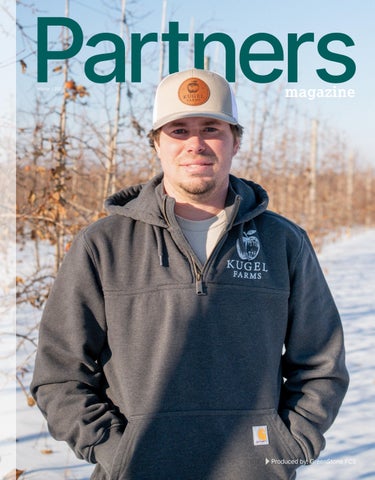
Grow At 19 years old, Greg Kugel knew he was ready to return home to the farm and has since played a key role in its fruit diversification.
3515 West Road East Lansing, MI 48823 800-444-3276 marketing@greenstonefcs.com
Winter contents 3 CEO Comments. Ring in the new year with a member update from President and CEO Travis Jones. 11 Market Outlook. The push and pull between political forces and the broader global economy leave many looking for positive gains. 23 Legislative Matters. It is good fortune when policy makers recognize the heavy investment our nation’s producers make to serve the population they lead with their legislative and regulatory responsibility. 24 PAC Progress. GreenStone’s voice for rural communities and agriculture is building relationships for your success! 25 Directors’ Perspective. Committees within the Board of Directors apply adequate focus on critical functions of the organization. Three committee Chairs share their perspective. 31 Guest Coumn. In Michigan, the elk season is undeniably a special, once-ina-lifetime quest. 32 DIY Interior Refresh. As the holiday magic and festivities wind down and the décor is put away, many of us find ourselves looking around and wondering how to refresh. 33 Post Holiday Mental Health. The holiday season brings warmth, connection, and celebration, but for many of us the weeks that follow can come with a wide mix of emotions.
39 Tax Feature. Effective tax planning and preparation is key when it comes to maximizing the efficiency of your farming operation. Here are ways you can productively plan for the year ahead to benefit your farm. 41 Tech Tip. While winter can be a quieter period for some operations, cyber risks don’t take time off — and many now arrive through the trusted partners and services we rely on every day.
8 Agriculture Blog Brief 9 CultivateGrowth Resources 14 Member News 14 Candid Comments 19 Behind the Scenes 20 Calendar of Events 26 Pause for Applause 30 Country Living Blog Brief 34 Commodity Cuisine... Apple Cider Braised Pork Shoulder 35 Crop Insurance News 36 Crop Insurance Calendar 40 Tax Calendar
Publisher’s Note: As I write this, it’s the holiday season and I’m once again facing a pile of deadlines. Yearend deadlines for finalizing 2025 business and budgeting for 2026, holiday deadlines for gift purchases and meal preparations, project deadlines for many priorities including an all new website nearing completion, and party deadlines for our family birthdays that flank the holidays along with the slew of family and friend Christmas parties. Add in an office move and a few unexpected twists to what I thought was a well thought out approach, and my pile feels more like a mountain to climb some days – and I know I’m not alone! I’m not suggesting my experience reaches the level of yours; deadlines hit each of us differently and the circumstances around them paint a much different scene for everyone. But what I can say – deadlines do make things happen. The items I noted above need to happen one way or another, and without deadlines, would I still be sitting here pondering the same decisions six months from now? The same can be said for our customers featured in this issue of the magazine. Health challenges made finding a more adaptive space for their daughter a priority, resulting in an exciting new home construction for the Keslers, on page 27. For Zach Birenbaum on page 37, his deadline came when he was presented the opportunity to lease land and jump back into farming, securing his decision with crop insurance. The cut off point for Greg Kugel was the caveat of needing to be profitable as a new farmer to secure his spot on the family farm, found on page 5. While just three of our 29,000 members stories, they showcase that we can each name the “deadlines” where pivotal decisions made an impact on our lives. In this spirit, let’s start planning now – beginning with signing up for the selection of educational events outlined on page 18 which we will be hosting and supporting over the next few months. As your climb into the next season of deadlines and targets, may the knowledge and insight gained – including by reading this issue of Partners – help lower the elevation of your deadline peaks. Happy reading, and Happy New Year! Melissa
CEO comments
Winter Update Time just seems to fly by for me. Today I attended a luncheon to celebrate the retirement of a teammate that I have worked with for nearly 32 years, both at GreenStone and our previous employer. I just get amazed when I think about how fast my children have grown, my grandchildren are growing, and how quickly years go by in my career. I’m sure you all feel the same on some days. With our time continuing to fly by, I hope you were able to take time to relax and spend time with your family this last month, and had a Merry Christmas and happy holidays.
3
Partners Magazine
Your association’s diversification continues to allow us to be a dependable and competitive source of credit during all phases of an agriculture cycle. Association Update Your association continues to perform very well financially. GreenStone exceeded its targeted net income for 2025 with approximately $265 million of net income. As a result, during our Board of Directors meeting in early December, the Board approved a $5 million increase to our Patronage to be paid in March of 2026. The payment will be a record dividend payment of $125 million! Our total cash Patronage paid over the last 21 years is now over $1.2 billion. The average amount paid back to our members as a percentage of your loan balance will be slightly more than 1%. What other financial institutions are able to do that for their customers? Our Patronage program continues to be an outstanding benefit our cooperative provides to its member-owners. Industry Update As with all years, our members’ profitability will depend on many factors. In 2026, the commodities being raised will be a very big factor and as always, so will the cash prices received at the time of sale. For example, while wheat prices continue to be very challenged, corn and soybean prices have seen somewhat of an uptick from early November to early December. The soybean increase may have come a little late for 2025 but the small win in corn was timed better. In either case, both increases should help with 2026 marketing. Your association’s diversification continues to allow us to be a dependable and competitive source of credit during all phases of an agriculture cycle. If your financial projections show your cash flow getting tight, please make sure you are talking to your GreenStone financial services officer sooner rather
than later. We have been through these cycles before and given adequate time and transparent communication, we can help you with strategies to navigate the financial challenges you are facing. Nominating Committee I recently was able to spend a little time with Nominating Committee members from regions one, two, three, six and seven before they worked on their nominee list for next year’s Committee. Committee members from regions four and five met in late August and early October to finalize their nominations for the GreenStone Board elections taking place after our Annual Meeting in 2026. The governance of your cooperative does not work without members willing to spend time on our Nominating Committee and Board of Directors. Thank you to all our members that are currently serving or previously served on the Nominating Committee or board. Cheryl Motz, senior executive assistant to the CEO, does an outstanding job leading our governance process. If you are interested in serving on the Nominating Committee or Board of Directors, please contact Cheryl at cheryl.motz@ greenstonefcs.com or (517) 332-9557.
transformation, data management, AI and innovation, our technology collaborations and the overall technology experience for our employees and customers. Brett will oversee all information technology operations and strategic initiatives, ensuring continued support and advancement for GreenStone. Brett has been with GreenStone for more than 11 years and most recently served as GreenStone’s Senior VP of Application Services. We are lucky to have Steve remain on the executive team as a strategic advisor until his retirement on February 3rd. Brett is going to do a great job for us and Steve will certainly be missed. Please join me in congratulating both Brett and Steve. As always, thank you for feeding me, my family, our country, and the world, and thank you for your membership and commitment to GreenStone! Please reach out to me any time I can be of assistance. ◀
Leadership Update In October we announced that Brett Dutcher would be taking over for Steve Junglas as our new executive vice president and chief information officer. Brett will play a crucial role in shaping and implementing our information technology strategy, ensuring it aligns with GreenStone’s overall business plan and organizational direction. His focus areas will include information services infrastructure, cybersecurity, digital
Travis D. Jones
517-318-4144 travis.jones@greenstonefcs.com Partners Magazine
4
5
Partners Magazine / Grow
CultivateGrowth customer feature
THE REWARD OF TAKING A RISK Kugel Farms Greg Kugel is no stranger to taking risks. At 19 years old, when he expressed interest in coming back to the family cash crop farm after being away at college and working as sales rep for a crop inputs company, Greg’s dad, John, agreed but under one condition: Greg would take on farming a few acres of his own. John told him if he could make a profit, he could leave college and return to the farm full-time. Realizing a Dream
Greg had worked on the farm growing up, but while he was in college recognized his calling had always been farming. “Working in an office made me realize that when it comes to what I do every day, ten out of ten times I’d rather be in the tractor,” said Greg. “For me that’s what is the most rewarding and what I look forward to.” Greg’s parents always encouraged him to return to the family farm after completing a college degree. Seeing his desire to build on the family legacy, yet recognizing the challenges that would lay ahead, John, who had taken over a few acres of grain for some neighboring farms at the time, challenged Greg to farm a few acres of grain on his own.
“That was one of the wettest years on record,” Greg laughed as he recalled that first year he was responsible for farming his own land. Despite the challenges he faced his first season, Greg made a profit! “After that season, I was ready to pursue farming full time, but I knew I would have to bring something new to the table. I didn’t just want to be another person for the farm to payroll- I wanted to bring in an additional revenue stream to help the farm expand,” said Greg. A New Direction
Kugel Farms started as a fruit farm nearly a century ago, growing a wide variety of produce. Located in Berrien Springs, Mich, the farm was founded in 1930 by Greg’s great grandfather Grover Kugel who purchased the original 80 acres. Only 15 miles off the coast of Lake Michigan, the farm’s soil and climate provide ideal conditions for growing fruit. Today, the farm spans over 225 acres, and has transitioned its focus from mostly tart cherries to grapes, peaches, and over sixteen varieties of apples.
I didn’t just want to be another person for the farm to payrollI wanted to bring in an additional revenue stream to help the farm expand.
“When I came back to the farm, a neighbor
◀ Greg Kugel stands with VP of Lending Jeffrey Ginter in one of the farm’s expansive apple orchards that cover over 225 acres.
Grow / Partners Magazine
6
approached me about renting out some apple orchards,” said Greg.
turned out to be one of the tickets to his success.
profitable source of income for the farm.”
The farm began selling their produce wholesale, but Greg had a vision to sell to the fresh market as well. “I grew up around other producers who were selling at local farmer’s markets, and that’s what gave me the idea to start getting our fruit in front of customers so they could enjoy the farm fresh produce we were proud of growing.”
Despite the uncertainty, Greg prepared all spring for the farm’s first trip to the farmers’ market. Only a little over an hour and half away, Chicago is home to dozens of farmers’ market locations that host thousands of vendors and customers weekly.
Supported for Growth
“That’s when I got the idea to start travelling to the Chicago Farmers’ Markets,” Greg said. “I really started pushing for this idea in January of 2020, and then two months later the pandemic was in full swing.” What seemed like a possible roadblock in Greg’s plans
“Farmers’ markets were one of the only places people could still gather during the pandemic because they were outside, so we saw massive success that first year we started making trips to Chicago each week. I think people were just so anxious to go somewhere and be outside. We sold out the first trip we took there, and that’s when I realized this could be a really
Greg and several of the farm’s full-time employees started making multiple trips to the Chicago Farmers’ Markets each week, putting them on a path of rapid growth over the next few years. At that point, Greg recognized his need for not only financial support, but industry expertise as his farming operations continued to grow. “That’s when I reached out to GreenStone, and they introduced me to Jeff Ginter,” said Greg, referring to the vice president of lending who works out of GreenStone’s Berrien Springs
◀ Greg is hands on in his operation, from pruning trees in the winter to loading up the box truck full of fruit in the summer to take down to the farmers’ markets in Chicago.
7
Partners Magazine / Grow
When I really started growing, I needed a loan to help me make upgrades to my equipment and help with operating expenses. branch. “I’ve been working with Jeff since the beginning. When I really started growing, I needed a loan to help me make upgrades to my equipment and help with operating expenses. Jeff knew exactly what kind of operating note I was going to need and walked me through every step of the loan process and everything I needed to know like the interest rate and structure of my loans.” “When I first started working with Greg, he had just started farming on his own and had big ideas of what he wanted to achieve within his first five years farming. When he started going to the Chicago Farmers’ Markets, he came to GreenStone seeking financial support, and I was excited to start working with him to help set him up for success,” said Jeff. “I’ve loved working with Greg because he truly has a passion for what he does, and he has so much energy. It’s really rewarding for me to work with younger farmers who are just starting out because I enjoy watching them succeed and seeing their operations grow over time.” “I really had to lean on Jeff to determine what I needed to operate and upgrade to still make the operation profitable. I would consider Jeff a vital part of what I do. I know I can text him anytime and he’s always there to answer my questions.” As the demand for fresh produce at Kugel’s Farms stand continued to grow, Greg also realized he needed assistance with keeping his farm’s books up to date and turned to GreenStone again for support with
tax and accounting services. “I began to realize how valuable my time was, and having professional support even with something you might be able to do yourself is worth it for the time you can put back into your operation.” The Power of Starting Today
During the busy farmers’ market season, which usually runs from the end of May through the end of October, Greg loads up a box truck full of fresh produce including a variety of apples, berries, peaches, tomatoes, and other vegetables and makes a trip to the Chicago Farmers’ Markets three times a week. He has gained a large following of regular customers that he looks forward to seeing each week. “To me, it’s really rewarding to share the product we grow ourselves with people who are excited about it,” said Greg. Greg now farms 50 acres of his own land, harvesting about 40 acres of apple varieties, and 10 acres of other seasonal produce to take with him to the markets. “My advice for a young farmer who is just starting out? I would say if you are willing to learn, there is always someone out there who is willing to help. In farming, there are plenty of people who want to see the next generation succeed and are willing to help you get started,” Greg said. “Don’t worry about being too young or not having enough experience. The sooner you start, the more you can learn, and the more experience you can gain yourself!” ◀
Agriculture – Photo of trees, bins of fruit or other Open Fields Blog visual interest from the farm.
GreenStone publishes regular updates on our Open Fields blog. Check out some of the posts you may have missed at www.greenstonefcs.com/ openfieldsblog.
Becoming a Farmer with CultivateGrowth Grant Support When their local stores had limits on how much protein they could buy, they decided to start their own farm, Fluffy Butt Farms. A Smart Time to Invest? Navigating Today’s Equipment Market After years of unpredictable swings, the farm equipment market is beginning to rebalance. Facing the Curve “We were hoping to get someone to come alongside us so we could ask and bounce the questions off of,” Anthony noted, referring to GreenStone’s CultivateGrowth mentorship program. How to Avoid a March 1 Filing Tax Deadline this Year | GreenStone FCS Many farmers operate under the common misconception that all farm income tax returns are due by March 1 each year. ◀
Grow / Partners Magazine
8
CultivateGrowth resources
A new season of support! Grants for the Next Generation! At GreenStone, we understand farming and logging are about more than just planting and harvesting—they’re about growing the next generation of producers. That’s why we’re excited to kick off the 2026 CultivateGrowth grants, designed for young, beginning, and small farmers, urban producers, and timbermen ready to advance their education and operation. Whether you’re starting fresh or building on a family legacy, we know today’s industry is tough. Our grants provide financial support and access to resources like farm consultations, industry events, and GreenStone’s tax and accounting services to help you make informed decisions and set your operation up for success. Grant Details: Since 2018, the cooperative has reimbursed nearly $100,000 of agriculture-related education costs through the grant program. Again in 2026, GreenStone is providing up to $1,000 for GreenStone members and up to $500 for non-members who qualify as a young, beginning or small farmer or timbermen.
9
Eligibility: • Young, beginning or small farmer: - 18-35 years of age, or - Farming for less than 10 years, or - Sustain annual gross sales from agricultural production of less than $350,000 • Must be eligible to be a member of GreenStone, residing in Michigan or northeast Wisconsin Intended grant use must fall within one of the following categories: • Agricultural or timber-related programs/events: educational course/program (on-site or online), conference fees, etc. • GreenStone resources: first time use of accounting, payroll and tax services. • Non-GreenStone services: business and farm consultants, etc. Interested in applying? Dollars are awarded on a first-come, first-serve basis so don’t wait to apply. Visit greenstonefcs. com/grants for more information. Resources Tailored to You GreenStone’s CultivateGrowth Program offers a range of
Partners Magazine / Grow
tailored resources designed to support individuals who may not meet traditional loan underwriting requirements. This includes specialized internal loan programs with relaxed underwriting guidelines, educational opportunities, and grants. One key component is our Emerging Loan Program, which focuses on smaller relationships and integrates an educational track. Members can complete a series of activities to earn points, and upon completion, receive a rate reduction rewarding their commitment to learning and growth. Learn more by visiting greenstonefcs.com/resources/ cultivategrowth Register Today for our CultivateGrowth Conference! The fourth annual CultivateGrowth Conference is scheduled for March 12-13, 2026. This year’s event will feature keynote speaker Rob Sharkey, along with breakout sessions and financial workshops designed to inspire and provide valuable information and networking. Registration is free, but space is limited so be sure to register early. If you are not currently a member and are interested in attending, please reach out
to your local branch for more information. Learn more by visiting www. greenstonefcs.com/conference or scanning the QR code below.
Another YBSF Resource The Beginning Farmer Resource and Decision-Making Guide is now available from MSU Extension and USDA. GreenStone has proudly assisted in the development of the Beginning Farmer Resource and Decision-Making Guide which provides a pathway to resources a new farmer or decision-maker may need to get started and support their production journey. The decision-making guide gives farmers an introduction to important farming topics and directs them to education and tools on how to connect with agricultural partners. View the guide here: canr. msu.edu/resources/beginningfarmer-resource-and-decisionmaking-guide. ◀
Grow / Partners Magazine
10
Market outlook
Looking for Progress BY: GARRETT ANDERSON, Regional Credit Manager and EMILY BLOCHER, Credit Analyst
11
Partners Magazine / Grow
The United States recently passed a bill to move past the longest government shutdown on record. Late on the night of November 12, the house passed the bill with a 222-209 vote to overcome budgetary disagreement and fund the government after 43 days. Points of contention existed between republicans and democrats regarding premium tax credits issued under the Affordable Care Act to reduce health care premiums which were enacted as an emergency during the pandemic. The inability to come to an
agreement led to air travel delays, SNAP benefit issues, and federal office closures, including at the USDA. The bill passed and extended the 2018 Farm Bill for another year. Many farm families depend on the Farm Bill and the USDA for farm loan programs. The USDA had limited staffing during the shutdown which stopped direct loan funding and guarantee agreements and severely limited Commodity Credit Corporation (CCC) loan approval. The bill approval included funding for the USDA through 2025 and 2026.
Although the legislature continued to meet during the government shutdown, policymaking was more difficult following the recent closures of governmental statistical agencies, such as the Bureau of Labor Statistics, which the Fed relies on for key economic data. Despite the delays, recent indicators have shown the U.S. economy is slowing. Private sector layoffs increased and job growth slowed in July and August with just 68,000 jobs added between the two months. The September jobs report did deliver good news with 119,000 jobs added, but July and August’s figures were
revised downward with the new data. In total, the unemployment rate ticked higher to 4.4% based on the new information. During the most recent December 9 and 10 meeting, the Fed elected to cut its target range for the federal funds rate by 25 basis points to 3.50% to 3.75%. This followed similar cuts of 25 basis points in September and October which brought total cuts to 1.75% since the Fed started cutting rates in September 2024. The rate cuts were attributable to a combination of a weakening labor market and concerns about a slowing economy.
While most media coverage was devoted to the government shutdown, key changes in tariff negotiations tested commodity prices through U.S. and China negotiations.
While most media coverage was devoted to the government shutdown, key changes in tariff negotiations tested commodity prices through U.S. and China negotiations. Soybeans are the United States’ largest agricultural export, with China being the main buyer. As President Trump worked through trade negotiations, China elected to forego all soybean purchases up until the end of October. As of October 30, China agreed to a 12 million metric ton purchase by the end of 2025 and at least 25 million tons annually for the next three years. Soybean futures markets did respond positively to the news with a rally of more than one dollar, but the net result remains an overall decrease in exports to China of roughly 30% with continued trade negotiations needed between the two countries. Corn & Soybeans
The most recent 2025/26 soybean outlook was unchanged from the November WASDE report with lower beginning stocks and production, reduced crush, slightly higher exports, and lower ending stocks. Production is forecast at 53 bushels per acre, down .5 bushels, for total production of 4.3 billion bushels. This is down 48 million bushels based on lower yields. Futures price for soybeans did increase to $11 per bushel after the agreement with China was established, however the resulting cash price is still below break-even for many U.S. producers. Based on the December WASDE report, the 2025/26 U.S. corn
outlook is for greater exports and lower ending stocks. During November, data shows strong foreign demand and implies total shipments during SeptemberNovember will likely exceed 800 million bushels. The season average corn price received by producers remains unchanged at $4 per bushel. President Trump announced the new Farmer Bridge Assistance (FBA) Program on December 8, which is intended to provide much needed financial assistance to U.S. row crop farmers. This $12 billion program will provide producers with a one-time payment to be paid out in February of 2026. Farmers will be able to apply for aid within the next month. Dairy
Above average profitability in 2024 and through most of 2025 have led to an increase in dairy production, both in terms of increased yields and an increase in the national herd size. Through October, total milk production was up 3.7% year-over-year, and the total herd size was up 208,000 head from the same time in 2024, up to 9,575,000 cows. Despite a 6,000 head drop in total cow numbers from September to October, cow numbers are at their highest levels since 1993, despite scarce replacement heifers. Slaughter volume is rising, but rates remain 4.2%, or 98,000 head, below 2024 and 16.2%, or 434,000 head, under the three-year average. Strong cattle markets are driving the decision for producers to breed for crossbred calves. The
Grow / Partners Magazine
12
additional profits from these calf sales are driving the decision to keep cows another lactation that may not break even based solely on milk production. According to the Pennsylvania weekly cattle auction summary in midNovember, one day old dairybeef calf prices averaged $1,388 per head. In addition to the increased production in the U.S., Europe and New Zealand have also increased their total milk production, resulting in more competition for exports and pushing dairy prices lower. Throughout a good portion of 2025, the U.S. was able to clear record amounts of cheese and butter products through export markets. Lower U.S. prices for both are expected to keep the US competitive in the export market, which will continue to play a large role in moving the large milk supply. After another year of positive margins in 2025, milk production is expected to continue to grow. This increased production will likely push prices lower, and U.S. dairy margins are forecast to contract going into 2026. As of the beginning of December, Class III milk futures for 2026 average $16.75 and Class IV milk futures average $15. Producers are well positioned for a downturn in milk prices with historically strong balance sheets and working capital positions. New facilities, low feed costs, high beef revenue, and risk management programs will likely slow the transition from expansion to contraction. Pork
The typical fall trend for market hog prices is a strong seasonal downtrend and often resulting in operating losses, with fourth quarter of 2024 being a recent notable exception. However, truer to form, fourth quarter of 2025 negotiated cash market hog prices have fallen sharply during the quarter, and to levels below 13
2024 and closer to the prior five-year average. Increasing live market hog weights this quarter are also typical due to cooler weather and new crop corn, but fourth quarter sale weights have been significantly above year-ago and five-year average weights and are putting downward pressure on market hog prices. In contrast, while the CME Lean Hog Index has fallen steadily since its strong run throughout the second and third quarters, and 2025 peak at over $112 per lean hundredweight, it remains much closer (within 3%) of yearago levels as of early December but very near its 12-month low of just over $80 per lean hundredweight. While also falling from its summer highs, the Pork Cut-Out wholesale pork composite value is the most stable performing of the price measures. As of early December, the Cut-Out price is roughly $94 per lean hundredweight. As producer contracts may be based upon various price indices including the above and nearby futures contract prices, or weighted-average combinations thereof, there is now a wide range of prices received by farmers per head and fourth quarter expected profits or losses along with the increasing feed cost trend. While producer profit margin opportunities for the fourth quarter in 2025 and into 2026 have diminished during this quarter, for most producers that experienced good herd health in 2025, 2025 should be a period of strong earnings and replenishment of working capital. The outlook for profits in 2026 is still historically good at prevailing commodity futures prices as well. The latest USDA Hog and Pigs report shows the U.S. sow herd down 2% from a year ago, farrowing intentions slightly lower, and no significant expansion expected in pork production for next year, which is supportive to producer prices and margins outlook. ◀
Partners Magazine / Grow
After another year of positive margins in 2025, milk production is expected to continue to grow. This increased production will likely push prices lower, and U.S. dairy margins are forecast to contract going into 2026.
Winter member news
Candid Comments... “ Thank you for your support as we work to end hunger in America. Thanks to your support, we’re helping neighbors put meals on the table and find renewed hope. With your commitment we are ready to serve 53 million people seeking food assistance, and I’m so grateful.” – Linda Nageotte, President and Chief Operating Officer, Feeding America
GreenStone Invests in Agricultural Education by Supporting Farm Bureau Pavilion Expansion at Michigan State University The concourse of the Farm Bureau Pavilion at Michigan State University has been officially renamed the GreenStone Farm Credit Services Concourse in recognition of GreenStone’s support of the future expansion of the Farm Bureau Pavillion. The high-traffic venue hosts more than 100 agricultural, youth and commercial events annually welcoming over 100,000 visitors each year and contributes more than $7 million to the local economy. “The GreenStone Farm Credit Services Concourse reflects more than our name. It represents over a century of
service and financial support to our rural communities,” said GreenStone President and CEO Travis Jones. “We’re incredibly proud to continue our partnership with College of Agriculture and Natural Resources (CANR). We are honored to be a part of a space with such a robust history of community partnership and connection to agriculture.”
“ Through the support of civic minded people like you, MSAH is able to create linkages between donors of wild game, wild game processors, and charities that feed the hungry in our state who seek assistance. ” – Michigan Sportsmen Against Hunger “ Thank you for sponsoring the Michigan FFA Association. Our chapter enjoys participating in FFA activities. We are thankful for your support so we are able to attend these events and meet new people.” – Haleigh Walkington, Saranac FFA Member
GreenStone’s naming of the concourse highlights its lasting commitment to Michigan agriculture, rural communities and its partnership with Michigan State University in advancing agricultural education and outreach. ◀
Connect / Partners Magazine
14
2026 Rooted Together Conference Recently announced by the Farm Women’s Symposium, the annual Rooted Together conference will be held on March 3-5, 2026 in Frankenmuth, Mich. at the Bavarian Inn Lodge. The event provides women opportunities for leadership and development, enhancing communication and management skills, building effective family teams, and developing a network of supportive friendships.
Be on the Lookout for Our New Website! GreenStone’s website is undergoing some exciting renovations! To further enhance your online experience with GreenStone we will soon be releasing an all new website. You can expect an updated and refreshed look, easier to find resources, and helpful information and tools to enhance your experience when visiting the new site. Along with the new website, our customer portal, My Access, and online banking app are getting a refreshed look while functionality on those online systems will remain the same.
Once live, you’ll continue to access our site at the same URL, greenstonefcs.com, where you’ll also continue to be able to login to your My Access account. We are excited to share this enhanced online experience with our members to continue providing you with valuable information and resources, and connect you with our team of experts. Please be on the lookout for our new website in the coming months! ◀
GreenStone is a long time partner of Farm Women’s Symposium and their emphasis on supporting and advancing all who are involved in agriculture. As part of that support, GreenStone is once again providing $150 scholarships toward the cost of registration for our members; be sure to indicate your branch on your registration form. Please visit the Farm Women’s Symposium website for more details and to register: www. farmwomenssymposium.org. ◀
Wisconsin & U.P. Deer Challenge Winners Congratulations to everyone who harvested a deer this season and thank you to the over 160 participants who entered our 2025 Deer Challenge. With a record-breaking number of entries, we hope a great hunting season was had by all! Here’s a few of the top winners from this year’s Deer Challenge: Big Buck Contest: 1. Logan Windorski – Wittenberg, Wis. - score of 37.5 – 15 points 2. Penny Jandrin – Algoma, Wis. – score of 37 – 13 points 3. Travis Mlodik – Wittenberg, Wis. – score of 32.675 – 10 points Junior Hunters: Ages 17 and under 1. Alyssa Bouche – Luxemburg, Wis. – score of 33.25 – 12 points 2. Maxton Knapp – Tomah, Wis. – score of 31 – 12 points ◀
15
Partners Magazine / Connect
GreenStone Announces New Chief Information Officer Brett Dutcher, Steve Junglas to Retire After 22 Years of Service GreenStone is pleased to announce Brett Dutcher as its new executive vice president and chief information officer. Brett began his new role on November 1, 2025.
Brett Dutcher, New Executive Vice President & Chief Information Officer
Steve Junglas, Retiring Executive Vice President & Chief Information Officer
Brett succeeds Steve Junglas in the role, who will retire on February 3, 2026 after 22 years of dedicated service with GreenStone. Throughout his tenure at GreenStone, Steve played a key role in leading GreenStone’s technology initiatives and large-scale projects contributing to the organization’s continued growth. “I’ve learned that technology may run on code, but progress runs on people. Over the years, I’ve seen firsthand the best solutions don’t start with hardware, software, or budgets—they start with listening, collaboration, and a shared commitment to doing what’s right for our customers and each other,” Steve said. “The most valuable breakthroughs weren’t always the flashiest systems, but the moments when teams aligned around a vision and turned challenges into opportunities.” In his new role, Brett will continue where Steve left off, overseeing all information technology operations and strategic initiatives, ensuring continued support and advancement for GreenStone. “I look forward to shaping GreenStone’s long-term technology strategy and ensuring our systems and capabilities evolve in support of our mission. This includes guiding the organization through the rapidly changing world of AI, which is becoming one of the most transformative technologies in the marketplace,” Brett said. “Steve
has reinforced the importance of fostering collaboration and building strong cross functional teams. He always focused on bringing people together early, openly, and often, which leads to better decisions and more sustainable results. His approach to communication, partnership, and alignment has been invaluable during my transition and will continue to shape how I lead and support our teams moving forward.”
“I’m excited to watch Brett take the reins and put his own stamp on the organization. He brings a fresh perspective, and I’m confident he’ll continue pushing technology to be an even stronger driver of our business strategy,” Steve explained. “He will accelerate our progress in areas like data-driven decisionmaking, automation, and creating more seamless digital experiences for both employees and customers.”
Bringing progressive experience in information systems, Brett most recently served as GreenStone’s senior vice president of application services. Beginning his tenure more than 10 years ago at GreenStone as a quality assurance analyst, he also served as an application systems analyst before joining the cooperative’s leadership team as an information technology manager. He holds a bachelor’s degree in information systems from Central Michigan University.
After 22 years of service to GreenStone, Steve is looking forward to a well-deserved retirement. “I’m looking forward to slowing my pace just enough to fully enjoy the people and passions that have always been there in the background while work took center stage. I’m looking forward to spending more time with my family, which is at the top of the list and diving into the hobbies that have patiently waited their turn!” ◀
I look forward to shaping GreenStone’s long-term technology strategy and ensuring our systems and capabilities evolve in support of our mission.
Connect / Partners Magazine
16
Annual Report Notice
GreenStone Educational Scholarships Available! GreenStone is committed to supporting the agriculture industry’s future leaders and is happy to once again award scholarships to both incoming college freshmen and upper classmen pursuing a degree in an agriculture-related field. From farming, to agribusiness, timber, natural resources and more, all students are encouraged to apply now! Incoming freshman planning to earn a four-year degree are eligible for a scholarship of $2,000, while incoming freshman attending a two-
year college program are eligible for a $1,000 scholarship. In addition, GreenStone also offers $5,000 scholarships to current college freshmen, sophomores, and juniors pursuing a degree in agriculture, natural resources and timber related fields. Applications are now being accepted for both programs. For complete program guidelines and applications, visit greenstonefcs.com/scholarships. Application deadline for both scholarships is March 1, 2026. ◀
The 2025 GreenStone Farm Credit Services annual report will be available for viewing online at www.greenstonefcs. com by Monday, March 16, 2026. In addition, the annual report will be mailed to all stockholders within 90 days of year-end. By regulation, GreenStone is required to send a copy to each stockholder regardless of if it is a duplicate mail or email address. ◀ Positive Pay To maintain industry security standards and better protect our members from fraud, GreenStone has migrated to a new vendor that offers Payee Positive Pay in addition to the check amount. The Payee Positive Pay service provides an extra layer of security to your draft clearing and ensures peace of mind by verifying payee information and the check amount before your draft clears. This feature will help prevent whitewashing or giving fraudsters the ability to write themselves in on the draft as the payee, which is the most common type of draft fraud, or changing the check amount. To provide our members with the most current industry security standards, a $100 monthly fee will be charged to our customers for our Payee Positive Pay services. However, GreenStone will be providing the first three months of Payee Positive Pay from our new vendor free of charge so you can experience the benefits of this new service. If you are interested in enrolling or have any questions on Payee Positive Pay, please don’t hesitate to reach out to your local branch! ◀
17
Partners Magazine / Connect
2026 Educational Opportunities construction loan experts about various loan options, qualifications, the payment draw process and the difference between do-ityourself and contracted projects. Construction seminars are free to attend but registration is required. To register, visit www.greenstonefcs.com/ constructionseminar. Dairy Connect Event
Crop Summit GreenStone Connect Reception Please join us for GreenStone’s annual Connect Reception at the Great Lakes Crop Summit! All GreenStone members and guests are invited to attend the Connect Reception whether you are registered to attend the Conference or not. Where: Exhibit Hall, Soaring Eagle Casino and Resort, Mt. Pleasant, Mich. When: Tuesday, January 27, 2026, 5:00 – 6:00 p.m. Our team of lending experts and crop insurance specialists would be happy to connect with you about the best solutions for your unique operation! Great Lakes Regional Dairy Conference GreenStone Connect Reception Please join us for GreenStone’s annual Connect Reception at the Great Lakes Regional Dairy Conference! All GreenStone members and guests are invited to attend the Connect Reception whether you are registered to attend the Conference or not.
Where: Saginaw Room, Soaring Eagle Casino and Resort, Mt. Pleasant, Mich. When: Thursday, February 5, 2026, 5:30 – 7:00 p.m. Our team of lending experts would be happy to connect with you about the best solutions for your unique operation! Home Construction Seminars Whether you’re just beginning to explore the home building process, or you’ve already laid out your plans, navigating the numerous choices can be a daunting task. We are here to help you each step of the way. To guide you through this intricate process and empower you with the knowledge needed to make informed decisions, we extend a warm invitation to join one of GreenStone’s complimentary home construction seminars! Where: Various GreenStone Branches and Virtual Options When: Numerous options between February 17 - March 3, 2026 Hear from your local
Join GreenStone’s team to learn from experts about what’s new and next for the dairy industry. Attendees can expect to hear economic and dairy industry updates, learn about innovation and emerging technologies, and discover ways to build a top performing team. When: February 24, 2026, from 10:00 am -3:00 pm Where: Stadium View Event Hall, Green Bay, Wis. To register for the event visit: 2026 GreenStone Dairy Connect Registration and fill out the form. Producer Forums
and risk management. Regional meetings will be held from 8:30 a.m. to 1:00 p.m. and include a complimentary breakfast and lunch. Producer Forums are free to attend and will take place at four Michigan locations. Registration is required. To registervisit, www.greenstonefcs.com/ constructionseminar. Timber Forums GreenStone recognizes the importance of the timber industry and the continued education of the loggers in the industry. In a continued effort to support timber professionals and provide opportunities for them to expand their knowledge while completing their essential Sustainable Forestry Initiative (SFI) trainings, GreenStone is once again hosting Timber Forums in March 2026. These free trainings will cover forestry programs and mass timber construction, estate planning, legislative updates, and other timber industry updates.
GreenStone is launching its 2026 Producer Forums—a series of educational events designed to help farmers plan strategically for the year ahead. Developed in collaboration with industry experts, these meetings provide timely insights, practical tools, and trusted resources to support informed decision-making and long-term success.
When: Monday, March 16 8:00 a.m. to 1:00 p.m. EST
Each forum will cover key topics including market outlooks, financial solutions, succession planning, bookkeeping best practices,
There is no cost to attend, however registration is required. For more details, visit www.greenstonefcs.com/ TimberForums. ◀
Where: Island Resort and Casino in Harris, Mich. When: Thursday, March 19 8:00 a.m. to 1:00 p.m. EST Where: Treetops Resort in Gaylord, Mich. Running from 8:00 a.m. to 1:00 p.m. EST, both forums will include complimentary breakfast and lunch.
Connect / Partners Magazine
18
Behind the Scenes: Get to know a few members of GreenStone’s information services (IS) leadership team!
Duane Brown Director of Data, 8 years of service
What is your favorite part about your role? The best part of my role is finding ways to assist others or improve a process that makes someone’s day easier. Seeing the relief and appreciation on people’s faces when we resolve a pain point is what makes the work truly rewarding.
The best part of my role is finding ways to assist others or improve a process that makes someone’s day easier. What is something people might not know about GreenStone’s IS department? Many people don’t realize how specialized the IS department truly is. My role is within the Data and Analytics team, where we provide reports to the Board of Directors, executives, and the entire GreenStone organization. Within the Farm Credit System, strict regulations and internal controls must be followed, and we support these requirements to maintain compliance. Our team uses data to provide insights into our financial position and to help deliver the best possible customer experience. What is the most valuable lesson you’ve learned during your time with GreenStone? My most valuable lesson during my time in the IS department at GreenStone is having a purpose behind what we do. Many IS departments focus on what’s best for the business, but at GreenStone I understand the “why” behind the work and how it impacts revenue, customers or employees.
19
Partners Magazine / Connect
Josh Martin Service Desk Manager, 15 years of service
What is your favorite part about your role? I get the opportunity to lead the most incredible team that cares so deeply about our customers’ and users’ success. They are the reason I am so fulfilled in my role here at GreenStone!
Mark Your Calendar... January 14
DBA Dairy Strong Conference (14-15) Green Bay, Wis.
What is something people might not know about GreenStone’s IS department?
19
GreenStone Offices Closed in honor of Martin Luther King, Jr. Day
Our department has more than doubled in size since I started in 2010. We’ve steadily grown to meet the ever-evolving needs of GreenStone to provide the best service and value to our customers.
27
Great Lakes Crop Summit (27-28) Mount Pleasant, Mich., Booth #6
27
Winter Potato Conference (27-29) Grand Rapids, Mich., Booth #8
What is the most valuable lesson you’ve learned during your time with GreenStone? The relationships we build are the most important aspect to our success. A solid relationship leads to trust, and that trust allows everyone to not only be their authentic selves but empowers evolution and innovation to be the best at what we do.
The relationships we build are the most important aspect to our success. A solid relationship leads to trust, and that trust allows everyone to not only be their authentic selves but empowers evolution and innovation to be the best at what we do.
February 5
Great Lakes Regional Dairy (5-6) Conference – Mount Pleasant, Mich.
16
GreenStone Offices Closed in honor of Presidents’ Day
17
GreenStone Construction Seminars (2/17-3/3) – Various Locations
19
Outdoorama (19-22) Novi, Mich., Booth #5418
March 3
Rooted Together Conference (3-5) Frankenmuth, Mich.
4
Michigan FFA State Convention East Lansing, Mich. (4-6)
12
GreenStone CultivateGrowth Conference Lansing, Mich. (12-13)
12
Ultimate Sports Show (12-15) Grand Rapids, Mich., Booth #1056
16
GreenStone Logging Forum Escanaba, Mich.
18
GreenStone Patronage Day All Branches
19
GreenStone Logging Forum Gaylord, Mich.
Connect / Partners Magazine
20
The GreenStone stor y
A RecordBreaking $125 Million Back in Patronage This Year GreenStone will give back a record-breaking $125 million in Patronage returns to its members this year. Since the first Patronage Day 21 years ago, total dividends returned to GreenStone members will hit more than $1.2 billion dollars this coming March. As we prepare to celebrate our 21st Patronage Day, we are looking forward to returning a record-breaking $125 million back into the hands of our members. We recognize the essential role our members play in their communities, and GreenStone is proud to support the farmers, rural homeowners, and business owners who help put food on our tables, advance the future of agriculture, and contribute
21
their time and talents to making the rural communities we all are a part of a great place to live and work. As a cooperative, when our members are successful, we’re successful. Likewise, we recognize the challenges our members continue to face and that’s why we’re even more proud to be able to increase the dollars going back to our members in Patronage this year. No matter how you choose to use your return, we’re proud to see a record-breaking amount of $125 million go back to our hardworking members, and in turn, our communities. To celebrate 21 years of Patronage, we’ll be handing
Partners Magazine / Connect
out Patronage dividend checks to eligible loan customers on March 18, 2026! Each Patronage-earning member will receive a notification letter in mid-February outlining the amount of your check. That letter will include a personal invitation to join us for a celebration on March 18 at your local branch. Enjoy refreshments, a celebration of our members and the local communities we are a part of, and of course, the opportunity to pick up your check. Join us at your local GreenStone branch on March 18 to celebrate 21 years of Patronage and a recordbreaking $125 million back into the hands of our members! ◀
“W e look forward to returning a historic amount of $125 million in Patronage back to our members. The ripple effect of this milestone benefits not only our members, but the rural communities we are proud to serve as well.” – Travis Jones President & Chief Executive Officer
Connect / Partners Magazine
22
Legistlative matters
Planning, Planting, and Politics Agriculture “planning” may be defined as the strategic management of some everyday resources put in place for a very specialized use to serve mankind in a most beautiful way to sustain humanity. This might seem to be a dramatic definition, but without a fed population history has shown trouble often leads to conflict. Farmers serve utilizing the natural resources of land, water and sky with responsible productive measures with an eye toward innovation and efficiency. The planning starts it all anew by making any necessary adjustments from the previous year.
It is good fortune when policy makers recognize the heavy investment our nation’s producers make to serve the population they lead with their legislative and regulatory responsibility. When those leaders work to understand and support the needs of farmers and rural communities, we all benefit. Expressing gratitude for those leaders in politics is important to maintain the cycle of planning. This is both a collective and individual responsibility we shoulder together. The development of sound farm policy, whether in what we have come to expect in a Farm Bill, or independent stand-alone bills, can make, break, or cause a change in direction in both planning and planting. As your Farm Credit cooperative, GreenStone is also dependent on a functioning set of laws, regulations, and rules to fuel the engine of agriculture. We are grateful to those leaders across the spectrum that support the Farm Credit mission. Evaluating the actions of planning, planting, and politics with concepts of success in contrast with pitfalls that lead to failure should help us preserve solid footings for business success for our farms, families, and communities. A joint focus on connecting in some of these ways will create positive results (“precepts of success”): • Continuous improvement in small ways leads to big results • Perseverance to overcome any hardship • Purpose blending passion and skill • Openness to new ideas • Make progress over perfection • Build consensus, collaboration for action
23
Partners Magazine / Connect
• Patient with persistent effort • Financial order for peace of mind • Allowing failures to build the foundation to learning When weighed against the following fundamentals of failure, embracing the precepts of success and collaborating with likeminded people will help all of us in our mission to serve agriculture. The following should be considered to avoid (“failure points”): • Ignore market needs • Insufficient investment and not understanding costs and markets • Rushing decisions • Perfection paralysis rather than progressing • Expecting instant results • Thinking you know it all without an open mind to learn • Giving up upon suffering discomfort • Focusing on fame rather than value Successful agriculture has been led with the precepts of success, and we should look to leaders who share these precepts in the planning, planting, and politics in our agriculture practices. There is a lot of activity and constant work with shadows of worry about hurdles, distractions, and naysayers. Considering agriculture should be intelligently viewed as the bedrock of civilization providing food, wealth, and health as farmers steward the earth, let’s ring the bells in celebration of our collective successes and lead to assurance of great future results. As Will Rogers said, “The farmer has to be optimistic, or he wouldn’t still be a farmer.” Sharing in that optimism with hard work in planning, planting and politics is part of the job to achieve the mission and keep moving in a positive future. ◀
PAC progress
GreenStone’s voice for rural communities and agriculture is building relationships for your success!
Your MI GreenStone PAC and WI Farm Credit PAC had a successful 2025. Disbursements were completed with meetings and checks being delivered to both Senate, House of Representatives, and Assembly legislators! The meetings were productive as connections were made and conversations revolved around how farmer-members and the GreenStone cooperative are doing. At the Federal level, the legislative activities have been ever changing with regards to the Farm Bill as the priorities and attention of Congress change. The Farm Credit System, through individual associations and the Farm Credit Council, continues to remain dedicated to advocating for the Farm Bill reauthorization. In November, the Farm Credit System came together to host a Farm Credit Marketplace with customer products. The event
is very popular with staff and members of Congress and allows for conversations about the farm and rural economy while agricultural products are put in their hands. For GreenStone, we placed dried cherries and cheese curds in attendee hands and talked about food processing requirements and Farm Bill implications. This brings business and personal connections that will continue to be built upon. Change can take time, and GreenStone remains focused on building relationships and strengthening the recognition of our members, communities, and industry. Thank you for your commitment as none of this would be possible without your engagement to raise legislative awareness of rural communities, agriculture, GreenStone, and the Farm Credit System. ◀
The MI GreenStone PAC and WI Farm Credit PAC Drives are going on now! Be involved in supporting the future of rural communities and agriculture! Send your voluntary Patronage pledge before Jan. 31 to direct dollars from your Patronage check to the PAC; or you can make a direct contribution to the PAC at any time by credit card. Join hundreds of your fellow members in strengthening the recognition of agriculture as a key component to a thriving economy.
MI PAC Donation
WI PAC Donation
Connect / Partners Magazine
24
Directors’ perspectiv e
A Seat at the Table As a member-owned cooperative, GreenStone is governed by members who have a vested interest in seeing GreenStone continue its successful mission of serving rural communities and agriculture. In that role, six committees have been established within the Board of Directors to apply adequate focus on critical functions of the organization. These committees work with the leadership team to ensure the cooperative remains financially strong, adaptive to trends and industry advancements, aligned with regulations, and responsible to both members and employee expectations. GreenStone’s Board of Directors now has six committees: Audit, Finance, Technology, Executive, Compensation, and Legislative and Public Policy. The first trio of committees are further highlighted here through the perspective of the committee chairs to bring awareness to our members on the strategic structure and focus of your cooperative’s governance and leadership.
25
Partners Magazine / Connect
Audit Committee: By Paul Lindow, Appointed Director and Committee Chair GreenStone’s Audit Committee of the Board of Directors is a required Board Committee by the Farm Credit Administration (FCA). The primary function of Audit Committee is to provide oversight and assurance of the financial reporting process, the system of internal control, the audit process (internal audit and external audit), along with the process for monitoring compliance with laws and regulations, the standards of conduct, and their code of ethics. The committee consists of four directors, one of which must be an outside (appointed) director. While each committee member must be financially literate with knowledge in either finance, financial reporting or accounting procedures, one member shall be designated by the board as the “financial expert”. In fulfilling these responsibilities, the Audit Committee provides immense value by ensuring financial integrity, managing risk and strengthening corporate governance. In my role as the Chair of the Audit Committee, I
also serve as the financial expert and in leading this committee, act as a crucial link between management, external auditors, and the board. Additionally, I work closely with the other committees to establish agenda topics and areas of focus - including any emerging issues related to risk, controls, and financial reporting. As part of our periodic meetings, GreenStone management from internal audit, credit review, credit administration, technology, information security, and finance regularly attend to provide detailed updates on their activities. Given the importance of the Audit Committee for GreenStone, the FCA, and across the System, the responsibilities and areas of focus will continue to evolve as well as the expectations of the members serving in the committee. Finance Committee: By Trent Hilding, Montcalm County Director and Committee Chair The purpose of the Finance Committee is to give the board updates on the status of the economy, interest rates, trends, financial results, health of GreenStone’s finances, budget, and balance sheet. We play a vital role in reviewing the health of the organization and continuing to ask important questions on the financial numbers and results in the business. Our role is to keep the board and members informed of changes, risks, and trends that impact the overall business so we can plan healthy growth. The Finance Committee has an important role, which is complimented by the Audit Committee with their role on validating the business financials and regulatory scrutiny. In addition to the responsibility of the Finance Committee, the members also serve on the newly established Technology Committee. Although two separate committees with split tasks for each, the members are consistent for each to ensure transparency and alignment between the two. The board tends to ensure members can rotate to get a full vision and understanding of each committee’s
responsibility and to get a feel for the executive staff involved in each committee, while aligning board members with committees they have appropriate talents to contribute to. Committees play a vital role for the board and executive leadership within GreenStone. The Committee Structure helps keep organization and flow for the tasks that need to be completed. Technology Committee: By Rick Snyder, Appointed Director and Committee Chair The Technology Committee is a brand-new board committee. Our inaugural meeting was just held this December. Why? Technology continues to grow in importance in all of our lives and how GreenStone operates. It often creates new and better ways to do things; but it also comes with significant issues and risks. There are four main responsibilities for the committee. First, monitoring and providing input on GreenStone’s technology strategy with an emphasis on encouraging innovation. Second, information security and risk oversight. Historically, GreenStone has had strong cybersecurity practices; but threats are only becoming more sophisticated, and we need to keep up with a fastchanging threat environment. Third, monitoring the organization’s information technology operations and performance. Fourth, helping ensure that GreenStone is following regulatory requirements and ethically using technology. This last point is critical with the growth of artificial intelligence. Given this list, this committee needs to work in close coordination with the Audit Committee. It was an honor to be elected Chair of the Technology Committee. As a newly appointed director, I appreciated the board adding me so I could bring many years of technology experience to GreenStone. I look forward to working with three great elected directors on making this committee another important contributor to a stronger and better GreenStone. ◀
Pause for Applause Staff Anniversaries Thank you to our employees who make all of our services possible. Whether it’s their first 5 years or it’s been 30 years, we thank them for choosing a career with GreenStone! January Kayla Beckholt Dennis Cantrell Justin Gruden Shayna Guenther Cathy Guilette Lauren Jacobi Sara Schneider Shannon Robbins Tracy Workman James Murphy Nicole Wesoloski
5 5 5 5 5 5 5 10 10 15 25
February Vincent Conklin 5 Conner Foster 5 Michael Matyasic 5 Alyssa Putnam 5 Barb Zahm 5 Jessica MacDonald 10 Harry Tope 10 Emelee Rajzer 20 Tracy Koch 30 March Amanda Koch Kyle Schmitt Jordan Wenette Therese Hill Mindy Leonard
5 10 15 20 20
Join us in congratulating these teammates who recently retired from their career with GreenStone! -K athleen Esckilsen - retired in October after 45 years of service -S andra Albrecht – retired in December after 21 years of service -B everly Burwell – retired in December after 17 years of service ◀
Connect / Partners Magazine
26
Country Living customer feature
Dreaming in Three Dimensions
27
Partners Magazine / Live
Adrian, Mich. – People choose to build their dream home in the country for many reasons. For Jim and Christine Kesler, their decision wasn’t based on luxury or square footage, it was about dignity, love, and legacy.
The Keslers were close to paying off their home in Trenton, Mich., located about 20 miles southeast of Detroit, when they decided the home would not accommodate their needs any longer. Accessibility Challenges
The Keslers’ daughter, Victoria, was diagnosed with multiple sclerosis (M.S.) at 19 and her symptoms progressed quickly. What started with dizzy spells and acute eye issues quickly led to Victoria requiring a walker, then a wheelchair. The tight quarters of their colonial-style home led to Victoria, now in her early 30s, becoming virtually homebound. With no easy way for her to enter and exit the home, her electric wheelchair regularly damaging their hardwood floors, and the only accessible bathroom being located upstairs, the need for an accessible home was urgent. “We had been going to [a fitness center] and taking her there to do a shower,” said Christine. “With her no longer able to support herself enough to even pivot out of her chair, she’s fully a lift move at this point. So that was no longer an option there either.” Adding to the Keslers’ urgency was the fact that Jim, while mostly asymptomatic, also has M.S. With Jim nearing retirement, and knowing the disease often progresses with age, the Keslers knew they needed to find a place where their family could truly feel at home, one that would support them for years to come. Searching for Solutions
Victoria, Jim, and Christine scoured real estate listings. After months of doing their own research and working with a realtor, their countless hours of searching led to a dead end. There were homes available but none met the accessibility requirements of their family. “There’s honestly nothing that is handicapped
The Keslers soon realized the only way they were going to find the home they were looking for was to build it. accessible. Buying another house and having to renovate it wasn’t going to work either,” said Christine. Planning a Place to Call Home
The Keslers came to the realization the only way they were going to find the home they were looking for was to build it. They made a list including their specific requirements for property to build on, which included it being somewhere without a home owner’s association (HOA), enough buildable area to construct a ranch home with no physical barriers, within 15 minutes of a hospital, a reasonable distance from Jim’s workplace, close to town and shopping, up to 10 acres, access to water, and the ability to hunt on the property. It took the Keslers two years to find the land where they would build their home. During that time, they saved enough money to pay for the property with cash. After securing the property, they quickly transitioned to searching for a contractor. Finding a Trusted Partner in GreenStone
The Keslers eventually identified a construction company that gladly agreed to take on the unique challenges their project presented. After learning of the difficulties they were having with the appraisal they received when seeking financing, the builder recommended the Keslers to reach out to GreenStone.
◀ Jim, Victoria, and Christine Kesler, and their French Bulldog Dottie stand in their new home with Stephanie Lundy, senior financial services officer out of GreenStone’s Adrian branch. The Kelsers look forward to moving into their new home in early 2026.
Live / Partners Magazine
28
Upon hearing the Keslers’ story, Stephanie Lundy, senior financial services officer at GreenStone’s Adrian branch got to work. Utilizing the equity in the Keslers’ current home and the property they owned outright, she was able to roll their former mortgage into a new construction loan. Stephanie also worked with a new appraiser to ensure the value of the Keslers’ project was fairly evaluated and accounted for the value of the accessibility upgrades the plan included. “Stephanie really worked out great for us,” said Christine. “She helped us move along with as few hurdles as possible.” Stephanie saw the challenges the Keslers presented as an opportunity – not simply to
29
Partners Magazine / Live
facilitate a loan, but to help a family in desperate need of a new home. “My father is in a wheelchair. When I first heard their story, I immediately resonated with many of the challenges the Keslers have experienced and wanted to do everything I could to help them,” said Stephanie. “GreenStone’s lending policies gave me the ability to help this family on their timeline,” she said. “The Keslers’ story is about more than simply wanting a new home, it is about ensuring a good quality of life for their family today and in the future.” Breaking Ground
After the long journey of deciding they needed to build, finding
The Keslers’ story is about more than simply wanting a new home, it is about ensuring a good quality of life for their family today and in the future. a location for their new home, and securing the right construction and financial partners to support their vision, the Keslers assumed the construction process would present more of the same – consistent challenges and lots of waiting. However, their contractor exceeded their expectations by not only accommodating their requests but working diligently to do everything possible to get them in their new home quickly. “In a three-week period, from the 4th of July to the 25th of July, we had a fully framed house with siding, windows, roof decking, and shingles. That was three guys. That was it. They were amazing. They were there on the holiday, Sunday — they didn’t care. They just got it done,” said Jim. Building a Legacy
With construction now nearly complete, the Keslers look forward to moving into a home that will accommodate their needs today and for years to come. For the first time in years, the Keslers’ new home will provide Victoria the ability to live in a way most people take
for granted – without barriers. Concrete floors will provide a smooth surface for her wheelchair, a customized garage and lift will help her enter and exit the home safely, and sidewalks outside have been designed to allow her to spend time outdoors. She already has plans for a butterfly garden on the property. In the future, Jim has plans to purchase a sideby-side vehicle to allow himself and Victoria to ride down to the river that touches their property. The Keslers have plans to host their family, allowing a place for relatives to stay when they visit to hunt on their land. The home will also allow Jim and Christine a place to “age in place” without the worry of needing to relocate in the future. They also intend to pass the home down to Victoria and her brother, James, who also suffers from M.S. Summing up her feelings about her new home, and the conclusion of the long journey it took her and her family to see it to fruition, Christine concluded, “it’s well beyond my expectations.” ◀
▲ The Keslers’ French Bulldog, Dottie, explores her new home.
Country Living – Open Fields Blog GreenStone publishes regular updates on our Open Fields blog. Check out some of the posts you may have missed at www.greenstonefcs.com/ openfieldsblog.
Making Recreational Land Affordable Think you can’t afford to own recreational land? Think again!
Top Five Reasons to Buy Hunting Land Owning your own hunting land is an opportunity to have a slice of peace and quiet away from the crowds to safely chase your next trophy whitetail. Why Own Recreational Land for Hunting? Owning your own property can offer a better hunting experience and provide a lasting investment well beyond hunting season. ◀
◀ The Keslers designed their new home to be a place they can “age in place,” while also providing everything their daughter, Victoria, who has M.S., needs to thrive, including lifts, concrete floors, accessible rooms, and sidewalks around the home to allow her to spend time outdoors in her wheelchair.
Live / Partners Magazine
30
I’ve been lucky enough to tag along on many hunts here in Michigan, but it’s hard to put into words just how special this experience is. Elk are amazing animals, and getting picked by the lottery system they have in place is very much like winning the actual lottery! Since COVID, the pre-hunt meetings for all the lucky hunters takes place online, which is a shame. I remember year after year looking at the lucky hunters as they got their pre-hunt orientation from the DNR. The number of smiles and good vibes in that room was palpable, and quite something to be a part of. Of the tags available, many are for cow elk only, with some bull tags available as well. Getting a cow elk tag is certainly special, as elk make for some of the best meat you will ever eat, but the luckiest hunters receive the coveted “any elk” tag, meaning they can harvest a bull elk.
The Most Treasured Hunt in Michigan BY: JIMMY GRETZINGER, Michigan Out-of-Doors
As Michiganders, we are truly fortunate to be surrounded by a wealth of fishing and hunting opportunities. Our state is home to world-class small game, thrilling turkey hunts in both peninsulas, excellent waterfowl hunting, and the perennial favorite, deer season.
But amidst all this abundance, one pursuit stands alone, a season so rare and coveted that it inspires over 40,000 people to apply for just 200 available tags—the elk hunt. Here in Michigan, the elk season is undeniably a special, once-in-a-lifetime quest. Elk were reintroduced to Michigan in 1918. A few limited hunts occurred in the mid-1960s, but the annual hunt here in Michigan officially started in 1984. Since that time, the elk population has been managed by a limited hunt. The goal of the Michigan DNR is to maintain an elk population ranging from approximately 700 to 1,200 animals. The hunt has changed a bit year to year, but the current version is working well. There is an early hunt and a late hunt. 31
Partners Magazine / Live
The early hunt involves a lot of scouting, with the mornings and evenings being the main focus as elk are only visible for a short time first thing in the morning, and for few minutes before dusk. The late hunt is in December and offers quite a difference from the early seasons. There is still a lot of scouting that takes place, but with the leaves down and snow on the ground, elk are much more visible and easier to track. The cold weather and lack of food also causes them to spend more time on their feet during daylight hours.
The elk we have in Michigan came from the Rocky Mountains and boast some incredible antlers. Seeing them in the woods is truly an awesome experience. To hear the bulls bugle is a sound that can make the hair on your neck stand on end! The elk herd is primarily contained in the northeastern part of the Lower Peninsula, from about Gaylord to Atlanta. Each hunter has a designated area to hunt in the core of the elk habitat, and then an outer area is open to anyone holding a tag. This is in part to contain the elk to their current area. Many of us will never get a tag to hunt elk here in Michigan. But, just like the lottery, we still apply year after year in hopes of beating the system. Michiganders are only allowed one bull tag in a lifetime and can only draw a cow tag every 10 years, making it the most coveted tag here in our great state. Good luck to the lucky hunters who hit the lotto and get to chase elk around the woods this year! ◀
DIY Interior Refresh As the holiday magic and festivities wind down and the décor is put away, many of us find ourselves looking around and wondering how to refresh. From rearranging furniture to a fresh coat of paint, these lowbudget DIY ideas can breathe new life into your interior to make your home feel cozy and welcoming all winter long! Declutter and Reframe The first step to any sort of refresh is getting a fresh start. Ensuring all holiday items are packed away for the next holiday season will give you more space to work. While the space is clear, take a peek at your walls and other décor that’s left year-round. Are there picture frames or artwork that could be moved from one room to the next? Subtle adjustments will give your space a whole new look and feel without buying anything new. Rearrange Furniture Each piece of furniture is like a puzzle piece, moving them around can completely transform the feel of a room. Orienting chairs and couches towards natural light will brighten those dark afternoons. Even small shifts, like pulling sofas closer together for easier group conversations or further apart for more space can make the room feel more purposeful. Texture and Warmth Inclement weather makes us want to be cozy and comfy. Layering throw blankets, pillows, and rugs add depth to the space. Choosing fabrics in
rich textures such as knit, velvet, or fur invite the perfect amount of relaxation during those chilly evenings. Bring the Outdoors In Greenery doesn’t have to be for just the holidays. Houseplants and other natural elements like pinecones or dried arrangements can add life and texture to your winter décor. Not only do they look great, they can cleanse the air and uplift your mood. Fresh Paint Painting is one of the more dramatic ways to refresh your interior. Whether you go for an accent wall, an entire room, or just the doorframe it can quickly modernize the space. If you aren’t looking to invest in painting, wiping any dust or dirt from the walls can give them a refreshed glow too. Miscellaneous Adjusting the tone when guests arrive can uplift your space even more. A winter themed entryway fit with your favorite doormat and a basket for scarves allows everyone to feel welcome and ready for the weather. Refreshing your home after the holidays doesn’t have to be overwhelming or a financial burden. Utilizing small but thoughtful tweaks will allow you to create a fresh space perfect for comfort, restoration, and inspiration for your home and family! ◀
Refreshing your home after the holidays doesn’t have to be overwhelming or a financial burden.
Live / Partners Magazine
32
Post Holiday Mental Health
Farm Credit is one of many resources aiming to help their communities feel supported. Farm Credit has partnered with organizations across the country to provide a range of free accessible support services for rural families and farmers. These resources include Togetherall, a 24/7 anonymous peer-to-peer mental health support community where individuals can connect with others, share experiences, and work through self-help courses on topics like anxiety and sleep, all while being supported by licensed clinicians. Rural Resilience Training is another option of support – a no-cost online course developed to teach stress recognition, coping skills, and effective communication strategies. Visit the Farm Credit website to learn more about these resources, as well as the support in place for families, youth, and women.
The holiday season brings warmth, connection, and celebration, but for many of us the weeks that follow can come with a wide mix of emotions. Once the decorations are packed away and routines resume, it’s common to feel a bit disheartened, overwhelmed, or simply worn out. That’s why taking intentional steps to care for your mental health is just as important as planning for the holidays. Whether you’re navigating the winter blues, managing stress, or supporting loved ones, resources and strategies exist to help you feel connected and hopeful as you move into this year. Understanding the Feelings The shift from constant activity to quieter days can feel jarring.
33
Partners Magazine / Live
It’s normal to experience a sense of sadness or loneliness as the hustle winds down. Practicing mindfulness, such as deep breathing, short walks, or even journaling can help you stay present and calm as you adjust. Try scheduling breaks, prioritizing rest, and minimizing screen time before bedtime to help support your emotional balance. Tips To Help Year-Round 1. Maintain a routine. Getting into a schedule for meals, sleep, and exercise can give your days structure and help stabilize your mood. 2. Say “No” when needed. Resist the urge to overschedule and overcommit. Setting
boundaries for invitations or even household tasks helps to protect your time and energy. 3. S tay connected. Loneliness can easily linger. Scheduling coffee dates, phone calls, or even a group activity provides you with social support. 4. Practice self-care. Moments of mindfulness, little wins, and rest can make a big difference in promoting emotional recovery, whether it’s a warm bath, short walk, or quick nap. Connecting with Supportive Resources If stress or emotional strain feels heavy, you’re not alone, and help is available.
Look Ahead with Hope As winter unfolds, remember that improving your mental health is a process, one that benefits from support, routine, and self-compassion. Whether you’re using formal resources, local community programs, or simply connecting with your loved ones, it all contributes to a healthier and more balanced year ahead. Taking care of your mind isn’t a one-time event; it’s a lifelong practice, and it starts with recognizing that you deserve happiness! ◀
Commodity Cuisine Apple Cider Braised Pork Shoulder During the winter, getting cozy with your family and enjoying a warm meal together is a must! Thanks to Michigan Pork Producers Association for sharing this comforting pork shoulder recipe with us. They say it’s, “Slow-cooked in the oven until melt-in-your-mouth tender. The pork absorbs the warm, spiced flavors of apple cider, garlic, and herbs, creating a rich and comforting dish. Serve it with creamy mashed potatoes or roasted vegetables for the ultimate feast.” Check out their website for more pork recipes and resources! INGREDIENTS
DIRECTIONS
• 2 lbs boneless pork shoulder, cut into ½ inch cubes
• Preheat the oven to 325 degrees Fahrenheit.
• 1 tbsp olive oil
• Season pork with salt and pepper.
• 1 tsp salt • ½ tsp black pepper • 1 yellow onion, thinly sliced • 2 cloves garlic, minced • 2 cups apple cider • 1 cup chicken broth • 1 tsp dried thyme • 2 Granny Smith apples (peeled, cored, and sliced)
• Add oil to a Dutch oven or any coverable, oven-ready pot. Heat on high. • Sear the pork until all sides are browned. Remove pork to a plate. • Add onions and garlic to the pot and cook for 2 minutes.
• Place the lid on the pot and cook in the oven for 2 ½ hours or until tender (175 degrees). • Remove from the oven and allow the pork to rest in the braising liquid for 10-15 minutes before serving. * Whole muscle pork cuts are safe to eat when cooked to 145 degrees and allowed to rest 3 minutes. ◀
• Add apple cider, chicken stock, and thyme. Stir well and bring to a boil. • Remove from the heat and add the pork back into the pot. Cover with sliced apples.
Live / Partners Magazine
34
Crop Insurance news New Multiple Peril Policy Options Over the past few years many new options have become available that can be added to your multi-peril policy. Supplemental Coverage Option (SCO) and Enhanced Coverage Option (ECO) can be added to your policy to increase your total coverage levels and acre income guarantees, sometimes at a premium cost less than buying up your regular policy coverage level. Your crop insurance specialist has the tools to show you what options are available and the best options to maximize your coverage at a cost that fits your budget. Give them a call to set up an appointment. ◀ Contract Price Addendum
Premium Accounting & Billing Update Late fees will be charged on any unpaid premium beginning on October 1st. After that time, payments are applied as follows: A. any unpaid finance or interest charge, B. unpaid administrative fees, and C. unpaid premiums. Please keep in mind that accrued interest on uncollected premium is attached, according with the terms of the Standard Reinsurance Agreement, and cannot be waived by the agent or AIP. Payment is due regardless of whether or not you have an outstanding claim. If you cannot pay your premium before the March 15th Debt Termination Date, contact the AIP directly to set up a payment plan. Otherwise, you will not be eligible for crop insurance or any other federally subsidized programs. ◀
Receive a Free Review of Your Crop Insurance Policy at Great Lakes Crop Summit The past few years has seen many new options offered that can be added to your multiperil policy. Supplemental Coverage Option (SCO) and Enhanced Coverage Option (ECO) can be added to your policy to increase your total coverage levels and acre income guarantees. Sometimes at a premium cost that is less than buying up your regular policy coverage level. Your GreenStone crop insurance specialist has the tools to show 35
you what options are available to evaluate the best options to maximize your coverage at a cost that fits your budget. Give them a call to set up an appointment. ◀ Early/Late Plant Dates Early and late plant dates may have changed and vary by location within the State. Be sure to contact your GreenStone crop insurance specialist to get the specific dates for your area. It is important to note that crop acreage planted before the early plant date is not eligible for replant payments but will
Partners Magazine / Learn
still be eligible for insurance coverage. The insurance guarantee is not impacted if producers follow good farming practices. Crops planted after the late plant date during the late plant period will also have reduced coverage. ◀ Organic Crops As a reminder, the USDA Risk Management Agency now requires all insured organic certified producers to provide a copy of their organic crop plan and organic certificate to their agent before the acreage reporting date. ◀
The Risk Management Agency offers a contract price addendum that would allow a producer who receives a contract price for their crop to receive a crop insurance guarantee that is more reflective
of the actual value of the crop. Under the addendum, insured producers would have the ability (where available and by choice) to use their personal contract price as their price election, or to use the existing crop insurance price election. If you grow specialty crops under contract and are interested in using your contract price to set your crop insurance guarantee, make sure to ask your crop insurance specialist about the new contract price addendum. ◀
USDA Announces $12 Billion in Farmer Bridge Payments
Crop Insurance Calendar January 15
Fruit Acreage Reports / Yield Reports & Pre-Acceptance Worksheets Due
March
15
Final date to sign up or make changes for a spring 2026 crop insurance policy. If you are interested in changing the coverage level, type, or need to add a crop, please call your GreenStone crop insurance specialist to review your options. All changes need to be completed by the March 15th deadline! If a signed application is not returned, your policy will automatically renew at the same level you insured at the previous year.
April 29 On December 8, 2025, the USDA announced the scheduled release of $12 billion in one-time bridge payments for producers experiencing economic losses caused by high input costs, persistent inflation, and market distortions from foreign competitors. February 28, 2026 is the target for FBA payments to be released, with additional details expected to be forthcoming. Key FBA elements: • Payment rates will be commodity-specific, and payments will be made on planted acres • Acres prevented from planting will not be included • Acreage report required for eligibility • AGI of less than $900,000 • Payment limit of $155,000 per person or legal entity • Purchasing crop insurance in 2026 is not required If you have any questions, please don’t hesitate to reach out to your crop insurance specialist! ◀
Production reporting deadline for fall 2025 harvested crops. Before you get busy in the field this spring, be sure to have your production reports completed, signed, and submitted before April 29th. * Please note that some dates can vary by County, especially in Wisconsin. Please check with your crop insurance specialist for specific dates if you are unsure.
Power of Attorney (POA) and Signatures Crop insurance documents requiring a signature must be signed by an authorized person. The Crop Insurance Handbook says for a spouse or others to sign for the insured, they must be authorized by a POA or other legally sufficient document. Even if the person is listed as an Substantial Beneficial Interest (SBI) on the application. Signature statements on the Application or Policy Change Form can serve as a legally sufficient document. For specific details, please consult your crop insurance specialist. ◀ Person Types & Identification Numbers To better accommodate data reconciliation between the Farm Service Agency and Risk Management Agency, there have been some changes made to the social security number and employer identification reporting requirements for individuals, estates, and trusts. If you have recently made a change in how an entity has been set up, let your crop insurance specialist know and they will make sure your policy is renewed using the correct identifying numbers. These records need to be updated before the March 15th deadline. ◀ Dry Bean Prevented Planting (PP) Coverage Level Changes PP Coverage levels for dry beans has been reduced from 60% coverage down to 50%. Prevented planting coverage levels have changed for many other crops in recent years. See your agent for the most current levels and options for PP coverage. ◀
Learn / Partners Magazine
36
Crop Insurance customer feature
Growing with Confidence When 35 acres of land became available for lease through a family friend, Zach Birenbaum jumped at the chance to start farming on his own. Zach had remained connected to agriculture working at a manure hauling company for the past ten years, as well as on his family’s farm. Now, it was his chance to start his own operation and pursue his passions.
“Living in Manitowoc County, Wisc., farmland like that is pretty hard to come by,” explained Zach. “There’s a lot of competition, so when the land became available, I jumped at the chance.” Taking the Leap
Zach grew up on his parent’s dairy farm, Condale Acres. “My parents’ both grew up on farms, and when they met each other they both wanted to continue farming. They’re both from southeast Wisconsin and decided to head north until they found a farm they could make their own,” Zach said. Growing up, Zach and his three siblings helped on the farm, and that’s really where his love of agriculture began. “I knew from a young age I wanted to farm, so when the chance came for me to go out on my own and start cash cropping, I knew I had to take the leap.” At first when he started farming, Zach maintained his job at the manure hauling company. He quickly became busy, however, and was able to move into full-time farming after only a year. Zach was able to rent the equipment he needed to get started from his parents until he was ready to finance his own. He started reaching out to local lenders for assistance, but they were hesitant to give him the financing he needed. Then he reached out to GreenStone for support. “I needed financing for equipment as well as an operating loan to help maintain my dayto-day operations,” explained Zach. “That’s when I started working with GreenStone and
◀ Zach Birenbaum says it’s the “peace of mind” he enjoys about having crop insurance coverage. “When you have so much going on it’s one less thing to worry about.” ▶ Zach and his Crop Insurance Specialist Erin Kenneke have known each other for years. “The local relationships you get with GreenStone and connection to the community are really nice,” says Zach.
37
Partners Magazine / Learn
was able to finance my first combine with them.” After purchasing his own equipment, Zach took the next step and started doing custom combine work for other local farmers in the area in addition to farming his own land. Mitigating Risk as a Beginning Farmer
As Zach’s operation grew, he began to take on more land and started diversifying his crops. “I started growing wheat to support the needs of the dairy farm and then took on more corn and soybeans as well.” Through working with GreenStone, he was introduced to the benefit of mitigating risk to his crops through crop insurance. “I had already had such a positive experience. Everyone at GreenStone was very honest, and they provided me with a lot of guidance when I was just getting started. As I started growing and renting more land to farm, they mentioned how beneficial having crop insurance could be for me as a beginning farmer.”
that provides coverage to your underlying crop insurance policy deductible. We placed a protection on 95% of the crop insurance commodity price on Zach’s policy, so if market prices decline, that extra coverage per acre will make all the difference in Zach’s bottom line.” “Having that added peace of mind from having the crop insurance coverage has been key for me,” commented Zach. “Even though it does cost a little bit more money, I think it’s worth it. When you have so much going on, it’s just one less thing you have to worry about.” “I especially enjoy that Erin stays on top of everything and is able to send me over everything I need to look at or sign right on my phone. It’s really convenient for me as I continue to get busier,” added Zach.
The Ultimate Reward
Zach stays busy farming over 150 acres of corn, soybeans, and winter wheat, which he markets to local co-ops and processors, which roast and press soybeans used in cooking oil. Since farming full-time, he’s also been able to continue his custom combine work for 800 acres of neighboring farmers’ land and has even started doing custom pesticide spraying. He still helps on his parents’ dairy and is responsible for all of the combine work for them as well. “My goal is to continue growing at a steady rate,” Zach said. “For me though, I’m really motived by the enjoyment of farming and not just by ownership or scale. Not many people can say they get to work with their family either, and for me getting to work with them and do what I love is the ultimate reward.” ◀
Zach began working with crop insurance specialist Erin Kenneke, who helped him secure the right policy level for his specific needs. “I’ve known Erin just growing up in this area, but getting to work with her is just another reason I really like working with GreenStone. The local relationships and connection to the community they have is really nice.” Zach was able to receive a higher subsidy rate for his crop insurance policy because of the Risk Management Agency’s (RMA) Beginning Farmers and Ranchers program. “What I didn’t realize was that because I was a young and beginning farmer, there was even more benefit to me seeking crop insurance coverage. I was able to receive extra premium subsidies and waived administrative fees which made the policy more affordable,” said Zach. The USDA has also recently extended the program to benefit young farmers in their first ten years of farming. “When I started working with Zach, I wanted to make sure we found the right policy level for Zach based on his specific risk,” explained Erin. “We wanted to cover his input costs and protect against the volatility of markets and weather. We added ECO (Enhanced Coverage Option) to his policy, which is an additional crop insurance option
Learn / Partners Magazine
38
Tax & Accounting feature
Tax Planning and Preparation for the Year Ahead BY: CHAD ZAGAR, VP & Managing Director of Tax and Accounting Services
We’ve shared information like this in the past, and it is always worth revisiting! Effective tax planning and preparation is key when it comes to maximizing the efficiency of your farming operation. Here are ways you can productively plan for the year ahead to benefit your farm. Keep Up-to-Date Records
Accurate and up-to-date records demonstrate your commitment to knowing your numbers and providing accurate historical results, which lenders and other capital providers appreciate as it allows them to produce lending decisions in a quick and seamless manner. Up-to-date records allow you to: • Manage your business operation effectively • Manage your tax liabilities effectively (and with less stress) • Make family living budget decisions more easily Keeping your accounting up to date throughout the year allows you more time to plan and shop for the best prices on any necessary purchase. Determine Your Budget
In addition to completing your accounting timely and routinely throughout 2026, you should also complete a budget for the upcoming year. Now is an exciting time to take financial measures of how your farming operation ended the previous year and to also establish your goals for the new calendar year. A detailed and realistic budget is one of the most important tools for guiding your farming operation and providing the information necessary to operate within 39
Partners Magazine / Learn
your family living means, managing upcoming challenges, and hopefully recording profitable results. During the year, you should continually refer to your farm’s budget as a way of measuring performance against expectations. How can you know what is possible financially in the future if you do not understand the historical results you have posted? The first step in the budgeting process is to make sure you know where your money has gone historically. Know your historical results! A budget is a planning tool necessary for building a framework for your farming operation and its finances. Combining past trends with realistic forecasts for the upcoming year, a budget provides a detailed view of realistic revenue expectations and how those stack up against your anticipated expenses. Description
Expected Sales Price
Establish Your Goals
Budgets also help with setting goals and establishing priorities. Like any business, farmers should, at a minimum, look at their total farm operation each year and establish goals for the upcoming year based upon their best guesses of what will happen. Goals should also be established for the upcoming year. Review expenses line by line, including the reasons and rationale behind any expected change in your cost structure. Will expense line items increase by cost-of-living adjustments or much more due to inflation? Are you going to outsource less custom hire work? Do your rent agreements have escalations in the current year? Does ground you have rented each year no longer make sense given where commodity prices are today and projected throughout the rest of the year?
Acres Planted
Output Bushel/Acre
Amounts
Total budgeted operating expenses
$500,000
Subtotal of non-income statement cash needs
175,000
Total cash needs related to farming operation and family living
675,000
Soybean updates
60
297,600
Remaining cash needs - unfunded
$377,400
Corn yield
85,000bu
$9.92
500
500
170
Average corn breakeven price
$4.44
Review expenses line by line, including the reasons and rationale behind any expected change in your cost structure.
Winter Tax Calendar January 15
Farmers and fishermen pay your estimated tax for 2025 using Form 1040-ES – if you pay your tax in full, you have until April 15 to file your 2025 income tax return. If you don’t pay your estimated tax by January 15, you must file your 2025 return and pay any tax due by March 2, 2026, to avoid an estimated tax penalty.
February 2
Occasionally, farms will complete their budgets with multiple scenarios – worstcase, most likely, and best-case models are all frequently used. This helps farmers to mentally prepare for contingencies and identify potential changes from initial expectations. For example, assume a budget accounts for $3.92 corn and $10.63 soybeans. What if, in the middle of the year, soybean prices have dropped drastically, and you now expect that your sales price per bushel will be $9.92?
You are only able to answer these questions and make educated decisions if you understand your numbers and are up to date on your record keeping — tracking actual revenue and expenses and comparing them to what was budgeted. This helps to ensure your farm is sticking to its plans. Budgeting also offers an important means of identifying problems and opportunities. If you are interested in learning more about anything covered here, or any other tax, accounting or payroll questions, contact your local GreenStone branch. Our dedicated team of tax and accounting professionals would be happy to work with you to help you maximize your efficiency and plan for the year ahead. ◀
Form 1099 due to recipients of certain payments made during 2025 for interest, rent, contract labor, veterinarian services, etc., including the new 1099-NEC Form. Provide employees copy of Form W-2 for 2025. Farm employers file Form 943 to report social security and Medicare wages, and withholdings. Non-farm employers file Form 941 for the fourth quarter to report social security and Medicare wages, and withholdings. Employers file Form 940 for federal unemployment tax.
March 2
How would that affect your operation’s break-even price for your expected corn production? (see chart bottom left)
You now need to sell your corn for $4.44 in order to break even. Is that possible — if so, do you sell it all when you see that price available? A portion of it? If that is not possible - where are you at to budget for other financial statement line items? Do you need to cut expenses elsewhere; tighten the family living belt; or consider other options?
Individuals make a payment of your estimated tax for 2025 if you didn’t pay your income tax for the year through withholding (or didn’t pay in enough tax that way) via Form 1040-ES.
Payers must file Forms 1099 and 1096 (other than 1099-NEC, which is due February 2) with the IRS. If these forms are e-filed, the deadline is extended to March 31. Qualifying farmers file individual tax return (Form 1040) and pay tax due if no safe estimated tax amount paid in and owe over $1,000 in tax.
16
S Corporations file a 2025 calendar year income tax return (Form 1120S). Provide each shareholder with a copy of Schedule K-1. If not able to file, file Form 7004 to request an automatic six-month extension. Partnerships and LLCs taxed as a partnership file a 2025 calendar year return (Form 1065). Provide each partner with a copy of Schedule K-1. If not able to file, file Form 7004 to request an automatic six-month extension.
April 15
Individuals file a 2025 income tax return (Form 1040) and pay any tax due. If not able to file, file Form 4868 to request an automatic six-month extension. Any tax due must be paid with the extension. First quarter estimate is due for 2026 for individuals paying estimated taxes. C Corporations file a 2025 calendar year tax return (Form 1120) and pay any tax due. If not able to file, file Form 7004 to request an automatic six-month extension. Any tax due must be paid with the extension. C Corporations deposit the first installment of estimated income tax for 2026.
Learn / Partners Magazine
40
Tech tip
When Someone Else’s Hack Becomes Your Problem Third-Party Risk and What It Means for Your Farm BY: MATTHEW COSGROVE, VP and Chief Information Security Officer
While winter can be a quieter period for some operations, cyber risks don’t take time off — and many now arrive through the trusted partners and services we rely on every day. $9 million. That’s the estimated loss some US farms have faced when cyber incidents forced them to pause operations. At a recent FBI agriculture security symposium, farmers, processors, and industry partners heard a consistent message: as agriculture becomes more connected and technology-driven, it is also becoming a more attractive target for cybercriminals. The risk is real, and it continues to grow (Protecting Critical Infrastructure, 2024). Many cyber incidents don’t start with a direct attack on a farm or business. Instead, they begin through trusted third parties — vendors or platforms that already have access to systems and information. Third-Party Risk, Explained in Plain Terms A third party is any outside company your organization relies on to operate. This can include software providers, online marketplaces, payment processors, logistics platforms, or customer management tools.
41
Partners Magazine / Learn
Third-party cyber risk means your organization can be affected by a cyber incident at one of those companies — even if your own systems were never directly attacked. A recent national incident illustrates this clearly. In 2025, a widely used business integration tool that connected customer chat services with customer relationship management systems was compromised. Attackers gained access through the vendor’s system and were able to extract customer data from hundreds of organizations that used the service (Kost, 2025). Those organizations were not breached directly. They were impacted because a trusted external service had access to their data. This is a clear example of how third-party risk works in practice. What This Looks Like for Agriculture Cyber incidents don’t always involve sophisticated hacking or national headlines. In many cases, the damage starts quietly, through everyday digital tools that are trusted and widely used. Agricultural businesses have reported real financial losses tied to online ordering and payment scams. In these situations, criminals placed legitimate-looking orders using fraudulent or manipulated payment information. The products were delivered, the payment initially appeared valid, and then the transaction was later reversed — leaving the business without both the product and the funds (Galloway, 2025). There was no breach of the business’s internal computer systems. Instead, the loss stemmed from reliance on third-party online ordering and payment platforms, showing
how cyber risk can surface through trusted external services rather than direct attacks. In addition, Michigan State University has surveyed agricultural operators across the state and found that unauthorized access attempts, computer intrusions, and digital disruptions are already occurring. Many of these incidents go unreported, either because operations recover quickly or because it is unclear who to notify (Galloway, 2025). The takeaway is straightforward: cyber risk already exists in the agricultural community, and third-party tools and services are part of that reality. Why This Matters to Businesses and Their Customers Third-party cyber risk is not just an information technology issue. It is a business risk. When a vendor or service provider experiences a cyber incident, the impact can ripple outward: • Payments may be delayed or reversed • Orders or services may be disrupted • Sensitive business or customer information may be exposed For organizations that support agriculture, including service providers and technology companies, these disruptions can affect both internal operations and the customers they serve. Agriculture depends on timing. Even short interruptions tied to third-party issues can result in missed opportunities, financial loss, or strained relationships. Cyber Threats Aren’t Just Accidents Federal law enforcement has been clear that cyber threats to food and agriculture
aren’t random — some are intentional. At a national agriculture security event, an FBI Special Agent warned that foreign actors, most notably the People’s Republic of China, are actively seeking ways to disrupt the United States’ agriculture industry. These are not hypothetical concerns; they are part of a broader threat landscape that includes attempts to undermine supply chains, steal valuable data, or degrade operations (Protecting Critical Infrastructure, 2024). In that same briefing, the FBI urged agricultural operators, just like any other business, to adopt good cyber hygiene as part of their regular routine. That term simply refers to basic practices that make systems and data harder for attackers to exploit. Examples include: • Using multi-factor authentication — adding a second step (like a code sent to your phone) when signing in so that stolen passwords aren’t enough to gain access (Federal Bureau of Investigation).
• Know Who You Rely On - Maintain an up-to-date list of vendors and service providers that have access to your systems or handle your data. • Limit Access - Ensure third parties only have access to the information or systems necessary to perform their role. • Ask About Security - Before engaging a vendor, ask how they protect data, how often controls are reviewed, and how incidents are communicated. • Review Connections Regularly - Periodically review vendor access and update credentials, especially following reported security events. • Plan for Disruptions
• Backing up critical data regularly — and storing those backups separately so you can recover quickly if files are lost or held hostage (Federal Bureau of Investigation). These steps may sound simple, but they dramatically reduce the chances of costly disruptions or data loss — and they’re recommended by both law enforcement and cybersecurity specialists. Reducing Risk from Third-Party Relationships While no organization can fully control another company’s security practices, there are practical steps that can reduce exposure to third-party risk. Even when cyber risk feels overwhelming, progress often starts with a few manageable actions.
- Have a clear, practical plan for how your organization would respond if a thirdparty incident caused delays, outages, or data concerns — even if your own systems were not directly affected. Looking Ahead Third-party cyber risk is no longer theoretical. It is present today and affects organizations of all sizes — from local agricultural operations to national service providers. Understanding this risk, managing vendor relationships thoughtfully, and planning for disruptions are essential steps. Not only to protect systems and data, but to support the stability of customers, partners, and industries that rely on secure, dependable services. As we move into the new year, strengthening how we approach third-party risk is one of the most practical ways we can protect our organizations and the communities we serve. ◀
Learn / Partners Magazine
42
3515 West Road East Lansing, MI 48823
PRESORTED STANDARD U.S. POSTAGE PAID LANSING, MI PERMIT NO. 879