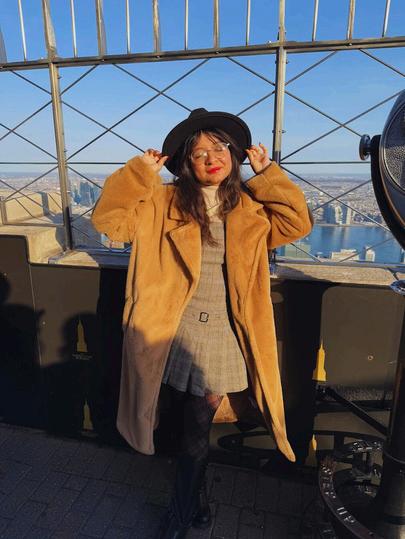
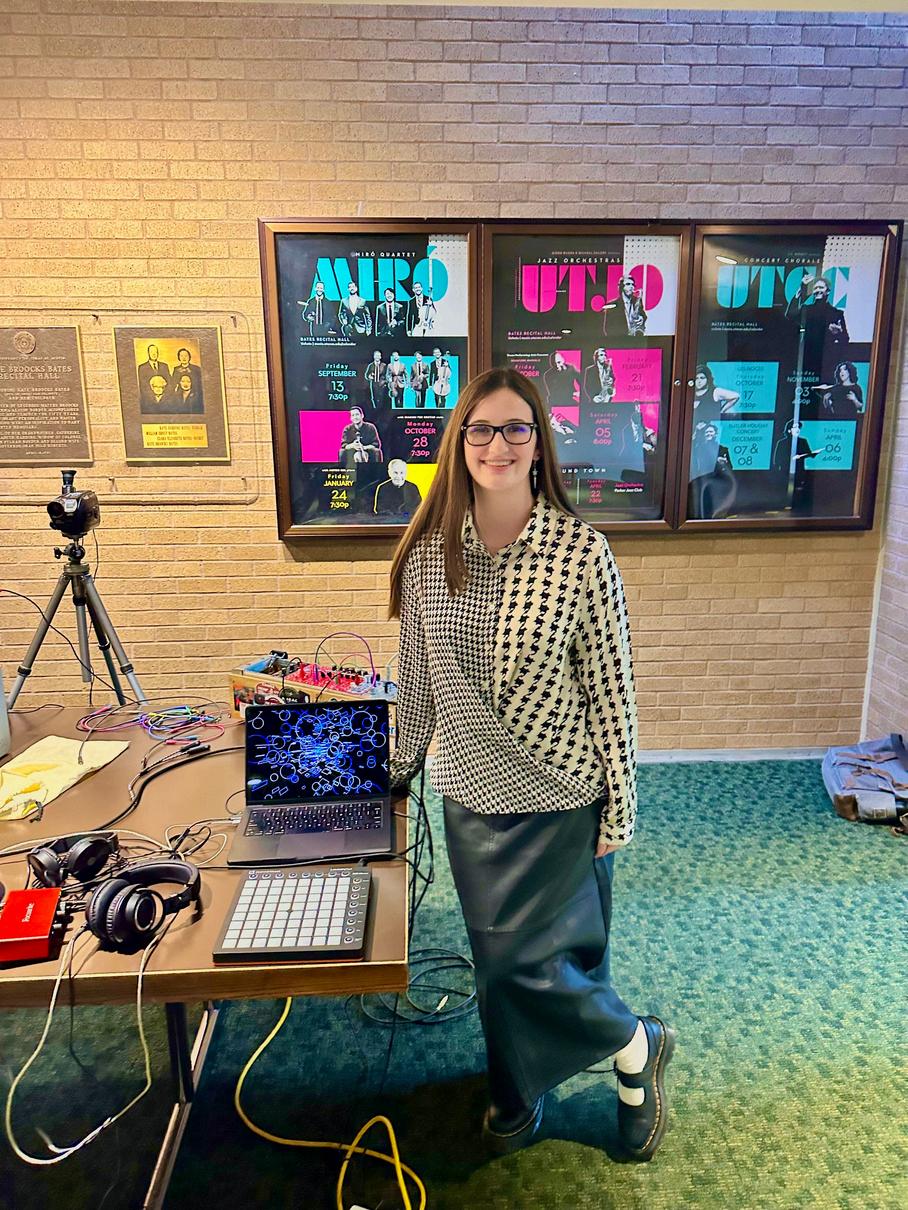
Howdy y’all! My name is Leticia Schenkel. I am a philosophy major from Grapevine, Texas, but most importantly, I am the loudest and the proudest member of the Texas A&M Class of 2026!
I am so excited to bring you all the revival of The Green Room Newsletter as the new The Green Room Magazine. Creating this issue has been a blast and I‘ve had a lovely time working with all the contributors and the faculty advisory committee. This has been a process that’s taken over two months of meeting students, getting articles, designing a magazine, creating a media presence and putting the issue together Phew! It’s been a lot of work, but I am really excited for you all to see what we’ve put together. Tell your friends! And stay tuned for the next issue which will be coming out in May!
Thanks! And Gig ‘Em!
Leticia Schenkel
GREEN ROOM
This issue was brought to you by
Leticia Schenkel ‘26 Managing Editor
M. Campbell, A. Quackenbush, K. Kattari Faculty Advisory Committee
AJ Villarreal Contributor
Alyson Juranek Contributor Ciara Anderson Contributor
Grace Burton Contributor Taran Verm Contributor
Blain Judkins Contributor
Brook Dryden Contributor
Christian Kahl Contributor Azael Hernandez Contributor
The Deer, The Hunter, and The Wardrobe: Inisde The Tent- 3
One for the books, how ACDA exceeded expectations- 12
A Filmmaker’s First Steps: Writing, Directing, and Defying Doubt- 15 Behind the Scenes of Her Rhyme, Her Reason: How Women Redefined the Hip Hop Genre- 7
Electric LaTex Experiences- 17
La Lechuza: An Immersive Murder Mystery- 19
Beyond Borders, The International Festival Theatre School’s Experience21
THE DEER, THE HUNTER, AND THE WARDROBE: INSIDE THE TENT
Growing up in a family of hunters is a very strange place, especially if you’re not interested in hunting at all You master the art of acting surprised when your family members recount their best kill stories at Christmas, Thanksgiving, or even your ninth birthday. For most of my life, I felt like an outsider in my own family because I didn’t connect to this ritual that shaped so much of their identity.
As a student in Performance Studies at Texas A&M, I learned that performance could be more than a medium for expression; it could be a method of research
So, I began collecting stories I interviewed Texan hunters about their first kills, their ethics, and their family traditions. I listened to tales of reverence and regret.
The Deer, The Hunter, and The Wardrobe was born out of that distance and the curiosity it eventually sparked. I began to wonder: What does hunting really do in a cultural sense? What rituals shape it? What identities are formed through it? And how does it influence how we understand animals not just as beings but as symbols, trophies, and even ancestors?
I remembered my own family’s stories, especially one about my Uncle, who shot a crow and was made to cook and eat it as a consequence That story has stuck with me for years, not because of the punishment but because of what it taught: that every life taken matters
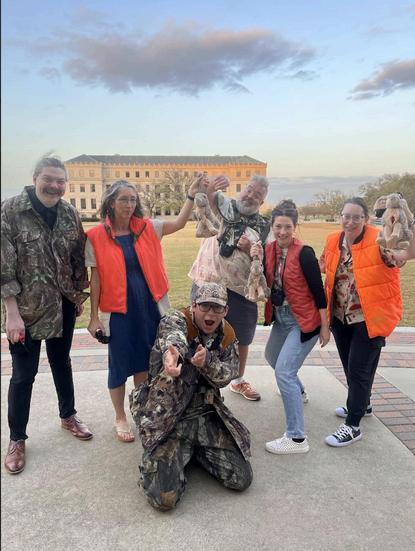
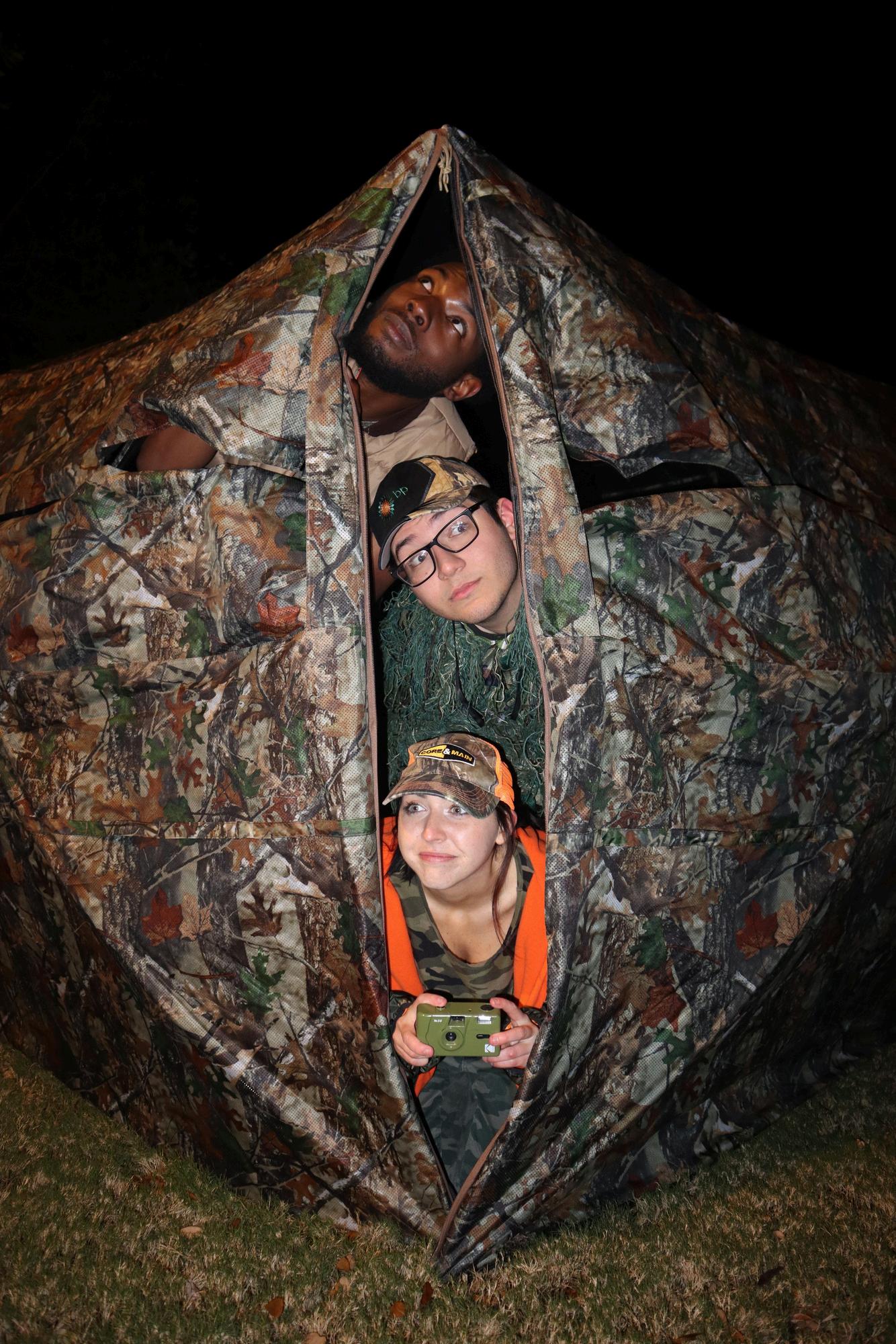
Step into camouflage and into the heart of a cultural tradition in this participatory performance created by a Performance Studies student, AJ Villarreal. Blending autoethnography, satire, and immersive theatre, The Deer, The Hunter, and The Wardrobe guides audiences through the ritualized world of hunting. With humor and heart, this original work invites us to question the stories we inherit and the roles we play in preserving or challenging them.
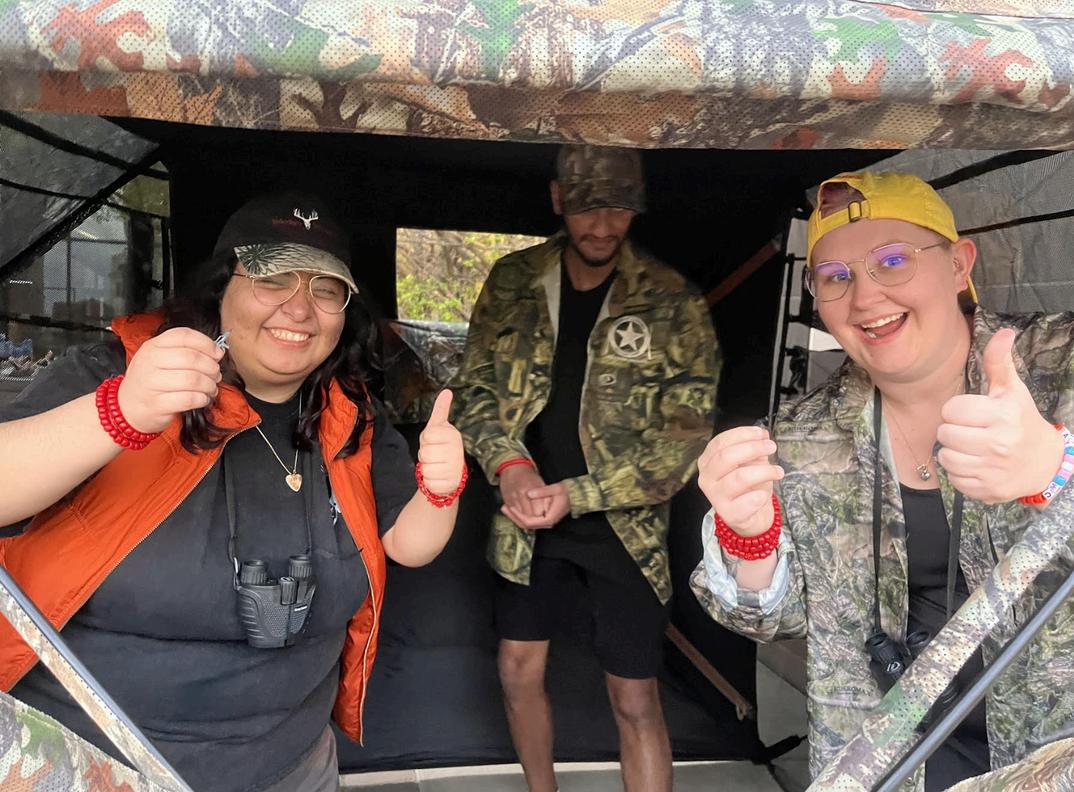
Using autoethnographic reflection, interviews with Texan hunters, and immersive devising, I built a performance that quite literally walks the audience through the ritual of becoming a hunter. In Act I, they’re welcomed to a faux hunting experience suited in camouflage and are told hunting stories by the hunter leading their experiences
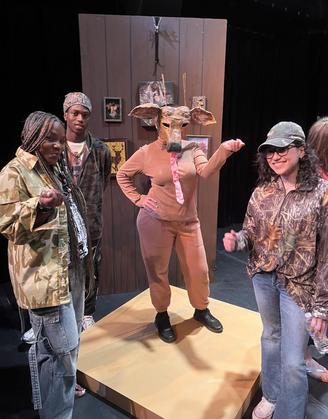
In Act II, they step into the blind, simulate a rabbit hunt, and later face the discomfort of field dressing what they “killed" later in the same act they participate in a simulated deer hunt. In Act III, they enter a trophy room to reflect on their experience, surrounded by mounted taxidermy and photos that recall memory, legacy, and ethical tension.
Articleby:AJVillarreal
PhotoCourtesyofAJVillarreal
Photo Courtesy of AJ Villarreal
They are then asked to stage their deer in a pose of their choosing, thus solidifying the animal's final resting place as a trophy on their wall. From the very start, the tone blends earnest ritual with parody. The absurdity of a Groupon-labeled “How to Hunt 101” experience, over-the-top employee characters, and toy rifles with booming sound effects all signal that the performance is also a comedic critique. We use humor and satire intentionally not to mock hunters, but to make space for critical reflection.
Comedy creates a disarming entry point, inviting people to engage with sensitive topics like violence, tradition, and ethics without immediately shutting down By exaggerating familiar hunting tropes, the show highlights how deeply ritualized and sometimes performative these practices already are. It’s not just about the laugh; it’s about using laughter to open the door to discomfort, self-awareness, and dialogue The mechanics of the production were a mix of rehearsal, research, and devising.
I worked with actors, props, and immersive staging to blur the line between participation and performance. leaned into what performance theorist Richard Schechner calls “restored behavior” rituals that are passed down, repeated, and embodied to the point of becoming identity. Audience members didn’t just watch a hunting ritual; they stepped into it. They felt the pull of tradition, the adrenaline of the hunt, and the queasy quiet of the kill.
Photo
And that’s the point. The Deer, the Hunter, and the Wardrobe doesn’t try to answer whether hunting is good or bad. Instead, it asks: What does this act mean to us? What memories, myths, and power structures does it carry? And what happens when we re-perform those systems in our own bodies? What does this act mean to us? What memories, myths, and power structures does it carry? And what happens when we re-perform those systems in our own bodies? At its heart, this project is a collision of personal history and academic inquiry. It’s my way of understanding a world I never felt part of by stepping into it, staging it, and asking others to walk through it with me.
I want to extend my deepest gratitude to everyone who made this project possible. To the cast:
Kamren Lang, Kate Bertagnoli, Alessia Cardenas, Colton Neuville, Fernando Pineda, Aimeé Diaz, Brianna Benavides, Zoë Roetter, and Matthew Buchenhain, thank you for your dedication and talent. Alessia, thank you for your incredible work as Stage Manager, Prop, Costume, and Set Designer Lluvia Avina, your lighting design brought the world to life. Thank you.
A special thank you to Dr. Angenette Spalink; your mentorship, encouragement, and steady guidance as my advisor have meant the world to me throughout this challenging and rewarding process. I truly could not have done this without you.
Immense thanks as well to Dr Matthew Campbell, Dr. Robin Veldman, Dr. Jim Ball, Dr. Michael Poblete, Dean Christine Bergeron, Jeff Watson and your team, D’Mya Tabron and your team, Dr. John Moeller, Dr. George McConnell, Staci Dunn, Johnna Lee, Diego Gonzales, Luke Hill, Anne Quackenbush, Rochelle Lopez, Robert Rutherford, Nat Cortez, Ray Biediger, and Dr. Francesca Marini for your guidance, support, and creative contributions.
“Ittrulytakesavillagetobring
PhotoCourtesyofAJVillarreal
BEHIND THE SCENES OF HER RHYME, HER REASON:
HOW WOMEN REDEFINED THE HIP HOP GENRE
Article by: Ciara Anderson
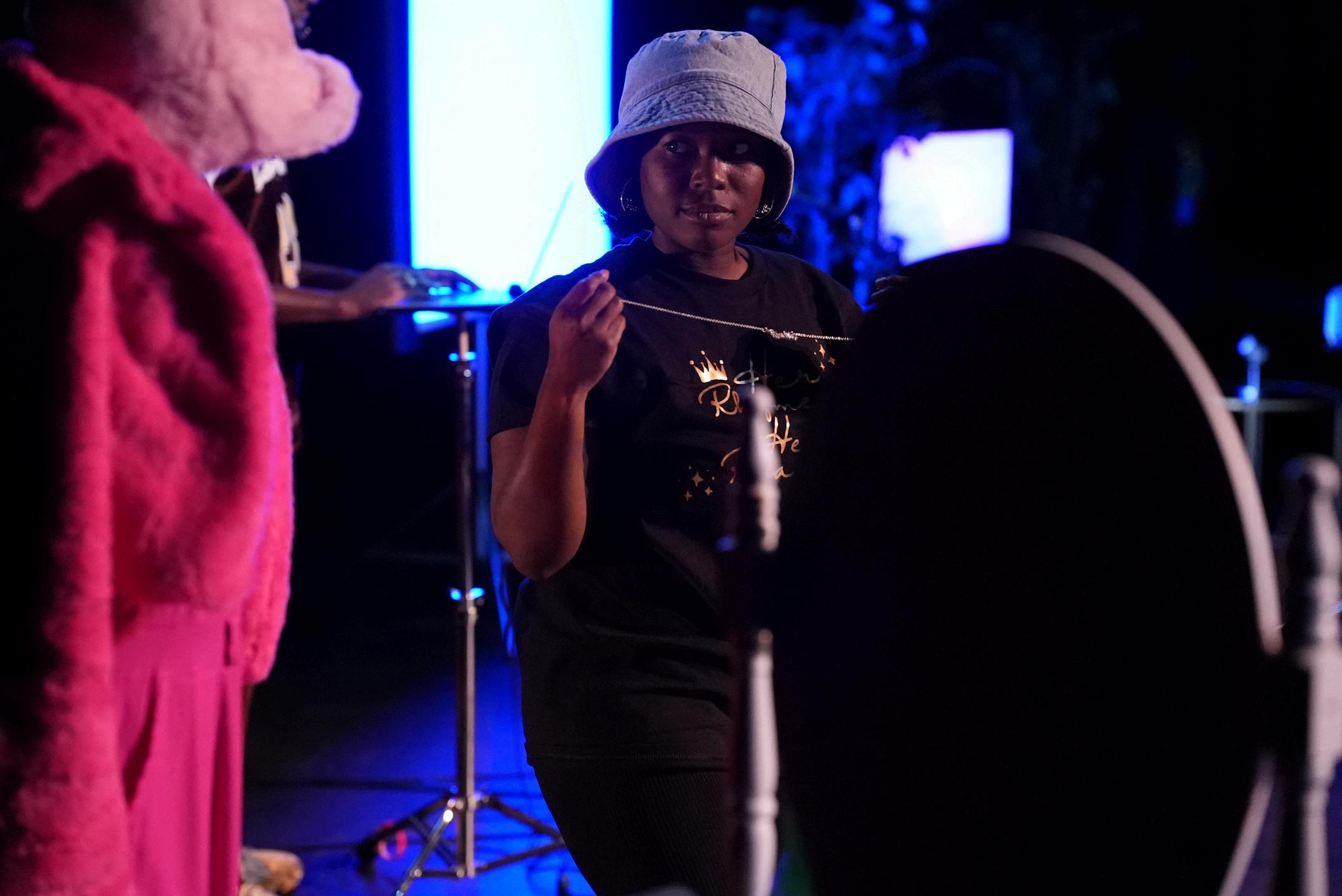
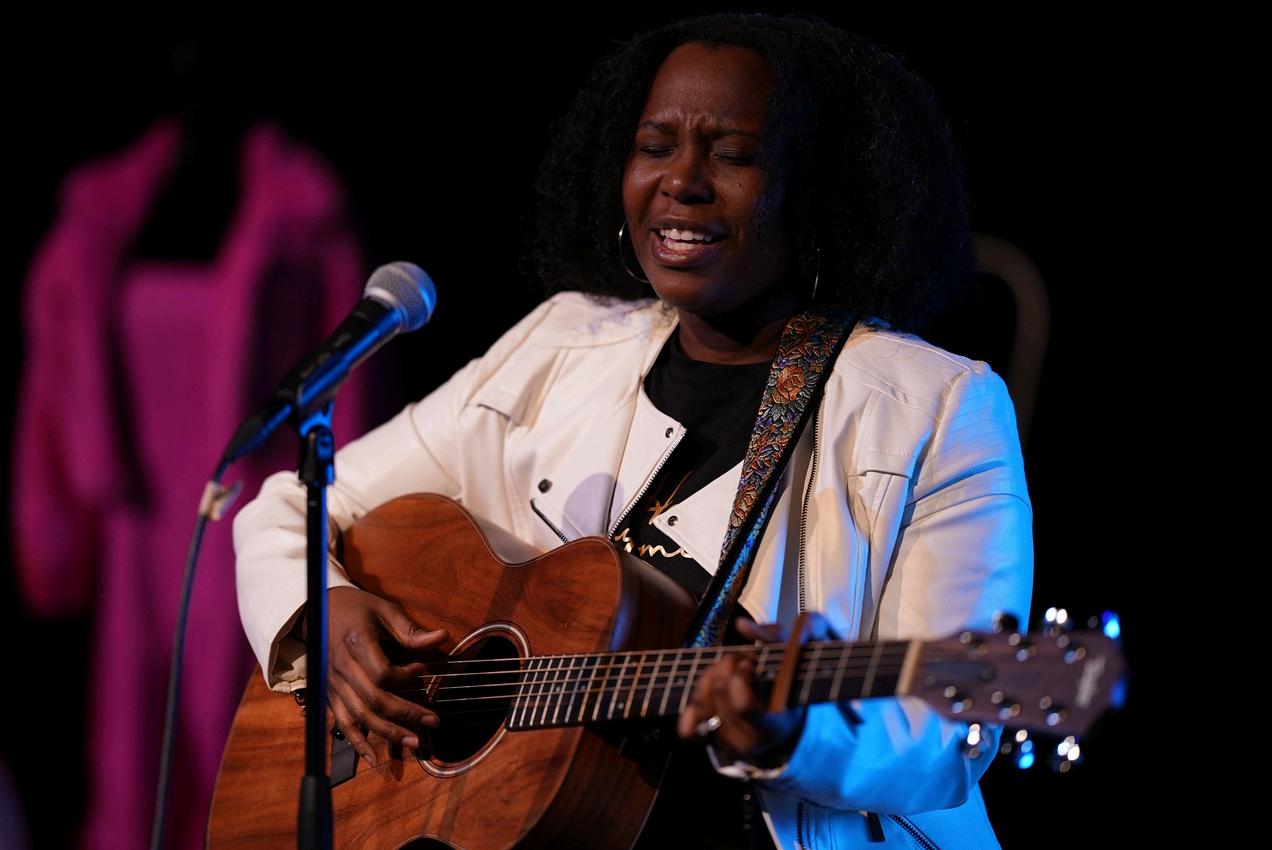
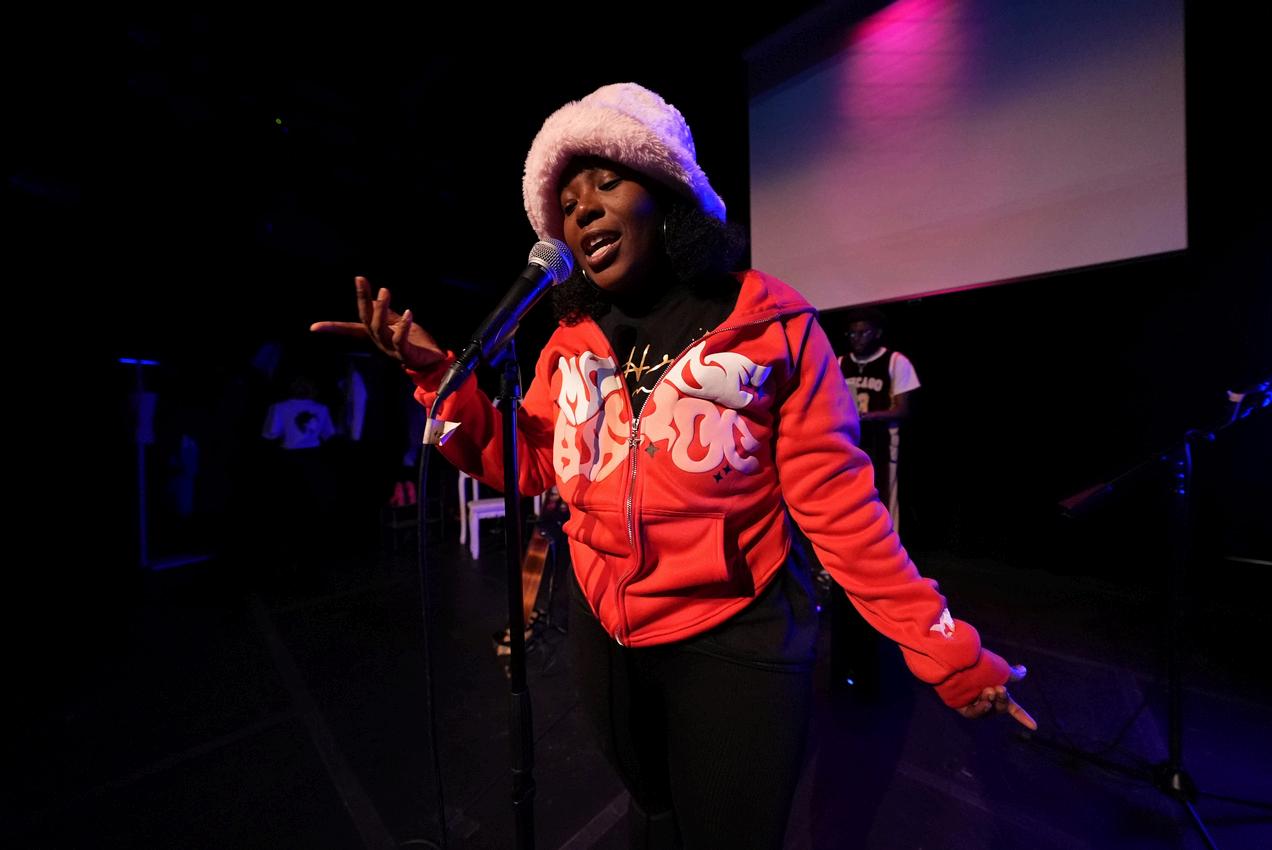
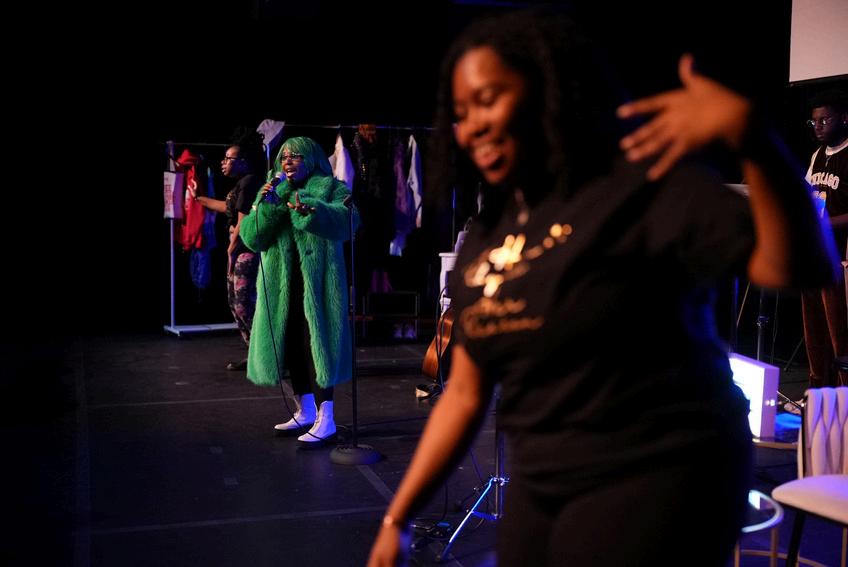
There’s a certain kind of hush that falls over a theatre right before the lights go down. It’s not quite silence it’s more like a collective inhale. The room, the people, the moment, they’re all waiting. And as I stood backstage, the familiar butterflies took flight in my stomach This wasn’t my first performance, but it felt different. Because this time, I wasn’t just performing…I was contributing to something much bigger than myself.
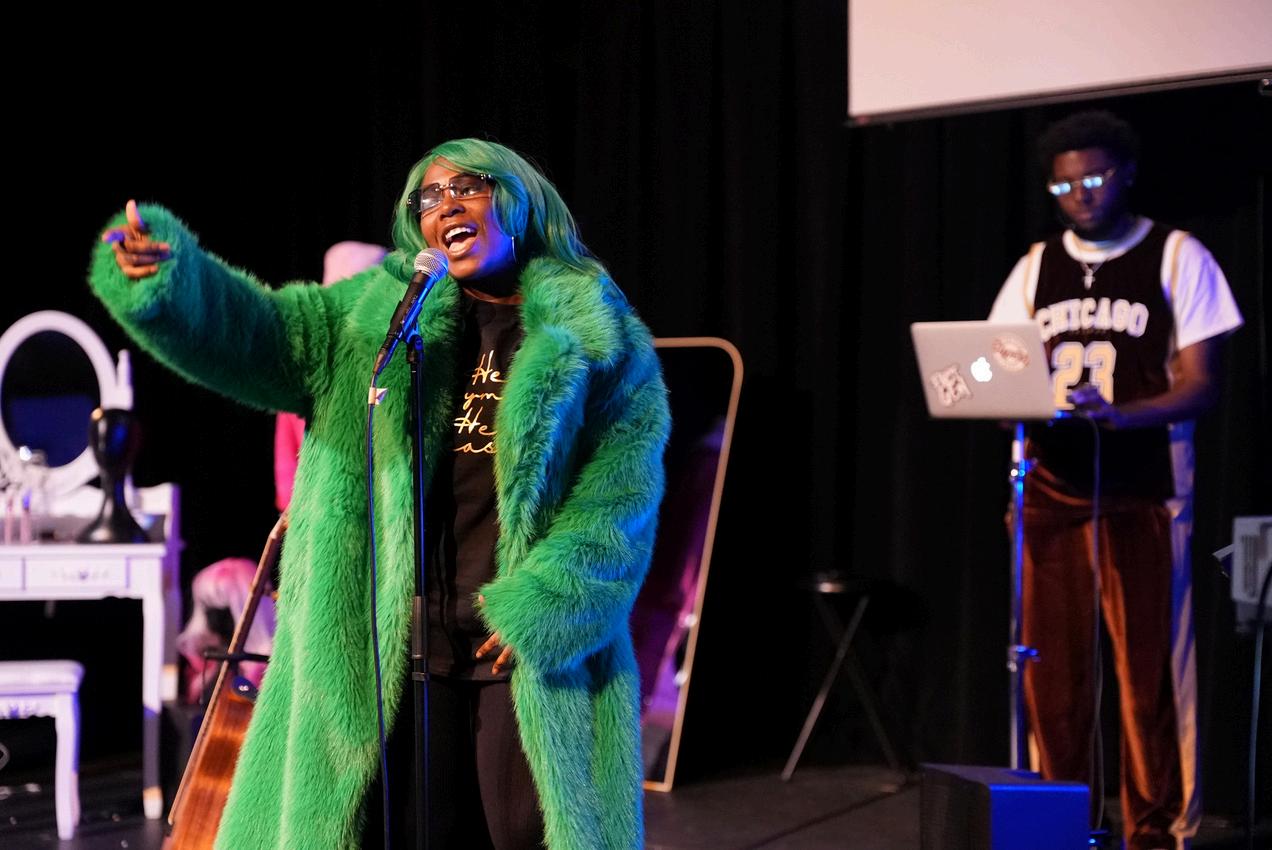
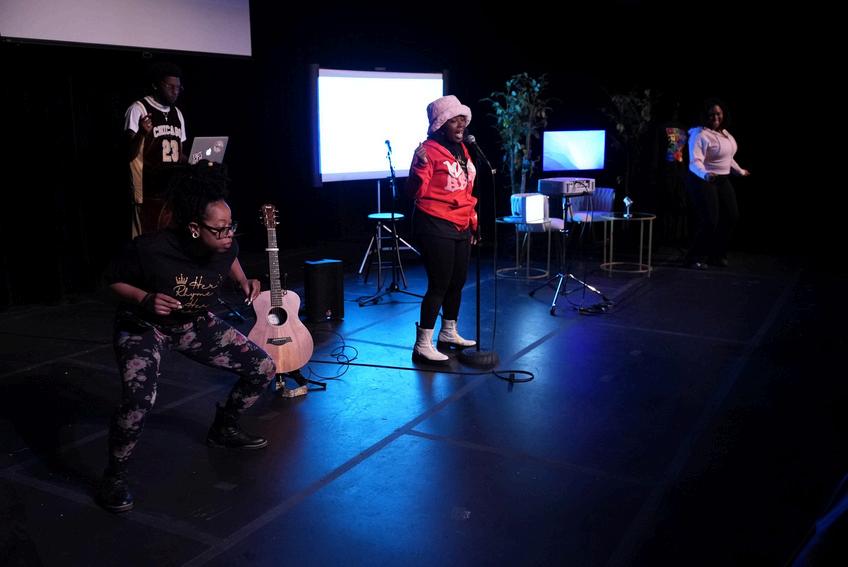
This was Her Rhyme, Her Reason, a final graduate performance piece by MA Performance Studies student Shalisa Sproles ’25. And it wasn’t just a show. It was a love letter. A reclamation. A radical celebration of Black women in hip hop And I got to be part of it
“HerRhyme,Her Reason,HerFlow
Thisthetypeofmusic
that’lltouchthe people’ssoul”
A Seat at the Table and a Spot on the Stage
To understand the weight of this performance, you have to understand the people behind it. Shalisa didn’t just want to create a performance she wanted to craft a space where the essence of women in hip hop could breathe, dance, spit bars, and take up space unapologetically Think Lauryn Hill’s fire, Missy Elliott’s genius, Nicki Minaj’s range, and Lil’ Kim’s boldness then mix that with original music, intentional choreography, poetic visuals, and just the right amount of grit.
When I was invited to contribute to this project, I said yes without hesitation. I didn’t care how busy my schedule was I knew, instinctively, that this would be one of those soul-stretching experiences that I’d carry with me long after the curtain closed. My artistic roots live in spoken word and vocal performance, so stepping into this hybrid role was both familiar and new. Rehearsals became therapy The mic became a mirror And every time we ran the piece, I felt myself growing bolder, louder, more embodied. As the performance pieces became more natural to my muscles, I felt an unearthing of an old passion awaken in my body. The show was an interdisciplinary triumph We wove acoustic sets with prerecorded vocals, dropped verses over soulful instrumentals, and danced under swirling lights in hues of blue and purple. It was sensory. It was spiritual. It was...alive.
Photo courtesy of Ciara Anderson
There were moments that made me hold my breath Like when we paid tribute to Lauryn Hill’s lyrical genius by dueting one of her most notable pieces, “Doo Wop (That Thing)”. Or when a looped chorus of “Her Rhyme, Her Reason” echoed through the space as visuals of Black femmes in hip hop flashed across the screen an ode to lineage, legacy, and love It wasn’t just a performance It was a portal. One that invited the audience to see ourselves not just as performers, but as storytellers, scholars, and architects of our own futures.
What Her Rhyme, Her Reason Gave Us
During the performance, I caught eyes with a young girl watching along. She couldn’t have been older than ten, maybe eleven. And yet, there she was, leaning forward in her seat, fully immersed in the world we had created I don’t know her name, but I remember the look on her face: a mix of awe, joy, and possibility. In that moment, I saw myself. I saw the younger version of me who never knew she was allowed to take up space like this.
And that girl wasn’t alone in feeling it You could sense it in the room There’s a difference between an audience that claps politely and one that feels with you. Ours?
They felt everything. I remember one particular verse that paid homage to women who raised us through headphones and the crowd let out a collective “mmm.” You know the sound. That soulful, unfiltered expression of resonance It happened more than once, and each time, it reminded me that we were tapping into something deeper than performance. We were creating communion. A shared space of memory, mourning, joy, and truth.The show didn’t just mention icons like Lauryn Hill or Missy Elliott it engaged with them.
And I realized that this performance wasn’t just entertainment but rather a mirror One that showed Black girls everywhere that they belong in every room, on every stage, in every spotlight.
Through sampled lyrics, visual projections, and academic references woven into the script, this piece became a living, breathing archive. One that reminded us that these women were not just charttoppers, but cultural theorists, historians, revolutionaries. Their work shaped entire generations and continues to shape us today. The performance didn’t just honor them; it placed us in dialogue with them, as both inheritors and innovators of their legacies. And maybe that’s what made the timing of it all feel so sacred I’ve never seen a transition between these two months feel so intentional. Her Rhyme, Her Reason stood at that exact intersection: where Blackness and womanhood co-exist, intersect, and inform one another.
“
It wasn’t just a footnote tacked onto the end of February. It was the final word. A statement that said: Black women are not an afterthought.
We are the blueprint, the authors, the center. And what better way to end Black History Month than by lifting up the women who shaped culture from behind the mic? “
Why It Mattered (And Still Does)
Here’s the thing: we live in a world that often consumes the art of Black women without acknowledging their humanity. We praise the aesthetics but ignore the struggle We quote the lyrics but forget the context Her Rhyme, Her Reason flipped that narrative It asked us not just to listen, but to feel. Not just to watch, but to remember.
I walked away from this performance with aching feet, a full heart, and a deeper understanding of my own artistic purpose. Being part of this piece reminded me that storytelling isn’t just about speaking it’s about holding space. It’s about honoring those who came before and clearing a path for those who will come after And as the house lights came on and the audience rose in applause, I felt something I hadn’t felt in a while: the kind of joy that only comes from creating something honest, something real.
So… Why This? Why Now?
Because Black women are still fighting to be heard. Because hip hop has always been political. Because art has the power to liberate. Because somewhere in that audience was a girl who saw herself in our performance and believed, for the first time, that she belonged on that stage too.
This wasn’t just a performance. It was a promise. And I’m so grateful I got to be a part of keeping it.
One for the books
How ACDA 2025 exceeded my expectations
Article by: Brook Dryden
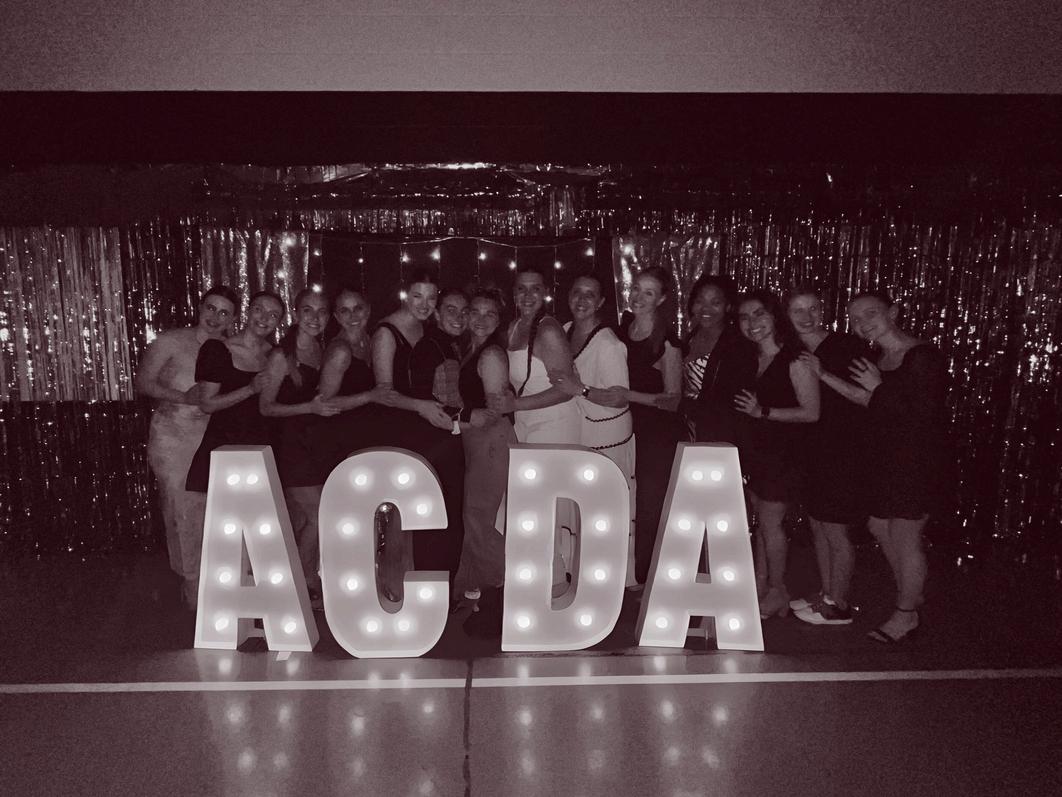
This year’s American College Dance Association (ACDA) conference did not go as I expected it to I went to ACDA for the first time as a freshman in 2024, and I figured that this year would be the same, but little did I know about the successful surprises Texas A&M University would experience throughout the week. ACDA holds 11 regional conferences each year, where college dance programs from around the region come together to take classes, network, and perform The week is filled with two types of dance concerts: adjudicated and informal. In an adjudicated concert, works from faculty, graduate students, and undergraduate students are performed in front of a large audience, including three adjudicators,
who form their thoughts on the pieces and then present them to the dancers and choreographers involved in the show at a feedback session
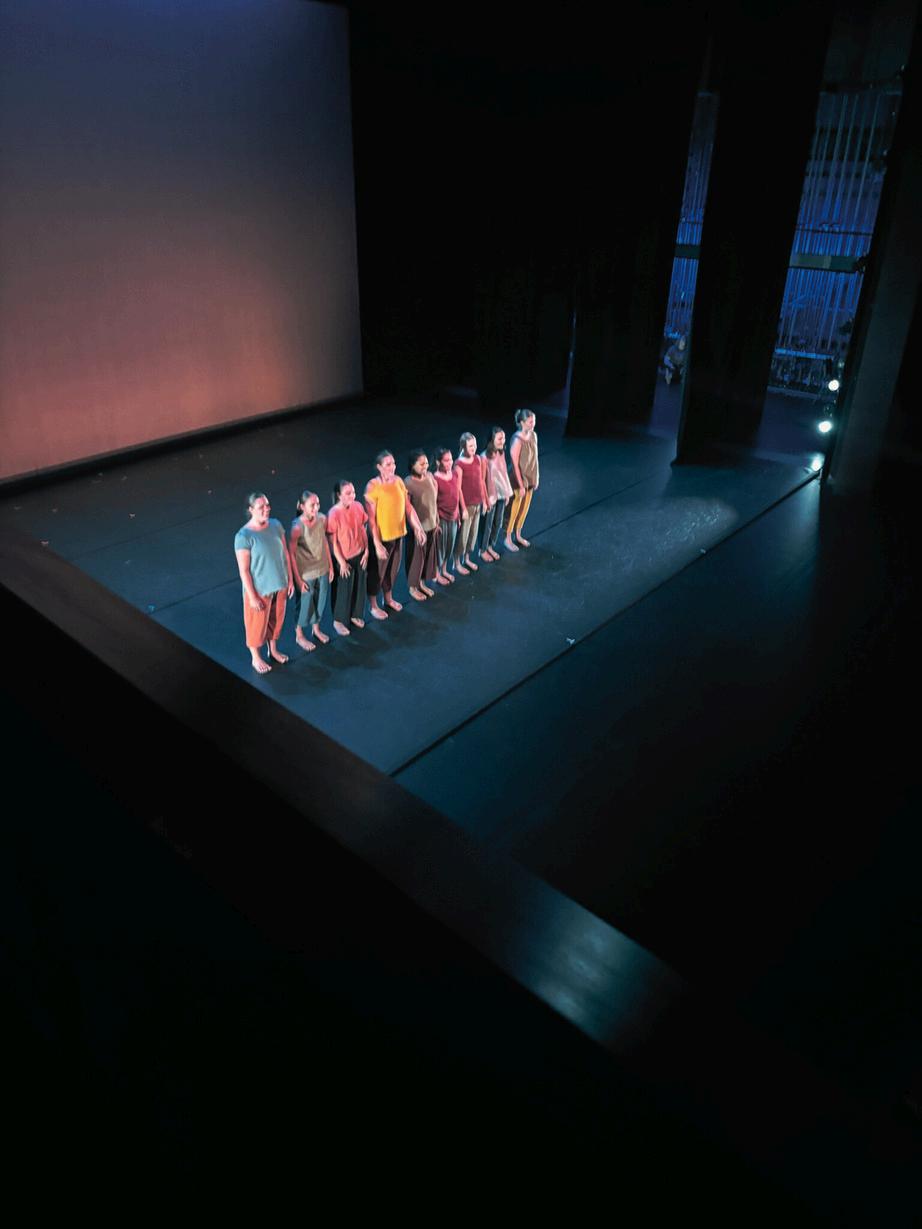
One of the pieces that A&M took to present at the adjudicated concert was a piece I performed in titled, “It’s Catching,” choreographed by faculty member Abby Williams Chin. It’s a piece inspired by the Dancing Plague of 1518 where people truly danced themselves to death.
To me, it plays with the idea of being in this “trance” and trying to find a way to break out of it We felt really good about our performance, and the adjudicators in the feedback session seemed to enjoy and interpret it in an interesting way. Our other piece that performed in the adjudicated concert was a student work choreographed by senior Bailey Zettler titled “Obstinate.”
I’m not in the piece, but I’m always mesmerized watching it as the dancers’ movement matches the music so well, and the performers really connect with each other From what I could tell, the adjudicators really liked this piece There were two informal concerts during this year’s conference, and the name pretty much explains what it is. It’s informal. There aren't any adjudicators present; it's just an opportunity for students from different colleges to perform their works for each other. I like the vibe of the informal concerts because they give dancers the chance to perform without the pressure It emphasizes the feeling of letting go and enjoying time onstage.
It emphasizes the feeling of letting go and enjoying time onstage
The piece A&M took to perform in the informal concert was senior Sommer Edgerson’s work, “One Sided.” I am also not in this piece, but I love the variety of levels and spatiality in the choreography. After every concert has taken place, the adjudicators pick three pieces from each adjudicated concert to perform in the gala The gala consists of the last show of the conference A party with dinner follows the concert to celebrate all of the hard work that was put into the week. It is a pretty big deal to be selected to perform in the gala because out of close to 50 performances, only 12 get to be showcased.
Photo courtesy of Grae Robinson
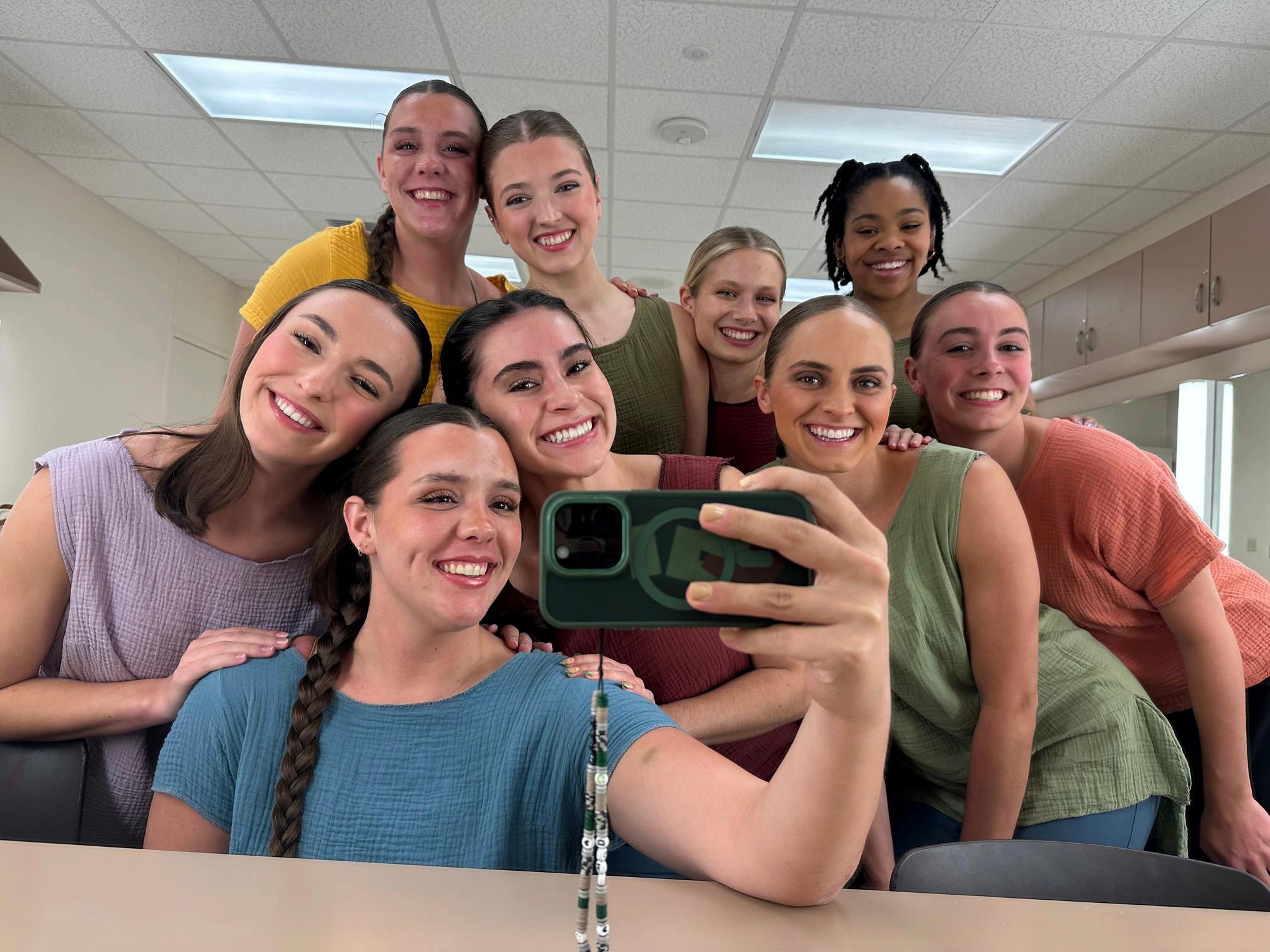
Last year, neither of our pieces made it to the gala The possibility of making it this year was always in the back of my mind, but I didn’t allow myself to get my hopes up. That was until Friday night, the last night before the final day of the conference. We had left the student hip hop dance party, drove back to our hotel, and started to get ready for bed. It was approximately 11:30 pm. My friend was just about to get in the shower when she checked her phone and saw “Obstinate” listed as one of the pieces selected to be performed in the gala We immediately ran out of our room and knocked on everyone else’s doors to see if they had heard the good news. Once all of the dancers were screaming in the hallway, we had to go celebrate with our professors. This is when we noticed that “It’s Catching” was also on the list to perform in the gala It’s special to have one piece from our program make it to the gala, but two pieces were almost unbelievable. Performing in the gala was a super cool experience. I felt proud to be from such an incredible program that consists of some amazing dancers whom I call my best friends However, the exciting news doesn’t stop there. Every two years, ACDA hosts a national college dance festival where three pieces that are performed in the gala from each regional conference are chosen to perform at the national level.
Photo courtesy of Grae Robinson
The decisions came out the evening after ACDA ended. One of my friends texted in our group chat to check our email. My heart started pounding as I knew the national l i d
My name is Alyson Juranek. I’m a student in the college of Performance, Visualization and Fine Arts with an interest in film and scriptwriting Last month, I wrote and directed my first project at Texas A&M University, a stage play called The Soundcheck Ever since then, I’ve been working on my first screenplay, Station 13; a short film inspired by my own experience of trying to figure out what I want to do with my life. The film follows a man that takes a walk to the bus station, accompanied by a strange woman who calls his career aspirations into question People often ask what inspired me to be an artist I wouldn’t say there was one specific moment Art has always been part of my identity As a kid I took up writing and drawing comics and later became interested in theatre and film. I loved entertaining people and quickly found my favorite place to work was behind the scenes.
AFilmmaker’s
FirstSteps: Writing, Directing,and DefyingDoubt
Article by: Alyson Juranek
All things considered, a career in entertainment seemed a natural fit, which is why I chose to major in Visualization
Earlier this semester I finished writing and directing my first production, a stage play called The Soundcheck, as a part of Alpha Psi Omega’s Student New Works Festival To be honest, I didn’t expect my script to be chosen when I sent it in for consideration last year. After it was, I felt a desire to prove myself. I’d been writing scripts since I was sixteen, but the challenge of having my work adapted pushed my skills further than ever, especially during the revision process. I spent weeks planning new scenes line-by-line, reading lines aloud and rewriting to make them sound natural, and getting input from anyone who would look at the script I take a very visual approach to my writing, trying to imagine what it would look like acted out.
Doing so not only tightened up my pacing and comedic timing, but also helped me make decisions about blocking, delivery, lighting and sound effects for the play itself. I don't have any formal education in directing, so I simply went with what felt right to me Every improvement I made in the script and overall
vision of the show built my confidence in what I’d created and helped combat the sense of imposter syndrome I’d felt since being chosen for the festival. By the time my work concluded I had come out the other side a much stronger writer and artist, and going forward all I want to do is continue sharpening that blade.
Photo by Faith Cooper, @coopslens
Photo
LaTex
LaTex Student Experience
An overview of the student perspective
Article by: Grace Burton
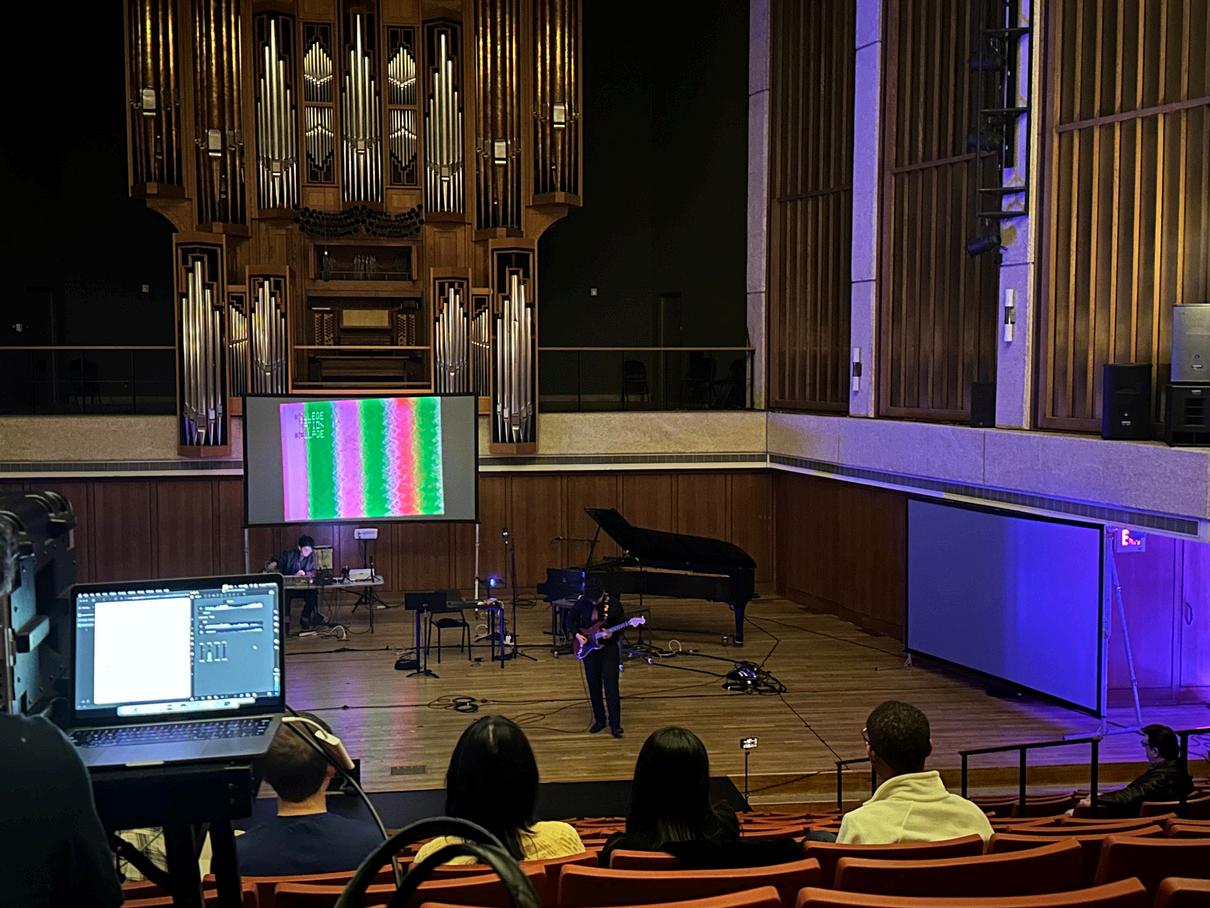
The Electric LaTex Festival was nothing short of captivating and experimental Having the opportunity to showcase one of my installation pieces, be the student representative for our music technology program at TAMU, and get to see others’ work from different universities across Louisiana and Texas was such an honor! In January, other music technology students from Texas A&M and I were invited to attend the Electric LaTex Festival in Austin The entire weekend was so much fun I made many new friends and lifelong connections, was exposed to varying types of music, media, and electronics, and also got to engage in thoughtful conversations about compositional techniques, how to really listen to music, and what it means to have such an individual, artistic identity. The LaTex Festival to me was such a phenomenal opportunity to keep working on my individuality in music, electronics, performance, and composition Being able to attend was a great experience and I think it has given me insight into what it means to be an artist and how to create exciting, new media for myself, others, and academia as a whole. Learning from others and experiencing art is such a valuable asset and LaTex was so successful in providing that for me and all other students and faculty that attended!
The Electric LaTex Festival is an annual studentrun festival celebrating electronic and experimental music from universities in Texas and Louisiana. This year, it was hosted by UT Austin on January 17–18, 2025. Featuring six participating schools (including our very own Texas A&M), the festival includes four concerts showcasing solo electronics, electroacoustic compositions, multimedia pieces, and improvisations, along with sound and video installations. It aims to build connections and collaboration among students and faculty while strengthening the regional experimental music community.
LaTex/Reflection Unforgettable Experience
Article by: Taran Verm
My overall experience with the LaTex conference is more or less positive. The only issue that I had with the conference was that I was scheduled for the earliest possible sound check. That wasn’t very fun. I was painfully aware that our style at A&M is very different from just about every other attendee. That’s a good thing. Most of what we did was experimental, while other schools focused more on the music side of things. It was a very fun experience, and I only wish that I would be able to do it again. I graduate this semester, but this has probably been one of the best decisions I made in my entire four years here.
La Lechuza: An Immersive Murder Mystery
Article by: Blain Judkins
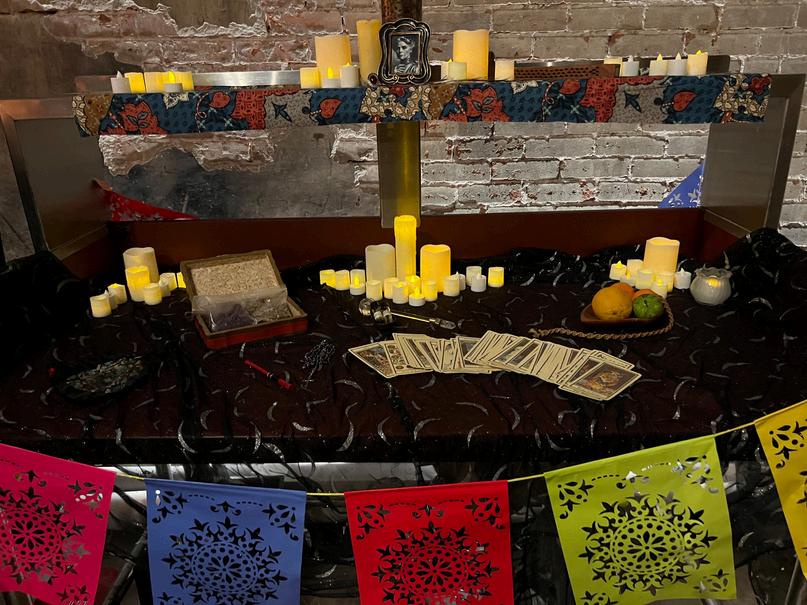
Our immersive theatre project, La Lechuza, blends augmented reality (AR) with live performance to create a unique and interactive murder mystery experience Set in a 1920s speakeasy, the story revolves around the suspicious poisoning of the establishment’s owner– a mother whose three children each have secrets to hide.
The narrative is designed to cast doubt on multiple characters, keeping the participants engaged in solving the crime as they uncover hidden motives and buried truths The project explores how AR can be used to further immerse the audience by revealing hidden clues, ghostly flashbacks, and secret messages.
A 1920s speakeasy murder mystery that blends augmented reality with live theatre.
The audience is equipped with AR headset devices to uncover evidence within their environment. These digital elements, combined with live actors, and guided performances, create a multi-layered storytelling experience that challenges participants to actively engage with the narrative and the interactive elements around them.
My experience with this project includes helping conceptualize clues and the integration of AR technology into the performance space. This led to creative innovation in the process in order to craft evidence to plant suspicion on characters while engaging the audience with the overall narrative. An interesting challenge that we experienced was balancing deception with discovery, ensuring that clues felt natural without obstructing the performers.
This aspect allowed us to create a dynamic, evolving mystery where each audience member could piece together the truth of the story throughout the performance without disrupting the flow of the narrative Collaborating with performers, AR researchers, and writers bridges the gap between theatrical storytelling and immersive technology. A key part of the project has been ensuring that the AR components complement the live-action performances, rather than distracting from them
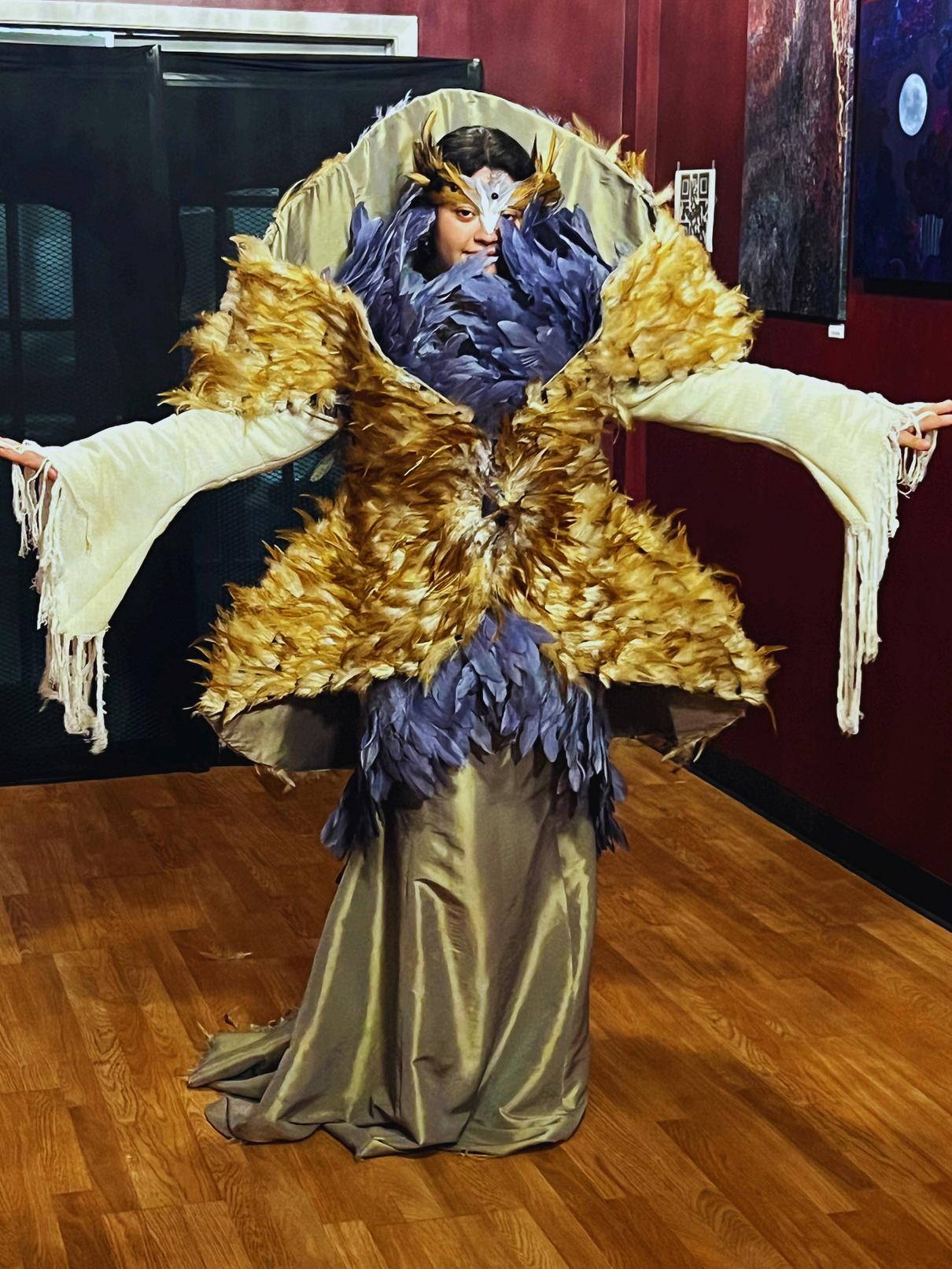
The project demonstrates the potential for AR to transform traditional art spaces into interactive, audience-driven experiences La Lechuza not only entertains audiences, but also showcases how technology can be utilized to enhance narrative depth, making immersive performances more engaging. This performance will be newly adapted as The Ghostly Feather in Galveston in the Fall.
Photo courtesy of Blain Judkins
Beyond Borders
The International Festival Theatre School’s Experience
Q&A with students
Internation Festival of Theatre Schools
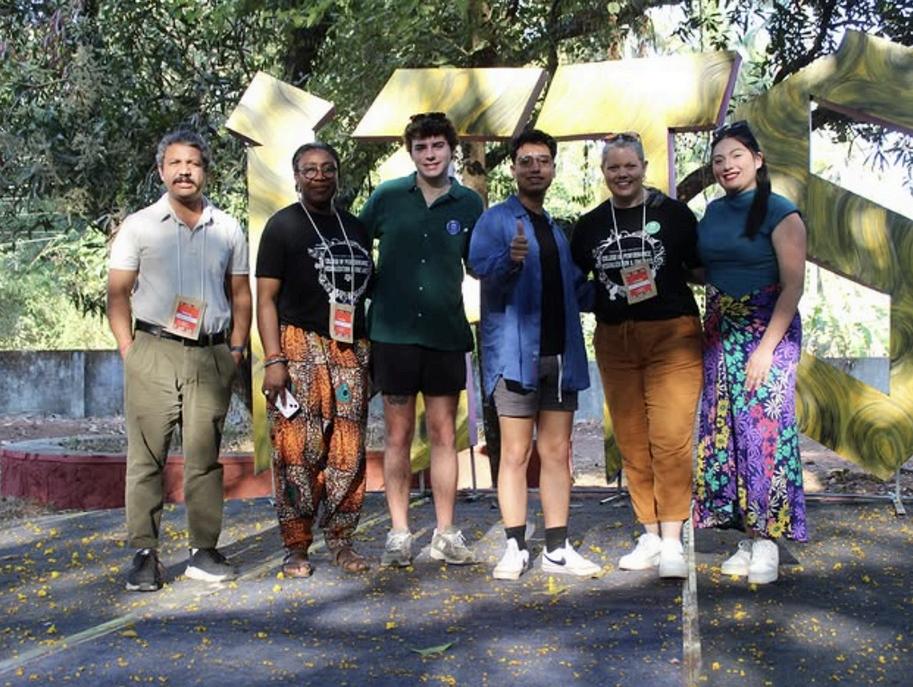
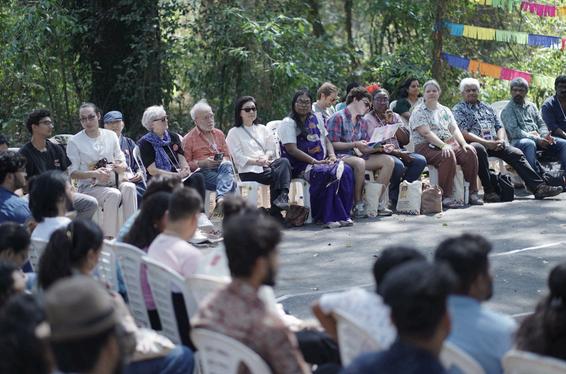
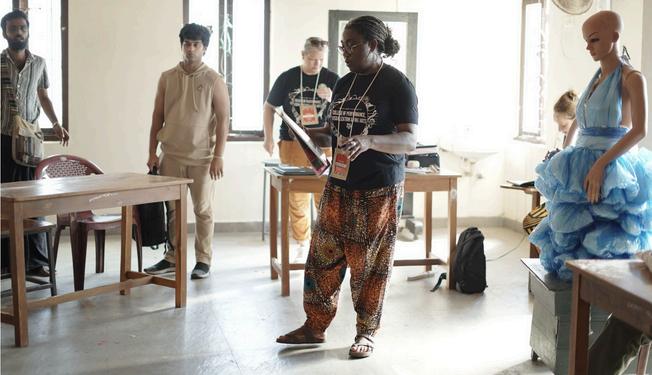
From February 3–8, 2025, the International Festival of Theatre Schools (IFTS) was held at the School of Drama and Fine Arts, University of Calicut in Thrissur, India. Centered around the theme “Carnival of Pedagogy: Theatre and Ethics,” the festival featured performances, discussions, workshops, presentations, student productions, cultural exhibitions, and traditional performing arts. Three students from Texas A&M Azael Hernandez, Christian Kahl, and Brianna Benavides attended and participated in the event, representing the university and their programs on an international stage.
Q&A With Christian Kahl Azael Hernandez
Brianna Benavides
Professor Yadav, Professor Adinku, Christian Kahl, Azael Hernandez, Professor Dexter, and Brianna Benavides.
Q. What was it like interacting with theatre students and professionals from around the world?
B.B: Interacting with other theatre students was very cool, but it was also very challenging because of the language barrier. It was hard to understand each other, but then we came to a general consensus, and I still speak to some of them to this day. We're friends, and it was, honestly, is a very wholesome moment for me, because I met people from all over Asia, and we shared each other's socials and still keep in touch. So that was really cool.
Q. What was it like interacting with theatre students and professionals from around the world?
C.K: It was truly amazing to get to meet world-renowned pedagogues and practitionersthese are the people we read about in textbooks, and then there they are having a casual conversation with you. They were all so wonderfully nice and supportive of all the students as well. There were many who offered their personal phone numbers so that they could stay in contact with me and up-todate on my life and career.
Q&A
Q What inspired you to participate in the International Festival of Theatre Schools in India?
C K: I have always been someone who takes every opportunity I can - especially for things such as travel. When I was asked about initial interest in IFTS, I immediately was on board. I thought to myself “when else am I going to get an opportunity to travel to India and meet people from all over the world who all have the same burning passion for theatre.”
Q. How did the school environment from Texas A&M differ from the University of Calicut?
A H: Very differently culturally. They did not wear shoes in many parts of the university. Infrastructure was very different as well. Something I realized was that based on the infrastructure if it were located in Texas, it would not be allowed to operate However it was beautiful! The campus was situated right in the middle of the forest.
Q. What was the most memorable performance or moment you experienced at the festival?
A.H: For me, it would be the performance from Sri Lanka, when they brought out such a powerful performance about a young girl's pregnancy story The overall experience was so amazing! I learned so much about how other countries perceive the United States and how their entertainment industries compare to ours. I loved networking with so many different people
Q. How did the environment compare to theatre festivals or performances you've experienced in the United States?
B.B: In the United States, theatre is seen as something that represents your social status and your social class. Over there in India, it was just something that brought joy to everybody, regardless of what social class you were from. Whereas here it's like, “Oh, you have to wear certain things to go to this theater.” “You have to respect the space ” “You have to dress certain way, act a certain way ” In India it was a lot more authentic, I feel. And that's one of the great lessons that I learned.
Contribute to The Green Room reviews of film, performance, video games, art installations, etc.
research and writing done for a class art, creative writing, scripts, etc interviews with faculty or alumni
previews or writing about performances or projects you are working on