
Explore fleet pricing available today.

From weekday commutes to weekend escapes, there’s a Hyundai SUV for every journey. With award-winning design and innovation, and backed by a new 7-Year Unlimited Kilometre Warranty, our SUVs are built for the road and peace of mind.
Hyundai Australia is offering MBV members and their employees National Fleet Pricing on all new Hyundai vehicles until 30th June 2026.
Contact your local Hyundai Dealer today.



Master Builders Victoria (MBV) was established in 1875 by a group of builders intent on raising industry standards. For more than 150 years, our organisation has grown to become the pre-eminent industry voice, with circa 6,000 members.
We support members with specialist updates and advice across legal, contracts, OHS, policy, people and culture technical building, registration, and employment and industrial relations (EIR) matters, as well as providing industry connections and networking opportunities.
Not only are we a Registered Training Organisation (RTO #3935), but we proudly operate a state-ofthe-art simulated learning centre where we provide industry-leading training with our comprehensive training courses.
We believe our accomplishments are the result of maintaining our ‘members first, all the time, every time’ approach throughout everything we do.
Our purpose
Empowering people to build a better future.
Our vision
Leading a future-ready industry that builds a better world.
Our values
• Members first – all the time, every time
• Brave enough to be different
• Do the right thing, even when no one is watching
• Always find another way
332 Albert Street, East Melbourne, VIC, 3002
Tel: (03) 9411 4555
E-mail: MBassist@mbav.com.au Web: www.mbav.com.au

EDITOR: Natalie Nicolaou
2026 MBV INTERNATIONAL WOMEN’S DAY BREAKFAST BALANCING THE SCALES FOR WOMEN IN THE BUILDING AND CONSTRUCTION INDUSTRY
OLIVER HUME LAUNCHES LANDMARK INDEX
LEADERSHIP SIMULATION CENTRE
LEARNING EXPERIENCES TO SHAPE THE BUILDERS OF THE FUTURE
ABOUT WITH MBV
LOOK AT SOME OF THE MEMBERS WE’VE VISITED
GORDON INSTITUTE OF TAFE
LITTLE HELP GOES A LONG WAY
YOUR BUILDER REGISTRATION:
LENDING ISN’T WORTH IT
SAFETY

For all general enquiries, phone MBV on (03) 9411 4555, e-mail MBassist@mbav.com.au, or contact our key services using the details on this page:
Executive Team
CEO: Michaela Lihou
Deputy CEO | Chief Legal Officer |
Company Secretary: Tristan Moseley
Chief of Public Affairs: Corrie Williams
Directors
Director Master Builders
Training Institute: Anh Tran
Director Advisory: Sam Smith
Chief Financial Officer: Margarita Krasteva
Director Policy & Industry
Collaboration: Caroline Speed
MBV Board of Management
President: Steven Peluso
Deputy President: Stuart Allen
Housing Chair: Alan Grollo
Specialist Contractor Chair: Mark Welsh
General Contracting Chair: Dale Kennedy
Regional Chair: Belinda Egan
MM&S Chair: Mark Phillips
Housing Sub Contractor Chair: *Vacant
General Board Member: Geoff Purcell
MBV Sector Committees
Regional
Stuart Allen, Gareth King, Mark Little, Ross O'Neill, Belinda Egan & Steven Hedger
MM&S
Mark Phillips, Luke Hurley, Lawrence Pigot, Brenton Russo
Housing
Steven Peluso, Will Ireland, Alan Grollo, Steven Grayden, Angela Perry & Daniel Kingsley
General Contracting
Geoff Purcell, Bernie Nolan, Shayne Young, Richard Hansen, Dale Kennedy, David Waters & John Lehmann
Specialist Contractor
Mark Welsh, Angela Stevenson, Carl Calabro, Mark McEvoy, Gregory Cole, Joshua Humphreys & Hugh Lockie
Housing Sub Contractor
Shane Gardner, Howard F Hunter & Raymond French
Melbourne
332 Albert Street, East Melbourne, VIC, 3002
GPO Box 544
Melbourne, VIC, 3001
Phone: (03) 9411 4555
E-mail: mbassist@mbav.com.au
South Melbourne
MBV Leadership Simulation Centre 49 Brady Street
South Melbourne, VIC, 3205
E-mail: trainingenquiries@mbav.com.au
Current closed for re-development
E-mail: mbassist@mbav.com.au
Dear members,
The start of a new year is often marked by optimism and momentum, yet this summer also reminded us how quickly circumstances can change. The devastating fires across parts of Victoria had a profound impact on communities, families, and businesses, including many within our membership. Our thoughts remain with everyone affected, and I would like to acknowledge the resilience shown by our members who stepped up to support the recovery efforts, often while facing personal loss themselves. It was in moments like these that the strength and compassion of our industry were most clearly seen.
As the year began, connection and leadership were front of mind. One of the highlights of this first quarter was our International Women’s Day breakfast, which once again brought members together to reflect, listen, and learn. The event recognised the vital contribution women make across every part of our industry, from site to boardroom, and created space for thoughtful discussion about how we continue to build respectful, inclusive, and supportive workplaces.
This year’s International Women’s Day breakfast was more than a celebration. It reinforced the importance of turning intent into action. Progress comes from listening, from learning, and from backing our commitments with meaningful change. I was proud of the way our members engaged with the conversation, demonstrating openness, curiosity, and a genuine desire to strengthen our industry for everyone who works within it.
That sense of progress was also reflected in the reopening of our newly refurbished office.
Welcoming members and staff back into the space marked an important milestone for our organisation. The refreshed office is more than a physical upgrade. It is a space designed to enhance collaboration, learning, and engagement, reflecting our ongoing commitment to providing a strong, modern home for our members and team.
At the same time, a significant program of regulatory reform is underway that will directly affect how members run their businesses. Changes to buyer protections, licensing and registration, security of payment, building standards, and domestic building contracts have real consequences for compliance, risk, cash flow, and project delivery. We continue to be actively engaged in this work, advocating on your behalf to ensure reforms are practical, fair, and grounded in the realities of building. We are working closely with the government to push for clarity, workable transition periods, and sensible regulation, while keeping members informed about what is changing and what it means for you. Supporting you through this period of reform and ensuring your voice is heard remains one of our most important responsibilities.
At the time of writing, we continue to advocate against the implementation of the proposed Minimum Financial Requirements in their current form. Our position has been clear: the model put forward would impose disproportionate pressure on many compliant builders without delivering meaningful additional consumer protection. Through direct engagement with the Government and in our recent communications, we have outlined the practical impacts these measures would have on our members across Victoria.
Importantly, our concerns, and those of our members, have been heard, and we remain focused on ensuring any final settings are fair, workable and supportive of a stable building and construction industry.
As we move forward into the year ahead, Master Builders Victoria remains focused on supporting you through advocacy, connection, and shared purpose. Whether responding to challenges or embracing opportunity, our role is to stand alongside our members and help shape a strong and sustainable future.
Thank you for the leadership you show every day, particularly during times that test us.
Together, we will continue to build not only projects, but resilient communities and an industry we are all proud to be part of.
Warm regards,
Michaela Lihou CEO, Master
Builders Victoria

Dear members,
As I write this, it is my first opportunity to address you through the Master Builder magazine since being appointed President late last year. It is a role I am proud to take on, and one that comes with a strong sense of responsibility to represent members honestly, practically, and with a clear focus on what matters most to the industry.
The year has begun with some tough conditions across Victoria. The summer fires affected a number of communities where our members live and work. In recent weeks, I have spent time on the ground in places like Horsham and Longwood, working alongside builders and speaking directly with people who have lost homes, livelihoods, and a sense of certainty. Seeing that firsthand reinforces just how challenging these events are, not just professionally, but personally as well.
Many members have been dealing with damage, disruption, and uncertainty while still keeping jobs moving and supporting their teams. That is not easy, and it deserves to be acknowledged. What stood out was the way members responded, getting on with the work in front of them, helping where they could, and maintaining professionalism under pressure, particularly in regional areas.
That commitment to doing things properly was also evident at our Regional Apprentice of the Year Awards held throughout Victoria earlier this year. These events are an important reminder of where the future of our industry lies. They recognise apprentices who are putting in the effort to learn their trade and take pride in their work, and they acknowledge the members who employ them, train them, and pass on the standards that define quality building.
Strong apprentices do not come through by chance. They are developed through time, supervision, mentoring, and clear expectations on site. In regional communities especially, that investment helps keep skills local and businesses sustainable. For many of the apprentices recognised, these awards mark an early milestone in what we hope will be long and successful careers in building and construction.
Our members play a critical role in shaping the next generation of builders. By employing apprentices and committing to their development, you are strengthening your own businesses and helping ensure the industry remains capable, professional, and respected into the future.
As President, my focus is on representing members in a way that is practical and grounded, and on ensuring Master Builders Victoria continues to provide support that makes a real difference. Thank you for the work you do every day for your teams, your apprentices, and your communities. I look forward to working with you in the year ahead.
Warm regards,
Steven Peluso President, Master Builders Victoria



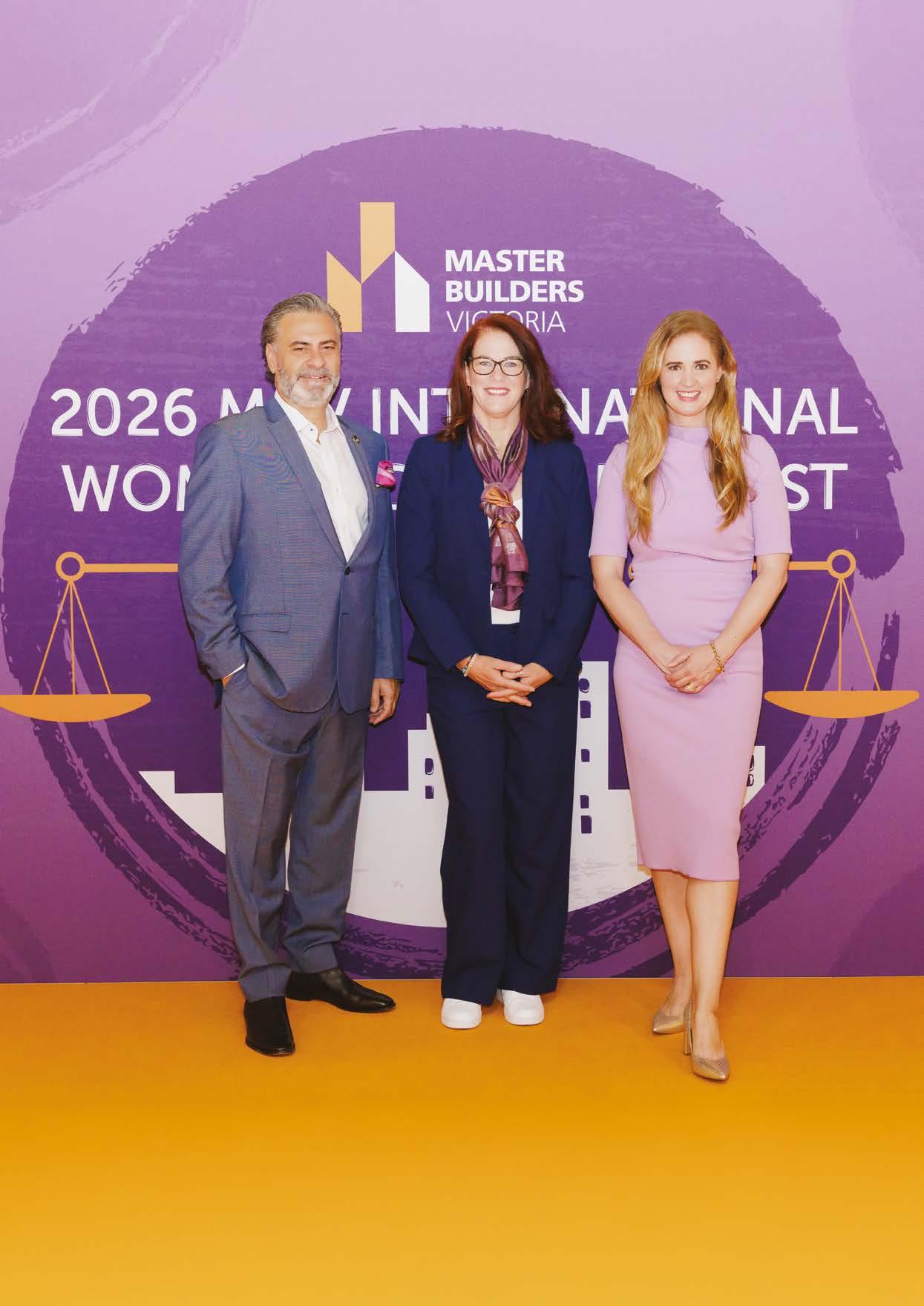
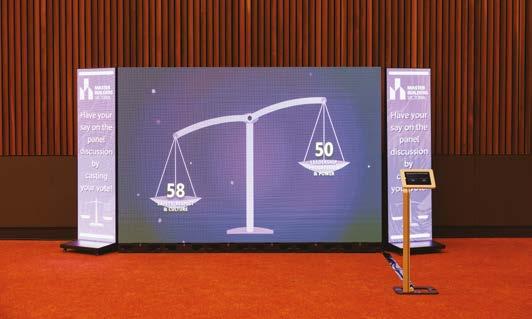
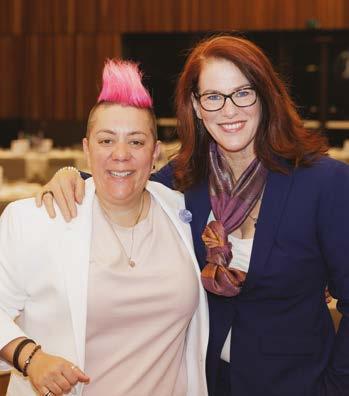
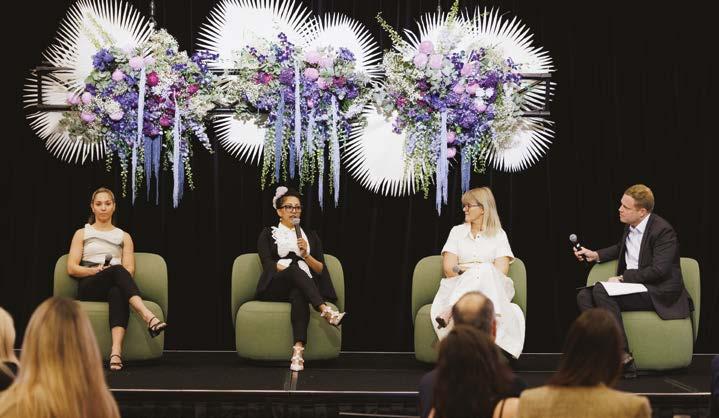
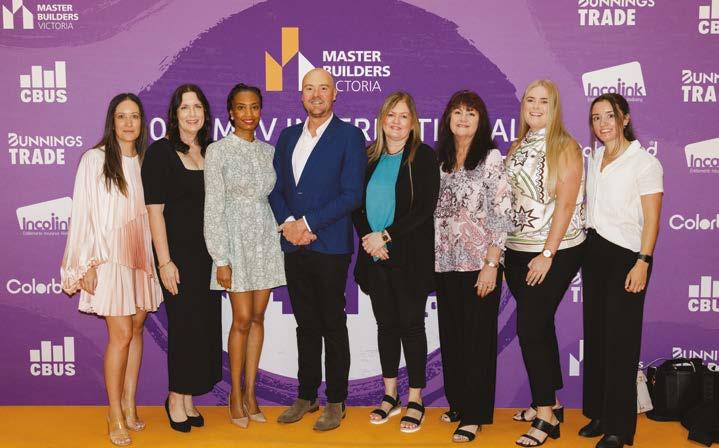
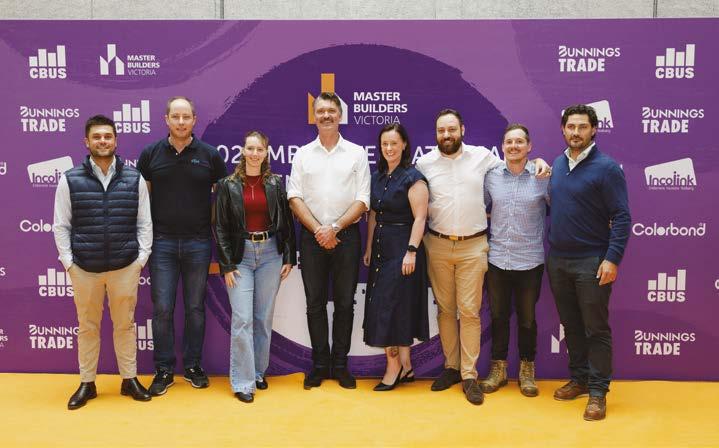
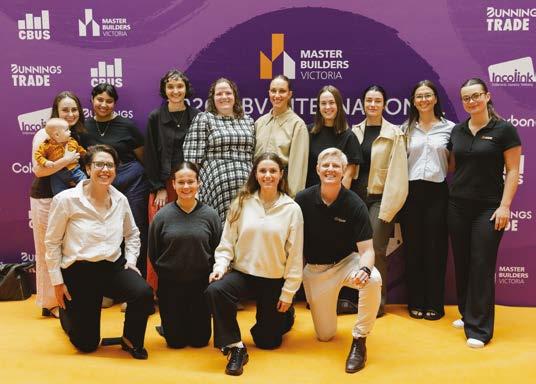
Enhancing opportunities, amplifying the voices of women, demolishing outdated gender bias, and achieving a more equitable future within the building and construction industry were the focus of the Master Builders Victoria (MBV) International Women’s Day Breakfast.
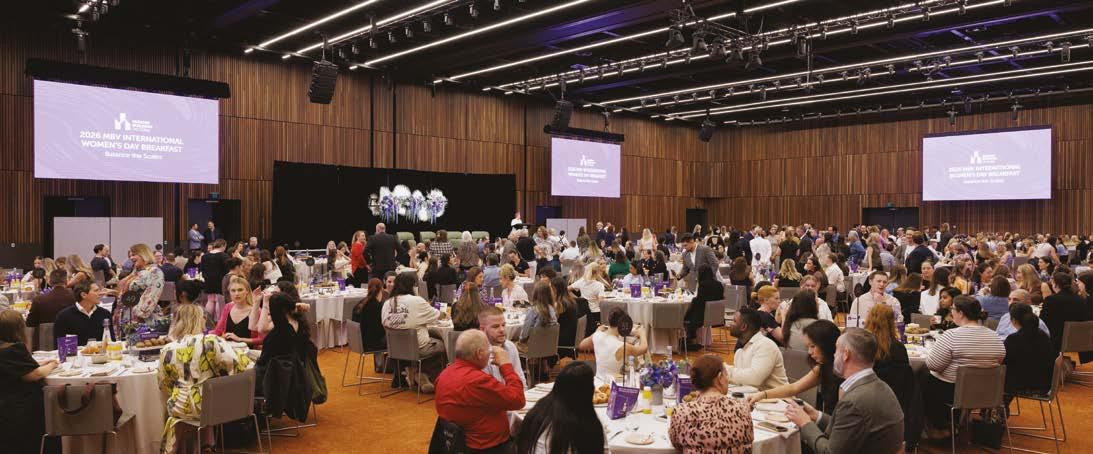
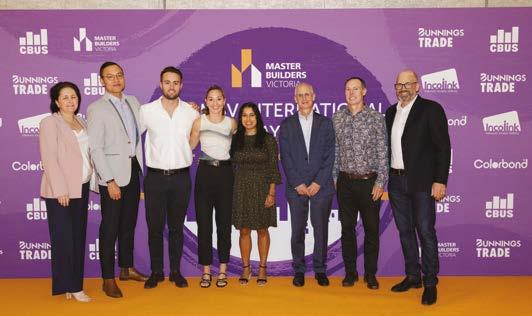
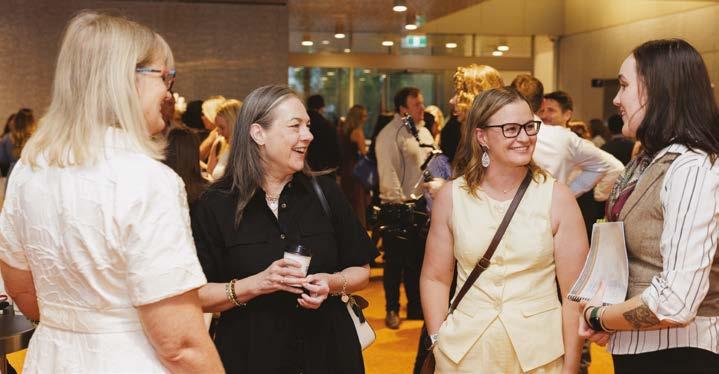
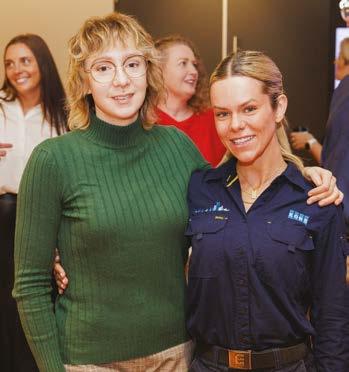
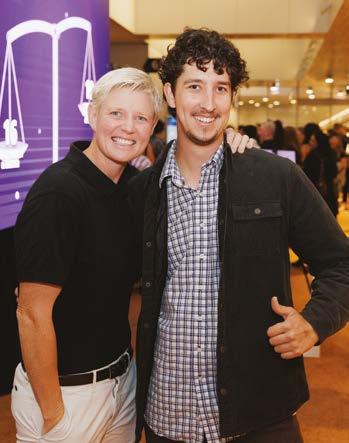
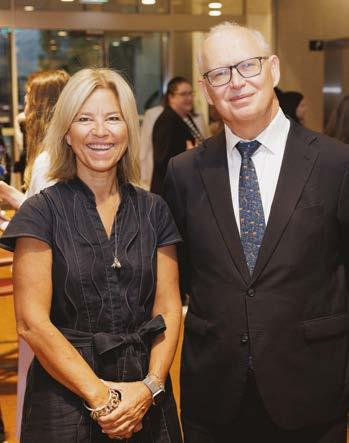
On Friday 6th March 2026, more than 600 attendees of industry leaders, professionals and advocates, gathered at Centrepiece Melbourne Park for a celebration of the women in our industry, and a powerful conversation about the future of females in the building and construction sector.
Hosted by, pastry chef, author and television personality Anna Polyviou, the event centred on the theme “Balancing the Scales”, aiming to tip the weight of justice towards safety, voice, and opportunity for every woman and girl.
As Guest MC, Anna was the perfect embodiment of this theme, having built an extraordinary career in a maledominated industry while challenging norms and redefining leadership.
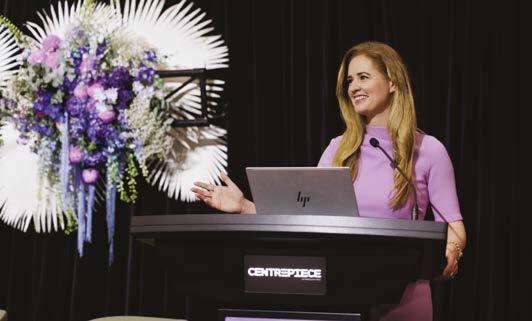
In her opening address, MBV CEO Michaela Lihou, emphasised the importance of this year’s theme, transcending the conventional notions of work/life balance and the juggling of responsibilities. She highlighted that women have been managing these challenges effectively, often without recognition, for a considerable time.
Instead, the conversation must focus on challenging outdated assumptions and dismantling the gender-based double
standards that continue to shape opportunities in the industry.
“It isn’t about asking women to prove they can do both, it is about asking why we measure them differently in the first place.”
Michaela explained that true balance, comes from reassessing how value is assigned and opportunities are distributed. from construction sites to boardrooms.
“It is about being more honest and more intentional about how weight is added, how value is measured and how opportunity is distributed. It starts on our sites, in our boardrooms, in who we promote, who we back and who we listen to.”
Guests were urged to play an active role in reshaping the industry’s culture.
Keynote Speaker Angela Hucker brought three decades of experience in construction to the stage, drawing on her career as a social enterprise CEO and TEDx speaker to challenge the audience to take responsibility for the sector’s future.
Her message was clear: inclusion should be the norm, not the exception. She framed equality not as a gender issue but as a critical factor in the sustainability and success of the industry itself. Stating that:
“Equality isn’t a women’s issue. It’s not a men’s issue. It’s a society issue. It’s a future-of-this-industry issue,” she said.
And the most important ingredient for progress? The courage to stand up. Courage to speak up. Courage to challenge.
A panel discussion featuring Commercial Sales Manager at Bunnings Trade, Robyn Hawken, General Manager of Structerre Consulting, Mathanki Aru and Plumbing and Fire Protection Tradeswoman, Jessica Malouf offered personal insights into navigating the construction sector and advocating for greater female participation.
The panellists shared experiences from across the industry, highlighting both the progress made and the persistent barriers that remain. Their discussion reinforced the importance of visibility, mentorship and active advocacy to ensure more women can enter — and thrive in — construction careers.
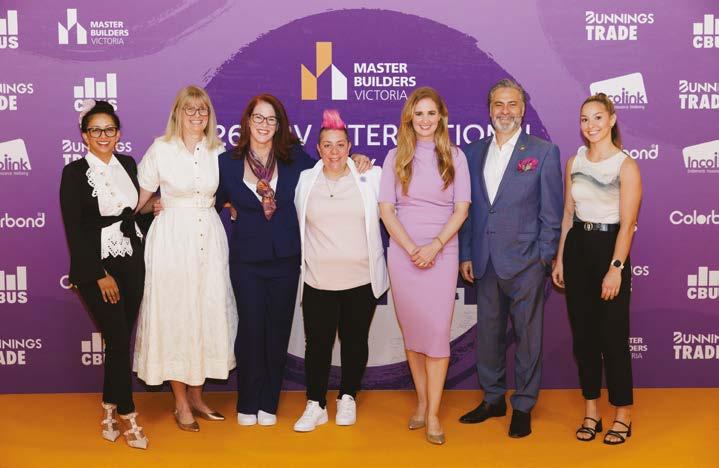
Closing the event, MBV President Steven Peluso, reminded the audience that meaningful change requires action - something the construction sector understands well.
“If we are serious about seeing more women thrive in the building and construction industry, then our commitment cannot start in midcareer,” he said.
Instead, he argued that the industry must support young women from the very beginning of their journeys, particularly through apprenticeships and early career opportunities.
“If we want to shift the balance long term, we must back young women at the very beginning of their careers through apprenticeships and on-site in the workplaces we create.”
A Big Thank You to Our Valued Event Sponsors:
Centrepiece Event Sponsor
The event highlighted both the challenges and the momentum building across the sector to create a more inclusive future.
If the message wasn't already clear, it was this:
balancing the scales in construction isn’t about adjusting women to fit the industry — it’s about reshaping the industry itself
















Victoria’s residential building industry is operating in a reformheavy environment at a time when housing supply has never been more critical.
Demand remains strong. The aspiration of home ownership remains unchanged. But the policy settings shaping how builders operate are becoming more complex, more technical and more consequential.
This is where advocacy matters.
Recent data continues to reinforce what builders already know on the ground:
• The cost of building a new home in Melbourne increased by approximately 3.5 per cent over the year to January 2026
• The cost of purchasing a new dwelling rose by 2.9 per cent
• Melbourne inflation sits at 3.3 per cent at February 2026, with housing a significant contributor
• Rents increased by 3.3 per cent year-on-year
• Victoria recorded a reduction in construction work compared to other states
These figures are not abstract. They translate directly to affordability pressure for families and tighter operating margins for builders.
Supply remains the structural issue. If government is serious about improving affordability, reform must enable builders to deliver more homes, more efficiently, and with regulatory certainty.

The proposed Minimum Financial Requirements (MFR) framework is one of the most significant regulatory shifts facing domestic builders in recent years.
MBV’s advocacy has been clear and consistent: reform must be workable, proportionate and aligned with how construction businesses actually operate.
Through formal submissions, member case studies and direct engagement with government, MBV have focused on several core principles:
• Financial reporting must reflect project-based cashflow realities
• Revenue settings must not artificially constrain capacity
• Notification triggers must target genuine financial stress, not timing volatility
• Reporting requirements must align with professional accounting standards
• Compliance costs must be proportionate to consumer risk
Industry supports the objective of improving resilience and consumer protection. The concern is not the intent — it is the design.
We have also worked closely with Chartered Accountants, CPA Australia and specialist firms with deep experience in the Queensland framework, to ensure technical settings do not create unintended consequences or professional conflicts.
This is evidence-based advocacy — grounded in practical experience, not ideology.
MFR does not sit in isolation. Builders are simultaneously managing changes linked to buyer protection, rectification orders, NCC updates and broader compliance expectations.
Individually, each reform may appear manageable. Collectively, they shape capacity.
Every additional reporting requirement, certification step or compliance trigger consumes time, professional fees and management attention. For small and medium domestic builders, that matters.
Our advocacy message to government is straightforward:
If increasing housing supply is the objective, reform must be coordinated and sequenced. Stability drives confidence. Confidence drives investment. Investment drives supply.

Effective advocacy starts with listening.
Our policy work begins with member calls, regional forums and direct feedback from builders navigating these reforms in real time. This insight informs our formal submissions, briefings to Ministers and engagement with Government Departments.
We translate operational reality into policy language.
Recent activity has included:
• Detailed submissions on MFR and financial reporting settings
• Technical engagement with accounting bodies
• Briefings highlighting revenue cap impacts and capacity reduction risks
• Public commentary linking supply constraints to inflation outcomes
• Member webinars and guidance materials to simplify complex reforms
Advocacy does not end with a submission lodged. It continues through refinement, negotiation and ongoing engagement.
They want clear rules, stable settings and proportionate regulation. They support consumer protection and financial accountability. What they cannot absorb is layered reform that unintentionally restricts delivery at a time when housing supply is already constrained.
The great Australian dream of home ownership depends on a sustainable building sector.
MBV’s role is to ensure that policy decisions reflect practical construction realities and that reform strengthens the industry rather than weakening its capacity to deliver homes.
The work continues.
MBV’s advocacy has been clear and consistent: reform must be workable, proportionate and aligned with how construction businesses actually operate.



From 1 July 2026, employers will be required to pay workers’ super at the same time they pay salary or wages. Cbus Super is here to help you through this important change.
Many employers currently pay super monthly, while others pay quarterly. From 1 July 2026:
? You’ll need to make sure workers are being paid super on their payday
? Contributions must in be workers’ super accounts within seven business days
? If you don’t meet your obligations, the Australian Taxation Office will require you to pay a superannuation guarantee charge.
The good news is that paying super on pay day means fewer liabilities building up over time, which may make managing cash flow easier. It lines up with payroll processes, which may reduce the administration of making separate super payments.
Payday Super will strengthen Australia’s superannuation system, delivering retirement savings straight into a member’s account to immediately begin earning and compounding.
It’s important to plan ahead, and we’re here to help.
Scan here for detailed information and resources to help you prepare for the upcoming changes
If you have questions about Payday Super, simply contact:
Daniel Tentser Senior Employer Engagement Manager
E: daniel.tenster@cbussuper.com.au
M: 0439 372 365
This information is about Cbus Super. It doesn’t account for your specific needs. Please consider your financial position, objectives and requirements before making financial decisions. Read the relevant Product Disclosure Statement (PDS) and Target Market Determination to decide if Cbus Super is right for you. Call 1300 361 784 or visit cbussuper.com.au
for

Oliver Hume Property Group has launched a comprehensive new quarterly land index that will draw on decades of data and industry expertise, to spotlight opportunities and risks in Australia’s $16B new land market.
The Oliver Hume Land Index and Residential Market Outlook is designed to bring greater understanding and transparency to a market that includes more than transactions every year.
The Index is produced by Oliver Hume’s team of research analysts, led by Chief Economist Matt Bell, and will draw on the company’s unparalleled internal land sales data and third-party information to provide insights on key markets, including Melbourne.
The quarterly index has two core components. The first, a State of the National Land Market that provides a systematic assessment of the current condition of major land markets around the country. It allows users to compare
relative performance across regions, and identify the current phase of the cycle in each market.
The second component, a Residential Market Outlook, will provide a 12-month forecast of sales volumes and price movements in each market.
Oliver Hume Property Group CEO Julian Coppini said the Index would be the most comprehensive quarterly analysis of Australia’s land market.
“Volatility has become the new norm in Australia’s land market, and buyers, developers and governments face a constant battle to stay up to date and respond to changing conditions.” he said.
“We believe the industry needs more than fragmented data and irregular, anecdotal commentary. It needs a structured, evidence-based assessment of market health and a credible forecast of what lies ahead.”
“Oliver Hume has more than 50 years of proprietary land sales data and frontline market experience,” he said. “We believe it is time to share that insight in a way that helps the entire industry make better, more informed decisions.”
The Index is expected to become a valuable contributor to established property research and reporting across multiple channels and is designed for use by developers, governments, media, policymakers, and everyday investors.
Bell says the Index’s credibility rested on its disciplined methodology.
“We assess each greenfield land market across three main themes: supply and demand fundamentals, market sentiment and pricing dynamics.” he said.
“Within those themes, we analyse multiple sub-indicators and benchmark each against long-term trend levels. We then apply weightings to those indicators and themes to produce a single index reading for each market.”

• Each market receives a score calibrated to 100 as the benchmark for a balanced market. A reading above 100 indicates conditions operating above the long-term average, while a reading below 100 signals a market performing below trend. This normalised approach enables direct comparison across cities and regions and allows the research team to systematically rank performance nationwide.
• The 12-month Market Outlook combines the present market assessment with projections of key drivers that have historically correlated strongly with land markets, including established housing prices, population growth, interest rates and land supply. It also incorporates historical analysis of vacant land cycles, examining their length, depth, frequency and correlations.
Coppini said the Index would become an essential reference point for the industry.
“The land market plays a central role in housing supply, infrastructure planning and broader economic performance,” he said. “If we want better outcomes, we need better information. This Index provides a clear, repeatable and transparent measure of land market health.”

ARTICLE AUTHOR
Mitchy Koper Oliver Hume Property Group National Head of Corporate Marketing & Communications
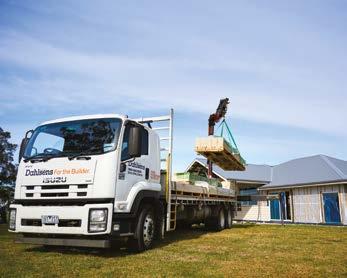
As a proud family business supporting Australian builders for almost 150 years, Dahlsens is committed to helping Master Builders Victoria members deliver projects with confidence across metro and regional communities.
We supply truss and frame, timber, hardware, doors, cladding, insulation and whole-of-house building solutions - some with installation options - backed by great service, a knowledgeable local team and the convenience of 40+ sites throughout Victoria, New South Wales and the ACT.
Whether you’re building one home or managing multiple sites, we work alongside you to provide quality products, reliable delivery and practical advice you can trust to keep projects on track. With Dahlsens, you gain one trusted supply partner who makes it easier to manage materials across every stage of the build.
Speak with your local Dahlsens team about tailored supply solutions and competitive trade pricing to support your next project.
Contact: 1300 324 573 | dahlsens.com.au

Who was the first person who showed you how to hammer a nail? For most people they remember a lesson from their dad, a mate or a friend of the family in the building trade.
You probably learned by watching it being done, given a few words of advice, and then had a go at hitting a nail or two yourself. We learn in many ways, all through our life, but often some of the best results come from getting information and advice, and then putting it into practice.
That’s the genius behind the Leadership Simulation Centre (LSC). Designed specifically with the goal of providing high quality training for the building and construction industry, the Master Builders Victoria-owned centre provides participants with the theory and the information they need to then go into a simulated workplace to practice their new skills.
People often get confused between a role play experience and life in a simulator. Role plays within lessons are still useful if you can’t access a simulated experience. It usually involves people out the front of the class, with one acting as a boss while the other pretends to be the apprentice. It can be pretty entertaining, but it almost never feels real.
In contrast, the LSC is set up as a cross between the Big Brother house and a worksite. There are 12 rooms, all setup with cameras, phones and microphones that connect to the control room and computers. The rooms are dressed up to look like a typical site office, and professional actors wander in and out of offices, each with designated roles coordinated from a central control room.
Unlike role plays, these actors respond live to the participant, creating lifelike scenarios – so much so that participants often say they forget they are in a simulator. They forget about the cameras, and really focus on putting their learnings into place.
Its training developed by the industry, for the industry.
After a simulation session, participants debrief. They talk with the trainers and can watch back their performance while also getting feedback from the performers. After seeing what they did right or wrong, they often get a second opportunity to complete the simulation, providing an immediate opportunity to refine their skills and put them into practice.
This is a critical process, providing rapid and direct feedback in a safe training environment, so that participants can walk onto site the next day, confident in having new skills and techniques to help them lead on-site.
The LSC program offers a wide range of courses including:
• Navigating Conflict
• Communication Essentials
• Leadership Essentials
• High Performance Site Management
• Dealing with Difficult Situations and People
• Managing Time and Priorities
• Right of Entry
• Managing On-site Industrial Relations
The LSC difference is that these courses are designed by master builders working with expert trainers to create an exceptional and relevant training experience. Its training developed by the industry, for the industry.
Scan here for further information.
For information on coming courses or to join one of our free immersive LSC tours where you can experience the difference, contact our team at (03) 9411 4555 or scan here to email us.




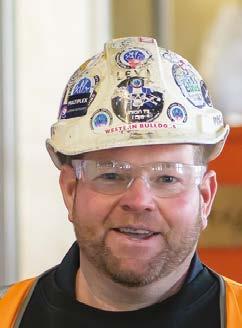









Our team loves connecting with members and shining a spotlight on the outstanding businesses and people who keep the building and construction industry moving. Here’s a look at some of the members we’ve visited over the past few months.
If you’d like to organise a site visit or have a chat with the MBV team, give us a call on (03) 9411 4555 or scan here to email us.
Join today and discover the many benefits and services that come with a Master Builders Victoria membership.
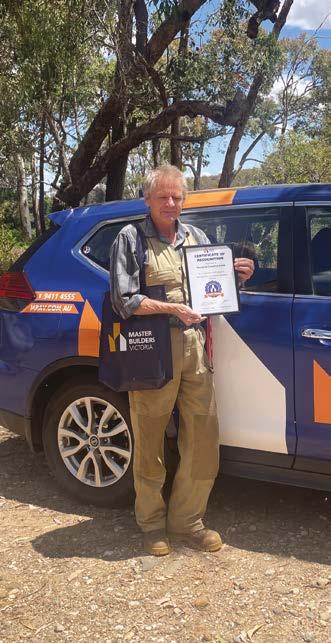
Beechworth member celebrating 15 years as a Master Builder.
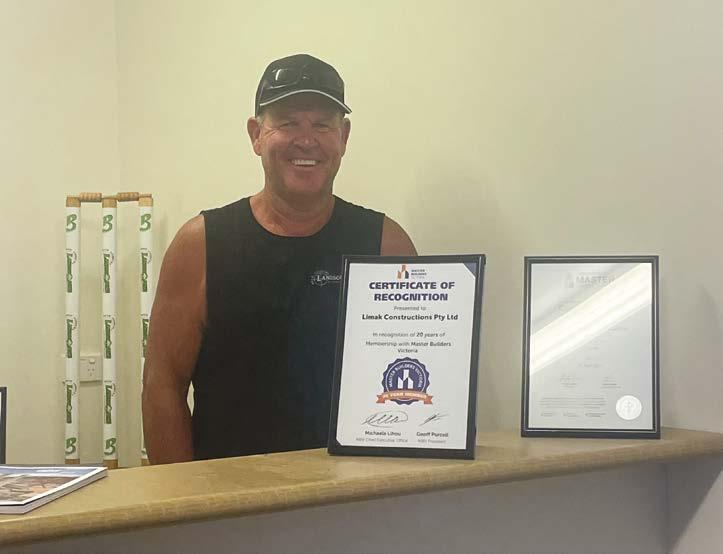
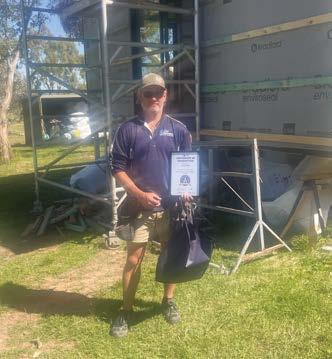
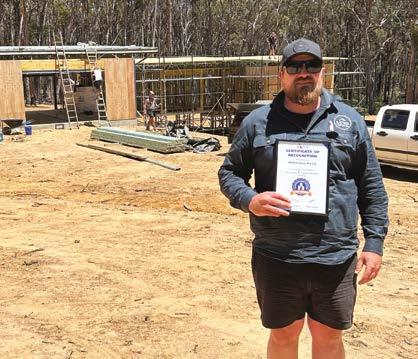
20 year MBV member, Brad Andrews with his certificate. Also one of the first landscaper in Victoria to advocate for licensing in landscaping.
Thanks for being a great advocate & supporter of regional MBV Brad!
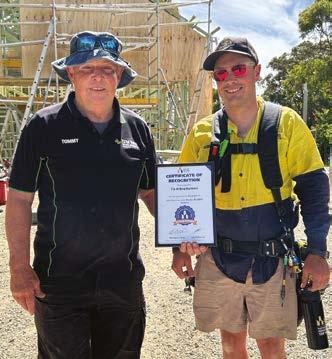
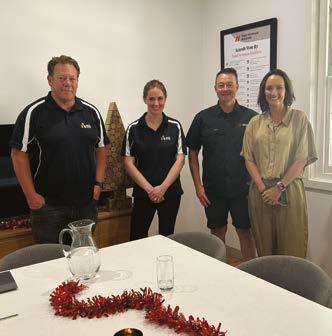
MBV CEO Michaela Lihou and Member Engagement Manager Peter Whyte catching up with Todd and Kate Newman.
JGF Building & Construction
Mansfield member celebrating 10 years as a Master Builder
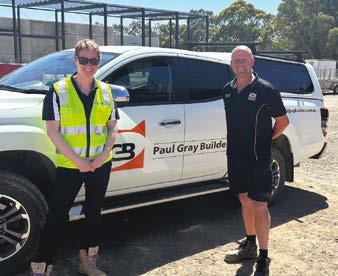
MBV CEO Michaela Lihou meeting with Paul Gray to tour Paul's impressive new selection centre opening in April.
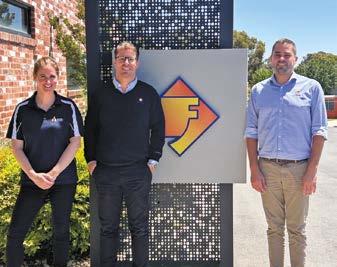
MBV CEO Michaela Lihou catching up with Ben Millar and Brad Van Den Bosch in Bendigo to chat about the commercial challenges in the current environment.

A key milestone celebration of 30 years as a Master Builder.
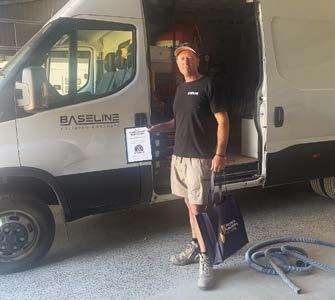
Local Mansfield member celebrating 10 years as a Master Builder.
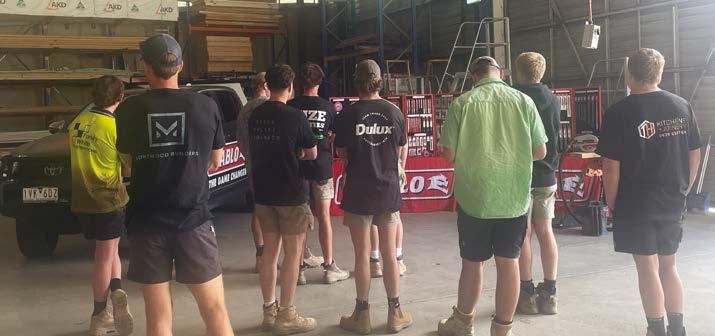
A focus on the future of construction with Go Tafe Wangaratta, meeting and presenting to a group of carpenters and cabinet makers.
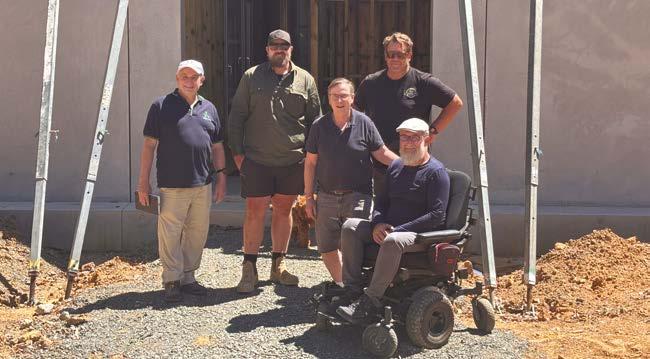
MBV Member Engagement Manager Peter Whyte and MBV Senior Advisor, Future Built Environment Dr Philip Alviano visited proud second-generation Master Builder Martin Bird for a tour of the low energy, high performance house his team is building in the Daylesford area. Martin’s father Bill has been a member of Master Builders for over 50 years and his uncle Tom Bird over 30 years.
Great to see a Master Builder proud to showcase his team’s skills and the result of great collaboration between the designer, owner and builder.
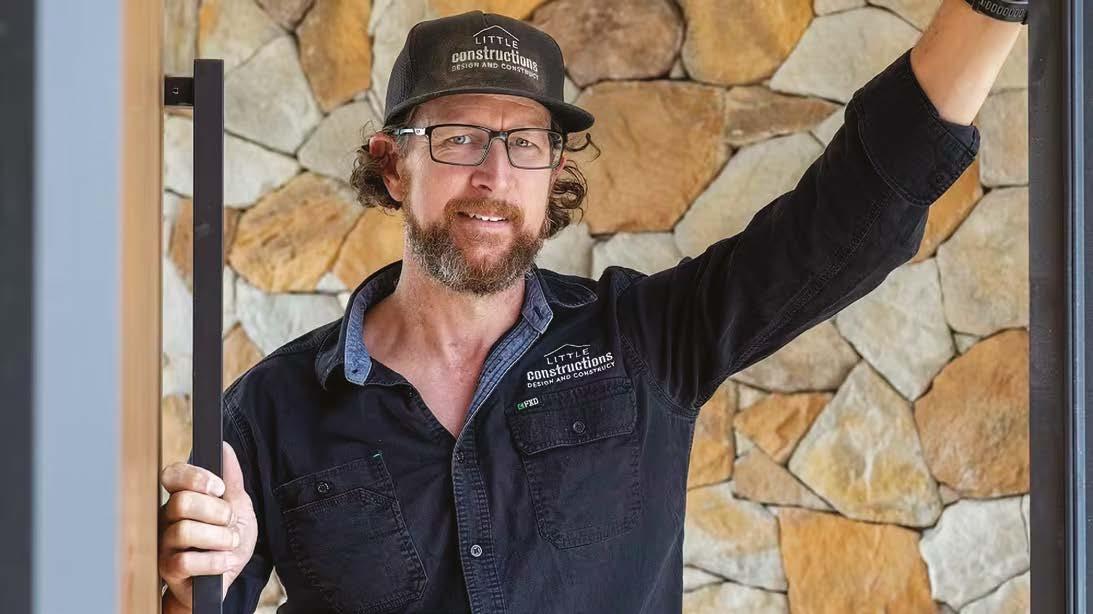
In the first of a new series profiling alumni from The Gordon Institute of TAFE in GT magazine, builder Mark Little reflects on how his time there helped him establish Little Constructions and later become President of the Master Builders Association of Victoria.
What led you to a career in the building industry?
My grandfather was a painter and my father was a plumber, so a trade was definitely in my blood.
I spoke with my parents and they said I could leave school at the end of year 11 on the condition that I got an apprenticeship, so off I went.
I originally wanted to be a landscape gardener, but it was 1994 and Geelong was still heavily impacted from the Pyramid collapse. I remember going through the Yellow Pages and calling
nearly all the builders who advertised in there, looking for an apprenticeship.
When nothing came of those calls, I called them all again six months later. Then someone who I hadn’t called heard about me from someone who I had called, and rang me and offered me an apprenticeship.
How did your time at The Gordon shape your career?
My time at The Gordon was great. We had a great class, some really skilful individuals like Mark Mounsey, Damien Jacques and Ionel Miela. We all helped and pushed each other.
And teachers like Stewie Owen, Mark Hyde, Geoff Van Halen and Laurie Lowndes. Thanks Laurie. (“That’s Mr Lowndes to you.”)
What was the most valuable lesson or experience you took away from The Gordon?
I never really was good at maths. Algebra was a real battle.
But as soon as we brought the Little Red Roofing Book out and applied rise over run, everything clicked and I excelled.
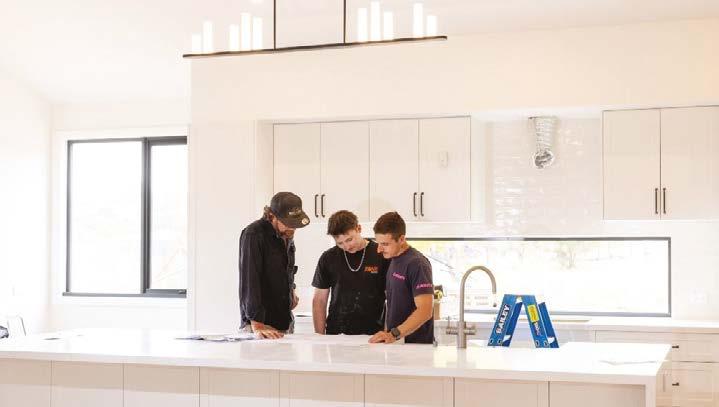
Besides your own experience, has your family had any other connection with The Gordon?
I am super proud of my daughter too. She completed her floristry course last year and won Student of the Year. It’s an amazing achievement for her.
I know full well what it means because you don’t set out looking to win awards, you just go about your tasks to the best of your abilities. When you’re recognised ahead of your peers, it’s pretty humbling.
I’ve been fortunate enough with my time at Master Builders of Victoria to judge the Geelong region’s Apprentice of the Year awards. A number of the apprentices nominated came from The Gordon and were always of high quality.
Can you share a milestone or achievement in your career that you’re most proud of?
Every house that we build is an achievement. They are all unique in so many different ways and specially formed for our clients’ lifestyles.
To see bare dirt from Meredith, Batesford, Moriac, Bannockburn, Teesdale, Wallington and Barrabool become someone’s home and help them along their journey – there’s a lot of responsibility there.
Being president of the Master Builders Association of Victoria from 2021–2023 was also a real highlight. Again, to be elected by your peers and become the first ever regional member to be president was pretty special.

What’s on the horizon for you and Little Constructions in 2026?
We’re really looking forward to the opportunities that 2026 will bring.
In the downturn a couple of years ago we restructured, and are doing fewer homes now, but are focusing more on the relationships with our carefully selected clientele.
We already have some unique projects lined up and can’t wait to showcase them.
What advice would you give current students or recent graduates looking to follow a similar path?
The Gordon gives you such a great foundation, really gives you knowledge and skills that you can then build on in your chosen career.
Thank you to the The Gordon for sharing this article with us to republish in the Master Builders Victoria Magazine
Scan here to read the original article.

Across Victoria, more builders are finding themselves in serious trouble after allowing someone else to use their registration. What begins as an innocent favour can quickly escalate into full legal responsibility for a project you never controlled.
Under Victorian law, the builder named on the contract, Domestic Building Insurance (DBI) certificate and building permit is deemed responsible for the entire job, regardless of who supervised or carried out the work. License lending can breach both the Building Act 1993 (Vic) and the Domestic Building Contracts Act 1995 (Vic), exposing the named builder to disciplinary action, loss of insurance eligibility and significant financial liability. Many builders only realise the severity of the risk once defects arise or owners make claims, at which point it is too late to dispute their role.
The Domestic Building Contracts Act requires major domestic building contracts to clearly identify the builder responsible for performing and managing the work. That same builder must be named on the DBI certificate and the building permit.
Section 246 of the Building Act makes it an offence to provide false or misleading information to a building surveyor, including where a listed builder is not truly supervising the works.
These requirements ensure the named builder is genuinely accountable and prevent unregistered or uninsured builders from working outside the regulatory framework.
The Tribunal’s decision in Alderson v Nelson [2025] VCAT 1136 highlights the danger. Although another practitioner acted as the “builder on site” VCAT held that Mr Nelson, who was named on the contract, permit and DBI, was legally the builder. Relying on Theodor v Noonan [2015] VCAT 1390, the Tribunal confirmed that the person named in the paperwork must accept responsibility, even if they did not personally perform the work.
Builders who lend their registration often assume liability will fall on the person doing the work. However, in reality, the opposite applies.
Once your name appears on the building contract, you are legally responsible for compliance, defects and incomplete work, and may face disciplinary action and insurance consequences. You may also face restrictions on future DBI eligibility, making it harder or impossible to continue operating as a builder.
To protect your registration, ensure your name only appears on projects you genuinely supervise and manage, with clear, documented involvement. If your details are used without consent, immediately seek legal advice.
If your name is on the permit, contract or insurance, the law considers you the builder. Protect your registration by ensuring your involvement is real, documented and aligned with your legal obligations.
Many builders only realise the severity of the risk once defects arise or owners make claims, at which point it is too late to dispute their role.
The information within this article is general information only and should not be relied upon as legal advice. Should you require information and advice specific to your circumstances we invite our members to contact our legal team on 03 9411 4555 or scan here to email us.
ARTICLE AUTHOR
Amelia Nicolaides MBV Junior Legal Counsel





Let’s not sugarcoat it: working in the building and construction industry is dangerous. Falls from heights, plant accidents, crushing incidentsyou name it, there are so many risks that need to be assessed, controlled and reviewed. But one hazard that we don’t take seriously enough is exposure to ultraviolet (UV) radiation. UV exposure can have life altering effects, causing serious health conditions such as skin cancer, and in far too many cases, death.
When working outdoors, we have the tendency to expose ourselves to high amounts of UV on the job. It’s important to be aware of this and to make sure

we are protecting ourselves as much as we can whilst we are at work. Limiting time in direct sunlight can greatly affect the amount of UV radiation we absorb. And it isn’t just in the warmer months, it’s year-round. UV exposure builds up over time.
While the UV is typically at its highest between 10am and 3pm, it is important to use sun protection whenever the UV index is at 3 or above. During these sun protection times, we need to be looking after ourselves by getting out of direct sunlight and working somewhere that is shaded from the sun, or at least out of direct sun exposure.

Moving the work from outdoors to indoors is a good way of controlling your works and keeping your workers safe from the harmful effects of too much sun exposure.
When moving your work indoors or into shaded areas isn’t an option, what you wear becomes even more important:
? A wide-brimmed hat that shields your face, ears and neck, along with clothing that covers your arms and legs, can provide strong protection against harmful UV radiation.
? For any exposed skin, apply a broad-spectrum SPF 50 sunscreen—and remember to put on your sunglasses as well.
Without wanting to get too serious, exposure to the sun can lead to a multitude of serious health conditions: sunburn, sunstroke, dehydration, and in the long term, skin cancers, cell carcinoma and accelerated skin aging. UV has also been known to cause DNA damage, immune system suppression, eye damage and skin spots.
The consequences of any of these conditions can be devastating and the effects might not be immediately obvious but can manifest over time. This is why we need to take it seriously.

As construction workers, we do spend a lot of time working outdoors, and it is up to all of us to do the right thing. Look after ourselves and the other workers around us.
Consider:
? Rearranging tasks where feasible to limit time in direct sun light during sun protection periods
? Conduct a toolbox talk about UV exposure to discuss the risks of UV and control mechanisms that can be put in place
? Ensure you have a broad-spectrum SPF 50 sunscreen available on-site
? Actively following up your colleagues when they are not being sun smart and encouraging them to slip, slop, slap and slide!
If you’d like to discuss how you can promote a healthy and safe workplace in your business, feel free to contact our OHS team on (03) 9411 4555 or scan here to email us.
ARTICLE AUTHOR
Rod Armstrong MBV OHS Advisor



Business owners already operating in the construction industry often look at property development and think, “Why wouldn’t I?” With access to people, subcontractors, equipment and real delivery capability, it can feel like an obvious way to generate additional revenue and wealth creation.
The opportunity is real. But so is the warning. If a project is not set up properly, profits can be eroded – or wiped out – by poor structuring, weak feasibility planning, and avoidable tax outcomes.
More importantly, if development activity is tangled up with the main trading company, and you do not have strong financial visibility across your existing operations, a single decision or dispute can put the core business at risk...
Before getting excited about a site, a design, or a selling price, decide the strategy and test it commercially.
Most development activity falls into two broad models:
Build and hold – Create a portfolio, earn rental income, and target longterm value growth. This relies on sustainable cash flow and gearing that can be serviced in tough markets.
Develop and sell – Acquire, develop, and sell within a shorter timeframe. This is about disciplined cost control, time management, and execution.
These models can look similar on paper, but they drive different decisions around funding, tax treatment, and risk. Before committing, run proper feasibility models: realistic build costs, contingencies, finance, holding and selling costs, and conservative sale or rental values.
Stress test the deal – what happens if rates rise, sales slip, or costs blow out? If the strategy and feasibility are unclear from day one, it is easy to build yourself into an outcome you did not intend.

Early on, decide whether the activity sits with you personally or inside a separate entity. This influences how profits are taxed, how lenders assess the deal, and how effectively risk can be kept away from the operating business.
Structure also changes how cash moves – who contributes equity, who borrows, who receives sale proceeds. With your advisers, select the mix of entities –company, trust, or otherwise – that best aligns tax outcomes, funding, and risk containment.
One pathway into development is partnering with other parties who bring different assets or expertise – land, capital, or sales capability – while you contribute construction delivery or project management.
Partnerships are a great way to achieve scale, but partnerships need grownup paperwork. Roles, contributions, decision rights, profit splits, and exit scenarios must be agreed upfront. Go further and set budgets, approval thresholds, reporting, and who is responsible if costs overrun or timelines slip. Trust matters, but clear agreements matter more.
If a project is not set up properly, profits can be eroded – or wiped out – by poor structuring, weak feasibility planning, and avoidable tax outcomes.
Development funding is different to standard business lending. Lenders look closely at feasibility, presales or preleases, program, and cost-to-complete, not just security.
The key question is whether the funding structure supports how cash actually moves through the project. How much equity goes in, when do debt drawdowns occur, what presales are required, and what tests or covenants apply during the build? A development can be profitable on paper and still put pressure on cash flow if timing is misaligned.
5
the core
One principle matters above all others: the main trading company should not be carrying development risk.
Best practice is to use structures that isolate risk and limit the chance that defects, disputes, or claims arising years later affect the operating business, with strong contracts between all parties, including where your construction business is engaged to deliver the build on arm’s length terms.
Development can also quietly strain the core business if it pulls focus, people, and cash away from client work. Even solid projects can take longer than expected, tie up working capital, or create short-term cash pressure.
So run your own development with the same discipline you expect from good clients: clear scope, a realistic program, cost-to-complete reporting, a live risk
register, and regular reviews of margin and cash flow across both the project and the wider business. You need to see how development activity is affecting working capital and operational capacity. Without that visibility, risk builds quickly.
The strongest outcomes usually come from construction businesses that surround themselves with the right people early – not just accountants and lawyers, but also finance partners who understand development, town planners, buyers’ agents and real estate professionals with genuine market insight, and financial advisers where appropriate.
The best time to assemble that trusted advisory circle is before you commit. Once contracts are signed, your options narrow fast.
Property development can be a powerful way to build long-term value, but only when it is approached strategically. Get the structure right upfront, invest in serious feasibility and project management, protect the core business, and make decisions with clear eyes rather than optimism alone.

ARTICLE AUTHOR
Joshua Robertson Xact Accounting Partner and Client Director

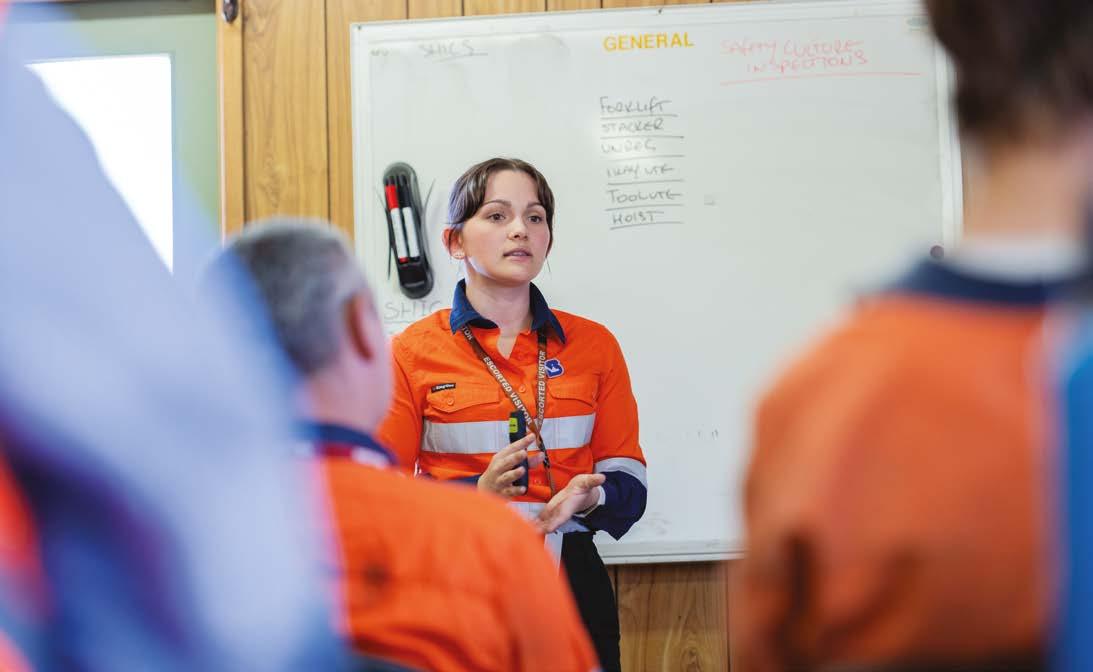
Here's Why Leadership Skills for Your Whole Trade Team Might Be the Smarter Investment.
Early in my trade career, the people I respected most on-site weren't always the supervisors. They were the experienced tradies who took the time to teach me, encourage me when I made a mistake, or tell me straight when I was doing something wrong. They often had no authority over me, but they shaped the tradesperson I became.
That was leadership. I just didn't have a word for it yet.
Most trade businesses invest heavily in technical skills. Licensing, manufacturer training or safety skills are all essential. Yet our ability to perform the technical aspects of our jobs effectively often relies on the people skills that enable us to work well in teams, with subcontractors, or with clients. Whether it’s how people manage themselves under pressure, how they communicate, or how they support or mentor each other, it’s a gap I’ve observed across all trades.
Fortunately, it's a gap with practical solutions.
At Blue Leader, our work is built on one idea: leadership is something we do, not a title we hold. Every person on your team is already leading through the example they set and the influence they have on each other. That influence determines how well your team collaborates, resolves conflicts, and supports each other to grow, and it's either working for your business, or against it.
How we show up is part of everyone's job. We’ve all felt the impact of one person's bad morning and how it can set the tone for the whole team's day. The example we set (whether we're aware of it or not) constantly influences the people around us.
Three strategies that help us manage ourselves and the example we set are:
• Bottom-up regulation: using our body to settle our mind. This can be slowing our breathing, relaxing our posture or taking a quick step outside.
• Top-down regulation: using our mind to redirect our focus. This can be practising mindfulness, reframing unhelpful thoughts or finding gratitude.
• Seeking support: sometimes the most effective way we can regulate ourselves is through connection. This can be talking to someone we trust, sharing what’s going on, or asking for help.
The goal isn’t to suppress how we feel; it’s about working through our experiences so we can show up effectively.
Whether we’re an apprentice, tradesperson or supervisor, this skill shapes how we can lead by example at any level.
We experience others through their actions, not their intentions. Yet one of the most overlooked tools we have is simply paying attention to each other.
When we don’t pay attention to people because we’re on our phones, working on computers, or in the middle of a job, we miss important information that we might otherwise pick up if we were watching more closely. Instead, if the entire team gives each other their full attention, we show each other that their ideas and experiences matter, foster trust and stronger team relationships, and build a deeper understanding of one another.
No new process required. Just a habit of attention.
We all have influence over the people around us, and it grows naturally with experience. The most senior person on site, whether that's a leading hand, an experienced tradie or a senior apprentice, can shape how the newer people around us develop.
A simple framework is to gradually increase someone’s responsibility:
1 We do it, they watch
2 We do it together
3 They do it, we guide
4 They do it solo, and we follow up with feedback
If we invest time in developing the people around us, we can help them build stronger technical skills and improve team performance.
At Blue Leader, our work is built on one idea: leadership is something we do, not a title we hold
Scan here for more information

Blue Leader exists to empower trade teams to work better together. If you're ready to get the best out of your people, reach out to learn which training option is right for your team.
scan here to email us.
ARTICLE AUTHOR Ashley Belteky Blue Leader Founder & Diesel Mechanic

James Hardie trained product experts
Clear communication and great service
Personal account management and on‑site support
40+ locations across Victoria, NSW and the ACT
Get a competitive trade quote with take-off.

Available from
If you’re an apprentice or student looking to build your career in the building and construction industry, we invite you to become a Master Builders Victoria student member. Membership helps with generating career opportunities, networking and keeping up-to-date with the latest industry news and developments.


Changes to Victoria’s Building and Plumbing Amendment Regulations 2025 (Building Electrification Regulations) have been finalised. From the 1st January 2027, all new homes and commercial buildings must be built all-electric, including commercial kitchens.
This does not apply to industrial or agricultural buildings, or existing commercial buildings.
The changes also impact existing buildings and renovations. From the 1st March 2027, if a gas hot water appliance breaks and cannot be repaired, it must be replaced with an electric alternative. There is no requirement to upgrade gas space heating or stovetop gas cooking to electric.
To support these changes, the Victorian Government has provided funding through Solar Victoria’s Electrification Training and Workforce Development program to Master Builders Victoria (MBV).
We have produced a number of short videos regarding the abovementioned changes which are now available to view on the MBV YouTube channel.
Recorded with industry leaders, these videos provide up to date information to help you build better homes and meet the requirements of the NCC, and the requirement for all electric homes in Victoria from January 1st 2027.
They provide insightful information and can be used to upskill your workforce.
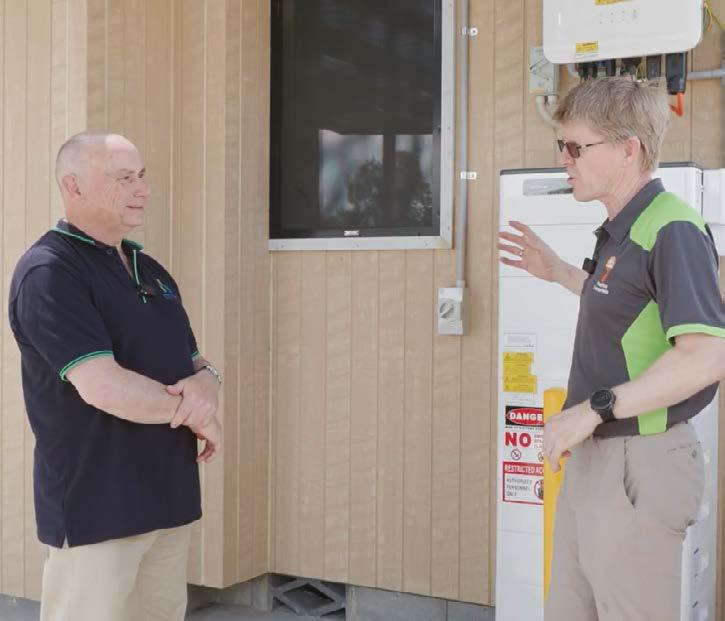
In this series, we are joined by Jeremy Spencer from Positive Footprints and the Sustainable Builders Alliance, as he guides us through an all electric home his team recently completed.
We discuss many of the questions received from MBV members.
• Before you start - the importance of design
– Passive solar design and shading
• Choosing materials and quality control
– Reducing environmental impact without compromising on maintenance
• Appliances
– Induction cooktops
– Heating and cooling
• Hot water systems and rainwater tanks
– Heat pump hot water systems
– Maximising the benefits
• Solar panels and batteries
– The key questions to consider
• Setting up the switchboard
– Does it need to be 3 phase?
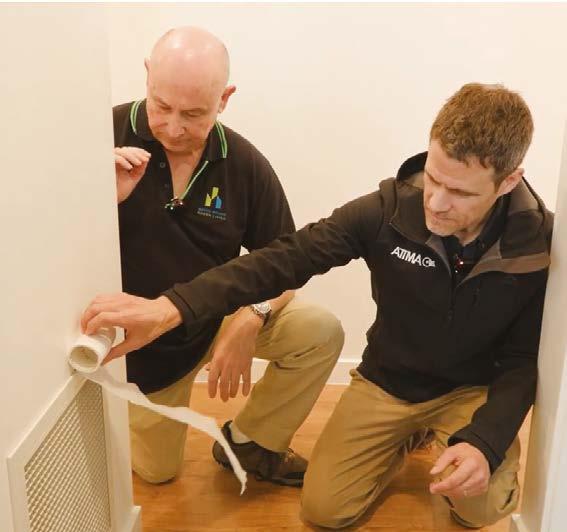
The second series features Sean Maxwell from the Air Tightness Testing and Measurement Association (ATTMA) where he discusses the importance of considering the air tightness of the home when building for energy efficiency.
• Energy savings through airtightness for less cost
– The role of airtightness on energy use
• The importance of airtightness
• Before you begin - the importance of design
– Construction techniques
• Testing for airtightness
– The importance of testing
– Blower door tests
• Finding the leaks
– The most common failures
• Useful products


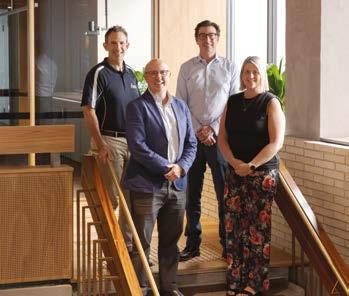

Xact Accounting and Advisory are pleased to announce a new partnership with Master Builders Victoria, supporting members with specialist tax, BPF Minimum Financial Requirements compliance, bookkeeping and growth advice built for construction. Xact provides end-to-end services, from proactive tax optimisation and structuring and MFR compliance, to constructionspecialist bookkeeping with accurate job costing and work-in-progress visibility. Their Financial Control service provides financial clarity through monthly reporting packs, cash flow forecasting, budgeting and profitability analysis so owners can make confident decisions.
For businesses ready to scale, ScaleX is Xact’s structured growth program that clarifies strategy, strengthens leadership accountability, and embeds a consistent operating rhythm across people, operations, sales and finance.
Because of their specialist industry knowledge, Xact is also a trusted go-to for members seeking clarity on the Building and Plumbing Commission’s Minimum Financial Requirements changes and how to navigate compliance with confidence.
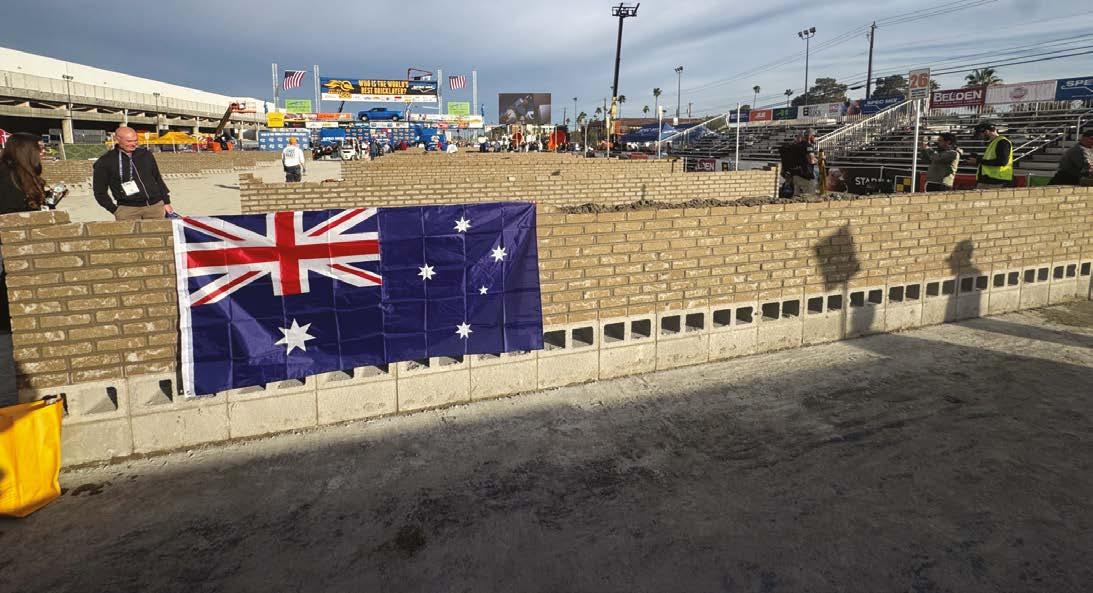
From running crews and launching new tools to becoming the first Australians to compete three times at the Spec Mix Bricklayer 500, the world’s largest bricklaying competition, Team Amuso is putting Victoria’s bricklaying craft in the spotlight.
Our story began with a dream, a trowel and a trade that runs deep in our family
Bricklaying has always been at the heart of our family. Damian is a second generation bricklayer, raised in a family of craftsmen. As an apprentice he won multiple training awards, and over 23 years ago he watched a video of the Spec Mix Bricklayer 500 at trade school. From that moment, he dreamed of competing on the world stage.
For us, bricklaying became more than a trade. It became our craft, our livelihood and the foundation of three growing brands:
• DA Bricklaying
• DAT Tools
• Team Amuso
Along the way we built a family, got married, renovated our home, and raised two young boys while running crews and building a business from the ground up. Life was busy, unpredictable and full, but the passion for the trade never faded.
In 2019, that trade school dream became reality. Damian and I represented Australia at the Spec Mix Bricklayer 500 in Las Vegas, the world’s largest bricklaying competition with more than 70,000 visitors attending the wider World of Concrete event. I became the first woman in history to compete as a mason’s tender. It was a milestone for us and for Australia.
We returned in January 2025 for our second attempt. Unfortunately, I faced significant health challenges that limited our ability to give the competition the focus it deserved.
Despite that, the experience deepened our commitment to the craft and the industry that shaped us.
Then came something we never expected. An invitation to compete again on 21 January 2026. This will make us the first Australian team ever to compete 3 times. This is our final run and we are giving it everything.
In 2023 we noticed a clear gap in the market. Bricklayers needed time saving tools designed specifically for the work they do. Anyone who has ever been on a site knows how hard bricklaying is on the body, so we began designing solutions that genuinely made the job easier.
As a small mum-and-dad business, we funded everything ourselves. Testing, prototypes, redesigns and
manufacturing were all driven by our passion to help bricklayers work smarter.
Our first major innovation was the WeepEase™ tool, a patented product that completely transforms how weep holes are cleaned. Cleaner finishes, consistent results, fewer callbacks and a faster workflow.
We also spent two years redesigning our first product, the DAT Brick Bolster, now a premeasured and cut bolster built for accuracy, speed and durability. The DAT Brick Bolster is about to launch to market and has already had a lot of interest from across the glove.
Our motivation is simple:
Better tools create better outcomes.
Better outcomes create pride. Pride strengthens the trade.
Across our three brands we share one mission, shine a positive light on bricklaying, support the next generation and celebrate craftsmanship.
We speak to apprentices whenever the opportunity arises and we champion the importance of skill, pride and integrity in the trade. We want more young people to see bricklaying as a craft with a future, and for experienced bricklayers to feel recognised for the level of mastery their work requires.
Damian’s workmanship is known across the industry and anyone who has worked with him understands the pride he carries into every wall. This pride drives everything we do.
Our 2026 campaign is supported by generous sponsors including Krause Bricks and ABBTF, with minor support from EcoGroup and DAT Tools. Their belief in us fuels our drive to represent Victoria and Australia at the highest level.
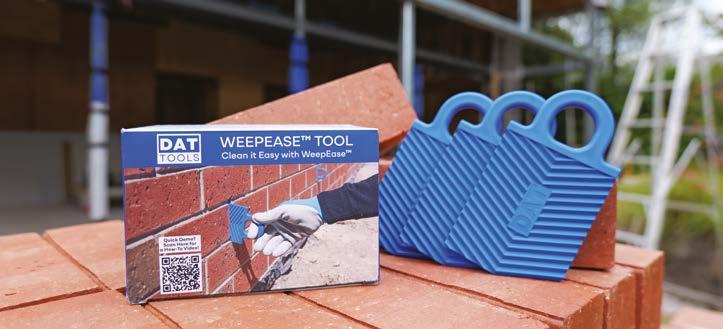

As we prepare for our final competition run, our purpose is clear:
? Show what Australian bricklayers can do
? Celebrate craftsmanship
? Support apprentices
? Inspire future tradespeople
? Elevate our industry
We are proud to be members of Master Builders Victoria and proud to carry our state’s colours to the world stage.
ARTICLE AUTHOR
DA Bricklaying, DAT Tools, Team Amuso: Tara Amuso


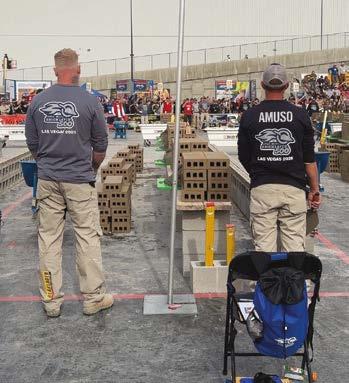



Connecting Jobseekers with MBV members across the state
Members can post their vacancies on our Jobs Board
Scan the QR code to share you vacancy

Apprenticeship vacancies
Apply directly to employers
Opportunities across Victoria
MBV Jobs Board is designed to connect those looking for a career opportunity in the building and construction industry with Master Builders members.














Available to listen on all streaming services



Artificial Intelligence (AI) has made our lives easier, including in the workplace. Need to figure out a logistics timetable? Ask ChatGPT. Want to check a relevant OHS guideline? Get Copilot to act as your inspector. Need a workplace policy or letter? Google Gemini is sure to draft it for you. These tools are useful and convenient. However, it’s easy to fall into the trap of believing AI can solve all of our paperwork challenges. The reality is far more complex, especially when dealing with employment law - where accuracy, context and compliance is critical.
From a workplace compliance perspective, one of the major issues we see is when employers rely entirely on AI to draft critical documents such as employment contracts, enterprise
agreements (EAs) and responses to unfair dismissal or general protections applications. This approach creates significant risks for several reasons.
If you ask AI to draft an employment contract for a site supervisor, carpenter or apprentice, the document will probably appear to be highly professional, but looks can be deceiving. AI-generated contracts often include clauses that are unsuitable or even unlawful under Australian workplace legislation, especially in the building and construction sector which has many quirks and nuances.
For example, an AI-generated contract might insert a ‘flat rate’ clause that claims to apply for all hours worked, including overtime, weekend work and
public holidays. However, under the Building and Construction General Onsite Award 2020, employees are entitled to specific penalty rates, allowances (such as travel and tool allowances) and overtime provisions. A flat rate clause that attempts to absorb these entitlements may not be enforceable, may breach the Fair Work Act 2009, and result in you having to pay out money to rectify an underpayment.
AI tools are also prone to “hallucinations”; producing information that appears correct but is entirely incorrect or fabricated. We recently represented a member in relation to an unfair dismissal matter where it became clear early in the proceedings that the Applicant had relied on AI-generated content instead of proper legal advice.
This significantly undermined the quality of their submissions and, ultimately, their case.
Relying on AI to represent you in a dispute and produce fully drafted legal documents is a risky strategy. AI frequently misinterprets key facts, proposes arguments that are irrelevant or plainly wrong, and may even cite cases or legislation that do not exist, creating a false sense of confidence. In this recent matter, the Applicant relied on an ‘authority’ that was entirely fictitious; something they would undoubtedly have wished to know before presenting their case before the Full Bench of the Fair Work Commission.
Drafting documents using AI often requires inputting sensitive company and employee information. Many AI platforms store user data or use it to train their models, creating a risk that confidential information could be exposed or shared inadvertently. This is particularly concerning when dealing with personal employee details or commercially sensitive information.
To minimise these risks, it is important to adopt safe and deliberate practices when using AI within your company, and successfully communicate these practices with stakeholders and staff. For example, implementing a policy

outlining the procedures that should be followed when using AI, including what platform should be used, when it should be used, what information is prohibited from being entered and a review process.
AI can be an effective tool for supporting your work: brainstorming ideas, summarising articles or generating templates for review. However, it should never replace human oversight.
If you’ve fallen victim to the siren song of AI for drafting these documents, consider this a friendly caution: always review and validate AI-generated content. If you’re unsure whether the information is usable or growing a nose reminiscent of Pinocchio, contact our EIR team for assistance.
We provide:
• Expert advice on compliance and drafting in employment or industrial relations matters.
• Guidance and information for your business needs specific to the building and construction industry
• Fee-for-service representation and drafting in matters before the Fair Work Commission
The cost of getting it wrong, whether through non-compliance, litigation, or reputational damage, far outweighs the convenience of the AI school of speed.
For further guidance, please contact the Employment and Industrial Relations Team on (03) 9411 4555 or scan here to email us.
ARTICLE AUTHOR
Grace Feeney-Connor MBV Employment and Industrial Relations Advisor

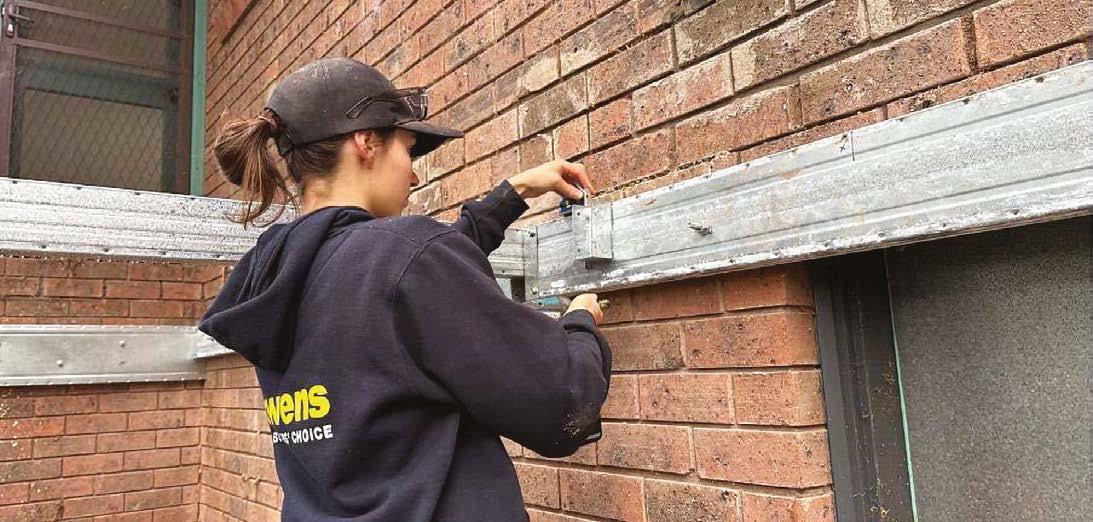
Some people find their path in an office. I found mine on a construction site. I am currently in my third year of completing my Certificate III in Carpentry, and choosing this apprenticeship has shaped not only my career, but who I am as a person. My journey into the trade was inspired by someone I’ve always looked up to - my dad Mark, the builder behind SOUTHALL HOMES.
Growing up, I witnessed the care Dad put into every project. He didn’t just build houses; he created homes with integrity and attention to detail. I have always admired the satisfaction he felt at the end of each job and the reputation he built through hard work.
After finishing my first year of VCE in Year 11, I quickly realised it wasn’t for me. It didn’t suit the way I learn or how my brain works. Sitting in a classroom all day felt restrictive. VCE felt compulsory, like a path I was expected to follow rather than one I had chosen. When Dad gave me the option to try a trade, it opened a whole new world.
The moment I stepped onto site, I knew I had found where I belonged. I haven’t looked back since.
That doesn’t mean it was easy. When I first started, I struggled with the physical demands. I was fit for school, not fit for work yet. The manual labour was a shock to the system. Early mornings, long days, heavy lifting, it pushed me in ways I hadn’t experienced before. But what is life without challenges? It didn’t take long before my body adapted, my stamina improved, and I began to feel capable.
I also had to overcome doubts about strength. Many of the guys on-site had natural upper body strength that I didn’t. At times, I questioned whether I’d measure up. But instead of letting that hold me back, I worked harder. I built my strength, maintained my fitness, and proved to myself that capability isn’t about comparison, it’s about commitment. Today, I am strong, confident and fully capable of doing the job.
What I love most about carpentry is the hands-on problem solving. I enjoy looking at something complex and figuring out how to make it work. I particularly love fix carpentry, the detail work that brings everything together at the end of a build. There’s something deeply satisfying about the precision it requires. Through our projects at SOUTHALL HOMES, I’ve also developed skills in painting, tiling, and plastering, which I genuinely enjoy. Each trade adds another layer to my knowledge and helps me become more well-rounded.
One of the most memorable moments of my apprenticeship was working on a large, high-end renovation in Warrandyte. It was a demanding project with exceptional craftsmanship throughout. The space featured beautiful spotted gum flooring, natural travertine tiles from floor to ceiling, and exquisite detailing that elevated every room. Being part of that transformation and watching an ordinary home become extraordinary gave me an
incredible sense of accomplishment. Seeing the finished result, knowing I contributed to such high-quality work, reinforced why I chose this path.
Now in my third year, I can see how far I’ve come physically, mentally, and professionally. I feel satisfaction in the attention I give to every detail, and I constantly reflect on how I can refine my skills. Every day on site presents a new challenge and a new opportunity to improve.
My future goal is clear: I want to become a registered builder and one day take over Dad’s business, SOUTHALL HOMES.
I aim to continue the reputation for quality and integrity that he has built, while bringing my own skills, perspective, and drive to the company. I want clients to feel the same sense of pride and trust in their homes that I feel in crafting them.

Choosing an apprenticeship over completing VCE was the turning point that set me on the right path. It taught me that success looks different for everyone. For me, it’s about working with my hands, solving problems, building strength both physical and mental and creating something tangible that stands the test of time.
ARTICLE AUTHOR
Sophia Southall Carpentry Apprentice

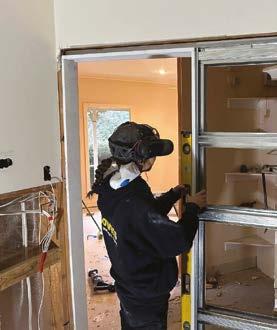


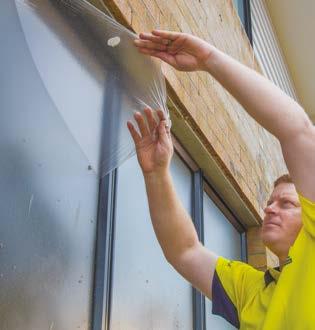
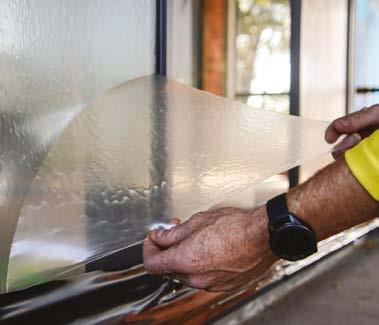
Goop Guys are Australia’s specialists in temporary surface protection, helping builders protect easily damaged surfaces during construction and reduce costly damage, rework, and delays. Using our innovative paint-on, peel-off Goop coating system, we provide a fast, non-hazardous, and environmentally friendly solution that safeguards windows, benches, floors, and other critical areas on site.
Proudly Australian-owned and operated, Goop Guys work with builders every day to improve site efficiency and presentation while maintaining the highest standards of safety and sustainability.
Exclusive Member Offer: Windows Gooped, Door sills taped, Up to 50m² of surfaces protected All for just $325 + GST. It’s a simple, cost-effective way to protect your build and deliver a better finish for your clients Call 1300 MR GOOP and quote code MBV325 to book your job!
Aglobal movement reshaping how projects are deliveredtransforming productivity across the USA, the UK, and beyond. Could it be the paradigm shift Australia needs to unlock its own potential?
Construction is Australia’s third-largest industry, employing over 1.2M people, yet productivity has remained largely stagnant for decades.
Why? In industries such as manufacturing and agriculture, gains have come through mechanisation — replacing human coordination with machines and automation. Their processes of preparation, harvest, or assembly are highly repeatable and predictable.
Construction, however, is different. Every project is unique. Every site has its own ground conditions, design constraints, approvals, and mix of trades. While some activities (like earthworks or prefabrication) can be mechanised, the real challenge lies in the interfaces: the handoffs between trades, disciplines, permits, and decisions.
It’s within these interfaces that most of our industry’s waste hides. Lean Construction doesn’t aim to replace humans with machines; it enhances how people and technology work together to create flow across the whole system, not just within its parts. Efficiency in isolation is waste — Lean aligns effort at the system level.
By strengthening visibility, rhythm, and trust across these interfaces, Lean allows the construction process to move more like a well-tuned production system, that still values craftsmanship and human judgement.
Across the United States, Lean Construction has shifted from fringe theory to mainstream practice.
Major contractors such as DPR and Boldt have built delivery models around Lean principles, combining the Last Planner System, Target Value Design, and collaborative digital planning. The results are measurably shorter schedules, fewer change orders, and stronger project culture.
In the UK, HS2, National Highways, and Network Rail have invested heavily in Lean training and maturity programs. The focus is not only efficiency but trust and flow — creating environments where teams selforganise, share risk transparently, and continuously improve.
Together, these examples show that Lean Construction is no management fad. It’s a proven productivity engine built on respect, collaboration, and learning.
Australia is only beginning to chart its own path. Forward-thinking delivery partners are realising that productivity gains come from smarter systems.
Queensland’s Department of Transport and Main Roads has been an early adopter, embedding Lean and collaborative planning practices into major infrastructure programs. These initiatives emphasise visibility, rhythm, and trust — helping teams manage complex interfaces and reduce delays caused by siloed decision-making.
Meanwhile, Victorias Infrastructure Delivery Agency is exploring similar opportunities. It first introduced Big Room practices on Level Crossing Removal Projects and is now testing how the Last Planner System and digital collaboration tools can help design and delivery teams work more cohesively.
This approach doesn’t just improve schedules; it strengthens culture — replacing blame and rework with shared accountability.
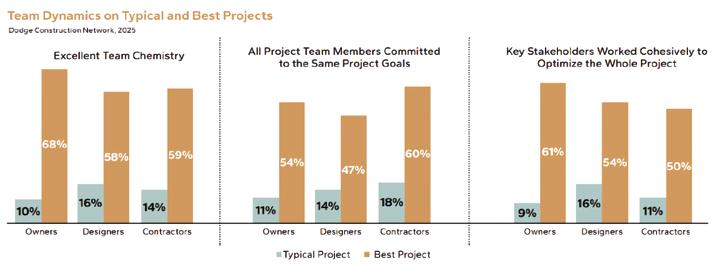
Figure 1 - Team Dynamics on Typical and Best Projects
Comparison of perceived collaboration and alignment among owners, designers, and contractors on typical versus best projects. The data highlights that strong team chemistry, shared goals, and cohesive stakeholder collaboration disparity is significant between typical and high-performing projects, showing that the interfaces is where the greatest opportunity lies. Source: Dodge Construction Network, 2025.
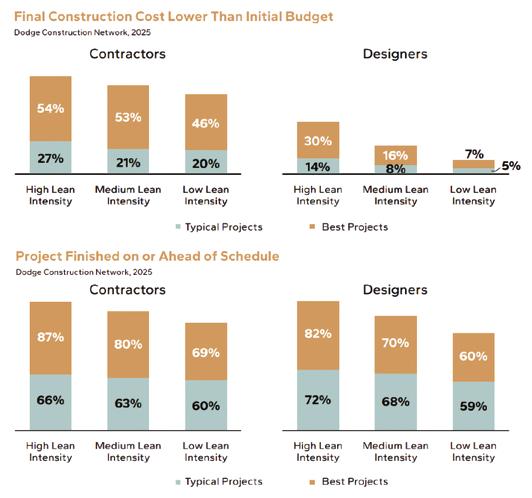
Figure 2 - Impact of Lean Intensity on Cost and Schedule Performance
Projects with higher Lean implementation intensity show significantly improved outcomes in both cost and schedule performance. Contractors and designers on high Lean intensity projects were more likely to deliver below budget and on or ahead of schedule compared to those with medium or low Lean application. Source: Dodge Construction Network, 2025.
If there’s one thing that separates Lean Construction from transaction-focused project management, it’s this: Lean optimises the whole, not the parts.
We all know that on our own we can be efficient — every trade and consultant working hard to hit skill specific targets. But most waste doesn’t come from individuals being inefficient. It happens between trades and organisations as they juggle their own priorities and constraints.
Lean Construction makes those invisible gaps visible. It connects the sequence of work so each team can see how its success depends on the next. Instead of pushing to complete scopes as fast as possible, teams plan together — aligning work so the entire system flows.
When builders, designers, and subcontractors coordinate through shared planning rhythms, the result isn’t just better productivity. It’s reduced conflict, smoother handovers, and a genuine sense of shared ownership.
In short: Lean replaces competition with coordination.

Lean is often seen as a client initiative (and it is true clients have a big role to play), but builders Lean is often viewed as a client initiative — and clients do play a vital role — but builders stand to gain the most.
When teams collaborate openly, problems surface earlier, risk is shared more fairly, and everyone spends less time firefighting and more time building.
Subcontractors gain predictability. Clients gain confidence. Builders gain reputation — as reliable partners who deliver efficiently without burning out their teams.
Australia’s next productivity leap won’t come from new contracts or technologies alone. It will come from a shared commitment to build smarter — together.
For builders ready to take the first step, Lean offers a proven framework to make that happen: one conversation, one rhythm, and one improvement at a time.
And for those still cautious — you won’t be the first to take the plunge. You’ll simply be part of the first wave.
Scan here to see how you can amplify your productivity.

It gives the people closest to the work a voice in improving how it’s done. ARTICLE AUTHOR ProgressAmp Pty Ltd, Co-Founder: Jared Chesterman
Apprenticeship Victoria www.apprenticeships.vic.gov.au/helpdesk
Apprentice Helpdesk
M: 1300 311 820
E: apprenticehelpdesk@djsir.vic.gov.au

BONDOR Insulated Panels bondor.com.au
Darryl Stephenson
M: 0459 136 032
P: 03 8326 8007
E: darryl.stephenson@bondor.com.au
Bunnings Trade trade.bunnings.com.au
Mark Phillips
M: 0400 908 421 E: miphillips@bunnings.com.au
Cbus Super www.cbussuper.com.au
Daniel Tentser
Senior Employer Engagement Manager
M: 0439 372 365
E: daniel.tentser@cbussuper.com.au
COLORBOND® steel colorbond.com
Julia Farrah
M: 0429 548 330
E: julia.farrah@bluescopesteel.com
Foundation Technologies Australia www.foundationtechnologies.com.au
Richard Ryan
M: 0437 977 913
E: richard@ftapile.com.au
Master Builders Insurance Brokers www.mbib.com.au
Zoe Munro
P: (03) 9426 2600
E: service@mbib.com.au
Oracle NetSuite www.netsuite.com.au
Tania Large
M: 0422 276 658
E: tania.large@oracle.com
Panasonic HVAC Group www.panasonic.com/au/hvac/user-top/ residential.html
Shaune Hanley
M: 0408 275 461
E: shaune.hanley@au.panasonic.com
Xact Accounting xactaccounting.com.au
Samuel Harrison
M: 0434 906 832
E: samuel.h@xactaccounting.com.au
As a sponsor, we offer multiple sponsorship and partner advertising options, as well as providing a platform and advertising opportunities for your business.
For more information, email sponsorship@mbav.com.au and see how we can best promote your company in the Master Builders Victoria Magazine.
















Tried, tested and backed by businesses just like yours, the HiLux is a leader in its field for a reason. And the New Toyota HiLux is no different. Born from generations of hard work, it’s designed to offer unparallelled performance and reliability that’s second to none.
When the stakes are high, and trust is a must, choose Toyota for Business. To unlock your Association Fleet Discount, visit your local Toyota Dealer.
Pre-production model shown

Find out more about the New Toyota HiLux