GLOBAL OCEAN JUSTICE NOW
Making the case for a human rights-based approach to marine conservation
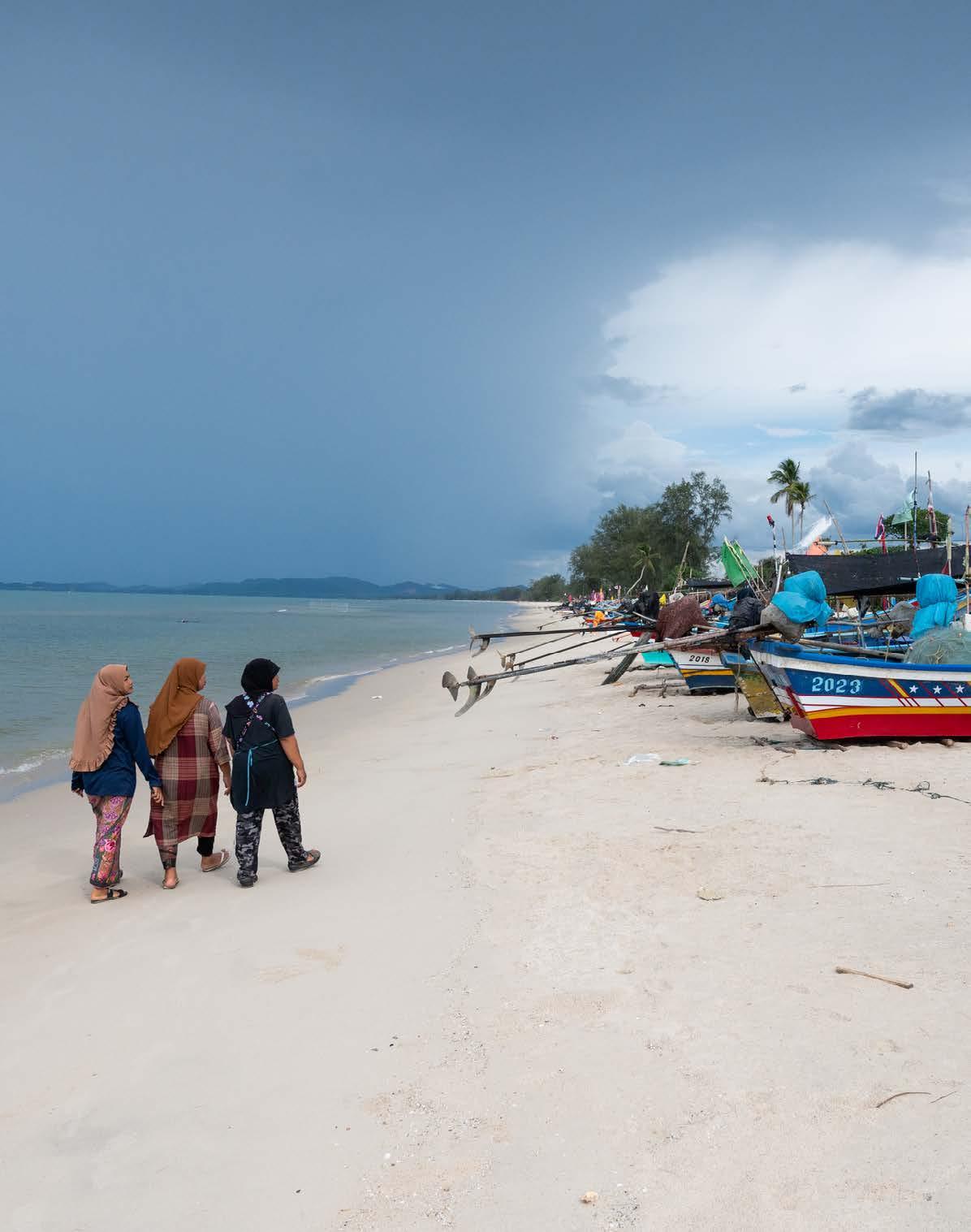
Local fishing community, Chana © Songwut Jullanan / Greenpeace

Making the case for a human rights-based approach to marine conservation
This consolidated report was led by independent consultant Jenny Springer, who is an expert in Human Rights-Based Approaches (HRBAs) to conservation. Greenpeace National and Regional Organisations (NROs) prepared country-specific materials in collaboration with local partners, and Springer conducted additional research and analysis to broaden the national and global context.
Case study co-authors were Silvana Espinosa, Joaquín Fuentealba Muñoz and Roxana Núñez Becerra (Greenpeace Andino / Chile), Aliou Ba, Mamadou Kaly Ba and Amadou Oumar Touré (Greenpeace Africa / Senegal), Anita Perera, Cherika Ranasinghe, Melani Gunathilaka, and Francois Provost (Greenpeace South Asia / Sri Lanka), and Nichanan Tanthanawit and Kadesiree Thossaphonpaisan (Greenpeace Southeast Asia / Thailand).
Laura Meller and Nichanan Tanthanawit provided overall technical leadership and guidance, as well as substantive inputs to the report. An Lambrechts, Sebastian Losada, Erika Bjureby, Sara Bettinelli and Laura Bergamo provided review comments. Global recommendations were prepared by Greenpeace International, based on the findings of this report. Emily Buchanan provided editorial oversight and design.
Greenpeace would like to thank all of the local partners whose work forms the basis of this report and to recognise the Indigenous and traditional knowledge, practices and stewardship that underpin its findings.
Citation:
Greenpeace International. (2026). Global Ocean Justice Now: Making the case for a human rights-based approach to conservation. greenpeace.org/international/global-ocean-justice-now
conservation
Community-led initiatives to conserve coastal environments and resources are widespread, offering tremendous potential for more effective, equitable, and lasting conservation. However, these initiatives require much greater policy, programmatic, and financial support.
The Kunming-Montreal Global Biodiversity Framework (KM-GBF) is a vital opportunity to secure human rights-based and community-led approaches to conservation, yet governments are missing key opportunities to advance them in national implementation.
Extractivism, infrastructure and industrial developments are impacting coastal environments and the communities who rely on them. This includes increased food insecurity, pollution, and restrictions on access to traditional lands, cultural practices and fisheries.
Contrary to international frameworks and guidelines, as well as standards set in the KMGBF, governments are failing to recognise and support customary and community rights over land, fishery resources, and marine and coastal waters.
Indigenous Peoples and local communities are being denied a meaningful way to participate in decisions that affect their environments and ways of life.
Where Indigenous Peoples and local communities do assert their voices, protests are met with harassment, threats, violence, criminalisation and/or legal actions. This intimidation further restricts community participation in decision-making and harms those targeted.
These findings reveal that governments must significantly enhance and accelerate realisation of their KM-GBF commitments in the lead-up to the 17th meeting of the Conference of the Parties to the UN Convention on Biological Diversity (CBD COP17), by formally recognising, prioritising and investing in rights-based and communityled conservation. For a full list of recommendations, see pages 52-53.
“GOVERNMENTS MUST SIGNIFICANTLY ENHANCE AND ACCELERATE REALISATION OF THEIR KM-GBF COMMITMENTS IN THE LEAD-UP TO CBD COP17, BY FORMALLY RECOGNISING, PRIORITISING AND INVESTING IN RIGHTSBASED AND COMMUNITY-LED CONSERVATION.”
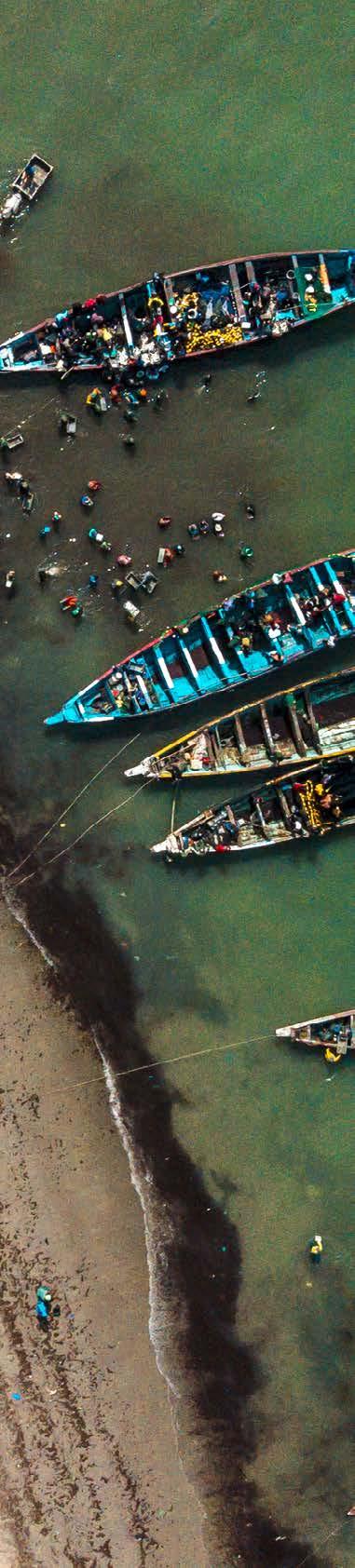
For generations, Indigenous Peoples and local communities have sustainably managed the lands and seas considered most crucial for global ecosystem protection and restoration. Indeed, compelling studies have shown that when ecosystems are owned and managed by Indigenous Peoples and local communities, they are more likely to thrive – particularly where enabling conditions, such as secure community tenure, are put in place.1,2,3 This is a mutually-reinforcing relationship, with evidence demonstrating that when human rights are realised, Indigenous Peoples and local communities are better able to conserve their environments, in turn creating the conditions necessary to access a wider range of human rights.4,5
This evidence, combined with the advocacy of Indigenous Peoples, community organisations and their allies, has resulted in growing international recognition and support for human rights-based and community-led conservation – most notably the Kunming-Montreal Global Biodiversity Framework (KM-GBF), which was adopted by the 196 Parties to the United Nations Convention on Biological Diversity (CBD) in December 2022. Through the framework, governments have committed to “take urgent action to halt and reverse biodiversity loss” through a Human Rights-Based Approach (HRBA) that recognises the contribution and rights of Indigenous Peoples and local communities.6
However, translating these international commitments into national policies and in-country implementation remains a serious challenge. In many countries, competing interests for coastal and industrial development continue to be prioritised by governments, despite negative impacts on ecosystems and the people who depend on them.7 Indigenous Peoples and local communities often lack effective channels for participation in decision-making about such developments and, even where countries do invest in nature conservation, policies and practices often fail to account for their rights and contributions, undermining community stewardship roles and harming their well-being.8
“COMPELLING STUDIES HAVE SHOWN THAT WHEN ECOSYSTEMS ARE OWNED AND MANAGED BY INDIGENOUS PEOPLES AND LOCAL COMMUNITIES, THEY ARE MORE LIKELY TO THRIVE – PARTICULARLY WHERE ENABLING CONDITIONS, SUCH AS SECURE COMMUNITY TENURE, ARE PUT IN PLACE.”
This report provides evidence in support of policies and programmes that implement the provisions laid out in the KM-GBF: the full recognition and respect of the rights and expertise of Indigenous Peoples and local communities, and their central role in conserving marine and coastal ecosystems.
Via four national case studies that span Chile, Senegal, Sri Lanka, and Thailand, it argues that coastal communities are well placed to lead conservation efforts but are being impeded by inadequate or contradictory government policies and investments. These cases are analysed in the context of wider global frameworks and trends, providing concrete insights and recommendations to combat unsustainable development, advance community-led initiatives, and fully realise the commitments made in the KM-GBF.
National Greenpeace campaign teams compiled case study materials in the four focus countries, addressing a set of research questions that centered on key ocean justice issues, national policies that either enable or constrain KM-GBF implementation, and community-led conservation practices. Case studies were further developed through deskbased analysis of relevant literature for each country and interviews with national teams, including local consultations where relevant. To produce the global context and cross-cutting sections, reviews were undertaken of the KMGBF, National Biodiversity Strategies and Action Plans (NBSAPs) and their national implementation, communityled marine conservation initiatives, and global reports on HRBAs to conservation. Based on the findings of this research, Greenpeace International staff prepared the recommendations that conclude this report.
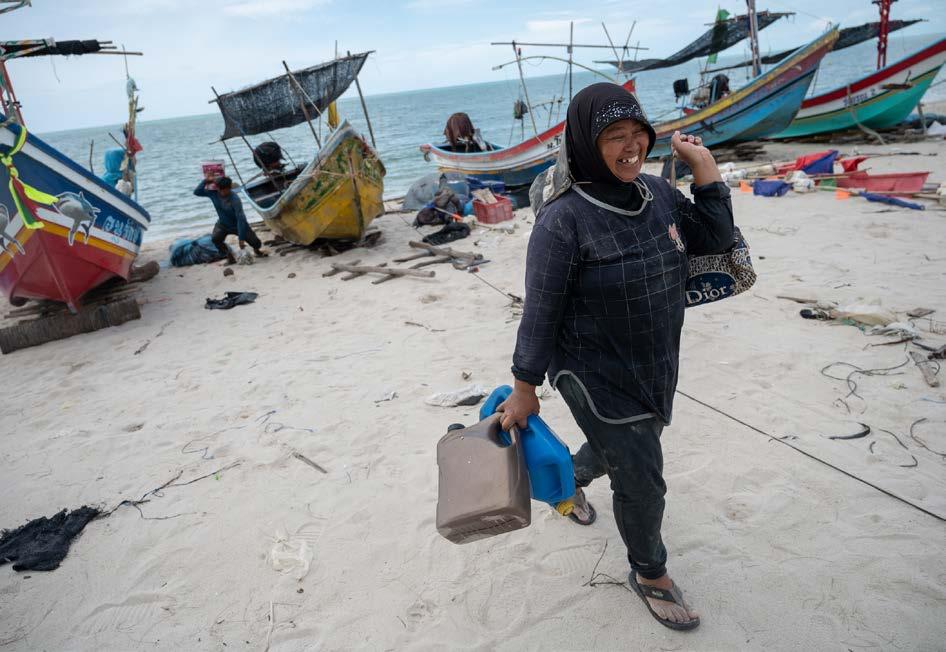

In December 2022, Parties to the CBD adopted the landmark KM-GBF, committing to “take urgent action to halt and reverse biodiversity loss”.9 This was in response to evidence that the current rate of global biodiversity degradation is unprecedented in human history, including in the world’s oceans.10 A defining feature of the KM-GBF is its recognition of HRBAs to conservation, with particular attention to the rights and contributions of Indigenous Peoples and local communities. Key human rights-focused provisions of the KM-GBF include:11
▶ Target 3 (the “30x30” target) calls on Parties to effectively conserve and manage at least 30% of terrestrial, inland water, and marine and coastal areas by 2030, through “ecologically representative, well-connected and equitably governed systems of protected areas and other effective area-based conservation measures, recognizing indigenous and traditional territories where applicable.” While the expansion of area-based conservation has raised concerns about potential rights infringements from exclusionary area-based conservation,12 further language on recognising and respecting the rights of Indigenous Peoples and local communities seeks to provide a safeguard against such adverse impacts. Moreover, as discussed further below, the inclusion of Other Effective Area-based Conservation Measures (OECMs) and Indigenous and Traditional Territories (ITTs) as pathways to achieve this target, open new opportunities for Indigenous and community-led governance.
▶ Target 19 on resource mobilisation for implementing national biodiversity strategies calls on Parties to enhance the role of collective actions, including by Indigenous Peoples and local communities.
▶ Target 22 on participation in decision-making and access to justice emphasises full, effective, and equitable participation in decision-making for Indigenous Peoples and local communities, including rights over lands, territories, resources and traditional knowledge, and access to justice and protection for environmental defenders.
▶ Section C on cross-cutting considerations for implementation emphasises a HRBA and the need to ensure respect for Indigenous Peoples’ and local communities’ rights, traditional knowledge, values, and practices, with their Free, Prior and Informed Consent (FPIC), and full and effective participation in decision-making. It highlights that successful implementation will depend on empowerment of women and girls, and the meaningful participation of younger generations.
“INDIGENOUS PEOPLES AND LOCAL COMMUNITIES HAVE LONG CONSERVED AND SUSTAINABLY MANAGED COASTAL ECOSYSTEMS THROUGH ADAPTED KNOWLEDGE AND PRACTICES, GROUNDED IN CUSTOMARY TENURE AND GOVERNANCE SYSTEMS.”
Rights-based provisions are highly relevant to coastal communities around the world – including Indigenous Peoples and local communities with customary ties to coastal lands and waters. Indigenous Peoples and local communities have long conserved and sustainably managed coastal ecosystems through adapted knowledge and practices, grounded in customary tenure and governance systems.13,14,15 While less well studied than in terrestrial regions, recent evidence shows widespread community tenure in marine and coastal areas. For example, a study of tenure systems across 51 countries identified that communities had established territorial use-rights over water resources in 34 countries, often deriving from kinship and/or historical use.16 Several international frameworks provide protections for these rights to marine waters and coastal resources.
Rights of Indigenous Peoples to customary waters are recognised explicitly in the UN Declaration on the Rights of Indigenous Peoples (UNDRIP),17 and encompassed within territories in the International Labour Organisation Convention 169 (ILO 169).18 The Food and Agriculture Organization (FAO) Voluntary Guidelines on Responsible Governance of Tenure (VGGT)19 outlines rights and responsibilities with regards to tenure over land, fisheries and forests. Furthermore, Voluntary Guidelines on Securing Sustainable Small Scale Fisheries20 call on governments to, inter alia, ensure that small-scale fishers, fish workers and their communities have secure, equitable, and culturally appropriate tenure rights to fishery resources, including by taking account of customary rights to aquatic resources, land, and small-scale fishing areas.
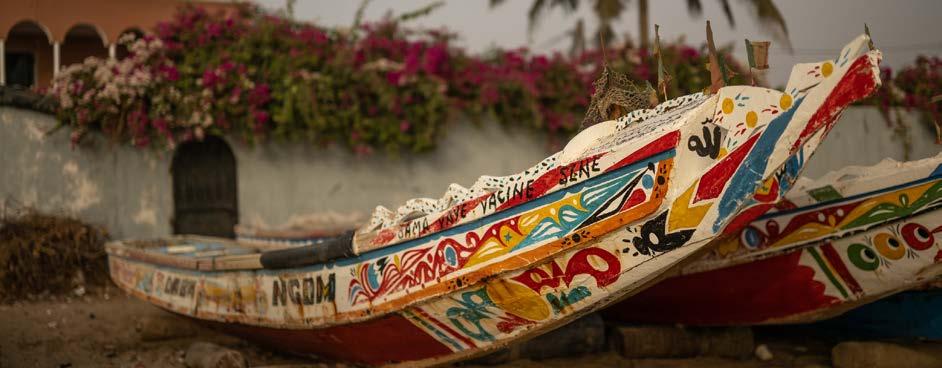
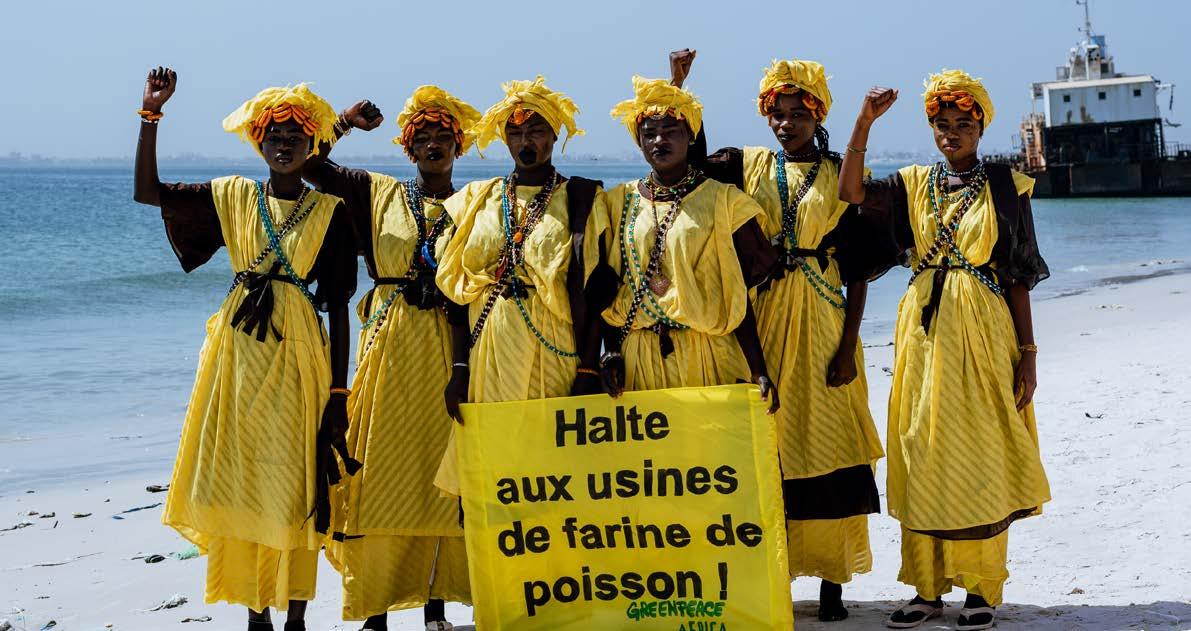
In recent decades, communities have advanced recognition of their marine and coastal resource governance systems through new designations, such as Locally-Managed Marine Areas (LMMAs), territories and areas conserved by Indigenous Peoples and local communities (ICCAs, or Territories of Life),21 and community managed or co-managed Marine Protected Areas (MPAs).
LMMAs are areas of nearshore waters and associated marine and coastal resources managed by communities, land-owning groups, and others who reside or are based in the immediate area.22 Grounded in long histories of community governance, they originated in the South Pacific and have since grown into a global movement. For example, as of 2014, LMMAs covered around 1,100,000 hectares of the Western Indian Ocean.23
ICCAs have been identified and documented by their custodian communities – with some now included in a global ICCA Registry24 – to support local management and increase recognition of
community-led conservation. In coastal areas, this tends to combine protection measures, such as no-take zones that increase fish abundance and restore biodiversity, with wider sustainable use measures, enabling communities to benefit from more productive fisheries and ecotourism.
Participatory approaches to MPAs, while often less grounded in community rights and leadership, can increase benefits to communities by integrating their knowledge, livelihood priorities and management contributions.25
Indigenous Peoples and local communities also act to conserve biodiversity by participating in socioenvironmental mobilisations, in which civil society groups come together to oppose destructive activities by states, industries and the infrastructure sector. A recent analysis of 2,800 such mobilisations found that they are often concentrated in areas of high biodiversity and that their actions directly contribute to progress towards a number of the KM-GBF targets.26
Governments can significantly enhance and accelerate realisation of their KMGBF commitments, including the 30x30 target, by investing in rights-based and community-led conservation. Indeed, the Intergovernmental Panel for Biodiversity and Ecosystem Services (IPBES) highlights that “conservation that involves sustainable stewardship, notably by Indigenous Peoples and local communities, contributes to transformative change when it is inclusive, well resourced, and focused on places of high value to nature and people, and when the rights of Indigenous Peoples are recognized.” The Panel advises investment in Indigenous and community-led conservation as a key strategy to achieve the KM-GBF’s 2050 vision for biodiversity.27
There are three pathways for pursuing community-led HRBAs that achieve Target 3 on area-based conservation:
1. Ensure Indigenous Peoples’ and local communities’ participation, leadership, customary management and comanagement in protected areas.
2. Realise the potential of OECMs to provide formal recognition and safeguards to community-managed or co-managed conserved areas. OECMs produce effective and long term conservation outcomes,28 even though their primary purpose may be different –such as sacred sites or fisheries closure areas that also support sustainable community fisheries.29 While OECMs can span a range of tenure and governance types, collaborative governance is the most common sub-type among OECMs reported globally to date, with a far greater proportion of OECMs than protected areas under shared governance (40.9% compared to 2.5%).30
3. Recognise ITTs as a distinct pathway towards Target 3, in light of the substantial evidence demonstrating the significant conservation contributions of areas under Indigenous Peoples’ and local communities’ governance. It is estimated that ITTs could add approximately 13.61% to the global
terrestrial area under conservation.31 Comparable analysis is not yet available for marine areas but it is likely to be significant. Guidelines for recognising and safeguarding the contributions of ITTs are currently being considered by the CBD. The International Indigenous Forum on Biodiversity (IIFB) recommends that guidelines should “promote the identification, recognition, protection, promotion, and respect of Indigenous and Traditional Territories (ITTs) as distinct systems that support implementation of Target 3.”32
“CONSERVATION THAT INVOLVES SUSTAINABLE STEWARDSHIP, NOTABLY BY INDIGENOUS PEOPLES AND LOCAL COMMUNITIES, CONTRIBUTES TO TRANSFORMATIVE CHANGE WHEN IT IS INCLUSIVE, WELL RESOURCED, AND FOCUSED ON PLACES OF HIGH VALUE TO NATURE AND PEOPLE, AND WHEN THE RIGHTS OF INDIGENOUS PEOPLES ARE RECOGNIZED.” – IPBES
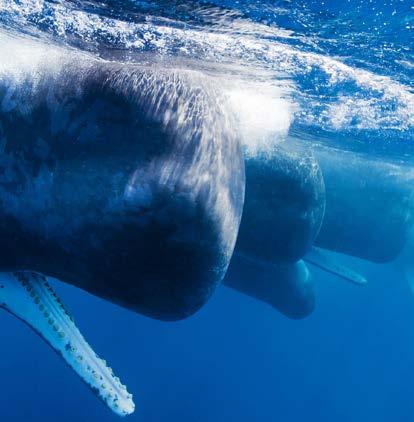
Considering the significant threats facing marine and coastal ecosystems, cultures, and livelihoods, investing funds, as well as political, administrative and human capacity, in Indigenous and communityled conservation is critical.
These threats include urbanisation, infrastructure development, industrial fishing, mining and pollution.33 While presented as opportunities for economic development and jobs, such activities often result in negative impacts to the environment and community livelihoods –particularly small-scale fisheries – which make up at least 40% of global fisheries catches and contribute to the livelihoods
of one in 12 people worldwide.34 What is more, this kind of industrial development is often in competition with nature conservation and national implementation of the KM-GBF.
In general, conservation of marine and coastal ecosystems lags behind terrestrial conservation. According to the World Database on Protected and Conserved Areas, only 9.97% of marine and coastal areas are protected or conserved to some degree (in 16,672 protected areas and 229 OECMs) whereas for terrestrial and inland areas, the figure is 18.43%.35

“ONLY 9.97% OF MARINE AND COASTAL AREAS ARE PROTECTED OR CONSERVED TO SOME DEGREE, WHEREAS FOR TERRESTRIAL AND INLAND AREAS, THE FIGURE IS 18.43%.”
25% Parties reported 75% Parties did not report consultation with Indigenous Peoples and local communities
Parties with targets addressing the equitable governance of protected areas.
Parties referring to a human rights-based approach in planned implementation.
Parties wholly addressing the representation and participation of Indigenous Peoples and local communities.
addressed
63% not wholly addressed
Data based on the CBD Secretariat’s analysis of full NBSAPs from 51 Parties and new National Targets from 130 Parties, submitted up to May 31, 2025
Countries have been slow to update their NBSAPs, outlining how they plan to translate their international commitments into national implementation,36 and uptake of HRBAs remains limited. For example, the CBD Secretariat’s analysis of full NBSAPs from 51 Parties and new National Targets from 130 Parties, submitted up to May 31, 2025, finds that:
▶ Only 25% of NBSAPs (13) engaged Indigenous Peoples and local communities in NBSAP development.
▶ In relation to Target 3, only 40% of Parties had targets addressing the equitable governance of protected areas, and only 38% addressed the rights of Indigenous Peoples and local communities in relation to protected areas.
▶ In relation to Target 19, only 29% of Parties referred to a HRBA in its planned implementation, and only 9% to enhancing the role of collective action.
▶ In relation to Target 22, only about a third of Parties wholly addressed the
full, equitable, inclusive, effective and gender-responsive representation and participation in decision-making by Indigenous Peoples and local communities (37%), or women and girls (35%), in their National Targets. Even fewer addressed the Target 22 dimension on access to justice.
▶ Less than a fifth (15%) of Parties wholly addressed the full protection of environmental human rights defenders in their National Targets. Less than a third (28%) wholly addressed respecting the cultures and rights of Indigenous Peoples and local communities over lands, territories, resources, and traditional knowledge.37
Parties wholly addressing the full protection of environmental human rights defenders in their National Targets.
Parties wholly addressing the respect of indigenous and local cultures and rights over lands, territories, resources, and traditional knowledge, in their National Targets.
based on the CBD
analysis of full NBSAPs from 51 Parties and new National Targets from 130 Parties, submitted up to May 31, 2025
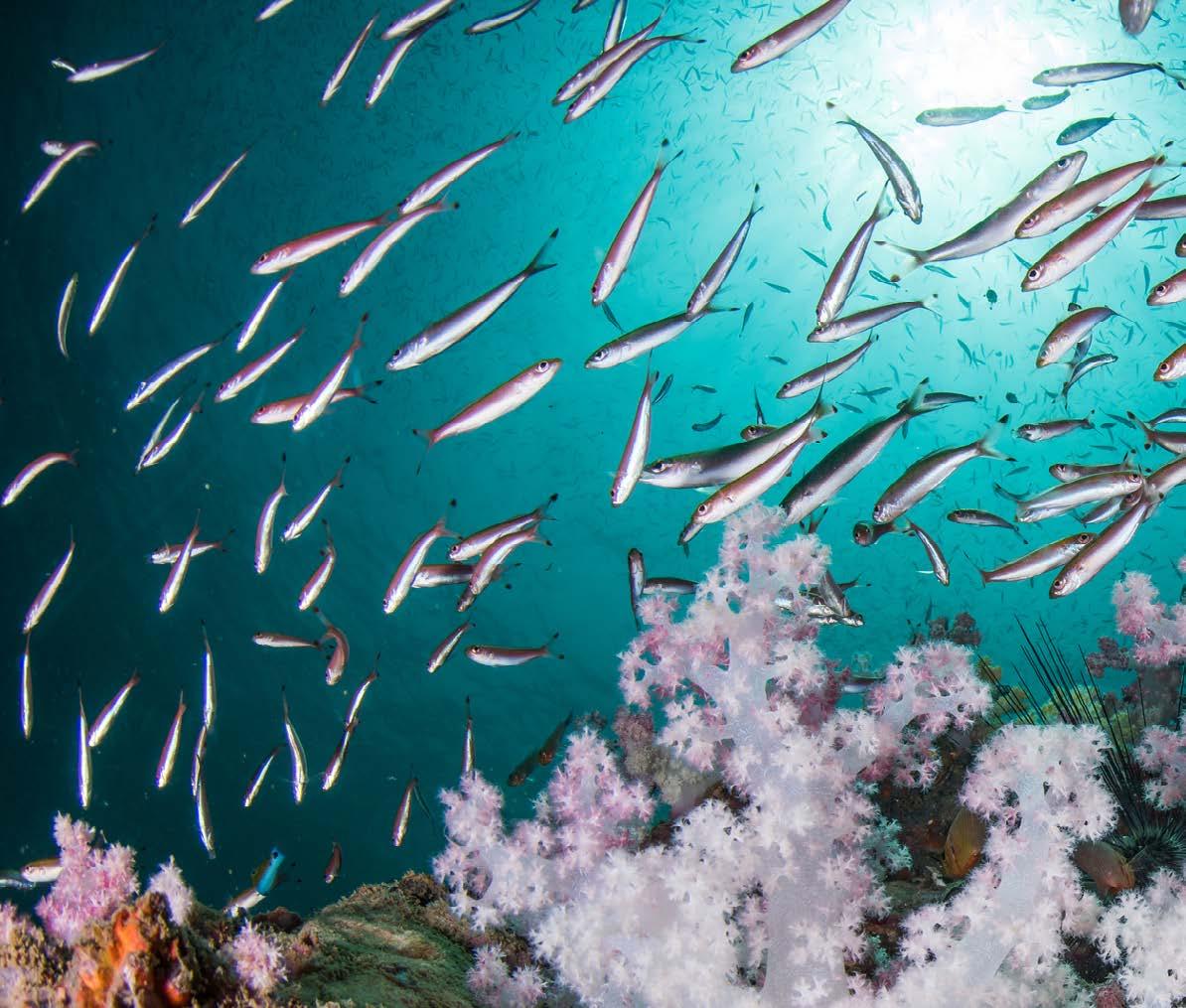
When reviewing their recent experience in Asia, the Asian Indigenous Peoples’ Pact found multiple forms of exclusion in national NBSAP development processes, including a lack of information-sharing on NBSAP updates, logistical barriers to participation, and limited uptake of indigenous views and priorities. There was, however, tangible progress in how NBSAPs recognise Indigenous Peoples and indigenous roles in implementation – though this remains uneven across countries and on the issues of greatest concern to Indigenous Peoples.38
Similarly, an earlier WWF global assessment noted that there are more human rights elements in NBSAPs and National Targets – though this is selective rather than systematic. Participation of Indigenous Peoples
and local communities is the dimension mentioned most frequently, followed by traditional knowledge and gender. Yet direct reference to Indigenous Peoples and local communities’ rights to land and resources continues to be uncommon.39
Meanwhile, most marine protected and conserved areas worldwide remain under the sole management of government authorities40 and few community-led marine conservation areas have been recognised globally. For example, among 328 ICCAs in the ICCA Registry,41 only six are located in marine habitats and three in coral reefs. Similarly, while the OECM pathway is more conducive to communityled governance, as of 2024, Canada, Philippines and Colombia were the only countries who had designated marine OECMs.42
This relative lack of policy and implementation support means governments are missing significant opportunities to pursue innovative KM-GBF pathways – pathways that both sustain the foundations of local livelihoods and cultures, and are crucial to meeting KMGBF commitments. It also represents a missed opportunity to prevent destructive industrial development from harming ecosystems and community well-being.
These gaps also highlight the importance of the monitoring framework43 for the KMGBF, which guides how Parties monitor and report on their commitments. This framework currently lacks tangible
“THIS RELATIVE LACK OF POLICY AND IMPLEMENTATION SUPPORT MEANS GOVERNMENTS ARE MISSING SIGNIFICANT OPPORTUNITIES TO PURSUE INNOVATIVE KM-GBF PATHWAYS.”
ways to measure the integration and implementation of HRBAs. As per one critical example, there are no headline indicators proposed to monitor effective and human rights-based implementation of Target 3.44 The absence of such measures risks perpetuating exclusionary conservation approaches that disregard human rights – as well as paper parks that lack effective protection and management.
When governments conduct the first global review of collective progress in the implementation of the KM-GBF at CBD COP17,45 they will have the opportunity to identify ways to remedy such gaps and create measures that help accelerate implementation towards 2030.
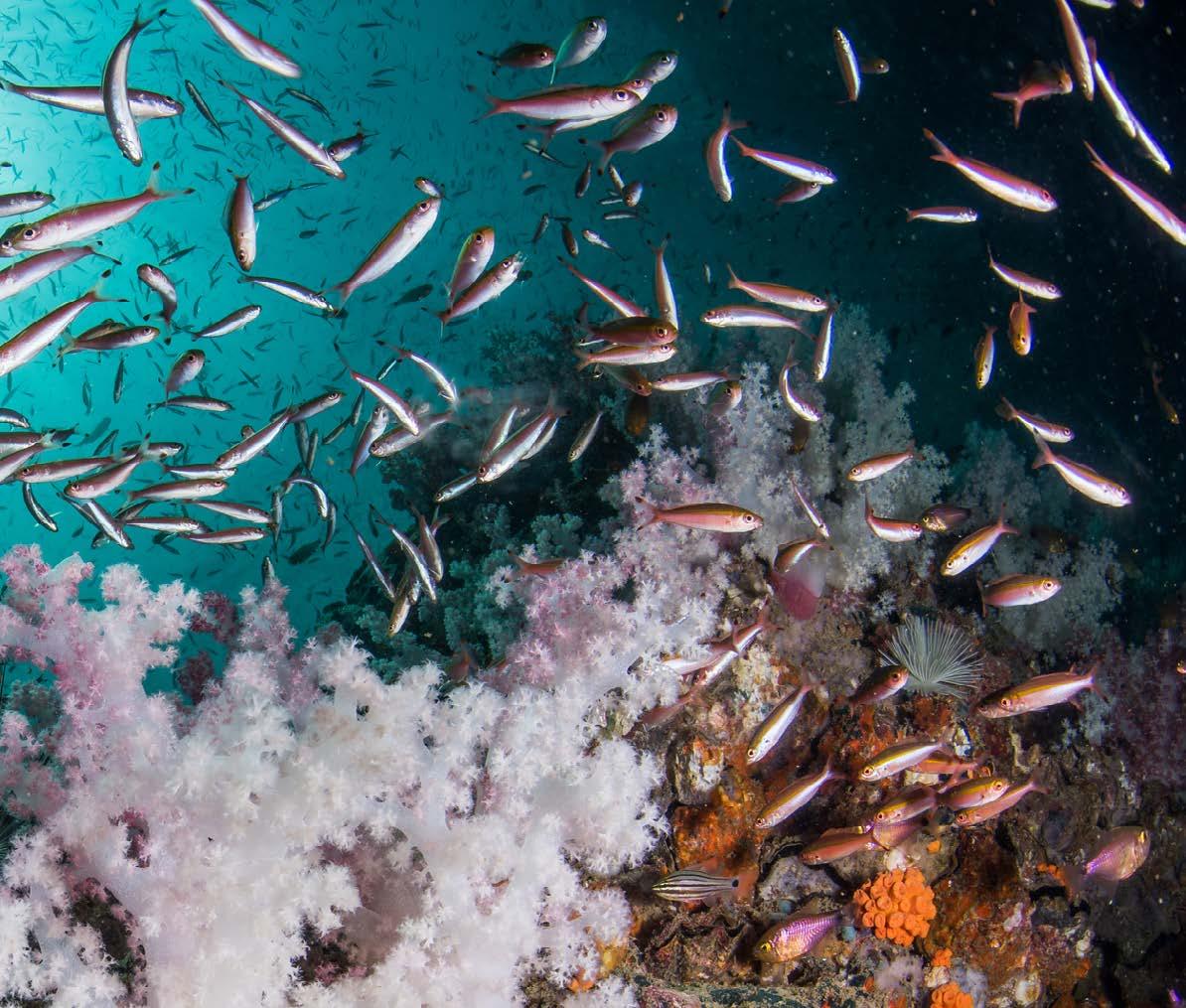
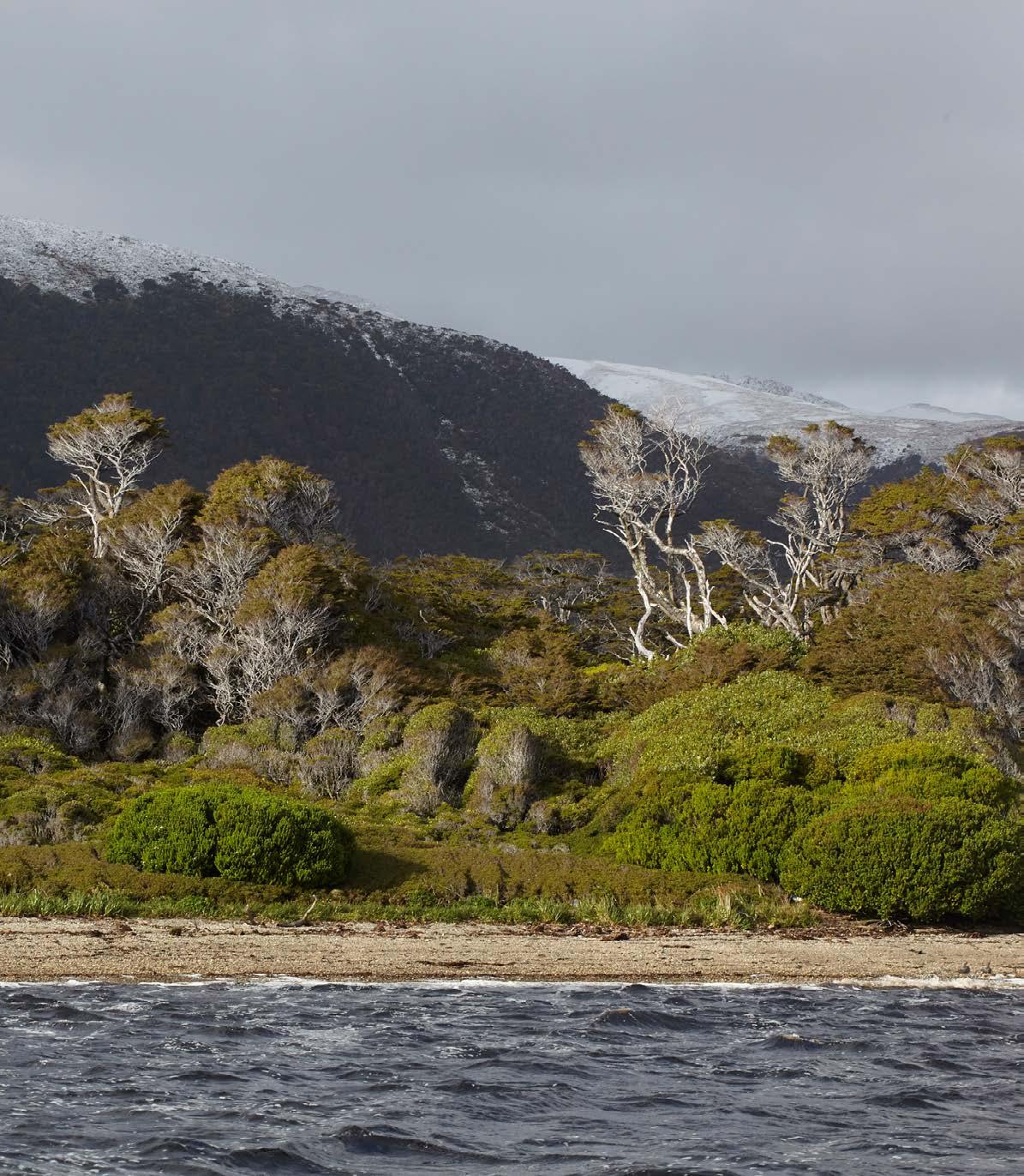
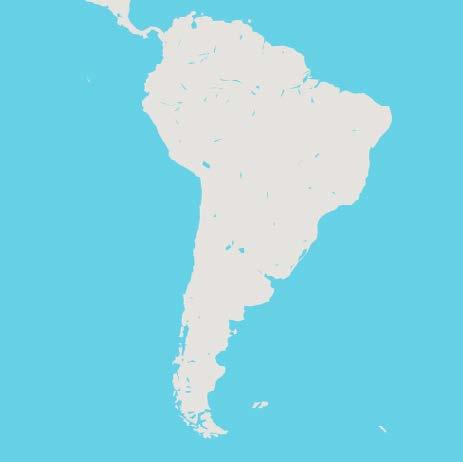
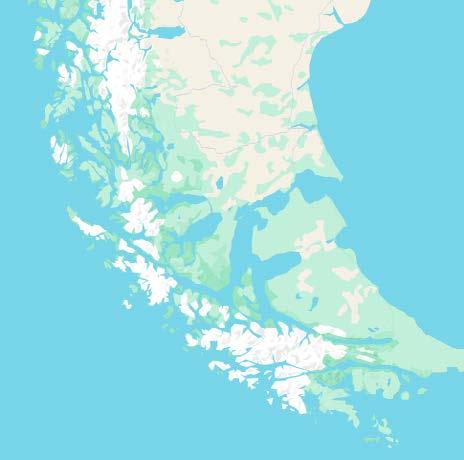
Kawésqar National Reserve (KNR), in the Patagonia region of southern Chile, is home to the Kawésqar people, descendants of nomadic hunter-gatherers and fishers who have inhabited the region for around 6,000 years.46 The Kawésqar people conceive of their territory as a “maritorio”– an integrated sea-land space where ecology is indivisible from culture and spirituality.47 The reserve and its adjacent waters are home to endemic Chilean dolphins, orcas, humpback whales and valuable fish populations, making it one of the highest priority areas for conservation globally.48
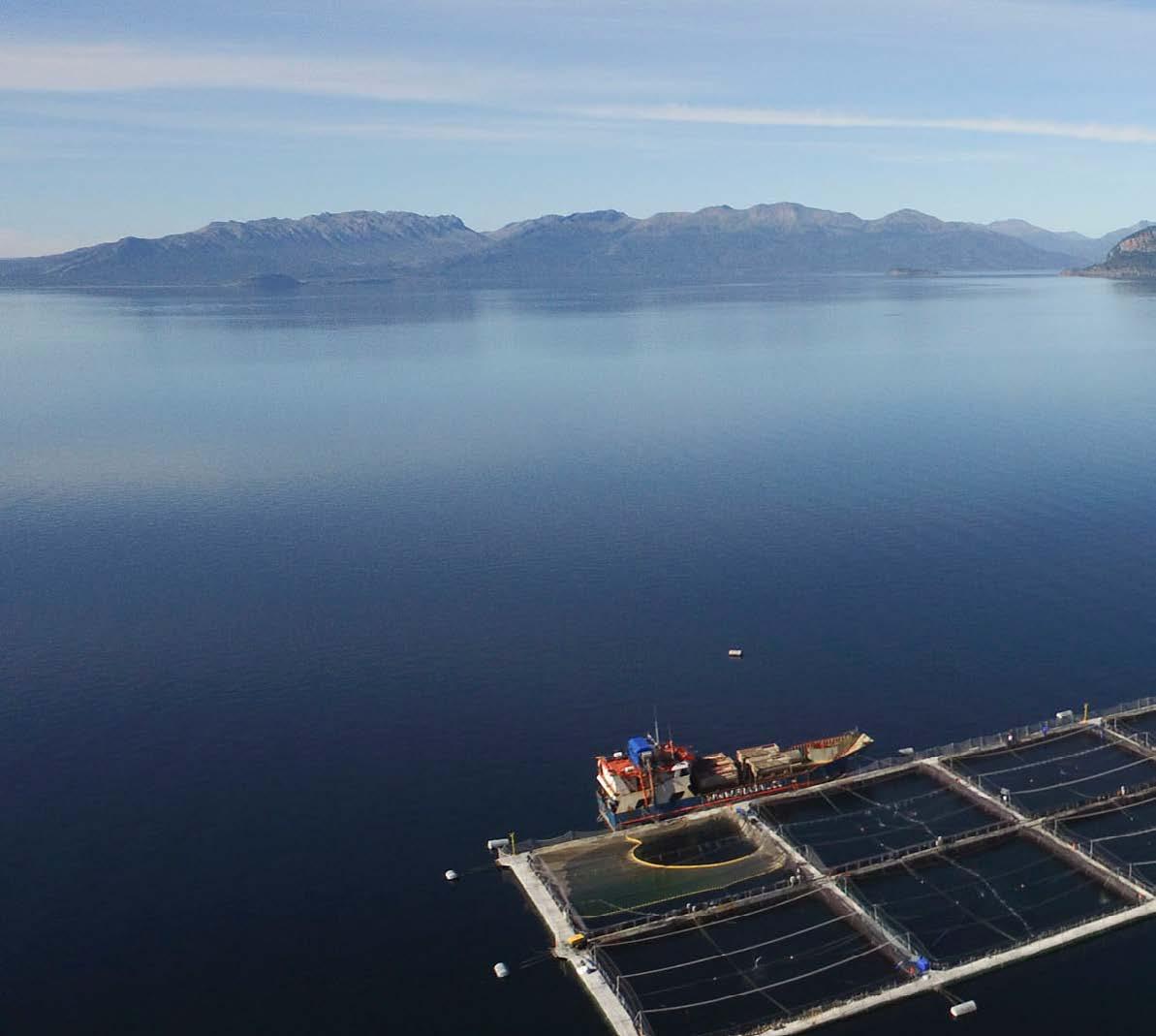
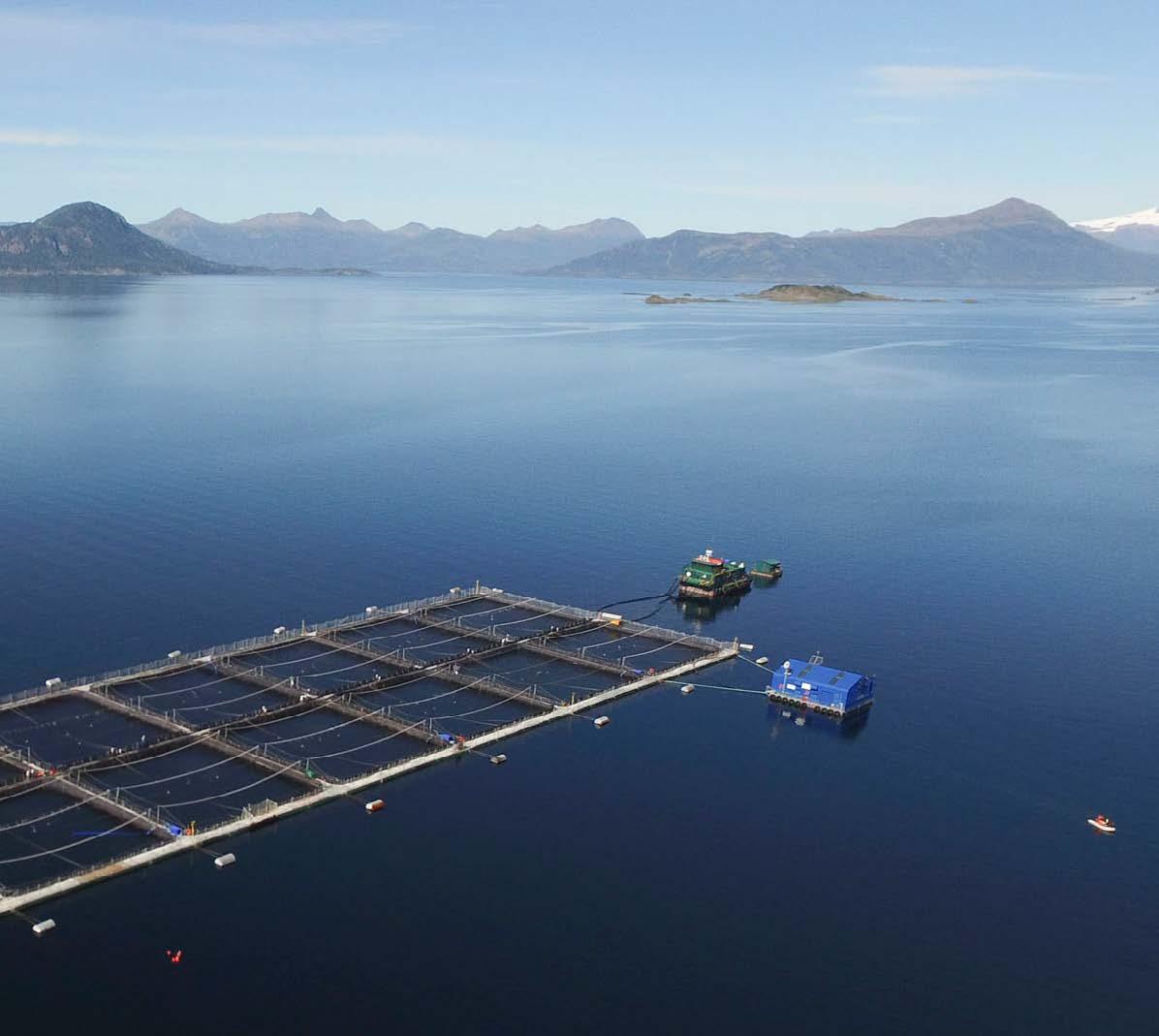
For generations, the Kawésqar people’s traditional knowledge and customary practices have sustained the maritorio.49 However, unlike the adjacent Kawésqar National Park – a terrestrial region with high levels of protection – the marine reserve is less stringently protected, leading to significant threats from salmon farming. As of March 31 2026, 67 salmon farming concessions have been granted, with a further 54 pending approval.50
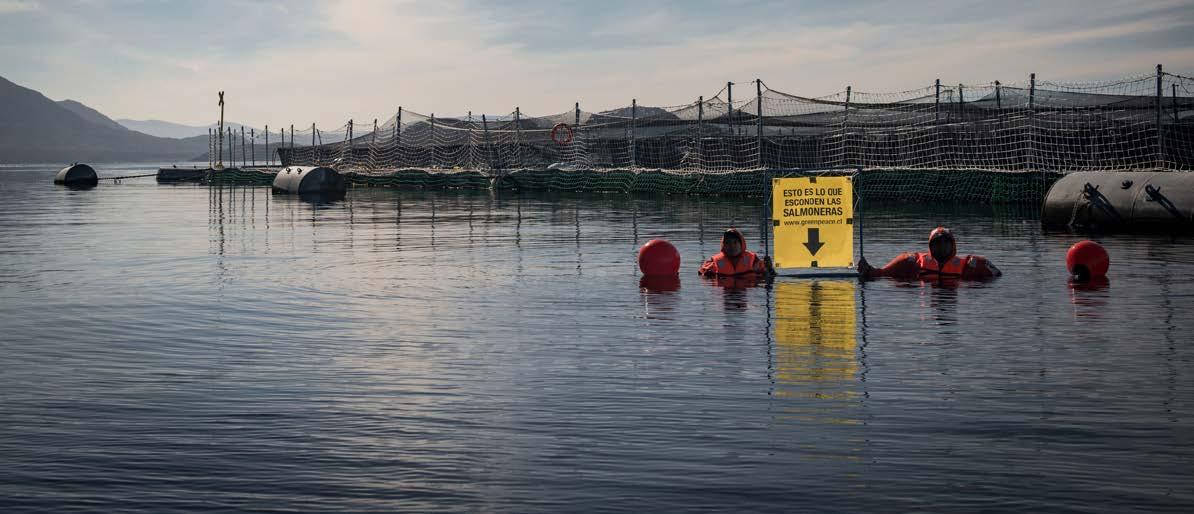
Kawésqar communities have protested this, arguing that salmon farms occupy their sacred sites and traditional fishing grounds, violate their rights to territory and to participate in decision-making, and undermine the ecosystem of the entire reserve.51 Indeed, the threats associated with salmon farming are numerous, chiefly the use of antibiotics and pesticides. Native species such as scorpionfish (Scorpaena
hystrio), rockfish (Elginops maclovinus), and feral trout (Oncorhynchus mykiss), ingest residues of antibiotics and pesticides as they feed on uneaten feed waste from salmon in the cages, which in turn creates antibiotic resistance in humans who eat the fish. Salmon can also escape the farms, affecting wild fish populations, and excess feed and body waste creates nutrient overloads and low-oxygen conditions.52,53 Furthermore, the Dumestre salmon processing plant, located in the vicinity of the KNR and National Park, constitutes an additional environmental threat. Despite strong local opposition, it began operating in late 2022.54 Since then, legal proceedings have determined a failure to comply with environmental regulations.55
Participatory planning and management in Kawésqar has the potential to contribute to rights-based and communityled conservation in line with Chile’s commitments under the KM-GBF. However, currently, the KNR lacks a management plan that establishes conservation
“THE KAWÉSQAR PEOPLE CONCEIVE OF THEIR TERRITORY AS A “MARITORIO”– AN INTEGRATED SEA-LAND SPACE WHERE ECOLOGY IS INDIVISIBLE FROM CULTURE AND SPIRITUALITY.”
objectives for the area or determines the activities compatible with those objectives, including salmon farming. A management planning process is underway,56 but the absence of an implemented management plan57, plus the postponement of Indigenous consultation processes, have hampered both the effective management of the reserve and the protection of Indigenous rights over their ancestral territories.58 Kawésqar communities have also submitted applications for Marine Coastal Spaces for Indigenous Peoples (Espacios Costeros Marinos de Pueblos Originarios, ECMPOs), an innovative mechanism under Chilean law that allows for Indigenous management of customary waters. Approval of these applications remains pending.59
Chile’s Indigenous Development Law (Law 19,253 of 1993)60 stands as the main state framework towards Indigenous rights. Among its provisions, the law recognises indigenous communities and sets a procedure in terms of how they can be created. It acknowledges indigenous cultural rights, defines indigenous land and mechanisms for state recognition, and establishes funds to support the redistribution of land and water resources to Indigenous Peoples. It also establishes finance programs for indigenous economic development, and includes the creation of the National Corporation of Indigenous Development (Corporación Nacional de Desarrollo Indígena, CONADI), which is mandated – among other tasks –
“CHILE PROPOSES THAT
BY 2030,
AT LEAST 30% OF TERRESTRIAL, MARINE, AND INLAND
WATER AREAS
WILL
BE PROTECTED. 100% OF THESE PROTECTED AREAS WILL HAVE APPROVED AND IMPLEMENTED MANAGEMENT PLANS AND 10% OF AREAS WILL BE UNDER EFFECTIVE MANAGEMENT.”
to implement the Indigenous Law.61 Yet the Law has several shortcomings. The system of land redistribution is very complicated, resulting in limited progress, and does not guarantee rights to natural resources.62,63
Furthermore, it has faced critique for prioritising extractivist policies over cultural interest.64,65 Chile is the only country in Latin America that does not recognise Indigenous Peoples in its Constitution.66 In 2022, a new draft Constitution seeking to redress this was rejected at the polls.67
Certain conservation-focused laws also recognise the rights of Indigenous Peoples. One is Law 20.249 on Marine Coastal Spaces of Native Peoples, also known as the “Ley Lafkenche,” which enables the establishment of ECMPOs.68 In addition, under Law No. 21.600, which established the Biodiversity and Protected Areas Service (SBAP), Chile is obligated to conduct consultations with Indigenous Peoples when considering administrative or legislative measures that may directly affect them.69
NBSAPs provide another critical opportunity to integrate a HRBA in environmental policy. In their NBSAP,70 Chile proposes that by 2030, at least 30% of terrestrial, marine, and inland water areas will be protected. 100% of these protected areas will have approved and implemented management plans and 10% of areas will be under effective management. Furthermore, the action plan sets out to create conditions for recognising OECMs and to strengthen participatory management in protected areas. Chile’s Seventh National Report to the CBD states that they are on track to meet the 30% target71 – with 40.24% of marine and coastal areas protected or conserved.72 However, 80% of MPAs in Chile lack up-to-date management plans – including the KNR – which hinders their effective protection and the realisation of community rights.73 The NBSAP does not secure ECMPOs directly in this context, nor highlight their relevance as a rightsbased and community-led alternative. Therefore, it does not recognise ECMPOs as a mechanism for promoting, integrating and valuing traditional knowledge as part of conservation and sustainable biodiversity management plans, thereby failing to strengthen the linkages between biological and cultural diversity.
Chile also proposes to develop a biodiversity financing plan and identify innovative financial mechanisms by 2026 – including strengthening the Chile Nature Fund and climate finance instruments. But means of equitable distribution remain unclear, as does the direct accessibility of these funds to Indigenous Peoples and local communities. Further aims include achieving substantive and inclusive participation based on gender and intercultural perspectives by 2030, along with the strengthening of gender parity in conservation instruments – in keeping with Target 22 on participation, justice and information. Their Seventh National Report mentions key measures toward the target, including gender-related programs, a climate adaptation plan for biodiversity, ratification of the Escazu Agreement,74 and the establishment of SBAP via Law No. 21.600.75
“80% OF MPAS IN CHILE LACK UP-TO-DATE MANAGEMENT PLANS – INCLUDING THE KNR – WHICH HINDERS THEIR EFFECTIVE PROTECTION AND THE REALISATION OF COMMUNITY RIGHTS.”
Encouragingly, Law No. 21.600 includes an obligation to consult with Indigenous Peoples on measures that may directly affect them. For example, it includes provisions for participation and consultation in the creation and management of protected areas and recognises that ancestral uses and customs are not subject to penalties when they do not compromise conservation (Law No. 21.600, Art. 116). By reinforcing the principle of indigenous participation in environmental governance, the law provides a foundation for strengthening a HRBA in environmental policy. However, implementation of the law has been slow, with only three out of twelve of its required regulations approved, thereby constraining both area-based conservation and the exercise of rightsbased approaches.76 Furthermore, the law guarantees only a non-binding consultation process, rather than meeting the standard of FPIC established in ILO 169, UNDRIP and integrated in the KM-GBF.
“CHILE IS THE WORLD’S SECOND-LARGEST PRODUCER OF FARMED SALMON AFTER NORWAY, WITH FISH EXPORTS TOTALING $6.55 BILLION IN 2025 AND ACCOUNTING FOR 6% OF CHILE’S TOTAL EXPORTS.”
Against this backdrop, private sector interests – especially extractive and export-oriented industries – have often taken precedence over environmental concerns and indigenous rights. In marine and coastal areas, the salmon farming industry holds enormous power. Chile is the world’s second-largest producer of farmed salmon after Norway, with fish exports totaling $6.55 billion in 2025 and accounting for 6% of Chile’s total exports.77 As in the Kawésqar case, these economic gains all too often sacrifice the environment and the human rights of those who rely on it.78
While Chile has taken steps to promote protection of human rights, in line with the UN Guiding Principles on Business and
Human Rights,79 there is no obligation for private companies to act. For example, two National Action Plans on Business and Human Rights were implemented in 2017-2020 and 2022-2025, with another currently in the works. They focus on raising awareness about the human rights implications of private sector activities and promote the use of tools such as Human Rights Due Diligence (HRDD).80 But without a direct requirement for private companies to implement HRDD, they’re all too easily ignored.81,82,83
Indeed, a recent sector-wide Human Rights Impact Assessment of the salmon industry made this clear, concluding that the state duty to protect human rights, the corporate responsibility to respect human rights, and access to remedy for abuses committed by the salmon industry, are far from being a reality.84 No specific regulatory frameworks protect human rights in relation to the salmon farming industry and impacted communities face severe difficulties in securing effective participation in decisionmaking about projects that directly affect their territories. One reason is that salmon farming projects are mainly approved through Environmental Impact Statements (EIS), rather than through more stringent Environmental Impact Assessments (EIA).85
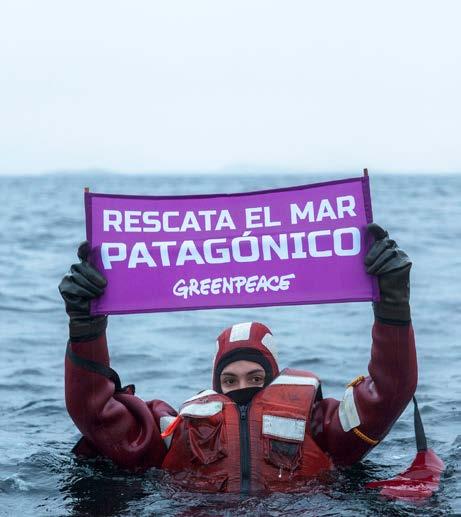
“Rescue the Patagonian Sea” © Patricio Miranda / Greenpeace
“ESTABLISHING THE ECMPO HAS CONTRIBUTED TO RECOVERY OF VULNERABLE ECOSYSTEMS AND SPECIES, CONTROL OF POLLUTING ACTIVITIES, REVITALISATION OF TRADITIONAL CULTURES AND SPIRITUALITY, EMPOWERMENT OF INDIGENOUS COMMUNITIES IN RELATION TO OTHER ACTORS, AND INCREASED MATERIAL WELL-BEING.”
The Human Rights Impact Assessment highlighted the building of salmon farms in traditional lands and waterways as an infringement on the rights of Indigenous Peoples – as in the case of Kawésqar. These limitations represent a gap in the practical implementation of international commitments, including ILO 169, the Escazú Agreement, and the OAS (Organisation of American States) Convention on Nature Protection and Wildlife Preservation in the Western Hemisphere, further undermining Chile’s commitments under the KM-GBF.
In addition, reports of human rights violations against environmental defenders, particularly Indigenous Peoples, are of utmost concern. In Chilean Patagonia, some representatives of the Kawésqar community have faced harassment, threats, and intimidation for opposing expansion of the salmon farming industry – even during formal participation processes related to Law 21.600 and the Management Plan for the KNR. Documented discrimination towards human rights defenders86 has created a hostile environment that further restricts indigenous communities’ effective participation.
“This
ECMPOs are a noteworthy example of a rights-based and community-led conservation practice that contribute to Target 3 of the KM-GBF. As noted, the “Ley Lafkenche” is a unique legal framework87 that recognises and grants indigenous communities preferential rights to use and manage marine and coastal areas they have customary tenure over. Though ECMPOs do not confer ownership nor expropriate acquired rights over the sea, they acknowledge the ancestral connection of Indigenous Peoples to these territories, promoting conservation, food sovereignty, and the sustainable management of these systems.88
ECMPOs also align with the OECMs and ITTs included in Target 3 and represent a legitimate and effective pathway toward achieving its conservation goals. The Ley Lafkenche explicitly states that their management must ensure the conservation of natural resources and the well-being of the indigenous communities that hold them. Protection of an ECMPO also goes into effect once an application is accepted, meaning that other applications, like aquaculture concessions, cannot move forward.89 However, Chile’s NBSAP does not recognise nor discuss the direct contributions of the ECMPOs towards biodiversity objectives.
The Chilean approach to ECMPOs has proven an effective and replicable way to promote more respectful and collaborative relationships between private and State interests and Indigenous Peoples, while conserving marine and coastal areas. For example, the management plan of the Trincao ECMPO in the Los Lagos region combines activities to protect flora and fauna with seed collection, mussel and seaweed farming, religious celebrations and tourism. Establishing the ECMPO has contributed to recovery of vulnerable ecosystems and species, control of polluting activities, revitalisation of traditional cultures and spirituality, empowerment of indigenous communities in relation to other actors, and increased material well-being.90 ECMPOs have expanded beyond the Mapuche-Lafkenche people – who were instrumental in the law’s creation – to include other coastal indigenous communities such as the Mapuche-Williche, Chono, Kawésqar, and Yagán peoples, who have used this mechanism to protect their historical relationship with the sea and to ensure the sustainability of their livelihoods.91 As of 2024, requests from Indigenous communities to establish ECMPOs totaled 62.931 km2 across 65 different areas – including three in the zone of the Kawésqar Reserve – offering a significant complementary conservation approach to state MPAs.92 In these ways, ECMPOs stand as a concrete and positive example of rightsbased environmental governance, fully aligned with the principles of the KM-GBF.
However, effective implementation of community-driven initiatives such as ECMPOs remains challenging in Chile. There have been delays in processing applications, missed legal deadlines, and insufficient institutional coordination. Long, bureaucratic procedures mean only 13% of more than 100 requests have been completed.93 Tensions have also emerged with the salmon farming industry, which has promoted amendments that could limit the law’s application.94 These challenges constrain the active participation of indigenous communities in marine conservation, and their contributions to fulfilling Chile’s international commitments under the KM-GBF.

The current situation in Southern Chile demonstrates tremendous risks but also opportunities for advancing rights-based and community-led approaches to conservation. The following recommendations set forth practical measures to enable the country to meet the standards set in the KM-GBF for HRBAs to conservation, ensuring respect for Indigenous Peoples’ and local communities’ rights, traditional knowledge, values, and practices:
▶ Develop and implement management plans for the KNR with the full and effective participation and consultation of Indigenous Peoples.
This is a key requirement of Target 22 of the KM-GBF. Ensure implementation is in accordance with national and international standards on Indigenous rights.
▶ Strengthen implementation of ECMPOs, with increased funding and technical and political support.
▷ Ensure planning is carried out in an adequate and efficient manner and in strict compliance with legal timelines, while also providing increased funding and political support for their effective implementation.
▷ Address bureaucratic constraints that have resulted in unjustified delays in the processing of ECMPO applications, through administrative and regulatory measures that guarantee timely and effective procedures.
▷ Ensure that the existing legal framework is not weakened through legislative amendments that limit its scope or effectiveness in favour of private sector interests, safeguarding its role as a rights-based and public-interest conservation instrument.
▶ Strengthen HRDD, transparency, access to justice and environmental governance processes for salmon farming.
▷ As highlighted in the 2021 Sectorwide Impact Assessment on the salmon industry and human rights, “integration of the UNGPs [UN Guiding Principles] at the national level is urgently needed in order to adequately address the impacts of the salmon industry from a human rights perspective.”95 The assessment recommends that the Chilean State undertakes wide-ranging measures to ensure that aquaculture development is socially equitable, culturally observant and environmentally sustainable,
that salmon businesses adopt and comprehensively implement human rights commitments, and that international businesses and financial institutions require human rights commitments from companies they do business with.
▷ In line with the Escazú Agreement and Target 22 of the KM-GBF, the rights of environmental human rights defenders, whistleblowers and those who report corporate and governmental misconduct must be protected.
▷ Patagonian fjords and channels, recognised for their pristine biodiversity and critical ecosystem services, warrant targeted protections against everexpanding industrial salmon farming in both existing and proposed protected and conserved areas.
▶ Ensure that Chile’s NBSAP integrates rights-based community-led approaches with concrete measures for implementation.
▷ This must be undertaken with the full and effective participation of Indigenous Peoples and local communities, ensuring that it wholly integrates KM-GBF provisions on human rights, Indigenous Peoples, and community-led conservation. Key provisions include, inter alia, those on full, effective, and equitable participation in decisionmaking for Indigenous Peoples and local communities, recognising and respecting their rights – including over their traditional territories – recognising and supporting the contributions of OECMs and ITTs to area-based conservation, and enhancing the role of conservation actions by Indigenous Peoples and local communities.
▷ Implementation and monitoring of the NBSAP should recognise the contributions of ECMPOs and enable their Indigenous and customary management. Moreover, elaborated plans must be accompanied by effective measures for implementation.
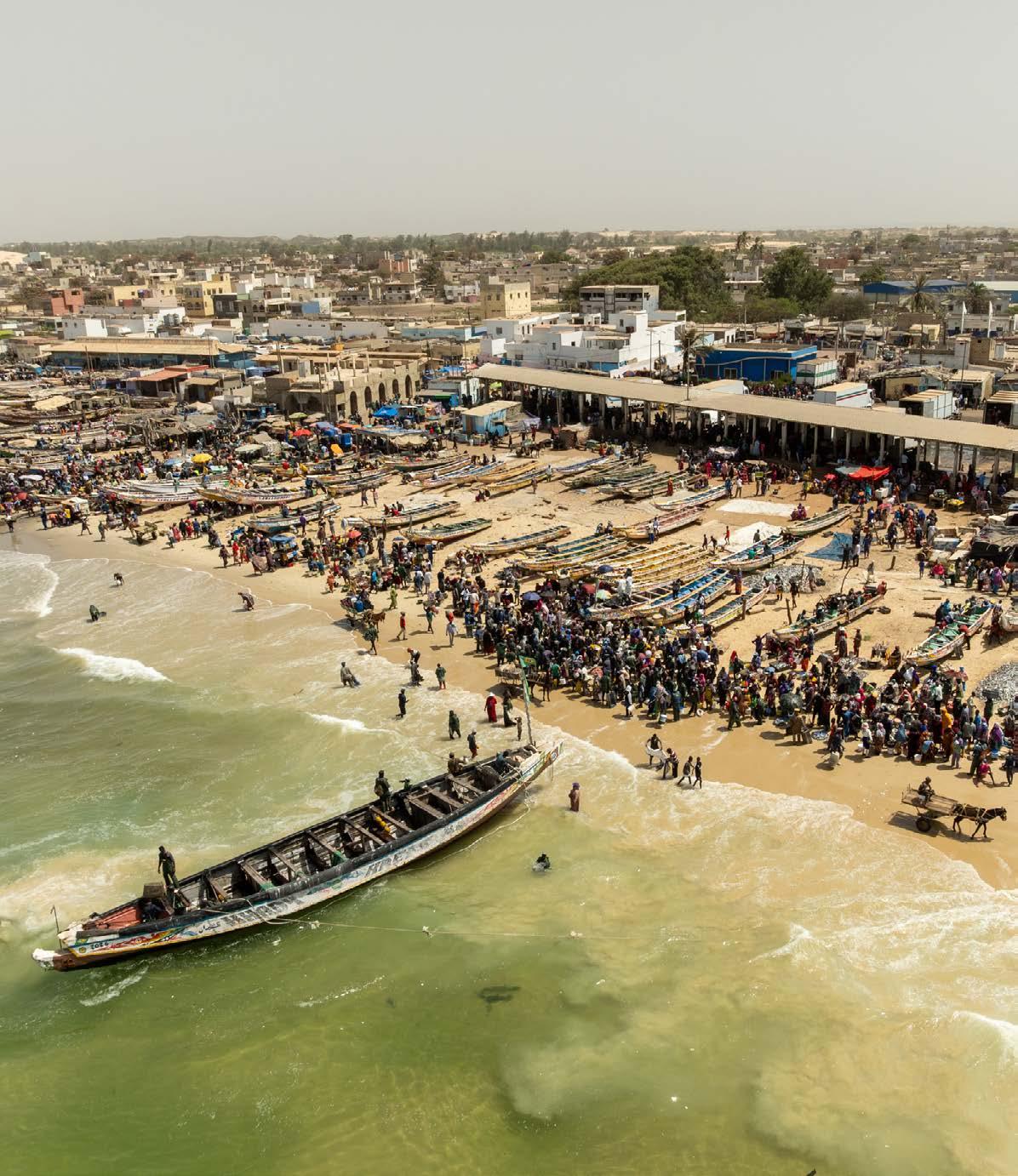
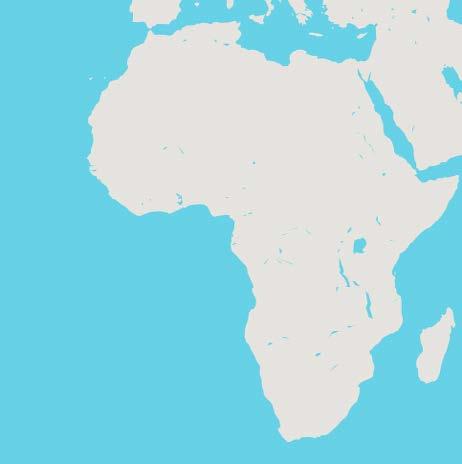
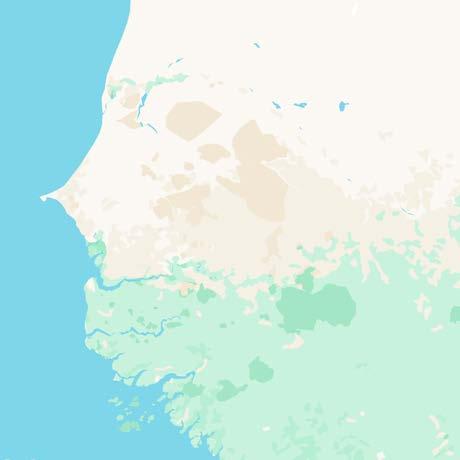
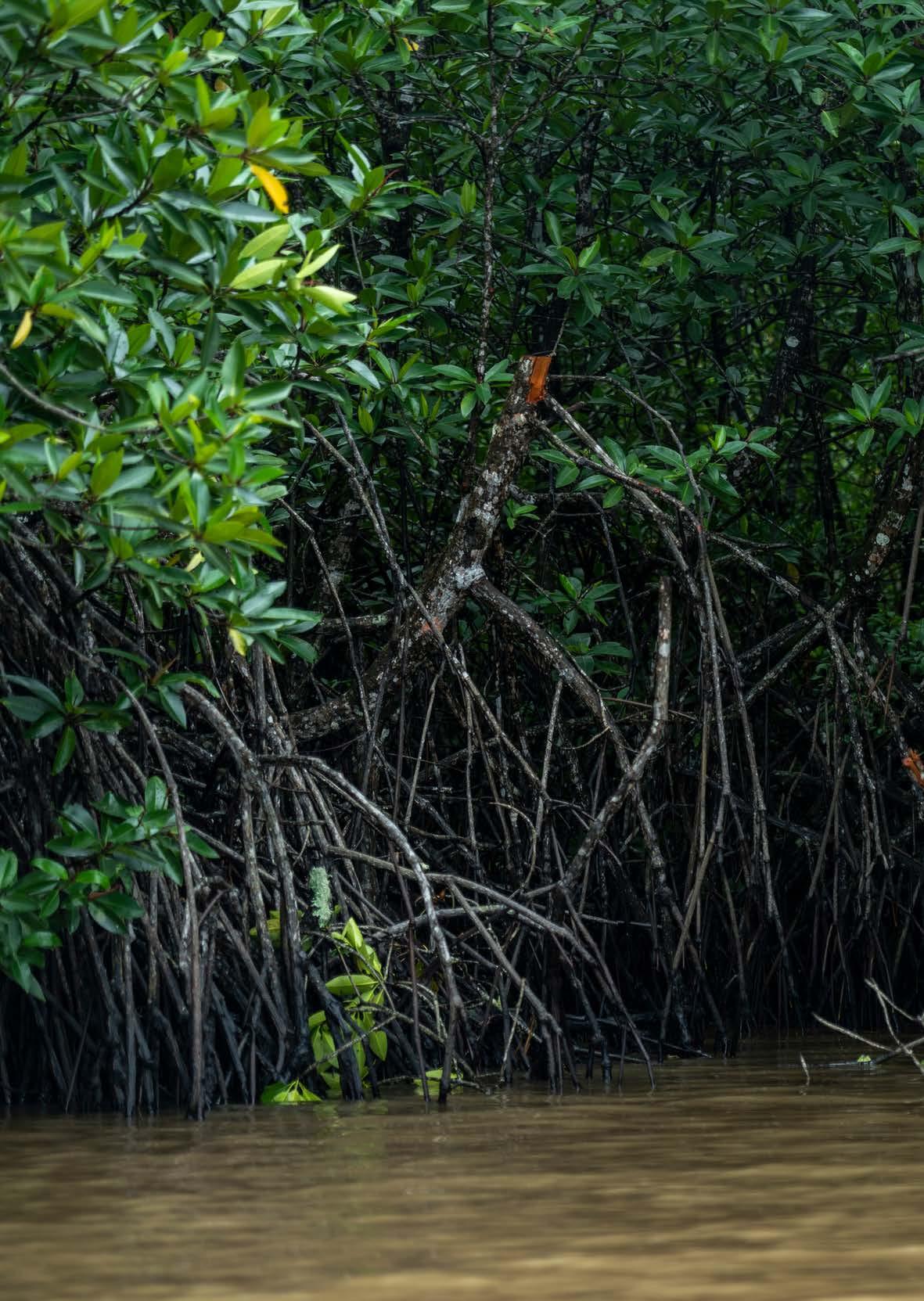
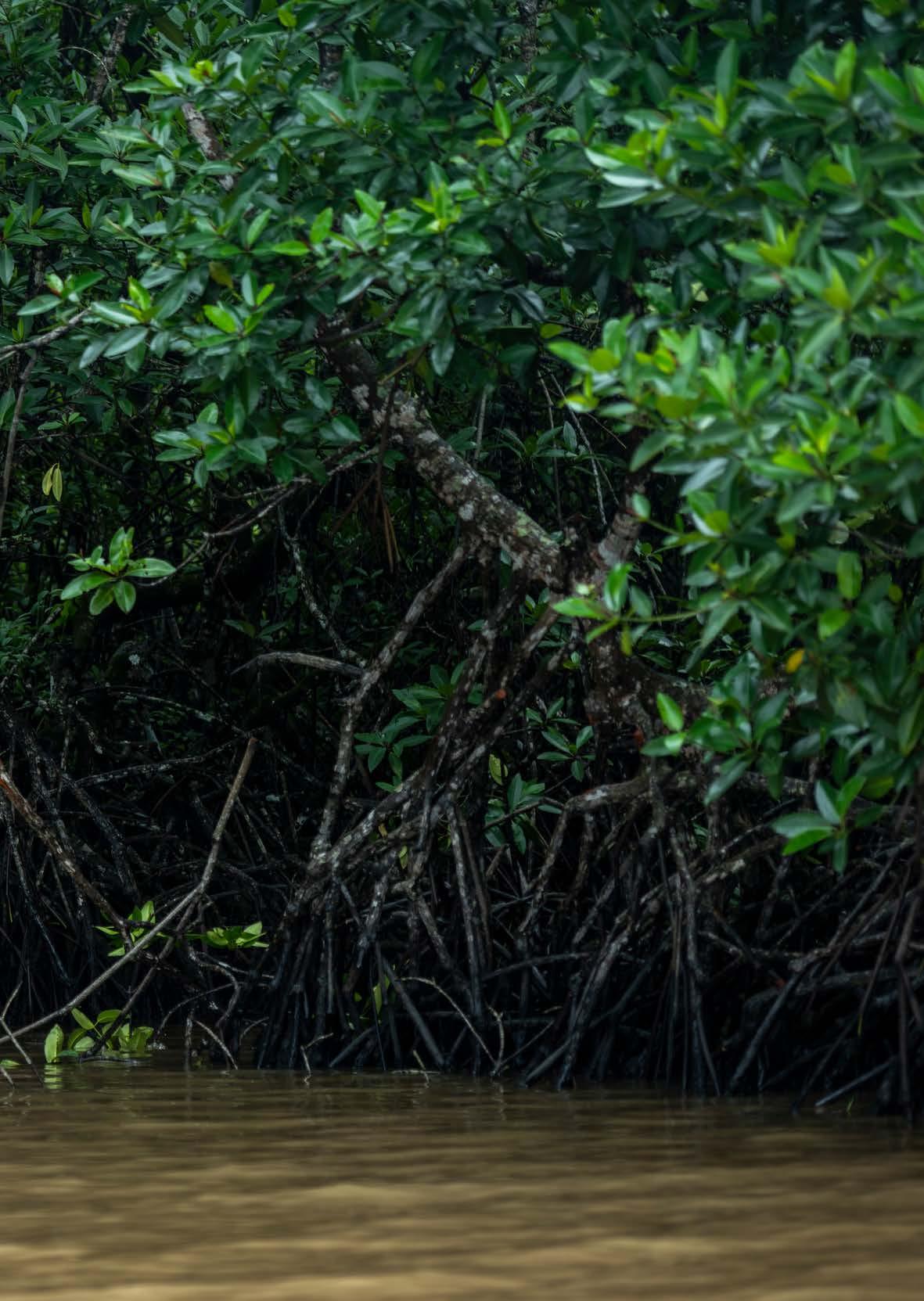
Senegal’s coastline is richly diverse, with extensive mangrove forests that support juvenile sardinellas and the bonga shad fish.96,97 As well as marine life, it sustains the livelihoods and food security of coastal communities, with highly productive fisheries that are deeply rooted in local culture, histories and ways of life. However, the area is threatened by industrial fishing, coastal erosion, sea level rise, plastic pollution and, in particular, the huge increase in production of fishmeal and fish oil (FMFO).
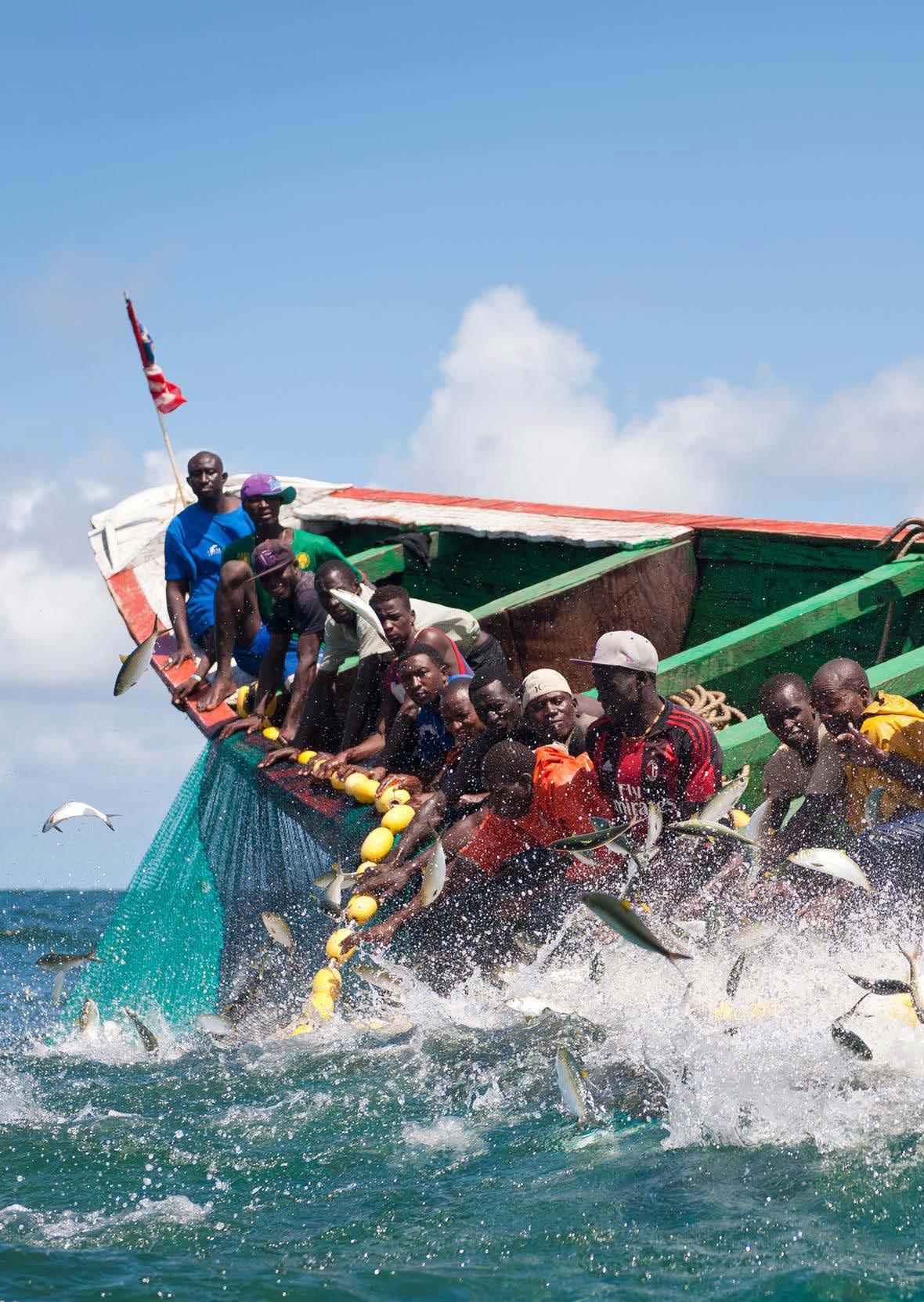
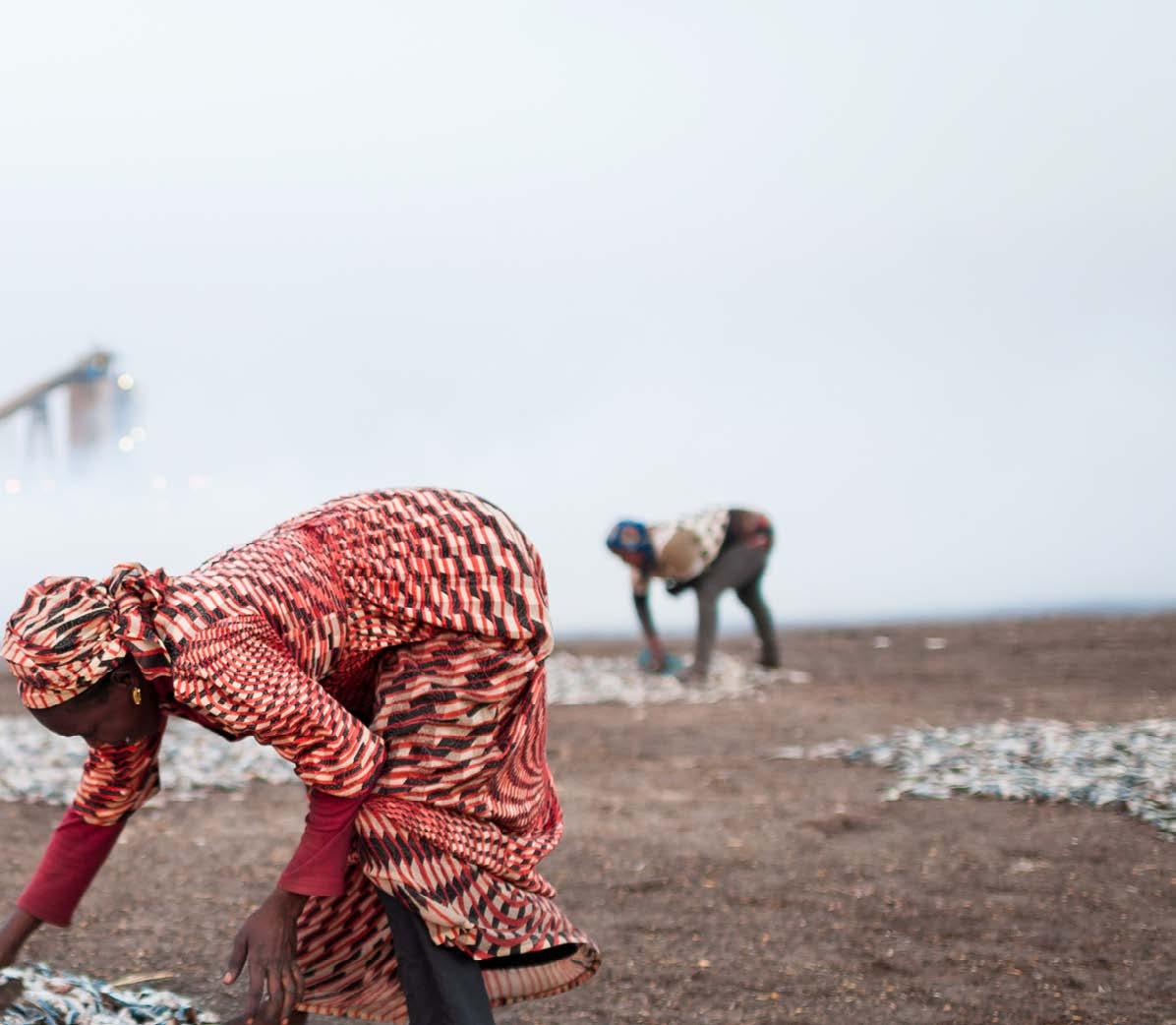
Along the Senegalese coast, the fishing industry provides an important source of employment, with local men catching fish and women processing it. But competition with industrial fishing, combined with a lack of access to traditional fishing grounds, is affecting income and livelihoods. Local fishers are having to travel further afield to find fish, increasing costs and dangers at sea. What’s more, new oil and gas exploration in the area is only exacerbating the problem.100
In 2022, legal proceedings were launched against a fishmeal factory in Kayar by female fish processors, artisanal fishers and local residents,101 who argued that the factory was not only impacting their livelihoods,102 but their health. Fishmeal factories pollute local air and drinking water, thereby violating the community’s right to a healthy environment.103
In the face of these threats, some communities have taken the initiative to conserve and restore their coastal ecosystems, including through communitymanaged MPAs with government support. However, these efforts are facing an uphill battle and, with local livelihoods on the line, people are increasingly migrating from Senegal to Europe in search of more stable employment.104,105
FMFO production has boomed in recent years, processing prime fish into exported feed for aquaculture and livestock. Some fishmeal processors, primarily small-scale operations, use fish offal as raw material – an efficient use of resources that would otherwise be wasted. Yet fish fit for human consumption is increasingly caught on an industrial scale, exploiting fish stocks and depriving local communities of a vital food source.98 It is estimated that over 500,000 tonnes of fish is caught annually in West Africa to produce FMFO – an amount sufficient to feed 33 million people in the region.99 Instead, it is exported, primarily to Asia and Europe, to feed animals.
As highlighted in its National Development Strategy, Senegal is among the 25 countries with the lowest human development. Economic growth has not significantly reduced poverty (37.5%) or unemployment (around 20%), and the country’s past efforts to promote economic development have increased public debt. In this context, national priorities set in 2025 include accelerating economic growth, enhancing public services, and establishing attractive and sustainable development hubs, including for foreign investment.106 Yet over the years, several economic policy measures have created very challenging conditions for community management and conservation of fisheries, including:
Since the late 1970s, Senegal has negotiated agreements with other countries allowing them to fish within its territorial waters.107 The activities of these industrial foreign fleets (including illegal fishing outside the scope of their agreements) have been a major cause of overfishing that has led to severe declines in fish populations, in some cases to the point of collapse.108 Most of the fish caught by industrial fleets is exported to other countries and disturbingly, deadly encounters between artisanal fishers and large industrial ships have been reported.109 The newlyelected government announced plans to review all fisheries agreements with the EU in 2024110 and allowed them to lapse.111
Another policy contributing to overfishing has been government subsidies for both small-scale and large-scale fishers to enhance the capacity of certain activities, like boat construction and fuel subsidies.112 These subsidies, combined with declines in agriculture and pastoral economies, have encouraged the migration of people from other parts of Senegal and West Africa into fishing areas, further increasing the capacity of the artisanal fisheries sector.113
▶ Export-oriented fish processing
Substantial proportions of fish catches now go to non-food uses, particularly exported FMFO.114 Along with adding pressure to fisheries, this export economy disrupts the livelihoods of women who historically managed local fish processing, contributes to domestic food insecurity, and risks environmental pollution.115
▶ Oil and gas development
Senegal has been pursuing oil and gas development since reserves were discovered off its coast in 2014, with the first offshore oil and natural gas projects starting operations in 2024 (as foreign joint ventures).116 Nearby fishing communities report concerns with decreased fish catches, restrictions on access to former fishing areas, and impacts of an ocean gas leak.117 While stating a goal to reduce greenhouse gas emissions, Senegal’s 2025 National Development Strategy features plans for expanded oil and gas production.118
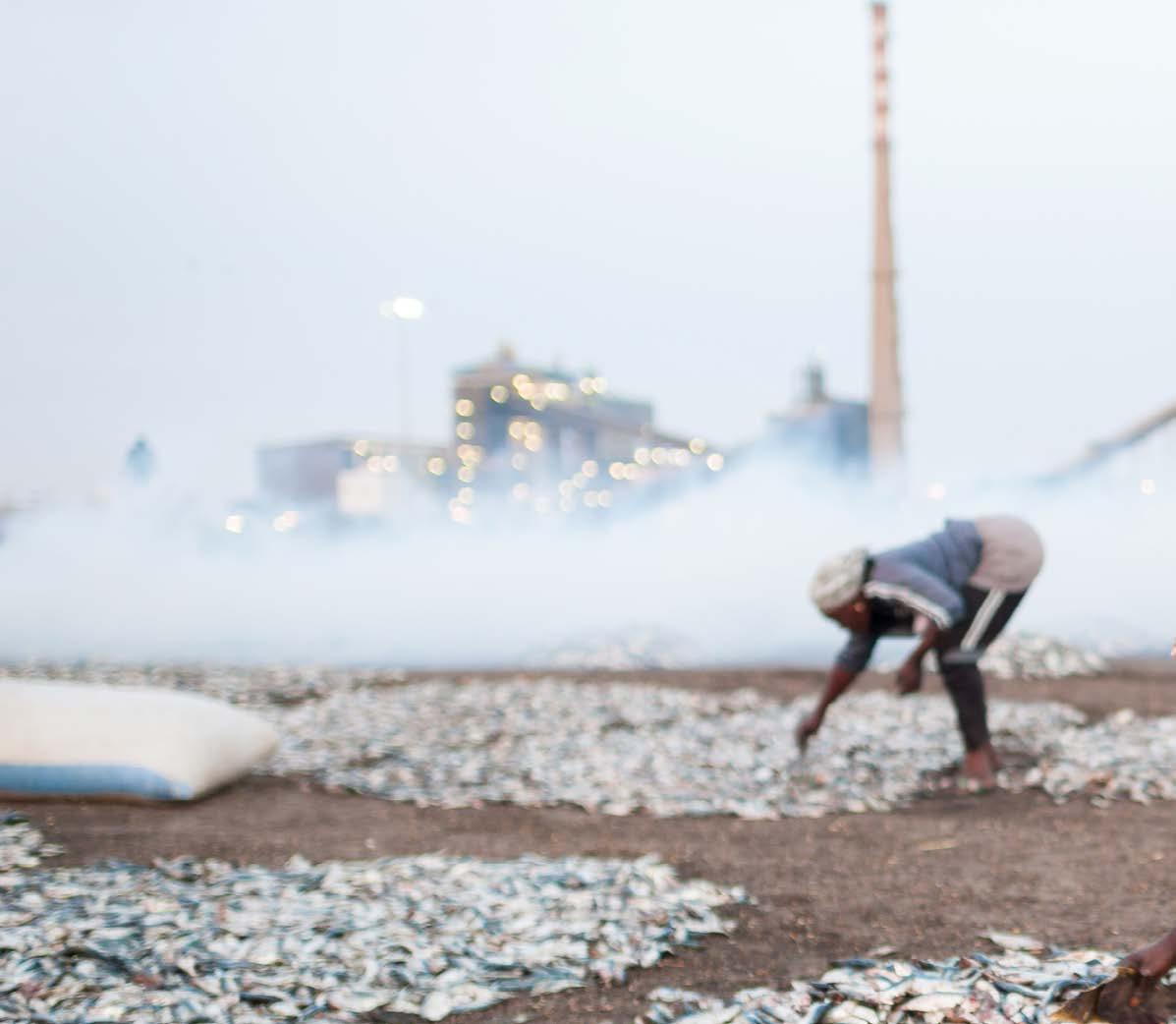
“OVER THE YEARS, SEVERAL ECONOMIC POLICY MEASURES HAVE CREATED VERY CHALLENGING CONDITIONS FOR COMMUNITY MANAGEMENT AND CONSERVATION OF FISHERIES.”
Coastal communities have organised protests against policies and projects that jeopardise their livelihoods, food security, environments, and safety.119 120 121 Senegal requires an Environmental and Social Impact Assessment (ESIA) prior to the implementation of development projects likely to have a negative effect on local environments or people.122 However, in practice, affected communities often struggle to assert their rights to be fully consulted or involved in decisions that impact them. Legal proceedings are often inaccessible due to their complexity and cost.123
Senegal’s community tenure laws are one factor hindering people’s ability to resist these developments. The country does not have a statutory or regulatory framework that provides ownership or management rights to local communities or Indigenous Peoples.124 Rather, land laws grant only usage rights to communities and classify rural land as belonging to the “national domain.” In practice, customary systems, in which land is considered to belong to a village or clan, often prevail at the local level.125 Customary rights to traditional lands and seas motivate community protests against international agreements that grant land and/or ocean access to
Fish processors, Senegal © Clément Tardif / Greenpeace
outside interests. However, limitations in national law mean that communities often struggle to assert their rights in relation to outside investors.126 Land reforms aim to modernise the 1964 National Domain Law, which placed most land under state control, in order to improve tenure security, equity, and investment. Current efforts focus on digitising land records, regulating land allocation, and reconciling customary rights with formal titles, particularly under the Cadastre and Land Tenure Improvement Project (PROCASEF), a national land reform programme that seeks to modernise land governance by formalising and securing land rights.127 This reform could also potentially exacerbate conflicts by favouring private ownership and increasing the risk of land grabbing by wealthy investors – to the detriment of the customary rights of local communities.128
With regard to environmental policy, the National Development Strategy includes a section on integrated marine and coastal development focused on the following: promoting coordination among relevant agencies, adopting a law on coastal areas, expanding MPAs, putting in place an integrated system for marine spaces, and decarbonising the marine sector.129 Notably, Senegal has produced a Green Budget, which considers the environmental and climate impacts of budget expenditures and includes projects for fisheries development and marine conservation.130 The World Bank-funded Sustainable Environment and Natural Resource Management (SENRM) project is investing in more sustainable management of Senegal’s fisheries by strengthening environmental and social risk assessment, enhancing fisheries and community-based management, and supporting aquaculture development.131
“ALTHOUGH SENEGAL’S SEVENTH NATIONAL REPORT TO THE CBD STATES THAT SUBSTANTIAL EXPANSION OF COMMUNITY-MANAGED AREAS AND OECMS ARE UNDERWAY, CURRENT MPA COVERAGE IS ONLY 3.09% OF THE MARINE AREA.”
At the same time, Senegal has not yet prepared an updated NBSAP to align with the KM-GBF – the country expects to finalise its NBSAP by the end of June 2026. It has submitted new National Targets, including on improving the connectivity of the protected area system (related to Target 3), enabling communities to benefit sustainably from ecosystems (Target 22), and developing a biodiversity financing plan (Target 19).132 Yet without a full NBSAP, these plans cannot sufficiently determine whether implementation measures are in line with human rights-based and community-led approaches. Although Senegal’s Seventh National Report to the CBD states that substantial expansion of community-managed areas and OECMs are underway, current MPA coverage (as reported in Protected Planet) is only 3.09% of the marine area – compared with 27.46% of terrestrial areas and inland waters.133 The governance framework for marine resources is also complex and fragmented across several institutions, leading to policy inconsistencies and conflicts.
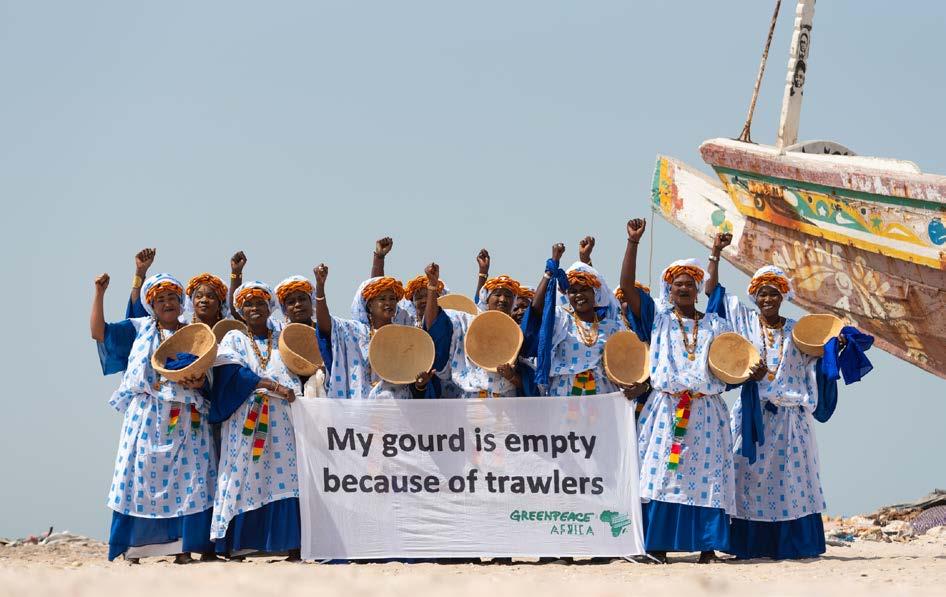
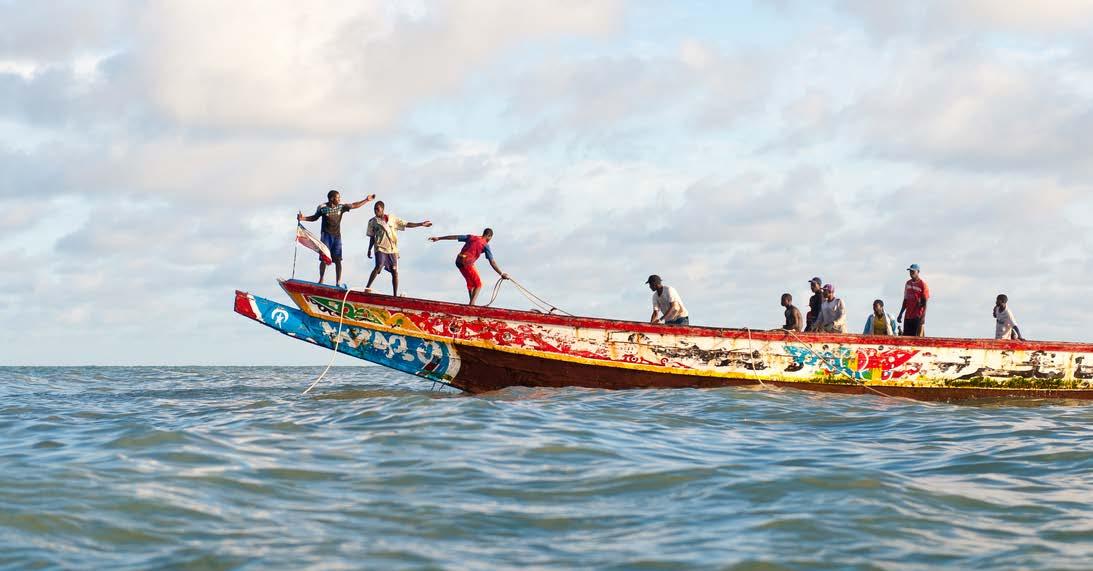
Senegal is a pioneer in West Africa for its network of Community Co-managed Marine Protected Areas (AMCPs).134 AMCPs, particularly those in the Saloum Delta region, are demonstrating good practices in community-led and human rights-based conservation. Significant features include:
▶ Community-led creation and co-management: The creation of AMCPs is often requested by local communities,135 who then play the primary role in establishing and enforcing management rules. State authorities provide technical and material support.
▶ Empowerment and participation: Local committees with representatives of both state and local community members, elected by the community (including fishers and women’s associations), are responsible for day-to-day management.136 Women are actively involved in these committees and in activities like mangrove reforestation and fish processing.137
▶ Equitable benefit-sharing:138 Funds generated from ecotourism, fisheries improvements, and other initiatives within the protected areas, should be invested back into the community. For example, in support of school funding, women’s groups, and other local development projects.
▶ Tangible human rights outcomes: Conservation efforts in these areas have directly improved the human rights of local populations by enhancing the health of their environment, increasing food security through fish stocks,139 and diversifying livelihoods. In the Bamboung MPA, for instance, a strictly protected zone led to an increase in fish and crustacean populations.140
“OVER A DECADE OF COMMUNITY AND LOCAL MANAGEMENT, THE KAWAWANA ICCA HAS SUCCEEDED IN RESTORING THE BIODIVERSITY OF A HEAVILY DEGRADED ECOSYSTEM WITH 20 FISH SPECIES, MANATEES, DOLPHINS AND CROCODILES RETURNING TO THE AREA.”
Other examples of AMCPs include those in Saint-Louis, Kayar, Joal-Fadiouth, and Abéném.141 In Djifer Point, a community group including youth and women is gradually replanting mangroves that will allow fish to spawn and stocks to rebuild.142 There is also a community MPA in Kayar. Across Senegal’s coast, the approach has been so successful that a Department of Community MPAs was created in 2012 as the primary public authority overseeing management of the MPA network,143 taking over from the Department of National Parks. Senegal’s community MPAs are also becoming a model for other countries in Africa seeking to replicate their approach.144
Senegalese communities have also played leadership roles in conservation through the establishment of ICCAs (in Senegal, these are more commonly referred to as Aire du Patrimoine Autochtone et Communautaire (APAC) in French). At least ten coastal or riverside ICCAs and 16 landbased ones have sought formal recognition by the Senegalese government for their governance of natural resources.145 These ICCAs are building on the experience of the Kawawana ICCA, located in a river ecosystem known for its fish, oysters, mangroves, and cultural values. It is the first ICCA to be formally recognised by the government. Key elements of its success include well-organised communities deeply rooted in their culture, traditional knowledge and resource management
practices, clear delineation of the conserved area and protected species, and integration of income-generating activities. Over a decade of community and local management, the Kawawana ICCA has succeeded in restoring the biodiversity of a heavily degraded ecosystem, with 20 fish species, manatees, dolphins and crocodiles returning to the area. This has led to a revitalised local fisheries economy that has improved people’s quality of life.146
However, significant challenges remain in sustaining, strengthening, and scaling up these community-led conservation initiatives. AMCP managers generally lack sufficient resources to monitor their areas and need more capacity to manage conflicts with others seeking to fish in these areas.147 While the government generally sets up a coast guard post for the AMCP and provides a fuelled patrol boat, more resources are needed to delineate and effectively protect each area. Many ICCAs lack legal recognition,148 which leaves them vulnerable to competing land uses and impedes community management. Greater empowerment of community governance structures is needed to ensure that management aligns with local needs and knowledge.149 Addressing these challenges requires increased legal recognition and support, investment in management capacities and monitoring technology, and the establishment of sustainable, long-term financing mechanisms.
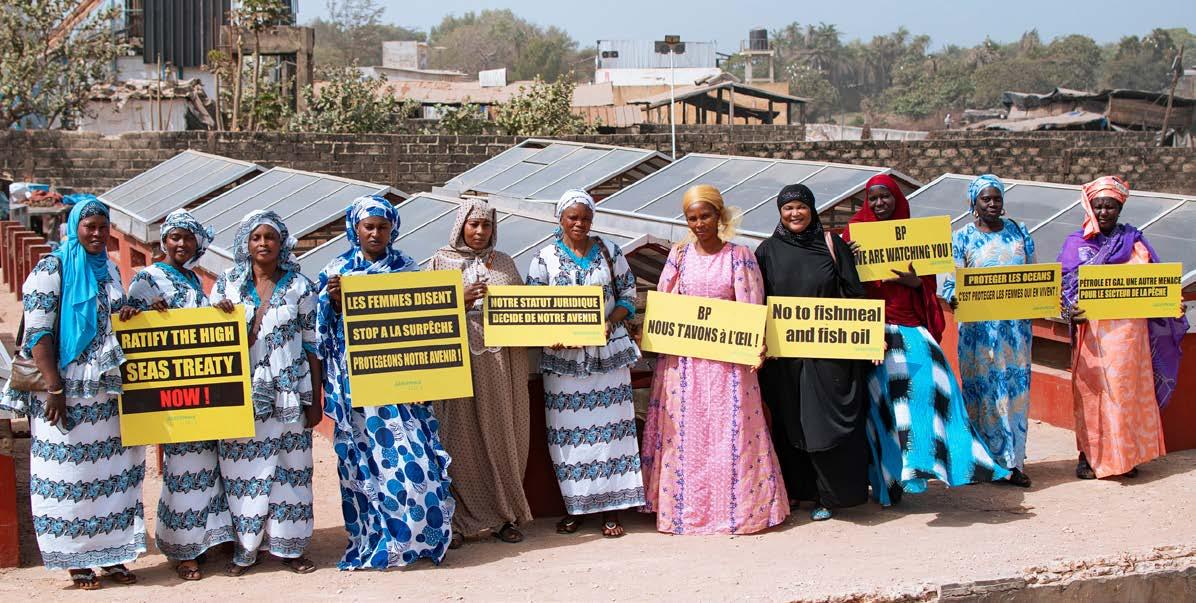
▶ Ensure the inclusion of coastal communities in decision-making about developments affecting their coastal areas and fish resources.
Coastal communities possess traditional knowledge and practices for conserving their local waters and rely most on the resources. Yet their lives are being severely impacted by decisions in which they have little to no voice. Their participation in decision-making is both a fundamental right and a critical step towards making policies more appropriate and effective in managing fisheries and conserving coastal ecosystems.
A key demand of coastal communities is greater inclusion in decision-making processes that concern sustainable fisheries management and environmental conservation,150,151 in line with Target 22 of the KM-GBF. The new government has indicated that it is seeking increased stakeholder engagement in addressing the fisheries crisis,152 offering a potential opening for the effective inclusion of community voices.
Female fish processors and artisanal fishermen must be granted a legal and formal status, with access to labour rights and benefits, such as social security and consultation rights in local fisheries management. Furthermore, measures to achieve this should include proactive community consultations and a formal role in decision-making bodies, such as those established for fisheries agreements.
▶ Phase out FMFO production that uses wild-caught fish fit for human consumption.
The significant negative impacts of FMFO processing on coastal ecosystems and local food security warrant a phase out of these harmful activities.153 As well as this, key measures include:
▷ Companies and end markets cease trading FMFO produced using fish fit for human consumption from the West African region.
▷ All states involved in fisheries in the region establish an effective regional management regime – particularly for the exploitation of shared stocks, such as small pelagic fish – as required under international law, relevant national laws, fisheries policies, and other instruments.
▶ Increase support to community-based MPAs and ICCAs, and embed this support in Senegal’s revised NBSAP.
AMCPs and coastal ICCAs are “bright spots” in Senegal’s current approach to marine conservation – but they require more support.
▷ Senegal’s Seventh National Report to the CBD154 identifies limited resources and shortcomings in participatory governance as key challenges impeding progress towards Target 3. To aid progress, Senegal’s updated NBSAP should integrate appropriate support for AMCPs, ICCAs, and related communityled conservation approaches as an implementation priority, including with adequate financial support and direct access to finance for the local communities. This could significantly enhance Senegal’s progress towards Target 3 in coastal waters, as well as its leadership in rights-based conservation in the coastal realm.
▷ Since the Ministry of Environment is responsible for the NBSAP, and the Ministry of Fisheries is closer to the issues of concern to fishing communities, the NBSAP process should ensure coordination both across ministries and directly with coastal communities.
More broadly, policies must be harmonised to ensure coherence across the fisheries, development and environment sectors, putting into action the related goals identified in the National Development Strategy.
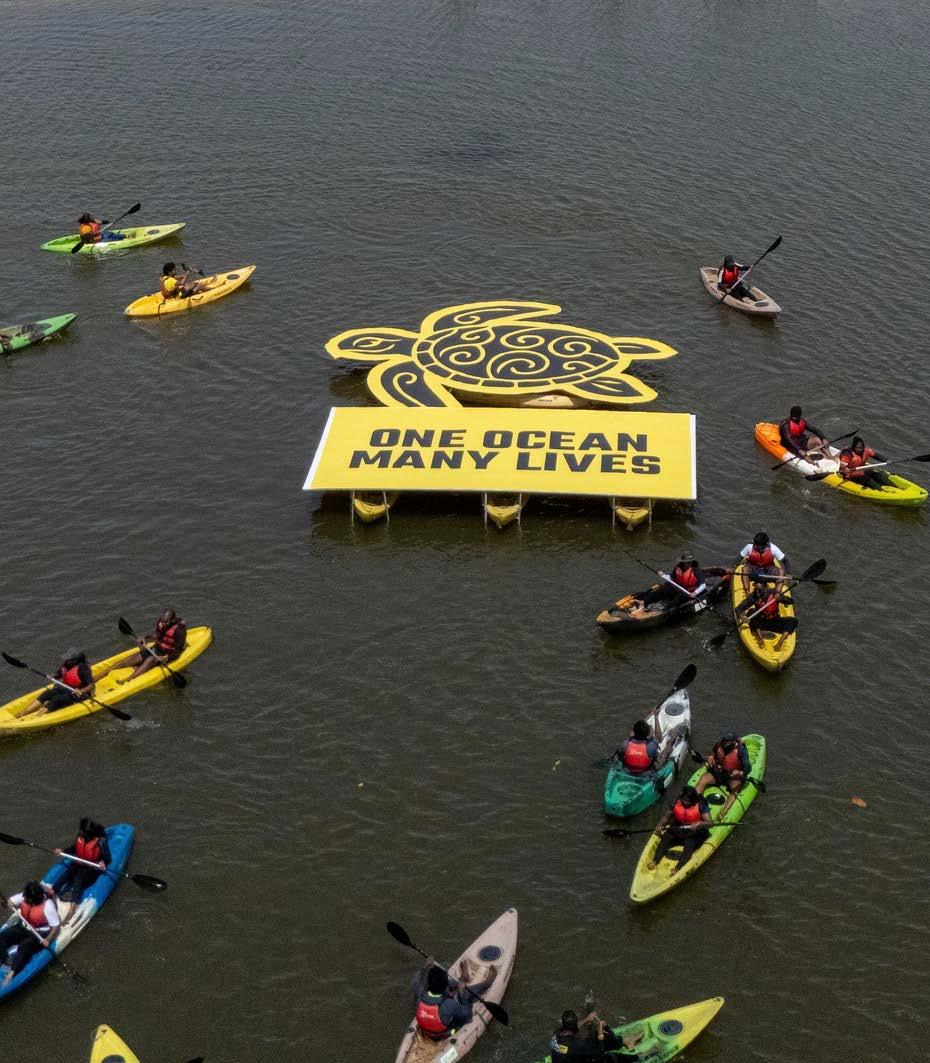
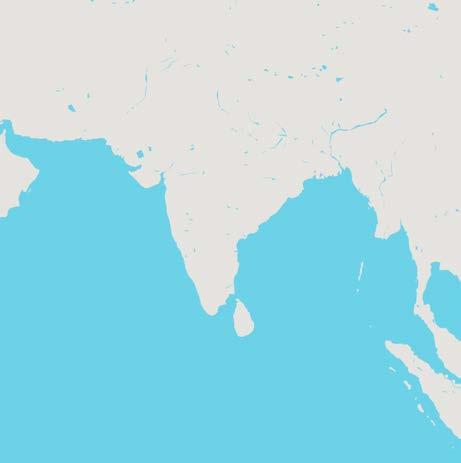
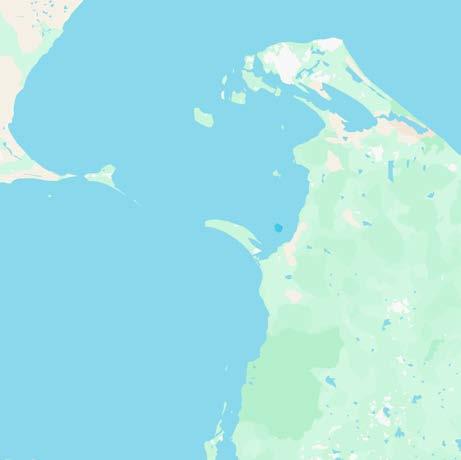
The island nation of Sri Lanka features remarkable biodiversity and exceptional levels of marine endemism.155 In particular, the Gulf of Mannar hosts a significant coral reef system156 that supports roughly 3,600 species of flora and fauna,157,158 while Mannar Island is a critical stopover site for hundreds of thousands of migrating waterbirds, such as Greater Flamingos (Phoenicopterus roseus) and Eurasian Spoonbills (Platalea leucorodia).159
The island is home to approximately 75,000 people, whose livelihoods rely on fishing, farming, and coconut and palmyra cultivation.160 Yet their way of life is increasingly threatened by climate change, erosion, pollution and large-scale industrial activities, from sand mining and wind farms. With substantial mineral sand deposits driving investment in sand mining, residents and scientists are raising alarms about destabilisation of the island’s low-lying topography, along with risks of saltwater intrusion into aquifers and already-limited farmland.161 Similarly, while strong, steady winds make Mannar Island attractive for wind energy investment, local people – without prior notice –are facing restricted access to common lands and grazing areas due to wind farm developments.162
Residents who have actively protested these developments stress that they are not anti-development but oppose destructive projects that have been
planned and implemented without their consultation. Following months of demonstrations, which were met with harassment and excessive use of force by the police,163 in November 2025, the President of Sri Lanka announced that new wind power projects could not proceed without local consent.164,165 In tandem to this, protests against sand mining have also intensified. The Geological Survey and Mines Bureau asserts that companies only hold exploration licenses and that the issuance of mining licenses would require a successful EIA.166 Yet in light of the severe and documented consequences of sand mining in India, Madagascar, and Mozambique – including coastal erosion, groundwater depletion and fisheries losses – ecologists are calling for a wholeisland EIA, rather than a project-specific one, and the inclusion of human rights considerations.167
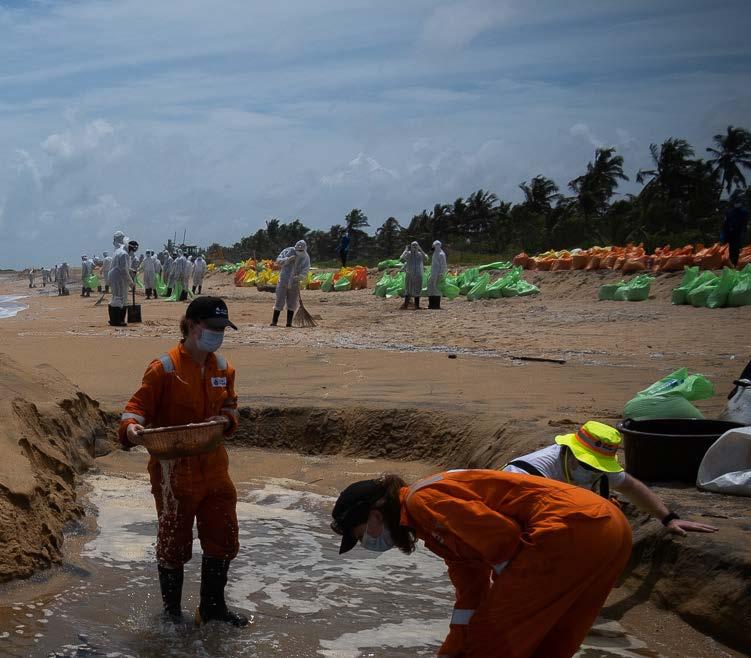
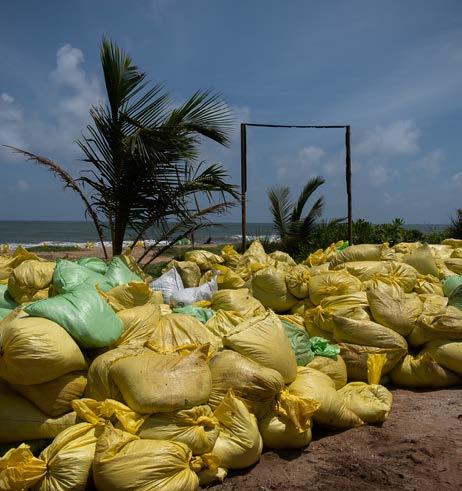
These threats come at a difficult time for the region. In 2025, a container ship sank off the coast of Kerala, releasing oil, hazardous materials, and nearly 1,400 tonnes of plastic pellets168 which travelled to the Sri Lankan coast via monsoon winds and ocean currents. This came after a 2021 disaster, when a Singaporeanregistered container ship caught fire and sank, releasing more than 100 billion plastic pellets and hazardous materials into the ocean.169 These pellets pose severe risks to biodiversity and human health,170 releasing
toxic substances that may persist in the environment for decades and significantly impacting the economy of communities that rely primarily on fish for food and income.171 These disasters, combined with the pre-existing effects of climate change, mean that the Gulf of Mannar, its ecosystem and its people are especially sensitive to any activities that might cause further harm.
As the country recovers from a 26-year civil war, Sri Lanka’s national goals centre on peace, national security, effective governance and economic development. The country’s national development plan, known as Vistas of Prosperity and Splendour,172 highlights a peoplecentered economy and sustainable environmental management as key priorities, with policies relevant to marine and coastal areas including fisheries development, a Blue-Green economy, disaster management, and port and energy development – including wind and solar power on Mannar Island. The island’s own development plan prioritises investments in industrial fisheries, renewable energy and nature tourism.173
However, Sri Lanka’s 1978 Constitution, amended most recently in 2020, does not recognise land as a fundamental right. Over 80% is state-owned and the displacement of local people for largescale development projects is reportedly widespread. An amendment to the Constitution called for a National Land Commission to be established, alongside the devolution of government power
to provincial councils. Neither has been achieved, with the central government reportedly reluctant to cede power to the provinces.174 While a signatory to the UNDRIP, Sri Lanka has also not ratified ILO 169 or adopted specific legislation on the rights of Indigenous Peoples.175
This lack of land ownership limits the legal recourse available to communities faced with destructive development projects. In relation to land acquisition, research conducted by Oxfam found that Sri Lanka’s legal framework does not facilitate community consultations or compliance with Free, Prior and Informed Consent (FPIC) principles.176 Under its National Environmental Act, the country does require an EIA for development projects that risk significant environmental impact, while those with more limited projected issues require an Initial Environmental Examination (IEE).177,178 Yet, in the case of sand mining on Mannar Island, concerns have been raised about the integrity of EIA processes, including allegations of fraudulent handling of community consent.179 Given the significant economic potential of sand mining, residents express concern that an EIA will fail to fully assess the risks.180
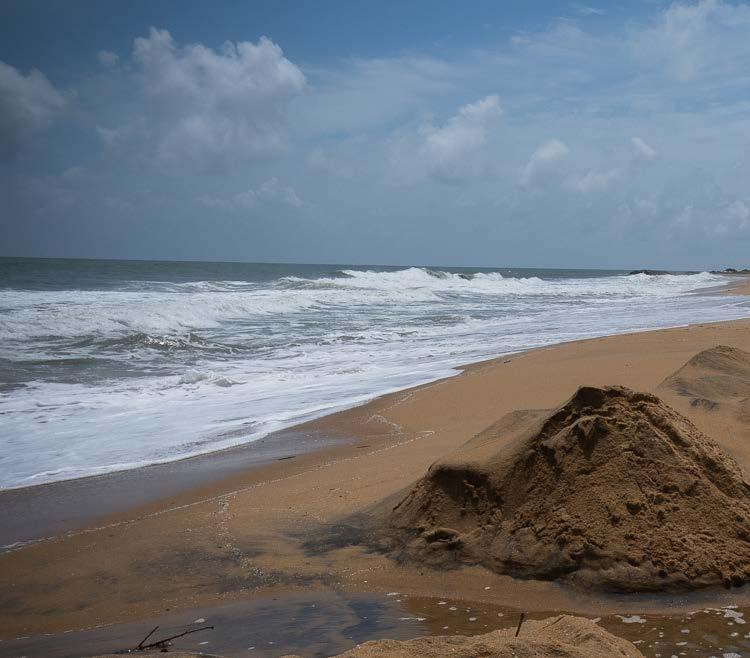
“SRI LANKA’S 1978 CONSTITUTION DOES NOT RECOGNISE LAND AS A FUNDAMENTAL RIGHT. OVER 80% IS STATE-OWNED AND THE DISPLACEMENT OF LOCAL PEOPLE FOR LARGE-SCALE DEVELOPMENT PROJECTS IS REPORTEDLY WIDESPREAD.”
That said, a landmark Supreme Court ruling does provide some protections. The Eppawala case, brought against a phosphate mining operation in 2000, concluded that, while the Sri Lankan Constitution does not explicitly include the right to a healthy environment, environmental well-being is essential for the exercise of other human rights. It further held that the State has a duty to protect natural resources for present and future generations, that economic development must not come at the expense of environmental damage or the rights of citizens, and that decisionmaking on environmental matters requires public participation.181 Observers have noted that the judgement is highly relevant to the Mannar Island case.182
Even so, despite these important protections, environmental and human rights defenders in Sri Lanka are facing significant risks. The country’s reliance on rapid natural-resource-based growth gives rise to frequent environmental and land-related conflicts. Where local communities, environmentalists, and others protest destructive developments and demand natural resource protections, they have encountered harassment, threats, intimidation, violence, criminalisation, and legal actions183 – including in Mannar.184
“THE COUNTRY’S RELIANCE ON RAPID NATURAL-RESOURCEBASED GROWTH GIVES RISE TO FREQUENT ENVIRONMENTAL AND LAND-RELATED CONFLICTS.”
With regard to environmental policy, Sri Lanka has not yet updated its NBSAP to align with the KM-GBF185 or made its full National Targets available. However, the country has separately published a national 30x30 strategy, developed with support from the international SPACES consortium,186 focused on projects for which the country is seeking investment.187 These include increasing protected areas on land from 31 to 36% of the national territory, enhancing marine conservation, and strengthening sustainable fisheries management practices.
While public materials refer to stakeholder engagement and collaboration with communities and NGOs, it is not clear how the public was involved in the development of this strategy, nor how community-led action might be enabled and supported.188
Aside from the NBSAP and 30x30 strategy, Sri Lanka has enacted a wide range of environmental laws and policies, including those focused on the marine environment. Yet a recent comprehensive review of legal frameworks for the protection and conservation of the country’s marine environment notes that implementation and enforcement of these laws remain weak. Some laws are outdated, others still need regulations to be issued, and governance capacity for implementation is limited.189
These issues also extend to MPAs. Sri Lanka’s MPA coverage is currently very low – just 0.3% of the national area reported in the global Protected Planet database (with no reported OECMs to date).190
Recent national mapping and network analyses show legal overlaps, fragmented management and weak effectiveness across MPAs. Further confusion is created by overlapping institutional mandates with unclear lines of governance authority.191
“SRI LANKA’S MPA COVERAGE IS CURRENTLY VERY LOW – JUST 0.3% OF THE NATIONAL AREA REPORTED IN THE GLOBAL PROTECTED PLANET DATABASE (WITH NO REPORTED OECMS TO DATE).”
Moreover, many MPAs exist on paper but lack staffing, equipment, monitoring systems, or sustainable budgets, resulting in weak management and enforcement.192 Community engagement and conflict resolution are specific areas of concern. While MPA management plans can help prevent and manage conflicts with local fishing communities, these are often not prepared. There are also provisions in the Fauna and Flora Protection Ordinance allowing for recognition of traditional usage within MPAs, but no such recognition has
been granted.193 In light of its Seventh National Report to the CBD, Sri Lanka is likely to be on track to meet at least 30% protection on land, while anticipated progress in marine and coastal areas remains unclear.194
Other environmental policies and plans are mixed on the inclusion of peoplecentered approaches. For example, the National Environmental Action Plan (20222030) section on Marine and Coastal Resources contains limited references to community-based approaches, mostly in relation to tourism development and coastal climate resiliency programs.195 Similarly, the Strategic Action Plan for Mangroves (2022-2026) does not give prominence to community-led action.196 At the same time, Sri Lanka does have legal and policy frameworks for both fisheries and marine conservation co-management. The Fisheries and Aquatic Resources Act (No. 35 of 2013) enables the creation of Fisheries Management Areas (FMAs) and Fisheries Management Committees to involve members of fishing communities in the management of coastal fisheries.197 With regard to marine conservation, Special Management Areas (SMAs) are a comanagement approach supported in the Coast Conservation and Coastal Resource Management Act for integrated coastal resource management.198
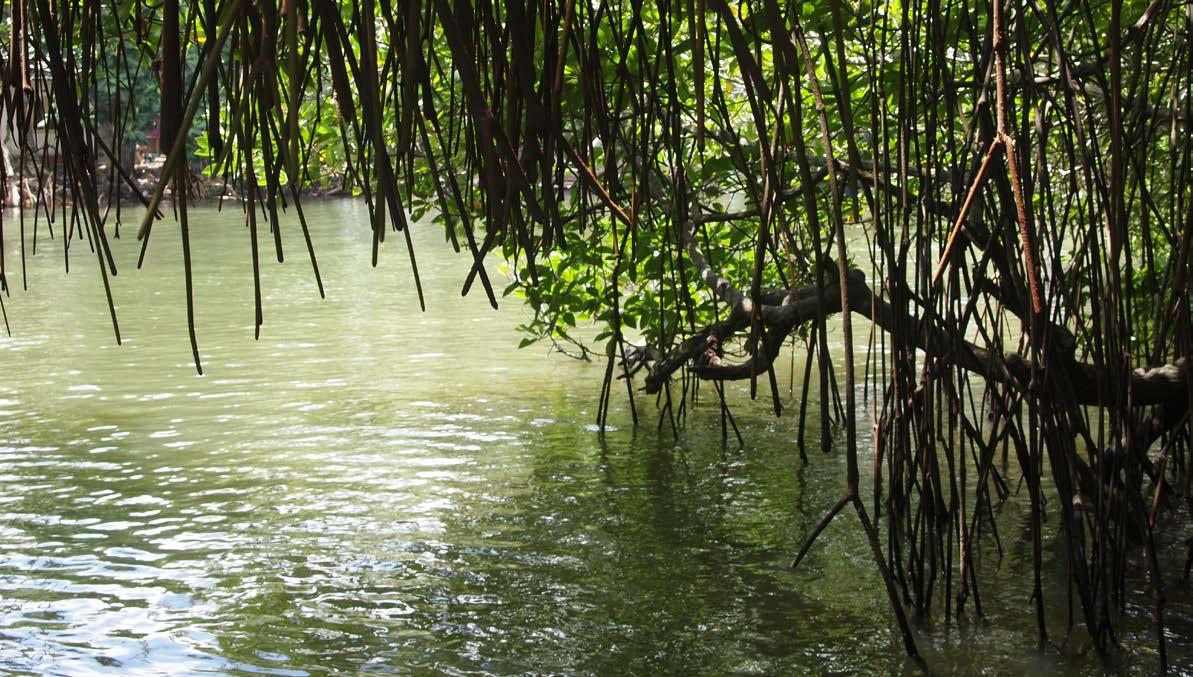
Positive results from participatory community conservation have been demonstrated through the Sri Lanka Mangrove Conservation Project, implemented with support from Seacology. The project protected 21,782 acres (8,815 hectares) of Sri Lanka’s existing mangrove forests by setting up Community Benefit Organisations (CBOs) in 1,500 small communities adjacent to the nation’s mangrove forests.199 Participants in the CBOs (mostly women) received sustainable livelihoods training and microloans, in exchange for leadership in mangrove conservation activities, including mangrove propagation, reforestation, and protection.200 National discussions on the concept of OECMs, including locally managed marine areas, offer potential to further strengthen community-led marine conservation.201
Policy frameworks for SMAs and FMAs provide important foundations for participatory community approaches to marine conservation and coastal fisheries, but their effectiveness to date has been hampered by weak implementation. Past limitations of FMAs include the absence of comprehensive fisheries management and development plans, limited stakeholder
“THE
SRI LANKA MANGROVE CONSERVATION PROJECT PROTECTED 21,782 ACRES (8,815 HECTARES) OF SRI LANKA’S EXISTING MANGROVE FORESTS BY SETTING UP COMMUNITY BENEFIT ORGANISATIONS (CBOS) IN 1,500 SMALL COMMUNITIES ADJACENT TO THE NATION’S MANGROVE FORESTS.”
participation (especially of women, youth, and other marginalised groups), and insufficient economic benefits for fishers.202 Governance issues include that Fisheries Management Committees are not compulsory and regular meetings are not required.203 Strengthening implementation will require prioritising the development of comprehensive co-management plans, creating more participatory co-management platforms, and reforming governance and capacity.204 Overlaps among MPAs, FMAs, and SMAs have also created challenges.
Sri Lanka’s current Marine and Coastal Plan (2024-2029) extensively reviews experience with SMAs and sets policies for future work that incorporate lessons learned. Identified challenges include impacts of the COVID pandemic, lack of a proper legal and institutional framework, and a projectised approach which means SMA support activities stop once projects funded by international donors have ended. With a strengthened legal framework and anticipated new regulations, the plan lays out a programmatic approach for revitalisation of SMAs. A list of new sites to be declared as SMAs includes four in the Mannar District. The plan further lays out the process for establishing, managing, and monitoring SMAs, and emphasises that SMAs should enhance the livelihoods of communities in those sites.205
▶ Ensure community consent for development activities through stronger environmental and social assessment policies and practice, and strengthening the foundation for Free, Prior and Informed Consent (FPIC).
As a top priority, local communities must have prior information, genuine consultation, and options to give or withhold consent to activities with significant risks to their environments, cultures, and livelihoods. For Mannar Island, this means the government must:
▷ Ensure that any proposed development activities – such as wind power or sand mining – are comprehensively assessed for their environmental, social and human rights impacts, taking a wholeisland approach and using independent research.
▷ Ensure that any proposed development, conservation, or land and coastal use changes are subject to fair and mandatory public consultation processes.
▷ Review existing activities – such as wind power and sand mining exploration – to ensure that they comply with social, environmental and human rights standards.
At a policy level, effective community consent requires:
▷ Policy reform to integrate the Eppawala judgement’s principles on environmental rights and FPIC in natural resource governance.206
▷ Guaranteeing communities’ access to information on all proposed projects, conditions for fair public consultation processes and informed consent criteria, and access to justice and redress for negative impacts, including as part of the new national mining policy.207
▷ Increased protections for environmental human rights defenders.
▶ Strengthen the foundations for rights-based and community-led conservation and natural resource governance in Sri Lanka.
▷ As Sri Lanka’s updated NBSAP is developed, ensure that it integrates the new human rights-based provisions of the KM-GBF on indigenous and community rights and contributions, with practical measures for their effective implementation.
▷ Improve protected area management plans to make them more practical, with effective, fair and just mechanisms for community consultation and engagement.
▷ Pursue legal reforms to recognise and protect community tenure rights to lands and natural resources, as a critical enabling condition for rights-based and community-led conservation.
▷ Ensure that community-led management or co-management policies strengthen community livelihoods, such as for fisheries, agriculture, and eco-tourism.
▶ Pilot community-led marine conservation. Community-led conservation can regenerate biodiversity and benefit local livelihoods. Areas that are locally designed, managed and monitored with legal recognition or co-management agreements can align conservation with fisher livelihoods, reduce conflict over access, mobilise low-cost monitoring and enforcement (community patrols and norms), and build legitimacy for complementary measures such as no-take zones.208 Piloting community-led marine conservation measures in Sri Lanka will require moving beyond conventional comanagement approaches to ensure that community decision-making and action are at the core of conservation area design and management.
On Mannar Island, there is potential to pilot community-led conservation models where coastal communities have defined decisionmaking authority over zoning, access rules, and monitoring. Areas proposed as SMAs under the Marine and Coastal Spatial Plan (2024–2029) offer possible points of entry for this.
However, decisions on site selection, governance structure, and conservation measures would require further, site-specific community consultations and agreement. In addition, management of these areas must improve upon existing SMA practice by centering community decision-making power in their design and ongoing governance. Monitoring and evaluation (M&E) for community-led conservation should also be strengthened, including through development of a national M&E framework for these areas, plus capacity building for communities in participatory methods and customised indicators reflecting local priorities.
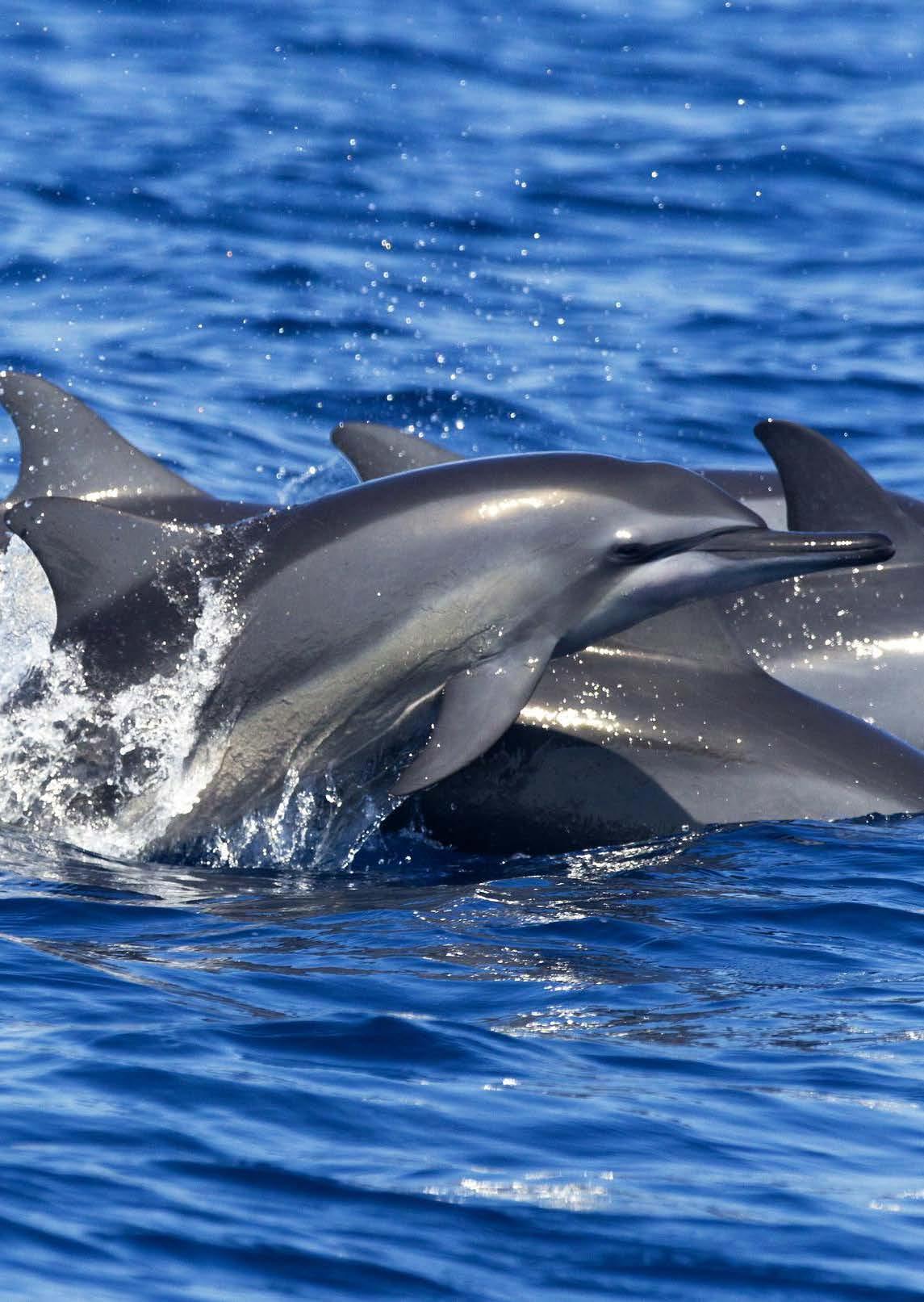
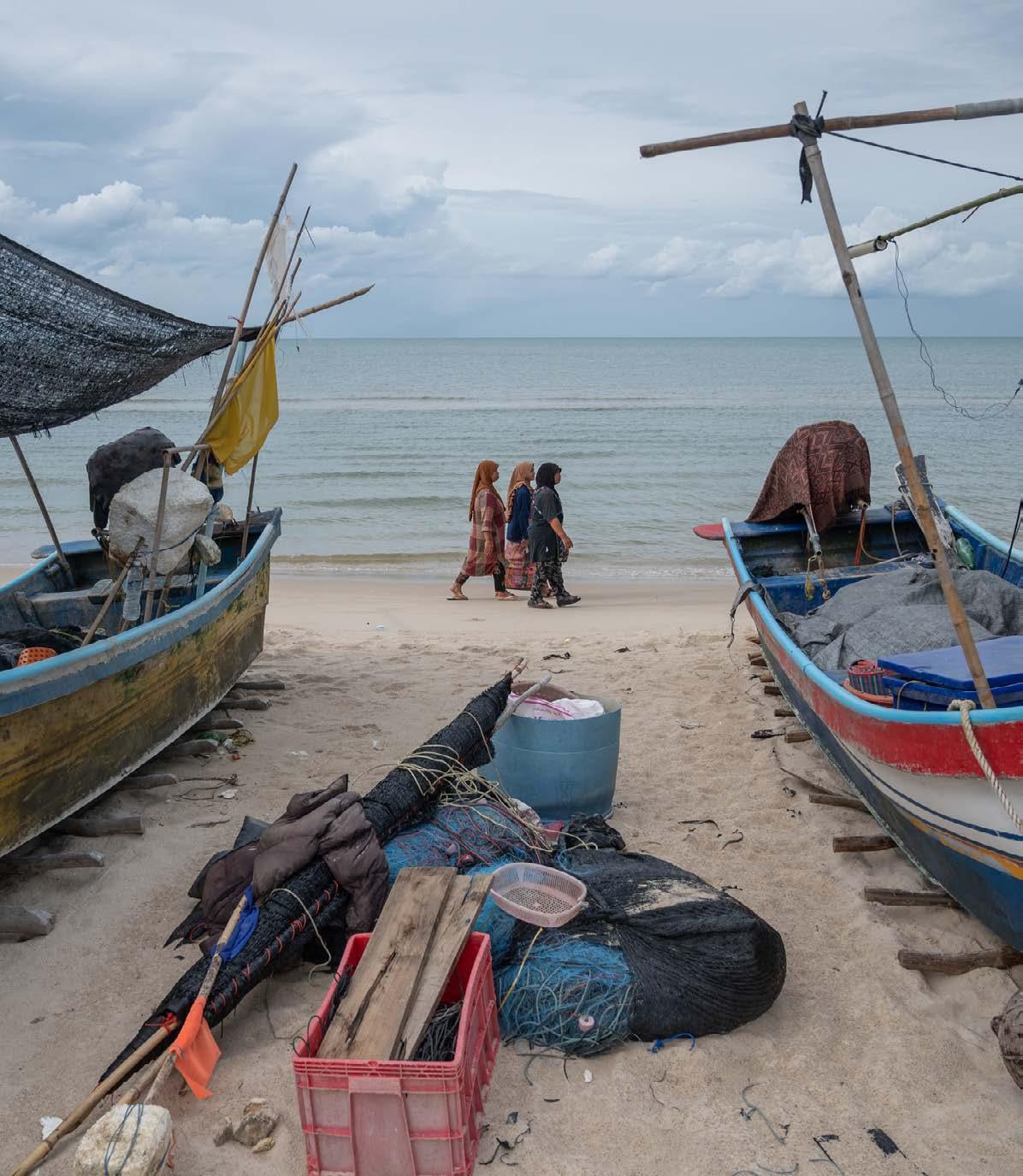
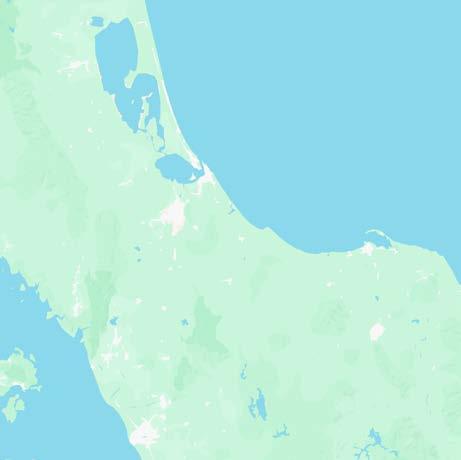
The Chana district in Thailand’s Songkhla province boasts an abundance of marine life, from mullet, sillago and bean clam to vulnerable species like humpback dolphins and sea turtles.209 Buddhist and Muslim communities have coexisted in this district for centuries, with forests, agricultural land, freshwater and coastal ecosystems sustaining a variety of livelihoods. Smallscale fisheries, in particular, are a vital source of income, food security and cultural identity, and have been sustainably managed for generations through inherited knowledge.210
Yet, despite its ecological and cultural importance, the area has been beset by large-scale development initiatives for years – often without meaningful consultation of local people.211,212,213 Previous megaprojects include gas separation infrastructure, pipelines, deep-sea port proposals, coastal land reclamation, and power plants, many of which were approved without completed impact assessments or transparent disclosure of expected trade-offs. Welldocumented consequences include reduced fisheries productivity, altered coastlines, increased pollution, land-use changes, and disruptions to long-standing livelihood systems.214
For over a decade, local people have been resisting these mega-projects, with community networks monitoring environmental impacts,215 216 challenging incomplete or unlawful Environmental
“PREVIOUS MEGAPROJECTS INCLUDE GAS SEPARATION INFRASTRUCTURE, PIPELINES, DEEP-SEA PORT PROPOSALS, COASTAL LAND RECLAMATION, AND POWER PLANTS, MANY OF WHICH WERE APPROVED WITHOUT COMPLETED IMPACT ASSESSMENTS OR
TRANSPARENT DISCLOSURE OF EXPECTED TRADE-OFFS.”
Health Impact Assessment (EHIA) processes, questioning decision-making by state and security agencies, and seeking transparency regarding agreements they deem to put corporate or geopolitical interests before local welfare. Engagement has come from diverse groups of smallscale fishers, farmers, youth, women, religious leaders, and traders, using a variety of collective action strategies.
These long-standing issues have been brought to a head by the proposal for the “Chana Industrial Estate – Model City” – a large-scale, state-backed development plan aimed at transforming Chana District into an industrial and logistics hub.
“WHILE FRAMED AS ECONOMIC GROWTH, THE PROPOSAL HAS SPARKED SUSTAINED RESISTANCE DUE TO CONCERNS OVER ENVIRONMENTAL DEGRADATION, THREATS TO SMALL-SCALE FISHERIES, AND THE EROSION OF COASTAL LIVELIHOODS.”
While framed as economic growth, the proposal has sparked sustained resistance due to concerns over environmental degradation, threats to small-scale fisheries, and the erosion of coastal livelihoods. These concerns center on rapid approval processes, limited baseline data, and the role of the Southern Border Provinces Administrative Centre (SBPAC) in directing planning, despite inconsistencies between the industrial profile and the district’s existing resource-based economy.
Spurred by these concerns, communities in Chana entered into a participatory process drawing on extensive local
ecological knowledge and strengthened further by collaborative data gathering with Greenpeace Thailand, academic researchers, and civil society partners. This collaboration generated an evidence base of ecological surveys, economic assessments, and modelling of air pollution impacts.217 Communities used these datasets to conduct a scenario analysis, identifying their development priorities based on ecological risk and economic value. Discussions converged on the need for formal recognition and legal status for the community’s local marine conservation area – a governance tool for safeguarding breeding grounds, regulating destructive fishing practices, and restricting industrial activities in ecologically sensitive zones. Expanding from this foundation, communities articulated a broader, longterm vision: a Sustainable Development Strategy for coastal management, anchored in local stewardship, ecological integrity, and evidence-based planning. This Sustainable Development Strategy218 is the community alternative to the proposed Chana Industrial Estate and Deep Sea Port, as well as to any future threats to their hometown.
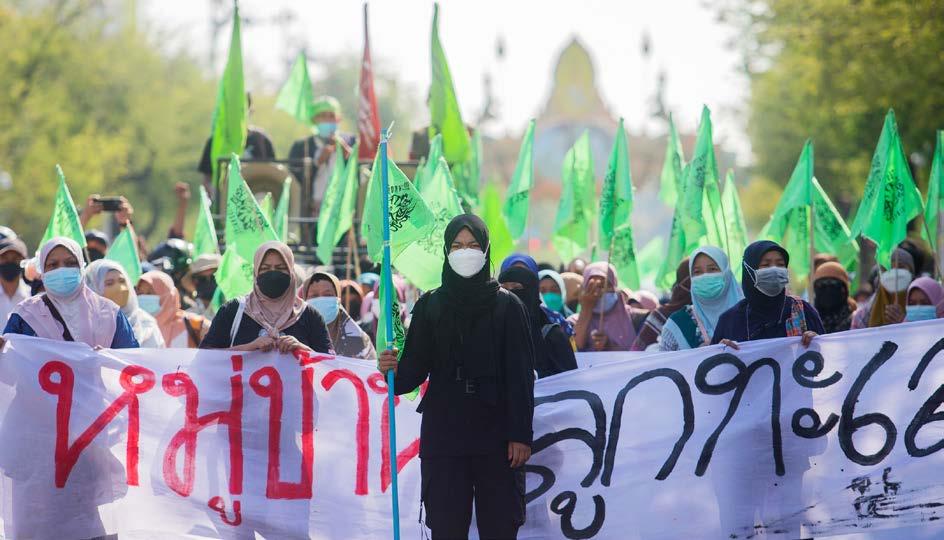
Thailand’s revised National Biodiversity Strategy and Action Plan – adopted in October 2024 – provides a strong foundation for rights-based and community-led approaches like the Chana Sustainable Development Strategy.
It comprehensively integrates a HRBA to conservation, reflecting the prominence of human rights concerns in the KM-GBF. The process to develop the NBSAP specifically mentions consultation with civil society, including indigenous groups, local communities, women and youth groups. Among notable provisions:219
▶ The NBSAP principles and guidelines include a whole-ofsociety approach220 and HRBA.
▶ The target on spatial planning calls for participatory and integrated spatial planning that respects the rights of Indigenous Peoples and local communities.
▶ The target on area-based conservation (aligning with Target 3 of the KM-GBF) refers to expanding both Protected Areas and OECMs (though not ITTs) in ways that respect the rights and responsibilities of Indigenous Peoples and local communities in areas under their traditional stewardship.
▶ The target on a “bio-based” economy recommends developing policies and legal frameworks that support conservation and sustainable use of biodiversity, including granting rights and support to Indigenous Peoples and local communities in the use of biological resources.
▶ Target 10 includes a range of provisions aligned with KM-GBF Target 22, including recognising and upholding the rights of Indigenous Peoples and local communities – as outlined in the UNDRIP and other international frameworks – ensuring access to information and justice, protecting environmental human rights defenders, and ensuring the rights, roles, and participation of local communities, Indigenous Peoples, women, youth, and vulnerable groups.
As highlighted in the NBSAP, these goals are anchored in a range of Thai policies such as the National Strategy and accompanying Master Plan. Thailand has also developed a Thailand Biodiversity Finance Plan (2023-2027) with support from the United Nations Development Programme (UNDP), laying out a range of strategies for financing implementation of the NBSAP. It includes mechanisms for channelling funds to local communities and Indigenous Peoples, including funding to Local Government Units (LOAs), tourism fees that could support local conservation initiatives, and biodiversity credits generated from community management of mangroves.221
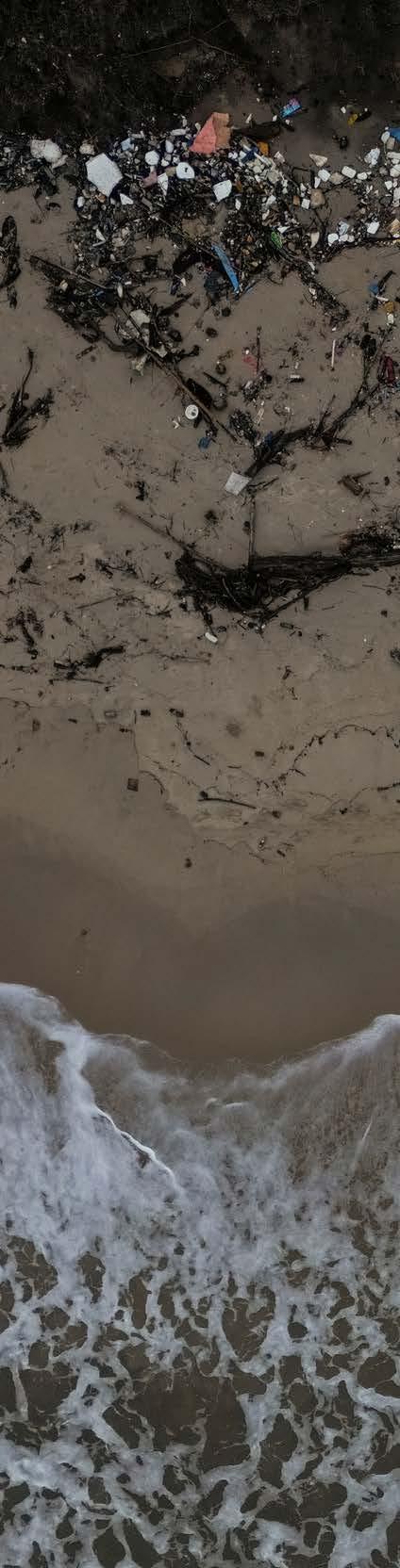
However, implementation of Thailand’s updated NBSAP and accompanying financial plan face significant challenges. As highlighted in the NBSAP itself, Thailand’s prioritisation of economic development –including infrastructure development and industrial projects – is a significant driver of ecosystem destruction.
Policies that favour short-term economic benefits over long-term sustainability, lax enforcement of environmental regulations, and the absence of integrated cross-sector planning, contribute further to biodiversity loss. Financial constraints are another key challenge, with the proportion of Thailand’s national budget allocated to conservation continuously decreasing. It dropped from 0.46-0.38% of government expenditure between 2018-2021, to 0.16% in 2022.222
In marine and coastal areas, proposals for massive industrial developments pose devastating threats to the environment and resource-dependent communities. These projects would severely undermine Thailand’s targets as set forth in the NBSAP. In addition to the Chana Industrial Estate, examples include:
▶ Thailand’s Land Bridge project plans to connect the Gulf of Thailand and the Andaman Sea via overland infrastructure that will be anchored by two deepsea ports. Though it aims to grow the national economy, the land bridge risks inestimable costs to biodiversity and the livelihoods of coastal communities, including the Moken ethnic group.223,224,225 The deep-sea ports threaten the nursing ground of the Thai Mackerel fish, the Ranong Biosphere Reserve (RBR), and several other parks and reserves being promoted for UNESCO World Heritage consideration.226
▶ The Land Bridge is part of the larger Southern Economic Corridor (SEC), a special economic zone spanning four provinces (Chumphon, Ranong, Surat Thani and Nakhon Si Thammarat). The Office of Transport and Traffic Policy and Planning (OTP) has drafted a bill on the SEC; however, the draft bill has prompted concerns that the area could become an “independent state” for investors, with certain rights deemed above the law – namely those to safeguard and preserve the environment and natural resources.227
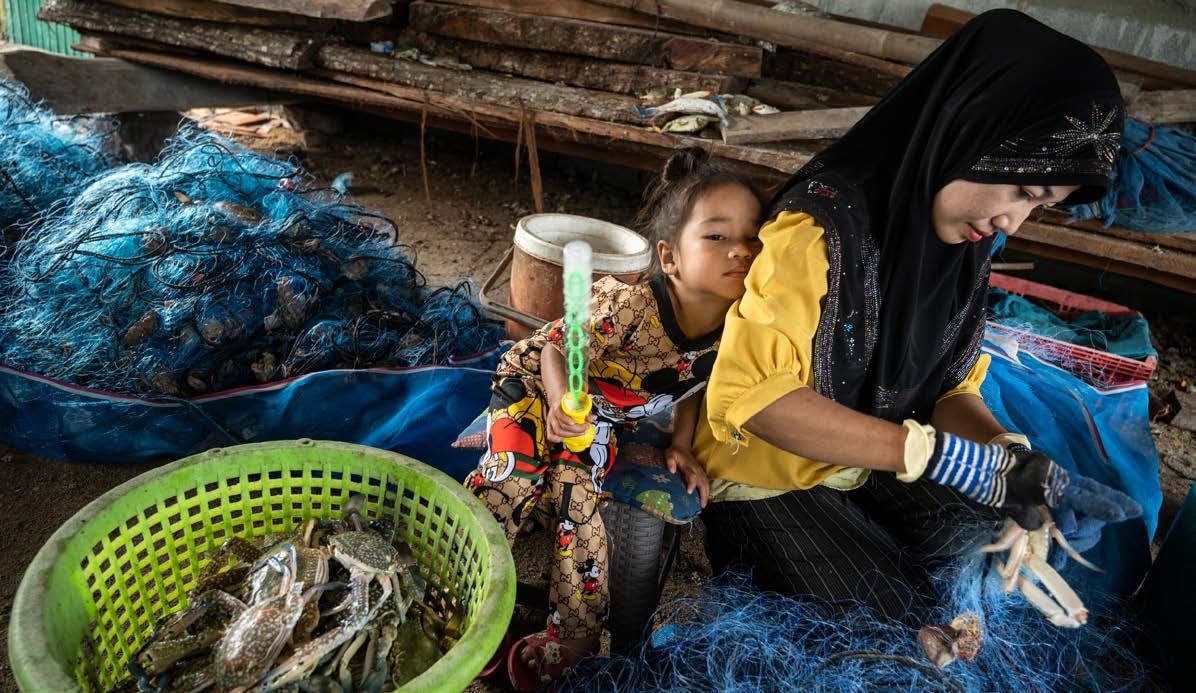
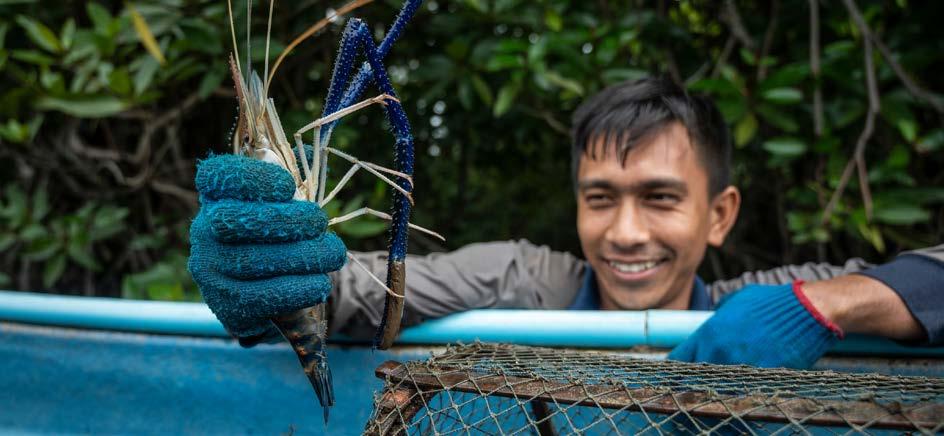
The prioritisation of commercial interests is not limited to mega-projects. Artisanal fishers have also raised concerns over a revision of the Fisheries Act to allow the use of seine nets with mesh sizes smaller than 2.5 centimeters under certain conditions, starting 12 nautical miles from the shore. They note that the law will benefit commercial trawlers, while negatively affecting small-scale vessels that depend on mature fish.228
Large industrial and infrastructure projects do require impact assessments in Thailand, but implementation challenges are reportedly widespread. For example, communities living near the Land Bridge project have formally criticised the planning process for flaws in conducting the EHIA, inadequate public consultation, and threats to sensitive ecosystems.229 Communities in Chana have demanded a proper Strategic Environmental Assessment (SEA) and report that project opponents were barred from attending public hearings on the Chana Industrial Park.230
Citizen-led protests against inadequate consultation have sometimes been met with violence.231 An increase in the use of criminalisation strategies to intimidate environmental defenders has also been reported.232 Thailand did enact legislation intended to prevent Strategic Lawsuits Against Public Participation (SLAPPs) and similar forms of legal harassment against individuals, including environmental human
“CITIZEN-LED PROTESTS AGAINST INADEQUATE CONSULTATION HAVE SOMETIMES BEEN MET WITH VIOLENCE. AN INCREASE IN THE USE OF CRIMINALISATION STRATEGIES TO INTIMIDATE ENVIRONMENTAL DEFENDERS HAS ALSO BEEN REPORTED.”
rights defenders.233 However, this has been deemed inadequate, partly because it’s challenging to determine whether a lawsuit meets SLAPP criteria without a clear definition of “bad faith”.234
Historically, community land and resource rights have also gone unrecognised, weakening the foundation for communities to guard their environments against destructive developments, or to promote community-led conservation. As of 2020, no land in Thailand was officially “owned” by Indigenous Peoples or local communities, and only 2.53% was designated for their use through things like community forestry schemes.235 Compounding these challenges, Thailand’s National Park and forestry laws have tended to criminalise and restrict traditional livelihood activities of Indigenous Peoples and local communities.236
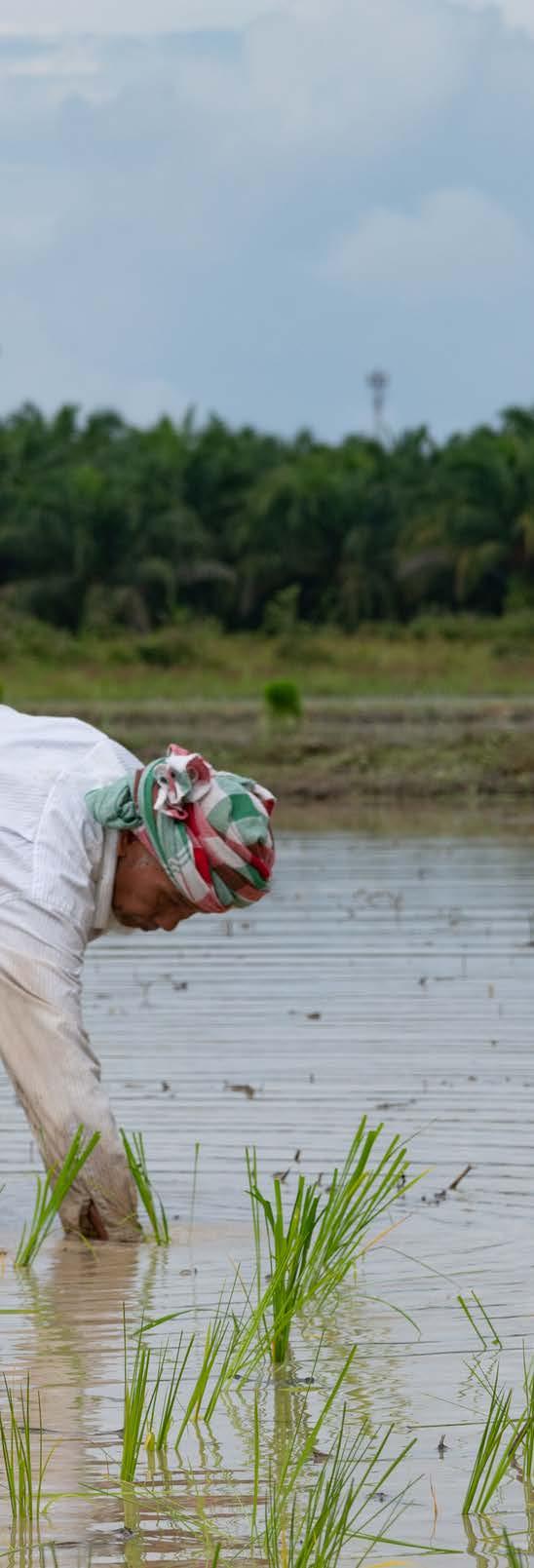
Two 2010 Cabinet resolutions concerning the upland Karen people and the coastal Chao Le community sought to provide avenues for their co-management of culturallysignificant lands and resources as ‘Ethnic Way of Life Protected Areas’.237 However, these often proved ineffective in practice, since communities living on land declared to be national parks continued to face livelihood restrictions and evictions.238 For example, Chao Le communities in Koh Lanta have faced restricted access to traditional fishing grounds, contributing to livelihood loss and social marginalisation.239
A landmark bill on Protection and Promotion of the Way of Life of Ethnic Groups – adopted in August 2025 – offers potential to overcome some of these challenges. It is the first piece of legislation that explicitly aims to safeguard the identities, cultural heritage, and access to fundamental rights of Thailand’s estimated six million Indigenous Peoples and ethnic minorities. The bill contains 47 provisions that seek to legally recognise ethnic identities, address cultural loss, resolve land disputes, and mitigate displacement from development projects.240,241,242
Despite its promise, the bill faces substantial criticism. Key weaknesses include the absence of formal recognition of the term “Indigenous Peoples”243 and only partial inclusion of FPIC.244 The final bill removed a provision to strengthen the Ethnic Way of Life Protected Areas approach by enabling community-led governance and not imposing national forestry and conservation laws unless public security or ecosystems were threatened. This proposal sought to address problems in implementing the 2010 Cabinet resolutions but raised concerns among some MPs.245
Nevertheless, indigenous leaders and advocates have called for the bill not to be rejected outright, but rather strengthened and used as a foundation for continued struggle toward genuine rights recognition and community-led conservation.246 For example, compromised language in the final bill on Cultural Heritage Protection areas offers potential to pursue recognition of community land governance, including in protected areas. Key next steps include to register ethnic groups and document their connection to their lands, recognising traditional knowledge as a basis for establishing that connection.
Building on their historic stewardship of lands and resources, Indigenous Peoples and local communities are advancing community-led conservation initiatives that contribute to Thailand’s NBSAP targets. In marine and coastal areas, an existing tool under the Department of Marine and Coastal Resources (DMCR) called the “Talae Na Baan” (Homefront Sea) policy empowers coastal communities to act as primary guardians of their local waters. By enabling villagers to act as resource protectors (rather than just resource users), the policy aims to create a sustainable network of community-led marine conservation areas across Thailand.
In parts of the Chana sea, and elsewhere along the coast, the community has set rules for “Talae Na Baan” zones, where no fishing is allowed.247 In these areas, communities create “Fish Homes” by building Zung-Kor – traditional Thai artificial reefs made from natural materials like bamboo poles and coconut fronds – to restore biodiversity. Some fishermen also run Crab Banks, a nursery system where egg-bearing crabs release their larvae before being sold, exponentially increasing the crab population.
The Community-Based Marine Conservation initiative, supported by the Thai Sea Watch Association (Rak Talae Thai Association), has focused on the following: supporting communities to establish local regulations for marine and coastal management, protecting fishing areas from destruction by large fishing boats, establishing crab nurseries, and campaigning against destructive fishing tools.248 One year after implementing the community regulations, local fishermen increased their income by 20%.249 These initiatives offer promising examples of how community-led conservation can be further supported and scaled up.
While the “Talae Na Baan” policy encourages local stewardship, it lacks formal legal recognition as a standardised management tool. These zones often exist only as internal community rules that do not always hold up in court against largescale state concessions for industrial development.250 However, applying the new global OECM framework to maximise formal recognition and support to relevant community conservation areas could transform them into a marine conservation powerhouse, one that bridges the gap between local tradition and international goals.
“IN PARTS OF THE CHANA SEA, AND ELSEWHERE ALONG THE COAST, THE COMMUNITY HAS SET RULES FOR “TALAE NA BAAN” ZONES, WHERE NO FISHING IS ALLOWED. IN THESE AREAS, COMMUNITIES CREATE “FISH HOMES” BY BUILDING ZUNG-KOR – TRADITIONAL THAI ARTIFICIAL REEFS MADE FROM NATURAL MATERIALS LIKE BAMBOO POLES AND COCONUT FRONDS – TO RESTORE BIODIVERSITY.”
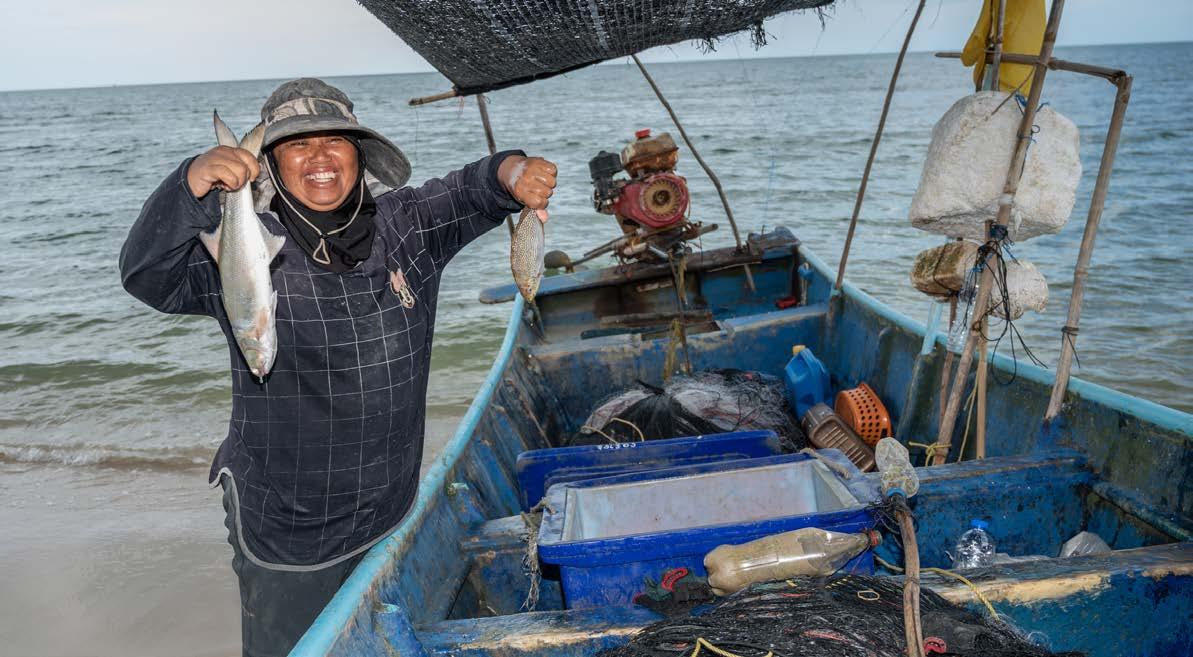
While Thailand’s new NBSAP sets good principles and directions, concerted action to strengthen community-led, rights-based conservation is essential to address powerful economic development drivers, overcome historical conflicts, and achieve NBSAP Targets. The following points offer key recommendations for putting HRBAs to conservation into practice:
▶ Strengthen support for community-led marine conservation action, including through implementation of an OECM pilot in Chana.
Coastal communities in Thailand are already taking a leadership role in conservation by establishing and managing marine conservation areas. These need increased political, technical and financial support, as part of planned implementation of Thailand’s revised NBSAP. In Chana, in particular, communities are seeking to connect their existing, smaller-scale conservation zones into a larger area, leading to more effective conservation results and power to withstand environmental threats. Given the high biodiversity in Chana, there is also potential to work with relevant government agencies to establish the first formally-recognised marine OECM in Thailand. This effort would build on the successful experience of the Thai Sea Watch Association, expanding the approach to a larger area with formal recognition through Thailand’s Office of Natural Resources and Environmental Policy (ONEP).
This kind of support will require a genuine decentralisation of power from the national government to local governments and communities, who will only be empowered to implement conservation measures with fully-resourced, technical capacities and support. Implementation of Thailand’s Biodiversity Finance Plan should also prioritise direct access funding to Indigenous Peoples and local communities – including in coastal areas – and integrate safeguards to protect against risks from increased restrictions on (or competition for) the use of natural resources.
▶ Change the planning of large development projects to account for biodiversity and community needs – based on genuine consultation and environmental, economic and social assessments.
Thailand’s Seventh National Report to the CBD includes a mapping of harmful subsidies, which constituted approximately
6.28 billion USD between 2021-2023 and, if redirected, could boost resources available for protecting biodiversity. Notably, “rigid infrastructure projects affecting river and coastal ecosystems” stood out as a major category in this assessment.251
In Chana, responding to citizen protests and informed by data from participatory local research, the government is now conducting a SEA for the Chana Industrial Park. This approach looks at the broader, long-term environmental and social impacts of development plans, beyond individual projects. This kind of assessment – and meaningful processes for community consent – should be central to all industrial and infrastructure development proposals in Thailand. Fulfilling the targets in Thailand’s NBSAP and commitments under the CBD requires that the government put biodiversity and sustainability at the center of its economic development and take a HRBA.
▶ Pass sub-laws and regulations to strengthen and support implementation of the law on Protection and Promotion of the Way of Life of Ethnic Groups.
Secure community land and resource tenure underpins both effective community-led conservation and the power of communities to determine local development priorities. While the new law on Protection and Promotion of the Way of Life of Ethnic Groups provides a foundation, it must be strengthened with regulations that align with international standards under the UNDRIP and the KMGBF. Specifically, sub-laws should evolve from a narrow focus on “ethnic identity”, toward a legal recognition of “Indigenous Territories” – acknowledging the inherent, pre-existing rights of communities to their total environment, including the spiritual and cultural dimensions of their lands and seas. This implementation must be conducted with the full participation of communities to eliminate conflicting policies and ensure that “consultation” matures into FPIC.252
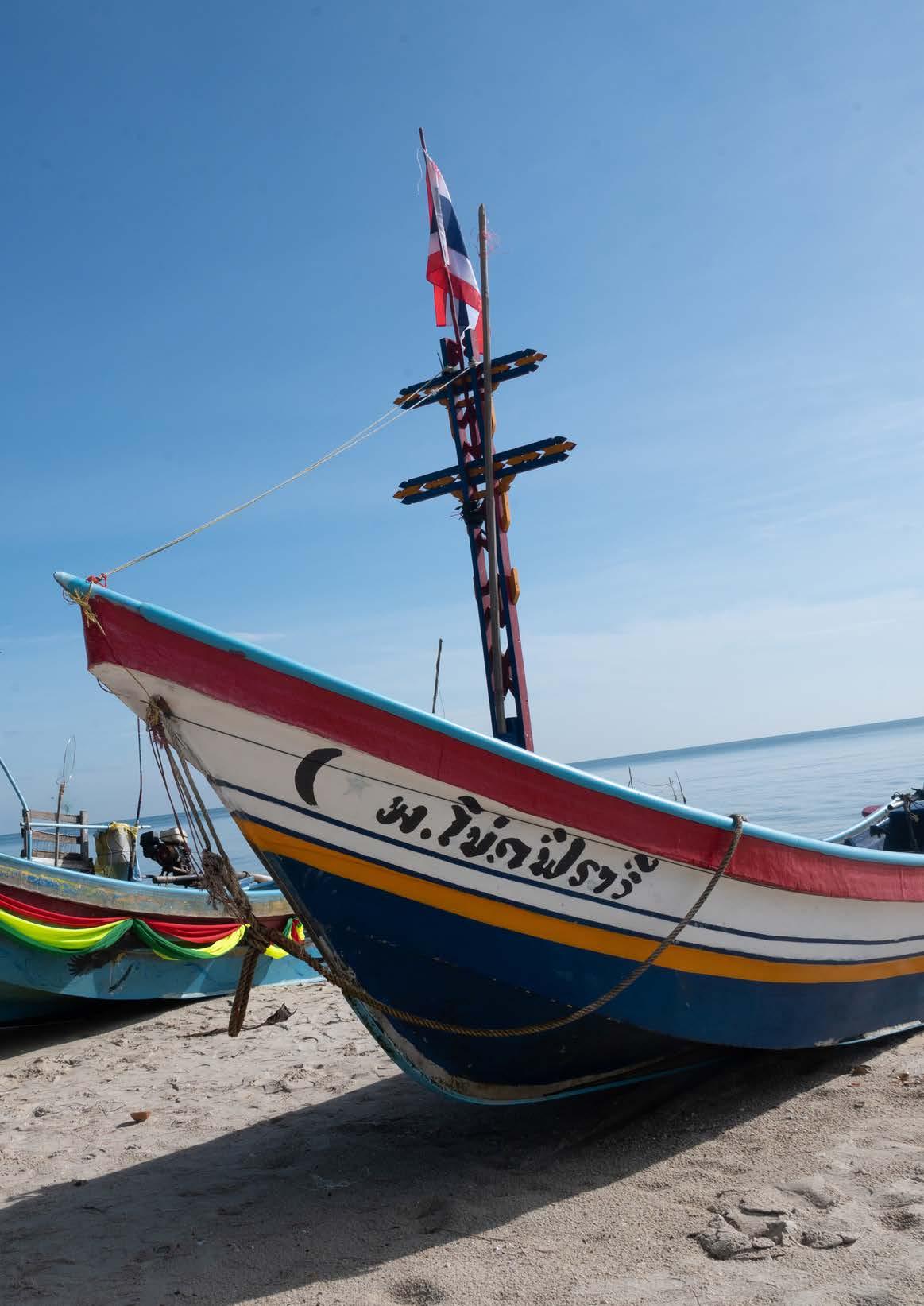
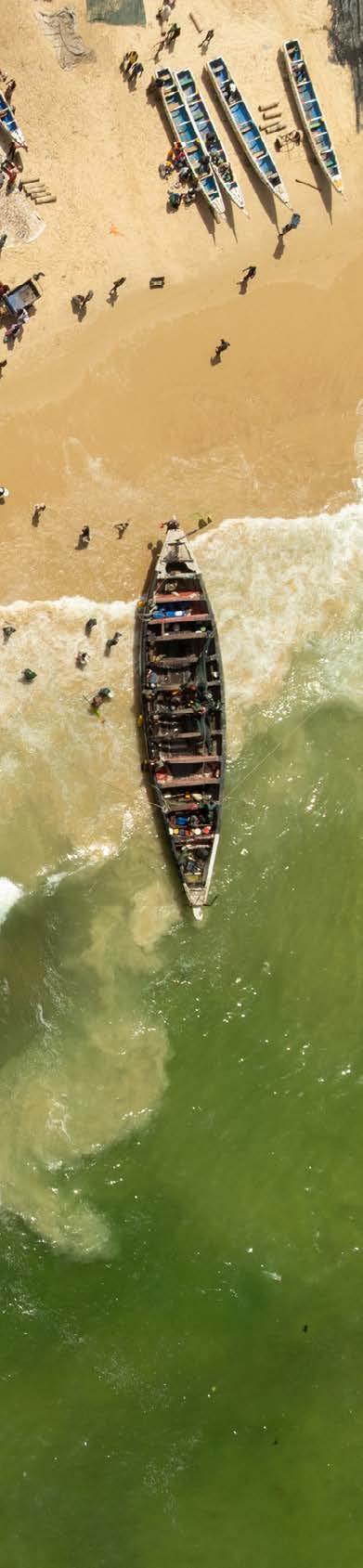
A review of the four case studies reveals a number of recurring themes that affect the ability of countries to meet their commitments under the KM-GBF – including its provisions on human rights-based and community-led conservation. A number of promising initiatives also emerge, but all four case studies make it clear that these require significantly greater investment.
Prominent issues, standards and best practices include:
▶ Community-led conservation is a powerful strategy for success but requires more support from governments
The case studies illustrate the widespread presence of community-led initiatives to conserve coastal environments and resources, including to increase the sustainability of fishing and other community livelihoods. Coastal communities, their knowledge, and their management practices are a tremendous resource for conservation. They have the potential to significantly contribute toward conservation goals in effective, equitable, and lasting ways, while simultaneously safeguarding their own livelihoods. In each case study, governments have recognised this potential to some extent. However, community-led conservation initiatives consistently require much greater policy, programmatic, and financial support. With regard to Target 19, dedicated funding mechanisms with direct access for Indigenous Peoples and local communities to support community-led conservation are not yet in evidence, a finding consistent with wider international experience.253
▶ Slow review and implementation of NBSAPs
Countries are not doing enough to leverage the innovative opportunities offered by the KM-GBF. Among the four case studies, only Thailand and Chile have produced an updated NBSAP and, while Senegal has submitted updated National Targets, they are not yet detailed enough to guarantee support for community rights and action. Completed NBSAPs will test whether governments provide a foundation for the mainstreaming of biodiversity conservation and counter destructive coastal developments. To succeed, they must centre and promote rights-based and communityled conservation, with strong political, technical, and financial support toward ongoing conservation work by Indigenous Peoples and local communities.
Problems range from industrial and infrastructure development (Thailand, Sri Lanka) to industrial fishing and fish production (Senegal, Chile). Impacts on communities include increased food insecurity, restrictions on access to traditional lands and fisheries, negative effects of pollution on human health, and restrictions on traditional cultural practices. These issues further reflect government prioritisation of economic interests over sustainable development that supports community livelihoods and governments’ own KMGBF conservation commitments. They also reflect insufficient mainstreaming of biodiversity conservation in decisions regarding economic development. As highlighted in the 2025 Land Gap report, prioritisation of extractive development is often driven by wider systemic pressures on governments to pay debts, attract international investment, and comply with international financial institutions.254 Limitations in the scope and/or implementation of social and EIAs also contribute to problems of unsustainable or destructive development.
While the nature and extent of recognition varies across each case study, a common issue is that weak tenure rights undermine the ability of Indigenous Peoples and local communities to effectively resist destructive developments and activities that impact their environments. Tenure rights are a critical foundation for community-led conservation, so failure to recognise and enforce them also impedes community participation in achieving KM-GBF commitments. Governments can address these issues by fully recognising the land and resource rights of Indigenous Peoples and local communities, in line with the UNDRIP, ILO 169, the Voluntary Guidelines on the Responsible Governance of Tenure,255 and related international frameworks.
All four case studies reveal that Indigenous Peoples and local communities are not being given ways to meaningfully participate in economic decisions that affect their environments and ways of life. Largescale industrial and infrastructure developments are being approved without community participation or consent and in some cases, without prior knowledge. This is leading to conflicts and protests that have been known to turn violent. Governments can remedy this by strengthening community consultation and consent processes for coastal development, and taking into account communities’ traditional knowledge, expertise, experiences, and priorities –including by supporting shifts to community-led conservation. Several well-established international frameworks lay out principles and best practices for achieving this. The UN Guiding Principles on Business and Human Rights256 establishes HRDD, meaningful consultation, and consent procedures for private sector investments. The UNDRIP257 establishes the rights of Indigenous Peoples to FPIC concerning projects that affect them and their territories. FPIC is further recognised as a best practice standard for local communities.258 As noted above, Section C of the KM-GBF calls for all implementation of conservation measures to ensure FPIC and full and effective participation in decisionmaking.259
An alarming trend is the prevalence of harassment, threats, violence, criminalisation and/or legal actions against Indigenous Peoples and local communities who protest destructive developments. This creates an environment of intimidation that further restricts community participation and unjustly harms those involved.

▶ Legally recognise and support the customary and tenure rights of Indigenous Peoples and local communities over their territories, lands and waterways.
▷ This requires a holistic approach to the environment – including its spiritual, cultural, and ecological dimensions – recognising that tenure in marine and coastal contexts has particular characteristics that must be reflected in law and practice.
▷ Harmonise national laws in line with international standards, including the International Labour Organisation Convention 169, the UN Declaration on the Rights of Indigenous Peoples and the Voluntary Guidelines on Responsible Governance of Tenure. National legal frameworks must be strengthened to protect ancestral waters and ensure that indigenous and community land and resource tenure underpins both effective conservation and the power of communities to determine their own development priorities. These legal instruments must be developed with the full participation of communities and aim to eliminate policies that negatively affect their traditional relationship to land, forests, and seas.
▶ Secure full, meaningful participation for Indigenous Peoples and local communities in all levels and stages of marine and coastal protection and management processes.
▷ Make Free, Prior and Informed Consent mandatory, moving from simple consultation to meaningful participation of Indigenous Peoples and local communities regarding all industrial and coastal development projects.
▷ Ensure the protection of environmental human rights defenders and the right to peaceful protest.
Seagrass, Mannar Island © Greenpeace
▶ Urgently recognise and scale up Indigenous and local community-led conservation initiatives to close the implementation gap of the KM-GBF, particularly Goal A, Target 3, Target 22 and Section C, through a human rightsbased approach to protected areas, OECMs and ITTs.
▷ Formally recognise the contributions of Indigenous Peoples and local communities to Target 3, including through guidelines for recognising Indigenous and Traditional Territories as a distinct category of protected and conserved areas.
▷ Legally secure community-led initiatives for protected areas and OECMs, including existing models such as Locally Managed Marine Areas and co-managed conservation systems.
▷ Support community leadership and co-governance as primary management types. These initiatives must be supported by direct resource allocation and capacitybuilding, recognising them as the current future custodians of these territories.
▷ Develop and/or fully implement landmark legislation for granting customary rights and titles – with necessary financial, administrative, regulatory and political support.
▷ Include tangible indicators for human rights based approaches into the KM-GBF monitoring framework, and ensure NBSAPs and their respective monitoring frameworks explicitly include rights-based and community-led conservation measures.
Fishing community, Chana
© Sirachai Arunrugstichai / Greenpeace
▶ Close the finance gap by mobilising adequate, predictable and sustainable funds, and ensuring direct access to Indigenous Peoples’ and local communities’ coastal conservation efforts.
▷ Establish dedicated, decentralised funding mechanisms that reach Indigenous and local coastal communities directly. These mechanisms must prioritise direct resource allocation for communityled design, management and monitoring, traditional knowledge transmission, and technical capacitybuilding. This includes supporting the institutional development of local organisations to manage and report on national and international funds, ensuring long-term stewardship of indigenous and traditional waterways.
▷ In all international funding mechanisms, include a minimum proportion of funding to be distributed through direct access mechanisms to Indigenous Peoples and local communities, at least 20%, with simplified, accessible and transparent mechanisms.
▷ Phase out harmful financial incentives and shift subsidies away from industrial/extractive sectors toward community-based sustainable livelihoods and smallscale artisanal fishing. Reallocated funds should specifically support Indigenous Peoples and local communities, ensuring they have the financial security to continue sustainable stewardship of marine biodiversity.
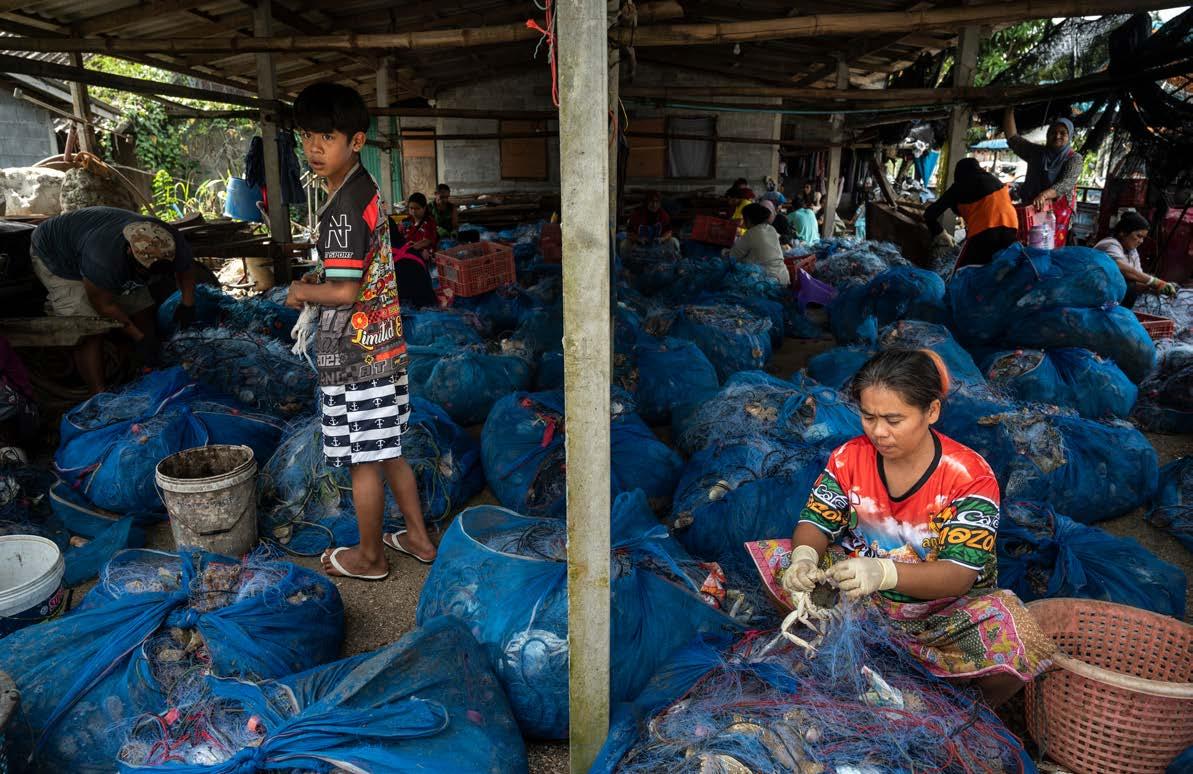
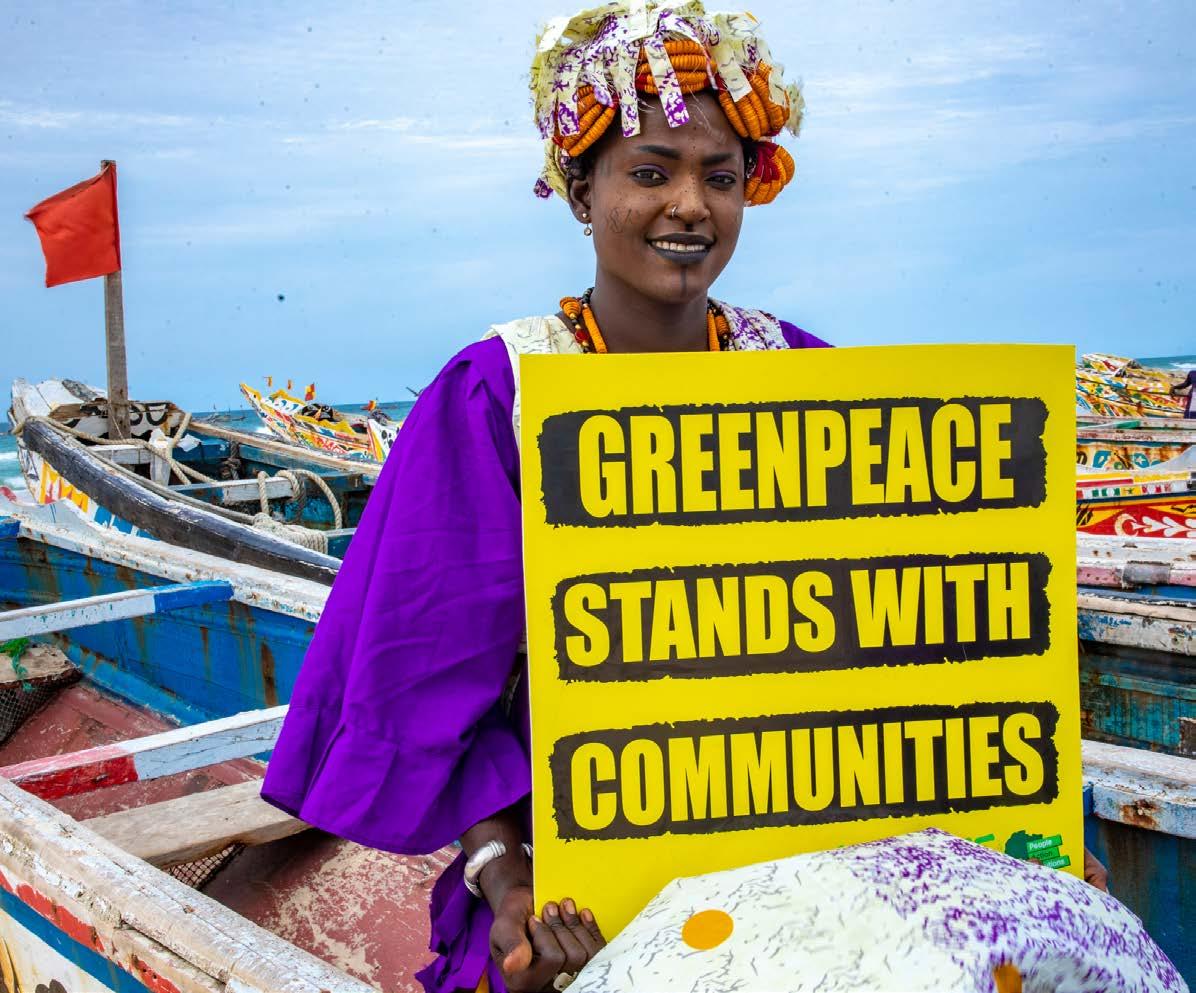
▶ Mainstream rights-based nature protection as a primary filter through which all industrial and coastal development must pass
▷ Use the NBSAP process to mandate cross-ministerial cooperation, ensuring Ministry of Environment goals aren’t overruled by ministries of Industry, Energy, Tourism, or Infrastructure. National development priorities must be re-aligned to prioritise the long-term ecological integrity of ancestral waterscapes and the food security of local people over short-term industrial and extractive investment.
▷ Mandate comprehensive SEA, as well as environmental and social impact assessments that evaluate cumulative impacts of industrial projects. Assessments must account for the cumulative intergenerational loss of traditional livelihoods and ensure that future economic prospects are not compromised by short-term industrial gain.
▷ Take action to phase out or strictly regulate industries that undermine local food security and ecosystem health.
▷ Re-evaluate or stop large-scale development projects that have been proposed without community consent (FPIC) or adequate environmental safeguards. Consent processes must be inclusive, ensuring Indigenous Peoples’ and local communities’ specific knowledge and long-term interests in ancestral territories are represented in final decisions and management.
AMCP Aire Marine Communautaire Protégée Community Co-managed Marine Protected Area
APAC Aires et territoires du Patrimoine Autochtone et Communautaire Territories and areas conserved by Indigenous Peoples and local communities (ICCA)
CBD UN Convention on Biological Diversity
CBO Community Benefit Organization
CONADI Corporación Nacional de Desarrollo Indígena National Corporation of Indigenous Development
COP17 The 17th meeting of the Conference of the Parties
DMCR Department of Marine and Coastal Resources
ECMPO Espacios Costeros Marinos de Pueblos Originarios Marine Coastal Spaces for Indigenous Peoples
EHIA Environmental Health Impact Assessment
EIA Environmental Impact Assessment
EIS Environmental Impact Statement
ESIA Environmental and Social Impact Assessment
FAO Food and Agriculture Organization
FMA Fisheries Management Area
FMFO Fishmeal and Fish Oil
FPIC Free, Prior and Informed Consent
HRBA Human Rights-Based Approach
HRDD Human Rights Due Diligence
ICCA Territories of Life, or Territories and areas conserved by Indigenous Peoples and local communities
IEE Initial Environmental Examination
IIFB The International Indigenous Forum on Biodiversity
ILO 169 International Labour Organisation Convention 169
IPBES The Intergovernmental Panel for Biodiversity and Ecosystem Services
ITT Indigenous and Traditional Territories
KM-GBF Kunming-Montreal Global Biodiversity Framework
KNR Kawésqar National Reserve
LMMA Locally-Managed Marine Area
LOA Local Government Unit
MPA Marine Protected Area
NBSAP National Biodiversity Strategy and Action Plan
OAS Organisation of American States
OECM Other Effective Area-based Conservation Measure
ONEP Office of Natural Resources and Environmental Policy
OTP The Office of Transport and Traffic Policy and Planning
PROCASEF Projet Cadastre et Sécurisation Foncière Cadastre and Land Tenure Improvement Project
RBR Ranong Biosphere Reserve
SBAP Biodiversity and Protected Areas Service
SBPAC Southern Border Provinces Administrative Centre
SEA Strategic Environmental Assessment
SEC Southern Economic Corridor
SENRM Sustainable Environment and Natural Resource Management
SLAPP Strategic Lawsuit Against Public Participation
SMA Special Management Area
UNDP United Nations Development Programme
UNDRIP UN Declaration on the Rights of Indigenous Peoples
UNGP UN Guiding Principles
VGGT Voluntary Guidelines on Responsible Governance of Tenure
Human rightsbased approach (HRBA)
Tenure
Customary tenure
Human rights-based approach to biodiversity recognises that the wellbeing of people is inherently linked to biodiversity260 and furthers the realisation of human rights through biodiversity actions, by avoiding harm to human rights, taking action based on principles of human rights, and achieving improved human rights outcomes.261
The rights, rules and responsibilities over land and natural resources, defining who can access the natural resources of an area and in what way.262 Tenure rights encompass the historical and social relations and institutions that govern access to, use of and control over those resources.263
Rights to land, territories and waters based on the historical use, customary laws, and traditional practices of Indigenous Peoples and local communities.
Secure community tenure
Ocean justice
The certainty that a community’s rights to land, territories, waters and natural resources will be recognized by others based on their Free, Prior and Informed Consent (FPIC) and protected in cases of specific challenges.264 This often includes formal legal recognition of the rights of Indigenous Peoples and of local communities to their lands, territories, waters and natural resources.
The fair and equitable governance of marine and coastal resources, prioritising the rights, livelihoods, leadership and participation of Indigenous Peoples and local communities, over the short-term economic gain of extraction and infrastructure development.
1 IPBES (2019). Summary for policymakers of the global assessment report on biodiversity and ecosystem services of the Intergovernmental Science-Policy Platform on Biodiversity and Ecosystem Services. S. Díaz et al. https:// doi.org/10.5281/zenodo.3553579
2 WWF, UNEP-WCMC, SGP/ICCA-GSI, LM, TNC, CI, WCS, EP, ILC-S, CM, IUCN (2021). The State of Indigenous Peoples’ and Local Communities’ Lands and Territories. Gland, Switzerland. https://wwflac.awsassets.panda.org/downloads/report_the_state_of_the_indigenous_peoples_and_ local_communities_lands_and_territories_1.pdf
3 ICCA Consortium (2021). Territories of Life: 2021 Report. report.territoriesoflife.org
4 OHCHR and CBD Secretariat (2025). Applying a Human Rights-based Approach in Line with Section C of the Kunming-Montreal Global Biodiversity Framework. https:// www.ohchr.org/sites/default/files/documents/issues/climatechange/materials/briefing-note-applying-a-humanrights-based-approach-in-line-with-sectionc-kunmingmontreal.pdf
5 OHCHR (2021). Human rights-based approaches to conserving biodiversity: equitable, effective and imperative. Boyd, D.R. and Keene, S. https://www.ohchr.org/sites/ default/files/Documents/Issues/Environment/SREnvironment/policy-briefing-1.pdf
6 Conference of the Parties to CBD (2022). Kunming-Montreal Global Biodiversity Framework. Decision 15/4. https:// www.cbd.int/doc/decisions/cop-15/cop-15-dec-04-en.pdf
7 IPBES (2025). IPBES Transformative Change Assessment: Summary for Policymakers. O’Brien, K. et al. Zenodo. https://doi.org/10.5281/zenodo.17099400
8 OHCHR (2021). Human rights-based approaches to conserving biodiversity: equitable, effective and imperative. Boyd, D.R. and Keene, S. https://www.ohchr.org/sites/ default/files/Documents/Issues/Environment/SREnvironment/policy-briefing-1.pdf
9 Conference of the Parties to CBD (2022). Kunming-Montreal Global Biodiversity Framework. Decision 15/4. https:// www.cbd.int/doc/decisions/cop-15/cop-15-dec-04-en.pdf
10 IPBES (2019).: Summary for policymakers of the global assessment report on biodiversity and ecosystem services of the Intergovernmental Science-Policy Platform on Biodiversity and Ecosystem Services. S. Díaz et al. IPBES secretariat, Bonn, Germany. 56 pages. https://doi.org/10.5281/ zenodo.3553579
11 Conference of the Parties to CBD (2022). Kunming-Montreal Global Biodiversity Framework. Decision 15/4. https:// www.cbd.int/doc/decisions/cop-15/cop-15-dec-04-en.pdf
12 IISD Insight (2022). The Global Biodiversity Framework’s “30x30” Target: Catchy slogan or effective conservation goal? Lo, V. & Jang, N. https://www.iisd.org/articles/insight/ global-biodiversity-framework-30x30-target
13 Silvano R et al. (2022). Fishers’ multidimensional knowledge advances fisheries and aquatic science Trends in Ecology & Evolution 38: 8-12 https://doi.org/10.1016/j. tree.2022.10.002;
14 Vierros, M.K. et al. (2020). Considering Indigenous Peoples and local communities in governance of the global ocean commons. Marine Policy 119: 104039. https://doi. org/10.1016/j.marpol.2020.104039
15 IOC, UNESCO (2025). Ocean science in action: How Indigenous knowledge advances ocean science across the world. https://oceandecade.org/news/ocean-science-inaction-how-indigenous-knowledge-advances-ocean-science-across-the-world/
16 Tholan, B. et al. (2024). Accounting for existing tenure and rights over marine and freshwater systems. npj Ocean Sustainability 3: 47. https://doi.org/10.1038/s44183-02400084-4
17 UN General Assembly, United Nations Declaration on the Rights of Indigenous Peoples: resolution / adopted by the General Assembly, A/RES/61/295, 2 October 2007. https:// www.refworld.org/legal/resolution/unga/2007/49353
18 ILO (2009). Indigenous and Tribal Peoples’ Rights in Practice: A guide to ILO Convention No. 169. International Labour Standards Department. https://www.ilo.org/publications/indigenous-and-tribal-peoples-rights-practiceguide-ilo-convention-no-169
19 FAO (2022). Voluntary Guidelines on the Responsible Governance of Tenure of Land, Fisheries and Forests in the Context of National Food Security. First revision. Rome. https://doi.org/10.4060/i2801e
20 FAO (2015). Voluntary Guidelines for Securing Sustainable Small-Scale Fisheries. Rome. https://openknowledge.fao. org/server/api/core/bitstreams/edfffbfc-81e5-4208-a36f334ff81ac10f/content
21 ICCA Consortium (2021). Territories of Life: 2021 Report. ICCA Consortium: worldwide. report.territoriesoflife.org
22 Govan, H. et al. (2008). Locally-Managed Marine Areas: A guide for practitioners. The Locally-Managed Marine Area Network. https://library.sprep.org/content/locally-managed-marine-areas-guide-practitioners-aires-marines-localement-gerees-guide-de
23 Rocliffe, S. et al. (2014). Towards a network of locally managed marine areas (LMMAs) in the Western Indian Ocean. PloS one, 9(7), e103000. https://doi.org/10.1371/journal. pone.0103000
24 ICCA Registry. https://www.iccaregistry.org/en/about/icca-registry
25 Rangel, M. et al. (2025). Engaging and legitimizing communities: co-designing a community-based Marine Protected Area. Marine Policy 178: 106695. https://doi.org/10.1016/j. marpol.2025.106695
26 M. Walter et al. (2026). Social movements are transformative agents for biodiversity conservation. Proc. Natl. Acad. Sci. U.S.A. 123 (4): e2513327123. https://doi.org/10.1073/ pnas.2513327123.
27 O’Brien, K. et al. (2025). IPBES Transformative Change Assessment: Summary for Policymakers. Zenodo. https://doi. org/10.5281/zenodo.17099400
28 Conference of the Parties to CBD (2018). Protected areas and other effective area-based conservation measures. Decision 14/8. https://www.cbd.int/doc/decisions/cop-14/ cop-14-dec-08-en.pdf
29 IUCN-WCPA Task Force on OECMs, (2019). Recognising and reporting other effective area-based conservation measures. Gland, Switzerland: IUCN. DOI: https://doi. org/10.2305/IUCN.CH.2019.PATRS.3.en
30 Jonas HD et al. (2024) Global status and emerging contribution of other effective area-based conservation measures (OECMs) towards the ‘30x30’ biodiversity Target 3. Front. Conserv. Sci. 5:1447434. https://dx.doi.org/10.3389/ fcosc.2024.1447434
31 UNEP-WCMC and IUCN (2024). Protected Planet Report 2024. Chapter 9. Indigenous and traditional territories. https://digitalreport.protectedplanet.net/?chapter=9#report_chapters-3
32 IIFB, IWBN, RMIB (2025). Guidelines on Indigenous and traditional territories (ITTs) in the context of biodiversity conservation, sustainable use and restoration. https:// iifb-indigenous.org/iifb-guidelines-on-indigenous-and-traditional-territories-itts/
33 UNGA (2025). Executive summary of the Third World Ocean Assessment. A/80/489. https://docs.un.org/ en/A/80/489
34 Basurto, X. et al. (2025) Illuminating the multidimensional contributions of small-scale fisheries. Nature 637, pp. 875884. https://doi.org/10.1038/s41586-024-08448-z
35 Protected Planet: World Database on Protected and Conserved Areas (accessed March 2026). https://www.protectedplanet.net/en
36 Carbon Brief, Dunne, D. et al. (2025). Revealed: More than half of nations fail to protect 30% of land and sea in UN nature plans. https://www.carbonbrief.org/revealed-morethan-half-of-nations-fail-to-protect-30-of-land-and-seain-un-nature-plans
37 Secretariat of the CBD (2025). Analysis of national biodiversity strategies and action plans and national targets established by Parties aligned with the Kunming-Montreal Global Biodiversity Framework. CBD/SBSTTA/27/INF/4/ Rev.1. https://www.cbd.int/doc/c/4dfc/5186/dfbcf360b0c6fe51ee48f48e/sbstta-27-inf-04-rev1-en.pdf
38 Asia Indigenous Peoples Pact (2026). Engagement of Indigenous Peoples in the revision of the National Biodiversity Strategies and Action Plans (NBSAPs). Regional report. https://aippnet.org/wp-content/uploads/2026/02/Regional-Report-Engagement-of-Indigenous-Peoples-in-the-revision-of-the-National-Biodiversity-Strategies-and-Action-Plans.pdf
39 WWF International (2025). Submission prepared by WWF International in response to the Call for inputs 57/28: Biodiversity and human rights by OHCHR. https://www.ohchr. org/sites/default/files/documents/issues/climatechange/ cfis/biodiversity-hr/subm-biodiversity-hr-cso-42-wwfinternational.pdf
40 UNEP-WCMC and IUCN (2024). Protected Planet Report 2024. Chapter 8: Equitable governance https://digitalreport.protectedplanet.net/?chapter=8
41 ICCA Registry. Accessed April 30, 2026. https://www.iccaregistry.org/en/data-summary
42 Jonas HD. et al. (2024). Global status and emerging contribution of other effective area-based conservation measures (OECMs) towards the ‘30x30’ biodiversity Target 3. Front. Conserv. Sci. 5:1447434. https://dx.doi.org/10.3389/ fcosc.2024.1447434
43 Conference of the Parties to CBD (2025). Monitoring framework for the Kunming-Montreal Global Biodiversity Framework. Decision 16/31. https://www.cbd.int/doc/decisions/cop-16/cop-16-dec-31-en.pdf
44 The only related indicators are the optional disaggregations by governance type and by Indigenous and traditional territories, and voluntary complementary indicator 3.CY.5 Number of protected areas that have completed a site-level assessment of governance and equity.
45 Conference of the Parties to CBD (2022). Mechanisms for planning, monitoring, reporting and review. Decision 15/6. https://www.cbd.int/doc/decisions/cop-15/cop-15-dec-06en.pdf
46 Aylwin, J. et al. (2023). Conservation and Indigenous People in Chilean Patagonia. In: Castilla, J.C., Armesto Zamudio, J.J., Martínez-Harms, M.J., Tecklin, D. (eds) Conservation in Chilean Patagonia. Integrated Science, vol 19. Springer, Cham. https://doi.org/10.1007/978-3-031-394089_16
47 Ministry of National Assets (2017). Systematization of the Indigenous consultation process with the Kawésqar people regarding the expansion and reclassification of the Alacalufes National Reserve. Government of Chile. http:// biblioteca.digital.gob.cl/handle/123456789/1021
48 Friedlander AM et al. (2021) Marine communities of the newly created Kawésqar National Reserve, Chile: From glaciers to the Pacific Ocean. PLoS ONE 16(4): e0249413. https://doi.org/10.1371/journal.pone.0249413
49 Greenpeace Andino, FIMA, AIDA (2023). Incompatibilidad de la salmonicultura con la Reserva Nacional Kawésqar: Antecedentes y contribuciones para el proceso de elaboración del Plan de manejo de la Reserva Nacional Kawésqar.
50 Undersecretariat of Fisheries and Aquaculture (Subpesca). (n.d.). IDE Viewer. https://mapas.subpesca.cl/ideviewer/
51 De Augustinis, F. (2023). Indigenous Kawésqar take on salmon farms in Chile’s southernmost fjords. Mongabay. https://news.mongabay.com/2023/01/indigenous-kawesqar-take-on-salmon-farms-in-chiles-southernmost-fjords/
52 Quiñones, R.A. et al. (2019), Environmental issues in Chilean salmon farming: a review. Rev Aquacult, 11: 375-402. https://doi.org/10.1111/raq.12337
53 Greenpeace Andino, FIMA, AIDA (2023). Incompatibilidad de la salmonicultura con la Reserva Nacional Kawésqar: Antecedentes y contribuciones para el proceso de elaboración del Plan de manejo de la Reserva Nacional Kawésqar. https://www.greenpeace.org/chile/noticia/greenpeace/entregan-informe-lapidario-a-conaf-salmonicultura-es-incompatible-con-la-reserva-nacional-kawesqar
54 Radwin, M. (2023). In Chile’s Patagonia, another salmon plant angers water defenders. Mongabay. https://news. mongabay.com/2023/03/in-chiles-patagonia-another-salmon-plant-angers-water-defenders/;
55 Sentencia de Corte de Apelaciones. (2025) Fojas: 5389. Reclamación Rol: R-9-2024. Tercer Tribunal Ambiental de Chile. https://causas.3ta.cl/causes/1403/expedient/82232/ books/1133/?attachmentId=102149
56 CONAF (2026). Publican resultados proceso de participación ciudadana plan de manejo Parque Nacional Kawésqar https://www.conaf.cl/publican-resultados-proceso-de-participacion-ciudadana-plan-de-manejo-parque-nacional-kawesqar/
57 National Forest Corporation (CONAF). (n.d.). CONAF develops management plan for Kawésqar National Reserve with broad participation. https://www.conaf.cl/conaf-desarrolla-plan-de-manejo-de-reserva-nacional-kawesqar-con-amplia-participacion/
58 Mongabay. (2024, September). Kawésqar communities denounce obstruction of Indigenous consultation. https:// es.mongabay.com/2024/09/comunidades-kawesqar-denuncian-obstruccion-consulta-indigena/
59 Undersecretariat of Fisheries and Aquaculture (Subpesca). (n.d.). Marine Coastal Spaces for Indigenous Peoples (ECMPO). https://www.subpesca.cl/portal/sitio/Areas-y-Zonificaciones/Espacios-Costeros-Marinos-Pueblos-Originarios-ECMPO/
60 Biblioteca Nacional del Congreso de Chile (1993). Ley 19253: Establece normas sobre protección, fomento y desarrollo de los indígenas, y crea la corporacion nacional de desarrollo indigena. https://www.bcn.cl/leychile/navegar?idNorma=30620
61 Resumen Ejecutivo, Comisión Presidencial Para La Paz Y El Entendimiento (2025). p. 24. https://www.scribd.com/document/858103303/Resumen-Ejecutivo
62 Tomaselli A. (2025). Indigenous Land Rights in Chile: Dispossession, Misrecognition, and Litigation. Nikolakis W, ed. Land Rights Now: Global Voices on Indigenous Peoples and Land Justice. Cambridge University Press, pp. 98-116. https://www.cambridge.org/core/books/land-rights-now/ indigenous-land-rights-in-chile/D48278364F51F70981E992 95D0552772
63 Jordán, F., Jaimovich, D., & Heilmayr, R. (2025). The Impacts of Restrictions to Individual Rights on Indigenous Lands. https://doi.org/10.18235/0013648
64 Meza-Lopehandía, M., & Rivera Polo, F. (2020). Reconocimiento del pueblo selk’nam: Antecedentes y análisis de los alcances legales del proyecto de ley. Biblioteca del Congreso Nacional de Chile, Asesoría Técnica Parlamentaria. https://obtienearchivo.bcn.cl/obtienearchivo?id=repositorio/10221/28264/1/BCN2020___Reconocimiento_pueblo_selk_nam.pdf
65 Poblete Vásquez, M. E. (2019). Política indígena en Chile: Descripción general desde el término de la dictadura cívico-militar hasta el Programa Orígenes. Biblioteca del Congreso Nacional de Chile, Asesoría Técnica Parlamentaria. https://obtienearchivo.bcn.cl/obtienearchivo?id=repositorio/10221/27180/1/BCN_Poblete___Politica_Indigena_en_ Chile_final.pdf
66 Indigenous Navigator Data portal: Chile. Accessed March 25, 2026. https://indigenousnavigator.org/indigenous-data/ countries/chile
67 Romo, R., Ehlinger, M., Soto, M. & McCarthy, S. (2022). Chilean voters overwhelmingly reject proposed leftist constitution. CNN. https://edition.cnn.com/2022/09/04/ americas/chile-constitution-vote-intl
68 Biblioteca Nacional del Congreso de Chile (2008). Ley 20249: Crea el Espacio Costero Marino de los Pueblos Originarios. LeyChile. https://www.bcn.cl/leychile/navegar?idNorma=269291
69 Biblioteca del Congreso Nacional de Chile (2023). Ley 21600: Crea el Servicio de Biodiversidad y Áreas Protegidas y el Sistema Nacional de Áreas Protegidas. LeyChile. https://www.bcn.cl/leychile/navegar?idNorma=1195666
70 Ministerio del Medio Ambiente (2026). Plan de Acción de la Estrategia Nacional de Biodiversidad 2025-2030. https:// ort.cbd.int/nbsaps/my-country/E8791BDE-51C8-C8F989C9-E476274D2886/view
71 Online Reporting Tool for the CBD. Seventh National Report: Chile. https://ort.cbd.int/national-reports/nr7/ CE28AEAB-7117-6898-FB40-818848115A92
72 UNEP-WCMC Target Tracker: Chile. https://target-tracker. org/en/country/CHL/goalTarget/3
73 Espinosa, S., Perillán, F., & Ortúzar, F. (2024). The inexplicable debts of the country with its protected areas. El Dínamo. https://www.eldinamo.cl/opinion/2024/11/08/ las-inexplicables-deudas-del-pais-con-sus-areas-protegidas/
74 Regional agreement on access to information, public participation and justice in environmental matters in Latin America and the Caribbean, known as the Escazu Agreement, is a regional agreement granting access to information, public participation and justice in environmental matters. https://treaties.un.org/doc/Treaties/2018/03/20180312%2003-04%20PM/CTC-XXVII-18.pdf
75 Online Reporting Tool for the CBD. Seventh National Report: Chile. https://ort.cbd.int/national-reports/nr7/ CE28AEAB-7117-6898-FB40-818848115A92
76 Ministry of the Environment of Chile. (n.d.). Implementation of the Nature Law. https://leyparalanaturaleza.mma. gob.cl/implementacion-ley-para-la-naturaleza/
77 Molinari, C. (2026). Chile’s salmon exports surpass USD 6.5 billion in 2025. SeafoodSource. https://www.seafoodsource.com/news/supply-trade/chile-s-salmon-exportssurpass-usd-6-5-billion-in-2025
78 Danish Institute for Human Rights (2021). The salmon industry and human rights in Chile: Sector-wide impact assessment. Business & Human Rights Resource Centre. https://media.business-humanrights.org/media/documents/salmon-industry-chile.pdf
79 Office of the United Nations High Commissioner for Human Rights (2011). Guiding principles on business and human rights: Implementing the United Nations “Protect, Respect and Remedy” framework. United Nations. https:// www.ohchr.org/sites/default/files/documents/publications/ guidingprinciplesbusinesshr_en.pdf
80 Danish Institute for Human Rights (2017). National action plan on business and human rights: Chile. Business & Human Rights Resource Centre. https://media.business-humanrights.org/media/documents/files/documents/ NATIONAL_ACTION_PLAN_ON_BUSINESS_AND_HUMAN_ RIGHTS_.pdf
81 Schafër, J. (2025). Business and human rights: Chile – trends and developments. Chambers and Partners. https://practiceguides.chambers.com/practice-guides/ business-human-rights-2025/chile/trends-and-developments#:~:text=In%20sum%2C%20there%20is%20no,period%20(2022–2025)
82 Danish Institute for Human Rights, Riedemann Fuentes, A., Bansal, T., & Pardo Núñez, F. (2021). The salmon industry and human rights in Chile: Sector-wide impact assessment. Business & Human Rights Resource Centre. https:// media.business-humanrights.org/media/documents/salmon-industry-chile.pdf
83 Tomaselli, A. (2019). Processes and failures of prior consultations with Indigenous Peoples in Chile. In Wright, C. and Tomaselli, A. (eds.), The prior consultation of Indigenous Peoples in Latin America: Inside the implementation gap (pp. 119–132). New York: Routledge.
84 National Institute for Human Rights, Sustainable Oceans and Danish Institute for Human Rights (2021). The Salmon Industry and Human Rights in Chile. Sector-wide Impact Assessment. https://media.business-humanrights.org/ media/documents/salmon-industry-chile.pdf
85 Zuñiga Cañete, D. (2023). Some criteria used to assess the environmental impacts of salmon farming in Chile: Comments on case R-20-2019 ATAP Indigenous Community and others with the Commission of Environmental Assessment of the Magallanes Region. Justicia Ambiental, (15), 271–294.
86 National Institute for Human Rights, Sustainable Oceans and Danish Institute for Human Rights (2021). The Salmon Industry and Human Rights in Chile. Sector-wide Impact Assessment. https://media.business-humanrights.org/ media/documents/salmon-industry-chile.pdf
87 Biblioteca del Congreso Nacional de Chile. (2008). Ley 20249: Crea el Espacio Costero Marino de los Pueblos Originarios. LeyChile. https://www.bcn.cl/leychile/navegar?idNorma=269291
88 Citizens’ Observatory. (n.d.). The offensive against the Lafkenche Law and the myths about ECMPOs. https:// observatorio.cl/la-ofensiva-contra-la-ley-lafkenche-y-losmitos-sobre-los-ecmpo/
89 Solis Germani, F. (2020). In Chile, Indigenous Management of Coastal Areas Improves Marine Conservation. Pew Charitable Trusts. https://www.pew.org/en/research-and-analysis/articles/2020/07/28/in-chile-indigenous-management-of-coastal-areas-improves-marine-conservation#:~:text=Specifically%2C%20the%20 law%20creating%20ECMPOs,over%20the%20past%20 10%20years
90 Carrasco-Bahamonde, D., Casellas, A. & Araos, F. (2025). Getting our sea back: Indigenous governance and biocultural conservation of coastal and marine commons. Marine Policy 178: 106705. https://doi.org/10.1016/j.marpol.2025.106705
91 Observatorio Ciudadano, Identidad Territorial Lafkenche, Txawün Mapuche Communities of Temuco, & Environmental Rights Action Network (RADA). (2025). Alternative report of civil society and Indigenous peoples’ organizations submitted to the Committee on Economic, Social and Cultural Rights for the review of Chile
92 Tecklin, D. et al. (2023). Coastal-Marine Protection in Chilean Patagonia: Historical Progress, Current Situation, and Challenges. In: Castilla, J.C., Armesto Zamudio, J.J., Martínez-Harms, M.J., Tecklin, D. (eds) Conservation in Chilean Patagonia. Integrated Science, vol 19. Springer, Cham. https://doi.org/10.1007/978-3-031-39408-9_8
93 Arce, L et al. (2023). The Indigenous World 2023: Chile. IWGIA. www.iwgia.org/en/chile/5081-iw-2023-chile.html
94 CIPER Chile. (2026, February 25). The offensive against the Lafkenche Law and the myths about ECMPOs. https:// www.ciperchile.cl/2026/02/25/la-ofensiva-contra-la-leylafkenche-y-los-mitos-sobre-los-ecmpo/
95 Danish Institute for Human Rights, Riedemann Fuentes, A., Bansal, T., & Pardo Núñez, F. (2021). The salmon industry and human rights in Chile: Sector-wide impact assessment. Business & Human Rights Resource Centre.https:// media.business-humanrights.org/media/documents/salmon-industry-chile.pdf
96 République du Sénégal (2015). Stratégie Nationale & Plan National D’actions Pour La Biodiversité. https://www.cbd. int/doc/world/sn/sn-nbsap-v2-fr.pdf
97 Döring, J. et al. (2018). Spawning energetics and otolith microchemistry provide insights into the stock structure of bonga shad (Ethmalosa fimbriata). Journal of Fish Biology, 94(2), 241–250 https://doi.org/10.1111/jfb.13881
98 Greenpeace (2019). A Waste Of Fish: Food security under threat from the fishmeal and fish oil industry in West Africa. https://www.greenpeace.org/static/planet4-international-stateless/2019/06/56fbee4b-a-waste-of-fish-report-en-high-res.pdf
99 Changing Markets Foundation and Greenpeace Africa (2021). Feeding a monster: How European aquaculture and animal feed are stealing food from West African communities. https://www.greenpeace.org/static/planet4-africastateless/2021/05/47227297-feeding-a-monster-en-finalsmall.pdf
100 McMakin, W. (2025). A new natural gas project off Senegal makes fishing communities feel threatened. Associated Press. https://apnews.com/article/senegal-natural-gas-bp-fishing-ccadee5bf0628e3e789f2589803fd906
101 Greenpeace International (2022). Historic litigation against fishmeal industry launches in Senegal. Press release. https://www.greenpeace.org/international/press-release/55794/historic-litigation-against-fishmeal-industry-launches-in-senegal/
102 Syal, R., Kevany, S. & Grovestins, A. (2022). How Senegalese fish end up in factory farms. Pulitzer Center. https:// pulitzercenter.org/stories/how-senegalese-fish-end-factory-farms
103 Greenpeace International (2022). Fishmeal factory pollutes environment and illegally dumps waste in local lake. Press release. https://www.greenpeace.org/international/ press-release/55992/fishmeal-factory-pollutes-environment-and-illegally-dumps-waste-in-local-lake/
104 Environmental Justice Foundation (2025). The deadly route to Europe: how illegal fishing and overfishing in Senegal is driving migration. https://ejfoundation.org/resources/ downloads/The-deadly-route-to-Europe.pdf
105 Harper, S. & Sumaila, U.R. (2019). Distributional impacts of fisheries subsidies and their reform: case studies of Senegal and Vietnam. IIED Working Paper. IIED, London. http:// pubs.iied.org/16655IIED
106 République du Sénégal (2024). Vision Sénégal 2050: Stratégie nationale de développement 2025-2029. https:// www.economie.gouv.sn/sites/default/files/2025-04/snd. pdf
107 Pauly, D. et al. (2025). From Science to Conscience: The Plunder of Senegal’s Fisheries Resources, or Europe’s Role in the Making of a Migration Crisis. Proceedings of the Paris Institute for Advanced Study (Vol. 21). https://doi. org/10.5281/zenodo.15833918
108 Environmental Justice Foundation (2023). At the tipping point: How bottom trawling is precipitating the collapse of Senegal’s artisanal fisheries. https://ejfoundation.org/ resources/downloads/Senegal-BT-Report-DIGITAL.pdf
109 Environmental Justice Foundation (2025). The deadly route to Europe: how illegal fishing and overfishing in Senegal is driving migration. https://ejfoundation.org/resources/ downloads/The-deadly-route-to-Europe.pdf
110 Oirere, S. (2024). Senegal proposes review of international fisheries agreements, threatening future of EU access deal. SeafoodSource. https://www.seafoodsource. com/news/environment-sustainability/senegal-proposes-review-of-international-fisheries-deals-to-safeguard-its-marine-resources
111 Pauly, D. et al. (2025). From Science to Conscience: The Plunder of Senegal’s Fisheries Resources, or Europe’s Role in the Making of a Migration Crisis. Proceedings of the Paris Institute for Advanced Study (Vol. 21). https://doi. org/10.5281/zenodo.15833918
112 Harper, S. & Sumaila, U.R. (2019) Distributional impacts of fisheries subsidies and their reform: case studies of Senegal and Vietnam. IIED Working Paper. IIED, London. http:// pubs.iied.org/16655IIED
113 Daycard-Heid, S. La vague á l’âme: L’Odyssée des pêcheurs sénégalais de Lorient à Joal-Fadiouth. France24, Yes Sir films and Collectif Argos. Multimedia story. Accessed April 2026. https://webdoc.france24.com/lodyssee-pecheurs-senegalais/chap5.html
114 Changing Markets Foundation and Greenpeace Africa (2021). Feeding a monster: How European aquaculture and animal feed are stealing food from West African communities. p. 57. https://www.greenpeace.org/static/planet4africa-stateless/2021/05/47227297-feeding-a-monster-enfinal-small.pdf
115 Syal, R., Kevany, S. & Grovestins, A. (2022). How Senegalese fish end up in factory farms. Pulitzer Center. https:// pulitzercenter.org/stories/how-senegalese-fish-end-factory-farms
116 Banque africaine de développement (2025) Rapport Pays 2025 - Sénégal - Tirer le meilleur parti du capital du Sénégal pour favoriser son développement. https://www. afdb.org/en/documents/rapport-pays-2025-senegal-tirerle-meilleur-parti-du-capital-du-senegal-pour-favoriserson-developpement
117 McMakin, W. (2025). A new natural gas project off Senegal makes fishing communities feel threatened. Associated Press. https://apnews.com/article/senegal-natural-gas-bp-fishing-ccadee5bf0628e3e789f2589803fd906
118 République du Sénégal (2024). Vision Sénégal 2050: Stratégie nationale de développement 2025-2029. https:// www.economie.gouv.sn/sites/default/files/2025-04/snd. pdf
119 Reichling, Y. (2024). Senegalese community mobilises against the harmful fishmeal industry. FoodRise. https://foodrise.eu/senegalese-community-mobilises-against-the-harmful-fishmeal-industry/
120 Phillippe, J. (2020). Senegalese fisheries stakeholders protest against its government intention to issue 54 fishing licenses to Chinese and Turkish vessels. Coalition for Fair Fisheries Arrangements. https://www.cffacape.org/newsblog/senegalese-civil-society-protests-against-its-government-intention-to-issue-fishing-licenses-to-54-chineseand-turkish-vessels
121 Sall, Aliou (2024). Diambari Sine: Women’s fish processing organization leads the resistance against industrial fisheries and fishmeal factories in Senegal. N. Bennett & R. Lopez de la Lama (Eds.). The Ocean Defenders Project. Online at https://oceandefendersproject.org
122 Walmsley, B., Husselman, S. (2020). Handbook on Environmental Assessment Legislation in Selected Countries in Sub-Saharan Africa. 4th edition. Pretoria: Development Bank of Southern Africa (DBSA) in collaboration with the Southern African Institute for Environmental Assessment (SAIEA). Consultation Draft, December 2020. Chapter 21b. https://www.dbsa.org/african-environmental-assessment-legislation-handbook
123 Samb, M. (2014). L’accès des justiciables à la justice au Sénégal. Vers une justice de proximité? Afrique Contemporaine 2(250): pp.82-83. https://doi.org/10.3917/ afco.250.0082
124 Rights and Resources Initiative (2023). Who owns the world’s land? Second edition. p. 78. https://doi. org/10.53892/MHZN6595
125 Gagné, M., Ka, I. (2022). Senegal: Context and land governance. Land Portal. https://landportal.org/voc/regions/senegal
126 Ibid.
127 PROCASEF (2024). Project online information platform. https://procasef.com/
128 Fall, M., Ngaido, M. (2016). Overview of land governance in Senegal. Land investments, accountability and the law: Lessons from Senegal. IIED. p. 5. https://cooperative-individualism.org/fall-mamadou_overview-of-landgovernance-in-senegal-2016-may.pdf
129 République du Sénégal (2024). Vision Sénégal 2050: Stratégie nationale de développement 2025-2029. p. 105. Section 3.2.2 https://www.economie.gouv.sn/sites/default/ files/2025-04/snd.pdf
130 République du Sénégal (2026). Budget vert 2026. https:// www.finances.gouv.sn/app/uploads/BUDGET-VERT-2026-1. pdf
131 World Bank Group (2022). Senegal: Natural Resources Management Project. Washington, D.C. https://documents. worldbank.org/en/publication/documents-reports/documentdetail/749531655322166179
132 Online Reporting Tool for the CBD. National targets: Senegal. https://ort.cbd.int/national-targets?countries=sn
133 Protected Planet. https://www.protectedplanet.net/country/SEN. Accessed April 2026. Note that in the online reporting tool for the CBD, Senegal reports MPA coverage of around 4.9% in 2024.https://ort.cbd.int/national-reports/ nr7/81525DF6-3EE7-41DA-2F4C-4EC93015B090
134 Cormier-Salem, M-C. (2015). De la conservation à la concertation: quelles AMP pour quelle gouvernance territoriale au Sénégal? Bonnin, M., Laë, R. & Behnassi, M. (eds.). Les aires marines protégées ouest-africaines: défis scientifiques et enjeux sociétaux. IRD, pp.97-116. https:// policycommons.net/artifacts/15685207/de-la-conservation-a-la-concertation/16576066/
135 Senghor, K. et al. (2023). Conflicting governance realities: Aligning historical and cultural practices with formal marine protected area co-management in Senegal. Marine Policy 155: 105706. https://doi.org/10.1016/j.marpol.2023.105706
136 Deme, E. B. et al. (2021). La gouvernance des aires marines protégées au Sénégal : difficulté de la gestion participative et immobilisme des comités de gestion. VertigO, 21(1), 1–18. https://doi.org/10.4000/vertigo.30880
137 Socodevi (n.d.) Natur’ELLES. Accessed April 30, 2026. https://socodevi.org/en/project/naturelles/
138 République du Sénégal (2013). Stratégie nationale pour les aires marines protégées du Sénégal. p. 56. https://faolex. fao.org/docs/pdf/sen160731.pdf
139 Touron-Gardic, G. et al. (2021). Étude sur la valeur écosystémique de 6 AMP du RAMPAO présentant des sites critiques pour les petits pélagiques. RAMPAO, p. 134. http:// dx.doi.org/10.13140/RG.2.2.28762.82885
140 Sadio, O. et al. (2015). Effect of a marine protected area on tropical estuarine fish assemblages: Comparison between protected and unprotected sites in Senegal. Ocean and Coastal Management 116: 257-269. http://dx.doi. org/10.1016/j.ocecoaman.2015.08.004
141 Merceron, T. et al. (2024). State of West African marine protected areas 2022. Gland, Switzerland: IUCN. https:// doi.org/10.2305/BXRM8651
142 Daycard-Heid, S. La vague á l’âme: L’Odyssée des pêcheurs sénégalais de Lorient à Joal-Fadiouth. France24, Yes Sir films and Collectif Argos. Multimedia story. Accessed April 2026. https://webdoc.france24.com/lodyssee-pecheurs-senegalais/chap5.html
143 République du Sénégal (2013). Stratégie nationale pour les aires marines protégées du Sénégal. p. 56. https://faolex. fao.org/docs/pdf/sen160731.pdf
144 Blue Ventures (2023). Learning from successful MPAs in Senegal to pave the way for Congo’s first marine protected area. https://blog.blueventures.org/en/renatura-congoslearning-visit-to-mpas-in-senegal-to-pave-the-way-forcongos-first-marine-protected-area/
145 Sambou, S. (2021). ICCAs - territories of life organize first national assembly in Senegal. ICCA Consortium. https://www.iccaconsortium.org/2021/11/18/iccas-organize-first-general-assembly-senegal/
146 ICCA Consortium (2021). Territories of Life: 2021 Report. ICCA Consortium: worldwide. report.territoriesoflife.org
147 Traore, P.K. (2023) Artisanal Fishing Local Councils “CLPA”: the fight to preserve the marine ecosystem. Coalition for Fair Fisheries Agreement. https://www.cffacape.org/ news-blog/clpa-comanagement-preserve-marine-ecosystem-senegal
148 Sambou, S. & Diatta, B. (2025) La gouvernance des ressources naturelles et le rôle des APAC – territoires de vie au Sénégal. Consortium APAC. https://www.iccaconsortium.org/fr/2025/05/29/gouvernance-ressources-naturelles-role-apac-territoires-de-vie-au-senegal/
149 Deme, E. B. et al. (2021). La gouvernance des aires marines protégées au Sénégal : difficulté de la gestion participative et immobilisme des comités de gestion. VertigO, 21(1), 1–18. https://doi.org/doi.org/10.4000/vertigo.30880
150 Greenpeace Africa. (2026). “We feed Senegal, but the law does not recognise us”: Women fish processors demand legal status. https://www.greenpeace.org/africa/en/ press/60315/we-feed-senegal-but-the-law-doesnt-recognize-us-women-fish-processors-demand-legal-status/
151 CAOPA and CFFA. (2020). Position paper: Investment and transparency in EU-Africa fisheries relations: what about joint ventures? https://www.cffacape.org/publications-blog/q2nriapbiy782wqmauibptrt43x1ku
152 Pauly, D. et al. (2025). From Science to Conscience: The Plunder of Senegal’s Fisheries Resources, or Europe’s Role in the Making of a Migration Crisis. Proceedings of the Paris Institute for Advanced Study (Vol. 21). https://doi. org/10.5281/zenodo.15833918
153 Greenpeace International (2022). Historic litigation against fishmeal industry launches in Senegal. Press release. https://www.greenpeace.org/international/press-release/55794/historic-litigation-against-fishmeal-industry-launches-in-senegal/
154 Online Reporting Tool for the CBD. Seventh National Report: Senegal. https://ort.cbd.int/national-reports/ nr7/81525DF6-3EE7-41DA-2F4C-4EC93015B090
155 CBD. Sri Lanka - Country Profile. Accessed April, 2026. https://www.cbd.int/countries/profile?country=lk
156 Jeyabaskaran, R. et al. (2004). Status of Coral reefs in Gulf of Mannar Biosphere Reserve. Records of Zoological Survey of India 103: pp. 1-15. https://dx.doi.org/10.26515/rzsi/v103/ i1-2/2004/159479
157 Chaudhuri, Sabuj Kumar (2025). Gulf of Mannar coral reefs. EBSCO. https://www.ebsco.com/research-starters/environmental-sciences/gulf-mannar-coral-reefs
158 Jeyabaskaran, R. et al. (2004). Status of Coral reefs in Gulf of Mannar Biosphere Reserve. Records of Zoological Survey of India 103: pp. 1-15. https://dx.doi.org/10.26515/rzsi/v103/ i1-2/2004/159479
159 Wijesundara, C.S. et al. (2017). Diversity and Conservation of Waterbirds in the Northern Avifaunal Region of Sri Lanka. Ceylon Journal of Science 46: pp. 143-155. https://cjs. sljol.info/articles/10.4038/cjs.v46i5.7462
160 Urban Development Authority, Sri Lanka (2021). Mannar development plan 2021-2030. p. 265 pp. https://www.uda. gov.lk/attachments/dev-plans-2021-2030/Mannar%20Development%20Plan%20-%20English.pdf
161 Mining interests are focused particularly on extraction of ilmenite, used to produce titanium dioxide, with applications in aerospace and ammunition industries. See: Ramkumar, R. 2022. Sand excavation in Sri Lanka’s Mannar will lead to destruction. https://earthjournalism.net/stories/ sand-excavation-in-sri-lankas-mannar-will-lead-to-destruction
162 People’s Alliance for Right to Land (2025). Mannar at risk: development or dispossession? https://parlsl.com/en/resources/articles/mannar-at-risk-development-or-dispossession-
163 The Asian Forum for Human Rights and Development (2025). SRI LANKA: Government must heed Mannar residents’ demand to stop destructive wind power plant project, uphold people’s right to protest. Statement. https:// forum-asia.org/mannar-protest-power-plant/
164 Tamil Guardian (2025). Mannar residents triumph, as Dissanayake halts new wind power projects. https:// www.tamilguardian.com/content/mannar-residents-triumph-dissanayake-halts-new-wind-power-projects
165 Malaka, R. (2025). Respite, for now, for bird migration hotspot at heart of Sri Lanka’s wind power dispute. Mongabay. https://news.mongabay.com/2025/08/respite-for-now-forbird-migration-hotspot-at-heart-of-sri-lankas-wind-power-dispute/
166 Malaka, R. (2025). A fragile Sri Lankan island fights back against the threat of mineral extraction. Mongabay.https:// news.mongabay.com/2025/11/a-fragile-sri-lankan-islandfights-back-against-the-threat-of-mineral-extraction/
167 Ibid. (160)
168 Kerala High Court Order (2025). I.A.No.1 of 2025 in Admiralty Suit No.12/2025 p. 52. https://cmlcmidatabase.org/sites/ default/files/pdf/Order%20dt.25.09.2025%20-%20IA%20 1-2025%20reduction%20of%20security.pdf
169 Ranasinghe, C., Provost, F., Wijeweera, O. (2025). Nurdle pollution along the Western and Southern coastline of Sri Lanka following recent ship accidents. Greenpeace South Asia.. https://www.greenpeace.org/southasia/publication/19997/new-report-reveals-scale-of-nurdle-pollutionon-sri-lankas-coastline-following-major-maritime-disasters/
170 Perumal, K., Kolandhasamy, P., Thavasimuthu, C. (2026). Environmental impact of nurdle spill from MSC ELSA 3 on the Kanyakumari Coast, Southern India. Marine Pollution Bulletin 222: 118615. https://doi.org/10.1016/j.marpolbul.2025.118615
171 Greenpeace India, Coastal Students Cultural Forum (2025). Wrecked futures - the hidden socio-economic burden of MSC ELSA disaster. p. 64 pp. https://www.greenpeace. org/static/planet4-india-stateless/2025/09/0864d88b-gpwrecked-futures-web-version.pdf
172 Lakshman Kadirgamar Institute (2019). National Policy Framework: Vistas of Prosperity and Splendour (20202025). Public Reports. https://lki.lk/publication/national-policy-framework-vistas-of-prosperity-and-splendour-summary-2019/
173 Urban Development Authority, Sri Lanka (2021). Mannar development plan 2021-2030. p. 265. https://www.uda.gov. lk/attachments/dev-plans-2021-2030/Mannar%20Development%20Plan%20-%20English.pdf
174 Hayward, D. (2021). Sri Lanka - Context and land governance. Land Portal. https://landportal.org/book/narratives/2021/SriLanka
175 Civil Society Collective in Sri Lanka, UPR (2017). Factsheet: Sri Lanka (3rd cycle Universal Periodic Review). The rights of Indigenous Peoples. https://upr-info.org/sites/default/ files/documents/2017-10/rights_of_indigenous_people_ factsheet_srilanka_2017.pdf
176 Wickramaratne, P. 2020. Securing Land Rights of Displaced and Evicted Communities in Northern and Eastern Sri Lanka. Oxfam. http://dx.doi.org/10.21201/2020.6782
177 Sri Lanka Central Environmental Authority. Public participation / consultation in the EIA process. Accessed April 2026. https://www.cea.lk/web/en/component/content/category/19-implementation-of-the-eia
178 Ravi, V., Vimaladhas, N., Vimaladhas, V. (2023). A quality review of EIA: A comparative study of state-funded and International Aid Agency funded development projects in Sri Lanka. Ceylon Journal of Science 52: 267-276. https:// cjs.sljol.info/articles/8021/files/64f1aa0c9ea05.pdf
179 Abeyawardene, M. (2025). Mannar’s Fight Against Destructive Development and Ecological Injustice. Groundviews.https://groundviews.org/2025/11/05/mannars-fight-against-destructive-development-and-ecological-injustice/
180 Ahmed, S. (2025). Sri Lankan MPs demand answers in National Parliament following in-depth story by EJN grantee on exploratory sand mining in Mannar. Earth Journalism Network. https://earthjournalism.net/what-we-do/project-updates/sri-lankan-mps-demand-answers-in-national-parliament-following-in-depth
181 South Asian Environmental Reporter (2000). Bulankulama and six others v. Ministry of Industrial Development and seven others. Supreme Court application No. 884/99 (F.R.). vol. 7. p. 43. https://www.globalhealthrights.org/wp-content/uploads/2014/09/Sri-Lanka-Bulankulama-v.-Ministry-of-Industrial-Development-eppawala.pdf
182 People’s Alliance for Right to Land (2025). Mannar at risk: development or dispossession? https://www.parlsl.com/ publications/mannar-at-risk-development-or-dispossession-
183 Seranathe, N. (2024). Environmental human rights defenders in Sri Lanka. A situational analysis. Centre of Environmental Justice. p. 49. https://drive.google.com/ file/d/1OVe2cEVPdntMcIQakSZyxVKmnozuba27/view
184 Abeyawardene, M. (2025). Mannar’s Fight Against Destructive Development and Ecological Injustice. Groundviews.https://groundviews.org/2025/11/05/mannars-fight-against-destructive-development-and-ecological-injustice/
185 As of April 2026. An updated NBSAP is expected by the end of May 2026.
186 SPACES is a consortium that includes Campaign for Nature, McKinsey & Company, Systemiq, UNEP-WCMC, the Gordon and Betty Moore Foundation, and ZOMA LAB. https://spacesfornature.earth/about/
187 Sri Lanka 30x30 (2024). Conservation and Prosperity: For Nature and People. https://srilanka30x30.com/assets/srilanka_30x30.pdf
188 SPACES (2026). How Sri Lanka’s 30x30 plan advances marine conservation amid political change. https://spacesfornature.earth/case-studies/how-sri-lankas-30x30-planadvances-marine-conservation-amid-political-change/
189 Environmental Foundation (Guarantee) Limited (2022). The Protection and Conservation of Marine Environment in Sri Lanka, A Law and Policy Review. https://efl.lk/ wp-content/uploads/2022/11/Final-Gap-Analysis-EU-Project-11.10.2022-1.docx.pdf
Note: While there is no specific policy for the ocean in Sri Lanka, the ecological, social, and economic aspects of the ocean are covered in other policies, according to this EU study.
190 UNEP-WCMC (2026). Protected Area Profile for Sri Lanka from the World Database on Protected Areas. www.protectedplanet.net
191 Environmental Foundation (Guarantee) Limited (2025). Sri Lanka Marine Protection Network Mapping and Analysis. Submitted to the Ocean Country Partnership Programme (OCPP). https://data.jncc.gov.uk/data/70b74bc6-f67b-483a-8cc1-7c3c999ba674/ocpp-sri-lankampn-mapping-analysis.pdf
192 Auditor General’s Department. Also Environmental Foundation (Guarantee) Limited (2022). The Protection and Conservation of Marine Environment in Sri Lanka, A Law and Policy Review. https://efl.lk/wp-content/uploads/2022/11/Final-Gap-Analysis-EU-Project-11.10.2022-1. docx.pdf
193 Ibid. (Environmental Foundation (Guarantee) Limited). Note:The finding that no legal recognition had been granted for traditional usage in MPAs is as of the 2022 date of this study.
194 Online reporting tool of the CBD. Seventh National Report, Sri Lanka. https://ort.cbd.int/national-reports/ nr7/310ACF60-C640-C9E1-8785-84D0CB2E3E4B
195 Ministry of Environment (2022). National environmental action plan 2022-2030: Pathway to sustainable development. p. 187. http://env.gov.lk/web/images/downloads/policies/NEAP_2022.pdf
196 Ministry of Environment (2021). National Strategic Action Plan for Conservation and Sustainable Utilization of Mangrove Ecosystems in Sri Lanka (2022-2026). http://www. env.gov.lk/web/images/downloads/biodiversity_division/ publications/National_Strategic_Action_Plan_for_Conservation_and_Sustainable_Utilization_of_Mangrove_Ecosyetems_in_Sri_Lanka_2022-2026.pdf
197 Ranatunga, R.A.D.S. et al. (2024). Contribution of legal architecture toward strengthening co-management platforms in small-scale fisheries in Sri Lanka. Sri Lanka J. Aquat. Sci. 29: pp.99-108. http://doi.org/10.4038/sljas. v29i2.7618
198 Nimal Sri Rajarathna, W.A., Rekha Nianthi, K.W.G. (2019). Special Coastal Management Area Concept Experience in Sri Lanka. Chapter 2 (5-20) in: Krishnamurty, R.R. et al (eds.). Coastal Management. Academic Press. https://doi. org/10.1016/B978-0-12-810473-6.00002-9
199 Seacology. Sri Lanka mangrove conservation project. Accessed April 2026.https://www.seacology.org/project/ sri-lanka-mangrove-conservation-project/
200 Sri Lanka Mangrove Conservation Project (2023). 2023 UN Global climate awards. https://unfccc.int/climate-action/ momentum-for-change/planetary-health/sri-lanka-mangrove-conservation-project
201 IUCN (2025). National dialogue on OECMs launches in Sri Lanka. https://iucn.org/story/202502/national-dialogue-oecms-launches-sri-lanka
202 Ranatunga, R.A.D.S. et al. (2025). Gaps hindering the objectives of fisheries co-management mechanisms in Sri Lanka. Tropical Agricultural Research and Extension 28: pp. 126-139. https://doi.org/10.4038/tare.v28i2.5759
203 Ranatunga, R.A.D.S. et al. (2024). Contribution of legal architecture toward strengthening co-management platforms in small-scale fisheries in Sri Lanka. Sri Lanka J. Aquat. Sci. 29: pp. 99-108. http://doi.org/10.4038/sljas. v29i2.7618
204 Ibid. 202, 203
205 Coast conservation and coastal resource management department (2024). Sri Lanka revised coastal zone and coastal resource management plan 2024-2029. p. 213. https://coastal.gov.lk/images/pdf/CZMP_24-29/SRI_LANKA_REVISED_COASTAL_ZONE_AND_COASTAL_RESOURCE_ MANAGEMENT_PLAN_2024.pdf
206 People’s Alliance for Right to Land (2025). Mannar at risk: development or dispossession? https://www.parlsl.com/ publications/mannar-at-risk-development-or-dispossession-
207 Ibid.
208 Gammanpila, M., Wijeyaratne, M.J.S. & Amarasinghe, U.S. (2019). The dwindling community-based management strategies in the brush park fishery of a tropical estuary: Need for co-management. Ocean & Coastal Management 167: pp. 145-157. https://doi.org/10.1016/j.ocecoaman.2018.10.008
209 Plathong, S. et al. (2024). Benthic communities along the coastal areas of Pathio District, Chumphon Province and Chana District, Songkhla Province. Greenpeace Southeast Asia. https://www.greenpeace.org/static/planet4-thailand-stateless/2025/05/382262af-greenpeace-benthos-2024.pdf
210 Penrat, T. et al. (2023). รายงาน “เสียงแห่งจะนะ” (Voice of Chana) [Voice of Chana report]. Greenpeace Thailand. https:// www.greenpeace.org/thailand/publication/28782/voice-ofchana-report/
211 Greenpeace Thailand. ของเรื่องราวโครงการนิคมอุตสาหกรรมจะนะ (This is the story of the Chana Industrial Estate project). Accessed April 2026. https://www.greenpeace.org/thailand/chana-timeline-2/
212 ENLAW THAI Foundation (2020). ลำาดับเหตุการณ์ที่มาของนิคม อุตสาหกรรมจะนะ จ.สงขลา และการเคลื่อนไหวของ #savechana เรียก ร้องให้รัฐบาลยกเลิกโครงการ (Timeline of the origin of Chana Industrial Estate, Songkhla Province and the #savechana movement calling for the government to cancel the project. https://share.google/Db57xGN3YC1myp4HU
213 Greenpeace Southeast Asia (2021). Thai coastal communities unite against the Chana industrial project. https://www.greenpeace.org/southeastasia/story/45080/ thai-coastal-communities-unite-against-the-chana-industrial-project/
214 Janhom, W. (2022). จะนะ มีดีนะจ๊ะ: ควน ป่า นา เล วิถีโหมฺเรา (Chana is good: Hills, forests, fields, sea, our way of life. S. Khantiworapong, Ed. Chana Rak Thin Network Community. https://anyflip.com/iydgu/abhc/basic
215 Greenpeace Thailand. “นิคมจะนะ” ที่ “คนจะนะ” ไม่ได้เลือก (The “Chana Industrial Estate” that “Chana people” did not choose. Accessed April 2026 https://voiceofchana.greenpeace.org/
216 Leelertyuth, S. (2020). Meet Thailand’s “Daughter of the Sea” who refuses to surrender. Greenpeace International. https://www.greenpeace.org/international/story/45657/ thailand-young-female-activist/
217 Penrat, T. et al. (2023). รายงาน “เสียงแห่งจะนะ” (Voice of Chana) [Voice of Chana report]. Greenpeace Thailand. https:// www.greenpeace.org/thailand/publication/28782/voice-ofchana-report/
218 Janhom, W. (2022). จะนะ มีดีนะจ๊ะ:
[Chana is good: Hills, forests, fields, sea, our way of life. S. Khantiworapong, Ed. Chana Rak Thin Network Community. https://anyflip.com/iydgu/abhc/basic
219 Office of Natural Resources and Environmental Policy and Planning (2024). Thailand’s National Biodiversity Action Plan 2023-2027. Ministry of Natural Resources and Environment. Bangkok. https://s3.amazonaws. com/km.documents.attachments/bb4f/7a0d/555f905f95ae12d3e4358ec4 Note: Target numbers are specific to Thailand’s NBSAP and do not align with target numbers in the KM-GBF.
220 A whole-of-society approach means acknowledging that the responsibility for biodiversity is shared across sectors, including ministries, the private sector and the public. It is an overarching consideration for the implementation of KM-GBF in Section C of the framework.
221 Office of Natural Resources and Environmental Policy and Planning (2024). Thailand Biodiversity Financial Plan 20232027. Ministry of Natural Resources and Environment. Bangkok. p. 102. https://www.undp.org/sites/g/files/zskgke326/files/2025-05/undp-biofin-eng.pdf
222 Ibid.
223 GreenNews Agency (2025).
[Landbridge: Effects and solutions]. https://greennews. agency/wp-content/uploads/2025/02/LandBridge-Effect-Ebook.pdf
224 Chuwiruch, N. (2024). Thailand’s coastal communities and indigenous peoples are fighting for their right to development. Greenpeace Southeast Asia. https:// www.greenpeace.org/southeastasia/story/68102/thailands-coastal-communities-and-indigenous-peoples-are-fighting-for-their-right-to-development/
225 Greenpeace Thailand (2022).
[Exploring local resources in “Chana-Chumphon-Ranong” before Landbridge changes them forever. https://www.greenpeace.org/ thailand/story/54821/land-bridge-effect-review-local-resources/
226 Parpart, E. (2025). ‘Land Bridge’ project faces growing scrutiny over environmental and social impacts. Thai Enquirer. https://www.thaienquirer.com/57160/ land-bridge-project-faces-growing-scrutiny-over-environmental-and-social-impacts/
227 ENLAWTHAI Foundation (2024). Letter to the Special Rapporteurs and the Working Group Seeking Opinion on Thailand’s Draft Southern Economic Corridor Act B.E. https://enlawfoundation.org/wp-content/uploads/2024/06/ EnLAW-LetterofConcern-SEC-DraftAct-UNSpecialProcedure.pdf
228 Wipatayotin, A. (2025). Fisheries Act revised amid objections. Bangkok Post. https://www.bangkokpost.com/thailand/general/3116344/fisheries-act-revised-amid-objections
229 Parpart, E. (2025). ‘Land Bridge’ project faces growing scrutiny over environmental and social impacts. Thai Enquirer. https://www.thaienquirer.com/57160/ land-bridge-project-faces-growing-scrutiny-over-environmental-and-social-impacts/
230 Prachatai (2020). Southern villagers protesting in Bangkok against industrial zone. https://prachataienglish.com/ node/8960
231 Ibid.
232 Suk, W. (2025). Criminalization of environmental defenders in the Mekong region. EarthRights International. https:// earthrights.org/blog/criminalization-of-environmental-defenders-in-the-mekong-region/
233 Articles 161/1 and 165/2 of the Criminal Procedure Code, B.E. 2477: https://natlex.ilo.org/dyn/natlex2/r/natlex/fe/ details?p3_isn=93536 and Article 21 of the Public Prosecution Institution and Public Prosecutors Act B.E. 2553 (2010): https://en.wikisource.org/wiki/Translation:Public_Prosecution_Institution_and_Public_Prosecutors_ Act,_2553_BE
234 ICJ - International Commission of Jurists (2020). Thailand: ICJ submits recommendations to strengthen Thailand’s Anti-SLAPP Law. https://www.icj.org/thailand-icj-submits-recommendations-to-strengthen-thailands-anti-slapp-law/
235 Rights and Resources Initiative (2023). Who owns the world’s land? Second edition. https://doi.org/10.53892/ MHZN6595
236 Phongchiewboon, A. et al. (2020). Political ecology, privation and sustainable livelihoods in northern Thailand’s national parks. Journal of Political Ecology 27: pp. 360-377. https://doi.org/10.2458/v27i1.23753
237 Princess Maha Chakri Sirindhorn Anthropology Centre (2024). พื้นที่คุ้มครองและส่งเสริมวิถีชีวิตกลุ่มชาติพันธุ์ [Protected areas and promotion of ethnic group lifestyles]. https:// www.sac.or.th/portal/th/news/detail/258
238 Lawattanatrakul, A. (2025). Parliament passes Ethnic Way of Life bill despite opposition from civil society. Prachathai. https://prachataienglish.com/node/11306
239 Chandran, R. (2018). Thailand’s indigenous Chao Lay under threat by both tourism and conservation. Christian Science Monitor. https://www.csmonitor.com/World/Asia-Pacific/2018/1204/Thailand-s-indigenous-Chao-Lay-underthreat-by-both-tourism-and-conservation
240 Sunuwar, D.K. (2025). Thailand Enacts Historic Bill to Protect Indigenous Peoples’ Rights, Ending Decades of Exclusion and Marginalization. Cultural Survival. https:// cs.org/news/thailand-enacts-historic-bill-protect-indigenous-peoples-rights-ending-decades-exclusion-and
241 Raksongplu, S., Kamchamnarn, P. (2025). We are not the enemy of the forest: Thailand’s Indigenous People win legal recognition. The Diplomat. . https://thediplomat. com/2025/08/we-are-not-the-enemy-of-the-forest-thailands-indigenous-people-win-legal-recognition
242 The Nation (2025). Final hurdle cleared for Thailand’s first law to protect ethnic groups’ way of life. https://www. nationthailand.com/news/policy/40053677#
243 Sunuwar, D.K. (2025). Thailand Enacts Historic Bill to Protect Indigenous Peoples’ Rights, Ending Decades of Exclusion and Marginalization. Cultural Survival. https:// cs.org/news/thailand-enacts-historic-bill-protect-indigenous-peoples-rights-ending-decades-exclusion-and
244 OHCHR South-East Asia (2025). Thailand: UN Human Rights Office welcomes new law on ethnic groups, urges recognition of the rights of Indigenous Peoples. UN Human Rights Regional Office for South-East Asia. https://bangkok.ohchr.org/thailand-new-law-ethnic-groups
245 Lawattanatrakul, A. (2025). Parliament passes Ethnic Way of Life bill despite opposition from civil society. Prachathai. https://prachataienglish.com/node/11306
246 Raksongplu, S. & Kamchamnarn, P. (2025). We are not the enemy of the forest: Thailand’s Indigenous People win legal recognition. The Diplomat. https://thediplomat. com/2025/08/we-are-not-the-enemy-of-the-forest-thailands-indigenous-people-win-legal-recognition
247 Office of the National Economic and Social Development Council (2015). Act on the promotion of marine and coastal resources management B.E. 2558. https://share. google/10JJ9thYp4SOcTW7R
248 ECCA Family Foundation. Sea Guardians by Thai Sea Watch Association. Accessed April 2026. https://eccafamily.foundation/project/sea-guardians-by-thai-sea-watch-association/
249 Rak Thalae Thai Association (2025). Report on the performance of the Marine Conservation Promotion Fund Project by Local Fishing Communities.
. (2558).
. 2558 [Marine and Coastal Resources Management Promotion Act, B.E. 2558]. https://www.krisdika.go.th/librarian/get?sysid=753239&ext=pdf
251 Online Reporting Tool for the CBD. Seventh National Report: Thailand. Accessed April 2026 https://ort.cbd. int/national-reports/nr7/E588398F-D344-58B7-36579DBD20C09B84
252 Raksongplu, S., Kamchamnarn, P. (2025). We are not the enemy of the forest: Thailand’s Indigenous People win legal recognition. The Diplomat.. https://thediplomat. com/2025/08/we-are-not-the-enemy-of-the-forest-thailands-indigenous-people-win-legal-recognition
253 Rainforest Foundation Norway, Rights and Resources Initiative (2025). State of funding for tenure rights. https:// www.regnskog.no/en/news/the-state-of-funding-for-tenure-rights-report
254 Land Gap (2025). The Land Gap Report 2025. University of Melbourne. https://landgap.org/2025/report
255 FAO (2022). Voluntary Guidelines on the Responsible Governance of Tenure of Land, Fisheries and Forests in the Context of National Food Security. First revision. Rome. https://doi.org/10.4060/i2801e
256 UN Office of the High Commissioner on Human Rights (2011). Guiding principles on business and human rights. United Nations, New York and Geneva. p. 42. https://www. ohchr.org/sites/default/files/documents/publications/guidingprinciplesbusinesshr_en.pdf
257 United Nations General Assembly (2007). United Nations Declaration on the Rights of Indigenous Peoples (A/ RES/61/295). Refworld. https://www.refworld.org/legal/ resolution/unga/2007/49353
258 FAO (2016). Free Prior and Informed Consent: An indigenous peoples’ right and a good practice for local communities. Rome. p. 52 https://openknowledge.fao.org/handle/20.500.14283/i6190e
259 Conference of the Parties to CBD (2022). Kunming-Montreal Global Biodiversity Framework. Decision 15/4. https:// www.cbd.int/doc/decisions/cop-15/cop-15-dec-04-en.pdf
260 OHCHR and CBD Secretariat (2025). Applying a Human Rights-based Approach in Line with Section C of the Kunming-Montreal Global Biodiversity Framework. https:// www.ohchr.org/sites/default/files/documents/issues/climatechange/materials/briefing-note-applying-a-humanrights-based-approach-in-line-with-sectionc-kunmingmontreal.pdf
261 Human Rights and Biodiversity Working Group. (2024) From Agreements to Actions: A guide to applying a human rights-based approach to the Kunming-Montreal Global Biodiversity Framework. https://swed.bio/news/ new-guide-human-rights-and-biodiversity/
262 FAO. (2011). Report of the FAO Workshop on Governance of Tenure for Responsible Capture Fisheries. Rome, 4–6 July 2011. FAO Fisheries and Aquaculture Report. No. 983. Rome, FAO. https://openknowledge.fao.org/handle/20.500.14283/i2431e
263 von Benda-Beckmann, F, K von Benda-Beckmann, and M Wiber. 2006. Changing properties of property. New York: Berghahn Books.
264 Adapted from FAO. (2002). Land tenure and rural development. FAO Land Tenure Studies 3. https://www.fao.org/4/ y4307e/y4307e00.pdf
greenpeace.org/international/global-ocean-justice-now