ENERGY VAMPIRES:
THE AI DATA CENTRES DRAINING AUSTRALIA
Energy Vampires: The AI data centres draining Australia May 2026
People walk down corridor of large data centre © iStock
Acknowledgements
We acknowledge the Traditional Owners of Country throughout Australia and the Indigenous peoples of the Pacific Islands, and recognise their continuing connection to land, waters, and culture. We pay our respects to their Elders past and present.
AUTHOR INFORMATION
Lead author: Ketan Joshi is an independent climate, environment and sustainability expert. He was the lead author on “The AI Climate Hoax”, published with several corporate accountability and environmental groups in 2026, and previously wrote “Windfall: Unlocking a Fossil Free Future” with the University of New South Wales Press. He worked for eight years in Australia’s renewable energy sector (corporate and government), and has worked with European NGOs working on climate communications and corporate accountability.
Written and edited in collaboration with Joe Rafalowicz, Solaye Snider, Simon Bradshaw, Lucy Keller and Kate O’Callaghan from Greenpeace Australia Pacific. Greenpeace is an independent campaigning organisation that uses non-violent direct action to expose global environmental problems and to force solutions which are essential to a green and peaceful future.
FOREWORD
Australia is in the midst of a feverish data centre boom. From a standing start, billions of dollars are now pouring into a massive pipeline of proposed new data centres, of unprecedented size, being built at incredible speed in our suburbs. Regulators are sounding the alarm over the dizzying scale of energy and water needed to feed these hungry facilities, and we have begun to hear the frustrated outcry of communities in suburban Sydney and Melbourne where mega data centres are being constructed.
2026 is the year Australia has finally come face-to-face with the AIfuelled data centre frenzy. The reckless build-out of data centres globally is impacting the world’s collective efforts to tackle the climate crisis, and threatens to derail the clean energy transition.
Our report documents the scale of the problem in Australia, where so far the government has welcomed data centre investment with open arms. We show the enormous amounts of energy consumed by data centres, entrenching polluting fossil fuels in our energy grid, and expose the relationship forming between the gas and data centre lobby. The unchecked data centre boom poses a grave and immediate threat to people and our planet, and is moving at lightning pace.
In Australia we are only just waking up to Big Tech’s plans, but we must take heed of those years ahead of us — like Europe and the US where data centres have been given carte blanche to drain energy and water, and build new, polluting gas and diesel-powered plants to fuel their operations, usually in low income and disadvantaged neighbourhoods. Governments and regulators are only now playing catch-up, as community opposition is mounting.
In the US the data centre fight has brought together unlikely allies, from Texas Republicans to progressive firebrand Bernie Sanders, united by a fight against corporate overreach which transcends party politics.
In Australia we have locally-branded data centre companies with names most people have never heard of, but the money behind them is coming from the same corporations and Silicon Valley billionaires — Microsoft, Amazon, Google, xAI and Meta — once celebrated for leading in climate action, but now backtracking on their commitments. Their recent sustainability reports excuse soaring emissions with the supposed urgency of the AI boom.
But what should be of the greatest concern to Australians is the extreme lack of scrutiny being applied to the corporations leading the data centre charge, as governments instead rush to fast track new projects — especially frustrating as data centres are not impossible to regulate as a sector. This could look like requirements around renewable energy and water usage, mandatory disclosure of emissions, a social good test, and good faith consultation with the communities they are seeking to build in. But so far the data centre lobby has resisted attempts at regulation, forcefully pushing back on the Australian Energy and Climate Change Ministerial Council’s plan to ensure new data centres fully offset their electricity demand and disclose their energy use and emissions.
Greenpeace Australia Pacific is calling for a moratorium on new data centres until State and Federal governments have developed appropriate regulations and safeguards for what is essentially a new and resource intense-industry. This necessarily means a debate on the growth of AI as a technology, because if we as Australians are to devote our finite land, water and clean energy to the operation of data centres, we are entitled to ask: “what for?”
We can choose a different path in Australia. A model of technology for the common good would mean a society where digital tools are built first to meet real social and ecological needs, not to deepen corporate power, control or profit. With strong guardrails, we can avoid replicating the age-old pattern of multinational corporations making huge profits at the expense of local communities and the environment.
The problem is that right now, we are not choosing. The data centre build-out is happening without the endorsement of the Australian people — yet we are the ones who will pay the price.
Australia is not a playground for Big Tech corporations. We have the power to say what gets built here, what it is used for and what our vision of the future is. It is time our leaders stepped up and took seriously their role as custodians of our resources and protectors of our environment and society.
Joe Rafalowicz, Head of Climate and Energy at Greenpeace Australia Pacific
KEY FINDINGS
• The frenzied rollout of AI data centres in Australia is rushing through massive new projects, which will derail Australia’s energy transition unless the government urgently intervenes. Our conservative assumptions mean this impact is understated, in this analysis.
• At its peak, Australia’s biggest proposed data centre, the 1GW Mamre Road Data Centre Campus in Western Sydney, will generate annual emissions equivalent to 560,000 petrol cars1, or all domestic flights within NSW in 2023.2
• Data centres already fail to cover their own emissions with new renewables and their rollout will dramatically hold back Australia’s energy transition.
• No data centre operator analysed in this report adequately proves their claim of driving Australia’s renewable energy growth. Claims they are doing this through truly “additional” new power purchasing agreements for renewable energy are unsubstantiated.
• There are early signs of a data centre-fuelled gas boom in Australia, which will come with massive, nationally significant climate costs. For example, the Tamboran proposal for the Northern Territory would effectively double the state’s emissions. In NSW, Cloud Carrier’s proposed gas-fired project would wipe out NSW’s entire projected 2028 emissions cuts.
• Even if only 1 in 4 new Australian data centres were powered by new on-site gas, it would result in 2.8x higher total emissions compared to using grid power.
• New analysis shows that on-site gas for data centres globally could fuel emissions that exceed Brazil’s total power grid emissions by 2030.
• Fossil fuel corporations are quietly joining the data centre lobby group as members, and sponsoring and attending technology industry conferences. The two industries are reinforcing each other’s talking points and PR spin.
1 2025, National Transport Commission, “Light Vehicle Emissions Intensity in Australia: Trends Over Time”, https://www.ntc.gov.au/light-vehicle-emissions-intensity-australia.
2 Department of Climate Change, Energy, Environment and Water, “Emissions by state and territory”, Subsector 1.A.3.a.ii Domestic, Retrieved March 2026 https://www.greenhouseaccounts.climatechange.gov.au/
• Data centres operators do not disclose their customers or the use of the computing power they sell or their site-specific energy consumption, despite the industry’s defense of its ‘critical infrastructure’ status or claims of transparency. It is a matter of public record that AI is being used for abuse, war and other human rights violations.
• Data centres can be ‘right sized’ through community ownership schemes, well-deployed AI software and strict moratoria to allow for democratic governance of this industry.
This report recommends:
• An urgent moratorium on data centre development until safeguards are legislated
• Binding, legislated standards for AI development, including substantiated claims of additional renewable energy
• Full disclosure of services delivered, emissions, finances and energy use, per project
• Full assessment of compliance with human rights frameworks
© Toby Davidson / Greenpeace
EXECUTIVE SUMMARY
SECTION 1: HOW THE DATA CENTRE
FRENZY COULD DERAIL AUSTRALIA’S ENERGY TRANSITION
Section 1.1 - Realistic projections of data centre growth in Australia
• Official data shows massive near-term electricity demand growth for data centres in Australia, at a scale comparable with growth from EVs and electrification (even when projects unlikely to proceed are excluded).
• There is a massive spending boom on data centre infrastructure, and in the past few years, emissions from major operators have doubled, suggesting this shift is already underway.
• New South Wales and Victoria are on a fast-tracking frenzy, hastily approving projects that will significantly increase carbon emissions in Australia. One project ‘endorsed’ for fast-tracking in NSW will emit more than all domestic flights in the state.
Section 1.2 - Data centres boost fossil fuels on power grids
• Data centres entrench fossil fuels in power grids, even when renewable energy is growing. The new demand lifts total generation across the board and the net effect is more emissions.
• The operator of Australia’s worst-polluting coal plant extended its life based partly on demand growth from data centres, and its operator is proposing building a data centre in direct proximity. Australia’s problem with delayed coal closures will only get worse with more data centre demand.
• Australia is not building renewable energy fast enough to meet federal climate targets.
• Australia's emissions projections explicitly name data centres as a reason for worsening forecasts of future climate damage.
Section 1.3 - Data centre greenwashing will delay the energy transition
• Data centres will not help the energy transition unless they build MORE new renewables than their new demand, a scenario not seen anywhere in the world. If they only cover SOME of their new demand, the effect is a worse outcome for the climate.
• Around the world, data centre development fails to cover its own growth with new renewables, let alone exceed it, and the industry group in Australia admits the same domestically.
• Australia’s data centre industry’s claims of support for new renewable energy are not what they seem. Rather than serving as a catalyst for new renewable projects, many deals are signed merely for existing projects. While some new projects are being supported by the data centre industry, it’s not nearly enough to cover the industry’s own energy demand.
• Lobby group Data Centres Australia has opposed efforts to change this, pushing back against a suggested requirement for mandatory additional new renewable energy for 100% of their new energy demand.
SECTION 2: BIG TECH AND THE FOSSIL GAS LOBBY
Section 2.1 - The global data centre gas frenzy
• The desperation and urgency behind the AI boom is driving a structural demand for on-site gas, particularly in the US where grid connection is limited. Recent examples from the UK, Ireland and Europe show this is becoming a global trend.
• New data shows that global on-site gas for data centres could, by 2030, fuel emissions that exceed the total power grid emissions of Brazil.
Section 2.2 - Australian data centre gas boom would be a climate catastrophe
• A proposed five gigawatt Tamboran data centre would emit more than the total emissions of the Northern Territory.
• A planned 700 megawatt gas plant proposed by Cloud Carrier would emit the same amount as the total economy-wide abatement in NSW in 2028.
• Even if only 1 in 4 new Australian data centres were powered by new on-site gas, it would result in 2.8x higher total emissions compared to new data centres using grid power. If half were powered by onsite gas, the data centre industry would see higher emissions than Australia’s NEM power sector by 2042.
• The average annual emissions of Australia’s data centres, if half powered by on-site gas, would be greater than the total annual emissions of Portugal’s power grid.
Section 2.3 - The growing relationship between Australia’s gas industry and Big Tech
• The newly formed industry lobby group Data Centres Australia quietly added high-polluting gas companies to their membership in April 2026.
• Fossil fuel corporations are sponsoring a major data centre conference, that will host a major gas company (Beach Energy).
• Australia’s largest fossil fuel conference featured a plenary session sponsored by Chevron and included the head of Data Centres Australia.
SECTION 3: INTERROGATING THE PURPOSE AND POWER OF INDIVIDUAL DATA CENTRES
• Data centre operators do not disclose the customers of an individual facility, the purpose of the computations performed there or site-specific energy consumption, despite the industry’s defense of its ‘critical infrastructure’ status or claims of transparency. It is a matter of public record that AI is being used for abuse, war and other human rights violations.
• There is material evidence that modern AI is used for socially corrosive purposes, such as abuse, war and human rights violations.
• Companies also hide the energy and emissions data relating to individual facilities, resisting calls for transparency.
• Data centre developers should be compelled to share the purpose, energy, and emissions impacts of individual facilities.
SECTION 4: RIGHT-SIZED DATA CENTRE DEVELOPMENT SHOULD BE A PRIORITY
• Globally, data centre moratoria have enabled careful deliberation of development rather than fast-tracking, rushed decisions and community disenfranchisement.
• Community ownership and benefit sharing could be an option to return power to communities facing data centre development.
• Right-sizing models and removing generative AI from where it is not wanted would make a major difference to corrosive demand growth.
SECTION 1: DATA CENTRES COULD DERAIL THE ENERGY TRANSITION
1.1 REALISTIC PROJECTIONS OF DATA CENTRE GROWTH IN AUSTRALIA
Though it has gone largely without international recognition, Australia is one of the most significant regions in the world for investment in data centres3. This is set to accelerate: the government claims data centre investment in Australia ‘could scale up to more than $100 billion’ 4. But projections are packed with intersecting modes of uncertainty.
The latest update5 from the International Energy Agency finds that globally, while data centre demand will double by 2030, AI-specific demand (a sub-set of data centre demand) will triple. As explored in a previous report6, growth in artificial intelligence (“AI”) relates largely to ‘generative AI’ (GenAI). Throughout this report, the phrase “AI” will be used and should be taken to be referring to generative AI unless otherwise specified.
3 2025, Knight Frank, “Global data centres report” https://content.knightfrank.com/research/2982/ documents/en/data-centres-global-report-2025-12054.pdf
4 2025, Department of Industry, Science and Resources, “Capture the opportunities” https://www. industry.gov.au/publications/national-ai-plan/capture-opportunities
5 2026, International Energy Agency, “Key questions on energy and AI” https://www.iea.org/reports/ key-questions-on-energy-and-ai
6 2026, Ketan Joshi + Partners, “The AI Climate Hoax” https://ketanjoshi.co/2026/02/17/big-techgreenwashing-report/
This is an important distinction: the level of future energy demand will be driven by customer uptake of GenAI, the form that takes (textbased engagement like conversations and coding, image and video creation or autonomous operations involving ‘agents’) as well as the level of non-optional embedding of GenAI within pre-existing systems (such as Google’s AI Overview7 or within business-to-business products like Salesforce).
New demand for data centre capacity is also coming from the companies building the GenAI models themselves. There are also signs that the enormous investments already made into GenAI tools is creating a self-fulfilling prophecy, where firms are incentivised to use AI in their workplace or force it on their customers, despite an absence of evidence that it is driving returns. One study by MIT researchers found 95% of enterprise investments in AI are currently generating zero return.8 However a correction, whereby less AI applications are used globally, would likely precipitate an enormous loss in value for the companies most invested. It is therefore likely the AI driven data centre boom will continue for the years ahead.
Data centre growth is being driven primarily by AI applications
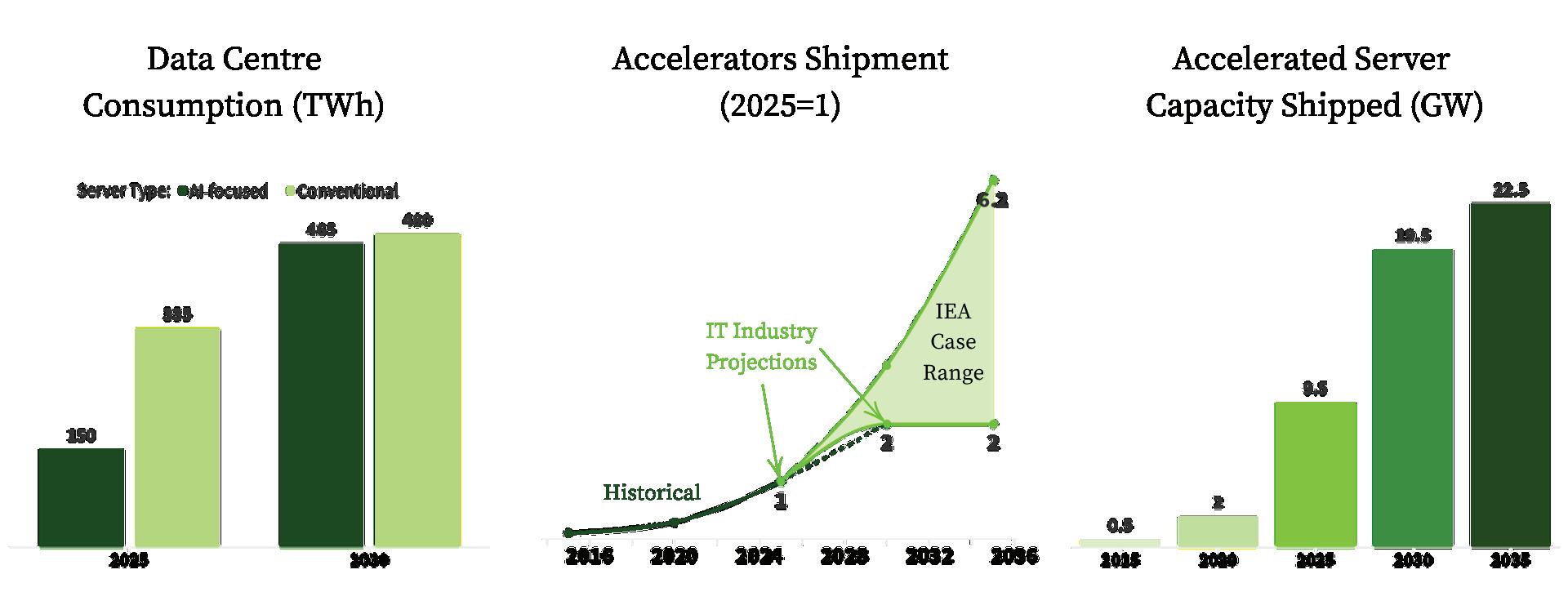
Fig 1: IEA analysis of AI electricity use.
The IEA projects electricity consumption by AI-focused data centres will more than triple by 2030, driven by a doubling in “accelerators: shipped. “Accelerators” are “specialised chips such as graphics processing units (GPUs) and tensor processing units (TPUs) that perform the parallel computations required for AI model training and use.
Data source: Adapted from: IEA, 2026, Key Questions on Energy and AI, IEA, Paris, Licence: CC BY 4.0
7 Beignon et al, “Imposing AI: Deceptive design patterns against sustainability”, 2025 https:// computingwithinlimits.org/2025/papers/limits2025-beigon-imposing-ai.pdf
8 2025, MLQ.ai, “State of AI in Business 2025 Report” https://mlq.ai/media/quarterly_decks/v0.1_ State_of_AI_in_Business_2025_Report.pdf
The planning pipeline for data centres in Australia can return overstated figures; one recent analysis by Oxford Economics (commissioned by Amazon Web Services) found that “6 in every 7 megawatts of connection requests are estimated to be ‘phantom demand’”, unlikely to be built9. The industry lobby group, Data Centres Australia, has argued10 on this basis that projections are “overstated” and causing “panic”. To avoid this criticism, this analysis will conservatively use figures that have been formulated by excluding unlikely projects. However, it must be noted that in countries such as the US, data centre demand is vastly exceeding previous projections11 by a large margin. As such, this report is likely an understatement of the impacts of data centre growth.
The latest estimates of data centre demand were published in August 2025, in the Australian Energy Market Operator’s ‘Electricity Statement of Opportunities’ (AEMO ESOO) report12. This was the first time in which data centres were published as a separate forecast alongside a methodology that partly surveys projects for their feasibility. This was itself partly based on a July 2025 report by Oxford Economics, commissioned by AEMO13.
The same data set also provides estimates of new demand from household and vehicle electrification, and together the report shows that the projected growth of data centres will occur at a scale similar to business and private vehicle electrification.
9 2025, Oxford economics, “Estimating data centre phantom demand” https://www. oxfordeconomics.com/resource/estimating-data-centre-phantom-demand/
10 2026, Australian Financial Review, Paul Karp, “‘Don’t panic’: Data centres claim their power needs are overstated” https://www.afr.com/politics/don-t-panic-data-centres-claim-their-power-needsare-overstated-20260327-p5zj9k?promote_channel=edmail
11 2024, Ketan Joshi, Bluesky + Lawrence Berkley National Lab presentation https://bsky.app/ profile/ketanjoshi.co/post/3lbfmyjyb5k2x
12 2025, Australian Energy Market Operator, “2025 Electricity Statement of Opportunities” https:// www.aemo.com.au/energy-systems/electricity/national-electricity-market-nem/nem-forecastingand-planning/forecasting-and-reliability/nem-electricity-statement-of-opportunities-esoo
13 2025, Oxford Economics, “Data centre energy demand”, https://www.aemo.com.au/-/media/files/ stakeholder_consultation/consultations/nem-consultations/2024/2025-iasr-scenarios/final-docs/ oxford-economics-australia-data-centre-energy-consumption-report.pdf
Data centre growth will match or exceed electrification of cars and homes, and possibly businesses
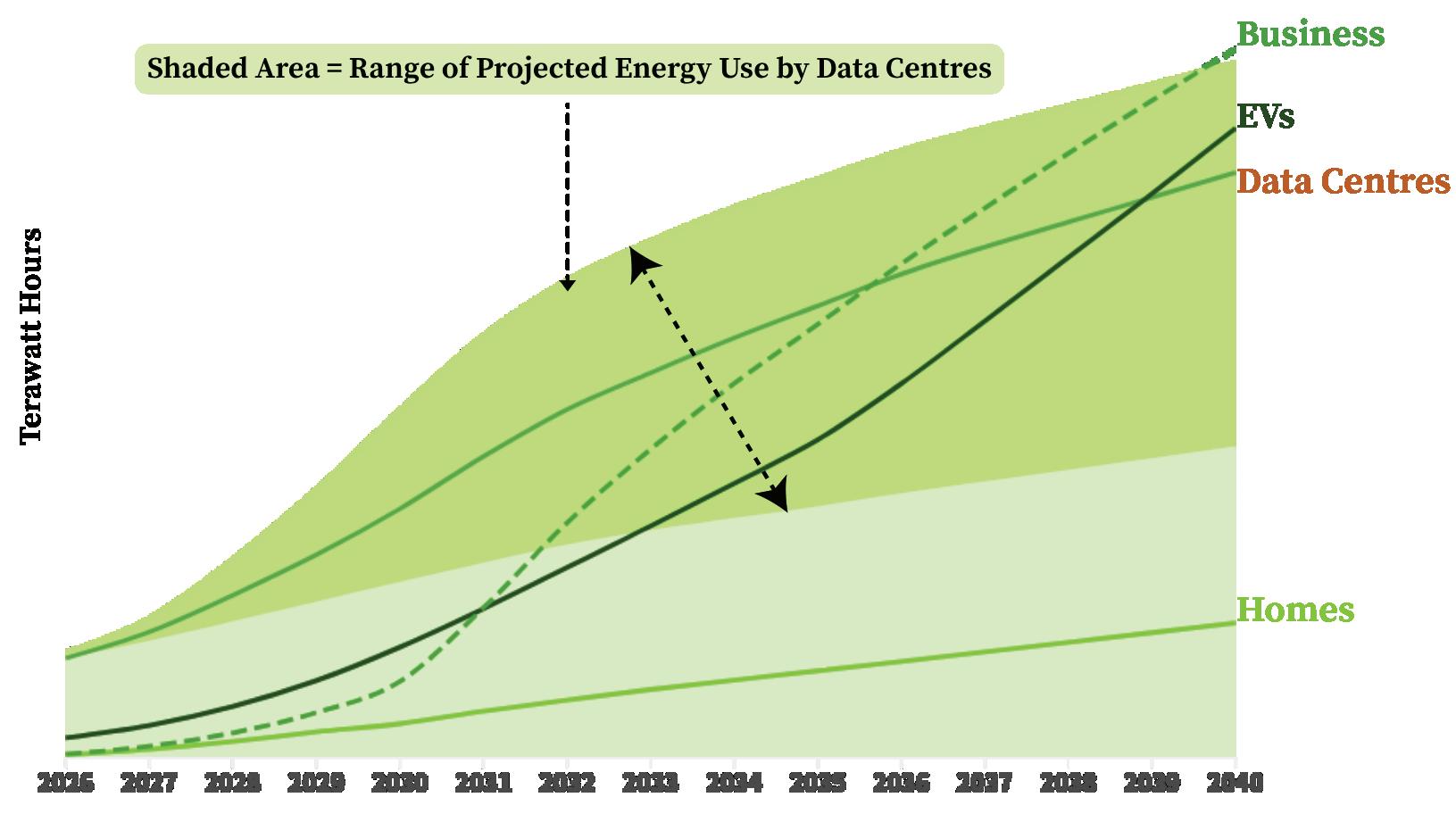
Fig 2: AEMO projections of electricity demand.
The latest projections of data centre growth in Australia’s National Electricity Market show new demand at similar levels to all electric vehicles, or all electrification of connected households. Darker green shading covers AEMO’s various scenarios for data centre growth.
Data source: Adapted from the Australian Energy Market Operator Electricity Statement of Opportunities, 2025, electricity forecasting portal.
Even in AEMO’s lowest-growth scenario, data centres double in their proportion of total demand14 by 2040, growing from 3% to 6%. In the highest-growth scenario, data centres grow to 13% of total demand in 2040 – more than total load from electric vehicles or the total for residential electrification. Projected demand in the year 2040 jumped from under 5 terawatt hours in the 2024 AEMO assumptions report to 27 in the following year’s report.15
14 Data centre demand as a proportion of ‘operational sent out’
15 2026, Australian Energy Market Operator, “2025 Inputs, Assumptions and Scenarios Report”, Page
111 Figure 48 https://www.aemo.com.au/-/media/files/stakeholder_consultation/consultations/ nem-consultations/2024/2025-iasr-scenarios/final-docs/2025-inputs-assumptions-and-scenariosreport.pdf#page=111
The data centre boom is already here
Importantly, several indicators show the construction boom for data centres in Australia has already begun. Australian Bureau of Statistics (ABS) data16, for instance, show a remarkable ‘hockey stick’ climb in expenditure for the hardware used inside data centres in Australia. The ABS states that “in the September quarter 2025, this series reached a record high of $2.6b, up 61.8% in the quarter and 143.1% higher than the previous year”.
The massive data centre spending boom has already begun
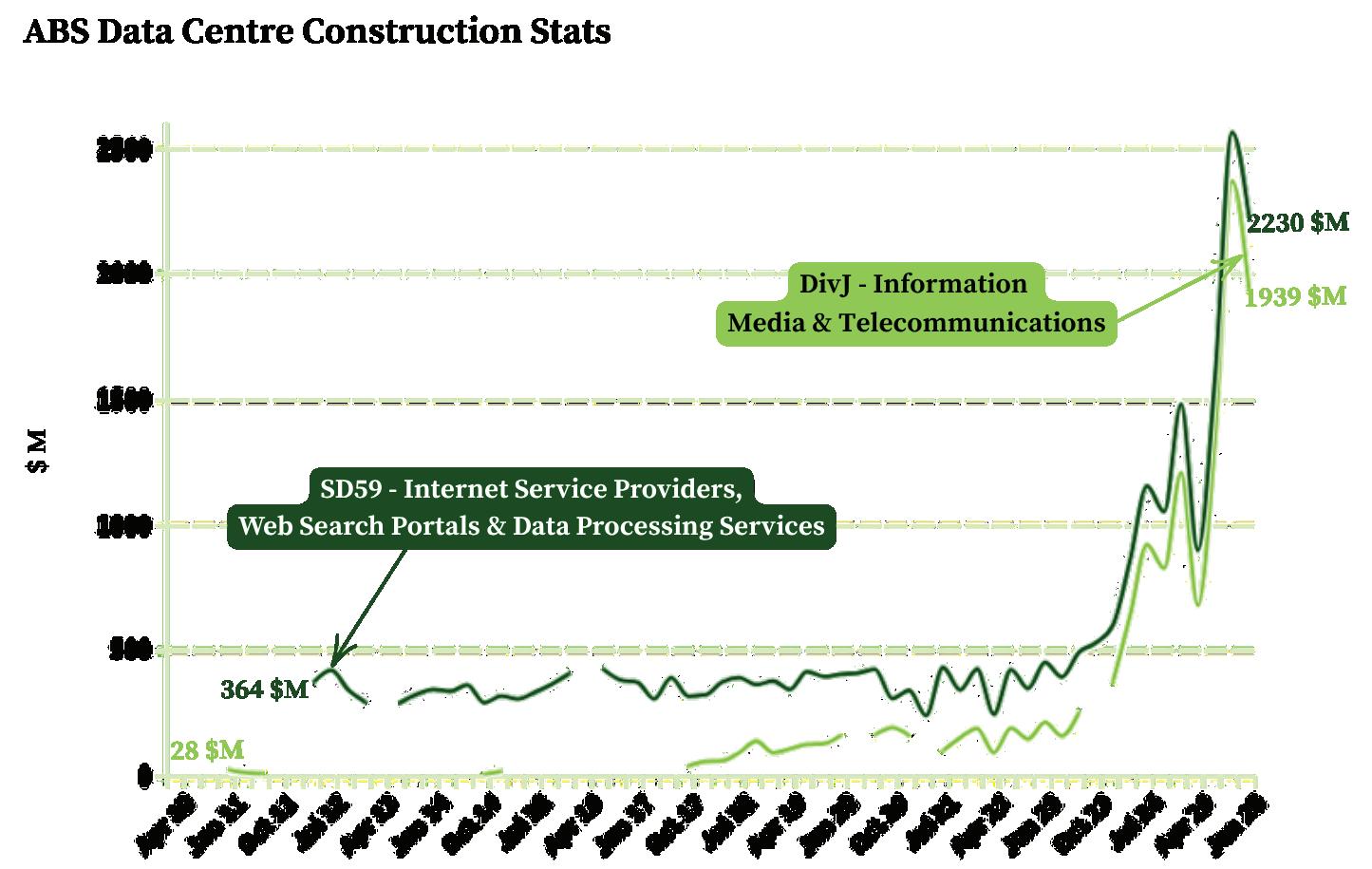
Fig 3: ABS statistics on demand for data centre related materials
The Australian Bureau of Statistics shows a massive boom in spending for the materials used in data centres
Data source: Australian Bureau of Statistics, 2026, Spotlight - Data Centres in Economic Statistics
16 2026, Australian Bureau of Statistics, “Spotlight - Data Centres in Economic Statistics”, Figure 4 https://www.abs.gov.au/articles/spotlight-data-centres-economic-statistics
Several companies make claims of being “100% renewable” or something similar. Amazon, for instance, claims to have met its “100% renewable” goal in 2024 (seven years ‘early’)17. Airtrunk claims to be ‘matching’ 86% of its energy consumption with renewable energy18. These ‘adjusted’ numbers frequently show significantly lower greenhouse gas emissions due to a claim of renewable energy procurement.
The methods used to claim this adjustment are in doubt. The fundamental logic of these claims is that a deal done between the renewable company and the consumer brought the renewables into existence; therefore the consumer can claim their clean energy as their own on sustainability reports. But purchasing renewable energy credits (certificates sold for every unit of energy produced) has been criticised as a universally weak claim to this effect. While long-term power purchasing agreements are far more likely to bring new projects online, this is not universal. Any claim should be backed up with proof the deal truly put the project over the line, into operation.
This conundrum is explored further in section 1.3 of this report.
The latest update of data for corporations submitting to the National Greenhouse and Energy Reporting Scheme (NGERS) depicts19 the gridrelated emissions for major data centre operators over recent years. The NGERs numbers shown in Figure 4 are ‘unadjusted’. They do not include any emissions reduction claim for renewable credits or power purchasing deals.
Emissions related to these companies have nearly doubled in the past years, reflecting growing energy consumption that outpaces reductions in grid emissions thanks to renewables.
17 2024, Amazon News, “Amazon meets 100% renewable energy goal 7 years early” https://www. aboutamazon.com/news/sustainability/amazon-renewable-energy-goal
18 2026, Australian Financial Review, Ryan Cropp, “Data centre power emissions double over 5 years” https://www.afr.com/policy/energy-and-climate/data-centre-power-emissions-double-overfive-years-20260303-p5o6vx
19 Note that Amazon originally attempted to refuse to disclose real data concerning their energy consumption in Australia but ultimately lost. Amazon ceased reporting total global energy consumption in 2022, according to data collected by this report’s author, Ketan Joshi. https://www. abc.net.au/news/science/2019-07-04/amazon-emissions-energy-data-australia-transparencyquestions/11268918 https://ketanjoshi.co/2025/05/23/data-collection-big-tech-emissions-energy/
Emissions from major data centre operators have risen significantly in the past five years
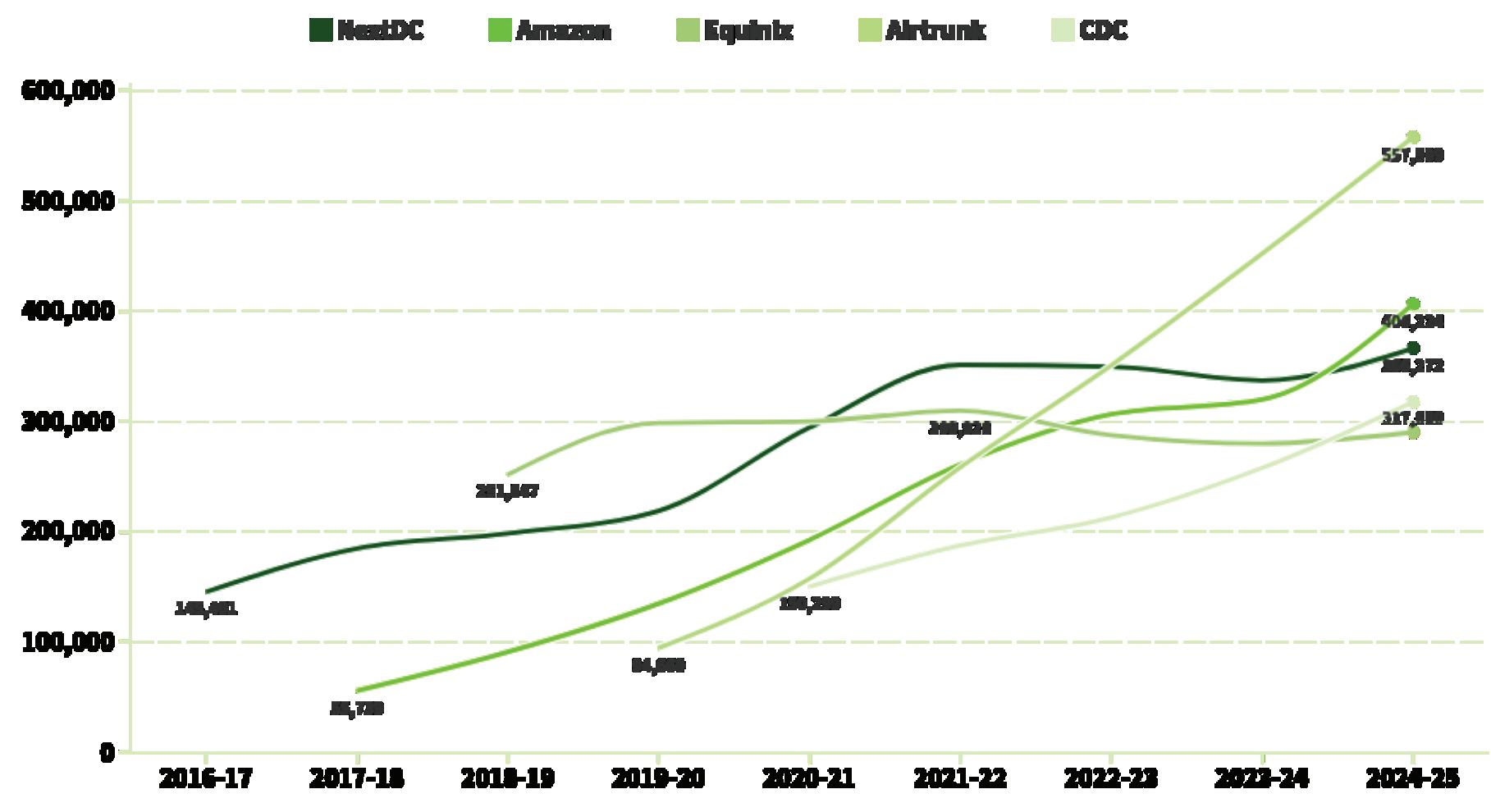
Fig 4: Data centre emissions are growing.
The grid-connected emissions from Australia’s biggest data centre companies have been growing significantly over the past few years, with Airtrunk seeing the greatest increase.
Data source: Australia’s National Greenhouse and Energy Reporting Scheme (NGERS), manually compiled across financial years
A recent report20 published by the Australian Energy Market Operator revealed that data centres were responsible for 50% of total demand growth between Q1 2025 and Q1 2026, the same share of electricity demand growth seen in the United States. This goes directly counter to the often-stated insistence from groups such as Data Centres Australia that domestic data centre growth is unlike that of the US (where the proportion of current and project demand growth is exactly the same: 50%21). The AEMO report also showed that half of all rooftop solar growth in a year was consumed by this data centre growth.
20 2026, Australian Energy Market Operator, “Quarterly Energy Dynamics Q1 2026” https://www. aemo.com.au/energy-systems/major-publications/quarterly-energy-dynamics-qed
21 2026, International Energy Agency, “Key questions on energy and AI” https://www.iea.org/reports/ key-questions-on-energy-and-ai
50% of demand growth in Australia’s main grid was from data centres in Sydney and Melbourne
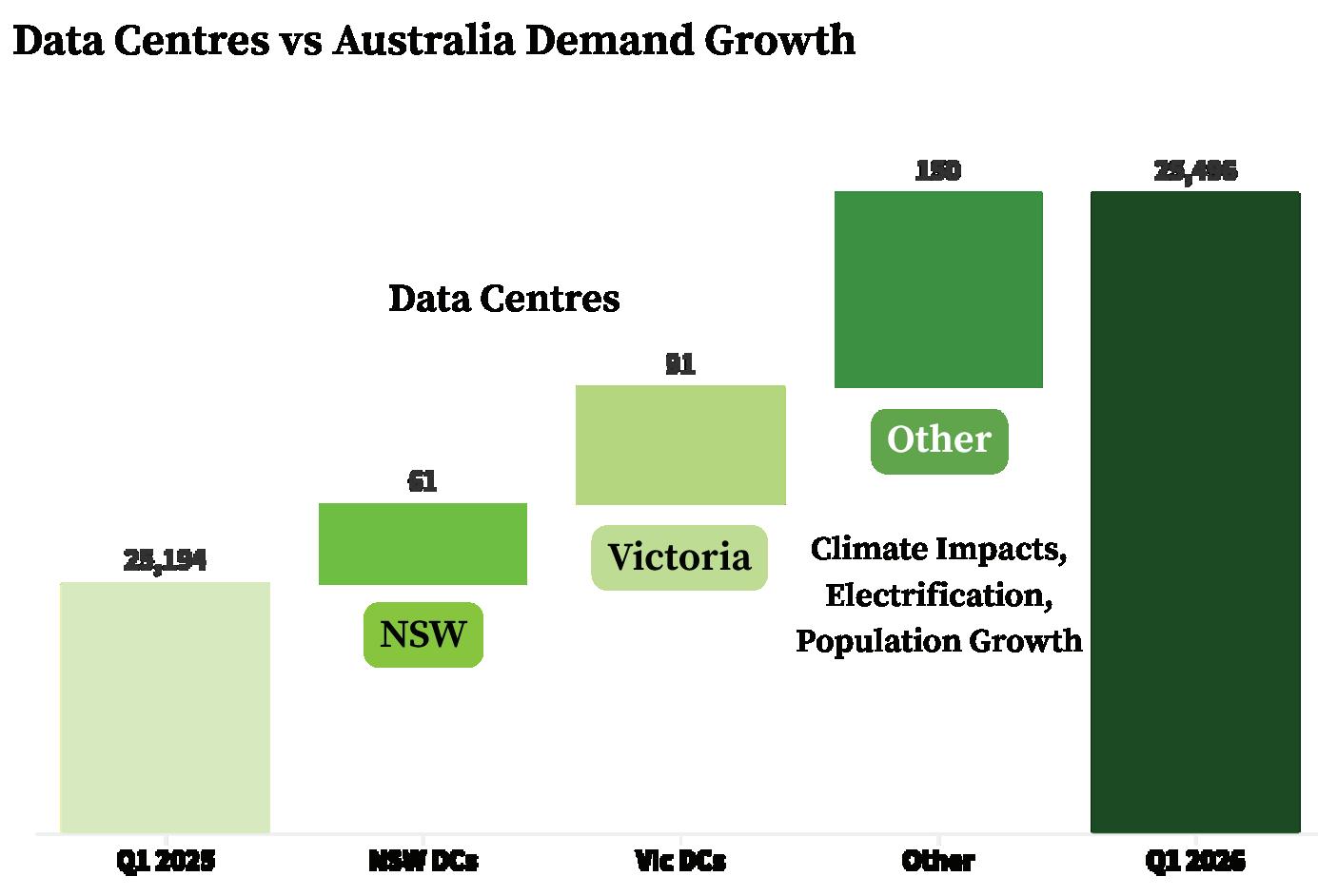
Fig 5: Data centres as a proportion of new electricity demand
The National Electricity Market is Australia’s largest grid, and half of all demand growth for Q1 2026 came specifically from data centres. This is the first time AEMO has disclosed this information. Note the truncated y-axis. ‘Climate impacts’ generally refers to increased demand for cooling in hot periods.
Data source: Australian Energy Market Operator, 2026, Quarterly Energy Dynamics Report Q1.
Similar to other regions where data centres have grown exponentially, new data centre energy consumption is highly concentrated. In Australia, it is Sydney and Melbourne; predominantly the former. A recent investigation by the Sydney Morning Herald put the increase in data centre capacity for Western Sydney as equivalent to the “average electricity load of more than 10 million households and, at their peak, they will demand almost four times as much power as the rest of the city”.22 That investigation raises serious concerns regarding the concentration of data centre capacity in a residential region, stressing energy and water resource availability. Similar concerns have been raised regarding data centre development in Melbourne.23
22 2026, Sydney Morning Herald, Mostafa Rachwani, “Data centres are popping up all over Sydney. But what impact do they have on our suburbs?” https://www.smh.com.au/national/nsw/datacentres-are-popping-up-all-over-sydney-but-what-impact-do-they-have-on-our-suburbs20260114-p5ntv6.html
23 2026, Australian Broadcasting Corporation, Leanne Wong, “Melbourne lord mayor calls on governments to manage environmental consequences of data centre boom” https://www.abc.net. au/news/2026-02-04/melbourne-lord-mayor-ai-data-centres-environmental-impact/106300650
The data centre revolution is being fast-tracked
In addition to being concentrated in Sydney and Melbourne, several fast-tracking initiatives have been introduced by State and Federal Governments, generally involving weakened and rushed approval processes on the grounds of economic benefits and a perceived “race” to grow domestic artificial intelligence capabilities. The states of Victoria24,25 and New South Wales26 along with the Federal Government27 have promised significant intervention in the planning process to speed up the development of data centre capacity.
24 2026, Australian Financial Review, Michael Bleby, “Victoria woos monster data centres with lighttouch regulation” https://www.afr.com/property/commercial/victoria-woos-monster-data-centreswith-light-touch-regulation-20260127-p5nxd4
25 2026, Sydney Morning Herald, Clay Lucas and Danielle White, “$1b data centre given planning tick in just 75 days as state gets cosy with big tech“ https://www.smh.com.au/national/victoria/1b-datacentre-given-planning-tick-in-just-75-days-as-state-gets-cosy-with-big-tech-20260219-p5o3sl.html
26 2025, New South Wales Government, “First IDA round attracts a $136 billion potential investment surge for NSW” https://www.nsw.gov.au/ministerial-releases/first-ida-round-attracts-a-136-billionpotential-investment-surge-for-nsw
27 2026, Australian Financial Review, Michael Read, “Labor to fast-track data centre approvals as OECD flags energy strain” https://www.afr.com/politics/federal/labor-to-fast-track-data-centreapprovals-as-oecd-flags-energy-strain-20260126-p5nx28
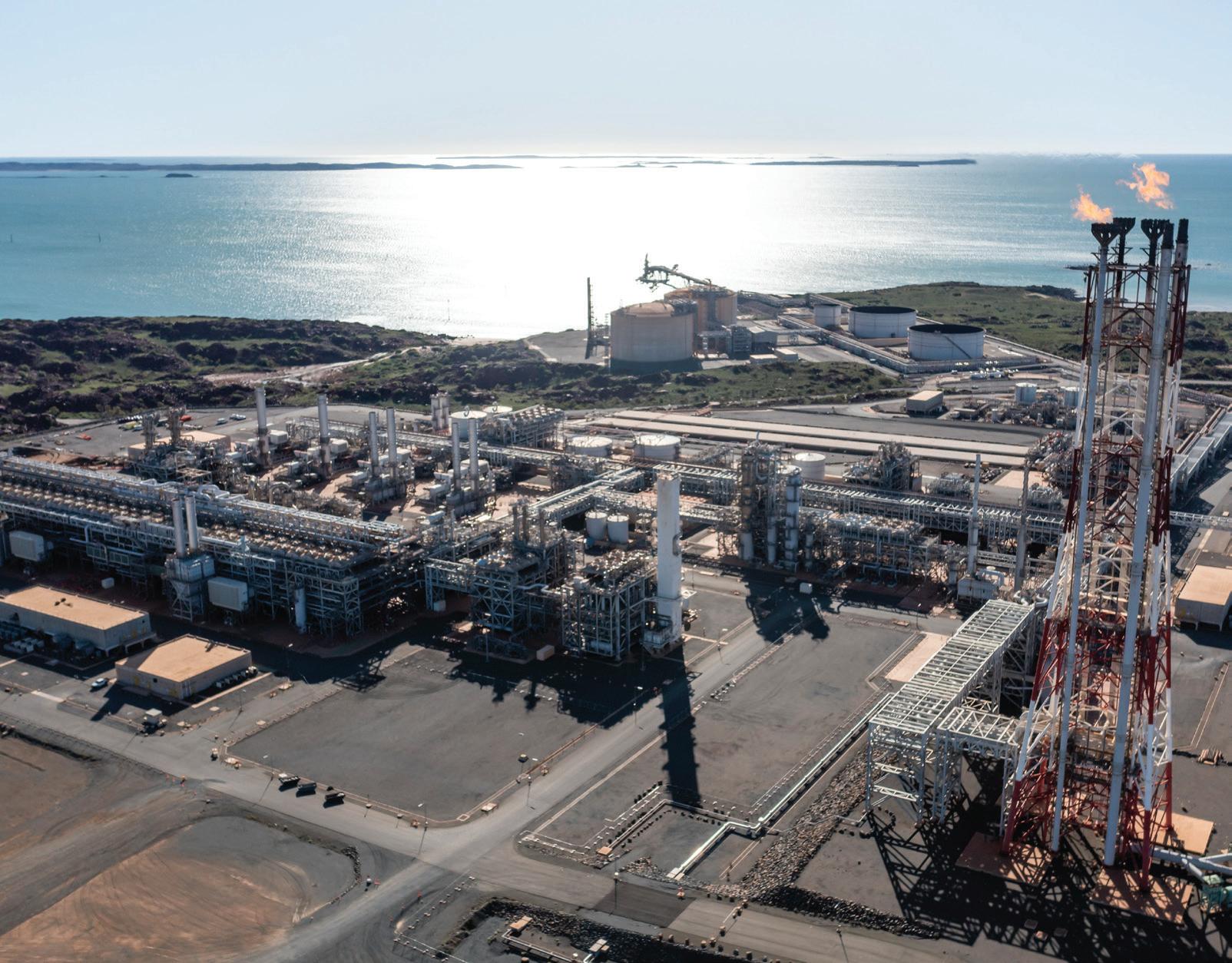
Dampier Pluto Gas Plant in Western Australia © Alex Westover / Greenpeace
The climate-wrecking impact of Australia’s biggest data centre proposal
The largest proposed project in Australia is the 1,000 megawatt (1 gigawatt) Mamre Road Data Centre Campus in Kemps Creek, Sydney, awaiting approval at the time of writing. The project’s environmental impact statement (EIS)28 finds the project’s total grid emissions (meaning emissions from the electricity the centre uses from the NSW electricity grid) will peak at 1,297,028 tonnes in 2032. This is roughly equivalent to the total greenhouse gas emissions of all domestic flights within New South Wales in 202329. In total, the plant will enable 33,041,033 tonnes of carbon dioxide equivalent over its lifespan.
In a scenario where the grid decarbonises more slowly, the Mamre Road project will emit 2,888,431 tonnes in its peak year, in 2037. This is close to the total emissions30 from all heavy duty trucks in New South Wales in 2023. The EIS also found that implementing ‘renewable diesel’ in backup generators merely reduces total scope 1 and 2 emissions of the project from 1,700,709 tonnes per year to 1,699,810 tonnes per year, revealing the ineffectiveness of renewable diesel as a decarbonisation solution.
The project proponent claims they will achieve “100% renewable electricity procurement by 2030 through power purchase agreements (PPAs), virtual PPAs and customer procurement of green tariffs and RECs” in addition to the purchase of a small volume of carbon offsets for the site’s backup generators. When relying on various renewable procurement strategies, the claimed scope 2 emissions of the project fall from 23,574,172 down to 918,316. We contend these claims cannot be relied upon in more detail further in this report.
The Mamre Road project was endorsed by the New South Wales government in round one of the “Investment Delivery Authority” fasttracking process31 (in which a ‘dedicated team’ works to accelerate approvals), in March 2026, and the document makes no mention of the project’s climate impacts.
28 2025, E-LAB Consulting, “Mamre Road Data Centre Campus” https://majorprojects. planningportal.nsw.gov.au/prweb/PRRestService/mp/01/getContent?AttachRef=SSD92743706%2120260119T012428.711%20GMT
29 2025, Department of Climate Change, Energy, Environment and Water, “Emissions by state and territory”, Subsector 1.A.3.a.ii Domestic https://www.greenhouseaccounts.climatechange.gov.au/
30 3.09 MTCO2-e, Sector(s): Subsectors of 1.A.3.b.iii Heavy-Duty Trucks
31 2026, NSW Government, “NSW Government backs data centre investment, sets course for sustainable development” https://www.nsw.gov.au/ministerial-releases/data-centre-investmentsustainable-development
In March 2026, the NSW Government announced the ‘endorsement’ of 15 large data centre projects for fast-tracking. The announcement featured no information regarding the estimated future emissions impacts for these projects; nor any information on whether the proponents were attempting to mitigate this. Emissions estimates for a selection of these fast-tracked projects are included in Appendix 1, however most projects did not seem to have any emissions or capacity data available for public scrutiny.
The federal government’s recently released Expectations32 for data centre developers adds vague caveats to this fast-tracking process, such as an ‘expectation’ of renewable energy deals or water efficiency, which will grant priority in the process. A recent NSW ‘Data centre consultation paper’33 mentions the provision of renewables, but purely in the context of managing price impacts rather than climate change. Neither propose mandatory requirements or specify crucial details on renewable procurement (discussed later in this report).
32 2026, Department of Industry, Science and Resources, “Expectations of data centres and AI infrastructure developers” https://www.industry.gov.au/publications/expectations-data-centresand-ai-infrastructure-developers
33 2026, NSW Government, “NSW Government backs data centre investment, sets course for sustainable development” https://www.nsw.gov.au/ministerial-releases/data-centre-investmentsustainable-development
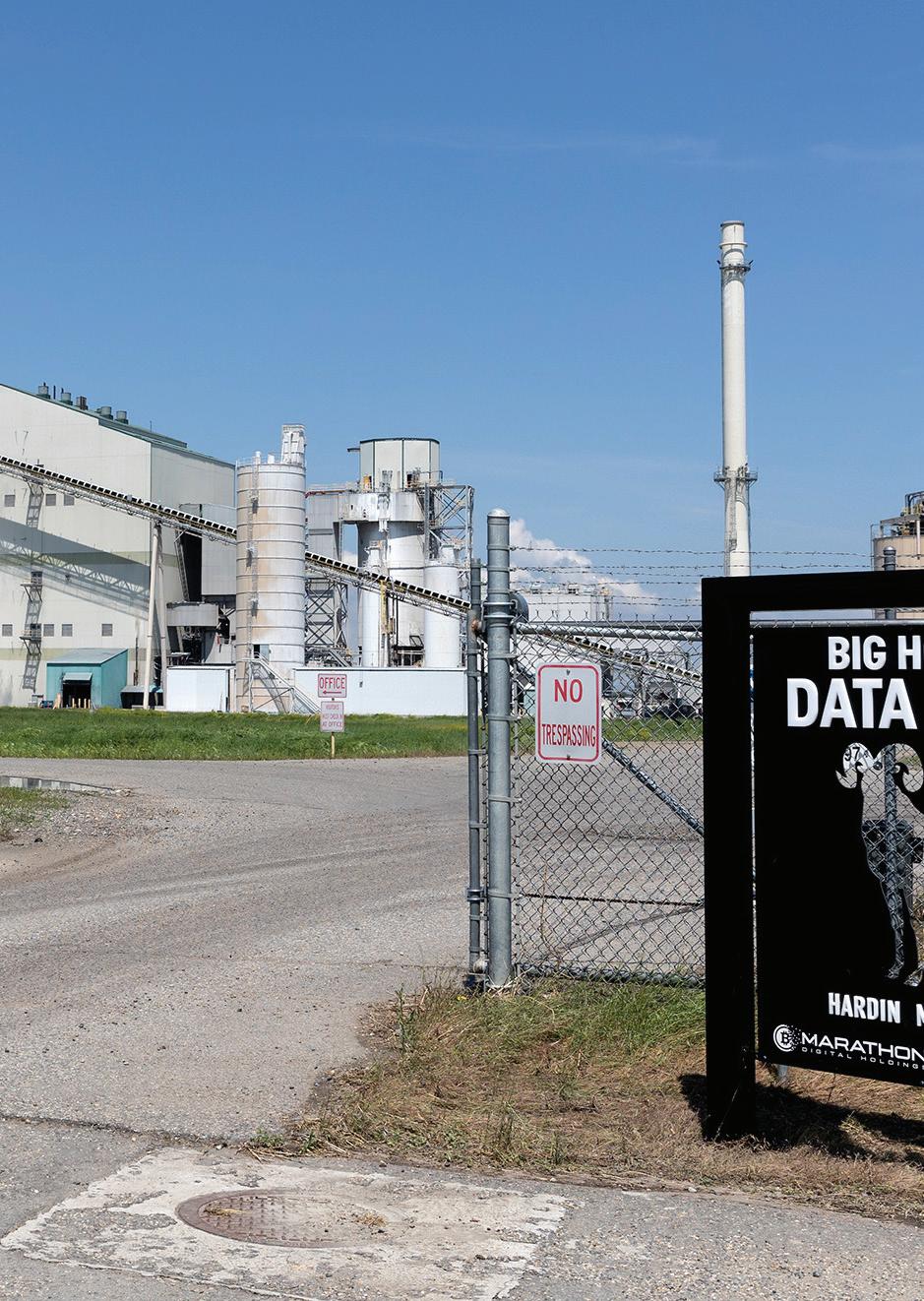
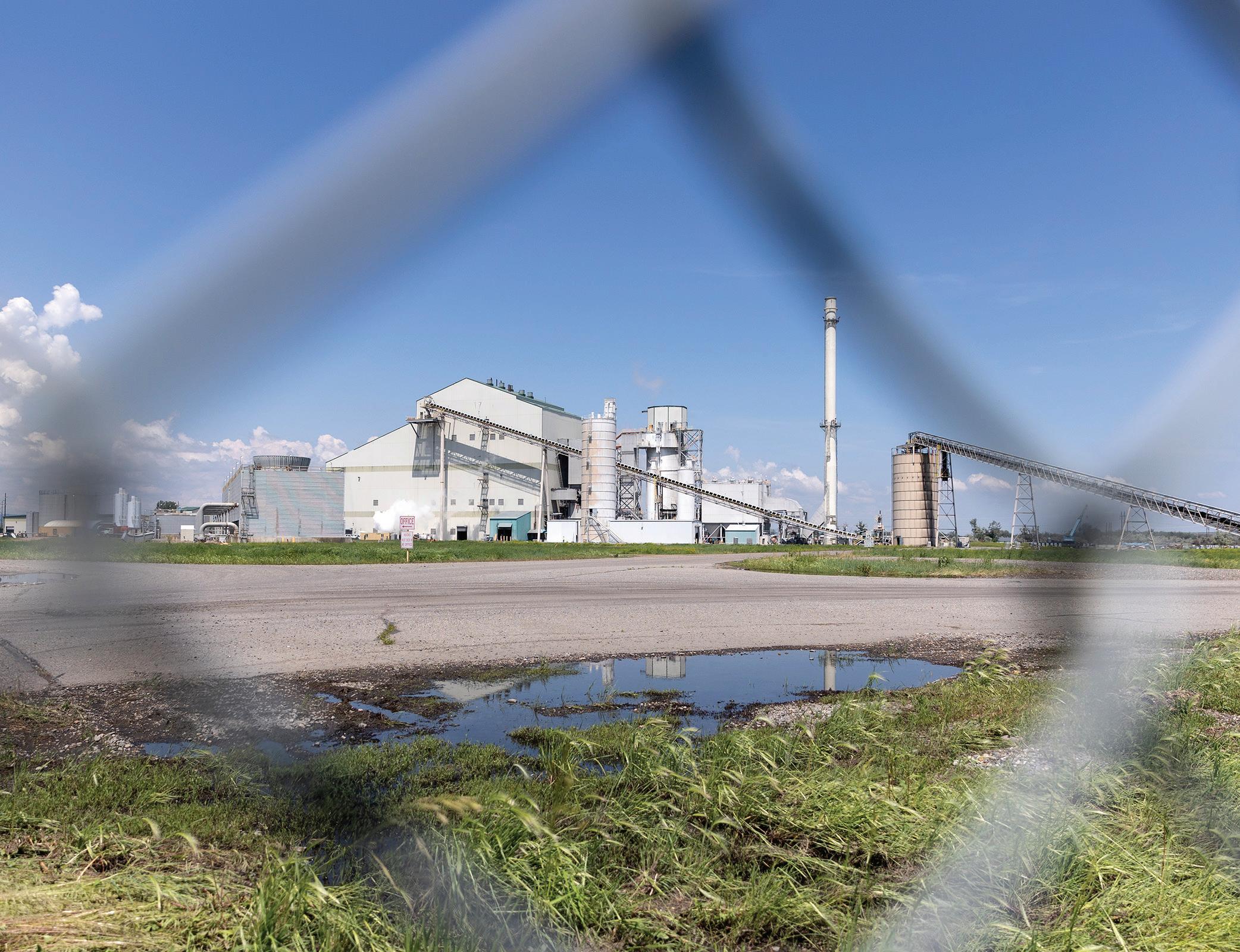
The Big Horn Data Hub and the Hardin Generating Station in Hardin, Montana, USA. © Janie Osborne
Are data centres really “critical infrastructure”?
The “Security of Critical Infrastructure Act 2018”34 designates data centres as a ‘critical infrastructure asset’. The act generally relates to security measures, such as reporting cyber incidents and ensuring risk management programs are in place. This broad descriptor for all data centre installations in Australia is commonplace, ranging from the Clean Energy Finance Corporation (CEFC) to the Australian Industry Group36 and the lobby group Data Centres Australia (DCA).37
This is reflective of a time when data centres largely served basic and socially critical functions; housing data used by individuals, corporations and governments or delivering services such as video and audio calls with high reliability.
However, the actual functions served by data centres in the modern era remain extremely unclear. At the global scale, corporate disclosures of the computational functions of high-consumption facilities essentially do not exist. In response to a joint statement calling for more transparency of data centre functions, the DCA strongly refused38, claiming that “Facility-level public reporting of operational data raises serious commercial sensitivity and security concerns, particularly given data centres’ designation as critical infrastructure under the Security of Critical Infrastructure (SOCI) Act” and that “differentiating AI from non-AI workloads is technically problematic for co-location providers who do not control customer hardware.” This is despite many DCA members explicitly marketing their data centre capacity as being built for AI purposes - clearly at least some of their leased capacity can be categorised as being specific to AI applications.
34 2018, Federal Register of Legislation, “Security of Critical Infrastructure Act 2018” https://www. legislation.gov.au/C2018A00029/latest/versions
35 2025, Clean Energy Finance Corporation, “Data centre growth and the energy transition” https:// www.cefc.com.au/insights/market-reports/data-centre-growth-and-the-energy-transition/
36 2026, Australian Industry Group, “Australian Industry Group welcomes national data centre framework” https://www.australianindustrygroup.com.au/news/media-centre/2026/australianindustry-group-welcomes-national-data-centre-framework/
37 2026, Data Centres Australia, “Response to the Australian Government’s expectations for data centres and AI infrastructure developers” https://datacentres.org.au/response-to-the-australiangovernments-expectations-for-data-centres-and-ai-infrastructure-developers/
38 2026, Data Centres Australia, “Principles in isolation can’t achieve sustainable outcome” https:// datacentres.org.au/principles-in-isolation-cant-achieve-sustainable-outcome/
The CEFC / Baringa39 report into data centre growth in Australia estimates that 65% of new data centre capacity will be ‘hyperscale’ facilities: uniquely large data centres performing computationally intensive tasks, and of that proportion, 84% would be specifically hosting “AI”. As explored in a previous report by this report’s lead author, Ketan Joshi, much of the total energy demand for “AI” will relate specifically to text, image and video generation known as ‘generative AI’.
It’s worth questioning whether creating content through text prompts is as “critical” as facilities that allow emergency calls to be put through, rather than accepting the blanket assumption that all data centres are serving the same function. At the very least, advocates of unchecked data centre growth ought to avoid relying on an outdated cybersecurity designation as part of a public relations campaign to ensure faster approvals.
39 2025, Clean Energy Finance Corporation, “Data centre growth and the energy transition” https:// www.cefc.com.au/insights/market-reports/data-centre-growth-and-the-energy-transition/
These early signs point to detectable growth from existing data centres in Australia, alongside a very high chance of material growth in the short to medium term future. The emissions impact of this is not being well disclosed, and governments are fast tracking these projects with seemingly little regard for real consideration of climate and environment impacts.
1.2 DATA CENTRES BOOST FOSSIL FUELS ON POWER GRIDS
Because governments in Australia fail to require the meaningful disclosures of the emissions impact of data centres, we risk sleep walking into a massive increase in fossil fuel related emissions.
Data centres boost fossil fuels in two ways. First, their draw of electrical energy from a power grid leads to increased generation from existing coal and gas generators to meet this new, unanticipated demand. Sometimes this leads to fossil plants being re-activated, or having their lifespans extended, both leading to increased emissions.
Second, data centres are increasingly building specialised fossil fuel power plants ‘behind the meter’ (dedicated to that facility and not connected into the power grid, similar to a rooftop solar panel), discussed in more detail in Section 2 of this report.
Why data centres almost always boost fossil fuels on power grids
Even in regions where a large volume of renewable energy exists, increasing demand from rapid data centre growth can still boost existing fossil fuel generation. Increased demand is a ‘tide that lifts all boats’, as every generator is called upon to meet that new demand in some way.
Rapid demand growth and insufficient renewable growth always leads to more fossil fuels
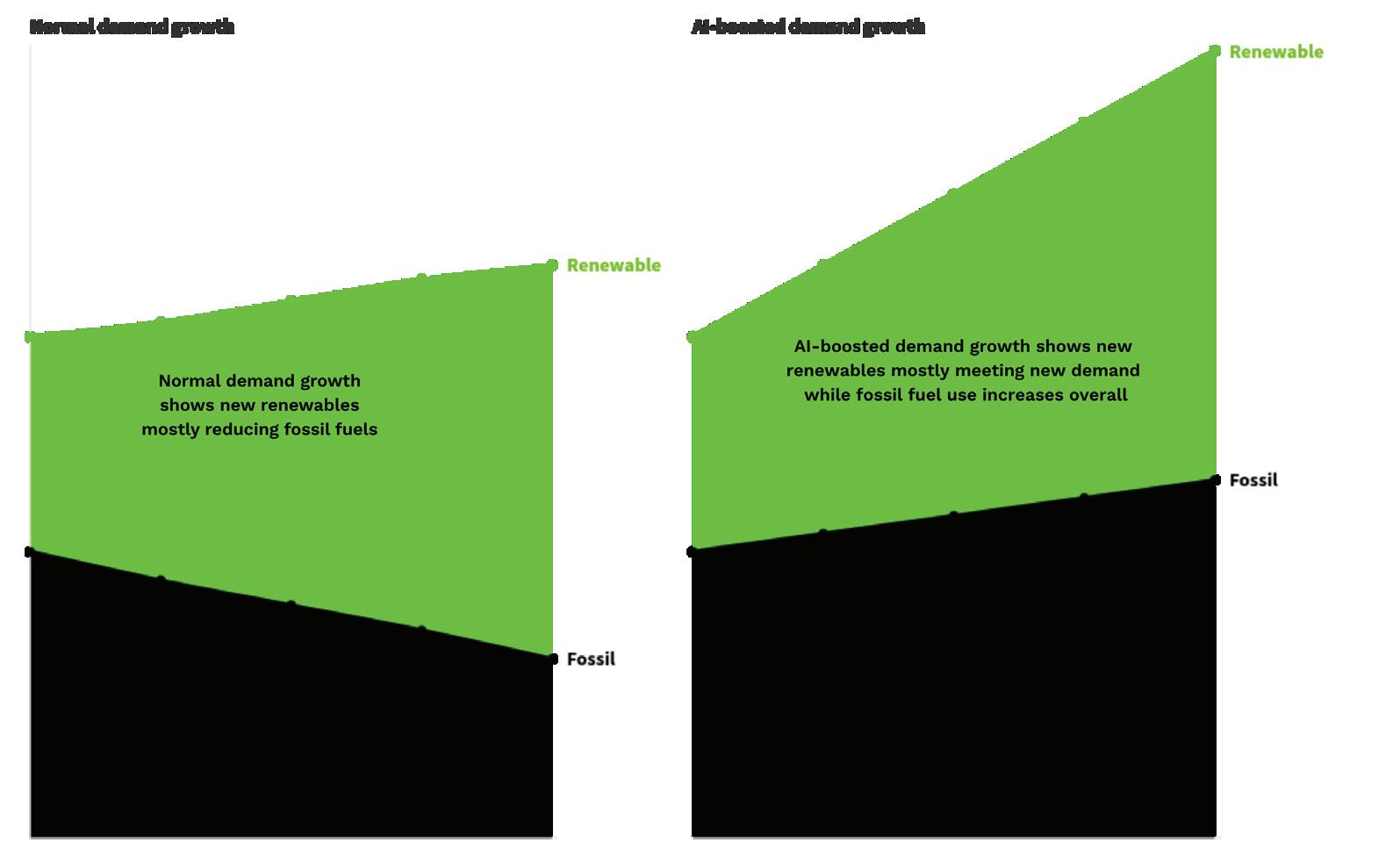
6: Demand Growth explainer. This is a graphical demonstration of the effect of increased fossil fuel use when demand grows rapidly, even when renewable energy continues to grow. If demand growth outpaces new renewable energy growth, fossil fuels will necessarily grow too.
Fig
Northern Virginia Data Centers © Greenpeace / Robert Meyers
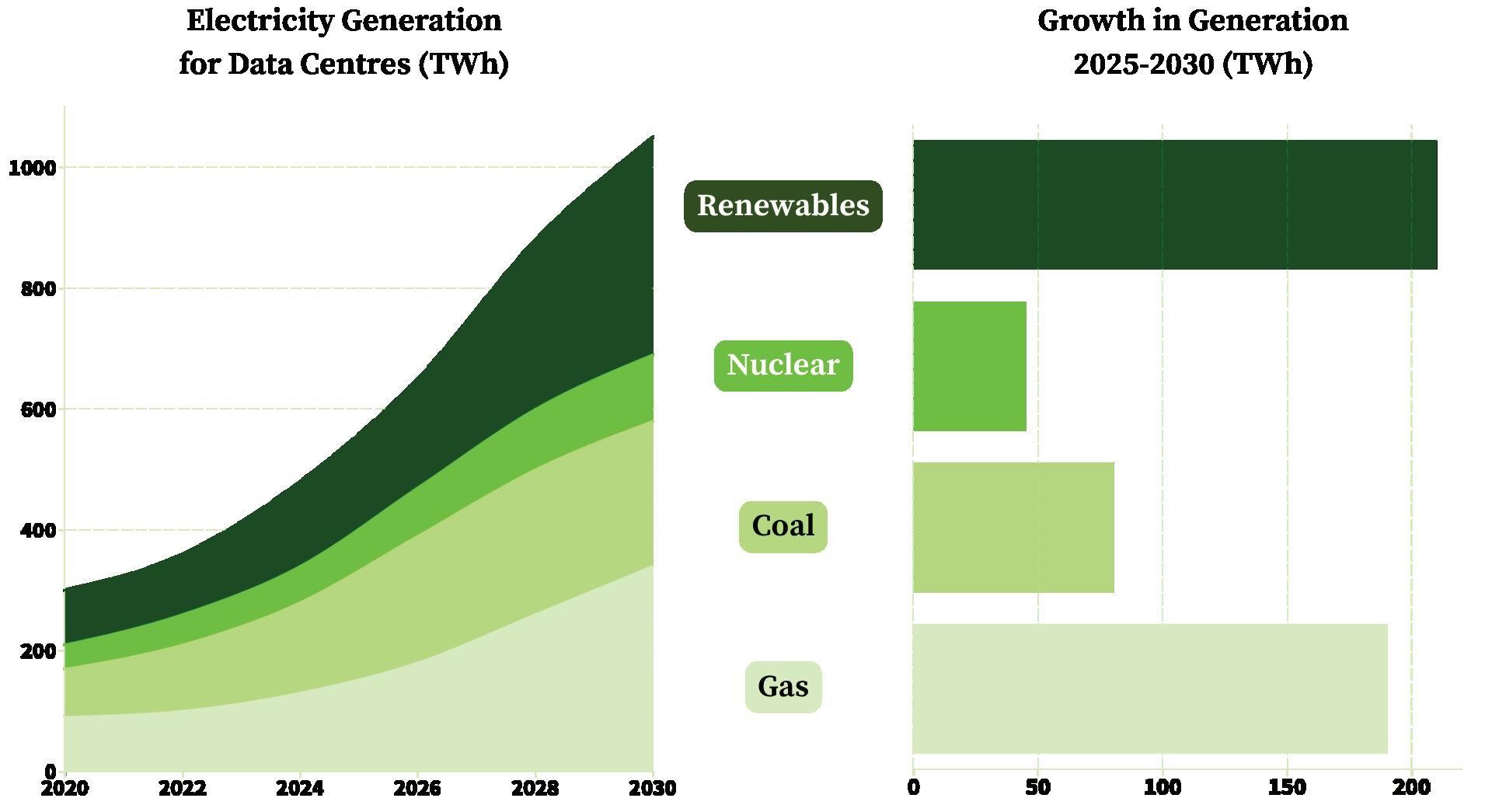
There are some emerging examples of the effect of data centres on power grid emissions, both occurring now and projected to occur in the near future. At the global level, the IEA’s latest report40 into data centre growth and AI shows that the majority of new generation for data centres will come from coal and gas, reflecting a real world demonstration of the effect described above:
Data centres drive coal and gas on power grids to 2030
Data source: Adapted from: IEA, 2026, Key Questions on Energy and AI, IEA, Paris, Licence: CC BY 4.0
40 2026, International Energy Agency, “Key questions on energy and AI” https://www.iea.org/reports/ key-quest2ions-on-energy-and-ai
Fig 7: IEA data showing an increase in fossil fuels to power data centres The majority of new demand for data centres is met by increased coal and gas use.
There are many regions in the world where the data centre fossil fuel boosting effect is either already occurring, or forecast as likely to occur.
United States
• America’s economy-wide greenhouse gas emissions rose from 2024 to 2025 (the first rise in many years), driven in substantial part by growing demand from data centres41.
• A 2025 report by Bloomberg NEF42 found that the core threat lies in increased dispatch from existing coal and gas power generators on grids, with a likely global increase of 10% in the power sector due to new data centre demand.
• The US Energy Information Administration (EIA) found43 that increased demand specifically from data centres will significantly boost both coal and gas generation on the US power grid. This is approximated44 to be an additional 124 megatonnes of carbon dioxide equivalent, in the ‘high’ scenario, for 2026 and 2027.
• A Rhodium Group analysis45 also found that, for the US, “in our higher data centre demand modeling, total power sector emissions are 6-13% higher in 2035 than in our baseline case”.
• A recent analysis from Environment America46 found data centre demand is directly causing significant coal plant closure delays too.
41 2026, Rhodium Group, “Preliminary US Greenhouse Gas Emissions Estimates for 2025” https:// rhg.com/research/us-greenhouse-gas-emissions-2025/
42 Ghosh, Bloomberg New Energy Finance, “Why So Much Is Riding on the Data Center Boom” www.bloomberg.com/news/features/2025-11-21/how-the-data-center-boom-tests-grids-waterresources-capital-markets
43 2026, Energy Information Administration, “Fossil generation could rise with faster-than-expected growth in data center power demand” https://www.eia.gov/todayinenergy/detail.php?id=67344#
44 Assuming EIA 2025 emissions intensities for coal (0.9) and gas (0.45) megatonnes of carbon dioxide equivalent per terawatt hour of generation; difference between baseline and ‘high’ case manually extracted from EIA website chart using WebPlotDigitiser; emissions are additional data centre emissions for 2026 and 2027
45 2026, Rhodium Group, “The Impacts of Rising Electricity Demand from Data Centers on US Energy and Emissions” https://rhg.com/research/data-centers-electricity-demand/
46 2026, Environment America, “Fossil fuel power plants are staying online longer” https:// environmentamerica.org/center/resources/fossil-fuel-power-plants-are-staying-online-longer/
America’s data centre growth will materially boost coal and gas power on the grid
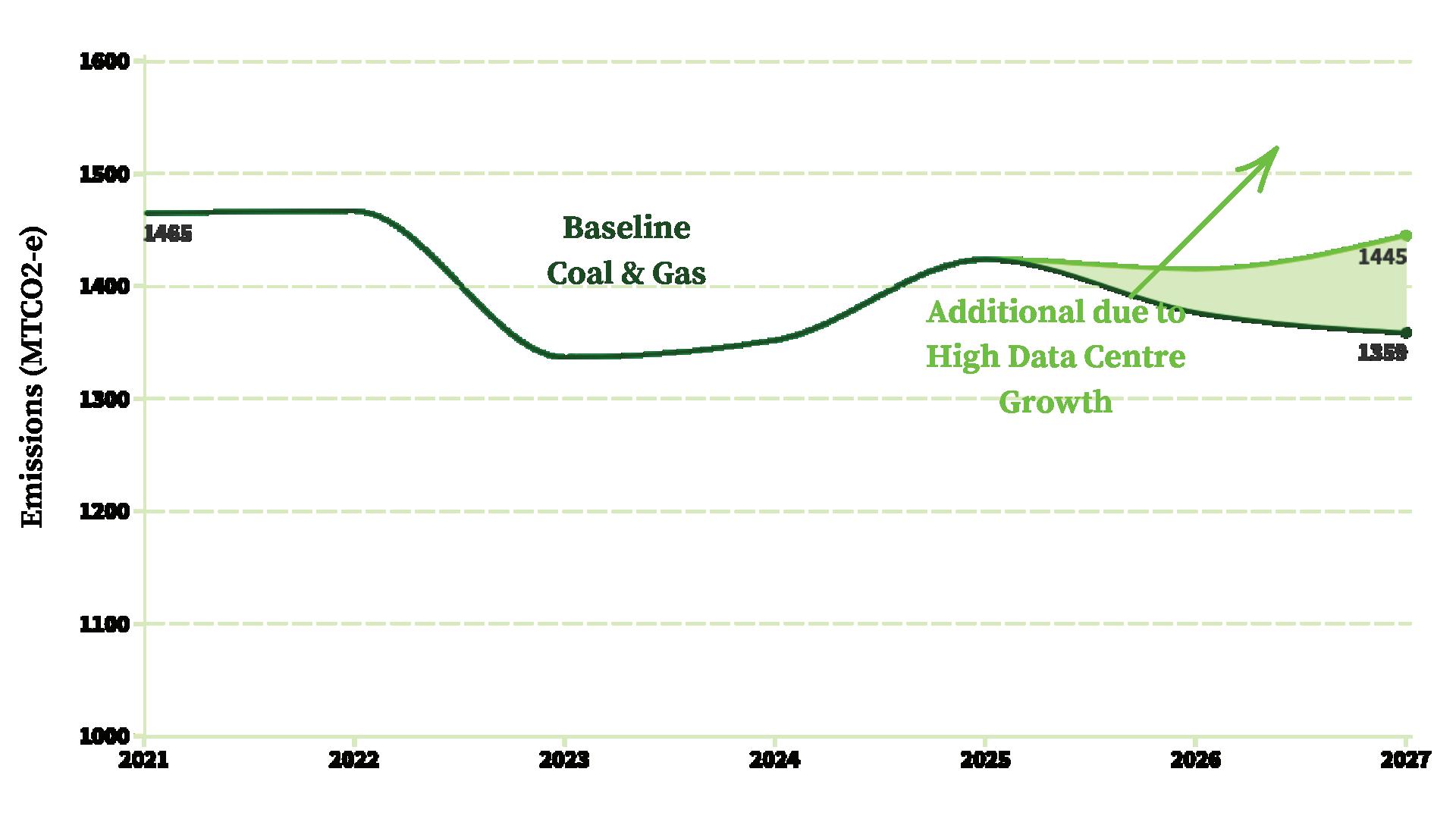
Fig 8: US Energy Information Administration (EIA) data on energy use
Using the EIA’s estimates of additional coal and gas generation in a ‘high growth’ scenario for data centres and grid emissions factors for coal and gas power, we can estimate an extra 38 megatonnes of carbon dioxide equivalent in 2026, and 86 in 2027, due solely to the effect of data centre growth on coal and gas power plants on the grid.
Data source: US EIA In-depth Analysis, Tyler Hodge, Katherine Antonio, March 2026, Fossil generation could rise with faster-than-expected growth in data center power demand
Europe & the United Kingdom
• The European Union is not planning47 enough new renewable energy to cover both data centre growth and electrification, meaning emissions will likely rise.
• An analysis by Aurora Energy Research48 found that “[data centres] could jeopardise the UK’s decarbonisation objectives unless delivery of low carbon technologies and networks is prioritised”, with total UK 2025-2040 grid emissions rising from 291 MTCO2-e to 328 in the study’s ‘AI expansion’ scenario. This is an 11% increase in emissions, down to a material ramp-up in grid fossil gas generation and an increase in imports.
47 2026, Kiel Institut Policy Brief, “Running into a debacle: The mismatch between the EU’s AI ambition and its energy planning” https://www.kielinstitut.de/publications/running-into-a-debaclethe-mismatch-between-the-eus-ai-ambition-and-its-energy-planning-19644/
48 2025, Aurora Energy Research, “Can the grid keep up? New study probes UK data centre growth” https://auroraer.com/resources/aurora-insights/newsletters/can-the-grid-keep-up-new-studyprobes-uk-data-centre-growth
Rising power demand is already slowing the exit of coal and gas
In Australia, rising power demand49 has contributed to closure delays for Australia’s most-polluting coal plants. The Eraring power station, Australia’s largest coal plant, was recently extended a second time50 and is now set to close in 2029 (originally 2025). There are already signs of a similar campaign to extend the Yallourn coal-fired power station in Victoria.51
Notably, a major factor here is insufficient renewable energy currently under construction in Australia to achieve the nation’s 82% renewable energy by 2030 target52. As explored later in this report, new technology industry driven renewable growth from the (limited) use of power purchase agreements will likely be insufficient on its own to reverse this trend.
The data centre effect on emissions projections
Existing and near-future data centre development in Australia has already impacted the prospects for rapid climate action. A recent report53 published by the Clean Energy Finance Corporation (CEFC) found that grid-connected data centres constructed without new, additional renewable energy would raise emissions by 5.86 million tonnes a year, by 2035 (equivalent to more than half of all domestic aviation emissions in Australia, in 2025).
In 2024, Australia’s Climate Change Authority (CCA) suggested a goal of a 65% reduction in emissions (relative to 2005 levels) in preliminary advice54 regarding Australia’s 2035 climate targets. In September 2025, that had been weakened55 to 62%. The CCA stated:
49 2026, Australian Greens, “Eraring Extension a Failure of NSW Labor’s Making” https://greens.org. au/nsw/news/media-release/eraring-extension-failure-nsw-labors-making
50 2026, Crikey, Ketan Joshi “Why it’s so easy to lobby to extend Australia’s deadliest coal plants” https://www.crikey.com.au/2026/01/22/coal-power-station-lobbying-climate-change-eraringyallourn/
51 2026, Herald Sun, Colin Packham and Perry Williams, https://www.heraldsun.com.au/business/ power-crunch-fears-trigger-yallourn-coal-power-extension-talks/news-story/8a165492fe6732631df 58603be4b1fc9
52 2026, Net Zero Australia, “Green energy goal runs late” https://www.netzeroaustralia.net.au/ green-energy-goal-runs-late/
53 2025, Clean Energy Finance Corporation, “Data centre growth and the energy transition” https:// www.cefc.com.au/insights/market-reports/data-centre-growth-and-the-energy-transition/
“We have recommended a lower bound that makes allowance for the intrinsic uncertainty of our analysis and transition risks (e.g. strong data centre growth) … the rapid growth of artificial intelligence and data centres is driving significant increases in electricity demand, which in turn is contributing to higher emissions than anticipated, making a more ambitious target harder to meet”
Several months later, the Department of Energy, Environment, Water and Climate Change (DCCEEW) published their annual projections analysis. These projections56 saw their highest-ever jump in total expected energy demand (and consequently, generation) into the coming decades:
54 2024, Climate Change Authority, “Targets pathways and progress” https://www. climatechangeauthority.gov.au/sites/default/files/documents/2024-04/Issues%20paper%20-%20 Targets%2C%20Pathways%20and%20Progress.pdf
55 2025, Climate Change authority, “2035 Targets Advice”, page 46 https://www. climatechangeauthority.gov.au/sites/default/files/documents/2025-09/2035%20Targets%20Advice. pdf#page=46%5C
56 2025, Department of Climate Change, Energy, Environment and Water, “Australia’s Emissions projections 2025”, Page 44 https://www.dcceew.gov.au/sites/default/files/documents/australiasemissions-projections-2025.pdf
Loy Yang A Power Station in Victoria © Dale Cochrane / Greenpeace
Growing power generation projections reveal massive new demand for Australia
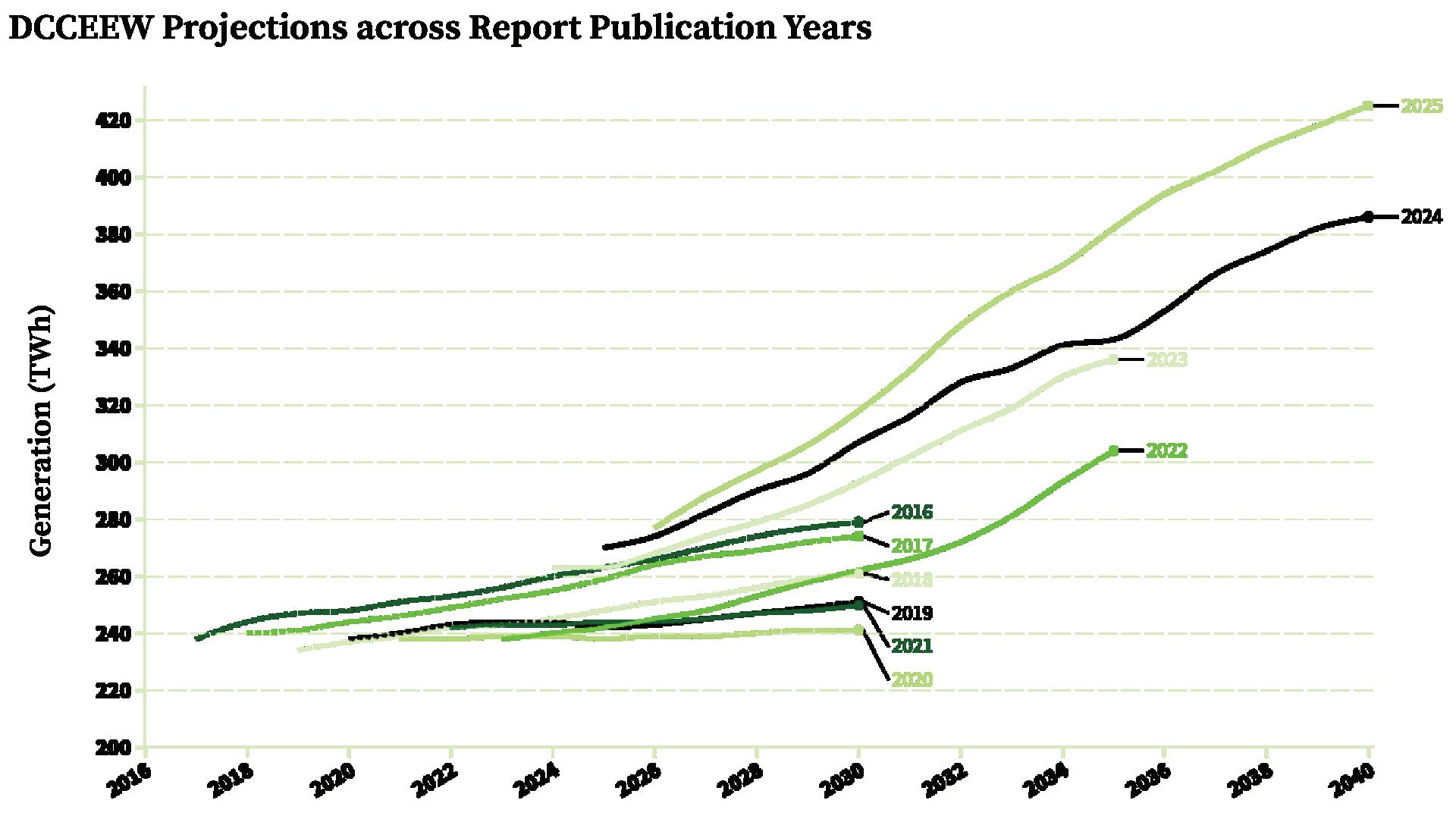
Fig 9: Australian Department of Climate Change, Energy, Environment and Water (DCCEW) electricity demand projections
Total projected power generation has been rising each year, for the past four years. This data covers Australia-wide electricity demand (NEM, WA, other grids)
Data source: Department of Climate Change, Energy, Environment and Water annual projections report, manually compiled.
This led the DCCEEW to state:
“Electricity emissions from 2035 to 2040 are projected to be higher than in the 2024 projections baseline scenario, due to changes to energy policy in Queensland and an assumed higher demand forecast in the NEM, mainly from data centres.”
As confirmed by Australia’s own government documents, and in the context of political pressure to extend coal plant lifespans amid insufficient renewable growth, the chances of data centres prolonging fossil fuel use on Australia’s power grid is very high indeed.
1.3 DATA CENTRE GREENWASHING WILL DELAY THE ENERGY TRANSITION
What would it take for data centres to truly drive
climate action?
As mentioned earlier in this report, technology companies and data centre operators often claim to be operating on “100% renewable energy”. While ‘carbon neutral’ claims and offset use has come under legal scrutiny57, the use of renewable energy certificates or power purchasing agreements to claim reductions in emissions is largely unregulated. Companies are essentially claiming to be covering all or most of their grid emissions impact with renewable energy, claims we contend in this section are questionable at the very least.
Data centre growth has also been presented by pro-data centre lobbyists as, potentially, a major driver of climate action and renewable energy growth in Australia, above and beyond covering company emissions58. This messaging has been reflected in statements by politicians, such as NSW Treasurer Daniel Mookhey’s “virtuous cycle”, published in the Sydney Morning Herald59:
57 2025, Australian Broadcasting Corporation, “EnergyAustralia apologises over claims of ‘greenwashing’ with Go Neutral products” https://www.abc.net.au/news/2025-05-19/energyaustralia-apologises-in-settlement-in-greenwashing-case/105308684
58 2026, Data Centres Australia, “Re: Submission to Public Accountability and Works Committee inquiry into Data Centres” https://www.parliament.nsw.gov.au/lcdocs/submissions/94922/0030%20 Data%20Centres%20Australia.pdf
59 2026, Sydney Morning Herland, Matt Wade and Alexandra Smith, “Your every swipe, tap and click goes through one of these buildings. They are also driving the NSW economy” https://www.smh. com.au/politics/nsw/your-every-swipe-tap-and-click-goes-through-one-of-these-buildings-theyare-also-driving-the-nsw-economy-20260320-p5qx3j.html
Data centres are presented as major drivers of renewable growth in Australia by politicians
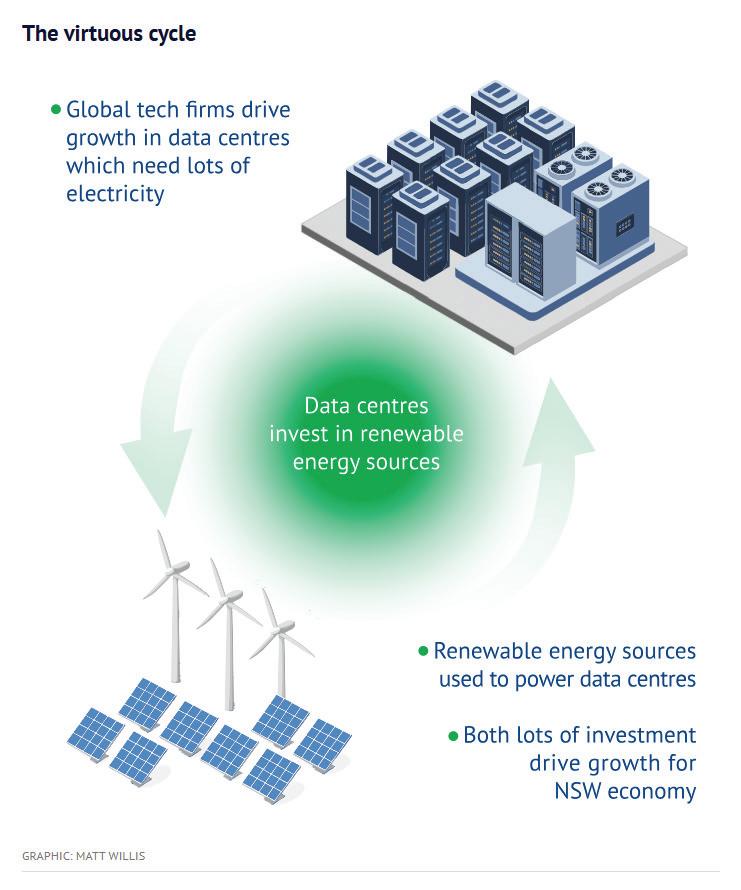
Fig 10: ‘Virtuous cycle’ claim, Sydney Morning Herald “If we get this right, what it means is NSW gets access to some of the world’s best technology for our economy, but we also are getting industry to pay for some of the capital investment that otherwise consumers would have to pay to fund the renewables transition” - NSW
Treasurer Daniel Mookhey
Data source: Sydney Morning Herald
The claim that data centres can serve as a major source of climate action comes at a time when installation of new clean generation is lagging far behind what is required to hit energy and climate targets60 Determining whether data centre growth will worsen emissions (and to what degree) is vital.
As mentioned earlier, the CEFC’s 2025 report61 highlights the growth in grid emissions thanks to this new demand spurring new generation from coal and gas power. The New South Wales government’s own data centre consultation paper62 states:
“Growth in energy demand from data centres that is not met by additional renewable energy generation would add to existing challenges for achieving NSW’s legislated 2030 and 2035 emissions reduction targets.”
The CEFC’s report also includes an estimate of the change in grid emissions without any mitigation actions by developers, and with a range of mitigation actions.
However, even the most ambitious scenarios for data-centre-driven renewable growth does little more than mitigate emissions impact; a far cry from the vision of data centres as ‘enablers’ of broader fossil fuel phase-out and energy transition. And any shortfall from this ideal level of new renewables results in material worsening of emissions.
The figure below shows the CEFC’s four examined scenarios. The first involves no new renewable energy built beyond the pipeline at the end of Q1 2025. The 2nd, 3rd and 4th scenarios all show an additional 3.2 gigawatts of new renewable energy, with three different levels of storage (0, 0.95 and 1.9 gigawatts respectively).
60 2026, Australian Financial Review, Ryan Cropp, “Zero for 15: Labor’s flagship renewable scheme hits a standstill” https://www.afr.com/policy/energy-and-climate/zero-for-15-labor-s-flagshiprenewable-scheme-hits-a-standstill-20260318-p5p9g2
61 2025, Clean Energy Finance Corporation, “Data centre growth and the energy transition” https:// www.cefc.com.au/insights/market-reports/data-centre-growth-and-the-energy-transition/
62 2026, New South Wales Government, “NSW Data Centre Consultation Paper” https://www. infrastructure.nsw.gov.au/expert-advice/nsw-data-centre-consultation-paper/
The downside of data centre growth is far worse than the upside, for emissions
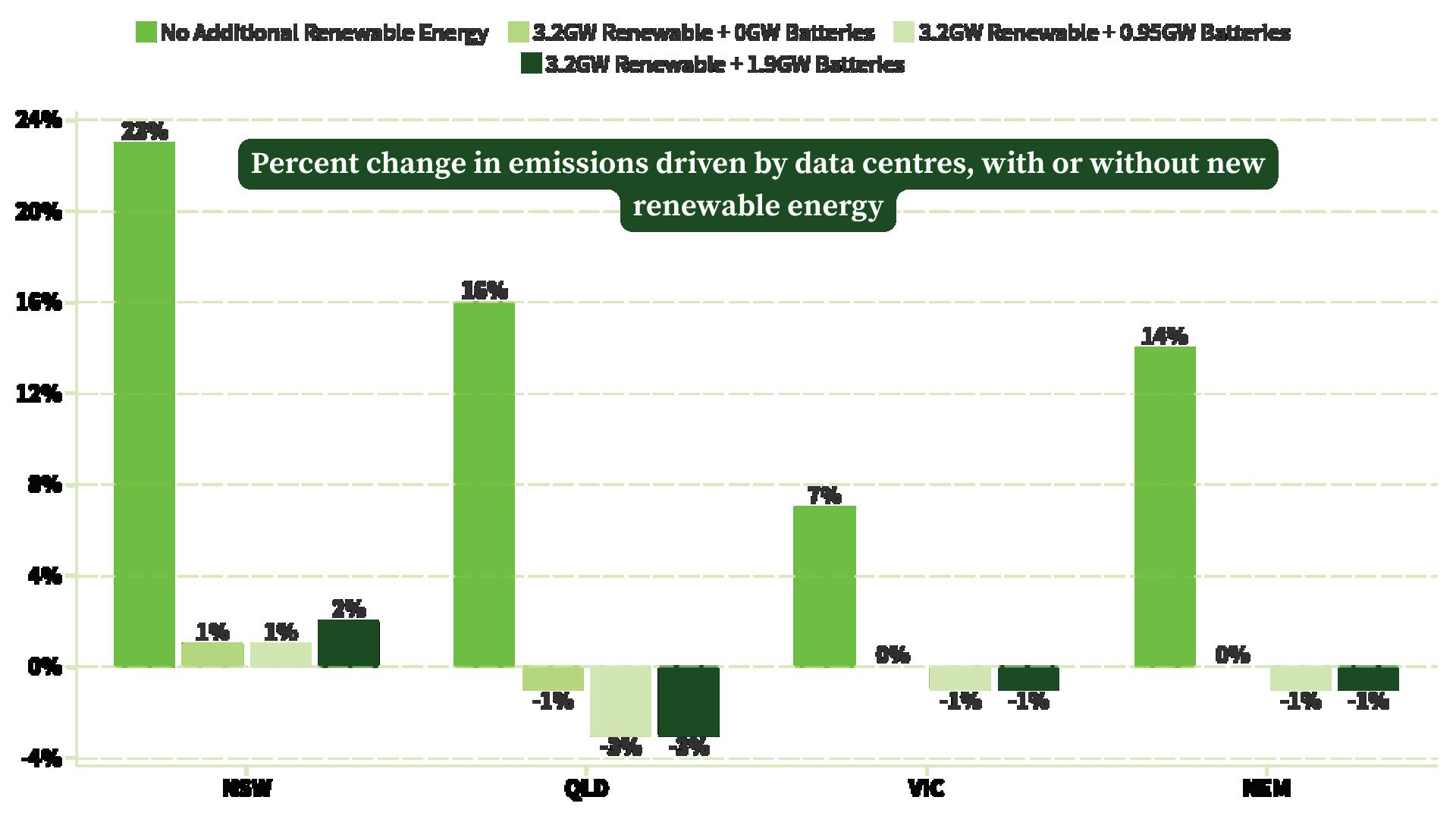
Fig 11: Baringa Report showing grid emissions by state When looking at emissions growth, the downside of data centre growth (without adequate renewable energy) is several times worse than the potential upside. In New South Wales, there is no upside even with 100% of new demand covered by renewables. Data source: Adapted from: Clean Energy Finance Corporation, Baringa, 2025, Getting the balance right: data centre growth and the energy transition.
If Australia’s data centre growth occurs without a significant increase in new renewable energy construction beyond what is already planned, there will be a 14% increase in the National Electricity Market’s total emissions (as the report states, “equivalent to an additional 5.86 million tonnes of carbon dioxide equivalent (Mt CO2-e) a year across the NEM”). In the best case scenario, with a large amount of new renewables and battery storage, grid emissions only fall by 1%. The downside is far greater than the upside.
Crucially, the CEFC report also shows that for data centres to truly help reduce fossil fuel use, they would need to cover their own demand with renewables and then build a significant extra amount on top of that.
‘Accelerating the energy transition’ by encouraging data centre growth is akin to trying to inspire faster runners in a race by moving the finish line further away. Even if it works, because you have changed the distance, the race will still take more time.
Australia’s data centre industry is overstating its role in renewable growth
The data centre lobby in Australia routinely claims the majority of their projects will be powered by 100% renewable energy. This is an important part of obtaining the political endorsement and social license required for the industry to expand further.
But because almost all proposed and operating data centres in Australia rely on the electricity grid, rather than, for example, dedicated Solar constructed to power it, those claims necessarily relate to how the companies suggest they have ‘adjusted’ their emissions statements. The logic of these claims is that certain types of purchases or deals play a key role in bringing new renewable energy online, and therefore, the companies claim the clean, emissions-free generation of those projects as their own, in their sustainability reports.
Data centres that claim to be mitigating their greenhouse gas emissions rely on three categories of ‘clean procurement’ to prove they are powered by 100% renewable energy. The quality and reliability of those categories varies widely (these are explained in more detail in Appendix 2):
1. Renewable energy credits and ‘guarantees of origin’ (REC)Generally, low quality claims often relating to older certificates created by already-built renewable energy generators. Unlikely to be truly ‘additional’ clean energy63.
2. Power Purchasing Agreements (PPA) - Long-term power purchasing deals are much more likely to help get renewable projects off the ground, but are sometimes made for projects either likely to go ahead anyway, or already operational, meaning transparent disclosure and proof of additionality are vital.
3. On-site generation - solar or wind literally built at the site of data centres, almost always truly ‘additional’ but often very small relative to consumption.
63 2022, Bjørn, A., Lloyd, S.M., Brander, M. et al. Renewable energy certificates threaten the integrity of corporate science-based targets. Nat. Clim. Chang. 12, 539–546 (2022). https://doi.org/10.1038/ s41558-022-01379-5
The table below is an examination of the claims of the main operators and customers of data centres in Australia, specifically to examine whether any present detailed justifications of truly ‘additional’ new renewable energy (critical for their claim to be operating on emissions-free power).
Table 1: Australian data centre operator and tech company commitments summary
Operator Commitment / Target Energy claim
AirTrunk 100% renewable matching by 2030, Net zero scope 1 and 2 by 2030
Claims to be 74% ‘renewable’ matched but does not provide details of PPAs, REC sourcing.
NextDC No climate target On-site renewables (0.17% of total consumption65)
CDC Net zero by 2030 (scopes 1,2 and partial 3, market-based only)
95.8% renewable matched
Verifiable, additional renewable energy?
listing of PPAs or information on REC purchases
Source Notes
2025 Sustainability Report64
renewable claims
NO
Large Scale Generation Certificates (LGCs) s + customer RECs only (no PPAs, no additionality disclosure)
2025 Sustainability Report66
2025 Sustainability report68
AirTrunk reports emissions in both scope 2 and 3, and only applies market-based adjustments to scope 3. REC purchases include landfill gas. Only 55MW on A Virtual Power Purchase Agreement (VPPA) in FY24.
No disclosure of scope 3 emissions data; claims “carbon neutral” under the controversial ‘climate active’ scheme, characterised by the use of low integrity offsets67
Adjustments to GHGs in scopes 2 and 3, similar to AirTrunk.
64 2025, Airtrunk Sustainability report https://airtrunk.com/insights/airtrunk-fy25-sustainability-report/
65 2025 Next DC sustainability report; 525,291 MWh energy use vs 884,955 KWh renewable consumption
66 2025 NextDC Sustainability Report https://nextdc.com/hubfs/ASX%20Announcements/FY25%20 Environmental%2C%20Social%20and%20Governance%20Report.pdf
67 https://reneweconomy.com.au/is-australias-carbon-neutral-scheme-being-abandoned/
68 2025 CDC Sustainability Report https://cdc.com/resources/insights-and-reports/2025sustainability-update/
Operator Commitment / Target Energy claim
Equinix “Reduce absolute Scope 1 and 2 GHG emissions 50% by 2030 from a 2019 base year” Reduce absolute Scope 3 emissions from fuel and energy related activities 50% by 2030 from a 2019 base year”
96% renewable ‘coverage’
Verifiable, additional renewable energy?
NO 11% PPAs in FY24 but no information on additionality of those PPAs
Source Notes
FY24 Sustainability report69
Claim of a large pipeline of new PPAs to become active between 2025 and 2029 but no listing of projects or more information. No scope 3 categories disclosed, but does include regional breakdowns.
Amazon Net zero by 2040 100% renewable
Microsoft Carbon negative by 2030 100% renewable
NO (partial) DCA report lists 8 operational PPAs in Aus for Amazon but no information on additionality
NO (partial) Claim 300MW Walla Walla project was additional in quote from solar operator FRV, but this a small fraction of demand
Data Centres Australia / Amazon Sustainability Report70
Microsoft sustainability report / Website71
Some recent projects are more likely to be additional as they are in early-stage development, but no further information is provided.
Microsoft does not disclose energy consumption, or the volume of truly additional renewable energy for Australia.
69 2025 Equinix sustainability report https://www.equinix.com/about/sustainability/annual-report
70 2025 Amazon reports https://sustainability.aboutamazon.com/reports
71 2025 Microsoft sustainability report https://www.microsoft.com/en-us/corporate-responsibility/ sustainability/report/
It is reasonable to assume most purchases of renewable credits are not meaningful enough to warrant a claim of zero emissions for gridbased energy consumption, due to the aforementioned issues (and explored further in Appendix 2).
However, even for the purportedly ‘higher quality’ method of procurement - the use of PPAs - it is difficult to assess whether those deals truly resulted in additional renewable energy generation that would not have occurred in the absence of the PPA. There is no centralised, transparent disclosure72 of power purchasing agreements in Australia, beyond what is voluntarily disclosed by the companies in their marketing materials.
While technology company PPAs are playing some role in renewable energy growth in Australia, the question of how this relates to data centre growth, emissions and renewable targets can only be answered with transparent, full disclosure of additionality claims.
72 2026, The Energy, Kate Burgess, “Data centres line up for renewables contracts” https:// theenergy.co/article/data-centres-ppas
© Greenpeace
Amazon’s weak clean technology claims
Amazon Australia announced in April 2026 “its biggest renewable energy investment in the country yet— nine new Power Purchase Agreements (PPAs) that will add 430 megawatts (MW) of clean energy to the grid”. Amazon told Guardian Australia73 eight of the nine agreements were entered in the “development stage”, but no further evidence was provided. The largest of these projects is a PPA with Golden Plains 2 wind farm. Amazon has contracted 201.8 megawatts of this 577 megawatt project.
But was Amazon’s April 2026 purchasing deal the crucial element in this project? In fact by the time of this announcement, the wind farm was already generating power in the commissioning stages. Construction began in April 202374, and other reports revealed75 the project relied on government support such as a loan from the Clean Energy Finance Corporation and the Capacity Investment Scheme to reach this stage. In fact, TagEnergy explicitly stated76 they did not need PPAs for this project:
“Andrew Riggs, the managing partner for Australia with TagEnergy, crowed about the project’s “ability to progressively contract energy production during construction and operation”, saying that it “underscores the success of TagEnergy’s investment approach that saw it achieve financial close on a merchant basis in late 2022 without the need for PPAs.”
Amazon’s PPA deal allows the company to claim their grid power consumption is zero emissions for the equivalent energy generated from the capacity in their deal. But if the project would have gone ahead in 2022, regardless of Amazon’s deal announced in 2026, how can they claim to have been responsible for the project’s manifestation? While the prospect of potential future deals may have boosted the case for this wind farm, Amazon still cannot logically claim zero emissions power based on this procurement deal.
More than two thirds of the capacity in Amazon’s announcement relates to what seems to be a strange claim of time travel. It is an illustration of how these procurement deals result in impressive numbers, yet Australia continues to see wildly insufficient renewable energy growth.
73 2026, Guardian Australia, Josh Taylor, “Amazon enters agreements for nine Australian renewable projects to power datacentres” https://www.theguardian.com/technology/2026/apr/15/amazonenters-agreements-nine-australian-renewable-projects-power-datacentres
74 2023, RenewEconomy, “First turbine goes up at Australia’s largest wind farm, foundations laid for big battery” https://reneweconomy.com.au/first-turbine-goes-up-at-australias-largest-wind-farmfoundations-laid-for-big-battery/
75 2024, RenewEconomy, “Works begin on second stage of Golden Plains wind farm – largest in Southern Hemisphere” “https://reneweconomy.com.au/works-begin-on-second-stage-of-goldenplains-wind-farm-largest-in-southern-hemisphere/
76 2024, RenewEconomy, “Massive Golden Plains wind farm snags a second PPA” https:// reneweconomy.com.au/massive-golden-plains-wind-farm-snags-a-second-ppa/
The Climate Council’s submission77 to the NSW inquiry into data centres confirms that: “in recent years there has been a decline in corporate PPAs underwriting new projects, with most PPAs attached to existing renewable energy generation assets or underwritten by state-owned utilities”. Recently, respected economist and chair of the Superpower Institute Rod Sims told78 a panel that:
“The issue is that the PPAs, I think, are not going to be additional. I mean, unless they’re behind the meter, they’re really not going to be additional power. So it’s really ‘renewables for data centres’ and then there’s not enough power left over.”
The renewable procurement methods relied upon by the data centre industry to prove their green credentials in Australia are not reliable indicators of the genuine use of clean energy.
The implication of this is the growth of data centres in Australia will certainly be accompanied by an increase in carbon emissions.
The industry group’s resistance to mandatory renewable energy
The lobby group Data Centres Australia (DCA) claims that most existing data centre power consumption in Australia is “offset” or adjusted by a combination of PPAs and the purchase of renewable energy certificates, with the remainder being ordinary consumption of power from the grid.
Renewable energy credits are problematic due to the fact they are extremely unlikely to have been crucial in bringing about the establishment of new, truly additional renewable energy projects. PPAs can potentially show additionality, but that must be substantiated clearly. What this shows is that the DCA’s claim the industry already deals with a large proportion of its emissions is weak:
77 2026, Climate Council, “Climate Council submission - NSW Inquiry into data centres - March 2026” https://www.climatecouncil.org.au/wp-content/uploads/2026/04/Climate-Councilsubmission-NSW-Inquiry-into-data-centres-March-2026.pdf
78 2026, Monash Climate Communication Hub, timestamp: 18:49 “Data centres and Australia’s energy transition | Rapid Response Briefing” https://www.youtube.com/ watch?v=HXb0FB37AyY&t=1120s
Data centre lobby group claims are based on weak evidence
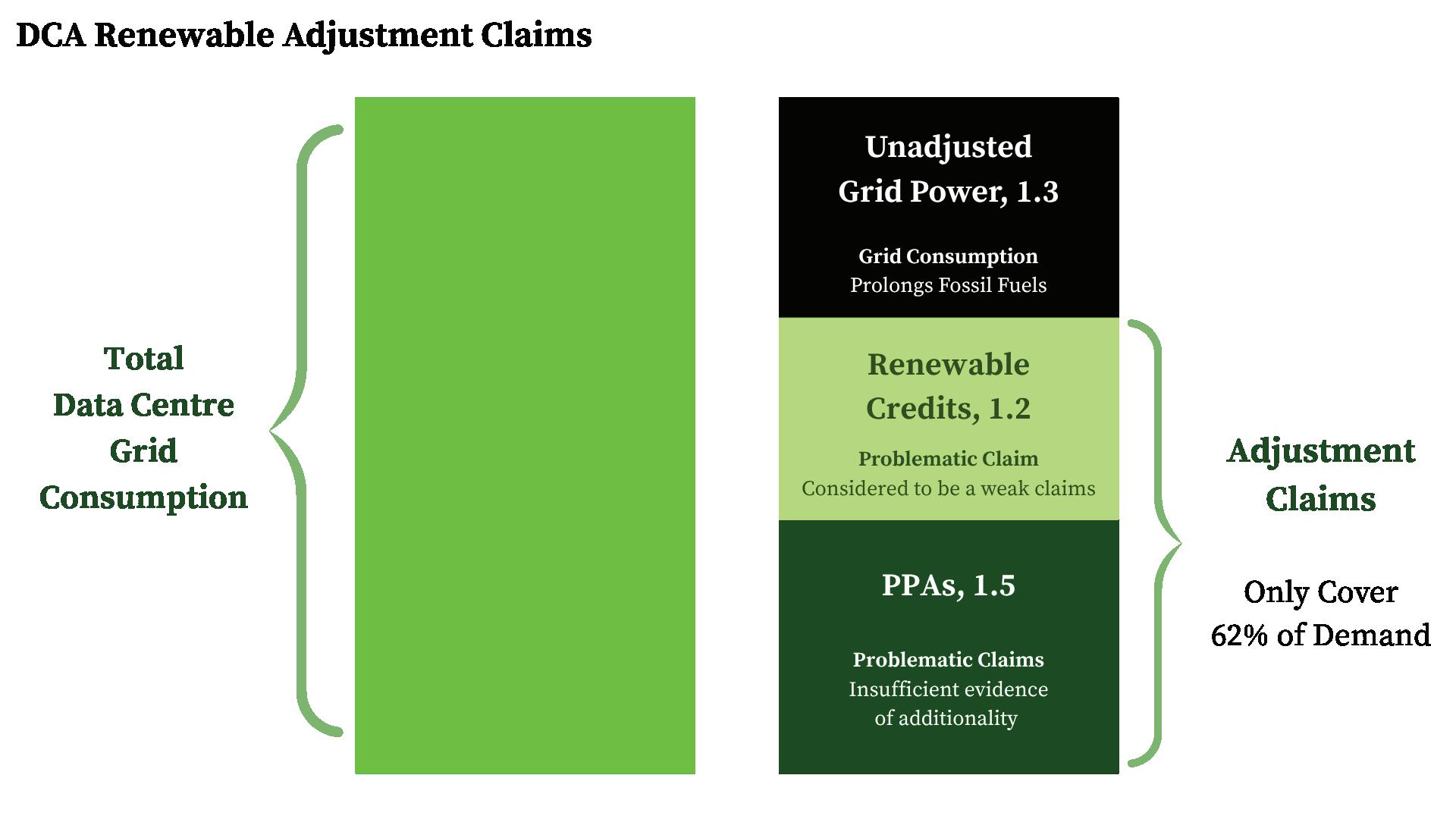
Fig 12: Claims of renewable energy coverage by Data Centres Australia
Data Centres Australia suggests that the majority of grid-related emissions from data centres are dealt with through renewable energy adjustment claims. However renewable energy credits are unlikely to be truly additional, and there is no evidence provided by companies that power purchasing agreements related to new generation. All figures are represented in annual terawatthours (TWh).
Data source: Data Centres Australia (DCA) & Mandala Partners, Data Centres as Enabling Infrastructure (2025)
Even if we were to accept at face value the claim that adjustments in the form of certificates or PPAs for renewable energy worked as claimed (creating new, additional renewable energy), these procurement policies still only partially cover the impact of new data centre demand on the grid. Which means current data centre demand induces a net increase in emissions.
To extrapolate this current situation into the future, even if 62% of Australian data centres literally built new wind and solar farms next door to cover their demand (to be clear, they are not promising to do that), the rest of their formidable power consumption would draw from Australia’s mostly fossil-fuelled power grid as it is currently constituted. The net effect of this industry would then be an increase in emissions. As we have shown in this section, the reality is likely far worse, due to the weakness of adjustment claims.
When pressed to adopt a more easily proven commitment to source renewable energy to cover their own emissions, the industry has pushed back forcefully. In response to a call from a broad coalition of environmental groups, clean energy industry bodies and unions for real additional 100% renewable procurement for data centres in Australia79, DCA replied by firmly decrying80 the call:
“Suggestions to match 100% from day one are disconnected from renewable project development timelines, particularly the 5-10 year lead times for transmission and [renewable energy zone] augmentations. The bottleneck is not off-take – it is grid connection and approvals. In co-location data centre environments, PPAs are typically joint arrangements with customers; and shifting the entire obligation to facility operators fundamentally changes risk allocation”
79 2026, Carbon Zero Initiative, “Public Interest Principles for Data Centre” https://carbonzero.org. au/data-centres
80 2026, Data Centres Australia, “Principles in isolation can’t achieve sustainable outcome” https:// datacentres.org.au/principles-in-isolation-cant-achieve-sustainable-outcome/
Data Center in Ashburn in USA © Greenpeace / Robert Meyers
This is a clear admission that rapid data centre growth will not be covered by renewable energy. Furthermore, tech companies have been clear (internationally and in Australia) that their preference is not to use renewable energy at all. The DCA submission to the NSW Inquiry into data centres reveals even the industry’s own lobby group does not believe AI inference, where chatbots respond in real-time to questions from users, is compatible with renewable energy zones:
“Not all data centre workloads are suited to REZ locations. Traditional cloud and AI inferencing workloads require lowlatency connectivity to end users and interconnection with other data centres, making urban-fringe locations essential. These facilities also need redundant fibre paths, proximity to network exchanges, and clustering for availability zone resilience”
Technology companies cheerfully talk about renewable energy, but switch to skepticism when faced with being held to those statements. If at this early stage, the data centre industry in Australia is already resisting rules which would ensure sustainability goals translate into real, additional clean energy, while also maintaining carve-outs for certain kinds of data centres to rely on fossil fuels, what confidence can Australian policymakers have that data centres will not delay the energy transition?
AWS Northern Virginia Data Center © Tim Aubry / Greenpeace
Australia’s data centre industry will follow the global pattern of failing to fund enough renewables
There is a clear structural global trend where rapid data centre growth does not come accompanied by technology companies and data centre developers funding an equivalent amount of new renewable energy.
Hannah Daly, Professor of Sustainable Energy at University College Cork, estimated that for Ireland (one of the most significant regions of data centre growth in the world as a proportion of total demand), “only 16% of the new electricity demand from data centres since 2020 [to 2023] was matched by additional wind generation financed through [corporate power purchasing agreements] over that time”81.
As the latest report82 from the IEA states, just under half of total global commercial data centre demand is covered by power purchasing agreements, though it may exceed half by 2027. That same report also details how PPAs are being signed for proposed and untested new nuclear power technologies such as ‘small modular reactors’ (SMRs) or to re-open or extend existing nuclear power plants. Recently, Meta signed a PPA for a pre-existing nuclear plant, meaning 100% of that “clean” energy would be non-additional and would have been generated anyway. As Princeton researcher Jesse Jenkins stated83:
“You can’t add a Chicago’s worth of demand to the grid and NOT also add a Chicago’s worth of new supply and expect it to all be fine”
Indeed, more than 80% of hyperscaler power procurement deals so far in 202684 relate to the procurement of on-site fossil gas power stations (explored later in this report), rather than renewable energy PPAs.
81 2024, Hannah Daly, “Unfettered data centre growth works against Ireland’s climate obligations” https://hannahdaly.ie/2024-10-18-data-centres-revisited/
82 2026, International Energy Agency, “Key questions on energy and AI” https://www.iea.org/reports/ key-questions-on-energy-and-ai
83 2026, LinkedIn, Jesse Jenkins https://www.linkedin.com/feed/update/ urn:li:activity:7415496770622746624/
84 2026, Latitude Intelligence, “Gas for data centres, bridge or foundation?” https://mail. latitudemedia.com/gas-for-data-centers-bridge-or-foundation
Most of the new power sourced by big tech firms is for gas.
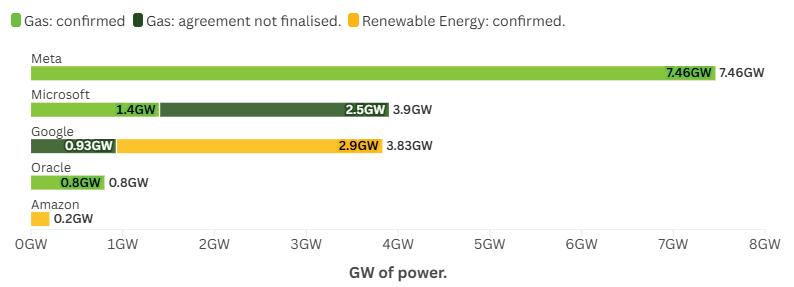
Fig 13: Hyperscalers’ 2026 Power Source Agreements
This graph shows the preference for gas compared to renewable energy for powering data centres. Data source: Adapted from Latitude Media, “Hyperscalers say gas is a bridge — but no one says where it ends,” Latitude Media (April 2026)
The chances are high that Australia’s data centre industry, including many companies responsible for weak renewable claims and insufficient new-build elsewhere in the world, will enact the same trend of only covering a small fraction of demand with renewables, resulting in a clear net worsening of emissions.

Still from “The Server Room’s Deadly Secret” Web Videow © Greenpeace / Jungyeob Ji
SECTION 2: BIG TECH AND THE FOSSIL GAS LOBBY
2.1 THE GLOBAL DATA CENTRE GAS FRENZY
The frenzied speed at which hyperscalers (and the data centre operators which are symbiotically linked to them) are expanding has driven a mad scramble for energy resources. The utility scale generation of electricity, and the complexities of managing a grid shared with other industries and households, means it is not straightforward or fast to add new electricity in the quantities AI companies demand. Given the billions flowing into the sector, and the perceived first-mover advantage for AI companies, this has led to a wild-west of on-site generation for data centres, especially using fossil fuels like gas and diesel. This is a structural feature of data centre growth. The companies involved are the same all around the world, and they adopt the same tactics wherever they operate. This trend has materialised most intensely in the United States, where developers are skipping congested grid connection queues by building on-site gas turbines in spite of the cost and the pollution they create.
Dampier Pluto Gas Plant in Western Australia © Alex Westover / Greenpeace
OpenAI’s Stargate project in New Mexico, for instance, would emit around 14 MTCO2-e per year from its dedicated fossil gas power plant according to one analyst85, who also states those emissions would wipe out 20 years of climate progress in New Mexico, “a location with more land and solar potential than nearly anywhere on Earth and adjacent to a grid that could be 100% renewable by 2040”. A single off-grid fossil-fuelled Microsoft project in West Virginia would increase the company’s total worldwide emissions by 44%86, equivalent to adding 6 million cars to the road. One analysis has found 30% of all planned data centre capacity in the US is proposing ‘behind the meter’ generation, rather than grid connection, approximately 56 gigawatts. Of that, 90% was announced in 2025, and 75% of identifiable ‘behind the meter’ capacity was fossil fuelled88.
Car engines to power data centres
While recent reports cast some skepticism on all those behindthe-meter power plants proceeding to operation due to a supply crunch for fossil gas turbines typically used for gas fired generation66 , another analysis by analytics firm Cleanview89 highlights the fact data centre developers are turning to significantly dirtier turbine types not originally intended for utility scale electricity generation. The report details mobile gas generators “strapped to semitrucks”, “aeroderivative turbines originally designed for aircraft and warships”, and a company that sells cruise ship engines that had struck a deal with a data centre.
85 2026, Cleanview, Michael Thomas, LinkedIn https://www.linkedin.com/posts/michael-thomas4b01054a_i-went-on-npr-this-weekend-to-talk-about-activity-7436808889376940032-sdPw
86 2026, Stand.Earth, Shane Reese, “Microsoft’s annual pollution to skyrocket 44% from single off-grid gas-powered project in WV; full 8GW project adds equivalent of 6 million cars to highway, according to new analysis” https://stand.earth/press-releases/microsofts-annual-pollution-toskyrocket-44-from-single-off-grid-gas-powered-project-in-wv-full-8gw-project-adds-equivalentof-6-million-cars-to-highway-according-to-new-analysis/
87 2026, Michael Thomas / Cleanview, https://www.linkedin.com/posts/michaelthomas-4b01054a_many-data-centers-claim-to-use-clean-energy-activity7424499740765200384-AMzC?utm_source=share&utm_medium=member_ desktop&rcm=ACoAABBbg1kBL4bGVwJOur529vIonS7OTt82ADg
88 https://www.reuters.com/markets/commodities/us-driven-gas-turbine-crunch-may-speedglobal-clean-power-uptake-2026-02-03/
89 2026, Cleanview, Michael Thomas “Bypassing the Grid: How Data Centers Are Building Their Own Power Plants” https://newsletter.cleanview.co/p/bypassing-the-grid-how-data-centers
OpenAI’s Abilene, Texas facility has acquired 29 “aeroderivative” gas turbines, which are essentially modified jet engines. These single cycle engines are 40% less efficient at converting gas to electricity than combined cycle gas generation plants,90 and emit 50% more carbon pollution per kilowatt hour of electricity generated.91 Meta’s El Paso, Texas data centre acquired 813 “gas fired reciprocating engines” - essentially the same kind of engine that powers a passenger car. Meta’s fleet will produce more carbon dioxide than El Paso’s three existing gas power plants combined.92
It is important to note that Meta did not initially disclose the company intended to bring whatever engines they could procure to run the data centre. The company first told the local community its data centre would run on clean energy. A community advocate, Verónica Carbajal, recounts:
“We were not told that El Paso Electric would be building a power plant powered by fossil fuel…to the contrary, we were told that Meta is going green and would rely on renewable energy. When we looked at the contracts ourselves, we realized that was an illusion.”93
90 2024, Powermag, https://www.powermag.com/simple-cycle-combined-cycle-or-a-hybridapproach/
91 2024, Araner https://www.araner.com/blog/combined-cycle-gas-turbine-advantages-anddisadvantages
92 2026, El Chuqueno, “People Rising: Snapshots from El Paso’s Data Center Battles “ https:// elchuqueno.com/people-rising-snapshots-from-el-pasos-data-center-battles/
93 2026, Data Center Dynamics, “Meta to deploy 366MW of modular gas units to power 1GW data center in El Paso, Texas” https://www.datacenterdynamics.com/en/news/meta-to-deploy-366mwof-modular-gas-units-to-power-1gw-data-center-in-el-paso-texas/
When Meta eventually filed its paperwork, it claimed installing largescale solar and batteries would require “thousands of acres adjacent to the Data Centre site which are not available” and that normal gas turbines would take too long to procure.94
A recent report from the IEA95 used satellite imagery analysis to find that in one year, several gigawatts of gas capacity have progressed from the ‘preconstruction’ stage to site preparations and visible buildings, suggesting that at least some of this massive boom in fossil gas is very real indeed. Using the IEA’s projections of installed on-site gas capacity climbing to between 15 and 27 gigawatts by 2030, it is projected total global emissions just from on-site gas for data centres might exceed the total power sector emissions of the United Kingdom, by 2030.
America’s on-site gas power boom will be massive
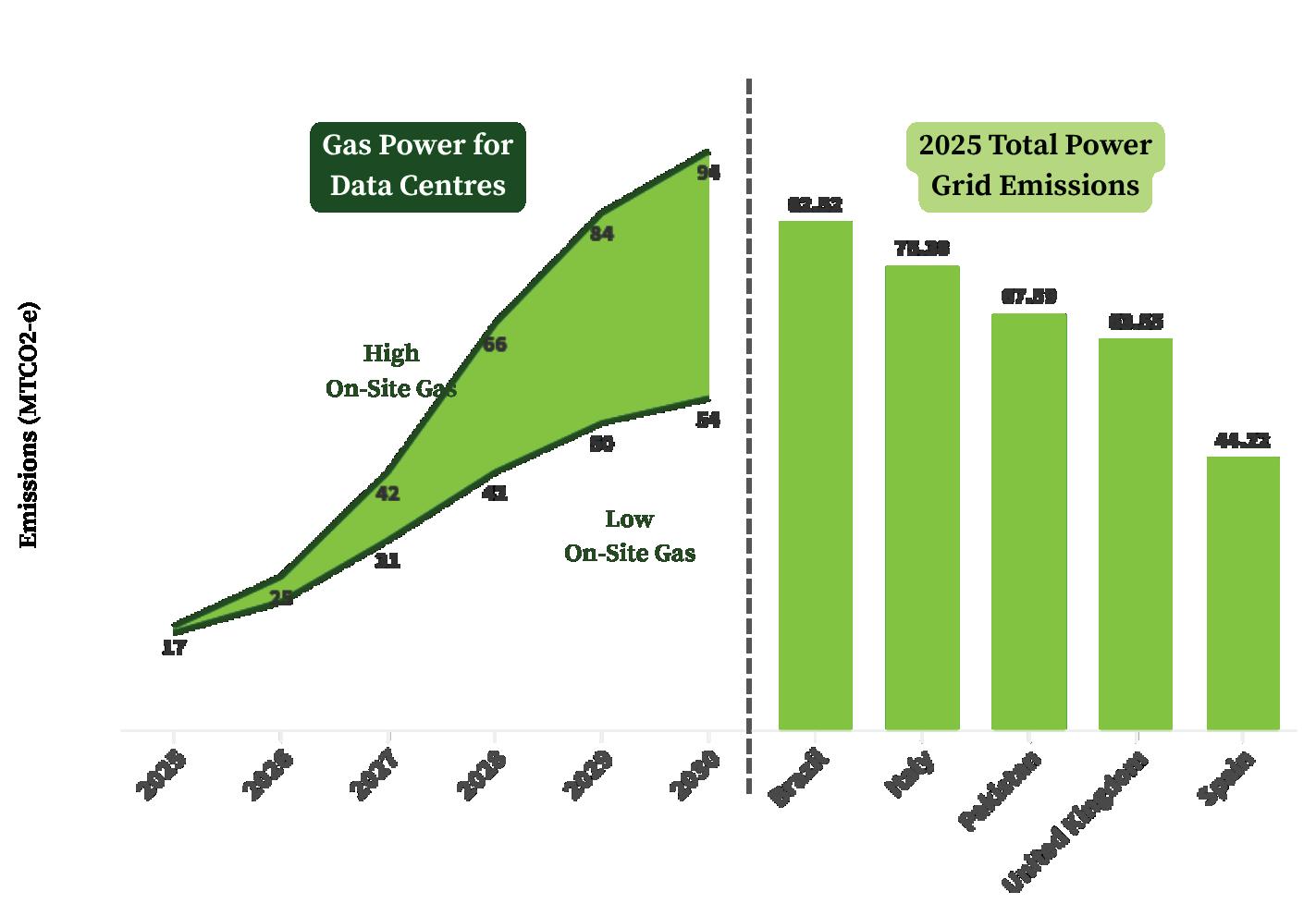
Fig 14: America’s on-site gas power boom will be massive On-site gas power, predominantly sited in the United States, will likely exceed the total power grid emissions of many countries.
Data source: IEA Key questions on Energy and AI + assumed emissions intensity of 0.46 tonnes of carbon dioxide equivalent per kilowatt hour and 90% capacity factor for on-site gas turbines. Total country power sector emissions from Ember’s 2026 Global Electricity Review
94 2026, Inside Climate News, “Meta Wants Data Center in Sunny El Paso to Rely on Natural Gas” https://insideclimatenews.org/news/21012026/meta-data-center-in-sunny-el-paso-will-rely-onnatural-gas/
95 2026, International Energy Agency, “Key questions on energy and AI” https://www.iea.org/reports/ key-questions-on-energy-and-ai
An analysis published in Wired Magazine96 in April 2026 found that, collectively, data centre projects in the United States relying on gas could emit more than 129 million tonnes of greenhouse gases when completed, with many individual projects emitting more than entire countries. While not all of these projects will go ahead, even a small percentage would still see country-sized additions of new greenhouse gases.
The graphic below is adapted from Wired’s report:
Some individual gas-powered data centres in the United States will emit more than large countries
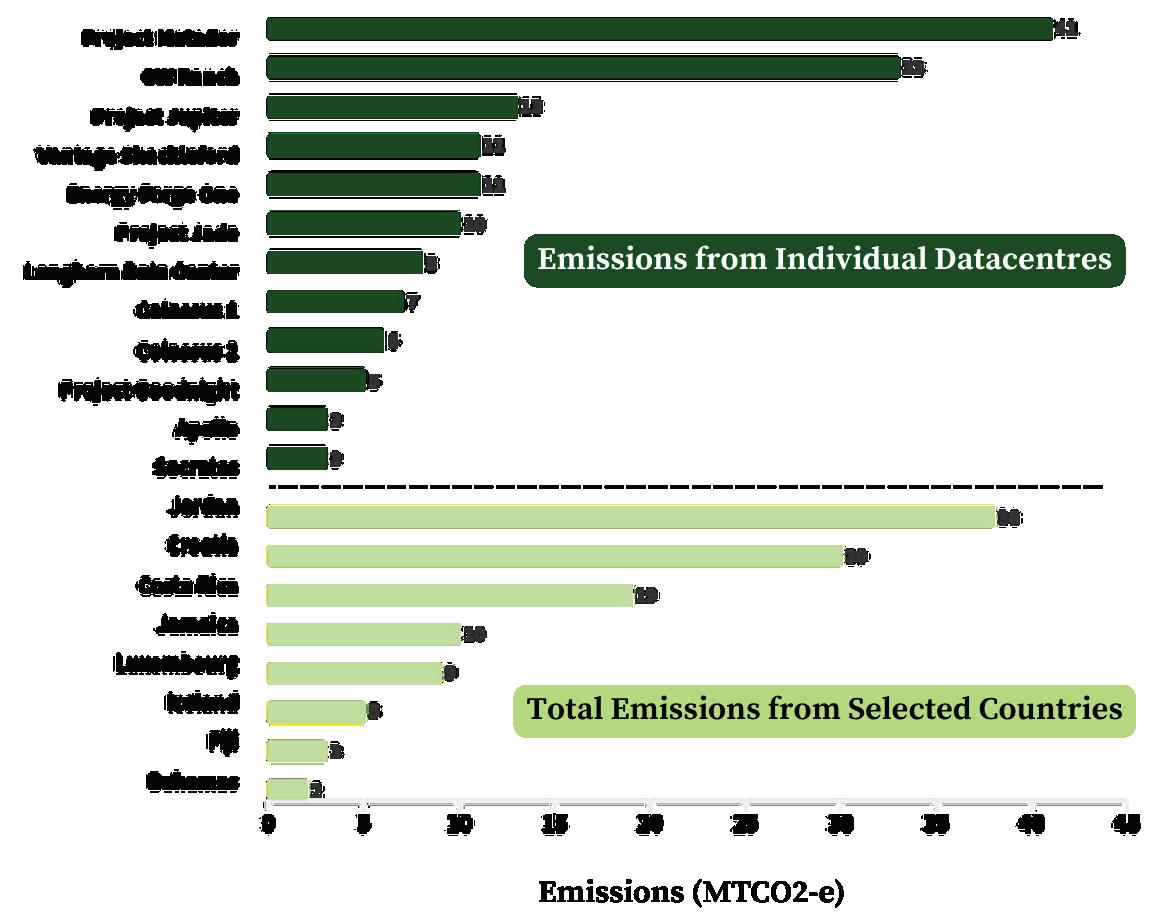
Fig 15: America’s on-site gas power boom will be massive
Proposed on-site gas plants are literally country-sized facilities, in terms of their greenhouse gas emissions footprint
Data source: Adapted from Wired Magazine, 2026, Molly Taft, “New Gas-Powered Data Centers Could Emit More Greenhouse Gases Than Entire Nations” and Cleanview Estimates.
96 2026, Wired Magazine, Molly Taft, “New Gas-Powered Data Centers Could Emit More Greenhouse Gases Than Entire Nations” https://www.wired.com/story/new-gas-powered-data-centers-couldemit-more-greenhouse-gases-than-entire-nations/
Notably, this trend relates to other gas infrastructure. A recent article found that in the United States, an AI data centre ‘power wave’ is part of why “the nation’s natural gas pipeline build-out is looking at its biggest growth surge in nearly 20 years—since the beginning of the shale gas boom”97
Though much of this new gas demand has been concentrated in the United States, this trend is spreading to other regions. A 110 megawatt facility in Dublin, Ireland, will be powered by off grid gas98. Another Irish project denied a grid connection is also set to install gas99. In the United Kingdom, five data centres with a collective capacity of 2.5 gigawatts have enquired about connecting into the gas pipeline grid rather than the power grid100. Also in the UK, the country’s first “nationally significant” (meaning planning decisions rest with the federal government) data centre is planning on site gas generation between 270 and 350 megawatts101. At a data centre conference in Europe, gas turbine manufacturers were quoted102 making remarkable statements such as the quote below, from UK-based manufacturer Langley Holdings (which also sponsored the conference):
“I just think the American market is ahead of us [and] the same thing is going to happen here...it just will take a bit longer and it will be a bit harder because more people will be saying, ‘hang on a minute, we don’t want to be burning greenhouse gasses.’”
97 2026, Fortune Magazine, Jordan Blum, “Data centers and gas demand make boring pipelines great again” https://fortune.com/2026/04/11/data-centers-gas-demand-make-boring-pipelinesgreat-again/
98 2026, RTE, “Off-grid Dublin data centre fuelled by own power plant” https://www.rte.ie/news/ business/2026/0312/1562943-dublin-data-centre/
99 2025, Data Centre Dynamics, “Digital Realty to deploy gas power plant for data center in Dublin, Ireland” https://www.datacenterdynamics.com/en/news/digital-realty-to-deploy-gas-power-plantfor-data-center-in-dublin-ireland/
100 2025, Data Centre Dynamics, “Five data centers inquire about connecting to UK gas pipelines - report” https://www.datacenterdynamics.com/en/news/five-data-centers-inquire-aboutconnecting-to-uk-gas-pipelines-report/
101 2026, The Times, “UK’s first major AI data centre on collision course with net zero” https://www. thetimes.com/business/companies-markets/article/gas-supply-data-centre-net-zero-7s7kqzpr0
102 2026, DeSmog, Rei Takver, “Inside the Plot to Cover Europe with Gas-Powered AI Data Centres” https://www.desmog.com/2026/04/29/inside-the-plot-to-cover-europe-with-gas-powered-aidata-centres/
In late March 2026, it was revealed that Canada’s Prime Minister Mark Carney massively weakened clean power requirements to allow for gas-fired data centre projects, after intense lobbying from a fossil fuel company103. Canada’s largest data centre project just saw its planned capacity rise from 7.5 to 9 gigawatts, set to be pumping out enough greenhouse gas emissions to fully reverse the emissions savings from Alberta’s phase-out of coal from 2005 to 2023104.
Unless stronger regulations are implemented now, Australia is likely to follow the trends shown in many other countries (not just the United States). In addition to the presence of large American technology corporations, countries like Canada and the United Kingdom share commonalities with Australia’s political, corporate and social make up. These are warning signs for Australia that must be addressed early on.
Visit to the Burrup Peninsula, Western Australia © Greenpeace
103 2026, The Walrus, “After Intense Lobbying, Carney Allows Gas-Powered Data Centres in Alberta” https://thewalrus.ca/after-intense-lobbying-carney-allows-gas-powered-data-centres-in-alberta/ 104 2025, The Energy Mix, “#Encore: EXCLUSIVE: O’Leary’s Gas-Powered Data Centre Emissions Could Wipe Out Alberta’s Coal Phaseout Gains” https://www.theenergymix.com/encore-exclusiveolearys-gas-powered-data-centre-emissions-could-wipe-out-albertas-coal-phaseout-gains/
2.2 AN AUSTRALIAN DATA CENTRE GAS BOOM WOULD BE A CLIMATE CATASTROPHE
The early signs of a data centre gas boom
in Australia
With regards to Australia’s data centre development, most planned projects are grid-connected. The CEFC’s recent estimate of potential greenhouse gas emissions cited earlier in this report relates exclusively to increased emissions on the power grid.
However, the chances of a US-style off-grid gas boom are growing, as this is a tempting mode of rushed data centre expansion. A ‘shadow grid’ of fossil fuelled power stations has the ‘advantage’ for data centres of avoiding pushback about increased electricity bills whilst also serving as a major source of new demand for the gas industry. Compiled below are several early-stage examples of direct gas involvement in planned Australian data centre capacity:
Table 2: Australian gas-fired data centre projects
“The intersection of unconventional gas development with data centre power demand is another attractive opportunity for integrated development strategies. The Beetaloo Basin's resources position it favourably for co-located facilities” “I can see a world where we put on 5 gigawatts of data centres in the next 10 years”
Tamboran CEO Joel Riddle, June 2025105
in
megawatt became operational in April 2026, with plans for expansion106
“In a departure from traditional gas-to-pipeline models, Vault Energy intends to use the gas produced onsite to generate power for modular, containerised data centres”
Petroleum Australia107
105 2025, Joel Riddle https://www.rbccm.com/en/insights/2025/06/tamborans-strategy-to-unlockaustralias-natural-gas-potential
106 2026, Data Centre Dynamics “Pilot Energy installs 1MW data center module at former oil processing facility in Western Australia” https://www.datacenterdynamics.com/en/news/pilot-energyinstalls-1mw-data-center-module-at-former-oil-processing-facility-in-western-australia/
107 2026, Petroleum Australia, “Vintage and Vault sign gas sales agreement for Australia’s first well to wire project” https://petroleumaustralia.com.au/projects/vintage-and-vault-sign-gas-salesagreement-for-australias-first-well-to-wire-project/
Beetaloo compute zone
Tamboran
Tamboran, one of Australia’s largest gas suppliers, has suggested plans for 5 gigawatts of data centres to be built over the next ten years. It is estimated this would emit around 25.5 megatonnes of CO2-e if powered fully by gas, higher than the total emissions of the entire Northern Territory.
The ‘Southern Highlands Data Campus Power Station’ is a proposed 673 megawatt fossil gas power station in New South Wales. Put forward by ‘Cloud Carrier’108 to power an expansion of their data centre capacity, the power plant would bring the project's capacity to 700 megawatts in total.
The project has not yet published an Environmental Impact Statement (EIS), however a September 2025 ‘Request for SEARs’ claims “the proposed natural gas generation is expected to produce lower greenhouse gas emissions than the current coal-dominated grid, resulting in a measurable improvement in overall emissions performance”.
This statement is problematic, to say the least. This claim does not incorporate the ‘upstream’ emissions associated with the extraction, transport and processing of gas, which a recent study109 found is far higher than reported in Australia.
It is almost impossible the addition of a 700 megawatt gas-fired power station will lead to a net reduction in greenhouse gas emissions on the New South Wales power grid. Primarily, this generation is serving new demand rather than replacing coal-fired power, and as such, these emissions will be truly ‘additional’. Even putting that aside, there is a material chance the NSW power grid will see an emissions intensity well below that of the reciprocating engine gas turbines proposed for this facility this year, in 2026, according to the latest projections from the Australian Energy Market Operator110. What this means is that the site’s estimated emissions will be far higher than if the project had been connected to the power grid:
108 2026, Australian Broadcasting Corporation, “Cloud Carrier proposes gas-fired power station to power Moss Vale AI data centre” https://www.abc.net.au/news/2026-03-04/gas-plant-ai-datacentre-moss-vale/106405944
109 2026, International Energy Agency, “Global methane tracker” https://www.iea.org/reports/globalmethane-tracker-2026
110 2026, Australian Energy Market Operator, “Draft 2026 Integrated System Plan”, accessed via OpenNEM interface https://openelectricity.org.au/scenarios
Cloud Carrier’s estimated emissions running on gas will be far higher than if it connects to the grid
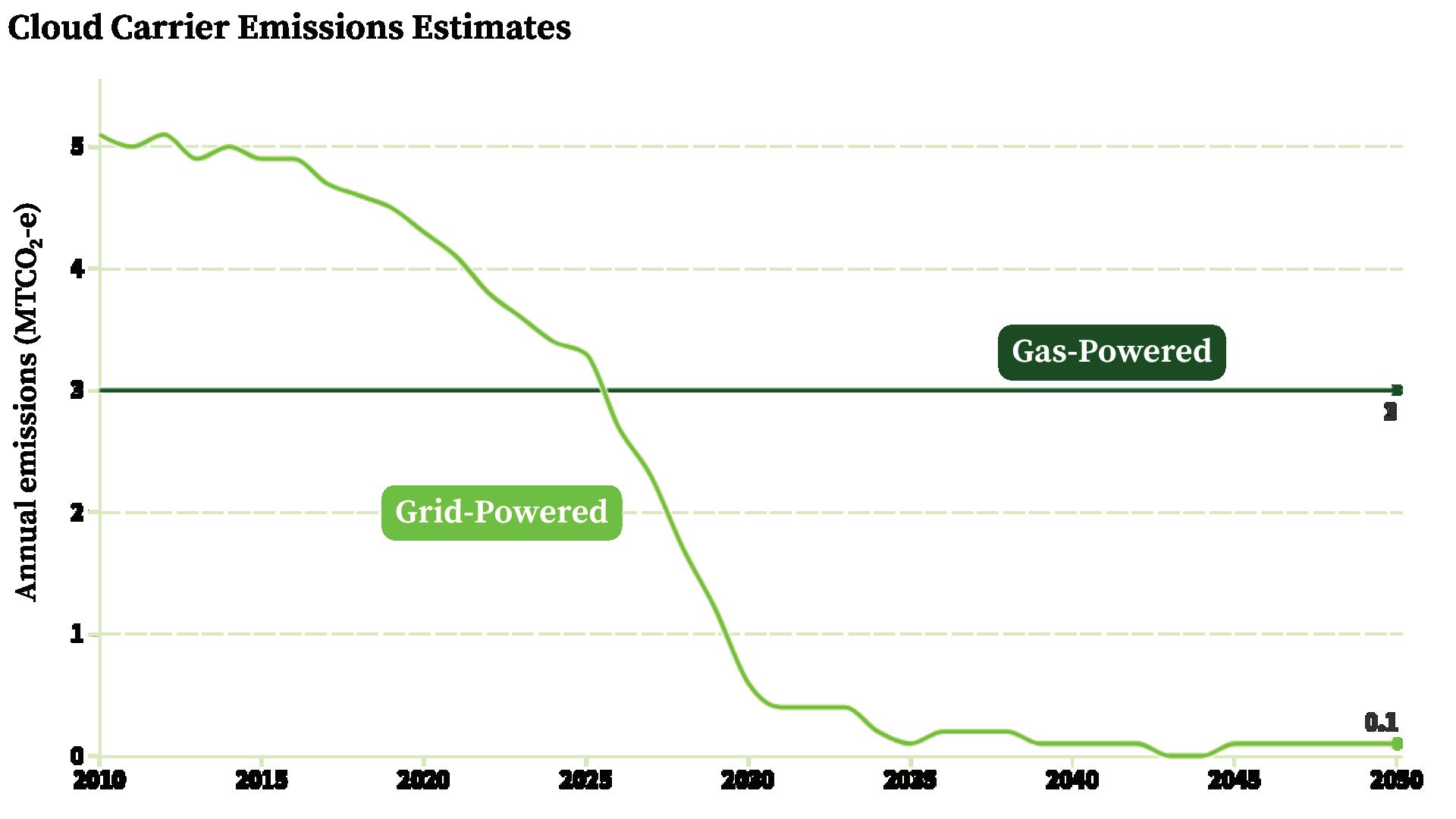
Fig 16: Analysis of Cloud Carrier’s project emissions.
Contrary to Cloud Carrier’s claims, if their Moss Value data centre were to run on gas-fired power, as the company proposes, the facility’s annual emissions will be far higher than if it were to run on the NSW power grid.
Data source: Figures for kilograms of carbon dioxide equivalent per megawatt hour of generation drawn from historical and projected emissions from AEMO draft 2026 ISP via OpenNEM, reciprocating engine intensity via Western Australia EPA report into Yarnima Power. Assumed capacity factor of 90% for high-use AI training workloads.
Assuming an emissions intensity similar to another Australian project using reciprocating engine gas turbines and a capacity factor similar to other AI data centre projects, this data centre fossil fuel project will emit around 3 megatonnes of carbon dioxide equivalent emissions annually. This is likely a significant underestimate, as it excludes the emissions associated with gas extraction.
This is equivalent to the estimated total greenhouse gas abatement economy-wide for the state of New South Wales in 2028111. For scale, advocacy group Lock The Gate stated112 this site’s gas consumption would be: “25% more than NSW’s FY24 residential gas demand of 31.3 [petajoules, PJ], and 74% of the Narrabri Gas Project’s anticipated annual production of 53 PJ”.
The Cloud Carrier project is a shocking example of a broad global trend beginning to emerge in Australia; where behind-the-meter supersized fossil fuelled power stations are proposed as a way of both avoiding interconnection queue wait times and any backlash regarding price increases due to network congestion.
The massive damage of a gas-fuelled data centre boom in Australia
A recent analysis by Carbon Brief found that the UK government’s estimates of data centre emissions impacts failed to consider the possibility of off-grid gas used by data centre operators113. That analysis found data centre emissions to be 10 times higher than government estimates if only 5% were fuelled by gas, and hundreds of times higher with even greater reliance on off-grid gas. The UK government later republished their projections, revised upwards by several hundred times to reflect the reality that UK data centre emissions could end up between 0.9% to 3.4% of the UK’s projected total emissions between 2025 and 2035114.
The graphic below shows a simple estimation of the effect on emissions if even a small percentage of new data centre capacity in Australia is fuelled by on-site gas. Just 25% of new data centre demand running on gas power results in emissions 2.8x higher than pure grid demand. As explored later in this report, the chances of substantial gas use for data centres are noteworthy, considering growing relationships between fossil fuel and tech industries.
111 2025, NSW Government, “NSW Net Zero Emissions Dashboard” https://www.seed.nsw.gov.au/netzero-emissions-dashboard
112 2026, Lock the gate, “Submission to NSW data centres inquiry” https://www.parliament.nsw.gov. au/lcdocs/submissions/94972/0059%20Lock%20the%20Gate%20Alliance.pdf
113 2026, Carbon Brief, “Analysis: CO2 from UK data centres could be ‘hundreds of times’ higher than thought” https://www.carbonbrief.org/analysis-co2-from-uk-data-centres-could-be-hundreds-oftimes-higher-than-thought/
114 2026, Guardian, “Officials hugely underestimated impact of AI datacentres on UK carbon emissions” https://www.theguardian.com/technology/2026/apr/24/officials-hugely-underestimatedimpact-of-ai-datacentres-on-uk-carbon-emissions
50% gas would be 4.6x higher, and 100% gas would be 8.2x higher (highly unlikely, but included as a demonstration of how emissions intensive gas power is).
Even small proportions of on-site gas drives data centre emissions upwards
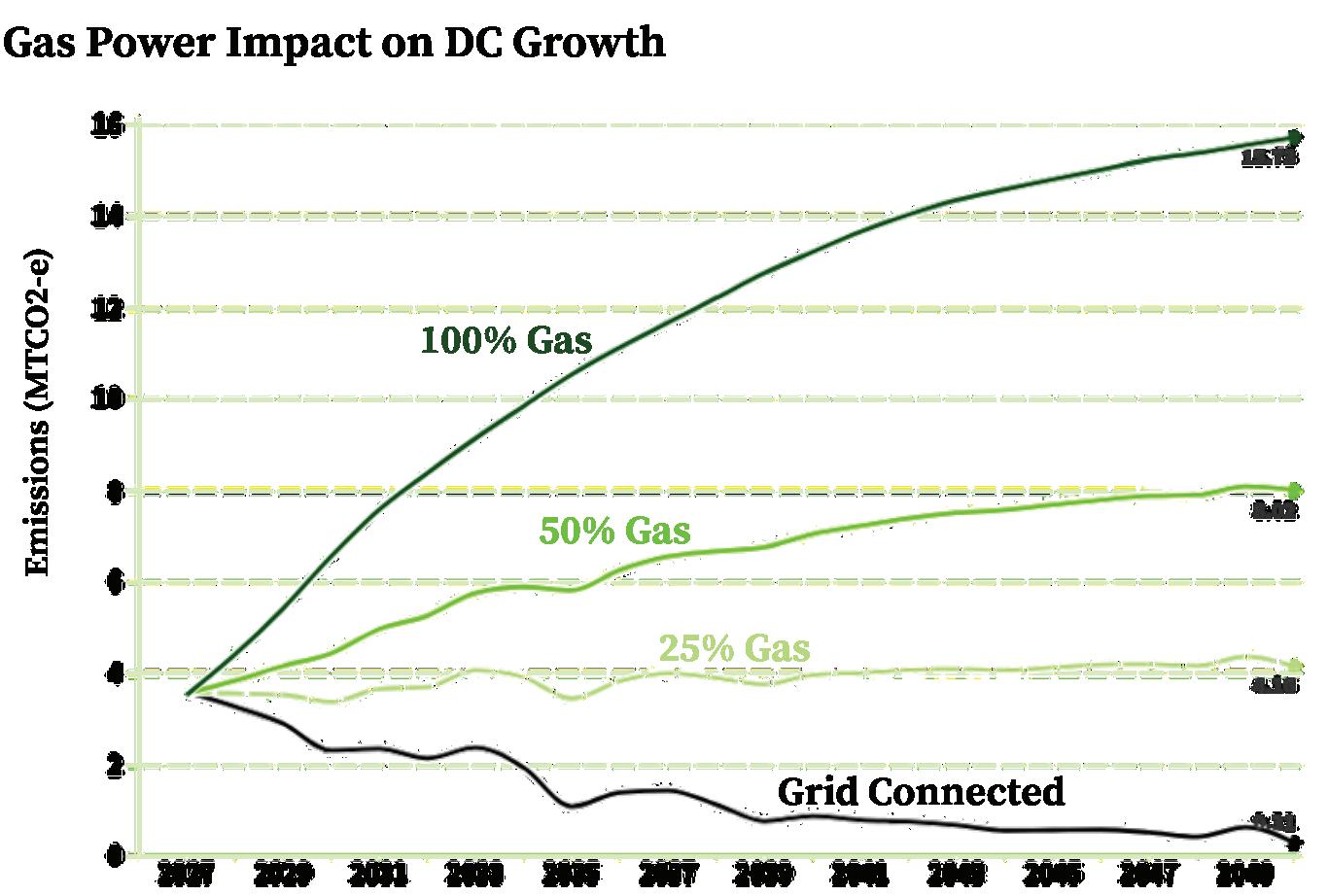
Fig 17: Impact of powering data centres using gas on emissions. Compared to powering data centres using Australia’s future power grid (which still has substantial emissions), using even a small fraction of on-site gas instead results in a significantly higher emissions footprint. This analysis significantly understates the emissions of future data centre demand as more projects may come online than AEMO anticipates, this model only uses grid intensity where in reality new demand increases that same intensity, and coal shutdowns assumed in the ISP may be delayed. The CEFC modelling, for instance, finds a peak grid impact of more than 5 MTCO2-e, which is significantly more than shown for grid-connected data centre demand in this graphic.
Data source: AEMO ISP 2026 inputs, step change scenario, assumed off-grid gas intensity of 0.46 tonnes of co2-e per megawatt hour, NEM grid intensity sourced from OpenNEM / ISP. No
In the unlikely but illustrative scenario where all new demand in Australia is served by on-site gas, data centres would emit more than the entire National Electricity Market grid by the year 2038. Even just 50% would emit more than that entire grid by 2044.
Powering just half of data centres using gas behind the metre would produce more emissions than the entire grid by 2044
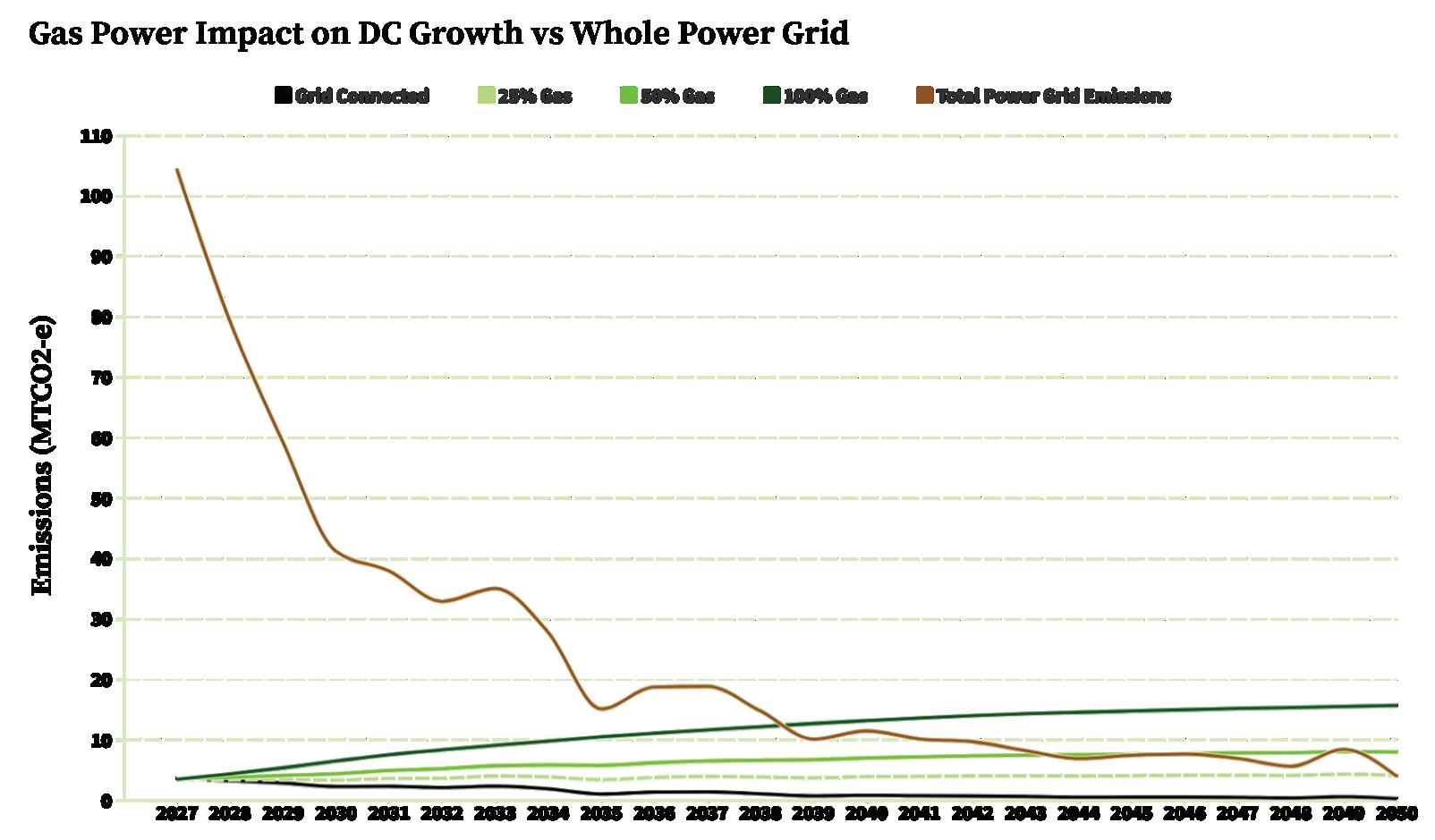
Fig 18: Gas data centres compared to power grid
If only half of new data centres were powered by on-site gas, the aggregate emissions impact of new data cents would produce more emissions than the entire National Electricity Market by the year 2044
Data source: AEMO ISP2026 inputs, step change scenario, assumed off-grid gas intensity of 0.46 tonnes of CO2-e per megawatt hour, NEM grid intensity sourced from OpenNEM
On-site gas powered data centres would put Australia’s data centre climate impacts on par with entire countries
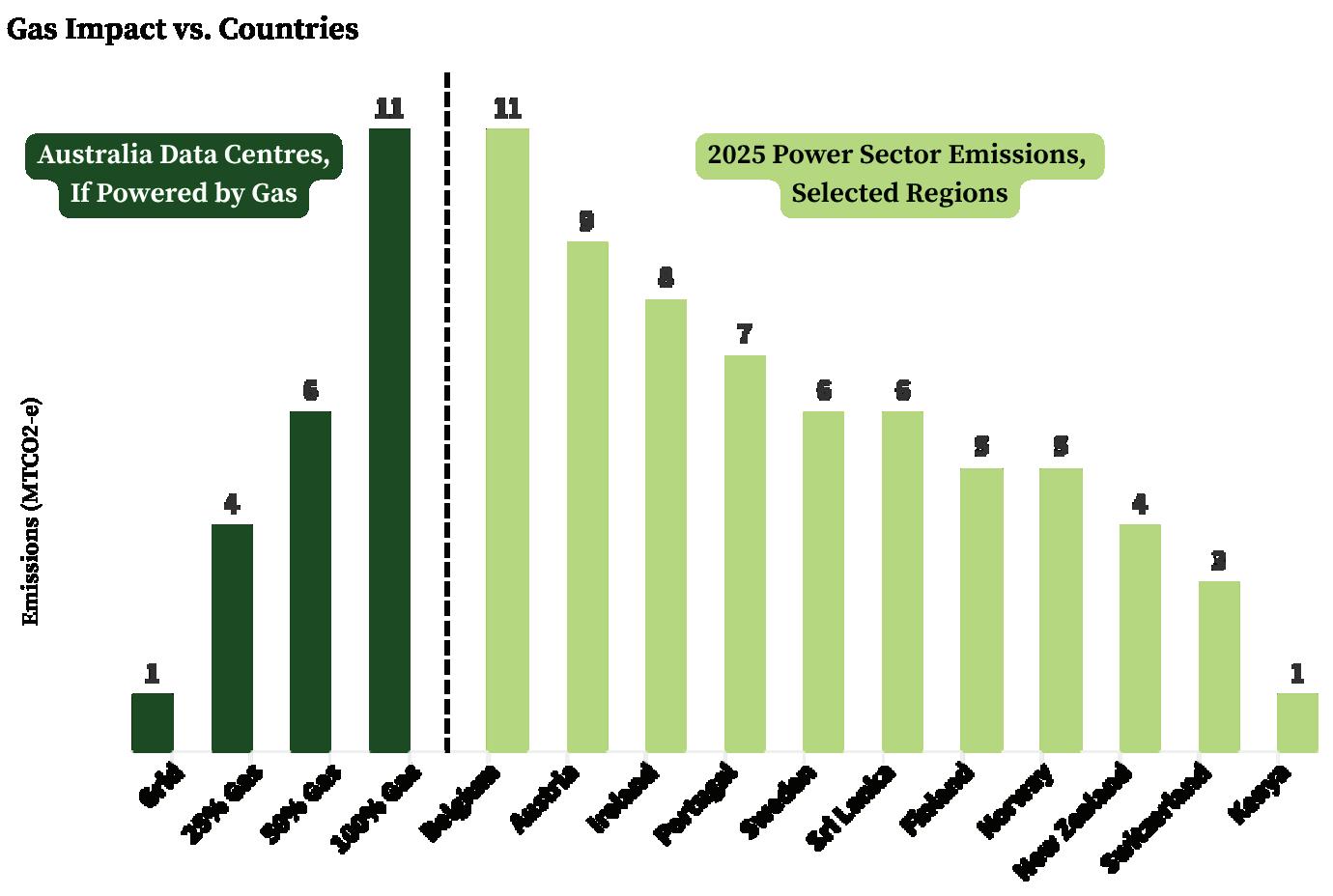
Fig 19: Gas data centres compared to power grid
Taking the average annual emissions of the four scenarios in figure 18, and comparing them to 2025 power sector emissions for selected countries, the impact of even small amounts of on-site gas to run data centres is clear.
Data source: AEMO ISP2026 inputs, step change scenario, assumed off-grid gas intensity of 0.46 tonnes of CO2-e per megawatt hour, NEM grid intensity sourced from OpenNEM, Ember GER 2026 power sector emissions.
Australia remains off-track115 for its 2035 climate goals, without a rapid build-out of more renewable energy, and a decline in the burning of fossil fuels. Introducing a significant new source of greenhouse gas emissions would only worsen this situation. Off-grid gas is an extremely significant threat to climate goals, even if only serving a small proportion of data centre demand.
2.3
THE GROWING RELATIONSHIP BETWEEN AUSTRALIA’S GAS INDUSTRY AND
BIG TECH
While many of the proposed data centre / gas projects in Australia are in their early stage, there are also signs of a growing relationship forming between technology companies developing data centres and fossil fuel companies keen to power them.
As these relationships grow, the likelihood of new fossil fuelled data centre projects increases, as do the prospects for existing early-stage projects to progress. Ideas will be exchanged, personal and financial relationships will form, and both groups may exchange access to political power in a mutually beneficial way.
There are already signs of this occurring. In April 2026, Origin Energy (a major gas producer and high-emitting utility predominantly using fossil fuels) and Jemena (a major gas pipeline and processing facility owner) both became listed members116 of the lobby group Data Centres Australia. Siemens and Caterpillar, both core providers of the gas turbine boom in the US, are also listed as members.
115 2026, Australian Broadcasting Corporation, “Government projected to badly miss 2035 climate target, fall shy of 2030” https://www.abc.net.au/news/2025-11-27/climate-target-2035-badly-missprojection/106059034
116 2026, Data Centres Australia, “Membership” https://datacentres.org.au/membership/
Similarly, the June 2026 “Australian Data Centres Power and Water Summit”117 (at which federal ministers will speak) features both Origin Energy and Wartsila (a gas turbine manufacturer that recently announced 790 megawatts of new fossil gas capacity118 in Texas) as highest-level “event partners”. That event will feature Beach Energy, another major supplier of gas, in a panel titled “Fuelling innovation: the role of gas in data centre operations”. Beach Energy’s CEO recently stated119 that they had been fielding inquiries from data centres, and that “we will have to modernise the economy and I see significant demand in gas in supporting that”.
Beach Energy, fossil fuels and AI
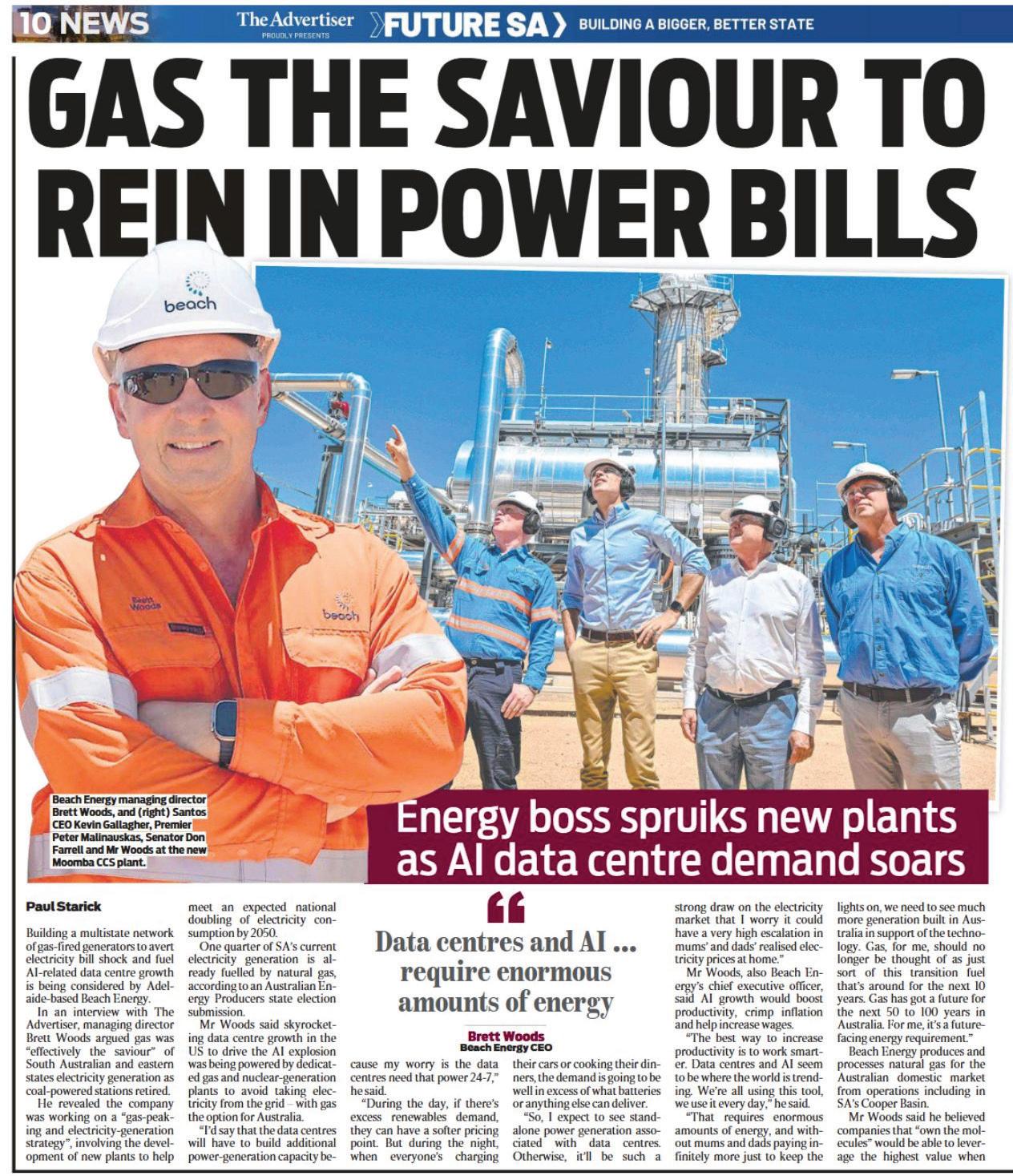
Fig 20: Beach Energy news clipping
Beach Energy prominently highlights AI as a reason for increased extraction and burning of climatewrecking fuel products.
Data source: Beach Energy LinkedIn, February 16 2026
117 2026, Informa, “The 2nd Annual Australian Data Centres Power & Water Summit” https://www. informa.com.au/event/conference/energy-utilities/australian-data-centres-power-water-summit/
118 2026, Wartsila, “Wärtsilä continues to expand its data center footprint with new 790 MW order in Texas, the next Data Center Alley” https://www.wartsila.com/media/news/23-04-2026-wartsilacontinues-to-expand-its-data-center-footprint-with-new-790-mw-order-in-texas-the-next-datacenter-alley-3743595
119 2026, Australian Financial Review, Angela Macdonald-Smith, “Gas appetite spiking on data centre demand: Beach CEO” https://www.afr.com/companies/energy/gas-appetite-spiking-on-datacentre-demand-beach-ceo-20260203-p5nz1u
The May 2026 flagship fossil fuel industry conference run by gas lobby group Australian Energy Producers (AEP), sponsored by Woodside Energy and Santos was advertised as featuring a plenary session entitled “Energy in the AI age”, and included contributions from Belinda Dennett (CEO of Data Centres Australia), alongside representatives of Google, Beach Energy and Chevron Australia (the sponsors of the panel session). Another session was advertised as featuring a presentation by analyst Saul Kavonic, who argued that “Australia’s AI future depends on gas”.120
The CEO of APA Group, another major fossil gas pipeline operator in Australia, told the media121 that “with rising investment in AI and data centres there is going to be a large requirement for gas-fired power generation”. In another statement, the CEO said122 “the next horizon that we’re looking at is data centres consume an enormous amount of energy. And quite frankly, there’s just not enough power available on the grid. So the data centres, for example, in the US and elsewhere in the world are starting to look for behind the meter solutions”. Gas company Amplitude Energy declared in a statement123 that “data centre operators are being driven to conventional, dispatchable sources of power like gas” and therefore, “gas powered generation [is] a realistic, scalable source of reliable power growth in Australia”.
In 2024, Woodside Energy signed a gas hydrogen offtake agreement124 with Singaporean data centre operator Keppel, framed misleadingly as ‘low carbon’ on the promise of carbon capture, an unproven technology that has persistently failed at every measurable level125. However, little information has emerged on this project since. In 2025, Woodside Energy featured in a panel discussion126 at the Amazon Web Services ‘Energy Symposium’, discussing AI use in fossil fuel extraction.
120 2026, Australian Energy Producers Journal, “Australia’s AI future depends on gas” https:// connectsci.au/ep/article/doi/10.1071/EP25033/272290/Australia-s-AI-future-depends-on-gas
121 2026, The Energy, Kate Burgess, “APA Group doubles down on gas transmission” https:// theenergy.co/article/apa-group#
122 2026, Youtube / Livewire Markets, ““An abundance of opportunities” as APA’s $3 billion pipeline targets the AI power boom” Timestamp 08:30 https://www.youtube.com/watch?v=Bm_SeyVEqfc
123 2026, Amplitude Energy, “Rottnest Island Investor Conference” https://app.sharelinktechnologies. com/announcement/asx/0568b5d03d27db8d8e3b4c0ad5281c23
124 2024, Data Centre Dynamics, Zachary Skidmore, “Keppel signs liquid hydrogen offtake agreement with Woodside” https://www.datacenterdynamics.com/en/news/keppel-signs-liquid-hydrogenofftake-agreement-with-woodside/
125 2026, The Point, Ketan Joshi, “Part one: The false promise of carbon capture and storage” https://thepoint.com.au/off-the-charts/090126-part-one-the-false-promise-of-carbon-captureand-storage
126 2025, Youtube / AWS events, “AWS Energy Symposium 2025 - Woodside Energy & Slalom Use AI to Transform Subsurface Screening on AWS” https://www.youtube.com/watch?v=ugqYOT9iBf8
AEP, Australia’s core fossil fuel lobby group, , has cited data centre growth as a major demand growth area for their dangerous products, stating127 that “reliable gas-fired generation is also essential to meeting rapidly growing electricity demand from data centres”. Former Woodside Energy CEO (now head of BP) Meg O’Neill told an AEP conference128 in 2025 that “Artificial intelligence is turbo-charging global energy demand in ways few would have predicted a decade ago”.
Many of these statements echo that of the International Gas Union, which recently released a report129 arguing for “the role of gas in powering AI-driven energy demand”. The report provides key data on how gas turbines are being used by data centres around the world, and also highlights unproven technologies typically relied upon by the gas industry when arguing that gas can be a low-carbon energy source, such as references to carbon capture and storage, ‘clean’ hydrogen and biomethane.
In addition to powering data centres with fossil fuels, the services provided by data centres can themselves be used by fossil fuel companies to increase extraction. The “Enabled Emissions”130 campaign has focused on how machine learning systems are being offered by technology companies to fossil fuel producers to assist in exploration, production, research and process optimisation, and fossil fuel companies around the world brag regularly about how they are using “AI” to sell rising volumes of dangerous fuel products to society.
127 2026, Australian Energy Producers, “Backing South Australia’s natural gas industry” https:// energyproducers.au/wp-content/uploads/2026/03/Backing-South-Australias-natural-gasindustry-1.pdf
128 2025, Australian Energy Producers, “Speech: Australian Energy Producers Chair Meg O’Neill address to the 2025 AGM” https://energyproducers.au/all_news/speech-australian-energyproducers-chair-meg-oneill-address-to-the-2025-agm/
129 2026, International Gas Union, “The Role of Gas in Powering AI-Driven Energy Demand” https:// www.datocms-assets.com/146580/1768479590-the-role-of-gas-in-powering-ai-driven-energydemand.pdf
130 2025, Enabled Emissions Campaign https://www.enabledemissions.com/
SECTION 3: INTERROGATING THE PURPOSE AND POWER OF INDIVIDUAL DATA CENTRES
What services does a data centre actually provide? When considering how to weigh the cost and risk of a supercharged data centre roll out in Australia against its potential benefit, it is important for Australian decision-makers to ask this and obtain meaningful answers.
Because the operations of data centres are opaque, the ‘product’ they sell intangible, and their customers based anywhere in the world, Australian politicians and the public have a uniquely constrained view of what these facilities are actually producing. This makes it impossible for a regulator or the public to judge if the benefit gained from the construction of an individual data centre is a worthwhile tradeoff against negative local impacts, like pollution or energy use.
While the data centre lobby tends to universally present these facilities as ‘critical infrastructure’ (see Box 2), the reality is that data centres are unlike any other industrial service in the sheer diversity of services they can provide. The data centre lobby glosses over this diversity by pointing to a narrow subset of those services. A 2025 report commissioned by Data Centres Australia (‘Data Centres as Enabling Infrastructure’)131 cheerfully describes how ‘Claire’, a fictional ‘mother of two in Sydney’, uses data centres from 7am in the morning (checking a weather app) to 7pm at night (streaming Bluey). The report concludes: “every time we pick up a device to send a message, join a video call, run an internet search, purchase goods, or pay a bill online, we are relying on the advanced capabilities of data centres.”
While this is all no doubt true, it in no way explains why (given we are already doing those things) data centre companies are proposing to build several terawatts of new data centre capacity by 2030. When announcing its own creation, Data Centres Australia said the lobby group's purpose is “to secure Australia’s position in the global race for AI infrastructure”132
As discussed earlier, the growth of GenAI applications is responsible for the scale of additional data centre demand. Any conversation around data centres is really about growth in GenAI (both the models being developed and the deployment of those models). It is also AI software companies bankrolling the scale-up of data centres in Australia and globally, committing to be anchor tenants and lobbying politicians in Australia to fast-track their approval and construction.
© Greenpeace
131 https://datacentres.org.au/wp-content/uploads/2026/03/2025-11_DCA-Mandala-%E2%80%93Data-Centres-as-Enabling-Infrastructure.pdf
132 https://datacentres.org.au/introducing-data-centres-australia/
These same executives warn that the consequences of the rapid buildout of AI data centres are likely to be:
• Widespread unemployment (“wipe out half of all entry-level whitecollar jobs — and spike unemployment to 10–20% in the next one to five years”, Anthropic133)
• Social destabilisation (“flood our information channels with propaganda and untruth,” Open Letter134)
• Widespread surveillance, (“artificial intelligence-powered surveillance state where ‘citizens will be on their best behavior, because we’re constantly recording and reporting everything that is going on’” Oracle135)
In the case of the xAI data centres in the US, which have been polluting a local community through the use of large gas turbines, that site was serving the goal of creating non-consensual abusive imagery of women for users of the Grok generative AI system, some of whom were children136. Data centres are also facilitating increasingly autonomous AI weapons systems and ‘targeting’ information, which are implicated in war crimes involving the alleged murder of civilians, such as a targeting system used by the Israeli Defence Force in Gaza and Lebanon.137 As AI systems become embedded in militaries, this risk continues to grow, with tools like target-generation algorithms, large language model (LLM) powered strike planners, and pattern-of-life tracking systems now actively deployed in real conflicts.138
133 2025, Axios, “Behind the curtain” https://www.axios.com/2025/05/28/ai-jobs-white-collarunemployment-anthropic
134 2023, Open letter, “Pause giant AI Experiments” https://futureoflife.org/open-letter/pause-giantai-experiments/
135 2025, Fortune, “Larry Ellison once predicted..” https://fortune.com/2025/09/28/larry-ellison-aisurveillance-oracle-tiktok-deal-social-media/
136 2026, ABC News “French prosecutors summon Elon Musk over allegations of abuse images, deepfakes on X” https://abcnews.com/International/wireStory/french-prosecutors-summon-elonmusk-allegations-child-abuse-132195636
137 2025, Business Human Rights Centre, “AP exposes Big Tech AI systems’ direct role in warfare amid Israel’s war in Gaza” https://www.business-humanrights.org/en/latest-news/ap-exposes-bigtech-ai-systems-direct-role-in-warfare-amid-israels-war-in-gaza/
138 2025, Stockholm International Peace Research Institute, “Autonomous Weapons Systems and AI Enabled Decision Support Systems in Military Targeting”, https://www.sipri.org/sites/default/ files/2025-06/laws_v_0.pdf
Governments are creating dedicated AI management frameworks to deal with these risks at the AI software level - how effective those efforts are in Australia is beyond the scope of this report. But regardless of how the world chooses to manage AI as a new disruptive technology, the purpose for which these data centres are being built (the rapid growth of AI applications), and the interests of those pushing the technology, are highly relevant to whether Australia should enable the resource intensive build-out of data centres at the scale currently proposed.
Lifting the veil on data centres
The Australian Government has, at minimum, a responsibility to ensure facilities located in Australia are not actively harming people. The fact that data centres sell computing power to another company (and hence the damage may be done in another jurisdiction) does not absolve the data centre operator of responsibility, or the Australian Government of its duty to regulate them. Regulating data centres, and deciding whether they should be built in the first place, requires disclosures from their operators.
Data centres are the only major energy-hungry heavy industry where the broad category of products sold are kept secret. The sale and eventual end-use of aluminium, iron ore, fossil fuels or manufactured goods can be traced and tracked, however it remains impossible to even know what broad category of digital service is occurring within a massive new data centre. Purpose should always be disclosed and subject to rigorous consultation, if the industry is to argue for priority on the grounds of this claimed purpose.
Several countries are already moving toward mandatory disclosure of data centre operations and workloads. The EU AI Act, for example, requires high-risk AI systems to document training data, intended purpose, known risks, and human oversight arrangements. Australia could follow this lead by requiring data centre operators to disclose customer identities, workload classifications, and compliance with domestic law to a national regulator, with independent audits to verify that declared compute workloads match actual operations.
How much energy does each individual data centre consume?
A recent report by the IEA139 examines how the technological characteristics of data centres can reveal the focus of its function. “Accelerator” chips are designed to perform parallel computation specific to GenAI (graphics processing units and tensor processing units). Google has also disclosed the energy consumption of single AI queries, suggesting they have the capability and possibly the preexisting internal data to share a ‘split’ of their energy use between conventional functions and AI-specific functions, and specific types of AI within that. The functions served and energy consumption are two closely related questions.
As mentioned earlier, Australia’s largest data centre operators must disclose energy and emissions data through the National Greenhouse Gas Reporting scheme at the company level, which shows a doubling of emissions in recent years. However, both Amazon Australia140 and CDC141, which both saw their emissions grow 150% from FY21 to FY24, formally attempted to avoid reporting these emissions with the Clean Energy Regulator, showing a fundamental hostility towards transparency from major players.
139 2026, International Energy Agency, “Key questions on energy and AI” https://www.iea.org/reports/ key-questions-on-energy-and-ai
140 2019, RenewEconomy, Michael Mazengarb “Amazon loses fight to have Australian greenhouse emissions data kept a secret” https://reneweconomy.com.au/amazon-loses-fight-to-haveaustralian-greenhouse-emissions-data-kept-a-secret-20779
141 2022, ITNews, “Canberra Data Centres cites ‘trade secrets’ in emissions transparency fight” https://www.itnews.com.au/news/canberra-data-centres-cites-trade-secrets-in-emissionstransparency-fight-583904
In response to a call from a coalition of environmental and trade union groups to provide more facility-level emissions and energy data, along with a split between AI and non-AI applications, Data Centres Australia said142:
“Facility-level public reporting of operational data raises serious commercial sensitivity and security concerns, particularly given data centres’ designation as critical infrastructure under the Security of Critical Infrastructure (SOCI) Act. Differentiating AI from non-AI workloads is technically problematic for co-location providers who do not control customer hardware”
DCA’s position matches that of the European lobby group DigitalEurope and Microsoft, whose lobbying to hide the energy consumption of specific data centres was so successful that the EU commission simply copy-pasted their phrasing into regulations ensuring no disclosure was needed143. Strangely, Meta, one of the key global hyperscalers, does disclose per-facility energy consumption on a yearly basis144 and does not seem to be suffering major commercial setbacks.
In the United States, the Energy Information Administration (EIA) is currently developing a mandatory per-facility disclosure survey145 and plans to launch this soon. While this process is underway, the technology industry has not yet publicly objected to this. If this is an impending change in the US, there is no reason individual facilities could not disclose energy consumption in Australia.
142 2026, Data Centres Australia, “Principles in isolation can’t achieve sustainable outcome” https:// datacentres.org.au/principles-in-isolation-cant-achieve-sustainable-outcome/
143 2026, InvestigateEurope, “How Big Tech wrote secrecy into EU law to hide data centres’ environmental toll” https://www.investigate-europe.eu/posts/big-tech-data-centres-secrecy-eulaw-environment-footprint
144 2025, Meta sustainability report https://sustainability.atmeta.com/2025-sustainability-report/
145 2026, Wired Magazine, Molly Taft, “The US Government Will Ask Data Centers How Much Power They Use” https://www.wired.com/story/the-us-government-to-ask-data-centers-how-muchpower-they-use/
SECTION 4: RIGHT-SIZED DATA CENTRE DEVELOPMENT SHOULD BE A PRIORITY
While rare, there are growing examples of data centre development that prioritise democratic governance, the needs of local communities, and the minimisation of the consumption of local resources such as energy and water.
Perhaps more importantly, there are efforts to address the root causes of overbuilding and resulting negative impacts.Some of these concepts are voluntary and some are enforced through regulation. This is a non-exhaustive list of examples of alternative approaches, noting that efforts to course-correct Big Tech continue across the world.
Dublin’s data centre ban (and other moratoria)
In 2021, Dublin implemented a temporary moratorium on data centre development, to control extreme levels of grid congestion caused by rapid growth in data centres146. As a result of this, Ireland’s data centre capacity still grew but the rate of growth decreased significantly, allowing time to implement stricter requirements on the country’s growth pipeline. The de facto ban is set to be lifted in coming months, with requirements around 100% renewable energy supply and other controls147.
In the United States, bills to temporarily ban data centre development are spreading fast, with one analysis148 showing proposals moving forward for Georgia, Maryland, Michigan, Minnesota, New Hampshire, New York and other states.
These are formalised pauses on uncontrolled development, allowing time for policymakers, communities and analysts to ask questions and serving as a counter to the narrative of rushed urgency. Ultimately, they benefit the energy transition and society in creating space for deliberation in an environment seemingly designed to discourage it.
Community ownership of data centres
While there are few live examples, full community ownership of data centres, including transparency around the services they provide could go some way to alleviating the harms the existing model is causing. A recent investigation149 by Reset found the legal and governance structures of cooperatives could be replicated for smaller, locally-owned facilities. They provide the example of Nubo, a Belgian cooperative where becoming a user of their services makes you a member of a cooperative and grants you decision making power.
146 2025, Data Centre Dynamics, “Microsoft shifting data center focus away from Ireland due to lack of power availability - report” https://www.datacenterdynamics.com/en/news/microsoft-shiftingdata-center-focus-away-from-ireland-due-to-lack-of-power-availability-report/#:~:text=Data%20 centers%20in%20Ireland%20currently,last%20until%20at%20least%202028
147 2026, Data Centre News, “Ireland unveils strict new rules for data centre power use” https:// datacentrenews.uk/story/ireland-unveils-strict-new-rules-for-data-centre-power-use
148 2026, Good Jobs First, “Data center moratorium bills are spreading in 2026”
149 2025, Reset, “A Future Vision of Data Centres: From Big Tech Builds to Community-Owned Cooperatives” https://en.reset.org/a-future-vision-of-data-centres-from-big-tech-builds-tocommunity-owned-cooperatives/
Smaller AI models, sized appropriately
The IEA’s most recent update on AI and energy discusses in detail how demand-side decisions around AI deployment are directly causing the massive boom in energy demand described in this report. They found that even with greater efficiency of per-query computation behind AI, massive growth is eating up those gains and resulting in expanding energy hunger. Recently, much of this expansion relates to generating videos, or the use of autonomous “agents”, which are essentially language models that activate without direct human input in the background, consuming “orders of magnitude” more energy than a traditional chatbot.
Several movements now exist to reverse this trend of unbridled digital bloat. The ‘Frugal AI’150 movement seeks to ensure language models are right-sized for applications, and in many cases simply not used at all where existing services perform better, with less energy.
If AI applications were to reduce their energy demand, other options for powering data centres would also become more feasible. One company has integrated data centre capacity into wind turbines,151 ensuring close to 100% additional co-located renewable energy.
150 2026, Frugal AI Hub https://frugalai.org/
151 2026, Windcores, https://www.windcores.de/en/about-us/
Clean Our Cloud Action in Ireland © Kim Haughton / Greenpeace
SECTION 5: CONCLUSION AND RECOMMENDATIONS
Australia’s data centre boom is being driven by the same systemic factors driving the boom in other similar regions, such as the UK, Canada, Ireland, Europe and the US. Many international companies are common to these regions, such as Microsoft and Amazon. The rushed, ‘race’ to overbuild data centres is a burst of new energy for a fossil fuel industry that was beginning to teeter on the edge of its first ever global decline.
Data centres plugging onto the grid are lifting the prospects for coal and gas plants. New ones are being built, existing ones are generating more, and doomed ones are being extended. Projects stuck in the queue for the grid are turning on their heels and simply building unprecedentedly large fossil gas power plants instead. New fossil fuel infrastructure has new momentum with the goal of servicing this boom.
Australia’s data centre industry has shrugged off these concerns; simultaneously insisting they’ll be the ones to power Australia’s energy transition while confusingly complaining they’re struggling to procure renewables because the pipeline is drying up, and skipping between the two poles of that contradiction depending on the question being asked.
The chances of a gas-powered data centre boom in Australia are rising. Several major projects are moving from vague concepts into earlystage development. Fossil fuel companies citeAI as a justification for their activities. And the threads of professional, financial and formal relationships between the fossil fuel industries and tech companies are growing in number and interconnectedness, as revealed in analysis of upcoming event spaces.
No AI data centre is worth the destruction of human lives, ecosystems and our climate. At a time in Australia when the need for an accelerated fossil fuel phase-out and vastly increased renewable energy growth have become matters far beyond climate consequences, with massive impacts on energy costs and energy justice for people already struggling
with the cost of gas, it is vital the government takes action to ringfence and rightsize an industry that is fundamentally, systemically motivated to take resources and energy to increase private benefit. The Australian Energy and Climate Change Ministerial Council’s May 2026 communique is a positive sign the government is considering the best way to regulate data centres to manage their impact on the energy transition. But until we have clearly defined, enforceable regulations in place to govern this industry, a pause on further data centre construction is essential if we hope to avoid the alarming outcomes outlined in this report.
It is time to make data centres work for humans, not machines and the companies which own them.
Recommendations
Greenpeace Australia Pacific urges the Australian Government to enact an urgent pause on data centre development until key questions of climate and energy can be resolved to ensure the industry truly serves Australian people, rather than a small number of companies and billionaires.
As an immediate action, Greenpeace Australia Pacific recommends that:
• The Australian Federal Government enact a moratorium on the construction and approval of new data centres until safeguards are legislated.
• A new approval process for data centres be created in collaboration between state and federal governments to implement the safeguards outlined below. A new approval process must include greater input from the communities where data centres are proposed to be built.
A moratorium would allow time for the creation of binding, legislated standards for new data centres, and should include regulation of the the following matters:
• All new data centres must source their electricity from truly additional, new renewable energy projects:
• The climate benefits must be reflected in lowered grid intensity and reported ‘location-based’ emissions.152
• If an existing data centre operator is not able to disclose the additional nature of the renewable energy it has sourced, then it cannot claim to be using renewable energy.
• No primarily fossil fueled data centre proposals should be approved.
• Data centres must disclose publicly the following matters - before approval and quarterly while operational:
• The services being performed at its site (for example through lists of customers utilising compute and descriptions of the purpose of the compute).
• Projected energy use, emissions, and impact on the local grid including prices for other customers.
• Information on the financing arrangement for the data centre, including disclosure of any government subsidies and anchor tenants.
• Compliance must be ensured as part of the assessment process for data centres prior to approval, and then on an ongoing basis while operational:
• Regulators must assess the operations of a data centre (including the computations it performs for customers) to ensure compliance with Australian and international law, in a similar manner to the Defence Trade Controls Regulation 2013, which includes an assessment of the risk that a good or service ‘may be used to commit or facilitate serious abuses of human rights.’153
• To facilitate that assessment, operators must release a statement of compliance with Australia’s human rights framework covering the computations performed at the data centre, and where enabling AI applications, disclose compliance with the Australian Government’s AI Ethics Principles.154
152 This will eliminate the double counting of scope 2 emissions being listed as quasi offsets.
153 2013, Federal register of legislation, “Defence Trade Controls Regulation 2013” https://www. legislation.gov.au/F2013L00902/latest/text
154 2025, Australian Government Department of Industry, Resources and Science, “”Australia’s AI Ethics Principles” https://www.industry.gov.au/publications/australias-ai-ethics-principles#aiethics-principles-in-detail
APPENDIX 1 - FAST-TRACKED NSW PROJECTS EMISSIONS ESTIMATES
The table below shows selected emissions disclosures for large projects that were announced as having been ‘fast tracked’ under the Investment Delivery Authority, by the NSW government in 2026.
Table 3: Major fast-tracked data centre projects, NSW
APPENDIX 2 - RENEWABLE PROCUREMENT, EXPLAINED
Renewable energy credits (RECs) are created for every megawatt hour of generation from any renewable facility, and can be sold, traded and ultimately purchased and retired by energy consumers in a manner similar to carbon offsetting. Like offsets, they are riddled with accusations of overstated climate claims155, as the purchase of those credits often does not truly incentivise new, additional generation.
One recent study found156 that: “widespread use of RECs by companies with science-based targets has led to an inflated estimate of the effectiveness of mitigation efforts. When removing the emission reductions claimed through RECs, companies’ combined 2015–2019 scope 2 emission trajectories are no longer aligned with the 1.5 °C goal, and only barely with the well below 2 °C goal of the Paris Agreement. If this trend continues, 42% of committed scope 2 emission reductions will not result in real-world mitigation”.
155 2022, The Conversation, Anders Bjorn et al, “Most companies buying renewable energy certificates aren’t actually reducing emissions” https://theconversation.com/most-companiesbuying-renewable-energy-certificates-arent-actually-reducing-emissions-183176
156 2022, Bjorn et al, “Renewable energy certificates threaten the integrity of corporate sciencebased targets” https://www.nature.com/articles/s41558-022-01379-5
‘Power Purchasing Agreements’ (PPAs) relate to long-term power purchasing deals enacted between renewable developers and energy consumers. These are more likely to influence the feasibility of renewable projects, but many still relate to pre-existing rather than new (‘additional’) projects, suggesting little or no ‘additive’ power to stimulate new renewable growth.
These two systems (RECs and PPAs) can vary across both time and space. Projects closer to the point of demand geographically, and generating electricity at the time it was demanded, are seen to have a stronger claim of renewable ‘procurement’ by experts, such as the analysts at the NewClimate Institute.157
Australia has just implemented a system known as ‘renewable energy guarantees of origin’, or ‘REGO’. These are operationally similar to the previous system of large-scale generation certificates (LGCs), but come with a ‘time stamp’ and other information to signify when and where the renewable power was generated. This could hypothetically give customers the opportunity to make a claim of renewable consumption that is both spatially and temporally closer to their consumption.
This concept, often referred to ‘24/7 matching’, has been advocated for as a way of ensuring corporate renewable procurement acts as a more powerful and substantial force in incentivising new renewable energy, along with integrating it better into power grids (due to the closer matching of demand to variations in wind and solar output).
However, recent reporting revealed158 Microsoft, one of the largest technology companies operating in Australia, intends to drop its ambitions on this more rigorous ‘matching’ process, and instead opt for annualised renewable energy claims, which experts strongly state are far less likely to help new renewables get built and integrated well into grids.
157 2025, NewClimate Institute, “Corporate Climate Responsibility Monitor 2025: Tech sector” https://newclimate.org/resources/publications/navigating-the-nuances-of-corporate-renewableelectricity-procurement
158 2026, Techcrunch, “Microsoft’s AI data center push is colliding with its clean power goals” https://techcrunch.com/2026/05/06/microsofts-ai-data-center-push-is-colliding-with-its-cleanpower-goals/