

BY REED JOHNSON MANAGING EDITOR
DAYTON — It was called “The World’s Most Famous Court Trial” because in 1925 the attention of the world was focused on what was happening in a courtroom in Dayton.
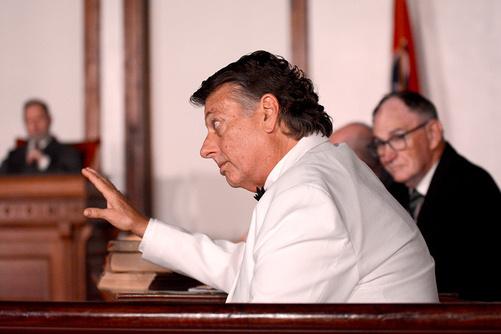
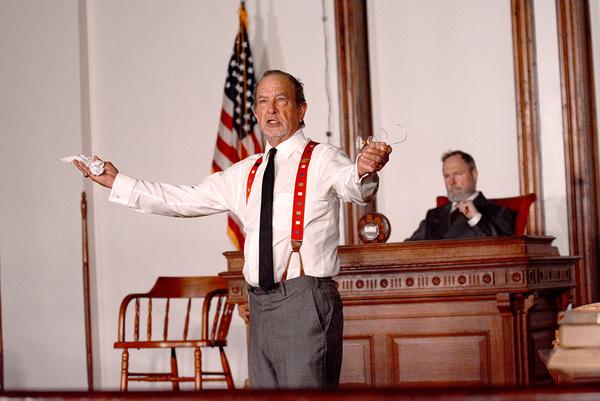
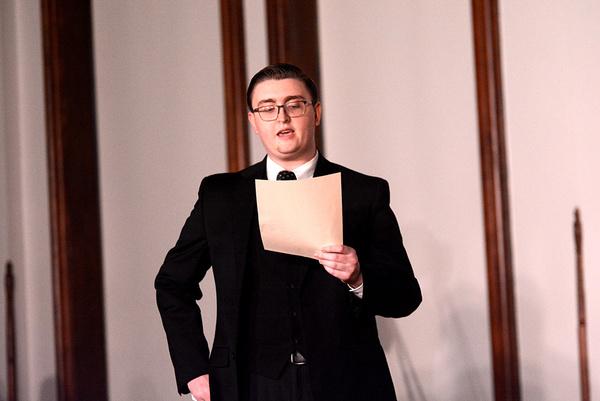
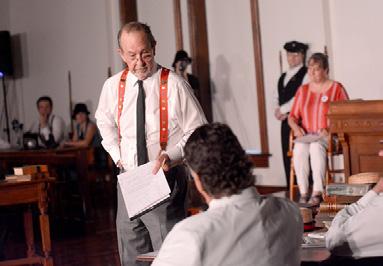
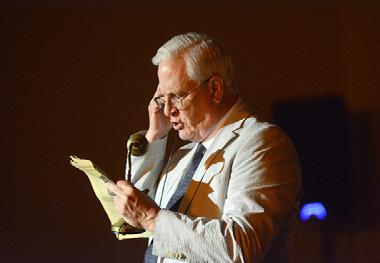
More than 2 million words were transmitted by telegraphers from their stations in Dayton, giving the world a record of the arguments that defined the Scopes Trial, and this year’s Scopes Festival play “Destiny in Dayton” follows that path.
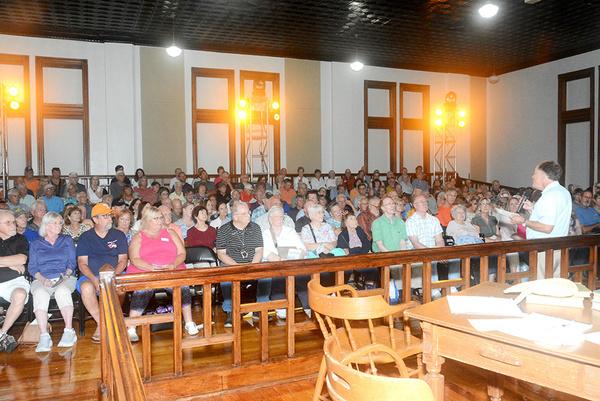
“We invite you to visit Dayton, Tenn., each July to see a dramatization of the Scopes Trial, presented in the courtroom where William Jennings Bryan, Clarence Darrow and their colleagues argued a misdemeanor case, an argument that reverberates today,” festival organizers said.
“John Scopes was charged with violating a new state law that prohibited teaching in public schools any theory of human origins that contradicts teachings of the Bible. That may have been the heart of the case, but the lawyers had an awful lot to say about parents’ roles in public education, academic freedom, majority and minority rights, the role of government and the place of religion in public life.
“Using a script that is taken almost entirely from the trial transcript, see how the people of 1925 saw the conflict of ideas, and how what they said then is
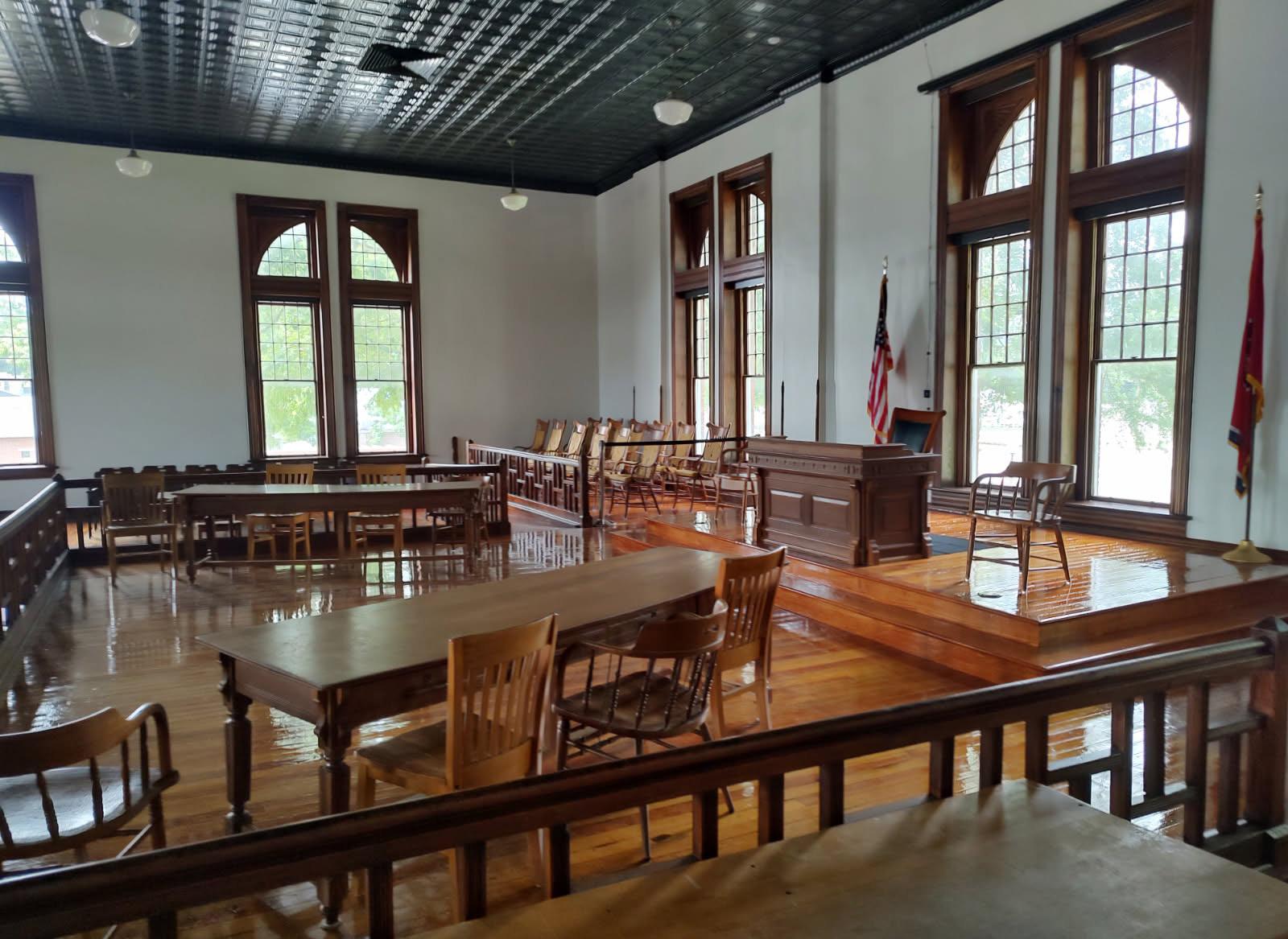
reflected in today’s headlines.
“Presented by a community cast — with jurors chosen from the audience — get a fresh look at this landmark case in American history.”
This year’s Scopes Trial Festival begins on Friday, July 17, and the play schedule is as follows: Friday, July 17, at 7 p.m.; Saturday, July 18, at 2 p.m.; Friday, July 24, at 7 p.m.; and Saturday, July 25, at 2 p.m.
Of course, you can leave the legal arguments and courtroom drama to the actors, but plan to join the cast of “Destiny in Dayton” for “Dinner with the Cast”
after the play on July 25.
During the Scopes Trial in 1925 “the lawyers fought with all the passion and legal tricks they could muster, but at the end of the court session they left their battle in the courtroom and went to dinner together down the street at the Aqua Hotel,” said Rick Dye, president of Rhea Heritage Preservation Foundation. “We are delighted to offer this option once again for guests at the 37th annual dramatization of the Scopes Trial.”
The hotel is gone, but guests will enjoy a 1920s-themed meal in the Dayton City School cafe-
torium, with dinner music presented by Scenic City Sound, a “Big Band” ensemble from Chattanooga.
“Because of the weather this July, we moved from tents on the courthouse yard to the school,” Dye said. “Our guests loved the air conditioning, so we have decided to make the cafetorium our regular venue for the dinner. Plus, there is room to dance if you want to take advantage of the classic tunes.”
To purchase tickets, visit https://scotix.na.ticketsearch. com/sales/salesevent/19334.
BY PAT GUFFEY RHEA COUNTY HISTORIAN
A hand-written document found in the Historical Society files and dated July, 1986, came to my attention a few years ago. It proved to be written by H.J. Shelton, the last surviving student witness of the Scopes Trial and a sophomore in Scopes’ Biology class of 1925. The following is his writing as it appeared on that paper:
The “sounds of time” have measured out approximately 61 years since the town of Dayton was snapped out of its lethargy and carried to the front page of every newspaper in the land by one of the most famous and controversial court trials in our legal history.
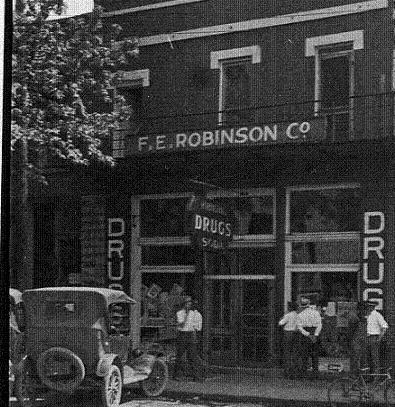
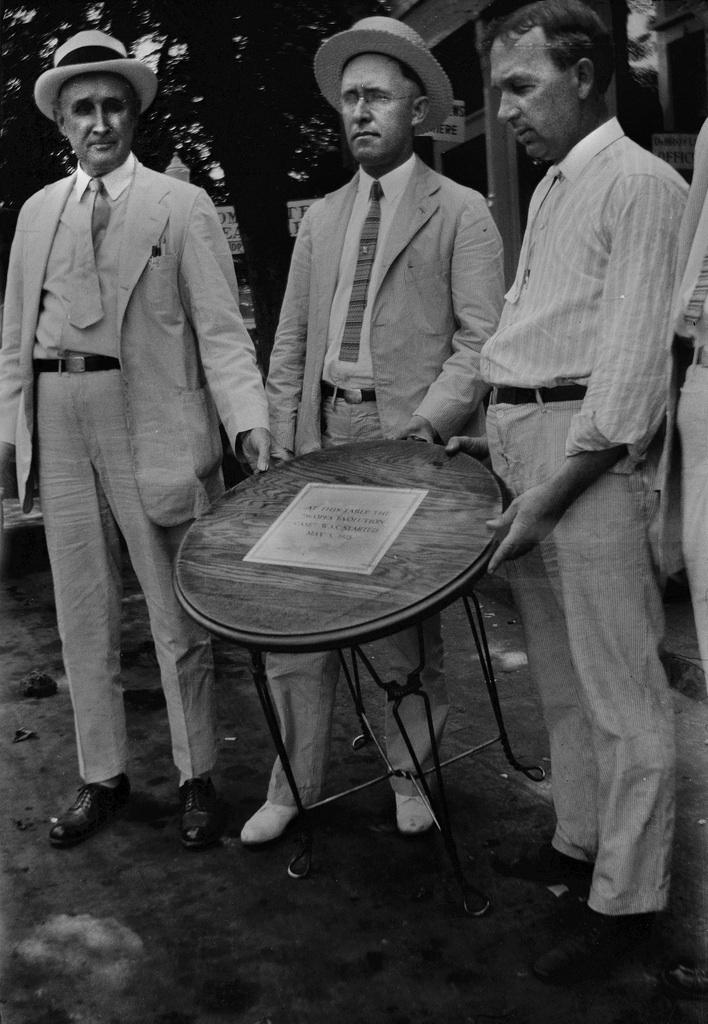
Dayton gave birth to this giant trial on a warm May afternoon in 1925, and it all started at a table in Robinson’s Drug Store on Main Street, and is yet to be seen in this same drug store with an inscribed plaque gracing its scarred top bearing the words: “The Scopes Evolution Case was started at this table in May, 1925”—a table that would create interest and comments from pausing tourists-to which druggist, Earle Robinson would respond with lengthy comment concerning the events and happenings during that brief period, 61years ago. Today, the drug store which had moved to North Market Street is closed, and Earle Robinson passed away some years back.
To set the stage let’s picture a group of Dayton’s citizens of local prominence, including Professor
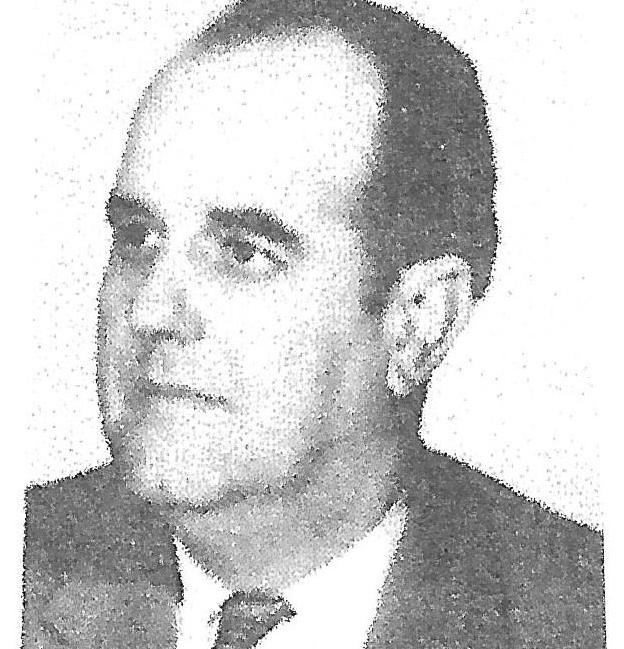
Walter White, at that time, Superintendent of Schools, Clay D. Green, his assistant, both new deal, and others seated at this table sipping the soft drinks afforded by the nearby fountain, that was later to quench the thirst of such notables as Clarence Darrow, W.J. Bryan, Dudley Field Malone, Garfield Hays and others that came to offer their services, both pro and con. These gentlemen of the “Round Table” were possibly discussing a current political issue, when in walked George W. Rappleyea, ex-New Yorker, and at that time resident chemist for the Cumberland Coal and Iron Co., just outside of Dayton whose furnace, with smokeless chimneys, was razed in the late 30’s for its scrap iron content—much of which, I understand, was shipped to Japan who threw it back at us during World War II.
“Rapp” as he was familiarly known, joined the group at the table, and spread before them a copy of the Chattanooga morning paper, which contained an interesting item to the effect that the American Civil Liberties Union of
New York had taken cognizance of the New Tennessee Anti-Evolution Law, believing it to be unconstitutional, and stood ready to supply legal and financial aid to any Tennessee public school teacher who was willing to defy it. The group at the table became interested, having at least their share of the itch for publicity, which affects many of our most respected citizens—they smelled a big story. “Rapp” broke into the excited comment with “all we need now is a teacher who is willing to defy the law, and the case is in the bag.” Professor White declared, with a little hesitancy that he didn’t think that there was a teacher in Dayton who would care to be a “goat” in a case like this. Clay Green suggested O.P. Armstrong, Science teacher at the Spring City High School in the North end of Rhea County. “Rapp” thought it a shame to take it away from Dayton, and there upon suggested John T. Scopes in our own Central High School.
The ensuing few weeks that followed between the announcement to the world that an obscure teacher in a small town high school had openly “defied the teachings of the Bible” and the time the trial actually began were weeks of “bee-hive” activity for awe-struck Dayton and its citizens. Hasty preparations, even though inadequate, were made to accommodate the anticipated visitors and even they had no realization of the magnitude of the whole thing, nor of the noted “legal lights,” and media personnel it would bring to Dayton.
On May 14, W.J. Bryan made the announcement that he would assist in defending the law. The next day came word that Clarence Darrow would assist the defense and John T. Scopes.
The trial opened on July 10, and Mr. Scopes was convicted 10 days later. The weightier questions that were raised amid the carnival-like atmosphere of the so called “Monkey Trial” were not resolved, and now, 61 years later these questions are still debated. Mr. Bryan died in Dayton five days after the trial was over. The law was repealed in 1967. So thereby hangs the tail, or tale I should say. I certainly don’t believe that any of my ancestors hung by their tails—and do believe that man was created in the “Image of God.”
According to an article in the Chattanooga News-Free Press dated June 5, 1983, Shelton was seventeen years old when the trial was held. He told the news reporter that he was in John Thomas Scopes’ Biology class during his sophomore year in high school. Also, he was a witness for the prosecution, but stated that he didn’t think he was any help to them. The article in which he was interviewed was relating to courthouses around the area.
Much time has passed since Bud Shelton wrote about the Scopes Trial, and it has now been one hundred and one years. Before we could blink an eye, one hundred years has passed! It is remarkable how fast history marches!
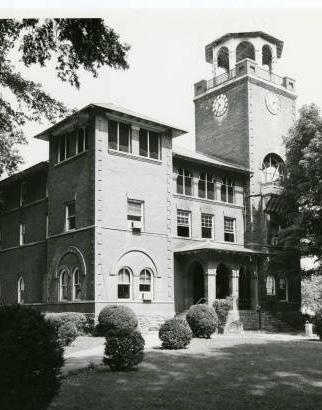
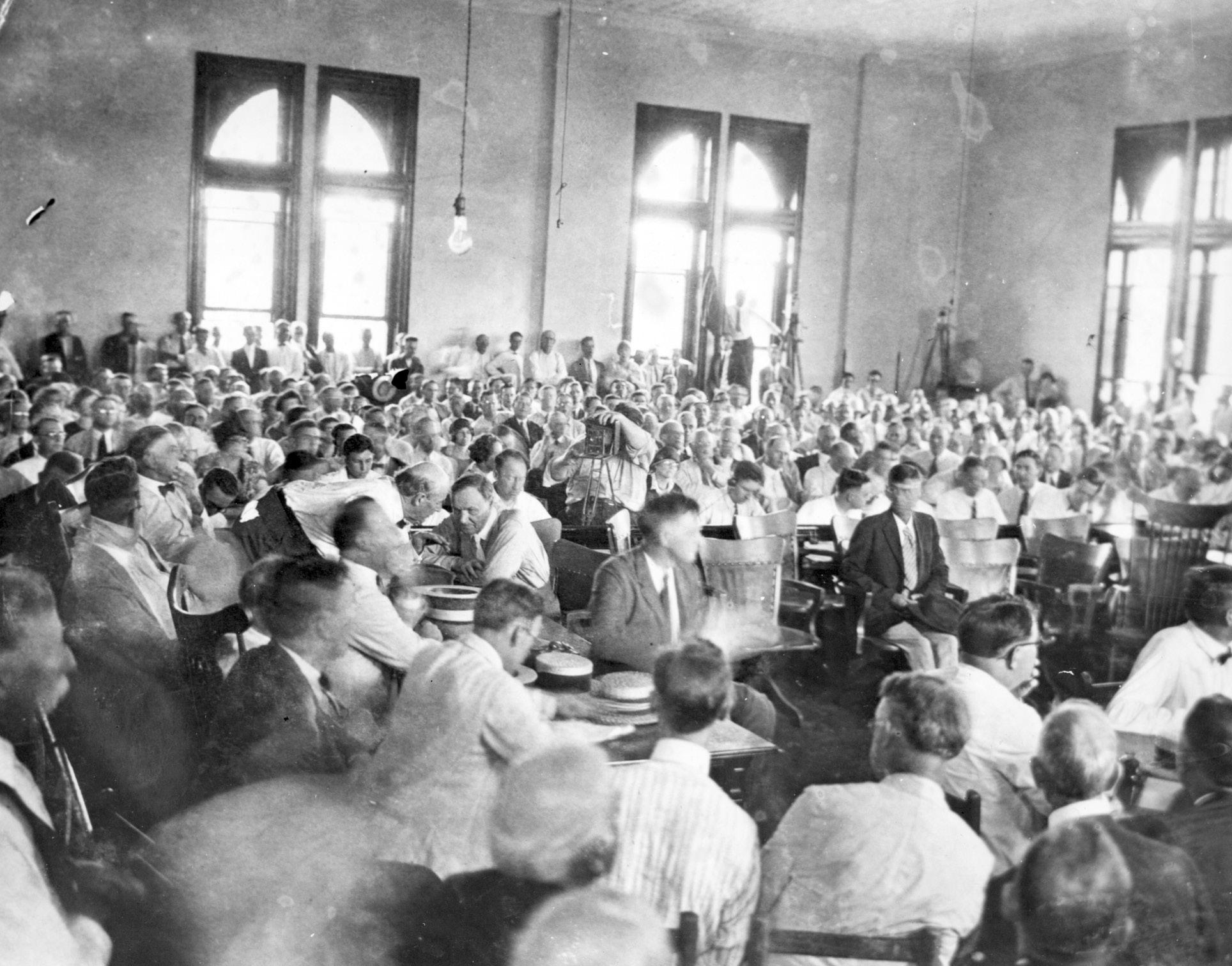


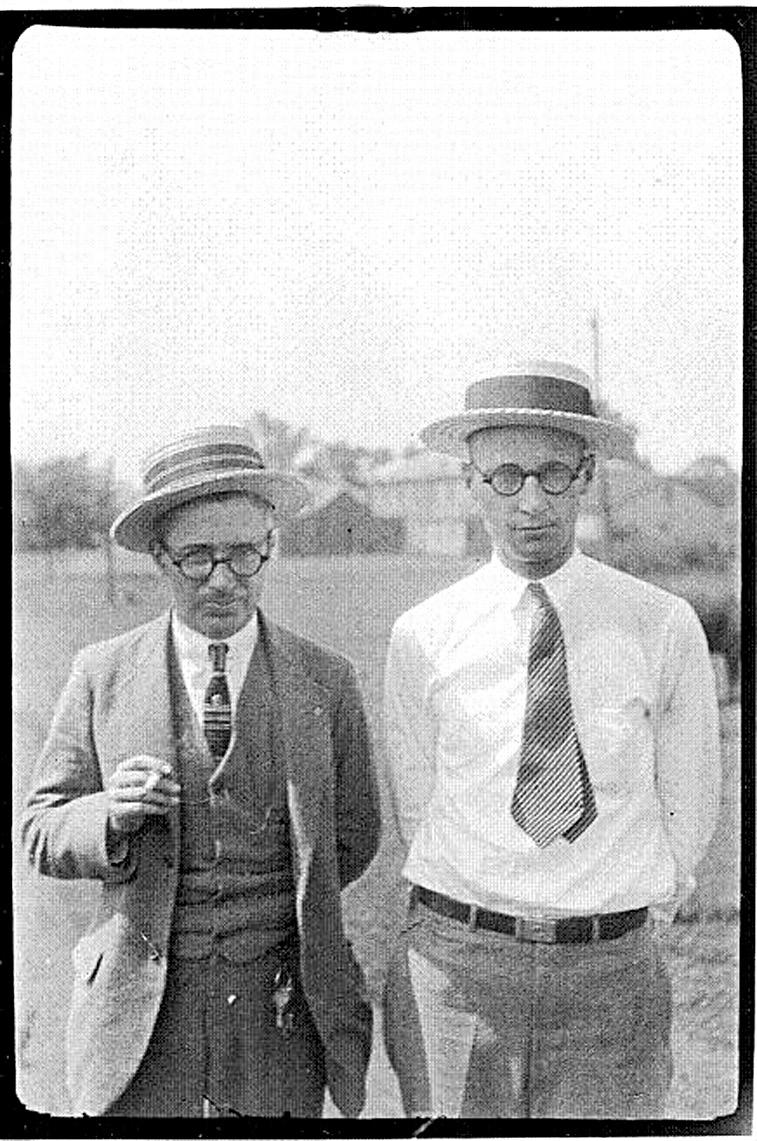


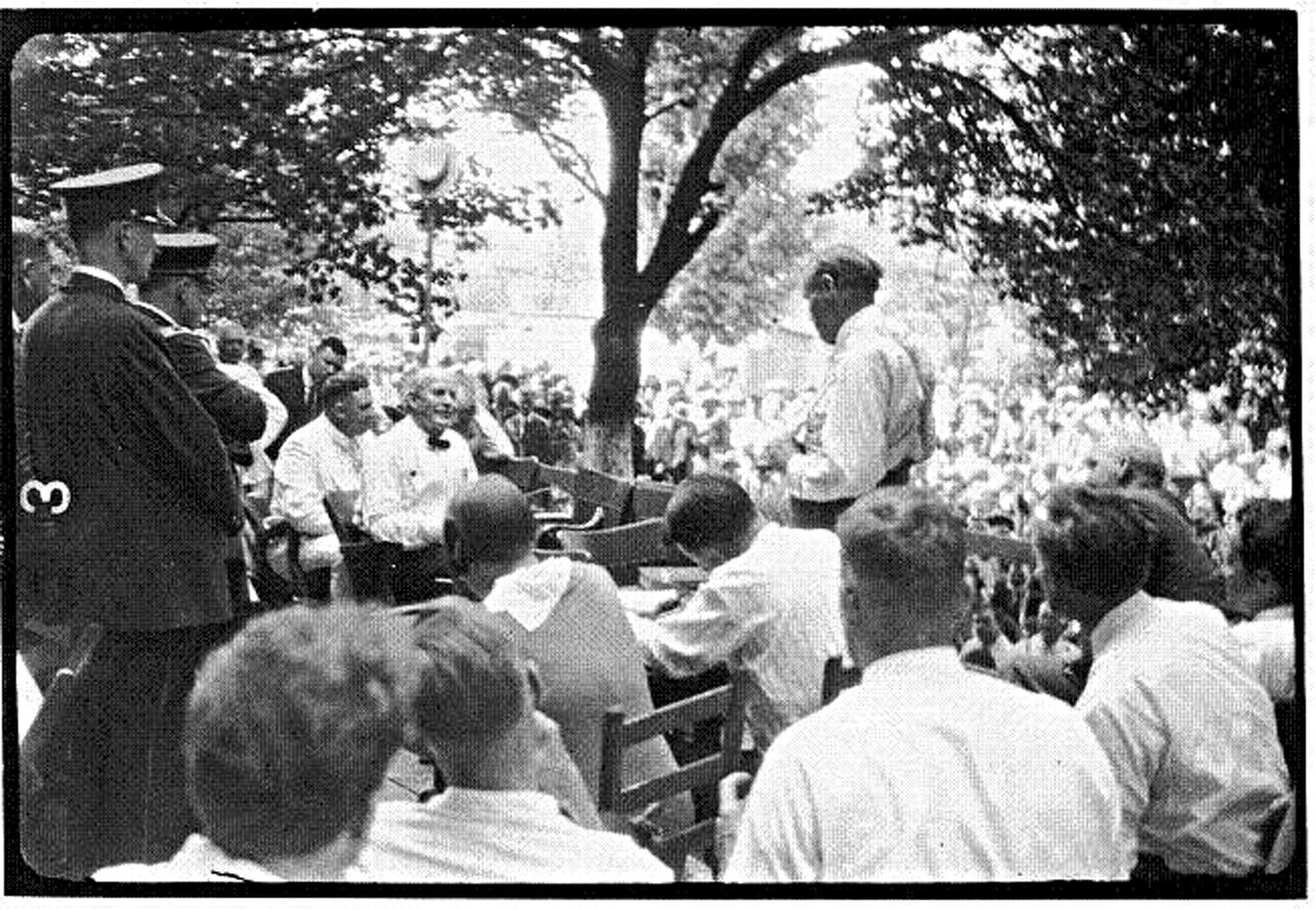
Clarence Darrow, standing center, cross examines William Jennings Bryan outside of the Rhea County Courthouse in 1925. Due to the summer heat at the time of the trial, a portion of the trial was held on the courthouse lawn rather than inside the courthouse.
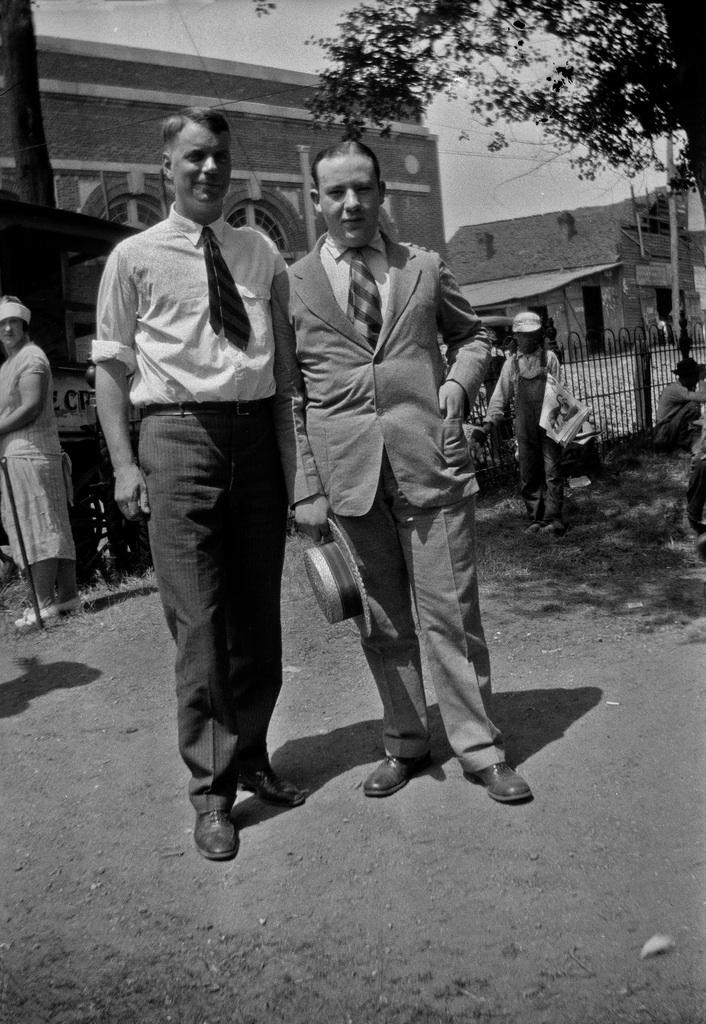
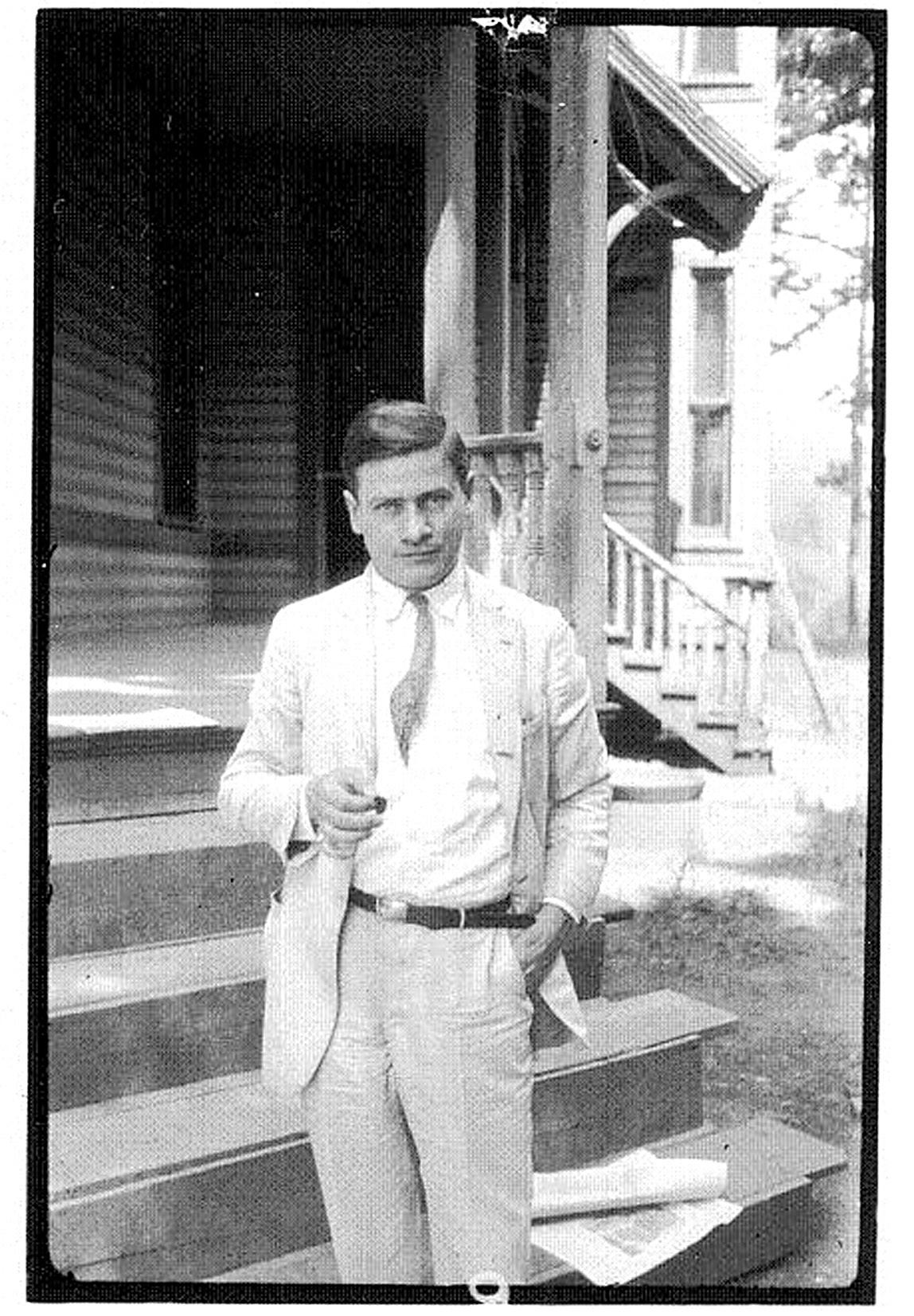
College student and photographer William Silver is pictured on the right with an unidentified man during the 1925 Scopes Trial in Dayton. Silverman’s photos from the trial were eventually found by the Smithsonian and released to the public.
BY PAT GUFFEY RHEA COUNTY HISTORIAN
As we are celebrating America’s birthday, we should stop and think about one of our most historical events which happened in our area during July of 1925. That would be the Scopes Trial, which was held in the historic Rhea County Courthouse and tested the Theory of Evolution. The trial had its beginning as a publicity stunt to get the economy of the area in better shape. The Scopes Trial would become one of the main news stories of the twentieth century, and was the first trial in the United States which was broadcast nationwide on live radio. It is also interesting to note that there are no recordings of the trial, because the technology for live broadcasts was not invented at that time.
Many of us are used to wearing a badge of some type which shows that we belong in a workplace or a name tag so that we can be part of a group. However, how many of us can say we have ever held a press pass dating to the Scopes Trial of one hundred and one years ago? It just happens that one of the exhibits seen in the Rhea Heritage and Scopes Trial Museum in the Rhea County Courthouse is a press pass numbered 112, once belonging to photographer Henry W. Seavey. This pass was given to the Museum by Gary Stark, of Spring Grove, Illinois, and is in honor of his
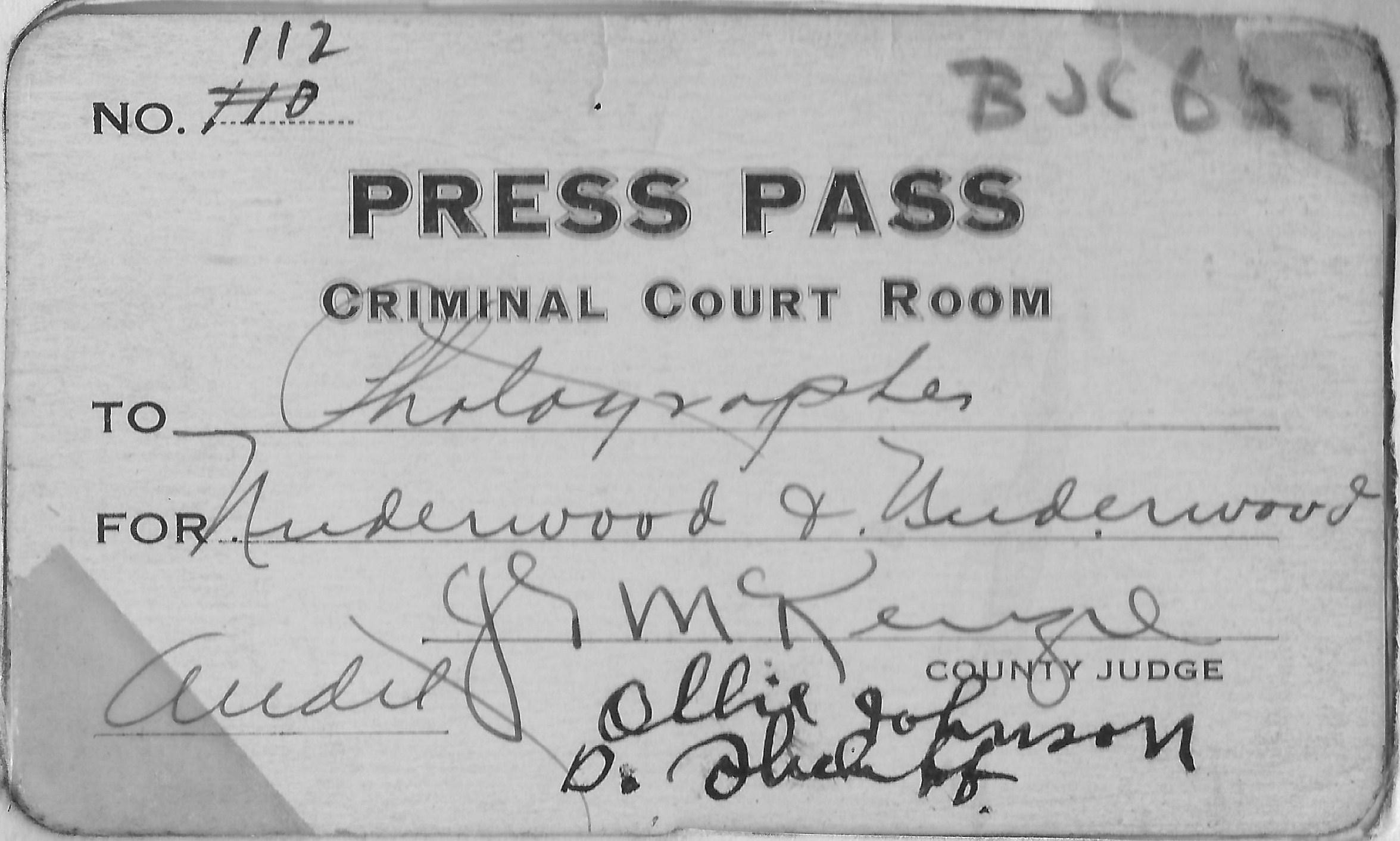
son and in memory of his grandfather.
Henry W. Seavey was born in 1899, and grew up in Momence, Illinois, which was approximately fifty miles South of Chicago. He spent most of his adulthood in Brookfield, a suburb of Chicago. Seavey had two daughters, one of which was Carolyn, the mother of Gary Stark, his grandson. Also, Seavey was a World War I veteran, and died in 1989 at age ninety. He worked for Underwood and Underwood, and then formed his own photography company with a partner. Later, he taught photography at the Art Institute of Chicago. Basically, all of his work was in black and white film, and he




was quoted in a Chicago Tribune article saying, “In my day we didn’t just take pictures, we made them.” Naturally, this was before digital photography. Fishing was one of his hobbies, and since air travel was not common during his career, most of his traveling was done by train. Not only did he cover the Scopes Trial in 1925, he also covered the Loeb and Leopold Trial in 1924. In addition, Seavey was a photographer at the 1933 World’s Fair in Chicago, the 1927 Dempsey/Tunney boxing match at Soldiers Field in Chicago and the 1932 World Series between the Chicago Cubs and the New York Yankees. (The Yankees won the series.) During that series he photographed Babe Ruth and Lou Gehrig, two of the Yankee Hall of Famers. Needless to say, Henry Seavey had an outstanding career!
During the Scopes Trial of 1925 press passes were commonly worn to identify those who were members of the press so they could gain entry to the courtroom during the trial. F.E. Robinson, trial instigator, had retained the services of Underwood and Underwood to document the trial proceedings, and their work became the pri-
mary source of trial images used in the Scopes Trial Museum and in the historical collections of the University of Tennessee and Bryan College.
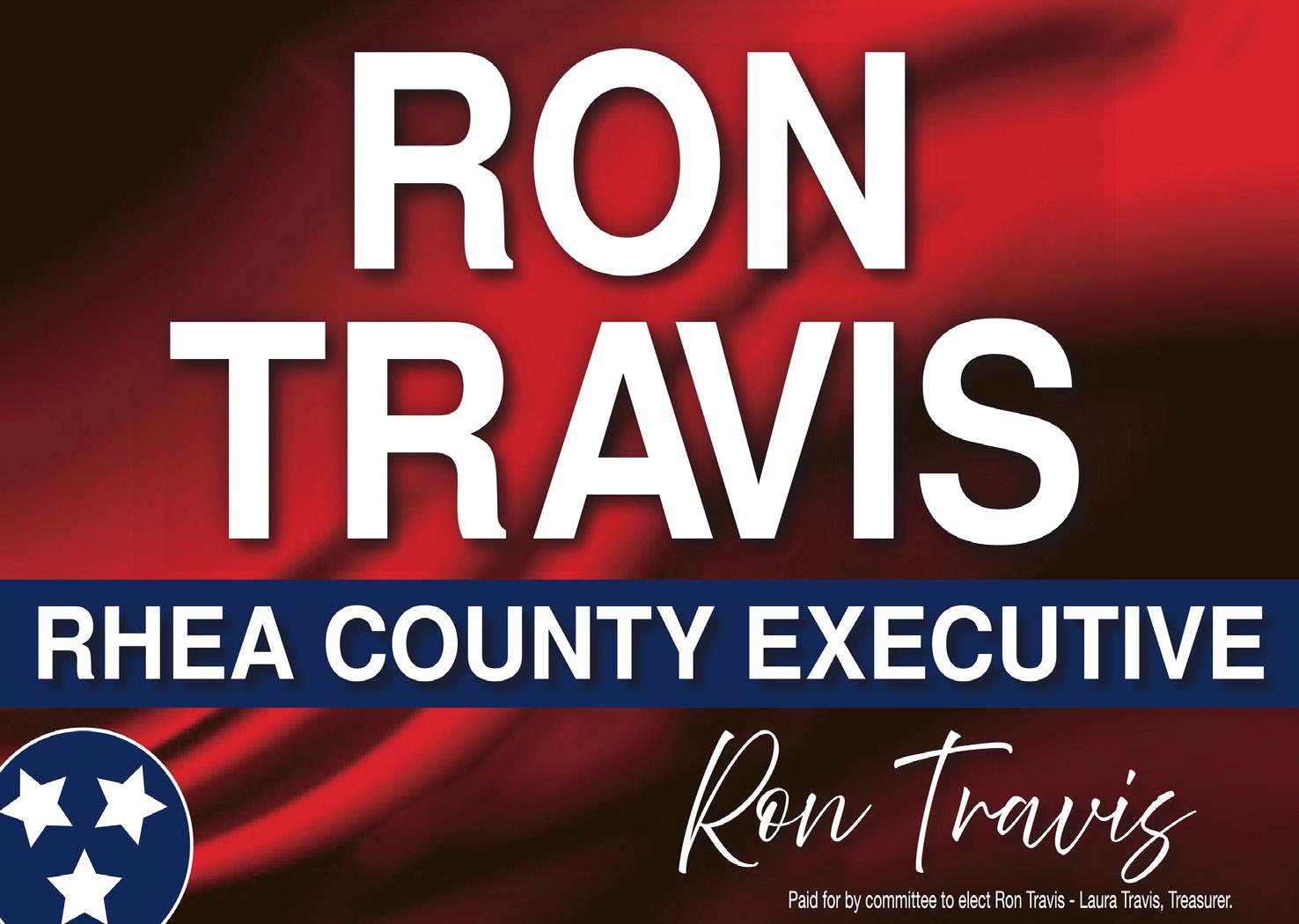
I happened to be working in the Museum on the day that Gary Stark and his son, Henry, visited Dayton and gave this piece of history to be displayed. Historians note that press passes still exist today from famous trials; however, very few are signed by trial participants. Therefore, this one is very significant, and remains an important part of our history. Among those who autographed the pass are the defendant, John Scopes; defense attorneys, Clarence Darrow, John R. Neal and Dudley Field Malone; Attorney General, Tom Stewart; Prosecuting Attorneys, William Jennings Bryan, Wallace Haggard and Gordon McKenzie; School Board Chairman, F.E. Robinson; and Superintendent of Schools, Walter White. This press pass is framed and has a place of residence in the Scopes Trial Museum.
When we view this press pass we are looking at a piece of history, which spans a time of one hundred and one years. Therefore, we all need to remember to learn from the past in order to live in the present and prepare for the future.
BY PAT GUFFEY RHEA COUNTY HISTORIAN
As we are now experiencing the long hot days of July, we can gain a perspective relating to the period involved with the Scopes Trial in 1925. People who attended the trial have told me that Dayton had a true “carnival” atmosphere during that time, and that the town was overflowing with reporters and other interested parties. Almost everyone had to rent a room or rooms in their house to someone who was in town for the trial; there was no Holiday Inn or Hilton Hotel at that time!
William Jennings Bryan and his wife were guests in the F. R. Rogers house on South Market Street during his stay in Dayton. This house is on the corner of what is now Market Street and Georgia Avenue, and looks very different today than it did in 1925. Frederick Richard Rogers was working as a pharmacist for Robinson’s Drug Store at the time of the Scopes Trial; a few years after the trial, Rogers would have his own business, known as F. R. Rogers Pharmacy.
Next door to the Rogers house was the home in which the A. B. Andrews family lived. (This structure was later the home of Ed and Tennie Arnold.) Mr. Andrews was manager of the Dayton Hosiery Mills, which also included the
Spring City Hosiery Mills at that time. (These mills later became Kayser-Roth, and are no longer in Dayton.)
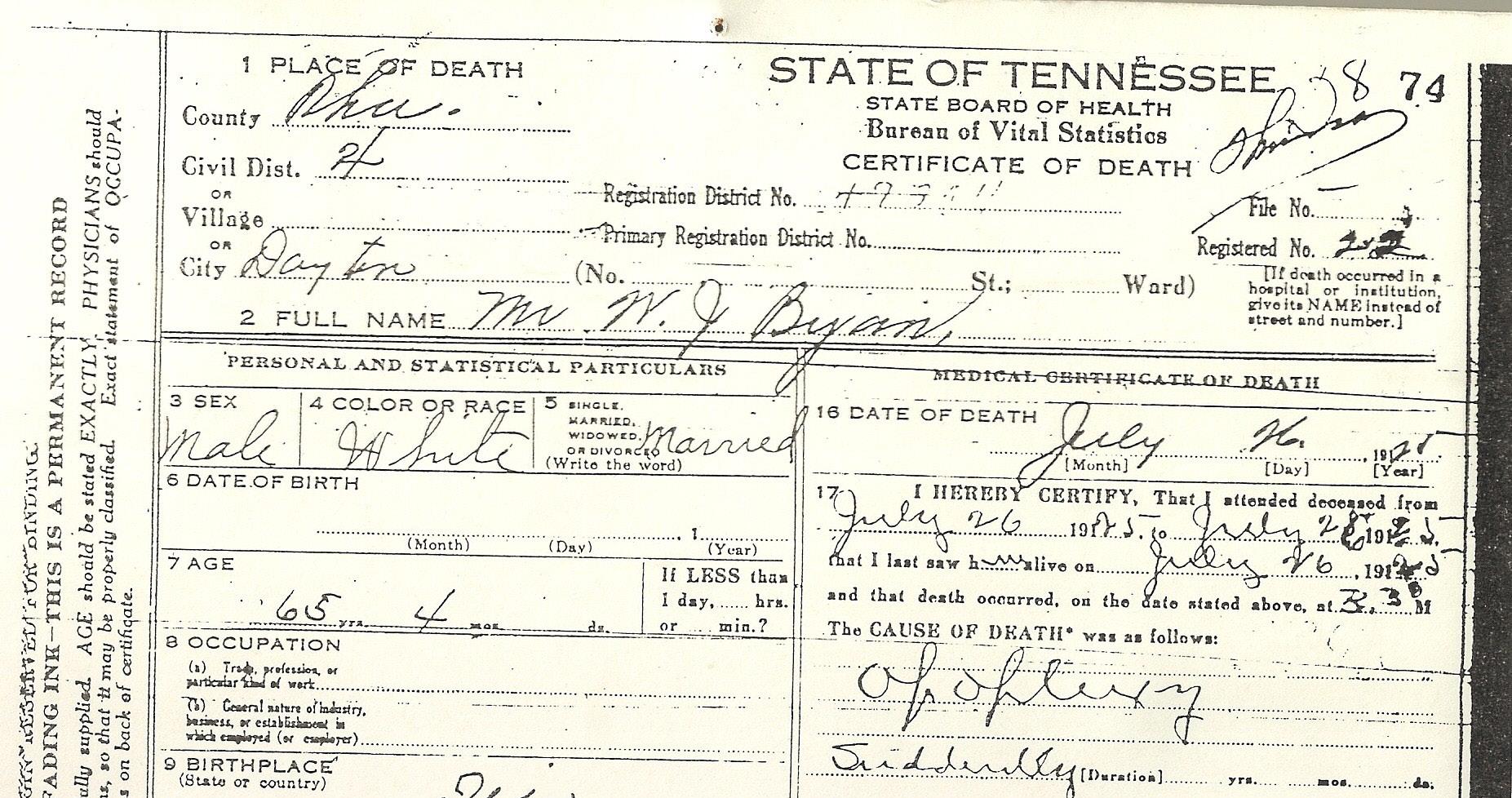
The Andrews family loaned their cook to the household where Mr. and Mrs. Bryan were staying as a gesture of friendship and good will. It was the cook who had a story to tell the Andrews family after the death of William Jennings Bryan. And all went well until five days after the trial when Bryan spoke at the Sunday service at the Methodist Church in Dayton, and ate what would be his last meal.
Events of that afternoon were told to me by Rose McConnell, the Andrews’ daughter, who is now deceased. However, a few years ago she remembered the details as told to her by her mother. She stated that their cook came running from next door relating that Mr. Bryan was sick and was not responding after a nap which followed a large meal. Mr. Andrews ran across the street
and brought his friend, Dr. Walter Thomison (my great grandfather) back with him.
“Doc” as Beirne Andrews referred to him, carried his medical bag, and attempted to do whatever he could to save Bryan. Andrews even said to Thomison, “Do you suppose a drink of whiskey would bring him around?” Before “Doc” could answer, Mrs. Bryan chimed in: “Liquor has never touched his lips, and it will not do so now!” Needless to say, it was too late for anything to be done, and Bryan died that afternoon in spite of all efforts

to revive him. The cook told both Dr. Thomison and Mr. Andrews that Bryan’s meal had consisted of two chickens with “all the trimmings!” Bryan was known for his large appetite, which probably had an adverse effect on him that day, because he was also a diabetic. Dr. Richard Cornelius, former English Professor at Bryan College has written that Bryan “had consulted with doctors about his diabetic condition” during the five days that followed the trial. No matter how people remember the Scopes Trial and Bryan, he will probably be best known for the college in Dayton bearing his name. And I’m sure many people around the area have various memories, good and bad, relating to the Scopes Trial which they can recall during the long, hot days in July. As your County Historian, I remind you to study the past in order to live in the present and prepare for the future.
BY TOM DAVIS RHEA HEREITAGE PRESERVATION
Dr. Richard Cornelius may not have invented the Scopes Trial, but he certainly helped Dayton rediscover the event which helped put our community on the map.
Dr. Cornelius, a graduate of Bryan College, began his teaching career at the college in 1961, working for 38 years as an English professor. But early on, as he travelled to and from Knoxville for graduate studies at the University of Tennessee, he became acquainted with the Scopes Trial.
His travel companion, Warren Allem, regaled him with tales of the trial and its participants, sparking a life-long interest in what actually happened in Dayton in 1925.
Beginning in the 1970s and continuing until ill health curtailed his research and writing, Dr. Cornelius was one of the nation’s leading authorities on William Jennings Bryan and the Scopes Trial.
Before their deaths, he interviewed and became friends with a host of Rhea countians who witnessed the trial and wrote numerous articles about his findings. His article “Their Stage Drew All the World,” published originally in Tennessee Historical Quarterly in 1981, has become a standard overview of the trial, its participants and the issues raised in that case.
His articles on the subject have appeared in scholarly journals
and popular publications. He published an annotated map of Scopes Trial sites; a pamphlet about Bryan, the Trial and “Inherit the Wind”; edited an annotated bibliography about Bryan and the Trial; edited a collection of articles and photographs about the trial; edited a collection of Bryan’s speeches; and produced a collection of songs about the Trial.
When journalists were interested in the Scopes Trial, they invariably were referred to Dr. Cornelius for information and directions. His touch could be seen in programs aired on network television, Court TV, The History Channel and Public Broadcasting as well as the British Broadcasting Corporation. Radio networks interviewed him, as did print journalists from national, regional and local publications. It was because of his local fame as a Scopes Trial specialist (he really didn’t like to be called an “expert”) he played a major role in the development of the Scopes Festival.
In 1988, writer/producer Frank Chapin visited Dayton and expressed an interest in presenting the play “Inherit the Wind” in the courthouse. Mr. Chapin was directed to Dr. Cornelius, who convinced him that the true story of the trial offered even better material for a play than does “Inherit.”
Mr. Chapin was convinced, and that year wrote and produced “The Scopes Trial: Destiny in Dayton.” In 1990, festival activ-
ities were added in an effort to capture the circus atmosphere that surrounded the 1925 trial.
Dr. Cornelius was not one to seek the spotlight, but he was one to insist on accuracy and precision. He felt one of his missions in life was to correct misconceptions about William Jennings Bryan and the Scopes Trial, many of which were popularized in “Inherit the Wind.” On numerous occasions he provided historically accurate information about the trial to theatre companies producing “Inherit,” to help their patrons understand more clearly what both the play and the trial were all about.
His deep Christian faith was the foundation for his striving for accuracy and balance in approaching life, English and
History. He told students on his retirement from teaching in 1999 that the biblical injunction to think on “whatever is true…honorable…right…pure…lovely…of good repute…let your mind dwell on these things” was a guiding principle for him.
Dr. Cornelius served the Rhea County Historical Society as chairman of the Rhea Heritage and Scopes Trial Museum, spearheaded a project to place markers at significant Scopes sites along “The Scopes Trial Trail” in Dayton.
Dr. Cornelius died August 21, 2014, after several years of declining health. He probably would be uncomfortable with being singled out in this way, but at the same time he would be pleased that the Scopes Festival has continued to this day.
BY TOM DAVIS RHEA HERITAGE PRESERVATION
It’s probably not too farfetched to say the play and movie “Inherit the Wind” is in part responsible for Dayton’s Scopes Trial Festival. By the late 1970s, “Inherit the Wind” had become the popularly accepted version of the trial that put Dayton on the map in 1925, but most people probably didn’t realize that theatre and history, in this case, were not in sync.
One of the men who didn’t realize the conflict between the facts and fiction of the Scopes Trial was Frank Chapin, a writer-producer who came to Dayton in early 1988 with a dream to produce “Inherit” in the courtroom where the trial was held in 1925. He quickly learned of Dayton’s tempestuous relationship with the play, and that it had been presented several times in the historic courtroom.
Instead, Mr. Chapin was directed to Bryan College, where he met with Dr. Richard Cornelius, an English professor and the college’s expert on the Scopes Trial and William Jennings Bryan. Dr. Cornelius persuaded his visitor that the trial transcript had much better “material” than “Inherit’s” script, and Mr. Chapin accepted the challenge of writing his own historically correct play.
“The Scopes Trial: Desti-
ny in Dayton” debuted that July to an appreciative audience. In the cast were relatives of Trial participants, Bryan College faculty and staff members and community residents interested in history and theatre.
“Destiny in Dayton” set the standard for each script which followed: an engaging story told in a way that gives the audience a glimpse of the historical figures, the legal and cultural issues, and the humor and drama that keeps the Trial alive to this day.
Two years later the play became the Scopes Trial Play and Festival, as activities were added on the courthouse lawn in an effort to remind guests that the trial in 1925 was as much a circus as a legal battle. From the first, local musicians Tom and Mary Morgan drew on their extensive contacts in the Appalachian music traditions to invite performers who could evoke the musical traditions of days gone by.
After 10 years, the festival debuted a new play, “The Scopes Trial: Monkey in the Middle,” by Dayton playwright Gail Johnson. Like “Destiny,” “Monkey” was largely adapted from the trial transcripts, but added authentic lines to offer better context for the legal proceedings. “Monkey” held the stage for 10
years.
The festival was produced and underwritten by Bryan College for 20 years, until the college handed the reins to the Dayton Chamber of Commerce in 2008.
Staffing issues that year forced a last-minute substitution of a one-man show about William Jennings Bryan, which included excerpts from Bryan’s trial testimony.
In 2009, the festival featured a new play by local writer Curtis Lipps. “One Hot Summer” took a humorous look at the trial and told a few local stories that helped portray the Rhea County community outside the courtroom.
By 2013, the festival steering committee decided a return to a more serious version was warranted, and engaged Tennessee playwright Deborah DeGeorge Harbin to write a new play.
“Front Page News” brought more of the trial back -
ground to the stage, and gave patrons a closer look at William Jennings Bryan and Clarence Darrow than had been offered in previous versions.
Casting issues forced cancellation of the festival in 2014, but in 2015 Jim Crabtree, then producing director at the Cumberland County Playhouse adapted “Front Page News” to include musical numbers, familiar hymns and tunes written for the show.
COVID hit the nation in 2020, and the festival was cancelled. With effects of the pandemic lingering in 2021, the festival selected Cara J. Clark, a graduate of Milligan College, to write a oneact play with a small cast.
“How It Started,” tells the Scopes story through the eyes of a history-loving grandfather who brings his son and grandson to the famous courthouse and helps them understand that there is more to history than
names and dates.
The musical part of the festival has grown as well. Beginning in 2018, with lead sponsorship from Nokian Tyers, the Rhea Heritage Preservation Foundation offers a month-long series of free concerts by local and regional musicians playing anything from country to rock.
Rick Dye, with RHPF said support from businesses and industries in Rhea County, with assistance from city and county governments, has made these concerts – as well as the ongoing Scopes Festival –possible. “The Foundation board, as well as city and county leaders, saw a need to offer activities downtown during the summer, and we were happy to step in,” he said. “Their support and the enthusiastic response of the community has helped us build the festival and the Nokian Tyres Summer