Plans for a national electronic health record appear to be gathering momentum.
A roadmap for interventional radiology
The Model of Care for Interventional Radiology marks a new starting point for the specialty, according to Prof Michael Lee
Rise in reported racist abuse of healthcare staff
NIAMH CAHILL
Reported racist abuse of healthcare sta increased by 73 per cent from 2023 to 2025, according to data obtained by the Medical Independent (MI) e HSE data shows that over 300 such incidents were recorded on the National Incident Management System (NIMS) over the three-year period.
In 2023, 73 incidents of racist abuse of HSE employees were reported on the NIMS. e number rose to 133 in 2024 and stood at 126 last year (to 17 December 2025), according to the records released under Freedom of Information law. e data
refers to HSE hospitals and facilities and excludes voluntary hospitals.
Under its “risk impact table” the HSE categorises incidents under ve headings – ‘negligible’, ‘minor’, ‘moderate’, ‘major’, and ‘extreme’.
Of the 332 racist incidents recorded over the three years, 311 were labelled as ‘negligible’, 19 were described as ‘minor’, and two were described as ‘moderate’. ere were no ‘major’ or ‘extreme’ incidents recorded.
Dr Mustafa Mehmood, General Secretary of the Irish Pakistani Professionals Association, and Consultant in Emergency Medicine, St James’s Hospital, Dublin, said that
racial abuse has grown more frequent over the last number of years.
“[Ireland] was a lovely place to work in up until two or three years ago,” said Dr Mehmood, who came to Ireland in 2014.
“You were respected. Nobody would be hassling you. Now it is not uncommon to be racially abused at work by a patient, or on your way to work or coming back from work.”
He added that most abuse directed at healthcare workers is of a verbal nature, although physical assaults have occurred.
An international medical graduate, who wished to remain anonymous due to fears he may be
targeted for speaking out, told MI about his experiences of racism in Ireland.
e doctor, who works in the Dublin region, rst came to Ireland almost seven years ago.
“ e rst ve years in Ireland, I absolutely loved it. In the last two years, there has been a change…,” he explained.
e doctor said he often experiences racist abuse from patients, with verbal abuse the most common form.
“Very often, you call the guards because someone either spat at you or you have to call the security of the hospital because they [the patient] have assaulted a sta member physi-
cally,” he stated. e doctor also faces racist abuse in society more generally.
“ e impact is horrible. At the end of the day, we work in a very intense environment with a lot of responsibility and a lot of risk and [then] face racist abuse and being told that you don’t belong, or you’re not good enough. It honestly feels terrible.”
e Irish health system is highly dependent on international medical graduates. According to the Medical Council’s Medical Workforce Intelligence Report 2024, some 27.8 per cent of doctors working in Ireland qualied outside of the EU/UK. is compared with 25.7
per cent in 2023 and 23.3 per cent in 2022. e most common country of quali cation for these international graduates was Pakistan, with 2,314 doctors. is was followed by Sudan, with 1,240 doctors.
Speaking in November about the rise in racist abuse of healthcare workers, Council CEO Dr Maria O’Kane said: “Our health service would collapse overnight if it wasn’t for our internationally trained colleagues and friends. It is vitally important that there is a zero-tolerance approach to racial abuse, especially in healthcare settings.” See news feature, p4-6
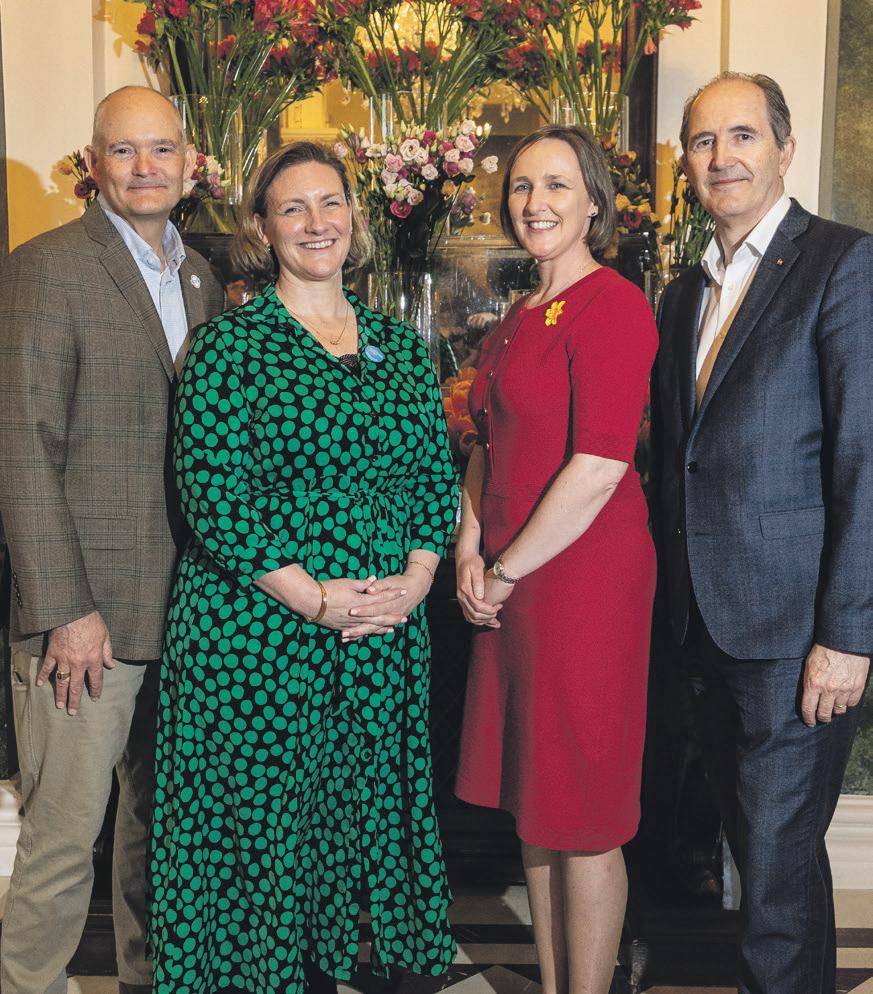
Pictured at the recent Global Oncology and Haematology Congress in Dublin are (L-to-R): Mr Michael Reff, Founder and Executive Director of the Network for Collaborative Oncology Development and Advancement (NCODA); Ms Orla Dolan, CEO of Breakthrough Cancer Research; Ms Amy Nolan, Director of Clinical Affairs at the Irish Cancer Society; and Mr Dave Shanahan, NCODA global council steering committee member and CEO of Athena Pharmaceuticals. The Congress, organised by the NCODA, brought together international leaders across oncology, haematology, pharmacy, diagnostics, and healthcare innovation.
Photo: Dan Clohessy Photography
PAGE 12
PAGE 20
David Lynch reports
Healthcare during wartime
Dr Muiris Houston lauds the fortitude and professionalism of health workers in Ukraine
Mater Private Network | Dublin
Heart Summit
2026
Saturday, April 18th · RCSI University of Medicine & Health Sciences, Dublin, Ireland
In association with the Dublin Cardiovascular Research Forum and supported by the Irish Cardiac Society. Approved for 5 CPD credits and 1 day GMS Study Leave.
Kindly supported with an unrestricted educational grant by:
Welcome & Opening 8:45am – 9am
Introduction – Prof. Robert Byrne, Director of Cardiology at Mater Private Network, Dublin and Director of the Cardiovascular Research Institute (CVRI) Dublin
Session 1 9am – 10am
Keynote Presentation
Angina with Non-Obstructive Coronary Arteries: A Success Story
Prof. Filippo Crea, Editor in Chief of European Heart Journal. Director of the Department of Cardiovascular Sciences, Gemilli Hospital, Rome
Session 2 10am – 11am
What’s New in Advanced Cardiac Imaging – Prof. Chiara Bucciarelli-Ducci, Associate Prof. in Cardiology / Non-Invasive Imaging, Bristol Heart Institute
Hypertrophic Cardiomyopathy: Incorporating the Latest Guidelines and Myosin Inhibitors into Practice – Dr. Timothy Barry, Consultant Cardiologist, Mater Private Network
Cardiovascular Health in Women: Update from the Inaugural Women’s Heart Summit
Dr. Róisín Colleran, Consultant Cardiologist, Mater Private Network
Coffee Break 11am – 11:30am
Session 3 11:30am – 12:30pm
Lipid-lowering Therapies: Where are We Now & What is on the Horizon?
Prof. Wolfgang Koenig, Head of Cardiometabolic Unit, German Heart Centre, Munich
TAVI or Cardiac Surgery for Aortic Valve Disease: Latest Guideline Recommendations
Prof. Mark Spence, Head of Structural Heart, Mater Private Network
Discontinuation of Long-Term Medications: Challenges in Clinical Practice
Dr. Louise Boyd, General Practitioner, Boyd Medical Occupational Health Ireland
Lunch 12:30pm – 1:30pm
Session 4 1:30pm – 2:45pm
Beta-blockers after Acute Myocardial Infarction: The Picture is Finally Clear
Prof. Borja Ibáñez, Director of Clinical Research, National Centre for Cardiovascular Research. Interventional Cardiologist, University Hospital Fundación Jiménez Díaz, Madrid
Dr. Jim O’Brien, Consultant Cardiologist, Mater Private Network
Primer on Behavioural Science of Sustainable Lifestyle Change: From Good Advice to Lasting Change – Dr. Heather McKee, PhD, Lifestyle Behaviour Change Specialist & Health Psychologist
Conclusion & Close 2:45pm – 3pm
Registration For in-person attendees, register via QR code. For online attendees, register via www.medcafe.ie www.materprivate.ie
Borja
Prof. Robert Byrne Course Director
Prof. Filippo Crea Keynote Speaker
Prof. Chiara Bucciarelli-Ducci Dr. Timothy Barry Dr. Róisín Colleran
Prof. Wolfgang Koenig Prof. Mark Spence Dr. Louise Boyd
Prof.
Ibáñez Course Director & Speaker Dr. Jim O’Brien Dr. Heather McKee
Medical Council plans to recognise new exemption for PRES 3
CATHERINE REILLY
Doctors who pass the UK’s Professional and Linguistic Assessments Board (PLAB) 2 exam will be exempt from the Medical Council’s Pre-Registration Exam (PRES) 3 under planned changes.
A PRES 3 working group, established by the Medical Council, has concluded that PLAB 2 can be accepted as equivalent to PRES 3. is position has been approved by Council.
A Council spokesperson told the Medical Independent it is currently “considering revisions to its PRES rules so that the PLAB 2 may be considered as an exemption to the PRES 3”.
As of 13 March, the Council expected that this exemption would be in place within the next three to four
GP training places increasing to 400 this year
New-entrant GP training places are increasing by 50 to 400 this year, according to Minister for Health Jennifer Carroll MacNeill.
Responding to recent parliamentary questions, the Minister also noted that the annual intake into GP training had increased by 80 per cent between 2019 and 2024. Chair of the IMO GP committee Dr Tadhg Crowley welcomed the increase in training places. He told the Medical Independent that this was a “good news story for general practice”.
“We want to ensure that as many Irish medical graduates as possible are facilitated to train in Ireland and to set up in general practice here after their training; that’s the challenge for everyone involved in the health service.”
Meanwhile, speaking in the Dáil earlier this month, Minister Carroll MacNeill stated that the strategic review of general practice would be completed this year.
e review will examine “issues related to capacity” and will consider further possible mechanisms to attract GPs to rural and under-served areas.
“ e review will set out recommended actions for more sustainable general practice delivery for the whole community. While the existing GMS contract has been significantly updated, including via circular, a new approach must also be developed. e strategic review will identify the arrangements necessary to improve our current system of GP care and that will determine any changes required in a new contract,” she stated.
The Minister also referenced the variability in availability of out-of-hours services nationally and indicated that this issue would need to be addressed in any new GP contract.
In response, Fianna Fáil Deputy Dr Martin Daly outlined that “many younger GPs are choosing not to sign GMS contracts with the State” because of the obligation to provide out-of-hours services.
“I agree 100 per cent with the Minister that we really need to rethink the out-of-hours framework. It may well need to be separate from the GP contract because an increasingly older population of GPs are carrying that out-of-hours burden,” Deputy Daly stated.
months. e Council’s spokesperson said the General Medical Council (GMC) had con rmed it has capacity to accommodate additional applicants from Ireland (on the condition they meet the GMC eligibility criteria).
Doctors who quali ed outside of the EU/EEA are required to pass, or be exempt from, the PRES exams to be eligible for general registration. e exams are primari-
ly a test of knowledge and clinical skills in obstetrics and gynaecology, paediatrics, psychiatry, surgery, and medicine/general practice.
PRES 2 is comprised of multiple-choice questions, while PRES 3 involves a data interpretation exam and an objective structured clinical exam.
At the end of 2025, some 325 doctors were waiting to sit PRES 3. e gure had increased to 326 by the end of February 2026, according to gures provided by the Council. Last year there were three sittings of PRES 3, which accommodated 140 candidates. ree medical schools have indicated their willingness to host PRES 3 in mid/ late 2026.
The
importance of iron throughout women’s life stages
NIAMH CAHILL
Doctors experience growing racism in Ireland
Niamh Cahill reports on the disturbing rise of racist abuse towards staff in the health service
“
This is something that is new to Ireland, that people weren’t anticipating.
But it is here and I’ve a feeling that it’s going to get worse before it gets better.”
These are the words of Dr Mustafa Mehmood. He is speaking about the rise in incidents of racist abuse levelled at healthcare staff by patients in Ireland.
Dr Mehmood is General Secretary of the Irish Pakistani Professionals Association (IPPA), a body with up to 1,600 members representing healthcare, technology, and other sectors.
Episodes of racist abuse directed at healthcare workers are increasing, according to Dr Mehmood. Both anecdotal and evidence-based reports confirm this to be the case.
Change
Dr Mehmood is a Consultant in Emergency Medicine at St James’s Hospital, Dublin. He came to Ireland in 2014.
“[Ireland] was a lovely place to work in up until two or three years ago,” Dr Mehmood told the Medical Independent (MI)
“You were respected. Nobody would be hassling you. Now it is not uncommon to be racially abused at work by a patient, or on your way to work or coming back from work. Most of it is verbal abuse.”
There have also been incidents where doctors have suffered racist physical assaults, Dr Mehmood explained.
“There was an incident in Limerick where a doctor was physically assaulted in the car park of a hospital and racially abused.”
He referenced a number of other incidents. One involved a GP trainee in Letterkenny who was abused and intimidated on her way home from work. In another case, a doctor was racially abused in a shop in Mullingar. More recently, he said, a doctor experienced racist abuse in St James’s Hospital. Dr Mehmood added that the IPPA is receiving more reports of racism than it has in the past. Data obtained by MI also reveals a concerning number of incidents of racist abuse in the health service (see panel)
“These incidents have definitely esca-
lated. There is a huge right-wing sentiment to it. There is a lot of online trolling,” said Dr Mehmood.
Fear
An international medical graduate, who wished to remain anonymous due to fears he may be targeted for speaking out, spoke to MI about his experiences of racism in Ireland.
The doctor, who works in the Dublin region, first came to this country almost seven years ago.
“The first five years in Ireland, I absolutely loved it. In the last two years, there has been a change. I could even pinpoint it to when the stabbing in Dublin occurred and the riot later that day [23 November 2023]. Since then, there has been
a huge uptick in racist attacks and racist rhetoric that we face,” he explained.
The doctor said he often experiences racist abuse from patients, with verbal abuse the most common form.
“Very often, you call the guards because someone either spat at you or you have to call the security of the hospital because they [the patient] have assaulted a staff member physically,” he stated.
He also faces racist abuse in society more generally, he said. The frequency of the abuse is notable, particularly at work.
At work, “the verbal abuse would be once every couple of days and the physical abuse might be once every couple of weeks,” he said.
“The impact is horrible. At the end of
Now it is not uncommon to be racially abused at work by a patient, or on your way to work or coming back from work
the day, we work in a very intense environment with a lot of responsibility and a lot of risk and [then] face racist abuse and being told that you don’t belong, or you’re not good enough. It honestly feels terrible. Especially when you live in Ireland by yourself and you don’t have a family and family support. It can make you isolated. You do your work, you come back home, and you can’t go outside the house because you’re still terrified.”
The abuse has become so commonplace that it now impacts the doctor’s decision on whether he will leave his home.
“I don’t go out of the house very often now unless I need to…. Not that when I go out I face that every time, I don’t.”
Complexity
The doctor stated the department at his hospital – where most of the staff come from different parts of the world –has a strict zero-tolerance policy toward racism.
However, due to the complex nature of healthcare, this policy cannot always be applied in a ‘one-size-fits-all’ manner, the doctor explained.
“Unless someone has a life-threatening [medical] issue, if someone physically and verbally assaulted a member of staff, they would be escorted by security or the guards out of the hospital,” he said.
Image: iStock.com/Jacob Wackerhausen
“But if someone is behaving rudely, we have to make sure it’s not from a medical issue, that they’re not delirious and they don’t have an infection.
“We do tolerate a lot of straightforward racism, given that the patient might be drunk, have taken drugs, or they may have dementia, or are very sick. So on a daily basis, we tolerate some of that, giving the patient the benefit of the doubt.”
The doctor also highlighted how racism can take many forms. Sometimes it is subtle, he said.
For example, some patients ask for a doctor who speaks ‘better English’, or sometimes patients demand to see an Irish doctor.
“You get a lot of these subtle demands that are not very straightforward [to respond to],” he stated.
“I was on a night shift two weeks ago. Someone was demanding to see a white Irish doctor and the four of us were all foreigners there at the time. We are so busy with the winter surge, we don’t
have the time to tolerate that nonsense.”
The racist abuse has formed part of his decision to leave Ireland, which he plans to do later this year.
“Me and my fiancée are originally from East Africa and I don’t see us raising small kids here. I don’t want my kids to face racism. Our plan is to move back home,” he said.
Despite the recent negativity, the doctor stressed that his first five years in Ireland had been very happy.
“I worked two years in Galway before Covid, and it was the best time of my life. I loved the people, especially the people from the west of Ireland. They were hands down the best people.
“I’ve lived in seven different countries in my life and they’re probably my favourite in terms of how approachable they were and how nice they were. The old farmer who would invite you to go fishing with him at the weekend, or invite you for pints.”
Before the recent surge in racism, the doctor said he had considered settling
in the west of Ireland, but that is no longer the case.
“The last few years haven’t made much sense to me. The scale of the racism and the rhetoric have completely changed everything.”
Challenges
At the end of last year, the Medical Council released a statement saying the racist abuse of healthcare workers must end.
In the statement, Council CEO Dr Maria O'Kane noted there had been an increase in reports of such abuse towards staff in the health service.
According to a spokesperson for the Medical Council, without international doctors working in Ireland, “our health service would collapse overnight.”
“In 2024 alone, nearly 42 per cent of doctors clinically active in Ireland received their primary medical qualification outside of an Irish medical school.
Continued on p6
Concerning data on racist abuse in the health service
HSE records show that more than 300 incidents of racist abuse of staff were recorded on the National Incident Management System (NIMS) over a three-year period from 2023 to 2025.
The data were released to the Medical Independent through Freedom of Information (FoI) law.
In 2023, 73 incidents of racist abuse of HSE employees were reported on the NIMS.
The number of racist episodes rose to 133 in 2024. In 2025, up to 17 December, 126 reports of racist abuse of staff were recorded.
These reports of racist abuse refer to publicly funded HSE hospitals and facilities, and exclude voluntary hospitals. In its FoI response, the HSE stated the data supplied “may contain anomalies and is subject to further change following ongoing analysis”.
The Executive stated that when considering the figures in the report, it should be noted that “staff are encouraged to report all ‘near misses’ and incidents – even those that do not result in harm”.
“Hence, the number of incident reports should not be considered as indicative of a level of harm. There may also be multiple reports relating to the same incident,” the HSE outlined in its response.
The wording used by the HSE concerning harm is noteworthy, given that any form of racism can and should be viewed as causing ‘harm’.
Categories
The HSE categorises incidents under fi ve headings – ‘negligible’, ‘minor’,
‘moderate’, ‘major’ and ‘extreme’.
‘Negligible’ events are defined as an adverse event leading to minor injury not requiring first aid, with no impaired psychosocial functioning.
‘Minor’ incidents are defined as minor injury or illness, where first aid treatment is required.
They may also involve an extended hospital stay of three days or less, with impaired psychosocial functioning lasting more than three days but less than one month.
‘Moderate’ is categorised as signifi cant injury requiring medical treatment, such as a fracture and/or counselling.
‘Moderate’ incidents are reported to the gardaí and Health and Safety Authority and result in a hospital stay of between three to eight days. Such incidents may result in impaired psychosocial functioning greater than one month and less than six months.
‘Major’ is defined as “injuries/ long-term incapacity or disability (loss of limb) requiring medical treatment and/or counselling” and impaired psychosocial functioning greater than six months.
‘Extreme’ is defined as an incident leading to death or major permanent incapacity.
Of the total 332 racist incidents recorded in 2023, 2024, and up to 17 December 2025, 311 were labelled as ‘negligible’; 19 were described as ‘minor’; and two were described as ‘moderate’. There were no ‘major’ or ‘extreme’ incidents recorded.
A breakdown of incidents by HSE location shows that over the three-
year period, the highest number of incidents (52) occurred in the Dublin and Midlands Community area.
The second largest number (47) occurred in the Dublin North East Community area. A total of three incidents recorded concerned staff in the National Ambulance Service.
In its FoI response, the HSE said that its National Policy on the Prevention and Management of WorkRelated Aggression and Violence 2025 had been reviewed and revised.
The Executive said that ensuring the safety of employees and service users is “a priority concern”.
“The HSE does not tolerate verbal or physical aggression in any form by employees, service users, and members of the public or others. While it is accepted that the provision of health services can involve situational conflicts, this recognition should not be equated with considering any form of aggression and/or violence as being inherent, inevitable or acceptable.
“Behaviours that challenge are understood to occur on a spectrum from unintentional (clinical) to intentional (non-clinical), even criminal. The appropriate response will vary accordingly from understanding and compassionate management to non-tolerance.”
The HSE said it will continue to focus on risk assessment, supporting the implementation of recommendations made in recent security audits and on learning from incident reviews, through the revision of the HSE’s Incident Management Framework
MINDO NUMBERS
44% of International Protection Accommodation Service centres were overcrowded, according to HIQA’s 2025 overview report for the area.
96 adults lived in tented accommodation in one centre, which impacted on their quality-of-life.
29% of accommodation centres inspected by HIQA had significant health and safety concerns, including fire safety, structural issues, mould, and pests.
1 in 10 adults in Ireland are affected by chronic kidney disease, according to a statement from the Irish Kidney Association in advance of World Kidney Day on 12 March.
2,647 people were receiving dialysis treatment in Ireland at the end of 2025.
559 people were on the kidney transplant waiting list in 2024.
International medical graduates play a vital role in ensuring a working health service,” a spokesperson told MI
“Internationally, there is a global shortage of doctors and other healthcare workers. It is important that Ireland remains an attractive location where doctors are supported, to support the retention of both Irish and internationally trained doctors.”
A HSE spokesperson told this newspaper that international workers make up over 15 per cent of its entire workforce.
“The HSE is proud of the organisation’s diverse workforce, all of whom are critical for the provision of services for patients across Ireland. We are deeply grateful to international workers who have chosen to move their lives and families to Ireland to work with the HSE and to help provide essential care and support for patients.
“Ensuring the safety of all employees and service users is a priority for the HSE. We are committed to creating a safe environment within which to work or to be treated.”
A spokesperson for the Department of Health said that any instances of discrimination, prejudice, or racial abuse impacting healthcare staff are unacceptable.
The spokesperson also said there is a “comprehensive” range of supports for staff experiencing or witnessing racist behaviours.
These include guidance, information resources, and training for line managers. The HSE’s Diversity Equality and Inclusion Team provides an enquiry and support service and connects staff with the Cultural Diversity Network. There are also staff across the HSE trained to provide support and signposting on Dignity at Work matters, including helping employees affected by racist behaviours.
The spokesperson said human resources teams are also available to offer advice and information and to point staff to other supports, while occupational health and safety services can advise on workplace safety. Finally, they said the Employee Assistance Programme provides counselling for staff who need it.
Campaign
Despite the support he feels from friends and colleagues, the doctor who spoke on condition of anonymity maintained that a national campaign is needed to help stop racism in healthcare.
“The Government and the HSE could do more. More education and teaching to the public would help…. I feel like the racist, right-wing rhetoric is winning currently rather than common sense,” he said.
Dr Mehmood agreed, criticising the Government and HSE for not doing more to reduce racism.
He said that an awareness campaign could focus on “how much we are dependent on people of colour… not just in
medicine, but in general”.
“The Government stance on this has been poor…. Issues like housing and healthcare, they existed for years and years. They are not something that has worsened because of an influx of immigrants,” according to Dr Mehmood.
“The health service is very much dependent on international healthcare staff and most of them are people of
serious racist attacks on staff.
In the letter, the Health Sector Staff Panel of Trade Unions expressed concern at the increase in racially motivated attacks.
It noted that “some Embassies, and particularly the Indian Embassy, are advising their citizens to take reasonable precautions for their personal security when in Ireland”.
The letter also stated: “This is an extremely challenging time for international workers in Ireland today, both psychologically and emotionally.
“We urge the HSE to publicly support all international healthcare workers within your service as a sign of solidarity. Additionally, we request that the HSE increase wellbeing supports for these workers to ensure there are adequate protections in place within the health service to support them,” stated the letter, which was released by the HSE through Freedom of Information law.
HSE Chief People Officer Ms Anne Marie Hoey replied to the unions on 13 August 2025 unequivocally condemning racist attacks.
The letter from Ms Hoey, seen by MI , outlined that the HSE was proud to have a diverse workforce, “all of whom are critical to the delivery of our services.”
“We will continue to ensure that all
It honestly feels terrible. Especially when you live in Ireland by yourself and you don’t have a family and family support
colour. Should there be a widespread campaign, as in zero-tolerance to racism? Should the HSE bring out a proper policy? Should there be an awareness campaign? Absolutely.”
Dr Mehmood believes that over the past 12-to-18 months racism has become “almost normalised” in Irish society.
Following physical assaults on doctors last year, the IPPA approached HSE Chief Clinical Officer Dr Colm Henry and HSE National Doctors Training and Planning.
Dr Mehmood said following the approach, affected doctors were contacted by hospital CEOs and staff, and available supports including leave were offered.
“I think there is more awareness among our white colleagues at this point – that this is something that happens and that it is not a one-off event [but] something ingrained in our society. But do we need to do more support? Probably, yes.”
Last year, the IMO and other healthcare unions wrote to the HSE seeking increased support for international healthcare workers following reports of
just doctors. Children are being harassed at school. Children are being… told to ‘go back to your country’ in playgrounds. A young girl with special needs was racially abused and assaulted by teenagers in [west Dublin] not too long ago. It’s gotten out of hand. The prime targets are women and children.”
A spokesperson for the IHCA said there needs to be a zero-tolerance policy towards violence, aggression, or any form of abuse, racial or otherwise, directed at healthcare workers.
“With around 40 per cent of all doctors working in the Irish health service having qualified outside of Ireland, our hospitals and community service would grind to a halt if we no longer had these dedicated and hard-working medical and health staff providing care and treatment to patients,” the Association’s spokesperson told MI
existing supports continue to be available to our colleagues when such incidents occur and will work collectively with all other organs of the State in addressing such incidents and seek to educate and influence to ensure that such incidents do not occur in the future.”
Zero tolerance
Dr Mehmood believes what is happening in Ireland is similar to what occurred in the UK around 30 years ago when, he said, there was a rapid influx of immigrants not just in healthcare, but in all sectors.
“I think the rapid influx of immigrants here, or people of colour, over the last three, four, five years has changed the way people look at immigrants,” Dr Mehmood stated.
“Healthcare was in a crisis here in 2014 when I came and healthcare is still in a crisis. Things haven’t improved. Immigrants have been scapegoated because they are an easy target and they don’t want to speak up. They keep quiet and mind their own business.
“We [the IPPA] also represent people from technology and other sectors, not
“While frustration at long waiting times and staff shortages are often cited as factors that have contributed to an increase in hostility, abuse, or aggression toward hospital workers, this remains wholly unacceptable and the above pressures should never be used as an excuse for such unacceptable behaviour.
“Every consultant and health worker has the right to work in an environment free from abuse or harassment of any kind, be that due to their race, religion, gender or sexual orientation, and to feel safe while providing invaluable care to the citizens of this country.”
The HSE National Policy on the Prevention and Management of Work-Related Aggression and Violence 2025 states that it is the policy of the Executive to reduce the risks associated with work-related aggression and violence.
“Work-related aggression and violence towards staff from service users or their family members is a serious challenge within healthcare, which diminishes the quality of working life for employees, compromises organisational effectiveness, and impacts negatively on the provision of services. Hence, the prevention and management of occupational aggression and violence requires a multifaceted organisational response.”
Ms Anne Marie Hoey
Dr Maria O'Kane
SPRING 2026 GP STUDY MORNING
SAT 18TH APRIL - 8.30AM O'REILLY HALL, UCD - IN PERSON & ONLINE
EARLY MORNING SESSION - 8.30AM
Rheumatology Masterclass – Inflammatory Arthritis
Early Diagnostic Tips for the GP & the Role of POCUS
Prof David Kane, Consultant Rheumatologist
Rheumatology in Primary CareImmune/Bone/Heart Health
Dr Javaneh Lyons, Consultant Rheumatologist
SESSION ONE
ENT Patient Management - Primary to Hospital Care
Mr Brendan Fennessy, Consultant ENT Surgeon
Ms Phoebe Roche, Consultant Otolaryngologist
Ms Natalija Snovak, Consultant ENT Surgeon
Mr Shawkat Abulrahman, Consultant ENT Surgeon
What is PAG?
Immunotherapy - Achieving Remission is the New Norm
Dr Orla NiMhuircheartaigh, Consultant Rheumatologist
Panel Discussion: Team joined by Dr Catherine Hughes, Consultant Rheumatologist & Dr Diana Gheta, Consultant Rheumatologist
SESSION TWO
Dr Nikita Deegan, Consultant in Paeds & Adolescent Gynaecology
Ms Eleanor Faul, Consultant General & Colorectal Surgeon
Dr Barry Hall, Consultant Gastroenterologist
Dr Syed Anwar, Consultant Gastroenterologist
Skin Cancer - Essential Information for GPs
Dr Siobhra O’Sullivan, Consultant Radiation Oncologist
LUNCH
COME IN PERSON OR VIEW BY WEBINAR
Complimentary Refreshments & Lunch for In-Person Attendees. Event is free of charge but pre-registration is essential. To register - please visit the Events page in the GP section of beaconhospital.ie or scan this QR code.
Plan for clinical decision support solution for GP referrals
NIAMH CAHILL
The HSE is planning to introduce new clinical decision support tools to help reduce unnecessary GP referrals, the Medical Independent (MI) has learned.
In a recently released document, the HSE outlined it is seeking information from companies on how best to introduce “innovative clinical decision support solutions” to enhance the “quality, safety, and appropriateness of GP referrals”.
Emerging evidence indicates that a proportion of imaging referrals, particularly for ultrasound, CT, and MRI, may not always be clinically necessary, according to the HSE.
“This highlights the need for improved tools that support clinicians at the point of referral, ensuring imaging is appropriate, reducing unnecessary investigations, minimising radiation exposure, and helping health systems manage constrained resources more effectively.”
While guidelines such as iRefer and iGuide exist, they are “not embedded in dayto-day workflows and therefore are not routinely accessed”.
Radiology plays a critical role in healthcare delivery, with approximately 80 per cent of clinical pathways depending on imaging.
“Demand for radiology services is ex-
DAVID LYNCH
Sections of the HSE website were taken offline after an issue was detected by its cybersecurity monitoring teams. The situation has not posed any risk to data or other ICT systems and services, the HSE has stated.
A number of pages on hse.ie and other “additional information websites” are unavailable.
According to the HSE, at the end of January “an issue affecting some legacy hse.ie websites and a number of standalone information websites that were managed by an external vendor” was detected by the HSE’s cybersecurity monitoring teams.
“These websites were taken offline. The subsequent analysis of the issues by external expert partners confirmed it was isolated to these information websites and did not pose any risk to data or other ICT systems and services,” said the spokesperson.
“The analysis also determined that the legacy software and web servers managed by the external vendor cannot be reinstated.”
Some impacted page links have a message that reads: “Page not found. We cannot find the page you are looking for. The link may be broken, or the page may have been moved or deleted.”
Others have a message reading: “Website update. A number of health service web pages are unavailable at the moment. We are work-
pected to rise significantly in the coming years. Radiology services across the HSE are delivered through a variety of care settings and provider types, including acute hospital radiology departments, and private radiology providers, each with different workflows, referral pathways, and levels of service availability.”
According to the document, similar challenges exist across many other GP
referral pathways, such as outpatient specialty referrals, community intervention teams, and mental health.
“In many of these areas, there is evidence of variability in referral appropriateness, incomplete information, and differing local criteria, all of which contribute to delays, unnecessary appointments, inefficiencies, and avoidable bottlenecks.”
Credit: istock.com/mohd izzuan
ing to resolve this.”
The HSE spokesperson said that several additional information websites, including those of Cork University Hospital, Cork University Maternity Hospital, understandtogether.ie, sexualhealth.ie, nationalambulanceservice.ie, and ehealthireland.ie, were also taken offline.
“We are working to make these available as soon as possible,” they added.
According to the Executive, hse.ie provides information about how the HSE works as an organisation. It includes information about what the HSE does, details of how it is structured, relevant publications, and news.
The document added: “Emerging international evidence shows that a significant proportion of referrals across multiple pathways may be avoidable or could be better directed, particularly where clear guidance exists, but is not embedded into GP workflows.”
“This reinforces the need for decision support tools that guide clinicians before the referral is submitted, ensuring the referral is clinically appropriate, complete, and directed to the right service at the right time.”
The HSE stated that any new solution must align with Healthlink, but added it was also open to assessing other solutions.
Chair of the IMO GP committee Dr Tadhg Crowley told MI any proposed changes must not lengthen GP consultations, which would negatively impact overall patient care by reducing GP access.
Dr Crowley also expressed concern that any new system “should not block care” by creating too much bureaucracy around referrals and suggested that changes should first be trialled in cooperation with GPs.
“There are always outliers in clinical care, those small number of cases that don’t necessarily fit into an algorithmic model or that are outside guidelines that may need investigations based on GP judgement. Any new system should not stop or block clinical care,” he cautioned.
Ongoing delays in standing up IHA management structure
LYNCH
There are ongoing delays in standing up the management teams of integrated healthcare areas (IHAs), this newspaper understands.
IHAs are described by the HSE as the “substructures” within each of the six health regions. There are 20 IHAs in total across the regions. They serve a population of between 150,000 and 450,000 and were established on the basis of local geographies, population size, needs and services.
In September 2025, Mr Tony Canavan, Regional Executive Officer for HSE West and North West, described progress on the IHAs as having “stalled”.
“Specifically, I am referring to the management structures at IHA level,” he told attendees at the HSE’s Integrated Care Conference 2025.
Following the conference, a HSE spokesperson told this newspaper that the process for reassignment and/or recruitment of staff reporting to IHA managers was taking place and IHA management teams were expected to be established in November 2025.
However, this month, a HSE spokesperson told Medical Independent that IHA management teams would only be “standing up” from early March, and only in five of the six health regions.
“The Mid West is preparing for implementation, which will take place at a later date,” said the spokesperson.
“IHA management team recruitment is nearing completion, adhering to the Department of Health and Department of Public Expenditure, Infrastructure, Public Service Reform and Digitalisation principle of completing this within current resources,” the spokesperson added.
“Following robust change impact assessment and due diligence, the five health regions moving to the next phase of implementation are satisfied that recruitment has progressed sufficiently to stand up the IHA management teams.”
DAVID
Wegovy ® delivers quality weight loss 1,2,5 and provides cardiovascular risk reduction 1,3ɬ
mean weight loss1,2*Ŧ
~25% weight loss in 1 in 31,2*¥ ~21%
Wegovy® is recommended in the ESC CCS guidelines for cardiovascular risk reduction4
Safety and tolerability profile comparable to the GLP-1 RA class in general1
tThis product is subject to additional monitoring. ESC = European Society of Cardiology. CCS = Chronic Coronary Syndrome. GLP-1 RA = Glucagon Like Peptide 1 Receptor Agonist.
Wegovy®t(semaglutide) Please refer to the full Summary of Product Characteristics (SmPC) before prescribing. Wegovy® 0.25 mg FlexTouch® solution for injection in pre-filled pen. Wegovy® 0.5 mg FlexTouch® solution for injection in pre-filled pen. Wegovy® 1 mg FlexTouch® solution for injection in pre-filled pen. Wegovy® 1.7 mg FlexTouch® solution for injection in pre-filled pen. Wegovy® 2.4 mg FlexTouch® solution for injection in pre-filled pen. Indication(s): Adults: Wegovy® is indicated as an adjunct to a reduced-calorie diet and increased physical activity for weight management, including weight loss and weight maintenance, in adults with an initial Body Mass Index (BMI) of ≥30 kg/m2 (Obesity) or ≥27 kg/m2 to <30 kg/m2 (overweight) in the presence of at least one weight-related comorbidity e.g. dysglycaemia (prediabetes or type 2 diabetes mellitus), hypertension, dyslipidaemia, obstructive sleep apnoea or cardiovascular disease. For trial results with respect to cardiovascular risk reduction, obesity-related heart failure, and populations studied, see section 5.1. of the Wegovy® SmPC. Adolescents: Wegovy® is indicated as an adjunct to a reduced-calorie diet and increased physical activity for weight management in adolescents ages 12 years and above with obesity* and body weight above 60 kg. Treatment with Wegovy® should be discontinued and re-evaluated if adolescent patients have not reduced their BMI by at least 5% after 12 weeks on the 2.4 mg or maximum tolerated dose. *See table 1 in the Wegovy® SmPC for BMI cut-off points for obesity by sex and age. Posology and administration: Administered once weekly at any time of the day, with or without meals. Injected subcutaneously in the abdomen, in the thigh or in the upper arm. The injection site can be changed. It should not be administered intravenously or intramuscularly. For the 7.2 mg dose, inject three doses of 2.4 mg one after each other. The injections can be administered in the same body area but should be at least 5 cm apart. Injection sites should always be rotated to reduce the risk of injection site amyloid deposits. The day of weekly administration can be changed if necessary, as long as the time between doses is at least 3 days (>72 hours). After selecting a new dosing day, once-weekly dosing should be continued. Adults: The maintenance dose of semaglutide 2.4 mg once-weekly is reached by starting with a dose of 0.25 mg. To reduce the likelihood of gastrointestinal symptoms, the dose should be escalated over a 16-week period to the maintenance dose. If needed, the dose can be increased to 7.2 mg once weekly after a minimum of 4 weeks on the 2.4 mg dose in adults with BMI ≥ 30 kg/m2 at treatment initiation. If no additional clinical improvement in body weight is observed with 7.2 mg, lower the dose to 2.4 mg once weekly. In case of significant gastrointestinal symptoms, consider delaying dose escalation or lowering to the previous dose until symptoms have improved. Adolescents: For adolescents ages 12 years and above, the same dose escalation schedule as for adults should be applied. The dose should be increased until 2.4 mg (maintenance dose) or maximum tolerated dose has been reached. Weekly doses higher than 2.4 mg are not recommended in the adolescent population. Patients with type 2 diabetes: When initiating Wegovy®, consider reducing the dose of concomitantly administered insulin or insulin secretagogues (such as sulfonylureas) to reduce the risk of hypoglycaemia. Missed dose: If a dose is missed, it should be administered as soon as possible and within 5 days after the missed dose. If more than 5 days have passed, the missed dose should be skipped, and the next dose should be administered on the regularly scheduled day. If more doses are missed, reducing the starting dose for re-initiation should be considered. Elderly: No dose adjustment is required based on age. Renal impairment: No dose adjustment is required for patients with mild or moderate renal impairment. Experience in patients with severe renal impairment is limited. Semaglutide is not recommended for use in patients with severe renal impairment (eGFR <30 mL/min/1.73m2) including patients with endstage renal disease. Hepatic impairment: No dose adjustment is required for patients with mild or moderate hepatic impairment. Experience in patients with severe hepatic impairment is limited. Semaglutide is not recommended for use in patients with severe hepatic impairment and should be used cautiously in patients with mild or moderate hepatic impairment. Paediatrics: The safety and efficacy of semaglutide in children below 12 years of age have not been established. Contraindications: Hypersensitivity to the active substance or to any of the excipients. Special warnings and precautions for use: Cases of pulmonary aspiration have been reported in patients receiving GLP-1 receptor agonists undergoing general anaesthesia or deep sedation. Therefore, the increased risk of residual gastric content due to delayed gastric emptying should be considered prior to performing procedures with general anaesthesia or deep sedation. Use of GLP-1 receptor agonists may be associated with gastrointestinal adverse reactions. This should be considered when treating patients with impaired renal function, as nausea, vomiting, and diarrhoea may cause dehydration, which in rare cases can lead to a deterioration of renal function. Patients treated with semaglutide should be advised of the potential risk of dehydration in relation to gastrointestinal side effects and take precautions to avoid fluid depletion. Acute pancreatitis has been observed with the use of GLP-1 receptor agonists. Patients should be informed of the characteristic symptoms of acute pancreatitis. If
pancreatitis is suspected, Wegovy® should be discontinued; if confirmed, Wegovy® should not be restarted. Caution should be exercised in patients with a history of pancreatitis. In the absence of other signs and symptoms of acute pancreatitis, elevations in pancreatic enzymes alone are not predictive of acute pancreatitis. Data from epidemiological studies indicates an increased risk for non-arteritic anterior ischaemic optic neuropathy (NAION) during treatment with semaglutide. There is no identified time interval for when NAION may develop following treatment start. A sudden loss of vision should lead to ophthalmological examination and treatment with semaglutide should be discontinued if NAION is confirmed. Wegovy® should not be used as a substitute for insulin in patients with type 2 diabetes. Wegovy® should not be used in combination with other GLP-1 receptor agonist products. Patients treated with Wegovy® in combination with a sulfonylurea or insulin may have an increased risk of hypoglycaemia. The risk of hypoglycaemia can be lowered by reducing the dose of sulfonylurea or insulin when initiating treatment with a GLP-1 receptor agonist. In patients with diabetic retinopathy treated with semaglutide, an increased risk of developing diabetic retinopathy complications has been observed. Patients with diabetic retinopathy using semaglutide should be monitored closely and treated according to clinical guidelines. There is no experience with Wegovy® in patients with type 2 diabetes with uncontrolled or potentially unstable diabetic retinopathy. In these patients, treatment with Wegovy® is not recommended. Semaglutide treated patients with gastroparesis may experience more serious or severe gastrointestinal adverse events. Semaglutide should be used with caution in these patients, and semaglutide is not recommended if gastroparesis is severe. The safety and efficacy of Wegovy® has not been investigated in patients treated with other products for weight management, with type 1 diabetes, with severe renal or hepatic impairment or with congestive heart failure New York Heart Association (NYHA) class IV. Use in these patients is not recommended. There is limited experience with Wegovy® in patients aged 85 years or more, with mild or moderate hepatic impairment, with inflammatory bowel disease. Use with caution in these patients. If semaglutide is used in combination with a sulfonylurea or insulin, patients should be advised to take precautions to avoid hypoglycaemia while driving and using machines. Fertility, pregnancy and lactation: Women of childbearing potential are recommended to use contraception when treated with semaglutide. There are limited data from the use of semaglutide in pregnant women. Therefore, semaglutide should not be used during pregnancy. If a patient wishes to become pregnant, or pregnancy occurs, semaglutide should be discontinued. Semaglutide should be discontinued at least 2 months before a planned pregnancy due to the long half-life. In lactating rats, semaglutide was excreted in milk. A risk to a breast-fed child cannot be excluded. Semaglutide should not be used during breast-feeding. Effect on fertility unknown. Undesirable effects: Very common (≥1/10): Headache, vomiting, diarrhoea, constipation, nausea, abdominal pain, fatigue. Common (≥1/100 to <1/10): Hypoglycaemia in patients with type 2 diabetes, dizziness, dysgeusia, dysaesthesia, diabetic retinopathy in patients with type 2 diabetes, gastritis, gastrooesophageal reflux disease, dyspepsia, eructation, flatulence, abdominal distension, cholelithiasis, hair loss, injection site reactions. Uncommon (≥1/1,000 to <1/100): Hypotension, orthostatic hypotension, increased heart rate, acute pancreatitis, delayed gastric emptying, increased amylase, increased lipase. Rare (≥1/10,000 to <1/1,000): Anaphylactic reaction, angioedema. Very rare (<1/10 000): Non-arteritic anterior ischaemic optic neuropathy (NAION). Not known (cannot be estimated from the available data): Intestinal obstruction. The SmPC should be consulted for a full list of side effects. MA number(s): Wegovy® 0.25 mg FlexTouch® EU/1/21/1608/006. Wegovy® 0.5 mg FlexTouch® (1.5 ml cartridge) EU/1/21/1608/007. Wegovy® 0.5 mg FlexTouch® (3 ml cartridge) EU/1/21/1608/012. Wegovy® 1 mg FlexTouch® EU/1/21/1608/008. Wegovy® 1.7 mg FlexTouch® EU/1/21/1608/009. Wegovy® 2.4 mg FlexTouch® EU/1/21/1608/010. Legal category: Product subject to prescription which may not be renewed. For complete prescribing information please refer to the SmPC which is available on www.medicines.ie or by email from infoireland@novonordisk.com or from the Clinical, Medical and Regulatory Department, Novo Nordisk Limited, 1st Floor, Block A, The Crescent Building, Northwood Business Park, Santry, Dublin 9, Ireland. Date last revised: February 2026. IE26SEMO00055.
tThis medicinal product is subject to additional monitoring. This will allow quick identification of new safety information. Adverse events should be reported to the Health Products Regulatory Authority. Information about adverse event reporting is available at www.hpra.ie. Adverse events should also be reported to Novo Nordisk on Tel: 01 8629700 or complaintireland@novonordisk.com.
*From baseline to week 72. Data presented here from the STEP UP trial are based on the trial product estimand, which describes the treatment effect if all people adhered to treatment, whereas the primary treatment policy estimand describes the treatment effect regardless of treatment adherence. When applying the treatment policy estimand, people treated with Wegovy® 7.2 mg achieved a superior weight loss of 18.7% vs placebo of 3.9%. The proportion of patients with a body weight reduction of ≥25% was greater with Wegovy® 7.2 mg (31.2%), vs placebo (0%).1
ɬ People living with overweight or obesity and established cardiovascular disease without diabetes.
Ŧ The co-primary endpoints were percentage change in body weight and the proportion of patients with a body weight reduction of 5% or greater for Wegovy® 7.2 mg vs placebo.1 Applying the trial product estimand, the proportion of patients with a body weight reduction of ≥5% was greater with Wegovy® 7.2 mg (93.2%), vs placebo (35.7%).1
¥Confirmatory secondary endpoint.
References: 1. Wegovy® Summary of Product Characteristics www.medicines.ie 2. Wharton S, Freitas P, Hjelmesæth J, et al. Once-weekly semaglutide 7.2 mg in adults with obesity (STEP UP): a randomised, controlled, phase 3b trial. Lancet Diabetes Endocrinol. 2025; S2213-8587(25)00226-8. 3. Lincoff AM, Brown-Frandsen K, Colhoun HM, et al. Semaglutide and cardiovascular outcomes in obesity without diabetes. N Engl J Med. 2023;389(24):2221-2232 4. Vrints C, Andreotti F, Koskinas KC, et al. 2024 ESC Guidelines for the management of chronic coronary syndromes. Eur Heart J. 2024;45(36):3415-3537. 5. Hjelmesæth J, Bhat S, Garvey WT, et al. strength: the STEP UP trial. Presented at: The 61st European Association for the Study of Diabetes (EASD) Annual Meeting; September 15-19, 2025; Vienna, Austria. Wegovy® and FlexTouch® are registered trademarks of Novo Nordisk A/S. Live LighterTM is a trademark owned by Novo Nordisk A/S. March 2026; IE26SEMO00057. Novo Nordisk Limited, First Floor, Block A, The Crescent Building, Northwood Business Park, Santry, Dublin 9. D09 X8W3, Ireland. Tel: 01 8629 700, infoireland@novonordisk.com www.novonordisk.ie
DAVID
Clinicians key to national EHR roll-out
Plans for Ireland’s national electronic health record finally appear to be gathering momentum. David Lynch reports
There is significant industry interest in the procurement of a national electronic health record (EHR) system, the HSE Chief Clinical Information Officer said last month.
Prof Richard Greene was speaking at the IHCA’s FutureCare conference in Dublin on the topic of governance and digital health. In early February, the Government approved plans to proceed with the procurement of an EHR system. The decision followed completion of the preliminary business case and independent external assurance processes, which confirmed compliance with the State’s infrastructure guidelines. Minister for Health Jennifer Carroll MacNeill described the develop
According to the Department of Health, the national EHR is the largest digital transformation project in the history of the health service. It will deliver “one secure, integrated digital health record for every patient” in Ireland.
“This will ensure that clinicians have timely access to accurate information, improving safety, reducing duplication, and enabling care that is better coordinated across hospitals, GPs, and community services,” according to the Department.
A HSE spokesperson told the Medical Independent (MI) that it anticipated the procurement process will be “completed by early next year”.
The spokesperson said it welcomed “the interest from EHR vendors in helping us with this transformative national programme”.
Speaking at the IHCA FutureCare conference, Prof Greene said there had been “a phenomenal amount of interest from industry” in the national EHR.
‘Generational’
Prof Greene, who is also Director of the National Perinatal Epidemiology Centre and Professor of Clinical Obstetrics, told the FutureCare conference that digital care will involve change and transformation of the “whole organisation”.
It would be a “generational project” with real benefits for patients and staff.
“Digital care is not just digital. It is about transformation across the whole organisation. We are doing this on the back of multiple changes, such as the six
regions which are now just over a year old and they are doing a lot of the transformation internally,” he said.
He noted that the health service is the largest organisation in the country, and there were “significant reasons” why it required digital change.
These included higher patient expectations, legislative requirements, as well as the working needs of doctors.
Clinicians
“It is clinically difficult to work [digitally] in our organisation,” said Prof Greene. “Clinicians can all understand how difficult it is for our technology colleagues. They have thousands of different systems; most of them don’t talk to each other. It takes an enormous amount of work to keep what we have going.”
He said implementation of HSE’s ‘digital for care’ programme was now the most important area of focus. This is the “part that clinicians, and particularly senior clinicians and consultants, can get very involved in”.
“Yes, it will be hard to change; yes, there will be lots of problems and hurdles along the way. But actually, as the most senior people in the health service [consultants], we can actually drive this.”
Prof Greene outlined details of the ‘digital for care’ governance structure. He noted that clinicians are represented on a number of relevant bodies, including an oversight group and the technological and transformation executive group.
There will also be a specific clinical advisory group which will be “very important” to the implementation process.
The HSE spokesperson told MI that “we want to ensure that our national EHR system – known as the HSE ‘One Health Record’ – is patient-centred and clinician-driven”.
“We expect the clinical advisory group to be established in the coming weeks.”
The spokesperson said this group will have a multidisciplinary membership with
“as many clinical specialties” as possible.
The group’s central role will be assuring clinical input into digital for care initiatives, including the HSE One Health Record programme.
The overarching governance structure was an “enabling one, not a controlling one”, said Prof Greene.
“What would we like to get from our very senior clinicians? We really want you to become involved. Ultimately, this is a generational project. We can actually leave something really valuable [behind] for the future health system, and we can do that by getting involved at different levels.”
Beyond data
Also speaking at the conference was Prof Brian Pickering, Vice-Chair for Practice, Division of Critical Care Medicine at the Mayo Clinic, US.
While emphasising the importance of having an established EHR infrastructure, Prof Pickering advised Ireland to ensure its system is designed for clinically based reasoning, not just data capture and collection.
An effective EHR system must be developed around clinical decision-making, not purely information collection.
A “cognitive layer” was important, which is “optimised for relevance rather than completeness”.
EHR information can sometimes be fragmentary and does not tell a medical “story” or “journey” of the patient. As a result, the “information might be there, but the [clinical] insight is missing”.
Prof Pickering told the meeting that while EHRs may provide data, they do not always provide this perspective.
The challenge for the health system, as well as for individual clinicians, is to avoid getting “lost” in the data. He said Ireland has the possibility of building a system where data is presented according to clinical relevance, rather than just statistical completeness.
Wider plans
During his presentation, Prof Greene pointed to other areas of recent progress in the HSE digital transformation programme. He noted that the HSE Health App now has over 122,000 people registered and more than 200,000 downloads since its launch last year.
The national shared care record programme will continue to develop, with a scheduled April 2026 release delivering new functionality. This phase aims to better connect patient information across services.
There is also a programme of work underway to upgrade IT infrastructure to ensure it is fit for purpose for the EHR.
Prof Greene added that national systems for ordering and viewing laboratory and radiology test results are also being rolled out and will be connected to the EHR.
According to the EHR tender document, the “One Health Record Application Service will deliver a unified, lifetime electronic healthcare record”.
The service is currently envisaged as being available to all patients and their carers (where appropriate), as well as all HSE healthcare staff across the six health regions, including those in community and acute care in clinical, operational, and administrative roles. It will also extend to all publicly funded healthcare services – now and in the future – including the HSE, section 38 providers, and some section 39 providers, including specialist care services.
“The scope of the services required from the successful tenderer will be finalised and further defined during the dialogue phase,” according to the tender.
“It includes, but is not limited to, the provision of managed software services, configuration services, installation services, integration services, implementation services, data migration services, training, hosting services and post-implementation support (including support and maintenance services).”
Separately, earlier this month, Ireland’s first national strategy dedicated to the application of artificial intelligence (AI) in health and social care – AI for Care – was launched.
The HSE said it will soon publish an implementation framework to complement AI for Care and ensure consistent roll-out of AI across all health regions.
Image: iStock.com/SOMKID THONGDEE
Prof Brian Pickering
Opinion
PROF MICHAEL LEE, Clinical Lead of the National Clinical Programme for Interventional Radiology
A roadmap for interventional radiology care across Ireland
The publication of the Model of Care for Interventional Radiology is not an endpoint, but a starting point for the specialty
Interventional radiology (IR) is a clinical specialty that uses minimally invasive, image-guided techniques to treat a wide range of acute and chronic conditions, often in patients who are acutely unwell or for whom surgery carries significant risk. From emergency stroke thrombectomy, control of life-threatening haemorrhage and source control in acute sepsis to elective treatments for uterine fibroids, varicocoele, certain cancers, and venous access for chemotherapy and dialysis, IR has become an integral part of day-to-day patient care.
Yet, despite its benefits for patients, access to IR services in Ireland has developed haphazardly, often depending on a local champion. Until now, services have largely evolved locally rather than as part of a coordinated national strategy. The publication of Ireland’s first national Model of Care for Interventional Radiology, by the RCSI and HSE National Clinical Programme for the specialty, marks a significant step towards addressing this gap. The model sets out a clear, clinically-led national roadmap for equitable, sustainable, and high-quality services across the country.
Interventional radiology as a modern clinical specialty IR is no longer an adjunct to diagnostic imaging. While its roots lie in radiology, IR has evolved into a primarily therapeutic specialty, combining advanced imaging expertise with procedural skill and patient care. Procedures are typically performed through two- to three-millimetre incisions, guided by fluoroscopy, ultrasound or CT, and often under local anaesthesia or conscious sedation.
The scope of practice includes body IR, neurointerventional radiology, and paediatric IR, across both emergency and elective care. Interventional radiologists work closely with colleagues in emergency medicine, surgery, obstetrics, oncology, neurology, intensive care, and primary care.
They are increasingly responsible for the full spectrum of patient care, from outpatient consultation to peri-procedural care, follow-up, and complication management.
For patients, the benefits are clear: Low complication rates, shorter hospital stays, faster recovery and, in many cases, access to treatments that are organ-preserving or lifesaving. For the Irish health system, IR offers more efficient use of hospital resources, because most procedures do not require general anaesthetic, and are ideally suited to ambulatory care.
The case for a national model of care
Demand for IR services in Ireland is rising steadily. This demand is driven by
population growth, ageing, expanding indications and advances in technology. Over recent years, there has been a marked increase in complex IR procedures, out-of-hours emergency interventions, as well as in paediatric and neurointerventional activity.
Despite these increases, a comprehensive national assessment undertaken by the National Clinical Programme for Interventional Radiology identified significant variation in service provision across the country. While all model 4 hospitals provide some level of IR service during core working hours, only a small number currently deliver a formal 24/7 IR emergency service. As a result, patient access to time-critical interventions such as embolisation for acute life-threatening haemorrhage, source control for sepsis, and other emergency conditions depends heavily on geographic location.
Paediatric IR has been particularly under-resourced, with limited formal service structures and no consistent in- or out-of-hours provision, despite clear clinical need. Workforce challenges, including shortages of trained interventional radiologists, nurses, and radiographers, further threaten service sustainability.
Importantly, these gaps are not a reflection of clinical standards or commitment, but of a system that has not kept pace with the evolution of the specialty. The model of care responds directly to this new reality.
A coordinated and networked vision
The model sets out a 10-year national framework for the delivery of services, aligned with Sláintecare, the new HSE health regions, and multiple national clinical strategies, including trauma,
bolisation for fibroids, tumour ablation, or venous interventions can significantly reduce recovery time and hospital utilisation, while delivering outcomes comparable or better than traditional approaches.
For referring clinicians, a nationally coordinated IR service means clearer pathways, more predictable access and improved integration into multidisciplinary decision-making. The model of care explicitly supports consultant-led IR inpatient consultation services, IR outpatient clinics, and shared clinical responsibility where appropriate.
Workforce, training, and multidisciplinary teams
Delivering this vision depends on investment in people as much as infrastructure. IR services rely on highly skilled multidisciplinary teams, including interventional radiologists, specialist nurses, radiographers, healthcare assistants, and anaesthesiology support.
The model of care provides a detailed workforce planning framework extending to 2040, addressing current shortages and future demand. It supports expansion of training pathways, increased trainee intake, and recognition of clinical practice as a core part of new IR consultant job plans.
Parallel workforce planning for nursing and radiography is a critical component, ensuring services are safe, sustainable, and capable of delivering both in-hours and out-of-hours care.
stroke, cancer and maternity care.
At its core is a hub-and-spoke model, with model 4 hospitals acting as regional hubs for 24/7 IR emergency services, supported by formal referral and transfer pathways from model 3 hospitals and maternity units. This approach mirrors best international practice, ensuring that patients requiring urgent intervention can access specialist expertise quickly, while maintaining appropriate levels of in-hours IR activity closer to home.
Elective care is equally emphasised. The model of care supports the expansion of outpatient IR clinics, direct referral pathways from GPs and community services, and increased use of ambulatory and daycase IR facilities.
Crucially, the framework encompasses body IR, neurointerventional radiology and paediatric IR, recognising the distinct service models required for each while ensuring national consistency in governance, quality, and access.
What this means for patients and clinicians
For patients, the benefit is significant. Consistent access to emergency IR can be the difference between life and death in conditions such as acute life-threatening gastrointestinal haemorrhage and major bleeding associated with trauma or postpartum haemorrhage. In stroke care, timely endovascular thrombectomy is one of the most effective treatments in modern medicine for selected patients, with the potential to dramatically reduce long-term disability.
For elective patients, improved access to IR offers minimally invasive procedures. Procedures such as uterine artery em-
Governance, quality, and innovation
Robust clinical governance underpins the model of care. Recommendations include the establishment of national and regional IR leadership roles, standardised data collection, audit and quality improvement processes, and the development of a national IR registry to support benchmarking and outcomes monitoring.
Technology and innovation are also central to future service delivery, with digital systems, structured reporting, and emerging applications of artificial intelligence expected to enhance safety, efficiency, and clinical decision-making.
From framework to implementation
The publication of the model of care is not an endpoint, but a starting point. Implementation will be led by the National Clinical Programme for Interventional Radiology in partnership with the HSE, health regions, and clinical stakeholders. While some recommendations will require phased investment and workforce expansion, others, including improved pathways, governance structures, and service integration, can be progressed immediately.
For clinicians across the health system, the model of care represents a clear statement that IR is no longer a peripheral service, but a core component of modern, patient-centred healthcare.
By providing a nationally agreed framework for equitable access, high-quality care, and sustainable service delivery, Ireland’s first Model of Care for Interventional Radiology has the potential to deliver tangible benefits for patients, clinicians and the health system for years to come.
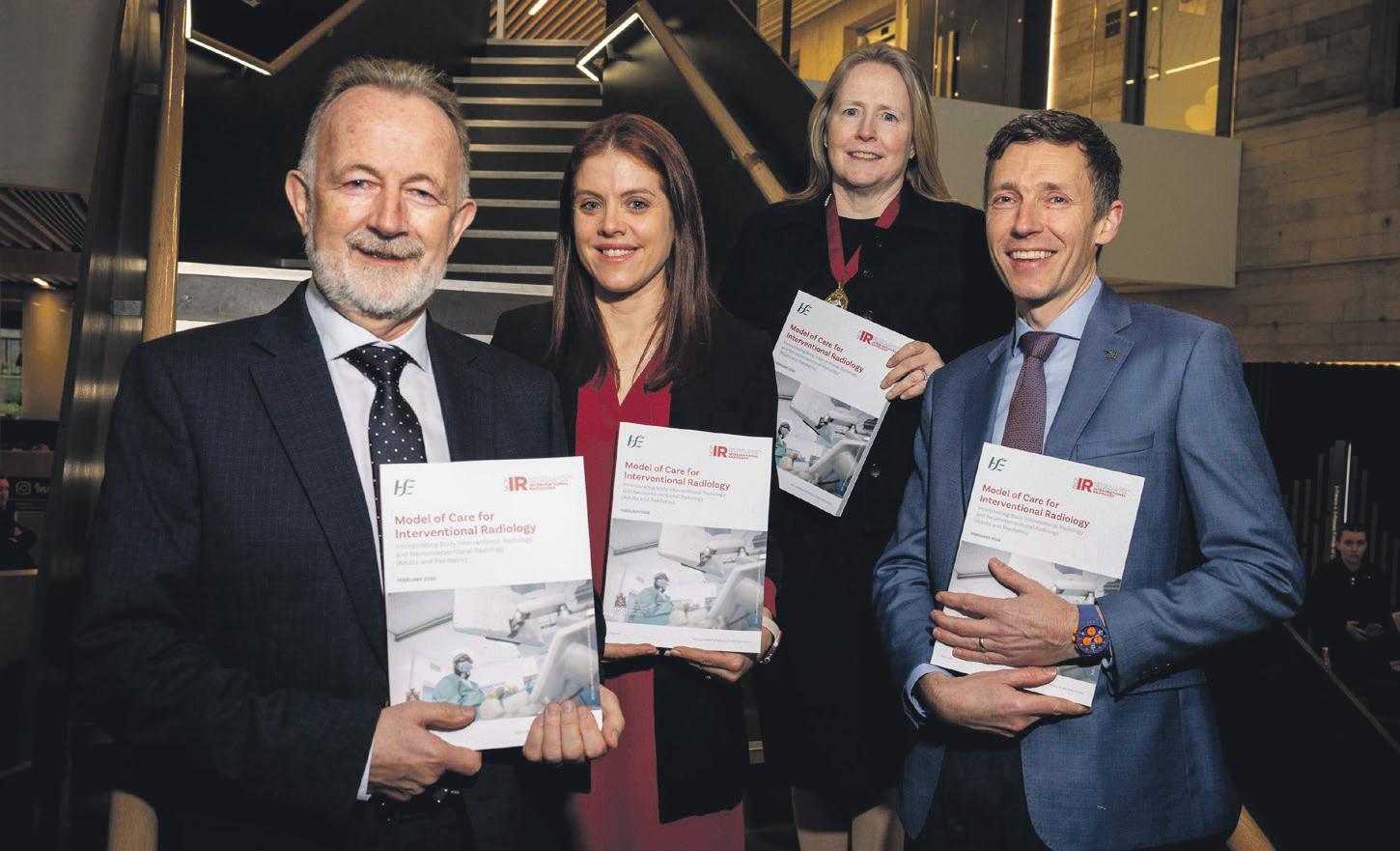
Pictured at the launch of the Model of Care for Interventional Radiology are (L-to-R): Prof Michael Lee; Ms Sara Kavanagh, Programme Manager, National Clinical Programme for Interventional Radiology; Prof Deborah McNamara, RCSI President; and Prof Colin Cantwell, Lead Author of the model of care and Vice-Dean, Faculty of Radiologists and Radiation Oncologists
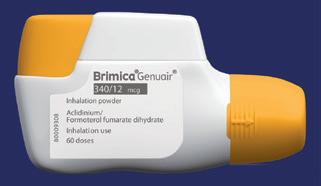
The ONLY pre lled inhaler with visual and audible feedback for confirmed dose delivery1-4
Abbreviated Prescribing Information
Genuair - a simple to use inhaler for patients with COPD4
+ LABA
Eklira Genuair 322 micrograms inhalation powder
Please consult the Summary of Product Characteristics (SPC) for the full prescribing information. Presentation: Inhalation powder in a white inhaler with an integral dose indicator and a green dosage button. Each delivered dose contains 375 µg aclidinium bromide equivalent to 322 µg of aclidinium. Also, contains lactose. Use: Maintenance bronchodilator treatment to relieve symptoms in adult patients with chronic obstructive pulmonary disease (COPD). Dosage: For inhalation use. Recommended dose is one inhalation of 322 micrograms aclidinium twice daily. Patients should be instructed on how to administer the product correctly as the Genuair inhaler may work di erently from inhalers used previously. It is important to instruct the patients to read the Instructions for Use in the pack. No dose adjustments are required for elderly patients, or those with renal or hepatic impairment. No relevant use in children and adolescents. Contraindications: Hypersensitivity to aclidinium bromide or to any of the excipients. Warnings and Precautions: Stop use if paradoxical bronchospasm occurs and consider other treatments. Do not use for the relief of acute episodes of bronchospasm. Use with caution in patients with cardiac arrhythmias, a history of cardiac arrhythmias or with risk factors for cardiac arrhythmias. Dry mouth, observed with anticholinergic treatment, may be associated with dental caries in the long term. Use with caution in patients with symptomatic prostatic hyperplasia or bladder-neck obstruction or with narrow-angle glaucoma. Do not use in patients with rare hereditary problems of galactose intolerance, total lactase de ciency or glucose-galactose malabsorption. Interactions: Do not administer with other anticholinergic-containing medicinal products. No other interactions expected. Please consult the SPC for more details. Fertility, pregnancy and lactation: No data on use in pregnancy. Risk to newborns/ infants cannot be excluded. Consider risk-bene t before using during lactation. Unlikely to a ect fertility at the recommended dose. Side-e ects: Common (1-10%): Sinusitis, nasopharyngitis, headache, cough, diarrhoea, nausea. Uncommon (0.1- 1%): Dizziness, blurred vision, tachycardia, palpitations, dysphonia, dry mouth, stomatitis, rash, pruritus, urinary retention. Rare (0.01-0.1%): hypersensitivity. Not known: angioedema, anaphylactic reaction. Pack sizes: Carton containing 1 inhaler with 60 unit doses. Legal category: POM Marketing Authorisation Number: EU/1/12/778/002 Marketing Authorisation holder: Covis Pharma Europe B.V. Gustav Mahlerplein 2, 1082MA, Amsterdam, The Netherlands Marketed by: A. Menarini Pharmaceuticals Ireland Ltd., Castlecourt, Monkstown Farm, Monkstown, Glenageary, Co. Dublin A96 T924. Further information is available on request to A. Menarini Pharmaceuticals Ireland Ltd. or may be found in the SPC. Last updated: February 2025
Please consult the Summary of Product Characteristics (SPC) for the full prescribing information. Presentation: Inhalation powder in a white inhaler with an integral dose indicator and an orange dosage button. Each delivered dose contains 396 µg aclidinium bromide (equivalent to 340 µg of aclidinium) and 11.8 micrograms of formoterol fumarate dihydrate. Also, contains lactose. Use: Maintenance bronchodilator treatment to relieve symptoms in adult patients with chronic obstructive pulmonary disease (COPD). Dosage: For inhalation use. Recommended dose is one inhalation of 340 µg/12 µg twice daily. Patients should be instructed on how to administer the product correctly as the Genuair inhaler may work di erently from inhalers used previously. It is important to instruct the patients to read the Instructions for Use in the pack. No dose adjustments are required for elderly patients, or those with renal or hepatic impairment. No relevant use in children and adolescents. Contraindications: Hypersensitivity to the active substances or to any of the excipients. Warnings and Precautions: Do not use in asthma. Stop use if paradoxical bronchospasm occurs and consider other treatments. Do not use for the relief of acute episodes of bronchospasm. Use with caution in patients with cardiac arrhythmias, a history of cardiac arrhythmias or with risk factors for cardiac arrhythmias. (elderly patients, coronary artery disease, heart failure, hypertension, known arrhythmic substrate, abnormal potassium, magnesium or calcium levels, thyroid disease, obstructive sleep apnoea, diabetes mellitus, excessive alcohol or ca eine intake, use of drugs with proarrhythmic e ects). Discontinue if increases in pulse rate, blood pressure or changes in ECG occur. Use with caution in patients with a history of or known prolongation of the QTc interval or treated with products a ecting the QTc interval. Use with caution in patients with severe cardiovascular disorders, convulsive disorders, thyrotoxicosis and phaeochromocytoma. Hypokalaemia may occur, is usually transient and supplementation not needed. In patients with severe COPD, hypokalaemia may be potentiated by hypoxia and concomitant treatment. Use with caution in patients with symptomatic prostatic hyperplasia, urinary retention or with narrow-angle glaucoma. Dry mouth, observed with anticholinergic treatment, may be associated with dental caries in the long term. Do not use in patients with rare hereditary problems of galactose intolerance, the Lapp lactase de ciency or glucose-galactose malabsorption. Interactions: Do not administer with other anticholinergic and/or long-acting β2adrenergic agonist containing medicinal products. Caution in use with methylxanthine derivatives, steroids, non-potassium-sparing diuretics, β-adrenergic blockers or medicinal products known to prolong the QTc interval. Please consult the SPC for more details. Fertility, pregnancy and lactation: No data on use in pregnancy. Consider risk-bene t before using during lactation. Unlikely to a ect fertility at the recommended dose. Side-e ects: Common (1-10%): Nasopharyngitis, urinary tract infection, sinusitis tooth abscess, insomnia, anxiety, headache, dizziness, tremor, cough, diarrhoea, nausea, dry mouth, myalgia, muscle spasms, peripheral oedema, increased blood creatine phosphokinase. Uncommon (0.11%): Hypokalaemia, hyperglycaemia, agitation, dysgeusia, blurred vision, tachycardia, electrocardiogram QTc prolonged, palpitations, angina pectoris, dysphonia, throat irritation, stomatitis, rash, pruritus, urinary retention, increased blood pressure. Rare (0.01-0.1%): Hypersensitivity, bronchospasm, including paradoxical. Not known: anaphylactic reaction, angioedema. Pack sizes: Carton containing 1 inhaler with 60 unit doses. Legal category: POM Marketing Authorisation Number: EU/1/14/963/001 Marketing Authorisation holder: Covis Pharma Europe B.V. Gustav Mahlerplein 2, 1082MA, Amsterdam, The Netherlands Marketed by: A. Menarini Pharmaceuticals Ireland Ltd., Castlecourt, Monkstown Farm, Monkstown, Glenageary, Co. Dublin A96 T924. Further information is available on request to A. Menarini Pharmaceuticals Ireland Ltd. or may be found in the SPC. Last updated: February 2025
Adverse events should be reported. Healthcare professionals are asked to report any suspected adverse events via:
Pharmacovigilance
www.hpra.ie. Adverse events should also be reported to
LAMA
LAMA
DR AZRIN MUSLIM, Medical Registrar and Research Fellow, HSE Research Directorate, Mid-West
Learning to see the system, not just the symptoms
There is a need to develop a common language across disciplines, which rewards coordination rather than parallel work
Spend enough time working in modern healthcare and you start to notice a quiet tension. The way we organise knowledge still reflects an earlier era, even though many of the problems we now face are different than those of the past.
This is not to say hospitals function like assembly lines. Anyone who has worked inside one knows they are profoundly human places, shaped as much by relationships, judgement, and improvisation as by protocols. Yet the intellectual scaffolding around them was built at a time when diseases were easier to divide into parts. We trained ourselves to see medicine as a set of domains, each with its own language, its own tools, its own authority. That structure served us extraordinarily well when illness tended to be acute, localised, and temporally bounded.
Complexity
Modern patients rarely present with a single, neatly contained pathology. They arrive with overlapping metabolic, neurological, immunological, psychological, and environmental influences that have unfolded over decades. These processes interact and amplify one another, adapting for a time, and then, often quite suddenly, fail in combination. They behave less like separate diseases and more like a living network.
There is a familiar line you hear in hospital corridors and behind closed doors, usually delivered with a wry smile: Give the same patient to three different specialties and you will hear three different explanations, each shaped by the lens that specialty was trained to use. The observations are valid and the reasoning is sound. But each account is partial. The system is being described in slices.
This is not a failure of individuals. It is a consequence of how knowledge has been organised. Specialisation was a necessary response to the rapid expansion of knowledge. Without it, modern medicine would risk being shallow rather than precise. The challenge now is not to dismantle specialties, but to help them think together more effectively by developing shared models of disease, a common language across disciplines, and systems that reward coordination rather than parallel work.
Yet even mechanisms designed to promote collaboration can unintentionally reinforce the very fragmentation they are meant to solve. The consult and referral structure is intended to integrate expertise, but in practice it can become a series of intellectual handoffs. One problem is stabilised, another redirected, a third deferred. The patient moves, efficiently, and politely, between domains that remain conceptually separate even when the biology is not. What appears as multidisciplinary care on paper can become sequential
problem sorting in reality. The healthcare system is not unaware of this tension, but it remains shaped by funding models, medico-legal frameworks, and an evidence base historically built on studying one variable at a time.
Multidisciplinary teams do change decisions, and fields such as geriatrics, rehabilitation medicine, palliative care, and primary care have long worked in this integrative space, with guidelines increasingly attempting to address multimorbidity, even if imperfectly.
Revolving door
Most clinicians know where this leads. The revolving-door patient. Symptoms improve in one dimension only to re-emerge elsewhere. Admissions recur. Investigations accumulate. Each encounter addresses a legitimate piece of pathology, yet the overall trajectory changes very little because the underlying interactions are rarely confronted as a whole.
The difficulty is that modern chronic disease is rarely the sum of isolated failures. It is the product of relationships across systems. Immune signalling alters metabolism. Vascular change influences cognition and physical resilience. Social environment
feeds back into physiology. None of these processes sits comfortably inside a single specialty and none can be fully understood in isolation.
Outside medicine, other fields have already reorganised themselves around this kind of complexity. Progress now happens less within disciplines than at their intersections. Advances emerge where data science meets biology, where environmental modelling informs public health, where behavioural research reshapes clinical risk prediction. These are not occasional collaborations. They are becoming the normal mode of discovery.
Medicine is beginning to move in the same direction, though often without naming it explicitly.
Transformation
Artificial intelligence and large-scale data analysis are accelerating this shift because they allow us to see patterns that were previously invisible. When datasets span physiology, behaviour, environment, imaging, and longitudinal outcomes, relationships begin to emerge that no single study or specialty could detect alone. These tools do not replace clinical reasoning. They do not automatically create understanding. They
Artificial intelligence and large-scale data analysis are accelerating this shift because they allow us to see patterns that were previously invisible
are very good at spotting patterns and making predictions, but much less able to explain why something is happening or how it should change care. Used without guidance, they risk producing ever more detailed risk scores without bringing real clarity. Their value will depend on clinicians staying closely involved, so that judgement, context, and biological sense continue to shape how these findings are used.
We now have the capacity to examine how multiple biological systems operate simultaneously within one organism, and how external exposures shape that internal dialogue. That capability is not merely technical. It is conceptual. It invites us to rethink disease not as a list of diagnoses, but as a dynamic state arising from interacting processes.
This is why the current transition feels less like the arrival of a new technology and more like a change in worldview.
There is understandable resistance. The traditional model gave us clarity of identity and depth of expertise. Specialists became extraordinarily skilled within defined territories, and patients benefited from that mastery. Nothing about a systems perspective diminishes the need for deep knowledge. The difference is that knowledge must now be connected rather than defended. Boundaries become points of translation rather than lines of separation.
Medicine has navigated transformations like this before. The acceptance of germ theory required clinicians to engage with sciences that once seemed remote from bedside care. The rise of imaging brought physics, and entirely new ways of seeing into everyday practice. Each shift initially felt like an intrusion into established roles. Each ultimately expanded what clinicians could understand and influence.
We are entering another such moment. The challenge is not that our current structures are wrong, but that they are incomplete for the kind of illness that now predominates.
If we continue to approach complex, multisystem disease as a sequence of disconnected problems, we will keep producing technically excellent care that nevertheless feels unsatisfying to both doctor and patient. We will continue to see individuals cycling through services designed to solve fragments rather than trajectories.
If, however, we begin to organise thinking around relationships as much as components, we may finally align our methods with the biology we are trying to treat.
The future of medicine will not abandon specialisation. It will ask more of it. Expertise will need to operate within a shared map of how systems interact, informed increasingly by integrative data and new analytic tools. The goal is not to know less about parts, but to understand how those parts continuously shape one another.
For clinicians, this is less a loss of familiar ground than an expansion of it. The task ahead is to ensure that the next phase of medicine remains guided by clinical insight while embracing the broader, interconnected view of health that science is now making visible.
Our patients are already living in that reality. Our frameworks are only beginning to catch up.
Image: iStock.com/LaylaBird
Innovation offers new reality in multiple myeloma
Dr María-Victoria Mateos tells Danielle Barron how sustained innovation is shaping a new reality, bringing hope, and improved patient outcomes
Sustained innovation in multiple myeloma over the past 20 years has led to a different treatment landscape and improved outcomes.
Dr María-Victoria Mateos has been involved in many of these innovations that have in uenced patient care. A consultant physician in the Haematology Department and Associate Professor of Medicine at the University of Salamanca, Spain, she also coordinates the clinical trials unit in Salamanca’s University Hospital Haematology Department. With over 140 publications in peer-reviewed international journals, she is one of the most widely cited authors in the eld.
e haematologist simply credits “being in the right place, at the right time” when it came to specialising in the incurable blood cancer. As Dr Mateos completed her residency in haematology in the late 1990s, the treatment of multiple myeloma was about to undergo change with the introduction of the proteasome inhibitors such as bortezomib, followed by the immunomodulators thalidomide, and lenalidomide. ,
“I remember very well the rst clinical study conducted with daratumumab in relapsed refractory myeloma patients in the US and also three centres in Spain,” she says.
“I've seen how daratumumab has transformed the lives of myeloma patients not only because of its e cacy as a single agent, but because of its combinability with other agents, and also because of its safety pro le.”
ese treatments have meant that for many newly diagnosed multiple myeloma patients, the cancer, while still incurable, is managed like a chronic disease. e physician points to how the newer agents and their combinations have contributed to improved progression-free survival (PFS).
“In the past with the rst line of thera-
py, patients were in remission for maybe three, four years,” she notes.
“Now we can reach median progression-free survival longer than nine years. In the future, this could be as long as 15 or 16 years.”
From initial trials with single agent daratumumab, the next step was to combine it with proteasome inhibitors and immunomodulators, and then to move to earlier lines of therapy. e two trials that heralded this move are the PERSEUS and CEPHEUS, which Dr Mateos refers to as “two of the most relevant phase III clinical trials that have changed the treatment landscape in the rst-line of ther-
apy of patients with multiple myeloma”. e CEPHEUS trial demonstrated how the combination of daratumumab (DARA) + bortezomib, lenalidomide and dexamethasone (VRd) in transplant-ineligible newly diagnosed multiple myeloma resulted in higher rates of overall and sustained MRD negativity compared with Vrd alone. Meanwhile, the PERSEUS trial showed that this combination conferred a notable bene t in terms of PFS for newly diagnosed patients.
Bispeci c monoclonal antibodies including teclistamab and talquetamab, have shown early e ectiveness in heavily pretreated multiple myeloma. e pivotal
These treatments have meant that for many newly diagnosed multiple myeloma patients, the cancer, while still incurable, is managed like a chronic disease
Phase 1/2 MajesTEC 1 study demonstrated the e cacy and safety of teclistamab, with a 63 per cent overall response rate and a generally manageable safety prole. Both therapies are reimbursed in Ireland for patients with relapsed and refractory multiple myeloma.
The advent of CAR-T cell therapy in Irish centres has been eagerly anticipated and Dr Mateos gained significant experience with its use in her centre in Salamanca.
“Patients remain disease-free and treatment-free basically one or three months after the administration of the CAR-T,” she says.
“But we have learned to ask, who bene ts most from this treatment? How can we deliver it safely? And how do we build a system that actually works?”
Optimal patient selection is critical for success; for example, patients with particularly aggressive disease are typically not suitable, while Dr Mateos also advises physicians to refer potential candidates “as early as possible”. Managing adverse events, such as cytokine release syndrome, requires careful education and adherence to strict protocols.
A successful CAR-T treatment pathway requires a multidisciplinary team, including intensive care, neurology, infectious disease, pharmacy, and nursing, while logistics management is “absolutely crucial”.
“It requires a strategy that involves early planning, immune fitness preservation, standardised toxicity management, and a robust system pathway,” she asserts. The current availability of CAR-T cell therapy in Ireland represents a crucial initial step in its journey towards broader integration into earlier lines of treatment.
e current state of play in multiple myeloma management is that patients are receiving highly individualised care. Options are also becoming available for various subpopulations of multiple myeloma patients who still had poor outcomes, despite new advances. For example, with patients who have been exposed to three lines of therapy and nd themselves refractory to all of them, the ciltacabtagene autoleucel o ers a median PFS of three years and median overall survival of ve years. Ciltacabtagene autoleucel is now reimbursed in Ireland for this patient cohort.
While the exact sequencing of BCMA and CAR-T therapies requires careful consideration, Dr Mateos notes that haematologists are more con dent in the correct treatment selection as their experience with these agents grows.
Given the transformative range of available treatments and combinations, Dr Mateos conveys strong optimism for the future. She references the recent data on in vivo CAR-T therapy, where the viral vector is directly infused to the patient – eliminating the complex and delicate manufacturing process.
References available on request
Dr María-Victoria Mateos
Photo Credit: istock/Mohammed Haneefa Nizamudeen
TECVAYLI® 10 mg/mL and 90 mg/mL solution for injection. ABBREVIATED PRESCRIBING INFORMATION. ACTIVE INGREDIENT(S): Teclistamab. Please refer to Summary of Product Characteristics (SmPC) before prescribing. INDICATION(S): As monotherapy for the treatment of adult patients with relapsed and refractory multiple myeloma, who have received at least three prior therapies, including an immunomodulatory agent, a proteasome inhibitor, and an anti-CD38 antibody and have demonstrated disease progression on the last therapy. DOSAGE & ADMINISTRATION: TECVAYLI should be administered by a healthcare professional with adequately trained medical personnel and appropriate medical equipment to manage severe reactions, including cytokine release syndrome (CRS). Treatment should be initiated according to the step-up dosing schedule (Table 1 of the SmPC) to reduce the incidence and severity of CRS. Patients should be instructed to remain within proximity of a healthcare facility and monitored for signs and symptoms of CRS daily for 48 hours after administration of all step up doses. TECVAYLI step-up dosing schedule should not be administered in patients with active infection. The recommended subcutaneous dose on day 1 is 0.06 mg/kg (Step-up dose 1). On day 3, it is 0.3 mg/kg (Step-up dose 2). On day 5, it is 1.5 mg/kg (first maintenance/full treatment dose). Doses in step up dose schedule can be given as early as 2 days after last dose or as late as 7 days after last dose. For doses that cannot be given within 7 days please see below. One week after the first maintenance dose, patients may begin weekly maintenance dosing of 1.5mg/kg. Maintain a minimum of five days between weekly maintenance doses. In patients who have a complete response or better for a minimum of 6 months, a reduced dosing frequency of 1.5 mg/kg SC every two weeks may be considered. Duration of treatment: It is recommended that patients should be treated with TECVAYLI until disease progression or unacceptable toxicity. Pre-treatment medicinal products: Corticosteroid, Antihistamine, Antipyretics must be administered 1 to 3 hours before each dose of the TECVAYLI step-up dosing schedule to reduce the risk of CRS. For detailed premedication administration instructions, please refer to SmPC. Prevention of herpes zoster reactivation: Prior to starting treatment with TECVAYLI, antiviral prophylaxis should be considered for the prevention of herpes zoster virus reactivation. Dose modifications: Dose reductions are not recommended. Dose delays may be required to manage toxicities related to TECVAYLI. Restarting TECVAYLI after dose delay: If the duration of delay for Step-up dose 1 (from last dose administered) is more than 1 week (> 7 days), restart TECVAYLI step-up dosing schedule at 0.06 mg/kg. If the duration of delay for Step-up dose 2 (from last dose administered) is more than 1 week to less than or equal to 4 weeks (8 days to ≤ 28 days), repeat 0.3 mg/kg and continue step-up dosing schedule; if it is more than 4 weeks (> 28 days), restart step-up dosing schedule at 0.06 mg/kg. If the duration of delay for any maintenance doses (from last dose administered) is more than 1 week to less than or equal to 9 weeks (8 days to ≤ 63 days), continue TECVAYLI dosing schedule at 1.5 mg/ kg once weekly/every two weeks; if it is more than 9 weeks to less than or equal to 16 weeks (64 to ≤ 112 days) restart step-up dosing schedule at 0.3 mg/kg; if it is more than 16 weeks (> 112 days), restart step-up dosing schedule at 0.06 mg/kg. Refer to the SmPC for recommended actions taken after adverse reactions following administration of TECVAYLI. Children: No relevant use in the paediatric population. Elderly: No dosage adjustment is necessary. Renal impairment: No dosage adjustment is recommended for patients with
mild or moderate renal impairment. Hepatic impairment: No dosage adjustment is recommended for patients with mild hepatic impairment. CONTRAINDICATIONS: Hypersensitivity to the active substance or to any of the excipients (see SmPC). SPECIAL WARNINGS & PRECAUTIONS: Please refer to SmPC for information on the following special warnings and precautions: Traceability; Cytokine release syndrome (CRS); Neurologic toxicities, including ICANS; Infections; Hepatitis B virus reactivation; Hypogammaglobulinaemia; Vaccines; Neutropenia, Excipients. SIDE EFFECTS: Very Common: Pneumonia, COVID-19, Upper respiratory tract infection, Urinary tract infection, Neutropenia, Thrombocytopenia, Lymphopenia, Anaemia, Leukopenia, CRS, Hypogammaglobulinaemia, Hypercalcaemia, Hypokalaemia, Hypophosphataemia, Hypomagnesaemia, Decreased appetite, Neuropathy peripheral, Headache, Hemorrhage, Hypertension, Hypotension, Dyspnoea, Cough, Diarrhoea, Abdominal pain, Vomiting, Nausea, Constipation, Musculoskeletal pain, Muscle spasms, Pyrexia, Injection site reaction, Pain, Oedema, Fatigue, Blood alkaline phosphatase increased; Common: Sepsis, Cellulitis, Febrile Neutropenia, Hypofibrinogenaemia, Hyperamylasaemia, Hyperkalaemia, Hyponatraemia, Hypocalcaemia, Hypoalbuminaemia, Hypoglycaemia, Immune effector cell-associated neurotoxicity syndrome (ICANS), Encephalopathy, Hypoxia, Blood creatinine increased, Transaminase elevation, Lipase increased, Gamma-glutamyltransferase increased, Activated partial thromboplastin time prolonged, International normalised ratio increased; Uncommon: Progressive multifocal leukoencephalopathy. Refer to the SmPC for further information on side effects. LEGAL CATEGORY: Prescription Only Medicine. PRESENTATIONS, PACK SIZES, MARKETING AUTHORISATION NUMBER(S): 10 mg/mL solution for injection, EU/1/22/1675/001; 90 mg/mL solution for injection, EU/1/22/1675/002. MARKETING AUTHORISATION HOLDER: Janssen-Cilag International NV, Turnhoutseweg 30, B-2340 Beerse, Belgium. FURTHER INFORMATION IS AVAILABLE FROM: Janssen Sciences Ireland UC, Barnahely, Ringaskiddy, IRL – Co. Cork P43 FA46. Prescribing information updated: July 2025.
Adverse events should be reported. This medicinal product is subject to additional monitoring. This will allow quick identification of new safety information. Healthcare professionals are asked to report any suspected adverse reactions via: HPRA Pharmacovigilance, Website: www.hpra.ie. Adverse events should also be reported to Janssen Sciences Ireland UC, a Johnson & Johnson Company, on 0044 1494 567447 or at dsafety@its.jnj.com.
Further information is available on request or in the SmPC.
CD, cluster of differentiation; DOR, duration of response; HRQoL, health-related quality of life; MM, multiple myeloma; MRD, minimal residual disease; ORR, overall response rate; OS, overall survival; PFS, progressionfree survival; R/R, relapsed and refractory; TTR, time to response
References: 1. TECVAYLI Summary of Product Characteristics. Available at www.medicines.ie. 2. Moreau P et al. N Engl J Med 2022; 387(6):495–505.
Editorial
PAUL MULHOLLAND paul@mindo.ie
LGreater stand needed against racist abuse of healthcare workers
ast November, the Irish Medical Council sent out a press release condemning the “vile attacks and targeting of healthcare workers”.
In the release, the CEO of the Council Dr Maria O’Kane highlighted that the attacks on healthcare workers and facilities in Sudan, Gaza, Lebanon, and Ukraine, among other regions, constitute continuing breaches of international law.
Dr O’Kane rightly said these attacks were totally unacceptable and should be widely condemned.
Other Irish healthcare bodies, such as the IHCA and the IMO, have also issued strong statements about this issue. Indeed, a commendable group of healthcare workers established a specific group – Irish Healthcare Workers for Palestine – to lobby against the Israeli government’s genocidal campaign in Gaza, including its attacks on healthcare.
But the Medical Council’s press release also drew attention to something that is not so regularly highlighted: e rise in racial abuse of healthcare workers in Ireland.
“It is vitally important that there is a zero-tolerance approach to racial abuse, especially in healthcare settings,” stated Dr O’Kane.
“I strongly encourage employers to ensure that supports are available and promoted for healthcare professionals who are victims of racial abuse and for those from countries engulfed in con ict.”
In August 2025, the HSE, the Irish College of GPs (ICGP) and the INMO sent out press releases on the issue.
According to the ICGP’s statement at the time, one of its GP members had recently reported being racially assaulted to the gardaí.
“We recognise that these recent incidents have engendered a sense of fear within the community, causing individuals, and their families to feel unsafe in their work, and in their community,” the College said.
“As the representative body for general practice in Ireland, the Irish College of GPs unequivocally condemns all incidents of racist assaults and abuse against members of the international community living in Ireland.”
e lead feature in this edition of the Medical Independent examines the signi cant toll that racist abuse, both verbal and physical, continues to take on healthcare
professionals in Ireland.
In a sad re ection of the political climate, one of the two doctors interviewed spoke on condition of anonymity due to fears he would be targeted for speaking out.
Before the recent surge in racism, this doctor had considered settling in Ireland. is is no longer the case.
“Me and my ancée are originally from East Africa and I don’t see us raising small kids here. I don’t want my kids to face racism. Our plan is to move back home,” he said.
e other doctor interviewed, Dr Mustafa Mehmood, Consultant in Emergency Medicine, St James’s Hospital, Dublin, also had a positive experience of living here when he rst arrived in 2014.
“You were respected,” Dr Mehmood said. “Nobody would be hassling you. Now it is not uncommon to be racially abused at work by a patient, or on your way to work or coming back from work.”
e statistics obtained from the HSE by reporter Niamh Cahill show that over 300 incidents of racist abuse of sta were recorded on the National Incident Management System over a three-year period from 2023 to 2025.
Both interviewed doctors said that a national campaign was necessary to address the problem and called on the Government and the HSE to do more. Colleges and doctor representative bodies also have an important role to play.
When contacted by this newspaper, an IHCA spokesperson said there needs to be a zero-tolerance policy towards violence, aggression, or any form of abuse, racial or otherwise, directed at healthcare workers.
It should be acknowledged that this is not only an Irish issue. e rise of the far-right internationally has seen racist behaviour previously deemed unacceptable become more mainstream in countries around the world, both in healthcare settings and wider society. However, just because the problem extends beyond these shores does not make it inevitable or mean that local action cannot be taken to stem its rise.
I’d like to thank the doctors interviewed for speaking so candidly about their experiences. Hopefully their call for action will be heeded by those with the power to counteract and stamp out this repugnant behaviour.
READER COMMENTS
REACTION TO OUR BREAKING NEWS STORY, ‘HSE SECURES SITE IN RAHEEN FOR EXPANSION OF URGENT AND EMERGENCY CARE IN MID-WEST’, 11 MARCH
“And so, yet again the Government, HSE, and everyone else have forgotten about the people of County Clare who will still have to travel up to 1.75 hrs to A&E in County Limerick. An opportunity to provide Clare with an A&E has been lost.” Seamus Cotter, @CotterSeamus, 11 March
REACTION TO OUR NEWS FEATURE, ‘CHANGING THE JOURNEY FOR THE NEUROLOGY PATIENT’, 10 MARCH
“We’re pleased to share an update on the work happening across FutureNeuro, recently published in the Medical Independent. Over the past year, researchers, and clinicians across the centre have been advancing work in diagnostics, therapeutics, digital health, and clinical trials, while also strengthening partnerships with patients, the public, industry, and policymakers. The article highlights developments spanning genomic medicine, gene therapy, AI-informed diagnostics, and health data research, alongside the growing role of patient and public involvement and public engagement in shaping how FutureNeuro’s research is designed, prioritised, and shared.” FutureNeuro, LinkedIn, 10 March
REACTION TO MS CIARA BURKE’S MEDICO-LEGAL ARTICLE, ‘WHAT’S IN A NAME?’, 10 MARCH
“How accurate clinician identification can prevent ‘scattergun’ #GP #negligence claims. This feature was developed in response to direct feedback from GP members and through working collaboratively with the Socrates team. @med_indonews.” Medical Protection, @MPSdoctorsIRE, 9 March
REACTION TO OUR NEWS STORY, ‘REGIONS REQUIRED TO PERFORM AT “SAME HIGH STANDARD” – MINISTER’, 10
FEBRUARY
“I find it hard to believe that an @roinnslainte has good enough data to conclude that telling ‘the regions’ to work harder is the right solution.”
Journalists: David Lynch, david@mindo.ie Pat Kelly, pat@greenx.ie Niamh Cahill
Sub-Editor: Emer Keogh emer@greenx.ie
Designer: Laura Kenny
Advertisements: Graham Cooke graham@greenx.ie
Recruitment: Daiva Maciunaite daiva@greenx.ie
Digital Marketing: Dermot Garland dermot@greenx.ie
Digital Sales Executive: Graham Cooke graham@greenx.ie
Managing Director: Graham Cooke graham@greenx.ie
If you have anything you would like to share, please email: info@mindo.ie
The Medical Independent is published by GreenCross Publishing Ltd, Unit 1, The Village Mill Enterprise Park, Rathnew, Co Wicklow, A67V186, Ireland. Tel: 01 441 0024 Web: www.medicalindependent.ie. GreenCross Publishing (est. 2007) is owned by Graham Cooke (graham@greenx.ie). Copyright GreenCross Publishing Ltd. 2026. No part of this publication may be reproduced, stored in a retrieval system, or transmitted in any form by any means – electronic, mechanical or photocopy recording or otherwise – whole or in part, in any form whatsoever for advertising or promotional purposes without prior written permission of the publishers.
The Medical Independent endeavours to ensure accuracy of information given and of claims made in articles and advertisements. Nevertheless, no responsibility is accepted in respect of such information or claims.
Any opinions expressed by contributors are entirely their own and do not purport to be the views of The Medical Independent Additional imagery on front page: iStock.com
contact: Daiva Maciunaite, daiva@greenx.ie
MR NIALL ROONEY, Senior Legal Counsel, Medisec
Why do we continue to talk about next-of-kin in medicine?
Mr Niall Rooney writes that the exact nature of the role and the authority, or lack thereof, of a patient’s next-of-kin is generally misunderstood
In January 2018, the advocacy group Sage Ireland commissioned polling company Red C to do a survey of people’s understanding of what next-of-kin meant and what powers a next-of-kin had.
While 70 per cent of respondents, from a cross-section of society answered, correctly, that next-of-kin is “someone, such as a close relative or friend, who I would like contacted in an emergency”, 57 per cent stated that they understood their next-of-kin to be “someone who can make healthcare decisions or consent to medical treatment if I am unable to”.
More than one in three (35 per cent) respondents believed that next-of-kin was “the only person to be given medical or personal information about me”, while 32 per cent believed that next-of-kin was “someone who can access my bank accounts and assets if I’m unable to”.
The survey findings were insightful and highlighted the significant confusion and level of misunderstanding that exists in relation to what exactly the role of next-ofkin entails.
Origins of the term
The term ‘next-of-kin’ is a legal concept which refers to a person’s nearest blood relatives. It is used in the Succession Act 1965 as a means of identifying those to whom the estate of a person who died without a valid will should be distributed.
This author is unaware of any Irish statute governing healthcare, consent, or capacity which defines or relies upon next-of-kin as a decision maker. Therefore, a person’s status as next-of-kin does not of itself bestow any authority or legal basis to make any healthcare decision or give consent for any procedure or healthcare treatment when the person is unable to themselves. The next-of-kin is, essentially, an emergency contact only.
Patients lacking capacity
The Assisted Decision Making (Capacity) Act 2015 establishes detailed hierarchies of support and representation for individuals by means of formal decision-making arrangements or court appointment. It does not mention the concept of next-of-kin at all. Where an individual has been appointed by the court as a patient’s decision-making representative (DMR), the terms of the DMR order can specify that the DMR can make healthcare treatment decisions for the person and their doctors should be given a copy of that order.
Where a person may not be lacking capacity, but requires some assistance or someone to jointly make decisions with them, they can enter into formal written agreements to appoint a decision-making assistant or a joint-decision maker. If you are dealing with either situation, you can ask to see a copy of the written agreement to confirm the existence of and scope of the agreement.
Where a patient has an enduring power of attorney in place in which they have appointed a family member (or another person) known as an ‘attorney’ to make certain personal welfare or property decisions on their behalf, the decision-making powers of the attorney appointed do not extend to healthcare decisions.
Advance healthcare directives
Since the commencement of the Assisted Decision Making (Capacity) Act 2015 in April 2023, patients can make an advance healthcare directive specifying what their wishes are and the type of treatments that they want, or do not want, to receive.
Importantly, the legislation also provides that a patient can choose to nominate a ‘designated healthcare representative’ in their advance healthcare directive, which is a specific and defined role, unlike that of a nextof-kin. A designated healthcare representative appointed under an advance healthcare directive has the power to act on behalf of the patient regarding the particular healthcare treatment decisions set out in their advance healthcare directive. A designated healthcare representative has the power to advise on and interpret the patient’s wishes
Credit: istock.com/andreswd
and they can agree to or refuse treatment on the patient’s behalf, in accordance with the expressed wishes set out in the patient’s advance healthcare directive.
The Medical Council’s Guide to Professional Conduct and Ethics for Registered Medical Practitioners (ninth edition, 2024) (‘the Guide’) states, at paragraph 20.7, that if you are concerned about the validity or applicability of an advance healthcare directive you must follow the provisions of the Assisted Decision Making (Capacity) Act 2015. These include consulting with the designated healthcare representative (if any) or if none has been appointed, the patient’s family and friends, and seeking the opinion of a second healthcare professional.
Ethical considerations
Where no one has legal authority to make a healthcare treatment decision and a patient is unable to make decisions on their own behalf, it may fall to you as their doctor to decide how to manage their medical treatment. The Guide states at paragraph 14.7 that:
“Where a person lacks capacity to make their own decision, you:
▶ Must give effect, as far as is practica -
A person’s closest living blood relative or the person named on a healthcare form as their next-of-kin currently has no legal entitlement to any information about the patient or to make any decision on that patient’s behalf
ble, to the patient’s past and present will and preferences.
▶ Must consider the patient’s beliefs and values and any other factors the patient would be likely to consider if they were able to do so.
▶ Must consider the views of any person named by the patient as a person to be consulted and any decision-making supporter or person with legal authority to act on behalf of the patient.
▶ May also consider the views of any carer of the relevant person, anyone who has a bona fide interest in the welfare of the relevant person, or healthcare professionals.
▶ Must act in good faith and for the benefit of the person.
▶ Must act in a manner that minimises the restriction of the person’s rights and freedom of action.
▶ Must have due regard to the rights of the person to dignity, bodily integrity, privacy, autonomy, and control over his or her financial affairs and property.
▶ Must consider the likelihood of the patient recovering capacity and the urgency of making the intervention prior to, or to promote, such a recovery.
▶ Must ensure that decisions you make are proportionate to the significance and urgency of the situation and are as limited in duration as is possible in the circumstances.”
Deceased patients
It is not uncommon after a patient passes away for their family to request a copy of their records – usually for mundane reasons such as filing a claim with a life insurance company. Frequently the family member will claim to be the deceased’s next-of-kin. However, even if the person was nominated by the deceased to be their next-of-kin, it is only the deceased’s legal personal representative, that is the executor or administrator of the deceased’s estate, who is entitled to a copy of their records or who can consent to their release to a third party directly by a doctor or hospital. While it is of course understandable to want to assist the family at a time of loss, patient confidentiality continues to apply even after the patient has died. It is important therefore to ensure that a deceased’s medical records are only released to someone with the appropriate authority to obtain them. This person is not necessarily the person identified by the deceased on a healthcare form as their next-of-kin.
Conclusion
A person’s closest living blood relative or the person named on a healthcare form as their next-of-kin currently has no legal entitlement to any information about the patient or to make any decision on that patient’s behalf.
Where a patient lacks capacity and there is no-one with legal authority to make decisions on the patient’s behalf, the individual named as the next-of-kin can, and indeed should if required, be consulted on what the patient’s known preferences, beliefs, and values were.
If you have any concerns about dealing with a patient’s next-of-kin, and the extent to which you can or should engage with them, you should contact your indemnifier for specific advice.
References available on request
Healthcare during wartime
Despite significant pressures, the Ukrainian healthcare system has somehow continued to function since the beginning of the war
Four years after Russia’s full-scale invasion of Ukraine, there have been more than 47,000 Ukrainian civilian casualties. Some 5.6 million people have fled abroad and 3.8 million have been internally displaced. And in the midst of all the conflict, Ukraine’s healthcare system has come under enormous pressure.
It has been directly targeted by Russian forces with more than 2,800 attacks on healthcare, leaving over a thousand facilities destroyed or damaged and hundreds of healthcare workers dead. As a result, there has been significant harm to population health. Since the start of the war, 68 per cent of Ukrainians say there has been a decline in their health. A mental health crisis and interruptions to immunisation are just some of the effects of the protracted conflict.
The situation would be a lot worse if it wasn’t for the bravery and determination of the country’s healthcare professionals. As part of a world report feature to mark the war’s fourth anniversary, The Lancet spoke to a range of medical staff across Ukraine. Unsurprisingly, almost all identified the ever-present threat of Russian attacks on their facilities
as a major challenge to their work. Constant interruptions to electricity and water supplies, as well as ongoing shortages of medicine, equipment, and staff pose significant additional obstacles.
As a result of doctors joining the military, and others leaving the country, there is an estimated 4,000 shortfall in the medical workforce. Even with additional pay and anticipated better retention of doctors, shortages in specialist areas are likely to continue. There is a need for rehabilitation specialists to deal with combat injuries, as well as psychologists to treat mental health conditions, especially post-traumatic stress disorder.
The number of people in Ukraine with disabilities has increased by nearly 390,000 since February 2022, yet access to rehabilitation remains severely limited.
Almost all the healthcare workers who spoke to The Lancet complained of being overworked and underpaid.
“A critical and widely shared concern is remuneration. Most healthcare workers report extremely low salaries that are insufficient to meet basic living needs, often equivalent to approximately €300 per month. This level of income creates persistent financial insecurity and makes it difficult for medical professionals to support their families, contributing to workforce attrition and burnout,” Dr Oleh Sobko, a psychiatrist with the Prykarpattia Regional Mental Health Centre in Ivano-Frankivsk, Ukraine, told The Lancet
There has been recognition of this challenge in the 2026 health budget. Additional resources have been put in place
The mind/body connection
Metabolic psychiatry is a subspecialty focused on targeting metabolic dysfunction to improve mental health
Read more by George Winter at www.mindo.ie
Legatees of René Descartes (1596–1650) might deprecate Ventriglio and Bhugra’s paper in Epidemiology and Psychiatric Sciences (2015, 24: 368–370) contending that Cartesian mind–body dualism has created major problems for Western medicine and Western psychiatry. Dumping Descartes’ dogma, they argue, entails recognising “that mind-body dualism is false. The mind affects the body and the body affects the mind.” This statement, as the French Revolution established, confirms the importance of the neck in human affairs.
Further proof of the neck’s significance at the interface of metabolism and mental illness is furnished by Ir J Psychol Med (2024, 41: 418–419) where Usman et al report on ‘Establishing a dedicated metabolic clinic for patients with chronic mental illness’ in Sligo/Leitrim, and in Eur J Psych (2011, 25: 213–222) where O’Callaghan et al describe ‘Screening for metabolic syndrome in long-term psychiatric illness: Audit of patients receiving depot antipsychotic medication at a [Dublin] psychiatry clinic’.
Metabolic psychiatry, coined by Stanford University’s Dr Shebani Sethi, is “a new subspecialty focused on targeting and treating metabolic dysfunction to improve mental health outcomes”. Only weeks ago, a £7.9 million
randomised controlled trial (RCT) got underway, with Edinburgh and Birmingham universities comparing how a very-low-carbohydrate, high-fat ketogenic diet versus the NHS-recommended Eatwell diet affects depressive symptoms in people with bipolar disorder (BD).
Dr Iain Campbell is Baszucki Research Fellow in Metabolic Psychiatry at the University of Edinburgh, Scotland. In an interview, Dr Campbell told me: “As a patient-researcher living with BD, this trial is a huge win for both the patient community and metabolic psychiatry. I had depressive episodes at primary school; hypomania at high school; and over a decade later was diagnosed with BD.”
Before Campbell’s career in neuroscience began, music was the only means by which he could live with BD.
to provide for a rise in doctors’ salaries. And a new national health system development strategy recognises that the protection and morale of health workers is essential to Ukraine’s present and future.
The reality of war is that while most of the fighting is in eastern Ukraine, nowhere is safe. Emergency workers have been deliberately targeted in drone attacks. Maternity wards have been moved underground. There is constant upheaval in the health system which is taking its toll on staff. Most report burnout (81 per cent), anxiety (69 per cent), and depression (61 per cent), alongside sleep problems and emotional distress. Only 17 per cent have access to psychosocial support.
Dr Anzhela Sainchuk, an infectious diseases specialist at the LV Hromashevsky Institute of Epidemiology and Infectious Diseases in Kyiv, told The Lancet that the repeated aerial attacks have affected her mental health. “I work away from the frontlines, [but] constant shelling, night attacks, lack of sleep, and power outages mean I experience increased anxiety, which affects my psycho-emotional state,” she said.
Despite these pressures, the healthcare system has continued to function. This reflects the resilience of those working within it and their capacity to adapt to the most difficult of circumstances.
In a particularly vivid description, one Ukrainian doctor told The Lancet how he performed emergency surgery on patients in the basement of their hospital while it was being bombed. The hospital had no water and no power. As a result, the doctor and his team used the light from mobile phones in order to continue to work.
I’m sure Medical Independent readers will want to join me in expressing our solidarity and support for our colleagues in Ukraine. Their fortitude and professionalism is truly impressive.
All of this raises the possibility that some mental illnesses may be the result of brain energy disorders
“During hypomanias, for brief periods creativity and productivity would flow effortlessly, and music helped communicate my experience. During the depressions I would grind to a halt, unable to function, but I’d still have the songs I created when I was up.”
Aged 21, Campbell was signed to Island Records as recording artist Kid Adrift; in 2010 his band played Glastonbury; and today he and his wife compose cinematic music as Ex Makina, their music having featured on the recent BBC Traitors series.
Despite the relatively recent interest in metabolic psychiatry, the first report of a ketogenic diet to treat mental illness was in 1965, when Abel Pacheco – later President of Costa Rica from 2002 to 2006 – and colleagues reported in Am J Psych (1965, 121: 1110–1111) on “A pilot study of the ketogenic diet in schizophrenia” where 10 hospitalised women placed on a ketogenic diet for a fortnight showed significant improvement.
And in their retrospective analysis of patients with treatment-refractory mental illness, Danan et al, in Front Psychiatry (2022, 13:951376) not only reported on the feasibility of a ketogenic diet, which was associated with “substantial improvements in depression and psychosis symptoms and multiple markers of metabolic health”, but speculated that the apparent separation between neurological and psychiatric illness may be more rhetorical than biological, given their common origin in the brain; shared biochemical similarities like dysfunctional neurotransmitter systems; unstable neural networks; neuroinflammation; excessive oxidative stress; aberrant neuroplasticity; mitochondrial dysfunction; and disturbed cerebral glucose metabolism.
All of this raises the possibility that some mental illnesses may be the result of brain energy disorders.
So, with a ketogenic diet versus the NHS Eatwell Guide being compared, the outcome of the RCT underway at Edinburgh and Birmingham universities will be awaited with interest.
GEORGE WINTER
DR MUIRIS HOUSTON
Read more by Dr Muiris Houston at www.mindo.ie
Branchial cysts
A. Peak incidence is in young adults.
B. The majority of cases present as a smooth swelling at the anterior border of the sternomastoid muscle.
C. May become infected.
D. Will move on swallowing.
E. Treatment is by excision.
Gout
A. Only occurs in patients with hyperuricaemia.
B. Classically presents as an attack in the late evening.
C. Acute attack may cause fever.
D. Acute attack elevates the ESR, but not the CRP.
E. Can be effectively treated with prednisolone 20mg daily for four to five days.
Clues for recognising anorexia nervosa in children include the following
A. Excessive interest in cooking.
B. No interest in sport or exercise.
C. Unusual behaviour at mealtimes.
D. Feeling cold.
E. Temper outbursts.
The symptoms of ‘restless legs’
A. May be burning sensations.
B. Only occur at rest.
C. Include periodic limb movements in sleep.
D. Are not associated with any abnormal signs in the legs.
E. May be related to iron deficiency.
Characteristic features of hand, foot, and mouth disease include
A. An incubation period of 10 to 14 days.
B. Presence of vesicles.
C. Itch.
D. Prodromal fever and malaise.
E. Spots on the buttocks. Imagery: istock.com
FALSE. The spots may be painful or tender, but not itchy. D. TRUE. Which last for 24 to 48 hours. E. FALSE . These may appear, but they are not characteristic of the disease.
TRUE. Which contain clear fluid on a small erythematous base.
It is two to 10 days.
5
B. TRUE. Soon after sitting or lying in bed. Legs jerk or twitch uncontrollably every 20 to 40 seconds. C. TRUE. May also occur when awake and resting. D. TRUE. And no electrophysiological evidence of neuropathy. E. TRUE. Low levels of iron can lead to a fall in dopamine, triggering restless leg syndrome.
TRUE. Variety of intolerably unpleasant sensations.
ANSWER 4
TRUE. And an inability to tolerate unplanned events especially those involving food.
TRUE. And bradycardia, amenorrhoea, lanugo hair.
With restricted range of food eaten.
There may be an increase in sporting activity, exercise, and time spent on homework.
Or highest licensed dose of NSAIDs with gastric protection.
For healthcare professionals in Ireland only. Prescribing Information is available below.
WEZENLA: USTEKINUMAB BY AMGEN
WEZENLA CAN BE ADMINISTERED WITH †ConfiPen™, AMGEN’S ADVANCED PRE-FILLED PEN DESIGNED FOR EASE OF USE7,8
• Available in 45 mg & 90 mg formulations7,8
• Also available in Pre-filled syringe & Vial presentations3-6
WEZENLA demonstrated pharmacokinetic comparability and has been shown to be as well-tolerated when administered with †ConfiPenTM as by a pre-filled syringe9
WEZENLA is indicated for: (refer to the Summary of Product Characteristics and Patient Information leaflets for full indications, dosage and administration).
45 mg/0.5 mL 130 mg/26 mL (5 mg/mL) concentrate for infusion 90 mg/1.0 mL
WEZENLA is not currently approved in Ireland for ulcerative colitis (since the originator still has exclusivity for this indication).
*Patients weighing at least 40 kg, †pre-filled pen has not been studied in the paediatric population and is not recommended for use in paediatric patients
CD: Crohn’s Disease, I.V.: intravenous
References: 1. Blauvelt et al, BJD, 2025, 192:(5) 826-836 2. Chow V, et al. Clin Pharmacol Drug Dev. 2023;12(9):863–873 3. WEZENLA 45 mg solution for injection. Summary of Product Characteristics 4. WEZENLA 45 mg solution for injection in pre-filled syringe. Summary of Product Characteristics 5. WEZENLA 90 mg solution for injection. Summary of Product Characteristics 6. WEZENLA 130 mg concentrate for solution for infusion. Summary of Product Characteristics 7. WEZENLA ConfiPenTM 45 mg pre-filled pen. Summary of Product Characteristics 8. WEZENLA ConfiPenTM 90 mg pre-filled pen. Summary of Product Characteristics 9. Chow et al. Pharmacokinetic comparability of ABP 654 administered either via prefilled syringe or autoinjector in healthy adult subjects: Results from a randomized, open-label, parallel-group study. Presented at United European Gastroenterology (UEG) Congress, Vienna, Austria, 12-15 October 2024. PP0638.
WEZENLA ▼ (ustekinumab) Abbreviated Prescribing Information
Please refer to the Summary of Product Characteristics (SPC) before prescribing WEZENLA. Pharmaceutical Forms: 130 mg vial concentrate for solution for infusion; 45 mg vial solution for injection; 45 mg and 90 mg solution for injection in pre-filled syringes; 45 mg and 90 mg solution for injection in pre-filled pens (ConfiPenTM). WEZENLA Indications: 45 mg vial solution for injection, 45 mg and 90 mg solution for injection in pre-filled syringes, 45 mg and 90 mg solution for injection in pre-filled pens (ConfiPen): Adult Plaque psoriasis (PsO) - Moderate to severe PsO in patients who failed to respond to, or who have a contraindication to, or are intolerant to other systemic therapies including ciclosporin, methotrexate (MTX) or PUVA (psoralen and ultraviolet A). 45 mg vial solution for injection, 45 mg and 90 mg solution for injection in pre-filled syringes: Paediatric PsO - Moderate to severe plaque PsO in patients from the age of 6 years and older, who are inadequately controlled by, or are intolerant to, other systemic therapies or phototherapies. The pre-filled pen has not been studied in the paediatric population and is not recommended for use in paediatric patients. See section 4.2 of the pre-filled syringe SmPC for posology and method of administration in paediatric patients. 45 mg and 90 mg solution for injection in pre-filled syringes, 45 mg and 90 mg solution for injection in pre-filled pens (ConfiPen): Adult Psoriatic arthritis (PsA) - Alone or in combination with MTX, indicated for the treatment of active PsA patients when the response to previous non-biological disease-modifying antirheumatic drug (DMARD) therapy has been inadequate. 130 mg vial concentrate for solution for infusion, 45 mg vial solution for injection, 45 mg and 90 mg solution for injection in pre-filled syringes, 45 mg and 90 mg solution for injection in pre-filled pens (ConfiPen):Adult Crohn’s Disease (CD) - Patients with moderately to severely active CD who have had an inadequate response with, lost response to, or were intolerant to either conventional therapy or a TNFα antagonist. 130 mg vial concentrate for solution for infusion, 45 mg vial solution for injection, 45 mg and 90 mg solution for injection in pre-filled syringes:Paediatric CD - treatment of moderately to severely active CD patients weighing at least 40 kg, who have had an inadequate response to, or were intolerant to either conventional or biologic therapy. Dosage and Administration: For use under the guidance and supervision of physicians experienced in the diagnosis and treatment of conditions for which WEZENLA is indicated. After proper training in subcutaneous (SC) injection technique, patients or their caregivers may inject WEZENLA if a physician determines that it is appropriate. Physician should ensure follow-up of patients. Adult PsO - Initial dose of 45 mg administered subcutaneously (SC), followed by a 45 mg dose 4 weeks later, and then every 12 weeks thereafter. Patients with a body weight > 100 kg, initial dose is 90 mg administered SC, followed by a 90 mg dose 4 weeks later, and then every 12 weeks thereafter. Consideration should be given to discontinuing treatment in patients who have shown no response up to 28 weeks. Paediatric PsO 6 years and older - Recommended dose is based on body weight administered SC at Weeks 0 and 4, then every 12 weeks thereafter. Body weight and recommended dose < 60 kg - 0.75 mg/kg; ≥ 60 - ≤ 100 kg - 45 mg; > 100 kg – 90 mg. Refer to SPC for further details on dosing. The 45 mg vial is available for paediatric patients < 60 kg who need to receive less than the full 45 mg dose. Consideration should be given to discontinuing treatment in patients who have shown no response up to 28 weeks. Adult PsA - Initial dose of 45 mg administered SC, followed by a 45 mg dose 4 weeks later, and then every 12 weeks thereafter. Alternatively, 90 mg may be used in patients with a body weight > 100 kg. Consideration should be given to discontinuing treatment in patients who have shown no response up to 28 weeks. Adult CD - First dose administered intravenously (IV) over at least one hour. Body weight and recommended dose: ≤ 55 kg – 260 mg; > 55 kg to ≤ 85 kg – 390 mg; > 85 kg – 520 mg. The first SC administration of 90 mg should take place at week 8 after the IV dose. Dosing every 12 weeks is recommended, thereafter. Patients who have not shown adequate response at 8 weeks after the first SC dose, may receive a second subcutaneous dose at this time. Patients who lose response on dosing every 12 weeks may benefit from an increase in dosing frequency to every 8 weeks. Patients may subsequently be dosed every 8 weeks or every 12 weeks according to clinical judgement. Consider discontinuing treatment in patients who show no therapeutic benefit 16 weeks after the IV induction dose or 16 weeks after switching to the 8-weekly maintenance dose. Immunomodulators and/or corticosteroids may be continued. In patients who have responded to treatment, corticosteroids may be reduced or discontinued in accordance with standard of care. In CD, if therapy is interrupted, treatment can be resumed with subcutaneous dosing every 8 weeks. Paediatric CD (patients weighing at least 40 kg) - initiate with a single IV over at least one hour. Body weight and recommended dose: ≥ 40 kg to ≤ 55 kg – 260 mg; > 55 kg to ≤ 85 kg – 390 mg; > 85 kg – 520 mg. The first SC administration of 90 mg should take place at week 8 after the IV dose. Dosing every 12 weeks is recommended, thereafter. Patients who lose response on dosing every 12 weeks may benefit from an increase in dosing frequency to every 8 weeks. Patients may subsequently be dosed every 8 weeks or every 12 weeks according to clinical judgement. Consider discontinuing treatment in patients who show no evidence of therapeutic benefit 16 weeks after the IV induction dose or 16 weeks after dose adjustment. Immunomodulators, 5-aminosalicylate (5-ASA) compounds, antibiotics, and/or corticosteroids may be continued. In patients who have responded to treatment, these medications may be reduced or discontinued in accordance with standard of care. Contraindications: Hypersensitivity to the active substance or to any of the excipients (see section “Special Warnings and Precautions for use” for information on polysorbate and SPC for the full list of excipients and further details). Clinically important, active infection (e.g. active tuberculosis). Special Warnings and Precautions for use: Traceability - The tradename and the batch number should be clearly recorded. Infections - Ustekinumab may have the potential to increase the risk of infections and reactivate latent infections. In PsO, serious bacterial, fungal, and viral infections have been observed. Opportunistic infections including reactivation of tuberculosis (TB), other bacterial infections, fungal infections, viral infections and parasitic infections have been reported. Use with caution in patients with a chronic infection or a history of recurrent infection. Prior to treatment, patients should be evaluated for TB infection. Must not be given to patients with active TB. Initiate anti-TB therapy in patients with latent TB, a history of latent or active TB in whom an adequate course of treatment cannot be confirmed, prior to WEZENLA treatment. Instruct patients to seek medical advice if signs or symptoms suggestive of an infection occur. Closely monitor patients with serious infection, suspend WEZENLA until the infection resolves. Caution should be used in treating the elderly. Malignancies - Immunosuppressants like ustekinumab have the potential to increase the risk of malignancy. Some patients with PsO receiving ustekinumab developed cutaneous and non-cutaneous malignancies. The risk of malignancy may be higher in PsO patients who have been treated with other biologics.
Use with caution when considering therapy in patients with a history of malignancy or in patients who develop malignancy while receiving WEZENLA treatment. All patients should be monitored for the appearance of skin cancer (particularly those > 60 years of age, patients with a medical history of prolonged immunosuppressant therapy or those with a history of PUVA treatment). Systemic hypersensitivity reactions - Serious hypersensitivity reactions have been reported, in some cases several days after treatment. If an anaphylactic or other serious hypersensitivity reaction occurs, appropriate therapy should be instituted and administration of WEZENLA should be discontinued. Infusion related reactions - Infusion-related reactions, serious infusion-related including anaphylactic reactions have been reported. Discontinue WEZENLA if serious or life-threatening reactions observed and institute appropriate therapy. Respiratory hypersensitivity reactions - Allergic alveolitis, eosinophilic pneumonia, and non-infectious organising pneumonia have been reported, some leading to respiratory failure and prolonged hospitalisation. Improvement has been reported after discontinuation of ustekinumab and in some cases, administration of corticosteroids. If infection has been excluded and diagnosis is confirmed, discontinue ustekinumab. Cardiovascular events - Cardiovascular events including myocardial infarction and cerebrovascular accident have been observed in patients with PsO exposed to ustekinumab. Risk factors for cardiovascular disease should be regularly assessed during treatment with WEZENLA. Vaccinations - It is recommended that live viral or live bacterial vaccines (such as Bacillus of Calmette and Guérin (BCG)) should not be given concurrently with WEZENLA – refer to SPC for additional information and guidance. Before live viral and live bacterial vaccination, WEZENLA treatment should be withheld for at least 15 weeks after the last dose and can be resumed at least 2 weeks after vaccination. Administration of live vaccines (such as the BCG vaccine) to infants exposed in utero to ustekinumab is not recommended for twelve months following birth or until ustekinumab infant serum levels are undetectable. Patients receiving WEZENLA may receive concurrent inactivated or non-live vaccinations. Long term treatment with ustekinumab does not suppress the humoral immune response to pneumococcal polysaccharide or tetanus vaccines. Concomitant immunosuppressive therapy - In PsO, the safety and efficacy of ustekinumab in combination with immunosuppressants, including biologics, or phototherapy have not been evaluated. In PsA, concomitant MTX use did not appear to influence the safety or efficacy of ustekinumab. In CD and Ulcerative Colitis (UC), concomitant use of immunosuppressants or corticosteroids did not appear to influence the safety or efficacy of ustekinumab. Caution should be exercised when considering concomitant use of other immunosuppressants and WEZENLA, or when transitioning from other immunosuppressive biologics. Serious skin conditions - In PsO, physicians should be alert for symptoms of erythrodermic psoriasis or exfoliative dermatitis. If these symptoms occur, appropriate therapy should be instituted. Discontinue WEZENLA if a drug reaction is suspected. Lupus-related conditions – Lupus-related conditions reported. If lesions occur, especially in sun exposed areas of the skin or if accompanied by arthralgia, the patient should seek medical attention promptly. If these symptoms occur, appropriate therapy should be instituted. Discontinue WEZENLA if a drug reaction is suspected. Polysorbate 80 – WEZENLA contains polysorbate 80 (E 433) - 10.4 mg in 130 mg/26 mL vial equivalent to 0.40 mg/mL, 0.02 mg in 45 mg/0.5 mL vial, 0.02 mg in 45 mg/0.5 mL PFS/PFP and 0.04 mg in 90 mg/1.0 mL PFS/PFP equivalent to 0.04 mg/mL. Polysorbates may cause allergic reactions. Interactions: Refer to SPC for further details. In vitro study and a phase 1 study in subjects with active CD suggest no dose adjustments required in patients who are receiving concomitant CYP450 substrates. Pregnancy, lactation and fertility: Women of childbearing potential should use effective methods of contraception during treatment and for at least 15 weeks after treatment. It is preferable to avoid the use of WEZENLA in pregnancy. Ustekinumab crosses the placenta and has been detected in the serum of infants born to female patients treated with ustekinumab during pregnancy. The clinical impact of this is unknown, however, the risk of infection in infants exposed in utero to ustekinumab may be increased after birth. See sub section “vaccinations” in Special Warnings and Precautions for use for further details. Limited data suggest ustekinumab is excreted in human breast milk in very small amounts. It is not known if ustekinumab is absorbed systemically after ingestion. A decision on whether to discontinue breast-feeding during treatment and up to 15 weeks after treatment or to discontinue therapy with WEZENLA must be made taking into account the benefit of breast-feeding to the child and the benefit of WEZENLA therapy to the woman. The effect of ustekinumab on fertility has not been evaluated. Undesirable Effects: Refer to the SPC for the full list of undesirable effects. Common (≥ 1/100 to < 1/10) - upper respiratory tract infection, nasopharyngitis, sinusitis, dizziness, headache, oropharyngeal pain, diarrhoea, nausea, vomiting, pruritus, back pain, myalgia, arthralgia, fatigue, injection site erythema, injection site pain. Other side effects reported: Serious infections: pneumonia, anal abscess, cellulitis, diverticulitis, gastroenteritis and viral infections. Malignancies: Excluding non-melanoma skin cancer, prostate, melanoma, colorectal and breast cancers. Hypersensitive reactions: Serious infusionrelated reactions including anaphylactic reactions, rash and urticaria. Pharmaceutical Precautions: Store in a refrigerator (2°C – 8°C). Do not freeze. Keep in the outer carton in order to protect from light. If needed, individual 45 mg vial/45 mg and 90 mg pre-filled syringes/pre-filled pens may be stored at room temperature up to 30°C for a maximum single period of 30 days in the original carton and should not be returned to the refrigerator. Legal Category: POM. Presentations and Marketing Authorisation Numbers: WEZENLA 130 mg concentrate for solution for infusion: EU/1/24/1823/004 – 1 pack of 1 vial; WEZENLA 45 mg solution for injection:
EU/1/24/1823/001 – 1 pack of 1 vial; WEZENLA 45 mg solution for injection in pre-filled syringe: EU/1/24/1823/002 – 1 pack of 1 syringe; WEZENLA 90 mg solution for injection in pre-filled syringe: EU/1/24/1823/003 – 1 pack of 1 syringe; WEZENLA 45 mg solution for injection in pre-filled pen: EU/1/24/1823/005 – 1 pack of 1 pen; WEZENLA 90 mg solution for injection in pre-filled pen: EU/1/24/1823/006 –1 pack of 1 pen. Marketing Authorisation Holder: Amgen Technology (Ireland) UC, Pottery Road, Dun Laoghaire, Co Dublin, Ireland. Further information is available from Amgen Ireland Limited, 21 Northwood Court, Santry, Dublin D09 TX31, Ireland. WEZENLA is a trademark owned by Amgen Inc. Date of PI preparation: October 2025 (IRL-654-25-80006).
▼ This medicinal product is subject to additional monitoring. Adverse reactions/events should be reported to the Health Products Regulatory Authority (HPRA) using the available methods via www.hpra.ie. Adverse reactions/events should also be reported to Amgen Limited on +44 (0) 1223 436441 or Freephone 1800 535 160.
Skin and soft tissue infections
Skin and soft tissue infections are common in paediatric patients, accounting for nearly 25 per cent of clinical visits and can range from mild to life-threatening
Acute skin and soft tissue infections (SSTIs) are common bacterial infections. They are especially common in children. SSTIs present with a wide spectrum of severity from low-risk impetigo to life-threatening necrotising fasciitis. Staphylococcus aureus (Staph aureus) is the most common pathogen in non-bullous and bullous impetigo. Purulent lesions (folliculitis, furuncles, and carbuncles) are usually caused by Staph aureus . Non-purulent infections (most cellulitis, erysipelas) are usually caused by Streptococcus pyogenes (Strep pyogenes).
SSTIs are classified according to the tissues involved – the superficial epidermis, (impetigo, ecthyma), the hair follicles (folliculitis, furuncle, carbuncle), and the deep fascia (fasciitis).
Staph aureus
Up to 40 per cent of the population are colonised with Staph aureus. Many patients presenting with a community-acquired SSTI do not, in fact, have pre-existing colonisation. Staph aureus has the potential to cause a broad spectrum of infection, ranging in severity from asymptomatic colonisation, to bacteraemia, osteomyelitis, pneumonia, or endocarditis. When faced with an undifferentiated skin infection, the initial task is to check for the presence or absence of purulence, as pus usually indicates a Staph aureus infection. The prevalence of purulent SSTIs has increased since the emergence of community-acquired methicillin-resistant Staph aureus (CAMRSA). Staph aureus SSTIs have a high rate of recurrence.
Strep pyogenes
Group A β -haemolytic strep (Strep pyogenes) causes some cases of non-bullous impetigo. It is particularly unusual in children under two years of age. Strep pyogenes may cause the rare but potentially fatal necrotising fasciitis. Nephritogenic strains of Strep pyogenes very rarely cause post-streptococcal glomerulonephritis.
Minor skin injury provides the portal of skin entry for Staph aureus. Trauma, lacerations, bites, scratches (eczema), burns, ulceration, chickenpox, and fungal infections may cause such injury.
Impetigo involves the superficial skin. The great majority of impetigo cases involve children. Exposed body areas such as the face and extremities are the most frequently involved sites. It is very contagious.
Non-bullous impetigo is the most common SSTI in primary care. While Strep pyogenes causes some cases of non-bullous impetigo, the majority are caused by Staph aureus. There is no conclusive evidence that treatment prevents nephritis. Acute rheumatic fever is not a sequela. Impetigo is not painful, but may
cause a mild itch.
Non-bullous impetigo is characterised by 2–4mm erythematous macules that rapidly evolve to short-lived papules that in turn evolve to form thin-walled vesicle or pustules. These rupture, leaving a superficial erosion covered with a honey-coloured crust.
Bullous impetigo is characterised by vesicles and bullae (1–2cm in diameter), which are filled with clear yellow fluid that can become turbid or purulent. It tends to develop on clinically intact skin and intertriginous areas. Bullae rupture, leaving a thin, brownish crust. As lesions spread centrifugally, central clearing may give them an annular appearance. Lesions may coalesce to form large, reddish, superficial, round to oval erosions. A peripheral collarette of skin may be found at the edge of ruptured bullae.
Management
Untreated impetigo resolves slowly, without scarring (two weeks for non-bullous impetigo, four to six weeks for bullous impetigo). Crusts can be gently removed by applying Vaseline, followed by cleaning with a warm, damp facecloth. As it is highly infectious, children should stay home from school until lesions have crusted
A: Non-bullous impetigo
Characterised by 2-4mm erythematous macules that rapidly evolve to thin-walled vesicles (just under the patient’s nose) or pustules. Pustules rupture, leaving superficial erosions covered with a ‘honey-coloured’ crust
B: Non-bullous impetigo
By the time patients present, the ‘honeycoloured’ crust may be the only finding. Note the area immediately adjacent to the upper lip demonstrating spontaneous clearing without treatment
over, or until two days after starting treatment. NICE recommends hydrogen peroxide 1 per cent cream eight-hourly for five days for localised, non-bullous impetigo in patients who are not systemically unwell or at high risk of complications. Advice on using a topical antibiotic is
C: Bullous impetigo
The fast advancing ‘honey-coloured’ crust periphery with central clearing. Vesicles and early bullae can be seen
D: Bullous impetigo
Is more likely to develop on clinically intact skin and intertriginous areas such as the axilla. Bullae rupture to give a brownish crust. Lesions may coalesce to form large, reddish, superficial, round to oval erosions. Some regard bullous impetigo as a localised form of staphylococcal scalded skin syndrome, as both are caused by similar toxin-producing strains of Staph aureus that cause severe blistering and exfoliation
E: Ecthyma
This may arise from impetigo, folliculitis, a scratch, an insect bite, or scabies. Initially pus accumulates under a gray-yellow scab. Progression into the dermis gives rise to a shallow ulcer, surrounded by erythema. If the scab is lifted, the sharply demarcated, evenly punched-out borders and the necrotic purulent base of the ulcer are seen. Crusts are frequently haemorrhagic. There is a significant risk of scarring
confusing, with some recommending a five-day course of fusidic acid. Because the risk of developing antibiotic resistance with topical antibiotics is higher than with the oral route, others advise a five-day course of oral flucloxacillin, if an antibiotic is indicated (eg, greater than three lesions). Oral flucloxacillin is recommended for ecthyma, although there is a lack of convincing evidence that this reduces scarring.
Scalded skin syndrome
Like bullous impetigo, staphylococcal scalded skin syndrome (SSSS) is caused by exfoliative toxins that target desmoglein-1 in the skin. In infants, who have not yet formed antibodies to Staph aureus , these toxins disseminate throughout the body from the primary focus of infection, causing widespread erythema, flaccid blistering, desquamation, and erosions. Nikolsky’s sign is positive, with shearing of the epidermis from the dermis on lateral pressure.
SSSS favours intertriginous areas. It usually starts around the eye or the nasopharynx, so always check these sites for signs of blistering or crusting if SSSS is suspected. In slightly older children and adults, acquired immunity protects against SSSS, and bullous impetigo is a more likely presentation. SSSS can be life-threatening. Therefore, young children and immunocompromised patients require urgent admission.
Purulent SSTIs
Purulent SSTIs – folliculitis, furuncle, and carbuncle – present as localised collections of pus in cavities formed by necrosis and breakdown of the wall of the hair follicle. Folliculitis is an infection of the superficial portion of the hair follicle. Clinically it presents as clusters of papules and pustules on an erythematous base. The scalp, extremities, paranasal area, axilla, and beard (sycosis barbae) are most frequently involved. With folliculitis, the inflammatory process is confined within the hair follicle whereas with a furuncle or carbuncle, the entire follicle and surrounding tissue is involved. Between the dermis and underlying muscle and fascia, the hypodermis forms a layer of adipose tissue. Furuncles (also known as boils) develop from folliculitis, with infection spreading deeper into the hair follicle, producing a localised subcutaneous collection of pus within the hypodermis. A fibrinoid wall forms around the accumulated pus, separating it from the dermis and subcutaneous tissue.
A carbuncle is formed when several adjacent furuncles coalesce to form a cluster of involved hair follicles, connected by a sinus tract extending deeper into the hypodermis.
Clinical signs of furuncles and carbuncles include erythema, swelling, and induration, topped with necrotic skin or points of spontaneous drainage. Fluctuance is a classic finding, but may not be evident in early infection.
DR JOHNNY LOUGHNANE, retired GP with a specialist interest in dermatology,Newcastlewest, Co Limerick
Cellulitis may surround the lesions, spreading radially. Pus drains from multiple drainage points on a carbuncle, representing the many adjoining hair follicles involved. Carbuncles are found most often on areas of thickened skin, such as the back, neck, and thigh.
Abscess denotes either a furuncle or a carbuncle. Not every abscess develops from a hair follicle infection, eg, breast abscess, perianal abscess. As it may be difficult to distinguish between folliculitis, furuncle and carbuncle, the term ‘purulent skin infection’ is increasingly used for any skin infection with pus.
The diagnosis is clinical, and swabbing for culture is rarely helpful. Applying moist heat promotes pus formation and drainage. Incision and drainage are recommended when fluctuance can be demonstrated.
Packing the drained cavity with gauze, following incision and drainage, is
Clindamycin or doxycycline are recommended if methicillin-resistant Staph aureus
is suspected
thought to be of no benefit.
Should an antibiotic be added to incision and drainage? Many large, placebo-controlled, randomised trials show benefit when an antibiotic is added, with
Infectious Disease Society of America recommends incision and drainage of a furuncle or carbuncle should be followed by systemic antibiotic therapy in the following circumstances:
Severe or extensive disease;
Rapid disease progression;
Associated cellulitis;
Signs and symptoms of systemic illness;
Associated coexisting conditions or immunosuppression;
Very young or very advanced age;
Abscess in an area difficult to drain (eg, face, hands, or genitalia);
Associated septic phlebitis;
Inadequate response to incision and drainage alone.
an increase in clinical cure rates and reduced rates of recurrence. Many feel antibiotics are often unnecessary, especially when managing an uncomplicated furuncle or carbuncle. Some experts question the modest benefits in the above studies, as they may not outweigh the consequent increased risk of community antibiotic resistance. If an antibiotic is prescribed, choice is empiric and based on the clinical diagnosis.
There is no compelling evidence supporting superiority of any one antibiotic above another. As Staph aureus is the most likely pathogen, flucloxacillin is generally the first choice. Clindamycin is an alternative if the patient is allergic to penicillin. Clindamycin or doxycycline are recommended if MRSA is suspected.
Cellulitis
Cellulitis presents as an acute, spreading infection of the skin and subcutaneous tissues. The advancing borders are poorly defined (unlike erysipelas). Spread is sometimes patch-like. It is characterised by erythema, pain, and oedema, with local tenderness and warmth. Any break in the skin integrity is a risk factor (leg ulcer,
trauma, tinea pedis).
Other conditions causing a red leg, such as lipodermatosclerosis and irritant contact dermatitis, are frequently misdiagnosed as cellulitis. Most cases of non-purulent cellulitis are caused by Strep pyogenes , with only a minority caused by Staph aureus. If pus is seen, the most likely cause is Staph aureus. It can be very difficult to find pus in cellulitis.
Erysipelas
Presents as a painful, slightly raised, erythematous rash. Onset is acute, with a high temperature and vivid red colour. Unlike cellulitis, in erysipelas the inflammation is situated more superficially in the dermis. Many consider erysipelas to be a non-purulent form of cellulitis limited to the epidermis, and the terms are sometimes used interchangeably. In erysipelas, borders are more sharply defined. It most commonly affects the face and the lower extremities. It spreads rapidly. Lymphoedema is a risk factor for erysipelas. The most common pathogen is Strep pyogenes. In more severe inflammation, serous, fluid-filled bullae may develop and should not be confused with pus.
Management of cellulitis and erysipelas
In patients with cellulitis and erysipelas who show signs of systemic toxicity (fever, hypotension, tachycardia), are immunosuppressed, or have comorbidities (diabetes mellitus, heart failure, renal failure) should be admitted. Admission is advised for patients not responding promptly to oral therapy at home or if there is clinical deterioration at any time.
The majority are caused by Strep pyogenes. Therefore, β -lactam antibiotics are the first-choice antibiotic treatment. If Staph aureus is suspected, oral flucloxacillin 500mg QID should be taken for at least five days. MRSA coverage may be added if there is thought to be a risk.
Patients treated in the community should be followed up after 48 hours to check on the response to antibiotic therapy.
Necrotising fasciitis
Necrotising fasciitis is an infection of the fascia, a layer of connective tissue that lies below the hypodermis. Necrotising fasciitis often begins at the site of minor skin trauma, leading to rapid bacterial spread and necrosis of subcutaneous fat, muscle, and fascia. Fluid-filled bullae may develop. It spreads rapidly along fascial planes under the subcutaneous fat. It is a life-threatening infection. Urgent admission for prompt debridement is indicated. Watch out for signs of systemic toxicity (fever, chills, hypotension). Other signs include tenderness out of proportion to what you see, bullae or cutaneous necrosis with oedema, oozing a greyish fluid, crepitus, numbness, and rapid progression of symptoms and signs. Classic clinical features are frequently absent at the time of presentation to primary care. Always keep the diagnosis in mind if a patient being treated for SSTI fails to respond to therapy, especially if their condition deteriorates. It is rare, but late diagnosis and delayed surgical debridement can be fatal.
Continued from p23
H: Carbuncle A carbuncle on the lower chest wall, with surrounding erythema
F: Furuncle Multiple, recurrent furuncles in the axilla
G: Carbuncle
This lesion from the chest wall of the same patient as slide F shows several adjacent furuncles coalescing to form a carbuncle with pus draining from three hair follicles
I: Cellulitis of the lower limb Note the non-distinct upper border
J: Cellulitis of the upper limb The patient had a history of axillary clearance. She recently suffered a minor prod of a thorn to her hand
L: Erysipelas of the right side of the face The rash is raised and has developed within the past 24 hours
K: Erysipelas of the lower limb The intense inflammation has caused the development of bullae
AMGEVITA® (adalimumab) Prescribing Information
Please refer to the Summary of Product Characteristics (SmPC) before prescribing Pharmaceutical Form: Single dose pre-filled syringe contains 20 mg adalimumab in 0.4 mL (50 mg/mL) solution, 20 mg adalimumab in 0.2 mL (100 mg/mL) solution, 40 mg adalimumab in 0.8 mL (50 mg/mL) solution, 40 mg adalimumab in 0.4 mL (100 mg/mL) solution, 80 mg adalimumab in 0.8 mL (100 mg/mL) solution, and single dose pre-filled pen (SureClick®) contains 40 mg adalimumab in 0.8 mL (50 mg/mL) solution, 40 mg adalimumab in 0.4 mL (100 mg/mL) solution and 80 mg adalimumab in 0.8 mL (100 mg/mL) solution. Indications and Dosage: please refer to SmPC for full information. For subcutaneous injection. Treatment should be initiated and supervised by specialist physicians experienced in conditions for which AMGEVITA® is indicated. Ophthalmologists should consult with an appropriate specialist before starting treatment. Give patients a Patient Reminder Card. After training in injection technique, patients may self-inject with medical follow-up as necessary. Optimise other concomitant therapies (e.g. corticosteroids and or/immunomodulatory agents). Rheumatoid arthritis (RA): In combination with methotrexate (MTX) for: 1. moderate to severe, active RA in adult patients with inadequate response to disease-modifying anti-rheumatic drugs (DMARDs) including MTX; 2. Severe, active and progressive RA not previously treated with MTX. Can be given as monotherapy if intolerance to or when continued treatment with MTX is inappropriate. AMGEVITA® reduces rate of progression of joint damage when given in combination with MTX. Dosage: 40 mg every other week as a single dose via subcutaneous injection. Continue MTX. Glucocorticoids, salicylates, non-steroidal anti-inflammatory drugs, or analgesics can be continued during treatment. In monotherapy, patients may require 40 mg every week or 80 mg every other week if there is a decrease in clinical response. Reconsider treatment beyond 12 weeks if no clinical response. Consider need for dose interruption, e.g. before surgery or if serious infection occurs. Polyarticular juvenile idiopathic arthritis (pJIA): In combination with MTX for active pJIA in patients from the age of 2 years with inadequate response to one or more DMARDs. Can be given as monotherapy if intolerance to or when continued treatment with MTX is inappropriate. Dosage: 10 kg to < 30 kg: 20 mg every other week. ≥ 30 kg: 40 mg every other week. Reconsider treatment beyond 12 weeks if no clinical response. Enthesitis-related arthritis (ERA): treatment of active ERA in patients 6 years and with inadequate response to, or intolerance to conventional therapy. Dosage: 15 kg to < 30 kg: 20 mg every other week. ≥ 30 kg: 40 mg every other week. Ankylosing spondylitis (AS): treatment of adults with severe active AS with inadequate response to conventional therapy. Axial spondyloarthritis without radiographic evidence of AS: treatment of adults with severe axial spondyloarthritis without radiographic evidence of AS but with objective signs of inflammation by elevated CRP and/or MRI, and an inadequate response to, or intolerance to nonsteroidal anti-inflammatory drugs. Psoriatic arthritis (PsA): treatment of active and progressive psoriatic arthritis in adults with inadequate response to previous DMARD therapy. Dosage: (AS, nr-axSpA, PsA): 40 mg every other week. Reconsider treatment beyond 12 weeks if no clinical response. Psoriasis: treatment of moderate to severe chronic plaque psoriasis in adults wo are candidates for systemic therapy. Dosage: 80 mg at week 0, followed by 40 mg
AMGEVITA® (adalimumab) Prescribing Information Please refer to the Summary of Product Characteristics (SmPC) before prescribing Pharmaceutical Form: Single dose pre-filled syringe contains 20 mg adalimumab in 0.4 mL (50 mg/mL) solution, 20 mg adalimumab in 0.2 mL (100 mg/mL) solution, 40 mg adalimumab in 0.8 mL (50 mg/mL) solution, 40 mg adalimumab in 0.4 mL (100 mg/mL) solution, 80 mg adalimumab in 0.8 mL (100 mg/mL) solution, and single dose pre-filled pen (SureClick®) contains 40 mg adalimumab in 0.8 mL (50 mg/mL) solution, 40 mg adalimumab in 0.4 mL (100 mg/mL) solution and 80 mg adalimumab in 0.8 mL (100 mg/mL) solution. Indications and Dosage: please refer to SmPC for full information. For subcutaneous injection. Treatment should be initiated and supervised by specialist physicians experienced in conditions for which AMGEVITA® is indicated. Ophthalmologists should consult with an appropriate specialist before starting treatment. Give patients a Patient Reminder Card. After training in injection technique, patients may self-inject with medical follow-up as necessary. Optimise other concomitant therapies (e.g. corticosteroids and or/immunomodulatory agents). Rheumatoid arthritis (RA): In combination with methotrexate (MTX) for: 1. moderate to severe, active RA in adult patients with inadequate response to disease-modifying anti-rheumatic drugs (DMARDs) including MTX; 2. Severe, active and progressive RA not previously treated with MTX. Can be given as monotherapy if intolerance to or when continued treatment with MTX is inappropriate. AMGEVITA® reduces rate of progression of joint damage when given in combination with MTX. Dosage: 40 mg every other week as a single dose via subcutaneous injection. Continue MTX. Glucocorticoids, salicylates, non-steroidal anti-inflammatory drugs, or analgesics can be continued during treatment. In monotherapy, patients may require 40 mg every week or 80 mg every other week if there is a decrease in clinical response. Reconsider treatment beyond 12 weeks if no clinical response. Consider need for dose interruption, e.g. before surgery or if serious infection occurs. Polyarticular juvenile idiopathic arthritis (pJIA): In combination with MTX for active pJIA in patients from the age of 2 years with inadequate response to one or more DMARDs. Can be given as monotherapy if intolerance to or when continued treatment with MTX is inappropriate. Dosage: 10 kg to < 30 kg: 20 mg every other week. ≥ 30 kg: 40 mg every other week. Reconsider treatment beyond 12 weeks if no clinical response. Enthesitis-related arthritis (ERA): treatment of active ERA in patients 6 years and older with inadequate response to, or intolerance to conventional therapy. Dosage: 15 kg to < 30 kg: 20 mg every other week. ≥ 30 kg: 40 mg every other week. Ankylosing spondylitis (AS): treatment of adults with severe active AS with inadequate response to conventional therapy. Axial spondyloarthritis without radiographic evidence of AS: treatment of adults with severe axial spondyloarthritis without radiographic evidence of AS but with objective signs of inflammation by elevated CRP and/or MRI, and an inadequate response to, or intolerance to nonsteroidal anti-inflammatory drugs. Psoriatic arthritis (PsA): treatment of active and progressive psoriatic arthritis in adults with inadequate response to previous DMARD therapy. Dosage: (AS, nr-axSpA, PsA): 40 mg every other week. Reconsider treatment beyond 12 weeks if no clinical response. Psoriasis: treatment of moderate to severe chronic plaque psoriasis in adults wo are candidates for systemic therapy. Dosage: 80 mg at week 0, followed by 40 mg
every other week from 1. Reconsider treatment beyond 16 weeks if no clinical response. Paediatric Plaque Psoriasis: treatment of severe chronic plaque psoriasis in children and adolescents from 4 years of age with inadequate response to or if topical therapy and phototherapies are inappropriate. Dosage: 15 kg to < 30 kg: 20 mg followed by 20 mg every other week starting one week after initial dose. ≥ 30 kg: 40 mg then 40 mg every other week starting one week after initial dose. Reconsider treatment beyond 16 weeks if no clinical response. Safety has been assessed in paediatric patients with plaque psoriasis for a mean of 13 months. Hidradenitis suppurativa (HS): treatment of active moderate to severe HS (acne inversa) in adults and adolescents from 12 years of age with inadequate response to conventional systemic HS therapy. Dosage: adult: 160 mg at Day 1, followed by 80 mg at Day At day 29 continue with 40 mg every week or 80 mg every other week. Reintroduction after treatment interruption: 40 mg every week or 80 mg every other week. Dosage: adolescent (≥ 30 kg): 80 mg at week 0 then 40 mg every other week starting at week 1. If response is inadequate, consider increasing to 40 mg every week or 80 mg every other week. Dosage: adult and adolescent: Antibiotics may be continued if necessary. Use concomitant topical antiseptic wash on a daily basis. Reconsider treatment beyond 12 weeks if no improvement. Periodically evaluate the benefit and risk of continued treatment. Crohn’s disease: treatment of moderately to severely active Crohn’s disease in adults with no response despite a full and adequate course of therapy with a corticosteroid and/or an immunosuppressant or intolerance to or have medical contraindications for such therapies. Dosage: Induction: 80 mg at week 0, then 40 mg at week 2. For a more rapid response: 160 mg at week 0, then 80 mg at week 2; risk of adverse events higher during rapid induction. Maintenance: 40 mg dose every other week. Corticosteroids may be tapered in accordance with clinical guidelines. If decrease in clinical response, can increase to 40 mg every week or 80 mg every other week. If no response by week 4 there may be benefit from continued therapy to week 12. Reconsider treatment beyond 12 weeks if no clinical response. Paediatric CD, ≥ 6 years: Moderately to severely active CD with inadequate response to, intolerance to or contraindication to conventional therapy including primary nutrition therapy and a corticosteroid and/or an immunomodulator. Dosage: < 40 kg: Induction: 40 mg at week 0 then 20 mg at week 2. For a more rapid response: 80 mg at week 0 then 40 mg at week 2; risk of adverse events higher during rapid induction. Maintenance starting at week 4: 20 mg dose EOW. If insufficient response, consider 20 mg every week. Dosage: ≥ 40 kg: Induction: 80 mg at week 0 then 40 mg at week 2. For a more rapid response: 160 mg at week 0, then 80 mg at week 2; risk of adverse events higher during rapid induction. Maintenance starting at week 4: 40 mg dose EOW. If insufficient response, consider 40 mg every week or 80 mg EOW. Reconsider treatment beyond 12 weeks if no clinical response. Paediatric Crohn’s disease: treatment of moderately to severely active Crohn’s disease in paediatric patients from 6 years of age with inadequate response to conventional therapy including primary nutrition therapy and a corticosteroid and/or an immunomodulator, or intolerant to or have contraindications for such therapies. Dosage: < 40 kg: Induction: 40 mg at week 0 then 20 mg at week 2. For a more rapid response: 80 mg at week 0 then 40 mg at week 2; risk of adverse events higher during rapid induction. Maintenance starting at week 4: 20 mg dose every
every other week from week 1. Reconsider treatment beyond 16 weeks if no clinical response. Paediatric Plaque Psoriasis: treatment of severe chronic plaque psoriasis in children and adolescents from 4 years of age with inadequate response to or if topical therapy and phototherapies are inappropriate. Dosage: 15 kg to < 30 kg: 20 mg followed by 20 mg every other week starting one week after initial dose. ≥ 30 kg: 40 mg then 40 mg every other week starting one week after initial dose. Reconsider treatment beyond 16 weeks if no clinical response. Safety has been assessed in paediatric patients with plaque psoriasis for a mean of 13 months. Hidradenitis suppurativa (HS): treatment of active moderate to severe HS (acne inversa) in adults and adolescents from 12 years of age with inadequate response to conventional systemic HS therapy. Dosage: adult: 160 mg at Day 1, followed by 80 mg at Day 15. At day 29 continue with 40 mg every week or 80 mg every other week. Reintroduction after treatment interruption: 40 mg every week or 80 mg every other week. Dosage: adolescent (≥ 30 kg): 80 mg at week 0 then 40 mg every other week starting at week 1. If response is inadequate, consider increasing to 40 mg every week or 80 mg every other week. Dosage: adult and adolescent: Antibiotics may be continued if necessary. Use concomitant topical antiseptic wash on a daily basis. Reconsider treatment beyond 12 weeks if no improvement. Periodically evaluate the benefit and risk of continued treatment. Crohn’s disease: treatment of moderately to severely active Crohn’s disease in adults with no response despite a full and adequate course of therapy with a corticosteroid and/or an immunosuppressant or intolerance to or have medical contraindications for such therapies. Dosage: Induction: 80 mg at week 0, then 40 mg at week 2. For a more rapid response: 160 mg at week 0, then 80 mg at week 2; risk of adverse events higher during rapid induction. Maintenance: 40 mg dose every other week. Corticosteroids may be tapered in accordance with clinical guidelines. If decrease in clinical response, can increase to 40 mg every week or 80 mg every other week. If no response by week 4 there may be benefit from continued therapy to week 12. Reconsider treatment beyond 12 weeks if no clinical response. Paediatric CD, ≥ 6 years: Moderately to severely active CD with inadequate response to, intolerance to or contraindication to conventional therapy including primary nutrition therapy and a corticosteroid and/or an immunomodulator. Dosage: < 40 kg: Induction: 40 mg at week 0 then 20 mg at week 2. For a more rapid response: 80 mg at week 0 then 40 mg at week 2; risk of adverse events higher during rapid induction. Maintenance starting at week 4: 20 mg dose EOW. If insufficient response, consider 20 mg every week. Dosage: ≥ 40 kg: Induction: 80 mg at week 0 then 40 mg at week 2. For a more rapid response: 160 mg at week 0, then 80 mg at week 2; risk of adverse events higher during rapid induction. Maintenance starting at week 4: 40 mg dose EOW. If insufficient response, consider 40 mg every week or 80 mg EOW. Reconsider treatment beyond 12 weeks if no clinical response. Paediatric Crohn’s disease: treatment of moderately to severely active Crohn’s disease in paediatric patients from 6 years of age with inadequate response to conventional therapy including primary nutrition therapy and a corticosteroid and/or an immunomodulator, or intolerant to or have contraindications for such therapies. Dosage: < 40 kg: Induction: 40 mg at week 0 then 20 mg at week 2. For a more rapid response: 80 mg at week 0 then 40 mg at week 2; risk of adverse events higher during rapid induction. Maintenance starting at week 4: 20 mg dose every
other week. If insufficient response, consider 20 mg every week. Dosage: ≥ 40 kg: Induction: 80 mg at week 0 then 40 mg at week 2. For a more rapid response: 160 mg at week 0, then 80 mg at week 2; risk of adverse events higher during rapid induction. Maintenance starting at week 4: 40 mg dose every other week. If insufficient response, consider 40 mg every week or 80 mg every other week.
Reconsider treatment beyond 12 weeks if no clinical response. Ulcerative colitis: treatment of moderately to severely active ulcerative colitis in adult patients with inadequate response to, intolerance to or contraindication for conventional therapy including corticosteroids and 6-mercaptopurine (6-MP) or azathioprine (AZA).
other week. If insufficient response, consider 20 mg every week. Dosage: ≥ 40 kg: Induction: 80 mg at week 0 then 40 mg at week 2. For a more rapid response: 160 mg at week 0, then 80 mg at week 2; risk of adverse events higher during rapid induction. Maintenance starting at week 4: 40 mg dose every other week. If insufficient response, consider 40 mg every week or 80 mg every other week. Reconsider treatment beyond 12 weeks if no clinical response. Ulcerative colitis: treatment of moderately to severely active ulcerative colitis in adult patients with inadequate response to, intolerance to or contraindication for conventional therapy including corticosteroids and 6-mercaptopurine (6-MP) or azathioprine (AZA).
Dosage: Induction: 160 mg at week 0 and 80 mg at week 2. Maintenance: 40 mg every other week. Corticosteroids may be tapered in accordance with clinical guidelines. If insufficient response, consider increasing to 40 mg every week or 80 mg every other week. Do not continue treatment beyond 8 weeks if no clinical response. Paediatric ulcerative colitis: treatment of moderately to severely active ulcerative colitis in paediatric patients from 6 years of age with an inadequate response to conventional therapy including corticosteroids and/or 6-MP or AZA, or who are intolerant to or have medical contraindications for such therapies.
Dosage: Induction: 160 mg at week 0 and 80 mg at week 2. Maintenance: 40 mg every other week. Corticosteroids may be tapered in accordance with clinical guidelines. If insufficient response, consider increasing to 40 mg every week or 80 mg every other week. Do not continue treatment beyond 8 weeks if no clinical response. Paediatric ulcerative colitis: treatment of moderately to severely active ulcerative colitis in paediatric patients from 6 years of age with an inadequate response to conventional therapy including corticosteroids and/or 6-MP or AZA, or who are intolerant to or have medical contraindications for such therapies.
Dosage: < 40 kg: Induction: 80 mg at week 0 and 40 mg at week 2. Maintenance starting at week 4: 40mg EOW. Dosage: ≥ 40 kg: Induction: 160 mg week 0 and 80 mg week 2. Maintenance starting at week 4: 80mg every other week. Patients reaching 18 years should continue their prescribed maintenance dose. Reconsider treatment beyond 8 weeks if no clinical response. No relevant use in children <6 years. Uveitis: treatment of non-infectious intermediate, posterior and panuveitis in adults with inadequate response to corticosteroids, in patients in need of corticosteroid-sparing, or in whom corticosteroid treatment is inappropriate.
Dosage: 80 mg at week 0 and 40 mg every other week from week 1. There is limited experience in initiation of treatment with adalimumab alone. Treatment can be initiated in combination with corticosteroids and/or with other non-biologic immunomodulatory agents. Concomitant corticosteroids may be tapered starting two weeks after initiating treatment with AMGEVITA®. Evaluate on a yearly basis the benefit and risk of continued treatment. Paediatric uveitis: treatment of paediatric chronic non-infectious anterior uveitis in patients from 2 years of age who have had an inadequate response to or are intolerant to conventional therapy, or in whom conventional therapy is inappropriate. Dosage: ≥ 30 kg: 40 mg every other week in combination with MTX. A loading dose of 40 mg (< 30 kg) or 80 mg (≥ 30 kg) may be administered 1 week in advance of maintenance therapy. No clinical data on use of loading dose in patients < 6 years. Evaluate benefit and risk of continued treatment on a yearly basis. Contraindications: Hypersensitivity to the active substance or to any excipients; Active tuberculosis (TB) or other severe infections such as sepsis and opportunistic infections; Moderate to severe heart failure (NYHA class III/IV). Warnings and Precautions: Traceability: Clearly record the name and batch number. Infections: Patients taking TNF-antagonists are more susceptible to serious infections, especially if impaired lung function. Monitor for infections, before, during and for 4 months after treatment. Do not initiate treatment during an active infection, until infection is controlled. Consider risk/benefit prior to treatment in patients exposed to TB or who have travelled in areas of high risk of TB or endemic mycoses. Evaluate new infections and monitor closely. Stop
Dosage: < 40 kg: Induction: 80 mg at week 0 and 40 mg at week 2. Maintenance starting at week 4: 40mg EOW. Dosage: ≥ 40 kg: Induction: 160 mg week 0 and 80 mg week 2. Maintenance starting at week 4: 80mg every other week. Patients reaching 18 years should continue their prescribed maintenance dose. Reconsider treatment beyond 8 weeks if no clinical response. No relevant use in children <6 years. Uveitis: treatment of non-infectious intermediate, posterior and panuveitis in adults with inadequate response to corticosteroids, in patients in need of corticosteroid-sparing, or in whom corticosteroid treatment is inappropriate. Dosage: 80 mg at week 0 and 40 mg every other week from week 1. There is limited experience in initiation of treatment with adalimumab alone. Treatment can be initiated in combination with corticosteroids and/or with other non-biologic immunomodulatory agents. Concomitant corticosteroids may be tapered starting two weeks after initiating treatment with AMGEVITA®. Evaluate on a yearly basis the benefit and risk of continued treatment. Paediatric uveitis: treatment of paediatric chronic non-infectious anterior uveitis in patients from 2 years of age who have had an inadequate response to or are intolerant to conventional therapy, or in whom conventional therapy is inappropriate. Dosage: ≥ 30 kg: 40 mg every other week in combination with MTX. A loading dose of 40 mg (< 30 kg) or 80 mg (≥ 30 kg) may be administered 1 week in advance of maintenance therapy. No clinical data on use of loading dose in patients < 6 years. Evaluate benefit and risk of continued treatment on a yearly basis. Contraindications: Hypersensitivity to the active substance or to any excipients; Active tuberculosis (TB) or other severe infections such as sepsis and opportunistic infections; Moderate to severe heart failure (NYHA class III/IV). Warnings and Precautions: Traceability: Clearly record the name and batch number. Infections: Patients taking TNF-antagonists are more susceptible to serious infections, especially if impaired lung function. Monitor for infections, before, during and for 4 months after treatment. Do not initiate treatment during an active infection, until infection is controlled. Consider risk/benefit prior to treatment in patients exposed to TB or who have travelled in areas of high risk of TB or endemic mycoses. Evaluate new infections and monitor closely. Stop
WHAT’S BEHIND AMGEVITA® (ADALIMUMAB) MAKES THE DIFFERENCE
WHAT’S BEHIND AMGEVITA® (ADALIMUMAB) MAKES THE DIFFERENCE
Track record
Track record
AMGEVITA® is backed by nearly four decades of experience in biologics, quality Irish manufacturing and a history of reliable product supply.1
AMGEVITA® is backed by nearly four decades of experience in biologics, quality Irish manufacturing and a history of reliable product supply.1
Tried and tested
Tried and tested
Similar safety, efficacy and immunogenicity to the originator proven in multiple trials# of AMGEVITA® in over 800 patients. 2,3
Similar safety, efficacy and immunogenicity to the originator proven in multiple trials# of AMGEVITA® in over 800 patients. 2,3
Patient friendly
Patient friendly
AMGEVITA® is citrate-free, latex-free with patient friendly SureClick® pre-filled device.4,5
AMGEVITA® is citrate-free, latex-free with patient friendly SureClick® pre-filled device.4,5
treatment if new serious infection or sepsis and treat. Exercise caution in patients with a history of recurring infections or who are predisposed to infections, including the use of concomitant immunosuppressive medications. Serious Infections: Consult SmPC for details. Serious infections, including those associated with hospitalisation or death, were reported in patients receiving treatment. TB: Reactivation and new onset TB, both pulmonary and extra-pulmonary (disseminated). Screen all patients before therapy initiation for active or inactive (latent) TB. Perform detailed medical assessment and appropriate screening tests for TB in all patients and results recorded on patient reminder card. If latent TB is suspected, consult physician with appropriate expertise Despite prophylaxis, TB reactivation has occurred on adalimumab. If active TB is diagnosed, do not initiate AMGEVITA® treatment. Other opportunistic infections: Opportunistic infections were observed in patients receiving adalimumab. Stop AMGEVITA® in patients with signs and symptoms of such infections. Consult with physician with appropriate expertise for diagnosis and administration of empiric antifungal therapy. Hepatitis B reactivation: Reactivation of HBV has occurred in chronic carriers; some cases were fatal. Test patients for HBV infection before initiating treatment. HBV carriers should consult a specialist physician and be closely monitored for reactivation of HBV infection throughout therapy and for several months after treatment. If reactivation occurs, stop treatment and initiate appropriate antiviral and supportive treatment. Neurological events: Caution in patients with pre-existing or recent-onset central or peripheral nervous system demyelinating disorders. Consider discontinuation if any of these develop. Perform neurologic evaluation in patients with non-infectious intermediate uveitis prior to initiation of treatment and regularly during treatment. Allergic reactions: Reports of serious allergic reactions including anaphylaxis. For serious allergic or anaphylactic reaction, stop AMGEVITA® immediately and initiate appropriate therapy. Malignancies and lymphoproliferative disorders: A possible risk of malignancy, some fatal, including lymphomas and leukaemia, cannot be excluded (see SmPC). Examine all patients, especially those with a medical history of extensive immuno-suppressant therapy or psoriasis patients with a history of PUVA treatment, for non-melanoma skin cancer prior to and during treatment. Melanoma and Merkel cell carcinoma have also been reported. Caution in COPD patients, and in patients with increased risk for malignancy due to heavy smoking. Consider the potential risk with the combination of AZA or 6-MP and AMGEVITA® (hepatosplenic T-cell lymphoma has occurred). Caution in patients with a history of malignancy. Risk of developing dysplasia or colon cancer unknown. Screen patients with UC, history of dysplasia or colon carcinoma, for dysplasia before and during treatment. Haematologic reactions: Adverse events of the haematologic system, including medically significant cytopenia, have been reported. Advise patients to seek immediate medical attention if signs and symptoms of blood dyscrasias develop. Vaccinations: Patients may receive concurrent vaccinations, except for live vaccines. Bring paediatric patients up to date with all immunisations prior to initiating treatment. Congestive heart failure: See contraindications. Caution in mild heart failure (NYHA class I/II). Discontinue treatment if new or worsening symptoms of congestive heart failure. Autoimmune processes: Autoimmune antibodies may form. Stop treatment if development of a lupus-like syndrome with positive antibodies against double-
treatment if new serious infection or sepsis and treat. Exercise caution in patients with a history of recurring infections or who are predisposed to infections, including the use of concomitant immunosuppressive medications. Serious Infections: Consult SmPC for details. Serious infections, including those associated with hospitalisation or death, were reported in patients receiving treatment. TB: Reactivation and new onset TB, both pulmonary and extra-pulmonary (disseminated). Screen all patients before therapy initiation for active or inactive (latent) TB. Perform detailed medical assessment and appropriate screening tests for TB in all patients and results recorded on patient reminder card. If latent TB is suspected, consult physician with appropriate expertise Despite prophylaxis, TB reactivation has occurred on adalimumab. If active TB is diagnosed, do not initiate AMGEVITA® treatment. Other opportunistic infections: Opportunistic infections were observed in patients receiving adalimumab. Stop AMGEVITA® in patients with signs and symptoms of such infections. Consult with physician with appropriate expertise for diagnosis and administration of empiric antifungal therapy. Hepatitis B reactivation: Reactivation of HBV has occurred in chronic carriers; some cases were fatal. Test patients for HBV infection before initiating treatment. HBV carriers should consult a specialist physician and be closely monitored for reactivation of HBV infection throughout therapy and for several months after treatment. If reactivation occurs, stop treatment and initiate appropriate antiviral and supportive treatment. Neurological events: Caution in patients with pre-existing or recent-onset central or peripheral nervous system demyelinating disorders. Consider discontinuation if any of these develop. Perform neurologic evaluation in patients with non-infectious intermediate uveitis prior to initiation of treatment and regularly during treatment. Allergic reactions: Reports of serious allergic reactions including anaphylaxis. For serious allergic or anaphylactic reaction, stop AMGEVITA® immediately and initiate appropriate therapy. Malignancies and lymphoproliferative disorders: A possible risk of malignancy, some fatal, including lymphomas and leukaemia, cannot be excluded (see SmPC). Examine all patients, especially those with a medical history of extensive immuno-suppressant therapy or psoriasis patients with a history of PUVA treatment, for non-melanoma skin cancer prior to and during treatment. Melanoma and Merkel cell carcinoma have also been reported. Caution in COPD patients, and in patients with increased risk for malignancy due to heavy smoking. Consider the potential risk with the combination of AZA or 6-MP and AMGEVITA® (hepatosplenic T-cell lymphoma has occurred). Caution in patients with a history of malignancy. Risk of developing dysplasia or colon cancer unknown. Screen patients with UC, history of dysplasia or colon carcinoma, for dysplasia before and during treatment. Haematologic reactions: Adverse events of the haematologic system, including medically significant cytopenia, have been reported. Advise patients to seek immediate medical attention if signs and symptoms of blood dyscrasias develop. Vaccinations: Patients may receive concurrent vaccinations, except for live vaccines. Bring paediatric patients up to date with all immunisations prior to initiating treatment. Congestive heart failure: See contraindications. Caution in mild heart failure (NYHA class I/II). Discontinue treatment if new or worsening symptoms of congestive heart failure. Autoimmune processes: Autoimmune antibodies may form. Stop treatment if development of a lupus-like syndrome with positive antibodies against double-
stranded DNA. Surgery: Consider the long half-life of AMGEVITA® for planned surgical procedures. Monitor closely for infections. There is limited safety experience in patients undergoing arthroplasty or surgical procedures. Elderly patients: Serious infections were higher in patients over 65, some of which were fatal. Consider risk of infections in these patients. Interactions: Antibody formation was lower when AMGEVITA® was given together with MTX rather than as monotherapy. Combination of AMGEVITA® with other biologic DMARDs (e.g. anakinra and abatacept) or other TNF-antagonists is not recommended. Fertility, pregnancy and lactation Only use during pregnancy if clearly needed. Women of childbearing age to consider use of adequate contraception during and for at least 5 months after the last treatment. Administration of live vaccines (e.g. BCG) to infants exposed to AMGEVITA® in utero is not recommended for 5 months following the mother’s last injection during pregnancy. AMGEVITA® can be used during breastfeeding. Effects on ability to drive and use machines: AMGEVITA® may have a minor influence on the ability to drive and use machines. Vertigo and visual impairment may occur. Adverse Reactions: Very common ≥ 1/10: Respiratory tract infections; including lower and upper respiratory tract infection, pneumonia, sinusitis, pharyngitis, nasopharyngitis and pneumonia herpes viral, leukopenia; including neutropenia and agranulocytosis, anaemia, lipids increased, headache, abdominal pain, nausea and vomiting, elevated liver enzymes, rash; including exfoliative rash, musculoskeletal pain, injection site reaction; including erythema. Common ≥ 1/100 to < 1/10: Systemic infections; including sepsis, candidiasis and influenza intestinal infections; including gastroenteritis viral skin and soft tissue infections; including paronychia, cellulitis, impetigo, necrotising fasciitis and herpes zoster ear infections, oral infections; including herpes simplex, oral herpes and tooth infections, reproductive tract infections; including vulvovaginal mycotic infection, urinary tract infections; including pyelonephritis, fungal infections, joint infections, skin cancer excluding melanoma, benign neoplasm, leucocytosis, thrombocytopenia, hypersensitivity, allergies, hypokalaemia, uric acid increased, blood sodium abnormal, hypocalcaemia, hyperglycaemia, hypophosphataemia, dehydration, mood alterations, anxiety, insomnia, paraesthesia; including hypoaesthesia, migraine, nerve root compression, visual impairment, conjunctivitis, blepharitis, eye swelling, vertigo, tachycardia, hypertension, flushing, haematoma, asthma, dyspnoea, cough, GI haemorrhage, dyspepsia, gastroesophageal reflux disease, Sicca syndrome, worsening or new onset of psoriasis; including palmoplantar pustular psoriasis, urticaria, bruising; including purpura, dermatitis; including eczema, onychoclasis, hyperhidrosis, alopecia, pruritus, muscle spasms; including blood creatine phosphokinase increased, renal impairment, haematuria, chest pain, oedema, pyrexia, coagulation and bleeding disorders; including including activated partial thromboplastin time prolonged, autoantibody test positive; including double stranded DNA antibody), blood lactate dehydrogenase increased, impaired healing. Serious adverse reactions have been reported; AMGEVITA® may affect the immune system and the body’s defence against infection and cancer. Fatal and life-threatening infections; including sepsis, opportunistic infections and TB, HBV reactivation and various malignancies (including leukaemia, lymphoma and HSTCL) have also been reported. Serious haematological, neurological and autoimmune reactions have also been reported. These include rare reports of
stranded DNA. Surgery: Consider the long half-life of AMGEVITA® for planned surgical procedures. Monitor closely for infections. There is limited safety experience in patients undergoing arthroplasty or surgical procedures. Elderly patients: Serious infections were higher in patients over 65, some of which were fatal. Consider risk of infections in these patients. Interactions: Antibody formation was lower when AMGEVITA® was given together with MTX rather than as monotherapy. Combination of AMGEVITA® with other biologic DMARDs (e.g. anakinra and abatacept) or other TNF-antagonists is not recommended. Fertility, pregnancy and lactation Only use during pregnancy if clearly needed. Women of childbearing age to consider use of adequate contraception during and for at least 5 months after the last treatment. Administration of live vaccines (e.g. BCG) to infants exposed to AMGEVITA® in utero is not recommended for 5 months following the mother’s last injection during pregnancy. AMGEVITA® can be used during breastfeeding. Effects on ability to drive and use machines: AMGEVITA® may have a minor influence on the ability to drive and use machines. Vertigo and visual impairment may occur. Adverse Reactions: Very common ≥ 1/10: Respiratory tract infections; including lower and upper respiratory tract infection, pneumonia, sinusitis, pharyngitis, nasopharyngitis and pneumonia herpes viral, leukopenia; including neutropenia and agranulocytosis, anaemia, lipids increased, headache, abdominal pain, nausea and vomiting, elevated liver enzymes, rash; including exfoliative rash, musculoskeletal pain, injection site reaction; including erythema. Common ≥ 1/100 to < 1/10: Systemic infections; including sepsis, candidiasis and influenza intestinal infections; including gastroenteritis viral skin and soft tissue infections; including paronychia, cellulitis, impetigo, necrotising fasciitis and herpes zoster ear infections, oral infections; including herpes simplex, oral herpes and tooth infections, reproductive tract infections; including vulvovaginal mycotic infection, urinary tract infections; including pyelonephritis, fungal infections, joint infections, skin cancer excluding melanoma, benign neoplasm, leucocytosis, thrombocytopenia, hypersensitivity, allergies, hypokalaemia, uric acid increased, blood sodium abnormal, hypocalcaemia, hyperglycaemia, hypophosphataemia, dehydration, mood alterations, anxiety, insomnia, paraesthesia; including hypoaesthesia, migraine, nerve root compression, visual impairment, conjunctivitis, blepharitis, eye swelling, vertigo, tachycardia, hypertension, flushing, haematoma, asthma, dyspnoea, cough, GI haemorrhage, dyspepsia, gastroesophageal reflux disease, Sicca syndrome, worsening or new onset of psoriasis; including palmoplantar pustular psoriasis, urticaria, bruising; including purpura, dermatitis; including eczema, onychoclasis, hyperhidrosis, alopecia, pruritus, muscle spasms; including blood creatine phosphokinase increased, renal impairment, haematuria, chest pain, oedema, pyrexia, coagulation and bleeding disorders; including including activated partial thromboplastin time prolonged, autoantibody test positive; including double stranded DNA antibody), blood lactate dehydrogenase increased, impaired healing. Serious adverse reactions have been reported; AMGEVITA® may affect the immune system and the body’s defence against infection and cancer. Fatal and life-threatening infections; including sepsis, opportunistic infections and TB, HBV reactivation and various malignancies (including leukaemia, lymphoma and HSTCL) have also been reported. Serious haematological, neurological and autoimmune reactions have also been reported. These include rare reports of
pancytopenia, aplastic anaemia, central and peripheral demyelinating events and reports of lupus, lupus-related conditions and Stevens-Johnson syndrome. Pharmaceutical Precautions: Store in a refrigerator (2°C – 8°C). Do not freeze. Keep the prefilled syringe or pre-filled pen in the outer carton in order to protect from light. The prefilled syringe or pre-filled pen may be stored up to a maximum of 25C for up to 14 days. The pre-filled syringe or pre-filled pen must be protected from light and discarded if not used within the 14-day period. Legal Category: POM.
Presentation and Marketing Authorisation Number: AMGEVITA® 20 mg solution for injection in pre-filled syringe: EU/1/16/1164/001 – 1 pack, AMGEVITA® 40 mg solution for injection in pre-filled syringe: EU/1/16/1164/003 – 2 pack AMGEVITA® 40 mg solution for injection in pre-filled pen: EU/1/16/1164/007 – 2 pack; AMGEVITA ® 20 mg/0.2ml solution for injection in pre-filled syringe: EU/1/16/1164/010 – 1 pack, AMGEVITA® 40 mg/0.4ml solution for injection in pre-filled syringe: EU/1/16/1164/012 – 2 pack, AMGEVITA® 40 mg/0.4ml solution for injection in pre-filled pen: EU/1/16/1164/015 – 2 pack, AMGEVITA® 80 mg/0.8ml solution for injection in pre-filled pen: EU/1/16/1164/020 – 1 pack,. Marketing
Authorisation Holder: Amgen Europe B.V. Minervum 7061, 4817 ZK Breda, The Netherlands. Further information is available from Amgen Ireland Limited, 21 Northwood Court, Santry, Dublin D09 TX31. AMGEVITA® is a registered trademark of Amgen Inc. Date of PI preparation: May 2024 (Ref: IRL-501-0424-80003)
pancytopenia, aplastic anaemia, central and peripheral demyelinating events and reports of lupus, lupus-related conditions and Stevens-Johnson syndrome. Pharmaceutical Precautions: Store in a refrigerator (2°C – 8°C). Do not freeze. Keep the prefilled syringe or pre-filled pen in the outer carton in order to protect from light. The prefilled syringe or pre-filled pen may be stored up to a maximum of 25C for up to 14 days. The pre-filled syringe or pre-filled pen must be protected from light and discarded if not used within the 14-day period. Legal Category: POM. Presentation and Marketing Authorisation Number: AMGEVITA® 20 mg solution for injection in pre-filled syringe: EU/1/16/1164/001 – 1 pack, AMGEVITA® 40 mg solution for injection in pre-filled syringe: EU/1/16/1164/003 – 2 pack AMGEVITA® 40 mg solution for injection in pre-filled pen: EU/1/16/1164/007 – 2 pack; AMGEVITA ® 20 mg/0.2ml solution for injection in pre-filled syringe: EU/1/16/1164/010 – 1 pack, AMGEVITA® 40 mg/0.4ml solution for injection in pre-filled syringe: EU/1/16/1164/012 – 2 pack, AMGEVITA® 40 mg/0.4ml solution for injection in pre-filled pen: EU/1/16/1164/015 – 2 pack, AMGEVITA® 80 mg/0.8ml solution for injection in pre-filled pen: EU/1/16/1164/020 – 1 pack,. Marketing Authorisation Holder: Amgen Europe B.V. Minervum 7061, 4817 ZK Breda, The Netherlands. Further information is available from Amgen Ireland Limited, 21 Northwood Court, Santry, Dublin D09 TX31. AMGEVITA® is a registered trademark of Amgen Inc. Date PI preparation: May 2024 (Ref: IRL-501-0424-80003)
1. Amgen Data on File REF-101991 (last accessed 30th of August 2024).
1. Amgen Data on File REF-101991 (last accessed 30th of August 2024).
2. Papp K, et al. J Am Acad Dermatol 2017.
2. Papp et al. J Am Acad Dermatol 2017.
3. Cohen S, et al. Ann Rheum Dis 2017.
3. Cohen et al. Ann Rheum Dis 2017.
4. AMGEVITA® (adalimumab) summary of product characteristics including supporting information.
4. AMGEVITA® (adalimumab) summary of product characteristics including supporting information.
5. Amgen Data On File Hub-AMB-2000001 (last accessed 30th August 2024). Date of prep to May 2024 IRL-501-0524-80001
5. Amgen Data On File Hub-AMB-2000001 (last accessed 30th August 2024). Date of prep to May 2024 IRL-501-0524-80001
DR CATHAL O’CONNOR, Consultant Dermatologist, Cork University Hospital
Chicken or Eggzema? The relationship between food allergies and atopic dermatitis
A presentation by Dr Cathal O’Connor, a dual-trained consultant dermatologist and consultant paediatrician, at the recent annual Primary Care Dermatology Society of Ireland (PCDSI) meeting in Naas, Co Kildare, provides compelling evidence that challenges long-held assumptions about diet and eczema management
For decades, the relationship between food allergies and atopic dermatitis (AD) (eczema) has been one of the most contentious topics in paediatric dermatology and allergy medicine. Parents desperately seeking answers for their child’s inflamed, itchy skin often turn to baseless dietary modifications, while healthcare providers grapple with nonsensical advice about allergy testing and food elimination diets.
The simple message is: AD is never caused by food allergies. This assertion, supported by research and clinical experience, has profound implications for how we approach the management of childhood eczema.
AD: A multifactorial disease
AD affects up to 30 per cent of Irish children, with approximately 3 per cent experiencing severe disease (O’Connor C. Pediatr Dermatol. 2022). Rather than being a simple allergic reaction to foods, AD represents a complex interplay of three primary pathophysiological mechanisms (Figure 1):
1. Epidermal barrier dysfunction: The skin barrier in AD patients is fundamentally compromised, often due to genetic variants such as filaggrin mutations. These defects result in increased transepidermal water loss and enhanced penetration of allergens, irritants, and pathogens. The barrier dysfunction is primary, not secondary to food exposure.
2. Immune dysregulation AD is characterised by a predominantly Th2-mediated immune response, with elevated levels of cytokines including IL-4, IL-13, IL-31, and increased IgE production. This immune skewing creates a state of chronic inflammation that is self-perpetuating and independent of dietary triggers.
3. Microbial dysbiosis patients with AD demonstrate altered skin microbiomes, with increased colonisation by Staphylococcus aureus (S aureus) and decreased microbial diversity. This dysbiosis contributes to inflammation and barrier dysfunction through the production of bacterial toxins and proteases.
The food allergy development pathway
Contrary to popular belief, food allergies do not cause AD. Instead, the relationship is inverted: AD predisposes to food allergy development through cutaneous sensitisation. The ‘dual allergen exposure hypothesis’ explains that:
Cutaneous exposure through defective skin barrier leads to Th2-mediated sensitisation and allergy development.
Oral exposure during the critical window of immune development (first months of life) promotes tolerance through regulatory T-cell responses.
This explains why filaggrin mutations, which cause severe barrier dysfunction, increase the odds ratio for peanut allergy by 5.3-fold while only increasing AD risk by 3.1-fold.
Clinical differentiation: Eczema vs food allergic reactions
One of the most critical skills for parents and healthcare providers is distinguishing between AD flares and genuine food allergic reactions. True food allergic reactions are never subtle.
AD characteristics:
No temporal relationship to food ingestion.
Chronic or subacute course (not hyperacute).
Gradual onset and resolution.
Eczematous morphology (not urticarial).
Absence of systemic symptoms.
Food allergic reaction features:
Hyperacute onset within minutes of allergen exposure.
Clear temporal relationship to allergen exposure.
Systemic symptoms may include respiratory distress, cardiovascular changes, or gastrointestinal symptoms.
Parents typically recognise these as allergic reactions without prompting.
As I noted at the PCDSI conference, if parents ask whether their children need food allergy testing, then they probably do not. Genuine food allergic reactions are dramatic events that families readily identify as such.
The allergy testing controversy
The problem with specific IgE testing
Current allergy testing practices present significant challenges in the context of AD:
70 per cent of AD patients are sensitised to one or more foods on SpIgE testing.
Less than 10 per cent are genuinely allergic to those foods.
This creates a massive potential for misdiagnosis and inappropriate dietary restrictions.
The term ‘RAST testing’ has been considered obsolete since the year 2005, having been replaced by specific IgE (SpIgE) testing using newer generation methods. However, even modern SpIgE testing has limitations:
Results are not binary (positive/negative), but exist on a continuum.
Predictive values vary significantly by allergen and patient age.
Component-resolved diagnostics and skin prick testing may offer better specificity.
Total IgE: Generally a worthless test for eczema
During my presentation at the PCDSI conference I was particularly critical of total IgE measurements – I only order them when suspecting the ultra-rare hyper-IgE syndrome or considering dupilumab therapy for alopecia areata. Total IgE levels do not aid in the diagnosis or management of AD and should be abandoned in routine practice.
The dangers of food elimination
Iatrogenic food allergy development
Perhaps the most concerning finding is that food elimination can actually cause food allergies. Research demonstrates that:
20 per cent of children with AD develop food allergies when
previously tolerated foods are removed from their diet.
30 per cent of these newly-developed allergies present as anaphylaxis.
Fatal allergic reactions have been reported as consequences of unnecessary food elimination.
This phenomenon occurs because continuous oral exposure is necessary to maintain immune tolerance in early childhood. When foods are withdrawn in infancy, the oral tolerance pathway is disrupted, potentially leading to sensitisation upon re-exposure.
The breastfeeding misconception
A particular area of concern is the advice given to breastfeeding mothers to eliminate dairy from their diets to ‘treat’ their baby’s eczema. Compelling evidence against this practice includes that:
Human breast milk contains one-millionth the β-lactoglobulin concentration of cow’s milk.
This level is too low to trigger reactions even in most infants with confirmed cow’s milk protein allergy.
Maternal dairy elimination can lead to maternal nutritional deficiency and psychological distress.
It provides no benefit for infant eczema and any observed response is a placebo response.
Early food introduction: The prevention paradigm
The LEAP trial revolution
The Learning Early About Peanut Allergy (LEAP) trial fundamentally changed our understanding of food allergy prevention. In children with severe eczema and/or egg allergy:
Early peanut introduction (four to 11 months) reduced peanut allergy by 81 per cent.
Peanut allergy prevalence was 17.3 per cent in the avoidance group versus 0.3 per cent in the consumption group.
Earlier introduction was more effective than later introduction.
Current recommendations
Based on this evidence, I recommend:
Introduce smooth peanut butter at 12 weeks of age;
Continue regular consumption to maintain tolerance;
Do not delay introduction of other allergenic foods;
Use structured introduction protocols (milk ladders, egg ladders) when reintroducing previously inappropriately avoided foods.
Evidence-based treatment of AD
I advocate for a targeted approach addressing the three pathophysiological mechanisms:
1. Topical anti-inflammatory therapy
Topical corticosteroids are the foundation of treatment of eczema/dermatitis.
Ointment formulations are preferred over creams.
Liberal application (not ‘sparingly’) with sufficient potency, volume, frequency, and duration.
Induction therapy (once daily) for at least two weeks.
Weaning periods (Tuesday/Thursday/Saturday/Sunday) for two weeks.
Maintenance therapy (Saturday/Sunday weekend therapy ) to prevent flares for four to six months of clear skin to ensure immune reconstitution.
Topical steroid concerns are unfounded – topical steroids are safe and effective for mild-to-moderate eczema.
2. Barrier repair
Emollients treat xerosis (dry skin) rather than active in-
Figure 1: A multifactorial disease
flammation – they are not the mainstay of therapy for eczema/dermatitis;
Applied downwards to prevent folliculitis;
Pump dispensers preferred to prevent contamination;
Wet wraps are discouraged due to burden, infection risk, and limited efficacy.
Reduces S aureus colonisation without promoting antibiotic resistance;
Adjunctive therapy, not monotherapy.
Debunking common myths
Three persistent ‘nonsenses’ in eczema management: 1. Detergents cause eczema
Modern washing machines leave negligible detergent residues. Unless patients wash laundry by hand or apply detergent directly to skin, clothing detergents do not cause eczema. Advising non-biological detergents is unnecessary and potentially anxiety-provoking.
2. Topical steroids are unsafe
Topical corticosteroids represent elegant, targeted therapy that avoids systemic exposure. Twice-weekly maintenance therapy does not cause skin thinning. The major issue is nocebo effect and steroid concerns perpetuated by social media misinformation.
3. Food allergies cause eczema
As extensively discussed, this fundamental misconception leads to inappropriate testing, unnecessary dietary restrictions, and potential harm through induced food allergies.
The social media misinformation crisis
Social media misinformation is causing a significant negative impact on eczema management. Some posters on platforms like TikTok and Instagram promote dangerous advice including:
Topical steroid concerns;
Extreme dietary restrictions;
Unproven ‘natural’ treatments;
Fear-mongering about established therapies.
Healthcare providers must actively counter this misinformation with evidence-based education and clear communication.
Clinical implications and future directions
For primary care providers:
Avoid routine allergy testing in AD patients;
Focus on proper topical therapy education;
Encourage early food introduction in all infants;
Refer appropriately for moderate-to-severe AD requiring systemic therapy.
For specialists:
Patient education remains crucial for treatment adherence.
Biologics and newer systemic therapies offer hope for severe cases.
Research priorities
Improved biomarkers for distinguishing sensitisation from clinically-relevant allergy.
Better understanding of the skin microbiome’s role in disease pathogenesis.
Development of barrier repair therapies targeting specific genetic defects.
Conclusion
The directionality of the relationship between food allergies and AD is very different to what many healthcare professionals were taught in training. Rather than foods causing eczema, AD creates the conditions for food allergy development through barrier dysfunction and cutaneous sensitisation. This paradigm shift has profound implications:
1. Routine allergy testing in AD is unnecessary and potentially harmful.
2. Early food introduction prevents rather than causes allergies.
3. Dietary restrictions may cause more harm than benefit.
4. Topical anti-inflammatory therapy should be the treatment focus.
This approach provides a roadmap for evidence-based management that prioritises effective treatments while avoiding interventions that may inadvertently worsen outcomes.
The chicken (genetic predisposition and barrier dysfunction) comes before the egg (food sensitisation), and understanding this sequence is crucial for optimal patient care.
The takeaway for healthcare providers is clear: Focus on treating the underlying disease mechanisms of AD rather
than chasing dietary ghosts.
We must resist the pressure to order ‘just in case’ allergy tests and instead provide families with the evidence-based education they need to make informed decisions about their child’s care.
Utilising this evidence-based knowledge, we can break the cycle of misinformation and provide truly effective management for children suffering from AD.
*The Irish Skin Foundation provides information and support resources for both healthcare professionals and patients. See https://irishskin.ie/eczema/
References on request
CLL Alliance, Annual Conference, Gibson Hotel, Dublin, 13 February 2026
From referral to treatment and follow-up: CLL in focus
The second Annual Conference of the Chronic Lymphocytic Leukaemia (CLL) Alliance took place at the Gibson Hotel last month.
The CLL Alliance is a patient-led advocacy group designed to help anyone affected by the condition to access the support, advice, and information they need.
The event featured a number of distinguished national and international speakers, including researchers, clinicians, and patient representatives.
The conference was opened by Dr Amjad Hayat, University Hospital Galway, and President of the Irish Haematology Society, who delivered an address and cochaired the opening session with Prof Ruth Clifford.
“To have a society like this in modern medicine is absolutely indispensable,” Dr Hayat told the meeting. He
briefly described how medical treatments for CLL have evolved, saying “we need to work together and we have to work with the patients and advocacy groups to promote what we want to achieve as doctors”.
“In Ireland, I think we have made real progress, working together and working with the [National Cancer Control Programme]. But as clinicians and as a professional society, we remain committed to working on behalf of our patients to get access [to therapies],” he continued.
“It is important that we continue to work together and to have these meetings and to continue to put pressure on authorities to allow us access to these drugs.”
The conference featured a wide selection of fascinating clinical vignettes presented by doctors and patient representatives that touched on important aspects of CLL, including a talk on the healthcare needs and qual-
ity-of-life for patients with CLL in the HSE Mid-West region, delivered by Dr Kornelia Marie Dembicka, University Hospital Limerick. There were also a range of case studies, including a rare case of CLL with CNS involvement by Dr Carina Meyer, University Hospital Limerick, and CLL with borderline immunoglobulin heavy-chain mutational status, delivered by Dr Andrew Hindley (PhD), Belfast Health and Social Care Trust.
Ms Jan Rynne, Chairperson, CLL Ireland Trustee Board, discussed the importance of patient advocacy, while Prof Anne Fortune, Consultant Haematologist, Cancer Trials Ireland, provided an update on cancer trials. Ms Melissa Martin, St James’s Hospital, Dublin, spoke about a pilot programme for ‘vaccination passports’ for CLL patients, and Ms Kluivert Boakye Duah, Queen’s University Belfast, presented on the standardisation and quality control of data on Irish lymphoid blood cancers.
Additional vignettes included prospective immunophenotyping at referral by Dr Sam Grennan, St Vincent’s University Hospital, Dublin, among many other intriguing and relevant presentations and topics.
Science and the immune system in CLL
One of the keynote speakers at the Chronic Lymphocytic Leukaemia (CLL) Alliance Annual Conference 2026 was Prof Arnon Kater, Consultant Haematologist and Chair of the HOVON Group at Amsterdam UMC in the Netherlands. Prof Kater delivered a talk titled ‘Merging clinical with the science on immunocompromise’.
He began the presentation by providing an overview of problems in immune dysregulation and a brief synopsis of current treatment guidelines.
“What we have seen from our trials is… if patients get complete remission, those patients seem to have a PFS [progression-free survival] advantage,” said Prof Kater.
“It’s a bit early to say if they have been ‘cured’ of their disease… but at least they have meaningful PFS.... The problem is that it was only possible [in trials] to reach this complete remission in 18 per cent of the patients, so if you don’t do good patient selection, or if you don’t
know how to select, then you have a problem.”
He also discussed why it is that people with CLL have T-cell complications.
“CLL is malignant – not extremely malignant, but still very active in communicating with its microenvironment and B-cells. There are many types of differentiation from a B-cell to a memory T-cell, but it needs B-cell help. It feels almost natural that if you have a disease with so many strange CLL cells, that there might be an impact on the T-cells. But understanding exactly why that is and how to overcome it is something that we have been exploring for some years in the lab. Although we have some interesting leads, we still can’t answer exactly why these CLL cells do this.”
The prerequisites for metabolic plasticity include fuel availability, uptake capacity, intracellular fuel processing, and functional mitochondrial machinery, he told the conference.
He also pointed out that the more CLL cells a person has, the lower their T-cell fitness is, and studies point to a form of “T-cell exhaustion”.
Prof Kater described work to evaluate the role of lipids in cells. His research using microscopy shows that CLL cells have even more lipid droplets than normal T-cells, and preliminary data indicates that there could be a problem with lipid utilisation.
“Accumulation of impaired, depolarised mitochondria correlates with T-cell effector-skewed phenotype,” said Prof Kater.
“CLL T-cells show a progressive shift towards hyper PI3K-AKT and diminished AMPK signalling, and ex vivo treatment with a PI3K δ inhibitor reprogrammes CLL T-cells into less-exhausted memory cells with improved mitochondrial activity, leading to improved expansion and persistence and long-term tumour control.”
Conference supports ‘both patients and physicians’
At the Chronic Lymphocytic Leukaemia (CLL) Alliance Annual Conference 2026, President of the Haematology Society of Ireland Dr Amjad Hayat spoke with the Medical Independent (MI) about his thoughts on the event, the state of play with haematology in Ireland, and other relevant topics. He began by lauding the selection of speakers and range of topics for the conference, which he described as “amazing”.
“I am from an era when we used to have one meeting per year about haematology, but in general, groups were working independently, and all the physicians were working independently,” he said. “Great credit should go to Ruth [Prof Ruth Clifford], Patrick [Prof Patrick Thornton], and Carmel [Dr Carmel Waldron] for organising this on a national basis.
“With the way treatments have actually changed, we do need this for our support and theirs – we need groups like this that can work on behalf of both the patients and the physicians.”
Asked about the most pressing challenges in CLL care at the moment in Ireland, whether they be staffing, funding, diagnostics, or other considerations, Dr Hayat said: “All of the above.”
“But predominantly, it would be access to medication,” he told MI.
“Historically, 30 years ago for example, if any drug was available, you could write it [prescription] in Ireland.
“Now, what has happened is – for good reason – the [National Cancer Control Programme] has a drug approval system, but it is too slow, it is too restrictive, and frankly, the evidence that they look for is not consistent with the rest of the world. Our patients don’t get the treatment that the majority of the developed world would typically be getting.”
It is also important to acknowledge the role of industry in helping to facilitate important meetings of this kind, Dr Hayat commented. “Things have changed,” he said. “Historically, when you find a compound that you needed to work, you needed phase III trials, so by the time you were finished, you had spent one to two billion, so the drug cost was extremely expensive.
“The buzzwords nowadays are ‘unmet need’ and ‘accelerated approval’, which the FDA [in the US] actually uses. So, if you have a successful drug, or a potential drug, you show some evidence that it works and it’s safe, and then you take it to an accelerated programme to keep the costs down,” said Dr Hayat. “None of the universities, for example, have
the money to make that kind of international effort, so industry is very important – without them, we wouldn’t have most of our drugs… the two [medicine and industry] have to work in a symbiotic relationship.”
The conference featured physicians of all ages and levels of experience. What might entice young doctors to pursue haematology as a specialty? “My sister was actually a haematopathologist and I used to read her books and that’s how I was attracted to haematology,” he told MI. “[In haematology] you see the patient, you go into the lab, you do all the tests, and then put all of that information together that you actually took through yourself, and use it to diagnose the patient. Haematology has always been at the cutting-edge of science; it is an amazing field. Also remember that unlike many other fields, you are following that patient for the rest of their lives, so you, the patient, and their family actually become one unit.
“That can be taxing mentally, but it’s also a wonderful feeling to have that, and to know that you have done something really good for that patient.”
ABBREVIATED PRESCRIBING INFORMATION. VENCLYXTO® (venetoclax) 10 mg/50 mg/100 mg filmcoated tablets. Please refer to the Summary of Product Characteristics (SmPC) before prescribing. PRESENTATIONS: Each film-coated tablet contains 10mg, 50mg or 100mg of venetoclax. INDICATIONS: Venclyxto in combination with obinutuzumab is indicated for the treatment of adult patients with previously untreated chronic lymphocytic leukaemia (CLL) (see section 5.1 of SmPC). Venclyxto in combination with rituximab is indicated for the treatment of adult patients with CLL who have received at least one prior therapy. Venclyxto monotherapy is indicated for the treatment of CLL in the presence of 17p deletion or TP53 mutation in adult patients who are unsuitable for or have failed a B-cell receptor pathway inhibitor or in the absence of 17p deletion or TP53 mutation in adult patients who have failed both chemoimmunotherapy and a B-cell receptor pathway inhibitor. Venclyxto in combination with a hypomethylating agent is indicated for the treatment of adult patients with newly diagnosed acute myeloid leukaemia (AML) who are ineligible for intensive chemotherapy.
DOSAGE AND ADMINISTRATION: Oral. Patients should swallow the tablets whole with water at approximately the same time each day. The tablets should be taken with a meal. Treatment to be initiated and supervised by a physician experienced in the use of anticancer medicinal products. Patients treated with venetoclax may develop tumour lysis syndrome (TLS). Refer to SmPC for specific details on TLS management by disease indication. See SmPC for full posology. Posology (CLL): Dose-titration schedule: the starting dose is 20 mg of venetoclax, once daily for 7 days. The dose must be gradually increased over a period of 5 weeks up to the daily dose of 400 mg. Post-titration dose for venetoclax in combination with rituximab: The recommended dose of venetoclax in combination with rituximab is 400 mg once daily. Administer rituximab after the patient has completed the dosetitration schedule and has received the recommended daily dose of 400 mg venetoclax for 7 days. Venetoclax is taken for 24 months from Cycle 1 Day 1 of rituximab. Venetoclax in combination with obinutuzumab: Venetoclax is given for a total of 12 cycles, each cycle consisting of 28 days: 6 cycles in combination with obinutuzumab, followed by 6 cycles of venetoclax as a single agent. Administer obinutuzumab 100 mg on Cycle
1 Day 1, followed by 900 mg which may be administered on Day 1 or Day 2. Administer 1000 mg on Days 8 and 15 of Cycle 1 and on Day 1 of each subsequent 28-day cycle, for a total of 6 cycles. Start the 5-week venetoclax dose-titration schedule (see Table 1 in SmPC) on Cycle 1 Day 22 and continue through Cycle 2 Day 28. After completing the dose-titration schedule, the recommended dose of venetoclax is 400 mg once daily from Cycle 3 Day 1 of obinutuzumab to the last day of Cycle 12. Post-titration dose for venetoclax monotherapy: the recommended dose of venetoclax is 400 mg once daily. Treatment is continued until disease progression or no longer tolerated by the patient. Posology (AML): Day 1: 100mg; Day 2: 200mg; Day 3 (and beyond): 400mg. Azacitidine should be administered at 75 mg/m2 either intravenously or subcutaneously on Days 1-7 of each 28day cycle beginning on Cycle 1 Day 1. Decitabine should be administered at 20 mg/m2 intravenously on Days 1-5 of each 28-day cycle beginning on Cycle 1 Day 1. Venetoclax dosing may be interrupted as needed for management of hematologic toxicities and blood count recovery. Venetoclax, in combination with a hypomethylating agent, should be continued until disease progression or unacceptable toxicity is observed. Prevention of tumour lysis syndrome (TLS): Blood chemistry must be assessed, and pre-existing abnormalities corrected prior to initiation of treatment. See SmPC for full details of prophylaxis measures and dose modifications. Patients with CLL: Prior to initiating venetoclax, tumour burden assessment, including radiographic evaluation must be performed for all patients. The following prophylaxis measures should be followed to minimise the risk of TLS and more intensive measures should be employed as overall risk increases; adequate hydration, administration of anti-hyperuricaemic agents, and blood chemistry monitoring. All patient comorbidities should be considered for risk-appropriate prophylaxis and monitoring, either outpatient or in hospital. Patients with AML: All patients should have a white blood cell count <25 × 109/l prior to initiation and cytoreduction prior to treatment may be required. Patients should be adequately hydrated and receive antihyperuricaemic agents prior to initiation of first dose of venetoclax and during dose-titration phase. Monitor blood chemistries for TLS at pre-dose, 6 to 8 hours after each new dose during titration and 24 hours after reaching final dose. Increased laboratory monitoring and reduction of starting dose should be considered for patients with risk factors for TLS. Special Populations: Elderly: No dose adjustment required. Renal impairment: No dose adjustment is needed for patients with mild, moderate, severe renal impairment or end-stage renal disease requiring dialysis. Venclyxto should be administered to patients with severe renal impairment (CrCl ≥15 ml/min and <30 ml/min) or end-stage renal disease (ESRD) requiring dialysis (CrCL <15 ml/min) only if the benefit outweighs the risk and patients should be monitored closely for signs of toxicity due to increased risk of TLS. Patients with reduced renal function may require more intensive prophylaxis to reduce the risk of TLS and closer monitoring. Safety in patients with severe renal impairment or on dialysis has not been established, and a recommended dose for these patients has not been determined. Hepatic impairment: No dose adjustment is recommended in patients with mild or moderate hepatic impairment. Patients with moderate hepatic impairment should be monitored more closely for signs of toxicity. A dose reduction of at least 50% throughout treatment is recommended for patients with severe hepatic impairment. These patients should be monitored more closely for signs of toxicity. Paediatric Population: The safety and efficacy of Venclyxto in children aged less than 18 years has not been established. Data are currently available but no recommendation on a posology can be made. CONTRAINDICATIONS: Hypersensitivity to any of the active substances or excipients. In patients with CLL, concomitant use of strong CYP3A inhibitors at initiation and during the dose-titration phase. In all patients, concomitant use of preparations containing St. John’s wort. SPECIAL WARNINGS AND PRECAUTIONS: Tumour lysis syndrome (TLS): The risk of TLS is a continuum based on multiple factors, including comorbidities (particularly reduced renal function), tumour burden and splenomegaly in CLL. Reduced renal function (CrCL < 80mL/min) further increases the risk. Assess patient-specific factors for level of risk of TLS and provide prophylactic hydration and anti-hyperuricaemics to patients prior to first dose to reduce risk of TLS. Blood
chemistry (potassium, uric acid, phosphorus, calcium, and creatinine) should be assessed, and pre-existing abnormalities corrected. Dosing should be interrupted if needed; when restarting venetoclax, dose modification guidance should be followed. More intensive measures should be employed as overall risk increases. Neutropenia and infections: In patients with CLL, grade 3 or 4 neutropenia has been reported. In patients with AML, grade 3 or 4 neutropenia are common before starting treatment. The neutrophil counts can worsen with venetoclax in combination with a hypomethylating agent. Neutropenia can recur with subsequent cycles of therapy. Complete blood counts should be monitored throughout the treatment period. Dose interruptions or reductions are recommended for patients with severe neutropenia. Serious infections, including sepsis with fatal outcome, have been reported. Monitoring of any signs and symptoms of infection is required. Suspected infections are to receive prompt treatment, including antimicrobials and dose interruption or reduction as appropriate and the use of growth factors (e.g., G-CSF) as appropriate. Immunisation: Live vaccines should not be administered during treatment and thereafter until B-cell recovery as the safety and efficacy has not yet been established. CYP3A inducers: Co-administration of CYP3A4 inducers may lead to decreased Venclyxto exposure and consequently a risk for lack of efficacy. Concomitant use of Venclyxto with strong or moderate CYP3A4 inducers should be avoided. Women of childbearing potential: Women of childbearing potential must use a highly effective method of contraception while taking Venclyxto. Effects on ability to drive and use machines: Fatigue and dizziness should be considered when assessing a patients ability to drive or operate machines. INTERACTIONS: See SmPC for full details. Venetoclax is predominantly metabolised by CYP3A. CYP3A inhibitors: In patients with CLL, concomitant use of venetoclax with strong CYP3A inhibitors is contraindicated at initiation and during the dose-titration phase due to increased risk for TLS. Alternative treatments should be considered. In all patients, if a CYP3A inhibitor must be used, follow the recommendations for managing drugdrug interactions. If a moderate CYP3A inhibitor must be used, the doses must be reduced and patients should be monitored more closely. After dose-titration, if a strong CYP3A inhibitor must be used, the dose of venetoclax should be reduced. Refer to SmPC for full details. Grapefruit, Seville oranges and starfruit should be avoided during treatment. P-gp and BCRP inhibitors: Concomitant use of Venclyxto with P-gp and BCRP inhibitors at initiation and during the dose titration phase should be avoided; if a P-gp and BCRP inhibitor must be used, patients should be monitored closely for signs of toxicities. CYP3A inducers: Concomitant use of Venclyxto with strong or moderate CYP3A inducers should be avoided. Preparations containing St. John’s wort are contraindicated during treatment with venetoclax. Bile acid sequestrants: Co-administration of bile acid sequestrants with Venclyxto is not recommended as this may reduce the absorption of venetoclax. If a bile acid sequestrant is to be co-administered with Venclyxto, the SmPC for the bile acid sequestrant should be followed to reduce the risk for an interaction, and Venclyxto should be administered at least 4-6 hours after the sequestrant. Warfarin: It is recommended that the international normalised ratio be monitored closely in patients receiving warfarin. Substrates of P-gp, BCRP, and OATP1B1: Co-administration of narrow therapeutic index P-gp, or BCRP substrates with Venclyxto should be avoided. If a narrow therapeutic index P-gp or BCRP substrate must be used, it should be used with caution. For an orally administered P-gp or BCRP substrate sensitive to inhibition in the gastrointestinal tract its administration should be separated from Venclyxto administration as much as possible to minimise a potential interaction. If a statin is used concomitantly with Venclyxto, close monitoring of statin related toxicity is recommended. FERTILITY, PREGNANCY AND LACTATION: Women of childbearing potential/Contraception in females: Women should avoid becoming pregnant while taking Venclyxto and for at least 30 days after ending treatment. Pregnancy: Venclyxto is not recommended during pregnancy and in women of childbearing potential not using highly effective contraception. Breast-feeding: Breast-feeding should be discontinued during treatment with Venclyxto. Fertility: Before starting treatment, counselling on sperm storage may be considered in some male patients.UNDESIRABLE EFFECTS: Refer to Section 4.8 of the SmPC for details of other side effects, and for further information. Frequencies presented represent all grades, see SmPC for Grade ≥3 frequencies. In patients with CLL: Very common side effects (≥1/10): Pneumonia, upper respiratory tract infection, neutropenia, anaemia, lymphopenia, hyperphosphataemia, hyperkalaemia, hypocalcaemia, diarrhoea, vomiting, nausea, constipation and fatigue. Common side effects (≥1/100 to <1/10): Sepsis, urinary tract infection, febrile neutropenia, tumour lysis syndrome, hyperuricaemia, and blood creatinine increased. In patients with AML: Very common side effects (≥1/10): Pneumonia, sepsis, urinary tract infection, neutropenia, febrile neutropenia, anaemia, thrombocytopenia, hypokalaemia, decreased appetite, dizziness/ syncope, headache, hypotension, haemorrhage, dyspnoea, nausea, diarrhoea, vomiting, stomatitis, abdominal pain, arthralgia, fatigue, asthenia, weight decreased and blood bilirubin increased. Common side effects (≥1/100 to <1/10): Tumour lysis syndrome and cholecystitis/cholelithiasis. Tumour lysis syndrome (TLS): TLS is an important identified risk when initiating Venclyxto.
Adverse events should be reported. Healthcare professionals are asked to report any suspected adverse reactions via HPRA Pharmacovigilance; website: www.hpra.ie
LEGAL CATEGORY: POM (S1A). MARKETING AUTHORISATION NUMBERS: 10mg film-coated tablet, 14 tablets, EU/1/16/1138/002; 50mg film-coated tablet, 7 tablets, EU/1/16/1138/004; 100mg film-coated tablet, 7 tablets, EU/1/16/1138/005; 100mg film-coated tablet, 14 tablets, EU/1/16/1138/006; 100mg film-coated tablet, 112 tablets, EU/1/16/1138/007. MARKETING AUTHORISATION HOLDER: AbbVie Deutschland GmbH & Co. KG, Knollstrasse, 67061 Ludwigshafen, Germany. Further information is available on request from: AbbVie Limited, 14 Riverwalk, Citywest Business Campus, Dublin 24, Ireland. DATE OF REVISION: August 2025. PI/1138/014.
IE-VNCCLL-250025 | DATE OF PREPARATION: October 2025
PRESCRIBING INFORMATION
CLL Alliance, Annual Conference, Gibson Hotel, Dublin, 13 February 2026
Continued from p30 ▸
The emotional burden of caring for CLL patients
The Annual Conference of the Chronic Lymphocytic Leukaemia (CLL) Alliance 2026 featured a number of distinguished speakers.
In an interview with the Medical Independent at the conference, President of the Irish Haematology Society Dr Amjad Hayat touched on the emotional burden that haematologists often have to deal with. Invited guest speaker Dr Sarah Noakes (PhD), Counselling Psychologist, St George’s University Hospitals NHS Foundation Trust, London, UK, addressed this important topic in her talk, ‘When care becomes heavy: Managing emotional load in CLL.’
She discussed the “emotional load” involved in dealing with patients with CLL over time, including recognising that load, and nding practical ways to deal with it. She described CLL care as “emotionally distinct” and “a long-distance walk rather than a sprint. ere are going to be periods of watch-and-wait, punctuated by moments of intensity, relapse, treatment decisions, and disease progression,” said Dr Noakes.
“As clinicians, we have to stay emotionally engaged without any clear end-point and walk along with our patients for years and years, in many cases.”
Dr Noakes presented case studies, vignettes, and posed interactive questions to the attend-
ees on how they deal with emotional load, which could be answered via electronic audience polls. She also described the psychological processes that often create an excessive emotional load, including ‘boundary di usion’, which involves navigating blurred lines between personal empathy and professional detachment; ‘moral distress’, which means experiencing con ict when patient care does not align with personal and ethical values; and ‘vicarious uncertainty’, when uncertainty in patient prognosis or outcomes causes emotional strain.
Re ective or peer support is an important element of dealing with emotional load, Dr Noakes explained. It is also crucial to “acknowledge and name any uncertainties” and set realistic boundaries and expectations.
“As clinicians, we all carry weight, but often that weight is invisible to our colleagues,” Dr Noakes concluded. “What we need to do is take that weight from being carried individually and invisibly, being absorbed without containment, to sharing it with multiple individuals who can hold that caring load. What ‘sustainable caring’ means is regulated engagement – it’s about how you stay present, how you stay thoughtful and humane without absorbing everything that passes through each clinical encounter that we have.”
Getting the guidelines right for CLL
The Annual Conference of the Chronic Lymphocytic Leukaemia (CLL) Alliance 2026 included presentations by keynote speakers Prof Fréderic B Davi, Hôpitaux Universitaires Pitié Salpêtrière, Paris, France, whose talk was titled an ‘A B-cell receptor (BCR)-centric view of CLL’, and Prof Barbara Eichorst, Consultant Haematologist, Cologne, Germany, who provided an update on CLL guidelines and discussed new treatment approaches in Richter’s transformation.
Prof Davi touched on BCR as a biomarker and mutational status in CLL, and he also spoke about EuroClonality, an independent European scientific foundation dedicated to promoting innovation and standardisation in laboratory diagnostics in haemato-oncology.
EuroClonality, of which Prof Davi is a member of the steering group, places a special emphasis on clonality testing and supporting quality control and education in the field of laboratory diagnostics. It has also produced novel PCR assays for detection of immunoglobulin and T-cell receptor gene rearrangements, which are now used widely in diagnosing lymphoproliferative disorders.
“IGHV mutational status by NGS is now a robust and reproducible methodology on cDNA and gDNA and there is a very high success rate when combining a gDNA and cDNA strategy,” said Prof Davi.
“Of course this raises other questions, as interpretation of results might be difficult. We need to develop guidelines, including establishing new recommendations, and we need to provide
dedicated education and training.”
Prof Eichorst discussed the development of CLL treatment, synopsised the evolution of guidelines in recent years, and reviewed data from trials on specific drug therapies that balanced continuous treatment regimens against limited-duration strategies.
She also spoke about the European Haematology Association (EHA) guidelines: “There are two major changes to the EHA guidelines,” Prof Eichorst told the attendees.
“We have included not only specialists in CLL; we have also included patient representatives who read the text and gave their input on the patient perspective, in particular how we should handle the watch-and-wait period, and this is really a major achievement for the guidelines.”
Another important update, Prof Eichorst explained, is the addition of the MCBS:H Score, which is the Magnitude of Clinical Benefit Scale for Haematological Malignancies. Developed by the European Society for Medical Oncology and the EHA, this score is designed specifically for haematology and takes into account overall survival, progression-free survival, and quality-of-life.
“The MCBS differentiates between treatment that is curative or non-curative and there are certain degrees of value of benefit from a new treatment compared to standard treatment,” she commented.
“The scale doesn’t only measure the improvement or progression-free survival, it also considers side-effects, and I think that’s very important for informing our patients.”
REZZAYO (rezafungin) 200 mg powder for concentrate for solution for infusion RoI PRESCRIBING INFORMATION Refer to Summary of Product Characteristics (SmPC) before prescribing. Presentation: Each vial contains 200 mg rezafungin (as acetate). Powder for concentrate for solution for infusion. White to pale yellow cake or powder. Indication: REZZAYO is indicated for the treatment of invasive candidiasis in adults. Consideration should be given to o cial guidance on the appropriate use of antifungal agents. Dosage and administration: A single 400 mg loading dose on Day 1, followed by 200 mg on Day 8 and once weekly thereafter. The duration of treatment should be based upon the patient’s clinical and microbiological response. In general, antifungal therapy should continue for at least 14 days after the last positive culture. During clinical trials patients were treated with rezafungin for up to 28 days. The safety information on rezafungin treatment durations longer than 4 weeks is limited. For intravenous use only. After reconstitution and dilution, the solution should be administered by slow intravenous infusion over approximately 1 hour, infusion time may be increased up to 180 minutes to manage any evolving symptoms of infusion-related reaction. Contraindications: Hypersensitivity to the active substance or to any of the excipients. Hypersensitivity to other medicinal products of the echinocandin class. Warnings and precautions: The e cacy of rezafungin has only been evaluated in a limited number of neutropenic patients. Hepatic e ects: In clinical trials, elevations in liver enzymes have been seen in some patients treated with rezafungin. In some patients with serious underlying medical conditions who were receiving multiple concomitant medications along with rezafungin, clinically significant hepatic dysfunction has occurred; a causal relationship to rezafungin has not been established. Patients who develop elevations in liver enzymes during rezafungin therapy should be monitored and the risk/benefit of continuing rezafungin therapy should be re-evaluated. Infusion-related reactions: Transient infusion-related reactions have occurred with rezafungin, characterised by flushing, sensation of warmth, nausea, and chest tightness. In clinical trials, infusion reactions resolved within minutes, some without interruption or discontinuation of the infusion. Patients should be monitored during the infusion. If the infusion is stopped due to a reaction, consideration may be given to restarting the infusion at a slower rate after the symptoms have resolved. Phototoxicity: Rezafungin may cause increased risk of phototoxicity. Patients should be advised to avoid sun exposure and other sources of UV radiation without adequate protection during treatment and for 7 days after the last administration of rezafungin. Interactions: The drug-drug interaction potential of rezafungin with a number of probe substrates of cytochrome P450 enzymes and/or transporter proteins has been assessed clinically. The need for dose adjustments is considered unlikely for medicinal products that are substrates for the CYP2C8, CYP3A4, CYP1A2, and CYP2B6 enzymes and P-gp, BCRP, OATP, OCT1, OCT2, MATE1, and MATE2 transporter proteins, when administered with rezafungin. The drug-drug interaction potential of rezafungin with a number of co-administered medicinal products has also been assessed clinically. The need for dose adjustments is considered unlikely for tacrolimus, cyclosporine, ibrutinib, mycophenolate mofetil, and venetoclax when administered with rezafungin. In vitro, rezafungin is metabolically stable and was found not to be a substrate for BCRP, P-gp, MRP2, OATP1B1, OATP1B3, OCT1, OCTN1, and OCTN2 transporter proteins. Therefore, the need for dose adjustments of rezafungin is considered unlikely when rezafungin is co-administered with other medicinal products. Fertility, pregnancy and lactation: There are no data from the use of rezafungin in pregnant women. Studies in animals did not show reproductive or developmental toxicity. Rezafungin has been shown to cross the placental barrier in animal studies. The potential risk for humans is unknown. Rezafungin is not recommended to be used during pregnancy and in women of childbearing potential not using contraception unless the benefit outweighs the potential risk to the foetus. There are no data from the use of rezafungin in lactating women. It is unknown whether rezafungin or its metabolites are excreted in human milk. Rezafungin excretion into milk was observed in rats. No data on the e ect of rezafungin on human fertility are available. Rezafungin did not a ect fertility in female rats or reproductive performance in male rats, despite reversible testicular e ects in male rats. Side e ects: Based on clinical trial experience, the most frequently reported adverse reactions for rezafungin were hypokalaemia, pyrexia, and diarrhoea (very common adverse reactions(≥ 1/10)). Common adverse reactions (≥ 1/100 to < 1/10 ) were: anaemia, hypomagnesaemia, hypophosphataemia, hypotension, wheezing, vomiting, nausea, abdominal pain, constipation, erythema, rash, blood alkaline phosphatase increased, hepatic enzymes increased, alanine aminotransferase increased, aspartate aminotransferase increased, blood bilirubin increased. Transient infusion-related reactions have occurred with rezafungin, characterised by flushing, sensation of warmth, nausea, and chest tightness. Uncommon (≥ 1/1 000 to < 1/100) were: hyperphosphataemia, hyponatraemia, phototoxicity, tremor, increased eosinophil count. Unknown incidence: urticaria. Refer to the SmPC for details on full side e ect profile and interactions. Classification: POM Marketing authorisation (MA): EU/1/23/1775/001 Name and address of MA holder: Mundipharma GmbH, De-Saint-Exupery-Strasse 10, Frankfurt Am Main, 60549, Germany. Tel: 01223424444. Additional information is available on request. For medical information enquiries, please contact medicalinformation@mundipharma.ie IE-RZF-2400001 November 2024
REZZAYO® rezafungin
a next generation echinocandin for an evolving treatment landscape1-3
Learn more about the benefits of REZZAYO® Visit https://pro.mundipharma.com/ie/rezzayo/rezzayo-introduction Or scan here:
REZZAYO ® is an echinocandin with a differentiated PK/PD profile, 4,5 indicated for the treatment of invasive candidiasis in adults. Consideration should be given to official guidance on the appropriate use of antifungal agents. 4
Prescribing information can be found overleaf.
1. Thompson GR III, et al. Lancet 2023;401(10370):49–59.
2. World Health Organization. WHO fungal priority pathogens list to guide research, development and public health action, 2022. https://www.who.int/publications/i/ item/9789240060241. Accessed March 2025.
3. Salmanton-García J, et al. J Infect 2024; epub ahead of print. doi: https://doi. org/10.1016/j.jinf.2024.106229.
4. REZZAYO® (rezafungin). Summary of Product Characteristics. Mundipharma 2023.
5. Sandison T, et al. Antimicrob Agents Chemother 2016;61:e01627-16.
Reporting adverse events
Adverse events should be reported to HPRA Pharmacovigilance. Reporting forms and information can be found at www.hpra.ie Email: medsafety@hpra.ie
Adverse events should also be reported to Mundipharma Pharmaceuticals Limited on +44 1748 828867 or email drugsafetyUKandROI@mundipharma.com
QUIZ
Test your knowledge and win €50
MARCH
FRIDAY 27
All Island Congenital Heart Disease Network, Annual Conference, Croke Park Stadium, Dublin 3. This in-person event brings together healthcare professionals, researchers, and patients to share knowledge and advancements in the field of congenital heart disease.
APRIL
TUESDAY 14 – WEDNESDAY 15
Trinity St James’s Cancer Institute, 13th International Cancer Conference, Trinity Biomedical Sciences Institute, Pearse Street, Dublin 2. This is a biennial event hosted by Trinity College Dublin to bring together national and international clinical and scientific leaders from the field of oncology. This year, the conference theme is ‘Transforming cancer research and care – changing lives’. Sessions include cancer screening and prevention, molecular and precision oncology, cancer immunology, and living with and beyond cancer.
Visit: http://www.cancerconference.ie
THURSDAY 16 – FRIDAY 17
Irish Society for Rheumatology (ISR), Spring Meeting, Hotel Kilkenny. The ISR is an organisation of members with specialist training in rheumatology, including consultants, trainees, scientists, and researchers. The Society organises and hosts regular platforms and conferences allowing members to present clinical and scientific material; and promotes ongoing education and training in rheumatology at all levels.
Visit: https://isr.ie
THURSDAY 23
Galway Orthopaedic Nursing Conference 2026, Galway Bay Hotel. This conference will showcase the latest developments in orthopaedic nursing. It is an opportunity to network with fellow nurses and participate in hands-on sessions designed to boost skills.
FRIDAY 24
Psychology, Health and Medicine Annual Conference, 123 St Stephen’s Green, Dublin 2. This conference is being hosted by the Department of Health Psychology, School of Population Health, RCSI; and Division of Health Psychology of the Psychological Society of Ireland in association with the Northern Irish branch of the Division of Health Psychology of the British Psychological Society. The conference is a key annual event for people working in the areas of psychology, health and medicine in Ireland and Northern Ireland, as well as further afield. The conference aims to promote health psychology and provide a forum for sharing high-quality research, education/policy and practice on psychology and health. The conference attracts delegates from psychology, health, and many related fields, fostering opportunities to build and strengthen professional networks. The theme of this year’s event is ‘Health psychology in a changing world: Navigating complexity, driving impact’. Keynote speakers are Prof Rona Moss-Morris, Professor of Psychology as Applied to Medicine, King’s College London, UK; and Prof Gerard Molloy, Professor of Psychology, University of Galway.
Visit: https://www.rcsi.com
MAY
WEDNESDAY 13 – FRIDAY 15
Irish College of Ophthalmologists (ICO), Annual
Conference, Galmont Hotel, Galway. The ICO is the recognised training and professional body for medical and surgical eye doctors in Ireland. The College provides and supports education and learning for ophthalmologists in training, in practice, and those who work alongside them as they deliver care to patients.
Visit: https://www.eyedoctors.ie
THURSDAY 21
The Beaumont RCSI Cancer Conference, Smurfit Education and Research Building, Beaumont Hospital, Dublin 9. The keynote speakers for this conference have been announced as Prof Antonio Toesca, Director of the Breast Surgery Programme, Istituto Oncologico di Candiolo FPO-IRCCS, Torino, Italy; and Prof Margaret Flanagan, Associate Professor of Pathology, University of Texas Health, San Antonio, US. Sessions will focus on prevention and early detection; innovative care; and personalised follow-up and survivorship.Invitations are open for poster abstracts under the theme, ‘From prevention to personalised care’, for the Beaumont RCSI Cancer Centre Research Award. A number of abstracts will be selected for poster presentation at the conference. One poster will be selected by a panel of judges to receive the award. The final date for abstract submissions is Friday 24 April at 4pm.
Visit: https://www.rcsi.com
FRIDAY 22
National Neonatal Transport Programme (NNTP) Conference, Gibson Hotel, North Wall, Dublin 1. This conference marks 25 years of the NNTP. The NNTP is a 24/7 retrieval service for the stabilisation and transportation of premature and sick neonates who require transfer for specialist care within Ireland and abroad. Confirmed guest speakers include Mr Johannes van den Berg, Neonatal Nurse at the Neo-ICU/Researcher at the Unit of Paediatrics, UMEA University, Sweden; and Dr Pamela Cairns, Consultant Paediatrician, University Hospitals Bristol, UK.
TUESDAY 26
Optimising Recruitment and Retention in Clinical Trials, O’Reilly Hall, University College Dublin (UCD), Dublin 4. This research seminar is supported by an award made through the Health Research Board (HRB). It is being hosted by UCD Clinical Research Centre and the Rare Disease Clinical Trial Network, in collaboration with the HRB-Trials Methodology Research Network, Irish Critical Care Clinical Trials Network and Infectious Diseases Clinical Trials Network. Keynote speakers include: Dr Adwoa Parker, Associate Professor, University of York, UK – ‘Optimising recruitment and retention in clinical trials’; and Ms Catherine Arundel, Research Fellow, University of York, UK – ‘Investigating strategies to optimise trial recruitment – an overview of studies within a trial’. Visit: https://www.hrb-tmrn.ie
JUNE
THURSDAY 11 – FRIDAY 12
Irish Society of Gastroenterology (ISG), Summer Meeting, Radisson Blu Hotel, Limerick. The ISG is an organisation of medical specialists working in the field of gastrointestinal and liver disease and associated research. The Society also caters for specialist trainees and nonmedical scientists. It organises and hosts regular platforms and conferences allowing members
to present clinical and scientific material; and promotes ongoing education and training in gastroenterology at all levels.
Visit: https://isge.ie
JULY
WEDNESDAY 1 – SATURDAY 4
European Conference in Positive Psychology, Convention Centre, Dublin 1. The RCSI’s Centre for Positive Health Sciences is hosting the 12th European Conference on Positive Psychology. This conference will bring together researchers, practitioners, and professionals exploring wellbeing and positive psychology from around the world. Some of the featured speakers include: Prof Rose Anne Kenny – ‘What if ageing is the best part of life?’; Prof John Cryan – ‘Is your gut controlling your mood?’; Prof Carol D Ryff – ‘What is the impact of inequality on eudaimonic wellbeing and health outcomes?’; Prof Meike Bartels – ‘How do genetic and environmental factors interact to shape happiness and wellbeing?’; Ms Andrea Downie – ‘What’s the key to making wellbeing central in education?’; and Prof Michael Pluess – ‘What is vantage sensitivity and how is this affecting positive youth development?’
Visit: https://www.rcsi.com
SEPTEMBER
FRIDAY 18 – SATURDAY 19
Irish Society of Urology (ISU) Annual Meeting, Great Southern Killarney, Co Kerry. The ISU was founded in 1956 to promote the specialty of urology and its related medical sciences in Ireland and to encourage and promote urological training and scientific research. The call for abstracts is now open for the annual ISU meeting 2026. Successful abstracts will be published in European Urology Open Science and in the online annual ISU meeting programme. The deadline for abstract submission is 5pm on Friday 3 April. Visit: https://www.rcsi.com
SUNDAY 27 – WEDNESDAY 30
International Society for Quality in Healthcare (ISQua), 42nd International Conference, Convention Centre, Dublin 1. ISQua is a member-based, not-for-profit organisation dedicated to promoting quality improvement in healthcare. Its 2026 conference will be held in partnership with the Department of Health and the HSE. The programme will continue to build on areas central to advancing healthcare quality and safety globally. Previous conference tracks have included topics such as patient safety, quality improvement, co-production, integrated care, health innovation, workforce development, external evaluation, and climate change and sustainability in healthcare.
Visit: https://www.isqua.org
OCTOBER
FRIDAY 9 – SATURDAY 10
Haematology Association of Ireland (HAI), Annual Conference, Radisson Hotel, Cork. The HAI nurtures the development of haematology knowledge and research on the island of Ireland. The HAI achieves this through the organisation of an annual meeting which takes place in October of each year and is hosted in all corners of the island. The annual meeting attracts speakers of the highest international standing from all areas of haematology.
Visit https://www.haematologyireland.ie
MINDO
Q1 Which country topped the medals table at the recent Winter Olympics? A: Norway
Q2 Which former Irish soccer international player is the manager of Premier League club Brentford? A: Keith Andrews
Q3 Who was named as the MVP in Super Bowl LX, which saw the Seattle Seahawks overcome the New England Patriots?
A: Kenneth Walker III
Q4 Which club won the men’s GAA Football All-Ireland Senior Club Championship last month? A: Daingean Uí Chúis
Q5 Former world heavyweight champion Tyson Fury will return to the boxing ring in April. Who will he face off against? A: Arslanbek Makhmudov
Q6
AN EXTENDED REFLECTION ON HOW WE UNDERSTAND MENTAL HEALTH
Title: The Unfragile Mind: Making Sense of Mental Health
Author: Dr Gavin Francis
Publisher: Profile Books Ltd in association with Wellcome Collection
Reviewer: Prof Brendan Kelly
Over the past 20 years, mental health has become a topic of widespread discussion. There are books, websites, and radio debates about diagnosis, over-diagnosis, under-diagnosis, treatments, and lifestyle changes for better mental health.
There is an ocean of advice, some of it sensible, some questionable, and some deeply unhelpful. The language of mental health has entered everyday conversation, but clarity has not always followed.
Against this somewhat chaotic background, Dr Gavin Francis makes a thoughtful contribution in The Unfragile Mind: Making Sense of Mental Health . Francis is a GP with a longstanding interest in mental health. He is an accomplished writer, author of Adventures in Human Being, Intensive Care, and Recovery, and a regular contributor to The Guardian , London Review of Books , and The Times His clinical experience and literary sensibility are both evident in this new book.
Evolution
Drawing on history, literature, philosophy, and clinical encounters, Francis explores how ideas about mental health have evolved and are reflected
in contemporary discourse. He moves across a wide terrain: Anxiety, depression, trauma, diagnosis, medicalisation, and the boundaries between distress and disorder.
Much of this will be familiar to people who work in healthcare, but it is still valuable. Francis has a gift for synthesis. Readers new to the field will find a sensible guide to key issues, laced with references to history and enlivened by clinical case stories.
The range of sources is impressive, yet lightly worn. Francis moves easily from ancient philosophy to modern epidemiology, from personal narrative to public policy, without losing coherence.
Perspective
Importantly, Francis does not romanticise suffering and nor does he dismiss the benefits of treatment. Instead, he argues for proportion and perspective. Not all distress is disorder; not all unhappiness requires medical intervention. At the same time, serious mental illness demands recognition and care. The challenge is to hold both truths at once.
Certain key issues recur in public discussions about mental health. For example, there is widespread criticism of diagnostic systems such as ICD [International Classification of Diseases] and DSM [Diagnostic and Statistical
In an era inclined to see minds as brittle, Francis offers a counternarrative of resilience – not invulnerability, but capacity
Manual of Mental Disorders], but it is worth noting that many commentators focus on misuse of these systems, rather than their correct use.
Those diagnostic guides are designed to be held lightly and used as tools for understanding, connection, and treatment discussions, rather than rigid categorisation.
This is clearly stated in the introduction to DSM, which explicitly warns against a tick-box approach or overinterpretation, and advises taking all aspects of a patient’s life into account. DSM and ICD have revisions built into their systems and, if used with compassion, hold deep value. For example, if a person meets DSM criteria for depression, there is strong evidence that cognitive behavioural therapy or antidepressant medication will substantially alleviate their suffering. We only know this because clinical trials were performed with people with similar symptoms, as outlined in DSM. Without such diagnostic systems, clinical trials and evidence-based care would be impossible. ICD and DSM are not truths; they are tools.
In addition, there are signs of positive change in mental health. Last year, the Global Burden of Disease Study 2021 in the Lancet Public Health showed that, between 1990 and 2021, the global rate of suicide fell by half in women and a third in men. While even one suicide is one too many, this is an enormous advance in public mental health.
There is much to value in Francis’s book. It has a quiet moral seriousness that sets it apart from many others. Like most psychiatrists and GPs, Francis is concerned not only with individual wellbeing, but also with social conditions that shape mental health: Inequality, insecurity, isolation, and the pressures of contemporary life. While he does not offer simple solutions, he encourages readers to think beyond individual coping strategies towards broader cultural and structural questions.
The Unfragile Mind is an extended reflection on how we understand mental health and how we might do so more wisely. In an era inclined to see minds as brittle, Francis offers a counter-narrative of resilience – not invulnerability, but capacity. That distinction matters.
Prof Brendan Kelly is Professor of Psychiatry at Trinity College Dublin and author of Buddhism and Psychiatry: Moving Beyond Mindfulness in Mental Health Care (Open access: https://link. springer.com/book/10.1007/978-3031-96045-1).
Dr Gavin Francis
Bon Secours Hospital, Cork, GP Annual Study Morning, SuperValu Páirc Uí Chaoimh, Cork, 24 January 2026
Photos: Gerard McCarthy Photography
Pictured L-to-R: Dr Catherine Buckley; Dr Micheál Sheehan; and Prof Ronan O’Sullivan
Mr Ray Goggins; Dr Billy Stack; Mr Harry Canning; and Dr Bryan Traynor
Dr Maeve Durkan
Dr Paul Gallagher; Dr Peter Kinirons; Dr Laura Feeley; and Dr John Browne
Dr Laura McGovern; Dr Bryan Traynor; and Dr Bertie Daly
Ms Nollaig Crowley; Ms Ber Mulcahy; and Mr Ray Goggins
Ms Jean O’Riordan
Mr Brian Barry
ABBVIE CITYWEST NAMED GREAT PLACE TO WORK FOR 13TH YEAR RUNNING
Global biopharmaceutical leader, AbbVie, has once again been named as one of Ireland's best places to work at the 2026 Great Place to Work Awards.
This recognition marks the 13th consecutive year AbbVie has featured among Ireland’s top employers. AbbVie remains the highest placed company in the biopharmaceutical/pharmaceutical industry across all categories.
Employing approximately 2,900 individuals across six locations in Ireland, including Dublin, AbbVie was ranked number three among ‘super large organisations’ in Ireland.
Great Place to Work assesses the policies and practices in place in organisations under nine key areas, including employee development, hiring practices, employee achievement recognition, and communication. It then benchmarks these against other organisations in each country. Great Place to Work publishes five different lists at its annual awards, including the Best Super Large Workplaces in Ireland (more than 550 employees). AbbVie was joined by 20 other companies on this roll call. Great Place to Work has also recently recognised AbbVie as a Best Workplace for Women for the eighth consecutive year.
“This recognition is a tribute to the collaborative spirit and commitment of our people in building a truly inclusive culture at AbbVie,” said Ms Dana Kendall, General Manager, AbbVie Ireland, Citywest. “AbbVie Ireland is a Great Place to Work not only because of our focus on development, wellbeing, and teamwork, but due to our shared purpose – making a real difference for patients across Ireland. I am immensely proud of our team and grateful for the way we work together to create impact every day.”
Mr Jim Flynn, CEO of Great Place to Work Ireland, added: “I am delighted to congratulate AbbVie on being recognised as one of the Best Workplaces in Ireland 2026. This recognition acknowledges the consistent effort put into creating an engaging, high-performing workplace, where people feel valued. Being named a Best Workplace is a huge accomplishment, underpinned by trusted leadership, a clear commitment to people, and a genuine focus on sustainable organisational success. I commend AbbVie on this well-earned honour.”
NEW GUIDANCE ON CONDUCT OF CLINICAL TRIALS DURING PUBLIC HEALTH EMERGENCIES IN THE EU
The Accelerating Clinical Trials in the European Union (ACT EU) initiative has published a draft guidance document outlining how clinical trials should be conducted during public health emergencies (PHEs). The guidance, open for stakeholder consultation, is intended for sponsors and all parties involved in the design and conduct of clinical trials in the EU. This is the first guidance on PHEs to reflect the EU’s current legislative framework as well as the guidelines from the International Council for Harmonisation of Technical Requirements for Registration of Pharmaceuticals for Human Use developed following the Covid-19 pandemic. It recommends a harmonised approach to ensure that clinical trials can be initiated, adapted, and continued efficiently and safely when public health emergencies arise.
The guidance proposes regulatory mechanisms aiming to accelerate the authorisation of new clinical trials and the approval of modifications to ongoing trials during a PHE. Sponsors are encouraged to seek scientific advice from the EMA’s emergency taskforce (ETF) to ensure trials are well designed, efficient, and capable of delivering meaningful data for regulatory assessment.
The draft also provides guidance for situations in which trial participants can be transferred across investigational sites. Adapted procedures or alternative approaches may be required due to the specific challenges posed by public health emergencies. The rights, safety, and wellbeing of trial participants and the generation of scientifically robust evidence remain central to regulatory decisions on clinical
trials during such emergencies.
This draft guidance document is open for public consultation until 30 April 2026.
ACT EU work on clinical trials in public health emergencies
Several aspects concerning the authorisation of clinical trials during emergencies are being addressed under ACT EU. These include a simplified package for clinical trial applications and the collaboration of a recently established PHE ethics advisory group with the ETF in providing scientific advice for medicines for public health threats.
About the EMA’s ETF
The ETF is an advisory and support body responsible for coordinating regulatory activities in preparation for and during public health emergencies, including pandemics. It provides scientific and regulatory guidance to support the development of medicines and vaccines for preparedness and/or use during outbreaks and emergencies.
MINISTER ANNOUNCES SIGNING OF FRAMEWORK AGREEMENTS ON SUPPLY AND PRICING OF MEDICINES
Minister for Health Jennifer Carroll MacNeill recently announced the finalisation and signing of two new framework agreements on the supply and pricing of medicines with Medicines for Ireland (MFI) and the Irish Pharmaceutical Healthcare Association (IPHA). The agreements have been achieved following collaborative efforts between the State and industry.
According to the Department of Health, the agreements will enable faster access to new innovative medicines for patients in Ireland. They also reflect the Government’s “commitment to ensuring security of supply” for essential medicines, reducing the risk of medicine shortages for patients, while safeguarding the sustainability of the health services.
At this time of unprecedented uncertainty in international pharmaceutical policy, the Department said these agreements will support “greater certainty and consistency in respect of Ireland’s pharmaceutical and medicines supply”. They were developed in close partnership between the Department of Health, the Department of Public Expenditure, Infrastructure, Public Service and Digitalisation, the HSE, and the pharmaceutical sector.
The agreements will benefit patients in Ireland by providing measures to:
▶ Strengthen security of supply of medicines, address the risk of shortages and minimise their impact on patients;
▶ Encourage off-patent launches, enhancing access to medicines;
▶ Deliver faster access for patients, including a commitment and a structured process towards achieving a 180day timeline for reimbursement decisions by Q1 2029, accelerating patient access to new treatments;
▶ Build capacity to implement improvements across the pricing and reimbursement process; and
▶ Support the financial sustainability of health services in Ireland.
The State and the sector have also agreed to develop a future strategic partnership. This partnership will support the development of a piloted early access programme for rare diseases in line with Programme for Government commitments.
Minister Carroll MacNeill said: “In January I announced that agreements in principle had been reached on two new framework agreements on the supply and pricing of medicines. Since then, all parties have worked intensively to develop the detailed text and commitments, aimed at improving access to and supply of medicines.”
“These agreements reflect Ireland’s commitment to enhancing security of supply of medicines, rewarding innovation, and ensuring affordability, to enable our health services to provide the right care in the right place at the right time for patients across Ireland.
“The new framework agreement with MFI will
strengthen the secure and stable supply of biosimilar and generic medicines, securing increased access to world-class biosimilar medicines. It will also recognise opportunities to add value for the State through a pilot programme leveraging the unique advantages offered by value-added medicines.
“The new framework agreement with IPHA represents a major step forward in improving access to innovative medicines and providing for improved certainty and predictability for patients in Ireland. It strikes a balance between investing in new medicines, fostering research and development, while maintaining financial sustainability.
“Together, these agreements support continued investment and innovation in medicines at a pivotal time for Ireland and the pharmaceutical sector. This year we have a record budget for medicines, increased by over €200 million with €30 million ringfenced to support access to the latest medicines. I appreciate the contributions and collaborative efforts of everyone involved in reaching these agreements.”
These new agreements will run to 31 December 2029.
RCSI RESEARCHERS DEVELOP RNAACTIVATED IMPLANT TO STIMULATE NERVE REGROWTH AFTER SPINAL CORD INJURY
Researchers from RCSI University of Medicine and Health Sciences have developed a novel implant that delivers tiny growth-promoting particles directly to injured nerve cells, helping them to regrow in laboratory models of spinal cord injury.
The study, published in the journal Bioactive Materials, shows how a 3D implant designed to mimic the structure and stiffness of the spinal cord can be combined with tiny particles engineered to carry RNA to encourage nerve cells (neurons) to grow. The work was led by researchers at RCSI’s tissue engineering research group (TERG) and the Research Ireland Centre for Advanced Materials and BioEngineering Research.
Spinal cord injuries often result in permanent paralysis because damaged neurons in the central nervous system have a very limited capacity to regrow. While biomaterial implants can provide physical support at the injury site, these cells also face molecular barriers that prevent their regrowth.
To overcome this, the team developed a multifunctional implant that not only supports regenerating tissue, but also delivers RNA-based signals that encourage neurons to switch their growth mechanisms back on.
These signals target one such barrier, a gene called PTEN, which is known to suppress neuron regrowth after injury. By silencing PTEN at the injury site, the implant helps remove an internal barrier to repair in these cells.
“We’ve created an environment that both physically and biologically re-enhances the regenerative capacity of injured neurons, which is a key requirement for restoring function after spinal cord injury,” said Prof Fergal O’Brien, Deputy Vice-Chancellor for Research and Innovation, Professor of Bioengineering and Regenerative Medicine, and Head of the RCSI TERG.
“In laboratory models of spinal cord injury, neurons exposed to the RNA-activated implant showed significantly enhanced growth.”
The research was developed with guidance from an advisory panel supported by the Irish Rugby Football Union Charitable Trust (IRFU-CT), bringing together people living with spinal cord injury, clinicians, neuroscientists, and engineers to shape research priorities and ensure relevance to patients’ real-world needs.
“While this study focused on laboratory models, the next steps will be to test the approach in vivo and explore how RNA-activated biomaterials could help bridge damaged spinal cord tissue and restore lost connections,” said Dr Tara McGuire who carried out the research as a PhD student in the TERG.
The study was supported by the IRFU-CT and Research Ireland with additional funding from the Anatomical Society and the Health Research Board.
HAEMATOLOGISTS REQUIRED
You care for patients across some of the most complex and meaningful moments in medicine. Now it’s time to find the same depth, balance and professional satisfaction in your own career.
At Health New Zealand | Te Whatu Ora, Haematologists work in collaborative, patient-focused environments where clinical relationships, scope of practice and collegial culture set us apart from large overseas centres.
We’re welcoming qualified Haematologists to join teams delivering high-quality care to communities across New Zealand. Here, you’ll have the time and autonomy to practise medicine the way it should be, with genuine patient connections, diverse clinical work and strong multidisciplinary support.
What makes haematology different in New Zealand Enhanced patient engagement New Zealand’s healthcare system enables continuity of care and meaningful clinician–patient relationships.
Salary and benefits
We’re committed to supporting your career development, wellbeing and work–life balance. Salary and benefits Haematologists are employed under the ASMS collective agreement, with generous salary and leave provisions. You’ll receive:
On-call and availability allowances where applicable
Six weeks of annual leave per year
Twelve paid public holidays
Up to 10 days of CME leave per year
Funded CME allowance of up to NZD $16,000
EURO €8,155 annually, pro-rata and GST exclusive
Full reimbursement of professional costs including MCNZ registration, APC, RACP membership and indemnity insurance
Parental leave, long service leave, and sabbatical entitlements
We only accept online applications. Please apply via our website: https://info.health.nz/careers/roles/senior-medicalofficers/internal-medicine-specialists/haematologists?utm_ source=medical_independent&utm_medium=job_board&utm_ campaign=haematologists&utm_term=ie&utm_content=2026
If you have questions or would like a confidential chat, please email our recruitment team at internationalrecruitmentcentre@tewhatuora.govt.nz
CHIEF HEALTH ETHICS OFFICER, DEPARTMENT OF HEALTH
The Department of Health’s mission is to improve the health and wellbeing of people in Ireland by supporting people to lead healthy and independent lives.
It ensures the delivery of high-quality and safe health and social care; creates a more responsive, integrated, and people-centred health and social care service; and by promoting effective and efficient management of the health and social care service it ensures best value from health system resources.
Reporting to the Chief Medical Officer (CMO), the Chief Health Ethics Officer will support the advisory function of the Office of the CMO through the provision of expert health ethics advice, guidance, and collaboration across a wide range of Department of Health policy areas. This also includes supporting the implementation of Sláintecare and the Statement of Strategy of the Department of Health.
The Department currently has a vacancy for a Chief Health Ethics Officer in the Office of the Chief Medical Officer. This is an exciting opportunity for an ambitious and enthusiastic experienced professional with the relevant qualifications and strong track record of leadership and management.
For more information and to apply, visit: https://bit.ly/MI_Ad_CHEO
The closing date for receipt of completed applications is 3pm on Wednesday, 1 April 2026.
We are committed to a policy of equal opportunity and encourage applications under all nine grounds of the Employment Equality Acts.
The Irish Doctors for the Environment (IDE) are inviting submissions for their inaugural Posters for Change Competition, which is open to healthcare students and workers from all disciplines in Ireland.
Original works of art highlighting the themes of Healthcare, the Environment, and Planetary Health should be submitted by 30 April 2026.
Submitted works may be used in future IDE campaigns and healthcare symposiums/exhibitions. Further details can be found on the IDE website or via the QR code below.
Top up your points on www.medilearning.ie Free, independent CPD for doctors, nurses and pharmacists… all under one roof
If you have anything you would like to share, please email: info@mindo.ie
Dr Kathleen Lynn and the Easter Rising
With all of the tumultuous events going on around the world, it’s natural to wonder about the difficulties in providing care in the midst of military conflict. Readers with an interest in medical history are also often curious about the struggles of providing care in these conflicts in centuries gone by. With the season that’s in it, it seems time-
ly to cast an eye back to 110 years ago closer to home and a major figure in providing medical care during the 1916 Easter Rising.
It’s impossible to talk about this topic without discussing Dr Kathleen Lynn. Born in Mayo in January 1874 and laid to rest in Dublin in September 1955, Dr Lynn was imbued from her early years with a passion for helping the disadvantaged. Despite a comfortable
home environment and even aristocratic family members, she was most interested in doing her bit to tackle the poverty and social deprivation that was rampant at the time.
Dr Lynn was educated in Manchester, Dusseldorf, and Alexandra College, Dublin, before graduating from the Catholic University Medical School in Cecilia Street in 1899, followed by postgraduate work in the US. She became a Fellow of the Royal College of Surgeons in 1909, but was refused a post in the Adelaide Hospital because of her gender. She eventually served in positions in Sir Patrick Dun’s Hospital, the Rotunda Lying-In Hospital, and the Royal Victoria Eye and Ear Hospital, where she was the first female resident doctor.
As time went by Dr Lynn took a greater interest in politics, namely nationalism and socialism, and was also an active suffragist. She was greatly impacted by the close contact she had with poverty-stricken families while working in the ‘soup kitchens’ during the 1913 lock-out of workers. Also, Dr Lynn was influenced by the thoughts and deeds of people like Constance Markievicz and James Connolly.
Her achievements and positions of prominence are too numerous to list here. But she went on to co-found St Ultan’s Hospital for Infants, was elected to Dáil Éireann (but didn’t take her seat), was a Council Member of the Irish White Cross, an honorary Vice-President of the Irish Women Workers’ Union in 1917 – the list goes on.
As time went by Dr Lynn took a greater interest in politics, namely nationalism and socialism, and was also an active suffragist
Dr Lynn was Chief Medical Officer for the Irish Citizen Army, where she instructed in first aid, and also provided training to members of Cumann na mBan. Prior to the Easter Rising, historical reports show that she stored weapons in her home and used her car to covertly smuggle arms into Dublin in the weeks leading up to the Rising.
During the conflict, she was stationed in City Hall and treated many wounded soldiers with authority and a cool head. City Hall was recaptured by the British on the evening of Easter Monday and she was arrested and imprisoned in Ship Street and Richmond Barracks, Mountjoy, and Kilmainham Gaols.
During her imprisonment, Dr Lynn kept a diary that provides precious insights into the conflict and her thought processes. The RCPI Heritage Centre contains some fascinating excerpts from her diary at that time, transcribed from Dr Lynn’s handwriting.
Following her incarceration, she was deported to England, where she was sent to work with a doctor in Bath, but she was back home in Ireland within a year, where she established her practice in Rathmines. This is where she lived until her death in 1955, which was accompanied by a full military funeral.
An extraordinary person and doctor, it’s fitting to give Dr Lynn a tip of the cap 110 years on.