An


Progressing oversight of AI
The
PAGE 10
An
Progressing oversight of AI
The
PAGE 10
PRISCILLA LYNCH
e HSE is to review its approach to in uenza ( u) vaccination for healthcare workers (HCWs) following a large fall in uptake this winter, the Medical Independent (MI) can reveal.
Of the 107,947 HSE healthcare workers recorded between September 2024 and March 2025, approximately 34,000 received the u vaccine, representing an uptake rate of only 32 per cent. is is a sharp decline from the 2023/24 season, when uptake was 50.3 per cent. It is the lowest gure in almost a decade, according to gures supplied to MI by the HSE. It is understood health authorities are dismayed at the gures
following concerted e orts to increase coverage in recent years. is season’s low uptake also represents a continuation of the worsening downward trend in u vaccine uptake among HCWs since a peak during the 2020/21 season. During that season, the take-up rate among hospital-based sta reached 71.4 per cent. is winter also saw Ireland experience its worst u season since before the Covid-19 pandemic.
One source suggested that the current approach of o ering HCWs the Covid-19 vaccine alongside the u vaccine may be discontinued due to a growing resistance to receiving the Covid-19 vaccine.
Uptake of the Covid-19 vaccine among HCWs during the 2024/25




season was under 12 per cent.
Health authorities also plan to gather more information on the take-up of the u vaccine among community and nursing homebased HCWs, including GPs, practice nurses, and pharmacists.
HSE Chief Clinical O cer Dr Colm Henry con rmed the Executive will establish regional vaccination committees as part of its approach to improving vaccine uptake among HCWs and other cohorts.
“ is is a signi cant priority. We want to increase uptake of the [ u] vaccine nationally among all HCWs, but particularly among those working with vulnerable patients,” he told MI See news feature, p12-13.
Navigating ‘range anxiety’
Switching

PAGE 17


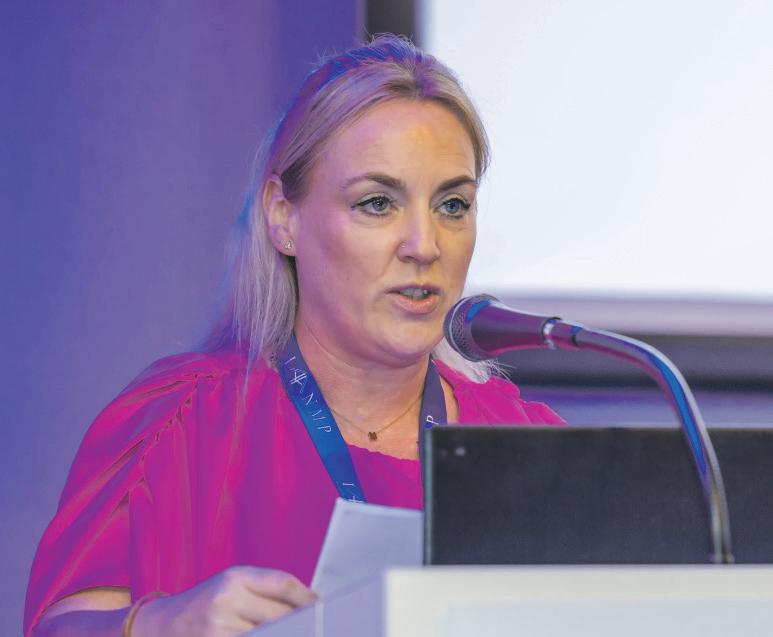
Earlier this month, the RCPI Institute of Obstetricians and Gynaecologists (IOG) hosted the Royal College of Obstetricians and Gynaecologists (RCOG UK) and the Ulster Obstetrical and Gynaecological Society (UOGS).
Pictured L-to-R are: Dr Nikhil Purandare, IOG exam committee Chair; Prof Sam Coulter-Smith, outgoing IOG Chair; Dr Suzanne O'Sullivan, IOG Chair; Dr Ranee Thakar, RCOG UK President; and Dr Kristine Steele, UOGS President


NIAMH CAHILL
More than €92.8 million has been collected by Revenue under the medical consultants’ tax compliance programme between 2013 and 2024, the Medical Independent has learned.
The figure includes taxes, penalties, interest, and ‘uplift’ charges. Uplift relates to the estimated tax receipts saved or to be collected in future because of interventions, according to a Revenue spokesperson.
The compliance programme is now “drawing towards completion”, stated Revenue. Of the 777 interventions initiated, 774 are now closed. “At 31 December 2024, there were three open interventions in the programme at various stages of completion,” said the spokesperson. “By the end of 2024, 52 cases had been published in the quarterly List of Tax Defaulters .”
In 2024, €146,905 was collected in taxes, penalties, and interest – the lowest yield of any year since the project commenced. In comparison, €3.3 million was collected in 2023.
“The annual yield arising through the medical consultants’ compliance programme consists of both larger and smaller settlements, and it would not be appropriate to draw comparisons between the total yield figure in each year, or average yield figures per case,” said the spokesperson.
They added that the figures relate to a specific compliance programme.














Mater Private Network | Dublin




In association with the Dublin Cardiovascular Research Forum and supported by the Irish Cardiac Society. CPD applied for.

Kindly supported by:

Opening 8:45am – 9am




Introduction – Prof. Robert Byrne, Prof. Borja Ibanez and Prof. Brendan McAdam, President, Irish Cardiac Society
Session 1 9am – 10am
State of the art: antiplatelet treatment in ACS and PCI –Prof. Adnan Kastrati, German Cardiac Centre (DHM), Munich, Germany
The Lancet Commission on coronary artery disease: task force member viewpoint – Dr. Róisín Colleran, MPN
The left atrial appendage: past, present, future – Dr. John P. Foran, MPN
Session 2 10am – 11am
Complex PCI in the cath lab – Dr. Colm Hanratty, MPN






Recent developments in catheter ablation for cardiac arrhythmia – Prof. Gábor Széplaki, MPN
Cardio-Oncology: A new medical sub-specialty – Dr. Alexander Lyon, Royal Brompton Hospital, UK
Session 3 11:30am – 12:30pm
Keynote Presentation
Evolving challenges in health and disease: technology and education – Prof. Valentin Fuster, Mount Sinai Hospital, USA, and National Centre for Cardiovascular investigation, Madrid, Spain
Session 4 1:30pm – 3pm
Recent developments in the treatment of heart failure and what is in the pipeline –Prof. John McMurray, Queen Elizabeth University Hospital, Glasgow, UK



Menopause, the heart of the matter? – Dr. Nicola Cochrane, GP Specialist in Complex Menopause
Exercise as medicine – Andrew Dunne, Chief Exercise Officer, Personal Health Medical Exercise Clinic
Submissions of abstracts on any topic in cardiovascular medicine for poster presentations on the day are invited via email to cvri@materprivate.ie by Monday 31st March. The presenter of the best abstract will receive a €500 conference travel voucher.








REGISTRATION For in-person attendees, register via QR code. For online attendees, register via www.MedCafe.ie
www.materprivate.ie





Course Directors & ICS President






CATHERINE REILLY
e use of €3.4 million from the sale of the Health Research Board’s (HRB) former premises is the subject of discussions between the Department of Health and the Department of Public Expenditure, NDP Delivery and Reform.
e HRB sold its former premises on Lower Baggot Street, Dublin, in May 2023. e agency vacated the premises in 2014, when all sta relocated to a new leased building on Lower Mount Street, according to the HRB’s 2023 nancial statements.
A note outlined that the Board ensured arrangements were
A leading obstetrician has raised concerns about the long waiting times faced by many families for receipt of coronial post-mortem reports into perinatal deaths.
Prof Keelin O’Donoghue, Consultant Obstetrician, Cork University Maternity Hospital, said an increasing number of perinatal deaths and stillbirths are subject to coronial investigation.
e Coroners (Amendment) Act 2019 increased and clari ed the range of reportable deaths, including infant deaths.
“ e decision to dictate that all perinatal deaths were reportable to the coroner was likely intended to ensure that parents who had a stillbirth or neonatal death had access to an independent review of their case,” Prof O’Donoghue commented. “It is clear that in some circumstances coronial involvement is entirely appropriate, but the Act has had unintended consequences by including every baby death.”
Prof O’Donoghue stated that coroners di er in their approach to these deaths with some directing that the majority have coronial post-mortems.
“Normal communication pathways between pathologists and their obstetric or neonatal colleagues are also changed in these scenarios as the pathologist can only convey their ndings to the coroner unless speci c authorisation is obtained,” she added.
She said the legalistic nature of the investigation may inuence the type of post-mortem report produced and impact on communications between the relevant parties.
“It is only when all information is released that parents can discuss the post-mortem ndings with their clinician, discuss what happened and make a plan for the future,” said Prof O’Donoghue, who noted that individuals may wish to have another pregnancy in the near future and be informed of potential recurrence risks.
It can take at least two years for families to receive the post-mortem report, although the timeline can vary. “For many perinatal deaths I do not see how this process works well for anyone involved,” she said.
Meanwhile, Prof O’Donoghue noted progress in addressing di culties recruiting into perinatal pathology services. “ is [work] has included actively looking for interested trainees and building teams that they might want to join, as well as initiatives in training scientists.”
Plans to reform the coroner service are due to be published in the coming months. e plans are being costed and a Heads of Bill will be brought to Government this year, according to the Department of Justice.
in place “such that the disposal of the asset was at a fair market-related price following a competitive tendering process”.
Prior sanction for the disposal was obtained from the Department of Health and the Department of Public Expenditure, NDP Delivery and Reform. e HRB and the Department of Health’s research policy and innovation unit developed a business case to advocate for the retention of these funds to support “priority policy areas” within the Department.
According to the note: “ e sale of the property constitutes a windfall gain. In line with Public Financial Procedures the €3,423 million is being treated as repayable to the Exchequer until the Department of Public Expenditure, NDP Delivery and Reform gives sanction for its retention.”
A Department of Health spokesperson noted that the HRB is the main funder of health research in Ireland and directs funds to support research for the improvement of health outcomes.
e spokesperson said discussions on the funds were “ongoing” with the Department of Public Expenditure, NDP Delivery and Reform “in line with the usual expenditure processes”.




REFER TO FULL SUMMARY OF PRODUCT CHARACTERISTICS (SmPC) BEFORE PRESCRIBING
Presentation: Each film-coated tablet contains rifaximin
550 mg. Uses: Targaxan is indicated for the reduction in recurrence of episodes of overt hepatic encephalopathy in patients ≥ 18 years of age. Consideration should be given to official guidance on the appropriate use of antibacterial agents. Dosage and administration: Recommended dose: 550mg twice daily as long term treatment for the reduction in recurrence of episodes of overt hepatic encephalopathy. In the pivotal study, 91% of patients were using concomitant lactulose. Targaxan is administered orally with a glass of water, with or without food. No dosage changes are necessary in the elderly or those with hepatic insufficiency. Use with caution in patients with renal impairment. The safety and efficacy in paediatric patients (aged less than 18 years) have not been established. Contraindications: Contraindicated in hypersensitivity to rifaximin, rifamycin-derivatives or to any of the excipients and in cases of intestinal obstruction. Warnings and precautions for use: Severe cutaneous adverse reactions (SCAR) including: Stevens-Johnson syndrome (SJS) and toxic epidermal necrolysis (TEN), which can be life-threatening or fatal, have been reported (frequency unknown) in association with rifaximin treatment. At the time of prescription patients should be advised of the signs and symptoms and monitored closely for skin reactions. If signs and symptoms suggestive of these reactions appear, rifaximin should be withdrawn immediately and an alternative treatment considered (as appropriate). If the patient has developed a serious reaction such as SJS or TEN with the use of rifaximin, treatment with rifaximin must not be restarted in this patient at any time. The potential association of rifaximin treatment with Clostridium difficile associated diarrhoea and pseudomembranous colitis cannot be ruled out. The concomitant administration of rifaximin with other rifamycins is not recommended. Patients should be informed that rifaximin may cause a reddish discolouration of the urine. Use with caution in patients with severe (Child-Pugh C) hepatic impairment and in patients with MELD (Model for End-Stage Liver Disease) score > 25. Caution should be exercised when concomitant use of rifaximin and a P-glycoprotein inhibitor such as ciclosporin
is needed. Both decreases and increases in international normalized ratio (in some cases with bleeding events) have been reported in patients maintained on warfarin and prescribed rifaximin. If co-administration is necessary, the international normalized ratio should be carefully monitored with the addition or withdrawal of treatment with rifaximin.
Adjustments in the dose of oral anticoagulants may be necessary to maintain the desired level of anticoagulation.
This medicine contains less than 1 mmol sodium (23 mg) per tablet, that is to say essentially ‘sodium-free’. Interactions: In patients with hepatic impairment, rifaximin may decrease the exposure of concomitantly administered CYP3A4 substrates (e.g. warfarin, antiepileptics, antiarrhythmics, oral contraceptives). Pregnancy, lactation and fertility: Rifaximin is not recommended during pregnancy. A decision must be made whether to discontinue breast-feeding or to discontinue/ abstain from rifaximin therapy taking into account the benefit of breast feeding for the child and the benefit of therapy for the woman. Animal studies do not indicate direct or indirect harmful effects with respect to male and female fertility.
Undesirable effects: Common adverse reactions (≥1/100 to <1/10) are: depression, dizziness, headache, dyspnoea, upper abdominal pain, abdominal distension, diarrhoea, nausea, vomiting, ascites, rashes, pruritus, muscle spasms, arthralgia and peripheral oedema. Other less frequently reported adverse reactions are: Clostridial infections, urinary tract infections, candidiasis, pneumonia, cellulitis, upper respiratory tract infection, rhinitis, anaemia, thrombocytopenia, anaphylactic reactions, angioedemas, hypersensitivity, anorexia, hyperkalaemia, dehydration, confusional state, anxiety, hypersomnia, insomnia, balance disorders, amnesia, convulsion, attention disorder, hypoesthesia, memory impairment, hot flush, hypertension, hypotension, presyncope, syncope, pleural effusion, chronic obstructive pulmonary disease, abdominal pain, oesophageal varices haemorrhage, dry mouth, stomach discomfort, constipation, liver function test abnormalities, SJS, TEN, dermatitis, eczema, myalgia, back pain, dysuria, pollakiuria, proteinuria, oedema, pyrexia, asthenia, International normalised ratio abnormalities, fall, contusions, procedural pain. Prescribers should consult the SmPC in relation to other adverse reactions.
References: 1. TARGAXAN® 550 Summary of Product Characteristics. Available for Ireland from: www.medicines.ie. Product under licence from Alfasigma S.p.A.
Less than a decade ago there was a significantly low number of advanced nurse/midwife practitioners (ANMPs) in Ireland compared to international figures, with less than 0.2 per cent of the nursing and midwifery population practising at advanced level.
However, momentum in this area has been growing rapidly on both a global and national scale. The Government has been investing heavily in the ANMP division over recent years as their roles align with various policy priorities and reforms such as Sláintecare, chronic disease management, older persons services, and integrated care.

“This has been an enormously successful area of policy” in Ireland, according to Chief Nursing Officer at the Department of Health, Ms Rachel Kenna. She told the Medical Independent (MI) that Ireland has rapidly become a “world leader” in terms of advanced practice implementation and development.
Investment, policy, and progress
In 2019, the then Minister for Health Simon Harris launched a new model for developing advanced practice with the policy, The Development of Graduate to Advanced Nursing and Midwifery Practice. The document was published following successful pilots of ANMP implementation, and in response to international evidence highlighting the beneficial impacts that practitioners have on health services due to their specialist knowledge and skills, wide scope of qualifications and education, and ability to prescribe and provide a complete episode of care independently.
The policy streamlined the process by which a nurse or midwife can practice at an advanced level in Ireland, and the Nursing and Midwifery Board of Ireland (NMBI) also approved a revised policy for registration as an ANMP in 2019. At that time, Minister Harris said the nursing and midwifery profession would be “critical in implementing the Sláintecare health reform programme” and set an objective to have 2 per cent of the nursing workforce employed as advanced practitioners.
These initial developments set the stage

The development of the ANP role in general practice is a viable solution for many practices in Ireland
for ongoing investment, including the creation of 52 new ANP posts in 2020. On a global level, the World Health Organisation called for the expansion of advanced nursing roles in its State of the World’s Nursing 2020 report, and in that same year, the International Council of Nurses produced guidelines on advanced nursing practice.
In 2021, the then Minister for Health Stephen Donnelly raised his predecessor’s target to have 2 per cent of the workforce practising at advanced level to 3 per cent.
In 2022, some €11 million was allocated to the HSE to recruit 149 ANPs, and in 2023, a further 80 posts were announced.
Ms Kenna confirmed to MI that 2.5 per cent of the HSE workforce are now employed as advanced practitioners and that “this target will grow” due to the positive impacts ANMPs have had to date.
Recent data from the NMBI State of the Register 2024 report demonstrates this substantial expansion of the ANMP population in Ireland over recent years. Between 2023 and 2024 there has been a 20 per cent increase in the number of ANPs and a 23 per cent increase in AMPs.
According to Mr Ray Healy, Director of Registration, NMBI, the Board “expects to see a continued rise in ANMPs” in Ireland. “The overall register continues to increase by 5 per cent per annum,” he told MI. “This will have an inevitable in-
crease in nurses and midwives moving into advance practice roles.”
‘The envy of the world’ Globally, advanced practice has grown substantially, primarily in response to the ongoing physician shortage, ageing populations, rising prevalence of chronic and infectious diseases, and ongoing reforms in healthcare delivery. ANP roles exist in many countries – varying in stages of development, regulation, and structure. Countries such as Australia, Canada, and the Netherlands have high numbers of ANPs, well-defined ANP roles, educational pathways, and regulatory frameworks, while the UK, for example, has yet to approve regulation for the role. Overall, the number of ANPs more than doubled in the US and Canada over the past decade.
Well-documented barriers to successful implementation of advanced practice include inconsistent definitions of the ANP, ambiguity around scope and role, limited or no formal regulation, and resistance from physicians and other healthcare workers. Successful implementation appears to rely on clearly defined roles and collaboration between organisations, regulatory bodies, and key stakeholders.
Describing achievements in Ireland since 2019, Ms Kenna said the approach “has been very successful” and “stemmed
in policy” from an early stage. She also identified a range of factors that contributed to accomplishments in implementation, such as “directed investment” and interdisciplinary partnership.
“One of the key success factors in the development of advanced nursing and midwifery in Ireland is that it is done very collaboratively with our medical colleagues. There is no ambiguity around it, it is very clear around the patient cohorts. There’s a huge interconnected and interprofessional learning and supervision approach to it, and I think that has been instrumental to our success. We have walked the path with our medical colleagues in sharing their expertise. The definition of what nurses and midwives do at this level is very, very clear and I think the patients have a good understanding now as well as the medical profession. The nursing and midwifery profession continue to grow within those comfortable boundaries that have been set.”
Ms Kenna also emphasised that the current education programmes and formal regulation process for ANMPs in Ireland played vital roles in the successful implementation of policy. “Regulation makes a huge difference in terms of enabling practitioners to stretch themselves and in providing the public with protections,” she said. Ms Kenna told MI that Ireland is “the envy of the world” due to this existing pathway to registration, which is “fully developed and supported with education”.
The NMBI offers two distinct pathways to registration as an ANMP, unlike several other countries. Nurses and midwives who successfully complete the NMBI-approved MSc in Nursing (Advanced Practice Nursing) programme may apply for registration. Alternatively, a developmental pathway also exists for practitioners who have completed a collection of courses that, when combined, meet the NMBI advanced practice standards and requirements.
Speaking to MI about regulation in Ireland, Ms Mary T Devane, Professional Officer, Education, Policy, and Standards Department, NMBI, said: “The successful regulation pathway of ANMP has been driven by clear legislative and policy frameworks, including NMBI’s Standards and Requirements for Advanced Practice (2017), which establish the competencies and capabilities required for registration. Flexibility in education and training has allowed education bodies and practice partners to develop evidence-based programmes, aligned with the competencies set out in the NMBI Standards and Requirements for Advanced Practice, that equip nurses for autonomous and expert practice. Ongoing professional development, clinical supervision, and adherence to the Code of Professional Conduct and Ethics and the Scope of Practice Decision-Making Framework have further supported ANMPs in reaching their full potential.”
Positive outcomes to date
Since the launch of the policy in 2019, the impacts of developing advanced practice “are beginning to demonstrate”, Ms Kenna said. “This has made a significant impact on the overall ability to deliver care across complex groups of patient needs,” she added, describing ANPs as an “instrumental solution in the reform and delivery of population health”.
“We did an early evaluation to determine the broader impacts of having a percentage of our workforce operating at that really high level. We have evidence of improved access for patients across a range of services and conditions. ANPs have been shown to reduce waiting lists and hospital readmission rates, particularly in those ‘frontdoor’ areas such as critical care, general practice, and emergency departments. The patient satisfaction and patient empowerment aspects of being linked in with an ANP is second-to-none in terms of the evidence. Patient safety and satisfaction is in and around 98 per cent.”
Regional and clinical disparities
Recent years have undoubtedly seen an exponential growth in advanced practice in Ireland; however, developments and the associated benefits have not been experienced in equal measures, either geographically or clinically. A significant variation exists in the distribution of ANMPs across the country, with the vast majority of practitioners located in urban regions – primarily Dublin (294), Galway (63), and Cork (50). Many rural counties have notably low figures of practising ANMPs, such as Carlow (1), Monaghan (2), and Leitrim (4), while Longford has none.
Ms Kenna clarified that evidence has shown the need for “a critical mass” of ANMPs to achieve optimal outcomes, and that initial implementation of policy has been based on this principle, with the view to continue expansion. “Having one or two ANMPs in specialist areas isn’t as effective,” she said. “Ideally, we need to build up four or five so that they have that shared expertise and cover a range of geography that will allow them to deal with population-based disease.”
“Spreading out from the cities, where we have high populations, to more rural areas and bringing the access to patients, is ultimately where we want to go,” Ms Kenna told MI. “Supporting the generalist community care models that are out there and having the ability to have a layer of ANPs available for patients in every area of the country; that’s our objective.”
According to the Chair of the Irish Association of ANMPs, Ms Melissa Hammond, there is indeed “work to do” in this area. Ms Hammond, who works as an ANP in general practice, commended the investments and ongoing collaboration that have taken place across secondary care. However, she emphasised that “very few ANMPs are practising in the community, particularly in general practice”.
Notable differences exist between primary and secondary care settings in Ireland, with only around 25 registered ANMPs in general practice compared to approximately 1,000 in secondary care.
“We need people to know the benefits of
what we are doing in general practice,” said Ms Hammond. “We are regulated, accountable, indemnified, and qualified, just like our peers in secondary care. Collaboration is improving, but we don’t share the same equity and access to resources. We also need funding to promote the role publicly, which we feel is lacking in Ireland, and to recruit more advanced practitioners to general practice. Sometimes it feels as though we are invisible workers in the background.”
A 2024 paper from the Organisation for Economic Co-operation and Development (OECD), titled Advanced practice nursing in primary care in OECD countries: Recent developments and persisting implementation challenges, reports that some countries have “accelerated the use of ANPs” in primary care, while others “are still debating the pros and cons” or remain in early implementation phases. Countries that have achieved successful implementation view ANPs as “a real opportunity to respond to primary care needs and shortages of GPs”.
According to the report, data from these leading countries indicate that ANPs play a useful role in providing more timely access to primary care, supporting health promotion and disease prevention, promoting continuity of care, reducing hospital admissions/readmissions, and achieving higher patient satisfaction. No evidence of any negative impact on quality of care or patient safety is associated with adequately trained ANPs. Almost 90 per cent of the 355,000 registered ANPs in the US are educated and trained in primary care and over 70 per cent of practising ANPs deliver primary care.
Professional Development Coordinator for General Practice Nursing (PDCGPN), Ms Marie Cantwell, told MI that the addition of the ANP role to general practice is “essential in Ireland” in view of the rising complex and ageing population, increased workload, and declining GP population.
“We must evolve and develop a fit and sustainable workforce,” she said.
In their recent submission to the strategic review of general practice, PDCGPNs advocated for the adoption of the national policy on the development of graduate to advanced nursing and midwifery practice at general practice level, and called for a formal career pathway in primary care. Ms Cantwell said that a structured professional pathway would “acknowledge the unique challenges faced by general practice nurses” and support standardised education for practitioners in primary care.
“The development of the ANP role in general practice is a viable solution for many practices in Ireland. Current arrangements are primarily driven by ambitious
nurses, many of whom study in their own time and at their own expense to develop their practice. Adopting the Department of Health policy of identifying service need, developing posts in response to same, and recruiting and supporting candidates and ANPs in practice to meet that need could be a solution.”
Future directions
Responding to the deficit of ANMPs in general practice in Ireland, Ms Kenna admitted “there are obviously a few financial and governance issues that we need to break down in this area” in view of the fact that GPs are private practitioners. “This is not a barrier, but a huge opportunity from my perspective,” she emphasised.
“If you really focus on the patient, of course the major front door access is the GP, so it seems very sensible to put advanced practice at that point…. We will be looking at this from the GPs’ perspective – how we support them to have ANPs in their practices, because they are expensive and there is a requirement to maintain support for their ongoing education. That has implications, particularly for smaller practices. We’ve got to get into that space and have a look at it. That will be our next move because it’s so important to have ANPs in the community.”
Addressing equity and access for nurses in general practice, Ms Kenna said that all nurses and midwives should be educated to the “one standard that is set by the regulator”, and that practice nurses should have access to the same education as those working in the HSE. “GP nurses that are moving towards advanced practice shouldn’t be excluded from that and we have to move into that space. I’ll be looking at how we resolve that,” she said.
Ms Kenna highlighted the Sláintecare-funded Graduate Diploma in Primary Care. The pilot programme between the Department and University College Dublin is in its second year and yet to be formally evaluated. She described the programme as “the first step towards building access into advanced practice training in primary care”.
“We have been thinking about how to approach this and started with the education level below advanced practice. This is something we will be looking at this year – how do we now copper-fasten an access route into advanced practice? The purpose was to have a standardised, across-theboard education module for general practice and community nurses. This will be an important platform for us to look at access routes to advanced practice.”
Overall, Ms Kenna commended the level of education, knowledge, and skills ANMPs possess, as well as their commitment to professional development. “The work they do is phenomenal,” she said, adding that practitioners themselves would be a vital aspect of future developments.
“We are looking at evaluating the roles again this year. A big part of that is stakeholder engagement and of course the practitioners themselves are key stakeholders in relation to that. Professionals that are practising at this level have a huge amount of knowledge about what works and what doesn’t. So, they are fundamental to our understanding in the policy space to be able to deliver policy that’s meaningful.”
MINDO NUMBERS
33,000 patient contacts were made by community specialist teams for older people in 2024, according to new HSE data.
81% of patients were discharged home after community-based care; only 5 per cent required long-term care.
7,000+ frail adults avoided unnecessary hospital admissions.
645,000+
GP-led patient reviews occurred under the Chronic Disease Management Programme.
900+ virtual clinics were held, with an 85 per cent reduction in hospital visits for heart virtual clinic patients.
€530,000 in funding from the Women’s Health Fund will support the delivery of Ireland’s Cervical Cancer Elimination Plan.
CATHERINE REILLY
The HSE’s infection control unit intervened to ensure hand hygiene training was reinstated as mandatory, according to internal records .
In January 2024, the HSE antimicrobial resistance and infection control (AMRIC) oversight group discussed a circular from human resources (HR) which did not include hand hygiene training as a mandatory training requirement. The circular, which was issued in August 2023, outlined the statutory and mandatory training requirements for HSE staff.
The AMRIC group meeting noted that a mandatory requirement for hand hygiene training every two years had been in place for approximately 10 years. In addition, this training had been promoted as mandatory for all.
It was agreed that the AMRIC Head of Service would link with the Chief Clinical Officer to ensure HR reinstated the hand hygiene training requirement, according to meeting minutes obtained under Freedom of Information law.
A HSE spokesperson commented: “Hand hygiene is one of the most effective ways to stop the spread of infection and a range of training, guidance and resources are provided to staff to ensure good hand hygiene practice throughout our services.
“In 2024, hand hygiene training was included on the HSE list of statutory and mandatory training for all HSE staff (clinical and non-clinical) as well as for staff in HSE-funded services. This further standardises and strengthens a culture of good hand hygiene practice and an awareness of its importance across all staff disciplines.”
A new mandatory training programme involves completing an eLearning module designed by the AMRIC team.
“The uptake of this hand hygiene eLearning module has been very positive,” said the HSE’s spokesperson. “There is ongoing monitoring of uptake of mandatory training in each health region for both new and existing staff…. There is no specific information on percentage take-up among new staff, however, staff are continually prompted to complete their eLearning programme on hand hygiene on HSeLanD….”
The last national hand hygiene audits for acute settings were completed from October to November 2024. Forty-seven public hospitals submitted data on 10,037 observations. Hand hygiene compliance remained “stable” at 92.3 per cent, which was above the HSE target of 90 per cent.
Meanwhile, the HSE confirmed that the national clinical surveillance infection control system is live in HSE Mid West and Tallaght University Hospital. In HSE West and North West, three hospitals are live and it is planned to roll out to a further three hospitals in 2025.
“As part of this project, University Hospital Kerry in HSE South West will be live in Q2 2025 with a phased implementation planned for the remainder of HSE South West thereafter. Engagement has also commenced with HSE Dublin and South East and a community pilot site has been chosen in HSE West and North West.”
The system will support the management of the clinical, laboratory and administrative information around cases and outbreaks.
CATHERINE REILLY
The Pre-Hospital Emergency Care Council (PHECC) made an unprompted voluntary declaration of €812,000 to the Revenue Commissioners. The issue arose on account of misclassifying the tax status of external assessors.
A spokesperson for PHECC informed the Medical Independent (MI) that the Department of Health provided additional funding of €450,000 as part of addressing the tax liability. No further monies are due to Revenue arising from the matter. The Department has also provided extra funding of approximately €100,000 in 2025 for costs associated with the change in tax status of assessors.
According to PHECC’s 2023 financial statements, a “query” was raised in 2021 in relation to payments to its panel of external assessors between 2018 and 2022. A formal review was carried out in 2022 and early 2023 to determine the tax status of the assessors and any tax liability.
“The report which was received in July 2023 found that the assessors were in fact employees,” according to notes to the financial statements.
“In December 2023, an amount of €300k was paid to the Revenue Commissioners as part of a voluntary declaration and an additional €512k was paid in 2024, once detailed calculations had been carried out and submitted to the Revenue Commissioners. The total payment [of] €812k included interest of €183k.”
In 2023, the Department’s allocation to PHECC was just over €2,951,000, which was an increase from approximately €2,431,000 in 2022.
PHECC is an independent statutory body which sets the standards for education and training for pre-hospital emergency care. The Council publishes clinical practice guidelines (CPGs) and recognises institutions to provide pre-hospital emergency care training and education.
In addition to maintaining a statutory register of practitioners, the Council approves pre-hospital emergency care service providers to implement CPGs.
The PHECC spokesperson told MI : “PHECC has a number of assessor panels it employs to act on its behalf. These include examiners, auditors, and assessors who review recognition of qualification applications and continuing professional competence submissions. There has been no reduction in assessor numbers as a result of the change to assessor employment status.”
CATHERINE REILLY
“Limited” training opportunities have been cited by doctors who withdrew from the medical register’s general division in 2023.
Most doctors who voluntarily withdrew from the general division stated that they wished to practise medicine abroad (66.5 per cent, n=443), according to a Medical Council supplementary report for 2023.
There were a number of key themes raised in the feedback provided by these doctors. “The themes generated included practising abroad, limited career progression and training opportunities, unfavourable training conditions,
poor working conditions, limited job opportunities and economic constraints, and personal or family reasons,” according to the Council report. “Many of the themes are strongly linked and in some cases one theme may be a motivating factor for another.”
Many of the doctors were pursuing postgraduate training, fellowships or practising medicine abroad. The locations varied, but the UK and Australia were the most commonly mentioned.
Doctors shared experiences of limited career progression and training opportunities in Ireland. “This was often very frustrating and disheartening as many of these doctors wanted to stay in Ireland but could not access training de-
spite numerous attempts,” according to the report.
One doctor remarked: “As an ‘international medical graduate’ it has become increasingly difficult to secure a training position, the job application process is also not transparent and centralised.”
Another issue raised by doctors leaving the general division was a desire for greater access to flexible training.
“Doctors often characterised training here as inflexible, especially for families with unfavourable hours and rotations, understaffed hospitals, limited senior support and instances where service provision is prioritised and training is reduced to [accommodate] this.”
In total, 1,018 doctors voluntarily withdrew their registration from the Medical Council in 2023. Some 64.5 per cent indicated that they wished to practise medicine in another country, 11.3 per cent wished to stop practising medicine, and 24.2 per cent reported having some other reason for voluntarily withdrawing.
NIAMH CAHILL
The National Treatment Purchase Fund (NTPF) is exploring ways to reduce backlogs in paediatric care, the Medical Independent has learned.
The NTPF has initiated a “preliminary market consultation” inviting private hospitals and non-hospital settings on the island of Ireland to submit information on their paediatric care services.
“We are particularly interested in understanding the capabilities, service offerings, and specific expertise of providers delivering paediatric healthcare services in both private hospital and non-hospital settings,” according to the notice.
“The objective is to explore potential solutions that could assist in addressing patient backlogs and ensuring timelier
access to paediatric care. This preliminary market consultation is intended to gather information from interested providers to inform the development of a potential future procurement process.”
Providers have been asked to provide information on services and treatments; patient care and case management; and capacity and patient throughput, among other areas.
The providers have also been requested to submit their “unique selling points”. These are the “distinctive features” of their paediatric service model that contribute to reducing waiting times and enhancing timely access to high-quality care. The deadline for the receipt of submissions is 28 March.
As of late January, some 9,238 children were awaiting a day case or inpatient procedure. A further 74,632 chil-
dren were awaiting an outpatient appointment, according to NTPF figures.
In February, the Department of Health published the Waiting List Action Plan 2025, which aims to reduce patient waiting times for healthcare nationally. Funding of €420 million has been allocated to the plan. Some €230 million of the funding is being provided to the NTPF and €190 million to the HSE.
The action plan aims to reduce the weighted average waiting time for scheduled care to 5.5 months. Another target is ensuring 90 per cent of patients are waiting less than 12 months for an outpatient appointment by the end of this year.
A spokesperson for the NTPF confirmed that the market consultation had been issued. They added that the NTPF is “committed to providing assistance to Children’s Health Ireland” to meet waiting time targets for a range of specialties.
DAVID LYNCH
Outpatient department (OPD) productivity is a key focus for the HSE national productivity unit (NPU), this newspaper has been informed.
The NPU’s work has included collaboration with statutory and voluntary clinical services to “focus on practical ways” to optimise OPD productivity, a HSE spokesperson told the Medical Independent.
This process has included the use of behavioural science
Understanding how medicines are prescribed and how costs evolve over time is crucial for improving healthcare policy and practice.
Dr Frank Moriarty, Associate Professor, RCSI School of Pharmacy and Biomolecular Sciences, who led on the development of RxTrends, a new digital tool that provides real-time insights into prescribing trends in Ireland.
insights to support progress on waiting time targets. It has also involved leveraging successful initiatives and applying the lessons learned from implementing HSE strategies.
The unit, which was established in June 2024, comprises four senior HSE staff and three senior external consultants from Ernst and Young (EY). It is headed by Ms Mary Coghlan of EY, who reports directly to the HSE CEO.
The NPU has a “broad remit” including the identification of productivity improvement opportunities, advice on implementation, measurement, and publication of
About four in 10 women who attend colposcopy clinics in Ireland are smokers, and we want to support our colposcopy clinics to have conversations with women about smoking, and the link between HPV and cervical cancer.
Prof Nóirín Russell, CervicalCheck Clinical Director, National Screening Service, commenting on a new HSE initiative to support patients and healthcare professionals to understand the links between smoking, HPV, and cervical cancer.
available data.
“It collaborates with colleagues to identify opportunities to optimise productivity in many HSE areas; this involves many professional disciplines, including consultants. The focus is on the collective output of workstreams and practices rather than on individual professions.”
This year, the unit’s central aim is to support the HSE CEO and the six regional executive officers to drive and deliver the priority actions of the joint Department of Health/ HSE productivity and savings taskforce plan.
Our research shows that doctors continue to leave the register each year for reasons such as burnout and lack of flexibility.
Dr Suzanne Crowe, Medical Council President, speaking on the need for greater promotion within the profession of flexible training and working options.

For healthcare professionals in Ireland only. Prescribing Information is available below. All WEZENLA® presentations are latex-free

WEZENLA® was comparative to the reference medicine ustekinumab when evaluated in studies that examined pharmacokinetics, efficacy, tolerability and immunogenicity.1,2
WEZENLA® is indicated for:
CROHN’S DISEASE3-6
PLAQUE PSORIASIS3–5
PAEDIATRIC PLAQUE PSORIASIS3–5
PSORIATIC ARTHRITIS3-5
Please refer to the Summary of Product Characteristics and Patient Information Leaflet for more information on dosage and administration.
Indications were granted on the basis of similarity between WEZENLA® and the originator drug. WEZENLA® is not currently approved in Ireland for ulcerative colitis (since the originator still has exclusivity for this indication). WEZENLA® should only be prescribed by healthcare professionals experienced the diagnosis and treatment of Crohn's disease, plaque psoriasis and psoriatic arthritis.
I.V.: intravenous 1. Blauvelt A, et al. Efficacy and Safety of the Biosimilar Candidate ABP 654 in the Treatment of Moderate-to-Severe Plaque Psoriasis: Results from a Phase 3, Multicenter, Randomized, Double-Blinded Study. Presented at the European Academy of Dermatology and Venereology. Seville, Spain; 18-20 May 2023. 2. Chow V, et al. Clin Pharmacol Drug Dev. 2023;12(9):863–873. 3. WEZENLA® 45 mg solution for injection. Summary of Product Characteristics. 4. WEZENLA® 45 mg solution for injection in pre-filled syringe. Summary of Product Characteristics. 5. WEZENLA® 90 mg solution for injection. Summary of Product Characteristics. 6. WEZENLA® 130 mg concentrate for solution for infusion. Summary of Product Characteristics.
WEZENLA®▼ (ustekinumab) Brief Prescribing Information
Please refer to the Summary of Product Characteristics (SPC) before prescribing WEZENLA.
Pharmaceutical Forms: 130 mg vial concentrate for solution for infusion; 45 mg vial solution for injection; 45 mg and 90 mg solution for injection in pre-filled syringes.
WEZENLA Indications: Plaque psoriasis (PsO) - Moderate to severe PsO in adults who failed to respond to, or who have a contraindication to, or are intolerant to other systemic therapies including ciclosporin, methotrexate (MTX) or PUVA (psoralen and ultraviolet A). Paediatric PsO - Moderate to severe plaque PsO in patients from the age of 6 years and older, who are inadequately controlled by, or are intolerant to, other systemic therapies or phototherapies. Psoriatic arthritis (PsA) - Alone or in combination with MTX, indicated for the treatment of active PsA in adult patients when the response to previous nonbiological disease-modifying antirheumatic drug (DMARD) therapy has been inadequate. Crohn’s Disease (CD) - Adult patients with moderately to severely active CD who have had an inadequate response with, lost response to, or were intolerant to either conventional therapy or a TNFα antagonist or have medical contraindications to such therapies. Dosage and Administration: For use under the guidance and supervision of physicians experienced in the diagnosis and treatment of conditions for which WEZENLA is indicated. After proper training in subcutaneous (SC) injection technique, patients or their caregivers may inject WEZENLA if a physician determines that it is appropriate. Physician should ensue follow-up of patients. PsO - Initial dose of 45 mg administered subcutaneously (SC), followed by a 45 mg dose 4 weeks later, and then every 12 weeks thereafter. Patients with a body weight > 100 kg, initial dose is 90 mg administered SC, followed by a 90 mg dose 4 weeks later, and then every 12 weeks thereafter. Consideration should be given to discontinuing treatment in patients who have shown no response up to 28 weeks. Paediatric PsO 6 years and older - Recommended dose is based on body weight administered SC at Weeks 0 and 4, then every 12 weeks thereafter. Body weight and recommended dose < 60 kg - 0.75 mg/kg; ≥ 60 - ≤ 100 kg - 45 mg; > 100 kg – 90 mg. Refer to SPC for further details on dosing. The 45 mg vial is available for paediatric patients < 60 kg who need to receive less than the full 45 mg dose. Consideration should be given to discontinuing treatment in patients who have shown no response up to 28 weeks. PsA - Initial dose of 45 mg administered SC, followed by a 45 mg dose 4 weeks later, and then every 12 weeks thereafter. Alternatively, 90 mg may be used in patients with a body weight > 100 kg. Consideration should be given to discontinuing treatment in patients who have shown no response up to 28 weeks. CD - First dose administered intravenously (IV) over at least one hour. Body weight and recommended dose: ≤ 55 kg – 260 mg; > 55 kg to ≤ 85 kg – 390 mg; > 85 kg – 520 mg. The first SC administration of 90 mg should take place at week 8 after the IV dose. Dosing every 12 weeks is recommended, thereafter. Patients who have not shown adequate response at 8 weeks after the first SC dose, may receive a second subcutaneous dose at this time. Patients may subsequently be dosed every 8 weeks or every 12 weeks according to clinical judgement. Consider discontinuing treatment in patients who show no therapeutic benefit 16 weeks after the IV induction dose or 16 weeks after switching to the 8-weekly maintenance dose. Immunomodulators and/or corticosteroids may be continued. In patients who have responded to treatment, corticosteroids may be reduced or discontinued in accordance with standard of care. In CD, if therapy is interrupted, treatment can be resumed with subcutaneous dosing every 8 weeks. Contraindications: Hypersensitivity to the active substance or to any of the excipients (refer to SPC for further details). Clinically important, active infection (e.g. active tuberculosis). Special Warnings and Precautions for use: Traceability - The tradename and the batch number should be clearly recorded. Infections - Ustekinumab may have the potential to increase the risk of infections and reactivate latent infections. In PsO, serious bacterial, fungal, and viral infections have been observed. Opportunistic infections including reactivation of tuberculosis (TB), other bacterial infections, fungal infections, viral infections and parasitic infections have been reported. Use with caution in patients with a chronic infection or a history of recurrent infection. Prior to treatment, patients should be evaluated for TB infection. Must not be given to patients with active TB. Initiate anti-TB therapy in patients with latent TB, a history of latent or active TB in whom an adequate course of treatment cannot be confirmed, prior to WEZENLA treatment. Instruct patients to seek medical advice if signs or symptoms suggestive of an infection occur. Closely monitor patients with serious infection, suspend WEZENLA until the infection resolves. Caution should be used in treating the elderly. Malignancies - Immunosuppressants like ustekinumab have the potential to increase the risk of malignancy. Some patients with PsO receiving ustekinumab developed cutaneous and non-cutaneous malignancies. The risk of malignancy may be higher in PsO patients who have been treated with other biologics. Use with caution when considering therapy in patients with a history of malignancy or in patients who develop malignancy while receiving WEZENLA treatment. All patients should be monitored for the appearance of skin cancer (particularly those > 60 years of age, patients with a medical history of prolonged immunosuppressant therapy or those with a history of PUVA treatment). Systemic hypersensitivity reactions - Serious hypersensitivity reactions have been reported, in some cases several days after treatment. If an anaphylactic or other serious hypersensitivity reaction occurs, appropriate therapy should be instituted and administration of WEZENLA should be discontinued. Infusion related reactions - Infusion-related reactions, serious infusion-related including anaphylactic reactions have been reported. Discontinue WEZENLA if serious or life-threatening reactions observed and institute appropriate therapy. Respiratory hypersensitivity
reactions - Allergic alveolitis, eosinophilic pneumonia, and non-infectious organising pneumonia have been reported, some leading to respiratory failure and prolonged hospitalisation. Improvement has been reported after discontinuation of ustekinumab and in some cases, administration of corticosteroids. If infection has been excluded and diagnosis is confirmed, discontinue ustekinumab. Cardiovascular events - Cardiovascular events including myocardial infarction and cerebrovascular accident have been observed in patients with PsO exposed to ustekinumab. Risk factors for cardiovascular disease should be regularly assessed during treatment with WEZENLA. Vaccinations - It is recommended that live viral or live bacterial vaccines (such as Bacillus of Calmette and Guérin (BCG)) should not be given concurrently with WEZENLA – refer to SPC for additional information and guidance. Before live viral and live bacterial vaccination, WEZENLA treatment should be withheld for at least 15 weeks after the last dose and can be resumed at least 2 weeks after vaccination. Administration of live vaccines (such as the BCG vaccine) to infants exposed in utero to ustekinumab is not recommended for twelve months following birth or until ustekinumab infant serum levels are undetectable. Patients receiving WEZENLA may receive concurrent inactivated or non-live vaccinations. Long term treatment with ustekinumab does not suppress the humoral immune response to pneumococcal polysaccharide or tetanus vaccines. Concomitant immunosuppressive therapy - In PsO, the safety and efficacy of ustekinumab in combination with immunosuppressants, including biologics, or phototherapy have not been evaluated. In PsA, concomitant MTX use did not appear to influence the safety or efficacy of ustekinumab. In CD and Ulcerative Colitis (UC), concomitant use of immunosuppressants or corticosteroids did not appear to influence the safety or efficacy of ustekinumab. Caution should be exercised when considering concomitant use of other immunosuppressants and WEZENLA, or when transitioning from other immunosuppressive biologics. Serious skin conditions - In PsO, physicians should be alert for symptoms of erythrodermic psoriasis or exfoliative dermatitis. If these symptoms occur, appropriate therapy should be instituted. Discontinue WEZENLA if a drug reaction is suspected. Lupus-related conditions – Lupus-related conditions reported. If lesions occur, especially in sun exposed areas of the skin or if accompanied by arthralgia, the patient should seek medical attention promptly. If these symptoms occur, appropriate therapy should be instituted. Discontinue WEZENLA if a drug reaction is suspected. Interactions: No interaction studies have been performed in humans. Refer to SPC for further details. In vitro study suggests no dose adjustments required in patients who are receiving concomitant CYP450 substrates. Pregnancy, lactation and fertility: Women of childbearing potential should use effective methods of contraception during treatment and for at least 15 weeks after treatment. It is preferable to avoid the use of WEZENLA in pregnancy. Ustekinumab crosses the placenta and has been detected in the serum of infants born to female patients treated with ustekinumab during pregnancy. The clinical impact of this is unknown, however, the risk of infection in infants exposed in utero to ustekinumab may be increased after birth. See sub section “vaccinations” in Special Warnings and Precautions for use for further details. Limited data suggest ustekinumab is excreted in human breast milk in very small amounts. It is not known if ustekinumab is absorbed systemically after ingestion. A decision on whether to discontinue breast-feeding during treatment and up to 15 weeks after treatment or to discontinue therapy with WEZENLA must be made taking into account the benefit of breast-feeding to the child and the benefit of WEZENLA therapy to the woman. The effect of ustekinumab on fertility has not been evaluated. Undesirable Effects: Refer to the SPC for the full list of undesirable effects. Common (≥ 1/100 to < 1/10) - upper respiratory tract infection, nasopharyngitis, sinusitis, dizziness, headache, oropharyngeal pain, diarrhoea, nausea, vomiting, pruritus, back pain, myalgia, arthralgia, fatigue, injection site erythema, injection site pain. Other side effects reported: Serious infections: pneumonia, anal abscess, cellulitis, diverticulitis, gastroenteritis and viral infections. Malignancies: Excluding nonmelanoma skin cancer, prostate, colorectal, melanoma and breast cancers. Hypersensitive reactions: Serious infusion-related reactions including anaphylactic reactions, rash and urticaria. Pharmaceutical Precautions: Store in a refrigerator (2°C – 8°C). Do not freeze. Keep in the outer carton in order to protect from light. If needed, individual 45 mg vial/45 mg and 90 mg pre-filled syringes may be stored at room temperature up to 30°C for a maximum single period of 30 days and not returned to the refrigerator. Legal Category: POM. Presentations and Marketing Authorisation Numbers: WEZENLA 130 mg concentrate for solution for infusion: EU/1/24/1823/004 – 1 pack of 1 vial ; WEZENLA 45 mg solution for injection: EU/1/24/1823/001 – 1 pack of 1 vial; WEZENLA 45 mg solution for injection in prefilled syringe: EU/1/24/1823/002 – 1 pack of 1 syringe; WEZENLA 90 mg solution for injection in prefilled syringe: EU/1/24/1823/003 – 1 pack of 1 syringe. Marketing Authorisation Holder: Amgen Technology (Ireland) UC, Pottery Road, Dun Laoghaire, Co Dublin, Ireland. Further information is available from Amgen Ireland Limited, 21 Northwood Court, Santry, Dublin D09 TX31, Ireland. WEZENLA is a trademark owned by Amgen Inc. Date of PI preparation: December 2024 (IRL-654-112480005).
This medicinal product is subject to additional monitoring. Adverse reactions/events should be reported to the Health Products Regulatory Authority (HPRA) using the available methods via www.hpra.ie. Adverse reactions/events should also be reported to Amgen Limited on +44 (0) 1223 436441 or Freephone 1800 535 160

The use of AI in Irish healthcare is growing, raising important questions about regulation and oversight. David Lynch reports
The coming months will see important developments in the use of arti cial intelligence (AI) in Irish healthcare.
e HSE is developing an “implementation framework” to ensure that AI systems are used “ethically, legally, safely, and e ectively”.
In addition, HIQA is designing guidelines for AI’s use in health and social care, while the Department of Health and HSE have commenced work on an AI strategy.
Much of this activity has been prompted by the new European Union (EU) AI Act, which has compliance implications for organisations such as the HSE. But there are also broader discussions around the issue of AI beyond this new legislation.
At the end of last month, an Irish ‘citizens’ jury’ published 25 recommendations for health policymakers on the use of AI in the Irish healthcare system.
Organised by the Irish Platform for Patient Organisations, Science, and Industry (IPPOSI), the jury of 24 individuals set out to “o er the public’s perspective” on AI in healthcare.

e jury concluded there was a need for an independent regulator and commissioner to oversee AI and a national strategy to chart the course of AI in healthcare over the next ve years. e jury also called for a separate independent commissioner to serve as a public interest watchdog and to protect patient rights.
e jury endorsed the “early, low-risk deployment of high-quality, human-monitored AI tools” to help ease pressures on the healthcare system, drive advancements in treatment and care, and empower individuals to take a more “active role” in managing their own health.
However, the jury highlighted the importance of “strong regulation, transparent oversight, and robust” data security.
Other recommendations included the need to keep “humans in the loop” as the jury emphasised the importance of human oversight and control over AIenabled care.

Prof Richard Greene, who was a member of the jury’s oversight panel, is the HSE Chief Clinical Information O cer and Professor of Clinical Obstetrics, University College Cork.
He told the Medical Independent (MI) that discussions on AI among clinicians generally focus on the topics of guidance, ensuring evidence for safe use, and AI evaluation approaches.
A recurring theme of these discussions is the necessity of protecting human decision-making. In medicine, this means ensuring that the nal decision continues to lie with a clinician in collaboration with the patient.
Despite the risks, there is a lot of “guarded optimism” about the potential for AI use in healthcare, said Prof Greene.

“For those in the vanguard and innovating in this space, there is a hunger for discussion and guidance. Many of these practitioners are involved in the process of developing this guidance from health science literature and real-world evidence.”
He noted that radiology is currently the most common area for AI use in the Irish health service. A number of radiologists are working with the HSE on developing a framework for the introduction of AI in healthcare, including “clear guidance for clinicians on the introduction of AI into practice”.
is work will contribute to the HSE’s AI framework, which is expected to be completed by June.
“We are also working with the Department of Health to evolve a number of priority areas for AI introduction,”
Potential opportunities to “improve the care process” in areas such as radiology are being examined by the HSE Centre of Excellence (CoE) for Artificial Intelligence (AI) and Automation. The centre was established by the Executive last year.
A HSE spokesperson told the Medical Independent (MI) that opportunities to improve administrative processes, including in human resources and financial processing, are also being examined.
The HSE National Service Plan 2025 has committed to further extending robotic process automation
to reduce administrative time spent on large-scale processes. The plan also states that the HSE will deliver “initial pilot implementations of AI” through the CoE.
HSE Chief Clinical Information Officer (CCIO) Prof Richard Greene told MI the CoE is involved in activities regarding AI guidance and policy development.
The CoE is working with Prof Greene and the Chief Data Analytics Officer within the Chief Technology and Transformation Office.
The CoE will be a “centre for advice and support in the introduction of AI” in Irish healthcare, outlined Prof Greene.
added Prof Greene.
Some of these will be in radiology, such as assisting image assessment and diagnosis, enhancing fracture diagnosis on bone x-rays, assisting diagnosis of stroke, and mammography screening.
Beyond radiology, other areas for review are “ambient listening” to support clinical consultations and developing a note of the clinician-patient interaction. Additionally, AI is being explored for administrative support, such as automating certain tasks through robotic processes and using generative AI for document management.
“ e overwhelming principle in all of this will be the ‘human in the loop’ [element]. is was a speci c recommendation from the IPPOSI citizens’ jury to have ‘human-monitored AI’.”
Guidance and legislation
Prof Greene told MI there is a need for speci c guidance and legislation for AI in healthcare.
Noting the ongoing work by the Department, the HSE, and HIQA, he said the citizens’ jury recommendations “will provide valuable input” into these areas. e EU AI Act establishes a harmonised regulatory framework for AI systems developed in the EU. It is designed to provide a high level of protection for people’s health, safety, and fundamental rights. e Government plans to introduce legislation in the coming months to support the implementation and enforcement of the EU AI Act at national level, with a regulator “under consideration” within the planned legislation, according to Prof Greene.
Re ecting on other recommendations from the jury, Prof Greene said the area of “digitisation” was important.
He said the Government should “urgently and fully implement” the Digital for Care Framework . According to Prof Greene, a national electronic health record system was particularly vital to ensure that foundational AI systems are built in existing well-resourced, digitally mature systems.
“All stakeholders should ensure that the provider-patient relationship remains the primary focus of healthcare. e use of AI in healthcare should be used to augment and support clinicians, not replace them,” he stated. “If supported by AI, care should have human oversight at each stage. e goal is human-centred care, supported by AI. AI should be used responsibly and e ectively to improve patient outcomes.” Prof Greene stressed that equitable access to AI-enabled care was crucial, stating that the Government should ensure the use of AI in healthcare is accessible to all. He said there “should be no barriers” for those accessing care via the public health system compared to those accessing care privately.
The IPPOSI citizens’ jury report is available at www.ipposi.ie

– for your whole body



METABOLISM




SelenoPrecise is one of the most rigorously tested selenium supplements on the market. In the last 35 years it has changed the lives of millions of people in more than 45 countries worldwide.
Selenium contributes to:

Contains SelenoPrecise yeast (organic selenium), which is widely known for its superior bioavailability (89% absorption) and safety records.
Normal function of the immune system, thyroid function, normal spermatogenesis, maintenance of normal hair and nails and the protection of cells from oxidative stress.


Pioneers in Nutritional Healthcare
Visit: www.pharmanord.ie to find out more about BioActive SelenoPrecise and our full range of high quality supplements.
You can also sign up to our newslettersand stay informed on the latest health headlines.

PRISCILLA LYNCH priscilla@mindo.ie
Fewer than a third of HSE healthcare staff received an influenza vaccine this winter, raising concerns among health officials and prompting a review of the current strategy. Priscilla Lynch reports
Annual seasonal influenza (flu) vaccination is recommended for all healthcare workers (HCW) in the HSE, to reduce their risk of contracting the flu and onward transmission to their patients. The current target for flu vaccine uptake among HCWs is 75 per cent.
However, figures supplied by the HSE show that the overall uptake among HSE HCWs hit its lowest figure in almost a decade this season.
The most up-to-date data on uptake among a total 107,947 HSE HCWs (between 16/09/2024 to 09/03/2025) show that approximately 34,000 were vaccinated, an uptake of only 32 per cent.
This compares to an uptake of 50.3 per cent in the 2023/24 season, and 54.4 per cent the previous season, according to Health Protection Surveillance Centre (HPSC) data.
This season’s figures represent a sharp drop and a continuation of a worsening downward trend in flu vaccine uptake among HCWs since a peak during the Covid-19 pandemic. The take-up rate among hospital-based staff reached 71.4 per cent in the 2020/21 season.
The last time uptake among HCWs hit such a low was during the 2015/16 season, when just 25.2 per cent of HCWs were recorded as having received the flu vaccine.
Public health experts told the Medical Independent (MI) that this season’s low figure is especially concerning. Ireland recently endured its worst flu season – in terms of variant strength, case numbers, and hospitalisations – since before the pandemic. The flu peaked in the first week of January, with 3,791 laboratory-confirmed cases (CIDR), continuing the upward trend from the previous winter.
Flu-related hospitalisations also put significant pressure on the health system this winter. There were 980 inpatients (49 in ICU) with laboratory-confirmed flu in the first week of 2025. This figure was far above those hospitalised with Covid-19 (67) and respiratory syncytial virus (RSV) (271). For the season to date (weeks 40 2024 to week 10 2025), 219 ICU admissions for flu and 274 deaths attributed to flu have been notified.
While the 2024/25 flu season is ongoing (until the end of May), the cumulative rate of laboratory-confirmed hospitalised flu cases from week 40 of 2024 to week eight of 2025 was 104.6 per 100,000 population, compared to 39 per 100,000 for Covid-19
and 49 per 100,000 for RSV.
Just under 12 per cent, approximately 12,000 HSE HCWs, also received Covid-19 boosters this winter season.
Again, this is well below what health authorities had hoped for. There have been suggestions that the current approach of offering the Covid-19 vaccine alongside the flu vaccine for HCWs may be “off-putting” for some who do not wish to receive the Covid-19 vaccine. They “don’t want to be badgered about it while getting flu vaccine” or may not want to take both vaccines at the same time, one public health expert told MI
Also, it is understood some HCWs have expressed skepticism about the flu vaccine’s effectiveness, which can only be assessed after each flu season. In some years, effectiveness falls short of expectations due to flu strain mismatches.

MI asked the Department of Health about the implications of the low uptake of the flu vaccine among Irish HCWs this winter.
In response, Interim Chief Medical Officer, Prof Mary Horgan, said: “Vaccination against flu is a key priority of mine generally, but particularly so amongst healthcare workers. It is important to achieve a high uptake of flu vaccine in this group so we can reduce and control the incidence of flu outbreaks in healthcare settings. This will help us to protect the vulnerable both in our families and the wider community. By getting the vaccine, we can reduce demand for health service resources over the winter season.”
She noted that the HSE is responsible for the roll-out of the flu vaccination programme and HCWs can access the flu vaccine for free, usually at their place of work, or in participating GPs and pharmacies.

“During the flu season, the HSE carries out extensive communications campaigns highlighting the importance of flu vaccination for all eligible groups, including healthcare workers through various media channels.
“The Department also delivers communications to reinforce the important message that those in the at-risk groups, who are eligible to get the vaccine, including healthcare workers, should ensure they do so to get full protection against flu.”
HPSC analysis
Last year, the HPSC published a report on the uptake of seasonal flu vaccine among HCWs in acute hospitals and long-term care/residential facilities (LTCFs) in Ireland from 2011/12 to 2023/24. The report looked at the uptake in HCWs in 55 hospitals (including four private) and 217 LTCFs (157 HSE, 60 private). It provides a more nuanced and detailed picture of uptake than the overall figures and shows significant variation among healthcare facilities, regions, and individual HCW groups.
Among public hospital-based HCWs, flu vaccine uptake increased from 18.1 per cent (across 36 participating hospitals) in the 2011/12 winter season to a peak of 71.4 per cent (49 hospitals) in 2020/21, before declining to 50.8 per cent in 2023/24 (51 hospitals). In private hospitals, uptake ranged from 22 per cent (one hospital) to a peak of 60.3 per cent in 2020/21 (three hospitals), dropping to 41.2 per cent in 2023/24 (four hospitals).
Regionally, HCW flu vaccine uptake in the 2023/24 season was highest in Dublin north-east, south-east, and paediatric hospitals, all exceeding 50 per cent. In contrast, uptake remained consistently lower in west and north-west hospitals throughout the period, reaching 39.7 per cent in 2023/24.
By staff grade, medical and dental staff had the highest uptake in 2023/24 at 65.8 per cent, followed by health and social care professionals and nursing staff. Uptake was lowest among patient and client care staff, as well as management and administration.
In LTCFs, flu vaccine uptake among HCWs has declined in recent years. In HSE LTCFs, uptake declined from a peak of 66.3 per cent in the 2020/21 winter season to 42.2 per cent in 2023/24. Similarly, in private LTCFs, uptake fell from 60.9 per cent to 43.8 per cent over the same period. However, it is worth noting that in both public and private LTCFs, uptake remained below 20 per cent for the three years preceding the 2013/14 season. In terms of staff grade, uptake in LTCFs was generally highest among medical and dental staff, though rates varied widely, ranging from 0 to 100 per cent depending on the facility and season. General support staff consistently had the lowest uptake. Overall, uptake of flu vaccines among LTCF HCWs remains lower than that of hospital HCWs.
Mr Tadhg Daly, the CEO of Nursing Homes Ireland (NHI), which represents private nursing homes, said the body “has consistently promoted high levels of flu vaccine uptake among nursing home staff”. He said NHI will continue to prioritise vaccination as a key measure in protecting the health of nursing home residents and staff alike.
Caveats
It should be noted that between the 2022/23 and 2023/24 seasons, overall flu vaccine uptake among hospital-based HCWs declined from 54.2 per cent to 50.3 per cent, while participation in the HPSC survey increased from 49 to 55 hospitals (public and private). Sources told MI that the final figures for 2024/25 will be carefully reviewed to ensure consistency and accuracy with previous data collection methods, particularly in light of a significant drop to just 32 per cent this winter. It has also been noted that some HCWs may have received a free flu vaccine from their GP or pharmacist, which may not have been recorded.
Other HCWs
The HSE did not provide figures on uptake of flu vaccination among GPs, practice nurses, pharmacists and other commu-
nity-based HCWs. MI asked the Irish College of GPs for its position on the topic. In response, Dr Scott Walkin, the College’s Antimicrobial Resistance and Infection Control Clinical Lead, said: “Flu vaccination is the best way to protect ourselves, to protect the services we provide, and to protect our patients against in uenza each winter. Vaccination is one of the most e ective interventions in the modern medical toolkit. My key message: Vaccinate, vaccinate, vaccinate.”
A case for mandatory vaccination?
Questions about whether u vaccination should be mandatory for HCWs have again been raised in light of the poor uptake this winter.
ose opposed to such a move caution that it could negatively impact sta morale, undermine individual autonomy, and potentially increase resistance, citing various studies to support this view (see panel). ose in favour of mandatory u vaccination for HCWs argue that it would o er better protection for both patients and sta . ey say it is unacceptable to expose vulnerable individuals to preventable health risks when e ective protective measures, such as u vaccines, are available. ey also point out that tolerance for a ‘hands-o ’ approach to infectious disease prevention – such as the u and Covid-19 –has declined since the pandemic.
During the 2018/19 u season in Ireland, u vaccine uptake among hospital-based HCWs was 53.2 per cent. For HCWs in LTCFs, it was even lower at 42.2 per cent – well below the then-target of 65 per cent.
At the time, the RCPI called for the introduction of mandatory seasonal u vaccination for HCWs in high-risk clinical settings. However, health authorities opted not to pursue this approach. Instead, they focused on improving uptake through enhanced access to vaccination, as well as awareness and education campaigns.
MI asked the RCPI if it still supported mandatory u vaccination for HCWS in high-risk clinical settings. In response, a College spokesperson said the HSE National Immunisation O ce would be best placed to comment.
However, they added the RCPI “recommends that all healthcare workers receive seasonal vaccinations in line with NIAC [national immunisation advisory committee] advice that states: In relation to HCWs, immunisation should be regarded as one part of good infection prevention and control practices, which include hand washing and universal precautions when dealing with body uids. Immunisation is an essential component in preventing transmission of infections.”
What is the HSE doing?
In response to queries from MI about what steps it is taking to improve uptake of u vaccine among HCWs, a HSE spokesperson said the Executive has developed and delivered extensive education and training materials for HCWs.
It added the Executive has supported the training of vaccinators, including peer vaccinators.
“ e HSE is actively promoting u vaccine uptake locally and nationally among HCWs and is facilitating access to vaccination through workplace clinics, mobile vaccination units and on-site vaccination. Additionally, HCWs have access to u vaccines via GPs and pharmacies free of charge.”
e HSE facilitated over 1,600 onsite u (and Covid-19 vaccine) clinics for HCWs this season.
e spokesperson con rmed that the HSE will review the 2024/25 winter vaccination programme to inform the planning and implementation of the 2025/26 winter vaccination programme.
Speaking to MI, HSE Chief Clinical Ofcer Dr Colm Henry acknowledged the poor uptake of u vaccine among HCWs this winter had been “very disappointing”. Dr Henry admitted it was “a big drop compared to last year… despite our e orts to really bring the vaccine to them”.

As part of its strategy to improve u vaccination uptake among HCWs, as well as for other infectious diseases and cohorts, the HSE will establish regional vaccination committees, he con rmed. ese committees will be established in line with the new regional health areas.
“ is is a signi cant priority. We want to increase uptake of the vaccine nationally among all HCWs, but particularly among those working with vulnerable patients.”
Dr Henry said that people sometimes forgot the impact of vaccination on disease burden globally, and what a powerful tool it is for protecting patients, HCWs themselves, and healthcare services.
“One of the single biggest health achievements in our lifetime is the millions of lives saved from vaccination, eradication of smallpox, near eradication of polio, and other diseases.”
He stressed the “enormous contribution” of HCWs in Ireland during the Covid-19 pandemic and the “huge e orts they made in administering and advocating for uptake of Covid-19 vaccines in a massive national e ort, which saw an amazing uptake of 96 per cent”.
Asked about the possibility of mandatory u vaccination for HCWs, Dr Henry said while it is always an option it is currently not favoured and not the approach he would advocate.
“It is always better in the long run to persuade people and have them be willing participants.”
Why flu vaccination matters
Healthcare sta are up to 10 times more likely to get the u compared to the general population. It is estimated that at least 20 per cent of HCWs are infected with the u every year and many continue to work despite being ill, which increases the risk of spread to their colleagues and patients.
As an infection control measure, achieving a high uptake of u vaccination among healthcare workers is therefore crucial, the HPSC has noted. Concerted e orts are required, not to just maintain vaccination rates, but to actively improve on them.
Speaking to MI, Prof Sam McConkey, Head of the Department of International Health and Tropical Medicine at RCSI, and Consultant Physician in Infectious Diseases, Beaumont Hospital, Dublin, agrees that u vaccination of HCWs is very important. Prof McConkey stressed that more needs to be done to improve uptake rates.
“During the Covid-19 pandemic u vaccine uptake increased and its importance in protecting patients was really seen. ings have changed and Covid has reduced, but u has increased and that same awareness is not there sadly,” he commented.
Asked if he was in favour of mandatory HCW vaccination, Prof McConkey said it is a complex consideration. He noted that support and incentivisation has traditionally been seen as the best approach. Prof McConkey acknowledged that childhood vaccinations are mandatory in many childcare settings and some vaccines are mandatory for HCWs in many countries/settings.
“However, I fear that it [mandatory u vaccination for HCWs] would go down very badly and many would react against being forced into it…. I fear the reaction

to that could make things worse than the imposition of that would make it better.”
However, Prof McConkey added that perhaps restricted practice would have to be considered for unvaccinated HCWs working with patients very vulnerable to u, like in nursing homes. “ ey already do that in relation to hepatitis B vaccination. We do have obligations for HCWs to be tested for certain diseases, so perhaps restrictions on practice for those most vulnerable to u may be an option and might be more acceptable.”
Prof McConkey con rmed he gets vaccinated against u every season and “making u vaccine as accessible as possible [is key]”.
“Bringing it to the sta so they don’t have to go out of their way to get it, and ongoing highlighting of the severity of clinical cases of u, particularly in the older population and immunocompromised, is also important. Some of the mortality and morbidity from in uenza may well be miscoded as things like heart attack, delirium or heart failure or u was marked as incidental or the patient wasn’t tested for u.”
During the 2016/17 flu season, a small study was carried out to investigate the attitude of healthcare workers (HCWs) towards, and beliefs about, seasonal flu vaccination in an Irish residential care facility for older adults. It found that of those who responded to the study survey, 57 per cent (20) were vaccinated. Primary predictors of vaccination acceptance included protection of self and family, protection of patients, and agreement with mandatory vaccination. Reasons for vaccination avoidance included misconceptions about the need for vaccination among healthy HCWs (67 per cent); efficacy of the vaccine (60 per cent); lack of trust in the vaccine (47 per cent); and a belief that the vaccine may cause flu (47 per cent).
The study authors concluded that addressing HCWs’ beliefs relating to the personal benefits of vaccination while simultaneously correcting misconceptions may help to increase uptake among those working in
residential care settings for older adults.
A larger, more recent study of almost 600 participants, looking at attitudes to flu and Covid-19 vaccination, had similar findings. This study, which was published in the Irish Medical Journal (IMJ), highlighted that Irish HCWs have a good knowledge around requirements for vaccination. However, a sizeable minority believed it would make them unwell and cause serious side-effects. Interestingly, 51 per cent said ‘yes’ when asked if they believed flu vaccination should be mandatory for HCWs, and 84 per cent said ‘yes’ when asked if people working in healthcare should have the flu vaccination every year.
In addition, the IMJ study found that a large minority of HCWs would attend work while unwell with flu (32.77 per cent; 195/595). Broken down by HCW role, medical and dental HCWs had a greater proportion of those who would attend work unwell (55 per cent; 33/60).
Healthcare sustainability was under the spotlight at an online College Masterclass
Healthcare sustainability was the theme of the RCPI February Masterclass – a monthly online series providing medical training and practice insights. The events are free to attend for members and Fellows of the RCPI.
Among the speakers was Dr Marc Williams (PhD), a Clinical Psychologist who has worked at the NHS Cardiff and Vale University Health Board since 2017. Dr Williams runs a clinic where he has treated patients with eco-anxiety.
“I’ve always been interested in the mind and the reasons we do what we do,” said Dr Williams ahead of the Masterclass. “I’ve always been drawn to the topic of mental health, and from a position of curiosity, why mental health presents in certain ways. I’m interested in how humans cope with adversity. Psychology seems the best discipline to answer those questions.”
For years, Dr Williams has specialised in treating eating disorders. Recently, his research interests have pivoted towards psychological reactions to climate change.
In the 2010s, environmentalism became mainstream with a growing culture of sustainability and new climate action commitments made by the UN’s Conference of the Parties. Complex new emotions – already theorised by environmental researchers – were highlighted in newspapers and magazines. Australian-based philosopher Glenn Albrecht wrote of “psychoterratic syndromes”. Albrecht first coined the term “eco-anxiety”, which he described as “a chronic fear of environmental doom”.
“It’s more than just a concern at the back of their mind,” said Dr Williams. “For people with eco-anxiety, it’s a prevailing preoccupation that may impact on their daily function. It might make it harder for them to socialise as they normally would, to work as they normally would, or enjoy life. It impairs, at a certain level, their ability to live life in the way they’d like.”
Dr Williams also lectures at Cardiff University, where he trains the next generation of clinical psychologists. He increasingly sees a need for eco-anxiety treatment to be incorporated into training. “In children and adolescent mental health services, I’m hearing accounts of children raising eco-anxiety as a concern and of staff not knowing how to respond to it as a concern. There’s a knowledge gap there, not knowing what to do with this experience. Do we tell people not to worry about climate change? Do we tell people to get up and do something about it? People just don’t know what to do.”
Dr Williams’ presentation at the RCPI’s Masterclass was titled ‘Eco-anxiety: Implications for healthcare workers’.
The audience heard Dr Williams separate eco-anxiety from concern or worry about the climate, which is more common. He cited a “climate change anxiety scale” – created by the US-based psychologist Prof Susan Clayton in 2020 – on which people generally score low measures of climate anxiety.
He also made clear that eco-anxiety is not considered an illness, but it can still exacerbate other mental illnesses. “This is something for us to consider for physicians. This is not a disorder. This is a rational emotional response to existential threat, but it correlates with psychological stresses,” he said.
On observed causes of eco-anxiety, Dr Williams made links between the anxiety and lower mindfulness. Patients suffering from eco-anxiety have a higher nature connectedness, viewing themselves as part

of the natural world rather than separate from it, and have a tendency to seek out information about climate change. Eco-anxiety has also been observed to be a distress associated with social withdrawal and potentially exacerbated by loneliness.
Part of the experience is feeling surrounded by people who do not share the same climate concerns. Dr Williams referenced the work of London-based psychoanalyst Sally Weintrobe. During a 2014 lecture, she introduced the term “the culture of uncare” to describe a global economy reliant on carbon emissions and fostering an “uncaring mindset”.
In her words: “The specific aim of the culture of uncare is to uncouple us from genuine caring just enough to sap our will to insist on change.”
Dr Williams concluded his presentation by discussing perceptions of people with eco-anxiety in an era where climate activism can sometimes be maligned. One suggestion in the psychological community has been to emphasise the empathetic qualities of someone with eco-anxiety, that it is not a personal deficit, but something that reflects positively on their character – that they care about the planet.
The Masterclass audience also heard from Ms Nuala Hampson, Pharmacy Lead at the UK Centre for Sustainable Health – a nonprofit that works to embed sustainable value into several healthcare areas. Ms Hampson made clear that healthcare is contributing to climate change, citing research showing that 2 per cent of global plastic production is medical plastic.
“We need to think of sustainability not as an add-on, but embedded in every decision we make,” she said, referencing the quality improvement framework established by the UK Centre for Sustainable Health. This allows health organisations to determine a “sustainable value” for improving outcomes for patients and the population.
Ms Hampson cited recent surveys of public attitudes that found healthcare professionals to be the most trusted people in society. “We have a responsibility to use that, to educate the public and our peers about links between climate change and healthcare. The 2020s are the most important decade humanity has ever faced. In the next five years we will choose our future,” she said.
Dr Cara Connolly, Consultant Anaesthesiologist, Mater Misericordiae University Hospital, Dublin, and Dr Cathy Burke, Consultant Gynaecologist, Cork University Maternity Hospital, spoke on the decommissioning of nitrous oxide pipe-systems in operating theatres, where the gas is used as anaesthetic. “One hour of surgery using it is the equivalent of driving a car at 106km and it remains in the atmosphere for 100 years and has a warming effect,” said Dr Connolly, who added that the College of Anaesthesiologists of Ireland is aiming for decommissioning of pipe systems in the next three years.
Consultant in Respiratory Medicine, Dr Deirdre Fitzgerald, presented on the ‘green inhaler’ policy at Tallaght University Hospital (TUH), Dublin. The policy encourages the use of dry powder inhalers that do not have the climate-affecting propellant of metered dose inhalers. “Some 4 per cent of healthcare emissions are accounted for by inhale medicines,” she said.
Associate Professor in Public Health at Trinity College Dublin, Dr Brett Duane, discussed the ‘Kitnewcare’ project, which determines the carbon footprint of kidney care. It led doctors to reduce plastic by transitioning from 10ml syringes to 3ml syringes and using storage tanks instead of plastic canisters and bags. Prof Seamus O’Reilly, Consultant Medical Oncologist, Cork University Hospital, argued for the importance of cancer screening and prevention in reducing the footprint on cancer treatment. “As a medical oncologist, my footprint translates into four rocket launches a year,” he said.
Also presenting at the Masterclass was Dr Ana Rakovac, Consultant Chemical Pathologist, TUH, and Naas General Hospital, Co Kildare, who applied for ‘My Green Lab’ certification – a standard for laboratory sustainability. Dr Rakovac discussed the climate effects of excessive and unnecessary re-testing. She referred to how the Royal College of Pathology, UK, introduced guidelines for managing demand in laboratory services.
There’s a knowledge gap there, not knowing what to do with this experience
Dr Rakovac is a co-founder of the nonprofit Irish Doctors for the Environment. She encouraged others to start being the change they want to see. “What I found when I started this was people saying: ‘We were waiting on someone to open the doors’.”
Climate change and health is an advocacy priority identified by RCPI learners, trainees, members, and Fellows.
Details of RCPI Masterclasses and CPD events are available here: www.rcpi.ie/Calendar/calendar
This article was produced by the RCPI.

The Enhanced Community Care (ECC) Programme is a core initiative of Sláintecare. By shifting services closer to home, the programme aims to reduce hospital dependency, improve chronic disease management, and increase access to essential care. e recently published data from 2024 has highlighted its impact on patient outcomes and healthcare e ciency.
One of the primary goals of the ECC Programme is to reduce unnecessary acute admissions, particularly for older adults and those with chronic conditions. Community specialist teams for older people made 133,000 patient contacts in 2024. is represents a 31.5 per cent increase compared to the previous year. e data show 81 per cent of patients were able to return home following community-based care and only a fraction requiring acute or long-term care.
For patients with chronic diseases, the ECC Programme has contributed to a 15 per cent reduction in hospital admissions between 2019 and 2023. According to the latest data, the Chronic Disease Management (CDM) Programme has facilitated over 645,000 GP-led patient reviews, reinforcing the role of primary care in long-term disease management.
To further improve chronic disease management, the ECC Programme has introduced 59 new integrated care (IC) consultants, whose teams completed over 117,000 patient contacts last year. ese consultants have helped over 13,000 new patients through direct GP referrals and outpatient waiting lists, streamlining access to specialist care. Notably, nearly 60 per cent of these patients were
seen directly from outpatient waiting lists, with 11 per cent receiving consultations within two weeks.
Technological advancements are also playing a crucial role in enhancing community care. e rollout of virtual clinics, particularly for cardiac patients, has led to an 85 per cent reduction in hospital visits for those using the heart virtual clinic service. Additionally, over 900 virtual clinics were conducted, ensuring specialist input while minimising hospital congestion.
Another development is the expansion of mobile diagnostic services, such as the mobile x-ray service. is service is now bene ting over 600 nursing homes. In 2024, over 7,000 patients were x-rayed through this initiative, with 95 per cent receiving treatment at home, eliminating the need for hospital transfers.
Beyond medical interventions, the programme has strengthened partnerships with community organisations. e charity Alone has supported over 42,000 individuals through coordinated services, including visitation support, befriending programmes, and age-friendly housing solutions. is integration of medical and social care highlights a holistic approach to patient wellbeing.
e ECC Programme represents a shift in how healthcare is delivered.
By prioritising community-based care, leveraging digital innovations, and strengthening interdisciplinary collaboration, the programme is helping ease pressure on overburdened hospitals while contributing to better patient outcomes. As these initiatives continue to expand, they o er a model for a more sustainable and patient-centred healthcare system.

REACTION TO OUR NEWS FEATURE, ‘CONSULTANT ROSTERING AND PRODUCTIVITY UNDER THE MICROSCOPE’, 11 MARCH
“I think there is a big gap between the Department of Health (@roinnslainte) and in-real-time hospital operations. Consultants cannot deliver all of the activities that are necessary for efficient patient care. It is necessarily a multidisciplinary effort. If someone from the Department could come and spend a day with me, then maybe they might get some clearer ideas on how to enhance productivity in a meaningful way. A functional EHR [electronic health record], resourcing clinical trials, a healthcare engineering approach to processes [and] providing adequate service capacity resources. These are low-hanging fruit. What more does the HSE want from consultants?” Michael T McCarthy, @mccarthymt7, 12 March
REACTION TO DR SARAH FITZGIBBON’S COLUMN, ‘MORE THAN “JUST” A GP’, 11 MARCH
“Unfortunately, I can only ‘like’ this once. It’s all so true.”
DrMáireT, @MaireTNC, 14 March
“Magnificent as ever. #justahuman.” laucullen, @laucullen1, 14 March
“I prefer to crochet my recycled kefir bottles in between discussing Kafka with the teenagers and learning the clarinet.” Dr Anna Marie Naughton, @naughtona, 13 March
“Some doctors are better than others (or so we are led to believe).
#JustaGP #JustaHuman.” Dr Sarah Fitzgibbon, @SarahFitzWiMIN, 13 March
REACTION TO OUR CLINICAL ARTICLE, ‘DIETARY ADVICE FOR PATIENTS WITH GI CONDITIONS’, 11 MARCH
“Nice summary of dietary advice for patients with GI conditions [by] Aoife McDonald, dietitian @trust_indi @med_indonews.”
Dr Alan Coss, @AlanCoss, 12 March
Editor: Paul Mulholland paul@mindo.ie
News Editor: Catherine Reilly catherine@mindo.ie
Clinical Editor: Priscilla Lynch priscilla@mindo.ie
Journalists: David Lynch, david@mindo.ie Pat Kelly, pat@greenx.ie
Sub-Editor: Emer Keogh emer@greenx.ie
Designer: Laura Kenny
Advertisements: Graham Cooke graham@greenx.ie
Recruitment: Daiva Maciunaite daiva@greenx.ie
Digital Marketing: Dermot Garland dermot@greenx.ie
Digital Sales Executive: Gemma Tyrrell gemma@greenx.ie
Managing Director: Graham Cooke graham@greenx.ie
The Medical Independent is published by GreenCross Publishing Ltd, Top Floor, Ebony House, Main Street, Wicklow Town, A67 R272, Ireland. Tel: 01 441 0024 Web: www.medicalindependent.ie. GreenCross Publishing (est. 2007) is owned by Graham Cooke (graham@greenx.ie). Copyright GreenCross Publishing Ltd. 2025. No part of this publication may be reproduced, stored in a retrieval system, or transmitted in any form by any means – electronic, mechanical or photocopy recording or otherwise – whole or in part, in any form whatsoever for advertising or promotional purposes without prior written permission of the publishers. The Medical Independent endeavours to ensure accuracy of information given and of claims made in articles and advertisements. Nevertheless, no responsibility is accepted in respect of such information or claims. Any opinions expressed by contributors are entirely their own and do not purport to be the views of The Medical Independent Additional imagery on front page: iStock.com

MS MARIA CAMPBELL Legal Counsel, Medisec ,
Ms Maria Campbell outlines the importance of effective communication
Doctors have difficult conversations every day. Whether you are discussing a serious diagnosis, addressing sensitive topics or communicating with other healthcare professionals, difficult conversations require doctors to have the required clinical expertise, but they also need to demonstrate empathy, transparency, and compassion.
Effective communication in these situations can be difficult. The complex and unpredictable nature of the healthcare setting, together with workload and workforce demands, diverse cultures, different languages, and more engaged and informed patients can create some challenging communication issues. Where clear and open lines of communication can be established, misunderstandings can often be avoided. Where expectations can be managed, patients are more likely to be satisfied with the care they are provided.
In Medisec, we regularly receive queries from doctors dealing with patients who are angry or upset for a variety of reasons. Effective communication plays a significant role in reaching a satisfactory outcome for patients and doctors alike. This article addresses the importance of effective communication, identifies issues that can contribute to difficult situations arising and provides some key strategies for doctors to develop their communication skills, allowing for better relationships with patients and improved outcomes for all involved.
Why are communication skills so important?
1. Ethical obligations
Doctors have an ethical obligation to communicate clearly with their patients, as outlined in the Medical Council’s Guide to Professional Conduct and Ethics for Registered Medical Practitioners (Ninth edition, 2024). Clear guidelines regarding communicating with patients are set out in paragraph 1.1 which states:
“Good communication is central to the doctor-patient relationship and essential to the effective functioning of healthcare teams. Good communication involves listening to patients and colleagues, as well as giving information, explanations or advice. When communicating with patients, you should:
▶ Identify yourself by name and role before you start any consultation, investigation or treatment.
▶ Be honest and give relevant information. You should welcome questions from patients and respond to them in an open, honest, and comprehensive way.”
Clear communication, therefore, is one of the cornerstones of good medical practice and patient safety, and doctors should be mindful of ensuring effective communication in all interactions with patients, their support networks and other healthcare professionals.
2. Patient satisfaction
The nature of work in a healthcare setting means frequent engagement with patients and their families, often in emotionally challenging circumstances. Patients want to feel heard and valued in the process. Adopting a patient-centred approach that considers a patient’s individual situation and demonstrating a willingness to help can go a long way towards achieving a positive outcome. Utilising good communication skills that allow patients to feel that they are working collaboratively with doctors and taking an active role in relation to their own healthcare can also help avoid complaints arising.
3. Preventing complaints and claims
Poor communication is well recognised as a key contributing factor to patient complaints and litigation. In Medisec,
we frequently see complaints arising from poor communication with patients. Communication issues also account for the largest category of complaints to the Medical Council. This category of complaints is also on the rise, with an increase from 85 communication related complaints in 2021 to 112 communication related complaints in 2023.
4. Dealing with aggression
Developing good communication techniques is particularly important when dealing with situations, which have the potential to result in aggressive behaviour.
Unfortunately, conflict and aggression in healthcare settings are all too common. Aggressive situations usually start as a minor disagreement that escalate if not managed sensitively and appropriately. Good communication is key to preventing escalation and doctors and their staff must be provided with tools to know how to handle tense and potentially aggressive/violent situations if they arise. Putting practice policies in place and arranging for staff training to manage such situations is particularly important.
Issues that can make conversations more challenging It is important that you prepare as best you can ahead of challenging conversations. Having an awareness of the contributing factors which may make a situation more difficult will assist in this preparation. Before the conversation occurs, you should consider the following:
1. Patient issues
Patients may respond negatively to a situation due to their underlying medical condition, worries about existing complaints, substance abuse, medication, or psychological factors. Being aware of these factors ahead of a consultation will help you to put plans in place to structure the conversation.
2. Environmental
Communication issues can arise due to language barriers. Before meeting with a patient where you anticipate the conversation may be challenging, it would be helpful to check if an interpreter is required. Using family or friends to interpret is not recommended. It may also be helpful to consider if a longer than routine appointment is required, and to allocate appropriate time accordingly so that you or the patient do not feel rushed.
3. Practice issues
All staff working within the healthcare setting should be aware of the importance of effective communication with patients and its role in improving the patient experience. Delays are inevitable given the demand on resources. If a patient has been waiting a long time, managing expectations can often prevent a situation from escalating. Regular training for all clinical and non-clinical staff should be implemented to ensure that effective communication is achieved.
Tips and strategies when preparing for a difficult conversation
When you become aware that a difficult conversation may arise, there are some steps and strategies that can be implemented to help manage the situation.
1. Who will attend?
The patient may wish to have a family member attend the consultation and this should be facilitated if possible. If appropriate, you might consider asking a colleague to join the conversation for support, particularly if the colleague also has a relationship with the patient. You should seek the consent of the patient to have colleagues attend the meeting.
2. Location
Finding a quiet and comfortable place to have a difficult conversation is important. This kind of conversation should not take place in the waiting room, or anywhere where you may be overheard and may make the patient uncomfortable. Interruptions should be avoided unless strictly necessary, and reception staff should be made aware of this ahead of time.
3. Body language
Encourage the patient to take a seat and, if they do, you should also sit down. This simple step shows that you are taking time to address the issue.
Pace, pitch, and tone are all important when engaging in a difficult conversation. Lower your voice and slow your speech using respectful tones. Body language can be very important in these situations and can help to build a connection with the patient. It is important to keep eye contact (without staring), and to use open body language. Avoid defensive, paternalistic or power type stances, eg, hands on hips, arms crossed etc.
4. Technique
There are many different approaches to managing a difficult conversation. One such method is the four-step CALM model by Armstrong D (2014) aimed at resolving conflict, and which can be used for any challenging situation. Compose: Adopt a relaxed pose, keep good eye contact with the patient. Use open body language to stay engaged and demonstrate your composure and readiness to respond positively. Remember to focus on the underlying interests, needs, and concerns of the patient. Remember, in most situations you are not being criticised personally. Attention: Give the patient your undivided attention. Remain focused and avoid any distractions. Avoid interruptions, allow the patient to finish speaking. Remember people are much more likely to listen to what you have to say if they feel they have been listened to in the first instance. Listen: Use active listening skills so that you understand what the patient is saying. Identify key emotional words such as ‘angry’, ‘disappointed’, ‘hurt’; these emotions may need to be addressed as much as the situation that gave rise to the conflict. Ask clarifying questions, paraphrase, and summarise their points to confirm understanding – for example, “What I’m hearing is…” or “You’re saying that….” In addition, often using the patient’s name may help to establish a good rapport.
Moving on: Respond positively to what the patient has told you and lay the foundations for moving forward. Where appropriate, apologise and discuss and agree on a way forward if something went wrong, whether there is an explanation, and what can be done to put things right.
As the conversation is drawing to a close, you should summarise what was discussed and outline the next steps, including any safety-netting required. Check the patient understands and agrees with the approach.
After any difficult conversation, we recommend that you discuss and analyse the incident. If several staff members have been involved, it can be cathartic for colleagues to talk freely about the situation. This can also provide an opportunity to discuss the approach taken and any required improvements in responding to similar incidents in the future.
Effective communication is a cornerstone of patient care and can be a vital tool in enhancing the patient experience, particularly in a difficult situation. It is important to use communication skills to the best of your ability to ensure that a patient feels acknowledged and understood. This can go a long way in building a better functioning and more pleasant healthcare environment for all involved.
Please do not hesitate to contact Medisec for specific advice relating to challenging situations that may arise in your practice.
References available on request
Switching to an electric vehicle brought a new kind of anxiety – but I’ve found ways to manage it
DR LUCIA GANNON
Read more by Dr Lucia Gannon at www.mindo.ie
@LuciaGannon

Iwas never a ‘car’ person. If the vehicle got me from A to B without breaking down, wasn’t too big or too small, had no nasty smells (spilt milk, hot chocolate, cat pee), no mould in the crevice between the windowpane and door frame and no suspicious clanging or clunking, I was happy. And if it was red, white, or blue, that was a bonus.
So, last year, when my husband suggested trading in our tired, ageing, petrol-blue Skoda Karoq, which I considered part of the family, for a brand-new electric vehicle (EV), I was more than a little hesitant. But change is good, necessary even, and while the jury may still be out on the environmental benefits of the EV, there are lots of reasons to reduce the use of fossil fuel. So, I agreed, gave him my short list of requirements, as outlined above, and trusted that, as always, he knew what he was doing. Like many people, I aim to be environmentally aware: Recycling, avoiding fast fashion, choosing Irish-grown food, and trying not to clock up too many air miles. I live in a well-insulated house with addon solar power and have (albeit unintentionally) re-wilded most of the garden. So an EV was a congruent purchase that did not raise too many eyebrows among friends and family.
My journey began with a steep learning curve, almost like having a new baby: A whole other level of planning and scheduling. In the early days, I frequently yearned for my familiar Skoda, for the smell of the filling station forecourt, for the hose wrestling, and even for the disapproving looks as I returned to the car having spent too much time trying to choose between jellies and chocolate. I have been driving for years, but driving an EV is a new and challenging experience.
My learning began with one of my first trips to Cork Airport to collect my son and his girlfriend. When it was time to leave, I realised I had forgotten to plug the car into the home charger and might not have enough charge for the journey. A quick Google search told me there was a public charger in Cashel and that it was available. It might have been available when I left Killenaule, but the Cashel charger was in use when I arrived. I waited 20 minutes for someone to return to the station, but nobody came. I had about 20 kilometres over what I needed to get to the airport, so I took a chance and resumed my journey. But the kilometres disappeared faster than they should have. I rang my husband. “Did you not read the manual?” he asked. I read for enjoyment and car manuals are not enjoyable, so no, I had not read the manual. He went through a checklist. Drop your speed, turn off the air conditioning, the radio, unplug your phone, freewheel as much as possible, and you should get there.
“But what if I don’t,” I wanted to ask. “What if I run out of battery, and the car stops on the motorway, and someone crashes into it and kills us both? Could that happen? What
was he thinking getting an electric car? What was I thinking, taking it on a long journey totally unprepared?”
Fortunately, there was no catastrophe. I got to the airport, found a high-powered charger and had the car back up to 80 per cent after about 40 minutes. (It’s no fun sitting in a dark car park for 40 minutes after travelling all day, but the youngsters were tolerant and didn’t complain.) On the journey home, I couldn’t help noting the disappearing kilometres and imagining that some external force could still leave me powerless on the motorway. Recently, I learned that such ‘range anxiety’ is common among EV drivers. Batteries in electric cars are unpredictable. They depend on the type of driving, the weather, and the terrain incline. Driving too fast, frequent acceleration and braking, temperature extremes and strong winds all reduce the battery life.
But, like other forms of anxiety, I found ways to manage it and have made my peace slowly and steadily with my EV. Nowadays, I plan my journeys, leave plenty of time for charging breaks, try to drive consistently between 80 and 100 kilometres an hour, keep the car between 20 and 80 per cent battery charge, consider if I really need the heating or air conditioning, and keep an eye on the weather forecast. I have downloaded every available charging app and always keep the payment cards in the car so that I can use any available station.
I no longer miss the filling station forecourts, enjoy having more time to choose chocolate and jellies, and even magazines to read, while I wait. And I certainly don’t miss the fuel bills.
This year the NTPF expects to remove over 126,000 patients from waiting lists who no longer require an appointment waiting patients.
MS ALISON GREEN, Director of Waiting List Governance and Reform, NTPF

The issue of waiting lists for public hospital appointments and treatment has been a significant recognised challenge in Irish healthcare for decades. Long waiting times negatively affect patients’ outcomes, adversely impacting their health, causing pain or disability difficulties in daily life.
Sustainably reducing hospital waiting times has been prioritised through the strategic multi-agency Waiting List Action Plan (WLAP) approach, with improved outcomes for patients achieved over recent years, providing timelier access to care and moving closer to Sláintecare targets.
Improving the quality and management of our public hospital waiting lists is a key intervention in the strategy to reduce waiting times through the WLAP. Alongside the National Treatment Purchase Fund’s (NTPF) audit and quality assurance programmes, and data completeness quality programmes, the administrative validation of waiting lists is an invaluable tool to achieving more accurate waiting lists and ultimately ensuring faster treatment for the longest
Following a pilot programme across the University Limerick Hospital Group, the NTPF’s validation function commenced its work seven years ago. Working closely with the HSE, regional health authorities and individual hospitals, the NTPF coordinates a national administrative validation process for patients on outpatient, inpatient or day case waiting lists.
Patients on waiting lists for long periods of time are contacted in writing to confirm if they are ready, willing, and available to access care, or if they wish to be removed. The goal is not to reduce numbers on waiting lists, but to make the best mutually agreed decision for the patient.
Several safeguards to protect patients with high clinical and/or social needs are built into the system. Requests for removal are reviewed by hospital staff and clinical guidance is sought where appropriate before removing a patient from the list. If a patient requests to be removed or fails to respond to multiple requests and is subsequently removed, they can be reinstated at the request of their GP.
Last year over 855,000 patients were engaged to confirm they still required access to care, resulting in the removal of over 130,000 patients from waiting lists who no longer required an appointment. Since 2018, over 3.1 million such letters have been issued to patients.
While patient-level information on reasons for no longer requiring treatment is not recorded, several causes can be
considered. For example, the patient’s condition may have changed thus no longer requiring an appointment, or the patient may have sought treatment elsewhere.
By maintaining hospital-patient communication throughout the patient’s pathway to care journey and ensuring patient records are up to date, do-not-attends and patient cancellation rates have reduced. Most importantly, more accurate waiting list data reflecting the true demand for hospital services is achieved.
Accurate waiting lists enable the system to operate more efficiently and effectively, ensuring a better use of resources. Procedures and appointments are offered sooner to those who require them.
Better information helps inform decision-making concerning patient treatment – policymakers can allocate resources and implement targeted interventions to address waiting list issues. Hospitals can identify areas for improvement within their facilities and optimise service delivery. Patients can gain insights into waiting lists and make informed choices about their healthcare needs.
This year the NTPF’s validation function will issue over 850,000 validation letters, and expects to remove over 126,000 patients from waiting lists who no longer require an appointment. This work will play a key role in sustainably reducing the amount of time people are waiting for care, improving outcomes for patients, and providing them with a better experience of our health service.
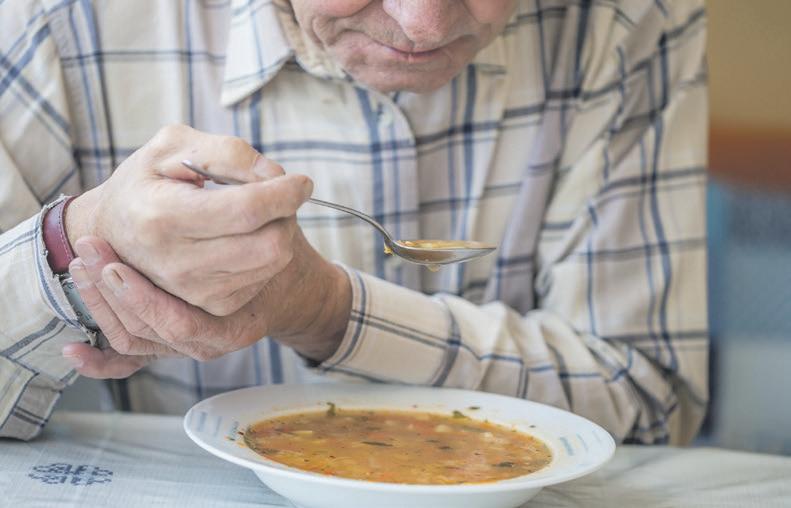

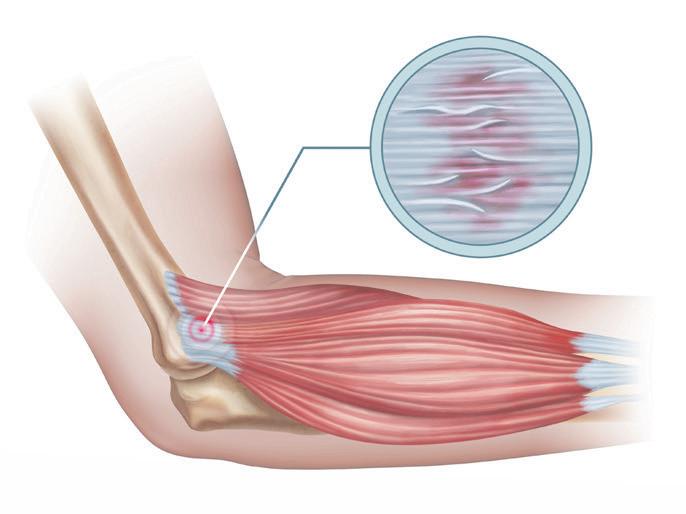

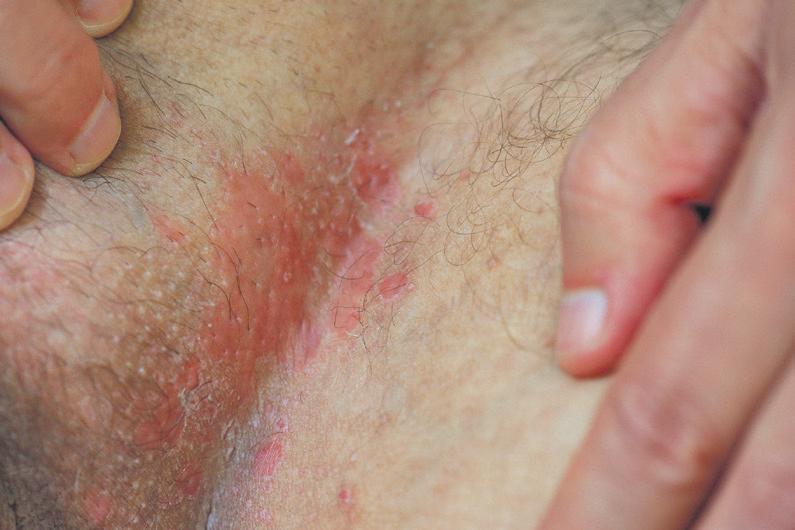
Imagery: istock.com
A. The presence of tremor is essential for the diagnosis.
B. Writing becomes smaller across the page.
C. Early backward falls are characteristic.
D. Dementia is a well-recognised complication.
E. Assessing gait will reveal reduction in arm swing.
GPs looking after adolescents with chronic illness should appreciate that
A. Warning about long-term complications will improve concordance.
B. They do not like to take risks.
C. Failure to take medication as directed is nearly always through ignorance.
D. Getting their parents to enforce ‘doctor’s orders’ is invariably very helpful.
E. They do not like to be different from their peers.
A. Peak incidence is between 25 and 35 years.
B. Affects the flexor tendons on the lateral aspect of the forearm.
C. Classically presents with sudden pain.
D. Diagnosis is best confirmed by radiology.
E. Cornerstone of successful management is local corticosteroid injection.
A. At least 8 per cent of men will form at least one stone by the age of 60 to 70.
B. Incidence is increased in restaurant kitchen workers.
C. Most common stone component is uric acid.
D. Caused by idiopathic hypercalciuria, bendroflumethiazide 10mg daily is an effective treatment.
E. Drug of choice for treatment of the acute episode of renal colic is pethidine.
A. Is invariably confined to the groin.
B. Has a distinctive edge.
C. Does not itch.
D. Is scaly.
E. Treatment of choice is oral griseofulvin.
FALSE. Calcium oxalate as oxalate crystals once formed are almost impossible to dissolve. D. TRUE. Treats hypertension and osteoporosis, both of which can be associated, but the disadvantage is that a high dose is more likely to cause thiazide metabolic side-effects.
TRUE. Living or working in a hot environment or taking regular vigorous exercise increases stone risk.
TRUE. And 4 per cent of women. Will be recurrent (within 10 years) in 75 per cent of cases.
E. FALSE. Diclofenac, though
FALSE. Exercise-based rehabilitation. Steroid injections probably not costeffective.
FALSE. Clinical diagnosis. X-ray reserved for those who fail to improve.
FALSE. Insidious pain localised to lateral epicondyle with radiation down extensor aspect forearm.
Extensor tendons especially in those with repeated wrist extension activities.
TRUE. And do not like to be embarrassed in front of them.
FALSE. Try to keep family involved, but not cause conflict over independence and responsibility.
FALSE. Rarely from this.
FALSE. Like to push the boundaries of their existence.
tremor and/or rigidity.
































































Further information is available upon request from AbbVie Limited, 14 Riverwalk, Citywest Business Campus, Dublin 24, or from the Summary of Product Characteristics available at www.medicines.ie
Marketing Authorisation Holder: AbbVie Deutschland GmbH & Co. KG, Knollstrasse, 67061 Ludwigshafen, Germany.


Legal Category: POM (S1A).

©2024 AbbVie Inc.




IE-HUM-240006 | July 2024 All rights reserved.

OTEZLA is the simple oral choice for your adult patients with moderate to severe psoriasis or active psoriatic arthritis1
• Long-term safety and efficacy profile spanning 5 years in psoriasis (PsO) and psoriatic arthritis (PsA)1,2
• Improved quality of life sustained up to 5 years1,2

• No laboratory pre-screening or ongoing drug-specific monitoring1
• No label warning against use with live vaccines1
• 9-hour half-life, rapid clearance1




Is now the right time to move your patients on to OTEZLA?
depict fictional patients.



OTEZLA is an intracellular PDE4 inhibitor with demonstrated efficacy in high-impact areas, which can improve your patient’s quality of life1–7
OTEZLA® (apremilast) 10mg, 20mg and 30mg film coated-tablets
Brief Prescribing Information
Refer to the Summary of Product Characteristics (SPC) before prescribing Further information is available upon request
Presentation: 10mg, 20mg and 30mg film coated-tablets.
Indications: Psoriatic arthritis: OTEZLA, alone or in combination with Disease Modifying Antirheumatic Drugs (DMARDs), is indicated for the treatment of active psoriatic arthritis (PsA) in adult patients who have had an inadequate response or who have been intolerant to a prior DMARD therapy. Psoriasis: OTEZLA is indicated for the treatment of moderate to severe chronic plaque psoriasis in adult patients who failed to respond to or who have a contraindication to, or are intolerant to other systemic therapy including ciclosporine, methotrexate or psoralen and ultraviolet-A light (PUVA). Dosage and administration: Treatment with OTEZLA should be initiated by specialists experienced in the diagnosis and treatment of psoriasis or psoriatic arthritis. The recommended dose of OTEZLA is 30mg twice daily taken orally in the AM and PM, approximately 12 hours apart, with no food restrictions. The filmcoated tablets should be swallowed whole. An initial dose titration is required per the following schedule: Day 1: 10mg in the AM; Day 2: 10mg in the AM and 10 mg in the PM; Day 3: 10mg in the AM and 20mg in the PM; Day 4: 20mg in the AM and 20mg in the PM; Day 5: 20mg in the AM and 30mg in the PM; Day 6 and thereafter: 30mg twice daily in the AM and PM. No re-titration is required after initial titration. If patients miss a dose, the next dose should be taken as soon as possible. If it is close to the time for their next dose, the missed dose should not be taken and the next dose should be taken at the regular time. Patients with severe renal impairment: The dose of OTEZLA should be reduced to 30mg once daily in patients with severe renal impairment (creatinine clearance of less than 30mL per minute estimated by the Cockcroft-Gault equation). For initial dose titration in this group, it is recommended that OTEZLA is titrated using only the AM doses and the PM doses be skipped. Paediatric population: The safety and efficacy of OTEZLA in children aged 0 to 17 years have not been established. No data is available. Contraindications: Hypersensitivity to the active substance(s) or to any of the excipients. OTEZLA is contraindicated in pregnancy. Pregnancy should be excluded before treatment can be initiated. Special warnings and precautions: Diarrhoea, nausea and vomiting: Severe diarrhoea, nausea, and vomiting associated with the use of OTEZLA have been reported. Most events occurred within the first few weeks of treatment. In some cases, patients were hospitalized. Patients 65 years of age or older may be at a higher risk of complications. Discontinuation of treatment may be necessary. Psychiatric disorders: OTEZLA
is associated with an increased risk of psychiatric disorders such as insomnia and depression. Instances of suicidal ideation and behaviour, including suicide, have been observed in patients with or without history of depression. The risks and benefits of starting or continuing treatment with OTEZLA should be carefully assessed if patients report previous or existing psychiatric symptoms or if concomitant treatment with other medicinal products likely to cause psychiatric events is intended. Patients and caregivers should be instructed to notify the prescriber of any changes in behaviour or mood and of any suicidal ideation. If patients suffered from new or worsening psychiatric symptoms, or suicidal ideation or suicidal attempt is identified, it is recommended to discontinue treatment with OTEZLA. Severe renal impairment: See dosage and administration section. Underweight patients: OTEZLA may cause weight loss. Patients who are underweight at the start of treatment should have their body weight monitored regularly. In the event of unexplained and clinically significant weight loss, these patients should be evaluated by a medical practitioner and discontinuation of treatment should be considered. Lactose content: Patients with rare hereditary problems of galactose intolerance, total lactase deficiency or glucose-galactose malabsorption should not take this medicinal product. Interactions: Co-administration of strong cytochrome P450 3A4 (CYP3A4) enzyme inducer, rifampicin, resulted in a reduction of systemic exposure of OTEZLA, which may result in a loss of efficacy of OTEZLA. Therefore, the use of strong CYP3A4 enzyme inducers (e.g. rifampicin, phenobarbital, carbamazepine, phenytoin and St. John’s Wort) with OTEZLA is not recommended. In clinical studies, OTEZLA has been administered concomitantly with topical therapy (including corticosteroids, coal tar shampoo and salicylic acid scalp preparations) and UVB phototherapy. OTEZLA can be co-administered with a potent CYP3A4 inhibitor such as ketoconazole, as well as with methotrexate in psoriatic arthritis patients and with oral contraceptives. Pregnancy, lactation and fertility: Women of childbearing potential should use an effective method of contraception to prevent pregnancy during treatment. OTEZLA should not be used during breastfeeding. No fertility data is available in humans. Undesirable effects: Psychiatric disorders: In clinical studies and postmarketing experience, uncommon cases of suicidal ideation and behaviour, were reported, while completed suicide was reported post-marketing. The most commonly reported adverse reactions with OTEZLA in these indications are gastrointestinal (GI) disorders including diarrhoea (15.7%) and nausea (13.9%). These GI adverse reactions generally occurred within the first 2 weeks of treatment and usually resolved within 4 weeks. Adverse reactions reported in the psoriatic arthritis and/or psoriasis clinical trial
programme and post marketing experience include: very common (≥1/10) diarrhoea*, nausea*; common (≥1/100 to <1/10) bronchitis, upper respiratory tract infection, nasopharyngitis*, decreased appetite*, insomnia, depression, migraine*, tension headache*, headache*, cough, vomiting*, dyspepsia, frequent bowel movements, upper abdominal pain*, gastroesophageal reflux disease, back pain*, fatigue; uncommon (≥1/1,000 to <1/100) hypersensitivity, suicidal ideation and behaviour, gastrointestinal haemorrhage, rash, urticaria, weight loss; not known (cannot be estimated from the available data) angioedema. *At least one of these adverse reactions was reported as serious. Please consult the SPC for a full description of undesirable events. Pharmaceutical Precautions: Do not store above 30ºC. Legal category: POM. Presentation and Marketing Authorisation Numbers: Initiation pack containing 27 film coated tablets (4 x 10mg, 4 x 20mg, 19 x 30mg) - EU/1/14/981/001; 30mg film coated tablets in a pack size of 56 tablets - EU/1/14/981/002.
Marketing Authorisation Holder: Amgen Europe B.V. Minervum 7061, 4817 ZK Breda, The Netherlands. Further information is available from Amgen Ireland Limited, 21 Northwood Court, Santry, Dublin D09 TX31. OTEZLA is a trademark owned or licensed by Amgen Inc., its subsidiaries, or affiliates. Date of preparation: April 2020 (Ref: IE-OTZ-2000019).
Adverse reactions/events should be reported to the Health Products Regulatory Authority (HPRA) using the available methods via www.hpra.ie. Adverse events should also be reported to Amgen Limited on +44 (0)1223 436441.
Abbreviations: PDE4, phosphodiesterase-4; PsA, psoriatic arthritis; PsO, psoriasis.
References: 1. OTEZLA (apremilast). Summary of Product Characteristics; 2. Kavanaugh A, et al. Arthritis Res Ther. 2019;21:118; 3. Augustin M, et al. J Eur Assoc Dermatol Venereol. 2021;35:123–134; 4. Wollenhaupt J, et al. Presented at EULAR 2020; 3–6 June 2020; Virtual: Poster FRI0365; 5. Crowley JA, et al. Presented at the 73rd Annual Meeting of the American Academy of Dermatology; 20–24 March 2015; San Francisco, CA: P894; 6. Rich P, et al. J Am Acad Dermatol. 2016;74(1):134–142; 7. Reich K, et al. Dermatol Ther. 2022;12:203–221.
© 2022 Amgen Inc. All rights reserved. Amgen Ireland Ltd., 21 Northwood Court, Santry, Dublin 9
IRL-407-0824-80001
Date of preparation: September 2024
Acne is one of the most prevalent skin conditions globally, a ecting a signi cant portion of the population. It is more common in adolescents, with studies indicating that approximately 85 per cent of individuals between the ages of 12 and 24 years experience some form of acne.
However, it can persist into adulthood, a ecting both men and women. While acne is most prevalent during puberty due to hormonal changes, it can also occur in adults. Women are more likely to experience adult-onset acne, often related to hormonal uctuations, such as those during menstruation or pregnancy.
Psychosocial impact: Acne can have signi cant psychosocial e ects, leading to issues such as low self-esteem, anxiety, and depression, particularly in adolescents.
Pathogenesis
e pathogenesis of acne involves several factors, including hormonal changes, skin cell turnover, bacteria, and in ammation.
1. Overproduction of sebum: Hormonal changes, particularly during puberty, lead to increased production of androgens (male hormones), which stimulate the sebaceous (oil) glands in the skin to produce more sebum (oil).
2. Follicular occlusion: e skin cells within hair follicles accumulate in a process known as hyperkeratinisation. is process contributes to the clogging of hair
follicles, forming comedones (blackheads and whiteheads).
3. Bacterial growth: e clogged follicles create an anaerobic environment that promotes the growth of Propionibacterium acnes (P acnes), a bacteria normally found on the skin. e proliferation of this bacteria can contribute to in ammation.
4. In ammation: e immune response to the presence of P acnes and the accumulation of sebum can lead to in ammation. is results in the formation of in ammatory lesions, such as papules, pustules, and cysts.
5. Scarring: In cases of severe acne, the inammatory process can damage the skin tissue, leading to scarring. is can occur when the lesions rupture or if there is significant in ammation.
e di erent stages of pathogenesis give rise to the di erent individual lesions in acne:
1. Comedones: ese are non-in ammatory acne lesions, which include blackheads (open comedones) and whiteheads (closed comedones).
2. Papules: Small, red, raised bumps that can be tender.
3. Pustules: Similar to papules, but lled with pus, often appearing as red spots with a white or yellow centre.
4. Nodules: Large, painful lumps beneath the skin that can last for weeks or months.
5. Cysts: Deep, painful, pus- lled lumps that can cause scarring.
And the individual lesions give rise to the di erent types of acne, as shown in Figures 3A-D
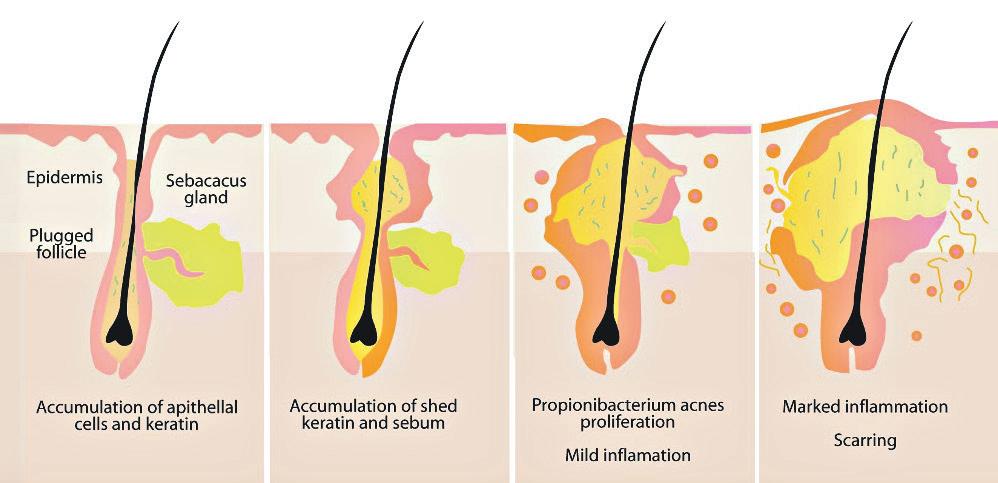
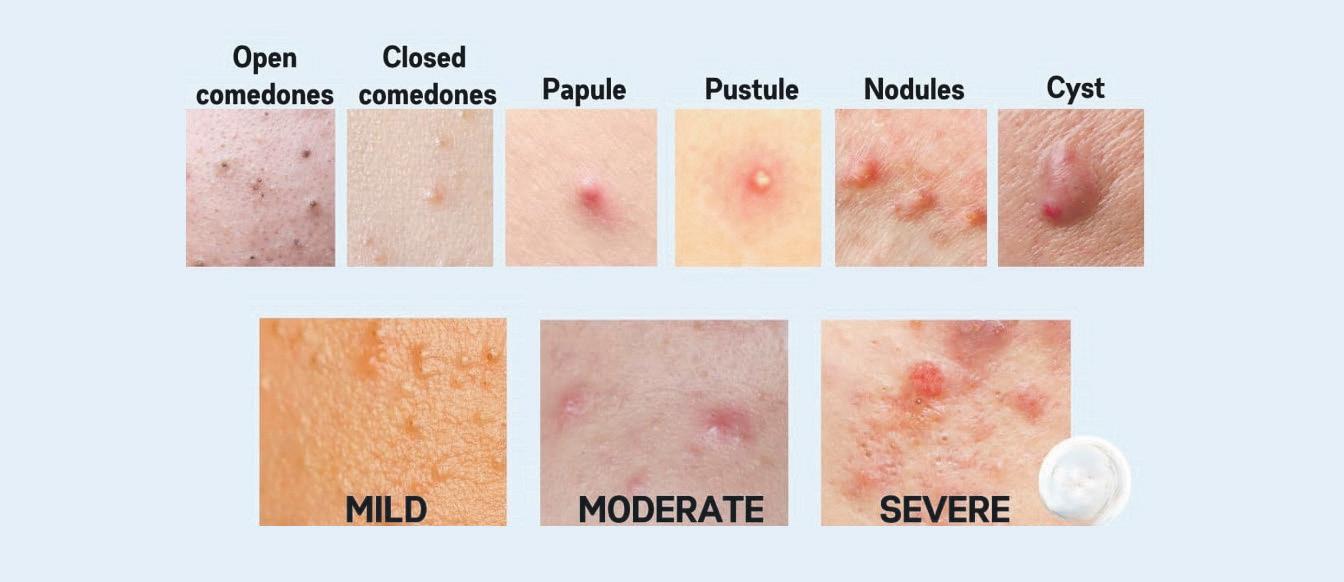
Acne treatment varies based on the severity and type of acne.
e basics:
▶ Gentle cleansing: Use a mild cleanser to avoid irritating the skin.
▶ Non-comedogenic products: Use makeup and skincare products labelled as non-comedogenic to avoid clogging pores.
▶ Do not pick or squeeze spots: is will increase the risk of scarring.
▶ Diet: ere is no evidence to suggest that modifying diet has any e ect on acne.
Mild acne (mainly comedones)
Topical treatments:
▶ Benzoyl peroxide: Helps kill bacteria and reduce in ammation, available overthe-counter (OTC).
▶ Salicylic acid: Aids in exfoliating the skin and unclogging pores, available OTC.
▶ Retinoids (tretinoin/adapalene): Promote cell turnover and prevent clogged pores (require a prescription).
▶ Combination (benzoyl peroxide/ adapalene).
▶ Topical antibiotics (erythromycin and clindamycin).
Moderate acne (mainly pustules)
▶ Topical antibiotics (erythromycin and clindamycin).
▶ In combination (clindamycin and benzoyl peroxide).
▶ Oral antibiotics: Patients failing to respond to topical antibiotics or combinations require treatment with an oral antibiotic. e ICGP guideline on treatment of acne outlines the following tetracyclines for three months:
• Doxycycline 100mg od.
• Lymecycline 300mg od.
• Minocycline 100mg od.
▶ Trimethoprim at doses of 200–300mgbd is a second-line option for patients failing a tetracycline.
▶ Oral antibiotics should be combined with retinoid/keratolytic agent, this improves activity and helps prevent resistance.
▶ Oral antibiotics should not be used in combination with topical antibiotics as this promotes antimicrobial resistance.
▶ Continue same agent if response and liver function tests should be measured if continued treatment >six months.
Oral contraceptive/anti-androgen
For women who report aring of acne around their menstrual cycle, the oral contraceptive pill (Dianette) can be very e ective.
Spironolactone, which has anti-androgen properties, is also very useful at doses of 50-100mg a day, but female patients must be on e ective contraception to avoid feminisation of male foetus.
Severe acne (nodules and cysts)
Patients with severe nodulo-cystic acne require isotretinoin.
Isotretinoin is indicated to treat severe acne, particularly nodular or cystic acne that has not responded to other treatments. Here are some key points regarding isotretinoin:
1. Mechanism of action: Isotretinoin works by reducing the size and activity of sebaceous glands, decreasing sebum production, and promoting the turnover of skin cells. is helps to prevent clogged pores and reduces the growth of P acnes , the bacteria associated with acne.
2. E cacy: Many patients experience signi cant improvement in their acne, and for 20 per cent of patients, a single course of isotretinoin can lead to longterm remission. However, results can vary, and some individuals may require additional courses.
3. Side-e ects: Isotretinoin can have notable side-e ects, falling into two types. Mild side-e ects which are really common:
▶ Dry skin and lips;
▶ Nosebleeds;
▶ Dry eyes;
▶ Increased sensitivity to the sun;
▶ Muscle aches and joint pain;
▶ Potential changes in mood or mental health.
Severe side-e ects which are very rare:
▶ Teratogenicity: Due to the risk of severe birth defects, isotretinoin is contraindicated during pregnancy. Women of childbearing age must follow strict guidelines, including using e ective contraception before, during, and after treatment.
▶ Hepatitis or pancreatitis (secondary to raised triglycerides): Patients on isotretinoin
Continued from p21
typically require baseline liver function tests and after commencing treatment.
▶ Potential changes in mood or mental health: A history of any mood disorders should be taken at baseline and any changes during treatment noted. It is important to remember that acne itself can have a signi cant impact on mental health.
Physical treatments for acne
• Light cautery/hyfrecation of macrocomedones: e tips of comedones are opened using a heat source which prevents the clogging of the follicles.
• Lasers/light-based devices – poor evidence to date.
• Chemical peels-remove comedones/ treat super cial scarring and hyperpigmentation – limited evidence.
Scarring in acne
Acne, especially severe acne, can cause scarring, which can be of two types:
Atrophic scarring where the skin is indented; eg , ice-pick scars (see Figure 4A)
Keloid scarring is raised o the skin (see Figure 4B)
Atrophic scars can be treated with resurfacing lasers such as fraxel or carbon dioxide lasers, whereas keloid scars may be
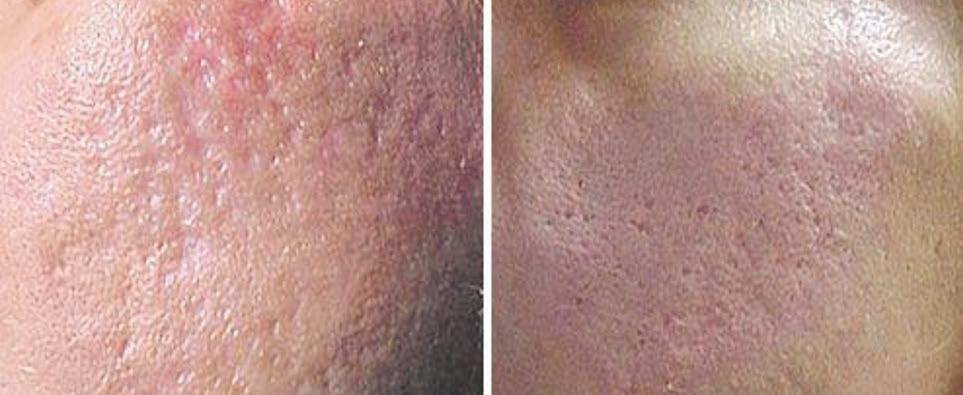
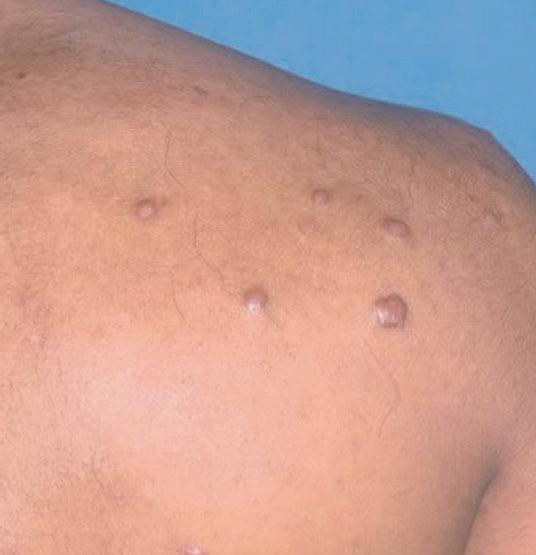
treated with intralesional triamcinolone to atten the scars.
Resources
For more information on acne, visit the acne support page on the Irish Skin Foundation website: https://irishskin.ie/acne/
Also, download the Irish Skin Foundation acne booklet What you need to know about acne at https://irishskin.ie/wp-content/ uploads/2022/11/ISF-Acne-Booklet.22.11.2022.pdf
For acne (and many other skin conditions) support or guidance, visit the Founation’s Ask a Nurse resource at https://irishskin.ie/ ask-our-dermatology-nurse/
A detailed look at the more unusual and less common types of eczema
Eczema commonly presents in primary care. Most eczema patients can be adequately managed in this setting without the need for referral to secondary care. Informed and appropriate prescribing should give excellent results for most patients.
e terms ‘eczema’ and ‘dermatitis’ are used interchangeably to describe in amed skin. Eczema nearly always itches.
To get a good understanding of the eczemas the classi cation in Box 1 is helpful. Endogenous suggests the disease process is driven from within the body, while exogenous suggests direct contact with the causative agent. Except for seborrhoeic dermatitis, the eczemas listed have common key features. ese features determine the basic components of any management plan we draw up to treat these eczemas.
ese features include:
▶ A background dry skin with a poor skin barrier. To manage this, avoidance of irritants and regular emollient applications are key.
▶ Skin in ammation with erythema and pruritus. Topical corticosteroids (TCS) and tacrolimus form the cornerstone of anti-inammatory therapy.
▶ A susceptibility to secondary bacterial, viral, and fungal infection, which in turn cause aring of the eczema. Antibiotic, anti-fungal, anti-viral or anti-septic measures may be indicated.
I have found that understanding this classi cation and applying these management principles are a great help in getting a handle on these eczemas.
Space does not allow the discussion of the two most common eczemas – atopic eczema and seborrhoeic dermatitis.
Emollients
A dry background skin and a defective skin barrier function are primary underlying problems in the eczemas. Irritants need to be avoided. Common irritants include soaps, shower gels, shampoos, detergent, washing up liquid, polish, and sweat. Gloves, if used, need to be of good quality (with no holes). Cotton gloves should be
worn under waterproof gloves to prevent sweat accumulating and changed regularly. When washing hair in the shower suds should be allowed run down the plughole directly, avoiding contact with the body as much as possible. If taking a bath, the hair should be washed separately, not allowing bathing in water mixed with shampoo. For the body, a liquid moisturiser should be substituted for soap and shower gel. Following a shower or bath the skin should be moisturised. A regular moisturising regimen, outside bath or shower time, should be started.
Emollients are greasy substances that form an arti cial barrier on the skin. ey come as lotions, creams, and ointments, depending on their lipid content. An ointment is more e ective than a cream, which in turn is more e ective than a lotion. Unfortunately, when it comes to patient acceptability the reverse is true. An ointment formulation is recommended, twice daily in the rst instance, but be ready to compromise. e best moisturiser is the one the patient nds acceptable and will use.
A useful compromise might be an ointment last thing at night with a more acceptable cream during the day. For some years now aqueous cream has been out of favour due to the irritating e ect of its high sodium laurel sulphate concentration.
Topical corticosteroids
TCS have potent anti-in ammatory e ects and are rst-line therapy for acute ares of eczema. Many patients, carers and doctors have negative feelings and beliefs regarding the use of TCS, so called ‘steroid phobia’. Studies have shown the most frequent causes for concern are skin thinning and the risk of systemic absorption. ese need to be discussed at the time of prescribing, with reassurance that, with appropriate choice of potency, time scale, and monitoring, TCS are safe.
Side-effects of TCS
▶ Skin atrophy: Can be avoided by match-
ing the potency of the TCS to the patient’s age and the area being treated. Striae are generally irreversible. Occlusion, if used, should be for a maximum of five days.
▶ Folliculitis or steroid acne: Like moisturisers, TCS should be applied in the direction in which the skin hair lies to reduce the risk of opening up and plugging follicle openings.
▶ Periorificial dermatitis: Always consider this possibility if eczema near the periorificial areas on the face fails to clear, despite ongoing TCS application. Small papules and pustules on an erythematous background are a clue. Patients may experience a flare on stopping the TCS, with stinging and burning, which is relieved by restarting the TCS. The patient can end up in a never-ending vicious circle.
▶ Tachyphylaxis: With tachyphylaxis you get a reduction in effectiveness of the TCS with ongoing use. To reduce the amount of TCS being used, make sure the patient is using moisturisers and try maintenance treatment of TCS, as outlined below.
▶ Glaucoma and cataracts: Are rare, but mean that we should not employ TCS on
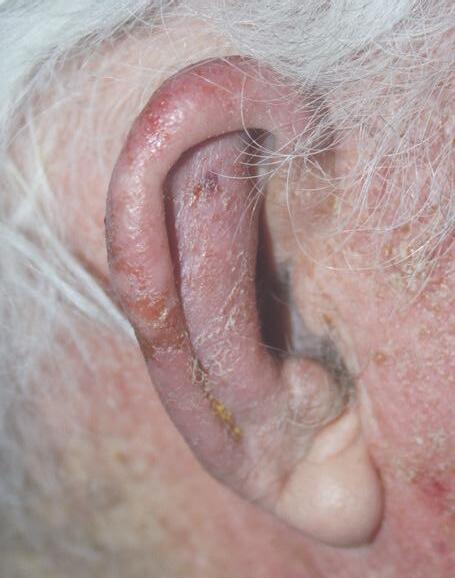
SLIDE A. Allergic contact eczema
The eczema was present on one ear only, affecting the side on which the patient slept on. He was allergic to lavender oil sprinkled on the pillow to help with sleep. As in this case, think of exogenous causes when eczema presents asymmetrically.
the eyelids beyond a short course of hydrocortisone. Tacrolimus does not cause skin atrophy or ocular problems and is usually very effective for eyelid eczema.
▶ Contact allergic dermatitis: Is not that uncommon. Mild and moderate potency TCS are more a risk. One needs a high index of suspicion, as ongoing application of the TCS may suppress itch and redness, but the eczema does not clear. Patch testing may help. Stopping the TCS and substituting moisturisers may sort the problem.
Matching TCS potency to the site being treated
▶ Face and neck in children – use mild potency generally. For severe flares, use moderate potency, reviewed after five days.
▶ Face and neck in adult – use mild or moderate potency generally. For severe flares use potent, reviewed after five days.
▶ Body and limbs in children – use moderate or mild potency generally. For severe flares use potent, reviewed after five days.
▶ Body and limbs in adult – use moderate or potent strength. For severe flares use very potent, reviewed after five days.
Continued on p26
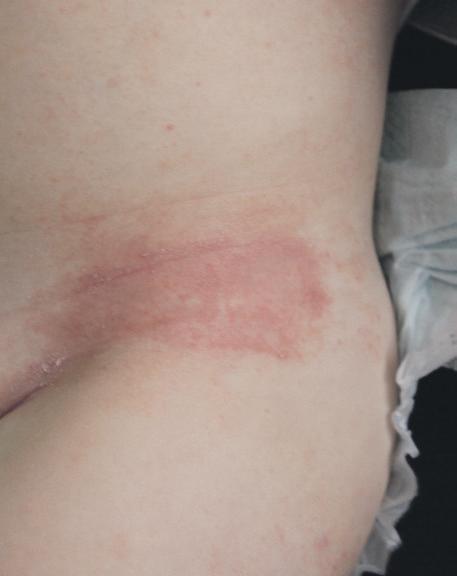
SLIDE B. Allergic contact eczema
The eczema is confined to the area of skin that came in contact with the adhesive of the nappy. The outline of the rash matches the area in contact with the allergen. This used to be called the ‘Lucky Luke’ sign, after a little boy, dressed as a cowboy, in a comic magazine. He had a holster on each hip.
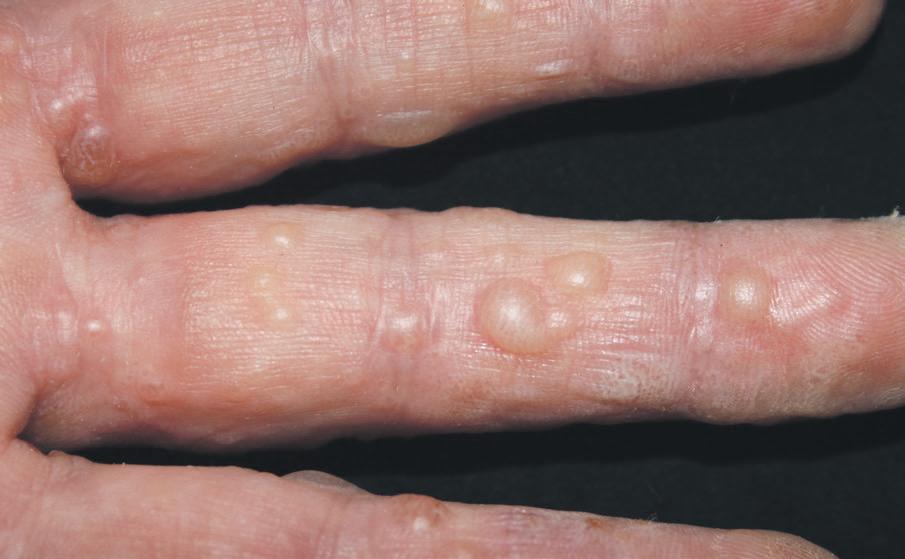
SLIDE F. Pompholyx
Pompholyx is also known as dyshidrotic eczema, although it is now accepted to have nothing to do with sweating. Note the acute, vesicular eruption on the fingers. It involves the hands and less frequently the feet. If vesicles or bullae become purulent, suspect bacterial superinfection. Pompholyx needs a particular treatment approach. Potassium permanganate soaks help dry up the blistering and its antiseptic action reduce the risk of secondary bacterial infection. It will cause temporary, brown staining. After a 10-minute soak the skin is dried and a potent TCS cream applied (cream is more drying than ointment). Improvement is seen after three days at which time this regime is stopped. Treatment is continued with a potent TCS ointment plus a moisturiser.
Box 1: Classification of the eczemas
Endogenous
▶ Seborrhoeic eczema ▶ Atopic eczema
▶ Varicose eczema ▶ Asteatotic eczema
▶ Lichen simplex ▶ Discoid eczema
▶ Juvenile plantar dermatosis ▶ Pompholyx eczema
▶ Secondary eczema
Exogenous ▶ Contact irritant dermatitis ▶ Contact allergic dermatitis
▶ Photodermatitis
Box 2: Classification of TCS
▶ Mild (Class I) – Hydrocortisone
▶ Moderate (Class II) – Clobetasone butyrate (Eumovate), Aclometasone dipropionate (Modrasone)
▶ Potent (Class III) – Bethametasone Butyrate (Betnovate), Bethametasone dipropionate (Diprosone), Hydrocortisone butyrate (Locoid), Mometasone furoate (Elocon)
▶ Very potent (Class IV) – Clobetasol propionate (Dermovate)
Note: Class IV TCS are 600 times more potent than Class I
Box 3. Steps to increase the anti-inflammatory effects of
▶ Use an ointment formulation, rather than creams, when treating dry eczema. Ointments moisturise and increase penetration of TCS
▶ Covering the TCS with an occlusive dressing or clingfilm increases the potency by a factor of five. Because of the risk of skin atrophy, occlusion should be limited to five days
▶ Soaking the involved skin in water hydrates the skin. To increase penetration, the TCS should be applied immediately after rapid drying
▶ If a lower potency TCS is not sufficiently effective, a switch to a more potent formulation may help
▶ Pulse dosing (BD w/e only)/proactive TCS
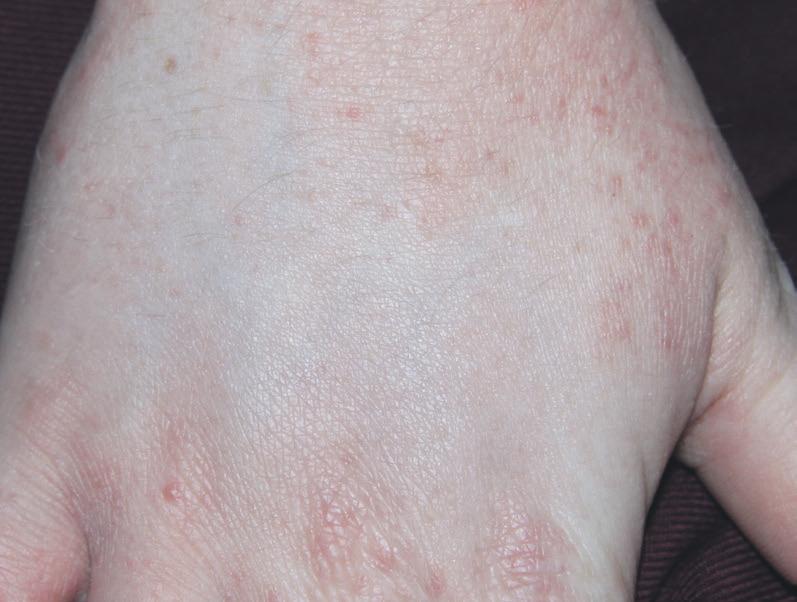
SLIDE C. Irritant contact eczema
Allergy in not the problem here. Repeated exposure to irritants, especially with hand washing, exposes the skin to cumulative damage. Once a certain threshold of irritation is reached eczema develops. Note the prominence of the rash on the dorsum of the hand and interdigital webs. Irritants may collect under rings causing ‘ring eczema’. Irritants are by far the commonest cause of contact hand eczema, accounting for 90 per cent. Allergens account for the remaining 10 per cent. Those with a history of atopic eczema are at particular risk of irritant contact eczema.
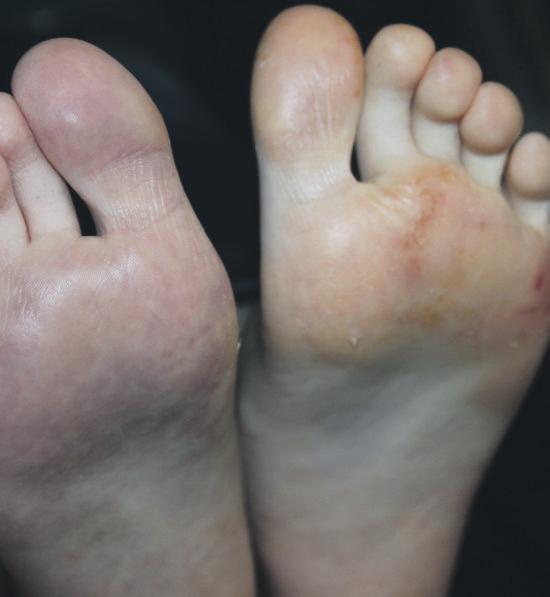
SLIDE G. Juvenile plantar dermatosis
Note the involvement of the plantar surface of the forefoot. The surface has a characteristic shiny, polished-like appearance. Fissures are common. It may be due to repeated friction from modern footwear. It is more common in boys and tends to resolve after the age of 12 years.
SLIDE D. Discoid eczema
Discoid eczema tends to develop on dry background skin. It starts as an area of itchy, localised papules. More and more papules develop and coalesce, eventually forming the disc shaped areas of eczema. It is more common in middle-aged individuals and favours the limbs.
SLIDE H. Asteatotic eczema
Note the background dry skin and the superficial fissures giving a crazy paving appearance. This is asteatosis. Asteatotic eczema is visible as red, inflamed areas within the fissures. It can sometimes be seen in children with atopic eczema, but it is essentially a disease of older people. Winter, with people more confined indoors, with the heating on and humidity low is a high-risk time (Willian’s itch).
Repeated scratching on the anterior shins has led to the development of thickened eczema. It generally occurs on skin that is easily accessible for itching, such as the extensor surfaces of both upper and lower limbs and the occiput. It is increasingly found on the genital areas in both males and females. It may be challenging to control and initially a very potent TCS may be needed to suppress it on the limbs.
SLIDE I. Varicose eczema
In patients with varicose insufficiency, eczema may have multiple causes – allergy to topical dressings, irritation from constant oozing, background asteatosis, and varicose insufficiency. Patients may benefit from referral for patch testing that includes the likely allergens in this group of patients. Viscopaste dressings are a common cause of contact eczema.











Further information is available on request or in the Summary of Product Characteristics (SmPC) at www.medicines.ie
Legal Category: POM.
AMGEVITA® is a registered trademark of Amgen Inc.
Marketing Authorisation Holder: Amgen Europe B.V., Minervum 7061, NL-4817 ZK Breda, The Netherlands.
Reference:
1. AMGEVITA® (adalimumab) summary of product characteristics Available at: https://www.medicines.ie/medicines/amgevita-prefilled-pen-34641/spc and https://www.medicines.ie/medicines/amgevita-prefilled-syringe-34642/spc.
At these reviews the potency of the TCS might be maintained for another ve days or the potency can be stepped down to a less potent formulation.
Proactive and reactive use of TCS
‘Reactive’ treatment. Traditionally TCS were started at the rst signs or symptoms of a disease are. Treatment was continued until resolution and then stopped.
‘Proactive’ treatment recognises that once a are is brought under control and TCS stopped, recurrence is
likely. Non- ared, chronic eczema may look normal and not itch, but histology shows ongoing in ammation. TCS, applied on two days each week to previously a ected areas, suppress in ammation and signi cantly reduce the risk of recurring ares. is ‘proactive’ or ‘maintenance’ use of TCS should be combined with regular use of a moisturiser.
TCS withdrawal reactions
Stopping TCS after long-term, continuous use can lead to rebound ares. is phenomenon has led to an explosion of terms such as ‘steroid addiction syndrome’ on social media. In the UK, the British Association of Dermatolo-

Free, independent CPD for Irish doctors by Irish doctors
CARDIOLOGY MODULE:





gists and the National Eczema Society issued a statement acknowledging that some people have problems when they stop TCS after long-term use, including rebound erythema, soreness, itch, scaling, and swollen glands and hypoadrenalism. e UK Medicines and Healthcare products Regulatory Agency (MHRA) also highlighted a risk of withdrawal problems after stopping long-term use of TCS. Problems can occur within days of stopping, but may be delayed. Sensitive skin areas are most at risk (face, genitals). Patients should be given advice on the amount of TCS to apply and the duration of treatment. Placing TCSs on repeat prescription should be avoided.
Management strategies for TCS withdrawal following long-term use include:
1) ‘Cold-turkey’ approach, with abrupt discontinuation of the TCS. While this may lead to a more rapid resolution (one-three months), it has a greater risk of precipitating a bad are.
2) Tapering both the potency or the frequency of application of the TCS. is may avoid or reduce the severity of rebound. is takes a longer time, up to 12 months in some instances.
Only one topical calcineurin inhibitor (TCI) is currently (March 2025) marketed in Ireland. Tacrolimus is approved for moderate-to-severe atopic eczema. It is often used o -label in the treatment of other eczemas and many in ammatory skin conditions. It is especially useful on the face and exural areas, which are at risk of TCS side-e ects, such as skin atrophy and striae. It not as effective on thick eczema on the trunk or limbs. Two formulations are available: Tacrolimus 0.03 per cent ointment is licensed for children over two years of age, while tacrolimus 0.1 per cent ointment is licensed for individuals over 16 years of age.
Ongoing surveillance studies have shown no increased risk of cancer with long-term tacrolimus treatment. Onein- ve patients experience a stinging or burning sensation on areas of skin where it has been applied, which can be quite severe. It is almost invariably transient, lasting only a few days despite continued use. Patients should be warned about it. If not warned, many will prematurely stop the treatment. Sun protection is recommended, even though there is no evidence of increased risk of skin cancer. After applying tacrolimus, 30-60 minutes should be allowed before applying an emollient or sun protection. Guidelines generally recommend tacrolimus as second-line treatment if TCS combined with emollients are not fully e ective or appropriate.
Many of the eczemas discussed in this article are more common in atopic patients. A defective skin barrier and an increased susceptibility to secondary infection result in increased rates, especially of secondary bacterial infection. Traditionally, topical and oral antibiotics were often prescribed once infection was suspected. Infection caused aring of the eczema and antibiotics were shown to have some bene t. However, in the era of increased antibiotic stewardship, we are urged to avoid topical antibiotics and reduce our prescriptions for oral antibiotics as much as possible. Instead, the emphasis is now on getting control of eczema by prescribing TCS, as outlined above, combined with irritant avoidance and adequate moisturisation. Achieving and maintaining good disease control is the best defence against infection.
If infection is an issue and an eczema persists, despite adequate topical therapy, Staph aureus is the usual cause. Flucloxacillin, for ve days, is the rst antibiotic option. Clindamycin can be used in the case of penicillin allergy.
Conclusion
Hopefully, gaining an understanding of the classi cation of the eczemas and an appreciation of their shared pathogenesis will help you make an accurate diagnosis and formulate an appropriate treatment plan for your eczema patients.
ISMO/CTI, Bursary Awards, RCSI, 123 St Stephen’s Green, Dublin, 31 January 2025
This year’s Irish Society of Medical Oncology Bursary Awards were held in collaboration with Cancer Trials Ireland
The 2025 Irish Society of Medical Oncology (ISMO) Bursary Awards were organised with Cancer Trials Ireland (CTI). This year, only the top 15-20 abstracts were selected for oral presentation at the CTI/ISMO National Training Day, with a further 20 invited to present a poster. The event was held on Friday 31 January 2025 in the Cheyne Lecture Theatre at RCSI, Dublin.
The winners of the oral presentations were: Dr Clara Forrest, Cork University Hospital; Dr Gavin Dowling , Beaumont Hospital, Dublin; Dr Ruth Hutch, St James’s Hospital, Dublin; and Dr Shauna Moore-Davis , University Hospital Galway.
The title of the presentation by Dr Forrest was ‘Acquired lipodystrophy associated with pembrolizumab: A case report and review of the literature’. Triple-negative breast cancer (TNBC) accounts for 10-15 per cent of breast cancers, but is more aggressive than other subtypes with higher rates of recurrence and metastasis.
In recent years, immune checkpoint inhibitors (ICIs) have improved outcomes in patients with early-stage TNBC. The addition of pembrolizumab to neoadjuvant chemotherapy has significantly increased pathological complete response (pCR) rates and shown an overall survival (OS) benefit in the KEYNOTE-522 trial.
Lipodystrophy, characterised by the loss of peripheral subcutaneous adipose tissue and the accumulation of visceral fat, has been reported in association with ICIs, although it remains a relatively underrecognised condition. As the use of ICIs continues to grow, improving the recognition and management of adverse effects is essential. Incorporating ICIs into curative-intent regimens also raises important considerations regarding long-term immune-related toxicities and the risk of overtreatment.
In the case study, a patient presented with symptomatic right-sided, node-positive TNBC. Staging scans showed no distant metastatic disease. Germline BRCA testing was negative. She had no medical history and took the progesterone-only pill. The patient started neoadjuvant chemoimmunotherapy with carboplatin, paclitaxel, and three-weekly pembrolizumab in accordance with the KEYNOTE-522 trial protocol. She completed four cycles of paclitaxel and two cycles of carboplatin, which was discontinued due to a hypersensitivity reaction. She then transitioned to doxorubicin and cyclophosphamide (AC) while continuing pembrolizumab; however, AC was dose-reduced after the first cycle due to grade 2 nausea and fatigue.
A significant clinical response was evident following neoadjuvant chemoimmunotherapy, as no breast mass or axillary lymphadenopathy was palpable. The patient underwent a wide local excision and an axillary lymph node dissection. Histopathological examination revealed a pCR with no evidence of residual carcinoma. She subsequently received adjuvant radiotherapy while continuing pembrolizumab. The patient completed one year of pembrolizumab therapy, receiving 17 cycles in total.
Two months after completing adjuvant pembrolizumab, the patient developed new skin changes in both arms, characterised by puckering, indentation, and asymmetry of the subcutaneous tissues. These painless changes were more pronounced on the right side and were not associated with muscle weakness or pitting oedema. Over the fol-
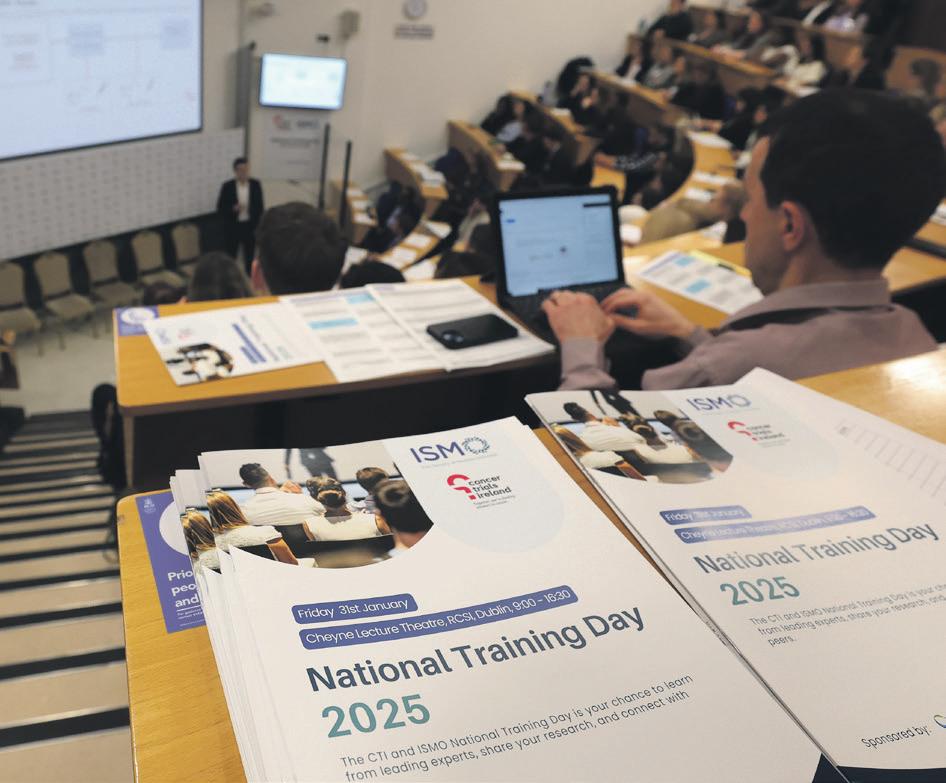
lowing six weeks, the skin changes progressed and began to affect her thighs.
Diagnostics revealed alanine transaminase was elevated at 73 U/L, and abdominal ultrasound revealed diffuse fatty infiltration. Haemoglobin A1c, cholesterol, and triglycerides were also found to be elevated. An autoimmune panel was negative. A skin biopsy revealed subcutaneous fat containing foamy histiocytes and lymphocytes consistent with immune checkpoint inhibitor-induced lipodystrophy. The epidermis and dermis appeared unremarkable. The patient then commenced on a six-week tapering course of prednisolone, starting at 60mg (1mg/kg). At the time of submitting the study abstract, there had not been an improvement in these skin changes and second-line immunosuppressant therapy is currently being considered.
“This report describes a patient with node-positive TNBC treated with neoadjuvant chemoimmunotherapy and adjuvant pembrolizumab,” according to the conclusion.
“She achieved a pCR, but subsequently developed ICI-associated lipodystrophy, highlighting the complexities of ICI integration into the curative-intent treatment of TNBC. This case emphasises the need for more research to examine treatment de-escalation and to improve the recognition and management of long-term immune-related toxicities.”
Cyclin-dependent kinase 12
The title of Dr Dowling’s presentation was ‘Cyclin-dependent kinase (CDK) 12 as a potential therapeutic target in HER2-positive breast cancer’.
The CDK12 gene is located at chr17q12, near HER2, and its upregulation has been previously reported in approximately 80-90 per cent of HER2-positive breast cancers. Growing evidence suggests that CDK12 is more than a passive bystander of ERBB2 amplification – it may actively contribute to tumorigenesis and trastuzumab resistance by upregulating the IRS1‐ErbB‐PI3K and WNT signalling pathways. High expression levels of both CDK12 and HER2 have been associated with trastuzumab resistance, disease recurrence, and poor survival outcomes. The TCHL trial evaluated neoadjuvant treatment for HER2-positive breast cancer using either TCH (docetaxel, carboplatin, trastuzumab) or TCHL (TCH plus lapatinib). In this study, whole exome sequencing of pre-treatment tumour biopsies revealed a statistically significant higher total copy number (TCN) of CDK12 in patients with residual disease (n=13) compared to those who


achieved pCR (n=9). Dinaciclib, a cyclin-dependent kinase inhibitor with strong activity against CDK1, 2, 5, 9, and 12, has demonstrated anti-tumour effects in trastuzumab-resistant HER2-positive breast cancer through CDK12 inhibition. This study aimed to investigate the efficacy of a group of CDK12 inhibitors in a panel of HER2 positive breast cancer cell lines, including those with acquired resistance to trastuzumab, and determine whether combination treatment with dinaciclib and trastuzumab could overcome resistance. A panel of HER2-positive breast cancer cell lines were selected, including those with acquired resistance to trastuzumab. SKBR3-Par, SKBR3-Res, BT474-Par, and BT474-Res were treated with a group of CDK12 inhibitors to establish IC50 values. These cell lines were then treated with combinations of 10g/ml of trastuzumab with various concentrations of dinaciclib. Proliferation was measured using an acid phosphatase assay. Western blots were performed to investigate the effect of dinaciclib treatment on protein expression (pAKT, CDK12, and HER2). Chick chorioallantoic membrane (CAM) assays were used to investigate the effect of dinaciclib treatment in vivo
Data analysis was performed on whole exome sequencing data from the TCHL clinical trial. Although only a small cohort of patients (n=22), there was a statistically significant difference in the mean total copy numbers of CDK12 between those patients who achieved a pCR compared to those patients with residual disease (p=0.008, Mann Whitney U). Patients with a higher total copy number of CDK12 were more likely to have residual disease after neoadjuvant therapy. IC50 values for Dinaciclib, THZ531, THZ1, and SR4835 in a panel of HER2-positive breast cancer cell lines, including those with acquired resistance to trastuzumab, were established. Combination treatment with dinaciclib and trastuzumab showed that in the SKBR3 cell line, the trastuzumab-resistant SKBR3 cells were more sensitive to this treatment than their trastuzumab-sensitive counterparts. Western blot analysis demonstrated the effect of dinaciclib treatment on protein expression of pAKT, CDK12 and HER2. CAM experiments are currently ongoing. Whole genome sequencing and RNAseq data from the cell line panel is currently being analysed.
“CDK12 holds promise as a therapeutic target in HER2-positive breast cancer, with potential to act in conjunction with HER2-targeted therapies, and warrants further investigation,” according to the conclusion.
Anaplastic thyroid cancer
The subject of Dr Hutch’s presentation was the genomic landscape of anaplastic thyroid cancer. Anaplastic thyroid cancer is a rare and frequently lethal cancer, accounting for 2 per cent or less of thyroid cancer and characterised by an aggressive phenotype and poor prognosis. Recent advances in precision oncology have highlighted the importance of identifying actionable variants in rare cancers. The research team aimed to characterise the genomic landscape of this rare tumor in an Irish population, and compare and contrast with a larger international genomic cohort. A total of 197,980 samples from 171,957 patients available from the AACR Project GENIE v.15.1 database were analysed for the prevalence of mutations, fusions and copy number alterations in anaplastic thyroid cancer. Retrospective cases of anaplastic thyroid cancer were then accessed retrospectively in St James’s Hospital, Dublin. Genomic analysis was performed to assess most frequent actionable alterations.
A total of 288 samples were identified in 280 patients across 15 cancer centres. Anaplastic thyroid cancer occurred at a frequency of <1 per cent of reported cancers (0.1 per cent). 146 were identified as male (51 per cent); 141 (49 per cent) identified as female. Median age was 67 (range 33-89). Most samples were taken from the primary site (62.2 per cent) versus metastatic site (31.6 per cent). Somatic mutations were noted in all 288 samples (100 per cent). Most frequently altered genes included TP53 (57.6 per cent), TERT (50.2 per cent), BRAF (40 per cent), PIK3CA (13.9 per cent), and NRAS (15.3 per cent). In the St James’s cohort, 27 patients
ISMO/CTI, Bursary Awards, RCSI, 123 St Stephen’s Green, Dublin, 31 January 2025
Continued from p27
were identi ed; genomic alterations were detected in 83 per cent of samples. Some three samples failed testing due to quality. 60 per cent of patients were male, median age was 72. Most common variants identi ed included BRAF (6; 25 per cent), PIK3CA (3; 12.5 per cent), NRAS (5; 21 per cent), and FGFR (3, 12.5 per cent).
“Anaplastic thyroid cancer is a rare tumour with a high frequency of somatic alterations,” according to the conclusion.
“Leveraging independent datasets, we characterise the genomic landscape of this rare tumour, con rming a similar pattern of actionable variants in both a global cohort of patients with anaplastic thyroid cancer and an Irish population. Our data highlight the urgent need to increase access to [next-generation sequencing] in Irish patients, to identify actionable variant in patients with rare cancers and ultimately improve patient outcomes.”
Visual aids
e presentation of Dr Moore-Davis concerned the use of visual aids to improve communication between oncologists and their patients.
e project was undertaken as medical language “can often be esoteric and confusing to patients, leading to communication errors, ine ectiveness, and patient dissatisfaction”.
“Clinicians often overestimate a patient’s health literacy or capacity for retention of information during consultations,”
The two winners in the poster category were Dr Ruth Kieran, Beaumont Hospital, Dublin, and Dr Rachel Dillon, St James’s Hospital, Dublin.
The title of Dr Kieran’s poster was ‘Identification of new drug development and repurposing targets for phosphorylated HER2-overexpressing cancers’.
“Many drugs have potential for re-deployment in other therapeutic areas, and the development of publicly accessible libraries of cancer cell line screenings, including the DepMap portal, in combination with multidimensional cancer genomics data sets from human tumour samples, such as cBioPortal, have allowed researchers to identify new targets for drug development from existing data,” according to the poster, It states that HER2-directed therapy is not effective in all patients, and has shown limited benefits in some cancers, including glioblastoma multiforme (GBM), in which over 80 per cent of tumours overexpress HER2 positive. Tyrosine 1248 is a major HER2 phosphorylation site, which reflects the activation status of the receptor, and for which there is a stable commercially available antibody. There is evidence that phosphorylated HER2 (pHER2) overexpression is associated with poor prognosis in breast cancer, but little is known about its role in other cancers.
The researchers aimed to determine from drug repurposing datasets which drugs efficacy in cell lines correlates best with pHER2 expression from ReversePhase Protein Array (RPPA) data, establish cut off for pHER2 that best captures high expression and drug sensitivity, and translate this cut off to human tumours to explore what percentage of tumour types have high phospho-HER2 expression, with
according to the study.
“Particularly emotive conversations can further negatively impact their ability to process and retain information.”
Currently, clinicians primarily rely on verbal or written language to communicate health information. However, patients’ ability to recall verbal information alone has been reported to be as low as 25 per cent, a gure that can potentially be doubled with the addition of visual cues. is study explored the impact of incorporating images as a supplement to verbal communication during oncology consultations.
Visual aids were introduced to the clinics from July 2024 for new breast cancer patients and systemic treatment change visits for all cancer types. Patients receiving systemic therapy at the Portiuncula University Hospital, Galway, day ward were approached between September and November 2024 to ll out voluntary patient satisfaction questionnaires. Descriptive statistical analysis was performed on the data using Microsoft Excel.
A total of 50 questionnaires were distributed with a 54 per cent response rate. 27 patients were enrolled: 18 female and nine male. Median age was 66 years (range 3780). Most common cancer types were GI (59.2 per cent), breast (22.2 per cent), and lung (7.4 per cent). 81.5 per cent of patients attended clinic with a companion while 18.5 per cent attended alone. 29.6 per cent had consultations where visual aids were utilised.
Cancer stage awareness was reported as ‘early’, ‘metastatic’ or ‘unsure’ as 18.5 per cent, 29.6 per cent, and 51.9
an ultimate goal of planning a phase 1 trial driven by pHER2 RPPA expression.
All DepMap datapoints containing drug sensitivity and RPPA data were identified, across 12 drug sensitivity databases (n=4,7406 cell lines). After removal of negative or non-significant associations (Q Val >0.05), 188 drugs/combinations with higher cell -LOG10 (PValue) >5 and strong Pearson correlations were selected for further analysis. Some 32 drugs with the most significant correlations and inhibitor potentials were identified for consideration in a clinical trial.
Studies including pHER2 RPPA data from the cBioPortal dataset were identified (75 studies, including 7,381 tumour samples with data characterising both quantification of ERBB2_PY1248 RPPA and ERBB2 copy number variations), and data subgroups were analysed to define a ‘high expression’ threshold. Of the 32 drug candidates identified, 14 are already in use in Ireland. Approved drugs in which cellular lethality correlated most strongly with pHER2 expression included ibrutinib (r2=0.706), afatinib (r2=0.219), lapatinib (r2=0.32), osimertinib (r2=0.25), and mobocertinib (r2=0.25).
RPPA ‘high expression’ was defined as a Z score of >0.612, greater than 95 per cent of all samples tested. High expression was over-represented within some cancer types, including GBM (26 per cent, n=58), breast (11 per cent, n=94), bladder (11 per cent, n=36), and head and neck cancers (14 per cent, n=28). Z scores of >2, greater than 99 per cent of all samples tested, were seen in GBM (7.3 per cent, n=16) and breast cancers (4.2 per cent, n=36). 52 per cent of tumours classified as HER2 positive by copy number did not express pHER2 above the 0.612 threshold.
per cent respectively.
Of the visual aid users (n=8), 88 per cent found it helpful in remembering information discussed. 87.5 per cent found it helpful in remembering their treatment schedule. 75 per cent found it helpful for explaining to family who were not present.
Of the visual aid non-users (n=19), 74 per cent believed they would be helpful as a memory aid. 100 per cent of those who attended alone (n=5) felt they would be helpful in explaining the information discussed to family not present.
72 per cent of the visual aid non-users found the information overwhelming or di cult to process, compared to 44 per cent of visual aid users.
62.5 per cent of visual aid users could cite their cancer stage and treatment goals in comparison to 42.2 per cent who did not use them. Patients with lower levels of education were more likely to be unsure of their cancer stage.
“Patient attitudes towards the visual aids were overwhelmingly positive,” according to the conclusion.
“Particular bene t was identi ed through their use as a memory aid and as a means of communicating to family. Education status had a notable e ect on patient’s knowledge of their cancer stage and treatment goals and visual aids appeared to help bridge this gap. Visual aid users were also less likely to feel overwhelmed by the amount of information discussed during consultations. With the success of the visual aids among the newly diagnosed breast cancer patients, we will aim to expand it to other cancer types in the near future.”
“We identified several agents with established safety profiles which may have utility in the treatment of cancers overexpressing pHER2,” according to the conclusion.
“This may have particular utility in glioblastoma and head and neck cancers, which are areas of significant unmet clinical need. We plan to explore this further with industry partnership in a clinical trial.”
The title of Dr Dillon’s study was ‘Genetics and survival outcomes in young-onset ovarian cancer: Insights from an 18-year tertiary referral centre study’.
Patients diagnosed with invasive ovarian cancer (OC) <50 years of age between March 2005 and September 2023 were included. A retrospective cohort study was conducted using data from the Gynaecologic Biobank at St James’s Hospital. Ethical approval was obtained prior to study commencement. Clinical data, genetic results, and survival outcomes were analysed. Kaplan-Meier survival curves were constructed to assess OS based on tumour stage, grade, and subtype, as well as for the population as a whole.
A total of 950 patients were identified; of which 140 (15 per cent) diagnosed were <50 years, with a median age at diagnosis of 42. Stage 1 tumours had the highest survival, with a five-year OS of 93.0 per cent. In contrast, stage 2, 3, and 4 tumours had five-year OS rates 29 per cent, 33 per cent, and 35 per cent, respectively. Lowgrade tumours had a better prognosis, with a five-year OS of 85 per cent, compared to 50 per cent in high-grade tumours. Survival outcomes varied by subtype: High-grade serous OC (HGSOC) had five-year OS of 42 per cent.
Genetic testing was performed on 33 per cent of patients, with 50.8 per cent of
patients with HGSOC tested. Among those tested, 39.1 per cent of the entire cohort and 45.2 per cent of HGSOC patients had a pathogenic variant (PV). Of the 18 patients with a PV, seven had BRCA1 likely pathogenic/pathogenic variant (LP/PV) (39 per cent) and four had BRCA2 LP/PV (22.2 per cent), all with HGSOC. This represents a BRCA1 prevalence of 11.5 per cent and BRCA2 prevalence of 7 per cent within the HGSOC subgroup. Additionally, three patients with clear cell carcinoma had mismatch repair-deficient tumours by immunohistochemistry, all confirmed as having Lynch syndrome. Genetic testing rates increased over time, rising from 25 per cent before 2013 to over 40 per cent by 2023.
“This study highlights the distinct clinical and genetic characteristics of young-onset OC. HGSOC remains the most common subtype with the highest mortality rate. Early-stage and low-grade tumours offer better survival outcomes,” according to the conclusion.
“The prevalence of PVs, particularly BRCA1 and BRCA2 LP/PV, highlight the importance of genetic testing in young women with OC. However, the observed prevalence of PVs is subject to selection bias, as genetic testing was not performed on the entire cohort and was more likely conducted in patients meeting specific clinical criteria. As such, the prevalence of PVs in the overall population may differ. The rising rates of genetic testing in recent years, especially in HGSOC patients, reflect its growing adoption in this cohort. Future studies involving larger patient cohorts are required to further investigate the relationship between specific genetic mutations and survival outcomes in young-onset OC.”














Scan QR for more info




The NEW ustekinumab biosimilar from Clonmel Healthcare1 Uzpruvo is the first approved ustekinumab biosimilar in Ireland
Cost-effective option enabling improved access to ustekinumab treatment
Equivalent efficacy, safety and immunogenicity to the reference product*2
Patient-friendy PFS: easy handling, thinner needle† , latex-free††1,3
Uzpruvo® is currently not approved for the ulcerative colitis indication (since the originator still has exclusivity for this indication).
PFS - pre-filled syringe. *Stelara®; †29 vs 27-gauge needle of the reference product, Stelara®1,3; ††Plunger stopper made of bromobutyl rubber. 1. Uzpruvo® SmPC (Feb. 2024); 2. Feldman SR et al. Expert Opin Biol Ther. 2023;23(3):253-60. DOI: 10.1080/14712598.2023.2235263; 3. Stelara® PI (Aug. 2022).
UZPRUVO 45 & 90 mg SOLUTION FOR INJECTION IN PRE-FILLED SYRINGE This medicinal product is subject to additional monitoring. Uzpruvo 45 mg: Each pre-filled syringe contains 45 mg ustekinumab in 0.5 mL. Uzpruvo 90 mg: Each pre-filled syringe contains 90 mg ustekinumab in 1 mL. Ustekinumab is a fully human IgG1κ monoclonal antibody to interleukin (IL)-12/23 produced in a murine myeloma cell line using recombinant DNA technology. Presentation: Pre-filled glass syringe. Indications: Uzpruvo is indicated for the treatment of plaque psoriasis, paediatric plaque psoriasis, psoriatic arthritis (PsA) and Crohn’s disease. Dosage: Uzpruvo is intended for use under the guidance and supervision of physicians experienced in the diagnosis and treatment of conditions for which Uzpruvo is indicated. Refer to Summary of Product Characteristics. Method of administration: Subcutaneous injection. Contraindications: Hypersensitivity to the active substance or to any of the excipients listed in section 6.1. Clinically important, active infection. Warnings and precautions: In order to improve the traceability of biological medicinal products, the name and batch number of the administered product should be clearly recorded. Ustekinumab may have the potential to increase the risk of infections and reactivate latent infections. Patients should be instructed to seek medical advice if signs or symptoms suggestive of an infection occur. If a patient develops a serious infection, the patient should be closely monitored and Uzpruvo should not be administered until the infection resolves. Immunosuppressants like ustekinumab have the potential to increase the risk of malignancy. Serious hypersensitivity reactions have been reported in the postmarketing setting, in some cases several days after treatment. Cases of allergic alveolitis, eosinophilic pneumonia, and non-infectious organising pneumonia have been reported during post-approval use of ustekinumab. Risk factors for cardiovascular disease should be regularly assessed during treatment with ustekinumab. It is recommended that live viral or live bacterial vaccines (such as Bacillus of Calmette and Guérin (BCG)) should not be given concurrently with Uzpruvo. Caution should be exercised when considering concomitant use of other immunosuppressants and Uzpruvo or when transitioning from other immunosuppressive biologics. It is not known whether ustekinumab may affect allergy immunotherapy. In patients with psoriasis, exfoliative dermatitis has been reported following ustekinumab treatment. Cases of lupus-related conditions have been reported in patients treated with Ustekinumab. Because there is a higher incidence of infections in
the elderly population in general, caution should be used in treating the elderly. Interactions: Live vaccines should not be given concurrently with Uzpruvo. In psoriasis studies, the safety and efficacy of ustekinumab in combination with immunosuppressants, including biologics, or phototherapy have not been evaluated. In psoriatic arthritis studies, concomitant MTX use did not appear to influence the safety or efficacy of ustekinumab. In Crohn’s disease and ulcerative colitis studies, concomitant use of immunosuppressants or corticosteroids did not appear to influence the safety or efficacy of Ustekinumab. Fertility, pregnancy and lactation: Women of childbearing potential should use effective methods of contraception during treatment and for at least 15 weeks after treatment. There are no adequate data from the use of ustekinumab in pregnant women. Animal studies do not indicate direct or indirect harmful effects with respect to pregnancy, embryonic/foetal development, parturition or postnatal development. As a precautionary measure, it is preferable to avoid the use of Uzpruvo in pregnancy. Limited data from published literature suggests that ustekinumab is excreted in human breast milk in very small amounts. Because of the potential for adverse reactions in nursing infants from ustekinumab, a decision on whether to discontinue breast-feeding during treatment and up to 15 weeks after treatment or to discontinue therapy with Uzpruvo must be made taking into account the benefit of breast-feeding to the child and the benefit of Uzpruvo therapy to the woman. The effect of ustekinumab on human fertility has not been evaluated. Driving and operation of machinery: Uzpruvo has no or negligible influence on the ability to drive and use machines. Undesirable effects: Upper respiratory tract infection, nasopharyngitis, sinusitis, dizziness, headache, oropharyngeal pain, diarrhoea, nausea, vomiting, pruritus, back pain, myalgia, arthralgia, fatigue, injection site erythema, injection site pain. Refer to Summary of Product Characteristics for other adverse effects. Adverse reactions should be reported via HPRA Pharmacovigilance, website: www.hpra.ie. Pack size: 1 pre-filled syringe. A copy of the Summary of Product Characteristics is available upon request or go to www. clonmelhealthcare.ie. Marketing authorisation holder: STADA Arzneimittel AG, Stadastrasse 2-18, 61118 Bad Vilbel, Germany. Marketing authorisation number: EU/1/23/1784/001,004. Medicinal product subject to restricted medical prescription. Date last revised: February 2024.
Date prepared: June 2024. 2024/ADV/UZP/131H

AUTHOR: DR EVA FORMAN, Consultant Paediatric Neurologist, Temple Street Hospital, Dublin
Spinal muscular atrophy (SMA) is a progressive, life-limiting, neuromuscular disorder caused by homozygous deletions in exon 7 of the Survival Motor Neuron 1 (SMN1) gene.[1] ere are ve clinical subtypes (0-IV), with SMA I, II, and III being the most common. Prevalence rates vary, but data suggest an average of 6.5 cases of types I to IV SMA a year in Ireland based on approximately 58,000 births.[2] Type I SMA typically a ects young infants. Children typically present in the rst six months of life with hypotonia, absent deep tendon re exes, tongue fasciculations, and delayed motor milestones.[3,4] e natural history is that these children never achieve the ability to sit, and by two years of age, 90 per cent will have died or require permanent assisted ventilation.[3,4] Type II SMA presents later with delayed motor milestones and absent re exes. ese children typically can sit, but never achieve the ability to walk.[3,4] Type III SMA presents later again. Children often learn to walk, but may lose ambulation later in life.[3] e phenotype–genotype correlation of the disease depends mostly on the number
of copies of a second gene, Survival Motor Neuron 2 (SMN2).[1] SMN2 produces only 10 per cent of functional SMN protein because of the exclusion of exon 7 during splicing. [3] In most children with SMA type I, there are two copies of SMN2. In SMA type II and SMA type III(a), three SMN2 copies exist. In SMA type III(b), four SMN2 copies are known to be found.[5]
Until recently, SMA type I was a devastating diagnosis. ere were no disease-modifying treatments and care was supportive and palliative. Most children did not survive beyond two years, succumbing to severe weakness, loss of ability to feed, and respiratory failure.[3,4] A diagnosis of SMA type II resulted in lifelong neuro-disability, feeding, and respiratory support.[3,4]
In 2025, the outlook for children diagnosed with SMA has changed immensely. Never has there been a more exciting time for neuromuscular care worldwide, in particular for SMA. is is thanks to the arrival of three disease-modifying therapies to the market. [1] ese are Nusinersen, an antisense oligonucleotide, Onasemnogene Abeparvovec (OA) gene replacement therapy, and Ris-


diplam, a SMN2 pre-mRNA splicing modi er small-molecule drug.[1] Drug delivery and tolerance is important to discuss when considering these three therapeutic options. Nusinersen is generally well tolerated, but requires regular lumbar punctures for intrathecal delivery, which can become challenging as patients develop scoliosis and undergo scoliosis surgery.[1] e most common side-e ects are lower respiratory infection, fever, constipation, headache, vomiting, back pain, and post-lumbar
puncture syndrome can also develop.[6] OA is a one-time-only IV infusion. Children undergoing treatment require pre-dosing with corticosteroids and remain on corticosteroids for a period after the infusion to manage post-infusion immunogenic response.[7] Eligibility to receive treatment requires negative anti-AAV9 antibodies.[7] ere are commonly encountered side-e ects, mostly secondary to the immune response to the AAV-9 vector. [7] ese include elevations in liver ami-
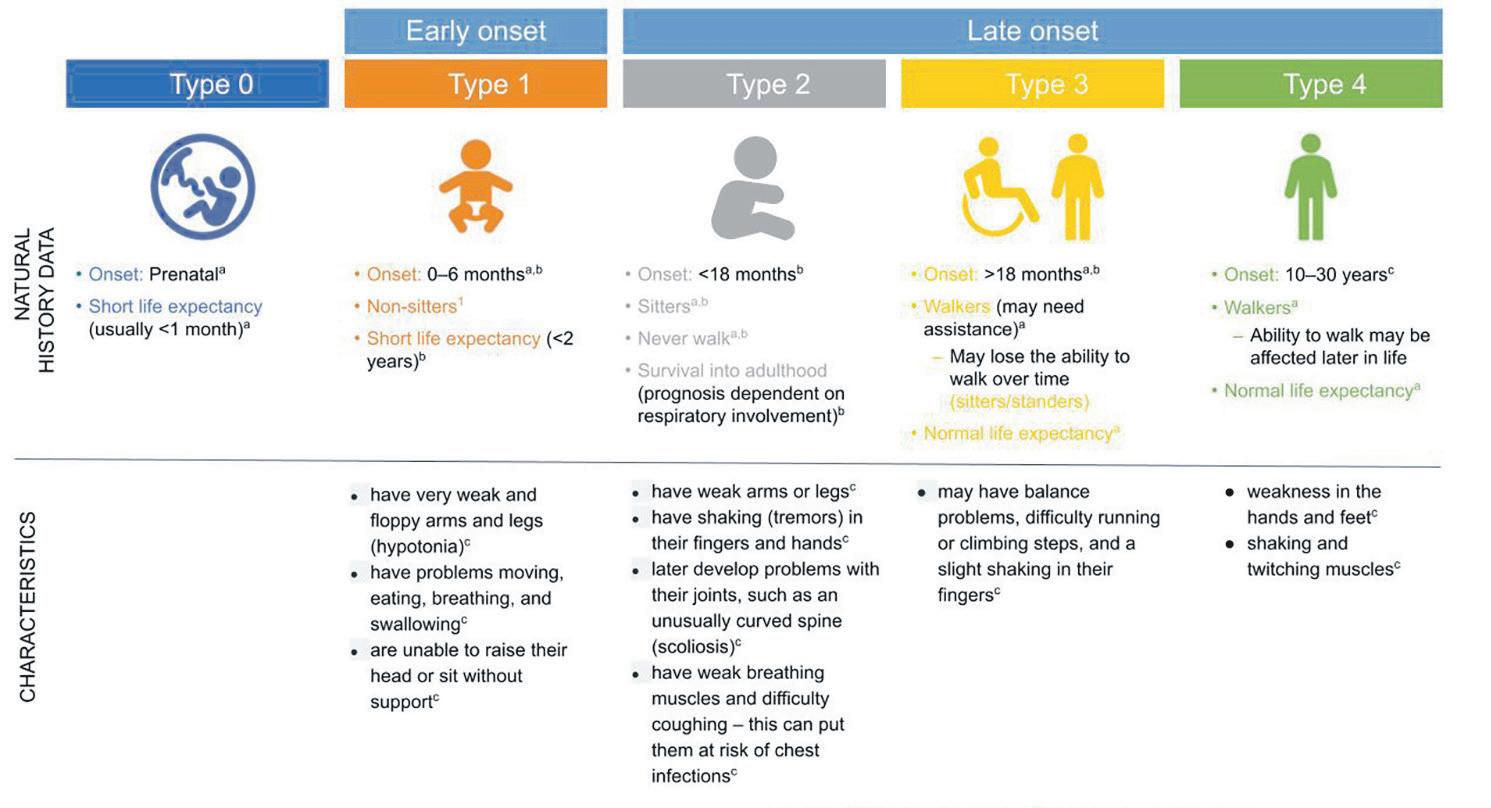
notransferases, elevations of troponin I, or decreased platelet counts.[7] ere have been, however, two reported deaths from liver failure related to OA gene therapy.[8] Risdiplam is an oral agent, taken as a once-daily dose. It is generally well tolerated and the most common adverse reactions include fever, headache, rash, and diarrhoea.[9] ere are investigations ongoing in human studies into the potential e ects on male fertility that were observed during animal studies and in pregnancy outcomes with Risdiplam.[10]
e initial Nusinersen Phase III blinded trial in children less than seven months with two SMN2 copies was called ENDEAR. [11] Results showed that 51 per cent of the patients in the treatment arm achieved at least one motor milestone, compared with zero out of the 37 patients in the control group.[11] Some 61 per cent of the patients did not die or did not require permanent ventilation compared to 32 per cent of the patients in the control group.[11] However,
support for at least ve seconds.[14] e SUNFISH study was a phase 3, randomised, double-blind, placebo-controlled clinical trial in patients aged between two and 25 years with con rmed type 2 or type 3 SMA. [15] Patients were randomised in a 2:1 ratio to receive daily oral Risdiplam (N = 120) or daily oral placebo (N = 60), and they were followed-up for 12 months.[15] After one year, the treated group showed improvements in the Motor Function Measure (MFM32) compared to the placebo group, who had a reduction in the overall score.[15]
Although early trial results were promising, none could parallel the results from the three pre-symptomatic trials.
In the Nusinersen NURTURE trial, 25 infants aged six weeks and younger who had not yet shown symptoms of SMA were treated with intrathecal Nusinersen.[16] is cohort was a mix of children with two and three SMN2 copies.[16] After ve years of follow-up, 100 per cent of children were alive without permanent ventilation and were sit-
cent can stand, and 61 per cent are able to walk independently.[20] Unlike other trials, RAINBOWFISH is the rst trial to assess cognition with a standardised scale as an exploratory endpoint.[20] What we learned from this was that the best outcomes were achieved when we intervene early in the disease course. In most cases, this means before the onset of symptoms. In order to universally achieve this in all patients, it became clear that a newborn screening programme needed to be implemented. In 2024, the European Consensus Statement on Gene erapy for Spinal Muscular Atrophy advocated for the implementation of newborn screening for SMA.[21]
In 2023, then minister for health Mr. Stephen Donnelly announced approval for funding for SMA to be added to the newborn heel prick screening programme.[22] Newborn bloodspot screening for SMA typically targets the identi cation of the homozygous deletion in the SMN1 gene. [2] is is a reliable and accurate test. is test will, however, not detect more rare
cases of SMN1 point mutation (2 to 5 per cent of cases).[2] e addition of screening for SMA would enable earlier detection of infants that would otherwise present later with symptoms. Under screening, current clinical subtyping, which is determined by symptomatic presentation and age of onset, would no longer apply. Decisions on prognosis and treatment would instead rely on the individual’s SMN2 gene copy number.[2] Due to infrastructural constraints, the implementation of screening by the National Newborn Bloodspot Screening Laboratory is likely to take some time to roll out fully. us, it is important for us all to be on the lookout for early clinical signs of SMA. is includes gross motor delay, hypotonia, absent deep tendon re exes, and tongue fasciculations. For any suspicion of SMA, an urgent neurology opinion should be sought.
This article was sponsored and commissioned by Roche Products Ireland Ltd.
In 2025 the outlook for children diagnosed with SMA has changed immensely. Never has there been a more exciting time for neuromuscular care worldwide, in particular for SMA
the ENDEAR trial was terminated early due to the results of the interim analysis and to the ethical consideration for the patients in the control group and this led to the loss of data and a short time period for the assessment of the safety and the e cacy.[11] In the phase III CHERISH trial of Nusinersen vs sham control in children with SMA with symptom onset after six months, those who received Nusinersen had signi cant and clinically meaningful improvement in motor function.[12]
e rst Phase III open-label, single-arm clinical trial for AAV-9 delivered gene therapy, OA, was called STR1VE-US.[13] Twenty-two patients with SMA type 1, with biallelic SMN1 mutations, with one or two copies of SMN2, who were younger than six months of age, were treated with a single intravenous administration.[13] Historical controls involved 23 untreated patients with SMA type 1 registered in the Paediatric Neuromuscular Clinical Research dataset. [13] Results showed that 59 per cent of the patients were able to sit unassisted for 30 seconds or more at 18 months of age compared with zero out of the 23 untreated.[13] Some 91 per cent of patients survived without a need for permanent ventilation use for up to 14 months vs 26.1 per cent of the untreated patients.[13]
e third drug to come to the market was Risdiplam. e FIREFISH study was an open-label, single-arm study including 41 infants with SMA type 1 aged between one and seven months.[14] After 12 months of treatment, 29 per cent could sit without
ting without support.[17] Some 96 per cent of children were walking with assistance, and 92 per cent were walking independently.[17]
In the OA SPR1NT trial, 14 children with two copies of SMN2 and no known symptoms of SMA participated in the study. [18] All were under six weeks old and were followed up to 18 months. At 18 months, 100 per cent were alive, free from permanent ventilation and could sit.[18] Some 71 per cent could stand and walk without assistance.[18] Additionally, 15 children with three copies of SMN2 and no known symptoms of SMA participated in the same study. [19] is part of the study followed children up to 24 months of age. At this timepoint, 100 per cent of these children were alive, free from ventilatory and feeding support, and able to stand independently for three seconds or more.[19] Some 93 per cent could walk without assistance and all children had gross and ne motor skills similar to comparable aged children without SMA at the end of the study.[19]
e third trial, RAINBOWFISH, is an ongoing, open-label trial of Risdiplam in 26 newborns who were aged 16 to 42 days and presymptomatic at their rst dose.[20] e primary endpoint is met when four to ve or 80 per cent of infants with two SMN2 copies and Compound Muscle Action Potential (CMAP) amplitude above 1.5mV are able to sit. Interim data after one year suggests that 100 per cent of infants are alive, have maintained their bulbar function, and are free from ventilatory support.[20] Some 92 per cent can sit, 80 per
References
1. Aslesh T, Yokota T (2022). ‘Restoring SMN expression: An overview of the therapeutic developments for the treatment of spinal muscular atrophy’. Cells 11(3), p. 417
2. HIQA (2023) Health technology assessment of the addition of spinal muscular atrophy (SMA) to the National Newborn Bloodspot Screening Programme. Available at: www.hiqa.ie/sites/ default/files/2023-11/Addition-of-SMA-toNNBSP.pdf. Accessed 19 December 2024
3. Aponte Ribero V, et al (2023). ‘Systematic literature review of the natural history of spinal muscular atrophy’. Neurology 101(21).
4. Prior TW, Leach ME, Finanger EL (2000). Spinal muscular atrophy. In: Adam MP, et al, editors. GeneReviews®
5. Mercuri E, et al (2018). Diagnosis and management of spinal muscular atrophy: Part 1: Recommendations for diagnosis, rehabilitation, orthopedic, and nutritional care. Neuromuscul Disord 28(2):103-115
6. Biogen (2024). Spinraza prescribing information. Available at: www.spinraza.com/ content/dam/commercial/spinraza/caregiver/ en_us/pdf/spinraza-prescribing-information.pdf. Accessed 19 December 2024
7. Novartis (2023). Zolgensma suspension for intravenous infusion. Available at: www.novartis. com/sg-en/sites/novartis_sg/files/ZolgensmaNov2023.SIN-app220224-pdf.pdf. Accessed 19 December 2024
8. Novartis (2022). Zolgensma acute liver failure update. Available at: www.novartis.com/news/ zolgensma-acute-liver-failure-update. Accessed 19 December 2024
9. Risdiplam Summary of Product Characteristics. Available at www.medicines.ie. Accessed 19 December 2024
10. Dickendesher T, et al (2024). Marlin: An observational study of fertility in risdiplam treated adult male patients with spinal muscular atrophy. Presented at the Muscular Dystrophy Association (MDA) Clinical and Scientific Conference, Orlando, FL, US; March 3-6, 2024
11. Finkel RS, et al (2017). Nusinersen versus sham control in infantile-onset spinal muscular atrophy. N Engl J Med 377:1723-1732
12. Mercuri E, et al (2018). Nusinersen versus sham control in later-onset spinal muscular atrophy. N Engl J Med 378(7):625-635
13. Day JW, et al (2021). Onasemnogene abeparvovec gene therapy for symptomatic infantile-onset spinal muscular atrophy in patients
with two copies of SMN2 (STR1VE): An openlabel, single-arm, multicentre, phase 3 trial. Lancet Neurology 20:284-93
14. Darras BT, et al (2021). Risdiplam-treated infants with type 1 spinal muscular atrophy versus historical controls. N Engl J Med 385:427-35
15. Mercuri E, et al (2022). Safety and efficacy of once-daily risdiplam in type 2 and non-ambulant type 3 spinal muscular atrophy (SUNFISH part 2): A phase 3, double-blind, randomised, placebocontrolled trial. Lancet Neurol 21:42-52
16. De Vivo DC, et al (2019). Nusinersen initiated in infants during the presymptomatic stage of spinal muscular atrophy: Interim efficacy and safety results from the Phase 2 NURTURE study. Neuromuscular Disorders. 29 842-856.
17. Crawford T, et al (2023). Continued benefit of nusinersen initiated in the presymptomatic stage of spinal muscular atrophy; 5 year update of the Nurture study. Muscle & Nerve 68:157-170
18. Strauss KA, Farrar MA (2022).
Onasemnogene abeparvovec for presymptomatic infants with two copies of SMN2 at risk for spinal muscular atrophy: The Phase III SPR1NT trial. Nat Med 28:1381-1389
19. Strauss KA, Farrar MA (2022).
Onasemnogene abeparvovec for presymptomatic infants with three copies of SMN2 at risk for spinal muscular atrophy: The Phase III SPR1NT trial. Nat Med 28:1390-1397
20. Finkel RS, et al (2023). RAINBOWFISH: Primary efficacy and safety data in risdiplamtreated infants with presymptomatic spinal muscular atrophy (SMA). Presented at the 28th International Annual Congress of the World Muscle Society (WMS), Charleston, US; October 3-7, 2023
21. Kirschner J, et al (2024). Update: European Consensus Statement on Gene Therapy for Spinal Muscular Atrophy. Eur J Paediatr Neurol 51:73-78
22. DOH (2023). Minister for Health adds new condition to the National Newborn Bloodspot Screening Programme. Available at: www.gov.ie/www.gov.ie/en/pressrelease/ b28Mc1-minister-for-health-adds-newconditionto-the-national-newborn-bloodspotscreeningprogramme/#:~:text=Minister%20 for%20 Health%20Stephen%20Donnelly,National%20 Newborn%20Bloodspot%20 Screening%20 Programme. Accessed 19 December 2024
THURSDAY 10
Rare Disease Research Conference, O’Reilly Hall, University College Dublin, Dublin 4. This one-day in-person conference is hosted by the Rare Disease Clinical Trial Network. The event will bring together world-leading researchers, patient advocates, industry representatives, and other stakeholders to share knowledge and lived experience across topics such as rare disease research methodology, translation, European Reference Network Patient Registries, and rare disease clinical trial partner perspectives.Rare disease researchers and clinical trialists will showcase their work through poster presentations. Visit https://rarediseaseresearch.ie
THURSDAY 10 – FRIDAY 11
Irish Society for Rheumatology (ISR), Spring Meeting, Sligo Park Hotel, Co Sligo. The ISR comprises of doctors and scientists working in the field of rheumatology. The membership includes consultants, trainees, scientists, and researchers. The Society organises and hosts regular platforms and conferences allowing members to present clinical and scientific material. It promotes ongoing education and training in rheumatology at all levels. The Spring Meeting is a key event in the ISR calendar. Visit https://isr.ie
FRIDAY 11
RCSI Medical Professionalism Conference, RCSI, 123 St Stephen’s Green, Dublin 2, and online. This conference is organised by the RCSI Centre for Professionalism in Medicine and Health Sciences with support from the Medical Protection Society. The conference theme is ‘Teamwork in healthcare: Working together with passion, purpose and professionalism’. The event promises to be a great day of engaging talks and presentations from a national and international panel of speakers. Speakers include Dr Suzanne Crowe, President of the Medical Council; Dr Denis McCauley, President of the IMO; Ms Donna Ockenden, Midwife, Nurse and independent review Chairperson, UK; Prof Eva Doherty, Director of Human Factors and Patient Safety, RCSI; Dr Paul Crampton and Dr Amelia Kehoe, Health Professions Education Unit, Hull York Medical School, UK; Dr Mary Collins, Chartered Psychologist, Author and Senior Practitioner Coach; Dr Niamh Humphries, Senior Lecturer and Head of Research, Graduate School of Healthcare Management, RCSI; Dr Kate Womersley, Imperial College London and University of Edinburgh, UK; Dr Éidín Ní Shé, Senior Lecturer, Graduate School of Healthcare Management, RCSI; Mr Simon Paterson-Brown, Consultant General Surgeon, Edinburgh; and many others. Visit https://www.rcsi.com
TUESDAY 29
Critical Care Nursing Conference, St James’s Hospital, Trinity Centre for Health Sciences, Dublin 8. The Critical Care Nursing Conference at St James’s will comprise a day of insightful sessions, networking opportunities, and education updates. This in-person event is ideal for nurses looking to enhance their skills and knowledge in critical care. It offers an opportunity to learn from experts in the field, share experiences with fellow nurses, and stay up to date on the latest trends in critical care nursing.
Visit https://www.eventbrite.ie/e/critical-careconference-st-jamess-hospital-dublin-tickets1047692294857?aff=ebdssbdestsearch
MAY
WEDNESDAY 14
Conference on Enhancing Cancer Care for Individuals with Intellectual Disabilities, School of Nursing and Midwifery, Trinity College, 24 D’Olier Street, Dublin 2. This is the first national conference addressing the critical, underresearched issue of cancer in individuals with intellectual disabilities. The event is hosted by the Trinity Centre for Ageing and Intellectual Disability at Trinity College Dublin and supported by Health Research Board’s Conference and Event Sponsorship Scheme. Participants will include people with intellectual disabilities, families, carers, and national and international healthcare experts. The aim is to raise awareness, share knowledge, and promote collaboration to improve care and outcomes. Studies show that this population is more susceptible to specific cancers, often diagnosed at later stages, resulting in poorer outcomes and higher mortality rates. Healthcare speakers include Dr Maarten Cuypers, Epidemiologist at Radboud University Medical Centre, The Netherlands; Dr Alyson Maher, Cancer Epidemiologist and Principal Investigator at Queen’s Cancer Research Institute, Ontario, Canada; Prof Maeve Lowry, Oncologist and Clinical Lead for the Trinity St James’s Cancer Institute; and Dr Triona McCarthy, Consultant in Public Health Medicine at the HSE National Cancer Control Programme. In addition, the conference will include concurrent presentations from key organisations, including the Irish Cancer Society, Decision Support Service, National Screening Service, CUPID COST Action, as well as representatives from public and patient involvement and GP communities. Each session will be accompanied by an accessible summary to ensure broad understanding and engagement. This conference was developed in collaboration with individuals with intellectual disabilities, reflecting a collaborative effort to improve health outcomes for all.
Email Mr Gavin Dann at DANNG@tcd.ie
THURSDAY 15 – FRIDAY 16
61st Annual Irish Neurological Association (INA) Meeting, The Rose Hotel, Tralee, Co Kerry. The meeting will take place under the presidency of Dr Helena Moore, Consultant Neurologist, Bon Secours Hospital, Tralee, Co Kerry. In keeping with previous meetings, the individual sessions will be chaired by leading people in the area who will introduce each session with a synopsis of recent developments. This year, the Noel Callaghan Lecture will be delivered by Dr Geraldine McGinty. The title of her talk is ‘See and be seen: how inclusion drives performance and outcomes’.
Visit https://iicn.ie
THURSDAY 15 – FRIDAY 16
College of Anaesthesiologists of Ireland, Annual Congress, University College Dublin, Dublin 4. This two-day event includes a distinguished line-up of international and national speakers. There will be a diverse range of sessions, interactive workshops, and networking opportunities.
Visit https://www.anaesthesia.ie
WEDNESDAY 21 – FRIDAY 23
Irish College of Ophthalmologists (ICO), Annual Conference, Kilkenny Convention Centre, Lyrath Estate, Co Kilkenny. Dedicated sessions will focus on general retina and genetics, neuroophthalmology, anterior segment, developing emergency ophthalmology, future of clinical practice, top 10 tips, and sustainability. Prof Andrew Dick, Duke Elder Chair and Director
of the Institute of Ophthalmology, University College London, UK, will present the Annual Mooney Lecture 2025.
Visit https://www.eyedoctors.ie
THURSDAY 22
National Conference on Foetal Alcohol Spectrum Disorder (FASD) in Ireland, Hotel Woodstock, Shanaway Road, Ennis, Co Clare. This is the first national conference on FASD in Ireland. Participants will include people living with FASD, parents, carers, and health professionals. The day will include breakout sessions and an opportunity to engage with panel discussions, including the ‘Expert by Experience Panel’ (people living with FASD). Speakers include Dr Jolanta Burke, Chartered Psychologist specialising in Positive Psychology and Health, RCSI; Prof Raja Mukherjee, Adult Learning Disability Consultant Psychiatrist at Surrey and Border’s Partnership NHS Foundation Trust, UK; and Prof Farhana Sharif, Consultant Paediatrician with a special interest in developmental paediatrics at Midland Regional Hospital, Mullingar.
Visit https://www.fasdireland.ie
FRIDAY 23
National Tuberculosis (TB) Conference, St James Hospital, Dublin 8. This in-person event provides a forum for experts, researchers, and healthcare professionals to discuss the latest advancements and challenges in the field of TB. Speakers include Ms Sarah Jackson, Senior Epidemiologist, Health Protection Surveillance Centre; Dr Mary O’Meara, Consultant in Public Health Medicine; Ms Lorraine Dolan, cANP TB, St James’s Hospital; Dr Cilian Ó Maoldomhnaigh, Consultant in Paediatric Infectious Diseases, Children’s Health Ireland; Ms Ciara MacKenna, Senior TB Pharmacist, St James’s Hospital; Dr Gunar Günther, Pulmonologist, Inselspital, Bern, Switzerland and University of Namibia; Prof Annemarie McLaughlin, Consultant in Respiratory, St James’s Hospital; and Prof Joe Keane, Consultant in Respiratory, St James’s Hospital.
Visit https://www.eventbrite.ie/e/national-tbconference-2025-st-james-hospital-dublinregistration-1213245763739
THURSDAY 22 – FRIDAY 23
Irish Society of Gastroenterology (ISG), Summer Meeting, Kilkenny. Established in 1962, the ISG comprises of medical specialists working in the field of gastrointestinal and liver disease and associated research. The Society also caters for specialist trainees and non-medical scientists.The ISG organises and hosts regular platforms and conferences allowing members to present clinical and scientific material. It promotes ongoing education and training in gastroenterology at all levels. The Summer Meeting is a key event in the ISG calendar.
Visit https://isge.ie
FRIDAY 23-SATURDAY 24
Irish Street Medicine Symposium, Arts Block, Trinity College, Nassau Street, Dublin 2. This event brings people together to advance the health and wellbeing of those who are marginalised in society. It attracts participants from a diverse range of backgrounds and disciplines including people with lived experience, social care and health professionals, researchers, policymakers, managers, etc. The event promises learning, brainstorming, sharing, networking, planning and of course socialising
Visit https://www.streetmedicine.ie
Q1 Which city will host the opening race of the 2025 Formula 1 season? A: Melbourne
Q2 Oleksandr Usyk holds three of the world boxing heavyweight championship belts. Who holds the International Boxing Federation title after events last week? A: Daniel Dubois
Q3 The League of Ireland season kicked off earlier this month. Who are the defending men’s Premier League champions? A: Shelbourne
Q4 Who was issued with a three month suspension from tennis after failing two drug tests in 2024? A: Jannik Sinner
Q5 Who has stepped down as head coach of the Welsh senior men’s international rugby team? A: Warren Gatland
Q6 Who won the
A: Gerwyn Price

The BMW-owned MINI brand, one of the first premium marques to launch an electric option, is rapidly adopting electrification across the line-up. But while the familiar MINI hatch and the largerthan-life Countryman SUV have been launched as new generations with electric power to the fore, there’s also an all-new, all-electric option in the line-up called the Aceman. Weird name aside, this is a compact five-door, five-seat crossover that takes aim at one of the fastest-growing market segments, offering MINI fans all the style and attitude of its established models in an electric-only package that promises to be more practical than the standard car.
Exterior design and image
Few compact crossovers on sale have the showroom impact of the MINI Aceman. It takes the cheeky, large-headlight face of the regular MINI, plus some of its other characteristic detailing, but adds roof rails and an angularity that align it with the Countryman in terms of off-road styling.
The Aceman is clearly a road-biased car, though, and its dimensions make it only a little longer and taller than the existing five-door version of the MINI Cooper hatchback.
It undoubtedly holds visual appeal, nonetheless, something buyers can amp up or tone down to their hearts’ (and wallets’) content, as MINI is the king of personalisation. There are Classic, Exclusive, and Sport trim lines for starters, each with their own range of colours, alloy wheel designs and accent detailing, and further enhancement can be found in the John Cooper Works styling options.
Our test car was finished in moody black, disguising the crossover styling to some extent, while its large wheels made the design pop. Amusingly, as you approach the Aceman with its key on your person, the LED lights front and rear do a little light show and the MINI logo illuminates the ground near the doors.
Interior and practicality
Practicality has never been a MINI forte, though the five-door version improves on the original and makes the rear seats more accessible. That continues in the Aceman, which has slightly better interior space than that car, nothing more. Adults of average size won’t complain too much about being in the back of this model, while the 300-litre boot behind is larger than those of the two MINI hatchbacks as well – though not by much. You can just about squeeze a charging cable under the boot floor, too.

Back in the main cabin, the Aceman receives the brand’s latest interior design, material, and technology bundle, as launched last year in other models. Sustainability is at the heart of the construction and material selection, but MINI’s designers have clearly had a lot of fun with it as well.
On the face of it, a starting price for the Aceman of €39,190 doesn’t sound bad. This is, after all, a premium brand and the car lives up to that. We suspect, however, that few buyers will stick with the standard specification and prices can rapidly rise from there.
But all this superb control comes at the expense of comfort and we suspect that many buyers would gladly give up half the agility in return for double the comfort
The traditional circular instrument pod in the centre of the dashboard has been reinvented as a snazzy OLED screen that’s quick to respond to touch and packed full of features. Sensibly, the temperature controls are always visible, though there are lots of quirks to the system, such as a personal digital assistant named Spike and a cheesy “Wahoo!!” emanating from the speakers if you choose the sportiest driving mode. Some will find all this endearing, though thankfully, for the rest of us, they’re not omnipresent.
Interior storage is at a premium as the centre console is quite slim and not very versatile, while the textile-wrapped fascias won’t be to all tastes. We do like how they work with the customisable ambient lighting, however.
The entry-level car is the Aceman E, powered by a 184hp electric motor and featuring a battery pack that allows an official range between charges of up to 309 kilometres. It can be had in Classic, Exclusive, or Sport trim lines, the latter rising to €43,393.
The ‘SE’ specification tested here brings with it a more powerful electric motor – producing up to 218hp – and, probably of more importance, a larger-capacity battery. In its most modest (Classic) guise, this allows for a more useful range of up to 404 kilometres. Again, it can be had in all three grades and prices start at €44,720 for the Aceman SE Classic.
Our test car started life as the Aceman SE Sport, priced from €48,923, but with quite a few options fitted, it retails at nearly €57,000. Bizarrely, that’s sev-

en grand more than the range-topping John Cooper Works Aceman Sport costs, a particularly sporty variant with even more performance on tap. Anyway, all this goes to show that the Aceman can be fair value, or not so much if you go mad with the options.
Driving experience
Ever since BMW relaunched the MINI brand back in the early 2000s it has latched onto the original’s image for “go-kart-like handling” – ie, it was agile and fun to drive. In truth, most MINIs since have lived up to the billing to a certain extent, but we do wonder how much the average buyer cares about such things.
The Aceman, for example, handles very well on a twisty road with exceptional body control, quick steering, and rapid reactions to the driver’s input. But all this superb control comes at the expense of comfort and we suspect that many buyers would gladly give up half the agility in return for double the comfort. The Aceman’s suspension is just a little too firm for our liking, resulting in unwanted jiggling throughout the car over most road surfaces, notably so at lower speeds.
Part of this is likely down to the low-profile tyres fitted to the 19-inch wheels on our test car. They don’t offer much cushioning from bumps and other imperfections on the road and we’d advise buyers to try to test drive a car sitting on the same size wheels they’re likely to buy. The good news is that the Aceman can be purchased with much smaller rims. And yes, I ad-
mit they don’t look as good, but that’s a balancing act every buyer needs to consider for themselves.
Better than the hatch?
The electric MINI hatchback drives a little better than the Aceman, but there’s really not much in it and you can have a larger influence on that with the options chosen. They share electric powertrains and are effectively just as efficient as each other in terms of using the charge in their batteries. The electric MINI hatchback is a little more affordable, but it’s not available as a five-door with electric power so in reality the Aceman will be chosen as much for its extra practicality as its image. Either way, we expect it to become the brand’s most popular electric vehicle.

ASTELLAS’ PADCEV (ENFORTUMAB VEDOTIN) PLUS KEYTRUDA (PEMBROLIZUMAB) SHOWS LONG-TERM EFFICACY IN FIRST-LINE TREATMENT OF LOCALLY ADVANCED OR METASTATIC UROTHELIAL CANCER
Astellas Pharma Inc recently announced additional follow-up results from the phase 3 EV-302 clinical trial (also known as KEYNOTE-A39) evaluating the efficacy and safety of enfortumab vedotin, a Nectin-4 directed antibody-drug conjugate, plus pembrolizumab, a PD-1 inhibitor, in patients with previously untreated locally advanced or metastatic urothelial cancer (la/mUC). The results showed a sustained overall survival (OS) and progression-free survival (PFS) benefit consistent with the findings of the primary analysis after an additional 12 months of follow-up (median follow-up of 29.1 months). This data was presented during a rapid oral session (Abstract 664) at the American Society of Clinical Oncology Genitourinary Cancers Symposium 2025. Prof Thomas Powles, Professor of Genitourinary Oncology at Queen Mary University of London, UK, Director of Barts Cancer Centre, and EV-302 Primary Investigator, commented: “These latest findings from the EV-302 trial reaffirm the primary results, which demonstrated survival improvements for patients treated with enfortumab vedotin and pembrolizumab that were previously unprecedented in locally advanced or metastatic urothelial cancer. These data show that the potential survival benefit has become even more robust with extended follow-up and further solidify the combination as standard of care.”
Results showed enfortumab vedotin plus pembrolizumab reduced the risk of death by 49 per cent versus chemotherapy (hazard ratio [HR] = 0.51, 95 per cent confidence interval [CI], 0.43-0.61). The median OS was 33.8 months for the combination versus 15.9 months for chemotherapy. The OS benefit was observed in all prespecified subgroups, including cisplatin eligible and ineligible subgroups. Enfortumab vedotin plus pembrolizumab also reduced the risk of disease progression or death by 52 per cent versus chemotherapy (HR = 0.48, 95 per cent CI, 0.41-0.57). The median PFS was 12.5 months for the combination versus 6.3 months for chemotherapy. The safety profile was consistent with previous findings and no new safety concerns were identified. In addition to longer follow-up data, an exploratory analysis evaluating treatment outcomes and safety profile in patients with confirmed complete response (cCR) will also be presented. Among patients evaluable for response, confirmed objective response rate was 67.5 per cent for enfortumab vedotin plus pembrolizumab compared to 44.2 per cent for chemotherapy. Median duration of response was 23.3 months (95 per cent CI, 17.8-not estimable [NE]) for the combination and 7.0 months (95 per cent CI, 6.2-9.0) for chemotherapy. A cCR was achieved in 30.4 per cent of patients treated with enfortumab vedotin plus pembrolizumab and 14.5 per cent of patients treated with chemotherapy. Median duration of cCR was not reached for the combination and 15.2 months (95 per cent CI, 10.3-NE) for chemotherapy. In patients with cCR, grade ≥3 treatment-related adverse events occurred in 61.7 per cent of patients in the enfortumab vedotin plus pembrolizumab arm compared to 71.9 per cent in the chemotherapy arm. There were no treatment-related deaths in the cCR subgroup.
Dr Roger Dansey, Chief Oncology Officer, Pfizer, commented: “Patients with bladder cancer can face a poor prognosis, particularly in the advanced stages, and until recently had few available treatment options. The updated EV-302 results show sustained long-term efficacy in a broad population that includes both cisplatin eligible and ineligible patients and reinforce this combination’s ability to reshape the urothelial cancer treatment landscape.”
Dr Ahsan Arozullah, Senior Vice-President, Head of Oncology Development, Astellas, stated: “The combination of enfortumab vedotin and pembrolizumab was the first approval to offer an alternative to platinum-containing chemotherapy, which had been the standard of care for first-line locally advanced or metastatic urothelial cancer
for decades. We are delighted that the additional follow-up results of the EV-302 trial show a durable benefit. These data represent yet another milestone in our long-standing commitment to helping patients around the world live longer and healthier lives.”
Enfortumab vedotin plus pembrolizumab is approved for the treatment of adult patients with la/mUC in the US, the European Union, Japan, and a number of other countries around the world. Enfortumab vedotin is also approved as a single agent for the treatment of adult patients with la/mUC who have previously received a PD-1/PD-L1 inhibitor and platinum-containing chemotherapy.
This medicinal product is subject to additional monitoring. This will allow quick identification of new safety information. Healthcare professionals are asked to report any suspected adverse reactions.
Johnson & Johnson Innovative Medicine has announced that Tecvayli (teclistamab) as monotherapy for the treatment of adult patients with relapsed and refractory multiple myeloma (RRMM) has been approved for reimbursement in Ireland. Patients must have received at least three prior therapies, including an immunomodulatory agent, a proteasome inhibitor, and an anti-CD38 antibody and have demonstrated disease progression on the last therapy. The announcement follows conditional marketing authorisation (CMA) from the European Commission (EC) granted in 2022 for teclistamab, a bispecific antibody that redirects CD3-positive T-cells to B-cell maturation antigen-expressing myeloma cells to induce the killing of tumour cells.
Multiple myeloma remains an incurable blood cancer, with nearly all patients relapsing and requiring subsequent therapy. As the disease progresses, relapses for patients become more aggressive with each new line of therapy, and remissions become progressively shorter. Approximately 380 people are diagnosed with multiple myeloma each year in Ireland.
Prof Siobhan Glavey, Consultant Haematologist, said: “Multiple myeloma is a complex disease, and despite important scientific progress, patients who develop relapsed and refractory disease after having been exposed to three major drug classes have limited therapeutic options and generally face poor outcomes. This new treatment option has the potential to provide substantial clinical benefit and new hope to patients, with high rates of deep and durable responses as well as the added convenience of being off-the-shelf. The reimbursement of teclistamab in Ireland marks a major step towards ensuring Irish patients have access to the most innovative treatments available.”
Ms Michaela Hagenhofer, General Manager Commercial Operations, Johnson & Johnson Innovative Medicine Ireland, said: “Our ambition to eliminate multiple myeloma is stronger today than ever before. We aim to reach this goal by investing in cutting-edge innovations that address individual patient needs and offer healthcare professionals options they have not had before. We are proud to have provided early access of teclistamab to Irish patients which not only provided valuable extra time, but also allowed clinicians to gain real-world experience with a bispecific. The reimbursement of teclistamab in Ireland marks exciting progress on this journey and we are proud to bring this innovation to Irish myeloma patients.”
CMA is the approval of a medicine that addresses unmet medical needs of patients based on less comprehensive data than normally required, where the benefit of immediate availability of the medicine outweighs the
risk, and the applicant is able to provide comprehensive clinical data in the future.
The approval was supported by positive results from the multicohort, open-label phase 1/2 MajesTEC-1 study (NCT03145181 and NCT04557098), evaluating the safety and efficacy of teclistamab in adults with RRMM (n=165). Patients received a weekly subcutaneous injection of teclistamab at a dose of 1.5mg/kg, after receiving step-up doses of 0.06mg/kg and 0.3mg/kg. In the study, 104 out of 165 patients achieved an overall response rate of 63 per cent (95 per cent confidence interval [CI]; range, 55.270.4) after a median of five prior lines of therapy. Notably, 58.8 per cent of patients receiving teclistamab achieved a very good partial response or better and 39.4 per cent achieved a complete response or better. The median time to the first confirmed response was 1.2 months (range, 0.2-5.5 months) and the median duration of response was 18.4 months (95 per cent CI; range, 14.9–not estimable).
Results from the MajesTEC-1 study were also published in the New England Journal of Medicine and showed that treatment with teclistamab resulted in deep and durable responses. The median duration of progression-free survival was 11.3 months (95 per cent CI; range, 8.8-17.1) and the median duration of overall survival was 18.3 months (95 per cent CI; range, 15.1–not estimable).
This medicinal product is subject to additional monitoring. This will allow quick identification of new safety information. Healthcare professionals are asked to report any suspected adverse reactions.
Ireland has become the first country to recruit patients as part of the new global FaReal study to evaluate the effectiveness, safety, clinical insights, and treatment patterns of faricimab in the real-world treatment of neovascular age-related macular degeneration (nAMD) or diabetic macular edema (DME) in at least one eye. The study will take place in real-world clinical environments over a twoyear period.
The study is being conducted at the Institute for Eye Surgery (IoES), UPMC Whitfield Hospital in Waterford, by Prof Maged Habib, Mr Marin Belak, and Dr Emmanuel Ankamah, who have already recruited the first patients. In total, close to 50 Irish patients will be included in the trial in Waterford and three other sites across Ireland as part of an expected trial of 850 patients across 17 countries.
Mr Eugene Ng, Clinical Lead at the IoES, said: “It’s an incredible achievement for our team to be the first site globally to go-live and recruit for the FaReal study. This again proves that Ireland is capable of delivering the highest quality of clinical research by working very closely with our partners in Roche Ireland. Mr Marin Belak recruited our first patient and we are now very eager to complete enrolment and gain a deeper understanding of the potential that faricimab has to improve treatment in nAMD and DME.”
Also commenting, Ms Mairéad Henderson, Country Study Manager for Roche, said: “While Ireland is a renowned innovation hub for the pharma sector, Ireland is attracting fewer clinical trials than some European countries with similar populations and economic performances. The FaReal Study shows us that healthcare providers in Irish hospitals have the ability to drive world-class research. At Roche, we believe that Ireland can play a leading role in the provision of clinical trials in Europe. Patients in Ireland deserve a strong clinical research infrastructure to provide access to sometimes life-saving treatments.”
This medicine is subject to additional monitoring. This will allow quick identification of new safety information. Healthcare professionals are asked to report any suspected adverse reactions.
Holiday homes available for short-term holiday lets in the heart of Wicklow town.
Choice of a three-bed, sleeping six, or a four-bed, sleeping eight.
Golf, beaches, gardens, hill-walking, Ireland’s garden county has it all.
Contact admin@wicklowholidays.ie for rates and availability Free, independent CPD for doctors, nurses, and pharmacists… all under one roof
Highly experienced GP seeks sessional work in south-east Dublin.
Available immediately. CV can be provided via email. Tel: 089 229 4743


Dr Ros Vallings, a New Zealand GP who is an expert on myalgic encephalomyelitis/chronic fatigue syndrome (ME/CFS), will present a free talk entitled ‘Key messages for primary care on the diagnosis and management of post-viral fatigue syndrome and ME/CFS’ followed by a Q&A session on Tuesday, April 8 at 7:30pm.
Accreditation applied for from the ICGP. For more info, contact events@irishmecfs.org










A round-up of news and oddities from left field by Dr Doug Witherspoon
Easter approaches and you might have been given advance warning by the stacks of chocolate Easter eggs that have been on supermarket shelves since late February. Instead of quoting warnings from health authorities about over-consumption, in this Dorsal View we’ll look back at a time when cocoa was considered to have therapeutic properties and how that has evolved all the way to the supermarket shelf.
The very modern, soothing psychological influence of chocolate and a good movie needs no explanation. But more than 4,000 years ago the Mayans and Aztecs blended chocolate with ingredients like honey, chilli peppers, and cornmeal for physical healing purposes. Or so they believed. The chocolate in question was called ‘xocoatl’, with crushed cocoa the main ingredient.
This elixir was also used in ceremonies by the healers of the time, along with chants to conjure up the
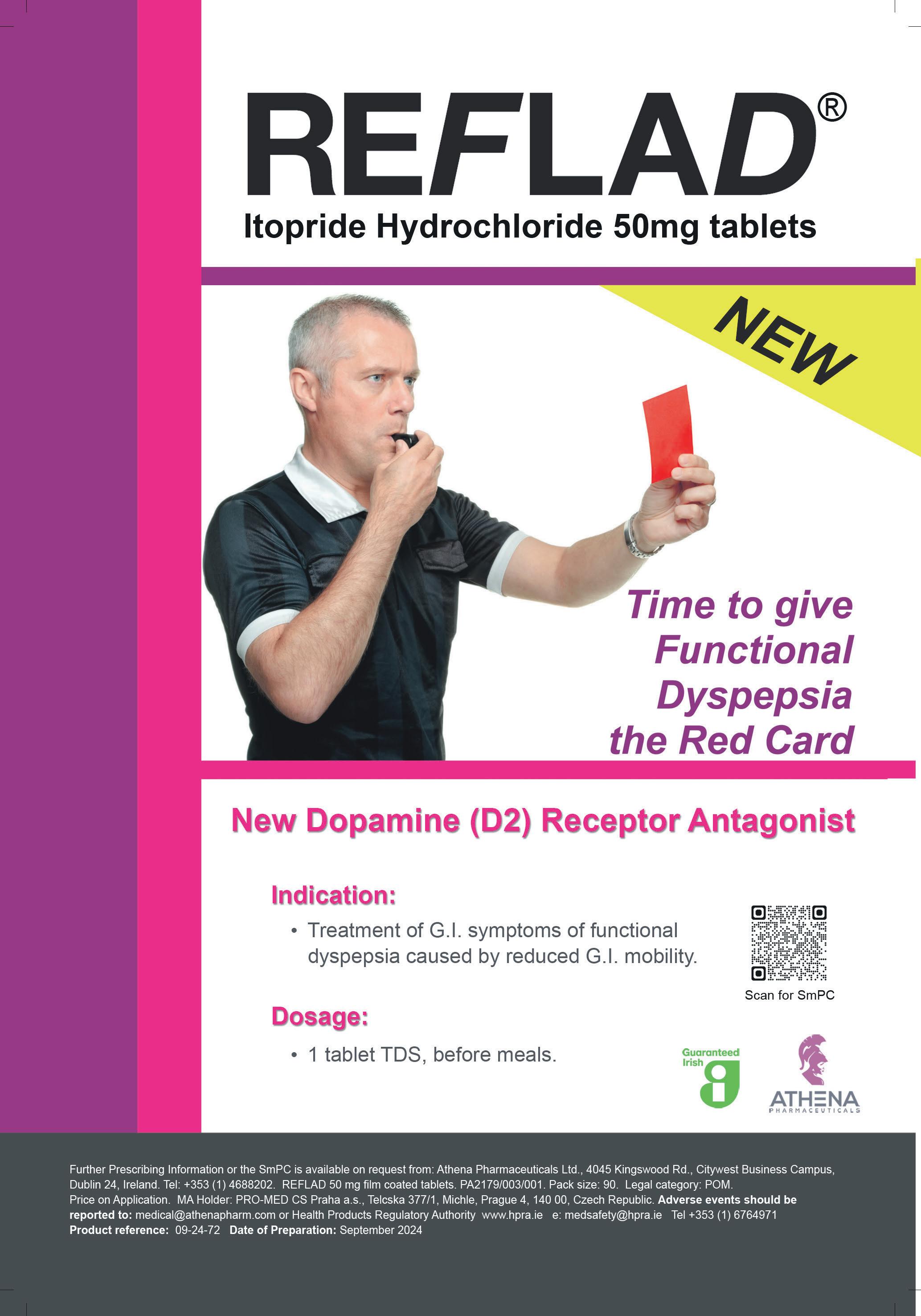
If you have anything you would like to share, please email:
spirits of trees or animals. This appears to be the earliest recorded use of cocoa as a therapeutic and it was taken to ease stomach problems, such as indigestion. It was also commonly mixed with tree bark to treat infections, or with maize to lower a fever.
The 16th Century Florentine Codex is considered the most reliable early account of Mesoamerican culture and contains a chocolate-based prescription to treat a cough of unknown aetiology: Tea brewed with the tail of an opossum, followed by a brew made from chocolate, herbs, vanilla, and peppers. The chocolate was often used simply to mask the rancid taste of some of these concoctions.
It was the Spanish conquest of Mexico that brought chocolate to the attention of the Western world and the early invaders were taken aback by its use as a therapeutic. One of its most immediate and obvious effects was to help those who had lost weight through illness. A modern-day nutritionist might have something to say about that, but clearly, chocolate was used and studied by healers over some time.
Chocolate was introduced to Europe from the ‘New World’ in the 1500s, initially in Spain. Monks and nuns were among the first to get a taste for it and monks would often swig it as drinking chocolate before services. Over the next 100 years, it spread throughout the continent. It was particularly popular with the nobility and, in fact, Marie Antoinette had her own personal chocolatier. There’s a pun in there somewhere about the elite hobnobbing with chocolate, but I’ll spare you.
Over the following centuries, chocolate inexorably grew in popularity. It wasn’t until the late 18th Century that it made its appearance in Ireland and the first brand to emerge was Fry’s Chocolate Cream in 1908. Now, revenue from the sales of chocolate products is approximately €250 million per year in Ireland.
Worldwide, ‘Big Chocolate’ is targeting the products that are believed to confer some kind of mild health benefits, such as dark chocolate high in cocoa content. There is also more of a focus by consumers on how equitably the chocolate is produced, which will influence the range of products that emerge. So the earliest efforts to use chocolate as a therapeutic have crystallised into building a research base for the health benefits of dark chocolate. Dark chocolate contains a flavanol called epicatechin, a powerful antioxidant, and some studies suggest regular intake can lower blood pressure, improve circulation, and even have a preventive role in cardiovascular disease.
Studies are ongoing and becoming more numerous, but most suggest that dark chocolate should contain at least 70 per cent cocoa to provide any health benefits.
The exact ‘dose’ has not yet been calculated definitively, but it should of course be kept in mind by consumers that it also contains sugar and fat. As ever, moderation is the byword.
That said, it would appear that in the right amounts, high-cocoa dark chocolate confers some health benefits. These include the benefits of flavonols for the immune system and to reduce oxidative stress and epicatechin for cell protection and better processing of insulin.
As always, there’s a catch for the average consumer, as high-cocoa dark chocolate is considerably more expensive than the most popular chocolate brands.
From humble beginnings, chocolate has become ensconced in society as a symbolic gift for almost any occasion. Just ask any nurse.
To make sense of it all, the final word goes to actor and comedian Larry David: “Switzerland is a place where they don’t like to fight, so they get people to do their fighting for them while they ski and eat chocolate.”