We are grateful to the Ennismore Foundation for funding this work. Thanks also to Blanche Shackleton, Johann Beckford, Cath Smith and Sam Chetan-Welsh at Green Alliance for their advice.
Green Alliance
Green Alliance is an independent think tank and charity focused on ambitious leadership for the environment. Since 1979, we have been working with the most influential leaders in business, NGOs and politics to accelerate political action and create transformative policy for a green and prosperous UK.
The Green Alliance Trust Registered charity no 1045395 Company limited by guarantee (England and Wales) no. 3037633
The text and original graphics in this work are licensed under the Creative Commons Attribution-NonCommercial-NoDerivatives 4.0 International licence. To view a copy, visit http://creativecommons.org/licenses/ by-nc-nd/4.0/. Any use of this content should credit Green Alliance as the original author and source. Photographic images are subject to separate copyright and are not covered by this licence.
Summary
“Climate change poses a significant, systemic risk to national food security.”
Climate change has the potential to devastate global crop yields, disrupt international supply chains and make nutritious meals more expensive for people in the UK.
Record-breaking temperatures, shifting rainfall patterns, droughts and heatwaves disrupt how food is grown, reared, transported and sold. These impacts, once considered far off possibilities, are driving food inflation today.1
UK agriculture is vulnerable and, in recent years, has witnessed some of the worst harvests on record. 2 And extreme weather elsewhere has left supermarket shelves empty of fresh produce, including peppers, cucumbers and tomatoes. 3 Heatwaves and floods are interrupting food distribution and domestic manufacturing.
The government’s own assessments acknowledge that climate change poses a significant, systemic risk to national food security.4 Senior food industry professionals have also sounded the alarm on the immediacy of threats faced, highlighting a lack of private sector response. 5
Climate mitigation and adaptation are needed: greenhouse gas emissions must be rapidly reduced, alongside greater private and public sector efforts to adapt to impacts that are now inevitable. However,
“
The rewards of forward thinking now will be significant”
the government’s current approach to orchestrating change, outlined in the National Adaptation Programme (NAP3), has been branded “inadequate” by experts.6
In this report, we demonstrate how climate change is affecting the food system, leaving people paying more to eat well. We set out the steps the government must take to drive co-ordinated, cross departmental action to safeguard the nation’s food security. The stakes are high, but the rewards of forward thinking now will be significant for domestic farming and industry, economic growth, health and social equality.
We recommend the following government action to accelerate climate adaptation across the agri-food sector:
Provide direction
Set quantified, national adaptation targets for the food system in the next National Adaptation Programme (NAP4).
Establish a Food System Resilience Task Force, led by the government and convening policy makers, food producers and experts across the agri-food sector.
Embed adaptation across government
Forthcoming policies and strategies
Mandate UK Sustainability Reporting Standards for the food sector to force businesses to consider their climate risks and invest in resilience.
Support farmers to adapt to the UK’s changing climate by embedding adaptation into policy.
Publish a Horticulture Growth Strategy to scale up UK production of fruit, vegetables and pulses.
Introduce a Good Food Bill as part of the food strategy to help make healthy diets affordable for more people.
Existing areas
Dedicate R&D investment to applied research to help farmers maintain productivity and profitability.
Ensure the UK remains attractive to new businesses, especially alternative protein companies.
Introduction
“Global supply chains the UK relies on are entering a state of chronic instability.”
Global supply chains provide the UK with a remarkable variety of food all year round. But, for many, a healthy diet is unaffordable. Climate change threatens to make this worse.7 Heatwaves, floods and droughts affect yields, manufacturing and logistics. Food and drink, the UK’s largest manufacturing sector, worth £37 billion to the economy annually, is already being disrupted. 8 People are paying much more for their weekly shop: between 2022 and 2023, it is estimated that climate change impacts added £361 to the average household’s annual food bill.9
These impacts are expected to intensify. Government intelligence has warned that climate change and other sources of ecosystem collapse could see the UK struggle to maintain its food supply as early as 2030.10 As climate breakdown converges with geopolitical volatility, the global supply chains the UK relies on are entering a state of chronic instability.11
Greenhouse gas emissions must be cut rapidly to avoid the most catastrophic consequences, and this includes from the food system itself which is estimated to be the source of a third of global emissions.12 Fast adaptation is also needed to help the food system cope with the scale of impacts already occurring.
The UK is not prepared
Food prices are a major cause of the cost of living crisis. To stabilise household bills, the government should act to make the food system more resilient to rising inflation driven by climate change. Government leadership is needed to drive a dramatic improvement in the UK’s adaptation plans when they are refreshed in 2028. The UK's current plans have been rated “inadequate” by the government’s
“
Adaptation must be the default, integrated across all
departments
and policies.”
own independent advisers, the Committee on Climate Change (CCC).13
Food security needs a dedicated response
By prioritising climate adaptation, the government will support national security, public health and economic growth. Adaptation must be the default, integrated across all departments and policies with influence over food and farming.
In this report, we draw on desk-based research and insights from stakeholders across the agri-food sector to explore the impact climate change is already having at every stage, from farm to fork. We also set out anticipated future impacts, and options available for adaptation. Based on this holistic view, we provide policy recommendations to improve the outcome for the UK's food system.
Climate impacts on the food system
Why is the UK’s food system at risk from climate change? We outline the challenges at every stage from farm to fork.
Primary production
Processing and manufacturing
Retail and food service
Transport and logistics
1. Crop yields and quality
Unpredictable weather is hitting farm incomes and reducing domestic food production across the country.
What’s happening now?
Farming has always had good and bad years, depending on when rain and warmth arrive to support crop growth. However, extreme weather events are having serious impacts:
– Poor harvests: over the past decade, England has had three of its five worst cereal harvests on record.14
– Financial strain: bad weather cost arable farms in England over £800 million in 2025.15
– Mental strain: 92 per cent of farmers have felt anxious due to the impact of extreme weather events.16
What’s to come?
Farmers will experience more frequent and severe extreme weather, with further adverse effects on farm productivity and profitability. For example, it is projected that, by 2070, farms will have to cope with up to 30 per cent wetter winters, compared to 1990.17 Alarmingly, 60 per cent of England’s most productive farmland is already considered to be at the highest flood risk level.18 Simultaneously, lower summer rainfall is expected to intensify water scarcity.19
While farms could benefit from a longer growing season, they will need to withstand more frequent and severe extremes, like droughts and heatwaves, as well as a rise in outbreaks of pests and diseases. 20 Lost harvests will challenge the country’s level of self-sufficiency and increase reliance on imported food.
Flooding is a major risk for arable farming, particularly in the East Midlands and East of England21
Top ten per cent of English constituencies by arable farmland area, ranked according to flood risk and farmland area, with the five most at risk indicated
Gainsborough, Lincolnshire, East Midlands
Louth and Horncastle, Lincolnshire, East Midlands
Beverley and Holderness, East Riding of Yorkshire
Boston and Skegness, Lincolnshire, East Midlands
South Holland and The Deepings, Lincolnshire, East Midlands
“ Farms are adopting precision agriculture to protect yields.”
Adaptation solutions
Alongside emissions reductions to lessen the effects of climate change, farms must adapt better to extreme weather:
Shifting growing practices: some farmers are already amending cropping plans, trialling new crops and more tolerant varieties, as well as agro-ecological and regenerative approaches. England’s Environmental Land Management (ELM) scheme supports some of these measures, but cannot be the only source of support, given its already stretched budget. 22
Infrastructure improvements: these are needed to maintain yields and the quality of produce under shifting weather conditions. For example, farmers can use rainwater harvesting, on-farm reservoirs and irrigation during droughts. However, installations can be very expensive and need planning permission.
Technological integration: some farms are adopting precision agriculture to protect yields from escalating threats like crop diseases. Adoption typically requires substantial upfront investment, which can be prohibitive for smaller farms.
Year on year, unpredictable weather is making farm incomes uncertain. It is clear adaptation is needed but, with farmer’s margins so tight, financing this is a big challenge. It would be good to see retailers give at least equal weight to on-farm adaptation, through their supply chain relationships, as they're already doing on mitigation.
Dmitry Feoktistov, sustainability and climate change advisor, National Farmers Union23
Every year we’re seeing more extreme weather and the risk of poor harvests go up. Part of our farm once flooded every five years and now floods every year, making growing winter crops impossible. At one point, I decided to stop farming altogether because conditions were so challenging.
UK meat and dairy production is directly affected by climate change. Heatwaves cause dairy cows to produce less milk and have led to record-breaking poultry deaths during transport.
What’s happening now?
Hotter summers and wetter winters are reducing animal welfare, yields and profits across UK livestock farms:
– Lower welfare: in the July 2022 heatwave, almost 10,000 chickens died of heat stress during transportation. 25
– Lost productivity: high temperatures reduce milk yields by as much as ten per cent and heat stress is estimated to cost individual farms up to £90,000 a year. 26, 27
– Higher costs: poor weather reduces harvests while forcing an increase in the time animals spend indoors, driving up feed costs.
What’s to come?
Climate change will expose livestock to more extreme weather. Animals will face higher heat stress on summer days, predicted to be 4°C to 7°C warmer by 2070. 28 Dairy herds in the South West could see a tenfold increase in heat stress inducing days. 29
Warmer weather spreads pests and diseases like Bluetongue in sheep and cattle, which first appeared in the UK in 2007. 30 Without hard frosts to kill off the virus, outbreaks risk more frequently halting exports to international markets, as has occurred in recent years. 31 Flooding increases the transmission of pathogens between livestock, such as listeria and E coli. 32
Dairy herds will face more heat stress across Northern England, the West Midlands and the South West33
Top ten per cent of English constituencies by number of dairy farms, ranked according to heat risk and farm numbers, with the five most at risk indicated34
Skipton and Ripon, North Yorkshire
Derbyshire Dales, East Midlands
Chester South and Eddisbury, North West England
Richmond and Northallerton, North Yorkshire
North Shropshire, West Midlands
“
Breeding can produce animals more resistant to higher temperatures and diseases.”
Adaptation solutions35
Adaptation measures are unlikely to completely offset climate-induced losses and the higher costs of production. 36 But livestock farmers can take steps to guard against impacts and reduce their effect on profitability:
Infrastructure improvements: water stations and shaded areas can reduce heat stress. Housed animals benefit from roof insulation, ventilation and cooling systems, such as fans and sprinklers, but these can be expensive.
Operational changes: solutions like adjusted cattle handling and milking times, and shifting calving season, can reduce heat stress. Farm layout can be designed to keep livestock away from flood-prone watercourses where pathogens aggregate.
Biological resilience: vaccination can protect against pathogens and breeding can produce animals more resistant to higher temperatures and diseases.
Income diversification: this will be essential for many farms to remain profitable. For example, they can generate supplementary income from nature restoration and letting out farm buildings. But domestic consumption of meat and dairy will need to fall, alongside domestic production, to avoid offshoring food supply and worsening environmental impacts abroad.
Ultimately agriculture needs to begin adapting to, as well as mitigating against, climate change – it’s two sides of the same coin. The good news is a lot of the actions required are current best practices, such as maintaining soil health for productivity and animal health and welfare.
Agriculture and Horticulture Development Board 37
Photo by Natalia Blauth on Unsplash
3. Ingredient sourcing
Extreme weather disrupts ingredient sourcing, resulting in shortages, price spikes and reformulation.
What’s happening now?
The UK imports roughly 40 per cent of its food and the country’s diet cannot be sustained by UK food production alone. 38 Importing food increases consumer choice, ensures year round availability and buffers consumers from poor harvests. But it also means the effects of climate change in other countries are being felt in the UK:
– Shortages: a quarter of food the UK imports comes from the Mediterranean where yields are being devastated by floods, droughts and heatwaves. 39 In the first few months of 2026, UK supermarkets had already faced shortages of strawberries, raspberries, avocados and peppers.40
– Price spikes: these occur when regions responsible for producing a major share of a global commodities suffer poor yields. The price of cocoa almost quadrupled between January 2023 and early 2024 following extreme weather and crop disease outbreaks in West Africa.41
What’s to come?
So far, major disruptions have been relatively isolated to specific crops and locations. But, as climate impacts worsen, harvests will fail simultaneously across regions, making it costly and difficult to switch sourcing locations. Constricted supplies will drive up prices. By 2050, diets in line with government recommendations may require
The UK is less exposed to climate change than its international suppliers 42
Level of climate risk in the ten countries from which the UK imported most of its fruit and vegetables in 2024
The UK and its largest international fruit and vegetable suppliers, ranked for climate risk out of 189 countries (higher number = higher risk)
South Africa (101st)
Peru (90th)
Morocco (69th)
Turkey (56th)
Italy (35th)
UK (7th)
“
Healthy eating risks becoming a luxury.”
roughly half of the UK’s fruit and legumes to come from climate vulnerable regions.43 Healthy eating risks becoming a luxury that is prohibitively expensive for many more households.
Adaptation solutions
Steps can be taken to reduce the effects of a less predictable climate on food availability and affordability:
Product adjustments: higher sourcing costs are forcing companies to increase prices and reformulate products to reduce the volume of expensive ingredients needed, such as cocoa.44
Resilient procurement strategies: alongside diversification to improve resilience, some companies are directly supporting suppliers to adopt more climate resilient production methods.45 Longer supplier contracts can provide producers with the financial certainty needed to invest in adaptation. Collective action, where multiple companies support their shared suppliers to adapt, could become essential.
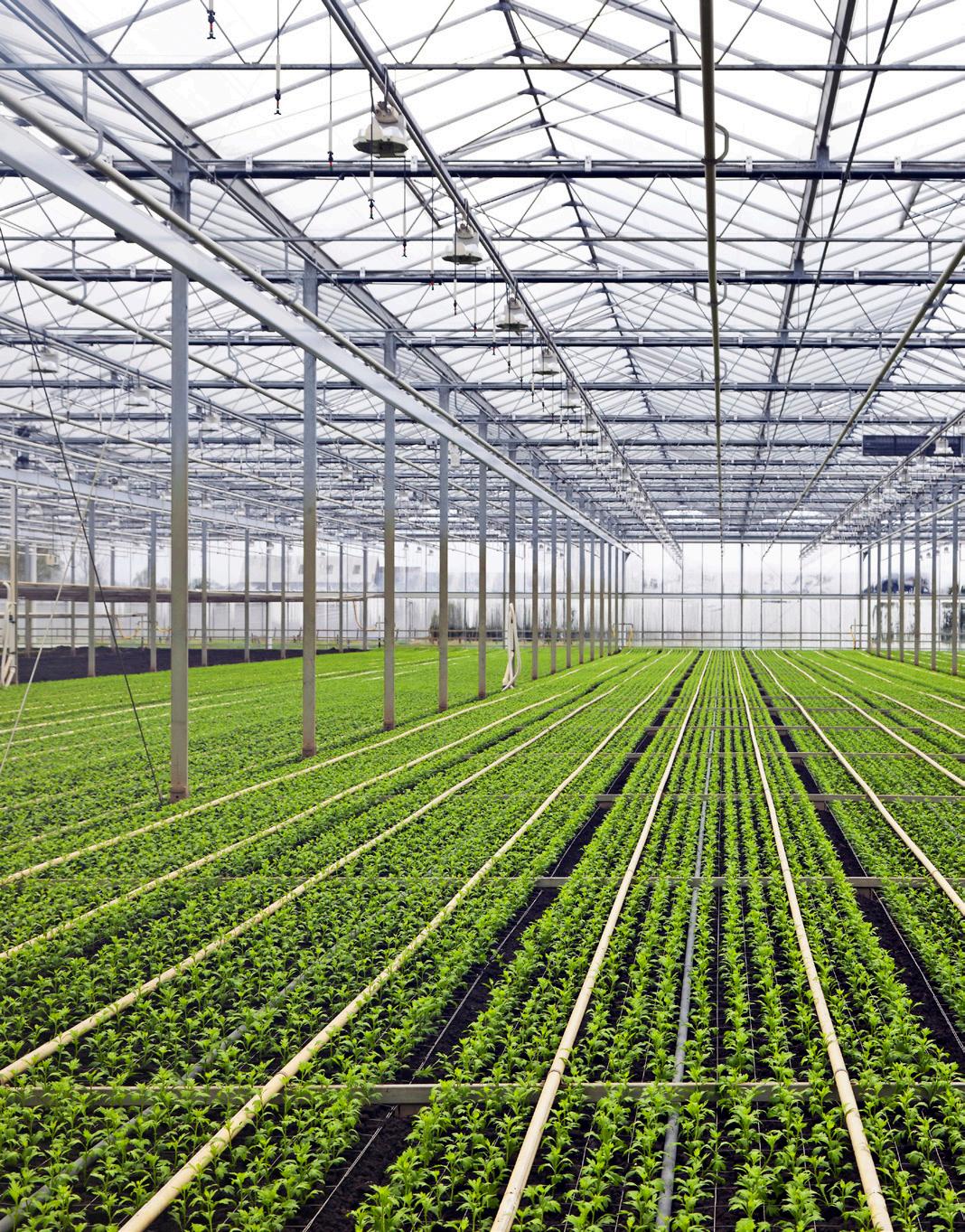
Expanding domestic horticultural production: this could help to reduce dependence on more climate vulnerable regions and add billions to the UK economy.46 Horticulture is a unique expansion opportunity because of the potential to increase production in controlled environments, such as greenhouses, which are more resilient to weather extremes.47
When manufacturers strengthen relationships with the farmers who supply them, supply chain resilience is enhanced. Farmers develop greater trust in who they’re supplying, and manufacturers can invest in their supply base on a long term, meaningful basis.
Emma Piercy, head of climate change and energy policy, Food and Drink Federation48
4. Infrastructure and logistics
Extreme weather events are increasingly disrupting the transportation, storage and manufacturing of food eaten in the UK.
What’s happening now?
Extreme weather in the UK is causing delays and higher costs:
– Blocked transport routes: heavy rain and storms are flooding warehouses and closing railway lines and ports. In 2022, stormy weather forced the port of Dover to close, delaying the critical and concentrated flow of perishable products into the UK from continental Europe.49
– Disrupted refrigeration: high summer temperatures are disrupting refrigerated transportation, storage and manufacturing. In 2022, manufacturing facilities had to reduce output as safe temperatures could not be maintained, leading to lost revenue.
– Working conditions: people working in factories and warehouses face dangerously high temperatures during heatwaves. An estimated 11 million labour hours were lost due to high heat exposure in 2022. 50
What’s to come?
Climate projections indicate that supply chains will be further tested. Extreme weather will increasingly disrupt road and rail transportation. By 2050, 46 per cent of roads and over half (54 per cent) of the UK’s rail network will be at risk of flooding. 51 Rising sea levels and storm surges will result in coastal flooding and more frequent port closures. 52
Climate change creates many risks for food manufacturers which employ nearly half a million people across the UK
North Shropshire, Muller UK and Ireland employs around 1,000 people58
Beverley and Holderness, Cranswick employs 1,500 people57
“ Adapting infrastructure requires more public and private investment.”
More food spoilage and waste is a risk, as perishable food is delayed and cold storage fails on hotter days. Businesses will also face higher energy bills and insurance premiums. Ultimately, higher costs for companies could be passed on to consumers through higher food prices.
Adaptation solutions
Greenhouse gas emissions must fall as rapidly as possible to mitigate against the worst effects of climate change. Adapting supply chain and manufacturing infrastructure also requires more public and private investment:
Infrastructure improvements: the UK’s roads, rail network and warehouses must be able to withstand weather extremes. New infrastructure should be constructed to cope with expected future conditions. Existing sites need retrofitting to improve drainage, ventilation and insulation.
Technological integration: sensor networks and artificial intelligence can help companies anticipate disruptions and more rapidly respond, minimising sourcing shortfalls.
Protection for workers: employers will need to maintain reasonable and safe working conditions, such as by moving to shift patterns that allow staff to avoid the hottest times of the day.
Climate mitigation and adaptation are complementary, not a trade-off. Cutting emissions reduces tomorrow’s risk; adapting operations and sourcing builds resilience today. For businesses, resilience is not a “nice to have”; it is a commercial imperative.
Institute of Grocery Distribution60
5. Food prices
Today, the poorest fifth of UK households would have to spend nearly half of their income on a government recommended healthy diet.61 As climate change increases food prices, healthy eating will become out of reach for many more people.
What’s happening now?
In today’s global food system, disruption to production anywhere in the world can drive up prices. Floods and heatwaves disrupt logistics, leading to more food waste and mounting costs for businesses. Ultimately, the effects of climate change mean people have to pay more.
– Food price inflation: in 2025, the price of beef, butter, milk, coffee and chocolate all rose due to the impact of extreme weather on production. These items drove almost 40 per cent of overall food price inflation, despite only comprising 11 per cent of the average shopping basket.62
– Higher meat and dairy prices: beef and dairy are experiencing higher inflation than other foods, including plant-based alternatives.63 In 2025, plant-based mince and meatballs alternatives became cheaper per gram than meat equivalents.64
– Health risks: the rising cost of fresh produce has forced many households, particularly those on lower incomes, to cut back on healthy foods such as fruit and vegetables.65 Higher costs risk smaller shops, in particular, reducing the amount of fresh produce they sell.
We live in a world where climate change is leading to rising prices and to more hunger. World food prices are up by 30%. The number of undernourished people is rising across the world. Here in the UK, food prices have increased by almost 40%, and one in eight people are skipping meals. That is because a warming planet is leading to drought and to failed harvests.
Jeevun Sandhur, Labour MP for Loughborough66
It would be remiss not to mention the impact of climate change on crops such as coffee, cocoa and palm oil. The net effect is that food is too expensive for the most vulnerable and the poorest in our communities. That has really difficult consequences.
John Glen, Conservative MP for Salisbury67
“
The Healthy Start Scheme could be enhanced to support low income households.
What’s to come?
Climate-induced disruptions across major food producing regions are set to worsen. Impacts on food prices are inevitable, although the level of impact remains uncertain. One study estimates that heatwaves and floods alone could increase UK food prices by as much as 34 per cent by 2050.68
Stockpiling by other countries driven by geopolitical instability, and supply chain disruptions due to international conflicts, risk compounding price shocks.
Higher food prices will disproportionately affect low income households. One in ten UK households already experience food insecurity.69 Ultimately, this is likely to increase social inequality, alongside diet-related ill health which already costs the economy £126 billion a year and causes 13 per cent of deaths in the UK.70, 71
Adaptation solutions
The UK can minimise the impacts of food price volatility:
Responsive policies: those at risk should be sheltered from the full extent of price rises. For example, the Healthy Start Scheme could be enhanced to support low income households to afford fresh produce.
Resilience building strategies: stockpiles, for example, can buffer against constrained supply, to increase food security.72 However, these strategies do not address climate change as a root cause of food inflation. They should be used in addition to, not instead of, climate mitigation and adapting production systems.
Increase the production and consumption of alternative proteins: this will reduce reliance on meat and dairy products which are subject to above inflation climate-driven price rises. Beef consumption already appears to be falling because of high prices.73 A wider array of protein rich products would give consumers more choice alongside expensive meat products, whilst creating new opportunities for UK farmers, boosting domestic self-sufficiency and lowering the climate impact of UK diets.74
Across
Adapting for greater food security
Even if global greenhouse gas emissions peaked today, further climate change is unavoidable, exposing the country to potentially devastating risks, including serious threats to food security. Adaptation can reduce risks, but it will be impossible to offset all the anticipated impacts.
Our recommendations to improve adaptation can only go so far. The government must continue to do everything in its power to reduce the impacts of climate change by cutting emissions fast.76
Effective adaptation requires concerted effort across government departments. Below, we provide two foundational recommendations essential to direct sustained activity. We then identify six areas where adaptation should rapidly be integrated into forthcoming and existing policies.
Provide direction
Set quantified, national adaptation targets for the food system in the next National Adaptation Programme (NAP4)
Dedicated targets are needed to ensure progress, covering food security and vulnerability to climate impacts. These will shift the UK's approach to food security from reactive to proactive. Owned across government, they will signal that all relevant departments need to improve resilience. Without this, departments risk working at cross purposes and longer term adaptation will continue to be deprioritised in favour of short term objectives.
Who should be responsible?
Department for Environment, Food and Rural Affairs (Defra), with cross government support
Establish a Food System Resilience Task Force to convene policy makers, food producers and experts across the agri-food sector
To drive the co-ordinated action needed to build a sustainable and climate resilient UK food system. This should sit within a broader advisory group that covers adaptation across the UK economy.
For effective policy making, partnerships are needed to overcome barriers to adaptation. To ensure cross government ownership, we recommend the task force is chaired by the Cabinet Office and attended by representatives from Defra and the Department for Business and Trade. Priority topics should include how the food sector can collaborate pre-competitively on solutions; how adaptation will be financed, given the limits on public expenditure and slim margins across the agri-food sector; and how responsibility for climate risk can be more equitably distributed across supply chains.
Who should be responsible?
Cabinet Office, with support from Defra and the Department for Business and Trade (DBT)
Embed adaptation across government
Forthcoming policies and strategies
Mandate UK Sustainability Reporting Standards for the food sector
This will force businesses to consider climate risks and invest in climate resilience, including mandatory development and disclosure of transition plans that include approaches to climate adaptation. It should extend to small and medium sized enterprises
Who should be responsible?
DBT, with support from departments and regulators across government
Support farmers to adapt to the UK’s changing climate
This can be done by delivering on the Land Use Framework’s commitment to embed adaptation into policy, and through integrating climate resilience into the Farming Roadmap. This should include clarifying how measures will be encouraged and supported over the long term.
Who should be responsible?
Defra
Publish a Horticulture Growth Strategy
A plan for scaling UK production of fruit, vegetables and pulses should also identify ways to increase controlled environment production, which is more climate resilient.
Who should be responsible?
Defra, in collaboration with DBT
Introduce a Good Food Bill as part of the food strategy
Healthy diets should be made accessible to more people and consumption of more diverse protein sources should be encouraged, to buffer against climate-driven price spikes which are more acute for meat and dairy products.
Who should be responsible?
Defra, with cross government support
Existing areas
Dedicate R&D investment to help farmers maintain productivity and profitability
The government must use its research programmes, like the Farming Innovation Programme, to support innovation in food production adaptation in the UK. Uptake of new approaches should be supported through increased peer to peer knowledge facilitated by initiatives like the Farmer Collaboration Fund.
Who should be responsible?
Defra and Innovate UK
Ensure the UK remains a competitive home for alternative protein companies
Continuing support should be provided for programmes that bring products to market faster, alongside investment in UK-based supply chain infrastructure. Expansion could be supported by a dedicated sector growth plan.
Who should be responsible?
DBT, Department for Science, Innovation and Technology, the Food Standards Agency and Innovate UK
Endnotes
1 M Kotz et al, 2025, ‘Climate extremes, food price spikes, and their wider societal risks’, Environmental research letters, vol 20, 081001
2 D Carrington, 4 December 2025, ‘ UK farmers lose £800m after heat and drought cause one of worst harvests on record’, The Guardian
3 Department for Environment, Food and Rural Affairs (Defra), 2024, UK food security report 2024
4 Defra, 2026, Global biodiversity loss, ecosystem collapse and national security
6 Climate Change Committee (CCC), 2025, Progress in adapting to climate change: 2025 report to parliament
7 The Food Foundation, 29 January 2025, ‘Dietary inequalities worsened in last two years as healthier foods grew more expensive’
8 Food and Drink Federation, 9 April 2025, ‘ UK food and drink manufacturers urge government to support industry’s growth ambitions, as new report reveals sector’s £37bn contribution’
9 Energy & Climate Intelligence Unit (ECIU), 2023, Climate, fossil fuels and UK food prices
10 Defra, 2026, op cit
11 S Talebian et al, 2024, Solutions for managing food security risks in a rapidly changing geopolitical landscape, Stockholm Environment Institute
12 Food and Agriculture Organisation of the United Nations (FAO), 2024, ‘Greenhouse gas emissions from agrifood systems’
13 CCC, 2025, op cit
14 ECIU, 2025, ‘England cereals and oilseeds harvests ranked’
15 ECIU, 2025, Estimated financial losses faced by UK farmers due dry weather impacts on key arable crops
16 ECIU, 2025, The impact of climate change on British farms and farmers’ mental health
17 Met Office, ‘Climate change in the UK’, (last accessed 13 March 2026)
18 Campaign to Protect Rural England (CPRE), 2022, Building on our food security
19 Environment Agency, 2025, National Framework for Water Resources 2025: water for growth, nature and a resilient future
20 Met Office, 7 February 2026, ‘Met Office science helps protect UK plants from rising pest risks ’
21 UK constituencies were ranked according to the area of arable farmland within their boundaries using data from: Defra, ‘ Structure of the agricultural industry in England’. The top ten per cent of constituencies with the largest areas of arable land were then selected for further analysis. Flood risk was assessed across all constituencies using the proportion of properties at risk of flooding from surface water, coastal flooding and rivers based on data from: Aviva, September 2025, Building future communities 2025: getting ready for a changing climate. A combined ranking was then produced to identify constituencies that have both a
high level of flood risk and a large area of arable farmland. A high risk represents any constituency ranked 85th or above and low risk represents any constituency ranked 22nd or below.
22 B Coupe, 30 October 2024, ‘Nature-friendly farming budget escapes cuts but leaves Defra with important decisions to make’, The Wildlife Trusts’ blog
23 As said to us by Dmitry Feoktistov, sustainability and climate change advisor at the National Farmers Union.
24 As said to us by William, a stock-free arable farmer from Worcestershire.
25 O Dwyer, 2 August 2023, ‘Revealed: thousands of chickens in transit died from heat stress on day UK hit 40C ’, Carbon Brief
26 C Palandri et al, 2025, ‘High-frequency data reveal limits of adaptation to heat in animal agriculture’, Science Advances, vol 11
27 Farmers Guide, 3 May 2023, ‘ Farmers losing up to £90,000 over heat stress in dairy cows, study shows’
28 Met Office, opt cit
29 F Garry et al, 2021, ‘Future climate risk to UK agriculture from compound events’, Climate risk management, vol 32, 10028
30 Defra, 13 June 2011, ‘Bluetongue restrictions lifted’
31 C Brayford, 11 December 2023, ‘Defra confirms restrictions on exports after bluetongue cases found on Kent and Norfolk farms’, Farmers Guardian
32 P Gale et al, 2009, ‘ The effect of climate change on the occurrence and prevalence of livestock diseases in Great Britain: a review ’, Journal of applied microbiology, vol 106, pp 1,409-1,423
33 UK constituencies were ranked according to the number of dairy farms within their boundaries using data from: Defra: ‘ Structure of the agricultural industry in England’. The top ten per cent of constituencies with the largest
number of dairy farms were selected for further analysis. Heat risk was determined as the top temperature recorded during the 2022 heatwave from: Friends of the Earth, 16 October 2025, ‘English parliamentary constituency environmental data’, used as an indicator of areas that are likely to experience high heat in the future. A combined ranking was then produced to identify constituencies. On this map, a high risk represents any constituency ranked 71st or above and low risk represents any constituency ranked 24th or below.
34 Heat risk determined as the top temperature recorded during the 2022 heatwave. This is used as an indicator of areas likely to be at risk of high temperatures during future heatwaves.
36 C Palandri et al, 2025, ‘High-frequency data reveal limits of adaptation to heat in animal agriculture’, Science Advances, vol 11
37 Quote taken from: Agriculture and Horticulture Development Board, 5 March 2025, 'Farmers need to act now and future-proof their business to changing weather patterns'
38 Defra, 2024, op cit
39 ECIU, 2023, Climate impacts on UK food imports
40 G Duncan and K White, 20 February 2026, ‘ Shortages on shelves as wet weather hits fruit & veg crops’, The Grocer
42 We used the UK trade dataset from: Office of National Statistics (ONS), 13 March 2026, ‘ Trade in goods: country-by-commodity imports’, to identify the countries where the UK imports most of its fruit and vegetables in 2024. These were determined as the countries with the highest imports by value (£GBP) to the UK. We then scaled these countries on the map by their climate risk. The climate risk measure for these countries was then estimated from: University of
Notre Dame, Notre Dame Global Adaptation Initiative (ND-GAIN) This index combines 45 indicators to assess both how vulnerable countries are to climate impacts, such as drought, heat and water stress, and how prepared they are to respond to these challenges. The 187 countries included in this index were then ranked from least vulnerable (number 1) to most vulnerable (number 187). On this map, a high risk represents any country with a ND-Gain ranked 71st or above and low risk represents any country ranked below 35th.
43 UK Health Security Agency, 2023, Health Effects of Climate Change (HECC) in the UK: 2023 report , chapter 9, ‘Climate change and food supply’
44 S Downes, 21 October 2025, ‘Penguins without chocolate: how climate change is to blame’, Sustainability Magazine
45 CCC, 2025, op cit
46 Green Alliance, 2025, A good food strategy for the UK
48 As said to us by Emma Piercy, head of climate change and energy policy at the Food and Drink Federation.
49 Defra, 2024, op cit
50 Green Alliance, 2025, Adapt to thrive
51 Environment Agency, 2025, National assessment of flood and coastal erosion risk in England 2024
52 Met Office, ‘ UK and Global extreme events – Wind storms ’, (last accessed 13 March 2026)
53 Food and Drink Federation, ‘Industry at a glance’, (last accessed 13 March 2026)
54 Large food manufacturers were identified from: The Grocer, 1 November 2024, ‘ The top 150 UK food and drink supplier ranking ’, from these the locations of major UK factories and the estimated number of employees were identified where available.
55 Nestlé, ‘Where we work in the UK & Ireland’ (last accessed 10 March 2026)
56 J Devonshire, 5 February 2021, ‘Production at Cadbury’s historic Bournville factory to increase by a third from 2022’, The Manufacturer
57 Cranswick, ‘Cranswick Country Foods Preston’, (last accessed 10 March 2026)
58 Make it Market Drayton, ‘Business Directory: Muller Yoghurt’, (last accessed 10 March 2026)
59 A Nowell, 1 June 2021, ‘The food manufacturing plant that has employed Wiganers for decades’, Wigan Today
60 Quote taken from: Institute of Grocery Distribution, 9 October 2025, ‘Understanding the impacts of climate on UK food’
61 The Food Foundation, 2025, The broken plate 2025
62 G Smeeton, 21 October 2025, ‘ Why food prices are still rising: butter, beef and milk to blame’, ECIU
63 Green Alliance, 2025, Recipe for resilience
64 Ibid
65 S Goudie, 27 February 2024, ‘Families cutting back on healthy food risks widening health inequalities ’, The Food Foundation
66 Quote taken from: UK Parliament, House of Commons Hansard, Westminster Hall, 15 January 2026, vol 778
67 Quote taken from: UK Parliament, House of Commons Hansard, Westminster Hall, 14 October 2025, 'COP30: food system transformation', vol 773
68 The Autonomy Institute, 2025, On the horizon: climate-induced inflation and the price of food
69 The Food Foundation, 2025, Roadmap to reducing food insecurity in the UK
70 Nesta, 2 July 2025, ‘Obesity and excess weight costing UK economy £31 billion a year in lost productivity ’
71 Food Standards Agency (FSA), 2022, Our food 2021: an annual review of food standards across the UK
72 T Lang et al, 2025, Just in case: 7 steps to narrow the UK civil food resilience gap, National Preparedness Commission
73 Green Alliance, 2025, The meat of the matter
74 Z Sun et al, 2022, ‘Adoption of plant-based diets across Europe can improve food resilience against the Russia–Ukraine conflict ’, Nature Food, vol 3, pp 905-910
75 Climate-induced food percentage price spikes are based on data published by: M Kotz et al, 2025, ‘Climate extremes, food price spikes, and their wider societal risks’, Environmental Research Letters, vol 20
All GBP prices are based on approximate product prices for the time period but are strictly illustrative.
Coffee: S Butler, 15 March 2025, 'Price of instant coffee rises by up to 40% in a year for some brands, Which? finds', The Guardian
Potatoes: G Duncan, 22 February 2024, 'Potato prices soar as poor weather affects supply', The Grocer
Olive oil: G Hedgecoe, 6 December 2023, 'Olive oil price skyrockets as Spanish drought bites', BBC News
76 For more information on how to reduce the climate impact of the food system, see our existing work, such as: Green Alliance, 2023, Shaping UK land use; Green Alliance, 2024 , Rethinking the food system for health, climate and nature; and Green Alliance, 2025, The climate emergency brake