TR AVEL, CULTU R E, GASTRONOMY & MO RE
RESTORATION MODE:



RESTORATION MODE:
BY NENA DIMITRIOU
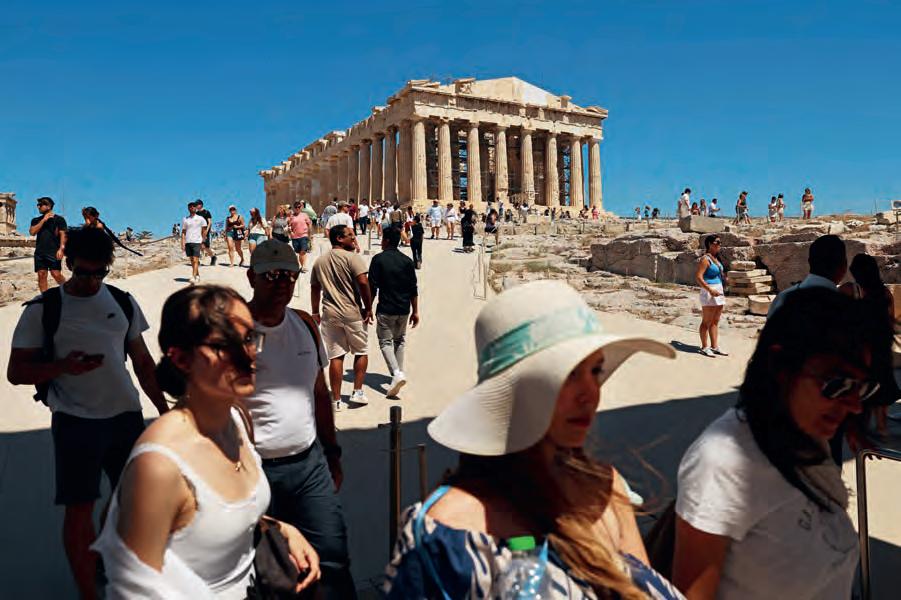
THERE IS EVERY REASON to take pride in Athens’ tourism success. According to Bank of Greece data processed by INSETE, Attica welcomed 9.7 million visitors in 2024 – the highest number in the country – while Athens International Airport handled a record 33.99 million passengers. The city’s hotels posted an occupancy rate of 77.1%, with an average room rate of 177 euros, confirming that Athens is no longer simply a gateway to the islands, but a destination in its own right – and one that is becoming increasingly popular year-round.
Success, however, comes at a price. Nearly 60,000 short-term rental properties were registered across Attica in 2024 – the highest concentration in Greece – and more than one in three short-term rental nights nationwide took place in the region. The city’s fabric is gradually changing. In the historic center, apartment buildings now seem to have more lockboxes for visitors than doorbells for residents, and brunch cafés continue to replace the neighborhood shops that once served the everyday needs of local communities.
It’s often said that, even if you buy a home in New York, it takes ten years before you can call yourself a New Yorker. Cities with strong identities often have such thresholds. They demand that you learn their rhythms, endure their contradictions, and earn your place within them. Athens, by contrast, has always been more porous; it doesn’t put up barriers or keep its culture behind locked doors, and it doesn’t draw rigid lines between visitor and resident. That openness is one of its greatest strengths, even if it’s a vulnerability, too.
Still, Athens can never be reduced to a tourism product. However much it’s photographed, promoted, and consumed as a destination, it always resists being fully known. Every time you think you’ve understood the city, it reveals another side of itself. This year, even its greatest – and seemingly most immutable – landmark, offered something new. On June 15, some 220 years after Lord Elgin’s desecration, the results of the painstaking restoration of the west pediment of the Parthenon, carried out by the Acropolis Restoration Service, were finally unveiled.
Athens may indeed be a city with few defenses, continually reshaped by desires projected onto it, but it still possesses one quality that no amount of tourism can diminish: the capacity to surprise.•

12 | CITY NOTES
Where to go and what to see – your cultural compass for the capital.
38 | AT HENS, STILL BECOMING
From restored ancient landmarks to pedestrian routes linking monuments, the Greek capital enters a new chapter of reinvention.
46 | TH E CITY AS MUSE
Ten Athenians trace how the light, the rhythm and the chaotic energy of the city have an impact on their creative lives.
64 | HI T THE BRICKS
In which a world-weary scribe argues for the unique charms of the Greek capital, or something of that sort.
78 | LO ST EDEN
A century-old garden-city vision still lingers among quiet squares, artists’ homes, pockets of greenery and one famously exiled Eve.

86 | HIDDEN LAYERS
Ancient walls, buried waterways, sacred treasures and wartime shelters reveal the past still present beneath familiar streets.
98 | T HE ART OF REINVENTION
At EMST, the National Museum of Contemporary Art Athens, the former FIX brewery tells a new story of art and renewal.
106 | SO FT POWER
Greek creators are revisiting textile traditions with an experimental eye, giving thread a new place in contemporary art, design and fashion.
MODA BAGNO
50 Anapafseos Str, Vrilissia 152 35, GR T +30 2108036700 info@modabagno.gr modabagno.gr internistore.com rimadesio.com
114 | DRESSED F OR THE CITY
A fashion-minded shopping trip.
122 | WHE RE ATHENS DRINKS WINE NOW
New venues show how the city supports a more open, everyday wine culture.
132 | IN F ULL VIEW AT LAST
The Parthenon is free of external scaffolding for the first time in two decades.
140 | ST ILL READING GREECE
The Gennadius Library marks its centennial.
152 | SOPHIST, PATRON OR TYRANT?
Meet Herodes Atticus, an important and controversial local benefactor.
160 | ODYSSEUS AND T HE CITY OF ATHENA
Not Athenian, this hero was nonetheless aligned with the city’s ideals regarding intelligence, cunning and invention.
168 | THE CAPITAL’S CANOPY
Athens has always been graced with trees, and benefited from them. Today, their presence, under threat in a warmer world, may be more important than ever.
EXECUTIVE EDITOR
Alexis Papahelas
PUBLISHED BY:
Nees Kathimerines Ekdoseis
Single Member S.A. Ethnarhou Makariou & 2 Dimitriou Falireos, Neo Faliro, 185 47 Piraeus Greece
EDITOR-IN-CHIEF
Giorgos Tsiros tsiros@kathimerini.gr
DEPUTY EDITOR
Nena Dimitriou nenadim@kathimerini.gr
EDITORIAL COORDINATOR
Niki Agrafioti ΜΕΤ 230408


Where to go and what to see – your cultural compass for the capital.
BY THE GREECE-IS TEAM
THE ACROPOLIS MUSEUM’S new anniversary exhibition traces the extraordinary story of how Greek art journeyed to Italy and stamped its influence on Western civilization.
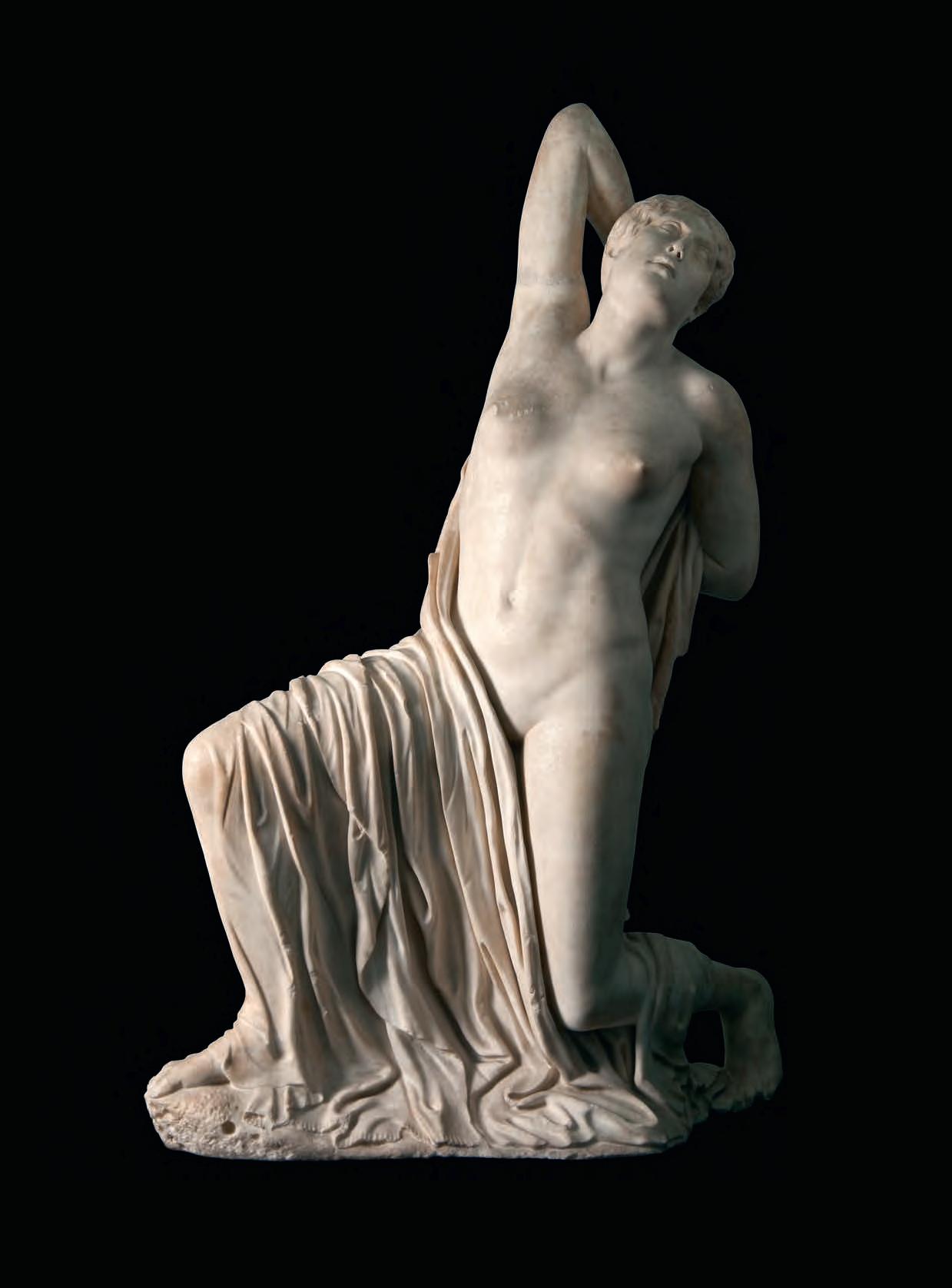
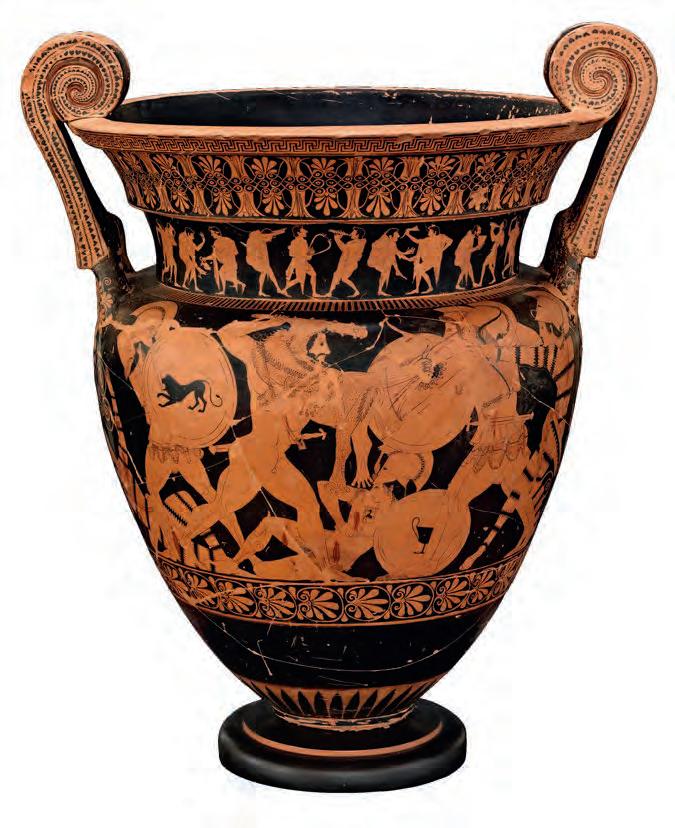
Rome vanquished Greece but, as the Roman poet Horace observed, “Captive Greece captured her fierce conqueror.” A new exhibition, with free entrance, at the Acropolis Museum explores how that happened.
Presented as part of the Museum’s 17th anniversary celebrations, the exhibition “Inspirations: Ancient Art Living in Italy” brings together 38 exceptional works from some of Italy’s most important museums. Most of these pieces do not travel abroad at all, making this a rare chance to encounter masterpieces usually seen only in Italian collections. The exhibition follows the remarkable journey of Greek art from the first contacts between Greek traders and the peoples of Italy in the 8th century BC to the rise of Rome and beyond. Visitors discover how Greek styles, myths and ideas were embraced by Etruscans and Romans, shaping everything from notions of taste to concepts of education, culture and identity.
Works by modern Italian artists such as Antonio Canova, Alberto Savinio and Giorgio de Chirico reveal how the creative dialogue between Greece and Italy continued into the 20th century. duncan howitt-marshall → To 30/08/2026, Acropolis Museum, theacropolismuseum.gr
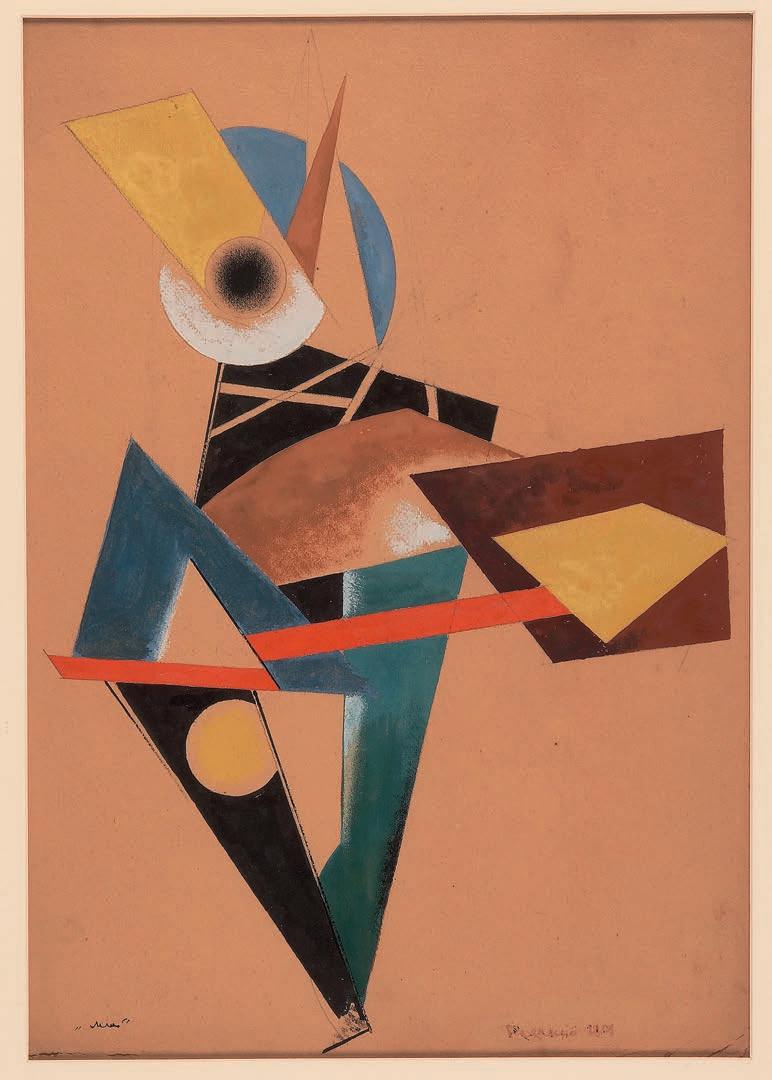
FROM KAZIMIR MALEVICH’S “ Black Quadrilateral” to “Suprematist Cross” by his student Ilya Chashnik and El Lissitzky’s “Study for the Rosa Luxemburg Monument,” the Russian Avant-Garde emerges as a radical break from academic painting, traditional aesthetics and firm boundaries between art and life. Presented at the National Gallery 30 years after the Costakis Collection was first shown in Greece, “The Avant-Garde World: City, Nature, Universe, Human” revisits a movement that sought to reinvent the world from the ground up. Paintings, architectural studies, book covers, posters, theater sets, shop signs and workers’ uniforms reveal an ambition to extend art into every aspect of daily life. At the center of the story is George Costakis, the collector who assembled one of the most important collections of European modern art. xenia georgiadou
→ National Gallery – Alexandros Soutsos Museum, 50 Vasileos Konstantinou, nationalgallery.gr
To 27/09/2026
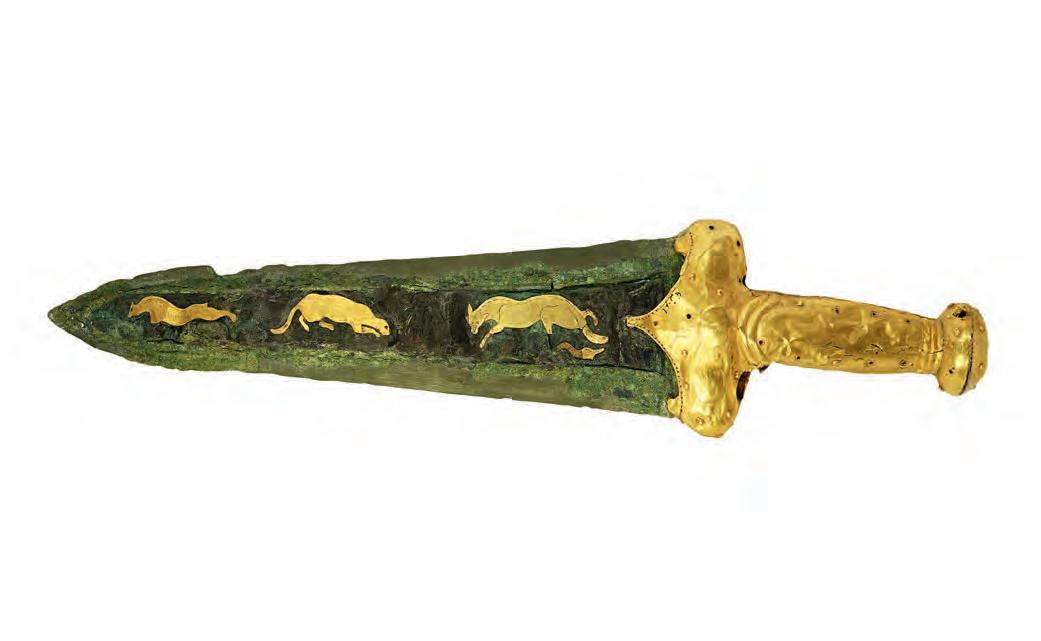
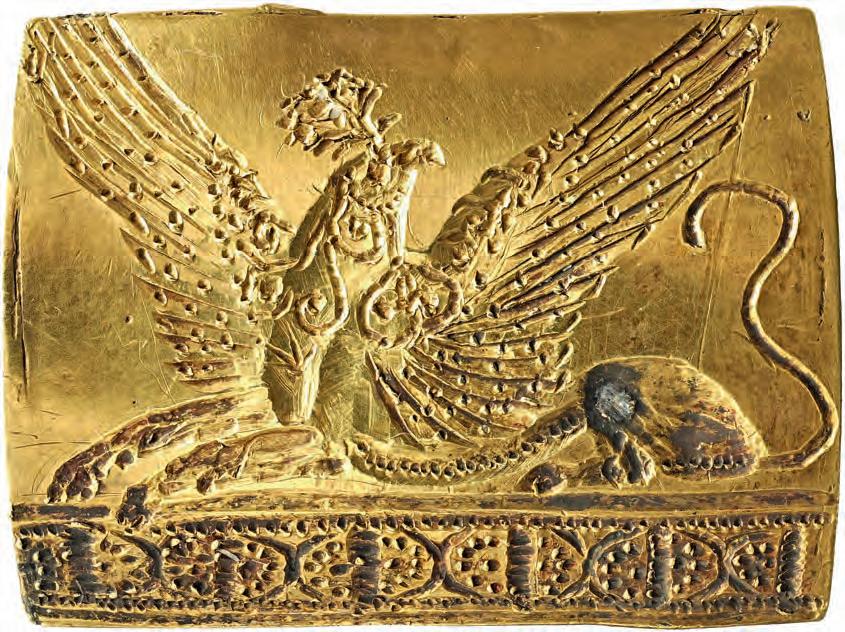
PRESENTED IN COLLABORATION with the Ephorate of Antiquities of Messenia, the J. Paul Getty Museum and the University of Cincinnati, the exhibition “Pylos of Nestor: A Mycenaean Kingdom Revealed” traces the formation of Messinia’s Mycenaean cultural identity from the 17th to the 14th century BC. Through 225 antiquities from 13 archaeological sites, the exhibition follows the transition from a world of powerful local chiefdoms to the emergence of a unified kingdom controlled from the palace at Ano Englianos, traditionally associated with the legendary figure of Nestor. Highlights include the spectacular finds from the undisturbed tomb of the Griffin Warrior, whose discovery in 2015 transformed our understanding of Mycenaean Messinia. xenia georgiadou
→ National Archaeological Museum, 44 Patission, Athens, namuseum.gr To 31/10/2026
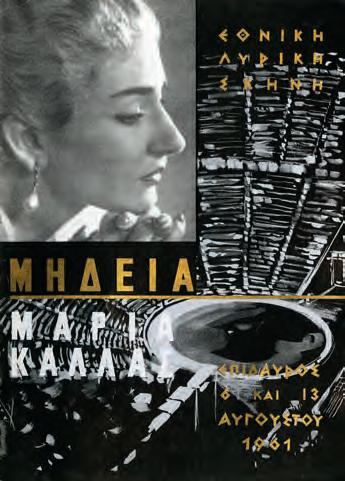
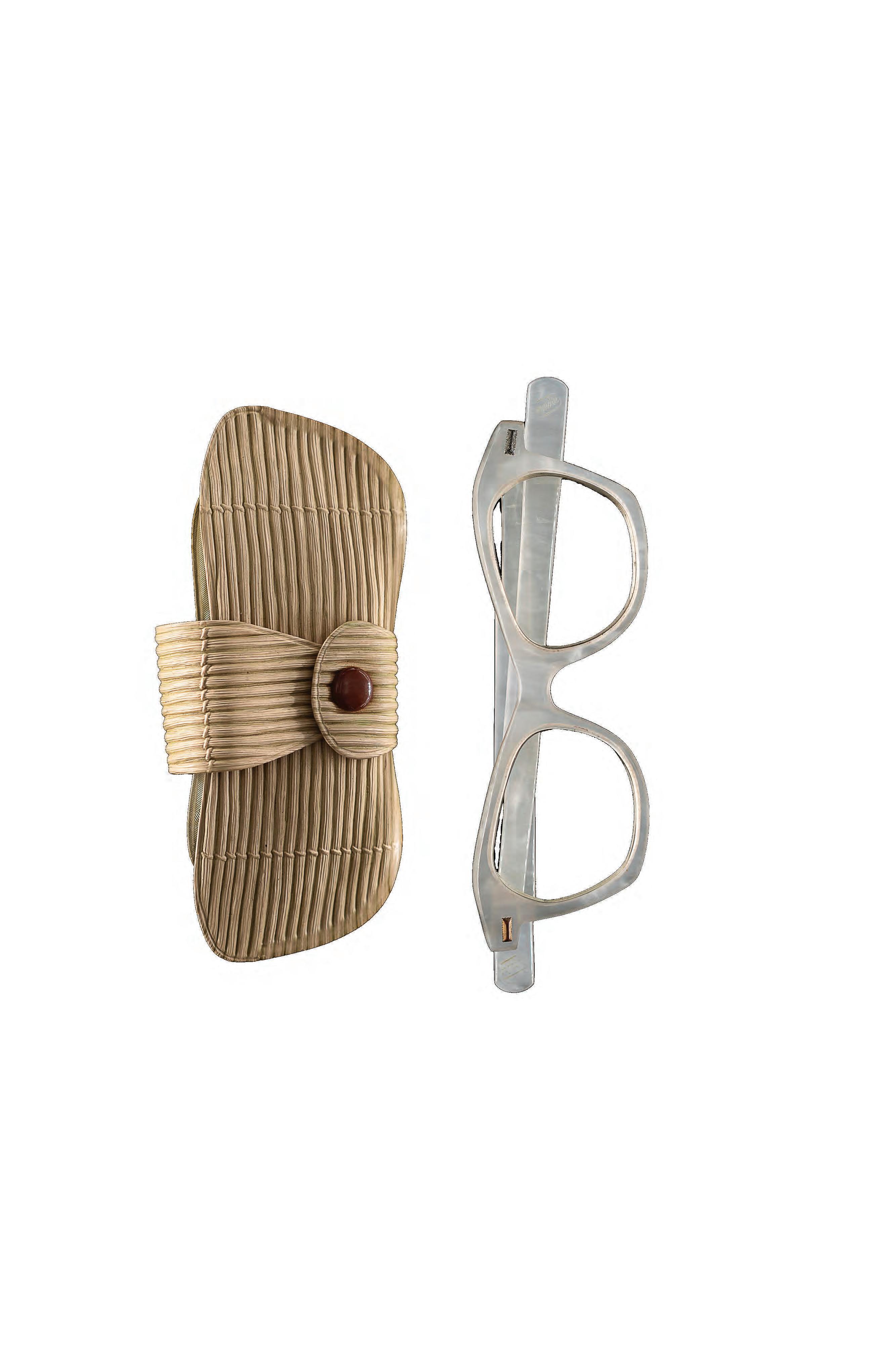
THE WORLD HAS NEVER lost its fascination with Maria Callas. La Divina, the Greek-American soprano whose voice, discipline and dramatic power changed opera forever, remains as magnetic for her artistry as for the private mythology that still surrounds her. At Epidaurus, the Greek National Opera revived Luigi Cherubini’s “Medea,” with Italian soprano Anna Pirozzi in the title role that Callas made legendary there in 1961. At the Benaki Museum of Greek Culture, (1 Koubari Street), “Maria La Callas: The Art of Italian Costume Design in the Film” runs through September 13, presenting costumes designed by Massimo Cantini Parrini and worn by Angelina Jolie in Pablo Larraín’s film “Maria.” In the heart of Athens (44 Mitropoleos Street), the Maria Callas Museum offers an immersive, family-friendly encounter with the diva’s world, from artworks, evening gowns and personal objects to stamps bearing her image. panagiotis koustas


You know the name, discover the museum!
An Introduction to Alekos Fassianos
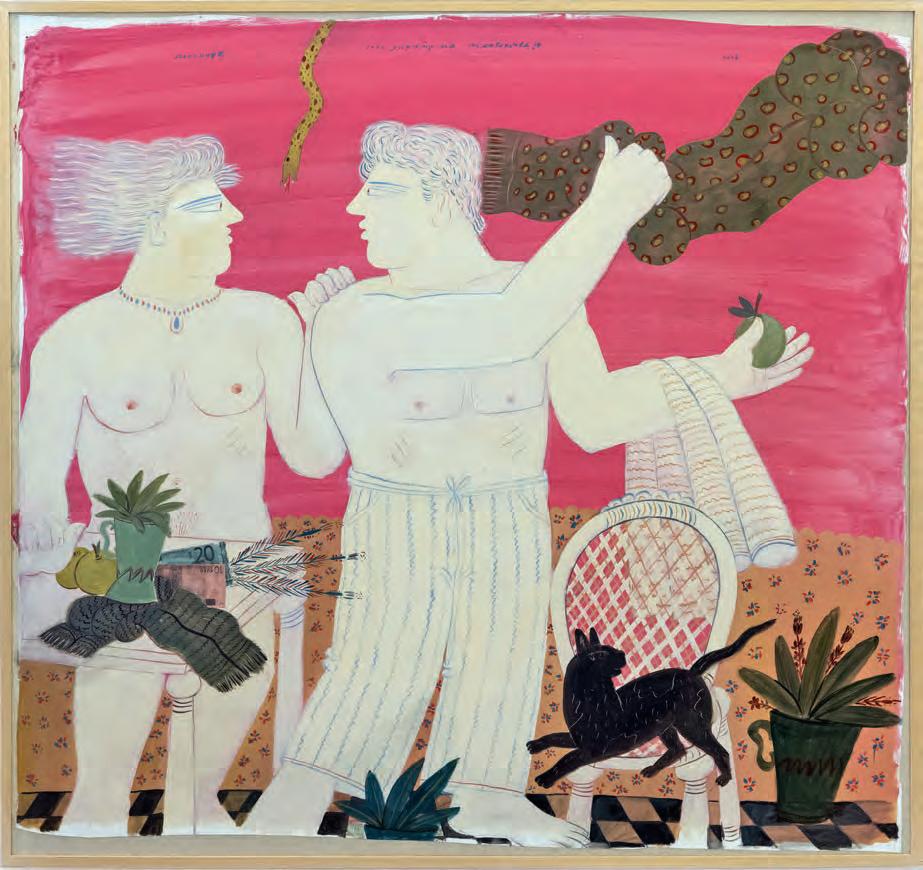
HE DESIGNED COSTUMES and sets for theatrical works by Sartre and Ionesco, illustrated books by Louis Aragon and Guillaume Apollinaire, and succeeded in placing his mythological figures, his Cyclists and Smokers, in collections the world over. Alekos Fassianos, one of the most distinctive voices in modern Greek art and an important figure in postwar European painting, was born in 1935 in the neighbourhood of Aghios Pavlos in Metaxourgeio, in a neoclassical house with an inner courtyard. Today, on that very site, stands the museum that bears his name, dedicated to a multifaceted art career that began with his studies in 1956 and ran until his death in 2022. Visitors encounter artworks inspired by Byzantine art, ancient Greek history and contemporary Athens, alongside furniture, lighting fixtures, door handles, toys and ceramics, objects he made by hand with the same joy and inventiveness with which he painted. Until October 11, they can also enjoy the temporary exhibition “Malvina Panagiotidi: Bucolic Fever – Dialogue with Alekos Fassianos.”
xenia georgiadou
→ Alekos Fassianos Museum, 15 Neofytou Metaxa, alekosfassianos.gr


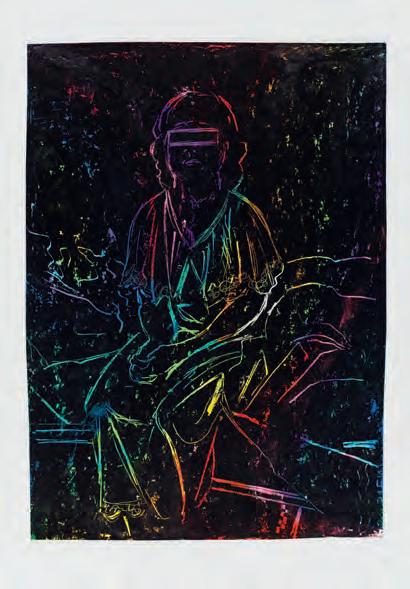
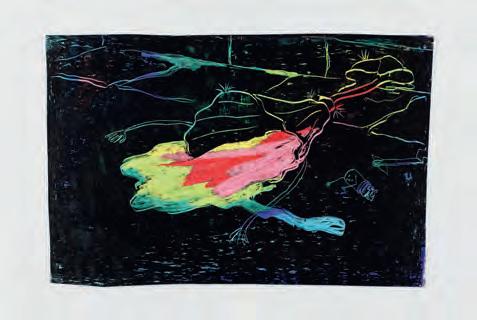
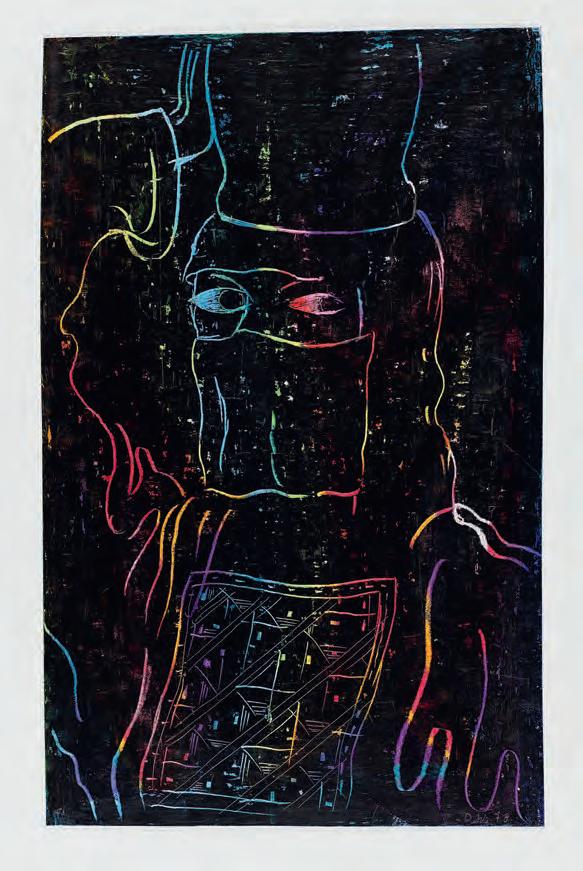
JUST STEPS FROM the bustle of Monastiraki’s flea market, antique shops, and Roman Agora, a light-filled gallery with views of the Acropolis and the Parthenon offers a welcome pause from the noise of the city. Set on the upper floor of a prewar building on Pandrossou Street, above the family-run Martinos Antique Shop – an Athens fixture since 1926 – Melas Martinos is one of the city’s most distinctive contemporary art spaces. Run by collector and art advisor Andreas Melas, the gallery is worth seeking out not only for its exhibitions, but also for the way it brings
together Athenian history, architecture and the international art scene. Through September 12, Melas Martinos presents “Neocolor,” an exhibition of works made by Swiss artist David Weiss in 1977 and 1978, before his internationally celebrated collaboration with Peter Fischli. Using Neocolor wax pastels and the grattage technique, Weiss created vivid images that emerge from dark surfaces, evoking the energy of Zurich’s artistic and musical counterculture in the late 1970s. georgia fekou → Melas Martinos, 50 Pandrossou, melasmartinos.com
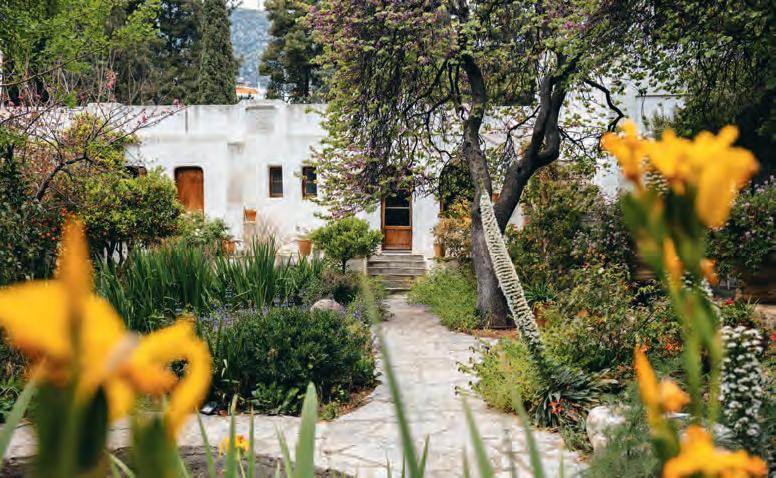
EVEN BEFORE VISITORS enter the Vorres Museum in Paiania, the garden wins them over. The small patches of greenery that once lay among the ruins of old houses in the traditional village of Paiania have today become a single, tranquil Mediterranean landscape, with cypress trees, pines, strawberry trees, rose bushes, salvias, ponds with water lilies, bamboo and shaded corners. The sustainable planting, of considerable botanical interest, is resilient and requires little water.
Just half an hour from Athens via the
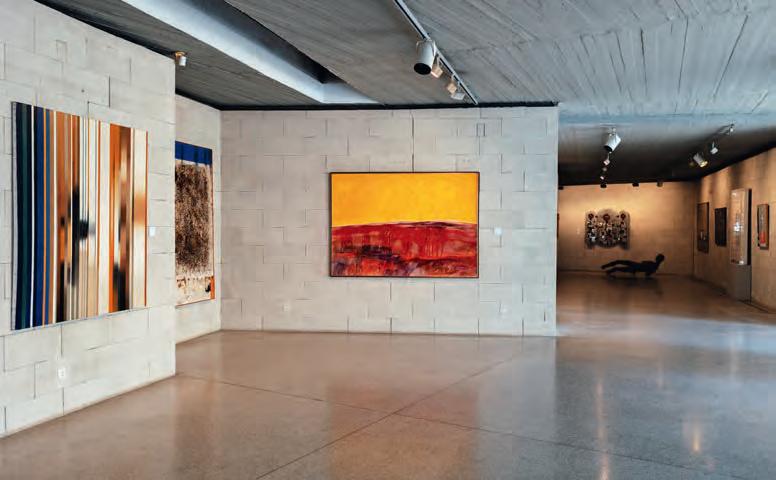
Attiki Odos, the museum houses a distinctive collection that straddles the folk traditions of Greece and contemporary Greek art. Currently, the exhibition “Retrospectives: Selections from the Vorres Museum Collection,” curated by Evita Tsokanta featuring works by major Greek artists such as Alexis Akrithakis, Niki Kanagini and Jannis Kounellis, sheds light on lesser-known aspects of the collection. nena dimitriou →Vorres Museum, 1 Parodos Diadochou Konstantinou, Paiania, vorresmuseum.gr
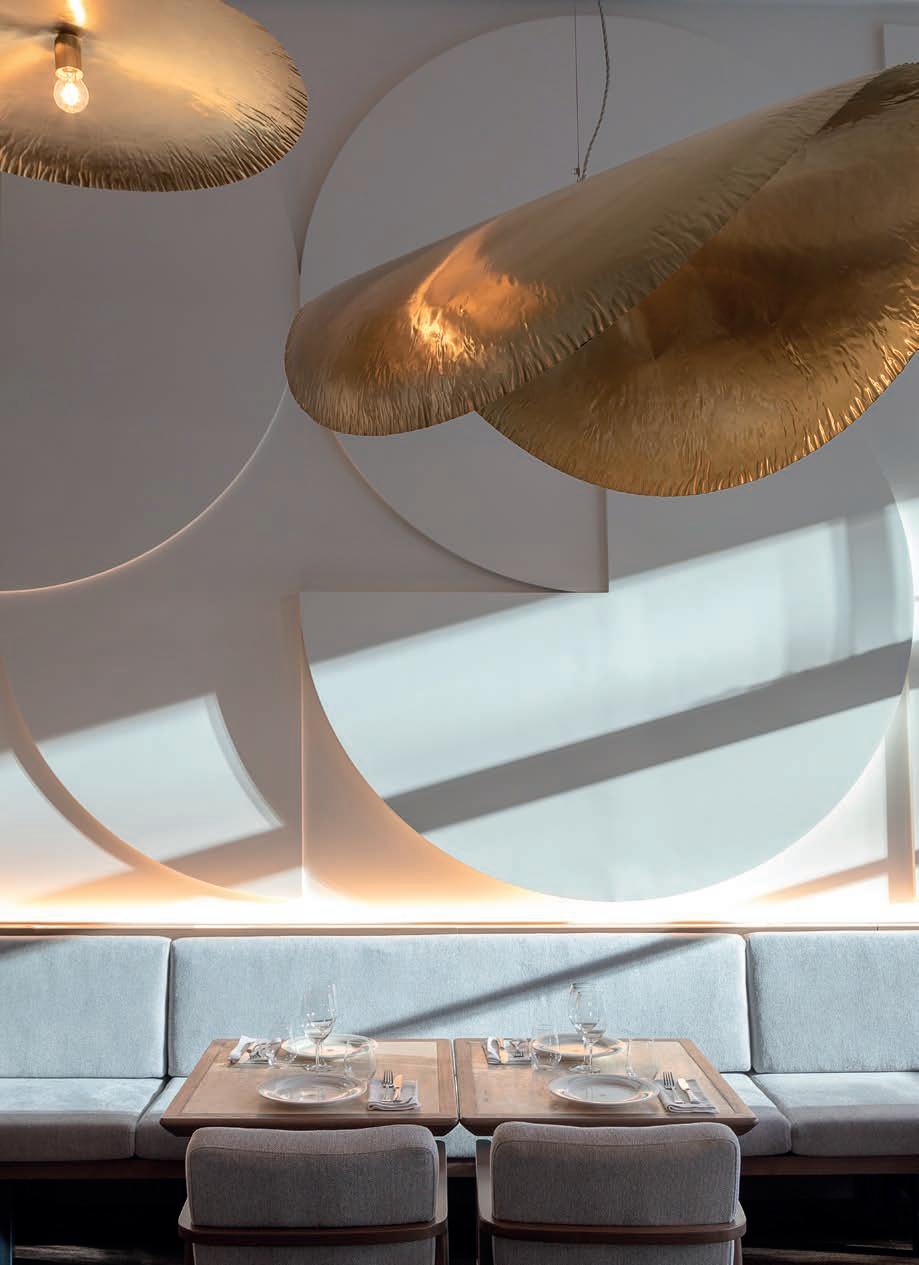
IN THE 1950S AND ’60S , Fokionos Negri was known as the “Via Veneto of Athens,” a fashionable promenade where the capital’s smart set came to see and be seen. Its old glamour may have faded over time, but in recent years this broad pedestrianized street in densely populated Kypseli has found a new rhythm. Cafés, bars and restaurants now share the scene with dog walkers, strolling families and children at play in a neighborhood abuzz with life.
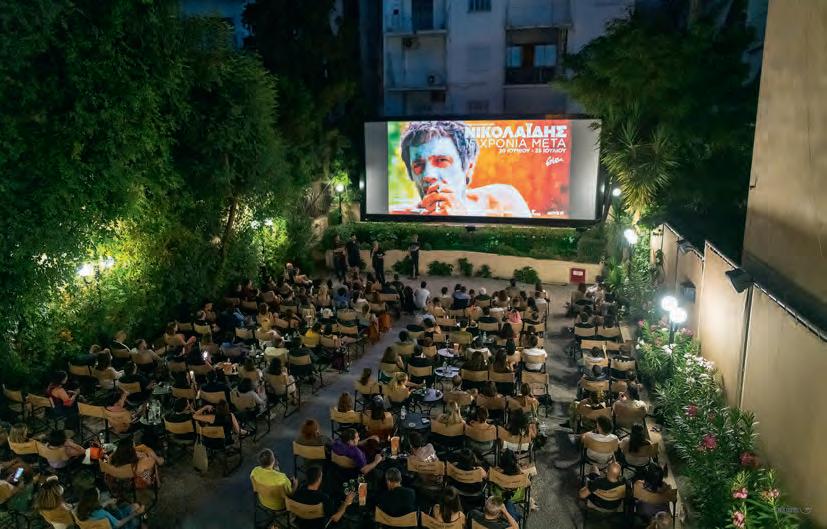
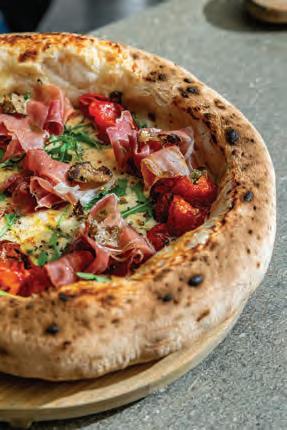
Begin your walk just before sunset, taking in the striking mix of Art Deco, Bauhaus and modernist apartment buildings before stopping at ¡Topa!. Here, refreshing vermouths, served with an olive in the glass, and a wine list of nearly 100 labels accompany small plates inspired by the cuisines of Crete and northern Spain. A little farther down the street, Lisa serves sourdough pizzas with inventive toppings. End the evening with a screening at Cine Stella, the historic open-air cinema tucked away on Tenedou Street, just off Fokionos Negri. georgia papastamou

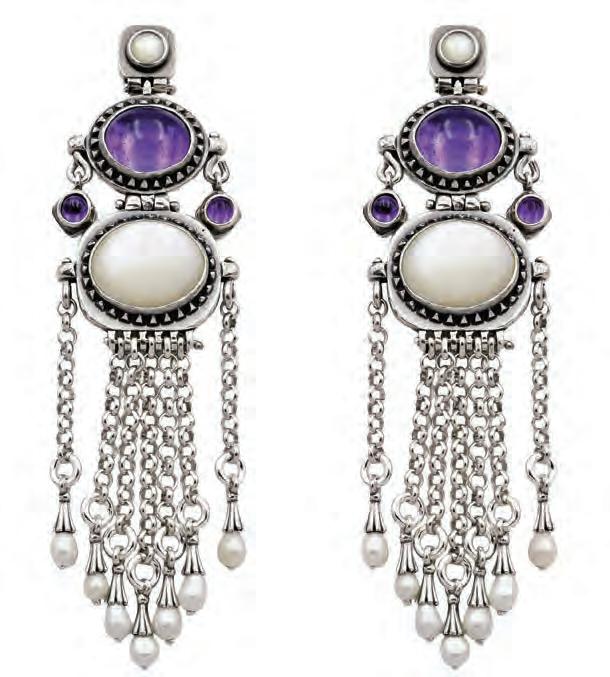
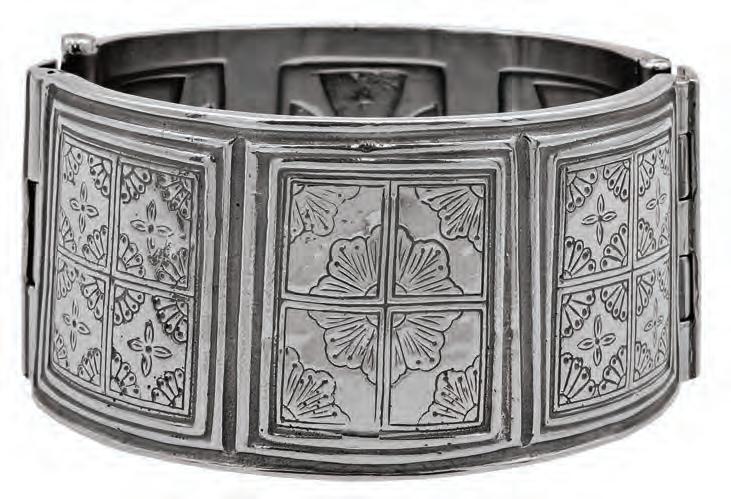
4, Kar. Servias str. (Kalliga arcade), 105 62 Athens
210 32 32 692
www.koukosjewellery.gr koukosjewellery@gmail.com koukosjewellery
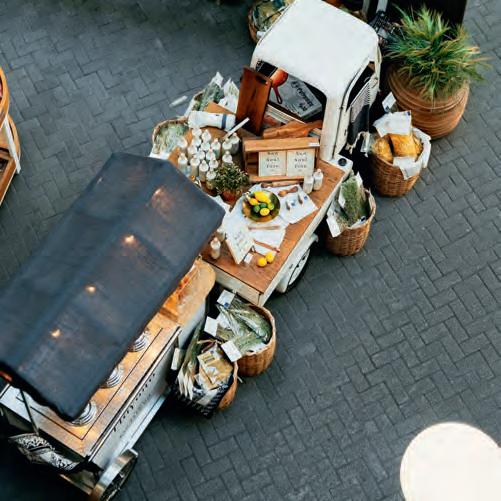
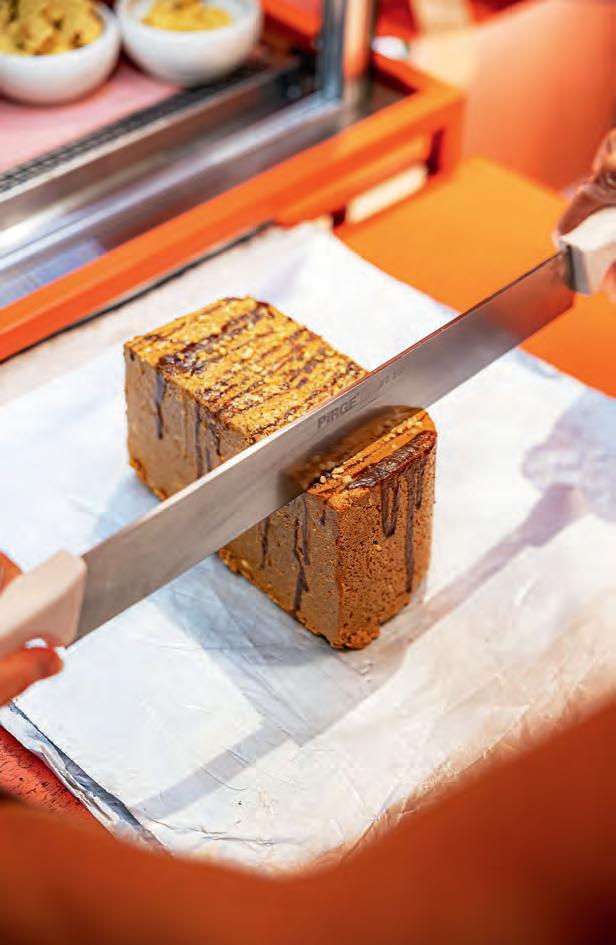
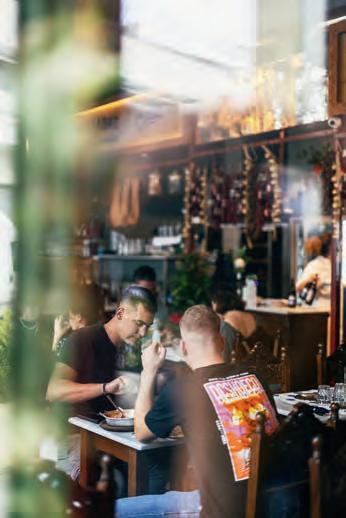
ATHENS IS FULL OF FLAVORS worth packing for the journey home. At the intersection of Evripidou and Athinas streets, amid spice shops, traditional grocers and delicatessens, the city’s edible souvenir scene comes into sharp focus. A good first stop is Ta Karamanlidika tou Fani (52 Evripidou), known for its cured meats, including its deeply aromatic pastourma. Bold, savory and coated in a fragrant spice paste, it is best enjoyed with Greek ouzo or tsipouro. A little farther uphill, toward Syntagma, ERGON House (23 Mitropoleos) offers a contemporary take on the Greek pantry inside one of the city’s most food-focused hotels. Its groundfloor marketplace brings together extra-virgin olive oils, tinned fish, fruit preserves and beautifully packaged Greek staples. Keep an eye out, too, for dried figs; prized since antiquity as a source of energy, they were one of the ancient Greek world’s most valuable trade products. Just a few steps away, on Voulis Street, the bright, colorful Wild Souls (36 Voulis) is a smart stop for one of Athens’ most satisfying halvas. Made without palm oil or preservatives, it comes in several flavors; the versions with carob syrup and Aegina pistachio are among the most popular. They make a distinctive gift, and they’re the perfect energy boost during a food walk through central Athens. Alternatively, try the nut butters, made from 100% freshly roasted nuts. georgia
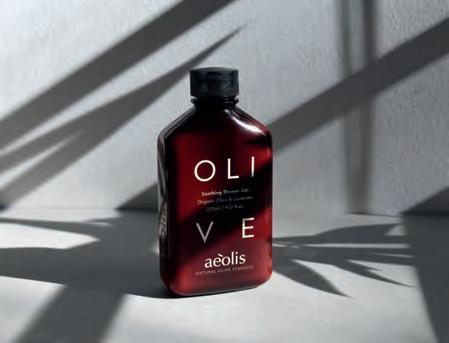

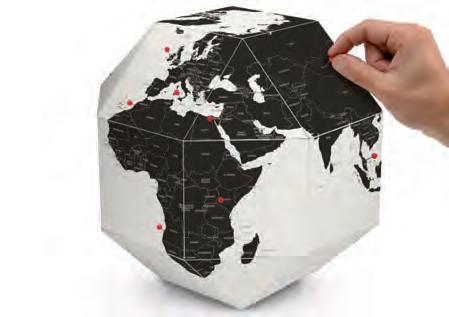
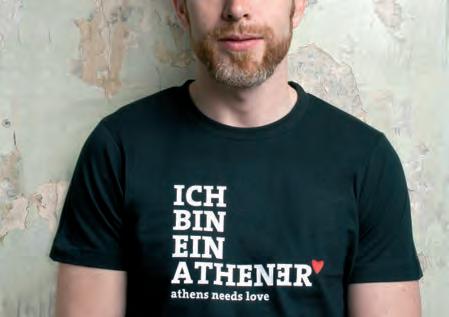
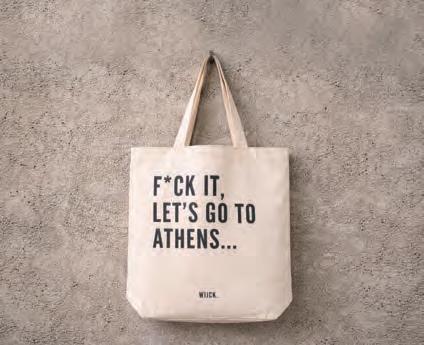
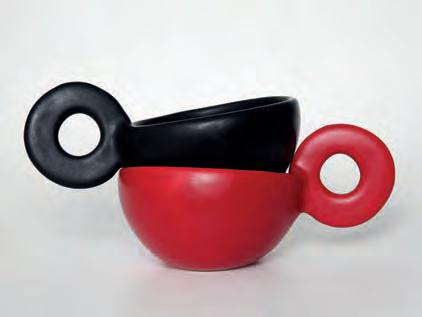
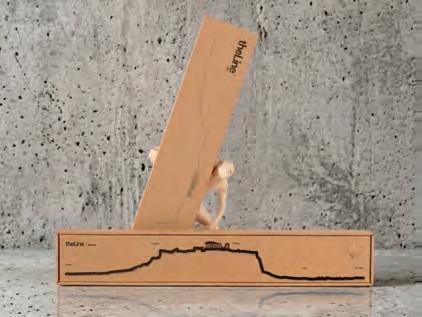


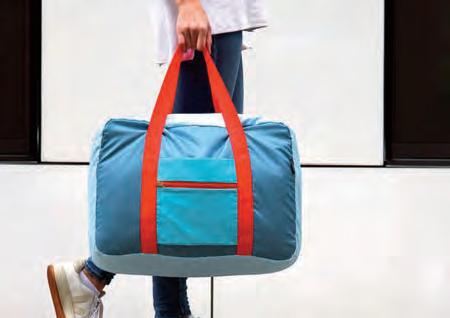



URS FISCHER’S new exhibition at Gagosian Athens, “Eugène Atget,” named after the pioneering French photographer, takes the contemporary city as its subject. Inspired by the urban landscape of Los Angeles, the Swiss artist combines silkscreen, painting, stencil and photography to create compositions in which text, portraits and images collide and overlap. Moving between representation and abstraction, the monumental works on display capture both the restless energy of city life and the visual overload of the contemporary world.
xenia georgiadou
→ Gagosian, 22 Anapiron Polemou, gagosian.com
To 12/09/2026
IN AN AREA ONCE defined by Athens’ traditional trades – doorknob shops, locksmiths, plumbing suppliers, dye works and tailors – a new generation of cafés, wine bars and restaurants has begun to change the rhythm of the neighborhood. At the entrance to historic Stoa Kairi, just steps from the Central Municipal Market, September 18 is a quietly stylish, all-day option in this old commercial pocket of the city.
Part Scandinavian in mood, part Mediterranean in spirit, it serves breakfast dishes such as a tender, buttery French omelets, poached eggs with hummus and za’atar, and yogurt with tahini, thyme honey and poached pear. Later in the day, stop by as much for the interesting crowd as for dinner, or simply settle in with a glass of wine, a cheese plate or one of the raw starters.
georgia papastamou
→ September 18, 6 Kairi, Tel. (+30) 210.321.9784

www.greek-archaic-kori.com
info@greek-archaic-kori.com
+30 210 52 45 955
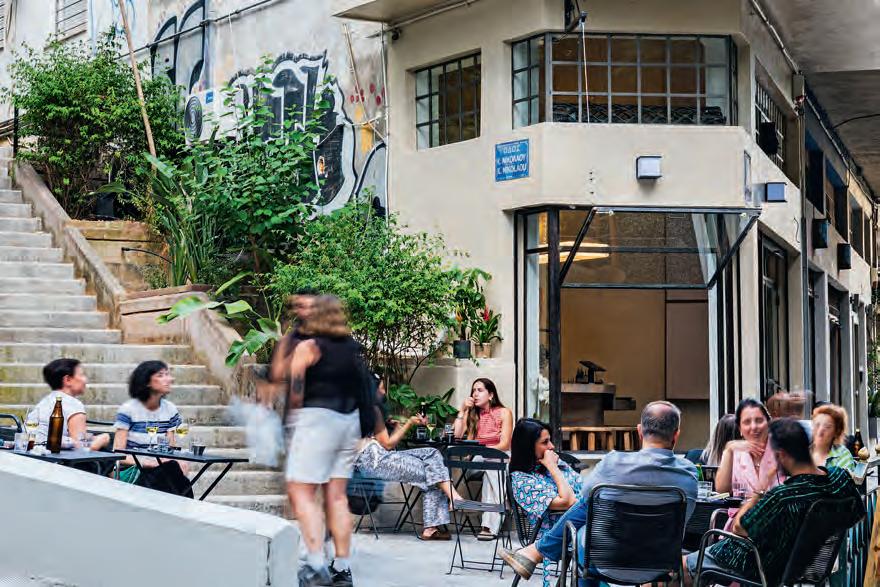
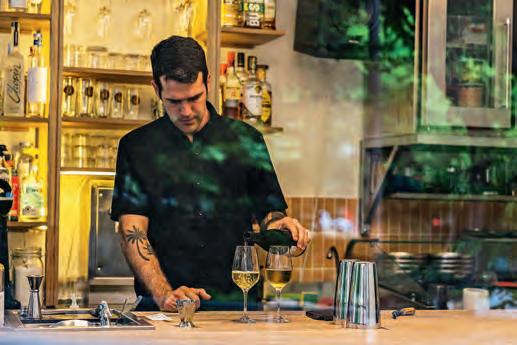
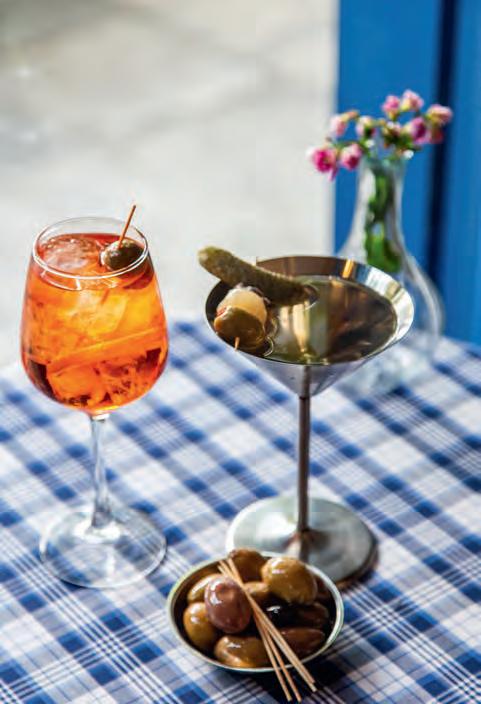
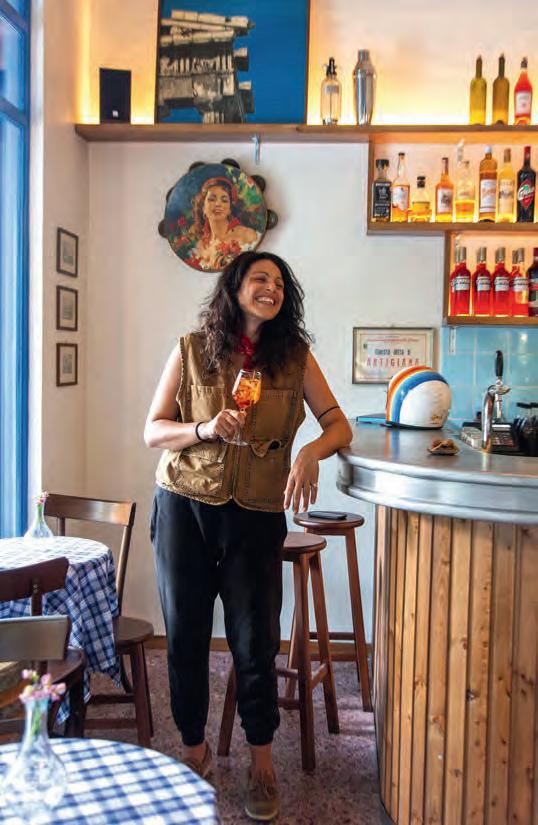
JUST BEYOND THE HISTORIC center, Neos Kosmos has become one of Athens’ most exciting neighborhoods for those who’d rather follow the locals than the guidebooks. Start early at Amore (1-3 Menechmou), a spritzeria that’s attracting crowds. Spritzes here include those made with Aperol, Campari, Averna or Cynar, while the wonderfully dirty Martini, served with olive, anchovy, pickles and capers, works almost as a drink and a snack in one. Pair it with Greek cheeses, cured meats or bottarga with toasted almonds. Next door, Epta Martyres (3B Menechmou) fills up with a crowd drinking wine at sidewalk tables. The list runs to around 150 labels, mainly from Greece and France, while chef Serafeim Athanasiou suggests daily off-menu dishes based on whatever he finds at the market. End the evening at Trio Noon Bar (18 Sismani), about 30 meters away, with impeccably made classic cocktails, Greek craft beers and the easygoing feel of an Athenian neighborhood that still feels authentic.
marina petridou

Founded in 1987 in Greece, Kalliope is a company that designs and markets handmade fine contemporary jewelry. Inspired by fashion and traditional Greek art, we handcraft unique accessories. The name of the brand comes from the ancient times as Kalliope was the name of the muse of music and the arts. Of course, it’s also the name of one of the founders and designers, George & Kalliope, who have been together in both personal and professional life since 1984. Passionate about finding the contemporary between the traditional and the alternative, the couple mixes classic techniques with unconventional materials and innovative ideas, putting their signature in each and every one of their designs. Nowadays, a lot has changed since the opening of the first Kalliope store as one can find all Kalliope items in more than 52 countries and more than 180 boutiques worldwide. Discover all of their new collections as well as a broad selection of fashion jewelry pieces in their store located in Perikleous 58 street in the heart of Athens in Syntagma.

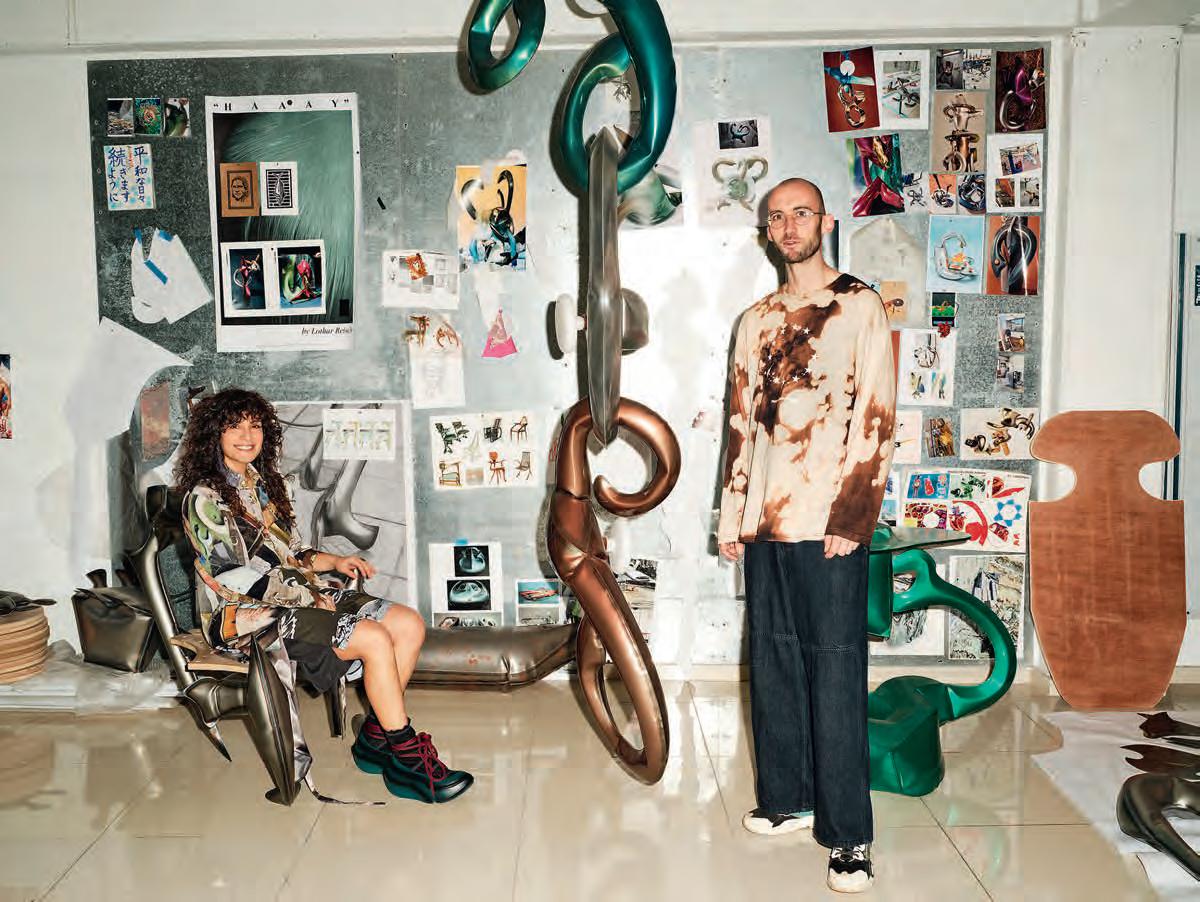
DEVOTEES OF COLLECTIBLE design should not leave Athens without discovering Astronauts, the creative studio of Danae Dasyra and Joe Bradford. Having studied three-dimensional design in England together, the duo now work from their Athens studio, experimenting with proportion, form and metal in ways that make the improbable feel possible, rather like astronauts themselves. Their signature technique is hydroforming, an industrial process that gives their pieces the soft, inflated look of colorful balloons. It is like blowing air into a balloon; only here, water is used to “inflate” metal and give it shape. The result is a series of three-dimensional metal objects and fully functional furniture, from tables and lamps to chairs that are unexpectedly comfortable, that seem to dissolve the hardness of the material into something fluid, organic and almost weightless. “What we do is redefine everyday objects by stimulating the imagination,” Dasyra and Bradford say. Although they are based in Athens, their work has appeared in design fairs and exhibitions elsewhere in Europe and in the United States. It has also been featured in Architectural Digest, and pieces of theirs will be displayed at the Walker Art Center in Minneapolis in October 2026. georgia fekou → Instagram: @madebyastronauts
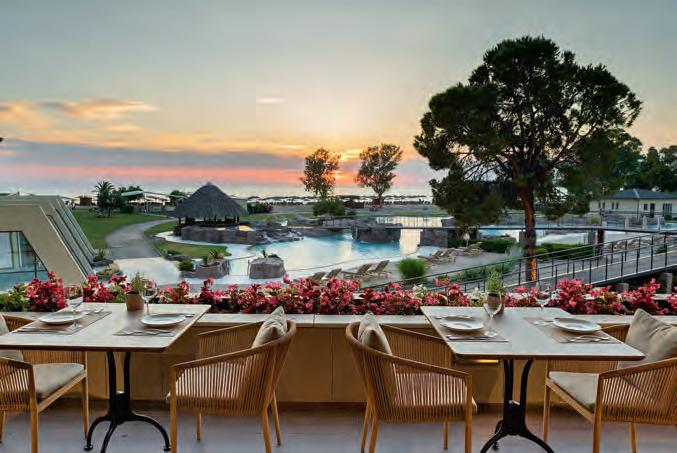
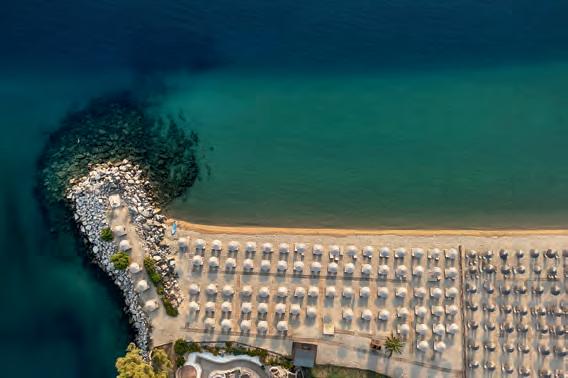
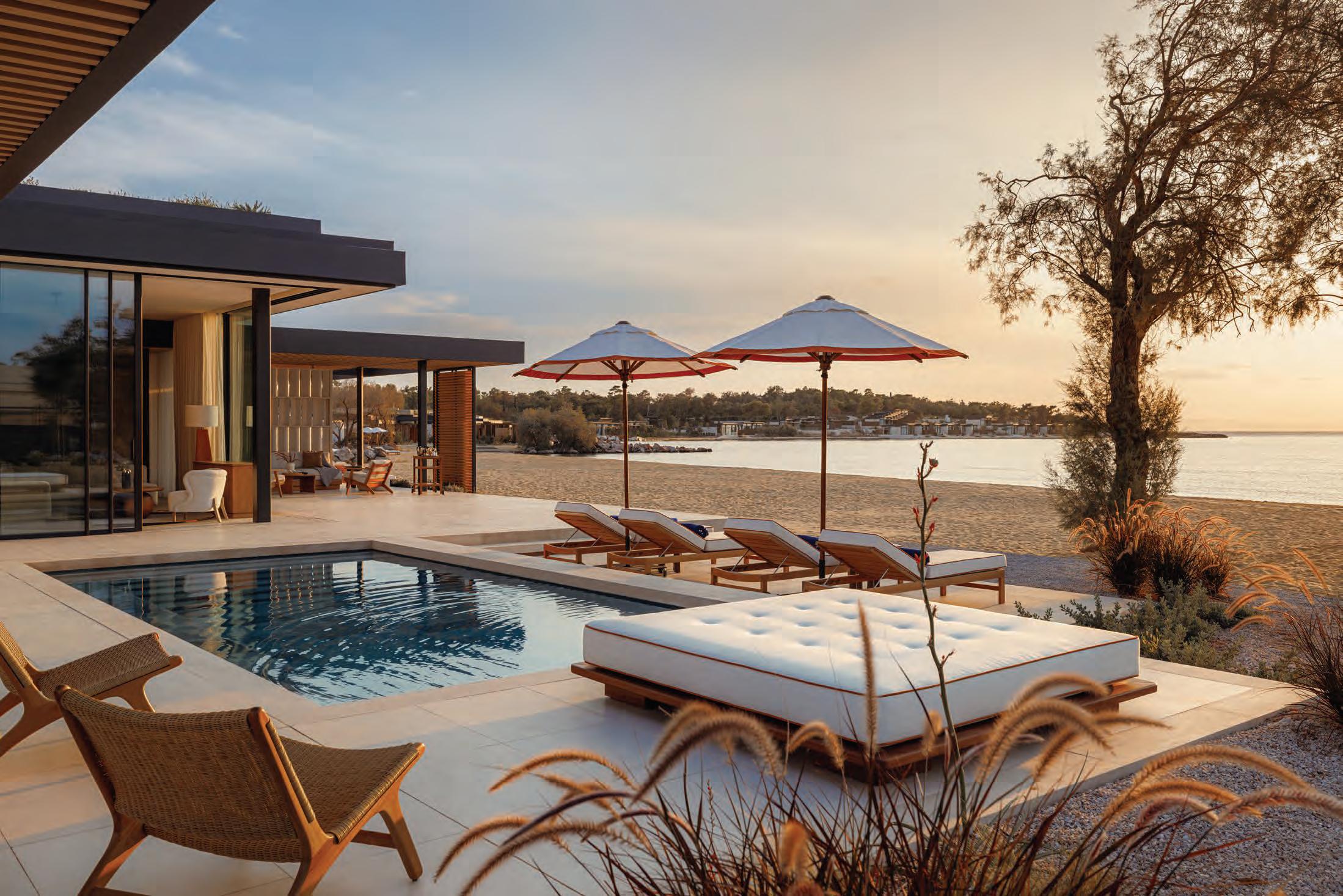
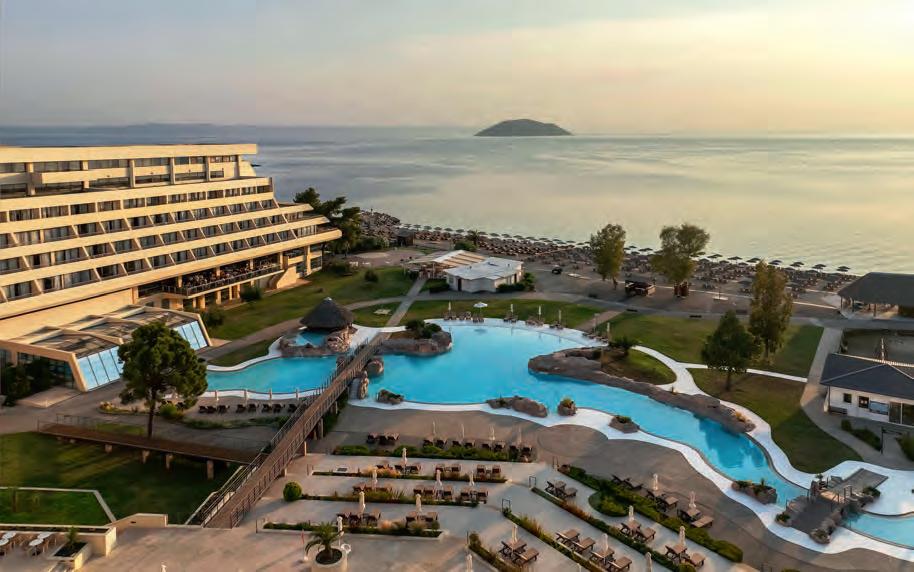
Now in full summer mode, Porto Carras Grand Resort is presenting a renewed vision of Mediterranean resort living on one of Greece’s most storied coastal estates. Set across 1,700 hectares in Sithonia, Halkidiki, with nine kilometers of coastline, it brings together sea, vineyards, marina life, golf and wellness in a landscape made for slow, sunlit days. At its heart, Porto Carras Meliton Hotel managed by SWOT Hospitality, looks out over the Aegean, the marina and the fairways, while Domaine Porto Carras, one of Greece’s largest organic vineyards, gives the estate its distinctive wine-led identity. Gastronomy brings fresh energy to the season, with CIKADO and its menu curated by the award-winning chef Lefteris Lazarou, and ANÉO All-Day redrawing the resort’s culinary map. From sailing and beach rituals to wine tastings, spa moments, sports and family activities, Porto Carras offers Halkidiki with a true sense of proportion, ease and revitalized Mediterranean glamour, for travelers drawn to places and spaces brimming with character. •
Das 100 Punkte Bewertungs-System Alberca Points Die
Das
Punkte Bewertungs-System Alberca Points
Das 100 Punkte Bewertungs-System Alberca Points
Das 100 Punkte Alberca Points
Das 100 Punkte
Alberca
Punkte Bewertungs-System Points
aus rechtlichen Gründen nicht geändert werden! In Kombination Bewertungen dürfen nur diese Logos verwendet werden.
Das 100 Punkte Bewertungs-System Alberca Points
Die „Alberca Points“ dürfen aus rechtlichen Gründen nicht geändert werden! In Kombination mit den Alberca Bewertungen dürfen nur diese Logos verwendet werden.
Punkte Bewertungs-System rechtlichen Gründen nicht geändert werden! In Kombination nur
werden.
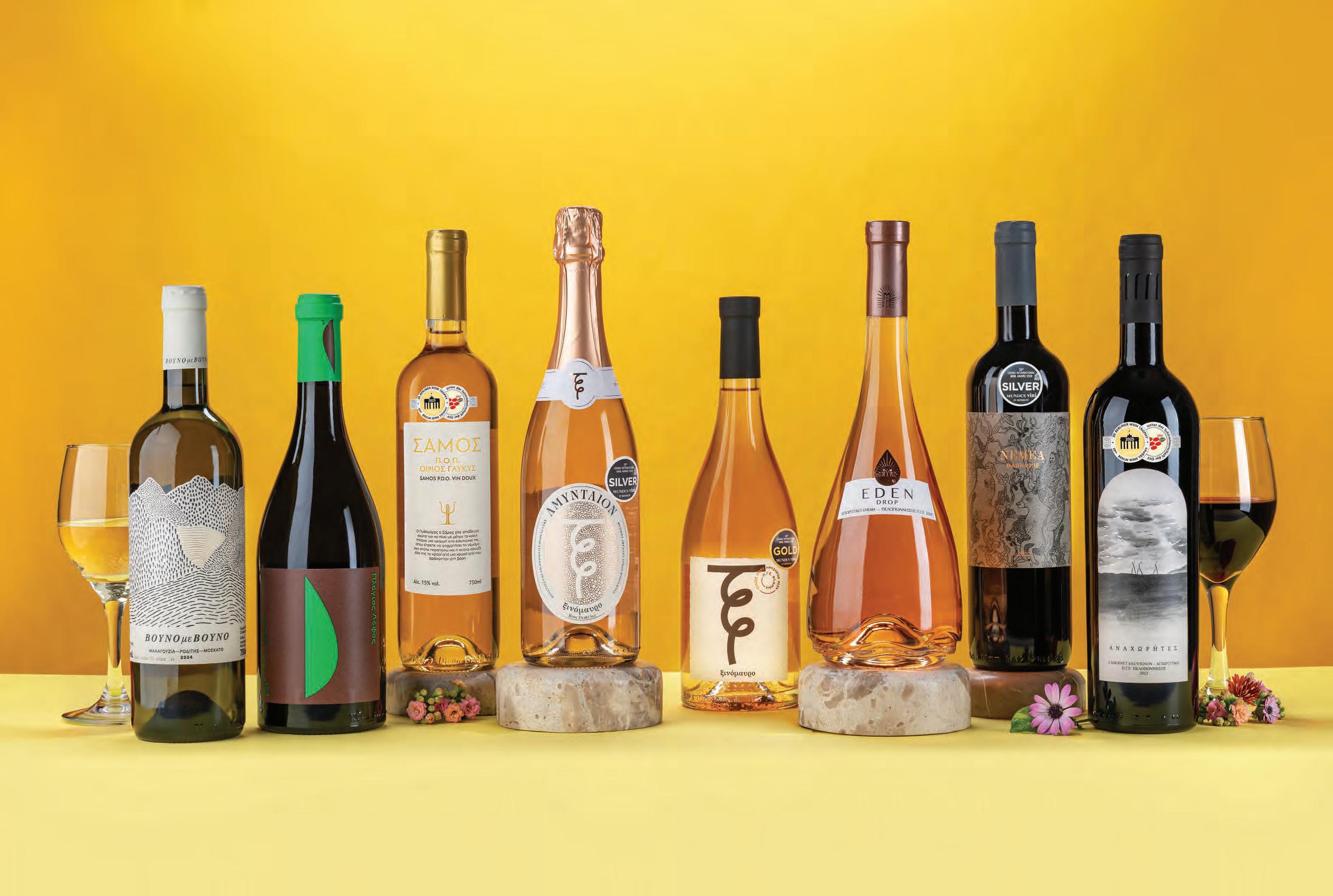
XINOMAVRO
Medium - Dry Rosé Wine
P.G.I. Florina
750 ml
1 L = 6,65€
EDEN DROP
Medium - Dry Rosé Wine
P.G.I. Peloponnese
750 ml
1 L = 6,65€
Exquisite, award-winning wines for connoisseurs. Discover high-quality wines full of aroma and flavour in our stores and at Lidl prices. 4,99€ 4,99€ 3,99€
Das 100 Punkte Bewertungs-System Alberca Points
Die „Alberca Points“ dürfen aus rechtlichen Gründen nicht geändert werden! In Kombination mit den Alberca Bewertungen dürfen nur diese Logos verwendet werden.
AGIORGITIKO
Barrique - Red Wine
P.D.O. Nemea
750 ml 1 L = 5,32€
Das 100 Punkte Bewertungs-System Alberca Points
Die „Alberca Points“ dürfen aus rechtlichen Gründen nicht geändert mit den Alberca Bewertungen dürfen nur diese Logos verwendet
ANACHORITES
Medium - Dry Red Wine
P.G.I. Peloponnese
750 ml
1 L = 10,65€ 7,99€
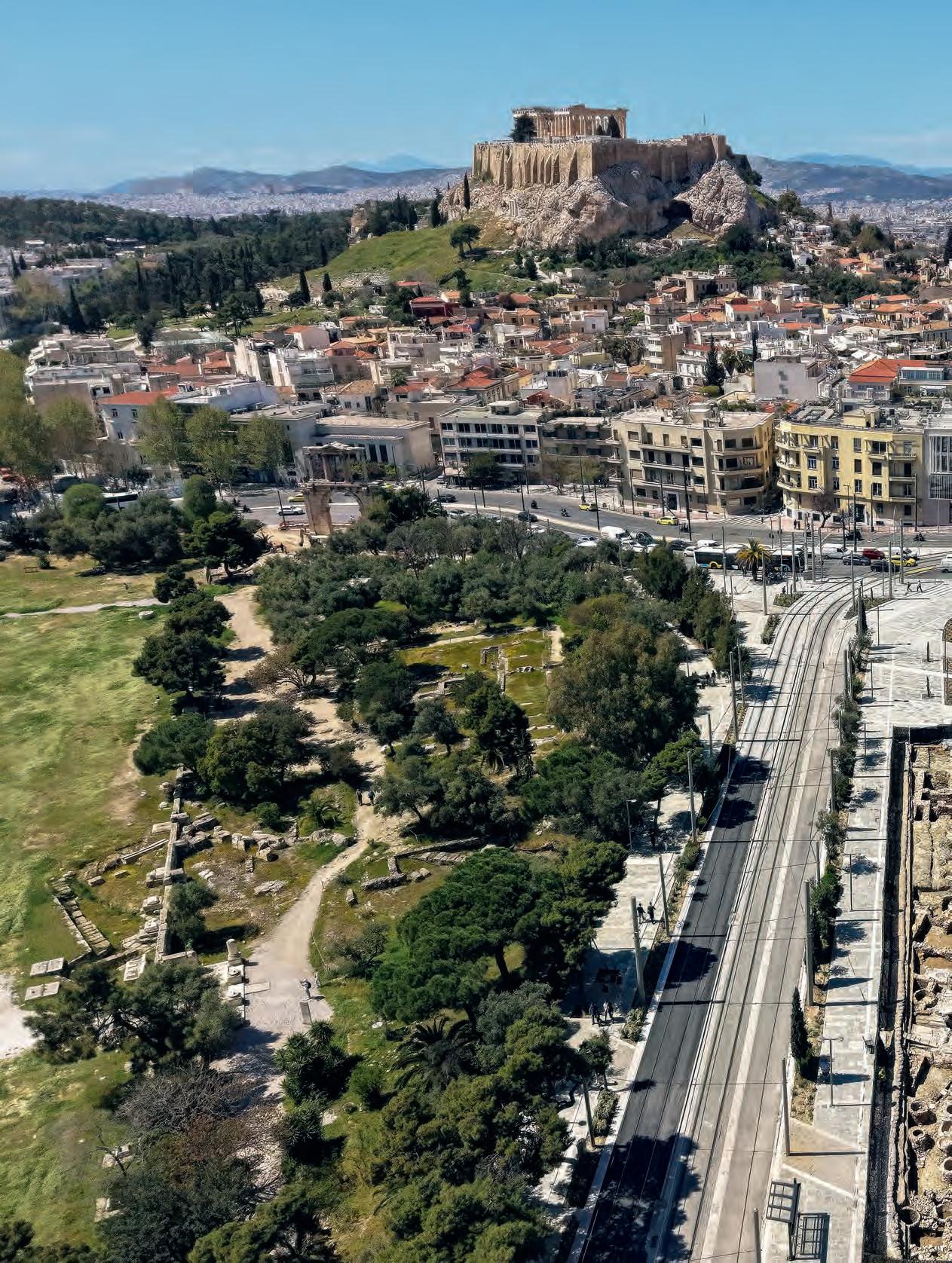
Below the Acropolis, the newly transformed Vasilissis Olgas Avenue completes Athens’ archaeological pathway, opening a nearly car-free walking route linking gardens, major antiquities and the Panathenaic Stadium.
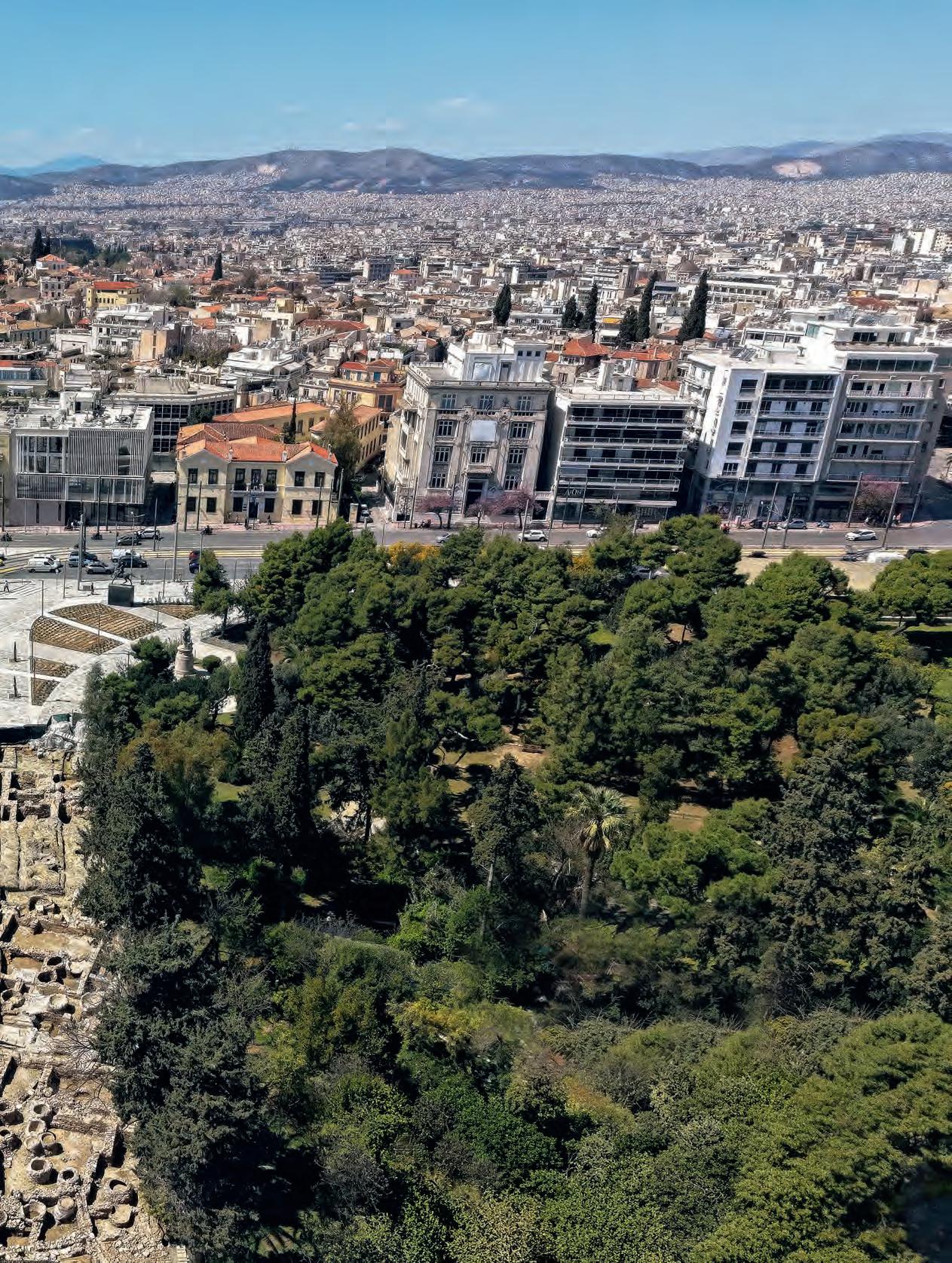
From restoration projects involving ancient landmarks to a pedestrianfriendly route linking major monuments of antiquity, and from a reimagined urban resort to a coastal megaproject and a revitalized Olympic park, the Greek capital is entering another exciting chapter of reinvention.
BY DIMITRIS RIGOPOULOS
ATHENS MAY BE INSEPARABLE from the image of the Acropolis, but it’s also defined by something less tangible: its refusal to fit neatly into the familiar molds of European urban tradition. It has never been an easy city to read, but this unpredictability is part of what keeps it so compelling. Much of its appeal lies precisely in its capacity for reinvention. In the summer of 2026, that feeling seems stronger than ever.
The transformation of Vasilissis Olgas Avenue into a quieter, pedestrian-friendly thoroughfare marks the final step in a long effort to connect the city’s major archaeological sites. It also says something important about Athens today. For much of the postwar era, the city was designed around the car. That reality has not disappeared, but the old postwar model is slowly giving way, as more space is being returned to pedestrians, green areas and the monuments that define the cityscape.
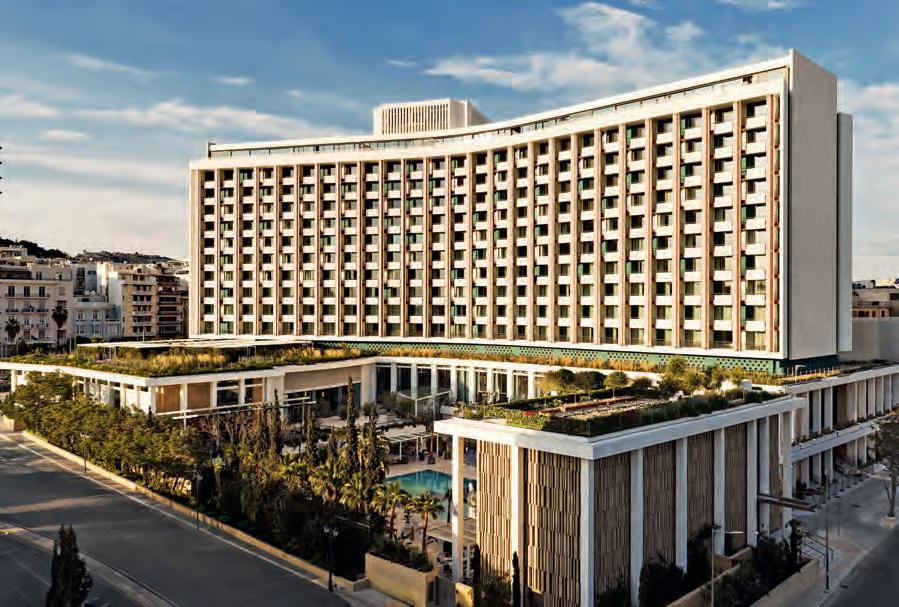
The former Hilton Athens has been reimagined as The Ilisian in a new phase of life for one of the capital’s best-known postwar landmarks.
The new Vasilissis Olgas Avenue offers a rare sense of expansiveness and a more serene experience for those visiting the gardens and antiquities there. It’s the latest chapter in a major effort to rethink the center of Athens – a process that began in the years before the 2004 Olympic Games – as a four-kilometer archaeological route stretching from the ancient cemetery of Kerameikos to the Panathenaic Stadium, where the first Olympic Games of the modern era were held in 1896.
This is also a summer of farewells, albeit temporary ones. June 2026 marked the final month of performances at the Roman Odeon of Herodes Atticus before the monument closes for extensive conservation and restoration work, expected to last at least three years. For generations of Athenians and visitors alike, attending a concert or theatrical performance at this venue beneath the Acropolis has been one of the defining experiences of summer in the city.
Built in AD 161 by the Athenian benefactor Herodes Atticus in memory of his wife Regilla, the theatre is Athens' most iconic Roman-era performance venue. The restoration aims not simply to preserve the structure, but also to make the monument more legible as an architectural whole, improve public access, strengthen its stability, and address problems caused by earlier interventions.
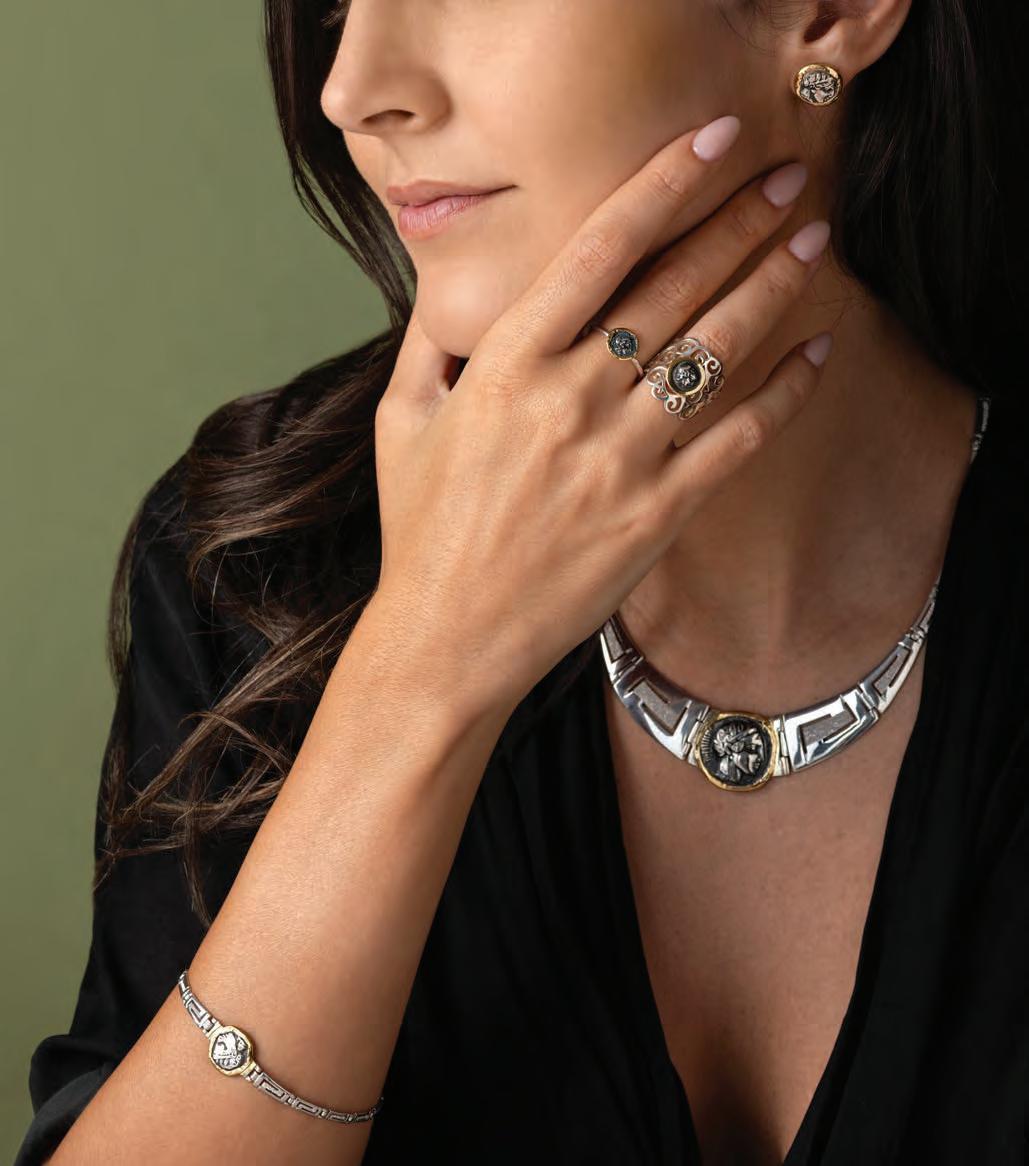
«Greek Roots was born in the heart of Athens, beneath the shadow of the Acropolis, in 1975, where it continues to welcome visitors today. Founded by Vasilis and Marianna Nikolaidis, it is a family-run jewelry house inspired by the timeless beauty of ancient Greece. The creations reflect symbols of mythology, heritage, and artistry, handcrafted in 925 sterling silver and gold by skilled Greek artisans. From Meanders and olive wreaths to goddess coins and rosettes, every piece tells a story rooted in centuries of history and culture. Now led by their son George, designer and craftsman, Greek Roots continues its legacy with a workshop open to the public and a global e-shop, sharing the magic of Greek culture with the world. »

A: 7 D. Areopagitou str. 11742 Athens, Greece
T: (+30) 210 9227379 (+30) 6988622293 greekroots.shop greekroots.shop
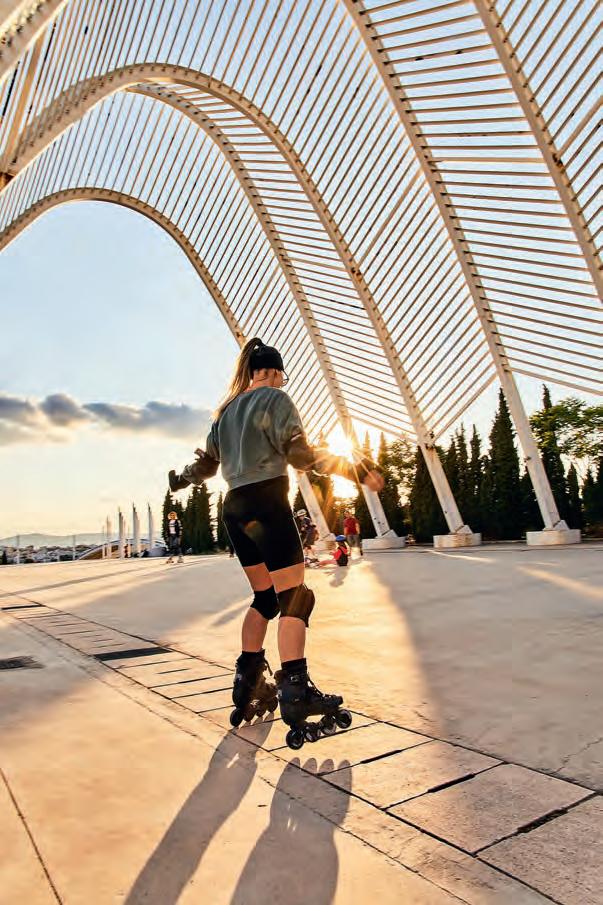
At OAKA, the Olympic complex is being brought back into the city's daily life as restoration works revive Santiago Calatrava’s architectural legacy.
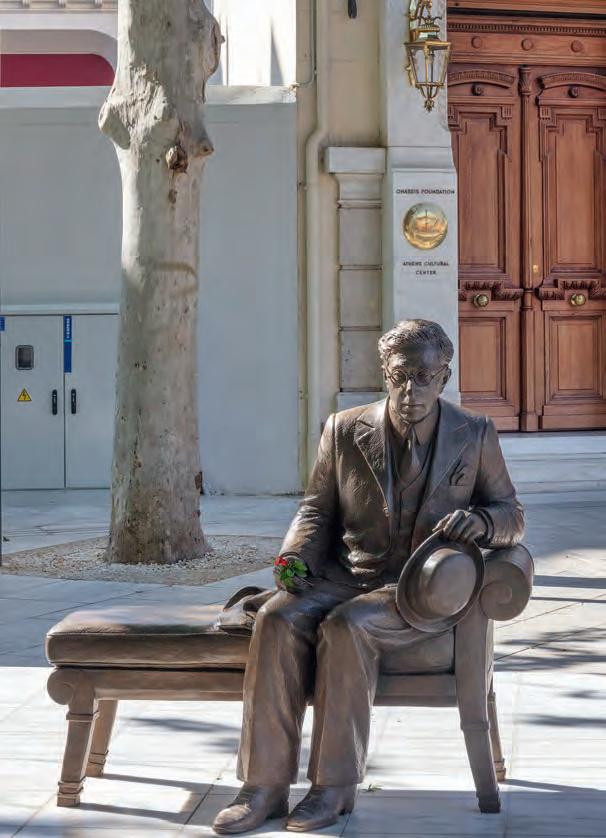
A short walk away, at the entrance to pedestrianized Dionysiou Areopagitou Street, a new figure has joined the city’s public life. Beneath the shade of a plane tree, a sculptural bench depicts the poet C.P. Cavafy seated among passersby. The work follows a distinctly European tradition of bringing writers into the urban landscape: Fernando Pessoa in Lisbon, James Joyce in Trieste, and Hans Christian Andersen in Copenhagen. Every day, visitors stop for photographs beside one of the great figures of modern Greek literature, whether or not they have yet encountered his poetry.
Few projects have generated as much anticipation as the revival of Stoa Arsakeiou, the 19th-century covered arcade linking Stadiou and Panepistimiou streets. This historic passage is being reimagined as a major culinary destination, with restaurants, bars, specialty food retailers and a large grocery dedicated to products from across Greece. The project is expected to breathe new life into a commercial district that struggled through the years of economic crisis. The area between Omonia and Syntagma has changed dramatically over the past decade, and the adaptive reuse of one of the city’s landmark spaces reinforces a growing
sense that central Athens is recovering both confidence and momentum.
Another landmark is entering a new phase as well. The former Hilton Athens – one of the most recognizable symbols of the capital's postwar ambitions – has re-emerged as The Ilisian following an extensive redevelopment.
For generations, the Hilton was more than a hotel. It was a symbol of a city looking outward, eager to position itself on the international stage and embrace a more cosmopolitan identity. Reimagining such a charged landmark was never simply a technical or financial exercise. It raised a more difficult question: how do you reinvent an urban icon
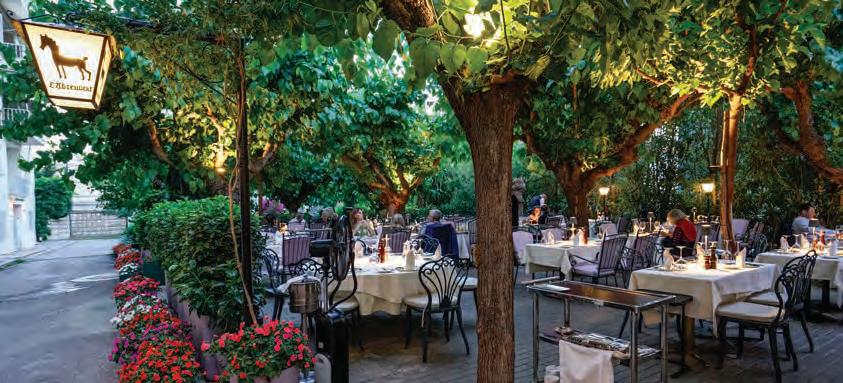
The history of L’Abreuvoir began on 18 March 1965, when Alexis and Gianna Kotsis set up in Kolonaki one of the first restaurants to serve French cuisine in Athens.
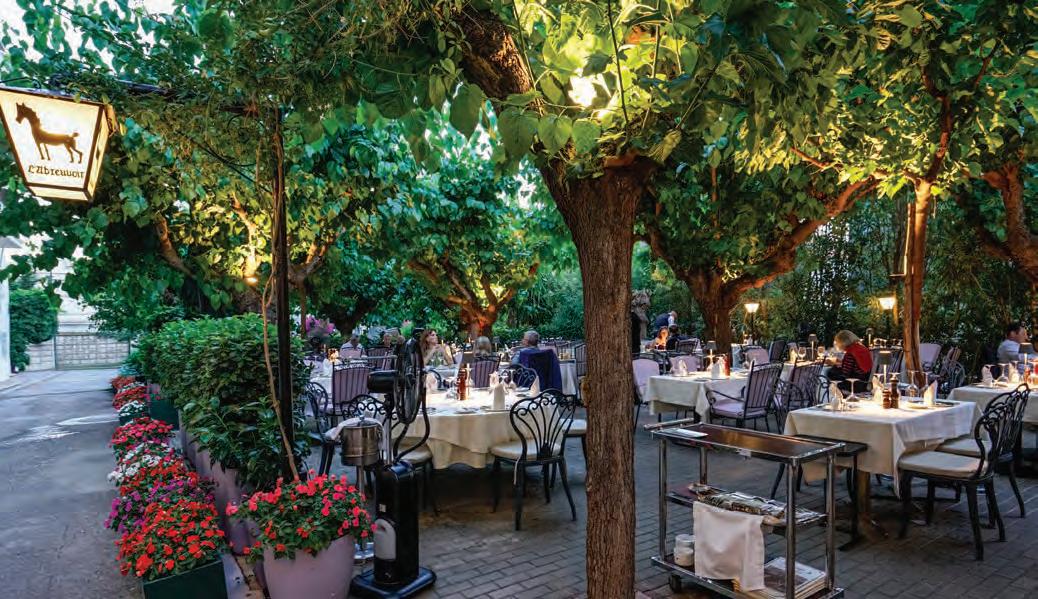
The restaurant runs now under the management of Spyros and Claire, the children of the previous owners. Their upbringing in this setting has prepared them to lead L’Abreuvoir into the modern era, infusing it with fresh ideas and a new potential. What started out as a culinary innovation has become a classic, timeless destination. The restaurant’s traditions, quality and philosophy remain unchanged and the new generation is continuing in the same vein, showing the same respect for its loyal customers.
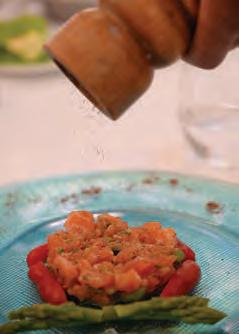
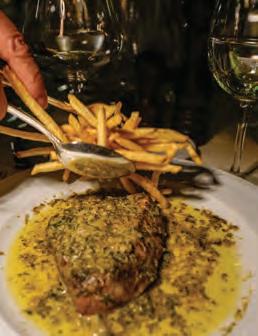
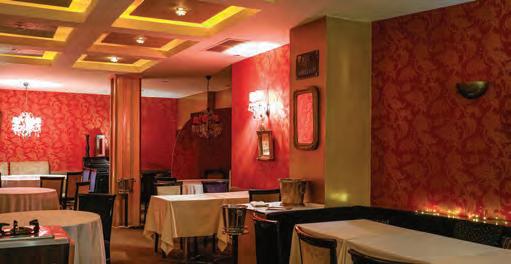
L’Abreuvoir, one of the oldest French restaurants in Athens, invites you to sample its iconic dishes, such as steak tartare, café de Paris and allumette potatoes, alongside a wide selection of fine wines, in its unique courtyard.
51 Xenokratous S treet , Athens Tel : +30 21 0 -72 2 9 1 0 6 abreuvoirrestaurant abreuvoir athens


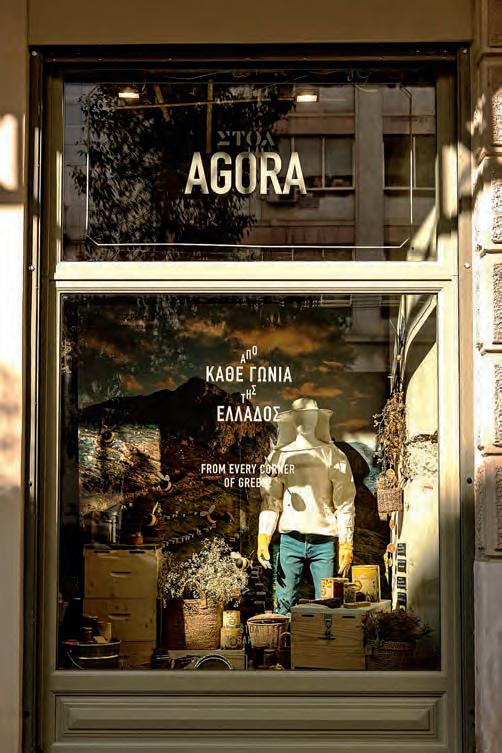
Athens’ commercial center is gaining new energy through the revival of arcades, food destinations and street-level spaces overlooked during the crisis years.
without erasing its meaning? And how do you move beyond a familiar hotel model to create something broader: a layered urban resort intended not just for visitors, but for Athenians, too?
Today, the building functions as a larger hospitality and lifestyle ecosystem, encompassing Conrad Athens The Ilisian, branded private residences by Conrad and Waldorf Astoria, the House of NYNN private members’ club, restaurants, bars, shops, wellness spaces, and other public-facing uses.
On a different scale, but with equal symbolic weight, another transformation is taking place in the northern suburb of Maroussi: the revival of the Olympic Athletic Center of Athens, known as OAKA. Twenty-two years after the 2004 Olympic Games, the complex is undergoing extensive upgrading and restoration works, with
THE FORMER AIRPORT AT ELLINIKON CONTINUES TO TRANSFORM THE CITY’S COASTAL FRONT.
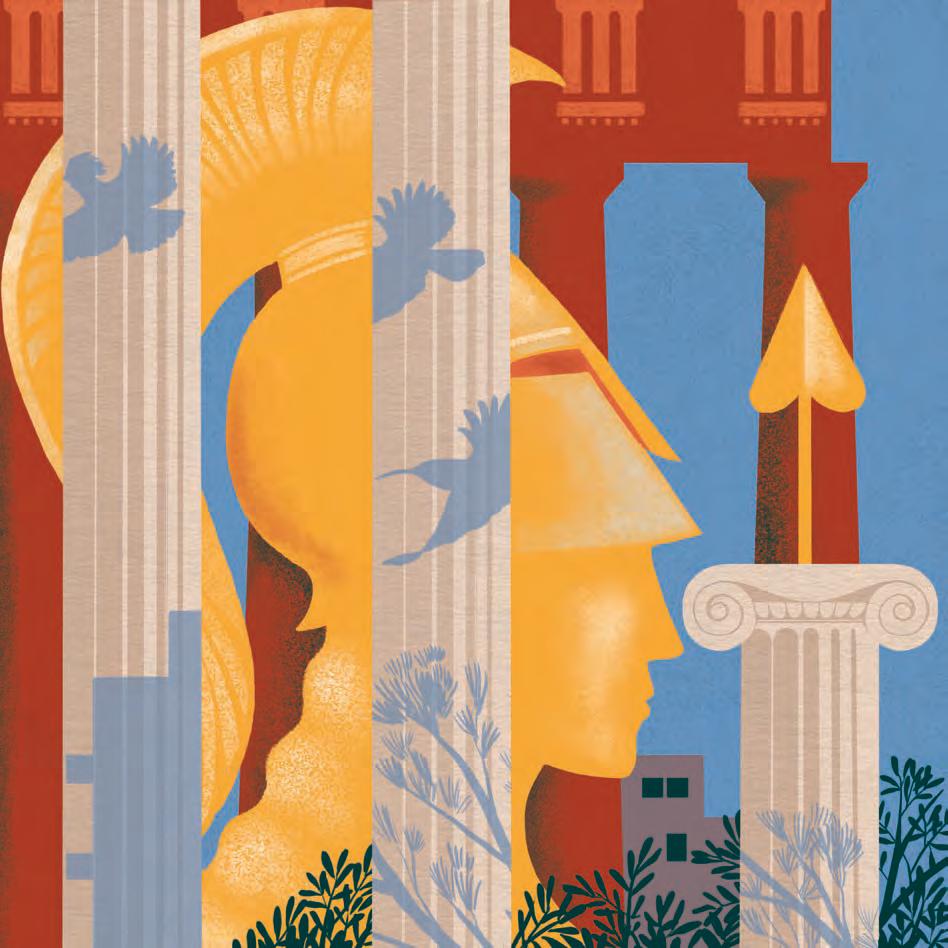
particular emphasis on reviving the architectural legacy of Spanish architect Santiago Calatrava.
For years, OAKA stood as a reminder of the unrealized promises of Athens’ Olympic moment. The current works seek to reconnect the complex with everyday city life and transform it into a contemporary hub for sports, recreation and entertainment. By early fall, officials hope to deliver a fully renewed Olympic park to residents and visitors alike. Watching crews restore some of Calatrava’s most ambitious structures and seeing the freshly painted movable metal elements of the long-neglected Wall of Nations come back to life as children play in the shade of the wave-like canopies of the Agora, one cannot help but think that this is about more than an Olympic park. A new destination is taking shape.
In other parts of tiown, too, visitors can hardly miss the large construction sites shaping the Athens of 2030. The redevelopment of the former airport at Ellinikon – widely presented as the largest urban regeneration project currently underway in Europe – continues to transform the city’s coastal front. The construction of Metro Line 4 keeps opening new fronts across the Athens basin, while in Votanikos, a former industrial district located on the site of the ancient olive grove and just two kilometers from the Acropolis, work is advancing rapidly on the new stadium for the football club Panathinaikos.
The club is expected to move into its new home in 2027. After that, Athens will face another question: what should become of the old football stadium on Alexandras Avenue? That uncertainty feels appropriate. Athens today is not a city arriving at a finished vision of itself. It is a city in the midst of decisions, negotiations and reinventions. Its future remains unfinished. And that, perhaps, is what makes Athens so fascinating to watch.•
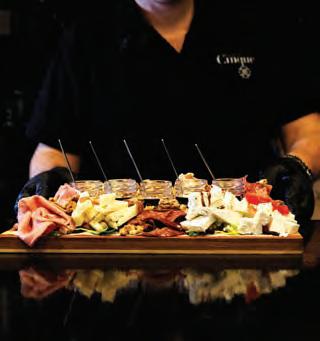

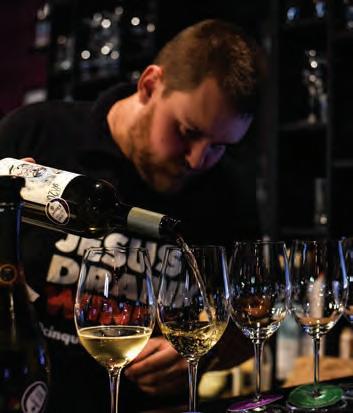

Your Greek wine journey starts here.
Looking for an authentic taste of Greece?
Cinque Wine & Deli is not an ordinary wine bar. It is a Greek wine journey in the heart of Athens - and now in Glyfada too.
Cinque Wine & Deli Monastiraki
Voreou 10, 105 51 Monastiraki, Athens
Cinque Wine & Deli Psirri
Agatharchou 15, 105 54 Psirri, Athens
Cinque Wine & Deli Glyfada
Markou Botsari 8, 166 75 Glyfada, Athens
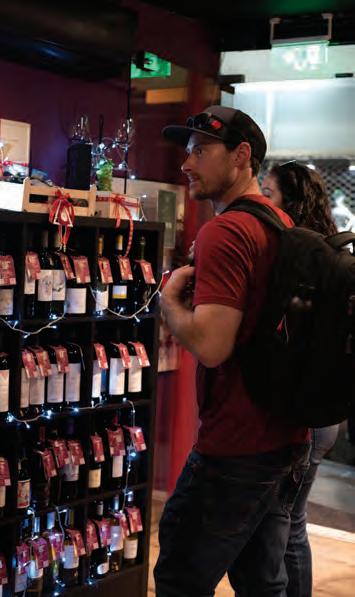
Discover selected Greek wines through guided tastings, pair them with one of Athens’ most loved cheese and charcuterie platters, or explore extra virgin olive oil the way experts do.
Whether you are looking for a tasting experience, a glass of wine, a bottle to enjoy on your balcony, or a special Greek gift to take home, Cinque is part of the Greek experience you will want to remember.
BY ELINA DIMITRIADI
For a new generation of musicians, artists, designers, photographers and creative insiders, Athens is more than a backdrop. It is raw material, a field of observation and a daily current of energy. Through its light and its chaos, its neighborhoods, rooftops, bars, hills and hidden corners, the city finds its way into the work of ten creative Athenians, influencing not only what they create but also how they move through life.
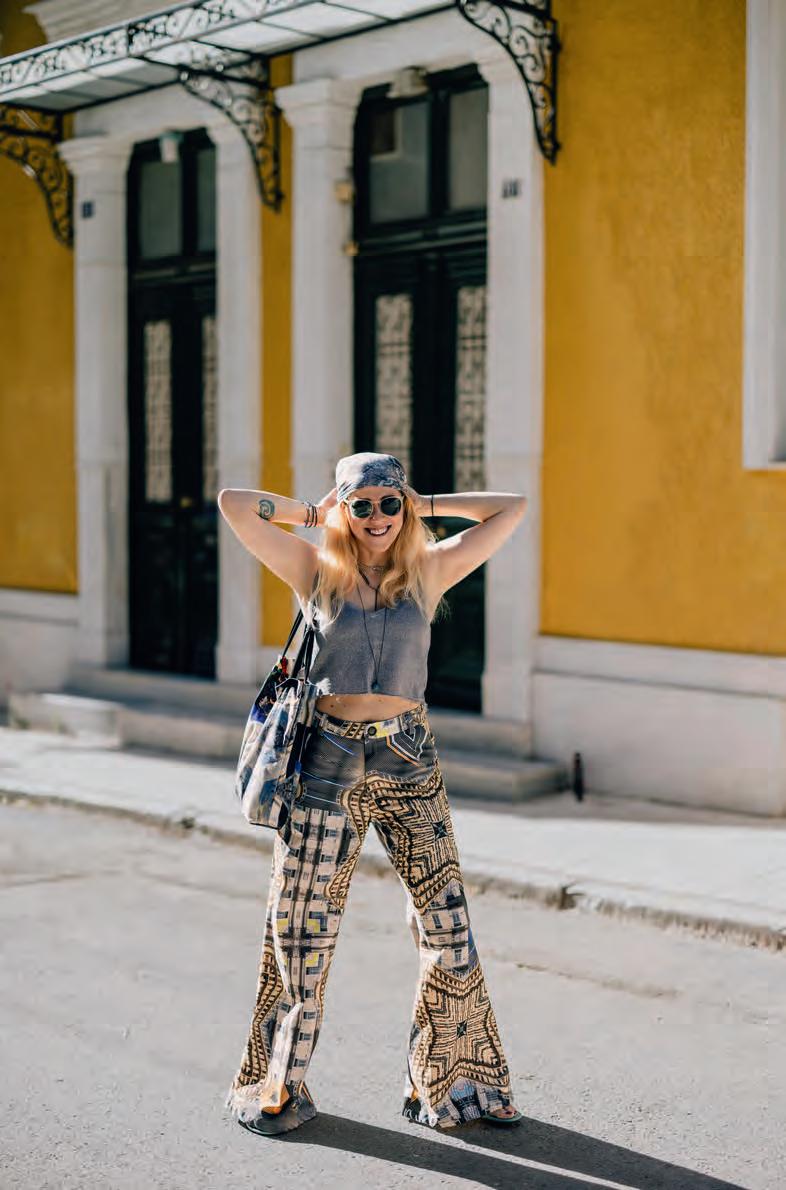
AFTER LEAVING the corporate world to study fashion design, Marilena Stathopoulou now runs an independent fashion project in Kypseli.
Your muse? Athens is at the center of my digital textile prints. I’m drawn to its contrasts: different eras, disparate aesthetics, vivid shop signs and strange constructions all coexist under the constantly shifting light. My work captures streets, ancient ruins, modern buildings and overlooked details, translating them into limited collections of unique fashion pieces with clean silhouettes and gender-neutral lines.
Your spot? I love wandering around Kypseli, where every street seems to reveal a new story. I enjoy its mix of cultures and styles: from women who’ve lived here since the 1960s and still dress up for a Sunday morning walk, to contemporary streetstyle looks. Here, the neighborhood experience is still alive. Walking along Fokionos Negri; stopping at Remoundos, the corner bakery that opened in 1953; having lunch at family-run restaurants serving cuisines from around the world; and spending time in traditional kafeneia or at Iznogood & Nephew, listening to good music –it’s got something for everyone.
Fashion designer
SISSI PAPPA IS THE FASHION DESIGNER behind Yphasma Studio, a label focused on artisanal construction techniques and carefully sourced fabrics.
Your muse? I don’t think my work would be the same if I hadn’t discovered fashion through the artisans and old fabric shops tucked between Athinaidos, Aghiou Markou and Athinas streets, an area often referred to as the tailors’ triangle. Some of the most valuable techniques, materials and sources of inspiration came to me by stepping into obscure old supply shops and antique stores, and by meeting the people who continue to contribute to Athens’ artisanal landscape.
Your spot? I live near Lycabettus Hill, so I hike there almost every day for the fresh air and the view. I like looking out over the terraces and imagining the different lives taking place in the city.
When I have the time, I like driving down to Piraeus, especially Kastella, perched high above the port. I could spend hours walking its quiet streets. Growing up in a small neighborhood in Patras made me feel naturally connected to places that feel more intimate: neoclassical houses, steep stairways, the sense of being close to the sea. Kastella gives me exactly that feeling.
Fashion designer

APOSTOLOS ZANIAS STUDIED journalism and film directing before getting involved with music and eventually perfumery. He is the founder of the fragrance brand St. Narcissus.
Your muse? Athens inspires me through its many layers: the archaeological presence, the industrial jungle, and the eccentric personalities that define the city center. One place that has influenced me deeply is Dionysiou Areopagitou Street, which even inspired one of my fragrances. Walking there, with its ancient stone and scents of orange blossom, bitter orange trees, fig trees and earthy notes, has a calming effect on me.
Your spot? I love Exarchia and Psyrri. Although both neighborhoods have changed a great deal in recent years, and much of their character has faded, there’s still a certain kindness among the longtime residents who defined these areas. To me, they remain true old neighborhoods. I’m deeply moved by simple, everyday human connection, and in these parts of Athens I continue to find inspiration in both the older people and the younger, style-conscious personalities walking the streets.

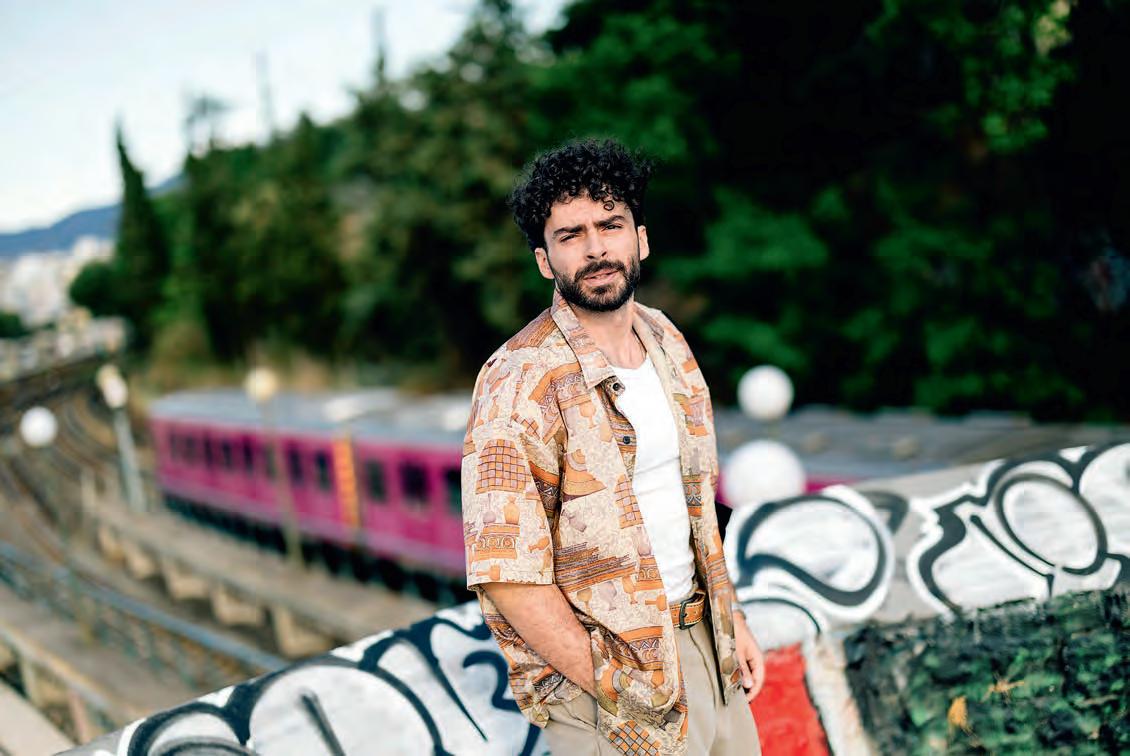
MICHALIS KAMAKAS IS A JOURNALIST and radio producer at Kosmos 93.6, where he hosts Urban Sounds. He is also a DJ, documentary filmmaker, and the producer and presenter of ERT’s Urban Live Sounds sessions.
Your muse? Nighttime Athens always follows me back into the studio. Through my work as a DJ and my close connection to the city’s music scene, I absorb the sounds, moods, and energy moving through Athens and carry them into the way I do each show, from the music I choose to the thoughts I share on air.
Your spot? In addition to a few favorite bars scattered across the city, one place I return to again and again is Beniamin, the all-day bar on Messolongiou Square in Pangrati. The square feels like a quiet pause amid the city’s constant motion, and that same sense of calm is reflected in the people who run the place. I can start my morning there with a laptop and a book, and easily stay until dusk with a cold beer, sometimes alone, sometimes joined by friends passing through.
Journalist, DJ
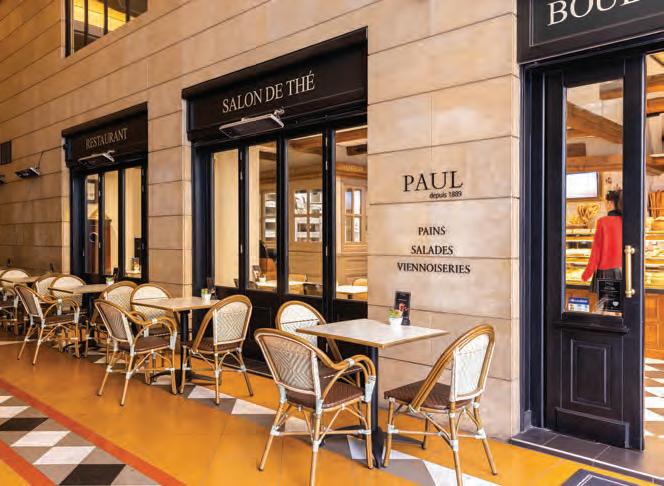
PAUL boulangerie stores are presenting their updated brunch and all-day menu. With bread as the main star, the timeless heart of the PAUL French bakeries’ philosophy since 1889, the new menu highlights the art of baking through recipes that combine authentic French influences with modern culinary trends.
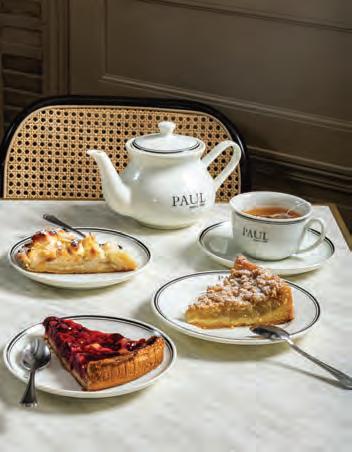
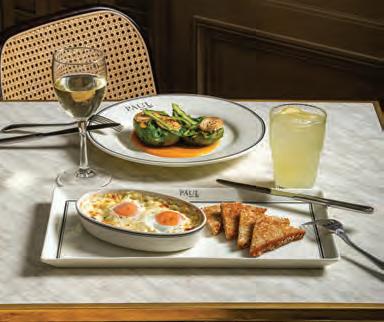
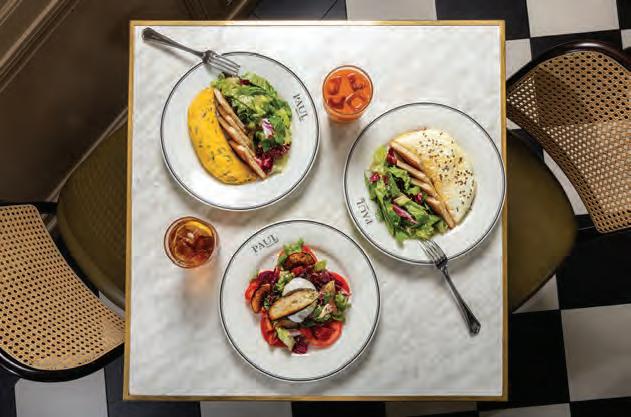
Fluffy brioche, rustic bread with sourdough, multigrain bread with malt and sandwich bread are the basis for a series of proposals that extend from morning to evening, featuring croques and tartines with a strong French character, burgers in fluffy brioche buns, classic Parisian brunch-style egg dishes and creative salads with fresh ingredients. The menu is rounded off with desserts that follow the philosophy of seasonality, showcasing fresh fruit and traditional French patisserie techniques. The experience is complemented by an expertly curated wine list featuring Greek and French labels that pair perfectly with the menu’s dishes.
PAUL has had a constant presence in Greece for the last 15 years and continues to evolve the experience of the French boulangerie/brasserie, inviting the public on a daily culinary journey inspired by authentic French culture and the “art de vivre”.

6 Panepistimiou street, Athens T. +30 210 3632352 paul_greece
OLINA IS AN INDIE-POP MUSICIAN, lyricist and performer based in Athens. Since 2021, she’s been creating dreamy melodies with Greek lyrics. In February 2026, she released her second album, Ti se Sygkinise? (“What Moved You?”) on the record label Mellowsophy Music.
Your muse? Athens has a way of imposing itself on you. That is why I feel it slips into everything: into my songs about farmers’ markets, but also into bars, small balconies, and the blue of a sky that often feels melancholic. For me, Athens is not just a setting you observe from a distance and judge for its beauty or its ugliness. It’s something you participate in. If you’re curious enough to really pay attention, to watch it and listen to it carefully, it offers endless inspiration.
Your spot? Ardittos Hill, in Mets. There, the rhythmic pulse of runners at the Panathenaic Stadium echoes against the marble, and nature quietly takes over through birdsong, barking dogs, and the slow drag of a turtle crawling across the ground. The sounds of the city fade to a whisper. You can barely hear them.

Olina Indie-pop musician
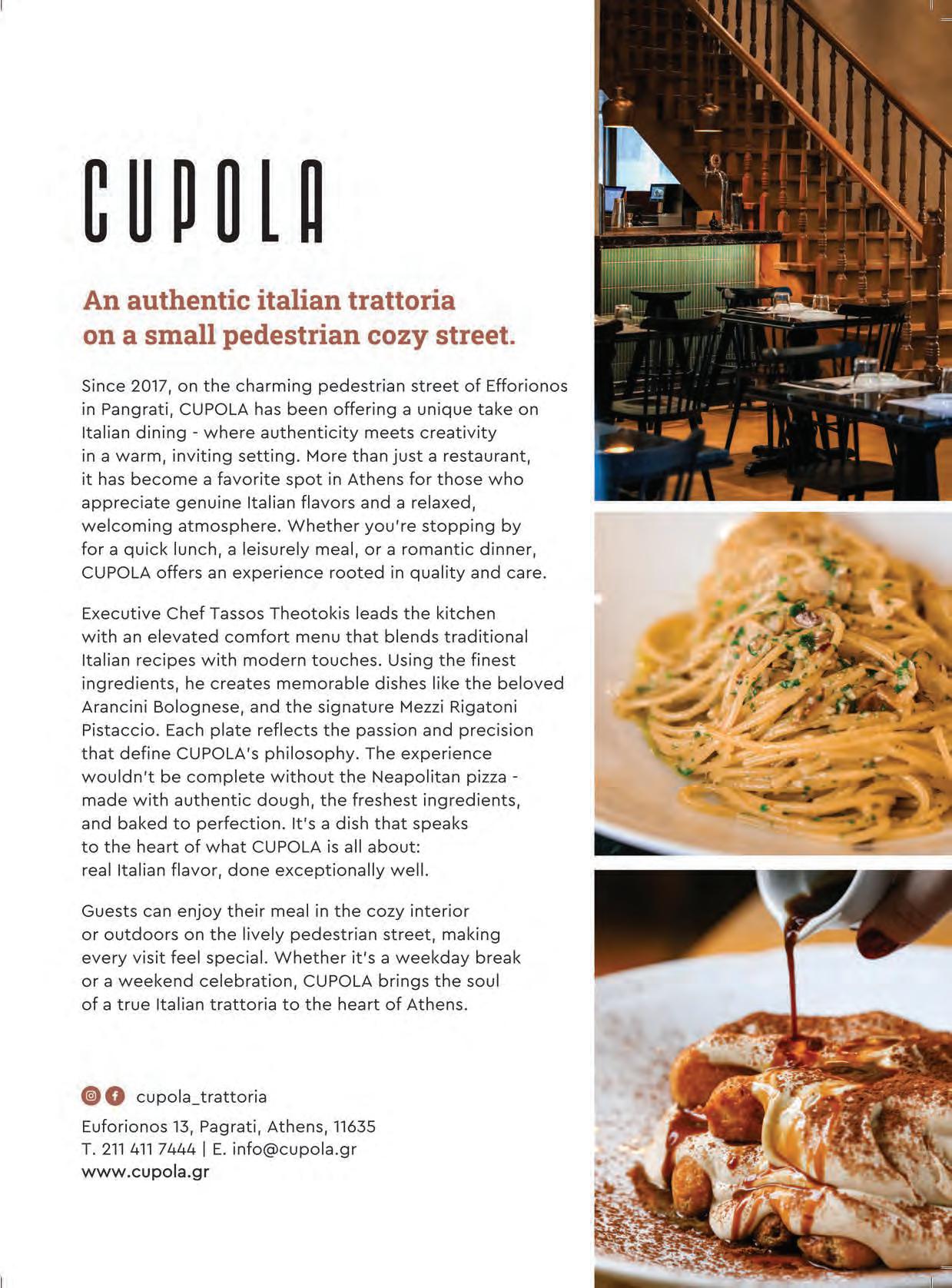
LILENA MARINOU is a filmmaker and photographer based in Athens. She studied Film & TV Production at NYU Tisch and, in 2026, became the first arts program curator at Panathēnea Festival, helping launch its inaugural arts stages dedicated to film and music.
Your muse? The light of Athens gives me strength on difficult days and joy on good ones. I spent my early twenties in New York, but it’s in Athens that I found my more grounded, confident self. My relationship with the city feels like an investment both in my own growth and in where I belong.
Your spot? My favorite place is the small stone Tower of Anthousa, built during the Ottoman period, which you reach through the hiking trails in the forest of Mt Hymettus. It stands on a hillside, not far from the city center, with sweeping views of the entire Athens basin. I usually start at Kaisariani Monastery, stop at Kalopoula for a juice and to feed the turtles, and end up at the tower for a picnic.
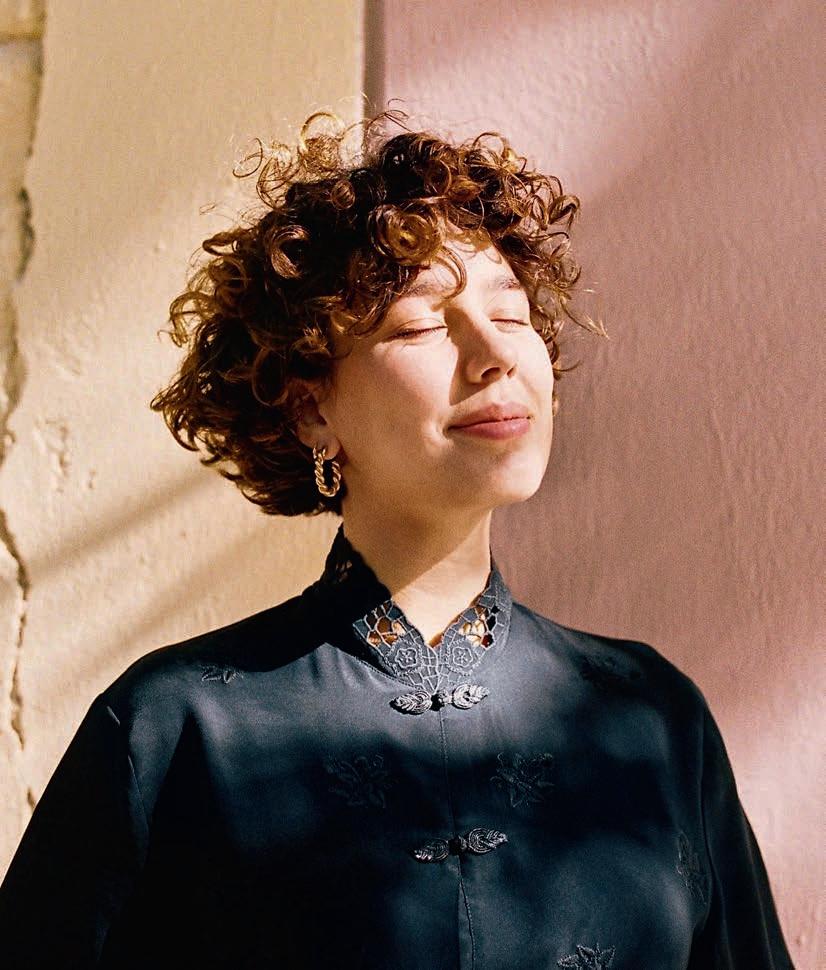
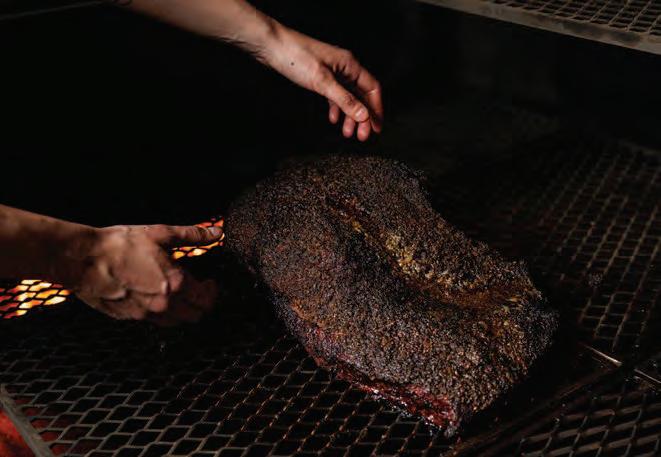
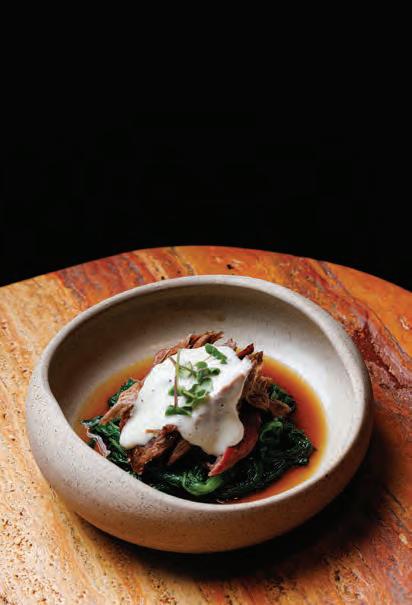
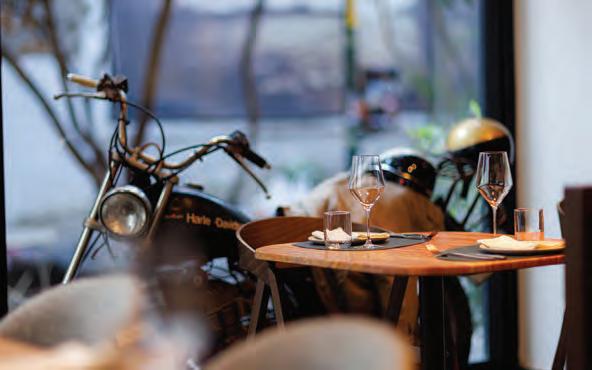
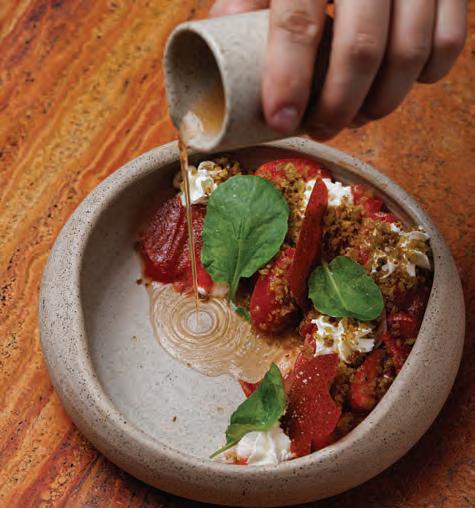
At Fine Mess, fire is not a gimmick. Chef patronne Elena Kaperda has taken the rituals of low & slow barbecue and quietly proved that tradition and refinement were never really at odds: the cooking here is all about flavour, and it transcends clichés in the most delicious way.
Hours of patient smoke, the transformative work of fire and time, and unexpected ingredients come together in food that feels both deeply comforting and strikingly original.
Locals and regulars rave about the Salt, Pepper & Smoke Brisket (a genuinely memorable experience), but the classics are only the beginning - the Seasonal Tasting Menu couples the complexity and intensity of smoke with what's best in the season, and will make you reconsider what barbecue can be.
And despite the art and skill that go into their barbecue, Fine Mess remains warm, relaxed and genuinely personal: this is fine dining without ceremony, deeply enjoyable, at its best.
5 Delfon St. 106 8 Athens, Greece +30 211 115 5725 FineMess.gr FineMess.Smoke
DOUGLAS MARTIN
EVELEIGH is a photographer from Massachusetts, now based in Athens.
Your muse? I’m inspired by Athens’ chaotic slowness, its daily rituals and its appreciation of simple pleasures. Working in a city so resistant to change has allowed me to capture a kind of nostalgia for the present. Perhaps the feeling I get here is only momentary, soon to be paved over by the rush of new developments. But for now, Athens keeps one foot in the past, and that is a gift.
Your spot? I can claim no ownership over my favorite place in Athens, Foyer Espresso Bar in Pangrati, but it could certainly claim me any day of the week. I try to pass by at least twice a week and stay seated there for an hour, without a care in the world. I go there to drink, to talk, to meet old friends and new ones, and to simply enjoy being alive.

Martin Eveleigh Photographer
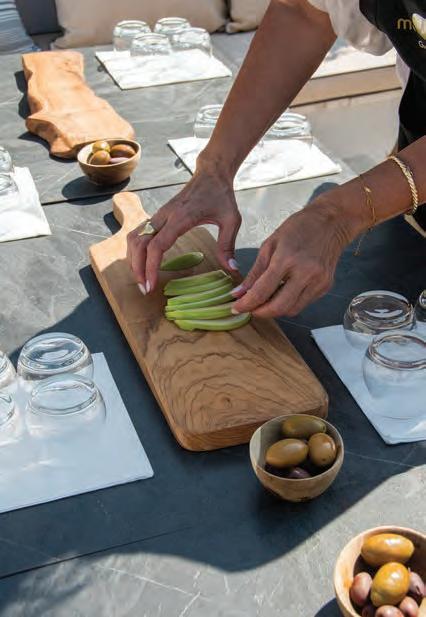
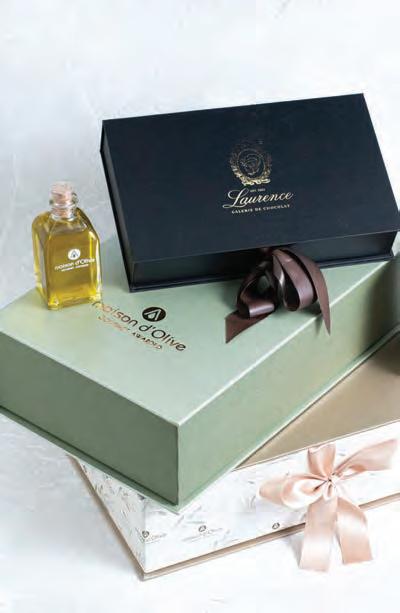
Nestled in the elegant neighborhood of Kolonaki, Maison d’ Olive is Athens’ premier destination for olive oil lovers. As the only Olive Oil Cellar featuring a boutique deli, it boasts an exceptional collection of over 200 award-winning extra virgin olive oils from Greece’s finest groves. Each bottle embodies the authentic
aroma, flavor, and heritage of the Greek land. Visitors can enjoy personalized consulting services for their shopping experience, as well as guided Olive Oil Tastings that reveal the rich diversity and character of premium Greek olive oils. Discover the true essence of Mediterranean excellence in the heart of Athens.
Athens Olive Oil Tasting, book your seat : www.maisondolive.gr
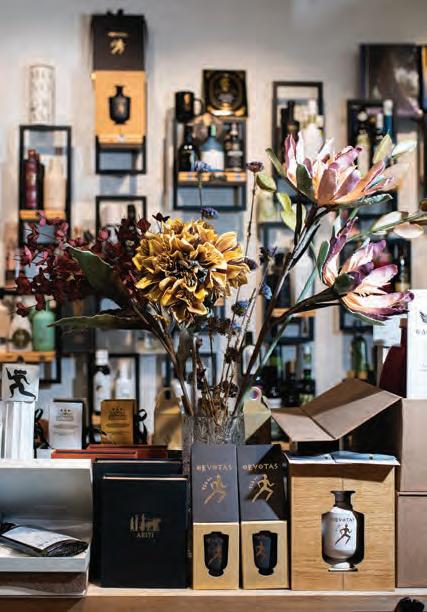
Maison d' Olive
Olive Oil Cellar - Boutique Deli
7-9 Xanthippou str, 10675 Kolonaki Athens Greece maisondolives maisondolive www.maisondolive.gr
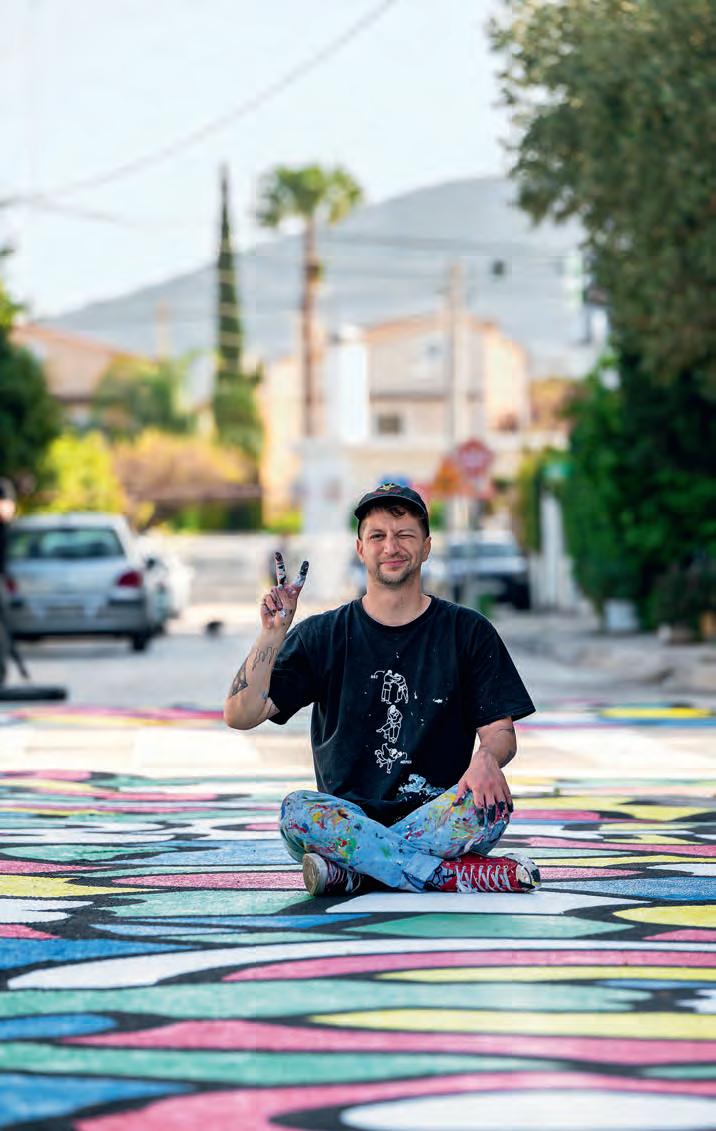
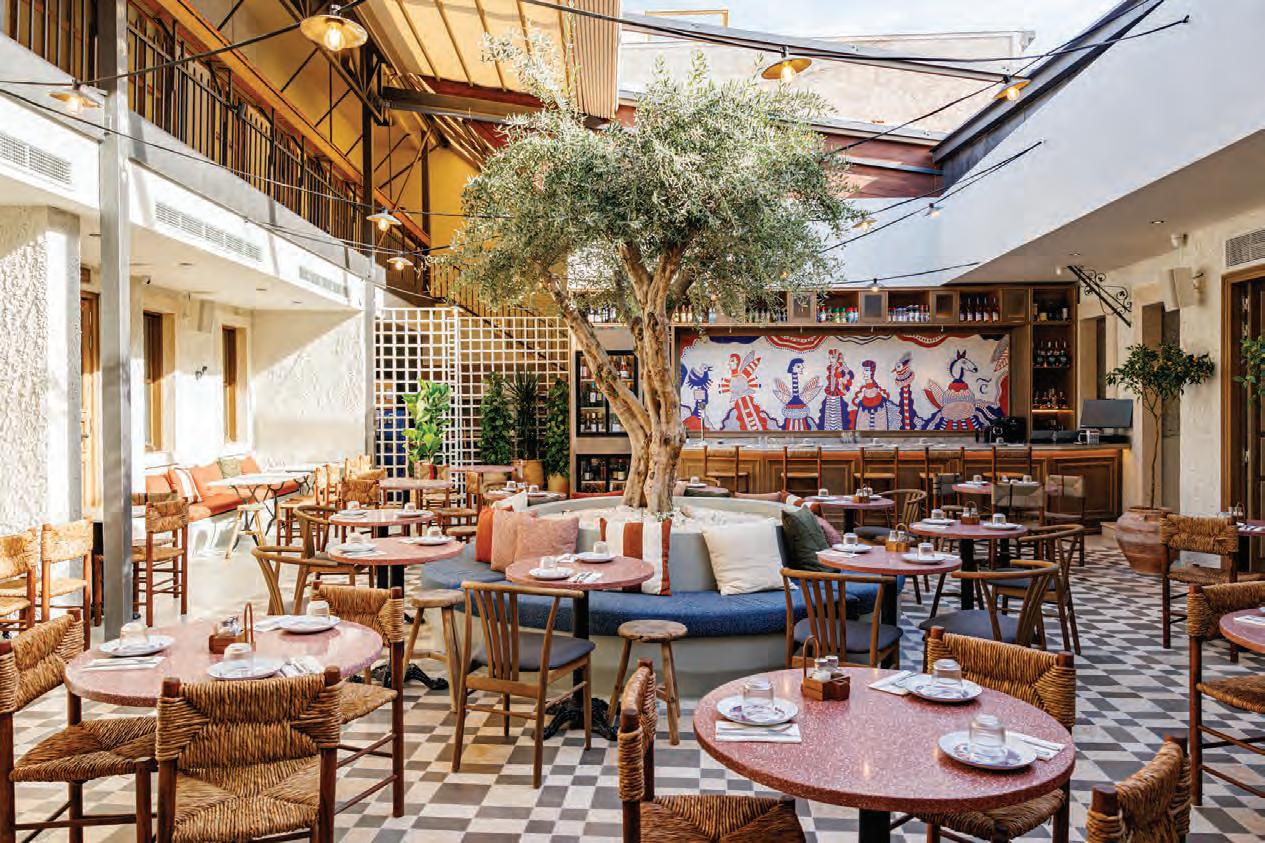
SOTIRIS “SOTEUR” FOKEAS is a visual artist and street artist whose work draws on neo-pop aesthetics, blending humor with social commentary. His practice ranges from street murals and paintings shown in galleries and museums to collaborations with beloved cafés, bars, shops and international brands.
Your muse? Athens is beautiful and ugly at the same time, full of chaos, smells, flavors and stressed-out people. But the light and clear skies make it all worth it. I smile just thinking about it. I’ve never lived elsewhere; I’ve chosen to stay here all my life. Athens is part of who I am and what I create.
Your spot? My studio, Studio Lavra, is my oasis and my playground. Even though it’s where I work, it’s where I feel most at ease. Besides that, long walks through central Athens help me reset. I can wander for hours through streets and alleyways, just observing everything. After that, I feel completely recalibrated.
Artist
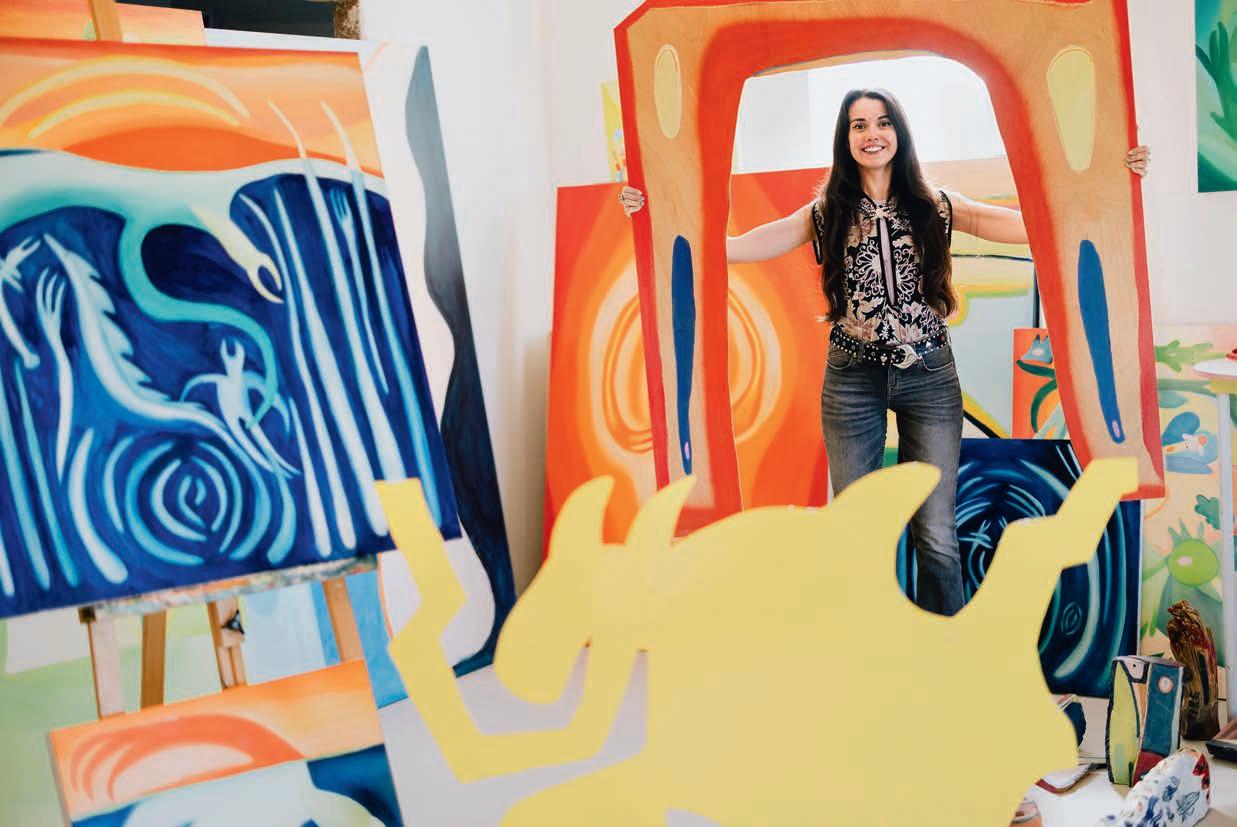
VASILIKI KOUKOU IS A GRADUATE of the Athens School of Fine Arts, with solo and group exhibitions in Athens and abroad.
Your muse? Athens inspires me through its contrasts. Ancient myths, memories and emotions exist alongside the reality of the contemporary city. I’m especially drawn to the small traces of nature that persist, even with the concrete: plants growing through cracks, wildflowers beside abandoned buildings, moments of unexpected softness within the urban landscape. In my work, too, people, plants and hybrid creatures all seem to inhabit the same shared ecosystem.
Your spot? I feel deeply connected to the old quarries of Psychiko. Over time, they’ve become almost mythological in my imagination, as though an entire hidden world exists beneath the surface. Lately, I’ve also found comfort at Pied à Terre, the small French bistro in Ilisia. There’s a particular table I always gravitate toward, tucked beneath one of my own works hanging on the wall.
BORN IN ATHENS, Michail Keskinidis first immersed himself in BMX culture while studying in Larissa. He later reconnected with cycling while living in California’s Bay Area, and today runs a specialized bike courier service in the Greek capital.
Your muse? From a cyclist’s perspective, Athens is a raw diamond, offering every kind of terrain: constant climbs, almost no flat routes, three surrounding mountains over 1000 meters high, and a coastline that changes character with every ride. Its layers of history means there’s always something new to discover. Cycling culture is still developing here, but that challenge is part of its appeal.
Your spot? The place I feel most connected to is the National Gardens. In the middle of all the noise and concrete, it feels like a small oasis. It’s where my parents took me as a child, where I now spend time with my son, and my favorite stop for a short break, lunch between deliveries, or a quiet pause before the next work call.

Michail Keskinidis
Bike courier and entrepreneur
In which a world-weary scribe rediscovers a Greek capital teeming with main-character energy, or something of that sort.
BY ANTHONY GRANT
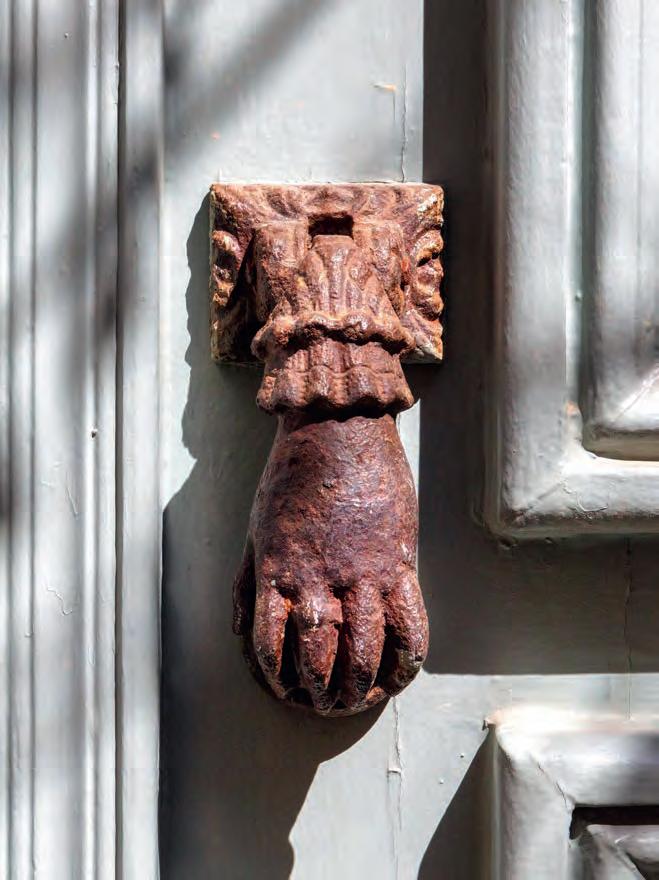
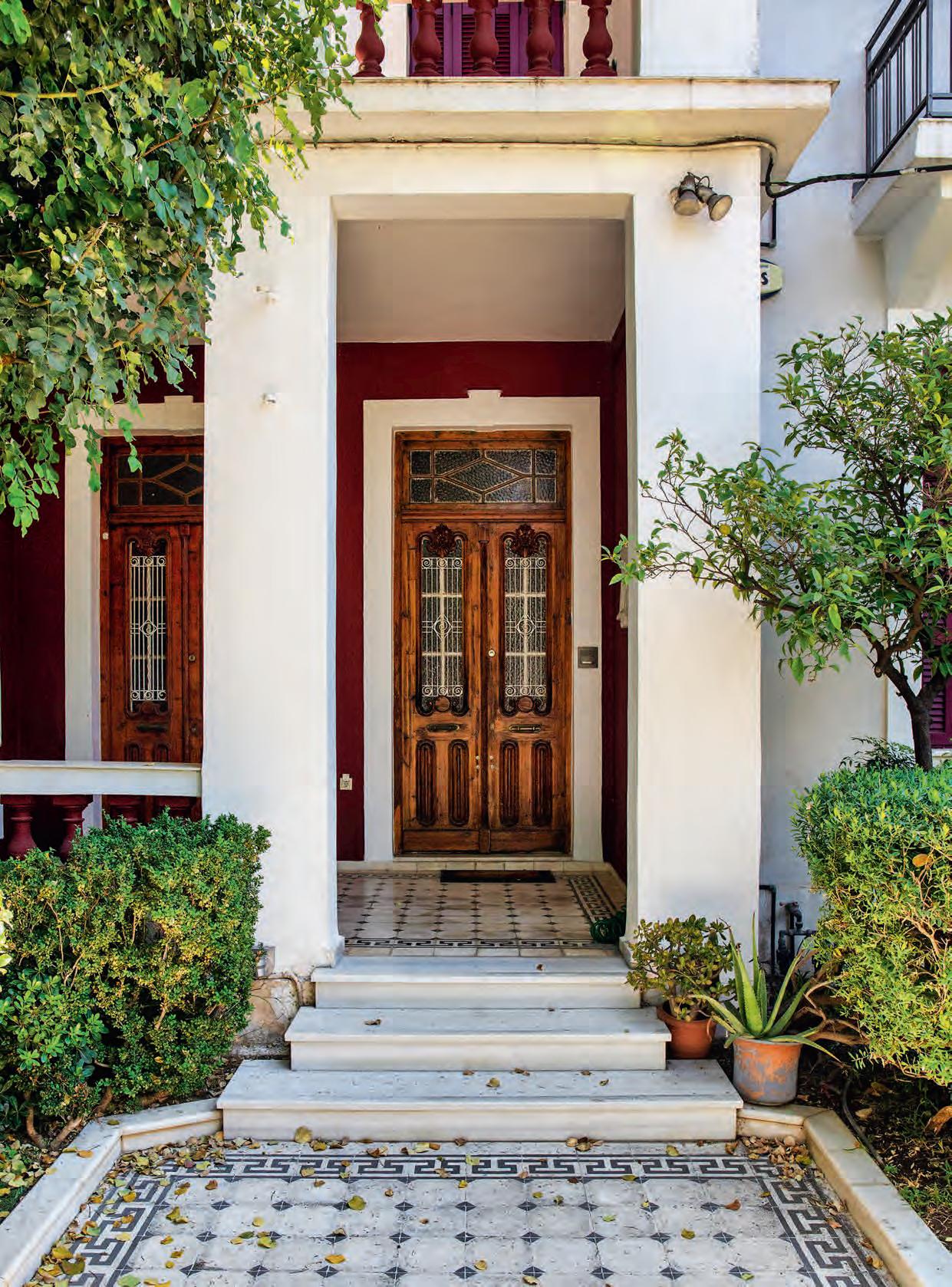
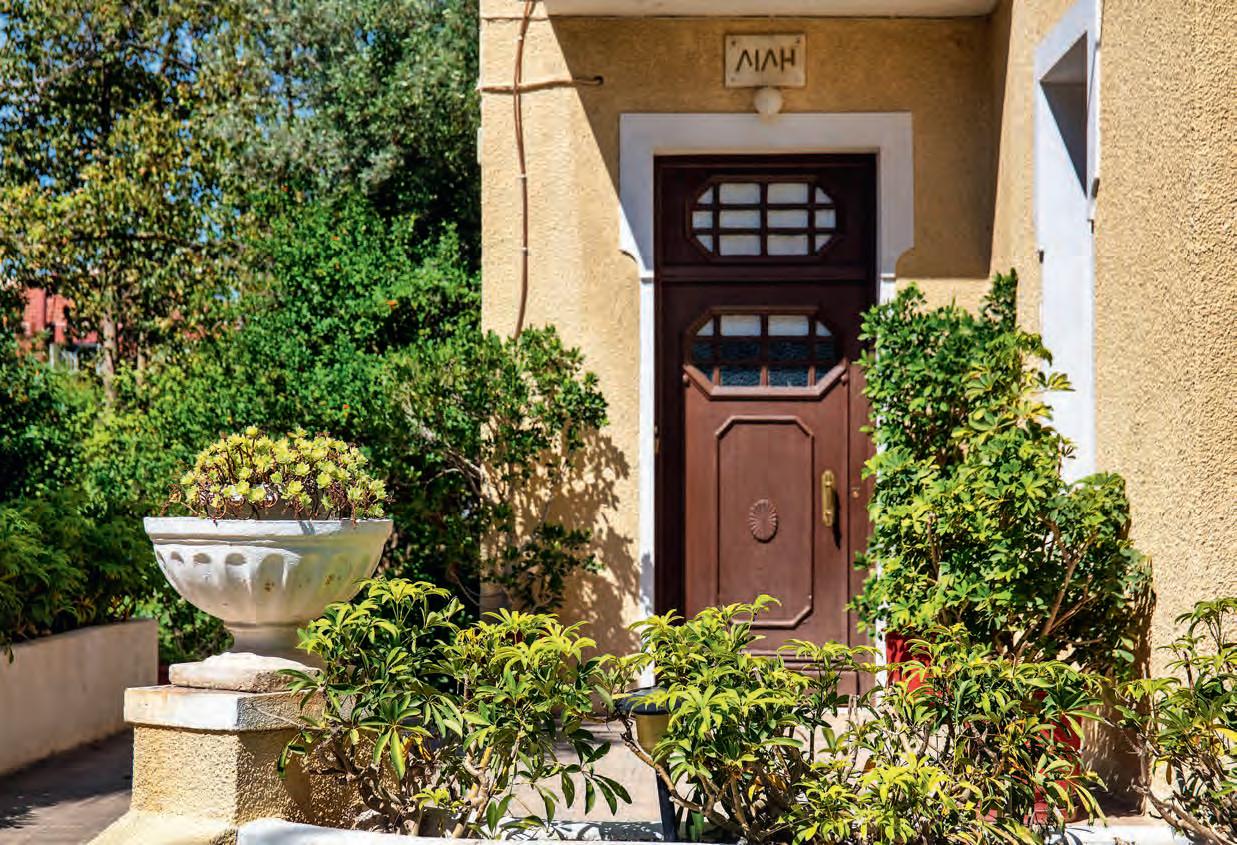
Left: History and stories come "knocking" everywhere in Athens. The city’s old doorways are just the start.
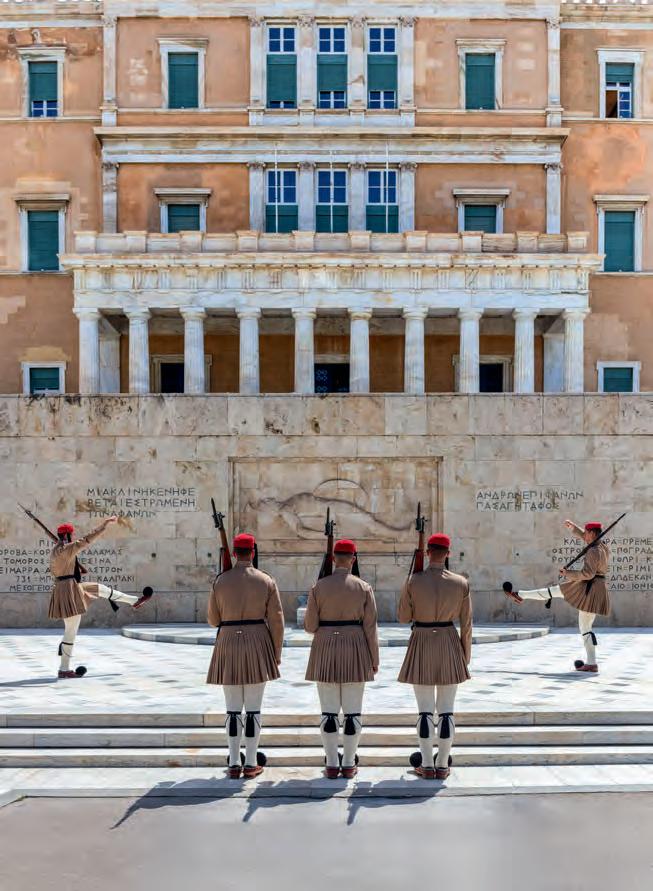
Right: Watching history stand still (or move with incredible precision) at the Tomb of the Unknown Soldier, in front of the Greek Parliament building, facing Syntagma Square.
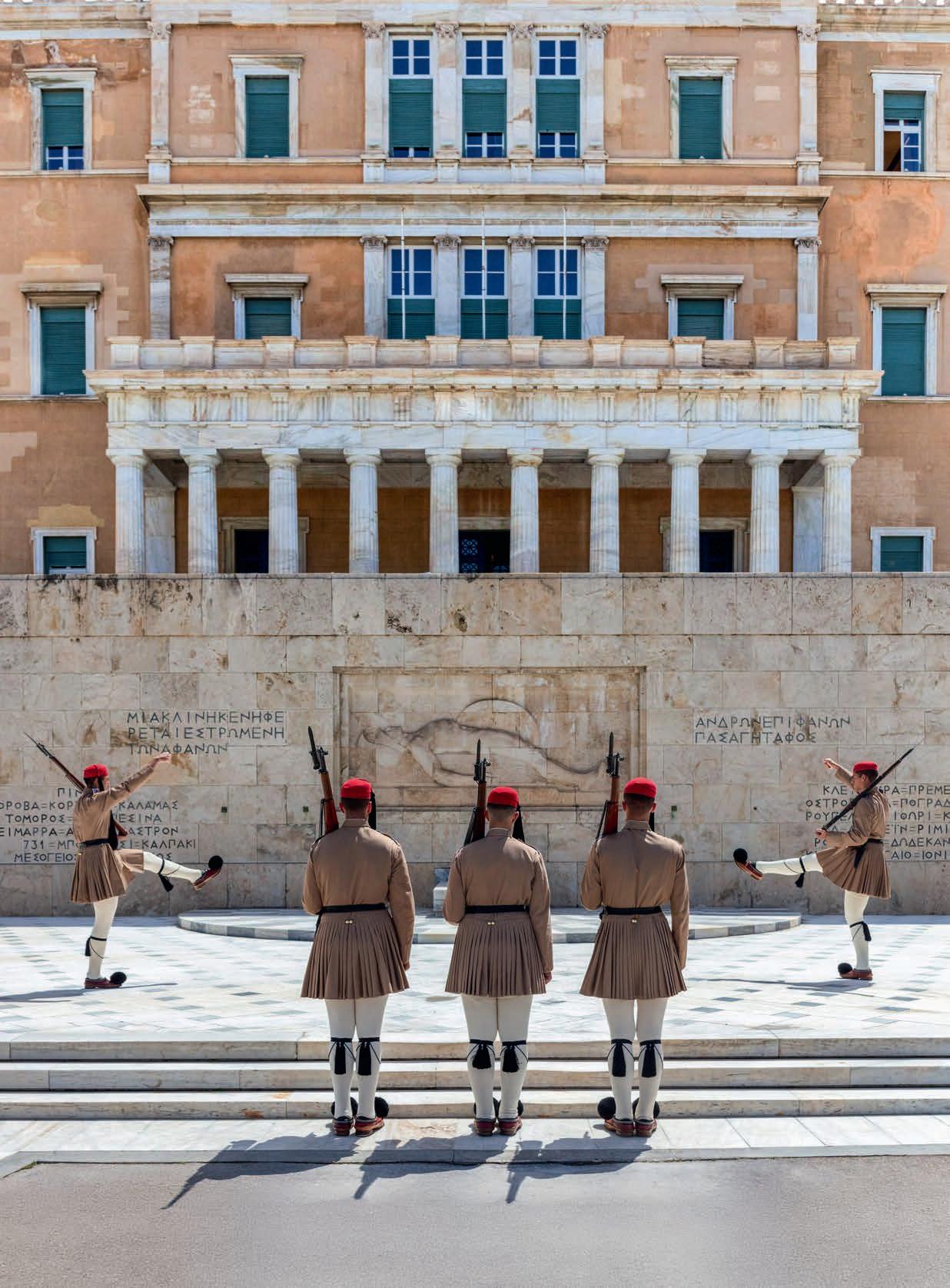
AATHENS, TIMELESS, CRACKLING and hot under Athena’s dream gaze, is full of things beautiful and half-broken – but it is rarely full of itself. The emblem of this city is the Parthenon, the goddess’ temple, which seems almost as old as the stars but is, in fact, ageless. How mightily it stands, despite the inevitable nicks in the pillars over there, the scars from purloined friezes up there. If we had one of these in America, instead of so many of those quasi-earnest facsimiles that are supposed to impart faith in institutions that almost ritually come up short, it’d be both revelation and Internet breaker.
But here? Nah, Athenians have too many deals to close or chefdriven restaurants to investigate or postcard islands to dash off to for long weekends. The feats and glories of antiquity are, if not for the birds, then definitely (or at least mostly) for the tourists, not that there’s anything wrong with that.
“Honestly, man,” a taxi driver confessed to me recently, “I was – come on, m*l*ka bus, move it! – I was born and raised in this city, and I’ve never even been up there.”
That “there,” of course, refers to that most unlikely of ancient-modern skyscrapers, the Acropolis, looming 500 feet or so (more if you count Athena’s temple) above the urban fray. Not as tall as the Eiffel Tower, but packing a significantly larger punch in terms of civilizational consequence. The Greeks have always, and rightly, revered it, their nation’s “sacred rock,” but it’s the tourists and cruise-ship day-trippers who do most of the worshiping, so to speak. They clamber up it for their selfies and TikToks with such persistence and alacrity that, from a distance, the place can sometimes resemble a magnificent if improbable anthill. From the base of those storied and still somewhat mysterious slopes the real and modern Athens – messy, noisy, earthy and anti-ethereal – spills out in all directions, from the ring of mountains in the north to the Mediterranean’s edge, at the suitably proud and also often very loud port of Piraeus.
Of all the great cities in Europe, I can think of no other that is as roundly misunderstood and underestimated as Athens. Paris was for Hemingway a “moveable feast,” and it still is, but ancient chops and modern swagger lend to Athens an additional quality you might call symphonic (though with no shortage of feasting options). What of Rome? As impressive, but also as comprehensible as Chicago, so fixated on material things were those ancient Tiber-side denizens. I hesitate to say that Athens is underrated, because that would almost too easily validate my thesis, namely that the Greek capital is – as far the European continent goes,
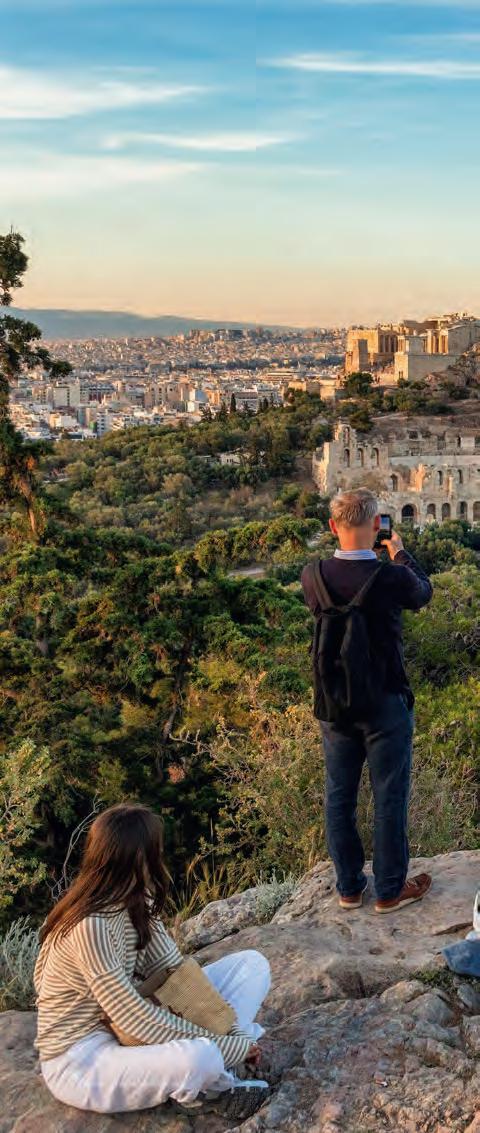
Acropolis
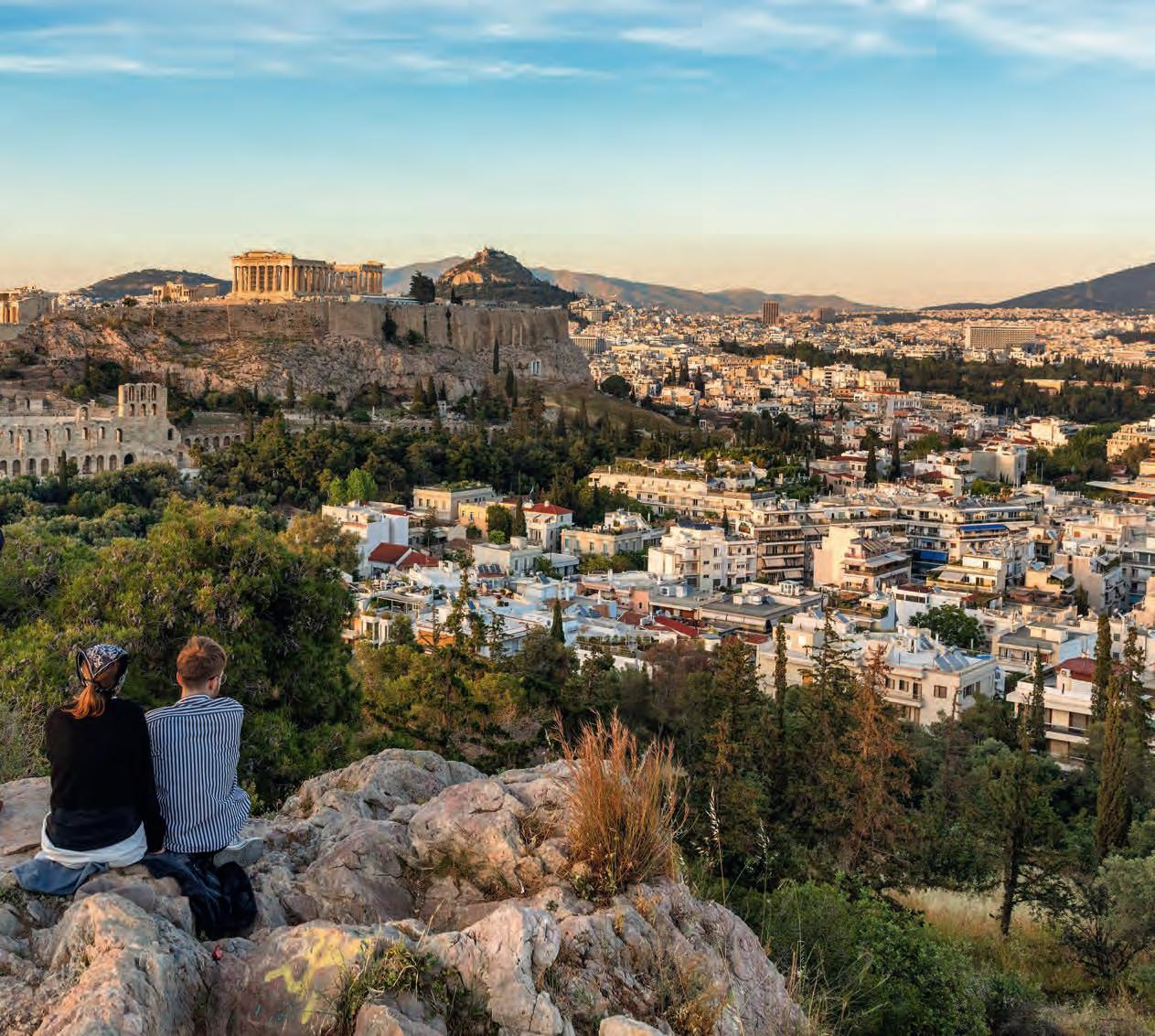
at least – the last refuge of the dislocated hip. But even if that holds true today, as I suspect it does, it’s a state of affairs that will not last forever.
For the moment, though, the cool and stealthy winds of hipsterdom prevail and, frankly, what do ancient ruins have to do with it? Not nearly as much as those cool corner bars in Neos Kosmos and unvarnished kafeneios everywhere, or the pop-up bakeries of Pangrati, or the hotels of repute both high and mighty, where 20 euros in the gourmet restaurant might get you a single Naxos baked potato (but a darned good
FROM THE BASE OF THOSE STORIED AND STILL SOMEWHAT MYSTERIOUS SLOPES THE REAL AND MODERN ATHENS – MESSY, NOISY, EARTHY
AND ANTI-ETHEREAL –SPILLS OUT IN ALL DIRECTIONS.
one), and lowdown and dirty, where randy visitors of possibly Balkan provenance may find that 20 euros don’t go as far as several hundred drachmas presumably used to.
Up in Kolonaki, you’ll find trendy bars, slick-as-molasses art galleries and streets reminiscent of those in certain Parisian arrondissements, with that requisite mix of high price tags and silky grayish gloom. Just beyond those high-falutin’ thoroughfares, though, there is Exarchia, a gritty downtown neighborhood with genuine anarchist vibes and aging neoclassical buildings
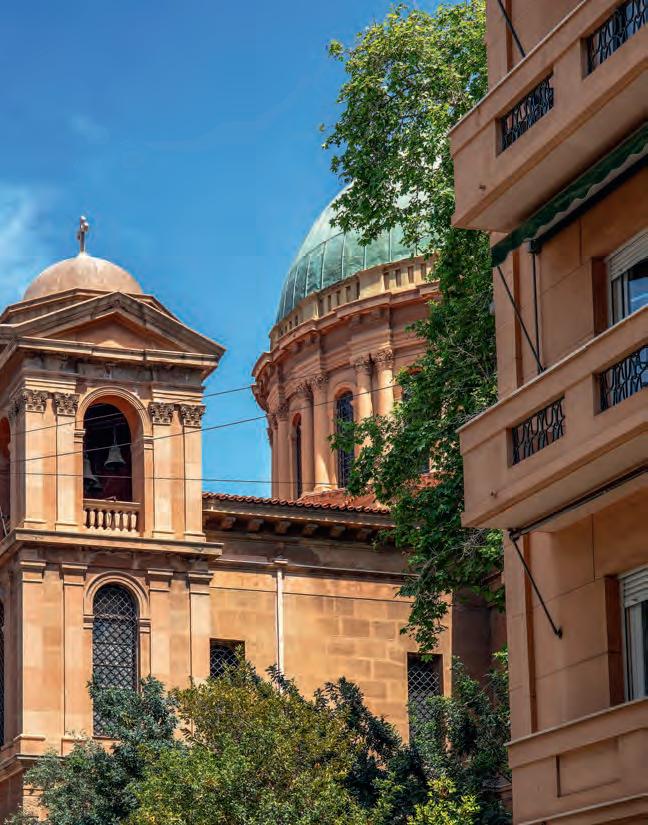
that have mostly resisted gentrification, some punched up with vivid murals and wild-at-heart street art. The atmosphere swings between bubbly and brooding as you stumble upon bars and cafés with names such as “Revolt,” “Buy or Die” and “Don’t Be A Dick.”
Athens is not a shopping city; there’s London for that. Berlin? Sigh … I heard there’s a big colony of Israelis there, which strikes me as slightly predatory (nothing against Tel Aviv, but that city’s signature ebullience is non-transferable). Prague? Pretty and hot for a minute in the mid-1990s but now, well, you know … Prague.
The Greek capital is a city in motion; here the traffic is combat – think Athens vs. Sparta testosterone at
ATMOSPHERE SWINGS BETWEEN BUBBLY AND BROODING AS YOU STUMBLE UPON BARS AND CAFÉS WITH NAMES SUCH AS “REVOLT” AND “BUY OR DIE.”
any given hour of the day or night – the drivers are Greek, and in a much bigger hurry than you are – out of the way, please! But for the seasoned post-Parisian flâneur, Athens is, on a good day, still one thrilling and marvelous asphalt trip, even if the sidewalks are terrifyingly uneven. What, did you think this was squeaky-clean Helsinki or something?
As with a handful of other truly great cities, it is after you get yourself to this one that the real traveling begins. Whether you make the ancient monuments such as the Parthenon and classic neighborhoods like Plaka your urban anchors or are completely oblivious to them in your explorations, walking around Athens (regardless of the hour) rarely feels formulaic – in
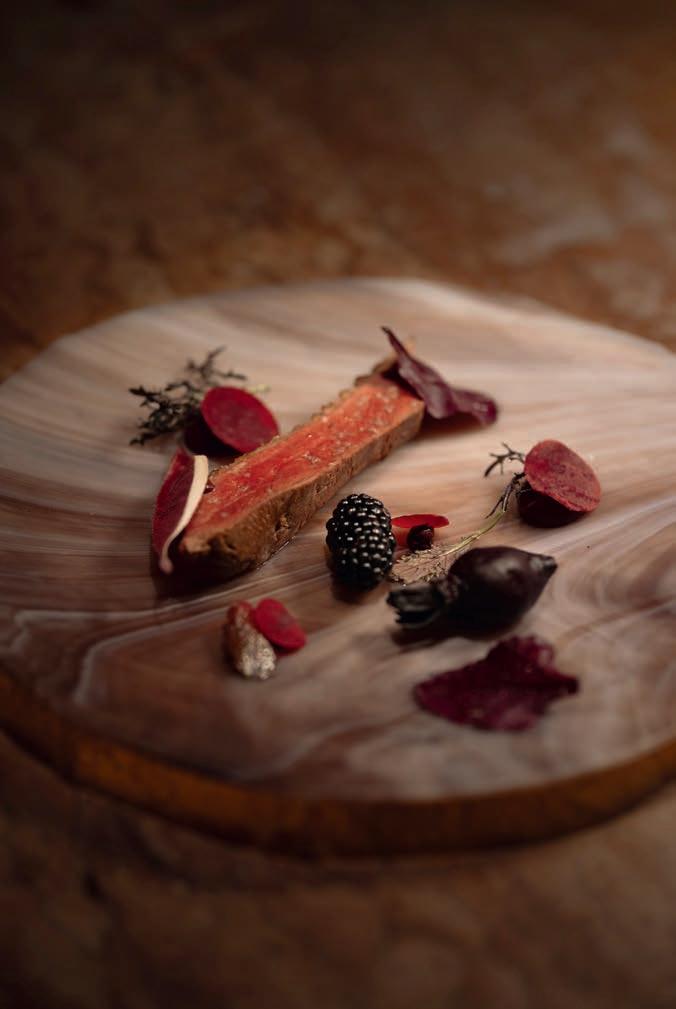
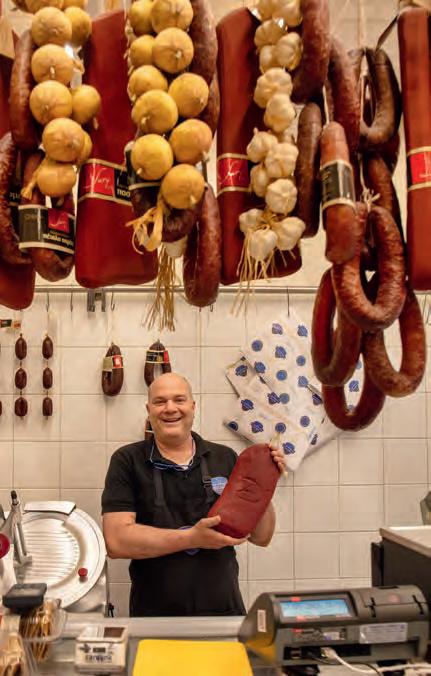
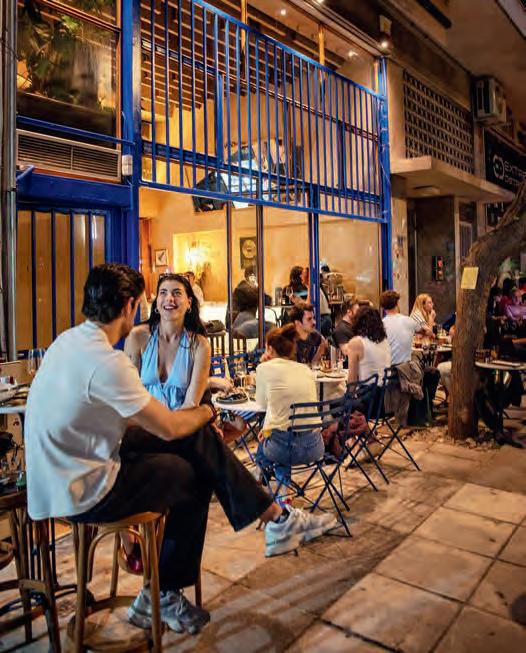
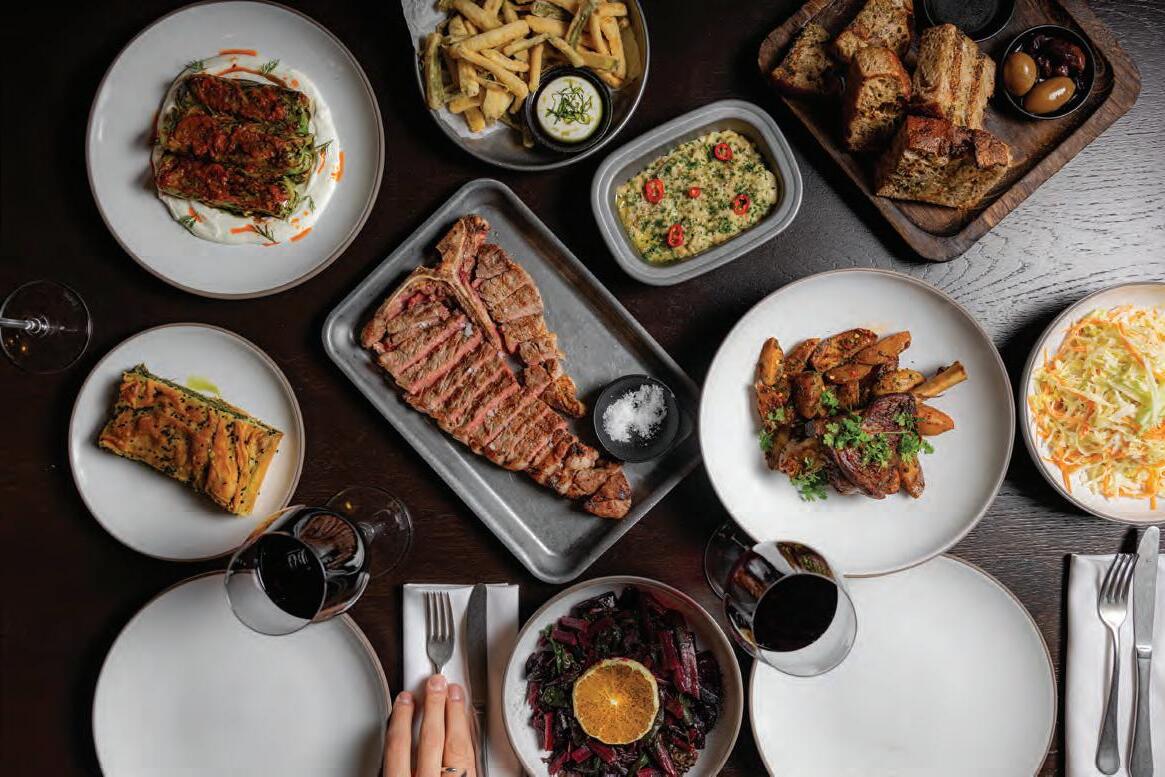
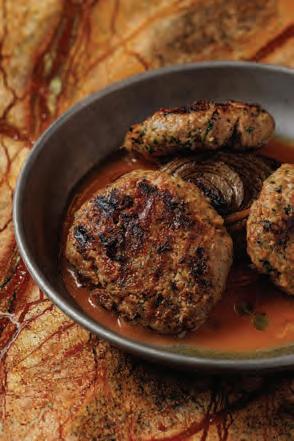
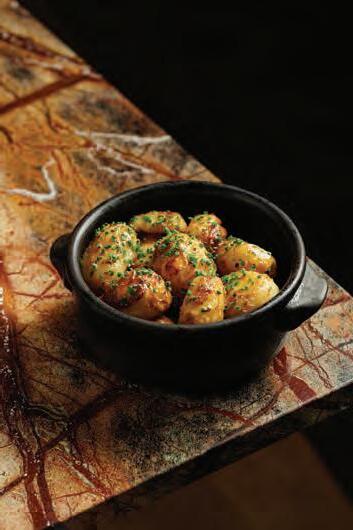
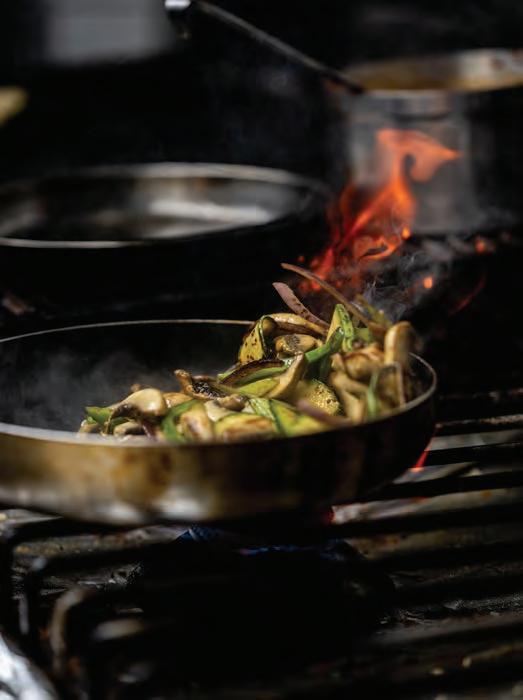
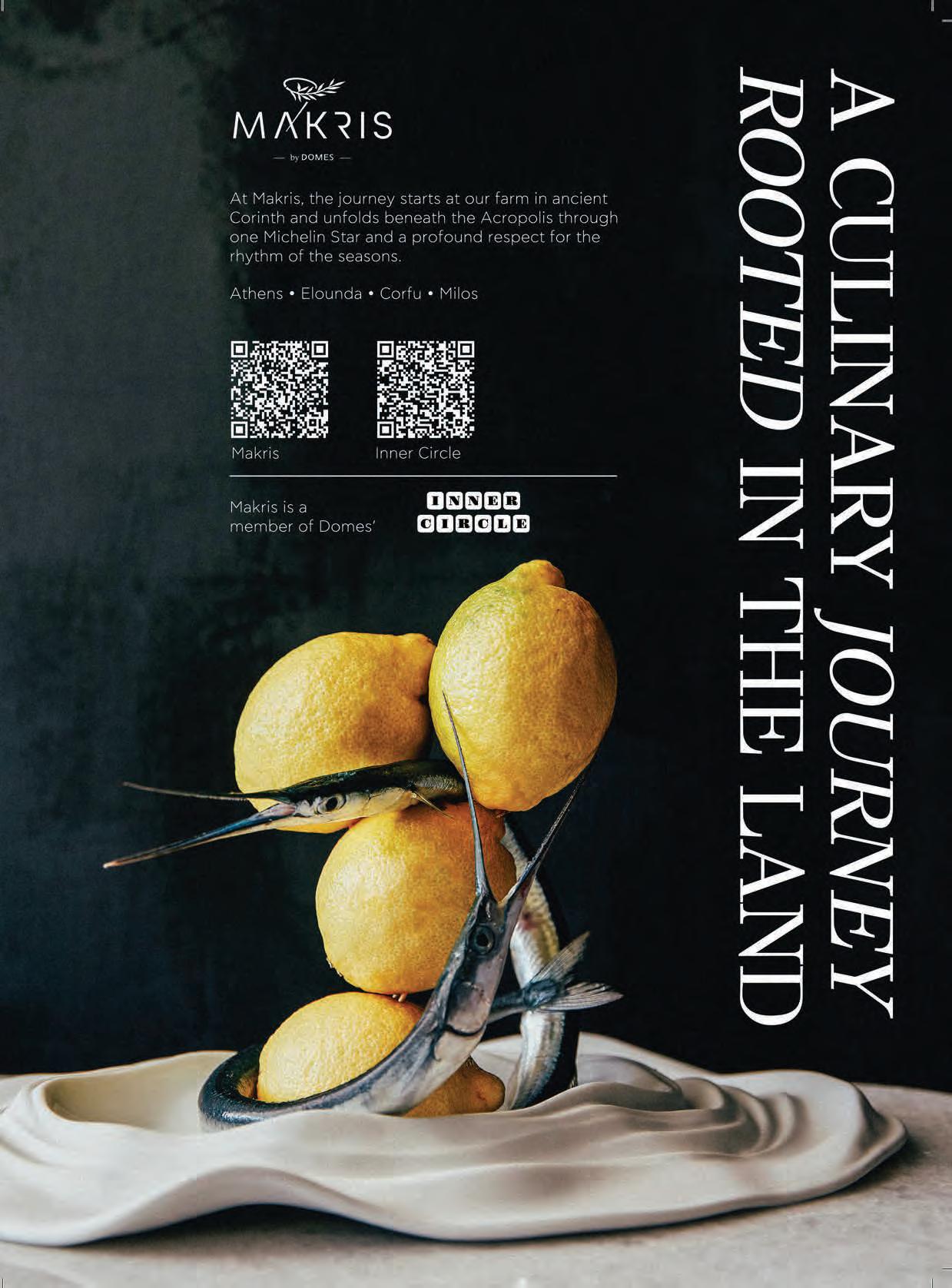
1. At Makris, for a truly special gastronomic experience. 2. A relaxed atmosphere at the wine bar Epta Martyres. 3. Delicious souvenirs to take home from Arapian Deli. 4. Flavorful wood-fired dishes at Plyta.
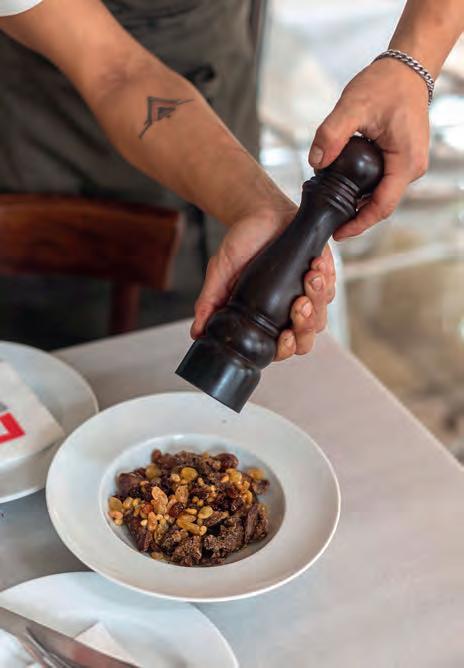
fact, it often feels like you’re on the cusp of unadulterated urban adventure, even if it’s going to be a mostly imagined one.
After all, Athens is fertile country for the imagination, is it not? It’s a hero-created city, where the ghosts of Pericles and Themistocles join the pantheon of ancient gods whose spirits can still be sensed above the din of the traffic jams in the green crannies of the Agora and Kerameikos. What a wonder and a marvel that a city of so many ribboned millennia of dead will feel to you so alive, sometimes achingly so, because eventually you’ll realize that you simply won’t be able to see or do it all, that the moment is all you have and, frankly, do you need much more? There will also
THE ARTS HAVE A STRONG PRESENCE HERE, IN WHICH THE GREAT MUSEUMS PLAY AN INTEGRAL BUT NOT EXCLUSIVE PART.
be moments when the music stops and the check comes to the table, but don’t worry, any gaps in the great rhythm are only temporary. Athens doesn’t necessarily feel as pregnant with possibility as does, say, New York; the energy is different. It’s a concentration of something unclassifiable that pulsates outward, not like the energy that flows into New York from all the different people who come to it. There’s the whoosh of commerce, alright, and, despite the fact that Greeks don’t talk about money like Americans do, there’s a lot of lucre that moves through this capital city on a daily basis. There’s culture, too; the arts have a strong presence here, in which the great museums play an integral but not exclusive part.
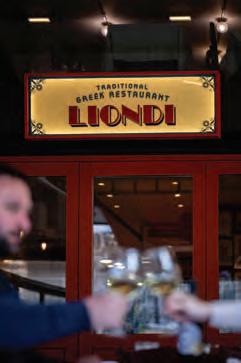
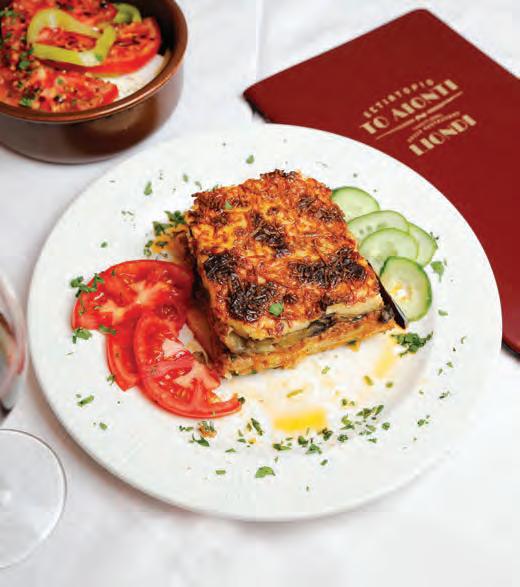
Located just steps away from the Acropolis Museum and the Acropolis Metro Station, Liondi offers a warm Greek welcome and a truly traditional culinary experience. Our restaurant is a favorite among locals and visitors alike, known for its hospitality, heartwarming dishes, and unbeatable location.
At Liondi, we proudly serve authentic Greek cuisine, crafted with fresh ingredients and inspired by family recipes passed down through generations.
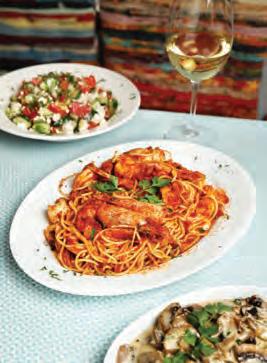
Try our famous moussaka, or indulge in our slow-cooked oven-baked lamb, served with rice and aromatic local herbs. For seafood lovers, our grilled fish selections are always fresh and perfectly prepared.
Pair your meal with a glass of fine Nemean wine, straight from the vineyards of the Peloponnese, and enjoy the vibrant flavors of Greece in every sip.
Whether you’re visiting Athens for the first time or returning to your favorite city, Liondi invites you to taste the soul of Greek gastronomy—right next to one of the most iconic monuments in the world.
Come as a guest, leave as a friend.
Kalos orisate!
Makrigianni 19-21, Athina 117 42 Tel: 21 0921 9994 liondi.com




There are fish markets adorned with seahorse-shaped signs next to fruit vendors and nut shops and spice shops with pastourma (camel-meat pastrami) behind the counter and Arcadian sausages dangling from the ceiling, and everywhere food, food galore, to say nothing of the loud chatter regarding Athenian and Greek politics, a subject which not even the most astute correspondent could ever figure out, and taxi strikes, and side streets where ladies with certain skill sets still ply their trade, and … Yes, Athens is the ultimate mash-up – lush hillsides such as Filopappou, where tortoises roam; traces of ancient walls, including many in sea-proud Piraeus, with aromas from around the world wafting about its storied harbors; and, everywhere in between, those concrete apartment buildings.
A sculpture of the great poet C. P. Cavafy, in front of the Onassis Library and Onassis Mandra (“Walled Courtyard”) on pedestrianized Dionysiou Areopagitou Street.
There is, in Athens, that most mysterious of metropolitan elixirs; if pressed, I’d have to say that it might not be energy at all, but rather the quiet exultation of intrigue; you’re never going to identify the DNA of this place, so don’t even try, or, at least, don’t try too hard. Better to eat, drink and drift. Order another drink and lasso a friend, then drift some more. That’s when the music really starts and the magic happens – just be sure to look out for that garbage truck, and please don’t trip.
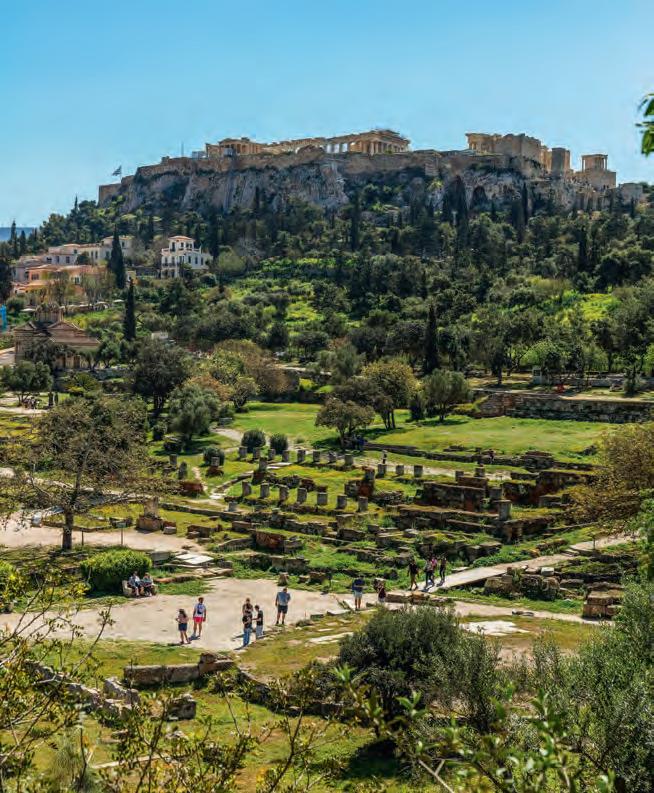
Take a deep dive into the soul of the city, the ancient Agora. Here is where Athens really began, in the early sixth century B.C. Today it is, along with the Roman Forum, the nec plus ultra of urban archaeological parks. I think of it like a cat: everything that
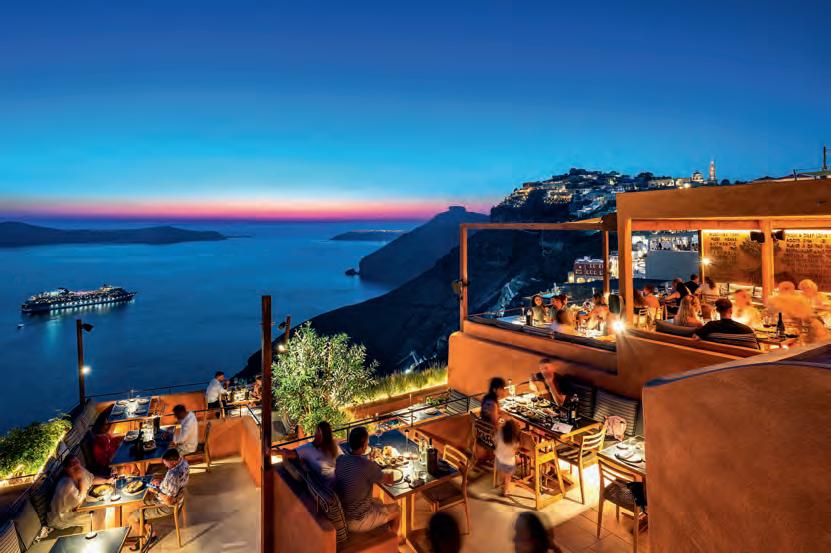
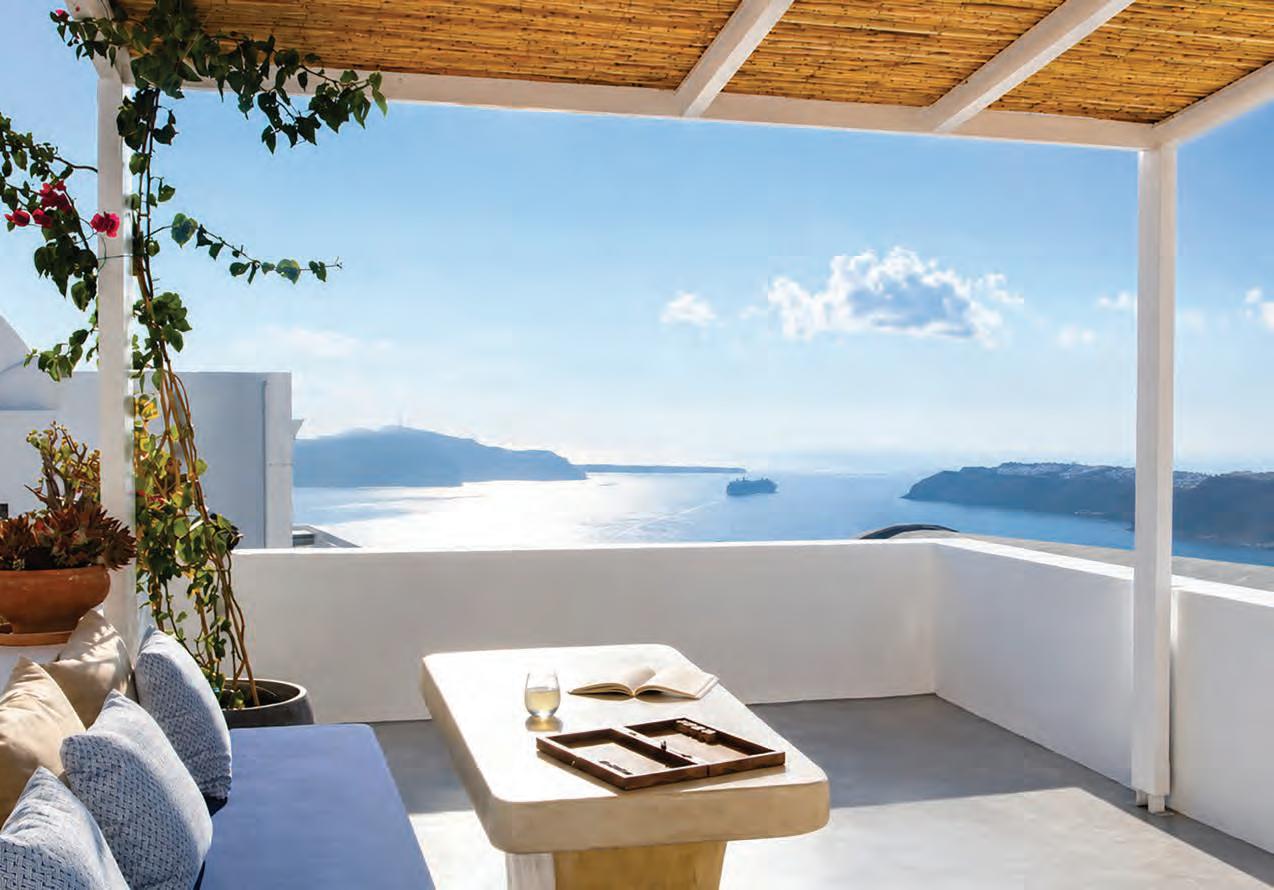
Santorini has no shortage of restaurants with spectacular views. At Rizes Gastro Taverna, however, the experience goes beyond the caldera. Here, the focus is on the island itself: its volcanic soil, dry-stone terraces, wind-shaped vines, local produce, fishermen, farmers, and the enduring culture of Greek cuisine.
Set high above the Aegean, with the cliffs plummeting down to the sea, Rizes takes its name from the Greek word for “roots”. It’s a fitting choice. This is a restaurant guided by a clear sense of place, where the traditions of island cooking are celebrated with authenticity and care.
The menu brings together the essential flavors of a Greek summer: sun-ripened vegetables, fragrant herbs, fresh seafood and carefully selected meats sourced from local producers and small farms across Greece. Dishes are served with the warmth and generosity of a traditional taverna, complemented by the refinement of a modern kitchen. The emphasis is always on flavor, allowing exceptional ingredients to take center stage.
Classic recipes are thoughtfully reinterpreted, while familiar ingredients are presented with elegance and restraint. The result is food that feels both rooted in tradition and confidently contemporary.
The setting is equally memorable. Spread across terraces overlooking the caldera, the sea and the volcano, Rizes is made for long lunches, sunset aperitifs, and leisurely dinners beneath the Santorini sky. The
select wine list pays tribute to the island’s renowned volcanic terroir while also showcasing outstanding labels from across Greece and beyond.
In a destination often defined by spectacle, Rizes offers something more lasting: a genuine taste of Santorini, rooted in the land, inspired by the seasons, and shaped by the simple art of warm hospitality.•
Tel. (+30) 22860.218.85
Email: reserve@rizessantorini.com www.rizessantorini.com
has been said about cats has already been said and yet, is there any creature as resolutely enigmatic? The same applies here.
There’s hardly a nook or cranny of this sprawling plateau below the Acropolis that hasn’t been thoroughly identified and documented, and yet it’s still a fountain of wonder. The ghost-chatter of philosophies once fresh and the former clatter of commercial exchange that transpired in this legendary crossroads is now replaced by stony ruins, shady groves of olive trees and yes, a few scene-stealing felines sunning themselves atop broken marble columns. Could any film set compete? It gets better the more you amble about, and some vistas are positively dreamlike. The Hephaisteion temple, which graces the top of the gentle Agoraios Kolonos hill, comes as a surprise to many who didn’t realize that it is in a better state of preservation than the Parthenon.
There’s even more to see in the Stoa of Attalos, the museum of the ancient Agora. It’s not sleek or glamorous, but then neither was ancient Athens. Beyond the breezy stoa itself, with its views out over the Agora, you can inspect myriad black-figure and red-figure vases incised with mythological characters and scenes as well as Greek marvels like the kleroterion, a stonework apparatus that was used to select jurors. Then there’s the ancient version of cancel culture: the roughedged ostraka potsherds inscribed with the names of public figures of whom citizens had had their fill — and ostracized accordingly.
By the way, when you go to purchase something in Athens, you “agorázete” it; the verb to buy literally has its roots in the ancient world’s preeminent marketplace. Commerce and trade, then as today mostly by sea, were always twin pillars of the ancient Athenian success story. Yes, you’ll walk where Pericles orated, maybe where Plato imparted his wisdom to eager students, and with a little imagination
that can be strong stuff. Without the singular exuberance of the Athenian mind, where or what would America be today? That’s almost too unsettling to contemplate.
How should one approach Athens? It may very well be that when you get caught between the moon and New York City, the best that you can do is fall in love, but for the visitor to Athens caught between the bright sun and the city, the best bet might be to simply continue wandering.
That’s when the secrets seep in. The roar of traffic alternates with hidden lanes and concealed courtyards where stealthy silence prevails. There’s a symphony of scents – admittedly, not
always heavenly, but always supremely metropolitan – perhaps in the form of the aroma of cardamom from the spice emporia that line the sidewalks of Evripidou Street, or the aroma of Greek coffee, and there are unexpected sights, such as the dazzlingly green-feathered parrots darting above your head as you make your way across the National Gardens.
Did I mention the radiant light of Attica that, on any given day, shines somewhere between New England autumn awesome and epic Homeric bright on the magnificence meter? There is, actually, no way to convey its clarity. Suffice it to say that it is heaven’s frame here, and it is everything.
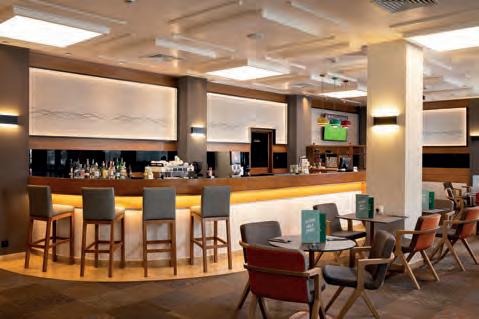
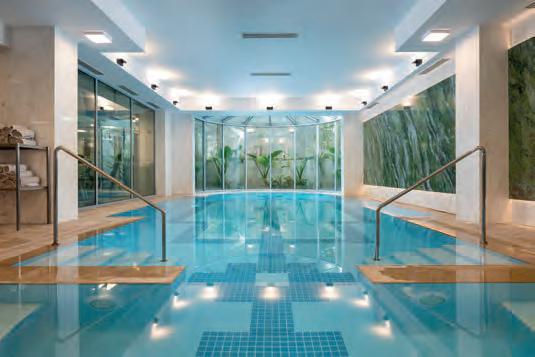
There’s more. At its best, a plunge into the heart of modern Athens is like that moment toward the epic final scene of Raiders of the Lost Ark when the lid finally comes off the ark and divine spirits of myriad colors are released (and before things take a rapid dive south). Because this is another world: the foundation of almost every Western value we take for granted today; the birthplace of the whole gamut of fallible gods as well as the first pass at democracy; the incubator of irrepressible and once unclassifiable desires; and the province of incandescent gold-pink sunsets that reflect the shimmering surface of the mother of all seas. Never as polished as Paris,
nor as monument-encrusted as Florence, Athens is still the city of cities, a quixotic and frenzied civilizational success story. Being here on vacation or for work means being, for a little while at least, part of a universal light that seems to be dimming in many quarters today.
So never mind the honking horns and fumes, and instead marvel at those ancient columns or that plucky feline who claims your taverna table as her or his own. Inhale the metropolitan zephyr that’s so redolent of orange blossom and expectation, and dream and dream! In Athens, it just may be that the gods are – beyond all their eternal sparring and intrigue – still on your side.•
• Arapian 41Evripidou
A little cornucopia of pastourma, charcuterie and fine cheeses, many of them rare either because they are produced in tiny quantities or sourced from remote farms across Greece. An ideal stop for a tasting, and for edible souvenirs to take home.
• Amore Spritzeria 1-3 Menechmou
Atmospheric, dramatic and perfect for an aperitif, just a few steps from the buzz of Neos Kosmos. Vermouth and Greek wines served at friendly prices. The accompanying bites, from artichokes to chips with smoked mussels, are anything but an afterthought.
• Epta Martyres 3B Menechmou
A bar that serves wine, or a wine bar where people dance as if they were in a club? Either way, the formula works: good music, thoughtful small plates, interesting wines and a lively crowd spilling onto the pavement.
• Plyta 1-3AmbrosiouPlyta Square
The spirit of the traditional Greek kafeneio, reimagined for today. The menu is simple, generous and rooted in the wood-fired oven, the grill and classic tray-baked dishes, from stuffed vegetables to slow-cooked lamb. Do note that its tables fill up quickly, thanks in part to the involvement of four of the city’s most acclaimed chefpatrons.
• Makris Athens 10Astiggos &119 Ermou
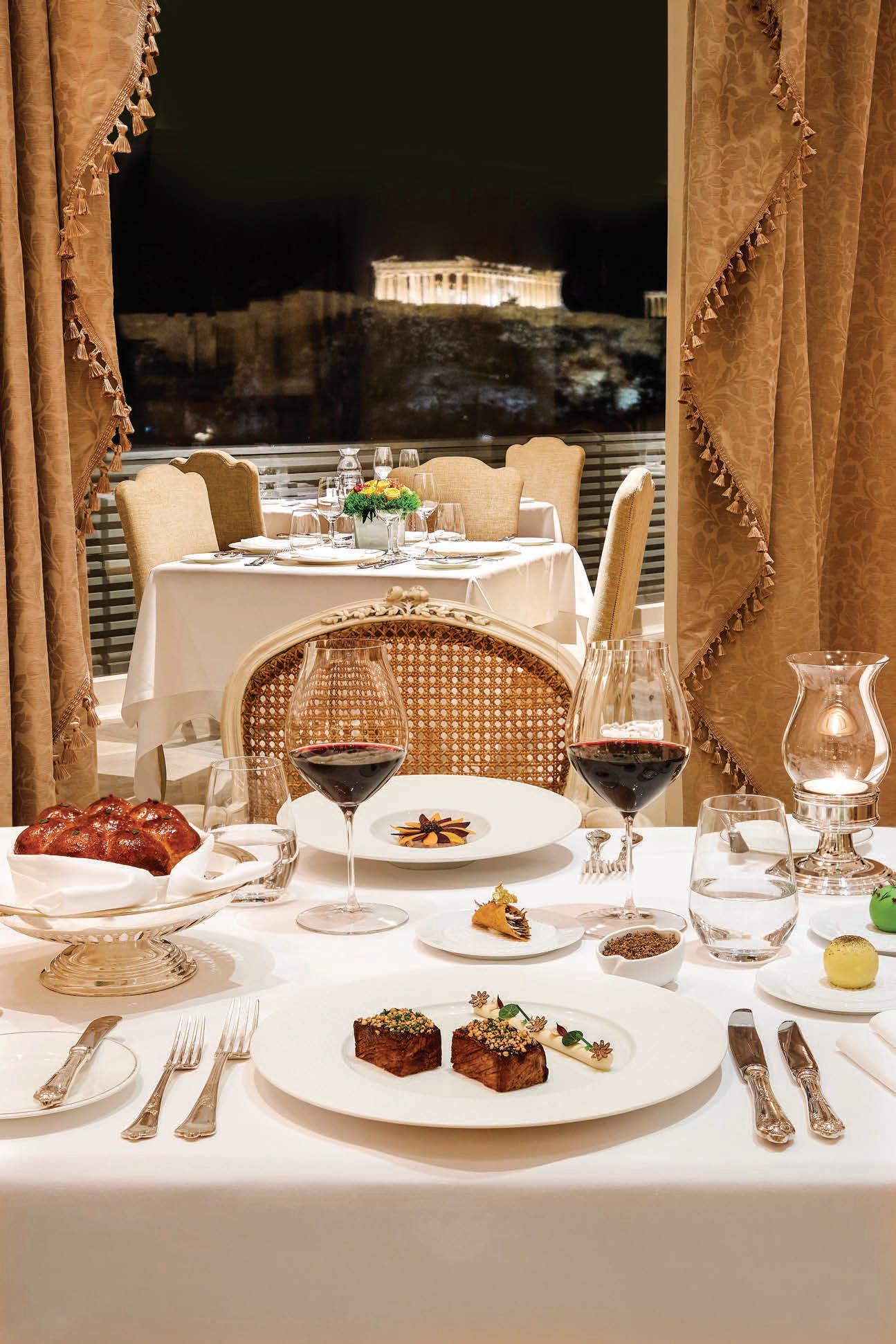
A Michelin-starred restaurant distinguished by polished service and intricate dishes that showcase exceptional ingredients. Highlights include the beautifully fresh seasonal salad sourced from the chef’s family garden, an excellent wine pairing focused on Greek vineyards, and the brew bar, where rare coffees from around the world provide the after-dinner sip.
In the neighborhood known as Kypriadou, a century-old garden-city vision survives in quiet squares, artists’ homes, pockets of greenery and one famously exiled Eve.
BY MARO VASILIADOU
SSOME ATHENS neighborhoods announce themselves immediately through their nightlife, restaurants, architecture or the constant flow of daily life. Others reveal themselves more quietly, beneath layers of dust and time, as if one were leafing through an old urban plan. Kypriadou, or Kypriadis Garden City as it was originally called, is one of them: a neighborhood that is unlikely to appear in a conventional Athens guide, yet one that reveals something rare about the city. It shows how Athens might have evolved had it had more room for gardens, squares, low-rise homes and a more human scale.
For most Athenians, and even more so for visitors, the area around the northern end of Patission Avenue is not an obvious place to wander. Ano Patissia, Rizoupoli and Galatsi usually sit outside the mental map of a short stay in Athens. But step away from the noisy, busy avenue, take your time under the trees and look past the apartment blocks, and Kypriadou begins to reveal itself.
It’s not a postcard-perfect neighborhood. It certainly hasn’t been polished into a destination, and that’s part of its appeal. Its charm is subtler; it’s in the two-story houses that do not hide the sky, in the broad pavements, in the front gardens that survived the postwar development system known as antiparochi through which so many landowners exchanged plots for apartments in the new buildings erected on them. Much of modern Athens developed this way, with many low
houses and gardens disappearing in the process. Here, however, enough remains to show the scale of the original idea; this was once one of Greece’s most ambitious attempts to imagine another kind of city.
STEP AWAY FROM THE NOISY, BUSY AVENUE, TAKE YOUR TIME UNDER THE TREES AND LOOK PAST THE APARTMENT BLOCKS, AND KYPRIADOU BEGINS TO REVEAL ITSELF.
The story begins in 1919, when Epameinondas Kypriadis, a Greek engineer and agronomist from Egypt, decided to turn his family’s large estate in Patissia into a model garden city. The son of businessman Minoas Kypriadis, he imagined an “exemplary garden city” inspired by the European garden city movement and the ideas of British urban planner Ebenezer Howard, who’d proposed a new type of town in which residential, retail and public space could coexist on a human scale.
The artistic quarter
In Kypriadou, that ideal took physical form. The streets were laid out wide; the houses were designed as detached residences, set within their plots so that light, air and gardens could surround them; and the squares were
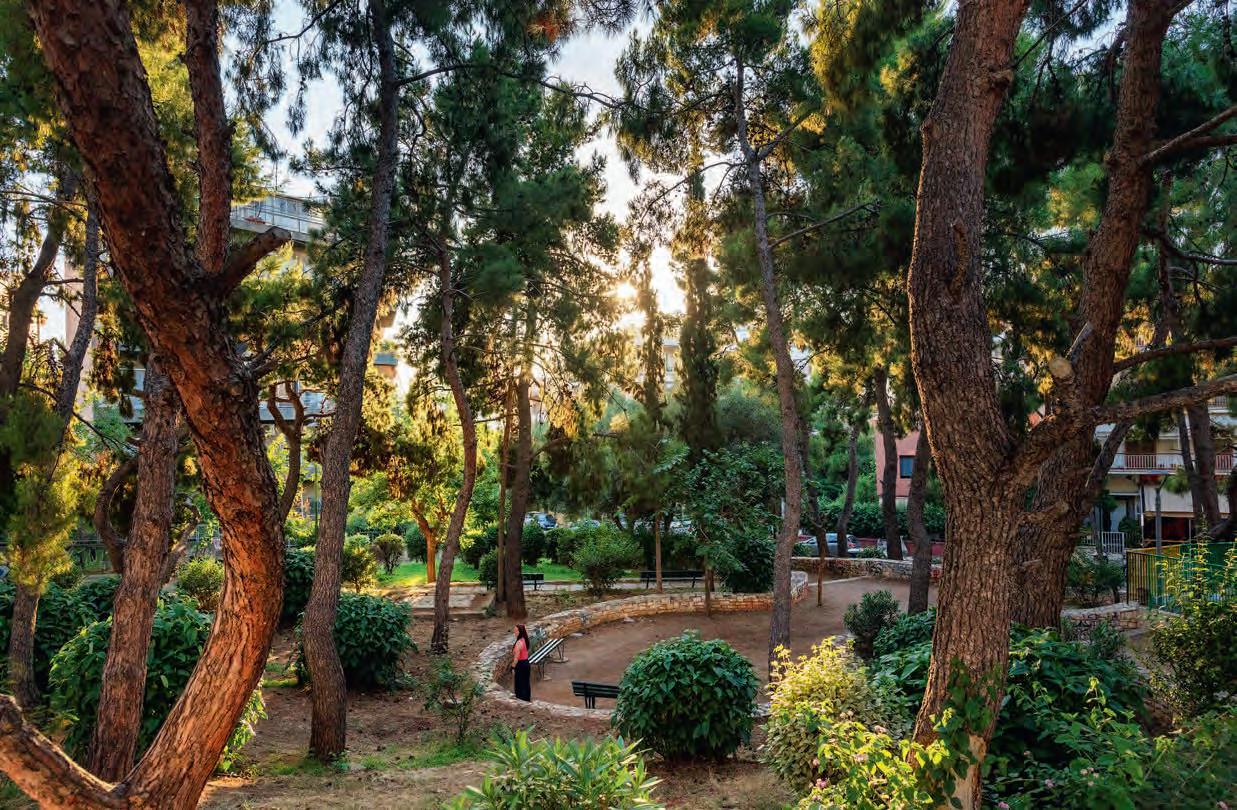
Karkavitsa Square is one of those corners of the neighborhood where you can still grasp the original concept: an Athens designed as a green city, with gardens, wider streets, and plenty of shady squares.
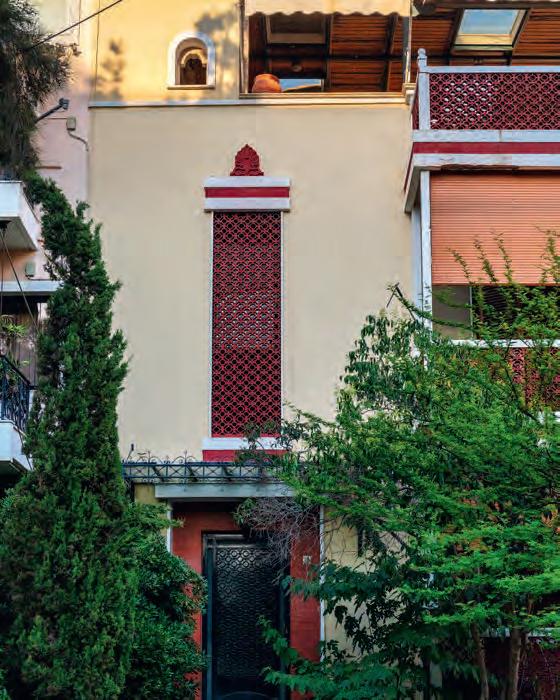
Below: The dominant architectural style was influenced by European country houses.
positioned so that one’s gaze went from one to the next. This was a radical idea for interwar Athens, a fast-growing city still searching for its modern identity. (Kypriadou’s layout would later serve as a reference for Psychiko, the affluent leafy northern suburb also designed around low-rise housing and gardencity principles – although that’s not a helpful comparison for most foreign visitors.)
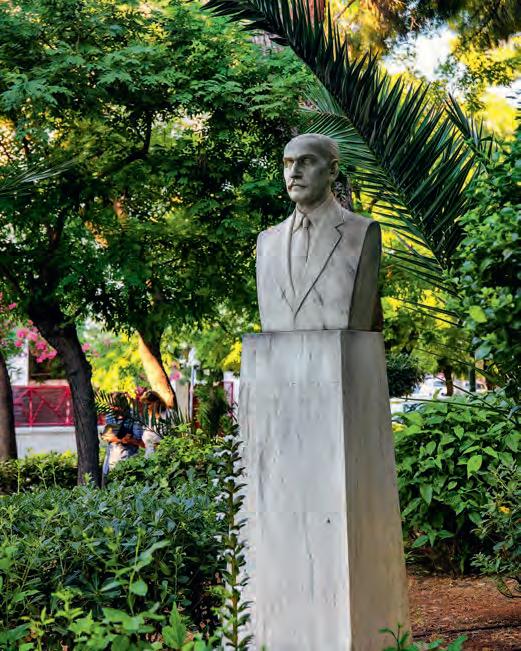
Fragments of that original vision still survive in Papadiamanti, Papalouka and Karkavitsa squares, named after major figures in Greek literature and art, and in Dimitris Pikionis Park, bordered by Schaubert, Karkavitsa and Alkyonis streets. The park is both a neighborhood pocket of green and one of the clearest surviving landmarks of the old garden city.
Dimitris Pikionis, one of Greece’s most important 20th-century architects, lived here and left a lasting imprint on the area. Best known internationally for his paths around the Acropolis and Filopappou Hill, he also designed, in 1949, the house and studio of his close friend Frosso Efthymiadi-Menegaki, a notable sculptor and ceramicist. The building still stands in the neighborhood today.
In 2023, the Municipality of Athens completed a major renovation of the park, adding hundreds of new plants and restoring its infrastructure. A bronze bust of Pikionis, created by Efthymiadi-Menegaki and donated by Agni Pikioni, the architect’s daughter, who has helped preserve his legacy, now graces the park.
Kypriadou was one of Athens’ earliest attempts at urban planning on a human scale, and it soon drew artists, writers, architects and intellectuals. For decades, it had the feel of a quiet cultural enclave. The writer and painter Fotis Kontoglou, who helped reconnect modern Greek art with the Byzantine tradition, lived here. So did Spyros Papaloukas, a key figure of interwar Greek painting; Yannis Spyropoulos, one of the leading names in Greek
KYPRIADOU WAS ONE OF ATHENS’ EARLIEST ATTEMPTS AT URBAN PLANNING ON A HUMAN SCALE, AND IT SOON DREW ARTISTS, WRITERS, ARCHITECTS AND INTELLECTUALS.
abstraction; Oumbertos Argyros, a painter and professor at the Athens School of Fine Arts; and Spyros Vikatos, another influential painter and teacher of the early 20th century. Their homes and studios gave the neighborhood a cultural identity of its own.
Yannis Moralis, one of the great painters of postwar Greece and a teacher to generations of artists at the Athens School of Fine Arts, would later describe the neighborhood as the “Kypriadis School.”
The list did not stop there. Dimitris Glinos, the pioneering educator, political figure and champion of the demotic Greek language, lived here in a house that has since been designated a historic monument. So did Spyridon Marinatos, the archaeologist best known for
his excavations at Akrotiri on Santorini; Antiochos Evangelatos, an important composer and conductor, and later his son, Spyros Evangelatos, one of the major figures of modern Greek theater. Even Thanasis Vengos, one of the most beloved actors in Greek cinema, once called this quiet, cultivated corner of Athens home.
In the interwar years, Kypriadou became a small hub for visual art. Its painters were not looking for ancient ruins or idealized landscapes. They painted what was around them: houses, quarries, quiet streets, the Attic light falling across walls. Spyros Papaloukas painted “Houses in Kypriadis,” while Yannis Tsarouchis, the painter and stage designer who was one of the defining figures of the Generation of the ’30s, painted “The Quarries of Kypriadis.”
For decades, the area retained the feel of a quiet suburb, despite its proximity to the center. From the 1960s and 1970s onward, however, many of its villas were demolished and replaced by apartment buildings. Antiparochi changed the neighborhood, as it changed almost all of Athens. Yet Kypriadou kept traces of its original spirit: the squares, the greenery, the sense of community, the human scale. And somewhere among them, almost discreetly, Eve still stands.
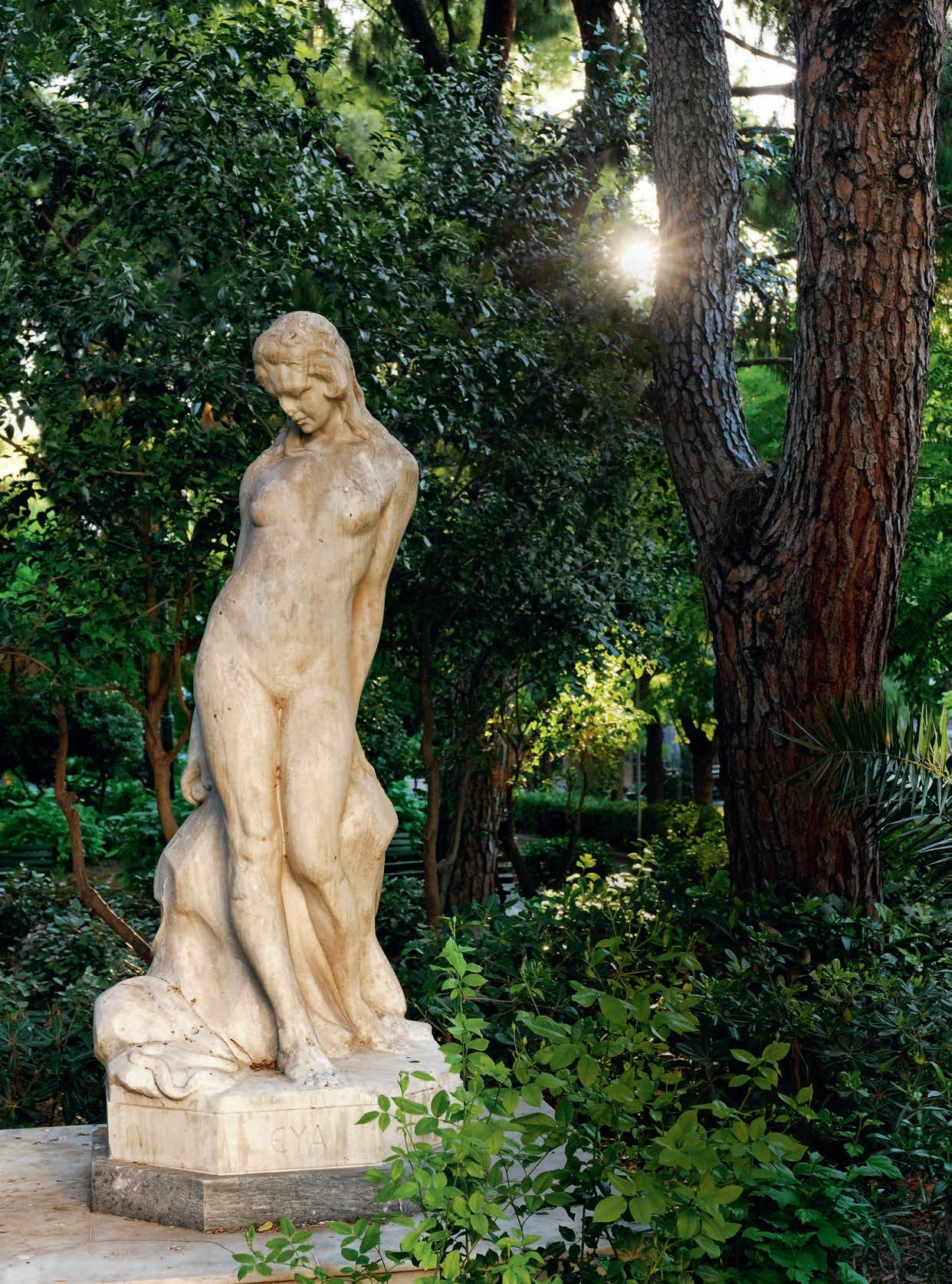
The statue of Eve is one of those small Athenian secrets that seem to encapsulate the entire history of a place. It stands in Konstantinos Nikolopoulos/ Rostand Square, the present-day name of the old Eve Square, in the heart of Kypriadou. Nikolopoulos was mayor of Athens in the early 1950s; Rostand refers to the French writer Edmond Rostand. Older residents, however, never really called it anything other than Eve Square. That alone says something about the place that the sculpture held in the neighborhood’s memory.
The work was created by Grigorios Zevgolis, a sculptor from Naxos and an important representative of modern Greek sculpture in the 20th century. Zevgolis had a particular affinity for female figures and a lyrical, human-centered approach. His Eve, nude and serene, suggests not provocation but an innocent, almost primal figure of nature. It belonged naturally to the idea of the garden city: the human body in sunlight, among the trees and open air.
At one point, the statue was moved. During the 1967-1974 dictatorship, when Greece’s military regime imposed a rigid and conservative public morality, Eve’s nude body was deemed offensive to public decency. The statue was removed from the square and transferred to Kypseli, a densely populated neighborhood north of the city center. In its place came a bust of Konstantinos Nikolopoulos. It was a telling substitution: official respectability replacing the freedom and sensuality of art.
BUT AN INNOCENT, PRIMAL FIGURE OF NATURE.
More than 20 years would pass before Eve returned. In 1995, thanks in part to the persistence of local groups and residents, the statue was reinstalled in the square, where it remains today. Its return felt almost symbolic: a small restoration of the neighborhood’s own memory.
That, ultimately, is the reason to visit Kypriadou. Not because it is the most beautiful neighborhood in Athens – it is not – nor because it offers a perfectly preserved, postcard-perfect version of the old city. Kypriadou is
How to get there
• Take Metro Line 1, the green line linking Piraeus with Kifissia, to Ano Patissia Station. From Monastiraki or Omonia, the ride takes about 15 minutes. From there, walk toward Kypriadou rather than staying on Patission Avenue.
How long does it take?
• Allow 45 minutes to an hour. This is not a checklist walk, but rather a troll through a neighborhood.
Why go?
• To see a rare version of Athens: a neighborhood planned as a garden city, with interlinked squares, traces of interwar houses, greenery, public sculpture and a strong artistic legacy. When to go
• Morning or late afternoon, so that you can see the houses, gardens and squares in a softer light.
more interesting because it is imperfect. It shows how Athens might have developed had it had more trees, pavements, squares and low-rise homes. It also shows how the city actually survives: in layers, through plans that were only partly realized, buildings that came later, and the everyday life of a neighborhood still very much in use.
For visitors who have already seen the Acropolis, Plaka, Koukaki and Pangrati, Kypriadou offers something else: a walk through a different Athens. It is lived-in, green in places, and historical without announcing that fact too stridently. It is a neighborhood that does not ask to be consumed quickly, but noticed.
Go on a quiet morning or in the late afternoon. Start from Ano Patissia, enter Kypriadou through its squares, pause at Pikionis Park, find Eve and take your time. You might not leave feeling that you’ve discovered another “must-see,” but you might depart with something better: the sense that Athens still has neighborhoods that cannot be explained in a single photograph.•
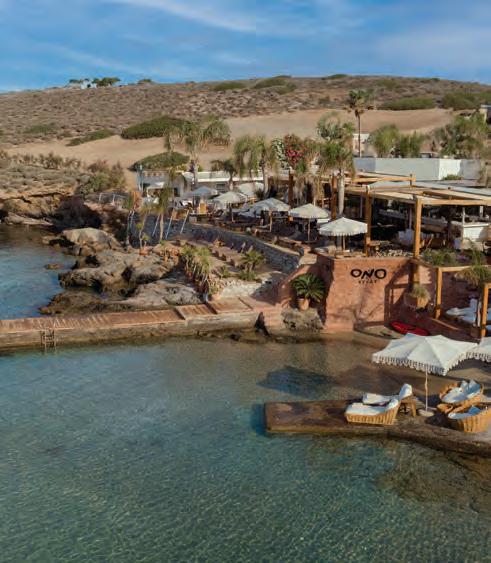
Agathopes beach, Syros, Greece
+3022810 45 099
info@ono.gr www.ono.gr
+306944 697 369
info@liako-syros.gr
www.liako-syros.gr
Akti Mikrolimanou, Piraeus, Athens
+30210 413 4084
info@istioploikos.gr www.istioploikos.gr Chiou 32, Syros, Greece

Inscriptions scratched by prisoners are preserved on the walls of the Korai 4 Historical Memory Site. Right, the entrance to the basement.
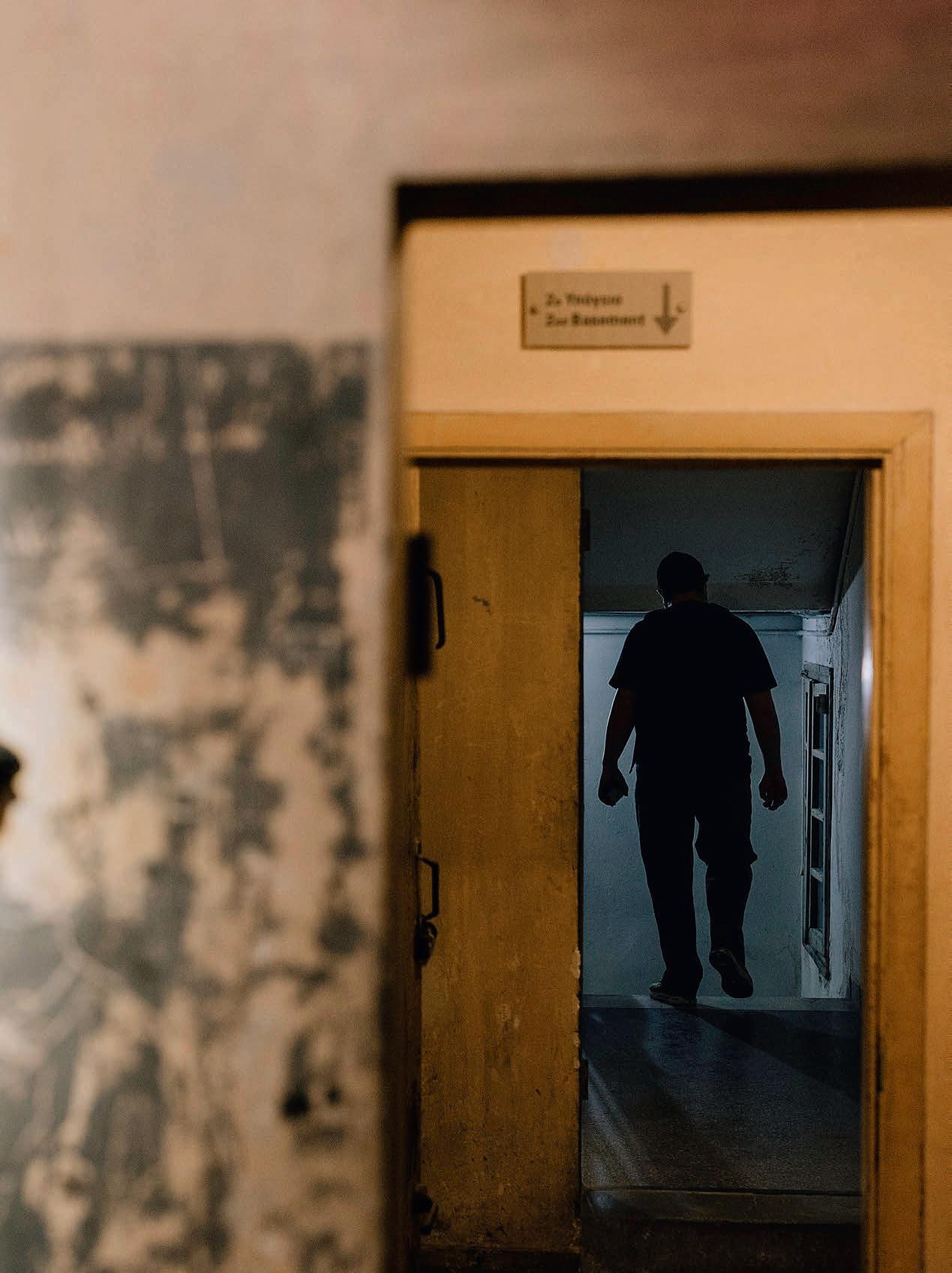
Ancient walls, buried waterways, sacred treasures and wartime shelters reveal the past still present beneath familiar streets.
BY PANΤELIS TSOMPANIS
ACONCEALED BELOW CENTRAL ATHENS ARE SECTIONS OF ANCIENT FORTIFICATIONS, CISTERNS, ARCADES, SHELTERS AND FORGOTTEN PASSAGES. MANY REMAIN INACCESSIBLE OR UNDETECTABLE FROM THE STREET ABOVE.
ATHENS IS USUALLY experienced at street level or above: the Acropolis rising above the city, the hills framing it, the neoclassical façades and the lively scenes of urban life. Yet some of its most fascinating stories lie out of sight, beneath busy roads and squares, inside church crypts, forgotten basements and former wartime shelters. With civil engineer and speleologist Panagiotis Defteraios as our guide, we set out to explore an Athens that few visitors ever encounter.
In Athens, construction rarely proceeds without surprises. Every new metro station, building foundation or infrastructure project has the potential to uncover ancient walls, Roman aqueducts, buried waterways or remnants of long-vanished neighborhoods. In a city inhabited continuously for millennia, history does not exist only in monuments and museums; it often lies just a few meters below ground.
Most Athenians are aware of this layered past, even if they rarely stop to think about it. Every day, they walk over layers of history they may never see or be able to visit. Beneath the traffic of Vasilissis Sofias Avenue, for example, runs the concealed course of the Ilissos River. Once one of the city’s defining waterways, it flowed from the slopes of Mt Hymettus across Athens before joining the Kifissos. During the 20th century, large sections were covered by the modern street network, disappearing beneath roads such as Vasilissis Sofias and Vasileos Konstantinou avenues and Michalakopoulou, Ardittou and Kallirrois streets.
Water has shaped Athens for centuries in ways that are no longer immediately visible. At the foot of Lycabettus Hill in Dexameni Square lies the endpoint of Hadrian’s Aqueduct, one of the most important engineering works of Roman Athens. Built under Emperor Hadrian in the 2nd century AD, the underground system began on the northern edge of the city and ran for roughly 25 kilometers, supplying Athens with water for centuries. Today, like the Ilissos River, it forms part of an unseen geography that continues to exist beneath the modern metropolis.
But rivers and aqueducts are only part of the story. Hidden below central Athens are sections of ancient fortifications, cisterns, arcades, shelters and forgotten passages. Many remain inaccessible or difficult to identify from the street above. Perhaps that is precisely what makes them so compelling; they transform familiar places into something more mysterious, revealing layers of history concealed in plain sight.
“The unknown and the mysterious always attract us, especially when they involve things we cannot see,” says Panagiotis Defteraios, a civil engineer, speleologist, and author of Underground Athens (iWrite), one of the most comprehensive studies of the capital’s subterranean world. “It becomes even more fascinating when you’re walking down a street and discover the story hidden beneath it.”
In recent years, Defteraios founded Alter Exploring, an organization dedicated to introducing people to lesser-known corners of Athens through guided walks and excursions. Interest has grown steadily, and this summer the routes are being offered to international visitors eager to discover a different side of the city.
We asked him to recommend three sites in central Athens, all within easy reach of one another, that are safe and open to visitors. Together, they reveal a city that exists beyond the familiar landmarks, where Athens’ many histories persist below ground.
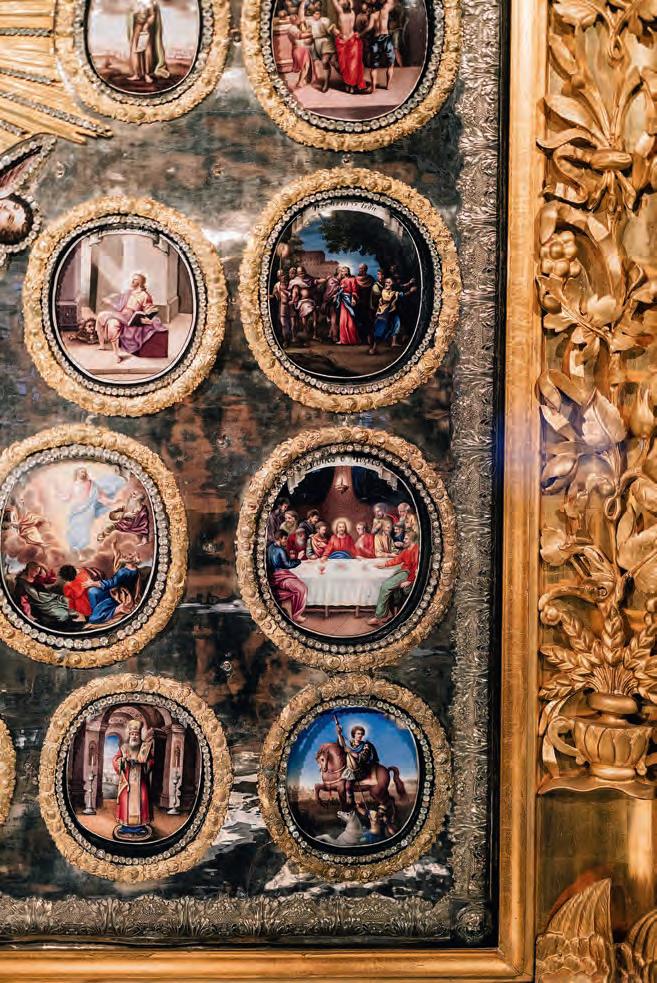
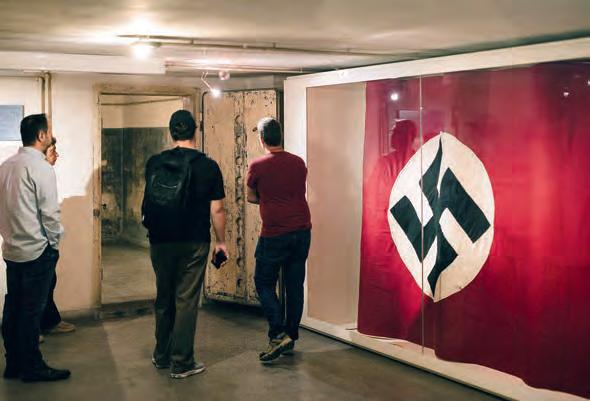
The monumental "Eikon ton Smalton," a priceless enamel masterpiece, was created in Moscow in 1832. Dimitrios Koumbaris gifted it to the Metropolitan Church of Athens, where it is now on display in its treasury. The Nazi flag that flew above the Merlin Street Gestapo Headquarters is kept at the Korai 4 site. Part of the Themistoclean Wall.
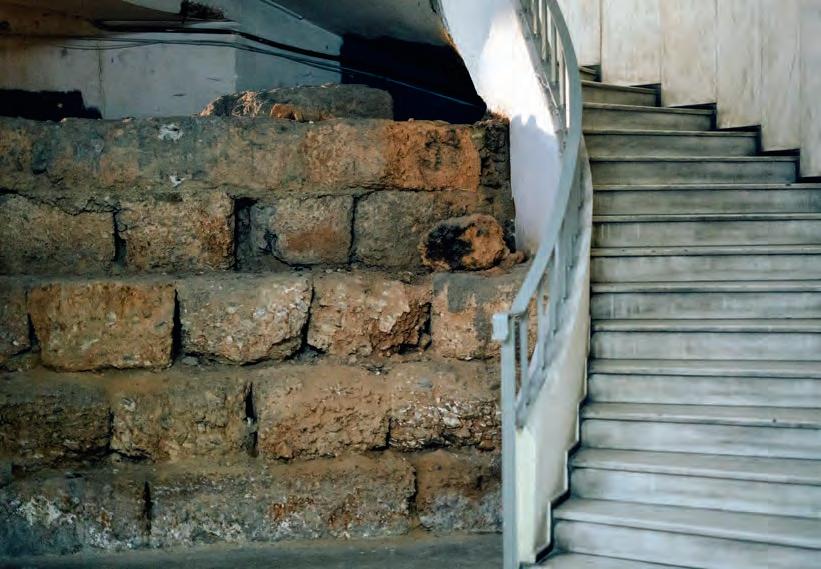
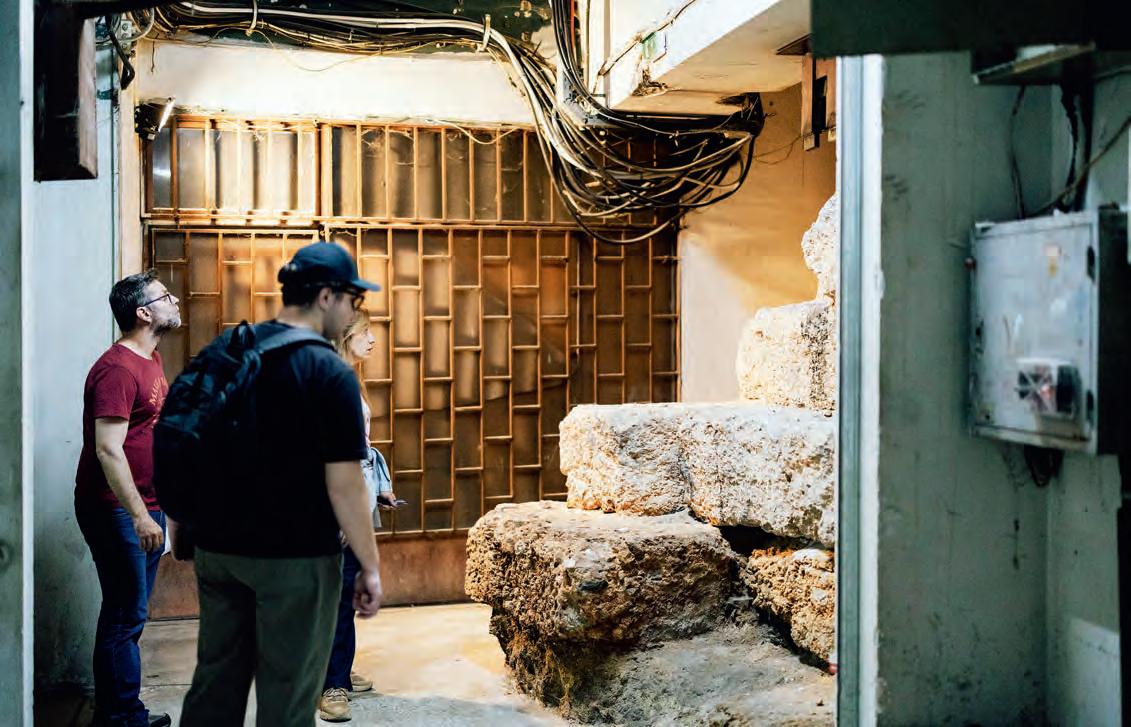
At first glance, Dragatsaniou Street offers few clues that it conceals one of the oldest surviving boundaries of ancient Athens. Just a short walk from Klafthmonos and Korai squares, amid office buildings, cafés, bakeries and bars, a fragment of the city’s ancient fortifications lies hidden beneath an otherwise ordinary arcade.
The remains came to light during construction work in the 1970s, when excavations for the underground parking garage of Klafthmonos Square and nearby building foundations revealed sections of the ancient Themistoclean Wall.
Rather than being removed or reburied, the masonry was preserved and incorporated into the modern structures above it, creating one of those uniquely Athenian encounters where antiquity and contemporary life exist side by side.
As you descend into the arcade’s basement, the sounds of the city gradually fade. Small shops, aging signs and shuttered storefronts hint at a commercial world that has largely moved on. Among them, ancient stonework emerges unexpectedly, pressed against concrete walls and structural supports. It’s not a monumental archaeological site, nor a carefully staged museum display. Its appeal lies precisely in its ordinariness: a quiet fragment of ancient Athens embedded below the modern city.
Built by order of the statesman Themistocles between 479 and 478 BC in the aftermath of the Persian Wars, these fortifications protected Athens for centuries and defined the limits of the ancient city. Roughly 6.5 kilometers long and boasting at least 13 gates, the wall combined stone foundations with mudbrick upper sections that, in places, reached eight meters in height.
The most substantial surviving section can be seen today in the archaeological site of Kerameikos. The experience on Dragatsaniou Street is very different. Here, the wall appears not within a formal archaeological landscape but in the basement of a contemporary building that people pass every day without realizing that traces of ancient Athens lie just below them.
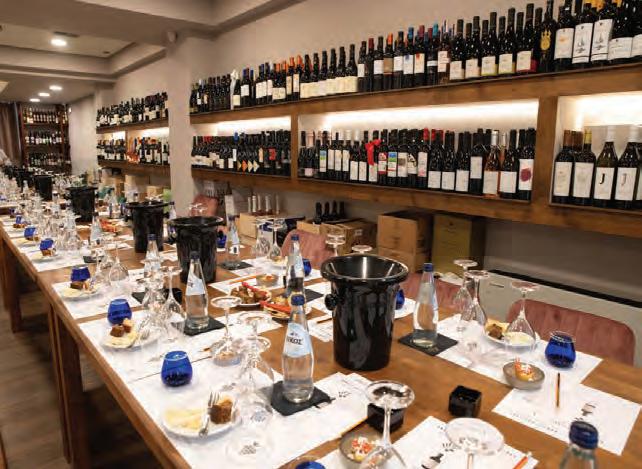

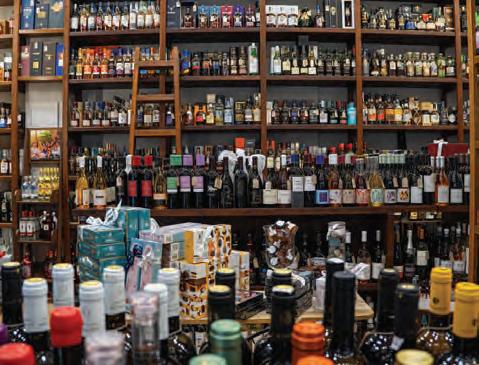
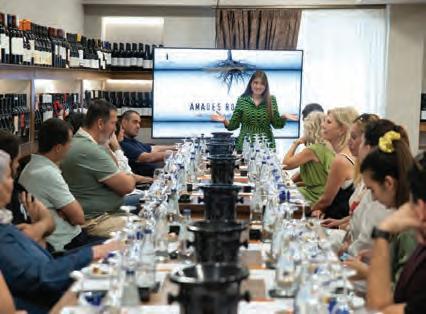
The Cathedral Treasury beneath the Metropolitan Cathedral
Just steps from Syntagma Square and the winding streets of Plaka, another underground space offers a very different journey into the city’s past. Hidden beneath the Metropolitan Cathedral of the Annunciation – known simply as the “Mitropoli” to Athenians – the Cathedral Treasury houses a remarkable collection of ecclesiastical treasures rarely seen outside museum settings.
A staircase inside the cathedral leads to a purpose-built exhibition space below street level. Soft lighting, near silence and the faint sound of Byzantine chanting create an atmosphere of contemplation, regardless of a visitor’s familiarity with Orthodox Christianity. Within the display cases are embroidered epitaphioi, crosses, sacred vessels, vestments, votive offerings and liturgical objects, many distinguished by their exceptional craftsmanship.
Of particular interest are the texts in Karamanlidika, or Turkish written using Greek characters, which offer a glimpse into the complex cultural identities of Greek communities in Asia Minor. Richly illustrated holy
texts, silverwork and devotional objects further illuminate centuries of religious and artistic exchange across the Orthodox world.
More than a repository of precious artifacts, the Cathedral Treasury tells a broader story about faith, migration, craftsmanship and the many networks that connected Greek communities across Europe and the eastern Mediterranean. The project was initiated by Father Thomas Synodinos, the cathedral’s presiding priest and a trained archaeologist, who sought to bring these long-hidden objects out of storage and into public view. With support from the Stavros Niarchos Foundation, the treasury opened to visitors in 2020.
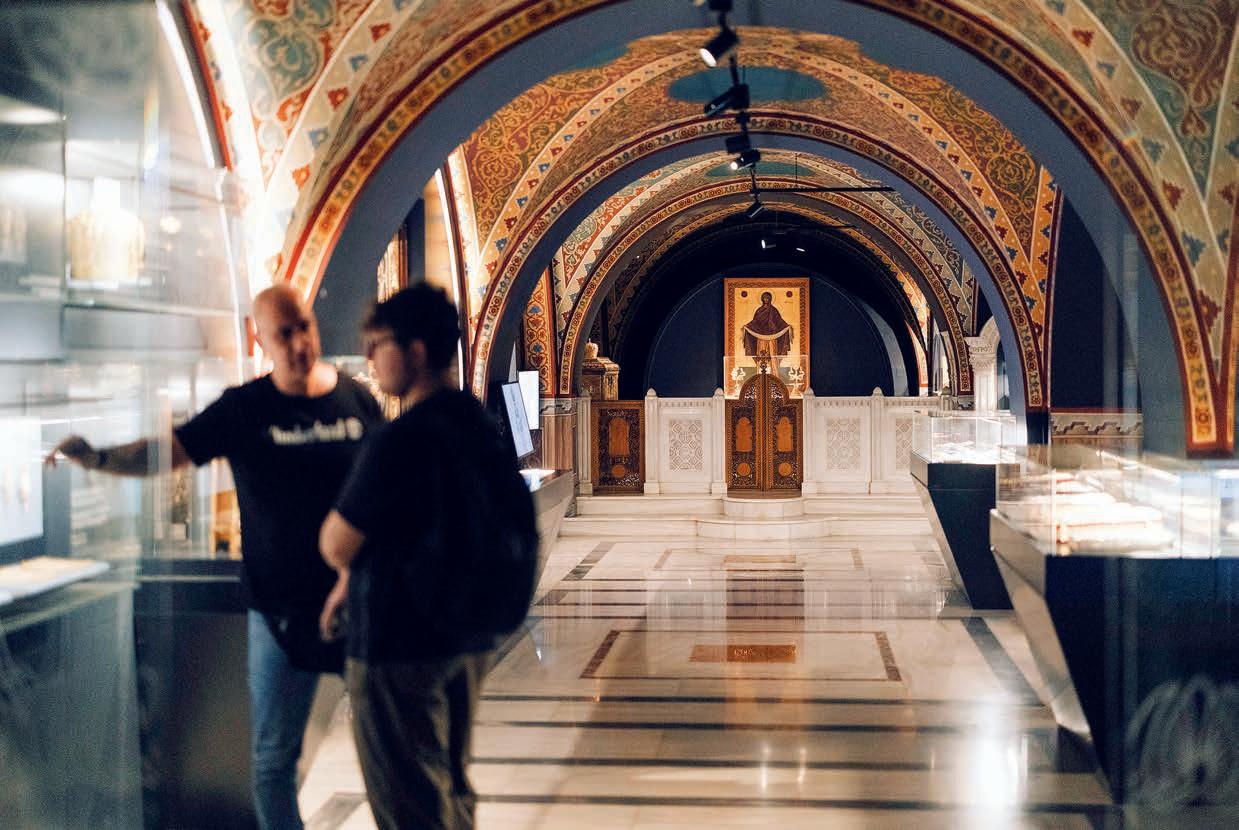
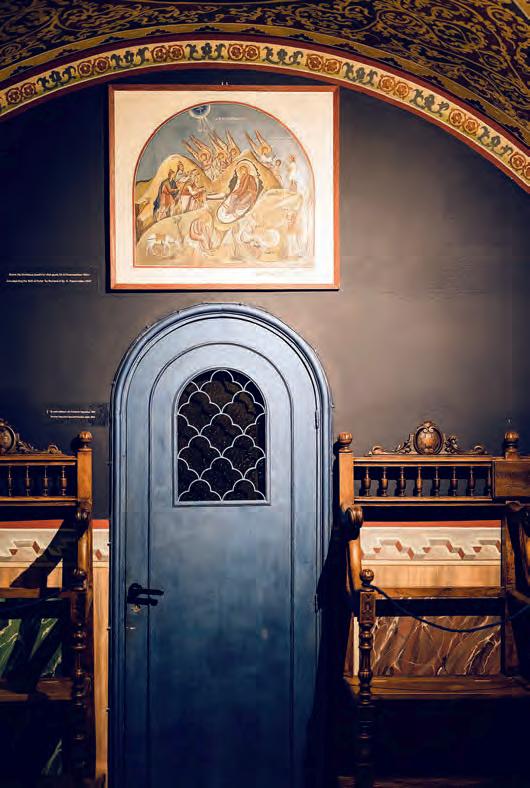
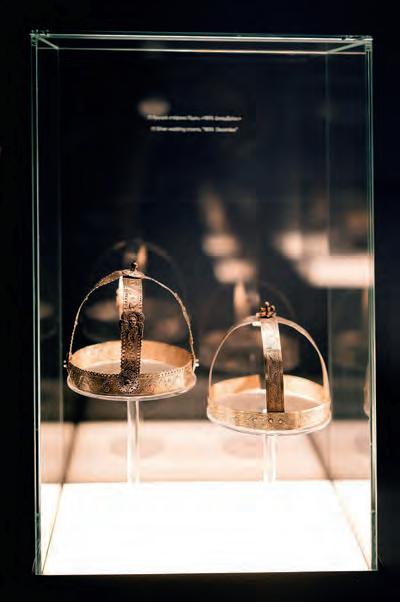
Icons, wedding crowns and a collection of sacred texts can all be found in the Cathedral Treasury.
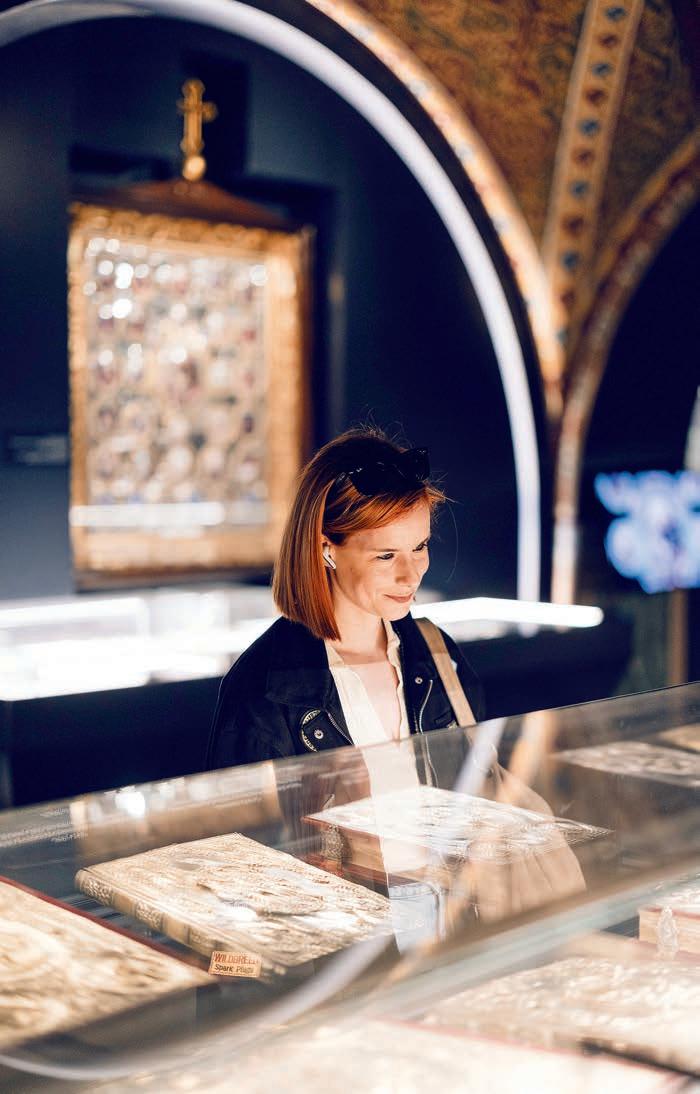
Just a few steps from Panepistimio metro station, at 4 Korai Square, a sign points toward the site of one of the most painful chapters in modern Greek history. Beneath the imposing Ethniki Insurance building, six meters below street level, lies the Korai 4 Historical Memory Site, a former wartime shelter transformed into a rare record of life under the Nazi occupation.
Designed by architects Anastasios Metaxas and Emmanouil Kriezis and completed in 1938, the building originally incorporated a state-of-the-art air-raid shelter. Following the German occupation of Athens in 1941, however, that underground space took on a darker role. Requisitioned by the German authorities, it was used by the Kommandantur as a detention center where prisoners were held before interrogation or transfer.
“It was primarily a place of temporary detention. Those considered more dangerous were transferred elsewhere. Some were taken to Kaisariani, where executions took place,” says Konstantinos Hatziyergatis, who has overseen the site since 2008. Following the liberation of Athens in 1944, the building briefly served as the headquarters of the National Liberation Front during the turbulent months that preceded the December ’44 clashes. Nearly half a century later,
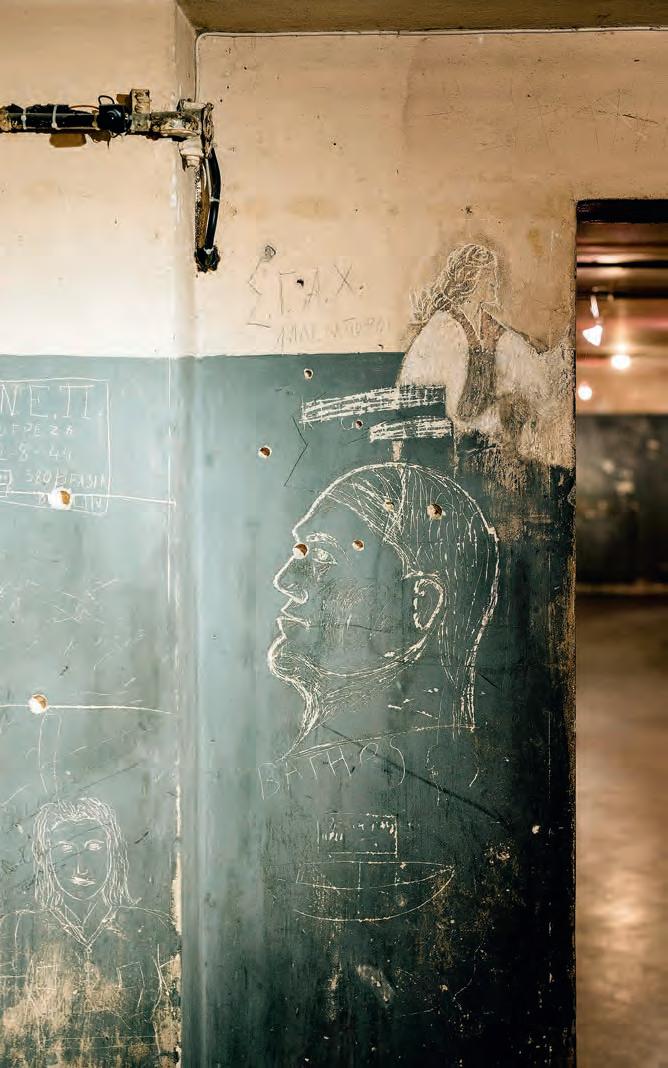
the former detention cells were transformed into a historical memory site, opening a rare window onto the years of occupation. Today, Korai 4 remains one of the few underground shelters in central Athens where visitors can still encounter much of the original infrastructure intact.
Passing through the iron doors, visitors encounter objects that belonged to the detainees: cigarette boxes, razors, cigarette cases and even notes that had been concealed in cracks in the walls. The display cases also contain the Nazi flag that once flew above the building.




In every room, large metal water tanks, toilets, ventilation systems and iron doors are still in place. Some of the doors, manufactured in Germany between 1936 and 1939, retain traces of their original markings. “In some places, you can still make out the word ‘Berlin,’” notes Panagiotis Defteraios. “The word appears to have been deliberately defaced by detainees.” The most powerful part of the visit lies deeper underground, in the former detention cells. Here, the walls preserve hundreds of inscriptions scratched by prisoners using whatever tools they could find. Names, dates, messages and fragments of testimony survive as direct voices from the Occupation: “24 hours without food or water. Only smelling the jasmine. Dimitris Moraitis.” “Mavrikios N. Malevris, final-year medical student. Held as a hostage. Tortures of the Holy Inquisition.” “The Halaros brothers. Honest citizens. Detained unjustly after being denounced by an informer.”
Most inscriptions date from 1944, the final months of the occupation. According to Defteraios, such messages were often covered with whitewash so they’d stay unseen by subsequent prisoners. Among those surviving are sketches, caricatures and symbolic drawings, including one thought to mock Mussolini and still bearing bullet marks.
The Korai 4 site isn’t simply a museum. It’s a place that demands time, attention and silence. Descending into its underground rooms means entering an Athens marked by occupation, fear and resistance. Emerging once again into the light of Korai Square, the distance between past and present suddenly feels much smaller.•
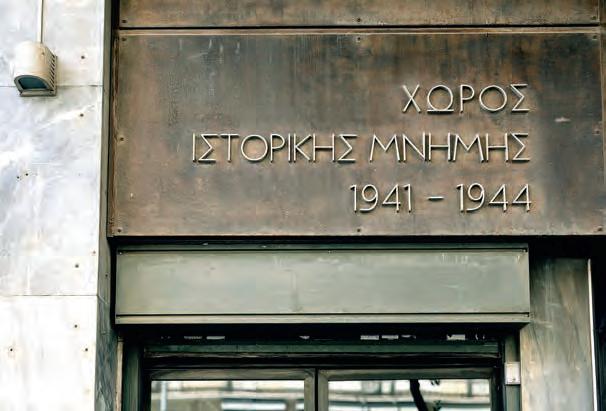
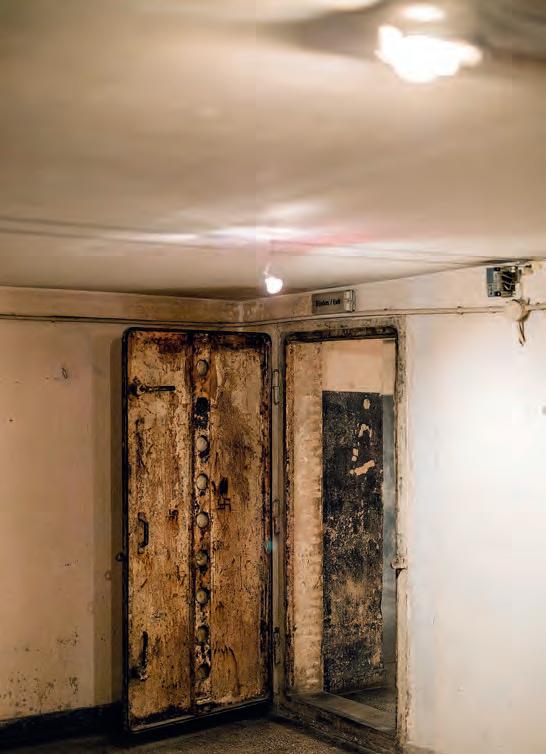
Alter Exploring organizes alternative tours, themed activities and trips, with a focus on underground and other lesser-known sites in Athens, Attica and beyond. Its activities combine hiking, speleology, urban exploration and experiential learning, offering experienced guides as well as special programs for groups, schools, companies and families, with transportation included. →More information at alterexploring.com
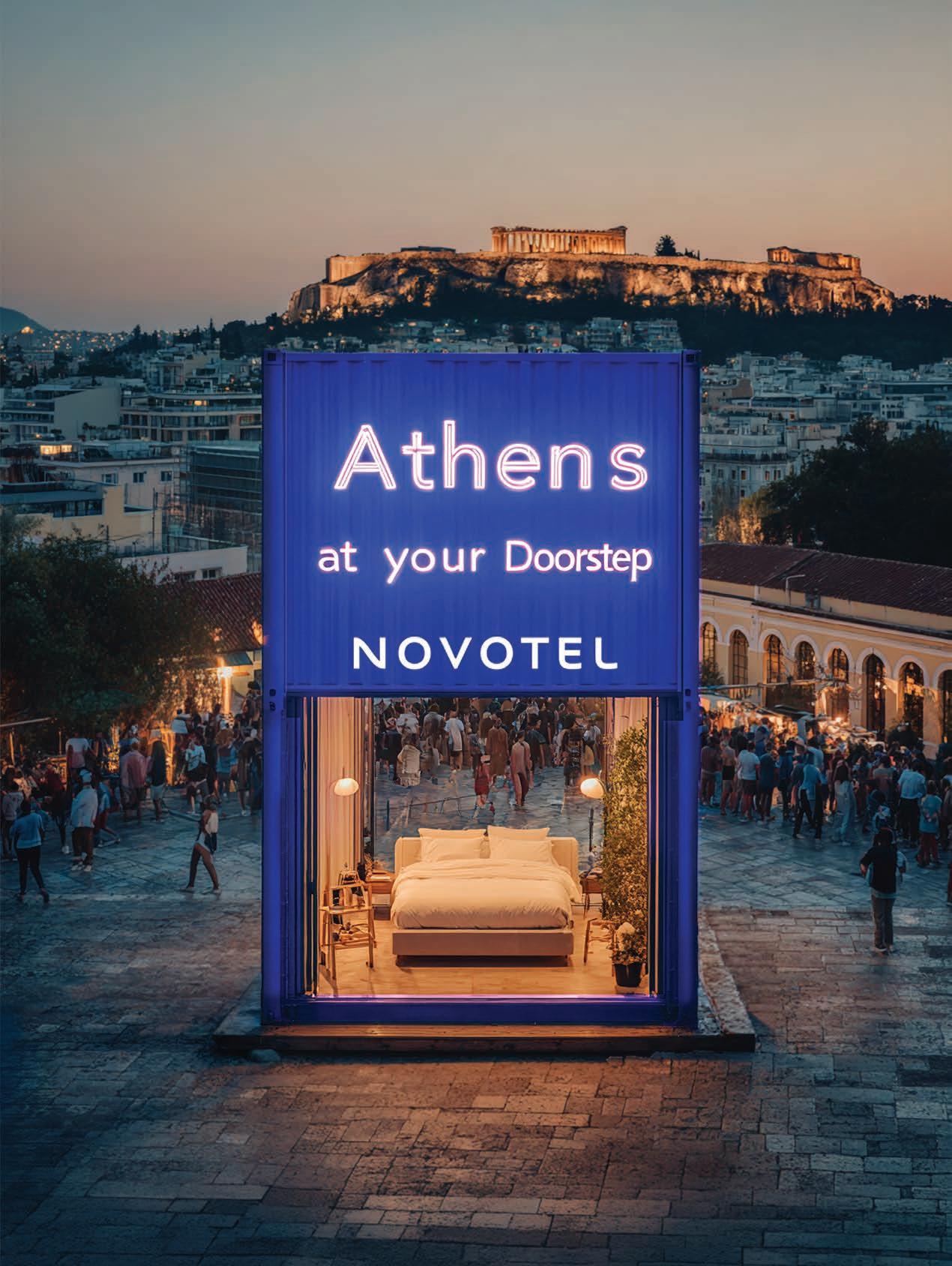

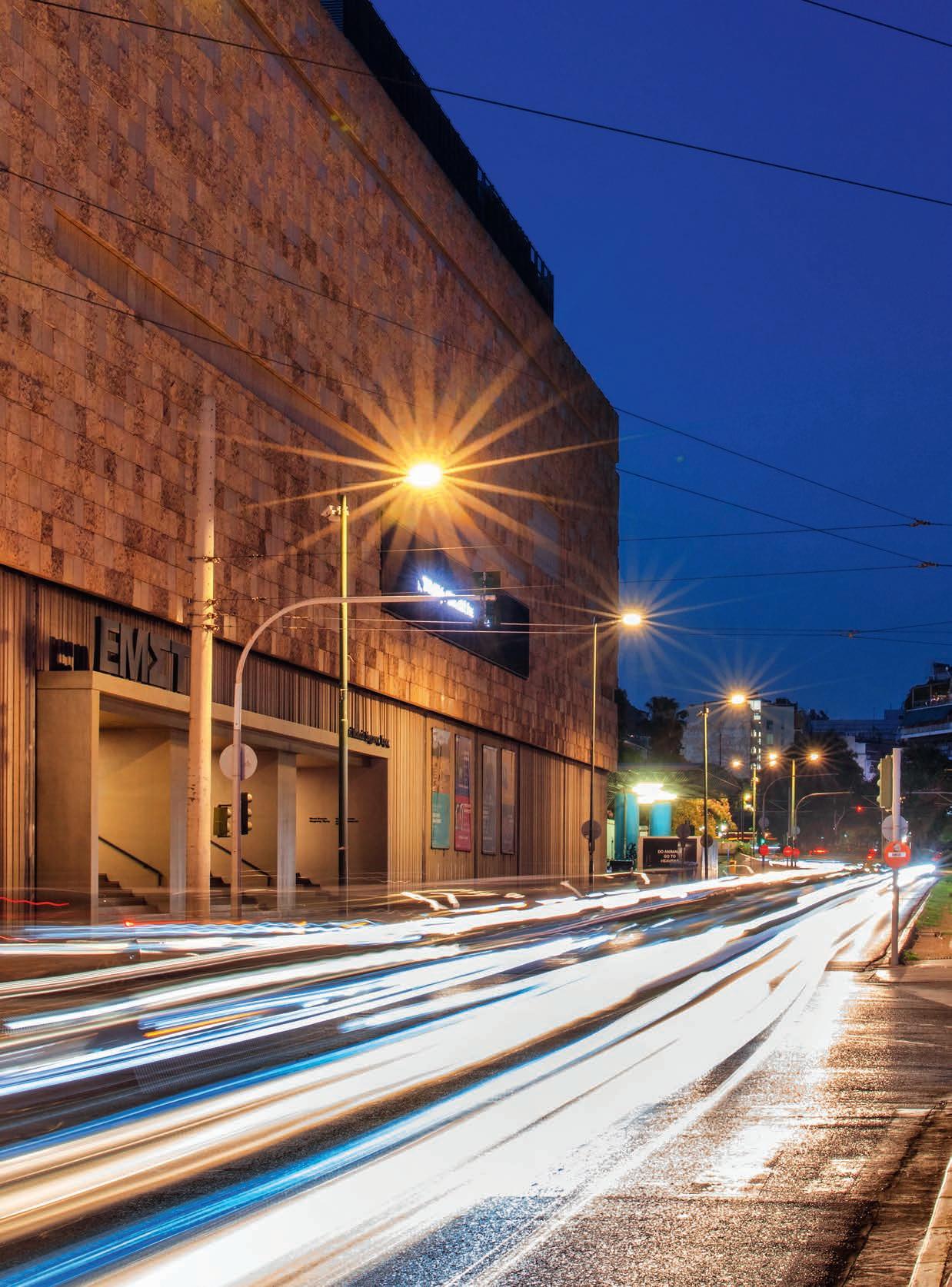
AT EMST, THE NATIONAL MUSEUM OF CONTEMPORARY ART ATHENS, THE FORMER FIX BREWERY TELLS A NEW STORY OF ART, MEMORY AND RENEWAL.
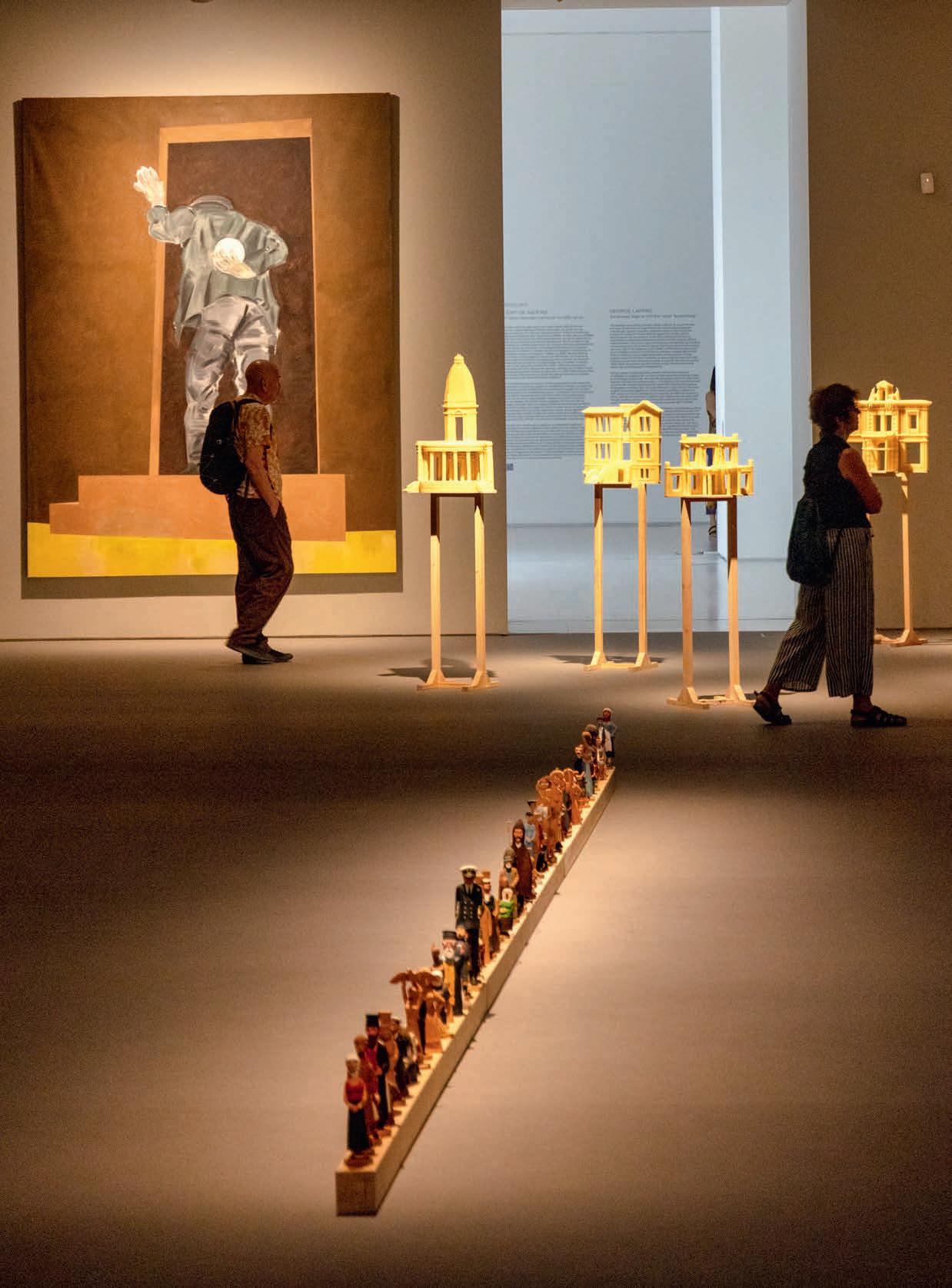
BY MARO VASILIADOU
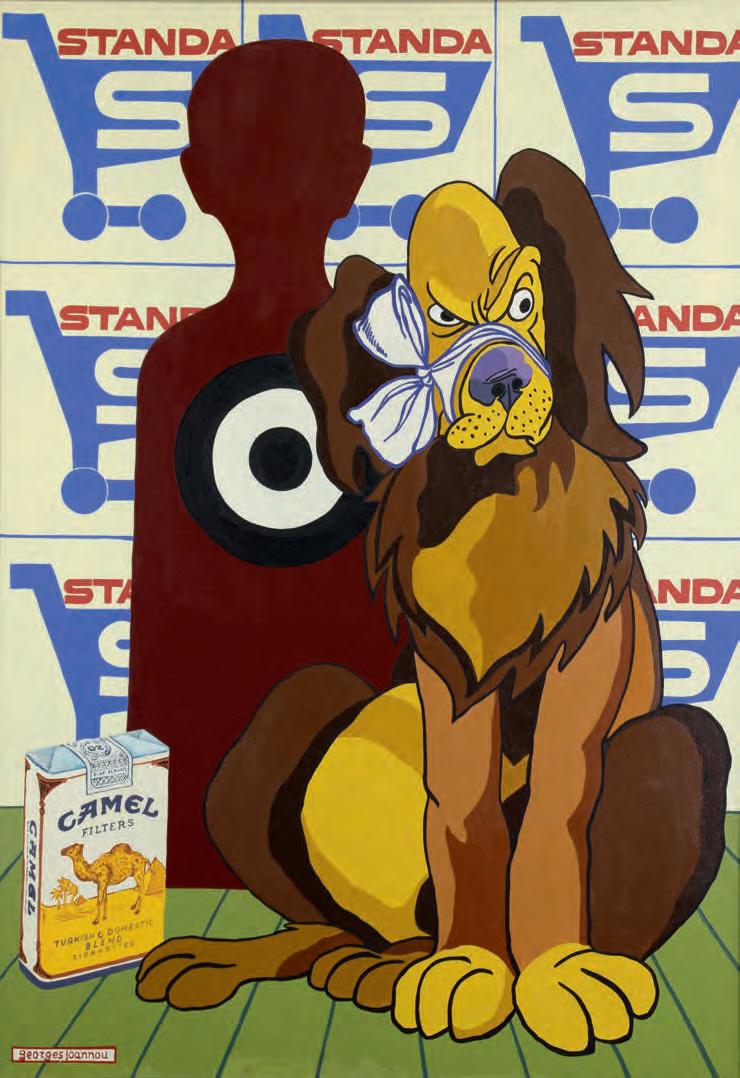

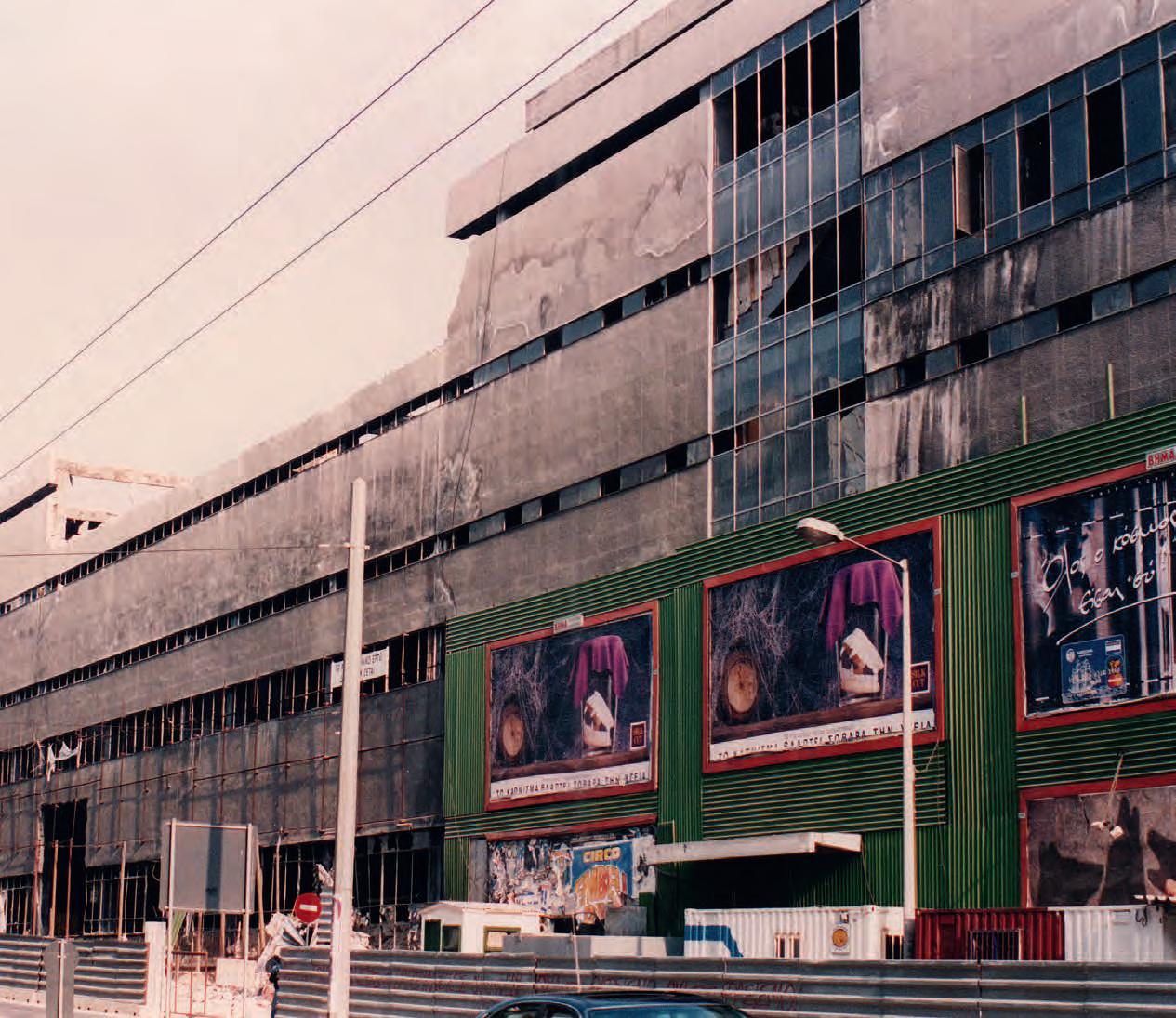
LLONG BEFORE IT became home to contemporary art, the FIX building occupied a special place in Athens’ collective memory. More than a landmark, it stood as a symbol of a changing city, its history intertwined with the evolution of modern Athens itself. Today, the National Museum of Contemporary Art Athens occupies the former FIX brewery, one of Greece’s most important industrial sites. The building remains closely associated with the modernist face of postwar Athens, yet its location reveals an even older layer of the city’s history. Standing on Kallirois Avenue, the museum sits above the subterranean course of the Ilissos, one of the three rivers of ancient Athens. Once flowing through the area where Syngrou and Kallirois avenues run today, the river was gradually covered over during the 20th century as the city expanded around it. Even the avenue’s name preserves a memory of that landscape. Derived from the ancient Greek words “kalos”and “rheo,” Kallirois refers to the “beautifully flowing spring” associated with Kallirroe, Athens’ most important water source in antiquity. The celebrated spring later became linked to the Enneakrounos, the city’s famous nine-spout fountain.
The story of the building itself begins with the Fuchs family, whose name, with a slight local alteration, would become synonymous with beer in Greece. Bavarian mining engineer Johann Adam Fuchs arrived in Greece during the reign of King Otto, while his son Johann Georg Fuchs – better known as Ioannis Fix – helped establish what would become the country’s most influential brewery. Brewing was never a family tradition. It began as a practical response to the needs of Bavaria’s expatriate community, who longed for the beer of their homeland. As time passed, however, the enterprise grew into one of modern Greece’s most recognizable brands, giving rise to the name Fix – a Greek version of Fuchs – which became virtually synonymous with beer for generations of Greeks.
The rise of the company mirrored the transformation of the nation itself. From using snow collected on Mt Parnitha to cool its beer to introducing modern refrigeration and bottling technologies, FIX was often at the forefront of innovative thinking. In 1920, the company brought artificial ice-making technology to Greece, helping modernize production and distribution.
Over time, the family developed close ties with the palace and became an official supplier to the royal court. This helped secure a monopoly that lasted for about a century, but it also brought tensions. There were periods when the court placed financial pressure on the company or used it as a political tool. Internal disagreements among the heirs over expansion and partnerships with foreign companies created fractures that affected the course of the business.
The brewery entered a new chapter in the 1950s and 1960s, when celebrated modernist architect Takis Zenetos redesigned the factory. With its expansive glass façades and production spaces visible from the street, the building embodied the optimism and technological ambition of postwar Athens.
FIX WAS OFTEN AT THE FOREFRONT OF INNOVATIVE THINKING. IN 1920, THE COMPANY BROUGHT ARTIFICIAL ICE-MAKING TECHNOLOGY TO GREECE.
The Fix family also cultivated strong ties to the arts, supporting musicians, theater groups and other cultural initiatives, a connection that would prove unexpectedly prophetic.
Brewing operations ceased in the late 1970s, and the company declared bankruptcy in 1983. The building was left abandoned, entering a long period of decline, looting and uncertainty. For years, Athenians debated whether the structure should be preserved or demolished. Although part of its northern section was lost in 1995, the majority of the complex survived, paving the way for one of the city’s most significant cultural transformations.
The story of the institution known as the National Museum of Contemporary Art Athens has been no less eventful. Founded in 1997, the museum spent decades in search of a permanent home. During its early years, it operated without a building of its own, presenting exhibitions and public programs across Athens before moving temporarily to the Athens Conservatoire in 2008.
The transformation of the former FIX brewery into a museum was a complex architectural undertaking. The redesign was entrusted to an international team of architects, with the aim of preserving the defining features of the historic shell while creating a contemporary museum environment. The architects and the museum’s administration agree that the new façade along Kallirois Avenue “highlights the forgotten history of the Ilissos,” reconnecting the building with a natural landscape that has disappeared from view.
The EMST occupies more than 18,000 square meters. The preserved façades on Syngrou Avenue and Ambrosiou Frantzi Street remain central to its identity, while new exhibition galleries, educational spaces and public facilities have been integrated into the former industrial structure. Until recently, the
building’s main entrance was painted a vivid red, in a playful reference to painted lips. The color has since been replaced by a more understated gray, as part of a broader aesthetic refresh. The museum’s full opening in 2020 brought to completion a process that had lasted more than two decades, giving Athens a major institution devoted to contemporary culture. For more than a century, the massive structure on Syngrou Avenue has witnessed the transformation of the city around it. Today, behind the distinctive façades designed by Zenetos, contemporary artistic creation meets architectural heritage and the living everyday fabric of Athens.
The museum’s location makes it an ideal starting point for discovering a different side of the city. Just a few steps away lies Koukaki, a neighborhood
that in recent years has become popular with locals and visitors alike. Cafés, restaurants, bookstores, workshops and pedestrian streets create an urban setting that combines the character of an Athenian neighborhood with the international energy of a city constantly welcoming new arrivals. In this context, EMST functions as a meeting place for art, architecture, industrial heritage and the city itself. This summer is a particularly interesting time to visit, with three new exhibitions that offer new perspectives on Greece, the Mediterranean and Southeast Europe.
The group exhibition “South by Southeast,” curated by the museum’s artistic director Katerina Gregos, forms
The piece “bodies. ever. stitches,” on the rooftop terrace of EMST, with choreography by
the centerpiece of this year’s exhibition program. Through more than 100 works by 50 artists from over 20 countries, the show brings together recent acquisitions, donations, works from EMST’s permanent collection and selected loansreflecting the museum’s collecting policy over the past five years. Its appeal lies not only in the geographical breadth it covers – the Mediterranean, Southeastern Europe, the Balkans and the Near East – but also in the way it brings to light shared experiences, cultural affinities, population movements and historical trajectories. Greece is presented not as the peripheral edge of a continent but as a meeting point between different worlds. This approach places the country at the center of a broader cultural map shaped over centuries by exchange,
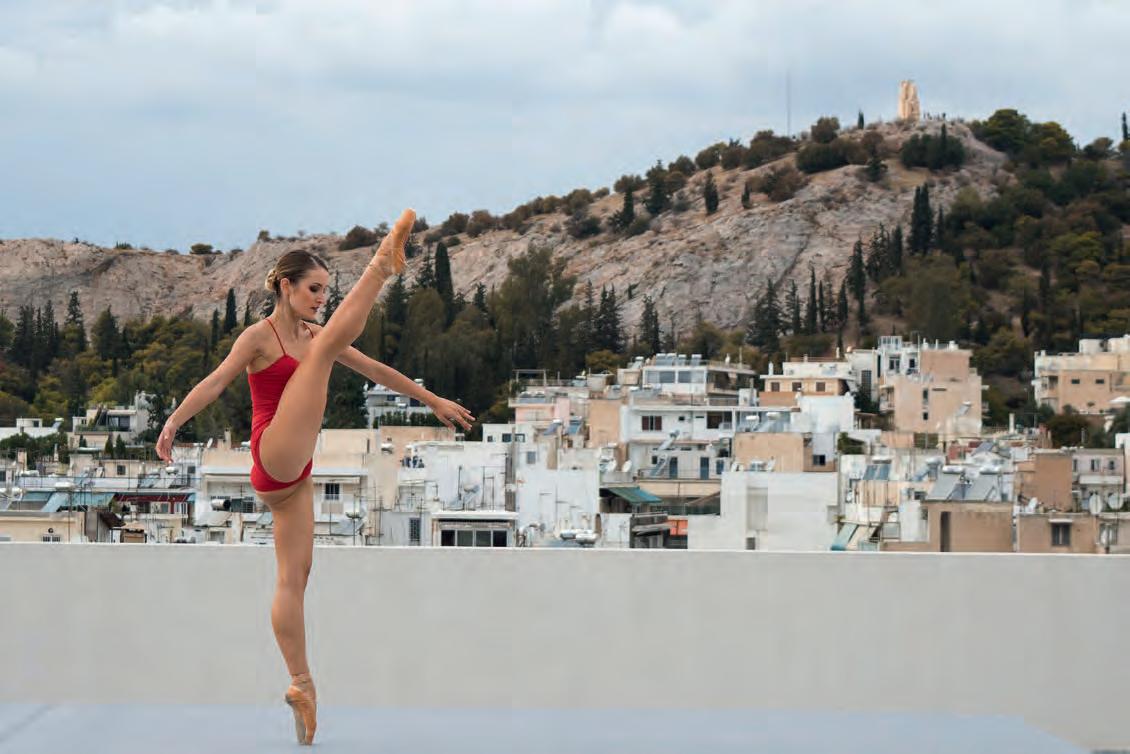
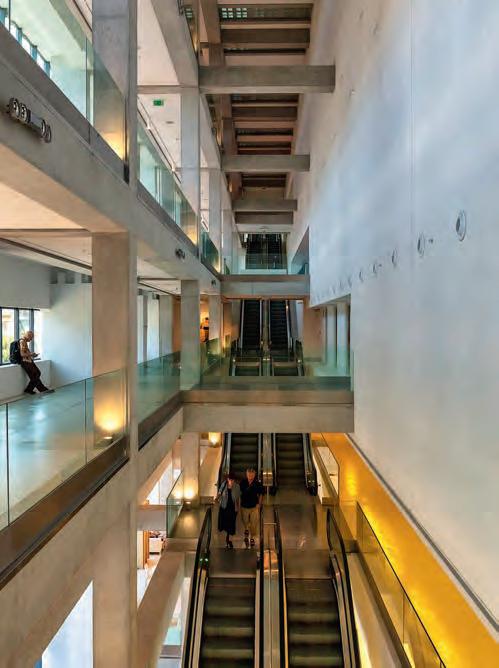
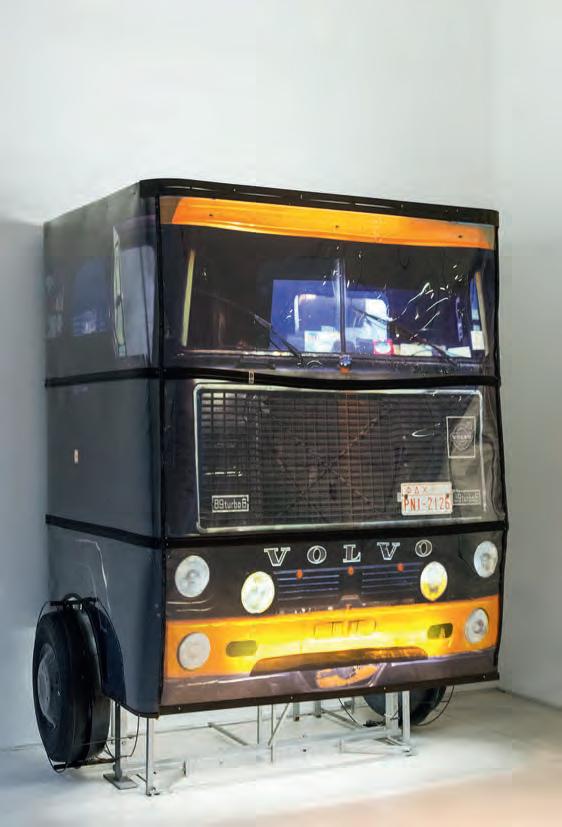
conflict and coexistence. On the same floor, the museum’s “Spotlight” section focuses on George Lappas, one of the most important figures in contemporary Greek sculpture. Marking ten years since his death, the exhibition brings together works from the museum’s collection and selected loans, highlighting his contribution to expanding the language of sculpture beyond the static object. Light, movement, architecture and the human figure all play central roles in his practice.
The third exhibition, “Voices” by Margarita Athanassiou, takes a more intimate approach. Presented on Level -1, the three-channel video installation combines archival material, personal testimony, and original footage to explore memory, family history and the transmission of experience across generations.
Different in art media and subject
Above right: George Lappas, Truck, 2001 Photographic film, PVC, metal and fluorescent lights, Collection of the National Museum of Contemporary Art Athens. Donation from The Dakis Ioannou Collection.
Above left: The museum‘s industrial aesthetic.
matter, the three exhibitions are linked by shared questions of identity, memory and cultural inheritance. Together, they trace a path from broad collective narratives to deeply personal stories.
The visit culminates on the museum’s fourth floor and rooftop terrace. From here, Athens reveals itself as an urban landscape where different historical periods coexist within a single panorama. The Acropolis, the Pnyx, the Odeon of Herodes Atticus, and Lycabettus Hill all come into view. This level is also home to Nyn Esti, where Greek ingredients and culinary traditions are interpreted through a contemporary lens. The restaurant provides a fitting conclusion to the viewing experience, moving the conversation around culture, creativity and location from the galleries below to its own bold menu.•
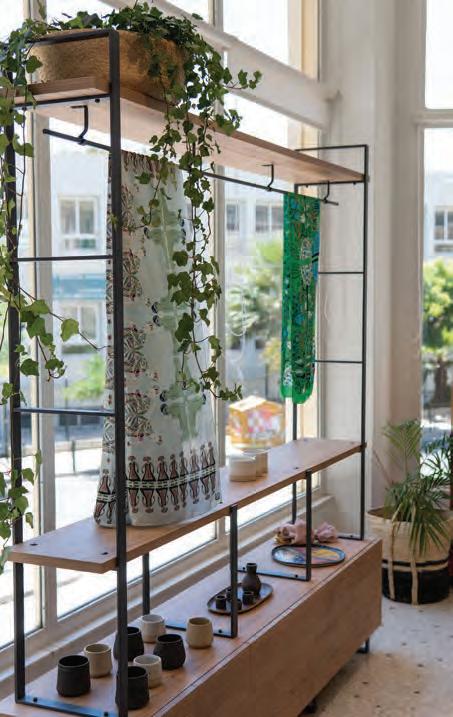
Nestled in the vibrant neighbourhood of Koukaki, “Tales in Tiles” is a curatedcarefully art store that celebrates contemporary Greek creativity.

It showcases a range of handcrafted ceramics, jewellery, and thoughtful gifts by Greek designers and artisans, as well as a selection of art prints, photographs and original artwork.
Our focus is on craftsmanship, sustainability and objects with a story to tell. Whether you're looking for a meaningful souvenir or a unique piece for your home, “Tales in Tiles” offers an authentic glimpse into the creative scene in Athens.
Tales in Tiles experience store 2 Taichman Street, 11741, Athens +302117351732
www.talesintiles.com @talesintiles_experiencestore
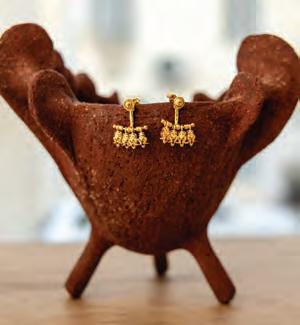
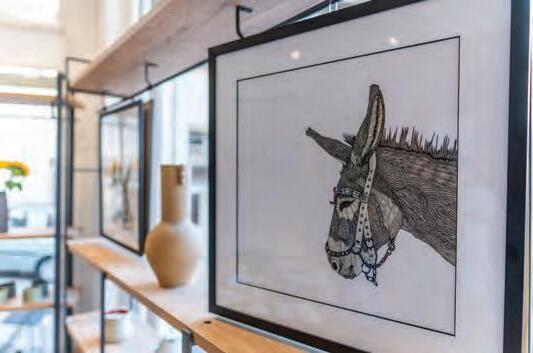
BY XENIA GEORGIADOU
Greek creators are revisiting textile traditions with an experimental eye, giving thread a new place in contemporary art, design and fashion.
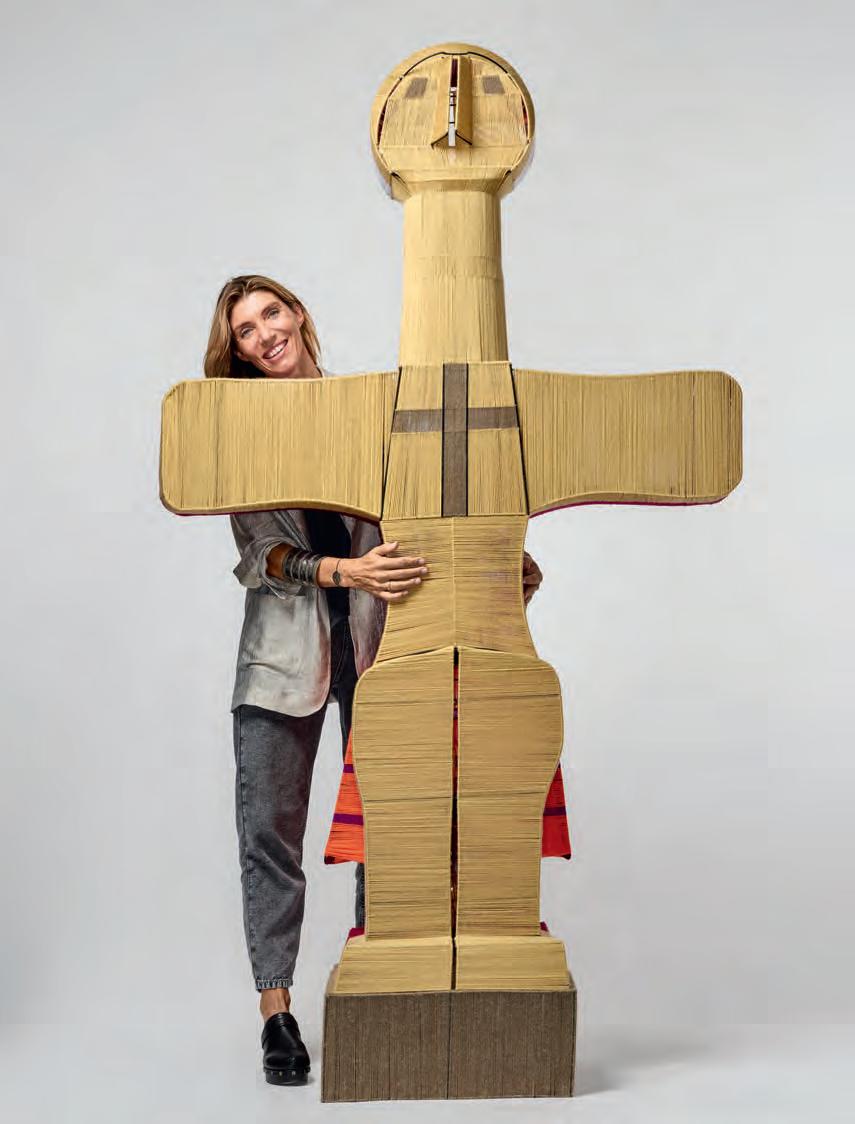
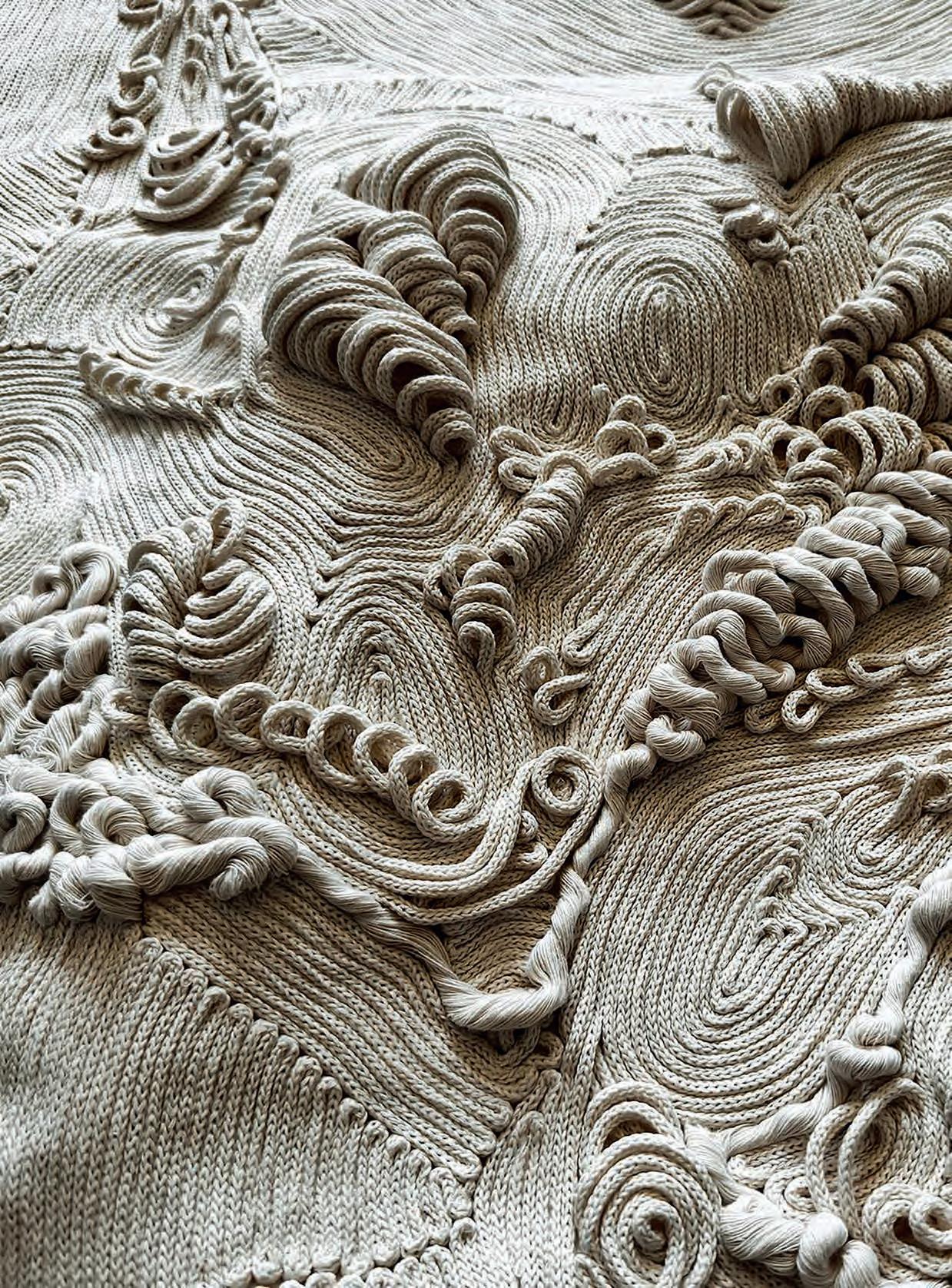
FFOR MANY YEARS in Greece, thread, weaving and embroidery were primarily associated with traditional crafts. There were, however, notable exceptions. Among them were the tapestries produced by Oikotechnia, a Royal Welfare initiative launched in the 1960s to revive the art of Greek tapestry. As part of the initiative, leading Greek painters created original designs, which were then transformed into striking tapestries by skilled weavers, resulting in works that occupied a space somewhere between painting, textile and decorative art.
Around the same period, visual artist Niki Kanagini was experimenting with weaving as an artistic medium. The 1970s saw the emergence of rugs reproducing works by prominent Greek artists. Nonetheless, the use of thread remained largely tied to craft traditions and the applied arts, rather than it being embraced as amedium of contemporary expression in its own right.
Specific motifs, fixed techniques and natural materials often limited the ability of such works to stand as independent artistic statements within the field of contemporary art. Today, the picture has changed. A new generation of creators, working across different media, is approaching thread with an experimental spirit, using it to explore ideas about the body, identity and nature.
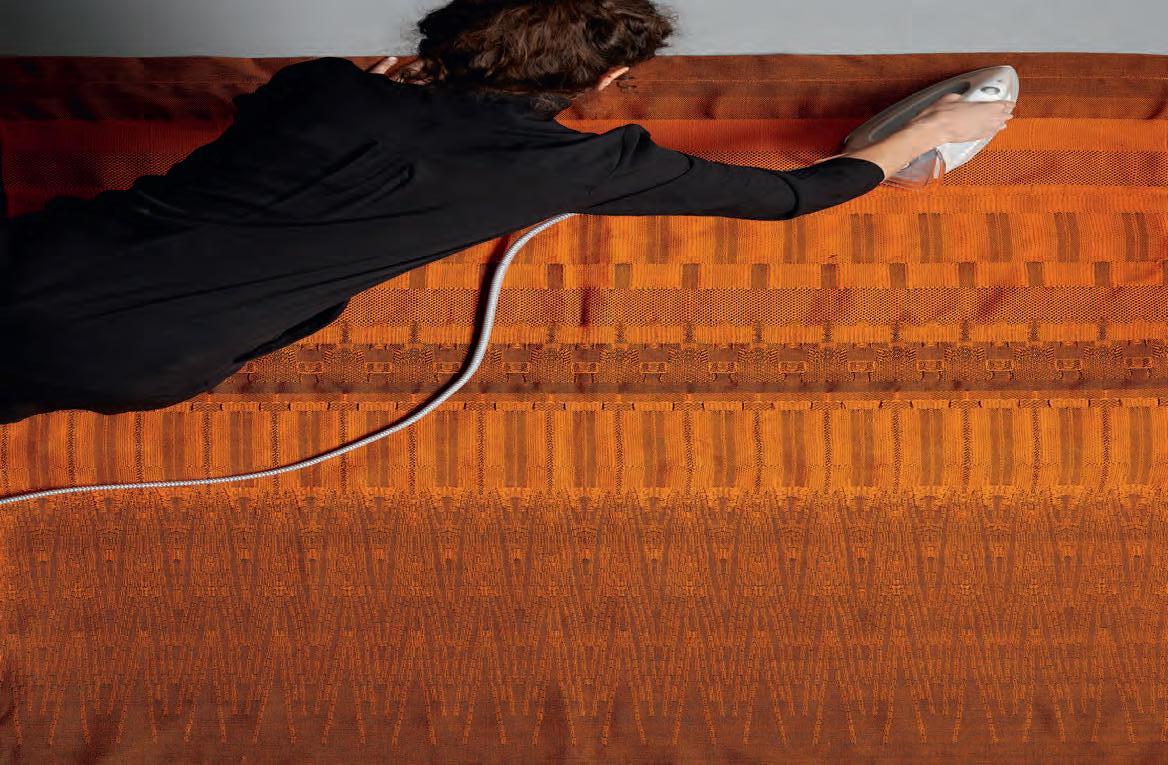
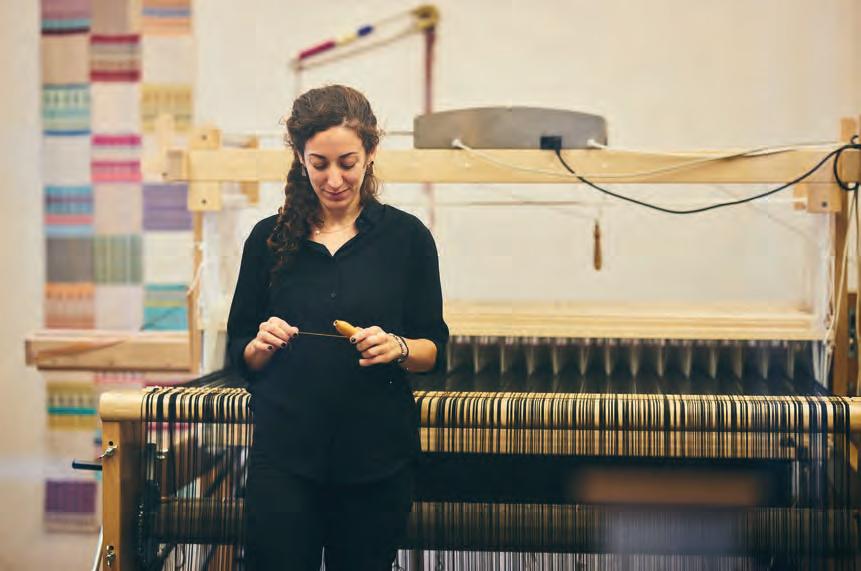
“FABRIC IS OUR CLOTHING, our sheets, our quilts and our curtains. It surrounds us at every moment of our lives and yet, in essence, it is created through a remarkably simple process,” says weaver Alexandra Bissa. After studying interior architecture, decoration and object design at the University of West Attica, Bissa moved to Metsovo for a year to learn weaving from her aunt. “The idea was to learn more about fabric before moving into textile design. But once I understood how the loom worked, my plans changed.”
She went on to pursue postgraduate studies at the Chelsea College of Arts before returning to Athens and opening her own studio. Working on a handoperated loom with a dobby mechanism, which allows for the creation of more complex patterns – particularly geometric motifs, such as diamonds and polka dots – she began by making neck warmers, pocket squares and pillowcases. Today, she collaborates with major design houses such as Zeus+Dione and Yoma Casa, as well as with architecture firms on larger scale commissions.
“At first, traditional weavers were skeptical if I didn’t follow convention. Now there is greater acceptance, because they see that we share the same language and that what connects us is the technique itself.”
↳ alexandrabissa.com
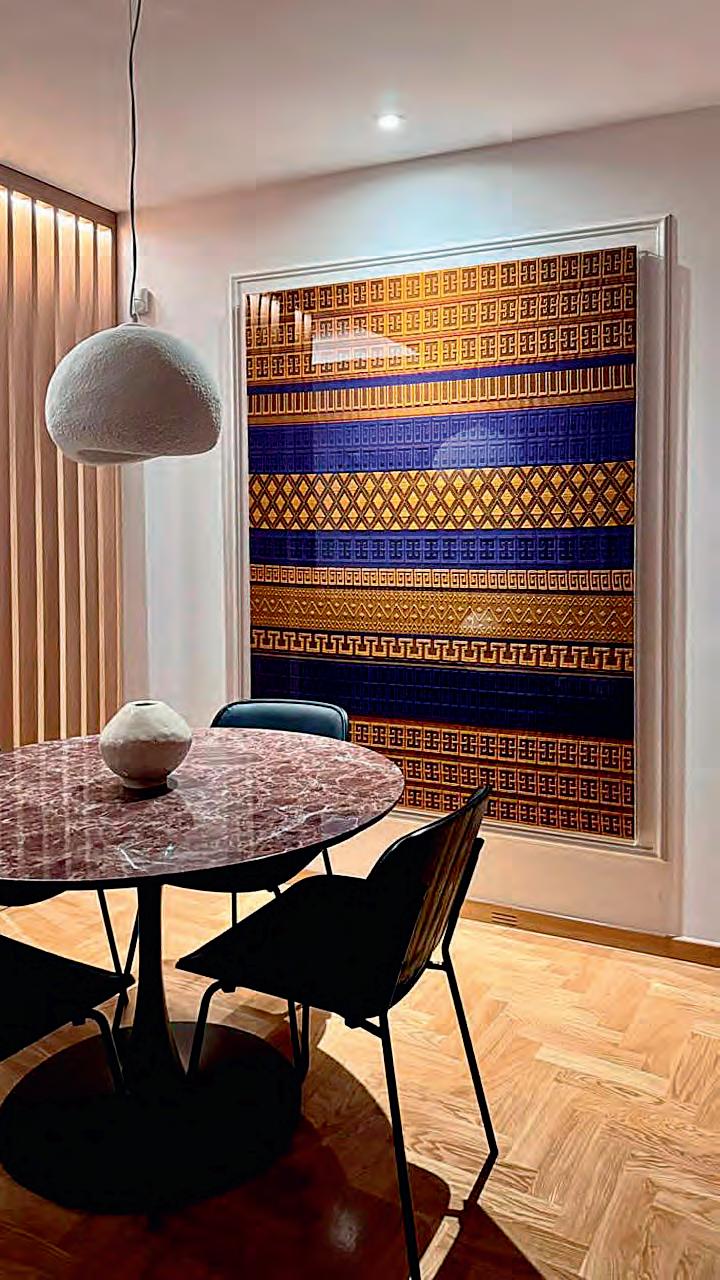
CHRISTIANA VARDAKOU turned to textile design as a way of bringing together her love of interiors, fashion and painting. After graduating in 2018, she left London and set out on an extended journey through Southeast Asia. She visited studios, studied traditional techniques and observed every stage of production. Returning to Athens, she began working with silk from Soufli, cotton and linen from Tripoli, and natural dyes derived from Greek plants.
“In Greece, there isn’t the same wealth of written resources you’d find in England. Knowledge is passed down orally, from one generation to the next,” Vardakou explains. Her research took her to Zagori, Metsovo, Kefalonia, Mani and Crete, and she learned which plants produced the most interesting results.
“An acorn cap gives a beautiful grayish mauve; ivy and walnut leaves make a lovely olive green.”
Most of her materials are gathered by hand or sourced from small farms and herb shops. She uses a variety of techniques, including bundle dyeing, in which fabric is wrapped together with leaves, flowers and other plant materials, transferring pigments and impressions directly onto the fabric surface. The results are organic and often abstract. She began by making curtains and cushions, then clothing and accessories; today, she also creates wall pieces. “Dyeing allows you to experiment, to transfer onto the fabric whatever you want to express,” she says. “The process also creates a deeper connection with nature.”
↳ christianavardakou.com
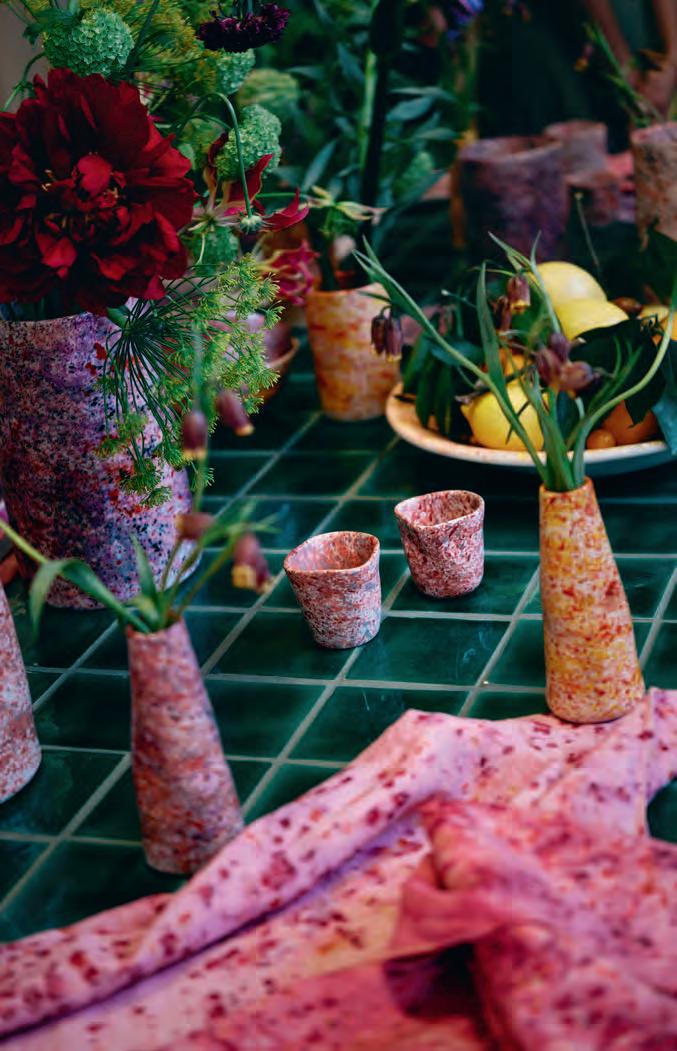
KLEOPATRA TSALI is a sculptor who works primarily with clay and fabric. “I can’t introduce myself as either a ceramicist or a textile artist; I choose the material depending on what I want to express,” she explains. She was initially drawn to fabric for practical reasons, but she soon discovered other qualities as well. “It is lightweight and full of movement. You can let it guide the form rather than impose one on it.”
For her organic sculptures, Tsali uses deadstock silk, unused surplus material left over from other productions, such as workshops, fashion houses or textile manufacturers. Wanting to deepen her understanding of the material, she also began raising silkworms. “First of all, it satisfies my curiosity. Just as I am interested in knowing where my clay comes from, I wanted to understand the origins of thread. I enjoy observing the process, all the transformations the silkworm undergoes, that intermediate state before it becomes a moth. It makes me think about the changes we go through in our own lives.”
Four years ago, together with visual artists Irini Gonou and Hanna Norrna, she created Morus, a collective that documents the silk-making process through a digital diary. The group also organizes workshops and exhibitions, with each artist approaching thread and textile practice from a distinct perspective. ↳ kleopatratsali.com
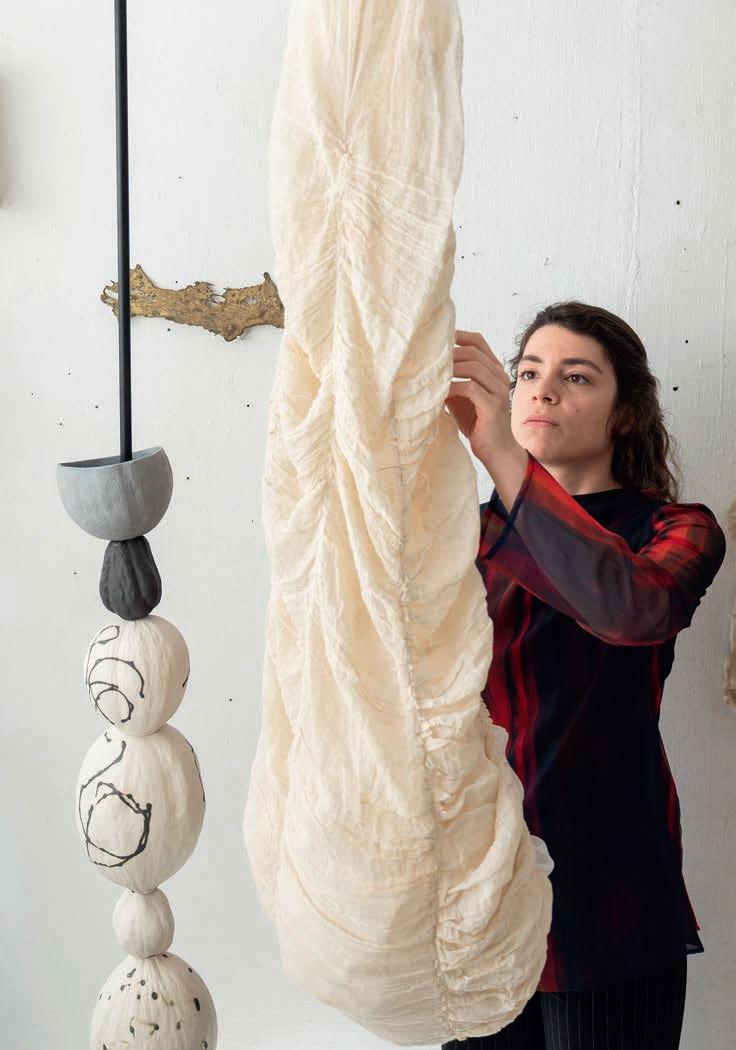
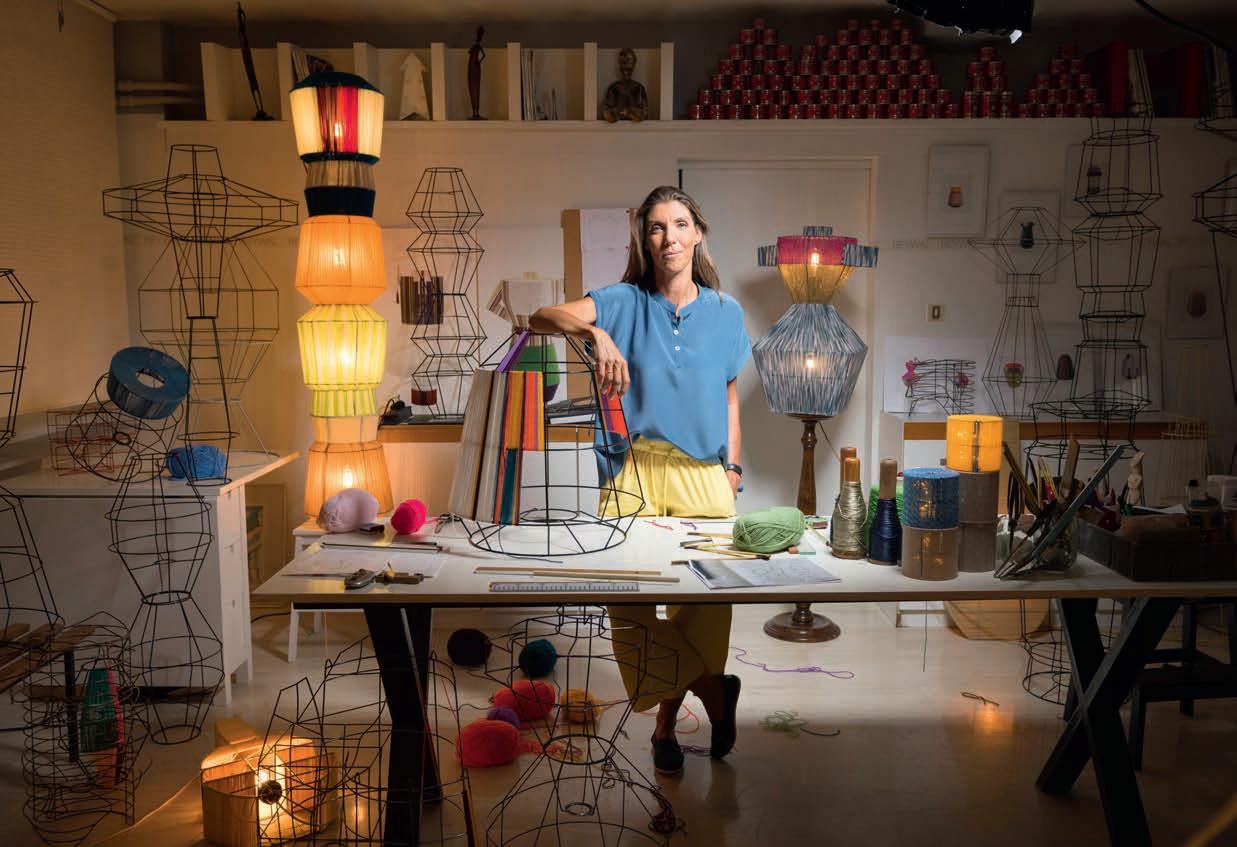
JOY STATHOPOULOU’S lighting pieces resemble three-dimensional weavings. “Weaving is a unique art form. I could never claim to be a weaver, since I only use my hands to work around the frames. But I do think my pieces have a connection with weaving,” she explains.
Her path to design was anything but conventional. Trained as a lawyer, Stathopoulou practiced law for many years before, picking up a ball of thread in 2018 and deciding to create her first lamp. “What fascinates me is light as an artistic medium,” she says. That inaugural piece still sits in her studio today, serving both as a reminder of the leap she took and as a marker of how far her work has evolved.
In 2021, she presented “Tsolias“ and ”Bouboulina” at the Benaki Museum Shop, two monumental lighting works created to mark the bicentenary of the Greek War of Independence. Three years later came “Making Waves,” an interactive installation for the Posidonia exhibition that rendered the movement of the sea through threads made from recycled plastic bottles.
Most recently, she unveiled the award-winning “Lighting Echoes: From Prehistory to Tradition” in Cyprus and Athens. The work creates a visual dialogue between the prehistoric cruciform figurine of Pomos from Chalcolithic Cyprus and the region’s traditional female costume. “Thread is deeply woven into Greek identity,” she says. “From Ariadne’s thread to traditional textiles, it forms part of our collective visual memory.” ↳ @reywal
IF THERE ARE THREE coordinates that define Sevastiana Konstaki’s creative universe, they are architecture, fashion and contemporary art.
A graduate of the Department of Architecture at the University of Thessaly, Konstaki first turned to macramé for her diploma project, which focused on Kritika, a village on Rhodes from which her family originates.
“As I was trying to understand the landscape and imagine possible interventions, I realized that every proposal altered the character of the place and the way people lived within it. In the end, I chose thread, because it allowed me to speak both about the material world and about human presence.”
Embroidery and sewing were already part of her family history: her grandfather was a tailor and her parents embroidered. Yet she is careful not to define herself through any single technique. She works with macramé, embroidery and frameloom weaving, but without pursuing technical perfection as an end in itself.
“When people encounter works connected to craft, the first thing they often ask is how long they took to make. That quickly leads to discussions about tradition, heritage and preservation. These are important conversations, but they can also distract from the way a contemporary artwork should be approached. Learning a technique is one thing; how you use that technique artistically is another,”
The human body lies at the center of her practice. Konstaki sees it as a living landscape where desire, memory, fantasy and social identity converge. Knotting, weaving and stitching become tools for mapping these relationships. Through knitted sculptural garments, collages, drawings and spatial works, she explores the ways in which bodies connect to place, time and one another.
↳ @sevastiana.konstaki
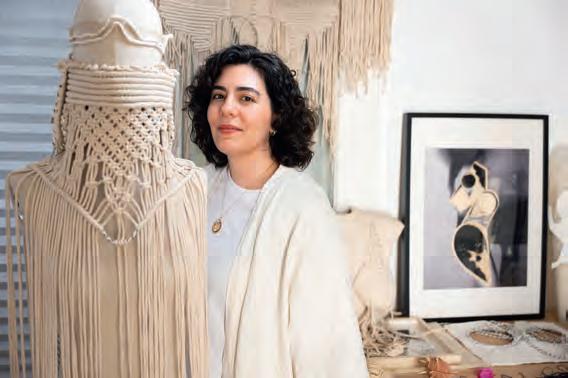
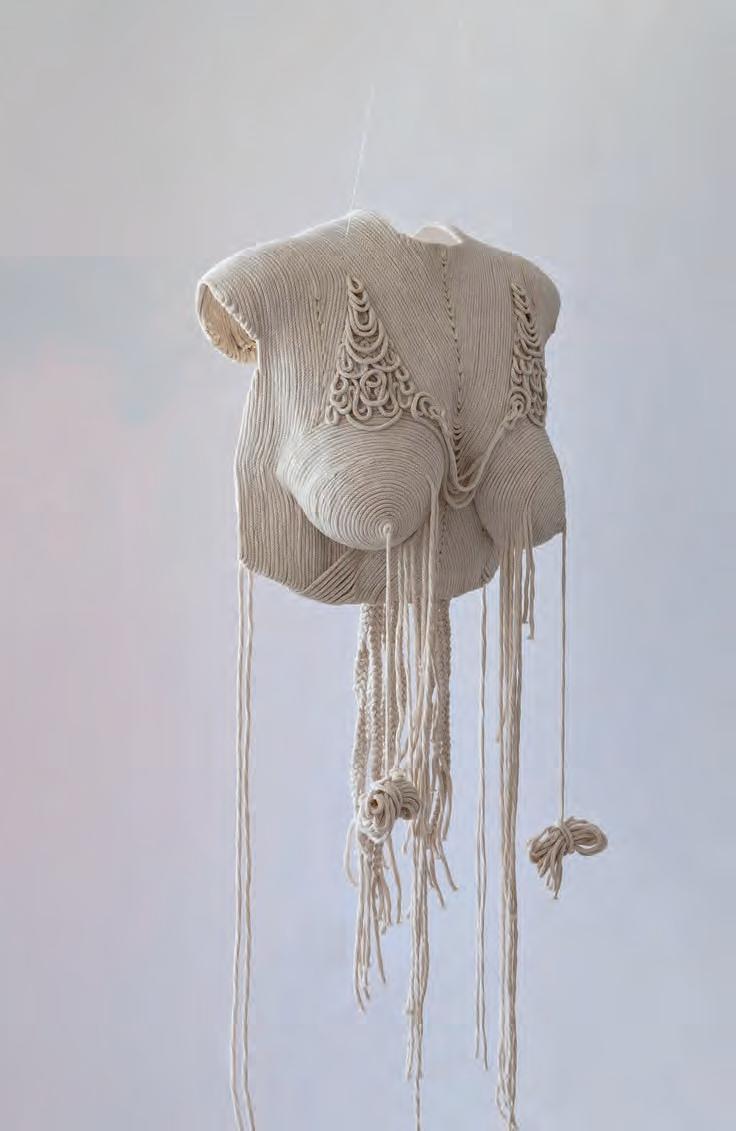
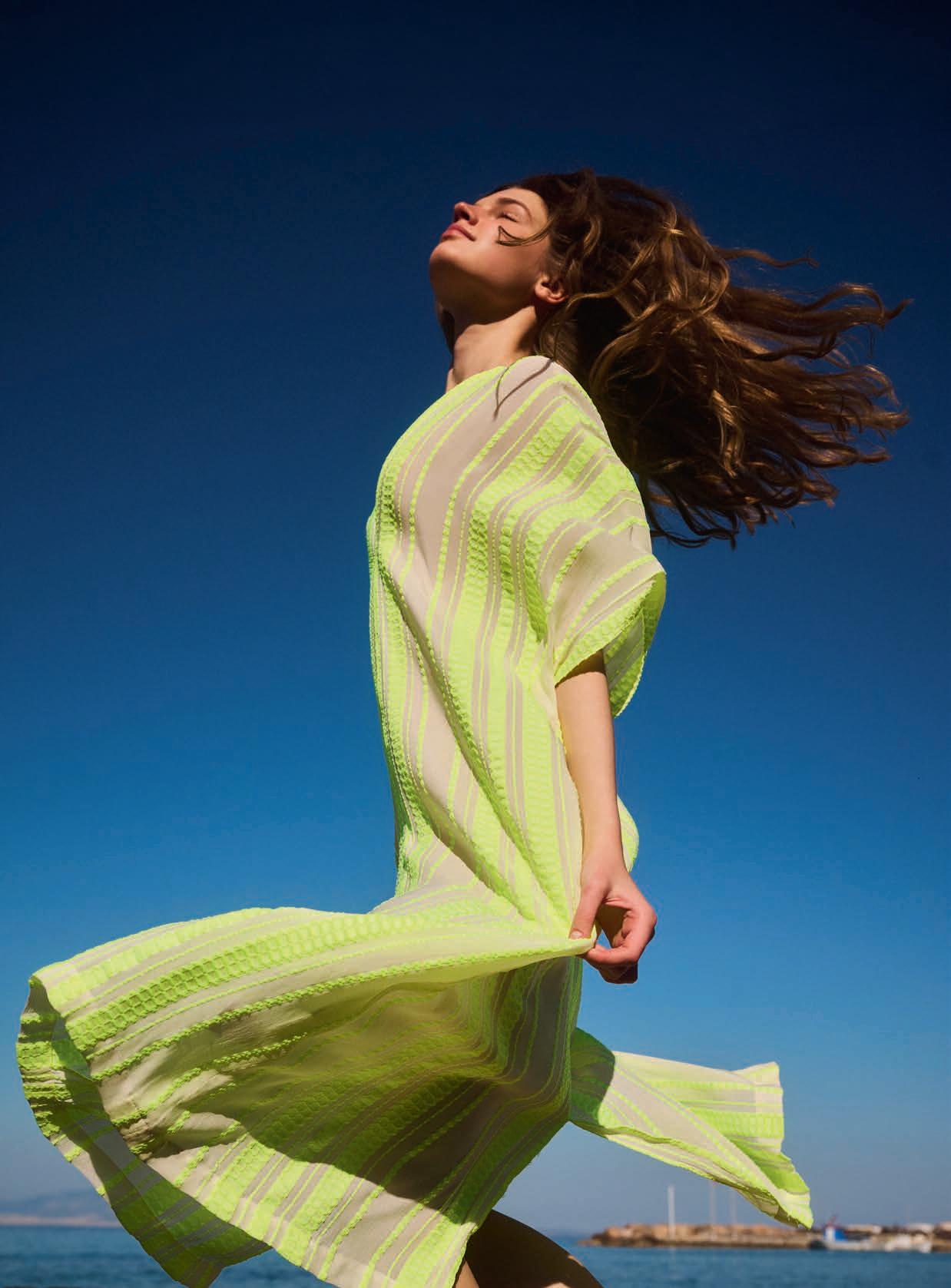
A fashion-minded shopping trip embracing classic Athenian elegance, contemporary Greek design, streetwear, vintage treasures and playful summer essentials.
BY GEORGIA FEKOU
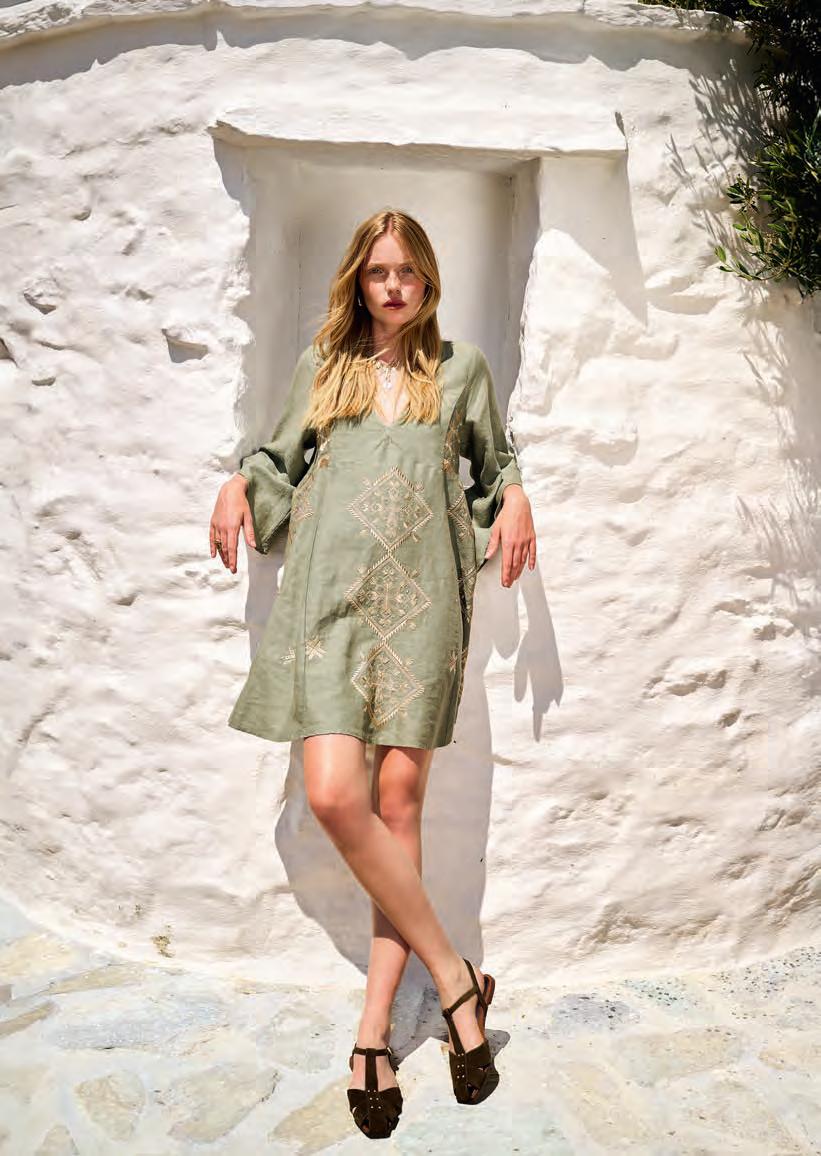
IIN ATHENS, THE BEST shopping rarely feels like a separate activity. It happens between a museum visit and a coffee, a late lunch and the next neighborhood you meant to explore. The most interesting finds are scattered around town, on side alleys as well as on main streets: Greek brands with international reach, independent boutiques, and small designer spaces that reveal how Athenians dress, travel, go out and carry summer with them.
The natural place to begin is Voukourestiou Street, just steps from Syntagma Square and, for decades, a byword for Athenian elegance. Start at Zeus+Δione, one of the Greek brands that has helped connect contemporary resortwear with local craftsmanship: clean, airy lines, signature weaving and embroidery, silk scarves with distinctive motifs, and pieces made to move effortlessly from the city to the seafront. Almost next door, Callista inhabits the same refined universe, with beautifully crafted soft leather bags designed to work from morning to evening. On nearby Valaoritou Street, AESTHET offers an ideal introduction to contemporary Greek design. Its racks and shelves bring together a select collection of Greek designer fashion, accessories and jewelry designs, including items by Greek Archaic Kori, known for its ancient Greek-inspired kaftans and breezy tunics.
If you’re staying around Syntagma a little longer, a quick stop at attica Department Store and its Ancient Greek Sandals stand is a reminder that a good pair of leather sandals may still be the most timeless Greek souvenir, especially

ATHENS, A GOOD HAT ISN’T JUST A STYLE CHOICE. IF YOU FORGOT YOURS, OR IF YOU’RE LOOKING FOR SOMETHING WITH MORE CHARACTER, IT’S WORTH HEADING UPHILL TOWARD KOLONAKI.
if Athens is only the beginning of a longer island-hopping trip. The brand’s new collections lead the way in global footwear trends, from wooden clogs to jelly shoes, without losing the easy appeal of a summer piece that moves naturally from the city to the islands. A few minutes away, Ergon offers a different take on contemporary Greek design. Summer shirts, recycled-cotton denim, embroidered dresses inspired by the islands and linen jackets for cooler evenings all speak to the strength of made-in-Greece fashion. The SS26 collection is dedicated to Mykonos, where the brand first began.
In summertime Athens, a good hat isn’t just a style choice. If you forgot yours, or if you’re looking for something with more character, it’s worth heading uphill toward Kolonaki. On Dimokritou Street, Blanc Hats is known for adding a couture dimension to headwear. From oversized straw
designs to perforated baseball caps, everything is handmade. Recently, the collection has expanded to include one-of-a-kind handmade bags.
Since you’re already in the neighborhood, continue on to Phaon Athens. Its refined selection includes fragrances from international houses such as Santa Maria Novella, personal-care items, vases, scented candles and elegant floral compositions for those with an eye for design. A few steps away, LiLALO is a smart stop for Greek jewelry with just the right balance: distinctive enough to stand out, timeless enough to wear every day.
A ten-minute walk through Kolonaki’s sloping streets, past polished storefronts, café terraces and old Athenian apartment buildings brings you to Sun of a Beach. Here, Greek summer lands in the center of the city with beach towels, beachwear and seaside accessories from one of the country’s most colorful and playful brands. It’s ideal for anyone looking to stock up before
PANGRATI IS ANOTHER NEIGHBORHOOD LIKELY TO FIND ITS WAY INTO YOUR ITINERARY.
IN RECENT YEARS, IT HAS EMERGED AS ONE OF ATHENS' MOST DYNAMIC DISTRICTS.
heading to the islands. If you visit the boutique, take a look at the brand’s best-selling terry toiletry bags.
In the surrounding side streets just a short walk away, the mood shifts toward streetwear and vintage shopping. The basement space of Number 3 is a rewarding destination for fans of urban outfits, with selections ranging from skate brands to the more conceptual designs of Comme des Garçons. A little farther on, the small Mod Vintage is a stop for collectors and fashion lovers, with an impressive Gianni Versace selection and plenty of other vintage treasures for different styles.
From Kolonaki, continue toward Exarchia, where things become decidedly more cutting-edge. On Omirou Street, Kiohne carries a rich selection of flattering swimwear and beachwear with a Greek signature. As you make your way uphill toward the heart of the neighborhood, shops with small independent brands give the walk a distinctly local feel.
Esiot on Mavromichali Street carries summer sandals inspired by the Cycladic landscape. The two sisters behind the brand draw inspiration from their home island of Tinos, creating designs that have earned a devoted following. A few steps away, It’s A Shirt offers exactly what its name suggests, producing one-of-akind shirts in oversized cuts and light fabrics suited equally to island holidays and Athenian evenings.
Aphilo is the home of Kyr Lakis, a brand reviving the traditional handstamped textiles of Epirus. Mermaids, flowers and Greek folk motifs appear on objects and summer fabrics that attentive visitors may soon start spotting on well-dressed Athenians around town.
Pangrati is another neighborhood likely to find its way into your itinerary. In recent years, it has emerged as one of Athens' most dynamic districts, thanks to its cafés, bakeries, restaurants and
museums, such as the National Gallery and the Basil & Elise Goulandris Foundation. Here, shopping feels like a natural extension of the neighborhood stroll. On busy Archelaou Street, stop by Sun Flirt for summery printed tops and T-shirts with a playful spirit, or head next door to HARD.CLO for Greek streetwear with a sharper urban edge. For something more minimalist, AOS Concept is about a ten-minute walk away, combining clean-lined clothing and accessories designed with longevity in mind.
From the elegance of Voukourestiou to the independent spirit of Exarchia and the energy of Pangrati, shopping offers an unexpectedly effective way to explore Athens. The city's boutiques, showrooms and designer spaces reveal a place shaped by craftsmanship, a love of summer and a sense of freedom that feels unmistakably Athenian.•
↳ Zeus + Dione
6 Voukourestiou, zeusndione.com
↳ Callista Crafts
4 Voukourestiou, callista.com
↳ AESTHET
Greek Designers:
15 Valaoritou, aesthet.com
↳ Greek Archaic Kori
Inside AESTHET, 15 Valaoritou, aesthet.com
↳ Ancient Greek Sandals
Panepistimiou 9 (Attica Department Store), ancient-greek-sandals.com
↳ Ergon 20 Thiseos, ergonofficial.com
↳ Blanc Hats
24 Dimokritou, blanc.gr
↳ Phaon 29 Likavittou, phaon-athens.com
↳ LiLALO 17 Kanari, lilalo.com
↳ Sun of a Beach
25 Karneadou (Lemos Center, 3rd floor), sunofabeach.com
↳ Number 3 16 Patriarchou Ioakim, number3store.com
↳ Mod Vintage
20 Loukianou, modspace.gr
↳ Kiohne
54 Omirou, kiohne.com
↳ Esiot
51 Mavromichali, esiot.gr
↳ It's A Shirt
67 Asklipiou, itsashirt.gr
↳ Kyr Lakis
49-51 Zoodochou Pigis, instagram.com/kyr.lakis
↳ Sun Flirt
19 Archelaou, sunflirt.gr
↳ Hard CLO
19 Archelaou, hardclo.com
↳ AOS Concept
20 Ifikratous, aosconcept.com

BY MARINA PETRIDOU
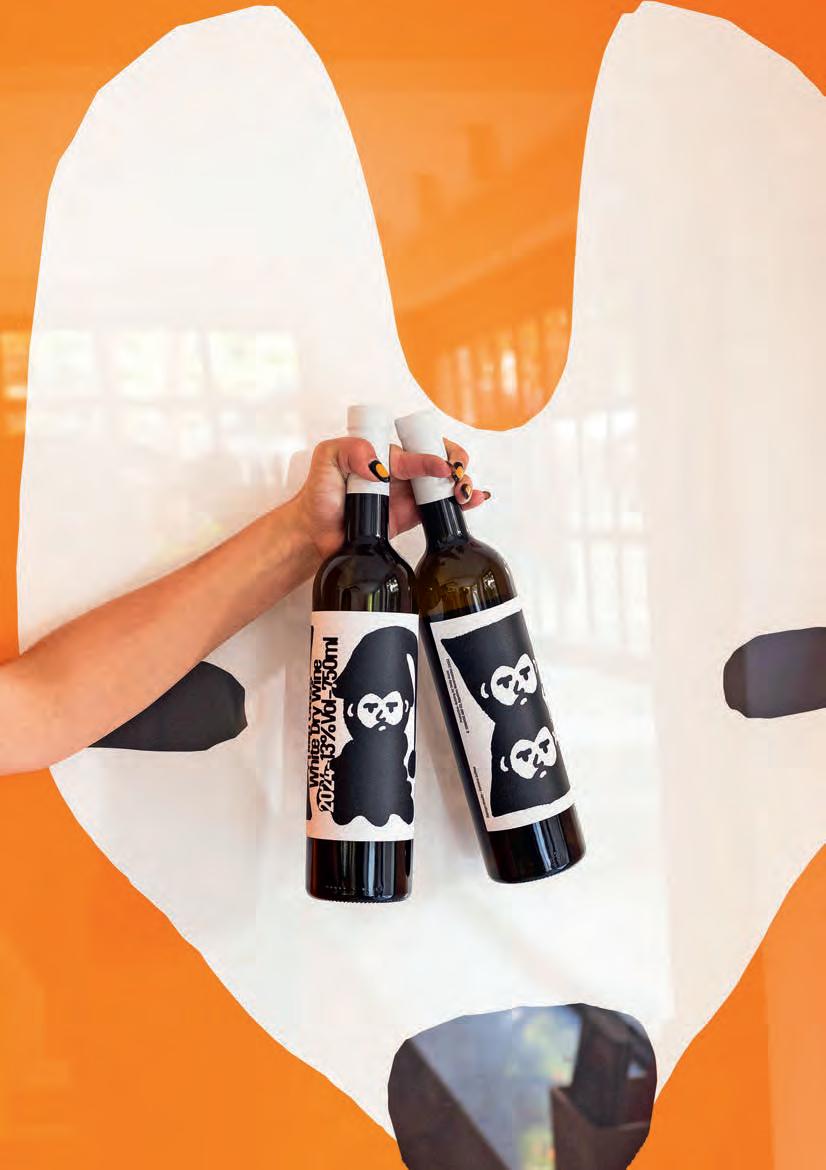
New venues show how the city is embracing small producers, native grape varieties and a more open, everyday wine culture.
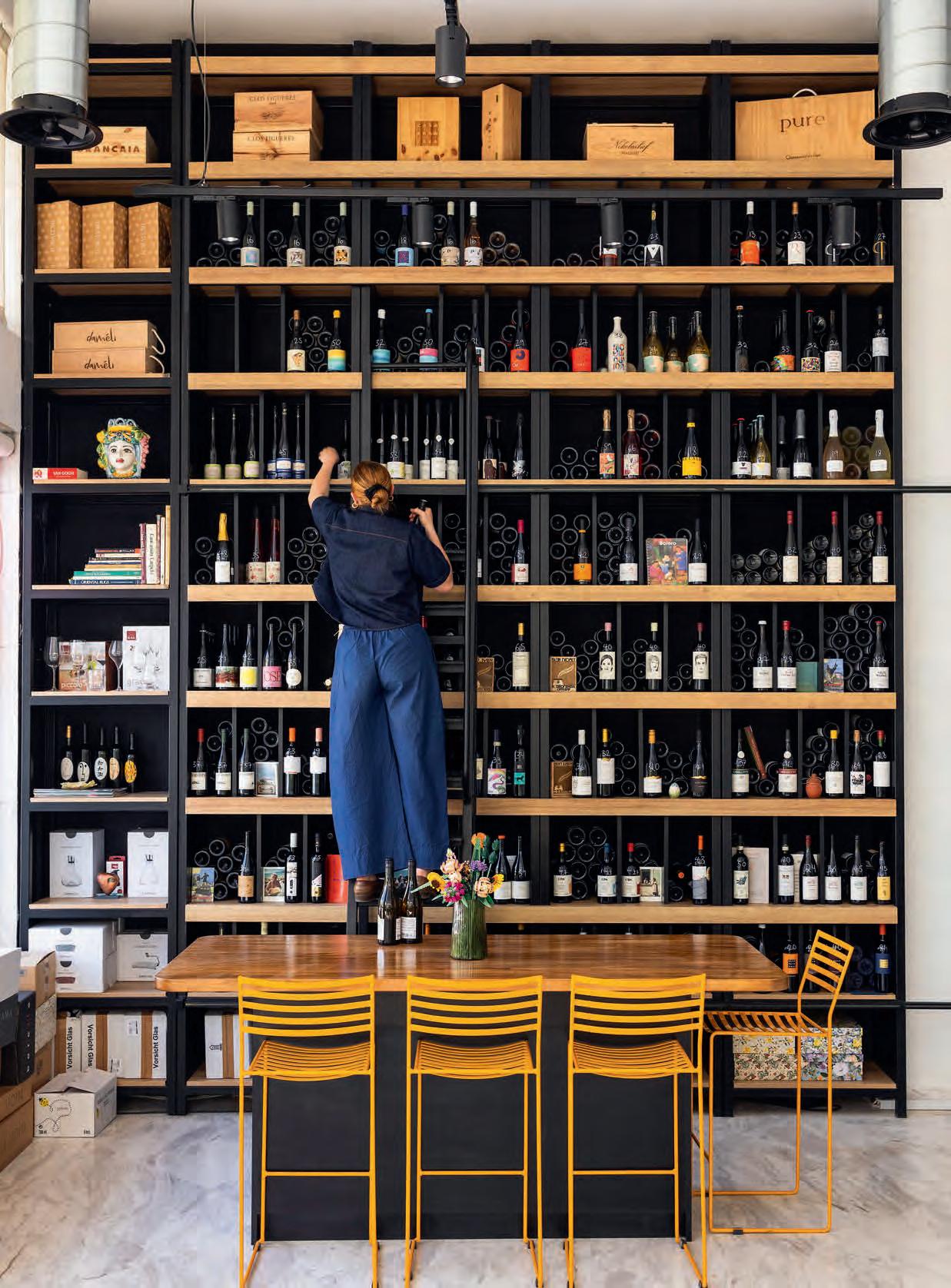
AABOUT TWO DECADES AGO, when the first wine bars began appearing in Athens, bottled wine slowly started moving beyond the formal setting of restaurants or special occasions. The rise of these wine bars helped reshape the city’s relationship with higher-end selections. Until then, for many people, such wines remained something governed by codes: they required knowledge, the right vocabulary, and perhaps a certain degree of confidence simply to order them.
Wine bars introduced a new kind of accessibility by offering quality wine served properly, allowing guests to try a selection without committing to a
full bottle or an expensive bill, and, above all, catering to a remarkably diverse audience, from dedicated wine enthusiasts to people simply looking for a good drink after work. They helped educate Athenians by encouraging them to explore unfamiliar grape varieties, discover new producers, ask questions and make wine part of a more relaxed and social outing, whether in a neighborhood bar or among friends.
Today, wine bars have multiplied, joined by a growing number of wine-focused restaurants with a more casual approach. Together, they appeal to a broader audience, accommodate a range of budgets, and pair thoughtful wine lists with food that ranges from small sharing plates to more substantial dishes. They are places to socialize and enjoy a night out, not just destinations for wine connoisseurs. Wine itself has become a field of exploration rather than a marker of expertise. And through the selections curated by sommeliers across Greece – and especially in Athens – it’s clear that there’s still ample room to spotlight small-scale producers and stories that, until recently, rarely
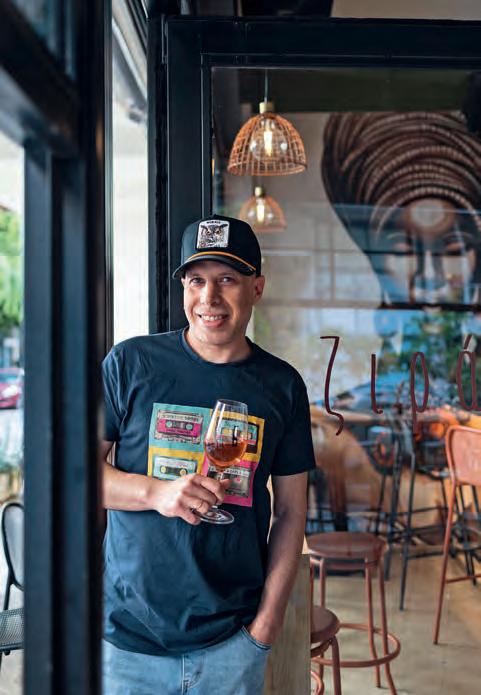
appeared on major wine lists.
Today, interest extends beyond what is poured into the glass to how each venue defines its identity: as a restaurant built around wine, a neighborhood bar, or a wine shop that has evolved into something more. Four wine professionals and venue owners discuss how Athens drinks wine today –and what the city is increasingly looking for in its glass.
Flying Horses (2 Kalamiotou), a new restaurant in the city center with a menu inspired mainly by French gastronomy, has built its identity around wine. At its heart is a customer-accessible wine cellar featuring around 150 labels.
“Food and wine are inseparable. Each can bring out qualities of the other that might otherwise go unnoticed,” says sommelier Tilemachos Papandreas.
Around 25 labels are offered by the glass, with selections changing regularly. The open-access cellar allows the team
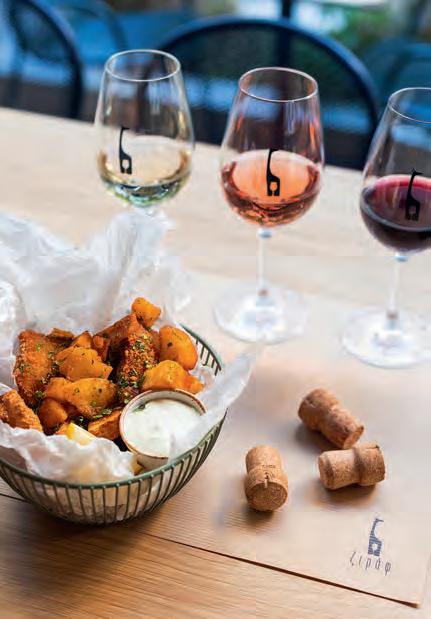

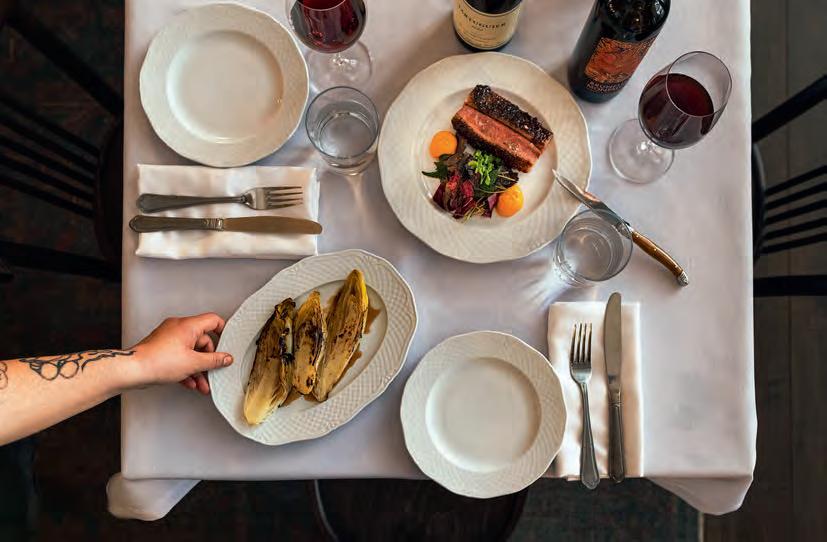
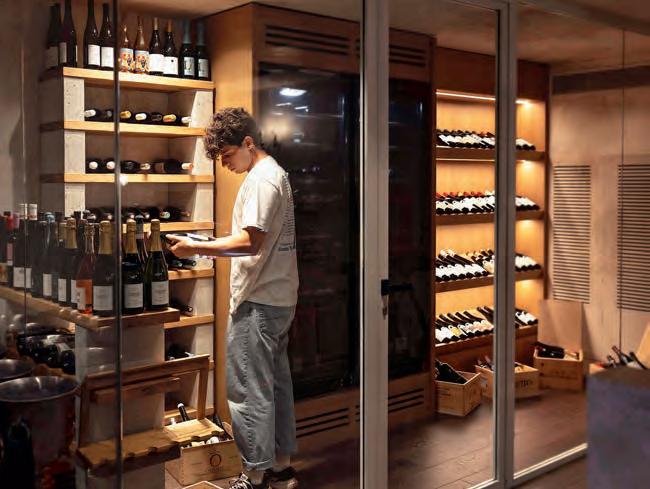
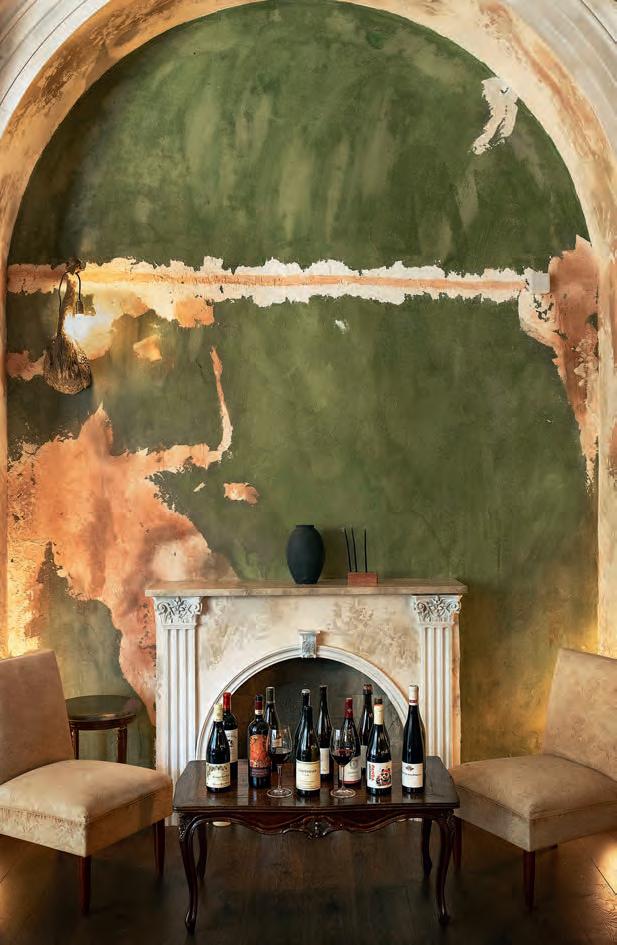
to refresh the list often and experiment with new pairings, without being tied to a fixed offering. “A good wine list that’s updated frequently can be a reason for guests to return,” Tilemachos says.
Behind this approach lies a broader shift he has observed. “At a time when alcohol consumption is declining significantly, we’re seeing a move away from spirits and toward wine,” he says. The wine list is no longer a secondary element of the restaurant experience; in many cases, it can become central to a venue’s success.
“Five or ten years ago, people were navigating wine with far less information. Today, Athenians are far more informed about wine. The first thing they look for is fair pricing. They’re willing to spend more, as long as the price matches the experience. They try more things, they have access to information that was once difficult to find, and they have a better sense of the style of wine that suits them. That
gives us the opportunity to introduce them to something new and broaden their horizons even further,” he says.
At Flying Horses, guests are not expected to commit to a single bottle throughout the meal. The team often recommends half-pours, allowing different wines to accompany different dishes. “One bottle can only cover a certain range of flavors,” Papandreou explains. “A personalized pairing allows you to match wines more precisely to different dishes and levels of intensity.”
A Crémant d’Alsace, for instance, might accompany the oysters; a Riesling or a Chenin Blanc can pair beautifully with the beef tartare; while a wine from the Rhône, with its freshness and subtle peppery notes, can complement the tuna tataki. To finish, the sommelier might suggest a Sauternes to go with the crêpes Suzette, or a Nektar from the Samos Cooperative for those looking to discover a classic expression of the Greek vineyard.
Vassilis Papadopoulos has been working in wine for 25 years. His career has taken him through restaurants, hotels, consulting, education, tastings, wine shops and imports. What ultimately drew him to hospitality, however, was something simpler: the idea of welcoming people.
Girafe (17 Kallidromiou), which opened in Exarchia in September 2025, is a wine bar created by people who love both wine and food. Its list features 135 labels from 18 countries, almost all available by the glass thanks to the use of the Coravin system. “The best decisions I’ve made as a sommelier were the ones I made while thinking like a customer. Who doesn’t want the chance to try different wines?” says Papadopoulos.
In the kitchen, chef Panagiotis Vasilatos brings together Mediterranean flavors and street-food ideas,
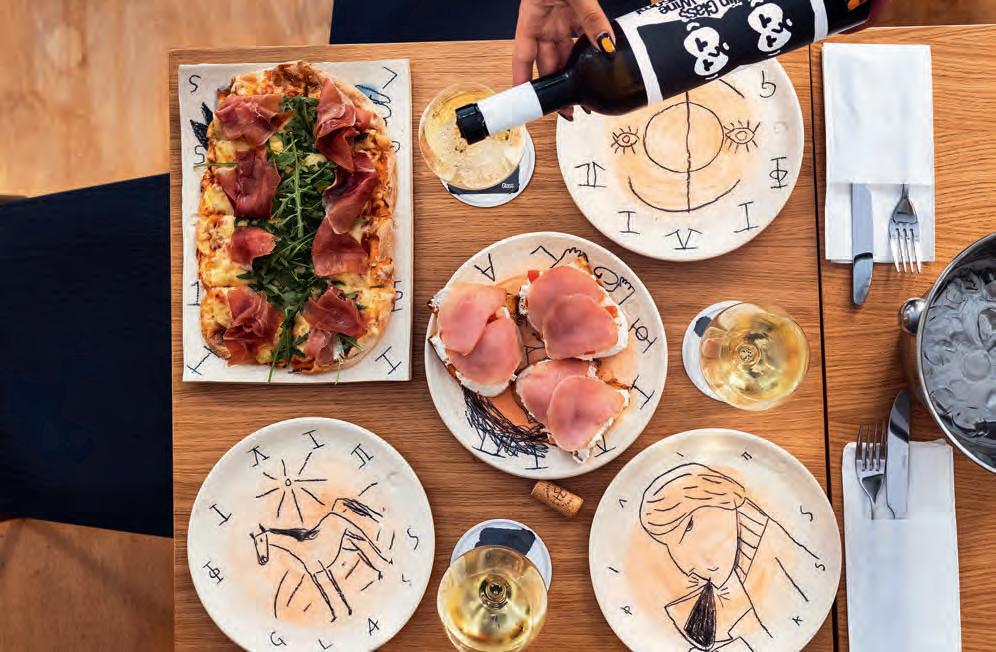
creating dishes designed with wine pairing in mind. Despite the growing number of wine-focused venues opening across Athens, Papadopoulos believes that wine bars need a stronger sense of identity. When discussing the contemporary Athenian wine scene, he describes a market in constant evolution. The question, he says, is whether every change is necessarily for the better.
He sees it as a positive sign that consumers are seeking new experiences and trying wines they might have overlooked only a few years ago. At the same time, he believes that trends are influencing wine more than ever before, and not always for the better.
“There are excellent low-intervention wines,” he explains. “Many of them are on my own list. But there is a difference between a well-made low-intervention wine and a poor wine that is considered good simply because it happens to be fashionable.”
Where he does identify a genuinely positive shift is in the public’s attitude toward smaller producers. “In the past, people followed the brand. They knew a big name and that’s what they chose. Now they’re willing to explore.” In his view, many contemporary wine lists are built around relatively unknown producers, something that would have been far more difficult to achieve only a few years ago.
His own selections are guided by a strong emphasis on locality and native grape varieties. When it comes to Greek wines, he works exclusively with Greek grapes, often using local varieties that even many Greeks have yet to discover. For international wines, he looks for varieties that best express their place of origin, such as Riesling from Germany or Torrontés from Argentina.
“People need to understand what we’re trying to tell them,” he says. “They are no longer attracted to the overly technical or the overly complicated. They want simple things, clean flavors and clean aromas. And I see a definite shift toward quality, even if it means paying a little more.”
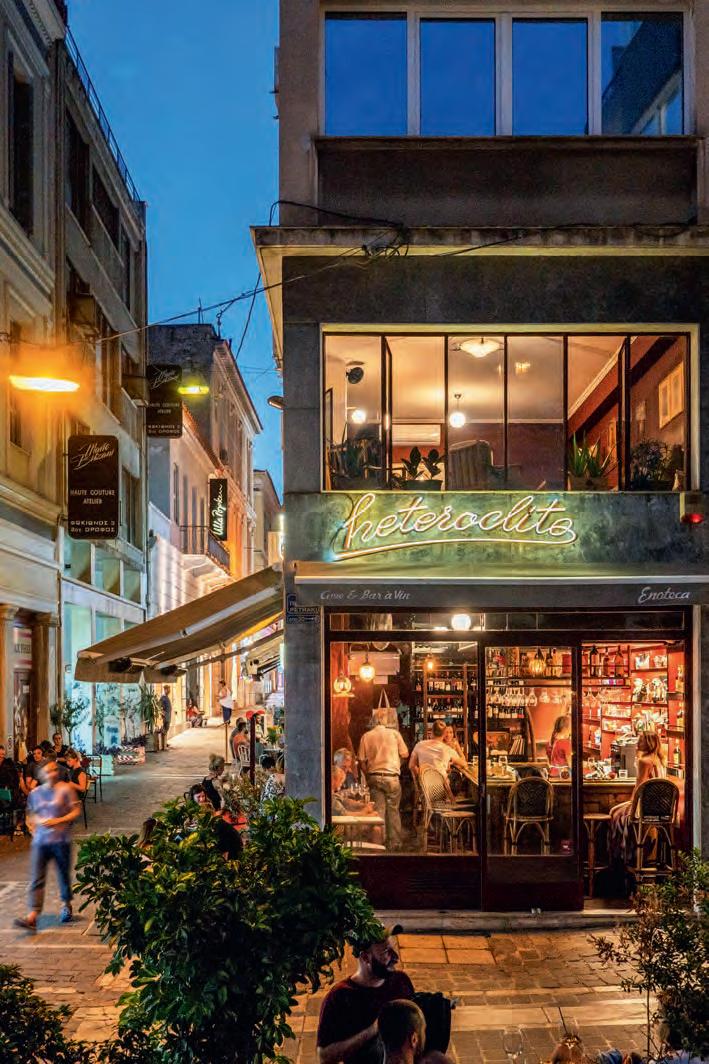
WHEN FILIPPOS KOUROUDIS OPENED THE WINE BAR PHILIP GLASS IN NOVEMBER 2025, THE IDEA WAS TO CREATE A PLACE THAT COULD BECOME PART OF THE NEIGHBORHOOD’S DAILY LIFE.
When Filippos Kouroudis opened Philip Glass (3 Louka Bellou, Ampelokipoi) in November 2025, the idea was to create a wine bar that could become part of the neighborhood’s daily life. The space was family-owned, and he was looking for a use that would suit the location and offer something missing from the area. Although early press coverage quickly brought visitors from across Athens, its core audience remains local: people who stop by for a
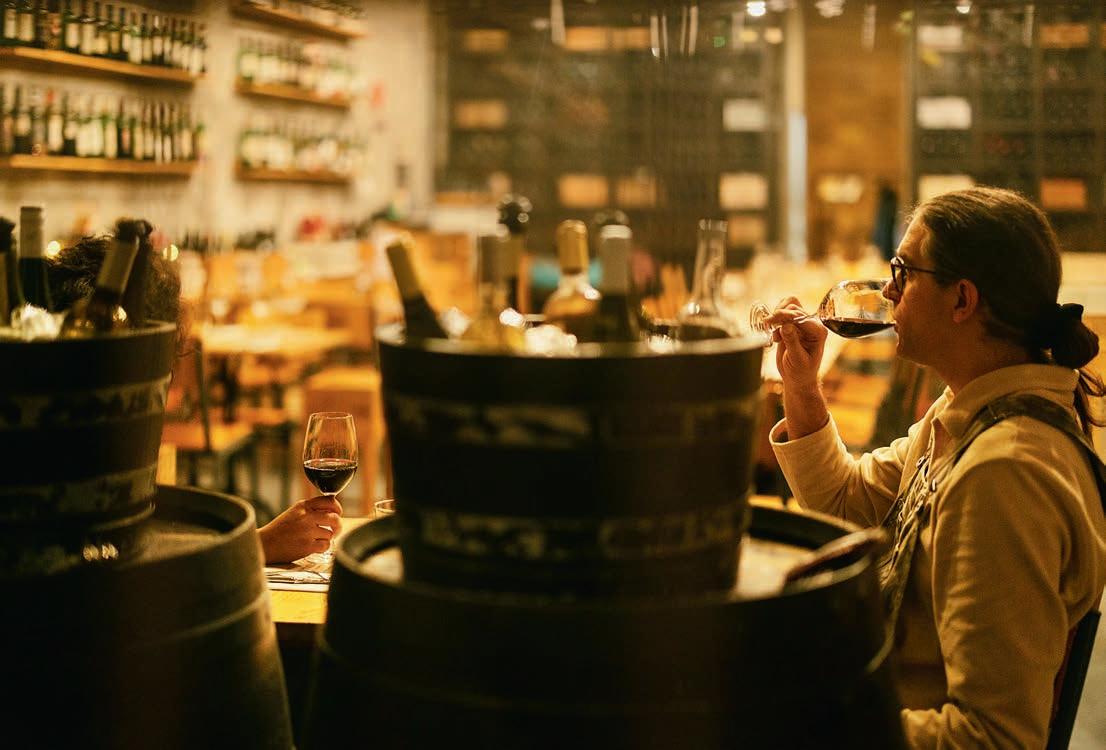
light meal, a glass after work, or a brief pause before heading home.
The wine list includes around 30 labels with a strong emphasis on Greek producers alongside a small selection from Italy and France. There’s also the bar’s own house wine, produced in collaboration with the well-regarded Tsimbidis Winery in Monemvasia: a blend of Kydonitsa, Assyrtiko and Monemvasia, bottled under the Philip Glass label. “Having our own wine on offer creates a sense of familiarity,” says Kouroudis.
The food is built around simple flavors that pair naturally with wine: taramosalata, fresh salads, warm bruschetta, platters of Greek cheeses and charcuterie, and pinsa prepared in the bar’s own kitchen. The logo, website, and wine label were designed by his brother, Menelaos Kouroudis, while the ceramic plates are the work of his
father, Yiannis, an established graphic designer.
The wine store Brilla ( 59B Ioannou Apostolopoulou, Halandri ) focuses primarily on small producers and low-intervention wines, with an emphasis on countries such as Italy, Austria, Georgia, Serbia, Croatia, and Hungary: selections that aren’t easy to find in a conventional wine shop. The rationale guiding these choices grew out of the natural curiosity and the travels of owner Melina Antonopoulou.
“I try new things, get excited about them, and want to introduce them here because they’re not easy to find on the market,” Antonopoulou says.
She sees a clear change in the way Athens approaches wine. When she began working with low-intervention
and natural wines around 2015, interest was limited. “People weren’t really asking for them,” Antonopoulou says. Today, she believes there’s greater curiosity, more openness to new philosophies and a growing desire for something that feels authentic.
At the same time, she keeps her distance from easy categorizations. The term “natural wine,” Antonopoulou says, is often misunderstood or used incorrectly. What matters more to her is the quality and consistency of the product. “We need to move beyond the label and talk more about the person behind the wine, and the way it is made,” she says.
Brilla is at present planning its next step: a space built around wine culture, featuring magazines, wine-related merchandise, food and, eventually, the opportunity for visitors to taste wines on-site.•
• Oinoscent 45-47Voulis
One of the first wine bars that helped educate Athenians about wine, Oinoscent remains a Syntagma institution. With more than 1,000 labels, expert staff and no trace of pretension, it works just as well for a quick glass, an aperitif, a meal or an after-dinner drink. The kitchen plays an integral role in the experience, while the team can guide guests on a journey that stretches from New Zealand or Mount Etna all the way to Tinos.
• Wine Is Fine 3Vissis
Wine Is Fine brought a touch of Parisian sidewalk culture to downtown Athens. White tablecloths, stemmed glasses, lively conversation and a crowd that keeps coming back are its hallmarks. The list, featuring Greek and international lowintervention selections, changes often while the menu, which includes dishes such as cacio e pepe, pâté and tartare, is reason enough to stop by.
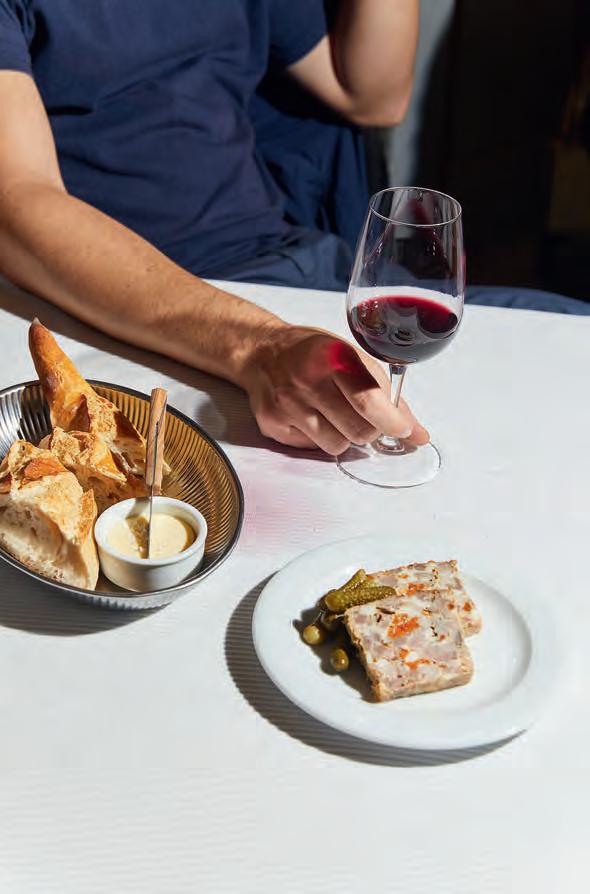
• Heteroclito 2 Fokionos &30 Petraki
A favorite in the city center, Heteroclito is synonymous with people-watching and Greek wine. Its focus remains firmly on native grape varieties, small wineries and labels that offer a broader perspective on the Greek vineyard. International surprises are part of the experience, too, from Georgian orange wines to Champagne. Ideal for anyone seeking a good glass of wine and a front-row seat to the flow of the city.
• Materia Prima 3Messolonghiou Square
The tables at Materia Prima bring together neighborhood regulars and visitors from across Athens. The short by-the-glass list changes regularly, backed by a broader collection of hundreds of labels from Greece and abroad. The food, from homemade ravioli to mussels, is designed to complement the wine.
• Paleo 39Polydefkous, Piraeus
Housed in an old stone warehouse in Piraeus, Paleo is a wine bar–restaurant with a serious focus on quality wine. Although slightly off the beaten path, it has become a destination in its own right and is often packed. The list looks primarily to southern Europe, indigenous grape varieties, and the distinct terroirs that shape them, with many wines imported directly by the team and offered at remarkably accessible prices. Its greatest strength, however, is its knowledgeable staff. Tell them what you feel like drinking – or what you plan to eat – and chances are you’ll be introduced to a small gem that might otherwise have escaped your attention.
Athens, famed since antiquity, still has secrets to reveal: a Parthenon seen anew after two centuries of scaffolding, a hundred-year-old library enabling research and discovery, Odysseus still lurking somewhere in the city’s psyche, the dark legacy of Herodes Atticus, and the myriad trees that make urban life more pleasant.
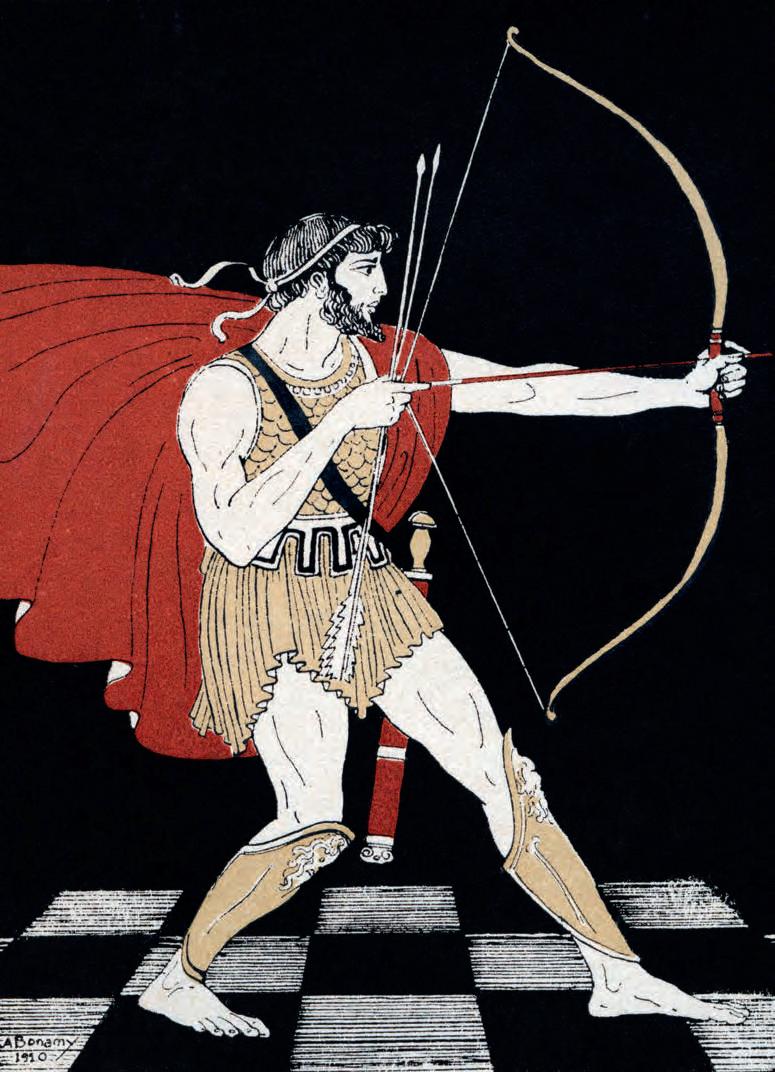
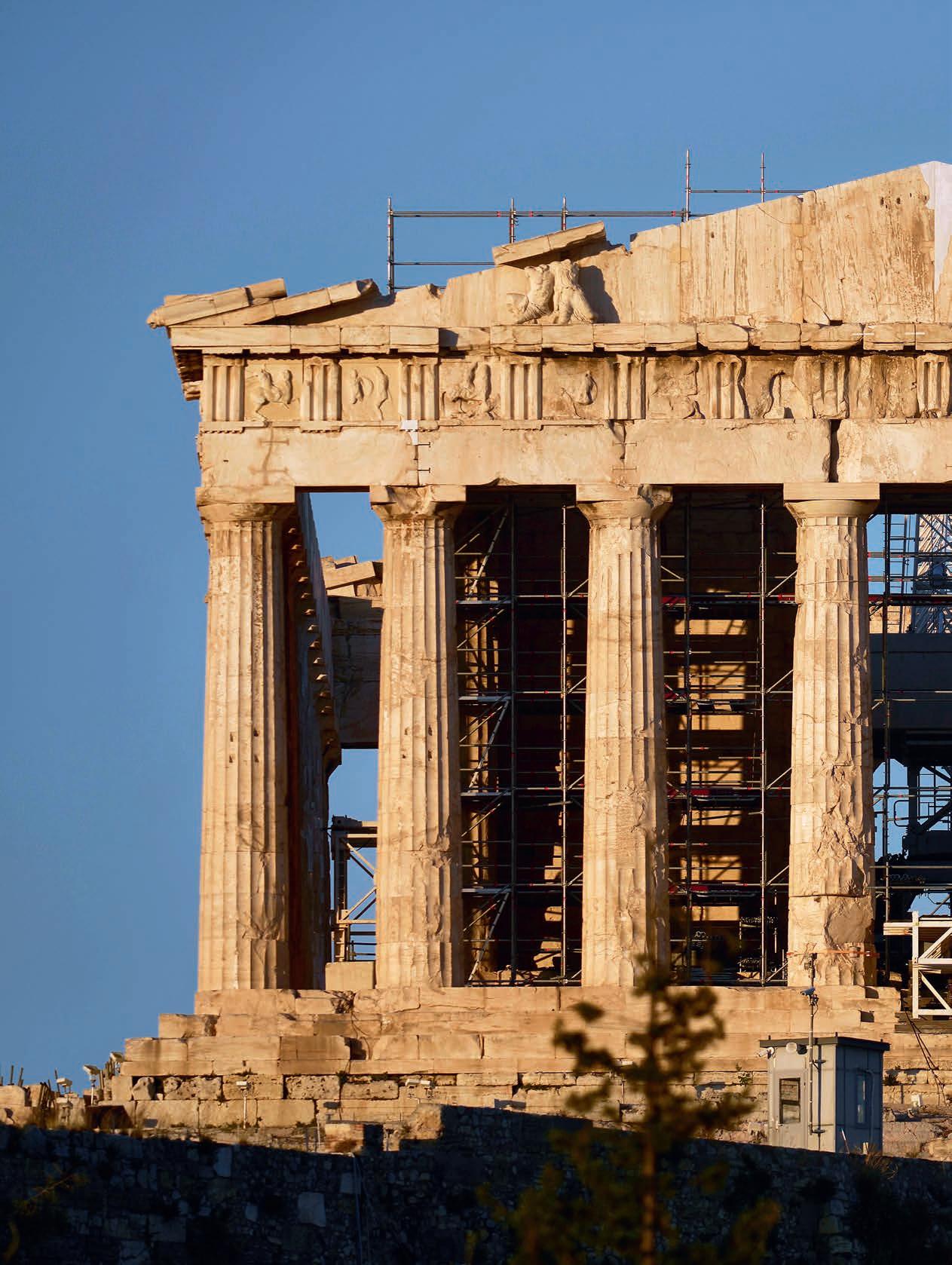
With its west pediment restored and revealed, the Parthenon can now be seen free of external scaffolding for the first time in about 220 years.
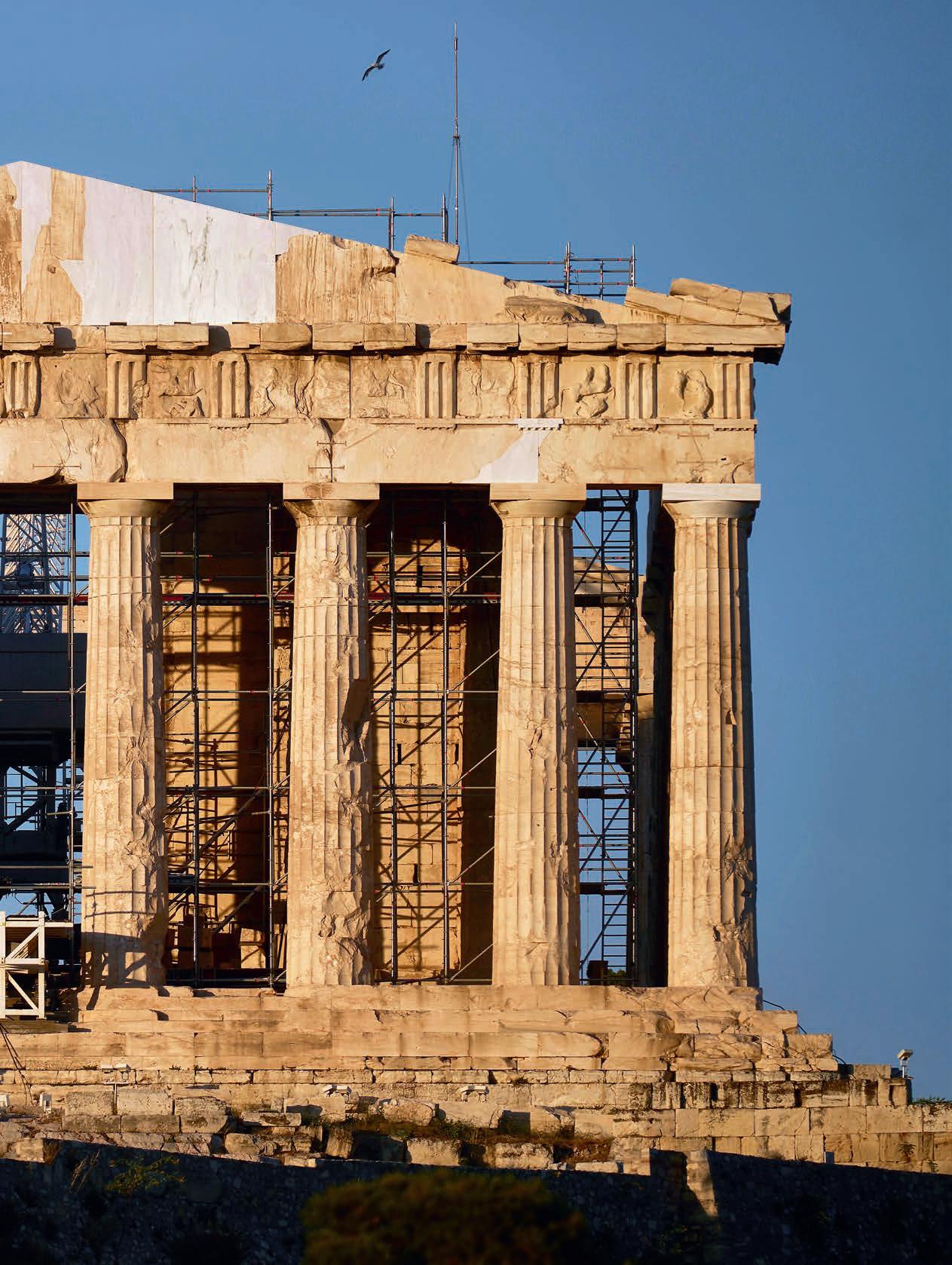
BY NIKOLAS ZOIS
IIT IS A PROJECT OF extraordinary complexity as well as an act of profound respect and responsibility. Millennia ago, master craftsmen built one of the world’s most remarkable monuments. Over long centuries, the Parthenon has inspired generations and shaped artistic traditions even while enduring damage and plunder; today, a team of scientists, engineers and conservators is dedicated to its care. As part of this responsibility, the Ministry of Culture has returned the Parthenon’s iconic western façade “to its fullest possible form,” free of external scaffolding, “for the first time in approximately 220 years.” This was achieved through the installation of two orthostates in long-vacant spaces of the west pediment, as well as through the restoration of its supporting wall. According to the Ministry, the interventions “restore the architectural unity of the pediment.”
“I would begin by looking closely at the photograph that was released to the public,” Minister of Culture Lina Mendoni told Kathimerini newspaper. “If you examine the points where the new material has been inserted, you’ll see that the work is extraordinarily meticulous, with the new marble fitting into the surviving fragments and the existing section of the west pediment with remarkable precision. It is not simply a matter of placing two orthostates and filling a gap. Ancient fragments were also incorporated, and the new material was applied with tremendous accuracy
“IF YOU EXAMINE THE POINTS WHERE THE NEW MATERIAL HAS BEEN INSERTED, YOU’LL SEE THAT THE WORK IS EXTRAORDINARILY METICULOUS, WITH THE NEW MARBLE FITTING INTO THE SURVIVING FRAGMENTS WITH REMARKABLE PRECISION.”
to surfaces that are far from smooth. All of this reflects the approach that characterizes the Greek school of restoration: not the slightest loss of ancient material, preserving even the original edges, to which the new marble is joined down to the finest detail. If you look carefully, we are talking about differences measured in mere millimeters.”
The first public glimpse of the west pediment – which in antiquity depicted the contest between Athena and Poseidon for the patronage of Athens – took place a few months ago, when scaffolding was temporarily removed from the entire western façade of the Parthenon. “It feels as though the sky above the city has cleared,” local residents commented at the time, while tour guides, long accustomed to seeing scaffolding on the “Sacred Rock,” remarked that “something has been set free.”
In a statement issued following the permanent removal of the scaffolding, Mendoni described the sight as “truly breathtaking.” The two new orthostates – the trapezoidal marble blocks which, together with eight others, form the triangular tympanum behind the pediment – don't just fill a structural gap; in her words, “They also allow the unique proportions and geometric perfection of the Parthenon’s western façade to be appreciated once again. This was an exceptionally demanding project, carried out by the scientists, engineers, craftsmen, and staff of the Acropolis Restoration Service with exemplary precision and dedication.”
Rosalia Christodoulopoulou, Director of the Acropolis Restoration Service (YSMA), describes the intervention as “a milestone” in the history of the Parthenon. “The western side of the monument, and specifically the west pediment, has returned to the form it had around 1800, before Lord Elgin’s interventions. In the engravings of the period, the tympanum still retained all of its orthostates, with the triangular composition intact, even though the monument had already suffered damage during Morosini’s bombardment,”
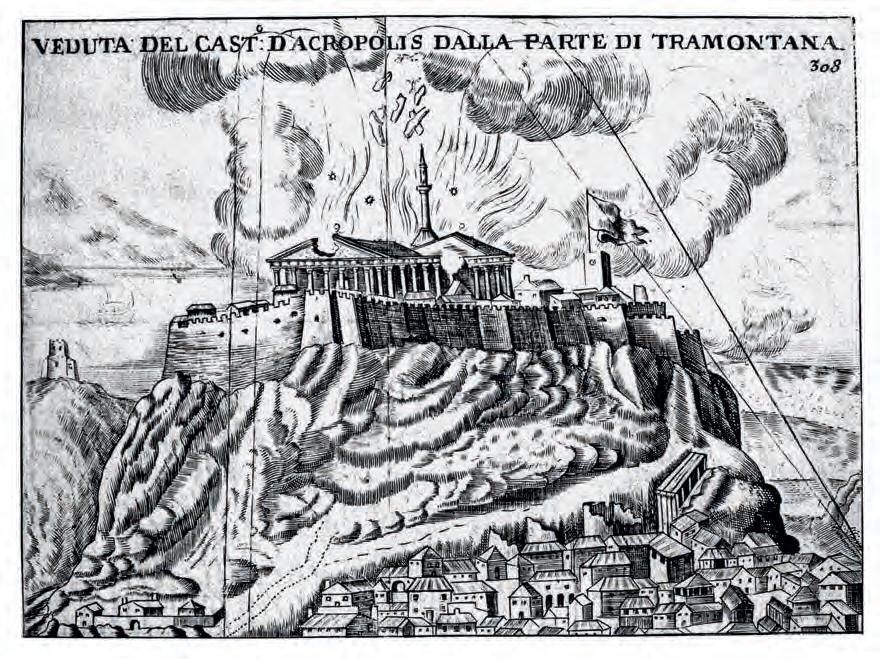
the architect explains. The challenges involved were considerable. YSMA had already begun addressing them in 2017, when it restored the first three orthostates (two in the northern and one in the southern section of the tympanum). In the case of the two orthostates restored in the latest phase, both located in the southern section and weighing approximately seven tons each, one of the main challenges was sourcing exceptionally large, squarecut blocks of marble from the Dionysos quarries. “These were needed,” Christodoulopoulou says, “to create the substantial additions required for the first orthostate – which incorporates surviving ancient material – and to carve the second orthostate entirely from new marble.”
TRANSPORT TRACKS WERE REPAIRED, AND A SPECIAL TROLLEY WAS CONSTRUCTED TO MOVE THE MARBLE BLOCKS WITHIN THE PARTHENON ITSELF.
Once the marble blocks had been sourced, they were cut and roughly shaped to reduce their weight and enable transport to the Acropolis. The Acropolis Restoration Service’s crane, located at the southeastern corner of the Sacred Rock, played a key role in the operation. Existing transport tracks were repaired, and a special trolley was constructed to move the marble blocks within the Parthenon itself. Inside the monument, conservators joined the first orthostate to the surviving ancient material and completed the carving of the second. The orthostates were then test-fitted in the pediment using the crane installed within the Parthenon, allowing specialists to determine their
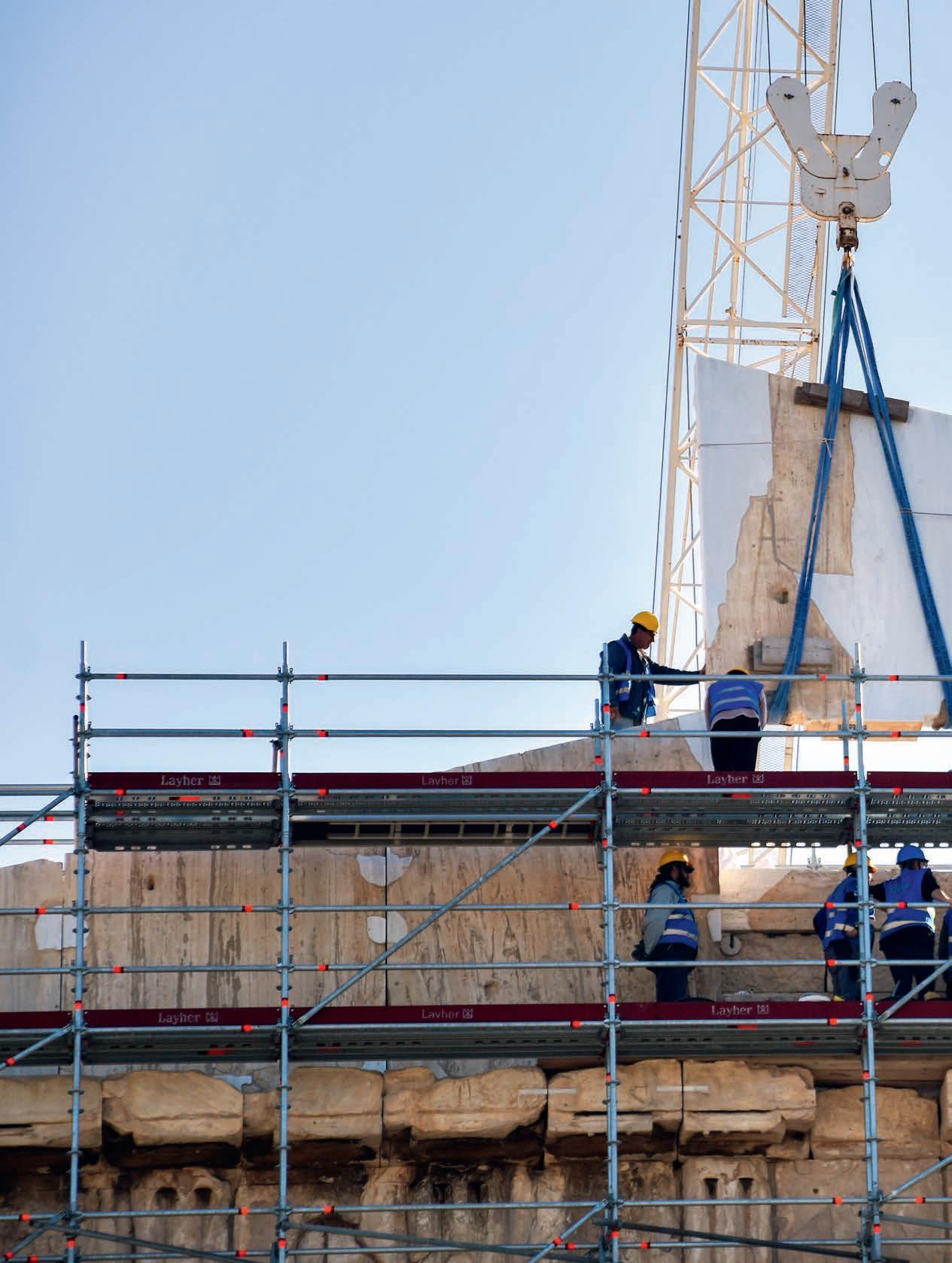
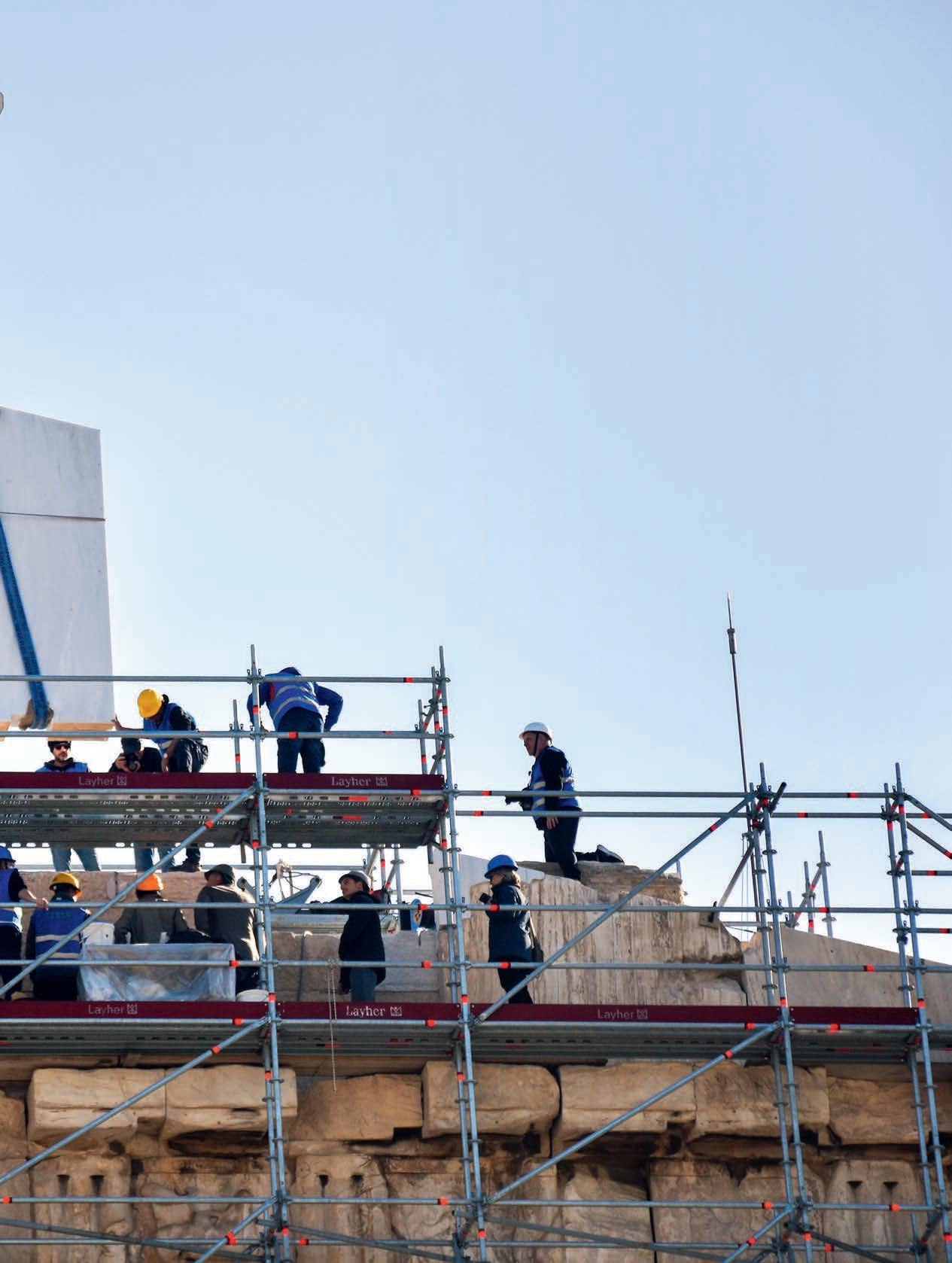
The crane of the Acropolis Restoration Service is positioning one of the marble pieces (joined with ancient fragments) used to restore the western pediment of the Parthenon, bringing the monument’s façade to its most complete state possible.
final dimensions and mark the precise positions of the connectors that would anchor them to the supporting wall. “Everything had to be prepared in advance,” Christodoulopoulou says, “for the lowering of the stones by crane in front of the supporting wall and their final placement with an accuracy measured within just a few millimeters.”
What does this achievement reveal about the Greek school of restoration?
“The process of joining ancient material with new marble, the use of titanium reinforcements following exhaustive study to ensure the least possible intervention on the ancient fabric, the flawless carving of the marble, and the installation of such demanding elements, both extremely heavy and geometrically complex, demonstrate that the Greek school of restoration, which originated with the conservation of the Acropolis monuments, has reached the highest level of expertise and performance,” says the Director of YSMA. “We can confidently claim that it’s the finest school in the world for the restoration of stone monuments, and especially those built of marble.”
According to Minister Mendoni, the project demonstrates “the profound respect and importance that the Archaeological Service, the Ministry of Culture, the Acropolis Restoration Service, and the Committee for the Conservation of the Acropolis Monuments place on absolute fidelity and authenticity – not only in form, but also in material. This commitment leads us to make use of even the smallest authentic ancient fragment.”
Although it was he who had prepared the first restoration study for the west pediment 43 years ago, the President of the Committee for the Conservation of the Acropolis Monuments, architect and academic Manolis Korres, is measured when discussing the project’s completion. He notes that the
“WITH THE ARCHITECTURAL UNITY OF THE PEDIMENT RESTORED, AN IN-PERSON VISIT TO THE MONUMENT BECOMES AN ENTIRELY DIFFERENT EXPERIENCE.”
intervention was not undertaken for emergency conservation purposes and therefore had to wait its turn among more urgent restoration priorities. At the same time, he is satisfied with the exceptionally high quality of the work and praises the contributions of Vasso Manidaki, Head of the Technical Office and Conservation and Restoration Workshop of the Parthenon, and architect Kosmas Skaris, who were responsible for the restoration of the orthostates and the supporting wall respectively.
Korres also highlights another important dimension: the symbolic significance of the pediment as a defining feature of ancient Greek temples. “Wherever Classicism was adopted, in Europe and America alike, pediments with these proportions – featuring a horizontal cornice in addition to the two sloping sides – became the most recognizable hallmark of Greek architecture,” the academic explains. “It is an element that was repeated in Renaissance works and later in Neoclassical architecture, and its origins can always be traced back to the ancient Greek temple. The restoration of the tympanum of the Parthenon will now help reinforce the understanding of this architectural feature even further.”
Will these new images of the west pediment, now free of scaffolding, attract even more visitors to the monument? “What we can say,” Mendoni responds, “is that now, with the architectural unity of the pediment restored, an in-person visit to the monument becomes an entirely different experience. Both Greek and international visitors are now able to appreciate not only the role of the pediment in ancient Greek architecture, but also the immense effort and the remarkable result achieved in restoring its integrity.”•
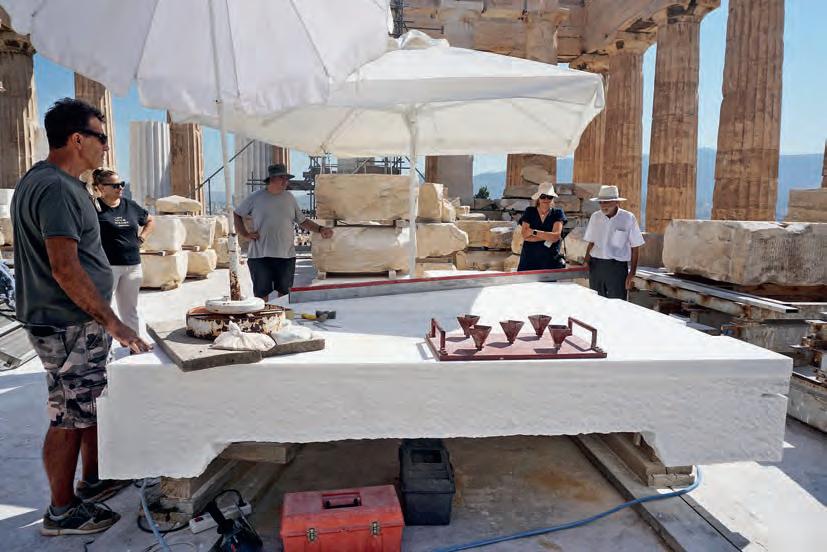
Architect and academic Manolis Korres (on the far right) supervises the restoration works.
Below: “Wherever classicism was adopted, pediments with these proportions became the quintessential identifying element of Greek architecture.”
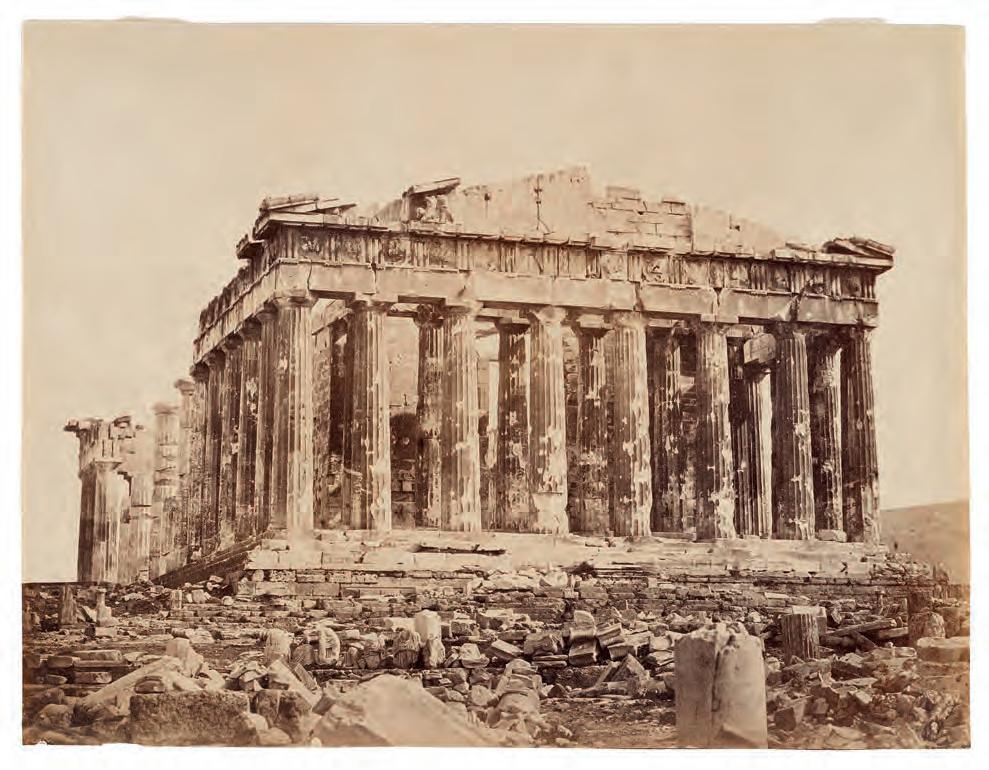
As the Gennadius Library marks its centennial, rare books, maps, letters and young scholars show how Greek history keeps opening new lines of inquiry.
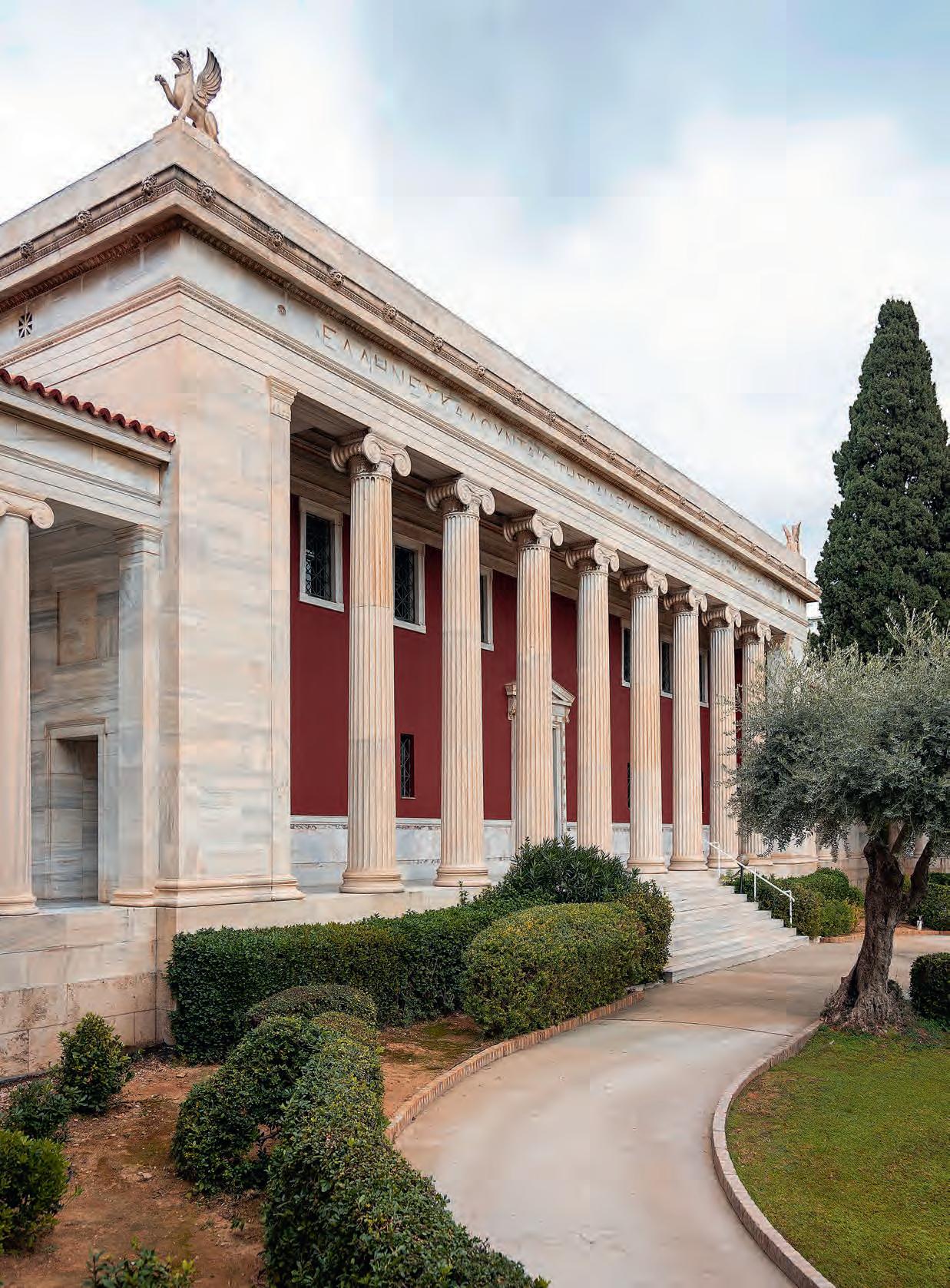
BY
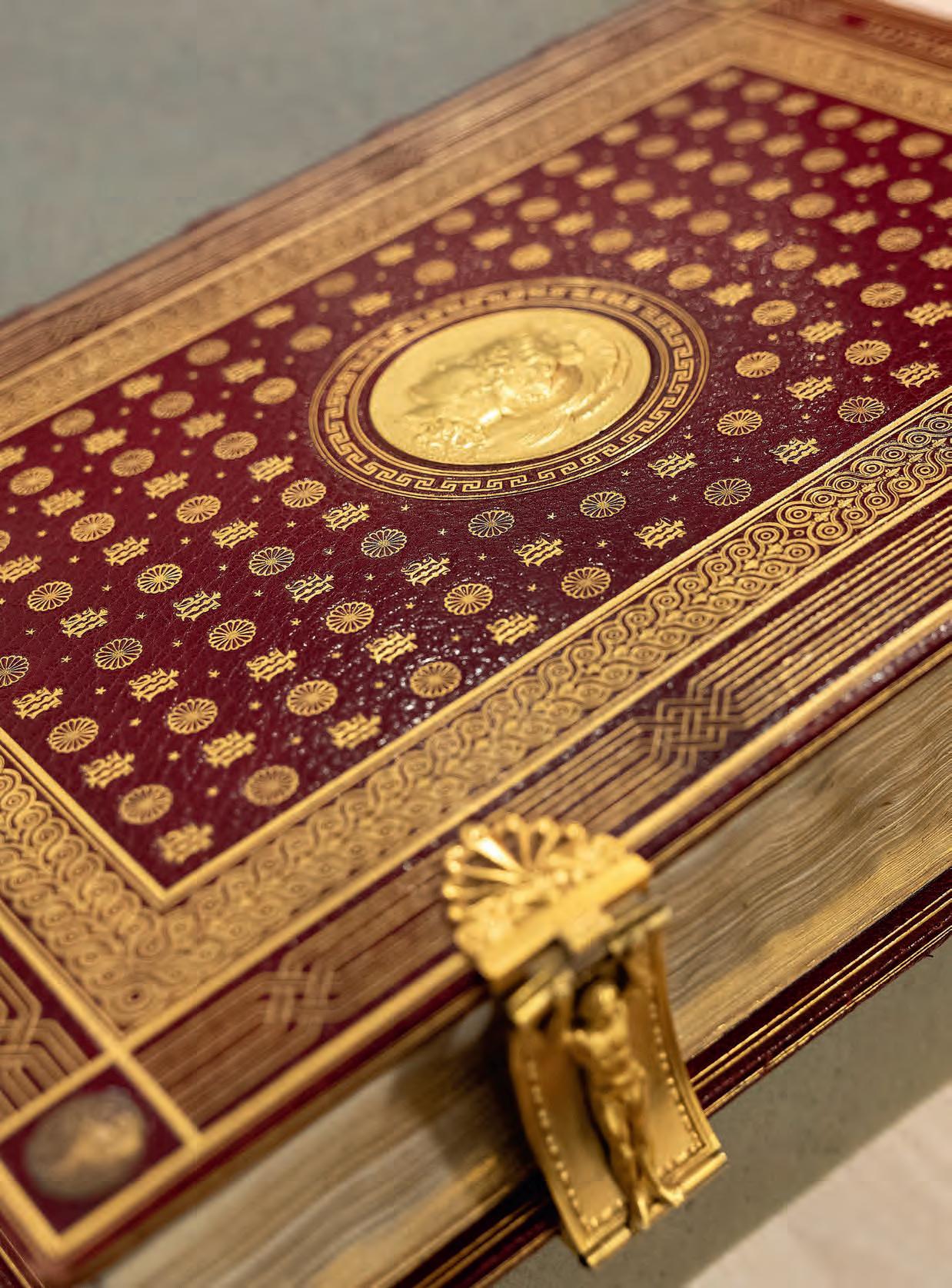
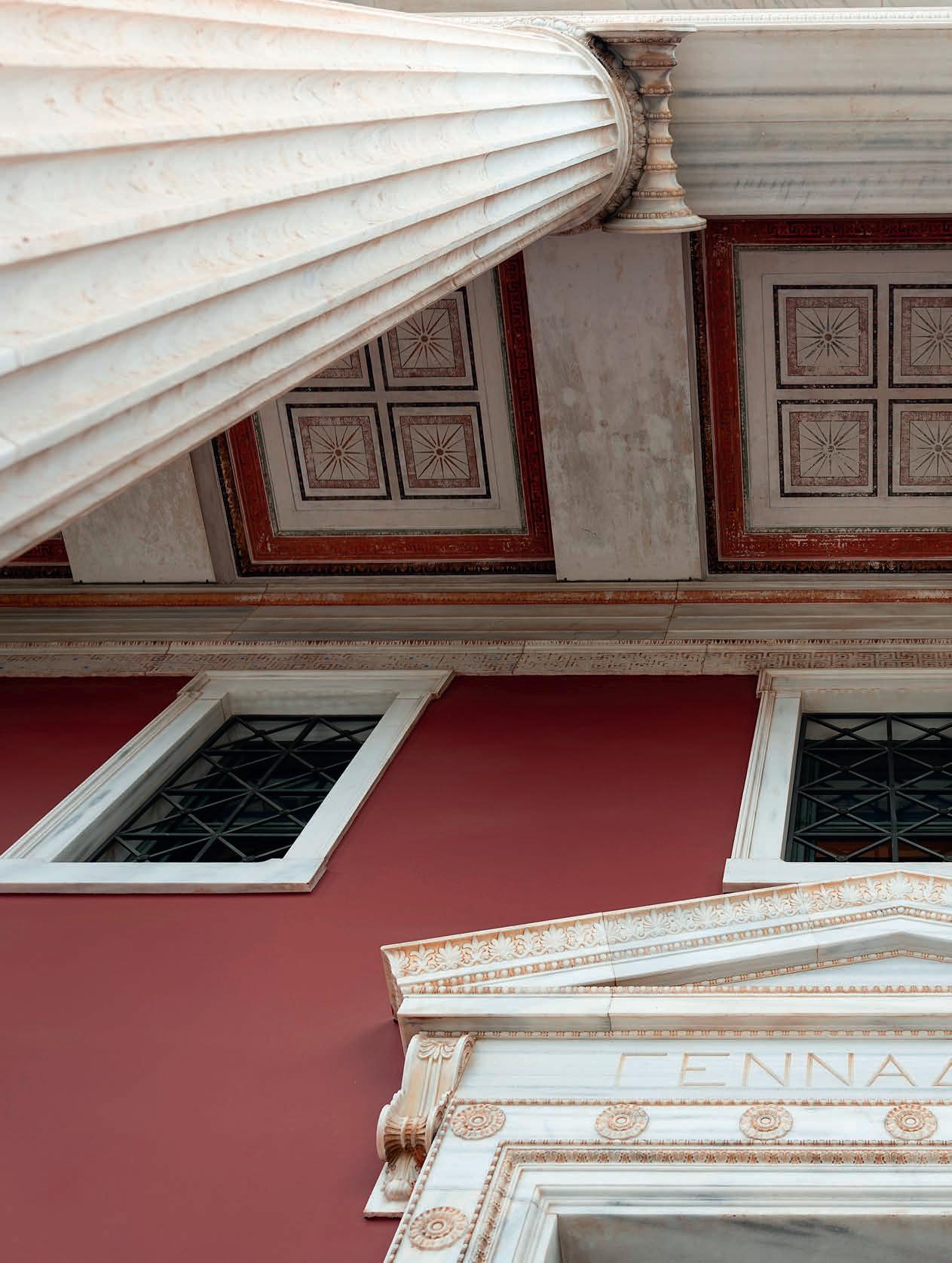
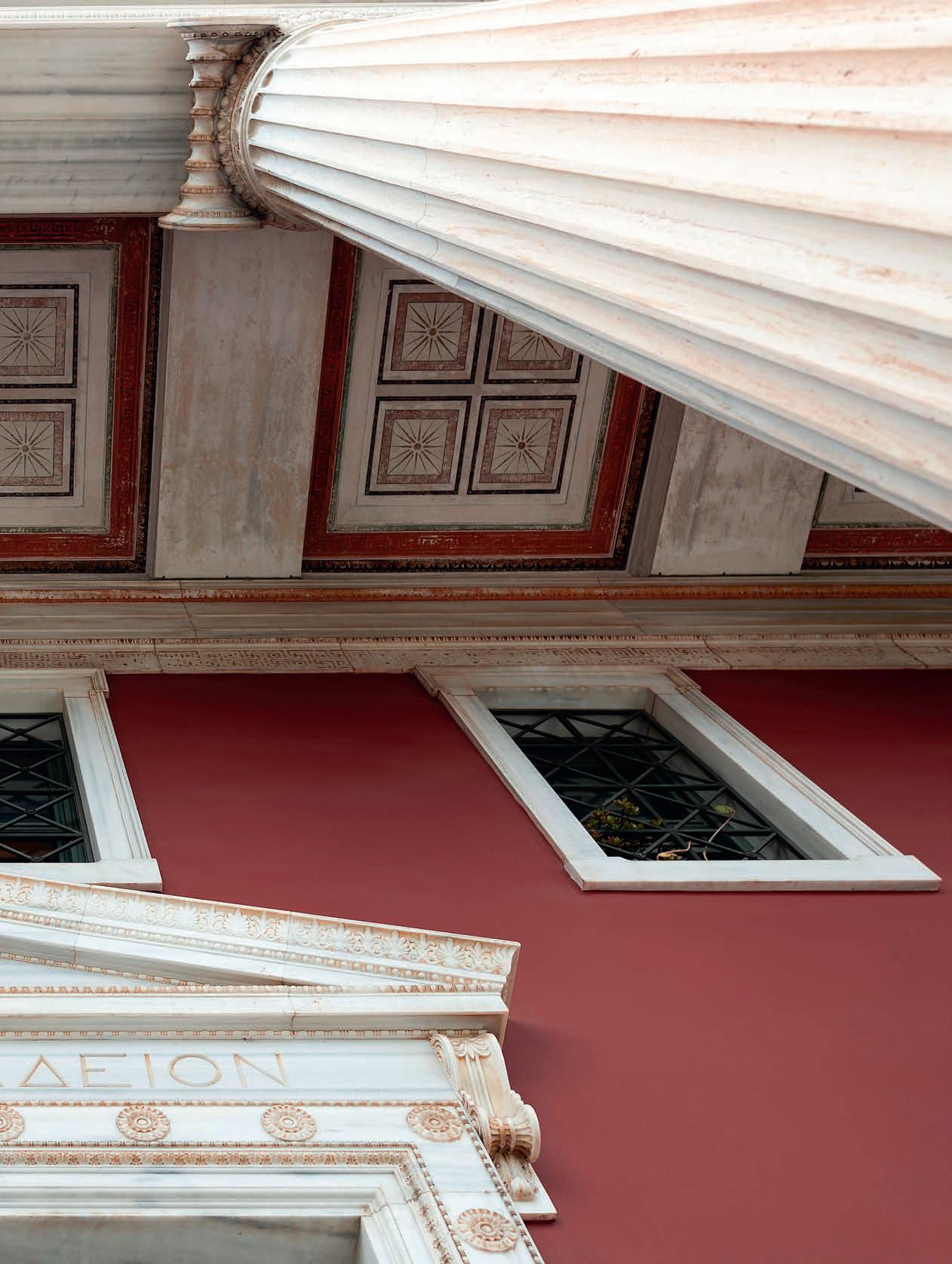
A view of the building, which first opened its doors on April 23, 1926. The inauguration ceremony was attended by
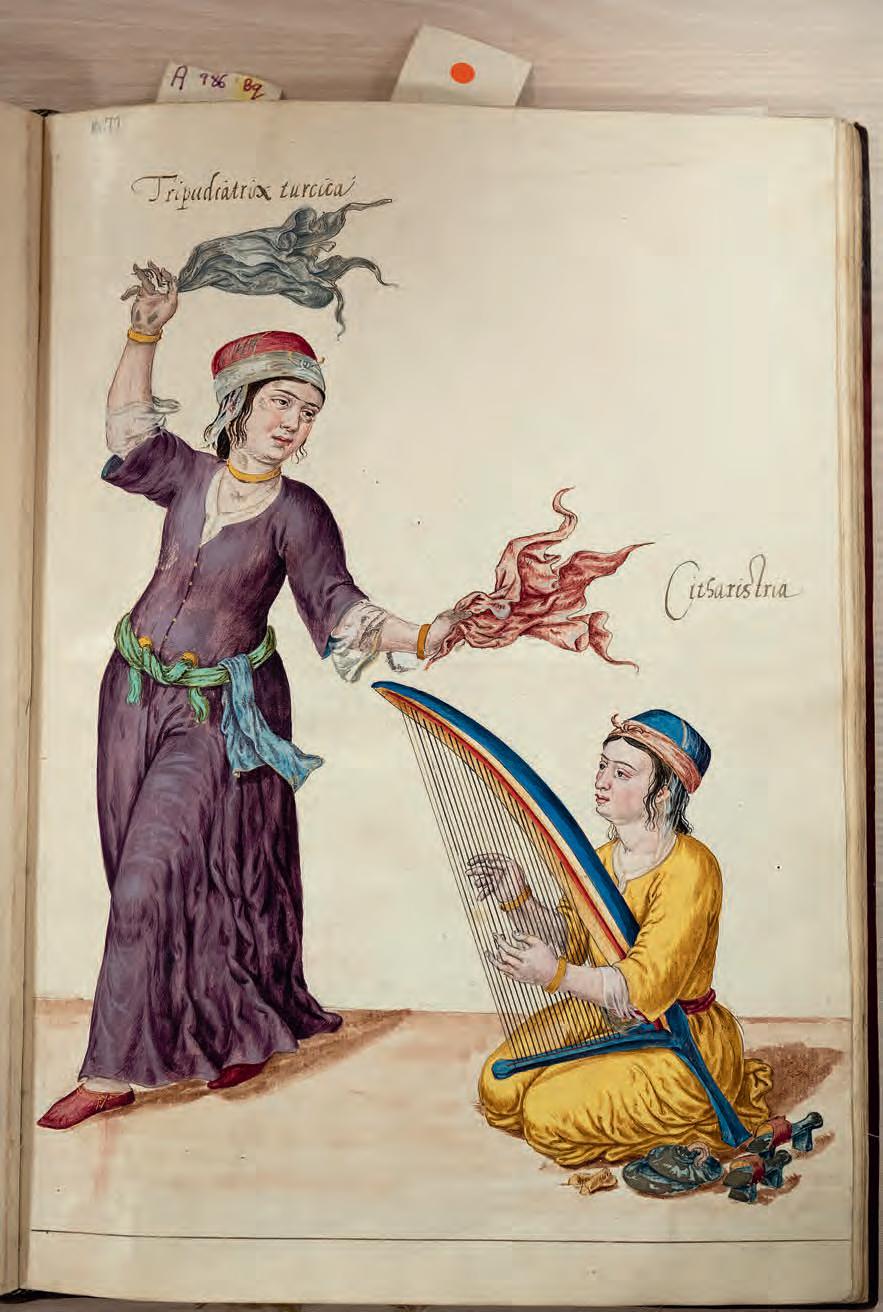
Turkish dancer and harpist from Lambert de Vos’s collection of 110 original drawings of Turkish costumes (ca. 1574).
doctoral

AAT THE FOOT OF Lycabettus Hill, the Gennadius Library has stood with quiet authority for a century. Designed by the American architects John Van Pelt and W. Stuart Thompson, its neoclassical building, with clear echoes of the Erechtheion on the Acropolis, still draws the eye of passersby. Far fewer step through its gates to discover the treasures held within: the first printed edition of Homer’s works, published in Florence in 1488; Flora Graeca, the monumental ten-volume botanical survey of Greek flora; 16th-century maps; the revolutionary map drawn up by Rigas Feraios; the correspondence of Ali Pasha, the powerful Ottoman ruler of Ioannina; the announcement of Lord Byron’s death in Ellinika Chronika, the newspaper published in besieged Messolonghi during the Greek War of Independence; and the archives of poet Takis Sinopoulos and archaeologist Heinrich Schliemann, among many others.
In the late 1980s, when Maria Georgopoulou was a doctoral student in the United States, she would spend her summers at the Gennadius Library gathering material on Venetian Crete – first for her dissertation and later for her book. She could hardly have imagined then that her name would one day become so closely associated with this celebrated institution.
“At the time, the library was one
of the most accessible places of knowledge for people of my generation,” says Dr Georgopoulou, who took over as director of the Gennadius in 2004, leaving behind a promising career at Yale. “My Greek husband and I had reached the point where we had to make a definitive decision about where we would live, as our children were growing up. When you work for an organization this interesting, you feel that you grow along with it, while also having the chance to contribute to changes both small and large.”
I ask her whether she misses teaching. “Certainly not grading papers,” she says, laughing. “What I do miss is the look in the eyes of 20-year-olds when they hear something from you for the first time – those eyes opening wide, and then a question that comes out of nowhere, one that forces you to rearrange everything you know in your mind in order to answer it.”
That thirst for dialogue with the next generation of scholars is what drives her to approach every new or regular visitor to the Gennadius, to learn about their research interests and personal goals. As director, she’s also something of a host: she knows which corridor leads to each collection, where every small labyrinth in the building ends, and the name of every researcher and
staff member, all of whom she always greets quietly, but by their first name.
The library owes its existence to the diplomat Joannes Gennadius, who assembled in London one of the most comprehensive private libraries on the history of Hellenism. His later donation of 30,000 volumes to the American School of Classical Studies at Athens led to the creation of an international center for the study of Greek civilization across time: the Gennadius Library.
Two wings were added in the late 1960s. Further modernization and new spaces followed in successive phases, in 1999, 2005 and 2017; the East Wing was inaugurated in 2005 and renovated in 2018.
By 10:00, every seat in the reading room of the main building is already taken. In complete silence, five researchers are absorbed in their books.
TWO WINGS WERE ADDED IN THE LATE 1960S. FURTHER MODERNIZATION AND NEW SPACES FOLLOWED IN SUCCESSIVE PHASES, IN 1999, 2005 AND 2017; THE EAST WING WAS INAUGURATED IN 2005 AND RENOVATED IN 2018.
“The Gennadius is not a lending library,” explains Irini Solomonidi, the head librarian. “Readers obtain a library card using official identification and may use the collections during opening hours, from 9:00 to 17:00. They can locate non-rare books themselves and, depending on their needs, scan sections of them. Rare books and manuscripts, however, are subject to different rules. In essence, we are many libraries in one. We began as the collection of Joannes Gennadius and, over time, evolved into a hybrid collection. In its early years, the decision was made that the library should not remain static but should continue to grow along the lines of the subjects Gennadius himself had chosen.”
The library continues to receive book donations to this day. “Georgios Veloudis, who was professor of Modern Greek Literature at the University of Ioannina, left us 5,000 books in his will, while the Byzantinist Efthalia Konstantinidi donated 8,000,” Dr Georgopoulou notes. For the library’s staff, 2015 was a landmark year. “We carried out an inventory of all the books and archival material – 150,000 items
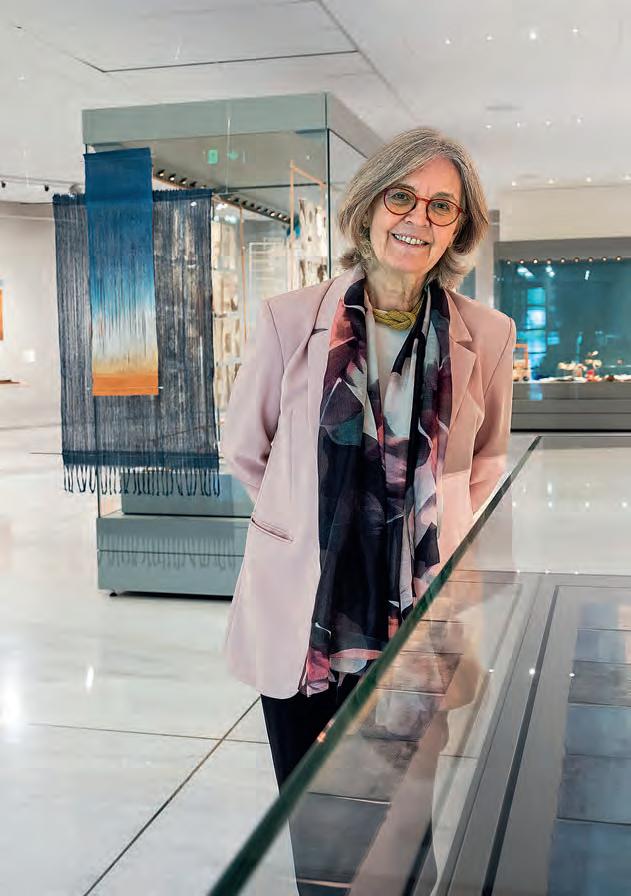
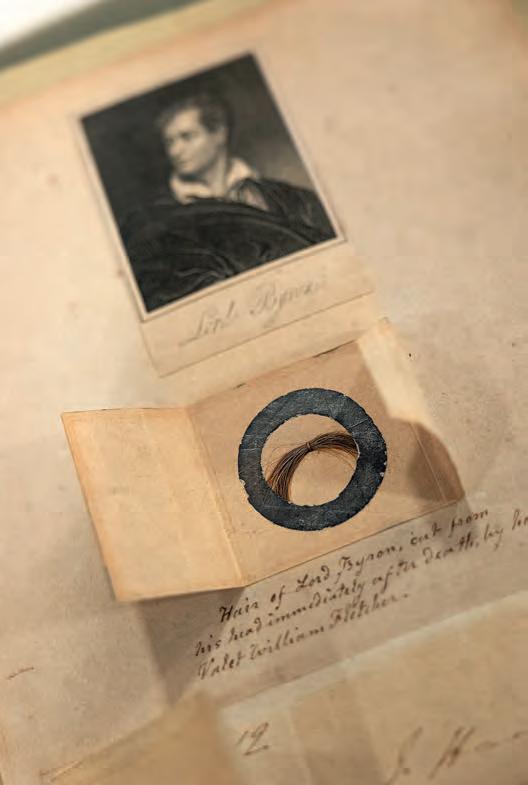
1. Maria Georgopoulou, Director of the Gennadius Library. 2. A lock of Lord Byron’s hair, preserved in an album dedicated to the poet. 3. Sofia Pitouli, a doctoral student in Byzantine art.
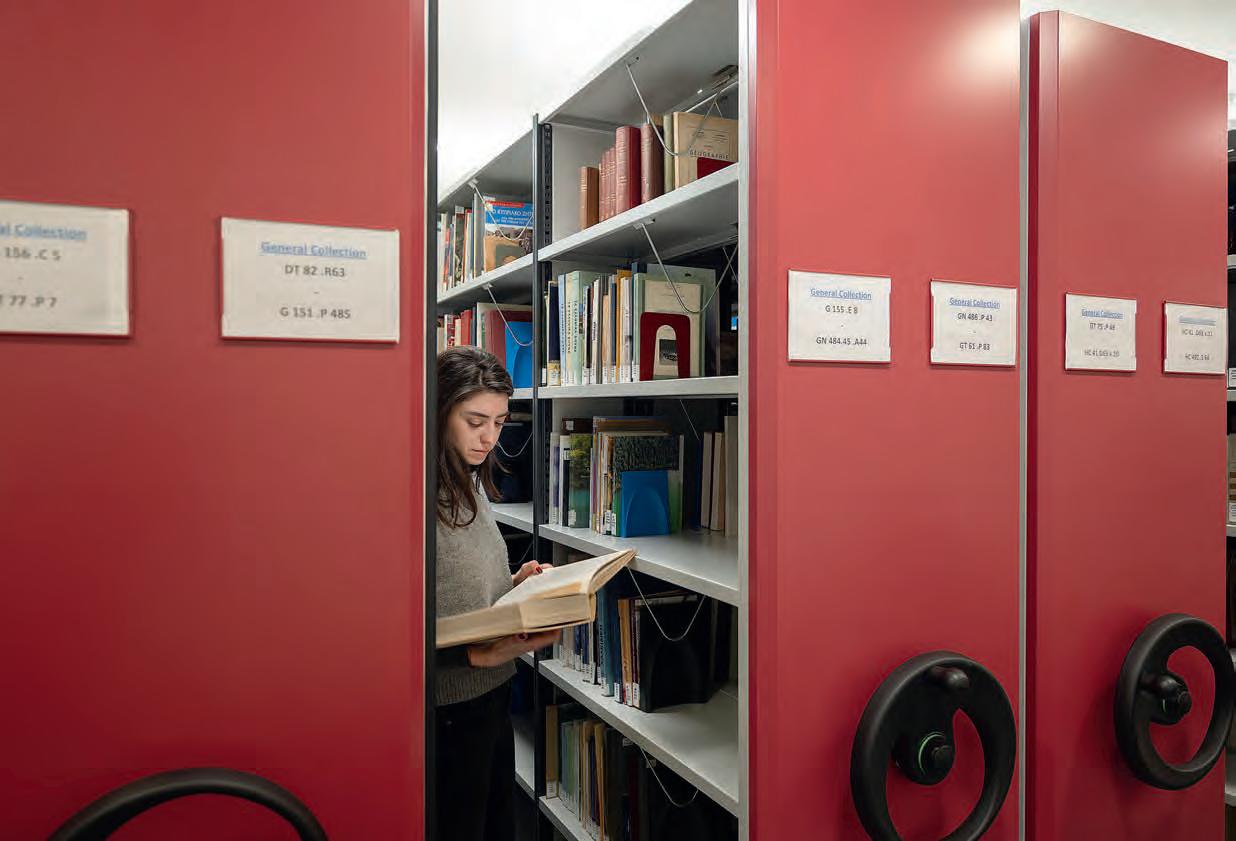
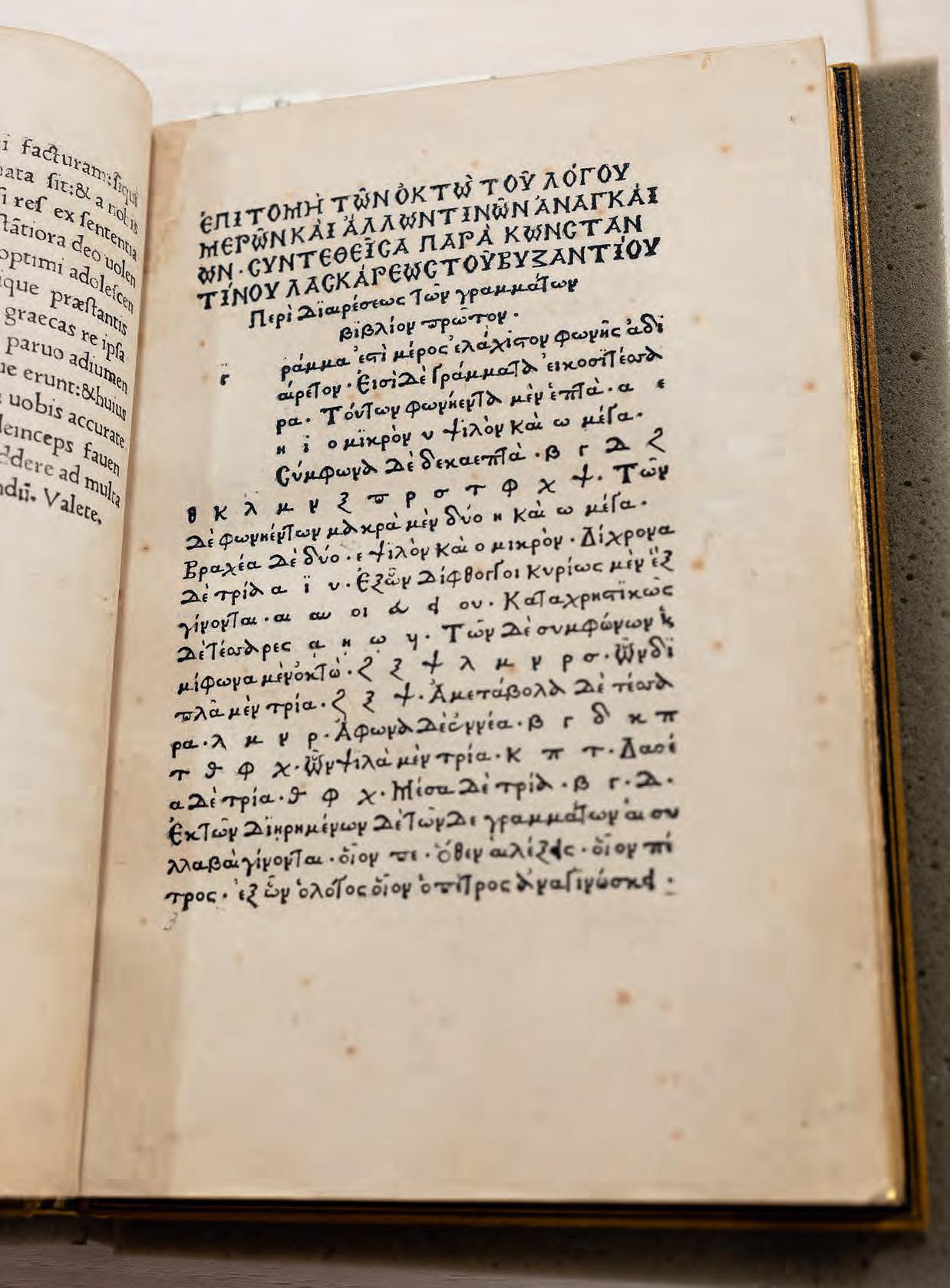
in total. It was a monumental task, and we’re all very proud of it,” says Solomonidi. The books were divided into rare and non-rare categories. “The rare books were moved to special closed-access stacks. Visitors may consult them by request, through the library staff. The non-rare books – 100,000 volumes –were reclassified according to the Library of Congress system in order to make them compatible with the American academic community.”
The Gennadius remains a non-lending library, which makes its librarians especially valuable. And since part of the collection has now been digitized, researchers from around the world often turn to them remotely for help with their work.
Ali Pasha’s Letters
The archives, housed alongside the rare books, belong to the American School of Classical Studies at Athens. “Our department was created in 1994 to manage the growing number of archival collections,” explains Dr Natalia Vogeikoff-Brogan, director of the archives.
“Here we hold the personal papers of American archaeologists connected with the School, whether through excavation work or as members. We also hold the personal archives of prominent Greeks that have been donated to the Gennadius, as well as the archive of Heinrich Schliemann, the German archaeologist who spent the final years of his life in Athens and is buried in the city’s First Cemetery.”
In a sense, the Gennadius itself –which belongs to the American School – was born from an archive. “When the School decided to accept Joannes Gennadius’ donation, it effectively made a major change to its mission, which until then had been devoted exclusively to the study of antiquity.”
In the same spirit, the archives of George Seferis and Odysseas Elytis, both Nobel Prize-winning Greek poets, were accepted, along with those of many other leading figures of modern
Greek letters and intellectual life. Most archives are acquired through private agreements. “An archive may contain much more than books,” Dr VogeikoffBrogan explains, as she shows me a painting by Panayiotis Tetsis depicting Seferis.
The handwritten letters received by Ali Pasha soon draw my attention. “The Ali Pasha archive consists essentially of the correspondence he received, since it was not possible to preserve copies of his own letters,” she says. “It was bequeathed to the Gennadius by Damianos Kyriazis in 1953.”
The collection is a priceless trove of some 1,500 private and public documents, studied, transcribed and annotated by Vasilis Panagiotopoulos in five volumes. “An associate of Lord Elgin, the painter Giovanni Battista Lusieri, had gone to Ioannina to paint the city. Shortly before the work was completed, however, Ali Pasha is said to have objected. In a letter from 1809, the British officer and traveler William Martin Leake reassured him about the character of the artist – and of the British mission more broadly.”
Such valuable documents, however, are not there simply to be admired.
“We are not a museum. Someone cannot simply come out of curiosity to see, say, Elytis’ handwriting with their
own eyes,” Dr Vogeikoff-Brogan clarifies. “They must have a specific research purpose and make an appointment.” Due to limited space and staff, up to four visiting researchers are admitted per day.
“We are interested in being kept informed about the progress of their work. We are an institution that produces knowledge; we want to know whether we are contributing to scholarly articles or books,” she adds.
As the library’s centennial approaches, preparations for the anniversary are in full swing. In April, an exhibition will open featuring 100 exceptional items from its rich collections: books, manuscripts, works of art, maps, costumes, photographs and more. Among them will be the first edition of Aristotle printed by Aldus Manutius in Venice between 1495 and 1498, as well as watercolors by the English artist Edward Lear from the mid-19th century.
Later that month, the international conference “Libraries and Collectors” is scheduled to take place. A student competition is also already underway. “We are reaching out to middle-school and high-school students in Greece and the Greek diaspora, asking them to speak to us – through any medium they choose – about place, using digitized material from the Gennadius,” the director explains.
“FOR US, 100 YEARS IS NOT SIMPLY AN ANNIVERSARY. IT IS A CHALLENGE. WE MUST DECIDE HOW WE MOVE FORWARD FROM HERE.”
dr maria georgopoulou
“For us, 100 years is not simply an anniversary. It’s a challenge. We must decide how we move forward from here,” she says. “How do we pay due respect to the treasure we hold, and how do we present it in the best possible way to the next generations?”
The people of the Gennadius are working along three main lines. “We are seeking resources to acquire new rare material, to expand the fellowship program and to become even more outward-looking, through events and the further digitization of our collections,” Dr Georgopoulou explains.•
HILAL, ALEXANDRA and Dimitris, three of this year’s Gennadius Library fellows, share an office on the second floor. Their fields differ – history, architecture and folk song – but all three have come here to work with the library’s extraordinary holdings, which span the period from late antiquity to the present day.
“We receive around 100 applications each year,” says Dr Maria Georgopoulou. “From these, we now select six researchers, evaluating, among other things, how closely their work relates to the material held here.” The fellows are at the start of their academic careers: some are completing their dissertations; others have begun postdoctoral work. During their nine-month stay, each pursues a distinct research project.
Dimitris Prokos, a scholar of Modern Greek literature at the National and Kapodistrian University of Athens, is writing his doctoral dissertation on Greek folk songs. At the Gennadius, he is studying the archives of James Notopoulos, a Greek American scholar and former Gennadius fellow in the 1952-53 academic year.
“My interest in Notopoulos began during a short stay at Harvard, where his collection of recordings is held,” says the 33-year-old researcher. “Although Notopoulos was a Homerist, he worked extensively on folk song and was the first to record it in the field.
Before him, recordings had been made indoors.” Notopoulos left behind some 900 recordings. Prokos is now studying Notopoulos’ notes, including the setbacks that marked his fieldwork –beginning with the customs authorities’ confiscation of his equipment, which delayed his efforts by more than two months. The fellowship, Prokos says, gives him the financial independence to focus fully on his research. “In the humanities, especially in Greece, full fellowships are extremely rare.”
Hilal Cemile Tümer, a Turkish doctoral student at the University of California, Berkeley, is studying a little-known chapter of the Greek Revolution of 1821: the displacement of Greek-speaking Muslims from the Peloponnese and the rest of southern Greece, who left by ship for Asia Minor and rebuilt their lives there.
“I gather information from the writings of European travelers, reports by officials and ambassadors, and the memoirs of Greek revolutionaries themselves,” she says. Her research languages include Ottoman Turkish, modern Turkish, English, French and Greek.
As Dr Georgopoulou notes, interest among researchers from Turkey is strong. “The philosophy of Byzantine and Ottoman studies has changed. In my time, everyone focused on Constantinople. Now, increasingly, scholars are studying other corners of the former empires.”
The fellows live at Loring Hall, part of the same complex as the Gennadius Library and the American School of Classical Studies at Athens. The impressive neoclassical building hardly resembles a typical student residence: fellows are provided with their own rooms, daily meals and the practical support needed to focus on their research. “The aim is to free them from everyday concerns,” Dr Georgopoulou says. This year, for the first time, the program also includes a fellowship for an associate professor, who conducts his
or her own research while mentoring the younger scholars. The role is both academic and practical: helping a small group of researchers working on very different subjects develop a sense of community, while also guiding them on matters such as job applications and submitting articles to scholarly journals.
The fellowships are privately funded by supporters of the Gennadius, including the library’s trustees. “That’s why each fellowship bears a name,” Dr Georgopoulou says.
Asked whether changes in research and higher education across the Atlantic affect the Gennadius, she is measured. “We receive a negligible amount of federal funding, so nothing changes radically in terms of our own operation. But the broader uncertainty and the interruption of funding for research programs at universities in the United States affect us indirectly.” Some international students in the US, she notes, have declined fellowships abroad for fear that they might not be able to return afterward. As a result, the Gennadius may well see more fellows from European universities in the near future.•

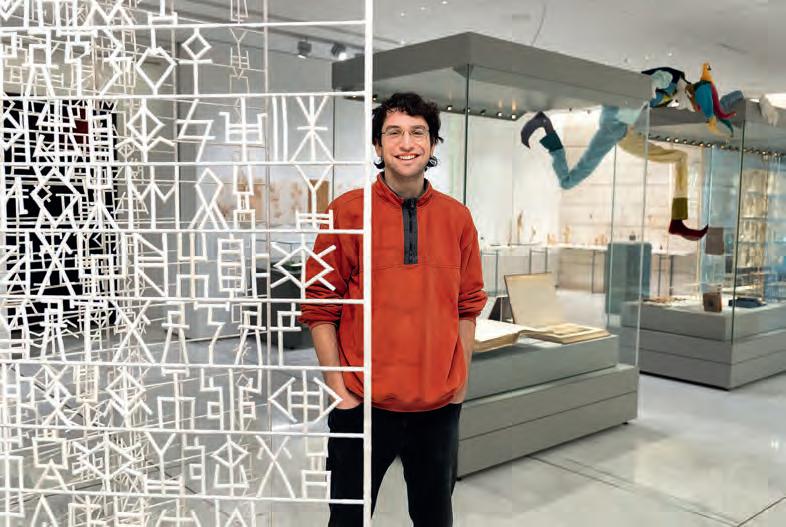
“IN THE HUMANITIES, ESPECIALLY IN GREECE, FULL FELLOWSHIPS ARE EXTREMELY RARE.”
dimitris prokos, scholar of modern greek literature at the national and kapodistrian university of athens
Best remembered for his music hall on the Acropolis’ South Slope, Herodes Atticus was an important local benefactor, renowned orator, cosmopolitan Roman citizen and friend of emperors who was nonetheless ultimately accused of murder and tyranny.
BY JOHN LEONARD
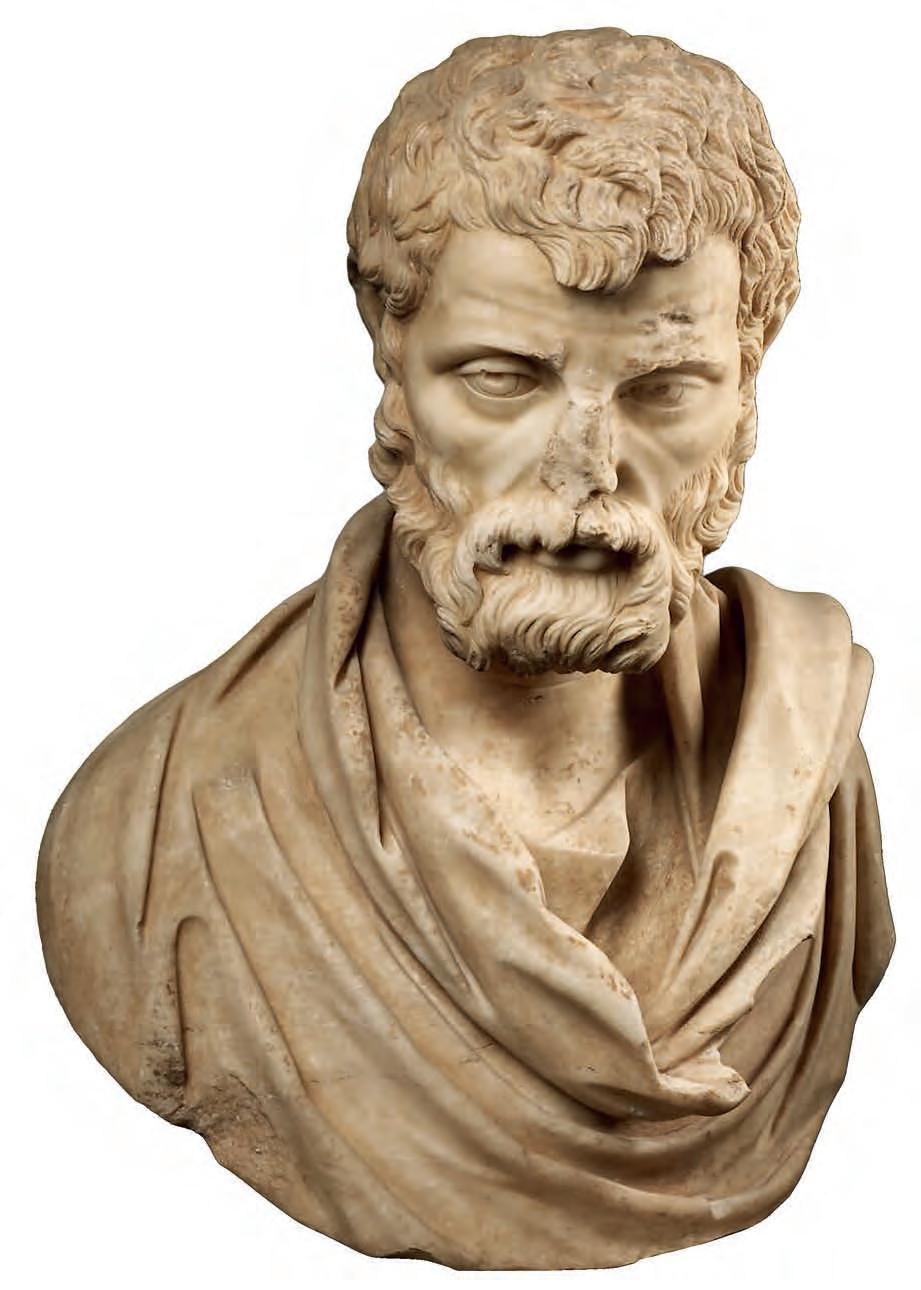
FFEW FIGURES IN ANCIENT Athens were such fascinating, complex personalities, or today as little-considered and misunderstood, as the wealthy 2nd-century AD benefactor who constructed the still-thriving music venue that bears his name, the Odeon of Herodes Atticus. Active in an era when Greece was no longer a dominant Mediterranean commercial power but merely a province of the Roman empire – itself strained by enormous military spending by emperors Domitian and Trajan – Herodes Atticus and his forebears, the Claudii of Marathon, were the “Rockefellers” of their time. Their vast wealth, sometimes fatefully begrudged among Rome’s elite, was generated not only from the agricultural production of the family estate in the hills around the illustrious Marathon battlefield but also from moneylending.
Born at Marathon in AD 101, Herodes Atticus was later called a “Son of Hellas” on an inscribed statue base at Eleusis. He was, according to historian Harry Rutledge, “a youth of famous family and great expectations” who went on to become “antiquity’s greatest private philanthropist.” He steadily rose on Rome’s public-service career ladder, with his posts, from 122 to 143, ranging from a lowly market official –which required him to oversee mercantile activities, regulate prices and prevent cheating in the agoras – to archon (chief magistrate) in Athens; financial officer; protector of the people’s interests/rights; chief judge/administrator;
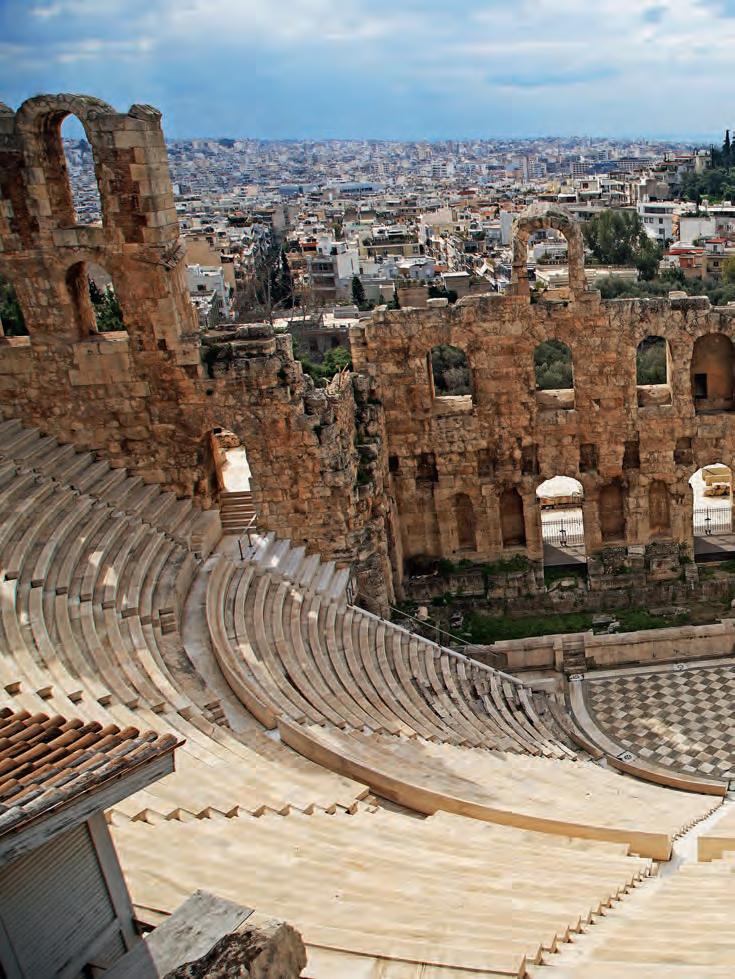
THE CROWN JEWEL WAS THE ODEON OF HERODES ATTICUS (AD 161), CONTRUCTED OF BRILLIANT PENTELIC MARBLE AND ROOFED WITH CEDAR WOOD.
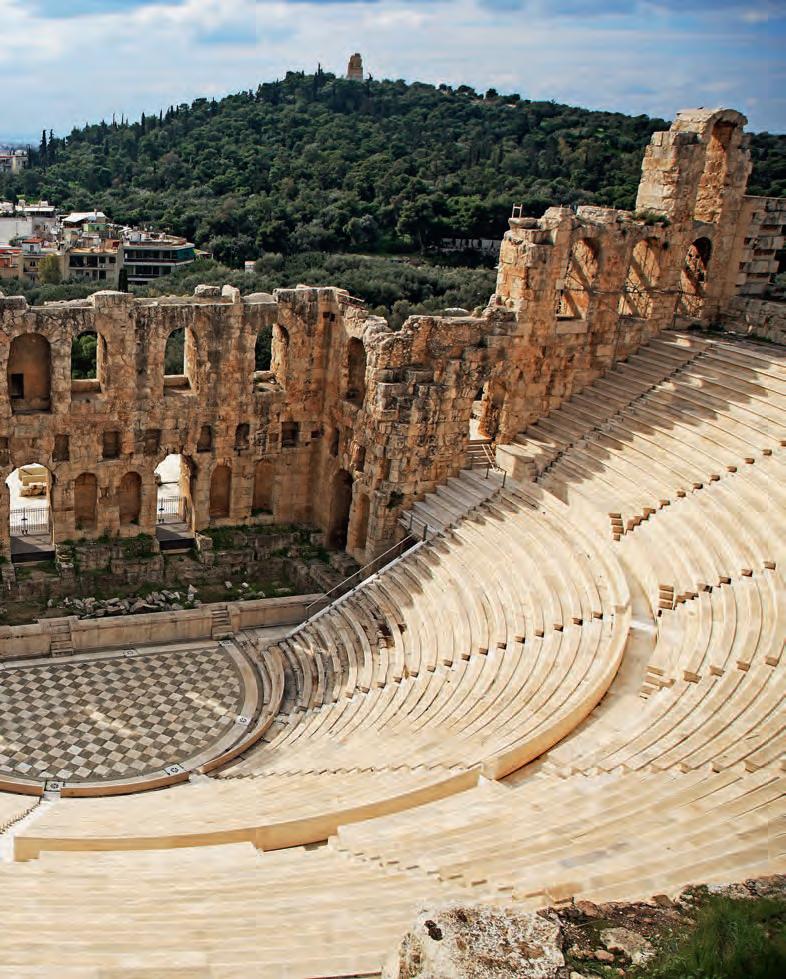
corrector (regulator, auditor, judicial overseer) of the Free Cities of Asia; and, ultimately, consul (head of state, military commander).
Herodes Atticus’ great-great-greatgrandfather, Herodes of Marathon, and great-great-grandfather, Eucles, had also been archons in Athens. It was they who had cultivated ties with Julius Caesar and Augustus to secure funding
for the new Roman Agora in Athens. Atticus, Herodes’ father, had also held high positions and proved a generous benefactor, not only in Athens but also Corinth, Sparta and Gytheio. He and his wife, Vibullia Alcia Agrippina, were both honored with front-row “thrones” in the Theater of Dionysus. Under Trajan, Atticus had become a Roman senator and an alternate consul,
with riches so legendary that the satirist Juvenal wrote “Atticus, the wealthy, dines well, he’s [considered] the height of elegance.” When young Herodes, as corrector in Asia, miscalculated the cost of building an aqueduct for the city of Alexandria Troas, allowing the project’s expenses to double, his father bailed him out, paying off the difference (4 million denarii) and preserving his reputation and career.
Herodes Atticus thus grew up an indulged, protected son of a senator, educated into his mid-30s in Athens and Rome, where he learned Latin and Italian ways in the home of future-emperor Marcus Aurelius’ grandfather. Herodes developed a passion for and great skill in oratory, becoming the top figure in the Second Sophistic movement, as later recounted by Philostratus. Unlike Classical sophists, who spoke to educate and persuade, the sophists of the 2nd century AD were concerned with demonstrating impressive oratorical ability and amusing audiences through their knowledge of history, literature and the art of rhetoric. With all Herodes’ education and “refined … yet eclectic literary taste,” Rutledge comments, it is “small wonder that in his late years [he] was the savant of the Mediterranean world, and that students came to him as to a shrine.” Spectators at the Olympic games were said to have hailed Herodes as “the equal of Demosthenes!”
Life was not always smooth sailing for the Claudii of Marathon, as previous generations, and eventually Herodes himself, faced repeated calamities, public accusations and opposing political winds. Hipparchus, Herodes’ grandfather, having drawn Domitian’s attention through his inordinate wealth and perhaps unscrupulous official practices or political ambitions, had all his personal property confiscated. He was accused of seeking to become a tyrant in Athens, much as Herodes Atticus
would be later, and was either executed or exiled, leaving his family ostensibly destitute.
Miraculously, however, soon after Nerva became emperor, Atticus suddenly “discovered” an immense treasure buried under the floor of a Claudii-owned house near the Theater of Dionysus. Clearly, his wily old father had taken steps to circumvent Domitian’s enforcers and secure the family’s survival. With this windfall, Atticus established himself as a great, beloved patron of the Athenian people. Philostratus writes: “He would often sacrifice a hundred oxen to the goddess [Athena] in a single day, and entertain at the sacrificial feast the whole population of Athens … And whenever the festival of Dionysus came round … he would furnish wine to drink for citizens and strangers alike, as they lay in the Kerameikos on couches of ivy leaves.” In the end, he also left an annual gift to every adult male citizen, which amounted to about 100 days’ wages.
After his father Atticus died in 137, Herodes Atticus’ esteem among Athens’ rank and file took a lasting hit. Although his inheritance permitted him to become a great benefactor in his own right, his extravagant tastes, perceived arrogance and ill-treatment of the Athenian people, including his own family members, compounded by his ambitious building schemes and political embroilments, would result in decades of public resentment and outright enmity among some segments of the population.
Facing a total annual payout of about 1.2 million denarii from Atticus’ bequest to the Athenians, Herodes stingily reneged on his father’s will, tried to strike a better, lump-sum bargain, and even stopped paying regular tribal endowments his father had provided the state, thus triggering the destabilization and sudden necessary reorganization of the Athenian financial
system. Moreover, to collect their gift, many people had first to pay off existing debts owed to the Claudii family. Public anger seethed and Herodes was labeled a cheater.
The AD 120s and 130s were a time of major infrastructural improvement in Athens, during which the Hellenophile Hadrian visited the city and left his mark by completing an all-important aqueduct, the massive temple of Olympian Zeus, an adjacent suburb (Hadrianopolis) with its ceremonial arched entranceway, and a new agora/library. He also founded the Panhellenion, a federation of Greek cities intended to provide cultural unity within the Romans’ Greek East.
Herodes Atticus admired these achievements and apparently looked to Hadrian as a role model, wishing also to be influential and remembered. Nevertheless, by 140 he’d become such a contentious figure that he chose to leave a tense Athenian atmosphere and relocate to Rome. There, he taught rhetoric to future emperors Marcus Aurelius and Lucius Verus, became a senator, and married an Italian noblewoman, Appia Annia Regilla. He only returned full-time to Athens in the 150s. He drew a following, many of them “freedmen” (skilled artisans, bankers, traders, entrepreneurs and domestic staff) like those who had backed his father, but he remained a controversial public personality.
With Regilla at his side, Herodes Atticus and his wife became a power couple, often well-received at games and other public events. Since his consulship in 143, Herodes had already begun making notable benefactions in Italy and Greece. During the last two decades prior to his death about 179, he renovated the odeon at Corinth, constructed luxurious baths at Isthmia and a nymphaeum in the forecourt of the Demeter sanctuary at Eleusis, renovated the stadium at Delphi, installed bathing pools at the hot springs of Thermopylae, and endowed other cities in Evia, the Peloponnese and Viotia with various gifts. Together, Herodes built the aqueduct at Olympia and Regilla its magnificent nymphaeum, decorated with juxtaposed sculptures of the Roman imperial and Herodes’ own families.
HERODES
AND HIS WIFE BECAME A POWER COUPLE, OFTEN WELL-RECEIVED AT GAMES.
In Athens, Herodes placed a statue of Marcus Aurelius on the Acropolis, erected other statues of prominent Romans and Athenians around the city and supplied new white garments for the Athenian epheboi – by Roman times essentially an elite college for the sons of the wealthy. As a presiding official of the Panathenaia festival, he also aggrandized the parade. Most prominently, Herodes rebuilt
the centuries-old Panathenaic stadium (140s) using white Pentelic marble. The traveler Pausanias records, “the greater part of the Pentelic quarry was exhausted in its construction.” On the adjacent Ardettos Hill, Herodes built a temple of Fortuna/Tyche, with Regilla as its head priestess.
His crown jewel was the Odeon of Herodes Atticus (161), also constructed of brilliant Pentelic marble and roofed with cedar wood, “though this wood [from Lebanon] is considered costly even for making statues,” as Philostratus said. Centrally located on the Acropolis’ South Slope, the music hall held about 5,000 people. Since its restoration in the 1950s, the Odeon has been a premier venue for top musicians and other performing artists from Greece and around the world. In June 2026, it will close for two years for structural restoration. With all his benefactions, Herodes saw himself – or wished to be regarded – as a Hadrian-like figure, perhaps even a new Theseus, the Athenians’ legendary founding hero and mythical king. Although praised elsewhere, he was often criticized in Athens, where his successes played out against a persistent backdrop of mixed public sentiment.
Tragedy struck repeatedly for Herodes in the 160s and early 170s, when, having already lost an infant son 20 years before, he suffered the deaths of three more children and his beloved pupil Polydeukion. Regilla died in 160 (while eight months pregnant), reportedly after a brutal attack by Herodes’ freedman Alcimedon. Publicly accused of murder by Regilla’s brother, Herodes was acquitted in a trial in Rome. The suspicion has been advanced that his Odeon, dedicated to Regilla, was a gift meant to assuage guilt and placate the gods, but his grief was overwhelming and apparently sincere. Philostratus argues Herodes “never would have dedicated to her memory so fine a theater, nor would he have postponed for her sake the casting of lots for his second
consulship, if he had not been innocent of the charge; nor again would he have made an offering of her apparel at the Temple of Eleusis …, for this was more likely to turn the goddesses into avengers of the murder than to win their pardon.” Privately, Herodes turned his villa in eastern Arcadia into a darkly decorated shrine-mausoleum with statues commemorating all those dear to him now gone.
in a city divided
The political scene in Athens during most of the 2nd century AD was dominated by four families, especially – by the 170s – the Claudii of Marathon and Claudii of Melite. Power struggles, daily bickering and more serious attacks were not unusual. As Herodes was a better sophist than politician, he
appears time and again to have misread or underestimated how Athenians would react to his actions, and his political opponents welcomed chances to impugn him. Within this rancorous political climate, his much-resented interference with his father’s will, the death of his popular wife, and his highly visible, often self-promotional benefactions all brought controversy, rumor and accusation.
HERODES HAD LONG STOOD AT A CROSSROADS ... CAUGHT BETWEEN DESIRES FOR FAME, FORTUNE, POLITICAL INFLUENCE AND PHILANTHROPIC IMMORTALITY.
In 174, three of Herodes’ influential political opponents joined forces with two visiting imperial officials to formally charge him with tyranny. Popular ill-sentiment may have risen from Herodes trying to insert his freedmen into Athenian institutions, including the Areopagus court. His lavish building projects, however, including an expressed interest in completing the Corinth Canal previously attempted by Nero, had likely appeared too emperor-like and continued to fuel discontent. Herodes defended himself eloquently before Emperor Marcus Aurelius, arguing his opponents wished to turn the Athenian people against him. The emperor recognized the political nature of the charges, letting Herodes off with only a light punishment for his freedmen. Herodes remained for several months in self-imposed exile, allowing the mood in Athens to cool, then returned to the city, where he was greeted by his supporters. Marcus Aurelius wrote a letter to the Athenians explaining his decision, remarking on the city’s factious politics and urging them to recognize all the good Herodes had done. This imperial communication was inscribed on marble steles, fragments of which have been found in the Athenian and Roman Agoras. Herodes himself had long stood at a crossroads of forces in Athens, caught between desires for fame, fortune, political influence and philanthropic immortality. Today, as scholar Estelle Strazdins suggests, he remains “one of the most charismatic and repellent figures of second-century Greece.”•
HERODES OWNED THREE large country villas at Marathon, Kifissia and Eva/Loukou on the western side of the Argolic Gulf. The Peloponnesian estate was a luxurious maritime villa, rising on three terraces with a large central atrium flanked by a nymphaeum and statuary. Portrayed were Herodes Atticus himself, family members, his friends, companions and Roman emperors, including Hadrian, Antoninus Pius, and Marcus Aurelius. Among the sculpted images were also Regilla; Elpiniki, Herodes’ daughter; and Polydeukion. Later, when the villa was converted by its mourning owner into a shrine-mausoleum; full-length reclining figures on couches representing deceased members of Herodes’ family replaced the original sculptures. The theme of death and rebirth was emphasized by an adjacent temple containing statues of river gods and Osiris (syncretized with Dionysus), who had also died and been resurrected.
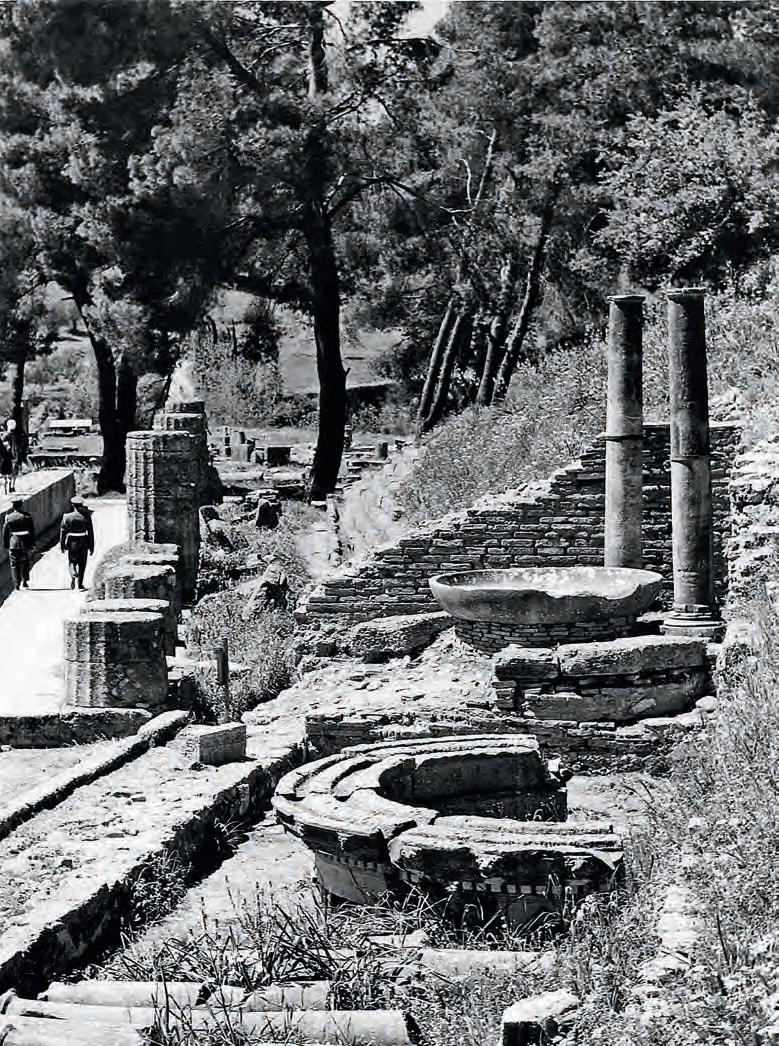
A particular highlight of Herodes’ remarkable sculpture collection, reports archaeologist George Spyropoulos, were six sensuous Laconian Maidens, called The Dancing Caryatids, an original work of the 5th-century BC sculptor Kallimachos. Their spirited movement, seen in the most complete of the finely carved figures, sends their clinging, transparent drapery swirling around them and exposes through a slit a supple thigh naked to the waist. Opposite this famous statue group stood six more caryatids echoing their Classical counterparts on the Athenian Acropolis as they supported the roof of the atrium’s east colonnade overlooking the river below.
The melding of Hellenistic and Roman architectural styles in Herodes’ villa was a visual message that he was a citizen of two worlds: the
Greek and Roman. Egyptianizing elements –including not only the temple, but also statuary, mosaics and a Nilotic water feature in the gardens – further evoked the Greek East and reflected Herodes’ desire to emulate Hadrian and his villa at Tivoli. Herodes likewise built a sanctuary of the Egyptian Gods at Marathon. Excavated from 1979 to 2001, the Eva/Loukou villa is currently undergoing works to preserve, protect and publicly present its important ruins.
Statuary and other finds from Herodes Atticus’ villa at Eva/Loukou can be seen at the Archaeological Museum of Astros, the National Archaeological Museum in Athens, the Archaeological Museum of Tripoli, and at the 12th-century Monastery of Loukou adjacent to the archaeological site.
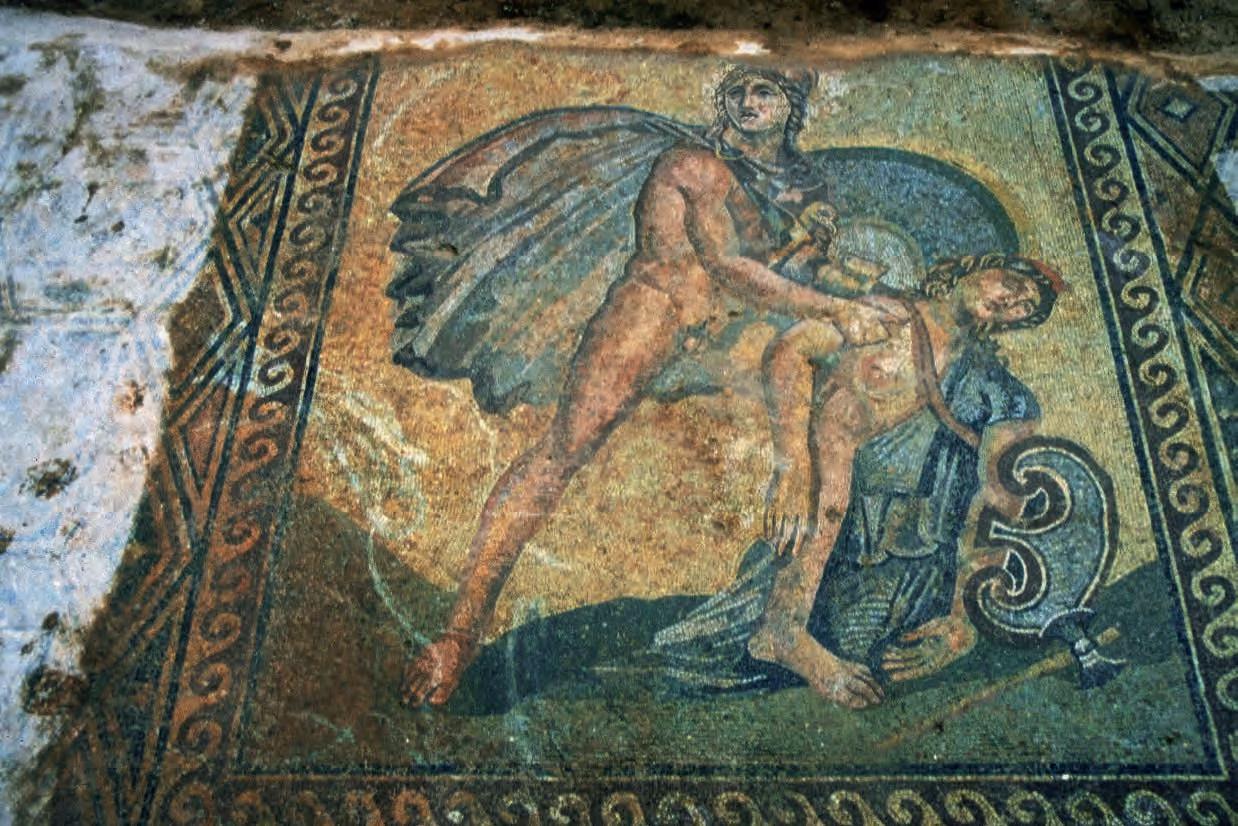
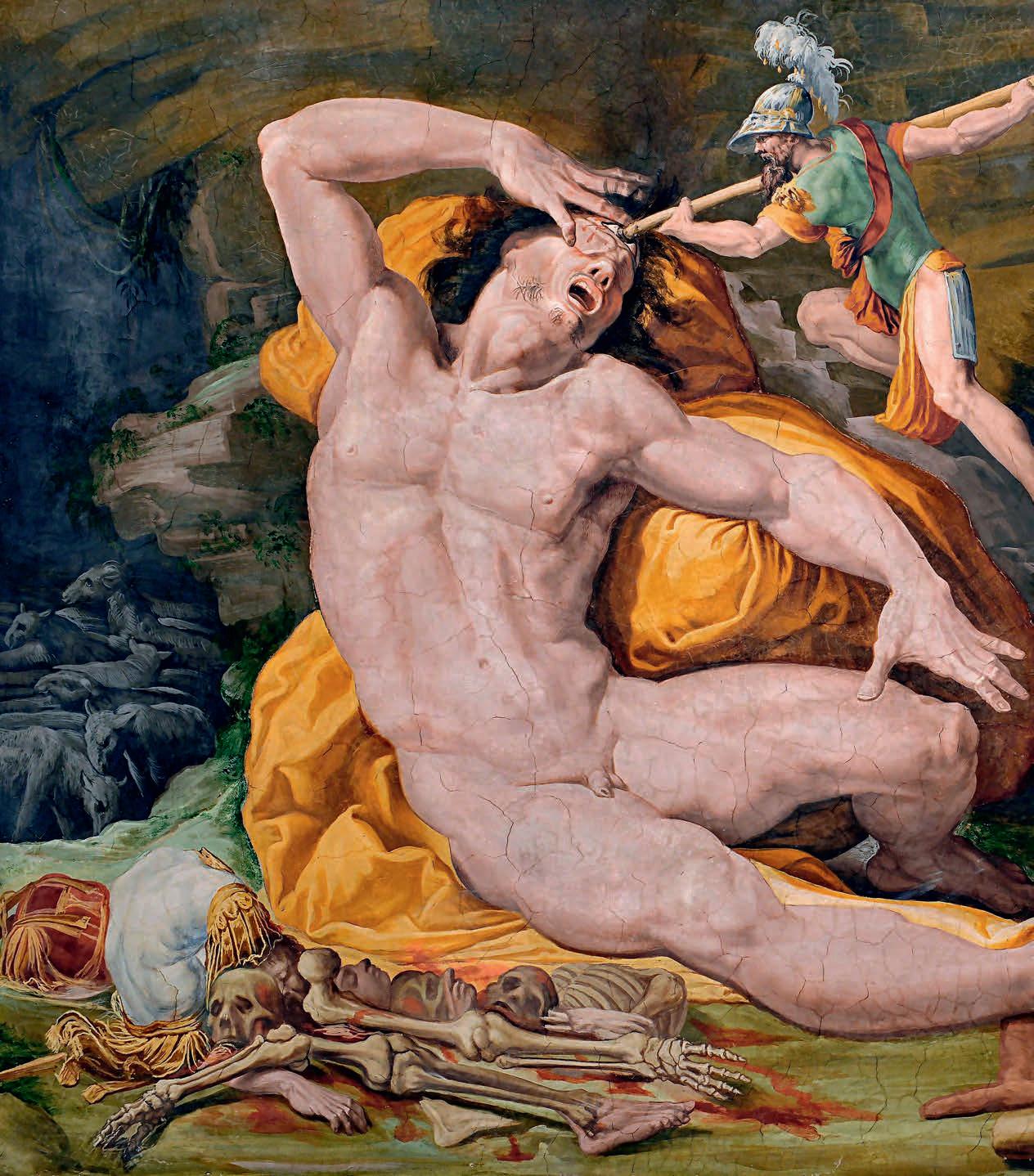
The mastermind behind the Trojan Horse and Athena’s favorite mortal, Odysseus was renowned for his cunning and resourcefulness. Though not an Athenian, he embodied many of the qualities later Athenians admired in themselves.
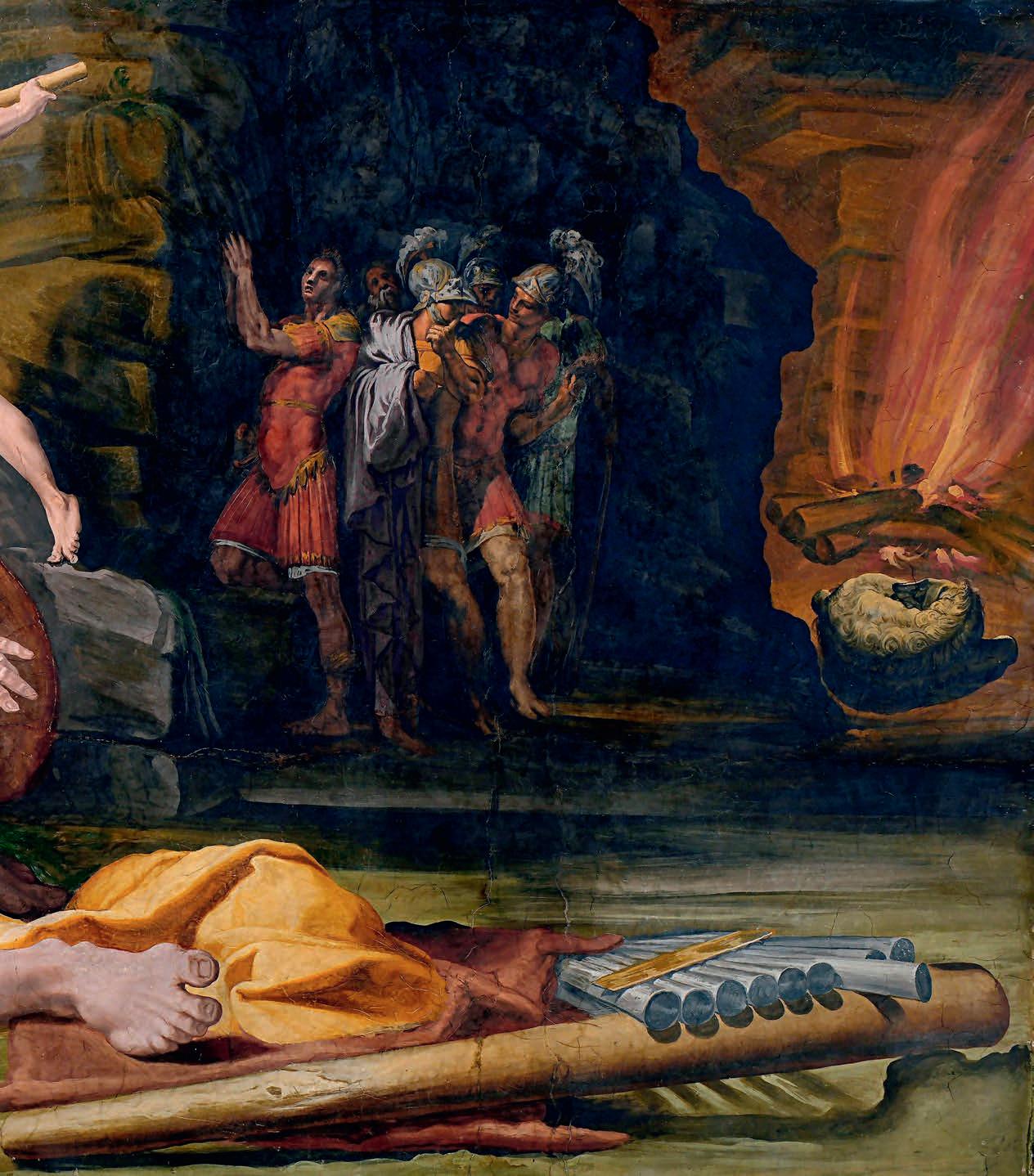
BY DUNCAN HOWITT-MARSHALL
“Athena Appearing to Odysseus to Reveal the Island of Ithaca,” by Giuseppe Bottani (1717-1784). Athena welcomes home the mortal whose gifts for disguise and strategy reflect her own.
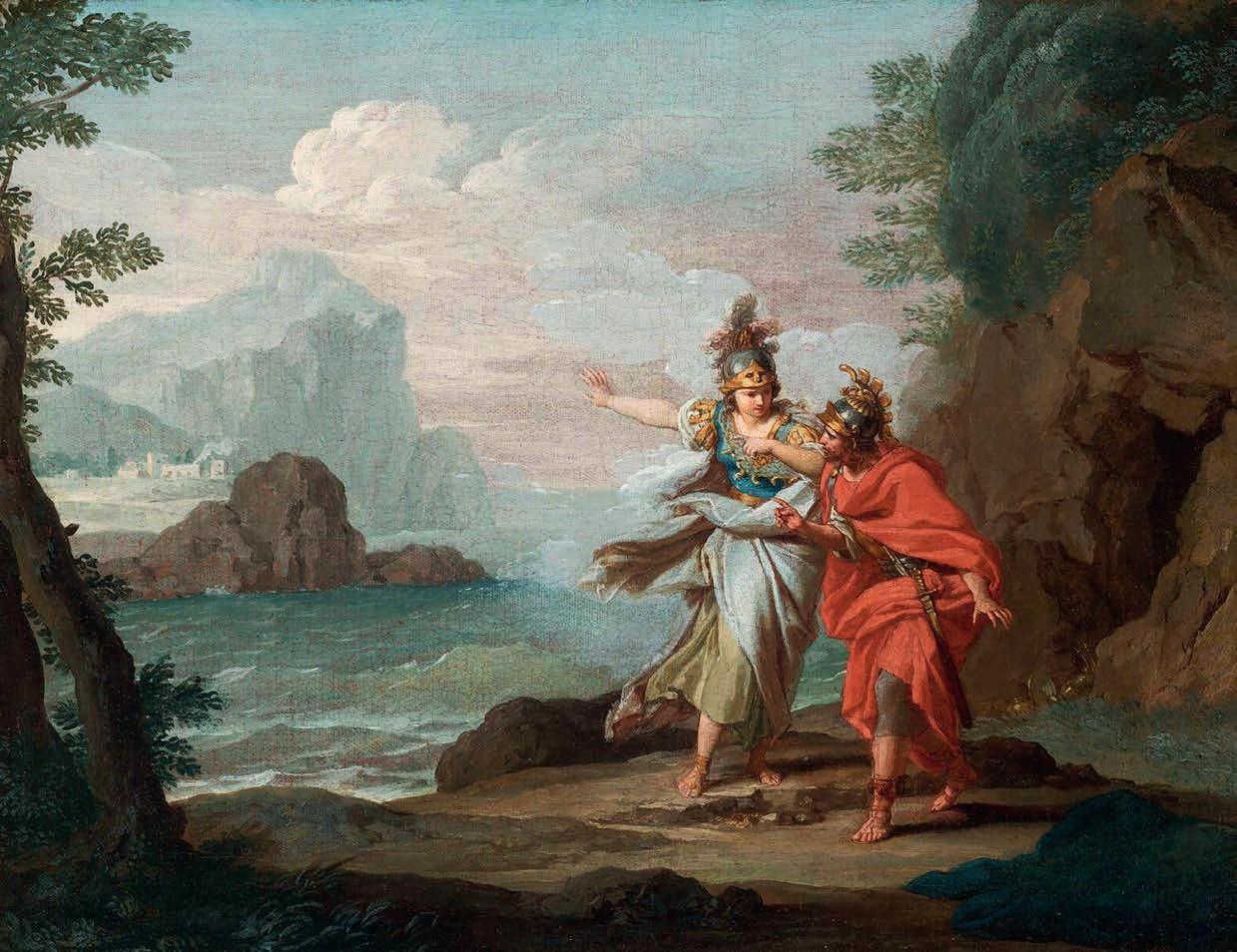
Shrouded in mist, the stranger appeared on the rocky shore in the guise of a young shepherd, “as refined as a prince’s son,” watching intently as a gaunt, weather-beaten man struggled to his feet. Behind the wretched figure lay a calm sea that belied the twenty years of war, shipwrecks, monsters, temptations, storms and divine grudges he had surmounted to return here.
LLONG-HAIRED , salt-stained, and haggard, Odysseus gazed across the fogbound coastline before him and failed to recognize it. The Phaeacians, he thought, must have tricked him and abandoned him in some foreign land. Surely this could not be Ithaca … Suspicious as ever, he turned to the shepherd and demanded to know where he was. The young stranger assured him that this was indeed Ithaca. No tricks. No deception.
Overjoyed, Odysseus immediately began lying.
He launched into an elaborate tale about being a fugitive from Crete, a man fleeing justice after killing someone who had tried to rob him. The Phaeacians, he claimed, had taken pity on him and brought him here while he slept.
Of course, the story was complete fiction, and the shepherd knew it.
Disguised in mortal form, “brighteyed” Athena listened patiently as Odysseus spun his absurd invention. The goddess smiled. At last, her favorite mortal had returned home, and he had not changed at all. “Resolute man,” she told him, revealing her true identity, “even in your own country you will always be full of guile and the lying tales you love so much.”
This episode, recounted in Book XIII of Homer’s Odyssey, is one of the most revealing encounters in the nearly 3,000-year-old epic. Athena does not admire Odysseus despite his cunning
but because of it. The goddess of wisdom and strategy recognizes something of herself in the wandering king of Ithaca. Throughout the poem, her interventions are rarely dramatic. Instead, she helps him think more clearly, plan more carefully, and survive against daunting odds.
That divine-mortal relationship lies at the very heart of the Odyssey. It also offers an intriguing – and perhaps unexpected – way to think about the city of Athens and how it came to be the foremost power in the Classical Greek world. Although Odysseus belonged to a small island kingdom in the Ionian Sea, he embodied many of the qualities later Athenians admired in themselves: wisdom, adaptability, diplomacy, creativity, and strategic insight.
As Christopher Nolan’s much-anticipated adaptation of the Odyssey prepares to bring Homer back to cinema screens this summer, it is worth asking why Odysseus continues to captivate us nearly three millennia later –and what his relationship with Athena might reveal about the ancient city that bore her name.
Without exception, the great heroes of Greek mythology are larger than life characters. “Swift-footed” Achilles, the undoubted star of the “Iliad,” is nearly invincible in battle and consumed by the pursuit of glory. He belongs firmly to the realm of legend, a warrior of almost superhuman proportions. Odysseus, on the other hand, belongs to the realm of hard knocks. Homer presents a hero defined not by a single virtue but by his ability to become many things at once – “polytropos,” the Greek word that opens the Odyssey, often translated as “many-sided” or “of many turns.” He is a warrior, a sailor, a storyteller, a trickster, a diplomat and a king. He gets lost. He makes mistakes. He lies through his teeth. He changes plans, adapts to setbacks, and somehow
muddles through disasters that would destroy lesser men. In many ways, his greatest strengths are inseparable from his greatest flaws.
Nowhere is this clearer than in his famous encounter with the Cyclops Polyphemus in Book IX of the Odyssey. Trapped inside the giant’s cave with no obvious means of escape, Odysseus devises one of the most ingenious schemes in Greek myth. He gets the Cyclops drunk on strong wine, tells him that his name is “Nobody,” blinds him with a sharpened olive-wood stake, and escapes by clinging to the undersides of the monster’s sheep as they leave the cave at dawn. It is a masterclass in intellect triumphing over brute strength, and a reminder that Odysseus’ greatest weapon is neither spear nor sword, but his ability to think several moves ahead.
And then he proceeds to ruin everything.
As his ship pulls away from the shore, Odysseus cannot resist one final flourish. Safe at last, he taunts the blinded Cyclops and reveals his true name. In a moment of pure arrogance, his outsized ego gets the better of him. Polyphemus raises his hands to the sky and calls upon his divine father, Poseidon, to avenge him.
The sea god answers.
The long years of wandering that follow – the storms, shipwrecks and endless delays on the journey home – can all be traced, at least in part, to Odysseus’ inability to keep silent when it mattered most. Homer presents him not as a flawless hero but as a complicated one, capable of brilliance and folly in equal measure. That ambiguity fascinated ancient audiences – and not everyone admired him.
In Sophocles’ tragedy Philoctetes, first performed at the City Dionysia festival in Athens in 409 BC, when the city was locked in a decades-long war with Sparta, Odysseus appears calculating and manipulative rather than heroic. Determined to secure victory in the Trojan War, he persuades the young Neoptolemus (“New Warrior”),
Odysseus, disguised as a beggar, approaches Penelope. Melian terracotta plaque, c. 460-450 BC. Metropolitan Museum of Art, New York.
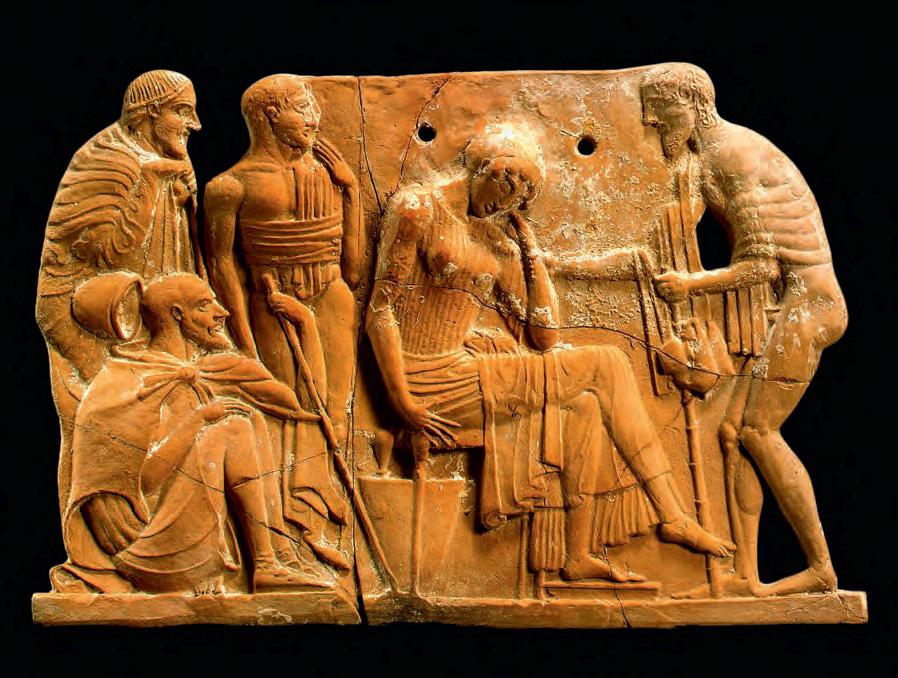
the red-haired son of Achilles, to help deceive the wounded archer Philoctetes, who had been abandoned on the island of Lemnos, into rejoining the Greek army. The strategy succeeds, but it leaves an uncomfortable moral residue in the air. Sophocles invites his audience to wrestle with a question that remains strikingly relevant: when does intelligence become manipulation, and when does the delicate art of persuasion shade into the darker arts of deception?
The Romans were even less forgiving. In Virgil’s Aeneid, composed in the late first century BC, Odysseus – known by his Latin name, Ulixes (Ulysses) – is transformed into something approaching a villain. Trojan characters remember him not as a resourceful survivor but as the architect of deception, the thief of the cult image of the
DOES THE DELICATE ART OF PERSUASION SHADE INTO THE DARKER ARTS OF DECEPTION?
Palladium, Troy’s protector, and the mastermind behind the Trojan Horse. He becomes the very embodiment of Greek treachery – a reputation neatly captured by Laocoön’s famous warning in Book II: “Timeō Danaōs et dōna ferentēs” (“Beware of Greeks bearing gifts”). Where Virgil’s hero Aeneas represents duty, order, and self-sacrifice, Ulixes stands for cunning, expediency and moral ambiguity.
If Odysseus feels surprisingly modern, it is perhaps because he is the hero most like Athena herself.
The reason the goddess repeatedly comes to his aid throughout the Odyssey is not simply that she has chosen him as her favorite. Rather, the two
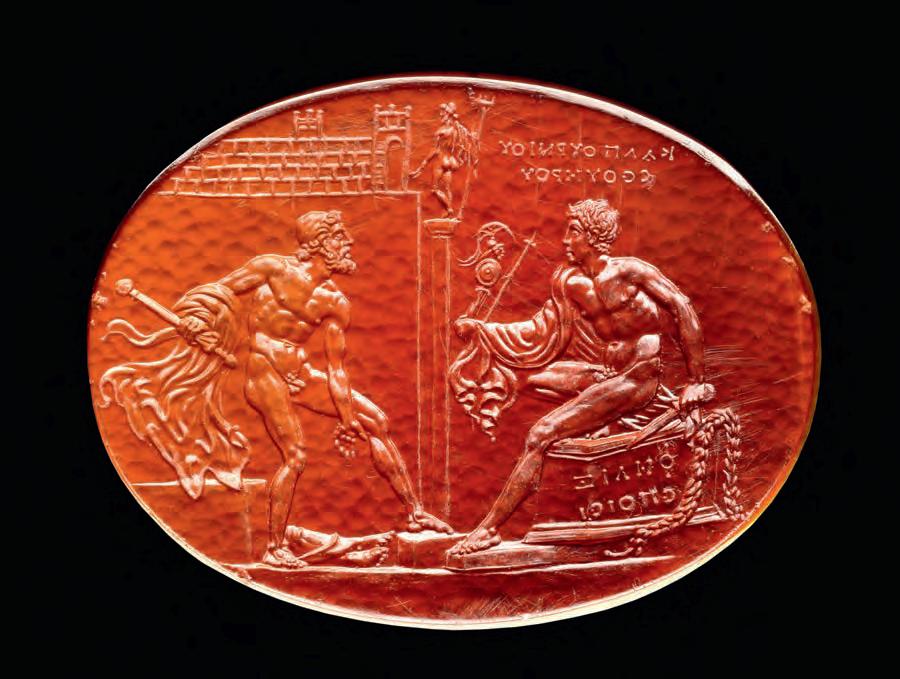
share a similar approach to the world.
Unlike her Olympian half-brother Ares, who embodies the fury, chaos and bloodlust of battle, Athena represents disciplined intelligence. She is the goddess of wisdom, strategy, craftsmanship, planning and civic order. Her victories, like those of Odyseeus, are won not through overwhelming force but through patience, foresight and ingenuity.
Throughout the poem, Athena’s interventions follow a remarkably consistent pattern. She rarely solves Odysseus’ problems directly. Instead, she helps him work his way through them, acting less as rescuer than as mentor, reinforcing qualities he already possesses.
The same dynamic appears in traditions beyond Homer. According to later accounts of the Trojan War,
Athena assisted Odysseus and his companion Diomedes in one of Greek mythology’s most audacious covert operations: the theft of the Palladium, the ancient cult image of Athena that protected the city of Troy. Disguised as beggars, the two heroes slipped behind enemy lines under cover of darkness, infiltrated the city, entered Athena’s temple, and carried off the sacred object. Ancient prophecies held that Troy could never fall while the Palladium remained within its walls. Removing it was therefore not simply an act of theft but a strategic masterstroke, stripping the city of its divine protection and paving the way for its eventual destruction.
In many ways, the episode reads like mythology’s first special-forces mission. Victory depends not on
battlefield heroics but on stealth, deception, and the sort of calculated risk-taking that defines Odysseus throughout the epic. It is precisely the kind of operation that Athena would admire: a victory won not through force, but through cunning.
The story of the Trojan Horse reflects the same principle. After ten years of failed siege warfare, Troy does not fall because the Greeks fight harder than their enemies. It falls because they think differently. The city’s mighty walls, which had resisted a decade of assaults, are overcome by deception, imagination and careful planning.
It is hard to imagine a more Athena-like victory.
When Odysseus finally reaches Ithaca after twenty years of wandering, Athena does not place a sword in his
hand and urge him to storm his palace. Such a solution would have suited Ares. Instead, she devises a far subtler plan. Transforming the king into a frail old beggar, she sends him back into his own household in disguise. Before he can act, he must observe. Before he can reclaim his throne, he must gather information, test loyalties and discover who among his servants remains faithful. Even his reunion with his son Telemachus takes place in secret, carefully orchestrated by Athena before the final reckoning can begin. Planning comes first. Action follows.
The connection between Athena and Odysseus also helps explain why later Athenians found so much to admire in Homer’s wandering king. Athens did not become the leading city of the Greek world because it consistently fielded the strongest army; that distinction belonged to Sparta. Nor did it possess the vast territory of Persia or the wealth of Egypt. Instead, Athens became famous for something less tangible but ultimately more powerful: its ability to outthink its rivals.
The city’s most successful leaders, from Themistocles to Pericles, built their reputations not through hereditary privilege or martial prowess, but through their ability to persuade fellow citizens, recognize opportunities, and imagine solutions others had overlooked. In Athens, the silver-tongued statesman and the successful general were often one and the same.
As you might expect, the ancient Greeks had a pithy word for this quality: μῆτις (“metis”) – a term that resists neat translation into English. It combines intelligence and practical wisdom (“phronesis”), adaptability, resourcefulness, foresight and the ability to navigate complex situations successfully. It is the quality that allows someone to see opportunities where others see obstacles, and solutions where others
encounter dead ends. Odysseus is the supreme hero of “metis” in Greek mythology, and Athens eventually became the city most closely associated with its civic expression.
Again and again, Athens achieved its greatest successes not through overwhelming force, but through skill, ingenuity and strategic thinking. During the Greco-Persian Wars (499–449 BC), for example, the statesman Themistocles persuaded his fellow citizens to invest the profits from a newly discovered silver strike at Laurion in a fleet of warships (“triremes”) rather than distribute the money among the population. It was not an obvious decision.
Yet when the Persians launched their second invasion of Greece in 480 BC, that fleet proved decisive. At the Battle of Salamis, the Greeks lured the much larger Persian navy into the narrow strait west of Athens, where victory depended not on superior numbers but on local knowledge and tactical ingenuity – “metis” in action, a strategy that would not have been entirely unfamiliar to Odysseus.
Nor was such thinking confined to the battlefield. Pericles, the great architect of Athens’ Golden Age, transformed the Delian League from a defensive alliance into the foundation of an Athenian maritime empire (“thalassocracy”), while using its resources to fund an ambitious program of building and cultural patronage that reshaped the city itself. Like Odysseus, he understood that influence often depended less on force than on persuading others to see the world differently.
Of course, none of this means that Homer consciously created a “proto-Athenian” hero – the “Odyssey” emerged centuries before Classical Athens reached the height of its power – but later Athenians could look at Odysseus and recognize something familiar: a hero whose greatest victories were won not because he was the strongest man in the room, but because he understood the situation better than everyone else.
Today, visitors standing beneath the Acropolis tend to think first of democracy, philosophy, drama and the extraordinary flowering of culture that transformed Athens into one of the most influential cities in human history. The marble temples crowning the Sacred Rock seem to speak of certainty and permanence, of a civilization confident in its achievements.
Yet the goddess who watched over that city was also the protector of a wandering Ithacan king who spent much of his life lost. There is something revealing in that contrast.
Among the many heroes of Greek mythology, Athena did not choose the strongest warrior, the most handsome prince, or even the most honorable man. Her favorite mortal was a survivor: a man who relied upon intelligence, persuasion, disguise and adaptability in a world where brute force so often failed.
Odysseus was never an Athenian, and Homer could never have imagined the democratic city that would one day rise beneath Athena’s gaze. Yet among all the heroes of Greek mythology, he may be the one who best captures something essential about the goddess herself: the belief that ingenuity, adaptability and careful judgment can achieve what brute strength cannot.
And perhaps that is why, for the city of Athena, Odysseus might just be the perfect, even if imperfect, hero.•
“Pericles’ Funeral Oration,” by Philipp von Folz (1805-1877). Like Odysseus, Pericles embodied the strategic thinking and powers of persuasion that defined Athens at its height.
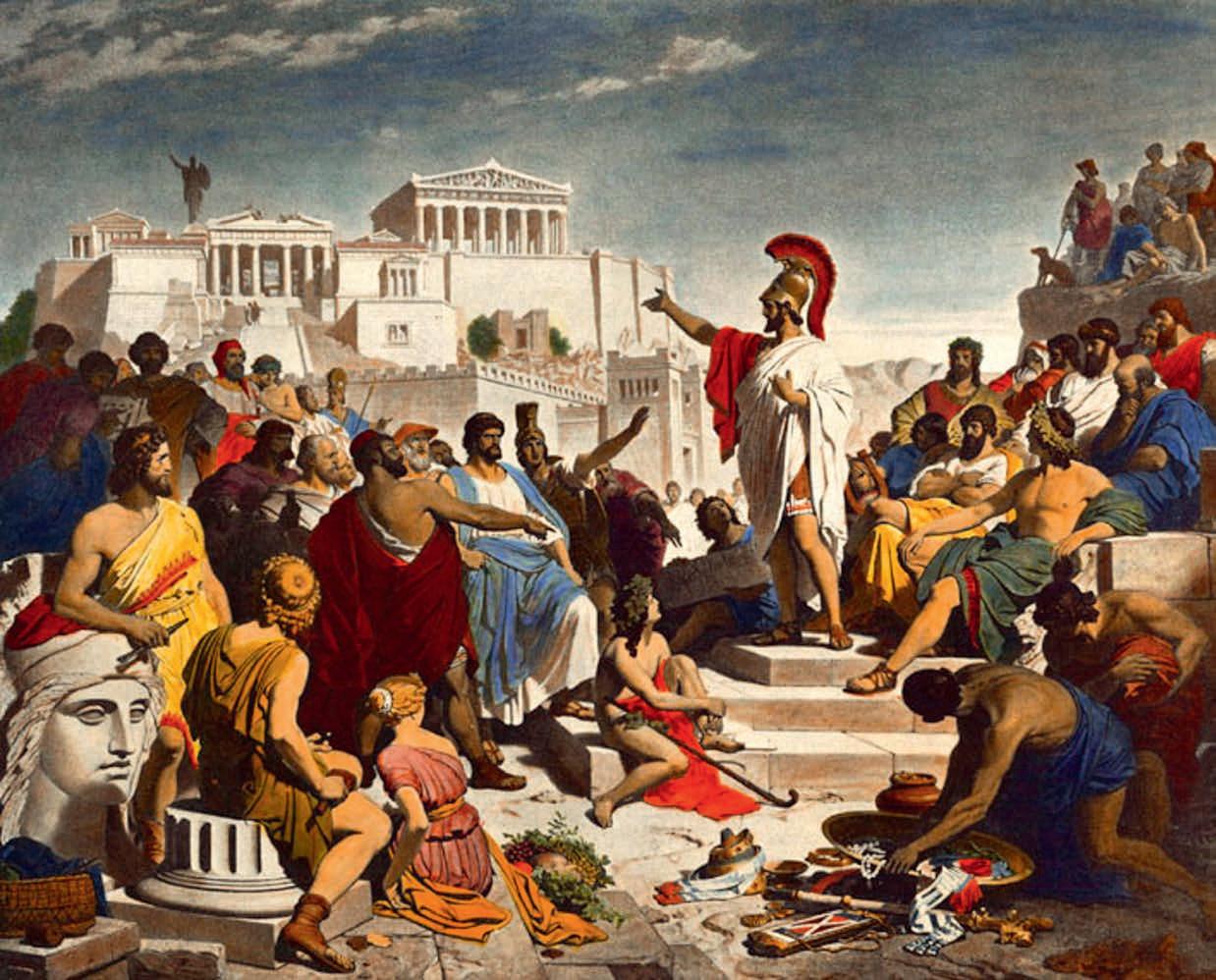

Athens has always been graced with trees, and benefited from them. Today, their continued presence, under threat in a warmer world, may be of greater importance than ever.
BY TYLER BOERSEN
CHRISTINA TSEVIS
RRECENTLY THERE ARE FEWER BIRDS crossing Athens to head north for the summer. Conservationists point to a decline in their populations across Greece and Europe, and Athenians have noticed the change. The swallows and swifts that made their nests in building cavities and childhood memories are disappearing from the city center. It turns out the birds liked the Athenians as builders and gardeners, especially the way they accumulated things over time on their balconies. They wanted the city and its different kind of efficiency, all in order and slightly strained, the way it left things to be finished by future generations. But they didn't want the heat.
Among the birds that still come through Athens, a few Eurasian hoopoes arrive in the spring to spend a few days under the trees on Ardittos Hill. The hoopoes are kings and queens in full regalia and zebra coats. But even in this high-value real estate they seem positively out of place, a more intense order of reality than the warblers that you can barely distinguish in the gnarly branches of Aleppo pines and flowering Judas trees.
The trees create ground cover and filter the light in a way the hoopoe seems to like. And what does the hoopoe provide in return? Perhaps nothing the trees really need, but we don’t actually know. They don’t do business with the pine cones. They show up dressed for the opera stage. Some days, there’s so much singing and “hoopoopooing,”you might worry they’ve forgotten to eat.
There would be no safe place for the birds, except maybe the scavengers, if not for the idea to create hilltop forests in Athens sometime in the late nineteenth century. There’d be no soil on the slope for the hoopoe to march and drill with its rapier bill, if the trees and shrubs didn’t hold it there in place.
The forest on Ardittos and the nearby Pangrati Alsos were bald hills until first planted around 1908, and replanted after the trees were felled for fuel during World War II. Today the roots regularly fall out of the thin layer of soil sitting on solid rock that refuses to let them anchor. Trees must be continuously replaced by hand, and the soil actively protected from erosion.
There were certainly no trees on the hill in the 19th century. We know this from photographs. And there might be only one tree remaining a century from now if the planting doesn't continue, or if there isn’t enough water to stop the trees from drying out in the desertifying heat.
It’s possible that, inside the city of Athens, there were never more than a handful of large trees visible at any one time over the previous 2,500 years. But trees were never absent from Athenian life: they belonged to sanctuaries, courtyards, water points, orchards, groves and the agricultural landscape surrounding the city. Plato mentions one plane tree nearby, just outside the city walls at the foot of Ardittos Hill, where Socrates warned his companion not to fall under the spell of the cicada song that was as dangerous as the Sirens’ call.
Elsewhere in his writings, Plato tells us that the mountains surrounding Athens were forested in the time of Atlantis. Which is to say, by the 5th century BC, there were few still living who could remember timber harvesting in the region. Instead, the Athenians established colonies near to forests in northern Greece to gain steady access to wood for the triremes of the imperial fleet. But we know that Athens always had trees of commercial value. And in the last 40 years we’ve learned a great deal about them from pioneering
scholars such as Dimitris Karidis who have done painstaking work searching Ottoman tax documents and French shipping ledgers to trace the commodities exported from Athens between the 16th and 19th centuries. Some products were harvested from trees growing in the wild. For instance, we know that acorns from the majestic Valonia oak were used for tanning leather. They were gathered in abundance by Arvanite families from small stands scattered across the Attica countryside, and they left the Port of Piraeus in great quantities.
SOME 50,000 OLIVE TREES IN THE ATHENS
The olive tree was even more economically significant and it fueled international trade. Athens couldn't grow enough grain to feed itself, so its olive oil exports paid for imported wheat. In 1671, the English traveler Bernard Randolph recorded some 50,000 olive trees in the Athens district of Elaionas. By 1827, Karidis estimates there were 250,000 olive trees meeting demand from traders in Marseille.
It's easy to imagine the hoopoe
loving the vast, low canopy of the olive grove. And Athenians also cared for it deeply. Legal documents suggest the grove was a chessboard of small holdings divided like the contents of a house. Marriage contracts, for instance, often stipulated the allocation of and care for olive groves, revealing social and economic relationships, as well as strategies for increasing harvest yields.
Athens was an ecosystem already adapted to drought conditions. It might not exist otherwise. But looking at 19th-century panoramas of Athens from a bird's eye view, we mostly see ancient monuments emerging triumphantly but tragically from a barren landscape. There is beauty in these images, but they aren’t quite right. A real bird following these orientation points is likely to bake or starve to death.
Architect and urban historian Dimitris Philippides has spent decades exploring these ecosystems and creating a language to describe the efficient collaboration that sustained the city. Where he sees a poplar rising above the roofline, it marks a water source. A plane tree at an intersection in Plaka marks the neighborhood commons, while lemon, mulberry, and cherry trees peek over private courtyard walls.
"Everyday life testified to a different type of intimacy in which greenery emphatically participated," Philippides writes, describing a social life organized around what Greeks call the avli: the courtyard, the church square or the neighborhood commons, where a tree might become part of daily existence and survival.
The hills around Athens were home to forests of evergreen brushwood, wild olive, carob and the occasional pine. But by the mid-19th century they were being stripped to fire lime kilns, removing the root system that traps rainwater on the limestone slope long enough to seep through the fissures to recharge the groundwater.
As the aquifers emptied, the natural springs that had long wet the roots of drought-adapted trees and provided the
THE HILLS AROUND ATHENS WERE HOME TO FORESTS OF EVERGREEN BRUSHWOOD, WILD OLIVE, CAROB AND THE OCCASIONAL PINE. BUT BY THE MID-19TH CENTURY THEY WERE BEING STRIPPED TO FIRE LIME KILNS.
city with potable water were running dry. And without the roots to slow them, stormwater rushed down naked hillsides, overflowing the network of seasonal torrents that stretch across the plain, threatening everything in its path until the water wasted into the sea.
People began to see trees as infrastructure to capture water. By the 1870s, local politicians had realized that forestry should be practiced as a science and gardening should be taught as a technique. The Philodassiki Etaireia, a reforesting association created in 1899, established what would become the Pangrati Alsos as an experimental forest. In the following decades planted trees on Ardittos, Filopappou, Ymittos and elsewhere.
While reforestation was becoming an issue of public concern, the survival of trees was becoming a new ethos, a moral way of living rooted in metaphors of domestic intimacy. This was captured beautifully in an 1882 poem by Georgios Drosinis that, in 2026, remains part of the core curriculum for children in Greek primary schools. The poem is often read as a lesson in morality, but Drosinis also wants his readers to think as amateur gardeners. He is sure they know that the almond tree is the first to flower each year, sometimes as early as January. The flowers appear on naked branches, giving a brief illusion of life rising from death. But it is right after the blossoms fall and tiny green fruits begin to swell that the tree is most vulnerable. If a rainstorm hits right at this moment, the droplets will knock the young fruit off the branches. Excess moisture might cause the fresh fruit to split, yellow, and drop, ruining the tree's reproductive cycle for the entire year.
In his poem, Drosinis looks from his bedroom window onto the courtyard as his young cousin “shook the flowering almond tree with her tender hands,” filling her hair and arms
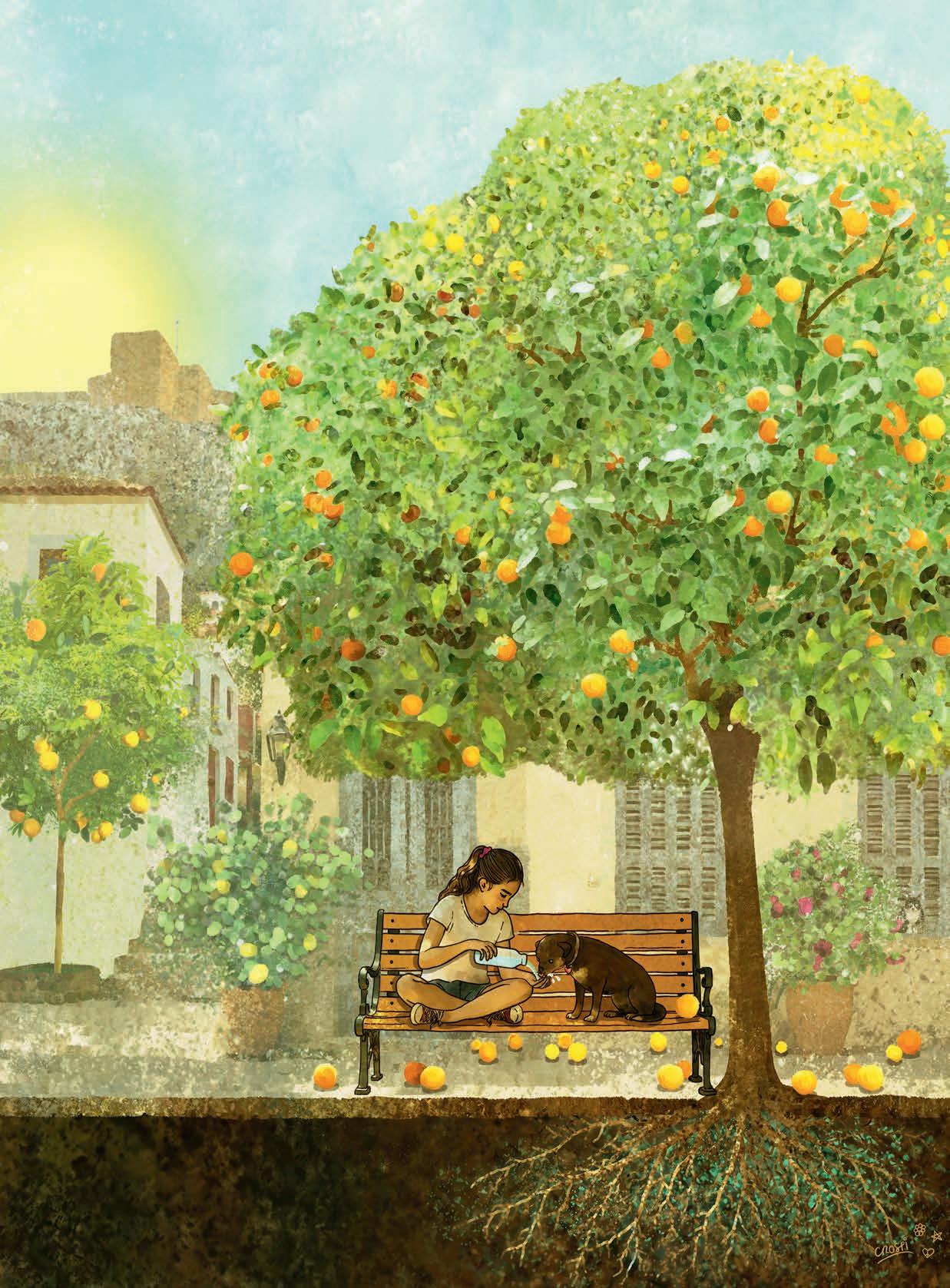
with blossoms. In her actions, he sees a youthful rush toward private pleasure, an act of impatience disguised as play. The tree showers her with blossoms and the poet can smell the violation in the air. He warns her tenderly about the danger of young fruit falling from the branches too soon. The poem was turned into a song popular with soldiers in the Balkan Wars, and the almond tree emerged as a symbol of springtime hope and lost youth. It was supercharged as a national hymn, and Drosinis complained that he had lost control of its meaning. In his memoirs, he recalled a flowering almond tree cut down to build his boyhood home on Pesmazoglou Street. When they started construction, the blossoms were mixed into the mortar and placed between the stones. But what felt like a magical ceremony did nothing to stop his brother dying in the house within a year, “as if he were dragged to the earth by the avenging sacrificed almond trees.”
Meanwhile, the Athens olive grove disappeared, tree by tree, until the number within the municipal borders had shrunk in 1967 to 15,000, according to historical data of the City of Athens. One final ancient specimen was said to be the tree where Plato convened his academy. It survived more than 2400 years until 1976, when it was mowed down by a careening bus. Its body, preserved for posterity in the museum of the Agricultural University, revealed what it always was, and that it was never merely wood. A visitor who stands in front of the broken tree thinking they are closer to Plato is actually standing in front of the proof that they are not. The tree memorializes a rupture in time that increases the distance and can no longer be repaired. To borrow cautiously from Orthodox theology, the tree seems to hold something of an uncreated force: not a fire that destroys, but one that passes through it. Like the burning bush, the tree becomes an image of matter touched by flame yet not consumed.
ONE FINAL ANCIENT SPECIMEN WAS SAID TO BE THE TREE WHERE PLATO CONVENED HIS ACADEMY. IT SURVIVED MORE THAN 2400 YEARS UNTIL 1976, WHEN IT WAS MOWED DOWN BY A CAREENING BUS.
The survival of trees increasingly depends on their ability to compete with buildings and roads. The pugnacious cultural critic Kostas Varnalis turned to writing about nature during the Axis Occupation and Civil War, when the destruction of the food supply brought mass starvation and trees across the city were burned to survive the harsh winter. This became his language of resistance, a fight for survival conducted in code. Varnalis described a world in which the survival of trees would become a question of heritage, scaling up the old sense of domestic duty to the size of municipal parks and national forests. He imagined trees as a shared form of life, and forestry as a traditional craft rooted in the common sense of the gardener. This was a civic ethos that might resist the total collapse of society and outlast any political arrangement. And it required the state to act as the steward for trees, transforming them, at a larger scale, into what we would now call public infrastructure alongside roads and buses.
Approaching the end of the millennium, the tree canopy expanded at a faster pace. By 1986 the total number of trees counted by the City of Athens had surpassed 200,000 in urbans parks, squares, and flanking streets. The hills surrounding the Athens basin were planted again with pine trees that grew taller than ever in history. Childhood memories today are filled with the scent of flowering trees and bird song as if they had always been there. Forestry specialists identified the ecosystem services provided by trees, adding another substantial line for their defense: trees provide cooling shade and humidity, prevent soil erosion, and add carbon storage.
The difficult question is whether the combination of memories and services will be strong enough to defend them when buildings are seen as a more valuable use of real estate. Citizens and environmental groups cannot sue as
companions of trees on their behalf, they have to sue on the grounds of procedural violations, urban planning laws, or constitutional protections of the environment.
One response is to rebuild this relationship through Adopt-a-Tree programs. Iosif Botetzagias, Professor of Environmental Politics & Policy at the University of the Aegean, has spent years reconstructing the history of Greek forestry, including the century-long campaign to cast shrub-eating goats as the enemies of reforestation. Today, he is watching another strategy designed to formalize the human-tree bond. While adoption programs are usually pitched as ways to improve tree survival and offset municipal overhead, Botetzagias also sees a deeper value in “establishing a personalized human-tree connection” that “may enhance the citizens' concern for the trees and the forests, in general; very much in the way that individuals' perceptions about animals change considerably after adopting a pet.” He notes that, according to Herodotus, Xerxes stopped his invasion of Greece to honor a spectacular plane tree he encountered on the way, offering it golden ornaments and assigning it a permanent guardian. Whether this was honorable or hubris, Herodotus doesn’t say.
Yet re-establishing trees as companion species may require more than goodwill. The City of Athens has appointed city officers focused on climate resilience and heat preparation to develop a technical response. There is also an effort to promote street-level awareness through several interactive maps. One shows the existing tree cover and helps users chart a walking route protected by tree shade. Another shows the Heat Risk Index compiled using satellite and sensor data for every neighborhood. A third maps the location of more than 12,000 trees planted by the city since 2024.
IF THE RISK OF PLANTING A TREE IS THAT IT OCCUPIES SPACE THAT COULD OTHERWISE BE GENERATING REVENUE OR RENT, THE TREE WILL NEVER WIN.
Layering these maps over each other, we see that trees are being planted everywhere in the city, although the rate remains higher where tree canopy is already dense and heat risk the lowest. This suggests that many plantings are replacements for dead trees or plantings in tree-dense parks. It also indicates the difficulty Athens faces in changing land use so that it can plant new trees in spots where none have stood before.
Leonidas Economou, Professor of Urban Anthropology and Popular Culture at Panteion University, has spent years studying the evolution of the civic ethos in Athens. Pointing to the forest fires that have grown more intense over the last ten years, he says that the publicity around saving particular trees can obscure a process of destruction that is unfolding more quickly and on a much larger scale. He believes Athenians have developed “this concentration camp indifference that is characteristic of people living in environmentally hazardous environments.” In other words, it's not that Athenians don't know what’s happening, it’s that they have stopped perceiving forest deterioration as exceptional. Knowing what is going on, and what is at stake, may no longer be enough.
Athens has trees throughout the city available to anyone who lives here or pays a visit. It is also a crowded place that needs more trees, and where every square meter is already being used for something else. If the risk of planting a tree is that it occupies space that could otherwise be generating revenue or rent, the tree will never win.
And so, the lemon tree migrates to the balcony in a pot. The olive tree becomes a national symbol. The almond tree becomes a poem that people remember. The hoopoe arrives for a few days and leaves. And the orange blossoms in the streets remain democratic in a way that only smells and the flowers that bring them can be. They ignore property lines. They smell the way they smell regardless of whether anyone is paying to receive it, or understands it, or writes an essay about it.•
EXPLO R E MO R E:
SELECTED A R TICLES F R OM OU R WEBSITE
From beaches and verandas to T Magazine’s list of the 25 most influential pieces of furniture of the past century, this is the story of the white plastic chair.

Old and new haunts, stories from the Athenian night, a sweet treat, a drink and a late-night bite by the fountain.

LAVREOTIKI
Explore a landscape shaped by ancient mining, industrial heritage and seaside charm, just a short drive from Athens.


HOW TO TAKE THE FERRY IN GREECE: A STEP-BY-STEP GUIDE
Everything you need to know about booking and boarding so you can enjoy Greece’s ferry network like a seasoned island hopper.

Οrder back issues now at: subscription.kathimerini.gr/greece-is Pay only shipping & handling.