HIGH-SPEED
RAIL
DOWNTOWN
DEBATE
DEFENCE & SECURITY
A UNITED FRONT
WOMEN IN SPORTS WHAT'S THE SCORE?
FORTY UNDER 40

HIGH-SPEED
RAIL
DOWNTOWN
DEBATE
DEFENCE & SECURITY
A UNITED FRONT
WOMEN IN SPORTS WHAT'S THE SCORE?
FORTY UNDER 40
Determined to make a difference
EXECUTIVE REPORT ON HEALTH INNOVATION



PUBLISHER’S LETTER
Back in the heady days of the telecom boom, the late 1990s, when Ottawa-based firms were set ablaze with billions in private investment, I became intrigued with a part of the tech sector that was mostly overlooked. In the shadow of telecom stars were companies in life sciences; think WorldHeart, i-STAT and MDS Nordion. The lack of attention was similar on the economic development side. OCRI dominated the spotlight and the Ottawa Life Sciences Council was mostly ignored.
I came to appreciate that the challenges for life sciences companies were almost insurmountable. While highflying telecom entrepreneurs mapped out business plans on the back of napkins and landed multimillion-dollar investments, life sciences founders faced long development cycles, daunting regulatory barriers and almost no venture capital investment.
It was bleak, to say the least. Try as it might, the life sciences sector struggled to make any real progress. That was then, this is now.
While those barriers in life sciences and health innovation remain, local momentum is building.
As Maura Campbell, president and CEO of OBIO, stated at a recent roundtable discussion hosted by OBJ: “Ottawa is having a moment.”
The roundtable participants told OBJ that, after decades of slow and steady momentum, the local life sciences sector is at an inflection point. This scale-up isn’t based on one thing. It’s a convergence of factors.
Take the largest capital investment in the 178-year history of the University of Ottawa: the Advanced Medical Research Centre. Scheduled to open in coming months, this 350,000-square-foot facility is designed to bridge the gap between health research and commercialization with much-needed wet labs and innovation programs.
That’s just the start.
The Ottawa Hospital’s new Civic campus, CHEO’s Integrated Treatment Centre, massive upgrades to federal labs in the National Capital Region, it’s all happening now.
Plus, these infrastructure investments are coming online as local companies are making medical breakthroughs.
There is good reason to be optimistic, but let’s be cautious before we arrive at any definitive prognosis.
As Jeff Smirle, co-founder of Capital BioVentures, told OBJ: “Early-stage biotech companies don’t just need one thing or two things. They need five or six different things at any given time.”
Ottawa can’t make the same mistake it did in the 1990s. Health innovation needs attention and Ottawa needs to streamline support for startups. This is an urgent prescription for a healthy life sciences sector.
Check out OBJ’s Executive Report on Health Innovation in this issue, including a clarion call from longtime life science advocate Ken Lawless.
In preparation for OBJ’s 30th anniversary party this spring, I discovered some dusty cardboard boxes in storage. They were filled with old yellowing newspapers. You can’t imagine my joy when I found Vol. 2, Issue 18 from Jan. 18, 1997. It was the first Forty Under 40 issue.
What great fun to read through the recipient bios, particularly when I recognized entrepreneurs who are still active today. I don’t have the space here to list all the noteworthy young leaders, but rest assured they had an “outsized” impact on Ottawa.
It’s beyond rewarding to think the Forty Under 40 tradition continues in this issue. To the 2026 recipients, my sincere congratulations. Will you match or exceed the impact of your predecessors? That is your challenge.
MICHAEL CURRAN PUBLISHER publisher@obj.ca


EDITOR’S LETTER
My father was a railway buff. Almost everything in his home — from the paintings to the bookends to the shot glasses — had a train motif. To my child’s eye, it seemed masculine, boring and dirty, with all that smoke or steam or whatever billowing in the air. I preferred horses.
Still, I remember how he spoke about arriving in Ottawa with his bride in the 1950s and settling at The Duncannon on Metcalfe Street (those beautiful windows). His recounting always included a mention of the grand Union Station. How tickled he must have been to see the trains coming and going, chugging past the University of Ottawa, where he worked, and coming to rest in front of what is now The Westin. I can only imagine his disappointment with the plans to remove the railways from central Ottawa. By 1966, when I was born, Union Station had ceased operating as a passenger rail terminal. Growing up in the city’s west end, I found his stories about trains downtown hard to believe, until he showed me the photos he’d taken.
Today, I’m pretty sure he’d be utterly intrigued by the high-speed rail project, particularly the debate about whether to restore Union Station to its original purpose. It’s hard not to get swept up in the romance of it: the gorgeous beaux arts building, people bustling in and out, celebrities stepping onto the platforms (I had no idea that Elvis arrived at Union Station in 1957).
It’s also very practical. Union Station is close to other transportation arteries, offices and hotels, not to mention the Parliament Buildings. It seems a no-brainer to have a high-speed rail hub centrally located, like so many cities where the train station is at the core of everyday life. But can it be done? And at what cost? Those questions prompted us to reach out to David Jeanes, retired engineer and board member with Transport Action Canada.
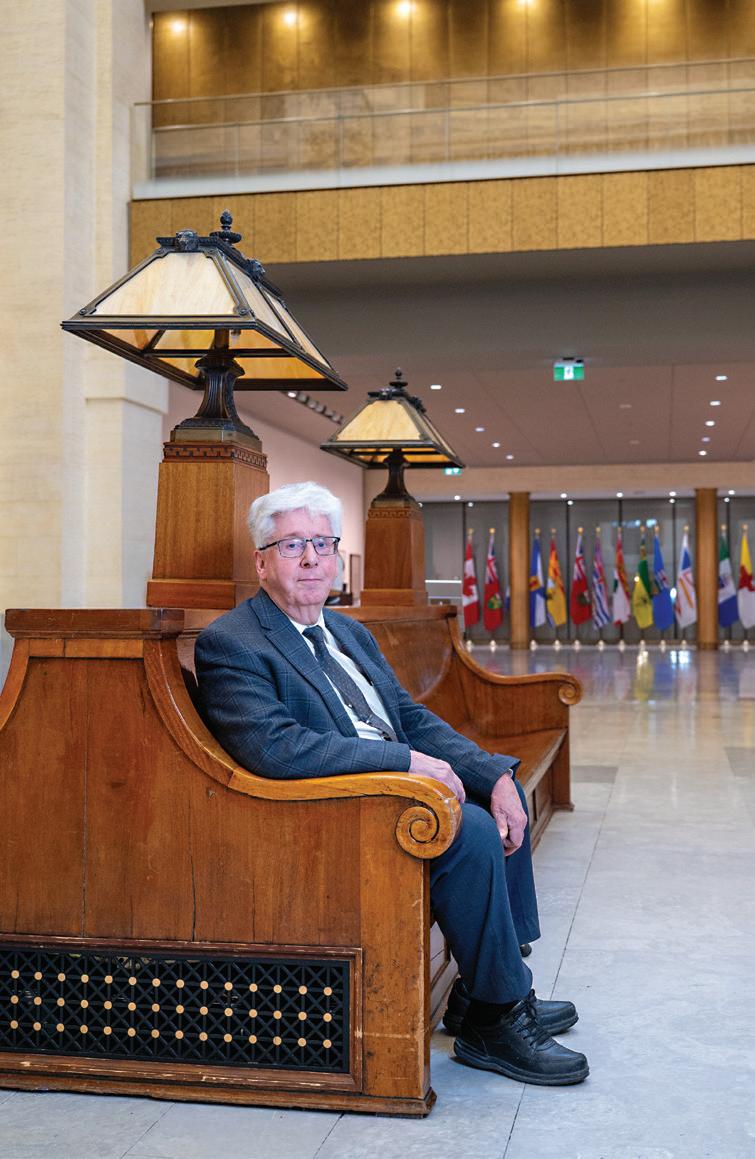
Jeanes is passionate about the project, and about Union Station itself. We were able to tap into his enthusiasm and expertise to better understand how we could once again welcome trains into downtown Ottawa. The gist is this: it would take time, effort and a pile of money. But what a legacy to leave for future generations. I think my father would agree.
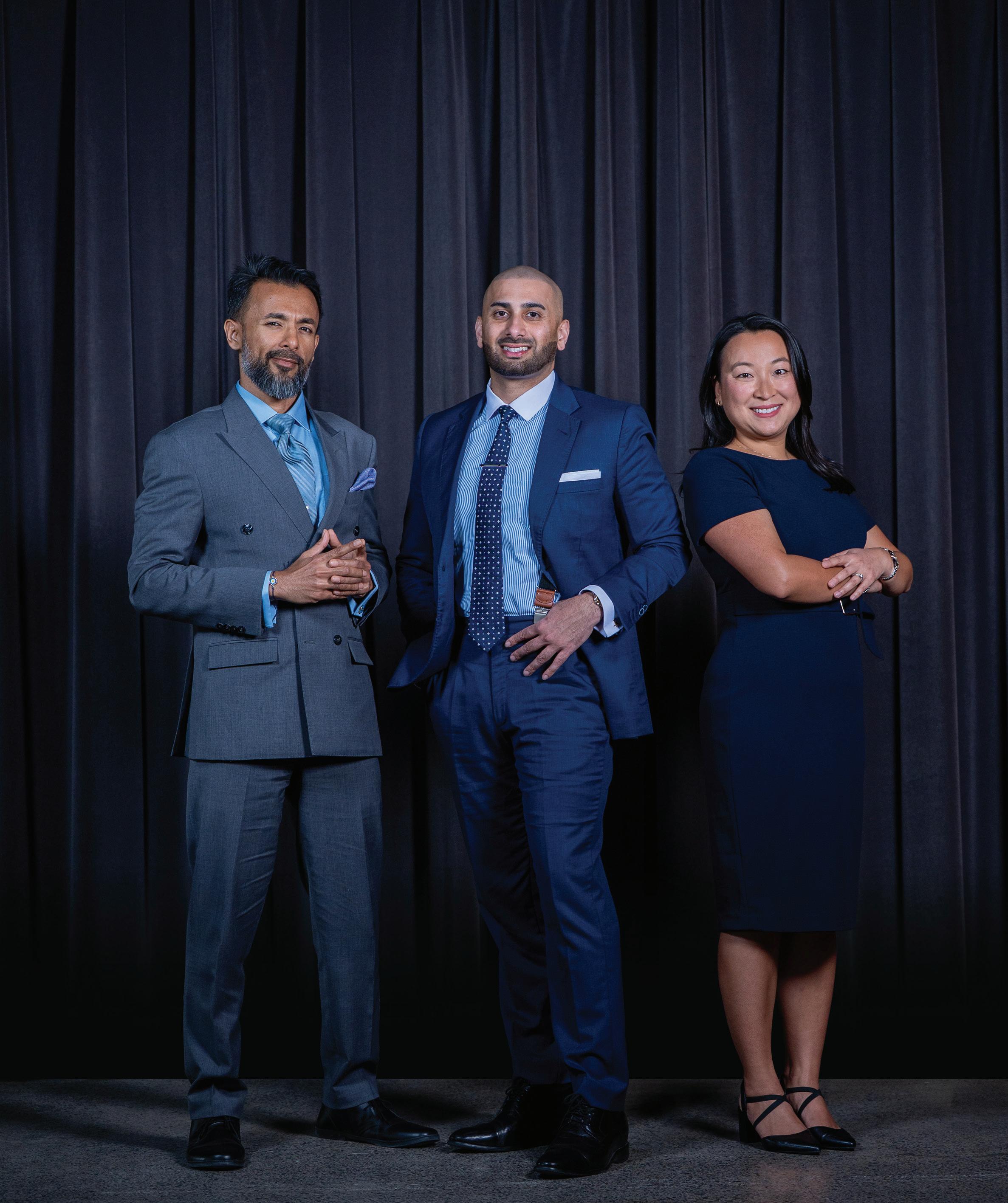
It’s always a pleasure and an inspiration to judge the Forty Under 40. This year, with this magazine in mind, I had my eyes peeled for commonalities among the nominees. That is, beyond the obvious: hard-working, smart, ambitious, savvy and impressive. One thing that struck me was the diversity, for example, in gender, culture and socio-economic background. From there, I spotted three nominees whose stories I knew I wanted to tell.
On the following pages you’ll meet Gena Custode, one of a handful of women in her field; Jahanzaib Ansari, who struggled just to get through the door; and Muhammad Zaheed, who encountered more than his share of roadblocks. Not only did these three succeed, they turned around to help others overcome the same hurdles they encountered. It’s fantastic reading. Congratulations to them, and to all this year’s recipients.
ANNE HOWLAND EDITOR IN CHIEF editor@obj.ca

ESSENTIALS
DATEBOOK
SUMMER SIZZLE 12
ICYMI
TOP WEB HITS 14
MAKING AN IMPACT
SAM LAPRADE 116
THE LIST
ARTIFICIAL INTELLIGENCE 118
FEATURES
HIGH-SPEED RAIL CAN IT COME DOWNTOWN? 16
TECHOPIA
HOW AI HAS CHANGED THE GAME 40
LIFESTYLE
WOMEN IN SPORTS OTTAWA STEPS IT UP 28
MODERN BIZ STYLE AI AND YOUR WARDROBE 34

OBJ INSIDER SUBSCRIPTIONS
Ottawa Business Journal PO Box 91585 Ottawa, ON K1W 1K0 subscribe@obj.ca
OFFICE OF THE PUBLISHER 613-696-9491 publisher@obj.ca
OFFICE OF THE EDITOR IN CHIEF 613-696-9480 editor@obj.ca
LETTERS TO THE EDITOR editor@obj.ca obj.ca/submit/story No faxes
GENERAL SALES
613-696-9494 sales@obj.ca obj.ca/advertise
FINANCE DEPARTMENT
613-696-9490 accountant@greatriver.ca
PERMISSIONS + REPRINTS 613-696-9494 info@obj.ca obj.ca/submit/reprints
SUBSCRIBE

PUBLISHER MICHAEL CURRAN
EDITOR IN CHIEF ANNE HOWLAND
CHIEF OPERATING OFFICER CHERYL SCHUNK
CREATIVE DIRECTOR TANYA CONNOLLY-HOLMES
EDITORIAL
SENIOR FEATURES WRITER DAVID SALI 613-696-9481 david@obj.ca
REPORTER MARISSA GALKO 613-696-9492 marissa@obj.ca
REPORTER MIA JENSEN 613-696-9501 mia@obj.ca
CONTRIBUTORS: SONIA MENDES
PRINT + DIGITAL DESIGN
CREATIVE DIRECTOR TANYA CONNOLLY-HOLMES 613-696-9487 creative@greatriver.ca
GRAPHIC DESIGNER CELINE PAQUETTE 613-696-9486 celine@greatriver.ca
SALES + MARKETING
ADVERTISING SALES CINDY CUTTS 613-696-9580 cindy@obj.ca
ADVERTISING SALES ERIC DUPUIS
613-696-9485 eric@obj.ca
ADVERTISING SALES ROBYN HUNTER
613-696-9483 robyn@obj.ca
MARKETING CAMPAIGN MANAGER NIKI ABDOLWAHABI
613-696-5931 niki@obj.ca
SALES + CAMPAIGN EXECUTION SPECIALIST IHSAN (ISSY) YOUSIF 613-696-9536 issy@obj.ca
OPERATIONS + SUBSCRIPTION SUPPORT
AUDIENCE DEVELOPMENT & EVENTS SPECIALIST SUSAN HABIB 613-696-9572 susan@obj.ca
BUSINESS JOURNAL IS PUBLISHED BY
CO-FOUNDER MARK SUTCLIFFE
PUBLISHER MICHAEL CURRAN
All content of Ottawa Business Journal is copyright 2026. Great River Media Inc. and may not be reproduced in any form without permission of the publisher. Publisher’s Liability for error: The Publisher shall not be liable for slight changes or typographical errors that do not lessen the value of an advertisement. The publisher’s liability for other errors or omissions in connection with any advertisement is strictly limited to publication of the advertisement in any subsequent issue or the refund of monies paid for the advertisement.
A guaranteed minimum of 3,500 copies are printed and distributed.




Canada’s Forest Trust Corporation (CFTC) and the City of Ottawa are mobilizing community leaders, residents and businesses like Modern Niagara to drive climate action.
“As a leader in the construction industry, we recognize our responsibility to drive climate action and protect the environment. Planting and protecting trees in Ottawa is not just an investment in our community; it’s an essential step toward a sustainable future. Together with CFTC and the City of Ottawa, we can create a greener city, enhance biodiversity, and combat climate change.”
– Brad McAninch, CEO and President of Construction at Modern Niagara





A culinary event to raise awareness of homelessness in the city and raise funds for the Shepherds of Good Hope Foundation.
When: June 3, 6 p.m.
Where: Brookstreet Hotel, 525 Legget Dr., Ottawa
Find out more: tinyurl.com/4fx8e77v
Enjoy this networking event on the water as Ottawa celebrates its 200th anniversary.
When: June 4, from 5 p.m. to 7 p.m.
Where: The Hull Marina, 160 Laurier St., Gatineau
Find out more: tinyurl.com/yxbkndzb

Spend the evening celebrating Canadian talent in the performing arts with music, performances and a red carpet.
When: June 6, 6:30 p.m.
Where: National Arts Centre, Southam Hall, 1 Elgin St., Ottawa
Find out more: tinyurl.com/5n6h4hvp
Join Mayor Mark Sutcliffe for a morning of networking and listen in on his fireside chat with Rick Leary, general manager of OC Transpo.
When: June 11, 7 a.m. to 9 a.m.
Where: Ottawa City Hall, 110 Laurier Ave., Ottawa
Find out more: tinyurl.com/3a3p4y4y
Do you have an event of interest to the business community?
Let us know at editor@obj.ca
Join OBJ and the Ottawa Board of Trade in celebrating 40 of the city’s most dynamic young leaders under the age of 40 who exemplify business excellence, professional achievement and a commitment to building a stronger community.
When: June 18, 6 p.m. to 10 p.m.
Where: Casino Lac-Leamy, 1 Boulevard du Casino, Gatineau
Find out more: tinyurl.com/mrc26apn
Celebrating its 45th anniversary, Ottawa’s jazz festival showcases the best of jazz with acts such as Jeff Goldblum & The Mildred Snitzer Orchestra, Willow, The Soul Rebels and Ibrahim Maalouf.
When: June 19-28
Where: Multiple locations around downtown Ottawa
Find out more: tinyurl.com/ywwppz5c
This event will hear from leaders in industry, government and the community on the systems, partnerships and policies needed to power Ottawa’s future.
When: June 23, 9 a.m. to 1 p.m.
Where: Brookstreet Hotel, 525 Legget Dr., Kanata
Find out more: tinyurl.com/ytvsxhdm


In support of the CHEO Foundation, this tournament will give participants a full day of golfing and networking as they raise funds for pediatric care in the capital.
When: July 6, 8 a.m.
Where: The Royal Ottawa Golf Club, 1405 chem. d’Aylmer, Gatineau
Find out more: tinyurl.com/4ynvv356
Ottawa’s popular music festival is back and welcomes large acts such as Limp Bizkit, The Lumineers, Conan Gray, Cypress Hill, Gwen Stefani and Sheryl Crow.
When: July 9-19
Where: LeBreton Flats
Find out more: ottawabluesfest.ca
This event will showcase the best of plant-based food and sustainability in the city. Attendees will experience cooking demonstrations, guest speakers and sample vegan-friendly products.
When: July 25, from 10 a.m. to 5 p.m.
Where: Ottawa Conference and Event Centre, 200 Coventry Rd., Ottawa
Find out more: vegottawa.org/fest/
In support of the Queensway Carleton Hospital Foundation, this event brings together business and community leaders for a night of food, drinks and equestrian sports.
When: Aug. 12
Where: Wesley Clover Parks, 401 Corkstown Rd., Nepean

Find out more: www.spursandsparkles.com
A day out on the greens and networking with the city’s business and community leaders.
When: Aug. 18, from 11 a.m. to 8:30 p.m.
Where: GreyHawk Golf Club, 4999 Boundary Rd., Ottawa
Find out more: tinyurl.com/up8ahbw4




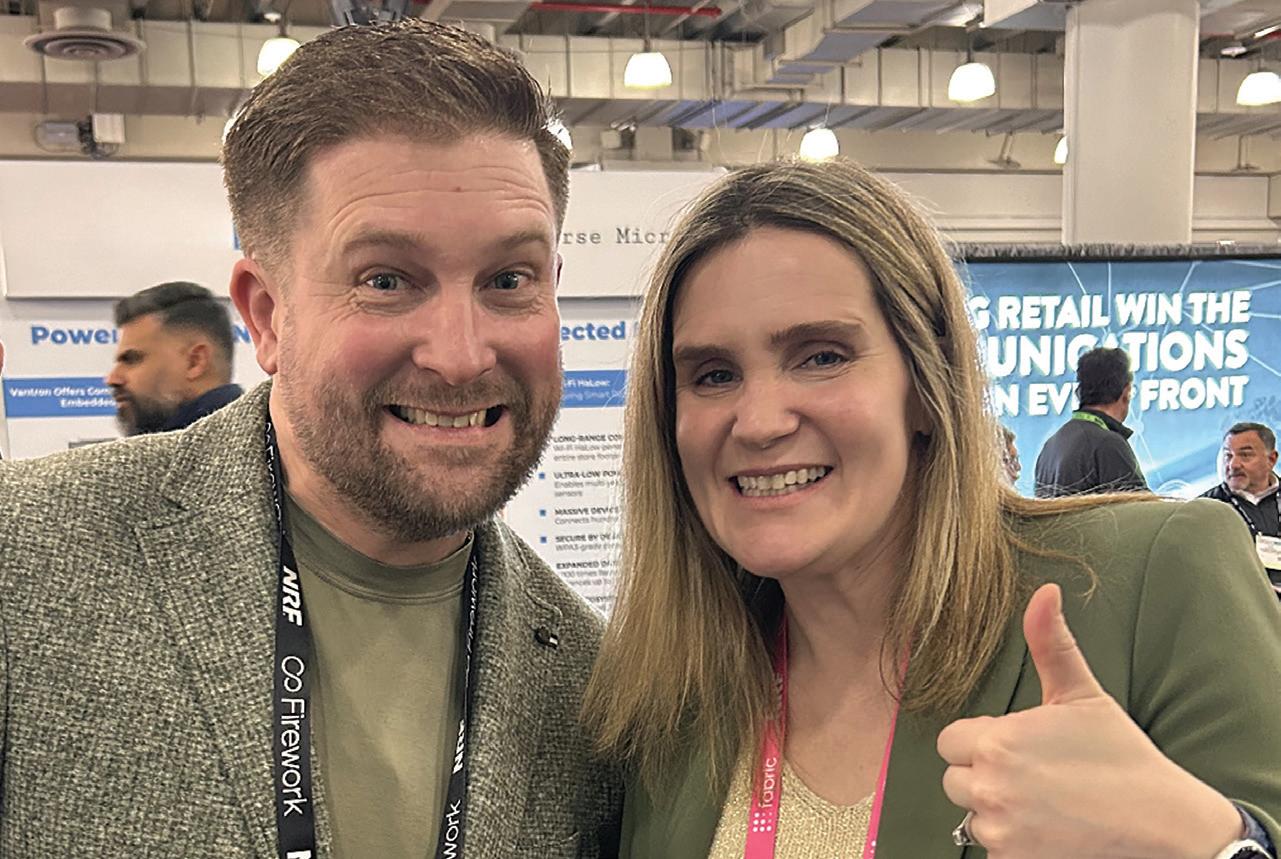
Elizabeth and Allan Malcomson spent years working the floor of their family’s Canadian Tire store in Kanata, watching customers wander around 90,000 square feet of retail space looking for help that never came. So they built a solution that combined their knowledge of retail with the latest in tech.

Nearly seven years after Bruce Linton last occupied the CEO’s chair at what was once the world’s largest cannabis producer, he’s still wearing the company colours — for a good cause. OBJ caught up with Linton to discuss travel, philanthropy and business ideas.
OBJ sat down with Senators president and CEO Cyril Leeder to discuss the team’s plans for growth, how a new arena at LeBreton Flats is shaping up and a possible partnership with the Ottawa Charge.

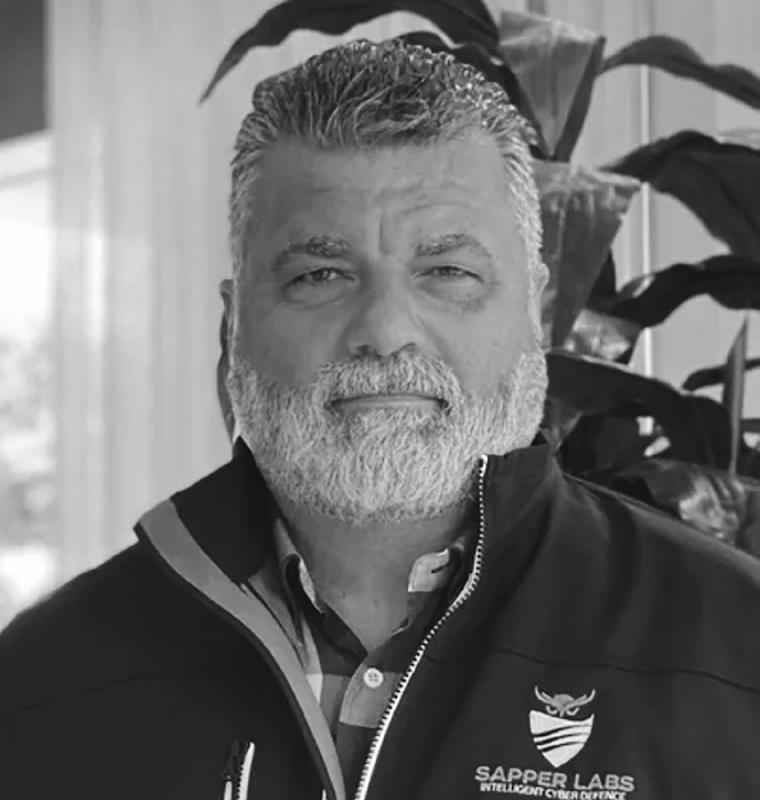
Inside Sapper Labs, the veteran-led Ottawa firm wiring Canada’s defence intelligence
A few months before Russia’s full-scale invasion of Ukraine in 2022, an Ottawabased defence-tech company was already tracking the Wagner Group, Russia’s shadowy mercenary army, and passing intelligence about it to the Canadian, American and Ukrainian governments, according to Sapper Labs Group CEO Allen Dillon.
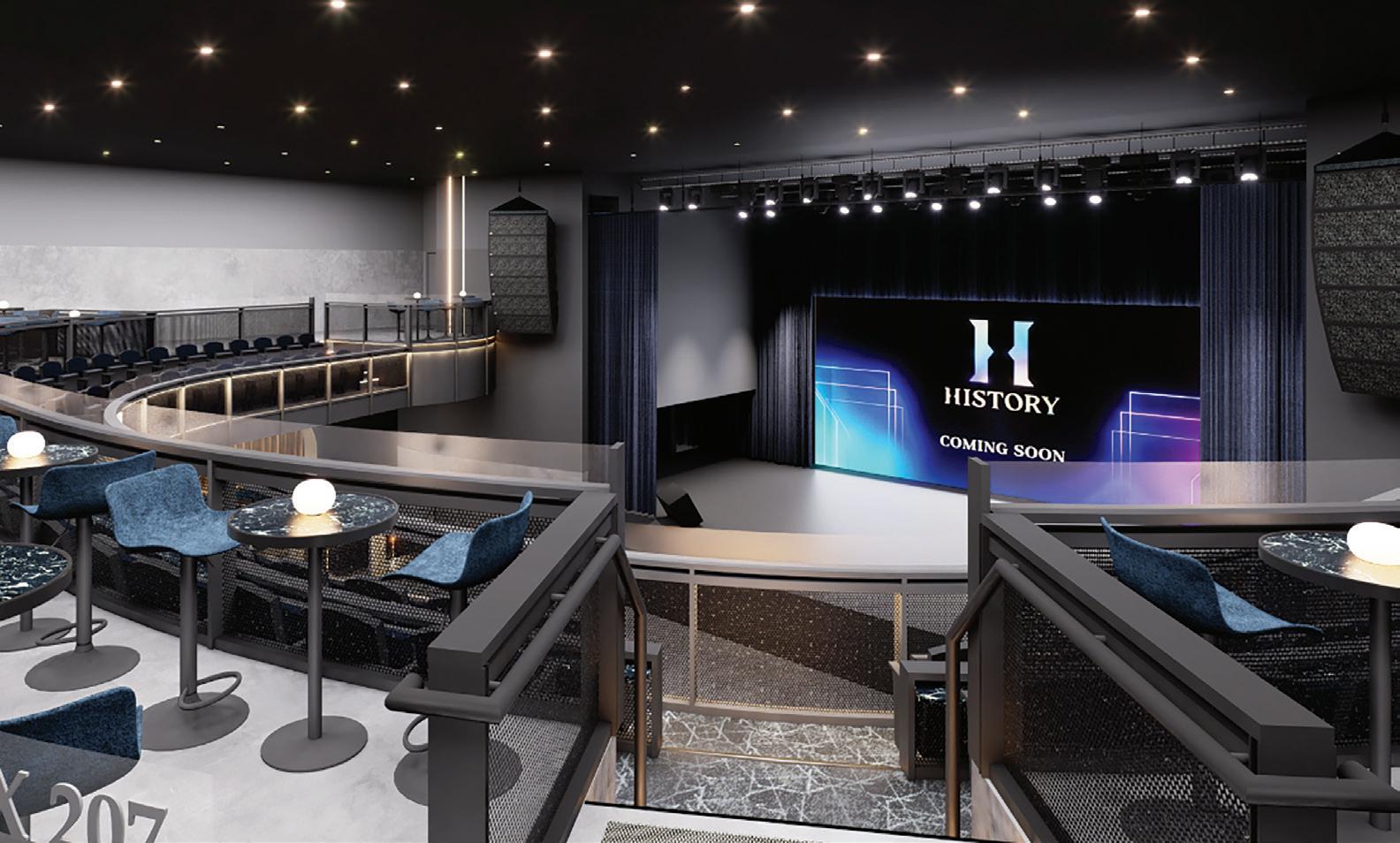
The much-anticipated venue History Ottawa will open on Rideau Street this summer. Ali Shafaee, vice-president of regional operations for Live Nation Canada, told a business audience in February that History Ottawa will be a catalyst for revitalization in the city’s core, helping to create jobs and bring more artists to the nation’s capital.
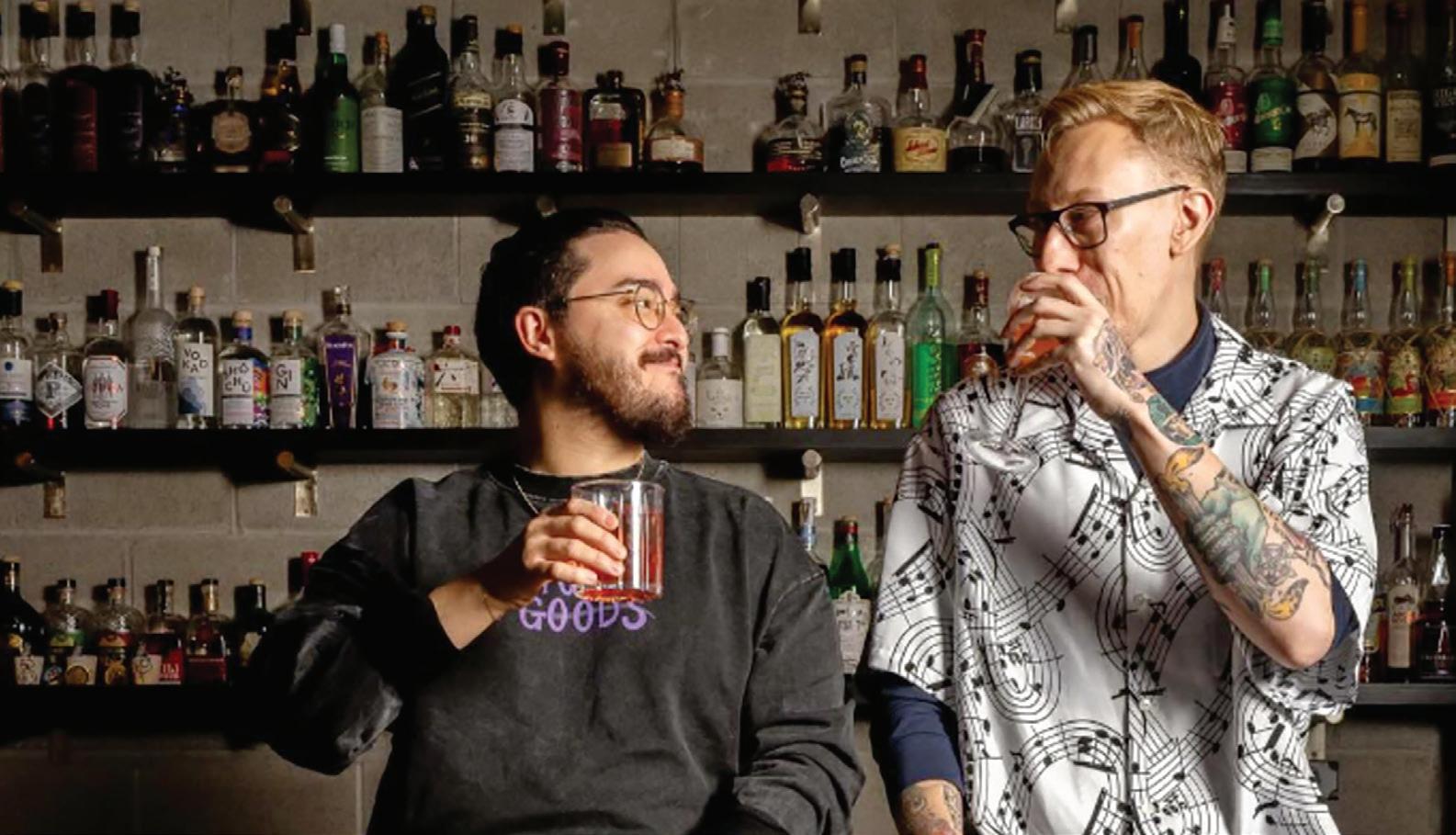
Goods is closing on Sparks St., and the owners have ‘crazy things’ planned
A popular cocktail bar on Sparks Street will close its doors at the end of the year and the co-owners already have their sights set on their next venture.

Minto Group CEO Michael Waters speaks about current real estate issues, such as the company’s REIT and how the City of Ottawa’s efforts to streamline its development application process are affecting the homebuilding industry.
At first glance, the terrazzo tiles in the lobby of an 11-storey apartment complex might not look like anything special. To Oz Drewniak, however, they represent a metaphor for the painstaking process that’s transformed the Brutalist structure formerly known as the Narono Building into an ultra-modern residential development.
see
Marcia Mills has spent 30 years counselling clients in the defence sector, but now, with the federal government upping defence spending and local stakeholders pushing to make the capital a hub for sector innovation, she said her firm is seeing an increase in activity.

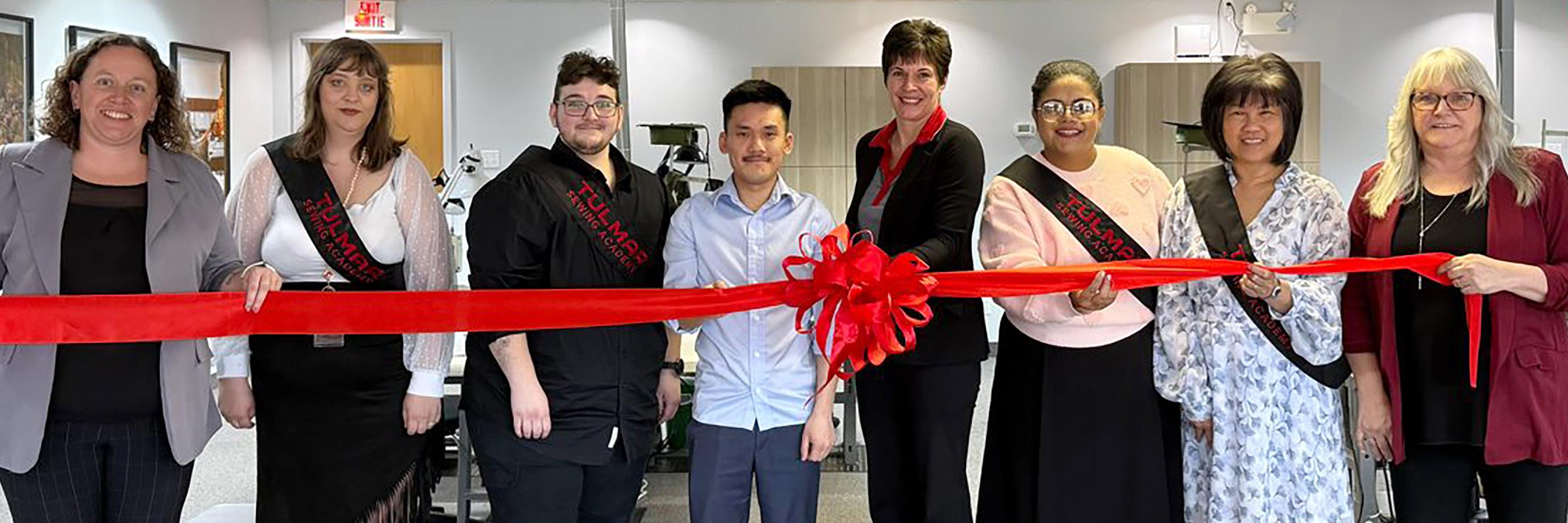
As defence spending around the globe increases, a Hawkesburybased manufacturer of military gear has had to address an increase in demand for one skill that has nearly disappeared from the labour market: sewing.

Four things that would need to happen to bring high-speed rail downtown
BY MARISSA GALKO PHOTOS BY MARK HOLLERON
t’s been about 60 years since rail travellers arrived in Ottawa via Union Station at 2 Rideau St.
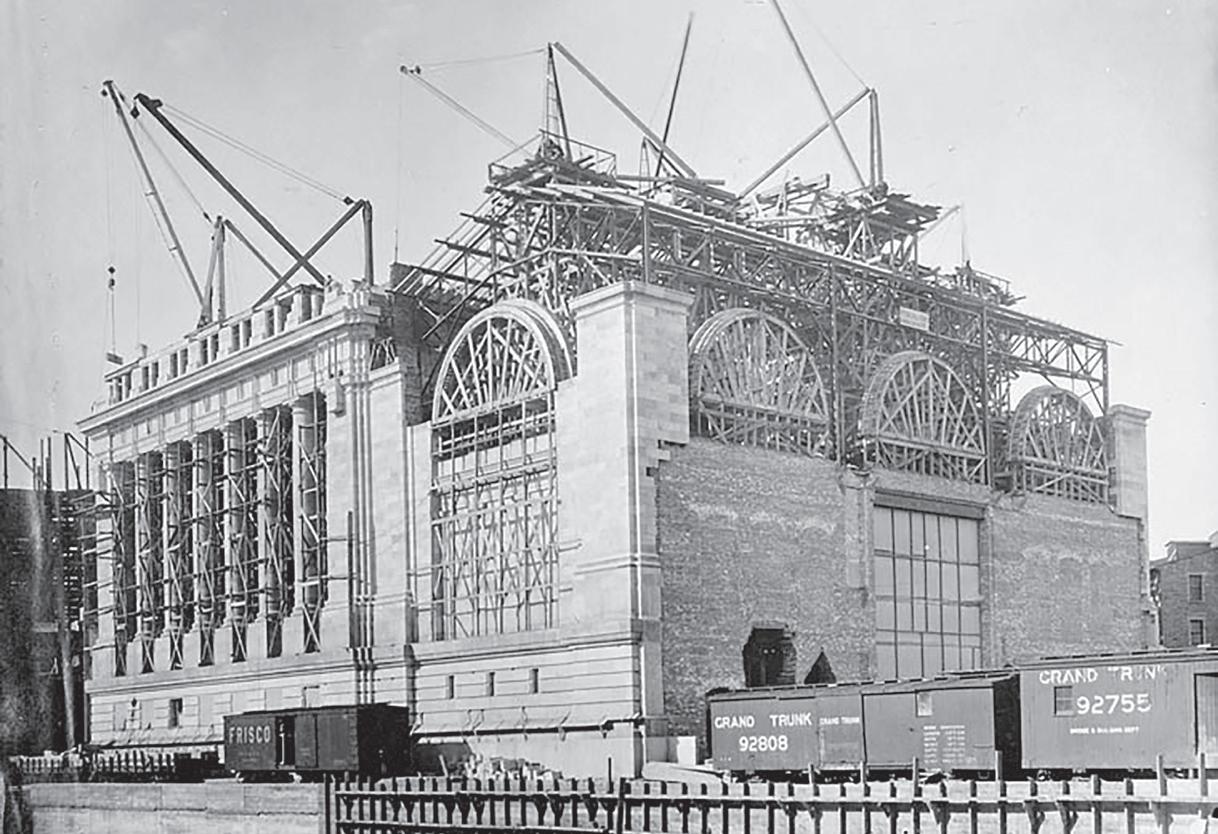
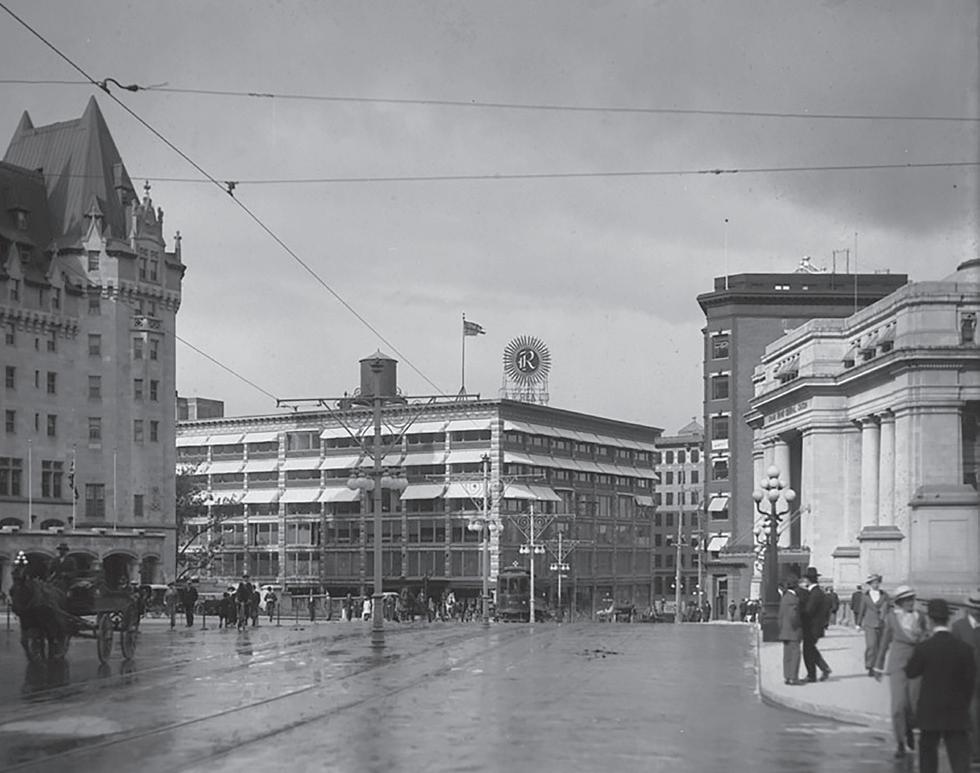
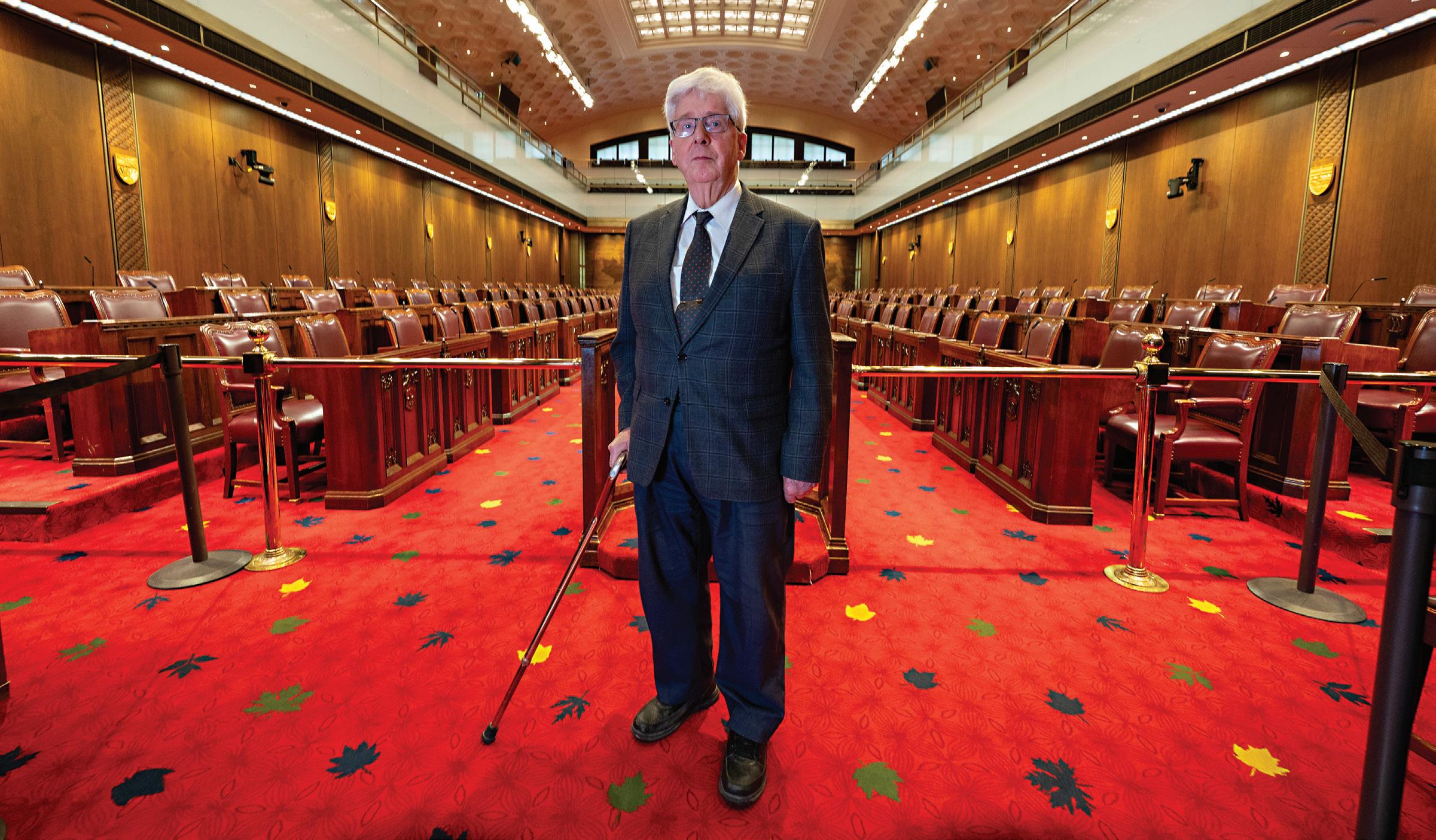
The building, originally known as Grand Trunk Central Station when it was built between 1909 and 1912, stopped operating as a passenger rail station in 1966 and gained heritage status in the late 1980s. Since 2019, the building has served as the Senate of Canada’s temporary home, while a permanent home on Parliament Hill undergoes a major renovation.
But now, a new train might be pulling into the station. Alto, the Crown corporation behind a high-speed rail project that would connect Toronto with Quebec City, is looking for a location for its future Ottawa station.
At an event in January, Martin Imbleau, CEO of Alto, told a business crowd that while Alto was considering many options, some people in Ottawa are advocating for the high-speed train to have its station downtown — more specifically, at the former Union Station.
And why not? Imagine being a tourist or business traveller, pulling into the heart of the nation’s capital, surrounded by historic monuments and modern conveniences. It’s a great idea, however, it’s been decades since the building and surrounding area have accommodated train travel.
Ottawa Mayor Mark Sutcliffe has thrown his support behind the idea.
“I believe the people of Ottawa will be best served by a station that is located right downtown. So I'll be working hard with the team at Alto to do everything I can to explore that. That station should be in downtown Ottawa,” Sutcliffe said in a city council meeting in January.
To better understand what would need to happen to make the former Union Station into Alto’s high-speed hub in Ottawa, OBJ spoke with David Jeanes, a retired engineer and board member with Transport Action Canada. Here are four things that he told us.
According to Jeanes, the primary obstacle to turning 2 Rideau St. back into a functioning train station is the building’s access to rail tracks. How would the train reach and depart the station?
“Because the Rideau Canal is a (UNESCO) World Heritage Site and it’s popular among the public, it would not be acceptable to try and bring the trains back the way that they used to come up until the 1960s, which was along the east side of the canal at ground level,” Jeanes explained.
His solution would be to build a tunnel running underneath Colonel By Drive to the Queensway at the Nicholas Street interchange.
“In terms of feasibility, it’s a fairly straight line from the present Senate building all the way down to the Queensway, and from there you would probably come back to the surface to go over the Rideau River on a bridge.”
In this scenario, the underground tunnel would be about 1.8 kilometres long, about onethird shorter than the underground LRT tunnel that currently runs under Rideau Street.
Additionally, the station itself would have to be accessible underground, Jeanes said, meaning work would need to be done to dig under the building near the canal to stage the station.
“There are many cities in France, Germany and Britain that have done that or are doing that by enlarging existing stations, constructing new stations, or connecting stations that were not in the town centre. The problem of station capacity and train access is being dealt with, so it’s a well-understood problem, but it’s never cheap,” Jeanes said.
Creating a tunnel and station under Colonel By Drive wouldn’t impact “the heritage aspects” of the Rideau Canal, Jeanes said, but it could mean that the canal would have to close for a year or two, at least near the National Arts Centre.
COST: Jeanes estimates the Ottawa portion of the high-speed rail project could cost as much as $2 billion.
FEASIBILITY: Analysis would need to be done to assess whether Jeanes’s plan could work, including what materials would be needed to build the tunnel and analyzing the ground conditions beneath Colonel By Drive.
CONSTRUCTION STAGING SITES: A city park currently located near Lees Avenue would make a good staging area for construction crews, but other locations closer to the station would also need to house construction materials, Jeanes said.

“I believe the people of Ottawa will be best served by a station that is located right downtown. So I'll be working hard with the team at Alto to do everything I can to explore that. That station should be in downtown Ottawa.”
MAYOR MARK SUTCLIFFE

Underground pedestrian tunnels to downtown destinations would be needed
Once travellers arrived in Ottawa at Union Station, they would be close to many Ottawa attractions, including the Rideau Centre and Rogers Centre Ottawa. However, some visitors may not want to brave the outdoors to get where they want to go.
This is not a new phenomenon, Jeanes said. When 2 Rideau St. was functioning as a train station, passengers could take an underground tunnel to the Chateau Laurier.
Jeanes said re-instituting that tunnel and building a network of other underground pedestrian passageways could help travellers get around without having to go up to street level.
Such a network, similar to ones in Toronto and Montreal, could connect to the Rideau Centre, Rogers Centre Ottawa and the National Arts Centre, Jeanes said.
“You’d have tunnels going basically in four different compass directions, connecting you to major destinations, and each of the tunnels would be less than 100 metres long,” Jeanes explained.

(Source: altotrain.ca)
“If we finally get high-speed rail in Canada and it doesn't stop in the densely populated downtown core … we will have squandered a huge opportunity. Downtown Ottawa has unique architecture and things tourists would actually want to see. Who wants to step off the train for the first time in a new city and be … between some busy roads and generic big box stores that literally look like any other North American city? Let's not embarrass ourselves. It's gotta be downtown.”
“It needs to be downtown to reduce city sprawl and connect with other transit lines.”
“With the Senate eventually moving back to Centre Block, the former Union Station is the perfect location if we're taking this project seriously as the paradigm shift in transportation that it is. An interconnection to the nearby Rideau LRT station would offer easy transfers to the LRT system, and from there to the rest of Ottawa (including the existing Via station). Co-locating the station at Tremblay would be settling for continued mediocrity and missing an opportunity to correct the historical blunder of banishing trains from Ottawa's downtown.”
Pick-up and drop-off zones and parking would be a challenge
One big headache that civil engineers would run into if the project went ahead would be anything to do with cars and traffic, Jeanes said.
Access to the station would be relatively easy for those on foot or arriving by public transit. The real challenge would be for those looking to park a car and catch a train, he said.
It’s unlikely that a new parking garage would be built near the former Union Station if it was revived as a rail stop, Jeanes said, adding that nearby parking garages are already operating at capacity.
One way to solve the problem is by having suburban stops with greater access to parking, Jeanes said, citing Fallowfield Station in Barrhaven as a popular alternative to Via Rail’s main Ottawa station on Tremblay Road. However, Alto isn’t currently planning any suburban stops with its high-speed project.
Back on Rideau Street, another car-related issue, Jeanes said, would be pick-up and drop-off zones. Car traffic along Rideau Street would be sure to increase if a train station was located downtown, with a myriad of taxis, rideshare vehicles and friends and relations looking to drop off and pick up train passengers — something Rideau Street isn’t currently equipped to accommodate, Jeanes said.
“Getting taxis, Ubers and kiss-and-ride drop-off spaces would be a small challenge,” he told OBJ. “They built a dropoff loop for senators at the south end of the building, and you would probably convert that into your main drop-off (zone).”
“In making this decision, we need to remember that Alto is intended to be a transformational project to try and tackle Canada’s transportation deficiencies. When executing an undertaking of this magnitude, there is going to be disruption. It is inevitable … No matter what, the Alto station has to be on the O-Train line or, better said, it must be possible to transition between the Alto and the O-Train without setting foot outside … With that in mind, using the current Senate building/former Union Station would be the best choice for connectivity … The downside is that it would be the most disruptive/ most complicated construction, but would certainly be a high-return proposition if executed correctly … The other option is, of course, the existing Via Rail station at Tremblay. This would perhaps give a good balance of connectivity while minimizing disruption, as this station is on the O-Train line but is away from the downtown core and has much less nearby infrastructure to disrupt during construction. It also already has accommodations for parking and taxi queuing, which is a big benefit (although bus connectivity here is poor).”
“Having the main Ottawa station come back to the downtown core would be pretty incredible. People are always talking about revitalizing the core, a project like this would certainly contribute.”
“The stop should be in the business district of Ottawa, similar to how Montreal and Toronto's central stations are … central. The station needs to be well-integrated with the surrounding area to support Ottawa businesses, something it can't do in the Train Yards. A through station would allow for less-restrictive speed limits approaching the platform, and passengers travelling through Ottawa would not sit backwards for a segment of their trip. Travel times from Tremblay to the heart of Ottawa using LRT would add another 20 minutes of travel time, not to mention up to 10 minutes wait for the LRT itself.”
Minor renos to the station itself would be required
The Senate of Canada made plans to temporarily occupy the former Union Station building in 2013, prompting the creation of a five-year renovation project, from 2014 to 2019, to bring the heritage building up to date.
According to Public Services and Procurement Canada, the renovation included retrofits to make a temporary senate chamber, as well as updates to the roof, masonry and building structures to adhere to modern building codes and seismic requirements. The project also included a focus on making the space accessible. The rehabilitation project cost $219 million.
Now, with those updates and changes made, Jeanes said the 114-year-old building would likely need minimal retrofits if it were to become a train station once again. And so, once the Senate moves out by the early 2030s, the former Union Station would be up-to-date and available for its next use.
In the end, Jeanes argues, the best place for Alto to put its Ottawa station is downtown, and it would give new life to an old building if officials chose the former Union Station.
“Location, location, location. When passengers walk out from the station, they are directly across from the Chateau Laurier. They are steps away from Parliament Hill, the (National) War Memorial, the NAC and the ByWard Market,” Jeanes said. “You feel like you’ve arrived in Ottawa.”
“Location, location, location. When passengers walk out from the station, they are directly across from the Chateau Laurier. They are steps away from Parliament Hill, the (National) War Memorial, the NAC and the ByWard Market. You feel like you’ve arrived in Ottawa.”
DAVID JEANES, RETIRED ENGINEER, TRANSPORT ACTION CANADA BOARD MEMBER




How Canadian defence companies are creating alliances to benefit from a government spending boom
BY DAVID SALI
For Eliot Pence, the federal government’s promise to buy Canadian as it re-arms the country represents the opportunity of a lifetime for defence industry entrepreneurs such as himself.
Pence is the founder of Ottawa-based Dominion Dynamics, one of a growing number of local companies that are developing cutting-edge technologies aimed at helping Canadian soldiers defend the country’s sovereignty in the Arctic and other regions.
Founded less than a year ago, Dominion Dynamics plans to spend $50 million on an ambitious program to design and build next-generation military drones at a new 25,000-square-foot facility in Kanata that is slated to open this summer.
“We want to build the factory of the future,” says Pence, a general partner at Washington, D.C.based Tofino Capital who previously spearheaded U.S. defence firm Anduril Industries’s international expansion from 2018 to 2022.
Dominion Dynamics expects to triple its headcount in Ottawa to more than 100 employees by the end of the year as its drone program ramps up. But Pence knows his business will need plenty of help to develop Canada’s first major network of unmanned military aircraft.

Dominion’s goal is to work with other Canadian defence-tech suppliers to ensure that at least 70-80 per cent of the drone program’s components are domestically sourced. Pence believes a new defencetech trade association he’s championing will help his company get there.
The group, called the Alliance of Canadian Defence Companies (ACDC), officially got off the ground in late February, about a week after the federal government unveiled a plan to boost the share of new defencerelated contracts it awards to domestic suppliers.
“From an economic development and sovereignty perspective, we think there’s a real opportunity to leverage some of the Canadian supply chain that is otherwise in other foreign platforms for our own platform,” explains Pence, who co-chairs ACDC with Paul Ziade, CEO of North Vector Dynamics in Calgary.
“We intend to fully engage the Canadian supply chain, and part of the reason why we set up ACDC is because we needed to know these companies and we wanted to inspire some collaboration amongst them.”
The new organization bills itself as “an industryled trade association” that will lobby government officials on its members’ behalf and “foster deeper co-ordination across the defence supply chain” as Canada looks to beef up its domestic defence capabilities. u
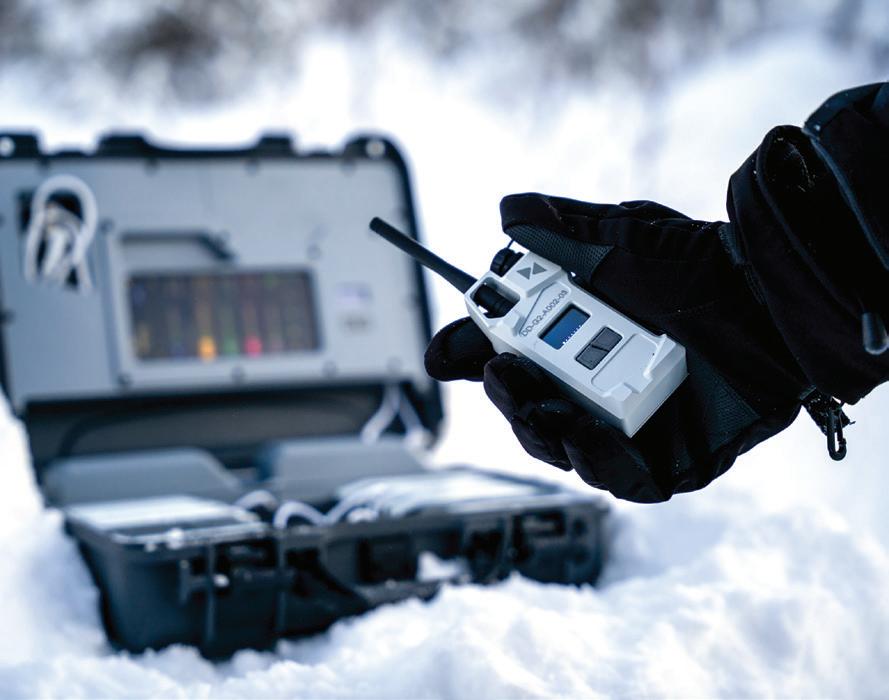
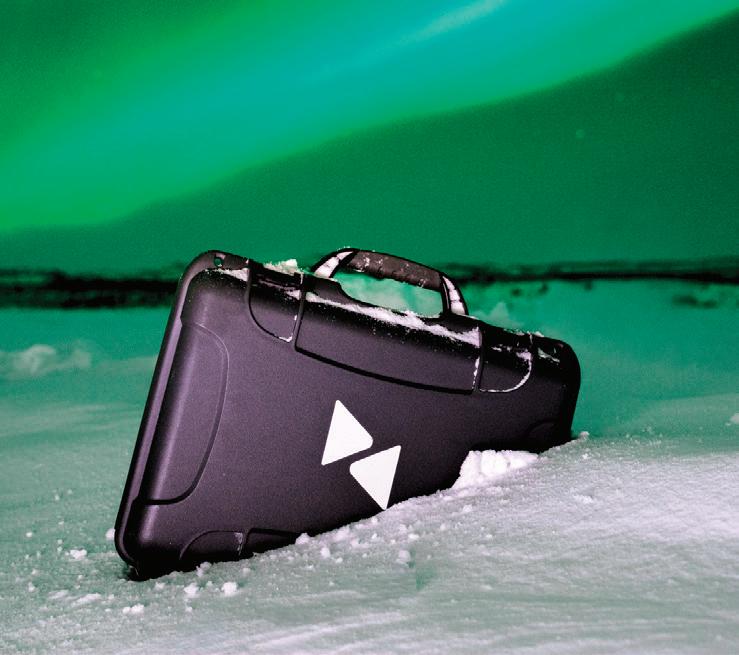
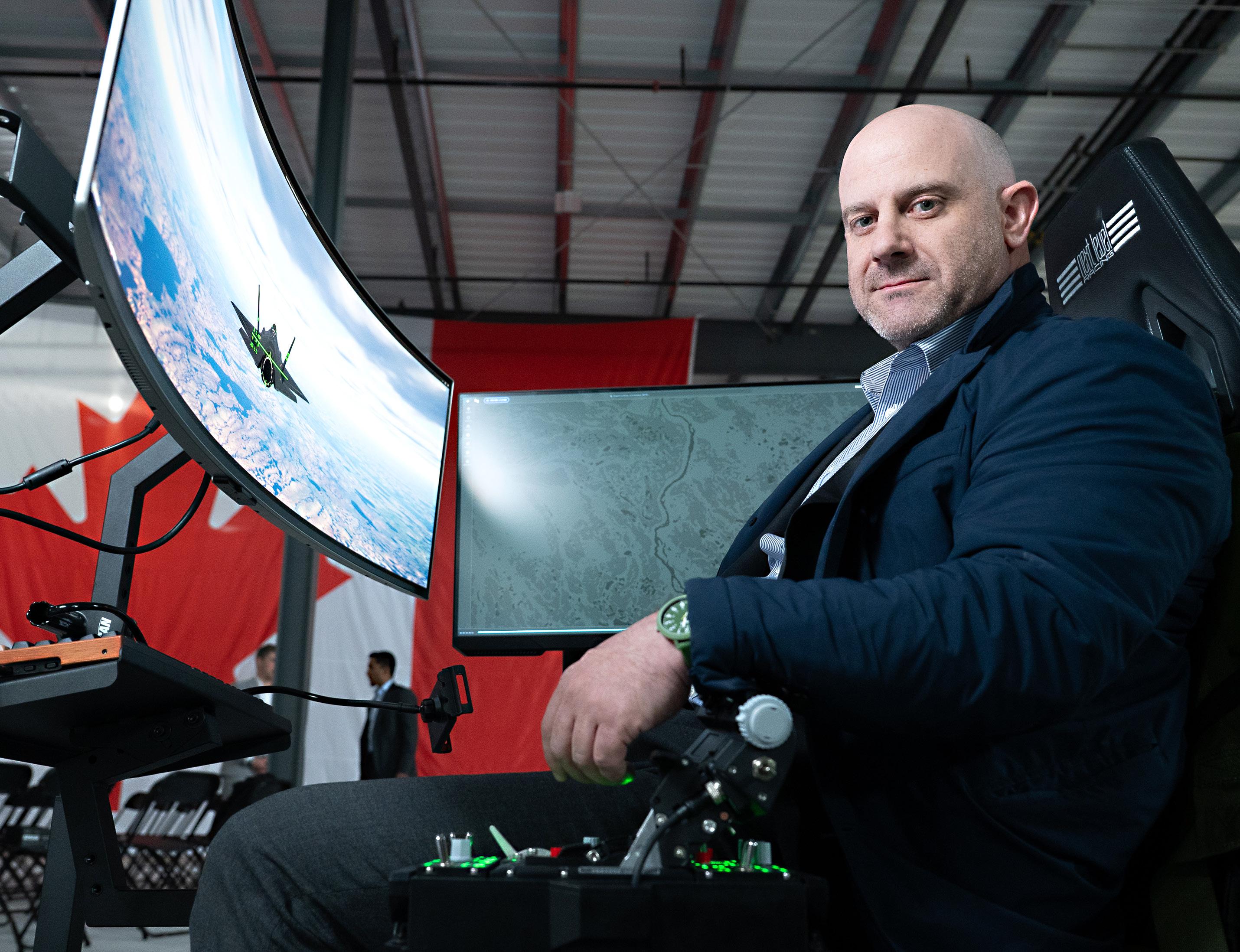
CLOCKWISE FROM RIGHT: Eliot Pence of Dominion Dynamics seated at his company's simulator; the Vault is a mobile-ready enclosure for deployable satcom; Flint is a secure, handheld communications device that provides real-time situational awareness.
The Ontario Defence Association (ODA) has been formed “to better align the province’s industrial capabilities with national priorities.”
Provincial government data show that Ontario’s defence sector includes more than 300 companies that employ 13,000 workers and generate $5 billion in annual revenues.
The ODA plans to act as a liaison between defence and security firms and various power brokers at the provincial and federal levels, while also working to improve access to procurement and funding pathways, bolster regional supply chains and help prepare small and medium-sized enterprises to participate in defence programs.
According to the ODA’s website, membership fees range from $500 annually for companies with 50 or fewer employees to $2,500 for firms with a headcount of 501 or more. It is open to businesses registered in Ontario that operate in the defence sector or in dualuse applications serving both civilian and defence markets.
It’s one of a number of new initiatives from Ottawa-based companies and associations aimed at capitalizing on the federal government’s push to supercharge Canada’s economy through increased defence spending.
BY
Under the new Defence Industrial Strategy announced in mid-February, the feds plan to spend $6.6 billion over the next five years as part of a 10-year campaign to create tens of thousands of jobs and raise the share of federal defence contracts awarded to Canadian-owned and -controlled companies to 70 per cent, which is about the percentage of federal deals that are now won by U.S.based firms.
That’s music to the ears of Pence, who says he’s been thinking of creating ways to make it easier for small and medium-sized defence-tech businesses to band together, share ideas and collaborate on projects for more than a year, in anticipation of a ramp-up in federal defence spending.
“Really, what we’re talking about here is Canadiancontrolled and Canadian-owned companies working collaboratively together to provide the (Canadian Armed Forces) something that they have said that they want and need,” he says, referring to equipment such as drones.
Pence recently told The Globe and Mail that he believes the government spending spree could translate into 300 defence-related contracts each year, including multiple awards worth more than $500 million and hundreds of
“Really, what we’re talking about here is Canadian-controlled and Canadianowned companies working collaboratively together to provide the (Canadian Armed Forces) something that they have said that they want and need.”
ELIOT PENCE, FOUNDER, OTTAWA-BASED DOMINION DYNAMICS
contracts between $5 million and $50 million.
Among the organization’s goals is a push for “fast procurement for Canadian-owned and Canadiancontrolled companies,” Pence says. ACDC, which is free to join, also plans to host networking events for members and hopes to book meetings with federal government officials to help them better understand the needs of domestic defence-tech SMEs.
ACDC started with 23 members, and by late March that number had risen to nearly 150. “That’s growing every single day as people hear about us,” Pence says, adding he thinks as many as 600 companies could eventually become part of the association.
The industry is currently served primarily by another Ottawa-based trade association, the Canadian Association of Defence and Security Industries (CADSI). CADSI has about 900 members, many of which are Canadian subsidiaries of large American and European multinationals.
Pence says it has different objectives than ACDC, which exclusively represents Canadian-owned firms.
“There is no trade association in Canada today that advances that specific subgroup of companies,” he explains. “For the prime minister to achieve the goals in the DIS, this group of companies needs to work together. I think there is a role for both CADSI and ACDC, but we have a very narrow mandate.”
Another Ottawa-based industry association, Canadian Manufacturers & Exporters (CME), is also looking to help its members grab a bigger piece of the defence spending pie. In mid-February — about the same time Pence and Ziade announced their new organization — CME announced the creation of CME Defence.
CME says the new initiative will design and deliver programs aimed at helping small and mid-sized businesses in fields such as advanced manufacturing, aerospace, shipbuilding, electronics and cyber-technologies gain the skills and certifications required to bid on federal defence contracts.
“The reality is, most manufacturers don’t participate in defence,” says CME president and CEO Dennis Darby. “They often don’t have either the technical or administrative systems in place to be able to go through the process for defence procurement.”
More than 85 per cent of his organization’s members are SMEs, and many of them see the path to supplying goods and services to the military as “very complicated and difficult,” Darby explains.
His organization hopes to work with federal officials to cut red tape and provide what he somewhat facetiously refers to as an “English-toEnglish translation” for companies not familiar with the nuances of military procurement. u
Announced in February, the Defence Industrial Strategy is a cornerstone of the federal government’s plan to boost defence spending to five per cent of Canada’s gross domestic product by 2035, up from two per cent today.
The $6.6-billion program aims to help the feds achieve lofty goals that include doubling Canada’s defence exports, creating 125,000 new jobs and raising the share of new defence contracts awarded to domestic suppliers to 70 per cent — up from the current mark of 43 per cent — within a decade.
The government says it will spend $180 billion on defence procurement, $290 billion on defence-related infrastructure and $125 billion on other defence activities during that time.
Under the “build-partner-buy” framework, the feds will prioritize purchasing from Canadian companies. If that can’t happen, they will look to work together with manufacturers from allied nations on projects that will trigger new investment in Canadian firms.
Only if those options are exhausted, Prime Minister Mark Carney said when announcing the policy in February, would the Department of National Defence buy from foreign entities. Even then, he said, “we will ensure that the maximum benefits are returned to Canada throughout the value chain, including through a modernized industrial and technological benefits regime.”
The strategy pinpoints 10 key sectors where military equipment can be manufactured in Canada: aerospace, ammunition, digital systems (such as artificial intelligence and quantum computing), maintenance support, personnel protection, sensors, space, specialized manufacturing, training and simulation, and uncrewed autonomous systems.
Recent estimates suggest Canada’s defence sector consists of nearly 600 companies, which employ more than 81,000 people and contribute more than $9.6 billion to the country’s GDP each year.
“The military has its own set of systems and rules, and so part of our job is to work with the government and say, ‘How can we help (make) that … a little bit more similar (to traditional RFPs)?” he adds.
CME also wants to be a “connector” between large defence companies or primes such as Lockheed Martin and smaller suppliers that might already be regular customers of big manufacturers in other industries, but aren’t on the radar of defence-tech giants.
Darby, whose organization represents more than 2,500 Canadian companies in sectors ranging from food and beverage to cosmetics, says CME wants to help members identify the best opportunities to partner with defence primes and provide training in areas such as quality control and auditing, where defence companies tend to have specific requirements.
In some cases, he explains, manufacturers might need to get raw materials from new sources to comply with military supply-chain rules and may even require employees to obtain high-level security clearance to work on certain projects.
“It’s not as simple as, ‘We’re making it for Ford and now we can make it for Boeing,’” Darby says. “It doesn’t work that way.”
Like Pence, Darby says his group’s new defence-focused initiative isn’t meant to compete with CADSI, but rather to complement it.
“We have a great relationship with CADSI,” he says. “But they tend to represent the big prime contractors, the companies that have the (bulk of the federal) contracts. By and large, we are going to be dealing with the companies who are going to supply those (tier-one contractors), not necessarily companies that are in that tier one, but who are in that next level down, who can build components or parts or subsystems. There’s lots of room for everybody.”
Canada’s defence spending bonanza comes as many domestic manufacturers are still suffering the effects of the trade war with the U.S., Darby notes. As a result, he says, many SMEs feel an even greater urgency to tap into new sources of business, including the Canadian military.
“The backdrop of the whole thing is we’ve seen our trade with the U.S. drop, not precipitously, but to a worrying degree because of tariffs,” Darby says. “And so this is one way to internally diversify some of our manufacturing capacity.
“There’s lots of opportunities. We have a very diverse manufacturing base. We can make just about anything. In these times, as our access
“There’s no one industry member that has the complete solution. This is a geopolitical instant in time where we see the whole world realizing we need to work together to try and grow defence capability and do things to protect the sovereignty of our nations."
JOE ARMSTRONG, PRESIDENT OF 49NORTH
to the U.S. becomes less fluid for all kinds of reasons, manufacturers are looking at where those other opportunities (are).”
The head of another new Ottawa-based firm says the federal government’s campaign to bolster the domestic defence industry will likely spawn greater co-operation among businesses that have traditionally competed fiercely with each other.
“To build out a sovereign defence capability, it has to be done with an ecosystem,” says Joe Armstrong, president of 49North, a new subsidiary of MDA Space that was also launched in February to supply cutting-edge technology to the Canadian Armed Forces and other defence customers.
With Canada set to spend tens of billions of dollars in coming years to modernize its defence capabilities and strengthen its sovereignty in regions such as the Far North, Armstrong says businesses such as 49North will have no choice but to work with members of organizations like ACDC to deliver drones, unmanned underwater vehicles, high-tech sensors and other complex infrastructure needed to help soldiers patrol Canada’s vast land mass.
“Every one of those things requires industry to work together,” he says. “There’s no one
industry member that has the complete solution. This is a geopolitical instant in time where we see the whole world realizing we need to work together to try and grow defence capability and do things to protect the sovereignty of our nations. It’s very rare that you see moments in time that can really shape and change an industry’s posture in a market like defence.”
Pence agrees, describing the Liberal government’s pledge to dramatically boost defence spending as an “inflection point” for the country.
“The government has set admirably ambitious goals,” he says. “I do think that it really does take two to tango here. The industry needs to pony up. It’s not just about getting government contracts. It’s about how do we collaborate, how do we propel each other, how do we engage investors, how do we sell ourselves. How do we make the case for Canadian companies? I am hopeful that we both rise to the occasion.”
At Canadian Manufacturers & Exporters, Darby says he’s confident his members will do just that.
“This is one where I think everyone’s got the same objective: let’s work together, because if we’re making these generational investments, let’s make sure Canadian workers and Canadian businesses have the opportunity to compete.” n










In recent years, women’s professional sports have come off the benches and into the spotlight, including here in Ottawa. But are they here to stay?
How two teams are reaching out to the local business community for support BY MARISSA GALKO
For many decades, there haven’t been any dedicated leagues for professional female athletes in Canada, only national teams that appeared at the Olympic Games. But that situation is changing. In 2023, the Professional Women’s Hockey League launched, with six founding teams in Canada and the U.S. At the same time, former Canadian soccer player Diana Matheson and business partner Thomas Gilbert formed the Northern Super League, Canada’s first professional women’s soccer league. In 2024, the Women’s National Basketball Association (WNBA) announced it would include its first Canadian team, the Toronto Tempo, in its 2026 season.
As with any sports franchise, the challenge will be realizing success, both on the field of play — whether ice, turf or hardwood — and in business.
According to a 2025 report from advocacy group Canadian Women & Sport, the value of Canada’s pro women’s sports market increased to $400 million in 2025 from about $200 million in 2023 and is on track to reach $570 million by 2030.
In just the past three years, the nation’s capital has added the Ottawa Charge and the Ottawa Rapid to its

PHOTO BY MARK HOLLERON
roster of professional teams. While initial results are promising, there’s still a ways to go for these teams to prove their staying power in a competitive market.
When the Northern Super League was taking shape, it became clear it would need six teams across the country to launch. According to a TVO documentary, Gilbert convinced Matheson to have a team in Ottawa. And so the Ottawa Rapid FC was the last team to join the NSL, with a shorter runway to get players and staff together before kickoff in April 2025.
Despite those early challenges, Gilbert told OBJ that the Rapid’s inaugural season was successful in a number of ways. “We just saw how the community accepted the team. The attendance and growth we saw over the course of the season, I think it really speaks to how vibrant a sports city (Ottawa is).”
In its first season, which lasted from April 27 to Oct. 15, 2025, the team saw an average of 3,500 fans per match and steady growth in attendance, including in season ticket sales.
Gilbert said merchandising has been a happy surprise. “I remember having a meeting with the presidents of all the teams across the country and everyone had a shocked look on their faces when they were seeing how much merch we were selling (in Ottawa). Nobody expected it to be as big as it was.”
In fact, merchandise sales for the Rapid exceeded projections in the first year by more than 200 per cent, perhaps due to the team’s collaboration with apparel retailers Peace Collective and Peau de Loup.
According to Gilbert, year one was about making women’s professional soccer a reality in Ottawa and building a strong foundation.
“We’re focused on building a team, community and ecosystem that is going to last for generations. We talk about (having a) 100-year goal. Our first year was really focused on building out the foundation and getting us to (this) point. So much work went into getting us to a place where we could put on professional women’s soccer. This year, it’s about building on that foundation and levelling up.”
Levelling up includes building the right relationships with businesses and other partners, he added. “From year one to year two, we’re more focused on the quality of the interactions we have and making sure that we’re getting those details right so we can really hit the gas and start to scale through the end of this year and into next year.”
With plans to grow, the Rapid needed financial backing. In March 2025, the team announced that a local ownership group, including Fullscript CEO Kyle Braatz and tech exec Jason Flick, had been formed.
A soccer fan himself, Flick said he couldn’t believe Canada didn’t have a soccer league for professional female athletes.
“We’re winning out there at the Olympics, but

BY
“We’re winning out there at the Olympics, but there is no infrastructure for us to support and push them up. Whereas every other country that isn’t winning (at) the Olympics has complete women’s teams with professional athletes who are getting paid. We cannot not let this work.”
JASON FLICK

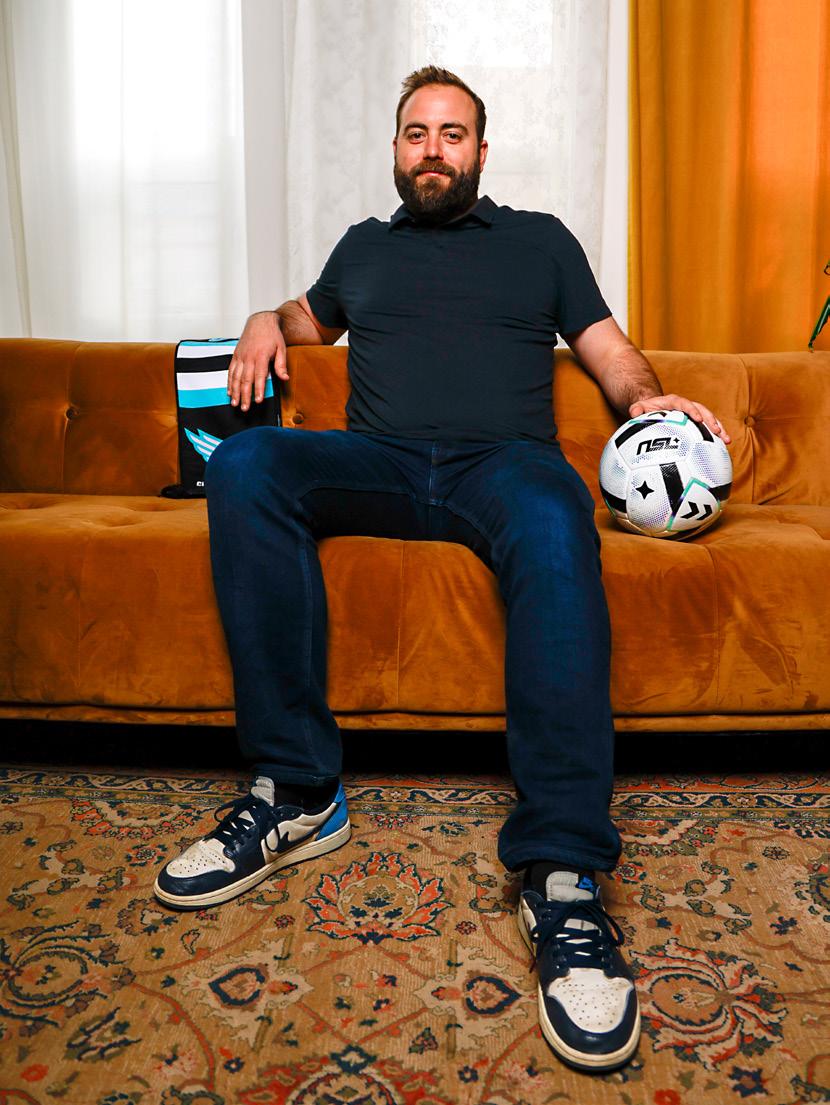
there is no infrastructure for us to support and push them up. Whereas every other country that isn’t winning (at) the Olympics has complete women’s teams with professional athletes who are getting paid,” he said. “We cannot not let this work.”
The team has already seen strong interest from local businesses and groups.
“In the first year, there was a lot of wait-and-see,” Gilbert said. “There’s been a tonal shift since coming out of last season. In the off-season, (as we are) talking to businesses, the level of engagement and interest is fundamentally different from what we were experiencing last year.
“What we deliver for businesses is a loyal fan base and a values alignment that is unparalleled … u
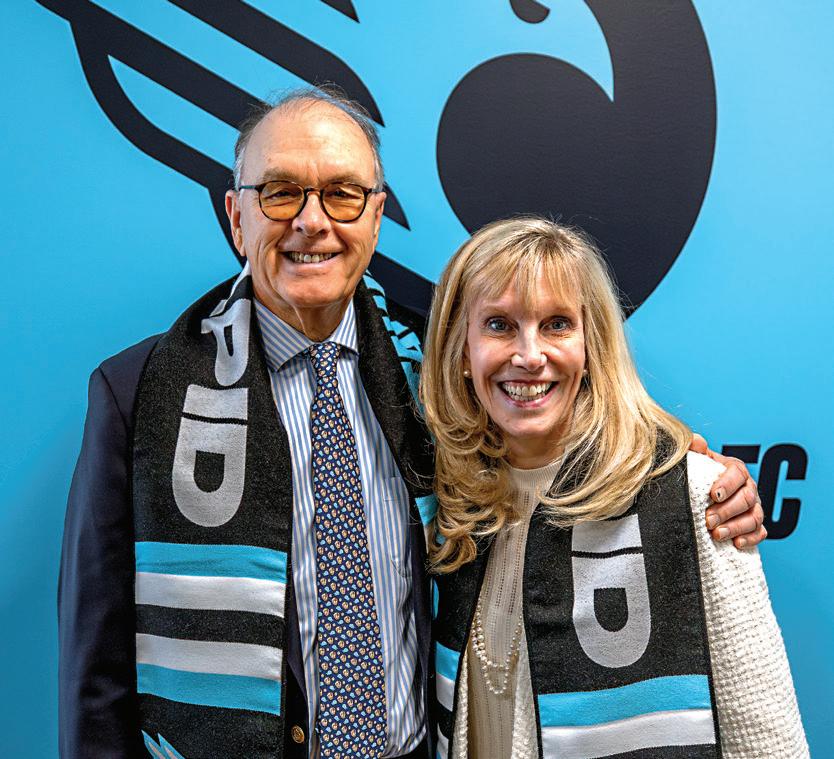
Our fans know that when a company comes on board, it’s because their values align. It’s really powerful,” Gilbert said, citing statistics that suggest consumers engage with a sponsor of women’s sports 40 per cent more than with a sponsor of men’s sports.
A team needs a brand that people will latch onto, Flick agreed.
“Unfortunately, like any other business, all the vectors have to be moving progressively at the same time. You have to become an expert in each one,” Flick said. “It’s just like at my video game company. Almost everybody in the company loves video games and is passionate about it. But, in the end, you have to be really good at selling sponsorships, positioning and running great events. (For soccer), fans have to love the venue. Advertisers have to love their positioning. Players have to want to work on your team. Budgets have to be managed. Facilities need to have mutli-year deals. It’s complex.”
The league has seen support with a $5.45-million investment by the federal government. In Ottawa, Gilbert welcomes the move.
“We’re really lucky when it comes to infrastructure in Ottawa,” he said. “There’s always going to be room for growth. (When it comes to) sports infrastructure, to say there is a gap in Canada is an understatement. We want to see even more investment in sports infrastructure across the country.
“Our training facility is probably the second best in the league and that came from the first season. We’ve got a really great stadium at TD Place. At this stage, we’re looking for smaller fixes that we can improve. In the medium-term, we’ll start looking at what the big picture infrastructure needs are for the team.”
In early March, the Rapid announced a new majority owner, Arcadia MapleLeaf Soccer, led by Nick Sakellariadis, Ellen Shumway and Micheal Savit. The team also announced that all founding owners would be increasing their investments in the team.
Gilbert said it’s the type of support that gives him confidence that the team can survive beyond its first years.
Teams in the Northern Super League
• Vancouver Rise FC
• Calgary Wild FC
• AFC Toronto
• Montreal Roses FC
• Halifax Tides FC
• Ottawa Rapid FC
The league is expected to add an expansion team in 2027.
Teams in the Professional Women’s Hockey League
• Boston Fleet (2023)
• Minnesota Frost (2023)
• Montreal Victoire (2023)
• New York Sirens (2023)
• Ottawa Charge (2023)
• Toronto Sceptres (2023)
• Seattle Torrent (2025)
• Vancouver Goldeneyes (2025)
The league has expressed interest in adding four expansion teams in coming years.


“With both the Arcadia investment and the existing owners’ investment, it’s really about making sure this club is going to be sustainable long-term. Ottawa has a storied history of franchises coming and going and we’re not going to be a part of that history. We’re here to stay.”
Sharing the Rapid FC’s home at TD Place is the Ottawa Charge. Now in its third season, the women’s professional hockey team has exceeded expectations.
“Explosive,” Erin Thompson, director of business operations, said to describe the team’s growth. “Starting in season one, we didn’t know what we didn’t know. I was employee three on the ground for the Charge. For the first games, I was refreshing Ticketmaster over and over and over again because we thought our magic number (for ticket sales) was going to be somewhere around 3,000. We got to 3,000. We got to 5,000. And, 8,014 was our opening game (attendance).”
In its first season, the team led the league in attendance, putting the pressure on for the second season, Thompson said, especially as teams in Toronto and Montreal moved to larger venues to accommodate growing fan bases.
“By no means do I mean that we struggled in year two, but we didn’t have the schedule,” she said. “We still averaged 6,600 to 6,700 (fans) a game and that’s the average for weekday and weekend games. We had a weekday-heavy schedule and we know that that impacts attendance across the board.”
By the middle of the third season, the Charge were still seeing growth. “You leap into season three and it’s a bit of a difficult political climate around us … and attendance reflected that a little bit,” Thompson said, referring to Canada-U.S. tensions. “But then we’ve just hit this spot of momentum. Our last four games have averaged over 8,000 attendees per game.”
Compared to the previous season, Thompson said attendance is up 16 per cent. From the start of the third season to now, attendance is up 35 per cent.
Merchandise sales are also doing well. “We’re the smallest market of the eight (teams). Anybody will tell you that Ottawa is not a rich city. We’re not Toronto, Montreal or Vancouver. But we’re certainly in a very comfortable (and) very steady incline in merch sales,” Thompson said.
The team is seeing good response from potential sponsors as well.
“Our league runs a little bit differently in terms of sponsorships and partnerships, with most deals negotiated at the league level. We have very few locally here in Ottawa, but that does not diminish the demand,” Thompson said. “We get calls and requests and emails all the time for people that want to associate with us and brand with us. I foresee

that increasing the longer we go,” she said, adding that local supporters include the Hard Rock Hotel & Casino and CAA North and East.
“The women’s game, the girls’ game, in this area is very strong. One of the hotbeds (for hockey) in the world is right here in Ottawa and I think it’s getting even stronger … I think the Charge shine a bigger spotlight on (the women’s game).”
CYRIL LEEDER

For the Charge, the largest barrier to long-term success may centre around the team’s venue. While the team has been playing and regularly selling out at TD Place arena at Lansdowne Park, officials for the Charge have voiced concern over the city’s plan to revitalize Lansdowne, especially its designs for a new event centre that would reduce seating capacity from just over 9,800 to about 6,600 for hockey games.
Patrick Whalen is the founder of Extension Marketing and the Sports Marketing Report. He’s perhaps best known as president and CEO of the Ottawa 67’s hockey team from 2001 to 2012. He also worked as executive vice-president and chief marketing officer at the Ottawa Sports and Entertainment Group, overseeing the Ottawa Redblacks’s debut.
He argues that a smaller venue could work in the Charge’s favour.
“Let’s say you are going to the greatest restaurant in the world. If you walk in and there are two people in there, you may have a great meal but if the place is empty it makes you think, ‘Is this place really great?’ Whereas the opposite is true. Particularly in sports, there’s nothing more entertaining than the team winning. By going to a smaller venue, you increase the odds of being at capacity or near-capacity, which lends itself to the fan experience.”
Thompson said the Charge is working on ways to keep the team in Ottawa.
“There’s always noise in the background. There’s maybe a little bit of concern over the future of the venue … Ottawa is a true hockey market. It’s the smallest market in the league, but our fans show up. We are committed, along with the league, to finding a permanent solution to stay here (in Ottawa) and I’m confident that will happen,” Thompson told OBJ u


In March, the Ottawa Senators confirmed they’d been in talks with the Charge about helping the team find a permanent solution. Speaking to OBJ in mid-March, Ottawa Senators president and CEO Cyril Leeder said his team has a vested interest in growing hockey in the nation’s capital.
“The women’s game, the girls’ game, in this area is very strong. One of the hotbeds (for hockey) in the world is right here in Ottawa and I think it’s getting even stronger … I think the Charge shine a bigger spotlight on (the women’s game),” Leeder told OBJ, adding that the Sens have been in talks with Charge about a lease agreement at the Canadian Tire Centre.
In early April, the Ottawa Charge attracted 17,114 fans to the CTC for a game against the Montreal Victoire, setting a franchise record for attendance. It was the best-attended PWHL game in league history until the Seattle Torrent and New York Sirens gathered 18,006 fans at Madison Square Garden in New York City the next day.
So what does the future hold?
“There’s typically a honeymoon period for any new team,” Whalen said. “Look at the Redblacks. They sold out every game for the first three or four years. But … eventually winning has to start taking over.”
As with any sports team, Whalen said half the venue will be filled with avid fans and the other half with casual fans. While avid fans are “the ones that are going to go through thick and thin,” no matter how the team performs or the ticket price, casual fans are the ones “that will really make or break a franchise.”
“The key for (casual fans) to want to engage with your franchise — and this is where I think women's sports have a leg-up — is that they want to be entertained at a reasonable price.”
Casual fans will also want to engage with a franchise if the team is winning frequently. “There’s no better marketing tactic than a winning team,” Whalen said.
But when it comes to pro sports in Ottawa, Whalen said women’s teams may have another advantage over their male counterparts in attracting fans — either casual or avid.
“I think fans can relate better to it, because (the players are) not making, for the most part, what a Senators player is making. There’s a reliability factor there,” Whalen said. “It’s going to be all about grassroots. It’s one of the things that made the 67’s successful; that their players (were) more accessible than those in the NHL. I think it’s going to be key for them to make sure that their players are out in the community, whether it’s the soccer team or the hockey team.” n



You're getting brands, influencers and fashion bloggers who are putting out content for 'what I wore to my corporate job this week,' but it's not what we would call office-appropriate.
REBECCA ROWE

BY SONIA MENDES
PHOTOS BY MARK HOLLERON
It seems artificial intelligence is all anyone can talk about at workplaces today, from high-tech to accounting and in both the private and public sectors. But can it change the way employees decide on appropriate workwear?
Ottawa-based personal stylist Rebecca Rowe thinks the technology is not yet up to the task.
According to Rowe, as AI weaves itself into the fashion industry, popular clothing giants such as Zara and H&M have shifted to using AI models on their websites. But, she warns, these hyper-realistic clones blur the reality of how garments actually look and perform.
“They’re putting the production of what the garment looks like onto an AI figure, they’re walking around and showcasing what it looks like,” explains Rowe, a former clothing designer who trained at ESMOD Paris, the oldest fashion school in France. “It makes it more challenging to purchase things online, because a fake human is always going to look more real than a real human.”
Often AI fails to provide the nuanced judgement required to determine what fashions are office-appropriate, she says.
“You're getting brands, influencers and fashion bloggers who are putting out content for ‘what I wore to my corporate job this week,’ but it's not what we would call officeappropriate.”
In March, popular TikToker @huskistaken demonstrated how taking fashion advice from a bot can quickly go sideways. “What do you think of my new hat?” the man deadpans, showing off a hilariously tiny child’s hat perched on his head.
“I think it’s got personality,” chirps ChatGPT. “The pattern is fun, and it’s giving off a laid-back vibe. If you like it, rock it with confidence.”
Even though the TikToker turns his head and strongly hints that this is not the case, ChatGPT doubles down on the compliments, encouraging him to flaunt his new hat in public. Commenters rush to disagree, highlighting that AI is a people-pleaser with failed judgement.
This sort of thing muddles the fashion picture for workplace professionals, especially when there’s a lack of direction from employers when it comes to a dress code.
appropriate’ according to their values and brand, which is why their employees are going to AI in the first place,” says Rowe. “Business casual for Shopify and business casual for a law office are two different things.”
Jared Gibson, an Ottawa personal stylist specializing in menswear, shares that his clients are often duped into believing AIgenerated images are legitimate garments.
“Pinterest is just swamped with it,” he says of AI fashion images. “The looks that people are pulling, it's no fault of their own; it's going to be an AI-generated image.”
Gibson says this poses a challenge when the fictitious clothing item can’t actually be purchased.
“When it's an AI-generated image and it's a made-up colour that doesn't exist for a suit, it can be tough to work back from that into reality,” he says, noting men are increasingly looking to tools like ChatGPT for fashion advice. “I'm seeing people approach the styling appointment with an AI summary of what someone should wear. As a stylist, I'm morally opposed to AI in that sense. I feel as though it cheats our work a little bit.
“Instead of going with the lowest common denominator result from looking up 10 menswear rules on ChatGPT, I think it's much more productive to have conversations with people.” u

“Companies don't have the language to accurately describe what is ‘workplace-


Another limitation of AI when it comes to choosing workwear is that it does not yet comprehend the psychology behind the human desire for change. A former occupational therapist, Ottawa-based Gabrielle Lavigne changed careers and moved into personal styling after a divorce. She argues that personal conversations and addressing body image issues in real time can’t be easily replaced by AI tools.
“I try to dig deep into what style they want to create for themselves, what message they want to portray with their clothing,” explains Lavigne of her meetings with clients. “I mostly focus on women that are going through a life transition: either a divorce, change in career or going through menopause.”
Lavigne uses colour and body shape analysis to better understand her customers.
“When I do an outfit consultation, we try things together and we have a conversation about what the person likes and what they don't,” says Lavigne. “I provide a safe place to experiment with new silhouettes or items a person would not choose for themselves.”
Local customer service Easy-to-use online ordering Rapid delivery on 1,000s of items
Even if an AI tool is given context around body type, its fashion tips may not be applicable to everyone, cautions Lavigne.
“Following a general guide for an hourglass body shape might not always achieve the result the person is looking for,” she says. “For colour analysis, there’s more than just seeing a picture; depending on the lighting in the picture, the colours might appear different than in real life.”
Rowe, who works with male, female and non-binary clients, says the common thread she’s seeing these days is a desire to reflect an internal change to the outside world.
“I have a very clear psychographic: anyone going through a state of change who feels like their wardrobe is no longer meeting their needs for the person they're becoming,” says Rowe. “Often they're transitioning into a new position at work, whether it's levelling up or switching careers.”
There are other aspects of office dressing that AI might not be able to help with.
After designing her own fashion brand for about a decade, Rowe shifted to providing closet edits and shopping services in 2023. She says regardless of whether her clients are launching their careers or approaching retirement, they often grapple with what constitutes age-appropriate workplace fashion.
“That’s a very big and strong conversation that I’m constantly having with the older
generation. The gen X or elder millennials are saying, ‘I don't want to look too young and I don't want to look too old,’” says Rowe. “The younger clients are saying almost exactly the same thing, but with a different twist, ‘Well, is this too old? Because I don't want to wear that.’”
When shopping with older women, she instructs them to focus on the specific item they’re looking for and not the brand name.
“Women will get pushed into certain stores or they’ll stay clear of the younger section of a department store because they think that's too young,” explains Rowe. “But if you love your shoulders and you're into a halter top underneath a cardigan, a Dynamite or a Garage is the place that’s going to have what you need.”
In working with men, Gibson doesn’t see his clients struggling with age-appropriate fashion choices to the same extent.
“I think we settle into what we know, like when you have a pair of pants that fit really well and you wish you’d bought the same cut in three different colours.”
Before offering personal styling services, Gibson spent three years working at Surmesur, a Queen Street clothing store in Ottawa specializing in made-to-measure menswear. When retail stores went dark during the COVID-19 pandemic, Gibson made home deliveries to some of Surmesur’s high-end clients, including Ottawa Senators players. And technology did play a part at the time.
“That was the nice thing about having a system where all their measurements were on file; they didn't need to come in and shop for anything again,” he says of the custom model, adding the store offers about 10,000 different fabric options. “When someone designs a pair of pants they like, they’ll say, ‘Wow, those were perfect. I just want that same fabric, but in different colours.’”
Another aspect that AI might not grasp is the concept of comfort. Lavigne says her clients are making comfort a priority in their workplace wardrobes, particularly since the pandemic.
“Comfort is a word that I hear a lot. It’s mixing those elements of finding something that does look professional, but you can move in it,” she says. “A lot of people are returning to the office after working from home, so it’s finding that middle ground.”
Rowe observes a range in the way her clients prioritize comfort, which often seems linked to their age bracket.
“With my older generations, it's almost like

I'm seeing people approach the styling appointment with an AI summary of what someone should wear. As a stylist, I'm morally opposed to AI in that sense.
they've been taught that their physical being in a garment doesn't matter; they're willing to deal with it being just a wee bit too tight or just a wee bit uncomfortable,” she says. “My gen Zs and younger millennials will say, ‘Nope, this is touching my neck … absolutely not.
“They're so much more comfortable with setting boundaries with their own body.”
During fittings, Rowe reminds clients that their comfort level matters, since an uncomfortable garment will likely hang unused in the closet.
“I’ll ask, ‘How does this feel on your physical body? Because if it's not comfortable, your subconscious won't reach for it.’ And they’ll say, ‘Oh, I never thought of that.’”
Gibson takes a pragmatic approach when helping male clients dress for special events, whether work or personal. While slim-fitting suit pants may be on trend, for example, he warns they’re not the best choice when you need to bend and move.
“I have one friend who wanted to do Boney M’s Rasputin dance and he soundly split his trousers on the dance floor,” laughs Gibson. “It’s avoidable. If you want to be able to dance at a wedding, having loose pants is going to make it easier.”
Dressing for your body type is key, says Gibson, and tends to yield the best results.
“A lot of times, grooms will come to me with a photo of Daniel Craig as James Bond and they want to look like Daniel Craig,” he says. “I say, ‘Listen, me too. But I accepted that that's not my reality.’ u

ST. VINCENT & THE NAC ORCHESTRA
JUNE 18 - 28, 2026
Confederation Park & National Arts Centre
• WYCLEF JEAN •
JEFF GOLDBLUM & THE MILDRED SNITZER ORCHESTRA
WILLOW • BADBADNOTGOOD • DOM i & JD BECK
• IBRAHIM MAALOUF
FT. JELLY JOSEPH
HIROMI’S SONICWONDER • BOB JAMES
KOKOROKO • THE DIP • THE SOUL REBELS • KASSA OVERALL
AVISHAI COHEN BIG VICIOUS •
LARNELL LEWIS BAND
FT. JOY LAPPS









SALIN • TOB i • MYRA MELFORD’S FIRE & WATER QUINTET
JOE FARNSWORTH'S BIG ROOM QUARTET • LEENALCHI


























ORRIN EVANS TRIO • BECCA STEVENS TRIO • THE FREE LABEL & MANY MORE!











“The thing is, when someone is dressing to proportion, they can come close to looking as sharp as James Bond in the tuxedo. It's about doing things correctly instead of trying to fit yourself into a sort of mould.”
Even with today’s technologies, the basic principles of fashion are timeless, and understanding them can level up your fashion game.
“One of the core values I have is that styling is a skill and skills can be learned,” says Rowe, who emphasizes she doesn’t use body types when dressing her clients. “I only use anchor points when I'm doing styling. The three anchor points are at your ears and neck area, at your waist and at your feet.”
Before investing in any fashion trend, Rowe advises clients to determine which anchor point they want to highlight. For the neck area, one of the biggest trends for spring can be found in grandma’s jewelry box: the brooch.
“You have some of these in your closet from when you were 16; pull those babies out,” she says, adding they can be worn along the lapel of a blazer or at the point of a collared shirt.
“Use more than you think you will need, like three or five or seven — always an odd number.”
Rowe is also seeing a trend toward belts with metal buckles and interesting animal prints. With shoes, she suggests breaking the pattern.
“If you’re in a suit, wear a fun sneaker,” she
It’s going for (a watch) that doesn’t make you look like a spy kid when you’re wearing a suit. I also don't think that you need to track your steps if you're driving into the office and sitting at your desk for the day.
says, adding athletic shoes should be reserved for the gym. “Wear the wrong shoe.”
While smart watches have been a consistent office accessory for years, it seems consumers are now looking to soften the high-tech look.
“You're getting less athletic-looking smart watches and more smart watches on a bracelet or on a leather band,” says Rowe.
Gibson, on the other hand, sees a decline in the popularity of smart watches altogether, particularly from the fashion influencers he follows.
“There’s a return to analog. It’s the concept of wearing a Seiko or a Cartier (watch), or something of that vintage.
“It’s going for something that doesn’t make you look like a spy kid when you’re wearing a suit. I also don't think that you need to track your steps if you're driving into the office and sitting at your desk for the day.”
With the infiltration of AI and other technologies in the world of fashion, accessories like the old-school watch may bring a welcome space between people and technology, suggests Gibson.
“People are really content to minimize the screen time, alerts and notifications, because so much of the attention economy is pulling us away from living in the moment,” he says.
“I think that, with the return to office, we need to find a way to take back moments for ourselves.” n
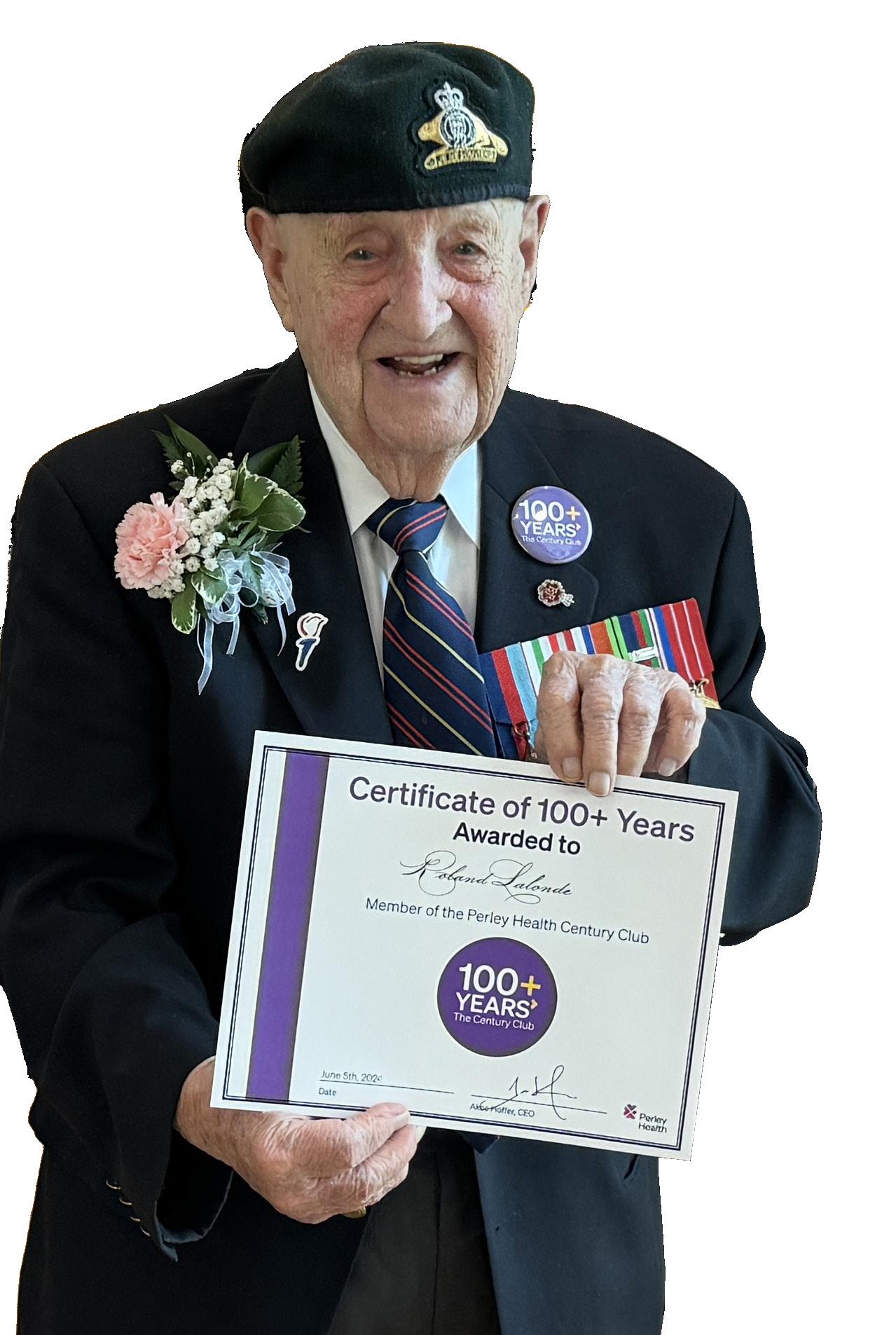
This Seniors Month, we honour the Veterans and Seniors who helped build our community. We bring compassion and innovation together to support dignity, purpose and connection with support from the Perley Health Foundation.
This Seniors Month, we honour the Veterans and Seniors who helped build our community. We bring compassion and innovation together to support dignity, purpose and connection with support from the Perley Health Foundation.
The CEOs of three fast-growing tech firms share how their AI story is evolving
By David Sali
In early 2025, Shopify CEO Tobi Lütke made headlines when he said using artificial intelligence was a “fundamental expectation” for employees at the e-commerce giant.
“Frankly, I don’t think it’s feasible to opt out of learning the skill of applying AI in your craft; you are welcome to try, but I want to be honest I cannot see this working out today, and definitely not tomorrow,” Lütke wrote in a memo to his staff. “Stagnation is almost certain, and stagnation is slow-motion failure.”
Fast-forward a little over a year, and generative AI tools such as Open AI’s ChatGPT, Anthropic’s Claude and Google Gemini have become ubiquitous talking points for virtually every senior leader in Ottawa tech as companies scramble to figure out how AI can be used to maximize worker productivity and enhance the customer experience.
In fact, with AI now dominating seemingly every business discussion, the CEOs of some of Ottawa’s fastest-growing startups say the ability to master it could be what ultimately determines whether they succeed or fail.
Kailin Noivo is the co-founder and chief executive of Noibu, which makes a software platform that helps retailers detect and resolve glitches in their online stores.
Founded eight years ago, Noibu is now one of Ottawa’s brightest tech stars. Its CEO doesn’t hide his lofty ambitions: he wants Noibu, which already counts brands such as Guess and Cartier in its growing roster of customers, to eventually exceed $100 million in annual recurring revenue.
“As soon as you hit $10 million (in ARR), that’s kind of what everyone sets their sights on,” he says.
To that end, the firm is leaning into AI more than ever as it pushes to expand its customer base and add new capabilities to its platform.
In March, the company announced it was branching out from error detection and monitoring with the goal of becoming a single “command centre” that would not only make e-commerce sites run more smoothly, but would also use AI to help merchants pinpoint untapped opportunities to generate more sales.
Like Lütke, Noivo says companies that refuse to embrace AI do so at their peril.
As Noibu chases profitability, he says all managers at the firm are expected to consider two key questions about how AI relates to their day-to-day activities: whether it can be used to do at least some of any new tasks that arise, and how it can be used to help workers do their jobs more efficiently.
“For example, let’s say you spend an hour a week writing your weekly update,” Noivo says. “Can you actually get that down to 15 minutes by feeding all your transcripts automatically to an AI tool and then have it write the weekly updates?”
Noivo likes to think of AI as a “force multiplier” that can accelerate learning curves by cutting the amount of time employees spend on “busy work” so they
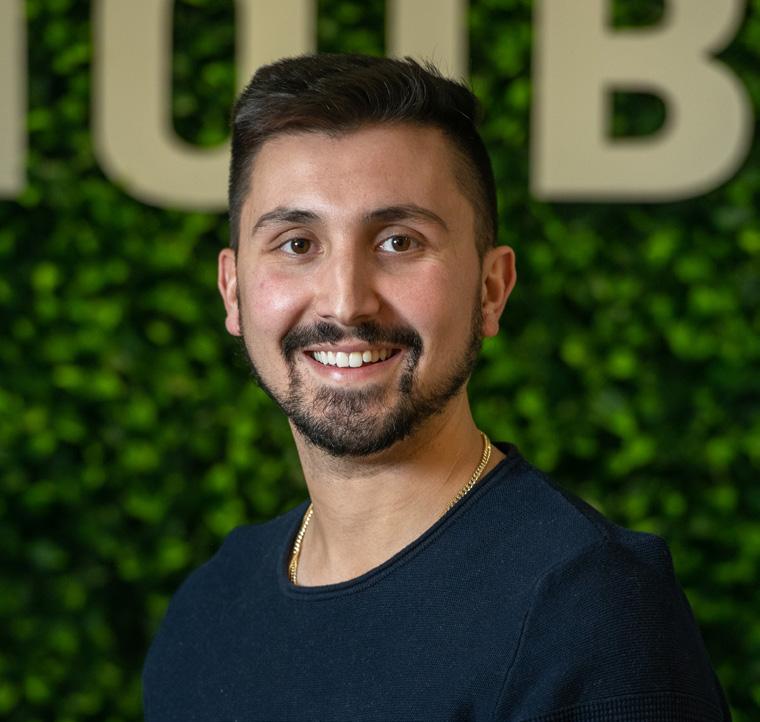
can focus on honing their skills.
“Where we are seeing the most traction is people who have the context to actually implement (AI),” he adds, explaining AI tools are best suited for “important, not urgent, and heavily manual” tasks such as taking notes on client interactions with sales and marketing staff.
“I’ve never met a sales rep that likes to (take notes), but it’s also important, because how can you analyze deals after (a sale) if you don’t have the notes?” Noivo says. “That’s kind of the area that we’ve seen the most traction, is things people know they should be doing but are kind of tedious and easy to automate.”
Like many maturing software companies, Noibu is using AI to amplify its platform’s capabilities, with the aim of giving customers more bang for their buck and fewer reasons to look elsewhere for services that are closely related to the firm’s core offerings.
Noibu’s research, for example, showed that e-commerce merchants spend significant time on tasks such as tracking ad campaigns and trying to figure out why some perform better than others.
As a result, retailers have turned to a variety of analytics, many of which weren’t purpose-built for online stores, Noivo says.



92 pages of insights on Canada’s innovation economy, informed by 50+ thought leaders across the country.
92 pages de perspectives sur l’économie de l’innovation au Canada, fondées sur l’opinion de plus de 50 leaders éclairés de partout au pays.
Read the full publication. Lire la publication complète.
Sensing an opportunity, the company has spent the past two years developing products that use AI to take a deeper dive into metrics such as which web pages consumers are viewing the most and which user-interface tools are best at turning queries into sales.
“We think software and AI are kind of combining into a single category,” Noivo says.
In addition, the firm is incorporating data from a who’s-who of major e-commerce and sales platforms — including Shopify, Salesforce and BigCommerce — into its AI models in a bid to give customers a more complete picture of how their sites are performing.
Noibu wants its AI to be as accurate as possible, Noivo explains, meaning “it is really critical that we amass all the information that the retailer typically uses to make decisions.”
The goal, he says, is to make the platform a must-have for merchants by addressing a range of pain points — fixing bugs, making websites run more efficiently and boosting sales — in one product.
“All of those things are being combined into a single pane of glass,” he says.
A few kilometres south of Noibu headquarters at Lansdowne Park, the leader of another fast-growing Ottawa software firm also has AI top of mind as he plots how to take his company to the next level.
Knak CEO Pierce Ujjainwalla says his firm has spent the past two years working with AI trailblazers such as OpenAI, Google, Nvidia and Amazon to integrate machine learning and other technologies into its drag-and-drop, codeless software platform that simplifies the process of creating custom marketing emails and landing pages.

Like Noivo, Ujjainwalla is bullish on the potential of AI to make his products even stickier for customers.
As an example, he says, Knak’s clients often need to translate emails and landing pages into multiple languages — laborious work that used to be done by people. Thanks to AI, Knak’s software can now do the job almost instantly at the click of a mouse.
The company is also working to incorporate AI into other aspects of its platform, such as embedding large-language models to help clients brainstorm new messages.
But even as his firm strives to stay on the cutting edge of AI, Ujjainwalla says it can’t lose sight of its No. 1 goal: giving customers what they want. That means consulting with clients about how AI can be baked into tools in ways that serve them best.
AI “is changing very fast, and everyone has a bit of a different take on what it’s going to mean and how (AI tools) are going to work,” he says.
At the same time, Ujjainwalla tries to keep things in perspective. It’s easy to get caught up in the AI hype and overblow its importance, he says, rather than see it as one more tool in the technology kit.
“You can get into a lot of doomscrolling,” he explains. “What I’ve realized over the last quarter is there is a lot of noise. I don’t think you want to completely ignore (the rise of AI), but you can’t let that put you into a place of fear. You need to look at your business and talk to your customers to understand how they’re thinking about it, how they’re thinking about you relative to this new way of working.”
Knak, which has about 125 employees, is looking at how AI can boost its own productivity. The company has a team that helps employees figure out which tools — whether off-the-shelf or custom-built — could be used to automate mundane, repetitive tasks so workers can focus on channeling their energy into things that require their expertise.
Knak has also hired a consultant to help draw its AI roadmap.
“It’s making us think about the things that could happen and get prepared so that we’re not blindsided,” Ujjainwalla explains.
Every tech leader needs to be thinking two or three steps ahead when it comes to the potential impact of AI, he adds.
“You need an AI team (focused on) what you know today, and you need an AI team (focused on) what is to come or could come in the future. I think the problem most companies are going to face is they don’t even have AI team No. 1 yet, let alone the second one.”
At software startup Trellis, which topped OBJ’s list of Ottawa’s fastest-growing companies in 2024, chief product officer Krishna Vemulapali says he is “excited by

the opportunities that AI is opening up more than worried about what it will do.”
Online store owners use Trellis’s platform to automatically adjust prices based on factors such as market demand, competitor pricing and consumer behaviour.
Founded seven years ago, the company is embedding its own AI into upgraded software it plans to unveil later this year.
“We are extremely excited about some things we have in our pipeline that we’re going to launch in the next six months or so,” Vemulapali says. “I think AI is more a growth-enabler for us than it is a hindrance.”
While all three local tech executives agree that firms that don’t adopt AI will become dinosaurs, they say the jury is still out on how useful it currently is in automating a core component of their work: building the software itself.
“Vibe-coding” — a system where users generate applications by describing to AI tools in natural language what they want the software to do, rather than writing code manually — is on the rise, but not everyone agrees it’s the way of the future.
Noivo says AI-powered coding tools “are at a point where, if you’re not using them, you’re definitely not efficient compared to your peers.”
Ujainwalla isn’t so sure. He recalls a recent gathering of tech CEOs where someone asked if any company at the table had vibe-coded a product it had previously paid for.
“Nobody had done a single one,” he says.
“I know all of the nuance that goes into our platform, and it’s not so much about building the software, but knowing what the customers want and how they want to use it and all of that knowledge” that comes from human developers, he adds.
Vemulapali agrees, noting that when quality-control teams test software built by humans, they know exactly where to find any bugs, “because they know the people who developed” the products.

But when an issue is detected in software created by AI, “you don’t know as well where the problem is because AI may have written so much code that you sometimes just don’t know where the problems lie. Now, instead of spending the time writing the code, you are sometimes spending the time debugging what the AI did for you,” he says.
While everyone seems to agree that AI will make workers more efficient and enhance their companies’ product offerings, its long-term impact on their labour forces remains unclear.
At Noibu, the 100-person company’s staff count has grown dramatically in recent years. And while tech giants such as Meta and Block say they’re planning to slash jobs as AI makes workers redundant, Noivo says his company is still in hiring mode.
What remains to be seen is whether Noibu will boost its staff count at the same rate it has in recent years, he adds.
“I think as AI tools become more prolific … we’re starting to see changes in productivity based on adoption,” he explains.
“I think there’s a constant pressure at everyone’s company to do more with less, consolidate IT spend, keep headcount flat or decrease it, and leverage AI. We’re in a very interesting timeshift right now. We’re starting to really get into leveraging AI tools and we don’t know where that’s going to take us. We're still in the very early innings of that.”
A company’s headcount used to grow in lockstep with revenues, Noivo says, but that’s not the case any more.
“Candidly, no one knows exactly where the shoe drops. You’re seeing companies like Block lay off half of their staff. I guess I’ll say this: our revenue will double before our headcount will double.”
At Knak, Ujjainwalla says he thinks employees at his firm can become 20 per cent more productive by using AI, and the implications of that are clear. “We shouldn’t need to hire as many people in the future,” he says.
While the long-term impacts of AI on his business are shrouded in uncertainty, Noivo says the technology’s importance can’t be denied.
“I think anyone in B2B SaaS right now, you need to figure out what your AI story is,” he says. “I don’t know if it’s more complicated than that. I think that's what a lot of folks have top of mind right now.”
Ujainwalla agrees.
“This is the moment. You can ignore it if you want, but you’re going to end up being like Kodak who is still selling film if you do that.”
Success doesn’t come without challenges, as our Forty Under 40 recipients can attest. From pandemic lockdowns to market disruptions, there’s always something to overcome — and to learn from. But some challenges can be a bit more personal. This year, we recognize and salute the diversity of our 40 recipients, and highlight the stories of three professionals who have not only overcome, but helped others along the way.
“How can we make our customers’ lives easier and make sure that every single individual out there has a fair shot and an equal opportunity?”
About 15 years ago, Jahanzaib Ansari was looking for a job. Like any other candidate, he sent out his resumé and waited for an answer.
When no response came, a friend suggested he try again, with one key difference in his application: anglicizing his name to Jason. With that one change, Ansari got a job offer from the hiring manager who had previously overlooked him.
The experience served as a wake-up call. “I just felt like there are so many skilled Canadians that are probably being overlooked and there has to be a better solution to address biases and efficiencies in the hiring process,” Ansari told OBJ.
At about the same time, he’d reconnected with Faisal Ahmed, his friend from eighth grade who had become a machine learning scientist. Motivated to make a difference in the hiring process, Ansari and Ahmed explored what could be done and in 2017 formed Knockri, an AI interview platform that assesses skills and creates hiring efficiencies without the bias.
“These lived experiences have translated into creating a solution that is ensuring that each and every single individual has a fair chance and an equal opportunity,” Ansari explained. “There are functionalities as it comes to accessibility and stripping away accents. Basically, taking away all the components that could elicit any biases in the hiring process and trying to minimize them as much as we possibly can.”
Today, the firm has customers that include IBM, the Toronto Stock Exchange and Hydro One, as well as many federal government departments.
That success took time, Ansari said, especially since, in 2017, AI wasn’t having its moment in the sun as it is now. “At the time, not a lot of people even knew about AI. AI was still fairly about machine learning and there were lots of unknowns around that.”
Not to mention, Ansari had no background in either AI or HR. Paired with “a terrible stutter,” he said pitching the project was difficult.
“It was extremely hard for me to pitch the solution at times or just have conversations with investors. Going through years of speech therapy has made me realize that somebody who stutters, their brain is moving faster than their mouth can process all the words,” he said.
Despite the hardships, Ansari and Ahmed persevered. “Me and my co-founder were proving this solution with a set of customers and moving it from a pilot to a larger opportunity. Once we had that ability and traction, we raised a round of
financing. In total, I’d say we’ve raised north of $7 million,” Ansari said.
At the same time, Knockri grew from a team of two to nearly 40 people. “It’s nice to see that something that you thought up and helped to build is being adopted and used globally by large enterprises. But at the end of the day, you’re always sure to focus on that north star, which is the customer.
“How can we make our customers’ lives easier and make sure that every single individual out there has a fair shot and an equal opportunity?”
And there’s more work to be done. With AI progressing at such an incredible rate, Ansari said that the next innovation will be agentic AI solutions.
“It’s about creating efficiency as it comes in the hiring process … human interaction is the one thing we’d like recruiters to focus on, instead of being bogged down with tedious and repetitive tasks. That’s how the industry is progressing,” Ansari said.
But, he said, innovation should not come at the expense of ethics. “It’s critical to push solutions like ours but at the same time ensure that there are guardrails around those solutions. We’ve built ethical AI, responsible AI, from the ground up and it’s extremely important when it comes to adoption from these large enterprises.”
Ansari said that Knockri will continue to create solutions that allow equal access to opportunities.
“Our solution has expanded to creating training efficiencies for the armed forces to reduce burnout in instructors and allowing them to make better and faster decisions on the students. It’s critical to military readiness, which is an important objective for the country.
“Our solution is also being used in a lot of universities to upskill the students on particular competencies that employers really want. Our core solution is expanding in other areas and our goal is to build a big Canadian company.”
Despite only having been in Ottawa for a couple of years, Ansari said the local business community has been nothing but inclusive.
“I’m very appreciative of this opportunity,” Ansari said of being a Forty Under 40 recipient. “I’m still fairly new to the city. I feel like there’s such a vibrant community of business leaders (in Ottawa) … Being a part of this community has been tremendously helpful.”
— by Marissa Galko
I have the privilege of leading a team of empathetic, patient-centered, and hard working allied health professionals, which includes physiotherapists, massage therapists and pedorthists. Since my first clinic, we have grown to 5 locations across the city thanks to the help of all of my staff and business partners.
What I have enjoyed most is helping treat more patients and community members and transfer the knowledge I have gained throughout my career to the therapists at Anatomy Physiotherapy Clinic to have a broader reach than I could achieve individually.
To all of my supporters over the years, including my invaluable patients, thank-you for being there for me. I owe this honour to all of you.
IRFAN AHMED
38, PROCOM, CONSULTING DIRECTOR
What is the biggest obstacle that you’ve overcome?
Leading through growth and change in a highly competitive industry, where the pressure to deliver results is constant and expectations are high. I’ve had to build trust quickly, make difficult decisions and create alignment across teams while still driving strong business performance.
What Ottawa business person, past or present, do you most admire and why?
Tobias Lütke is someone I admire because he helped build Shopify from Ottawa into one of Canada’s most influential technology companies. What stands out to me is his combination of technical brilliance, long-term thinking and ability to build at a global scale.
JEN ARBUCKLE
35, METCALFE REALTY COMPANY, PRESIDENT
What is the biggest obstacle that you’ve overcome?
Leading through the COVID-19 pandemic. Working with our leadership team to support over 300 tenants through rapidly changing government mandates, structuring rent relief and maintaining portfolio stability, while also guiding our staff through constant uncertainty. At the same time, I was completing my MBA at the University of Ottawa.
What Ottawa business person, past or present, do you most admire and why?
As a third-generation leader within the organization, I am deeply influenced by the legacy of my grandfather, particularly his belief in stewardship, integrity and building something that endures beyond any one individual.
MATHEW BARANOWSKI
38, PCL CONSTRUCTION, DISTRICT MANAGER

What is the biggest obstacle that you’ve overcome?
Relocated to a new city in April 2020 (height of the pandemic!) to lead a department of 50 employees, build business and personal relationships and increase annual revenue by 20 per cent to over $100 million.
What Ottawa business person, past or present, do you most admire and why?
I admire Tobias Lütke because he started with a vision and was able to turn it into a globally dominant technology company from Ottawa. He also appears to be extremely humble, which is an admirable leadership quality he’s maintained even with his wild success.
DANIELLE BERGERON-WALSH 37, MNP LLP, PARTNER, FAMILY OFFICE/SUCCESSION

What is the biggest obstacle that you’ve overcome?
Played a key role in educating the market that succession planning extends far beyond drafting a will and getting life insurance, emphasizing the need for specialized expertise to protect long-term business and family interests.
What Ottawa business person, past or present, do you most admire and why?
My dad, Grant Walsh, for being a pioneer in the field of family business. I am only able to do the work that I do thanks to all of his hard work and dedication. Not only do I admire him, but I appreciate him for everything he has done for me and family businesses.
We were able to survive the pandemic and reopen doors and double our revenue within one year of reopening.
ADAM BRACKEN
36, THE FITNESS LAB, FOUNDER AND CEO

What is the biggest obstacle that you’ve overcome?
The COVID-19 pandemic. Especially being in the fitness space, which was extremely affected by the closures. We were able to survive the pandemic and reopen doors and double our revenue within one year of reopening.
What Ottawa business person, past or present, do you most admire and why?
My dad. He was a partner in a business called Modern Niagara. He helped me open The Fitness Lab and has been an invaluable resource for our growth over the past 10 years. Being a backboard to bounce ideas off and keeping me on the right path.
MAT BARANOWSKI | District Manager, Ottawa
PCL Construction congratulates Mat Baranowski for being named one of the Ottawa Business Journal’s Forty Under 40! Mat’s strong leadership and unwavering commitment to developing the PCL team continues to drive PCL Ottawa’s success and momentum.
36, SAIL FUND, CO-FOUNDER
What is the biggest obstacle that you’ve overcome?
Transitioning from hard sciences to business development, which as a first-time scientific founder involves learning an entirely new language on the fly.
What Ottawa business person, past or present, do you most admire and why?
Greg Lane, CEO of CIPS, has a long history of freely offering his time as a mentor to new entrepreneurs in need of guidance. His generosity and wisdom were integral to my own learning process and he continues to inspire me to pay it forward by offering mentorship where I see opportunities to contribute to the next generation of scientists-turnedentrepreneurs.
38, WHIMBLE CARE, FOUNDER

What is the biggest obstacle that you’ve overcome?
Built trust from zero in a deeply intimate, high-stakes category, while personally driving early traction on both sides to prove demand (second only to raising a sassy toddler).
What Ottawa business person, past or present, do you most admire and why?
I most admire Kyla MacGinnis, clinical nurse specialist, professor at the University of Ottawa and co-founder of BuildABLE, aka: a total badass. She shows what it looks like to do meaningful work, push boundaries, build community and relentlessly advocate to make Ottawa a better place for everyone.

When Muhammad Zaheed immigrated to Ottawa in 2018, he had just $10,000 to his name. Today, he’s the vice-president of finance at Ottawa cleantech company BluWave-ai, where his work has been instrumental to the company’s survival in a rapidly evolving market.
“There was no finance department when I joined,” Zaheed recalls. “We had to brainstorm and create as we went along.”
Before coming to Canada, Zaheed spent six years working in banking in Bangladesh. When he came to Ottawa, his experience was an asset but his lack of connections was a barrier. So, he needed to find another way to get his foot in the door.
In those first years, Zaheed said he turned to the Ontario Student Assistance Program to enable him to attend the Telfer School of Management, where he completed a second MBA. While he’d previously earned an MBA from the University of Dhaka in Bangladesh, he said repeating the program locally gave him a network.
“While doing my MBA, I had this thing where I asked a lot of questions,” he said. “I asked every one of my professors to have a coffee chat with me and, other than one, everyone said yes. I would always go wherever they wanted to go, pay for their coffee and ask about their story.”
When Zaheed graduated into the turbulent COVID-19 job market, one of his connections reached out about an opening at BluWave and encouraged him to apply.
“I gave four reasons to hire me and three reasons not to hire me,” said Zaheed of his approach to the company. “They wanted a CPA, and I didn’t have a CPA at the time. And after two days, I got a reply, saying he liked what I wrote and let’s do an interview.”
Since joining the company as an operations analyst in 2020, Zaheed has built the finance department from scratch. He cycled through various roles, first as senior manager, then senior director of finance and operations, before taking on his current position in 2023.
Over the years, he’s orchestrated a $9.5-million Series A funding round, spearheaded millions of dollars in project wins and government funding, and captured millions more in non-dilutive capital, including SR&ED claims and COVID-19 subsidies.
Thanks in part to his work, BluWave has outlasted eight of its competitors. Zaheed said that success is due to the team.
“People come in and join because of the mission,” Zaheed said. “We always say that we cannot pay like Amazon, but when
Amazon was seven years old, it had desks made of doors. We don’t do that — we’ll give you an Ikea desk — but we have revenue shares to compensate. Money is more of a byproduct. And because we don’t do raises like normal companies, in two or three years, they’re actually out-earning their peers.”
The team at BluWave has grown to include nearly 40 staff. For Zaheed, one of his biggest points of pride is that there have never been any layoffs at the company.
“We never had to go to employees and say that we don’t have the money to pay,” he said. “That is why we grow slow. When everyone was doing layoffs, we kept growing slow.”
But with professional highs have come personal lows. In the past year, Zaheed has been through a difficult divorce from his wife, who came with him to Canada in 2018, and the death of his uncle, a close confidant and mentor who even bought Zaheed his first business suit.
“I got served (the divorce papers) the day I was going to go receive our (Best Ottawa Business Award),” he said. “I was asked, ‘Why aren’t you going?’ And I had to say, I cannot share with you right now, but the universe just served me something that I didn’t even see coming.”
Such personal experiences have culminated in a passion for mentorship, which Zaheed said has opened doors to new opportunities.
In addition to guest lecturing at uOttawa, acting as a judge for the Telfer Finance Society and tutoring underprivileged youth, Zaheed is using his life experience to coach men who are struggling with their mental health.
“I’m from South Asia, which is a different kind of upbringing. I was not allowed to speak about my feelings. And if I’m not allowed to speak about my feelings, where does it go? It goes into destructive behaviours,” he said.
Zaheed said he plans to stay with BluWave for many years, but when he eventually moves on, he wants to dedicate himself to helping men who have faced the kinds of challenges he has.
“I want to focus on men’s mentorship. When you talk to men, you realize, hey, that also bothers me. It’s like a partnership,” he said.
“There are ways to channel those feelings. There’s a saying in Zen: don’t say that I am angry, say that I’m feeling anger. Put that feeling somewhere else.”
— by Mia Jensen
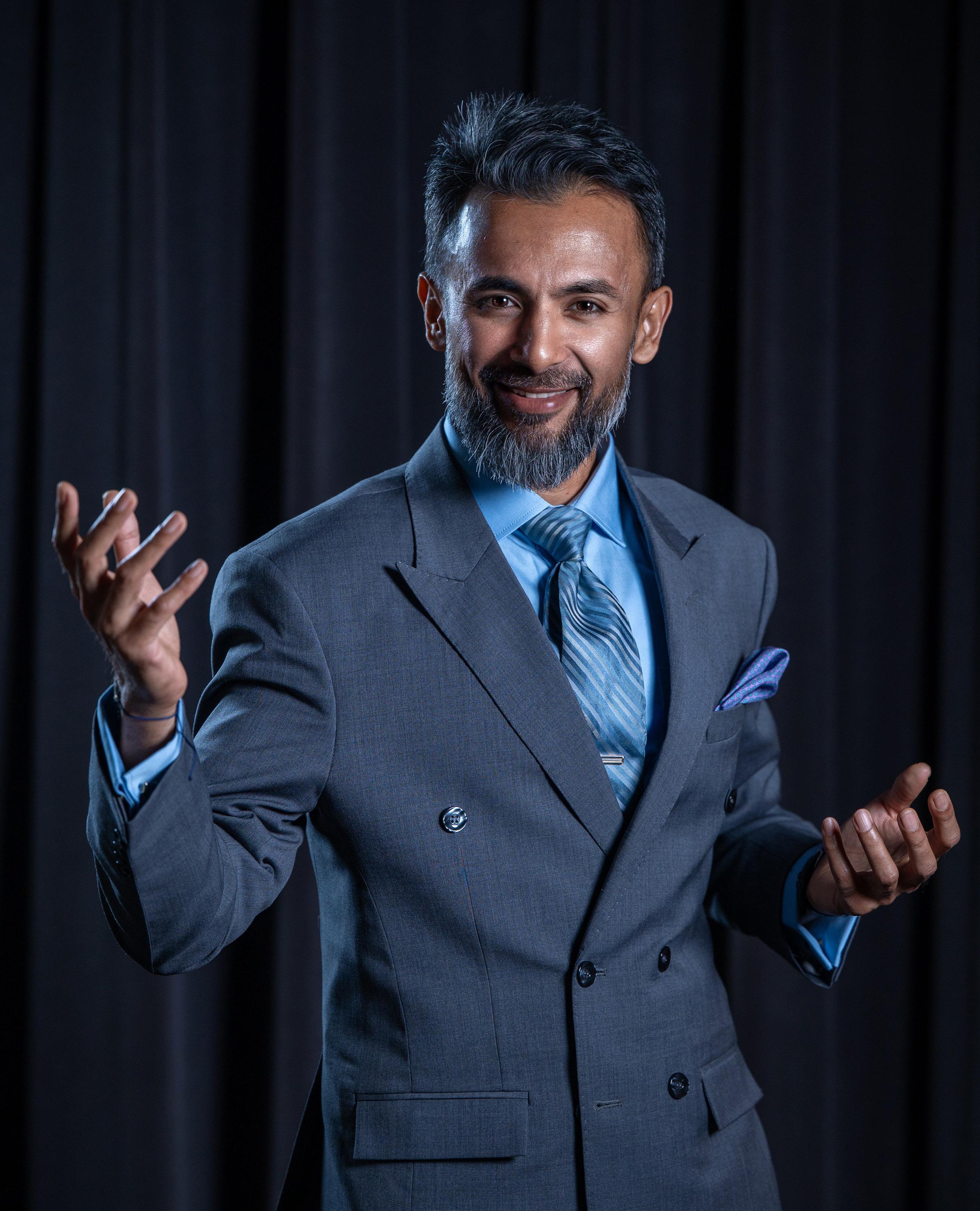
“I’m from South Asia, which is a different kind of upbringing. I was not allowed to speak about my feelings.”
bamarica@campfortune.com 819-827-1717 ext 2208 •





38, CAMPANALE, DIRECTOR OF LAND DEVELOPMENT AND FINANCE

What is the biggest obstacle that you’ve overcome?
There are two founders and six second-generation children in the leadership team at Campanale that I prepare information for regularly. Each one of these individuals comes at my presentations from a different angle and/or professional focus. Over the years, I’ve had to hone my communication skills to ensure I capture each of their unique thought processes.
What Ottawa business person, past or present, do you most admire and why?
I am part of a second-generation Ottawa business founded by my father Vince and his brothers Tony and Rocco Campanale. Through their coaching, I’ve witnessed an unmatched business acumen, work ethic and professional pride that forms the key ingredients of their long-term success.
37, BOARDWALK OTTAWA, OWNER AND OPERATOR

What is the biggest obstacle that you’ve overcome?
Keeping a collaborative and small company/family feel work environment after expanding to many locations and growing by 10 times.
What Ottawa business person, past or present, do you most admire and why?
My brother and sister, who are both Ottawa CEOs of their own companies (Staterra and Vivo health) who inspire me to keep reaching higher. Not only are they busy business people, but somehow manage to do it with having four kids each!
... I’m inspired by the many Indigenous women entrepreneurs in Ottawa ...
38, EMDASH, STRATEGIST

What is the biggest obstacle that you’ve overcome?
Bootstrapped my business from $5,000 while navigating reputational challenges from a competitor falsely claiming Indigenous identity. Building trust through transparency and authenticity, scaling both businesses while managing rapid growth with limited resources.
What Ottawa business person, past or present, do you most admire and why?
Magnolia Perron, for her leadership in creating opportunities for Indigenous women in business through programs that address barriers like access to capital, mentorship and support systems. Alongside that, I’m inspired by the many Indigenous women entrepreneurs in Ottawa; their growth and leadership reflect the strength of our communities.

39, ANATOMY PHYSIOTHERAPY CLINIC, FOUNDER AND CEO
What is your biggest business achievement?
Building multimillion-dollar clinics from scratch that both employ and service our local community.
What is the biggest obstacle that you’ve overcome?
We only had one clinic when COVID shut us down 10 months after opening. To come back and start three other highly successful clinics during COVID was truly a feat.
What Ottawa business person, past or present, do you most admire and why?
I would have to say Tobias Lütke, one of the founders of Shopify. From a startup (with a different name) to a very successful online global e-commerce platform right here in Ottawa.
... immigrating to Canada alone at 19 with limited English and no support was the most defining challenge I’ve faced.
ANDREW FAHIM 32, GIATEC SCIENTIFIC, SENIOR DIRECTOR RESEARCH
What is the biggest obstacle that you’ve overcome?
On the personal side, immigrating to Canada alone at 19 with limited English and no support network was the most defining challenge I’ve faced. On the business side, translating advanced research in materials science and machine learning into market-ready commercial products in a conservative, slow-toadopt industry, defining entirely new product categories in the process
What Ottawa business person, past or present, do you most admire and why?
I most admire Pouria Ghods and Aali Alizadeh, Giatec’s co-founders. They combined deep academic expertise in concrete science with entrepreneurial vision to build a global tech company that’s transforming one of the world’s oldest industries.
39, ALLIANCE ENGINEERING & CONSTRUCTION, CFO AND PARTNER

What is the biggest obstacle that you’ve overcome?
Rebuilt Alliance’s finance function from the ground up after returning in 2022, replacing outdated systems and leading a full ERP implementation while supporting rapid organizational growth.
What Ottawa business person, past or present, do you most admire and why?
Romy Bowers, past president and CEO of CMHC, for her leadership in advancing Canada’s housing strategy while balancing financial discipline and social impact. I also admire her humility and her ability to drive meaningful change at scale in a highly complex environment.

“I find myself very often the only woman in a lot of the boardrooms that I sit in.”
37, Scotiabank, Managing Director, Technology & Innovation Banking
Growing up, Gena Custode didn’t have far to look for role models to fuel her entrepreneurial ambitions — ambitions that would lead her to become one of the few women in her field.
The daughter of two university professors, Custode was born in the Chinese city of Harbin and moved to Canada at age 11 when her father decided to pursue his PhD in civil engineering at the University of Ottawa.
When he wasn’t doing academic research, Custode’s father worked part-time at a restaurant along with her mom to earn extra cash.
A stint at an engineering firm quickly convinced her dad that the 9-to-5 grind wasn’t for him. Eventually, he and his wife bought out the owners of the restaurant where they worked and became full-time business operators. They later sold that establishment and took over an A&W franchise, which they continue to run today.
Custode, meanwhile, went in a different direction, earning a bachelor of commerce at Queen’s University before embarking on a career in finance that spans two of Canada’s biggest banks, one of its most innovative startups, and the senior executive suite at Silicon Valley Bank’s Canadian branch before it folded in 2023.
“I’ve lived a few lives, let’s just say,” the 37-year-old says with a smile. “I think having that foundational knowledge is definitely helpful, but I always knew I wanted to work closely with entrepreneurs.”
As managing director of Scotiabank’s technology and innovation banking with Roynat Capital, Custode supports fast-growing Canadian technology companies with specialized banking services and growth capital, helping founders and investors scale.
“I really think there is a big opportunity for Canadian technologies in general, no matter what sector you’re in, to be on the world stage,” Custode says.
Before joining Silicon Valley Bank in 2021, Custode served as a senior adviser at Ottawa-based MindBridge Analytics, which uses artificial intelligence to help auditors detect irregularities and errors.
While spearheading the firm’s efforts to sell to major Canadian banks, Custode got an up-close look at just how powerful a force AI was becoming.
At the same time, she believes the “core principles” that guide successful startups remain unchanged.
“Do they have the right capital, do they have the right management team, do they have the right investors there and do
they have the support they need to be on the world stage?”
In fact, Custode believes being a leader in the field of tech finance goes far beyond numbers and strategy. She understands the challenges of juggling a busy career with the responsibilities of motherhood as well as anyone, and she hasn’t shied away from sharing lessons she’s learned with others.
Custode has mentored dozens of young women in tech and finance as they attempt to navigate the same tricky path.
“There are not a lot of women in tech in general,’’ she says. “There is also a very minimal amount of women who are VCs and … even fewer in technology lending. Growing up in this ecosystem, I was constantly looking for mentors, and I was very fortunate to find different mentors. But I don’t think there were as many as there are today.
“I would say what really drives me is being a mother of two little kids (Jonathan, 5, and Isabella, 4). I’m a big proponent of just being authentic to yourself. When you first join an organization, I think women tend to hide who they are and try to fit in the norm that is created in that ecosystem.
“These days, with two working parents, trying to balance it all, it’s not easy. A lot of (women) are very, I would say, timid to speak up and ask for the things that they need. I think they might be perceived as not working as hard, or not as competitive as their colleagues or not putting work as a priority. I really want to challenge that perspective.”
Custode is a member of Scotiabank’s Canadian commercial banking inclusion committee. As an Asian woman, she says it’s important to acknowledge the value people with differing backgrounds and perspectives can bring to the herculean task of building a global business.
“I think really it’s about bringing those diverse opinions together and making sure we value every type of diversity,” she explains. “In order to support (the tech startup) ecosystem, I think you have to have curiosity to start with. If you’re looking at things from a very traditional lens, I would say it’s very difficult to learn about the sector and how dynamics are constantly changing. You really need to have that diverse background … to kind of support this.”
While Custode believes the industry is making progress, she says there is more to be done.
“I find myself very often the only woman in a lot of the boardrooms that I sit in,” she notes.
“I think that needs to change, and I think we are on the way to changing that. But it’s just about being more conscious about changing that.”
— by David Sali

“Overall, the EMBA broadened my leadership perspective from operational execution decision-making in my role as COO.”
Neha D’Souza,
EMBA 2020
Chief Operating Officer, Perley-Rober
tson, Hill & McDougall LLP 2020 For ty Under 40 recipient
Learn more about Canada’s most practical, real-world Executive MBA : Learn business by doing business

Mike Nelson used skills from the military and uOttawa to launch and grow the defence tech startup
Former Canadian Armed Forces (CAF) Leutenant Commander (retired) Mike Nelson recalls the turning point of wanting to become an entrepreneur. He was a student in Telfer’s Executive MBA program, working on a project with the Department of National Defence (DND) as his client.
“Through my Business Development Project I was able to identify real opportunities that could create a lot of value for my defence customer,” he explains. “When I asked my supervisor to support me in implementing the recommendations, he told me to stay in my box. That’s when I realized that this wasn’t the right fit for me anymore.”
Nelson had served and deployed as an intelligence officer with the Joint Force and Canadian Special Operations Forces Command for years. But he eventually realized he could continue to serve Canada from the outside.
Nelson soon left the military. In 2022 he founded Tactiql, a defence-tech venture that addresses a critical battlefield gap: Sensor systems operating in silos, leaving decisionmakers with an incomplete picture. A local scale-up recently selected for NATO’s Diana accelerator program, Tactiql solves that problem.
Nelson says he couldn’t have taken those first entrepreneurial steps without the skills he learned in the Telfer EMBA.
“It gave me the confidence to operate in the business world,” he says, adding that it allowed him to meet established entrepreneurs and work with startups. “It allowed me to speak the language and reframe my military experience in a way that’s relevant to the business world.
“A lot of veterans struggle with the transition process for that reason – they don’t know how their experience is relevant to the private sector. But it absolutely is. And Telfer helped me realize that.”
The Telfer EMBA program – built for midto-The Telfer EMBA program doesn’t just teach business. It integrates six real-world consulting projects covering topics from AI to international growth – far more than the one or two projects typical of most programs.
A defining feature is the Business Development Project (BDP), where students can tailor their learning to organizational or career goals.
Nelson was completing his BDP with DND when that fateful conversation occurred. He’s now come full circle, as his company is now a client for the same project.
Working with the EMBA allows him to bring someone in with the skills and “passion” to focus on challenges he and his staff may not have the time or skill sets to tackle.
“The Telfer EMBA program gives you the opportunity to pursue what you’ve always
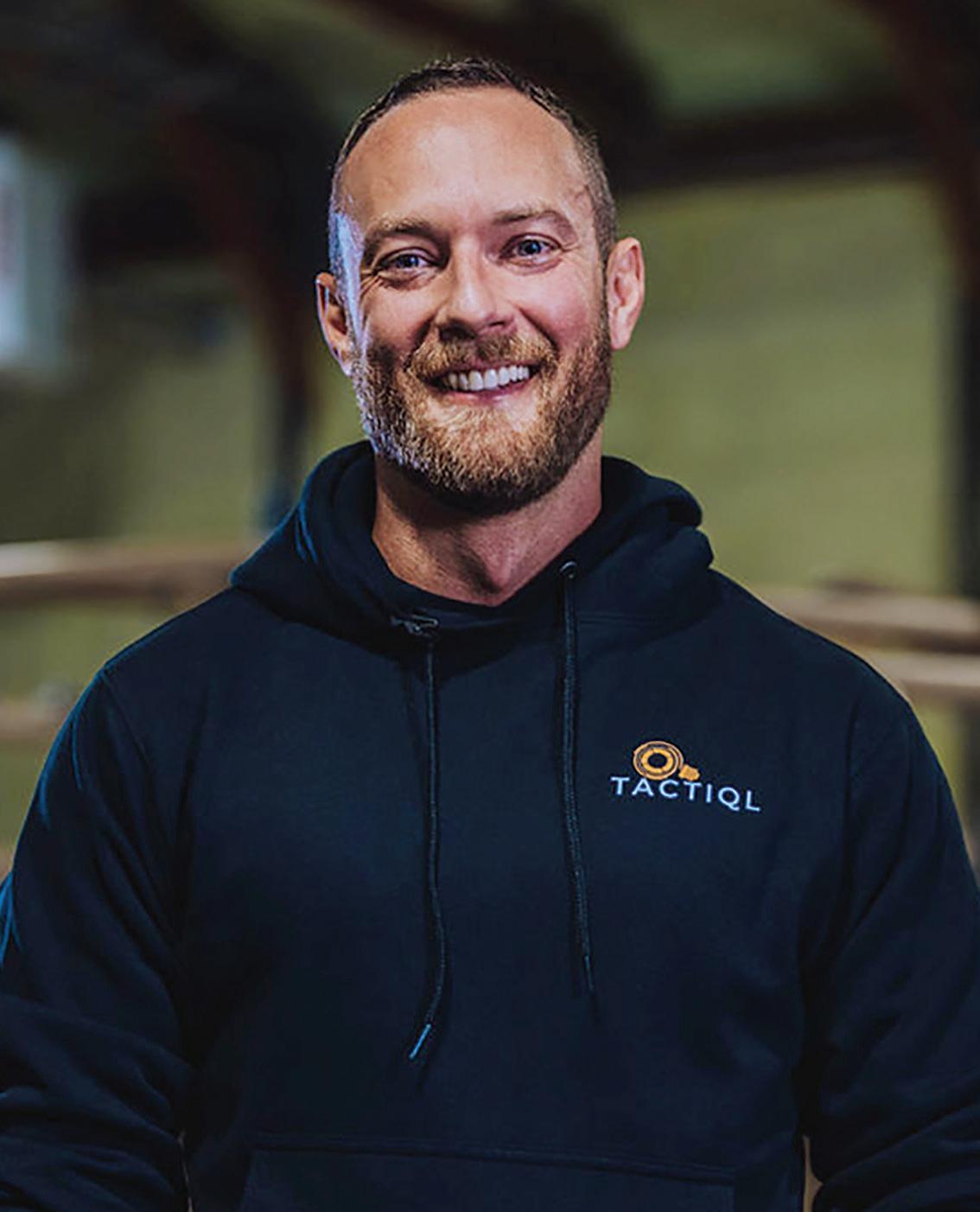
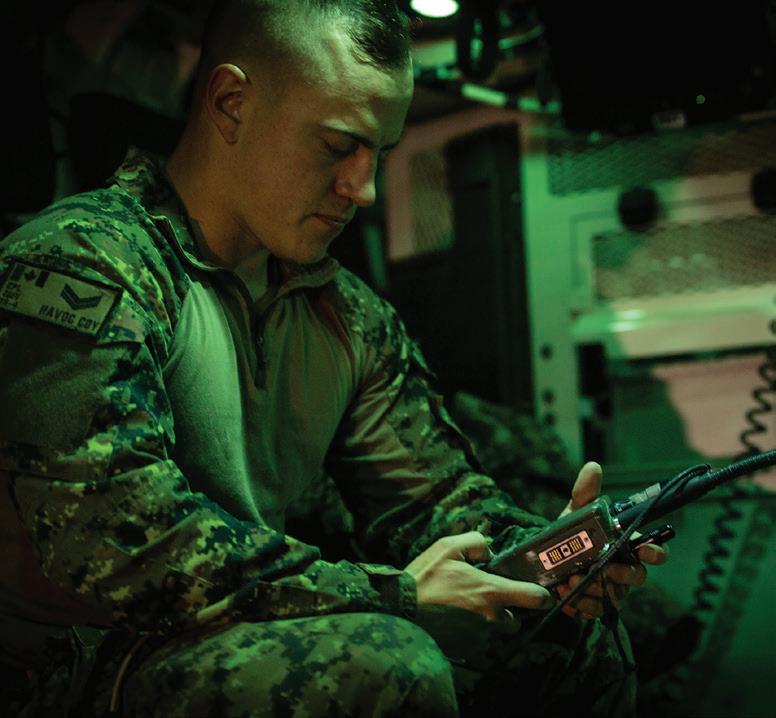
wanted to do,” he explains. “It helps you break through barriers if you’re at that midpoint in your career, and gives you the confidence to show you have what it takes.
“If you’re looking to break through whatever barrier it is you’re facing to that next phase in your career, the Telfer EMBA program is an accelerant of your success.”
Thousands of businesses already call it home.
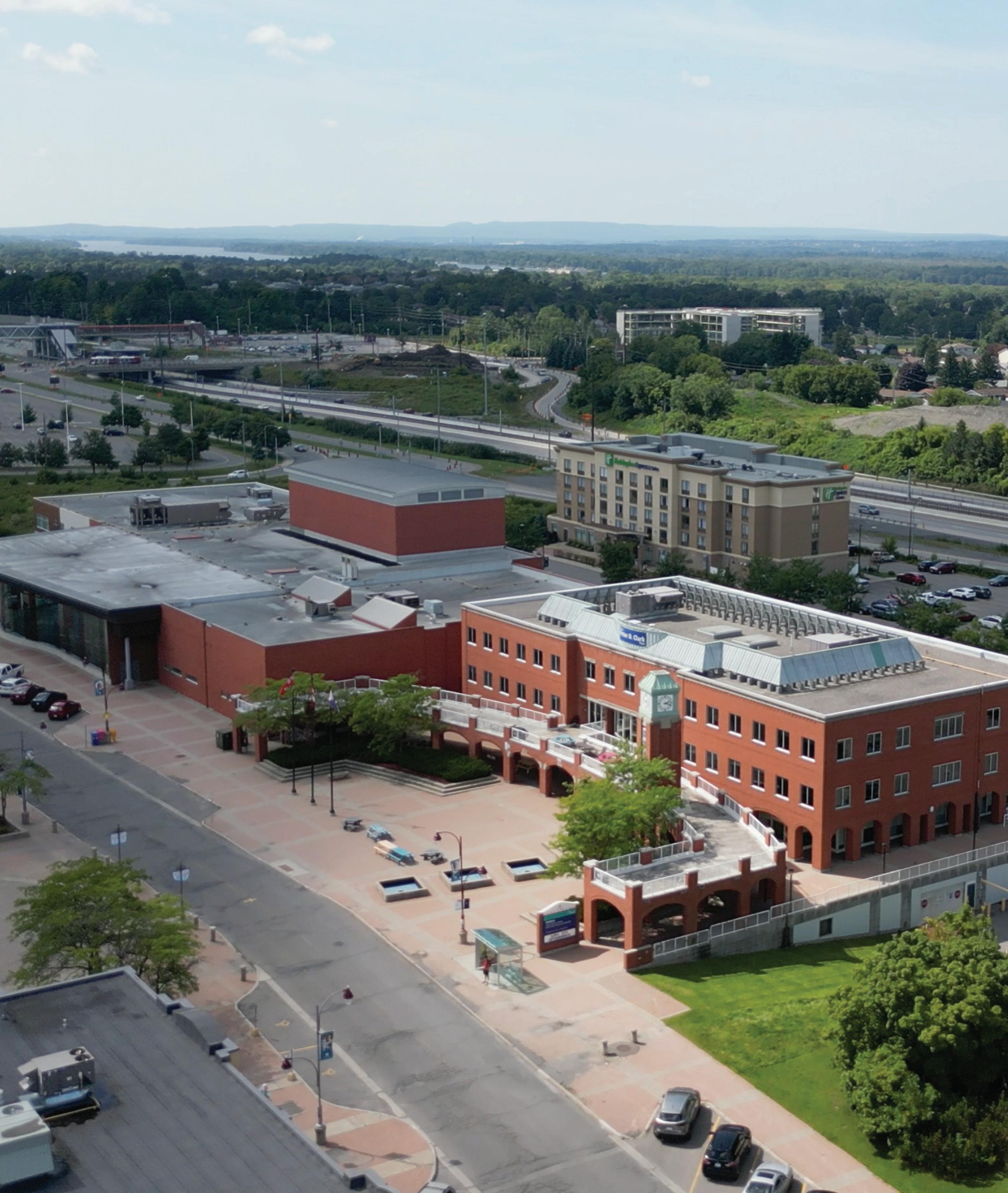
Looking to start, grow or relocate your business? Look to Orléans for space, land and talent – and a customer base of over 130,000.
#WhyNotOrléans
SARAH GORDON
36, ELITE VIRTUAL STAFFING, FOUNDING CEO

What is your biggest business achievement?
Founded and grew Elite Virtual Staffing from zero to serve hundreds of entrepreneurs.
What is the biggest obstacle that you’ve overcome?
It is always challenging to start over from scratch in a new industry. I have done it several times in my career.
What Ottawa business person, past or present, do you most admire and why?
My dad. He came to Canada as an immigrant with nothing and built a beautiful career and family.
HUGO HODGETT
37, H2 ANALYTICS, CEO

What is your biggest business achievement?
Creating job opportunities for Special Operations veterans in Canada and abroad, allowing them to continue serving Canada as a civilian.
What is the biggest obstacle that you’ve overcome?
Bootstrapped the company since inception to over $10 million in annual recurring revenue.
What Ottawa business person, past or present, do you most admire and why?
Sonya Shorey due to her tenacious and indomitable spirit in supporting Ottawa companies and advancing Ottawa.
34, GBI POOL SERVICES, PRESIDENT
Bootstrapped the company since inception to over $10 million in annual recurring revenue.

What is the biggest obstacle that you’ve overcome?
Navigating a highstakes acquisition of a 24,000-square-foot industrial building to house GBI’s operations and become a commercial landlord. I had to strategically leverage the cash flow and stability of GBI to secure the financing and infrastructure necessary to acquire the building, successfully transitioning from a tenant to a landlord.
What Ottawa business person, past or present, do you most admire and why?
I most admire Jeff Hunt for his blueprint in scaling a service-based business into a regional powerhouse. He proved that a home-services company could be professionalized and used as the foundation for a massive business empire. I am learning to adopt that same focus on brand-building and operational discipline to help move GBI beyond traditional contracting.

JUNE 18
6:00 - 10:00 PM CASINO LAC-LEAMY
REGISTER BY JUNE 10
BRIAN KELLS
39, PERLEY-ROBERTSON, HILL & MCDOUGALL LLP, PARTNER AND CORPORATE LAWYER
What Ottawa business person, past or present, do you most admire and why?
Tracey Clark’s work building Bridgehead into an Ottawa institution has always impressed me. It is an incredibly challenging industry and to have operated so successfully for so many years is quite an achievement. Bridgehead coffee and sandwiches played a big part in helping me through law school!
What book, fiction or non-fiction, have you read recently that you enjoyed and why?
Trust by Hernan Diaz. It’s a wonderful story told from a few different perspectives that explores questions of wealth and power and how those forces control a narrative.
ADAM KOURAKIS
34, SOMERSAULT, OWNER AND RACE DIRECTOR

What is your biggest business achievement?
We recently became the biggest triathlon series in Canada, and we’re three times the size that we were five years ago.
What is the biggest obstacle that you’ve overcome?
I bought the company in February 2020, just three weeks before events were on pause for two years because of COVID-19.
What Ottawa business person, past or present, do you most admire and why?
Rudy Hollywood, for supporting and inspiring countless people to achieve their endurance goals.
39, RAYMOND CHABOT GRANT THORNTON, PARTNER
We recently became the biggest triathlon series in Canada, and we’re three times the size that we were five years ago.

What is the biggest obstacle that you’ve overcome?
I co-founded Electro-loc, an appliance rental company that launched a business model previously unseen for this type of product. Despite challenges securing financing due to its novelty, sustained perseverance has enabled the company to grow successfully for more than a decade.
What Ottawa business person, past or present, do you most admire and why?
André Levasseur, CFO at Ranovus. I admire him for his ability to operate at the intersection of finance, strategy and entrepreneurship. He is someone who demonstrates that credibility, calm judgment and long-term thinking are critical to sustainable success.

OakWood is a fourth-generation, family-led Design-Build firm with more than 10,700 completed projects. Our studios provide in-house architectural design, 3D planning, custom homes, major renovations, multi-unit developments, commercial construction, and kitchens through a fully integrated process built on expertise and precision. What Makes OakWood Different?
In-house architectural design team
Phased investment control system
Design-to-Budget approach
Real-time cost transparency
Financial stability & longevity
39, SNOWED IN STUDIOS, PRODUCTION DIRECTOR

What is the biggest obstacle that you’ve overcome?
Despite turbulence in the video game industry, which has resulted in clients cancelling projects, we have maintained our workforce. We currently balance 20-plus active video game project contracts.
What Ottawa business person, past or present, do you most admire and why?
Sarah D’Angelo (SVP chief human resources officer at Giant Tiger), Catherine Jervis (program director at Ciena), and Lindsay Daggitt (CEO at Looplight Studios) are inspirational. They have managed to successfully grow their careers while balancing motherhood and being nice people!
38, CARLETON UNIVERSITY, ASSOCIATE PROFESSOR AND DIRECTOR, SCHOOL OF NURSING

What is your biggest business achievement?
Founded Canada’s first School of Nursing from a university in the past 20 years which incorporates RN Prescribing (the first in the world for all graduates).
What Ottawa business person, past or present, do you most admire and why?
Jen Plant, currently the VP patient care and quality at Queensway Carleton Hospital. She has previously held the position of executive director of Perley Health. Jen exemplifies the leader I strive to become through her mentorship, intelligence, strategic visioning, strong team-led decisionmaking and exceptional clinical skills.
38, AUTOCORP.AI, CEO

What is the biggest obstacle that you’ve overcome?
Launched Autocorp.ai at the height of COVID-19 while transitioning to a fully remote company, and just weeks later lost my father unexpectedly — continuing to lead and build through that period was the biggest challenge I’ve faced.
What Ottawa business person, past or present, do you most admire and why?
My friend Ryan O’Connor, a true Ottawa success story who has faced significant setbacks, lost everything and rebuilt himself through resilience, discipline and leadership.
38, VANIER COMMUNITY SERVICES CENTRE, EXECUTIVE DIRECTOR

What is the biggest obstacle that you’ve overcome?
Stepping into an organization after an executive director with over 30 years of experience and leading a significant period of change management. This required building trust, stabilizing teams and guiding the organization while maintaining continuity of services and confidence among staff, clients and partners.
What Ottawa business person, past or present, do you most admire and why?
Danielle Manton, lawyer and francophone leader, was my boss from 2012 to 2014 as executive director of AJEFO and has been my mentor for over 15 years. She has an incredible ability to set and execute a clear vision, see the best in people and bring others up while having fun.
ROBERT MYETTE
39, CHEO, CLINICIAN SCIENTIST AND MEDICAL DIRECTOR DIALYSIS

What does your company do?
CHEO provides pediatric care to children and youth. CHEO RI advances childhealth research to improve prevention, diagnosis and treatment.
What book, fiction or non-fiction, have you read recently that you enjoyed and why?
Blake Crouch, Upgrade. A stark view of the future.
What’s a favourite trip that you’ve either gone on or hope to go on and why?
Banff, Alta.
39, THE STONE FABRICATOR & THE TGI GROUP
What is the biggest obstacle that you’ve overcome?
Having to constantly grow revenue numbers (having achieved 40 per cent growth year-over-year) to operating and setting up ever-changing logistical networks to continue supplying customers with on-time delivery and order fulfillment during the pandemic.
What Ottawa business person, past or present, do you most admire and why?
My father and business partner, Roldan Pinilla Guerrero. His determination, creativity, drive to succeed combined with a never-give-up attitude have always been an inspiration to me. It is what has always propelled and modeled my business achievements and accomplishments.
38, AGI VENTURES CANADA, CO-FOUNDER AND CHIEF ECOSYSTEM OFFICER

What is the biggest obstacle that you’ve overcome?
I built my startup, MindGlow, as an underrepresented founder with no prior venture track record and still raised capital and achieved acquisition.
What Ottawa business person, past or present, do you most admire and why?
My husband, Jonathan Gagné, has run his startup for over 10 years. He’s one of the most resilient people I know and he’s been a constant source of support and perspective.
37, PHANTOM PRODUCTIONS, CO-FOUNDER AND CHIEF CREATIVE DIRECTOR

What is the biggest obstacle that you’ve overcome?
A defining moment came in late 2024 when a leadership gap pushed me to take a greater role in business development and reshape our growth strategy. Within nine months, we regained momentum: winning new clients, restructuring our team and delivering the most profitable year in our history.
What Ottawa business person, past or present, do you most admire and why?
I admire Chris Do for how he bridges creativity and business, empowering creatives to think strategically, understand their value and focus on long-term impact.
RAMZI SALEM
33, THE WESTIN OTTAWA, MARKET DIRECTOR OF SALES

What is the biggest obstacle that you’ve overcome?
The pandemic tested the hospitality industry like never before. I focused on sustaining client trust and loyalty, guiding partners through uncertainty while preserving business growth.
What Ottawa business person, past or present, do you most admire and why?
I admire Ross Meredith (general manager) and Shaddy Shibley (senior director, sales and distribution) for their mentorship, vision and leadership. They took a risk on me, bringing me from the Ritz-Carlton in Dubai without Canadian sales experience, and encouraged me to grow. Their leadership is defined by trust, empowerment and a commitment to developing talent.
FRANCES SHAPIRO MUNN 39, NELLIGAN LAW, PARTNER

What is your biggest business achievement?
I was the youngest person to join the Nelligan Law partnership at age 31. Since then, I have led and successfully resolved several of our firm’s important and high-profile cases. I chair the firm’s quality assurance committee in charge of implementing best practices across the firm.
What Ottawa business person, past or present, do you most admire and why?
Mia Hempey, CEO of Nelligan Law, took over that role in 2016 as the first non-lawyer to head our firm. She has excelled at building our firm culture and making our firm more entrepreneurial and client-centric.
Despite turbulence in the video game industry, which has resulted in clients cancelling projects, we have maintained our workforce.
MEAGHAN SHOEMAKER
34, DEPARTMENT OF NATIONAL DEFENCE, SENIOR DEFENCE ADVISOR

What is the biggest obstacle that you’ve overcome?
Deciding to launch my business, MS Consulting, two years ago when I was eight months pregnant and growing my client base as a new parent.
What Ottawa business person, past or present, do you most admire and why?
I am inspired by women like Christyn Cianfarani, CEO of the Canadian Association of Defence and Security Industries, who combine deep expertise with inclusive leadership to support Canada’s national security community.
38, COMERCIO (SAUNAKITS.COM & OUTDOOR
DIRECT), FOUNDER AND CEO

What is the biggest obstacle that you’ve overcome?
Early on in the sauna business, we faced a plethora of issues largely related to supply chain. Our beautiful son was born very premature at that time. We own and operate a few businesses together, so it was an overwhelmingly challenging year of navigating obstacles on the family and business front. Most importantly, our son is happy and healthy today!
What Ottawa business person, past or present, do you most admire and why?
James Maxwell believed in me and bet on me early in my entrepreneurial journey, long before I believed in myself. His confidence and counsel have never wavered. He has been an investor, mentor and friend.
34,
FLEX PROPERTY DEVELOPMENTS & SHORT AND SUITE BNB, CEO AND OWNER
What is the biggest obstacle that you’ve overcome?
My biggest obstacle was launching a business in an unfamiliar industry while navigating ongoing policy and regulatory changes.
What Ottawa business person, past or present, do you most admire and why?
Mike McGahan, CLV Group. After graduating from the Sprott School of Business, I joined CLV Group, where I began my career in real estate. Mike fosters a strong learning environment and is recognized as a thought leader in the industry, having built a strong organizational culture and paved the way for other real estate entrepreneurs.
MICHAEL WALLACK 39, WALLACK’S, PRESIDENT AND OWNER

What is the biggest obstacle that you’ve overcome?
Helping Wallack’s adapt to the major transformation of downtown Ottawa, from reduced office traffic and changing customer habits to urban challenges, prolonged downtown disruptions and intensified online competition. We repositioned the business around e-commerce, community, education, framing, gallery services and becoming a stronger creative hub for the city.
What Ottawa business person, past or present, do you most admire and why?
I most admire my father, John Wallack. He took over the family business at a young age when his father passed away and, through relentless work ethic, creativity, entrepreneurial drive and care for customers, built a company that became part of Ottawa’s creative and cultural fabric.
JOHN WARK 34, CLV GROUP, VICE-PRESIDENT, ASSET MANAGEMENT

What is the biggest obstacle that you’ve overcome?
Navigating complex, multilevel government programs while facilitating publicprivate partnerships for the development and delivery of affordable housing projects in Ottawa.
What Ottawa business person, past or present, do you most admire and why?
I would have to say my dad, Bill Wark. He spent most of his career in Ottawa, selling telecom equipment for big U.S. firms. I admire him because he somehow still made it to every hockey/soccer/basketball/ football/band practice or game for three kids. I have a much greater appreciation and respect for it now that I work in a demanding job and struggle to find 20 minutes for myself on some days.
MICHAEL WEATHERHEAD
37, THE OTTAWA EDUCATION GROUP, CHIEF STRATEGY OFFICER
What is the biggest obstacle that you’ve overcome?
When federal policy changes eliminated OEG’s core student market overnight, I led a full strategic pivot to employer-funded corporate training. This involved rebuilding the business model, securing $650,000 in investment, and generating $1.5 million in new revenue within the same fiscal year.
What Ottawa business person, past or present, do you most admire and why?
Harry Sharma. I am continuously amazed at his approach to business, his servant style of leadership, big-picture thinking and ability to never let the weight of the world fall off his shoulders and on to others.
CHRISTIE WILSON
39,
INTERNATIONAL WORKPLACE GROUP PLC, SENIOR LEGAL COUNSEL NORTH AMERICA

What is the biggest obstacle that you’ve overcome?
Quality child care! As a mom of three awesome little kids, I could not have pursued my professional ambitions or volunteered in my community without strong supports at home including my husband, Rob Wilson, mother, Mary Conway, and incredible nanny, Brooke Agnew.
What Ottawa business person, past or present, do you most admire and why?
Katherine Cooligan. She’s a wonderful example of someone who has achieved so much professional success, while always prioritizing philanthropy and mentoring others.
36,
INVEST OTTAWA, DIRECTOR OF VENTURE PROGRAMS

What is the biggest obstacle that you’ve overcome?
I returned from maternity leave at the onset of the pandemic, navigating life as a new working mom while leading the overnight pivot of all our programming from fully in-person to virtual. It was an intense period, but I adapted quickly and ensured our clients remained wellsupported and positioned for growth.
What Ottawa business person, past or present, do you most admire and why?
My dad, Michael Wakim, an entrepreneur who built multiple tech companies while never losing sight of his family. I’m so proud of everything he accomplished, but also of how he did it — always leading with kindness and humility.
Exclusive online content
OBJ Data Centre
Printed publications mailed Email newsletter summaries
Monthly prize draws


The hidden risk in employment
Why agreements must be updated to stay enforceable
Law firm Emond Harnden shares practical guidance to protect your organization from legal pitfalls that arise when contracts fall out of date
Employment agreements are sometimes treated as “set it and forget it” documents, but their enforceability can be affected by changing laws and shifts within your business. Failing to update them properly can leave your organization exposed to significant risk.
That’s the focus of a recent webinar with employment lawyer Negeen Yazdani of Emond Harnden LLP, who emphasizes that updating employment agreements is not just a best practice – it’s a legal necessity.
Employment agreements should not remain static. In many cases, once-solid agreements can become unenforceable over time. For example, in 2021, the Ontario Employment Standards Act was amended

“The promise to continue existing obligations that an employee has to perform under the existing contract is insufficient as valid consideration”
NEGEEN YAZDANI, EMPLOYMENT LAWYER
to largely prohibit non-compete clauses. There are three primary reasons why you need to schedule a regular review:
• Legislative changes: Ongoing amendments can render clauses invalid.
• Common law: Court decisions can shift how provisions are interpreted and enforced.
• Business or role changes: Promotions, new responsibilities, or other changes can impact employment terms.
One of the biggest pitfalls employers encounter is failing to provide “fresh consideration” when changing an employment agreement.
Fresh consideration means that for an updated agreement to be enforceable, something of value must be exchanged. This
could be a salary increase or another tangible benefit. Without this, a revised agreement may not hold up.
As Yazdani explains: “the promise to continue existing obligations that an employee has to perform under the existing contract is insufficient as valid consideration; instead, there must be something new to bind the parties.”
Constructive dismissal occurs when an employer makes unilateral changes to fundamental terms of employment – such as compensation, job location, or core responsibilities — without the employee’s agreement.
“If an employee is required to relocate from Ottawa to Vancouver – even where there may be fresh consideration, such as an increase in salary – this can still trigger a constructive dismissal claim,” Yazdani explains. “In such cases, the employee may treat the contract as terminated and pursue severance or damages.”
Mitigating this risk relies on how changes are introduced. Employers should ensure that:
• Changes are clearly presented as an offer, and not imposed unilaterally.
• Employees are given time to review and consider the proposal.
• There is clear and explicit acceptance from the employee.
Handled properly, these steps help reduce the likelihood of disputes.
Employment agreements are a critical tool for managing risk, but only if properly maintained. Failing to update agreements carefully may lead to unenforceable clauses or costly claims.
For employers, the message is straightforward: Review agreements regularly, introduce changes thoughtfully, and ensure that every update is supported by fresh consideration and clear acceptance.
This article is intended to provide readers with general information only. It should not be regarded or relied upon as legal advice or opinion. Accessing, reading, relying on or otherwise using this article does not, under any circumstances, create a lawyerclient relationship between you and Emond Harnden.











































































































































































































































































“The aim of medicine is to prevent disease and prolong life; the ideal of medicine is to eliminate the need of a physician,” observed William J. Mayo. More than a century later, advances in artificial intelligence, diagnostics, precision medicine, and digital health technologies are bringing that vision closer to reality while fundamentally reshaping how patients engage with care.
That transformation is unfolding at a pivotal moment for Ottawa’s healthcare sector. Across the region, major projects are redefining the future of care delivery, including the multibilliondollar development of The Ottawa Hospital’s new campus and CHEO’s 10-year campus renewal and Integrated Treatment Centre expansion.
At the same time, Ottawa’s growing ecosystem of health-tech companies, researchers, startups, and entrepreneurs is helping position the city as a national hub for innovation in health and life sciences. Yet those opportunities come alongside mounting pressures, including rising costs, workforce shortages, an aging population, and persistent regulatory hurdles.
In this Executive Report on Health, the Ottawa Business Journal explores how organizations across the region are navigating disruption, embracing innovation, and building the future of healthcare in Ottawa and beyond.
Phil Gaudreau EDITOR, EXECUTIVE REPORT ON HEALTH INNOVATION
OBJ convened a group of Ottawa-based experts for a discussion on Ottawa’s health and life sciences sector – its strengths, opportunities, and what’s next for the sector. We captured their feedback through a survey and a moderated executive discussion aimed at surfacing the opportunities, constraints and growth pathways in these increasingly important sectors.
The wide-ranging conversation covered topics like the innovative and leading-edge research happening in Ottawa, the startups building their businesses in Ottawa, the challenges and regulatory burdens they face, and the opportunities presented by new technologies.
Ken Lawless, life sciences industry advocate
Rebecca Auer, CEO, Ottawa Hospital Research Institute
Maura Campbell, president and CEO, Ontario Bioscience Innovation Organization
Jeff Smirle, executive director and co-founder, Capital BioVentures
Nancy White, VP of sales and marketing, Calian Group
Jean-Simon Diallo, CEO and scientific founder, Virica Biotech
Kyle Biggar, chief scientific officer, NuvoBio
A.K. Kumar, CEO, CarMA Institute
Kama Szereszewski, CEO and founder, Momentum AIR
Jason Berman, CEO and scientific director, CHEO Research Institute
Rob Beanlands, president and CEO, University of Ottawa Heart Institute
Eric Lee, general manager, Biotherapeutics Manufacturing Centre, Ottawa Hospital Research Institute (OHRI)
Caroline Cao, dean, University of Ottawa Faculty of Engineering
Derrick Gibbings, interim associate VP of research support and infrastructure, University of Ottawa
Ryan Philippe, senior director, Ottawa Health Innovation Hub
Emily Jamieson, VP of corporate philanthropy and community engagement, CHEO
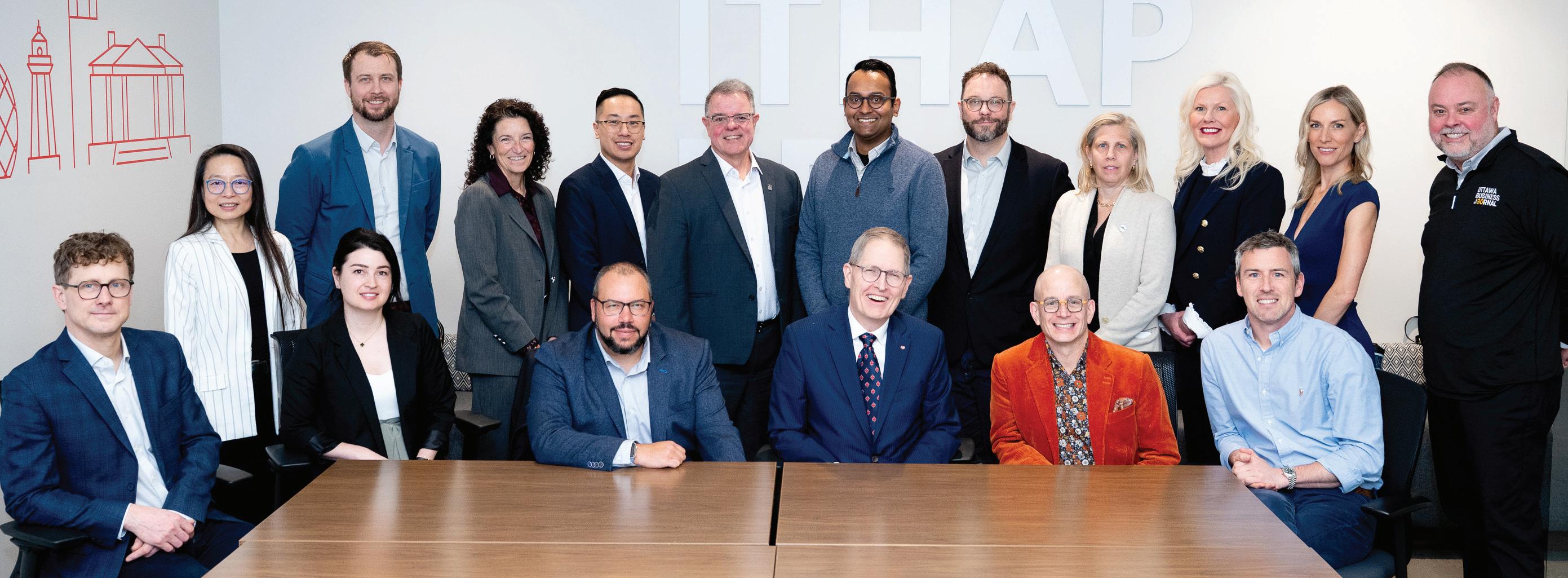

DERRICK GIBBINGS professor and interim associate vice-president, research support and infrastructure, University of Ottawa
we are not going to keep the companies here. Not every organization can have startup space. So, we should be thinking about who’s going to provide the startup space? Who’s going to provide the scaling space? Who’s going to provide the growth space?”
of Ottawa
CAROLINE CAO dean of engineering, University
“We have opportunities that we’re not taking advantage of. In the U.S., there is a program called I-Corps, which was developed by the U.S. National Science Foundation (NSF) and pushed out 20 years ago because NSF realized that they were spending a lot of taxpayer money on research and development of technology that never sees the light of day because it stays in the lab. So, they started this program to train academics to become entrepreneurs. Not everyone who took the program would become entrepreneurs, but at least they would be equipped to have that mindset and to teach their graduate students to think that way.”
JEFF SMIRLE executive director and co-founder of Capital BioVentures
“We have to break down those silos. Early-stage biotech companies don’t just need one thing or two things. They need five or six different things at any given time, and they need all of those to be able to be successful. They need space. They need funding. They need people and talent. They need executive-level people who can help those companies grow. They need strong IP. They need manufacturing. If they don’t have access to all of that stuff, they’re going to hit barriers. They’re not going to be able to scale effectively here in the region. So what we need to do as leaders is make sure those supports are streamlined.”
“We have great science, great people in Ottawa, and you can do a lot, but this is a very big international business. You very quickly have to look outside of Ottawa to bring in pieces.
If you want to do a clinical trial, oftentimes the specialist who has a patient population could be anywhere in the world and you have to go to them because that’s what the market and regulators are going to dictate. That’s for me the biggest role of the mentors is actually to help us build those bridges. We don’t want to build big fish in a small sea, but aim for big fish in the big sea.”

RYAN PHILIPPE senior director, Ottawa Health Innovation Hub
“As public funding shifts from new dollars to smarter use of existing ones, Ottawa’s health and tech ecosystem stands out. We’re not overcrowded, we’re under-leveraged. With complementary strengths across universities, hospitals, and innovation hubs, tighter coordination can turn public investment into more spin-outs, faster scale-ups, and measurable economic impact.”

MAURA CAMPBELL president and CEO of Ontario Bioscience Innovation Organization
“I do feel like Ottawa’s having its moment. Some of the challenges that Toronto has experienced is the siloing and the competition amongst different groups. Toronto’s figuring it out now, and it’s essential Ottawa acts the same way.
For startups to succeed, we must have startup space that’s economical, we must have scale-up space and we must have growth space. We have to have all that or
JEAN-SIMON DIALLO CEO and scientific founder of Virica Biotech
“The ecosystem needs to make it easy for businesses to grow, and right now it’s not quite so easy. So these are the things that need to be fixed, and there’s a tremendous opportunity to do so with a ton of talent and a ton of innovation, but right now you need people like me who are going to push everywhere and there’s not enough people who will push. In order to get more, you need to reduce those barriers. That’s the only way you’re going to get there.”

KAMA SZERESZEWSKI director
of the Master of Biotechnology professional program at Carleton University and CEO and founder of Momentum AIR
“Our two biggest hurdles… people say capital and talent, but maybe we want to say that it’s really fundability and translational support. Early-stage life science companies will struggle because they’re too early for investors or not at the right technology readiness level or not shaped enough for the market, right? They’re told to come back when they have more data. So we need people who can work across science, product development, regulation, business, and commercialization.
Ottawa has this huge strength because we’re at the centre of convergence and innovation, and we’re unusually strong there because we have the science, engineering, software, the clinical, the IP. That combination is super valuable for medtech and therapeutics, which sit at the intersection of devices and therapeutic software.”

From coast to coast to coast, Calian delivers trusted healthcare solutions that support people, systems and communities.
• Military and veteran health services
• Advanced paramedic care
• Psychological services
• First responders wellness
• Patient support programs
• Digital health and cybersecurity
• Northern and remote care Discover how Calian is shaping the future of Canadian healthcare at calian.com/health
KYLE BIGGAR associate professor at Carleton University and president and Co-Founder of NuvoBio
“When we joined Capital BioVentures, the growth really accelerated because they could put us in front of institutions like the Biotherapeutics Manufacturing Centre or Merck. It was their ability to look across institutions. That cohesion between institutions is really key in order to pull the innovation out of the city and to grow it. We have all this infrastructure. We have great training. How do you gather up all of these great training and infrastructure resources in a way that there’s basically one central repository to put you in the right spot?”
ERIC LEE general manager, Biotherapeutics Manufacturing Centre
“Canada was the only G7 nation that fully relied on external parties to provide us with COVID-19 vaccines. That was identified as a major paucity and it spurred a series of investments into rebuilding Canada’s biomanufacturing infrastructure to avoid that situation in the future. It’s obviously very exciting that we’ll have this domestic capacity, but how we execute now is going to be key. Anyone can buy the machines or build the facilities, but it’s that unique combination of experience, collaboration, the networks, and the plan that is required in order to execute.”

ANIRUDH KUMAR CEO, CarMa Institute
“We are working with six Canadian portfolio companies that are not even thinking about submitting new drug applications to Health Canada. They want to go to the U.S. Food and Drug Administration, even in this political climate, because they have an easy path and they know what to do. Why not Health Canada? Because, my clients
say, it’s like they’re chasing their tail. We want research capabilities; we have them. We want academics; we have them. We want people who make great innovations; we have them. What’s the problem, in my opinion? Legislation.”

ROB BEANLANDS president and CEO, University
of Ottawa Heart Institute
“The first human imaging with the radiopharmaceutical Yellowbird [Diagnostics] developed is in Germany. It’s already happened because of the way Germany’s system is set up. When I started and we were developing Rubidium in the 90s, we went to Health Canada and asked, ‘What do we need to do? We’re going to make it ourselves inside our institution.’ They said, ‘You don’t need to come to us, you can just go ahead and do it.’
But not today. The regulatory burden is significant. And while that is a national problem, I think our presence in Ottawa provides us with an opportunity to be a strong voice for Canada to advocate for Health Canada regulatory changes.”
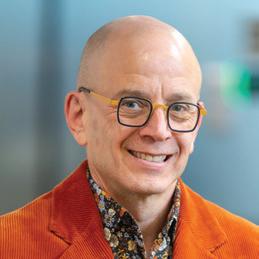
JASON BERMAN CEO and scientific director of the CHEO Research Institute, and vice-president research at CHEO
“Today’s care is yesterday’s research, and today’s research is tomorrow’s care. If we think about the best hospitals, whether it’s the best hospitals in Canada or globally, what often defines them and how they build their reputation is based on research. If you have the person there who’s not just a consumer of the work that’s happening, but the creator of that work, that person is the expert in that disease, that technology, that imaging or whatever it is. If you’re a patient, well, that’s where you want to go or that’s where you want to bring your family member. That attracts other talent. You create this sort of virtuous cycle that I think is beneficial both for the ecosystem, talent recruitment, the economy, and patient care.”
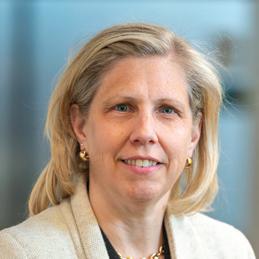
REBECCA AUER
executive vicepresident of research and innovation at The Ottawa Hospital and CEO and scientific director of the Ottawa Hospital Research Institute
“Research is part of care. And it’s not just because it’s better for patient care, which of course it is. It’s also better for recruiting amazing talent, and it’s also better for economic development. If you have a product that is developed in your own research institute and you can’t deploy it within your own hospital, that’s a problem and a big barrier.”
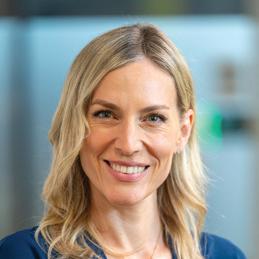
EMILY JAMIESON
vice-president, innovation, corporate and strategic partnerships, CHEO Foundation
“I talk to donors outside of Canada. We are looking externally as well, and these donors would be very interested in supporting great ideas that they can leverage. There’s lots of capital and lots of money within Ottawa. But I can tell you we have to go beyond our borders if we want to fund some of these innovations.”
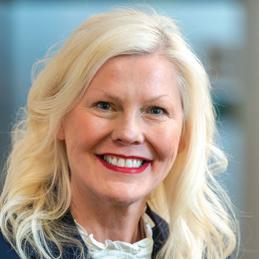
NANCY WHITE
vice-president, sales, Calian Health
“Prior to my work at Calian, I spent more than 20 years working for multinational pharma companies that commercialized more than 50 pharmaceutical products in my career. We were residents of JLABS in Toronto and were fortunate enough to also be a Creative Destruction Lab participant of the Rotman School of Business, all activities that were critical in the evolution of the development of the technology we were working on. Sadly, we faced challenges getting uptake from customers in Canadian markets”

Ottawa has everything it takes to become
By Ken Lawless
Ottawa is at the edge of a rare economic and scientific turning point – one that cities spend decades trying to manufacture through incentives, branding campaigns and speeches. Yet here, in Canada’s capital, the ingredients for a globally competitive life sciences hub have accumulated over generations. Now they are converging with a force that could redefine the region’s economy for the next half-century.
For years, Ottawa’s life sciences sector has been described with familiar Canadian modesty: steady, reliable and quietly
impressive. But that language no longer fits. The city is entering a period of accelerated scale where incremental progress gives way to exponential growth. Few G7 capitals can match Ottawa’s combination of federal research institutions, hospital-based discovery, national-scale biomanufacturing, and world-class digital health companies. This is not boosterism – it is a structural advantage that is the envy of most cities. The question is whether Ottawa can recognize the moment and act boldly enough to capitalize on it.
Ottawa’s life sciences strength did not appear overnight. It was built through decades of public-sector R&D and institutional leadership from the National Research Council, Health Canada, the Public Health Agency of Canada, the University of Ottawa’s Faculty of Medicine and Ottawa Heart Institute (UOHI), The Ottawa Hospital and Ottawa Hospital Research Institute (OHRI), CHEO, Bruyère Health, Montfort Hospital, Carleton University and others.
These institutions created a research powerhouse in immunotherapy, RNA and viral-vector science, cancer and cardiovascular disease, cell and gene therapy, diagnostics, biosensing, and digital health.
Early commercialization successes – such as Abbott’s i-STAT, Siemens Healthineers’ Epocal platform, DNA Genotek and Nordion – proved that Ottawa could not only generate discoveries, but also turn them into globally competitive companies. These firms became the backbone of a life sciences cluster now entering a new phase.
What distinguishes this moment from the past is the scale and simultaneity of new investments. Nearly half a billion dollars in annual R&D flows through the University of Ottawa and its affiliated institutions. But the real transformation is coming from the major infrastructure projects now underway:
• A $400-million Advanced Medical Research Centre (AMRC): 350,000plus square feet of wet labs, translational research floors and an innovation hub.
• A $160-million expansion of Canada’s GMP biomanufacturing network, with Ottawa as a major node.
• The $370-million CHEO Integrated Treatment Centre (1Door4Care)
• The $2.8-billion Ottawa Hospital Civic Campus, one of the largest hospital projects in Canadian history.
Add federal and provincial investments through FedDev Ontario, CFI, the Ontario Research Fund, and the Ontario Wet Lab Program, and the picture becomes clear: Ottawa is building the physical and scientific infrastructure of a toptier North American life sciences hub. This is not incremental. It is transformational.
Ottawa can become Canada’s most integrated health and life sciences innovation ecosystem, and a top-tier North American hub.
Ottawa’s anchor companies – such as Abbott, Siemens Healthineers, Fullscript, Calian, DNA Genotek, Biotechne and Novonesis –demonstrate that the region can grow and retain global players. But the most exciting signal of momentum is the recent surge of high-growth emerging firms:
• Spiderwort in biomaterials and regenerative medicine.
• Virica Biotech improving gene therapy and vaccine yields.
• Orion Biotechnology developing GPCR-targeted therapies (for obesity and metabolic disorders).
• TryCycle Data Systems advancing predictive mental-health technology.
• Marcan Pharmaceuticals expanding Canadian manufacturing capacity.
These companies are attracting national and international attention and operate at the intersection of advanced therapeutics, AI and digital health, biomaterials, and manufacturing science – precisely where global investment is flowing.
Just behind them is a pipeline of emerging startups and spinoffs – such as Yellowbird Diagnostics, NuvoBio, Rhythm Biotherapeutics, Esphera SynBio, Hylid Diagnostics (HyliDx), Realize Medical, and Mindstride – fuelled by uOttawa, OHRI, CHEO, UOHI, and local investors. This is the innovation funnel that feeds the next generation of anchor companies.
One of Ottawa’s historical weaknesses has been fragmentation – strong institutions operating in parallel rather than in concert. That is changing.
Organizations like OBIO, Capital
BioVentures, CHEO Core Innovation, Invest Ottawa, Ottawa Health Innovation Hub, Stem Cell Network, BioCanRx, Ottawa Academic Health Network, and others have aligned around shared goals. These include research, innovation, commercialization, talent development, infrastructure integration, and company acceleration.
No single organization can drive a worldclass ecosystem alone. But together, they can create something far more powerful than the sum of their parts.
If Ottawa embraces this moment, the next decade could bring:
• 50-plus new scale-up companies.
• Thousands of high-value jobs.
• National leadership in therapeutics, immunotherapies, gene and cell therapies, diagnostics, AI and digital health.
This is not a distant aspiration – it’s a realistic outcome based on assets already in motion.
But inflection points are not permanent. They are brief, high-leverage periods where decisions matter more than usual. Ottawa has the talent, the infrastructure, and the momentum. What it needs now is urgency.
Ottawa can become Canada’s most integrated health and life sciences innovation ecosystem, and a top-tier North American hub. But only if the region chooses ambition over complacency.
The opportunity is here. The question is whether we will seize it.
Ken Lawless is a life sciences industry advocate and former senior director at the Ottawa Health Innovation Hub.
Yellowbird Diagnostics and Virica Biotech
Maybe you have a dream of developing the next great medical device or breakthrough therapy, and you want to do it in Ottawa. Where do you start?
For most startups, the journey begins in one of the city’s leading academic institutions or research institutes. A faculty member or medical practitioner lays the groundwork by developing new intellectual property, often supported by government funding, and then makes the decision to commercialize it.
Yellowbird Diagnostics is one such example. Founded by University of Ottawa PhD graduates Nicholas Calvert and Alexia Kirby, alongside faculty member Adam Shuhendler, the company’s plug-and-play imaging dyes originate from academic chemistry and imaging research.
The story is similar for Virica Biotech, where founder Jean-Simon Diallo translated a decade of research at the Ottawa Hospital Research Institute (OHRI) into Viral Sensitizers that address key manufacturing challenges in viral therapies.
To move from the lab to the bedside or production, research must be spun out into a company. From there, founders enter a critical phase of fundraising, product refinement, customer discovery, and team building.
Local investor groups such as Capital Angel Network and sector-focused funds like Capital BioVentures play an important role in helping early-stage companies take shape.
Investors beyond Ottawa are also paying attention to the city’s health and life science
startups. Turnstone Biologics stood out as one of the city’s breakout successes, raising more than US$172 million before completing an $80-million initial public offering in 2023.
Its subsequent asset selloff, driven in part by high manufacturing costs, is a reminder of the risks inherent in translating scientific discovery into commercial success.
Another soon-to-be strength for the city is its research capacity, which is set to expand with the opening of uOttawa’s upcoming Advanced Medical Research Centre (AMRC). The AMRC will add much-needed lab space, addressing a longstanding bottleneck for scaling biotech companies and making the path to commercialization more accessible.
For companies that successfully raise capital, the next step is clinical validation. Ottawa is a strong environment for this stage, thanks to its integrated academic hospital network, including The Ottawa Hospital and Children's Hospital
of Eastern Ontario, as well as access to a diverse and regionally connected patient population.
As companies grow, they benefit from Ottawa’s deep talent pool. Graduates from local colleges and universities feed the pipeline, while the city’s established tech sector provides expertise in software, data, and engineering – increasingly critical in modern health innovation. Eventually, every company must navigate the regulatory landscape, whether through Health Canada or international bodies such as the U.S. Food and Drug Administration. Securing approval enables companies to enter the market, generate revenue and build momentum.
At maturity, a range of outcomes becomes possible. For Epocal Inc., that meant acquisition, first by Alere Inc. and later by Siemens Healthineers, helping anchor global expertise in Ottawa. Others will go the publicly traded route or develop partnerships that maintain some independence while ensuring their insights are used to advance patient health.
The Ottawa ecosystem benefits from this full-cycle dynamic, where research, clinical validation, commercialization, and scaling all occur within a tightly connected network.
As companies succeed or fail, talent, capital, and experience are recycled back into the local ecosystem, strengthening the next generation of innovators. That continuous loop is what allows Ottawa to consistently produce health and life sciences companies that compete on a global stage.

ACADEMIA + RESEARCH FOUNDATIONS
KEY PLAYERS
• University of Ottawa
• Carleton University
• Ottawa Hospital Research Institute (OHRI)
• CHEO Research Institute
ROLES
• Basic and transitional research
• Intellectual property (IP) generation
• Talent pipeline
HELP FOR ENTREPRENEURS
• Collaboration opportunities
• Access to expert advisors
• Data and tech transfer
CLINICAL ADOPTION + VALIDATION
KEY PLAYERS
• The Ottawa Hospital and Ottawa Hospital Research Institute
• CHEO, CHEO Research Institute
• University of Ottawa Heart Institute
• Montfort Hospital
• Specialized players such as Bruyère Health, The Royal
ROLES
• Patient care and data
• Clinical trials (Phases I-V)
• Innovation testing ground
HELP FOR ENTREPRENEURS
• Market validation
• Regulatory pathways support
• Patient feedback
INTEGRATED PATHWAY TO GLOBAL MARKET
GOVERNMENT SUPPORT+ FUNDING COMMERCIALIZATION + STARTUP SUPPORT
• Invest Ottawa
• Ottawa Health Innovation Hub (OHIH)
• Capital Bioventures
• Advanced Medical Research Centre (AMRC)
ROLES
• Business development
• Incubation and acceleration
• Specialized wet labs
HELP FOR ENTREPRENEURS
• Mentorship and coaching
• Access to wet labs
• Pitch and investor connection
• National Research Council (NRC)
• NRC-IRAP
• Fed Dev Ontario
• BDC
ROLES
• Strategic economic development
• Infrastructure funding
• Policy framework
HELP FOR ENTREPRENEURS
• Non-dilutive grant funding
• Technical advisory services
• Market intelligence

Navigating the path from idea to product can be difficult, but there are local resources available for health-care startups
We often think of health care in Canada as a public-sector domain: hospitals, paramedics, and government insurance plans all come to mind. But the development of new medical technologies, new medicines and vaccines, and a host of other medical innovations is typically preceded by significant private-sector investment.
But that path from idea to research – and then from innovation to approved treatment – is tricky to navigate, with many pitfalls that cause even promising new medical products and procedures to flatline.
One of the newer resources intended to help companies vault that so-called “valley of death” is Ottawa-based Capital BioVentures, a two-year-old wet-lab accelerator. Founded by experienced biotech entrepreneurs who have collectively raised more than $1 billion and successfully brought therapies to patients, Capital BioVentures focuses specifically on therapeutics and diagnostics. Its approach is deliberately hands-on.
“Our version of acceleration is a little bit different than other groups,” says Jeff Smirle, the group’s executive director. “We are very subject-matter-specific, and we use that expertise to help the next wave of biotech entrepreneurs succeed.”
Initially funded through a five-year mandate from FedDev Ontario, the organization has since expanded nationally with support from the National Research Council’s Industrial Research Assistance Program (IRAP). Capital BioVentures has worked with 28 companies across Canada through a three-tiered model, with cohorts ranging from emerging but inexperienced founders to the most promising startups who receive lab space, capital, and intensive operational support.
Among the organization’s standout successes is Ottawa-based Yellowbird Diagnostics, which recently advanced to clinical trials at the University of Ottawa Heart Institute. The company has developed plug-and-play imaging dyes for common medical imaging procedures. Yellowbird has worked with Capital BioVentures for the past 18 months.
“We were lucky enough to meet Jeff Smirle
and Julia Pomoransky of Capital BioVentures at the first Ontario Bioscience Innovation Organization (OBIO) Summit,” explains Nicholas Calvert, co-founder and CEO of Yellowbird. “They wanted to find us lab space, they wanted to provide expertise, they wanted to provide money, and I thought ‘this sounds great’ – because when I started, there wasn’t a lot of that here. We would not be doing these clinical trials without them.”
Calvert also credits OBIO and the Capital Angel Network as other early supporters crucial to the company’s success. And while receiving advice and expertise is a great starting point, there’s another key component to the equation: cash.
“It has to be smart capital,” Smirle adds.
For Yellowbird, that was Michael Gottlieb –co-founder of Point Biopharma – which was acquired by Eli Lilly and Co. in 2023. That acquisition marked one of the largest-ever exits in the Canadian radiopharmaceutical business. Gottlieb is now Yellowbird’s executive board chair.
“Initially, being a team of three scientists, you need to find someone with that commercial experience,” says Calvert. “Michael really changed our trajectory and provided us with a lot of hard-to-find expertise. That has been a big problem in the ecosystem, and we were one of the lucky few to find one.”
“If we can find the right people to place with companies at the right time, that’s going to really help drive success.”

JEFF SMIRLE, EXECUTIVE DIRECTOR AND COFOUNDER, CAPITAL BIOVENTURES
“The No. 1 hurdle to exponential growth here in the National Capital Region is increased access to capital but, more specifically, it is increased access to experienced talent that can help these companies deploy that capital in an efficient way to speed up their growth.
“If we can find the right people to place with companies at the right time, that’s going to really help drive success.”
Combining commercial experience and connections like Gottlieb’s with the right company, the right investment, and access to the right resources such as talent, lab space, and other support improves the odds for upcoming life and health science startups.
But that still leaves domestic challenges like Canada’s regulatory hurdles, which remain a competitive disadvantage for many startups that instead seek to first license their products in friendlier jurisdictions.
“We see companies looking at Middle East markets because pathways for approval and revenue generation are quicker,” says A.K. Kumar, CEO of CarMa Institute, an Ottawa-based advisory and investment firm in the health and life sciences space. “In Abu Dhabi it’s a 30-day review process, and you can be treating your first patient in 12 to 18 months. I’ve done enough Health Canada meetings, and there’s no one authority figure who says this is how it should be done, and businesses are left chasing their tails.
“If AI regulations can change so quickly, why can’t we do the same for biotech?” he adds.
Kumar says these regulatory roadblocks are leading Canadian companies to take testing and approvals elsewhere, and causing capital to seek friendlier markets or creative investment strategies. He says the sector needs a strong champion to propose more innovative and “provocative” ideas, and work on improving the regulatory environment.
“Life science is a fail-fast business,” adds Calvert. “The typical therapeutics company is in the regulatory line seven or eight years before it helps its first patient. We have to find ways for these companies to either succeed or fail fast because there are companies launching treatments and products that have major benefits to patients right away.”
Meeting the moment for Ottawa’s health and life science sectors requires a clear diagnosis of where we are. Let’s check the charts and get an accurate picture of the sector.

Ottawa has long been strong in research, but the next phase is turning that into companies and products. New infrastructure like the Advanced Medical Research Centre (AMRC) and Ottawa Health Innovation Hub is explicitly designed to close that gap, providing shared wet lab space, equipment, and business support.
Being Canada’s capital is not just symbolic. Ottawa houses regulators, funders, and national research bodies, creating unusual access to policy, funding programs, and procurement pathways. By moving federal scientists into collaborative hubs like the Regulatory and Security Science hub, the private sector could gain unprecedented proximity to federal regulators and researchers, shortening the R&D-to-approval cycle.
The federal and Ontario governments are putting serious capital into life sciences, alongside expanding science, technology, engineering, and math (STEM) education and workforce capacity. This will mean sustained sector growth, job creation, and global investment attraction, particularly if Ontario realizes its ambition to be a top-tier biomanufacturing hub.
Ottawa’s unique advantage is the Kanata-to-Carling pipeline: We have a worldclass tech park in the west and a massive new hospital set to open in the city centre. The opportunity lies in digital health by using Kanata’s AI expertise to process the massive datasets generated by The Ottawa Hospital’s new Civic Campus and the University of Ottawa Heart Institute.
Here are a few challenges to address, stat, to help the local health and life science sector grow and thrive in the years to come.

Building a $2.8-billion hospital or a $1-billion federal lab is a one-time capital cost. Will the money and people be there to fully staff and power these high-tech facilities?
Diverging standards between the U.S., EU and Canada – combined with intense pressure on drug pricing – mean that Ottawa startups must spend significantly more on compliance and market-access strategy than they did just five years ago.
While early-stage funding is stabilizing –notably with the BDC’s new $150-million life sciences fund – local firms still face a massive capital cliff when trying to raise $50-million-plus rounds.
Ottawa is elite at discovery but continues to struggle with keeping IP local. Too many breakthroughs at our research hospitals are still being licensed to foreign multinationals.
‘Excitement’ isn’t a word you necessarily associate with health care – yet with medical breakthroughs and rapid growth, it’s hard not to get excited about these companies, and many others, who are contributing to a healthier Ottawa and a healthier world.
Yellowbird Diagnostics is an emerging player in the life sciences sector, focused on advancing accessible, high-quality diagnostic testing. With an emphasis on innovation and efficiency, the company addresses gaps in traditional laboratory services by offering faster turnaround times, improved data integration, and patient-centred solutions.
At its core, Yellowbird Diagnostics aims to modernize how diagnostic information is generated and delivered. By leveraging advanced technologies and streamlined processes, the organization supports clinicians in making timely, informed decisions that can improve patient outcomes. Its approach reflects a broader shift in health care toward precision medicine and more responsive care models.
The company is also positioned within a growing ecosystem of
health and biotech organizations redefining diagnostics in Canada. Through partnerships and a commitment to continuous improvement, Yellowbird Diagnostics contributes to strengthening the country’s capacity for innovation in medical testing. As demand for reliable and rapid diagnostics continues to rise, particularly in the wake of global health challenges, Yellowbird Diagnostics represents a forwardlooking approach to laboratory medicine, combining technical expertise with a clear focus on accessibility and impact.
Virica Biotech is focused on improving the manufacturing of viral medicines, including gene therapies, oncolytic viruses, and viral vaccines. Founded to address one of the sector’s most persistent bottlenecks, the company develops solutions that enhance the yield,
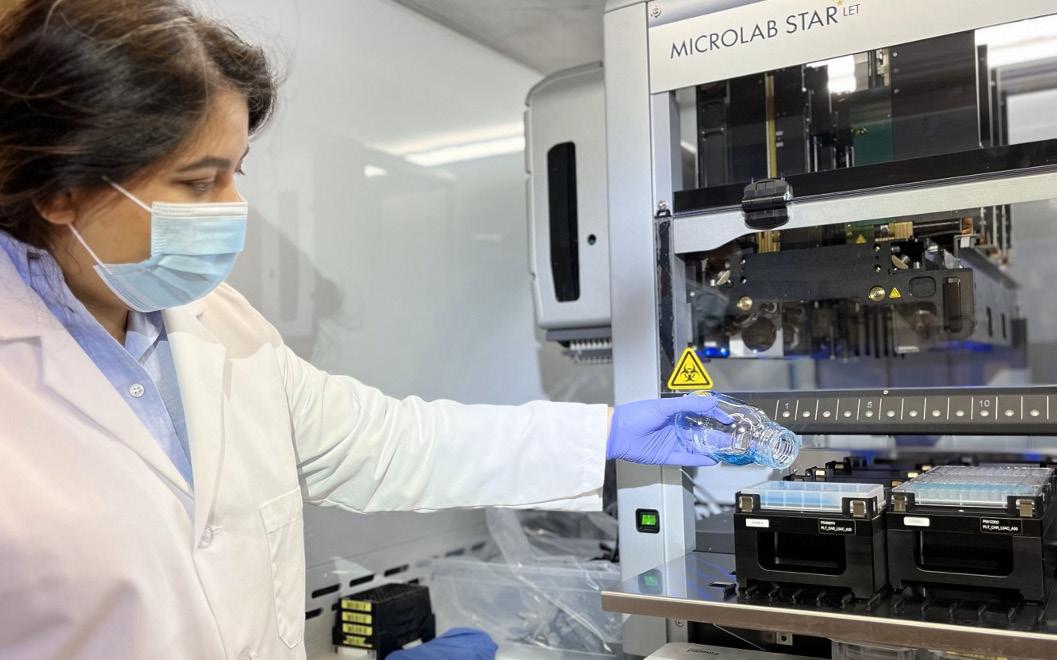
The NeuCaVis precursor vial used to make the final radiotracer NeuCaVis, and the actual vial of NeuCaVis being prepared for patient injection.

potency, and consistency of virus-based therapeutics during production.
At the centre of Virica’s work is its proprietary VSE technology, which mitigates the cellular stress responses that can limit virus replication in manufacturing environments. By enabling more efficient viral production, the company helps biopharmaceutical partners scale therapies more effectively and reduce production costs, a critical factor in making advanced treatments more accessible to patients.
They also recently launched an AI platform designed to speed up biomanufacturing by combining machine learning with real-time experimental data.
Virica collaborates with a range of global partners, including pharmaceutical companies, contract development and manufacturing organizations, and academic institutions. Its technologies are designed to integrate into existing workflows, making them practical for widespread adoption across the life sciences sector.
As gene and cell therapies continue to gain momentum, Virica Biotech is a key enabler of this next generation of medicine, helping translate scientific breakthroughs into scalable, real-world treatments that can reach patients faster and more reliably.
Spiderwort Biotechnologies develops plant-based biomanufacturing solutions for the production of complex therapeutic proteins. By leveraging the natural capabilities of plants as expression systems, the company aims to offer a scalable, cost-effective alternative to traditional cellbased manufacturing methods used in biopharmaceutical production.
Spiderwort’s platform centres on transient expression technologies that enable rapid production of proteins without the need for stable cell line development. This approach can significantly shorten development timelines while maintaining the quality and functionality required for therapeutic applications. The company’s work has implications across a range of areas, including vaccines, antibodies, and other biologics.
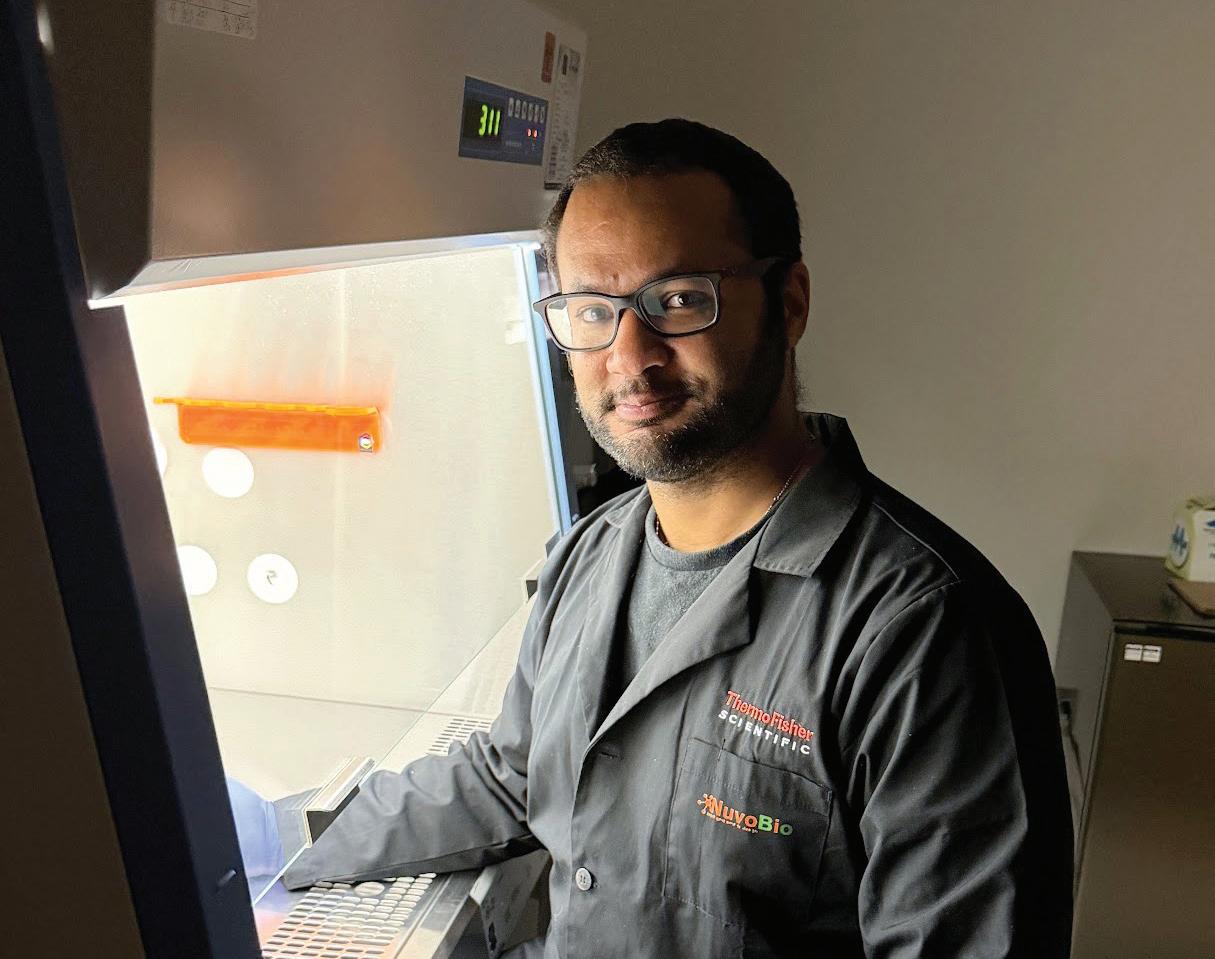
Operating at the intersection of biotechnology and agriculture, Spiderwort Biotechnologies reflects a growing interest in sustainable and flexible manufacturing strategies within the global life sciences sector. Its innovations are particularly relevant as demand increases for rapid-response production capabilities in the face of emerging health challenges. Through ongoing research, collaboration, and technology development, Spiderwort Biotechnologies is contributing to the evolution of biomanufacturing, helping to expand how and where critical medicines can be produced.
NuvoBio is advancing innovative solutions in the life sciences and health care sectors. With a focus on developing novel biologics and enabling technologies, the company addresses unmet needs in disease treatment, diagnostics, and biomedical research.
NuvoBio’s approach combines scientific rigour with a commitment to practical application, aiming to translate early-stage discoveries into scalable products and platforms. Its work often centres on improving the effectiveness, accessibility, and efficiency of biologically derived therapies, reflecting broader trends toward precision medicine and targeted treatment strategies.
The company operates within a collaborative innovation ecosystem, engaging with academic institutions, industry partners, and research organizations to accelerate development and commercialization pathways. By fostering these partnerships, NuvoBio contributes to strengthening Canada’s capacity for biotechnology innovation and knowledge transfer.
As the demand for advanced therapeutics and diagnostic tools continues to grow, NuvoBio is positioned to play a role in shaping the future of health care. Its ongoing efforts highlight the importance of integrating research excellence with real-world impact in the evolving global life sciences landscape.
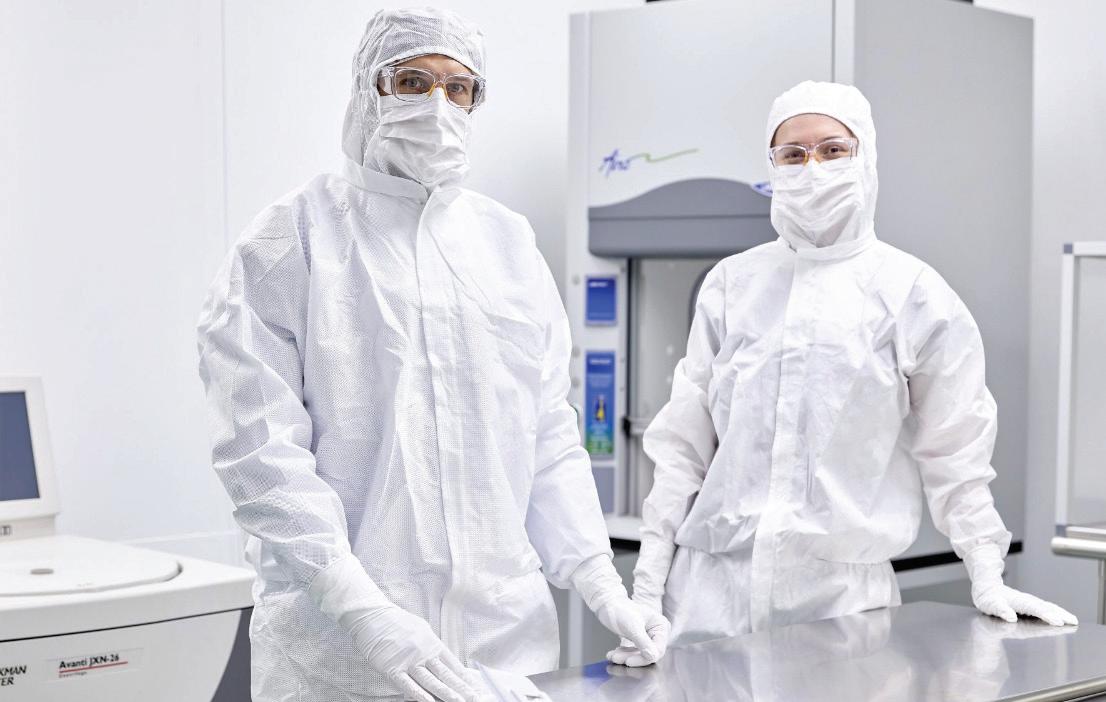
While technology and the military might be the first verticals that come to mind when you think of Calian, the company offers one of Canada's largest networks for trusted, compassionate, and attentive medical professionals. It has been the provider of medical services to the Canadian Armed Forces for 20 years, and also works with national, regional, local, and Indigenous health authorities, as well as first responders, to deliver primary care, mental health, and nursing services where needed. Working alongside existing healthcare organizations, Calian deploys its 2,800 accredited professionals
where staffing augmentation is needed.
It is also a growing player in the digital health space through platforms like Corolar, a Microsoft Teams-native solution for healthcare providers to rapidly launch virtual services. Calian works with health-care organizations on cloud computing deployments, custom application development, and cybersecurity offerings.
Additionally, it provides property management services to more than 140 clinics in 10 provinces and offers contract research services to assist with product development, commercialization, and patient support programs.
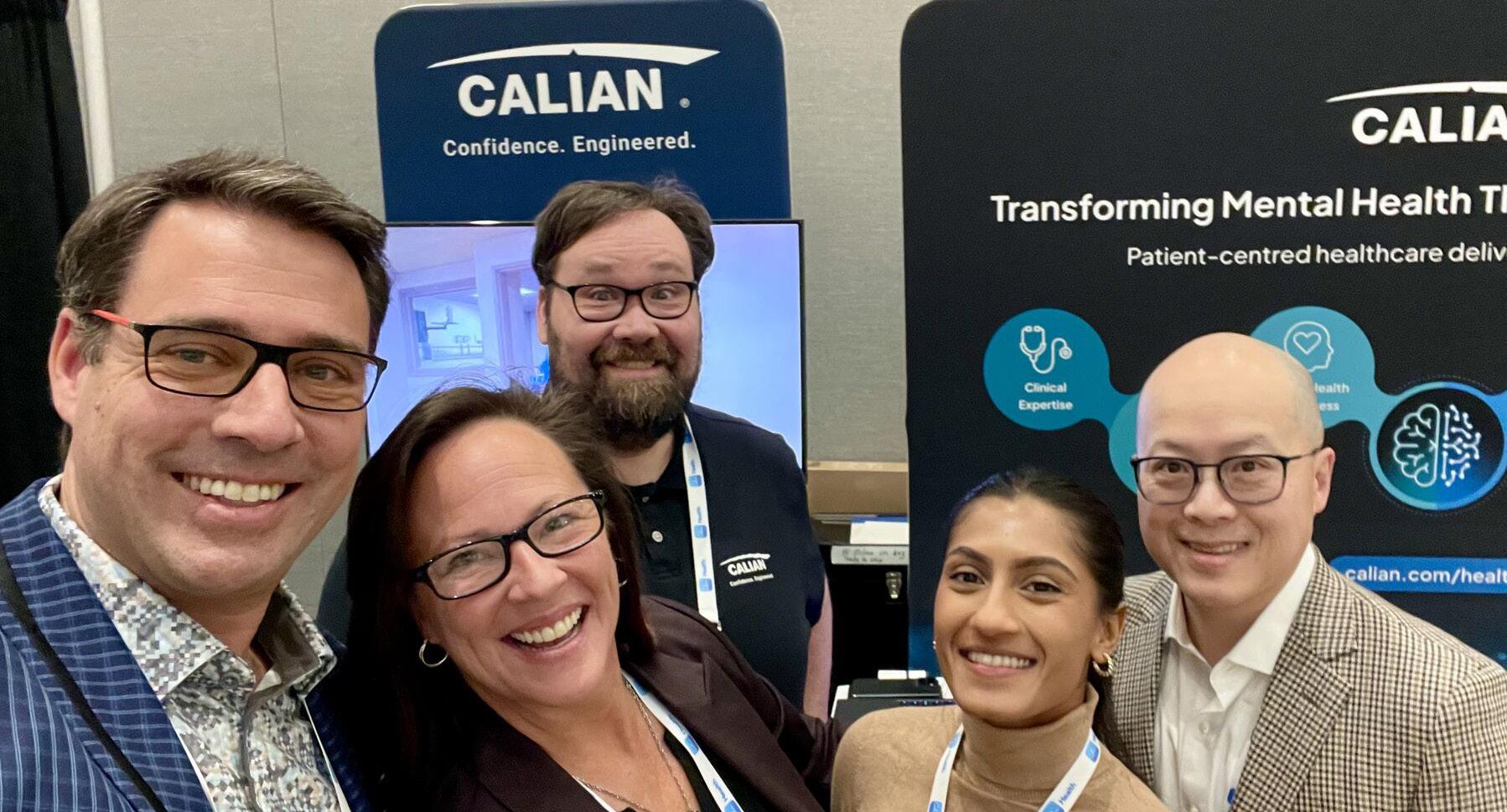

Fullscript provides a platform for practitioners to prescribe and manage personalized supplement and wellness plans. Founded in 2011, the company has grown into a leading digital tool used by integrative and functional health professionals across North America.
Fullscript connects practitioners and patients through a streamlined system that supports treatment adherence and simplifies the delivery of high-quality supplements. Clinicians can create customized protocols, monitor patient progress, and access a curated catalogue of professionalgrade products while patients benefit from convenient ordering, education, and ongoing support.
A key focus for Fullscript is improving outcomes through better adherence and data-driven insights. By integrating tools that track patient engagement and outcomes, the platform helps practitioners refine treatment plans and deliver more effective, personalized care. The company also emphasizes quality and safety, working with trusted manufacturers and maintaining rigorous standards for products available through its marketplace.
As interest in holistic and preventative health continues to rise, Fullscript is positioned at the intersection of technology and wellness, helping to modernize how practitioners deliver care and how patients engage with their health.
While Siemens is a global company and its health portfolio comprises 65,000 employees, Ottawa is its global centre of excellence for blood gas testing.
That journey began with Ottawa-based Epocal Inc., acquired by Abbott and later by Siemens in 2017. It
has continued through further investment by Siemens, including a 24,000-square-foot expansion announced in 2021.
Today, the Ottawa site plays a critical role in developing and manufacturing the epoc Blood Analysis System, a handheld diagnostic tool that enables clinicians to perform rapid testing at the patient’s bedside. The technology is used in hospitals and care settings around the world, supporting faster clinical decisions and improved patient outcomes.
The facility reflects the local strength in health technology, combining advanced research, skilled talent, and a collaborative innovation ecosystem.
As demand grows for faster, more portable diagnostics, Ottawa’s role within Siemens Healthineers is expected to remain central, reinforcing its position as a key node in the company’s global network.
Abbott Point of Care is a major contributor to Ottawa’s life sciences sector and one of the city’s largest private-sector health-care employers. As part of Abbott Laboratories, the Ottawabased operation serves as a global centre of excellence for point-ofcare blood analysis, developing and manufacturing diagnostic technologies used in hospitals, clinics, and emergency settings worldwide.
The site’s flagship product line, the i-STAT system, enables rapid bedside testing that delivers critical results in minutes rather than hours. This capability is particularly valuable in acute care environments, where timely information can directly impact clinical decisionmaking and patient outcomes. Ottawa’s team plays a central role in research and development, engineering, manufacturing, and global distribution of these technologies.
Abbott Point of Care’s presence in Ottawa dates back to the acquisition of local innovator Epocal Inc., and subsequent investments have expanded the company’s footprint and capabilities in the region. Today, the operation employs a highly skilled workforce spanning scientific, technical, and manufacturing disciplines. With ongoing investment

includes global markets, Abbott Point of Care continues to anchor Ottawa’s reputation as a hub for diagnostic innovation and technology.

Welbi is focused on improving quality of life for older adults through personalized engagement and data-driven insights. Its platform is designed for senior living communities, helping staff better understand residents’ preferences, participation levels, and overall wellbeing.
At the core of Welbi’s offering is a software system that tracks social, emotional, and recreational engagement data. The platform enables care teams to tailor programming to individual residents, identify those at risk of isolation, and make more informed decisions about care and community activities. The result is a more proactive, person-centred approach to senior living.
Welbi also provides analytics tools that help operators measure outcomes, demonstrate value to families, and improve operational efficiency. This is increasingly important as the senior care sector faces rising demand and growing expectations around quality of care and transparency.
Founded by local entrepreneurs with experience in health care and technology, Welbi has expanded its reach across North America, working with a range of retirement and long-term care providers. As the population ages, the company is positioned to play a meaningful role in modernizing how senior living communities support engagement, connection, and overall resident well-being.
Genomadix is focused on advancing rapid, pointof-care genetic testing to support precision medicine. Headquartered in Kanata, the company develops portable diagnostic technologies that enable clinicians to access critical genetic information in real time, rather than relying on traditional laboratory workflows.
Genomadix’s chief innovation is the Genomadix Cube, a compact, sample-to-result molecular diagnostic platform that uses real-time polymerase chain reaction (PCR) technology. Designed for ease of use and speed, the system can deliver DNA-based test results in approximately one hour, helping physicians make timely treatment decisions in acute care settings.
A key application of the platform is pharmacogenetics, which affects how patients respond to widely prescribed medications such as antiplatelet therapies. By identifying these variations at the point of care, Genomadix enables more personalized and effective treatment strategies, especially in stroke and cardiovascular care.
Building on technology and intellectual property originating in Ottawa’s life sciences sector, Genomadix has positioned itself as a leader in decentralized diagnostics. Through ongoing regulatory approvals, partnerships, and commercialization efforts, the company is a big part of the shift toward faster, more personalized health care delivery.

The Genomadix Cube has cleared another major hurdle as it looks to penetrate the U.S. market. FILE PHOTO
There are many moving parts that combine to make an effective health and life science innovation ecosystem. Here are just a few of those who have had an outsized impact on the local sector.
The Ottawa Hospital Research Institute
John Bell is a prominent Ottawa-based health researcher, innovation leader, and public policy adviser known for his work at the intersection of life sciences, commercialization, and economic development. With a career spanning government, academia, and the private sector, Bell has played a key role in advancing Canada’s health innovation ecosystem.
He has held senior leadership positions with organizations such as the Ottawa Life Sciences Council and has been closely involved in shaping national strategies to strengthen research translation and support high-growth health companies.
In addition to his leadership roles, Bell has contributed to numerous advisory panels and initiatives focused on improving health outcomes while driving economic growth, and has advised multiple startups.

Ontario Bioscience Innovation Organization
Maura Campbell is the president and CEO of the Ontario Bioscience Innovation Organization, a not-for-profit, membershipbased organization dedicated to advancing health technology innovation and commercialization.
Based in the Ottawa area, Campbell
has more than 30 years of experience in all key areas of biotech, including private and public companies, universities and research institutes, and government-funded publicsector research organizations.
With expertise in technology transfer and commercialization of intellectual property, Campbell has held various roles in senior management, most recently as the vice-president of intellectual property and contracts for Turnstone Biologics.
Previously, Campbell served as director of intellectual property at VBI Vaccines.
The Ottawa Hospital
Cameron Love is the president and CEO of The Ottawa Hospital (TOH), one of Canada’s leading academic health sciences centres. He took on this leadership role as of July 1, 2020, in an unprecedented time as Ontario’s health system adapted to the disruption of the COVID-19 pandemic.
In his mandate as CEO, Love aims to advance programs and services at TOH, innovate new ways of delivering health care by empowering TOH clinical teams and scientists, and to partner with patients and families in the Champlain region to deliver the best possible care. He previously served as interim CEO of the Champlain Community Care Access Centre, and served on TOH’s transitional leadership team, leading to the creation of TOH in the late 1990s and the integration of its programs and services across several campuses.
Biotherapeutics
Manufacturing Centre
Eric Lee is a Canadian life sciences executive and manufacturing specialist serving as a senior leader at the Biotherapeutics Manufacturing Centre (BMC). Based in Ottawa, Lee plays a key role in advancing Canada’s domestic biomanufacturing capacity, with a particular focus on vaccine production, biologics, and pandemic preparedness.
At BMC, Lee has been instrumental in supporting the facility’s mandate to strengthen national health security while enabling partnerships with public- and private-sector organizations. He has also contributed to collaborative initiatives that bring together government, academia and industry to accelerate the commercialization of health innovations.
Lee is an advocate for building resilient, end-to-end biomanufacturing capabilities in Canada, positioning Ottawa as a growing hub for biopharmaceutical innovation.
University of Ottawa
Julie St-Pierre was appointed uOttawa’s vice-president, research and innovation in June 2025. St-Pierre earned her bachelor’s and
master’s degrees from Laval University, then completed her PhD at the University of Cambridge. As a postdoctoral fellow, she researched in Europe and the U.S. before becoming an assistant professor at McGill University, where she launched and led a core facility focused on metabolomics, a powerful technology that provides indepth knowledge of the metabolic state of physiological and pathological conditions.
In 2017, she was recruited by the University of Ottawa and established a similar core facility at the Faculty of Medicine. She is now a full professor at the department of biochemistry, microbiology and immunology in the faculty.
Vera Etches assumed the role of president and CEO at CHEO in March 2025.
Before joining CHEO, Etches served as Ottawa's medical officer of health since 2018, where she led Ottawa Public Health's response to the COVID-19 pandemic. Under her guidance, Ottawa Public Health was recognized for its innovative approaches and community engagement, particularly in communications across multiple channels in diverse languages.
Etches holds a bachelor of science from Simon Fraser University, a medical doctorate from the University of British Columbia, and a master of health science from the University of Toronto, where she also completed a fellowship in community medicine. In 2009, she joined Ottawa Public Health as associate medical officer of health, later becoming deputy medical officer of health in 2014, and medical officer of health in 2018.
She is also an adjunct professor at the University of Ottawa, where she supervises medical residents in public health, preventive medicine and family medicine.
Capital BioVentures
Jeff Smirle is a cofounder and executive director at Capital BioVentures (CBV).
Prior to launching CBV, he had a decade of experience developing key strategic partnerships for Carleton University across its faculty of science, specifically in the biotech sector.
Smirle was instrumental in bringing Turnstone Biologics to Carleton’s campus in 2019, and supported the design, construction, and operationalization of the dedicated biotech space at the university. Following Turnstone’s departure, he secured a new partnership with Virica Biotech to bring the company to campus and support its growth in Ottawa.
Smirle has an extensive background in intellectual property, commercialization, and the integration of scaling biotechnology organizations in public-sector infrastructure. He received his PhD in cell biology in 2013 from McGill University.
of Ottawa Heart Institute
Rob Beanlands is president and CEO of the University of Ottawa Heart Institute (UOHI), where he leads with a peoplefirst philosophy rooted in collaboration, compassion, social accountability and community.
A graduate of the University of Ottawa’s Undergraduate Medical Education (MD Program), Beanlands trained in cardiology at the University of Toronto and completed an advanced fellowship at the University of Michigan. He joined UOHI in 1992 and served as chief of cardiac imaging from 1999 to 2013 and chief of the division of cardiology from 2012 to 2022. Today, he continues to drive world-class innovation and care at the institute.
Beanlands has authored over 450 peer-reviewed publications and has been principal or co-principal investigator of several landmark studies.
Montfort Hospital
Dominic Giroux is president and CEO of Montfort Hospital,
Ontario's francophone academic hospital. He has 27 years of experience as a senior executive in two teaching hospitals, a research institute, a university, two provincial ministries, and two school boards.
Born at the Montfort, a volunteer for the SOS Montfort movement, and a member of the hospital’s board of directors in the 1990s, he is a certified health leader with the Canadian College of Health Leaders and a fellow of the American College of Healthcare Executives.
Before joining Montfort Hospital, Giroux led Health Sciences North and the Research Institute at Health Sciences North, the largest teaching hospital in Northern Ontario. During this time, he co-chaired pandemic management in the north for Ontario Health and served on the provincial oversight table for the response to COVID-19.

Kumanan Wilson is the CEO and chief scientific officer at Bruyère Health Research Institute and vice-president, research and academic affairs at Bruyère Health. He had previously served as an innovation advisor for Bruyère Health, supporting the development of an innovation agenda to help implement commercial solutions in health care.
Wilson is also a specialist in general internal medicine and a distinguished clinical research chair in digital health innovation with the Department of Medicine at The Ottawa Hospital, and a full professor in the faculty of medicine at the University of Ottawa. He is also a member of the University of Ottawa’s Centre for Health Law, Policy and Ethics. He is the co-founder and chief scientific officer of CANImmunize, a science-based technology company specializing in immunization software. Wilson and his team developed a panCanadian digital immunization tracking system to help Canadians keep track of their vaccinations.
We’ve got the people and we’ve got the businesses – the next part of the prescription is the places. Major investments are underway in Ottawa’s life and health science research and treatment infrastructure. Here are a few projects to keep an eye on.
Opening: 2026
Size: Seven storeys, 350,000 square feet
The University of Ottawa’s Advanced Medical Research Centre (AMRC) is a landmark initiative designed to transform health research, innovation, and commercialization in Canada. Currently under construction, the AMRC represents the largest investment in research infrastructure in the university’s history, with a projected cost of roughly $280 million.
Located on the university’s medical campus alongside major hospitals, the AMRC will bring together researchers, clinicians and industry partners in a single, purpose-built environment. The facility will include state-of-the-art laboratories, including specialized wet labs essential for pre-clinical research, as well as flexible space for future expansion.
A defining feature of the project is the
Ottawa Health Innovation Hub, which will serve as an incubator for biotech startups and a bridge between academic discovery and real-world application. This provincially backed incubator provides high-growth biotech startups with shared wet lab equipment and business landing pads. By integrating research, clinical care and private-sector collaboration, the AMRC aims to accelerate the development of new diagnostics, therapies and health technologies.
The AMRC will also be home to the Biotherapeutics Manufacturing Centre (BMC) at The Ottawa Hospital, Canada’s leading facility for producing cell- and virusbased therapies for human clinical trials. The BMC also leads the only hands-on training program in Canada in biotherapeutics manufacturing, in partnership with Algonquin College, the University of Ottawa and Mitacs.
Beyond its scientific impact, the AMRC is
expected to play a major economic role by generating jobs, attracting investment, and helping position Ottawa as a global centre for life sciences innovation.
Opening: Mid-2030s (date and cost to be announced later this year)
Size: 2.5 million square feet on a 50-acre site
There are 641 patient rooms. The most advanced trauma centre in eastern Ontario, with specialized surgical suites, specialty programs and outpatient clinics. One of the most innovative neuroscience research programs in the world.
The new Civic campus of The Ottawa Hospital will replace the aging Civic campus with a state-of-the-art facility designed to meet the needs of a growing and aging population.
The Ottawa Hospital is currently working
with a build partner, the Ontario Ministry of Health, and Infrastructure Ontario to finalize the hospital’s design, cost and construction schedule. The new hospital will be one of the most modern teaching and research hospitals in the country, serving patients from eastern Ontario, western Quebec and Nunavut.
Beyond clinical care, the new Civic campus will integrate research, education and innovation, supporting cutting-edge neuroscience and other specialized programs. The project is expected to create thousands of jobs during construction and play a central role in shaping the future of health care delivery in the National Capital Region for decades to come.
While work continues on the new site, planning continues to make good use of the current Civic Hospital site, including long-term care options and possible affordable housing.
Opening: 2028
Size: Six storeys, 200,000 square feet
It’s the classic knock against hospitals: they’re difficult to navigate.
Those challenges are exacerbated when patients have advanced needs that make moving from clinic to clinic and office to office all the more difficult.
That’s a big reason why CHEO’s Integrated Treatment Centre (formerly 1Door4Care) will offer services for children
and youth living with complex medical, developmental, behavioural and mental health needs.
While maintaining a connection to the main hospital, the new building will serve families and provide an improved model of care – co-created by clinicians and patients – through multi-use clinics, therapy gyms, expanded mental health services, specialized treatment rooms, and integrated education and therapy spaces all under one roof. The facility will also feature family support areas and advanced technology to enable virtual care.
It is expected that medical professionals based in the facility will serve more than 40,000 children and youth annually.

Opening: 2031 (full completion)
Size: Nearly 400,000 square feet
The federal Regulatory and Security Science (RSS) hub is a cornerstone initiative within Canada’s long-term Laboratories Canada strategy, designed to modernize and integrate government science capabilities. Established as one of five national science hubs, the RSS hub focuses on protecting the health and safety of Canadians, while strengthening regulatory systems that support trade, innovation and economic growth.
At its core, the RSS Hub brings together multiple federal science-based departments and agencies, including the Canadian Food Inspection Agency, Canada Border Services Agency, Health Canada, and the Public Health Agency of Canada. By co-locating scientists and aligning mandates, the hub will enable better coordinated responses to complex challenges such as food safety risks, emerging diseases and border biosecurity threats.
The RSS hub’s primary facility is being assembled at the Fallowfield site, replacing several aging laboratories with a modern, multi-purpose research complex. With an estimated value of over $1 billion, the project will accommodate hundreds of scientists and is expected to be completed in phases, with initial occupancy targeted around 2031.
Scientifically, the hub prioritizes areas such as food and animal health protection, emergency preparedness, regulatory innovation, and border security. Its integrated approach supports faster diagnostics, improved risk assessment, and stronger regulatory decision-making.

New BSL-2 wet lab space now available
The Helix Wet Lab is a 1,000 sq. ft. BSL-2 wet lab designed to support early-stage life sciences companies as they grow and commercialize their technologies. Located within the Research Department at Providence Care Hospital, the space offers a tiered pricing model and scalable lab access for up to six companies at a time.
investkingston.ca/helix
Companies benefit from access to state-of-the-art equipment, expert support, and funding opportunities through the Helix Funding program creating a comprehensive environment for innovation, development, and commercialization. Helix Funding and Helix Wet Lab are supported by the Government of Canada through the Federal Economic Development Agency for Southern Ontario (FedDev Ontario).
#3 in Canada for Research Intensity
(medical/science grants, Maclean’s 2026)
#93 globally and #5 in Canada in the subject area of Medicine
(QS World University Rankings by Subject 2026)

#1 in Canada for Scholarships and Bursaries (Maclean’s 2026)

More than 6,500 researchers and clinicians attracting $380 million in research funding annually
Source: Invest Ottawa

Over $500 million in annual research funding at uOttawa and affiliated hospitals (2023-2024)
Source: Ottawa Hospital Research Institute
Lab space in Ottawa: 56,500 square feet (current); 17,200 square feet (uOttawa AMRC, opening 2026)
Source: Capital BioVentures

More than 130 companies employing 6,000 highly skilled people
Source: Invest Ottawa

$2.5 billion cumulative economic impact from research (since 2001)
752 active clinical trials and 11,000plus patients enrolled annually
Source: The Ottawa Hospital

$168 million in combined research activity in 2023-24 at The Ottawa Hospital (TOH) / University of Ottawa Heart Institute (UOHI)
Source: Ottawa Hospital Research Institute

Inside CHEO’s approach to turning research and new tools into real-world pediatric care
At CHEO, innovation isn’t a buzzword – it’s a tradition rooted in community action. Over 50 years after local families advocated for a dedicated children’s hospital in Ottawa, CHEO has grown into a world-class pediatric health care and research centre combining clinical care, discovery, and technology to improve outcomes for children and youth across the region and beyond.
Emily Jamieson, vice-president of innovation, corporate and strategic partnerships at the CHEO Foundation, helps connect partners, donors, and innovators with CHEO’s clinicians, researchers, and scientists.
“For us, innovation is more than chasing the newest technology,” she explains. “It’s about getting families and their children answers faster, reduce the burden on clinicians, and deliver better outcomes for kids.”
That focus shows up in current research projects that have the potential to improve the patient experience and, ultimately, their quality of life. Dr. Hana Alazem, clinical research chair in pediatric rehabilitation at CHEO, is studying an AI-powered “smart hallway” to evaluate its accuracy in gait analysis for children with movement disorders like cerebral palsy. The goal is to create a cost-effective method that improves local access to gait analysis, leading to better treatment decisions for patients who don’t have easy access to specialized clinical gait analysis labs.
The CHEO Research Institute developed a world-first AI algorithm called ThinkRare to help flag kids who may have undiagnosed rare diseases. ThinkRare continuously scans clinical information within CHEO’s electronic medical record system to identify children who may have an undiagnosed rare genetic condition – shortening their diagnostic journey and enabling them to get earlier access to treatment and other supports.
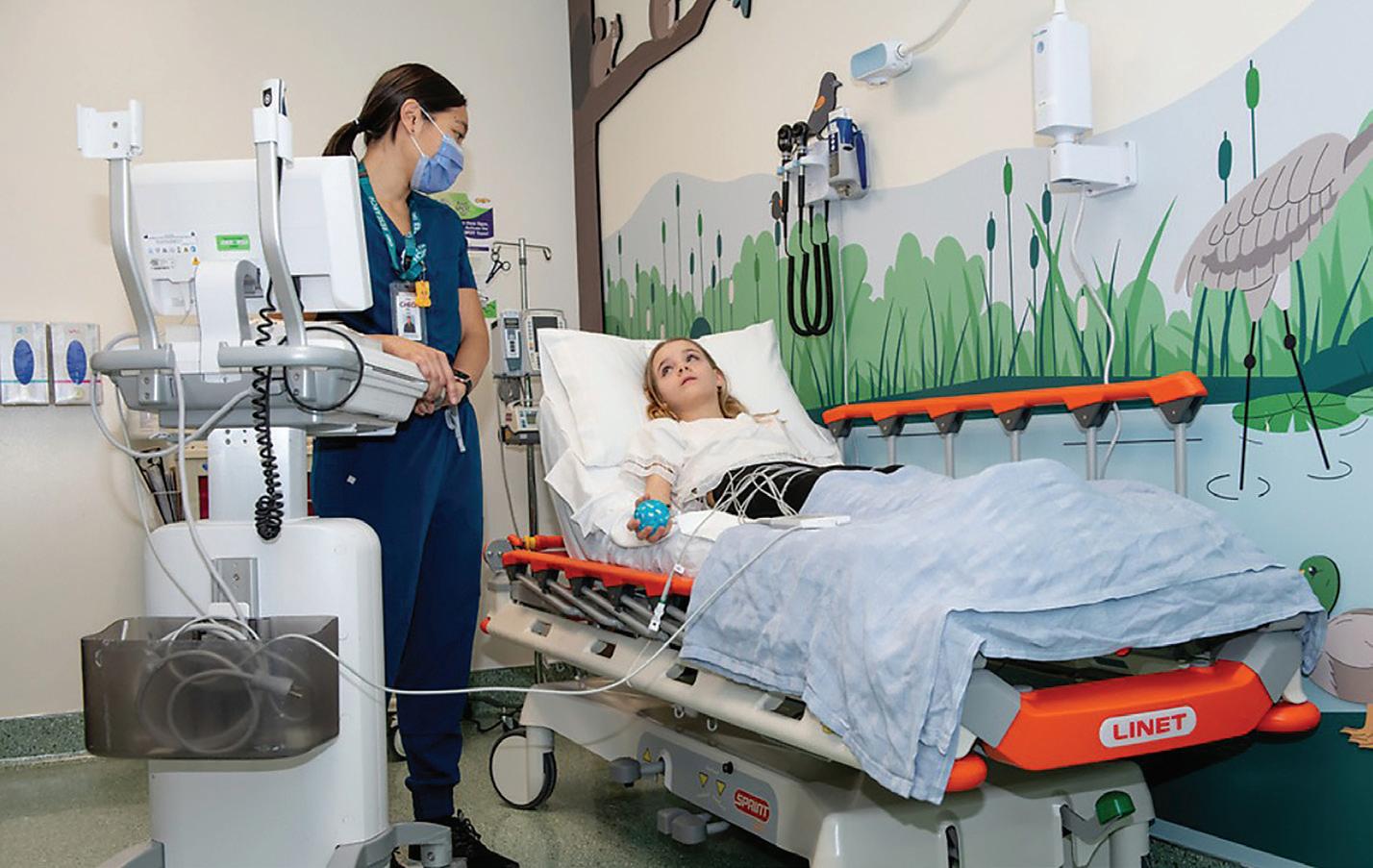
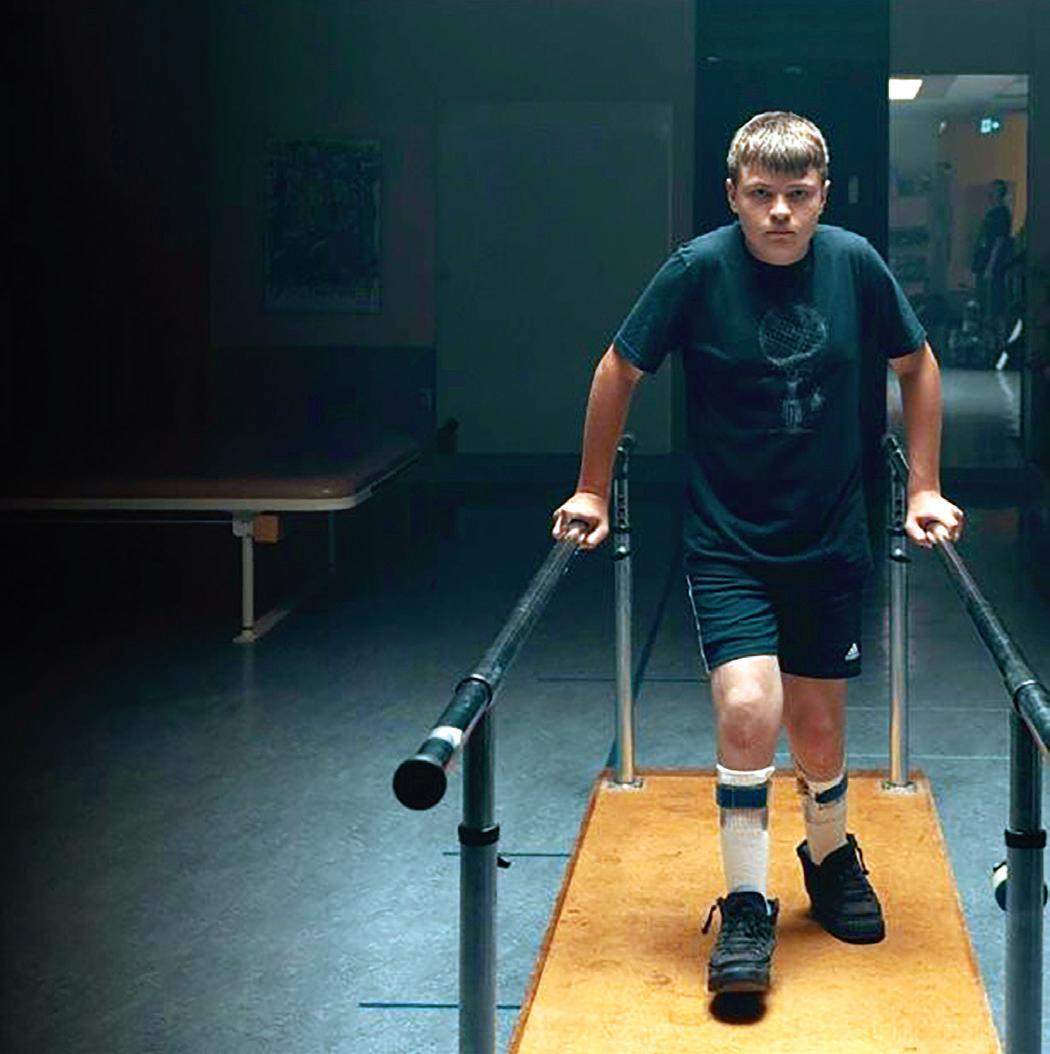
“ThinkRare is an incredible example of what happens when clinicians, data scientists, and families come together to build meaningful, responsible AI. It has had remarkable success at CHEO and is now expanding to other sites across Canada, meaning more children and families will get the answers they need sooner,” said Dr. Jason Berman, CEO and Scientific Director of the CHEO Research Institute, and Vice-President of Research at CHEO. “CHEO is uniquely positioned to develop impactful algorithms like ThinkRare because we have thoughtfully brought together all the necessary elements that foster meaningful AI advancements in health care.”
Meanwhile, CHEO’s campus redevelopment – its largest expansion since its opening – has created new opportunities to design care and research spaces purpose-built for modern pediatrics, including technology-enabled approaches to rehabilitation and mobility.
Jamieson argues that progress hinges on an entrepreneurial drive to collaborate, transforming bold ideas into measurable clinical impact. Philanthropy often fills the gap between promising concepts and ministry-funded adoption, supporting proof-ofconcept work, pilots, and early implementation.
CHEO works with entrepreneurs and researchers to help innovations cross the chasm between prototype and real-world use, strengthening the health-tech ecosystem locally while building solutions that can be shared nationally and globally. As Jamieson puts it, “Some of the most meaningful breakthroughs happen in the space between sectors, when donors, industry, researchers, and front-line teams sit at the same table and commit to moving an idea from pilot to real-world care.”
Looking ahead, CHEO’s mission is as bold as it is essential: To harness frontier technologies and pioneering methods that sharpen its efficiency, champion equity, and keep children and families at the heart of every breakthrough. Fifty-two years in, CHEO’s story is still in its opening chapters. For Jamieson, the next act belongs to those who lean in – the clinicians, researchers, and donors whose collective hands will shape a future where Ottawa’s pediatric care continues to set the global standard.
Innovation in any field requires investment and, based on the work of CarMa Global Enterprise, health care is overflowing with opportunity.
As a global enterprise with expertise in investor relations and an in-house venture fund, CarMa operates at the intersection of life sciences, biotechnology, and emerging health-focused AI. Its work is grounded in the pragmatic belief that the best innovations solve real human problems, and can be translated into scalable therapeutics that improve quality of life.
CarMa positions itself as a partner for teams with strong science that need help turning technical progress into an investable, globally relevant story and an executable capital plan. The organization’s broader aim is to keep more health innovation, along with its economic and patient impact, within Canada’s ecosystem. The firm accomplishes this by connecting Canadian science to international capital and pathways to approval.
“Our mandate is to help scientists move beyond a publishor-perish mindset. We empower them to take an idea, commercialize it, and bring that return on the investment back to Canada,” says Dr. Anirudh “A.K.” Kumar, founder, CEO, and managing partner at CarMa Global Enterprise.
CarMa supports companies across the capital journey, from early fundraising through later-stage rounds, providing crucial guidance to facilitate moving an idea from research to market. Drawing on a global network that includes ultra-highnet-worth individuals and private family offices in the Middle East and North Africa (MENA), CarMa connects companies with investors who value both return on investment and realworld impact.
CarMa also brings an operator’s lens to clinical and regulatory strategy, highlighting how development timelines can be accelerated through thoughtful geographic planning and execution, while maintaining scientific rigour.
CarMa’s sector focus spans drug development and therapeutics, diagnostics, technology-enabled care (including wearables), metabolics (including GLP-1–related innovation), and the resurgence of cell and stem-cell therapies. CarMa views AI as a practical accelerator useful for pattern recognition, simulation, and streamlining operations so teams can focus on high-value decision-making, while
emphasizing that health care benefits most from a hybrid of AI capabilities and human judgment.
There are four principles that underpin CarMa’s work: science first, conviction over consensus, Eastern capital with global reach, and patient capital with an origin in impact. These principles tie into the belief that geography, privilege, or the absence of the right introduction should not limit health-care innovation. When CarMa sees the right potential, it works to bridge Western innovation with capital and relationships across MENA and Asia-Pacific (APAC).
For A.K., success is ultimately measured by whether better treatments reach patients faster, more equitably, and with greater benefit to Canada’s innovation economy: “We keep people and impact front and center. If the science is sound and it can scale globally, we’ll back it with conviction and work to make access more equitable, not just region by region.”
Anirudh “A.K.” Kumar: https://www.linkedin.com/in/ capitalxconsciousness/
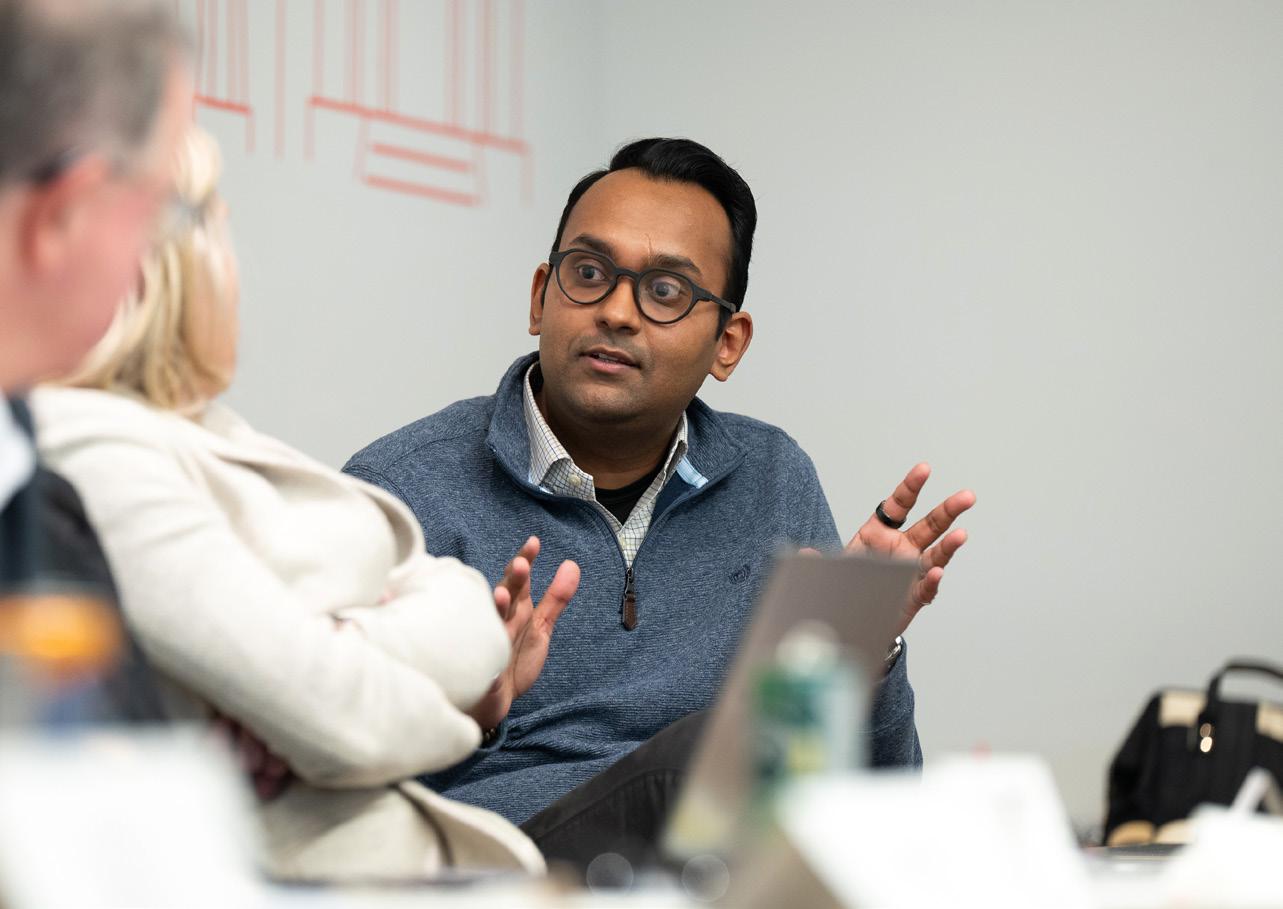
“Our mandate is to help scientists move beyond a publish-orperish mindset. We empower them to take an idea, commercialize it, and bring that return on the investment back to Canada.”
DR. ANIRUDH “A.K.” KUMAR, FOUNDER, CEO, AND MANAGING PARTNER, CARMA GLOBAL ENTERPRISE.

it matters most
How Calian is helping build a stronger, more accessible and digitally integrated health-care system
Canada’s health-care system is under sustained strain – and the pressure is being felt across patients, providers, and institutions alike.
• Nearly 6.5 million Canadians do not have a regular primary care provider.
• Up to 30 per cent of hospital spending is tied to administrative inefficiencies and fragmented systems.
• Demand for mental health services continues to outpace capacity, particularly among frontline and public safety personnel.
• Patients in rural and remote communities face longer wait times and reduced access to specialized care.
The challenge isn’t a lack of innovation. It’s a lack of integration.
Care delivery remains fragmented across systems and geographies. As Canada’s capital, Ottawa is well positioned to help change that – with organizations like Calian connecting care across the country.
Integrated care starts with infrastructure. Calian, headquartered in Ottawa, is helping health-care organizations build the digital backbone to connect providers and patients, enabling care to move more seamlessly across settings.
Through proprietary digital platforms, Calian supports secure information sharing, integrated workflows, and real-time insights that reduce administrative burden and improve decision-making.
At the Aline-Chrétien Health Hub in Orléans, this model is already in action – bringing hospital services, community providers, and specialized programs into a coordinated system.
“We needed a platform that provided flexibility and agility to meet ever-growing and changing demands. And with the Corolar™ platform, we now have that,” said Philippe Marleau, then Montfort Hospital’s vice-president of quality and patient support services.
The result: more seamless care, improved patient experience, and stronger collaboration.
Public safety personnel face significantly higher rates of psychological stress, with up to 44 per cent screening positive for one or more mental health conditions.
Calian supports this workforce through psychological assessments, tailored mental health programs, and ongoing wellness services designed for frontline realities.
These services support individual well-being while strengthening workforce readiness, reducing absenteeism, and helping ensure continuity of critical public services.
Equitable access to specialty care remains a persistent challenge.
Fragmented data, manual workflows, and inflexible program models delay access, increase costs, and impact patient experience.
Calian helps accelerate access to therapy
and streamline coordination through digitally enabled patient support programs (PSPs) and community-based care models.
This supports faster onboarding, fewer treatment delays, and more consistent experiences, while extending care closer to where patients live – particularly in remote and underserved communities.
For more than 20 years, Calian has supported health-care organizations across Canada by combining clinical expertise, digital innovation, and operational scale to address complex system challenges.
As Ottawa continues to invest in healthcare innovation, the opportunity is clear: move beyond isolated solutions and build a more connected, accessible system of care.
“Ottawa has all the ingredients to lead in clinical innovation,” says Nancy White, Calian’s vice-president of sales and business development, health. “The real impact comes when that innovation is connected to care delivery – making it scalable, accessible, and meaningful for patients.”
Because when care is connected across systems, communities, and people, everyone benefits.

A once-in-a-generation investment to help reshape how care is delivered and how discoveries make it from lab to bedside

Anew era of health care is unfolding, shaped by smarter technologies, more connected care teams, and treatments once thought impossible. Meeting this moment will take more than incremental change: It will take a hospital built for what comes next, where world-class care and discovery move side by side, and it will take a healthcare system that’s integrated within the community.
That is the focus of The Ottawa Hospital Foundation’s $500-million Campaign to Create Tomorrow, a once-in-a-generation effort to help reshape health care in our region and extend the impact far beyond our city.
At the heart of the campaign is a new campus with a focus on enhancing the patient experience through technology, improved patient flow, and spaces that support patients, their loved ones, and the teams who care for them. Purposeful design elements, including single-patient rooms and accessible and thoughtfully planned spaces, will help improve comfort, privacy, safety, and wellness.
With advanced digital tools embedded into care, the hospital will connect patients, clinicians, and medical information in ways that will support more timely decisions and a more seamless experience from admission to recovery.
Innovation at The Ottawa Hospital doesn’t stop at the design and planning of the new campus, according to President and CEO Cameron Love. “We don’t view innovation as a project or a building,” he says. “In health care, it’s how we rethink delivering care and bring the brightest minds together to turn new ideas into better care for our community.”
The hospital is also proudly among the top in the country for research, with discoveries that improve lives locally and for patients around the world. More than 25 years ago, The Ottawa Hospital helped pioneer a radical approach: embedding clinicians in laboratories, side-by-side with researchers, so breakthroughs can move faster from the lab to the bedside.
This model continues today and has played a role in strengthening the hospital’s ability to lead
the way in various areas of cutting-edge research. One example of this is The Ottawa Hospital’s Biotherapeutics Manufacturing Centre (BMC), Canada’s most experienced and successful facility of its kind. The BMC has produced more than 20 celland virus-based therapies for human clinical trials in Canada, the U.S., Europe, and Asia. This integration of the research ecosystem with patient care is fundamental to The Ottawa Hospital.
As the Foundation’s President and CEO Tim Kluke notes, “The Campaign to Create Tomorrow is an opportunity for us to change the course of health care for our city, for generations, through philanthropy. I think future citizens will look back and realize that we understood the significance of this moment.”
Supported by a community of caregivers, innovators, and donors, The Ottawa Hospital is building a future where extraordinary people, empowered by extraordinary technology and research, can deliver extraordinary care.
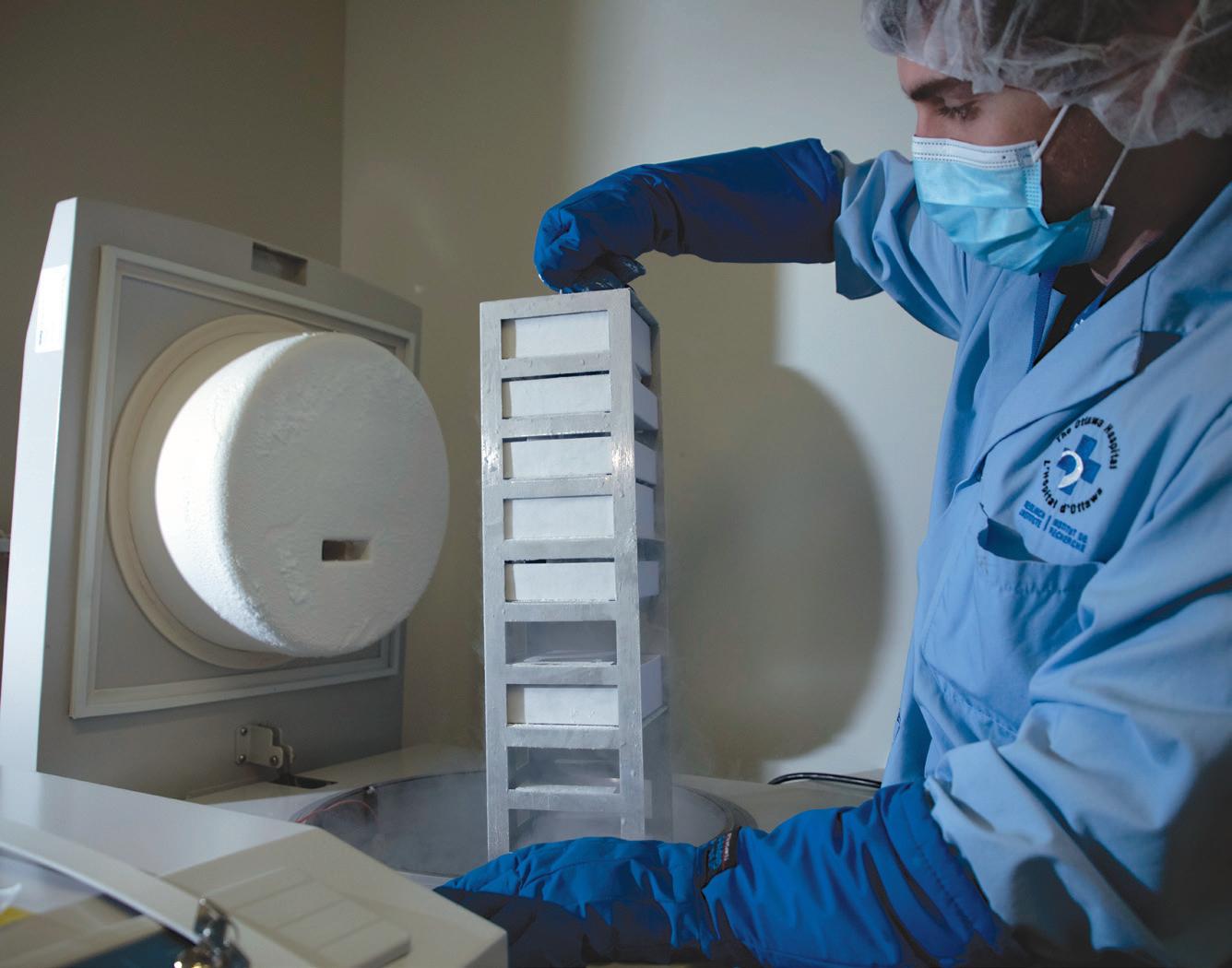
Biotherapeutics Manufacturing Centre (BMC)
“The Campaign to Create Tomorrow is an opportunity for us to change the course of health care for our city, for generations, through philanthropy. I think future citizens will look back and realize that we understood the significance of this moment.”
TIM KLUKE, PRESIDENT AND CEO, THE OTTAWA HOSPITAL FOUNDATION
A network built to support Canadian health breakthroughs, startups, and therapies

The University of Ottawa is the engine connecting discovery, commercialization, and improved patient care in the life sciences sector. Beyond its research output, uOttawa’s distinctive strength is its ability to bring together hospitals, researchers, entrepreneurs, investors, and government partners so that breakthroughs made anywhere in the network can maximize real-world impact.
The cornerstone of this ecosystem is the Advanced Medical Research Centre (AMRC), the single largest capital investment in the university’s history. Steps from The Ottawa Hospital and CHEO, the seven-storey, 350,000-square-foot facility – situated on the Faculty of Medicine campus – will open by the end of 2026. It will also house the Ottawa Health Innovation Hub, a signature initiative designed to incubate startups, develop novel therapies, and accelerate the translation of research into real-world health-care solutions. According to Julie St-Pierre, vice-president, research and innovation, “The AMRC offers a unique value proposition of wet lab space, access to researchers, and core facilities, all under one roof. It’s a launchpad for Canadian health innovations.”
That momentum is amplified by the Ottawa Academic Health Network (OAHN), a partnership between uOttawa and its affiliated research institutes, to strengthen collaborations across academic hospitals, research institutes, and the University of Ottawa, transforming excellence in research and education into improved population health.
Technology is a key connector across the life sciences ecosystem, as shown by the launch of the Ottawa Medical AI Research Institute (OMARI) in 2025.
OMARI is housed within uOttawa’s Faculty of Medicine and coordinates collaboration across the university’s six affiliated hospitals to advance responsible AI in medicine. Tools are being developed to reduce clinician workload, accelerate diagnostics, and strengthen health systems, ensuring that innovation translates into better outcomes in emergency departments, outpatient clinics, and beyond.
Engineering plays an equally critical role by turning clinical and scientific discovery into practical, scalable
solutions through new devices, data-driven tools, and technologies designed for real-world use.
As an example, uOttawa professors Jean-Philippe St-Pierre and Thomas Uchida are leading projects in biomaterial-based osteoarthritis treatment and AI-powered mobility devices, each developed in close collaboration with clinicians and students. These projects reflect the broader, collaborative environment in which health innovation happens at uOttawa, where connections across faculties, hospitals, and industry help ideas move from proof of concept to practice – and where students are trained from the outset to contribute meaningfully to that work.
With its Kanata North Campus in Canada’s largest tech park, uOttawa is uniquely positioned to bridge health science with the region’s technology capacity. With 700-plus companies and deep expertise in AI, cybersecurity, and software, Kanata North is a natural partner for digital health and connected care.
“uOttawa’s health care innovation advantage goes beyond a single facility or initiative. It’s driven by the way we connect people, knowledge and purpose,” says uOttawa President and Vice-Chancellor Marie-Eve Sylvestre. “By convening partners across health care, research, and technology, we help ensure that innovation translates into meaningful impact for patients and communities.”
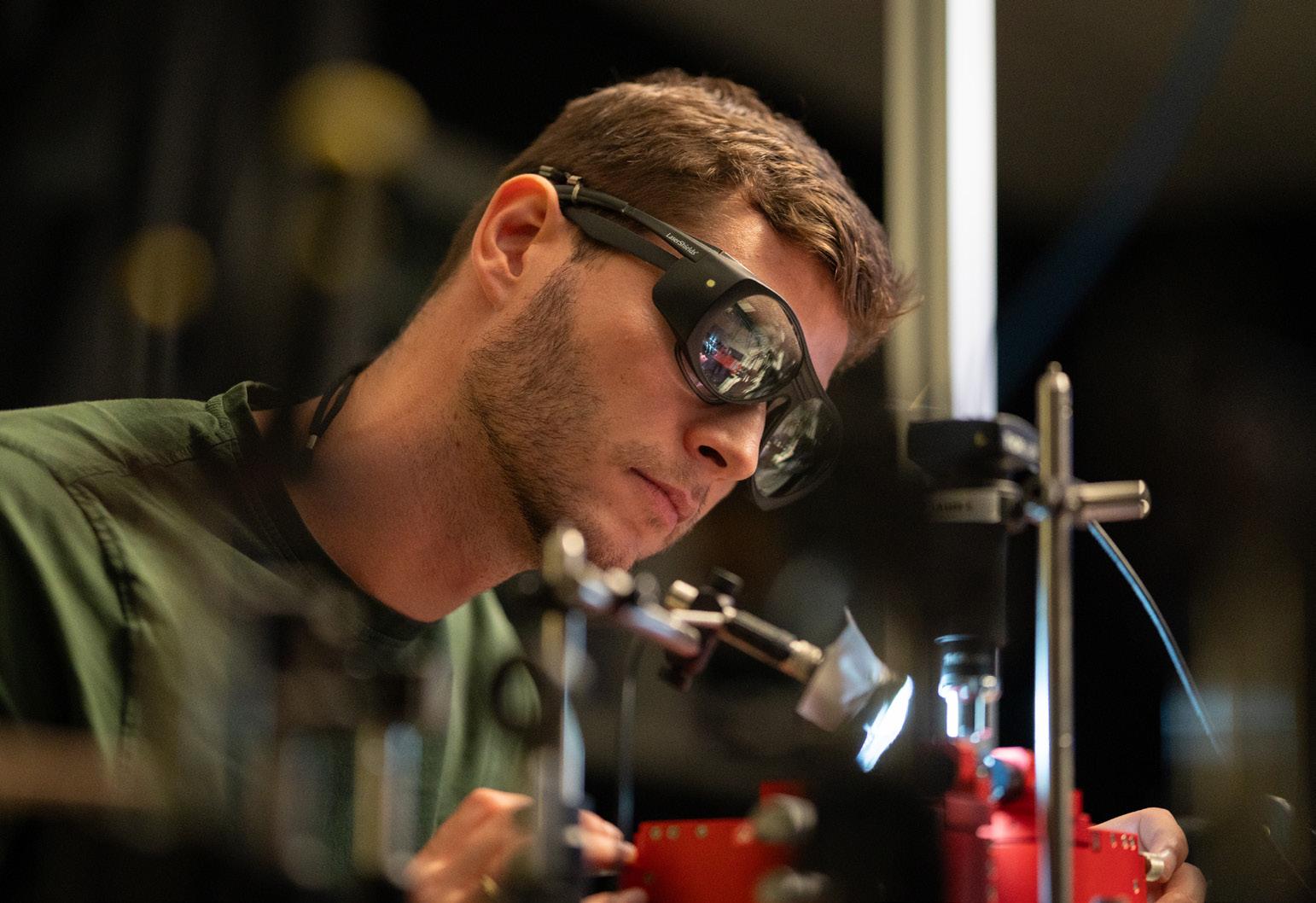
“The AMRC offers a unique value proposition of wet lab space, access to researchers, and core facilities, all under one roof. It’s a launchpad for Canadian health innovations.” JULIE ST-PIERRE, VICE-PRESIDENT, RESEARCH AND INNOVATION


















"I often joke that I would have fundraised in the womb but the prospects were low."
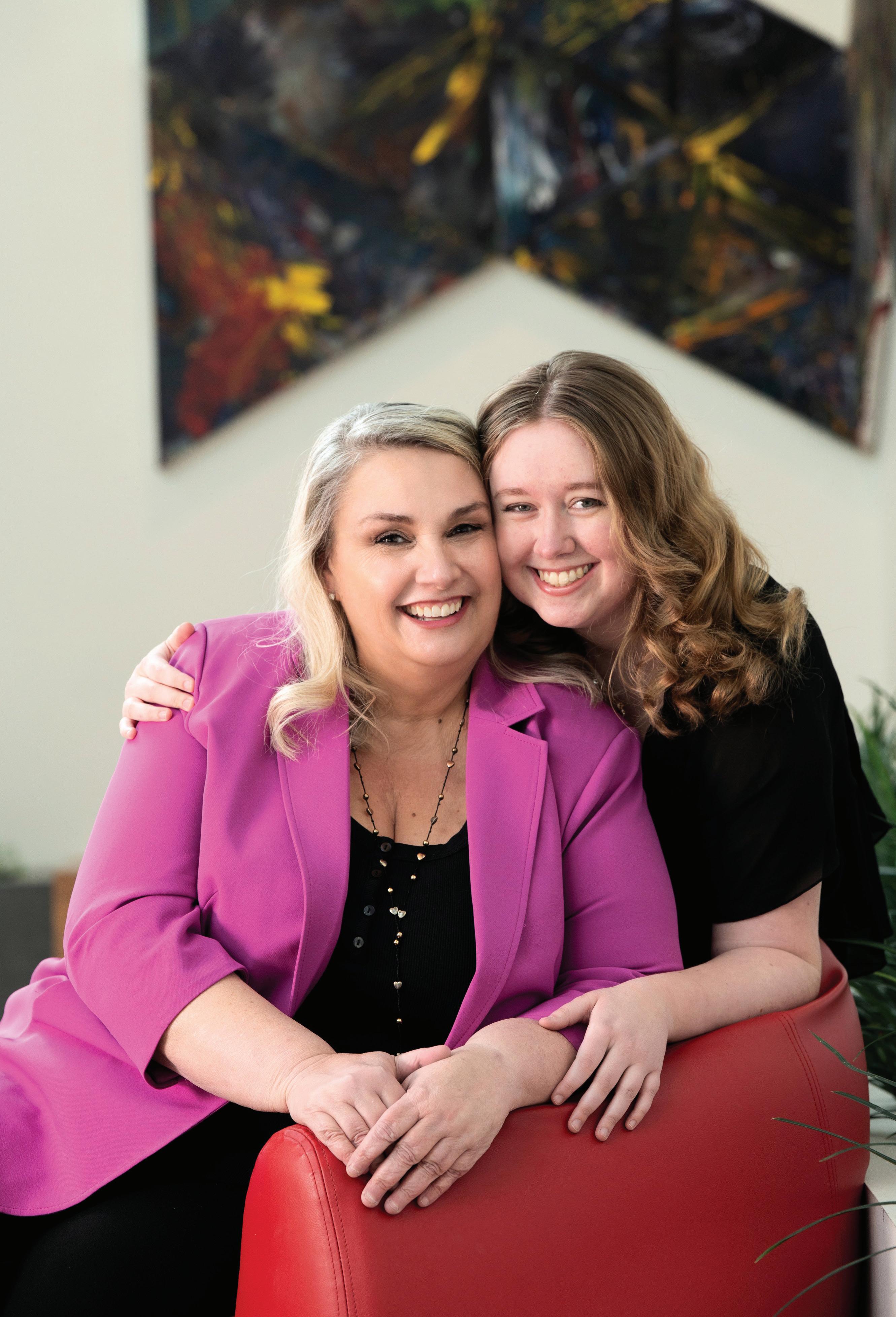
By Marissa Galko
If you follow the charitable sector in Ottawa, there’s a good chance you’ve heard of Sam Laprade. She’s a radio and television host with Rogers TV An Hour To Give, an author and a fundraiser for numerous charitable organizations throughout the city, including AFP Ottawa, Alliance to End Homelessness and The Ottawa Hospital Foundation.
In 2025, Laprade took home the lifetime achievement award at the VOscars, recognizing her decades of dedication to philanthropy in the capital.
OBJ talked to her about what inspires her. The transcript has been edited for length and clarity.
You work with several charities and non-profits. How has this work affected you?
I often joke that I would have fundraised in the womb but the prospects were low. I was put on this planet to be a fundraiser. I tell this story often about how, probably about 15 years ago, I had the opportunity to hear Bishop Desmond Tutu speak. I was always about 98 per cent proud to say I was a fundraiser. When he said that fundraising is a noble profession, it closed the gap for me and I was 100 per cent proud to be a fundraiser.
Essentially, I see myself as a matchmaker. So I take one person, let’s say Paul, who had a traumatic childhood and finds himself on the street. I would connect him to Mary, who wants to change Paul's life. But they can never meet, or they would never meet, and so I'm this conduit in the middle.
When we're in times like this, which are
challenging and everything seems so topsy turvy, I think philanthropy is the antidote for all the stuff going on in the world. I think it really is when people feel hopeless that philanthropy gives us hope, as much as it's challenging, funds are scarce and there's a lot of competition for donor dollars.
How does philanthropy help with your journalism and journalism help your philanthropy?
I think it's all about the way people respond to what's happening in their community. You'll have people who would give you their last $100 and there's millionaires who wouldn't give you $100, so it's about behaviour of people and how we all fit in the community. That's the ecosystem of philanthropy. Whether it's time, talent or treasure, there's kind of a big, giant sort of collective hub where we deposit and we get credit.
What has your work in the charitable sector taught you about the Ottawa community?
I'm super-biased because I think we are the most generous community. We see that at times of crisis, whether it be COVID-19, tornadoes, flooding or a fire; we see people rally around people. When you think about this community, with all of the capital campaigns going on, we probably have $3 billion worth of capital campaigns between the hospitals and universities and all of that. So this community of over a million people punches above its weight every single time.
What’s one word you’d use to describe the organizations you work with?
Resilient, although I hate that word. We think about COVID when the prime minister basically said, ‘Everybody go home and be safe.’ And I
had fundraisers working off their ironing boards with nothing stronger than a Commodore 64. They still did it. The food bank lost their volunteers immediately. They all were supercreative. They lost all of their events. They've been asked to do more with less.
What’s been a favourite experience, project or interaction?
So I met a donor and I'll just call her Mary. She was 90 years old and she was making gifts to a number of different organizations. At the end of the day, she wanted to support a special program at The Ottawa Mission. Working with her and seeing her vision come to life was definitely a highlight for me. I've never forgotten her. She's somebody that I often think about.
I was dealing with a couple recently who, unfortunately, lost their only son. That was very impactful for me, and wanting to remember what was important to him and give in a way that honoured him. I think people, at the end of the day, there's two times you pass away. Once is when you pass away, and the other is the last time your name is ever said.
has inspired you to continue to do this work today?
Even though I started doing this 35 years ago, I would say my daughter, who's 17, because she’s now following in my footsteps. She's taking the public relations program at Algonquin College. She wants to be a fundraiser. She did 1,000 hours of volunteer work when you only have to do 40 to graduate high school. So although I started the work way before she was born, she’s definitely been an inspiration to keep going. Seeing her sticking to the public relations program in Algonquin, the program that I graduated from in 1991, and seeing her excitement in fundraising, it keeps this old girl going.
(RANKED BY NUMBER OF LOCAL EMPLOYEES)
Company/Address Phone/Fax/Web
1
2
3
4
5
MindBridge Analytics Inc. 80 Aberdeen St., Suite 400 Ottawa, ON K1S 5R5 (613) 667-1236 www.mindbridge.ai
Raven.ai 150 Isabella St., Unit #150 Ottawa, ON K1S 1V7 https://raven.ai
FundMore
7 Bayview Station Rd Ottawa, ON K1Y 3B5 647-363-6336 https://fundmore.ai
Advanced Symbolics 109 York St. Ottawa, ON K1N 5T4 www.advancedsymbolics.com
NuEnergy.ai 132 Glenora St. Ottawa, ON K1S 1J3 613-884-7959 www.nuenergy.ai
6
7
Human Resource Systems Group Ltd. 6 Antares Dr., Phase 1, Unit 8 Ottawa, ON K2E 8A9 613-746-6605 hrsg.ca
Braiyt AI 1339 Wellington St. W Suite 1B Ottawa, ON K1Y 3B8 www.braiyt.ai
NEXTRIA INC. 60 Chem. Meredith Chelsea, QC J9B 2N7 833-639-8742 / n/a https://nextria.ca
9
10
Novacene.ai 123 Slater St., Suite 610 Ottawa, ON K1P 5H2 (800) 717-0814 https://novacene.ai
Four DRobotics Corp 900 Greenbank Rd. Suite 525 Ottawa, ON K2J 4P6 613.739.2687 www.fourdrobotics.com 7
10
Vigilant AI 262 Percy St. Smiths Falls, ON K7A 5B3 (613) 863-2673 www.vigilant-ai.com
Mike Maziarz, CMO
Karthick Manimozhi, CGO
Robin Grosset, CTO
Matthias Steinberg, CFO
Stephen DeWitt, CEO
MindBridge AI SaaS solution provides a unique AI approach to reviewing 100% of transaction flows providing a holistic view and enhance oversight ofcorporate financial data.
Kevin Clark, CRO
Bogdan Blaga, CTO
Jared Faust, CFO
Moeed Khan, CoS
Chris Grimes, CEO
Mortgage Technology, Retail Banking Technology, Mortgage BPO, IT Services
Shane
AI Governance, AI Governance Services, AI Governance Platform, AIGovernance Thirdparty Review, AI Sovereignty, AI Governance Education, AI Trust, AI Trust Process, AI Trust Platform, AI Trust Faculty. For AI suppliers, government and private sector
A cloud-native, AI-powered talent acquisition and management platform under the Quinto® Ai brand.
Tamey McIntosh, Co-Founder and COO Warsam Ahmed, Co-Founder and CEO
Ravi Ramsaran, CPO Eric Kitchen, CEO
AI Software Platform (CastleGuard AI) and Consulting and Advisory Services
Marcelo Bursztein, Founder & CEO
Gulwant Bajwa, VP Information Technology Matthew Harrington, VP Business Development Jeremy James, President and CTO
7 2021 John Craig, CEO
The NovaceneAI® SalesInsights™ platform helps sales teams understand the reasons behind customer churn and retention. The product allows organizations to align efforts across business units to support revenue growth.
Software that transforms work by automating dangerous, mundane tasks to boost safety and efficiency.
Vigilant AI has developed a platform for automating the validation of financial transactions against their supporting documents.