KITCHISSIPPI TIMES










BY CHARLIE SENACK
Every year, when summer finally arrives in Ottawa, I’m reminded why it’s my favourite season in the city. After months of snow, cold, and rushing from one place to another, life suddenly slows down a little. The colours are brighter. People feel a little less weighed down.
We get to go outside again. Patios are packed with groups of friends and family who are spending quality time and sharing laughter. Neighbourhood communities are filled with kids playing street hockey or working lemonade stands. If only love could always be so blissful.
Some of my favourite summer moments are often the simplest ones. I love taking walks along the Rideau Canal in the evening, spending afternoons at the Westboro or Mooney’s Bay beaches, and wandering through the countless farmers’ markets that pop up across the city this time of year. There’s something special about coming
home with fresh produce, flowers, or baked goods from local vendors. Even spending time working in my garden becomes something I genuinely look forward to once the warmer weather arrives.

What I’ve always appreciated most about Ottawa is that there is never a shortage of things to do during the summer months.
Nearly every weekend brings a new festival, outdoor concert, community event, or local celebration. And this year, the city feels even more vibrant than usual.
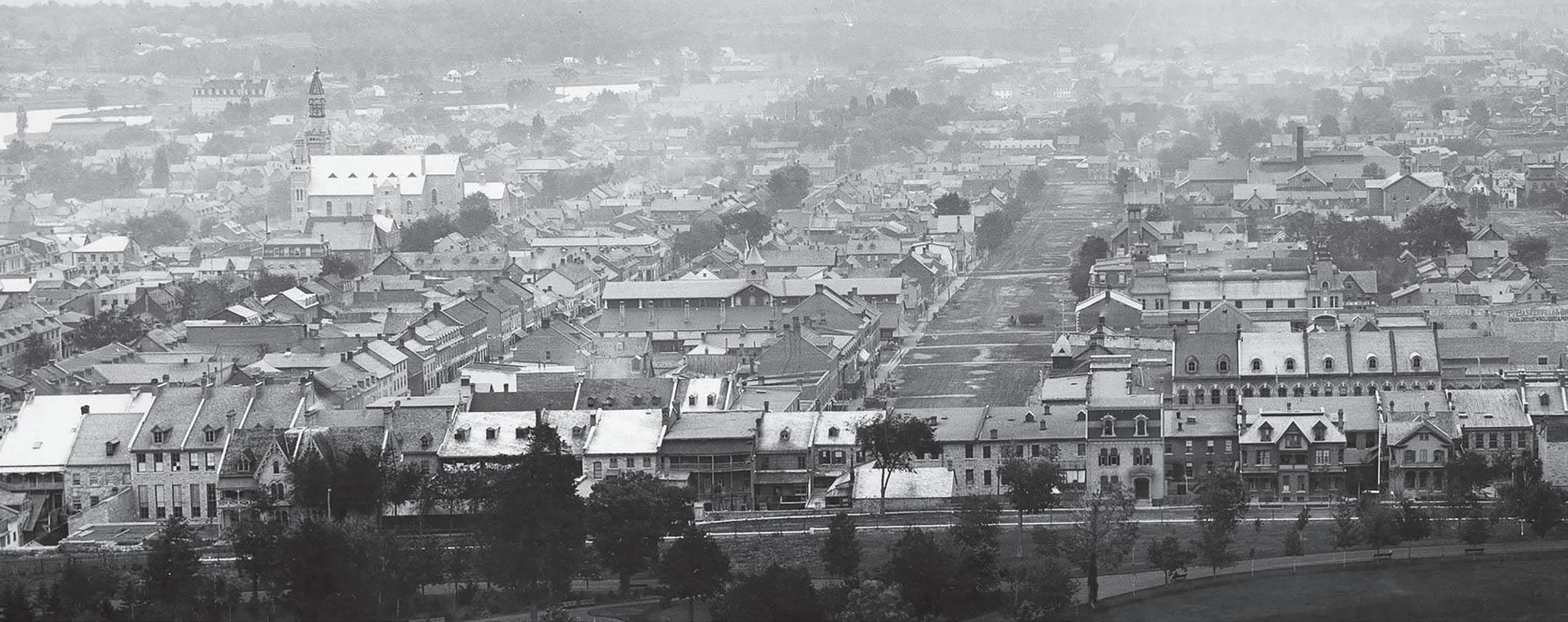
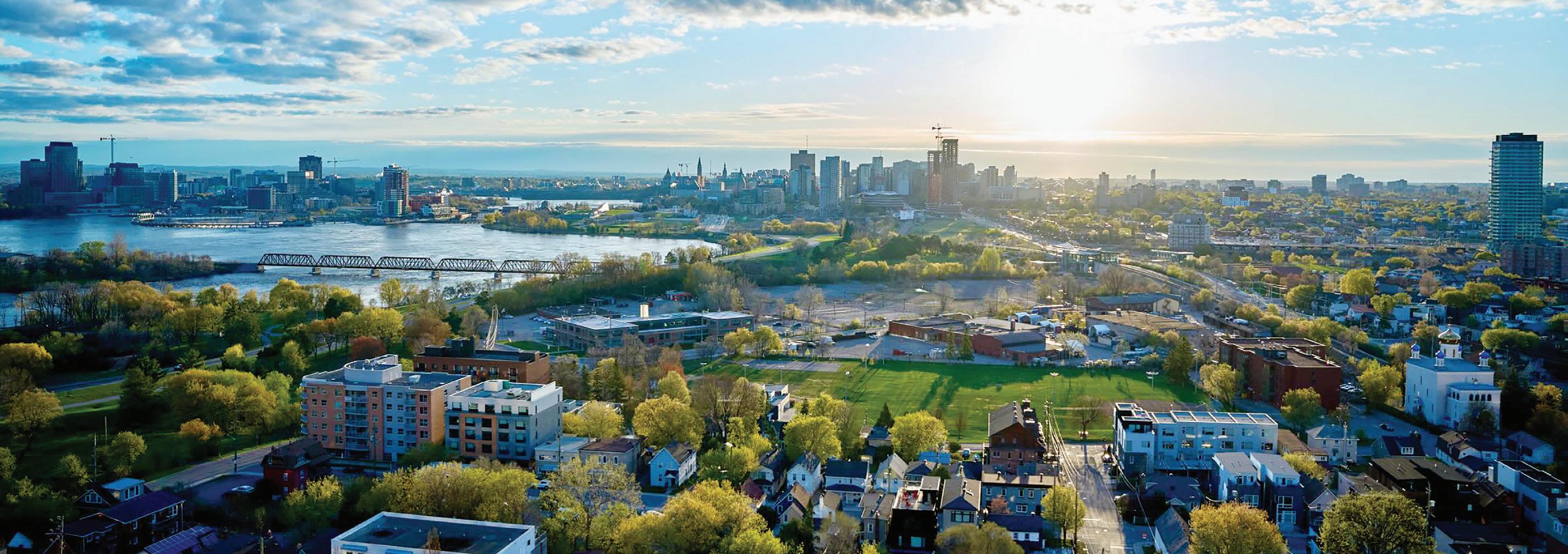
In 2026, Ottawa is celebrating the 200th anniversary of Bytown — a milestone that has inspired an incredible list of special events, exhibits, tours, and celebrations across the National Capital region. It’s a chance not only to celebrate where the city is today, but also to reflect on the stories, communities, and people that shaped it over the last two centuries.



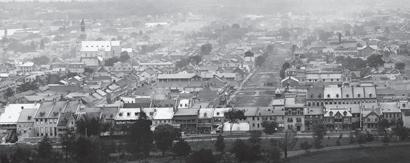
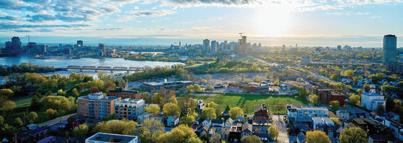
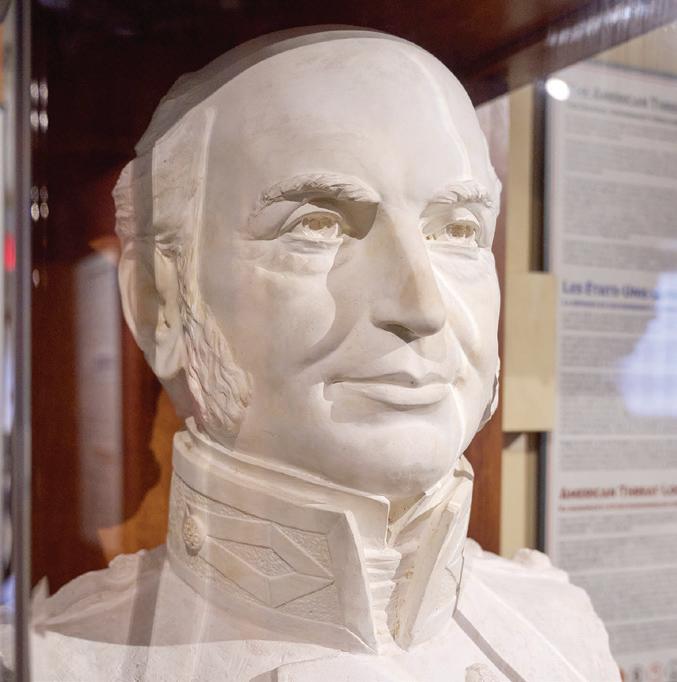
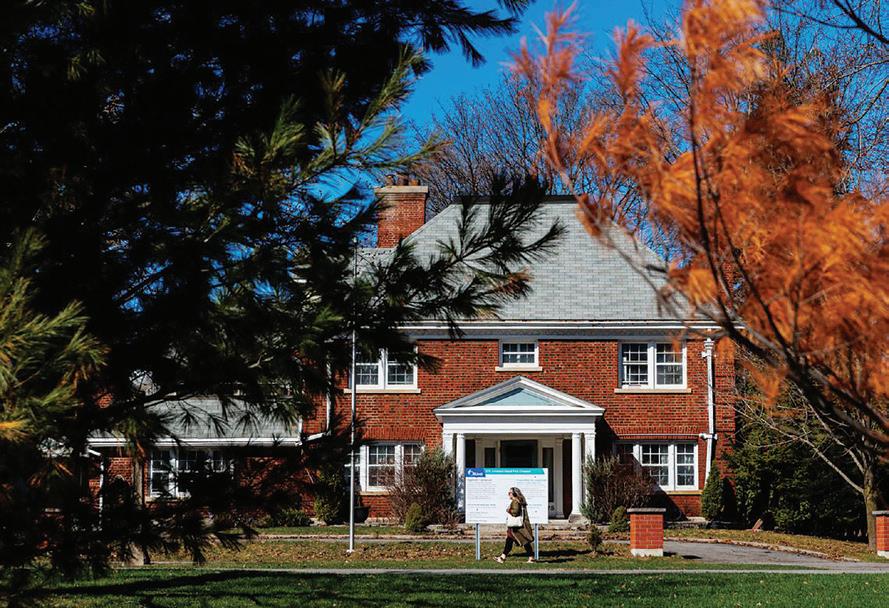
Because of that, we decided to dedicate a special section of this issue to Ottawa’s history and the fascinating stories from our past. From forgotten landmarks to little-known moments in Bytown history, I hope these pieces help readers see the city through a new lens.
We’ve also included an expanded Summer Fun Guide and events calendar packed with activities happening throughout the season. We hope there will be something for everybody.
A reminder: there is no July issue. Keep checking Kitchissippi.com for the latest news and updates as they happen.
If you support our work, please consider donating through the QR code or on Kitchissippi.com While our news is free to read, it is not free to produce.

KITCHISSIPPI TIMES
Great River Media Inc PO Box 91585
Ottawa ON K1W 1K0
The Kitchissippi Times is an award-winning newspaper that has serviced Westboro, Wellington West, and surrounding communities for the last 20 years. The word Kitchissippi, meaning “great river” in Algonquin, is the former Indigenous name for the Ottawa River.
STORY IDEA? editor@kitchissippi.com twitter.com/kitchissippi
EDITOR
Charlie Senack charlie@kitchissippi.com twitter.com/charlie_senack
CONTRIBUTORS
Amanda McLeod, Dave Allston, Brian Dryden, Ellen Bond, Simon McKeown, Julie Ireton, and Karen Hamer
PROOFREADERS
Susan Rothery
ADVERTISING SALES
Jennifer Tackaberry 613-696-9482 jennifer@kitchissippi.com
CREATIVE DIRECTOR Tanya Connolly-Holmes creative@greatriver.ca
GRAPHIC DESIGNERS
Celine Paquette celine@greatriver.ca
CHIEF OPERATING OFFICER Cheryl Schunk, 613-696-9490 cheryl@greatriver.ca
All other enquiries 613-696-9494 info@kitchissippi.com
DISTRIBUTION
A minimum of 16,000 copies are distributed throughout the Kitchissippi area, from the Ottawa River to Carling Avenue, spanning the Britannia and Preston Street communities. Most residents in this area receive the Kitchissippi Times delivered directly to their door. Copies are also available at the Dovercourt Recreation Centre, Hintonburg Community Centre, Produce Depot and dozens of other convenient pickup locations. If you would like to become a distribution point, please contact us.






DISTRIBUTOR Comet 2000
info@kitchissippi.com
The Kitchissippi Times is published by

FOUNDER PUBLISHER Mark Sutcliffe Michael Curran




BY AMANDA MCLEOD
The Royal Ottawa Mental Health Centre (ROMHC) launched its Lives Reclaimed fundraising campaign during Mental Health Week, with a goal of raising $75 million to support research and treatment for people experiencing mental illness and addiction.
At a May 5 press conference, Chris
Ide, president and CEO of The Royal’s Foundation, and foundation board member Melissa Kruyne announced the campaign launch. They also revealed that the Waverly House Foundation had kickstarted fundraising efforts with a $14 million donation.
“We are officially launching the largest fundraising campaign ever undertaken in our city in support of mental illness and addiction care…so that more people
symptoms of schizophrenia at age 20.
At the time, Bernade was playing football for the Ottawa Sooners and preparing to study criminology at Carleton University the following year. He clearly remembers the night he first experienced auditory hallucinations.
“From that night, something snapped in my head. From one second to the other, everything changed,” he said.
Bernade and his family immigrated to Canada from Haiti in 2007, where mental health supports are limited — if they exist at all.
“In Haiti, there’s no mental health organizations or opportunities for people to get well who deal with mental health. I’m fortunate to be in this country to be able to receive this help, and that The Royal really helped me when I came in,” he said.
Now 33 and working as a music producer and rapper, Bernade said the care he received at The Royal changed his life.
“If it wasn’t for them, I wouldn’t be here right now,” he said.
The Lives Reclaimed campaign will be guided by a volunteer cabinet and aims to fund initiatives including the opening of The Royal’s urgent care clinic, research into biomarkers that could help prevent suicide, and expanded use of brain imaging in personalized treatment plans.
Bruce McKean, founder of the Waverly House Foundation, emphasized the importance of sustained funding for mental health research.
“Canada is not well known for its financial support for people beginning [their research work]. The Waverly House focus is on research. Not bricks and mortar, not clinical outreach, but the basic research from which everything else can flow,” he said.
can reclaim their lives,” said Kruyne. “The Royal cares for more than 15,000 patients every year – these are the lives that this campaign is about.”
To reflect the number of patients The Royal serves annually, Waverly House will donate an additional $1 million once the campaign reaches 15,000 community donations.
One of those 15,000 patients is Carl Bernade, who began experiencing
“The science, the therapies, the technology, the pharmacology can provide or improve tools to deal with the mental health issues that are so persistent, so complex, difficult to deal with and not going away – we need better tools and further research,” McKean continued.
The Royal operates campuses in Ottawa and Brockville, offering mental health and addiction treatment, research, education, and community-based care programs.
For more information about the Lives Reclaimed campaign, visit livesreclaimed.ca.
BY CHARLIE SENACK
AWestboro resident and local entrepreneur is hoping to bring what he calls a “fresh, energetic voice” to Ottawa city hall as he launches a campaign for Kitchissippi Ward city council.
Subhir Uppal officially registered to run for the Ward 15 seat on May 1. The race is expected to be one of Ottawa’s most-watched municipal contests after longtime councillor Jeff Leiper announced that, after three terms, his name will be on the mayor's ballot instead.
“I think right now it’s time for a new, energetic voice,” Uppal told KT. “My focus is on things like spending accountability and bringing in new, innovative, fresh ideas to city hall.”
Uppal said he has lived in Kitchissippi for about 15 years, first in the Civic Hospital area, then in Hintonburg, and later in Westboro with his wife and young son. He said his parents immigrated to Canada and taught him the importance of community involvement and giving back.
“That sense of responsibility has been with me my whole life,” he said. “I just kind of want to pay it forward.”
Professionally, Uppal founded a real estate technology startup based in Kitchissippi and said he was recognized as Entrepreneur of the Year in 2024 for his work. He also teaches ethics through the Real Estate Institute of Canada and currently serves on the boards of the Ottawa Safety Council and the Ottawa Real Estate Board.
“My experience has given me a strong understanding of how organizations make decisions, manage budgets, and stay accountable for the people they serve,” he said.

Westboro resident Subhir Uppal has put his name forward to run in Kitchissippi Ward. PROVIDED PHOTO.
OPEN FOR REGISTRATION:
• Summer Camps & summer swim lessons
• Summer recreation programs, PD days and Head Start camps
• June recreation workshops: Cooking, painting & drawing workshops, nail art, robotics, and Date Night
• Afterschool program for 2026-2027
• Summer Leadership courses are open for registration
UPCOMING REGISTRATIONS:
• Tue. June 2 - Summer Fitness programs
• Tue. June 16 - Fall Swim Lessons
SUMMER CAMPS & SWIM LESSONS
Summer Camps are getting closer! We’ve got exciting new and returning Camps. Summer Swim lessons are available once a week on Saturdays or 5 days in a row.
FIT PASS
The best value and most fun! 55+/ week classes including group fit, spin, and aquafit classes, fitness centre, pool access and pickleball. Starting at $48/ month.
PD DAYS
• Register for PD Days: Jun 5 & Jun 19
• Head Start Single Day Camps: June 22-26
Transit is also a major concern, he said, that residents frequently raise at the door.
“We have to have the train issues resolved. We have to have them running at full capacity,” said Uppal, pointing to ongoing frustrations with unreliable bus and rail service.
Coming from a technology background, Uppal also said OC Transpo should improve its realtime tracking systems and explore distance-based transit fares, similar to those used in Toronto and Vancouver.
At the time of publication, two other names have registered to run in Kitchissippi ward: Former municipal affairs journalist Joanne Chianello and former Westboro BIA executive director Michelle Groulx.
Early in the campaign, Uppal said his priorities include addressing rising costs, improving city services, and advocating for better infrastructure and recreation space in the ward.
Head to Kitchissippi.com to read candidate other profiles and for the latest election news.

EVENTS
• Wild, Wild Westboro Garage Sale: Sat. June 6, 8am-12pm
• National Fitness Day Sat. June 6; see the schedule for free classes.
• Sports 200 Day In Ottawa: Sat, June 6 & Sun. June 7 (various times)
• Climate Fresk workshop: Wed. June 10, 5:30-8:30, #33015
• Inclusion Dance: June 13, Hawaiian Luau theme.
• Dovercourt AGM: Wed. June 3, 8pm. Everyone is welcome.

BY CHARLIE SENACK
Behind boarded windows and aging stone walls, the former Sisters of the Visitation convent has quietly deteriorated for years in the middle of Westboro. Now, a new redevelopment proposal for the Richmond Road property is drawing mixed reactions from the community.
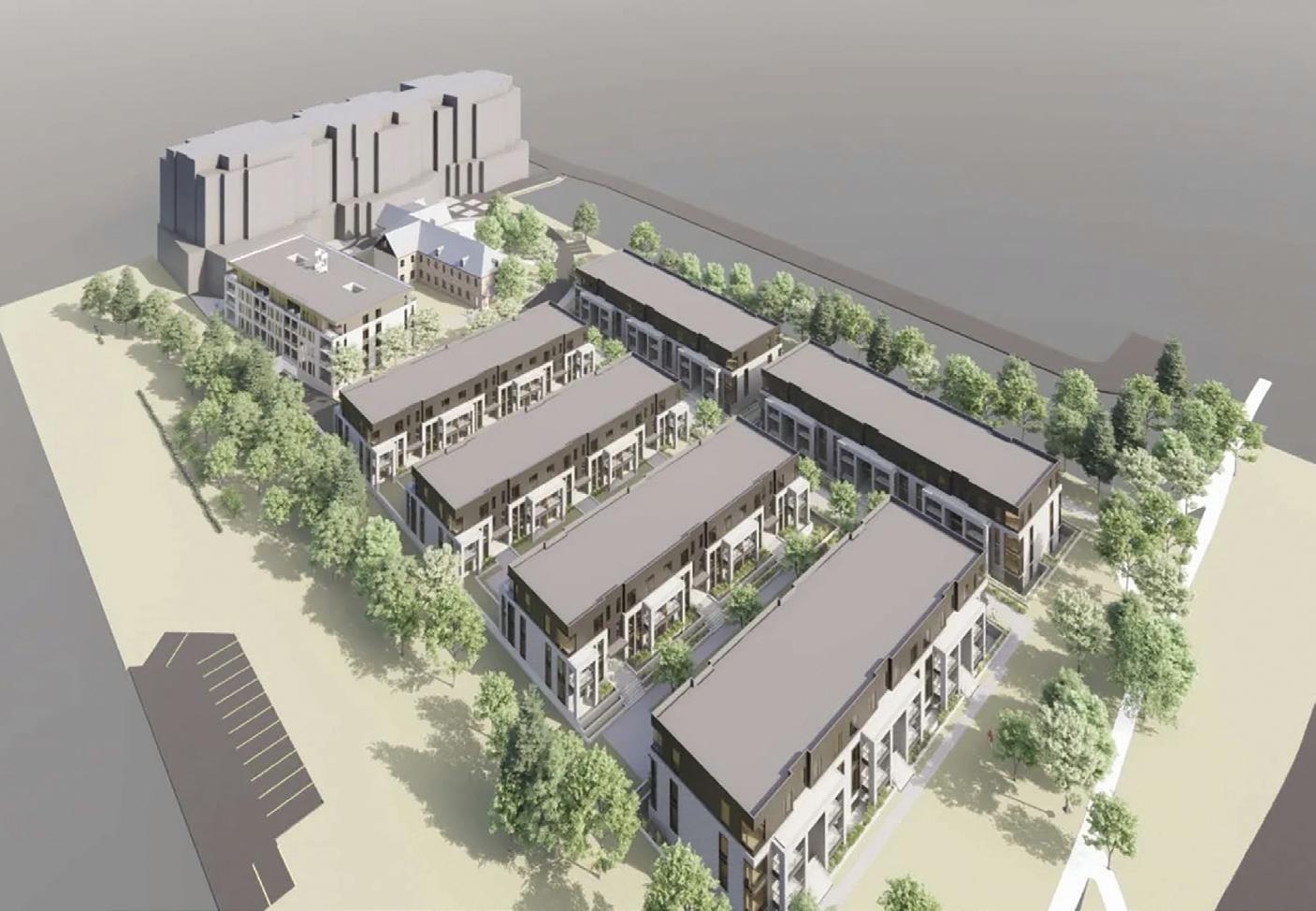
Concorde Properties has submitted plans to partially demolish the convent complex and redevelop the site with stacked townhomes and a low-rise apartment building. Under the proposal, about 61 per cent of the existing structure would be demolished, including much of the convent and chapel additions dating back to 1912.
A total of six stacked townhouse structures containing 126 units would be built on the once religious land, along with a four-storey low-rise apartment building with 47 units. There would be 152 parking spots built in underground parking garages, accessed from Leighton Terrace.
The oldest part of the property, known as The Elms, would be preserved. The 1864 farmhouse predates Confederation and was once associated with prominent local figures John Skead and George Holland.
For Heather Mitchell, vice chair of the Westboro Community Association and a member of its heritage committee, the proposal is not what heritage advocates had hoped for — but it is not being rejected outright either.
“We really wish more of it could be saved, but we also do not want this property to be left again for further deterioration,” Mitchell told KT. “What we’re hearing from members is this is a great development in the sense that it is a reasonable amount of density. It’s not another 40-storey tower like we’re getting on Scott Street.”
final development through interpretive displays, landscaping features, or public art.
Mitchell suggested salvaging architectural elements, such as windows, masonry, arches, and even the chapel’s bell tower, for reuse elsewhere on the property or in nearby Clare Gardens Park.
Another priority for the community association is ensuring the preserved farmhouse remains publicly accessible in some capacity. The developer has indicated the building could include office space along with some form of commercial use, such as a café or restaurant.
In comments previously provided to Kitchissippi Times, Concorde Properties said the proposal aims to balance heritage preservation with the need for new housing in the area. The developer has also noted that the condition of the buildings presents significant restoration challenges.
Kitchissippi Coun. Jef Leiper has expressed support for the project, saying in a newsletter that Concorde has a reputation for moving projects forward rather than allowing sites to remain vacant for years.
That point has resonated with residents, though many remain frustrated that large portions of the convent’s historic stone structure are still slated for demolition following years of deterioration. The property fell into disrepair after Ashcroft Homes purchased the site and left it untouched for years before the developer went into receivership.
The “Nuns’ Walk,” a tree-lined pathway running through the eastern side of the property between Byron Avenue and Richmond Road, would be preserved under the proposal. Historically used by the Sisters for exercise and reflection, the pathway has become one of the site’s
defining features. However, planning documents indicate some mature maple trees along the route may need to be removed to accommodate new buildings.
The community association hopes the developer can find a way to preserve the trees while salvaging additional parts of the convent, including the chapel where the nuns once prayed.
Heritage advocates say buildings like the former Sisters of the Visitation convent are becoming increasingly rare across Ontario, particularly as historic religious properties face redevelopment pressures. The National Trust for Canada recently described the Westboro site as a “rare and striking example” of Gothic Revival vernacular architecture when it added the property to its Endangered Places List.
For the parts of the site that must come down, Mitchell is advocating for pieces of the convent to be incorporated into the
Mitchell acknowledged the difficulties involved in restoring aging heritage properties, particularly after years of neglect, but said the situation highlights a broader issue facing Ottawa.
“The problem we hear a lot in the heritage community is developers would like to save it, but they can’t make it work financially,” said Mitchell. “Toronto, Montreal, Kingston and even Peterborough — there are other cities that are working within the same provincial heritage guidelines. And they seem to be able to preserve and reuse and readapt more of their heritage.”
Even so, she said residents are hoping continued conversations with the developer could still result in changes before the proposal is finalized.
“Did we get what we asked for for Christmas? No,” Mitchell said. “But did we get a good present? Yes. It’s something we feel we can work with.”



Amica Senior Lifestyles invites you to a cocktail party to sample the fresh flavours and coastal elegance of the French Riviera.
THURSDAY, JUNE 4 · 2:00 – 4:00 p.m Resort chic attire encouraged

RSVP by May 29th at 613-728-9274
AMICA.CA/WESTBORO-PARK
491 RICHMOND ROAD, OTTAWA
Why Hampton Park’s towering canopy is becoming a symbol of urban climate resilience
BY AMANDA MCLEOD
The roar of Highway 417 is never far away in Hampton Park. Cars stream past the forest edge at all hours, commuters cutting across Ottawa’s west end while dog walkers circle the paths below and children splash in the wading pool nearby. At first glance, it feels like any other busy urban
park folded into the fabric of the city.
But a few steps beyond the baseball diamonds, the landscape changes. The air cools beneath a dense canopy cover, some trees older than Confederation itself. Towering trunks block out much of the light overhead while layers of shrubs and saplings crowd the forest floor.
In the middle of one of Ottawa’s most
urban neighbourhoods sits what advocates say is the city’s only remaining old-growth forest.
Located in the west end, the Federal District Commission purchased Hampton Park — now the National Capital Commission — in 1927 for $40,000 with the intent of preserving green space in a growing Ottawa. The original land package covered 42 acres and, before the sale, served as both a wood lot and a recreational area.
Nearly a century later, the park’s remaining 10 hectares contain ball diamonds, a dog park and community gathering spaces. But it is the forest itself that has become its defining feature.
Sharon Boddy, a researcher, writer and advocate for urban natural areas, has spent much of her life exploring the woods there. She’s been nicknamed the “chief cook and bottle-washer” of Hampton Park and knows its trails, canopy layers and ecosystems intimately.
Boddy says the woods meet the definition of an old-growth forest.
“The definition of an old-growth forest is that it has to have trees over 100 years old, it has to have shrubs and an understory layer. We have 200-year-old trees – so this qualifies.”
“It may only be 10 hectares, but look at the diversity we’ve got,” said Boddy.
Walking through the forest, Boddy points out the layered ecosystem that helps define old-growth environments. Hemlocks line a walking path along the east side while white spruce, beech and sugar maple stretch overhead. Below them, dense shrubs and native plants form a rich understory that supports birds, insects and wildlife.
That layered structure is exactly what volunteers are now trying to strengthen.
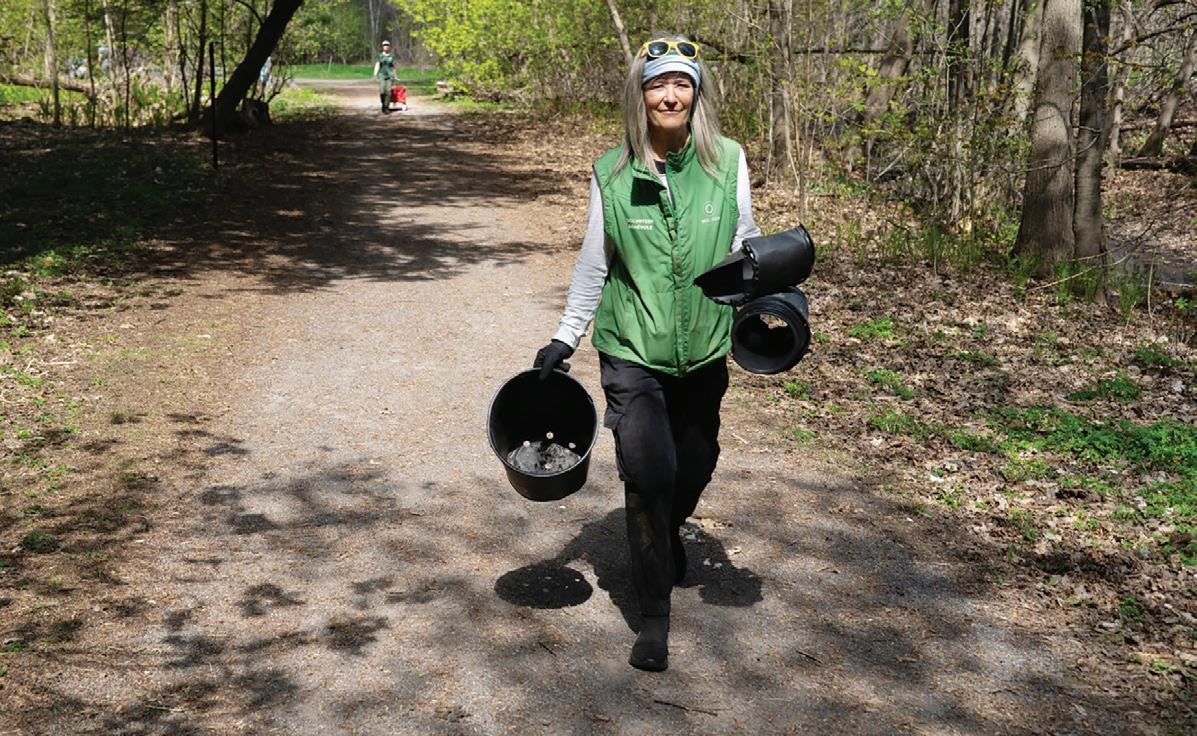
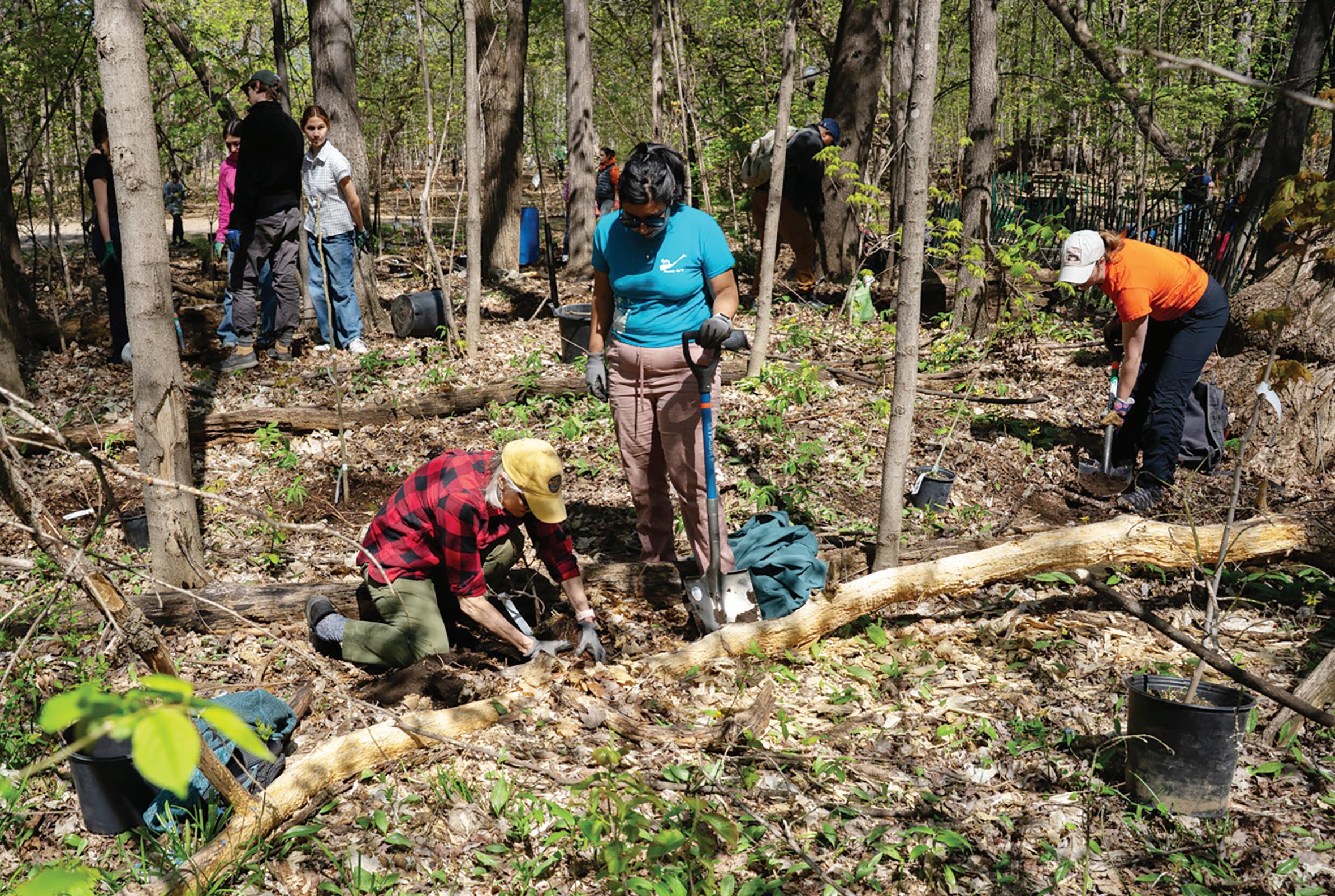
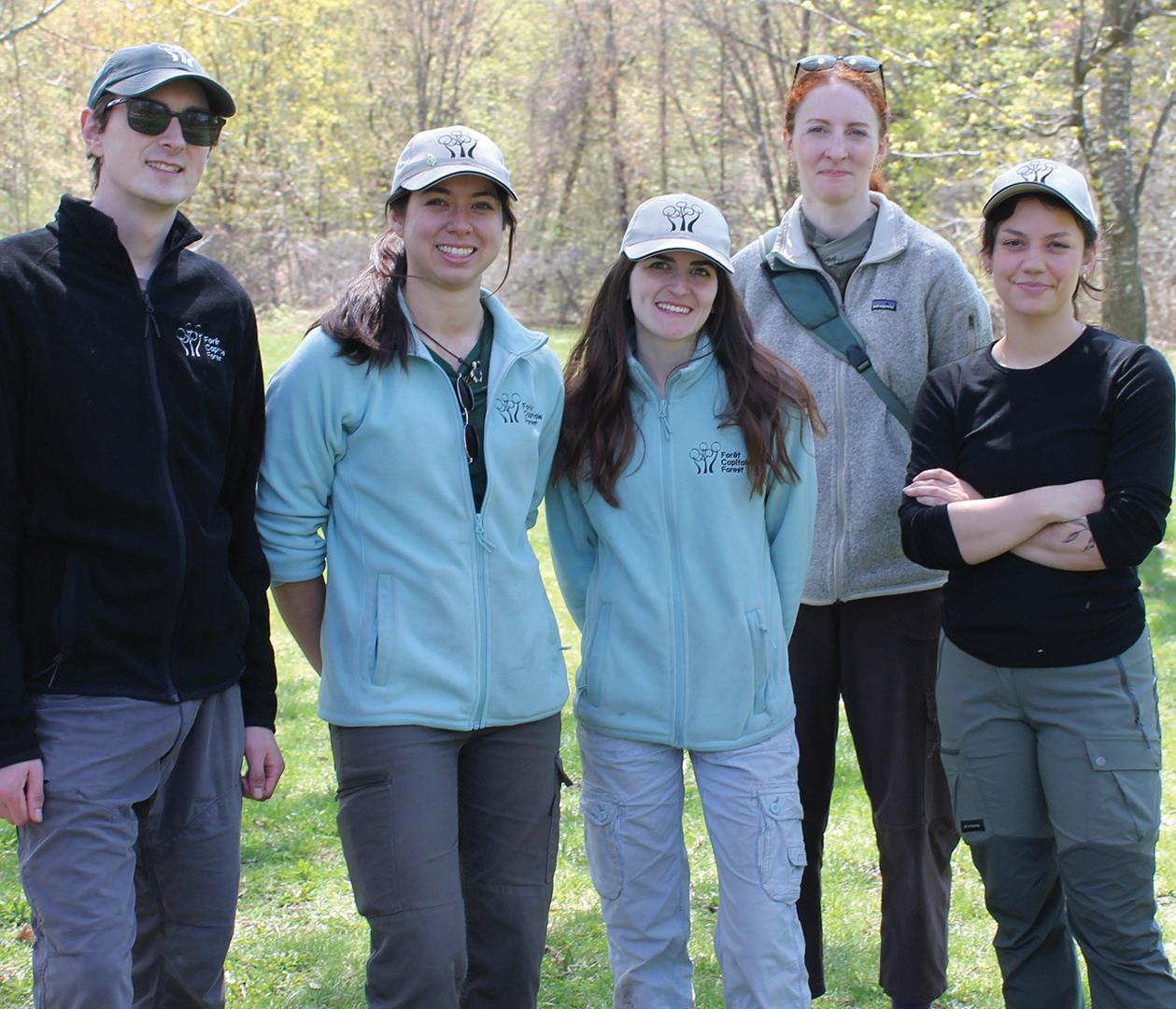
On May 9, Forêt Capitale Forest, the NCC and Friends of Hampton Park — a volunteer group Boddy founded in 2019 — planted native, non-invasive species throughout the park to help support the long-term resilience of the forest canopy ahead of the park’s centennial anniversary in 2027.
Jody Newman, afforestation program manager with Forêt Capitale Forest, said the event was both practical and educational.
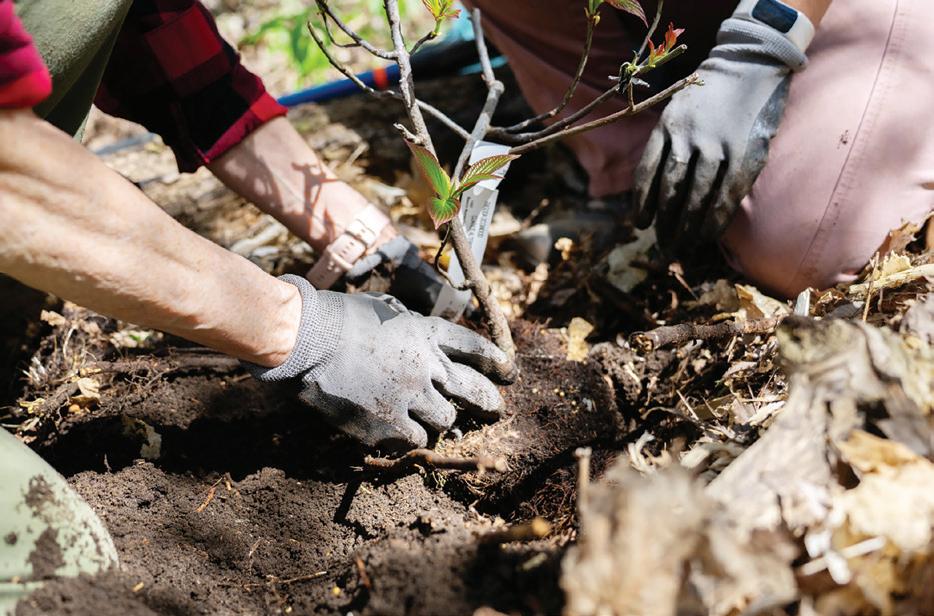
“Today we partnered with the National Capital Commission and Friends of Hampton Park to plant 100 trees and 100 shrubs in the park, and we did a planting demonstration for everyone to show them how to plant a tree properly,” said Newman.
“A big part of our mission is enhancing biodiversity and tree canopy cover within the national capital region through planting trees with the community. We help take care of the trees for three to five years after they are planted, and we also have our community volunteers help with that. We train them and educate them to be able to do it on their own,” she continued.
More than 60 volunteers added species, including black maple, white pine and eastern hemlock, as well as shrubs such as elderberry, flowering raspberry and honeysuckle. The goal is not simply to add more trees, but to rebuild the multiple forest layers needed to sustain biodiversity and improve long-term survival.
The effort comes as Ottawa continues to struggle with declining urban tree canopy coverage.
A city tree-equity analysis released in 2025 found that while Ottawa as a whole technically met its 40 per cent canopy target — largely because of rural forests — many urban wards fell well below the benchmark.
Fourteen wards lost canopy cover between 2017 and 2022, while the city’s urban canopy declined from 21.5 per cent to 20.6 per cent.
Kitchissippi Ward, where Hampton Park is located, dropped from 27 per cent to 25 per cent over that same period.
William Van Geest, executive director of Ecology Ottawa, said mature urban forests provide critical protection as climate change intensifies.
“We know the critical importance of our tree canopy, and we know the huge benefits that trees offer. Whether it’s cooling – with extreme heat that’s going to be important – or with stormwater absorption – with extreme flooding, that’s super important –and supporting biodiversity,” he said.
Trees and mature forests also play a major role in carbon sequestration, capturing and storing carbon dioxide in trunks, roots and soil. Following COP30 in 2025, the United Nations described forests as “one of the planet’s most powerful tools against climate change.”
For Boddy, preserving forests like Hampton Park means thinking beyond individual street trees.
“Street trees have an average lifespan of 10 years. So unless you’re going to hive off whole areas where you put in a lot more trees as a support network, those trees aren’t going to survive,” she said.
“But it’s not just the tree canopy. We need corridors to support biodiversity to give animals, insects, and birds space to go, which helps the forest network as a whole,” she continued. “A tree on its own is not going to survive. No man is an island, no tree is an island.”
She also noted that forests take decades to develop their carboncapturing potential fully.
“The problem is a tree doesn’t become mature until it’s at least 40, and most species take the most carbon dioxide when they’re 60 or 70,” said Boddy.
Despite the city’s 40 per cent canopy goal, no timeline has been set to achieve it across all wards — something Van Geest says undermines its credibility.
“There’s no timeline with the 40 per cent canopy target. So, it’s a nice goal, but by when…2050? We don’t know, and



Sharon Boddy has spent much of her life protecting the Hampton Park woods.
PHOTO BY SIMON MCKEOWN.
they refuse to put a number on it. So it’s hard to take it seriously as a goal,” he said.
“We’ve mentioned it multiple times to the council, and no one has corrected us.”








BY BRIAN DRYDEN
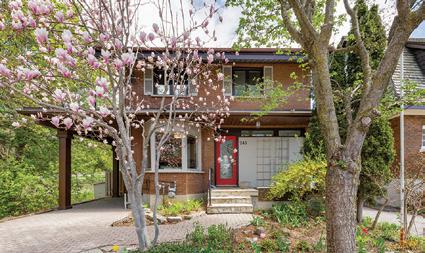
Residents and heritage advocates in Ottawa’s Island Park neighbourhood are continuing efforts to secure official heritage district designation for the area, arguing that the community’s architectural and cultural history deserves long-term protection.
Among the leading voices in that effort is local historian Jennifer Gillespie, who says preserving the neighbourhood’s past is about more than protecting old buildings.
“Once you let history disappear, it is gone forever,” Gillespie said. “There is so much history in the Island Park area that it would be a real loss to the city of Ottawa as a whole if we were to allow it to disappear and be torn down. That is why I have dedicated my efforts to make sure the history of the area is preserved.”
Island Park, located west of downtown near Island Park Drive, is known for its early-20th-century homes, tree-lined streets and longstanding community character.
Advocates say increasing
redevelopment pressure in Ottawa’s older neighbourhoods has heightened concerns about demolitions and incompatible new construction.
The proposed heritage district designation would offer additional protections and oversight for future development in the area. The process, however, remains lengthy and complex.
“We are waiting for a decision to designate Island Park as a historic district,” Gillespie said. “Hopefully, if that is granted, it will allow a form of protection for the area.”
According to Gillespie, more than 180 properties are being reviewed as part of the city’s evaluation process.
“I know there’s a lot of work that needs to be done to make that decision,” she said. “There are more than 180 properties involved that need to be vetted.”
To support the application, Gillespie has spent years compiling extensive historical research on the neighbourhood and its homes. She said she has already provided the City of Ottawa her research materials documenting the area’s development and social history.
“That is why I have supplied the city with all my research about the properties in the area,” she said.
Gillespie hopes the research will eventually form the basis of a book focused on the history of Island Park, a history she believes has largely gone untold compared with some other Ottawa neighbourhoods.
“Both Rockcliffe Park and the Glebe have had books written about those areas, but there isn’t a similar book about Island Park,” she said. “It’s an untold story in the evolution of Ottawa.”
Part of that story, she says, involves the neighbourhood’s significance within Ottawa’s Jewish community during the mid-20th century.
According to Gillespie, Island Park became a welcoming area for Jewish families at a time when discrimination and social barriers existed in other parts of the city.
“The Island Park community was a haven for Jewish residents when some other areas of the city were not as accepting,” she said.
For Gillespie, preserving the neighbourhood is also about ensuring those community stories are not forgotten.
“We don’t tell ourselves the stories about ourselves like other countries do, such as the United States,” she said. “We need to celebrate ourselves a lot more than we do.”
Supporters of the designation argue that heritage conservation does not mean freezing a neighbourhood in time, but instead managing growth in a way that respects the area’s historical identity.
The City of Ottawa has not yet announced when a final decision on the proposed heritage district designation will be made.
BY CHARLIE SENACK
A rare piece of architectural history could soon vanish from Island Park Drive.
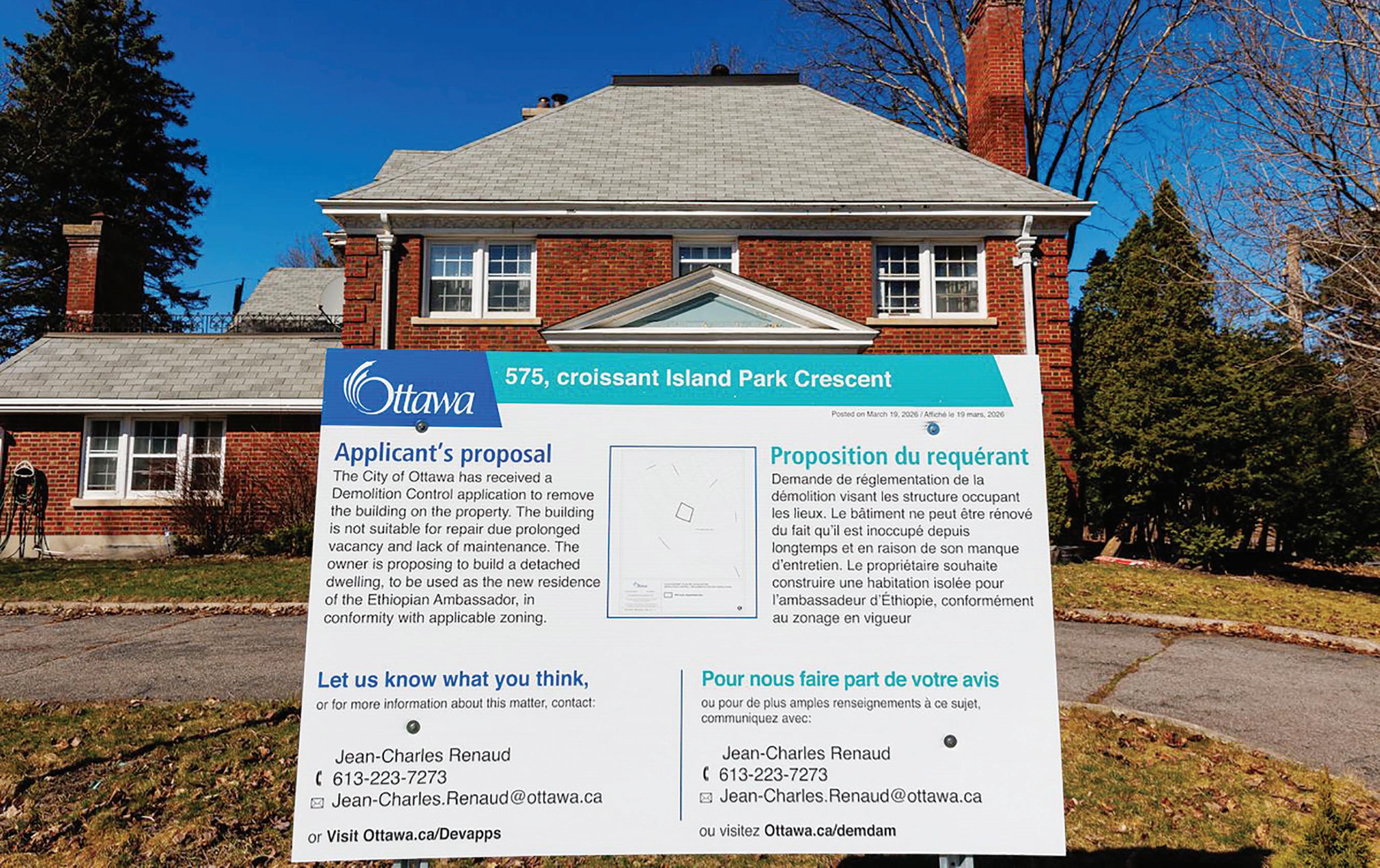
An application has been filed to demolish 575 Island Park Crescent, a stately 1927 residence now owned by the Ethiopian Embassy. It is believed to be one of the last remaining Sears Roebuck “Magnolia” kit homes in existence.
The Island Park Community Association is now campaigning to save the property and restore stronger heritage protections to the neighbourhood after the City of Ottawa removed Heritage Register protections from a number of historic homes along Island Park Drive last year.
From 1908 to 1942, Sears Roebuck sold more than 70,000 mail-order homes across the United States. Buyers could select a design from a catalogue and have pre-cut lumber, windows, doors and hardware shipped by rail for assembly. While the homes were primarily marketed in the U.S., some also made their way into Canada.
Research by local historian David Jeanes suggests 575 Island Park Crescent is a modified version of the Sears “Magnolia” model — the largest and most luxurious design Sears ever

offered through its catalogue program. It is believed only 10 Magnolia homes were ever sold, with just seven thought to still exist today.
The Ottawa home differs slightly from the original Magnolia design. Its southern-style columned portico was replaced with an entrance more suited to Canadian architecture and climate.
Built in 1927 for Daniel Baillie Rochester and Lucy Helena Cole Rochester, the home belonged to one of the city’s most prominent early families. The Rochesters owned Rochester Farm — where Rochester Street now runs — and played a significant role in the development of early Bytown.
The family’s roots stretch even further back to another John Rochester, who arrived in North America from England in 1786 and is considered one of the 27 American founders.
Daniel Rochester later became a prominent figure in Canadian mining and lumber circles. He helped bring the Cobalt mining fields to prominence in the early 1900s and was involved in the early development of Noranda. His uncle, John Rochester, served as Ottawa’s seventh mayor and co-founded the Ottawa Free Press.































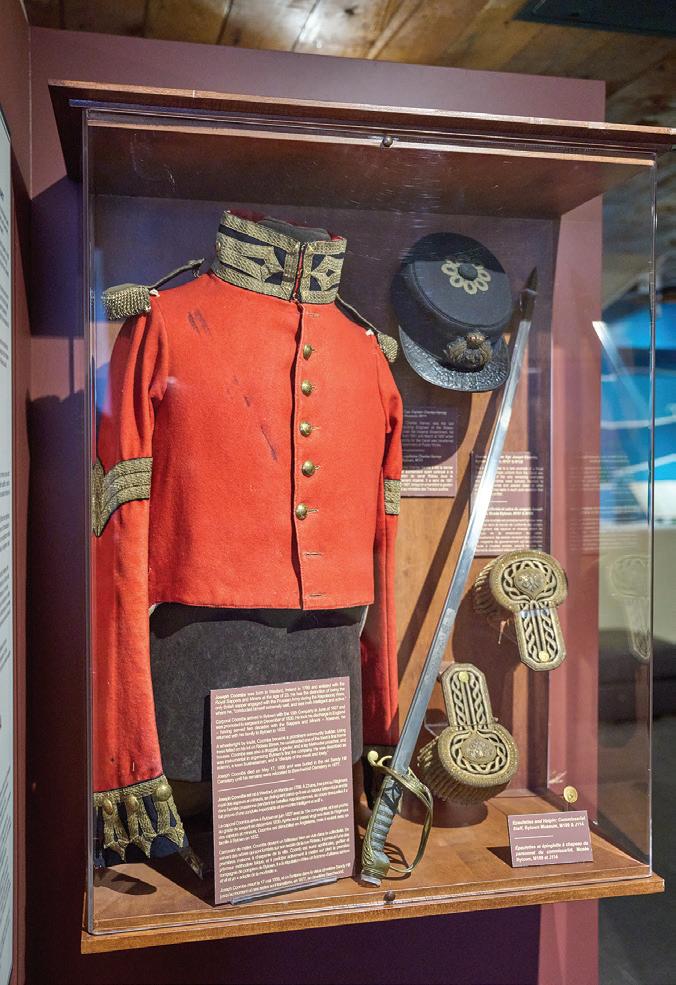
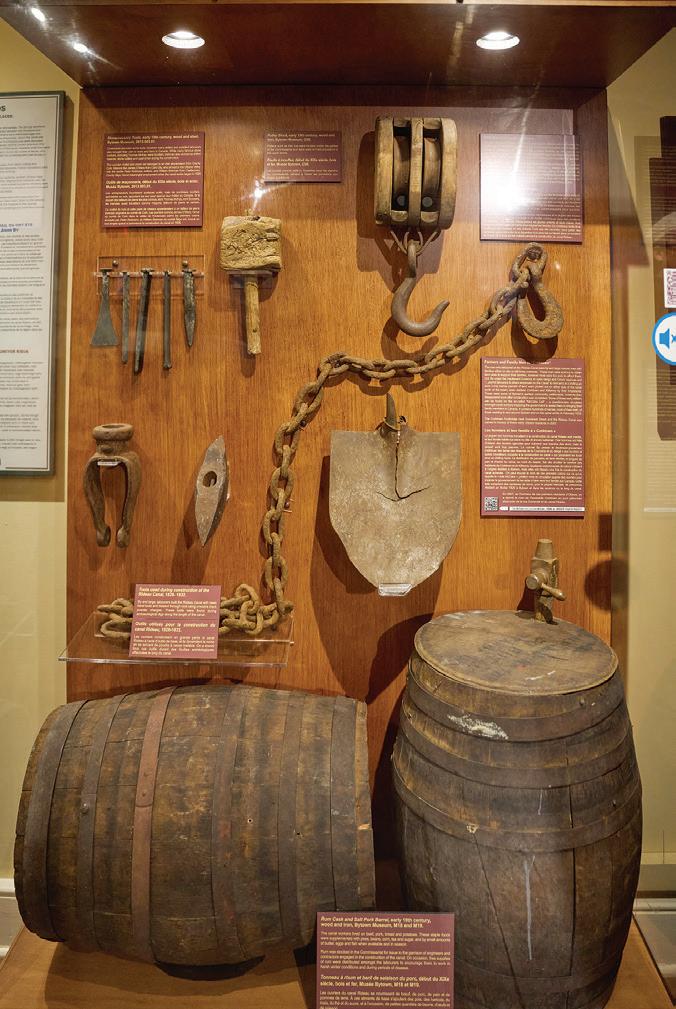
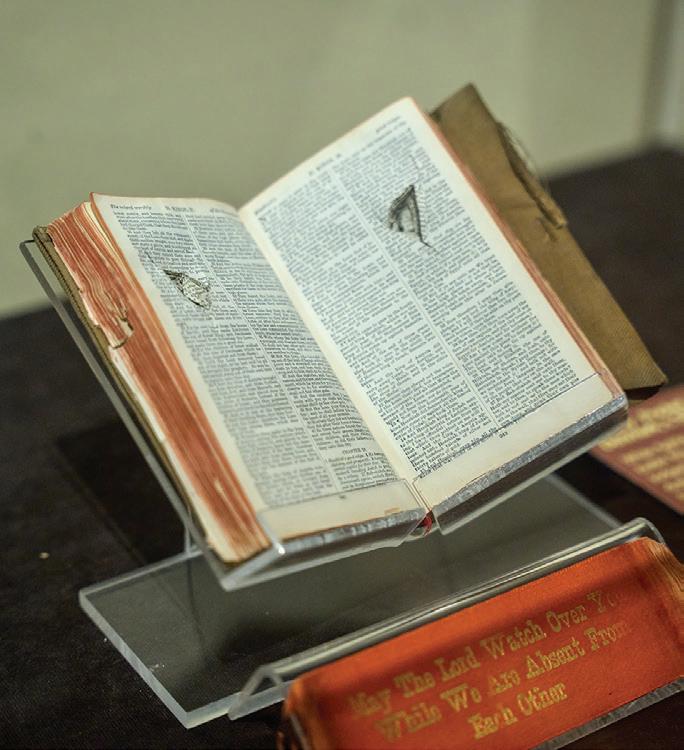
Top: military uniforms that were worn at the time of building the Rideau canal.
Middle: Tools that were used to build the historic waterway.
Bottom: A bible carried by an Ottawa soldier which saved his life during the African war.
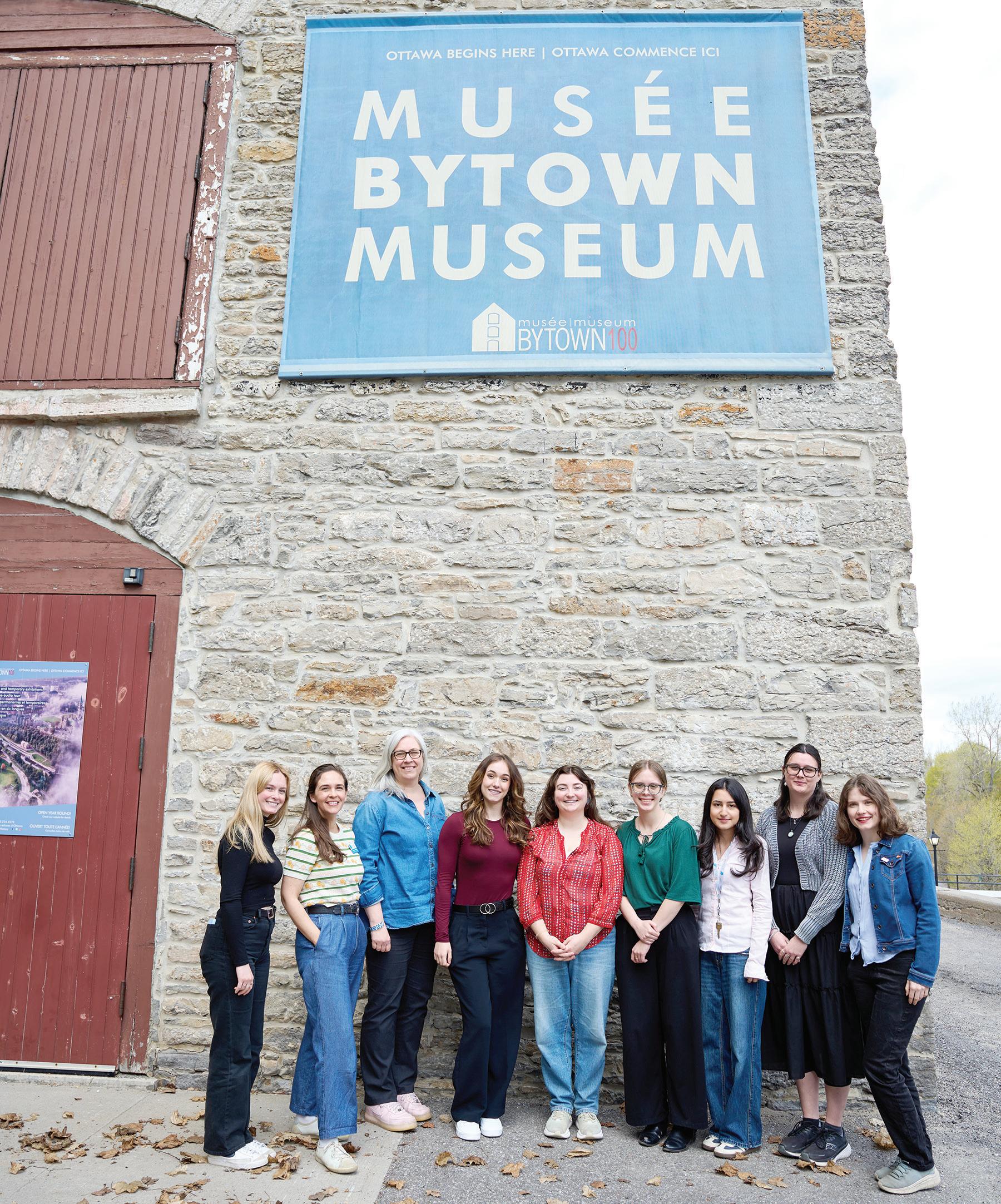
Above: Workers at the Bytown Museum pose for a photo outside of the building.
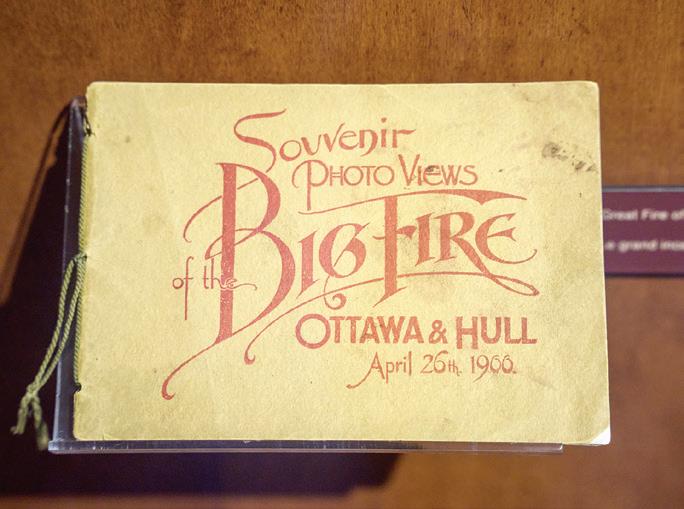
Next top: A souvenir book with photos from the Great Fire of 1900. The death mask of Darcy McGee’s hand. ALL PHOTOS BY ELLEN BOND.
BY CHARLIE SENACK
On the edge of the Rideau Canal, where green water slips past the Ottawa locks before meeting the Ottawa River, sits a squat stone building that predates the country.
Built in 1827 during the construction of the Rideau Canal, the old Commissariat building once served as the military supply hub for Colonel John By’s ambitious engineering project. Inside its thick limestone walls were offices, records, food stores, money, gunpowder and alcohol destined for the thousands of workers carving a water route through the wilderness between Ottawa and Kingston.
Today, the building houses the Bytown Museum.
Much of the structure remains remarkably unchanged. The heavy wooden rafters overhead are original. So is the vault where supplies and spirits were once locked away.
Founded by the Women’s Canadian Historical Society of Ottawa in 1917, the museum moved into the building in 1951 and opened there the following year.
The museum’s permanent exhibition, Where Ottawa Begins, traces the city’s story from long before Bytown existed through to the First World War. Along the way are thousands of artifacts tied to canal workers, lumber barons, politicians, soldiers, photographers and ordinary residents who helped shape the capital.
Long before Colonel By arrived, the Ottawa, Rideau and Gatineau rivers served as gathering places, transportation corridors and trade routes for Indigenous communities. A recent renewal of the museum’s galleries has placed greater emphasis on those histories and perspectives.
Towering over the entrance staircase is River to Sky, a two-storey mural created by local Indigenous artists Claire Brazeau and Emily Brascoupé of the Three Sisters Art Collective. Nearby are some of the museum’s oldest objects: stone tools discovered along the banks of the Kichi Zībī, or Ottawa River.
“These are some stone tools that are found along the banks of the Kichi Zībī or the Ottawa River,” said Chloe Dennis, exhibition and collections manager at the Bytown Museum.
From there, the museum moves into the arrival of Colonel John By and the massive undertaking that transformed a rugged settlement into Bytown.
One display contains a trunk that belonged to Colonel By himself. Beside it are silhouettes of By, his wife and daughters, considered among the only true likenesses of him.
Another artifact reflects the prestige and politics tied to the canal project. The Drummond Cup, a silver presentation cup commissioned by By for contractor Robert Drummond, is considered one of the museum’s most valuable objects. Inscribed on the side is May 1831 — the canal’s original completion target. The waterway would not officially open until the following year.
It was a tough life for the labourers who built the canal. Most were Irish immigrants, along with Scottish, English, French Canadian, and American workers who spent years clearing forests, blasting rock, and digging channels through swampy terrain.
“It was really hard, laborious work,” Dennis said. “They worked long days, six days a week. There was disease, danger, explosions, things like that.”
The museum estimates roughly 1,000 workers died during canal construction.
Even the vault downstairs tells part of that story. Dennis pointed out that the original stone floor had to be replaced with wood because workers’ spiked boots could spark against the stone.
There are also large historic photographs showing mountains of stacked lumber once lining the Ottawa River. A detailed model of the E.B. Eddy lumber complex — originally displayed at the Philadelphia World’s Fair — demonstrates the scale of the industry that once dominated the region.
Other artifacts feel more personal: heavy cork boots used by loggers, tools belonging to canal supervisors, and paintings depicting the rough camps and mills that emerged along Chaudière Falls.
The museum also highlights stories that were overlooked for generations. One watercolour showing Philemon Wright’s first timber raft on the Ottawa River long omitted the presence of London Oxford, believed to be the first Black man in the Ottawa Valley and a businessman who worked alongside Wright.
“We found the raft manifest that listed all the people on the boat, and London Oxford’s name is on there,” Dennis said. “He was very much a key figure at the start of the lumber industry in Ottawa.”
In the mid-1800s, Bytown had a reputation for violence, taverns and class division. Rivalries between Irish and French Canadian workers frequently erupted into conflict, while Upper Town and Lower Town residents competed economically and politically.
One section explores the story of Mother McGinty — born Sarah Ritchie — the formidable tavern owner of Corktown, the Irish settlement near today’s Corktown Footbridge.
“She was known to be a very
domineering woman,” Dennis said. “Keeping people’s bar tabs — you couldn’t really get anything past her.”
By 1855, the rough canal settlement officially became the City of Ottawa. A few years later, Queen Victoria selected it as the capital of the Province of Canada, partly because it sat between English and French Canada and far from the American border.
Artifacts from that era include one of the city’s original ceremonial keys and a mayoral chair belonging to Henry Friel, the last official mayor of Bytown.
One of the museum’s most fascinating spaces recreates Ottawa’s Victorian period, when the city tried to shed its frontier image. Delicate mourning jewelry woven from human hair sits beside photographs from some of Ottawa’s earliest studios.
Another display explores the Russell Hotel, once among the city’s most prestigious destinations. Politicians, tourists and literary figures such as Oscar Wilde stayed there before it closed in the 1920s and later burned down.
Ottawa has a history of catching fire. The Great Fire of 1900, which spread from Hull across the river through piles of lumber, destroyed huge sections of Ottawa’s west end. Among the surviving objects is a damaged photograph fused with shards of glass from the intense heat.
Nearby are artifacts from the 1916 Parliament fire, including a warped clock hand from the old Centre Block tower and a flag said to have hung from Victoria Tower during the blaze.
One of the museum’s most haunting artifacts belongs to Thomas D’Arcy McGee, a journalist, politician and Father of Confederation, who was assassinated outside his Sparks Street boarding house in 1868.
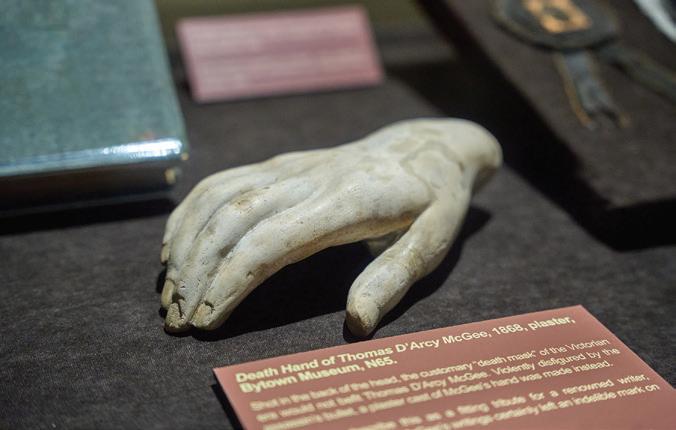
Because of the nature of his death, a traditional Victorian death mask could not be made. Instead, a cast was taken of his hand.
“It was fitting, as he wrote poetry, was a writer, and was a journalist,” Dennis said.
The permanent exhibition concludes with Ottawa’s wartime contributions, including stories of local nurses, soldiers and community groups during the South African War and First World War.
One particularly striking object is a small Bible carried by Ottawa soldier John C. Denmark. A bullet lodged inside its pages after striking the book in his pocket, likely saving his life.
Though the museum once focused almost entirely on Ottawa before the First World War, Dennis said its mandate has evolved in recent years better to reflect the city’s broader, more diverse history.
“We’re in a capital city, but we’re still a community museum,” she said. “So we try and focus on local history on a national stage.”
Downspouts































































































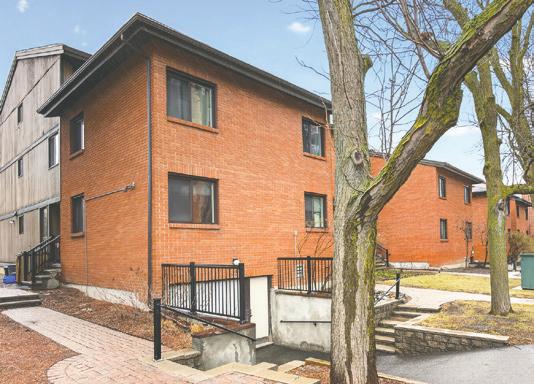
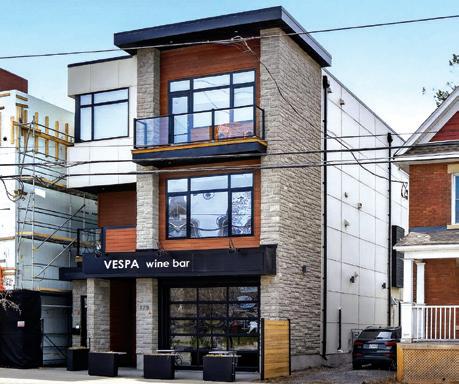




Kick off the festivities the weekend before with the 52nd edition of the Preston Street Bicycle Races. Head to Little Italy to cheer on the racers and take in the excitement of this long-standing, high-speed tradition. The race starts and finishes at Norman Street, bringing fast-paced action and plenty of energy to the neighbourhood.




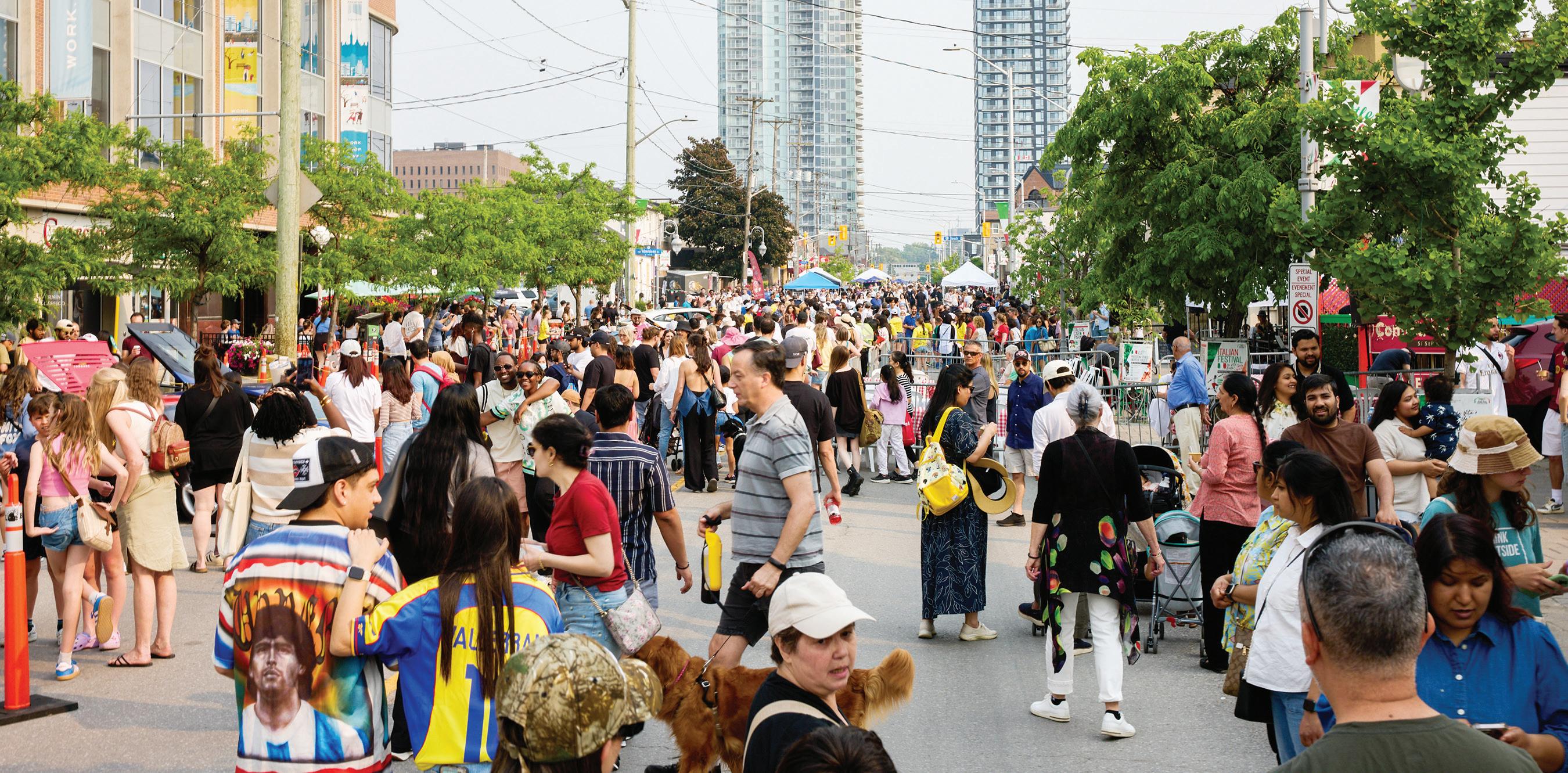


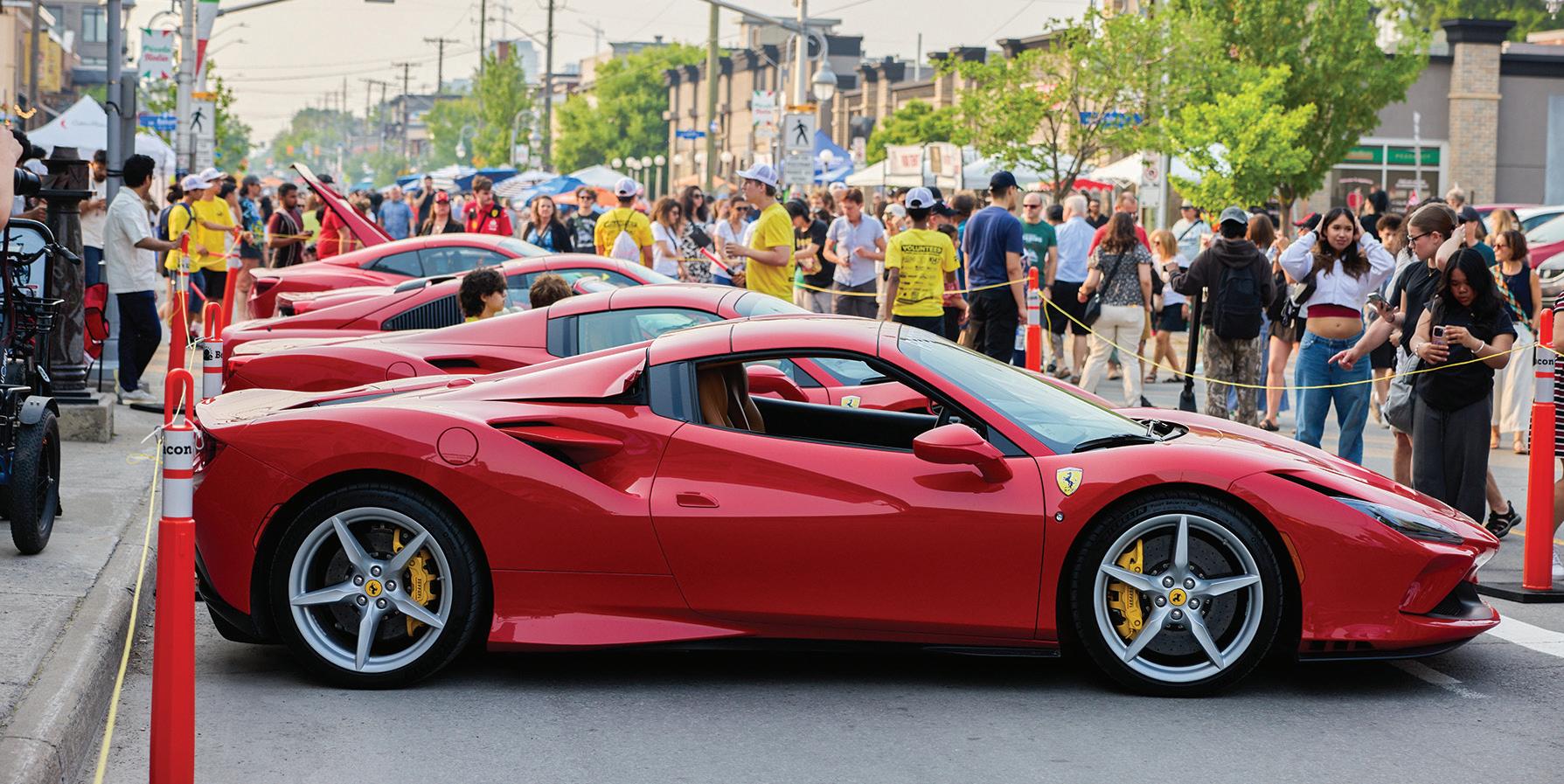
Starting at 5pm on Friday, June 19, Preston Street will be closed to vehicles and open to patios, pedestrians, and performers. Little Italy’s beloved restaurants will extend into the street, creating the perfect place to dine, relax, and take in the atmosphere. Throughout the weekend, visitors can enjoy crowd-favourite events including the FCA Ottawa Ferrari Festival, the Italian Car Parade, and more.
The FCA Ottawa Ferrari Festival roars into action on June 19-21! Kick things off with the Dows Lake Concorso D’Eleganza, a rare vehicle showcase set against the scenic backdrop of Commissioners Park and the Queen Elizabeth Driveway. Then on Saturday, catch the Ferraris as they join the Italian Car Parade at 1:00 pm, before hitting the Preston Street BIA Ferrari Demo Zone on Carling Avenue at 2:30pm to unleash their speed and signature roar! On Friday and Saturday, these stunning Ferraris will be on display along Preston Street, offering visitors a close-up view of these remarkable vehicles.
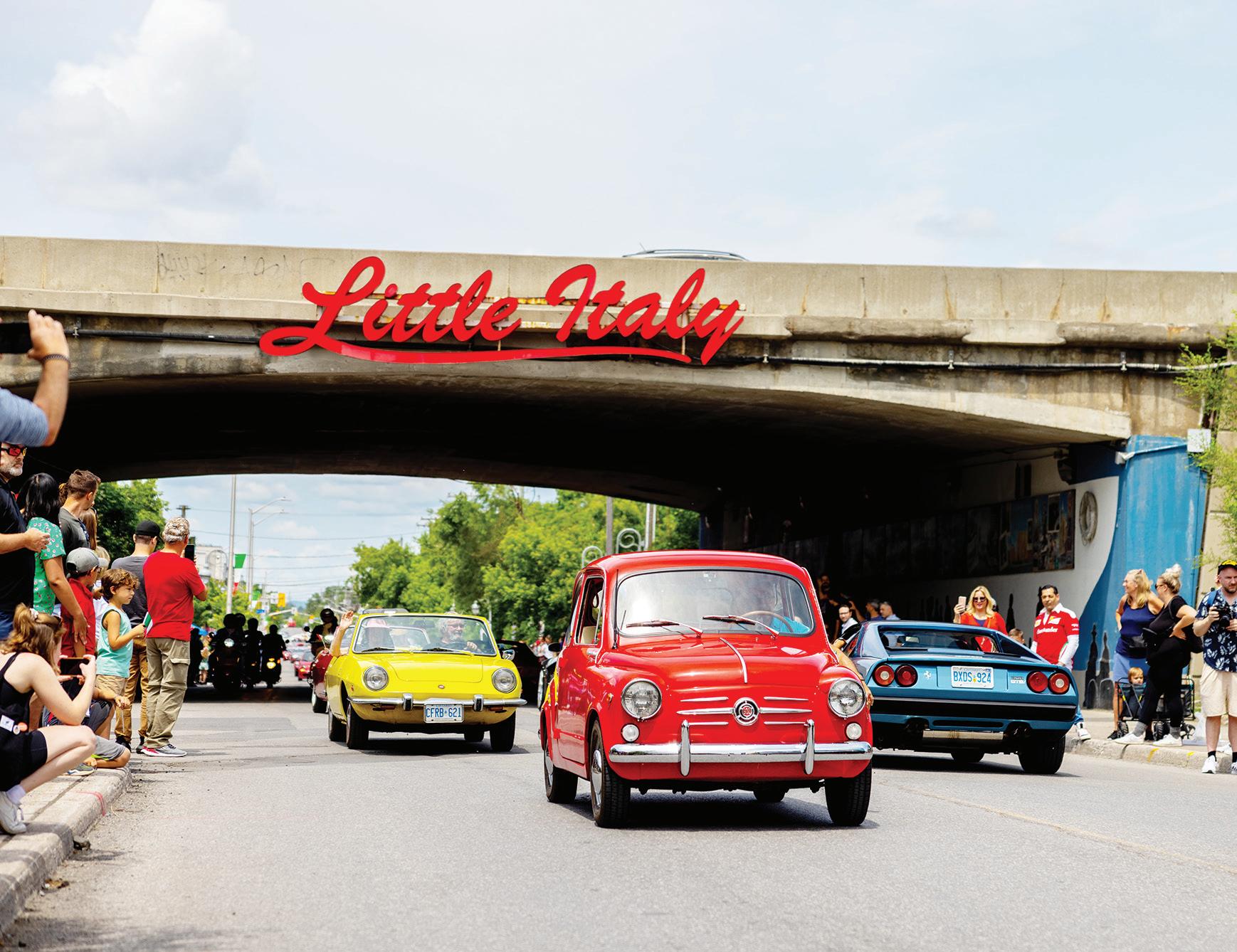

The Italian Car Parade returns to Little Italy on Saturday at 1:00 p.m., highlighting the elegance, style, and performance of iconic Italian automobiles. Presented by the Italian Car Club of Ottawa, the parade features an impressive lineup of Ferraris, Fiats, Alfa Romeos, and more as it makes its way down Preston Street from Pamilla to Somerset, transforming Little Italy into a vibrant showcase of automotive design. A true crowd favourite, this event is a must-see celebration for car enthusiasts and festivalgoers alike.

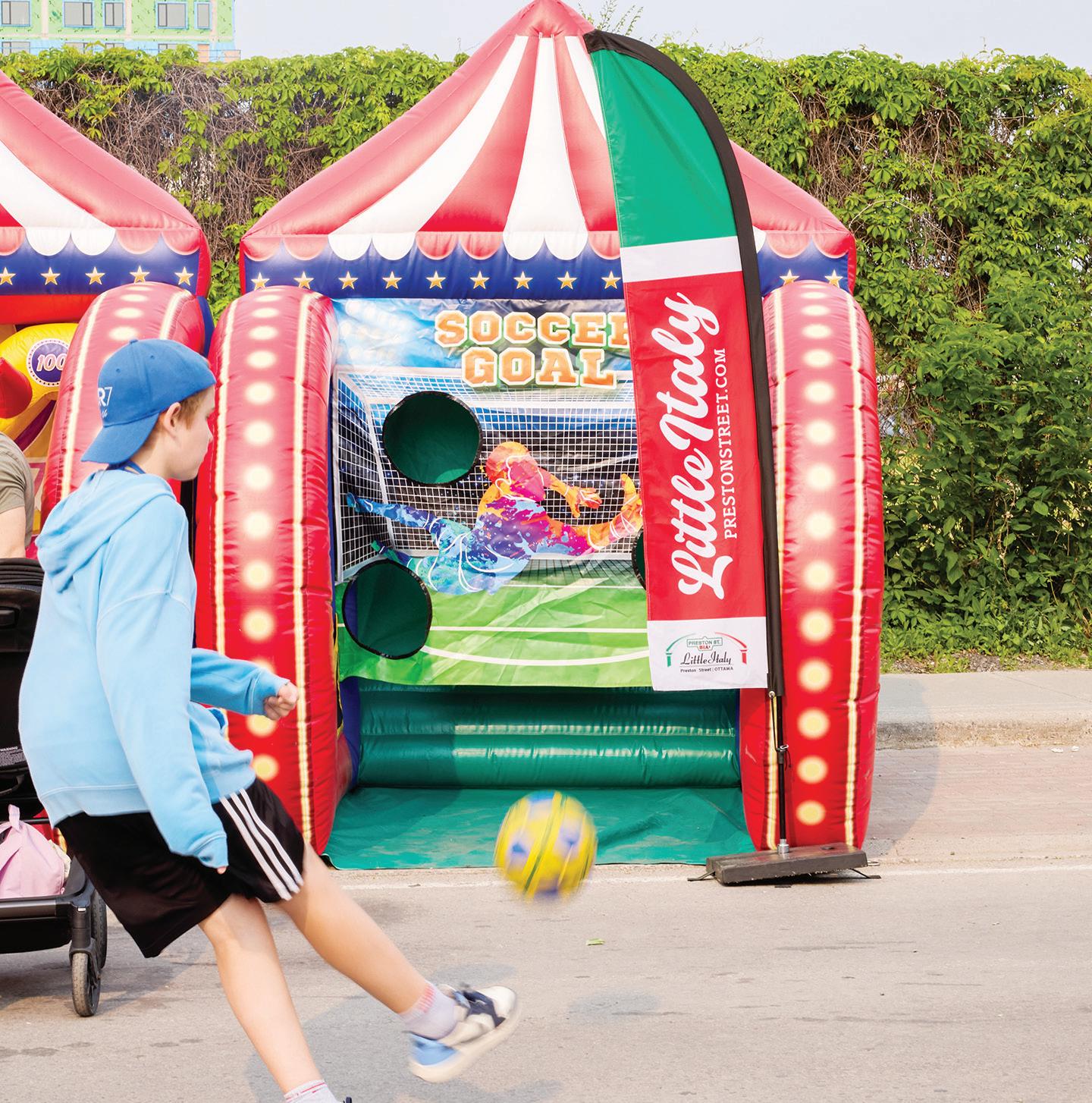
Family fun takes center stage at the Ottawa Italian Festival with inflatables, face painting, balloon art, street performers, and live entertainment throughout the weekend. Magic shows and traditional Italian folk dancing add to the atmosphere, creating engaging experiences for all ages. Family activities take place on Saturday and Sunday, making it the perfect weekend outing for visitors of all ages. Whether you’re coming for the cars, the cuisine, or the culture, this is the most exciting weekend of the year on Preston Street.
For more information, visit: www.ottawaitalianfestival.com Follow @littleitalyottawa on social media

BY CHARLIE SENACK
Ottawa residents are no strangers to the history of Canada’s capital. Stories of the Parliament Buildings and the Rideau Canal are taught in schools. In the ByWard Market, plaques and displays describe how Bytown was once a very different landscape from the one it is today.
Long before Ottawa became the city it is now, it was Bytown: a rough and rapidly growing settlement built around the construction of the Rideau Canal in the 1820s.
Colonel John By established the military canal project following the War of 1812 as a secure inland supply route between Montreal and Kingston. What emerged
around the canal works was a chaotic frontier town filled with Irish and French Canadian labourers, lumber barons, taverns, mills, and muddy streets.
By the mid-19th century, the timber trade had transformed the community into one of the busiest lumber towns in North America. Massive log booms crowded the Ottawa River, railways cut through growing neighbourhoods, and industrial districts like LeBreton Flats and Mechanicsville became home to thousands of working-class residents.
In 1857, Queen Victoria selected Ottawa as the capital of the Province of Canada, partly because of its location between English and French Canada and its defensible distance from the American border.
known chapters have been uncovered and preserved.
These are just some of the stories that helped shape urban Ottawa over the last two centuries.
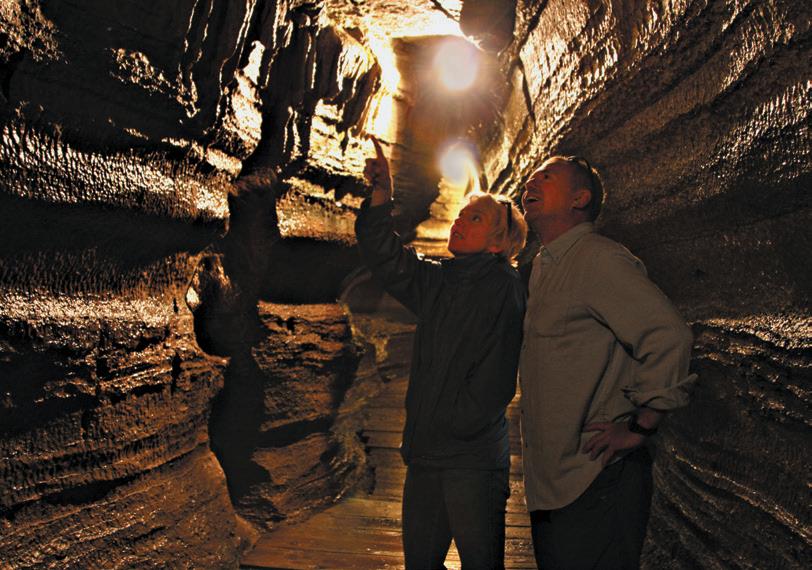
Beside the Fleet Street Pumping Station and the stone arches of Pooley’s Bridge lies one of Ottawa’s most persistent historical mysteries: the legend of Pooley’s Cave.
Though no confirmed entrance exists today, stories of a cavern beneath LeBreton Flats have circulated for more than a century. The cave is tied to Pooley’s Bridge, one of Ottawa’s oldest surviving bridges.
The original crossing was constructed in the 1830s by Lieutenant Henry Pooley under the direction of Colonel John By during the building of the Rideau Canal. The current stone bridge, built in 1873, still stands near the Ottawa River aqueduct system and is designated a heritage structure.
Accounts of the cave appeared in newspaper stories and local recollections dating back to the late 19th century.
Explorers reportedly entered through openings near the bridge and described underground chambers stretching beneath what is now downtown Ottawa. Some stories claimed the cavern extended east toward Christ Church Cathedral beneath Sparks Street. Others described stalactites, underground streams, waterfalls, and narrow rock passages that required crawling.
According to an old Ottawa Citizen clipping, Mrs. James Arkley recalled “she and other girls used to go in the sixties to a distance of 150 feet. They didn’t go further as they got scared each time when they heard the roar of the water.”
Over the decades that followed, Ottawa evolved from a rough industrial town into a planned government city. Entire communities disappeared in the process— highways carved through neighbourhoods. Rail lines vanished. Fires levelled blocks of homes. Forgotten tragedies shook the city. And in between it all came moments of spectacle — royal tours, papal visits, movie theatres under the stars, and local teenagers who grew up to become international stars.
Some of these stories remain well known — others have faded almost entirely from public memory. Thanks to the work of historians such as the Kitchissippi Times’ Dave Allston, Andrew King, Heritage Ottawa and others, many of these lesser-
Historian Andrew King wrote on his blog Ottawa Rewind that the cave might have existed up until 1991, when the National Capital Commission began to terraform the bridge’s area.
His investigation also led to the belief that spring water from the area may once have supplied early breweries and later the Pure Spring soft drink company, which was once one of Ottawa’s best-known beverage producers.
In the years following the Second World War, Ottawa was changing rapidly. Suburbs were expanding, car ownership was rising, and traffic through the city’s downtown streets had become increasingly congested.
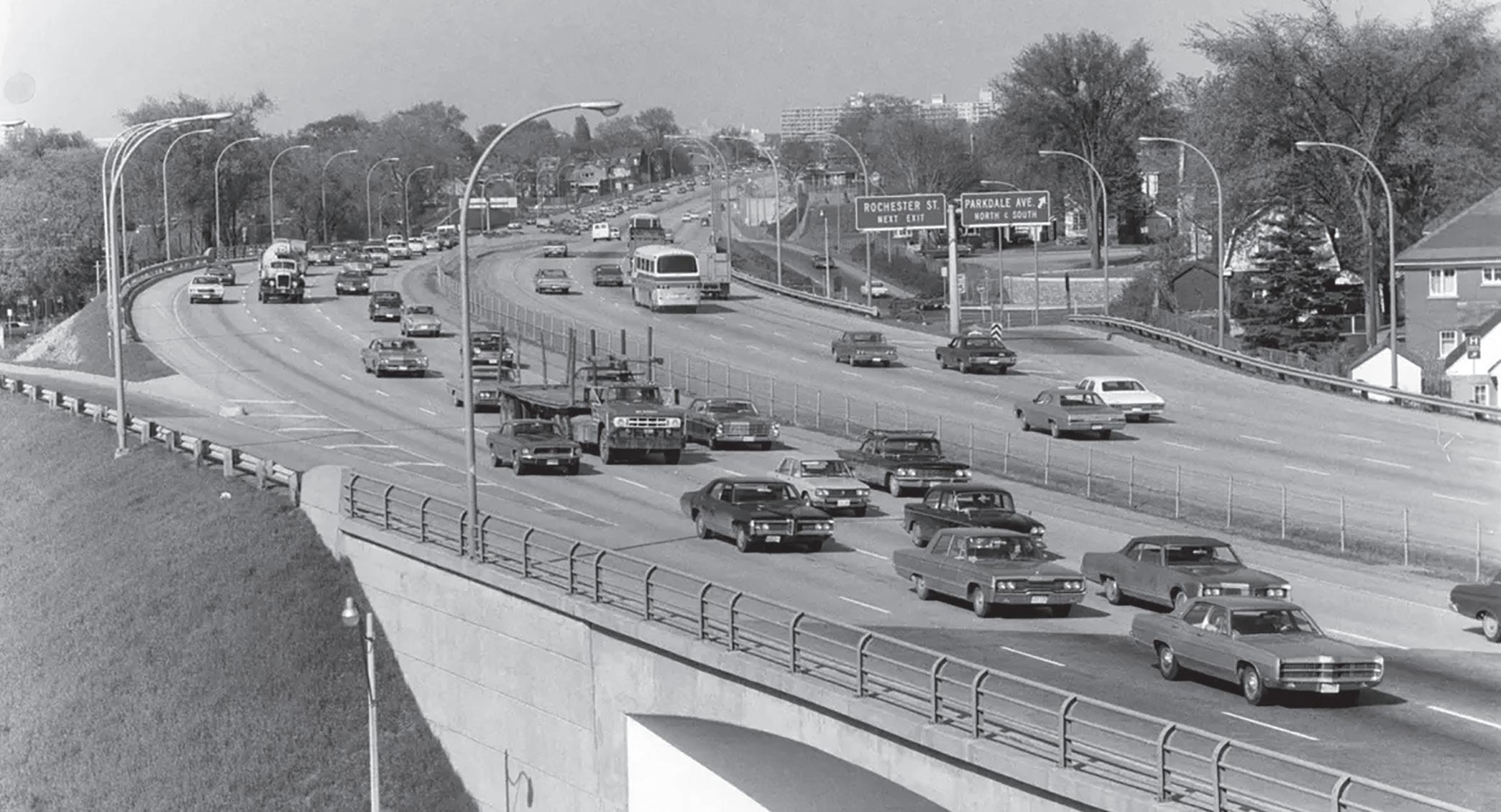
To address those growing pressures, planners proposed a modern east-west expressway that would eventually become known as the Queensway.
The idea originated in the Gréber Plan, a sweeping redevelopment blueprint commissioned by Prime Minister William Lyon Mackenzie King and prepared by French planner Jacques Gréber in the late 1940s. The plan called for major changes to Ottawa’s transportation system, including the removal of rail lines from the downtown core and the creation of a controlled-access freeway across the city.
Construction officially began in 1957 during a visit by Queen Elizabeth II. Standing near Hurdman Bridge, the Queen detonated explosives to symbolically launch the project, giving the future roadway its royal-inspired name.
The highway was built in four stages over nearly a decade. The first section, stretching east from the Rideau River toward Montreal Road, opened in 1960, followed by additional western and central sections requiring major bridge and overpass construction over the Rideau Canal and Rideau River.
By October 1966, the final gap near Hurdman Bridge had been completed, officially linking the route across Ottawa. The project transformed transportation in the capital and became part of Highway 417, a key corridor connecting Ottawa to Montreal and beyond.
For much of Ottawa’s early history, the shoreline along the Ottawa River looked very different from the landscaped corridor which now includes the Kichi Zībī Mīkan Parkway. Before the parkway was built, the waterfront west of downtown was lined with rail tracks, lumber yards, cottages, beaches,

small businesses and industrial operations tied to Ottawa’s booming timber economy.
Throughout the late 1800s and early 1900s, rail lines hugged the riverfront through communities such as Mechanicsville, Champlain Park, Westboro and Britannia. Trains transported lumber, coal and other goods through the growing city, while industries used the shoreline for storage and shipping.
At the same time, parts of the waterfront also became recreational destinations. Britannia Beach in particular emerged as one of Ottawa’s most popular summer gathering spots, drawing crowds for swimming, boating and picnics.
By the mid-20th century, however, federal planners viewed the industrial riverfront as incompatible with the image of a modern national capital.
Following the Second World War, Prime Minister William Lyon Mackenzie King commissioned French planner Jacques Gréber to redesign Ottawa through what became known as the Gréber Plan. Among its recommendations was the removal of rail infrastructure and heavy industry from central areas of the city, including along the Ottawa River. Continues on page

Michelle Groulx is a proud Kitchissippi resident and Ottawa native who brings years of experience and dedication uniting residents, businesses, and City Hall to deliver results for our neighbourhoods.
Continues from page 25
The plan envisioned a scenic parkway stretching along the waterfront, combining transportation infrastructure with green space and public access to the river.
Construction of what became the Ottawa River Parkway — later renamed the Sir John A. Macdonald Parkway and now Kichi Zībī Mīkan — began in stages during the 1950s and 1960s.
Building the roadway required major landscape changes. Rail corridors were removed or relocated, industrial sites disappeared, and sections of the shoreline were reshaped into parks and open green space. Some homes and buildings near the river were also expropriated to make room for the project. The new roadway connected downtown Ottawa with west-end communities and eventually became one of the capital’s signature scenic drives.
In the 19th and early 20th centuries, fire was one of the greatest dangers facing Ottawa.
Before modern firefighting equipment and building codes, wooden homes, lumber piles, and dry forests made devastating blazes a constant threat across the growing capital.
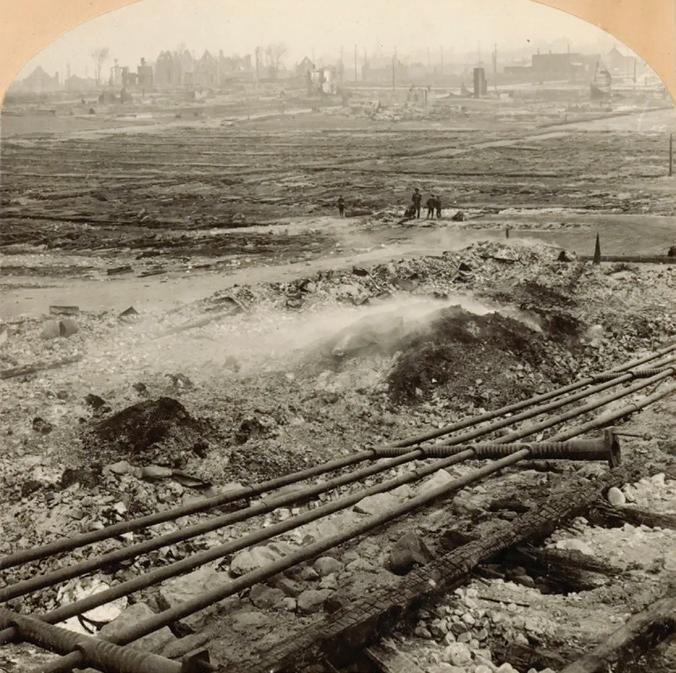
Among the most destructive was the Great Hull-Ottawa Fire of 1900, still considered one of the worst disasters in the region’s history. The fire began in Hull after sparks from a defective chimney ignited a rooftop. Strong winds quickly spread the flames through tightly packed wooden buildings and nearby lumber yards along the Ottawa River.
Within hours, the inferno crossed into Ottawa’s west end. Entire neighbourhoods, including LeBreton Flats and areas between Booth Street and Dow’s Lake, were consumed. Roughly one-fifth of Ottawa and two-thirds of Hull were destroyed, leaving about 15,000 people homeless.
Huge stacks of drying timber along the riverfront acted as fuel for the fast-moving blaze. The fire dramatically altered west-end neighbourhoods such as Hintonburg, where many displaced residents later relocated.
Another major blaze struck a few years later in 1903 when flames tore through the Preston Street area after a fire broke out among J.R. Booth’s lumber piles near the Canadian Atlantic Railway corridor — today’s Trillium Line route.
The fire spread quickly. Residents in the area loaded up rigs, wagons and sleds with their belongings and furniture, desperate not to lose everything again. But for many, it was too late, and items had to be abandoned. Even Plouffe Park, where many gathered, could not be saved.
It took six hours to get the fire under control, which burned until midnight. Over 240 homes were destroyed, and about 1,000 people were left homeless. Hintonburg was saved thanks to the winds blowing east and the fire brigade’s response.
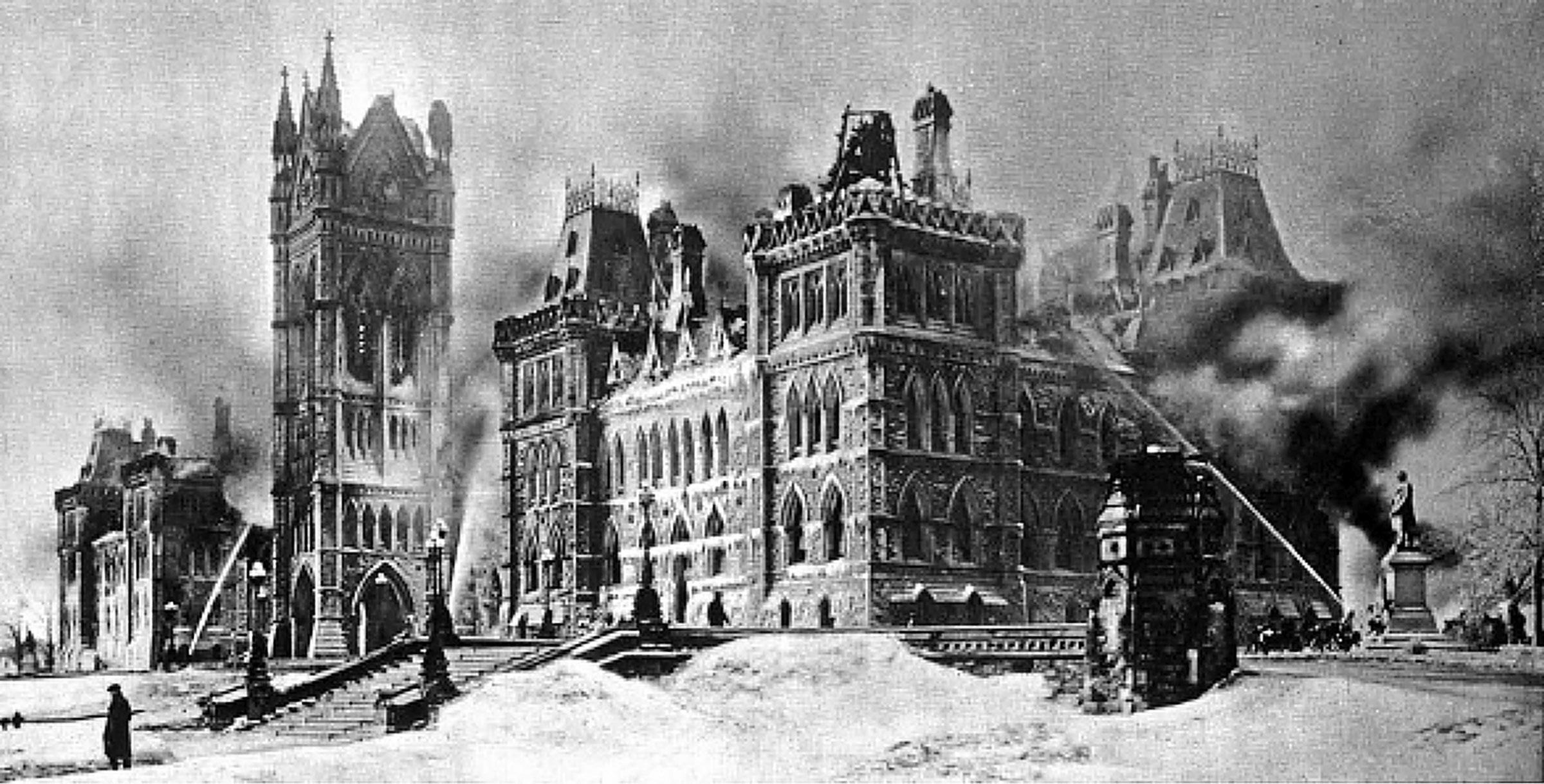
On the bitterly cold evening of Feb. 3, 1916, flames began rising from Canada’s Centre Block on Parliament Hill. Inside, politicians were debating how to improve the transportation of fish.
“I have been very sorry to notice during the years I have had the privilege of serving in this house that when our fishing industry is being discussed, very few members stay in the chamber,” said Bowman Brown Law, the 14-year Liberal MP from Yarmouth, Nova Scotia.
After addressing the house, Law left his seat and headed to the basement to make a long-distance call to a friend in Nova Scotia. It would be the last time he was seen alive.
The blaze broke out shortly before 9 p.m. in the House of Commons reading room. Parliament was in session at the time, and MPs, senators, journalists, staff, and visitors scrambled to escape as smoke filled the corridors.
Witnesses described members of Parliament smashing windows, crawling through smoke-filled hallways, and helping others evacuate through snow-covered exits.
Librarian Michael MacCormac and his staff famously managed to save the Parliamentary Library by closing massive
iron fire doors just moments before the flames reached the historic room. The library remains the only major portion of the original Centre Block to survive the disaster.
Firefighters battled freezing temperatures as water from hoses quickly froze and large sections of the building collapsed into flames. By the following morning, little remained of Centre Block except smoking stone walls and the Peace Tower’s predecessor, the Victoria Tower, which eventually collapsed during the fire.
Seven people died in the disaster, including Law. Others included René Laplante, an assistant clerk of the House of Commons, a police officer, and other government employees.
Despite speculation during the First World War that the fire may have been caused by German sabotage, investigators later concluded it was almost certainly accidental. A Royal Report commission identified a smouldering cigar or faulty electrical wiring as likely causes.
According to documented history, the first Muslim immigrants to settle in Ottawa were Hassan Mahmood Wanda and his family, who arrived in 1903. They lived in the ByWard Market and came from Kfarmishki
— a small Lebanese-Syrian town near Beirut. It took time for other Muslim families to settle here. In the early 1960s, when the entire population was around 480,000, fewer than 500 Muslims called Ottawa home. There were no mosques at the time. Instead, religious celebrations were held at the Pakistan High Commission and the Egyptian Embassy. When funerals and marriages were held, an Imam had to be brought in from Detroit.
But there were signs of growth, and in 1962, the Ottawa Muslim Association was created. The group began fundraising and asked its members to donate 10 days' salary each year to the building fund.
In 1967, $25,000 was raised to purchase a lot next to Northwestern United Church, where weekly Muslim prayer services had been held for the last five years. City hall gave the go-ahead in 1973 for a mosque to be built, after a delay due to concerns about parking.
On March 26, 1975, while construction continued on the upper floors, a prayer service was held in the mosque’s basement. Less than a year later, in late February 1976, another service was disrupted during a visit by Pakistani Prime Minister Zulfikar Ali Bhutto.
A couple who had been separated from their children during the 1972 civil war
that led to Bangladesh’s independence was permitted to present the prime minister with a petition. Moments later, shouting erupted inside the mosque, and Bhutto was quickly escorted away by security.
Before he became an international music star known for Diana, Put Your Head on My Shoulder, and My Way, Paul Anka was a teenager growing up in Ottawa with big ambitions and a passion for music.
Anka was born in Ottawa on July 30, 1941, to Andrew and Camelia Anka, whose family roots traced back to Syria and Lebanon. His parents operated the Locanda restaurant on Laurier Avenue, a popular gathering spot in the city. The family lived near Fisher Park, where Anka attended school and first began experimenting with music.
Music became part of his life early. He sang in the choir at St. Elias Antiochian Orthodox Cathedral and studied piano and music theory while attending Fisher Park High School. By his early teens, he was already performing around Ottawa and Hull, appearing at amateur nights and local clubs.
At 14, Anka formed a vocal group, the Bobby Soxers, with fellow students. Around the same time, he began writing songs and looking for ways into the music industry.
In 1956, he convinced his parents to let him travel to Los Angeles, where he recorded his first single. A year later, he went to New York and played a collection of songs for ABC-Paramount producer Don Costa. Among them was Diana, inspired by an Ottawa teenager whom Anka admired from afar.
Released in 1957, Diana became an international hit, turning the 15-year-old Ottawa singer into a global star.
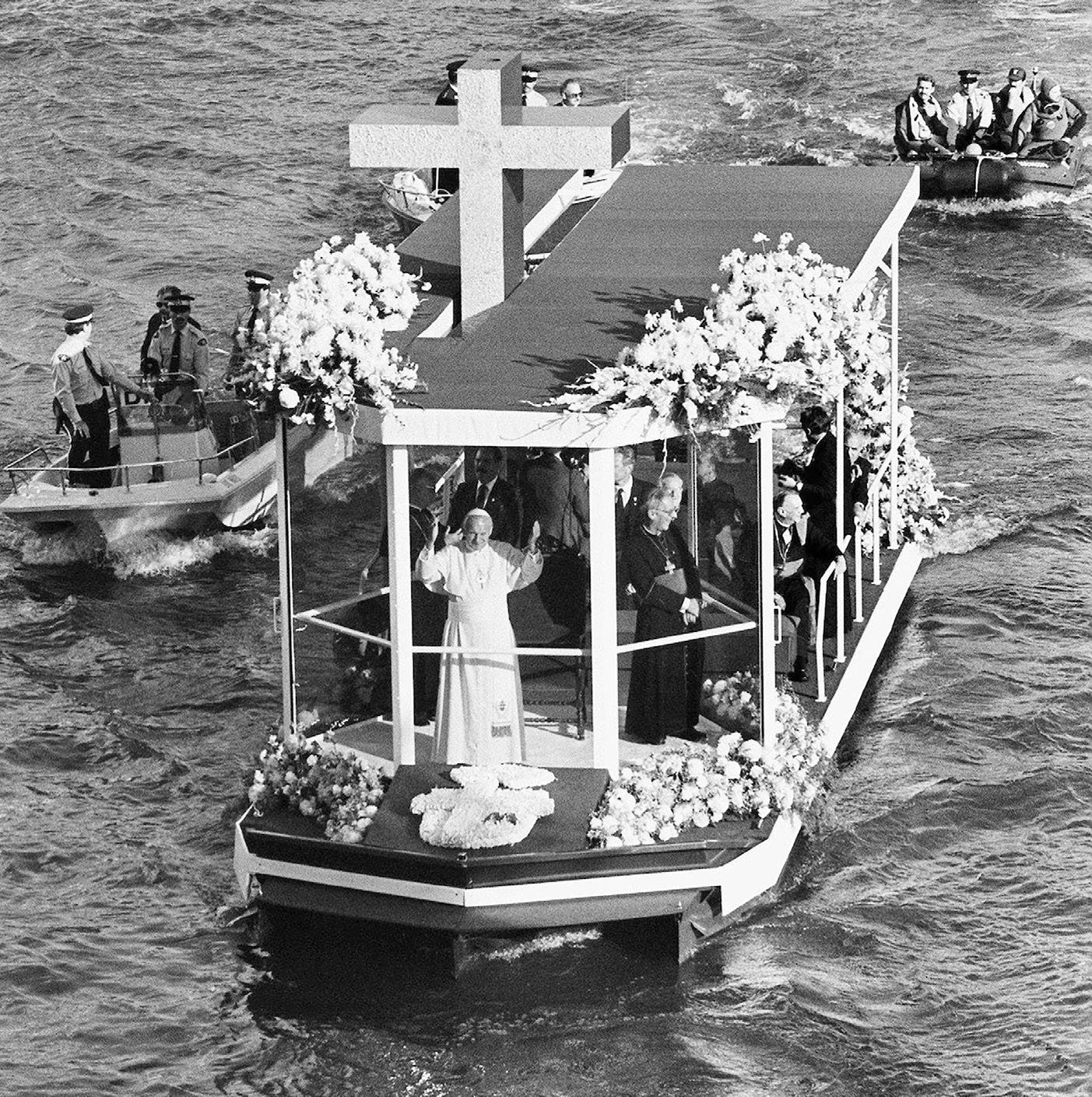
When Pope John Paul II arrived in Ottawa in September 1984, the capital became the centre of one of the largest public gatherings in its history. Crowds lined streets, parks, and the banks of the Rideau Canal as the pontiff made his first visit to Canada.

The pope arrived in Ottawa on Sept. 19, greeted at Uplands Airport by Prime Minister Brian Mulroney, Governor General Jeanne Sauvé and senior Catholic leaders. Security was exceptionally tight following the 1981 assassination attempt that nearly killed him in St. Peter’s Square.
One of the most memorable moments came when Pope John Paul II boarded a specially designed papal barge at Dow’s Lake for a ceremonial trip along the Rideau Canal. Protected by bullet-resistant glass, the vessel travelled north through the city as massive crowds gathered along pathways, bridges and shorelines.

The visit also included a major outdoor mass at LeBreton Flats, where tens of thousands gathered in a sprawling open field west of downtown. At the time, LeBreton remained largely vacant following the federal government's expropriations and demolitions in the 1960s.
Just days before Christmas in 1963, Ottawa was shaken by a violent crime that became known in newspaper headlines as the “Christmas Massacre.”
The tragedy unfolded on Dec. 22 at the St. Jean Baptiste rectory on Empress Avenue. Two brothers, Roger and Réginald Binette, entered the building armed with stolen revolvers. What began as a planned robbery and kidnapping quickly spiralled into violence.
Continues on page 28







Continues from page 27
Inside were clergy members, parish workers and visitors preparing for Christmas celebrations. Gunfire followed after the brothers were discovered. Four people were killed: Father Louis Chevrier, parish caretaker Paul Mercier, housekeeper Alberte Guindon and visitor Henédine Béchard. Several others were wounded.
The standoff ended when police surrounded the rectory. Roger Binette died during the confrontation, while 17-year-old Réginald surrendered and was taken into custody.
Investigators initially believed the brothers intended to steal the church collection money. Later psychiatric examinations revealed a more elaborate plot involving the kidnapping of Father Chevrier and demands for money from wealthy Ottawa businessmen.
Réginald Binette was later convicted of murder and sentenced to life in prison.
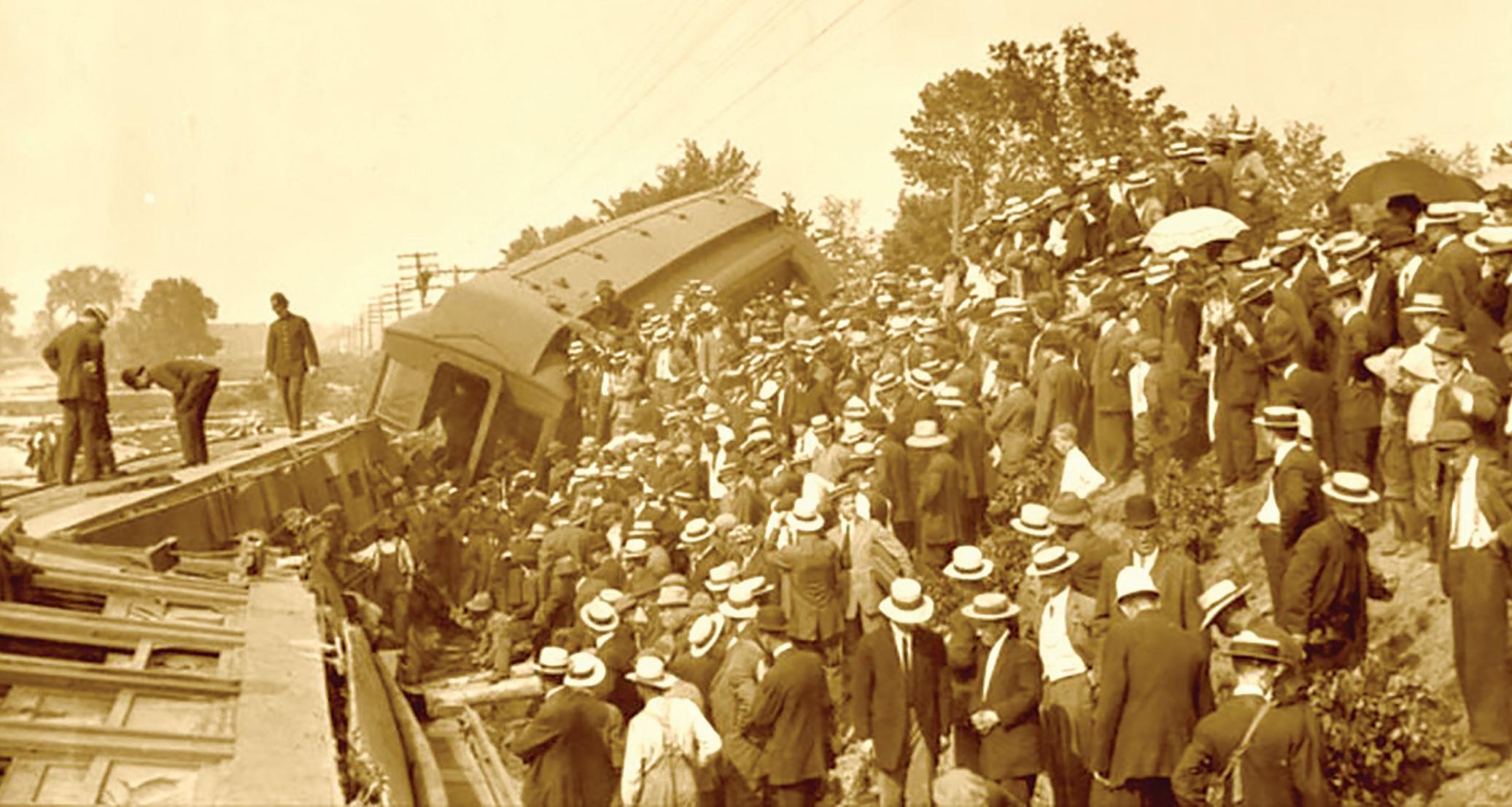
There wasn’t a cloud in the sky on a warm summer afternoon in June 1913, as hundreds of hopeful immigrants passed through Ottawa on their journey toward a new life in Western Canada. Many had crossed the Atlantic from Scotland and Ireland only days earlier, carrying little more than luggage, family photographs, and dreams of farmland and opportunity on the Prairies.
But just minutes after departing Ottawa, tragedy struck.
At around 1:30 p.m. on June 25, a Canadian Pacific Railway train bound for Winnipeg left Ottawa’s Central Station — located across from the newly opened Château Laurier — and headed west. The train carried a mix of passengers in colonist, tourist, and first-class cars. Most of the immigrants travelled in inexpensive “colonist” coaches, outfitted with hard wooden benches and few comforts, designed to move thousands of newcomers westward as Canada experienced a massive immigration boom.
After crossing into Hull and returning to Ontario over the Prince of Wales Bridge, the train followed the Ottawa River through what was then cottage country near Britannia. Witnesses recalled passengers waving from windows as the train passed streetcars heading toward the popular lakeside amusement park.
Then, near the growing McKellar Townsite, the train suddenly lurched.
With a violent grinding noise, several cars left the tracks. Two crowded commuter cars plunged down an embankment and landed partly submerged in the Ottawa River, while additional passenger cars jackknifed beside the tracks. Passengers were thrown from their seats as luggage, dishes, and debris flew through the air.
Eight people were killed, and roughly 65 others were injured.
Most of the victims were newly arrived immigrants from Ireland and Scotland. Some died from injuries sustained in the crash, while others drowned in the shallow river water after becoming trapped or unconscious inside the wreckage.
Residents living nearby rushed to help pull survivors through shattered windows. Streetcar passengers and passersby also joined rescue efforts before ambulances and doctors arrived from Ottawa. Newspaper reports at the time noted that automobiles helped emergency crews reach the scene faster than ever before.
Investigators examined several possible causes for the crash, including track defects and the possibility of a “sun kink,” where rails warp in extreme heat. Ultimately, however, a coroner’s jury concluded the exact cause of the derailment could not be determined.
All was quiet on the streets of downtown Ottawa when the city was shaken by an explosion that shattered windows, filled the air with flying glass, and claimed the life of a federal employee.
At 6:26 a.m. on June 24, a bomb exploded outside a temporary Department
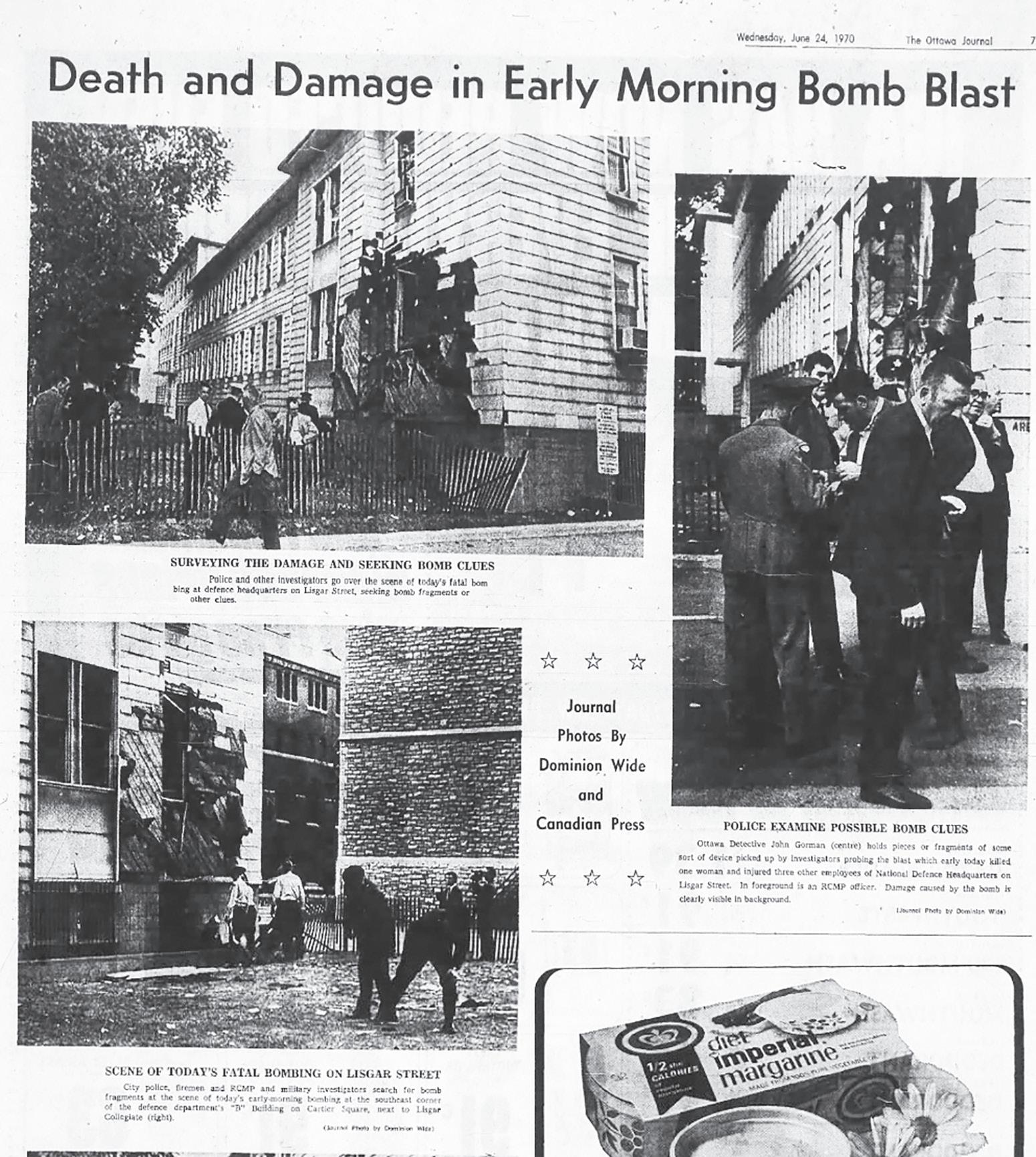
of National Defence building at Cartier Square, near Lisgar Street. The explosive device had been lowered into a basement window well before detonating, ripping apart the southeast corner of the structure and destroying a communications room inside.
Killed in the blast was Jeanne d’Arc St. Germain, a civilian DND supervisor from Vanier who had worked for the department for 15 years. Two military personnel were also injured, while another employee suffered severe shock. Witnesses described
scenes of chaos as emergency crews rushed into the smoke-filled building moments after the explosion.
The force of the blast could be felt blocks away. Windows shattered at nearby buildings, including Lisgar Collegiate Institute across the street, while fragments of glass rained down onto empty sidewalks below. Investigators later determined the bomb likely consisted of roughly a dozen sticks of dynamite hidden inside a duffel bag and triggered by a timing device.
Only minutes before the explosion,
planted at the
Suspicion quickly turned toward the Front de libération du Québec, better known as the FLQ, a radical separatist group responsible for hundreds of bombings during the 1960s and early 1970s. The attack occurred on St-Jean-Baptiste Day, a date deeply tied to Quebec nationalism, further raising concerns that the bombing was politically motivated. Days later, the FLQ officially claimed responsibility.
The Ottawa bombing came only months before the October Crisis, when the FLQ kidnapped British diplomat James Cross and Quebec cabinet minister Pierre Laporte, who was later murdered. Those events prompted Prime Minister Pierre Trudeau to invoke the War Measures Act.
Police conducted searches in both Ottawa and western Quebec following the bombing, but no one was ever charged. A coroner’s jury later ruled the attack was an act of sabotage against a military installation carried out by unknown individuals.
Tunney’s Pasture today is known for its government offices, transit stations and federal workers. But during the Great Depression and into the postwar years, part of the site was home to one of Ottawa’s poorest and least remembered communities: a sprawling shanty town along the Ottawa River.
Beginning in the early 1930s, families struggling through unemployment, poverty and a growing housing crisis began settling on undeveloped land at the north end of Tunney’s Pasture. At the time, the area
Wellington & Scott) Ottawa radio station CKOY had received an anonymous warning call saying a bomb had
looked very different from how it does today. Instead of office complexes and parkways, the riverfront was made up of muddy fields, brush, rocky shoreline and scattered trees.
Many residents came from nearby neighbourhoods such as Mechanicsville and Hintonburg, where working-class families were already facing difficult economic conditions during the Depression. With few social supports available, some people who lost jobs or could no longer afford rent had little choice but to build makeshift shelters from scrap wood, cardboard, tar paper and other salvaged materials.
What began as a temporary solution gradually evolved into a long-term settlement. The shanty village remained for nearly 25 years, from the early 1930s into the 1950s. Some families lived there yearround, even during Ottawa’s harsh winters. Historical accounts describe tiny one- and two-room structures with dirt floors, no running water, electricity or sewage services.
Conditions in the settlement were extremely poor. Residents scavenged nearby neighbourhoods looking for materials to improve their homes, while charitable organizations and social workers occasionally visited the area to provide aid. Children living in the shantytown often dealt with hunger, illness and overcrowding.
Despite its size, the community was rarely discussed publicly and has largely faded from Ottawa’s historical memory. Few photographs survive, and much of the settlement disappeared as the federal government redeveloped Tunney’s Pasture during the postwar period. New office buildings gradually replaced the makeshift homes, erasing much of the visible evidence that the community had ever existed.










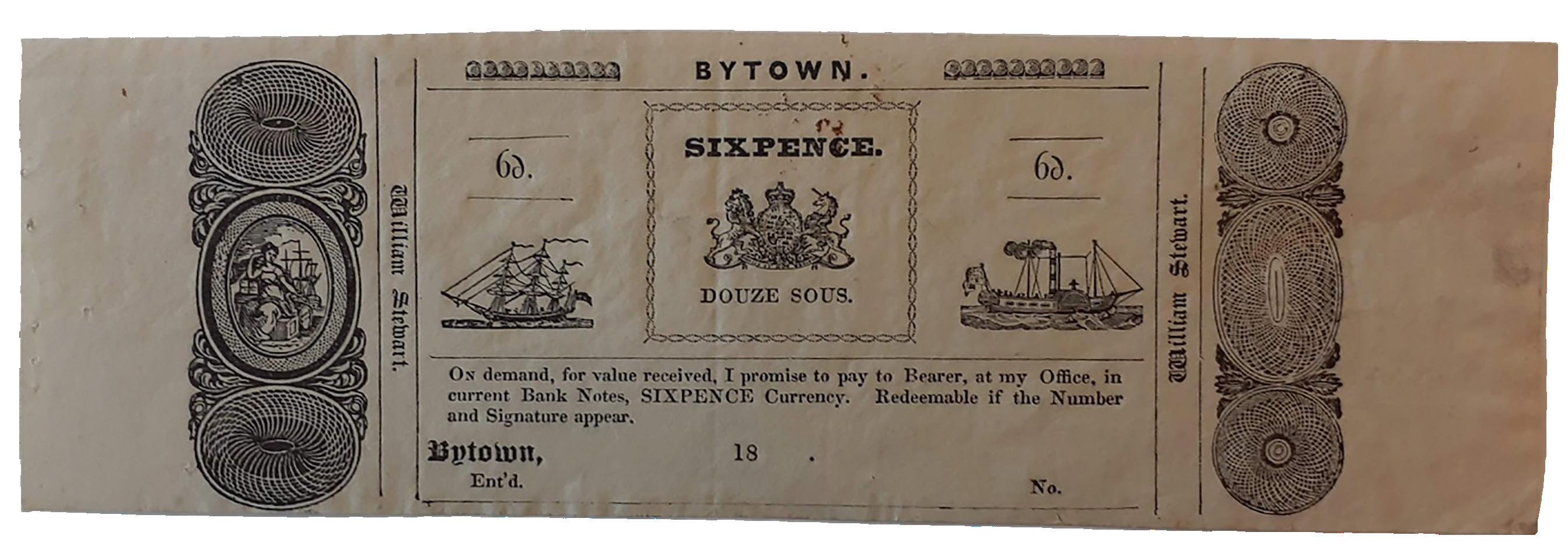
Long before Ottawa had a bank branch, residents navigated a chaotic world of foreign coins, counterfeit bills, and distant banking agents
BY DAVE ALLSTON
Today, a trip to the bank is something most people barely think about. A few taps on a screen can move money across the world, while a visit to an ATM or teller might take only minutes. Mortgages can be renewed online, bills can be paid instantly, and savings accounts can be opened with little more than a piece of identification.
But in Bytown’s earliest days, banking was chaotic, unpredictable, and often risky.
Long before Ottawa had its first bank branch, residents relied on a confusing mix of foreign coins, handwritten letters of credit, merchant-issued currency, and distant banking agents. There was no standardized Canadian currency, little regulation, and constant uncertainty over whether the money in circulation was actually worth what it claimed to be.
In many ways, early Bytown operated like a frontier settlement of the financial “wild west.”
An actual bank branch would not arrive for some 16 years after Bytown’s founding. Rather, some of the earliest Canadian banks sent agents to Bytown to help handle certain types of transactions.
Bytown was still very small, limiting the need for a full bank branch. Additionally, there were legal limitations on which banks could open where – for instance, the Bank of Montreal, which was founded in Montreal in 1817 (originally as “the Montreal Bank”), could not open a branch in Bytown as it had its headquarters in Lower Canada even though one of its directors was John Redpath, a key contractor in the construction of the Rideau Canal.
On top of this, there was great instability in the banking and financial world at the time. Canada did not yet have a common currency, and banks, as they were just starting up, might issue their own notes and bills, but these were unproven and accepting them was high risk. Silver might have been used more widely as currency had there not been a major coin shortage in the early 19th century.
convince the recipient to accept them.
Essentially, it was a free-for-all whereby merchants and citizens used a mix of currencies to borrow and pay. There was almost always a risk that the currency would retain its value or lose it entirely if the note, letter, or bill proved to be counterfeit, the bank went out of business, or the issuer simply disappeared.
Banks began operating in more populated areas of Ontario and sent agents to Bytown to conduct business.
As a result, trade relied on a mix of foreign and colonial money. Spanish silver dollars (aka pieces of eight) from Spain, Portugal, and Mexico were trusted worldwide. They were commonly found in North America and, for a long time, were considered a standard. Colonies in Canada used a currency rating known as Halifax Currency (where one Spanish dollar was worth 5 shillings). Lesser-used but still prevalent were British, French and American coins, while the first paper money began to appear through issuance from the British military and private merchants.
One such example that survives is a sixpence “merchants’ script” from shopkeeper and tavern owner William Stewart of Bytown, from approximately 1836 (around which time Stewart’s younger brother Roderick Stewart had become the first settler in what is now Wellington Village, establishing a farm along Richmond Road).
Agents would also issue letters of credit, which were accepted by the general public as good as cash if the letter-holder could
Before the construction of the Canal commencing in 1826, there were no records of bank agents in town. Still, the building of the Canal meant that employment and the local economy would soon be boomingBytown would see its population rise from only a few dozen residents to nearly 2,000 by the time the Canal was completed.
However, early banks offered only limited services. In the early 1800s, there were no savings accounts, no mortgages, no personal cheques. The banks focused almost exclusively on commercial clients and international trade.
According to historian James Powell, issuing currency was a big focus of early banks.
“Banks in those days, their big business was the currency issue. They could issue notes equivalent to their capital reserves. So it was very profitable to get your notes out there. Agents in Bytown were doing their best to get the parent bank's notes in circulation in Bytown, as it was even better to have them circulating far away from where the bank of issue was located, because it was less likely for those notes to
come back and be redeemed for gold.”
This also allowed fraudsters to take advantage of the situation. As Powell continues, “It was a time when some fraudulent banks would do that. They would set up shop somewhere remote, print off currency, and have it circulated far away from where they were in the hopes that not much would come back for redemption.”
Those holding the notes often faced uncertainty about what they held. “You hoped it was good”, Powell says. “Like a hot potato. If you were buying something from someone else, you would use those notes and hope they’d accept them. If they did, it was no longer your problem; it was someone else’s.”
He also notes that the further away a currency was used, the less value it might have. “If you’re in Bytown, and you got
a note from a bank in Toronto, let’s say it’s a 10-dollar bill, you might only get 8 dollars value for it. Bank notes of different banks were discounted depending on how far they were from the place where they were exchanged for gold, taking into account transportation costs, as well as how legitimate or not the banks might be. If you’re offered 8 dollars value for your bill, it’s up to you to take it or leave it, basically.”
Fortunately for the workers on the canal, they were typically paid in hard cash, largely in Mexican silver dollars, and the workers simply spent as they went. Making things even more tricky was the fact that most commerce in Bytown at the time was “company stores” operated by the British government and later by the lumber barons. Essentially, the workers were giving back the
money their employers had paid them. Or they simply had deductions made from their wages in exchange for necessities such as food, clothing, and tools.
Many Canal contractors were paid in Mexican coins. It was reported that Redpath and Thomas Mackay had to “cart home” their part of the profits, with coins packed in barrels, forwarded by the Ordnance Department from Quebec, and delivered by wagon and wheelbarrow into the vaults of the Bank of Montreal. The British Ordnance Department at the time were flush with coins seized from ships captured by the Royal Navy.
Who was the first banker to arrive in Bytown? A definite answer appears to have been lost to time.


1. An image of the circa-1836 unsigned and uncirculated 6d. script issued by William Stewart, Bytown.
CREDIT: HISTORICAL SOCIETY OF OTTAWA
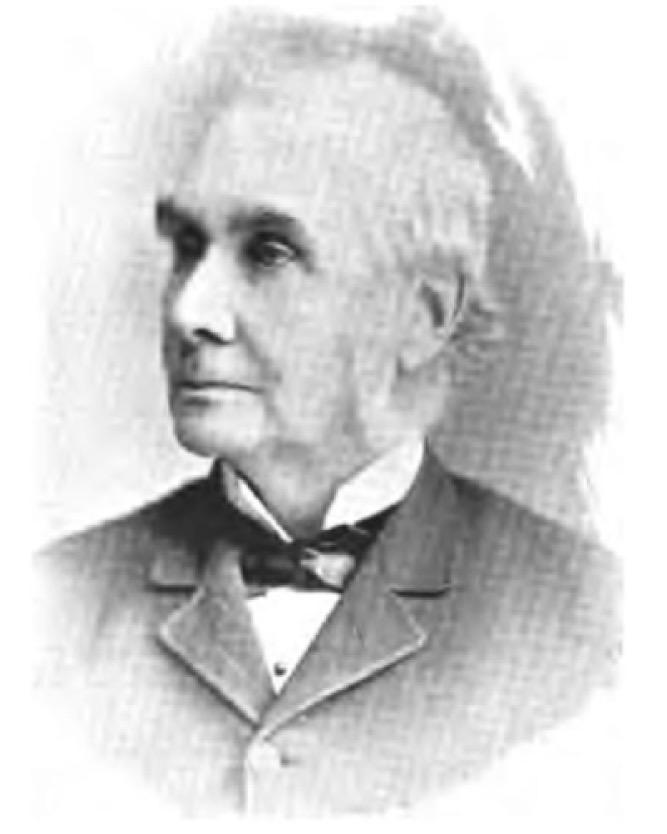
2. An image of James Stevenson Jr. who managed the first bank branch in Bytown.
CREDIT: JOURNAL OF THE CANADIAN BANKERS' ASSOCIATION.
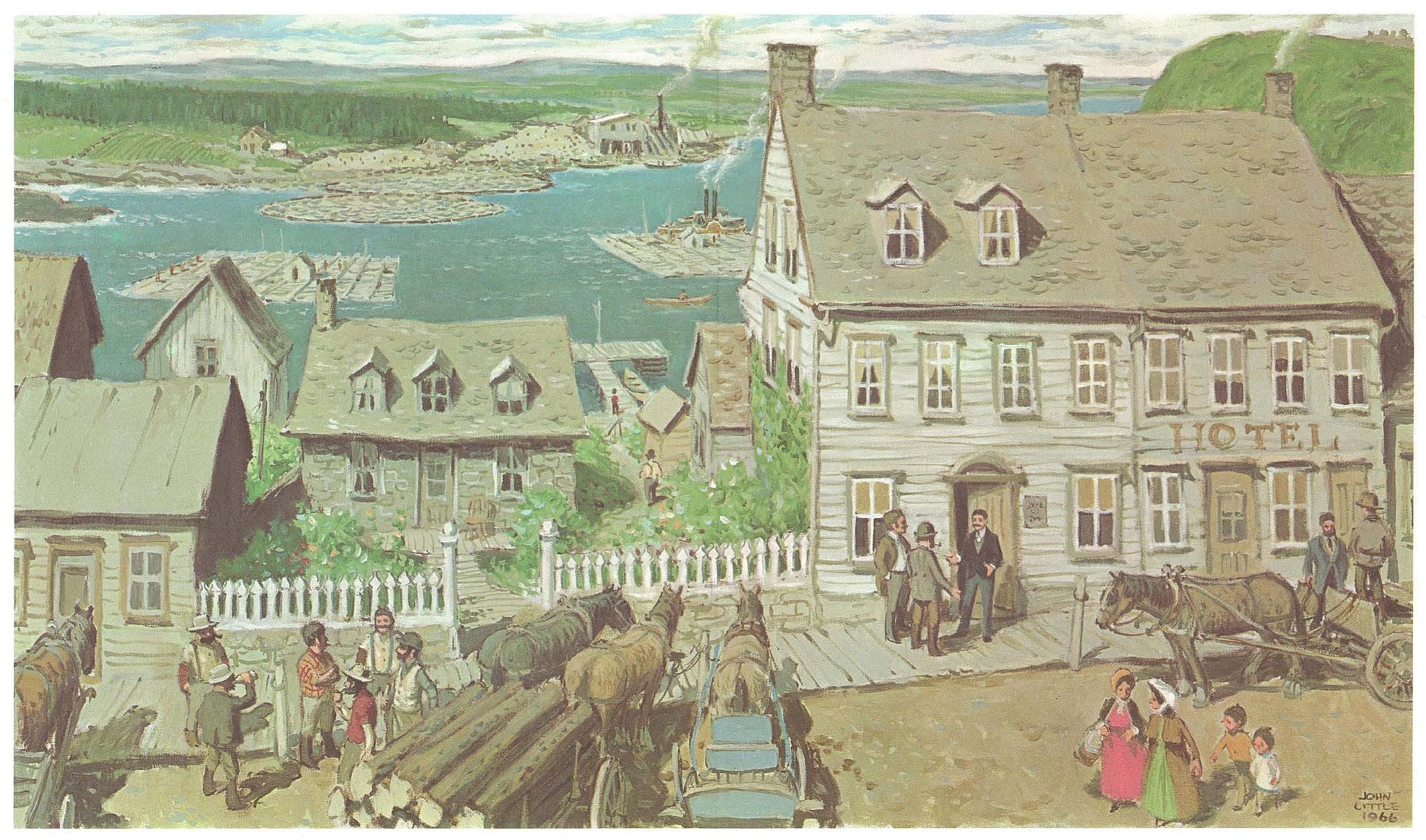
3. The illustration of the 1842 Bytown bank.
CREDIT: “A HISTORY OF THE BANK OF MONTREAL - VOLUME TWO" BOOK, PUBLISHED BY THE BANK OF MONTREAL.
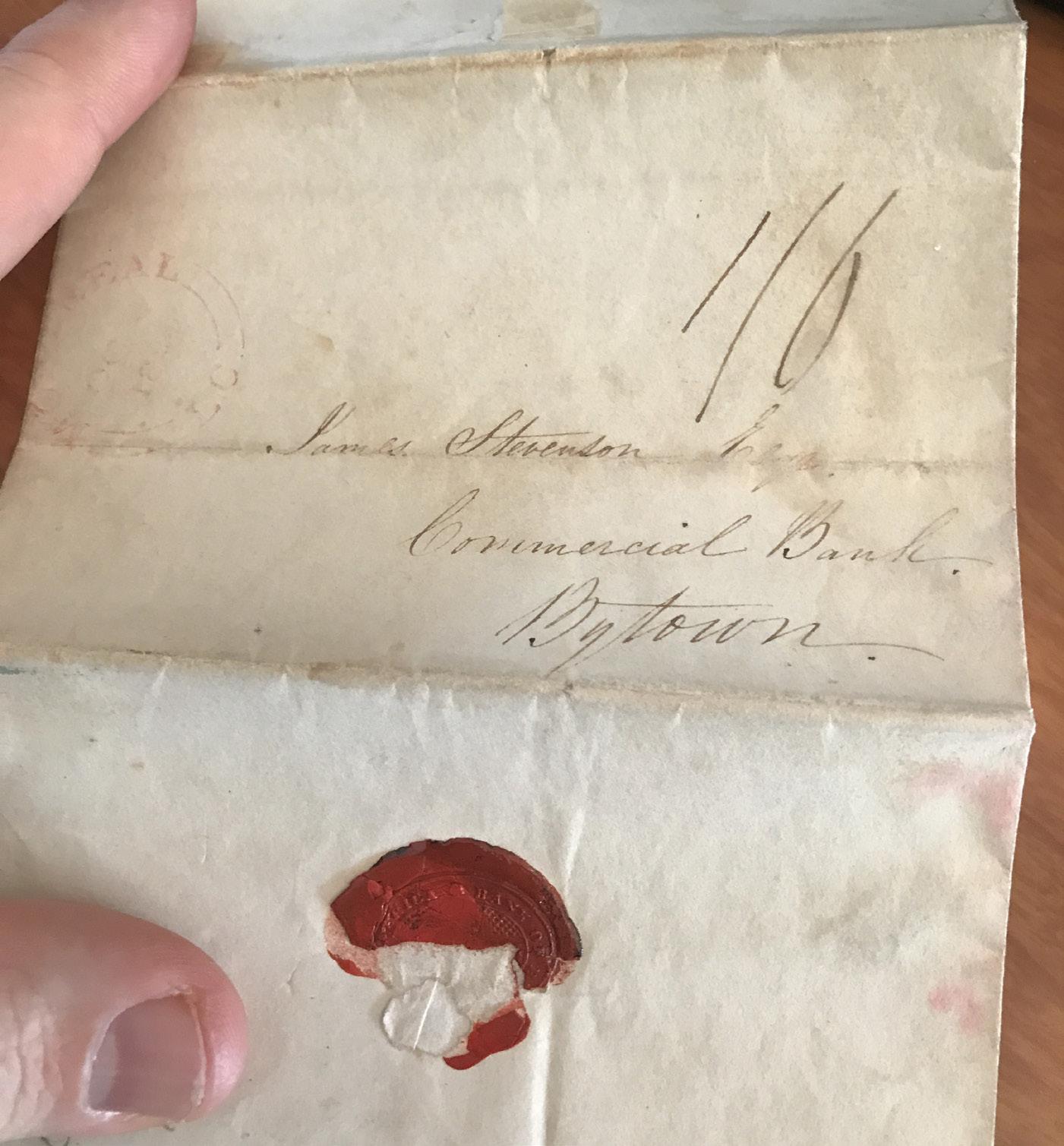
4. (next page) A photo of an original envelope sent to the Commercial Bank in Bytown, postmarked 1842. CREDIT: DAVE ALLSTON.
Early records indicate that some banking was conducted by George and Robert Lang, who were involved in the timber trade, and who made collections for the Commercial Bank of the Midland District (headquartered in Kingston) and occasionally issued letters of credit against their own accounts.
Captain George W. Baker, a captain in the Royal Artillery, became Bytown’s second postmaster in 1834, but was also an agent for the Bank of Upper Canada, which was tied closely to the governing oligarchy (aka the Family Compact).
Continues on page 32
Continues from page 31
James Stevenson Sr. was appointed agent and cashier of the Commercial Bank in Bytown in the late 1830s, a role he held alongside his position as Crown Timber Agent (issuing timber limits and collecting slide dues), a post he held from 1836 to 1851. An 1842 letter addressed to him in his Bytown banking role remains one of the earliest documents in our city’s banking history.
His son James Stevenson Jr., meanwhile, had been working in the Crown Lands office in Quebec City (helping manage settlement and development of public lands as Canada began to grow) from 1839 to 1842, where he too was in regular contact with that city’s lumber merchants and bankers.
illustration of this first Bytown bank. Artist John Little painted the 1842 scene of James Jr. standing on the plank sidewalk on Wellington, speaking with two logger customers.
The future Parliament Hill was still just vacant land, and there was practically lawlessness in Bytown, with street fights and gang battles common. Wellington Street itself was still just a muddy footpath with a gate at each end.
The tasks in running the bank branch were not onerous, but as the other bank agents had limited powers, Stevenson was the only agent able to cash drafts. Thus, he had no choice but to be available at all hours.
“Roistering lumber-jacks and rivermen poured into Bytown in the spring after spending long, monotonous months in the woods. Those still ambulatory after a night of conviviality, and planning to leave with their rafts at the first light of dawn, often wanted drafts or cheques cashed, and they beat upon the agent’s door without regard for the hour until they were served,” recounted the Bank of Montreal in their history.
In one well-reported instance, Stevenson was awoken in the middle of the night and, still drowsy, handed a man a package containing one thousand fourdollar bills, rather than one-dollar bills. Luckily, he noticed his mistake before it was too late.
Canada (agent Thomas J. Leggatt), and the Bank of British North America (agent John McKinnon).
A fifth bank, the Quebec Bank (with agent H. V. Noel), opened in 1848. The Quebec Bank became a leader in the banking industry at the time by catering to the needs of the transatlantic timber market. Bytown played a key role as the centre of the Ottawa Valley timber trade. The port of Quebec City was the major global staging centre where huge log rafts from areas like Bytown would arrive and be loaded onto ships headed to Europe.
The Quebec Bank was able to provide direct banking services to exporters, ship owners and timber brokers. They were one of the few institutions in Canada capable of providing the extensive liquidity and credit required to sustain the major lumber barons. The Bytown branch was reportedly its most profitable branch, located in a stone building on Metcalfe Street.
Meanwhile, Bytown had emerged as a key center in the lumber trade, especially with the recently completed timber slides around the Chaudiere Falls. “This essential public improvement had become a valuable source of provincial revenue, and it was for this reason, no doubt, that the Bank decided to open a branch there,” noted the Bank of Montreal in its 1966 selfpublished history.
As branch restrictions disappeared when Upper and Lower Canada united into the Province of Canada in 1842, the Bank of Montreal decided to open Bytown’s first bank branch here in a small office inside a Wellington Street hotel that same year, 1842. James Jr. was selected as its manager.
The Bank of Montreal, when publishing its history in 1966, commissioned an
There was no vault in the building, and no other security available. Thus, Stevenson would carry the money and key paperwork to and from the bank each day in tin cashboxes. “These were kept under the agents’ beds at night, so that they could be reached easily in case of fire,” reported the Citizen in a later history.
In 1844, the Bank of Montreal moved into a limestone building, the Royal Exchange Hotel on Wellington Street (now the site of the Bank of Canada), renovated it, and remained there until 1873.
Meanwhile, the Bank of British North America opened a branch in Brockville in 1843 and recruited James Jr. to manage it. So, his father, James Sr., was appointed to take over the Bank of Montreal branch in Bytown.
By 1847, Bytown had four banks operating: The Bank of Montreal, the Commercial Bank, the Bank of Upper
Soon, Bytown was chosen as Canada’s capital, and major public works projects began to build the infrastructure befitting of a capital city. The population of Bytown rose to approximately 10,000 by the time it was granted city status and renamed Ottawa in 1855.
By 1861, the Commercial Bank had closed its Ottawa office. Still, the remaining four banks remained, with all of their offices located on Wellington Street, “gathered near each other for safety against fire and thieves,” noted the Ottawa Citizen.
Soon, the Royal Bank of Canada would absorb the Quebec Bank, and the Bank of Upper Canada collapsed in 1866 after suffering major losses from careless land and railway speculation and from issuing too many loans on poor security. The aftermath saw the Canadian government overhaul the national banking system.
The Bank of British North America would carry on until it was absorbed by the Bank of Montreal in 1918. The Bank of Montreal maintained a dominant position in Ottawa’s financial life during the 19th and 20th centuries, including, and especially, its role as the official banker for the Dominion government.

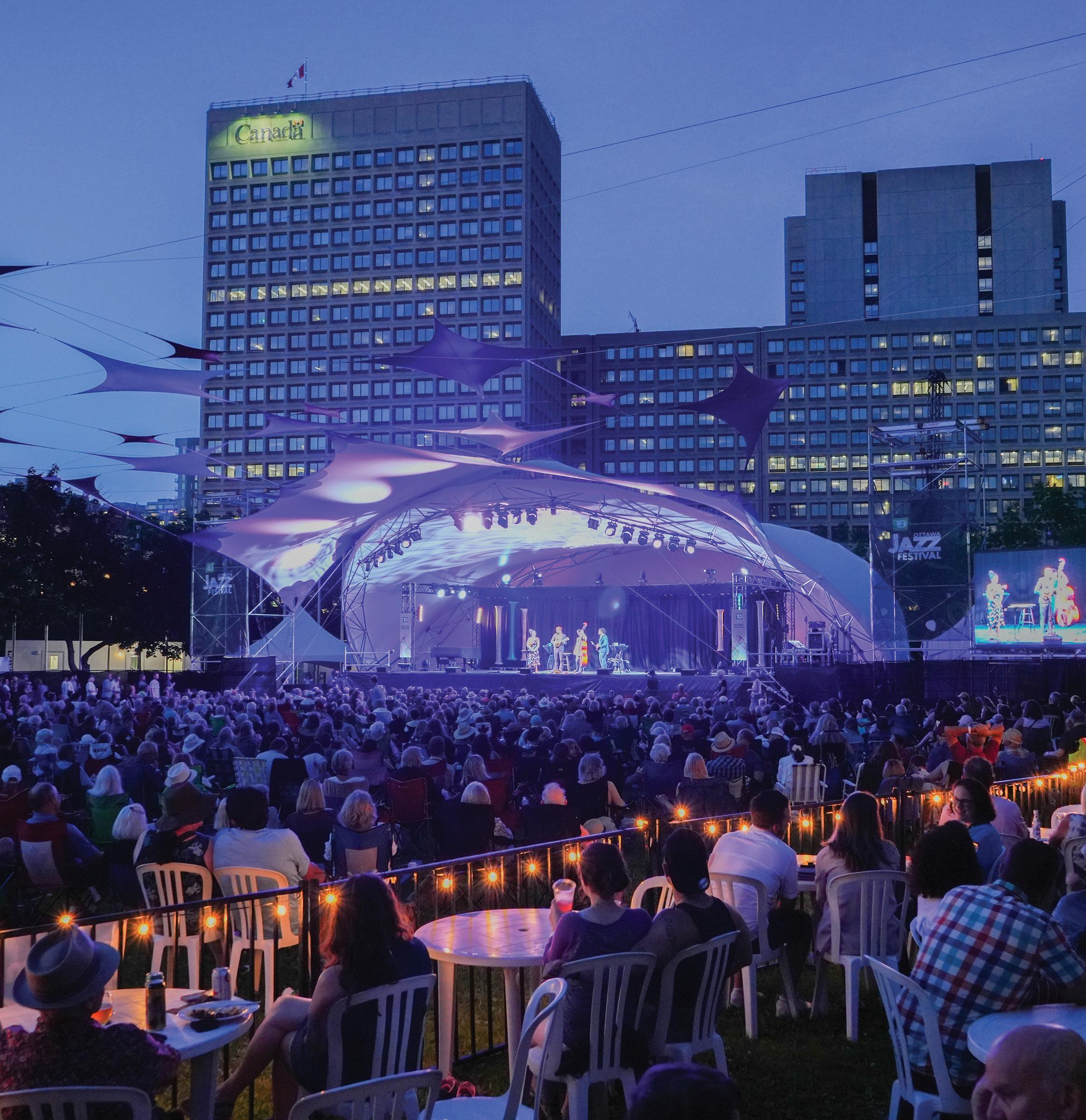




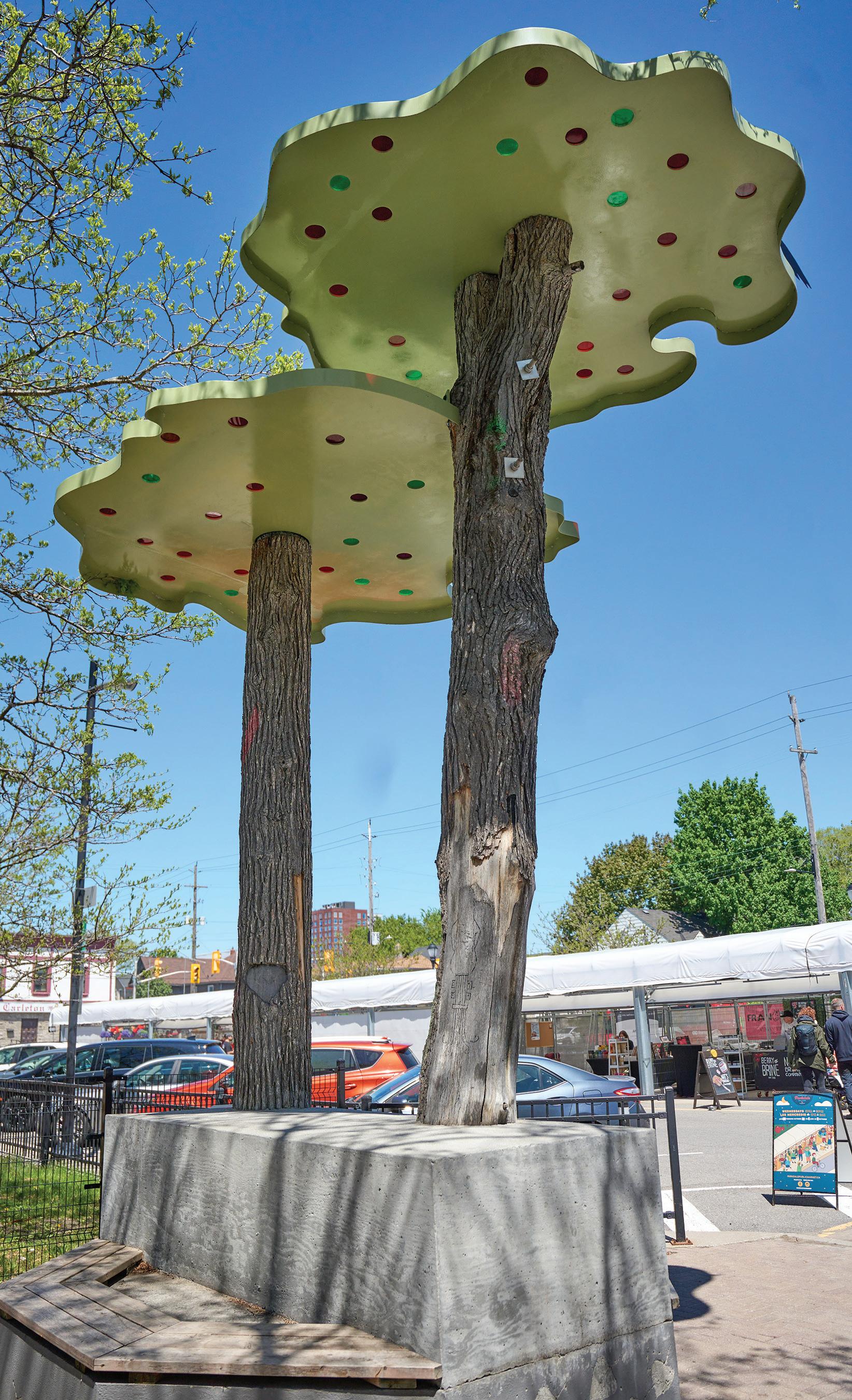

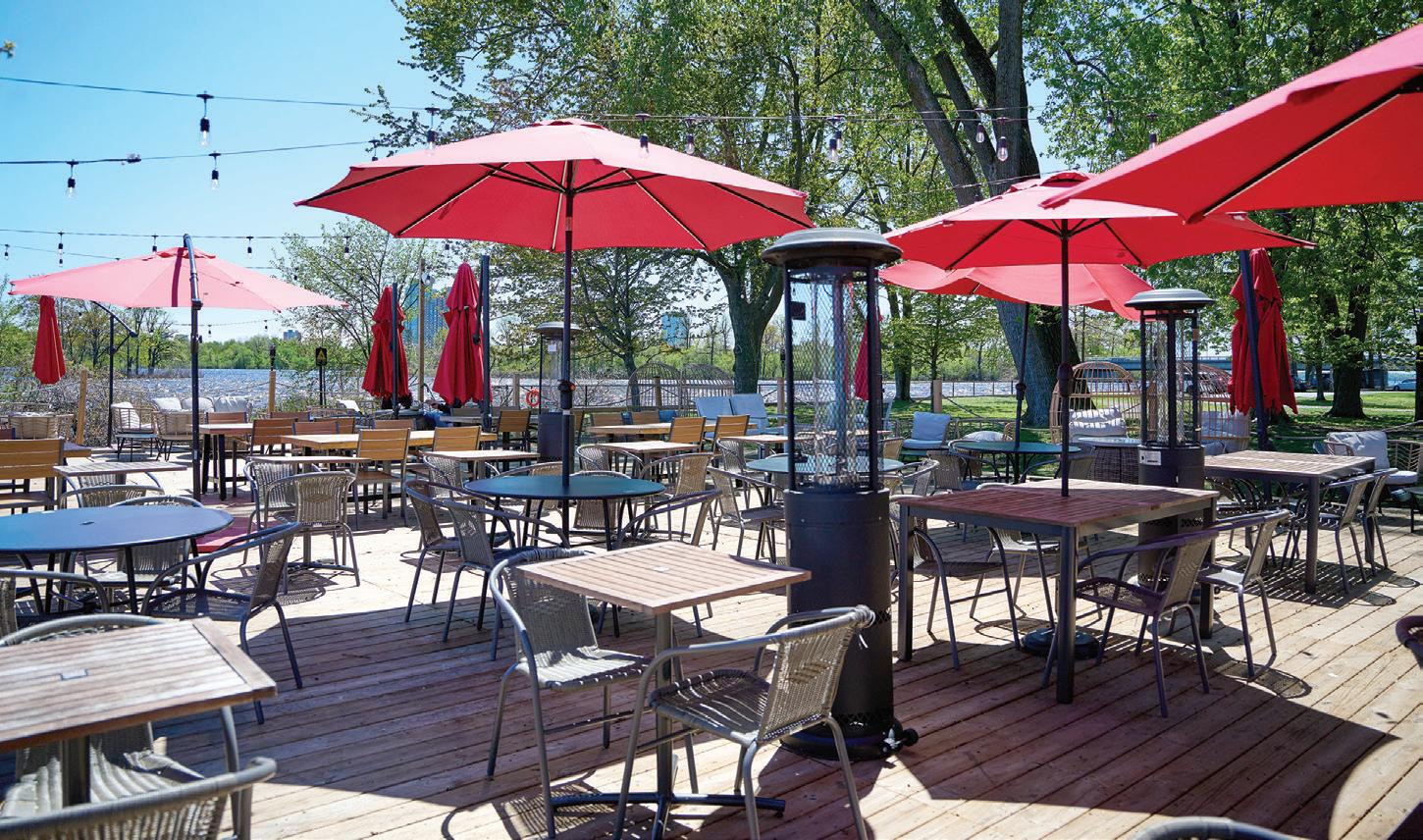
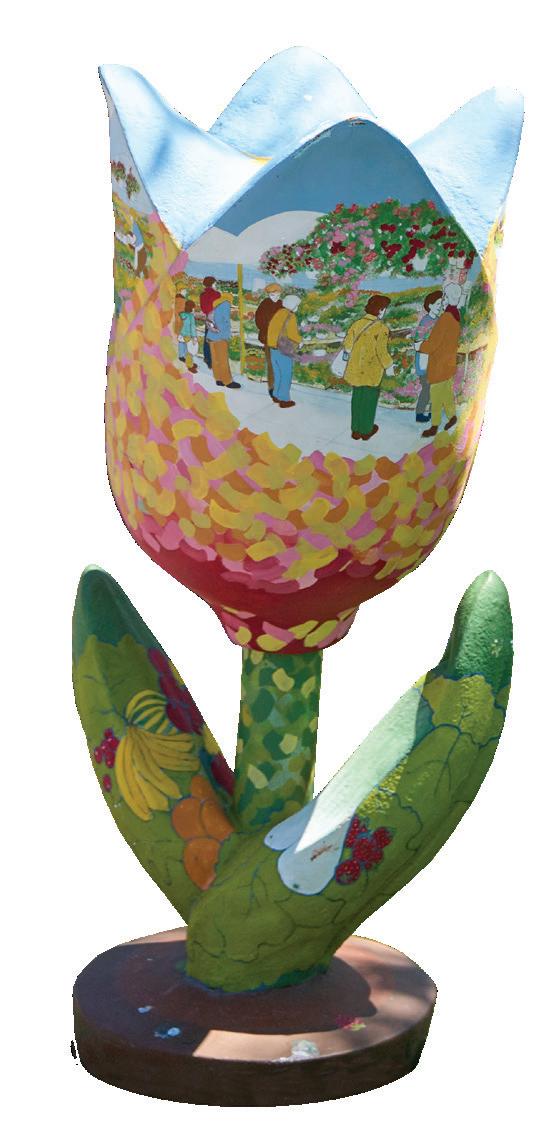
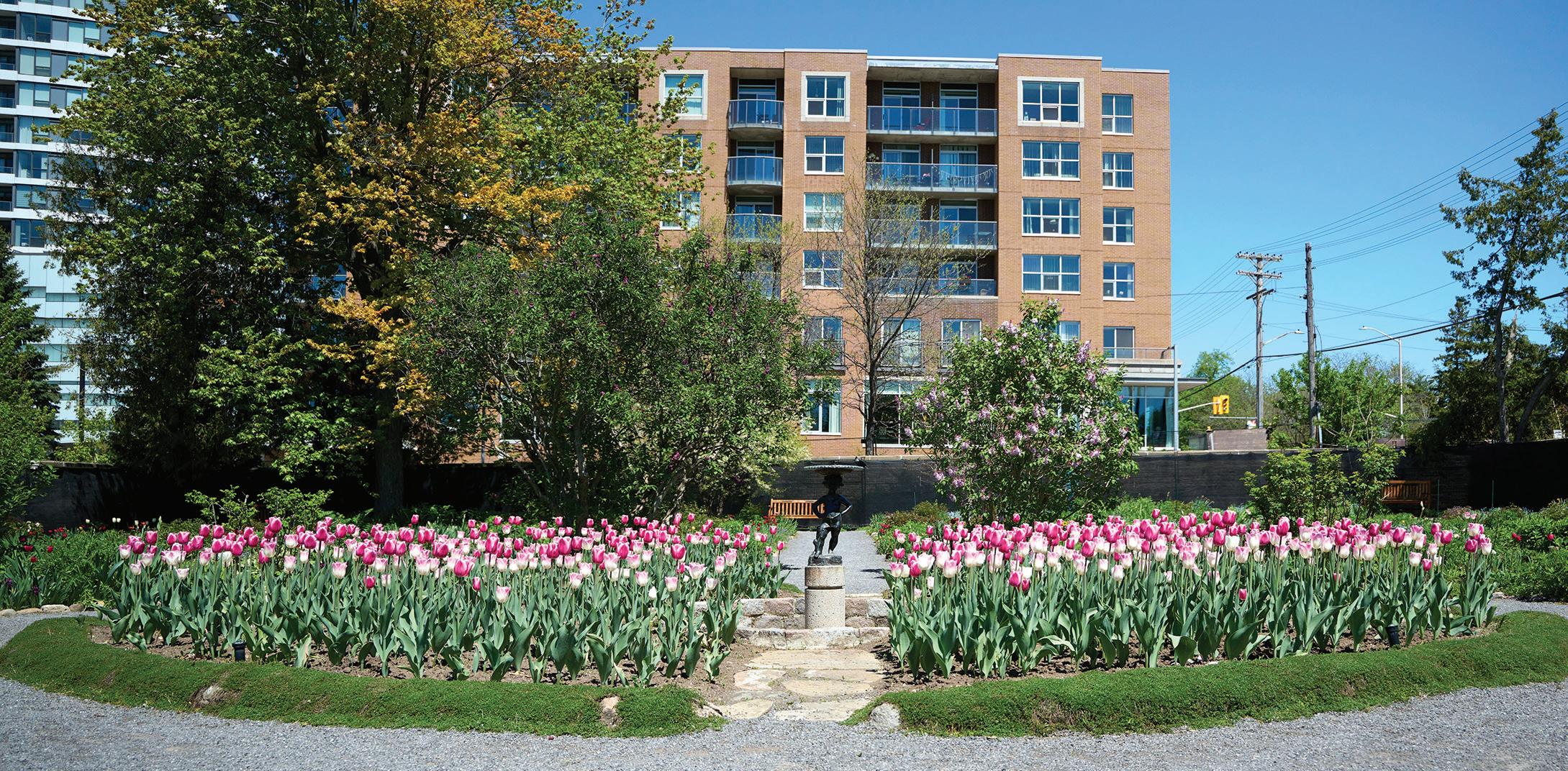

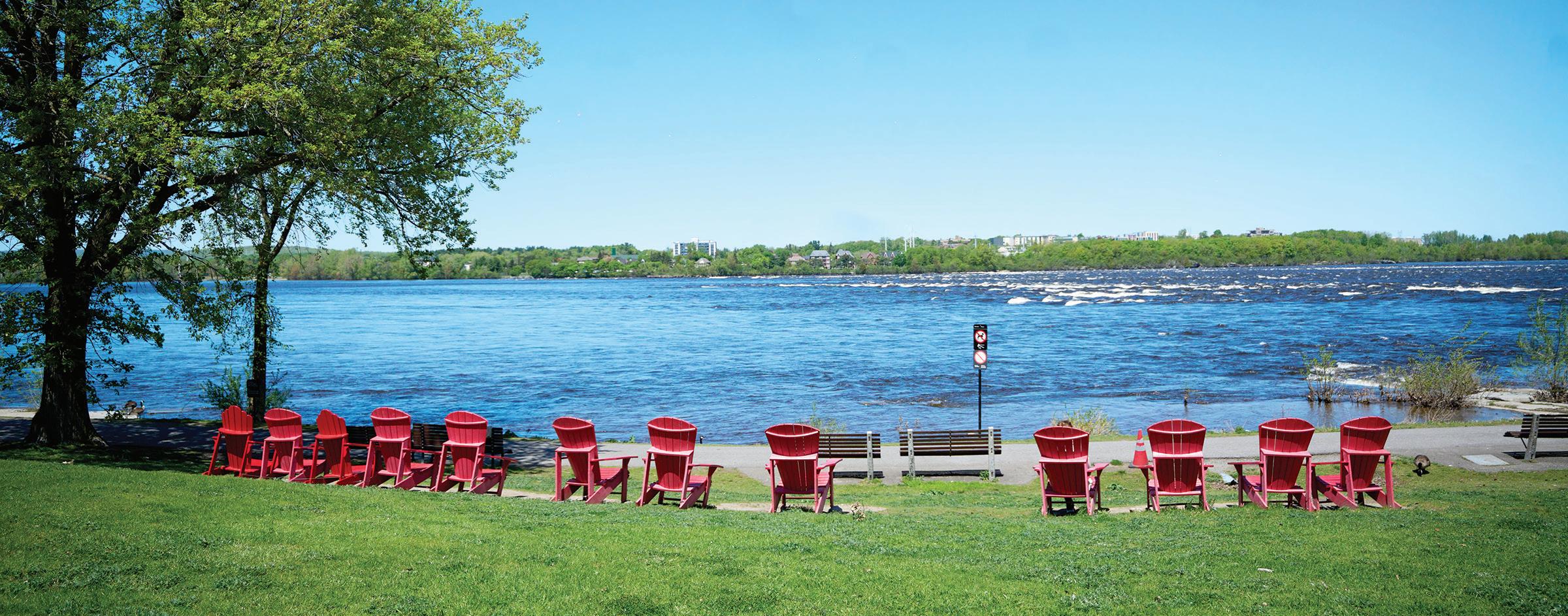
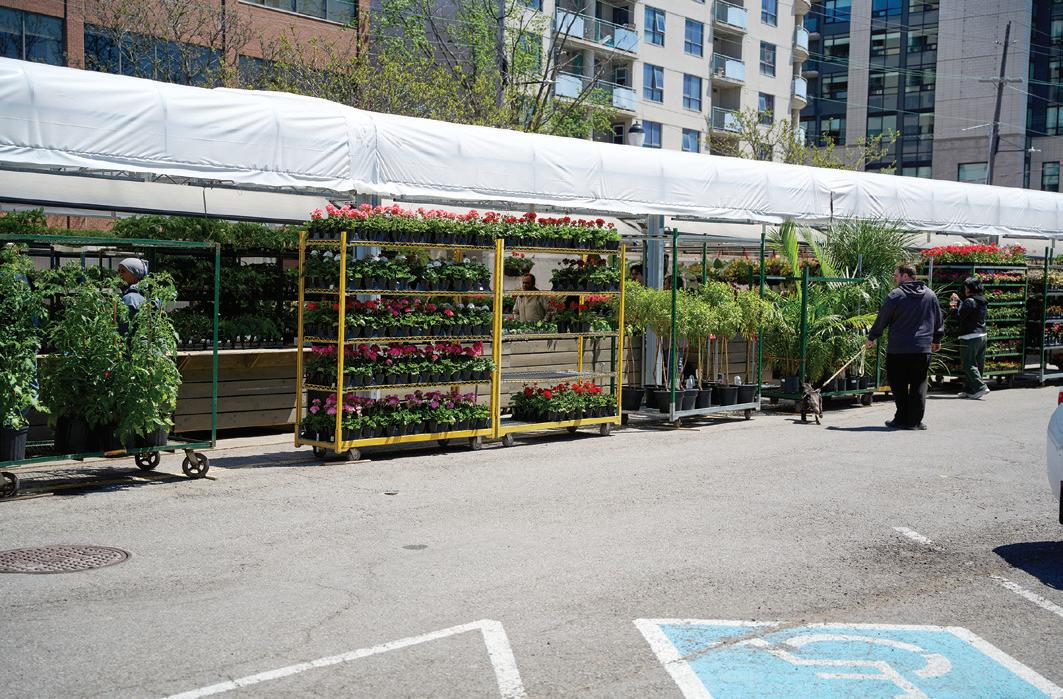






Explore the Ottawa Valley’s natural wonders with our adventurous lineup! From thrilling whitewater rafting and rugged four-wheeling trails to scenic cycling routes and exhilarating cave exploration, immerse yourself in nature’s playground. Unleash your adventurous spirit and create lasting memories in our breathtaking landscape.






By Charlie Senack
Two centuries after LieutenantColonel John By arrived to oversee the construction of the Rideau Canal, Ottawa is preparing for one of the biggest civic milestones in its history: the 200th anniversary of Bytown.
Under the banner “Celebrate Together,” Ottawa 200 will feature events spanning music, arts, Indigenous storytelling, food, architecture and local history.
The official anniversary marks Sept. 26, 1826 — the founding date of Bytown, the rugged canal settlement that would eventually become the City of Ottawa. What began as a frontier construction camp beside the Rideau Canal evolved into the political and cultural centre of Canada.
Among the largest events tied to the anniversary is Ottawa Bluesfest’s Ottawa 200 celebration on July 19 at LeBreton Flats. The festival announced Canadian rock band The Guess Who as the headlining act for the evening.
“The Ottawa Bluesfest team is looking forward to being a part of Ottawa 200,” said Ottawa Bluesfest executive and artistic director Mark Monahan. “This is a tremendous opportunity to add to the rich cultural history of our city through music, and we look forward to contributing even more by creating great memories this year and for many years to come.”
Music programming will continue throughout the year with Deux Voix,
Une Capitale, a monthly concert series running from March through December at the Bronson Music Theatre. The bilingual series will pair established Francophone performers with local opening acts to highlight Ottawa’s Frenchspeaking heritage and contemporary music scene.
Michel Pagliaro, a rock singer, songwriter and guitarist from Montreal, will perform on Sept. 5, followed by record producer Daniel Lanois on Sept. 27. The Gatineauborn musician has produced albums by artists including Bob Dylan, Neil Young, Peter Gabriel, Robbie Robertson, Emmylou Harris, Willie Nelson, and Harold Budd.
The 51st edition of the Festival Franco-Ontarien will also incorporate Ottawa 200 programming through The Voices of Bytown, a 360-degree virtual reality experience debuting in Major’s Hill Park from June 11 to 13. The installation follows four characters — an Algonquin resident, a French-Canadian canal worker, an Irish immigrant and a contemporary Ottawa artist — through two centuries of local history using music, narration and immersive visuals.
Several projects funded through Ottawa 200 place Indigenous perspectives at the centre of the city’s historical narrative. Indigenous Experiences will tour The Chief Speaks throughout the city from June to December, featuring a mobile wigwam installation and holographic storytelling narrated by Elder Merv Sarazin.
At the Ottawa Art Gallery, Kitigan Zibi Anishinābeg artist Jay Odjig will project animated short films onto the gallery’s exterior and the National Arts Centre Lantern as part of "Indigenous History in Motion." This exhibition examines Ottawa’s history through Indigenous perspectives.
Métis artist Jim Logan will also be the subject of a major retrospective exhibition at S.A.W. Gallery from May 1 to June 27. Requiems: Jim Logan will bring together more than 40 works from collections across Canada while transforming the exterior of Arts Court with a 200foot banner installation and public programming.
Other events take a more unconventional approach to commemorating the city’s history.
Classical music festival Music and Beyond will stage Bytown 200 – A Musical Journey Through Ottawa’s History from July 4 to 17, a five-concert series combining narration, archival imagery and newly commissioned compositions tied to different eras of the city’s development.
The Ottawa International Animation Festival will contribute to the bicentennial through O-Town Animated, a public art trail launching Sept. 18 that will display three animated short films inspired by archival Bytown photographs on Rideau Street digital projection poles through the end of the year.
On June 7, Shawarma Fest 2026 will attempt to set a Guinness World Records title for the world’s longest shawarma in the ByWard Market. Organizers say the 160-metre shawarma will be assembled alongside live entertainment and more than 60 vendors, with portions later donated to food security organizations.
Other programming highlights include A Night of Inuit Excellence, a concert series presented by Qamaniq Records featuring Inuit musicians and storytellers from across the Arctic, and Happy 200th Birthday, Ottawa!, a Capital Pride drag showcase featuring Ottawa contestants from Canada’s Drag Race and performances exploring the city’s history through queer and trans artistic expression.
Inside the Bytown Museum’s newest exhibition are portraits of Ottawa residents past and present — and in some cases, people whose names have long been forgotten.
The museum has launched a new temporary exhibition, “What’s in a Frame? 200+ Years of Community Portraits,” which looks at Ottawa’s history through portraits, objects and community stories.
“We’ve been using the messaging of 200 plus to acknowledge that the history of the area did not begin in 1826,” said Chloe Dennis, the museum’s exhibition and collections manager. “There’s a long history of this land with the Anishinaabe Algonquin, who occupied this territory for millennia, and the land is still unceded today.”
The exhibition includes historical portraits, object portraits, unknown portraits and contemporary portraits of Ottawa residents. One section focuses on photographs of people whose identities have been lost to history, while still using those images to tell broader stories about Ottawa’s past.
“We are talking about people who we know who they are, but we don’t know what they look like, so their portrait is unknown to us,” Dennis said, pointing to the story of Algonquin Chief Pinesi, whose legacy is explored through text and artwork despite no known portrait existing.
Featured figures in the exhibition include early Bytown residents William and Catherine Stewart, local drag king Morgan Mercury, community volunteer Lily Lee, Bytown Shoe Repair owner Paul Moussa, and students from Elgin Street Public School.
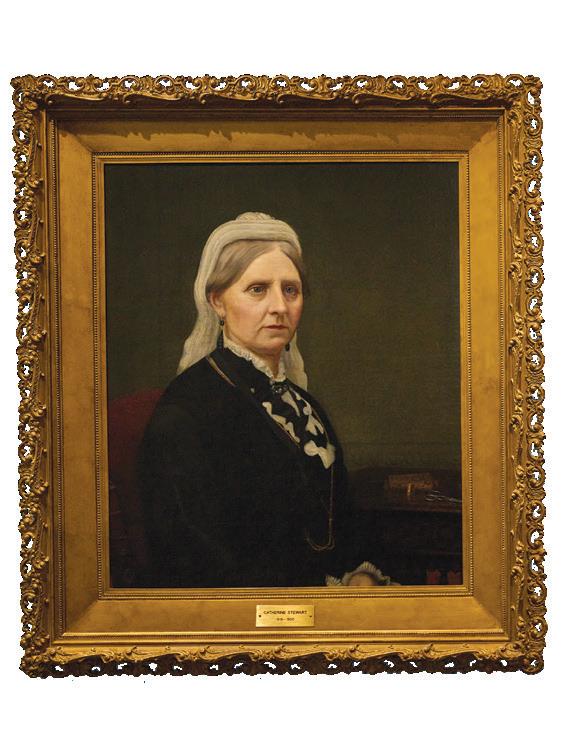
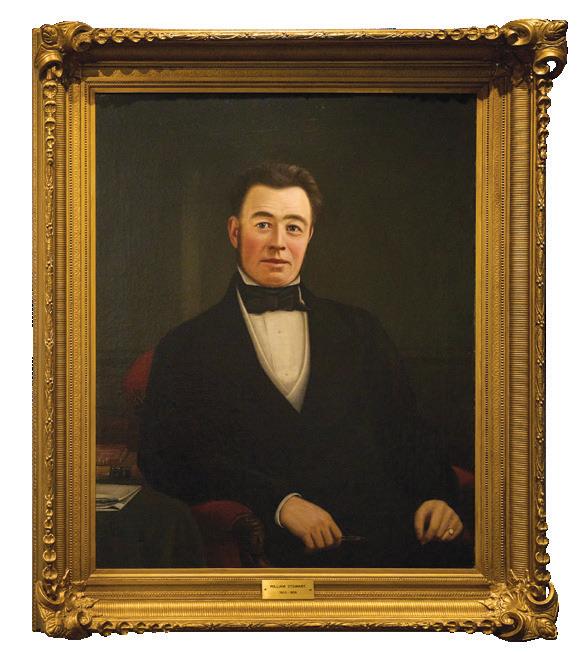
Visitors are also invited to contribute their own portraits or statements to an ongoing community portrait wall.
The museum is also planning a busy year of anniversary programming. National Indigenous Peoples Day programming will return on June 21 with a pop-up market and possible performances. Colonel By Day over the August long weekend will include costume interpretation, performances and a Celtic Cross ceremony with the National Capital Region Irish Society.
The biggest event will be a three-day anniversary weekend from Sept. 25 to 27, marking the moment Colonel By arrived and chose the site where the canal would begin. Programming is expected to include projections, performances and a lumberjack breakfast.






By Charlie Senack
Summer festival season is officially returning to Ottawa, and there’s no shortage of markets, live music, cultural celebrations, food festivals, and community events happening across the city over the next few months.
From outdoor concerts and neighbourhood night markets to major music festivals and familyfriendly celebrations, here’s a look at some of the events taking place around Ottawa this summer.
JUNE 3, 10, 17 AND 24
Parkdale Night Market
366 Parkdale Ave
5:00 p.m. to 9:00 p.m.
The Parkdale Night Market returns for another season of evening shopping and community gathering in Hintonburg. Local growers, bakers, food vendors, and makers will set up throughout the market with fresh produce, handmade goods, and specialty products. parkdalepublicmarket.ca/events
JUNE 5-7
Capital Ribfest
RA Centre, 2451 Riverside Dr Smoke, barbecue, and live music take over the RA Centre grounds during this year’s Capital Ribfest. Alongside rib vendors from across the region, the festival also includes cook-off competitions, games, and activities aimed at families. capitalribfest.ca/
JUNE 6
City Sounds Live
Fourth Avenue Baptist Church, 816 Bank St
Live music once again returns to the Glebe courtyard of Fourth Avenue Baptist Church as part of the City Sounds Live series. The free performances spotlight local musicians while drawing visitors into nearby shops, patios, and businesses along Bank Street. intheglebe.ca/city-sounds-live/
JUNE 6

Tickets start at $20. nac-cna.ca/en/event/40597
JUNE 13
ArtsPark Festival & Market
Parkdale Public Market, 366 Parkdale Ave
Artists, local crafters, musicians, food vendors, and community groups will take over the Parkdale Public Market during this free outdoor festival. Family activities and live performances are planned throughout the day. parkdalepublicmarket.ca/events
JUNE 13
JUNE 7
Summer Indigenous Art Market
National Arts Centre, 1 Elgin St 11:00 a.m. to 5:00 p.m.
The Indigenous Art Market brings Métis, Inuit, and First Nations artists and makers together at the National Arts Centre. Visitors can browse beadwork, paintings, jewelry, sculptures, moccasins, handmade crafts, and other works created by Indigenous vendors from across the region.
nac-cna.ca/en/event/40927
Britannia Village Community
Arts Crawl
Britannia & Howe
11:00 a.m. to 4:00 p.m.
Artists, musicians, photographers, and makers from across the community will showcase their work during this one-day arts crawl through Britannia Village. Organizers say the event is meant to highlight local talent while encouraging people to explore the historic neighbourhood. facebook.com/BritanniaVillage CommunityArtCrawl
JUNE 6
Saravah Brazilian Festival
ByWard Market
11:30 a.m. to 9:00 p.m.
Brazilian music, dance, food, and cultural performances will fill the ByWard Market during the third edition of the Saravah Brazilian Festival. Programming throughout the day highlights traditions and contemporary culture from across Brazil. saravah.ca/event-details/saravahbrazilian-festival-2026-third-edition
JUNE 7
Shawarma Fest
ByWard Market neighbourhood, 73 York St
11:00 a.m. to 7:00 p.m.
Ottawa’s shawarma scene takes centre stage during this ByWard Market food festival, which includes live DJs, entertainment, cultural performances, and a competition featuring some of the city’s bestknown shawarma restaurants. Organizers are also planning an attempt at the Guinness World Record for the world’s longest shawarma sandwich. shawarmafest.ca/
JUNE 11
GANNA
National Arts Centre, 1 Elgin St 8:00 p.m.
Berlin-based Ukrainian singer and composer GANNA brings a mix of folk traditions, jazz arrangements, electronic music, and live looping to the NAC stage. Her music draws heavily on traditional Ukrainian melodies and field recordings.
European Union Cultural Fair
Canadian Museum of History, 100 Laurier St, Gatineau 11:00 a.m. to 4:00 p.m.
The annual European Union Cultural Fair returns to the Canadian Museum of History with music, dance performances, food tastings, workshops, and exhibits representing EU member states. Embassy booths will also showcase travel opportunities and cultural traditions from across Europe. eeas.europa.eu/delegations/canada/ european-union-cultural-fair-2026_en
JUNE 13-14
Art in the Park
Central Park, 19 Clemow Ave
More than 150 artists are expected to display their work during this longrunning outdoor art show in the Glebe. Painters, sculptors, photographers, jewelry makers, potters, and textile artists will exhibit throughout Central Park over the two-day event. artintheparkottawa.com/
JUNE 14, 21 AND 28
Elgin Street Market
Boushey Square, 211-A Waverley St
The Elgin Street Market returns for another season with local produce vendors, baked goods, prepared foods, flowers, and handmade products. The Sunday market runs weekly through the summer and fall. ottstreetmarkets.ca/our-markets/ elgin-street-market
JUNE 14
Preston Street Bicycle Races
Little Italy
Cyclists ranging from young riders to

experienced racers will compete on a fast-paced course winding through Little Italy during the annual Preston Street Bicycle Races. Spectators typically line the streets to watch competitors navigate the tight corners at high speeds. bikeraceottawa.com/
JUNE 15
ABRA Cadabra – A Tribute to ABBA Meridian Theatres, 101 Centrepointe Dr 7:30 p.m.
ABBA classics including Dancing Queen, Waterloo, Fernando, and Mamma Mia will be performed live during this touring tribute production at Meridian Theatres. The show also features dancers, costumes, and multimedia staging inspired by the Swedish pop group’s original performances. Tickets start at $65. meridiancentrepointe.com/en/abracadabra-tribute-abba
JUNE 18-21
Hintonburg 5K and 1K
Ottawa Jazz Festival
Confederation Park
Now in its fifth decade, the Ottawa Jazz Festival continues to bring international and Canadian performers to Confederation Park and downtown venues. While rooted in jazz, the programming regularly branches into blues, funk, soul, and experimental music. ottawajazzfestival.com/
JUNE 18-28
Ottawa Fringe Festival
Various locations
Independent theatre, comedy, dance, and experimental productions will take place across Ottawa during this year’s Fringe Festival. Every performance is selected through a lottery process, giving emerging and established artists equal opportunity to participate. ottawafringe.com/ More on page 40












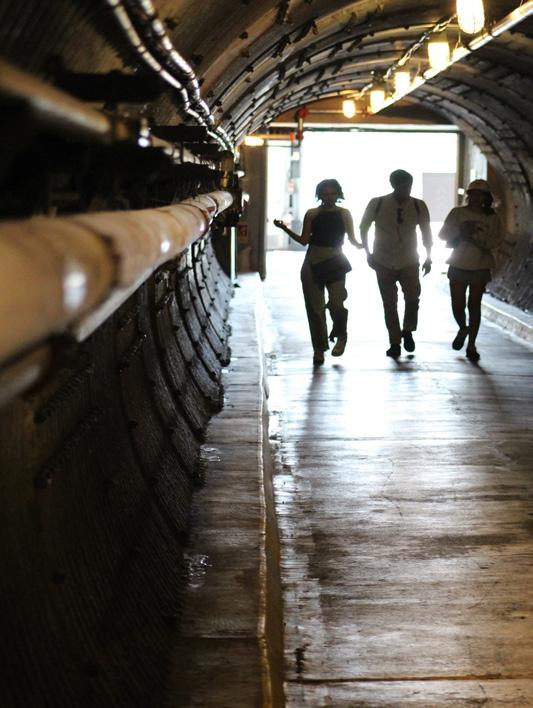



offers an unforgettable day of fun, discovery, and adventure for all ages. Nestled along the scenic St. Lawrence River, the Aquatarium is steps away from beautiful parks, waterfront trails, downtown shops and restaurants for you to extend your visit!

20+ interactive and unique exhibits

River Otters, North American Beaver, Turtles, and Fish
27,000 square feet of adventure
Daily educational presentations



JUNE 19-21
Tim Hortons Ottawa Dragon Boat Festival
Mooney’s Bay Park
Teams from across the region will race along the Rideau River during the annual Ottawa Dragon Boat Festival at Mooney’s Bay. Beyond the races themselves, the waterfront site also hosts concerts, food vendors, and family programming throughout the weekend.
dragonboat.net/
JUNE 19-21
Ottawa Italian Festival
Little Italy
Preston Street once again becomes the centre of Ottawa’s Italian Festival, with live music, dancing, family programming, and the return of the Italian Car Parade. Organizers are also planning magicians, stilt walkers, balloon art, and activities aimed at younger visitors.
ottawaitalianfestival.com/
JUNE 26-28
Escapade Music Festival
RA Centre, 2451 Riverside Dr
Thousands of electronic music fans are expected to gather at the RA Centre grounds during Escapade Music Festival, which brings internationally known DJs and largescale stage production to Ottawa each summer.
escapademf.com/
JULY 1
Canada Day in the Capital Downtown Ottawa and Gatineau Canada Day celebrations return to downtown Ottawa and Gatineau with concerts, cultural programming, family activities, and fireworks planned throughout the capital region. Major events will once again take place at LeBreton Flats and nearby sites. canada.ca/en/canadian-heritage/ campaigns/canada-day.html
JULY 9-19
Ottawa Bluesfest
LeBreton Flats
One of Canada’s largest music festivals returns to LeBreton Flats
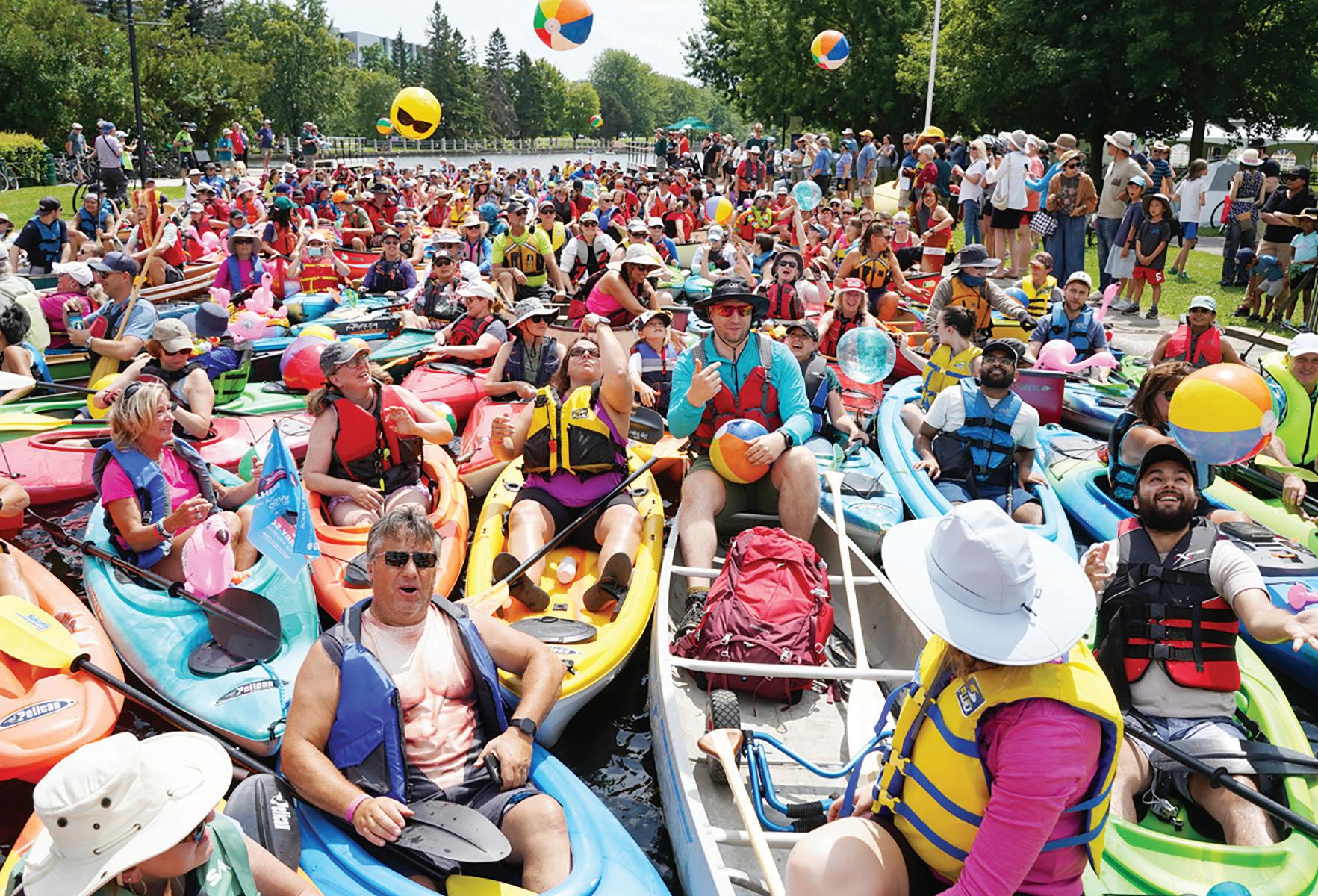
with major international headliners, Canadian performers, and emerging artists spread across multiple stages over 10 days.
ottawabluesfest.ca/
JULY 11
H.O.P.E. Volleyball SummerFest
Mooney’s Bay Park
Thousands of players and spectators are expected at Mooney’s Bay for H.O.P.E. Volleyball SummerFest, billed as North America’s largest one-day outdoor beach volleyball tournament. Live entertainment and activities run throughout the day. hopehelps.com/
JULY 12
Hintonburg 5K and 1K
Wellington West
Runners, walkers, families, and community groups will make their way through Wellington West and Hintonburg during this annual neighbourhood race centred around Parkdale Park. Organizers say the event is designed to welcome participants of all experience levels. facebook.com/Hintonburg5K/
JULY 23-AUG. 2
Ottawa Chamberfest
Various locations
The world’s largest chamber music festival returns to Ottawa with concerts featuring internationally recognized ensembles, solo musicians, and emerging performers at venues across the city. chamberfest.com/
AUG. 15-16
Carp Garlic Festival
Carp Agricultural Fairgrounds, 3790 Carp Rd
Garlic growers, food vendors, artisans, and musicians will gather at the Carp Fairgrounds for this annual harvest festival focused on garlic-themed foods, cooking demonstrations, and local agriculture. carpfarmersmarket.ca/carp-garlicfestival/
AUG. 15
Lock & Paddle
Hartwells Lockstation, 901 Hartwells Locks Lane
AUG. 7-9
Ottawa International Buskerfest
Sparks Street
Street performers from around the world will take over Sparks Street during Ottawa International Buskerfest, with acrobatics, magic, comedy, music, and interactive performances scheduled throughout the festival.
ottawabuskerfestival.com/
AUG. 13-16 AND AUG. 20-23
Ottawa Greek Festival
Hellenic Event Centre, 1315 Prince of Wales Dr Greek food, traditional dancing, live music, language lessons, and cultural demonstrations are all part of this year’s Ottawa Greek Festival, which spans two weekends in August. ottawagreekfest.ca/
AUG. 14-16
Le Grand Poutinefest
320 Bd Saint-Joseph, Gatineau
Food trucks and vendors serving classic and specialty poutines will gather in Gatineau during this touring festival dedicated to Quebec’s signature dish. Desserts, drinks, and additional comfort-food options will also be available. legrandpoutinefest.ca/

Hundreds of canoeists and kayakers are expected to travel together through the Rideau Canal locks during this annual mass paddling event organized by Parks Canada. parks.canada.ca/lhn-nhs/on/rideau/ activ/pagaie-paddling/eclusezpagayez-lock-paddle
AUG. 19-23
Nostalgia Music Festival
LeBreton Flats
Music from the 1970s, 1980s, and 1990s takes over LeBreton Flats during the Nostalgia Music Festival, which combines outdoor concerts with food vendors and large-scale video screens throughout the site. nostalgiafestival.ca/
AUG. 22-23
Capital Pride
Various locations downtown Capital Pride returns with programming spread across Ottawa’s downtown core, including a community fair, sporting events, a Rainbow Party, family activities, live entertainment, and the annual Pride Parade through the city’s Gay Village. capitalpride.ca/
AUG. 22
Pride Night Market
Parkdale Public Market, 366 Parkdale Ave
Queer and trans artists, performers, makers, and small businesses will be featured during this year’s Pride Night Market at the Parkdale Public Market, which returns as part of Capital Pride celebrations.
parkdalepublicmarket.ca/events
Dovercourt is getting ready to welcome the excitement of a summer packed with fun! In just a few weeks, kids of all ages will head to the Dovercourt Recreation Centre for nine amazing weeks of summer camp adventures. The team has been working hard to create safe, memorable and enjoyable experiences for kids and youth from all over the region.
Dovercourt partners with over 20 incredible organizations and experts, including OrangeSTEM Education’s innovative Ian Dudley, Ottawa City Rafting, the adventurous Ottawa River Canoe Club, the dynamic Ottawa Ospreys Rugby team, the enthusiastic Ottawa Carleton Ultimate Association, and many more. Their dedicated camp leaders can’t wait to welcome both new and returning campers. This year, select camps will be offered at Accora Village near Bayshore.
The Westboro Kiwanis Park at Dovercourt is a family favourite, attracting visitors near and far. Kids can unleash their energy on the fantastic play structure, featuring an infinity
climber, fitness area, monkey bars, a tire swing and a dedicated play zone for the little ones. When the summer heat hits, cool off in our outdoor wading pool and grab a tasty snack from the café upstairs.
Want to get better at swimming? Summer swim lessons are great for everyone, no matter how good they are! We offer one-week lessons from Monday to Friday, so they can easily fit into your family’s holiday plans. The indoor pool has warm, inviting water, a simple ramp to get in and out, a fun water slide and a shallow baby pool for the little ones.
If you’d rather stay dry, there are lots of fun activities for kids and adults. You can do arts and crafts, drama, dance classes and lots of sports! You can sign up for summer session recreation classes now, so come join the fun!
Take care of your health and fitness this summer with the Dovercourt Fit Pass! You can try a variety of energizing drop-in classes, like Bootcamp, Foam Rolling, Step Mix, Aquafit, Zumba Toning, Flex & Pump


and some gentle options in our “Seniors on the Go” (SOTG) category. Plus, you’ll get access to drop-in swims, an euchre club, pickleball and the fitness centre. With a low monthly fee, you can go to as many classes as you like!
Check out the registered specialty and aquafit classes, which include Yoga, Pilates, Barre Fusion, TRX, Small Group Personal Training, Aqua Arthritis, Aqua Zumba, Baby & Me Stroller Fit and more! Don’t miss out— registration for these summer fitness classes starts on June 2!
Get away from the sun and cool off in refreshing wading pools at three spots: Dovercourt, McKellar Park and Woodroffe. At least one pool will be open every day starting in July, so be sure to check the schedule for hours and days.
Summer is such a magical time, and it seems to go by so fast! Let’s make the most of every moment and have the best summer ever!



parents, and engaged in charitable giving to serve their community. These traditions continue today.
By Karen Hamer
Nepean High School is inviting the community to come back to school for a local history lesson on June 7.
The Westboro school will be a first-time participant in Doors Open Ottawa, the annual celebration of Ottawa’s architecture, heritage, and culture. Now in its 24th year, this free event offers visitors the chance to step inside buildings not usually open to the public and learn about their history.
Nepean students will lead guided tours throughout the day. During the 30-minute tour, they will share information about the building’s architectural features, stories about student life in the period from the 1920s to the 1950s, and tributes to influential staff members from those early decades.
Students contributed to the
writing of the tour script, developing an appreciation for their school’s history while perusing old yearbooks, digital newspaper archives, historic photographs, and architectural blueprints.
Grade 11 student Natasha Waters researched Nepean’s third principal, D.O. Arnold, who served in the leadership role for 32 years from 1928 to 1960, a period he described as a time of rapid change and heavy responsibilities.
“I walk past his portrait every day, and I never thought twice about it,” said Waters. “This project helped me understand the huge impact he had on the school, especially in the arts and athletics, and helping students during the Great Depression and the war.”
Research into Nepean’s past has revealed many fascinating facts. From
By Julie Ireton
Christine
Edmond’s
Westboro garden is naturalistic, but that doesn’t mean she’s just letting meadow weeds grow wild. Her plot is well curated and maintained to attract birds, bees and the envious, novice gardeners taking part in Abbotsford at the Glebe Centre’s annual garden tour.
This year’s tour is set for Saturday June 20, and will feature a dozen private gardens in the Glebe and Westboro, with proceeds from the $35 tickets going to programs
for seniors at Abbotsford, the old, stone farm house across from Lansdowne Park.
“The tour is self-guided and ticket holders are provided with the garden addresses and may visit them in any order and at their own pace during tour hours,” said Pat Goyeche, Abbotsford’s coordinator of community programs. “
Volunteers and garden hosts will be in each garden to welcome visitors and answer questions.”
For Edmonds, it’s an opportunity to showcase the hard work, care and research that went into
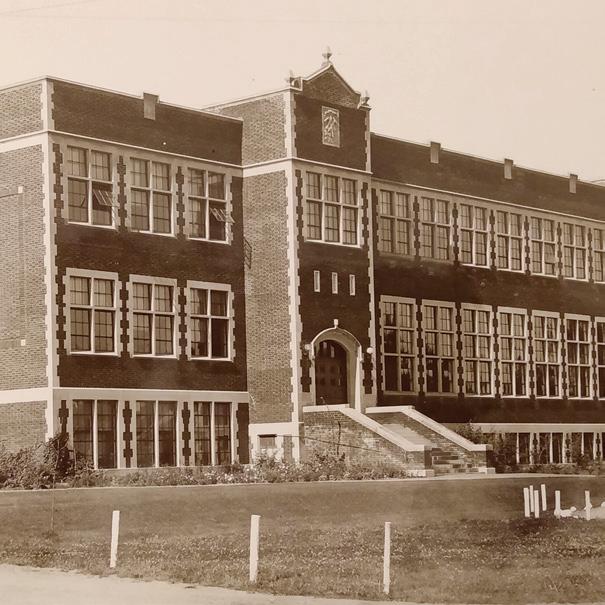
courses offered (stenography in 1927), to class sizes (60 students in 1934), to cafeteria prices (5 cents for a bowl of soup in 1951), the student writers were able to reflect on how much has changed since the school opened in September 1923.
“It was interesting to learn about the exclusion of female students from the Science Club in the 1930s,” said Grade 10 student Mia Fairgrieve. “It’s very different today. We now have a club that focuses on women in STEM.”
The research also showed that current students have a lot in common with students from the early years. A century ago, Nepean students took pride in their athletic achievements, gave musical and dramatic performances to audiences of proud
developing her outdoor space. Her large, corner lot went through its metamorphosis after construction on her street in 2020.
“Esthetics were important to me,” said Edmonds. “It’s reminiscent of a meadow, but the edges are tidy, good geometrics around the garden.”
Her goal of a garden that supports pollinators without looking “wild”, was recognized by the Ottawa Horticultural Society and its ‘pollinator garden award’.
On June 20, she plans to be outside all day to answer questions.
The garden tour tickets include a printed guide and map, opportunities to learn from knowledgeable gardeners at each site, a plantable wildflower seed
In addition to the tour, visitors will be able to view an exhibit of archival photographs and historic newspaper articles. There will also be a display showcasing student research about the accomplishments of notable alumni, and another honouring Nepean’s fallen soldiers of the Second World War. Other optional activities include a photobooth and an opportunity to view past yearbooks.
Nepean’s principal, Tracy Shapiro, hopes that past, current, and future students, as well as any curious members of the public, drop in for a visit.
“We are very pleased to be joining the Doors Open Ottawa family and are looking forward to sharing our 103-year-old history with our community,” said Shapiro. “We hope that everyone who comes learns something new about Nepean from this event.”
Doors Open Ottawa at Nepean High School, 574 Broadview Avenue, takes place on June 7, 2026, from 10:00 a.m. to 4:00 p.m.
paper wristband for garden entry, and complimentary refreshments at sponsor locations.
John Szczepaniak, an Ottawa landscape architect, is also offering up a complimentary garden design consultation to a lucky Garden Tour ticketholder who wins the draw.
For Szczepaniak, the tour will highlight his design work in a Westboro client’s backyard.
“It’s a beautiful pocket garden,” said Szczepaniak. “Property sizes and gardens keep getting smaller and this shows that even with small spaces, you can create something beautiful.”
Tickets for the Abbotsford Garden Tour are on sale now. Do a search for Abbotsford Garden Tour or the Glebe Centre website: /glebecentre.ca/ programs/abbotsford-garden-tour/