Greater Shepparton City Council - Annual Report 2013-2014
Report 2013 - 2014
Vision Greater Shepparton, Greater Future. As the Food Bowl of Australia, a sustainable, innovative and diverse community.
Traditional Owners
We, the Greater Shepparton City Council, acknowledge the traditional owners of the land which now comprises Greater Shepparton. We pay respect to their tribal elders, we celebrate their continuing culture and we acknowledge the memory of their ancestors.
Welcome
Welcome to the 2013 – 2014 Annual Report for Greater Shepparton City Council. This report provides a comprehensive account of Council’s achievements, challenges and aspirations for the future.
The report details our performance against our commitments as set out in the Council Plan 2013 – 2017 and provides an analysis of our financial performance. This report also demonstrates the breadth of our operations and the diversity of services delivered on a daily basis to the Greater Shepparton community.
We hope you enjoy reading about the 2013 – 2014 year and we thank our community for the continued support and direction.
Why we have an Annual Report
The Victorian Local Government Act (1989) requires all councils to present an Annual Report to the Minister by 30 September each year.
Importantly, the Annual Report provides an account of our performance to our community. It details our achievements against commitments and our performance against stipulated measures. It also provides an account of our financial management over the past year.
The Annual Report is also an opportunity to acknowledge all the great things that have been happening across the municipality and note the challenges that have marked the year.
Reading the Report
The Annual Report comprises four main sections. The first section provides an overview of who we are as an organisation and community. The main body of the report details our performance, achievements and challenges detail against our five strategic objectives, as well as where we are headed in the future.
Our strategic objectives are:
1. Active & Engaged Community (Social)
We will enhance social connectedness, physical and mental health and wellbeing, education and participatory opportunities in order to improve liveability and a greater range of community services.
2. Enhancing the Environment (Environment)
We will conserve and enhance significant natural, environmental and cultural heritage.
3. Economic Prosperity (Economic)
We will promote economic growth, business development and diversification, with a focus on strengthening the agricultural industry.
4. Quality Infrastructure (Built)
We are committed to facilitating growth in a consolidated and sustainable development framework and will strive to provide urban and rural infrastructure to enhance the performance of the municipality.
5. High Performing Organisation (Leadership & Governance)
We will deliver best practice management, governance, administrative and financial systems that support the delivery of Council programs to the community of Greater Shepparton.
Section three of the report details Council’s compliance with governance requirements, while the final section provides a detailed account of our financial performance, how the budget was developed and executed.
Report Theme
The Council Plan is the key document that drives the strategic direction of Council for the four years from 2013 to 2017. The themes outlined in the Council Plan are the vehicle for achieving our desired future and provide the gauge by which Council can measure its achievements.
The themes have been identified following extensive consultation with the Greater Shepparton community and include:
the strategic objectives of the Council
strategies for achieving the objectives for at least the next four years
strategic indicators for monitoring the achievement of the objectives
a Strategic Resource Plan outlining the resources required to achieve the strategic objectives.
Mayor’s Message
I am honoured to have served the community as Mayor during 2013-2014, along with a team of Councillors committed to driving a strong vision for a sustainable and innovative Greater Shepparton. On behalf of the Council I would like to thank the Greater Shepparton City Council staff for their enthusiasm and diligence.
This Annual Report marks the first year of the implementation of the 2013-2017 Council Plan. It was very rewarding to experience the growth and development of Greater Shepparton as a result of activities during the previous term of the 2009-2013 Council Plan. I look forward to seeing the new plan implemented over the next few years.
I have observed significant achievements during the 20132014 year which have connected Council more strongly with our community, enhanced our environment and infrastructure and consolidated our financial position. As a result, we have become a more effective and more highly performing Council.
The Annual Report provides an opportunity to reflect on the successes and challenges of the past year and to look toward the future.
There have been many achievements from the Council Plan from July 2013 to June 2014. I would like to point out some of the stand-outs, including those which will form a solid foundation for future growth and prosperity, as well as contributing to the provision of healthy and enjoyable lifestyle opportunities.
Creating an active and engaged community
Draft Universal Access and Inclusion Plan for community consultation was reviewed and adopted
Consultations held for the development of community plans for Congupna and Undera
Purchased a third John Perceval ceramic angel for the SAM collection
Open day and re-launch for Aquamoves
Emerge Festival celebrating our arts and culture of indigenous, refugee and multicultural communities
A six month Off Leash Dog Park trial
Fifth annual Volunteer Recognition Awards held
SAM Foundation Board established
Support for World Elder Abuse Day, Refugee Week and the Greater Shepparton Women’s Charter Alliance
Enhancing the Environment
Watts Working Better funding $2.95m from Australian government through Community Energy Efficiency Program
Clean Up Australia Day held in partnership with the Shepparton Mooroopna Urban Landcare Group
Murchison Rail Trail project commenced
Historical Flood Markers installed at Murchison, Shepparton, Mooroopna and Kialla
Environmental Sustainability Strategy and Action Plan developed
Creating quality infrastructure
Vaughan Street redevelopment completed
$7.2 million Sports Precinct funding obtained from Commonwealth
Re-opening of Visitor Information Centre in Nixon Street in October
Shepparton Library redevelopment begins
Safer City Camera Network installed and launched at the end of May
Achieving economic prosperity
Mooroopna West Growth Corridor; $40k grants for eligible buyers for 66 lots in a 1600 lot development worth $5.42 with funding from Commonwealth Government under the Building Better Regional Cities program
Inter national Dairy Week held at Tatura Park
Make Shepparton Greater lobbying campaign launched to focus on improving funding for major projects in our region including passenger rail services, GV Highway Bypass, Courthouse redevelopment, GV Health improvements and CBD revitalisation projects.
State gover nment $22m support for SPC retention in region, along with $78m investment from CCA
Shepparton Show Me W inter and Summer markets and Christmas promotions bring thousands of shoppers into the CBD
There is already a sense of achievement in the progress we have made through the first year of the new Council Plan and we look forward to continuing to reach further goals using the strengths inherent in our community. We are moving forward in Greater Shepparton with a sense of hope and optimism.
Cr
Jenny Houlihan Mayor of Greater Shepparton September 2014
CEO’s Message
The 2013-2014 financial year has seen the first 12 months of the 2013-2017 Council Plan put into action. Following the extensive community consultation process the priorities were identified as:
1. Active and Engaged Community (Social)
2. Enhancing the Environment (Environment)
3. Economic Prosperity (Economic)
4. Quality Infrastructure (Built)
5. High Performing Organisation (Leadership and Gover nance)
In what has been a very busy 12 months, Council has made significant inroads in working towards these goals. While there has been a substantial amount of activity, the work undertaken has been meaningful and valuable with the ultimate aim of enhancing the lives of our citizens and creating a more prosperous community.
Council has endeavoured to have an increased strategic focus with the aim of achieving some high end results that will specifically translate into real outcomes for our citizens.
A key example is the establishment of the Goulburn Valley Regional Collaborative Alliance, a partnership between Greater Shepparton City Council and Moira Shires aimed at improving service delivery to our respective communities. The project will achieve real savings across both Councils by sharing services and resources wherever possible. Initial collaborative projects have included provision of legal services and sharing water trucks and running graders.
The first ever lobbying campaign was undertaken by Council in 2014 aimed at striving to gain a financial commitment for major infrastructure projects from the government and opposition in the lead up to the Victorian election. “Make Shepparton Greater” was launched in February and specifically profiled five priority projects aimed to address economic and social issues and support future growth within Greater Shepparton.
The projects are:
1. Revitalisation of the Shepparton CBD
2. Redevelopment of Goulbur n Valley Health
3. Redevelopment of the Shepparton Court
4. Construction of the Goulbur n Valley Shepparton Bypass
5. Increased passenger rail services between Shepparton and Melbourne
While the campaign is still underway results to date have included:
Securing $73 million for the Shepparton Court House Redevelopment
Shepparton Passenger Services Working Group convened by the Victorian Government
An additional early mor ning daily passenger rail service from Shepparton to Melbourne to be introduced
2,127 community members participated in the Shepparton Passenger Rail Survey
110 community letters submitted to the State Gover nment and Opposition requesting an audience to discuss passenger rail needs and issues
Eight ministerial visits
While the initial campaign is due to finish in November 2014 it is anticipated that Make Shepparton Greater will be utilised for future ask of government activities.
Greater Shepparton continues to cement its status as the premier regional sporting destination in securing such events during 2013-2014:
Australian Veterans car rally
Australian Football Schools National Championships
Australian Speedway Series round
BMX National and Oceania Championships
Country Week Tennis
Melbour ne Heart A League pre-season game
Tennis Victoria Junior Regional Challenge
Victorian Vic Sport Conference
Negotiating and attracting events at a state, national and international level requires significant resources, however such events are key contributors to the prosperity of our local economy.
It was my privilege to be the founder of the Shepparton Art Museum (SAM) Foundation. The SAM Foundation is a company limited by guarantee and its purpose is to undertake a significant capital drive for a new expanded Art Museum and to grow funds to benefit the SAM collection and program. I congratulate Peter Quinn in accepting the role of Interim Board Chair, and we look forward to the new opportunities that the Foundation will hopefully create for SAM in building on our cultural offerings for the community and beyond.
We were excited to receive funding through the State Government’s Living Library Capital for a significant upgrade of our Goulburn Valley Regional Library Shepparton branch. This project has now commenced in creating additional space and reconfiguring the internal layout so the library can offer more significant programs, particularly for children and youth.
The Safer City Camera Network (CCTV) was launched in May 2014 to improve the safety for our local community. Already we have seen the impact that the cameras have had in assisting in the arrest of offenders and influencing Greater Shepparton trending towards the lower end of the scale for regional violent crime figures.
So while we have concentrated on some big picture initiatives, Council has continued to invest in our regional communities through our community planning program, with the Katandra West, Tallygaroopna, Congupna Community Plans were endorsed by Council in the 3013/2014 financial year.
A major highlight was the 2014 Community Satisfaction Survey Results which saw a seven point rise from 51 in 2013 to 58 in 2014 in overall performance, with a rise occurring in performance across all performance measures (Community Consultation, Advocacy, Customer Service and Overall Council Direction).
This is a strong indication that Council is heading in the right direction in working towards the achievement of the Council Plan goals as determined by the Greater Shepparton community.
I would like to express my appreciation for the support and guidance provided by the Councillors over the past 12 months with regard to excellent governance ensuring the success that has been achieved during the last financial year.
I would further like to acknowledge the efforts of the Council staff in putting the “Council Plan in Action”. In such a short period there has been much achieved as our staff work in partnership with our community in creating a greater future for Greater Shepparton. We look forward to continuing to working with our community as we embark on the implementation of the second year of the 2013 – 2017 Council Plan.
Gavin Gator Chief Executive Officer
September 2014
About Us
Our Region
Two hours north of Melbourne, Greater Shepparton’s central location is a major advantage and has seen our urban centre emerge as the retail, industry and services hub for central Victoria. Located at the intersection of the Midland and Goulburn Valley Highways Greater Shepparton provides straightforward access to Adelaide, Sydney, Brisbane and Melbourne.
Along with our location, Greater Shepparton’s critical mass of population and significant infrastructure provides the base of many key competitive advantages:
An established manufacturing sector, with multinational companies such as SPC Ardmona, Tatura Milk, Campbell’s and Unilever calling Greater Shepparton home
Extensive road transport industry with Shepparton often being referred to as the transport hub of regional Victoria
Thriving food production industry where 25 per cent of the total value of Victoria’s agricultural production occurs in Greater Shepparton which contributes $900 million in production annually and $1.53 billion in exports
Affordable residential and commercial real estate
Access to a high standard of telecommunications and IT infrastructure
Excellent health, leisure and arts facilities
Excellent range of health services
Education facilities that encourage career advancement, trade qualifications and meet ongoing cultural demand
Recognition as a regional sporting capital, hosting many regional, state, national and international major sporting events.
The mild climate and high level of activity coupled with a diverse culture makes Greater Shepparton an exciting place to be
Our Location
Greater Shepparton is the fifth largest regional centre in Victoria extending over 2,421 kilometres.
The city’s population is almost evenly split between the main urban centres of Shepparton, Mooroopna and Tatura (53 per cent) and with the remaining 47 per cent of the population residing in the surrounding rural areas, including the smaller townships of Murchison, Dookie, Merrigum, Congupna, Toolamba, Undera, Katandra and Tallygaroopna. This split reflects the wide range of lifestyle choices available across the municipality, from small urban blocks close to high quality amenities, through to large working orchards and farms.
The Goulburn River forms the backbone and lifeblood of the region, winding its way through beautiful countryside, native forests and fertile farmlands, bringing life to the rich agricultural landscape which has made the area renowned as Australia’s Food Bowl. This vibrant and dynamic region is the heart and soul of Australia’s fruit and dairy processing.
GOULBURN
GOULBURN
Merrigum
Undera
Tatura
Toolamba
Arcadia
Murchison
Mooroopna
Shepparton
Kialla
Ardmona
Congupna
Katandra
Dookie
Tallygaroopna
Our People
As a growing regional centre with a vibrant cultural mix, the Greater Shepparton community comprises almost 61,740 residents living in more than 60 localities.
Greater Shepparton enjoys a young demographic with growing families, with 2011 census data showing the proportion of couples with children nearly three per cent above the regional Victorian average, at 29.7 per cent.
The overall population is forecast to grow from 63,000 in 2013 to nearly 80,000 by 2031. Our community understands that an expanding population will increase demand for services and infrastructure — particularly those that provide for our health and wellbeing. The challenge for all levels of government is to provide essential services and infrastructure in a timely manner.
At the same time we need to be creative and broaden the economy by attracting investment and generating jobs in sectors that complement our lifestyle and environment.
Socially we connect through friendships, gatherings, events and celebrations. Local strengths include high levels of citizen participation, embracing a strong volunteering ethos, participation in community events the arts and organised sport, with a high level of community ownership and pride.
Greater Shepparton delivers a wealth of community leaders, where the community is committed to seeking local solutions to local issues. Like most Victorian regions, people in Greater Shepparton are highly engaged in their community, with nearly one in five involved in volunteer work.
The community are also active in engaging with their local issues, responding well to local government community consultations, and participating in large numbers in local politics, with 26 candidates at the last election.
Our Diversity
Our point of difference and strength is the diversity of our people. We come from different places around the world bringing with us many languages, faiths and cultures. We live together in harmony, respecting the past and each other’s identity.
It’s our diversity that brings Greater Shepparton to life. Our community is culturally rich with a large proportion of the population born overseas (13.1 per cent), with many residents immigrating from India, Afghanistan, Sudan, Italy, Iraq, Turkey, New Zealand and the Philippines. Italian, Arabic, Persian/ Dari, Turkish, Albanian, Punjabi, Greek, Macedonian, Mandarin and Filipino/Tagalog are the most commonly spoken languages other than English.
Greater Shepparton has a significant Aboriginal population with a strong history of Indigenous advocacy and leadership both nationally and internationally. The city’s Indigenous population is the largest in regional Victoria, with an estimated 3.5 per cent of residents having Indigenous heritage.
Approximately 5.4 per cent of the city’s population has been identified as requiring assistance with self-care, body movements or communication.
Greater Shepparton City Council is committed to providing access to services, programs and facilities for people with a disability.
Our Liveability
Greater Shepparton is a vibrant and progressive community that offers the best of both provincial and metropolitan lifestyles. With its central location being a major strength, Greater Shepparton is the ideal regional location in which to live, work, invest and visit.
The municipality offers affordable real estate; business opportunities and diversified farming practices and residents enjoy a wide range of entertainment and leisure options, including many coffee shops and restaurants.
Scenic open places, shared pathways and our river system add to our environment, and encourage social connection and improved lifestyle behaviours.
Food malls, with an abundance of cafes and restaurants provide plenty of choice. Greater Shepparton’s history of migration has evolved our large selection of local cuisine, whether it’s Turkish, Japanese, Indian, Thai, Lebanese, Chinese, Italian or a bistro meal, you can find it all in Shepparton’s Central Business District (CBD), shopping centres and surrounding townships.
Local wineries and ample farm-gate suppliers provide an added gourmet touch to celebrate and promote the region’s repertoire.
Greater Shepparton is a retail hotspot for regional Victoria, constantly attracting new brands, and there is an abundance of events and leisure activities available to the community.
Our Culture
Greater Shepparton has, over the past decade or so, developed a very strong sense of self, and that confidence is reflected in its commitment to art and culture.
The arts scene is thriving with regular travelling performances exhibitions and artists visiting the region. Riverlinks programs touring and community performances in the Eastbank and Westside Performing Arts Centres and into smaller towns.
Shepparton is the home of the Bangerang Cultural Centre and Kaelia Gallery both of which are meeting places for Indigenous artists.
The Shepparton Art Museum (SAM) houses a fine collection of colonial and contemporary paintings plus one of Australia’s leading ceramics collections and regularly hosts significant and acclaimed exhibitions. Greater Shepparton’s Moooving Art and flying bird sculptures brighten streets and major buildings.
The SheppARTon Festival has gained recognition for cultural and artistic experiences with people coming from far and wide to participate in the many activities on offer throughout the Festival.
Our Economy
The region has a strong and well developed economy, based primarily on irrigated agriculture, food processing, retail and road transport. The Goulburn Valley is responsible for about 25 per cent of Victoria’s agricultural production and is often referred to as the “Food Bowl of Australia”.
Local entrepreneurs and small businesses are the backbone of our communities equating to 32.2 per cent of the business sector. We will continue to support them to prosper and grow, thus retaining local knowledge, building skills and employment in the region.
Tourism and events represents another important sector for Greater Shepparton. In 2013-2014 it is estimated that 776,600 people visited and contributed to the economy of the municipality.
In terms of employment, people within Greater Shepparton are primarily employed in the following sectors:
Health Care and Social Assistance (3,775 people or 14.2 per cent)
Retail Trade (3,381 people or 12.7 per cent)
Manufacturing (3,311 people or 12.4 per cent)
In combination these three industries employed 10,467 people in total or 39.3 per cent of the employed resident population. The unemployment rate for Greater Shepparton is above the state average and is currently at 8.4 per cent.
Our Education
Greater Shepparton has a range of educational facilities including 14 day care facilities, 13 kindergartens, 26 primary schools, six secondary colleges (including Catholic and Grammar schools) and three tertiary institutions. Several smaller country schools are located just outside of Shepparton (five to 15 minutes’ drive). In addition to excellent public schools, private and Catholic education is also available.
Compared to regional Victoria, there is a lower proportion of people holding formal qualifications (Bachelor or higher degree; Advanced Diploma or Diploma; or Vocational qualifications), and a higher proportion of people with no formal qualifications residing in Greater Shepparton. Overall, 35.4 per cent of the Greater Shepparton population aged 15 and over hold educational qualifications, while 52.5 per cent of the local population have no formal qualifications.
Overall, 40.6 per cent of the population left school at Year 10 or below, while 32.9 per cent have gone on to complete Year 12 or equivalent, compared with 39.0 per cent and 35.6 per cent respectively for regional Victoria.
Our Health
The Public Health and Wellbeing Act (2008) requires Councils to prepare a Municipal Public Health and Wellbeing Plan within 12 months of each general election of the Council.
Greater Shepparton City Council under the Local Government Act partners with community and agencies undertaking public health initiatives in an effort to prevent disease, illness, injury, disability and premature death.
The Greater Shepparton Health Status Report was developed in 2012, which details a thorough examination of local demographics, health and wellbeing indicators, health trends, identification of future needs and considerations of what makes greater Shepparton unique. The Status Report will guide future health and wellbeing planning and has considered individual’s access to the social determinants of health.
Council in partnership with the Greater Shepparton Health and Wellbeing Advisory Committee have developed a detailed 12 month Local Municipal Public Health and Wellbeing Action Plan. The Action Plan details initiatives that are both measurable and achievable while considering local evidence, health gaps and future needs to maximise health outcomes. The purpose of the Advisory Committee is to guide strategic direction for health and wellbeing matters for greater Shepparton in partnership, support the delivery of projects and initiatives to encourage health prevention strategies and identify emerging health and wellbeing issues.
Greater Shepparton has access to quality health and medical facilities which offer a comprehensive range of services. These include two hospitals, retirement accommodation and nursing facilities. The city offers specialist and diagnostic services, oncology, family counselling and youth services to meet increasing demand.
Shepparton is home to the University of Melbourne’s Faculty of Medicine, Dentistry and Health Sciences and the Shepparton Medical Clinic. The Clinical School provides clinical rotations and education for the final three years of the Doctor of Medicine degree.
Our Environment
Greater Shepparton City Council strongly supports the location of a large scale solar power plan in Shepparton and has undertaken extensive research and analysis to establish capacity to host such a facility. The Greater Shepparton region has a demonstrated affinity with the advancement of solar energy and is committed to providing developers with the assistance required to identify a preferred site.
The Resource Recovery Precinct accommodates a range of commercial businesses that locally process liquid and solid wastes, converting them to valuable recycled products. At the 2010 Virgin Blue Business Awards the Precinct won Best Specific Environmental Initiative at the United Nations Association of Australia World Environment Day Awards.
Environmental sustainability is important to the Greater Shepparton community as demonstrated by a number of initiatives such as RiverConnect, the Crouching Emu Revegetation Project, Dookie Biolinks Project and the creation of the Goulburn Broken Greenhouse Alliance.
Our Organisation
Greater Shepparton City Council is governed by seven elected Councillors, and operates in accordance with the Local Government Act (1989). As a local government authority, Greater Shepparton City Council exercises a wide range of government functions and powers for the “peace, order and good government” of our municipal district.
Greater Shepparton City Council is one of the largest regional Councils within Victoria and strives to achieve our community’s vision of a “Greater Shepparton”.
As a local government authority we protect and strengthen Greater Shepparton’s economic prosperity and the health, wellbeing and safety of our residents. We endeavour to plan and build a connected regional community which is safe, easy to navigate and provides a healthy and prosperous lifestyle, now and into the future.
We are committed to making a difference in our community and creating a Greater Shepparton that provides access to world class educational and employment opportunities and health and wellbeing facilities.
The purpose of the Greater Shepparton City Council is to deliver services, implement strategic initiatives and develop policies and plans. These three functions have a direct interface with the community. The fourth function, service support, refers to internal services that support the operations of the organisation
The Role of the Greater Shepparton City Council
Our Councillors
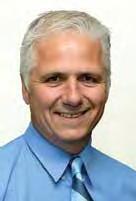
Cr Jenny Houlihan Mayor
Jenny has lived in Greater Shepparton for most of her life. She and her husband Leo have two children, five grandchildren and one great grandchild. Jenny has owned a retail business in Shepparton’s CBD and taught in several local schools. After being on Council for eight years including four years as Mayor, Jenny is well acquainted with the needs and expectations of our community. Jenny describes herself as a ‘people person’ who respects people and their diverse characteristics and wants to provide an ever increasing quality of life for all Greater Shepparton residents. She is aware of the importance of working hard to improve employment, education, transport, health, housing options, food security, safety, sporting facilities, heritage, the arts and to develop an appreciation of our natural environment Committees
Australian Botanic Gardens Shepparton
Best Start Municipal Early Years Partnership Committee
Greater Shepparton Audit and Risk Management Committee
Municipal Emergency Management Planning Committee (MEMP)
RiverConnect Steering Committee
Rumbalara Aboriginal Co-operative Working Party
Melbour ne University Rural Clinic School Advisory Board and Department of Rural Health and Management Advisory Committee
Greater Shepparton Women’s Charter Alliance Advisory Committee (as of April 2014)
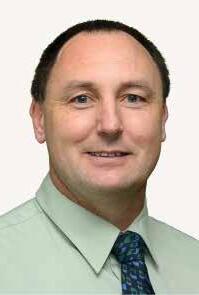
Cr Dennis Patterson
Deputy Mayor
Dennis is a long term resident and business owner, with a passion for the region and a commitment to make a meaningful contribution. Dennis perceives himself as a team player with a community focus. Dennis wants to see Greater Shepparton become a regional powerhouse of country Victoria. He recognises that Greater Shepparton has a lot of good things to offer, such as our strong community and our natural environment.
Committees
Deakin Reserve Advisory Committee
Greater Shepparton Aerodrome Advisory Committee
Shepparton Liquor Licensing Accord
Tatura Park Advisory Board
RiverConnect Steering Committee
Rumbalara Aboriginal Co-operative Working Party (as of 19 November 2013)
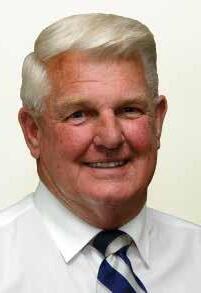
Cr Les Oroszvary
Les is a servicing Police Officer with 32 years’ experience. Les describes himself as a team player with a can-do attitude and brings leadership and integrity to the role of Councillor. Les believes that Greater Shepparton can regain its reputation as a premier city, a place where people are proud to live and work and where we are a model to other regions and municipalities. Greater Shepparton’s strengths are its people, its success stories, its strong cultural background, and its climate and location. During his term Les hopes to see the Council more engaged with ratepayers and citizens, and he is committed to listening to the community that elected him.
Committees
Goulbur n Broken Greenhouse Alliance (concluded as of 19 November 2013)
Goulbur n Valley Regional Library Corporation Board
Rumbalara Aboriginal Cooperative Working Party (concluded as of 19 November 2013)
Shepparton Show Me Committee
Development Hearing Panel Committee
Cr Michael Polan
Michael has been living in the area for 25 years, and for over 15 years he’s been in business as a wool buyer. After having been a Councillor and recently Mayor, Michael has learned a lot about how to listen and how to bring about change. Michael wants to put back into his community, and to restore pride in our region – and our Council. Michael wants people to be proud to say that they come from Greater Shepparton and that they love living here. He believes that we should pride ourselves on the fact that we are home to so many diverse cultures, bringing their stories and their food, which enhances our experiences and opportunities.
Committees
Arts Co-ordinating Group
Greater Shepparton Audit and Risk Management Committee
Municipal Association of Victoria
Shepparton Art Gallery Advisory Committee [SAM]
Shepparton Show Me Committee - [concluded as of 19 November 2013]
Victorian Local Governance Association
Development Hearings Panel [representative in the absence of Cr Oroszvary]
Cr Kevin “Gunna” Ryan
Gunna lives in Tatura where his family were original settlers. He has a dairy farm and a caravan hire business in Tatura. This is his sixth term as a Councillor for Greater Shepparton, and his big passion is the growth of Tatura Park. Gunna believes there is tremendous potential in Greater Shepparton, and great energy in our smaller townships and he wants to see Councillors work together to achieve the best for our region.
Fern has a degree in nursing and currently works at GV Health. She previously ran a maternity clothing store in Shepparton’s CBD, as well as operated a bistro restaurant in Tatura with her husband Craig. Fern has lived in Greater Shepparton for most of her life. She graduated from secondary school and chose to raise her family in Shepparton. Fern stood for Council to generate pride in our town and as a mum of three young children she is a credible and informed voice for the people. Fern will listen and advocate for better outcomes within the City of Greater Shepparton. Fern comments that there are so many good things about this region – thriving industry, retail diversity, a beautiful lake, our famous cows, abundant local produce, one of the top ten river walking tracks in Australia and the award winning vanilla slice from Tatura Bakery!
Committees
Disability Advisory Committee
Goulbur n Valley Regional Waste Management Group
Greater Shepparton Women’s Charter Alliance Advisory Committee – concluded in April 2014
Positive Ageing Advisory Committee
Festive Decorations Advisory Committee (from 19 November 2014)
Goulbur n Broken Greenhouse Alliance (from 19 November 2014)
Shepparton Show Me Committee (from 19 November 2014)
Cr Milvan Muto
(Disqualified May 2014)
Milvan was born in France and migrated with his family to the Shepparton area when he was an infant. He has lived in Tatura, Toolamba and now resides in Shepparton. Milvan was involved in the motor industry for 10 years and hospitality for 20 years, including Calzonys Restaurant and the Shepparton Hotel. He played senior Australian Rules football and soccer for many years and is a passionate supporter of all forms of local football. Milvan attended St Georges Road Primary School and Shepparton High School, before studying at TAFE. Milvan became involved in Council because he wanted to make a difference and improve people’s living standards.
Cr Dinny Adem
(Elected June 2014)
Cr Dinny Adem was born in Shepparton and resides with Rita, on a rural property in Shepparton East. Cr Adem and his wife have two daughters. Born and raised on a farm, Cr Adem has also worked for large corporations, as well as operating family owned businesses. His vision is to revitalise Greater Shepparton by attracting industry and other substantial employers to our municipality for the benefit of all. He believes that a financially responsible, inclusive and cohesive Council will be the start of a new beginning for Greater Shepparton.
Committees
Nil to date
July 2013 – June 2014 Meeting Attendance (Ordinary and Special Meetings)
Cr Jenny Houlihan 17/19
Cr Les Oroszvary 18/19
Cr Dennis Patterson 19/19
Cr Michael Polan 16/19
Cr Kevin R yan 18/19
Cr Fer n Summer 19/19
Cr Milvan Muto 5/6
Cr Dinny Adem 1/1
Our Executive
Gavin
Cator
Chief Executive Officer
Gavin Cator has more than 20 years of senior management experience in local government. He holds a Bachelor of Civil Engineering and a Graduate Diploma in Municipal Engineering. Gavin has also served in sector leadership roles including as President of Local Government Professionals (LGPro) in Victoria and as a National Director of Local Government Managers Australia (LGMA). Gavin is also a graduate of the Australian Rural Leadership Program and has a passion for leadership development. Throughout his life Gavin has been heavily involved in Australian Rules Football.
As the Chief Executive Officer Gavin is responsible for:
Assisting the Council in the update and implementation of long-term strategic directions in operational terms.
Providing leadership and authoritative advice to the Council and Committees on the strategic directions, policies and review mechanisms for Council.
Promoting and representing the Council to governments and government authorities in order to gain support and investment to achieve Council goals and best outcomes for Greater Shepparton.
Leading and developing the Council to ensure that it maintains its status as a high functioning organisation and that its functions are benchmarked against best national and international practice.
Direct management of organisational services:
Corporate Performance
–Advisory Committees
–Audit Committee
–Business and Service Planning
–Councillor Conduct Panels
–Elections
–Freedom of Information
–Gover nance
–Information Privacy
–Inter nal Auditing
–Procurement
–Risk Management
–Section 86 Committees
–Protected Disclosures
Marketing and Communications
–Brand, Media and Reputation
–Marketing and Communications
–Digital/Social Media
–Resource Production
–Shepparton Show Me
People Performance
–Human Resources and payroll
–Lear ning and Development
–Occupational Health and Safety
–Employee wellbeing
–Performance management
–Recruitment
Steve Bowmaker
Director Infrastructure
Steve has diverse experience in chartered accounting, consulting, health, finance, information technology and project management and was a founding member of the Greater Shepparton City Council Audit and Risk Management Committee.
Steve has a focus on delivering value for the community through best practice in the management and maintenance of our infrastructure assets and through the implementation of best practice project management processes across Greater Shepparton.
Steve is married with four children and lives in Dookie where he has been heavily involved in community planning and capacity building, umpires junior football, and he enjoys tinkering with his old American cars.
As the Director Infrastructure Steve is responsible for:
Projects
–Aerodrome Management
–Capital Works Planning
–Design Services
–Development
–Engineering
Recreation and Parks
–Park Construction
–Parks and Parks Fur niture
Maintenance
–Public Open Space
–Recreational Planning
–Showgrounds
–Tree Maintenance
Works
–Road Construction
–Roads and Road Fur niture
Maintenance
–Street Sweeping
–Drainage: Kerb and Channel, Footpaths
Strategic Assets
–Asset Management Planning: Fleet and Stores, Building Maintenance
–Property Services
–Saleyards
–Victoria Park Caravan Park: Asset Condition Surveys
–Asset inspections
Justin Finlayson
Director Business – to February 2014
Justin came to Greater Shepparton City Council from Benalla Rural City where he was employed as the General Manager Corporate and Community. Prior to this Justin was employed by PricewaterhouseCoopers. He is a Chartered Accountant and holds a Bachelor of Commerce Degree. Justin believes that through best practice business systems Council will deliver sustainable programs that are responsive to the expectations of the growing Greater Shepparton community.
Justin is a very proud father of two and spends all of his spare time playing with and enjoying his young sons.
As the Director Business until February 2014, Justin was responsible for:
Assets
–Strategic Asset Management
Finance and Rates
–Financial Accounting
–Rates and Valuations
–Revenue
Information Services
–E-services
–GIS
–Information Technology
Regulatory Services
–Animal Management
–Citizen Services
–Local Laws
–Parking Enforcement
Rosanne Kava
Director Business (Acting) – from March 2014
Rosanne has extensive experience at a senior level in local and Federal Government spheres. Rosanne was CEO at Gannawarra Shire for seven years and now works as a consultant doing placements in local government as well as strategic work, organisational reviews and investigations for local government and other organisations. Rosanne is a Chemical Engineer and holds Bachelor and Masters Degrees in that field. Her extensive federal government experience includes heading up corporate, policy program areas and three years on overseas posting at the Australian Embassy in Rome.
As Director Business (Acting), Rosanne held the same responsibilities as Justin, except for Strategic and Asset Management, which had been transferred to the Infrastructure Department.
Rosanne’s principal areas of focus at Greater Shepparton included the finalisation of the Budget, addressing outstanding procurement matters in the Directorate, team building and development of Managers, consolidating structures and addressing recruitment gaps within each of the three Departments of the Directorate to help improve internal and external service delivery.
Kaye Thomson Director Community
Kaye Thomson commenced her role as the Director Community with Greater Shepparton City Council in November 2012.
Kaye has over 30 years of experience in the health and local government sector. Prior to Greater Shepparton City Council, Kaye was with the neighbouring Moira Shire Council as Director Community Sustainability and other various roles over a 17 year period. Her passion is community engagement and capacity building, to ensure communities are involved in shaping their future. Kaye is committed to quality service delivery.
Kaye is married and has three children and enjoys spending time with her family and taking on volunteer roles in her community.
Her qualifications include general nurse, midwife, maternal and child health nurse, nurse practitioner – immunisation, Bachelor of Applied Science/Community Health and a Graduate Diploma Company Directors.
As the Director Community Kaye is responsible for:
Active Living
–Aquamoves
–Aquatic Program
–KidsTown
–Physical Activity Programs
–Stadiums
Riverlinks
Shepparton Art Museum (SAM)
Tourism and Events
Children and youth Services
–Aquamoves Childcare
–Early Childhood Educational Services
–Family Day Care
–Mater nal and Child Health
neighbourhoods
–Aged Services
–Community Engagement
–Community Planning
–Community Safety
–Community Strengthening
–Multicultural and Aboriginal Relations
–Social Planning
Libraries
Emergency Management
Johann Rajaratnam Director Sustainable Development
Johann is responsible for the Investment Attraction, Statutory and Strategic Planning, Environmental Planning and Building portfolios at Greater Shepparton City Council. Johann’s background includes strategic planning, environmental planning, government liaison and corporate planning experience. His work history is primarily in local government with a wide range of local government experience ranging from small coastal communities, growth area councils, inner city metro councils, and rural councils.
Johann is married and is nervously awaiting the birth of his first baby in November. Johann has several qualifications including a Bachelor of Science and Master of Social Science (Planning and Environment).
As the Director Sustainable Development
Johann is responsible for:
Building Services
–Building Approvals
–Building Enforcement
Environment
–Environmental Health
–Immunisation
–RiverConnect
–Sustainability and Development
–Strategic Waste: Landfill, Litter
Bins, Street Collections and Transfer Stations
Investment Attraction
–Business Centre
–Business and Industry Development
–Business and Industry Promotion
–Grants Facilitation and Co-ordination
Planning
–Statutory Planning
–Strategic Planning
–Strategic Transport Planning
Our Staff
Greater Shepparton City Council is one of the north east region’s largest employers. We employ 844 staff in a variety of permanent and temporary roles on a full‐time, part-time and casual basis. Three quarters of our staff also live within the municipality. This means our people are able to bring a local passion, perspective and knowledge to the services they provide.
Council provides a range of flexible employment arrangements. The tables below demonstrate a significant portion of the workforce is made up of part-time and casual staff at different levels within the organisation.
The Greater Shepparton City Council’s workforce has continued to increase with as of the 30 June 2014 there was 844 staff employed with Greater Shepparton City Council. The Council has continued to remain the same with the same workforce growth of approximately four per cent.
Employment Breakdown
EFT for Greater Shepparton City Council
Occupation type (full time, part time, casual)
Organisational Review – Good to Great
Over the last two and a half years our organisation has undergone a change process to enable to become more receptive to the needs of the community. This commenced in March 2012 with the undertaking of an Organisational Scan. The objectives of the Organisational Scan were to identify where the organisation could improve its performance and sustainability through:
Increased ownership and understanding of the Council plan
Increased operating efficiency in service delivery
Inform the service planning process
Efficient deployment and ownership of assets
The desired outcome from the Organisational Scan was to:
Detail areas where we believe the Council could gain efficiencies in service delivery
Identify assets surplus to council’s requirements
Determine whether there was corporate capability to implement potential improvements or what support is required to deliver
Identify where there are policy gaps inhibiting efficiency; and
Recommend an appropriate Organisational Structure and changes in operation, systems and processes to improve the performance of the organisation.
Whole Brain® Thinking
Whole Brain Thinking was introduced into the organisation in 2014 and was rolled out to Executive and Managers and eventually will roll out to Team Leaders and employees throughout the year. As we know results drive success of the organisation so the faster and smarter we can reach our critical organisational goals, the quicker we will see a return on the organisations efforts.
It is critical that we have every aspect of our combined organisational intelligence working for us, from our problem solving abilities and creativity, to technical expertise and management discipline, otherwise as an organisation we will not have the advantage we need to be effective and efficient in today’s ever changing and challenging environment.
To enable this to occur it is planned to introduce Herrmann International’s Whole Brain Technology® which is based on proven research into the organisation to assist all employees to understand how people think and communicate differently. By drawing on the combined analytical, organisational, strategic and interpersonal skills that it takes to succeed today, Greater Shepparton City Council as an organisation will be able to harness the thinking styles of every individual.
The Whole Brain® Advantage will give our employees:
insight into their own and others’ thinking styles
tools to leverage their natural preferences
skills they need to operate outside their preferences when the situation arises.
When employees put Whole Brain Technology® to work, they will approach problems, communications and planning more effectively, and will break out of their individual self-limiting patterns that interfere with their individual productivity, innovation and creativity. With better thinking across the whole organisation we will get better results for our community.
This thinking is well used across the world with nine out of 10 Fortune 100 organisations relying on the Herrmann Whole Brain® Advantage as a strategic approach. It helps these organisations remain successful and nimble, even with the changing world and the issues and challenges that organisations face.
Transitional Management Plan
A Transitional Management Plan was adopted with 117 transitional tasks to be undertaken from June 2012 over the next two years. Each task identified required the preparation of a transition management project plan. As at June 2014, 56 per cent of these project plans had been completed and with work commenced on all projects. Each task required a project plan with all plans to be completed by the 31 December 2014.
Council receives quarterly reports from the CEO in which he provides an update for Councillors in the progress towards implementation of the Transitional Management Plan actions.
Human
Resources
As a local government organisation and a business it is important that we understand our current workforce and the Legislative framework that we operate under.
Presented to Executive
Adopted by Council 17 July 2012
Major items required to be addressed by the preparation of Project Plans
Template designed based on Prince2 methodology
3. PROJECT PLANS
117 items were identified
Project plans reviewed by Excecutive
56% completed by June 2013
Quarterly Reports on TMP to Council
Completion of TMP by 31 December 2014
Legislation requires a Council to have an organisational structure and employees in place to effectively manage the operations in accordance with the Council Plan. The Council’s existing organisational structure is based on functional activity and common objectives in order to meet the community’s needs, provide quality and efficient services, support the stimulation and strengthening of the local economy and provide efficient and effective administration for the organisation.
Under the existing organisational structure, a range of full-time, part-time and casual employees are employed, with a diverse skills base across a wide range of disciplines. The Council’s 2014 Enterprise Agreement should be certified by Fair Work Commission early next financial year and shall remain in force until 30 June 2017. The agreement encourages workplace flexibility and multi-skilling and delivers to employee’s sound terms and conditions of employment.
1. TRANSITION MANAGEMENT PLAN
2. PROJECT PLANS
Staff Support
Work life balance is an increasingly important phenomenon in modernday times. Having an employer who is supportive, committed and flexible creates an opportunity to adjust work arrangements to meet individual circumstances. This results in many benefits for the employee while creating significant wins for Council: improved productivity, engagement and retention, and the ability to attract engaged employees.
Early Intervention - Council has commenced actively managing its work cover claims not only in an effort to reduce its work cover premiums, but more importantly to ensure that those employees impacted by work related injuries do not have any time away from the work place, and if they do that time is minimised.
Part of this approach is to provide for all employees a health and wellbeing initiative that enables employees to access a provider of injury treatment and management, with results that indicate that with three to four treatments over 90 per cent of employees are able to remain on full duties and full hours throughout the treatment period.
Employee Assistance ProgramCouncil provides employees and family members the ability to access a confidential professional service to enable them to discuss matters of either a work related or family matter that may be impacting on their work or personal lives.
Organisation Job Analysis
Constant review of aligning the organisation functionally will be conducted on a regular basis using a Job Analysis/Business Case template. Managers of Departments will be required to conduct a Job Analysis and prepare a Business Case for every role where there is an exit or termination and also to request a new position into the structure, including roles which are funded. This will allow for a review functionally for the position and take into account budget implications for Council.
Building our Workforce Plan
Greater Shepparton has embarked on building our Workforce Plan, based on a number of phases to ensure we gather the best data possible and conduct a thorough review, to enable a successful gap analysis to be undertaken.
Council will be a participant in the MAV Workforce Planning Model in which a small number of Councils will work together to improve their workforce planning and develop a model that will be able to be introduced into Local Government across Victoria.
Cultural Change
The need to review culture was highlighted during the organisational review. To enable objectives and desired outcomes to be achieved it is vital that a workplace undertakes regular cultural reviews. Organisational culture is defined as the shared values, norms and expectations that govern the way people approach their work and interact with each other.
The capacity and skills of the organisation’s employees and the capacity of people to work in teams is paramount to high satisfaction and performance. The seven categories below describe the key elements of the Business Excellence Framework and these were examined as part of the cultural assessment of the Organisation:
Learning Organisation
In the last two years Council embarked on enabling and positioning itself as a learning organisation, one which is committed to providing ongoing learning and development opportunities for all employees. The strategic vision is to enable its employees to achieve multi skilling, increase flexibility, and enhance productivity, performance, personal development and career development opportunities.
Council will continue to provide learning and development opportunities to:
Achieve corporate objectives, initiatives and priorities, as set out in the Council Plan
Enable continuous improvement
Implement and improve quality management systems
Enable effective job and work redesign
Improve career opportunities for, and job satisfaction of employees
Provide specific skills to ensure the effective and efficient operation of the organisation
One of the purposes of learning and development programs is to ensure that employees acquire and utilise the specialist skills and knowledge, managerial and interpersonal skills to perform the duties of their current position and to prepare them for the future requirements of Council in meeting the needs of the community.
Succession Planning
As part of the Workforce Planning work, Council is working on completing a Succession Action Plan which will outline an implementation plan for senior management positions and all other positions (and position groups) which are identified as critical.
Succession planning is the consideration of current and future organisational capability and staffing needs, and strategies to ensure that these can be met.
This is a major issue for Greater Shepparton City Council as with an ageing workforce (in some parts of our operations), which is intensified by the need to attract and retain younger workers who are seen to be mobile by nature.
Our succession planning will focus on identified critical roles, specifically the skills that make these roles critical, and seek to ensure there is current and future capacity for these positions to be filled with appropriately skilled inhouse staff.
Our succession planning will include reviewing processes to determine if there are more effective ways to deliver services and therefore train our employees accordingly. It is also important that GSCC implements staff learning and development strategies which are aimed not only at ensuring that employees have the skills to deliver the Council Plan and Council’s strategic and operational goals, but also to ensure that Council has a generous flow of internal candidates to fill senior roles as they become vacant.
All positions/position groups will also be assessed in terms of current risk and anticipated residual risk following the implementation of identified action plans. Risk assessment will be based upon a risk assessment matrix to be developed in accordance with this process.
Occupational Health and Safety
Council takes its responsibilities for providing a safe work place for its employees very seriously. To that end the following initiatives have been introduced in the last 12 months:
Health checks for all employees
Fruit to the workplace every week
Road Warrior Program
Wellbeing Program
Council Sponsored Gym Membership program
Work break program
The OHS Committee is valuable for our organisation, with the aim to facilitate a culture of safety throughout Council and promote the health, safety and wellbeing of all employees, customers, contractors, volunteers and visitors within all workplaces.
Awards and Recognition
Recognition Awards
On a quarterly basis, we acknowledged staff for their outstanding efforts by nominating them for an award in the following categories:
Operational Excellence
Above and Beyond
Living the Values
Customer Service
Consistent Effort and Contribution Staff are nominated for the awards by another staff member, or a customer. They receive a certificate to acknowledge their contributions to the organisation at an all staff meeting.
The recipients of the awards from July 2013 to June 2014 were:
Operational Excellence
Julie Muir
Aquamoves Emergency Response Staff - Connor Thompson, Abbey Shead, Lauren Murphy, Tim Dooling, Sarah Lewis
KidsTown Team - Steve Wilson, Tracey Toy, Graham Walkden, Ken Morelli, on behalf of the whole KidsTown team
Above and Beyond
Andrew Farrell
Jayson Trewin
Living the Values
Nil
Customer Service
Nil
Consistent Effort and Contribution
Nil
Years of Service
On a quarterly basis we recognised staff for their length of service. Staff receive a certificate signed by the CEO and Mayor. Those who had completed 10 years of service or more also receive gift vouchers. Those who had completed 20 years of service or more are also acknowledged at the annual recognition dinner. The recipients for the 2013/2014 financial year are detailed below.
Recognition of Retirement
When a staff member retires after 20 (or more) years of services, they receive a letter from the Mayor. A morning/afternoon tea is held in their honour, and they are also invited to attend the annual recognition dinner, along with those staff who have completed 20 years or more of service.
2013/14 Years of Service
40 years
Rita Jenkins
35 years Nil
30 years
Brendan Walsh, Ivan Holm
25 years
Barbara Twite, Glen Stewart, Jo Palma, Sherridan Myers
20 years
Anthony Tamburro, Greg Howard, Rodney Warren
15 years
Colin Kalms, Jessica Vanerdonk, Judith Pedretti, Lisa Eade, Patricia Preston, Pina Tiroli, Roslyn Trevaskis, Sam Costa
10 years
Angie Frame, Angie Spiewak, Carmen Nicholson, Cheryl Squire, Chris Carroll, Chris Giles, Debra Falla, Doug Cousins, Keith Arundel, Ken Morelli, Kirby Cirillo, Leigh Simpson, Linda Bonner, Malcolm Damon, Mally Young, Neil Dickson, Nerida Tobias, Nick Rowston, Nicole Byrne, Pam Gaylard, Paula Gullick, Peter Alexander, Rosie Dickens, Sarina Robison, Sean Harrap, Shane Newling, Talia Palmer, Tim Zak, Tina Follett, Wendy Pogue
5 years
Amy Sadler, Andrew German, Andrew Lancaster, Angela Caltabiano, Angela Sellwood, Anne Allen, Bec McCrindle, Brett Keele, Brooke Gundrill, Caitlin Bourke, Chris Adams, Christine Perkins, David Rowan, Edwina Breen, Graeme Pollard, Grahame Ryan, Jack Brazel, Jenna Barry, Joan McDonald, Joanne Jarred, Jodie McPhee, Krista Cox, Kristy Woodman, Leanne HoukesWilson, Leonie King, Leonie Pomeroy, Lesley Thompson, Liz Connick, Lynne Parker, Maree Agius, Melissa Moxey, Michelle Swift, Pembe Scarcella, Rachael Newman, Raelene Ferrari, Raymond McNally, Rebecca Bertone, Rebecca O’Connell, Ricky Hoare, Romola Hopman, Rose Massloch, Stephen Whitford, Steven Iaria, Susan McLean, Wendy Matthews
Key Achievements
Key Achievements
Greater Shepparton City Council’s vision is for a greater future for the municipality as the food bowl of Australia and as a sustainable, innovative and diverse community.
This vision is the cornerstone of the four-year Council Plan which is developed every four years and updated annually. The 2013–2017 Council Plan has been created following the election of the Council in November 2012.
Each year, Council’s work plans and budget are set against the backdrop of the priorities identified in the Council Plan. The following is a report of the highlights from the first year (2013/2014) of the four-year plan.
Our strategic objectives are:
Active & Engaged Community (Social)
We will enhance social connectedness, physical and mental health and wellbeing, education and participatory opportunities in order to improve liveability and a greater range of community services.
Enhancing the Environment (Environment)
We will conserve and enhance significant natural, environmental and cultural heritage.
Economic Prosperity (Economic)
We will promote economic growth, business development and diversification, with a focus on strengthening the agricultural industry.
Quality Infrastructure (Built)
We are committed to facilitating growth in a consolidated and sustainable development framework and will strive to provide urban and rural infrastructure to enhance the performance of the municipality.
High Performing Organisation (Leadership & Governance)
We will deliver best practice management, governance, administrative and financial systems that support the delivery of Council programs to the community of Greater Shepparton.
GOAL 1
Active & Engaged Communities (Social)
Highlights
Seven point rise in 2014 Community Satisfaction Survey Results
$433,000 in funding through Living Libraries from the State Government for the Shepparton Library upgrade
Safer City Camera Network launched in May
Katandra West, Tallygaroopna, Congupna Community Plans were endorsed by Council
Emerge Festival held in March with 3,500 people in attendance
Inaugural St Georges Road Food Festival with more than 2,000 people in attendance
22,000 attended SheppARTon Festival events throughout the month of March
Eight Citizenship Ceremonies held with 250 members of the community becoming naturalised and 100 of those at the Australia Day ceremony
926 new babies and their parents supported
Mater nal and Child Health Key Age and Stage Visits – a total of 7,769 in 2013/14, up from 7,673 the previous financial year
211 new-parent groups
Additional 2,457 Mater nal and Child Health consults and 1,624 phone consultations
749 children in three long day care centres, occasional care and family day care
1,017 kindergarten enrolments for 2013 – 467 of these children are currently attending Council Kindergartens
31,317 meals on wheels delivered
23,825 hours of domestic assistance provided
11,210 hours of personal care provided
12,489 hours of respite care provided
Activities in the Parks program is awarded the Aquatics and Recreation Victoria Award for Innovative Program of the Year
Shepparton Art Museum (SAM) Foundation established
1. Continue to enhance Community Capacity Building
Develop and implement neighbourhood planning within the Shepparton community.
Continue to work with our communities to implement their community plans.
Commenced consultation for Neighbourhood Planning in Kialla Lakes and Locality Planning in Arcadia.
Finding suitable community engagement tools.
Review, amend, implement and monitor Council’s community consultation and engagement strategy.
Develop effective partnerships with agencies to deliver improved community wellbeing (all age cohorts) outcomes.
A full review of community planning priorities was undertaken in October / November.
Council adopted the Community Planning Policy in December 2013, which is supported by an operational Directive and Guideline. Katandra West, Tallygaroopna, Congupna Community Plans were endorsed by Council in the 13/14 financial year.
Continue to support the implementation of the plan and support internal departments with the delivery of community consultation.
Ensure Policy and Directive is representative of all parties and capabilities.
Final endorsement of the Kialla Lakes plan due in October. Final endorsement of the Arcadia Plan in September. Continuation of additional Neighbourhood Plans.
Continue to support communities with the implementation of their plans.
Ensure our 10 year capital works program is linked to the community and neighbourhood plans.
The 2014 Community Satisfaction Survey Results saw a 7 point rise from 51 in 2013 to 58 in 2014 in overall performance. There was a rise in performance across all performance measures (Community Consultation, Advocacy, Customer Service and Overall Council Direction).
Council endorsed the Hume Region Preventing Violence Against Women & Children Regional Strategy 2013-2017 at the Ordinary Council Meeting in September 2013.
The Implementation of the Integrated Project Management Software allows for the ability to link projects to community and neighbourhood plans.
Developing new tools and resources that are easy to use in all Council’s engagement activities.
Community perception of the organisation is difficult to change
Managing the expectations on Local Government.
Review the current strategy and promote tools available across the organisation.
To aim for an additional rise across all Performance Measures and to meet or better the Regional centres average in 2015
Continue to support the implementation of the strategy where possible.
Ensuring all departments are aware of the community and neighbourhood plans priorities.
Continue to improve the quality and detail of the link with capital works and community, neighbourhood and locality plans.
2. Develop and implement a strategy for improving education opportunities for all ages
Develop an Education Strategy that includes the principles of lifelong learning.
Review and amend (if required) Council’s Higher Education Strategy with the aim to improve the aspirational goals of students to gain further skills by attending higher education.
In association with education providers and industry/business develop opportunities to assist with the attainment and retention of skills to support industry and business development in Greater Shepparton.
Council currently has a 2011-2015 Strategy that identified three key actions commencing with the establishment of a leadership group. This was overtaken by the commencement of the Lighthouse Project in Shepparton, and Council is actively involved in this project.
Council’s Education Strategy will be reviewed during the 2015/16 FY.
Council is currently working with education providers to determine the gaps that exist in the provision of education and skills to meet business and industry needs. Discussions have commenced most recently with Deakin University.
Greater Shepparton has very low participation and aspiration rates in the tertiary education sector.
Council will continue to work actively within the Lighthouse Project in Shepparton.
Gaining interest and participation of stakeholders.
Tour of Deakin facility being planned for November 2014 for industry stakeholders.
3. Ensure liveability options are always considered in our decision making activities
Develop partnerships with Federal and State governments, statutory agencies, non for profits and private business to leverage growth within Greater Shepparton.
Council has been awarded $5,432,396 by the Federal Government for infrastructure projects that will help realise additional housing by 2016. Council has used this funding to help construct drainage, open space and traffic infrastructure within the Mooroopna West Growth Corridor over the past year to help support future residential development in Mooroopna. To help realise additional dwellings, Council will provide a $40,000 grant to eligible purchaser of the first sixty six dwellings within the corridor. These infrastructure works will be completed before the end of 2014, and the dwellings will be constructed and occupied before mid-2016.
Greater Shepparton has very low participation and aspiration rates in the tertiary education sector.
Council will continue to work actively within the Lighthouse Project in Shepparton.
Council has also engaged the services of the Metropolitan Planning Authority to help prepare Precinct Structure Plans and Development Contributions Plans for two strategic growth corridors in Shepparton. These corridors will contain in excess of 4,000 lots and will satisfy the majority of the Municipality’s housing needs over the next three decades. These plans will be finalised in late 2014 and will be the subject of planning scheme amendments in 2015. It is envisaged that residential development will commence within these corridors from 2017.
Develop, deliver and implement community safety initiatives with the State Government, Police, State agencies and the community, including but not limited to CCTv
Continue to implement the Greater Shepparton City Council Community Safety Plan
Renew and implement the Universal Access and Inclusion Plan.
The Safer City Camera Network (CCTV) was launched in May 2014. Council continues to provide support to Cool Heads and Street Rider.
Funding opportunities.Continue to strengthen partnerships for the delivery of community safety initiatives.
The Greater Shepparton Safer Community Advisory Committee reviewed actions and achievements of the Safer City Strategy 20112014. This strategy is now complete.
Council adopted the Universal Access and Inclusion Plan 2013 – 2017 on 17 September 2013. With the support of the Disability Advisory Committee a key achievement was hosting a celebration event for International Day of People With A Disability.
Funding opportunities for further partnerships.
Development of a new Community Safety Plan that will encompass the whole municipality.
Funding for additional opportunities. Continue implementation of the plan and an annual review.
Continue to implement the Positive Ageing Strategy objectives.
Continue to support the ongoing planning and resourcing of Emergency Management.
Continue to implement the Early years Plan objectives.
The Positive Ageing Strategy 2009 – 2014 was completed on 30 June 2014. Highlights from the strategy included: development of a Positive Ageing Advisory Committee, development of a wallet sized seniors’ directory and facilitation of forums topics included, Home Safety and Security.
Greater Shepparton City Council’s Emergency Management plan was successfully audited, August 2013.
Completion of the Enhanced Best Start project (improving breastfeeding rates and access to Maternal and Child Health Services and kindergarten for vulnerable families) Development of the Vulnerability Tool and Ready Services Audit tools, Implementation of the Mother Goose model and program
Development and launch of the State of Greater Shepparton’s Children Report Development of Language and Literacy Professional Development package for early childhood educators.
Further opportunities for funding to support actions.
Development of a new action plan.
Develop, adopt and implement the Greater Shepparton City Council Municipal Health and Wellbeing Action Plan.
Council adopted the Municipal Health and Wellbeing Action Plan 2013-2014 at the December 2013 Council Meeting. Some achievements include: a Health Career Forum held in September, installation of five universal access water fountains, continued participation in National Tree Day, extension of the Smoke Free Outdoor Dining Trial.
Defining Council’s role in health services in the community.
The increased prevalence of ICE in the community.
Greater Shepparton Flood Management Plan to be updated in August 2014.
Development of the next annual action plan.
4. Provide sustainable community services to our community
Review the provision of library services, including potential partnerships and infrastructure requirements.
Establish a Service map that provides information on the services that are available to our community ensuring it is demographic specific data.
Continue to lobby and advocate on behalf of those disadvantaged citizens within Greater Shepparton.
Successfully applied for Living Library Capital funding from the State Government for a building upgrade of the Shepparton Library.
Not achieved.
Continue to provide Home and Community Care (HACC) Services to the most vulnerable members in our community. Services include assessment, case management, home care, personal care, respite care, Meals on Wheels, home safety services and Social Connections.
The vacant Business and Services Analyst position.
Complete the Shepparton Library upgrade.
Seek funds to upgrade the Tatura Library.
Undertake the service plans. Service Planning tender to be advertised in August 2014, will contract a consultant to undertake Service plans for the Organisation throughout 2014/2015
The Commonwealth Aged Care Reforms and proposed changes to HACC.
Monitor and appropriately support the provision of quality children’s services within the municipality.
Development and implementation of the Vulnerability (identification) tool and professional development for early childhood educators and maternal and child health nurses to better support vulnerable and disadvantaged families.
A ‘Ready Services’ audit tool was also developed and implemented across all kindergarten and maternal and child health services this year to measure how ‘family friendly, welcoming and accessible’ they are. Successfully supported all children’s services to achieve level of ‘meeting’ under the National Quality Framework(NQF) guidelines.
Children’s Services have achieved ‘meeting’ as a base standard and some have achieved ‘exceeding’. Challenge will be providing systems that support all services to achieve Exceeding under NQF guidelines as they are a variety of service types.
Continue to advocate for and engage with our senior residents to plan for an ageing community. Continue to provide a quality service to our community.
Continue to monitor changes to the aged care sector.
Apply for additional Commonwealth Home Care Packages.
Support children’s services to all reach Exceeding level in at least two of the seven standards in the NQF.
Ensure the next Council Plan recognises the Council’s role in the provision of Early Childhood health, education and care services.
5. Embrace and strengthen cultural harmony and diversity
Continue to engage and partner with our Indigenous community to support improved opportunities and outcomes in employment and health.
Five Cultural Awareness sessions were offered to staff and community members over the 13/14 year. Council continues to partner with ASHE to develop a Work Experience Program for young aboriginal students.
A respecting difference forum was held in June 2014 to discuss the proposed Commonwealth changes to the Racial Discrimination Act.
SAM partnered with Gallery Kaiela in the Indigenous Ceramic Art Award providing six months of workshops and a seminar with stolen generation artists and the local indigenous community and previous national award winners. Artists at Gallery Kaiela also provided workshops and community engagement opportunities at SAM. This initiative lead to a ceramic exhibition at Gallery Kaiela and also the establishment of a ceramic studio.
Finding enhanced opportunities to discuss common ground.
Creating pathways within Council for Indigenous people to further engage across a spectrum of services.
Ensure Close the Gap is reflected in Council policy and partnerships moving forward.
Ensure Council’s activities and events support and enhance its reputation for cultural harmony and inclusiveness.
Emerge Festival held on 3 March, 2014 and sponsored by Council brought together locals and visitors to celebrate Indigenous and emerging cultures. There was very strong representation from the indigenous community.
Riverlinks was successful in securing an Engage grant with key objective to engage with CALD communities to deliver arts programs in 2015 and beyond.
Riverlinks presented Djuki Mala (Chooky Dancers) in 2014 with up to 1,100 people attending including strong representation from indigenous elders and broader Aboriginal community.
SAM presented community cultural development programs and events throughout the year, employing artists from diverse cultural backgrounds in the delivery of activities at SAM.
Engaging across diverse cultural spectrums can be challenging but strong relationships have now been established.
Working with specific cultural groups requires more resources than catering to a general populace, and skills in engagement.
Emerge Festival to be presented again in 2015 as part of the SheppARTon Festival.
GOAL 1
Active & Engaged Communities (Social)
Continue to monitor, review annually and implement the Greater Shepparton City Council Cultural Diversity Strategy.
Recognise and take advantage of opportunities to celebrate our diversity.
Implementation continues of Council’s Cultural Diversity and Inclusion Strategy.
Key achievements include:
Continued to be a partner in the Goulburn Valley Integrated Settlement Planning Committee
Declaration to be a Refugee Welcome Zone
Signed member of the Racism It Stops W ith Me Campaign
Development of a multi-faith prayer and contemplation room for staff and visitors at Welsford Street
Respecting Difference Forum
St Georges Road Food festival held in May saw over 2,000 people attend the inaugural event.
Council supported a number of celebrations including:
Anniversary of National Apology Day
Unity Cup
Sorry Day
Reconciliation Week
Emerge Festival
NAIDOC Week
Cultural Diversity Week
Refugee Week
LEAD Celebration Dinner
Ensuring that the many cultural communities in our municipality are engaged and represented in our strategy and actions requires individual approaches that are sympathetic to the cultural needs of the community and this can be a slower process.
Further implementation of the Strategy, and commence consultation for the development of a new strategy.
Funding opportunities that provide for Council to assist building the capacity of the cultural communities to host their own inclusive events.
To hold an annual St Georges Road Food Festival in 2015.
Emerge Festival as part of SheppARTon Festival program in 2015.
6. value arts, culture and heritage as an integral part of our dynamic community
Continue to support and promote arts events.
Continue to undertake the Greater Shepparton City Council Heritage Study by implementing Stage 3 - gap study.
Council and Riverlinks sponsorship of key arts events and such as the ANPA (Piano award,) Shepparton Young Instrumentalist Awards, Playing for Pleasure, Orchestra Victoria On The Move, Shepparton Brass Concerts, Goulburn Valley Concert Orchestra concerts, Emerge Festival and Georgy Awards.
Sponsorship of In Your Town season taking professional arts products to smaller towns including Dookie and Tatura. Partly funded through Arts Victoria.
Community Arts Fund established enabling artists and organisations to apply for financial support for arts projects.
SAM delivered a successful program of curated exhibitions, and public programs, delivering several new publications and new educational resources.
SAM’s program was picked up extensively in local, Victorian and metropolitan media, driving visitors to the region.
Council has resolved to allocate $40,000 in the 2014/15 financial year to prepare the Greater Shepparton Heritage Study Stage III: Rural. This study will mainly focus on identifying places of cultural heritage significance in rural areas of Greater Shepparton.
Forming partnerships with community arts organisations requires extensive and ongoing time and resources.
Cost of presenting in smaller towns is substantial. Grant from Arts Victoria is an annual decision rather than longer term cash commitment.
Community Arts Fund established 2013/14 to take applications from 1 July 2014. Fund is only $20,000.
Grow relationships with community partners and to program similar programs in 2015 and beyond.
In Your Town projects committed for 2014/15 and 2015/16.
Manage grants program and seek additional funding for 2015/16.
Given the size of the municipality, there are significant challenges to including as many places of cultural heritage significance as possible in the study. Council’s Heritage Advisory Committee is preparing a list of possible places of significance for a future consultant to assess and include in the study. It is foreseen that this rationalised list of places will save significant administrative and transport costs. The Planning Department has also sought additional funding from Heritage Victoria but has been informed that no such funding has been provided in the 2014’15 financial year. When a brief has been prepared, the Planning Department will contact the Rural Flying Squad for additional funding for the study.
A project brief for this study will be prepared in early 2015 in conjunction with Heritage Victoria and the study will be prepared in mid-2015.
Confirm external funding. Present to Councillors.
STRATEGIES/ACTIvITIES
Ensure that the Shepparton Art Museum, Riverlinks and Westside Performing Arts activities continue to deliver quality and diverse events aimed at increasing public participation.
Fully delivered Riverlinks performing arts season to Eastbank Centre, WestSide PAC and smaller towns.
Riverlinks applied for and received Australia Council “Engage” grant to fund audience development projects in CALD, teenager and young adult market.
Engagement with CALD audiences as part of Emerge Festival programming.
Riverlinks presented Djuki Mala (Chooky Dancers) in 2014 with up to 1,100 people attending including strong representation from indigenous elders and broader aboriginal community.
Active & Engaged Communities (Social)
CHALLEnGES
Competition for audiences means audience engagement activities are essential.
Managing a large scale ambassador program and focus groups as part of the Engage grant for 12 months will be challenging.
Developing effective communication tools with CALD communities especially where potential cultural barriers exist.
An increase in attendance needs to be managed in line with the broader objectives of SAM, the quality of offerings and depth of content behind exhibitions and educational resources, and the diversity of people for which the Museum caters.
nEXT
Renew and implement the Arts and Culture strategy (which includes public art).
Investigate the establishment of a Shepparton Arts Museum foundation.
Continue the feasibility investigations for a new location for the Shepparton Arts Museum.
Funding not approved for the strategy in 2014/15 budget.
Riverlinks and SAM to complete separate business plans relevant to their key activities and objectives with Riverlinks to be considered a stakeholder in longer term SAM strategies especially in regards to potential relocation of SAM.
The Shepparton Art Museum Foundation was established as a Company Limited by Guarantee, with Peter Quinn appointed as inaugural Chairman.
SAM sought funding to assist in conducting a Feasibility Study into future options for Shepparton Art Museum; including potential sites for a new SAM.
Aligning strategies during a period when a variety of options or potential outcomes are to be considered.
Identification of resources for new strategic planning work.
Capacity to partner with Committee for Greater Shepparton in the Cultural Strategy work they are undertaking.
Establishing Governance Manual, MOU with Council and Strategic Plan.
Consideration of future impact and operational implications of an expanded art Museum. Extent and complexity of stakeholder engagement.
2015 Season launch in December 2014 and ongoing annual seasons of high quality performing arts.
Managing ambassador program and focus groups in 2014/15.
Emerge Festival 2015 arts programming supported by Riverlinks.
SAM is continuing to plan its programs into the future and work within a sustainable business model delivering accessible and engaging programs within its budget. A constant increase in participation numbers is not an end point and the Museum audience numbers may well have reached their saturation point in the context of the current facility and resourcing.
Also as it is an objective of the Museum to engage diverse audiences, the needs and drivers for visitation are also varied requiring the Museum to cater to a wide range of needs rather than the ‘maximum’ number of visitors.
SAM continues to be focussed on the quality of experience and also the participation rate of visitors in programming or events during their visit, as well as the diversity of people accessing the facility.
SAM and Riverlinks to prepare departmental strategic / business plans with a focus on longer term arts strategies.
Review of approach to strategic work following SAM Feasibility Study.
Continue to partner with the Foundation in the future of SAM.
Feasibility study completed and report presented to Council. GOAL 1
GOAL 2 Enhancing the Environment (Environment)
Highlights
Funding for Master Plan for the extension of the shared paths through the Shepparton Regional Park between Mooroopna and Shepparton
Environmental Sustainability Strategy completed
Waste and Resource Recovery Management Strategy adopted
STRATEGIES/ACTIvITIES
1. Ensure the environment is a major priority in planning for the future Ensure that development applications provide sustainable management plans which incorporate sustainable building design concepts, water use and stormwater management plans.
Advocate for and lobby governments to improve community access and safety within the Lower Goulburn national Park.
Advocate, lobby and work in partnership the state government to minimize the fire risk to our community on state government controlled land.
Amendment C112 is about to go on exhibition to strengthen the requirement in the Infrastructure Design Manual (IDM) for developments to have stormwater management and quality considered. The MSS has numerous considerations of sustainable design but it has been identified that these need to be made stronger and more comprehensive.
Through RiverConnect, an open dialogue continues with state government through Parks Victoria to improve community access. A key outcome is the grant received by council to develop a Master Plan for the extension of the shared paths through the Shepparton Regional Park between Mooroopna and Shepparton.
Regular meetings occur to determine management actions by Parks Victoria on State Government controlled land. Through RiverConnect and Council’s development of the Boulevard Bush Reserve Environmental Management Plan, a detailed fire risk program has been developed. The reserve is owned by Council and Parks Victoria.
The sustainability sector is rapidly changing and developing. It can be a challenge to keep up to date with best practice.
Recent reduction of Parks Victoria staff has put extra strain on local resources to respond to requests.
Development engineers to ensure IDM integrates changes to cover sustainable management plans.
Implementation will require the submission of budget bid to employ a consultant to integrate into the Planning Scheme.
Complete Master Plan and seek funding to implement.
Continue regular meetings occur to determine management actions by Parks Victoria on State Government controlled land. Ensure the actions in the Management Plan are followed.
Ensure that development applications take into account the importance of agricultural land to the Greater Shepparton community and its economy.
The Greater Shepparton Planning Scheme sets out the importance of agriculture to the municipality’s economy.
The Hume Regional Plan identified the importance of agricultural land in the municipality by including the land as ‘strategic agricultural land’.
Planning decisions in rural areas seek to protect agricultural uses from encroachment from incompatible uses particular dwellings and non-rural commercial uses.
Planning officers also promote investment into agricultural developments both on farm and food processors by making timely decisions on relevant planning applications.
Notable applications include:
Moraitis tomato green house facility
320,000 bird broiler farm
Installations of pivot irrigators
Pactum dairy facility
Improvements to TMI and Tatura Abattoirs
Work with Department of Primary Industry, Goulburn-Murray Water, University of Melbourne and other municipalities to ensure the use of irrigation water is both innovative and maximised.
Through the Municipal Catchment Coordinator role, regular meetings occur between Goulburn-Murray Water and council to ensure open dialogue of the sustainable use of irrigation water and to ensure the planning department are abreast of statutory considerations.
CHALLEnGES
Recent government changes to the Farming Zone to allow nonrural commercial uses in rural zones places pressure on agricultural land to accommodate warehousing and light industrial uses that should be located in Industrial areas.
Preservation of agricultural land can mean that hard decisions need to be made such as not allowing some rural subdivisions or rural dwellings. These decisions are taxing on all involved and the resolve to make these decisions needs to be reinforced by senior leaders including Council.
Regular attendance by key partners can be challenging.
Allocate funding to allow Council’s strategic planners to re-introduce a non-rural uses policy into the planning scheme to protect agricultural land from being used as a cheap alternative to industrial land.
Continue to facilitate agricultural developments through the planning system whilst protecting agricultural land from inappropriate non rural developments.
Continue meetings.
Finalise, adopt and commence implementation of the Environmental Sustainability Strategy.
Investigate the opportunities that are available to Council to enable council to support renewable energy options.
Development of the Environmental Sustainability Strategy.
Investigate the opportunities that will enable council to support the growth of solar usage a within the city.
Council has committed to investing $60,000 on an energy reduction plan that will provide guidance over the next five years in matters relating to energy reduction – in particular our reliance on black energy (coal).
A key part of the plan will be to investigate renewable energy options including the installation of large scale solar.
Council now purchases green energy on all of its electricity supply contracts.
Held discussions with Moira Shire regarding partnering on a virtual solar power plant. Greater Shepparton City Council were eligible for the funding but Moira was successful teaming up with Swan Hill Shire and University of Technology Sydney. Council is a partner in this project and will be party to the outcomes.
Commented on the MAV Environmental Upgrade Agreement (EUA) petition to be included in State Legislation (amended in July 2014).
Council has supported Goulburn Valley Community Energy initiatives.
Council is financially supporting the Tatura Renewable Energy feasibility project.
The debate and subsequent repeal of the Federal Clean Energy Act (2011) has led to uncertainty for business investing in solar power. Many incentives have been removed because of the repeal. This may make it less attractive for private business to invest in solar in the immediate future.
Finalise ESS and present to Council for adoption. Finalise integration into Interplan and staff workplans.
Review, adopt and commence implementation of the Waste Management Strategy.
Review and implement the Greater Shepparton City Council Roadside Management Plan.
Council has adopted the Waste and Resource Recovery Management Strategy and is beginning to roll out some of the actions contained within the strategy.
Council has committed budget to engage a consultant to review the Roadside Management Plan. The project brief is being finalised.
Educating the general public of changes to waste management processes.
Continue to partner in Virtual solar project. Once detail of EUA’s is received, pass information onto Investment Attraction for business community.
Continue to support Goulburn Valley Community Energy. Council continue to support the Tatura Renewable Energy feasibility project.
Implement full organic collection service for urban properties by July 1 2016.
Finalise project brief, undertake quotation process and engage consultant for review.
GOAL 3
Economic Prosperity (Economic)
Highlights
Secured $13.4million funding over four years for the redevelopment of the Shepparton Sports Precinct
Shepparton Show Me Marketing Strategy and Plan completed
Shepparton Show Me sponsored 22 events to the value of $300,399
Vaughan Central $3million retail precinct redeveloped and branded
Total visitors to Greater Shepparton 952,100
10,000 – 15,000 attended the Summer and W inter City Markets
Total spend from domestic visitors $174,200
30,000 visitors assisted by the Visitor Information Centre
Total bed nights as a result of events 76,083
272 events delivered or supported by Council
Estimated total economic impact of tourism to Greater Shepparton $31 million
KidsFest attracted 16,984 visitors over 2 days in September
Over 150,000 visitors to KidsTown
More than 600,000 people visited Aquamoves
8,000 people participated in Activities in the Park
1. Maximise opportunities to ensure Greater Shepparton leads victoria, retaining and attracting education and industry
Develop and implement a Strategy which identifies resources needed to attract new business and industry to Greater Shepparton as well as retaining our existing businesses and industry.
Ensure sufficient industrial land which offers a range of options for new industry establishment is available throughout Greater Shepparton.
Currently in the process of progressing Economic Development Strategy. Brief is complete and Investment Attraction is presenting to Councillors in September 2014 to seek feedback.
Undertake research of industry to understand and highlight their needs and opportunities to ensure that Council has considered all options for industry attraction and retention.
Council adopted the City of Greater Shepparton Industrial Land Review in 2011. The Land Review undertook a detailed supply and demand analysis for industrial land in the City of Greater Shepparton, and concluded that most precincts had sufficient available industrial lands to satisfy demand for the next twenty years. It made a number of recommendations to safeguard the long term supply of industrial land across the municipality and recommended that a number of investigation areas be designated in the relevant industrial framework plans within the Greater Shepparton Planning Scheme.
The Economic Development Strategy brief includes opportunity analyses for particular sectors and industries. It is imperative that action items that come out of the strategy are measurable and achievable.
Investment Attraction is seeking 50k from RDV to contribute towards the Strategy. Investment Attraction has been informed that funds for strategies are not available at this present moment and that it’s more likely that such funds will be available in the new year.
The greatest challenge to satisfying future industrial supply is to encourage developers to proceed with future industrial subdivisions.
Present to Councillors in September 2014 to seek feedback regarding the Economic Development Strategy brief.
Confirm external funding.
Prepare a planning scheme amendment to implement the recommendations of the Land Review.
Present the proposed amendment to the Councillors at a briefing in October 2014.
Develop and implement a strategy for attracting renewable energy based industries to Greater Shepparton.
Renewable Energy will be covered within Economic Development Strategy.
Investment Attraction is seeking $50,000 from RDV to contribute towards the Strategy. Investment Attraction has been informed that funds for strategies are not available at this present moment and that it’s more likely that such funds will be available in the new year.
Investment Attraction is seeking $50,000 from RDV to contribute towards the Strategy. Investment Attraction has been informed that funds for strategies are not available at this present moment and that it’s more likely that such funds will be available in the new year.
Present to Councillors on 9 September to seek feedback regarding the brief.
Confirm external funding.
Present to Councillors in September 2014 to seek feedback regarding the brief.
Confirm external funding.
Develop and implement a marketing strategy for Industry attraction including the council owned GvLink.
Continue to seek out business to establish at GvLink.
Council meeting which took place in March 2014 resolved that Council would develop a marketing strategy for the site. Strategy will be compiled internally by Marketing and Communications department and will be instigated in 15/16.
Council has taken a proactive approach to GV Link and attracting investment to site. Essential Economics feasibility study determined that GV Link is dependent on GV bypass. Council continues to lobby for GV bypass and is included within Make Shepparton Greater Campaign.
Perception regarding GV Link’s potential is generally negative however this can be reduced with an effective marketing strategy.
Perception regarding GV Link potential is generally negative however this can be reduced with an effective marketing strategy.
2. Ensure retail strategies deliver appropriate outcomes for the community
Revise, adopt and commence implementation of the CBD strategy.
Develop, adopt and commence implementation of a Retail Strategy
A Commercial Activation Centre Strategy will be developed to set an overarching strategy for the future of the CBD.
Strategy will be compiled internally by Marketing and Communications department and will be instigated in 15/16.
Continue to lobby for GV Bypass. Implement marketing strategy which will be developed in 15/16 by Marketing and Communications department.
Maximise the opportunities within the CBD that present themselves with the redevelopment of vaughan Street.
Essential Economics has been contracted to complete Commercial Activation Centre Strategy. Workshops are currently underway and well attended. Workshops include community members, traders and trader groups (e.g. Shepparton Show Me and Shepparton Chamber of Commerce and Industry).
Currently in discussions with Renew Australia about their program to reduce vacancies within the CBD. Renew project will be jointly coordinated by Investment Attraction, Shepparton Chamber of Commerce and Industry and Shepparton Show Me. Council in conjunction with Chamber of Commerce and Industry held workshops (to ascertain interest in Renew) which were received very well by traders and community about their program to reduce vacancies within the CBD.
There are still several vacancies on Vaughan Street.
Undertake the Commercial Activation Centre Strategy.
Completion of the Commercial Activation Centre Strategy and adoption by Councillors.
Investment Attraction will look at reducing vacancies through the Renew Program.
Continue to support and revitalise Shepparton Show Me.
In January the Shepparton Show Me Committee adopted its five year marketing strategy.
Shepparton Show Me established a series of working groups to focus on marketing, member communication and sponsorships. In June a panel of providers were appointed via a tendering process for the provision of creative and advertising services.
It has taken some time but the infrastructure is now in place for Shepparton Show Me to be more strategic and focus on its core business.
With a Marketing Strategy and Marketing Plan in place, the next 12 – 18 months will be busy executing a series of campaigns and activities.
Continue to support Shepparton Show Me and work together on projects to support the future of the CBD and the region such as Renew Shepparton (project).
Implement installation of new parking and Wayfinding signage in the Shepparton CBD and progressively across the Greater Shepparton towns.
Develop, adopt and implement a CBD Parking Strategy.
Investment Attraction submitted a budget bid to install signage within the CBD. Investment Attraction will commence installation of Wayfinding signage in the Mall and on High Street which will identify points of interest within Shepparton. This includes signage to identify how to navigate from the rail precinct into the CBD.
Investment Attraction has compiled a report which will be presented to Councillors and provide a status update on the Parking Discussion Paper and the re-delegation of actions from within the report.
Budget constraints will delay parking signage until 15/16 FY.
Wayfinding project will commence in January/ February 2015.
Traders are generally of the view that parking should be free within the CBD, and there is a perception that there is insufficient parking.
It has been determined that a Parking Strategy will be developed in 15/16 financial year and will be coordinated by the Projects Department.
Investment Attraction is responsible for managing perception regarding parking and will do so through an internally developed marketing plan.
3. Make Greater Shepparton the regional sporting capital of victoria and a leading sporting destination
Pursue opportunities for Greater Shepparton to be the location for major sporting events.
New major events held include:
Melbourne Heart A League pre-season game
Australian Veterans car rally
Australian Football Skools National Championships
Australian Speedway Series round
Tennis Victoria Junior Regional Challenge
Victorian Vic Sport Conference
Major events:
Country Week Tennis
BMX National and Oceania Championships
Build partnerships with state bodies to enable Greater Shepparton to be victoria’s leading location for major events.
Annual events and relationships in addition to other partnerships mentioned in the above with bodies such as Tennis Victoria, BMX Australia, Football Federation Victoria, Melbourne heart include:
Bowls Victoria and the annual Victorian open Bowls
Consultation with State Sporting Associations regarding whole of sport planning with Tennis Victoria, Cycling Victoria.
Consultation with State Sporting Associations through master planning for facility development at Kialla Park Recreation Reserve, BMX/Cycling site and Sports Precinct.
Accommodation stock and quality (ageing), competing online booking services.
Threats of competing councils in major event space and tourism space.
Increasing hosting fees and costs of major events.
Increasing in kind supported required by team to keep events and activities to high standards to ensure repeat visitation. Lack of specialised event marketing.
Budget constraints in a competitive bidding environment and need for additional infrastructure and resources to support major events.
Continue to bid for sporting events that will provide social and economic development opportunities for Greater Shepparton.
Continue to work with State Government to identify opportunities for grant funding to assist to develop infrastructure to support a major events program.
GOAL 3
Economic Prosperity (Economic)
STRATEGIES/ACTIvITIES RESULTS
Continue the development of the Shepparton north sporting precinct.
Continue to implement masterplans that have been prepared for recreation reserves and sports facilities.
Secured State, Federal and Council funding of $13.4m over four years for the redevelopment of the Sports Precinct.
Developed a Program Brief for all works.
Shepparton Sports Precinct Master Plan currently being implemented.
Commenced:
Kialla Park Recreation Reserve Master Plan
Cycling/BMX Strategy
Audit of master plans:
Including existing master plans
Master plans requiring review
Reserves requiring a master plan
development of new master plans
Initial discussions undertaken regarding Tatura Park and Howley Recreation Reserve as 2014/15 priority for development of a new master plan.
CHALLEnGES nEXT STEPS
Meeting the expectations of all precinct users and delivering such a complex project on time and on budget.
Funding availability. Community expectations are rising in regards to quantity and quality of facilities within their communities.
Delivery of Stage 1 of the project including precinct design, Community Soccer Complex, the replacement of synthetic hockey surfaces and lighting to the netball courts and multipurpose fields.
Develop future master plans to take into consideration and assess realistic resources (including budget, council in-kind, volunteers), trends in sport and recreation activities, and future demographics. A coordinated approach towards implementation to be adopted.
Review, adopt and implement the tourism and major events strategy to enable the breadth and quality of major events to grow.
A diverse events calendar that saw support to 272 events in some way across major, business, community, cultural and civic events.
Financially supported 95 events.
Tatura Park Equestrian and Events Centre:
Events held 47
Event attendees 21,232
Shepparton Showgrounds:
Events held 89
Attendance 65,000
Total event direct visitors of over 226,000
Total bed nights contributed from events
76,083
Estimated total economic impact $31 million
Some tourism points:
Total Greater Shepparton visitors
952,100
Total spend from domestic visitors
$174,200
30,000 Visitor Centre enquires
Complete the Shepparton Showgrounds redevelopment.
Develop plans and prepare a feasibility study for the redevelopment of the Shepparton Sports stadium.
Continue to develop Aquamoves and environs (including the carpark) as a regional aquatic and water park facility.
Works to eastern promenade finished in preparation for major outdoor open space project in 2014/2015
Plans are complete to draft stage including a full economic impact study. Currently completing a summary document to be used as a basis for final community consultation prior to finalising and adopting the Plan.
In 2013/14 a number of key projects were undertaken including the replacement of RPM bikes and upgrade of mechanical air handling systems as well as detailed planning for renewal of all change facilities and the upgrade of the car park. A successful submission was made for lighting upgrades to the car park to be undertaken as part of broader car park works in 2014/15.
Volunteer organisations and burn out.
Lack of understanding about tourism.
Not part of a recognised Tourism Victoria Regional Tourism Board – missing out on grants, development opportunities (GRVT aiming for this status).
Tourism and Events Strategy planned with Economic Development Strategy for 15/16 financial year.
Scheduling of works so as not to inconvenience stakeholders
None through the planning stages.
None through the planning stages.
Complete the grassed arena upgrade project.
Once the summary document is complete a broader community consultation will be undertaken and feedback built into the development of the final plan.
In 2014/15 the installation of a co-generation plant will be the final part of a significant energy management project, all change rooms will be renewed in line with the planning undertaken in 2013/14, the pool concourse area will undergo significant renewal works and a new shade structure will be constructed over the outdoor splashpark. Car park works will commence in the second half of the year.
GOAL 4
Quality Infrastructure (Built)
Highlights
Make Shepparton Greater advocacy campaign launched with $73 million secured for the Shepparton Court House Redevelopment
Stage 1 of the Norther n Entry to Shepparton has been completed along with Stage 1 of the Southern Town Entry
Resealing of roads totalling 365,553 sqm
Final seals of roads 76.7 kms
Re-construction of roads including flood recovery totalling 16.4 kms
Gravel re-sheeting totalling 110.9 kms
Kerb and channel totalling 4.6 km
Footpath renewal totalling 3,358 sqm
600 street trees planted and gifted 150
73 playgrounds maintained
1. Ensure the community has access to high quality facilities
Complete the victoria Park Lake redevelopment project.
4 skate parks maintained
10 pieces of public exercise equipment maintained
4,967 hours spent conducting public toilets maintenance
31 sports fields maintained
119 parks maintained
Mall sweeping conducted 52 weeks per annum @ 6 days per week @ an average of 3 hours per day = 936 hours per annum
Work with the community to continue the development of the Australian Botanic Gardens Shepparton.
A new shelter and BBQ has been constructed at the southern end of the lake including linking paths to improve accessibility to the shelter and public toilets.
Additional signage has been installed in accordance with the master plan.
Council through a Memorandum of Understanding supported the Australian Botanic Gardens Shepparton Special Committee to continue to develop the site. Detailed design for the mound has been completed and considerable plantings and erosion control measures have been put in place.
Considerable works have been completed on the pathways through the bushland reserve.
Sealed part of the road leading to the recognising the increased utilisation of the site by use groups.
Further planning and grant opportunities to further develop the site. Finding funding sources for a large capital injection for the project. Integrating the role of Council and the volunteer groups to ensure the site is well maintained and presented for users.
Deliver Stage 1 of the playground upgrade at the northern end of the lake and decommission the existing playground adjacent to the highway.
Continuation of developing a sustainable site.
Implementation of the detailed design for the mound.
GOAL 4
Quality Infrastructure (Built)
STRATEGIES/ACTIvITIES
Review and adopt the Tatura Park Master Plan and develop an integrated sporting facilities master plan with the Howley Complex.
Further works completed included major power upgrade to service site.
Bookings available
2. Ensure the community has access to appropriate transportation infrastructure
Develop a long term plan for the Shepparton aerodrome which includes provision for its possible relocation.
Advocate for the delivery of improved passenger rail services to the Greater Shepparton including "fast rail" services.
Advocate for the return of rail freight as an option for regional freight businesses.
Adopt and commence implementation of the Greater Shepparton Cycling Strategy 2013-2017.
A funding application has been submitted for a Shepparton Aerodrome Relocation Feasibility Study.
Included in the Make Shepparton Greater Campaign.
Complete the works to deliver a roof over the outdoor arena.
New Master plan to be developed 2014/15.
Council continues to actively lobby for the food bowl inland rail route which will pass via Shepparton.
Development of sport cycling and tourism cycling section initiatives.
Demonstrating demand for an aerodrome that has the ability of servicing larger aircraft is difficult.
Continually requested to demonstrate demand for additional services when the current level of services and timetabling is not conducive to increasing demand.
There is large momentum for the route to pass via Albury/Wodonga rather than Shepparton.
Awaiting outcome of funding application. Will proceed with development of feasibility study if successful.
Continue to advocate for increased rail services, and for high speed rail project to be funded.
Continue to build a case for inclusion of Shepparton in the inland rail route.
Advocate the Federal and State Governments for a commitment for funding to enable the commencement Shepparton Bypass for the Goulburn valley Highway Lobby and advocate to other levels of government for funding for major infrastructure projects.
Advocate and lobby for funding to enable commencement of the Maude Street bus interchange project. In collaboration with the community lobby and advocate for the continued development of the railway station precinct with priority linkage to the CBD.
The Make Shepparton Greater campaign was launched in February to specifically profile the five priority infrastructure projects that aim to address economic and social issues and support future growth within Greater Shepparton. The projects are:
1. Revitalisation of the Shepparton CBD
2. Redevelopment of Goulburn Valley Health
3. Redevelopment of the Shepparton Court
4. Construction of the Goulburn Valley Shepparton Bypass
5. Increased passenger rail services between Shepparton and Melbourne
The campaign included the development and application of a logo, with a website and Facebook page established to facilitate campaign communication.
Every six weeks one of the projects would be profiled with a key “call to action” to enable community members to actively participate. While the campaign is still underway results to date have included:
Securing $73 million for the Shepparton Court House Redevelopment
Shepparton Passenger Services Working Group convened by the Victorian Government
2,127 community members participated in the Shepparton Passenger Rail Survey
110 community letters submitted to the State Government and Opposition requesting an audience to discuss passenger rail needs and issues
Eight ministerial visits
Continue to develop plans for and commence implementation of streetscapes and town entrances.
Stage 1 of the Northern Entry to Shepparton has been completed along with Stage 1 of the Southern Town Entry.
GOAL 4
Quality Infrastructure (Built)
Despite a comprehensive advocacy campaign
– Make Shepparton
Greater – a financial commitment to four of our major infrastructure projects is still required.
Following the 2014 state election, the Make Shepparton Greater campaign will continue to be rolled out in negotiating with the elected government to seek a commitment for our infrastructure projects. Additional projects will be included as part of the campaign as required.
Managing expectations of stakeholders as we move to more water sensitive design entries to our towns.
Develop the Eastern town entry in concert with VicRoads planned upgrade of the Doyles Road / Benalla Road roundabout.
Master planning for the Mooroopna centre median and war memorial areas.
3. Encourage sustainable municipal growth and development Review Council’s Municipal Strategic Statement.
Council’s Municipal Strategic Statement was reviewed and up-dated.
Ensure Developer Contribution Plan’s minimise Council’s requirement for expenditure within developments.
Continue to develop structure plans for our growth corridors.
Council officers are progressing the preparation of development contributions plans for the proposed North East Growth Corridor and the proposed South East Growth Corridor. Lists of infrastructure items to be included in development contributions plans for both growth corridors have been prepared, and functional drawings and construction costs are currently being prepared. The Metropolitan Planning Authority has been engaged to assist the Council in finalising the Precinct Structure Plans and development Contributions Plans for both Growth Corridors and will collate both Development Contributions Plans. Council will benefit from the Authority’s substantial expertise earned in similar growth areas across the State.
Council officers are continuing the preparation of structure plans for the proposed North East Growth Corridor and the proposed South East Growth Corridor. Draft Structure Plans for both growth corridors have been prepared to guide the location of all future land uses within the corridor and to accommodate all infrastructure that the future communities living in these growth corridors will require. These Structure Plans will inform the preparation of Precinct Structure Plans for both corridors. Both of these Plans will guide all future development proposals within both Growth Corridors and outline the preferred sequence of development, etc. The Metropolitan Planning Authority has been engaged to assist the Council in finalising the Precinct Structure Plans and development Contributions Plans for both Growth Corridors and will collate both Precinct Structure Plans. Council will benefit from the Authority’s substantial expertise earned in similar growth areas across the State.
Undertaking a comprehensive review of the Planning Scheme to ensure it is up to date and relevant.
The greatest challenge is to ensure that all infrastructure items to be included in the Development Contributions Plans have been appropriately designed and costed to ensure Council does not have any additional costs when the infrastructure items are being constructed in the future. The preparation of functional drawings will significantly reduce this risk.
The greatest challenge is to ensure that the Structure Plans have considered all future requirements of the communities that will live within these Growth Corridors. The preparation of background reports has guided the preparation of the draft Structure Plans.
To follow the statutory and strategic planning recommendations outlined within the Planning Scheme Review Report.
Finalise the Development Contributions Plans.
Present the Plans to Council for endorsement.
Prepare a planning scheme amendment to include both Plans in the Greater Shepparton Planning Scheme.
Finalise the Structure Plans.
Finalise the Precinct Structure Plans.
Present the Plans to Council for endorsement.
Prepare a planning scheme amendment to include both Plans in the Greater Shepparton Planning Scheme.
GOAL 5
High Performing Organisation (Leadership & Governance)
Highlights
Seven point rise in Community Satisfaction Survey results for 2014
Council launches first ever lobbying campaign – Make Shepparton Greater
Implementation of Interplan(Integrated Business Planning software across the organisation as a key business planning and reporting tool
1. Develop and implement best practice communication strategies
Develop, adopt and implement Council’s marketing and communication strategies.
Launch of the Goulbur n Valley Regional Collaborative Alliance
12 of the Greater Shepparton 2013 Rating Review recommendations implemented
Implement a “Citizen first” commitment to the delivery of our services.
The 2013/2014 Marketing Strategy aimed to reposition the Council brand. It was anticipated that repositioning the organisation would:
encourage greater community understanding, ownership and respect of GSCC
regain/rebuild community confidence in the Council
demonstrate positive change and communicate that the organisation has headed in a new direction
demonstrate the relevance of GSCC services and increase patronage
inspire civic participation and pride
A key component to the strategy was the roll out of the “Great Services, Great People” campaign commenced in June 2013 and continuing until December 2014.
Community Satisfaction Survey results for 2014 saw a seven point rise in the overall performance from 51 in 2013 to 58 in 2014. This is above the 56 target. There was a rise in all performance measures over all categories (Overall Performance 51->58, Community Consultation 55->59, Advocacy 54->62, Customer Service 70 ->72 and overall Direction 51 ->59).
The 2014/2015 Marketing Strategy has been developed and is currently being implemented.
Nil.
High Performing Organisation (Leadership & Governance)
Review, adopt and implement Council’s community engagement strategy.
Increase the use of social media to enhance community engagement and discussion.
Councils Citizen Services and Infrastructure Services areas continue to review the software packages Confirm, Pathways and Merit to ensure that maximum benefit is being made of the packages across the organisation to support the provision of best practice services. Integrated Business software that will provide business planning, coordination and reporting provisions for the organisation to improve the reporting requirements has been implemented across the organisation.
All of Council’s policies and CED Directives are being undertaken with the development of new templates to ensure consistency.
The implementation of Interplan (Integrated Business Planning software) allows the organisation to now require quarterly reporting to the Council to ensure all of the Strategies and activities identified by the Council are met.
The employment of a Digital/Social Media Officer enabled Council to proactively engage directly with citizens via a range of social media tools. Some social media outcomes include:
Increased use of video as a form of communication with 69 videos now available on our YouTube channel.
GSCC Facebook likes have grown to 1,114 but of greater significance is the nature of the conversations that now conducted via our Facebook page e.g. in May engagement occurred with 932 people, however the post reached 7,900 Facebook users.
Shepparton Show Me Facebook page established - 733 likes, with in excess of 1,000 visits during competition times.
Make Shepparton Greater Facebook page established - 675 likes, over 500 visits and a reach of 7,400.
The vacancy of the Business and Service Planning Analyst. Reviewing all of the organisations policies and CEO Directives.
To have the software utilised for developing departmental Business Plans that deliver on the identified Goals, Objectives and Strategies contained within the Council Plan and the responsibilities identified in the Organisational Transition Plan. An Integrated Project Management solution has been implemented for use in the 2014-15 budget process.
Nil.
With the employment of a Digital/Social Media Officer, the next focus is on digital storytelling. Council will be establishing its own news channel as a priority.
2. Develop stronger relationships between Council and State and Federal Governments, local government sector and non-government partnerships to enhance our position
Work with Strathbogie and Moira Shires to improve service delivery to our respective communities via the Goulburn valley Regional Collaborative Alliance.
Established Board and Project Control Groups along with memorandum of understanding between Shepparton and Strathbogie following Moira’s withdrawal from the Alliance.
Identified priority projects for collaborative development.
Marketing of Alliance to other neighbouring municipalities to improve critical mass.
Launch initial projects and embed changes into business as usual. Delivery of first wave projects including:
Graders without borders
Legal services tenders and process improvements
Service planning
High Performing Organisation (Leadership & Governance)
STRATEGIES/ACTIvITIES
Proactively lobby politicians and the Local Government Sector for support in the delivery of services to our community.
Continue to advocate for improved levels of support from Federal and State Government.
Seek opportunities for partnerships with the non-government sector to support Greater Shepparton in the delivery of services to our community.
Develop, Adopt and implement a service planning model for the services that council provides for the community.
Make Shepparton Greater Campaign launched, resulting in - $73 million for the Shepparton Court House redevelopment, Shepparton Passenger Services Working Group convened by the Victorian Government, 2,127 community members participate in the Shepparton Passenger Rail Survey, community letters were submitted to the State Government and the Opposition requesting an audience to discuss passenger rail needs and issues.
Established Goulburn Valley Regional Collaborative Alliance.
CHALLEnGES nEXT STEPS
Despite a comprehensive advocacy campaign – Make Shepparton Greater – a financial commitment to four of our major infrastructure projects is still required.
Following the state election, the Make Shepparton Greater campaign will continue to be rolled out with the elected government in continuing to seek a commitment for our infrastructure projects. Additional projects will be included as part of the campaign as required.
Marketing of Alliance to other neighbouring municipalities to improve critical mass.
Delays in recruitment of staff to fill the identified Business and Service Planning positions, has meant that we have not yet been able to establish the appropriate service planning model and commence implementation. A Tender for a consultant to conduct the Service planning for the organisation is currently at evaluation stage that is through the GV Collaborative Alliance.
Recruitment. Work with the appointed consultant to establish the organisations transition service plans
3. Ensure strong internal systems and processes to ensure best practice delivery of services for the community
Complete the implementation of the Transition Management Plan (TMP).
Develop and review annually Council’s long term financial plan (10 year).
Develop and adopt a comprehensive Strategic Resource Plan which contains strategic direction for the management of the resources for council.
The TMP is 64 per cent completed. The finalisation of the review of policies with the Human Resources Consultative Committee has taken longer than expected due to the resources available to the People Performance Department.
10 year long term financial plan was reviewed and adopted by Council on 24 June 2014 as part of the Strategic Resource Plan.
Council adopted the updated 2014/15 to 2017/18 Strategic Resource Plan on 24 June 2014.
Maintaining Council’s financial sustainability while achieving the Council’s strategic objectives as specified in the Council Plan.
Continuing to provide an appropriate range and level of services to a growing community, renewing existing assets, maintaining a sound financial position and addressing the need for capital expansion.
Consolidation on the GSCC Workforce Plan and the ‘next steps’ as outlined in the People Performance Strategy.
Council’s long term financial plan will be reviewed and updated annually along with the Strategic Resource Plan.
Council’s Strategic Resource Plan will be reviewed and updated annually along with the Long Term Financial Plan.
GOAL 5
High Performing Organisation (Leadership & Governance)
STRATEGIES/ACTIvITIES
Complete a Workforce Development Plan which will enable GSCC to become an employer of choice.
Work has commenced on the GSCC Workforce Plan. Working with the MAV Pilot program, our staff and Managers are able to review our workforce requirements for the future and align our succession planning model around this framework. The work will continue over the next 18 months to two years.
CHALLEnGES nEXT
It has been a challenge for the organisation to take the time required to review all our positions via the Job Analysis process, however this is critical to start the workforce planning process. In relation to the transition to retirement and workshops held in relation to our mature, aging workforce this has been both a challenge and a huge success and we look forward to more of these workshops and reviews in the future. It means training for our Supervisors and Managers to enable them to start the conversation with staff.
Work with staff and our Managers to review our workforce, critical positions in our organisation and develop our future workforce around this modeling. The future proofing of some positions, succession planning, transition to retirement, a graduate program and a strong learning and development corporate program will make up part of the workforce planning review and process to assist in developing a strong Workforce Plan for GSCC in the future.
Develop and adopt best practice project management principles including asset investment guidelines which will guide Council investment in existing and new assets.
Commence implementation of the 2013 Information Management Strategy.
Utilised standard Project Assessment Model for all capital projects.
Completed roll out of PRINCE2 training across the organisation.
Purchased and implemented Integrated Project Management (iPM) software across the organisation.
The 2013 – 2018 ICT Strategy is ahead of schedule with the Information Services Department ensuring where possible technology projects take additional ICT initiatives into consideration throughout the planning stage.
Embed iPM and the use of Project Boards into all capital projects across Council.
Adoption of Project Assessment Model by Council. Further develop project management skills across the organisation and formalise the role of the Project Management Office.
Utilisation of ICT staff for operational purposes and at times conflicting unplanned priority technology works.
Review ICT Strategy to ensure ICT initiatives are still relevant and hold best value to Council. Plan the next stages of the ICT Strategy preparing for the 2015/16 Financial Year.
Implement the objectives of the 2013 Purchasing and Procurement Strategy.
Implement the approved recommendations from the Greater Shepparton 2013 Rating Review.
GOAL 5
High Performing Organisation (Leadership & Governance)
The Council’s Procurement policy and Guidelines are under review. Once these are completed, this will assist with the Implementation of the Strategy.
Of the 19 recommendations adopted, 12 have been implemented. One of these recommendations was to phase the implementation of changes to differential rates (3 recommendations) over 2 years which will be complete in 2014/2015. The remaining 4 recommendations relate to longer term investigations (see next steps).
Long term vacancy in the Team Leader Role.
Council rates are based on principles, however understanding how the rating system is applied and the impact on individual ratepayers can be complex for the community.
Recruit a Contracts and Procurement Analyst to implement the objectives of the strategy.
Investigate heritage rating incentives that are consistent with the heritage objectives of the Council.
Further investigation, development, understanding and assessment of the use of the rating system to encourage population centralisation.
Council to consider methods and opportunities for the community to better understand the rating system.
Further investigate the role and benefit of an ongoing Rating Strategy Advisory Committee.
Governance
Council Meetings
Council meetings are held at 5.30pm on the third Tuesday of each month including public question time. Special Council Meetings are also held as required. Public questions can be submitted one week prior to the Council meeting.
There were 11 Ordinary Council Meetings and seven Special Council Meetings in 2013/2014.
Weekly briefings are also held as well as a number of special committee meetings.
Council Committees
Council can appoint advisory committees and committees with special delegated power. There are 21 Section 86 committees made up of community volunteers. Most of the committees have delegated functions for community facilities such as recreation reserves, community centres and halls.
Arcadia Community Centre Committee of Management
Australian Botanic Gardens Shepparton Special Committee
Ballantyne Centre Committee of Management
Bunbartha Recreation Reserve Committee of Management
Caniambo Hall Committee of Management
Central Park Recreation Reserve Committee of Management
Congupna Recreation Reserve and Community Centre Committee of Management
Development Hearings Panel
Dhurringile Recreation Reserve and Community Centre Committee of Management
Dookie Memorial Hall Committee of Management
Dookie Recreation Reserve and Community Centre Committee of Management
Harston Hall Committee of Management
Karramomus Recreation Reserve and Community Centre Committee of Management
Katandra West Community Facilities Committee of Management
Kialla District Hall Committee of Management
Kialla West Recreation Reserve Committee of Management
Lemnos Recreation Reserve Committee of Management
Murchison Community Centre Committee of Management
Shepparton Show Me Committee of Management
Tallygaroopna Memorial Hall Committee of Management
Toolamba Recreation Reserve Committee of Management
Advisory Committees
Council also has 18 advisory committees with community representatives. Advisory committees provide advice to Council but, unlike a Section 86 committee, have no delegated authority. Committees are:
Audit and Risk Management Committee
Cussen Park Advisory Committee
Deakin Reserve Advisory Committee
Festive Decorations Advisory Committee
Goulburn Valley Highway Shepparton Bypass Action Group
Sir Murray Bourchier Memorial Advisory Committee
Tatura Park Advisory Board
Audit and Risk Management Committee
The Audit and Risk Management Committee is appointed to provide the Council with additional assurance that the financial and internal procedures and systems of the organisations are in order, risks are identified and managed, and the organisation is complying with all laws and regulations affecting it.
The committee comprises two Councillors and three external independent people appointed by Council. The membership of the committee at 30 June 2014 is:
Mr Peter Johnson, BA LL B (Chairperson)
Cr Jenny Houlihan
Cr Michael Polan
Mr Geoff Cobbledick
Mr Graeme Jolly
Mr Laurie Gleeson, CPA
The committee reviews the activities of the independent internal auditor, HLB Mann Judd, and external auditor (Auditor General Victoria) and reviews their work on an ongoing basis.
The annual internal audit program and the scope of the works to be performed is set by the committee and the committee reviews each of the reports made pursuant to that program.
The committee met four times during the year with the following activities carried out:
Financial Statements, Standard Statements and Performance Statement for the year ended 30 June 2013 were considered and recommended ‘in principle’ adoption to Council.
Received monthly risk management reports including insurance claims, lawsuits, protected disclosure and privacy breaches.
Received a presentation by the Victoria Auditor General on the management letter for year ended 30 June 2013.
Received the Victoria Auditor General Acquittal report for the 2012/2013 Audit results.
Received and considered Council’s monthly financial reports.
Received a report on the external Audit Strategy for the year ended 30 June 2014.
Received Shepparton Show Me audit report.
Information to be made available to the public
Greater Shepparton City Council is committed to open and transparent governance. In accordance with the Local Government Act (1989) and Part 5 Section 11 of the Local Government (General) Regulations (2004), the following information is available for public inspection at Council’s Welsford Street office:
details of current allowances fixed for the Mayor and Councillors under section 74 or 74A of the Act;
the total annual remuneration for all senior officers in respect of the current financial year and the previous financial year, set out in a list that states:
i. ranges of remuneration of senior officers, where the difference between the lower amount and the higher amount in each range must not exceed $10,000; and
ii. the number of senior officers whose total annual remuneration falls within the ranges referred to in subparagraph
details of overseas or interstate travel (with the exception of interstate travel by land for less than three days) undertaken in an official capacity by Councillors or any member of Council staff in the previous 12 months, including the names of the Councillors or members of Council staff and the date, destination, purpose and total cost of the overseas or interstate travel, including accommodation costs;
names of Council officers who were required to submit a return of interest during the financial year and the dates the returns were submitted;
names of Councillors who submitted returns of interest during the financial year and the dates the returns were submitted;
agendas for and minutes of ordinary and special meetings held in the previous 12 months kept under section 93 of the Act except if the minutes relate to parts of meetings which have been closed to members of the public under section 89 of the Act;
a list of all special committees established by Council and the purpose for which each committee was established;
a list of all special committees established by the Council which were abolished or ceased to function during the financial year;
minutes of meetings of special committees established under section 86 of the Act and held in the previous 12 months except if the minutes relate to parts of meetings which have been closed to members of the public under section 89 of the Act;
a register of delegations kept under sections 87 and 98 of the Act, including the dates on which the last reviews under section 86(6) and 98(6) of the Act took place;
submissions received in accordance with section 223 of the Act during the previous 12 months;
agreements to establish regional libraries under section 196 of the Act;
details of all property, finance and operating leases involving land, buildings, plant, computer equipment or vehicles entered into by the Council as lessor or lessee, including the name of the other party to the lease and the terms and the value of the lease;
a register of authorised officers appointed under section 224 of the Act;
a list of donations and grants made by the Council during the financial year, including the names of persons or bodies which have received a donation or grant and the amount of each donation or grant;
a list of the names of the organisations of which the Council was a member during the financial year and details of all membership fees and other amounts and services provided during that year to each organisation by the Council;
a list of contracts valued at $100,000 (or such higher amount as is fixed from time to time under section 186(1) of the Act) or more:
iii. which the Council entered into during the financial year without first engaging in a competitive process; and
iv. which are not contracts referred to in section 186(5) or (5A) of the Act.
Note: The Act provides that an amount higher than $100,000 may be fixed by Order in Council made under section 186(1) of the Act.
Current Local Laws
Local Law no 1
Community Living
This local law provides for the administration of Council powers and functions, and for the issue of permits and infringement notices.
It prohibits, regulates and controls activities, events, practices or behaviour in places so that no detriment is caused to the amenity of the neighbourhood, nuisance to a person, or detrimental effect to a person’s property.
It also prohibits, regulates and controls activities, events, practices or behaviour in the Maude Street Mall so that no detriment is caused to the amenity of the Mall.
It regulates the droving and movement of livestock throughout the municipal district, minimises the damage to road surfaces, formations, drainage, native vegetation and surrounding areas arising from livestock and to alert other road users to the presence of livestock on roads in the interests of road safety.
It also aims to enhance public safety and community amenity.
Local Law no 2
Processes of Local Government (Meetings and Common Seal)
This local law regulates and controls processes for the election of Mayor and chairpersons of committees, procedures for formal Council and committee meetings, and use of the Common Seal.
Local Law no 5
Drainage of Land
This local law enables better implementation of an exercise of power, under section 163(1) of the Local Government Act 1989, to define the obligations of a member of Council staff; and a person authorised by Council when entering land to investigate the carrying out of drainage works on or adjacent to or for the benefit of that land.
This local law defines what a member of Council staff; and a person authorised by Council may do once they have entered land to investigate the carrying out of drainage works on, adjacent to or for the benefit of that land, and provides for the peace, order and good government of the municipal district.
Freedom of Information
Greater Shepparton City Council maintains both paper based and electronic documents in respect to its operational, general administrative, financial and investment functions.
The disposal of these records is governed by the Public Records Act (1973) and no records are destroyed or otherwise disposed of except in accordance with the relevant standards.
The Freedom of Information Act (1982) (Vic) gives any individual or organisation the right to access information held by Greater Shepparton City Council unless that information is deemed exempt under the Act.
The Freedom of Information Act (1982) embodies the four following basic principles:
1. Members of the public have a legal right of access to information in documentary form
2. Gover nment departments and agencies are required to publish information concerning the documents they hold
3. People may ask for inaccurate, incomplete, out-of-date or misleading information in their personal records to be amended
4. People may appeal against a decision not to give access to the information or not to amend a personal record.
During the 2013 – 2014 financial year, Greater Shepparton City Council received the following request for information:
Freedom of Information Activity 2013/2014
DESCRIPTIOn
Applications received7
Access granted in full7
Access granted in part 0
Number not finalised7
Not proceeded with1
No information found0
Access denied in full0
Requests for information should be directed to the Freedom of Information Officer, Greater Shepparton City Council, Locked Bag 1000, Shepparton, Victoria, 3632 or phone (03) 5832 9700.
Protected Disclosure Act
Council is committed to the aims and objectives of the Protected Disclosure Act (2012) and does not tolerate improper conduct by its employees, nor the taking of reprisals against those who come forward to disclose such conduct.
Council recognises the value of transparency and accountability in its administrative and management practices, and supports the making of disclosures that reveal corrupt conduct, conduct involving a substantial mismanagement of public resources, or conduct involving a substantial risk to public health and safety or the environment.
Council will take all reasonable steps to protect people who make such disclosures from any detrimental action in reprisal for making the disclosure, and will also afford natural justice to the person who is the subject of the disclosure.
The Act commenced operation in 2012, and a CEO Directive has been developed to establish a system for reporting disclosures of improper conduct or detrimental action by employees of the Council. This CEO Directive is publicly available at the Council offices and website.
As at 30 June 2014, Council’s Protected Disclosure Officers are the people holding the position of:
Team Leader Governance
Manager People Performance
Manager Corporate Performance
The Protected Disclosure Co-ordinator is the Chief Executive Officer.
Whistleblower Activity 2013/2014
Number and type of disclosures made to the Council during the year1 Number of disclosures referred to the Ombudsman for determination0
Number and type of disclosed matters referred to the Council by the Ombudsman for investigation 2
Number and type of disclosed matters referred by the Council to the Ombudsman for investigation
Number and type of investigations taken over from the Council by the Ombudsman
Number of requests made by a Whistleblower to the Ombudsman to take over an investigation by the Council
Number and types of disclosed matters that the Council has declined to investigate
Number and type of disclosed matters that were substantiated upon investigation and action taken on completion of the investigation
Any recommendations made by the Ombudsman that relate to the public body
Disclosure Relating to Contracts
Section 186 of Local Government Act (1989) requires Council to seek public tenders before entering into contracts valued at greater than $150,000 for goods and services and $200,000 for works.
Councils are required to make available to the public a list of contracts above these amounts which were entered into during the financial year without first engaging in a competitive process.
Listed below are contracts which an internal review identified as potentially being above the specified amounts and which were not subject to a competitive tendering process.
Council has previously taken legal advice in relation to these contracts. In such cases this advice indicates that the potential breaches are defensible, as they resulted from either an aggregation of a number of smaller procurements, often from different areas of the organisation and all individually under the section 186 threshold amounts, or there were components of the expenditure which related to costs incurred by a service provider on Council’s behalf and subsequently charged back to the Council, thereby inflating the cost of the procurement above the threshold. In the interests of transparency, the Council has elected to list the contracts below, in spite of legal advice that it is not necessary.
Debt Collection
Debt collection costs of $115,000 were paid to Midstate Credit Management Services Pty Ltd, however a significant component of the charges relate to court costs incurred by Midstate on the Council’s behalf and subsequently charged back to the Council by Midstate. Court costs are set by the Magistrates Court and are fully recoverable from debtors.
In December 2013, Council reappointed Midstate Credit Management Services for a further three year term, following a tender for Debt Collection Services managed by Procurement Australia on behalf of Council.
Other
There are other suppliers where amounts of greater than $150,000 were spent that were not subject to a tender process. However the expenditure is based on multiple purchases, all of which are under the tender threshold amounts.
Council operates within the requirements of Section 186 of the Local Government Act 1989 and is focused on delivering value for money outcomes. An increasing number of tenders will be carried out for the provision of goods and services to Council.
Victorian Local Government Indicators
Financial Summary
Council is in a sound financial position and returned a net surplus of $5.42 million. Council’s working capital ratio for the year was 2.2:1 which details the level of current assets the Council has available to meet its current liabilities. The total value of community assets increased to $1.2b.
HIGHLIGHTS
Total Operating Expenses: $108.4 million
Total Operating Revenues (excluding capital): $108.1 million
Capital Works completed: $25.3 million
Total Capital Revenues: $5.7 million
Note:
$1,164,839
$195,403
Capital Expenditure Comparison
$16,000,000
$14,000,000
$12,000,000
$10,000,000
$8,000,000
$6,000,000
$4,000,000
$2,000,000
$14,002,826
$12,958,898
$6,490,573
$5,837,288
$3,501,481
Capital Expenditure By Type
2013 - 2014
2012 - 2013
$4,903,264
$6,490,573
$14,002,826
Financial Statements
For the year ending 30 June 2014
Comprehensive Income Statement
the year ended 30 June 2014
O THER COMPREHE n SI v E I n COME
Balance Sheet
As at 30 June 2014
A SSETS
L IABILITIES
E QUIT
Statement of Changes in Equity
For the year ending 30 June 2014
The above statement of changes in equity should be read with the accompanying notes.
Statement of Cash Flows
For the year ended 30 June 2014
C ASH FLOWS FROM OPERATI n G ACTI v ITIES
C ASH FLOWS FROM I nv ESTI n G ACTI v ITIES
C ASH FLOWS FROM
n A n CI n G ACTI v ITIES
notes to the Financial Report
For the year ending 30 June 2014
The Greater Shepparton City Council was established by an Order of the Governor in Council on 17th November 1994 and is a body corporate. The Council’s main office is located at 90 Welsford Street Shepparton.
The purpose of the Council is:
to provide for the peace, order and good government of its municipal district
to promote the social, economic and environmental viability and sustainability of the municipal district;
to ensure that resources are used efficiently and effectively and services are provided in accordance with the Best Value Principles to best meet the needs of the local community;
to improve the overall quality of life of people in the local community;
to promote appropriate business and employment opportunities;
to ensure that services and facilities provided by the Council are accessible and equitable;
to ensure the equitable imposition of rates and charges; and
to ensure transparency and accountability in Council decision making.
This financial report is a general purpose financial report that consists of a Comprehensive Income Statement, Balance Sheet, Statement of Changes in Equity, Statement of Cash Flows, and notes accompanying these financial statements. The general purpose financial report complies with Australian Accounting Standards, other authoritative pronouncements of the Australian Accounting Standards Board, Urgent Issues Group Interpretations, the Local Government Act (1989), and the Local Government (Finance and Reporting) Regulations 2004.
Note 1
Significant accounting policies
a. Basis of accounting
This financial report has been prepared on the accrual and going concern bases.
This financial report has been prepared under the historical cost convention, except where specifically stated in notes 1(f), and 1(i).
Unless otherwise stated, all accounting policies are consistent with those applied in the prior year. Where appropriate, comparative figures have been amended to accord with current presentation, and disclosure has been made of any material changes to comparatives.
All entities controlled by Council that have material net assets over $200,000 have been included in this financial report. All transactions between these entities and the Council have been eliminated in full.
b. Change in accounting policies
AASB 13 Fair Value Measurement
Council has applied AASB 13 for the first time in the current year. AASB 13 establishes a single source of guidance for fair value measurements. The fair value measurement requirements of AASB 13 apply to both financial instrument items and non-financial instrument items for which other A-IFRS require or permit fair value measurements and disclosures about fair value measurements, except for share-based payment transactions that are within the scope of AASB 2 Share-based Payment, leasing transactions that are within the scope of AASB 17 Leases, and measurements that have some similarities to fair value but not fair value (e.g. net realisable value for the purposes of measuring inventories or value in use for impairment assessment purposes).
AASB 13 defines fair value as the price that would be received to sell an asset or paid to transfer a liability in an orderly transaction in the principal (or most advantageous) market at the measurement date under current market conditions. Fair value under AASB 13 is an exit price regardless of whether that price is directly observable or estimated using another valuation technique. Also, AASB 13 includes extensive disclosure requirements.
AASB 13 requires prospective application from 1 January 2013. In addition, specific transitional provisions were given to entities such that they need not apply the disclosure requirements set out in the Standard in comparative information provided for periods before the initial application of the Standard. In accordance with these transitional provisions, Council has not made any new disclosures required by AASB 13 for the 2013 comparative period.
Other than the additional disclosures, the application of AASB 13 has not had any material impact on the amounts recognised in the financial statements.
All assets and liabilities for which fair value is measured or disclosed in the financial statements are categorised within the fair value hierarchy, described as follows, based on the lowest level input that is significant to the fair value measurement as a whole:
Level 1 — Quoted (unadjusted) market prices in active markets for identical assets or liabilities
Level 2 — Valuation techniques for which the lowest level input that is significant to the fair value measurement is directly or indirectly observable; and
Level 3 — Valuation techniques for which the lowest level input that is significant to the fair value measurement is unobservable.
For the purpose of fair value disclosures, Council has determined classes of assets and liabilities on the basis of the nature, characteristics and risks of the asset or liability and the level of the fair value hierarchy as explained above.
In addition, Council determines whether transfers have occurred between levels in the hierarchy by re-assessing categorisation (based on the lowest level input that is significant to the fair value measurement as a whole) at the end of each reporting period.
AASB 119 Employee Benefits
In the current year, Council has applied AASB 119 Employee Benefits (as revised in 2011) and the related consequential amendments for the first time. AASB 119 changes the definition of shortterm employee benefits. These were previously benefits that were due to be settled within twelve months after the end of the reporting period in which the employees render the related service, however, short-term employee benefits are now defined as benefits expected to be settled wholly before twelve months after the end of the reporting period in which the employees render the related service. As a result, accrued annual leave balances which were previously classified by Council as short-term benefits no longer meet this definition and are now classified as longterm benefits. This has resulted in a change of measurement for that portion of annual leave provision from an undiscounted to discounted basis.
This change in classification has not materially altered Councils measurement of the annual leave provision.
c. Revenue recognition
Rates, grants and contributions
Rates, grants and contributions (including Developer Contributions) are recognised as revenues when the Council obtains control over the assets comprising these receipts.
Control over assets acquired from rates is obtained at the commencement of the rating year as it is an enforceable debt linked to the rateable property or, where earlier, upon receipt of the rates.
A provision for doubtful debts on rates has not been established as unpaid rates represents a charge against the rateable property that will be recovered when the property is next sold.
Control over granted assets is normally obtained upon their receipt (or acquittal) or upon earlier notification that a grant has been secured, and are valued at their fair value at the date of transfer.
Contributions are recognised as income when the Council obtains control of the contribution or the right to receive the contribution, it is probable that the economic benefits comprising the contribution will flow to the Council and the amount of the contribution can be measured reliably. Developer gifted assets are recognised at practical completion date.
Where grants or contributions recognised as revenues during the financial year were obtained on condition that they be expended in a particular manner or used over a particular period and those conditions were undischarged at balance date, the unused grant or contribution is disclosed in note 6. The note also discloses the amount of unused grant or contribution from prior years that was expended on Council’s operations during the current year.
A liability is recognised in respect of revenue that is reciprocal in nature to the extent that the requisite service has not been provided at balance date.
User charges, fees and fines
User charges, fees and fines (including parking fees and fines) are recognised as revenue when the service has been provided, the payment is received, or when the penalty has been applied, whichever first occurs. Annual memberships are recognised when the service has been provided.
A provision for doubtful debts is recognised when collection in full is no longer probable.
Sale of property, plant and equipment, infrastructure
The profit or loss on sale of an asset is determined when control of the asset has irrevocably passed to the buyer.
Interest and rents
Interest and rents are recognised as revenue on a proportional basis when the payment is due, the value of the payment is notified, or the payment is received, whichever first occurs.
d. Depreciation of non-current assets
Buildings, land improvements, plant and equipment, infrastructure, heritage assets, and other assets having limited useful lives are systematically depreciated over their useful lives to the Council in a manner which reflects consumption of the service potential embodied in those assets. Estimates of remaining useful lives and residual values are made on a regular basis with major asset classes reassessed annually. Depreciation rates and methods are reviewed annually.
Where infrastructure assets have separate identifiable components that are subject to regular replacement, these components are assigned distinct useful lives and/or residual values and a separate depreciation rate is determined for each component.
Road earthworks are not depreciated.
Art collection and Regalia are not depreciated.
Straight line depreciation is charged based on the residual useful life as determined each year.
Major depreciation periods used are listed below and are consistent with the prior year unless otherwise stated:
P ROPERT y
P LA n T A n D EQUIPME n T Plant, machinery and equipment5 to
In FRASTRUCTURE
Road pavements and seals10 to 60 years
Road substructure
Road kerb, channel and minor culverts
Litter Bins
Bus Shelters
Outdoor Furnishings
e. Repairs and maintenance
Routine maintenance, repair costs, and minor renewal costs are expensed as incurred. Where the repair relates to the replacement of a component of an asset and the cost exceeds the capitalisation threshold the cost is capitalised and depreciated. The carrying value of the replaced asset is expensed.
f. Recognition and measurement of assets
Acquisition
The purchase method of accounting is used for all acquisitions of assets, being the fair value of assets provided as consideration at the date of acquisition plus any incidental costs attributable to the acquisition. Fair value is the amount for which the asset could be exchanged between knowledgeable willing parties in an arm’s length transaction.
Where assets are constructed by Council, cost includes all materials used in construction, direct labour, borrowing costs incurred during construction, and an appropriate share of directly attributable variable and fixed overheads.
The following classes of assets have been recognised in note 20. In accordance with Council’s policy, the threshold limits detailed below have been applied when recognising assets within an applicable asset class and unless otherwise stated are consistent with the prior year:
Revaluation
Subsequent to the initial recognition of assets, non-current physical assets, other than plant and equipment, are measured at their fair value, being the amount for which the assets could be exchanged between knowledgeable willing parties in an arms length transaction. At balance date, the Council reviewed the carrying value of the individual classes of assets measured at fair value to ensure that each asset materially approximated its fair value. Where the carrying value materially differed from the fair value at balance date the class of asset was revalued.
In addition, Council undertakes a formal revaluation of land, buildings, and infrastructure assets on a regular basis ranging from 3 to 5 years. The valuation is performed either by experienced council officers or independent experts.
Where the assets are revalued, the revaluation increments are credited directly to the asset revaluation reserve except to the extent that an increment reverses a prior year decrement for that class of asset that had been recognised as an expense in which case the increment is recognised as revenue up to the amount of the expense. Revaluation decrements are recognised as an expense except where prior increments are included in the asset revaluation reserve for that class of asset in which case the decrement is taken to the reserve to the extent of the remaining increments. Within the same class of assets, revaluation increments and decrements within the year are offset.
Land Under Roads
Council has elected not to recognise land under roads as an asset that it controlled as at 30 June 2008 in accordance with AASB 1051 Land under Roads, and any acquisitions from 1 July 2008 are brought to account using the cost basis, if material.
Intangible Assets
Council has a right to receive revenue through the sale of residential housing blocks in the Parkside Gardens Estate in North Shepparton. This site was the previous home of Shepparton’s International Village. The estate is managed and promoted by Places Victoria. Places Victoria is the Urban Renewal Authority for Victoria and is responsible for a range of urban renewal projects on behalf of the Victorian Government. Council is entitled to revenue equal to 10.95% of the retail sale price of each residential housing block sold.
The value of Council’s estimated right to receive revenue is recorded in the Balance Sheet as an Intangible Asset. The total carrying value is adjusted by sales as they occur, and at balance date based on forecast land sales for the following 12 months provided by Places Victoria. Revenue for sales forecast within the following 12 months is recorded as a current asset, with the revenue attributable to the balance of land recorded as a non-current asset.
g. Cash and cash equivalents
For the purposes of the cash flow statement, cash and cash equivalents include cash on hand, deposits at call, and other highly liquid investments with original maturities of 90 days or less, net of outstanding bank overdrafts.
h. Other financial assets
Financial assets are valued at fair value, being market value, at balance date. Any unrealised gains and losses on holdings at balance date are recognised as either a revenue or expense. Council’s other financial assets comprise term deposits with a maturity date in excess of 90 days.
i. Accounting for investment in associates
Council’s investment in associates is accounted for by the equity method as the Council has the ability to influence rather than control the operations of the entities. The investment is initially recorded at the cost of acquisition and adjusted thereafter for post-acquisition changes in the Council’s share of the net assets of the entities. The Council’s share of the financial result of the entities is recognised in the Comprehensive Income Statement.
j. Tender deposits
Amounts received as tender deposits and retention amounts controlled by Council are recognised as Trust funds until they are returned or forfeited (refer to note 22).
k. Employee costs
Wages and salaries, and annual leave
Liabilities for wages and salaries, annual leave and accumulated rostered days off expected to be wholly settled within 12 months of the reporting date are recognised in the provision for employee benefits in respect of employee services up to the reporting date, classified as current liabilities and measured at their nominal values.
Liabilities that are not expected to be wholly settled within 12 months of the reporting date are recognised in the provision for employee benefits as current liabilities, measured at present value of the amounts expected to be paid when the liabilities are settled using the remuneration rate expected to apply at the time of settlement.
Long service leave
Liability for long service leave (LSL) is recognised in the provision for employee benefits.
Current Liability - unconditional LSL representing 7 years service is disclosed as a current liability even when the council does not expect to settle the liability within 12 months because it will not have the unconditional right to defer settlement of the entitlement should an employee take leave within 12 months.
The components of this current liability are measured at :
present value - component that is not expected to be settled within 12 months.
nominal value - component that is expected to be settled within 12 months.
Non-current liability - conditional LSL representing less than 7 years service is disclosed as a noncurrent liability. There is an unconditional right to defer settlement of the entitlement until the employee has completed the requisite years of service.
This non-current LSL liability is measured at present value. Gain or loss following revaluation of the present value of non-current LSL liability due to changes in bond interest rates is recognised as an other economic flow.
Classification of employee benefits
An employee benefit liability is classified as a current liability if the Council does not have an unconditional right to defer settlement of the liability for at least 12 months after the end of the period. This would include all annual leave and unconditional long service leave entitlements.
Superannuation
The superannuation expense for the reporting year is the amount of the statutory contribution the Council makes to the superannuation plan which provides benefits to its employees. In addition Council may, periodically be required to contribute to the defined benefits schemes for current and former employees. Details of these arrangements are recorded in note 31.
l. Leases Operating leases
Lease payments for operating leases are recognised as an expense in the years in which they are incurred as this reflects the pattern of benefits derived by the Council.
m. Allocation between current and non-current
In the determination of whether an asset or liability is current or non-current, consideration is given to the time when each asset or liability is expected to be settled. The asset or liability is classified as current if it is expected to be settled within the next 12 months, being the Council’s operational cycle, or if the Council does not have an unconditional right to deter settlement of a liability for at least 12 months after the reporting date.
n. Agreements equally proportionately unperformed
The Council does not recognise assets and liabilities arising from agreements that are equally proportionately unperformed in the balance sheet. Such agreements are recognised on an ‘as incurred’ basis.
o. Web site costs
Costs in relation to websites are charged as an expense in the period in which they are incurred.
p. Goods and Services Tax (GST)
Revenues, expenses and assets are recognised net of the amount of GST, except where the amount of GST incurred is not recoverable from the Australian Tax Office. In these circumstances the GST is recognised as part of the cost of acquisition of the asset or as part of an item of the expense. Receivables and payables in the balance sheet are shown inclusive of GST.
Cash flows are presented in the cash flow statement on a gross basis, except for the GST component of investing and financing activities, which are disclosed as operating cash flows.
q. Impairment of assets
At each reporting date, the Council reviews the carrying value of its assets to determine whether there is any indication that these assets have been impaired. If such an indication exists, the recoverable amount of the asset, being the higher of the asset’s fair value less costs to sell and value in use, is compared to the assets carrying value. Any excess of the assets carrying value over its recoverable amount is expensed to the comprehensive income statement, unless the asset is carried at the revalued amount in which case, the impairment loss is recognised directly against the revaluation surplus in respect of the same class of asset to the extent that the impairment loss does not exceed the amount in the revaluation surplus for that same class of asset.
r. Trade and other receivables and inventories
Receivables are carried at amortised cost using the effective interest rate method.
A provision for doubtful debts is recognised when there is objective evidence that an impairment has occurred.
Inventories held for distribution are measured at cost adjusted when applicable for any loss of service potential.
Other inventories are measured at the lower of cost and net realisable value.
s. Trade and other payables
Liabilities are recognised for amounts to be paid in the future for goods and services received as at balance date. Refer note 21.
t. Accounting adjustments to prior periods
Existing assets not previously recognised.
Non-current assets not previously recognised are classified as though they had always been recognised by an adjustment through equity and a restatement of the previous year’s comprehensive income statement if applicable.
During the 2012/13 financial year Council had revalued existing gravel road infrastructure assets. A revaluation rate error to the value of $1,349,638 was identified during the 2013/14 year and corrected. The adjustment has been made to the 2012/13 balances.
This balance was not significant as to require an additional balance sheet.
Events occurring after balance date
At the date of this report no issues have been identified which would significantly affect the financial position reported herein.
Note 3
Rates and charges
Council uses Capital Improved Value (CIV) as the basis of valuation of all properties within the municipal district. The CIV of a property is the market value of the property which takes into account the land and all improvements fixed to the land.
The valuation base used to calculate general rates for 2013/2014 was $8,777 million (2012/13 $8,736 million).
The date of the last general revaluation of land for rating purposes within the municipal district was 1 January 2014, and the valuation first applied to the rating period commencing 1 July 2014.
The date of the next general revaluation of land for rating purposes within the municipal district is 1 January 2016, and the valuation will be applied in the rating year commencing 1 July 2016.
Supplementary rates and rate adjustments undertaken after the annual calculation incorporate a number of valuation objections.
Note 4
Note 5
Grants were received in respect of the following:
Conditions on Grants
Grants recognised as revenue during the year that were obtained on condition that they be expended in a specified manner that had not occurred at balance date were:
Grants which were recognised as revenue in prior years and were expended during the current year in the manner specified by the grantor were:
Note 10
Note 11
* refer to Note 20 for details of asset classes.
Implementation of new asset management software during 2013/14 enables the tracking of individualised assets and allows for accurate removal for write-off.
Net gain(loss) on disposal of assets
P LA n T A n D EQUIPME n T
Note 15
Investment in associates
Background
The Goulburn Valley Regional Library Corporation is an entity which has been established to serve the Greater Shepparton City Council, Moira Shire Council and the Strathbogie Shire Council.
Each of these member Councils contributes financially to the operation of the Corporation. Each Council’s contribution is reflective of population within each municipality, but is more specifically based on agreed service levels with each participating Council.
Each year at balance date the reported surplus (deficit) of the Corporation is recorded in the books of each participating member Council and the carrying value of each Council’s investment is adjusted according to the investment percentage for that year.
Investment percentage 61.25% in 2013/14 (61.14% in 2012/13)
OU n CIL ' S SHARE OF ACCUMULATED SURPLUS ( DEFICIT )
Note 16
Note 16b Other Financial Assets
Note 17
Trade and other receivables
1,024,420 5,452,511 5,556,594
Note 18 Intangible assets
CURRE n T
1,046,471 1,183,299 1,111,876 1,193,160
Note: Right represents the value held for Council’s share of development and resale of Parkside Gardens. These are valued at lower of the last revaluation and recoverable amount. Annual impairment testing is undertaken to ensure that the carrying amount is not higher than the recoverable amount.
Based on reviewing the current market value and remaining anticipated Lot sales.
Note 20
P ROPERT y
Valuation of land and buildings were undertaken by a qualified independent valuer, LG Valuation Services. The valuation of buildings is at fair value based on current replacement cost less accumulated depreciation at the date of valuation. The valuation of land is at fair value, being market value based.
Land under roads is valued at deemed cost. Deemed cost is based on council valuations at date acquired for acquisitions since 1 July 2008, adjusting for englobo (undeveloped and/or unserviced) characteristics, access rights and private interests of other parties and entitlements of infrastructure assets and services.
(cont.)
Valuation of Art Collection was undertaken by an independent valuer, Leonard Joel Australia. Valuation of Regalia was undertaken by an independent valuer, P. Blashki & Sons Pty. Ltd. The valuations have been made considering the prevailing market conditions of commercial worth.
Whilst Artwork was revalued in 2010, our Regalia, consisting of Mayoral Robes and Chains, was overlooked. Following advice from the Victorian Auditor General’s Office, a revaluation was sought during 2014. In future years it is intended that the timing of the revaluation of Regalia will once again fall in line with the timing of Artwork revaluations.
In FRASTRUCTURE
Roads
-
Bridges
Footpaths
Drainage
Kerb and Channel
Note 20 (cont.)
Property, infrastructure, plant and equipment
Naturestrip Trees
Valuation of infrastructure assets has been determined in accordance with industry accepted engineering and landscaping standards and principles as to fair value, useful life and remaining life with the valuation undertaken by Council’s Strategic Assets Department. The valuation is at fair value based on replacement cost less accumulated depreciation as at the date of valuation.
In FRASTRUCTURE
- 68,920,374 Footpaths and cycleways
- 34,929,262
3,539,734
Valuation basis
Non-specialised land, non-specialised buildings
Non-specialised land and non-specialised buildings are valued using the market based direct comparison method. Under this valuation method, the assets are compared to recent comparable sales or sales of comparable assets which are considered to have nominal or no added improvement value.
To the extent that non-specialised land and nonspecialised buildings do not contain significant, unobservable adjustments, these assets are classified as Level 2 under the market based direct comparison approach.
824,240,097
Specialised land and specialised buildings
The market based direct comparison method is also used for specialised land although is adjusted to reflect the specialised nature of the assets being valued. For Council specialised buildings, the depreciated replacement cost method is used, adjusting for the associated depreciations. Specialised assets contain significant, unobservable adjustments, therefore these assets are classified as Level 3 fair value measurements.
An adjustment is made to reflect a restriction on the sale or use of an asset by Council. The adjustment is an allowance made to reflect the difference in value between unrestricted assets and those held by the Council which are impacted by external restraints on their use.
The revaluation of Council’s land and building assets is due for completion during the 2014/15 financial year. The last valuation occurred 30 June 2011. An internal assessment has been conducted to review valuation movements to determine whether interim valuation adjustments should be booked prior to official revaluation.
Reference has been made to the Valuer General’s issue of Residential Price Statistics for the Greater Shepparton City area, and to rating statistics obtained from LG Valuations covering the last four years.
The rating statistics suggest that for the four year period to January 2014, the Capital Improved Value of residential properties has increased by 3.46%, commercial properties have decreased by 3.11%, industrial properties increased by 1.05% and rural properties increased by 4.51%. Statistics from the Valuer General for the same four year period indicate the median house price has decreased by 2.0%, while the median for vacant house blocks increased by 7.83%. There was no increase in the median price of Units/Apartments. Based on these findings Council did not believe there was sufficient evidence to indicate a material valuation movement.
Land Under Roads
Land under roads is valued at fair value using site values adjusted for englobo (undeveloped and/or unserviced) characteristics, access rights and private interests of other parties and entitlements of infrastructure assets and services. This adjustment is an unobservable input in the valuation. The adjustment has no impact on the comprehensive income statement.
Reconciliation of Level 3 fair value
Infrastructure
Infrastructure is valued using the depreciated replacement cost method. This cost represents the replacement cost of the building/component after applying depreciation rates on a useful life basis. Replacement costs relate to costs to replace the property to an “as new” standard. Economic obsolescence has also been factored into the depreciated replacement cost calculation.
Where it has not been possible to examine hidden works such as structural frames and floors, the use of reasonable materials and methods of construction have been assumed bearing in mind the age and nature of the building. The estimated cost of reconstruction including structure services and finishes, also factors in any heritage classifications as applicable.
Infrastructure assets contain significant unobservable adjustments, therefore these assets are classified as Level 3.
A valuation of Council’s infrastructure assets was performed internally by Council’s Asset Management Team.
The valuation was performed based on the depreciated reproduction cost of the assets. The effective date of the valuation was 30 June 2013.
There were no changes in valuation techniques throughout the period to 30 June 2014.
For all assets measured at fair value, the current use is considered the highest and best use.
Description of significant unobservable inputs into level 3 valuations
valuation Technique Significant Unobservable Inputs Range
Specialised Land & Land Improvements Market based direct comparison approach
Extent and impact of restriction of use
Specialised Buildings Depreciated Replacement Cost Direct cost per square metre
Useful life of specialised buildings
Land Under Roads Market based direct comparison approach (refer above)
Infrastructure
Extent and impact of restriction of use
Sensitivity
m2$1 to $610Increase or decrease in the extent of restriction would result in a significantly lower or higher fair value.
m2$35 to $4,500
Useful Life15 to 150 yrs
Roads Depreciated Replacement Cost Cost per unitm2
Useful life of infrastructure
Increase or decrease in the direct cost per square metre adjustment would result in a significantly lower or higher fair value.
Increase or decrease in the estimated useful life of the asset would result in a significantly lower or higher fair value.
At CostIncrease or decrease in the extent of restriction would result in a significantly lower or higher fair value.
$3 to $113Increase or decrease in the cost per unit would result in a significantly lower or higher fair value.
Useful Life12 to 60 yrsIncrease or decrease in the estimated useful life would result in a significantly lower or higher fair value.
Drainage Depreciated Replacement Cost Cost per unitm
Useful life of infrastructure
$12 to $2,200
Increase or decrease in the cost per unit would result in a significantly lower or higher fair value.
Useful Life50 to 90 yrsIncrease or decrease in the estimated useful life would result in a significantly lower or higher fair value.
Footpath and Cycleways Footpath and Cycleways Cost per unitm2
Useful life of infrastructure
$10 to $90Increase or decrease in the cost per unit would result in a significantly lower or higher fair value.
Useful Life10 to 65 yrsIncrease or decrease in the estimated useful life would result in a significantly lower or higher fair value.
Kerb & Channel Kerb & ChannelCost per unitm
Useful life of infrastructure
$75Increase or decrease in the cost per unit would result in a significantly lower or higher fair value.
Useful Life60 yrsIncrease or decrease in the estimated useful life would result in a significantly lower or higher fair value.
Bridges Depreciated Replacement Cost Cost per unit m2
Useful life of infrastructure
$1,800 to $2,500
Increase or decrease in the cost per unit would result in a significantly lower or higher fair value.
Useful Life50 to 80 yrsIncrease or decrease in the estimated useful life would result in a significantly lower or higher fair value.
Note 20 (cont.)
Property, infrastructure, plant and equipment
Written down value of disposals $ Removal of Infrastructure Assets $ Contributed assets $ Transfers to and transfers from W.I.P $ Balance at end of financial year $
Note
20 (cont.)
Property, infrastructure, plant and equipment
Impairment Test Writedown $ Depreciation $ Written down value of disposals $ Contributed assets $ Transfers to and transfers from W.I.P $ Balance at end of financial year $ (note 12)
The following assumptions were adopted in measuring the present value of employee benefits:
Council expects to pay no more than $1,520,968 from Current Long Service Leave provision and no more than $2,477,101 from Annual Leave provision, with those more than 12 months being discounted to present value in accordance with AASB119.
Note 24
received in advance
Note 25
Interest bearing loans and borrowings
n- CURRE n T
Borrowings are secured over general rates as per Local Government Act - Section 148 (1) (a). The maturity profile for Council’s borrowings is:
C HA n GE I n ASSETS A n D LIABILITIES
Note 28 Reconciliation
Note 29
arrangements
Note 30
Restricted assets
As at the reporting date, Council had restrictions relating to Grant Funding. Due to recent changes in legislation, Council is no longer required to maintain restricted assets in relation to employee entitlements (Long Service Leave).
C URRE n T
n O n-C URRE n T
Note 31
Superannuation
Council makes employer superannuation contributions in respect of its employees to the Local Authorities Superannuation Fund (the Fund). Obligations for contributions are recognised as an expense in the Comprehensive Income Statement when they are due. The Fund has two categories of membership, accumulation and defined benefit, each of which is funded differently.
Council makes employer superannuation contributions in respect of its employees to other funds as nominated by its employees. Obligations for contributions are recognised as an expense in the Comprehensive Income Statement when they are due. All other funds are accumulation funds. None are defined benefits.
Accumulation
The Fund’s accumulation category, Vision Super Saver, receives both employer and employee contributions on a progressive basis. Employer contributions are normally based on a fixed percentage of employee earnings (9.25% required under Superannuation Guarantee Legislation 2013/14. Was 9.0% 2012/13). No further liability accrues to the employer as the superannuation benefits accruing to employees are represented by their share of the net assets of the Fund.
Defined Benefits
The Fund’s Defined Benefit Plan is a multi-employer sponsored plan. As the Fund’s assets and liabilities are pooled and are not allocated by employer, the Actuary is unable to reliably allocate benefit liabilities, assets
and costs between employers. As provided under Paragraph 32 (b) of AASB 119, Council does not use defined benefit accounting for these contributions.
Council makes employer contributions to the defined benefit category of the Fund at rates determined by the Trustee on the advice of the Fund’s Actuary.
Funding Calls
The Fund is required to comply with the superannuation prudential standards. Under the superannuation prudential standard SPS 160, the Fund is required to target full funding of its vested benefits. There may be circumstances where:
a fund is in an unsatisfactory financial position at an actuarial investigation (i.e. its vested benefit index (VBI) is less than 100% at the date of the actuarial investigation); or
a fund’s VBI is below its shortfall limit at any time other than at the date of the actuarial investigations.
If either of the above occur, the fund has a shortfall for the purposes of SPS 160 and the fund is required to put a plan in place so that the shortfall is fully funded within three years of the shortfall occurring. There may be circumstances where the Australian Prudential Regulation Authority (APRA) may approve a period longer than three years.
The Fund monitors its VBI on a quarterly basis and the Fund has set its shortfall limit at 97%. As at 31 March 2014 the Fund’s VBI was reported as 104.6%.
There were no contributions outstanding at balance date. Council estimates contributions to be paid to the defined benefits category of Vision Super for the year ended 30 June 2015 to be approx. $310k.
The Council has entered into the following commitments:
Note 32 (cont.) Commitments The Council has entered into the following
a. Operating lease commitments
At the reporting date, the Council had the following obligations under non-cancellable operating leases for the lease of equipment and land and buildings for use within Council’s activities (these obligations are not recognised as liabilities):
b. Operating lease receivables
At the reporting date, the Council had entered into commercial property leases. These properties held under operating leases have remaining non-cancellable lease terms of between 1 and 50 years. All leases include a CPI based revision of the rental charge.
Future minimum rentals receivable under non-cancellable operating leases are as follows:
Note 34
Contingent liabilities and contingent assets
a. Contingent liabilities
i. Contingent liabilities arising from public liabilities
As a local authority with ownership of numerous parks, reserves, roads and other land holdings, the Council carries a $400 Million Public/Products Liability Insurance that has an excess payment of $20,000 per claim on this policy. Any exposure to the Council from insurable incidents allegedly arising out of negligent management of its assets has a maximum liability of the excess payment on any single claim. MAV Insurance – Liability Mutual Insurance (LMI) is the Council’s primary insurer and under the terms and conditions of the 2014/2015 policy the Council has made the insurer aware of any pending or existing claims. Financial outcomes pertaining to claims are unpredictable and are an estimate only. Payments for Public Liability claims are limited to the excess amount or part thereof.
ii. Contingent liabilities arising from professional indemnity
As a local authority with statutory regulatory responsibilities, including the issuing permit approvals, the Council can be exposed to claims and demands for damages allegedly arising due to advice given by Council Officers. The Council carries $300 Million Professional Indemnity Insurance that has an excess payment of $20,000 per claim on this policy. The maximum liability for the Council in any single insurable claim is the extent of its excess payment. MAV Insurance – Liability Mutual Insurance (LMI) is Council’s primary insurer and under the terms and conditions of the 2014/2015 policy the Council has made the insurer aware of any pending or existing claims.
iii. Contingent liabilities arising from Cosgrove Landfill Financial Assurance
Council has a responsibility under the Environment and Protection Act (1970), for rehabilitation, site aftercare and remedial action at its landfill site at Cosgrove. While rehabilitation and site after care is funded through the annual budget, the EPA requires a financial assurance to meet the potential costs should the site require remedial works.
As at the 30 June 2014 the Council remains in negotiations with the EPA around how the financial assurance is managed. The Memorandum Of Understanding makes available to the EPA, at call, the sum of $978,000 should remedial action be required. At balance date there was no present obligation for remediation. Council will continue to work with the EPA and review this issue in consideration of the 2014/15 accounts.
iv. Contingent liabilities arising from Developments in Growth Corridors
The Council is presently involved in several confidential legal matters, which are being conducted through Council’s solicitors. As these matters are yet to be finalised, and the financial outcomes are unable to be reliably estimated, no allowance for these contingencies has been made in the financial report.
b. Contingent assets
As at the reporting date there were a number of subdivisions in progress throughout the municipality and on completion the Council will receive ownership of the infrastructure associated with those subdivisions. Valuations are determined at the time of handover.
a. Accounting policy, terms and conditions Recognised
F I n A n CIAL ASSETS
Cash and cash equivalents
Cash on hand and at bank and money market call account are valued at face value.
Other financial assets
Trade and other receivables
On call deposits returned a floating interest rate of 2.4208% (3.025% in 2012/2013).
The interest rate at balance date was 2.40% (2.65% in 2012/2013). 16
Investments and bills are valued at cost.Funds returned fixed interest rates of between 3.25% (3.80% in 2012/2013), and 4.30% (5.65% in 2012/2013) net of fees.
Investments are held to maximise interest returns of surplus cash. Interest is recognised as it accrues.
Investments are held to maximise interest returns of surplus cash.
Receivables are carried at nominal amounts due less any provision for doubtful debts. A provision for doubtful debts is recognised when collection in full is no longer probable. Collectability of overdue accounts is assessed on an ongoing basis.
Consists of term deposits with a maturity date in excess of 90 days from balance date. The above interest rates apply.
General debtors are unsecured. Credit terms are based on 30 days. 17 F I n A
n CIAL LIABILITIES
Trade and other payables
Interestbearing loans and borrowings
Trust funds and deposits
Liabilities are recognised for amounts to be paid in the future for goods and services provided to Council as at balance date whether or not invoices have been received.
Loans are carried at their principal amounts, which represent the present value of future cash flows associated with servicing the debt. Interest is accrued over the period it becomes due and recognised as part of payables.
Funds held on behalf of third parties for various refundable deposits and are carried at nominal value.
Bank facility Facilities are recognised at the principal amount. Interest is charged as an expense as it accrues.
General Creditors are unsecured, not subject to interest charges and are normally settled within 30 days of invoice receipt.
Borrowings are secured by way of mortgages over the general rates of the Council.
21
The weighted average interest rate on borrowings was 7.55% during 2013/2014 (7.55% in 2012/2013). 25
Refundable to third party when deposit conditions are met. 22
The facility is subject to annual review. 29
b Interest Rate Risk
The exposure to interest rate risk and the effective interest rates of financial assets and financial liabilities, both recognised and unrecognised, at balance date are as follows:
c.
Net Fair Values
The aggregate net fair values of financial assets and financial liabilities, both recognised and unrecognised, at balance date are as follows:
d. Credit risk
The maximum exposure to credit risk at balance date in relation to each class of recognised financial asset is represented by the carrying amount of those assets as indicated in the Balance Sheet.
e. Risks and mitigation
The risks associated with our main financial instruments and our policies for minimising these risks are detailed below.
Market risk
Market risk is the risk that the fair value or future cash flows of our financial instruments will fluctuate because of changes in market prices.
The Council’s exposures to market risk are primarily through interest rate risk with only insignificant exposure to other price risks and no exposure to foreign currency risk. Components of market risk to which we are exposed are discussed below.
Interest rate risk
Interest rate risk refers to the risk that the value of a financial instrument or cash flows associated with the instrument will fluctuate due to changes in market interest rates. Interest rate risk arises from interest bearing financial assets and liabilities that we use. Non derivative interest bearing assets are predominantly short term liquid assets. Our long term borrowings are at fixed rates so we are not exposed to fair value interest rate risk.
Our loan borrowings are sourced from major Australian banks by a tender process. Overdrafts are arranged with major Australian banks. We manage interest rate risk on our net debt portfolio by:
• ensuring access to diverse sources of funding;
• reducing risks of refinancing by managing in accordance with target maturity profiles; and
• setting prudential limits on interest repayments as a percentage of rate revenue.
We manage the interest rate exposure on our debt portfolio by appropriate budgeting strategies and obtaining approval for borrowings from the Department of Transport, Planning and Local Infrastructure each year.
Investment of surplus funds is made with approved financial institutions under the provisions of the Local Government Act 1989. We manage interest rate risk by following a Council adopted investment policy that ensures:
• conformity with State and Federal regulations and standards,
• adequate safety,
• appropriate liquidity,
• diversification by credit rating, financial institution and investment product,
• monitoring of return on investment,
• benchmarking of returns and comparison with budget.
Maturity will be staggered to provide for interest rate variations and to minimise interest rate risk.
Credit risk
Credit risk is the risk that a contracting entity will not complete its obligations under a financial instrument and cause the Council to make a financial loss. Council has exposure to credit risk on all financial assets (except rate receivables) included in the balance sheet. To help manage this risk:
• Council has a policy for establishing credit limits for the entities that Council deal with;
• Council may require collateral where appropriate; and
• Council only invests surplus funds with financial institutions which have a recognised credit rating specified in the adopted investment policy.
Trade and other receivables consist of a large number of customers, spread across the consumer, business and government sectors. Credit risk associated with the Council’s financial assets is minimal because, apart from the Council’s rate debtors, the main debtor is the Victorian Government. Apart from the Victorian Government we do not have any significant credit risk exposure to a single customer or groups of customers. Ongoing credit evaluation is performed on the financial condition of our customers and, where appropriate, an allowance for doubtful debts is raised. Trade and other receivables are referred to at note 17. Bad and doubtful debts are written off, per note 11.
Movement in Provisions for Doubtful Debts
- (15,745)
Ageing of Trade and Other Receivables
At balance date other debtors representing financial assets were past due but not impaired. These amounts relate to a number of independent customers for whom there is no recent history of default. The ageing of the Council’s Trade & Other Receivables was:
Past due between 31 and 180 days
Past due between 181 and 365 days - -
Past due by more than 1 year - -
Liquidity risk
Liquidity risk includes the risk that, as a result of our operational liquidity requirements:
• Council will not have sufficient funds to settle a transaction on the date;
• Council will be forced to sell financial assets at a value which is less than what they are worth; or
• Council may be unable to settle or recover a financial assets at all.
To help reduce these risks we:
• have an adopted cash management policy advising that a level of cash or equivalents must be maintained to cover transactions;
• have both readily accessible funds at call and other funding arrangements with the investment institutions in place to redeem invested funds before maturity only forfeiting the interest that would have been earned between the redemption date and maturity;”
• have a portfolio structure that requires surplus funds to be invested at call until minimum is covered then to terms as required;
• monitor cashflow performance on a regular basis based on historical high and low flow periods.
The Council’s exposure to liquidity risk is deemed insignificant based on prior period’s data and current assessment of risk.
The table below lists the contractual maturities for Financial Liabilities. These amounts represent undiscounted gross payments including both principal and interest amounts.
f. Sensitivity disclosure analysis
Taking into account past performance, future expectations, economic forecasts, and management’s knowledge and experience of the financial markets, the Council believes the following movements are ‘reasonably possible’ over the next 12 months (Base rates are sourced from Reserve Bank of Australia):
• A parallel shift of +1% and -1% in market interest rates (AUD) from year-end rates of 3.51% (2012/13, 4.15%)
The table below discloses the impact on net operating result and equity for each category of financial instruments held by the Council at year-end, if the above movements were to occur.
g. Fair Value Hierarchy
All financial assets carried at fair value are measured at quoted prices in active markets for identical assets or liabilities.
Note 36 Auditors remuneration
Related party transactions
i. Responsible Persons
Names of persons holding the position of a Responsible Person at the Council at any time during the year are:
C OU n CILLORS :
1 July 2013 - 30 June 2014
Jenny Houlihan (Mayor)
Michael Polan
Kevin Ryan
Les Oroszvary
Dennis Patterson
Fern Summer
Milvan Muto - Disqualified April 2014
Dinny Adem - Appointed May 2014
C HIEF E XECUTI v E O FFICER : Gavin Cator
ii. Remuneration of Responsible Persons
The numbers of Responsible Officers, whose total remuneration from Council and any related entities fall within the following bands:
iii. No retirement benefits have been made by the Council to a Responsible Person during the reporting year. (2012/13, Nil).
iv. No loans have been made, guaranteed or secured by the Council to a Responsible Person during the reporting year (2012/13, Nil).
v. Other transactions
No transactions other than remuneration payments or the reimbursement of approved expenses were entered into by Council with Responsible Persons, or Related Parties of such Responsible Persons during the reporting year (2012/13, Nil).
vi. Senior Officers Remuneration
A Senior Officer other than a Responsible Person, is an officer of Council who has management responsibilities and reports directly to the Chief Executive Officer or whose total annual remuneration exceeds $133,000.
Total remuneration for the reporting year for Senior Officers included above amounted to:
Note: Total number of Senior Officers for the 2012/13 financial year reflected higher than normal due to personnel changes as a result of an organisational restructure. As at 30 June 2014 Council employed 7 Senior Officers.
vii. Other transactions
Councillor Kevin Ryan held office with Merrigum Enterprises, Tatura Caravan Hire and Byrneside Nursery. There were no transactions with Merrigum Enterprises, Tatura Caravan Park or Byrneside Nursery for the 2013/14 financial year ($8,127 in 2012/13).
Councillor Jenny Houlihan held the position of Chairperson with Centrepoint Body Corporate. There were no transactions for the 2013/14 financial year ($0 in 2012/13).
Councillor Jenny Houlihan held a beneficial interest in local business, ‘The Living Room’. There were no transactions for the 2013/14 financial year ($0 in 2012/13).
Councillor Michael Polan held a beneficial interest in local business, ‘Not Just Cupcakes’. In October 2013 Council had one transaction to the value of $100. This transaction was in accordance with Council’s procurement policy ($0 in 2012/13).
Councillor Dennis Patterson held a beneficial interest in local business, ‘The Fridge Shop’. There were no transactions for the 2013/14 financial year ($0 in 2012/13).
ASSETS ATTRIBUTED TO FUnCTIOnS / ACTIvITIES*
*Assets have been attributed to functions/activities based on control and/or custodianship of specific assets. The activities relating to the Council’s operations as per function are as follows:
Community Life
Aged & Disability Services
Aquatic Facilities
Arts & Culture
Children’s Services
Law Order & Safety
Other Community Programs
Public Open Space
Sports Facilities
Stock & Domestic Water Supply
Economic Development
Development Services
Saleyards
Tourism
Depot Operations Local Roads
Council Organisation and Management Corporate Services Financial Services
Governance
Information Systems
Management (Directorate)
Rates
Note 39
Financial ratios (Performance indicators)
a. Debt servicing ratio (to identify the capacity of Council to service its outstanding debt)
Debt servicing costs refer to the payment of interest on loan borrowings, finance lease, and bank overdraft. The ratio expresses the amount of interest paid as a percentage of Council’s total revenue.
b. Debt commitment ratio (to identify Council’s debt redemption strategy)
The strategy involves the payment of loan principal and interest, finance lease principal and interest. The ratio expresses the percentage of rate revenue utilised to pay interest and redeem debt principal.
c. Revenue ratio (to identify Council’s dependence on non-rate income)
The level of Council’s reliance on rate revenue is determined by assessing rate revenue as a proportion of the total revenue of Council.
d. Debt exposure ratio (to identify Council’s exposure to debt)
For the purposes of the calculation of financial ratios, realisable assets are those assets which can be sold and which are not subject to any restriction on realisation or use.
Any liability represented by a restricted asset (note 30) is excluded from total indebtedness.
The following assets are excluded from total assets when calculating Council’s realisable assets:
Land and buildings on Crown land; restricted assets; heritage assets; total infrastructure assets; and Council’s investment in associate.
This ratio enables assessment of Council’s solvency and exposure to debt. Total indebtedness refers to the total liabilities of Council. Total liabilities are compared to total realisable assets which are all Council assets not subject to any restriction and are able to be realised. The ratio expresses the multiple of total liabilities for each dollar of realisable assets.
e. Working capital ratio (to assess Council’s ability to meet current commitments)
The ratio expresses the level of current assets the Council has available to meet its current liabilities.
f. Adjusted working capital ratio (to assess Council’s ability to meet current commitments)
The ratio expresses the level of current assets the Council has available to meet its current liabilities.
Current liabilities have been reduced to reflect the long service leave that is shown as a current liability because Council does not have an unconditional right to defer settlement of the liability for at least twelve months after the reporting date, but is not likely to fall due within 12 months after the end of the period.
Note 40
Pending Accounting Standards
PronouncementSummary
AASB 9 Financial Instruments
AASB 9 standard is one of a series of amendments that are expected to eventually completely replace AASB 139. During 2010-11, the standard will be expanded to include new rules on measurement of financial liabilities and hedge accounting. Currently the existing provisions of AASB 139 will continue to apply in these areas.
AASB 9 simplifies the classifications of financial assets into those to be carried at amortised cost and those to be carried at fair value – the ‘available for sale’ and ‘held-to-maturity’ categories no longer exists.
AASB 9 also simplifies requirements for embedded derivatives and removes the tainting rules associated with held-to-maturity assets.
The new categories of financial assets are:
• Amortised cost – those assets with ‘basic’ loan features’.
• Fair value through other comprehensive income - this treatment is optional for equity instruments not held for trading (this choice is made at initial recognition and is irrevocable).
• Fair Value through profit and Loss - everything that does not fall into the above two categories.
The following changes also apply:
• Investments in unquoted equity instruments must be measured at fair value. However, cost may be the appropriate measure of fair value where there is insufficient more recent information available to determine a fair value.
• There is no longer any requirement to consider whether ‘significant or prolonged’ decline in the value of financial assets has occurred. The only impairment testing will be on those assets held at amortised cost, and all impairments will be eligible for reversal.
Similarly, all movements in the fair value of a financial asset now go to the income statement, or, for equity instruments not held for trading, other comprehensive income. There is no longer any requirement to book decrements through the income statement, and increments through equity.
Application DateImpact on Council
1-Jul-15
Transitional arrangements are extensive – in general retrospective restatement is required, but there are exceptions. Early-adoption of the standard before 1 January 2014 removes the requirement for restatement of comparatives.
AASB 10 Consolidated Financial Statements
This Standard forms the basis for determining which entities should be consolidated into an entity’s financial statements. AASB 10 defines ‘control’ as requiring exposure or rights to variable returns and the ability to affect those returns through power over an investee, which may broaden the concept of control for public sector entities.
The AASB has issued an exposure draft ED 238 Consolidated Financial Statements – Australian Implementation Guidance for Notfor-Profit Entities that explains and illustrates how the principles in the Standard apply from the perspective of not-for-profit entities in the private and public sectors.
This Standard forms the basis for determining which entities should be consolidated into an entity’s financial statements. AASB 10 defines ‘control’ as requiring exposure or rights to variable returns and the ability to affect those returns through power over an investee, which may broaden the concept of control for public sector entities.
The AASB has issued an exposure draft ED 238 Consolidated Financial Statements – Australian Implementation Guidance for Notfor-Profit Entities that explains and illustrates how the principles in the Standard apply from the perspective of not-for-profit entities in the private and public sectors.
1-Jul-14
The AASB have finalised deliberations on ED 238 and any modifications made to AASB 10 for notfor-profit entities, Council will need to re-assess the nature of its relationships with other entities, including those that are currently not consolidated.
PronouncementSummary
AASB 127 Separate Financial Statements
This revised Standard prescribes the accounting and disclosure requirements for investments in subsidiaries, joint ventures and associates when an entity prepares separate financial statements.
1-Jul-14
AASB 128 Investments in Associates and Joint ventures
This revised Standard sets out the requirements for the application of the equity method when accounting for investments in associates and joint ventures.
1-Jul-14
AASB 1053 Application of Tiers of Australian Accounting Standards and AASB 2010-2 Amendments to Australian Accounts Standard arising from Reduced Disclosure Requirements
These standards set out the tiers of financial reporting and the reduced disclosure framework.
1-Jul-14
The impact of this standard will need to be assessed in line with the final deliberations by the AASB on the application of this standard to not for profit entities.
The impact of this standard will need to be assessed in line with the final deliberations by the AASB on the application of this standard to not for profit entities.
Council has yet to determine the impact of this standard
C APITAL EXPE n DITURE AREAS
The movement between the previous year and the current year in property, plant and equipment, infrastructure as shown in the Balance Sheet links to the net of the following items:
a. Asset renewal expenditure
Expenditure on an existing asset which returns the service potential or the life of the asset up to that which it had originally. It is periodically required expenditure, relatively large (material) in value compared with the value of the components or sub-components of the asset being renewed. As it reinstates existing service potential, it has no impact on revenue, but may reduce future operating and maintenance expenditure if completed at the optimum time.
b. Asset upgrade expenditure
Expenditure which enhances an existing asset to provide a higher level of service or expenditure that will increase the life of the asset beyond that which it had originally. Upgrade expenditure is discretional and often does not result in additional revenue unless direct user charges apply. It will increase operating and maintenance expenditure in the future because of the increase in the council’s asset base.
c. Asset expansion expenditure
Expenditure which extends an existing asset, at the same standard as is currently enjoyed by residents, to a new group of users. It is discretional expenditure which increases future operating and maintenance costs, because it increases council’s asset base, but may be associated with additional revenue from the new user group.
d. New asset expenditure
Expenditure which creates a new asset that provides a new service that did not previously exist. New asset expenditure does not have any element of renewal, expansion or upgrade of existing assets. New capital expenditure may or may not result in additional revenue for council and will result in an additional burden for future operation, maintenance and capital renewal.
Expenditure which creates a new asset that provides a new service that did not previously exist. New asset expenditure does not have any element of renewal, expansion or upgrade of existing assets. New capital expenditure may or may not result in additional revenue for council and will result in an additional burden for future operation, maintenance and capital renewal.
Note 42
Special committees and other activities
Entities in which Council has a contributary involvement - recorded as an Investment in this report.
Goulburn Valley Regional Library Corporation
Entities in which Council has a contributary involvement - not recorded as an Investment in this report.
Goulburn Valley Regional Waste Management Group
Entities in which Council has a managerial involvement - not included in this report.
Pine Lodge Cemetery Trust
Kialla West Cemetery Trust
Council sponsored Section 86 committees - consolidated into this financial report.
Australian Botanic Gardens Shepparton Special Committee
Shepparton Show Me Committee of Management
Certification
Standard Statements
For the year ending 30 June 2014
Standard Income Statement Sheet
For the year ending 30 June 2014
Standard Balance Sheet
As at 30 June 2014
Standard Cash Flow Statement
For the year ending 30 June 2014
C ASH FLOWS FROM I nv ESTI n G ACTI v ITIES
C ASH FLOWS FROM FI n A n CI n G ACTI v ITIES
Standard Statement of Capital Works
For the year ending 30 June 2014
C APITAL W ORKS A REAS
R EPRESE n TED B y
The movement between the previous year and the current year in property, infrastructure, plant and equipment as shown in the Balance Sheet links to the net of the following items:
(10,916,240)(30%)
(21,176,669)(18,452,000)(2,724,669)15%
down value of assets disposed (4,138,502) (513,000) (3,625,502)707%
movement in property, infrastructure, plant and equipment 2,626,847 20,238,000 (17,611,153)(87%)
Notes accompanying the Standard Statements
For the year ending 30 June 2014
1. Basis of Preparation of Standard Statements
Council is required to prepare and include audited Standard Statements within its Annual Report. Four Statements are required - a Standard Income Statement, Standard Balance Sheet, Standard Cash Flow Statement and a Standard Statement of Capital Works, together with explanatory notes.
These statements and supporting notes form a special purpose financial report prepared to meet the requirements of the Local Government Act 1989 and Local Government (Finance and Reporting) Regulations 2004.
The Standard Statements have been prepared on accounting bases consistent with those used for the General Purpose Financial Statements and the Budget. The results reported in these statements are consistent with those reported in the General Purpose Financial Statements.
The Standard Statements are not a substitute for the General Purpose Financial Statements. They have not been prepared in accordance with all Australian Accounting Standards or other authoritative professional pronouncements.
The Standard Statements compare council’s financial plan, expressed through its budget, with actual performance. The Local Government Act 1989 requires explanation of any material variances. The Council has adopted a materiality threshold of $100,000 and 10 per cent. Explanations have not been provided for variations below the materiality threshold unless the variance is considered to be material because of its nature.
The budget figures included in the Statements are those of the annual budget adopted by Council on 20 August 2013. The budget was based on assumptions that were relevant at the time of adoption. The council set guidelines and parameters for revenue and expense targets in this budget in order to meet council’s business plan and financial performance targets for both short and long term. The budget did not reflect any changes to equity resulting from asset revaluations, as their impacts were not considered predictable.
Detailed information on the actual financial results is contained in the General Purpose Financial Statements. The detailed budget can be obtained by contacting the council through the website. The Standard Statements must be read with reference to these documents
2. Explanation of Material variances
noteItem Explanation
S TA n DARD In COME S TATEME n T - R E v E n UE
1 Operating Grants and Contributions
2Other
More than budget by $7,164,381 largely due to the early receipt of 2013/14 Victoria Grants Commission funding of $5,518,624.
More than budget by $1,112,236 mainly due to interest income $232,306 in excess of the budget and accrual adjustment of $519,235 due to purchase orders raised in previous financial years that were no longer required or were greater than the actual invoice received.
S TA n DARD In COME S TATEME n T - E XPE n SES
3 Depreciation and Amortisation
More than budget by $2,724,669 mainly due to depreciation of revalued assets and gifted assets, details of which were not available at the time of preparation of the budget.
S TA n DARD In COME S TATEME n T - OTHER
4 Contributed Assets
5Written Down Value of Assets Sold
Less than budget by $395,672. Contributed assets include developer contributions which are difficult to predict. This is a non-cash item.
More than budget by $3,706,792. Majority of this relate to the write-off of road assets which were replaced with new sealed roads.
S TA n DARD B ALA n CE S HEET - C URRE n T A SSETS
6 Cash
7Receivables
8Investments
More than budget by $4,163,077. Cash balance is largely affected by the level of spending in capital projects and year end debtor and creditor balances which are difficult to predict.
More than budget by $917,583 largely due to accrued interest income from investments and Fire Service Property Levy receivable balance of $302,242 which was not budgeted and is difficult to predict.
More than budget by $16,808,408 due to funds allocated for specific projects such as Waste Management Strategy $9,563,912, Building Better Regional Cities $3,135,389 and Goulburn Broken Greenhouse Alliance Street Lighting Project $2,762,020 being invested throughout the year which generate higher returns.
S TA n DARD B ALA n CE S HEET - nO n C URRE n T A SSETS
9Property, Infrastructure, Plant and Equipment
10Other
More than budget by $145,440,944 which largely relates to the infrastructure assets revaluation recorded in 2012/2013 financial year, information of which was not available at the time of preparation of the budget.
More than budget by $1,271,870 largely due to the recognition of the Council’s investment in the Goulburn Valley Regional Library Corporation of $ 1,314,893.
S TA n DARD B ALA n CE S HEET - C URRE n T L IABILITIES
11Payables
More than budget by $3,215,678 largely due to trade creditors of $2,543,501 most of which is relevant to payables for capital works, prepayment of rates of $661,600, Fire Service Property Levy liability of $302,242 which was not budgeted and is difficult to predict.
12Employee BenefitsMore than budget by $748,527 largely due to reclassification of annual leave expenses of $678,571 to current liabilities expected to be settled beyond 12 months.
S TA n DARD B ALA n CE S HEET - nO n C URRE n T L IABILITIES
13Payables
Less than budget by $406,000 which largely relates to defined benefit superannuation liability of $240k which has been incorrectly budgeted for 2013/2014 financial year. The budget also includes a loan obtained in 1999 for the Cosgrove Landfill development of which the outstanding balance of $57,471 (due in September 2014) has been classified under Current Liabilities - Payable.
noteItem
Explanation
S TA n DARD B ALA n CE S HEET - E QUIT y
14Reserves
More than budget by $165,912,776 which largely relates to the infrastructure assets revaluation recorded in 2012/2013 financial year, information of which was not available at the time of preparation of the budget.
S TA n DARD C ASH F LOW S TATEME n T
15Government receiptsMore than budget by $2,751,084 largely due to the Goulbourn Broken Greenhouse Alliance street lighting project $2,320,826 which received grants and contributions in advanced. Council has received Flood Event Grants $995,516, Children Services Management Grants $246,881 and Digital Enterprise Program grants $114,045 which were not budgeted.
16Payments for property, infrastructure, plant and equipment
S TA
n
Less than budget by $10,916,240 once the final position of the capital works program for 2013/2014 was determined. This is more fully described in notes 16 to 21 in this document.
DARD C ASH F LOW S TATEME n T ( CO n TI n UED )
17 Trust Funds
18Term Deposits
19Cash and cash equivalents at the end of the year
More than budget by $156,656 and includes monies received for contract retentions and bonds for hire of buildings. This item is difficult to predict when developing the budget.
More than budget by $12,500,000 largely due to the lower than expected capital works program (refer note 16). The original budget is based on full expenditure of the capital works program.
More than budget by $3,315,485 largely due to an additional $2,751,084 in Government receipts (see note 15) and committed expenditure from the 2013/2014 Capital Works Program (see note 16) that has been invested in term deposits less than 90 days.
S TA n DARD S TATEME n T OF C APITAL W ORKS
20Roads
21Drains
22Open Space
23Buildings
Less than budget by $3,102,696 which includes $1,714,794 for Verney road reconstruction, GBGA street lighting project budget of $1,103,974 and $781,390 for Culvert & Link Road. Most of these unspent balances have been considered for re-budget in the 2014/2015 financial year. Expenses of GBGA street lighting project has been recorded in Income Statement as an expense under Material and Consumables due to a reclassification from capital to operating.
Less than budget by $1,015,060 which includes urban and rural drainage programs $615,419, Mooroopna West Gate Corridor flood mitigation strategy $252,944, Murchison Rail Trail $182,704 and Kialla Green Wetland Planting $195,000. Most of these unspent balances have been considered for re-budget in the 2014/2015 financial year.
Less than budget by $2,877,880 which largely relates to the Greater Shepparton Regional Sports Precinct Project $2,017,152 and Shepparton Showgrounds Grassed Area $545,119 where the work will be completed in 2014/2015. Most of these unspent balances have been considered for re-budget in the 2014/2015 financial year.
Less than budget by $1,554,180 which is largely due to the Shepparton Library Redevelopment $412,409, Utility Management Upgrade $309,501, Visitor Information Centre $250,000 and Victoria Lake Caravan Park $244,800 most of which have been considered for re-budget in 2014/2015.
24Waste ManagementLess than budget by $1,812,170 mainly due to the purchase of land for a new landfill at Cosgrove. This has been considered for re-budget in 2014/2015.
25Other
Less than budget by $162,528 which largely due to Toolamba Recreation Reserve car park works which has been considered for re-budget in 2014/2015.
Certification of the Standard Statements
For the year ended 30 June 2014
Performance Statement
Council is required under Section 127 of the Local Government Act (1989) to separately identify in the budget, the Key Strategic Activities to be undertaken during the financial year, and performance targets and measures to each of those Key Strategic Activities.
Under Section 132 of the Act, it is required that the Key Strategic Activities and performance target and measures specified under Section 127 of the Act must be included in the Performance Statement in the Annual Report, and be subject to audit.
The following table details the Key Strategic Activities and performance target and measures contained in the Council’s 2013-2014 budget compared to actual results for the year.
ACTIVE AND ENGAGED COMMUNITY
1. Community Engagement.
2. Continue to work with our Communities to develop their Community Plans.
3. Develop and Implement neighbourhood planning within the Shepparton community.
4. Implement the Safer City Camera Project as part of Council's Safer City Strategy.
5. Implement Universal Access to Early Childhood Education 15 Hours in all Council Kindergartens.
6. Review Councils Tertiary Education Strategy with the aim to improve the aspirational goals of students to gain further skills by attending higher education.
7. Development of a Marketing Strategy to increase community awareness, understanding, ownership and patronage of Council services and programs.
8. Council Services endeavour to be inclusive and provide universal access to the community.
Community Engagement Community Satisfaction Survey Result.
Congupna Community Plan endorsed by Council.
1 Neighbourhood plan and 1 locality plan endorsed by Council.
Stage 1 Safer City Camera Project operational.
All Council Kindergartens offer all eligible children 15 hours of Kindergarten per week facilitated by a qualified kindergarten teacher.
Tertiary Education Strategy adopted by Council.
Customer Satisfaction Survey
Ordinary Council Meeting.
Ordinary Council Meeting.
Ordinary Council Meeting.
Ordinary Council Meeting.
Ordinary Council Meeting.
Marketing Strategy adopted by Council.Ordinary Council Meeting.
Universal Access and Inclusion Plan 20132017 adopted by Council.
E NHANCING THE E NVIRONMENT
1. Review of Council Waste Management Services.
2. Finalise the Council's Environment and Sustainability Strategy.
3. Installation of environmental utility management improvements at Aquamoves.
Waste Management Strategy Adopted by Council.
Environment and Sustainability Strategy adopted by Council.
Aquamoves environmental utility management improvements in operation.
Ordinary Council Meeting.
Ordinary Council Meeting.
Ordinary Council Meeting.
Ordinary Council Meeting.
>56 59 Met
31-Dec-13 17-Dec-13Met
30-Jun-14 N/A Not MetArcadia Locality Plan and Kialla Lakes Neighbourhood Plan to be endorsed at September/October 2014 Council Meetings.
31-Dec-13 N/A Not MetSafer City Camera Project launched 30 May 2014 and is currently in the evaluation phase.
28-Feb-14 17-Dec-13Met
31-Mar-14 N/A Not Met
30-Jun-14 N/A Not Met
30-Sep-13 17-Sep-13Met
31-Dec-13 17-Dec-13Met
31-Dec-13 15-Jul-14 Not Met Adopted by Council 15 July 2014
30-Jun-14 N/A Not MetAnticipate completion on Strategic Activity by December 2014
E CONOMIC P ROSPERITY
1. To accommodate future population growth, infrastructure within the Mooroopna West Growth Corridor funded by the Building Better Regional Cities Program will be constructed.
2. Develop a Greater Shepparton Retail Strategy.
3. Develop a destination brand for Greater Shepparton that authentically represents the people, products and experiences of the region.
1. Implementation of a project management system to improve the planning and delivery of capital works.
2. Implementation of a proactive maintenance inspection program for road, path and drainage assets.
Construction of Flood mitigation, drainage and Infrastructure within the Mooroopna West Growth Corridor funded by the Building Better Regional Cities Program.
Certificate of Practical Completion.
Retail Strategy adopted by Council. Ordinary Council Meeting.
Destination brand adopted by Council.Ordinary Council Meeting.
Ninety per cent of the adopted 2013/2014 Capital Works Budget expended, excluding works undertaken by developers.
Ninety per cent of maintenance delivered in line with service levels set out in the Inspection Maintenance Service Level Plan.
3. Installation of environmental utility management improvements at Aquamoves. Aquamoves environmental utility management improvements in operation.
H IGH P ERFORMANCE O RGANISATION
1. Community Satisfaction.
2. Overall Council direction.
3. Customer Contact.
4. Advocacy
5. Commence implementation of a service planning model for the services Council provides for the community.
6. Responsible management of resources in the delivery of Council services for the community.
7. Sufficient working capital maintained to sustain operations.
Ordinary Council Meeting / Annual Report.
Confirm Asset Management System.
Ordinary Council Meeting.
Overall Community satisfaction survey result.Customer Satisfaction Survey.
Overall Council direction community satisfaction survey result.
Customer contact community satisfaction survey result.
Advocacy community satisfaction survey result.
2 service planning reviews adopted by Council.
Actual operating surplus greater than the adopted 2013/2014 budget.
Actual working capital ratio greater than the adopted 2013/2014 Budget.
Satisfaction Survey.
Satisfaction Survey.
Satisfaction Survey.
Ordinary Council Meeting.
VAGO, Audit Committee and Ordinary Council Meeting.
VAGO, Audit Committee and Ordinary Council Meeting.
30-Jun-14 28-Apr-14Met
30-Jun-14 N/A Not Met Strategic Activity currently in the process of being implemented with anticipated completion of December 2014.
30-Jun-14 N/A Not MetStrategic Activity currently in the process of being implemented with anticipated completion of 31 October 2014.
30-Jun-14
Certification
of the Performance Statement
For the year ended 30 June 2014
Contact Us
Business hours: 8.15am to 5pm weekdays
In person: 90 Welsford Street, Shepparton Mail: Locked Bag 1000, Shepparton, VIC, 3632
Twitter: @GreaterShepp Facebook: Greater Shepparton City Council
Greater Shepparton City Council is NRS friendly. If you are deaf, hearing-impaired, or speech-impaired, we ask that you call us via the National Relay Service:
TTy users: 133 677 then ask for (03) 5832 9700
Speak & Listen users: (speech-to-speech relay) 1300 555 727 then ask for (03) 5832 9700.
Internet relay users: Connect to the NationalRelay Service via www.relayservice.com.au and then ask for (03) 5832 9700.
A hearing loop is also available at Council’s customer service centre and Council meeting room.