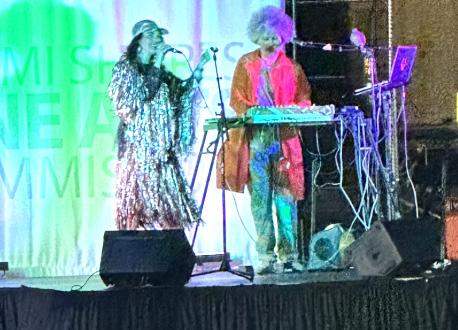
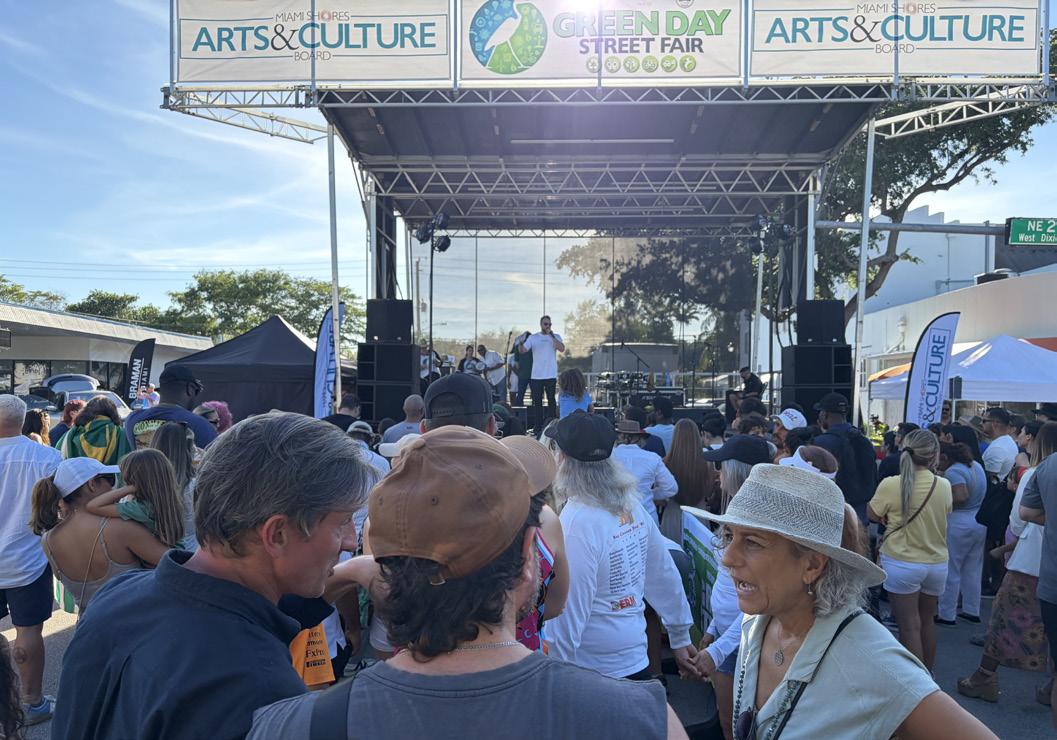
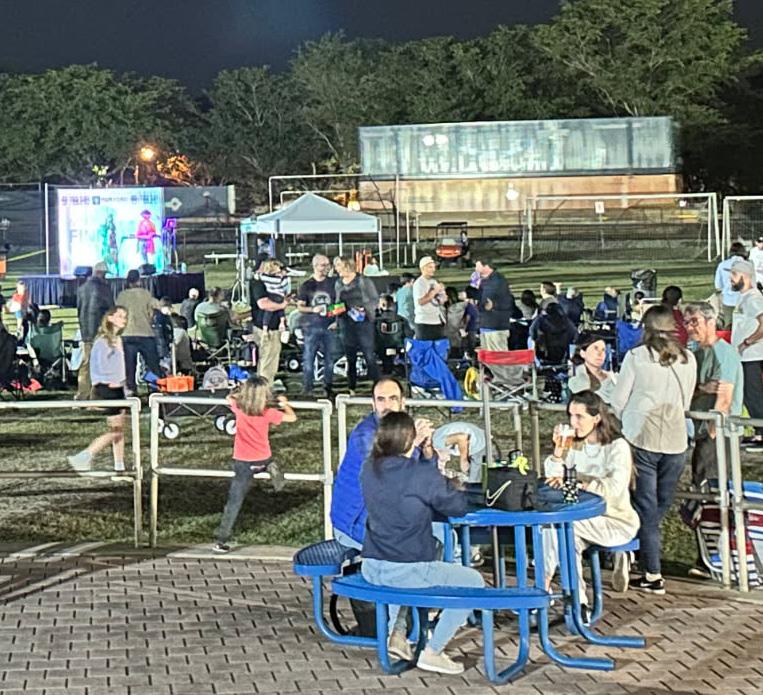
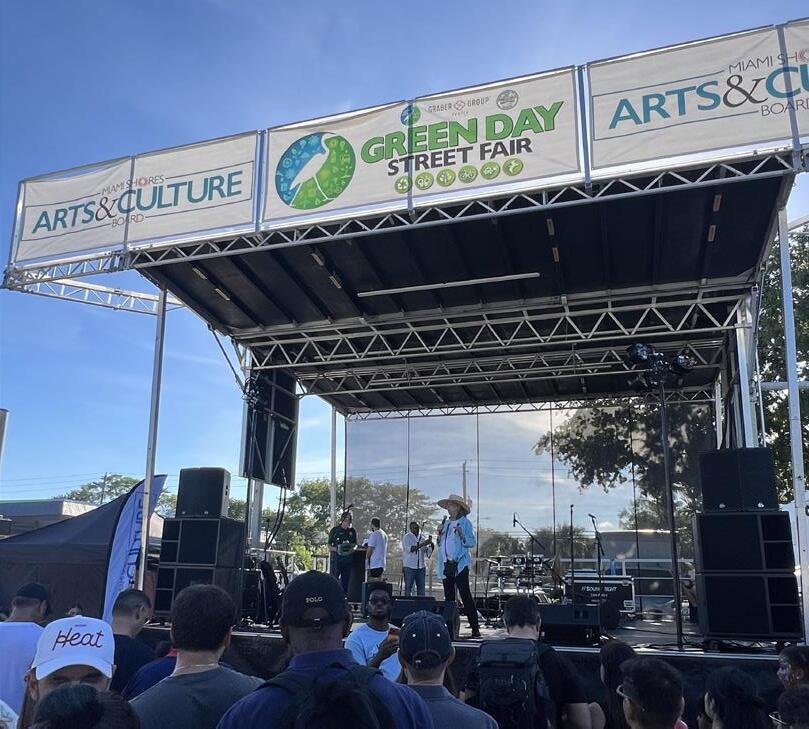
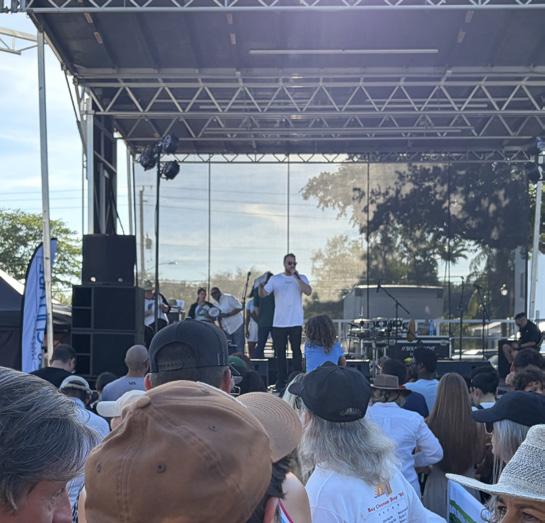
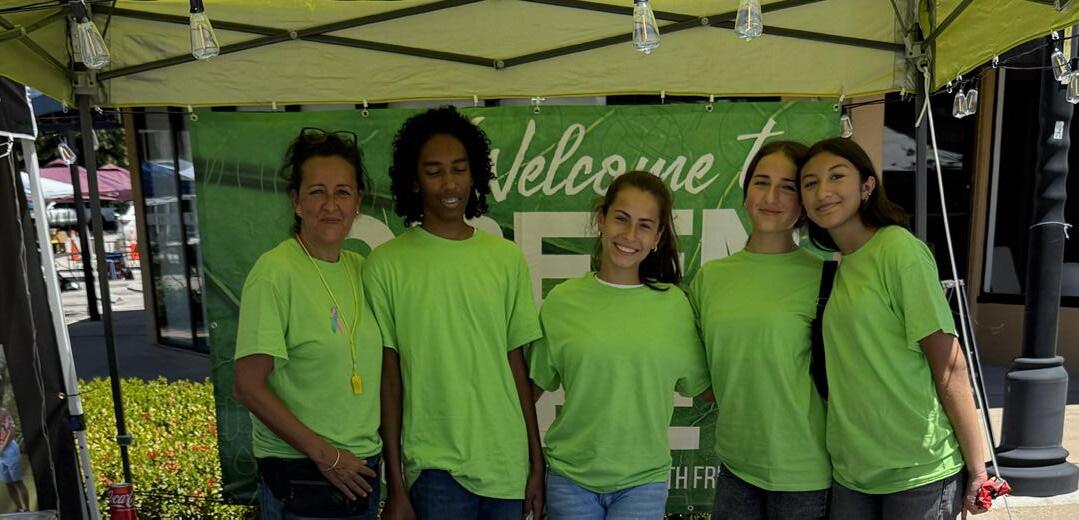
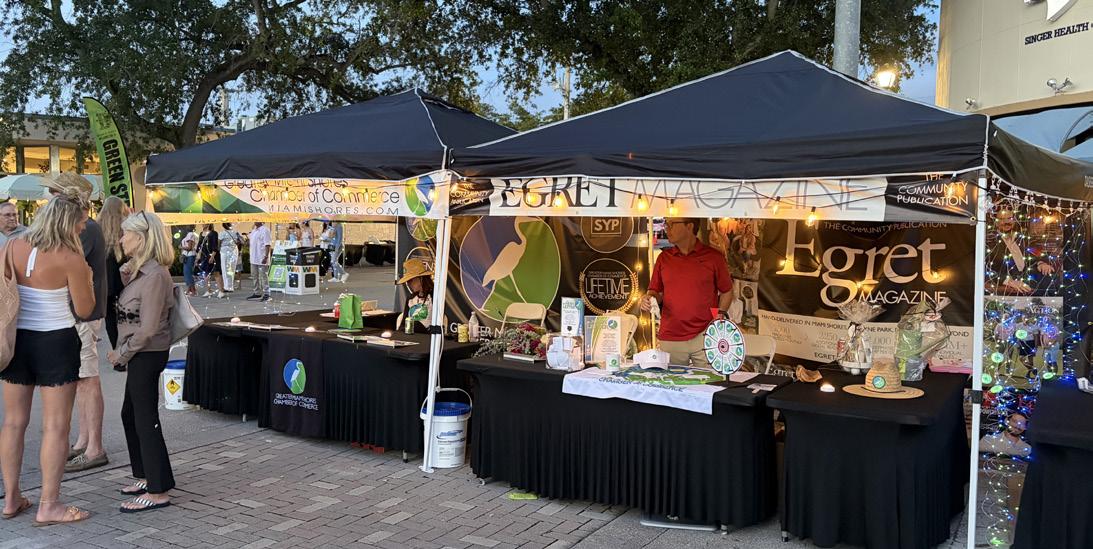
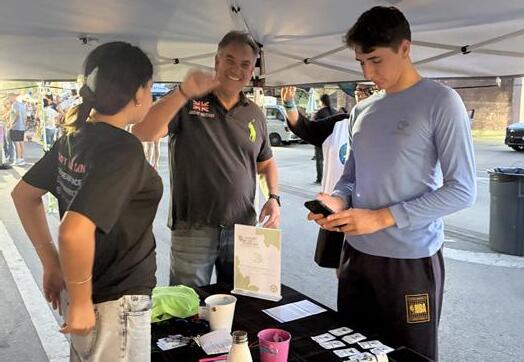
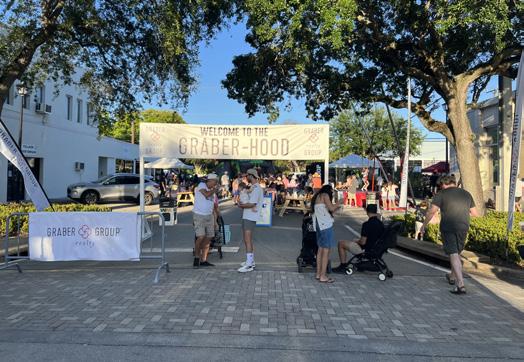
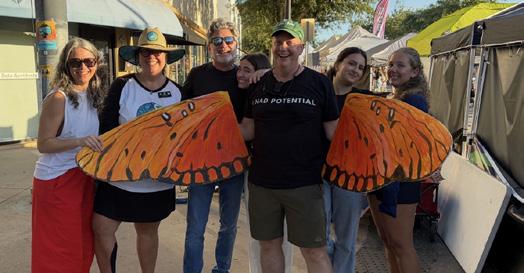
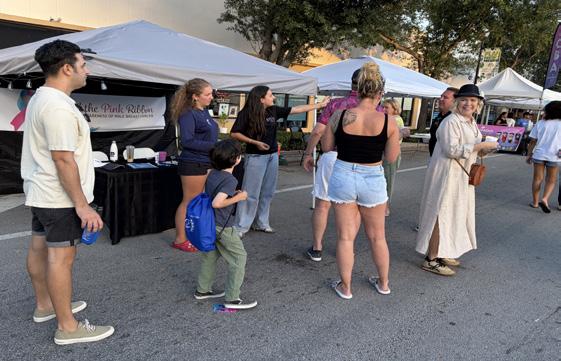
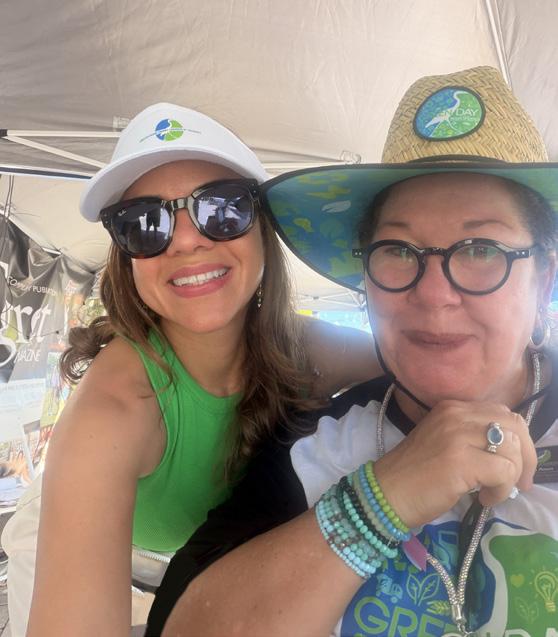
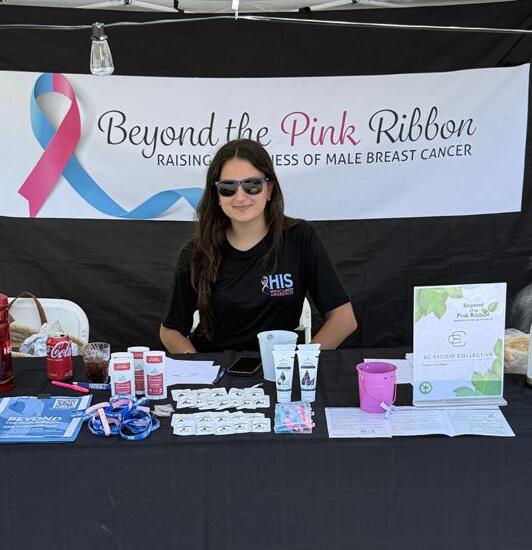
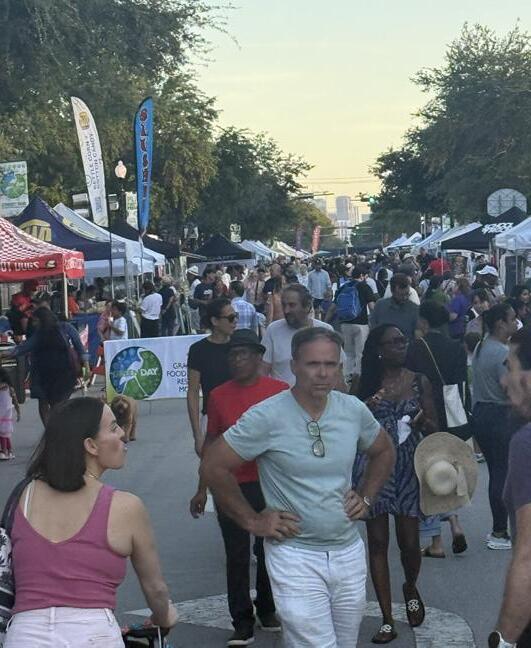
May in Miami Shores carries a bit of April with it, and after a Green Day like that, you can still feel it.
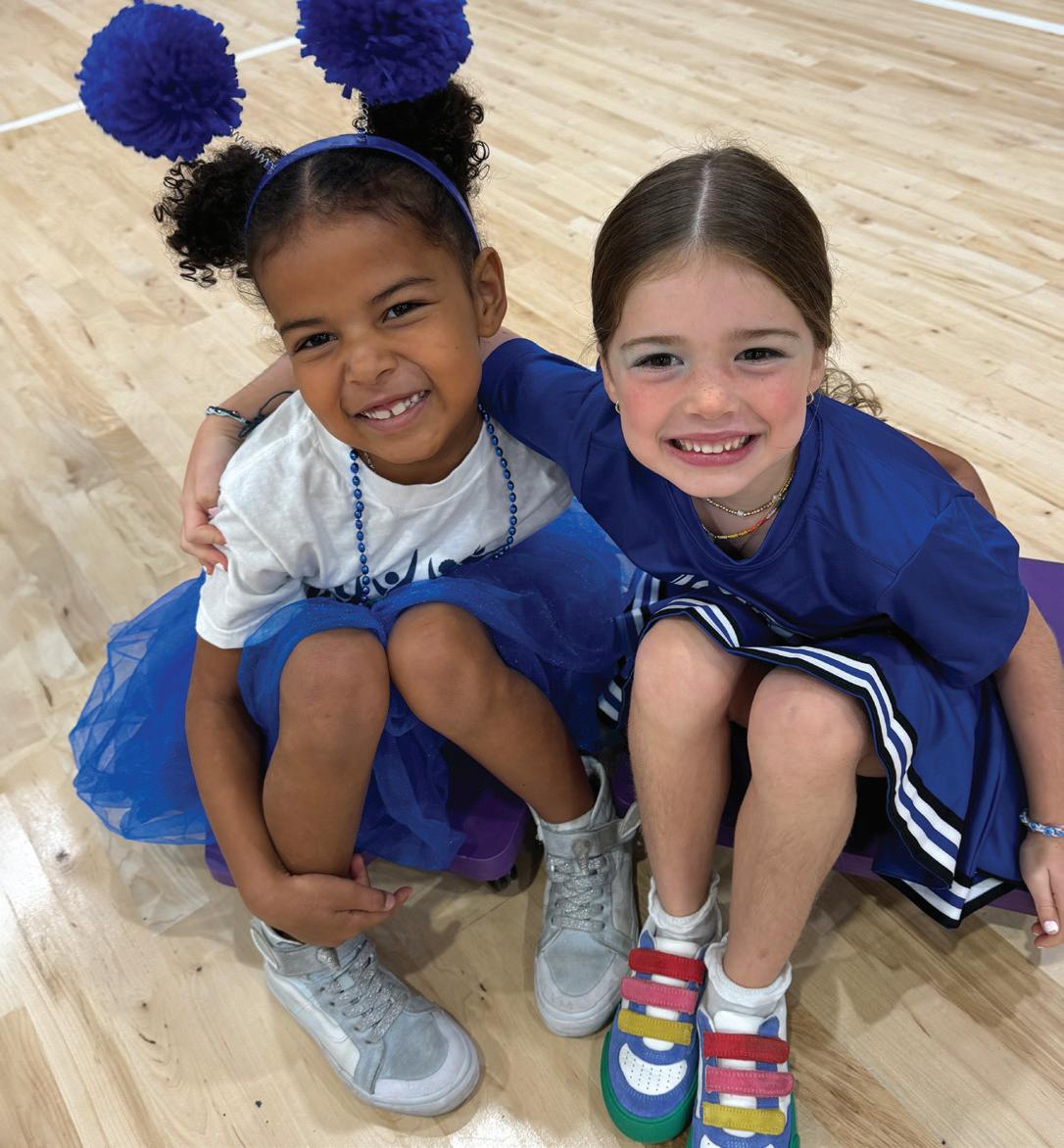
What a day it was. The music, the crowds, the bands, it all came together with an energy that didn’t let up. Our downtown was full, and there was a real sense of pride in being part of something so connected. It’s the kind of day that reminds you why our community feels like home.
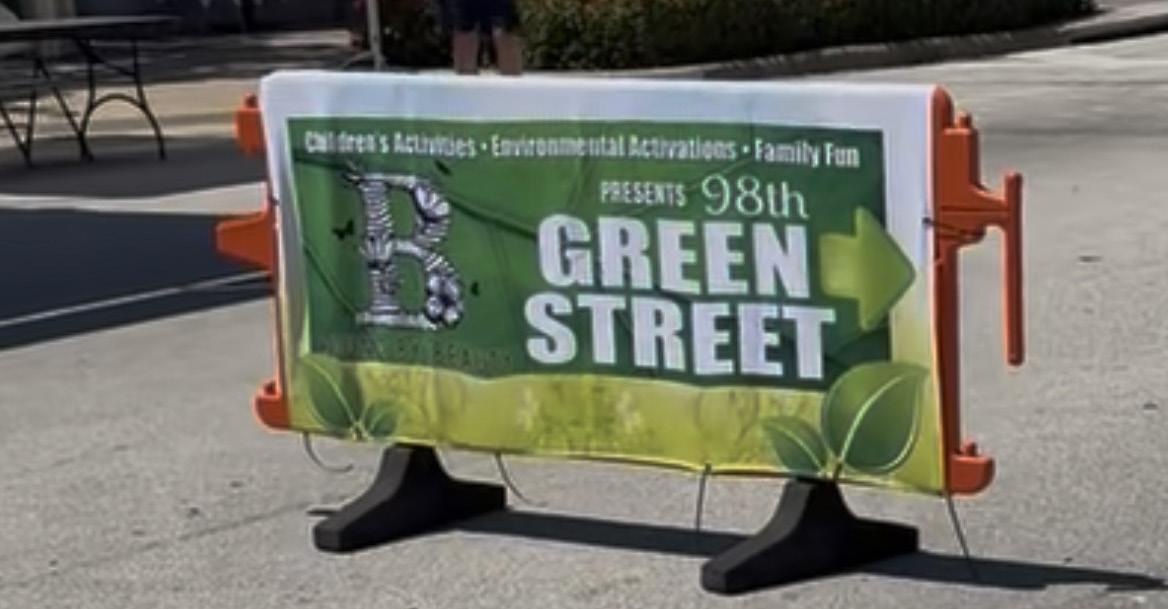
Beyond the fun, Green Day continues to reflect how we live here and how we take care of our environment. From Green Street to the many vendors, there was a focus on living more thoughtfully and making better choices. It felt like people weren’t just showing up, they were paying attention. It was also great to see visitors discovering not just the vendors at the event, but our charming downtown businesses.
We’re also grateful for our partnership with Miami Shores Village to help Miami Shores shine like the jewel that it is. From the Recreation Department to Public Works, and our Village Council, every part of the Village plays a role in keeping our community looking its best and moving forward.
This month, we look ahead to **Women’s Health and Business Success**, a Women’s Health Month panel hosted by the Chamber. Local women will share personal stories of health challenges and professional success, along with honest conversation around balancing wellness with careers. It’s meant to be open and supportive, with time for questions and connection.
As we move through May, I hope you carry a bit of that Green Day energy with you. Stay connected and stay involved.
With gratitude,
Designers & Content Collaborators
Carla Peters, 3C Studio Collective
Gigi Turkel, Core Design Group
Doug Turkel, Content
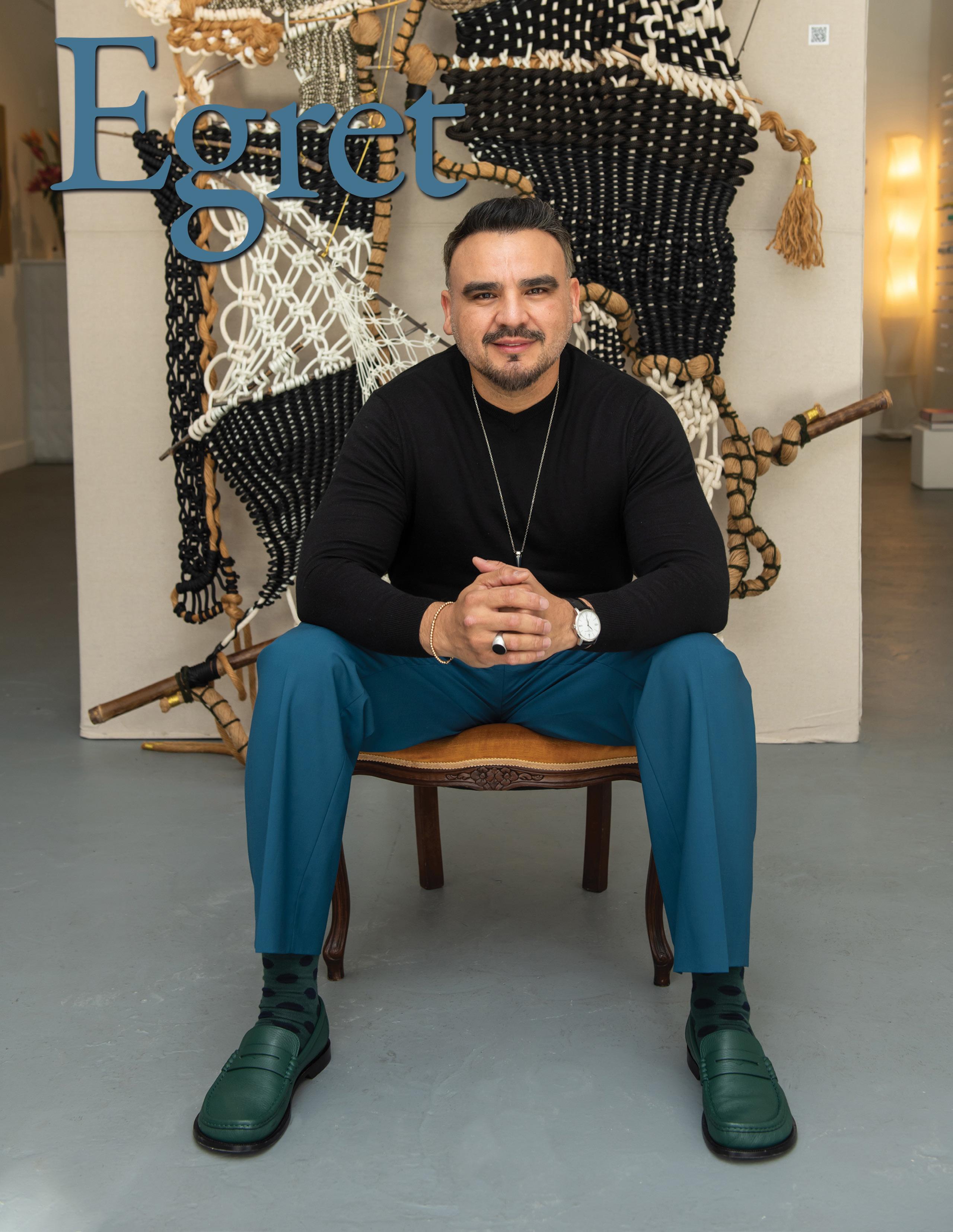
Photography: Kate Baumwell
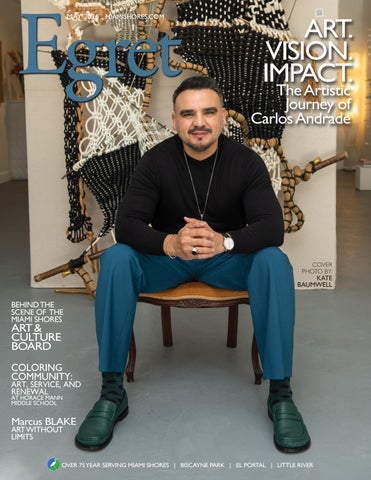
Cover: Carlos Andrade, Claug Creative Studio
CHAIRMAN’S CIRCLE
Carla Peters, Executive Director, GMSCC
The Egret • May 2026 • 9620 NE Second Avenue Suite 201, Miami Shores, FL, 33138 • 305-754-5466 e-mail: chamberinfo@miamishores. com • MiamiShores.com • facebook.com/MiamiShores, The Greater Miami Shores’ Egret is the official publication of the Greater Miami Shores Chamber of Commerce, and is published monthly. 7500 copies of the Egret are distributed to homes, apartments, and businesses within the villages of Miami Shores, Biscayne Park, El Portal, Little River and Upper East Side free of charge. Views expressed in this publication are those of the editorial staff and do not necessarily reflect those of the Board of Directors. Information in it is intended for Chamber member organizations as well as the residents of our communities. Please contact the Chamber for more information on membership, advertising, distribution, or content.
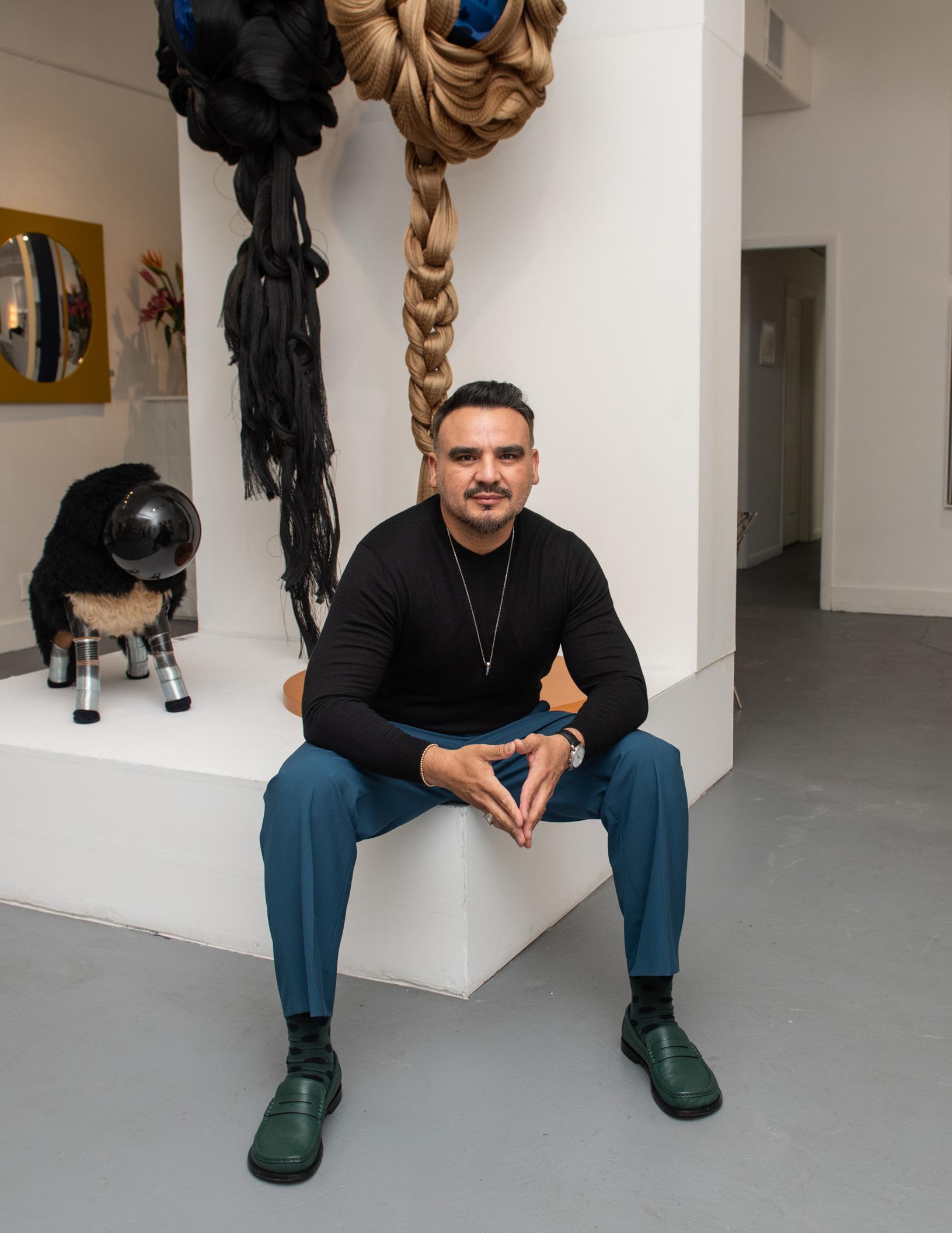
CARLOS ANDRADE
Inside CLAUG Creative Studio: A Conversation with Carlos Andrade
We meet Carlos Andrade the way, frankly, you should meet Carlos Andrade, not in a sterile studio interview, but over a Bonsai Coffee Truck matcha. Not just any matcha. His matcha. The one you can’t quite replicate no matter how many times you try to order it yourself. (We tried. It’s not the same.)
That detail says a lot. Carlos has a way of making things feel one-of-one. You can see it across everything he touches, art, events, even the small things.
On our way out to grab coffee from the Bonsai Coffee truck parked just behind his studio, I catch it, a 3Dl laser cutter tucked off to the side. It isn’t running. It’s just there, like it’s waiting for direction from Carlos. It feels like the perfect place to start.
We grab the matcha and settle in, and pretty quickly it clicks. What Carlos is building at CLAUG isn’t just about the work. It’s how everything connects, how ideas move from one thing to the next without feeling forced. That’s where we start
EM: I have to start with what I saw on the way out: the 3D printer. What are you working on with that right now? Is that a new direction for you, or just another extension of what you already do?
CA: I have always liked innovation, and I feel that being open to new technologies gives you the opportunity to stay current with trends and with where the world is going. I originally thought that having a laser-cutting machine would expand my creativity. I’ve been using it for many things, from food, which is one of my passions, to exploring my practice as an artist.
When I opened CLAUG Studio last September, I exhibited my first pieces made with acrylic and latex paint cut with my Glowforge. It was a beautiful body of work.
EM: Do you see AI as a tool to enhance creativity, or something that challenges it?
CA: AI has been part of our daily lives for the last few years. It is the present and, undoubtedly, the future. In my practice, AI mostly helps me put plans into action and assists with the administrative side of my business.
Also, as a beginner in the art business, it has helped me understand the complexity of the systems required to grow and succeed.
EM: You don’t really stay in one lane: painting, sculpture, events, jewelry, and now technology. Do you think creativity naturally flows between disciplines, or is that something you’ve intentionally leaned into?
CA: I am a creative person, and I believe many of us never stay in one lane. I have been creating my entire life. I was always very good at craft projects, city and building models made with recycled materials, stained glass, frosted glass, and carpentry.
My uncle had the largest woodshop in my town. He also owned a mini-mart, and his daughter had a pottery business where I used to spend a lot of my time sanding and molding clay. My aunt was an amazing cook. On the other side, my father was a professional baseball referee and a lawyer, and my mother was a housewife who loved to sew.
CA: I grew up creating, and the curiosity was always there. Back in the day, Venezuela was stable. It was a country that had everything. However, our society and culture were very resourceful. If our washing machine stopped working, we didn’t just toss it and buy a new one. We opened the washer and fixed it.
That was our mentality. Also, the cost of living could make you a more resourceful person. Sustainability was part of our lifestyle.
EM: And beyond the work itself, what was the transition like, leaving Venezuela and starting over in the United States? What did that journey look like for you and your family?
CA: Leaving your country is never an easy decision. However,
questions, and look for the story behind things. That way of thinking is still part of my work. Even when I create abstract pieces, I think about structure, narrative, and meaning. I may not be writing stories anymore, but I’m still telling them through color, form, materials, and experience.
EM: When you got to Miami, what made you land here, and more specifically, what made you choose Miami Shores as the home for CLAUG?
CA: From the moment I thought about moving to the U.S., I actually didn’t want to fly through Miami because I knew I would have a problem: I would fall in love with the city. And that is exactly what happened.
I have always been adventurous. I love to explore, meet new people, and take on challenges.
Miami Shores became my home in 2017. Since then, I’ve watched the downtown area evolve at its own rhythm, and I wanted to be part of that growth. With CLAUG Studio, my goal is to bring something different to the community, a different kind of cultural energy.
Miami Shores residents are very special. They appreciate culture, art, and local businesses. That support creates an ecosystem where we can all grow together: as a city, as a community, and for me, as a business owner.
EM: CLAUG feels different from a traditional gallery. It feels like a space people actually engage with. Was that always the intention?
CA: Yes, that was always the intention. I didn’t want CLAUG Studio to feel intimidating or too formal. I wanted it to feel alive, welcoming, and connected to the community.
For me, art should create conversation. It should invite people to ask questions, share ideas, and feel something. CLAUG is a gallery, but it is also a creative space where people can gather, connect, and experience art in a more personal way. I call it a studio because I also work there.
For me, creativity needs the right environment. I have to be in a place that makes me feel happy, inspired, and open, so creativity can flow naturally.
I believe we are the result of our childhood experiences. For me, experimenting with all of this was a blessing because it not only trained me in those fields, but also prepared my brain to be creative and to keep exploring. I don’t want to choose one medium. I want to explore and create because that is what I really enjoy. I’m also a very good cook!
EM: You began your creative journey in Venezuela, working with found objects and giving them new meaning. What was that time like for you creatively?
Moving to the U.S. has been the biggest adventure of my life, and one of the best, because it pushed me to learn and evolve on my own. In the process, I met my husband, opened my business, and learned so much.
It has not been a perfect path, but it has been a great one.
EM: You studied journalism before returning to art. Do you still feel that background in how you think, in storytelling, structure, or even in how you build a concept?
CA: Yes, definitely. Journalism taught me to observe, ask
EM: And I have to ask, what does “CLAUG” actually stand for? Or are you keeping that one to yourself?
CA: CLAUG comes from my full name:
C - Carlos L - Luis A - Andrade U - Ulvert G - Gando
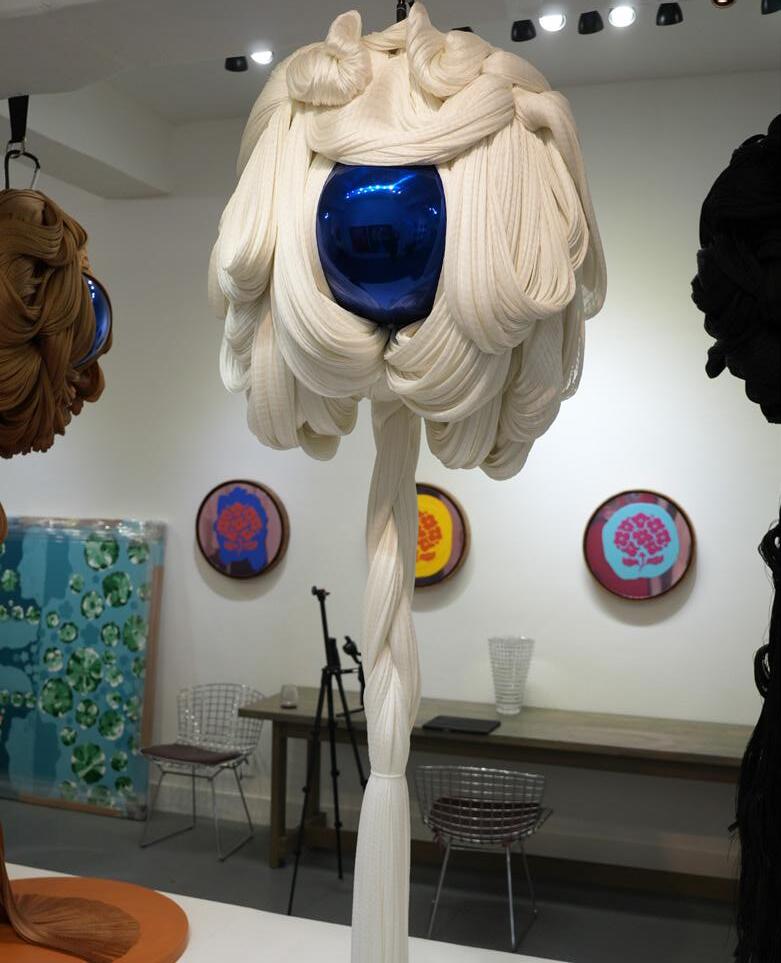
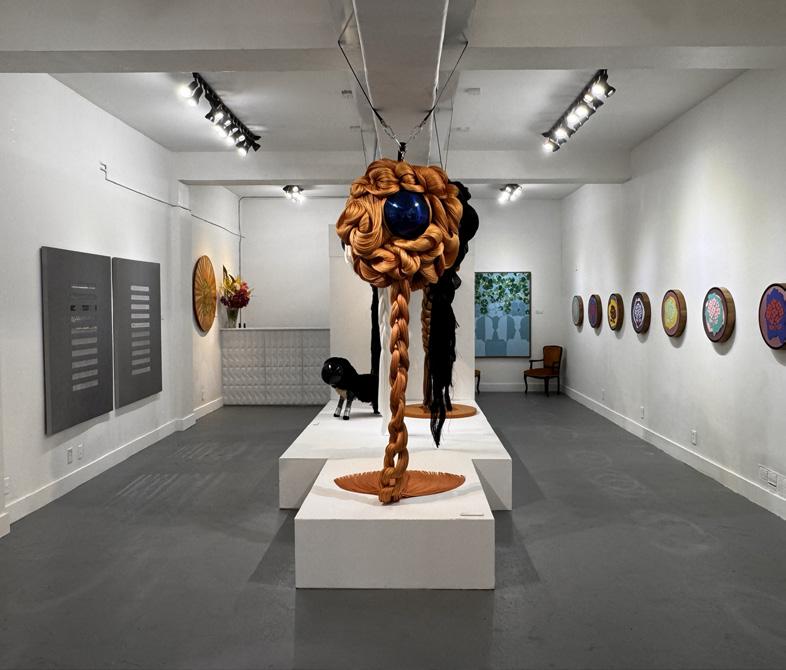
EM: Your “braided eye” pieces, the mirrors, the lenses, the texture, they really pull people in. What was the starting point for those?
CA: I never start with one fixed idea. I usually allow myself to be guided by curiosity, by the materials, and by the process. For these pieces, I worked with recyclable and unconventional
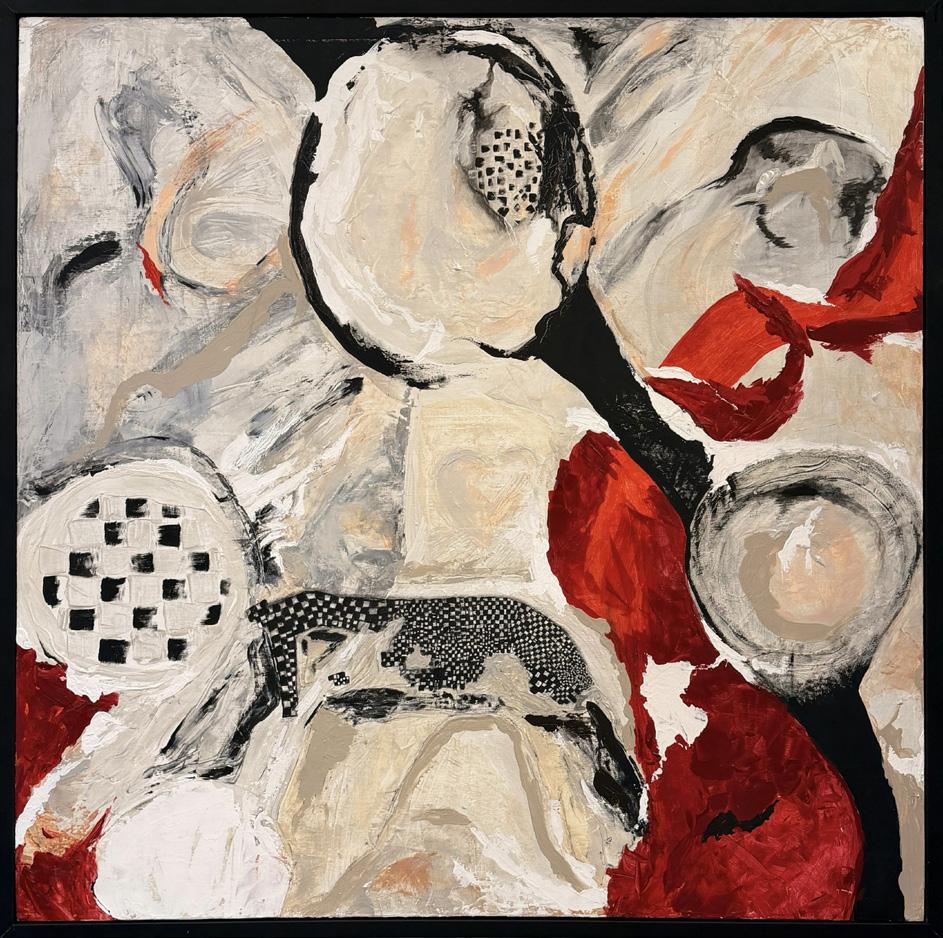
Carlos Andrade Untitled, 2016
Acrylic on canvas 48 x 48 inches
Keeping the Arts Close to Home in Miami Shores
BY CHRISTINE FRANKLIN
On any given day in Miami Shores, culture might show up as music from the Green Day main stage, a mural outside Village Hall, or a film screening that brings neighbors into the same room for a shared experience.
The Miami Shores Arts & Culture Board helps make those moments part of Village life. The volunteer board, currently led by Kristen Adsit, Chair, and Beth Boone, Vice Chair, along with members Angela Dor ney, Virginia Gil, Lucy McGuire, and Victoria Row-Traster, supports cultural programming that gives residents more ways to connect with the arts and with one another.
The Board’s official mission is to partner with community-based artists, arts professionals, and arts organizations “to foster and promote cultural programs for the benefit of Miami Shores and its residents.” That mission takes shape through concerts, public art, artist collaborations, community partnerships, and public programs that invite residents to experience creativity close to home.
The Village’s annual concert series remains the center of the Board’s programming. Miami Shores began hosting the series in 1954, three decades before the formation of what is now the Arts & Culture Board. The format has changed over the years, but the tradition continues through concerts, like Cortadito and Orquesta de Reciclados de Cateura, presented at the main stage during the Greater Miami Shores Chamber of Commerce’s Green Day Festival this past April.
That history gives the concert series a deep connection to Miami Shores. Each season adds another chapter to a tradition that residents have shared for generations. The concerts offer something familiar without feeling stuck in the past, and they continue to give the community a reason to gather around live music in a public setting.
Public art also plays a growing role in the Board’s work. The Arts & Culture Board manages the Village’s emerging Art in Public Places program and supports other installations, including “Lady Unity” and “Cardinal,” the murals painted by Samara Ash on the mural wall outside Village Hall. These works bring creative expression into places residents already pass, visit, and use. They help make art part of the Village’s daily rhythm.
Since 1984, the Board has helped promote the arts in Miami Shores in ways residents can see and feel. Public art at the aquatic center or Village Hall, cultural events held throughout the year, and partnerships with local organizations all contribute to that identity. Over time, those details shape how residents experience their community.
The Board’s work depends on collaboration. As a volunteer body, it relies on local arts professionals, artists, and organizations to help bring programs to life. It also looks for opportunities to pay local creative professionals for their work, including logo design and mural painting. When projects call for a broader selection process, the Board crafts and issues Calls to Artists, giving creative people a formal way to submit their work for consideration.
This fall, the Board will partner with Miami Theater Center to present a monthly film series. The partnership reflects a practical approach to cultural programming: work with established local organizations, create consistent opportunities for residents, and build community through shared arts experiences.
One of the Board’s final events this season points to the broader civic role that culture can play. On May 8, the Board will help present Keeping It Civil: 250 Years of Democracy and Where We Go Next at Miami Theater Cen-
ter. The free event, organized by South Florida People of Color and Power for Good Consulting, will feature a fishbowl dialogue that opens with with a provocation from a spoken-word artist intended to break the ice and encourage civic discourse around timely issues.
The Board also wants more residents involved in shaping what comes next. There are currently four openings for volunteer members who want to help create the programming they hope to see in the Village. Residents can apply through the Boards & Committees section of the Miami Shores Village website. Artists and arts professionals are also encouraged to introduce themselves and share their work. The Board’s monthly meetings are held in person, publicly noticed, and open to public comment.
Looking ahead, the Board expects the Art in Public Places program to become more visible as funding comes in and new projects move forward. Its longer-term vision reaches beyond individual installations. The Board wants to foster a stronger culture around the arts through steady community-building, thoughtful partnerships, and programs that serve Miami Shores in meaningful ways.
That work takes patience. It grows through meetings, partnerships, applications, event planning, artist outreach, and the willingness of volunteers to keep showing up. For residents, the result can feel simple: a concert to attend, a mural to appreciate, a film to discuss, or a public conversation that feels worth having. In Miami Shores, those moments help culture stay close, local, and part of everyday life.
Green Day EDITION!
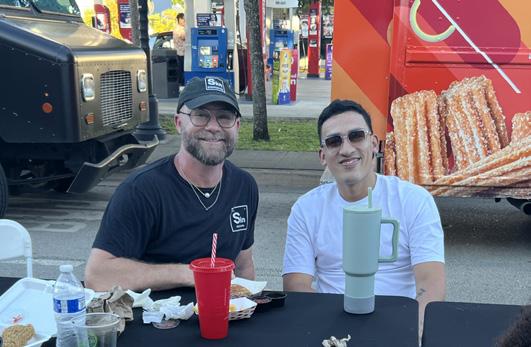
Green Day filled the streets with music and a strong sense of community, a reflection of what makes Miami Shores feel so connected. A small glimpse of a big day. To see the full Green Day gallery, visit miamishores.com. It also serves as a reminder that the spirit of Green Day is not limited to a single day, but something to carry forward throughout the year. There is no Planet B.
materials: nylon used in car tires, gazing balls, furniture structures, zip ties, mirrors, and other sustainable elements. I like taking materials that already have a history or a function and transforming them into something completely different. For me, that is part of the message: we can be whatever we want. We can transform, adapt, and become something new. The “braided eye” pieces are about that possibility of reinvention, using unexpected materials to create reflection, texture, and connection.
EM: I saw on your socials the woven, braided eye as a dress. How did that happen, and what was that like? How do you even begin translating something like that from an object into something wearable?
CA: That piece happened through a beautiful collaboration with Spanish designer Juana Martín. I met Juana in Paris about three years ago, and we connected right away. We started talking about her desire to come to Miami, and eventually we organized a fashion show and trunk show at CLAUG Studio
She fell in love with my work, and last January, during Paris Fashion Week, she created three dresses inspired by my art. The woven “eye” dress is one of them. It is mostly an editorial piece, more like wearable art than everyday fashion. What is exciting is seeing how an object can transform onto the body, into movement, and into fashion. That dress has already been featured in Hola magazine in Spain and on the cover of Silhouette Magazine in France. It will also be part of a production for a major artist in Tokyo.
EM: And then your circular paintings feel completely different, softer, more atmospheric. You’ve described color as something you live with, not just look at. What does that mean in practice?
CA: The circles are part of my identity as an artist. You will probably see them appear in many of my works. For me, the circle represents the cycle of life, continuity, movement, and connection. It also relates to Gestalt theory, where the mind naturally seeks wholeness and completes forms. I like that idea because my work often invites the viewer to participate, to complete the image emotionally or visually.
Color is also something I live with, not just something I look at. I keep a diary with notes, ideas, and studies of everything I want to create. For these circular pieces, I studied color carefully, using references such as Le Corbusier’s color system and the Wade Sanzo palette. I was interested in the dialogue between warm and cool colors and how they create balance, tension, atmosphere, and memory.
So, in practice, color becomes a kind of language. It affects the mood of the piece, the space around it, and even the way people feel when they stand in front of it.
EM: You’re balancing a lot: artist, gallerist, event designer, jewelry. How do you manage all of that without everything blending together?
CA: For me, everything is connected, but each area has its own purpose. Art is where I explore ideas, the gallery is where I create community, events are where I build experiences, and jewelry is another way to bring creativity into everyday life.
I manage it by staying organized, but also by allowing all those worlds to speak to each other without losing their
identity.
EM: With the event work, the styling, and the production, do you approach that the same way you approach an installation, thinking about flow, energy, and how people move through a space?
CA: Yes, absolutely. I approach events almost like temporary installations. I think about flow, energy, lighting, sound, and how people move through the space.
For me, an event is not just something that happens in a room. It is an experience. I want people to feel welcomed, curious, and connected from the moment they walk in.
EM: It feels like your creativity just moves from one discipline into another, like nothing is really separate. Does it feel that way to you?
CA: Yes, it does. I love to fuse worlds, materials, and concepts. For me, creativity doesn’t live in separate boxes. Everything can connect if you allow it to.
I think we are living in a world where boundaries between disciplines are becoming more fluid every day. Art, design, fashion, technology, and experience are constantly influencing each other. That is how I like to create: by letting different worlds meet and become something new.
EM: Miami Shores has this really specific energy right now, creative but calm. Why do you think it’s becoming such a draw?
CA: I think Miami Shores has a very special balance. It has the calmness of a neighborhood, but also the curiosity of a place that is evolving.
People are looking for spaces that feel more personal, more connected, and less overwhelming than other parts of Miami. Miami Shores still feels human. You can walk, meet people, support local businesses, and feel part of something growing.
That energy makes it very attractive for creatives, families, and entrepreneurs. It is calm, but it is not asleep. It has quiet potential.
I also think we are early to something special. Miami Shores has the right ingredients: community, charm, creativity, and people who truly care about local culture.
I see it becoming a stronger destination for art, design, food, and meaningful experiences, hopefully without losing its warmth and neighborhood feeling. That is what makes it unique.
For me, CLAUG Studio is part of that evolution. I want to contribute to a future where Miami Shores is known not only as a beautiful place to live, but also as a place where culture and creativity can grow.
EM: You travel often. Has there been a place recently that shifted how you think or what you’re making?
CA: I travel a lot, and every destination is an opportunity to learn and be inspired. I find inspiration everywhere: walking through the streets, looking at architecture, watching how people dress, behave, live, and move through a city.
One trip that really impacted me was Italy two years ago, especially visiting the 2024 Venice Biennale, Foreigners Everywhere. In many of the exhibitions, I saw ideas and materials that connected with things I had been exploring in my own work for years. That gave me a lot of confidence, and also a lot of inspiration to keep going.
Carlos Andrade The Post Human Gaze 3, 2022 Nylon, Acrylic lacquer, found objects and materials. 72x27x15”
Claug, continued on page 12
EM: Have you ever come across a material or object while traveling that became the starting point for a piece?
CA: Yes, definitely. The nylon I use for the eye pieces is a good example. I am always finding materials or objects that catch my attention, sometimes while traveling, sometimes in thrift stores or unexpected places.
The mirrors are another example. I found some of them in a thrift store and kept them for years before they became part of my art. Many times, I find the material first, store it, live with it, and later it reveals what it wants to become.
EM: You and your husband, Christian Ulvert, a political strategist, have been together for years. How has that partnership shaped your life and your work?
CA: Christian and I have been together for over 15 years, and he has been one of the most important forces in my life. He is my biggest supporter, but also someone who helps me stay grounded.
We are very different in the best way. He is strategic, pragmatic, and focused. I am more creative, intuitive, and adventurous. That balance has shaped a lot of who I am and how I work. He helps me give structure to my ideas, and I think I bring imagination and spontaneity into his world.
We also understand the intensity of each other’s work and lifestyle, which is very important. Communication is everything for us. We do so much together, and I think that partnership has given me the confidence to take risks, open CLAUG Studio, and keep building.
He brings the strategy; I bring the acrylic paint storm. Somehow, it becomes a very good plan.
EM: You’re constantly surrounded by family. How much does that sense of community shape your life here?
CA: Family is a huge part of our life. We have a big family, and we are very close to them. They are really the fuel that keeps us working hard, dreaming bigger, and making things happen.
For me, community starts there. That sense of support,
celebration, and showing up for each other is something I also try to bring into CLAUG Studio. I want the space to feel personal, warm, and connected, almost like an extension of that family energy.
EM: And how do you balance that with the more public side of things that comes with his world?
CA: It is definitely a balance. Christian’s work is very public, and over the years, I have learned how important it is to protect the private parts of our life.
We enjoy being part of the community and showing up for important moments, but we also value our home, our family, and the quiet time we have together. I think the key is knowing when to be present publicly and when to disconnect. At the end of the day, we support each other’s worlds, but we also make sure we have our own space to just be us.
EM: I have to say, you once made me a floral arrangement a few years ago that I still think about. It was incredible. Is that
something you’re still doing, or was that just a moment in time?
CA: Thank you. I love that you remember it. I actually had a flower business before COVID and kept it going almost until the end of 2020, but with the pandemic, the demand, the lack of product, and all the challenges of that moment, it became very difficult to continue.
But flowers have always been part of my life. They connect to my childhood, to beauty, to memory, and even to my work as an artist. So they are always present in some way. Don’t be surprised if that part of my world comes back to life one day.
EM: And cooking. And fashion. These don’t feel like casual hobbies for you. Are those extensions of your creative work, or are they where you go to disconnect?
CA: They are definitely extensions of my creative work, but they also help me disconnect. I have always loved fashion, art, and cooking, but cooking is everything to me.
I cook almost every day, for every occasion, every holiday, and sometimes for no reason at all. It is one of the ways I express love, creativity, and care. For me, cooking is not just about food. It is about color, texture, memory, and bringing people together.
EM: Last question, and maybe the most important: what was in that matcha?
A: That matcha was really Kenzo’s masterpiece at Bonzai Cafe. He is the artist behind it, and honestly, he deserves all the credit. He is an amazing barista.
My contribution was very sophisticated: I asked for a cold matcha with oat milk, one Stevia, and, if I’m feeling dramatic, a little bit of honey. So basically, Kenzo brings the talent, and I bring the very specific order.
claug creative studio
703 NE 2nd Ave, Miami Shores, FL 33138
Phone: (645) 243-0333
www.claug.art
Carlos Andrade ThePost Human Gaze 2, 2021 Nylon, Acrylic lacquer, found objects and materials. 87x32x15”
Claug, continued from page 11
Coloring Community: Art, Service, and Renewal at Horace Mann Middle School
In El Portal, where neighborhood life is deeply connected and community investment is a shared value, a recent collaboration helped transform a school cafeteria into something far beyond a refreshed space. What emerged was a daily environment filled with color, meaning, and renewed pride.
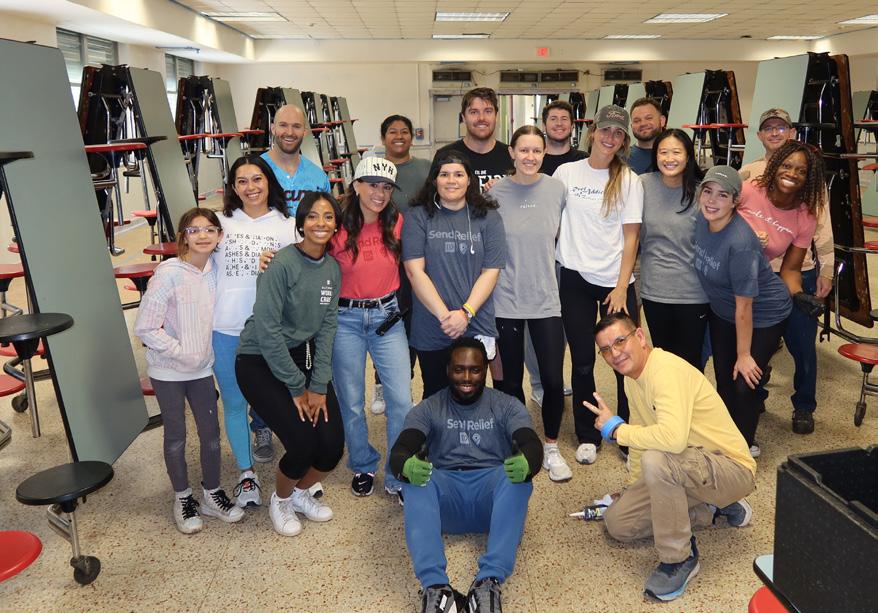
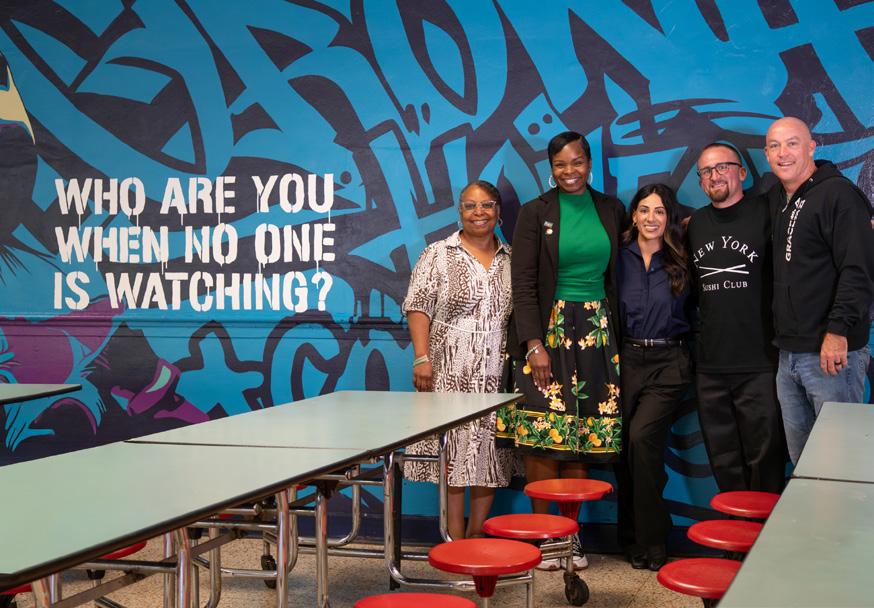
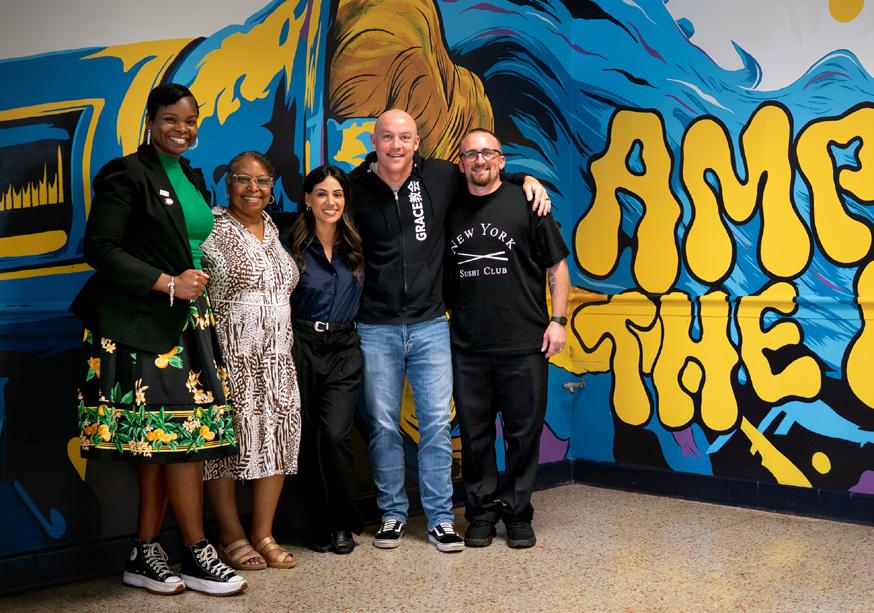
Through a partnership between Grace Church Miami and Send Relief, volunteers participated in the Send Relief Serve Tour - a city-wide initiative mobilizing churches to serve local communities through hands-on projects that meet practical needs while fostering long-term impact. One of those projects took place on Saturday, February 7, 2026, at Horace Mann Middle School, where approximately 15 volunteers gathered with a shared goal: to restore and reimagine the school’s cafeteria.
Principal Dr. Ottolita Thompson and Vice Principal Shanikqua Murray, played an essential role in identifying the cafeteria as a priority for improvement, recognizing its significance as one of the most frequently used and socially important spaces on campus. For students, it is a daily gathering point where friendships are formed, conversations unfold, and school culture quietly takes shape. Over time, however, the space had lost some of its warmth and visual energy. The goal of the project was to bring that sense of life back.
The effort was led by Pastor Eric Bancroft, who described the work as an extension of the church’s ongoing commitment to its surrounding community.
“Grace Church loves its community, especially investing in the next generation,” Bancroft said. “This project was an absolute joy for us to do. We are excited to care for more needs in the years ahead.”
With that, the work began under the coordination of project manager Sydney Matone. The initiative was carefully planned and executed over the past several months, with each phase building intentionally toward a unified result. The first stage involved repainting the cafeteria walls, funded by Send Relief, restoring brightness and cleanliness to the foundational space.
During this phase, volunteers worked side by sidepreparing surfaces, painting, refining details, and stepping back to witness the gradual renewal of a familiar space into something newly intentional.
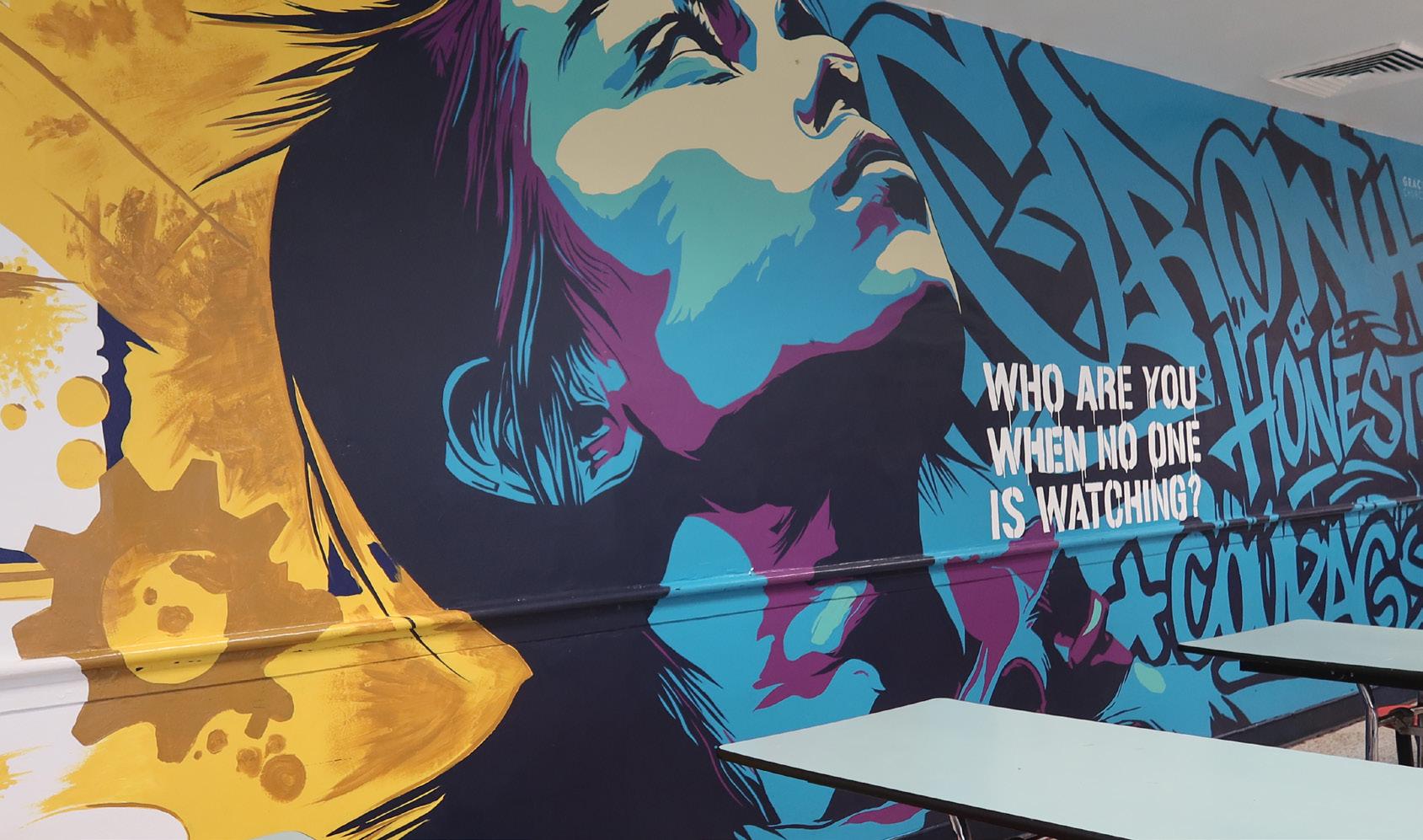
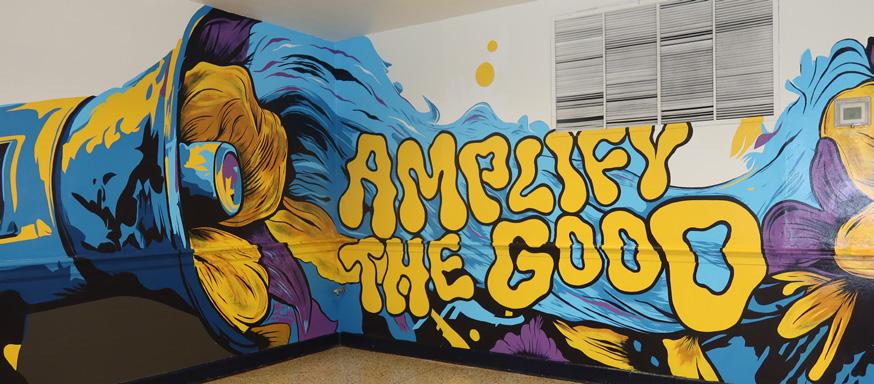
From there, the project moved into its most expressive stage: a custom mural designed and hand-painted over multiple weeks by artist Brent Naquin. His work added not only color, but narrative—turning blank walls into visual reminders of encouragement and purpose.
“We painted these murals to be a bright, daily reminder for the kids,” Naquin said. “It’s all about inspiring integrity, encouraging growth, and reminding everyone to focus on amplifying the good.”
After completion, Vice Principal Murray reflected on the broader impact of the work- not only in physical appearance, but in emotional and cultural tone:
“The murals have had a profound impact on our school community, transforming the cafeteria into a vibrant and uplifting space that reflects positivity and purpose. For our students, the artwork serves as a daily reminder of hope, unity, and the power of kindness. It has created a sense of pride and belonging, encouraging students to take ownership of their environment and appreciate the beauty around them. Beyond aesthetics, the murals have sparked meaningful conversations about character, resilience, and community, reinforcing the values we strive to instill each day. Overall, the work has not only enhanced the physical space but has also contributed to a more positive school climate where students feel inspired, supported, and motivated to succeed.”
What now stands in the cafeteria is more than a refreshed room - it is a layered expression of community care, beginning with structure, shaped by service, and completed through art.
In blending practical restoration with creative expression, Grace Church Miami and Send Relief demonstrated how local partnerships can move beyond maintenance into meaning. The result is a space that does more than function - it
communicates.
Following the success of the effort, organizers also noted how projects like this highlight broader opportunities for community collaboration. In particular, the Miami Shores Chamber of Commerce has expressed interest in encouraging similar partnerships, especially where discretionary or community improvement funds can be directed toward schools and neighborhood spaces in need.
As Sydney Matone shared, initiatives like this open the door for ongoing collaboration between civic groups, churches, and local organizations seeking to make a tangible impact.
For the students of Horace Mann Middle School, that message is now part of their everyday rhythm. A cafeteria that once simply served meals now serves something more lasting: a reminder that their community sees them, values them, and chose to invest in their environment—one wall, one color, and one act of service at a time.
Photography by Augustin Charles and Sydney Matone
How Does Miami Shores Support Cancer Research?
By Bill Tenney
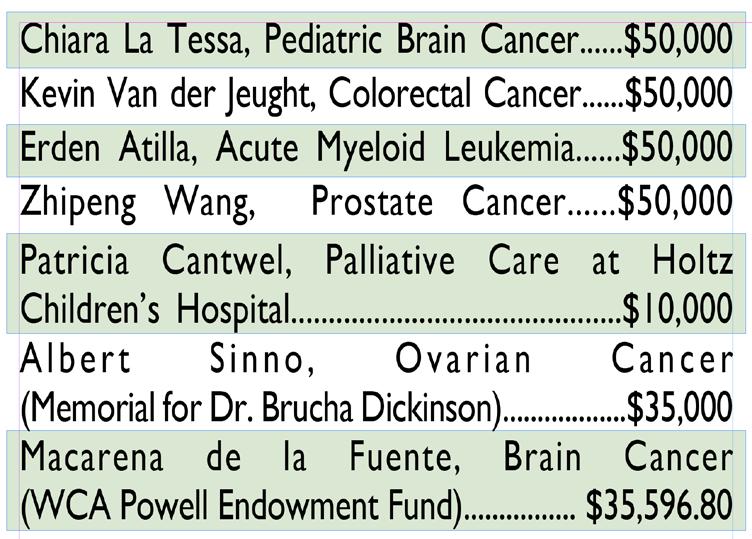
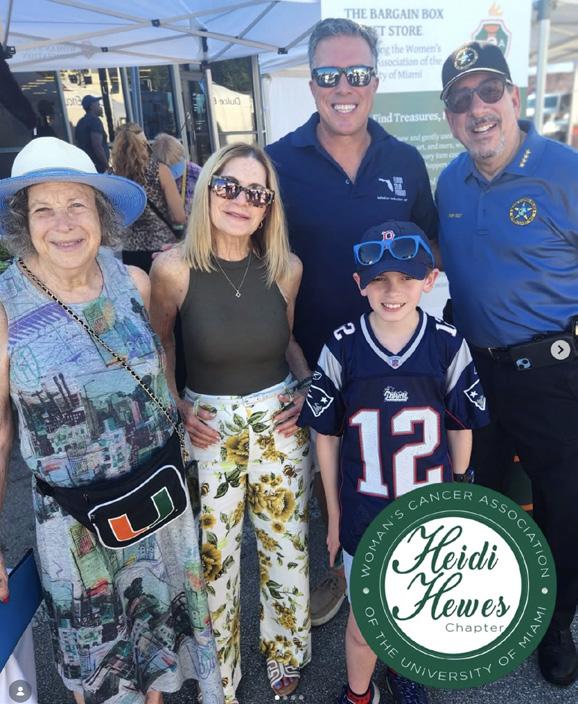
The Woman’s Cancer Association of the University of Miami (WCA) operates two chapters. Many in Miami Shores are familiar with the Heidi Hewes Chapter. The WCA fiscal year ended on March 31, 2026, and thanks to strong community support, a total of $270,596.80 will be presented to Sylvester Comprehensive Cancer Center for cancer research.
Of that total, the Heidi Hewes Chapter contributed $108,000. The remaining funds were raised by the Powell Endowment Fund in southern Miami and through the Bargain Box thrift store, located at 1350 West Flagler Street near Marlins Park in Little Havana.
The following researchers at Sylvester will receive grants supporting their work:
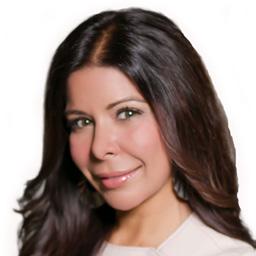
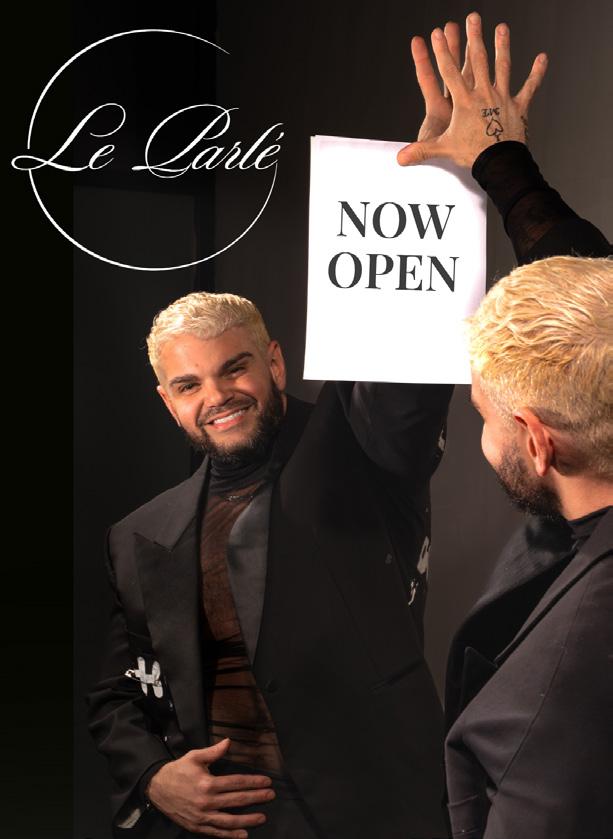
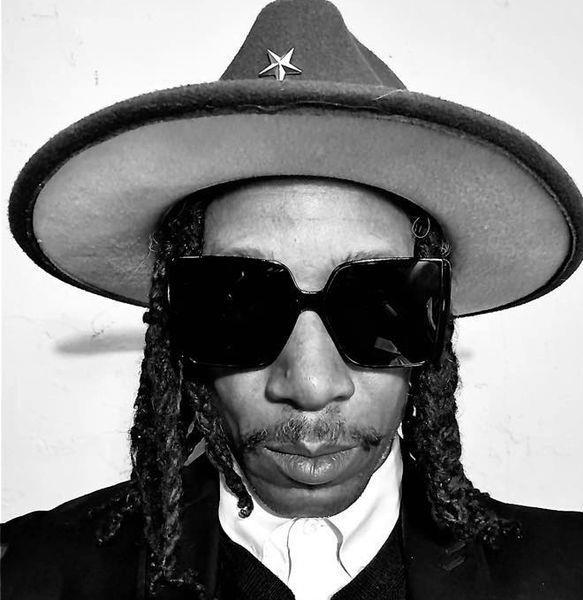
“I create moments where people step into their power and become the icon they’ve always been. What’s meant for you will find you - my job is to make sure you’re ready to shine. Where beauty meets spotlight and everyone becomes unforgettable.”
- Christian Parla
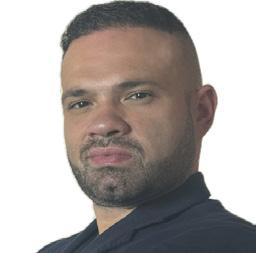
“Le Parlé is my decision to stop playing small and turn vision, risk, and purpose into something real.”
- Dina Herrera
These grants will be presented at the Grant Awards and Education Day Luncheon on May 14, 2026.
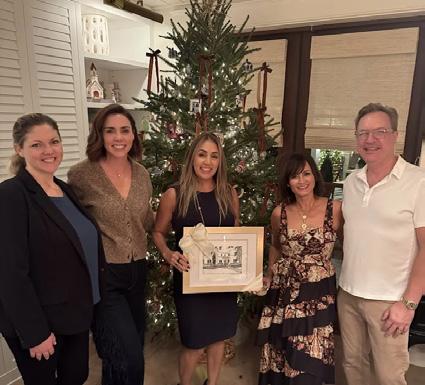
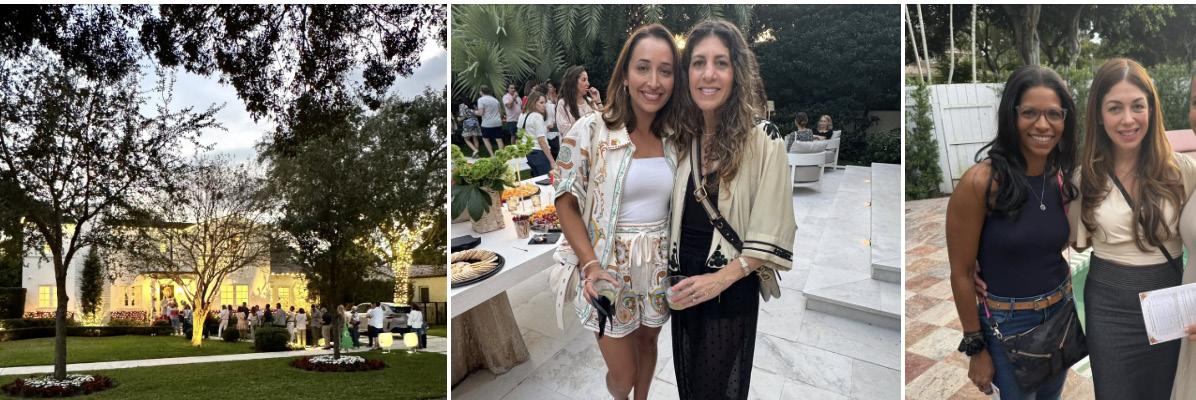
The Heidi Hewes Chapter’s success in raising $108,000 is driven by the continued support of the Miami Shores community. Several annual fundraising events make this possible.
In October, students from Miami Country Day School organize a school-wide “Walk with Purpose” through Miami Shores. Proceeds are shared equally between the Heidi Hewes Chapter and Joe DiMaggio Children’s Hospital in Broward County. This year, the chapter received $25,000. Miami Country Day School has supported this effort for more than 20 years.
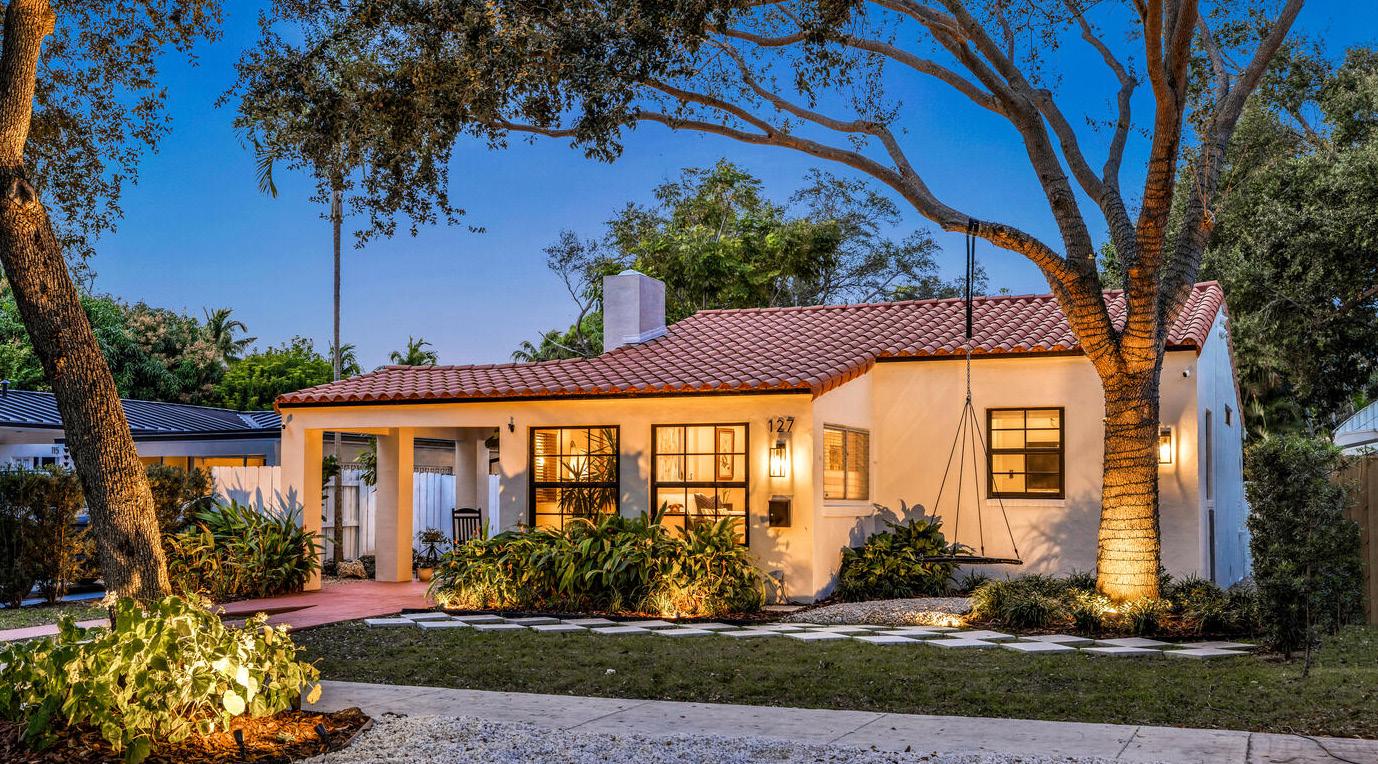
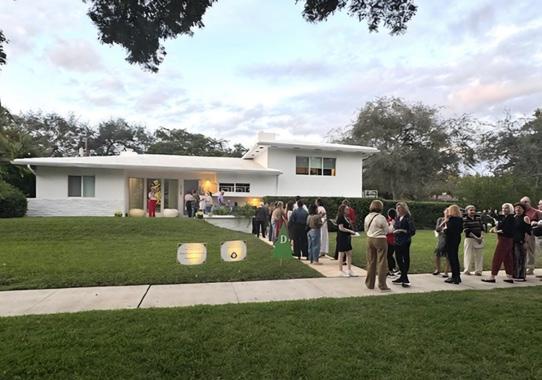
In December, the chapter hosts its popular Holiday Home Tour, featuring five distinctive
NEWS WORTH TELLING
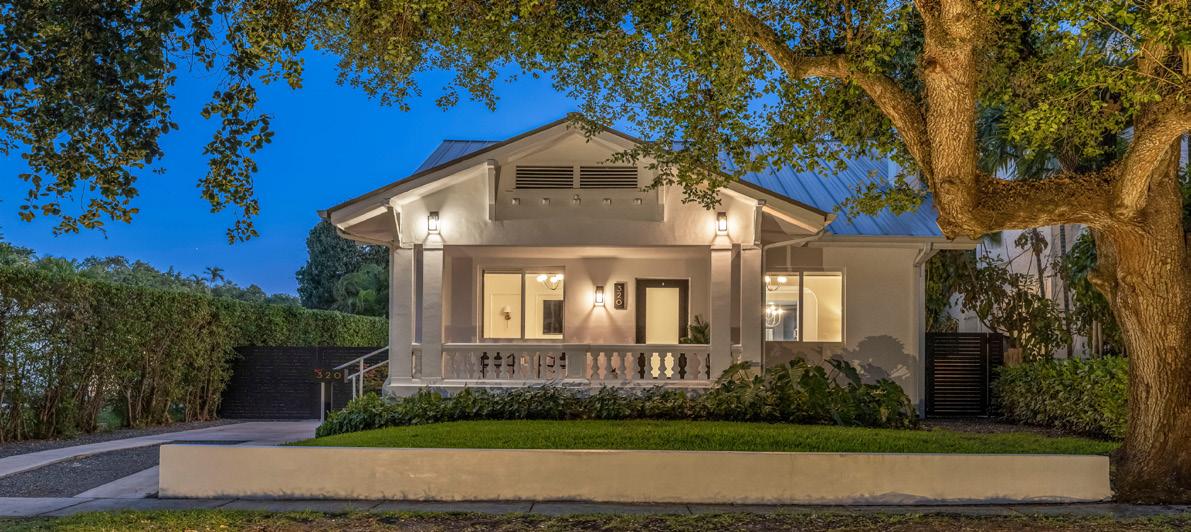
In a world where everyone deserves their celebrity moment, our vision is to make it a reality - now arriving in San Souci Plaza.
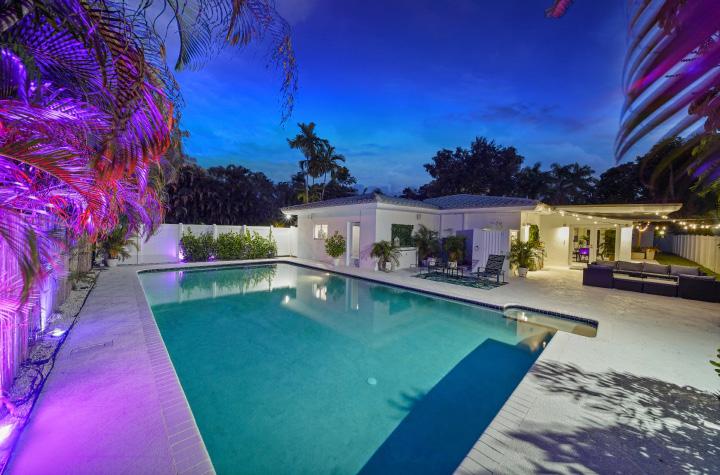
We are redefining luxury by blending a high-end beauty salon, professional photo studio, and boutique under one glamorous roof. Offering the chance to step into the spotlight and feel like a BOSS, captured in iconic Miami style. Every detail is intentional, curated to elevate you into where you’re meant to be.
homes in Miami Shores. The event has become a seasonal tradition and sold out for the first time last year, raising $65,000.
Additional support comes from the George and Claire Lesser Trust, which has contributed $10,000 annually for the past four years, thanks to trustee James Benedek.
Community members are also encouraged to visit the Bargain Box, widely regarded as one of the best thrift stores in Miami-Dade County.
Those interested in joining the Heidi Hewes Chapter can reach out at HeidiHewesWCA@ gmail.com
.As Dick Van Dyke, now 100 years old, puts it: “Keep moving.” The Heidi Hewes Chapter welcomes new members to continue building momentum toward its mission of advancing cancer research.
New Chamber MEMBER Spotlight
MARCUSBLAKE
ABOUT THE ARTIST MARCUS BLAKE - MDOTBLAKE
Marcus Blake, is a Jamaican-born, Miami-based multimedia artist. His artistic endeavors span poetry, street art, fashion, performance, event coordination, and visual art. His journey into creativity began in his early teens, driven by a profound need to express and interpret his life experiences. This passion has remained with him, becoming the core of his existence. Creating is his life.
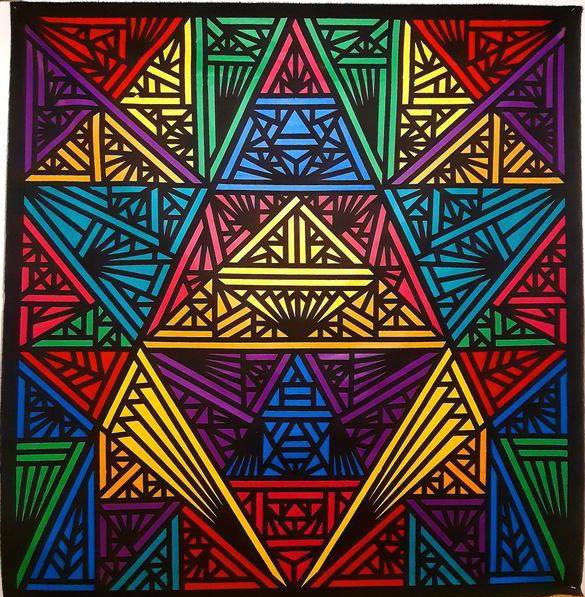
His poetry delves into social injustices, personal experiences, and the common struggles of everyday life, offering a voice to the unheard and a reflection of our shared humanity. His street art is characterized by bright colors and intricately mixed vivid geometric patterns, a technique he calls “Tapenology.” This unique method transforms urban landscapes into vibrant, thought-provoking canvases.
He draws inspiration from the natural sequences, tropical landscapes, and the dynamic architecture of Miami. His work is prominently displayed throughout Miami’s streets, adding color and meaning to the city’s fabric. Additionally, his portfolio includes intricate collages and acrylic paintings on canvas, each piece a testament to his diverse creative vision and commitment to artistic expression.
Blake bridges fine art and street culture, producing large-scale murals, wearable art, collages, acrylic paintings, performance art, music and fashion. His belief that “we are the culture” underpins community-minded initiatives such as his Base Art Space and Little Bohemia Miami meet-ups, which bring creatives together to share music, dance, poetry and photography. In 2018 he received The Ellies creator award for his MiamiLith project, transforming concrete slabs from Liberty Square into painted megaliths that invite the community to wander among them. That same year his
work “American Pharoah” won the Art of Black Miami cover competition. Recent projects include a 2025 artist-in-residence stint at the Kimpton EPIC Hotel and the immersive “In Art We Trust” showcase during Miami Art Week, and he is preparing a 10-by-20-foot Tapenology installation for Miami-Dade’s Art in Public Places program.
His art not only beautifies the urban environment but also resonates with the community, making him a vital presence in Miami’s vibrant art scene.
Artist Statement
My art emerges from the improvisational moments of time, capturing fragments of my subconscious mind. The arrangements are spastic and random,
My work is neither sketched nor premeditated.
directed solely by my inner impulses. I never set out to be an artist, nor do I create art with the intention of relatability.
My work serves as it mean to express my creativity process the world around me adding beauty to the most unlikely places
My primary motive is to delve into the realm of nonverbal communication, using shapes, colors, and symbolism to construct spaces of speculation and intrigue. Through this exploration, I aim to provoke thought and invite viewers into a deeper contemplation of the visual narratives presented. For additional information – please contact – Sharon@thompsontalent.net or call 305.761.6110