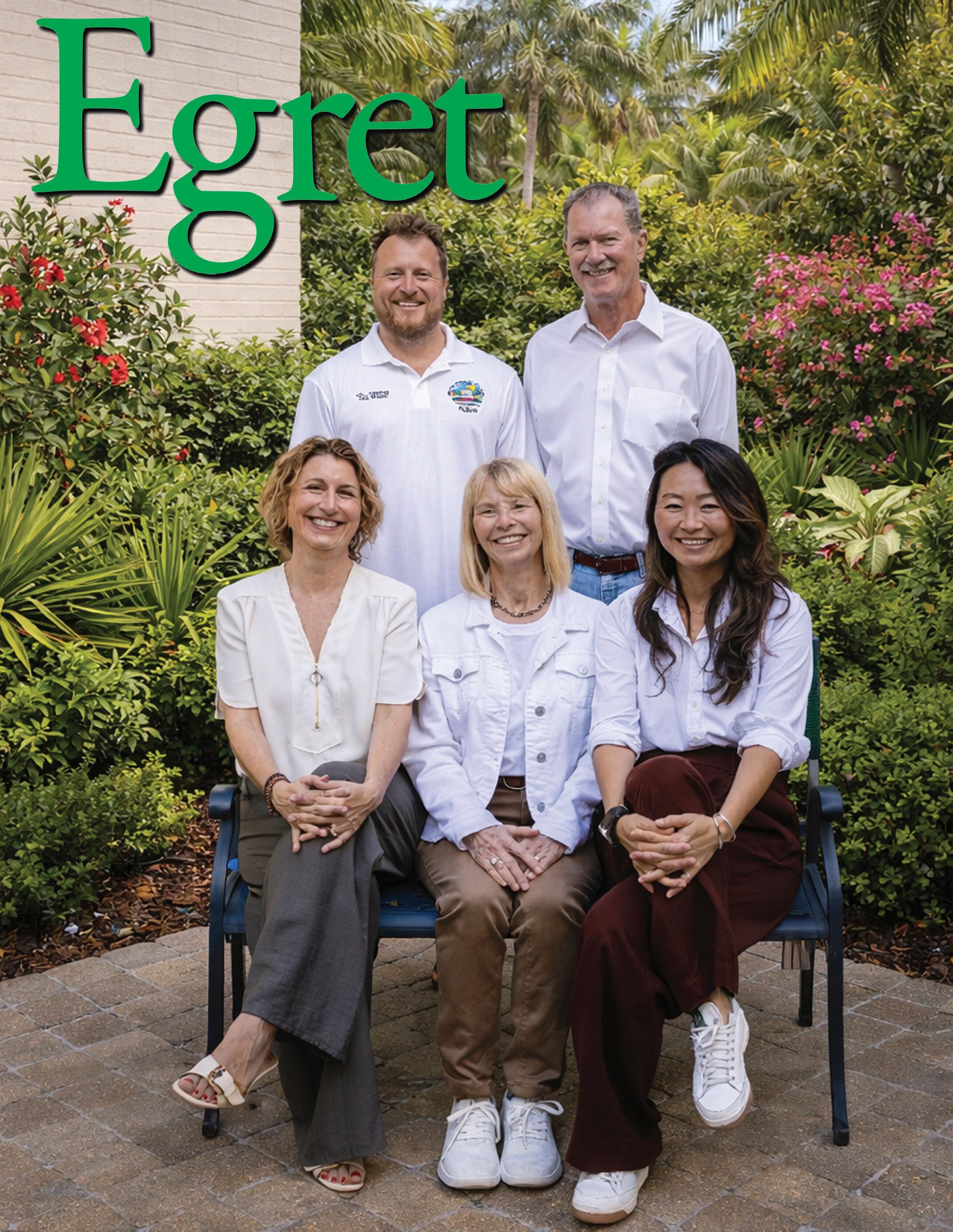

COVER PHOTO BY: CHRIS HA
Greater Miami Shores Chamber of Commerce serving Miami Shores, Biscayne Park, El Portal and Little River for over 75 years.














Executive Director
Carla Peters
President
Wes Pearce, Graber Realty Group
Treasurer
Rich Pototsky, CPA, Miami-CFO.com
Vice Presidents
Kate Baumwell, Kate Baumwell Photography
Gigi Turkel, Core Design Group
Angela Young, St. Rose of Lima Church School
Miami Shores Village
Angela Dorney, Recreation Director
Village of Biscayne Park
Mayor Jonathan E. Groth, Esq.
Village of El Portal
Mayor Omarr C. Nickerson, Ph.D.
Andrew Bellinson, Esq., Bellinson Law Firm
Roni Bennett, South Florida People of Color
Robert Bourne, Robert Bourne Real Estate
Victor Bruce, Bruce & Bruce
Diego Caiola, The Florida Marketplace Group
Deb Dziena, DD Hospitality & Events
Liangy S. Fernandez-Calli, Resident Member
Julie Isha, Barry University
Cory Gittner, Mediatech
Meghan Grimbert, MGD Shop
Robin Hechler, Horace Mann Middle School
Dennis Kleinman, First Equity/Mortgage Banker, Inc.
Maria Leon, Little Stars Dentistry
SunJa Leon, Impact Partners Agency
Vanessa Maggi, Maggi Realty Group
Mélida Matos, Doctors Charter School
Cristine Pacheco, Rustic French Home
Margarita Perez, MD, Miami Shores Medical Group
Mark Piper, Northwestern
Scott Smith, Ph.D., Barry University
Christian Ulvert, Edge Communications
Carter Winkle, Ph.D., Resident Member
April in Miami Shores just feels good. The weather, the energy, and most of all, Green Day.
On the surface, it’s one of our favorite days of the year, music, food, shopping, and thousands of neighbors coming together in our downtown. But behind all the fun is something more meaningful. Green Day is about how we live here, and how we take care of the place we call home.
This month’s issue dives into that in a real way. From the importance of protecting the Everglades and the role they play in all of our lives, to the thoughtful work happening right here in our Village around resiliency, sustainability, and smarter design. You’ll also see how local businesses and organizations are stepping up, whether it’s through green building, native landscaping, or hands-on community education like Green Street .
Green Day is where all3 of those ideas come to life. So come out, bring your friends, support our local businesses, and enjoy the day. And while you’re there, take a moment to explore, learn something new, and maybe leave inspired to make a small change of your own.
Because that’s really what this is all about.
With gratitude,
Designers & Content Collaborators
Carla Peters, 3C Studio Collective
Gigi Turkel, Core Design Group
Liangy Fernandez Calli, Content by LIAN•G
Photographer: Chris Ha
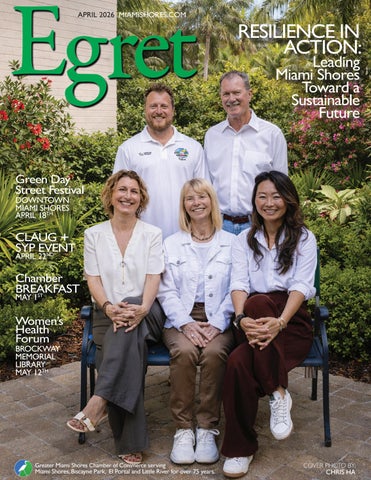
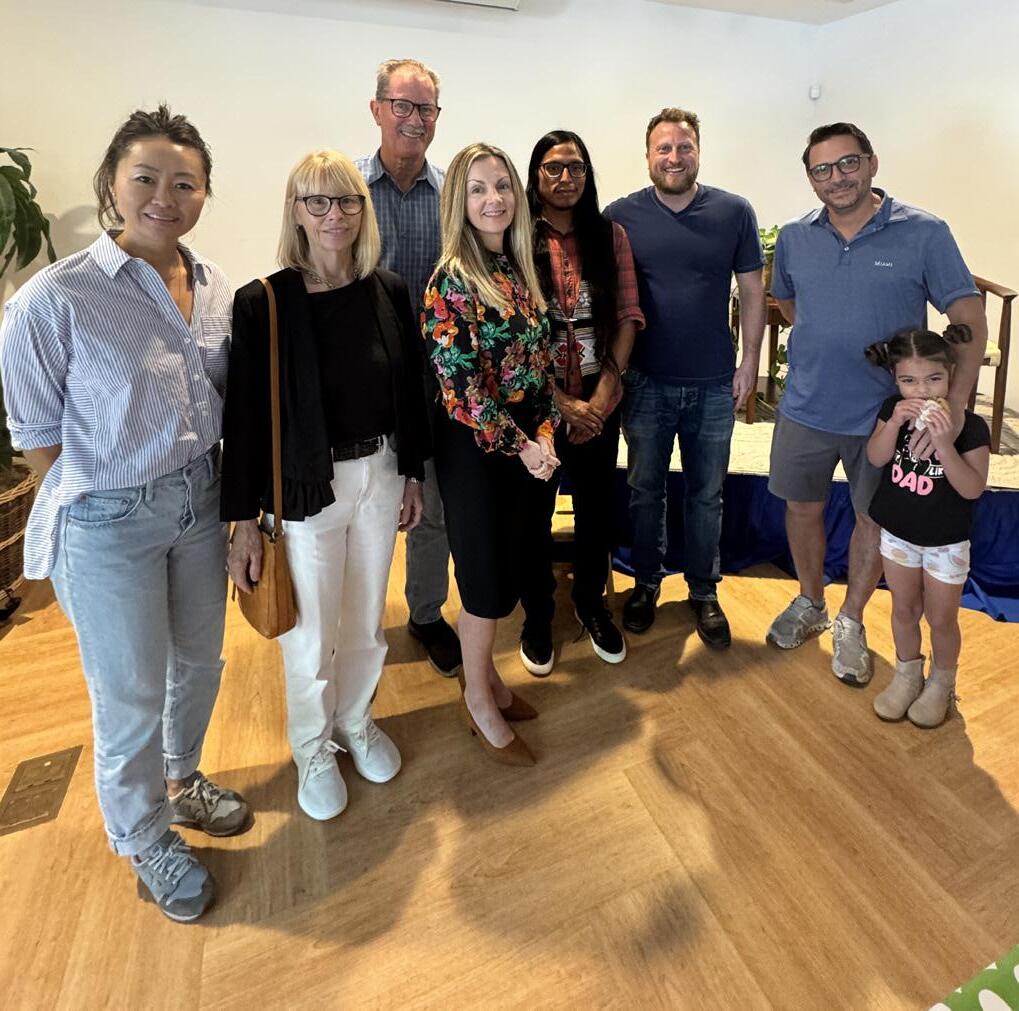
Cover: Miami Shores Sustainability & Resiliency Committee (L-R): Miami Shores Vice Mayor, Neil Cantor, Paul Madsen, Nicola Meyer, Past Chair, Carol Eannance Respondek, Chair, and Silvia Kang, (not pictured: Patricia Casey, Vice-Chair and Richard Pluhar, Past Vice-Chair)















Carla Peters, Executive Director, GMSCC
The Egret • April 2026 • 9620 NE Second Avenue Suite 201, Miami Shores, FL, 33138 • 305-754-5466 e-mail: chamberinfo@miamishores. com • MiamiShores.com • facebook.com/MiamiShores, The Greater Miami Shores’ Egret is the official publication of the Greater Miami Shores Chamber of Commerce, and is published monthly. 7500 copies of the Egret are distributed to homes, apartments, and businesses within the villages of Miami Shores, Biscayne Park, El Portal, Little River and Upper East Side free of charge. Views expressed in this publication are those of the editorial staff and do not necessarily reflect those of the Board of Directors. Information in it is intended for Chamber member organizations as well as the residents of our communities. Please contact the Chamber for more information on membership, advertising, distribution, or content.


Cushman School

The Greater Miami Shores Chamber of Commerce is committed not only to supporting local businesses, but also to highlighting the importance of resilience and sustainability in the community. In 2023, as part of its lauded Green Day Festival, the Chamber introduced Green Street on 98th Street, a space dedicated to nonprofits and businesses focused on environmental stewardship and sustainable practices.
Building on that momentum, the Chamber partnered with the Village of Miami Shores, the Miami Shores Sustainability and Resiliency Committee, and Brockway Memorial Library to launch a series of educational workshops designed to keep the conversation going year-round and encourage residents to play an active role in protecting the environment.
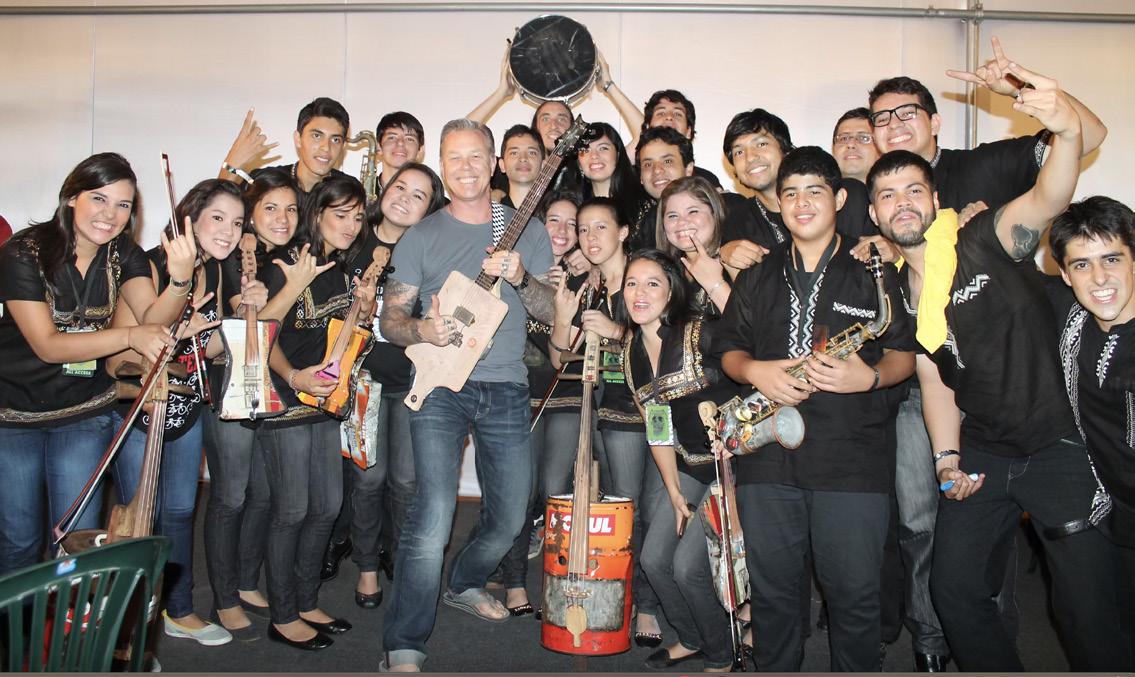
One of those programs took place on Saturday, March 7, 2026, when the Village of Miami Shores welcomed two environmental voices whose work centers on protecting one of South Florida’s most vital natural resources: the Everglades. Though they come from very different backgrounds, both speakers share a deep commitment to safeguarding the wetlands that sustain life across the region.
The morning began with remarks from Eve Samples, executive director of Friends of the Everglades, the nonprofit founded in 1969 by Marjory Stoneman Douglas. A native of Miami who grew up in nearby
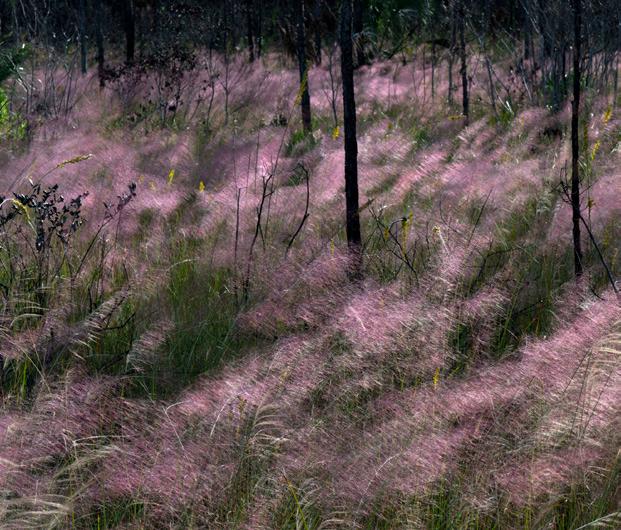

By: Liangy Calli
North Miami, Samples previously spent two decades as an award-winning journalist reporting on environmental issues across Florida. Her career included roles as statewide opinion editor for the USA TODAY Network in Florida, columnist for Treasure Coast Newspapers/TCPalm, and reporter for The Palm Beach Post and the Pittsburgh Post-Gazette.
Samples earned her B.A. in journalism from University of North Carolina at Chapel Hill and joined Friends of the Everglades in 2020, recognizing an opportunity to combine her background in environmental reporting with the organization’s legacy of grassroots advocacy and education.
Her work has earned numerous honors, including the Susan B. Anthony Award from the League of Women Voters of Martin County and the Conservation Journalist Award from the Pelican Island Audubon Society, along with recognition from the Florida Press Club, the National Society of Newspaper Columnists, the Online News Association, and the Florida Society of Professional Journalists.
Carrying forward the legacy of Stoneman Douglas, whose advocacy transformed public perception of the Everglades, Samples reminded the audience that the
wetlands are far more than a scenic landscape.
So what exactly are the Florida wetlands, and why do we need them?
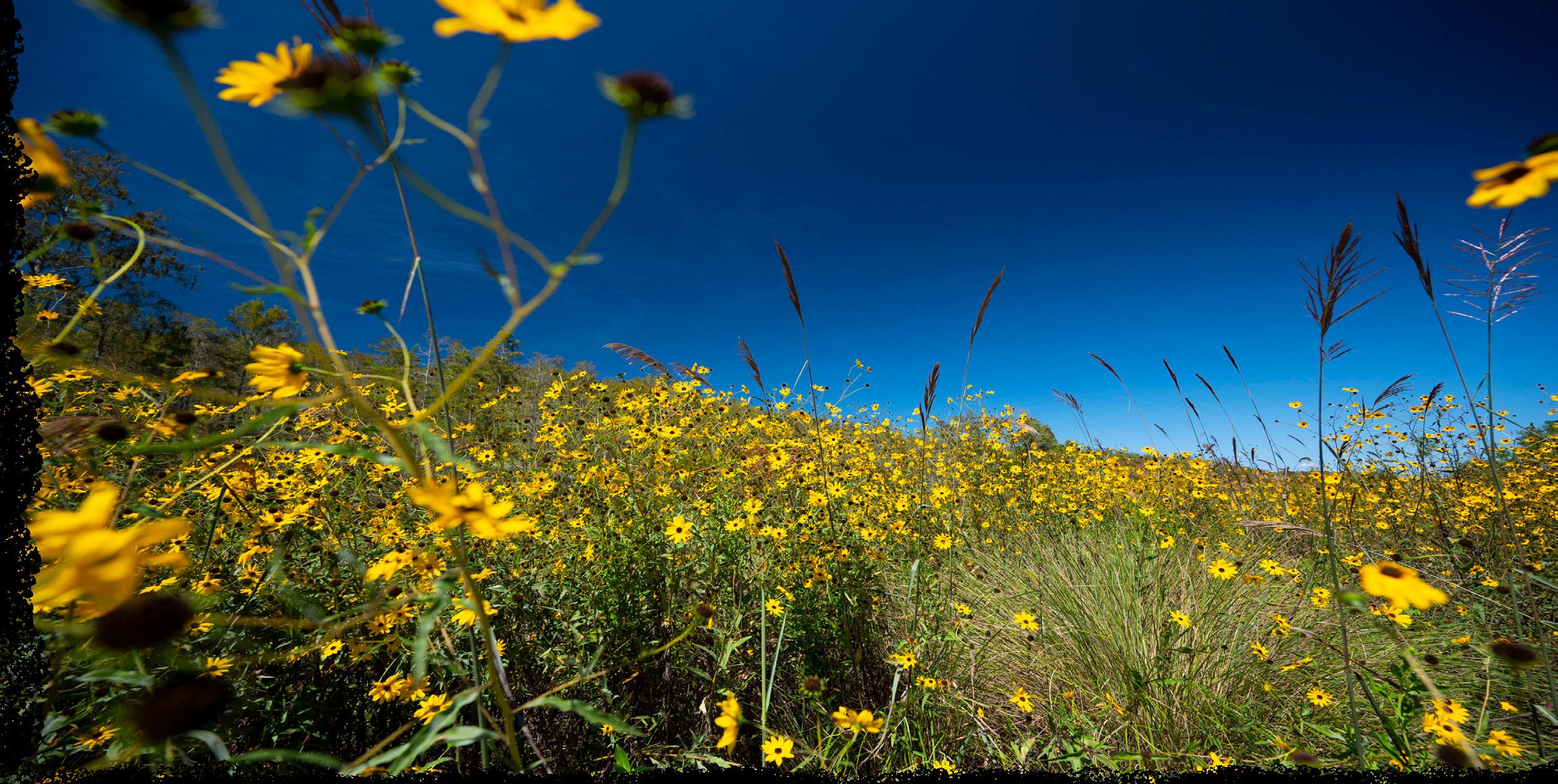
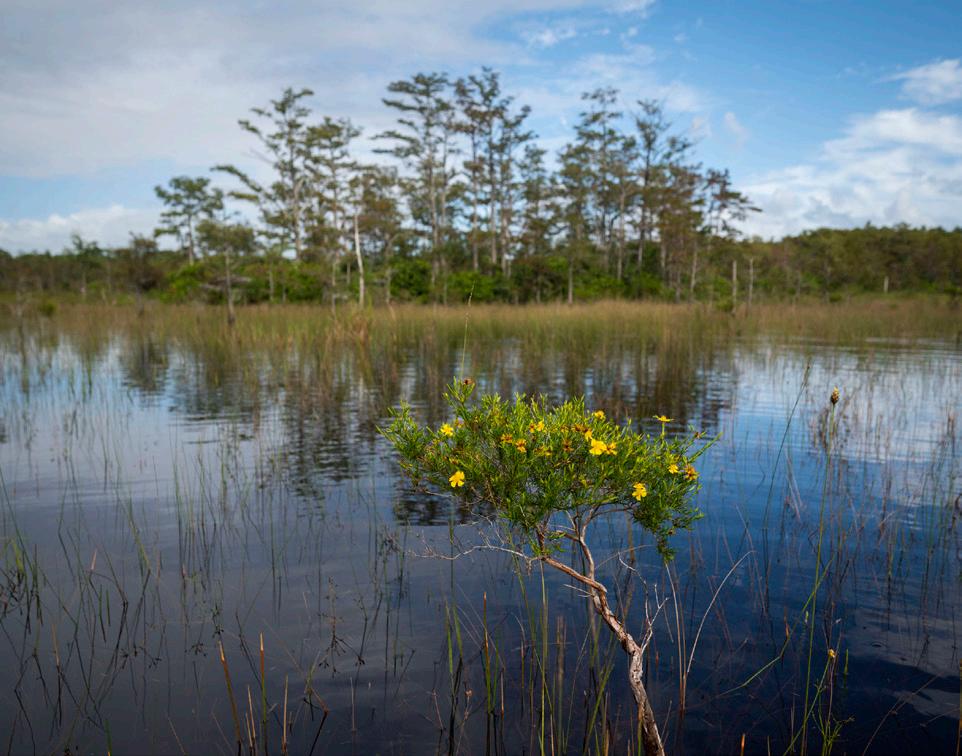
The wetlands of South Florida, anchored by the Everglades, form one of the most unique ecosystems in the world. Historically, a slow-moving sheet of water flowed south from Lake Okeechobee through vast sawgrass marshes, mangrove forests, and shallow rivers before reaching Florida Bay.
These wetlands serve as a natural filtration system, slowly cleaning and storing the water that ultimately becomes drinking water for millions of Floridians. They also function as South Florida’s natural flood-control system, absorbing excess rainfall and helping regulate water levels during major storms.
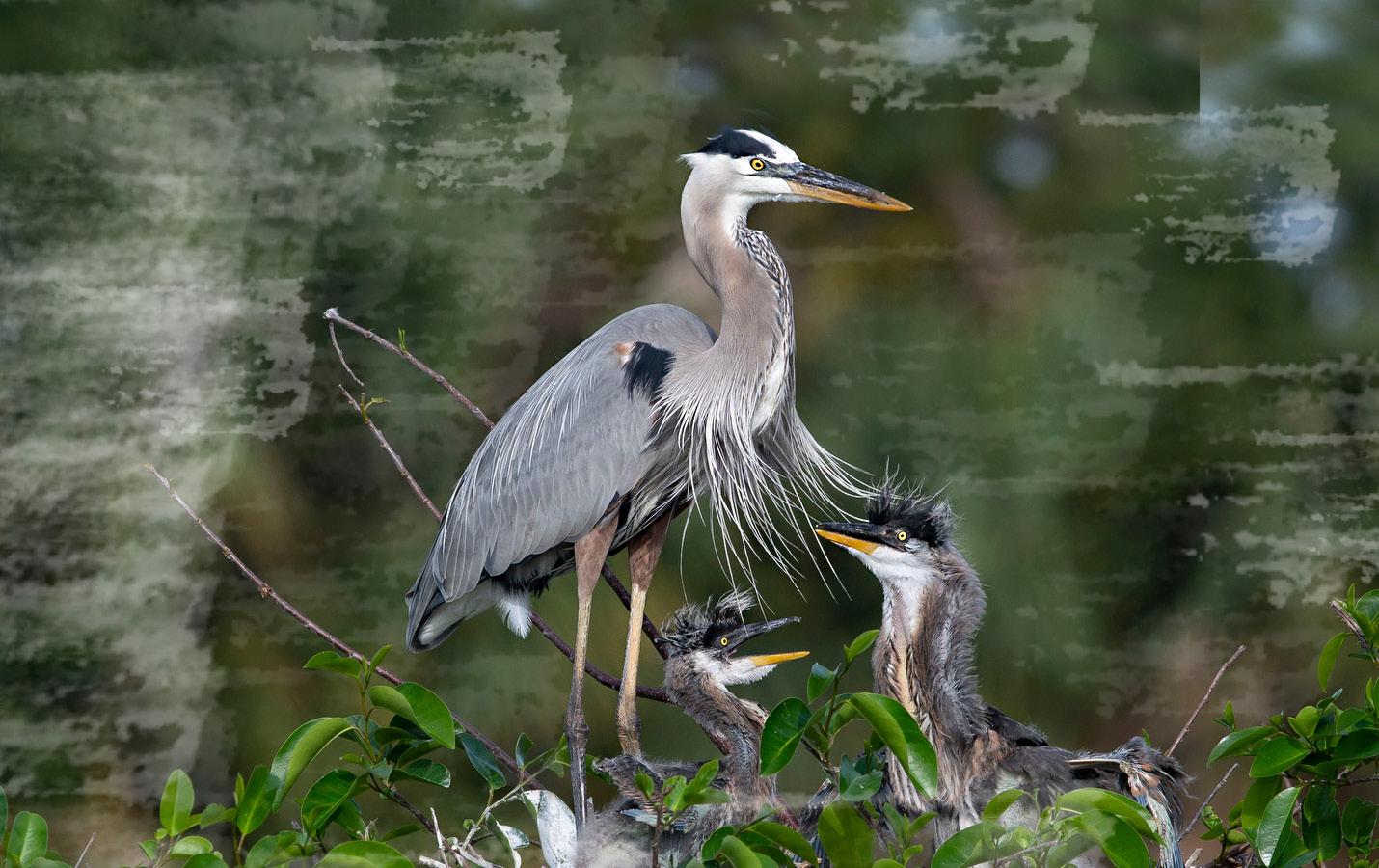
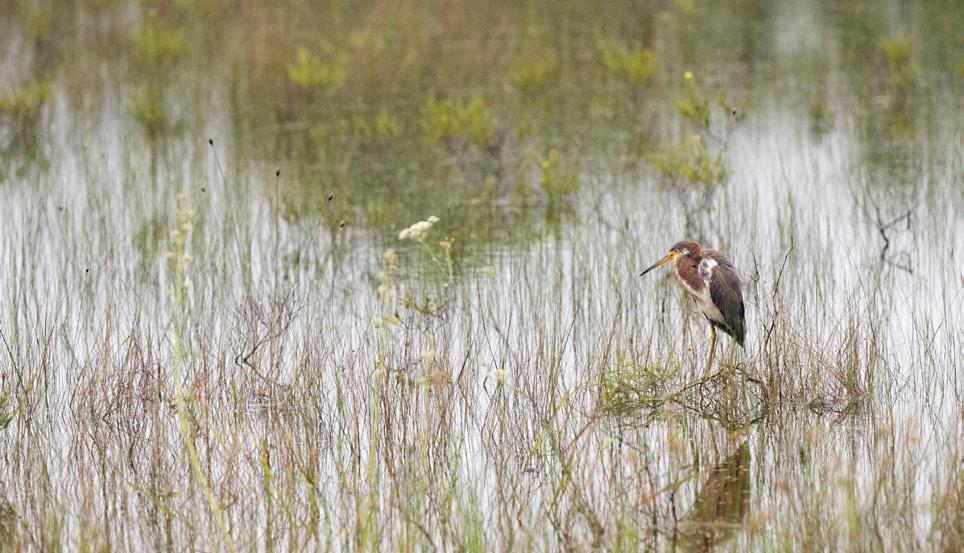
Equally important, the wetlands provide critical habitat for wildlife. The Everglades support hundreds of species, from wading birds and fish to alligators and endangered animals, making the ecosystem one of the most biologically diverse regions in North America.
No one understands this relationship more personally than the morning’s second speaker, William J. Osceola




a/k/a ‘Popeye’ of the Miccosukee Tribe of Indians of Florida.
A member of the Bird Clan, Osceola previously taught language, culture, and digital arts at the Miccosukee Indian School before being elected Secretary of the Miccosukee Business Council in 2021. Recently re-elected to a second term, he remains the council’s youngest member, now in his mid-thirties, balancing tradition and modern leadership with a creative perspective.
As Secretary, Osceola oversees communication across the tribe, including recordkeeping, correspondence, public notices, and membership records. Among his priorities are strengthening education, encouraging community engagement, and investing in infrastructure such as roads, sidewalks, and essential buildings across the reservation.
Born in Florida, Osceola spent his early childhood in several camps within the reservation before his family moved to Connecticut when he was five. Living there for seven years provided him with a broader view of the world outside the Everglades and deepened his appreciation for his tribal community and heritage.
and the history of his tribe. His creative influences range from writer Shel Silverstein to artist Raymond Pettibon, as well as filmmaker John Carpenter and his cult classic The Thing.
During his talk, Osceola shared stories of growing up in the Everglades, where the sounds of water moving through sawgrass and the calls of birds were simply part of daily life. Long days outdoors, exploring and learning the land, shaped his understanding of the fragile balance within the ecosystem.
As a teenager, he spent time testing water in the rivers and wetlands—something that seemed tedious at the time but ultimately helped cultivate a deeper sense of responsibility for protecting the environment.
For the Miccosukee people, he explained, the connection to the Everglades is rooted in tradition, respect for the land, and legacy. Each clan carries different responsibilities within the tribe, yet one element unites them all.

Osceola referred to it by its Miccosukee name:
“The river belongs to everyone,” he explained. “We are all protectors of nature,” he told the audience. “It does not belong to us—we are borrowing it from our future.”
His words offered a powerful reminder that stewardship of the Everglades is not only scientific or political. It is cultural, generational, and deeply human.
And ultimately, the responsibility belongs to all
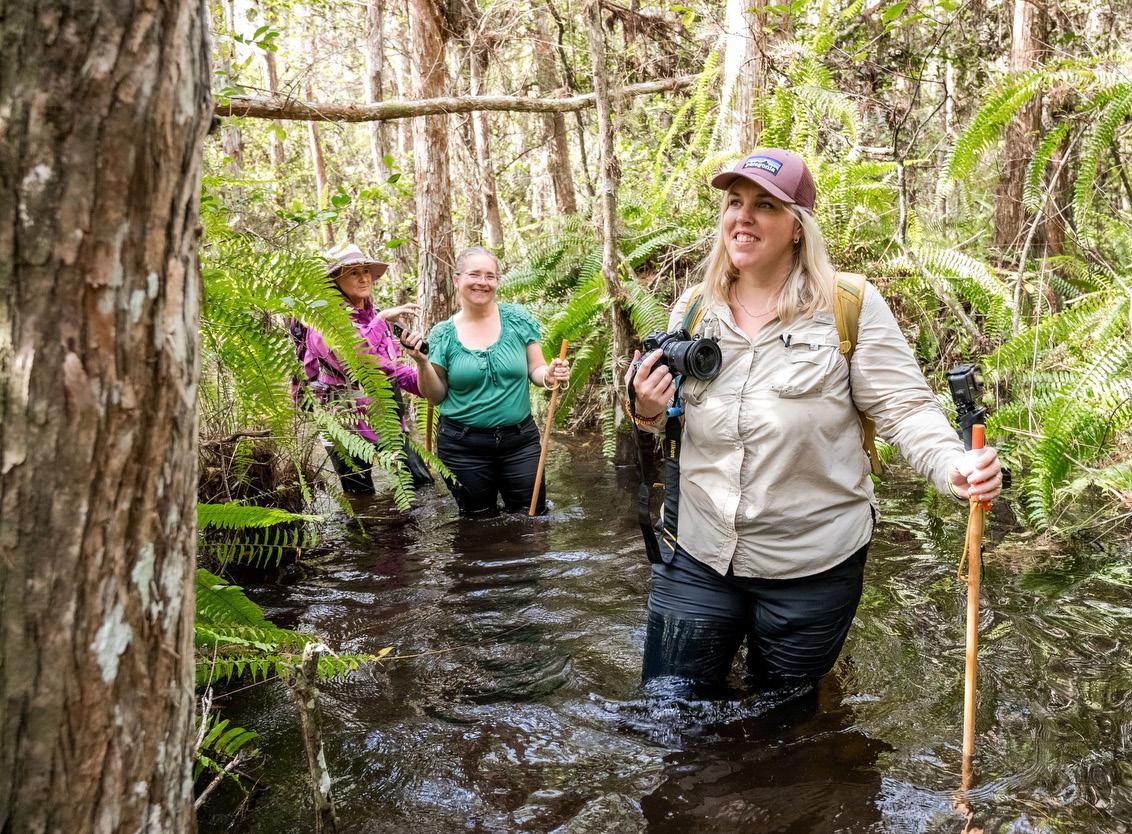



























Liangy Calli
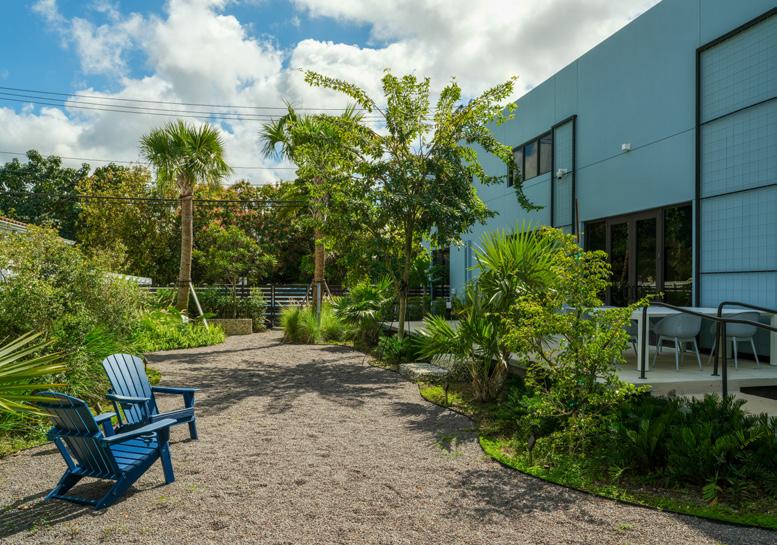
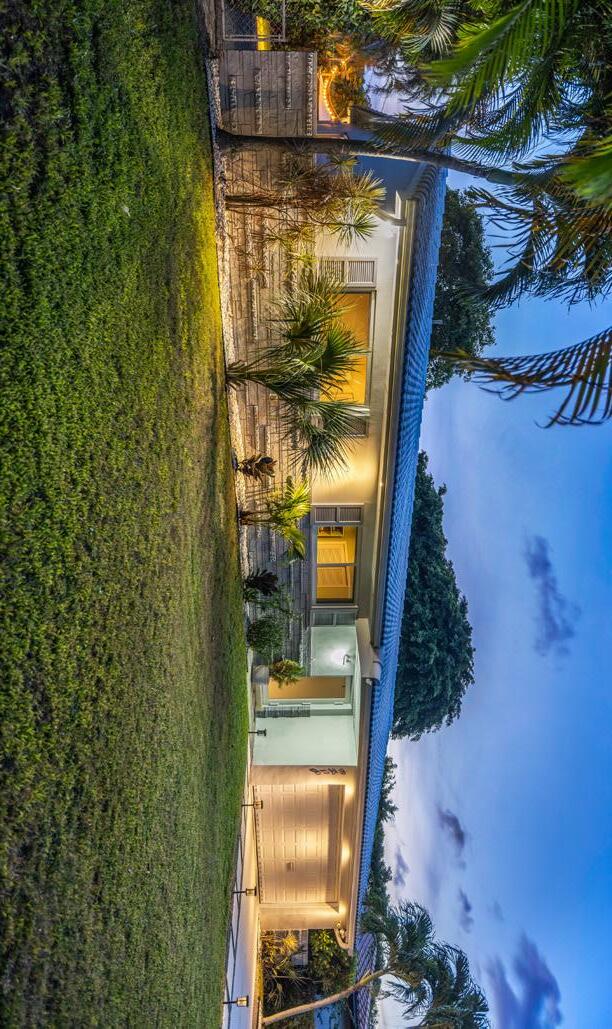
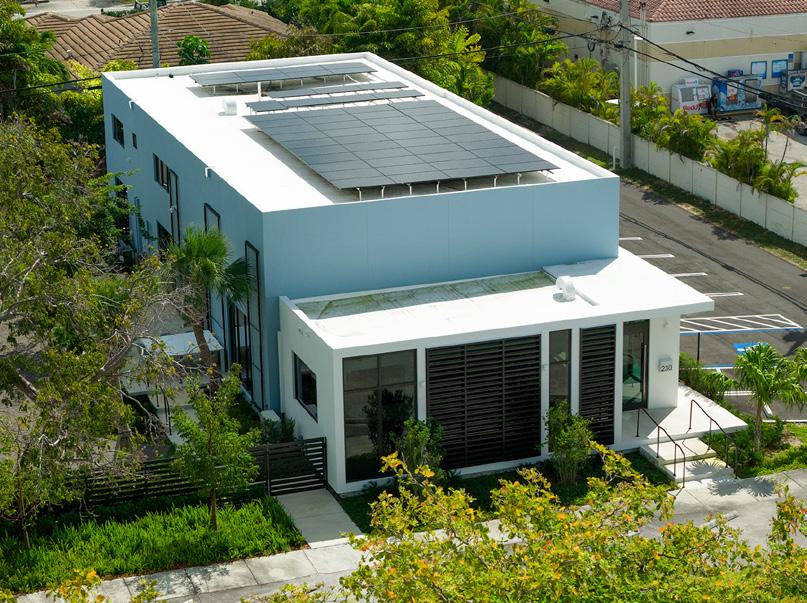
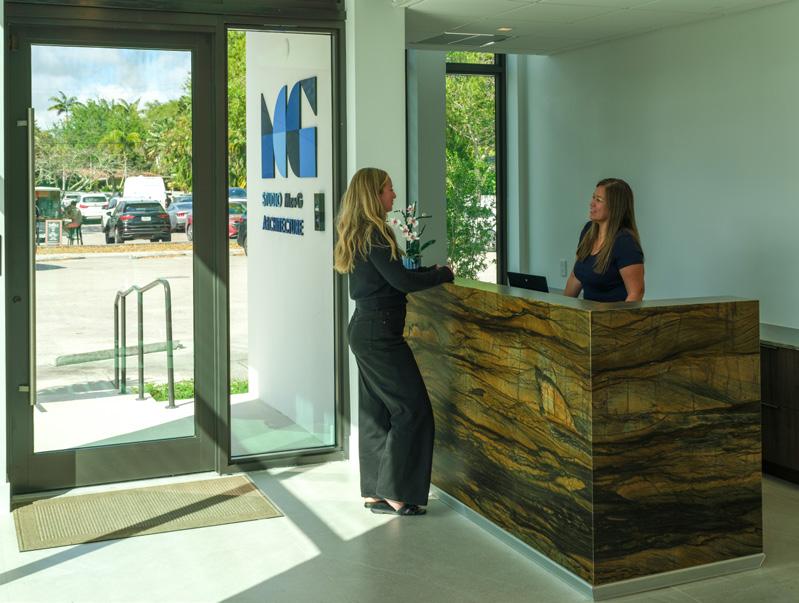
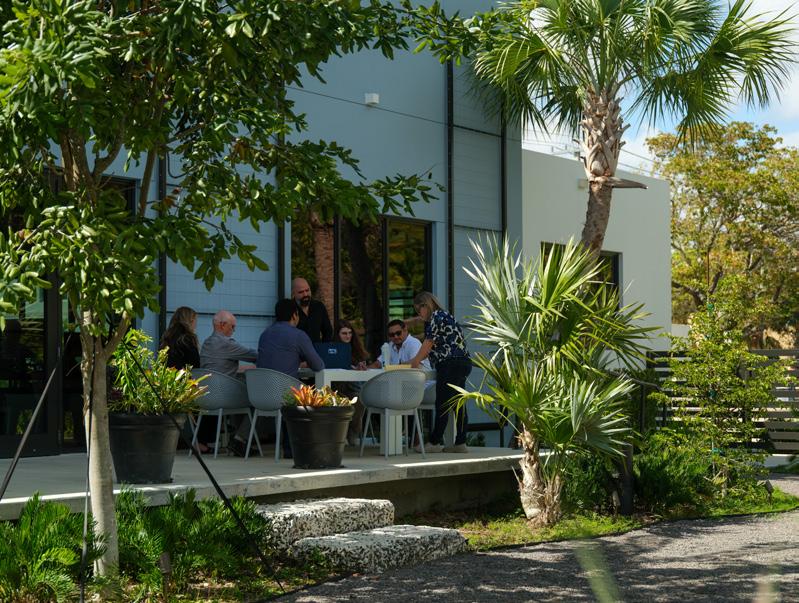
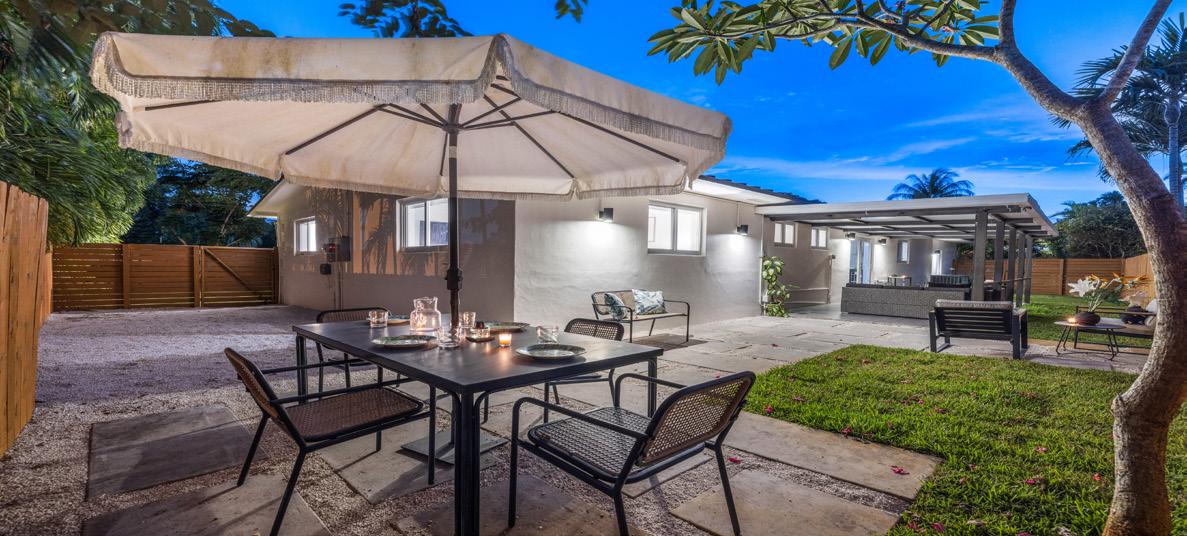
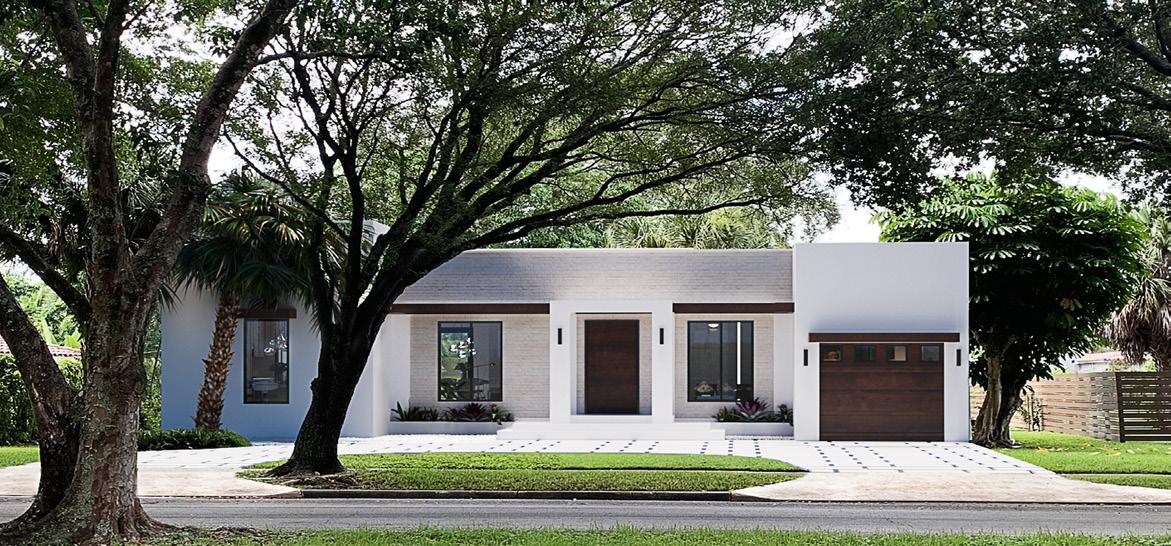
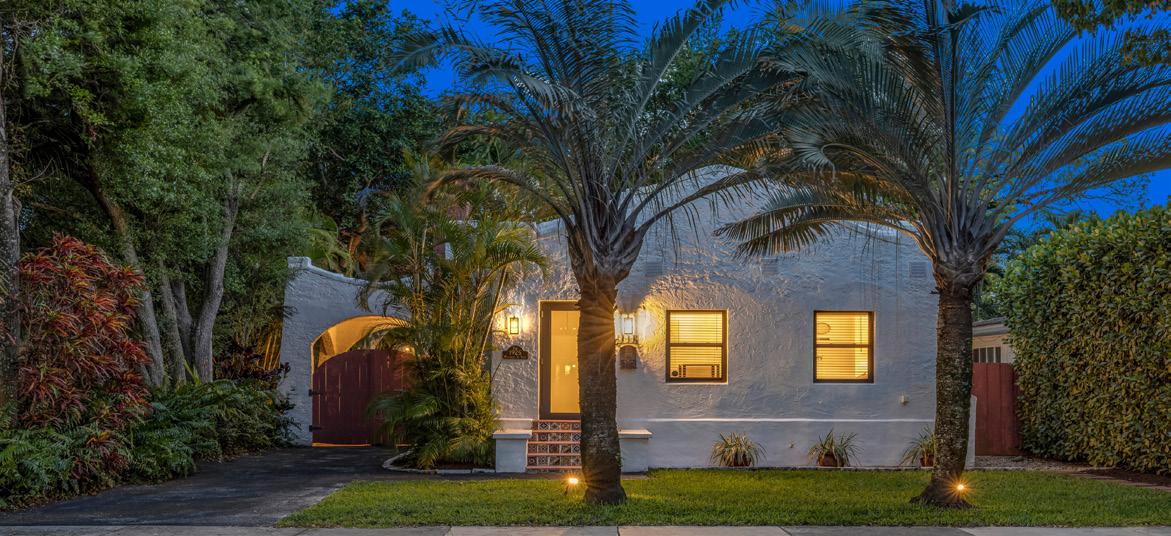
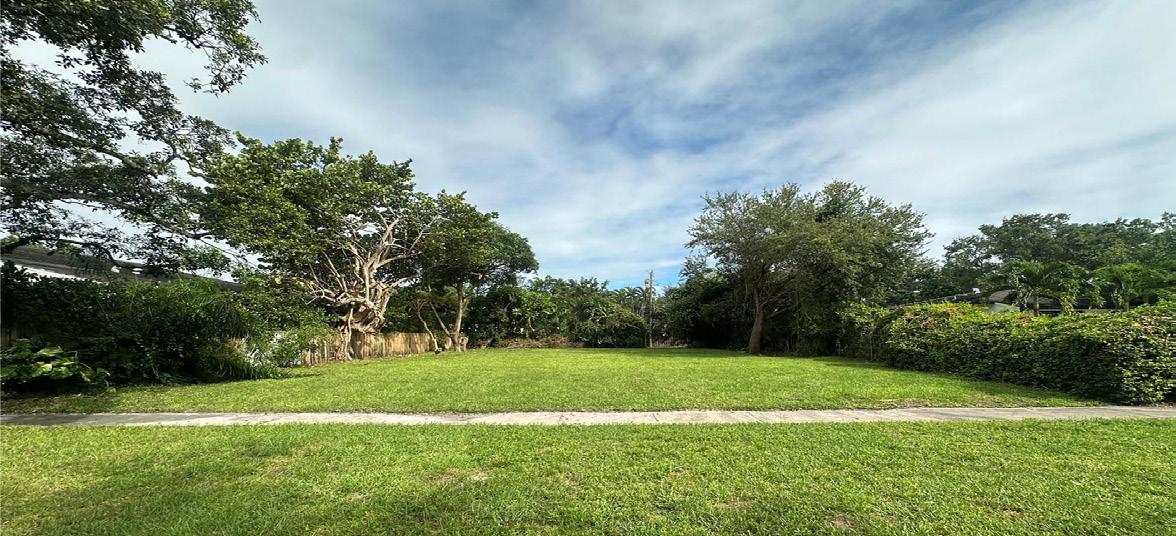
Sustainability is no longer a trend, it’s a responsibility. At Studio Mc+G in Miami Shores, founder Jennifer McConney brings that philosophy to life through a purpose-built, green-conscious office that demonstrates how thoughtful design can positively impact both people and the environment.
We asked what inspired her to create a greenconscious workspace from the ground up.
Why was it important for you to build a greenconscious building?
When I first purchased the empty lot a few years ago, I felt an unexpected sense of guilt about building on land that had never been developed. This particular patch felt tucked away, almost forgotten, surrounded by residences, parking lots, and the backs of commercial buildings.
I was also incredibly grateful to the Village and my neighbors for allowing me to rezone the property from parking to commercial use. That opportunity made me want to give something back.
We began by setting the building back about 35 feet from our neighbor, which allowed us to create a native garden along the east side. Today, it’s alive with butterflies and bees. It’s become our “little view.” From there, the flat roof presented an opportunity to reduce our carbon footprint, so we installed 55 solar panels along with a Tesla battery, choosing that over a traditional gas generator.
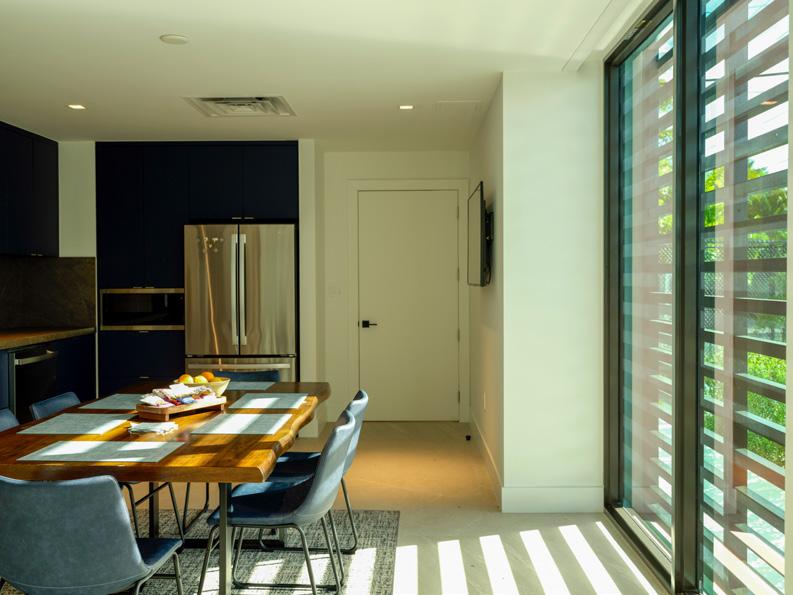
We also oriented the building intentionally. With windows facing north, east, and west, we’re able to rely almost entirely on natural light in the mornings. During the hottest part of the day, the sun is directly overhead, powering the solar panels, and by late afternoon, we simply lower the blinds on the west side and wrap up the day. On cooler days, we open doors on opposite sides of the space to create natural cross ventilation.
Your office is a reflection of your values. What were the most impactful green design choices, and how do they influence your team day to day?
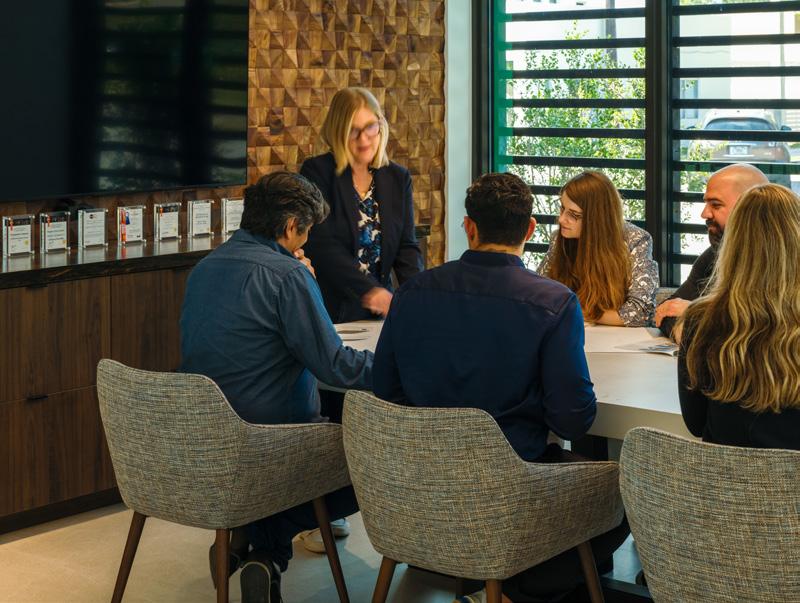
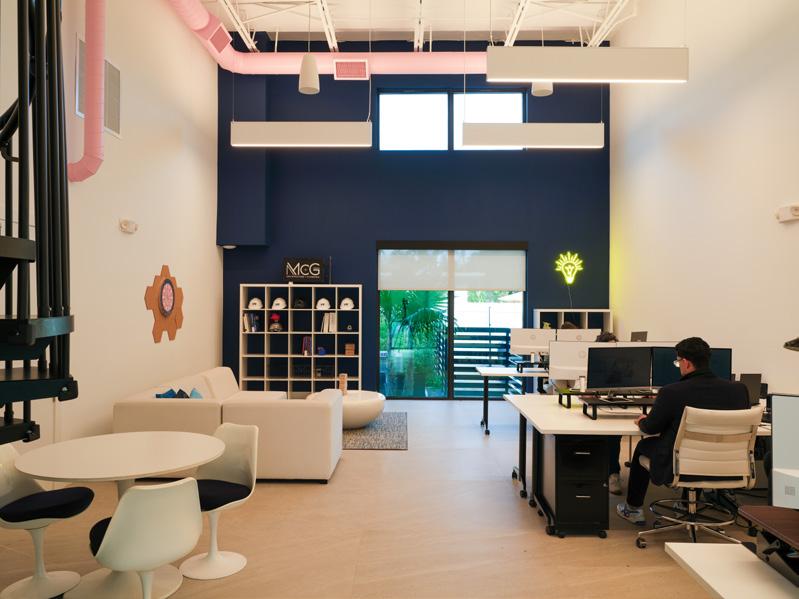
There’s a certain energy when you walk into the office, it just feels good. Natural light plays a huge role in that. Every person in the studio, not just those in private offices, has a view of the landscape. That connection to nature makes a difference in how we feel and work.
The garden has also become an extension of our workspace. We have Wi-Fi and work tables outside, so people can take calls, have lunch, or even work outdoors. Occasionally, a flock of parrots will settle into the gumbo limbo trees out front, which can be a bit distracting, but in the best possible way.
Sustainability often comes with trade-offs. What challenges did you face, and what lessons would you share with others?
The biggest trade-off is the upfront cost, particularly for the solar panels and battery system. That said, available tax credits helped, and when you see that we’re operating at roughly 60–70% self-power on most days, it quickly justifies the investment.
Interestingly, sustainability itself wasn’t the challenge, other aspects of the project were more complex. For me, it’s about recognizing value in places people might overlook. Take the rooftop, for example. It could have been a deck or green roof, but when you look globally at the progress being made in solar energy, it felt more impactful to contribute in that way and I want to be part of that.
My advice to other business owners is simple: look closely at your space and your team’s daily experience. Creating an environment where people feel good will naturally lead to greater productivity; and often, more sustainable choices.
As we approach Earth Day, what is one practical change every office or household can make?
Take a moment to assess your environmental footprint, something all of us can do. From an architectural perspective, I’d say: open your windows when you can. Turn off the AC, or raise the temperature slightly. Spend more time outdoors. Those small shifts reconnect us to our environment and remind us that we all share responsibility for protecting it.
Tesla solar system with backup battery, generating approximately 60–70% self-power daily
Net metering through FPL, allowing excess energy to be returned to the grid
Cross ventilation throughout the main studio space
4,000 sq. ft. native garden designed to attract pollinators and reduce irrigation needs
Native plantings in adjacent alleyways to extend habitat for pollinators
White reflective roof surface to reduce heat gain
Natural water percolation integrated into the garden design
Low-E windows for improved energy efficiency
Low-voltage automated AC thermostat system










Chair of the Miami Shores Sustainability & Resiliency Committee
By Liangy Calli
In recent years, the Village of Miami Shores has had to rethink how it prepares for the future. Like many coastal communities in South Florida, the village faces the growing realities of climate change: more frequent flooding, stronger storms, and rising sea levels that threaten infrastructure, homes, and natural habitats.
Behind the scenes, a dedicated group of residents and village leaders has been working to help the community adapt. Through research, education, and collaboration, they are exploring innovative ways to strengthen the village’s environmental resilience while preserving the character that makes Miami Shores unique.
At the center of this effort is the Miami Shores Sustainability & Resiliency Committee.
The committee was established by ordinance of the Village of Miami Shores Council in January 2020. It consists of seven volunteer members appointed by council members to serve twoyear terms.
Current members include:
Carol Eannace Respondek, Chair
Patricia Casey, Vice-Chair
Nicola Meyer, Past Chair
Richard Pluhar, Past Vice-Chair
Silvia Kang Paul Madsen
I can see the opportunity for real, tangible change at the ground level of the green movement in our community, and I can’t ignore the chance to make a difference. As community members, we have a responsibility to lead in this space, adopting smarter, more sustainable practices that not only protect our environment, but also strengthen our livelihoods. Today, these efforts aren’t just admirable, they’re increasingly expected.”
and we would love to see it expanded to residents and commercial establishments. Alongside recycling, composting is one of the easiest ways to reduce the amount of waste sent to the landfill, and if you’re concerned about rising garbage costs, composting is a key part of the solution.”
While much of the work happens behind the scenes, the committee’s efforts are helping guide how Miami Shores prepares for the decades ahead.
Since its creation, the Sustainability & Resiliency Committee has contributed to a number of meaningful initiatives.
One of its most significant efforts has been the creation of a white paper on sustainability and resiliency, which is expected to help inform future updates to the village’s Comprehensive Plan.
The committee also helped develop a proposed Tree Ordinance, currently under review by Public Works and legal staff, aimed at protecting and strengthening the village’s urban canopy of public trees. This step gets us closer to participating in the national recognition program, Tree City USA.
Members have also contributed to the Biscayne Boulevard beautification project, reviewing landscape plans and recommending native plant species better suited to South Florida’s climate. Several of those recommendations were incorporated into the final design.
Education has been another priority. Committee members visited a regional Waste Management facility to better understand the recycling process and explore ways the village can improve waste reduction efforts.
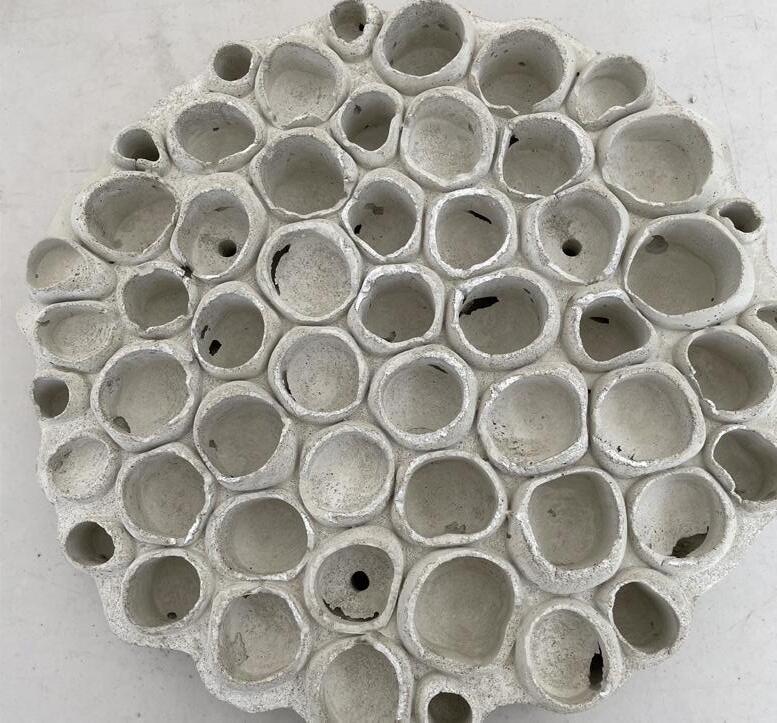
One of the committee’s most visible initiatives is the introduction of Living Seawalls, an innovative shoreline protection system developed by Kind Designs.
Unlike traditional seawalls, these structures include 3D printed panels that mimic mangrove roots to encourage marine life to grow along the surface and provide habitat for fish, improving coastal ecosystems while helping protect shorelines from erosion.
The project is currently being installed at Bayfront Park, offering both environmental and educational benefits to the community.
Supporting the committee are Delroy Peters, Director of Public Works, who serves as staff liaison, and Vice Mayor Neil Cantor, who acts as council liaison.
Together, the group serves as a bridge between residents, village departments, and elected officials, helping ensure that sustainability and resiliency remain part of Miami Shores’ long-term planning.
The committee’s mission is to develop a culture of sustainability, resiliency, and environmental responsibility in Miami Shores through partnership with residents, government, and businesses.To accomplish this, the committee focuses on several key goals:
~ Assisting with sustainability elements within the village’s Comprehensive Plan, including infrastructure, coastal management, and conservation
~ Serving as a liaison between residents and local government on environmental issues affecting the community.
~ Increasing ecological awareness through education and outreach
– Neil Cantor, Miami Shores Vice Mayor
~ Encouraging collaboration between village departments, volunteers, and local organizations
LC: What are the most pressing environmental or resilience challenges facing Miami Shores right now?
CR: “The biggest environmental and resilience challenges facing Miami Shores all relate to water. We must protect our drinking water, especially during times of drought, while also addressing increasing flood risks. In the lower elevations of the Village, the transition from septic to sewer cannot come soon enough to protect our groundwater from failing septic systems. At the same time, protecting our tree canopy is essential. Trees provide shade and habitat for wildlife, and their roots help absorb excess water, a mature tree can take in as much as 150 gallons a day.
In addition to water issues, the Sustainability and Resiliency Committee is also committed to helping find solutions to our growing garbage problem. The composting pilot program initiated by the Village Manager is a great start,
Sustainability efforts are most effective when the community is involved. To help expand awareness, the committee partnered with the Greater Miami Shores Chamber of Commerce to launch a Sustainability Workshop Series.
The series has featured presentations on topics including:
• Reducing stormwater runoff
• Composting
• Tree Care
• Florida-friendly landscaping
• Living seawalls and shoreline protection
Most recently, a presentation on Everglades preservation featuring speakers from Friends of the Everglades and members of the Miccosukee Tribe of Indians of Florida.
The committee also regularly hosts talks from architects, landscape designers, and environmental professionals on topics such as pervious paving, stormwater solutions, and sustainable landscape design.
Beyond workshops, members organize community swale cleanups and participate in village events like Green Day,



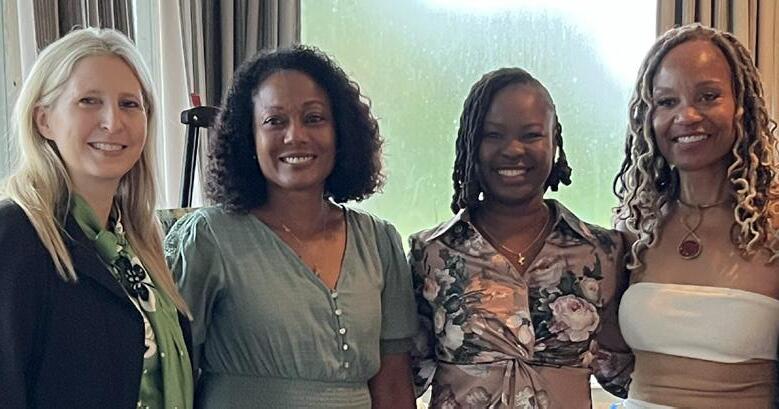
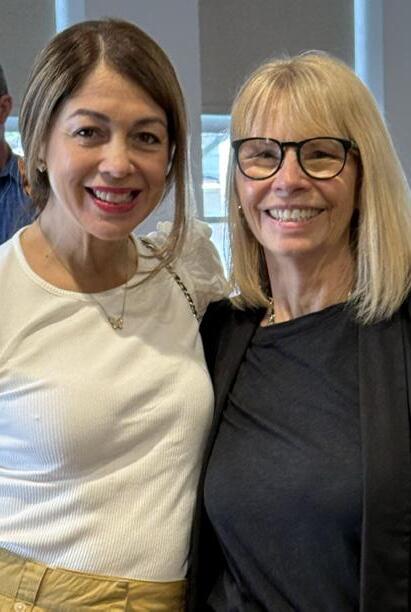
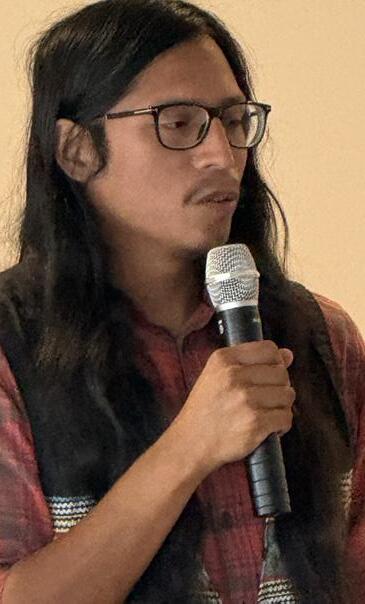
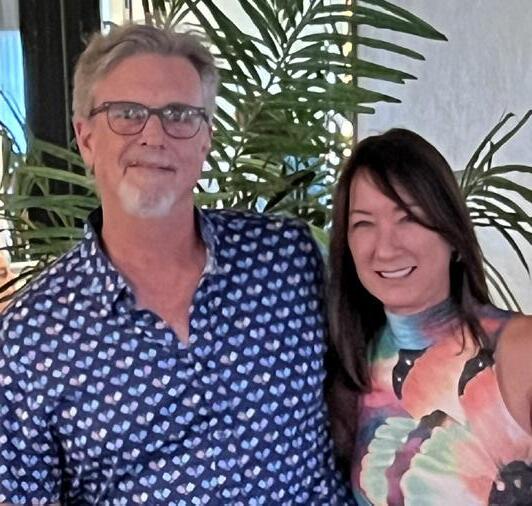
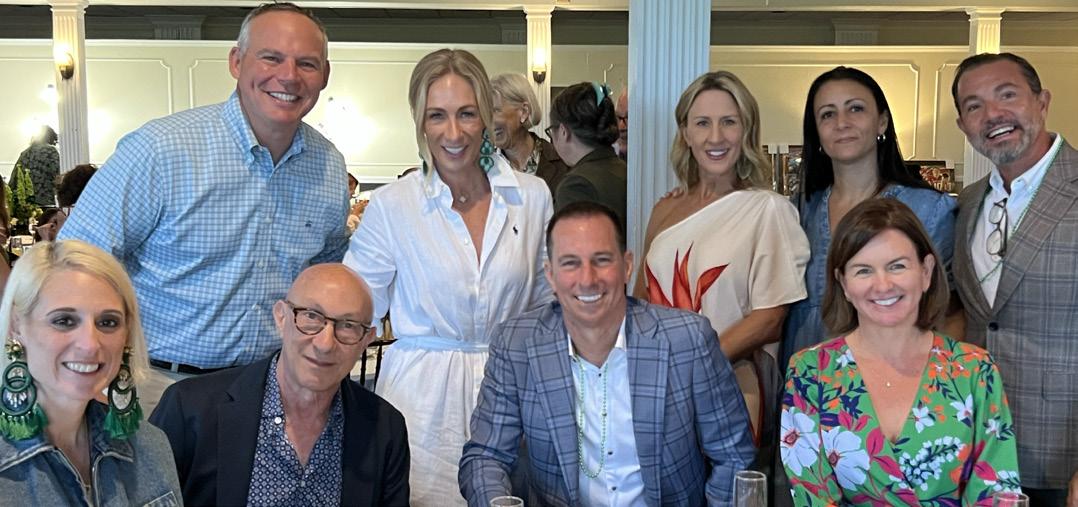
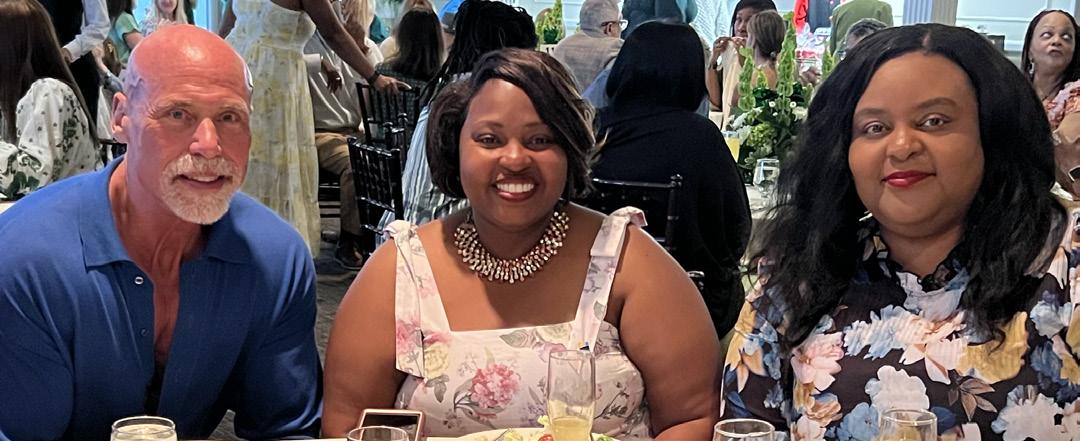
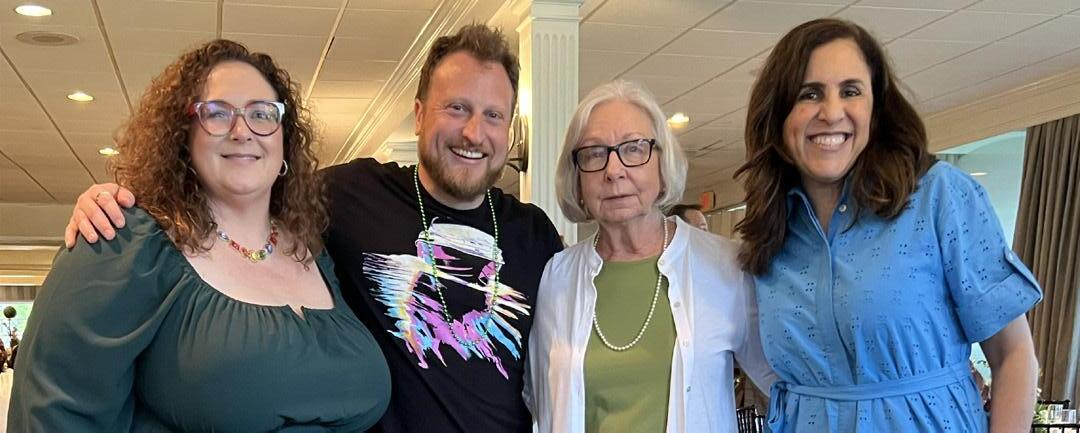
March was an impactful month for the Chamber as we actively supported and engaged in community events. From the Resillient & Sustainability event at Brockway Memorial Library to the Women in Business Pathways event at Barry University, we remained committed to growth and collaboration. We also joined the Rec Pickleball Tournament and the Alliance Brunch, strengthening relationships and supporting a thriving business community.
encouraging residents to take part in protecting their local environment.
The work of the Sustainability & Resiliency Committee is ongoing, and several initiatives are already in development. Among the projects being explored:
~ Increased participation in village composting programs
~ Collaboration on the landscape planning for the redevelopment of the Miami Shores Golf Course
~ Launching an Adopt-a-Drain program to help keep storm drains clear
~ Developing a Depressed Swale Program designed to reduce localized flooding by improving stormwater absorption
LC: What does a more sustainable and resilient Miami Shores look like in 10 years?
CR: “In ten years, if we continue our progress converting septic systems to sewer and improving our stormwater infrastructure, we will be in a much stronger position to manage water challenges. I hope Miami Shores will continue to be known for its beautiful tree canopy and historic homes. But if we want a future filled with birdsong and butterflies, shady streets lined with trees, clean drinking


water, and abundant marine life, we must strengthen our commitment to protecting the environment today.”
Each initiative represents another step toward building a community that is better prepared for environmental challenges while remaining beautiful, livable, and connected.
Resiliency is not achieved overnight, nor is it the work of a single committee. It requires the collective effort of residents, businesses, local organizations, and village leadership.
LC: What can we do as residents?
CR: “Residents can do their part by paying attention to water restrictions. Additionally, using the least possible amount of pesticides, herbicides, and fertilizers on our properties - or none at all - helps protect our water supply by preventing these toxic substances from entering our groundwater. And our groundwater is closer than you might think. Making sure debris does not reach stormwater drains also helps mitigate pollution flowing into Biscayne Bay.
If we can get our swales working for us rather than against us, we can increase our environment’s ability to absorb rainwater. Over time, many swales have


naturally risen to the elevation of our streets. It would be beneficial to create shallow depressions in them so they can function as retention areas for rainwater. For those of us who still have the old asphalt swales (I’m guilty!), consider removing the asphalt and replacing it with grass.”
Through research, collaboration, and education, the Miami Shores Sustainability & Resiliency Committee is helping ensure that the village continues to thrive in a changing world.
For the residents of Miami Shores, sustainability isn’t just a policy discussion - it’s a commitment to protecting the place they call home.
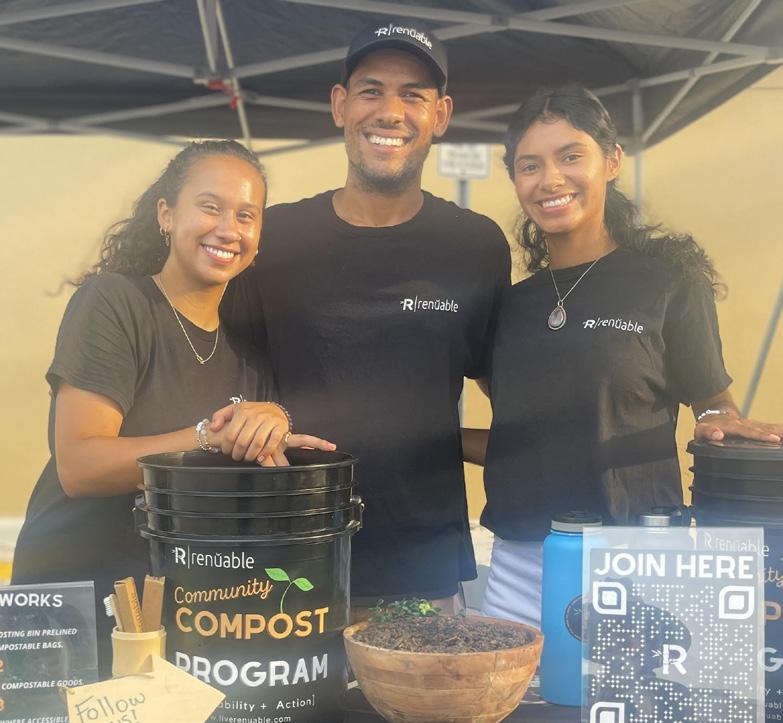
The Miami Shores Sustainability & Resiliency Committee will be participating in the community’s beloved Green Day Festival on April 18, 2026, at Green Street along 98th Street. The committee will be emphasizing composting at Green Day and will be hosting Renuables, a composting company currently working with our Village on a composting pilot program. They will display the valuable finished compost that is created through professionally available composting services. This compost can be used as fertilizer in your garden as well as mulch. Compost retains much more water to mitigate against flooding than your store bought mulch. 1 lb of compost retains about 33 lbs. of water!

By Liangy Calli
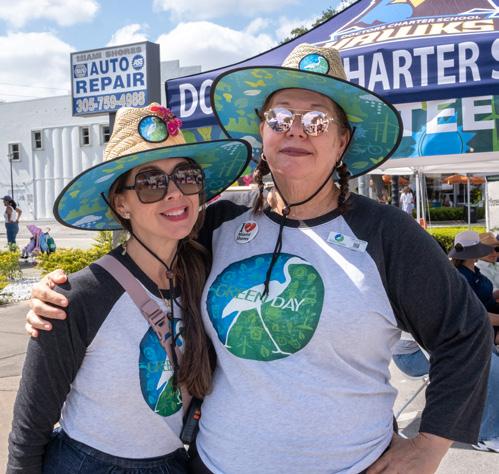
While April in Miami Shores is filled with celebrations of spring, renewal, and community, one event stands out as the true heart of it all: Green Day.
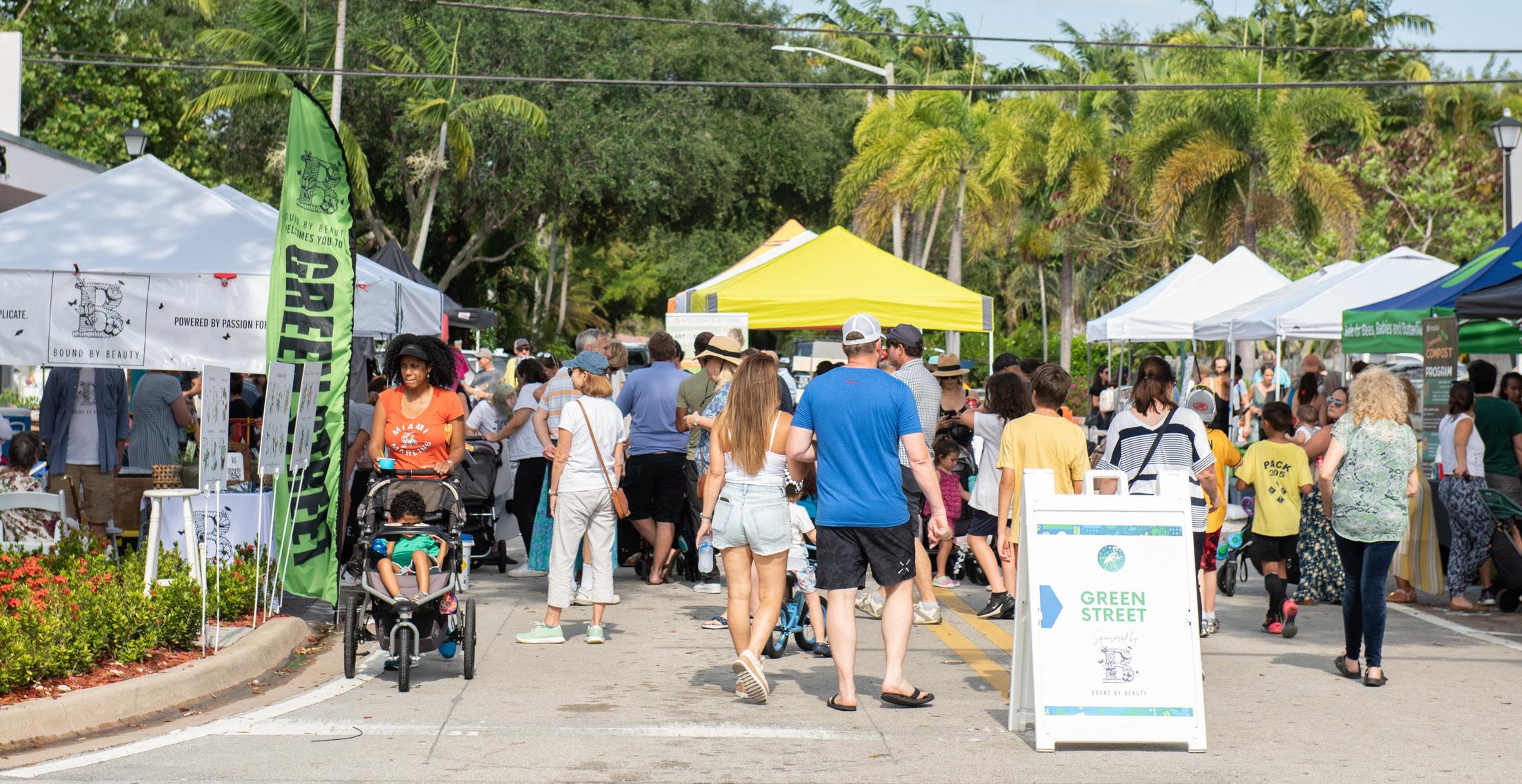
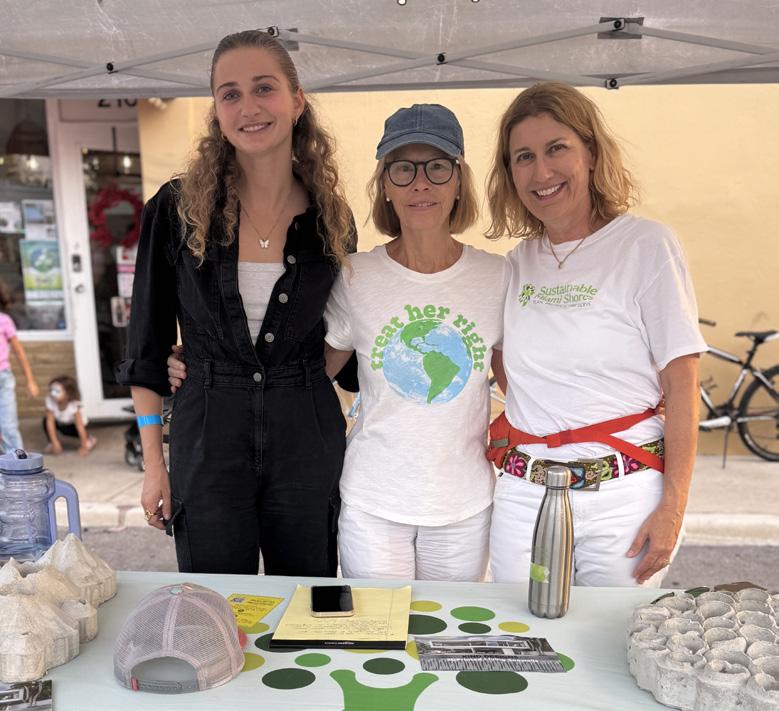
Returning on Saturday, April 18, 2026, Green Street on Plaza 98th, has evolved into far more than a feature of the Village’s beloved festival, it has become a driving force. What began in 2023 as a dedicated space for environmental programming has grown into a dynamic, immersive hub where sustainability comes to life in real and meaningful ways, all bound by committed partnerships.
Set against the backdrop of Downtown Second Avenue’s signature “old town” charm, Green Street offers a focused, expo-style experience that brings together local nonprofits, environmental leaders, and green businesses. It is here that the mission of Green Day is most clearly realized: connecting our community with practical, actionable ways to live more sustainably.
A Hub for Ideas, Action, and Impact
Green Street was created with a simple but powerful goal: to give sustainability a central, visible platform. Today, it delivers on that vision by showcasing solutions to the environmental challenges we face both locally and globally.
From water conservation and composting to native landscaping and renewable energy, Green Street
equips residents with the tools and knowledge to make meaningful changes in their everyday lives. More importantly, several activations are designed to engage young minds. It’s not just about awareness, it’s about action, accessibility, and community-wide impact.
Green Street Co-Sponsor, Bound by Beauty
Leading the charge once again is Bound by Beauty, the local nonprofit serving as lead sponsor of Green Street. Under the leadership of Mary Benton, the organization continues to elevate environmental awareness through hands-on engagement and inspiring public spaces.
Their work is already woven into the fabric of Miami Shores. The Butterfly Circle at Constitution Park has become a living installation - an ever-changing habitat filled with native plants, pollinators, and a steady stream of curious visitors. Children, walkers, and neighbors alike are drawn to its beauty, often leaving with a deeper understanding of the ecosystems that surround them.
That same spirit extends to their recent sponsorship of the wildlife demonstration garden at the Brockway Memorial Library. The garden has grown into a thriving habitat. Atala, Gulf Fritillary, and Zebra butterflies now frequent the space, alongside bees and countless other pollinators, transforming the library grounds into both a sanctuary and an outdoor classroom.
This year marks an exciting expansion with the introduction of GROW Miami, a new initiative rooted in the belief that our gardens can be powerful agents of
change. By encouraging pesticide-free, pollinator-friendly landscapes and the use of native plants, GROW Miami promotes yards that require less water, reduce flooding, and restore ecological balance. It invites residents to take part in a collective effort to green the Shores, one garden at a time.
Bound by Beauty will include several engaging activations, including a seed bar, art and butterfly/bug face painting.
Green Street continues to grow through meaningful partnerships that bring expertise and energy to the forefront. Joining as co-sponsor is Flora Native Garden, whose founders, Natalia and Mauricio, have played an instrumental role in advancing native landscaping in the community. Through their nursery and their landscaping firm, NAMA Natives, they have helped supply and design spaces like the Brockway Memorial Library garden, demonstrating how thoughtful planting can transform both aesthetics and ecology.
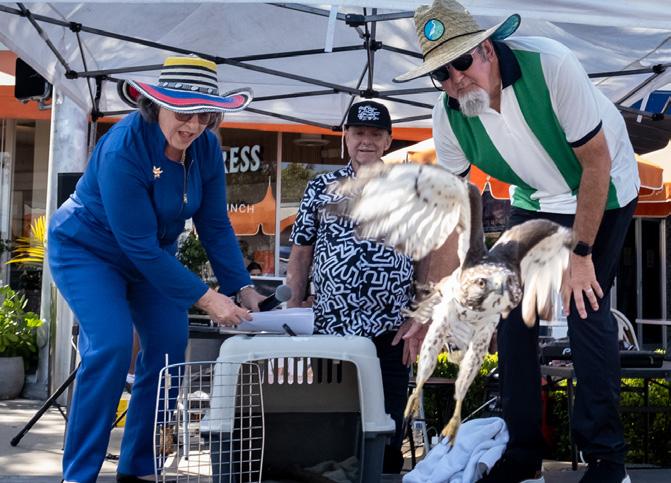
Returning favorite Pelican Harbor Seabird Station will once again captivate festivalgoers with rescued birds and, in some cases, powerful live release moments that underscore the importance of conservation and rehabilitation.
In collaboration with the Village Government and the Sustainability & Resiliency Committee, Green Street also reflects a broader, year-round commitment to environmental education.


On Tuesday, May 12 from 6:00 - 8:00 pm, the Greater Miami Shores Chamber of Commerce will host a special Women’s Health Month panel featuring local women sharing stories of resilience, healing, and professional growth.
The evening will highlight remarkable women whose experiences and leadership have shaped their journeys and inspired others, bringing authenticity and insight to the conversation.
Panelists will explore navigating diagnoses, prioritizing wellness, and balancing personal health with career and community responsibilities, offering real perspective on the connection between well-being and success.



This engaging event includes practical takeaways and audience Q&A, creating space for connection and meaningful dialogue.
Join us at Brockway Memorial Library for lite bites, drinks and an inspiring evening of conversation. Seats are limited, so reserve your seat today.
A portion of ticket sales will be donated to Brockway Memorial Library to support its programs, resources, and continued service to the community.








“I create moments where people step into their power and become the icon they’ve always been. What’s meant for you will find you - my job is to make sure you’re ready to shine. Where beauty meets spotlight and everyone becomes unforgettable.”
-
Christian Parla
“Le Parlé is my decision to stop playing small and turn vision, risk, and purpose into something real.”
- Dina Herrera

In a world where everyone deserves their celebrity moment, our vision is to make it a reality - now arriving in San Souci Plaza.
We are redefining luxury by blending a high-end beauty salon, professional photo studio, and boutique under one glamorous roof. Offering the chance to step into the spotlight and feel like a BOSS, captured in iconic Miami style. Every detail is intentional, curated to elevate you into where you’re meant to be.





Don’t wait for the claim denial - know your risk now. Connect with local leaders and hear insights from Leticia Monteagudo on financial exposure before hurricane season.

Dr. Michael Wendrow Founder - Prime Time and Isadora Velazquez, Esq. Owner
Isa Law