MARK YOUR CALENDARS FALL/WINTER EVENTS CELEBRATE THE SEASON
GREATER LAFAYETTE MAGAZINE
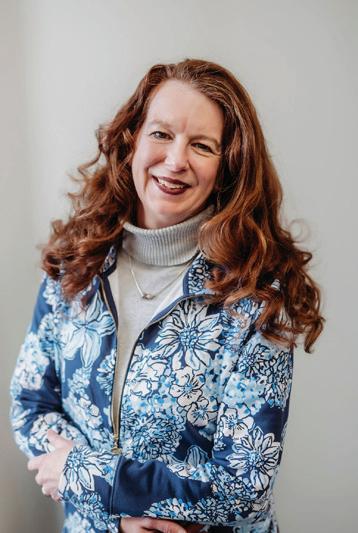
Editor
- Carol Bangert
Art Director/Graphic Designer
- Kara Bishop
Vice President, Marketing & Communications
- Chelsie Freeman
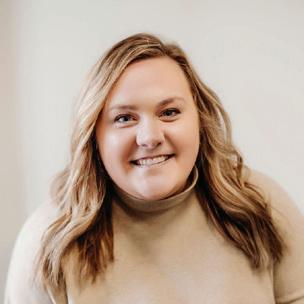
Content Marketing Specialist
- Shelby White
MISSION
Greater Lafayette Magazine captures the spirit and vitality of the people who call Greater Lafayette home and what it means to live, work and thrive here. It tells the region’s success stories, from business expansions, entrepreneurship, leadership and philanthropy to quality of life, arts and cultural events. Our hope is that readers of Greater Lafayette Magazine will become active participants in the world around them and join in our mission to make Greater Lafayette the place where progress, creativity and community come together.
AUDIENCE
Greater Lafayette Magazine serves as the leading quality-of-life and business trade publication for the area. Leveraging our award-winning team of writers and designers, Greater Lafayette Magazine attracts a diverse group of readers who are engaged in the community as consumers, visitors, business leaders, volunteers, residents and future residents of Tippecanoe County. This publication is for anyone that appreciates a good story that not only reveals something new about our community but offers insight and pride for the place we call home.
ADVERTISING
To advertise or receive information about advertising in Greater Lafayette Magazine, contact Amy Sundell at (765) 742-4044 or amy.sundell@greaterlafayettecommerce.com
PRINTER
The National Group
CIRCULATION
Greater Lafayette Magazine is published four times a year (January/April/July/October), with a print distribution of 4,000, and up to 10,000 online subscribers/views. Distribution channels will include online, mobile, various newsstands, and pass-along venues including restaurants, businesses, organizations, community centers, hotel lobbies and healthcare facilities.
Greater Lafayette Magazine is a publication of Greater Lafayette Commerce
337 Columbia St., Lafayette, IN 47901
• (765)742-4044
• info@greaterlafayettecommerce.com
• greaterlafayettecommerce.com
200 reasons we love Lafayette and beyond
Lafayette’s Bicentennial year is coming to a close, but it’s been a year chock-full of events that celebrate the city’s historic milestone and opportunities to reflect on what makes Lafayette at 200 – and Greater Lafayette for that matter – a great place to call home. We asked 20+ people to share 10 reasons they love Lafayette, and the responses were both entertaining and inspiring. People jumped at the chance to share their thoughts, and the 200 items on the lists form a comprehensive and colorful snapshot of Lafayette and why it’s a place people put down roots and call home.
For what it’s worth, here are a few items that would make my “Why I love Lafayette” list:
• High school cross country meets at the Tippecanoe County Amphitheater. The controlled chaos is amazing, and the excitement of waiting to see who will be the first runner up the hill is sheer suspense and fun. Along the same lines, the city-county high school track and field meet every spring draws remarkable talent and competition.
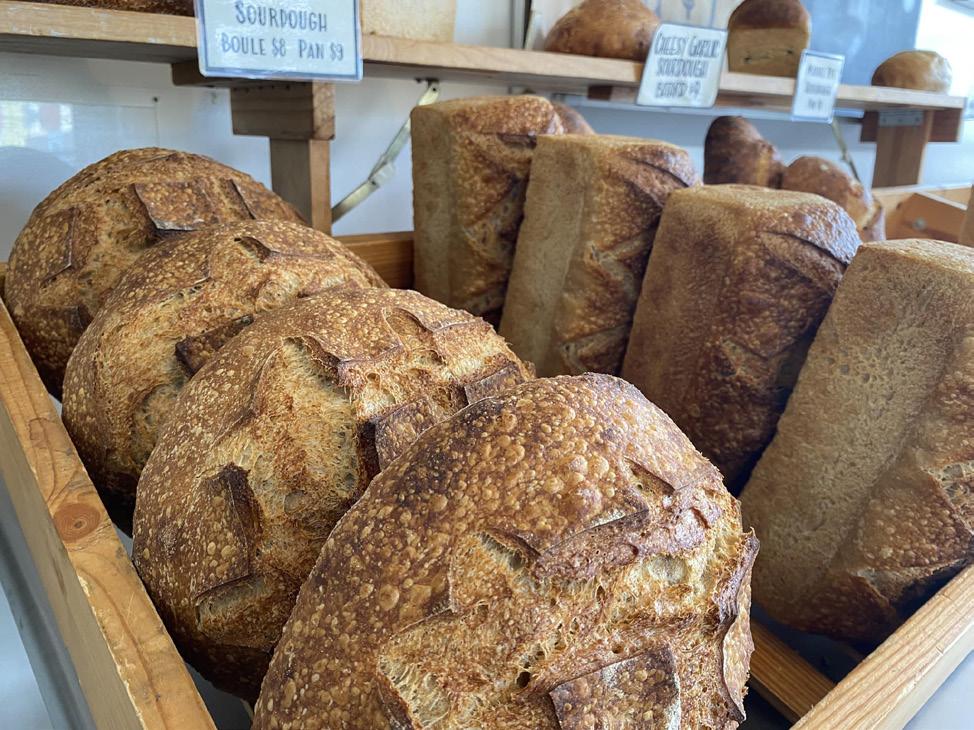
• Smittybread baguettes. Crisp on the outside, soft and chewy on the inside, this perfect loaf of bread has myriad uses. But it’s best fresh from the oven with a dab of butter.
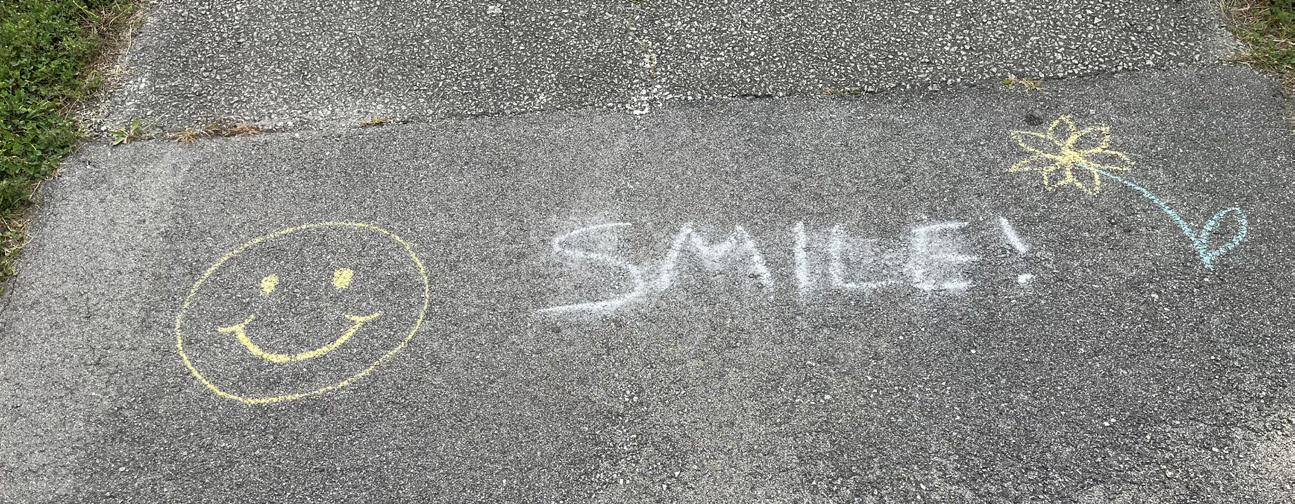
• The positive chalk talk at city parks. I may start a morning run in a bad mood, but these colorful little inspirational messages on the trails at Armstrong and Munger parks bring a smile to my face every time.
To add to the Bicentennial celebration, we’ve gathered a list of 200 people, places and objects that tell Lafayette’s fascinating story from small river town to a thriving Midwest city, with all its perils and possibilities (Page 52). A special thanks to Kat Braz for researching and compiling the list. It’s an entertaining way to test your Lafayette knowledge and learn a little history.
My hope is that this issue of Greater Lafayette Magazine will resonate with you — whether you live in Lafayette, West Lafayette or places beyond; whether you are a lifelong resident or a newcomer – and that you find your own reasons to love this community we call home.
SUBSCRIBE TO GLM
Get to know the Greater Lafayette community by subscribing to Greater Lafayette Magazine. It’s easy! Go to greaterlafayettecommerce.com and click on the About Us tab. Then click on Greater Lafayette Magazine to view past issues and subscribe.
Fast. Reliable. Right down the road.
At Tipmont, we don’t just bring high-speed fiber internet to your home or business. We live here too. That means no gimmicks, no hidden fees, and no calling halfway across the country for support.
Whether you’re running a small business, working from home or streaming your favorite show, you deserve internet that works — and a team that works for you.
Powered by your neighbors. Built for your future.
Photo by Christine Petkov
PHOTOS BY CHRISTINE PETKOV
200 Reasons to Love Lafayette
Meet 20 people (plus one!) who accepted a Bicentennial assignment from Greater Lafayette Magazine.
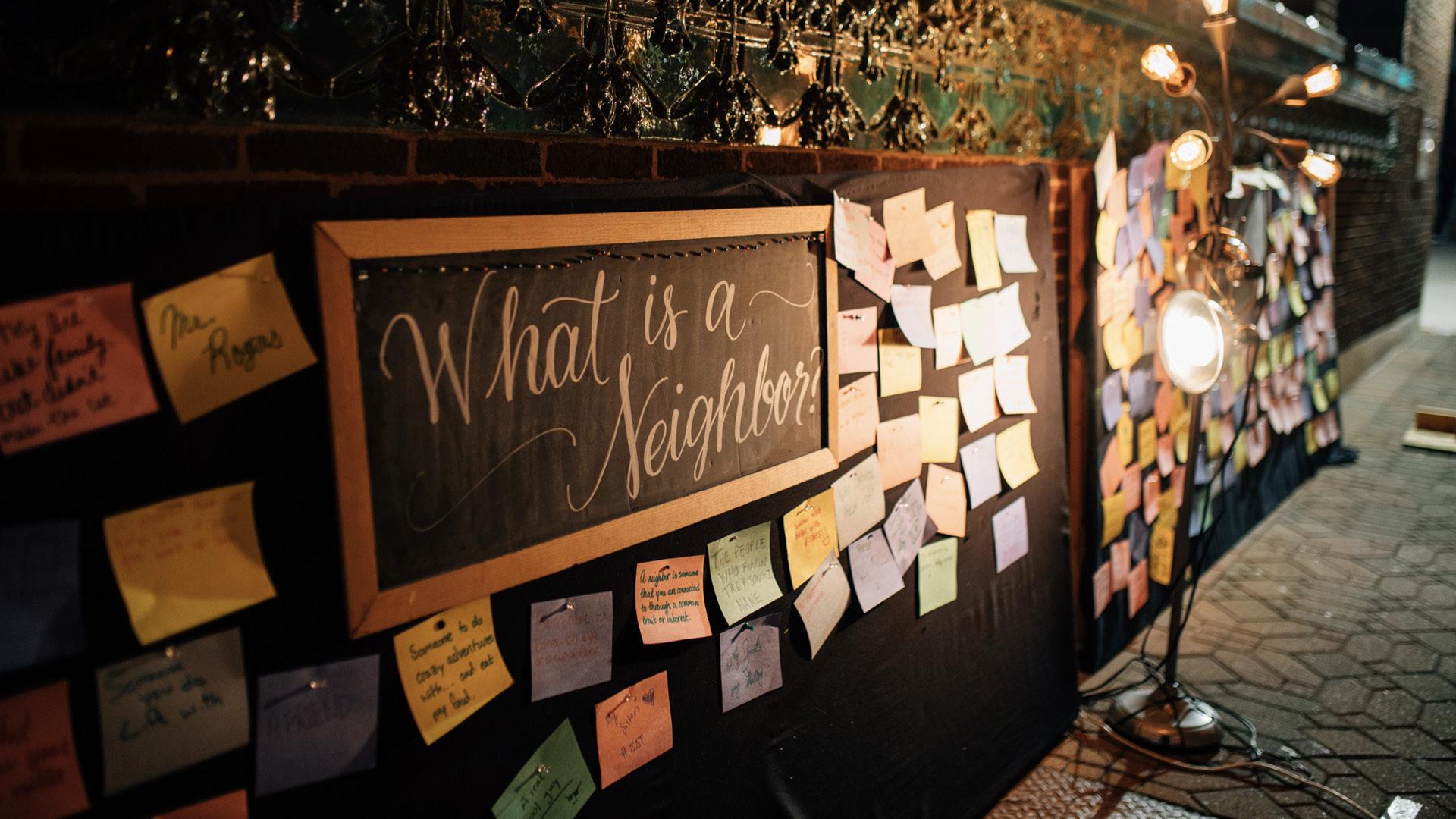
The assignment: In your own words, share 10 things you love about Lafayette.
The goal: To celebrate the city’s Bicentennial by gathering 200 reasons why Lafayette is special.
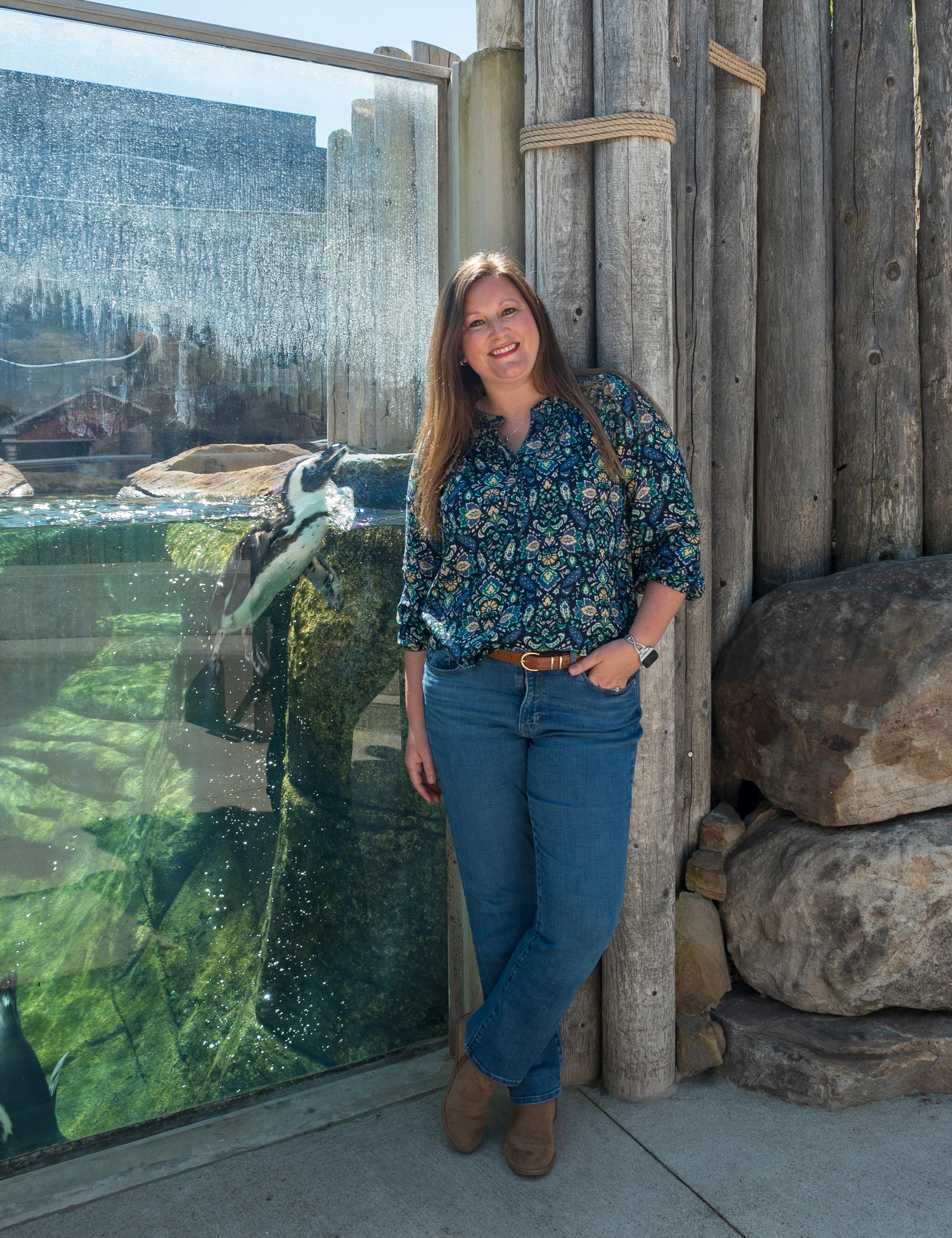
The response was overwhelming and inspirational, with both simple answers and heartfelt explanations. Some love Lafayette for the parks and trails; some for the arts scene, the food and the festivals; others for the entrepreneurial spirit and the kindness of strangers. But they all share one thing in common: They are proud to call Lafayette home.
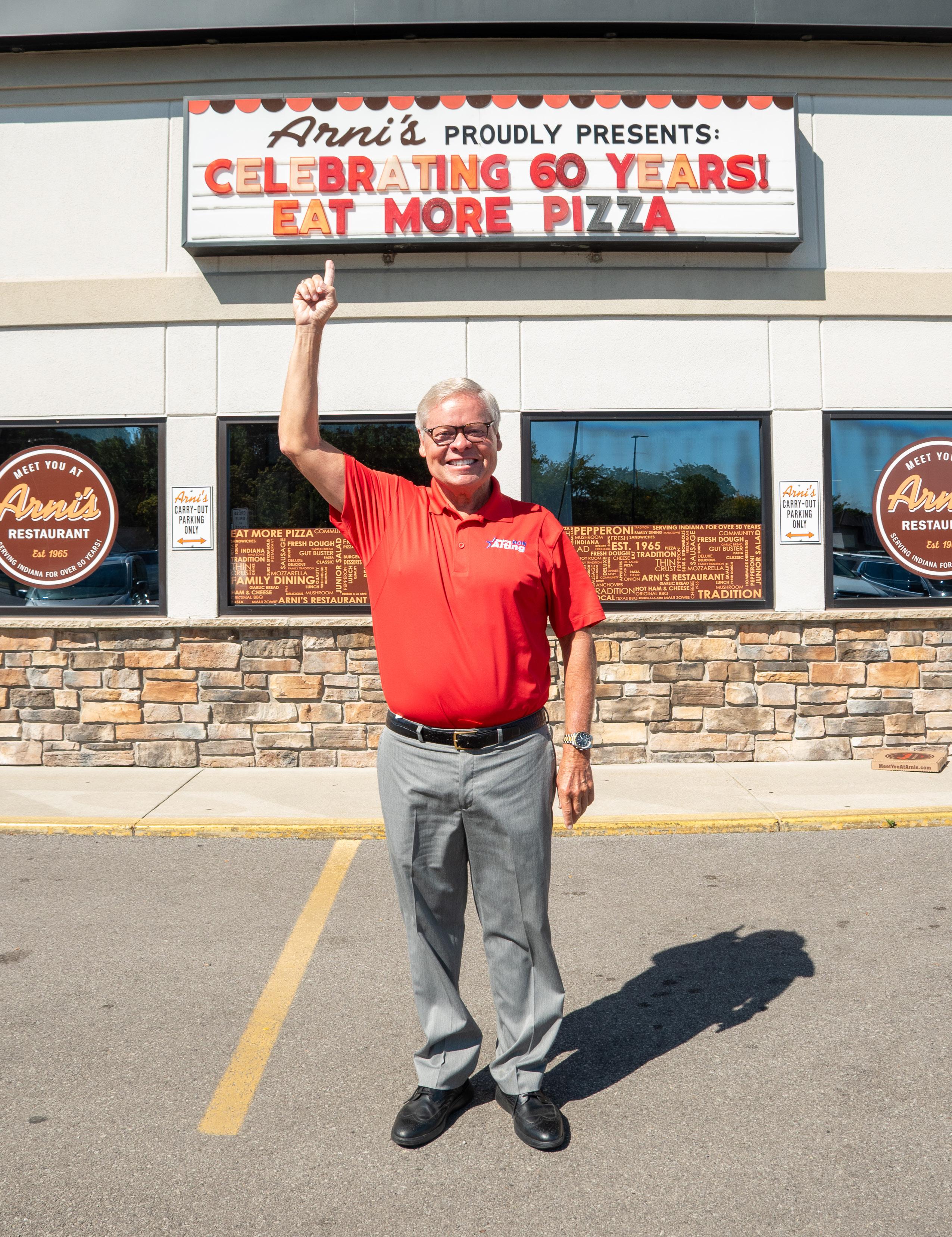
State Sen. Ron Alting
State Sen. Ron Alting is a lifelong Lafayette resident and a proud 1975 Jefferson High School graduate. He has represented Greater Lafayette in the Indiana State Senate since 1998, where he focuses on supporting schools, veterans and local families. Before entering public service, Sen. Alting built a career in small business, including co-owning the beloved Cajun restaurant Patout’s with his late wife. Together, they raised their two children in Lafayette, which he is proud to call home.
10 things Sen. Alting loves about Lafayette:
1. First on my list has to be Arni’s pizza and a Junior salad, finished off with Frozen Custard — classics that reflect the strength of Lafayette’s independent restaurants.
2. Watching high school basketball, especially on Lafayette Jeff’s court named after my coach, Joe Heath, who led us to the state finals. Those memories are so special, but I also love cheering on all of our area schools that keep Hoosier hoops alive.
3. Experiencing Lafayette’s rich arts and culture, from theater and music to galleries and festivals. There’s so much creativity here, and it makes our community come alive.
4. The Wabash River, with its natural beauty and history, reminds us that our communities are connected by this common resource. The John T. Myers Pedestrian Bridge is a favorite spot to reflect and appreciate the heritage that unites Greater Lafayette.
5. Columbian Park and its zoo have been a centerpiece of family life in Lafayette, where generations come together to learn, play and create memories.
6. Downtown Lafayette, anchored by our beautiful courthouse, is filled with historic character, local shops and restaurants that make it the heartbeat of our community.
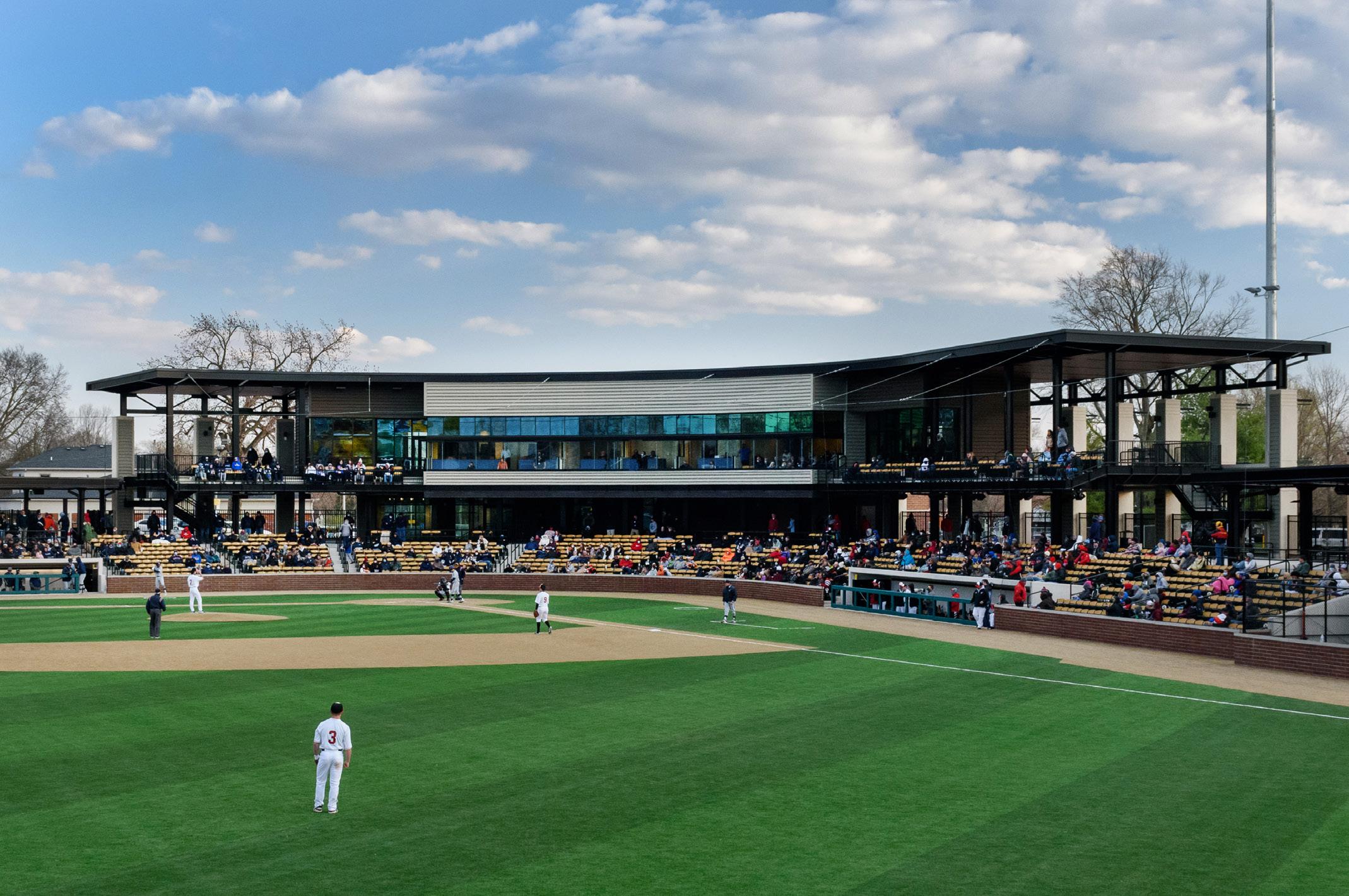
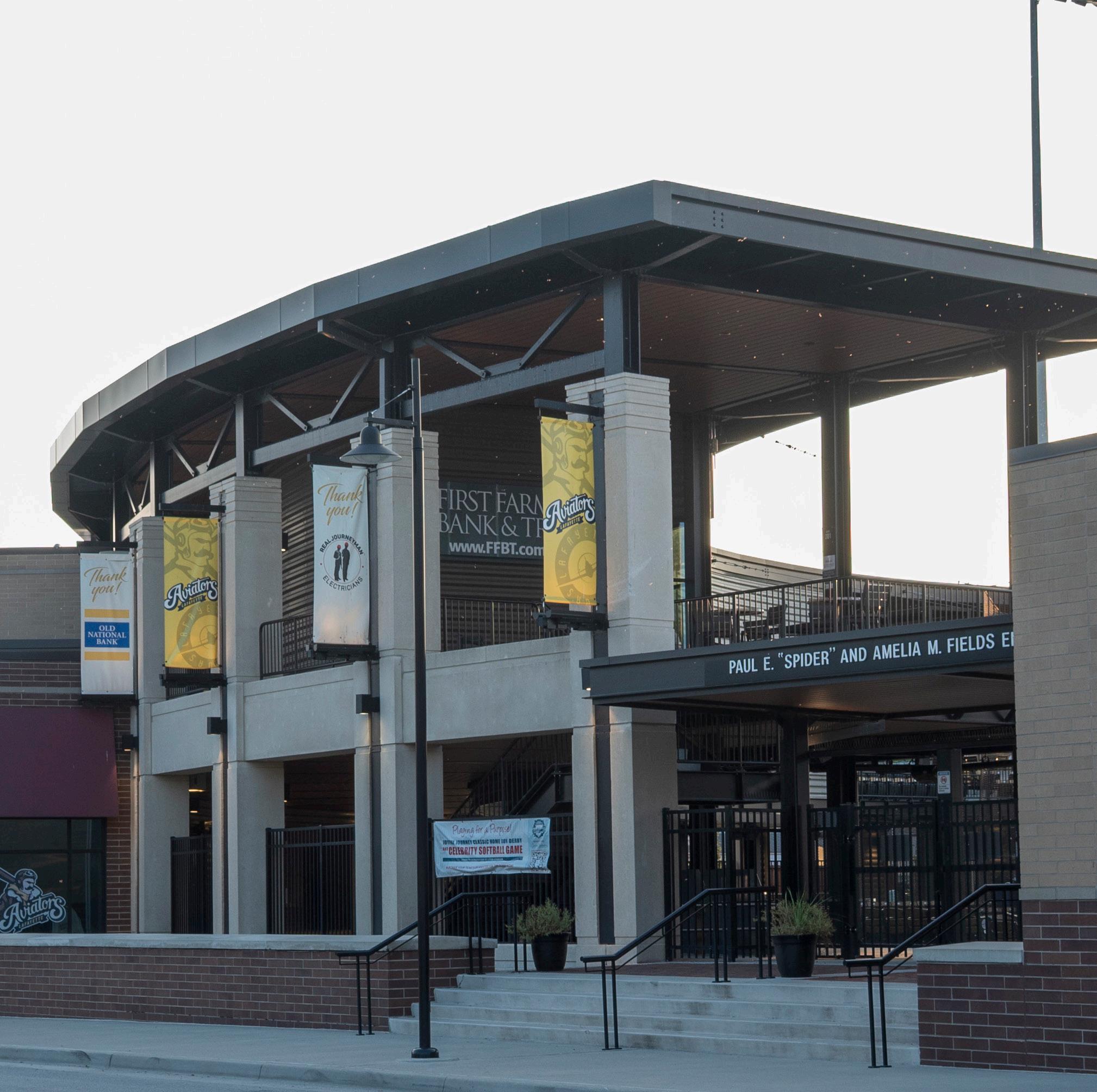
7. Loeb Stadium is a Lafayette tradition for baseball, from high school to the Aviators, and now a home for concerts and events that bring the community together.
8. Our parks and expanding trail system make it easy to enjoy the outdoors — whether walking, biking or just taking in the scenery.
9. Community collaboration — as a state senator, I know it can be rare to see local officials work well together, but in Lafayette, we put politics aside to get things done and help our constituents.
10. Lafayette is built on hardworking people who take pride in what they do, and I admire the strong network of social services here that lend a hand to neighbors in need. It’s an honor to represent the city I was born and raised in and I believe Lafayette is a special place to live and raise a family.
Ebony Barrett
Ebony Barrett is an HR advisor at IU Health. Barrett graduated from Purdue University with a degree in communications and has a certificate in inclusive leadership from Indiana University. They also manage a family-owned business, Executive Management Consulting Group, and are on the board of directors for Barrett Enterprises Inc. Previously, Barrett held the position of director of marketing and engagement at the United Way of Greater Lafayette. Their professional experience extends to education as a former cheerleading coach at Tecumseh Jr. High and a JAG specialist at Oakland Academy, as well as a Lafayette School Corp. substitute teacher. Barrett is married to Tyler Crum, a Jefferson High School counselor, and is a parent of two LSC graduates and a current JHS student. Barrett joined the LSC board of trustees in 2023. They serve on the board at the Art Museum of Greater Lafayette and is an advisor to the board at the Hanna Center. Barrett has a passion for music and has traveled across the country and internationally for performances, including a USO tour, and currently takes the lead as the singer for the local band Ebony and the Ruckus.
10 reasons to fall in love with Lafayette: Lafayette, Indiana, is more than just a charming Midwestern town—it’s a vibrant, inclusive, and creative community where culture, connection, and innovation thrive. I moved here 20 years ago thinking I would be here for a few years and move on, but instead I have raised a family and really rooted into community. Here are my 10 favorite things that make Lafayette truly special:
1. Live music that moves us — From intimate acoustic sets to high-energy outdoor concerts, Lafayette’s live music scene is alive and thriving. Local venues and festivals offer something for every taste, bringing people together through rhythm and soul. I might be biased, but catching Ebony & the Ruckus on a patio in the summer is a pretty good time. In all seriousness, I wanted to list some of my favorite local musicians but there are too many to name so I’ll just give a special shout out to Scott Pazera and the Jazz
Club of Lafayette for introducing me to the local live music scene over a decade ago!
2. Cultural festivals that celebrate everyone — Lafayette shines in its commitment to inclusion. Annual events like Hanna Fest, Juneteenth Celebration, Latino Festival, Global Fest, OUTFest and Taste of Tippecanoe honor the rich tapestry of backgrounds and experiences in our community. So many individuals, corporations, small business and local officials actively participate and seek out opportunities to provide support. We show up for each other—and that makes all the difference.
3. Spaces that spark innovation — Creative energy flows through places like Matchbox Coworking Studio, where entrepreneurs, artists and changemakers gather to build, dream and collaborate. It’s a hub for ideas and a launchpad for progress. It’s more than a working space, it literally breathes life into “Main Street,” offering workshops, networking opportunities and eliminating barriers for folks that have a great idea and don’t know where to start.
4. Education that meets families where they are — I have the honor of serving Broncho Nation as a board member. All three of my very different children have been able to find their footing and thrive. The Lafayette School Corp. offers a wide range of programs tailored to meet the needs of every child and every family. It’s a district that believes in access and excellence. Broncho Nation is a family that nurtures the promise of our children, inspiring and empowering them to hold on to hope, dream, learn, contribute, integrate, innovate, create and appreciate. Whether I’m cheering on students at athletic events, attending amazing choral performances, watching our dance teams compete, or listening to Jeff 92, I am consistently proud of our community of educators and our amazing kids! My youngest son, a junior, is actually an eSports State Champion. There is seriously something for every child and every family.
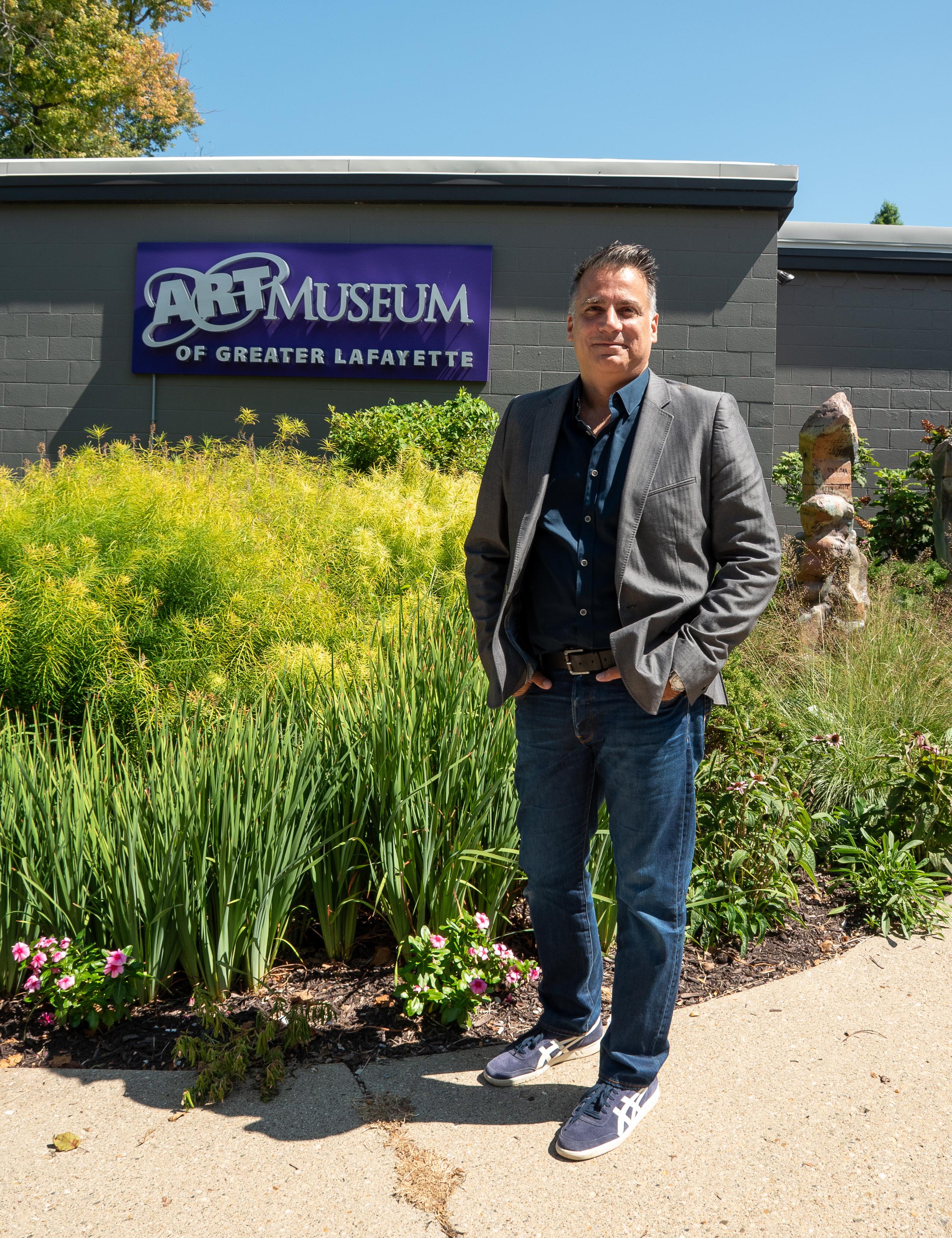
5. Art that’s accessible and inspiring — The Art Museum of Greater Lafayette is a local gem—free to visit and full of opportunities
to engage. From affordable art classes to unforgettable events like the Surrealist Ball and the Art League’s “Bling on a Budget,” creativity is always within reach. The Arts Federation offers beautiful galleries and exciting afterschool programs. My sons learned ukulele and took DJ courses for free! Both feature student work throughout the year and encourage the celebration of local artistry.
6. Purdue pride and seasonal fun — Whether it’s cheering on Purdue sports or enjoying the hands-on excitement of Spring Fest, the university adds energy and tradition to the town’s rhythm. Formally known as the Bug Bowl, Spring Fest has always been a tradition in our family. The boys always loved guessing what bug-themed attire entomology professor Tom Turpin would be wearing during the cockroach races. We’ve spat crickets, eaten mealworm brownies and even pet a tarantula. Don’t get me wrong…I DO NOT LIKE BUGS, but this tradition was also fun for my boys to watch me get grossed out and do our own local “fear factor” adventure.
7. Outdoor adventures on the Tippecanoe and beyond — Kayaking on the Tippecanoe River is my peaceful escape and a chance to connect with nature. But the outdoor fun doesn’t stop there. Lafayette is home to beautiful preserved spaces like Clegg Memorial Garden, where hiking and trails wind through native landscapes and offer stunning views of the river valley. Whether you’re paddling, peddling or trekking, the area invites you to slow down and soak it all in. Pro tip: I love getting my bike tuned up by Zoe at Virtuous Cycles. This shop is a fave in our family because when I was a struggling single parent and trying to get the kids outside and active, Zoe literally took parts from several bikes and made my middle son a custom bike before his very eyes. Core memory unlocked!
8. Thrift shopping with heart — Local shops like Urban Huntress make treasure hunting a joy. I love big-city fashion but also creatively curating my closet and upcycling clothes. Lafayette’s intimate community size makes it easy to build real relationships with small business owners who really get to know you and your style. One unfor-
gettable example: I wanted to design my own wedding dress to transform from a ball gown to a suit—and Rosey Couture made that dream come true. In fact, she exceeded expectations by adding a bit of her own flavor, and that day was full of WOW!
9. A community where change is possible — Lafayette has a refreshingly low barrier to entry for civic engagement. If you have an idea to improve life here, local officials and nonprofit leaders are accessible and supportive. Both Lafayette Mayor Roswarski and West Lafayette Mayor Easter are known for listening, collaborating and helping residents make things happen. And let’s not forget Shelia Klinker. Listen y’all, my state rep is better than everyone else’s! She has shown up for every event involving our local youth that I have ever invited her to and really listens and connects. One more plug since this is being published in the fall. If you have not given to United Way of Greater Lafayette this year, here is your reminder. Give Local. See the Impact. It is real impact and my family is grateful.
10. Downtown that dances with life —
Thanks to organizations like Friends of Downtown, events like Mosey Down Main Street, farmers markets and street festivals keep our downtown vibrant and welcoming. We love going for a lovely dinner at Bistro 501, then having a cocktail at “Indiana’s Oldest Bar,” the Knickerbocker, and exploring Main Street. Even though I always meet someone new, I have never met a stranger. Our downtown is a place where neighbors meet, tourists fall in love with our town, artists shine and the community comes alive. Even in the winter there are street festivals and parades to keep us all connected. I guess the easiest way to sum up what I love about this town is exactly that, the deep connections that I have been able to make with people, with places and space, and with purpose.
Joe Bumbleburg
I was born in Lafayette at St. Elizabeth Hospital on January 5, 1937, to Ted and Betty Bumbleburg. I went to St. Mary’s grade school, Jefferson High School, Notre Dame, and Indiana University Maurer Law School. I spent three years as an officer in the U.S. Army, returned to Lafayette and the law firm Ball and Eggleston, where I have been ever since. My life has been spent in Lafayette except for school and the military.
My list:
1. Bruno’s pizza and Arni’s salads
2. Jefferson High School and classmates
3. Summers in Lafayette
4. The strength of the community spirit, making it a good place to live
5. My law practice and the courthouse
6. The good nature of people and my long-time friends of 88 years
7. Having my kids and grandkids around 8. American Legion Post 11 and veterans
9. Strength of the not-for-profit agencies
10. St Mary’s school and the church community
Monica Casanova
My family moved to Lafayette in October 1993. I was a freshman in high school and started school at Jefferson High School. We moved out of southern California for the same reasons people move today: high cost of living, high crime rates. We found Lafayette, Indiana, to be affordable and a “good place to raise the kids.” There were no gangs, no violence, which was a daily occurence in West Los Angeles. We had no idea what Lafayette, Indiana, looked like before we moved. At 14, I hated it and longed to return to my familiar surroundings. However, in the 30 years that I have lived here, I have made Lafayette my own home. It is where I met my husband, attended college and had my own family. I currently serve as Fairfield Township Trustee.
The 10 things I love about Lafayette are: 1. My house
2. Columbian Park
3. The Long Center
4. The downtown branch of the Tippecanoe County Public Library
5. Los Chaparritos Taco Truck at Menard’s on Creasy Lane
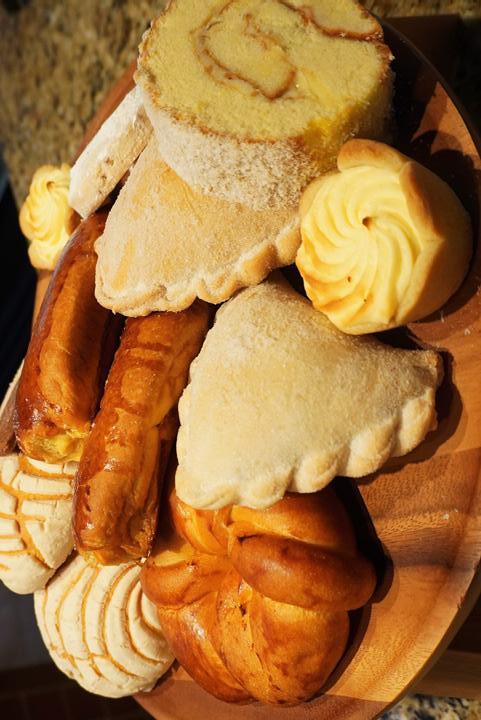
6. Mama Ines Mexican Bakery
7. Tienda Jalisco
8. The courtyard at St. John’s Episcopal Church
9. Greenbush Cemetery
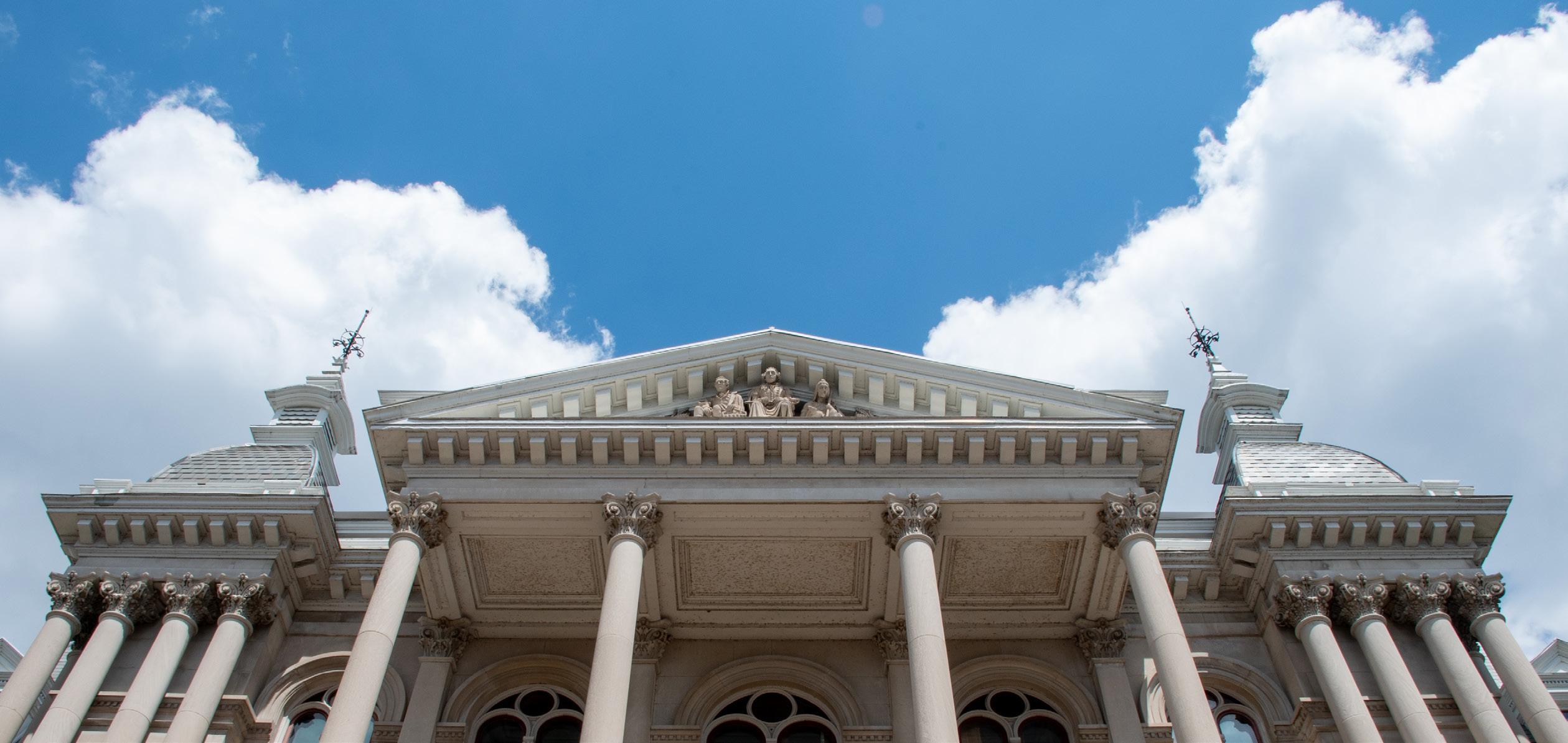
10. The Tippecanoe County Courthouse
Airpor t Operations
John Christodoulakis
I am a grateful father of three and happily married to my wife, Evanthia. My family has called Lafayette home since 1989, when we opened our first restaurant, The Greenhouse. With the support of my wife, brother, sisters, brother-in-law, and now nieces and nephews, we’ve grown our family business into a collection of beloved local dining destinations, including Christos, Café Literato, RedSeven and The Bryant.
Over the last decade, I have also pursued my passion for design and craftsmanship through Aedis Home, which I co-founded with my building partner, Pat Richards. Together, we specialize in creating bespoke, original residences tailored to the character and vision of Lafayette families. Our work reflects a shared commitment to excellence, innovation and community—values that make Tippecanoe County not only our home, but also the heart of our life’s work.
10 things I love about Lafayette:
1. A spirit of collaboration across perspectives One of the things I appreciate most about Lafayette is how people from all political and personal backgrounds work together to keep our community moving forward. Whether it’s city planning, community initiatives or tackling local challenges, there’s a shared belief that progress comes from unity. That sense of collaboration makes Lafayette feel like a place where everyone has a voice and a stake in the future.
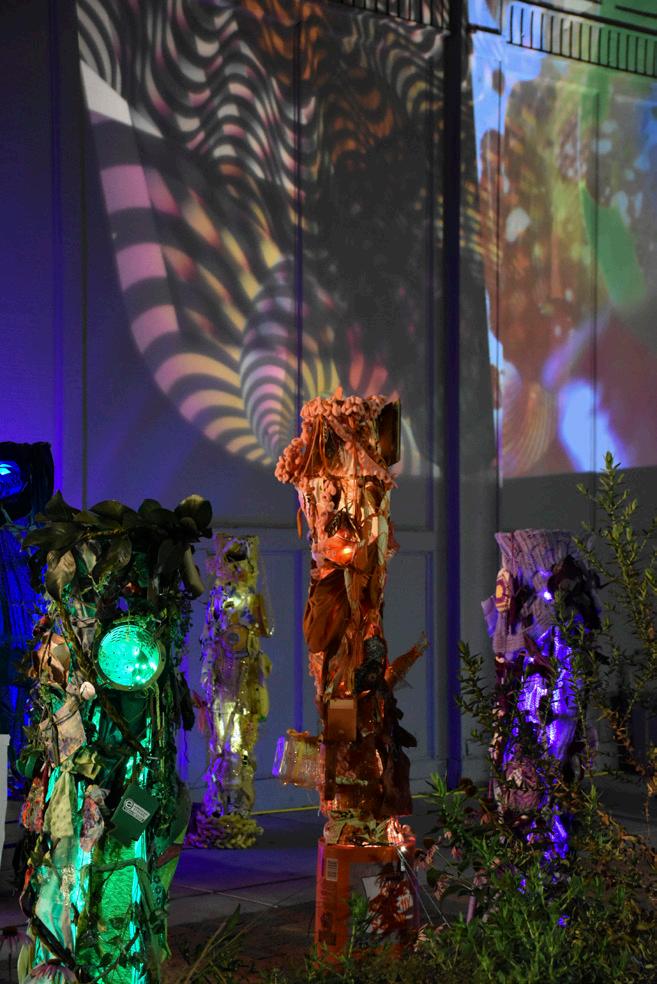
2. A thriving arts & culture scene The arts are alive and well here. Public sculpture and vibrant wall murals brighten our streets, while institutions like the Long Center for the Performing Arts, The Arts Federation and the Art Museum of Greater Lafayette provide opportunities for both residents and visitors to experience world-class
performances and exhibitions. This commitment to the arts enriches daily life and creates a shared cultural identity.
3. Dedicated community servants Lafayette benefits greatly from community leaders, volunteers, educators, first responders and countless others who go above and beyond to serve. Their work isn’t just about fulfilling duties — it’s about caring deeply for neighbors and ensuring our community remains safe, welcoming and forward-looking.
4. Parks, trails and wellness I love that our community continually invests in parks, trails and wellness facilities, recognizing that these spaces contribute to both health and happiness. From scenic walking paths and bike trails to playgrounds and recreation centers, there’s always a place to connect with nature, stay active or simply unwind.
5. Public-private partnerships with Purdue University Purdue University isn’t just an educational institution—it’s a driver of innovation. The strong partnerships between the university, local businesses and civic organizations create opportunities for entrepreneurship, technology incubation and economic growth. This collaboration positions Lafayette as both a local community and a global hub of ideas.
6. Perfectly balanced location Lafayette offers the best of both worlds: proximity to the big-city opportunities of Chicago and Indianapolis, while still maintaining the warmth and familiarity of a tight-knit community. Here, it’s possible to enjoy the vibrancy of metropolitan life without sacrificing the comfort of hometown connections.
7. International diversity Thanks in large part to Purdue, Lafayette is internationally diverse, and that diversity enriches us all.
Global influences are felt in our restaurants, cultural festivals and artistic expression. This exposure to different traditions and perspectives makes Lafayette a more dynamic, inclusive and interesting place to live.
8. Rich history and heritage Tippecanoe County has deep roots that stretch back to the earliest days of American settlement and Native American history. Places like Camp Tecumseh and other historic sites remind us of the struggles, triumphs and legacies that shaped our community. Preserving and celebrating this history gives us a sense of identity and continuity.
9. Purdue sports and cultural opportunities Purdue University is at the heart of our local pride. Boilermaker sports unite fans across the region, while the university also brings concerts, lectures, theater and cultural experiences that would be rare to find in a community of our size. Purdue keeps Lafayette vibrant, exciting and full of opportunity.
10. A strong spirit of volunteerism and giving back What truly makes Tippecanoe County special is the generosity of its people. From service clubs and faith communities to nonprofits and grassroots organizations, residents step up to help one another. This culture of giving creates a safety net, fosters resilience and reinforces the idea that Lafayette is more than a place to live—it’s a community where people genuinely care.
Amanda Findlay
Amanda Findlay is the executive director at MatchBOX Studios, a nonprofit coworking, business acceleration and maker studio in downtown Lafayette. She’s passionate about strategically supporting our local economy and entrepreneurs and fostering inclusive spaces and equitable access to resources that help make Lafayette great. Outside of her day job, she is a mom of two and co-owner of Handholder, a private event bartending and cocktail consulting business.
My 10 reasons:
1. The Pedestrian Bridge It’s beautiful and so magical for reasons that I can’t even explain.
2. Wabash Walls The Arts Federation did such an incredible job curating the coolest collection of murals in a cool hidden neighborhood that’s just off downtown.
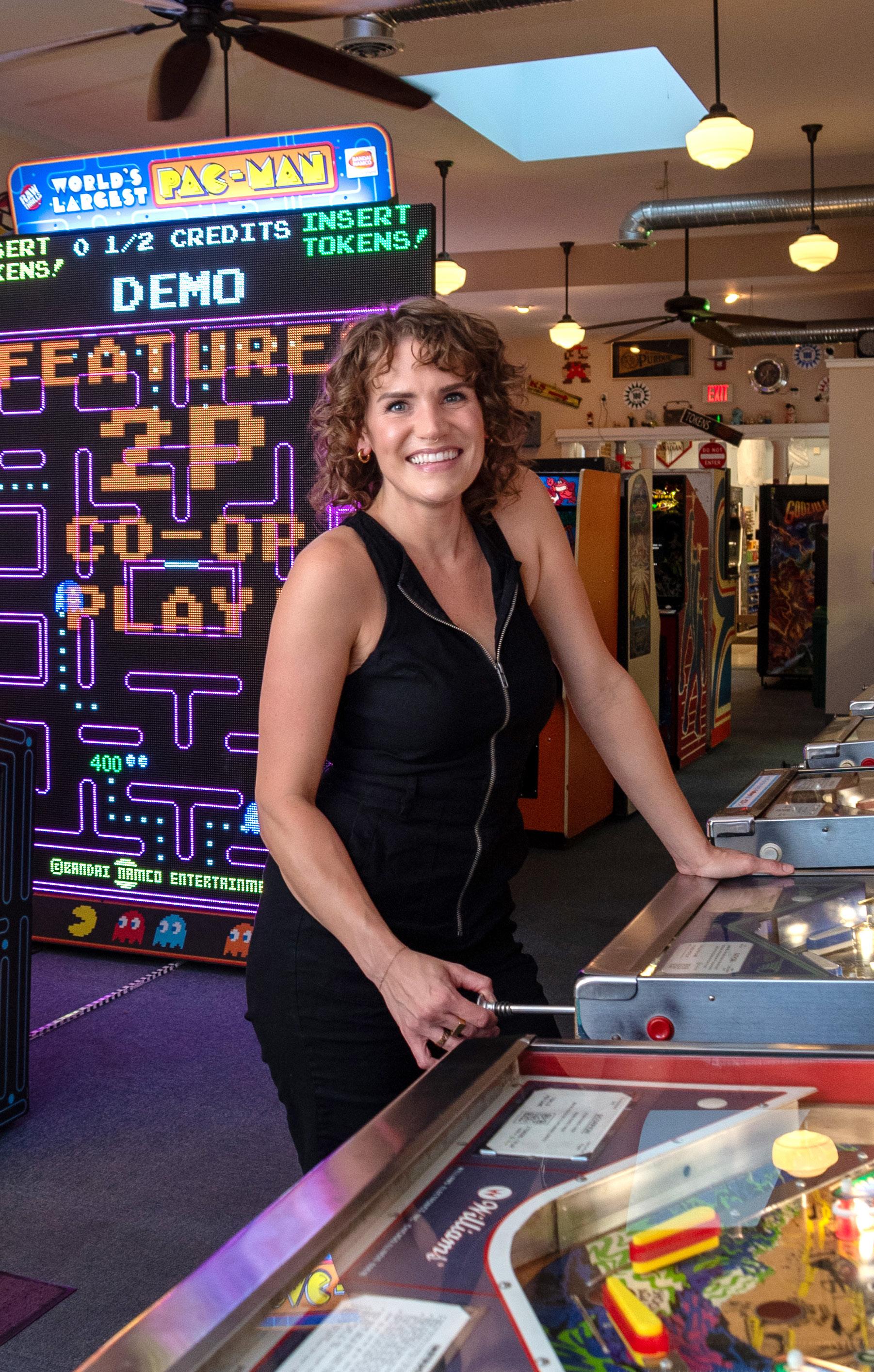
3. Main Street Amusements The neatest lineup of pinballs AND giant Pac Man. Swoon.
4. MatchBOX Studios I would be remiss to omit my favorite place it’s full of creators and innovators and risk-takers and the most brilliant roundup of folks in town.
5. Tippecanoe County Amphitheater
— I scarcely knew of this place until my kids started running cross country. It’s beautiful.
6. The Spot’s patio It’s one of those places that makes you think maybe you’re in another town.
7. Eleventh House for an Americano and a gluten-free bagel with goat cheese. And vibes and good company.
8. DLBOA (Downtown Lafayette Business Owners Association) meetings and events because there’s nothing quite as inspiring as a room full of people chasing their dreams and making our town so much better. Shop local, ya’ll.
9. Courthouse Square at night because it’s beautiful and ethereal and lovely.
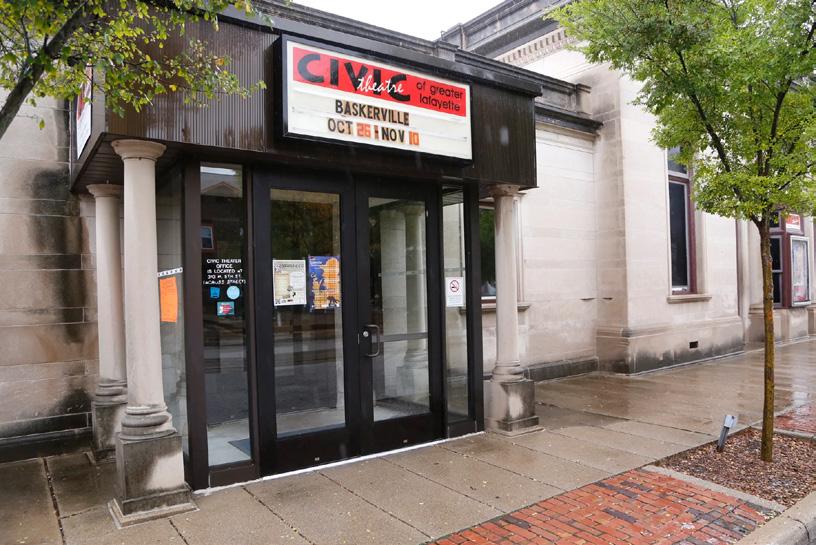
10. Civic Theatre I make it to every show, and I’m blown away every time. This town is full of talent, and we’re so lucky to have a theatre to foster that talent.
Chuck Herber
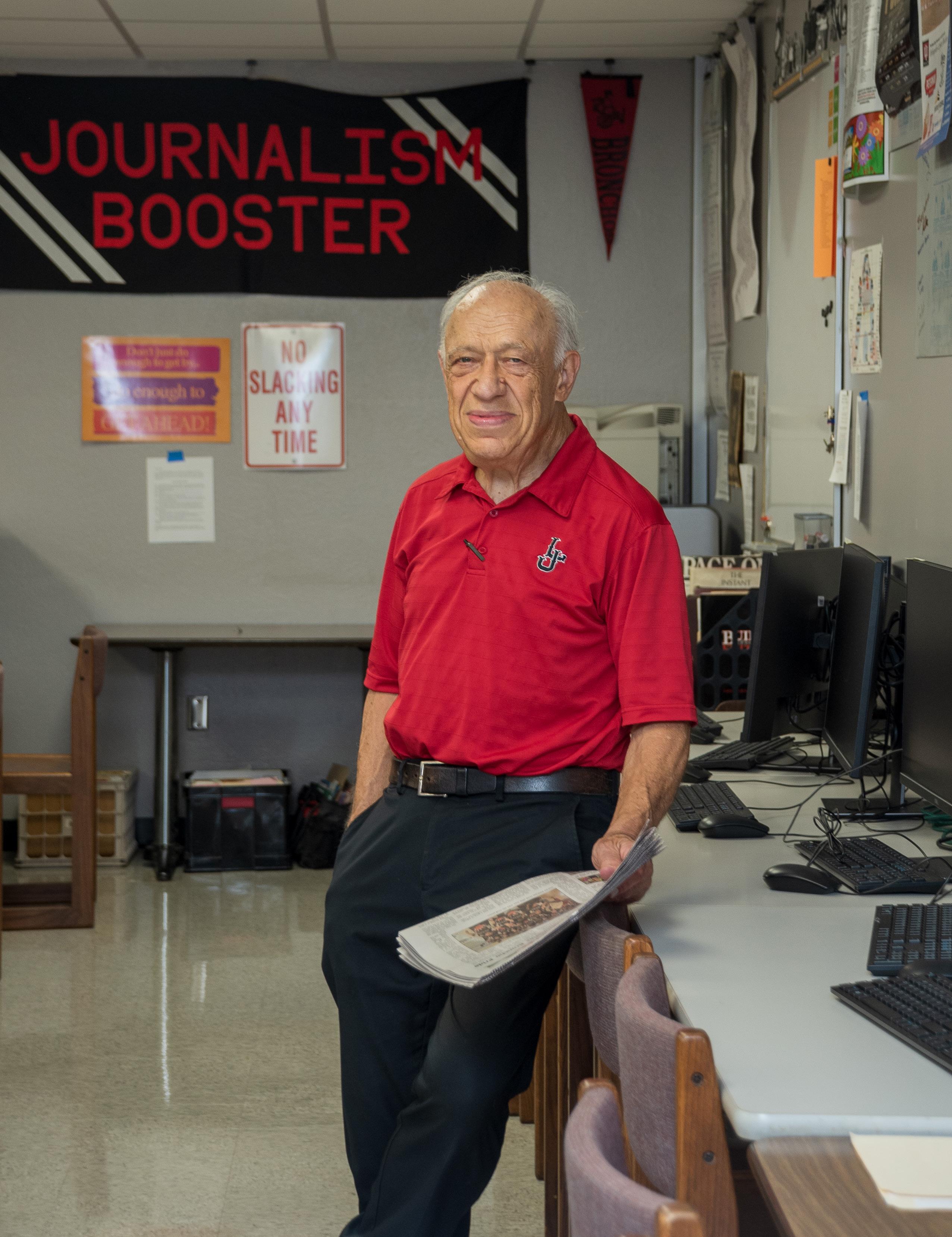
(Herber has been an educator at Lafayette Jefferson High School for nearly 40 years, much of it focusing on journalism courses and production of the school’s award-winning newspaper, the Booster.) He says: Rene’ (my wife) and I came to Lafayette in 1978. We had our first child in 1981, and immediately a group of five couples included us in their group. We have been friends ever since even in our advanced years!
10 things I love about Lafayette:
1. My favorite restaurant is Christos.
2. Tropicanoe Cove is a great park!
3. Time of year: fall. With all the trees, Lafayette is gorgeous, especially on Sagamore Parkway crossing the bridge into West Lafayette and all the trees there that are changing color. Truly beautiful.
4. Favorite businesses: Frozen Custard. It has supported the Booster for 35 years! Subway is another business that has been most supportive.
5. The economy in Lafayette — I came from the northern part of the state, and the weak economy affected the disposition of the students who were taught. Many of my students in my present classes want to stay here, work here and start a family here. Many businesses also support the Booster. It is quite humbling.
6. The downtown Christmas decor is beautiful.
7. Mosey Down Main Street celebrates Lafayette!
8. Taking a walk on the John T. Myers Pedestrian Bridge. What a view of Lafayette.
9. The diversity and unity of Lafayette is tremendous. Just in my area, neighbors are from four different nations. Lafayette Jeff High School is over 30 percent Hispanic and 19 percent African American, along with many other groups. There also is a great diversity of restaurants.
10. The diversity of sports offered at Jeff, trying to involve everyone. The same goes with clubs, classes and activities, including the Booster.
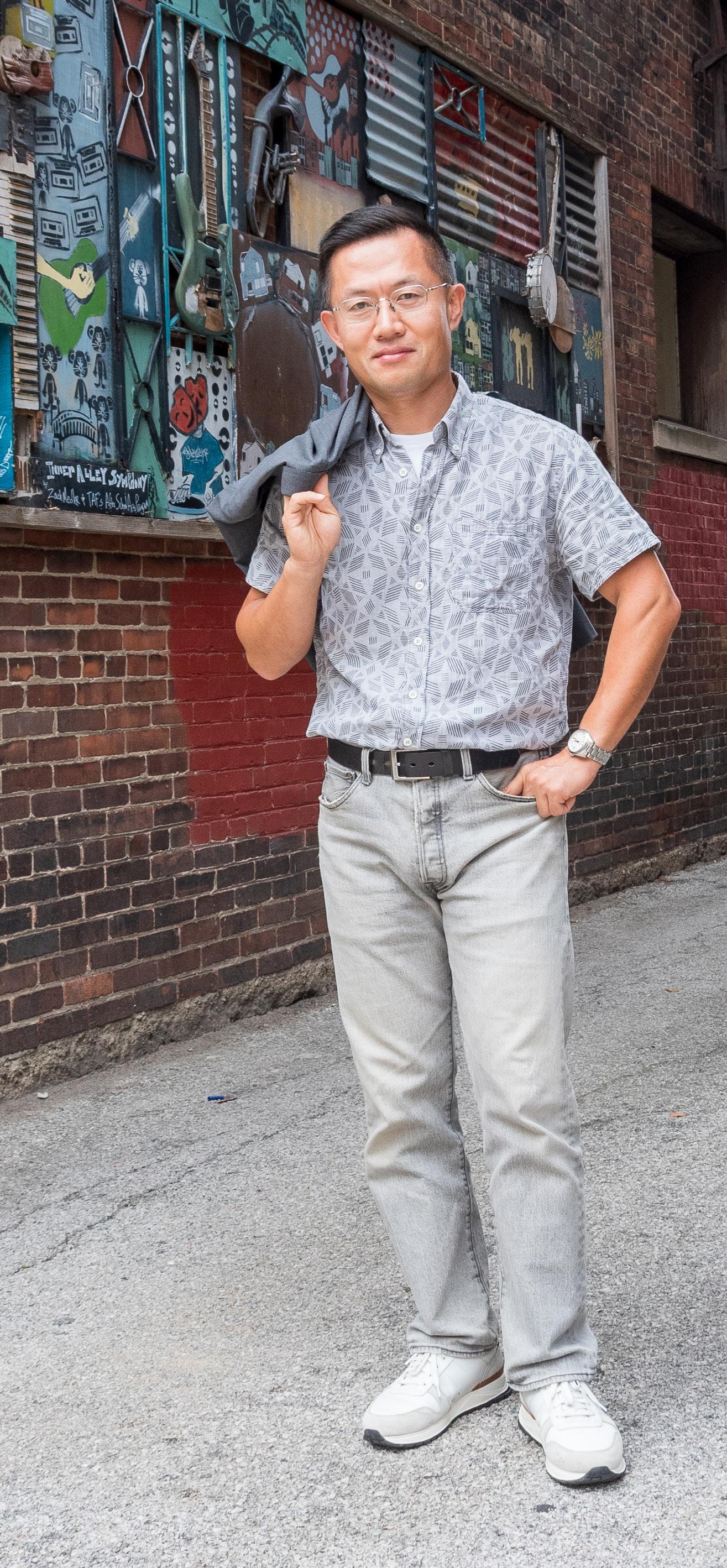
Sam Kim
My name is Seungsu Kim, but I go by Sam Kim. I am the owner of Studio Seung and have lived in Lafayette for nearly a decade. My journey has taken me from being a sculptor in Seoul, South Korea, to working as an architect in New York City, and now as a custom builder here in Lafayette. I feel a deep sense of purpose living in the growing city of Lafayette.
The 10 things I love:
1. Matchbox Coworking Studio
2. Facade of Stallard & Schuh building
3. Downtown Main Street along with its alleys
4. Classic pub vibe at Black Sparrow
5. Midwest modern East End Grill
6. Bistro 501
7. Downtown farmers market
8. Rejuvenation of Ellsworth Romig Neighborhood
9. Dol Sot Bibimbap at Tsunami
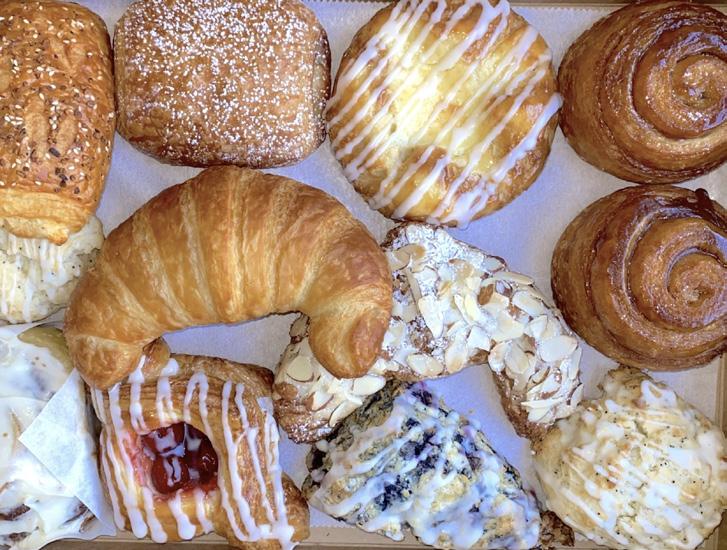
10. Almond croissants at Sweet Revolution
When Wintek pulls up, you know you’re in good hands.
Ready to solve problems.
Ready to connect your business to what matters most.
Ready to support your growth with secure, reliable, locally backed fiber and managed services.
Whether it’s designing your network, troubleshooting the unexpected or helping you scale smarter, we’re here when it counts and we’re never far away.
Wintek Business Solutions. Built for business. Backed by neighbors.
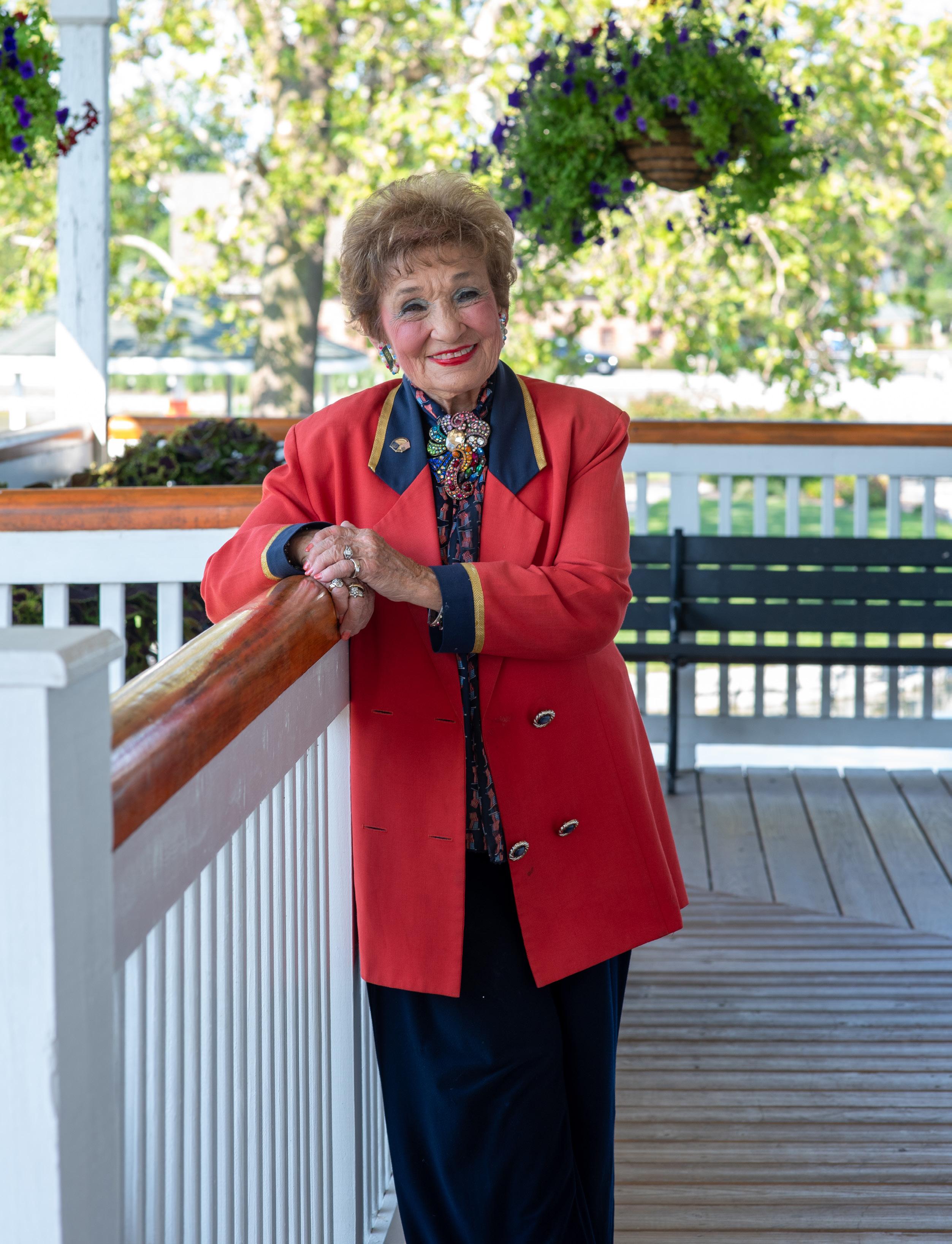
State Rep. Sheila Klinker
State Rep. Sheila Klinker was first elected to the Indiana House of Representatives in 1982.
A proud Boilermaker, Klinker received her bachelor’s degree in education and two master’s degrees, in elementary education and in administration and curriculum, from Purdue University. She is a former teacher who taught for Lafayette School Corp. for more than 34 years. During her time in the legislature, Klinker has been an avid advocate for expanding mental health services, increasing teacher pay and improving the quality of life for Hoosier families. Sheila and her late husband, Vic, have three children and eight grandchildren.
Rep. Klinker’s Top 10:
1. Working as the state representative for House District 27. Lafayette is a special community, and I am honored to represent it. I specifically enjoy attending local events and meeting new people in the community.
2. Purdue Musical Organization
3. Business grand openings with Greater Lafayette Commerce
4. St. Mary’s Cathedral Choir
5. The Lafayette Citizens Band — I especially enjoy it when the band plays with The Freedom Singers on July Fourth.
6. The schools where I taught and where I still volunteer (Jeff High School, Tecumseh Jr. High School, Miami, Miller and Edgelea elementary schools).
7. Lafayette Harrison Kiwanis Club meetings at The Downtowner Restaurant.
8. Art Museum of Greater Lafayette
9. American Legion Post 11
10. Columbian Park — (My late husband) Vic was on the Lafayette Parks Board for more than 40 years. I enjoyed watching the park improve and grow during his public service.
Honorable mention: The five-cup fruit salad at Shellie’s Café
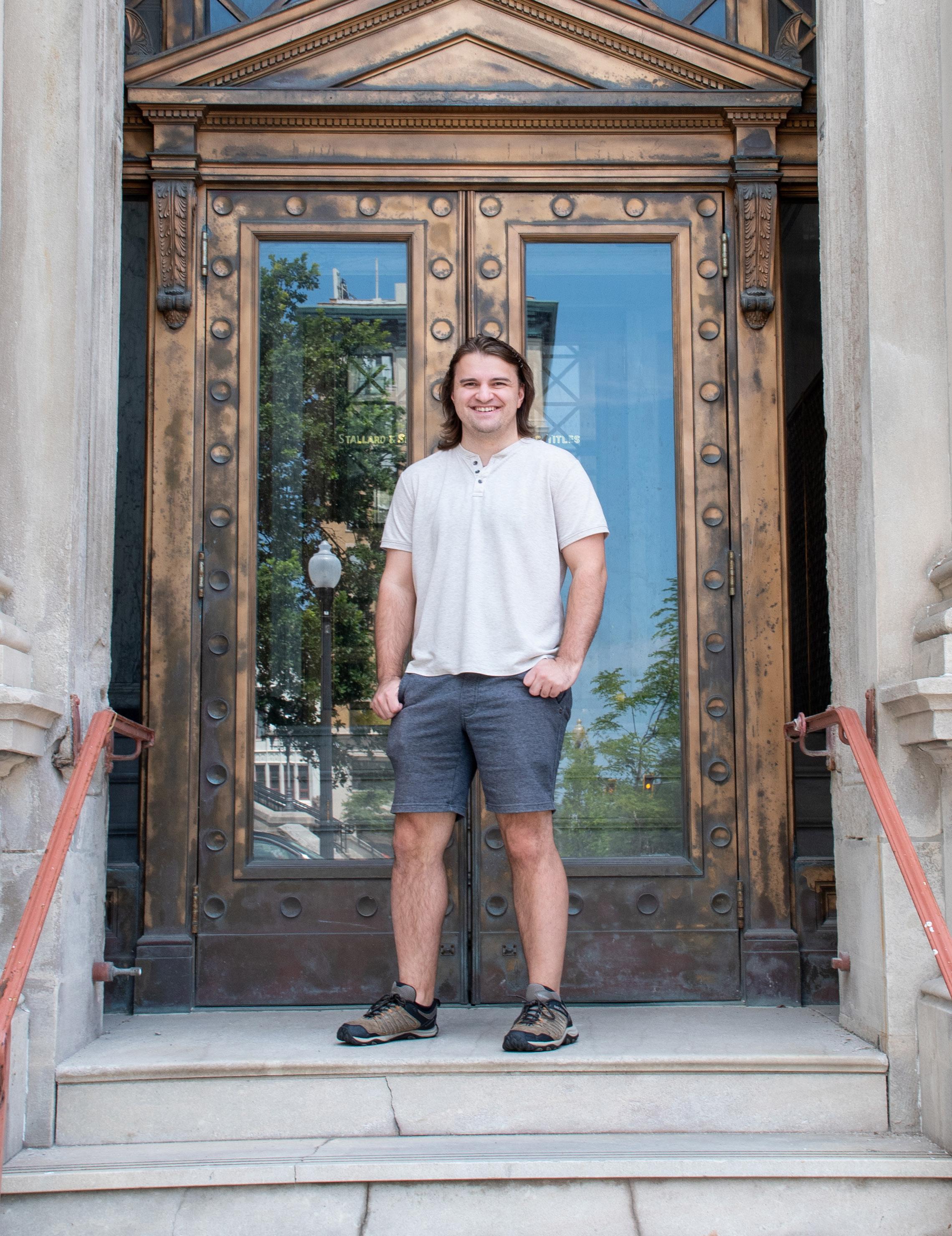
Sean Lutes
I’m originally from Darlington, Indiana, but Lafayette became home when my family moved here in 2009—like so many others drawn to the Star City by the promise of opportunity and new beginnings. As a teenager, I quickly fell in love with Lafayette’s historic architecture and undeniable character. That early fascination with the city’s past shaped my future: I earned a degree in history from Purdue in 2016, and the following year I was honored to be appointed to the Lafayette Historic Preservation Commission, where I still proudly serve.
I lead Preserve Historic Lafayette and also have served in multiple roles with the Wabash Valley Trust, all in service of a city that continues to inspire me.
10 things I love about Lafayette?
1. The stunning historic architecture of downtown—anchored by a courthouse unlike any other in Indiana.
2. A classic coney dog from Budges.
3. Pancakes and coffee at the Downtowner!
4. Saturday mornings at the farmers market, full of life and community.
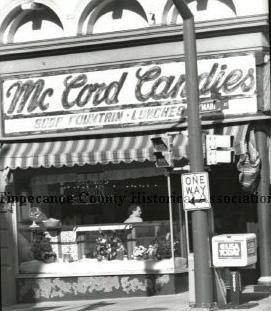
5. A hand-crafted soda from McCord Candies nostalgia in a glass.
6. The quiet reverence inside St. Mary’s Cathedral
7. The history etched into the beautiful tombstones of Greenbush Cemetery.
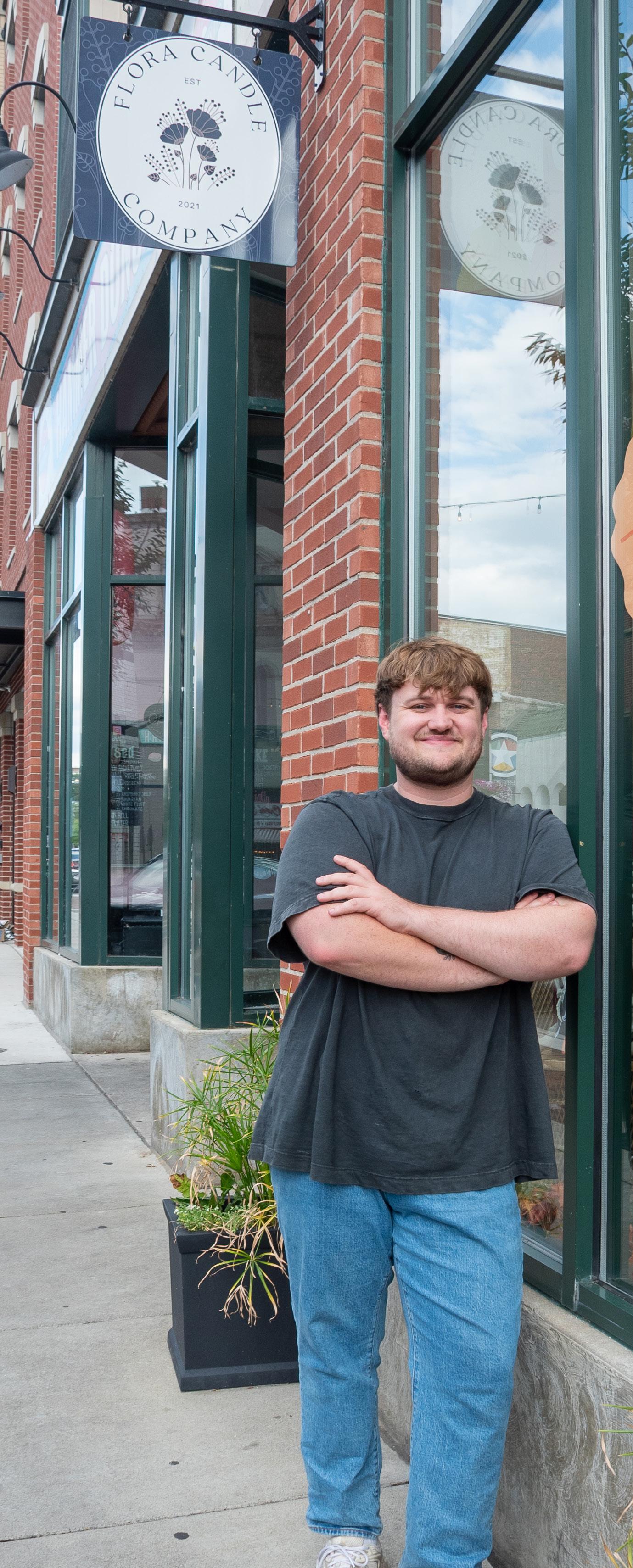
8. The “Indiana Thunderstorm” candle from Flora Candle Company—a scent that feels like home.
9. The deep friendships and shared connections that make this city more than just a place — it’s a village.
10. The old German stained glass at Brown Street United Methodist Church, glowing with a past that still speaks.
We’ve got you covered with three unique community center campuses. Visit us online to check out what we have to offer or stop by to see us. We’ll be happy to show you around!
Jennifer Million
Jennifer Million is the chief operating officer at United Way of Greater Lafayette, where she has worked since 2010. Throughout her tenure, she has taken on a variety of leadership roles, including starting the VITA program as a program manager, senior director of finance & operations, interim CEO, and now COO. Million brings a deep understanding of nonprofit administration and operations, marketing, grant writing and review and community impact to her work—helping drive meaningful change across Greater Lafayette.
She holds a bachelor’s degree in public financial management from Indiana University, a master’s degree in accounting, and a certificate in nonprofit executive leadership. Million also is a proud graduate of Leadership Lafayette Class 48 and was recognized as a Top 10 Under 40 honoree for her professional achievements and community involvement.
She enjoys life outside of work with her husband, Jake, their three children, a dog and a cat. She’s an avid sports enthusiast — especially when watching or playing with her kids—and loves reading and relaxing at the spa.
10 things I love about Lafayette:
1. That small-town feel with big-city perks — I love that Lafayette has a small-town charm—where I can’t go anywhere without running into someone I know—yet it still offers a wide variety of entertainment, dining and recreation options that rival much larger cities.
2. The perfect location — I love the location of Lafayette — just a short drive from my hometown of Monticello (where much of my family still lives) and nestled between Chicago and Indianapolis, making it easy to enjoy quick big-city getaways.
3. Family-friendly fun — There are so many incredible places my family and I love to visit: Loeb Stadium, Columbian Park Zoo, Wolf Park, Malibu Jack’s, Exploration Acres, Prophetstown State Park, Celery Bog and dozens of parks across the area. There’s always something new to explore.
4. A community that cares — As someone who works at United Way of Greater Lafayette, I’ve had a front-row seat to what can happen when a community comes together to solve problems. The collaboration and compassion I’ve seen here is something truly special—and not something you find just anywhere. I love that Lafayette is a leading example of a community that works together for the common good.
5. Strong schools and inspiring educators — Lafayette is home to excellent schools, dedicated teachers and passionate administrators who go above and beyond to support students and families.
6. Excellent dining options — I love all the great food options we have here. A few of my favorites are Mountain Jacks, East End Grill, Nine Irish Brothers, Arni’s, Bistro 501 and so many more!
7. A thriving arts & culture scene — I love that we have access to so many cultural experiences, from The Arts Federation and Civic Theatre to live music at Mosey Down Main Street, seasonal festivals and the local farmers markets.
8. A rich sense of history — You can see Lafayette’s rich history in its architecture, neighborhoods and museums. I appreciate how this community honors its past while continuing to invest in a vibrant future.
9. Opportunities to get involved — Whether it’s volunteering, serving on a board, attending local events, or getting involved with organizations like United Way, there are countless ways to plug in and make a difference.
10. The people — More than anything else, it’s the people who make Greater Lafayette so great. I’ve met so many incredible, generous and genuine individuals who inspire me every day and make Lafayette feel like home.
KJ Nutt
I was born in Lafayette in 1953. My parents met in the 1920s on North Fifth Street and much history in my family is from this area. I wanted to leave in the ’70s for a bigger, grander city. I stuck around and Lafayette came to me in all its greatness. I have lived at the same address as my grandparents, the Boyers, since 2000. I have two children, Echo and Sage, and a grandchild, LB. I still work alongside Omar, Whitney, Sage, Phoenix and Alex. My ex Randy and friend Tracy also are on the team, as is my daughter behind the scenes.
10 things I love about Lafayette:
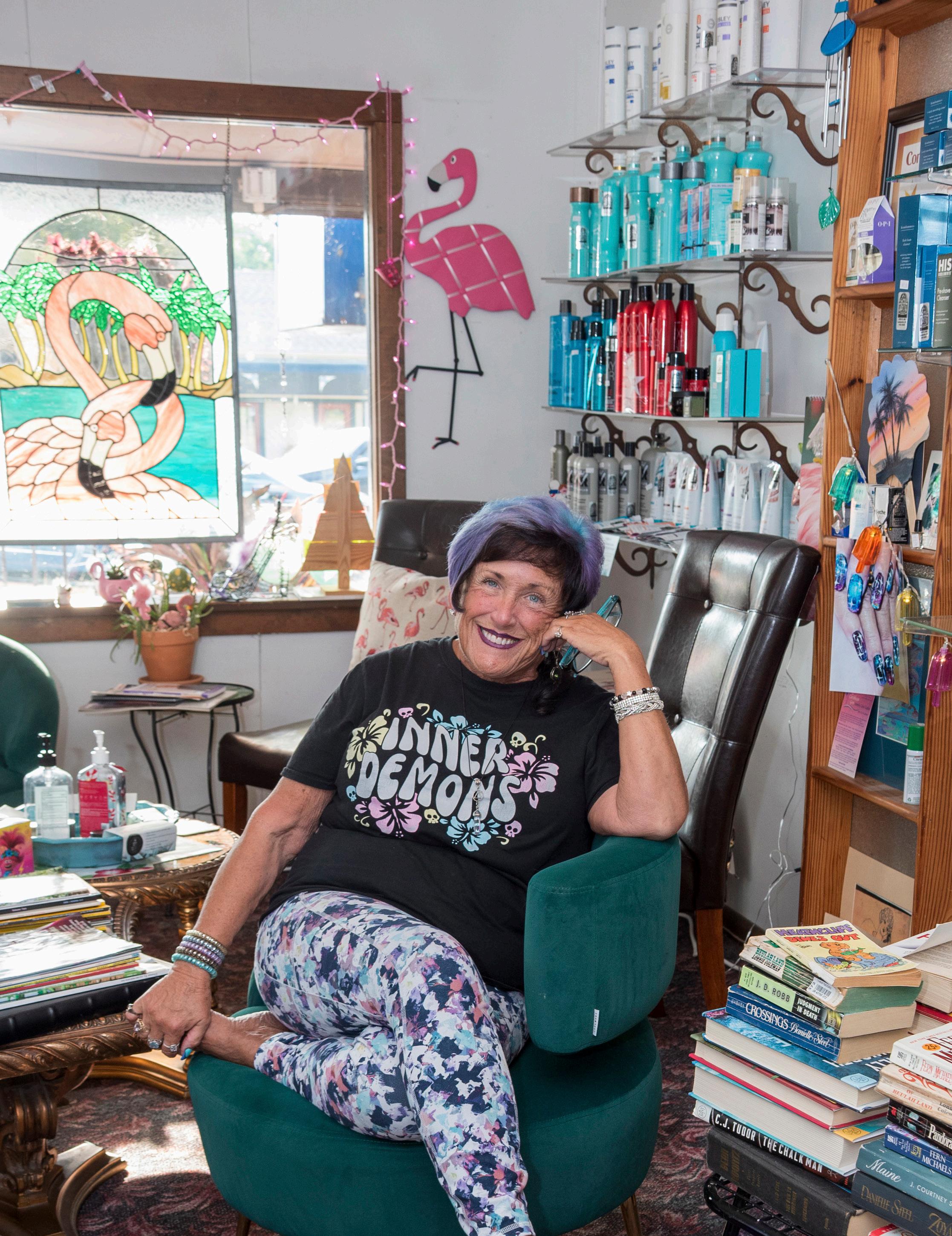
1. KJ Nutt & Friends Salon and Spa and a community that has supported us for 48 years.
2. Bistro 501 and their pork chops and fries — and the owners.
3. Ice cream — The last 2 years I have been addicted to Frozen Custard chocolate ice cream and vanilla Diet Coke, every day. This year it’s cookie dough ice cream at Every’s on Main Street, whenever possible. Silver Dipper in between if need be.
4. Hot Topics at the Tippecanoe Mall — Finally. My people arrived for all my shopping
needs. Well, at least clothes.
5. Fries — Scott Street Pub and Old Buffalo Bar & Grill. Not quite as addictive as ice cream, but I would drive out of my way for either of their fries.
6. Miracles Fitness — I tried so many places and types of exercise. I’ve been going to Miracles for 18 years. If that’s not a miracle, I don’t know what is.
7. Civic Theatre and more — We are so lucky to have so many venues for entertainment.
8. Surf Center — It houses and has information on 12-step meetings in a central location.
9. McCord Candies — Grateful it has survived. I remember it from years ago. The new owners have put some zip back into it. Welcoming atmosphere and great decor!
10. Our city itself — It has continued to grow. I remember grumpy old ladies in the old library. The new library is a joy to go to. There are festivals, downtown and river events and all are very progressive and welcoming to all.
Nickey Ramsey
Hi! I’m Nickey Ramsey, an entrepreneur and innovator who turns ideas into industry-shifting solutions. I first gained national recognition on “Shark Tank” with Junobie, a brand that revolutionized how parents around the world sustainably store breastmilk. I transformed a simple product into a global movement for eco-conscious parenting. Seeing a bigger need, I expanded Junobie into AI-powered scheduling and booking software for lactation spaces in workplaces, universities, conferences and sporting arenas, making it easier for parents to balance career, education, travel and family life. Today, I’ve carried that same drive into Dryvin, an AI platform that helps small businesses streamline operations, increase customer leads and deliver better customer experiences. My work is fueled by a community whose spirit of collaboration and innovation makes it the perfect place to build, scale and evolve bold ideas that last. I’ve called Greater Lafayette home for 18 years.
10 things I love about Lafayette:
1. A thriving entrepreneurial ecosystem
— As an entrepreneur, I’ve found Lafayette to be a place where big ideas don’t just survive, they thrive. There’s an incredible network of mentors, local organizations and business owners who are willing to share knowledge and make introductions. It’s the kind of ecosystem where you can go from concept to reality with the right support every step of the way.
2. Innovation and tech energy — The energy here is contagious. Between Purdue University’s influence, local entrepreneurial meetups and forward-thinking small businesses, Lafayette has an undercurrent of innovation that keeps me inspired. It’s a place where ideas and technology collide in the best way.
3. Parks and trails that recharge you — I spend a lot of my time building and growing businesses, but stepping onto one of Lafayette’s many trails instantly resets my mind. Whether it’s a morning walk at Happy Hollow park or an evening stroll, these spaces remind me to slow down and breathe.
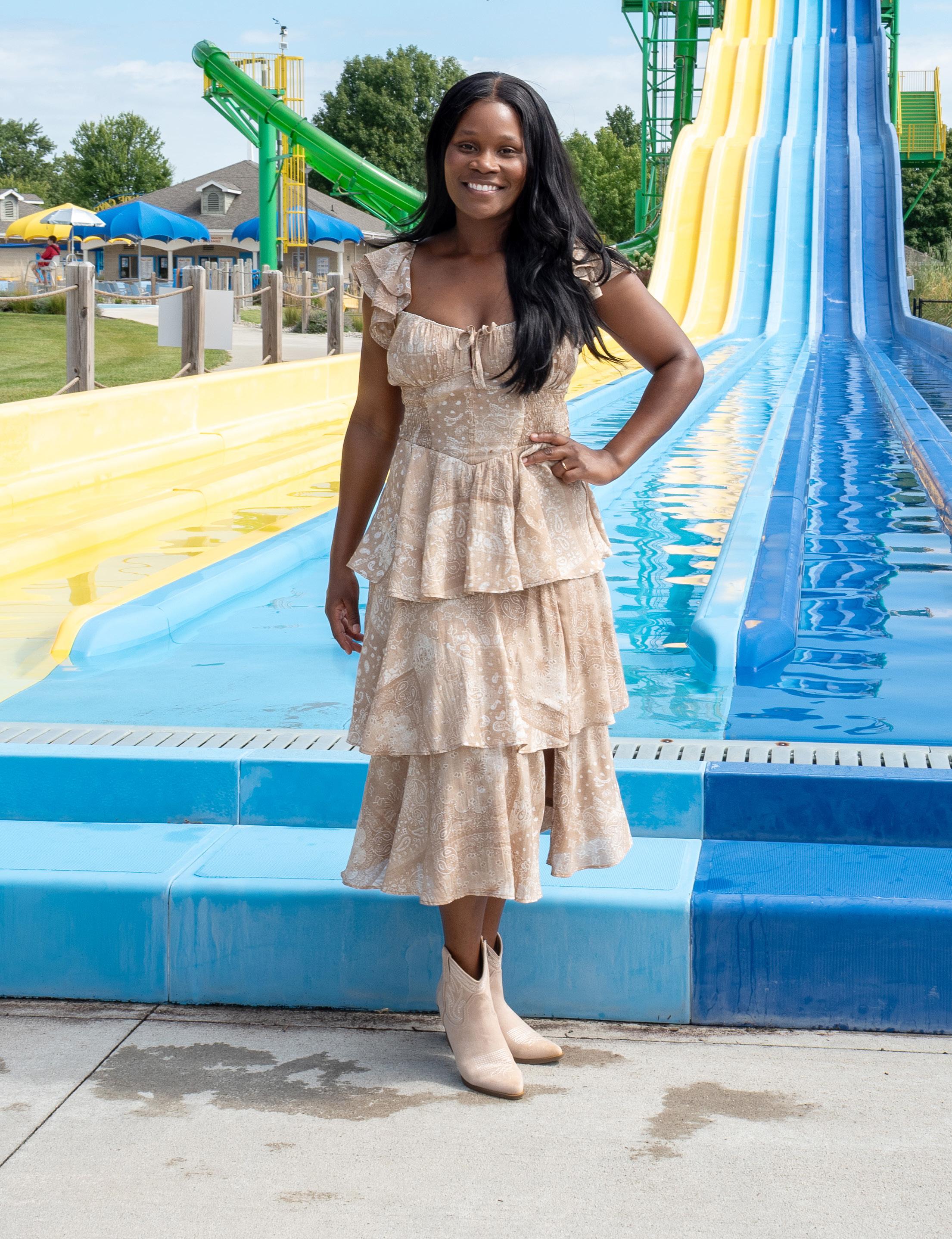
4. Water parks and family fun — In the summer, Lafayette comes alive with splash pads, water parks and family-friendly events. As a mama of two, I love having spaces where my little ones can play, laugh and connect with other kids while I connect with other parents.
5. Sports and stadium spirit — There’s something special about a local game in Lafayette … the cheers, the energy, the way the whole community comes together. Whether it’s a high school game, a Purdue matchup or a local tournament, the dedication here runs deep.
6. Downtown discoveries — I love wandering downtown with my husband and have absolutely no set agenda. Every time we go we find a new boutique, a cozy coffee shop or a little corner of the city that we’ve never noticed before. It’s proof that Lafayette is always growing, always surprising you.
7. A food scene that surprises you — For a mid-sized city, Lafayette has a food scene that competes with much bigger markets. I can grab comforting Midwestern classics one night and international flavors the next. It’s a delicious reflection of the diverse people who live here.
8. Events that connect us — From street festivals to art fairs and seasonal celebrations, there’s always something happening that brings people together. These events remind me how important connection is, not just in business, but in life.
9. People who show up — Lafayette’s greatest asset is its people. This is a community that celebrates your wins, helps you through challenges and genuinely wants to see you succeed. That kind of support is priceless.
10. A place to build what’s next — Every time I look around, I see possibilities. Lafayette is a place where I can test ideas, grow companies and still feel connected to a community that has my back. It’s not just where I live, but it’s where I build the future.
Clayton Richard
I was born at Home Hospital in 1983. I grew up on South 26th Street and in Vinton Woods. This has always been home, despite stops in 42 of the other states. Athletics has taken us around the globe, but my family and community have always brought us back.
10 things I love about Lafayette:
1. Dog N Suds — The best root beer, coney dogs and service out there.
2. Columbian Park — Too much to list and all maintained at the highest level.
3. Crawley Gymnasium — In a state where basketball means so much, there is no better place to watch a high school basketball game.
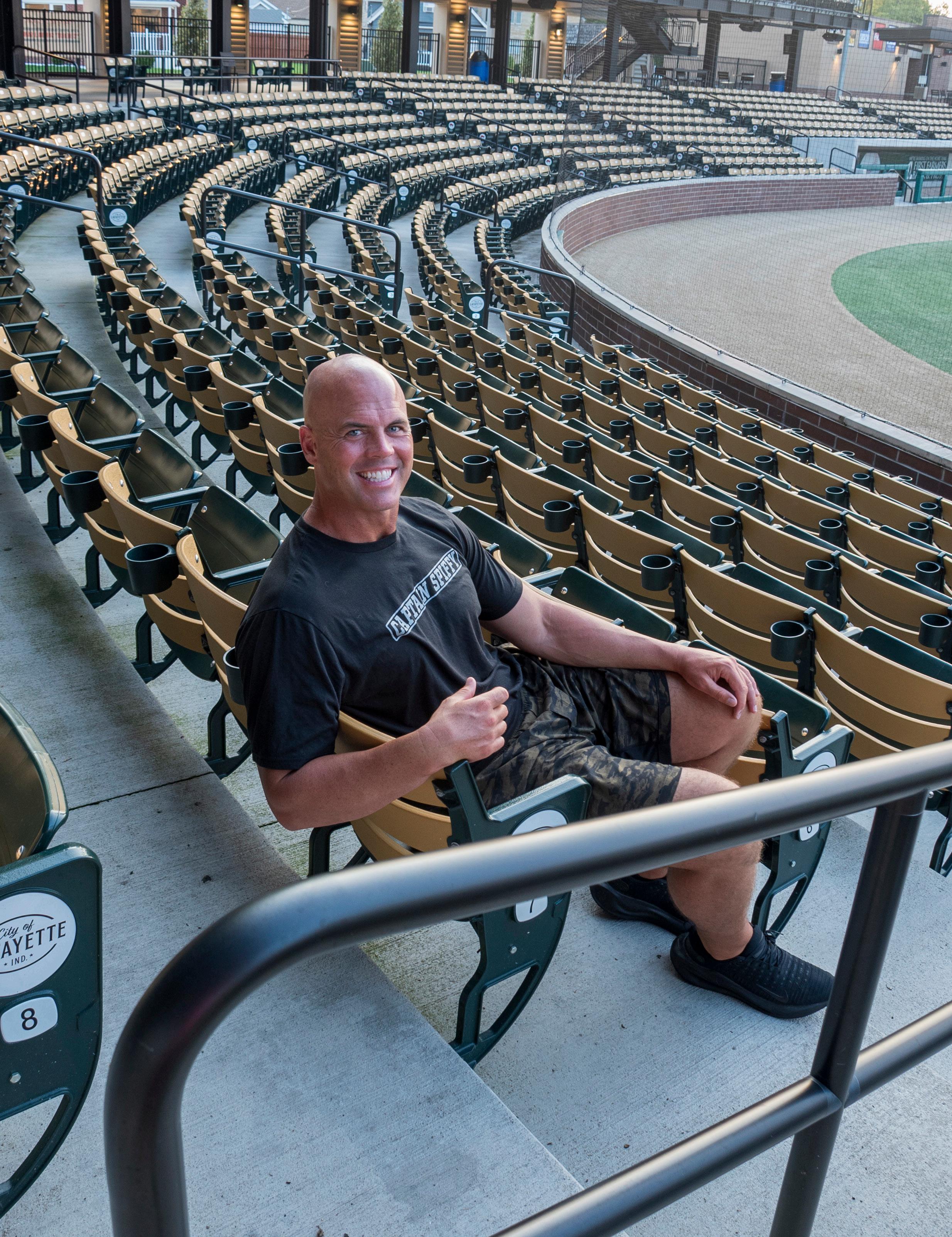
4. Loeb Stadium — The history of the old and the convenience of the new. Baseball heaven in town.
5. Old Columbian Park — The new is great,
but my nostalgia for the old may be stronger (slides, Monkey Island, the lion, biggest pool ever).
6. The water fountain — It was located behind The Scrambler and Twister at Columbian Park. This is a memory, to date: the best water I have ever tasted. Sorry Pittsburg, Indiana, your water is a close No. 2.
7. East Side 10 — I love movies.
8. Boys and Girls Club — It is the perfect place to lend a hand or spend time with the children and future of Lafayette.
9. Colt World Series — Another memory. It is no longer in play but was the best way to bring the athletic community back together to wrap up summer.
10. Family (related and community)— It is the real reason Lafayette is the place to always come back to.
Hearing loss is more prevalent than you might think and can affect communication. Our providers are specially trained to understand, support, and treat hearing loss with cutting-edge technology to keep you and your loved ones hearing clearly.
Susan Taulia,
Adams,
Barrington Woods
• Homes starting from the low 400’s
Across from Wyandotte Elementary School
Basement sites available
Auburn Meadows
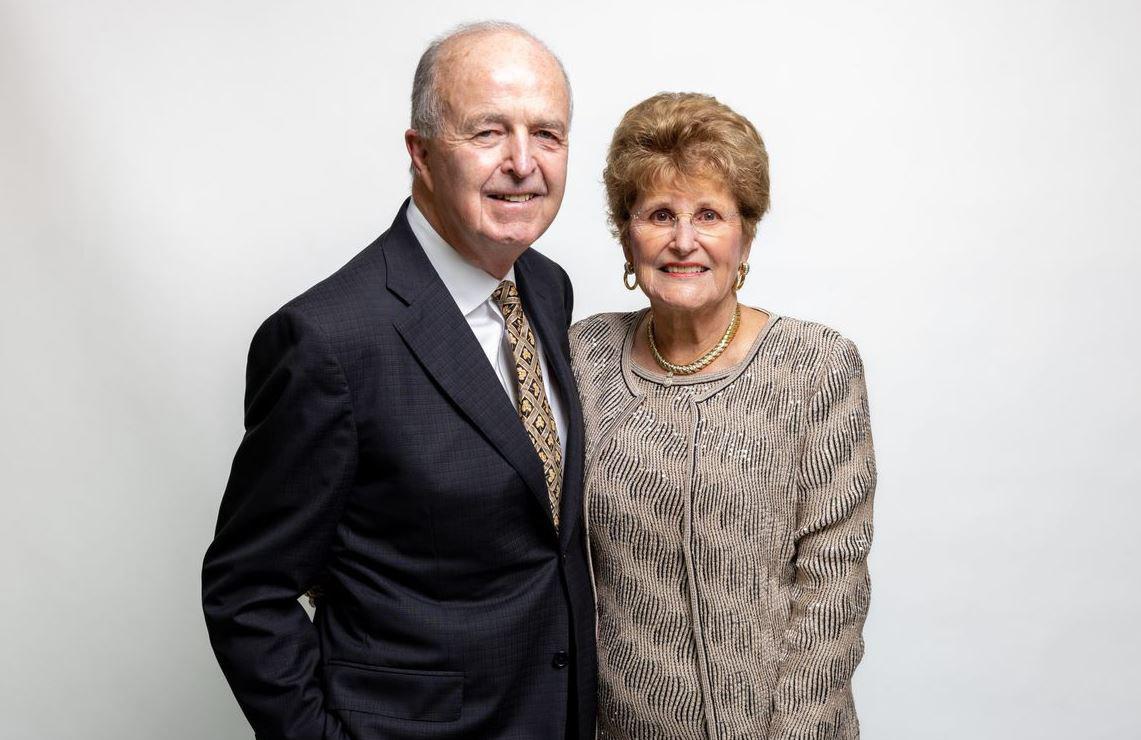
Jim & Mary Jo Risk
Jim and Mary Jo Risk are lifelong residents of Lafayette, with roots that stretch back through their parents and grandparents, who also called the community home. High school sweethearts, they have been married for 59 years and are the proud parents of three children and four grandchildren. Following school, Jim joined the family business, Kirby Risk Corporation, and continues as the CEO. The company will celebrate its 100th anniversary in 2026. The Risk family has a love affair for Greater Lafayette, cherishing its rich history and vibrant spirit.
10 things we love about Lafayette:
1. A strong sense of community – Greater Lafayette is full of warm, welcoming people who care about their city.
2. The spirit of giving – Organizations like the United Way and the Community Foundation of Greater Lafayette reflect the generosity of this community.
3. Commitment to youth and education – From Junior Achievement to our impressive school systems, empowering the next generation.
4. Purdue University – This world-class university enriches our community with innovation, athletic events and endless opportunities.
5. A multitude of opportunities –Lafayette offers countless ways to grow, learn, volunteer and get involved.
6. Quality of life – With affordable living, diversity, parks and trails, it’s an exceptional place to call home.
7. Vibrant arts & culture scene –From local theaters to art galleries and live music, Lafayette’s creative energy shines.
8. Historic Downtown Lafayette – Our charming downtown blends rich history with thriving local businesses and events.
9. Family-friendly attractions – Places like Columbian Park and zoo create lasting memories for families.
10. Delicious and diverse dining –Whether it’s classic Frozen Custard, Triple XXX, McCord Candies, or international cuisine, the variety of restaurants here is truly something to savor.
Ryan Rohrman
Ryan Rohrman, CEO of Rohrman Automotive Group, is a third generation leader of one of the largest family-owned automotive groups in the U.S. As the company’s leader for over eight years, his focus has been on driving relationships and providing awesome experiences for modern-day customers and employees, and focusing on innovation and team-focused leadership, all while carrying on the 60-year Rohrman legacy. Under Ryan’s guidance, the Rohrman team has grown to 22 dealerships with more than 1,600 team members, achieving consistent growth across Wisconsin, Illinois and Indiana through strategic business development and a commitment to enhancing the dealership experience. Ryan was born and raised in Lafayette, spending the first 16 years of his life there before moving away for several years and returning in 2022.
10 things I love about Lafayette:
1. Cheering on the Boilermakers at Purdue basketball games.
2. Golfing at Coyote Crossing golf course, which I consider my “home course.ˮ
3. Dining at several locally owned restaurants, including Bistro 501, The Boiler House Prime and Ripple & Co.
4. Satisfying my sweet tooth at The Pink Walrus, Miss Sugar Dessert and Sweet Revolution.
5. Playing pickleball with my wife at the courts at McCaw Park.
6. Spending time outside with my kids at The Celery Bog and Happy Hollow Park.
7. Exploring nature at Prophetstown State Park
8. Catching a football game at Rohrman Field at Purdue University.
9. Swimming and dining at the Lafayette Country Club with family on summer evenings.
10. Enjoying fall in Lafayette, particularly at the Feast of the Hunters’ Moon.
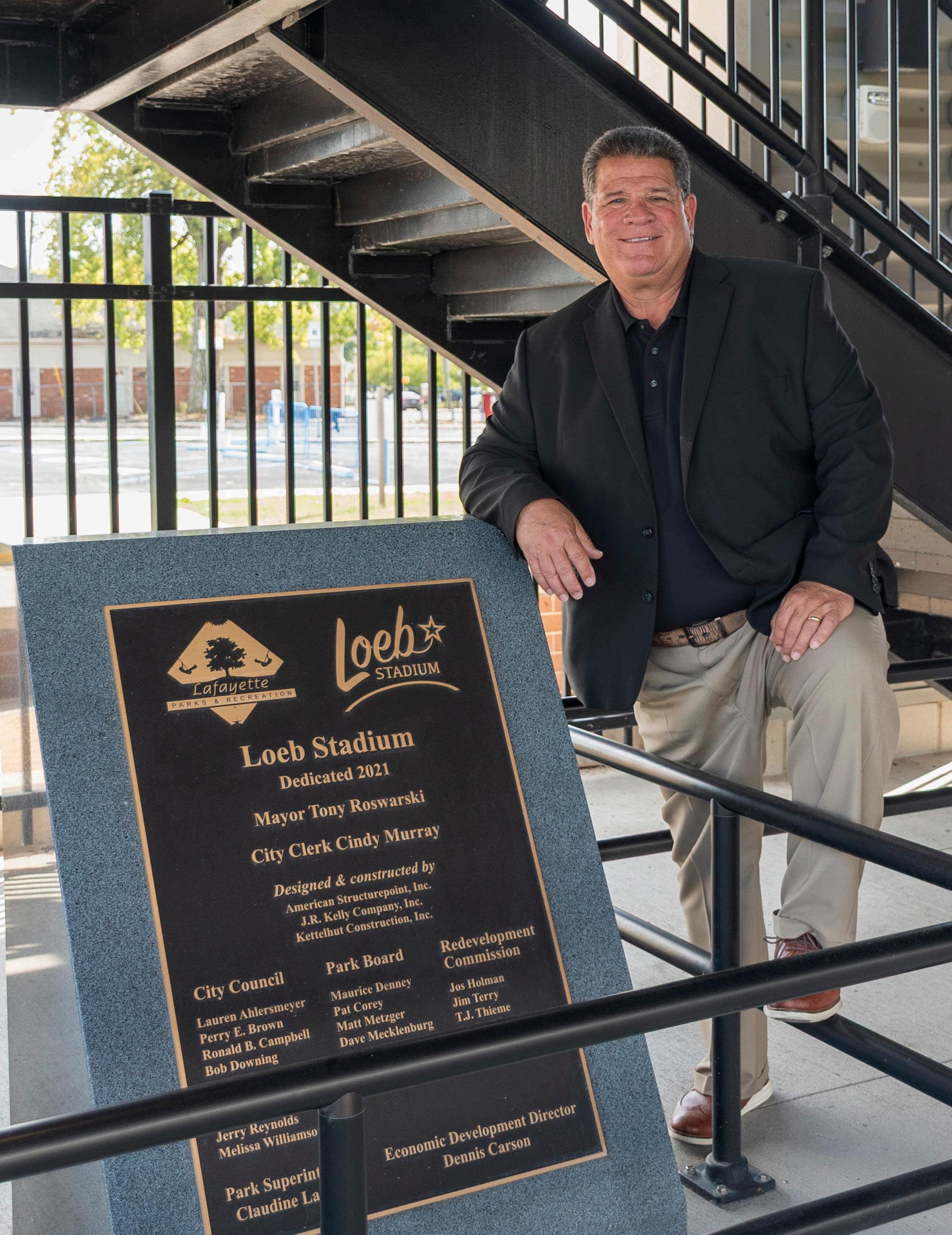
Tony Roswarski
I was born and raised in the north end of Lafayette. In 1983, I joined the Lafayette Police Department, retiring at the rank of captain. I served on the Lafayette City Council representing District 6. In 2003, I was elected mayor of Lafayette, and I am currently in my sixth term. I am married to my wife, Tonya, and have four children and 10 grandchildren.
Mayor Roswarski’s Top 10 favorites:
1. Arni’s cheese pizza
2. Frozen Custard and Budges
3. The spirit of our citizens
4. Columbian Park and Loeb Stadium
5. Vibrant arts and culture
6. Lafayette’s downtown
7. Our trails system
8. Favorite season is fall
9. Our wonderful schools
10. All of our churches
Charlie Shook
Charlie was born and raised in Lafayette/ West Lafayette and went to college at DePauw and Indiana universities. Upon graduation, he worked as a commercial loan officer at Comerica Bank in Detroit for 10 years before moving back to Lafayette.
He returned to be a Realtor with what is now F. C. Tucker/Shook and, with time, picked up leadership duties with his two cousins from his father and uncle. The business has grown, and Charlie is closer to retirement than being the “newbie.”
While not working, Charlie is interested in quality-of-life issues that affect or enhance Tippecanoe County. This interest spans both the cultural and arts communities and our human service agencies. Charlie is a proud Hoosier and even prouder to be a part of Tippecanoe County.
10 of Charlie’s favorites:
1. The diverse residents who call Lafayette/ West Lafayette home. A “tip of the cap” to Purdue University and local industries who invited these
3. A significant and growing cultural arts community and venues. Many of these organizations are “pushing the envelope” within their individual arts communities to bring new ideas to Tippecanoe County.
4. A large faith community that has found ways to disagree without being disrespectful or mean spirited.
5. A community where it is still easy to make new friends beyond one’s immediate family.
6. Four sets of law enforcement, fire protection and emergency medical agencies that work in collaboration with each other.
7. A history of elected and appointed local leaders who have nurtured and protected the vitality of our economic and employment environments.
8. From my perspective, a community that embraces newcomers versus a community that has “insiders” and “outsiders.”
9. I have learned to see the beauty of corn and soybean fields.
10. We benefit from our proximity to
Wes Tillett
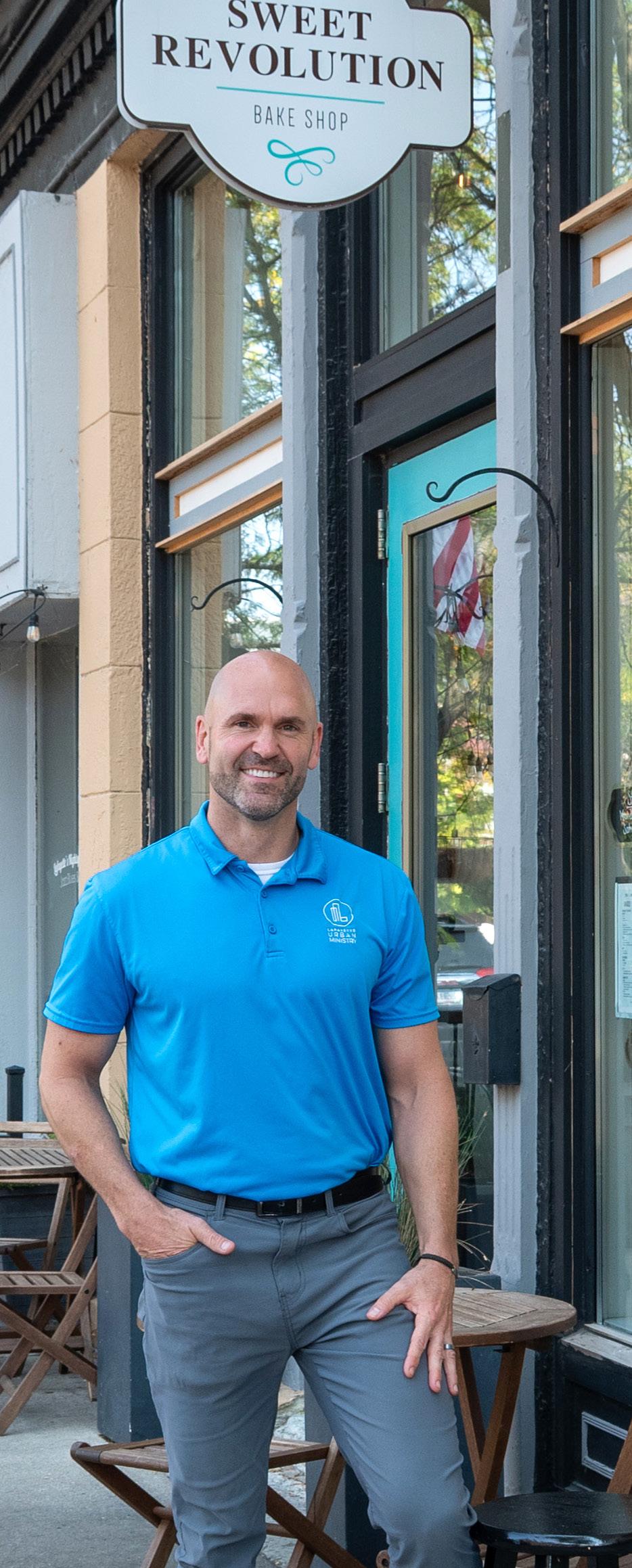
Wes Tillett has served as the executive director of Lafayette Urban Ministry since 2020. Wes is married to Rita, and together they have four children (Tobias, Kidest, Avalyn and Noah). Wes and Rita grew up in Rensselaer, often coming to Greater Lafayette for shopping and Purdue sporting events. This is their second stint living in Greater Lafayette, spanning from 2003 to 2010 and 2020 to the present.
10 things I love about Greater Lafayette:
1. The spirit of cooperation
2. Vibrant, beautiful churches
3. Kayaking on Wildcat Creek or floating down the Tippecanoe River
4. The aroma inside Sweet Revolution Bake Shop
5. Downtown restaurants
6. The community’s growing diversity
7. Hiking at Prophetstown State Park
8. Purdue University sports
9. The combination of industry, agriculture and education
10. Small-city living with proximity to prominent features (Chicago, Lake Michigan, Turkey Run State Park, Indy)
Nolan Willhite
I’ve called Lafayette home for the past seven years, and in that time, this city has truly become part of who I am. I’m the owner of Flora Candle Company in the heart of downtown and proudly serve as president of the Downtown Lafayette Business Owners Association. What I love most is knowing I can leave a mark on the place my partner and I get to call home. This community has given me so much, and every day I’m reminded why I fell in love with it the people, the energy and the sense of belonging that make Lafayette special. I’m passionate about creating inclusive spaces and supporting local businesses, because I believe that’s what keeps our community thriving.
10 of my favorite things:
1. Restaurant — The Black Sparrow (bacon wrapped dates)
2. Bar — The Spot (patio nights)
3. Shop — too hard to pick one … Scout
4. Coffee shop — Eleventh House (Good Karma Latte)
5. My favorite time of year in Lafayette is fall/ winter. I love having the students back. Fall festivals, cozy evenings, busy streets. It’s just the best.
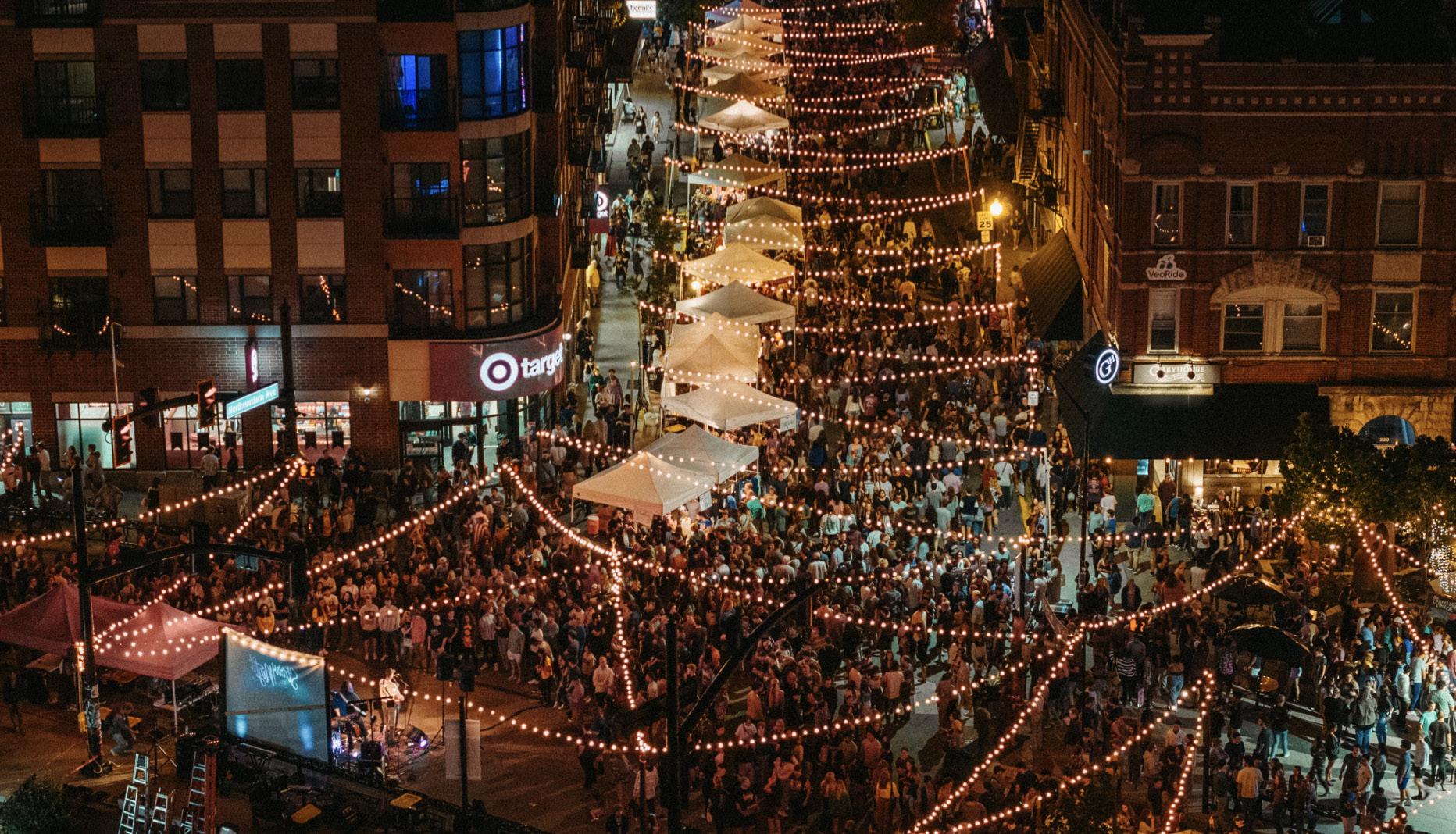
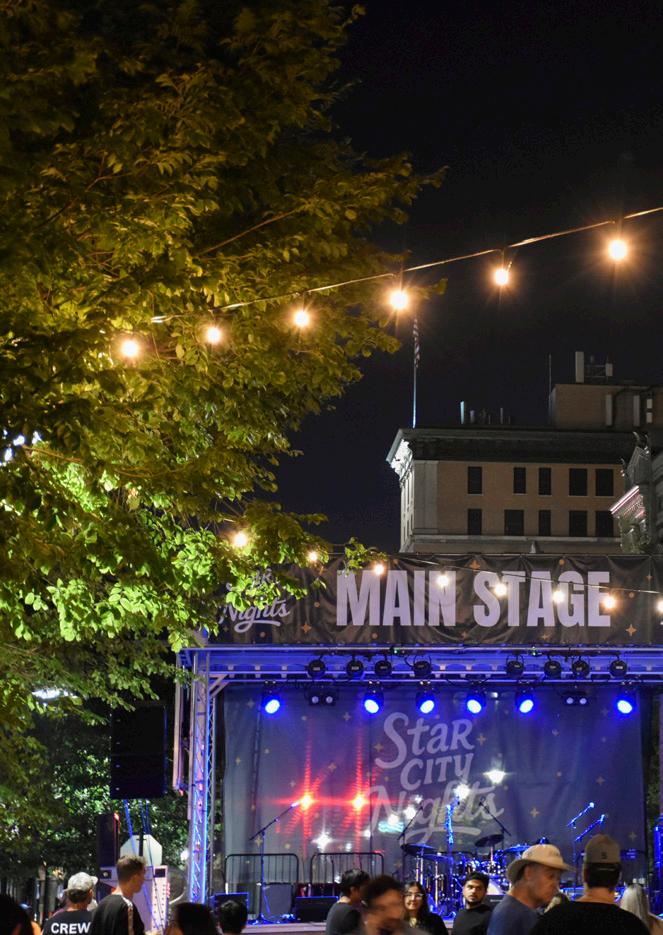
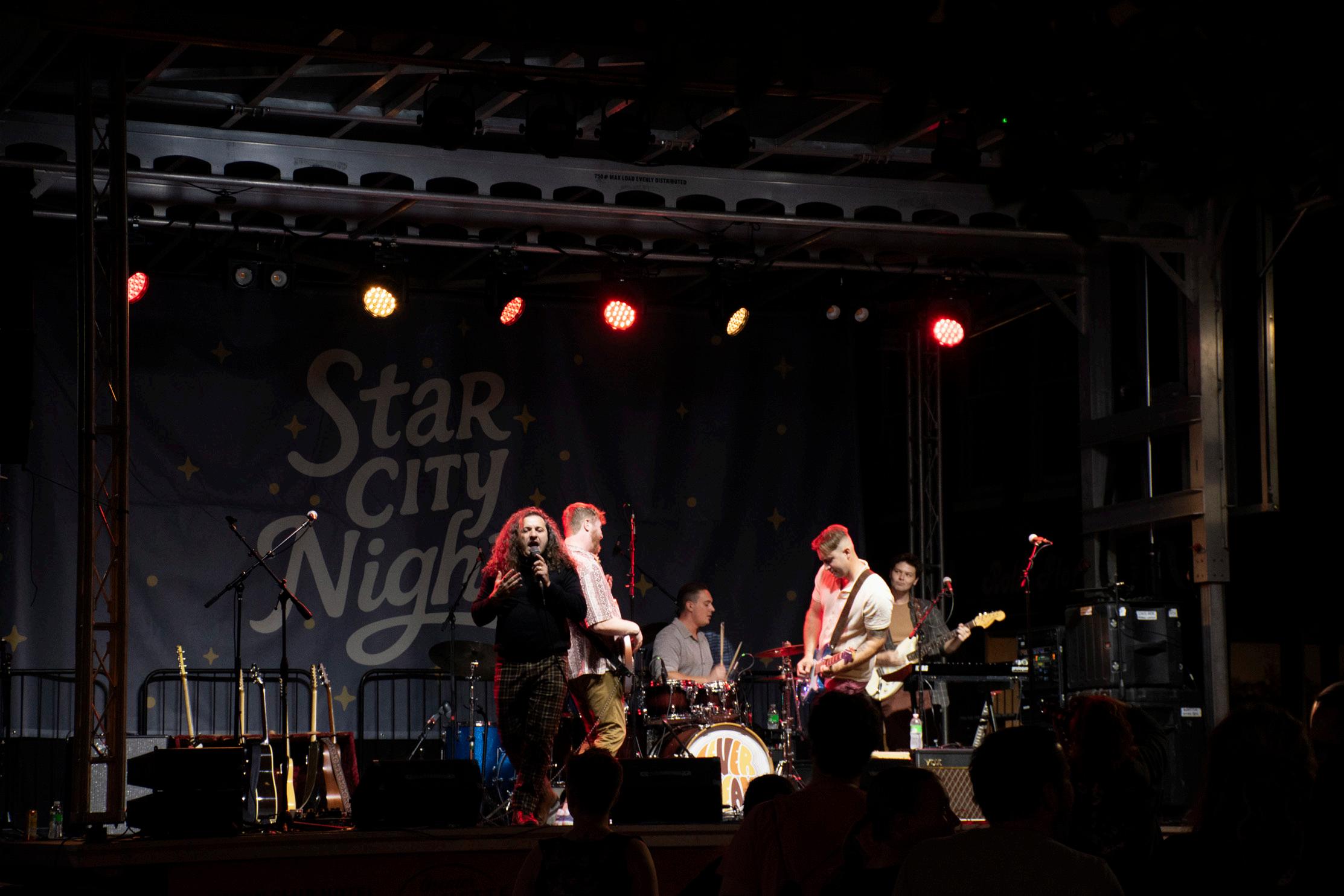
6. My favorite festival downtown is A Merry Main Street Market. But we are very excited for the new one this year called Star City Nights.
7. Going to Civic Theatre productions.
8. Historic walking tours with Sean Lutes (of Preserve Historic Lafayette).
9. I also love the Historic Lafayette Farmers Market.
10. The acceptance of the LGBTQ+ community ★
Ask The Experts:
The Greater Lafayette Commerce Ask the Experts program is perfect for you. Greater Lafayette Commerce is teaming with experienced professionals who have the skills you’re looking for to help you overcome challenges and provide you with perspective and direction.
Ask the Experts provides small business owners with the information they need while also facilitating the development of lasting professional relationships.
Nickey Ramsey is a founder and operator of ecommerce and software companies. She launched the Junobie ecommerce brand and its scheduling/booking software, founded Dryvin AI (voice assistants for business) and co-founded Cahsai, a scrollfirst real estate discovery platform blending short-form video with MLS-rich listings.
A former ABC Shark Tank entrepreneur, she has spoken at entrepreneurship events across the Midwest, mentors students through Innovate WithIn and encourages young founders to use technology responsibly.
What is AI, and what’s the one change you should make to improve how your business handles calls?
Artificial Intelligence is software that learns patterns from data so it can understand, decide and act. For most small and mid-size companies, the most useful place to start isn’t a lab or a dashboard, but your phone. Calls drive bookings, sales and trust, but they also arrive after hours or all at once. When you miss them, you often lose the customer.
The single change worth making now is simple: put an AI voice assistant on the front line so every call is answered, every time. I recommend starting with an assistant that sounds natural, follows your rules and works with the tools you already use. In practice, the assistant greets callers, collects names and contact information, captures addresses or job details, checks service areas and availability and books or reschedules directly on your calendar. If a situation needs a human, it warm-transfers to staff or records a concise voicemail with a transcript so nothing slips through the cracks. Why this matters is straightforward. Instant pickup calms customers and protects your reputation. Standard questions mean you get clean data for dispatch and followup. After-hours coverage turns late-night inquiries into morning appointments. You also gain visibility you may not have today: clear summaries and simple metrics such as answer rate, bookings created, common reasons for calling and wins captured outside business hours.
Getting started doesn’t require a big IT project. First, list your top call types: new bookings, estimates, urgent issues, reschedules, billing and general questions. Next, provide service areas, hours, policies, pricing ranges and access to the calendar or CRM you already use. Launch alongside
your existing number or forwarding rules. During the first weeks, review real transcripts, adjust phrasing and lock in what “good” sounds like for your company. These are some very common questions that come up:
• Will this replace your team? No. Having an AI voice assistant helps to empower your team. Our assistant takes care of the repetitive tasks so your team can focus on what really matters: nuanced sales conversations, solving complex requests and creating the meaningful moments that build loyalty.
• Are data safe? Choose a system that encrypts in transit and at rest, limits access by role, keeps detailed logs and lets you control retention.
• Will it be accurate for your business? Accuracy improves quickly when the assistant trains on your actual policies and language, not generic scripts. Can it reflect your brand? Look for support for multiple languages and tone adjustments so it speaks the way you would.
• Who benefits most? Home services and trades, real estate, clinics, education programs, any operation that books by phone or manages time-sensitive requests. The return typically shows up fast: captured calls become confirmed jobs, no-shows drop with reminders and staff time shifts to revenue-producing work.
Next step: pilot one workflow like “new bookings” for 30 days. Measure answer rate, appointments set, time saved and after-hours wins. If the numbers move, expand to estimates, reschedules and emergency triage.
Nickey Ramsey
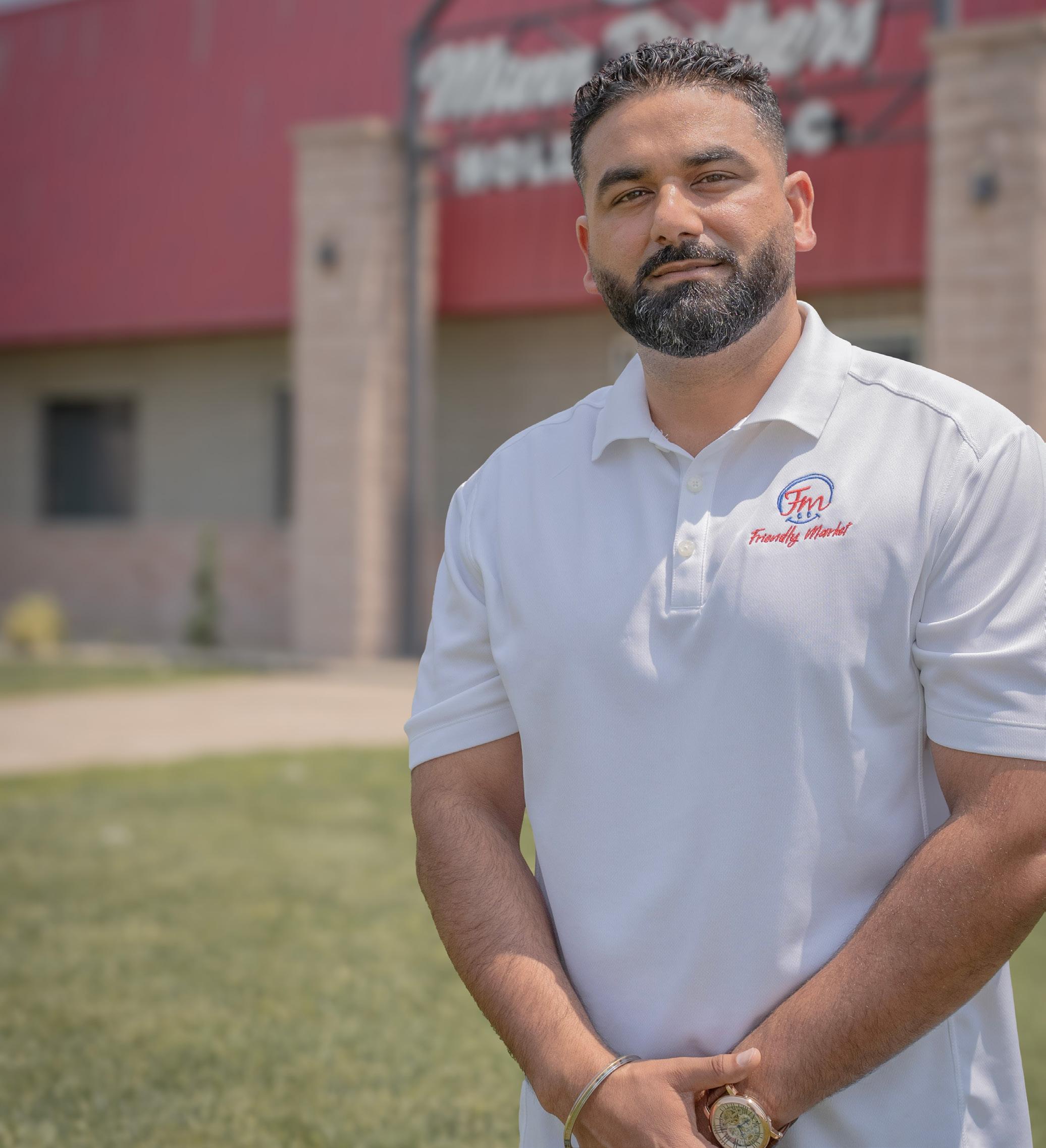
Friendly Market fuels the community—State Bank drives the expansion.
We needed to close on a nine-store acquisition during the toughest time of year—right between Thanksgiving and the New Year. It was a fast-moving, sensitive deal, and timing was everything.
State Bank understood that. Their team didn’t just say yes, they got it done. Meetings were booked. Answers came fast. We had what we needed when we needed it.
That kind of commitment is hard to find.
If you want a great convenience store, visit Friendly Market.
If you want a better bank, call State Bank.
Tracing Lafayette’s history through some of its most iconic figures, landmarks and events
Our Namesake
t’s an impossible task to curate merely 200 people, places and objects that tell the history of Lafayette, but we gave it our best shot. While the list that follows is nowhere near comprehensive, we hope it is interesting and conveys the love we share for our city, its past and how it has grown and thrived since its humble founding.
1 2 3 4 5
According to the Lafayette Society, there are 36 U.S. cities and towns named for Gilbert du Motier, Marquis de Lafayette (1757–1834). Include all the streets, squares and schools and the number jumps to the hundreds. The beloved Revolutionary War hero undertook a triumphant, year-long farewell tour visiting all 24 states in the U.S. from August 1824 to September 1825. He was welcomed as the nation’s guest by President James Monroe.
Our Star City Nickname
References to Lafayette as the “Star City of the West” appear as early as the 1830s. The nickname may have been coined in response to Cincinnati’s moniker, “Queen City of the West.” The two cities dominated shipping on their respective rivers and Indiana was situated in the West of the country when the nickname took hold.
Our Founder
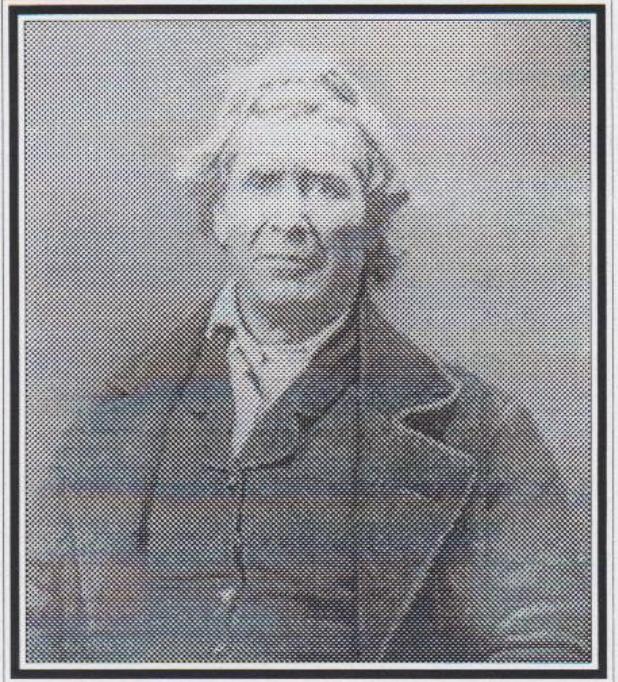
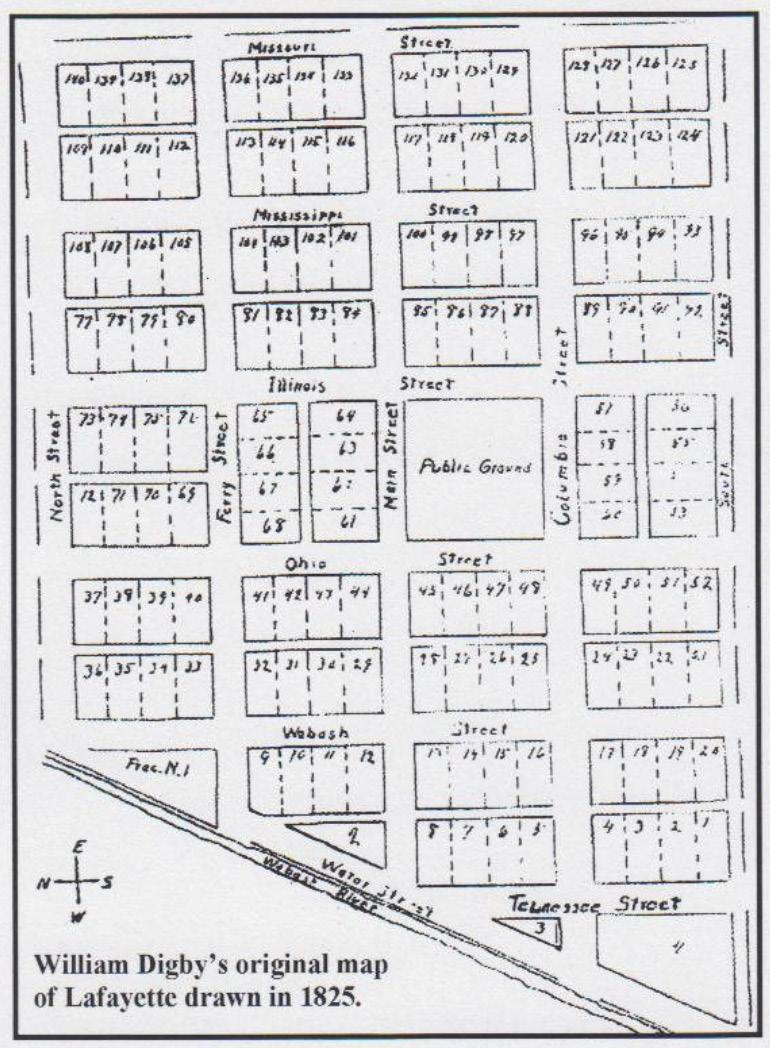
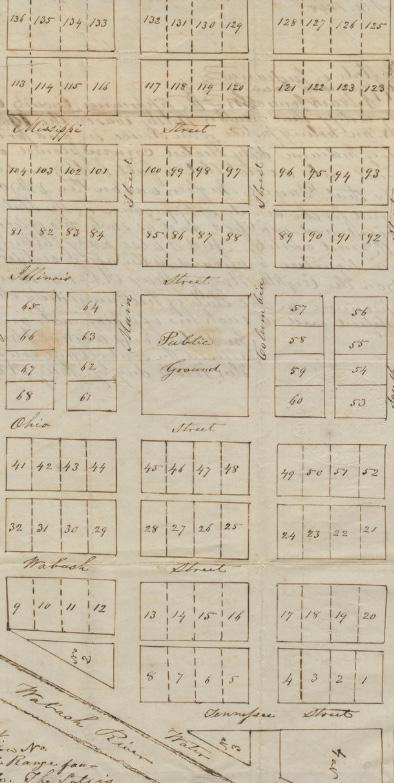
William Digby (1802–1864) — The 22-year-old founder of Lafayette purchased 84 acres of land along the Wabash River on December 24, 1824, for $231.63 during a federal government land sale and auction. The land lay on the east bank of the Wabash River a few miles downstream from the ferry operated by John Davis. Digby platted his new town on May 25, 1825, naming it for the Marquis de Lafayette, the famous Revolutionary War figure who was touring the country at the time.
Our Ties to Transportation
Wabash and Erie Canal — Situated near the head of navigable waters on the Wabash River, Lafayette became the terminus for the Wabash and Erie Canal, which was finished to the city in the 1840. At 497 miles, it was the longest canal built in the U.S. The railroad reached the city in 1854 and canal traffic dwindled until 1874 when the canal fell into disrepair. It became an eyesore of stagnant water and trash, eventually requiring civic action to fill in the canal bed.
Railroads — The first railroad to come to town was the Lafayette and Indianapolis, built of iron and materials that were shipped to the city on the Wabash and Erie Canal. The L&I would eventually become part of the Big Four Railroad, a conglomeration of several railroads linking Cleveland, Cincinnati, Chicago and St. Louis across the Midwest. Other key railroads that served the city included the Wabash Railroad, Nickel Plate Railroad, the Monon Railroad and the New York Central Railroad.
William Digby’s original map of Lafayette, drawn in 1825.
Compiled by Kat Braz with input from Carol Bangert and much gratitude to the keepers of our histories, including Kelly Lippe of the Tippecanoe County Historical Association, Sean Lutes of Preserve Historic Lafayette and the Purdue University Virginia Kelly Karnes Archives and Special Collections.
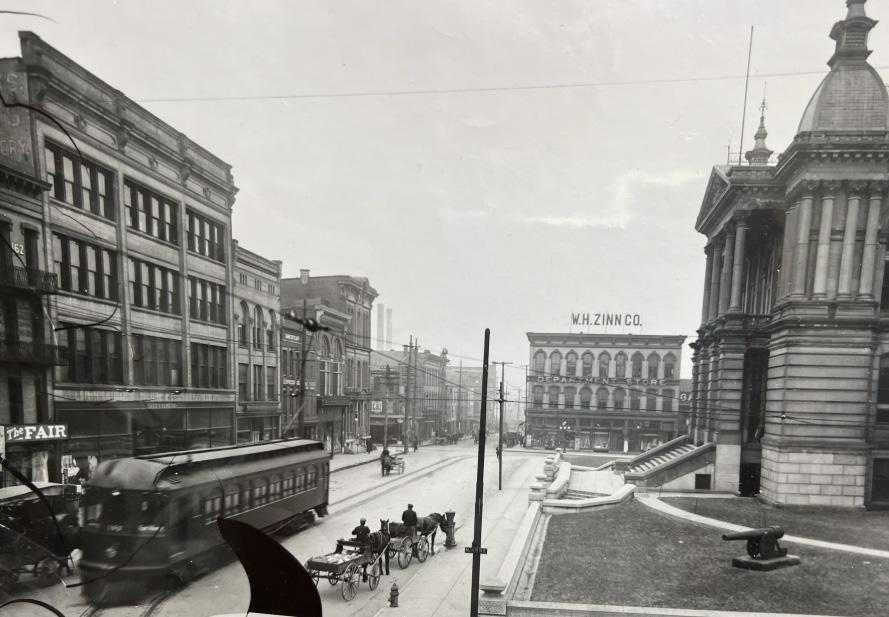
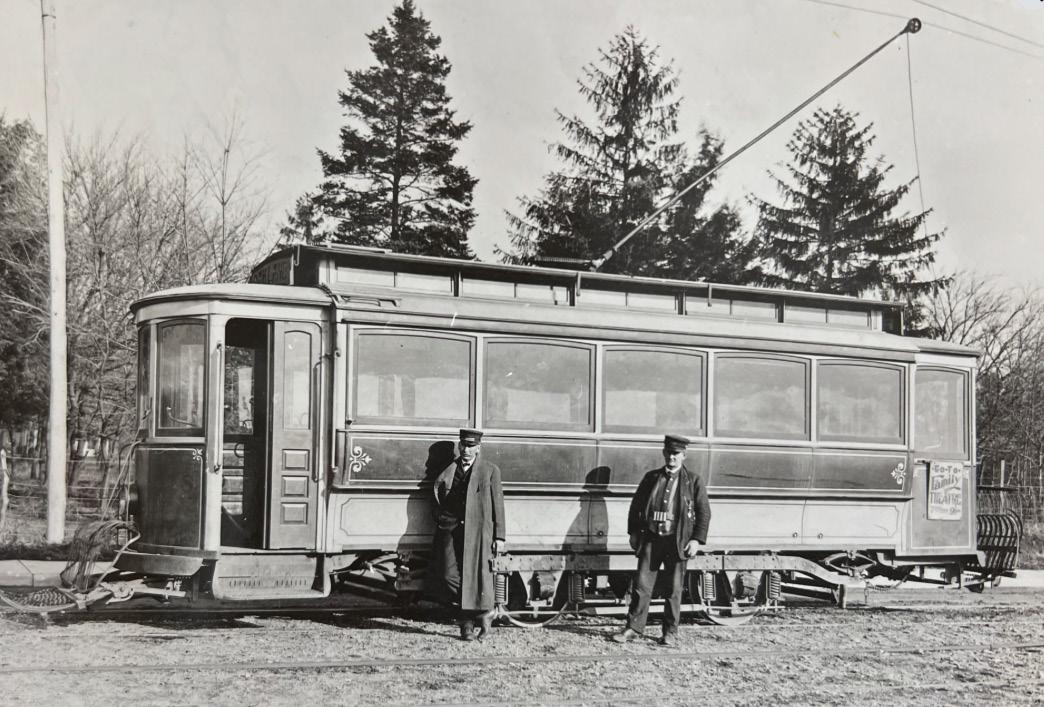
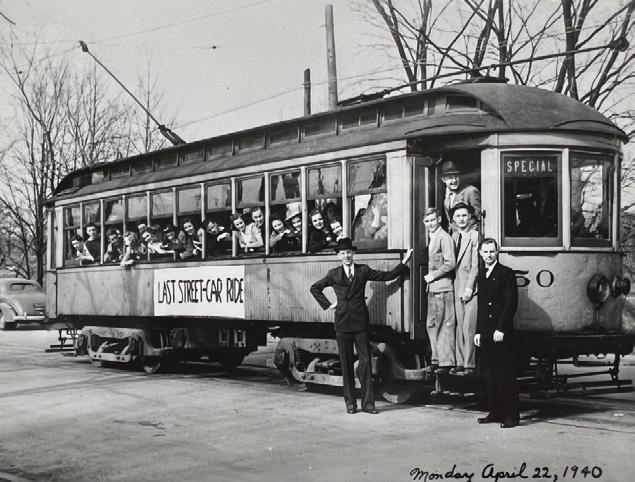
Lafayette Street Railway — Founded in 1884, the Lafayette Street Railway brought electric street cars to the city early in their tenure. In fact, Lafayette was the first city in Indiana and one of the first in the country to have a complete electrified public transportation system. As transportation changed with the introduction of automobiles and motorized buses, LSR reorganized and became the Lafayette Transit Company.
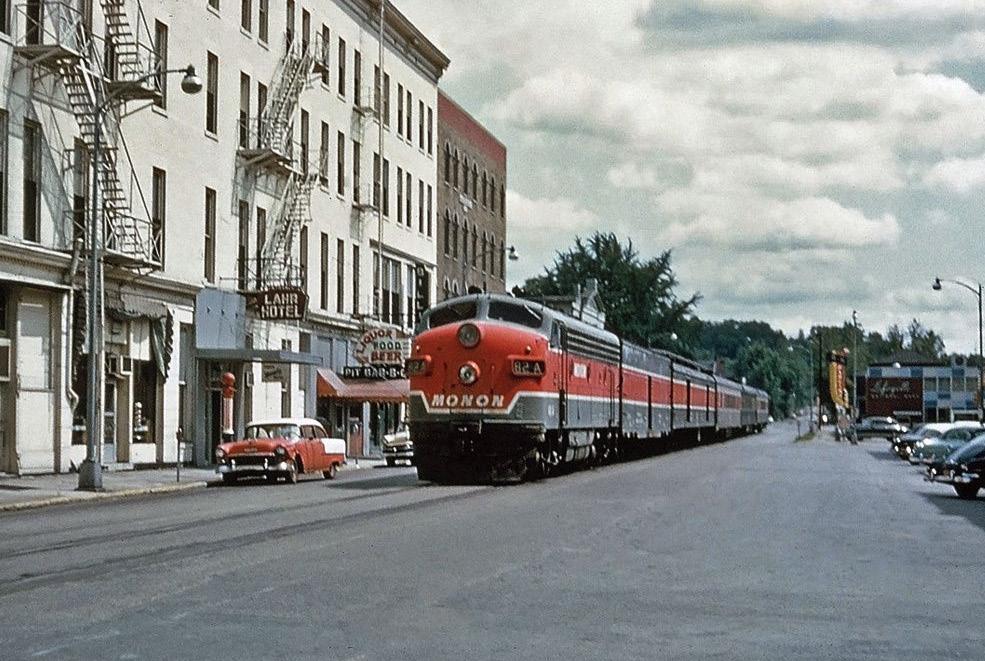
Railroad Relocation Project — In the early 1970s, city leaders completed a feasibility study to move the railroad tracks to a corridor along the Wabash River. The Railroad Relocation office closed on August 1, 2003, after removing 42 rail crossings in the central part of town, including the Monon Line that once ran down the middle of Fifth Street. A set of tracks remains outside the Historic Monon Depot, now home to Civic Theatre of Greater Lafayette, as a testament to history. With a cost of over $180 million and spanning nearly 30 years, the Railroad Relocation project dramatically altered Lafayette’s landscape.
Leaders Who Shaped the City
Henry Leavitt Ellsworth (1791–1858) — A Yale-educated attorney, Ellsworth was the first Commissioner of the U.S. Patent Office. He also served as a commissioner to Native American tribes on the western frontier and was the founder of what became the U. S. Department of Agriculture. He moved his family to Lafayette in 1845 and published a booklet titled “Valley of the Upper Wabash, Indiana, with Hints on Its Agricultural Advantages” to promote settlement of the region.
John Purdue (1802–1876) — In addition to being the primary original benefactor of Purdue University across the river, Purdue was a wealthy industrialist who opened a dry goods business on the courthouse square with Moses Fowler in the late 1830s. Purdue was one of five merchants to erect a 700-foot wooden toll bridge across the Wabash in 1847; was among the first trustees appointed to the new Lafayette City Public School in 1852; and helped found Lafayette Savings Bank in 1869.
Albert S. White (1803-1864) — A lawyer from New York, White operated a private practice in Lafayette from 1829 to 1836. He was elected as a Whig from Indiana’s 7th congressional district to the U.S. House of Representatives, serving from March 1837 to March 1839. He was then elected as a Whig to the United States Senate, serving from March 1839 to March 1845. Following his departure from the Senate, White resumed private practice in Stockwell and lived in Lafayette until his death.
George Winter (1809–1876) — An English-born landscape and portrait artist who immigrated to the U.S. at age 21, Winter was one of Indiana’s first professional artists and is considered by art historians to be the most significant of Indiana’s pioneer painters. He opened a studio in Lafayette in 1850 and lived here until his death.
Sandford C. Cox (1811–1877) — A prominent lawyer and politician, Cox was appointed the first deputy county recorder. He was afterward elected and re-elected recorder for 22 years in succession, during which time he earned his law degree. After retiring from the recorder’s office, he entered law practice. In 1859, Cox wrote a series of articles in the Lafayette Daily Courier about the first settlers in the area, and the articles were later collected into the book “Old Settlers: Recollections of the Early Settlement of the Wabash Valley” in 1860.
Owen Ball (1818–1887) — An Irish immigrant, Ball (no relation to Cyrus and Rebecca) came to Lafayette in 1841. He was one of the first directors of the Lafayette and Indianapolis Railroad, embarked in a successful wholesale grocery business in 1852 and invested heavily in real estate. He donated the land on which to build the Lafayette Manual Labor School and served as a trustee of Lafayette Savings Bank when it was founded in 1869. He also helped build Saints Mary and 6 7 8 9 10 11 12 13 14 15 16 17
William F. Reynolds (1811–1880) — Reynolds came to Lafayette “a youth of 19 and as the architect of his own fortune,” as his obituary states. From dry goods to railroads, Reynolds helped drive the engine of growth that transformed Lafayette from a river town into a hub of commerce and power. He helped build the Lafayette and Indianapolis Railroad, brokered fortunes and left behind an estate worth more than $3 million, an unbelievable sum at the time.
Edward T. Jenks (1813–1885) — Jenks came to Lafayette in 1836 and was heavily involved in the community. He owned a soap and candle factory on Wabash Avenue; was elected county coroner for two terms; was appointed to complete the term of the sheriff who had died in office; was twice elected as justice of the peace and was a longtime member of the Lafayette School Board. A school built in 1870 at the present day site of Oakland High School and Lafayette Adult Resource Academy was named Jenks School in his honor.
Moses Fowler (1815–1889) — Fowler moved to Lafayette in 1839 with his friend and business partner John Purdue. They started a dry goods business together and amicably parted ways five years later. Fowler went on to form his own dry goods business, expanding into the wholesale grocery and goods business supplying other stores. He then enjoyed a profitable career in the banking industry and was one of the wealthiest men in the Midwest at the time of his death, having amassed an astounding fortune of more than $3 million.
Rebecca Gordon Ball (1816–1900) — A Philadelphia native, Ball arrived in Lafayette in 1837 and married Judge Cyrus Ball the following year. From their Sixth Street home, the couple assisted enslaved individuals escaping to freedom through the Underground Railroad. In the 1850s, Ball published abolitionist tracts and radical protest poetry in local newspapers under the pen name Rosa. In February 1862, Ball and other like-minded women responded to the needs of Confederate prisoners in the Wabash Avenue neighborhood, transforming nearby Walsh Hall into a makeshift hospital.
Electric street cars
Monon train coming down 5th Street
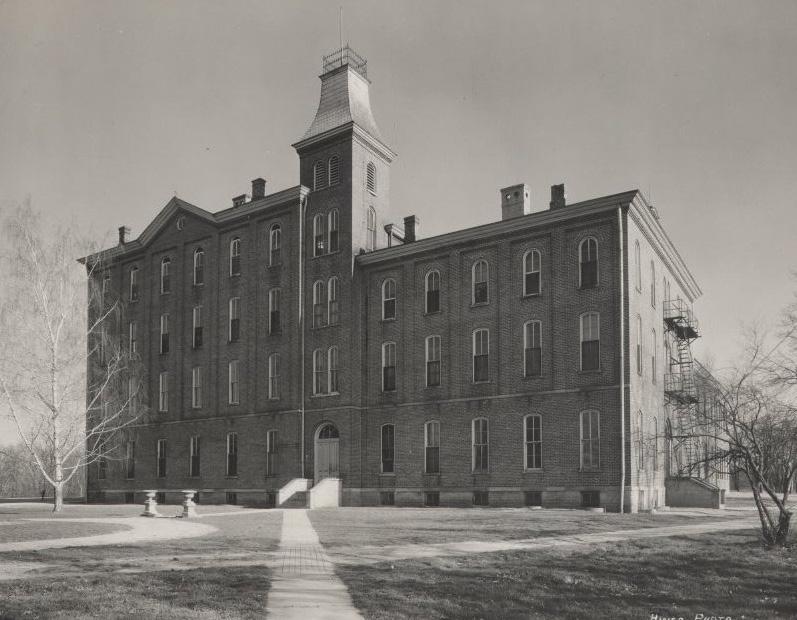
St. Joseph Orphan Asylum
19 20 21 22 23
Martha Church, the first Catholic church in the area, as well as the St. Joseph Orphan Asylum for Boys. Ball served on the Lafayette City Council for 19 years and was always foremost in any undertaking calculated to promote the growth and prosperity of Lafayette.
Adams Earl (1819-1898) — Merchant and financier Adams Earl dabbled in several lucrative enterprises including general merchandising, dry goods, wholesale grocery business with Moses Fowler, pork and beef packing, promoting railroads and banking. Earl is best known as a breeder and improver of Hereford cattle, a breed not well known in Indiana at the time. Earl’s obituary in the Lafayette Evening Courier remarked, “No man has worked harder for Lafayette than Adams Earl.”
Janeral Tootle (1827–1892) — Sometimes recorded with the first name General, Tootle was a Civil War veteran and Underground Railroad conductor. A popular barber, Tootle was also involved in civic affairs related to African American causes.
Oliver W. Peirce Sr. (1829–1921) — Peirce came to Lafayette at age 7 with his father and lived in the city for 85 years. At the time of his death, he was hailed as a pioneer of the city and the oldest of Lafayette’s successful merchants. Peirce founded the O.W. Peirce Company, one of the state’s largest wholesale grocers. His death notice in the paper called him “the last of an early group of settlers who laid the foundation for the city’s business prosperity.”
Dr. Alice Pierce Fifield (1832–1889) — A homeopathic physician, Pierce Fifield felt herself providentially led in 1869 to Lafayette —population nearly 20,000 at the time — where she had neither acquaintance nor reputation, but where she earned $3,000 the first year, “on foot!” An 1888 biographical record proclaimed, “She has been an example to the women of her city, by teaching them the laws of health and the civilization of light dresses, broad-soled shoes and flannel underwear. On these subjects she is very decided.”
Julius (1840–1927) and Levi Oppenheimer (1847–1929) — In 1870, the Oppenheimer brothers, German Jewish immigrants, opened the Baltimore Men’s Clothing Store on the first floor of a stately Italianate building on the northeast corner of Fourth and Main streets. Their shop flourished, joining a vibrant community of Jewish merchants who helped shape downtown. In 1914, they announced a dramatic renovation of the Reynolds building. The interior was completely re-imagined into a modern department store, adorned with fine oak and gleaming French mirrors, while the exterior was elevated with grand plate glass windows and intricate terracotta ornamentation. The Baltimore quickly became a centerpiece of Lafayette’s thriving retail scene. The brothers died two years apart, with Levi’s will dictating the closure of their beloved store, marking an end to an era.
Julius (1842–1927) and Solomon Loeb (1852–1837) — In 1870, Jewish German immigrant brothers Solomon and Julius Loeb opened a brick and mortar clothing store on Main Street. The pair had built up their wealth as traveling salesmen in the region. Their clothing store was a success, and soon another relative and German immigrant by the name of Samuel Hene joined the firm, and it was renamed “Loeb and Hene.” The Loeb Department Store remained a downtown icon until it closed in 1987. In 1940, Bert
and June Loeb donated $50,000 to construct the original Loeb Stadium in Columbian Park in honor of Solomon. The stadium was rebuilt in 2021.
24 25 26 27 28
Helen Gougar (1843–1907) — A lawyer, temperance and women’s rights advocate and newspaper journalist, Gougar was among the first women to be admitted to the bar in Tippecanoe County. In 1897 she argued for “The Constitutional Rights of the Women of Indiana,” 23 years before women achieved suffrage in 1920.
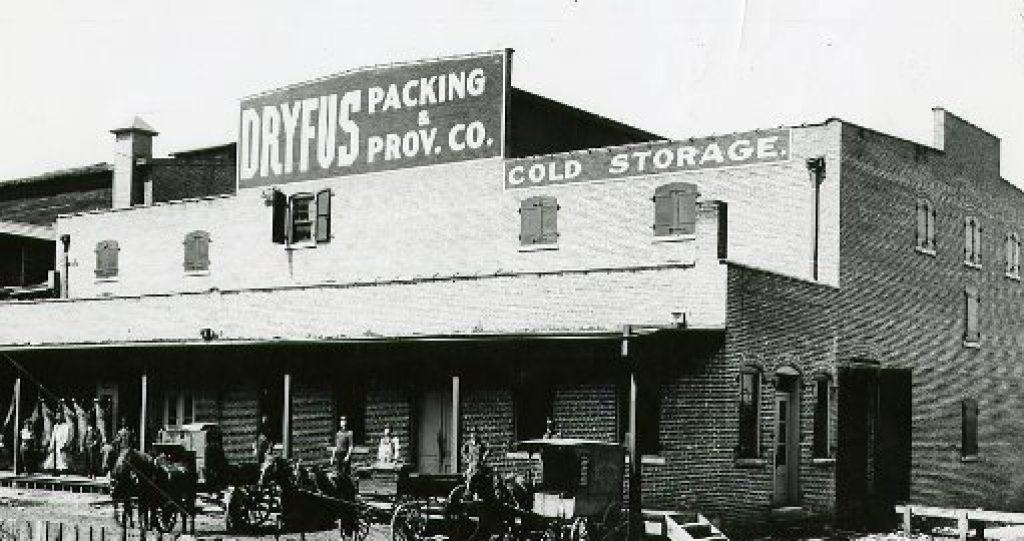
Leopold (1847–1917) and Ferdinand Dryfus (1860–1936) — The brothers and Jewish German immigrants operated Dryfus Packing and Provision Co., which became the largest business of its kind in northern Indiana. By 1909, the Dryfus Co. could process 300 hogs per day, employing 100 men constantly. The facility was modern for its time, with two ice machines and nine cooling rooms. Leopold was a community leader and stockholder in Merchants National Bank and the Lafayette Telephone Company. He purchased the Grand Theatre in 1909 and had it gutted and remodeled, renaming it the Dryfus Theatre only for it to be destroyed by fire in 1914. Ferdinand was a city councilman, bank officer and supporter of charity and other civic enterprises.
Alice Earl Stuart (1850–1937) — Daughter of Adams Earl, Stuart was a notable community leader herself. Along with her mother, she started the Free Kindergarten and Industrial School for Girls “for the education and moral training of the poor” in 1900. She also created a home for the elderly, helped to found Home Hospital and supported efforts of Purdue University and the Tippecanoe County Historical Association. She was the owner of extensive farmland in Tippecanoe and Benton counties and oversaw a large livestock operation.
Dr. Adah McMahan (1869–1942) After a brief stint as a schoolteacher, McMahan followed her father’s footsteps and pursued a medical career. Her medical practice specialized in women’s and children’s diseases. She was a staff member at both Lafayette Home Hospital and St. Elizabeth Hospital and she was the physician for the Women’s Christian Home (1904–1910). McMahan also was an active suffragist, hosting the first meeting of the Lafayette Franchise League in her home in 1912.
Sterling McElwaine (1887–1971) — Born in Indianapolis, McElwaine earned his bachelor’s (1909) and master’s (1935) degrees from Indiana University. He served as teacher and principal of Lincoln School for African American children from 1909–1915 and again from 1920 until 1951 when public schools were permanently integrated. McElwaine was active in community service organizations, human relations efforts and with the Second Baptist Church.
Charlie (1877–1940) and Gertrude Shambaugh (1887–1981) — Charlie was a race car designer, builder and driver who helped establish Lafayette’s first airport, Shambaugh Airport (1928–1934), near 18th Street and Teal Road. He opened the city’s first car repair garage and dealership in 1903. Charlie died in a tractor accident in 1940, at which point Gertrude, who had previously been the bookkeeper for Shambaugh Garage, took over leadership of the business, becoming one of the first women in the U.S. to run a car dealership.
Dr. A.C. Arnett (1882–1955) — Dr. Arett Campbell “A.C.” Arnett believed that by bringing physicians of multiple specialties together under one roof, they could deliver a better health care experience. His idea for the clinic took root during WWI, when he collaborated with the physicians who would go on to found the renowned Mayo Clinic and Cleveland Clinic. Along with Dr. Franklin Smith Crockett, he opened the Arnett-Crockett Clinic — one of the first multispecialty clinics in the nation — in 1922.
Walter Scholer (1890-1972) — A prominent Indiana architect whose designs can be found throughout the state, Scholer called Lafayette home from 1920 until his death. The city boasts many fine examples of his work, including the Wells Memorial Library, the Journal and Courier Building, the Charles A. Halleck Federal Building and Cary Home for Children.
Alameda McCollough (1900–1986) — Longtime curator and county historian for the Tippecanoe County Historical Association (1939–1974), McCollough taught English at Clarks Hill High School before her tenure at TCHA. She was passionate about genealogy and was instrumental in establishing the first genealogical record collections and indexes housed at TCHA. The organization’s research library is named in her honor.
J. Kirby Risk Jr. (1901–1989) — A Lafayette native, Risk started his modest battery company in an abandoned blacksmith shop on N. Second Street in 1926 using $500 he borrowed from his father. Kirby Risk Corporation is now a multimillion-dollar electrical products and services industry headquartered in Lafayette. A community leader and philanthropist, Risk founded Lafayette Junior Achievement in 1956.
James Riehle (1930–2007) — Mayor of the city from 1971 to 1995, Riehle’s tenure was shaped by his support of industrial expansion, including plants opened by Caterpillar and Subaru. He is best known for helming the Railroad Relocation Project that eliminated more than 40 crossings through the heart of the city and significantly improved the flow of traffic.
Bob Kriebel (1932–2014) — A graduate of West Lafayette High School, Kriebel was an Indiana Hall of Fame journalist, historian and author of 13 books — many of them covering the history of Greater Lafayette. After retiring from the Journal and Courier in 1993, Kriebel continued to write the weekly Old Lafayette column about local history that ran in the paper for 34 years until 2011.
Sheila Klinker (1938– ) — There’s a longstanding joke around town that where two or more are gathered, Klinker will be there. The Democratic politician has represented District 27 in the Indiana House of Representatives since first assuming office in 1982. She taught in the Lafayette School Corp. for 34 years. And she truly does seem to show up to every event, gala and celebration held in Lafayette, sometimes attending multiple engagements in a single evening. (See more on Klinker on Page 26.)
Born in Lafayette
Ida May De Puy Davis (February 22, 1857) — Artist, poet and litterateur
Evaleen Stein (October 12, 1863) — Poet and artist who wrote a number of children’s books and illustrated poems
Alvah Curtis Roebuck (January 9, 1864) — Retail businessman and co-founder of Sears, Roebuck and Company department store
Emily Thornton Childs (March 21, 1865) — Poet, journalist, editor and newspaper founder who used the pen name Emily Hawthorne
Edna Browning Ruby (October 28, 1869) — Stained glass artist who, at the time of her death, was the only woman in the U.S. who designed, built and installed stained glass windows. Her work adorns Trinity United Methodist Church and the Stidham United Methodist Church.
John T. McCutcheon (May 6, 1870) — Pulitzer Prize-winning newspaper political cartoonist and war correspondent, known as the “Dean of American Cartoonists.” McCutcheon was born in South Raub, a rural community just south of Lafayette.
Bruce Rogers (May 14, 1870) — Typographer and type designer acclaimed as one of the greatest book designers of the 20th century
David Ross (August 25, 1871) — Inventor, Purdue graduate, trustee and university benefactor for whom Ross-Ade Stadium is partially named
Ray Ewry (October 14, 1873) — Track and field athlete who won eight gold medals across the 1900 Paris, 1904 St. Louis and 1908 London Olympic Games
Chubby Parker (October 23, 1876) — Old-time folk musician and early radio entertainer
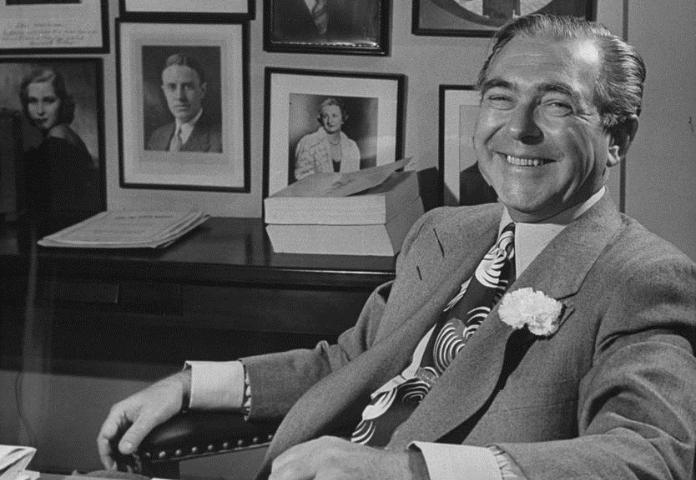
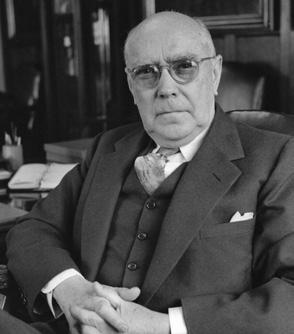
Steve Hannagan (April 4, 1899) — The “Prince of Press Agents” who built groundbreaking publicity campaigns for the Indianapolis 500, Miami Beach, Sun Valley, Las Vegas, the 1940 Presidential Campaign and Coca Cola. He developed, tested and refined many of the press and publicity principles commonly used today.
Steve Hannagan
George Souders (September 11, 1900) Winner of the 1927 Indianapolis 500
Ida Hartman DeMotte (January 3, 1914)
Child prodigy who began playing piano at age 3 and giving concerts at the age of 6. She toured the country as a soloist and both studied and taught at prestigious music schools.
Barbara Ringer (May 29, 1925) — A lead architect of the 1976 Copyright Act
Charles R. Vaughan (July 1929) — Lawyer who represented Ryan White in a landmark case that led to the enactment of the Ryan White Act and helped to lessen discrimination against people with AIDS across the country
Charles Foley (September 6, 1930) — Co-founder of the game Twister
Bob Friend (November 24, 1930) — Professional baseball player with the Pittsburgh Pirates
Bob Rohrman (April 18, 1933) — Automobile dealer, community leader and philanthropist
Sydney Pollack (July 1, 1934) — Film director, producer and actor
John Korty (June 22, 1936) — Oscar-winning documentary filmmaker
Brian Lamb (October 9, 1941) — Journalist and founder of C-SPAN
Donald Williams (February 13, 1942) — Astronaut who served as pilot on two Space Shuttle missions in the 1980s
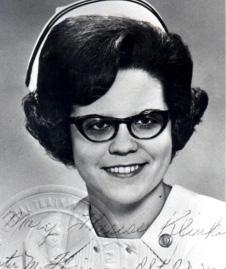
Captain Mary Klinker (October 3, 1947) — Only member of the U.S. Air Force Nurse Corps to be killed in Vietnam
Amy Sloan (July 19, 1961) — Housewife and AIDS advocate who contracted HIV through a blood transfusion. She died of AIDS in 1987 at age 25.
Axl Rose (February 6, 1962) — Née William Bruce Bailey Jr., frontman of the hard rock band Guns N’ Roses
63 64 65 66 67 68 69 70 50 62
Izzy Stradlin (April 8, 1962) — Née Jeffrey Dean Isbell, co-founder, rhythm guitarist and backing vocalist of hard rock band Guns N’ Roses
Shannon Hoon (September 26, 1967) — Lead singer of the band Blind Melon
Jeremy Camp (January 12, 1978) — Contemporary Christian singer and songwriter
Famous Residents
Annie Ellsworth (1826–1900) — Ellsworth’s father, Henry Ellsworth, was the commissioner of patents and friends with Samuel Morse, the inventor of the telegraph. In 1844, a 17-year-old Ellsworth chose the words used on the world’s first telegraph message — a biblical quote from Numbers 23, “What Hath God Wrought?” The Ellsworth family moved to Lafayette the following year.
Eli Lilly (1838–1898) — In 1854, the 16-year-old Lilly began an apprenticeship under Henry Lawrence, proprietor of the Good Samaritan Drug Store on Main Street near Third. Lilly spent five years learning the trade, eventually becoming a chemist and pharmacist before founding his own pharmaceutical company. While in Lafayette, he became a second sergeant in the Lafayette Guards.
Lois Kingsbery Mayes (1877–1958) — Raised in Lafayette, Mayes began publishing The Pensacola Journal newspaper in Florida following her husband’s death in 1915. She was director of the Southern Newspaper Publishers’ Association, one of only three women members in the association in 1920.
Sister Mary Rufinia (1881–1959) — Born Amalia Mathilde Kloke in Germany, Sister Rafinia began work as a nurse at St. Elizabeth Hospital in Lafayette in 1906. After sustaining a work injury in 1920, she became a teacher and pursued art studies at schools across the country. She returned to Lafayette and taught art classes at St. Francis High School. She exhibited widely during her career, winning a number of prizes. She favored still life and religious scenes and worked in oil and watercolor. A collection of her work is held in the Art Museum of Greater Lafayette.
Burr Swezey Sr. (1891–1975) — Swezey graduated from Purdue where he cultivated an avid, lifelong interest in golf, for which he was a legend in his time. He was winner of the Indiana state golf championship in 1911 and 1919 and was runner-up in 1910 and 1913. He was Purdue’s first golf coach and at one time held course records on six golf courses. In 1987, he was inducted into the Indiana Golf Hall of Fame. Swezey founded the Soap Factory Gang in 1918, which held golf tournaments in which a player was disconcerted as much as possible when making a shot, although physical interference was not permitted. He also founded the Lafayette National Bank in 1934.
Dick the Bruiser (1929–1991) — Born William Fritz Afflis Jr., Dick the Bruiser was a professional wrestler, promoter and NFL player who played four seasons with the Green Bay Packers. He was one of the most well-known heels during his wrestling career from the mid-1950s until the early 1980s. As a teen, Afflis took up residence at the Lafayette YMCA to be eligible to attend Lafayette Jefferson High School, where he played football and wrestled.
Eli Lilly
Karen (Ziegler) Black (1939–2013) — Black attended Lafayette Jefferson High School and went on to be an actress, screenwriter, singer and songwriter who rose to prominence in the 1970s. Called the “Hardest Working Woman in Hollywood,” Black appeared in nearly 200 credits across various genres over five decades. She appeared in “Easy Rider” (1969); co-starred in “Five Easy Pieces” (1970), for which she won a Golden Globe and was nominated for an Academy Award for Best Supporting Actress; and won a second Golden Globe for Best Supporting Actress for “The Great Gatsby” (1974).
William Louis Wallace (1945– ) — Nicknamed Superfoot, Wallace is a grand master of karate who was a personal trainer and close friend of both Elvis Presley and John Belushi. It was Wallace who found Belushi dead of a cocaine and heroin overdose in 1982. He is a 1963 graduate of Lafayette Jefferson High School.
Famous Visitors
Henry Ward Beecher — The clergyman conducted three weeks of revivals during December 1843 in the Second Presbyterian Church on the northeast corner of Sixth and Main.
P.T. Barnum — The showman’s circus entourage came to town on July 15, 1853. The first appearance featured a museum, menagerie and “Tom Thumb, the Smallest Living Man.”
Horace Greeley — The New York newspaper editor visited on October 13, 1853, for Indiana’s second state fair. The fairgrounds were located southeast of Fourth and Kossuth streets at the time.
Abraham Lincoln — The nation’s 16th president stopped in Lafayette on February 11, 1861, during his pre-inauguration Whistle Stop Tour, where he gave a speech about unity to the nation. Lincon’s funeral train also passed through Lafayette on May 1, 1865. Citizens lined the railroad tracks to mourn the fallen president.
Clara Barton — Known as the “Florence Nightingale of the Army,” Barton told of her Civil War nursing adventures to an audience in the Baptist church on February 21, 1867.
Federick Douglass The Baptist church could not hold all the people who came to hear the distinguished civil rights leader speak on April 18, 1867. Douglass spoke on racial justice and political equality, and proceeds from the event helped fund the African Methodist Episcopal Church.
Susan B. Anthony — The prominent suffragist lectured on the women’s rights movement she championed in a YMCA building on April 7, 1871.
Ulysses S. Grant and Schuyler Colfax — The U.S. president and vice president at the time appeared at several functions on April 26, 1871. The events included railroad junction speeches and a banquet in the Lahr House.
Edwin Booth — The noted stage actor played Hamlet in the Grand Opera House, on the south side of the 600 block of Columbia Street, on February 22, 1881 — 16 years after his brother John Wilkes Booth assassinated President Abraham Lincoln.
Mark Twain — The author came on a speaking tour with southern novelist George Cable on February 6, 1885. While fielding questions from local newspapermen, Twain quipped, “You have a very fine city here. I particularly admire your grand canal.” He was sarcastically referring to the last, stagnant, stinking water left in the Wabash and Erie Canal, which had opened in 1841 and been abandoned in the 1870s. By 1885 it had become a public eyesore.
James Whitcomb Riley — The Indiana poet gave recitations in his humorous dialects at a roller skating rink on April 22, 1885, the first of many appearances on local stages.
Theodore Roosevelt — The New York Governor stopped in Lafayette on October 10, 1900, while campaigning for U.S. Vice President, getting a 19-gun salute at the Monon Railroad’s Salem Street depot. He visited the Monon Shops, spoke in the Lincoln Club at Sixth and Columbia streets, then went to the Wabash Railroad depot to board a train for Logansport.
William Howard Taft — On October 28, 1908, President Taft made a stop at the Lincoln Club during his campaign for the presidency. The political club for men was located at 522 Columbia St., where the TCHA History Center is now located.
John F. Kennedy — On April 13, 1959, the U.S. senator from Massachusetts spoke during a political reception held at Duncan Hall.
Robert F. Kennedy — The U.S. senator from New York held a presidential campaign rally on upper Main Street, in front of what’s now DT Kirby’s, on May 1, 1968, just one month before his assassination on June 6, 1968.
Historic Neighborhoods — On the National Register of Historic Places
Centennial Neighborhood Historic District — As Lafayette’s oldest neighborhood, it contains many significant religious and educational institutions, as well as homes associated with early prominent citizens. Roughly bounded by Union, Ferry, Third and Ninth streets, the neighborhood takes its name from the Centennial School, which was constructed in 1876 on the centennial of the nation. The school was located on the northeast corner of Brown Street at N. Sixth Street. It has since been removed and a park was created at its original location.
Downtown Lafayette Historic District — The oldest part of the city reflects its development as a transportation center for west central Indiana. Started as a river town, the city’s growth was spurred by the arrival of the railroads in the 1850s. The historic downtown is roughly bounded by Ferry, South, Second and Sixth streets.
Ellsworth Historic District — A predominantly residential section of the city located south of downtown, the Ellsworth neighborhood developed between 1844 and 1936 and includes representative examples of Italianate, Second Empire, Queen Anne and the Bungalow/Craftsman styles of architecture. The district is named for U.S. Patent Commissioner Henry Leavitt Ellsworth, who lived in the neighborhood and was instrumental in the settling of the Wabash Valley area.
Highland Park Neighborhood Historic District Highland Park was platted in 1891 in what was known as Reynold’s Meadows. It was Lafayette’s first planned subdivision, with winding brick streets and avenues and a park known as the Highland Park Triangle. Original boundaries of the neighborhood encompassed Kossuth to Owen streets and Ninth to Fifth streets. An 1893 addition extended the south border to Cherokee Avenue.
Highland Park neighborhood
88 89 90 91 92 93 94 95 96 97
Jefferson Historic District Named for the former Jefferson High School located at the edge of the district, this neighborhood was included within Lafayette’s early city limits and contains a large collection of railroad-era architecture. Because of its proximity to the railroad and adjoining industries, the neighborhood was home to many of the town’s working-class families. It is roughly bounded by Ninth, Erie, Elizabeth and Ferry streets.
Park Mary District — An addition platted by Godlove S. Orth and his wife, Mary Ann Orth, for whom the park and the district were named, Park Mary contains many mid19th century homes of Italianate style. It is roughly bounded by Union, Hartford, Sixth and 14th streets. The Orth family home, now gone, was located at the northeast corner of Ninth and Union streets.
Ninth Street Hill Neighborhood Historic District — Ninth Street was originally known as Clark Street, one of Lafayette’s few thoroughfares. For a time, Ninth Street Hill was known as Prospect Hill. In July 1860, Clark Street and Prospect Hill were renamed Ninth Street although Prospect Hill still appeared on abstracts as late as 1878. The years 1852 through 1872 represented a prosperous period of railroad expansion, and wealthier businessmen began building homes on the hills surrounding Lafayette. The district encompasses Ninth Street from South to Kossuth streets and State Street from Ninth to Kossuth streets.
St. Mary’s Historic District — The St. Mary’s Historic District lies just southeast of the Centennial Historic District, roughly bounded by Main, South, 10th and 14th streets. As Lafayette expanded to the north, the St. Mary’s area became a popular place to live for the city’s wealthier citizens, especially along Columbia Street, which was the district’s primary thoroughfare. In 1864, St. Mary’s Catholic Church relocated from Fifth and Brown streets to Columbia Street. The church was constructed on the site of the former County Seminary. When the church moved so did many members of the congregation, making St. Mary’s Church both a religious and social center for the neighborhood.
Perrin Historic District — The Perrin Historic District, roughly bounded by Sheridan Road, Murdock Park, Union and Columbia streets, was developed on a terraced area of the Wabash Valley with curving streets that responded to the topography. The land in the district was first considered for development by Lawrence B. Stockton, who called the property Stockton’s Woods. However, it was not developed until 1873 when James J. Perrin offered 63 acres for sale. Although large houses tend to dominate the area, the neighborhood also was home to many of Lafayette’s middle and working classes. Modest bungalows and small frame cottages are found throughout the district.
Upper Main Street Historic District — Sixth Street, which is the district’s western boundary, was Lafayette’s eastern edge when the city was originally platted. By the early 1840s, the boundary had been extended to Erie. Beyond the former Lake Erie and Wabash Railroad, which formed the district’s eastern boundary, Main Street takes on a more residential character. Many of the district’s buildings, including several fine examples of Italianate commercial architecture, were constructed in the 1870s and 1880s. Also included are early 20th-century buildings in the Neoclassical and Art Deco styles. Together, the buildings form a continuous and cohesive streetscape leading into Lafayette’s downtown commercial area.
98 99 100 101 102 103
Public Sites
Big Four Depot — By the 1860s, Lafayette had four major railroads connecting it to cities to the north, east, west and south. By the end of the 19th century one of these railroads, the Lake Erie and Western railroad/Big Four (connecting to Chicago, Cincinnati, Cleveland and St. Louis) had outgrown its old depot buildings at Second and South streets, and in February 1902, the railroad company announced that it would be erecting a new passenger depot to accommodate the growing number of passengers and goods. In the 1980s, the structure was restored under the leadership of Mayor Jim Riehle in an early example of historic preservation work by the city. It was relocated from the corner of Second and South streets to its current location at Riehle Plaza in 1994 as part of the Railroad Relocation Project.
Enterprise Hotel The Italianate structure at 1015 Main St. dates to 1875 when the area was a hub for the German immigrant community and the train stations on Erie. The three story structure featured a tavern on the first floor and rooms on the second. Private bathrooms were not a luxury this establishment could afford; instead guests shared a bathroom on each floor. The old inn rooms have been converted into apartments, many of which retain original historic details.
Greenbush Cemetery Established in the 1840s to address overcrowding and sanitary concerns of the city’s first cemetery at the present day site of St. Boniface, Greenbush Cemetery grew to encompass 10 acres. It’s the resting place for some of the area’s earliest residents, including Lafayette founder William Digby, and veterans from the Revolutionary War to the Vietnam War.
Mars Theatre After the Dryfus Theatre was destroyed by fire in 1914, Lafayette was without a legitimate playhouse until 1920 when the Luna Amusement Company announced plans to construct a new theater. The building is a significant architectural example of the Neoclassical design. It was christened the Mars Theatre after a rural Lafayette woman submitted the name in a contest that won her $25. Although originally built as a vaudeville house, just six years after its opening the Roaring ’20s revolution of talking movies soon upstaged the touring troupes. The Mars continued operating primarily as a movie house until 1977, when Irving Long, president of the Fourth Avenue Amusement Corporation, donated the theater to the city as a memorial to his father, Purdue alumnus Dennis H. Long. The city changed the name to the Long Center for the Performing Arts to recognize the Long family’s generosity, but decorative Ms still grace the auditorium walls.
St. John’s Episcopal Church — The church of St. John’s was organized in March 1837, although the Gothic Revival building at Sixth and Ferry streets wasn’t constructed until 1857. William Tinsley, an Irish architect who fled the Potato Famine, designed the building, which served as a key stop on the Underground Railroad.
Scott Street Pavilion — Built in 1899, the Scott Street Pavilion played a pivotal role in the development of Columbian Park. In 1913, the pavilion’s veranda was extended farther into the lagoon, and Frank McMahan opened a refreshment stand and ice cream parlor, adding food concessions to the park. Over the years, the park’s activities evolved, and by 1944, the pavilion was closed to the public. It later served as the resi-
dence for park caretakers and, for decades, hosted the local Children’s Theater. In 1991, the Pavilion was renamed Rush Pavilion in honor of Joe Rush, a longtime parks board member, and his wife, Martha. The building was restored in 1992, bringing back its Victorian splendor.
104
Springvale Cemetery — The front gate of Springvale Cemetery bears a plaque that reads: “A spot where nature stopped and smiled as she wrought and each returning season comes and smiles again. Beautiful, whether covered by the fallen leaves of autumn, the white mantle of winter, or the green verdure of spring.” The site is the final resting place for many early Lafayette movers and shakers, including businessman Moses Fowler, whose monument was so large, special tracks had to be laid to transport it into the cemetery.
105
Temple Israel — A former Reform Jewish synagogue built in 1867 at Seventh and Alabama streets, this is the oldest synagogue in the state and the 13th oldest in the country. Constructed by the city’s thriving German Jewish population, the synagogue was home to the congregation that was formed as Ahavas Achim (brotherly love) in 1849. The congregation changed its name to Temple Israel in 1919 and the building was deconsecrated as a synagogue in 1969.
106 107 108
Tippecanoe County Courthouse — Completed in 1884, this is the third local courthouse and was requested by the citizens to be “of permanent and durable character.” Located on the public square along Fourth Street between Main and Columbia streets, the courthouse anchors the heart of downtown Lafayette. Its architectural style suggests the influence of Baroque, Gothic, Georgian, Victorian, Beaux Arts, Neoclassical and Second Empire styles.
Private Residences
Judge Cyrus Ball House — Built by Cyrus Ball in the late 1860s atop a meadow overlooking the city, this two-story mansion was designed in the Second Empire style, which is rooted in the architecture of Renaissance France. Its design gives a glimpse into aristocratic living in Lafayette during the 19th century. The home, located at 402 S. Ninth St., has remained in the Ball family.
Falley Home — Also known as the Lahr Home, this Italian Villa style stucco-covered brick house was built in 1863 and consists of three two-story sections and a three-story entrance tower. Located at Sixth and New York streets along the old railroad lines, this grand house reflects the early importance of the railroads to everyday life and growth of
Springvale Cemetery
109
the city. James B. Falley was a local merchant dealing in hardware and farm implements, a lucrative business in early Lafayette with its quickly expanding commerce centering around farming and agriculture. He built his residence at 601 New York St. around 1863, when he was in his late 30s. It is the city’s only example of the Italian Villa style that had become popular in the 1850s and ’60s, exemplified by its iconic square, offset tower with short, hipped roof.
Moses Fowler House — Located at the corner of 10th and South streets, this mansion is widely regarded as one of Indiana’s finest examples of Gothic Revival architecture. It was completed in 1852 by Moses and Eliza Fowler, then renovated and expanded in 1917 by their grandson Cecil and his wife, Louise. After almost 90 years in the Fowler family the house was sold to the Tippecanoe County Historical Association and became the home for the association’s offices, collections and served as the County Museum. In 2015, TCHA determined that operating a special events venue was well outside of its mission and staff capabilities and that the association needed a more modern facility to provide for the proper curation environment and preservation standards required to care for and exhibit its collections. The property was sold to the 1852 Foundation, a nonprofit organization established to purchase, restore, preserve and operate the landmark. The foundation is now headed by Joyce Schilli, a direct descendant of Moses Fowler.
110
David and Harriet Hopwood House — The Hopwood House at 602 N. Fifth St. is an outstanding example of a Greek Revival cottage built by a carpenter for his family. While hundreds of carpenters were active in Lafayette during the 1830s to 1850s, few can be connected to any known buildings. It is even rarer to find documentation of a house that a carpenter built for himself. The house retains a high degree of integrity to the date of its construction in 1846.
113
S. Seventh St., was built in 1912 in an eclectic mix of Prairie School and, to a lesser degree, Renaissance styles. Though the official National Park Service listing spells Katherine’s name with a C, her gravestone in Springvale Cemetery spells it with a K.
William Potter House — Located at 915 Columbia St., the Potter House is a two-story Greek Revival building of brick construction erected in 1855. Potter was one of the city’s early and most successful entrepreneurs. A contemporary of Moses Fowler and John Purdue, he made his wealth in shipping and other investments associated with the canal and later, the railroads.
114
Waldron-Beck House and Carriage House — Located on a large, wooded lot at 829 N. 21st St., this house is a two-story, irregularly shaped Italianate style brick dwelling with a rear service wing. The two-story, three bay carriage house has a hipped roof with a cupola. It was built in 1877 for Edward H. Waldron, a prominent businessman who was general manager and superintendent of two of Lafayette’s early, successful railroads and was involved in raising cattle. Following Waldron’s residency, the house was owned by another railroad executive, Joseph F. McDoel, from 1896 to 1912. In 1913, the house was purchased by Charles and Caroline Beck, who resided there until their deaths in 1950 and 1952, respectively.
115
James H. Ward House A fine example of the Italianate style with Second Empire influences, the Ward House sits atop a hillside at 1116 Columbia St. Ward moved to Lafayette 11 years after William Digby platted the town in 1825. Starting his career as a cashier for a large pork packing operation, Ward also became involved in the expansion of the town by clearing 40 acres of land north of the business district.
Repurposed Buildings
116
Hope Chapel (1844) — Moved by horse and hand four times before its final plot on S. Third Street in 1890, Hope Chapel claims the title of Lafayette’s oldest standing religious structure. Used as everything from a schoolhouse to a funeral home, it’s been lost in hands of poker, taken over by rogue preachers, housed a textile school and served numerous ministries. Now thoughtfully restored to its original Greek Revival aesthetic, the chapel is available for overnight rental.
111
Marian Apartments — Also known as Marian Flats, this historic apartment building located at 615 North St. was built in 1907 by Oliver W. Peirce Jr., who named it after his young daughter. Peirce worked for O.W. Peirce, the company his father established, growing it to one of the largest wholesale grocers in the state until the younger Peirce sold his interests in 1929. Although such finely crafted apartment buildings were common in large, metropolitan areas, this is thought to be the only one of its kind and quality remaining in Lafayette.
112
Oliver Webster Jr. and Catherine Peirce House — Peirce was born in Lafayette into a wealthy family of merchants whose enterprises included a large coffee roasting corporation known as Peirce’s Golden Rio. He married Katherine Miller and the couple had one child, Marian. The stately asymmetrical brick and stone house, located at 538
117
Old St. Boniface Church (1853) — St. Boniface Parish began in 1853 with the purchase of two lots on 10th Street between Main and Ferry, to serve the needs of German-speaking Catholics in the Lafayette area. The brick edifice at 215 N. 10th St. was the first St. Boniface Church. In 1866, after the construction of the current St. Boniface Church at Ninth and North streets, the original building was expanded and transformed into the St. Boniface German School. For many years, a prominent stone tablet inscribed in German was on display, until it was obscured by a storefront addition in the early 1900s. It is now visible again thanks to restoration efforts by current building owners Virtuous Cycles.
Lahr House (1880s) The first hotel on the corner of Fifth and Main streets opened in 1932 and was called the Wabash House. John Lahr purchased the hotel in 1848 and named it the Galt House. By 1850, the building was generally known as Lahr’s Hotel or House. Lahr sold the hotel in 1863, but the name remained. The building has been expanded over the years with the current configuration dating to the mid-1880s. John Purdue lived in the Lahr and the very first Purdue Board of Trustees meetings were held there. The building has been converted to apartments with a restaurant anchoring the corner of the main floor.
Indiana Wagon Company (1880s) — The large brick factory building at 3200 South St., then the far eastern outskirts of the city, originally housed the Indiana Wagon Company, which produced wagons and buggies. By the 1930s the structure was converted into the Warren Paper Company, a business that produced an extensive selection of products including games and puzzles. The factory shut down in the 1980s, and the building has been remodeled into the stylish industrial condos called Puzzle Factory Lofts.
Carnahan-Ross-Kaplan Building — (1892) The three-story brick and stone Romanesque Revival building at 622 Main St. was originally built by Augustus Carnahan to house the Foster Furniture Company. In January 1894, just after the structure’s completion, a fire broke out, destroying much of the interior and most of the stock belonging to Foster Furniture. The building opened in March of that year but was gutted by fire again in 1904. By the 1940s, it became home to Thieme’s Department Store, where in 1958 it caught fire, again. Through most of the 20th century, it was home to Kittle’s furniture and by the 1980s it became Kaplan’s furniture. In 1993, brothers Joe and Greg Emig chose 622 Main St. as the site of their new brewery and restaurant, Lafayette Brewing Company. The restaurant was a very early part of the city’s downtown revitalization that began in the late 20th century.
Historic Monon Depot (1901) — This Beaux Arts building made of Indiana limestone served as a train depot until 1959. The building was repurposed for various uses until Civic Theatre of Greater Lafayette purchased it in 1980. The building underwent a $400,000 renovation. A lobby was created from space formerly housing offices and a baggage room, and the theatre space was formerly the passenger waiting room.
Historic Jefferson High School (1912) — Lafayette’s original Jefferson High School was built in a grand Tudor style. Named after Thomas Jefferson, the building was later used by Ivy Tech Community College and has now been restored into Jefferson Centre senior apartments.
Fowler Hotel (1915) — Originally built as a classic downtown hotel by Cecil Fowler, it was reconfigured into apartments for senior citizens in 1975.
Highland School (1923) — The first school built at Owen Street and Highland Avenue was Columbian School, erected in the 1890s. It was razed to build Highland School on the site in 1923. In 1979, the Highland School closed and the building was used for Highland Christian School/Lafayette Baptist School. The Neoclassical structure found new life when it was converted into condominiums.
Lincoln School (1923) — The first school for African American children in the city, Lincoln School opened in 1869 on Ferry Street. In 1880, land was purchased at 14th and Salem streets and two small frame buildings were built. Forty years later, the current brick building was constructed on the site. It remained an important center of the African American community until its closure in 1951 when the schools were integrated. The building is owned by Lafayette Transitional Housing and was converted to affordable housing.
Red Crown Gas Station (1927) — Built by Standard Oil Company of Indiana, the station was bought by Clyde “Jonesy” Jones in 1939 and operated by him for 40 years. The station was built with Poston-Herron Brick of Attica using glazed brick both inside and out. The Tippecanoe County Public Library purchased the property in 1985 and originally planned to tear it down for extra parking availability. Instead, the structure was preserved and restored by Don Stein in 1991. Today it functions as a 24-hour library with an automated book vending machine.
Albert A. Wells Memorial Library (1927) — When the library outgrew this space and opened a new facility in 1989, it became the Wells Community Cultural Center. It is now home to the The Arts Federation (TAF), which promotes the role of arts across our region.
Walter Gray Building (1936) — Businessman Walter Gray constructed this then state-of-the-art building for his Dodge dealership and garage, conveniently located next door to an existing Standard Oil Station. Gray operated the dealership until his death in 1954, passing the business on to his son Bob Gray, who continued the franchise until 1968. The building was later donated to Tippecanoe County Public Library by Don and Lois Stein and has housed MatchBOX Coworking Studio since 2014.
Tippecanoe County Office Building (1959) — An 84-year-old James Cash Penney attended the ribbon cutting ceremony of the new JCPenney store on the square at Third and Columbia streets on October 29, 1959. The large modernist box replaced a corner of Victorian and pre-Civil War merchant buildings. It now serves as the Tippecanoe County Office Building.
Students at Lafayette Jefferson High School
JCPenny ribbon cutting ceremony
Gems of Our City
Columbian Park — The park began in the 1870s with a G-shaped lagoon honoring Dr. Elias Glick, who was mayor at the time. It was renamed Columbian Park in 1892 after the Chicago World’s Fair, which celebrated the 400th anniversary of Christopher Columbus landing in America. A zoo was added in 1908, and the park also encompasses the SIA playground, Memorial Island, Loeb Stadium and Tropicanoe Cove waterpark.
Duncan Hall — Designed by Walter Scholer Sr., Duncan Hall opened in 1931 thanks to the efforts of a group of Lafayette women who formed the Community House Association to improve the quality of life for women in the city. When inventor and philanthropist Thomas Duncan died in 1928, he left resources to the CHA to create a gracious, spacious Georgian Colonial-style building to serve as a meeting place for social, patriotic, charitable, educational and cultural events.
First Merchants National Bank — This soaring Neoclassical facade of limestone and sculptural work was constructed in 1917, replacing an earlier Italianate bank structure that dated to the 1850s. Its design is almost an exact replica of the Arch of Titus in Rome, built in AD 81 by the Emperor Domitian in honor of his older brother Titus, and the victory of Titus over the rebellion of Judea. One notable difference: the keystone features a figure of the Marquis de Lafayette. The interior of the bank is no less grand, with a stunning vaulted ceiling and Romanesque columns.
Five Points Fire Station Museum — Construction of old station No. 3 began in 1921, and since 2003 the restored museum highlights firefighting in the 1930s. A leading highlight of the museum is a 1937 Ahrens-Fox firetruck that made runs from this station for 36 years.
Haan Museum — The Colonial Revival style mansion that houses the Haan Museum was originally the Connecticut State Building at the 1904 St. Louis World’s Fair. At the fair’s end, local attorney William Potter bought the home at auction for $3,000 as a present for his wife, Fannie. It was dismantled and moved to Lafayette by rail. In 1984, Bob and Ellie Haan purchased the Potter Mansion as their personal residence, where they raised three sons. In 2015, the Haans created the nonprofit Haan Museum of Indiana Art, donating the building and grounds to the museum along with much of their art collection.
Knickerbocker Saloon — Established in 1835 as the Cherry Wood Bar and located in the Lahr House, the Knickerbocker is believed to be the oldest continuously operating bar in its original location in Indiana. The name was changed in 1874 when the area’s first player piano was introduced.
Lafayette Farmers Market — First recorded in the 1830s, the Lafayette Farmers Market was formally established in 1839. On April 24, 1846, the town board purchased 30 feet of land on the west side of Fifth Street for an open-air market. The market has operated on that site continuously, May through October, almost 180 years.
Lafayette Theater — Opened as a movie house in 1939, its first show was “Four’s a Crowd,” and the theater continued to show movies until the 1970s. One of the few examples of Art Deco architecture in the city, the building was renovated in 2006. It is now owned by the city and operates as a live performance and special events venue.
Loeb House — Nestled on what was once a lone hilltop on Cincinnati Street, this Italianate home was completed in 1882 for notable entrepreneur Emerson P. Knight. In 1895, the home was purchased by Solomon (co-founder of the Loeb’s department store) and Carrie Loeb, who lived here happily for more than 50 years. The house was sold to a local lodge, which converted it into apartments upon Carrie’s death in 1950. The construction and décor have undergone various changes over the years, but the home has since been restored to recapture the grandeur of its former glory as it was transformed into a luxurious inn.
Marquis Fountain — Sculpted in 1887 by Lorado Taft, the fountain on the northeast corner of the courthouse square is topped with the Marquis de Lafayette. Each of its eight panels bears an inscription. One acknowledges the artesian well built on the same location in 1857 intended to make the city into a new health spa through the flow of natural sulfuric water. A vile, pungent rotten-egg odor filled the air for several blocks, and the original well had dried up by 1938.
Mulhaupts — In 1876 Joseph Mulhaupt, a new immigrant, founded Mulhaupts in downtown Lafayette. It operated as a fix-it shop, locksmith and small parts machinist through the 1950s before expanding to what is today a provider of electronic security, fire, video surveillance, access control, overhead and garage doors, frames and hardware, keys and locks. It has continued through many generations of the Mulhaupt family and is Lafayette’s oldest continuous business with the same name, celebrating its sesquicentennial (150 years) in 2026.
St. Francis Chapel This Gothic revival chapel was the second chapel connected to St. Elizabeth Hospital, which was founded by German nuns in the 1870s. After outgrowing its first hospital and chapel location along Hartford Street, construction of a new chapel and hospital was begun to the south along 14th Street. On December 31, 1905, Bishop Herman Joseph Aldering (a German immigrant himself) dedicated the new chapel and hospital. Although surrounding hospital buildings have been torn down, St. Francis Chapel remains, retaining its stunning Gothic marble statuary, altars and communion rails, all carved from Carrara marble.
Marquis Fountain
Mulhaupts
Lost in History
St. Nicholas Hotel (ca. 1850s) — Situated on Main Street between Second and Third streets, the St. Nicholas Hotel (formerly the Hines Hotel) had one of the old city’s finest mansard roofs. The canal-era hotel was leveled in the 1960s to make way for the 14-story Chase Tower.
Monon Shops (1893) — When the Louisville, New Albany and Chicago Railway opened its new Lafayette Shops facility on the city’s north end it immediately became the city’s largest employer by creating 500 new jobs. In 1897, The LN&C fell into receivership and became the Chicago, Indianapolis and Louisville Railway Co. Purdue football earned its Boilermaker nickname in the early 1880s when other schools claimed the university recruited its athletes from the shops’ tough workers. At its peak in the late 1940s and 1950s, the shops employed 1,000 workers who built boxcars, cabooses and passenger cars and repaired and rebuilt locomotives. Though most of its buildings have been torn down, the old coal tower still looms over the former Monon Shops complex.
Earlhurst Manor (1857) — The 10-acre estate built for Adams and Martha (Hawkins) Earl was located north of the city at Union and 20th streets and included a deer park. Earlhurst Manor was demolished in the mid-20th century after a fire, but the Earlhurst medical building now on the site has photos and historic info hanging on its walls. There also are Adams Earl Apartments and Earlhurst Condominiums on the land once owned by the Earls.
Thieme and Wagner Brewing Company (1863) — Founded by German immigrants Frederick August Thieme and John Wagner, the brewery was located at the corner of Fourth and Union streets. At its height, the brewery produced 100,000 barrels of beer annually and was the sixth largest brewery in Indiana. Prohibition forced it to become The National Fruit Juice Company in 1918, which produced near beer in addition to an apple drink called Apella. In 2016, descendant David Thieme resurrected the brand and its signature Ye Tavern Brew in his Main Street tap room.
Old Lincoln Club (1845) — What started out as a Greek Revival mansion built by Judge Andrew Ingram became home to the Lincoln Club by 1880. The powerful political club was named for President Abraham Lincoln, and the mansion served as its base for parties and influence among Lafayette’s elite. In 1966, the Masonic Temple next door bought the property and tore it down. Today’s modernist structure is now the Tippecanoe County Historical Association’s History Center.
Ford School (1869) — One of the city’s most stately lost landmarks, Ford School was built atop the hill on South Street at 14th Street. Opened as a combination elementary and high school, it served an educational purpose in one form or another for 80 years. The school was named for school board trustee Rudolph Stoner Ford (1804–1874). It was torn down in 1953 to clear the site for construction of the U.S. Army Reserve Center.
Pythian Home (1927) — In 1927, the Knights of Pythias selected a site on S. 18th Street for its area headquarters and residential home. Lafayette School Corp. purchased the property in 1992 as a possible expansion site for Jefferson High School. It was used for offices and a Halloween fright house until environmental concerns forced the closing and demolition of the building in 2011.
Iconic Restaurants Still Serving Our Community
Arni’s — Arnold “Arni” Cohen launched his flagship restaurant in 1965 at Market Square Shopping Center. Within a decade, it became one of Indiana’s largest and most thriving restaurants, boasting seating for nearly 500 patrons. Now co-owned by Arni’s sons, Kurt and Brad Cohen, the chain currently consists of nearly 20 company-owned and franchised locations.
Checkerboard Tavern — This 21+ bar and grill has been pouring the coldest drinks around since 1916. Located at 1521 Kossuth St., the Checkerboard claims to be the best kept secret in town.
Dog N Suds — Joe VanDame opened the Lafayette Dog N Suds in 1956, where the VanDame family served up hot dogs and root beer for 42 years. Known for its classic drive-in experience with car hops, the restaurant later passed to Dan Washington and is now owned by Wynn and Ramona Lawson, who also own the West Lafayette location, which opened in 2005.
Downtowner A Lafayette tradition since 1951, the Downtowner originally was located downtown, as the name implies. The restaurant moved to Market Square Shopping Center in 1997 but kept the name. It’s been operated by the Wheeler family since the 1980s.
Lafayette Brewing Co. — When brothers Joe and Greg Emig founded Lafayette Brewing Co. in 1993, it was the first brewery in the state to receive a small brewers permit. It is currently the second oldest continuously operating brewery in Indiana. It’s still serving up fresh beer brewed onsite and offers a full menu.
Mountain Jack’s Steakhouse Originally part of a chain of restaurants with dozens of locations across the Midwest and California, the Lafayette steakhouse that is now locally owned by Ed and Blanca Fauble has been in operation since 1977. It offers a unique take on the traditional salad bar with individual wheels of salad brought directly to the table.
Pizza King — Brothers Wendell and Bob Swartz opened the first Pizza King restaurant off Teal Road in 1956. Within one year in business, they realized each had different visions for the company. The kingdom was split down the middle, with Bob taking control of restaurants in the eastern part of the state and Wendell taking the west. Wendell’s restaurants were known for using small trains to deliver drinks to the table and the cartoon king logo eating a piece of pizza. Wendell sold his business to trusted employee Don Schutz in 1966, who grew the business for 35 years. Pizza King Inc. is now owned by another team of brothers, Jackson and Ed Bogan.
Sunrise Diner In 1985, Don McClean, owner of McClean Builders, was hired to do some construction work on a restaurant at Mar Jean Village. On completion of the project his customers offered a downtown diner they owned in lieu of payment. Unfamiliar with the workings of a diner, McClean relied on his own enjoyment of good coffee, good food and good service to guide him in his new venture. In 1997, the Sunrise Diner moved to its new home at 501 Columbia St., which had been the Fifth Street Coney Island restaurant since 1960. To this day, the kitchen serves up the coney loin, coney dog and baked beans made famous by its predecessor.
Historically Sweet Spots
Budges Drive In — Located at Hartford and 14th streets, the Budges walk-up window has been a north end community favorite since it was opened by Wallace Budge in 1942. The building is a classic midcentury modern style landmark that evokes memories of the atomic age while customers enjoy coney dogs and milkshakes.
Mary Lou Donuts Started by Mary Lou and Stu Graves, who also owned Graves Bakery in West Lafayette, Mary Lou has been serving up delectable, freshly made donuts at its S. Fourth Street location since 1961.
McCord Candies A candy store and ice cream parlor has anchored the corner of Sixth and Main streets in the Heath Block since 1912. Ivey McCord was employed as a candy maker in 1917 and purchased the store in 1947. His family owned it until 1975 and during that time expanded the candy store to include the now iconic soda fountain and lunch counter. Though it’s had several owners in the following decades, homemade candies are still made on the third floor, and McCord candy canes are shipped throughout the world.
O’Rears Pastry Shop — Originating as a candy store, the first advertisement listing O’Rears as a pastry shop dates to 1928. The shop moved to its present Ninth Street location in 1957, where it’s served up cookies, cakes and other baked treats for nearly 70 years.
Original Frozen Custard — The time-honored recipes used at the Original Frozen Custard have been passed down from its original founders, Charles and Florence Kirkhoff, who started the business on its current site at Main Street and Wallace Avenue in 1932. The iconic concrete block building with Art Deco flair was built in 1949 and has been serving up sweet summer memories ever since.
From the Tragic to the Bizarre
Bloody Plank Road Wabash Avenue earned this nickname due to the large number of slaughterhouses and tanneries built along it, which created a bloody and visceral environment. The name also reflected the numerous gangs that incited violence in an area that was also home to a lively and tight-knit Irish immigrant community centered around St. Ann’s Catholic Church.
Civil War POW Camp — About 800 Confederate prisoners of war from southern Tennessee briefly called a Lafayette slaughterhouse home after the Battle of Fort Donelson in February 1862. Most of the prisoners left on March 16 that year, but an estimated 38 Confederate prisoners died and remain here — buried in the northwest corner of Greenbush Cemetery.
Courthouse Square Execution Lafayette held its first and last public execution on January 11, 1856, on the northwest corner of the courthouse square. David Stocking, Abram Rice and Timothy Driskill were hanged for alleged murders. A pair of local doctors, R.M. O’Ferrall and David M. Yeakel, studied Stocking’s brain looking for evidence that criminals had distinct physical traits in their brains. After the autopsy, of which the results are unknown, Stocking’s sliced skull was passed to Byron M. Langdon and then to Judge Thomas F. Gaylord, who donated it to the Tippecanoe County Historical Association in 1926.
Emmett Kelly — A world famous circus clown during the 1930s and 1940s, Kelly (1898–1917) is best remembered for his sad-faced, silent Weary Willie hobo clown and for his comic act of sweeping the spotlight. He performed with several circuses for more than a decade before joining the Ringling Brothers, Barnum and Bailey Circus in 1942, where he starred for 14 years. Kelly once said that he never really had a hometown, so he adopted Lafayette, where his parents and sister lived. He was married three times and had four children, but he is buried with his mother and sister at Rest Haven Cemetery.
Fink Cemetery — The cholera outbreaks of 1849 and 1854 devastated Lafayette. With the widespread disease came widespread panic and hysteria among the public. Not only did the bodies need to be buried quickly to control the spread of the disease, they needed to be buried at night to keep the worried citizens from seeing the number of dead. Gravediggers toiled through the night, emptying wagonloads of bodies into the earth and burying them by lantern or moonlight. To this day, it’s unknown how many bodies fill the mass graves in Fink Cemetery. Reports indicate that hundreds, perhaps thousands, died of the disease during this time. Don’t bother looking for individual gravestones or a list of the victims near the mass graves, because neither exists. These dead are unknown.
First Air Mail Delivery — Lafayette was the site of the first official air mail delivery in the United States on August 17, 1859, when John Wise piloted a balloon starting on the Lafayette courthouse grounds.
McCord Candies
The Human Fly American daredevil Harry H. Gardiner (1871–1956), known as the Human Fly, scaled the courthouse in December 1916 as more than 10,000 spectators looked on. It took him close to an hour to complete the task, even making his way up the ice-covered dome. Once he got to the top, he shook hands with the goddess on the courthouse to roaring applause from thousands below. The Lafayette Weekly Courier declared “This prim lady never had such a visitor before.”
Kermit the Frog — In the 1970s, Pat Hughes, a school liaison officer for Lafayette Police Department, worked alongside students with Lafayette School Corp. to choose and name a mascot for an upcoming safety campaign. The students chose a frog inspired by Kermit and named him Safety Seemore. The Muppets caught wind of the campaign and Kermit sent a letter to Hughes, congratulating the students “on thinking up such a great name for Safety Seemore, my cousin on the Lafayette Police Force.” Hughes suggested making Kermit an honorary member of the LPD and on July 5, 1978, Mayor Jim Riehle and Police Chief Ronald Milks signed a proclamation making it so.
James Moon — On June 10, 1876, James Moon, a 37-year-old farmer, blacksmith, self-proclaimed inventor and Civil War veteran, took his life in Room 41 of the Lahr House. Moon constructed an elaborate guillotine using tools and materials he purchased from local shops earlier that day. His body was discovered by a maid the next day.
Old Steiny German immigrant George Stein died in Lafayette in 1902 at age 72. At the time of his death he was well known in town, having lived here for many years working as a collector for Prudential Life Insurance Co. and later a porter for downtown saloons. He died penniless with a final wish to be returned to his family in Germany for burial. The body was embalmed with an experimental solution that was 40% arsenic and intended to keep the body composed for a long period of time. Stein’s corpse sat in the attic of a downtown funeral parlor shriveling and shrinking as the years passed while no family ever claimed his mortal remains. He came to be known as Old Steiny to locals. Thousands visited him over the years, peering at his shrunken body through a partially glass coffin as late as the mid-1990s after which he was finally laid to rest.
Pearl River The Pearl River was an open stream that fed into the Wabash River when William Digby arrived in 1825. Lafayette was gradually built over the river until it was hidden beneath the growing community. The name likely stems from the short portion of Eighth Street at Main Street that was originally called Pearl Street. The maze of brick and stone arched tunnels that enclosed the river still winds beneath our city streets.
Thorntown Cyrus — Born in New York, Cyrus Marsh (1831–1889) and his wealthy family moved to Lafayette from Thorntown, Indiana. By the 1860s, Cyrus, who likely lived with mental illness, was well-known for wandering the city dressed in women’s clothing with his “wife,” a life-sized dummy named Fannie, riding in his hand-pulled cart. In 1876, in a moment both shocking and mysterious, Cyrus set his cart ablaze — cremating Fannie in the flames, sending the eerie silent figure up in smoke. In his later years, Cyrus wandered slower, still pushing a cart, but now with a loyal dog at his side.
1913 Wabash River Flood — The Great Flood of 1913 was a devastating, multi-state event triggered by heavy rains and a tornado on Easter Sunday, March 23, 1913. On March 26, the Wabash River crested at just less than 33 feet — 28 to 30 feet higher than it had been on March 22. The raging waters wiped out bridges and unmoored buildings from their foundations while hundreds fled their flooded homes. It is the most destructive flood in Indiana history.
Our Cultural Heart
Art Museum of Greater Lafayette After a “general awakening of art interests all over (the) country and state,” some Lafayette residents saw a chance to “stimulate and encourage interest in art and to give annual exhibitions, and also to establish and maintain permanent collections of works of art.” Twenty-five citizens, led by Laura Ann Fry, came together to form the Lafayette Art Association, which would later become the Art Musem of Greater Lafayette, on April 14, 1909.
Civic Theatre of Greater Lafayette — One of the oldest continuously active theater organizations in Indiana was founded in 1931 as the Lafayette Little Theatre and incorporated as Civic Theatre of Greater Lafayette in 1966. The organization has called the Historic Monon Depot home since May 1980.
Lafayette Citizens Band Formed in 1842, the Lafayette Citizens Band played for the dedication of the Tippecanoe County Courthouse in 1882 and began playing concerts in Columbian Park in 1904. In recent years, the band has played each summer at the Columbian Park Amphitheater from Memorial Day to Labor Day.
178 179 180
171 172 173 174 175 176 177
Lafayette Master Chorale — What started as the Bach Chorale Singers — a small group who met on Sunday evenings in their homes to sing the great four-part chorales of J.S. Bach — quickly expanded in both membership and repertoire and performed its first public concert in 1967. Today the chorale numbers around 55 singers.
Lafayette Symphony Orchestra — Founded in 1950, LSO performs a variety of professional-quality live music throughout the year at the Long Center and other locations in the Greater Lafayette area.
Tippecanoe Fife and Drum Corps — James Palmer Smith founded the Tippecanoe Fife and Drum Corps in 1969 to recreate the music and performance style of the French colonial military presence in the area. Its purpose is to bring alive the history of the period through authentic uniforms and music, primarily for events and parades with a French colonial influence. ★
Civic Theatre of Greater Lafayette
Tippecanoe Fife and Drum Corps
The Tippecanoe County Historical Association archive collection contains more than 250 business, organizational and personal collections of materials. Here are just a few objects that help tell the story of our city:
1 Purdue Block Door Lock — This store lock was purchased by John Purdue. It was retrieved from the Purdue Block, a collection of 12 stores, each 22 feet wide, occupying the complete block along Third Street between Columbia and South streets. Built in 1845, it was the largest brick masonry building west of New York City at the time.
2 Thomas Duncan’s Traveling Case — This travel case was owned by businessman Thomas Duncan (1865–1929), founder of the Duncan Electric Meter Company. Numerous destination stickers cover the outside. One Cunard Line boat tag indicates that the box should be shipped to Bulawayo, Zimbabwe.
J.S. Hogeland Coverlet — This wool coverlet was woven by J.S. Hogeland and Sons in 1855. The Hogeland Woolen Mills used a power loom that could handle larger coverlets, crafting them without a seam. It was the only loom of its kind in the state. The design of this coverlet features garland in the center with eight-pointed stars and floral baskets.
7 Ann Coleman’s Wedding Slipper — This cloth shoe was worn by Ann Coleman when she married Thomas Truxten Benbridge on January 1, 1831. Among the city’s earliest residents, they are the grandparents of Richard Benbridge Weatherhill (1859–1940), the original organizer, first president and donor of substantial backing for the Historical Society of Tippecanoe County, established in 1925. That organization became TCHA in 1928.
Marshall Badge — This five-pointed star pin was worn by George W. Clark (1837–1876) as city marshal of Lafayette in the 1870s.
4 Mayor F.E.D. McGinley’s Desk — This wooden game table (ca. 1890) belonged to F.E.D. McGinley, who may have used it as a desk. It was reportedly built by a cabinetmaker in Battle Ground. McGinley was mayor of Lafayette for 13 years. He was first elected in 1869, although not all of his terms were consecutive.
5 Original Plat — In 1925, William Digby and his friend Robert Johnson, a Crawfordsville tavern keeper, surveyed the land Digby bought along the Wabash River. This is an 1840s copy of Digby’s original plat map of Lafayette.
6 Star City Bottling Works Seltzer Bottle — German immigrant John A. Ries founded Star City Bottling Works in his backyard in the late 1880s. Ries and his family lived at 141 S. Fourth St. and the business behind his residence fronted 101–103 S. Fifth St. Ries died in 1900, and his wife continued the business until 1909 when it was sold to Henry W. Gagen.
8 Ross Gear Baseball Uniform — David E. Ross (1871–1943) founded his first company, the Ross Gear and Tool Company, in 1906 with two of his uncles. The company grew quickly and Ross continued to apply for patents for automotive gearing. He also designed the machining tools for the gears the company developed. Despite all his inventiveness, the company was frequently in danger of bankruptcy. One of Ross’s most famous decisions was turning down a contract from the Ford Motor Company because he feared rapid expansion based on one limited contract. The business did improve, and it became a significant supplier for the trucking industry, racing and yachts.
9 Star City Soap Crate — This wooden crate held 100 cakes of M.J. Schnaible Company’s chief product, Star City Soap. Wrapped in a bright red wrapper with a black star prominently displayed, the soap was a common household item in the latter half of the 19th century.
10 Brown Street Bridge Plaque — This plaque reads “Erected 1869 W.H. Brown Architect.” Actually erected by the Lafayette Bridge Company in 1847, the Brown Street Bridge was a covered, wooden structure of some 700 feet spanning the Wabash River. It was lost to fire on October 6, 1901. In 1902, an iron bridge was built on the old stone piers and abutments. Troubles with the old 1847 stone piers began to show up in the 1970s. After repeated efforts to reinforce and cover the old stone, county commissioners decided to remove the iron bridge. In the process, the 1847 piers were demolished and the pieces removed from the river.
11 Dr. Reser’s Medical Kit — William Marven Reser (1863–1943) became a physician later in life, earning his MD in 1903 from Jefferson Medical College in Philadelphia, Pennsylvania. He practiced medicine in Lafayette, donating his services to the county orphan’s home for 25 years. He retired from medicine in 1940.
13 Reifers Furniture Sign — This red rocking chair was an iconic landmark that sat at the top of the Reifers Furniture Company sign at Ninth and Main streets from 1914 until 1981. It then served a few more years at a location on North 36th Street. The sign was donated to TCHA in 2004. Reifers first opened in Lafayette at 12 N. Third St. in the 1890s before building the store at Ninth and Main. The sign as it was originally designed gave the appearance of rocking and is reportedly the first moving neon installed in the state.
14 Lahr Hotel Key — This brass key is stamped with “Lahr Hotel” on one side and “2” on the reverse. There is a hole in the bow for a key ring, which is nearly worn through. It was made by Mulhaupt’s, a company founded by Joseph Mulhaupt in 1876 that continues to operate in Lafayette.
15 Iron Dogs — These two iron dogs first came to Lafayette in 1935 as a gift to the Lafayette Brewery Company, which was then located along N. Fourth Street at Union and Salem streets. They flanked the brewery’s main entrance off Fourth. The pair were removed and donated to TCHA in 1960 when the brewery buildings were torn down to make room for the east end of the Harrison Bridge. Today, the pair greets visitors in the main foyer of the Frank C. Arganbright Genealogy Center building, home of TCHA.
17 Earlhurst’s Piano — This rosewood piano was man ufactured by Peters, Cragg and Co., an offshoot of a large Louisville-based publishing house that built a line of square grand and upright pianos on a relatively small scale in the late 1800s. These instruments are exceedingly rare today, and this piece represents superior quality and craftsmanship. It came from Earlhurst, the 10-acre estate built between 1857–1859 for Adams and Martha (Hawkins) Earl.
18 Monon Rail Spike — Taken during the removal of the rail tracks on Fifth Street in 1994, this commemorative spike has been plated in 24 karat gold. The artistic print on the inside of the lid by Indiana artist Rick Moon is titled, “Live Steam on Fifth Street.” The artwork, along with the commemorative spike and box, were commissioned by the Monon Railroad Historical Society. The Hoosier Line cut a path down Fifth Street through the heart of the city starting in 1853.
19 Three Dollar Bill — This three dollar bill was issued by the State Bank of Indiana at Lafayette. The bill is dated February 4, 1851, and is signed by Cyrus Ball. The Indiana General Assembly chartered the bank on January 28, 1835, with an initial nine branches including one in Lafayette. Until its closure in 1859, the bank allowed the state to finance internal improvements, stabilize its currency and promote private economic growth and development.
16 Lafayette Stock Farm Pin — Started by Jeptha Crouch in 1886, the Lafayette Stock Farm was considered to be the largest importing and sales stables in the country. Spread along East Union Street from 28th Street to Crouch School, it was a showplace with fairs and livestock shows that attracted visitors from far and wide. This 1910 advertising button boasts “America’s largest importers of German Coach, Percheron and Belgian Stallions.” Crouch’s 1927 obituary declared he had “done more to advertise Lafayette throughout the United States and Europe than any other institution except Purdue University.”
20 Senior Prom Board Game — H.A. Warren, a banker and merchant from Watseka, Illinois, with D.M. Warren and R. Wallis of Chicago, incorporated Warren Paper Products Company for the manufacture of boxes for candy, shoes, soap and fancy gifts in 1921. Warren became a well-known publisher of toys and parlor games under its Built-Rite brand name, such as this 1960s Senior Prom Game. ★
Have materials you’d like to donate to the TCHA archives? Visit tippecanoehistory.org/donate for information.
Craving More History?
Pick up a copy of “200 Years of Tippecanoe County: A Community Tells Its Stories,” edited by Claire Eagle, Kelly Lippie and Jeffery R. Schwab and published by the Purdue Press. Go to press.purdue.edu
Making the Season Bright
Check out these go-to bakeries for holiday treats »
BY ANGELA K. ROBERTS PHOTOS PROVIDED
As the weather turns chilly and the holidays draw near, nothing brings on the warmth and cheer quite like some fresh-baked holiday treats. Thankfully, Greater Lafayette has a multitude of bakeries for you and your guests.
Grab your coziest sweater and shop in-person or online at these five local favorites. Check each bakery’s website and social media accounts for special holiday hours and menu items, and be sure to place your advanced orders early.
Founded in 2015 by Sarah McGregor-Ray and her brother, Jonathan, Sweet Revolution Bake Shop started at the Historic Downtown Lafayette Farmers Market, selling made-from-scratch pies and pastries. The bakery opened a brick-and-mortar shop in 2017 at the tail end of the market.
“We’re a pie shop first and foremost,” says McGregor-Ray. However, the bakery offers an extensive menu throughout the year, including tarts, cookies, muffins, croissants, cheesecake and macarons. Gluten-free and vegan options are available. All cheesecakes are gluten-free.
Shoppers can purchase pastries to go or enjoy a snack and a fresh-brewed coffee inside or outside the shop.
The store’s flavor menu changes every month. Rotating holiday offerings include breakfast pastries such as cinnamon roll croissants, toffee coffee scones and spiced apple pear muffins; savory pies such as gruyère rosemary quiche and herb-roasted chicken pot pie; sweet pies including caramel apple crumble, eggnog sugar cream and pumpkin with toffee pecan streusel; and cheesecakes including pumpkin and red velvet.
Scones and Doilies sconesanddoilies.com
632 Main St., Lafayette 765-409-0602
Regular Hours:
Tuesday-Friday: 9 a.m.-5 p.m.
Saturday: 8:30 a.m.-4 p.m.
Sunday: 10 a.m.-3 p.m.
Husband and wife Sergei and Natasha Vasili, who got their start at a local farmers market, are passionate about bringing European flavors to the Greater Lafayette community. They use European butter and traditional baking methods to craft picture-perfect pastries in their Main Street Lafayette shop.
Their menu features a variety of scones, rugelach and biscotti. They also sell elegantly decorated sugar cookies in every season. Galettes, both sweet and savory, are available on weekends. Gluten-free cookies and scones are available.
Fall favorites include pumpkin scones, cranberry apple tarts, roasted root vegetable galettes and pumpkin rolls adorned with fall flowers and grapes. Intricately decorated sugar cookies with autumn scenes of colorful leaves and cornucopias round out the offerings.
Winter treats include gingerbread men and Linzer cookies filled with preserves peeking through star-shaped cutouts. Sugar cookies feature wintry scenes of snowmen, evergreen trees and gingerbread houses encircled in piped borders.
Mama Ines Mexican Bakery facebook.com/MamaInesMexicanBakery
When Rosa Gaeta moved to Lafayette from Mexico in the 1990s, there was nowhere to buy pan dulce (sweet bread), so she decided to open a bakery herself, naming it after her mother. Mama Ines Mexican Bakery has since become a local landmark bringing traditional Mexican flavors to Lafayette and Indianapolis.
Savory items include burritos and empanadas, and sweets include churros and jelly rolls. Some pastries are sold as grab-and-go, with trays and tongs available for self-selection.
A popular dessert is tres leches cake – a light, airy sponge cake pierced and soaked with a blend of evaporated milk, sweetened condensed milk and heavy cream. Embellished with elaborate swirls of frosting and fresh fruit, it makes a festive holiday centerpiece.
Tamales stuffed with meat, cheese or vegetables are a Mexican staple. They’re also a Christmas tradition. The bakery makes them fresh daily using a three-generations-old family recipe.
“Every holiday has something special to offer,” Gaeta says. That includes Pan de Muerto for Day of the Dead, pies for Thanksgiving, Mexican wedding cookies for Christmas and Three Kings Bread for Epiphany. Seasonally decorated sugar cookies are available as well.
David Smith is a former newspaperman turned baker. What started as a passion project turned into a full-time gig, with Smith opening a storefront in 2017 next door to The Spot Tavern in Lafayette. The bakery’s brand mark, with an oversized capital S, pays homage to the former Smitty’s Foodliner grocery store owned by Smith’s father, David Smith Sr.
Smittybread specializes in handcrafted artisan breads and pastries made with traditional methods, pure ingredients and careful attention to detail.
“We have about 15 different breads that we make each week. Most just have flour, water and salt,” Smith says, making them vegan.
Other offerings include baguettes, brownies, croissants, cookies, danishes, turnovers, pretzels, rolls and granola.
During the holidays, Smith says, “We sell a ton of rolls. People think of us when they have family
get-togethers at Thanksgiving or Christmas.” The bakery typically offers sourdough, brioche, white yeast and whole wheat rolls for holiday orders.
Grace’s Macarons graces-macarons.square.site
Available at specialty markets and by order
248-946-6171
Grace Takayama is a pastry chef with more than 15 years of culinary experience. Born in the United States and raised in Mexico, she is of French, Spanish and Mexican descent. Her bakery crafts authentic French pastries, selling them at local farmers markets and by order during the off-season.
The bakery has a rotating menu of macarons with different flavors every week. Popular options are Happy Birthday, salted caramel, raspberry and Fruity Pebbles. Specialty fan favorites are black sesame, matcha (green tea), strawberry lavender and key lime.
Macarons are a colorful French confection made from almond flour, which is naturally gluten-free. Takayama also sells madeleines and croissants, which are not gluten-free, made with 100% butter.
Holiday specialties include Christmas wreaths made from macarons and macarons decorated as turkey legs and turkeys. Macaron towers, specially decorated macarons and present boxes are available by order.
For fresh roasted coffee on holiday mornings, Grace’s offers micro-batch roasted coffee beans available for pre-order. You may also purchase a coffee bean subscription for that hard-to-buy person on your gift list. ★
Scones & Doilies
Mama Ines
Smittybread
Music and arts festival makes a comeback
In October 2024, the Starry Night Music & Arts Festival brought in thousands of people to Chauncy Hill in West Lafayette to enjoy live music, light displays, food, curated merchandise and conversation. It was the 20th year for this one-night celebration of artistry, creativity and community; and it would be the last... BUT
...thanks to an ambitious group of downtown Lafayette supporters, vendors and city officials,
Starry Night has moved across the Wabash River and been reborn as the Star City Nights Music & Arts Festival. Following four months of nearly herculean efforts, the festival took place Friday, September 26, on Lafayette’s Main Street.
“My overall impression of the first Star City Nights is that it was truly incredible. For year one, it exceeded all of our expectations, and I can only imagine how it will continue to grow in the future,” says Nolan Willhite, president of the Downtown Lafayette Business Owners Association (DLBOA), who co-owns Flora Candle Company with Troy Weber.
The crowd, estimated at between 7,200 and 8,000, was smaller than last year’s numbers in West Lafayette, which saw a record attendance of around 15,000.
Which highlights one of the most challenging aspects of moving and renaming the festival: enticing Purdue students to cross the river and maintaining a sense of connection and community at the event.
Starry Night was the brainchild of Rob Schrumpf, equipping pastor at Campus House Church and founder and director of the festival. It was conceived by musicians, artists and creatives within the church community who wanted to bring people together in a beautiful space that emphasized incredible music, diverse artisans, excellent food, hospitality, storytelling
BY RADONNA FIORINI
and interactive creativity, says Schrumpf.
Starry Night debuted in a parking lot near the church in 2004 under a canopy of lights with a couple of bands, a handful of vendors, and a few hundred participants. With a scriptural foundation from Jeremiah 29 of, “… praying and working for the flourishing of the city…” the founders hoped to provide a space that encouraged creativity and connection and provided a place for artists and artisans to find an audience, while also highlighting several community causes.
That vision expanded each year as the festival grew. When Campus House opened Greyhouse Coffee & Supply Co. in 2008, the city of West Lafayette granted Starry Night new space at Northwestern Avenue and South Street, and that footprint
eventually expanded to State and Columbia streets, Schrumpf says.
In its final year the festival featured eight bands on two stages, including popular touring bands as well as regional and local acts.
“Under the lights were 30 to 35 carefully selected vendors and artisans who captured the distinct heartbeat of the festival in their variety of unique wares,” said Schrumpf in an email interview. “Starry Night also dedicated an entire street as a ‘Creative District,’ giving festivalgoers a hands-on way to participate and contribute to the collective experience. Included were elements like an enormous paint-by-number mural; stamp, pottery, and journal making; henna tattoos; and a Conversation Couch where strangers could spin a wheel and have a 5-minute conversation on a random
topic. Everything was designed both aesthetically and functionally to bring people together.”
Starry Night was always free, without fences or entry points, and required an enormous amount of cooperation, coordination and time to plan, acquire permits, create marketing material, secure bands and vendors, plot the light configuration and more, Schrumpf says. About 250 volunteers were required to set up and tear down, and supplies and infrastructure needs had become increasingly expensive as the footprint of the festival grew.
Schrumpf and team evaluated the event each year, and while Starry Night still accomplished some of its original goals, it was becoming more difficult to sustain.
“Another factor in the decision to bring the festival to a close was that the larger it grew, the more difficult it became to connect with attendees in a meaningful way because there were so many moving parts and so many people,” he says. “The driver of Starry was always meant to be relational.”
It was hard news to hear in April that Starry Night would not be happening in 2025, says Willhite, who participated as a vendor for several years.
“Starry Night was the best run event, and the organization made it successful,” he says. “As a local vendor, we really needed Starry Night to get us ready for the holidays.”
After talking with several downtown businesses, Willhite contacted Schrumpf to discuss moving Starry Night to Lafayette. And Schrumpf was open to sharing what had worked for 20 years and what had
been learned in the process, seeing the possibility of extending the spirit of the event into a new era.
The question for Schrumpf and his team became, “If we no longer do this particular event, how might we still bless the city, spend ourselves on behalf of others, and bring light (creativity, beauty, justice and grace) to the proverbial and literal streets of our community?” he says.
“How might we come alongside others who carry a similar heartbeat to create spaces of connection and creativity, hospitality and justice, beauty and transcendence, expressed in a myriad of new ways?”
The Starry Night name was retired, and Willhite and team chose Star City Nights instead, keeping the reference to stars while giving a nod to the 19th century nickname the city earned for being a major
trade and shipping port during the westward migration. The DLBOA board, comprised of downtown Lafayette merchants and business owners, worked hard to replicate the vibe and original intent of the event. In just four months, they acquired 21 sponsors, including businesses, organizations, the City of Lafayette and individuals who donated money or services. Four bands were hired, including Vacation Manor, an indie-rock duo from Virginia that tours nationally.
“We wanted to keep alive the spirit of really good live music with a legitimate stage,” Willhite says.
“Starry Night curated the music really well and we wanted to bring bands in that would get people excited.”
Because Starry Night was geared toward Purdue students, one of the
biggest challenges was making it easy for students to come across the river. City Bus came through by donating free rides from campus to downtown for eight hours. The City of Lafayette opened all the downtown parking garages so people could park for free. Many downtown businesses stayed open until 10 p.m. and about 40 carefully selected vendors offered handcrafted items, clothing and food, all at affordable prices, says Willhite.
The possibility of introducing his business to more college students was part of the impetus for Rob Theodorow to help sponsor Star City Nights with a cash donation. As the owner of Generation NA Functional Bottle Shop and Tap Room at 504 Main St., Theodorow hopes to attract a younger crowd to downtown Lafayette.
Generation NA offers lots of non-alcoholic beers, wines and mocktails and has branched out into functional drinks that contain mushrooms, herbs and other plants known as adaptogens which have been used in traditional medicine for years and have become part of the health and wellness movement.
“We are family-friendly and offer products that can help people relax, or sleep or enhance their focus,” says Theodorow. “We can help people dial in to what they’re looking for based on their mental health needs and offer a place to socialize with our tap room. That should appeal to a lot of Purdue students.”
Theodorow says he was a bit skeptical the morning of the event when the street closed around 10 a.m., fearing a drop in business on Fifth and Sixth streets. But once the festival got rolling, “We exceeded
our normal Friday sales at Generation NA by 10 to 15 percent.
“A lot of people found us for the first time, and we sold out of our featured slushie (Freedom of Peach).”
An event such as Star City Nights has the potential to bring people from West Lafayette across the river to experience the renaissance happening in downtown Lafayette, he says, adding that the hope is to continue the great experience people had at Starry Night.
Caitlyn Grimes, a Purdue junior, said she loved Starry Nights when it was in West Lafayette and joined a group of friends who walked to downtown Lafayette for the revamped version. She said it was one of the few times she’d made it across the river to specifically spend time in downtown Lafayette, beyond when her parents helped her move in as a freshman and took her to lunch.
“They should do this every weekend,” Grimes said.
One of the artists at the festival, Mary Lutz, said, “I’ve seen so many families and kids having fun with art. That is inspiring to me. That’s why I came. And a chance to show my art to people walking by; it gives me the energy to do more.”
Several hands-on activities encouraged attendees to put their own mark on downtown. Those included a paint-by-number mural that focused on Lafayette’s bicentennial, a black-out poetry booth, and an electronic Word Cloud screen, where participants contributed words that describe Lafayette. Some of those descriptors will be used in future marketing material for the event, says Willhite.
Organizers also sold merchandise
with this year’s logo, which was designed by artist Jai Powell. A new festival image will be created each year by local artists.
There is a hefty price tag to keep the event free and still provide a safe, inviting environment that encourages connecting and creativity, Willhite says. The final price tag was not revealed, but a large cadre of volunteers completed the set-up, which began at 8 a.m. that Friday, and clean-up, which ended in the early morning hours of Saturday. The planning team also volunteered its time and expertise as did dozens of others who took on various festival-related tasks.
Schrumpf calls it an honor to have worked alongside Willhite, the DLBOA board and downtown businesses as they scrambled to put together an event they hope will keep the spirit of Starry Night alive for many years to come.
“We have such a deep appreciation to those who have been part of the story through the years: the supporting partners, the thousands of volunteers, scores of bands and vendors, and the tens of thousands of participants who made Starry Night such a unique and immersive experience,” Schrumpf says. “It’ s been a good run.”
Wilhite says of the inaugural Star City Nights, “We did not run into many unplanned surprises, but what really struck me was the diversity of the festival goers. Seeing people from all walks of life gather downtown was a powerful reminder of what makes Lafayette such a vibrant and welcoming community.” ★
Fall & Winter Events Calendar
OCTOBER
Boo at the Zoo
October 17-19, 3:30-7:30 p.m., Columbian Park Zoo (1915 Scott St., Lafayette)
More info: lafayette.in.gov/Boo-at-the-Zoo
This annual tradition features a full lineup of kid-friendly fun, including a costume contest, treat stops, games, educational activities, character meetand-greets, a haunted DJ dance floor concessions and more.
Lafayette Reptile & Exotic Pet Expo
October 18, 10 a.m.-4 p.m., and December 20, 10 a.m.-4 p.m., (Tippecanoe County Fairgrounds)
More info: homeofpurdue.com/event/lafayette-reptile
Are you an animal lover? If so, this event is for you. It features a variety of animals, enclosures, food and everything you need to care for your animal friends.
N A.M.I. Walks West Central Indiana
October 19, 1-4 p.m., Cason Family Park (2500 Cumberland Ave., West Lafayette)
More info: namiwalks.org/westcentralindiana
It takes a community to demand victory over mental illness. Take part in this special walk and help make a powerful change.
Fall Festival presented by West Lafayette Parks & Recreation
October 24, 5-8 p.m., John R. Dennis Wellness Center (1101 Kalberer Road West, West Lafayette)
More info: homeofpurdue.com/event/fall-festival
This annual tradition features trick-or-treating along the trails, games, food trucks and plenty of tasty treats. Be sure to get creative with your costume!
Purdue Homecoming
October 23-25, Purdue University
Purdue Homecoming Parade, October 24, 6:30-9:30 p.m.
More info: purdueforlife.org/homecoming
Purdue is rolling out the black and gold carpet for Homecoming Weekend! Celebrate with the Homecoming Parade Friday night, then cheer on the Boilermakers at Ross-Ade Stadium Saturday as they take on Rutgers Saturday afternoon.
Boo at the Barn: Trick or Treating with Animals
October 25, 1-3 p.m., The Farm at Prophetstown
More info: prophetstown.org/event/boo-at-the-barn
This family-friendly trick-or-treat adventure features a variety of activities. Come in your best costume, collect treats and see farm animals dressed in their Halloween best.
The Lafayette Comic Con
October 25, 10 a.m.-5 p.m., Tippecanoe County Fairgrounds
More info: eventbrite.com/e/the-lafayette-comic-con-tickets
If you’re a comic book fan, this is an event you don’t want to miss. Lafayette Comic Con features original artists, creative makers, special guests, cosplay contests, collectibles old and new, and plenty of comic books. This is the third year for the event.
Halloween Bash at the Art Museum of Greater Lafayette
October 31, 4-9 p.m., The Art Museum of Greater Lafayette (102 S. 10th St., Lafayette)
More info: eventbrite.com/e/halloween-bash-at-the-art-museum
Enjoy trick-or-treating, live music, a costume contest, karaoke and a variety of delicious bites from several local vendors.
NOVEMBER
Purdue Musical Organizations Fall Show
November 1, 7:30 p.m., Long Center for the Performing Arts
(111 N. Sixth St., Lafayette)
More info: purdue.edu/event/fall-show
The annual Fall Show spotlights four ensembles All-Campus & Community Chorale, Purdue Bells, Heart & Soul and University Choir performing a mix of beloved favorites and fresh new music.
Wabash Valley Youth Symphony Concert
November 9, 7 p.m., Long Center for the Performing Arts
(111 N. Sixth St., Lafayette)
More info: greaterlafayettecommerce.com/events
Founded 25 years ago, the Wabash Valley Youth Symphony has grown to 80-100 students that play a variety of instruments including strings, woodwinds, brass and percussion.
ALL TREATS, NO TRICKS!
SOUNDS OF THE SEASON!
Annual Gala – Pink Team Foundation
November 14, 6-11 p.m., Gathering Acres Event Center
(5074 E 550 S, Lafayette)
More info: my.onecause.com/event/organizations
Pink Team Foundation is a nonprofit fueled by compassion and dedicated to creating meaningful impact, supporting children in vulnerable situations by partnering with organizations that care for them directly.
Downtown Lafayette Holiday Farmers Market
November 22, 11 a.m.-2 p.m.
(100 N. Fifth St., Lafayette)
More info: homeofpurdue.com/event/holiday-downtown
Explore one of Indiana’s oldest markets and pick up some of your favorite Thanksgiving flavors.
Turkey Toss presented by Wolf Park
November 29, 3-5 p.m.
(4004 E 800 N, Battle Ground)
More info: homeofpurdue.com/event/turkey-toss
Celebrate the Thanksgiving holiday at Wolf Park as its animal ambassadors indulge on their holiday treats. Enjoy the trail, watch the fun and bring your burning questions as staff will be stationed along the way to answer.
DECEMBER
Lafayette Christmas Parade
December 6, 5:30 p.m. - Downtown Lafayette
(Starts at Second & Main streets, ends at 11th & Main streets, Lafayette)
More info: homeofpurdue.com/event/christmas-parade-2025
The largest holiday parade in Indiana kicks off the holiday season here in Lafayette. Area bands, local floats, first responders and, of course, Santa will take to the downtown streets.
Purdue Christmas Show
December 6-7 | December 6, noon and 4 p.m. |
December 7 | 2 p.m., Elliot Hall of Music
More info: purdue.edu/ p.m.o/events/christmas-show.php
Taking place for more than 90 years, the Purdue Christmas Show is one of the university’s most cherished and long-running traditions.
Celtic Angels Christmas
December 9, 7:30 p.m., Long Center for the Performing Arts
(111 N. Sixth St., Lafayette)
More info: longpac.org/events/celtic-angels-christmas
Enjoy this joyous celebration encompassing vocal and instrumental holiday and Irish favorites. Featuring show-stopping, world-class Irish dancing and a fully live band, Celtic Angels Christmas is bound to dazzle and delight.
The Oak Ridge Boys American Made Christmas Farewell Tour
December 17, 7 p.m., Long Center for the Performing Arts
(111 N. Sixth St., Lafayette)
More info: longpac.org/events/the-oak-ridge-boys-christmas-celebration
The Oak Ridge Boys’ signature four-part harmonies and energetic songs have produced dozens of country hits. Their performances are celebrated as some of the most dynamic and unforgettable in music today.
A Merry Main Street Market
December 13, 2-7 p.m., 600 Main St., Lafayette
More info: homeofpurdue.com/event/a-merry-main-street-market/19855/
This annual event transforms Lafayette’s downtown Main Street into a festive winter wonderland, featuring local artisans, holiday crafts, charming boutiques, seasonal treats and much more.
Breakfast with Santa December 13, 9-10:30 a.m. and 11 a.m.-12:30 p.m.,
The Farm at Prophetstown (3534 Prophetstown Road, Battle Ground)
More info: prophetstown.org/event/breakfast-with-santa-2/
Bring your family to Gibson Farmhouse for a cozy, holiday breakfast with Santa Claus. Indulge in a delicious meal, share your wish list with Santa, and create long lasting memories with your family to celebrate the holiday season.
Luminare Christmas!
December 18, 7:30 p.m., Long Center for the Performing Arts
(111 N. Sixth St., Lafayette)
More info: longpac.org/events/luminare-christmas
This high-energy show combines incredible visuals, reimagined Christmas classics and spirited original music.
JANUARY 2026
Lafayette Bridal Expo
January 11, Noon-4 p.m., Tippecanoe County Fairgrounds, Lafayette
More info: louiestuxshop.com/lafayette-bridal-expo-indiana
Planning a wedding? The Lafayette Bridal Expo is your one-stop shop for wedding planning, from dresses, tuxes, cakes and rings to DJs, photographers, caterers and more.
Broadway Hit Kinky Boots
January 22, 7:30 p.m., Elliott Hall of Music
More info: convocations.purdue.edu/event/kinky-boots-2/
Inspired by true events, Kinky Boots shares the story of two people with nothing in common who discover they share more than they ever imagined.
Jazz at Lincoln Center Orchestra with Wynton Marsalis
January 31, 8 p.m., Elliott Hall of Music
More info: convocations.purdue.edu/event/jalco/
Led by trumpeter and artistic director Wynton Marsalis, the Jazz at Lincoln Center Orchestra (JLCO) is a world-renowned ensemble dedicated to preserving and advancing the legacy of jazz. ★
It Out
Exploration Acres Bicentennial grand opening
Duncan Hall Open Mic Night
Duncan Hall Tea
Above photos: Gordon Ball Historic Marker Dedication Memorial Day weekend festivities
Ambassador Kick-off Event
Film Festival
Beach Boys Concert at Loeb Stadium
Bicentennial Book Launch
At First Merchants Bank, you’re not a number. You’re a neighbor, and that means we’re rooting for Team You. Our bankers attentively listen to your goals so that we can work to help you prosper. Whether that means getting you the keys to your first home, paying down debt, or saving for the future, you can depend on us to treat you as an individual, and to provide advice and strategies crafted especially for you to realize your dreams. For more information, call 1.800.205.3464 or go to firstmerchants.com.