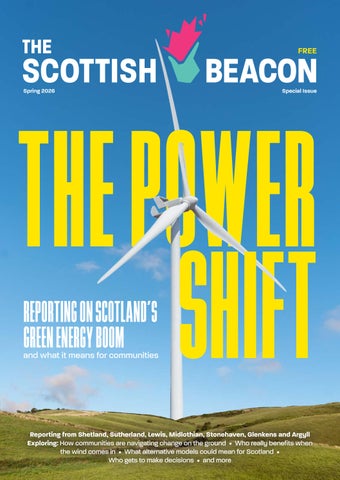

REPORTING ON SCOTLAND’S GREEN ENERGY BOOM and what
it means for communities
Reporting from Shetland, Sutherland, Lewis, Midlothian, Stonehaven, Glenkens and Argyll Exploring: How communities are navigating change on the ground • Who really benefits when the wind comes in • What alternative models could mean for Scotland • Who gets to make decisions • and more
scotland leads the world in renewable energy... ...so
why aren’t we WEALTHIER FOR IT?
Communities are seeing wind turbines go up – but see the profits going elsewhere. Workers were promised jobs from the move to clean energy – but too many are still waiting.
Our Power is calling on the next Scottish government to make sure people in Scotland get a fair share of our energy wealth. Join us and make sure the next government creates a fairer energy system in Scotland, one that makes us all better off.

Letter from the team
Dear Readers,
The Scottish Beacon began as a print magazine published to coincide with COP26, which took place in Glasgow in 2021. In that first issue, we focused on how climate change was affecting communities – and on the inspiring ways those communities were responding to the challenge.
It was a unique opportunity for independent local media across Scotland to come together for the first time and tell stories bigger than the sum of their parts.
Encouraged by the response, we launched The Scottish Beacon as a collaborative network and platform for local journalism in 2023. Today, we bring together 25 independent, community-owned publications, working collectively to amplify stories from Scotland’s communities and strengthen the reach and impact of local reporting.
The Power Shift is a collaborative reporting project we began in early 2025. With partners across the country, from Shetland to Glenkens, we’ve explored how the renewable energy boom is impacting people and places across Scotland. We’ve avoided simplistic, black-andwhite narratives, instead embracing nuance and complexity to show what’s working, what’s not, and what could be done better.
Our reporting has appeared across our partners’ individual platforms, on The Scottish Beacon’s website and newsletter, and in a special co-published series with The Herald.
We are now delighted to bring you this special print magazine alongside the launch of a new Scottish Environmental Journalism Network – a space for collaborators to come together to report stories that inform, engage, and equip communities with the knowledge they need to make positive change happen.
We hope this work inspires you to see the power of local stories – and the difference communities can make when their voices are heard. Follow and support our work at scottishbeacon.com.
Rhiannon J Davies
Founder, The Scottish Beacon
A special thanks goes to our advertisers: Local Storytelling Exchange, Scottish Community Alliance, Our Power campaign
We would also like to thank the Tenacious Journalism Awards for supporting the development of the Power Shift project and Uplift for supporting the creation of this magazine.
The Scottish Beacon is a grassroots network of independent, community media based right across Scotland. If you would like to support The Scottish Beacon, please consider helping us with a monthly donation via members.scottishbeacon.com/join or by scanning here
Editorial Team Rhiannon J Davies and Mike Small
Creative Director Laura Hurst paperarcade.co.uk
Words by Clare Harris, Daniel Gear, Dave Pearson, Erin Rizzato Devlin, Jill Keegan, Jane Cruickshank, Julian Calvert, Hans Marter, Keith Brander, Liam Eunson, Mike Small, N Sopata, Paul Dobson, Rhiannon J Davies, Sarah Ade, Silvia Muras
Photos supplied by
Chris Leslie, Daniel Gear, Hazel Falck, Laura Vroomen, Lochside Press, RheEnergise, Rhiannon J Davies, Shetland News, The Bellman, Vox Vallium
Illustrations by Laura Hurst
Printed by Gladstone Media Ltd


Telling Better Stories
The role of communityowned media in Scotland’s renewable transition
By
What happens when no one is watching?
When local stories go untold, communities lose more than news – they lose connection, voice and trust.
At a time when the renewable energy transition is reshaping communities, independent, communityrooted media plays a vital role in ensuring local voices are heard and experiences represented. But in many places, that critical coverage is missing.
The UK Local News Report, produced by the Public Interest News Foundation in 2025, found that around 4.4 million people in the UK live in a news desert – areas with no local news outlet solely covering that local authority. Roughly one in ten Local Authority Districts (37 in total) fall into this category.
At the same time, more than one in three local news outlets are owned by just three companies –Newsquest, Reach, and Iconic Media (formerly National World) – corporate publishers that extract wealth from communities rather than building it locally. Independent media is often all that prevents further decline: in nearly half of the districts served by a single title, it is an independent provider that stops the area from becoming a complete news desert.
about ownership. In renewables, models range from communities as passive recipients of benefit funds to active participants and, in some cases, full owners of projects. A similar dynamic exists in the media.
In corporate extractive models, communities often have less say in how their stories are told. When media is community-owned, it can reflect those stories more authentically and keep value – both economic and social – within the place it serves.
Trusted, locally-owned media creates space for dialogue and debate on the issues that matter most.
Without a local news provider, a vacuum emerges –a space where mis- and dis-information can spread, and where political actors can exploit division and polarisation. This is something we’re seeing happen in relation to the renewables boom.
Trusted, locally-owned media connects communities with the people and places around them. It reflects local voices back to the community, fostering empathy, shared understanding, identity, and pride. It also enables participation in community life – whether through volunteering, attending events, or voting –while creating space for dialogue and debate on the issues that matter most.
As this magazine explores, Scotland’s energy transition is also prompting a wider conversation
As Sarah Ade of the Glenkens Gazette notes, “Hyper-local, independent news… offers a platform for people to unite in a shared vision and share values; it fosters constructive debate and brings communities together instead of fragmenting them.”
Local journalism also plays a critical role in protecting services and ensuring communities are heard. Julian Calvert of The Lochside Press highlights how distance from decision-making centres increases the need for strong local reporting: “Our local council headquarters is 65 miles away… locally-based journalism is vital in giving rural communities a voice and fighting to protect their services.”
At the same time, independent media provides an essential counterweight to the noise of online platforms.
Jane Cruikshank, editor of The Bellman, says: “Social media provides too easy a platform for ill-informed opinion that divides a community. Independent local reporting keeps everyone informed in a way that national press cannot, particularly on issues like energy infrastructure that have a big local impact.”
For rural and remote communities, this role is even more pronounced as Silvia Muras of the Kyle Chronicle highlights: “Our project breaks down barriers to accessing meaningful local information for people in sparsely populated areas, especially older residents. It gives a platform for local voices to be heard, at a level national and corporate media cannot offer.”
Independent, community-owned journalism is not a luxury – it is essential to stronger, more informed and more connected communities.
Rhiannon J Davies, The Scottish Beacon founder
Photo by Becky Duncan, Open Aye
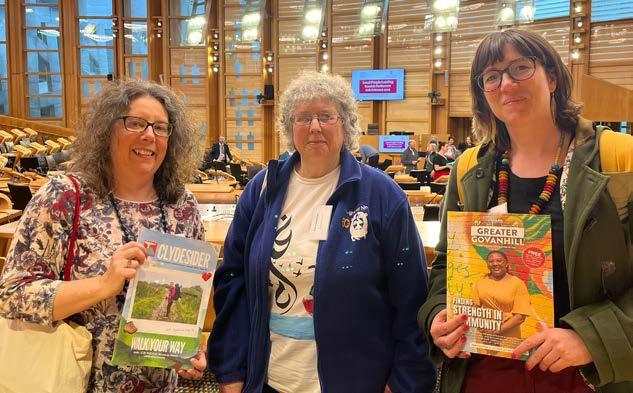
Members of the Scottish Beacon network were recently invited to a community sector event at Holyrood to speak about the role of local media in community wealth building
News in Brief
Just Transition Commission calls for urgent action to protect jobs and communities
Scotland’s Just Transition Commission has issued a clear warning: progress toward Net Zero cannot come at the expense of the country’s industrial base. In its final report, No Time to Lose, the Commission stresses that de-industrialisation risks a future with minimal manufacturing, fewer skilled jobs, and over-reliance on imports. It calls for urgent action, including investment in further education colleges, skills strategies to engage underrepresented groups, support for community-led energy projects, and fairer access to electric vehicles.
Satwat Rehman, co-chair of the Commission and Chief Executive of One Parent Families Scotland, said: “Climate change is the biggest risk multiplier for inequality this century. Delays and commitments without delivery severely undermine the credibility of the climate agenda. The social license for climate action is under threat and needs to be renewed through a step-change from government towards delivery that measurably improves people’s lives.”
The Power Shift inspires experiment in ceilidh theatre
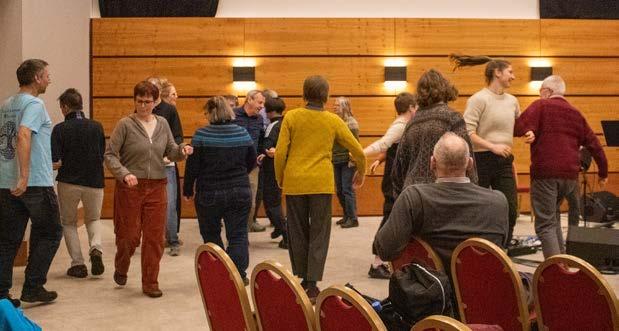
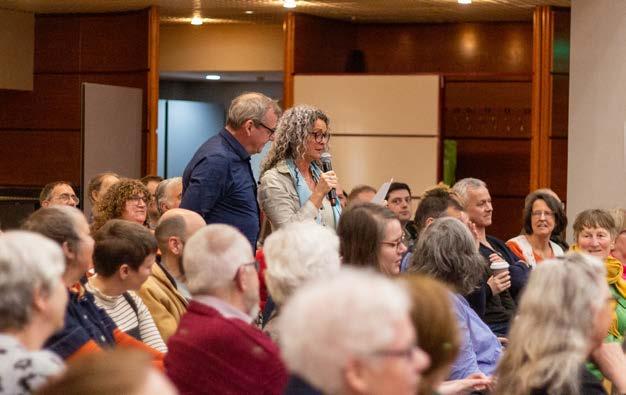
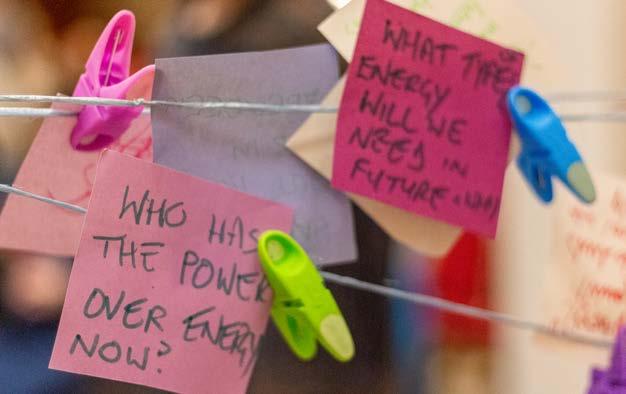
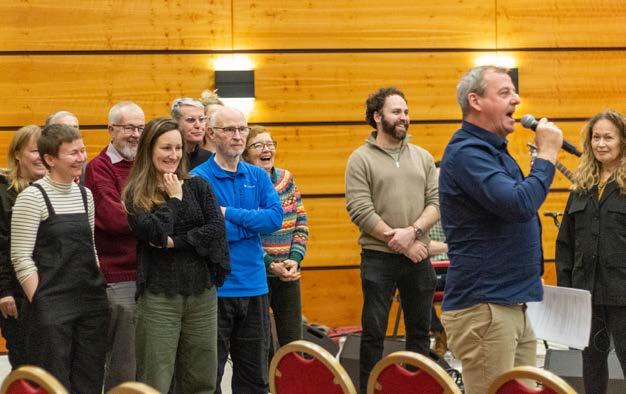
At Celtic Connections festival, a collective of writers, musicians, poets, researchers, and journalists named the Spring Consortium came together to preview an experiment in ‘ceilidh theatre’ titled Power Shift: The Real Energy Question. The event combined music, poetry, discussion, and audience participation to explore Scotland’s energy future and the role of communities in shaping it.
Drawing on participatory traditions like Augusto Boal’s Theatre of the Oppressed, and John McGrath’s seminal play, The Cheviot the Stag and the Black Black Oil. Amongst music, improv, panel discussion and a ceilidh, participants were invited to share ideas about what a just transition could look like. The creators hope ceilidh theatre will travel across Scotland, inspiring communities to engage creatively with questions of energy, resilience, and collective action.
New report highlights local experiences of the energy transition
The Local Storytelling Exchange has published Dispatches from the Grid Frontline, a year-long investigation into how communities along the UK’s East Coast are affected by electricity grid upgrades and renewable energy developments. The report captures a wide range of local voices, from residents navigating multiple overlapping projects to groups exploring ways to shape benefits for their communities. By documenting nuanced perspectives often missing from headlines, the report explores how people balance concerns about local impacts with broader ambitions for clean energy and climate security. It also highlights strategies for meaningful engagement and collaboration between communities, developers, and policymakers. The report is now available online.
Coalition renews call for Scottish
Community Wealth Fund
The Scottish Community Coalition on Energy – including Community Energy Scotland, Community Land Scotland, and the Development Trusts Association – has responded to the government’s proposals on community benefits from onshore renewables with renewed calls for a Scottish Community Wealth Fund. A central fund, supported by developer contributions, would ensure the financial benefits of Scotland’s energy transition are shared fairly across communities.
The coalition welcomed clearer guidance on eligible technologies and local-first governance but criticised funding levels, arguing that payments linked to installed capacity risk undervaluing contributions. They recommend tying benefits to a percentage of project revenue with a guaranteed minimum and reviewing arrangements when projects are repowered, sold, or change grid connection.
They also stress the need for expert advice and training to help communities manage benefits, arguing that a Community Wealth Fund combined with capacitybuilding would make Scotland’s energy transition more inclusive and equitable.
New rules aim to simplify smallscale wind energy for organisations
The UK government is proposing new plans to allow businesses, schools, and farms to install single small wind turbines up to 30 metres tall without requiring planning permission. The turbines would be permitted under specific conditions, helping organisations generate their own clean power and reduce energy bills.
Energy Minister Michael Shanks said the initiative would give businesses, schools, and farms the ability to make optimal use of their land while lowering costs. The measure forms part of the government’s wider clean energy strategy, aimed at protecting organisations and communities from volatile fossil fuel markets and rising energy prices.
Our Power: coalition launches campaign for fair renewable energy benefits
A coalition of organisations – Community Energy Scotland, Future Economy Scotland, Friends of the Earth Scotland, Uplift, Platform and Stop Climate Chaos Scotland – has launched the Our Power campaign to try and ensure people and communities across Scotland receive a fair share of the country’s renewable energy wealth.
The campaign argues that Scotland has the opportunity to build an energy system that delivers greater economic benefits at home – creating jobs, supporting businesses and strengthening communities. It highlights the role of the next Scottish Government in making this vision a reality. Find our more at ourpower.scot
Ceilidh theatre | Photo by Laura Vroomen
New documentary tells the stories of people at the heart of the energy transition
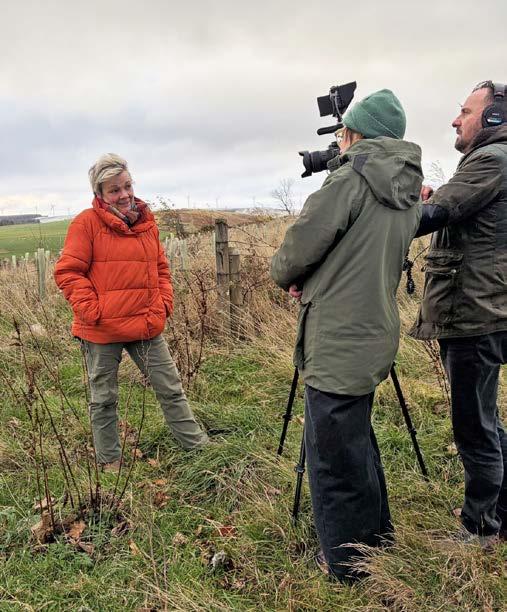
Ours is a brand new short documentary featuring the people and places at the heart of Scotland’s energy transition. Directed by Hazel Falck and commissioned by Platform, it traces the different perspectives of Scotland’s move towards renewable energy, showing how community-owned wind and solar energy can help us all flourish.
From Shetland to Glasgow, Orkney to Inverness – against the growing backlash to large scale corporate energy development, Ours travels across Scotland, gathering stories of resilience, challenge and transformation.
The documentary is being released in April 2026, and will be free and available to screen publicly. Platform is organising a run of community screenings across Scotland, and are actively looking for local partners for screenings and workshops in the spring and autumn. If you’d like to organise a screening or find out more, please contact Rachel Caplan at oursfilm@platformenergy.org.
Communities across Scotland receive £1.8 million for renewable energy projects
Communities across Scotland are benefitting from £1.8 million in funding to support local renewable energy projects. The latest round of the Community Energy Generation Growth Fund, run by CARES with support from the Scottish and UK governments, will help 23 projects generate their own power from wind, solar, and battery storage, while giving communities the opportunity to sell excess energy.
Projects include solar panels for Emmaus Glasgow’s homeless centre, decarbonisation at Robert Gordon University’s sports hall in Aberdeen, energy generation at King’s Church in Aberdeen, a solar array at Islay Energy Trust’s Castlehill site, and a micro-grid at Loch Arthur Camphill Community.
New report highlights wind repowering as key to community wealth building
A new report produced for InspirAlba by Equitable Energy Research, has identified onshore wind repowering – replacing older turbines with newer, more efficient technology on existing sites– as a major opportunity to expand community ownership and deliver long-term local economic benefit in Scotland. The study focuses on Argyll and Bute, where around a third of existing wind capacity could be repowered by the mid-2030s.
The report finds that less than 1 percent of Scotland’s onshore wind sector is currently in community, public, or third-sector ownership, but argues that repowering existing sites offers a lower-cost, lowerimpact route to increase local control and value.
It highlights recent Scottish Government moves to give communities first refusal on some Forestry Land Scotland sites as a potential turning point, but warns that significant barriers remain.
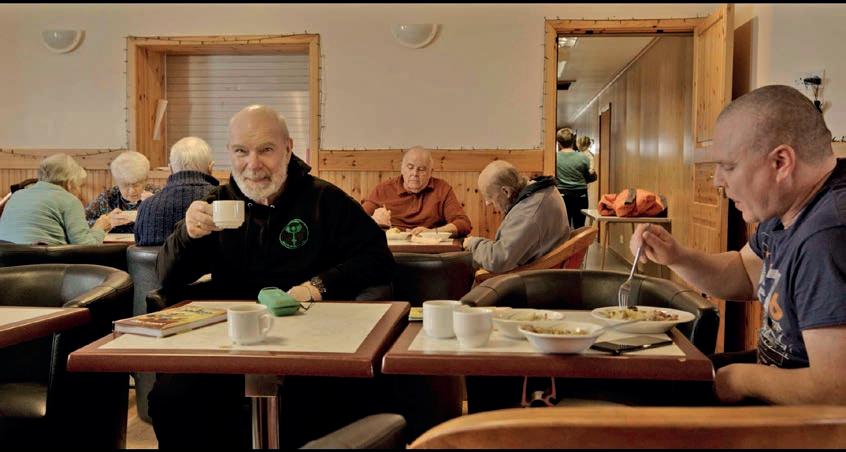
The lunch club at North Yell, Shetland, a weekly social event funded by the local community owned wind farm.
The wind project also supports community housing, a business estate, a mariner, community growing and a resilience hub. Still from Ours.
Scottish environmental journalism network launched
A new Scottish Environmental Journalism Network has been launched to connect journalists, researchers, campaigners, and experts working on climate, energy, and environmental issues across Scotland. Hosted by The Scottish Beacon local journalism collaborative, the network aims to foster collaboration, improve reporting standards, and support shared learning on renewable energy, community ownership, and just transition stories.
The network will offer quarterly online meet-ups, shared resources, and mentoring for emerging reporters. By bringing together freelancers, staff reporters, campaigners, and researchers, it seeks to strengthen Scotland’s environmental reporting and ensure that complex local and national issues are communicated clearly and accurately.
To find out more or get involved, email hello@scottishbeacon.com
New
proposals
to strengthen community energy benefits
New proposals from the Scottish Government could see communities across Scotland receive increased financial benefits from onshore renewable energy developments.
The updated guidance recommends that local communities should receive annual payments of £6,000 per megawatt (MW) of onshore wind capacity over the lifetime of a project – an increase from the current £5,000 per MW.
However, opinion on the proposals is divided. Critics argue that the increase is modest and does little more than keep pace with inflation. Others have welcomed the move as a step toward strengthening community returns from renewable energy projects.
The proposals also introduce, for the first time, recommended payment levels for other types of renewable energy. For solar projects, these are: £700–£1,000 per MW per year. For battery energy storage systems, at least £150 per MW per year.
Credit: Hazel Falck
THE POWER SHIFT
Democratising
The crisis and opportunity of the onshore renewables revolution in Scotland has been rolling on for some time now. It is a moment latent with potential to bring clean energy, good jobs and affordable heating to rural Scotland. It is an opportunity for Scotland to play its part in the global transformation of energy production as part of the response to the climate crisis.
As the choke hold of over-extended supply chains for shipping massive amounts of fossil fuels is brutally exposed in the Straits of Hormuz, the technologies and scale and reduction of cost of renewables are accelerating at an astonishing pace. Battery storage costs hit record lows, China's BYD company are to launch new premium EV in Europe that can charge in minutes with a range of up to nearly 500 miles, alternatives to Lithium batteries are emerging, and, as Sarah Ade and Keith Brander explore elsewhere, the potential for innovation in hydro power storage is huge.
As the ramifications of an energy crisis that puts the 1970s in the shade are felt all around the world, the reality that Net Zero will protect the UK from fossil-fuel shocks is being realised. The old canard about ‘why should we do something here when China is polluting so much’ is redundant, China is adopting green energy at a scale hard to imagine for many other countries, installing 446 gigawatts of it in 2025 – more than the rest of the world combined, according to Australian think tank Climate Energy Finance.
There’s a paradox here that place matters.
Just as the madness of oil dependency comes into brutal focus Hans Marter and Erin Rizzato Devlin wrote that in Shetland:
“Despite hosting one of the largest and, allegedly, the most productive, onshore wind farms in the UK, fuel poverty levels are rampant while the cost of living is 20-65 percent above the rest of the UK mainland.
“And it’s the same wind-producing load factors of 50 percent for the wind industry that sucks the heat out of Shetland’s homes. The effect of that persistent bone-chilling wind – January 2026 was a particularly good example of that – needs to be experienced to be fully understood.”
And as Sylvia Muras from the Kyle Chronicle points out:
“Seeing the full picture of what is planned for our area is striking – perhaps for the first time, we can view every proposed development together and understand how dramatically it will reshape the landscape, with what appears to be wind turbines on almost every hill.”
By Mike
“Given developments on such an extraordinary scale, one might reasonably expect equally extraordinary benefits for the communities that host them. But, if it’s unclear whether an overall plan for all these developments exists, it’s even more uncertain how the beneficiaries of this energy “gold rush” are going to compensate rural communities for the industrialisation of their land.”
Small
Photos from The Power Shift ceilidh theatre event by Laura Vroomen
Convergence
It’s into this space of contradictions that a convergence of projects and campaigns are coming together, such as Our Power – a campaign from Community Energy Scotland, Friends of the Earth Scotland, Future Economy Scotland, Platform, Stop Climate Chaos Scotland, and Uplift. They state: “Communities are seeing wind turbines go up, but see the profits going elsewhere. Workers were promised jobs from the shift to clean energy, but too many are still waiting.”
They are calling on the next Scottish Government to ensure that local communities share in the wealth generated here – not just private companies, overseas investors, and shareholders. They propose:
“A simple and fair way to do that is by taking a public stake in future projects. A 20 percent equity share funded through bodies like the Scottish National Investment Bank.”
They also highlight the benefits of community-owned energy:
“Community-owned energy projects are already delivering an income stream for local services, skills for local people, as well as local pride to parts of Scotland, but many more communities could see these benefits. In Denmark, twothirds of onshore wind is community-owned whereas in Scotland, it’s currently less than 1 percent, because of needless barriers. The next Scottish Government can change that with more ambition, a proper roadmap, and more support for communities. It’s time to stop locking communities out and start giving them a meaningful stake in our energy future.”
This complete disjuncture between the opportunity of the renewables revolution and the reality on the ground is also reflected on in the Just Transition Commission’s final report, No Time to Lose, in which they conclude that:
“The social license for climate action is under threat and needs to be renewed. This must mean a step-change from government towards delivery that measurably improves people’s lives. Government must make maximum use of the levers it currently holds, requiring employers to act responsibly around conversion and closure, and empowering local authorities to act.
and existing electricity and heat infrastructure, and fair distribution of the wealth that is being generated and consolidated through renewables.”
These manifestos and demands now surround the Scottish Parliament, reflecting the deep concerns of rural communities but also the path to navigate beyond such a bourach.
This last year saw key legislation passed at Holyrood, including the the Ecocide (Scotland) Bill, placing Scotland on track to become the first UK nation to criminalise severe environmental destruction, Scotland’s Natural Environment Bill, which will require the Scottish government to set legally binding targets to restore Scotland’s nature, and the Community Wealth Building (Scotland) Bill.
These are necessary but inadequate shifts. They are signposts rather than destinations. But they are also a reminder of the return of the importance of ‘place’. As Neil McInroy has written about the Community Wealth Building legislation:
“A key part of this shift is a return to place-based economics in which we use what we have more effectively – our people, our scarce public resources, our land, institutions, and productive capacity. This is about improving productivity not only by growing sectors but by strengthening the systemic relationship between economic activity, place, and ownership. Our future productivity depends on how economic sectors are even more deeply rooted in inclusive ownership models that deeply relate to the communities and regions around them.”
It’s becoming very clear that energy infrastructure, like political power needs to be radically decentralised.
“Sticking with the current business-as-usual scenario risks building a country where people continue to live in some of Europe’s leakiest buildings, and endure high levels of fuel poverty, deepening job insecurity and in-work poverty, and the undermining of efforts to reduce child poverty. It risks worsening rural depopulation at precisely the moment that we need to ensure communities in rural and island areas have the services and support they need to deliver much of the infrastructure and new forms of economic activity that will underpin the transition and its economic upsides for all of Scotland.
“Unless we renew our ambition and redouble our efforts, the enormous opportunity – both for meaningful climate action and for building a fairer and more prosperous country – will be lost.”
Such energy and analysis can be found springing up in many places as the collective wisdom converges on the same routes out of our predicament.
The Scottish Community Coalition on Energy has published a manifesto stating:
“To build public support for renewables and the energy transition, we must enable and support increased community ownership and shared ownership of new
Beyond Policy
But beyond the idea of new policy, there lies deeper questions.
The Scottish renewables revolution feeds into a dysfunctional, even dystopian UK energy system. The crisis in the Highlands and Islands has echoes of age-old issues of power, poverty and democracy.
The story has echoes John McGrath’s seminal 1970s play, The Cheviot, the Stag and the Black Black Oil, which traced economic change in the Scottish Highlands – from the Clearances of the 19th century to the contemporary oil boom at the time of its first production. Following in this vein, the Spring Consortium of artists, researchers, and thinkers presented an experiment in ‘ceilidh theatre’ at the Celtic Connections festival, exploring the themes of The Power Shift.
The echo is of communities without agency facing enormous changes over which they have little or no control. The story holds the same questions: who is the Highlands for, and what is the purpose of energy production?
We have a crisis of over-abundance of supply alongside people in the coldest parts of the UK unable to adequately heat their homes.
If we stand back from this crisis, we see that the problem is one of gigantism, an addiction to growth, and an inability to stand up to corporate power. The onshore renewables industry is vast – frequently foreign-owned –and far distant from the demand it is supposed to supply, leading to massive costs of distribution.
It’s becoming very clear that energy infrastructure, like political power needs to be radically decentralised.
We need to radically re-think who and what energy is for. We need to democratise energy and liberate technology. We need to re-imagine energy as a public resource rather than a private commodity.
A Hebridean Boom Town is on the Horizon. But who will pay for it – and at what cost?
By N. Sopata,
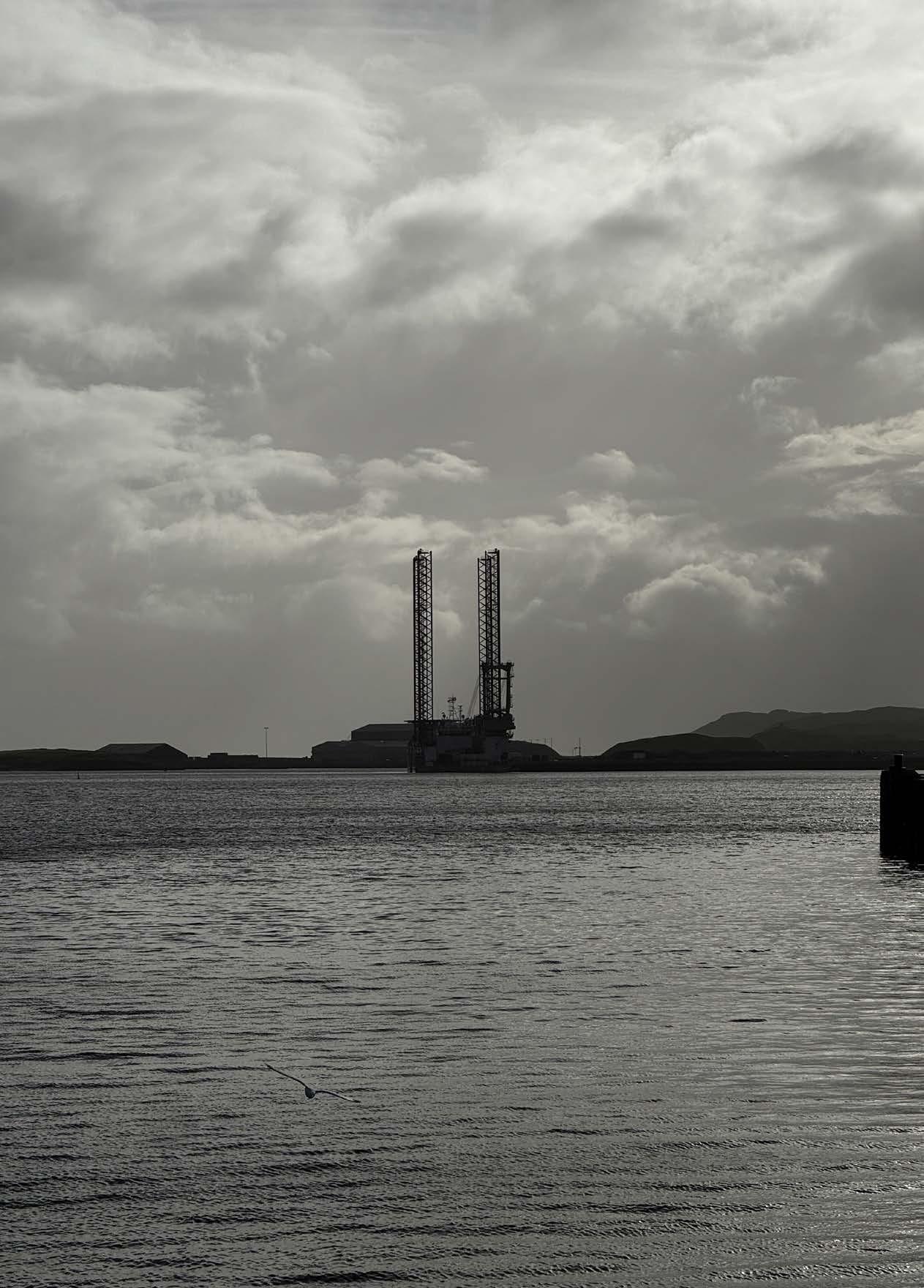
The Isle of Lewis – the largest and most northerly island in the chain that make up the Outer Hebrides. Known for dramatic landscapes, clear blue seas and rich cultural heritage, these islands have a population of 26,040, with the main town area of Stornoway housing just under 7,000. There is, however, something else that the island is rapidly becoming well known for – the large-scale offshore and onshore windfarm developments.
Renewable energy development in Lewis is not new, but the potential scale of commercialisation is. Community-owned estates, trusts and local businesses have operated a small number of profitable wind turbines for over a decade and many of them have plans to increase investment in this area.
However, the combination of the Scottish Government’s ScotWind leases – granting rights for offshore wind projects – and planning approval for Scottish and Southern Electricity Network (SSEN)’s 1.8 GW Stornoway-Ullapool interconnector has accelerated several proposed commercial developments.
Currently, alongside the intensive, large-scale construction work required to develop the substation for the new interconnector at Arnish in Stornoway, there are ten windfarm projects that are proposed for either offshore or onshore development.
Only one of these has broken soil, but if all these projects reach the construction and the operational stage, a maximum of approximately 300 wind turbines could be installed. These will have the predicted potential to generate enough electricity
editor of Fios – News from North Lewis
to supply millions of homes –although not the homes from which the windfarms will be seen.
With these projects at varying stages – and many still awaiting access to the interconnector and, by extension, the National Grid –it is difficult to predict if, when, or how all will reach construction.
Equally challenging is anticipating the full impact of such large-scale development on the Isle of Lewis’s urban and rural communities, both economically and socially. Yet understanding these effects is not enough; careful logistical planning and targeted investment are essential if the benefits are to outweigh the drawbacks.
In a report last July, the Stornoway Gazette published that an estimated 1,500 additional workers would have to move to the island during the construction phase of the windfarm projects (if they all reach development). With the majority of commercial projects being run from, or developed within close proximity to, Stornoway, this would mean an approximate 22 percent increase in the population of the Stornoway area over a condensed period.
Such an influx will of course, for a few years, increase the economic viability of many local businesses. Private landlords, hotels and the leisure and entertainment sector will generate a considerable income from the new residents, but only of course whilst construction is ongoing – 1,500 workers will not be required to maintain the new windfarms.
joint solution to provide temporary worker accommodation near to Stornoway. Our proposals are still being finalised at this stage.”
SSEN’s substation development will also require accommodation for their initial wave of workers and the increased frequency of recent public announcements from them is indicative that are focused on this. Towards the end of last year, they confirmed they would invest in the construction of up to 94 new homes at the Stornoway Airport Housing Development. The homes – expected to be completed by the end of 2027 – will initially accommodate workers involved in the construction of SSEN Transmission’s projects but will then be made available to the local community as affordable housing.
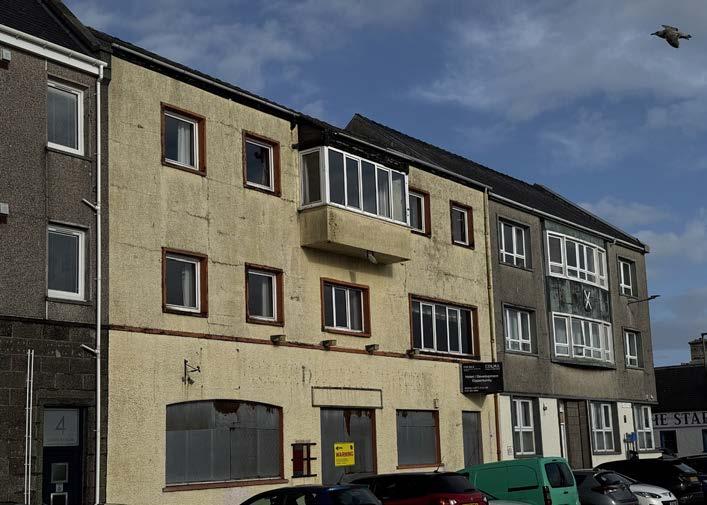
SSEN have also invested in the renovation of Stornoway’s Caledonian Hotel or ‘The Caley’ as it is known locally. The new owners of the premises, the MacArthur family, have been developing and operating
however, also considering investing in rural housing developments that sit within that boundary – albeit on a smaller scale, and in a manner that is nuanced and balanced with the future needs of the rural community.
Urras Oighreachd Ghabhsainn (UOG), a community-owned estate in the north of Lewis that generates income from three Enercon 900 kW wind turbines connected to the grid through the existing interconnector between Harris and Skye, has been focused on providing affordable housing to retain and attract a younger demographic, whilst also supporting the needs of an ageing population. It is this focus that, in 2017, led to them entering discussions with the local council Comhairle nan Eilean Siar (CnES) Hebridean Housing Partnership (HHP), and NHS Western Isles to develop a combined housing, care and community facility in Upper Barvas.
...there are ten windfarm projects that are proposed for either offshore or onshore development.
Due to funding constraints at the time, the project was unable to progress. However, with the future demand for SSEN workers now confirmed, and the fact that Upper Barvas meets the ‘thirty-minute-travel rule,’ an investment opportunity has arisen. As Jemma MacVicar, executive manager of UOG explained:
The first development to break ground – Stornoway Wind Farm – is being developed by Lewis Wind Power, a 50:50 joint venture between EDF Power Solutions and ESB Energy.
This development is employing local contractors to work on site but will require a larger work force as the development progresses. In an article published by the The Scotsman, it was reported that one of the ‘workers’ camps’ being planned for development in the Willow Glen area of Stornoway would be used for contractors working on the Stornoway Wind Farm. A spokesperson for Lewis Wind Power commented in February: “We have been working with Balfour Beatty and SSEN on a
accommodation businesses locally over three generations and plan to keep the hotel open post construction development. In addition to this, SSEN are funding the construction of a temporary ‘Workers’ Camp’ planned for development next to the other temporary site in the Willow Glen area of Stornoway. This will provide accommodation for an additional 200 workers.
Understandably, from an SSEN perspective, their accommodation investment is Stornoway-focused – why locate your workforce in a rural area, further away from transport connections and the construction site? But here lies one of the major economic concerns with the industrialisation of Lewis. The economic benefits from the increased population of transient workers will sit within the town of Stornoway.
SSEN have a thirty-minutetravel rule for their workforce for accommodation to work. They are,
“We have been in discussion with Scottish and Southern Electricity Networks (SSEN) regarding the potential to benefit from their Housing Legacy Fund. SSEN’s current proposal presents an opportunity to reinitiate development, beginning with the construction of eight three-bedroom homes. Establishing housing on the site, alongside the introduction of supporting services, would strengthen the long-term viability of delivering the future care phase of the project.
“Discussions to-date indicate that an offer of a percentage capital funding towards construction is conditional upon Balfour Beatty leasing the properties to accommodate its workforce during the construction of the interconnector infrastructure between 2027 and 2030. From 2030 onwards, the homes would transfer to community use and be made available through a range of affordable tenure options, including rent, shared equity, or sale.”
These investments and discussions are starting to address the demand for accommodation that SSEN needs to meet for their workforce, whilst also supporting a housing legacy. But what of the other companies? Will they too start to invest in accommodation in a way that supports the communities of Lewis in the future – beyond the construction period? Or will their workers’ presence lead to a further increase in property prices and reduction in local rental availability? And, crucially, what about the other key infrastructure and social pressures that an additional 1,500 residents will bring?
Some of these questions will not be answered until the larger projects are successful (or not) in the planning application process, and although other areas such as emergency services provision, community safety, healthcare, transport and food provision are being discussed by the CnES-led ‘Major Development Oversight Board.’ Planning, finance and action are needed for statutory and non-statutory services. As are communication and reassurance to the current residents of Lewis.
Earlier this year, CnES balanced their £5.4 million deficit by removing funding for the arts and culture, increasing council tax by 8.5 percent, using returns from investments, uncommitted reserves and savings from service budgets. This leads to a question that has been asked before: how will the actions identified by the Major Development Forum be financed?
The different windfarm developments all have different approaches to community benefit packages. Some, such as Lewis Wind Power, have an established history of sponsorship provision and are also now investing in the local workforce by funding apprenticeships. Others such as Spiorad na Mara (N4) (Northland Power) were negotiated with The Westside Estates Group to commit to £4.5 million every year, index-linked, for the operational lifetime of the project – if it becomes operational.
Community benefit packages are not, however, designed to be used on statutory services and nor should they be. So once again, and as we approach the Scottish Parliamentary elections, the question needs to be asked: where is the money coming from to support the statutory infrastructure in the Western Isles, if all, or even a percentage, of the proposed windfarm developments reach the construction phase?
The UK Government has recently announced £1 billion of funding as part of the Local Power Plan to support community energy projects in different ways, many of which, at this stage, are open to discussion and innovative applications but not for statutory services. Recently, during his visit to The Point and Sandwick
community-owned wind farm at Beinn Ghrideag, Fios was able to ask Michael Shanks, UK Minister for Energy, how reassurance can be given to the community of Lewis with regards to the social and economic pressure of a 22 percent population rise in the Stornoway area as a result of windfarm development. He responded:
“We should be seeing genuine community benefits from these things being built in people’s communities. It is a service being done for the country, this infrastructure, and so there should be some genuine legacy from it… But that wider investment in services is obviously for the Scottish Government to settle. Government budgets and local government budgets have suffered cuts after many, many years. But, the Scottish government budget has increased by more than £9 billion, so we should be seeing that investment coming through. There’s a formal planning process that goes along with these applications, but there’s also a much less structured process around how we actually make these workers come in to build these things, have the services they need and that it doesn’t detract from wider investment that is needed in public services.”
It is evident that when financial resources are available, decisions can be made and actions taken. As this article was being written, SSEN announced that they have secured a dedicated vessel, the MV Arrow, to transport construction materials and project freight, thus safeguarding the already problematic public ferry service. The vessel will also be available to be used by others, when not required by SSEN Transmission. It is also evident that when given autonomy and support community owned energy groups can generate sustainable levels of finance and community wealth.
The escalation of announcements surrounding the impending development work in Lewis adds further to the vast quantities of complex information that current residents are having to process – if they want to understand how their communities will be affected by the scale of construction that is going to take place in Lewis over the next five years.
Some residents will benefit socially and economically from these developments, but some will not, and as a Shetlander recently told me: “The workers do not stay forever, and when they leave, so does their money.”
The soon to be renovated Caledonian Hotel
Grid constraints, new proposals, and rising opposition: mapping the North Central Highland’s energy future
By Silvia Muras, Kyle Chronicle editor
A SURGE OF WIND FARM PROPOSALS
In June 2025, Kyle Chronicle mapped all wind farm developments that were built, approved, or in planning or scoping stages across the Kyle of Sutherland and surrounding areas.
Seeing the full picture of what is planned is striking. For the first time, every proposed development can be viewed together, revealing how dramatically the landscape could change – with what appears to be wind turbines on almost every hill.
The map revealed the scale of change facing communities in central and south Sutherland and Easter Ross. In recent years, residents have faced a relentless stream of applications, appeals, and reapplications, alongside a planning process that seems designed to bypass local democracy.
Since June 2025, eight additional wind farm proposals have appeared on the Energy Consents Unit (ECU) website. Of the 19 proposals for the Highland Council region, eight are in our area, including three entirely new sites: Fionn (on the site of the previously refused Caplich project), Ruith Cnoc west of Oykel Bridge, and Creag Dhubh north-east of Lairg.
Illustration by Laura Hurst
These newly proposed developments bring the total turbines projected or approved to 402, potentially generating over 3 GW – almost ten times the 172 turbines already operating locally, which have a combined installed capacity of 384.5 MW. The new turbines would be taller, reaching 150–250 m, compared with the existing 80–150 m range.
A project is logged on the ECU website when it first enters scoping, when it moves into the formal planning consultation stage, or when developers seek to alter an already-approved scheme through a variation.
WHY HERE?
What makes our area so attractive to renewable energy developers? Wind, of course – but perhaps more telling would be to ask what it doesn’t have.
It doesn’t have extensive protected areas, such as the Flow Country, or a National Scenic Area such as Wester Ross or the Dornoch Firth. It doesn’t have large towns. With just one MP, it doesn’t have many elected representatives at Westminster, or indeed many people living here.
Another thing that it doesn’t have is grid infrastructure, and this matters.
Planning authorities assess applications independently of the infrastructure needed to connect them to the grid. A development cannot go ahead unless a grid connection is secured.
Meall Buidhe Wind Farm, approved in June 2023 by the Scottish Government overruling Highland Council, has now been granted a three-year extension until 2029 to accommodate a delayed grid connection. Under normal conditions, developers must start construction within three years of approval.
the off-site grid connection needed to export electricity, meaning the Scottish Government reporter could not fully assess environmental impacts.
Initially refused by the Scottish Borders Council in 2020, Wull Muir was approved in 2025 by a reporter who concluded it did not break planning law. A local farm challenged the decision. In their written judgement, the judges said:
“The reporter was entitled to assess the proposed development on its own merits and on the assumption that a grid connection would be provided at a later date. That does not… address the irrationality of addressing only the merits and not the demerits of the anticipated completed development.”
This ruling could be a gamechanger.
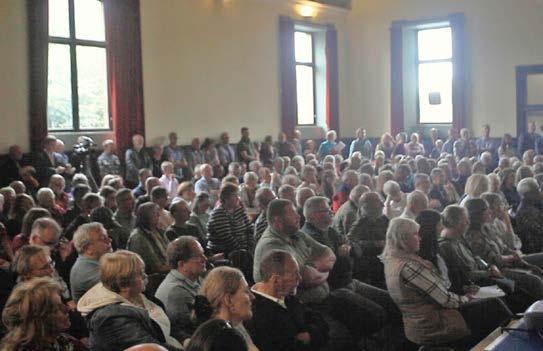
Grid connections and reinforcements are also behind controversy over SSEN’s proposed 400 kV lines and substations. Highland Council objected to the overhead line from Spittal to Beauly in November 2025, rejected the 400 kV Carnaig substation near Bonar Bridge (24 football pitches) in December, and voted unanimously against the 400 kV Fanellan substation near Kiltarlity (37 football pitches) in February 2026. These rejections come despite SSEN being the first business to sign the Highland Social Value Charter, committing £7,500 per MW to a regional fund, on top of £5,000 per MW guidance from 2014. Westminster and Scottish Governments are consulting on mandatory communitybenefits schemes, but critics argue proposed rates do not keep pace with inflation.
Previously, developers could expect the grid to be extended to their site, regardless of distance from existing infrastructure or energy use. This first-come, first-served system created significant delays, with some projects now waiting 10–15 years for a connection.
In December 2025, the National Energy System Operator (NESO) announced reforms to tackle “zombie” projects blocking the queue. The most advanced or strategically important schemes are prioritised for delivery by 2030 or 2035, while others that do not meet readiness or strategic criteria are not given a connection date. Among the non-priority projects are 152.9 GW of battery storage and 13.4 GW of onshore wind.
Planning and grid applications often happen years apart, resulting in “salami-slicing,” where developers submit separate applications for parts of the same project.
GRID AND LEGAL CHALLENGES
In February 2026, judges at the Inner House of the Court of Session overturned the Wull Muir project in the Moorfoot Hills. The scheme failed to include details of
Planning procedures add complexity: a wind farm and its grid connection (and related infrastructure, like access roads) often require separate applications years apart. Developers can submit variations to already-approved projects, and Environmental Impact Assessment Reports (EIARs) may be prepared without an established grid connection.
COMMUNITIES PUSH BACK
Sutherland resident Bill Lockyer attended the Convention of Community Councils at Holyrood on 24 February 2026, representing Creich and Ardgay & District Community Councils. Arranged by Highland councillor Helen Crawford, the event discussed the Unified Statement from a June 2025 convention in Inverness.
The statement calls for moratoriums on major applications, a planning inquiry to address cumulative impacts, and a national energy policy. Sixty-five delegates attended from across Scotland, including the Highlands, Borders, Dumfries & Galloway, South Lanarkshire, Ayrshire, East Lothian, and Aberdeenshire. MSPs, including Cabinet Secretary Gillian Martin, were also present.
Ms Martin said there would be no moratorium and no planning inquiry commission, but she would listen to suggestions to improve planning so communities could benefit more.
Photo of the Community Council Convention in Beauly by Vox Vallium
Renewable energy developments and proposed new grid infrastructure in the Kyle of Sutherland area
Lockyer said: “I was disappointed that Ms Martin only stayed for 30 minutes and at her lack of engagement with the convention… All who spoke supported the ideas of a moratorium on such infrastructure developments, and the creation of national energy policy.”
“I did get called to speak for the allotted 3-minute slot and commented upon the fantasy of the developers’ carbonsaving calculations, traffic movements on abnormal indivisible loads duration of impacts on a particular location, and contaminants ie heavy metals, Cs-137, sedimentation and those from an out-of-process BESS.
Renewable energy developments and proposed new grid infrastructure in the Kyle of Sutherland area
and proposed new grid infrastructure in the Kyle of Sutherland area
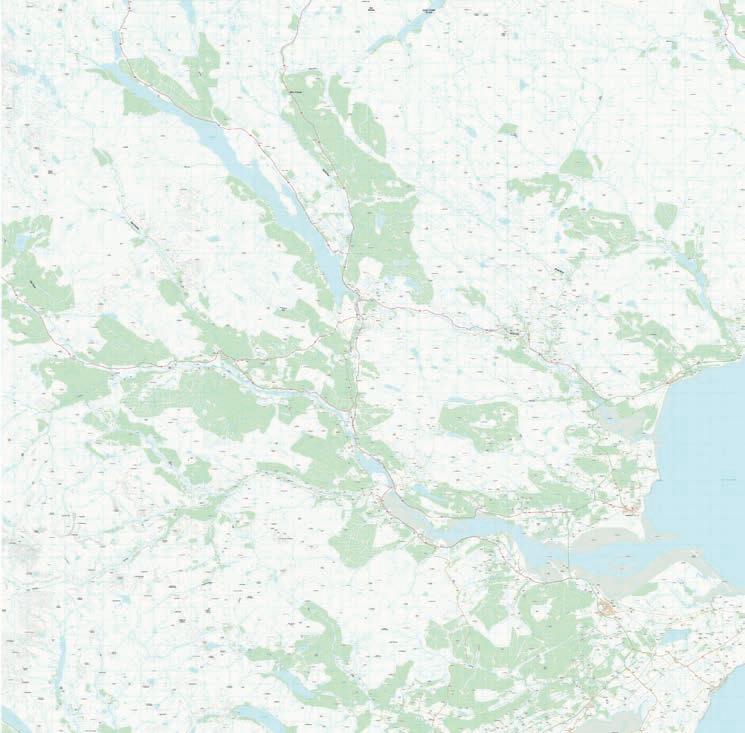


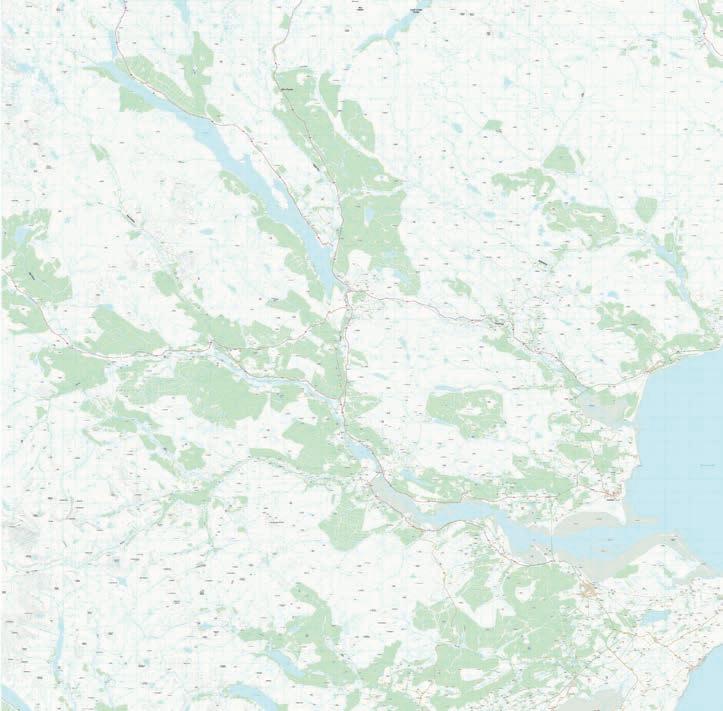
Source: Scottish Government Energy Consents Unit, The Highland Council, SSEN
© Crown copyright 2026 Ordnance Survey. Media 021/26.
© Crown copyright 2026 Ordnance Survey. Media 021/26.
“Disappointed as I was at the engagement at a senior level from the Scottish Government, there is a groundswell from community councils wishing to take part in the convention to influence the current renewable energy free-for-all that is presently taking place.”
“Helen’s closing remarks were that it was easy to pick off isolated rural communities, but here the south, northeast and The Highlands had combined with more to come. We are not going away. The Scottish Government needs to get a grip and deal with it.”
Tisi Dutton, spokesperson for No Ring of Steel Kyle of Sutherland (NORoS), added:
“It’s heartening that progress is being made towards communities, through the Community Council’s Convention, becoming Planning Stakeholders in developmental discussions, which will create the important forthcoming Strategic Spatial Energy Plan. It is vital for local voices to be heard so that democracy is respected, because the strong feeling is that they are being dismissed and considered irrelevant.”
“This is compounded by the Energy Consents Unit’s (ECU) decision to refuse emails in response to developers’ applications for windfarm and BESS developments.”
In January 2026, the Energy Consents Unit removed email as a method for submitting public objections, replacing it with postal submissions or the ECU portal. Critics say the website can be unreliable, and some have alleged the change was meant to limit AI-generated comments, though Scottish Ministers confirmed that
“members of the public remain free to use any tools or resources to help formulate their views.” The new system is intended to reduce backlog, log all submissions, provide instant confirmation, and protect personal data. Some have also criticised the 37,000-character limit on submissions, which they say restricts their ability to present a full analysis of Environmental Impact Assessment Reports (EIAR), leaving many feeling their detailed concerns cannot be properly registered.
Dutton continued: “The NESO reforms concerning grid connection backlog are welcome. Currently, an established grid connection is not needed when an EIAR is prepared for proposed developments, and connection is subject to a separate application, often months or even years later. It means that developments can be built without a realistic plan for connecting the energy produced to the grid. This is an untenable situation and shows how the current system favours developers and the landowners who host them.”
LOOKING AT THE BIGGER PICTURE
Given developments on such an extraordinary scale, one might reasonably expect equally extraordinary benefits for communities hosting them. But without a clear overall plan, it remains uncertain how the beneficiaries of this energy “gold rush” will compensate rural communities for the industrialisation of their land.
A strategy to utilise Scotland’s wind wealth
By Dave Pearson, for Bylines Scotland
by Laura Hurst
Scotland has become a world leader in wind energy. With abundant onshore and offshore wind resources, and a growing fleet of turbines delivering low-carbon power, the nation now produces far more electricity than it currently consumes. But while the generation success is real, the economic benefits too often flow out of Scotland.
If we are to secure a prosperous, net-zero future, the time has come to ask: how can Scotland retain more value from the electricity it generates? The answer lies in two complementary strategies –first, using more of the electricity locally and second, building the industries that consume it.
USE THE ELECTRICITY HERE:
UNLOCKING LOCAL VALUE THROUGH PRIVATE WIRES
Scotland does not “own” its electricity. Once generated, it enters the UK-wide market and must be bought back at market rates by Scottish users – even if they’re located next to the turbine. Electricity in the UK also becomes more expensive the further it travels from the Point of Generation (POG), due to grid transmission and policy levies.
Yet there is a better way. At the base of a wind farm, electricity is effectively sold at the Contracts for Difference (CfD) strike price – around 7 pence per kilowatt-hour (kWh). If this power were fed directly into a nearby consumer via a private wire, it could be delivered for perhaps 9 pence per kilowatt-hour, including the cost of building and repaying the private wire. That is roughly 20 pence less than the grid price for Scottish industrial users, a saving that could radically cut local energy bills.








Illustration
PRIVATE WIRE SYSTEMS: DIRECT PATHWAYS FROM ENERGY GENERATION TO CONSUMPTION
This is not about subsidies. It’s about enabling access to a more sensible, cost-reflective price of energy, by simplifying the path from generation to use.
A private wire system could be extended from wind farms into every major city and town in Scotland. The implications are enormous:
• Electric vehicle charging: Public chargepoints could offer cleaner electricity at lower cost, accelerating the switch to electric transport.
• Clean industrial hubs: Industries such as green hydrogen or synthetic aviation fuel production, which are currently uneconomic at grid prices, could thrive with reliable, affordable electricity.
• District heating: The greatest win, however, is in the decarbonisation of heat.
THE HEATING REVOLUTION: DECARBONISING SCOTLAND’S BUILDINGS –CLEAN, CHEAP, AND LOCAL
Heating remains Scotland’s largest source of carbon emissions. Electrifying heat is a major challenge – but also a major opportunity. Remarkably, 80 percent of Scotland’s heat demand lies within 1,000 metres of open water – rivers, estuaries, coastal zones. These are ideal for deploying large water-source heat pumps to supply low-carbon district heating networks.
If these heat pumps are powered via private wires from nearby wind farms, the resulting heat can be both clean and affordable. This would fundamentally change the economics of decarbonising Scotland’s buildings.
Instead of installing individual heat pumps, or retrofitting hundreds of thousands of flats and high-density city buildings, energy could be delivered centrally via new heat networks – especially to hard-to-heat buildings like tenements. The investment needed to decarbonise individual flats could drop dramatically. And crucially, such networks would be investible.
With a stable supply of low-cost electricity and a strategic plan for heat, private investment in heat networks could exceed billions of pounds. Every Scottish town and city could become a node in a new, modern clean energy system – with local jobs and ownership. By coupling flexible demand for electricity with variable generating capacity this also reduces the curtailment costs to the whole UK economy. Currently it costs about £1.5 billion a year just to switch windfarms ‘off’.
When it is windy we need more heat for our buildings, but in these conditions, we also generate the most electricity – so it’s a great synergy. Conversely, when conditions are less windy, it is easy to store heat to bridge this gap by using large hot water tanks – simple but effective. Unnecessary costs arise when we have too much supply (curtailment) or not having enough (balancing) as we have to switch gas-based systems ‘on’ at short notice to even things out.
MAKE THE KIT IN SCOTLAND: INDUSTRIAL STRATEGY FOR A NET-ZERO ECONOMY
To capture even more value, Scotland should not only use the electricity it generates – it should manufacture the infrastructure needed to do so.
Some of this is already happening. Star Refrigeration’s factory in Glasgow built the large heat pumps now operating at Queens Quay in Clydebank. Malin Marine,
also based in Scotland, builds marine infrastructure such as barges. By locating heat pumps on floating platforms (barges), scalable zero-carbon heat solutions could be rapidly deployed along rivers and coastlines – creating thousands of skilled jobs.
But the opportunity extends further:
• Pipes and distribution: District heating requires miles of large, insulated pipes. These could and should be made in Scotland.
• Pumps and exchangers: Components like circulation pumps, thermal stores, and heat exchangers are essential, and manufacturable here.
• Integration and systems engineering: The design, control and optimisation of heat networks is a valuable service export in itself.
With government guidance and procurement alignment, international firms could be encouraged to co-locate in Scotland through strategic partnerships and inward investment – especially with the support of agencies like Scottish Enterprise. A framework that records and rewards locality makes it simpler for stakeholders to follow this plan.
POLICY, PROCUREMENT AND POWER: A CO-ORDINATED NATIONAL MISSION
What’s needed now is concerted leadership. The Scottish Government has a rare chance to define a new industry – but must act boldly. A few steps would make all the difference:
Encourage local content in the build-out of heat networks and green infrastructure, using procurement frameworks that reward Scottish manufacturing and innovation.
Underwrite private wire investments by local authorities or private developers. The Government cannot own the wires – but it can de-risk them by offering demand guarantees.
Create certainty for heat network developers, particularly through strong support for the Heat in Buildings Bill.
Concerns about high costs of heat are misplaced if the model outlined here is followed. Clean heat from watersource heat pumps via private wire can be cheaper than gas – especially when spread across whole communities.
If these conditions are met, Scotland would not just reduce emissions – it would create an entire economy around clean electricity and heat. Thousands of jobs, billions of pounds in investment, and a fairer energy future would follow.
A VISION WITHIN REACH
The path is clear. Scotland’s wind farms already power homes far beyond our borders. But it is here, at home, where that power can do the most good – if we let it.
By rethinking how electricity is used, where it is delivered, and what industries it powers, Scotland can transform itself from an energy exporter to an energy economy.
It’s time to stop exporting value and start building it here – by heating our cities, charging our transport, powering our factories, and making the infrastructure of the future in Scotland.
This is not only an environmental imperative. It is a national economic strategy hiding in plain sight that need not be funded by the government. It just needs some creative thinking, and this costs nothing.
From Shetland to Åland: what happens when locals have the power to decide about wind farms?
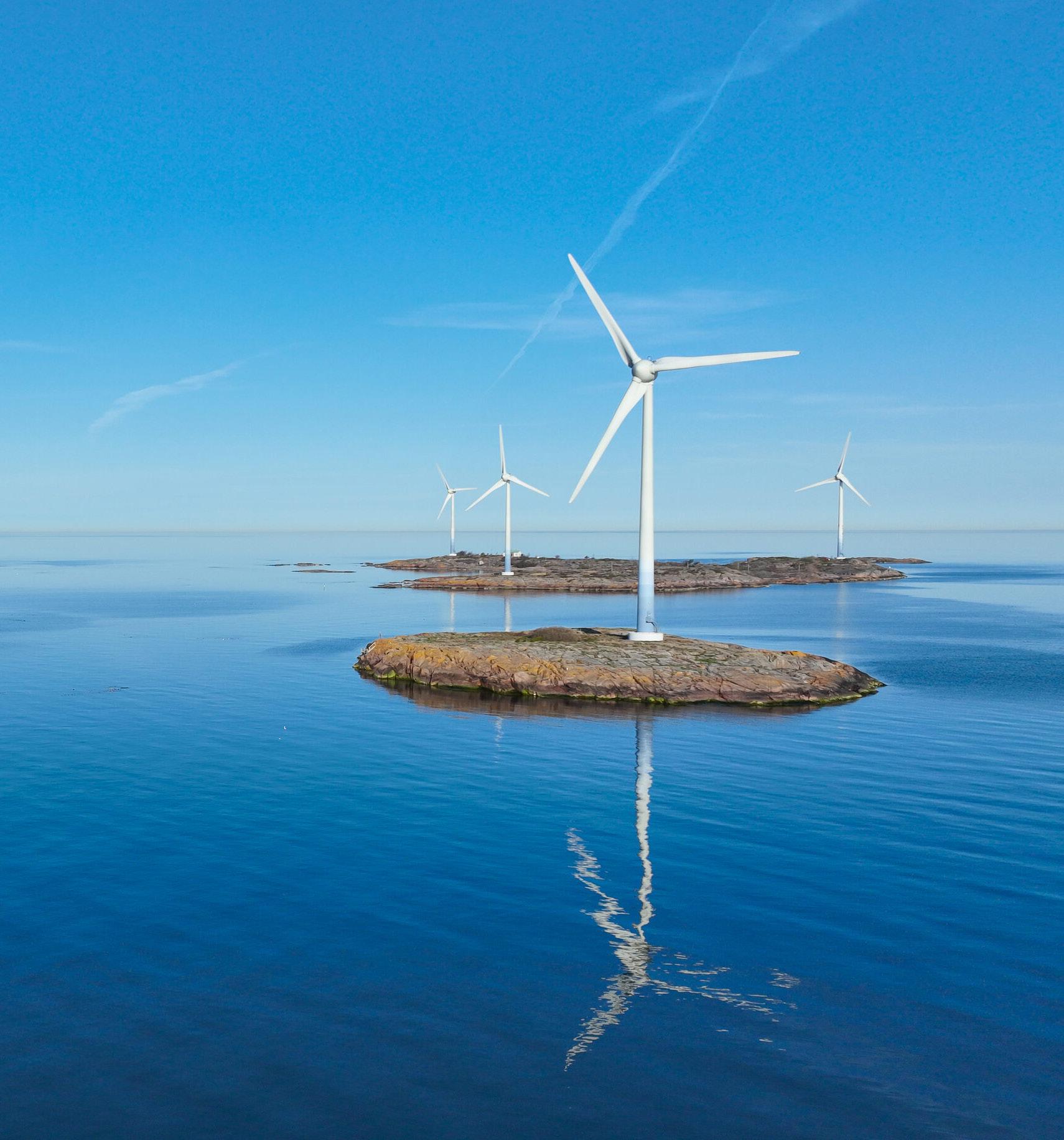
Freelance journalist Erin Rizzato Devlin and editor of Shetland News Hans J Marter explore how valuable lessons about benefiting from renewable energy projects could be learned from Scotland’s Nordic neighbours.
Shetland
Shetland is the windiest region in the UK if not in Europe, and the wind industry is loving it. Thanks to a 600 MW subsea cable and the prospect of another, much larger, such cable, the renewables industry is turning the islands upside down.
No surprise then that, thanks to its “world-class wind regime”, the islands now have the highest density of installed megawatts per person anywhere in the UK.
Yet, despite hosting one of the largest and, allegedly, the most productive, onshore wind farms in the UK, fuel poverty levels are rampant while the cost of living is 20-65 percent above the rest of the UK mainland.
And it’s the same wind-producing load factors of 50 percent for the wind industry that sucks the heat out of Shetland’s homes. The effect of that persistent bone-chilling wind – January 2026 was a particularly good example of that – needs to be experienced to be fully understood.
Shetland Islands Council estimates that almost 7,000 of the islands’ 10,421 households are living in fuel poverty - two out of every three households. A staggering 3,475 households are in extreme fuel poverty, meaning these households spend at least 20 percent of their income to keep warm.
The numbers have been growing rather than decreasing in recent years, with 830,000 fuel-poor Scottish households (33 percent) estimated in December 2025 despite – some would say because – more and more renewable energy projects are being built, not only in Shetland, but across the country.
Shetland Islands Council’s political leader Emma Macdonald, now the isles’ parliamentary candidate for the Liberal Democrats, said the council was taking “every opportunity” to remind the government that the current set-up was unfair and that local communities needed to benefit in a more tangible way.
Macdonald has recently expressed her disappointment at the Scottish Government’s “underwhelming” proposals to increase the level of community benefit expected to be paid to the local community from £5,000 to £6,000 per megawatt per year.
So, who is benefitting from Shetland’s and Scotland’s wind?
The SSE Renewables’ owned Viking Wind Farm (443 MW) can potentially
– if it is not curtailed – generate enough energy to power almost 500,000 households.
With 103 turbines, SSE pays more than £2.2 million per year into the Shetland Community Benefit Fund (SCBF), in accordance with the Scottish Government’s suggested baseline of £5,000 per MW. The project will also return up to £2 million (so far unconfirmed) to the Shetland Charitable Trust (a locally owned community wealth fund) for its initial £10 million investment in the project.
By comparison, the 4.5 MW Garth wind farm, owned by the 160-strong community of Cullivoe in North Yell (in Shetland), generates on average £2 million per year with just five much smaller turbines.
In other words, one Viking turbine (4.2 MW) will return around £40,000 per year to Shetland’s two community funds, along with local jobs, business opportunities and income to landowners and crofting tenants.
One wind turbine from Garth (0.9 MW), is generating up to £720,000 at full capacity, while also supporting jobs and valuable community initiatives in North Yell.
With public opinion in the Highlands and Islands of Scotland increasingly turning against further industrialisation by green energy infrastructure, could ensuring a fairer share of the revenues from these projects be one way forward for the energy transition to regain a positive momentum? And if so, how could that be achieved?
A VISIT TO THE ÅLAND ISLANDS
A look across the sea to our Nordic neighbours shows how communities can benefit from large-scale wind projects.
The archipelago of Åland is an autonomous region of Finland nestled in the Baltic Sea. Roughly the same size and population as Shetland, the reality here is very different.
Despite being a small island group of 30,000 people, local democracy here is strong, according to Yvonne Österlund, senior engineer at the Department of Infrastructure at the Government of Åland.
Since 1920, the region has been self-governing not only through the Åland Parliament (Lagtinget), but also 16 councils spread across the islands.
Båtskär wind farm in Åland
“The wind power we have in Åland is owned by Ålanders and contributes to the energy mix in Åland”
Given their geographical location, the islands have become particularly interesting in the path towards a green transition, with several wind farms being built or planned both on land and sea.
Unlike Shetland, however, Åland is administered by a government with its own legislative powers, which also include matters such as the environment, energy, planning and construction.
“The wind power we have in Åland is owned by Ålanders and contributes to the energy mix in Åland,” Österlund said.
Meanwhile, Daniel Gear of Lerwick-based energy consultancy Voar, described the learning from a visit to “this modern, prosperous, self-governed island community” in 2024 as “totally illuminating”.
“It did put into stark relief just how far Shetland is trailing behind the Nordic pack – in terms of our ability to protect our own economic and cultural interests,” he said.
“Like Shetland, Åland appears set to host a significant boom in offshore wind. Unlike Shetland, this will only happen on their terms.
“There are 16 municipalities, the equivalent of Shetland’s parish councils… but these are parish councils on steroids, with no shortage of administrators who enjoy prestigious and well-remunerated roles.
“Municipalities have the power to control planning and to levy taxes within the land and waters of their municipality, right out to Åland’s territorial limits.”
There is currently 65 MW of wind power with 28 turbines across different locations, all connected to the local electricity grid. The surplus electricity is sold to Sweden.
These include smaller wind farms such as Båtskär (14 MW), as well as larger projects such as the 10 turbine wind farm Långnabba (40 MW).
And there are many more, and much larger, projects in the pipeline: among these, the Sunnanvind offshore wind farm project (up to 4,000 MW), developed by the Åland Government to maximise the benefits for the islands.
The project, once realised, is expected to generate stable revenues to the local government through leasing and auctioning the waters. In addition, the six local councils nearby will receive property taxes from the turbines in their area.
Stormskär & Väderskär (2,460 MW) is another offshore project being developed in the same area by the Finnish company Ilmatar.
If approved, the wind farm is expected to return at least £635 million over 25 years in various forms of taxation, including property and energy tax, to the local

government and municipalities, and is expected to grow Åland’s annual GDP by 1.5 percent throughout its lifetime.
“What is special here is that we own the water,” Österlund said. “It is not Finland that has authority over the waters around Åland, but Åland itself.”
And unlike Shetland it is not the national state that auctions off the marine areas around the islands, but Åland’s local authority itself.
“This will strengthen public resources, which can then be distributed according to the political majority for the benefit of development and the population,” she added.
Gear explained: “As it stands, Shetland is not on an equivalent footing when it comes to control of developments within our (theoretical) ‘territorial limits’ and we have no legal mechanism to direct developer payments into the host community, beyond those which we can earn by providing services as the nearest landfall, host site, or through a voluntary contribution from the developer.”
Opportunities also exist for citizens in Åland to buy shares in wind turbines through ÅVA (Ålands Vindenergi Andelslag), an association born in 1994 to offer shared ownership of Åland’s wind farms to locals, currently holding 1,500 members. By buying a share at the cost of 470 euros, individuals, organisations and municipalities alike can receive interests or discounts on electricity prices.
Scotland’s Nordic neighbours are leading the way in developing renewable energy projects that are also benefiting local people and communities. Will those lessons be taken on board by candidates aspiring to become Scotland’s next MSPs?
Some of the estimates and data in the feature have been taken from the Social Value From Renewables in the Highlands and Islands report by Equitable Energy Research (EER), a not-for-profit created to help local communities navigate the renewable energy sector with confidence.
Yvonne Österlund, senior engineer at the Department of Infrastructure at the Government of Åland
As Scotland moves toward low-carbon energy, the challenge isn’t just building wind turbines or solar panels – it’s making sure local communities actually benefit from the shift. Musselburghbased renewable energy company Gensource is showing how that can work in practice, by using their technical expertise to support community projects across East Lothian.
Founded in 2022 by Josh King and Robert Wilson, Gensource provides services from design and installation to testing and commissioning of renewable energy systems. The company, recently named ‘High Growth Business of the Year’ at the 2025 Midlothian and East Lothian Business Awards, moved this year into a 12,000 square feet. headquarters after three years of growth.
Gensource works with everyone from community groups to private corporations looking for advice.
Commercial Director Robert Wilson said: “A business of this size means we get involved in all sorts. I mainly handle the commercial sales, finance, project delivery and day-to-day running, while Josh is more technical, handling more of the people and the strategy.”
“Personally, I fell into the renewable energy sector, I finished my economics degree and didn’t want corporate life. I started working with my dad installing solar thermals and that’s where I met Josh, who was the director at his previous company and I just asked for a job in the office.”
Managing Director Josh King explained that his journey into the sector stemmed from time spent working in Asia:
“I was a physics teacher in China in 2012. “I was in a city with a 10 million population and it was one of those iPhone factory cities. It was very smoggy in 2012, peak smog and you couldn’t see 10 metres in front of you.
“There was one photo I used to show when people said wind turbines spoiled a view. It was the kids from my class playing basketball on the ground floor outside. I was on the second floor and you couldn’t see any of the kids because of the smog, you could only see the orange ball, some hands and the basketball nets because it was just so smoggy. It was quite depressing. You finished
Musselburgh firm shows how renewable energy can support local communities
By Liam Eunson, Midlothian View
a class and you weren’t allowed to go outside. I was wearing a 3m mask cycling to work.”
Returning to Scotland, King studied renewable energy and worked in a solar company in the north before reconnecting with Wilson. They moved back to Edinburgh and started planning Gensource from Josh’s spare room, later setting up their first office at Musselburgh’s Fisherrow Centre.
“We both lived in Edinburgh,” Josh said. “We had previously worked at similar companies and just had a lot of respect for each other. I used to look at Robert and think, if everyone else here got hit by a bus he could do all their jobs.”
After initial months in a spare room, Gensource expanded to Broxburn and hired staff across Dunfermline and Dundee. The choice of Musselburgh was influenced by Fisherrow Centre’s community hub, where rent supports a local trust.
Josh said: “We liked the fact that all of our rent was going towards a community trust.”
Supporting local initiatives is central to Gensource’s approach. The company has worked with organisations including Glasgow Community Energy, Men’s Sheds Association, and Cycling Without Age, a volunteer group offering free trishaw rides.
When Cycling Without Age lost its storage facility last year, Gensource helped by erecting a shed on Fisherrow Centre land, supplying materials, and installing solar panels for the electric trishaws.
Morna Dawson, co-founder of Cycling Without Age, said: “There was a point we thought the lack of suitable storage would mean an end to Cycling Without Age in Musselburgh. But when Ewan (co-founder of Cycling Without Age) approached The Fisherrow Centre they were adamant they would help. They roped in Gensource who’ve built us this amazing shed – it even has solar panels to charge the bike. It’s the community spirit that keeps us going.”
Robert said: “Fisherrow Centre gifted the space, we built it and put solar on it. You’ve got a local charity, a community trust, and a local business all coming together. We don’t want our charitable work to just be a money donation; being hands-on is much better than handing over a check.”
Gensource is following their aims of being the most established energy specialists in Scotland, whilst still remaining very engaged with local community groups and charities.
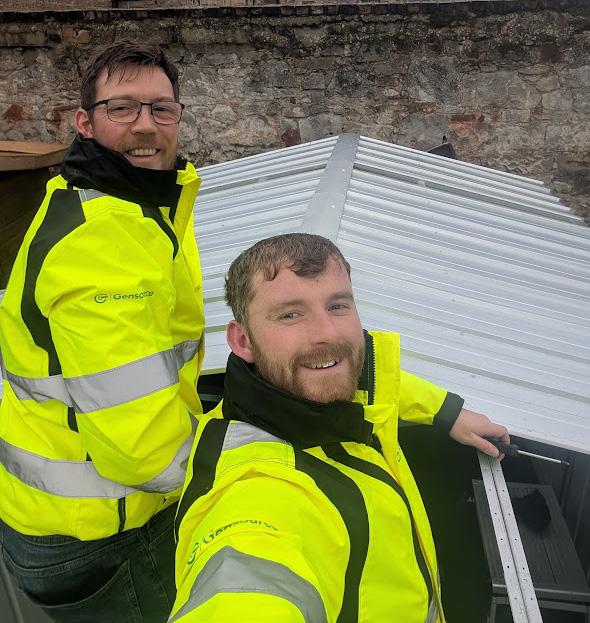
Josh King (right) and Robert Wilson during the construction of Cycling Without Age shed that they built and funded
Communities were promised a share of Scotland’s wind boom. Some are being sold short.
Communities across Scotland are missing out on millions of pounds from wind farms because their owners are paying less than expected to locals, a Ferret investigation has found.
By Paul Dobson, The Ferret
More than 20 wind farms are failing to pay an agreed amount to locals. That could cost Scottish communities over £50m.
Since 2014, the Scottish Government has recommended that onshore wind developers pay £5,000 to nearby communities each year for every megawatt installed. The government has recently proposed increasing it to £6,000 – but both this and the existing rate are considered too low by many campaigners. Although voluntary, virtually every wind farm makes some contribution and these payments are considered part of being a “good neighbour” to impacted communities.
Analysis of a publicly available database shows more than 20 onshore projects built in the last decade –including some owned by European governments, Scottish energy giants, and global financial firms – are paying less than the £5,000 figure. Together, these projects deliver £2m less every year than if they met the benchmark. Over the average 25-year lifetime of a wind farm, that shortfall adds up to over £50m.
Many of the projects paying beneath the threshold will still operate into the 2040s, meaning nearby communities will receive lower payments for decades. One community representative said they were facing “acute injustice” as a result.
An industry representative told The Ferret that ‘community benefit’ payments now cost developers “twice as much” as they did in 2014, and said many projects are on the edge of financial viability due to rising costs.
Despite that, trade body Scottish Renewables claimed there was still “exceptionally high compliance” with the Scottish Government guidance and noted that payments were delivered “on an unrivalled scale to any other sector.” However, campaigners and politicians argued those near these wind farms were being given “meagre compensation” for living with the disruption and impact on landscapes that turbines cause.
One said our findings showed the system was “not fit for purpose” and communities were missing out on funds due to the “whim of developers.”
Onshore wind farms have expanded rapidly across rural Scotland this century. Community benefits are meant to ensure those living nearest turbines receive a fair share of the value created by the use of local land and resources. The wind industry says the funding has made a real difference: more than £200m has been paid out since the 1990s, supporting projects including transport schemes, sports clubs, play parks, food parcels, and services for people with disabilities.
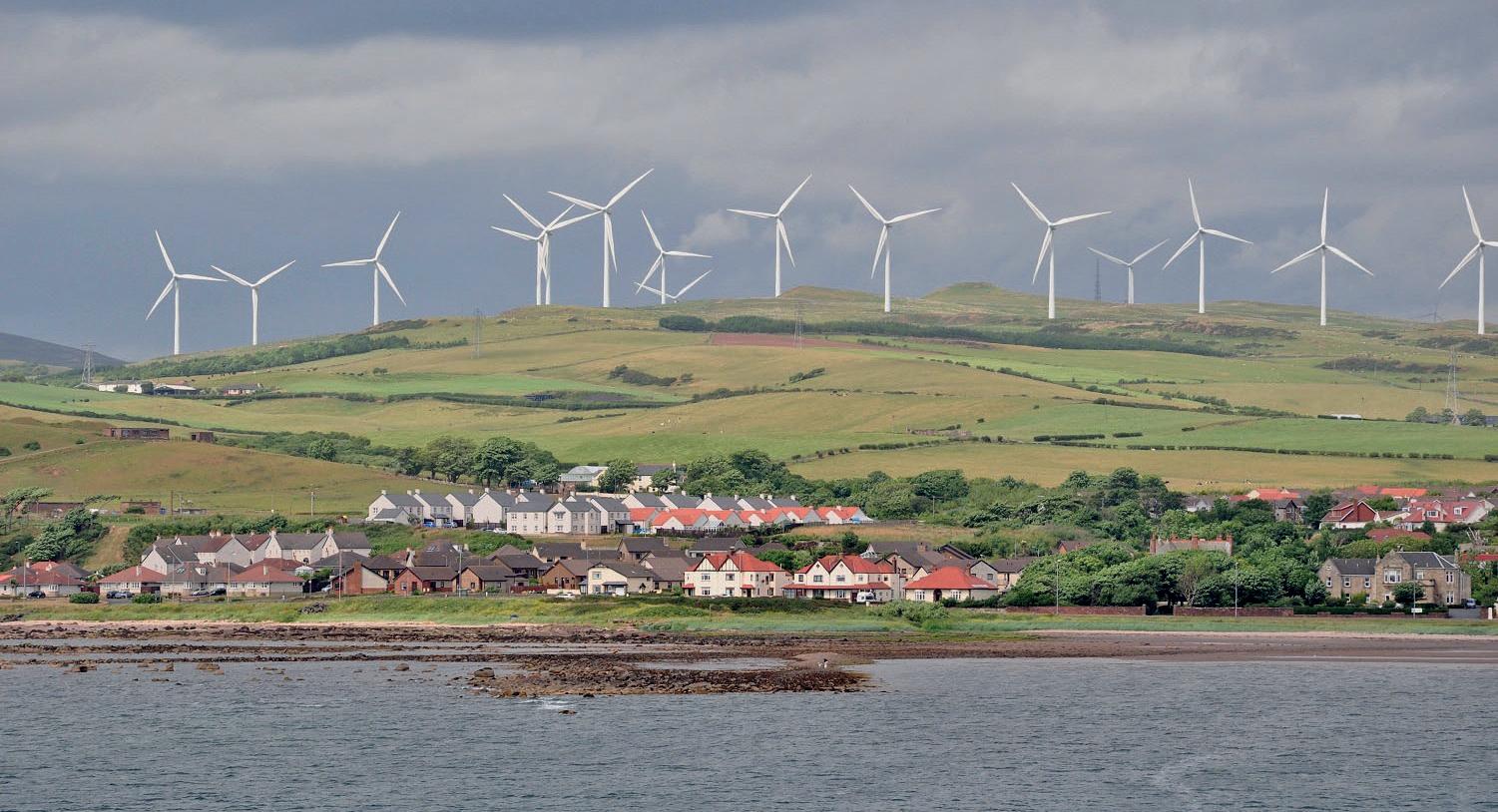
Ardrossan | Photo by Vincent van Zeijst - CC BY 3.0
UNDERPAYMENT PERSISTS
Our analysis shows not all projects built since 2015 are paying the expected amount, despite the 2014 Scottish Government guidance applying to “all renewable energy developments in Scotland which are not yet operational.” Using official figures compiled by Local Energy Scotland, The Ferret has identified 21 wind farms built between 2015 and 2025 paying less than the £5,000 benchmark.
Developers argue community benefit packages are usually agreed early in the planning process and are difficult to change once financing is secured – meaning some might have been decided before 2014. However, the £5,000 figure was already considered the industry standard before that year.
Eight of the projects paying below the figure were given planning permission in 2014 or later. Others were approved earlier but not built until years later, long after expectations around community benefit had changed.
The largest project paying below the benchmark is the 177 MW Dorenell wind farm in Moray, made up of 59 turbines, each 126 metres tall. Dorenell pays £2,525 per megawatt each year, just over half the benchmark. Over 25 years, communities around the site will receive almost £11m less.
EDF, which owns Dorenell, claimed the Local Energy Scotland data used by The Ferret is “misleading” because it ignores a “range of other investment” provided through the project, including an endowment for the local community, annual contributions to the local authority, and a dedicated ranger service and visitor centre.
Patti Nelson, chair of the Cabrach Community Association, said the low funding had caused locals “sustained consternation.” She added: “With a remaining lifespan of over 20 years, we’ll continue to strongly push EDF on the need to rebalance this acute injustice and purposeful underinvestment in this community.”
Several other projects paying below the benchmark were developed by major energy players, including state-backed companies and multinational investors. Among them are Andershaw in South Lanarkshire, Corriegarth in the Highlands, Black Law (ScottishPower), and A’Chruach in Argyll, which pay significantly below the £5,000 benchmark despite being approved or coming into operation after 2014.
CAMPAIGNERS CALL FOR CHANGE
The findings come amid a push to raise expectations for future projects, particularly in areas hosting large numbers of turbines. Renewables companies argue many onshore wind projects operate on tight margins and higher payments could stop developments going ahead.
In 2024, Highland Council proposed a ‘social value charter’ to raise expected community benefit payments for new wind farms to £12,500 per megawatt. Under the proposal, £5,000 would still go to communities closest to wind farms, while £7,500 would be paid into a ‘strategic fund’ to support projects across the Highlands. Council leaders said the charter reflects the scale of renewable development in the region and aims to ensure Highlanders see lasting benefits. The renewable energy industry has strongly opposed the proposal, warning it would make many projects unviable.
Research by consultancy Biggar Economics suggested the proposals could reduce both community benefit payments and jobs linked to new wind developments, because 80% of planned wind farms in the region might not go ahead.
Some support such measures. Liberal Democrat MP Angus Macdonald said he would back a “halt” to new renewables projects unless community benefit payments were increased. He argued payments should rise to at least £12,500 per megawatt or be linked to a five per cent share of a wind farm’s revenue. Without that uplift, he claimed, communities were being asked to host major infrastructure for “meagre compensation.”
Flick Monk of Platform London said the current system of community benefit payments is “not fit for purpose” and communities are missing out due to the “whim of developers.” She added: “It’s no wonder that communities are increasingly turning against renewable energy when developers treat them with such disdain.”
Josh Doble, director of policy at Community Land Scotland, called for a “transparent and proportionate discussion” about how benefits from onshore wind are shared. While developers meeting the benchmark should be “congratulated,” the sector needs to “ensure payments are made fit for 2026 and reflect the scale of development happening across rural Scotland.”
Morag Watson, director of onshore wind at Scottish Renewables, said the sector was “proud of its positive record” on community benefit funding, which has been “transformational” in many communities. She noted that changes to UK subsidy systems mean community benefit now costs developers twice as much as it did in 2014, “equivalent to 15–20 percent of developer profits.”
She added: “Many onshore wind projects are now on the very edge of financial viability due to rising costs, leaving less money to support communities. While community benefit funds do represent an important and visible contribution, we should not lose sight of the wider public good delivered by onshore wind projects, including local supply chain and workforce growth, nature enhancement, and the protection renewable energy provides consumers against the volatility of global price shocks.”
All of the companies named in this piece were contacted for a response.
This article was originally co-published by The Ferret and the Sunday National. It forms part of The Ferret’s ‘After Oil’ series which is examining whether the Scottish Government is achieving a ‘just transition’.
The Ferret is an independent investigative site funded by readers who believe Scotland deserves better journalism. Join them.

Who gets to decide about Scotland’s national parks?
Scotland’s national parks are at the centre of a growing debate over planning democracy. Questions are mounting about who really decides the future of these protected landscapes.
By Juilan Calvert, Lochside Press editor
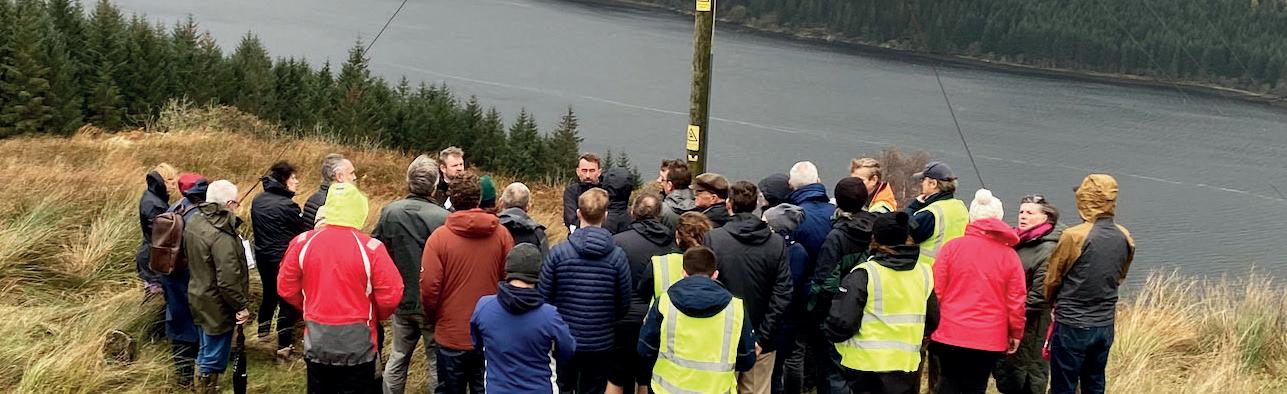
The dust may finally be settling on the decade-long saga of Flamingo Land and Loch Lomond, but uncertainty remains over planning issues in Scotland’s first national park –prompting calls for a new law.
The plans for a £43m tourism resort at Balloch were unanimously rejected by board members at Loch Lomond and the Trossachs National Park after more than 100,000 people lodged objections. But developers behind the Lomond Banks project immediately lodged an appeal, which was upheld by a Scottish Government-appointed Reporter.
Facing a public backlash and probable defeat in a vote on the issue at Holyrood, ministers ‘called in’ the plan and in February finally announced that it had been rejected after ‘a finely balanced decision’.
The story may not be over yet though – the developers say they are considering their options for the project, which includes a monorail, over 100 holiday lodges and two hotels.
LOCH LONG SALMON FARM –MINISTERS INTERVENE
Last year Scottish Government ministers overturned the national park’s unanimous refusal of Loch Long Salmon’s plan for a fish farm near Arrochar – overruling not just the national park but the Reporter they had appointed, who had recommended that the appeal be thrown out.
There were concerns about a high level of microplastics in the loch, and ministers conceded that the fish farm was ‘industrial in appearance’, but they still approved it, highlighting that it would use semi-closed containment systems for the first time in Scotland.
National park convener Heather Reid said afterwards: “Board
members cited the significant landscape, seascape and visual issues of the proposed development and that the risk of an escape of farmed fish could impact on the fragile wild salmon population.
“We continue to stand by those reasons for refusal and note that the Scottish Government-appointed Reporter also recommended to Ministers that the appeal should be dismissed on some of these grounds.”
WIND FARMS – CIVIL SERVANTS HAVE THE FINAL SAY
There are currently four planning applications for wind farms near the national park:
Giants Burn, near Dunoon; Inverchaolain, also on the Cowal Peninsula; The Vale of Leven; and Glentarken, near Lochearnhead.
The national park authority has already objected to three of these –leading to claims of ‘NIMBYism’ from the Friends of Loch Lomond and the Trossachs – but will not have the final say. Instead, the Scottish Government’s Energy Consents Unit (ECU) will decide on all of the plans, because they exceed 50 megawatts.
In the case of Giants Burn, a smaller plan for an adjacent site was previously rejected after Argyll and Bute Council held a public hearing. This time around the council, national park and NatureScot have all objected, together with air traffic control body NATS, with local councillor William Sinclair complaining that the ECU website created a ‘misleading narrative’ as it took so long to publish public comments.
“Whilst I understand each submission must be individually reviewed and redacted where necessary,” he said. “They are a fully funded Scottish Government body and should never be so far behind.
This would have not happened if Argyll and Bute Council were the planning authority.”
A SOLUTION?
THE SANDFORD PRINCIPLE
Green Party co-leader Ross Greer, who objected to both Flamingo Land and Loch Long Salmon, proposed an amendment to the Scottish Government’s Natural Environment Bill to require ministers to ‘put nature first’ in national parks.
The amendment would extend the Sandford Principle, which gives conservation priority when national park aims conflict with economic development. Currently, it applies only to park authorities making planning decisions, not to ministers deciding on appeals or other national park matters.
“Our national parks quite rightly have to put protection of the natural environment first in their decisionmaking, so it’s absurd that ministers can disregard that when making their own decisions about what happens within the park,” he said
“We need to treat our national parks like the special places that they are. My proposals are just a common-sense recognition of our responsibility towards Scotland’s world-famous natural environment.”
“Stuart Mearns, director of Place at Loch Lomond and The Trossachs National Park Authority, said: “As well as being a national park authority, we are also the statutory planning authority responsible for all planning decisions across the park… The National Park sits at a critical intersection: between urban and rural Scotland, between conservation and development, and between national ambition and local delivery. Everything we do is guided by that responsibility, to provide a pioneering example of how people and nature can thrive together.”
Public hearing visit at Long Long
What benefit will offshore wind bring for Stonehaven?
By Jane Cruickshank, The Bellman editor
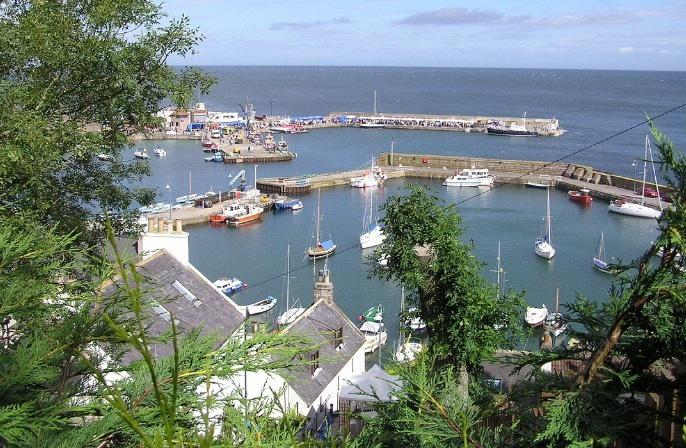
Developers awarded sites in the 2022 ScotWind round of seabed leasing are working up their projects, with some already at the consultation and planning stage. Yet communities affected by their proposals are in the dark about game-changing benefits they could secure.
One town, Stonehaven, will be at the centre of a series of developments.
Inland, to the west is Fetteresso Forest, already home to one substation – and the site of SSEN’s proposed Hurlie substation. This massive piece of electrical infrastructure is key to the onward transmission south of ScotWind generation via the proposed Kintore to Tealing 400 kV overhead line.
And looking seaward to the east, Stonehaven faces an array of proposed offshore wind farms each requiring their own substation in Fetteresso Forest and connection to the grid – turning forest to concrete and steel. There’s Bowdun, likely visible on the horizon, then further offshore Bellrock and Aspen.
Only now, is the town realising the extent of the encircling infrastructure – and coming to understand the possible benefits attached to the landscape shift. A second energy boom may be on the way, bringing wealth in the form of community benefits. Or maybe not.
Westminster is still deliberating its models for community benefits. The previous government consulted on the matter in 2023 but did not deliver legislation. Holyrood is constrained to guidelines, which for onshore renewable energy developments were refreshed on 16 February. A similar update for offshore developments is not expected until later this year.
For communities weighing up environmental and economic impacts of vast offshore developments, without legislation or guidelines there is only hope and guesswork. Annual payments of £6,000 per Megawatt (MW) are suggested by the Scottish Government for onshore developments. Offshore generation appears to produce less community cash per unit. Vattenfall’s Aberdeen Bay 93 MW
development voluntarily offers £150,000 per annum – this works out at £1613 per MW.
Bowdun, Bellrock and Aspen Offshore Wind Farms have a combined capacity of 3.8 GW. If they are willing to match Vattenfall, the annual benefits would total over £6 million.
At least some of the chickens will hopefully hatch. The Scottish Government states: “We encourage developers to offer community benefits and shared ownership opportunities as standard on all renewable energy projects so that they deliver long-lasting, tangible outcomes for Scotland’s people and places.”
‘Tangible outcomes’ need huge amounts of planning, even when hypothetical. Stonehaven can’t just sit back and wait until the money starts landing in the Community Chest.
Local Energy Scotland manage CARES is the Scottish Government’s Community and Renewable Energy Scheme supporting communities as they engage with, participate in and benefit from the energy transition to net zero emissions.
Laura Campbell, Partnership Manager at Local Energy Scotland said: “Community benefits can bring transformational change, but it takes time for a community to come together, understand the opportunities presented by renewables developers and discuss them fully.
“To make the most of any benefits, communities need space to consult widely and plan for outcomes that create a lasting legacy for everyone. Early engagement is therefore essential. We encourage any community exploring community benefits to use our Community Benefits Toolkit as a starting point for understanding the processes involved.”
Stonehaven and District Community Council this month took its first steps to grasp the possibilities by agreeing broader support and a sub-group was needed to secure a legacy from the offshore proposals. But with no government guidance and thus far tight-lipped developers, there is clear frustration.
Local resident Brian Menzies said: “Planning for benefits from offshore renewable energy benefits is a fantastic opportunity in principle. But it needs developers to engage meaningfully and to be transparent.
“Many of us are increasingly aware of onshore projects where communities are benefitting every year by hundreds of thousands of pounds, and in some cases, by millions. So where are the approaches from the developers, regarding offshore wind farms, the resulting sub-stations and pylons that then land on our shores?”
He added: “The Scottish Government consulted about community wealth building and benefit from offshore renewables in 2025. It is not clear what the outcomes of this will be, or how the impact of substations and pylons taking energy from offshore will be taken into consideration. These need to be considered in the round.”
The Bellman TheBellman
The Stonehaven harbour
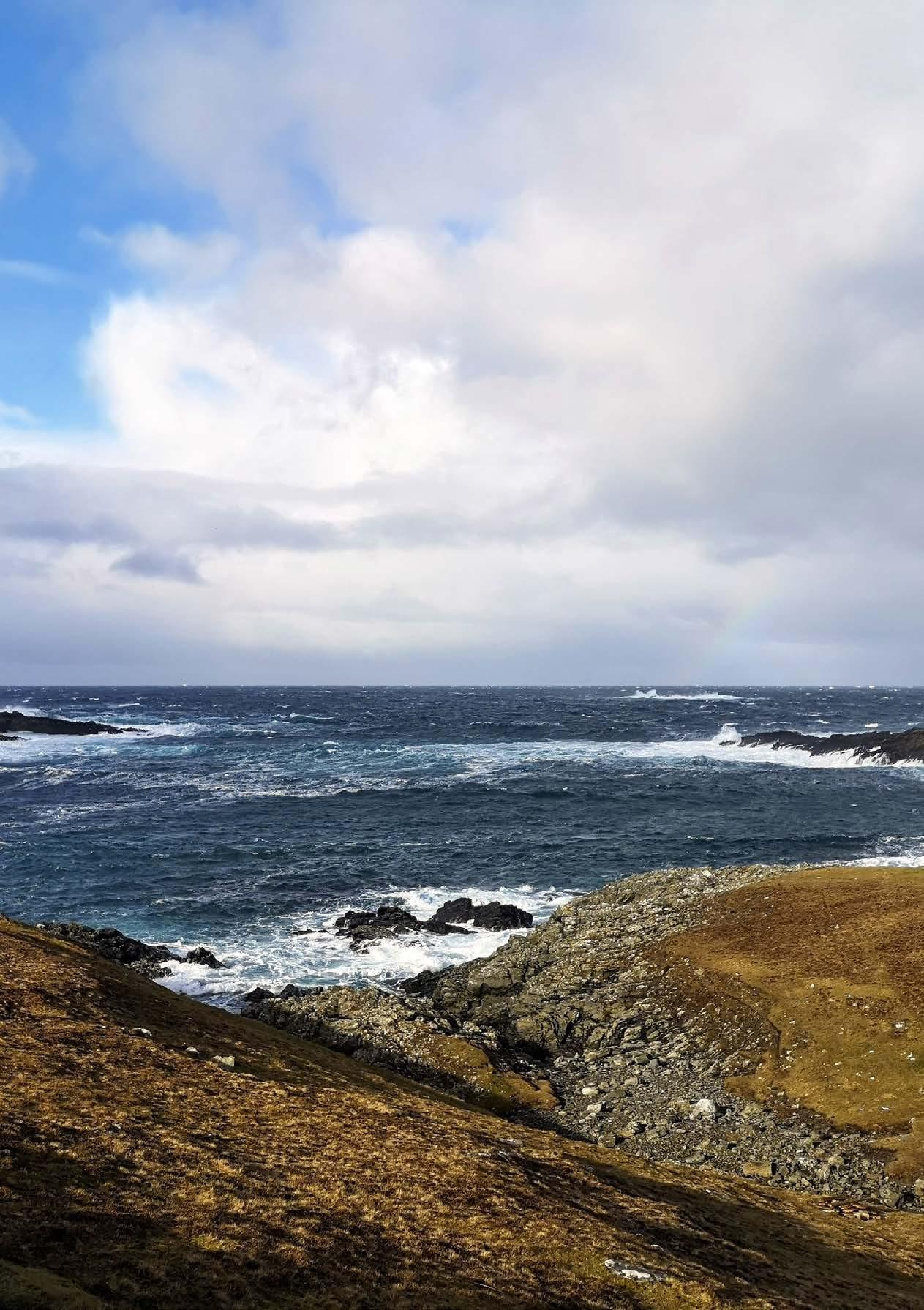
Locked out by design: what stands between the Local Power Plan and the communities it’s meant to deliver for
By Daniel Gear, Founder of Voar
Photo by Daniel Gear
INFebruary 2026, the UK Government and Great British Energy launched the Local Power Plan (LPP), committing “up to £1 billion” to support community-owned clean energy, with a vision that by 2030 every community would have the opportunity to own a local energy project.
I’m pretty much the target audience for this. I run an energy transition consultancy. I’ve co-authored research for the Just Transition Commission on community benefit and the energy transition. And I live in a community in Shetland that, at this very moment, wants to do exactly what this plan says every community should be able to do.
Less than three weeks after the launch of the LPP – half-way around the world –the United States and Israel launched a war on Iran. Gas prices have surged by around 50 percent since the start of the conflict, according to the Office for Budget Responsibility (OBR). Analysts at Cornwall Insight have predicted a 10 percent rise in household energy bills from July.
This crisis, unfolding almost 3,000 miles away, is amplifying once again the structural inequity at the heart of Britain’s energy system: power is not cheap where it is plentiful, and price shocks are borne disproportionately by the people who live where power is plentiful. This inequity is felt most profoundly by those living in fuel poverty in some of the windiest corners of the nation – places like Shetland, the Western Isles and the rural Highlands.
EXPANDING WIND POWER –BUT WHO BENEFITS?
Shetland already hosts a 443 MW onshore wind farm (Viking): not quite the largest by rated capacity, but potentially the most productive, given that a wind turbine in Shetland can generate twice the UK onshore average. Up to 2.8 GW of proposed offshore wind sits in the Shetland pipeline, alongside a further c.280 MW of yet-to-be-built onshore wind farms, a second high-voltage direct current (HVDC) link planned for 2035, transmission pylons, battery parks, and converter stations.
The current trajectory of development involves Shetland’s wind being harvested predominantly by commercial developers, transmitted hundreds of miles south, and (where not achieving a guaranteed price under a Contract for Difference) sold at a price that is linked to the cost of gas on international markets, while the community that lives with the infrastructure is left to pay a gas-linked price for its electricity. The resource leaves, while the cost stays.
As oil prices spike and wholesale gas prices surge – they are up around 50 percent since the start of the Iran conflict, according to the OBR – households in places like Shetland are doubly exposed: once through the global price of fossil fuels, and once through the absence of any mechanism connects the
wind that strips the heat from their homes to the electricity flowing through their meters.
The End Fuel Poverty Coalition has noted that the UK remains dangerously exposed to volatile international markets, and that the only lasting protection for households is to cut gas demand, expand homegrown renewables, and reform energy pricing so that bills are no longer tied so closely to global fossil fuel prices.
Community and local energy is still too often framed as a smallscale consent-building exercise, a sideshow to the main event of industrial decarbonisation, rather than a legitimate and scalable route to transitioning the UK energy system. As the 2024 Labour manifesto recognised, community and public ownership of the energy sector is the norm in other countries: 52 percent of Denmark’s wind capacity is community-owned, and at least 50 percent of Germany’s onshore wind capacity is citizen-owned. Meanwhile less than 1 percent of Scotland’s onshore wind capacity is in genuine community, public or third sector ownership.
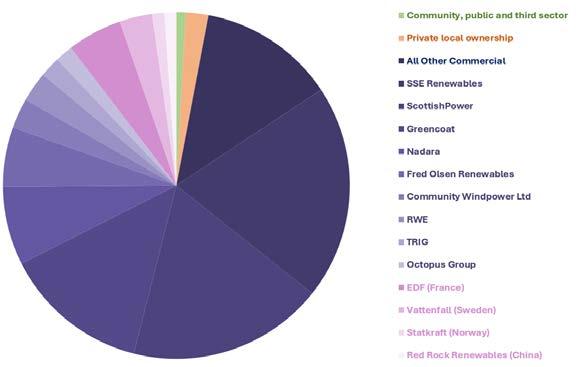
THOSE MOST IMPACTED BY NET ZERO PROJECTS ARE LEAST ABLE TO DEVELOP THEIR OWN
The barriers facing communities who want to develop their own energy resources are not just technical. They’re not even just regulatory. They are the cumulative result of a cascade of interlocking legal and commercial agreements that, taken together, privatise the wind resource, before community consent has a chance to be established. Land rental agreements between developers and landowners. Grid connection agreements secured years ahead. Seabed leases awarded by the Crown Estate. Power purchase agreements. Contracts for Difference. Planning approval under rules set by national authorities. Each agreement is individually defensible. But the cumulative effect is that the right to capture the energy value of a place like Shetland has been comprehensively allocated to private developers, through processes that never included a statutory mechanism for community participation or community benefit beyond ex-gratia (voluntary) payments.
As an aside: the Scottish Government’s Good Practice Principles recommend voluntary community benefit payments of £5,000 per installed MW per year, based on a precedent established in 2010. On this basis, the 443 MW Viking project pays around £2.2 million per year into the Shetland Community Benefit Fund. In February 2026, proposals were published to raise this to £6,000 per MW –still voluntary, and still a long way short of the £7,500 or more that communities and local authorities have lobbied for.
In June 2025 alone, SSE Renewables received over £1.1 million in constraint payments for the Viking wind farm – compensation paid when the grid cannot use all the electricity produced – after nearly 78 per cent of its generating potential was curtailed. Across the first half of 2025, the company received £116 million in curtailment payments for wind farms across northern Scotland, with more than 4 TWh of potential energy left unused.
Principal ownership of currently installed onshore wind capacity in Scotland.
GRIDLOCK
In England and Wales, community energy projects of up to 5 MW can now connect to the distribution grid without a Transmission Impact Assessment (TIA), following the approval of code modifications in May 2025. This means that a community group in Bristol or Barnsley can develop a meaningful project and connect it without, in essence, entering the transmission queue.
On the Scottish mainland, that threshold is 200 kW. On the Scottish islands, where I live, it’s 50 kW. The practical effect of this is that a community in England can connect a project one hundred times larger than anything a community can build in Shetland.
Any projects above those thresholds get drawn into the connections reform queue – the Gate 1 / Gate 2 system. The National Energy System Operator paused new applications in January 2025, and connection dates for any new projects in this part of the world are 2035 at the earliest. Remember that the original Labour manifesto committed to 8GW of community energy by 2030.



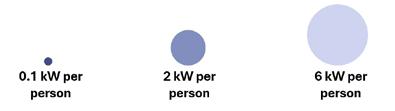
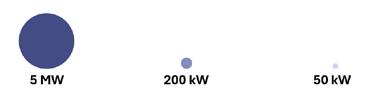
This is the thing that should trouble anyone who cares about public consent for the energy transition: the reason community projects cannot get on the grid until the mid-2030s is that the queue is full of large commercial projects, many of which have not been built yet.
Community Energy Scotland and Regen have jointly called for community energy projects to be designated as “needed” within the connections reform process, through the Project Designation Methodology, enabling them to secure priority grid connections. They have also called for the TIA threshold in Scotland to be raised to 5 MW where feasible, and 1 MW where it is not. These are practical, achievable reforms. Without them, the promise of local power risks remaining abstract.
THE RIGHT TO SELF-SUPPLY?
Here’s an intuitive idea: a community, famous for its wind, should be able to use some of that wind to heat its own homes.
The reality is that the path to realising that is almost impossible for community groups to navigate. One community I am working with in Shetland has two simple objectives: reducing the cost of heating bills for houses, and making public spaces more energy efficient. About five hundred buildings sit within the community. The wind howls around (and sometimes through) them for much of the year.
One idea was to build turbines within the community that could harness the wind and deliver cheaper power to local houses and community spaces. The challenge is that the Shetland grid is already full of developer-led projects, and the TIA threshold is so low that, under the current trajectory in Shetland, it would not be possible to introduce new generation into that substation area that meaningfully contributes to those five hundred buildings.
Another idea was to establish an Energy Local Club; a model where generators and consumers under the same primary substation club together to match generation with demand, so both get a better price. It relies on there already being generation at the correct voltage within the local substation area that the scheme can be linked to. Given
that Shetland more broadly hosts one of the largest onshore wind farms in the UK, we explored whether there was scope to establish a local energy club linked to the output of Viking.
The barriers there were even more complex. There is no mechanism to tie generation on the 132 kV side of the transmission network – where Viking connects – with the 33/11 kV local distribution network to which houses and community buildings connect.
Energy Local Clubs require participants to be on the same electricity substation, and the voltage mismatch creates a barrier that is a product of the way the regulatory and grid rules are structured. The same barrier has been documented by Energy Local in the case of Barra and Vatersay in the Western Isles, where a community-owned turbine connected at 11 kV cannot supply households on the low-voltage network because the rules do not permit cross-voltage matching.
Furthermore, due to grid constraints, Viking is curtailed for a substantial proportion of the time. Over a million MWh of energy went unused at Viking in 2025, making it the onshore development with the most ‘wasted energy’ in Scotland, and SSE received nearly £10 million in constraint payments as a result. So even if the regulatory barriers could be overcome, the generation may not be reliably available to the community seeking to link it to an energy discount scheme.
For people on the ground, that reality feels overwhelming, and as I hear again and again, it feels “unjust” – communities should have the right to supply themselves with power. People have been living with this feeling for years, and it does not yet feel like help is on the way. Perhaps this is where the Local Power Plan, if armed with sufficient resources and teeth, could help.
PROMISES VS. REALITY
Labour’s 2024 manifesto included a commitment of up to £1 billion per year for community energy: £600 million in grants to local authorities and up to £400 million in low-interest loans to community organisations, per year. That was intended to deliver 8 GW of community energy by 2030, a million new energy owners, and 20,000 new projects.
The published Local Power Plan commits “up to £1 billion”, not per year, but across the spending review period. The grant/loan split has not yet been specified. The 8 GW target, the million owners, the 20,000 projects, don’t appear in the published plan. Great British Energy is now saying it will support 1,000 local and community energy projects by 2030.
When we look at what sort of projects these are likely to be, the plan’s largest spending commitment is £255 million for rooftop solar on public buildings such as schools, NHS sites, military installations. This is welcome, but it is not, by definition, ‘community wealth building’. When you put
Onshore wind capacity and Transmission Impact Assessment (TIA) limits (Q1 2026)
panels on a school, the school’s electricity bill goes down but they are not revenue generating per se: nobody in that community gets to decide whether project profits go to a nursery, a social housing project, or how additional community wealth is best used to improve lives locally.
Community wealth building is a specific framework developed by the U.S. based Democracy Collaborative and adapted for the UK through the Preston Model, the work of CLES (the Centre for Local Economic Strategies), and the Scottish Government’s recently passed Community Wealth Building Bill.
It has five pillars: plural ownership, making financial power work locally, fair employment, progressive procurement, and socially productive use of land and property. The LPP engages with one of these pillars and largely misses out the other four. When you tell a community in Shetland that you are going to build their wealth, and what you deliver is solar panels on a school roof, you risk disappointing people, discrediting the concept itself, and making the next genuine attempt harder.
Britain’s renewable resource is concentrated in north and west Scotland. The demand sits in southern England. Communities in Shetland, the Highlands, the Western Isles, and rural Wales are hosting enormous volumes of infrastructure – wind farms, cable routes, converter stations, batteries, transmission lines – mostly to serve demand hundreds of miles away. The communities carrying the heaviest infrastructure burden are precisely those locked out, stuck behind a connections queue full of developer-led projects, and now offered programme funding designed primarily for English public buildings.
If the answer to concerns like “you’re industrialising our landscape so multinationals can export our wind” is rooftop solar on a primary school, it does not neutralise the criticism. Political actors such as Reform UK do not need to fabricate grievances here; the structural inequity is real.
As energy bills climb again, as inflation returns, as people in rural and island communities watch the turbines spin out their windows while they pay more than almost anyone else in the country, the political consequences of failing to address this become ever harder to ignore. I occasionally ruminate that the energy transition behaves like a non-Newtonian fluid: the harder and faster people try to push developments through communities, the firmer the resistance becomes.
ACHIEVING THE AIMS OF THE LOCAL POWER PLAN
For communities in England and Wales with grid access and suitable building stock, the Local Power Plan will genuinely help. That‘s fair enough: it’s probably who the Department
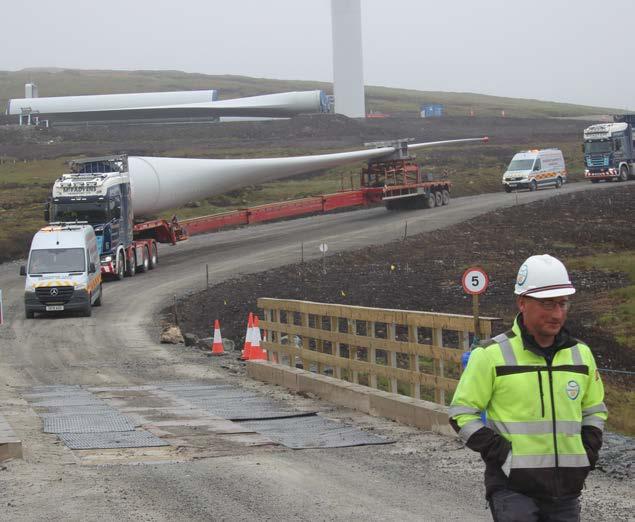
for Energy Security and Net Zero and Great British Energy mostly had in mind when the Plan was being drafted. But for host communities in Scotland, what’s needed looks a bit different.
We need a meaningful stake in the generation assets operating around us: not voluntary benefit funds at £5,000 per installed MW, but structured ownership producing real revenue. The mandatory shared ownership offer promised for consultation in 2026 needs to arrive with teeth.
We need grid connection capacity reserved for community-scale generation in host communities. The Community Energy Scotland proposal for community energy to be designated as “needed” within the connections reform process is exactly right. Communities carrying the nation’s infrastructure burden deserve priority access, not a decade-long queue behind commercial projects.
We need the TIA threshold for community projects in Scotland raised to at least 1 MW on the islands, and ideally to 5 MW to match England and Wales.
We need the regulatory barriers preventing Energy Local Clubs from operating across voltage levels and substation areas to be addressed, so that communities living alongside transmission-connected wind farms can actually benefit from the power being generated on their doorsteps.
And we need to decouple electricity prices from gas – a reform that the current crisis makes urgent, and that would ensure at the very least that communities hosting wind power are not paying gaslinked prices for electricity that is generated by the same wind that strips the heat from their homes. Where power is plentiful, it should be cheap.
The Local Power Plan arrives when the infrastructure it is meant to build consent for is already being built. It arrives in the midst of a geopolitical crisis that is simultaneously proving the case for domestic renewable energy and threatening to accelerate the same extractive development model that has disenfranchised host communities.
Attempting to bolster public support for the energy transition through regulatory frameworks that structurally exclude the communities carrying the biggest burden is a fundamental miscalculation. You cannot build consent retrospectively, and you cannot do it with a plan that offers the windiest, most infrastructure-heavy communities in Britain the least ability to participate.
Local power is self-evidently a good idea. The question is whether it will genuinely transfer control to communities, or arrive as just another layer of language – community benefits, social value, community wealth building – laid over a system that continues to extract disproportionate value from the places producing the UK’s clean power.
© Shetland News
hen we heard that the substation was going to be built in the field right next to my steading, that was quite a shock,” says Barbara Rowell, who lives in the village of Innerwick ten minutes from Dunbar.
“But the local community started a group, East Lothian Winds of Change. And they invited us to come and hear more about what was going on. So I got involved in that, initially with the intention of objecting to it all.
“Once I got drawn in, I realised that we should give it more of a chance and see what might come out of it – in a positive way.”
When it comes to energy developments, the sort of headlines we are used to seeing in local and national press is about objections; of communities outraged and under-consulted by big developers building power lines, substations, wind or solar farms.
But Barbara’s voice is one you don’t often hear. She is featured in a report released in March by the Local Storytelling Exchange, a media organisation that seeks to open up the often-polarised space of renewables and the green transition, to find a fair way forward for people and the planet.
The report, Dispatches from the Grid Frontline, is the result of a year spent hearing voices from communities all along the East Coast of Britain, in the areas where the ‘Great Grid Upgrade’ is taking place. Journalists and researchers spoke to residents from as far south as the East Anglian fens, and as far north as Caithness, to hear how this monumental piece of infrastructure work could be made fairer.
The search for common ground
Barbara’s community of Innerwick is in East Lammermuir, where there are currently 14 energy projects currently in planning or consultation, including a substation, converter stations, and battery storage. Like many communities in Scotland, they had begun to feel overwhelmed by the number of applications – and frustrated by the lack of joined-up thinking.
The local community council called developers and transmission operators to a public meeting. Willing players in each camp have set in motion a process of dialogue, join-up, and ambition for strategic investment of community benefits coming to the area – which they want to see put towards their Local Place Plan priorities; warmer homes, nature restoration, community transport, and a network of paths.
The Exchange’s report delves deep into stories like Barbara’s, but also of areas where communities feel less listened to – and are downright angry.
What local people spoke of was far more nuanced than what tends to be reflected in mainstream media. Some have concerns about the impacts of infrastructure on nature and community. Others share a sense of being imposed upon. Some talked of lack of trust; but others felt more positive, citing the need for an energy system that's fit for future generations.
One member of the citizens’ panel said: “It’s not necessarily my generation that is going to suffer the immediate impact, it’s the next generations are going to suffer from not having energy security along with climate change… So it may be us, the old guard, who have got to actually stop and think about our grandchildren.”
Barbara Rowell in Innerwick Still from film by Chris Leslie
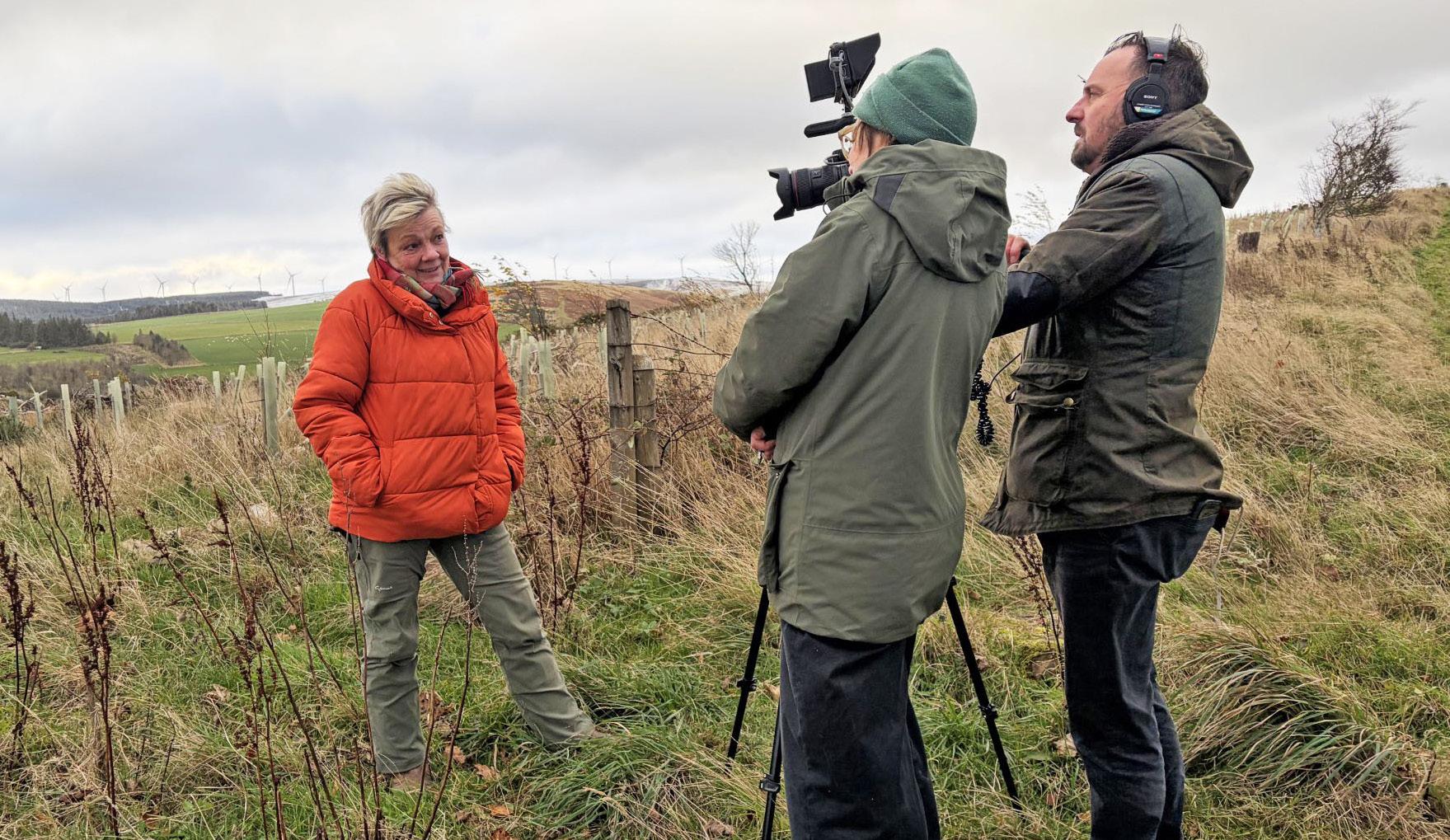
On the grid frontline
By Clare Harris
What united many was the fact they didn’t want to be seen as NIMBYs – and that a prevailing narrative of builders vs blockers was insulting, unhelpful and ultimately risked slowing progress towards climate goals.
Over the course of in-depth citizens panel sessions run in partnership with Climate Guide, people were able to unpack their views and find space for flexibility.
Views fell naturally into four groups. The smallest of all was an immovable position in which there were no circumstances under which grid upgrades could be carried out fairly.
“I just feel strongly that the shareholders are going to win,’ said one citizens’ panel member.
However, the other three positions, forming the majority, offer developers, electricity transmission operators and the wider energy sector a route towards a process that puts communities first.
This route includes early, full and transparent information and engagement on energy proposals, and collaboration in place of consultation. It sees an end to the sense of cumulative impact of proposal stacked on top of proposal, ambition for places that is long lasting and transformative – and proper compensation for those affected.
Above all, the year-long deep dive found that people wanted to be able to challenge proposals without their concerns being belittled or dismissed.
Another panel member said, “the community needs to have a share in the infrastructure that’s being put in their community, and then there is no argument.”
Read more about this work at localstoryexchange.org/grid
If you would like to speak to Local Storytelling Exchange’s team about the process, the findings or the issues raised in this report please get in touch on info@localstoryexchange.org
Filming resident Lynn McGregor in East Lammermuir
High-density hydro in the Ken Valley: a potential for community-centred renewable energy?
By Sarah Ade and Keith Brander • Photo by RheEnergise
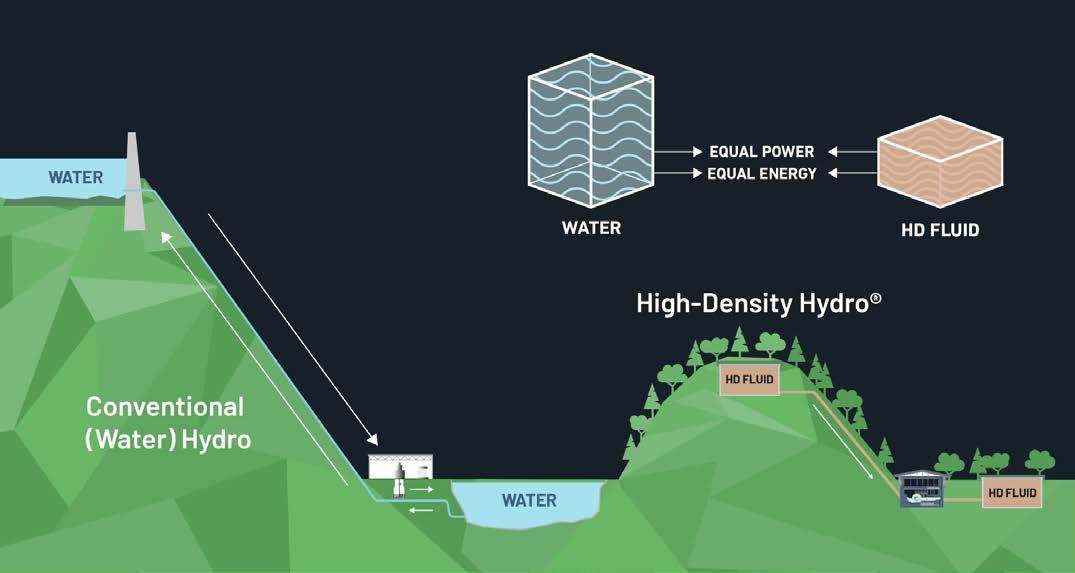
In the Glenkens area of Dumfries & Galloway, rural communities have long exported electricity while facing high local energy costs. Innovations in highdensity hydro storage could change that, giving communities a way to generate, store, and use power closer to home – and perhaps capture more of the benefits of Scotland’s energy transition.
The Ken Valley has hosted renewable energy production since the Galloway Water Power Company was incorporated in 1929. Today, peak generating capacity across the Galloway scheme is around 110 MW, with electricity exported through the National Grid. Wind, rather than water, now drives most renewable energy in rural Scotland, from Dumfries and Galloway to the Highlands.
Turbines approaching 200 metres in height, each capable of generating up to 7 MW, are planned across the south-west and beyond. Yet as residents can see daily, turbines often stand still. Wind energy stops when conditions are too weak or too strong. It may also be curtailed if the grid cannot handle additional power or when other generators are already meeting immediate demand. Across Scotland, this mismatch between expanding renewable generation and limited storage and grid infrastructure is becoming increasingly apparent.
Maintaining balance between intermittent supply and variable demand would be far easier if electricity could be stored cheaply and at scale. Water has been harnessed for energy storage for nearly a century. Pumped storage schemes use low-cost electricity to pump water uphill when demand and prices are low, then release it back downhill through turbines to generate power when demand is high. Scotland is already home to some of the UK’s best-known pumped hydro schemes, including Cruachan Power Station above Loch Awe, where an upper reservoir 400 metres above the loch can generate up to 440 MW.
Across the Highlands, further large-scale pumped storage proposals are being developed, reflecting growing recognition that long-duration storage is essential to support Scotland’s renewable ambitions. Although lithium battery storage farms make headlines almost weekly, conventional pumped hydro still provides the majority of global energy storage capacity. Its limitations are well known: suitable geography, environmental sensitivities, and high upfront construction costs.
One potential solution is high-density hydro, which uses a fluid much denser than water. A UK start-up, RheEnergise, has successfully built and operated a 500kW demonstrator near Plymouth. By increasing the
fluid’s density roughly 2.5 times, similar power outputs can be achieved with smaller vertical drops and more compact reservoirs — potentially opening more sites across Scotland, including areas unsuitable for conventional pumped hydro.
In the Glenkens, potential high-density hydro sites appear relatively plentiful, with vertical drops exceeding 120 metres and enough space for upper and lower storage tanks. Comparable topography exists across southern Scotland and many Highland glens, making the approach a genuinely viable local solution.
Beyond the engineering, there is also the question of ownership and local benefit. “That’s a very timely question, particularly in light of the recent press release from GB Energy highlighting the growing focus on community energy,” says Philippa Rogers of RheEnergise. “While this isn’t an area we are actively pursuing at present, we’re very happy to contribute to the discussion because there are clear synergies between community-led initiatives and what RheEnergise’s high-density hydro technology can offer.”
She suggests that one of the most significant advantages for communities would be accessibility. “Our systems are scalable, typically ranging from 10 MW to 100 MW, which means a community could realistically pursue a smaller installation that aligns with its own energy demand rather than generating power solely for export to the national grid. That scalability creates flexibility and makes projects feel more locally purposeful.”
Site flexibility is another key factor. “High-density hydro is a closed-loop system, so it doesn’t rely on a natural lake, a specific river, or rare geographical features,” Philippa explains. “This opens up the possibility for communities to utilise marginal or underused land they already own, turning it into a productive energy asset without competing with critical natural resources.”
Importantly, she states that such schemes could be shaped by local priorities. “Because the storage tanks can be buried or carefully landscaped, residents can influence the visual footprint of a project. A site could be designed to enhance biodiversity, integrate with the surrounding landscape, or even remain compatible with agricultural use. That level of co-design helps foster local acceptance and pride.”
In a country where many rural areas generate electricity for export while facing high local energy costs, resilience is an increasingly prominent issue. “In an era of volatile energy prices, a community-owned high-density hydro system could effectively act as a local battery,” continues Philippa. “By storing energy when supply is abundant and discharging it during peak periods, communities could potentially stabilise local costs, particularly if connected through a private wire network.”
There is also a local economic element. “Unlike some remote renewable projects, high-density hydro requires substantial civil engineering during construction and ongoing maintenance once operational,” she notes. “A grassroots model would help ensure that local contractors and technicians are trained and employed, keeping economic value within the postcode and strengthening the local supply chain.”
Various structures could potentially support this approach. Philippa continues: “There are community ownership models that could support delivery including joint ventures or structures inspired by the Local Electricity Bill model, although we haven’t yet explored these in depth”.
Scotland has a long history of renewable innovation, from early hydro schemes in Galloway and the Highlands to today’s onshore and offshore wind developments. The next chapter may depend not only on how much energy is generated, but also on how effectively it is stored – and, perhaps more importantly, on who benefits.
For areas like the Glenkens, and rural Scotland more broadly, high-density hydro raises an intriguing possibility: the energy transition could evolve from an extractive model into one that supports greater local resilience, economic activity, and longterm community gain.
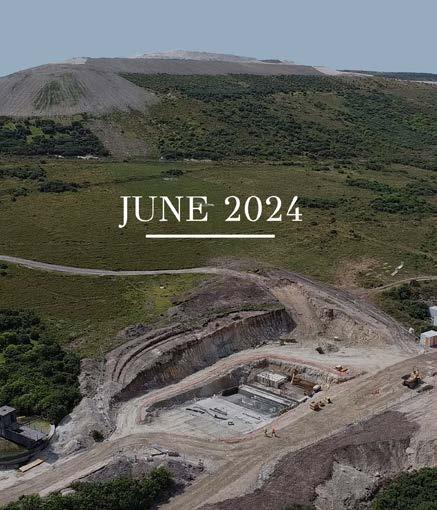
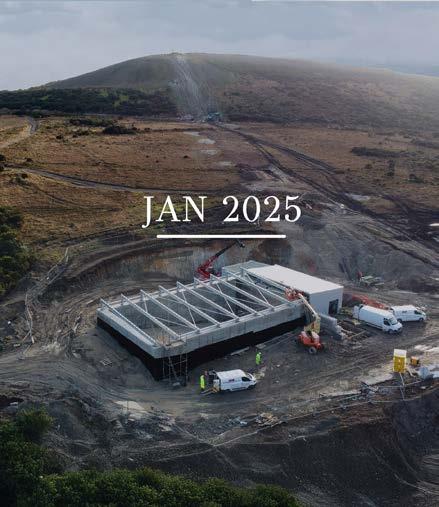
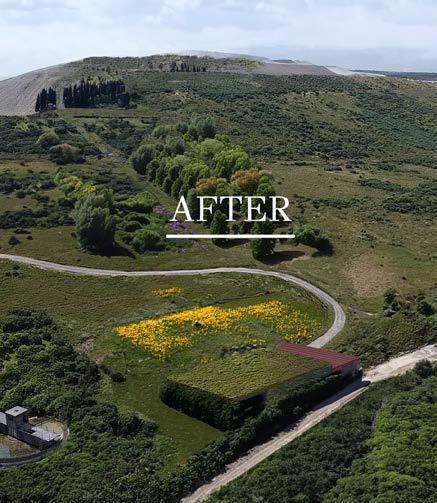
THIS IS COMMUNITY WEALTH BUILDING
By
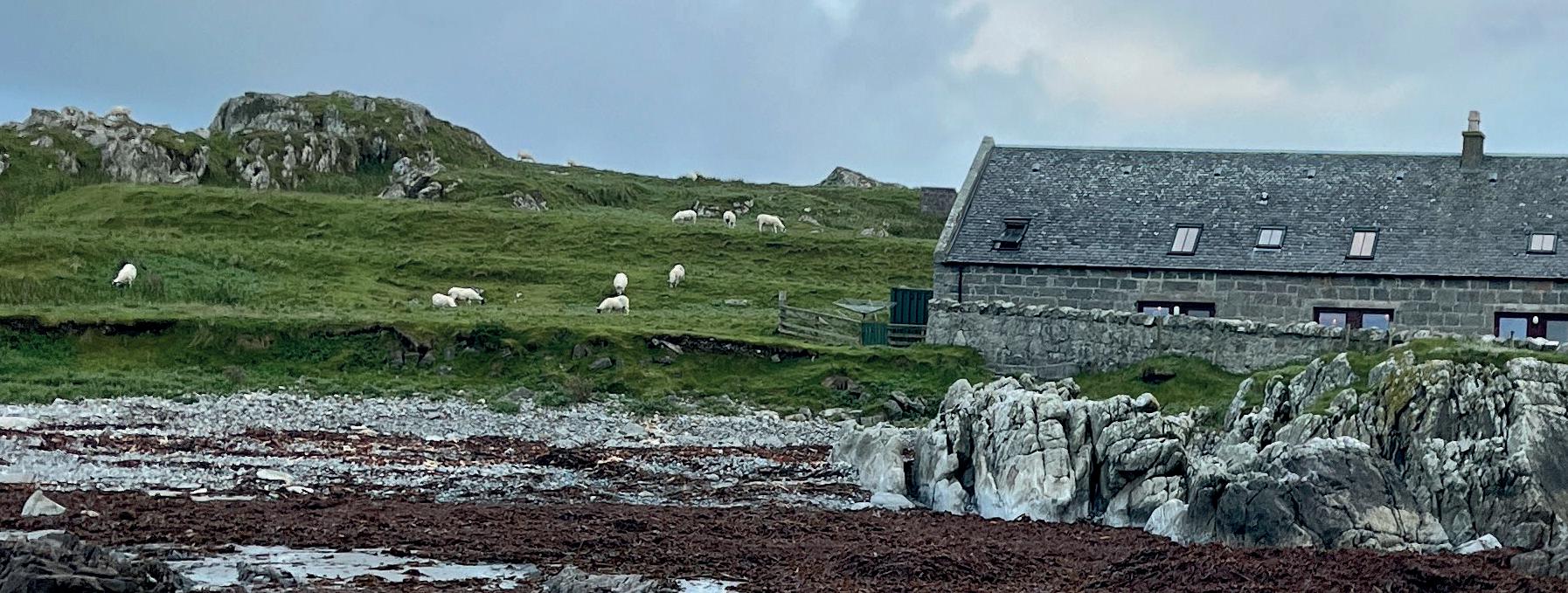
The Scottish Community Alliance is a coalition of national networks and intermediaries who each represent different aspects of Scotland’s vibrant community sector. What unites us is a commitment to supporting the community-led organisations who shape our sector. Together, we influence local and national policy development to help us create more equitable ways for community organisations to be at the forefront of decision making, for a strong and resilient community sector in Scotland.
Community Wealth Building is a policy area we are collectively working to influence as a key driver for sustainable economic, social and environmental development that enhances the prosperity of all of Scotland’s people and places. While it is gaining increasing recognition as critical to Scotland’s future, what it looks like in practice is not yet widely understood.
To address this gap, The Scottish Community Alliance partnered with Greater Community Media to show the work of grassroots community organisations pioneering Community Wealth Building across Scotland, and the intermediary networks supporting them.
Most relevant to The Power Shift project in this storytelling campaign was our visit to Tiree Community Development Trust (Urras Thiriodh).
Like many rural and island communities, Tiree’s population has been declining for many years, as people move to the mainland to look for jobs, housing and other opportunities. Local people were becoming increasingly worried about the sustainability of the school and the risk of a tipping point for further population decline.
In response, in 2006 a group of local people came together to take the future of the island into their
own hands, based on the belief that the community needed to generate its own income to be able to make the investments needed in the community, and set up Tiree Community Development Trust.
Their ambitious plan to harness the island’s powerful natural wind resource took shape through the construction of a 900 kW communityowned wind turbine, affectionately named “Tilley” by local children. Managed by the Trust’s trading arm, Tiree Renewable Energy Ltd, the turbine has generated around £4 million for the community of just 650 people, funding everything from critical infrastructure to essential services.
When the island’s two main harbours were crumbling, threatening the viability of the local fishing fleet, the Trust led a major regeneration, securing the livelihoods of dozens of families. When the island’s only petrol station faced closure, they built a replacement, sparing residents a two-day trip to the mainland for fuel. They run a community broadband service – recently the only working connection after a major storm – and rescued the village shop, which is now also a post office.
To further nurture local enterprise, the Trust constructed four modern business units, providing permanent space for a hairdresser, art gallery and creative social enterprise, allowing small businesses to thrive where they once struggled. Now, with housing being the most urgent need on the island, the Trust is driving a major project to build affordable community-owned homes for people who live there.
Their work goes beyond physical infrastructure. The income from Tilley also funds a full-time youth officer who runs a year-round programme of activities to make Tiree a vibrant place for children to grow up, a Ranger Service to manage tourism, a
home energy efficiency improvement and community advice service, a vital electric community minibus and provides small grants for local groups.
But this success of community ownership doesn’t happen in a vacuum. It requires an equally expert support system. Community Land Scotland (CLS), is an intermediary body providing the critical support that organisations like the Tiree Trust need.
To-date, more than 500 communities across Scotland have taken ownership of buildings and land, covering over 200,000 hectares. As the representative body for Scotland’s community landowners, CLS underpins that movement by providing specialist advice, peer learning and national advocacy.
Tilley remains Tiree’s financial backbone, but after major repairs it is uninsurable and nearing the end of its life. In response, the Trust is investing in more resilient and scalable solar arrays and exploring the development of a local energy co-op to keep profits circulating locally. The strategy is clear: resilience through community ownership.
The Scottish Community Alliance are collectively calling for devolved power and decision making as an inherent part of how we implement Community Wealth Building.
These principles must be built into economic development, planning, health, food systems, transport and climate policy. The community sector – the part of the third sector that is owned and led by local communities – can provide a blueprint for the future if properly recognised and resourced. Our collective strength as a sector lies in local knowledge, shared learning and the ability to scale practical solutions.
If Scotland is serious about making local economies work for local people, communities should be benefitting from the projects they control.
Jill Keegan, Scottish Community Alliance partnerships manager
A community-owned wind turbine on Tiree has generated around £4 million for the island

The Scottish Beacon is a network of 25 grassroots, communityowned publications. No big funders, no clickbait – just vital reporting that needs your support.

If you can afford £5 a month you can help us keep going. members.scottishbeacon.com/join