
Dear Readers,
This issue delves into the worrying rise of the far right and explores what we can do about it – from building communities of care to making sure we’re all registered to vote in the next election. The people of Govanhill have a long history of standing up to fascism, and that spirit is needed now more than ever.
Community media like Greater Govanhill matters deeply in moments like these. Unlike corporate-owned outlets that chase clicks, profits or division, we were set up to connect people, share understanding and build solidarity.
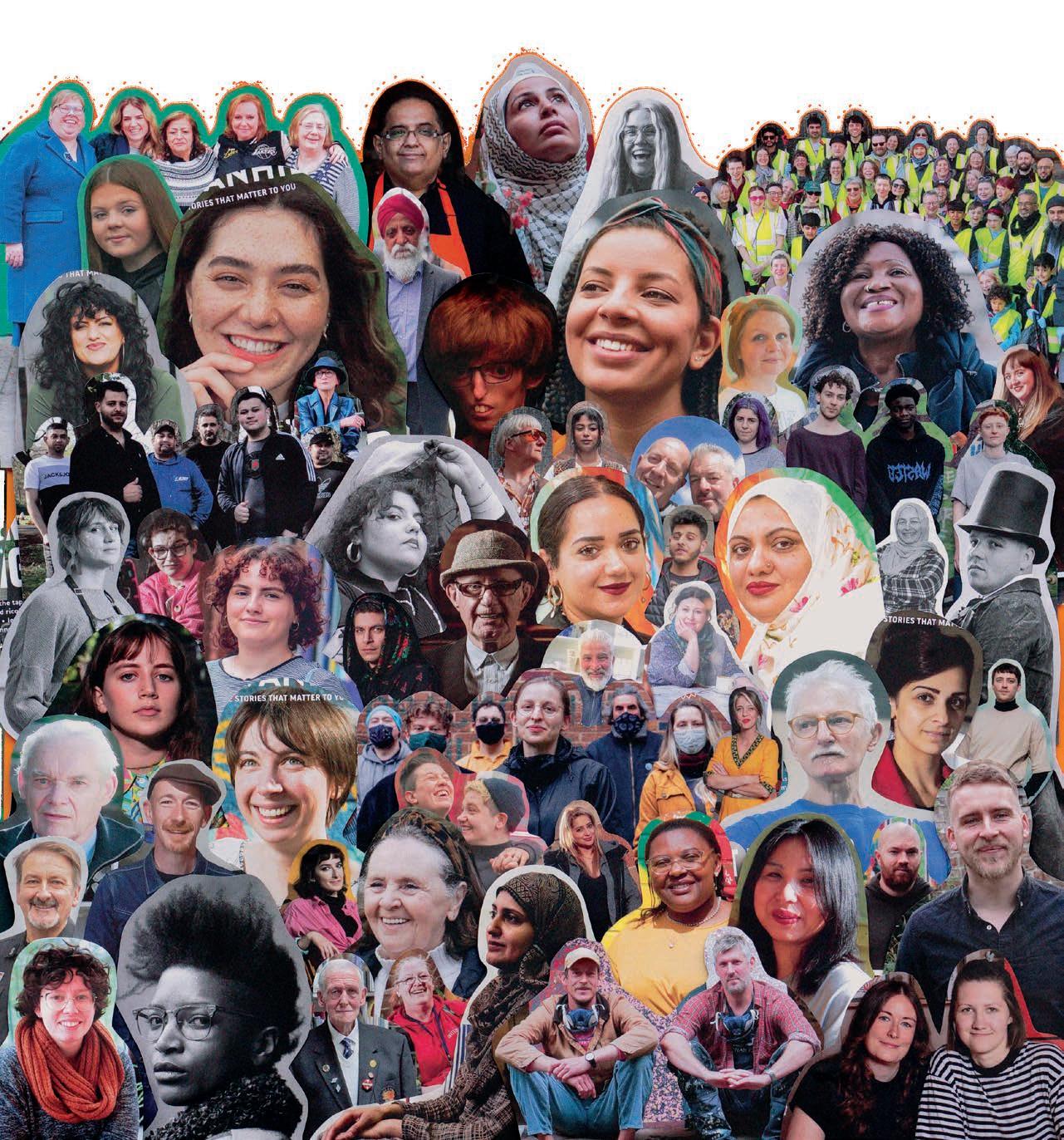
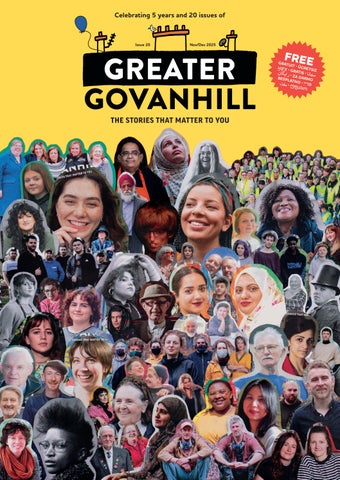
I’m incredibly proud to be sharing Issue 20 with you – five years after we first went to print. The faces on this cover are all people who’ve featured in the magazine along the way: neighbours, organisers, artists, activists and friends who continue to inspire me every day.
In these turbulent times, platforms like Greater Govanhill offer a space to amplify voices too often missing from the conversation – and to remind us of the power of community storytelling.
It’s been an adventure launching this magazine and seeing everything that has grown from it. I never imagined that starting a local publication for my neighbourhood in Glasgow would lead to speaking at conferences in Italy, Germany and Portugal, or to us winning numerous national awards.
After five years, it feels like the right moment to hand over the reins. We’re looking for someone to lead the next chapter of the Greater Govanhill story – to steer it through the next twenty issues. Think that could be you? Got big ideas for where we go next, and experience leading an organisation? I’d love to hear from you: rhiannon@greatercommunity.media.
Finally, a huge thank-you to everyone who’s been part of this journey – our writers, translators, photographers, illustrators, volunteers, board members, and the members whose monthly contributions help keep us going.
We still need your help to keep the magazine thriving and the stories of Govanhill being told. If you haven’t joined as a member yet, now’s the perfect time to get involved.
With thanks and solidarity, Rhiannon
Founder, Greater Govanhill CIC
A special thanks goes to our advertisers: Corra Foundation, Community Renewal, Glasgow Social Enterprise Network, My Academic Family, People Make Theatre, South East Integration Network, South Seeds, Street Level Photoworks.
Want to advertise in our next issue? Email advertising@greatergovanhill.com

Our independent, grassroots magazine is created by, for and with the local community – amplifying real experiences, shared struggles, and collective hopes. If you believe in media that builds connection instead of division, support us by becoming a member: community.greatergovanhill.com/join
Cover image Collage of Greater Govanhill magazine images by Laura Hurst
Editorial Team Devon McCole and Rhiannon J Davies
Creative Director Laura Hurst paperarcade.co.uk
Picture Desk Iain McLellan, Laura Vroomen
Ad Sales & Socials Mikael Phillips
Newsroom Facilities Catherine Weir
Words by
Alice Austin, Cat Cochrane, Claire Low, Devon McCole, Gabby Cluness, giacinta frisillo, Jess Lavin, K A Watters, Katherine McKinnon, Laura Vroomen, Marzanna Antoniak, Natalia Uribe, Patricie Zbila, Rhiannon J Davies, Ruby Dark, Sam Gonçalves, Sarah-Louise Kelly, Shaimaa Alrashwanii, South Seeds, Yasmine Rahemtulla
Photos by Alexander Hoyles, Alice Austin, Alison Johansson, Ewan Lachlan, giacinta frisillo, Iain McLellan, John Bowden, Karen Gordon, Nick Sims, Nicola Smith, Romano Lav, STUC archive, Syeda Sadaf Zaidi, Zianib Ahmad
Illustrations by Alistair Quietsch, Gosia Kepka, Stuart White
AI has been used to help with some sub-editing purposes, including formatting, spell checking and fact checking.

with Romano Lav and training to be a health care assistant worker. I really enjoy seeing my neighbours and seeing them laugh and smile. I have a big passion for community change and helping people out. I’m determined to speak up for what’s right in our community.
Read her article Home, hope and human rights on page 8
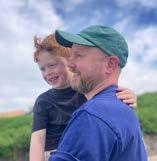
I’ve lived and worked in Glasgow’s Southside since 2007. I studied Illustration many moons ago, but I still enjoy drawing – mostly with my son these days. I spent many happy years living in Govanhill, and I still love sitting by the Queen’s Park flagpole, looking out over the city.
See his illustration of communities of care on page 22
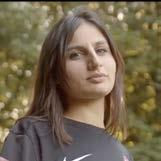
Yas Rahemtulla
I’m a service designer based in Glasgow who recently graduated from GSA. My work centres Global Majority experiences, sustainability, and more-than-human perspectives. I use design to support care and connection between people and our planet.
Read her article about the right to urban land on page 30

FREEFOR FIRST-GENERATION, CAREEXPERIENCED, ESTRANGED, OR DISPLACED STUDENTS
My desire for education kept burning, I needed someone who could help me out with some ideas on how to achieve my goals.

That call marked the beginning of my success in the pursuit of university admission.
News in Brief
All the latest news from around the neighbourhood 08
Roma news and views
“We don’t just focus on culture, we focus on solidarity and bringing all communities together.”
09
Recipe: Utica greens
“From a time when meat was hard to come by – and utterly delicious thoughts were being paid to vegetables.”
10
My life before Govanhill
“It is welcoming and just full of beautiful things. I love a charity shop too, so I am spoilt here.”
11
Behind the Chair: Roar Hair & Beauty
“I love our younger clients – they are quite out there with their fashion and style”
12
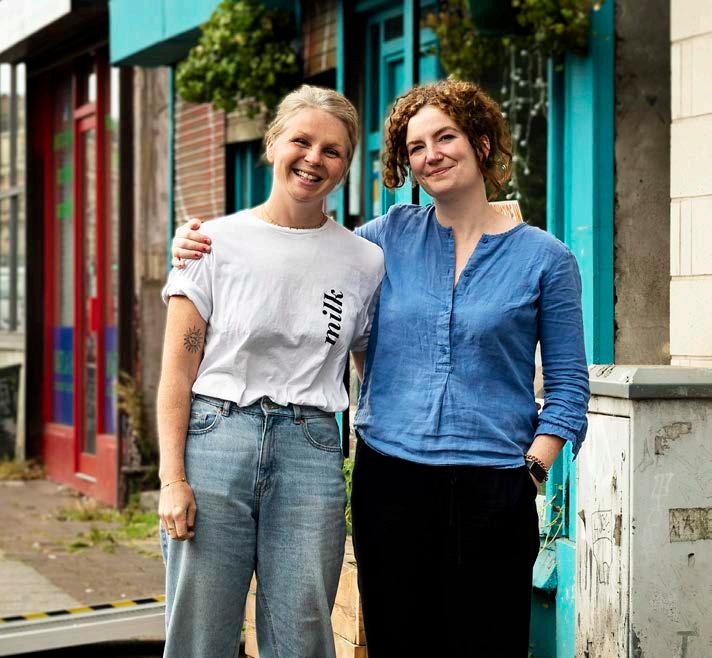
Community Spotlight: MILK celebrates 10 years of supporting migrant women
“In a place where so many… are deliberately hostile to refugee and migrant people, safe places like MILK are essential.”

Govanhill at the centre of Glasgow’s flag wars
“The Scotland flag, which has long been a symbol of freedom and hope… is now being used as a tool to fearmonger” 15
Write like a Grrrl explores polarisation in poems
“These are my people; this is my home. In this roar, I am whole.” 16
Your voice. Your vote
“If you don’t use the democratic systems which somebody has set up for you to use, democracy isn’t going to work and you’re not going to beat them.” 17
Change the power dynamic. Help us build a Citizens Agenda. “A seismic political shift could be on the horizon in Holyrood and Westminster.”
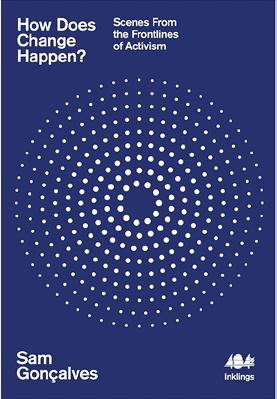
How Does Change Happen? Scenes From Frontline Activism “I was able to see different issues in different communities and how communities come together, the importance of dialogue, not judging one another.”
20
Govanhill Storybooth
“Every person you walk past carries their own stories with them – their heritage, their experiences, their memories.”
22
How do we build communities of care?
“That is how you tackle far-right populism, by challenging the individualistic mentality and prioritising care and community.”
24
Inside the fabric shops of Cathcart Road
“I always laugh and tell her this isn’t a shop – it’s a community centre.”
26
Who speaks for Govanhill?
“Issues can only be successfully tackled if the community comes together to campaign as a collective.”
28
A journey through radical Govanhill
“This neighbourhood has long been a focus in the city for demonstrations, political speeches, organising and community action.”
30
Who has the right to urban land?
“When opened up and reimagined for everyone – as community hubs, gardens – they can transform from symbols of exclusion into places of belonging.
32
Why do evictions keep rising in Govanhill?
“This brutal process upends people’s sense of security, forcing them to leave their homes, and putting them at risk of homelessness.”
34
Where to buy the most sustainable coffee in the Southside
“It was interesting that it was not the most expensive coffee shop which ranked highest”
Greater Govanhill celebrates 20 issues!
This December will mark exactly 5 years since the first issue was published, and we can’t believe we’re now at Issue 20. We’ve grown so much since then – working with over 300 contributors, growing our core team, opening The Community Newsroom, running community reporter training programmes, as well events, workshops and all kinds of other projects. Along the way we’ve won multiple awards for our work and inspired numerous other community media projects around the world. But now we need your help. To keep going, we need to increase our membership significantly. So if you can afford a few quid each month to help keep this magazine free for all support us via community. greatergovanhill.com/join or by scanning this QR code

Thanks to funding from the Scottish Government’s Scots Language Publication Grant, the next issue of the Greater Govanhill magazine will be dedicated to Glaswegian dialect, celebrating local language, humour and grit. We’ll be running a Scots writing group and are looking for Scots writers to get involved. We’ll also be publishing articles in other community languages too. The project aims to give the dialect the space it deserves and to showcase its everyday beauty. Want tae chip in? Email mikael@greatergovanhill.com for more info.
‘Home’ exhibition explores migrants making Scotland their home
The Glasgow Gallery of Photography has selected work by Sadia Sikander for its new exhibition themed Home. Sikander, who won first place for her writing on the asylum system for Greater Govanhill at this year’s Refugee Media Awards, said her project “finds its home in Glasgow, a city known for its warmth, resilience, and proud tradition of solidarity,” and brings together “the stories of young asylum seekers who, while seeking safety and a home in the UK, remain trapped in the asylum backlog.” The exhibition runs 5–29 November at the gallery on High Street.
A new service, The Purple Phone, has been launched by charity Financially Included, as Scotland’s first ever helpline dedicated to supporting people experiencing economic abuse – a form of control where a partner or ex-partner restricts access to money, resources, or essentials like food, housing, or transport.
Economic abuse can involve taking wages, running up debts in someone’s name, stopping them from working, or monitoring every penny they spend. It often continues long after a relationship ends, trapping survivors in unsafe situations or preventing them from rebuilding their lives. Call them on 0343 841 0132 Monday 4:30–7:30pm, Wednesday 10am–1pm, Thursday 1:30–4:30pm
Dynamo shifts gears from West End to Govanhill
Dynamo Glasgow CIC, a queer-led, feminist cycling and maintenance workshop has just taken on new premises in Victoria Court and Holybrook Place, making the move from the West End to the Southside. Mark Donachie, Board Director of Dynamo said: “We’re on a mission to promote equality in cycling, alongside creating a safe and collaborative space for cycling and maintenance activities.” Dynamo’s workshop is open Tuesday to Friday. Find out more at Dynamocic.org
Skateboarders call for repair of Queen’s Park ramp
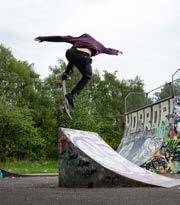
Local skateboarders are calling for action after the much-loved Queen’s Park Recs halfpipe was further vandalised, leaving it likely beyond repair. The ramp has long been considered a hidden gem in the UK skate scene. Regulars say it’s been a “proving ground” for Glasgow skaters and one of the few proper vert ramps in Scotland. Skaters are urging the council to restore or replace the Queen’s Park ramp to enable the scene to continue.
Temporary fireworks ban in Govanhill and Pollokshields
From 1–10 November, Govanhill and Pollokshields will become Fireworks Control Zones, meaning it’s illegal to set off fireworks on public or private land during this period.The restriction is part of a safety effort introduced by Glasgow City Council, aimed at reducing noise, injury, and damage linked to fireworks in built-up areas. Both neighbourhoods showed strong local support for the move, with residents hoping the ban will make streets calmer and safer around Bonfire Night.
Langside Halls finally gets funding boost for refurb
There are hopes that the A-listed Langside Halls could reopen after a £300,000 financial boost for refurbishment from the Pollokshields, Langside and Southside Central Area Partnerships. The move comes after local councillors called for the historic community hall to be properly protected from further damage after eight long years of abandonment.
Community Renewal hosts new Friendship Cafe at MILK
A new Friendship Cafe is running from MILK’s community space on 378 Cathcart Road on the last Tuesday of every month. The cafe will be serving up three-course traditional Slovak/Romanian homemade dishes at £7 from 4:306:30pm. The aim is to build connections by breaking bread together. Contact nikola.krugova@communityrenewal.org.uk for more information.
Govanhill groups join call to ‘demand better’
Local organisations are backing a national campaign urging the Scottish Government to take stronger action on poverty. The Scotland Demands Better campaign calls for fairer wages, better social security, and investment in essential services to protect people from poverty – including those already in work.
John Halliday, from Community Renewal said: “Our work shows that Roma migrants are…too often exploited in their housing or in work… All those facing such disadvantages in Scotland need more support for their housing rights, employment rights, and overall more support to live fulfilling lives.”
Claire Larkin, of Parents for Future Scotland, linked the campaign’s aims to climate justice: “Climate is about power and resources. At the moment very few people hold the power and resources, and the poverty gap is getting bigger and bigger.” She added, “We need to take the power back.”
Hampden Park Bowling Club could be be lost to the community
Hampden Park bowling club was Scotland’s first international football stadium before being converted into a bowling club in 1905. Before then it hosted cup finals and international games, and was one of the first stadiums to introduce turnstiles. The Hampden Park Bowling Club committee are leaving their positions in February, campaigners warn if no new people volunteer to take over, the club may have to close, leaving the door open to developers – as has happened with the sale of Mount Florida Bowling Club. Residents fear it could be turned into flats, whilst campaigners are urging people to take action to protect the site.
Cathkin Park seals its place in Scottish football history
Cathkin Park – which has been the site of ongoing community action trying to prevent the pitch from being fenced off – has been granted scheduled monument status by Historic Environment Scotland (HES). Built in 1884 and recognised as a rare surviving example of a late 19th–early 20th century football ground, the original terracing and embankments offer a glimpse into how the modern game evolved in Scotland.
Once the site of the second Hampden Park and host to Scottish Cup finals in the late 1800s, Cathkin later became home to Third Lanark until the club folded in 1967. Dara Parsons of HES said the designation helps ensure the site’s “significance can be protected and celebrated.”

Home, hope, human rights, and having a voice to fight back with
Patricie Zbila, a Young Catalyst shares how community work and human rights education from Romano Lav gave her the tools to challenge rising anti-migrant rhetoric.
Words by Patricie Zbila
courtesy of Romano Lav
I’m originally from the Czech Republic. So when I first heard about Nigel Farage’s idea to end ‘indefinite leave to remain’ – meaning he wants to end the system that grants permanent residency to migrants living in the UK – I was worried.
My first thoughts were: “Does this mean I have to go home? I can’t go back home…I already have a life here. Where am I going to go to college?” I quickly started searching about this on social media. Scrolling through TikTok, I saw loads of videos of Farage, the leader of Reform UK, talking about it. At first I thought it was fake, just one of those AI videos. It was, in fact, real.
It felt like everything was coming to an end. For my family it was devastating news, as they came to the UK to have a better life and better job opportunities. Hearing this, and worrying that they would maybe have to go back to their home country, was bad news. My mum was thinking about the future and started giving me and my siblings lectures on saving money, and would not stop talking about the situation.
We saw how stressed she was at hearing the news and were constantly searching to see if there were any updates. I think Farage’s idea to make it difficult for migrants to legally settle in the UK permanently would impact Roma people in Govanhill because I know a lot of people in our community who have had jobs here for years, and were terrified after hearing the news; people who have lived and worked here for a long time are worried they might get deported, scared to lose their jobs and places in schools.
Nigel Farage has often stirred debate with his policies and statements. Some of his actions can be interpreted as violations of fundamental human rights, particularly concerning discrimination and freedom of movement. While his supporters champion his views as a defence of national interests, a closer examination reveals potential infringements on rights that are universally recognised.
I have Romano Lav to thank for teaching me about my human rights and how to stand up for them. For the past four years I have been a Young Catalyst working alongside them and I can honestly say it’s been amazing. We found so many friends working with Romano Lav, gained so many skills, and new doors have opened for us. We’ve all learned a lot of important things – like how our lives are impacted by human rights issues like poor housing, and the importance of voting and making sure our voices are heard.
We even got to organise our first ever talent show for the Govanhill International Festival & Carnival this year! When we organised the Govanhill’s Got Talent show earlier this year, we did so not only to show off the talents of our multicultural neighbourhood, but also to bring people together in solidarity to celebrate that diversity
At Romano Lav we don’t just focus on culture, we focus on solidarity and bringing all communities together. I can’t wait to see what we’ll do next.
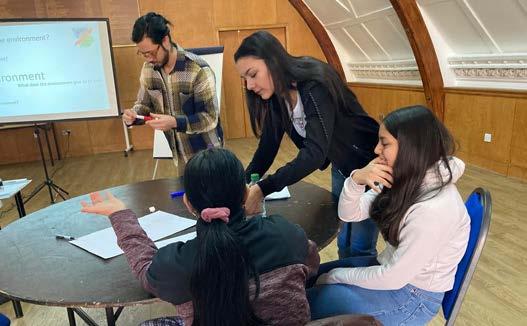
Doma, naděje, lidská práva a mít hlas pro boj s
Patricie Zbila, Young Catalyst sdílí, jak komunitní práce a vzdělávání v oblasti lidských práv od Romana Lava jí daly nástroje k boji proti rostoucí anti-migrační rétorice.
Od Patricie Zbila
Pocházím z České republiky. Když jsem poprvé slyšela o nápadu Nigela Farage ukončit „trvalý pobyt“ – což znamená, že chce ukončit systém, který uděluje trvalý pobyt migrantům žijícím ve Spojeném království – znepokojila jsem se.
Moje první myšlenky byly „Znamená to, že se musím vrátit domů? Nemůžu se vrátit domů... Už tady mám život. Kam půjdu na vysokou školu?" Rychle jsem o tom začala hledat na sociálních sítích. Myslela jsem si, že to jsou falešné zprávy, jen jedno z těch videí AI. Když jsem procházela TikTokem, viděla jsem spoustu videí Farage, vůdce Reform UK, který o tom mluvil. Nejdřív jsem si myslela, že je to falešné, jen jedno z těch videí AI. Ve skutečnosti to bylo skutečné.
Měla jsem pocit, jako by se všechno chýlilo ke konci. Pro mou rodinu to byla zničující zpráva, protože přišli do Spojeného království, aby měli lepší život a lepší pracovní příležitosti. Slyšet to a bát se, že se možná budou muset vrátit do své domovské země, byla špatná zpráva.
Moje máma přemýšlela o budoucnosti a začala mi a mým sourozencům dávat přednášky o spoření peněz a nepřestávala o tom mluvit.
Viděli jsme, jak byla ve stresu, když slyšela zprávy, a neustále hledala, jestli se objevily nějaké aktualizace. Myslím si, že Farage myšlenka ztížit migrantům legální usazení se ve Spojeném království natrvalo by dopadla na Romy v Govanhill, protože znám spoustu lidí v naší komunitě, kteří tu mají práci už léta a po vyslechnutí zpráv byli vyděšení; lidé, kteří tu žijí a pracují už dlouho, se bojí, že by mohli být deportováni, bojí se, že přijdou o práci a místa ve školách.
Nigel Farage často vyvolává debaty svými politikami a prohlášeními. Tvrdíme, že některé z jeho činů lze interpretovat jako porušení základních lidských práv, zejména pokud jde o diskriminaci a svobodu pohybu. Zatímco jeho příznivci obhajují jeho názory jako obranu národních zájmů, bližší zkoumání odhaluje potenciální porušení práv, která jsou všeobecně uznávána.
Děkuji Romanu Lav za to, že mě naučil o mých lidských právech a jak se za ně postavit.
Words and photo by giacinta frisillo
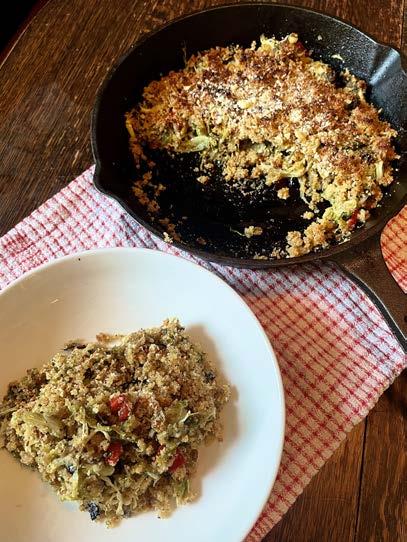
• 2 heads escarole (often called frisee or curly endive in the UK, though you can also try finely chopped kale or chicory –this author takes no responsibility for the use of experimental greens!)
• Medium hot red chilli peppers (jarred or fresh)
• Garlic cloves (this is to your taste, but I recommend at least 5)
• 30g of breadcrumbs
• 100g of parmigiano, pecorino, or a vegan alternative
• Dried oregano, to taste
• Dried basil, to taste
• Garlic granules, to taste
• Salt, to taste
• Roughly 125ml of olive oil (for the topping, plus a few tablespoons to saute the greens)
My grandmother always said I liked ‘Depression food.’ To be clear, that doesn’t mean food you eat when you’re depressed – though I assure you this recipe works for that happenstance too – what she meant was that I, as a vegetarian, enjoyed the food she ate during America’s Great Depression. Cheap food. Food that could be grown in a small backyard city garden. Food you could forage growing wild on the side of the road. I grew up in Utica, the heart of Central New York state. A rust belt leftover that was, in its heyday, a booming inner-city metropolis full of newly-settled southern Italian families who came by boat. Utica has always been made of a diverse mix of immigrant cultures and with it came a city with an overwhelming and distinctive culture full of Italian cafes, restaurants and shops. My grandparents grew up in this landscape as the youngest members in their large families, having the distinction, and squarely-positioned hope placed by new arrivals, of being first-generation to this new country.
As a result, my grandmother was my non, a shortening of the Italian nonna. Though she spoke Italian fluently and often with siblings, cousins and friends, she didn’t pass down the language to my father, or me. Her mantra? “Why you wanna speak ‘talian? You live in America!” What she, and Utica, did pass down was culture, and with it, food.
She cooked the best eggplant parmigiana and made pastas from scratch. Reared on this food, I assumed it was what all Americans ate. Only later did I find out that not only was not everyone eating it – this food wasn’t even exactly Italian. It was Italian-American and from a time when meat was hard to come by – and utterly delicious thoughts were being paid to vegetables.
This is food to feel, to tweak to taste and be so comfortable with that you don’t need a recipe. You know it by heart – and by stomach. So I implore you, use this recipe as a guide, but not a strict one. Let your senses guide you. Make it delicious and let it bring you back home.
Serves 4 as a side dish | Approx. 30 mins to make This is easiest to make in a cast iron pan, which can go from stovetop to oven, but you can also transfer the greens into an oven safe dish after the sauteeing step.
1. Pre-heat the oven grill on a medium to high heat setting. Submerge the escarole in water, wash thoroughly, then drain.
2. Chop the escarole into bite-sized pieces and dispose of the bottom of the stems.
3. Bring a large pot of well-salted water to a boil and submerge the escarole for about 2 minutes. Drain, then run under very cold water to stop the cooking. Squeeze as much water out of the escarole as possible, at least to where it’s not dripping.
4. In a medium bowl, make the topping. Mix breadcrumbs, oregano, basil, garlic granules, and salt with a bit of olive oil – add enough oil until it’s a bit gloopy, like wet sand.
5. Roughly chop the garlic and red chilli peppers, then place them into a frying pan over a medium heat with a good glug of olive oil, enough to coat the bottom of the pan (roughly 2-4 teaspoons). Let them get soft. Reduce the heat if they start to burn or brown too quickly!
6. Add the escarole to the frying pan, as well as half the topping mixture. Feel free to throw in some more parmigiano at this point. Mix everything well in the pan, let it cook for 4-5 minutes, stirring frequently and scraping off anything that gets stuck to the bottom (those are the best bits!).
7. Remove from heat. Put the rest of the topping on top and put underneath the oven grill for about 2 minutes until it’s browned. Remove from oven and sprinkle with more parmigiano.
Interview by Marzanna Antoniak
Where are your roots?
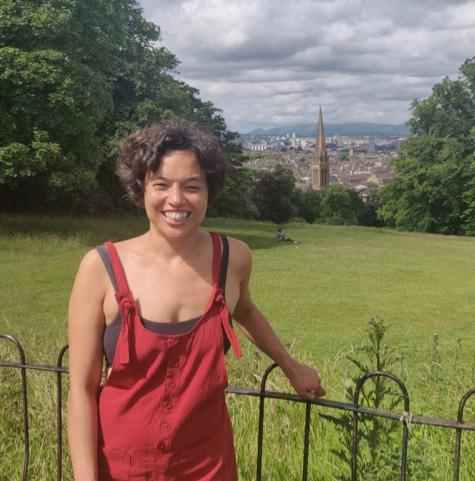
Being made up of multiple ethnicities, my identity feels very personal – I don’t feel like I can affiliate myself with anywhere in particular. In terms of places I feel at home, Scotland has been part of my life since I was born. I haven’t visited Jamaica, but my grandma’s Jamaican food was so comforting, just cooking with her was such a special way to connect with her and that part of my heritage. But when it comes to how I think of myself –even after living in Scotland on and off for 17 years – I am a South Londoner! It was great growing up in London because anything we would think of doing we could do. There were breakdance clubs, skateboarding competitions were common – and there were loads of gigs to go to. It was fun having that all there.
How did you enjoy spending your time as a child?
As a child, I enjoyed coming up to Scotland to spend time with my grandma, cousins, aunties and uncles – we were up here during the summer holidays and at Christmas too. It was a lot of being bundled up in the living room or in the garden playing.
I have always loved going to the cinema and did that all the time when I was a teenager. It feels like the first place where you feel like an adult, hanging out with your friends without your parents about! As a grown-up, I still love watching films, especially at the cinema on an afternoon when I’m off work. The cinema is my favourite place in the world.
What about your education?
I have always been into art and was drawing from an early age. I saw a TV show on BBC about designers at Central St Martin’s College of Art and decided then I wanted to go there. I did my foundation year, but I am very bad at making decisions and couldn’t choose what subject I wanted to specialise in. So, I decided to go to the University of Glasgow to study English and Film. Film has always been such an escape for me, and I was getting into writing at the time too, so it made sense. I don’t think I am very academic so I was very lucky when I got a practical traineeship in the heritage sector in my 20s. Heritage and objects are really about culture and storytelling – working with these things has been such a lovely way to connect with people.
What about your working life?
I have had so many jobs! I worked at Blockbuster Video and used to stay up all night to watch the films. I worked in many shops during my 20s but was terrible at making sales. Then I worked in the museum and heritage sector for 10 years. I was a collections assistant, packing objects and installing exhibitions. I went on to be an exhibitions and events coordinator, and I got to design exhibitions, working with artists and community groups. After that I got work as a community engagement officer and got to combine this role with my first love – film!
What made you come to Scotland?
I came to Scotland for university. I hadn’t spent any time in Glasgow before, but when I visited it seemed like such a great city, it looked amazing and had a real buzz about it. It didn’t seem far from London because I was so used to seeing my family up here. I lived in the West End bubble as a student, and when I came back after I’d trained in museums I moved to the Southside. A lot of my friends were here and it meant a lot to me to be close to them.
One of the best things about Glasgow is the grassroots art and music scene. The city bubbles with creativity and there are so many people just doing amazing things all of the time and sharing them. I have also led a few sessions at my friend’s Wee Writing Club, which I go to also.
How do you feel in Govanhill?
I really love living here. I like the sense of community, bumping into friends on the street and seeing them with their kids in the park. The place has a real energy to it. Café Buena Vida is so fun to walk past, whether it’s just seeing the DJs in the window or to stop in for a coffee. I like listening in when I’m at home too. The Glasgow Zine Library is such a haven from the bustle. It is welcoming and just full of beautiful things. I love a charity shop too, so I am spoilt here. There is one wish I have which would make me feel absolutely happy – I’d love to live next to a cinema. I wish the Govanhill Picture House would open again. It is such a beautiful building. I’d love to have a cinema like that open in the heart of my neighbourhood.
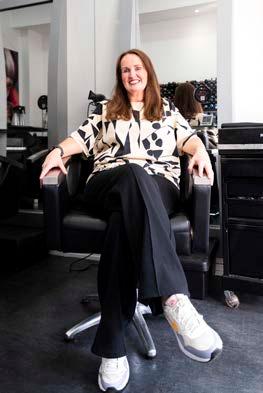
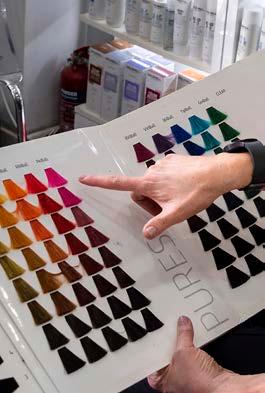
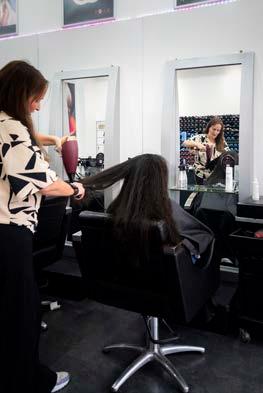
Join writer Cat Cochrane on a journey through the Southside’s many salons and barbers as she gets to know the people behind the chair. In this edition, Cat sits down with the team at Roar Hair & Beauty salon on Pollokshaws Road.
By Cat Cochrane
Photos by Alison Johansson
To step off the bustle of Pollokshaws Road and through the door of Roar Hair & Beauty is akin to a warm hug on a chilly autumn day. The Strathbungo salon near the corner of Queen’s Drive is known as much for its big welcome as the merit of its hair cuts.
This is, in large part, thanks to the inclusive nature of founder and owner, Brian Leo McCallum. With two further premises in Giffnock and Muirend, the Southside salon has grown into something of a community favourite.
Stylist Fiona Cameron has been at Roar for six years having previously worked at the iconic Rainbow Room in Glasgow’s City Centre for close to quarter of a century. Ironically Leo trained under Fiona at the famous salon – and she is now part of his small dedicated team she describes as “a family affair.”
Pointing proudly to the salon’s framed awards nestled in the front window, Fiona laughs: “I started in the nineties when rubber-capped highlights were in and you could only get one colour. When I was training, if a guy in Glasgow was to come into the salon for a colour, he’d be a bit embarrassed.”
Over the years Fiona has met Rod Stewart outside the Rainbow Room and once styled the hair of actress and singer Clare Grogan, ahead of a Hogmanay gig.
It’s changed days in hair salons, admits Fiona. Speaking of the local styles seen in the community, she says, “Mullets have been around in Govanhill for a couple of years, but perming I can do with my eyes shut and that’s a trend that’s also came back round again.”
Roar offers longer appointments with clients for a more one-to-one feel and, alongside their colleague Aiman, everyday is a learning day, even for this experienced duo. “We work well as a team,” says Fiona. “We learn from each other and Leo is very good at pushing us out of our comfort zone.”
Professional photoshoots showcasing Leo and Aiman’s styling work hang on the salon walls. Passionate about innovation, Fiona says: “I like to visualise something new and different for clients’ hair – with our regulars we don’t just provide the same thing, we offer them change.”
Leo had the opportunity to take the team to London in July as a nominee for Salon Team of the Year at the
British Hairdressing Business Awards. It’s something Fiona is particularly proud of. “It was a big one for me because I’ve always wanted to go to those awards,” she says.
While word of mouth is key to Roar welcoming new clients, social media has led to a run of influencers sharing their experiences of visiting the salon. “If a hair trend is on TikTok we’ll hear about it soon enough,” Fiona says.
“I love our younger clients – they are quite out there with their fashion and style and they come in and share stories of their interesting lives. They let us know how they want to express themselves through their hair.”
Sharing the changes she’s seen in her six years working in the Southside, Fiona says, “There’s more and more cafes and it’s definitely a lot quirkier… But while there’s all the choice, I must admit, I still love a wee cheap roll and sausage.”
Fiona smiles sharing a recent journey to work. “I get on the bus to work as I live on the north side of Glasgow,” she says. “And there was a woman in front of me on the phone who said, ‘I’m just at Roar now, I’m getting off shortly.’ I was all chuffed, it’s as if the salon’s a landmark along this way.”
By Gabby Cluness
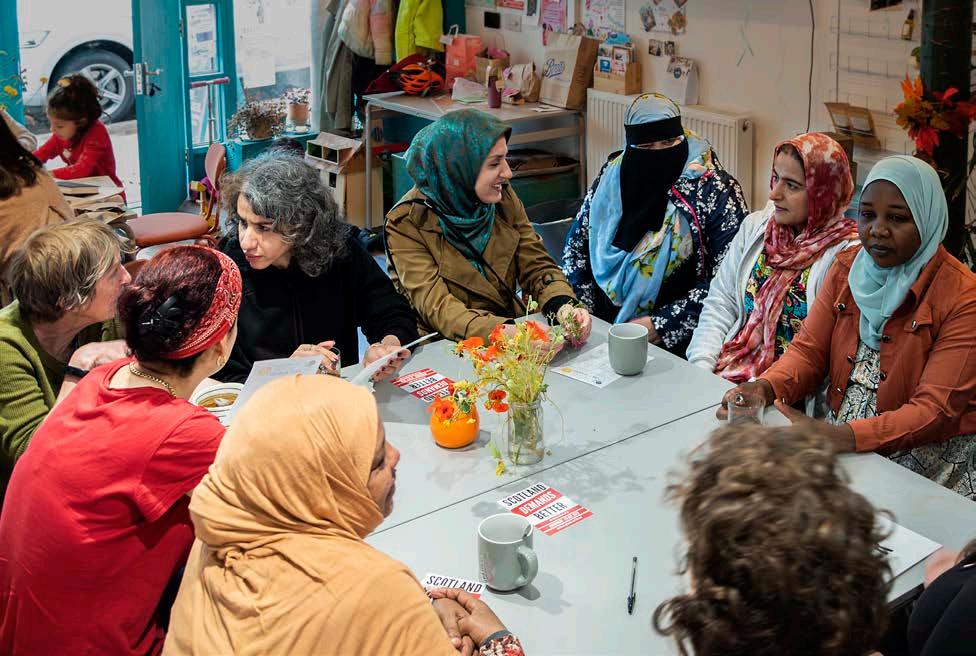
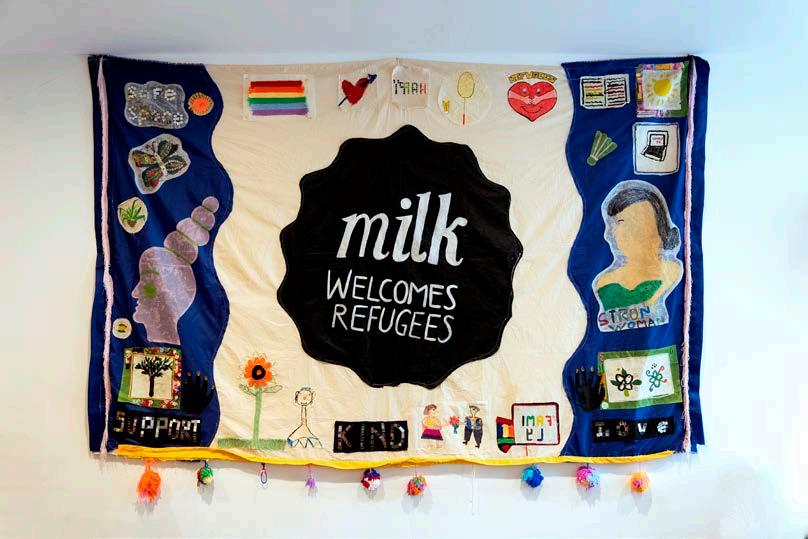
MILK was set up in 2015 by Angela Ireland and I – two bosom chums from the far flung corners of Scotland, who had made their home (happily) in Govanhill. The initial concept was for it to be a social enterprise cafe that supported women from a refugee and migrant background through front of house training and English lessons. Both of us had been volunteering in various projects supporting people from a refugee or migrant background, and were interested in working with folk from this demographic.
We opened the doors with very little in the way of experience in running a social enterprise, but with (what we believed to be) limitless enthusiasm, a billion hours of waitressing experience, and hordes of very kind family and friends who were willing to plug the sizable gaps in our knowledge and capabilities.
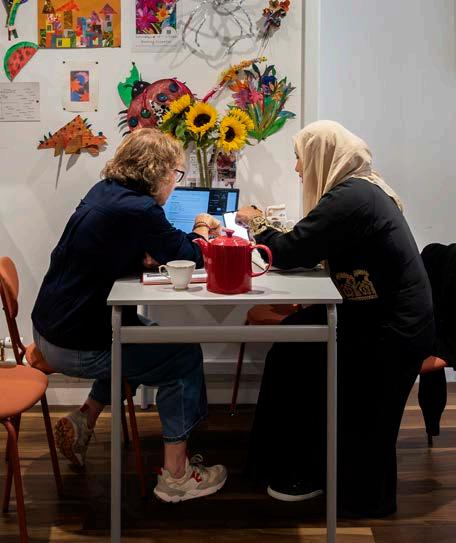
It was quickly established that due to the dinky size of the space, and the complicated schedules of the women using the project, MILK was not as suitable a platform for accessing employment as we had hoped. Instead, the cafe revealed itself as a space where women and their families felt comfortable and cared for; a place where they could practice their English and have a chat with friends over a cake (which they may or may not have helped to bake).
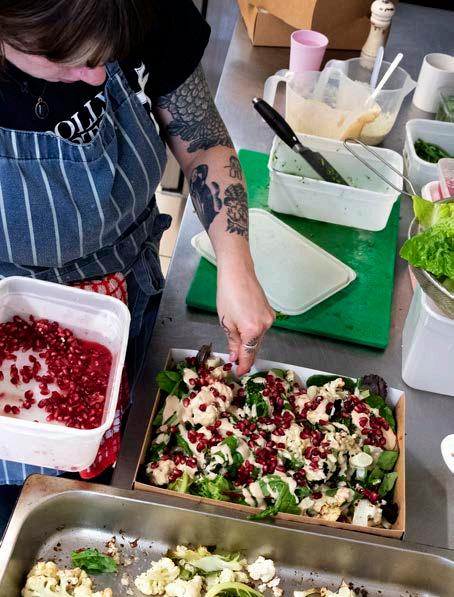
MILK cafe was often 3/4 filled with non-paying visitors. And, within the first year or so we had established our financial model was creative at best. So we launched the catering branch of MILK at 378 Cathcart Road, which has sustained us (often quietly) from the start – providing our offerings to many Glasgow-based businesses, organisations and events.
MILK Cafe (RIP) was a changeable beast which saw a few different iterations, but at its heart was always (we hope!) a cosy and generous space that welcomed everyone, and as such had a unique atmosphere ranging from delightful, to the soft-play from hell – depending on the day. Covid-19 and the cost of living crisis really did a number on us, as did the approach of our 40s and the shift that brought to our enthusiasm for 12 hour shifts without having a drink of water. By this point we had six full-time staff members working between our Victoria Road premises and our Cathcart Road catering kitchen and collectively we made the decision to close as a cafe and become a full time community space funded largely by
our catering endeavours, with another chunk coming from funding streams. We were confident that the previous eight years could prove to funders that we were a valuable resource to many different women in our community, and have been fortunate enough to be correct in this assumption.
Last year the empty unit beside our catering space became available. Delighting in a challenge, we decided to jump ship from Victoria Road and hope that our community came with us. Thankfully they did and we now reside at 378 Cathcart Road, in a beautiful, spacious and fit-for-purpose new venue, built in large part by the folk in our community.
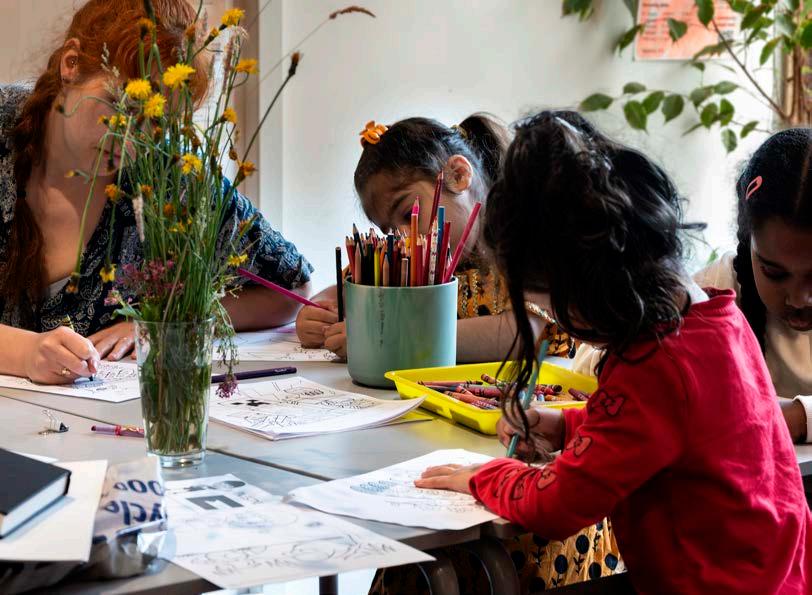
MILK (not-a-cafe) continues to prioritise women from a refugee or migrant background, offering a timetable of free activities to support their mental health and wellbeing. Sometimes this is by simply providing an accessible, warm and welcoming space where women can meet and share experiences with others. Peerled advocacy is a central component of what we do here; by helping to build on people's strengths and connections to ensure that they can, in turn, help others build on theirs.
All of this is made possible by the frankly jaw-droppingly wonderful team of volunteers and paid staff who make MILK what it is. We have come so far from the early days of the two of us doing it all, sometimes naively, and it is beyond lovely to now have so many
creative, smart, talented colleagues and participants from whom we can learn and improve.
The anti-racist and anti-misogonist work we do at MILK is more crucial now than ever; it feels like the already slender resources for minority groups grows ever thinner and the attitudes towards them becomes more ignorant and hate-filled. We are highly aware of the increasingly gruelling day-to-day life that many of the women we work with experience, just simply trying to exist in this country.
In a place where so many public spaces and organisations in the UK are deliberately hostile to refugee and migrant people, safe places like MILK are essential.

If you would like to support MILK, or similar organisations supporting refugee and migrant women, please check out the great work of:
• Refuweegee
• Unity sisters
• Migrant voice glasgow
• Maryhill Integration Network
• Ubuntu
• MORE
• Maslows
If you are able to offer your time, then please get in touch on hellomilkglasgow@gmail.com as we welcome new and enthusiastic volunteers to support our community.
By Zara Grew
by Iain McLellan

Around the start of October, a new sight started to appear on Victoria Road – half Palestine, half Scotland flags flying from lampposts. They have also started to pop up elsewhere around the city –from Shawlands to the Glasgow University campus in the West End.
Meanwhile, in other areas of Glasgow, there has been an increase in Saltires and Lion Rampant flags. These are believed to have been flown as part of the national ‘Raise the Colours’ movement – a controversial campaign that says it is ‘showing unity and patriotism across every town and city.’ It has been backed by anti-immigration groups such as Britain First and extreme far right figures such as Stephen Yaxley-Lennon aka Tommy Robinson.
In the north of Glasgow, the Tartan Team have claimed responsibility for putting up the Saltire flags, raising over £1120 to do so via GoFundMe. They claim to be a group of “young dads” with “genuine fears over real problems this country is facing” and deny association with the far right voices behind ‘Operation Raise the Colours’. However, the Daily Record revealed that the co-founder of the Tartan Team and creator of the GoFundMe page holds extreme racist and fascist views which were shared on a nowdeleted X account, solidifying concerns that the Saltire flags have been put up with racist and exclusionary sentiment.
The people of Govanhill have been showing solidarity with Palestine in a range of different ways from the pot banging protests in Queen’s Park to the Apartheid Free Zone campaign which has been rallying local businesses to boycott brands complicit in Israel’s occupation of Palestine.
However, this particular show of solidarity has ruffled the feathers of the far right, as the flags are not only a sign of support for Palestine but act as a protest against the far right’s flag domination we have seen across the UK.
The hybrid flags have also become a national talking point with GB News parachuting into the streets of
Govanhill looking to capture residents ‘outrage’ at the Palestine-Scotland flags. Many people in the area refused to speak to them, but they conducted two interviews where people could be considered more apathetic than outraged at the flags. The reporter even acknowledged that the Southside: “Is a part of Glasgow which has long been home to refugees and asylum seekers who have found homes here – it makes sense that there is a strong support for Palestine.”
We asked on social media for other responses to the flags and heard many more positive comments, One person said: “Hate how my beloved flag was weaponised by those who hate! I was actually on the number 7 bus turning into Victoria Road…and I caught these out of the corner of my eye. It made me smile.” Not everyone supported them,with some expressing broad discomfort at flags being used to divide generally. As one person said: “Tribalism sucks. No flags please, whatever type.”
The Palestine-Scotland flags were created and originally put up by United in Resistance who run an online shop which sells the hybrid flag along with keffiyeh scarves and ‘protest-ready’ t-shirts. Their profits go directly to humanitarian aid for Palestine. The flags have led to a ‘Flags for Freedom’ fundraiser by the Gaza Genocide Emergency Committee and the Scottish Palestine Solidarity Campaign, which is currently looking for donations to ‘fill the streets with solidarity flags’.
The Scotland flag, which has long been a symbol of freedom and hope, is now being used as a tool to fearmonger and make people feel unsafe and unwelcome by extreme right wing activists.
As the first place for the Scotland-Palestine flags to fly, Govanhill is part of the story of resistance where the hybrid flag challenges the politics of division and stands up to the narrative of the UK nationalist, anti-migrant flag movement.

By K A Watters
Sometimes she feels like Goldilocks seeking satisfaction in her own brain searching for the ‘right mood’
Not too high not too low jusssst right
Bears terrorise her dreams
Papa Bear stomps about the room
In a mania-fuelled rage
Mama Bear is out cold in the corner. Hibernation has taken hold and outstayed its welcome
Baby Bear sits on the floor looking from left to right Unsure who to go to Confounded, terrified
All she wanted was some decent porridge. Something to sustain her through a long day
But instead there is this this terrible, un-chooseable choice
The room spins Nothing is stable.

These pieces, written by Glasgow’s Write Like a Grrrl community, explore the theme of polarisation from personal and political angles, meeting it with joy and resistance.
By Claire Low
Slowly now, quietly, so as not to draw attention. We reach across unseen maps; the meridian lines of our ancestors.
Fingertips touch.
Connections glistening like dew on a spider’s back, making us feel safer and stronger.
Not so quiet now. Drums. Whistles. Chants. Hundreds of hammered pots should sound like the gates of hell. Somehow, they are temple bells waking up the streets. Listen to us, come, act.
More people are joining. Tributaries of hope and rage.
Bunch of radicals, a passerby mutters.
Towards the platform, someone lays down a flag. Red, white, black and green. Look on as they kneel beside it, pinning it edge by edge to a flag of blue and white. They are lifted together. Our helplessness feels lighter. We’re doing something. Something that can be seen and heard and felt.
Breaths of air blown together can surely make a hurricane.
By Sarah-Louise Kelly
Another hour lost to analytics. I never dreamt of click-through rates. I dreamt of a stage, singing to a crowd of people cut from the same scruffy cloth as me.
Scroll. Scroll. Scroll.
What’s the point? Should I just make music for myself? I thought the Internet would bring us together, but I’m lost in an ocean of voices, desperate for somebody to hear me.
Still, I have a gig to play. Familiar doors open and my heart races. I’d forgotten this part. The energy and rush of loading in. Holding our instruments and our breaths before we see what this was all for.
The audience rushes in, damp from September rain. I think to myself this could actually be fun. Maybe it will be alright.
The lights go down. The swell of the audience roar fills my chest. All eyes on us. It feels like sun breaking through fog. The first warmth in months.
Sing. Sweat. Scream. We are one with the audience. These are my people; this is my home. In this roar, I am whole.
By Jess Lavin
Content Warning: Abuse
Calm down. Calm down. Calm down.
The words loop in my head. His voice. Said with such ease. I sit on the kitchen floor. How much time has passed?
“I brought you food,” his backpack thuds to the floor. “Or are you still not talking to me?” I stay quiet. “C’mon, you’re only hurting yourself, you’ll feel better when you eat.”
A pause. “How can you act like nothing happened?” I croak.
“Because nothing did happen. You overreacted. I really think…” his voice fades as if someone has turned down the volume.
His face starts to morph into something malicious. The worst part is that, even if I could explain myself, he won’t believe me. But I need him to believe me.
“You’ve not been the same since the accident”, he’s talking again. “That’s all it was, an accident, right? I think some yoga or maybe a bath might help you calm down...”
Calm down. Calm down. Calm down.
Maybe I did need to calm down, but first, I needed to get out.
Write Like a Grrrl workshops support marginalised genders to develop their writing craft in a nurturing community where every voice matters. They believe creativity is a radical act of connection and disruption. Follow @writelikeagrrrl and @kirstystrangroycreates to find out more.
By Devon McCole
Illustration by Alistair Quietsch

For nearly two decades, the SNP have led the Scottish Government, with Labour and the Conservatives as the main opposition. But as public confidence in Scotland’s three largest political parties fade, the door is opening for smaller and emerging parties to gain new ground.
It’s why Jeremy Corbyn and Zarah Sultana launched the new left leaning Your Party, which three Scottish Greens Glasgow Councillors defected to at the end of October. And why the Scottish Greens have seen memberships skyrocket, overtaking the Lib Dems and Conservative Party in numbers. But that door has also opened to parties like Reform UK, who have seen big gains in some local elections.
Parties not previously considered to be a viable enough opposition now have more of a chance to get their foot in the door. That’s both exciting and potentially unsettling.
Reform UK came fourth in the Southside Central council by-election in March this year, with 5.9 percent of the vote. But they made a far stronger showing in the Hamilton, Larkhall & Stonehouse Holyrood by-elections in June, securing 26.1 percent and placing third.
These results show Reform’s rising popularity in Scotland. Current polling shows that Reform UK could win around 17 seats in the 2026 Holyrood election, potentially even emerging as the main opposition party.
A seismic political shift could be on the horizon in Holyrood, meaning it’s more important than ever to exercise your democratic right.
This year also marks a decade since 16 and 17 year-olds were given the right to vote in Scottish elections. And, in 2020, the right to vote in Scotland was also extended to all foreign nationals with leave to remain, including all those granted refugee status.
When it is our future being decided, our voices deserve to be heard. And there is no better way to have your voice heard than by casting your vote and making it count. But to do that you need to make sure you are registered first.
Registering to vote is actually good for your credit score, it shows you are an active citizen and glued to your society. And, if you find voting in person difficult for any reason, you can register to vote by post or via a proxy.
For Rose Main, a member of the Glasgow Southside Youth Voting Matters campaign, fear, lack of confidence and lack of understanding are what prevent people from voting; fearing their vote won’t count, lacking confidence in political parties and politicians, and not fully understanding how the process works being the main barriers.
“Thousands have marched across the UK over the past two years, screaming in support of Palestine, calling for an immediate halt of all arms sales to Israel,” Rose says, and
“If you don’t use the democratic systems which somebody has set up for you to use, democracy isn’t going to work and you’re not going to beat them.”
yet “politicians have effectively ignored the population… still funding and backing what’s happening.”
What the Youth Voting Matters campaign wants to remind everyone, not just young people, is the key way you make any difference to what politicians do is through the ballot box.
Rose believes: “If you don’t use the democratic systems which somebody has set up for you to use, democracy isn’t going to work and you’re not going to beat them.”
The next Scottish parliamentary election is required to be held no later than Thursday 7 May 2026. So to ensure you have your say, make sure you’re registered to vote well before then, by visiting gov.uk/register-to-vote.
How does the Scottish parliamentary electoral system work?
If you live in Govanhill, you’re part of the Glasgow Southside constituency and the wider Glasgow region in the Scottish Parliament elections
(Note this is different to the UK elections where Govanhill now forms part of Glasgow East.)
That means you get two votes under what’s called the Additional Member System. Your first vote is for your local constituency MSP, elected by first past the post, meaning whoever gets the most votes wins. Your second vote is for a political party or independent candidate standing in the Glasgow regional list, which elects seven MSPs to represent the wider area.
Regional MSPs are chosen using the d’Hondt system, which gives extra seats to parties that didn’t win many constituency contests. So even if your preferred party doesn’t win locally in Glasgow Southside, your regional vote still helps shape the makeup of Holyrood.
In total, Glasgow voters send one constituency MSP and seven regional MSPs to the Scottish Parliament – ensuring both local voices and broader political balance are represented.
Tired of politicians and political parties talking about the issues and topics they deem important enough to get coverage? Or the mainstream media always focusing on the same three issues? Feel like the issues that matter to you, or impact your community the most, are being ignored?
We are too. That’s why we’re building a Citizens Agenda.
We carried out the same exercise in the run up to the general election last year as well as ahead of the March local by-election.
The aim is to get candidates standing to represent Govanhill to directly answer to the concerns of our readers – instead of setting their own agenda.
We want to make sure you have the information you need to cast your vote confidently. Take five minutes of your time, answer one single question and tell us what you want to know.
The rest is up to us. The survey will remain open for some time to allow as many people as possible in the community to contribute, so it is a fair and accurate representation of the diversity of opinion locally.
We’ll collate the responses and calculate which topics and questions appear the most. Using that data we’ll put together a set of questions to put to every political candidate and party ahead of the election in May.
All their responses to our questions will be published in our voter guides online, and then it’s up to you. With all the information at your disposal, you’ll get to compare your beliefs with the candidates’ before casting your vote.
We want to change the power dynamic so that candidates answer to citizens on the subjects that really matter to them.
Fill out the survey by scanning this QR code, sign up to our newsletter, and stay informed this election.

A book by Sam Gonçalves
Through conversations with activists and organisers, Sam Gonçalves explores the power and limits of protest in the 21st century. From landless workers in Brazil to unionising chefs in Glasgow, he traces stories of collective struggle and resistance, challenging the idea that making a positive impact is an individual act and revealing the ways communities create change together.
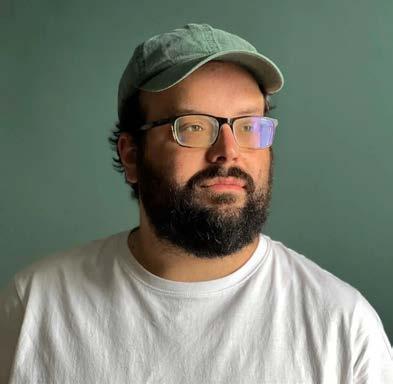
y first conversation with Pinar Aksu happened in the Summer of 2024. We picked up some coffees and walked over to Glasgow’s Kelvingrove Park to find a bench. She is a community organiser and educator, involved in several campaigns and deeply engaged with key movements in the city and beyond.
It was one of those days when you can’t quite tell if it’s warm or if you have been in Scotland long enough for your concept of ‘cold’ to be skewed. Either way, we were going to talk about the hostile environment in the UK for refugees, asylum seekers and immigrants, as well as some of the organising that has been done to combat it – a tough topic to discuss comprehensively. In the first half of the 2020s alone, you can talk about immigration detention centres, dawn raids, low quality housing, and an openly racist atmosphere in the national media. Key legislation was passed, like the Nationality and Borders Act, the Illegal Migration Act, the Safety of Rwanda Act, all making life significantly harder for many people.
An incident at Glasgow’s Park Inn Hotel in June 2020 was a particular low point for Pinar, when an asylum seeker was shot dead by police after stabbing six individuals. “I would have assumed after [Park Inn] they would have maybe stopped using hotels or they would have changed something but no, they didn’t.”
The use of hotels to house asylum seekers has been criticised by campaigners due to the isolation, poverty and poor mental health it generates. They argue asylum seekers should be housed in communities, where they can integrate in ‘dignified, safe, habitable, and fit for purpose accommodations.’ Still, nothing’s changed.
It all contributes to a paralysing sense that things could not possibly get better, she continued. “People feel defeated because we are like, Okay what’s the worst that could happen that’s going to make things U-turn? Then worse things happen and things do not change.”
It’s not difficult to lose any sense of hope in a situation like this. “Sometimes I’m like, what’s the point?” Pinar explained, “because the laws are getting worse and worse.”
Pinar came to Scotland from Turkey when she was eight years old. When you move countries at that age, you often don’t understand what is going on but Pinar has positive memories of her school and the community around her. At fourteen, she was taken to an immigration detention centre along with her parents and siblings.
Pinar’s community rallied around her family, gaining support from politicians, charities and campaign groups. Their efforts resulted in a positive outcome. After more than two months in detention, her family were one of the few to be released. Pinar, being the eldest of the siblings, became the translator for her parents. She had a front seat to the impact a grassroots campaign could have.
In a piece for the End the Immigration Detention of Children campaign, she wrote, ‘I don’t see any difference between a detention centre and a prison. Governments may use different words to make these policies sound acceptable, however it is the same as I was being deprived of my liberty without cause. Our rights as citizens were taken away. As a child at the time, I saw many things that no child should see.’
She didn’t always want to be organising around these issues. Pinar was going to study chemical engineering at university, but at a certain point realised she might feel more at home pursuing a place in community development after spending her whole life witnessing campaigns and activists first hand. “I think all these things added lots of experience and I was able to see different issues in different communities and how communities come together, the importance of dialogue, not judging one another.”
Currently, as the Human Rights Advocacy Coordinator for Maryhill Integration Network, Pinar is part of a number of campaigns for the rights of asylum seekers including the Right to Vote campaign, advocating for asylum seekers to be able to vote on Scottish elections and the Our Grades Not Visas campaign, which identified the barriers for refugees to access further education. Both were clear and recent successes. Then there is the on-going Right to Work campaign, advocating for asylum seekers to be granted permission to find employment – which they are currently not allowed to do, and the End Hotel Detention campaign, backing community-based residential accommodation for asylum seekers.
Sat on the park bench, I was keen to ask her about two things that stick out to me about these campaigns. On the one hand, they seem to be moving fast. In the last few years there have been many legislative wins that had a direct impact on people’s lives. In early 2024, a campaign for free bus travel for asylum seekers received a positive response from the Government and looked like it would be implemented rapidly. On the other hand, the barrier to these campaigns is the immigration policy in the UK, the aforementioned ‘hostile environment’. Can the monumental weight of antiimmigration media coverage, public sentiment and policy ever be shifted?
Pinar seemed to agree with these two elements of the organising she’s involved in. One of the main reasons it can be so difficult to effectively bring about change around this issue, she believes, is that
the racism and hostility are deeply structural. They imbue the system. Even in administrations that are not openly aggressive in their discourse.
Her point seems to bear out within that very same summer in 2024. After fourteen years of a Conservative government that was not only aggressive in the policies but used immigration as a regular rhetorical tool, Labour came into power with a campaign accusing the incumbents of being too ‘liberal’ on immigration. While they eventually scrapped the Rwanda deportation plan, the new government soon committed to reopening Immigration Detention Centres that were closed.
Pinar uses the example of the Right to Work campaign. It has been going for over five years, she has seen it all, been part of it for the whole time and nothing has changed. Recently, at a strategy meeting, one of the campaigners voiced their frustration saying, ‘What’s the point? I still can’t work, and this is so stressful for me.’
Pinar described responding to the sentiment. ‘I go speechless and I’m like, You’re right. It’s frustrating, isn’t it? So, I’m not going to go and lie to you and say, No, don’t be silly. It’s going to be fine. Things are probably going to get worse, but we need to talk about what we are going to do when things are going to get worse.’
It’s a difficult reality to take in, especially after years of campaigning, but accepting that truth and reflecting on the circumstances as they are is often the way through. As disputes like Right to Work and Free Bus Travel get more protracted, and decision makers more impenetrable, the ability to look at the issue from new angles is essential. Pinar believes there is a way to make it past these challenges: ‘We must think creatively about how we reflect the truth.’
In these moments that feel like dead ends, education becomes a vital tool.
How Does Change Happen is available to purchase from 404ink.com
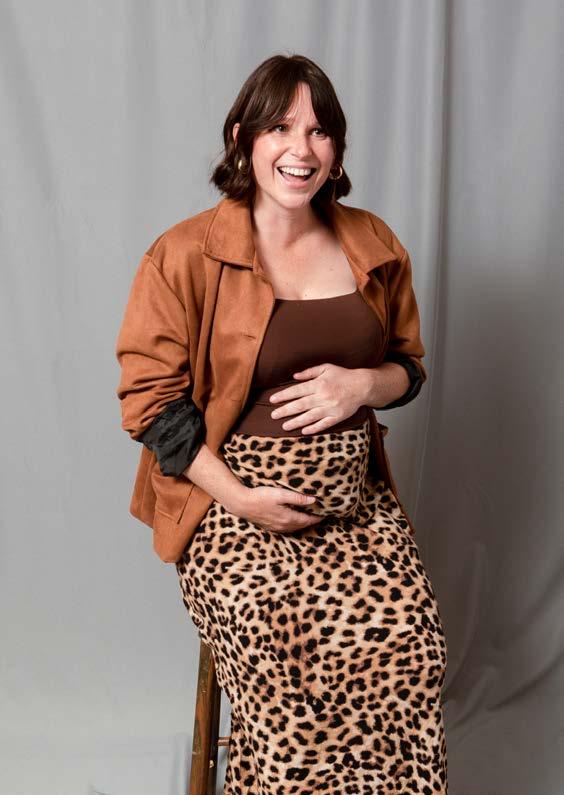
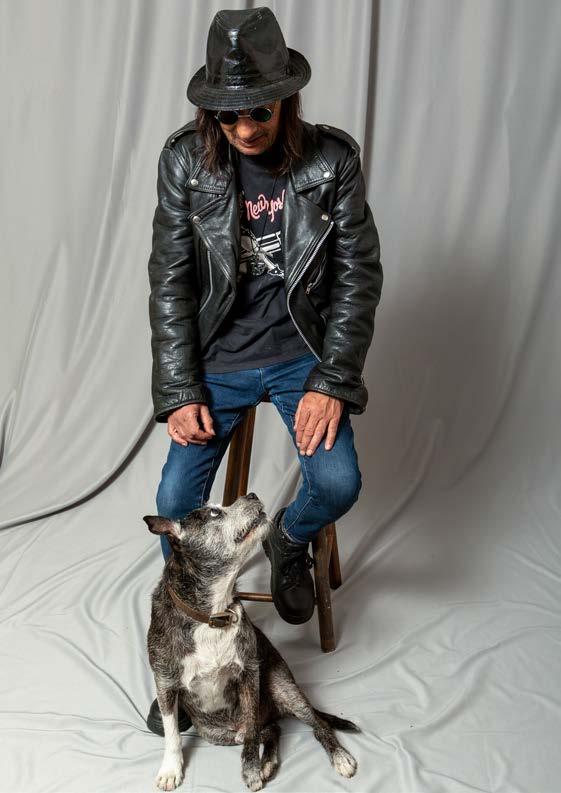
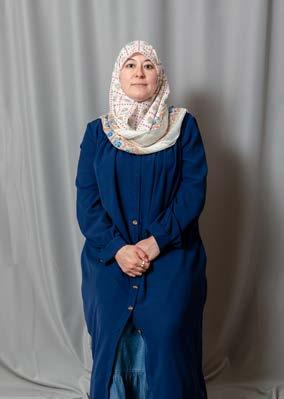
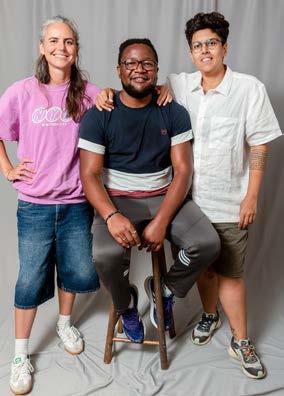
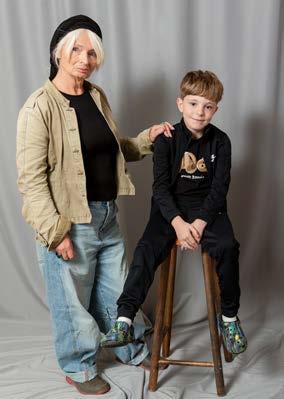
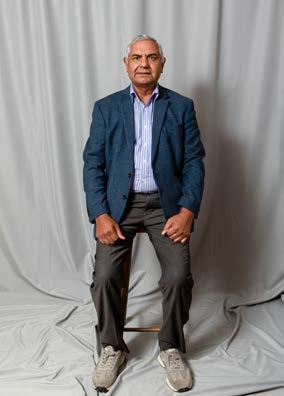
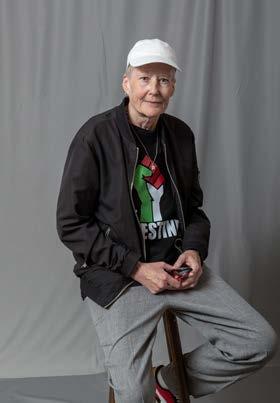
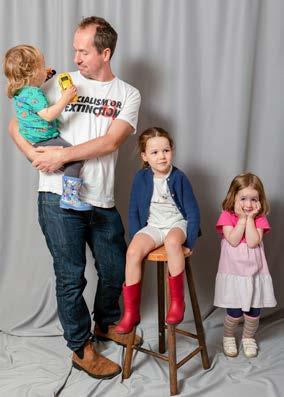
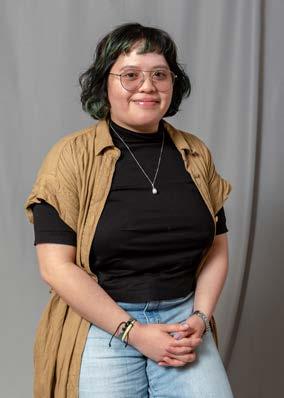
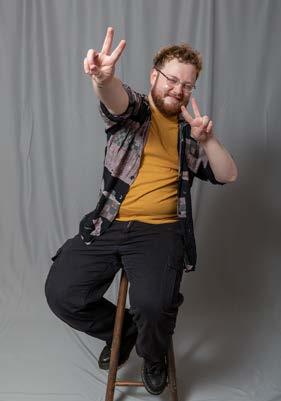
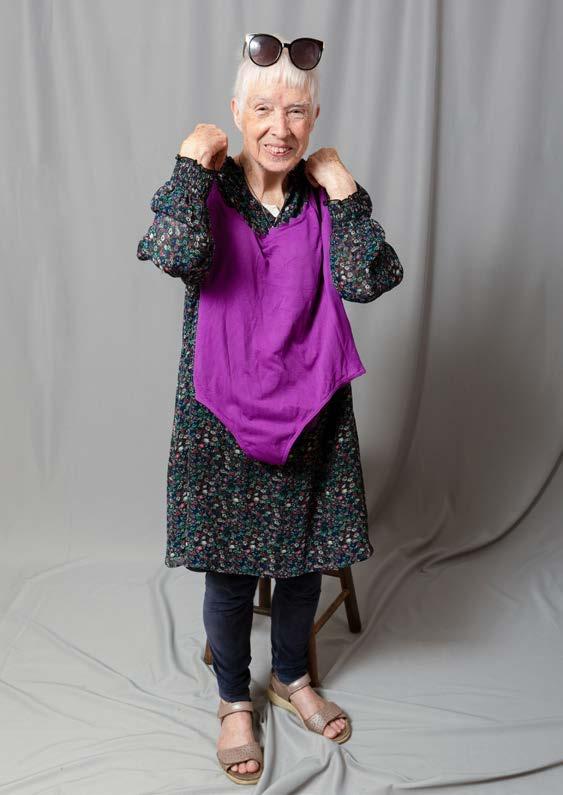
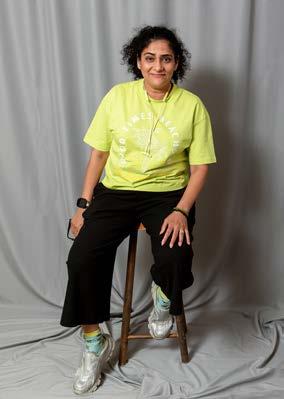
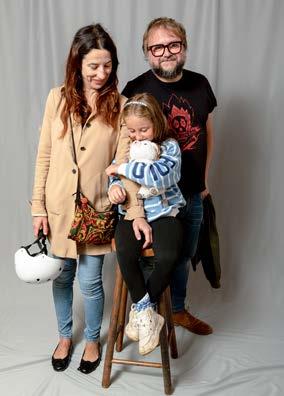
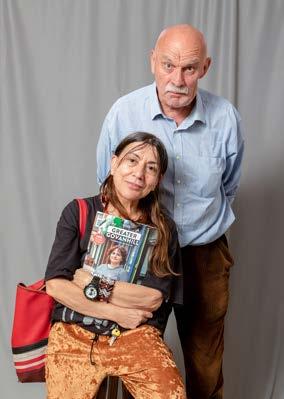
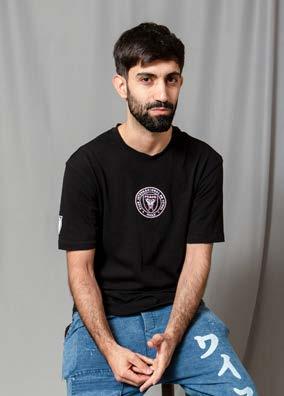
Govanhill teems with stories, layers of history that breathe life into the neighbourhood today. Every person you walk past carries their own stories with them – their heritage, their experiences, their memories.
During the Govanhill Festival, we turned The Community Newsroom into a pop-up photobooth, threw open the doors, and invited people in from the street to sit for a portrait by members of the Greater Govanhill Photography Group – and to share a little of their story.
The aim was to showcase the shared humanity between neighbours and get to know some of the people we pass daily in the streets or bump into at the shops, building connections.
Over the course of five hours, 38 people stepped into the booth. This is a preview of some of those portraits, which will be showcased in full in our next exhibition in our Tramway Community Canvas space. More details coming soon.
Photos by Alison Johansson (4, 6, 7, 12) giacinta frisillo (1, 15) Iain McLellan (2, 13) Syeda Sadaf Zaidi (8, 9, 11) Zianib Ahmad (10, 16) Karen Gordon (3, 5, 14)
“I just feel like there’s just so much going on here… it just feels like the kind of like heart of everything. I love this city so much.”
YUSUF
“When I came back to Glasgow in 1989, I wasn’t expecting to have dogs. It was the last thing on my mind. I was just into heavy metal and that was it. But I met lots of punks who have dogs, I found it more interesting sitting chatting to dogs than I did half the people around me.”
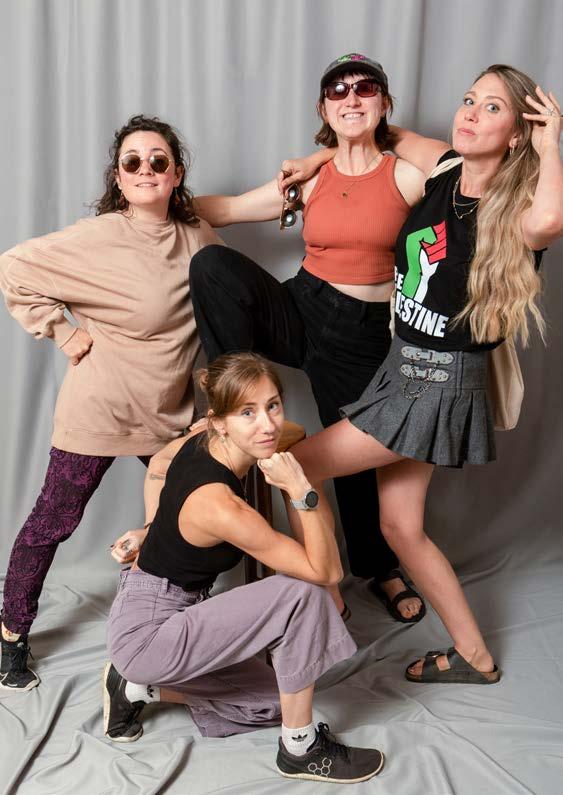
ALISSA, CHRISSY, ELEANOR, ESME
“As a group, a lot of us play, Ultimate Frisbee on a Wednesday. Our club name is Big Disc Energy. I love it. We don’t play the proper rules at all. I think we got about 18 people last week.”
JILL
“My mother learned to swim in Govanhill Baths... I was at the pool protest, we tried to keep the pool open. One or two of us joined in with a singer, and played some tunes outside the swimming pool to try and just keep attention on the building.”
By Natalia Uribe Illustration by Stuart White
For a long time, I believed that good proactive policy could tackle social inequalities like housing, the energy crisis and food poverty around the world. After entering the political and policy sphere, I realised that the focus was never on proactivity or prevention. In fact the focus was reactionary and on cost-reduction, and this hasn’t changed.
I recognised the system didn’t value lived experience, hopefulness, or what I would consider commonsense longterm solutions. Unfortunately, in our capitalist society there is no room for spending that doesn’t make money. The focus was just on quick fixes to save money.
That’s when I decided to shift my focus. Instead, I tuned into the concept of community power.
Rather than focusing on traditional academic theories, politics or philosophy, I turned my attention to movement

building, particularly around civil rights and social justice. Through this I found countless groups and movements sharing a common thread; they’re cultivating communities of care.
The origins of ‘community of care’
If you try googling this very question, you will find results centred around health or the care system, which in this context is similar. This concept grew out of a model aiming to move away from institutional care and refocus on personal dignity, autonomy and inclusion. This was due to a refocus on resources and approach in the NHS and introduction of the Community Care Act 1990.
Community can be defined as a place where solidarity can be found and participation utilised to cultivate change. A safe community is a place where we’re able to reflect on
our past beliefs and ask ourselves whether these beliefs still support our current values and needs. It’s a place to land softly during waves of tragic news and an armoury that helps build resilience.
‘Care’ is often a term relating to the care system, or a feeling of concern or interest – also providing or looking after something or someone. Just the act of caring is a form of resisting a system that moulds us to be individualistic. Showing up and caring for your neighbour is a radical act of community care. Engaging in difficult conversations within your circle is another form of resistance and an act of care for everyone.
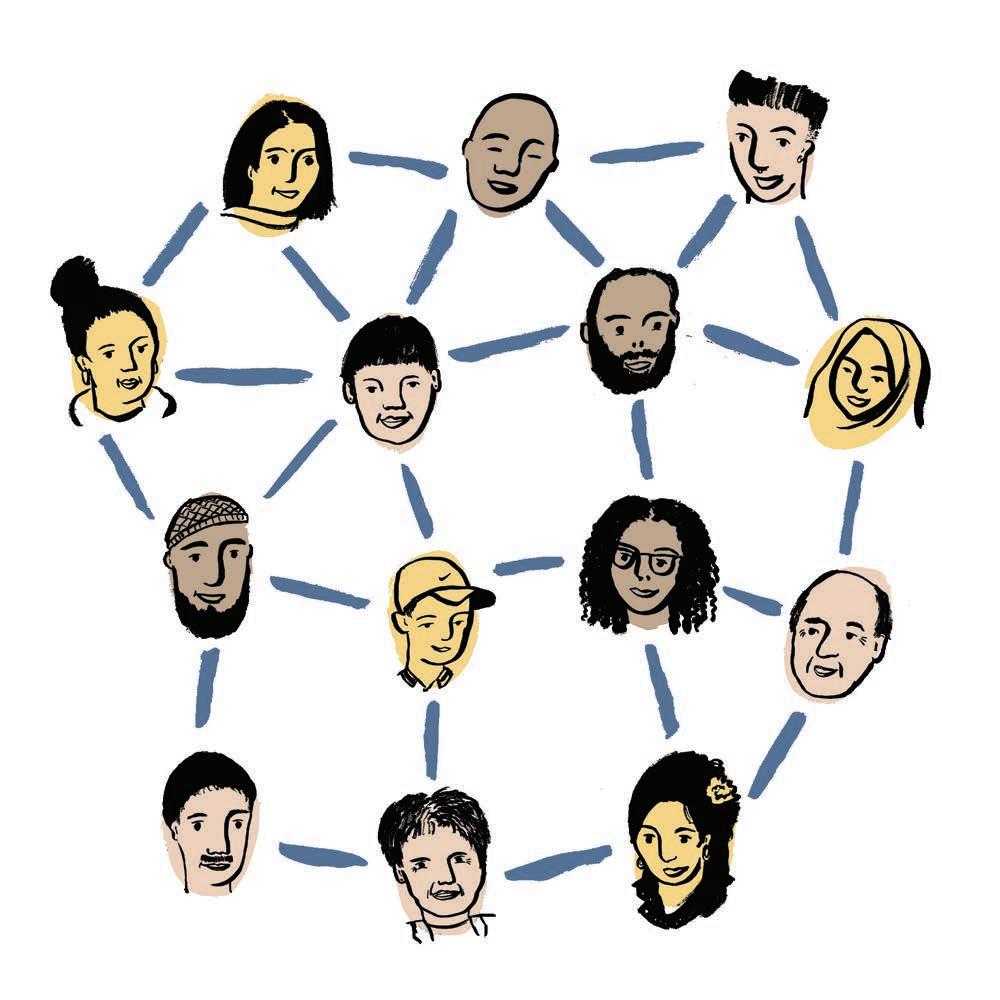
Could this be the antidote to polarisation and populism?
The hard truth about populism is that it affects those on either side of the spectrum, whether you are left or right. At its heart, populism feeds on an ‘us vs them’ mentality. This framing oversimplifies complex issues and fosters division, defining certain groups as outsiders or enemies. Those boundaries are rarely fixed – they shift depending on who’s speaking and what political goals they’re pursuing. Having said that, far right populism often tends to focus on more exclusionary forms, deeply rooted in racism, homophobia and misogyny.
Meanwhile, in its 2025 Global Risks Report, the World Economic Forum ranked societal polarisation as the 4th most significant global risk in the short term. If we deem this as a sickness then surely there must be an antidote? Something that injects concepts of personal dignity, autonomy and inclusion. Luckily it’s something you can get for free and probably closer than your local pharmacist.
The Southside, with its reputation as one of the most community-focused areas of Glasgow, is a living example of this. Especially in Govanhill, this multicultural neighbourhood has come together to advocate for representation of all through community projects, cultural activities, an anti-racist festival and locally produced opportunities. There is an intention and a desire to create a sense of belonging that is needed when cultivating a community of care that bridges multiple cultures, languages and identities.
That is how you tackle far right populism –by challenging the individualistic mentality and prioritising care and community.
Let’s reflect and connect!
During the civil rights movement in the US, Black activists led different movements, whether by Martin Luther King Jr. or Malcolm X. However, there was an even bigger coalition across racial groups that included the Chicano Movement led by Cesar Chavez and Dolores Huerta. This led to the recognition that our communities need to form collective radical acts of care to tackle racial rhetoric, police brutality and loss of rights.
The phrase tu lucha es mi lucha (meaning your struggle is my struggle) highlights that
the fight for equality and a better way of life is a collective struggle that we can only tackle through collaboration and unity. Fast forward to something closer to home. The Kenmure Street protest against the detention of two residents is one of the most recent, well-known examples of Scottish unity and a community in action. In 2021, community lines were crossed to engage in the protection of their neighbours. This shows how collective resistance and care can be used as a tool for amplifying community voices and strengthening the power of the people. It’s solidarity like this that can stop oppression by unjust systems.
Not every community of care needs to be massive, sometimes it’s the tight-knit groups that can send shockwaves into a system. The Glasgow Girls is one of my favourite pieces of modern local history to share. Seven young school girls bonded together to force the public to recognise the poor treatment of asylum seekers who were marginalised, ignored and rights exhausted through appeals. Together they planned radical acts of care to campaign against dawn raids, raise public awareness and challenge the system in order to change it.
Caring for the collective doesn’t just create change locally – it transcends borders, shining a spotlight on injustices wherever they are experienced. So how can you prevent the pull of right wing populism and social polarisation?
You invite, you engage, you care. It is so important to not only have the difficult discussions with those we trust, but also those that we struggle to fully understand or relate to. The elites who hold the power only divide and redirect blame. Don’t let it happen to your community.
Part of building a community of care is checking in on those around you, but also making sure you diversify your circle.
Here’s a little thought provoking exercise to check your circle:
Is it diverse?
Are there people that I look like and those that do not? Does everyone have a similar experience?
Am I holding space for everyone to show up as themselves?
Do I keep an open mind and clear ears to listen? Do I know what they may need from me?
Is my circle also meeting my needs?
Do we still have similar morals? Is this a space I can show up in fully? Can I open up about difficulties?
Words and photos by Alice Austin
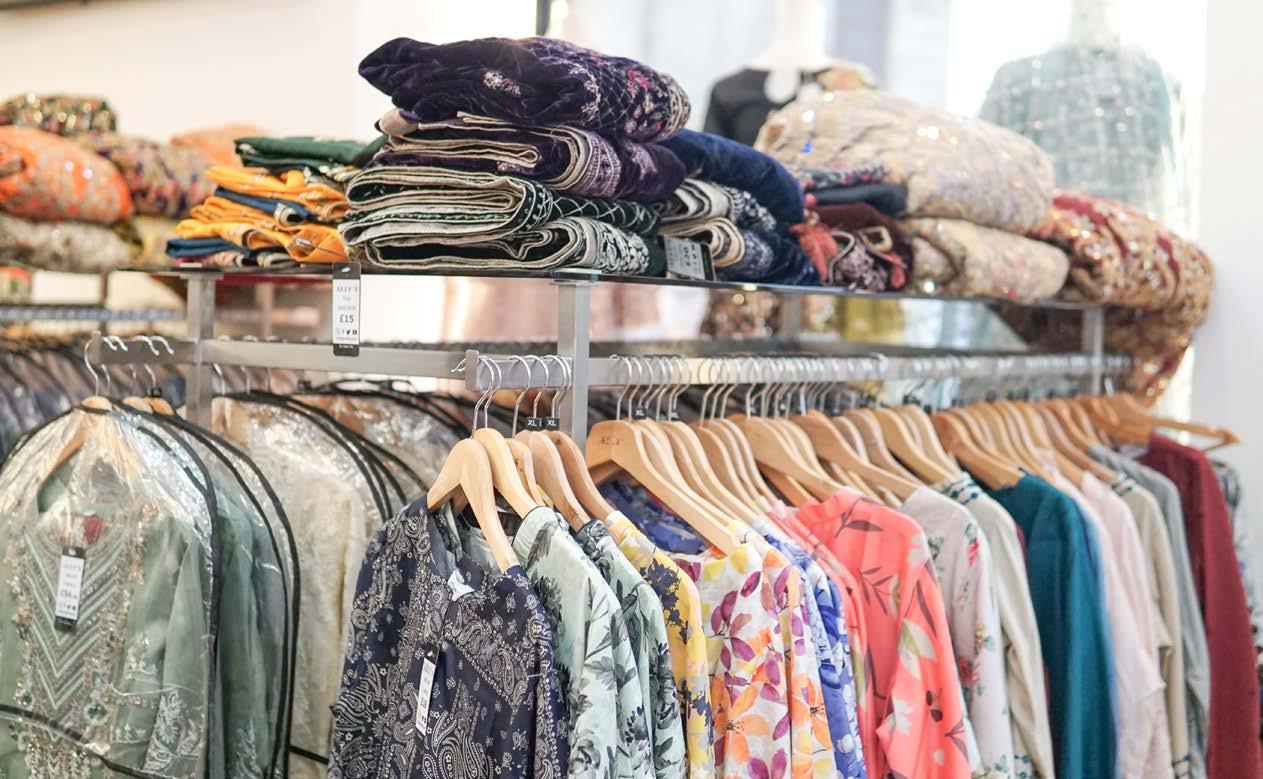
It’s a dreary Monday afternoon on Cathcart Road. The streets are damp, the sky is thunderous, and a fire engine has blocked off half the street for some unknown reason, but walking into Ferhia Fabrics is like walking into beams of sunshine. The bright lights illuminate rails of dresses, gowns and fabrics in hundreds of colours. Some sparkle with diamond finishes, others pop with subtle embroidery, all of them the antithesis to the bleak October day outside.
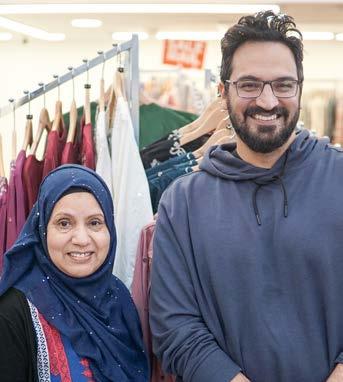
A woman in a bright silk veil sits in a wheelchair listening to the radio in Urdu, her name is Tasneem Shakoor and she founded Ferhia Fabrics almost 50 years ago. Along with a handful of others, Tasneem transformed this unassuming street into Scotland’s go-to destination for traditional South Asian casual and occasion wear.
As she listens to the radio, her son Naveed walks around the shop adjusting the dresses, telling me all about the family business. “My mum opened this shop in 1978,” he says proudly. “She started selling fabrics in a bedroom in our house on Daisy Street, so it was a shop by day and a bedroom by night.”
From the very beginning, Tasneem’s shop served a purpose beyond selling clothes. It became a place for Glasgow’s recently immigrated South Asian community to gather, socialise and stay connected to home.
“There used to be a Pakistani bank next door called the Muslim Commercial Bank,” Naveed remembers. “So the husbands would go into the bank and the women would come in and shop.”
Ferhia Fabrics’ customer base is multicultural and multilingual. You’ll hear a jumble of Urdu, Punjabi, Pashto
and Romani on this shop floor. Sikh people from the Punjab region in India shop here, as do Muslim folk from Punjab in Pakistan. The Afghan community comes here too, as well as Slovakian and Roma customers on the hunt for cardigans for winter. The lines and land masses that divide these cultures don’t exist in Govanhill.
The neighbourhood’s undergoing dramatic changes. In March, Scotland scrapped rent caps, flooring some residents with unmanageable rent hikes. This, alongside the cost of living crisis, has impacted all of the fabric shops on Cathcart Road.
“It’s all going online now, but we aren’t going to do that,” Naveed says. “The older ladies in their 50s, 60s and 70s pick the fabric and get it stitched to the right fit and size.” It’s difficult to sell made-to-measure clothing online – plus the shop serves another purpose. “My mum’s old friends come here all the time,” Naveed says. “I always laugh and tell her this isn’t a shop, it’s a community centre.”
Anti-racist campaigner and activist Zamard Zahid previously wrote a first-person account of the role her mother’s shop, Fabric House, played in the South Asian community. She shared the story of Bibi, who made the journey from Multan in Pakistan to Govanhill in the 1960s. Not long after, she was widowed with three young children to raise. Fabric House became her place of solace, community and comfort.
“There were no services,” Zamard tells me. “These women were very isolated in their tenements in Govanhill. The fabric shops did what the government should have been doing. They became hubs for the South Asian community.”
The rise of the far right is impacting everybody. In September, a man threw a pole through a mosque window in
Clarkston, terrifying children praying inside. “A young girl was racially abused while she was leaving school in Newton Mearns,” Zamard says. “So there’s definitely been an impact but not everybody reports things to the police. Our community tends to think it’s going to take too long and it’s better to keep quiet and continue.” At times like these, community is everything, so the fabric shops are just as crucial now as they were in the ‘60s.
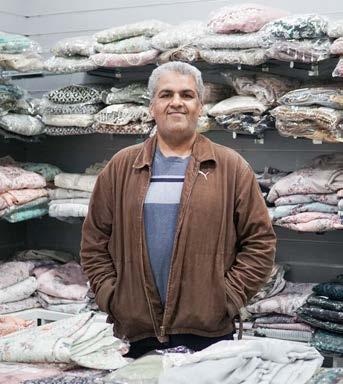
A few feet away from Ferhia Fabrics, on the other side of Cathcart Road, you’ll find Sajh Dajh, a bespoke bridal wear and fabric shop. Inside, retail assistant Shazia gently attaches crystal embellishments onto the sleeve of a bridal gown using a glue gun.
“We’re a bespoke retailer, so people come here and we take their measurements and they can choose their colours and fabrics,” Shazia says. “Then we send all their requirements to Pakistan and the orders get made over there.”
Buying a dress here doubles up as an intimate exchange. The gratitude generated by this service is showcased on a shelf in the back room, which is crammed full of thank you cards. “Thank you for making Maria look and feel like a princess at all her functions,” one card reads. “All of our outfits were as we wanted. You were so kind and patient throughout the whole picking and fitting process.”
Wedding season is over but Shazia says that business is still blossoming; mostly through word-of-mouth recommendations. “Our customers come from all over,” she says. “They come from Edinburgh, Dundee, and Falkirk to shop here.”
Govanhill’s demographic is changing. Property prices in the Southside have surged in recent years. As the neighbourhood becomes more desirable, commercial rents increase too – making it harder for the fabric shops to break even. Still, Cathcart Road remains the shopping destination for South Asian occasion wear in Scotland and the shopkeepers I spoke to don’t plan on going anywhere.
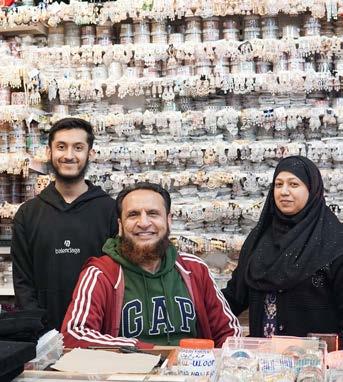
Lalli’s Fashion House is one such example. The Ahmed family moved to the former Govanhill Picture House from their shop of over 20 years on Cathcart Road in 2019, and it took six months for them to empty it of squatters, trees and weeds. Now they have an expansive and glorious shop that sparkles with walls of jewellery, shoes and fabrics. It’s one of the few places in Scotland where grooms can shop for kurta (tunic), so they always have footfall. Though this is also partly
because they’re responsible for some of the weddings.
“A parent will come in and give us their phone number, age, sect, caste, and we’ll match them with someone with the same background,” Shafiq, the shop owner, tells me. Their role is simply to pass one parent’s phone number to another. They said this has resulted in multiple happy marriages in the British Pakistani community, where parents often take the lead in finding a suitable partner. “Last week one couple we introduced had a baby,” Shafiq says proudly.
While traditional matchmakers typically charge each family a fee, Lalli’s Fashion asks for nothing in return; except perhaps for the couple to buy wedding outfits at their shop. “Our intention is to do a good deed for the community,” says Shafiq. But not all the fabric shops are interested in this arrangement. The staff at Ally’s, which sits on the corner of Cathcart Road and Bankhall Street, are often asked to act as matchmakers but choose to stick to the clothing business.
Ally’s is the first UK branch of a wellknown Pakistani dress shop, with a store in Lahore open since 1990. It’s a family-run business, with the majority of their clothing produced and designed in-house and today brothers-in-law Kazim and Zafar work the till while Zafar’s mother, Fakhra, serves customers.
Despite the strength of their brand, Kazim says it’s not easy to make sales these days. They opened their store just before the COVID-19 pandemic, and since then they’ve had to get creative to stand out.
“We started our website during lockdown,” Kazim says. “We can cover the whole of the UK this way but not many shops are doing it because it’s hard to sell unstitched clothes online. So we spend on marketing and are very competitive on pricing.”
With costs increasing, occasion wear is sliding down the list of household priorities. “People want to eat first and buy clothes afterwards,” Kazim says. “Their budget is spent on rent, groceries, electricity, council tax.”
These shops are about so much more than profits and margins. They are a key part of the fabric of Scotland’s South Asian community. They’re a place to gather and connect. These shops are an exchange between Govanhill, India and Pakistan. Fabrics are carefully chosen, measurements noted and the details sent off. A week or two later, a package arrives tailored to fit like a glove, and carrying the essence of home.
“I ALWAYS LAUGH AND TELL HER THIS ISN’T A SHOP — IT’S A COMMUNITY CENTRE.”
By Laura Vroomen Illustration by Gosia Kepka
ow do you spend your Monday evenings?
Judging by the number of empty chairs in the Neighbourhood Centre on Daisy Street on 8 September, it’s probably not at the monthly Crosshill and Govanhill Community Council (CGCC) meeting.
Maybe you didn’t know it was happening. Maybe the thought of two hours discussing fly-tipping and street litter doesn’t sound appealing. But by staying away, you are missing out on a chance to have a real say in how to make this community a fairer, cleaner, and more connected place to live.
So what exactly is a community council –and why does it matter if nobody shows up?
Community councils are the official interface between Glasgow City Council and the community. That means they represent local residents’ views and concerns to the council and share information from the council and other bodies with the wider community.
Community councils must meet certain criteria as outlined in the Glasgow City Council Scheme of Establishment for Community Councils (2018). These include having a minimum of ten elected members (currently there are only nine on CGCC) and holding seven meetings a year.
The Scottish Community Council Framework also states that these elected members are expected to represent all people in an area and should therefore be ‘non-party political and non-sectarian’ and ‘represent a full crosssection of the community and encourage the involvement of people regardless of gender, race, age, disability, nationality or sexual orientation.’ If it fails to meet set conditions, it can be disbanded and the community loses its representation.
CGCC covers Queen’s Drive to Butterbiggins Road and Victoria Road to Aitkenhead Road (the streets on the other side of Victoria Road are covered by Shawlands & Strathbungo Community Council).
Each meeting follows an agenda that is shared in advance – with time set aside for action points and matters arising from the previous month’s meeting, as well as reports from the police, the local MP and city councillors (either in-person or via a representative) and updates from the community councillors responsible for issues such as planning and licensing.
Members of the public can comment throughout, but are invited to raise their own issues at the end of the meeting. At the CGCC meeting in September, I was disappointed to find myself one of only three members of the public to attend.
Glasgow may have just celebrated 50 years of community councils, but Glasgow Live recently published results of a Freedom of Information request showing that 18 community councils across the city have dissolved since 2008 – most of those in the past decade. While ten have been formed since 2020 (mostly in more affluent areas), many parts of Glasgow remain unrepresented.
During my two years living in Govanhill, I have become aware that, while for the most part everybody rubs along just fine, there are tensions – with some communities getting blamed for all manner of problems that impact the neighbourhood.
For example, while attending community meetings organised by Govanhill Housing Association, I have heard some residents point the finger at ‘foreign’ residents, when in reality a lot of problems – especially around fly-tipping and messy streets – are caused by rogue landlords and businesses dumping waste.
So how can a community council help combat this?
To find out what CGCC has done – and can do – for the community, I sat down with Marion Nisbet and Damian Tausney, who have served as community councillors for over a decade. They are just two of the volunteers who are currently representing our neighbourhood.
Both have seen a decline in attendance over the years, citing the pandemic, apathy, frustration and language issues as possible reasons. Meeting minutes from before lockdown certainly suggest that the public used to attend in greater numbers.
Serving as a council member is a serious time investment. As the vice-chair, treasurer and councillor responsible for licensing, Damian explains that a role which on paper should take approximately four hours a week can easily take ten. In addition to the meetings themselves, time is spent on communication with city councillors, lots of emailing, reading reports and reporting local issues.
Both Marion and Damian note that progress can be slow, especially when it involves legislation. It can be months, if not longer, before an issue that is brought to the council’s attention is resolved or finally comes to fruition. By then, people may have moved on, frustrated or worn down by the lack of progress.
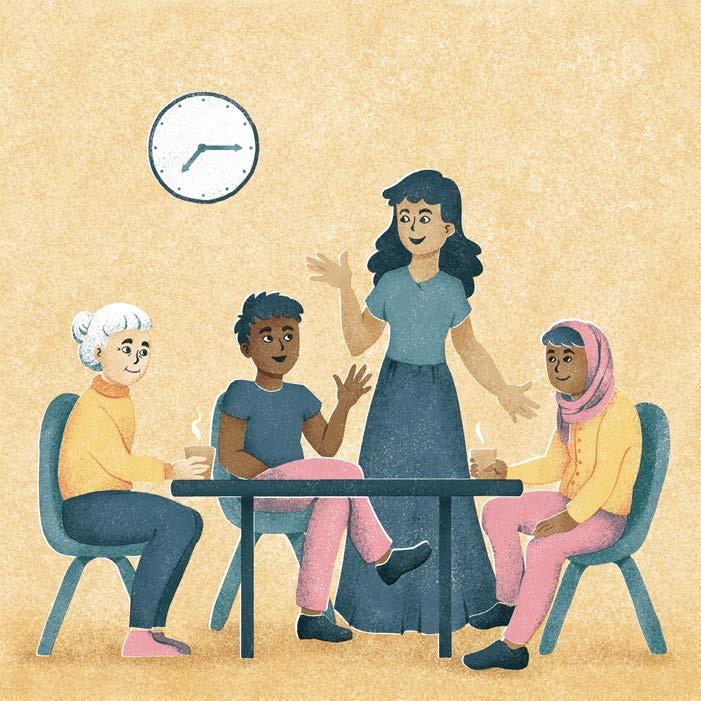
Accountability is a word that frequently pops up in my conversation with Marion. She feels that over the years, city officials and council departments have slowly removed themselves from the community, perhaps conscious that there is little they can do as Glasgow’s budget has shrunk.
As a result, problems such as fly-tipping and badly maintained streets have worsened. Marion feels that the community council is instrumental in holding Glasgow City Council to account and forcing them to engage with the area. But for that, she says, we need more people at the table: “The more of the community we have, the louder our voice can be.”
While work and family commitments will inevitably be a barrier for some, providing better information could be a first step towards attracting more people. Flyers and a social media presence could help bring more people in. However, councillors are already stretched when it comes to their time and resources. Community councils could also provide young people who have served in the Scottish Youth Parliament with a rewarding route to take their involvement in politics forward.
Marion, meanwhile, is in the process of securing equipment to deal with the Neighbourhood Centre’s poor acoustics so that nobody with a hearing impairment is excluded.
Representation is another challenge. At present, CGCC is overwhelmingly white – something both Damian and Marion recognise as problematic in a neighbourhood as ethnically diverse as ours. Reaching out to community leaders and organisations from all sections of society and ensuring they feel welcome to join is essential.
Having representatives of all communities in the same room, to challenge prejudice and misinformation, and to jointly come up with solutions, could go some way to bolstering social cohesion in the area.
“The more of the community we have, the louder our voice can be.”
“The more of the community we have, the louder our voice can be.”
There is still a lot of work to be done, but both community councillors I spoke to are proud of what they have achieved in CGCC. Damian highlights the recent pavement repairs on Cathcart Road and the gully cleaning on Allison Street. Marion mentions improvements to the way issues are reported to Glasgow City Council (previously only three issues could be reported each day, but now it’s unlimited) and the Calder Street Oasis – a tree-planting project involving local schools.
Personally, I am delighted to see that following campaigning by CGCC and Govanhill Housing Association a particularly messy part of Bankhall Street is looking much better.
Going forward, cleansing remains high on the agenda, as do efforts to address problem parking. But these issues can only be successfully tackled if, as Damian puts it, the community comes together to “campaign as a collective”.
CGCC meetings are usually held on the second Monday of each month, from 7-8.45pm, at the Neighbourhood Centre on Daisy Street. The next meeting is on 10 November. If you miss a community council meeting, the minutes can be found on crosshillandgovanhill.org.uk. While the website is currently being updated, the most recent minutes can be accessed at the Govanhill Library.
CGCC has also joined forces with Govanhill Housing Association in organising walkabouts in the neighbourhood on the Tuesday morning after a meeting that anyone can join. They set off from Samaritan House on Coplaw Street at 10am. These are aimed at identifying problems which can then be addressed. The clear-up of Bankhall Street came out of this initiative – proving that turning up really does make a difference.
By Katherine McKinnon
You don’t have to walk far in Govanhill before finding yourself at a spot where members of the community have organised, fought for their rights and celebrated their wins. This neighbourhood has long been a focus in the city for demonstrations, political speeches, organising and community action. Take a walk through some of these histories with Radical Glasgow Tours using this guide.
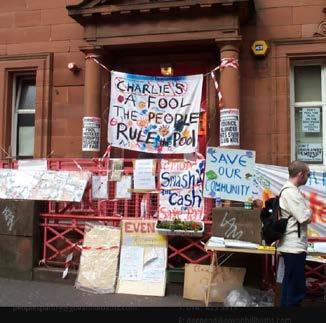
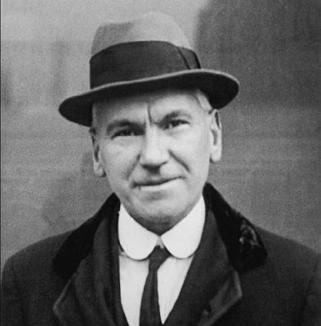
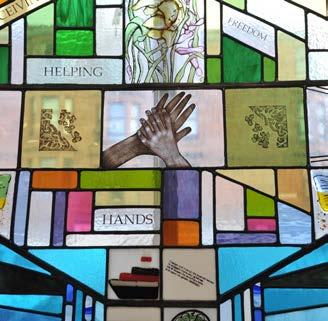
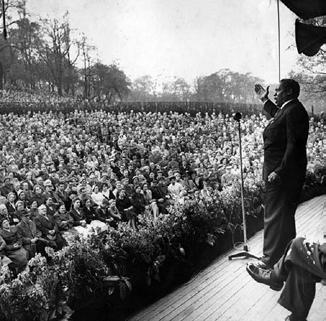


Start at Queen’s Park. Standing on the bandstand stage, picture the crowds that packed the stands in years past. In 1960, thousands of trade unionists listened to the American labour leader, singer and film star Paul Robeson speak from this stage. He told the crowd “There can be no question that we, the people, in the deepest sense, create the wealth. We are building a world in which we can live a rich and decent life, and we and our children should enjoy it.”
Robeson was an active antifascist. In 1936, the British Union of Fascists tried to hold a meeting at the gates of Queen’s Park. This was a popular spot for political speakers, mostly from the city’s many socialist, anarchist and communist groups. Although they only had about a hundred members in the city, the British Union of Fascists had the support of powerful aristocrats. They were beaten back by young people from the Jewish Workers’ Organisation, the Young Communist League and the Labour League of Youth. Anti-fascists disrupted proceedings by singing loudly to drown out the speeches or sometimes taking more direct action by knocking speakers off the tables they stood on. This physical act of resistance is the origin of the term ‘no-platforming’.
From the gates look down Victoria Road, which has always been the heart of the working-class, migrant community. Every year the Govanhill carnival comes this way. Taking up public space with loud, joyous, defiant displays of community solidarity is more vital now than ever.
126 Calder Street
Head down Victoria Road, turning right into Calder Street until you reach the Govanhill Baths. The Baths were opened in 1914 and generations of local people learned to swim here. As well as swimming there were also washing facilities and a bathhouse. The Baths served the people of Govanhill well until 2001, when the council threatened to close it down. The local community immediately sprang into action and the Save our Pool campaign was born. A dozen people broke into
the closed building and chained themselves to the cubicles, leading one of the longest occupations of a public building in British history. Govanhill Baths is part of a larger history of occupations of contested spaces in the city, from workers occupying factories to people protesting the construction of motorways through city parks. Nearby in Kenmure Street in 2021, the local community packed the street and surrounded an immigration van to prevent the removal of two neighbours, reminding us that direct action does in fact get the goods.
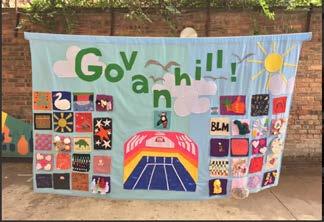
170
Continue down Calder Street towards the library. Step inside to check out the windows – each panel documents different people’s histories of the neighbourhood; showing images and text representing youth culture, sari textile patterns, Irish migration and more. These panels are part of a larger series across Glasgow Libraries celebrating working class culture and history, by stained glass artist Keira McLean.
Nearby, on South Annandale Street, Govanhill Open Museum’s ‘Welcome to Govanhill’ mural also celebrates the rich cultural and linguistic heritage of the area. Each letter of Govanhill contains a pattern from a fabric or object shared by people in the community – how many do you recognise?
83
From the library head down Langside Road, then turn right onto Allison Street, cross Victoria Road then turn left onto Craigie Street to face St Bride’s. On a school day you will hear children shouting and
singing, just as you would have done when John Maclean worked here. Maclean was a young radical in his first teaching job, where he quickly made enemies with the head teacher. As well as filling his spare time campaigning for Britain’s first Marxist political party, The Social Democratic Federation, he formed the Scottish Association of Socialist Teachers and campaigned against homework and corporal punishment.
He was fired from what was then Strathbungo Public School and later forced out of the profession altogether for his communist teachings and anti-war activity. After his first arrest he was taken to the former police station here on Craigie Street (now flats), and this would lead eventually to Maclean being tried for sedition and sentenced to hard labour in Peterhead jail. He was celebrated by Lenin and Trotsky, while MI5 considered him the most dangerous man in Britain.
There was also huge community action here in 1979, when 600 anti-fascists gathered outside the building to counter a talk by Scotland’s single National Front candidate – to his 15 supporters (pictured below).
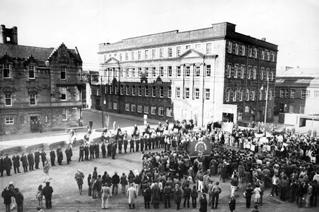
Too many struggles of the past continue into the present day and people in the neighbourhood continue to organise – for tenants’ rights and better housing, against fascism, to make Govanhill an apartheid free zone, to build community and remind ourselves that together we are strong. Look to the past to learn from and be inspired by rebels and revolutionaries long gone, but remember the old trade union motto: ‘the past we inherit, the future we build.’
If this has piqued your interest and you want to learn more, check out upcoming tours on radicaltoursglasgow.com to go on a guided walk of the area.
reimagining belonging
By Yasmine Rahemtulla | Photos by Nicola Smith
“Sanctuary is not a place, but a practice, a way to become-with a world that is never not broken.”
B ayo a komolafe , poet and philosopher
My neighbourhood, Mount Florida, is known for being home to Hampden, Scotland’s national football stadium, but there’s nowhere for local people to meet up without having to pay for a coffee or a pint. There’s also a lack of green space in the area now that Cathkin Park has been fenced off.
In fact, many of the streets here don’t meet Glasgow City Council’s Open Space Strategy 2020 policy – that homes should be within 400m walking distance of ‘good quality, publicly usable open space of 0.3ha or more’.
But until recently, we did have one potential community asset; Mount Florida Bowling Club. The space has a large piece of green land and a building with toilets and a kitchen – facilities that would be perfect for our community to get together.
The club was closed down in 2019 due to dwindling membership and was never advertised for sale before it was bought in 2021 by Noah Properties, a property developer with plans to build flats on the site. For the past six years, Mount Florida Community Trust has been trying to save the land from development – hoping to buy it for the community.
I joined a small team of volunteers supporting community engagement around the site. We spoke with local people to raise awareness of the plans and understand what people actually wanted from the space. This included spaces to grow food and places for children to play.
But, despite our efforts, planning permission to build over the site was granted at a hearing in September this year.
Rising costs are forcing people out of Mount Florida and, in 2023, Glasgow City Council declared a housing emergency. However, none of the 32 new homes by Noah Properties on the former bowling club site will be social housing. Described as “bespoke”, these homes are unaffordable for most locals and won’t help families stuck on long waiting lists.
Bowling clubs were once central to local life, but many had exclusionary histories and much of the wealth that built these clubs came from the empire. Today, some are closing because of falling membership, but they still hold huge potential. When opened up and reimagined for everyone – as community hubs, gardens or event spaces –they can transform from symbols of exclusion into places of belonging.
Less than two miles away, Bowling Green Together is hidden behind tall hedges on Kenmure Street in Pollokshields. This was the site of Kingswood Bowling Club, which lay abandoned until local people cleared the site and transformed it into an essential community green space during lockdown.
Bowling Green Together hosts culturally affirming events that celebrate diversity and community solidarity – from marking India and Pakistan Independence Day together to welcoming everyone, including non-Muslims, to community iftar meals. Beyond these events, the space itself has been an instrumental point of connection and was an important part of the neighbourhood resistance to the dawn raids on Kenmure Street.
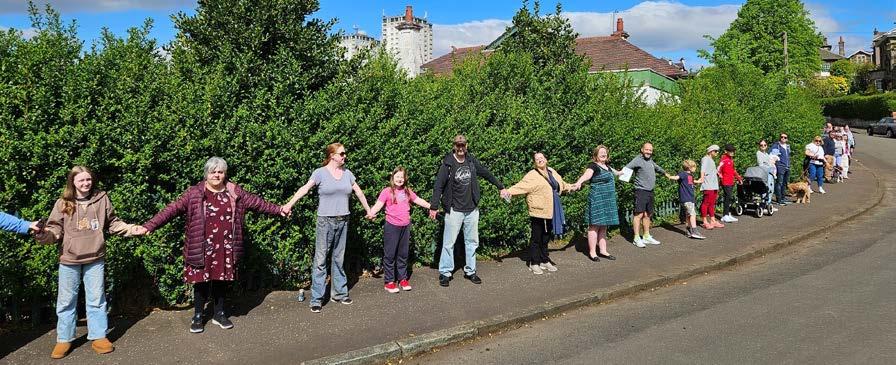
Protected green spaces matter, especially as public parks and streets are becoming less safe for Global Majority people in the UK. The community garden of Bowling Green Together hosts gardening sessions exclusively for people in the asylum system or who are refugees, along with weekly public sessions.
Martha, one of the gardeners who facilitates these sessions sees her work as facilitating connections between different people, but also facilitating relationships between people and plants. She explains: “Community ownership of that common ground is so important because when you get people together who speak different languages, who are from different countries, who have different religions, different political views, a garden or a growing space is an amazing place for people to meet and make connections.”
The feeling of ownership over a space, and legal ownership are two very different things. To begin the process of legal ownership, you need to feel you have the right to be here in the first place. As Martha says: “Who feels they have the right to land? If you have any migration in your heritage, that feeling of right is complicated.”
When Mount Florida Bowling Club was sold to a developer, it became almost impossible for local people to keep it as a community asset. The Community Right to Buy can’t be used to stop developers, but there is a way to protect local spaces before they’re sold – registering community interest in land.
Registering interest (known as Community Right to Buy Part 2) means a community must be offered the chance to purchase land or buildings before anyone else for up to five years. This process helps protect valued spaces and gives communities time to act. Yet for many local organisations, registering interest feels like a luxury. They have more urgent responsibilities and can only save a space once it’s under threat. And at that point, it’s often too late.
In 2022, only five of the 258 registered interests came from Scotland’s 20 percent most deprived areas. That means the communities most affected by poverty and lack of green space are the least likely to benefit from the policy designed to help them.
According to Community Land Scotland, Global Majority groups also face barriers to community land ownership, and ‘not recognising Scotland’s history with slavery and imperialism, and its impact on landownership, affects policymaking and people’s lives today.’
Over a four-month research project, I explored reciprocal connections to land in my neighbourhood and through participatory methods developed the idea of ‘Sanctuary Spaces’ – showing how Community Right to Buy can be a powerful way for urban communities to protect green spaces in the city, which in turn protect marginalised people.
My research found a deeper issue too; a discomfort with the very idea of ownership itself, and concern that the language driving the land reform movement doesn’t resonate with communities who may not feel they have the right to even be in public spaces, let alone own them.
Over the summer, I explored what ownership really means in urban spaces, especially for Global Majority communities who are currently excluded from land movements in Scotland. I wanted to reframe ownership in a way that felt relatable to people living in cities.
Recently the Hampden Bowling Club also announced it may close. We’re also losing other community spaces: between January 2020 and December 2024, Scottish councils sold off 1,851 schools, community centres, halls, properties and other land. Although some services become more efficient online, when we lose places where we can meet people outside our existing social circle, division and isolation creep in.
Registering Interest is the most effective route, and in places like Glasgow’s Southside, there are lots of groups that are well-placed to do this work.
At the moment, this work is being done voluntarily by a handful of people, but the outcome of my project is to connect these groups to identify a local space at risk of closing – like a bowling club – and work together to register interest. This means that we avoid losing our green spaces, and can protect them before they are bought.
There’s a need to build a visible culture of community ownership, where communities can see the benefits and learn from others. Global Majority communities must be centred in this, as they face the greatest barriers and are often excluded from land movements. There are already examples of the focus shifting from nationalism to land justice, recognising Scotland’s colonial history and avoiding cycles of hierarchy and domination.
Community Land Ownership exists, but it must actively reach into the communities who need it most – especially working-class and Global Majority groups – and be led by their hopes and motivations for land justice, if we want to see real change.

We dug into the data to find out
By Ruby Dark, member of Living Rent
by John Bowden
For some, Govanhill is becoming the face of gentrification in Glasgow – seen in the changing shop fronts on the high streets and in rising property values. It is also evident in the increasing cost of rent in the private rental sector.
Recently, a studio flat on Dixon Avenue was advertised on Zoopla at £1195 a month. That’s £275 a week for the privilege of sleeping an arm’s length away from your kitchen sink.
While the Govanhill Housing Association and Southside Housing Association do offer social housing options, the scarcity of affordable properties creates insecurity for many. People are being pushed out of the neighbourhood, detached from their communities, and left to fend for themselves without a safety net.
In some circumstances, this leads to people being evicted from their homes. This brutal process upends people’s sense of security, forcing them to leave their homes, and putting them at risk of homelessness.
Data obtained from Glasgow City Council (GCC) via a Freedom of Information request reveals that more and more tenants in our neighbourhood are facing eviction.
It shows that in 2021, GCC received 60 eviction notices for properties in the G42 postcode. This almost doubled to 115 in 2022. The figures dipped slightly in 2023, to 89. This reflects the temporary protections afforded in the Cost of Living (Tenant Protection) (Scotland) Act, which came into force in October 2022 and lasted until April 2024.
The Cost of Living Act placed a suspension on evictions and introduced temporary rent caps to stabilise housing costs and give tenants more security in the midst of the cost of living crisis. But landlords could still proceed with evictions in certain cases. For example, in the case of rent arrears, criminal damage, or financial difficulty.
The data shows that the protections offered by the Cost of Living Bill had a limited impact in Govanhill. The council received 89 notices in 2023, still more than in 2021.


To lawfully evict a tenant, a landlord must raise a Section 11 notice with the council. This is to give local authorities notice of tenants who may be at risk of homelessness, so they can offer necessary support. Although GCC does not record the reason such notices are served to them (such as rent arrears, intent to sell the property), the council do record the total number of notices received.

Saif loves where they live in Govanhill, which they moved to in 2020. Speaking about that arrival, they said: “It was like a new beginning, it was quite blissful. It has a garden and I’m near the park. It was just perfect for my mental health. It felt like I could breathe for the first time.”
But after some months in the flat, Saif’s living conditions started to worsen. The boiler was faulty and they noticed rats in the flat: “Problems started to appear and [the landlords] never dealt with them comprehensively. The last straw for me was when the lock on the door broke during winter, so anybody could walk through.”
In 2020, Saif took their landlords to tribunal for failure to complete repairs. They were awarded a 40 percent rent reduction. But shortly after, they were served a notice to leave the flat. The reason the landlords cited was rent arrears. After paying the arrears, in 2022 the courts determined that Saif was allowed to stay. But their ordeal didn’t end there.
Saif was served another notice to leave almost immediately. This time, the landlords cited financial hardship as their reason to evict Saif. But due to Cost of Living legislation in place at the time, they had to meet additional requirements to prove this. The case went to court, and after months of fighting, Saif successfully appealed the eviction.
As soon as the bill expired, Saif’s landlords gave them another notice to leave, citing their intent to sell the property due to their own financial hardship. This time, they didn’t have to submit as much evidence and the courts granted the eviction notice, leaving Saif without a home from October this year.
“Five years on, none of the repairs have been done,” says Saif. “Psychologically it’s been a lot for me. I want to stay here. My landlords might be facing financial difficulty, but I’m losing my roots, my community, my familiarity.”
Clearly, legislation is falling short of protecting tenants. The data shows that in 2024, GCC received 126 eviction notices, the highest number since 2021. And this year is on track to at least meet that number – from January to August 2025, 84 notices were received, more than the entirety of 2021.
The data paints a picture of a growing problem –and it only includes official notices received by GCC. Many landlords don’t follow the legal protocol.
Student and DJ, Matty, was served a notice to leave his flat in Govanhill last November, because his landlord was selling. He was given three months to leave: “I had to be out by the end of February... I was just worrying about what I would do when Christmas was coming.”
Matty’s landlord didn’t serve an official eviction notice, but there wasn’t much he could do to fight back: “My landlord lived in Berlin. If she lived locally or in Scotland, I could take action with Living Rent to pressure her to give us more time…it wasn’t feasible.” Since his flatmate found a place already, Matty had to leave the flat as well, or end up paying twice the rent.
It was difficult to find another suitable flat in Govanhill, and he had to leave: “It took a real mental toll on me... it also put stress on my relationship.”
People are being pushed further into poverty than before, unable to afford their rents, being forced out of their homes by landlords who want to cash in on rising property values.
Our neighbourhood has seen huge increases in property prices. Data from OnTheMarket shows that, as of September 2025, the average price for a home in Govanhill is £183,000. That’s a rise of 10.9 percent in the last 12 months.
Zooming in on individual property prices shows astronomical increases in some cases. Property listing data on Rightmove reveals that on Dixon Avenue, a second floor flat was bought for £82,500 in March 2021, only to be sold for £178,000 in March 2025. That’s a 116 percent increase in just four years.
These trends incentivise landlords to sell up and make a profit, feeding into a vicious cycle of rising rents and a lack of affordable homes. Housing is positioned as a failsafe investment to play on the market, a pot of money for tenants to temporarily keep warm – not a social necessity.
In September, Holyrood voted to pass the Housing Bill, re-introducing rent controls in Scotland and giving councils the power to cap rent to inflation level in certain neighbourhoods.
Padraig Durnin, Campaigns Officer for Living Rent Govanhill, said this bill: “Is the biggest victory for Scottish tenants in several generations. For the first time in over 40 years, the majority of private tenants will have permanent protection from capricious rent increases.”
The bill also sees new protections introduced for tenants facing eviction. Tribunals will have greater scope to delay evictions where tenants are vulnerable and implement higher damages for wrongful eviction. But certain amendments aimed to protect tenants further were voted down. “The SNP rejected efforts to amend the bill to reinstate the winter eviction ban which we know kept families from being thrown onto the street in freezing temperatures,” Durnin said.
Living Rent campaigned for years to put rent controls back on the political agenda but their work doesn’t end here. They’re campaigning to close loopholes in the bill and extend protections offered to tenants. Durnin said: “We need to see the government urgently revisit the loopholes in this bill exempting build-to-rent and ‘mid-market-rent’ properties from rent controls.”
Living Rent organise locally to defend tenants facing eviction. They also organise nationally to extend meaningful protections to tenants in government policy. It’s easy to feel powerless if you face housing insecurity alone. But if we organise together, we can put power back in public hands. We need to redefine the housing market towards working for the public rather than rewarding private interests. The Housing Bill is a step in the right direction.
• Your landlord must give you written notice explaining why they want you to leave and when.
• If something doesn’t feel right, you can challenge the eviction.
• You don’t have to move out unless a housing tribunal says so – they need an official eviction order.
• The notice period is usually 4 or 12 weeks, depending on how long you’ve lived there and the reason.
Find more info at shelterscotland.org or join Scotland’s tenants’ union via livingrent.org
By South Seeds




Victoria Road, the main high street within the central Southside area, changes like a kaleidoscope, its shifting shopfronts creating an ever-changing display of colour and character.
Nowadays this array includes ample options for those looking for a caffeine fix.
According to the Scottish Government, in the year 2021-22, an estimated 388.7 million disposable beverage cups were used in Scotland – equating to over 70 cups per person, per year – one of the highest rates in the EU. These create 5,400 tonnes of waste in Scotland annually and are seen as a symbol of our throwaway culture, often contributing to litter in the neighbourhood.
The issue, however, extends far beyond litter. Each takeaway coffee carries a wider environmental and social footprint. These impacts can be reduced when providers take responsibility – through better waste management, fair pricing, and support for public health. Equally, consumers can make choices that reflect their values, helping to shape a more sustainable coffee culture across the Southside.
With this in mind, South Seeds, a local community-led sustainability charity based here in Govanhill, set out to find the most sustainable Southside takeaway coffee –to see if there is a public appetite for more sustainable products and services amongst residents.
Sustainability is about the planet and people, so this was not a survey to see which coffee shop was the most environmental. Instead we took a wider view of sustainability and checked prices and other variables designed to assess how connected they were to the local economy and their contribution towards public health.
To begin, we spoke to the sustainability specialist at Matthew Algie, a coffee roaster based in the Gorbals, which has been supplying cafes and hospitality businesses with everything they need to run a coffee business for 160 years. They took us through some of the key issues with takeaway cups, verifying sources of coffee and disposal of coffee waste.
We also looked into health advice from the British Heart Foundation and the NHS which suggests 200 calories is plenty for a healthy snack. And we know from running the Southside Tool Library that working with local trades

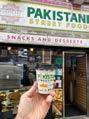



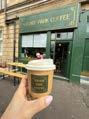
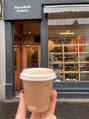
people is a great indication of how well-connected people are to the area. From this we developed criteria which tested environmental credentials, contribution to the local economy and enabling personal health and wellbeing. All the criteria were equally weighted.
This table summarises the questions we asked and how we tested sustainability.
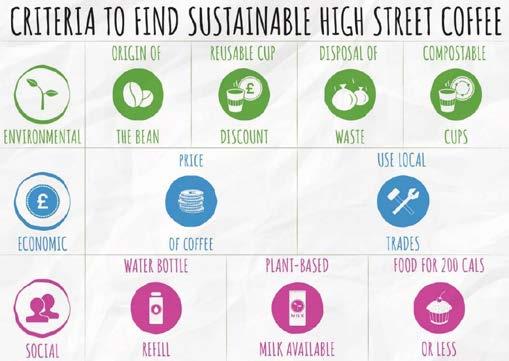
The research involved visiting and surveying 30 establishments in and around Govanhill. Our research extended beyond the high street, to ensure we were testing the practice of some of the non-high street players too which may have to try harder to attract customers.
We bought a coffee at every establishment surveyed, and we took the answers the staff gave us on the day. If the staff don’t know how the food waste or coffee grinds are disposed of, or if they are allowed to fill up a water bottle, that can be seen as an action for management to review staff training.
After testing over 30 takeaway coffees over a number of weeks – some on Victoria Road and others in Strathbungo, Pollokshields and Mount Florida – we crunched the numbers. The findings were interesting, with the most expensive takeaway coffee at the time of testing £3.90 and the cheapest £1.99 – nearly half the price. The average price of a coffee we tested was £3.29.
The top five places selling takeaway coffee who we found to be strong on our sustainability criteria:
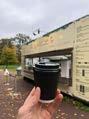




It was interesting that it was not the most expensive coffee shops which ranked highest on our sustainability ratings and some of the cheaper options did better. For example, Gusto and Relish and Fulton’s both offered coffee under £3 and ranked in our top ten. They were both noted for their responsible approach to disposal of organic waste.
Peachy and Cibo both sold good value takeaway coffee and also offered a further discount for using your own reusable cup. Half of those tested did give a discount for reusable cups, so it is worth carrying a cup on you.
Café Buena Vida and Jeju Bakes on Victoria Road, as well as Portal Café near Govanhill Park were all good value and offered compostable cups. McDonald’s, the cheapest out of all the establishments we checked, also offered a cup made from plant material. Look out for takeaway cups labelled Decent or Vegware – brands made with sustainability in mind.
While some of the chain establishments had put a lot of thought into sustainability of the bean and the cup, we found with Sainsbury’s, Greggs, McDonald’s and Starbucks, their contribution to the local economy was limited to employing staff rather than using local trades and sourcing local products. Many independent coffee shops were great places to find out about local window cleaners, electricians and joiners.
Most establishments were vegan friendly and offered different



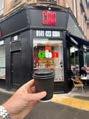
types of plant-based milks – with Starbucks offering the most options. Some, like Locavore, also used dairy milk from local farms. Over half the establishments displayed the origin of their coffee for customers. Thompsons and Dear Green are the two most popular coffee suppliers locally and it is easy for interested coffee drinkers to follow on Instagram to find out more about the origins of their coffee.
There was a lot of differences when it came to the disposing of waste. The staff in two places were unsure of how waste was disposed of while all the rest had a commercial contract in place. Chains often have their own arrangements. If over five kilos of organic waste is produced a week, the organic waste should be separated from general waste and a separate collection with a licensed waste carrier arranged. Yet only half of the establishments we spoke to separated organic waste. It was great to find out there is a special collection by a local community group of coffee grinds for some participating shops on Victoria Road such as Patricia’s and Crema.
Many of the places with the most expensive cups of takeaway coffee didn’t offer any food options under 200 calories, meaning customers had no healthy options. Both Sainsbury’s and Locavore offered fruit to grab on the go with a coffee. It can be difficult to gauge calorie content of many snacks, which is why it is now mandatory for larger organisations to display this information in England and Ireland.
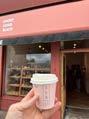
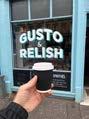

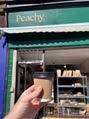

Hydration on the move is important to keep healthy and we found that all but four establishments were willing to fill up water bottles. This is now a requirement for hospitality venues which sell alcohol, so we were glad to see most coffee shops offering it as well.
This is not a definitive list, but we hope this exercise will empower Southsiders to ask questions about the food and drink they are purchasing and consider trying somewhere they haven’t been before. We are lucky to have so many takeaway coffee outlets to choose from and, as time passes, the kaleidoscope will turn again and a new array of offerings will be available on our high street. We hope that sustainability will be part of that story.
South Seeds was delighted to receive a grant from the Royal Society of Edinburgh to complete this research.
We hope that it may encourage other high streets in Glasgow and in other cities to consider surveying takeaway coffee establishments.
We would be very interested in any public reaction to this attempt to create real workable standards/ criteria of sustainability for a product that many residents purchase, even if only occasionally. Get in touch via info@southseeds.org, drop into our Victoria Road shop or message on social media.
Nationhood: Memory and Hope
When: 1 November – 8 February
Where: Street Level Photoworks, Trongate 103
What: A new exhibition of photography exploring identity and diversity across the UK. Featuring work by Aïda Muluneh and seven rising photographers, it celebrates community, history and belonging.
More info: streetlevelphotoworks.org
Taking Care of Your Tenement
When: Thursday 6 November, 6–8pm
Where: The Deep End, 21 Nithsdale Street
A drop-in session with Glasgow City Heritage Trust and Under One Roof for anyone interested in maintaining and repairing historic tenements.
More info: FREE drop-in session
‘I Could Not Ask You To’ Launch
When: Friday 7 November, 7–9pm
Where: Burning House Books, 446 Cathcart Road
Launch of Mouse Press’ new pamphlet ‘I Could Not Ask You To’ by Helena Fornells Nadal, with readings from Helena Fornells Nadal, Peter Manson and Marina Dora Martino. Drinks included.
More info: Tickets £3 via Eventbrite
Crosshill & Govanhill
Community Council Meeting
When: Monday 10 November, 7–8:45pm
Where: Govanhill Neighbourhood Centre, 6 Daisy Street
A free public meeting open to residents, volunteers and community members to discuss local issues and how to resolve them.
More info: crosshillandgovanhill.org.uk
Tales from the Pre-historic Tavern
When: Monday 10 November, 7–11pm
Where: The Corona Bar, 1039 Pollokshaws Road
An in-person role-playing evening hosted by Tales from the Tavern for the local RPG (role playing game) community, taking place every other Monday at The Corona Bar.
More info: Tickets £5 via Eventbrite
Havana Glasgow Film Festival
When: Tuesday 11 – Sunday 16 November
Where: Glasgow (various venues)
The 10th Anniversary of this Cuban-film and culture festival showcasing films from Cuba, plus workshops and arts events.
More info: Visit hgfilmfest.com to find out more
Active Bystander Training
When: Thursday 13 November, 10:30am–1:30pm
Where: Samaritan House, 79 Coplaw Street (SEIN office)
A workshop on safe, positive intervention when witnessing bullying or discrimination, facilitated by Glasgow Prisoner Solidarity at SEIN. Lunch provided. Spaces limited; SEIN members have priority.
More info: Sign-up via tinyurl.com/3mpd8nv4
Writing Queer Sex and Kink
When: Thursday 13 November, 6–8pm
Where: Burning House Books, 446 Cathcart Road
A creative writing workshop exploring queer approaches
To be kept up to date with more events, sign up to our newsletter via greatergovanhill.substack.com/subscribe
to sex and kink in literature. Participants will read, discuss and write using prompts from fiction, erotica and poetry.
More info: Tickets £15 via Eventbrite
Ceardlanna Gaeilge: Irish Language Workshops
When: Saturday 15 November, 10:30am–3:30pm
Where: Govanhill Neighbourhood Centre, 6 Daisy Street Irish language workshops for beginner, intermediate and advanced levels.
More info: Tickets £20 via Eventbrite
Scotland’s Climate March
When: Saturday 15 November, 11am
Where: Glasgow Green
A march organised by a coalition of groups and individuals calling for global solidarity, a fair transition to clean energy and care for the planet.
More info: See act.foe.scot/climate_march_2025 for updates
Wrong Party: Fourth Birthday Bash
When: Saturday 15 November, 10pm–1am
Where: McNeill’s Bar, 106 Torrisdale Street
The monthly ‘rave/oddball dance party’ in the Southside celebrates its fourth birthday upstairs at McNeill’s in the Fiddlers Elbow.
More info: FREE entry
Time for Art & Men’s Shed Exhibition
When: Saturday 22 – Friday 28 November
Where: The Deep End, 21 Nithsdale Street
An exhibition of artwork by older adults and local men from two wellbeing projects, exploring creativity, storytelling and connection.
More info: FREE, check govanhillbaths.com/whatson
Fabric Wreath Making Workshop
When: Sunday 23 November, 1–3pm
Where: The Boilerhouse at The Hidden Gardens, 25A Albert Drive
A festive workshop making fabric wreaths, with tea, coffee and seasonal treats provided.
More info: Tickets £25 via Eventbrite
Govanhill Community Litter Pick
When: Saturday 29 November, 10:30am–12:15pm
Where: Govanhill Free Church, 26 Belleisle Street
A monthly litter pick organised by local volunteers to help keep Govanhill’s streets clean. Refreshments provided afterwards.
More info: Protective equipment provided; children welcome
Nae Sweat Community Sports Day
When: Sunday 26 November, 11am–3pm
Where: Govanhill Park
A community sports day hosted by Living Rent, with food, football and social activities. Attendees are encouraged to bring a dish to share.
More info: FREE, everyone welcome
Water That Carries: Animation Workshop
When: Saturday 29 November, 11am–5pm
Where: Saltspace Gallery, 38 Albert Road
A hands-on workshop exploring moving image using found and foraged objects to create a collective animation. Participants are invited to bring a meaningful item.
More info: Pay-what-you-can donation via Eventbrite
Glasgow South Concert Series: Jack Halforty
When: Saturday 6 December, 1–2pm
Where: Queen’s Park Govanhill Church, 170 Queen’s Drive
Solo saxophonist Jack Halforty performs a programme ranging from Bach and Messiaen to avant-pop composer Jacob TV, exploring the instrument’s expressive range. More info: Tickets £6, cash or card at the door
Love Music Hate Racism Presents: Freedom Karaoke III
When: Saturday 6 December, doors 8pm
Where: The Rum Shack, 656–659 Pollokshaws Road
The return of LMHR’s karaoke night promoting unity through music. A lively evening celebrating diversity and solidarity against racism.
More info: linktr.ee/lmhrglasgow
BIG SOUL Events Christmas Party
When: Sunday 7 December, 1–5pm
Where: Pollokshaws Burgh Hall, 2025 Pollokshaws Road
A festive afternoon featuring soul, disco, northern, Motown and funk classics on big screens, plus a Soul Train competition at 3pm and a Love Train dance.
More info: Tickets from £15 via ticketsource.co.uk
Trans History Night
When: Thursday 11 December, 7–8pm
Where: Category Is Books, 34 Allison Street
Historian Sam Rutherford leads a discussion exploring Britain’s queer and trans histories, and what they offer for the present.
More info: Contact categoryisbooks@gmail.com / 0141 463 4934 to book
Bookmark Etching with Pasta Maker
When: Thursday 11 December, 6–8pm
Where: Glasgow Zine Library, 32–34 Albert Road
A creative workshop using a pasta maker to etch your own bookmark, encouraging sustainable festive crafting.
More info: Pay-what-you-can via Eventbrite
Christmas with the Wurlitzer
When: Thursday 18 December, doors 7pm
Where: Pollokshaws Burgh Hall, 2025 Pollokshaws Road
A festive concert featuring the nostalgic sounds of the Wurlitzer organ.
More info: Tickets from £11 via Eventbrite
Songs & Stories: Brian McDaid, Michael McMillan & Diana Schad
When: Sunday 11 January, doors 7:30pm
Where: The Glad Café, 1600A Pollokshaws Road
An evening of live folk music and storytelling from three acclaimed performers. Over 18s only.
More info: Tickets £15 via thegladcafe.co.uk
Celtic Connections
When: Thursday 15 January – Sunday 1 February 2026
Where: Glasgow venues, including Tramway
This annual winter festival features folk, roots and world music concerts, ceilidhs, workshops and late-night sessions across multiple venues.
More info: See celticconnections.com
Come Dancing with Phil Kelsall MBE
When: Saturday 17 January, 2–5pm
Where: Pollokshaws Burgh Hall, 2025 Pollokshaws Road
The principal organist of the Tower Ballroom in Blackpool performs an afternoon of dance and music on the Wurlitzer organ.
More info: Tickets from £11 via Eventbrite
Letters to the Future
When: Monday 26 January, 7:30–10:30pm

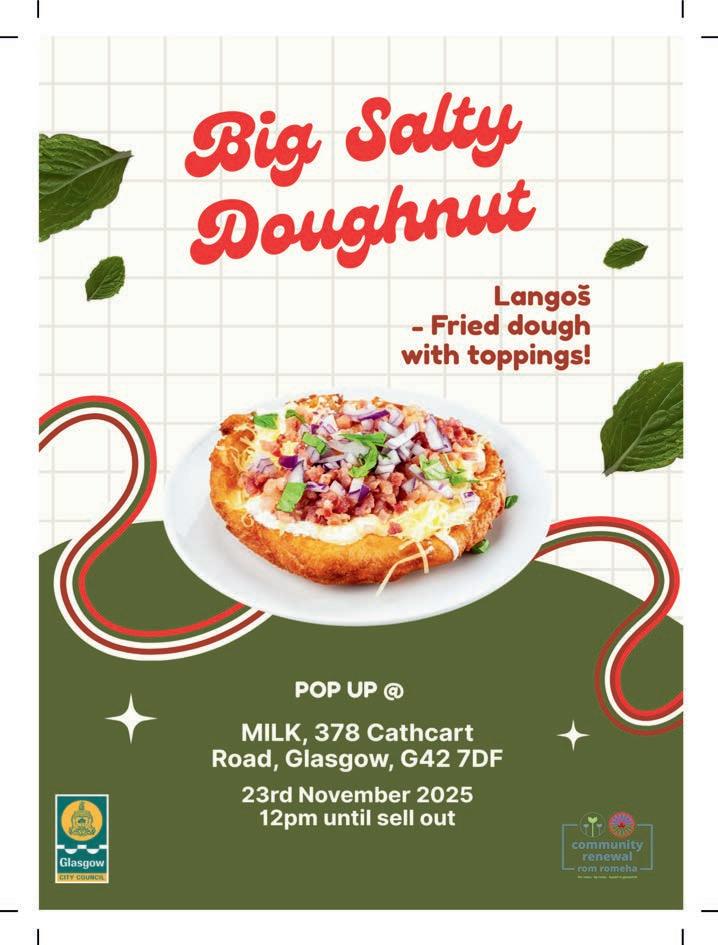


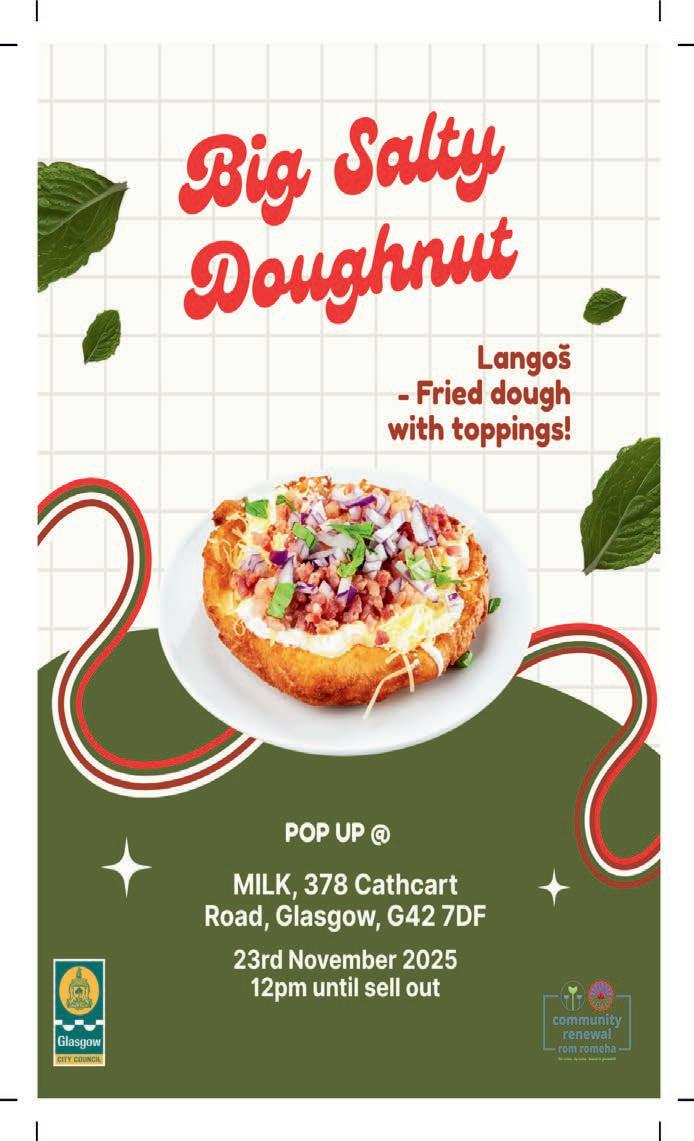
By Shaimaa Alrashwanii

In a quiet part of the city, there was a big, old hotel. But this hotel wasn’t for tourists or travellers… it was a place for families who had come from far away countries looking for safety.
Fourteen year-old Adam, a tall and thin Syrian boy with blonde hair, dimples and glasses lived there with his mother and little sister. They had left their home country because of war, carrying only a small bag and big memories. One sunny day, Adam walked to the small garden behind the hotel.
There he met a boy around his age. His name was Liyan, a British-Pakistani boy with kind eyes and a gentle face that always seemed a bit sad. “Where do you live?” Liyan asked. “In the big hotel – we are asylum seekers,” Adam said.
“What does that mean?”
“It means we had to leave our country.” said Adam, “We’re looking for a safe place to live and start again.” Liyan nodded along thoughtfully.
The next weekend Liyan came back to the garden with crayons, paper and glue. He invited Adam and the other kids to draw and make crafts. Among them was Hana, an 11 year-old Kurdish girl from Iraq. She was short, quiet and sweet, with long brown hair and a bright, shy smile.
“Let’s each draw our dream home.” Liyan said. Hana drew a school with open windows. They smiled for a moment, and it felt like home. That week Liyan talked to his mother about the hotel kids. “We can help,” he said, “let's collect books and toys.”
Soon a donation box was set up in his school. When Liyan went back to the hotel the common room was full of books, games and art supplies. Adam’s mother, a kind woman with tired eyes behind glasses and a soft voice, smiled as she served tea.
“Now this is a place that feels like a real home” she whispered.
Materials needed
• A small shoebox
• Coloured paper
• Glue
• Scissors
• Photos, stickers or drawings
• A few small items that remind you of home
Instructions
1. Cover the box with paper, decorating it with colours and symbols from your culture
2. Inside, place small drawings or items that represent your memories; a flag, or a family photo
3. Every week add something new; a kind word, a drawing, or a good memory
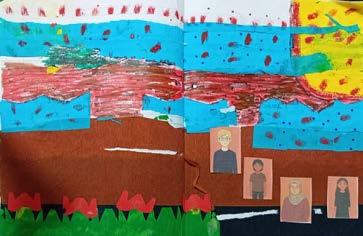

In August, we hosted an event at Tramway where giacinta frisillo led a workshop inviting participants to transform old magazine articles into original poems by blacking out selected words. We’d love for you to try it too! Create your own blackout poem using a page from this issue, snap a photo, and send it to newsroom@greatergovanhill.com or tag us on social media for a chance to be featured in our next issue.
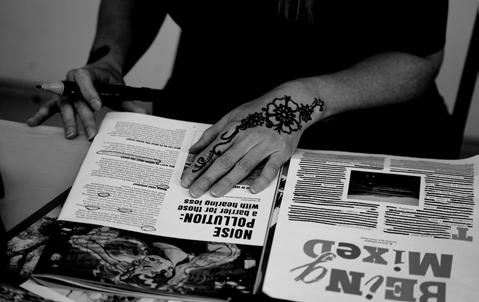
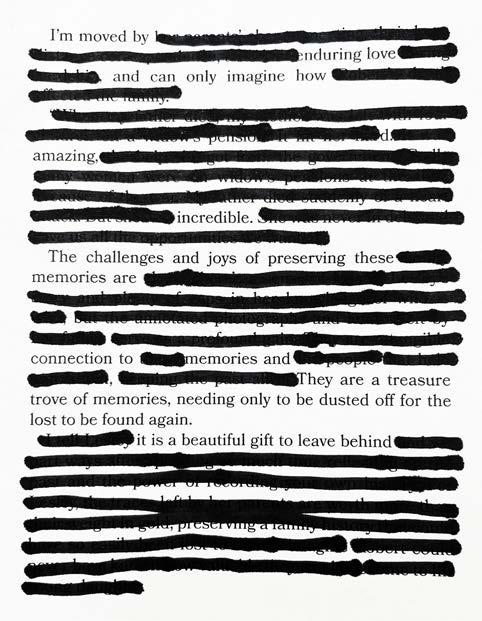

We’ve come this far and with your help, we can keep going.
This December marks five years since the first issue of this magazine was published. Twenty issues later, we’re proud of what we’ve built – but we need to be honest about what it takes to keep it going.
Every face on our cover tells a story – a reminder of why this magazine exists. Independent, community-run media matters now more than ever. We’re still facing the same battles that inspired our launch: misinformation, intolerance, and stories that divide rather than connect.
Without support, voices from our neighbourhood risk being drowned out by louder, better-funded ones.
We want to keep sharing real stories from our community – to continue giving space to those too often pushed to the margins. But we can’t do that without you.
If you’ve ever read something here that made you proud, challenged you, or made you see Govanhill differently – please, become a member today and help us reach our target of 100 new members.
Visit community.greatergovanhill.com/join or scan the QR code.

To keep up with us even more regularly, follow us on social and sign up to our newsletter
If you run a local business or community organisation, you can also help sustain us – while reaching new audiences – by advertising with us or becoming a business member. Email advertising@greatergovanhill.com
Five years in – we’ve proven what’s possible. With your support, we can make sure this is just the beginning.