
WIT ABOOT YAE?
INCLUDING : Intro ae Scots • Learnin Scots in school • Growing up wi Urdu n Scots • An insiders perspective ae Scots oan the tele • Voices ae Viccy Road – wit you hud tae say aboot Scots • Ma granny’s stovies recipe • Visitin Alasdair Gray’s archives • Speakin aboot Agnes Owens • Grind Yer Axe club night • Worker’s sangs • What’s happenin wi factorin • Poems • Pat the Pigeon comic • Aw the latest news n events fae roon aboot… and much mare!
Featuring: Arabic, English, Romanes, Romanian, Scots, Slovak


Letter fae wan ae the editors

Dear Readers,
This issue is aw aboot Scots. Fae growin up in Glesga, tae reclaim a language yae were taught wis wrang, tae findin solace in the warmth oor language brings. It’s a love letter tae bein Scottish, nae matter who yae ur or where yer fae.
We received fundin fae the Scottish Guvernment’s Scots Language Publication Grant tae put thegither a scrievin group where we’ve spent the past three months delvin intae the Scots language n oor ain relationship wae it.
In oor time as a wee group we’ve found thit bein Scottish isnae joost about where yer born, it’s aboot bein part ae a diverse group ae people who – fur the maist part – ur open, welcomin, n acceptin. There’s a uniqueness Scots huv in wantin tae share oor culture n learn fae others aboot theirs. N when yae look back through the history ae oor language, oor identity, n even the hings which huv became “inherently Scottish” huv travelled through time fae ancient cultures n civilisations tae make up bein a Scot thiday.
Take haggis as an example (shock, a know), the tradition ae makin it far ootdates Scotland bein a country let alane its people being known as “Scots” or a language. Roughly four hunner years a’fore Scotland wis Scotland, the Greeks were makin sumin very similar, and four hunner year a’fore that sumin similar is mentioned in The Odyssey.
It’s interestin’ tae hink that mibae haggis wisnae the only hing passed doon fae times long gone, but the inherent warmth a believe aw Scots huv, is the result ae developin n adaptin tradition fae other places throughoot time.
In oor scrievin group, we’ve hud some awfa sound folk who huv taught me a lot n gave me a lot tae hink aboot, stuffa a never woulda considered a’fore. If there’s wan hing we’ve been reminded ae that’s true er enin else, it’s thi nae matter wit wiy yae swiy – or wit yae may hink aboot other people – the heart ae the Scots language is a reflection ae wits possible when cultures merge n people are open tae change – true beauty. Cuz that’s wit Scots is. Pure n utter beauty.
Thank you tae aw the people who came thegither tae make this issue possible. Fur dedicatin yer time n joinin oor scrievin group, providin original works n responses, and fir usin Scots tae look ootside n connect wae somethin else through oor language: Alistair Callander, Andrew Conlin, Calum Kelly, Cat Cochrane, David Carr, David Doren, Farhat Rashid, Fraser Scott, Hayley Jane Dawson, Karmjit Badesha, Seán W. Pieper, Shane Johnstone, Stacey Anderson, Taylor Dyson, Zara Grew.
And thank you to you, oor readers, for picking up oor wee mag n gein it some love.
Mikael
Scots Scrievin Facilitur
The publisher acknowledges receipt of the Scottish Government’s Scots Language Publication Grant towards this publication.
A special thanks goes to our Issue 21 advertisers: Ayse Hassan, Glasgow Community Sauna, Museum Galleries Scotland, Studio 70, Home Energy Scotland, Street Level Photoworks, Govanhill Baths Community Development Trust, The Bell Jar, Merry-Go-Round
Want to advertise in our next issue?
Email advertising@greatergovanhill.com
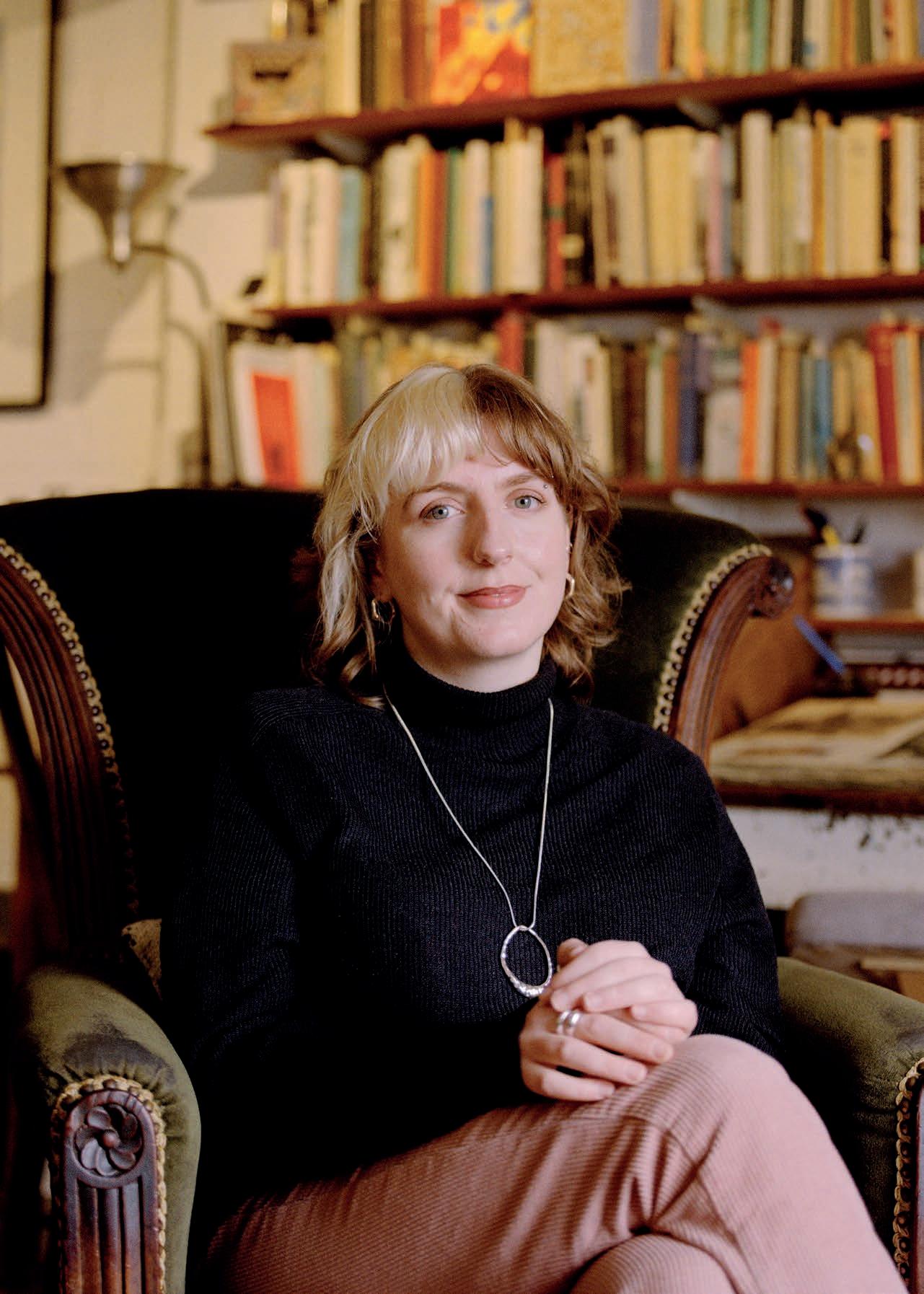
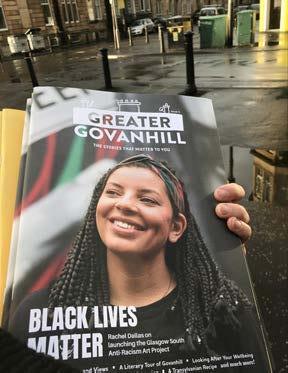
Cover image Portrait of Stacey Anderson at the Alasdair Gray Archives by Miriam Ali
Editorial Team Devon McCole, Mikael Phillips, Rhiannon J Davies and Samar Jamal
Creative Director Laura Hurst paperarcade.co.uk
Picture Desk Laura Vroomen
Ad Sales & Socials Mikael Phillips
Newsroom Facilities Catherine Weir
Words by
Alastair Callander, Andrew Conlin, Cat Cochrane, David Carr, David Doren, Devon McCole, giacinta frisillo, James Dixon, Karmjit Badesha, Kate Fry, Mikael Phillips, Rhiannon J Davies, Rahela Cirpaci, Rebecca Morris, Samar Jamal, Seán W. Pieper, Shaimaa Alrashwanii, Stacey Anderson, Zara Grew
WE NEED YOUR HELP
If you want to support grassroots community media that amplifies local voices, support us by becoming a member today: community.greatergovanhill.com/join

Photos by Angie Catlin, Iain McLellan, Ilaria Lipperi, John Bowden, Laura Vroomen, Miriam Ali, Mikael Phillips, Rob Reid, Rhiannon J Davies, Stefan Krajcik, Tiu Makkonen
Illustrations by Aled Haywood, Alistair Quietsch, Kirstie Ken English, Laura Hurst, Olivia Juett, Stuart White, Rachel Mills
Translations by Romano Lav, Shaimaa Alrashwanii
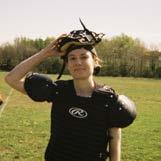
Kate Fry
I am a writer from the unceded Coast Salish land, colonially known as Vancouver, Canada. In 2022, I made the best decision of my life and moved here to Glasgow. My background is in literary theory and criticism, but I dabble in everything from poetry to sports writing. When I’m not writing, you can usually find me out in a field somewhere with one of the Southside baseball or football teams.
Check out Kate’s interview with the founder of Grind Yer Axe on page 37
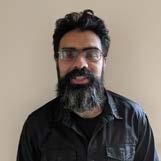
Karmjit Badesha
I’m a writer from Govanhill. I’ve grown up in the area, with my parents’ first flat being on Allison Street way back in the 70s. I’ve lots of warm memories with friends, family and the community that makes me glad this is my home. My favourite pastime is a walk in Queen’s Park with my wife, before a cheeky kebab from Yadgar.
Read Karmjit’s Scots poem on page 25
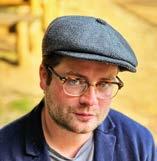
James Dixon
I’m a native Londoner who moved to the Southside in 2019 and hasn’t looked back. I’ve won a couple of awards for my novels, and I’m a freelance journalist with articles published in national papers. My children’s books, The Billow Maiden and Crow Children, are published by Guppy Books in the UK. Find out more about factoring from James on page 38

SAUNA SAUNA SAUNA SAUNA SAUNA SAUNA


KEEP OUR DOORS OPEN
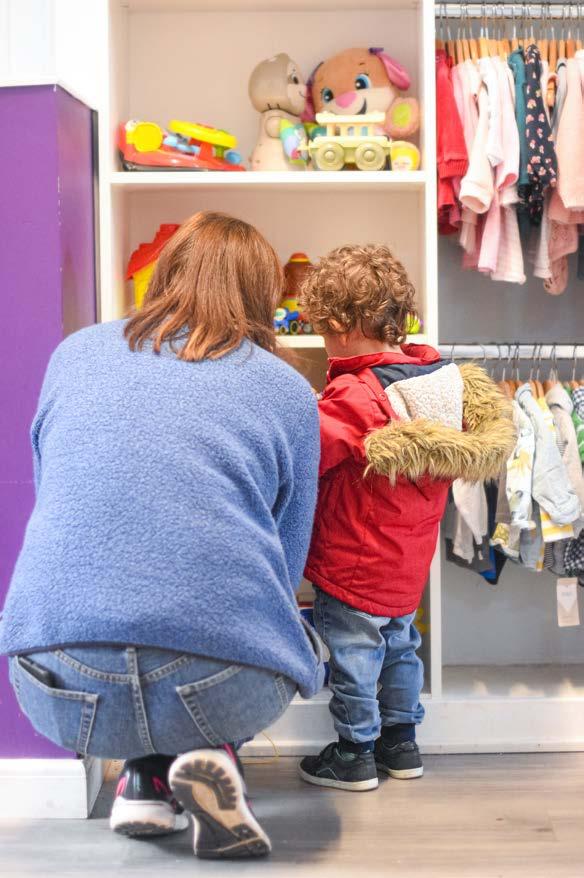
Merr y-go-round helps families access essential children’s clothing and equipment.
Become a monthly giver to help us plan ahead and ensure no family is turned away. Even a small gift keeps our doors open all year.
Please consider becoming a monthly giver today.
All
Roma
“I
Stories from oor Streets: Coplaw Street
“Hame tae a number ae notable buildings”
Like my grandmother used to make: Gerry Doll’s stovies
“Like a hug wae a squeeze”
Street Style Icons
“Black makes me sad. I dress for the serotonin – it lifts me up. I need colour.”
13
Govanhill: wit aboot ye?
“how dae wi pinpoint wit the Scots language is? And who gets tae decide that?”
15 The Scots glossar
“Tryin tae build a Scots Glossar is like tryin tae bring Babylon back thegither”

16
Wit ye sayin aboot Scots?
“Scots and Standard English are kintongues, closely related to each other”
17
A blether on Vicky Road
“We headed doon tae Vicky Road tae see wit the people ae Govanhill hink”
18
Tae speak withoot shrinkin
“The desire for closeness to Urdu isn’t just about understanding but expanding.”
20
Scottish television, national stories, identity and culture –with actor Paul McCole
“Scottish stories, the language, if you ask me, it translates.”
22
We need your help to keep Govanhill’s voices heard
“We recently lost our core funding from the Glasgow Communities Fund, and this puts the future of the magazine at risk.”
24
Poetry corner
“These four poets explore everything fae the highs ae music tae the shifts in oor daily identity.”
26
Tae Glesga an the Sters
“Ah pass through crowds that buzz roon like midgies”
27
Reclaimin the muther tongue
“It’s nice tae see cultural pride be expressed in a wey that isny pittin doon others fur their differences”
28
‘That’s Us!’ – learning to be at home with Scots
“My first encounter with Scots was while strap-hanging on the London Tube”
29
Scots education in 1960s Govanhill
“The Scots equivalent was Tis Aw Braw Bricht Moonlicht Nicht Twa Nicht”
31
Doon a rabbit hole: Rediscoverin Scots writin fae dissertation tae preservation
“At the time Chris McQueer n Limmy were comin oot wae their own short stories in Scots”
32
In conversation:
On the work of Agnes Owens
“Of course I have to write what I know – I don’t have the money to go off and research anything that isn’t the life that I see every day”
34
Scots songs and gathering the folk across Glasgow & beyond
“The beauty of learning these local languages and dialects is that they belong to anyone”
35
I am one story among many “We arrived carrying our fear in our hearts and our children in our hands”
37
‘Grind Yer Axe’ is bringing queer nightlife to your doorstep
“My favourite was the Saints and Sinners party, our Halloween night”
38
Plastering over the cracks: What’s the deal with Glasow’s factors?
“Major complaints from homeowners and tenants across Glasgow are common”
news in brief
Have your say 2026: we need you to help us with our election coverage
We want to know what questions you have for candidates standing in the upcoming Scottish Election. So tell us: What issues do you want candidates to be speaking about as they compete for your vote?
As well as putting your questions to candidates, we’ll be doing further reporting on the issues – and solutions – you share. You can let us know what you think by scanning here.

Proposed plans to transform Queen’s Park unveiled
Thousands of Glasgow residents have contributed ideas and feedback shaped the new proposals for developments in Queen’s Park. The draft Queen’s Park Development Plan includes a range of upgrades, including a new basketball court, a purpose built skatepark, expanded paths, and a new grand entrance near the Battlefield Monument. The Pollokshields, Lanside and Southside Central area Partnership are reported to expect an update on the plans in March.
Greater Govanhill to release new podcast series on gambling harms
Following on from our gambling harms special issue released in early 2025, Greater Govanhill is set to release a new co-created podcast series on this topic. Her Upper Hand will consist of six episodes, each one fully developed and presented by course participants with lived experience of gambling harms – and produced by Flora Zajicek. The episodes take different forms from personal essays to fictionalised stories, interviews and documentary-style episodes. They cover: participants’ personal journeys with gambling; how menstrual cycles affect gambling behaviour; how women affected by gambling can find a voice; and how to take back control from an addiction. Her Upper Hand will launch in the week beginning 30 March and will be available wherever you get your podcasts.
Launching our Storybooth Exhibition at Tramway
Last year, during the annual Govanhill International Festival & Carnival, we ran the Govanhill Storybooth – during which we invited local people to drop in, get their photo taken and share something about themselves. Our Storybooth exhibition, opening upstairs in Tramway on 8 March, is the culmination of that work. With photographs and stories of over 50 people, we hope to reflect the diversity of the neighbourhood.
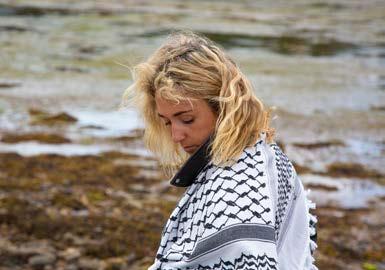
Govanhill artist releases single as Palestine fundraiser
From the Olives to the Tree is a new single from local singer and songwriter, Vickie Paxton. All profits are being donated to Palestine Children’s Relief Fund. Available to purchase on Bandcamp.
PolSco: Polish/Scottish choir in Govanhill are looking for tenors and basses
PolSco, a local choir rehearsing in Govanhill on Monday evenings, are looking for new members to join – especially tenors and basses. They are an auditioned choir that sing acapella music in various languages such as Polish, Scots, Gaelic and English. If you’re interested, you can drop them an email: polscochoir@gmail.com.
Kenmure St documentary wins award at Sundance
Everybody to Kenmure Street won the World Cinema Documentary Special Jury Award for Civil Resistance at its Sundance premiere, helping it to secure distributors in North America. Directed by Felipe Bustos Sierra, it documents a day of grassroots solidarity in 2021, when hundreds gathered in Pollokshields’ Kenmure Street to prevent the UK Home Office from detaining their neighbours during a dawn raid. More information on screening dates and times can be found online at: conic.film/kenmurestreet
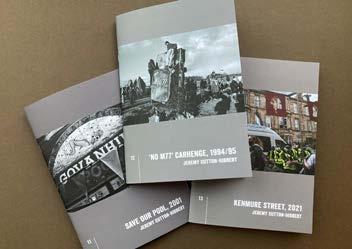
New photographic zines document community protests from the Southside
Photographer Jeromy Sutton-Hibert has released a series of photographic zines called Protest in Glasgow Southside. Featuring the ‘No M77’ environmental protests in Pollok in 1994/95 against the extension of the M77 motorway, the ‘Save Our Pool’ campaign from 2001, and the celebrated Kenmure Street protest in 2021. Alongside the images, forewords for each zine have been provided by experts, local people and activists. You can order the series on jeremysuttonhibbert.com
news in brief
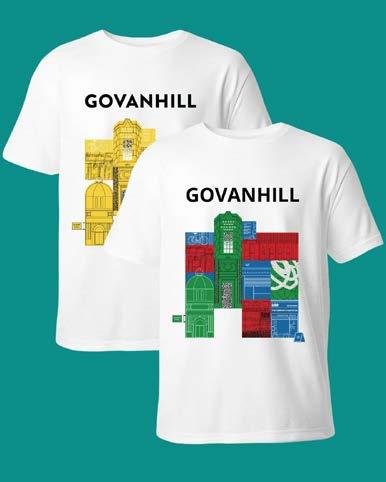
New Greater Govanhill t-shirts and recipe books!
We’ve launched a new range of t-shirts celebrating our neighbourhood, with illustration by Kate Benzie featuring some local landmarks. Available in two colours, show off your style with this limited edition t-shirt! Grab yours, support the mag – and check out our ‘Like My Grandmother Used To Make’ recipe books on our website: greatergovanhill.com/support.
Greater Govanhill and Rom Romeha lose Glasgow Communities Fund support
Greater Govanhill and Community Renewal’s Roma-led project
Rom Romeha have not been awarded new Glasgow Communities Fund grants, meaning both will lose significant funding when current awards end. The decision raises concerns about the future of local media, advice and advocacy work in Govanhill, including support for Roma families. If you value independent community journalism and grassroots action in the area, consider becoming a member to help sustain this work: community.greatergovanhill.com/join
New Southside accessible and inclusive sauna
Glasgow Community Sauna has opened its doors, providing an accessible and affordable sauna. Located in Pollokshield’s Bowling Green, the non-profit sauna centres provide inclusivity, connection and wellbeing for users, with dedicated sessions for marginalised communities. These include silent sessions, sessions for LGBT people, refugees, people seeking asylum, and sessions for women only and men only. The sauna was converted from a horse box and the space also includes accessible changing facilities, as well as a cold plunge. For more information, visit the website: glasgowcommunitysauna.co.uk
Historic Environment Scotland seeks views on Hampden Pavillion
A public consultation has been launched by Historic Environment Scotland on its proposal to assign the remains of the pavilion at the site of the first Hampden as a scheduled monument. Hampden itself was Scotland’s first ever purpose-built football ground. One of the last developments of the Hampden grounds included the pavilion, which was built in 1878. The consultation will be open for submissions until 19 March. To take part, visit: haveyoursay.historicenvironment.scot
Glasgow pledges more street-cleansing crews
Glasgow City Council has committed to bolstering its streetcleansing services by adding six to seven new neighbourhood cleansing teams, responding to long-standing concerns over litter, fly-tipping and dirty streets. The council says the expanded teams aim to improve local high streets, residential areas and public spaces, while unions representing cleansing workers have welcomed the move as a boost to frontline services.
South City Cycle Way busier than Victoria Road
According to a new study by Cycling Scotland, there are more bikes than cars on Victoria Road, part of the South City Way, at commuting peak times. Conducted over a two-day period in September of last year, the study recorded 5287 bikes over the 48 hours.
Call out for cultural traditions to be added to the Living Heritage Inventory
Museum Galleries Scotland is encouraging communities, groups, and individuals who practice ‘living heritage’ in Scotland, “to share cultural traditions they would like recognised at a national level”, as part of the Living Heritage Inventory. Traditions can range from crafts, folklore, traditional arts, calendar, and other customs, which are currently being practised and have been passed down through generations. If you’re unsure about your submission, you can book a chat with the team at MGS. Submissions are open until 27 March: tinyurl.com/mgslivingheritage
Scotland passes Community Wealth Building law
The Scottish Parliament has passed landmark world-leading Community Wealth Building legislation – placing a legal duty on councils, health boards and other public bodies to keep wealth circulating locally rather than flowing to distant investors. The new law requires public agencies to work with communities on action plans focused on local procurement, jobs, social enterprises and community ownership of land and assets – a move supporters say could help tackle inequality and strengthen neighbourhoods like Govanhill.
They don’t see us, they don’t hear us
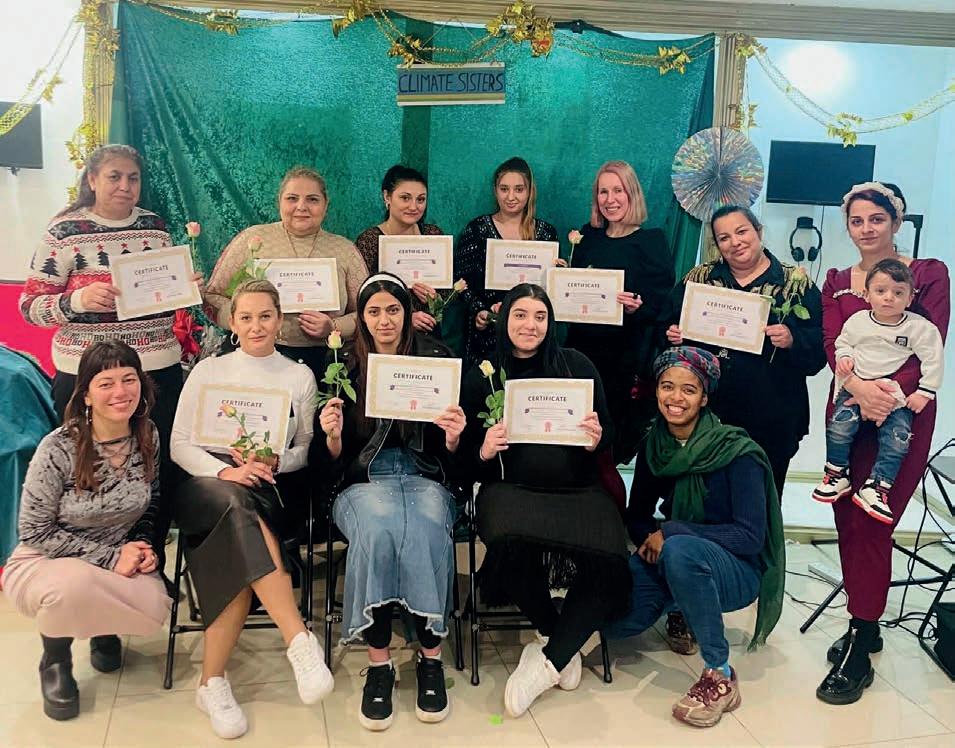
Rahela Cirpaci, a community organiser in the Roma community and in the Govanhill area, speaks about the racist treatment she has been subjected to and about how projects such as Climate Sisters have been key spaces for advocating for change.
By Rahela Cirpaci
Photo of the Climate Sisters
Iteach Romanes – the language of the Roma people. Over the years, I have had students from all walks of life. My students are normally either Roma people wanting to reconnect to their roots, or non-Roma people who want to learn in order to connect and create a bond with their neighbours.
It fills me with joy to see people interested in learning about our beautiful language. It has survived despite violent attempts to silence us.
I feel passionate about keeping my language alive – just like Scots speakers do. Like Scots, our language has been suppressed and marginalised.
I want to focus my story today on a recent example of feeling voiceless. My sister-in-law, who is also my neighbour, recently experienced serious housing issues. She has three children, between two and five. They had been living with no hot water and heating for four months, during the coldest time of the year.
She contacted her housing association many times to get the boiler fixed. When someone eventually arrived, he was rude and condescending. He refused to work on the boiler because she is also dealing with a mice problem – something many people in Govanhill experience. He blamed her and said replacing the boiler would cost thousands, asking her, “Do you know what thousands are?”
The same engineer later came to my home for a gas inspection. He again refused to work due to pest issues, turned the heating system off, and complained to the pest control worker who was present. I told him he couldn’t leave us with no heating or hot water with children. He didn’t care and said he would not return until the pest issues were resolved.
My sister-in-law and I made a formal complaint. Your home should be your safe space – we felt this man brought discriminatory beliefs into our homes.
I know my rights. Tenants have a right to heating and hot water, especially in winter with small children.
We are also part of the Climate Sisters project, run by the Women’s Environmental Network. My sister-in-law bravely presented her situation there, linking environmental justice and housing justice. A non-Roma woman in the group with links to the Green Party contacted our local councilor for support on the situation.
The very next day, the housing association called to arrange inspections. The inspector was shocked by how we had been treated, and we were assured the engineer would not return. This shows the importance of allyship. But why are we not listened to in the first place? We Roma often feel unseen and unheard.
As well as being a teacher, I am a mother of four and co-run Romano Lav, a grassroots organisation empowering Roma people through rights-based education, community care and creativity. I speak fluent English and have strong community connections, yet I am still talked down to. If this is happening to me, what is happening to those with limited English who don’t know their rights?
We are all human beings and deserve to feel safe, secure and respected – in our language and in our homes.
ENGLISH
Hello!
ROMANES
Bachtalo/Bachtali bahh-teloh/bahh-talee
Good morning / afternoon Lacho dives Lacho dee-vess
How are you? Sar san?
[I’m] well, and you? Mishto, hai tu? Mee-shto, hi tu?
I’m (name), and you?
Muro anau si X, hai a tu? Moo-row anaw su X, hi a tu?
Great! Excellent! Mishto!
Well done! Bravo!
Thank you! Palikeral
LEARN SOME KEY PHRASES
Photo courtesy of Romano Lav
roma news and views
SLOVAK
Ahoj! a-hoy
Dobrý deň! dob-riy den’
ROMANIAN
Bună! boo-na
Bună ziua! boo-na zee-wa
Ako sa máš? Ako sa mash? Ce mai faci? Che maee fach’?
Mam sa dob-reh, a teh?
Sunt bine, și tu? Soont bee-neh she too?
Ja som Maria a ty? ya som X a teh? Eu sunt Maria și tu? yeu soont X she too?
Výborne! Vee-bor-nyeh! Super! (roll your rs!)
Skvelá práca! S-kvela pra-tsa! Bravo!
Ďakujem! j-ya-koo-yem
Mulțumesc! mool-tsoo-mesk
Ei nu ne văd, nu ne aud
ROMANIAN
Rahela Cirpaci, organizatoare în comunitatea romă și în zona Govanhill, povestește despre tratamentul rasist la care a fost supusă și despre cum proiecte precum Climate Sisters au fost spații cheie pentru a pleda pentru schimbare.
De la Rahela cirpaci Fotografie de la Climate Sisters
Predau limba romani - limba romilor. De-a lungul anilor, am avut elevi din toate categoriile sociale. Elevii mei sunt, de obicei, fie persoane de etnie romă care doresc să se reconecteze cu rădăcinile lor, fie persoane non-rome care vor să învețe pentru a se conecta și a crea o legătură cu vecinii lor.
Mă umple de bucurie să văd oameni interesați să învețe despre frumoasa noastră limbă. Aceasta a supraviețuit în ciuda încercărilor violente de a ne reduce la tăcere.
Simt o pasiune pentru a-mi păstra limba vie – la fel cum fac vorbitorii de scoțiană. La fel ca și scoțienii, limba noastră a fost suprimată și marginalizată. Vreau să mă concentrez astăzi pe un exemplu recent de sentiment de lipsă de voce.
Cumnata mea, care este și vecina mea, s-a confruntat recent cu probleme serioase cu locuința. Are trei copii, cu vârste cuprinse între doi și cinci ani. Aceștia locuiau fără apă caldă și încălzire timp de patru luni, în cea mai rece perioadă a anului.
A contactat asociația de locuințe de mai multe ori pentru a repara centrala termică. Când a sosit cineva în cele din urmă, a fost nepoliticos și condescendent. A refuzat să lucreze la centrală pentru că ea se confruntă și cu o problemă cu șoarecii - ceva ce se confrunta mulți oameni din Govanhill .A dat vina pe ea și i-a spus că înlocuirea centralei termice ar costa mii, întrebând-o: „Știi cât sunt miile?”
Același inginer a venit mai târziu la mine acasă pentru o inspecție a gazelor. A refuzat din nou să lucreze din cauza problemelor cu dăunătorii, a oprit sistemul de încălzire și s-a plâns lucrătorului de la dezinsecție care era prezent. I-am spus că nu ne poate lăsa fără încălzire sau apă caldă cu copii. Nu i-a păsat și a spus că nu se va întoarce până când problemele cu dăunătorii nu vor fi rezolvate.
Eu și cumnata mea am depus o plângere oficială. Casa ta ar trebui să fie spațiul tău sigur - am simțit că acest om a adus convingeri discriminatorii în casele noastre.
Îmi cunosc drepturile. Chiriașii au dreptul la încălzire și apă caldă, mai ales iarna cu copii mici.
De asemenea, facem parte din proiectul Climate Sisters, derulat de Women’s Environmental Network. Cumnata mea și-a prezentat cu curaj situația de acolo, făcând legătura între justiția de mediu și justiția locativă. O femeie non-rom din grup, cu legături cu Partidul Verde, a contactat consilierul nostru local pentru sprijin în această situație.
Chiar a doua zi, asociația de locuințe a sunat pentru a programa inspecții. Inspectorul a fost șocat de modul în care fuseserăm tratați și ni s-a asigurat că inginerul nu se va mai întoarce. Acest lucru demonstrează importanța alianței, dar de ce nu suntem ascultați în primul rând? Noi, romii, nevăzuți și neauziți, nesimțim adesea.
Pe lângă faptul că sunt profesoară, sunt mamă a patru copii și coconduc Romano Lav, o organizație locală care oferă putere romilor prin educație bazată pe drepturi, îngrijire comunitară și creativitate. Vorbesc fluent limba engleză și am legături puternice în comunitate, totuși încă sunt tratată de sus. Dacă acest lucru mi se întâmplă mie, ce se întâmplă cu cei care au cunoștințe limitate de limba engleză și nu își cunosc drepturile?
Suntem cu toții ființe umane și merităm să ne simțim în siguranță, protejați și respectați – în limba noastră și în casele noastre
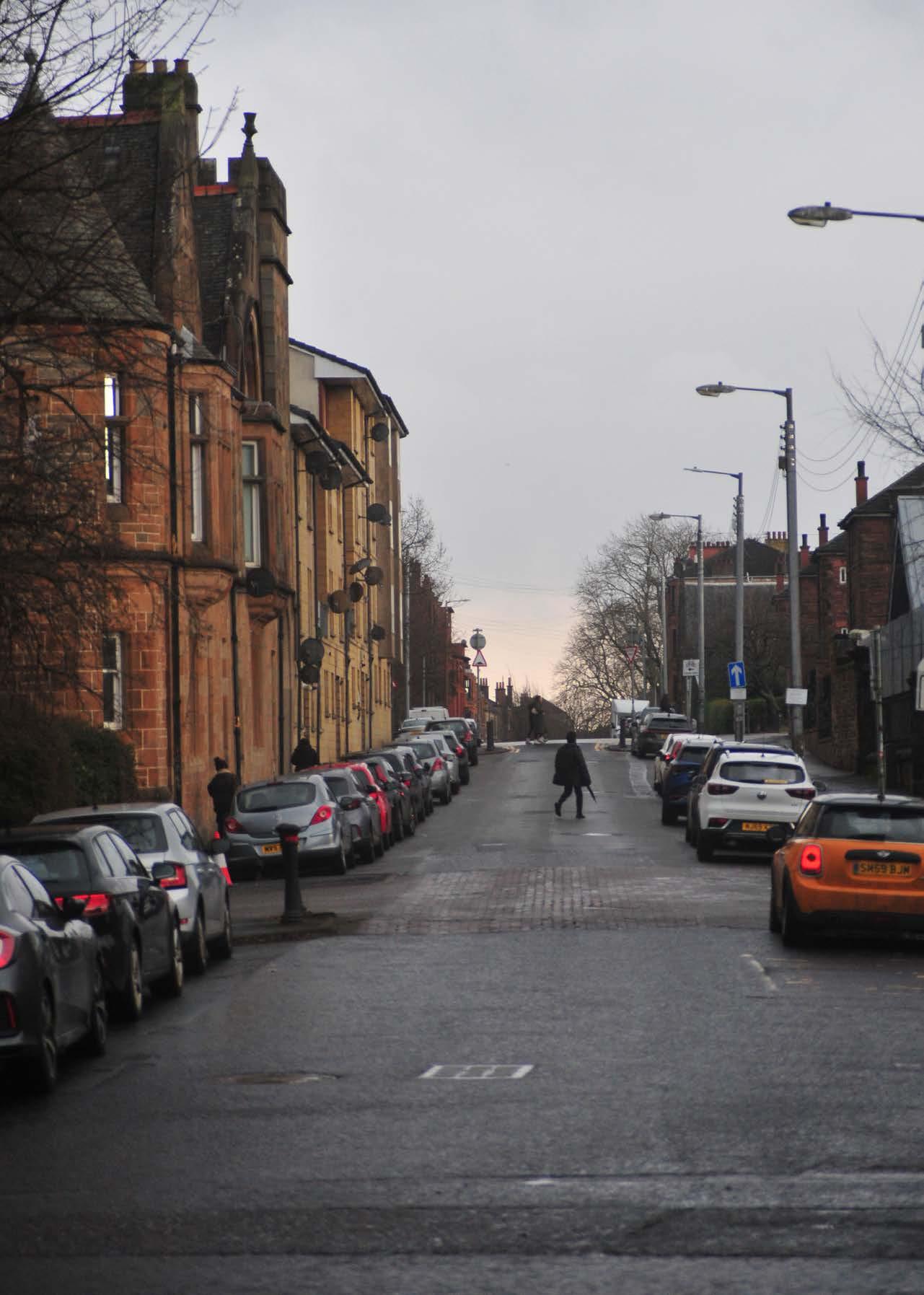
stories fae oor streets
coplaw Street
By Stacey Anderson Fotie by John Bowden
Coplaw Street runs fae two ae Govanhill’s great roads, spannin Pollokshaws Road tae Cathcart Road. As such, it’s been a hub ae activity fur the area ae Govanhill since its inception, makin it hame tae a number ae notable buildings.
Its namesake originates fae the area itself which wus, fur a time, known as Coplawhill/Coplaw Hill. It’s thought that there wus an incline which wus levelled oot fur the creation ae Vicky Road in the mid 19th century. At this time, trams wur aboot tae be introduced tae the city n a major line connectin the city centre tae Queens Park wus incomin. Coplaw Street itself saw the Number 1017 open-topped double-decker used as a trainin car fur new employees on a dedicated tram line on the street. Wit we now know tae be Tramway used tae be known as the Coplaw Horse-Tram Depot.
At 41 Coplaw Street, just aff Pollokshaws Road, you’ll see its hame tae a listed building, the Third Lanark Drill Hall. The remaining hall wus an extension ae the building, designed by John Bennie Wilson. Opened in 1884, it wus initially part ae the headquarters ae the Third Lanarkshire Rifle Volunteers, who wur an autonomous voluntary regiment until they wur absorbed by the British Army. The battalion would mobilise at the Drill Hall before bein deployed tae the Western Front durin the First World War. As part ae the Cameronians (Scottish Rifles) regiment, the Hall wus used until the battalion disbanded in 1967. A crest payin homage tae the 7th Cameronian Rifles is still visible above the former entrance. The hall later housed a leisure centre before ultimately bein converted tae residential apartments at the start ae the millennium.
Just further up the road is where an RAF building used tae reside on the corner ae Vicky Road n Coplaw Street. Around the 1920s, this woulda been the Headquarters for Govanhill’s own Auxiliary Air Force Squadron. This voluntary unit wus notable as the first ae its kind n they would go ontae fly Spitfire planes in World War II. Proud ae their Scottish roots, they wur the first tae dawn kilts as part ae their uniforms!
This building wis then purchased by The Jewish Welfare Centre an wis a hub fur various Jewish organisations between 1970 and 1996. It served as the headquarters fur both the Glasgow Jewish Welfare Board n
the Glasgow Jewish Representative Cooncil n also provided the meeting spot fur the Jewish Blind Society. A restaurant, Freeds, provided kosher meals n there wis a small theatre for the Avrom Greenbaum Players, an amateur company, put on performances includin works fae local talent, as well as mare notable playwrights, the likes ae Alan Bennett.
Movin along the street we come tae the Glasgow Samaritan Hospital for Women, at the other side ae the Vicky Road junction, which opened its Govanhill premises in 1896. It wus a purpose-built project, designed by architects MacWhannel n Rogerson utilisin red sandstone brick n red dressings in a mixed Art Noveau (which ye can see in the asymmetry ae the building) n Scottish Renaissance and Baronial style (giving the building a fortified look with the conical turrets). As the demand for gynaecology specialities grew, the capacity ae the hospital gradually increased tae accommodate additional wards, wings wae new specialties, n nurses’ hames. The hospital wus originally funded by the local branch ae the Ladies’ Auxiliary Association n became part ae the NHS followin World War II. It wus in operation until 1991 n it then took on a new chapter as residential flats.
In front ae the former hospital, ye will see a seemingly ordinary post box. However, upon a closer look ye will see it’s marked wae a ‘VR’ which indicates that it wus built during the reign ae Queen Victoria. Its design is purported tae be in celebration ae Queen Victoria’s Golden Jubilee n woulda been handy fur the comings and goings ae the hospital.
Your Memories of CALDER Street
Angela Murray remembers the Forsythe Memorial Church, which was open from 1903 to 1983 and then converted into office space. Angela notes that many family members were involved in the church and it’s where she was baptised. She added that her papa was a church elder and her mum and Aunty Isa played piano for the Sunday School.
like my grandmother used to make
A Hug wae a Squeeze: Gerry Doll’s (Veggie) stovies
Words and photo by Mikael Phillips
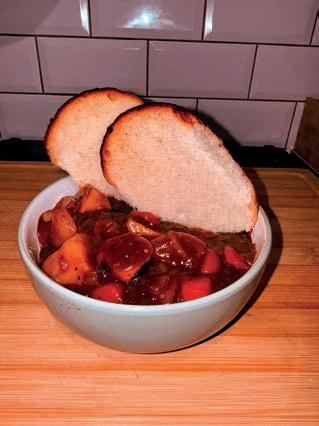
Ingredients
Ma version uses veggie sausages, but Gerry Doll used beef and sausages. Yae kin swap in witever yae want: beef, lamb, ham, veggie steak, vegan sausages etc.
• 10 veggie sausages – quartered
• 900g totties – peeled an diced
• 250g carrots – peeled an diced
• 3 stalks of celery – diced
• 300g onion – thinly sliced
• Fry Lite (or oil)
• 2 veggie stock cubes
• 1 cup gravy granules
• ½ tsp dried rosemary
• ½ tsp dried thyme
• ½ tsp dried sage
• Salt and pepper to taste
In oor hoose, stovies wis a staple, so a big pot wis always oan the go tae feed the whole lot ae us – aunties, uncles, cousins, mas, das, and even big Rhonda up the street. A mean a BIG pot ae the stuff. That’s how a still make it the day, but yae kin make it as wee or as big a pot as yae fancy –joost adjust the amounts.
When a hink ae stovies, a hink ae ma granny, wee Gerry Doll (Geraldine) fae Easterhoose. Stovies is a Scottish hug in a bowl, and in Gerry’s hoose, it was a hug wae a squeeze.
Stovies is usually the classic wiy tae use up yer leftover meat, totties, n veg. Tae be honest, yae kin make it witever wiy yae want. It was such a core meal ae ma childhood thi a took ma granny’s recipe and made a veggie version, joost so a could keep that taste alive fur masel.
This is ma recipe bit there’s nae right or wrang wiy tae make stovies. Honestly, yae could joost bash everyhin intae a slow-cooker fur a couple ae oors and it would still come oot bangin.
Recipe Servings: 6 Prep: 10 mins Cook: 40 mins
1. THE SIZZLE
• Dissolve the stock cubes intae a jug wi 400ml ae boilin water.
• Lightly fry the chopped veggie sausages fur aboot 2–3 minutes wae a few sprays ae Fry Lite (ur ½ tsp oil), until lightly broon. Remove n set aside.
• Reduce the heat tae low-medium – add the carrots n celery wae 50ml ae yer prepared stock.
• Mix until the celery joost starts tae lose its green colour.
• Add the onions, another 50ml of stock, and a pinch ae salt n pepper.
• Cook until the onions ur soft enough tae be pierced wae a fork (no crunch!), but dinny let them broon.
2. THE FLUFFY TOTTIES
• Add the diced totties n the remaining stock. Add wan mare tiny pinch ae salt n pepper.
• Simmer oan medium heat fur 10-15 minutes.
• Check often: You want the totties tae be fluffy oan the ootside n soft tae a fork, but no crumblin.
3. THE HERBY GRAVY
• In a large jug or mug, mix yer gravy granules wae boilin water until it’s a bit runny (the starch ae the totties will thicken it later).
• Stir in the rosemary, thyme, and sage.
4. THE FINISH
• Once the totties are ready, add the sausages back intae the pot.
• Pour in yer herby gravy n stir gently to combine.
• Simmer oan low for 5-10 minutes.
• If it’s too thick, pop a lid oan fur 5 minutes or add a splash mare water. If yae like it thicker, let it sit fur a moment tae let the tottie starch work its magic.
5. SERVING
• Season wae extra salt and pepper to taste, if yae want.
• Serve in a big bowl, perhaps wae some peas oan the side, if yer that wiy inclined.
• Stovies is traditionally served wae Scottish oatcakes to soak up the gravy n leave yer bowl sparklin, but we didnae dae that in ma Granny’s hoose – so a bit ae bread n butter, or whatever yae hiv in the cupbard will dae. A hud a well-fired roll needin ate so a used that.
Street Style Icons
By giacinta frisillo
Photos by Stefan Krajcik
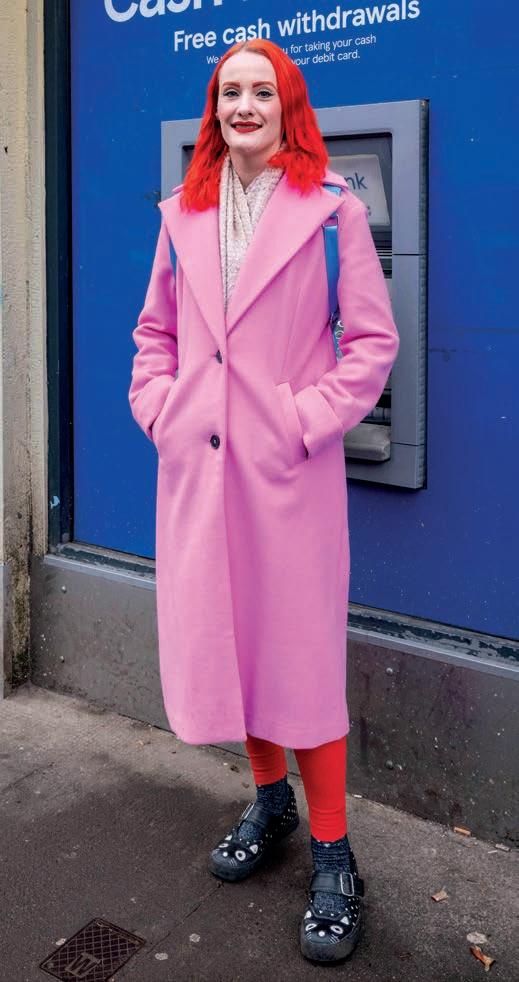
Mags
What influences your style?
Black makes me sad. I dress for the serotonin –it lifts me up. I need colour.
Who’s your style icon?
My gran always dressed smart. It didn’t matter what the occasion. She always had her wee necklace on, nice cardy, bit of lipstick. So I think always dressing well came from her.
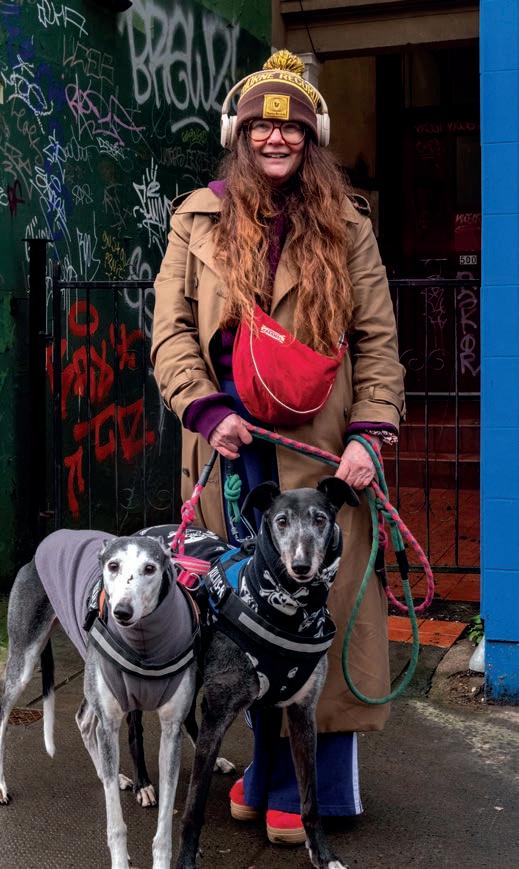
Kirstin
(flanked by Han Solo and Heidi’s Babe)
Where do you get most of your clothes?
My [beanie] is from Thorn Records, a shop in Edinburgh. It’s just a Marks and Spencers coat –what can I say? The dogs are dressed from Etsy.
Who’s your style icon?
My grandmother. She wouldn’t have been seen dead without lipstick on. She used to go into hospital and she would grab her make-up bag before anything else. She would make sure when it was time for people to do their medical rounds that she would put on her rouge and her lipstick. She really looked after her appearance. She was incredibly well-dressed.
On a dreich day so full of grey things, you’d be surprised at the amount of colour you can find in Govanhill. No matter what the weather, our fabulous community is out, parading down our own Victoria Road, as though it were a fashion week runway. The only difference was the models’ speed – rather than a saunter down the catwalk, it was a sprint to get out of the cold rain! Our conversations were cut short, as a result, but then, a picture is worth a thousand words.

Govanhill: Wit Aboot Ye?
From the ‘proper’ speech of the classroom to the gallus rhythm of the scheme, Scots has always been the heartbeat of our streets. Mikael explores the history of our mother tongue, the defiance of the code-switch, and why – from Govanhill to Punjab – the Scots language belongs to anyone who calls this neighbourhood home.
By Mikael Phillips
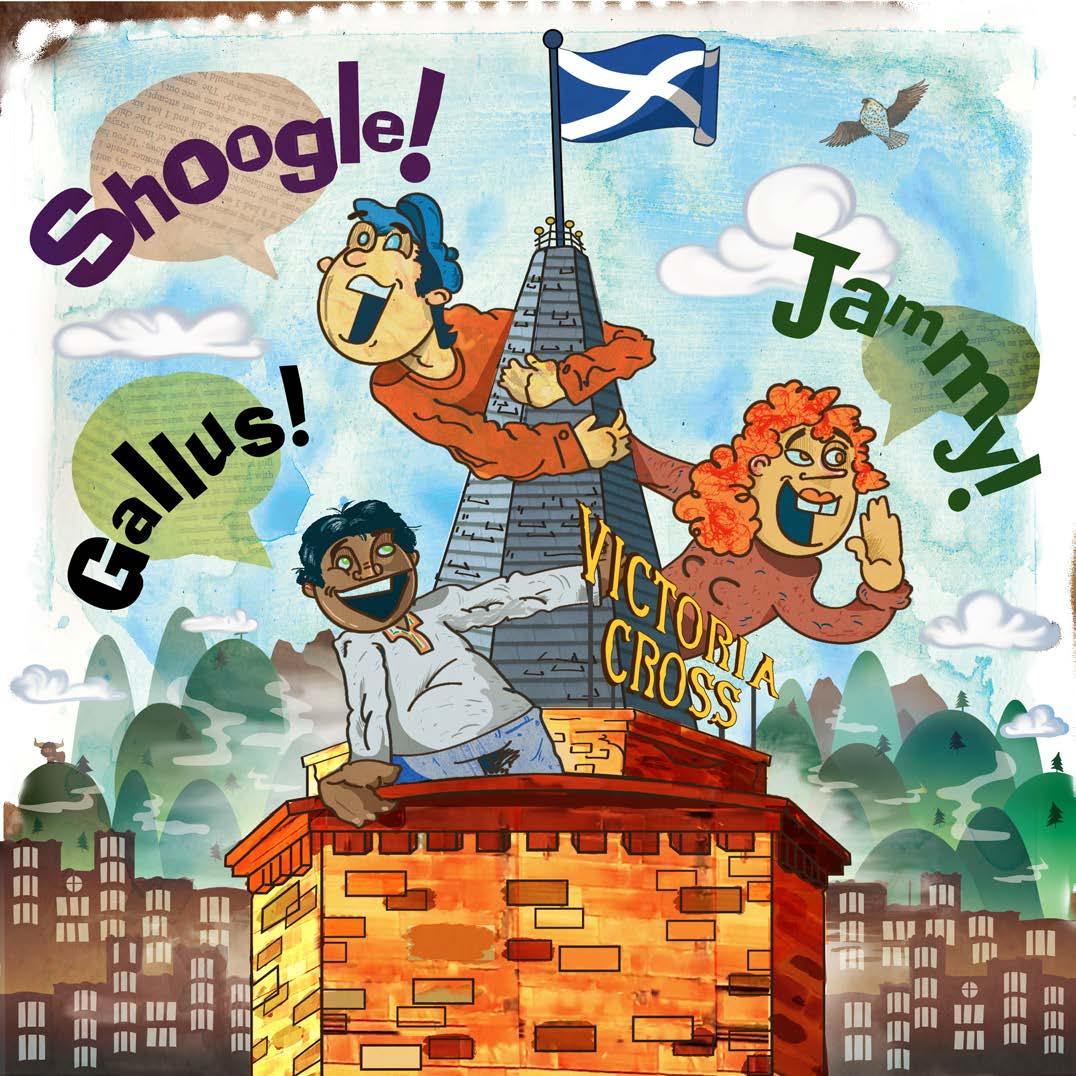
Illustration by Alistair Quietsch
Step oot oan tae Victoria Road any efternoon and ye’ll hear it – that gallus, ritsy rhythm ae Glaswegian Scots ringin oot between the fruit stauns and the coffee shoaps. Fir a generation or mair, folk were selt the lie that this way ae speakin wis jist “bad English,” a disordered blether tae be dichted fae yer tongue at the school gates. But as ye turn the pages ae this special issue, we’re unpickin a different truth aw thegether.
This magazine is a song fir the many voices ae Govanhill. It’s a celebration ae a language that’s endured through centuries ae bein selt short. Maistly, though, it’s a hame for the way we actually talk when the ‘polite’ mask slips and the real us comes oot tae play.
I was brought up by the self-proclaimed and ever-iconic scheme maw – wee Tracy fae Easterhoose. She is the type that telt ye straight: comin fae where ye come fae is a gift, no a curse. “Talkin’ how we talk is an extension ae who we are,” she’d tell me. “Don’t ever change who yae ur.”
Course, the wurld his a funny way ae tryin tae rale ye in. A mind comin hame efter ma first semester at Glesga Uni, my vowels suddenly stretched thin as a peerie-weerie thread and my consonants polished till they bled. I was slippin intae that ‘Glasgow Uni accent’ – that weird-like, mid-Atlantic hash ae English, American, and West End that seems tae infect folk the second they cross the threshold ae the cloisters. Ma maw took wan look at me, gied me that ‘maw stare’ and asked the very question that brought me crashin right back down tae earth “Why yae talkin like that, ya weirdo?”
And she wis right. That’s no me. And it never wis again. It’s the reason why, as a Scots playwright, I scrieve exactly how a talk. It’s an act ae defiance and a love letter tae the Scottish voices that deserve a bit ae room oan the stage, in the papers, and in the big hooses ae power.
When the chance came up tae mix ma love fir Scots wae the mag through the Scottish Book Trust’s publication grant – a jamp at it. Wit better way tae celebrate Scots than through a magazine that already celebrates the diversity of the people here in our neighbourhood. That’s why we decided that we wurnae gonnae try and decide oan an official grammar fir the Scots used throughout this issue, as there isnae an official grammar (yet?). So, each person has written in their ain voice usin their ain wiy ae spellin and structurin to reflect the nuance of the Scots language itsel.
Take this paragraph as an example of how natural it comes to Scots speakers, and many people who fluently speak more than one language, to switch in and out of each.
While we’ve been bletherin away fir centuries, the ‘legal’ journey ae Scots is a mair recent fecht. Long ago, Scots wis the tongue ae the Royal Court – James IV. But efter the Union ae the Crowns and the Industrial Revolution, it wis pushed tae the edges. It wis branded a dialect at the workin classes, somethin ‘vulgar’ rather than a national tongue wae its ain grammar and soul.
The tide started tae turn in the the 20th century. Big names like Billy Kay, whose 1986 book Scots: The Mither Tongue, was like a revolution, helped us tae see that oor speech hud a lineage as noble as any other. Legally, the big moment wis in 2001, when the UK Government signed the European Charter for Regional or Minority Languages, finally givin Scots its place as a recognised language.
The push didnae stoap there. Activists and scrievers worked thegither tae form the Scots Language Cross-Party Group in Parliament. Now, in 2026, we’re lookin at the Scots Language Act which came intae affect in June 2025 and aims tae gie the leed the same legal protection as Gaelic.
However, in the legislation ae the act itself it states “Scots language” means the “Scots language as used in Scotland”. Wit exactly is “the” Scots language? The act states the ministers must prepare a strategy by June 2026 oan how tae implement and support the use ae Scots across the country, but we don’t know wit that is yet. Part ae that legislation is tae support aw the dialects spoken in Scotland, but the question remains – how dae we pinpoint wit the Scots language is? And who gets tae decide that?
...the question remains –how dae we pinpoint wit the Scots language is? And who gets tae decide that?
This isnae joost aboot signs oan the back ae buses – it’s aboot makin sure that the wiy we talk is respected in the classroom, the media, and the law. It’s aboot ensurin the next generation disnae feel like a “weirdo” for usin their ain mother-tongue.
In oor group, we asked the big question: What is ‘a’ Scots language? Is it Glesga? Naw. Is it Doric or Dundonian? Naw. It’s all ae them, and it’s mair besides. Scots isnae a museum piece tae be kept in a gless case – it’s witever we need it tae be.
Scots belangs tae everyone. In Govanhill, this is as clear as day. There’s a myth that ye need a certain passport or a thousand years ae ancestors in the kirkyard tae ‘claim’ Scots. We don’t gie a rats arse fir that. If ye live here, if ye breathe this air, the language is yours tae use and shape.
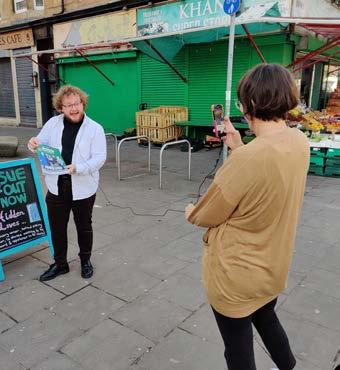
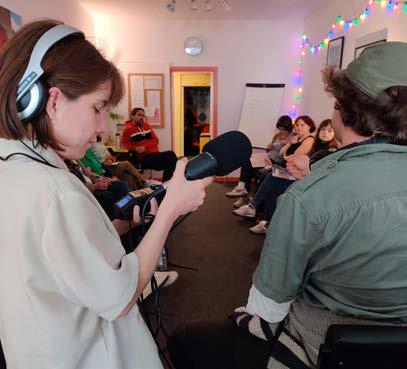
Fir the past ten weeks, a new Scots Scrieving group has been meeting every Tuesday in The Community Newsroom and online and has been a fair melting pot ae folk coming alang fae aw er tae talk, learn, and create in Scots.
We’ve spent a lot ae time flytin the steer ae writin in Scots, and realising just how difficult it is tae ‘unlearn’ the structures ae the British post-industrial school system when yer trying to tae write in yer ain tongue. That’s where the ‘proper’ way ae speakin was drilled intae us like a factory stamp.
Fir generations, we were telt ‘that’s no the right way tae talk’, a judgement that forced us aw tae become masters of the code-switch.
We all do it. I’m guilty of it too. At home with the family, I speak exactly how I’ve been writing above, in broad Glaswegian so fast and thick that even friends of mine from Ayr or Dundee find it difficult to tune in. Even with other Scots speakers, it’s easy to shift into a more ‘generic’ language – the words stay the same, but the speed and tonality gears down so we can all understand each other.
We see New Scots fae Pakistan, Syria, or the Roma community pickin up the local patter and weavin it intae their ain mother-tongues. Ye might hail fae Carnoustie, Liverpool, or Islamabad – if yer usin these words tae tell yer stories, yer jokes, or yer sorrows, then ye are part ae this language’s future.
As ye dander through the pages ae this issue, a want ye tae hink aboot yer ain code-switch. Think aboot the words that stick tae yer lips when yer ragin, when yer in love, or when yer tellin a story in the pub.
We’re movin past the days ae ‘right’ and ‘wrang.’ We’re steppin intae a time where oor language is seen as the gift my maw always said it wis. This magazine is an invitation tae stoap ‘unlearnin’ and start shoutin fae the rooftops.
So, Govanhill... wit aboot ye? We’re aw ears.
To
join the Scots Scrievin group, scan this QR code

THE SCOTS GLOSSAR
Tryin tae build a Scots Glossar is like tryin tae bring Babylon back thegither, brick by brick… it’s near impossible. The reason fir that is because there’s joost so many wurds, sayin’s, meanin’s n variations that it becomes impossible tae try n put them aw thegither without leavin any oot. So, in the spirit ae this magazine, the offered Glossar is a list ae wurds used in this issue tae make the Scots a wee bit mair accessible. Ye might hink some wurds ur wrang, or even made up, bit each n every wan comes fae the wurds we hear oot n aboot in oor neighbourhood n the scrievers who took part in oor writin group tae put this issue thegither.
COMMON VERBS & ACTIONS
DAE / DAEIN / DAIN Do / Doing HINK / HINKIN Think / Thinking
SCRIEVIN Writing
JAMP / JAMPED Jump / Jumped
TROOPIN Walking with intent
BLETHERIN / Gabbing / Talking BLTHERING
DANDER / GANDER To stroll / To look
FECHT Fight (or a polite “f-word”)
GIE / GIED Give / Gave
SELT Sold
DICHTED To leave/wipe something
PATCH / PATCHED To ignore or leave someone/ something
SHOOGLE Shake, wobble, move
NOTABLE PHRASES & VARIATIONS
“RATS ARSE” To not care at all
“FLYTIN To scold or cause
THE STEER” a fuss/disturbance
“YON” Referring to something over there (“That one over there”)
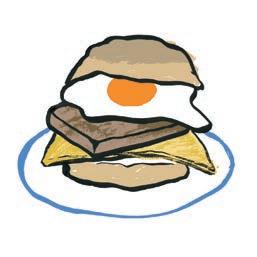
ROLL N SQUARE
Roll and square sausage
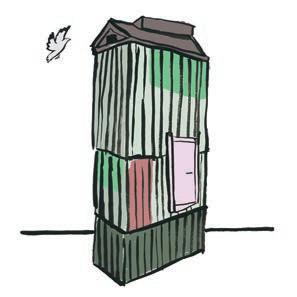
DOOKIT
Pigeon house
HOME, PEOPLE & PLACES
MA / MAW / MITHER Mum / Mother
HAME Home
HOOS / HOOSES House / Houses
SHOAP Shop
KIRKYARD Churchyard or graveyard
GULLET Throat
OOR / WURR Our MASEL Myself
DESCRIPTIONS & WEATHER
DREICH Wet, grey, gloomy weather
WEE Small
PEERIE-WEERIE Tiny / Very small
AULD Old
GALLUS Bold, cheeky, or confident
BAM Foolish, obnoxious, or delinquent
BESOM A contemptible person (usually female)
STOOSHIE An uproar or commotion
PATTER Good banter or talk
JAMMY Very lucky
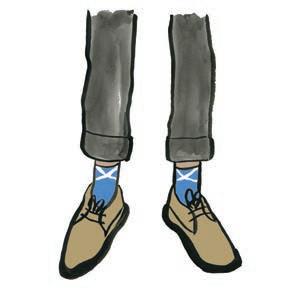
YER BUDGIES ARE DEID
Your trousers are short
CONNECTIVES & PREPOSITIONS
FAE From TAE To AE / O’ Of INTY / INTAE Into ABOOT About OOT Out
DOON Down AFF Off
OUTWITH Outside of / Beyond
THEGITHER Together THIDAY Today
ENIN Anything
NEGATIVES & HELPERS
CANNAE / CANNY Cannot ISNAE Isn’t DOESNAE / DISNAE Does not WURNAE / WERNEY Were not WISNAE Was not
HADNY / HUDNAE Hadn’t NOO Now AYE Yes
PRONUNCIATION & SPELLING NOTES
FOTIE Photo
POYUMS Poems WURDS Words WARK Work
GLESS Glass
STOAP Stop HUNNER One Hundred
Illustrations by Stuart White
Wit Scots? sayinaboot ye

Scots grew out of the same early roots as English, but developed in its own direction during the Middle Ages, building a rich vocabulary, distinctive grammar and a strong literary tradition.
For hundreds of years it was the main language of government and everyday business in Scotland. After the 1707 Treaty of Union, however, its official use declined, and in 1845 state education policy required children to learn and speak English, with many punished for using Scots – a practice that lasted well into the 20th century.
Despite that, it never disappeared. The 2022 census recorded more than 1.5 million Scots speakers, with many more people saying they can read, write or understand it. Recognised today by both the Scottish and UK governments, Scots continues to be spoken across the country.
To find out more, we spoke to a couple of leading experts.
First up, Professor Robert McColl Millar, Chair in Linguistics and Scottish Language at Aberdeen University:
How would you define Scots as a language, and how does it differ from English and Gaelic?
Scots and Standard English are kin-tongues, closely related to each other. Scots and the dialects of the north-east of England share much linguistically, both are quite distinct from the varieties spoken in the English Midlands and South. Scottish Gaelic is a distant relative of both varieties. It is a Celtic language, while English and Scots are Germanic.
Scots has often been described as a dialect rather than a language. From a linguistic perspective, what distinguishes a language from a dialect, and where does Scots sit within that discussion?
It has been said that ‘a language is a dialect with an army and navy’. At present, Scotland and Scots cannot be described in these terms. But unlike most dialects, Scots has been a language and was the language used in Scotland for government in the fifteenth and sixteenth centuries. Its ‘decline’ was caused by, among other things, political instability, the Protestant Reformation and the Unions of 1603 and 1707. It was replaced in many contexts by Standard English. Yet it continues to be written and has, in the last hundred years, been used in ‘high’ literature when other dialects are generally used for ‘folksy’ writing only.
I have described Scots as a ‘once and future language’. I have also compared it to the old logo of the Church of Scotland – the burning bush with nec tamen consumebatur ‘and yet it was not consumed’. This refers to faith and (probably) the fact that Presbyterianism survived the ‘killing time’ of the late 17th century, but it could also be used for Scotland (which has survived as a discrete unit) and Scots and Gaelic, which have held out against the power associated with English.
How has the historical development of Scots shaped modern-day Scotland, particularly in literature, education and everyday speech?
The central point is that Scotland is unusual in European terms in not having a native tongue as the main language of use. In terms of literature, Scots has been used as a considerable marker of ‘high’ status for centuries. In prose, however, Scots is normally only found in dialogue, not narrative (this distinction has been lessened over the last thirty years).
Education policy has often been used as a means of attacking the language use of children; this is particularly the case with urban forms of speech. More recently, however, its use in schools has been encouraged in some places.
In recent years there has been renewed recognition and official support for Scots as its own language. What does this recognition mean in practical terms, and why is it significant?
I think it’s significant primarily in a symbolic way: Scots and Gaelic are recognised as central to the country. In practical terms, I am not sure what the outcomes are likely to be. Recognition of the language and powerful government support have not really helped the survival and spread of Irish, for instance. Our government is well disposed towards Scots, but it has other priorities as well. But if it encourages more children (and adults) to use the language, that can only be a good thing.
We also spoke to Joanna Kopaczyk-McPherson, Professor of Scots and English Philology at the University of Glasgow:
How has Glaswegian dialect developed in relation to Scots?
Glaswegian is typically described as one of the West Central dialects of Scots, and it’s an example of an urban dialect, with its own characteristics, e.g. a degree of dialect mixture (because of migration into Glasgow from across Scotland and Ireland in the 19th and early 20th centuries), but also a tendency to level out Scots features and adopt Scottish Standard English. There is also variation within the Glasgow dialect, especially among Asian communities (linguists have been looking at the so-called Glaswasian accent, for example).
What makes it distinctive to other parts of the country?
A strong association with the working class, with noticeable influence from Irish English and other migrant groups. Because of negative perceptions around language mixing and working class language, historically Glaswegian lacked the overt prestige characteristic of other Scots dialects, e.g. Doric. It was considered to be less authentic or more “polluted” – these negative attitudes were shaped by a strong sense of linguistic hierarchy, with standard language and literary language at the top. Today the perception has been shifting as more recognition is now given to multilingual repertoires and linguistic identity which reflects cultural and ethnic diversity. But the Glasgow dialect of Scots is still typically associated with jokes, banter and comedic representations of Scots speakers.
How do you see Scots evolving?
The Scottish Languages Act creates a legal framework for the support of linguistic communities who use Scots but it is up to these communities how they respond to it. Currently civil servants are working with communities and stakeholders on the strategy for Scots – it’s a great opportunity to get involved and shape policy. I would recommend getting in touch with Oor Vyce who have become the lead organisation representing various groups.
A Blether oan Vicky Road
By Zara Grew
One dreich Saturday, we headed doon tae Vicky Road tae see wit the people ae Govanhill think ae Scots leid. We started off by asking folk if they have a favourite Scots word.
Responses included baw, naw, wee, ken, mingin, hurkledurkling and Baltic. An the standoot favourite from the afternoon? Outwith.
But when asked about whither or no they speak Scots or if they see Scots as a language we got a mixed bag of responses, proving that Scots means somehing different tae everyone.
A group of pals walked by us when we were ootside Short Long Black. One of the lassies, Sophie spoke tae us about Scots being linked tae cultural identity:
“A think it’s important because it’s a local identity. A think it’s a good way to relate with people or to form that connection. Because if you say some of these wurds abroad, and if you’ve got another Scottish person around, you think ‘aw you’re definitely from Glasgow’. So it’s kinda nice to have that connection.”
A young Polish lad spoke tae us aboot his experience ae Scots an how it had been a bit of a hurdle for him: “I think it’s it’s fun but for me, it was sort of an obstacle because going to Scotland and speaking English, I thought my English was good but Scottish-English is not the same at all.”
“I think it’s the most difficult when you go to the pub with your Scottish friends, and they’re loud and they’re saying words you don’t know.”
Isabel fae Aberdeen, talked aboot her experiences: “I was surrounded by Doric growing up. I think Scots is something you don’t actually realise is a different sort of language. My mum’s English, so during the census, I remember we had to tick ‘can you understand Scots? Read and speak Scots?’ And my mum was like, “Absolutely not,’ but we were all like, ‘of course we can’.”
Polina and Sofiia, both fae Ukraine spoke tae us aboot their experience of language an how that relates to Scots. Sofiia said: “Language should be protected. It represents the identity of Scotland. And I think, as someone who comes from Ukraine, we have this very important aspect of language in our country because half of the country speaks Russian, and Russia is trying to enforce language on us. After the war started, I took a conscious choice to speak Ukrainian. So I feel like the same goes for Scotland. And I feel like it’s very important that language doesn’t go away”.
Rachel and Graeme walked past, coffees in hand, an they chatted tae us aboot the different perceptions ae Scots. Rachel said: “With someone who speaks – as we describe it, broad Scots or slang – there’s an assumption about their social class or their background. But maybe that’s a city thing because if you were to travel much further up north the use of Scots is much more widespread, and it’s not indicative of that at all. I think it’s great. I think more people should be speaking languages and dialects that are representative of their culture.”
Tae Speak Withoot Shrinkin
On language, class and learning to reclaim the parts ae maself a once saetened
By Samar Jamal Illustration by Aled Haywood
t is through words that we can both hold our experiences and show them to others. The make-up ae our language is a showcase ae our being –retelling, evolving and existing. So yes, this is a piece about language, but language, like for so many, is one facet ae my identity.
A was born in Pakistan’s Punjab, in a wee village south ae Faislabad. A short three years later, my family and I moved to Scotland, eventually settling in Wishae (formally known as Wishaw), where I’ve spent most ae my life. The migration from Pakistan to Scotland entails the usual dilemmas ae diaspora. Unsurprisingly, one ae them is about language.
Specifically about two mother tongues – one that has always felt warm, familiar and another which glows brightly in the distance.
The former is aboot West Central Scots I grew up speaking – a language ae elongated vowels and harsh Rs, often reclaimed only as a caricature by the media. For me, Scots isn’t just about sounds but a memory of the experiences that made me, that I hold dearly. The latter is Urdu, a language I never fully learned, which was never shared with me in full because it was expected to already be mine.
When a think ae speaking Scots, a cannae tell you exactly where it began, but a can place where it started to waver off; when a moved tae Stirling for university. I became friends with mostly international students and, knowing they hadn’t spent much time way people who sounded like a did, a toned the Scots doon. It felt like a practical decision initially, but it was when someone pointed oot that they (still) couldn’t understand me because a wasn’t annunciating my words that I felt really shattered.
At that time, a was just beginning to carve out a space that allowed me to express parts of maself authentically.
So a swallowed my Scots even more, retreated tae a place that felt safe n socially comfortable, despite what it asked ae me. Looking back, the irony of that isn’t lost on me – a was letting some parts of my authentic identity flourish while drowning out others.
A few years later, a moved tae Glasgow, n eventually those friends moved back tae their home countries, but ma use ae Scots never really returned in the same way. It wasn’t until I was with the occasional person whose Scots rolled aff their tongue with ease that a felt its absence. It is often in the absence ae something that you really notice you once had something in abundance. Thinking back, it’s funny how hard it was tae lose Scots but how passive a felt aboot Urdu – the tongue ad spent my whole life being told already belonged tae me, despite it never feeling close.
A especially noticed the loss ae Scots when friends who a had been at high school with took the mickey out ae me: “Mate, you’ve goat a Glasgow Uni accent”. “Naaaaw, wit a riddy”, a thought – a was pure ashamed. Thinking back tae that, it wasn’t just about how a sounded but the association with people whose reasons for their “Glasgow Uni accent” were so distinct fae mine. What they were hearing was an ensemble ae stripping n kneading parts ae maself tae fit in. It felt like an erasure ae identity, layers that had been bred from growing up in a cooncil scheme. Now here a was knackered, being policed again. A was scrambling to retrieve my Scots.
I’ve also witnessed the other end ae it, the shock some people have at hearing a person ae colour with a thick Scottish brogue. I’ve seen the discourse on TikTok around hearing Black people speaking thick Glaswegian (though I’m not sure how much ae that response is from Americans, influenced by their lack ae exposure to the breadth ae Britain’s Black community). As much
as it’s intended as a celebration ae diversity, the shock feels jarring to me. When I’ve faced that response, a wonder if people consider that the South Asian community has been part ae Scottish history for decades, with migration tied to colonialism. If not, that reaction can feel lit an ignorant shock, an erasure ae history.
In some senses, a can understand people thinking, Why’s this lassie speaking lit at?”
Growing up in Wishaw’s Craigneuk, a could count on one hand the number ae households fae BPOC backgrounds. So few, we seriously stood out when we

moved, welcomed with oor windows being pelted with eggs.
What also feels uneasy is that a often find, between the lines, it is riddled with assumptions. To be shocked by how a sound, which would happen more ofte when I spoke more Scots, can feel like a projection ae a narrative ae who I am, who someone expects me to be.
I think that narrative can begin the moment dialogue begins; speech is an initial point ae connection. I realised how often I’ve felt a had tae step forward with the other person’s comfort in mind, like ensuring I don’t
let the slang slip in front ae middle-class people in certain spaces, an exhausting process requiring me tae mould maself into spaces that a don’t fit.
A think this is also about the access to spaces where Scots would be spoken. There’s an intersectionality that I find missing from many workingclass spaces, and the impact ae that is two-fold; few working-class BPOC folk in those spaces, and secondly, a feeling ae isolation when we do enter them.
So there’s a deep-seated sense ae belonging with Scots. Belonging, which also comes from access. I’ve had access to Scots most ae my life, or at least been adjacent to it. I’ve understood its layers, from its comedy to its class discourse, and ano where in this city I’ll be more likely to hear it.
Whereas with Urdu, a don’t have that understanding. I know it’s a language ae depth and beauty, and yet it’s never felt fully reachable. The desire for closeness to Urdu isn’t just about understanding but expanding. There’s a desperate desire to cling to Urdu as a vehicle to expand my understanding ae my Pakistani culture.
Growing up, my mum would encourage me to speak Urdu instead ae Punjabi (which is what we always spoke at home) when I’d call my relatives in Pakistan. It was considered the formal, respectful language, unlike Punjabi, which was seen as too boisterous, too animated.
I’d stutter ma words, forming clunky sentences, speaking with an awkwardness that deprived everyone ae a conversation with any substance. I felt it was something to perform properly or not at all.
As a grew older, a began rejecting the request to speak Urdu with family members, having never seen the merit in it. N importantly, understanding the classist roots behind its encouragement. A didn’t realise at the time that the language that felt closest to Scots wouldn’t be Urdu at all, but Punjabi. I embraced my limited Punjabi.
Something about speaking it reminded me ae Scots. Its roaringness and ability to encapsulate intensity, as far as I knew (largely in its vulgarities). Every time I watch Bend it Like Beckham, the line “Chak de patte!”, which roughly translates to “Lift the floorboards,” will always equate to the Scottish refrain and energy as “Here we f***ing go!”
But much ae the culture that I want to connect with isn’t written in Punjabi but in Urdu and it was when I found a
stack ae letters written in Urdu from my dad, that the desire to learn Urdu grew – to not only understand the depth ae its flowering ghazals (poetry) but tae savour a time capsule ae someone no longer here. To understand a world that is my own, that I often feel removed from or distant. Learning Urdu is as much about remembering as it is aboot cultivating.
So how do you flip the script? How do ye reclaim a language that, over the years, ye lost – and another ye never fully held? With Scots, I think that it’s about cultivating malleable spaces that don’t ask me to perish parts ae maself. I know these spaces exist because most ae the people closest tae me don’t speak Scots. Still, there are parts ae ma identity that they know in their fullness, beyond language. There’s also always space for me to code-switch in a way that doesn’t leave a tinge ae sorrow. Especially because some feelings are too enormous for English to encapsulate, like telling someone off – “get him telt!” – it carries the doing and having done, sandwiched between a gentle, firm scolding.
A remember years ago, watching Limmy skits and thinking, “A cannae show this to anyone, they’ll no get it, they’ll no understand the comedy gold ae ‘gies yer laptop’”. I know it’s a bit trivial but ye wanna share parts eh yer “culture” with the people closest to you. Eventually, a did show it to a close friend. They were really confused initially but once I translated, they got it and “Gies yer laptop” or any mention ae Yoker were staple monologues. I still introduce Limmy to folk, it’s reasons teeter between ‘This will solidify our friendship’ to ‘You’ve just moved to the dear green city, here’s a taste ae it’.
With Urdu, I’m still figuring it out. It’s a harder one to grapple with since I don’t have many people around me who use it regularly. I think it goes back to access, not just ae the language. Reclamation would look like a few things. Firstly, by connecting with people in Pakistan. People who are connected to the culture, as well as those who are interrogating the country’s systemic cultural inequalities, class issues and are working towards inclusiveness that upholds and celebrates working-class roots. That means meeting people who can share parts ae the culture that I’ve yet to absorb. A also understand it’s a lifetime ae discovery – learning and unlearning. And after 15 years, it probably starts with a trip back to the homeland.
SCOTTISH TELEVISION,

NATIONAL STORIES,


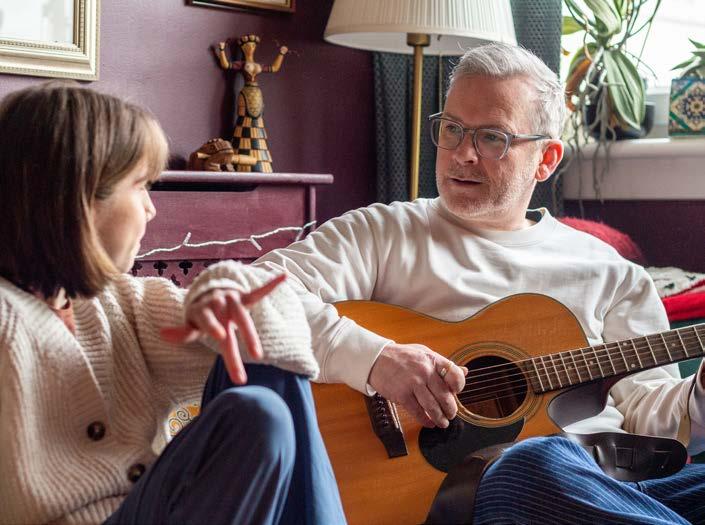
Our writer Devon McCole sits down with her dad, actor Paul McCole, to discuss the impact of Scottish representation in TV and film on our national cultural identity.
By Devon McCole
by Laura Vroomen


was very recognisable and very funny.”
There was no shortage of quotable Scottish TV shows growing up. Taggart was the biggest crime drama in Scotland; while High Times was Scotland’s answer to Shameless, a show that was “equally unapologetic and a bit grimy,” according to my dad – and I agree, having seen it time and time again on YouTube.
For me, Still Game is like home when you switch it on. You recognise the patter, the satirical take on people we’ve all met in real life in one form or another. Limmy’s Show is, for me, Scotland’s greatest tragicomedy, with characters like Jaqueline McCatherty and Dee Dee holding up a mirror to the shadows of Scottish society with a dark sense of humour, but always with a dose of sympathy.
Having appeared in some of these shows over the years, I asked my dad for his take: “When I first started out doing shows like Taggart and
Photo
Still Game, culturally I didn’t really think of the impact of what it meant to have original shows like that; for our selfesteem, as a people, as a country, and for our culture.
“Certainly, now, twentyodd years later, I’m realising how few and far between shows like that, which were unapologetically Scottish –but also had mass appeal –were. They were phenomenal things, and I got to work with fantastic Scottish writers.”
It was interesting that he shared the same…nostalgia, maybe?... that I felt about the TV shows I grew up with. That, now, something is missing without them.
“Maybe it’s because we don’t take chances as much as we used to,” he goes on. “Would commissioners bring back Still Game if it were a newly pitched show today, two pensioners freezing in their flat like in the episode Cauld in that kind of comedy format? Would they see the value in taking a risk like that? These shows were about us being truthful and telling our own national stories in our own voice, and I don’t think it’s enough to say they don’t translate.”
love or hate it, I think. You get it or you don’t. It’s very relatable stuff, just approached with this odd but brilliant sense of humour.”
“He’s incredibly clever (Limmy) and on a completely different wavelength to anyone else I’ve ever known. There were lots of honest elements throughout the show and I think, beyond that, people understood he was operating on a very intellectual level. I mean, there’s a sketch I was in, set entirely around what you say when you want to go for a haircut, being awkward and not knowing what to do. It’s relatable, daft, but a wee bit philosophical as well.”
“When I was doing High Times, it was an original show, it was on STV, and it was a black comedy about working class people living in high-rise flats and how their paths crossed. I was in that with my brother, and it was one of my first big TV gigs. The first season did really well. We made a second series, which ended up being the last season because I guess, somewhere along the line, there just wasn’t an appetite for it”
“I remember I was working in the Silverburn Centre and getting phone calls from South American journalists who wanted to do interviews and were thinking we were all really famous over here. It was the second biggest exported UK show in South America at the time. Apparently, there’s Portuguese-dubbed versions of High Times out there somewhere. So Scottish stories, the language, if you ask me, it translates.”
Limmy’s Show is popular not just among Scots, but in England, the US and elsewhere. It has reached cult status because it has resonated with so many people, all whilst using very Scottish language and dealing with some heavy themes in a typically dark, self deprecating, satirical fashion.
According to my dad: “Limmy’s Show was a phenomenal show, and experience. It’s a very intellectual show, and it’s very weird, you either
It’s not hard to feel incredibly protective of programmes like Limmy’s Show, Still Game and High Times. Some have stood the test of time, with series after series and Hydro shows selling out. Others have stood the test of time with only a couple of series to their name because they were relatable and so revisitable.
But what about Scottish TV today? Well, Scotland’s soap opera River City will see its last series air on STV soon. Something that I know my dad sees as a monumental loss, not just for actors, but writers and producers who cut their teeth on the homegrown production.
“River City being cancelled is a devastating blow for a lot of folk. A lot of people get their start there. A lot of mid-level crew are coming in, with very experienced heads guiding some of the less experienced, and that goes right across the board.
“When River City’s production is in full swing, there’s about 200odd people working there. If that was a factory, or another more obviously recognised, traditional industry that was losing those amount of jobs, I think it would be taken more seriously. It’s an issue we have in the arts, that it’s seen as a luxury profession or a hobby, almost.
“I think it’s because of austerity, but I think it’s also cause people don’t realise the value of the arts. Not until it’s gone do ye eventually realise the importance of yer cultural outlets like film, telly, theatre and music.”
Coming from a working class background, and in my dad’s case, starting a family young, makes pursuing creative opportunities particularly difficult. But it’s the arts that connect us and allow us to tell our stories. There’s always an appetite for that among people, to see risks being taken, to see reflections of themselves on the screen – even if the appetite isn’t there for commissioners.
WE NEED YOUR HELP to keep Govanhill’s voices heard
By Rhiannon J Davies, founder of Greater Govanhill
by Angie Catlin, Iain McLellan, Rhiannon J Davies
This issue of magazine is a celebration of the Scots language – but more than that, it’s a celebration of voice. Voice is an expression of who we are – the beautiful, messy diversity of experiences that shape us.
It’s the language that echoes through the closes and cafés of Govanhill. It’s who people are when they feel at home.
This magazine is about honouring those voices, and everything that comes with them – valuing them as they are, without feeling the need to smooth them out or reshape them.
Just as Scots has endured over time, carried by the people who speak it, the voices of this community deserve to be heard in all their richness and authenticity.
That belief sits at the heart of what we do at Greater Govanhill. Prioritising diverse voices isn’t an add-on – it’s one of our organisation’s core values.
The magazine was launched by local residents in the middle of the pandemic to create a platform for voices you don’t typically hear in media. Too often, Govanhill’s story was being told by people who don’t live here. Sensationalist, click-driven headlines amplified fear and misunderstanding.
We wanted to do something different.
We’re more than the magazine you hold in your hands. We’re a grassroots, communitycentred movement supporting people to reclaim their own narrative. We want to create spaces where people feel connected – to their neighbours and their neighbourhood.
we’ve delivered a wide range of projects. We’ve trained community reporters with lived experience of gambling harms to tell their own stories. We’ve supported refugees and people seeking asylum to broadcast in their own languages. We’ve worked with young people to see their writing and photography published and taken seriously.
We’ve partnered with the many brilliant organisations across the Southside to deliver training, events, workshops, litter picks and gatherings. And we’ve heard, time and again, about the difference this work makes:
“At first I was nervous to speak. Being encouraged to ‘be yourself’ helped me find my voice – on air.”
“Having space to speak openly – and to see our experiences treated seriously and respectfully – made a huge difference to how I hold myself.”
“Doing the young persons’ training was a completely life changing experience for me.”
It’s not just about sharing information. It’s about building a sense of pride.
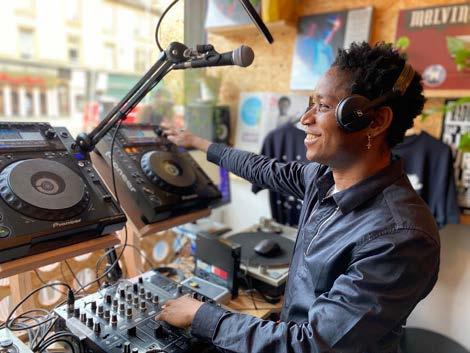
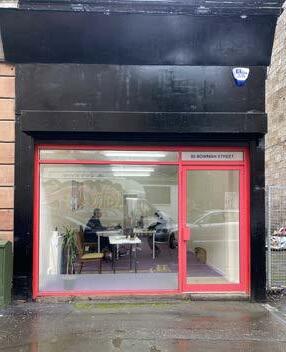
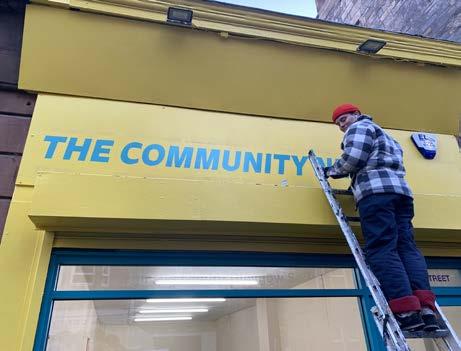
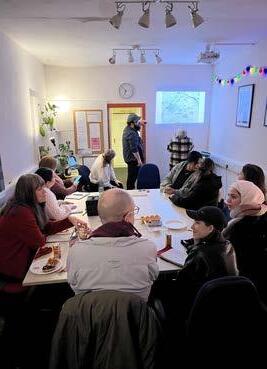
Alongside this free quarterly magazine, we publish digital reporting on our website, a newsletter and social media. We run The Community Newsroom as a local information hub and gathering space. We’ve hosted podcasts and refugee-led radio programmes. We organise exhibitions, public events and conversations that bring stories off the page. We run participatory training programmes that equip people with the tools and confidence to use their voice to make change.
These are not separate projects. Each strand is rooted in the same purpose: to help people be informed, feel heard, and take part in community action.
We challenge narrow and negative perceptions of Govanhill. We deepen cross-cultural understanding. We ensure a wider range of voices are represented publicly. And for those who get involved directly, the impact is personal too – building skills, confidence and a stronger sense of belonging.
The impact of that approach is clear.
Around 70 percent of readers say Greater Govanhill makes them feel their community has more of a voice. Nearly 80 percent say it helps them feel better informed about issues affecting them directly. Over 60 percent feel more connected to their neighbourhood.
It’s not just about sharing information. It’s about building a sense of pride.
Over the six years we have been running as a non-profit organisation modelling a different way of doing journalism,
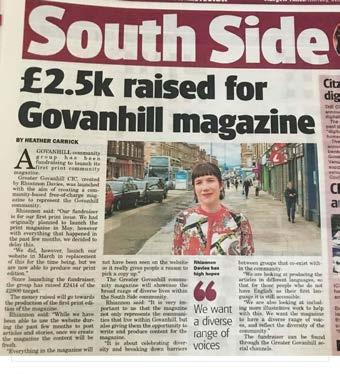
We’ve also seen participants step into leadership. Our new editor, Samar Jamal, first came through our young people’s training programme. Seeing someone grow from community reporter to editorial leadership is a powerful reminder of what this work makes possible.
At a time when misinformation spreads rapidly and divisive narratives – including farright rhetoric targeting migrant and diverse communities – are gaining ground, trusted community rooted media matters more than ever. Spaces that build understanding are essential.
But we also need to be honest.
We recently lost our core funding from the Glasgow Communities Fund, and this puts the future of the magazine at risk. There is no long-term, dedicated funding stream for community media in the UK. Most funding is short-term and project-based, leaving us in a constant state of uncertainty.
If everyone who reads this magazine gave just five pounds a month – the cost of a cup of fancy coffee or a pint – Greater Govanhill would be financially sustainable. We would no longer be dependent on unpredictable funding cycles and could plan, publish, train and connect with confidence.
Five pounds a month sustains more than a magazine. It sustains independent community media rooted in Govanhill. It sustains opportunities for local people to develop new skills. It sustains a trusted platform that connects neighbours and challenges misinformation.
We need your help. Support Greater Govanhill by becoming a member today.
Become a member by visiting community. greatergovanhill.com/join or by scanning: Make a one off donation here: greatergovanhill.com/support

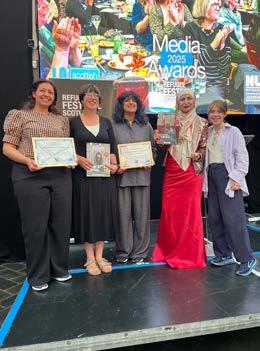
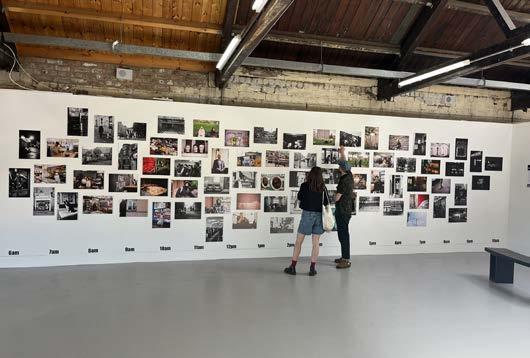
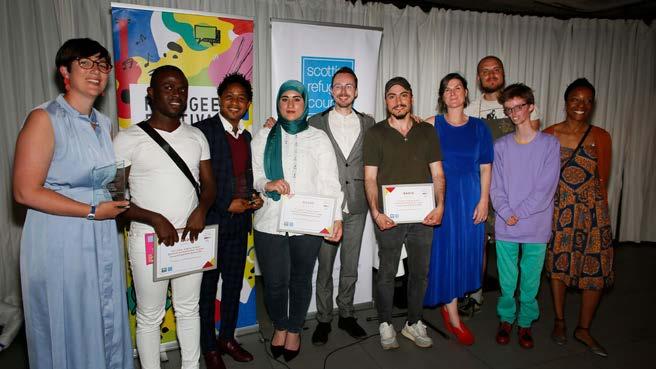
Photos
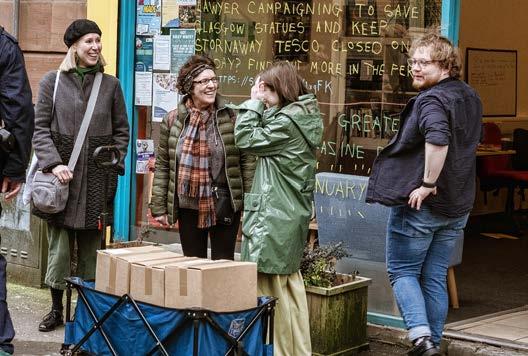
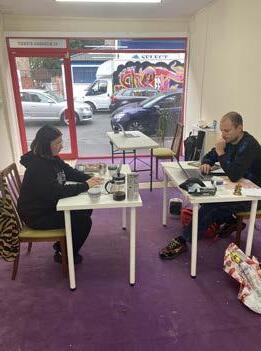
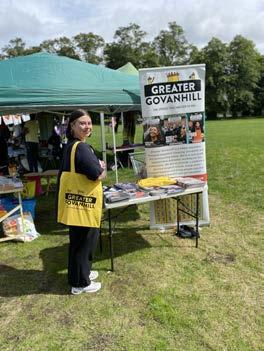
An Ode Tae Wurr Irn Bru
Submitted from ‘Sugartown’ by Cat Cochrane
There’s only wan nation oan sweet Mother Earth where yon Coca-Cola isnae tap dug mirth
Can, boattle, draught, it really doesnae maiter, past the gullet yer like honey through a gold carburetor
Flat and warm, a fritter roll oan the side, like absolute nectar doon ma throat dae ye glide
Serotonin, dopamine, fair ginger whizz, Gaviscon handy fur yer acid and fizz
Yer dulcet taste makes aw ae a quiver, dinnae dare ask whit yer daein tae ma liver
Come oot tae play wae ma girders ya wee fanny, Ah’ll dowse ye in Creamola Foam, wae measurements akin tae Oppenheimer we’ll make oor ain atomic boam
Noo, there’s certain things that don’t compliment thee, like Vodka, Malibu, ice cream ur kimchi
And if Ah had a penny fur every morn that ye’ve saved me, made ma work cos in the fridge door the night afore Ah had lain ye
Doon a ditch a month Ah know Ah’d survive wae only ma Irn Bru chews tae keep me alive
See Ah’ve got the gift of tele-CAN-asis, can spot ye abroad in among aw the masses
Oh tae find a can of Bru in Spain a fiver a pop is the only shame
Ah’ve quaffed, Ah’ve guzzled, wolfed ye doon aw ma life, never a day hiv ye gied me trouble nor strife
And blessed be the moment came true when fae a can machine fur a pun fell oot two ae you
Ribbed, clear glaze and blue metal tap yer Girders dae rock in every last drap
Aye its fair plain tae see yer goin naewhere the noo, cos we’ve got the gift tae see us forever in wurr Irn Bru
Poetry Corner
Illustrations by Rachel Mills
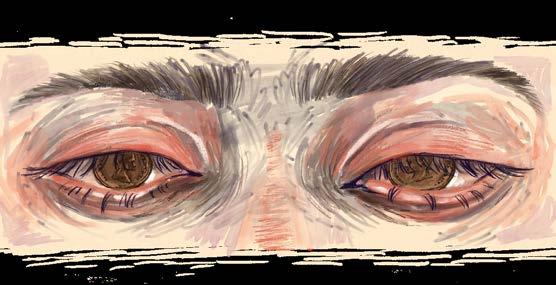
Time Fir Wurk
By Alastair Callander
Open ma groggy red eyes
A wont be anither capialist soldjur on thi gruwnd
F**k yir ordurs of “ach this is huw it is”
Use yir hed n tell me wit yiv fuwnd
Edyicashin shid bring critical thinkin ti the masses
Bit its controlled by welth and munny
So by f**k, dont be critical a thi uppur classes
A canny be bot cos al do this fir free
Tell me on paper am no ready
Bit yi dont get it, this izzin abit me
Scratchin ar heds, is munny jist a story a fikchin
Take uwt the needil
Its time ti kick this addicchin
Its plain as the nose on yir face
This izzin wurkin fir peepul
A “lowur” class, gendur and race
Take a deep breath n gather ma thots
Grab ma keys n head uwt the door
Dae thi job, jist coz.

Scots is mare than joost a dialect. It is a landscape ae specific emotions and sharp observations. Much like Poet Sydney Goodsir Smith’s influence on the fluidity of oor language, these works reflect a modern Scots that refuses to stay in one lane.
Maist were developed in oor Scots scrievin workshops – these four poets explore everything fae the highs ae music, tae the struggles ae addiction and, and the shifts in oor daily identity. These urney joost 'scrawled thoughts', they are Scots wurds used tae define the specific weight ae being alive today.
What amma sayin?
By Karmjit Badesha
Come on the noo
that’s an easy one, innit?
Its English, of course! Is it, though?
It’s definitely not Gaelic. Only chookters speak that. And Scots? Find me onybody can tell me whit tha means these days. Alas poor Doric, I never you knew at all!
So it hus to be Glaswegian?
Aye, that feels more like it.
But that’s no a language? Or a dialect?
And where yer fae ye bam makes all the difference. Big Time!
Thing is, I don’t even speak like my pals or family. At home I was told I cannae speak bloody slang, that wasn’t going to get me a good job.
Outside, all my pals wanted to hear my mad Punjabi. ‘Hanji. Okay. But only the swear words?’
And everybody was okay with swearing!? F**k me, it got tricky keeping all those tongues in my mouth.
At Uni I had to slow. Down. For. My. International. Friends. While call centres loved the Scots accent.
I kinda had it figured out then I got married to this Irish gal. Grand! But man I had to up my craic quota. Quit the bank when I couldn’t swallow anymore APRs, KPIs, 121s, no i in team…
Aye but there’s a f**k ton of U in C**T!
Began working with kids. Lost all my cred dropping in cool, awesome and dude, bruh!
Thanx goodness for ☺ and �� Says it all. Every time.
Awla this used ta do ma head in.
Now, all the patter rolls of my tongue, any misunderstandings fixed with a quick ‘Whit ye sayin pal?’
Inch
By Andrew Conlin
In my chest there’s a tension my feet know the well trodden paths of my tongue like the backs but— my hands are cut and withered by the effort. The effort of drawing oot the song.
The knife of rote has carved its rut intae the ways ae ma brain
I am saddled and bagged ah saddle an drag ma plough over paper this wee black ball scratches an tears an struggles against ma margins cragfast hands at the punched holes —outwith and within that selfsame pressure ae “the right way”
swallowing my shame, gulping doon ma tongue, doon the sleekit tumble of ma throat unravelin, bendin twistin scrievin an scramblin as the words begin tae teem and flow soakin the page an liftin ma weight til ma yoke flings aff; an there’s an inch between me an the ground.
Here ah can sing, here ah can dally, on the clean new ways ae ma hands.

Tae Glesga an the Sters
A short story by Seán W. Pieper
Ah’v waited fir this. Fir so lang.
I spy the auld book in the rear o the junk shop an ah cannae believe it. Ah’ve looked afore, looked so lang, an lang since I’d gied all hope up, like I gied up the drink or the smoke or the drugs, save whit the ceremonies asked o me.
Yet there it wis. Richt there, mocking me efter twa centuries o lookin, wi its black hide spine an the spidered gilt letters creepin up it. The shock hung in my throat, an ah made as to be jist another auld weirdo oot daein his messages. I kennt tho that aw had been transformed in that moment, an that ah wid be transformed forever mair. The lost book o ma Maister.
Yon fool at the counter was only wantin a twinty fir whit he adjudged a mere curio, an ornamental tome tae adorn the shelf o some pretenshus simpleton. He pairted wi it wi a smile, an fir the first time in fifty year a smile shaped ma ain lip in reply.
“Ta son.”
The next month flies in as ma preparations, things I’d plannt an practised ayty, nynty, a hunner years hence become urgent an familiar again. I never had much need fir kip, did it ootae boredom, noo ahm never in ma crypt. Stoor is lifted in corners o my tenement that huvnae been disturbed in decades. Ah ayways kept the dirk wi me in a sheath presst tae ma flesh, its blade still dark encrusted fae that nicht in Alloway so lang hence, when I still stood by ma maister’s side. Afore he left me alane, tae thole this tedium masel.
The other pairts fir the ceremony are mair tricky. Some of it ye huvnae been able tae buy in the shoaps fir decades… an some o it ye never could. But things needed can ayways be foond, as the auld book lerrnt me. A break in at the university laboratories an a midnicht trip tae the necropolis, an at last ahm ready, banes an pooders safely stashed away. Ah pass through crowds that buzz roon like midgies; I a great stillness amang them, an emptiness at their core.
The moon perishes an is reborn in fower days time. Efter centuries ah can wait fower days. An I ken jist the spot…
Ah pass the gates, wi a rare shiver passin doon ma spine. Grass an plants are aw frosted an a uncharacteristic deathly still hangs across the park an aw o Govanhill, as tho haudin its breath for whit follows. Each step up the hill brings me closer tae ma goal, my last destination. Its bin sic a long wan, but here ah finally am.
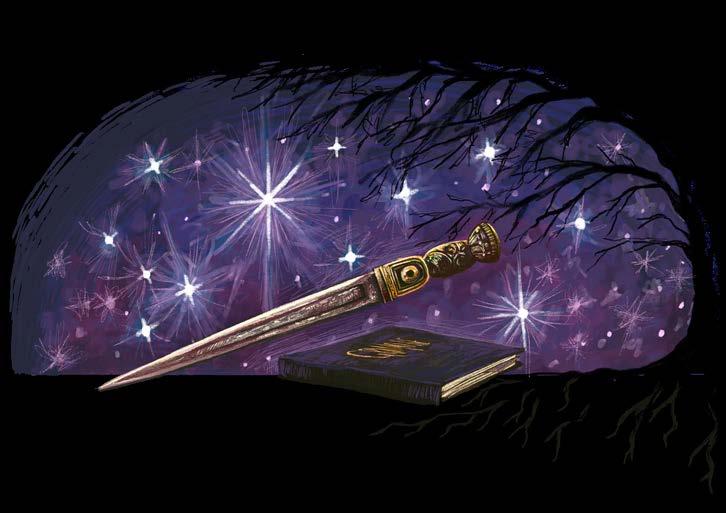
The flagpole is bare. The nicht it will bear witness tae a thing aulder an finer than ony standard. Nae mair waitin. Nae mair wantin, hopin in vain while rottin away an left maukit amang the mayflies o this toon. The banes fall tae the frozen grund. Ah open the book, an bring forth the dirk fae its sheath. Nae Maister noo, only me. Only me masel, and outwith me the cauld sters punctuatin the deep black o the sky’s midnight faulds. Here ah come, o cosmos. Here ah come, o sterry hungrin void.
The revival ae native languages lit Scots isny jus aboot linguistics – it’s aboot identity, culture, freedom ae expression, an rejectin imperialism ae the past in the present.
It's no hard tae feel like the gods ae the auld world still rule supreme when aw wur news an social media feeds show a neverendin barrage a clips ae world leaders fightin er territories, occupyin lands by force an policin people based oan their cultural differences or race. Many ae us probably feel lit we are still bein governed by remnants ae imperial law.
Whilst thas sadly true in many weys, it’s also true thit people huv found their ain ways tae fight back. A personally hink it’s why wur seein such a revival ae native languages here in Scotland an aw ower the UK. This resurgin interest in, an celebration ae, native languages lit Scots, Welsh an Gaelic’s a reclamation ae national identity and an act ae resistance – it’s a preservation ae oral traditions that’ve historically bin met wae hostility an oppression.
Languages lit Welsh, Gaelic, Scots, Cornish an that had basically almost bin snuffed oot completely by the rulin British Empire, who favoured ‘the Queen’s English’. Institutions ae the empire cawed the use ae other languages native tae the British Isles as barbaric an discouraged thur use in deliberately destructive weys.
In Scotland, they passed legislation lit the Scottish Privy Council Act in 1616 to remove the ‘barbaritie and incivilitie’ ae Scottish Gaelic fae existence – paintin the diverse peoples and cultures of the UK as nuthin more than uncivilised an deservin ae subjugation. In the past, wains in schools were even verbally or physically ‘corrected’ by teachers (beware the flyin duster!) if they wur caught speakin the language they spoke at hame in the classroom. They wur shamed, made tae feel less intelligent cause that’s how they were classified by the rulin classes.

By Devon McCole
by Iain McLellan
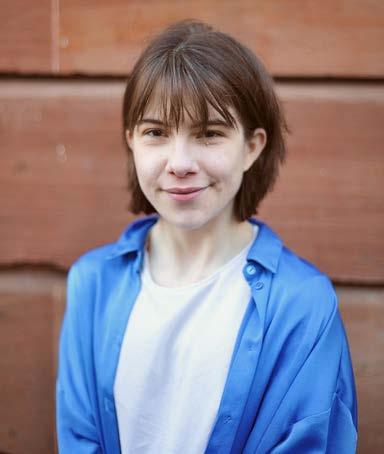
The effects ae this ar still felt tae this day. In oor everyday lives, withoot even consciously knowin it, many ae us Scots code switch – fae ‘aye’ tae ‘yes’ fae ‘naw’ tae ‘no’. It’s no uncommon tae feel lit even in schools an workplaces the day that wur still bein penalised for how wi speak. A for wan remember a print-oot ae a tombstone oan the waw ae ma English classroom that wis inscribed wae common Scots words – dead oan the nose init? It always annoyed me. A guess naebody likes bein telt ther wrang when, fae day dot, thas how yer family and friends wid speak tae ye. They’d delight ye wi patter ye’d never heard before, frighten ye wi an awful warnin, an comfort ye wi words n sayin’s yer gran’s granny wid’ve used.
But mibbe it wis also cause we wid study Scottish plays in drama that used a lot a Scots – lit The Steamie – but then in English ye’d get a tellin aff fir speakin lit that. “Rude” a mind is wit wan teacher told mi when a spoke ma typical Glaswegian, “it doesn’t sound smart” she said. It wis nae wunner a couldnae understawn hawf the text in drama –they certainly didny teach us how tae write the wey wi speak cause even that wisny really allowed. Neds is wit they calt us actually – or a “wee hairy”: “You sound like a hairy don’t talk like that!”
I hated feelin this sense a familiarity wae the characters in The Steamie, thur words and how they reminded mi ae ma gran an granda, an still a didny feel Scottish enough tae understawn a lot ae the text. It isny lit Middle English, Scots, yi know? The Steamie was based aroon the 1950’s. Thas recent history. Ma gran an granda remember days lit that an still it felt ancient tae me tryin tae read it in that classroom. A wis pretty sure naebody in that classroom wis qualified tae read Scots.
A still remember the amazement a felt at how much the language bein spoken in Glasgow hid changed or been lost cause it jus isny recorded or really
said anymer. Scriever Emma Grae hit the nail bang on the heid when she wrote that Scots is a livin language, no a’weys recorded bit a’weys spoken an constantly evolvin. Jus cause Scots wisny formally recorded, doesny make it any less valid as a national language. So who gits tae record oor wey a speakin, who gets tae tell us wits right an wrang when it comes tae communicatin wi each other? For the longest time we didny huv the “luxury” tae speak an record oor languages as we saw fit, fur it wis deemed too ‘barbaric’ tae preserve wance upon a time – and wit’s a ‘ned’ but the modern day ‘barbarian’ in a shiny new jaiket? The words they use tae put us doon may change, but the tactics never do.
It’s pervasive. A common hing ye’d hear people say anaw wis “aw a hate hearin people talk Scottish oan telly… it’s horrible”. Well folks we didny pull that idea oot a thin air, did we? That’s how deep the scars ae colonialism go. It breeds self hatred, and diminishes the value ae others that don’t sound lit yersel.
In the past, people livin under British rule have been taught thur Scottishness, thur Irishness or thur Welshness –thur cultural differences, thur spoken languages – wis wrang. Thas changin noo. Take a look at Kneecap. They’re a prime example ae the power a reclaimin the muther tongue.
Scots is noo bein recognised as it’s ain language, so it’s likely gonnae be taught in mare classrooms. It’s nice tae see cultural pride be expressed in a wey that isny pittin doon others fur their differences, bit instead focuses oan individual freedom ae expression. It’s nice tae see folk are releasin thursels ae the shackles ae the empire a auld in that wey.
Photo
‘ That ‘ s Us!'
Learning to be at Home with Scots
From Poetry on the Underground to Govan classrooms, one incomer traces how Scots slipped into his speech – and his singing – as a lived language of belonging.
By David Carr • Photo by Rob Reid
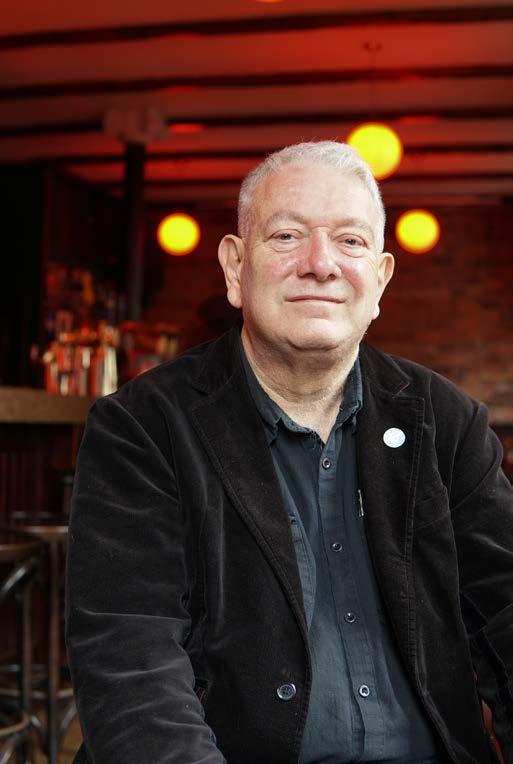
My first encounter with Scots was while straphanging on the London Tube. Before me at eye level was the text of Hugh MacDiarmid’s Lallans Scots poem, The Bonnie Broukit Bairn, displayed as part of their Poetry on the Underground series. What was this? Dialect? Slang? Whatever it was, it was clearly poetry.
I had never been to Scotland until I met my late wife, who was from East Kilbride. The first Scots word she taught me was pinkie – she was showing me a guitar chord – which I found inexplicably hilarious. Cath was a probation officer when we were down south and she would sometimes tell me of her colleagues poking fun when she used Scots legal terms in her reports, ‘The client pled guilty’ or ‘The client is living outwith the family home’. Right now, Google Docs is telling me that pled and outwith are spelling mistakes.
I visited Scotland a couple of times with Cath before moving to Glasgow to be near her family. I took to it instantly. The Scottish vibe seemed so different to the late eighties loadsamoney culture I was struggling with on the outskirts of London.
In my new home, I was immersed in many new Scots words, especially around Cath’s family. Sometimes they confused me – like press for cupboard – but they were all amused when I called my niece a wee besom. I was also finding out about Scots culture. Cath was a bit of a folkie and introduced me to the likes of Dick Gaughan, whose lyrics I could not yet decode.
I still didn’t know what Scots was. It seemed to pepper everyday Scottish English at all levels. I was used to a small handful of dialect words in my native Scouse, but Scottish English has many more borrowings from – I would learn – the separate language of Scots. Scottish English seems to me to be a palimpsest – a manuscript written in English over a Scots text which is still visible, keeking through between the lines.
I am fascinated by code switching – the phenomenon whereby we can all drop into different types of speech depending on context.
Scottish English can have a refreshing informality. For all that Scots words are used in the fantoosh world of procurators fiscal, they are more often signifiers of working class identity. One of the attractions of Scottish culture for me was its demotic, egalitarian character. It would become natural for me to adopt Scots words and occasionally grammar for my own. It was part of fitting in.
I am fascinated by code switching – the phenomenon whereby we can all drop into different types of speech depending on context. My children, raised in the leafy suburb of Clarkston, possibly use less Scots than I do. Visiting the pre-gentrification Barras Market, my daughter once asked, “Dad – why are you speaking Scottish?” I especially get a buzz from code switching mid sentence – when Scots words are dropped to give informal rhythm
into a high register utterance – as when someone recently told me, “I have a pure stauner for semiotics.” Ooh, the banter.
Most of my Scots has come to me through osmosis and a geek fascination with language. There isn’t really a Scots learning community, which is unsurprising given the systemic denigration of Scots as low-class slang. There is a little gatekeeping. If you don’t speak the purest Doric at hame, if you don’t already know that syne, as in auld lang, is pronounced with an s and not a z – then you’re not speaking true Scots. I find less of this attitude amongst the more open Gaelic learning community – although there one is somewhat expected to get off on Gaelic music, which I don’t especially.
If there is such a thing as a Scots learner, they are possibly to be found in my classes at Maslow’s Community in Govan, where I volunteer as an English teacher, mainly to asylum seekers and refugees. I have a dilemma here. The most important thing for me to teach is Standard English. My learners aspire at some point to pass the British citizenship test, which requires a degree of fluency. But the language they hear on the streets, especially in working class Govan, is Scots.
The irony of an English guy attempting to teach Scots in Govan does not escape me. It’s a reversal of empire in miniature.
My learners will have generally picked up that Scottish people say aye for yes. But for some of my learners, even wee for small comes as a surprise. My favourite word to teach is dreich, with its non-English -ch sound. My learners now have a word to describe the Glasgow weather.
I am famed amongst my learners for ending lessons with the perplexing Scots construction, “That’s us!” – is it just Glaswegian? It’s a quick win for them to say “Is that me?” to a shopkeeper and to hear back “Aye, that’s you, pal.”
When I was invited to join the Whit Aboot Ye? Scots writing project, I was sceptical. Ah cannae scrieve Scots wi oot comin o’er like a pure patronisin wee daftie.
But, dammit, after more than half my life in Scotland, the ease with which I now include Scots within my idiolect – my personal speech habits – reflects my sense of belonging. Certain Scots words have become my default speech. The other day, I couldn’t remember the word controversy. Stooshie seemed more fitting.
My appreciation of Scots goes deep. I have read a fair amount of Scots literature – from MacDiarmid, who is credited with a renaissance in Scots, to Len Pennie, who is popularising contemporary Scots poyums for a TikTok audience, via Irvine Welsh’s Embra Scots – a world away from Edinburgh English.
We all speak a mixture of Scots and English – although native speakers’ experience of Scots will have been different to mine. My natural Standard English has never been belittled out of me. I have added my layer of Scots to it as a badge of identification, of assimilation, of inclusion. I am a singer. I sing mainly with Govanhill Voices, I organise singarounds at Ryan’s Bar and I fairly recently braved an open mic at the Keelie Folk Club at McNeill’s. I have, inevitably, some Burns in my repertoire. Ae Fond Kiss is simply a gorgeous song. But my party piece – the song I think I sing best and which most speaks to me as an incomer – is Hamish Henderson’s Freedom Come A’ Ye. Its Scots lyrics are – challenging – even to native speakers of Scottish English. But they are worth learning. They sing of an outward looking, internationalist Scotland which welcomes those from other lands. Its sentiments are what makes Scotland – and Scots – feel like home.

A Scots Education in 1960s Govanhill
By David Doren
Ihad two older sisters who were the bane of the teachers’ lives at Cuthbertson Street Primary School in the early 1960s – with their unruly behaviour towards the teachers’ authority. I attended the school for a year, and the only noteworthy thing I can remember of that time was the teacher showing the class how to brush our teeth properly and very little else. I have no recollection of being taught to read and write during this period.
My youngest sister was, like me, left-handed and one teacher would take great delight in using a 12 inch ruler to smack her knuckles, to make her use her right hand for writing. When she left to join my other sister at Queen’s Park Secondary in Toryglen, my sisters begged my parents to have me moved to another primary, as the teachers they had at Cuthbertson Street would take it out on me and make my life there a misery.
It was our headteacher, Mrs Travers at St Kevin’s, who insisted we learn Broad Scots in order to appreciate and understand the works of Rabbie Burns.
My parents considered Hutchinson Grammar School in Kingarth Street, but its fees were too expensive, even with my mum working there as a cleaner, making me eligible for a reduction. My parents' next option was St Kevin’s Preparatory School, in Queen Mary Avenue. So my parents scrimped and saved to afford the fees to have me attend St Kevin’s, and get a better education than my siblings.
St Kevin’s Preparatory School was very progressive in its day, compared to other local primary schools. The school was housed in one of the large mansion houses in Queen Mary Avenue, with two large trees on either side of the gated entrance. There were seven classrooms and up to fifteen pupils per class, aged from five to twelve. The core principles of learning the three Rs (reading, writing, arithmetic), were at its heart.
In my second year at St Kevin’s, we learned about Scottish history, such as Mary Queen of Scots turbulent life and the Battle of Langside. One day, a group of older boys returned from
What we were taught at St Kevin’s now seems confined to further education or university level.

a walk in Queen’s Park with what looked like a battle axe. Mrs Travers made a call to a museum to have the axe examined, and it turned out it roughly dated back to the time of the Battle of Langside. It went into a museum collection.
We learned about Rob Roy, William Wallace, Robert the Bruce, the Glencoe Massacre, the Jacobite Rebellion. We studied architectural giants such as Alexander (Greek) Thompson and his designs for churches, houses and other buildings, Charles Rennie Mackintosh who his distinctive designs and attention to detail. I loved learning about how in Queens Cross Church, he raised the pipes supplying the radiators against the main walls in the church to run along and under the pews, so during the winter months, the church’s congregation would be warm and dry, as churches of the time were large and cold. Or how with the School of Art, he positioned large glass windows to face the rising sun, to flood the studios and workrooms with natural light.
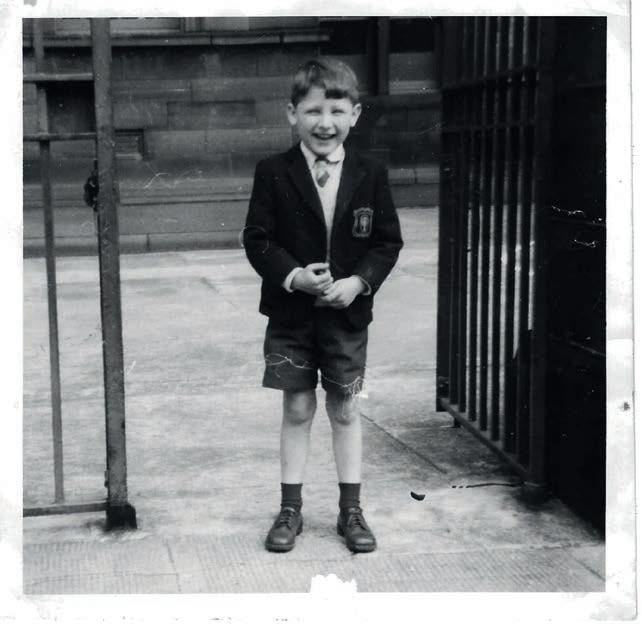
moonlit night tonight), which we would say out loud to make our speech lilt and roll off the tongue. Mrs Travers believed that to truly appreciate Burns, we had to immerse ourselves in the Scots language – to read it, write it and speak it.
We were also taught about the classic Scottish authors, like Robert Louis Stevenson, Sir Walter Scott and of course the Scottish Bard himself, Rabbie Burns – the people’s poet.
My mum was brought up on Rabbie Burns, and had a full collection of his works – I can remember them vividly. They were bound in black leather, with gold leaf etched onto the cover and binding. Between school and home, I went through all his works, my favourites being Tam O’Shanter and An Ode Tay A Moose
It was our headteacher, Mrs Travers at St Kevin’s, who insisted we learn Broad Scots in order to appreciate and understand the works of Rabbie Burns. She believed in a fully rounded education for her pupils. We would have English diction and elocution lessons for the proper pronunciation of the English language. To prepare for our oral tests and get our diction right, we would repeatedly recite how now brown cow.
The Scots equivalent was, tis aw braw bricht moonlicht nicht twa nicht (it’s a beautiful bright
I believe much of Scotland’s history – its writers, historical figures, culture and language (other than Gaelic) – is being lost. It doesn’t seem to be a priority in Scottish schools to learn Scottish history, literature and language in the way we once did. What we were taught at St Kevin’s now seems confined to further education or university level.
The Scots language has been dying out, with mostly the older generations still holding that knowledge and usage – and we are sadly dying along with it. In Govanhill in the 1960s, there were several members of the older generation who could speak, read and write Scots in one form or another, but this has not been passed down to younger generations. Burns Nights are often the only times when people recite Burns in its original form and give the Address to a Haggis. I hope that when children learn the likes of Burns at school, they are given the chance to understand the language and culture behind the words, as we were. I will always be grateful for the Scots education I received, and I’m pleased to see Scots now recognised officially as a language in its own right.
David Doren on his first day at Cuthbertson St Primary
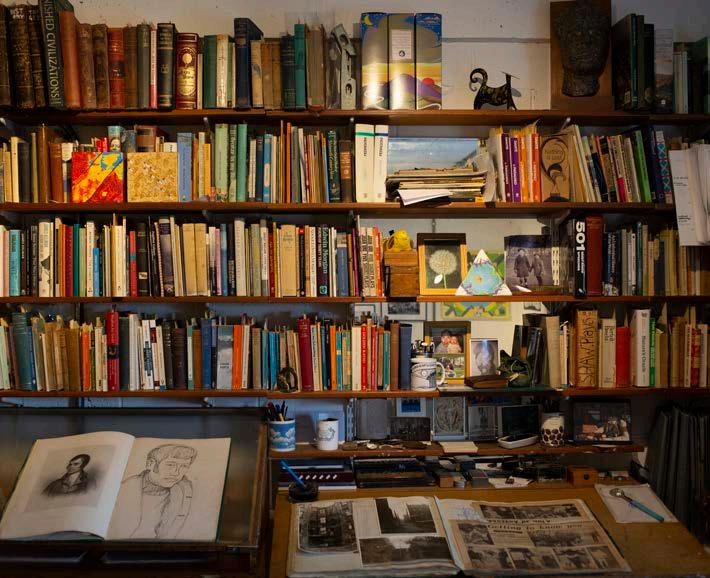
IDOON A RABBIT
Rediscoverin Scots writin fae dissertation tae preservation
By
n 2019, a was studying for a degree in English Literature but had found masel either bored or repelled by the majority of the books ad been assigned. The exception wis the one that had been written close tae campus: Poor Things by Alasdair Gray.
The time tae pursue this interest came when a was dain ma dissertation. At the time Chris McQueer n Limmy were comin oot wae their own short stories in Scots n were both huge on Twitter. Ad noticed a big trend between social media bringing this sorta writing tae folk who wereny usually at book launches n the like. A thought this was the perfect subject to delve inty n so a got to spend aboot four months just readin aw about the use of Scots in literature. A read pieces that resembled the texts a sent n received wae pals n the social media posts a read on a daily basis, but a hadny seen at aw whilst a had been studying. When a was researchin wit hud came before the stuff a was lookin at a ended up doon a rabbit hole of authors ad never really heard of before n whose writin was hard to trace. A noticed that even for James Kelman, who had cemented Scots language on a global stage by winnin the Booker Prize, new editions of his books were harder to come by, wae many oot ae print (this chinged in 2023 when ‘The Kelman Library oversaw the republication and printing of his oeuvre).
So many of our literary greats were the same, new versions of their copies were oot of print and so ye’d be at the mercy of wit ye could find by chance in a second hand book shop or on eBay.
A felt a surge of injustice at this, at the complete disconnect between wit a could read n wit was around me, n trouble accessin the literary legacy that came before wit a was currently readin. A felt ill equipped to be writin about a subject which a couldny access the history of.
But it goat me thinking about the preservation of and access to Scots literary tradition as I looked intae Muriel Spark as well as contemporary writers a liked, such as Janice Galloway n Jackie Kay. Libraries n archives were comin up as the key: bein the custodians of many authors’ work and personal papers which gives insight inty their writing process interests which appear in their work, as well as keepin copies of their books for folk tae borrow. A penny dropped for me here n a enrolled in a course called Information Management & Preservation which wud allow me tae follow this inty a career.
Sadly due tae completin the course during Covid restrictions, a didnae have the experience ye wud picture for this sorta course: a didnae get tae physically go intae any archives n a didnae get any first-hand experience of archive material. Once restrictions were bein lifted a found masel a placement at The Alasdair Gray Archive where I had the immense opportunity of goin through material belonging to one of Scotland’s most unique and talented artists and writers.
The Custodian of the Archive, Sorcha Dallas, was grateful fur me goin through his letters and ephemera n creatin an initial catalogue of what was there for the use of future academics, fans,
OTHER ARCHIVES TAE VISIT
The Scottish Council on Archives maintains a map tae help you discover n explore archive collections across Scotland: scottisharchives.org.uk/ explore/scottish-archives-map
A favourite ad recommend checking oot is the collection of the Women’s Library in the East End which you can explore online here: archive.womenslibrary.org.uk
Ye can keep up wae The Alasdair Gray archive at: thealasdairgrayarchive.org
students, you name it. But a always felt like a was the one who should be grateful for the opportunity to touch, look closely, and spend time wae stuff that belonged tae one of my favourite writers.
At the Archive I saw wee notes and doodles made in the margins of books, the same sorta approach to leaving yer mark on yer possessions that ad seen over a screen a few years before, in books that were hundreds of years auld. A canny describe how special it is tae experience this. N it doesnae just matter if ye knew, or knew of, the person or no – seein this tangible urge that folk always seem tae have had tae record their thoughts, or proof of their existence, or proof of their boredom even, is magic.
The final hing av discovered through my work wae archives is how much great stuff is held in them and how much it excites our interest n creativity. A lot of folk just don’t realise that aw that stuff is there, n that it’s there for them. Maist archive services are understaffed n am sure would like to advertise their services and outreach to their communities more than they do. But plenty of stuff is available digitally on museum n council-run archive websites anawl, so ad encourage everyone readin this to dedicate some time to fallin doon a rabbit hole of their own special interest or hobby n see what ancient stuff is oot there for them.
Dr. Johanna Green, Senior Lecturer in Information Studies, is remembered in this article.
Stacey Anderson • Photo of the Alasdair Gray Archive by Miriam Ali
In conversation
On the work of Agnes Owens
Surrounded by shelves of books, Alasdair Gray’s distinctive artwork and boxes of notes, artist Hayley Jane Dawson [left] and novelist Kirstin Innes [right] took a seat in the linked Alasdair Gray and Agnes Owens Archives – where Kirstin is currently one of two writers-in-residence –to talk about what an often overlooked literary great means to them, in her centenary year.
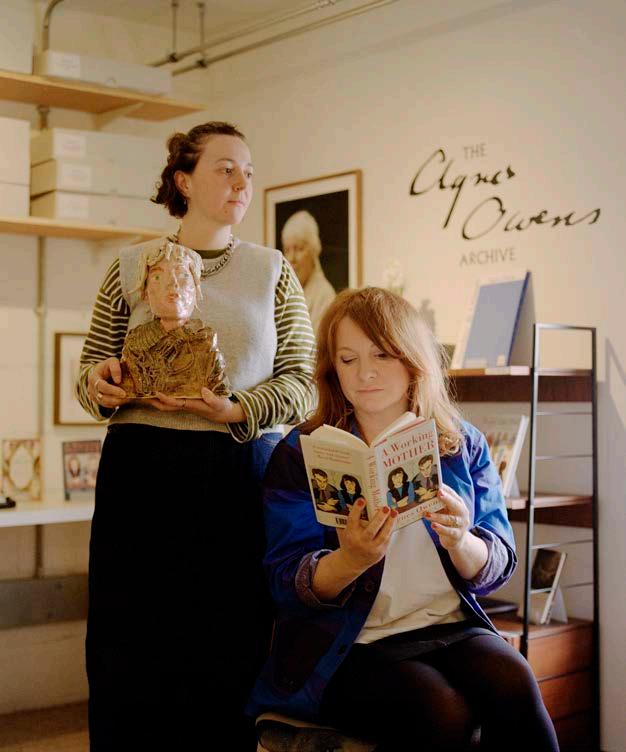
irstin: I came to Agnes through studying Scottish literature at Aberdeen University. There was a professor there, Isobel Murray, who knew Agnes quite well – Agnes was still alive at the time – and she was very much a champion for her work.
The writing that I do has always been influenced by that boom in Scottish literature in the nineties – with James Kelman winning the Booker Prize and Trainspotting being published. It felt like a different way of seeing Scottishness represented. Agnes was publishing in the eighties and nineties. That was where I came in, and that movement influenced the way I write and the things I write about.
Hayley: I’m a sometimes artist and sometimes writer. I don’t do it full time because I need to support myself. I was doing my Master's in Art Writing when the Agnes Owens Archive was starting up and our course leader shared an opportunity to help sort through the materials. I was one of the first people to get my hands on the stuff.
I was writing a lot in Scots – in my Glaswegian dialect – about my family and their history in the Govanhill area. My dad’s side of the family grew
Photo by Miriam Ali

up there three generations back. I was writing about my granda and his life as a working-class person.
A lot of what I was writing was about the everyday – lives that aren’t necessarily deemed important enough to document. So seeing someone writing about the everyday and not glossing over it – being very much like “life is tough and hard but there are moments of joy mixed in with that” – was really refreshing.
K: I’ve been looking at how Agnes writes about herself – or actually doesn’t.
I found a programme in the Alasdair Gray Archive for the 1984 Strathclyde Writers Festival. All the writers give biographies and when it comes to Agnes, she’s got these four facts of biography that she repeats everywhere.
She writes that she’s a 57-year-old mother of seven. She says when she was first married to her first husband they went off to the Highlands and toured around for a year with her baby trying to find work. She says she worked as a cleaner, she worked as a typist, and that she was discovered by Alasdair Gray and Liz Lochhead.
Everything else she glosses over – six other children being born, her first husband dying. It’s almost like she looks for the extraordinary things about herself rather than the everyday. She keeps the everyday of her life right back.
Apart from – and you picked up on this – this phrase: “a hopeless case.”
H: Yes. That’s how I think she feels about herself. It’s such a shame she felt that way because when I read her writing, it struck a chord with me. She’s clearly not a hopeless case. A lot of that is tangled up with working-class identity.
K: I think it was a Latin teacher at school when she was fourteen or fifteen. They were going round saying what they thought everyone would be. When they came to her they said: “You’re just a hopeless case.” That stuck on her.
The first short story she had published [in the 1960s] was called A Hopeless Case. She kept returning to it in different forms. Even in her eighties, she began an autobiography with that title. It’s always that moment of someone in power telling a child – or a powerless person – they are a hopeless case.
H: Something like that never leaves you. No matter what you achieve, it’s still there in the back of your mind. That one person didn’t believe you could do it.
That’s wrapped up in working-class identity. You have this kind of imposter syndrome. I feel it myself. I’m sitting here doing this but I’m still saying, “I’m not an artist, I’m a writer sometimes.” It never quite leaves you.
When I was studying my Master's, I had a really hard time being one of only two working-class people in the first year and then the only working-class person in the second –feeling like I had to justify my writing and why I was talking about these things. Thinking nobody wants to know about your granda’s life as a printer.
Even if, as happened with Agnes, Alasdair Gray tells you you’re an amazing writer, that doubt never goes away.
K: I’ve been tracking the points where she gets validation. Her mother insisted she do a typing course and become a secretary as a means of social advancement. The typewriter represents work and social mobility at first. Then it becomes the place where she writes.
In the Archive there are three typed sheets where she tries different versions of answering the question: “I suppose you want to know why I wrote A Working Mother.” She gives three completely different answers. There’s something about that physical act – her fingers on the keys – that’s her thinking.
Then James Kelman came to her creative writing class and she was writing poems, and stories about bricklayers because her son was a bricklayer. He said, “forget the poems and concentrate on the bricklayers.” That stuck with her. In Gentlemen of the West you really see his influence.
I also found a rejection letter for one of the stories from Gentlemen of the West. It came with a note saying “Scotch dialect is difficult to sustain.”
H: I remember seeing that too.
K: Have you heard that Tom Leonard thing where he talks about Scottish writers having their characters speak in Scots but the narrative is in English? He says ‘reader and writer are playing a little game and the game is that they are the same – and they are not the same as these f**king natives who do their dialect in phonetics'.
But for Agnes, there’s a difference in that as well. Because her characters – In Gentlemen of the West and Like Birds In The Wilderness, the characters speak Scots but in A Working Mother they don’t at all. And I wondered what you thought about that?
H: I go between both. In my writing I move between Scots – my version of Scots – and English. There’s still a stigma attached to speaking and writing in Scots and that not being a proper way to speak, even if it’s less now than when Agnes was starting out.
K: She resisted categorisation as a “female writer.” She was often bracketed with Kelman and Gray, almost as an afterthought, and labelled a Glasgow writer. But she wasn’t writing about Glasgow. She was writing about smaller West Coast places – urban-rural borderland spaces, and the particular desperations of those lives.
There’s a great quote where she says something like: “Of course I have to write what I know – I don’t have the money to go off and research anything that isn’t the life that I see every day.”
H: That’s something that made me fall in love with her. It is relatable. A lot of what we were given to read at university felt totally irrelevant to my everyday life.
Working-class people don’t have as many opportunities as they did before, and they hardly had any before as it was. Her writing takes you away a little bit and gives you a sense of adventure. Especially something like Like Birds in the Wilderness, where they go and live in the middle of nowhere.
K: At the end of Gentlemen of the West, you feel the world closing in. There’s Mac, who is 22 and modelled in part on her son who was a bricklayer. He hasn’t had work for a long time and feels this small town closing in, so he goes north to try to get work on the oil rigs. Then you feel it closing in again.
That’s the subject matter – work. It always annoys me when you read a book and the novelist hasn’t thought about what the characters do to bring money in. In Gentlemen of the West you’ve got the building site. In A Working Mother Betty moves between three environments for almost the whole book: her home with her alcoholic husband and the kids, the pub, and the office. All three are given equal footing.
H: I’m always wary of writing about working-class everyday lives as a kind of drudgery or like there’s no joy. But there’s also a strength in that honesty. The subjects she’s writing about are the subjects that occupy most of a working person’s day – working, drinking, problems, socialising, money.
I’m working with the Agnes Owens Archive just now to create a set of ceramic objects based on objects in her books that respond to those themes. They’re going to be part of an exhibition at the Lillie Gallery in Milngavie opening on the 18 April, displayed as an installation using everyday found objects.
K: Polygon are republishing all of Agnes’ works over her centenary year and I’ve written a new introduction to [her 1994 novel] A Working Mother. We’re launching the new editions in Milngavie Town Hall on the 9th of May.
I’m trying to come up with the beginnings of a short story collection inspired by what I find here in the Archive and the connections between Alasdair and Agnes. Specifically at the moment, I’m looking at Agnes’s approaches to writing about motherhood and the way that she acknowledges the challenges.
If I was going to recommend one book to get people into her work, I would recommend People Like That. You really feel her ability to empathise with people on the margins.
H: I love A Working Mother. It’s where I keep what we call in my family “the float” – my spare forty quid in case anything happens. I keep it in A Working Mother. So it’s my favourite book for many reasons.
K: The key to that book is that it bursts open the lie that she didn’t write anything until Liz Lochhead found her in her fifties. She wrote A Working Mother when she was in her thirties. It was called The Alcoholic. It sat in a box and she moved house with it a few times. She wrote it while she was in the relationship that inspired the book.
She needed the confidence – the external validation – to counteract the “hopeless case” that was always in the back of her head.
H: But it was already all there.
To celebrate her centenary year, Polygon is publishing new editions of Agnew Owens’ books with specially commissioned introductions from contemporary Scottish writers with four released in May – including A Working Mother – and four released in September. Further information can be found at: thealasdairgrayarchive.org/the-agnes-owens-archive
SCOTS SONGS AND GATHERING THE FOLK ACROSS GLASGOW & BEYOND
By Rebecca Morris

Ididn’t truly appreciate the wealth of Scots songs and ballads until, ironically, I moved to Andalusia to learn about flamenco.
Participating and learning from a culture that took pride in its dialect and worked hard to preserve its folk traditions was heartening to witness. I went to Jerez de la Frontera to learn flamenco but I found myself, as I picked up the guitar for the first time, fumbling through old Scots ballads.
I recalled songs from my youth: I remembered my uncle singing ‘Now Westlin Winds’, an ode to nature by Ayrshire’s ain Rabbie Burns; or humorous Glesca folk ditty, ‘The Red Yo-Yo’, by Matt McGinn from Glasgow’s Calton district, a favourite among my aunties and cousins.
While running the Rebel Choir in London, I rediscovered Matt McGinn through teaching the song, ‘If it Wisnae for the Union’, with its clever refrain: “Ye widnae hae yer telly the noo if it wisnae fer the union.” Later, while facilitating workshops to make a youth-led podcast about mill history with ReMode in Paisley, I stumbled upon ‘The Wark o’ the Weavers’. Its chorus, “If it wisnae fer the weavers what wid we dae?” revealed that Matt McGinn, in true folk fashion, had updated this tune to reflect the time he was writing – in 1960s Glasgow.
Matt McGinn was born only a stone’s throw away from my paternal grandparents, both reared in Toonheid. Despite my parents leaving Glasgow to start a family in London, and even after I escaped to Andalusia, I was continuously led back to my roots through songs.
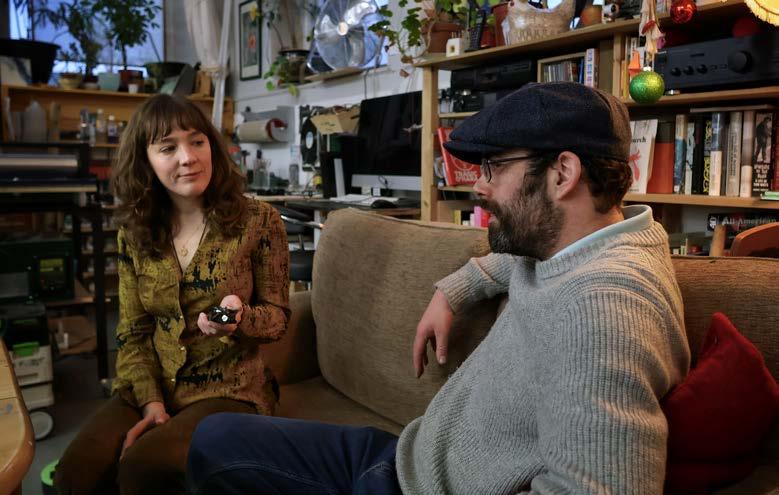
Growing up in multilingual London, most of my friends spoke another language. Mine was Scots. In my early teens, I moved to Glasgow, left again when I was an adult, and eventually returned (again). When I began to find my voice in folk, wrapping my tongue and mouth around the vernacular of my forebears felt good.
The beauty of learning these local languages and dialects is that they belong to anyone, whether they are “native” or not. In Andalusia, I felt more included when I began to learn the dialect through song and local expressions. In 2025, we saw Gaelic and Scots become protected languages under the Scottish Languages Act. Though better late than never, it follows decades of excluding Scots from mainstream education. Children were discouraged from speaking the Scots that they heard at home and in the streets. My dad was confused by the fact that he was required to say “yes” at school, when everywhere else it was “aye.”
There was a recent stramash when a right-wing English politician criticised the fact that Glaswegian children were multi-lingual, calling it “a cultural smashing.” In fact, many Glaswegian children have always been multilingual, as they spoke Scots. The future of Glasgow is a hybrid of international dialects and languages, including the new commitment to the Scots heritage. At a Scot’s songs workshop I ran for Greater Govanhill Magazine at Tramway, we sang lullabies and Matt McGinn. Everyone participated and learnt something new, whether they were familiar with Scots or not at all.
These songs remind us of our histories and common threads. The mill and weaving songs are particularly resonant. How many of us across the globe had family who worked in mills or as weavers? Last year, I taught mill songs to a community of women who claimed they couldnae sing. Yet they gae it laldie, performing to enthralled audiences, including at Paisley’s historic Sma’ Shot Day festival.
Gathering to sing is about more than wellbeing. It is reclaiming a common folk culture, owned, for and by the people. These songs were written by weavers and miners. For centuries, balladeers roamed the streets telling news of other towns and selling their songs, until they were prohibited and dubbed “beggars.” Nowadays, folk music has been rebranded as a specialised and expensive pursuit. Yet folk music has a life of its own: it is always transforming.
In that spirit, I am continuing this project with communities across Glasgow, Renfrewshire, and Ayrshire. At my job as a practitioner at Battlefield Primary Afterschool Care, I teach enthused weans cherished but endangered Scots songs, such as Mairi’s Wedding. I am also collaborating with the visual artist, Stuart Murphy, researching ballads that bring alive his art, which looks at the lower classes and vagabonds of Scotland’s past.
Stuart’s practice is steeped in local social history, from his North Ayrshire hometown of Kilbirnie to his studio in Glasgow’s Calton. The Calton, famous for its weaver martyrs, brings us back to Matt McGinn, one of Glasgow’s most prolific working-class songwriters, who wrote as many songs as Robert Burns. Let’s not forget folk artists who celebrated local culture with humour and heart. Let us continue the tradition and make new ones, reflecting the Glesga we know and love today.
Instagram: @rebecca_maria_morris • @stuartmurphysocialhistoryart
Photo by Ilaria Lipperi
Rebecca Morris in the studio with Stuart Murphy
I am one story among many
By Shaimaa Alrashwanii


I am one story among many.
This is our story, a Syrian family that came to Glasgow seeking asylum, fleeing a war we did not choose, and a homeland where staying had become a danger and dreaming, a crime.
We arrived carrying our fear in our hearts and our children in our hands, bringing nothing with us but the hope of finding a place where we would be treated as human beings.
I speak first about myself – a parent who tried to start from zero, to learn a new language, to work with dignity, to contribute, not to be a burden, as hateful narratives so often portray us.
But what truly breaks my heart is not what is said about us as adults, but what reaches the ears of our children. What have these children done to deserve this?
What has a Syrian, Afghan, Ukrainian, Sudanese – or any child from anywhere in this world – done to deserve hearing words filled with hatred, words that question their worth and steal their sense of safety? Has humanity really fallen this far?
Have cruel, crushing words become so easy to speak that anyone stripped of compassion can stand on a social media platform and spew them without responsibility?
What have these children done to live this reality? Was it not enough that they suffered under unjust rulers?
Was it not enough that they were forced to leave their homes, schools, friends, and their homeland? Why must another layer of injustice and racism be added in the very places they fled to for safety?
Let me be clear: These children are not a burden. These children are the future. They will grow. They will learn. They will work. And they will build their own future – and the future of this country too.
They will become doctors, pharmacists, engineers, scientists, leaders, politicians, athletes, and teachers. They will build, not destroy. And they will prove, despite every extremist and despite every racist who seeks to undermine this beautiful country, that diversity is strength, and that humanity has no nationality. Glasgow, and this country, are stronger because of their humanity, because of their kind and generous people – not because of fear and hatred.
And our children deserve a future better than the words thrown at them without mercy.
Illustration by Laura Hurst
Your traditions belong on the map
Help get cultural traditions recorded and represented in the Living Heritage Inventory for Scotland.
Anyone who participates in crafts, folklore, traditional arts, yearly celebrations, and other customs, which are currently being practiced and have been passed down through generations, can make a submission to an inventory managed by the UK Government and the UNESCO UK National Commission.
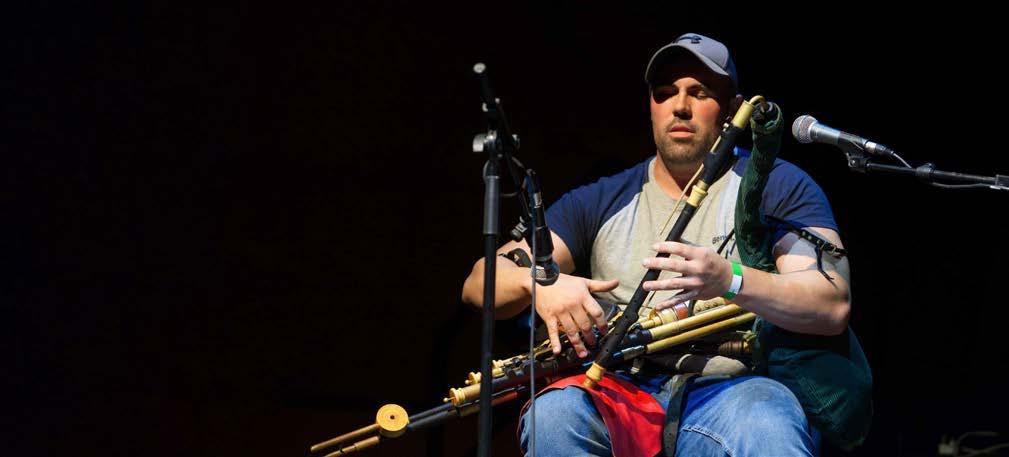

Get in touch with Museums Galleries Scotland about the custom or tradition you participate in for free support making a submission to the inventory.
Email: ich@museumsgalleriesscotland.org.uk
Phone: 0131 550 4100

Book now

Axe’ ‘Grind Yer Axe’ ‘Grind Yer Axe’
Is Bringing Queer Nightlife To Your Doorstep ‘GrindYerAxe’ ‘Grind Yer Axe’ ‘Grind Yer
By Kate Fry
Grind Yer Axe – or GYA – is Govanhill’s beloved queer fixture. While primarily centred around lesbians and dyke culture, the night welcomes “anyone with an axe to grind”. It provides Glasgow’s LGBTQ+ community with an alternative to the often cis-male centered gay clubs of Glasgow’s city centre.
Behind the success of GYA is Cat –a DJ, Drag King, Southside resident, and general local legend. Cat has been DJing in Glasgow for over 13 years and their experiences have given them an intimate perspective on Glasgow’s nightlife. I sat down with them to discuss how GYA has found success in the Southside…
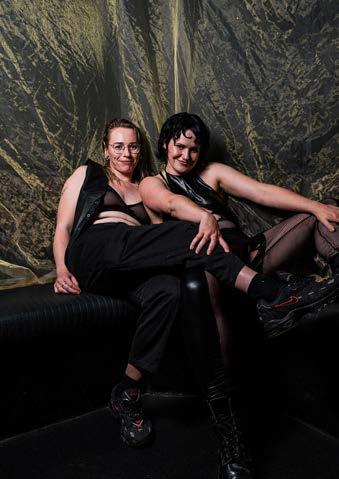
To start, can you tell me about how GYA came to be?
GYA came around because for ages there was just nothing for lesbians… I mean, Lock Up Your Daughters (which was an early lesbian club night in Glasgow) stopped running nights like… I’m going to say 2015, I guess? There were a lot of queer nights that claimed to be for everyone, but you’d go and it would just be wall-to-wall men. Which is fine. That’s important, and that’s great that space exists. But, it’s not great if you wanna meet other lesbians or other kinds of queer people.
So GYA actually started years ago –2017, I think. And the intention was it was going to be a queer lesbian night, but it was going to have like, quoteunquote, serious DJs. Which isn’t to say the DJs we have now aren’t serious about what they do. But my original idea was to bring house, techno, garage – the kind of stuff you can’t really play at a wedding.
One of the first DJs I had was Elena Colombi. She is amazing. It went relatively well, but it ended up bringing in more techno fans than lesbians. And I was like ‘Okay, this is fine, but it’s maybe not quite getting the demographic.’ Then I had JD Sampson, but not a lot of people came and I was thinking ‘Okay, something is not working here.’
There was an idea of what the community wanted and what I thought the community wanted. I think in London, or a city with a wellestablished lesbian club scene, you can start splitting off into different subcultures. But here – in Glasgow – we have no baseline. All of that happened when GYA was at the Art School – and, later, Bonjour.
When GYA moved to The Rum Shack, did you have any reservations about moving it to the Southside?
Completely the opposite of that line of thinking, actually. I live Southside, and I was looking around thinking, ‘Everybody is gay here, everybody is queer.’ I thought, if I take this event to the queers’ doorstep and it still doesn’t work, then it isn’t going to work anywhere.
Well, given the success of the event since the move, I think it’s safe to say it worked. GYA has also had a lot of success with its theme nights and competitions. Do you have any highlights from these?
My favourite was the Saints and Sinners party, our Halloween night. I’d been wanting to do something vaguely Catholic-themed, but I wanted to make sure it was inclusive. I was like, ‘How do I get people dressed up as nuns and
priests in a way that is accessible?’ and that was it. There were so many nuns, there were so many priests! What I love about doing the themes for GYA is that people really lean into it. Even when I think it might be too niche, too risky, people are like, ‘No, that’s amazing.’ It’s really exciting to see it reciprocated.
That’s interesting because you talked earlier about how – when it came to the music – your idea of what the community wanted was maybe a bit more niche than what the community actually wanted. But it feels like with these theme nights, you and the community are very much aligned in wanting to lean into the niche.
Music is tricky – it’s an eternal problem. Even when I used to run more general LGBTQ+ nights, not just focused on lesbians, there was always someone who was unhappy with the music. But the queer community loves dressing up, loves pageantry. You know the whole gay Halloween meme? It’s that kind of vibe; they really go for it. I actually think the themes maybe buy me a bit more room with the music. When people just want to go and wear an unhinged costume, dress up, faff around and be in the space, they don’t care as much about the music.
Check out Grind Yer Axe on Instagram: @grind_yer_axe for updates on their upcoming events.
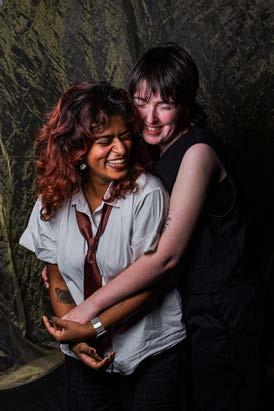
Photos taken at Grind Yer Axe’s ‘Butches Ball’ in 2024 by Tiu Makkonen
Plastering
over
WHAT’S THE DEAL WITH GLASGOW’S FACTORS?
Factors in Glasgow should be trusted agents and custodians; however, for many of us, they feel more like a source of frustration, risk, and often exorbitant costs. The system around factoring is badly strained, often leaving homeowners paying the price.
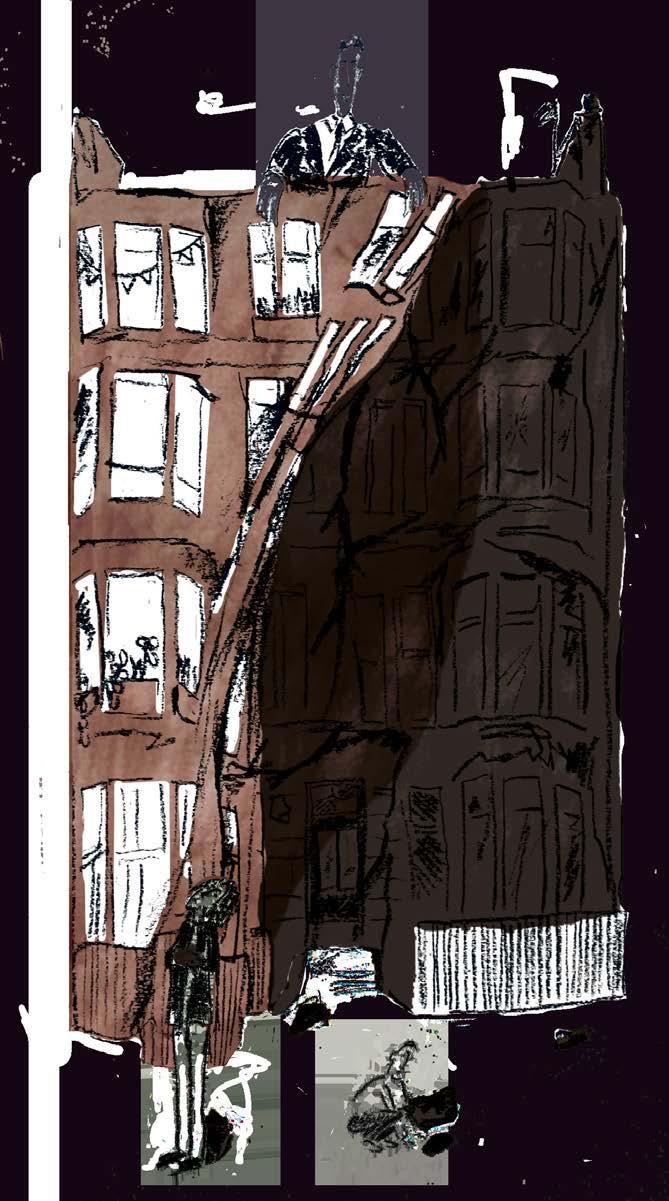

MBy James Dixon Illustration by Olivia Juett
y family recently had to move out of our Shawlands flat because the tenement wall is cracking apart. The building has been propped up by shoring for the past couple of years. Our property factor knew about the damage long before that – and quite literally plastered over the crack, painting it to match the brickwork so it wouldn’t be noticed. When we bought the flat, the Home Report was clear. As far as anyone could see, there was no problem.
A few years on, the cracking has spread across the building. Three of the four external walls now need to be rebuilt, and the flat is uninhabitable while major works take place. The repairs will eventually make it sound again, but getting to this point has been a long and exhausting process.
At first, our factor appointed a surveyor to scope the works. We were uneasy about the proposals, and later discovered the surveyor’s firm had a personal relationship with senior figures in the factoring company. So we came together as owners and hired an independent third party. Frustrated by the lack of care shown to our block, one neighbour effectively became the project manager, and we have pushed the works forward ourselves.
[The factors of the property were approached for a comment and said: “We are unable to comment specifically in relation to any matters that are private in nature between ourselves and our customers. As a business however, we always endeavour to work closely with owners and where appropriate, seek their instruction in relation to the maintenance of the fabric of their building.”]
The relocated residents of our close recently received letters from our factors reaching out in case we felt there was any work needed –loose tiles, or such like. They had been walking by, apparently, and had seen that the building (which is being propped up by shoring work and is visibly crumbling) might benefit from a bit of TLC. We all laughed; it’s better than crying. This is just one story in a city flooded with bad stories.
WHAT IS A FACTOR?
At its simplest, a property factor is a person or firm appointed by the owners, often through their title deeds, and inherited when they buy the flat – to manage and maintain a building’s common areas: the close, the roof, the stairs, any courtyard or garden, external walls, lighting and the building’s insurance. They collect levies, monthly or quarterly, arrange repairs, manage contractors, and maintain accounts.
This role is important in a city like Glasgow, where tenement living is part of its bones. Many buildings are older and repairs can be complex; owners must co-operate to keep the place in shape and to preserve the architecture, which is far easier said than done without a professional body arranging things.
Legally, a factor’s role is grounded in the Property Factors (Scotland) Act of 2011, introduced in October 2012. This created the statutory register of property factors (the Scottish Property Factor Register), set out a Code of Conduct, and gave homeowners new protections. The legislation involved works alongside other laws, most notably the Tenements (Scotland) Act 2004 and the Title Conditions (Scotland) Act 2003, which govern how shared ownership works, how factors may be appointed or removed, and how major works are agreed.
Factors must register, issue a written statement of services, keep records, handle complaints, and act reasonably. However, registration doesn’t really mean all that much; it certainly does not guarantee good service.
WHAT’S GOING WRONG IN GLASGOW?
Factors aren’t unique to Glasgow – plenty of cities in Scotland have them. But Glasgow leans more heavily on them than most, due in part to its distinctive structural landscape, especially the prevalence of traditional sandstone tenements.
Major complaints from homeowners and tenants across Glasgow are common and striking: a lack of transparency, surprise bills, often erroneous, slow or ineffective action, and worse.
It’s common to hear of owners not being told of major works or not being given a breakdown of costs. Contractors appear to be appointed with minimal tendering. When homeowners query charges, they may be met with debt recovery threats rather than any kind of explanation or resolution.
There are also quite a few relevant legal and regulatory failings. For instance, The Code of Conduct adopted under the 2011 Act requires factors to issue a written statement of services within four weeks of appointment, to provide transparent accounts, tender major works fairly, keep records, and properly handle complaints. This often doesn’t happen. I spoke to a few homeowners in the Southside about their experiences, and it’s common for factors to fail in providing statements, records, invoices, and there have been instances of factors threatening residents with bailiffs at the least provocation.
There is no mandatory inspection regime of factor practices, and complaints may take months to resolve. As one homeowner put it on a Glasgow forum: ‘Factors are basically parasites that charge extortionate prices.’
ALTERNATIVES AND POSSIBLE IMPROVEMENTS
Is there anything that can be done to salvage the situation, or at least to make the infrastructure and processes work for residents – rather than simply directing money towards faceless organisations that often do not work to an acceptable standard?
Housing associations offer a more positive model. Southside Housing Association offers factoring services
through its in-house team, whilst Govanhill Housing Association is a community-controlled organisation that owns and manages social housing and private factoring in Govanhill, delivering housing and community development services shaped by local residents for local people
In my experience, when the roof needed replacing across several tenements, the Southside Housing Association arranged competitive quotes, informed owners in advance of budgets and timelines, and circulated comprehensive accounts after completion. That level of engagement turned what could have been a financial shock into a coordinated improvement and bought a level of trust from tenants.
Self-factoring is another possibility. Owners and residents essentially take on the role of managing common areas, setting up a residents’ association, agreeing budgets, tendering works, holding contractors, and keeping transparent accounts. This means more direct control, greater transparency, and potentially much lower overheads.
However, this can be a draining process, especially when things go wrong. It relies on engaged owners, time, expertise and a willingness to work together, all of which are often lacking. It can be a struggle to recruit volunteers or navigate complex legal frameworks.
There are safeguards you can put in place to make sure your factors work for you:
• Checking the Property Factor Register to confirm your factor is formally registered, reading your factor’s written statement of services: it should set out what they will do, how often, costs, and how complaints are handled.
• Insisting on transparency, requesting a breakdown of offers/tenders for major works, minutes of owners’ meetings, and full accounts of how levies are spent.
• Lodging complaints with the factor if you suspect breaches of the Code of Conduct, and applying to the First-tier Tribunal for Scotland (Housing and Property Chamber), which has jurisdiction over complaints made under the Property Factors (Scotland) Act 2011.
• Checking your title deeds for provisions on appointing or dismissing a factor (often a vote of owners is required, for example, a two-thirds majority).
• Perhaps most importantly, engaging with your neighbours. Build consensus, hold meetings, start a WhatsApp group, agree on a budget, and consider if self-management if viable.
Better policy is sorely needed. Housing charities warn that complaints about property factors are rising sharply. Rebecca Fagan of Advice Direct Scotland said her organisation handled 133 cases last year adding: “These cases will be the tip of the iceberg… many flat owners rely on property factors for maintenance.” While Citizens Advice Scotland recorded a 19 percent rise in complaints, largely about billing and excessive or unusual charges.
Glasgow and Scotland more widely should push for stronger enforcement of the Code of Conduct: periodic audits of factors, performance metrics, public disclosure of results.
Local authorities should ensure they are not passing repair liabilities to owners through neglect of their own stock. Tendering of major works must be transparent, and owners must have a clear role. A larger budget should be put aside for repairs if we are to preserve our historic tenement blocks and ensure adequate housing stock.
Ultimately, homeowners in Glasgow don’t have to passively accept poor factoring. With the right knowledge, organisation and momentum, blocks can improve their management arrangements, reduce costs and safeguard value. Glasgow’s beautiful tenements – and their residents – deserve this much.
W h at ’ s O n
MAR C H
Step Inside the Storybooth
When: Opening 8 March
Where: Upstairs at Tramway
A new group exhibition from the Greater Govanhill
Photography showcases the portraits and stories of the people who make up this neighbourhood – in our Community Canvas space.
MILK International Women’s Day
When: Monday 9, 12-3pm
Where: MILK, 378 Cathcart Rd
Join MILK for their annual “ONE DAY OF THE YEAR AGAIN” event, to hear more about their’ projects, volunteering and community space. There will be letter writing with Mothers Against Genocide and tasty Syrian treats.
More info: Drop in
Govanhill & Crosshill Community Council Meeting
When: Monday 9, 7-8:45pm
Where: Daisy Street Neighbourhood Centre
A space for all residents to share issues and concerns about their local area with the Glasgow City Council
More info: FREE, more info email cgcommunitycouncilsecretary@gmail.com
The Big Rumpus Room Spring Clean Yard Sale
When: Saturday 14, 1–4pm
Where: Rumpus Room, Langside Lane
Browse and buy clothes, art materials, homeware, trinkets, enjoy some cheerful chaos, plus much more. Cash is king!
More info: FREE drop-in
Dog Walk Trans & Non-Binary
When: Saturday 14, from 12–1:30pm
Where: Queen’s Park
Join LGBTQ+ Health & Wellbeing for an organised dog walk in the park.
More info: FREE but booking required via Eventbrite
25th Anniversary of Govanhill Baths Occupation
When: Saturday 21, 5–7pm
Where: Govanhill Baths, 99 Calder Street
Celebrate 25 years since the occupation of Govanhill Baths – a protest by local people refusing to accept the closure of the well loved community space. Expect music, voices, food, performances and more.
More info: FREE drop-in
Prepare for Iftar – Air Fryer Cooking Sessions
When: Thursday 26, 1-3pm
Where: St Ninians Church, Pollokshields Free, community-focused cooking sessions. Head along to prepare a nutritious meal, led by a professional Muslim chef.
More info: Limited spaces, booking required by emailing team.spsquare@gmail.com
AP R I L
432 Presents DEYU perform MF DOOM
When: Wednesday 22, 7:30-11pm
Where: The Rum Shack, 657-659 Pollokshaws Rd Bristol-based collective DEYU will perform reimagined
For more regular events and groups, or to share an event, visit greatergovanhill.substack.com/subscribe
music from the hip-hop artist MF DOOM through live experimentation with jazz and hip-hop.
More info: Advance tickets £16
Spring Watch 2026: South Seeds Tree Trail
Walking Group
When: Friday 24, from 10am
Where: Queen’s Park Victoria Rd entrance
Walk around the park and learn about the diverse trees in the park with tree expert Eric. Each walk is between 45mins to an hour.
More info: FREE but ticketed via Eventbrite
MAY
Book Launch: Olive Growing in Palestine
When: Sunday 3, from 2:30pm
Where: The Glad Cafe, 1006A Pollokshaws Rd
Olive Growing in Palestine explores stories of everyday forms of resistance. Join speaker, Palestinian Professor Juman Simaan and special guest Vivienne Sansour.
More info: FREE but ticketed via thegladcafe.co.uk
The Buttons + Dirty Boots
When: Saturday 16, 7:30-11pm
Where: The Rum Shack, 657-659 Pollokshaws Rd
Join The Buttons, and special guest Dirty Boots, for an evening of live music.
More info: Advance tickets £5 via rumshackglasgow.com

Come to a interactive exhibition from Esya (Ayse Hassan from DemystifyingSavages):the process of making an electronic album.
Learn about the process of making an album.
Preview Esya’s new album (featuring contributions from Sharon Van Etten, Jessy Lanza, Laura-Mary Carter and Lee Tesche).
Experiment with equipment used to make the album.
Contribute to a future Esya release!
7th - 9th March 12pm-6pm daily Saltspace Gallery, Govanhill
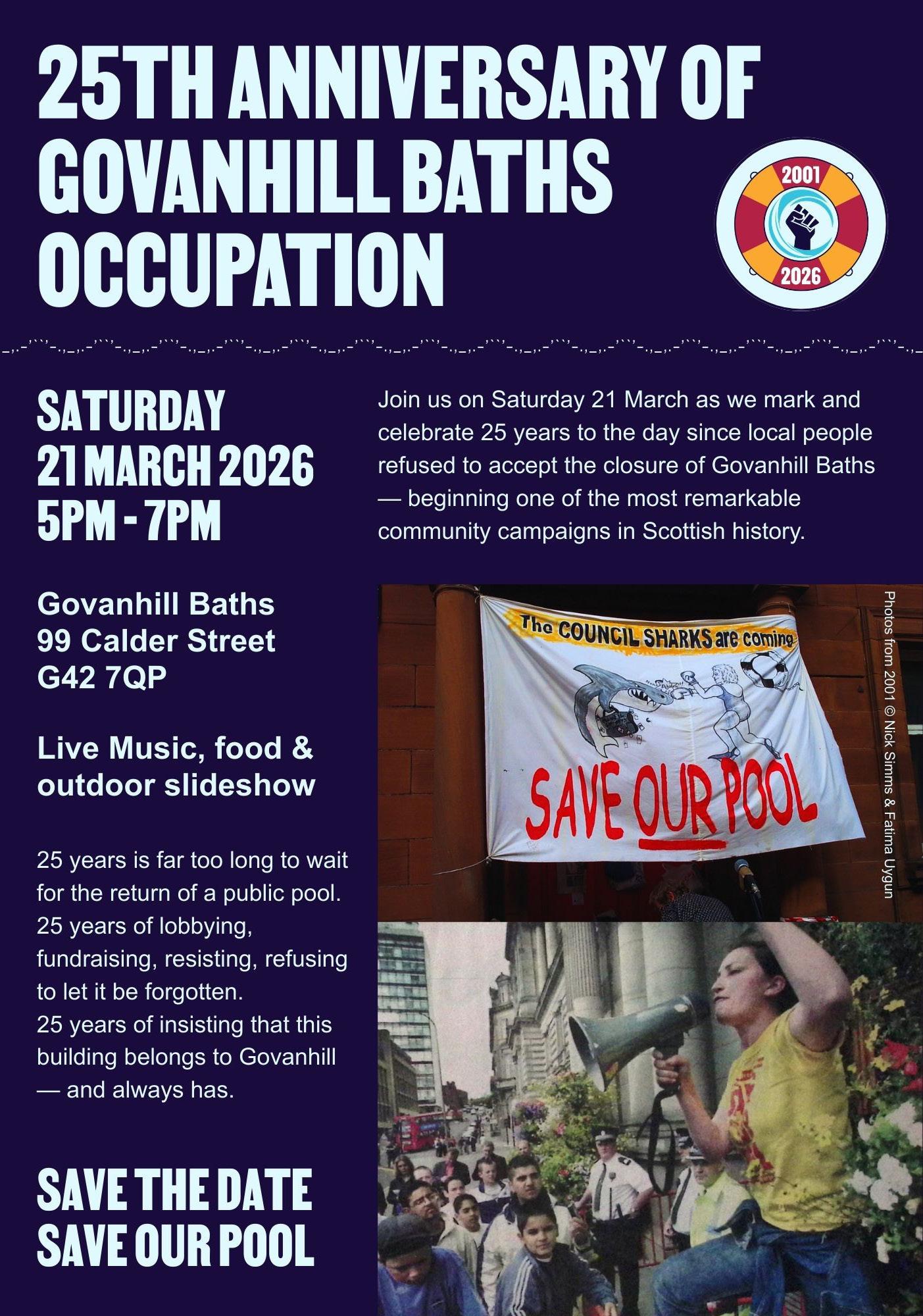
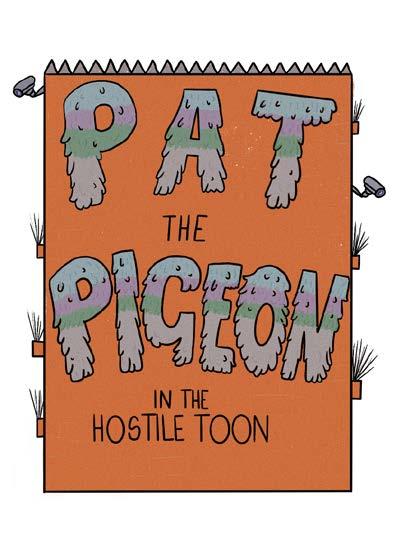
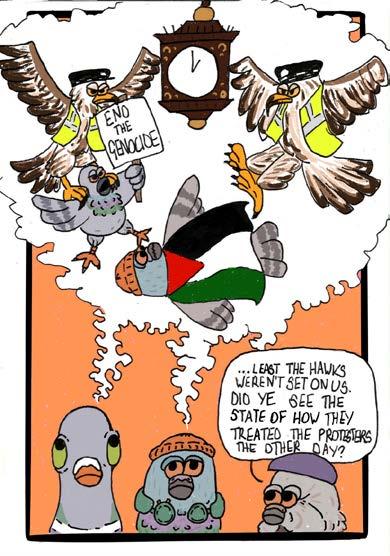
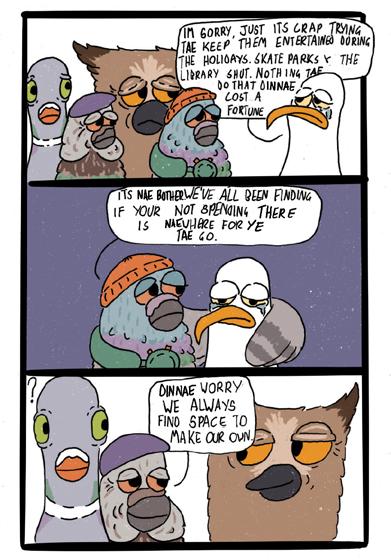
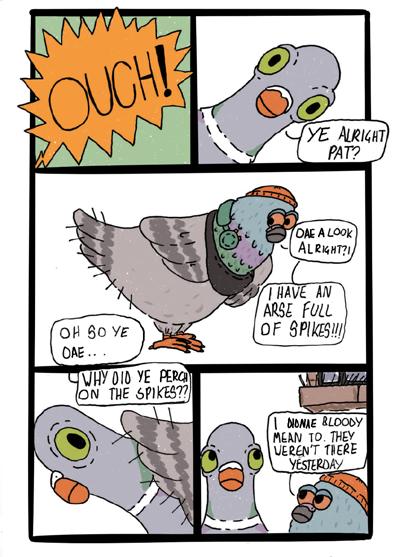
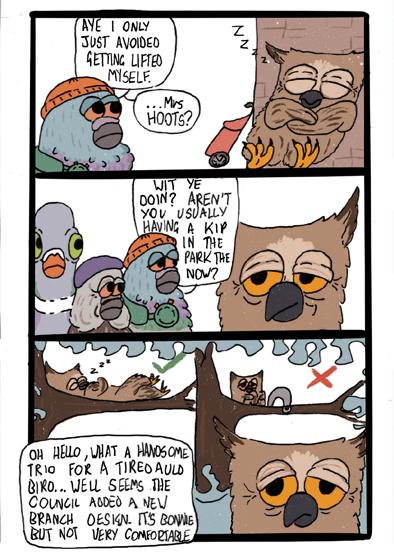
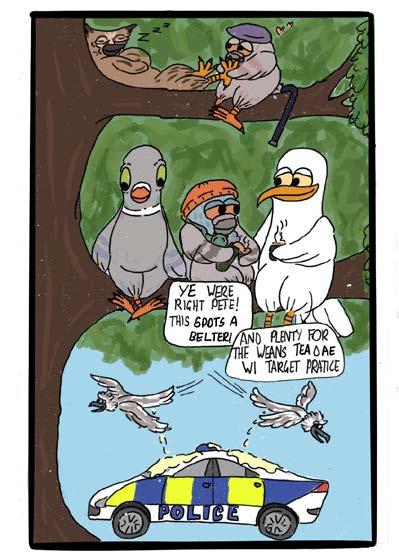
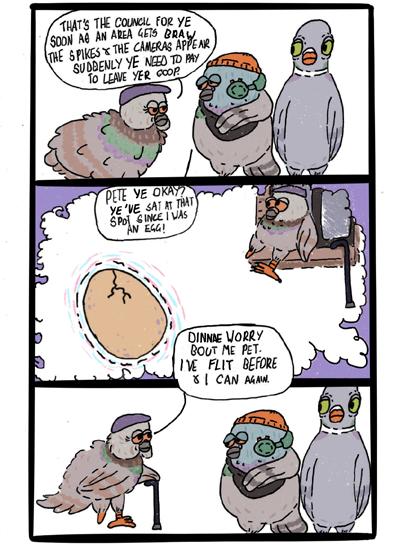
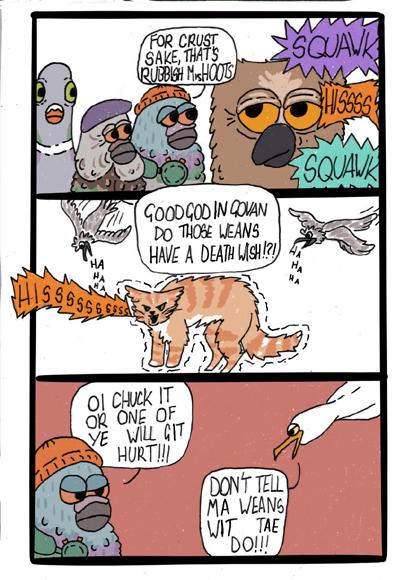




Warmer Homes Scotland
Find out if you’re eligible for support
Home Energy Scotland can help you make your home warmer and cheaper to heat through Warmer Homes Scotland. If you’re eligible you could receive support worth £10,000 or more. Warmer Homes Scotland – which is funded by the Scottish Government - provides energy-saving home improvements like heating and insulation to reduce your energy bills and keep the heat in.



STEP INSIDE THE STORYBOOTH
SHARING THE STORIES FROM OUR STREETS
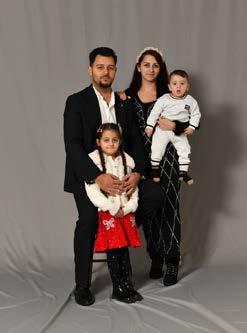
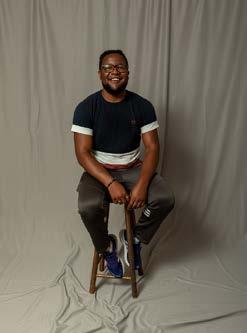
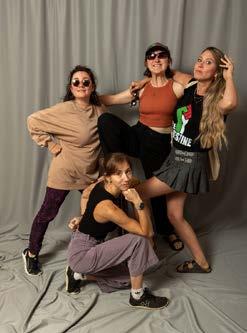
Opening 8 March
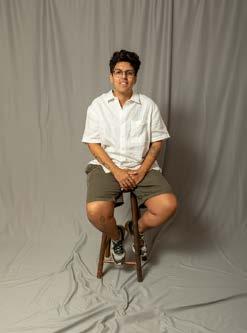
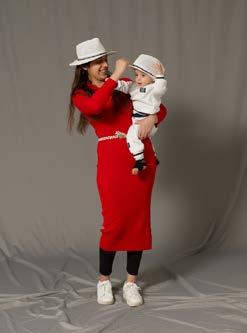
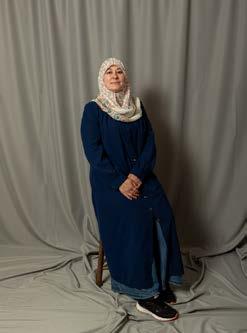
Upstairs at Tramway, Albert Drive
Wed-Sun, 11am-5pm
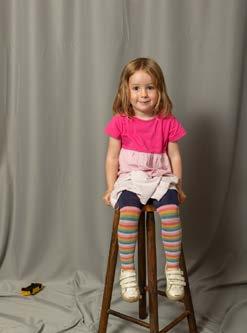
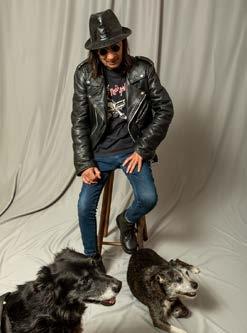
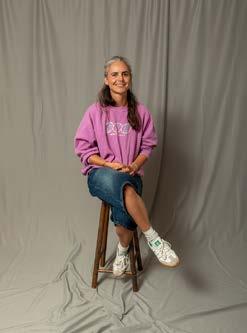
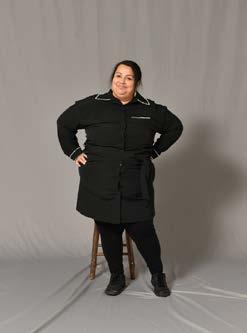
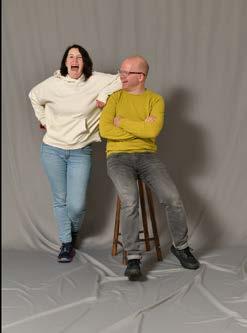
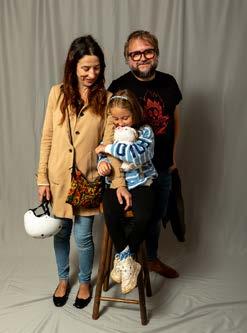
A new exhibition from the Greater Govanhill Photography Group