THE GRAY
WELCOME TO THE GRAY
Happy Halloween! Welcome to the very first issue of The Gray.
If you’re reading this, it means that you too are captivated by what exists beyond the reach of ordinary understanding. It means you’re fascinated by the things that emerge when we’re brave enough to look more closely at what defies standard explanation.
Together we will explore many extraordinary fields of study, including the occult, scientific phenomena, obscure traditions and practices, ancient superstitions and legends, and of course, all things paranormal. We are thrilled to bring you first-rate contributions from our throughfully curated assembly of journalists, researchers, historians, and more—each professionals in their respective discipline, with a shared passion for the strange and unusual.
Our collective mission is not only to intrigue and entertain, but to ignite the curiosity that exists within all of us, and inspire a willingness to look at the world a little bit differently. Thank you for giving this brand new publication a chance. I am looking forward to exploring the strange beauty of the unknown with you.
Erika L. Block
CEO of Gray House Publishing Editor-in-Chief of The Gray
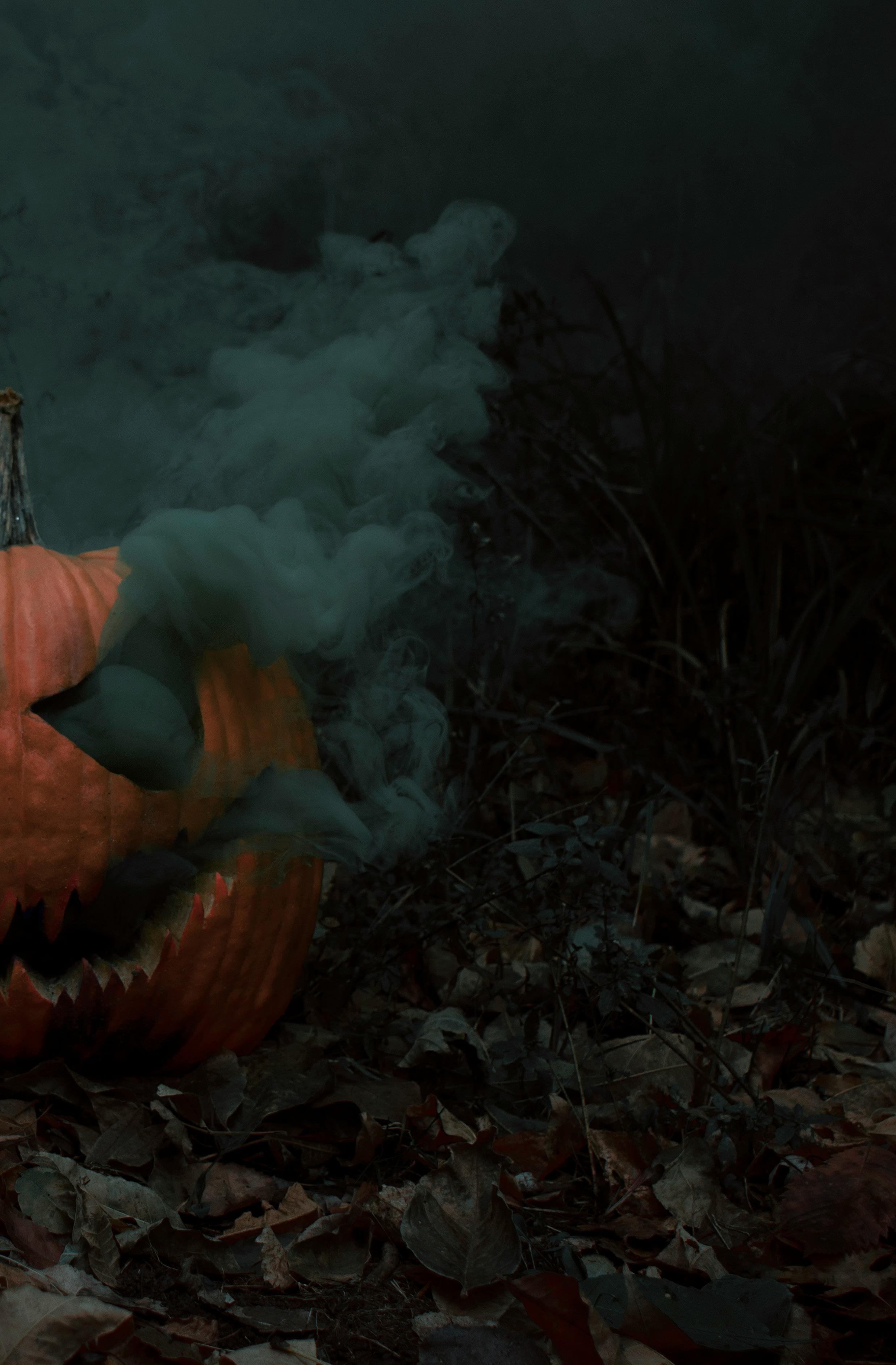
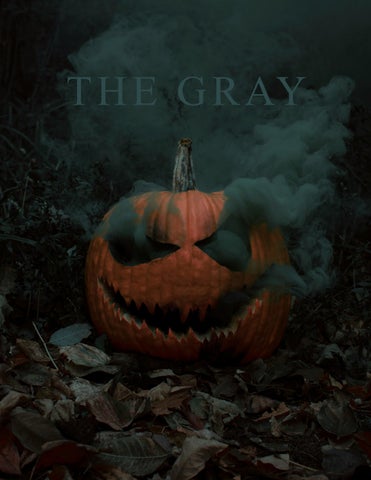
Cover Photo: Daniel Lincoln
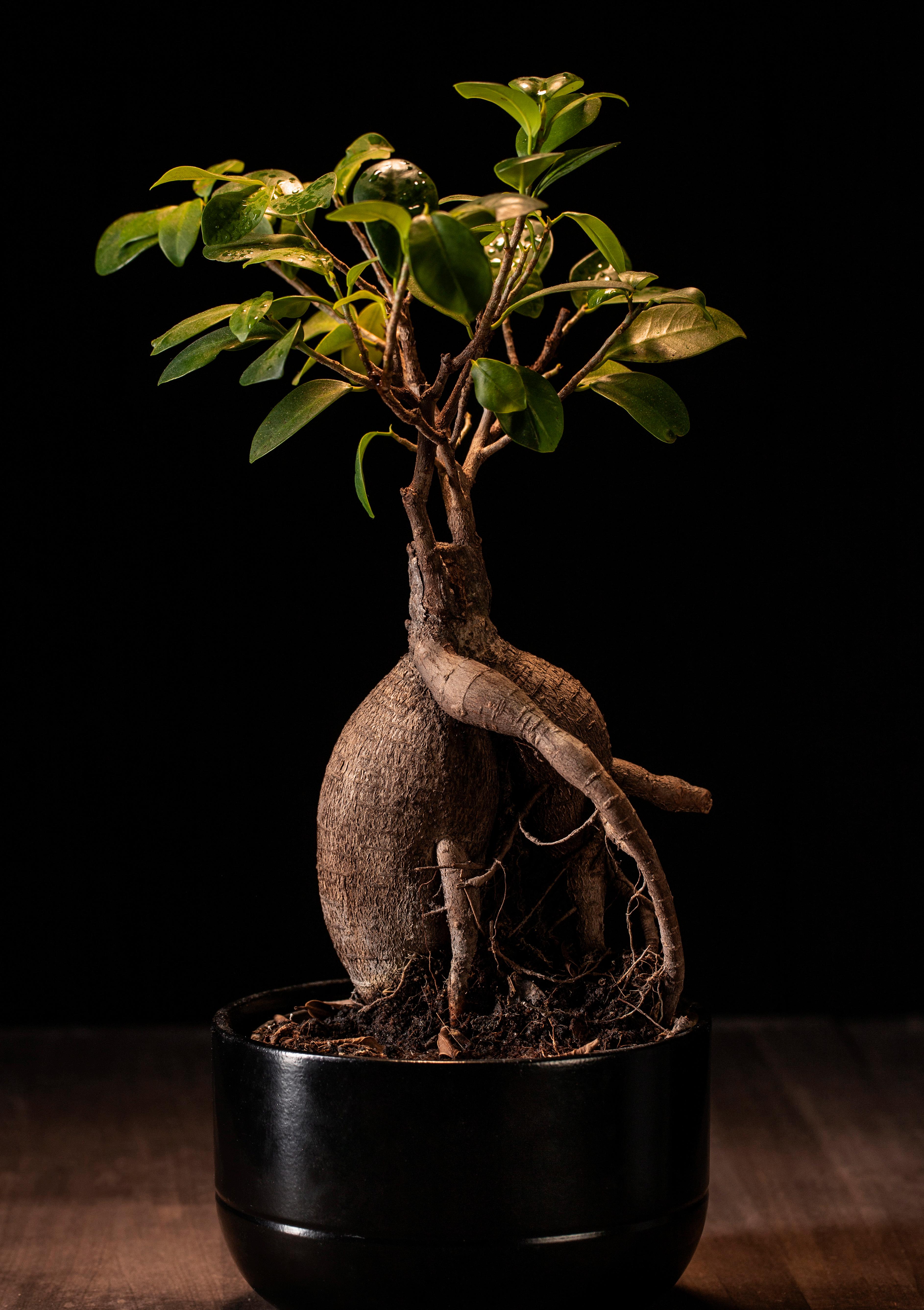
NIGHTSHADES, VESPERTINES, AND VENEFICIUM: PLANTS AND OUR SHADOW SELVES MANDRAKE
Christina Wilke-Burbach, PhD
Flowers. Bark. Seeds. Root. Stems. Leaves. Oils. Resin. Herbs and plant parts are and have always been the principal form and oldest form of medicine and healing for the majority of the world, since the beginning of time. Several diverse lines of evidence indicate that medicinal plants represent the most widespread form of medication. The use of herbal medicines has been documented for over 6000 years. Anthropologists and archeologists have found evidence that prehistoric man took medicinal plants and botanicals to cure health problems (emotional as well as physical). The Egyptians, Greeks, Aztecs, Mesoamericans and ancient Chinese categorized medicinal botanicals, prescribed plants to treat disease, used plants internally and externally, and kept detailed written records on herbal medicines. These medicines have survived real world testing and thousands of years of human testing. Several species of monkeys and apes have been observed to repeatedly consume particular botanical species for their medicinal properties. Research has found monkeys, gorillas, chimpanzees and humans to use the same plants as each other to treat similar health conditions (stomachache, pain, injuries, boost immune system, and for fertility). Until the last century most medicines were derived directly from plant or animal sources. In 1987 about 85% of modern drugs were originally derived from plants. Currently, only about 15% of drugs are derived from plants. Despite the increasing use of factory-made synthetic drugs, The World Health Organization estimates that 80% of the world uses herbal medicine for primary health care.
Plants are essential to life on earth. In addition to their medicinal purposes, they:
•provide a food source
•replenish earth’s oxygen supply
•prevent soil erosion
•slow down wind movement
•cool the atmosphere
•provide wildlife habitat/support ecosystem
Humans’ reverence for plants goes beyond their necessity for all life. It continues into our homes and gardens where we spend billions of dollars a year on gardening supplies, ornamental flowers, and trees. Plants have become art as they aesthetically improve our environment. Plants benefit our mind, body, spirit, social life, and environment as well as improve our life. But our fascination with plants and the green world also slips a little darker into the collective psyche and our subconsciousness. Whether we want to admit it or not, we love to straddle the line between dark and light. Our inner nature is a pendulum that swings back and forth in our reality, that’s duality. Dichotomy, binary, contrast, yin/yang, dark/light. Duality is the relationship between two elements that are different or opposite but part of a whole. Two sides to the same coin. We all have a dark side to complement our light side. The famous depth psychologist Carl Jung called this the “shadow” or black part of our personality. The ‘shadow’ refers to hidden parts of our being, often hidden in our unconsciousness. The Shadow Self is an archetype that forms part of the unconscious mind and is composed of repressed ideas, instincts, impulses, weaknesses, desires, anger, and fears. This archetype is often described as the darker side of the psyche, representing wildness, chaos, and the unknown. Jung believed that this latent energy is present in all of us, in many instances forming a strong source of creative energy. Also hidden in the shadow is our potential, our psychic abilities, and all possibilities of being. Plants that tap into our shadow selves have certain energies and qualities and have long been associated with witches, magick, the devil, mysticism, the paranormal, and the occult. We have used plants throughout history to harm, poison, and kill. We have used plants in rituals, ceremony, and spell work. Concocted plant preparations to become intoxicated, hallucinate, alter our minds, commune with the divine, and enter other worlds. Plants have been used for seduction, to influence others, and to get what we want.
(continued)
A few specific types of plants seem to resonate more with our shadow selves and our innermost deepest desires for sex, money, power, control, potential, wisdom, and knowledge: The Nightshades, Vespertines, and Veneficium. These are the night blooming plants that thrive in the dark, poisonous and toxic plants, highly aromatic plants, sharp and serrated plants that can make you bleed. But one family of plants holds power like no other, the Nightshades. Also called the potato family, Nightshades or Solanaceae has nearly 3,000 species throughout the whole world. The Solanaceae family represents some of the most widely cultivated crops around the globe. Its members are characterized by flowers with five petals, sepals, and stamens and typically bear alternate leaves. Many members of the Solanaceae family are used as food crops, such as tomatoes, potatoes, peppers, and eggplants. But other plants in this family contain toxic alkaloids. The Solanaceae family contains many plants that are poisonous to humans and animals. The family includes important occult plants such as belladonna, Datura, Brugmansia (Angel's trumpet), Mandrake, and Nicotiana (tobacco). The alkaloids in these plants can cause symptoms such as hallucinations, delirium, and respiratory failure. The reason why so many plants in the Nightshade family are poisonous is not entirely clear, which ends up making them even more alluring. Many people are also mildly allergic to tomatoes, peppers, eggplants, and potatoes without realizing it. Symptoms from eating these foods range from gastrointestinal to inflammation to respiratory allergic reactions. In fact, vegetables in the nightshade family are not allowed on the macrobiotic diet; a style of eating that has been around for thousands of years. Edible Nightshades are inflammatory due to their high content of alkaloids. We are even intentionally eating plants that slowly kill us since so many of modern diseases are inflammatory (heart disease, arthritis, autoimmune disorders, etc.). The pull of the darker and sinister side of botanicals, especially the Nightshades, is strong. So strong, we even end up immortalizing them in popular mediabeginning possibly with William Shakespeare.
Author J.K. Rowling has become controversial in recent years for some of her personal viewpoints, but her book series Harry Potter was and has remained incredibly popular with both children and adults
worldwide. All the books were best sellers, available in more than 200 countries and some 60 languages. The books were all adapted into movies. Harry Potter remains one of the largest and most lucrative franchises in the world. The book and movie, Harry Potter and the Chamber of Secrets, introduced millions of people to the nightshade known as Mandrake. In the Harry Potter series, the Mandrake is a magical plant with powerful properties. The root of the plant resembles a small humanlike creature. The plant screams when you uproot it and pull it out of a pot. The screams of the roots are dangerous; those of a full-grown adult mandrake can kill. While of course these are fantasy and entertainment embellishments of the plant, some aspects of the plant portrayed in the series are not that far off from millennia of occult use of Mandrake in the real world. Mandrake is one of the world’s most famous magickal plants and maybe one of the first plants used in magick and sorcery. There is written evidence of its magickal use as far back as ancient Mesopotamia. So, let’s take a deeper look at Mandrake.
Mandragora is a plant genus belonging to the nightshade family (Solanaceae). There are 3 to 5 members of the genus (depending on the classification system used). All Mandragora plants are known as Mandrakes. The scientific name of the two most common Mandrake is Mandragora officinarum or Mandragora autumnali. They are perennial herbaceous plants native to the Mediterranean region. The root of the plant looks like a human; the origin of the name man-drake. Though it has gorgeous purple or yellow flowers and orange berries, the primary magick (and poison) is found in the root.
All species of Mandragora contain highly biologically active alkaloids, especially tropane alkaloids Scopolamine, Hyoscyamine, Atropine and Mandragorine. The alkaloids make the plant, particularly the root, poisonous, narcotic, hypnotic, and hallucinogenic. Ingesting Mandrake can cause blurred vision, dilation of the pupils, dryness of the mouth, dizziness, headache, vomiting, hyperactivity, and a rapid heart rate (tachycardia). Due to its narcotic properties, ancient physicians would use the plant as an anesthetic and sedative for surgery. But they would often accidently kill their patients. Oooops! Fine line between hurt and heal! Because of its toxicity,
mandrake root is a baneful herb. Baneful herbs are herbs that can cause harm or death in the hands of a malicious person.
Mandrake, as well as other poisonous and hallucinogenic plants such as belladonna, henbane, hellebore, and cannabis were used in the Middle Ages to concoct the notorious “flying ointment.” The legend says witches made an ointment with an animal fat base and baneful and hallucinogenic herbs and anointed themselves. Some even go as far to say that they rubbed the ointment on a broom and then used the broom on themselves (if you get what I mean). Since the chemical components were absorbed through the skin and mucous membranes, the hallucinogenic effects of the herbs were believed to have been experienced as sensations of flying, visions, and trance. So, the feelings of flying and floating are attributed to being really “high” by lightly poisoning oneself. Internally taking these herbs has a much higher risk of serious complications and side effects including death. Absorption is the movement of a drug into the bloodstream. Bioavailability is a subcategory of absorption and is used to describe the fraction of an administered dose of unchanged drug that reaches the systemic circulation/blood stream. By definition, when a medication is administered intravenously, its bioavailability is 100% since it is administered directly into the blood stream. Oral bioavailability can be up to 95% whereas topical bioavailability is only about 10%. The bioavailability of a topical drug differs depending on the site of application, the thickness and integrity of the skin, the size of the drug molecule, the permeability of the membrane of the transdermal delivery system, the state of skin hydration, the thickness of the adipose (fat) tissue under the application site, the pH of the drug, and the alteration of blood flow in the skin caused by varying body temperature. Basically, this science lesson for you today is that external application of poisonous plants is less likely to kill you than taking internally. How the witches in the Dark Ages knew to make an external ointment vs an interrnal brew is a great mystery. There may have been experimentation and casualties along the way….it was the ‘Dark Ages’ after all.
Even though they might not have quite yet understood chemistry, our ancestors were incredibly attuned to nature. Through observation and study of the shape, color, appearance, habitat, taste, smell, touch or texture of a plant, they were able determine the medicinal and healing uses of a plant. This concept is known as the doctrine of signatures. The doctrine of signatures, or language of plants was used worldwide in preindustrial societies where thought-by-association was accepted as a valid means of obtaining knowledge. The idea is that a plant that looks like a disease, organ, or person will heal it. For instance, Horsetail (Equisetum arvensis) looks like hair, so it is good for the hair. When you cut open aloe vera leaf, it looks like the 3 layers of the skin, so its good for the skin. Toothwort looks like teeth, so it is good for dental care, etc.
Our ancestors also tapped in the shadow aspects of plants for occult usage by utilizing its appearance. Sympathetic magic is a magickal modality that involves manifesting a desired outcome by influencing it with a symbol or object that imitates, is like or looks like the desired outcome. Since mandrake root resembles a human body, it was often used as an aphrodisiac, for fertility, assistance in childbirth, and in love spells. Early herbalists in the 1st century AD even identified two different sexes of the Mandrake: a male and a female. The female had a heavy scent, the root was split into two and was darker in color while the male was pale, not split, and sweeter smelling. Today we know that there is no male or female Mandrake, they are really just two different species, Mandragora officinalis and Mandragora autumnalis.
Due to the toxic nature of the plant, its primary use in magick and the occult has been as a charm. The mandrake is mentioned in the Bible several times, particularly in the book of Genesis. Rachel uses Mandrake Root to conceive the children of Jacob. In Greek mythology, the goddess of love Aphrodite uses it as an aphrodisiac power. In European folklore, women who wished to get pregnant would sleep with a Mandrake in the shape of a baby under her pillows. Men would keep a female shaped Mandrake in their pocket to help attract a lover. During the Middle
(continued)
Ages, Mandrake was in such demand that there was a Black Market for the plant and fake roots were even intentionally sold! The magickal plant was sold for a very high price. Mandrake became known as “testicles of Satan”, “and “apple of love.” Since Mandrake looked like a human, some believed it could control and influence the entire human body; like a botanical voodoo doll, poppet, or effigy. Some would even carve the plant to look more like a human than it already did. The origin of the plant was said to be the blood from those condemned to die and hanged. Some believed a demon lived inside Mandrake and if woken up, it would scream and kill you (most likely where the idea in Harry Potter came from).
Mandrake was believed to have powerful protective properties. Soldiers would stitch Mandrake into their clothing to protect them against their enemies. It was believed that putting Mandrake in a red pouch and hiding somewhere in the house could protect a family from harm. Other protective magickal properties of mandrake root include using it in binding spells, protection from curses and hexes, and protection from demonic possession.
Mandrake is considered part of the element of fire. It is ruled by Mercury and correlates with Scorpio (of course it does!). It resonates with the Root, Sacral, and Third Eye Chakras. It is associated with the Jinn, Circe, Hekate, Aphrodite, and King Solomon. Modern occult use tends to focus on anointing candles with the oil of Mandrake for candle magick. You can also place on your altar, burying on your property for protection, or construct a poppet for that good old sympathetic magick.
Mandrake has thousands of years of lore, mythology, and legend. The mundane and magickal alike have been captivated by its humanoid looking roots and have attributed great powers to the plant. From altering consciousness to fertility, protection, and love it is still highly sought after in modern times.
If you choose to use Mandrake, please keep the following in mind.
Precautions and Considerations:
• Know your plants!
•Some are highly toxic and should not be ingested or used without proper knowledge and caution.
•Protective measures, such as wearing gloves and masks, should be taken when handling these herbs.
•Some of these herbs may be regulated or illegal in certain jurisdictions, so know the laws in your area.
•People may experience varying sensitivities or reactions to these herbs, so it’s important to use them with caution and in small quantities.
•This article is for educational and entertainment purposes only.
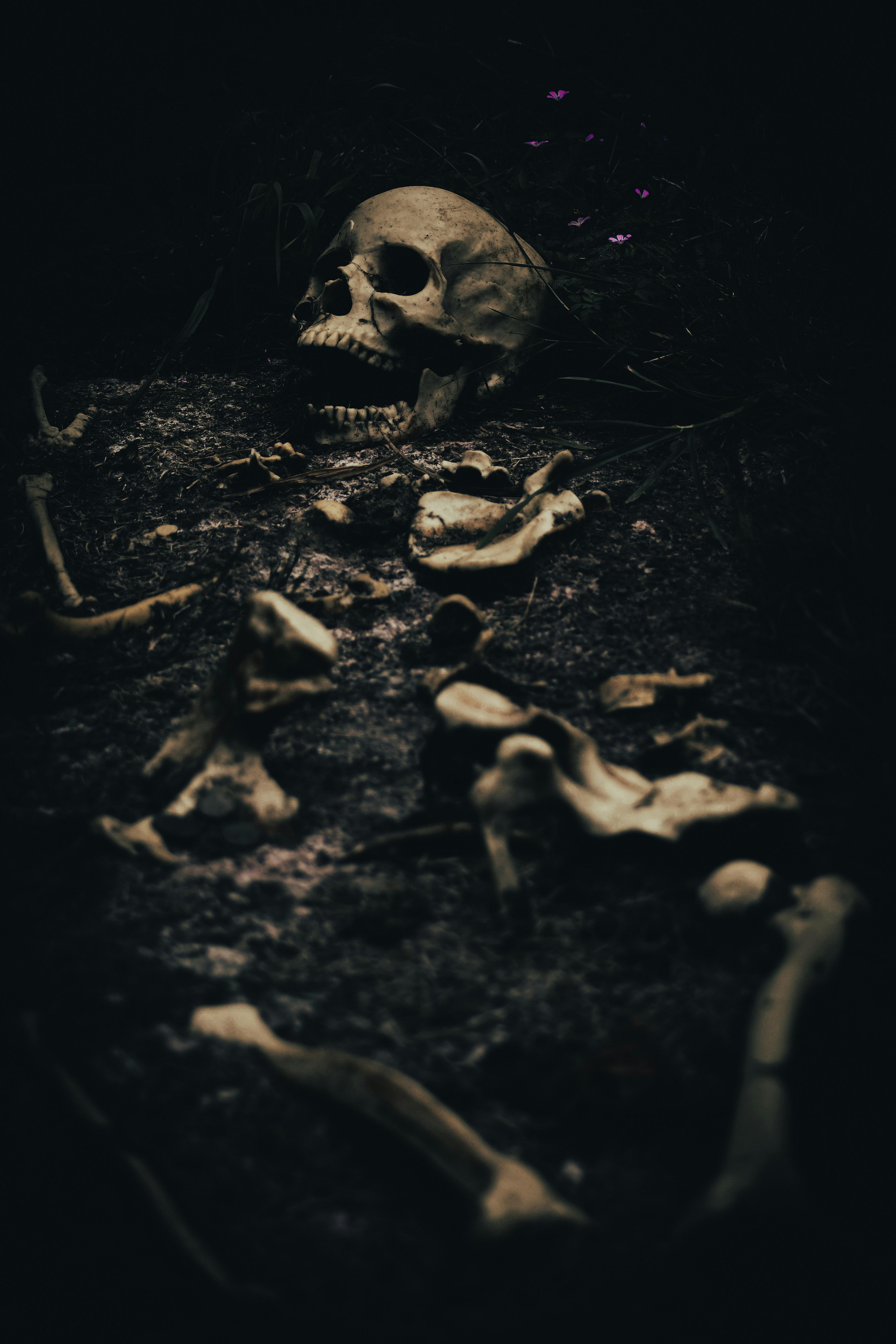
Photo by John Butterworth


CRYSTALS AND STONES FOR PROTECTING YOUR ENERGY:
A COMPREHENSIVE GUIDE FOR PARANORMAL EXPLORERS
Jessica Hoch
In the realm of the paranormal, the importance of protecting your energy cannot be overstated. Whether you're engaging in ghost hunting, energy work, or other explorations into the unknown, maintaining energetic boundaries is key to ensuring you don’t take on unwanted energies from the environments or entities you encounter. Protection rituals can vary widely, from prayers and talismans to more contemporary methods like working with crystals. Among these, crystals have gained a significant following for their ability to shield and balance energy.
Crystals have been used for centuries across many cultures for their healing and protective properties. Their appeal lies not only in their physical beauty but also in the steady vibrational frequencies they emit. In this article, we will explore some of the most powerful stones and crystals to carry with you during paranormal investigations to protect your energy. Whether you're a seasoned investigator or new to the paranormal, this guide will provide insight into how to use these natural tools to stay grounded and energetically safe.
Understanding Crystal Energy
Before diving into the specifics of the stones, it’s important to understand how crystal energy works. The human energy body is dynamic, constantly reacting to our thoughts, feelings, and the external environment. This energetic system is often influenced by subtle shifts, whether they come from our emotional responses or the energetic imprints left behind in certain spaces.
Crystals, on the other hand, have a stable and consistent vibrational frequency. Their energy does not fluctuate like ours; it remains constant and pure. When we work with crystals, we are engaging in a process known as entrainment, in which two different vibrational frequencies align. When our energy comes into contact with the crystal's steady vibration, it begins to harmonize, creating a sense of balance and alignment. Essentially, the crystal helps stabilize our energy, allowing us to operate from a more grounded and centered place, particularly useful when dealing with the paranormal.
Key Crystals for Protection
Now that we’ve explored the basic principles of crystal energy, let’s examine some of the most effective stones for energetic protection, especially in paranormal contexts.
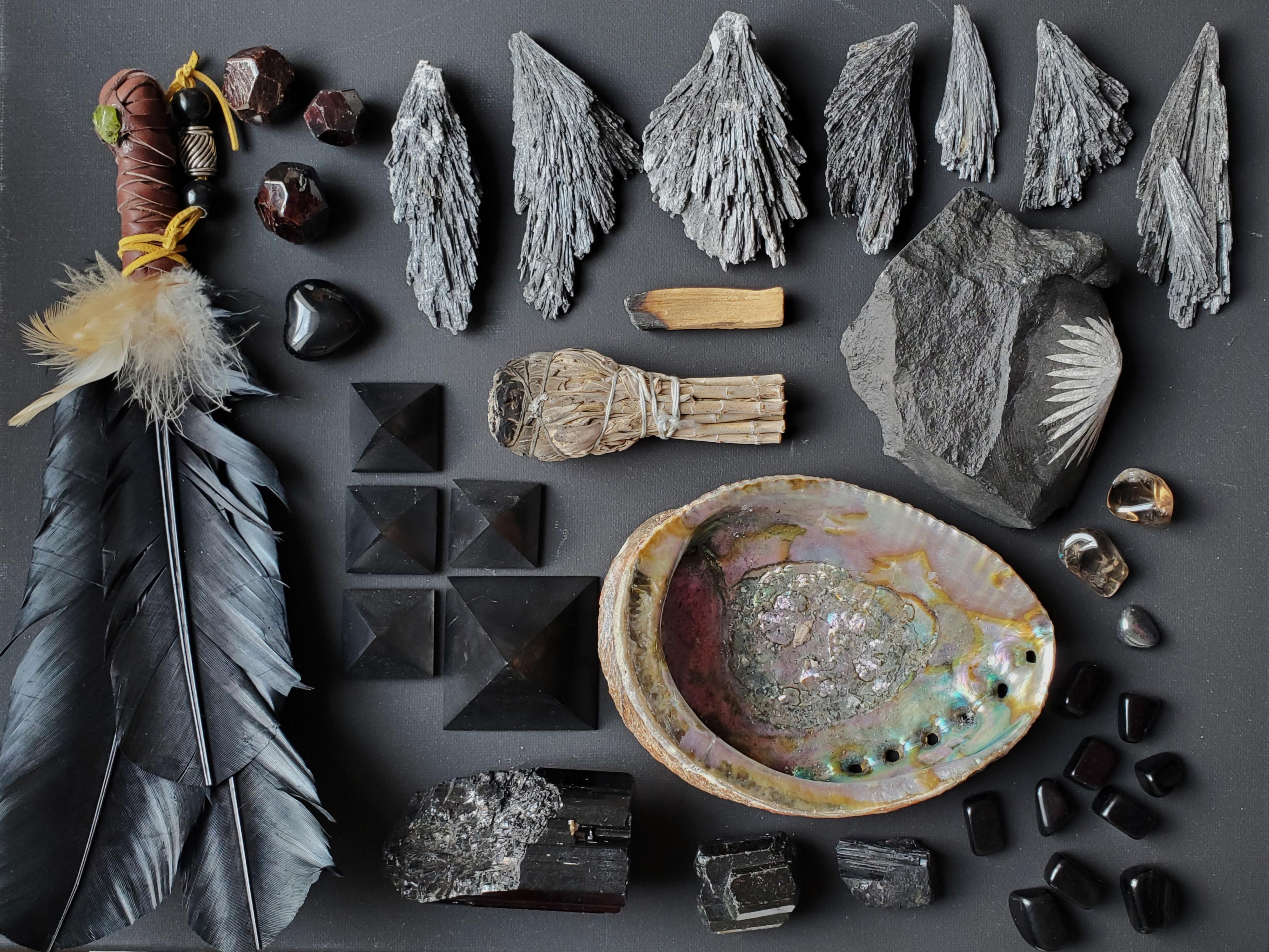
Black Tourmaline: The Ultimate Protector
Black Tourmaline is widely regarded as one of the most powerful protection stones available. It works by actively repelling negative energy and sending it back to its source, creating a robust energetic shield around the user. This stone is also exceptional for grounding, which is essential when you’re working in the higher energetic realms such as your intuition or spiritual awareness.
For paranormal investigators, Black Tourmaline serves as a buffer between your energy and any potential negative entities or environments, helping to ensure you remain anchored in your own energetic space. If you’re sensitive to the emotions or energies of others, this is a stone you’ll want to keep close.
Obsidian: A Shield of Transformation
Obsidian is a form of natural volcanic glass, and its formation process imbues it with transformative properties. This stone excels at absorbing negative energy and transmuting it into something that no longer holds power over you. It's particularly helpful in releasing feelings of tension, stress, or anxiety that may surface during an investigation. Additionally, Obsidian assists in breaking through spiritual blockages, allowing you to maintain a clear and open channel when navigating energetic interactions.
This clarity is particularly useful when you are faced with unsettling experiences. Obsidian's ability to ground and protect makes it a top choice for those seeking to maintain mental clarity and emotional balance.
Smoky Quartz: Transforming Negative Energy
While Smoky Quartz is another protection stone, it operates in a slightly different way than Black Tourmaline or Obsidian. Rather than expelling negative energy, it transforms it into positive energy
that you can use constructively. This process allows you to harness the energy that might otherwise affect you negatively and turn it into something beneficial.
In the context of paranormal work, Smoky Quartz helps to maintain emotional equilibrium, especially in highstress environments. It encourages intuitive clarity while providing an energetic buffer between you and the spiritual realm. Smoky Quartz can be a fantastic ally for those who prefer to work with energies rather than repelling them outright.
Hematite: The Stone of Grounding and Stability
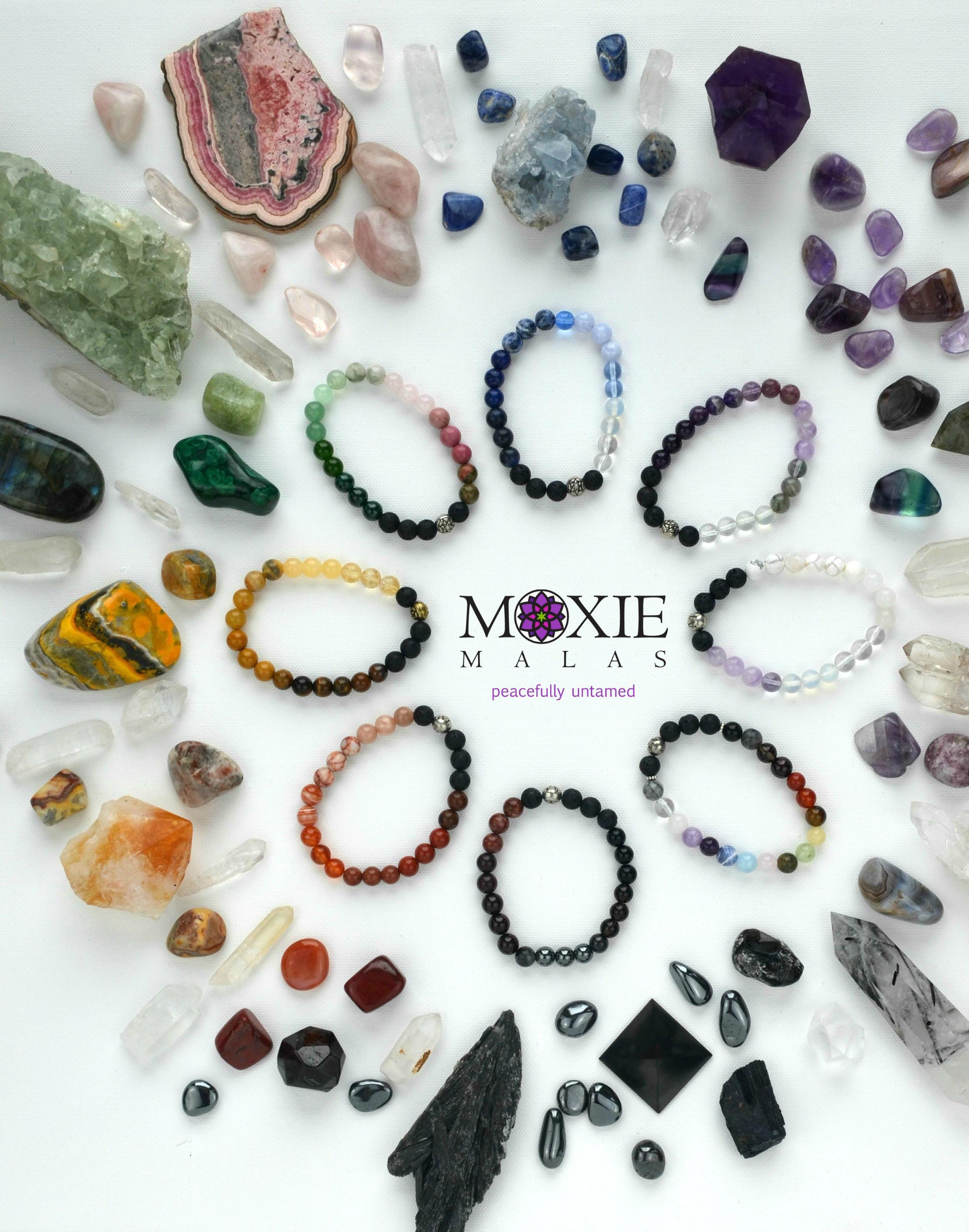
Hematite is a grounding stone, and one of its most distinct qualities is its heavy, metallic feel. This weight is symbolic of the stability it brings to those who work with it. Hematite is particularly useful for empaths— people who are naturally sensitive to the emotions and energies of others. It helps prevent you from absorbing those energies, keeping your own energy intact and stable.
Photo Courtesy of Jessica Hoch / Moxie Malas
In paranormal situations, Hematite helps keep you connected to the physical plane, preventing energetic overload. Its stabilizing effect is invaluable when navigating spaces where the veil between dimensions may feel thinner, offering protection from feeling overwhelmed.
Tiger Eye: Personal Power and Protection
Tiger Eye is often associated with confidence, personal power, and standing firmly in one’s own light. This crystal is excellent for building energetic resilience, helping you to create a strong energetic foundation that can withstand external pressures.
For those delving into the unknown, this sense of inner power can be just as important as external protection. Tiger Eye not only shields your energy but also amplifies your confidence and intuition, which is crucial when navigating ambiguous or intimidating paranormal experiences.
Fluorite: Spiritual Protection and Growth
Fluorite is a highly protective crystal, but its energy is a little more nuanced. Rather than focusing solely on deflecting or transforming negative energy, Fluorite acts as a bridge between you and higher spiritual realms, enhancing your intuition while maintaining energetic protection. It creates a barrier that shields your mind and spirit from outside influences while fostering spiritual growth.
Fluorite is particularly beneficial for those looking to enhance their psychic abilities while remaining grounded and centered. Its calming energy promotes mental clarity, emotional stability, and spiritual alignment, making it an ideal stone for individuals working in the intuitive or psychic realms.
How to Use Crystals for Protection
Now that we've explored several crystals and their protective properties, let's discuss how to best utilize them. The most effective way to work with crystals is to keep them in close contact with your body. Pocket stones are an easy and discreet option, but for more direct impact, wearing crystal jewelry allows the
stone’s vibration to be in constant contact with your energy field.
If it’s not possible to carry or wear the crystals, placing them in your immediate environment, such as your home or workspace, can still provide powerful energetic support. Crystals have a natural ability to harmonize the energy of any space they occupy, so keeping them in a room during your paranormal work can help maintain a balanced and protected atmosphere.
Working with crystals for energy protection is both a practical and empowering approach for those exploring the paranormal. The stones and crystals mentioned here—Black Tourmaline, Obsidian, Smoky Quartz, Hematite, Tiger Eye, and Fluorite—each offer unique forms of protection, from repelling negative energies to grounding, balancing, and transforming energetic imbalances. Whether you’re new to the paranormal or a seasoned investigator, these crystals can help you maintain energetic boundaries, ensuring that your energy remains protected, balanced, and yours.
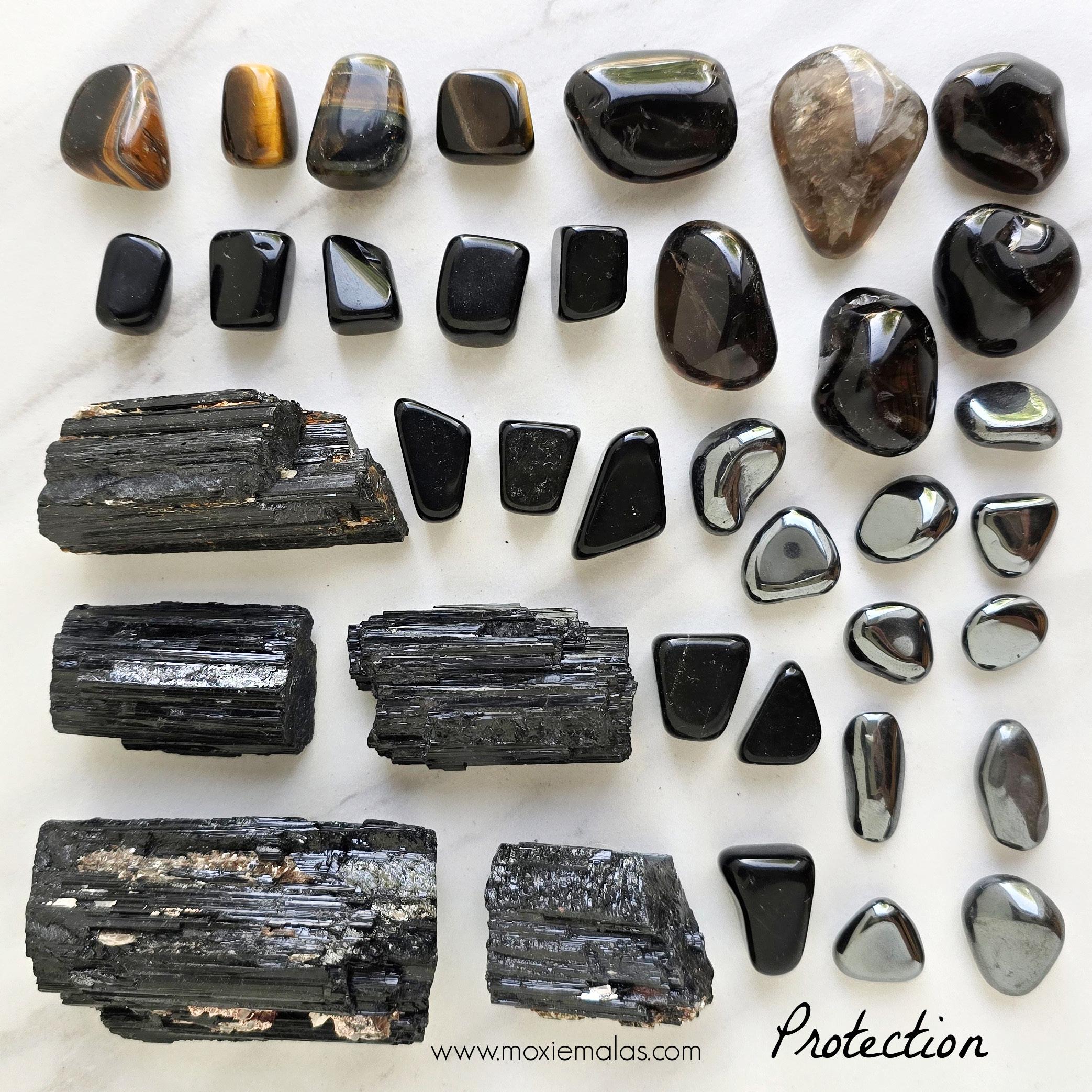
Photo Courtesy of Jessica Hoch / Moxie Malas
THE HUMAN FASCINATION: ABANDONED PLACES
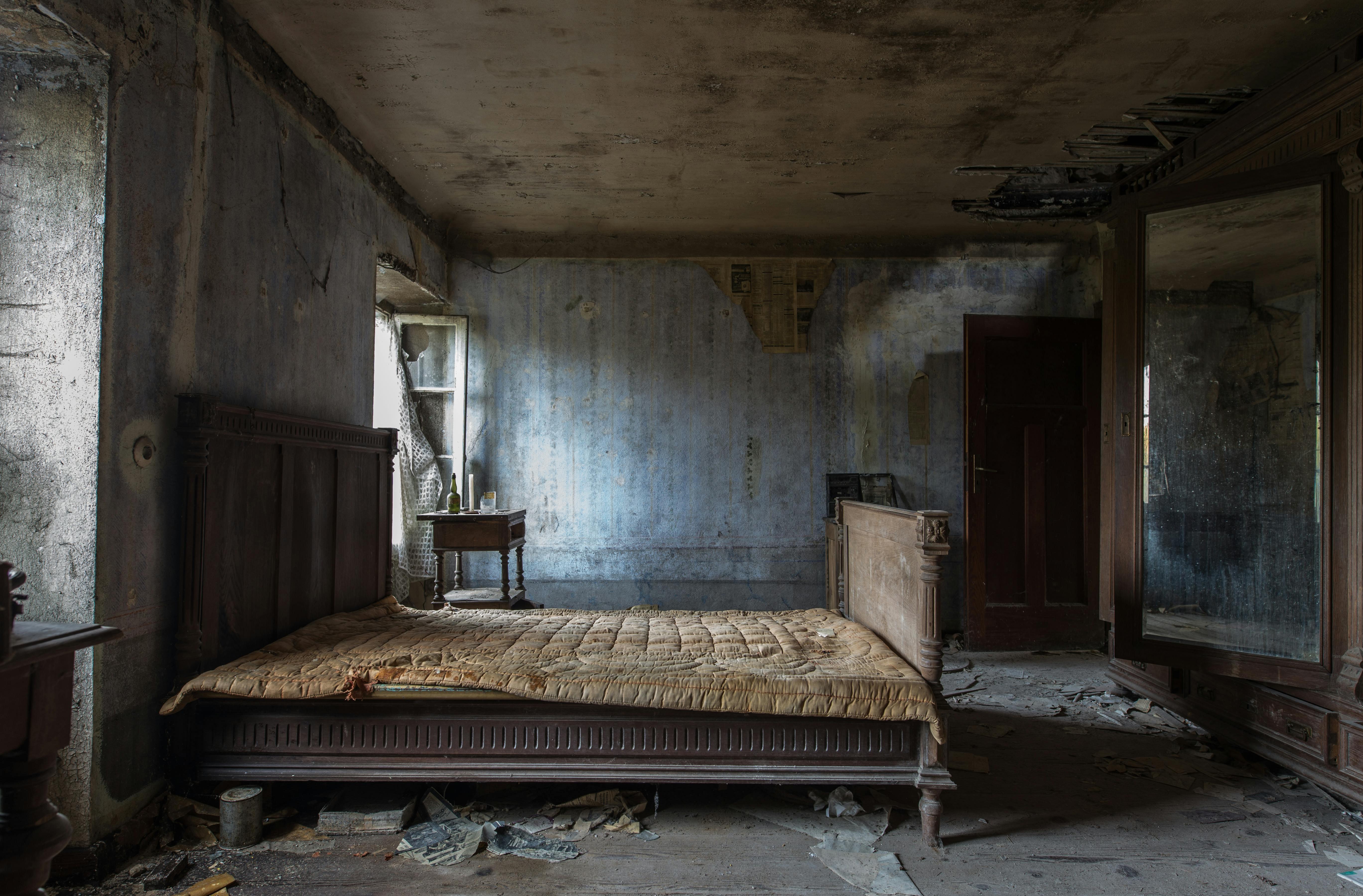
There’s something deeply compelling about abandoned places—locations once filled with life, now left to time and the elements. From dilapidated factories to forgotten amusement parks, abandoned cities to crumbling castles, these locations evoke a powerful mix of emotions, and their allure has only grown stronger in the age of digital sharing. But what exactly is it that draws us to these forsaken spaces? The fascination with abandoned places stems from a complex blend of psychological, emotional, historical, and aesthetic rationale, all of which speak to fundamental aspects of the human experience.
The Mystery and Intrigue of the Unknown
At the heart of the human draw to abandoned places is the element of mystery. When a place is left to decay, it becomes a blank canvas for the imagination. Why was it abandoned? What stories are hidden within its walls? Who walked these corridors before they became silent? The lack of answers triggers a desire to fill in the blanks, and this act of storytelling is an intrinsic part of our fascination.
The ruins of Pripyat, the city evacuated after the Chernobyl nuclear disaster, or Hashima Island in Japan, once a bustling coal-mining town now
Continued on Page 20
Erika L. Block
Photo Courtesy of Wendelin Jacober
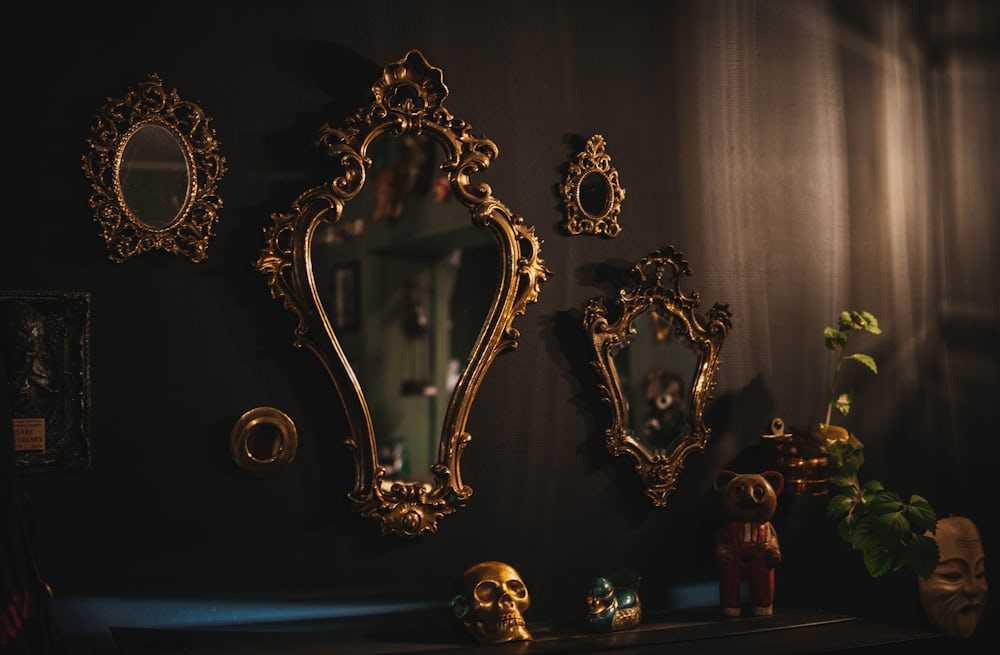
SUPERSTITIONS AND DEATH: MIRRORS
Christina Wilke-Burbach, PhD
Never whistle inside the cemetery or you will summon the devil and bad spirits. A pregnant woman should not go to a cemetery, or her infant may become possessed. Visiting a cemetery after dark will bring you bad luck. Holding your breath as you pass by a cemetery will keep you safe from wandering spirits. Do not stand on someone’s grave as it will bring you bad luck. Place a headstone on the grave to keep the deceased’s spirit from rising. Death is one of life's most potent and sacred passages, as well as one of the most mysterious, denied, ignored, and feared. There are so many questions. There is much uncertainty. What happens when we die? Where do we go? Is this
the end? Talking about death, dying, and funerals is still taboo to many. If we talk about it, will happen sooner? So, it is no surprise there are hundreds of superstitions about death, cemeteries, and funerals. Some are ancient and predate Christianity. But many death superstitions have their origin in the Victorian Era. The Victoria Era was the timeframe of the reign of Queen Victoria in England from 1837 to 1901. The Victorian society of the late 1800s was obsessed with death. Queen Victoria set the tone for this after the death of her husband Prince Albert. She was devastated by his passing and mourned him for the rest of her life (for 40 more years). It is rare that one
sees a picture of the Queen when she was not dressed in full mourning apparel. Just as fashion from Paris is in vogue in America, so too was the English Queen’s mourning practices, which become the proper etiquette all over the world. I like to think that Queen Victoria is the original “goth” as she always dressed in black. During the Victoria Era there was no modern medicine. There was frequent death and high mortality rates from diseases like consumption (TB), pneumonia, bronchitis, stillborn, smallpox, measles, and whooping cough. The average lifespan was half of what it is today, and hospitals were places where sick people were sent to be forgotten. People died regularly, and they died in their homes where everyone could witness each horrific moment. Today, we have removed death from our homes and from our minds in many ways and are very disconnected from the process. For the Victorians, death was right in their faces, an everyday occurrence, and happened right in their home. Since death was such a frequent visitor during the Victorian era, people began planning for it while they were young. Dying was an open and ongoing conversation. As death
approached, there was no ambiguity as to what the person wanted or what was expected of the family. The family knew in advance what type of coffin the dying wanted, their final wishes, where they wanted to be buried, and what they wanted to wear. Women frequently made their own death shrouds. The Victorians also had a fear of being buried alive as this was not an uncommon occurrence at the time. They did not quite medically understand comas and unconsciousness at that time (hence one of the origins of the funeral wake…. which we will explore in a future article). The dying could even choose to have their coffin equipped with a bell that could be rung if they woke up in the grave or a poison that they could take to ensure a quick and certain death if buried alive. It was during this time that there was a flourishing of funeral-related businesses including coffin makers, embalmers, and gravediggers. The deathcare industry as we know it today started to take shape during the Victorian era. It was also during this time that burials were moved to large parks in the country as the cities no longer had room to continue burying the dead in cemeteries. So many people were
dying that they ran out of room. The Victorian era was also a major time of transition with new knowledge being discovered in multiple disciplines, including evolution and technology. These new ideas and science were challenging religion. Additionally, increased immigration and exposure to different cultures also introduced the Western World to a variety of folklore and myths. A lot of people reacted by clinging to old ways and beliefs. Much of Victorian death culture developed out of subconscious reactions to widespread death, new scientific discoveries, and popular culture and these fears and anxieties were reflected in much of the Victorian era. During this time frame we also see the rise of Spiritualism (a religion based on spirit communication), Seances, Ghost Stories, and Gothic writers like Edgar Allen Poe and Mary Shelley. Spiritualism is a religious movement based on the belief that the spirits of the dead are real and tangible. The spirits can communicate with the living and have a desire to communicate with the living. The afterlife, or the spirit world, is beyond the veil of illusion and spirits are more advanced and more knowledge than humans. Therefore, Spiritualists believed communicating with spirits was useful for guidance
and to gain wisdom. Spiritualism grew rapidly during the Victorian Era developed and reached its peak growth in membership from the 1840s to the 1920s in English-speaking countries. By 1897, spiritualism was said to have more than eight million followers in the United States and Europe. The strong belief in spirits, spirit communication, frequent death, the rise of the modern funeral industry, and an obsession with ghost stories are a perfect equation for the birth of death superstitions and funeral lore. Superstitions began as a way of protecting the living from the dead. They most likely have persisted through time to give us a sense of control over something that is uncontrollable. They ease our anxiety and protect us from our fears. The modern mirror was invented in Germany in 1835; coincidently during the Victorian Era and the rise of Spiritualism. The mirror has become a large part of many death customs and superstitions. But reflective surfaces have always fascinated humans and are the source of much superstition and mysticism. Many cultures have used reflective surfaces for divination, scrying, and fortune telling. The Nekromanteion was an ancient Greek temple devoted to the Greek God and Goddess of death - Hades and Persephone. It was located on the banks of

where several rivers met, including the Acheron River, near the ancient city of Ephyra. This site was to be the door to Hades, the realm of the dead. The word Necromanteion means "Oracle of the Dead", and the ancient Greeks visited the Necromanteion to talk with their dead ancestors. Inside the temple was a cauldron filled with water. By gazing into the cauldron in the dimly lit room, one would first see their own reflection which would then morph into their loved ones. This was an early form of scrying, which is a type of divination used by gazing at a reflective surface. Even thousands of years before the Victorians, reflective surfaces were believed to be a portal to the spirit world.
In Western Cultures, it is bad luck to break a mirror. Since mirrors are portals, they can be used to watch and observe others as well as to transverse different realms and dimensions. There are different urban legends regarding mirrors such as the myth of Bloody Mary and Baby Blue. Someone could tell if they were in the presence of a vampire as they do not have reflections when they look in the mirror. Other supernatural creatures’ true form is seen when looking at their reflection in a mirror. Many Victorians believed that mirrors held special powers in relation to the spirit. If someone passed away in front of a mirror, the mirror would become a permanent source of bad luck. When someone passed away, the body was kept at the home until the funeral. Many Victorians believed that during this time it was necessary to cover all the mirrors in the home with heavy black cloth to prevent the spirit of the deceased from becoming trapped in a mirror. They also draped black mourning ribbons over all the mirrors in case the deceased person’s soul looked into the mirror and was distracted. If distracted, they could not complete their final journey and move on to the afterlife and then they would stay stuck on the earth plane and become a ghost. Others believed if the newly dead looked into a mirror, they would become horrified to see they had become a spirit. Some communities believed that ghosts could suck souls through mirrors. Others believed spirits, entities, and ghosts could harm the living by entering the physical world through a mirror. Covering mirrors when someone dies is a prevalent practice in many cultures and countries including Judaism, China, Germany, Belgium, England, and Scotland. Mirrors
are covered in a white cloth as it is thought if a person sees their reflection in a mirror after someone has died that they are next to die. Other practices include turning a mirror upside down and flipping the mirror over to face the wall. Many believe that mirrors absorb all the energy of events that happen in front of them and hold incredible power. Some cultures still cover mirrors today when someone dies. Is this practice still a superstition or has it morphed into a ritual and funeral rite? The use of an uncovered mirror in a dark chamber to communicate with the beloved dead was revamped in the 1990s by Raymond Moody. He called his room a psychomanteum, a modern version of the ancient Greek Nekromanteion. Raymond Moody was the originator of the term near-death experience and explored the use of the mirror to resolve grief in his 1993 book, Reunions: Visionary Encounters with Departed Loved Ones. He believed spending time communicating with or trying to communicate with loved ones in the spirit world with a mirror could bring emotional healing. Mirrors and the dead have been correlated since ancient times. So what do YOU think? Have you ever been in the presence of someone or in the same house/building as someone when they took their last breath? Have you ever seen or experienced something otherworldly through glancing at a mirror? Have you ever thought of trying to communicate with the dead through a mirror? Mirrors have titillated us for a long time, and they will for some time to come.
ODDITIES AND CURIOSITIES:
CARDS
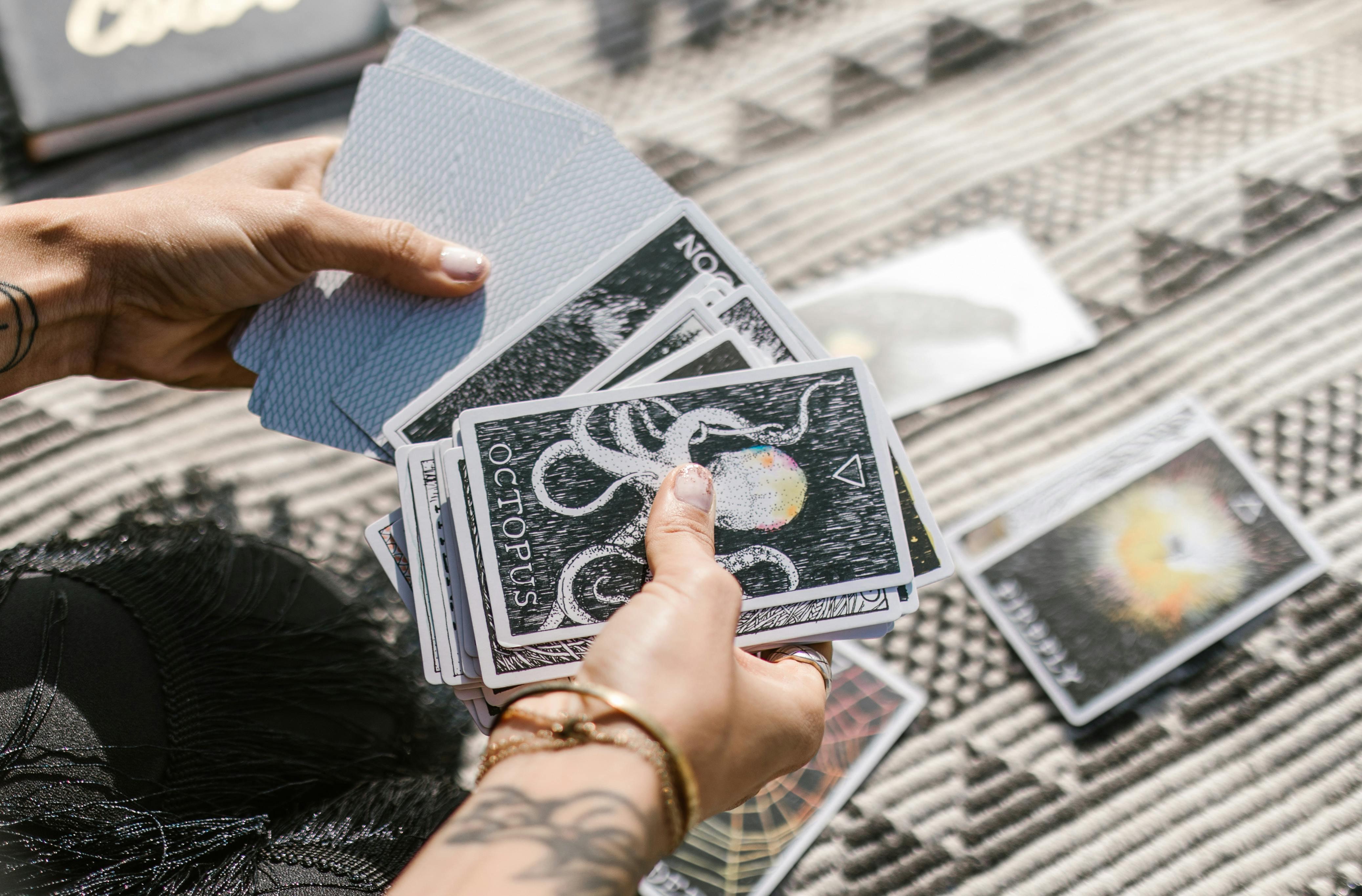
One of the most ubiquitous items in world culture is a deck of playing cards. While the specifics of each deck change from place to place, the underlying structure remains mostly the same: Numerous individual cards split into numeric values by “suit,” (a category based upon a symbol), often with a corresponding color element, and a set of “face” cards in each suit mostly aligned to royal ranks, and often wild card (“trumps”) in the mix. In Western culture, nearly every single person is familiar with the standard pack of fifty-two cards, four suits (red diamonds, red hearts, black clubs, and black spades), ten numeric cards and a Jack, Queen, and King in each suit. Additionally, most packs will include two Jokers, wild cards that exist outside of the standard deck.
This configuration of numbers, symbols, and colors, have allowed us to create untold variations of gameplay. Some card games are simplistic: children amassing all four suits of one number or comparing numeric values of randomly drawn cards to determine a victor. But some are incredibly involved, with deck configurations, spacing on the playing table, elaborate systems of point keeping and trick taking all amassed into dense rule sets passed down like folklore from generation to generation. Playing cards have an almost intrinsic tie to our humanity, our history, and our culture.
There is a great deal of symbolism rooted in a “simple” deck of cards. It plays with time: fifty-two cards for fifty-two weeks of the year and four suits for four seasons. It

Jason Block
acknowledges our innate need for hierarchical order in its ranked cards, and the successively more valuable Jack and Queen and King. In a Christian analog, the Ace, sometimes the lowliest of cards, can supersede the importance of the King… “so the last shall be first.” And the Jokers, outside of the continuum of normalcy, parallel our own experiences with chaos seeping into our perfectly designed constructs.
There are obvious comparisons, then, between our modern playing cards and the very similar, but more overtly mystical, Tarot deck. Tarot decks are made of two separate groups of cards. The “Minor Arcana” of Tarot is another variant of the common playing cards everyone is accustomed to. It has four suits: cups (or chalices or goblets), wands (or batons or staves), swords (or blades), and pentacles (or coins or rings), ten numeric cards in each suit along with four royals: Pages, Knights, Queens, and Kings. The Tarot deck also contains another twenty-two trump cards known as the “Major Arcana.” These are the Jokers of Tarot, a whole set of symbolic archetypes, from the Fool (marked as card zero) to the World (marked as card twenty-one), each stuffed with symbolism that roots
back into our collective unconscious… the Major Arcana can be viewed as a miniature encyclopedia of humanity’s place in the greater cosmology, speaking to our shared heritage and evolution as a species.
There are two histories of Tarot. The nominal story that is easily traced with artifact evidence is that the cards appeared as a game in 15th century Italy, derived from playing cards that came to Europe via Egypt. The basic structures of these games long established, Europeans modified the suits and royal face cards, creating their variations from culture to culture and even city to city. The addition of the trumps in the Major Arcana seems to be another derivation of the many games that people had already invented using the “fate” of randomly dealt cards in their play. Based on what can be proven, historically, Tarot and our modern deck of cards seem to be siblings, born of the same origins, and developing independently. Historians believe that, due to the symbolic complexity of the cards, and the various ways they could be interconnected (the very feature that made them such utilities for the creation of games), people began to create their own interpretations of random card selections,
telling themselves the future with their readings of the symbols and the archetypes. It is believed that cartomancy, divination via cards, was a mutation of the original recreational purpose of the Tarot deck.
Occult scholars in the 19th century, however, believed that Tarot was far older than evidence suggested. In their eyes, Tarot was not a card game, initially, but did, in fact, act as a symbolic means of knowledge transfer before literacy and books were widely available to common people. The first authors of the Tarot deck, possibly Egyptian mystics, had codified the entirety of the cosmological hierarchy into a deck of cards. Their specific genius, too, was that the cards, with dense artwork compiled from the folklore and mythology of the entire world, were not just independent documents to be read, but that each card could be played with every other card in combination, conveying not just knowledge to its readers, but foreknowledge. Within the permutations of the ancient Tarot deck was all of time and history laid out for those who could read it. To these occult scholars, it wasn’t that cartomancy was an innovation sprung from a complex game, but that card games were actually de-evolutions of the esoteric knowledge built within the Tarot Arcanas, like a sort of idle reuse of a holy work made to pass the time.
It is impossible to say if the occult scholars were correct, of course. The evidence at hand doesn’t negate the possibility. It just doesn’t yet support it. But most people, when faced with the profundity of the Tarot deck, especially its Major Arcana, are struck with a sense of wonder and magic. There is a feeling of antiquity and human history coursing through the Hierophant, the Wheel of Fortune, the Lovers, the Towers, and Death. There is a primal piece of us that understands the topsy-turvy iconography and meaning of the Hanged Man, the violence of the Knight of Swords, and our helplessness in the face of the Devil.
All of this to say that the cards are part of us… whether the accidental merger of recreation and artful symbology, or the intentional transference of the most fundamental knowledge of humanity’s cosmic orientation, within those four suits, various royals, and chaotic trump cards, our place in the universe is reflected back at us, having taught us lessons about ourselves and our cosmos from the very first time we said, “go fish.”
completely deserted, spark a sense of wonder and curiosity. Walking through these places may be like stepping into a moment frozen in time, where the normal rhythms of human life have been interrupted, leaving behind echoes of a oncebustling past.
Time as a Tangible Concept
Abandoned places make the passage of time visible in ways that are both haunting and poetic. As humans, we’re always aware of the transient nature of our existence, but seeing the physical decay of something that was once strong and functional drives home the inevitability of change and the impermanence of all things. A deserted factory with rusting machines or a grand old mansion with peeling paint speaks to the natural lifecycle of human creation. Time, normally intangible and elusive, becomes something you can see, touch, and even feel in such environments.
Abandoned Places, Continued
The process of decay—crumbling walls, overgrown vegetation reclaiming structures, rusting metal, and weathered facades—fascinates us because it reminds us of our vulnerability to time’s relentless march. These spaces are monuments not only to human achievement but also to the inevitability of decline. They remind us that everything, no matter how grand, will eventually fade.
History Preserved in Ruin
Abandoned places often act as historical relics, offering us a portal to the past. They are physical representations of specific moments in history, untouched by modernization or renovation. Visiting these places allows us to step into another era, unfiltered by the polish that time and memory can sometimes place over history. In their decay, they offer an authentic, unvarnished look at the past, where layers of time are visible in every crack and broken window.
The Aesthetic Appeal of Ruin
From an artistic and visual perspective, there’s a certain beauty in the decay of abandoned places. The textures and colors created by nature’s slow reclaiming of human structures are unique, providing an aesthetic experience that blends manmade and natural worlds. Photographers, painters, and urban explorers are often drawn to these spaces because of their haunting, melancholic beauty. The sight of ivy creeping up a crumbling building, sunlight filtering through broken windows, or a solitary object left behind in a dusty room has an emotional resonance that is hard to replicate in active, maintained environments.
This aesthetic appeal is sometimes referred to as ruin porn, where the focus is on the beauty of destruction and decay. Images of places like Detroit’s abandoned buildings, or Italy’s forgotten villas, circulate widely on social media, allowing people to experience the visual pleasure of ruin from the comfort of their homes. These images evoke both sadness and wonder, highlighting the stark contrast between the vibrancy that once was and the stillness that remains.
The Thrill of Exploration and Adventure
For some, the appeal of abandoned places lies in the thrill of discovery. Urban exploration has become a popular subculture, where people seek out and explore abandoned locations, often illegally, for the sake of adventure. These explorers document their journeys through photography and/or videography, sharing their finds with a larger audience that may not have access to these off-limits locations.
The unpredictability of what lies inside an abandoned place—a forgotten relic, a secret room, or a hidden treasure—fuels a sense of adventure. There’s an adrenaline rush in stepping into the unknown, especially in places that have an eerie or unsettling atmosphere. It taps into a primal human instinct to explore, to uncover, and to venture into the forbidden.
A Space for Reflection
Abandoned places also offer a unique space for personal reflection. There’s a quiet, sacred quality to them that provides an escape from the the constant movement of the world. These empty spaces invite introspection—about our own lives, about the passage of time, and about what it means to create something that will eventually be left behind. They offer a moment to pause and think about the fleeting nature of our own existence, how we will be remembered, and what we leave behind when we move on.
Abandoned places embody mystery, history, beauty, and decay. They remind us of our own impermanence. Whether we seek out these places for the thrill of exploration, the aesthetics of ruin, or the quiet moments of reflection they provide, abandoned places serve as powerful symbols of time’s passage and the imprints that linger for years to come.
ANGEL NUMBERS UNLOCKING THE MYSTERY OF
DIVINE MESSAGES OR MEANINGFUL COINCIDENCE?
Chaplain Jodi Dehn
Have you ever noticed the same number popping up repeatedly in your life? Maybe it’s 111 on a clock, a license plate with 444, or you keep glancing at the calendar on the 11th of the month. If you have, you’re not alone. In fact, you might be encountering what are known as "angel numbers." Now, before you raise an eyebrow or two, let's dive into this idea with an open mind and see where it takes us.
In the simplest terms, angel numbers are sequences of numbers that are believed to carry spiritual significance. The idea is that these numbers are messages from the universe - or more specifically, from angels
or other divine beings - meant to guide, comfort, or alert you. The concept comes from the broader field of numerology, which assigns meanings to numbers based on their vibrational frequency.
You might be thinking, “Wait, what’s numerology?” Good question! Numerology is a belief system that suggests that numbers aren’t just mathematical symbols but have deeper meanings and connections to our lives. Angel numbers are a branch of this, with the twist that these numbers are thought to be direct communications from celestial beings.
The reason, the purpose why angels bother sending you these numbers is simple - guidance. Life can be confusing, and sometimes we feel lost or unsure about which direction to take. Angel numbers are seen as little nudges from the universe to help you stay on your path, make decisions, or even just feel reassured that you’re not alone.
For example, seeing the number 111 might be a sign that you’re on the right path, while 555 could indicate that big changes are on the horizon. The idea is that these numbers offer clues or insights that can help you navigate life’s challenges and opportunities.
Here’s where things get interesting though - and a bit messy. If you’ve ever Googled the meaning of an angel number, you’ve probably noticed that explanations can vary quite a bit. One source might tell you that 222 means balance, while another says it’s a sign of partnerships or relationships. So, what’s going on?
The reason for these differing interpretations comes down to a few factors.
First, the interpretation of angel numbers is inherently subjective. Just like a piece of art, different people might see different things in the same number sequence. Personal experiences, cultural background, and individual intuition all play a role in how someone might interpret an angel number.
Second, Numerology itself has evolved over centuries, with different cultures and belief systems contributing to the meanings of numbers. Because of this, there’s no single, definitive guide to what each number means. Instead, there are many interpretations, each shaped by different traditions and modern perspectives.
Next, many people believe that the meaning of an angel number can be unique to the individual who sees it. In this view, your own thoughts, feelings, and life circumstances at the moment you notice the number influence its meaning. So, while a book might say 333 is about growth, for you it might signify something entirely different, based on what’s happening in your life.
Then there’s also the idea that the meaning you assign to an angel number is influenced by your own psychology. If you’re feeling anxious, you might interpret a number
as a warning. If you’re feeling optimistic, you might see it as a sign of encouragement. This psychological flexibility adds to the varied interpretations out there.
Whether or not angel numbers can genuinely offer guidance is a matter of personal belief. Some people swear by them, finding comfort and direction in the numbers they see. For others, angel numbers are just an interesting curiosity—something fun to think about but not something to base life decisions on.
If you’re on the fence, there’s no harm in paying attention to these numbers and reflecting on what they might mean for you. Even if you don’t believe in angels, the act of contemplating the numbers could help you tune into your intuition or bring clarity to a situation you’re facing.
There’s another layer to angel numbers that often flies under the radar - how they tie into the ancient concept of sacred geometry. Sacred geometry is the belief that certain geometric shapes and proportions hold divine significance, appearing throughout nature, architecture, and even the cosmos. Angel numbers, with their repeating patterns, are thought to resonate with these sacred shapes, like the spiral of a seashell reflecting the Fibonacci sequence or the symmetry of a flower mirroring the golden ratio. The idea here is that both numbers and geometry are part of the universe’s blueprint, and by paying attention to angel numbers, you're tuning into the same natural harmony that exists in sacred geometry. Essentially, it’s all connectednumbers, shapes, and the very fabric of reality, with angel numbers acting as your personal key to that larger cosmic design.
If you’re intrigued and want to explore angel numbers for yourself, here’s a simple approach:
Pay attention to the numbers that keep appearing in your life. They could show up on clocks, receipts, addresses - anywhere really.
When you notice an angel number, pause and think about what’s going on in your life at that moment. What were you thinking about just before you saw the number? How do you feel? This reflection can offer insights into the number’s meaning for you.
Next look up the common interpretations of the number, but also trust your own intuition. What does the number feel like it’s trying to tell you? This combination of research and personal insight can help you uncover the message.
Once you’ve interpreted the number, see if it can guide your actions or decisions. You don’t have to take it as gospel, but it might provide a helpful perspective or remind you of something important.
Of course, it’s worth acknowledging the skeptical perspective too. Some people see angel numbers as purely coincidental, a product of something called “confirmation bias,” where you notice things that fit your beliefs or desires and ignore the rest. From this viewpoint, angel numbers might just be a way for our brains to find patterns in the randomness of life.
But even if that’s the case, does it really matter? If noticing a number makes you feel more connected, more thoughtful, or more in tune with your life, that seems like a positive thing, whether or not it’s coming from the divine.
Angel numbers are a fascinating blend of mysticism, psychology, and personal interpretation. Whether you see them as messages from the universe or just an interesting pattern, they can offer a unique way to reflect on your life and decisions. The key is to stay open-minded and use these numbers as a tool for introspection, rather than a strict rulebook.
In the end, the beauty of angel numbers lies in their mystery and the personal meaning you bring to them. Whether you believe they’re a direct line to the divine or just a fun way to engage with the world, angel numbers invite you to look a little closer, think a little deeper, and maybe - just maybe - find a bit of magic in the mundane.


S E D O N A , A Z A P R I L 46 , 2 0 2 5