2025 Sustainability Report





Huntsman takes pride in the role we play in creating a more prosperous world for current and future generations.
We believe our products are important solutions to today’s most pressing challenges to a better, brighter future for our entire global society. Whether it is in our operations or our innovative technologies, Huntsman is committed to making a brighter world possible. In this report, we share how our solutions seek to enable sustainability.
We continue to make progress against our nearterm Horizon 2025 targets while looking further toward our long-term aspirations. In this report, we outline how our solutions seek to enable a more sustainable world and how we are improving our operations to drive further meaningful progress.
2025 was a year of progress and transition for the Company. We delivered strong cash performance while investing in our core businesses, streamlining our operations and enhancing our governance:
• Generated approximately $298 million of cash flow from operations and $125 million of free cash flow through disciplined working capital management and decisive actions.
• Executed cost realignment and restructuring initiatives, achieving approximately $100 million of annualized run rate savings by 2025 year-end through multiple programs and site consolidations.
• Completed previously announced investments in our Performance Products business, catalysts for polyurethane insulation and high-value performance amines used in the semiconductor industry.
• Further expanded our three global business services centers in Southeast Asia, Latin America, and Eastern Europe, with approximately 650 associates working at these sites at the end of 2025.
• Enhanced risk management by advancing enterprise risk governance and further investing in cybersecurity.
We advanced our commitment to planet and people:
• Published our 2024 corporate sustainability report which included limited assurance regarding our greenhouse gas emissions and water usage.
• Invested in our people, technology and organizational capability, expanded employee career programs, and deployed AI-enabled tools across the enterprise.
• Continued our strong philanthropic ideals, contributing to multiple causes around the world, including supporting local food banks, providing essential relief and support following natural disasters, and awarding university and trade school scholarships to area high school students.
We returned value to stockholders through consistent capital allocation:
• Returned value to our stockholders through dividend distributions of $146 million; the dividend paid in the fourth quarter of 2025 marked the 76th consecutive quarterly dividend made to our stockholders.
| GRI 2-22 |
To open our annual sustainability report, we spoke with Peter Huntsman, our Chairman, President, and Chief Executive Officer, about how we translate ambition into practical execution, guided by safety, credibility, disciplined capital allocation, and the leadership behaviors required for durable progress.
Q1. When we say “Solutions That Power Sustainable Products,” what two material-enabled outcomes do you believe we uniquely deliver today, and what is one clear boundary that keeps our claims focused and credible?
A1. When we talk about solutions that power sustainable products, we are focused on practical outcomes, not broad labels. First, our materials can help enable products and applications that improve energy efficiency, durability, and application performance in use. Second, they can support customers seeking solutions that can contribute to lightweighting, insulation, circularity, product safety, and other application-specific sustainability benefits, depending on the end market.
At the same time, we believe credibility requires a clear boundary. We do not describe a product as “sustainable” in the abstract. Instead, we focus on the specific performance characteristics or application benefits we can support and explain the context in which those benefits are relevant. That discipline helps us stay aligned with customer needs, regulatory expectations, and the realities of operating in global markets.
Q2. Sustainability debates can be polarized. What are two nonnegotiable decision guardrails you use to stay anchored in what works in practice, and can you describe one high-level example where those guardrails required a tradeoff among safety, affordability, reliability, and environmental performance?
A2. Two guardrails shape our decisions. The first is that we will not compromise on safety or the well-being of our people
and the communities where we operate. The second is that we will not make commitments without a credible path to deliver them. Those guardrails matter because sustainability decisions often involve real tradeoffs among safety, affordability, reliability, environmental benefit, and long-term competitiveness. For example, there are decarbonization pathways that may appear straightforward at a high level but in practice depend on major changes in technology, infrastructure, capital, and feedstock or energy availability. In those cases, we believe it is more responsible to be transparent about what is achievable, at what pace, and under what conditions, rather than make commitments that are not yet demonstrably deliverable.
Q3. What does “progress” mean for a global chemical company – specifically, which outcomes must improve together (for example, safety, operational footprint, product stewardship, resilience), and how do you keep expectations credible across regions where infrastructure and affordability differ?
A3. For a global chemical company, progress means improving multiple outcomes together. That includes safety, operational reliability, environmental performance, product stewardship, and long-term business resilience. If one improves at the expense of the others, the result is unlikely to be durable. We also have to be realistic about the fact that infrastructure, energy systems, affordability, and regulatory conditions vary significantly across regions. Credible expectations take those differences into account. Our approach
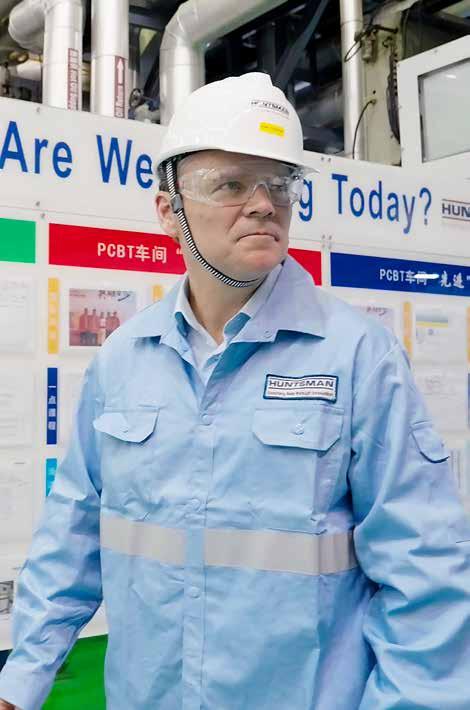
Peter Huntsman Chairman, President, and Chief Executive Officer

is to pursue meaningful improvement while recognizing regional operating conditions, so that commitments remain practical, investable, and sustainable over time.
Q4. What criteria guide which sustainability commitments we make – focused on technical readiness, economics, and risk management – and how do those criteria protect credibility when conditions vary by market or region?
A4. The criteria we use are grounded in practical execution. We look at technical readiness, safety and operational risk, economics, infrastructure and supply chain constraints, and our ability to measure and govern progress in a disciplined way. We also consider whether the commitment can be implemented consistently across a diverse global footprint. Those criteria protect credibility because they help ensure that what we commit to is aligned with operating reality. Our objective is to continue improving performance, reducing impacts where we can, and supporting customer needs responsibly, while being honest about the boundaries created by market conditions, regional differences, and the pace of technological development.
Q5. You have said sustainability depends on safety and care for people. What two leader expectations best define “doing it the right way,” and what does that look like in practice when it requires stopping work, changing a plan, or accepting short-term cost to protect people and maintain trust?
A5. Two leader expectations matter most to me: trust people to act responsibly and make sure they have the knowledge and support to do well. Trust is essential, but it has to be backed by strong training, sound judgment, and a clear understanding of process and risk. In practice, that means people must be empowered to stop work, change a plan, or raise a concern when something does not look right. Whether in operations, maintenance, or capital projects, doing it the right way sometimes means accepting short-term cost, delay, or inconvenience in order to protect people, operate safely and compliantly, and maintain trust over the long term. That is not separate from good business performance. It is part of how good performance is sustained.
We talked with Brittany Benko, Corporate Sustainability Officer and Senior Vice President, Environmental, Health and Safety (EHS), Manufacturing Excellence, and Engineering, about how strong management systems, internal controls, and assurance strengthen the credibility of our 2025 Sustainability Report and how findings translate into remediation and continuous improvement.
Q1: You describe safety as the foundation of sustainability. How do process safety and occupational safety function as the enabling operating system for sustainable performance, and where do you see the strongest practical linkage between safety discipline and environmental or reliability outcomes?
A1. Safety is the foundation of sustainability because it reflects how we run the business. Process and occupational safety protect people, enable reliable operations, and reduce environmental risk through hazard identification, safeguards, discipline, and learning from events.
The strongest practical linkage is operational control. When risks are understood and critical controls are maintained, we can reduce upsets and releases, avoid downtime, and stabilize performance – improving safety, reliability, and environmental outcomes together.
We believe sustainable gains come from embedding these disciplines into daily work – risk management, procedures, management of change, asset integrity, and learning – so improvement becomes how we operate, not a special initiative.
Q2: What specific mechanisms translate a strong operational discipline into improved environmental performance and community trust, and how do you assess whether culture is strengthening using leading, not just lagging, indicators?
A2. Strong operational discipline translates into environmental performance. When hazards are understood, critical controls are verified, procedures are followed, and management
of change is executed consistently, we prevent deviations that drive releases, waste, and instability.
Community trust is earned through sustained performance and transparent follow-through. Credibility grows when standards are applied consistently, accountability is clear, and we respond quickly, learn, and prevent recurrence.
We look for evidence of a strengthening culture in leading indicators – how promptly concerns are raised and addressed, the quality of field verification of critical controls, the rigor of leadership reviews, and how consistently lessons learned are applied before incidents occur. When culture is improving, you see it first in everyday decisions and behaviors, then in lagging metrics.
Q3: This year we are introducing new sustainability-related goals. How did the safety and manufacturing excellence mindset shape: (a) the boundaries and baselines, (b) the operational levers you expect sites/businesses to pull, and (c) how these goals are cascaded into accountable plans?
A3. We applied the same safety and manufacturing excellence mindset we use to run operations: define what matters, set clear boundaries, establish baselines, and ensure reliable data. That discipline gives us goals that are measurable, auditable, and comparable across sites, with clear ownership.
We focused on operational levers teams can influence through daily execution – energy and resource efficiency, reliability and uptime, asset integrity, procedural rigor, and targeted improvement projects – to help make progress more durable.
We cascade goals into accountable plans through named
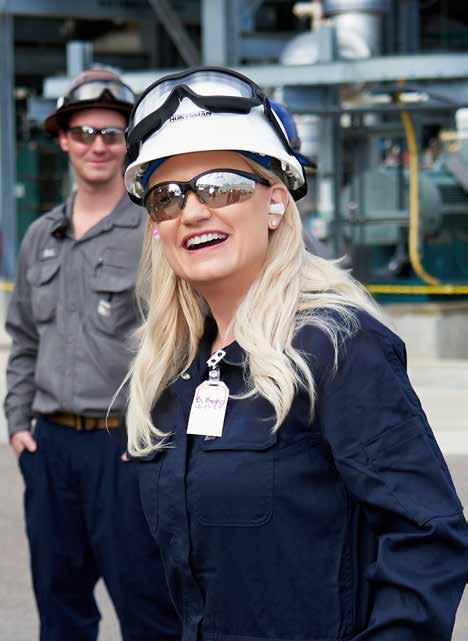
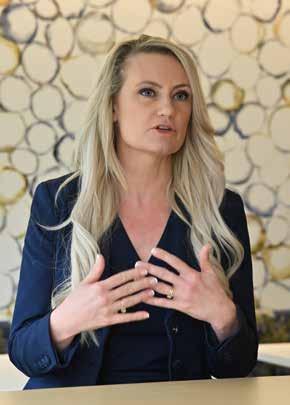
Brittany Benko Corporate Sustainability Officer Senior Vice President, Environmental, Health and Safety, and Manufacturing Excellence
owners, milestones, and routine performance reviews at site, business, and corporate levels. We believe integrating sustainability into our operating rhythm strengthens execution and reinforces continuous improvement.
Q4: Credibility depends on controls that work under scrutiny. How is sustainability data owned and controlled? How are results challenged internally and through independent review, and how do assurance findings or control weaknesses translate into concrete remediation and improvement actions?
A4. Credible disclosure starts with clear ownership and governance. Data is owned where it is generated, supported by defined standards and controls, and reviewed through site, business, and corporate processes that challenge results before we consolidate and report.
We challenge results through documented methodologies, cross-functional reviews, and management sign-off. Where appropriate, we use independent assurance on priority metrics (such as greenhouse gas emissions and water) to strengthen confidence in the numbers and controls. When assurance or internal reviews identify gaps, we work to translate them into corrective actions with assigned owners, timelines, and verification through established
governance routines. Closing that loop strengthens our systems and improves performance – not just the report.
Q5: Looking ahead, what should stakeholders understand about how we implement safety and responsible performance against our priorities and goals, including the constraints we manage (technology availability, cost, supply chain, permitting), how we course correct when performance is off track, and what we will not commit to until it is demonstrably deliverable?
A5. Stakeholders should understand our approach is anchored in safe, reliable operations and disciplined execution. Progress depends on clear priorities, executable plans, defined ownership, and continuous improvement across diverse sites and operating conditions.
We also manage constraints – technology readiness, cost, supply chain and infrastructure capacity, and permitting – so we prioritize actions we can execute safely and reliably, with credible timelines and governance.
When performance is off track, we apply root-cause learning, strengthen controls, and execute corrective actions with clear accountability. We will not commit to targets or pathways unless they are demonstrably deliverable and backed by governance, evidence, and ownership.
We spoke with Jan E. Tighe, Chair of Huntsman’s Board Sustainability Committee, about how the Board oversees sustainability-related risks, opportunities, and disclosures through disciplined governance, constructive challenge, and clear escalation, which reinforce accountability, strengthen disclosure controls and assurance readiness, and build confidence in decision‑useful reporting.
Q1. How does the Board and Committee oversight translate into clear accountability across businesses and operations – specifically, what governance routines (e.g., agenda integration, management reporting, performance review) ensure priorities are reinforced and expectations are clear?
A1. Committee oversight translates into clear accountability through a structured and disciplined governance cadence. Standing agenda items, regular management reporting, and defined follow-up across meetings help ensure that priorities are consistently reinforced. Accountability is reinforced through clear ownership, with executive sponsors and business leaders responsible for documented actions that are tracked to closure against agreed timelines. The Committee also reviews performance through routines such as trend analysis, variance-toplan discussions, and corrective action follow-up. Escalation is explicit, with material issues elevated to the full Board when they exceed defined risk or impact thresholds.
Q2. How does the Committee ensure that sustainabilityrelated risks and opportunities meaningfully inform Board discussions and decisions, rather than remaining descriptive, and can you point to an example where this perspective influenced oversight or direction?
A2. The Committee ensures that sustainability-related risks and opportunities meaningfully inform Board discussions by treating them as business risks and value drivers, assessed with the same rigor applied to operational and strategic
matters. Rather than focusing only on reported metrics, the Committee challenges management to address implications, options, tradeoffs, and required actions so that discussions remain decision relevant.
Oversight also considers whether management’s approach is credible and implementable within real-world constraints such as technology readiness, cost, supply chain capacity, and permitting. One example of that perspective influencing oversight was the Committee’s request for clearer decision criteria, stronger ownership, and more consistent governance for commitments and progress tracking, which improved rigor and comparability.
Q3. What steps did management take this year to strengthen the quality, internal controls, and assurance of our sustainability disclosures, and how does Board oversight reinforce confidence in what is reported?
A3. Management helped to strengthen the quality and reliability of sustainability disclosures by working to clarify data ownership, documenting methodologies, and standardizing review processes before publication. Progress toward assurance readiness is supported by controls across key data flows, including collection, validation, consolidation, and approval, with defined accountability at each stage.
Limited assurance over greenhouse gas and water data provides an additional level of confidence, while the Committee monitors assurance scope, readiness, and management’s response to recommendations. Board oversight further
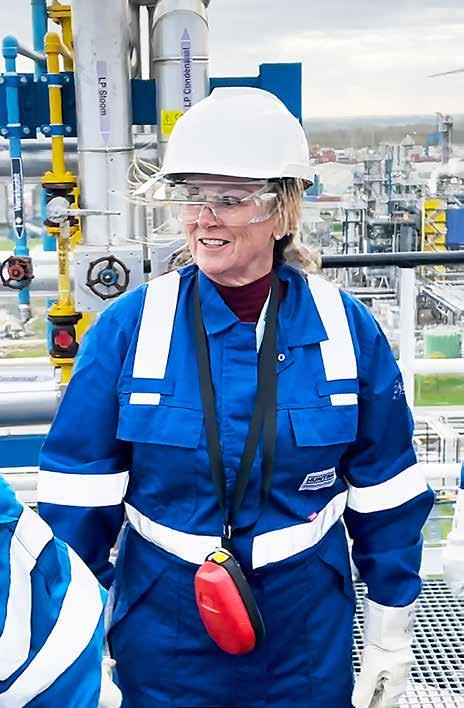
Jan E. Tighe Board Sustainability Committee Chair, Huntsman Board of Directors


reinforces confidence by reviewing what has changed year over year, why those changes occurred, and how the reported information was validated.
Q4. With sustainability targets extending to 2035, what governance practices ensure they remain credible over time – including what triggers a reassessment, how escalation works when performance deviates, and what specific actions the Board expects management to take if underlying assumptions, technologies, or economics do not develop as anticipated?
A4. Sustainability targets extending to 2035 are governed through periodic review of assumptions, baselines, and progress against plan, with assigned ownership for execution. Triggers for reassessment include material changes in baselines, technology feasibility, cost or availability, operating conditions, or the overall risk profile.
When performance deviates from plan, escalation requires both a root-cause explanation and a corrective action response, such as resequencing levers, adjusting execution plans, or strengthening governance and accountability. The
Board expects management to maintain credibility by being transparent about constraints and boundaries, updating plans when facts change, and avoiding speculative commitments.
Q5. How does the Committee satisfy itself, through the specific evidence and indicators it reviews, that sustainability performance reinforces manufacturing excellence and safe operations – and that disclosures remain decision useful, proportionate, and aligned with the Board’s oversight responsibilities?
A5. The Committee evaluates sustainability performance through evidence that links outcomes to safe operations, operational discipline, and manufacturing excellence, in addition to environmental results. Oversight considers both leading and lagging indicators, including management system effectiveness, execution consistency, and performance trends.
Disclosures are assessed for decision usefulness based on comparability, scope clarity, and transparency around performance drivers, constraints, and corrective actions. Oversight remains proportionate by focusing on matters material to operations, stakeholders, and the Board’s responsibilities.
GRI 2-1 | GRI 2-6 | CDP 1.3 | CDP 1.14 |
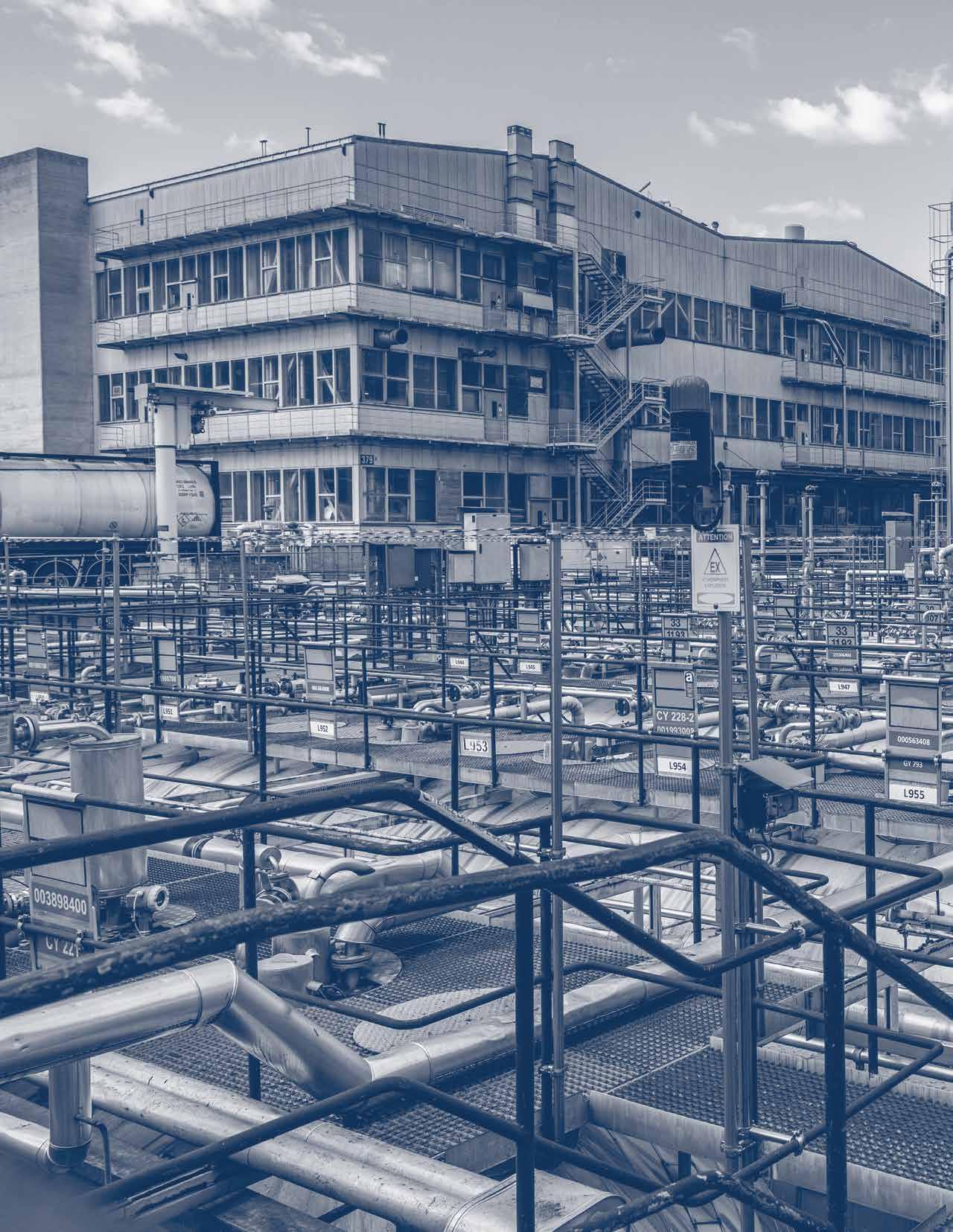
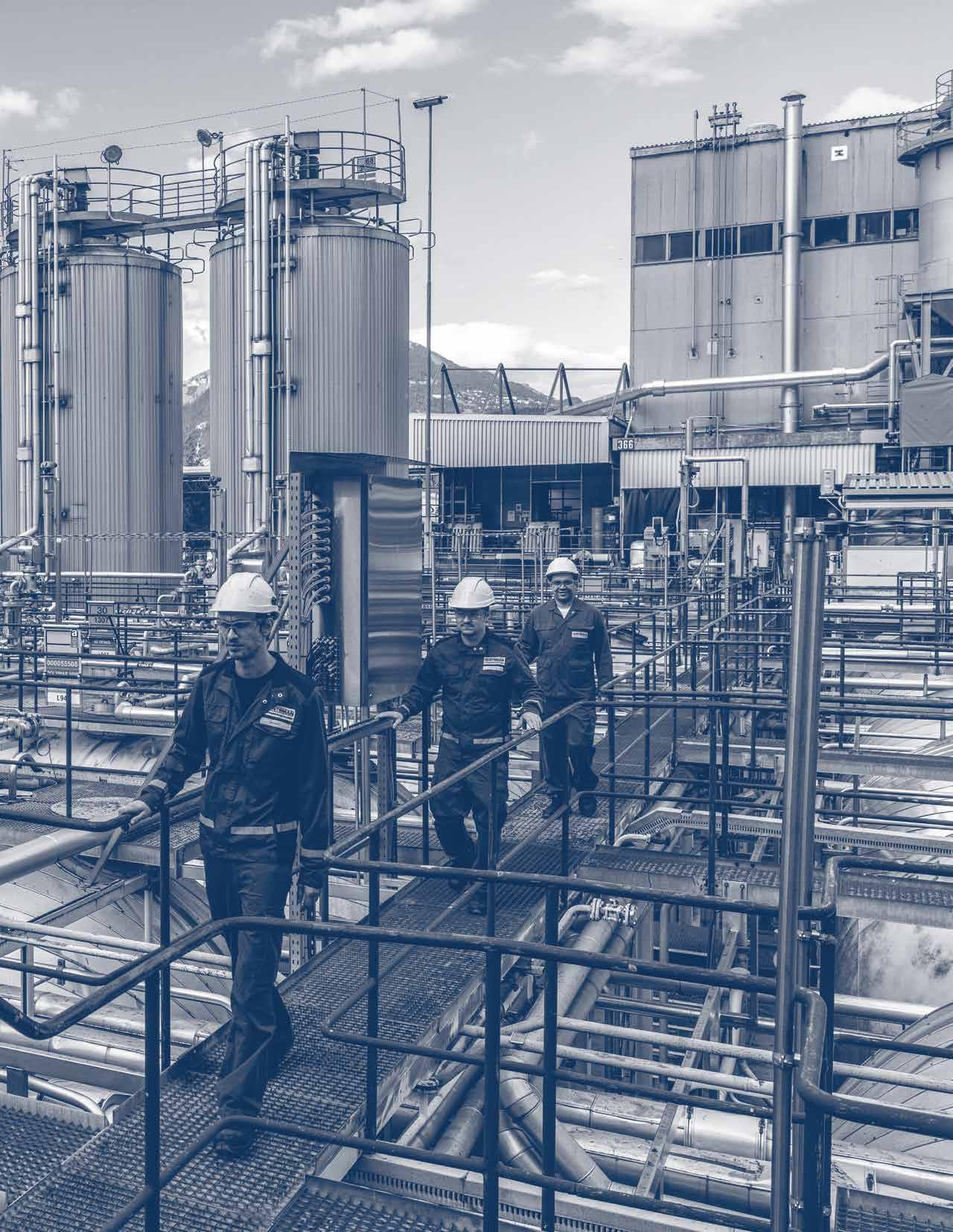
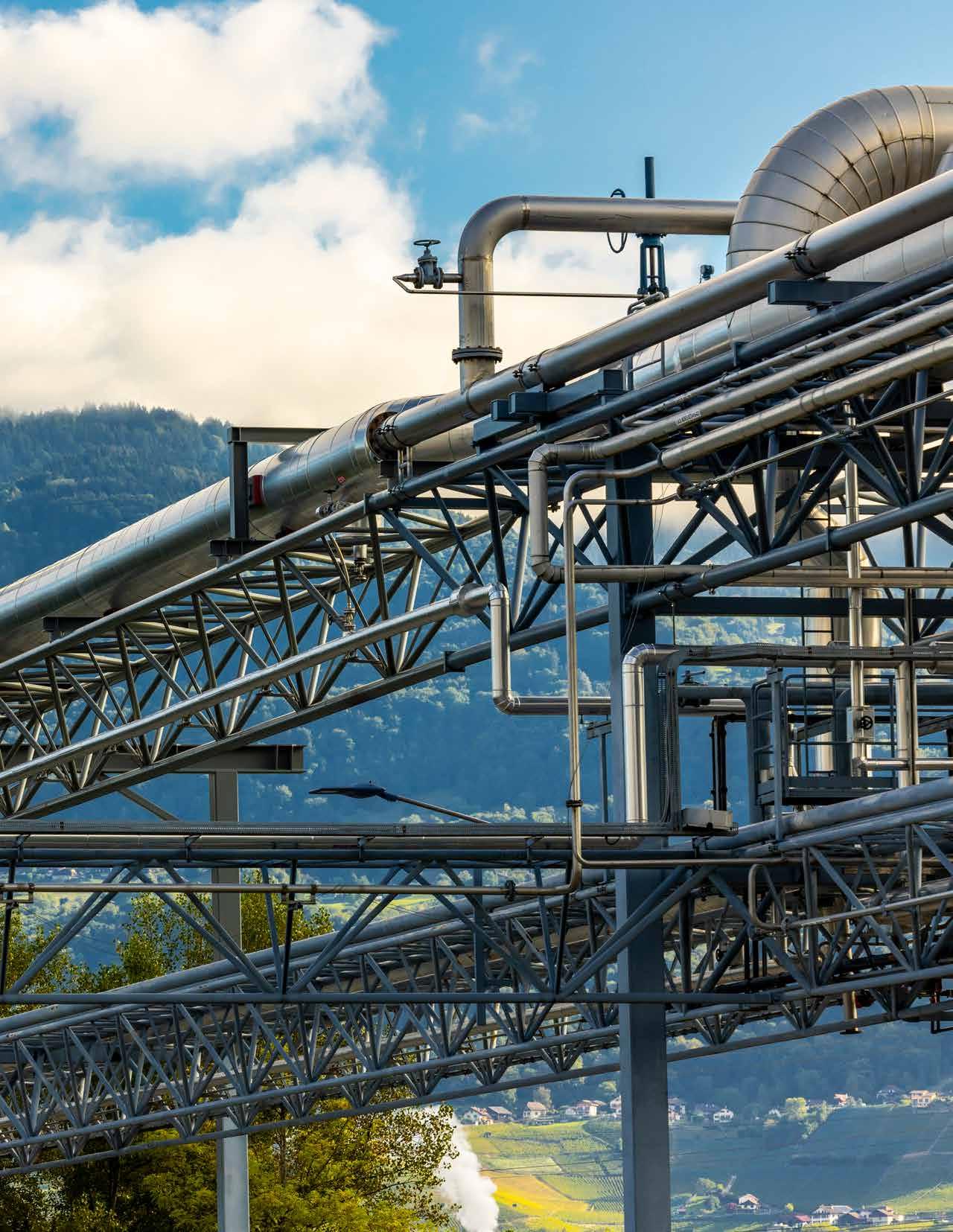
Huntsman Corporation is a publicly traded corporation, headquartered in The Woodlands, Texas, in the United States of America. Huntsman is a global manufacturer and marketer of diversified chemical products. For more than 50 years, we have used science and ingenuity to innovate and create products that enable more prosperous lives for people around the world. In 2025, Huntsman had approximately 6,000 associates working in 55 manufacturing, research and development (R&D), and operations facilities in 25 countries. Through our three divisions, we produce approximately 6,000 products to serve a broad and diverse range of consumer and industrial end markets, including:
• Building and Construction
• Automotive
• Aerospace
• Power infrastructure
• Energy and fuels
• Footwear and other consumer goods
These guidelines apply to us all, regardless of where we work.
At Huntsman, our commitment to sustainability is grounded in the values that define who we are: honesty, integrity, respect, and responsibility. These principles guide how we operate, how we innovate, and how we engage with our colleagues, customers, and partners around the world. They shape our decisions every day and reinforce our belief that doing the right thing is essential to long- term success. By upholding these values, we aim to strengthen our culture, support ethical and transparent business practices, and advance our mission to create sustainable solutions that benefit people, communities, and the planet.
We are accurate and honest in all our communications.
We apply the highest standards of integrity in all our actions.
We show respect and consideration to everyone with whom we interact.

We are personally accountable for delivering on our commitments.




“At Huntsman, I’ve always
felt part of a team that lifts each other up and holds itself to doing what’s right. That shared sense of integrity and collaboration fuels our innovation and inspires solutions that truly make the world better.”
–
Diane
Ziman,
Global HR Business Partner | 41 Years at Huntsman
Huntsman at a glance:
50 More than
Operations facilities in years of innovation
25 countries
6,000
55
6,000 associates working in over Approximately facilities, producing more than consumer and industrial products
This division is a leading global producer of MDIbased polyurethanes focused on formulating innovative products for key markets, including energy-saving insulation, lightweighting and performance materials for automobiles, comfort foam for bedding and furniture, protective coatings, adhesives, and elastomers for footwear.
This division offers products that provide useful properties in everyday items people want and need. Our leading global position in the manufacturing and sale of amines, maleic anhydride, and carbonates enables us to serve diverse consumer and industrial end markets, including energy, automotive and transportation, coatings and adhesives, building and construction, electronics, and industrial manufacturing.

This division focuses on providing solutions to the material challenges faced across a wide range of industries. Using a broad suite of component and formulation chemistries, we supply innovative and more sustainable material solutions to the aerospace, automotive, electronics, power generation and transmission industries, among others.

| CDP 1.6 | CDP 1.7 |
Huntsman Corporation’s global headquarters is in The Woodlands, Texas, USA. As a publicly traded company, we are listed on the New York Stock Exchange (NYSE: HUN). Countries/ regions where we have manufacturing, R&D, and operations facilities are:
Australia
Belgium
Brazil
Canada
China
Colombia
Costa Rica
Germany
Hungary
India
Italy
Japan
Malaysia
Mexico
Poland
Russia1
Saudi Arabia
Singapore
Spain
South Korea
Switzerland
Taiwan
The Netherlands
Turkey
United Kingdom
United States
Vietnam
1 Huntsman has announced its intention to exit operations in Russia.



Since 2010, Huntsman has published annual sustainability reports to explain how we manage our responsibilities to people, communities, and customers. These reports are designed to provide stakeholders with transparent, decision-useful performance information.
Horizon 2025 represented an important step in that journey, establishing a defined set of goals focused on safety, energy use, emissions, water use, and product safety. The performance summary that follows reflects our progress against those commitments during the Horizon 2025 timeframe (2019-2025) and marks the close of that goal framework.
Horizon 2025 helped strengthen accountability, sharpen internal focus, and advance how we measure and manage sustainability performance across the company. As we close out this goal framework, we are building on both the progress achieved and the lessons learned to inform the next stage of our approach.
Looking ahead, we aim to continue refining targets, data quality, and governance to support measurable outcomes aligned with our business strategy and stakeholder expectations. In the next section, we announce our new set of sustainability goals, as part of this evolution.
2025 Targets
| SASB RT-CH-110a.2 | 2025 Progress
or Fatal Events (LIFE) 0 Events Reduction in OSHA Total Recordable Rate Lower than 2019
1 Process Safety Incidents
Events
of Product Safety Summaries
Efficiency Targets (on a per unit of production; 2019 baseline)
| SASB RT-CH-110a.2 | | CDP 7.45 | | CDP 7.52 | CDP 7.53 | CDP 9.15 | | TCFD Metrics and Targets A | 2025 Progress

Read more online
Using your smartphone or other web-enabled device, scan this QR code to access Huntsman’s online data packets, or visit Huntsman Sustainability Overview: Huntsman Corporation (HUN)
With the close of Horizon 2025, Huntsman is introducing Catalyst 2035, our next generation of sustainability goals.
Catalyst 2035 is organized around four priorities: safety, advancing decarbonization, improving circularity, and driving chemical and material safety. It preserves our focus on protecting people, managing our operations responsibly, and evolving our performance in the areas most relevant to Huntsman and our stakeholders. Together, these priorities reflect our commitment
to enriching the lives of people who work for us, live around us, or use our products. Safety remains foundational to how we operate. At the same time, the framework expands our focus toward climate-related performance, circular value creation, and continued product stewardship. Catalyst 2035 is the next step in our sustainability journey.
As we continue to innovate to help improve lives, we are introducing our Catalyst 2035 goals. Building on our Horizon 2025 goals, Catalyst 2035 sets our direction for the next decade, including 2030 milestones, and defines the priorities we will pursue. These goals are designed to be ambitious, achievable, and supported by clear accountability. We plan to report progress
annually in our sustainability report. Catalyst 2035 is intended to advance innovations that support safety, decarbonization, circularity, and chemical and material safety through our products, solutions, and operations. It reinforces our commitment to operate responsibly for our people, the communities where we operate, our customers, and the environment.
1
2
4
3
Occupational Safety - Fatalities (Associates and Contractors)
Occupational Safety – OSHA LT Rate (Associates and Contractors) [Note: rate relative to 2023-2025 average rate]
Process Safety – Tier 1 & 2 Rate per API RP 754 [Note: rate relative to 2023-2025 average rate]
GHG Emissions – Scope 1, Scope 2 (market-based), and Scope 3-Cat 1 (raw materials and services) intensity compared to 2025 baseline [Note 1: not including offset credits] [Note 2: Please see “Additional details” regarding 2-year review cycle for this goal]
Sales covered by Product Carbon Footprints (PCFs) using standardized calculation rules
Climate Resilience - Sites with ≥ 200 MM USD total insured value (TIV) with a credible climate physical risk minimization plan [Note: Increasing regulatory requirement]
Circularity - Portion of sales either designed or used for circularity [Note 3: as defined by Huntsman]
Water – Sites in high water-risk areas (as defined by the World Resources Institute) with ≥ 10 ML (megaliters) per year of water intake with a credible water use minimization plan
Waste - Sites with ≥ 10,000 metric tons of total waste per year with a waste minimization plan
Continue to proactively evaluate all products both against hazard profiles and for hazard profile improvement
Will define target within two years
Maintain 100% coverage
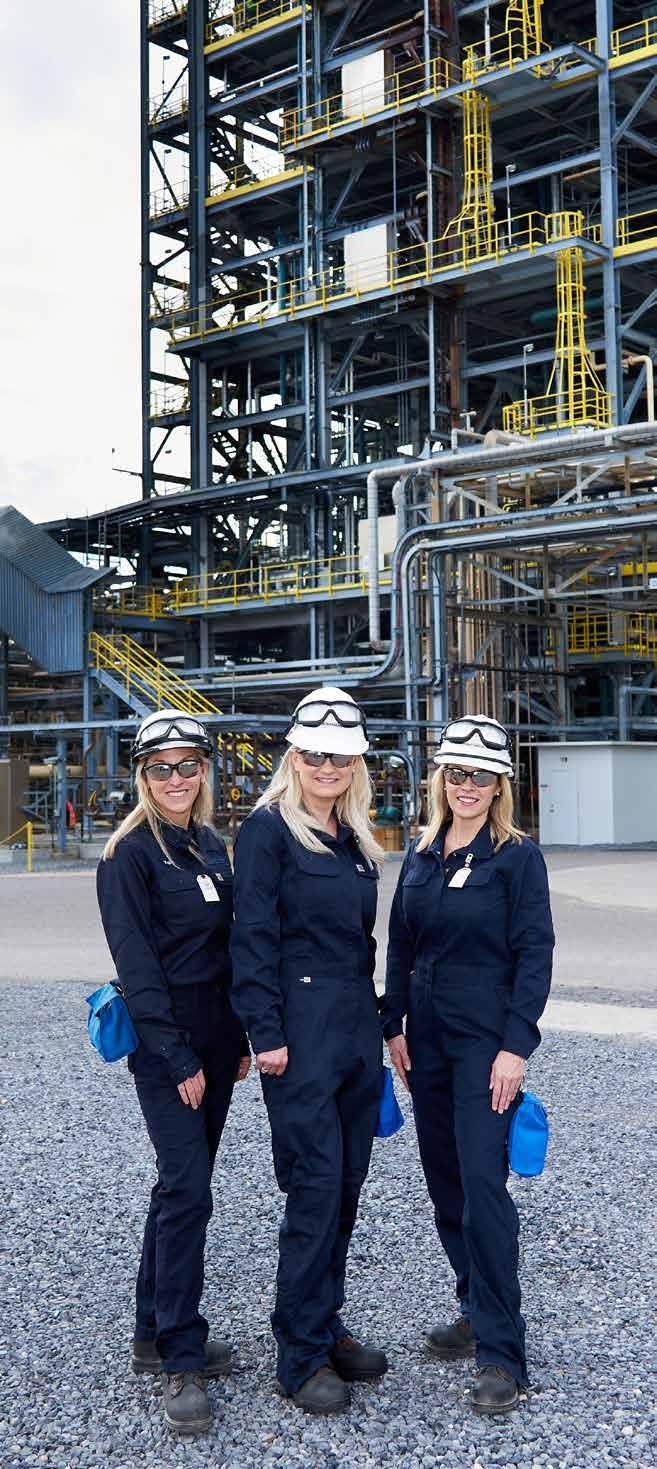
Safety is foundational to Huntsman’s sustainability strategy and to the long-term resilience of our business.
Safe operations protect people, strengthen reliability, reduce the likelihood of significant operational and environmental events, and support the trust placed in us by employees, customers, communities, and other stakeholders. We believe that in a chemical manufacturing environment, sustainable performance cannot be separated from disciplined safety performance. For that reason, safety remains the starting point for Catalyst 2035 and underpins our ability to advance decarbonization, improve circularity, and drive product safety over time.
Our Catalyst 2035 safety commitments are designed to reinforce that foundation through focused performance in key areas:
• No fatalities
• Improvement in occupational lost time rate
• Improvement in process safety rate
| SASB RT-CH-110a.2 | CDP 7.53 | TCFD Metrics and Targets A |
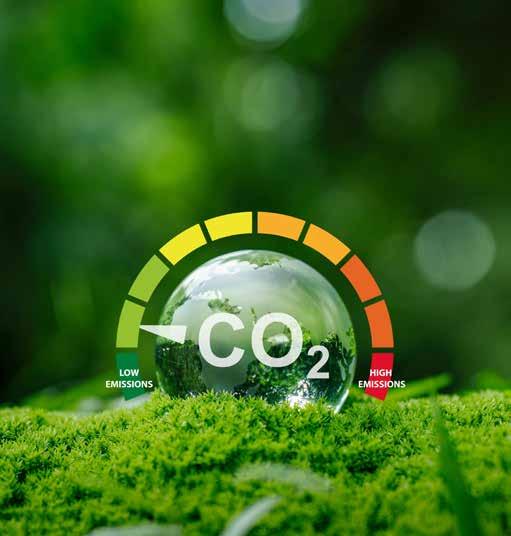
Huntsman will continue to search for innovative solutions that help the world use less energy, reduce emissions, and continue to improve operational efficiency.
Huntsman strives to continue finding innovative solutions that enable a lower carbon footprint for our customers, while finding practical ways to improve efficiency and lower the carbon footprint of our operations. With Catalyst 2035, we have expanded our efforts to include an overall carbon intensity goal that encompasses our Scope 1 and Scope 2 emissions as well as Category 1 of Scope 3 emissions (purchased goods and services), which represents the largest contribution to our Scope 3 emissions.
Our efforts will likely be informed by several factors, including but not limited to:
• Pace of technology
• Decarbonization of electricity supply and transportation
• Carbon capture, storage, and use
• Public policies, regulations, and infrastructure development
We do not currently use carbon offsets for our decarbonization goals1. In addition to reducing our operational emissions, we will work to engage our top suppliers and service providers, including transportation-related providers, to help reduce emissions through our value chain and support our overall carbon intensity goal.
We have developed an estimate of our 2025 Scope 3 emissions 2. From this initial estimate, we have developed a supplier engagement plan to support our Catalyst 2035 overall carbon intensity goal, which includes Scope 1, Scope 2, and Category 1 of Scope 3 emissions. We also have a goal to provide product carbon footprints (PCFs) to our customers. Further details for our Scope 1, Scope 2, and Scope 3 emissions can be found in the “Greenhouse Gas Management” data sections.
We aim to engage suppliers and service providers, responsible for an estimated two-thirds of our Category 1 Scope 3 emissions, to support our Catalyst 2035 overall carbon intensity goal.
1 To date, Huntsman has not used carbon offsets as part of its decarbonization strategy and, on the date of this report, has no plans to do so. Instead, Huntsman’s decarbonization efforts are focused on reducing operational emissions and investing in lower-carbon solutions that we believe use less carbon over the lifetime of the product or system than currently available alternatives. Huntsman’s approach to decarbonization is subject to change and may in the future involve use of carbon offsets, depending on our determination regarding the maturity of global carbon markets.
2 Please see our greenhouse gas data tables for Scope 3 category estimates.
Many efforts around circularity contribute to reducing the need for new materials to enter the economy. For Huntsman, our Catalyst 2035 targets are part of the picture.
Reducing our consumption of energy and water, along with reducing our waste generation, leads to less resource demand and contributes to circularity. Many of our solutions aim to improve the durability of products, which extends the life of these products, reduces the need for replacement, and reduces waste associated with replacement. Our products also improve the efficiency of our customers, which is highlighted in this report. While we believe our solutions contribute to sustainability in multiple ways, we recognize that stakeholders want our products to be more inherently circular. To that end, we began in 2023 to measure the portion of our product portfolio that has one or more of the following qualities:
• Sourced from recycled materials
• Bio-sourced
• Recyclable
• Biodegradable
• Contribute to the durability of products
In the future, we plan to develop targets for increasing the proportion of our portfolio that contains one or more of these qualities. We added “Circularity” to our list of material topics and made that proportion part of our Catalyst 2035 efforts to signify this increase in importance, along with the impact of the role we play to contribute to society’s long-term aims.

Chemical and material safety has long been a priority at Huntsman. The product safety of our solutions is considered on a case-by-case basis, including assessing the use of substances, existing and potential risk management options, ease of substitution, and solution benefits.
For Huntsman, our Catalyst 2035 targets are part of the safety picture. We work with regulators, customers, suppliers, and value chain partners to make these assessments and develop suitable risk mitigation plans that could include phase-out initiatives, reformulation, or development of alternatives. We evaluate new solution developments against defined substances of concern (SoC) lists at various stages in the development process, using an award-winning SoC risk-evaluation tool. Our research and development teams look for SoC issues at all stages of the selection of the preferred technical solution
and when screening new raw materials from suppliers. A formal hazard assessment is completed by our Product Safety Regulatory Compliance (PSRC) team during the new product introduction process. Products with significant SoC impact may be eliminated, or new product development projects terminated, based on an SoC assessment or if the business case for further development is not viable. Huntsman plans to continue to proactively screen for, and seek innovative alternatives to, substances of concern. For more details, please see the “Product Stewardship” section of our disclosure.
<1% of our product sales include materials containing Substances of Very High Concern
Huntsman is proud to be recognized among leaders in safety across the industry and the world for our responsible management of our business and resources. Our 2025 honors include:
ACC Safety Certificate Criteria
Certificate of Achievement
The Certificates of Achievement are for those facilities with zero deaths and zero days away from work cases for employees.
• Ashtabula
• Houston Port
• Los Angeles
Certificate of Honor
The Certificates of Honor are for those facilities with zero deaths, zero days away from work cases, and zero job transfer or restriction cases, according to current OSHA guidelines in 2025 for employees.
Certificate of Excellence
The Certificates of Excellence are for those facilities with zero deaths, zero days away from work cases, and zero job transfer or restriction cases among both employees and contractors in 2025.
• Akron
• Arlington
• Auburn Hills
• Conroe
• Derry
• East Lansing
• Freeport
• Geismar
• McIntosh
• Merrimack
• Rock Hill
• HATC
• The Woodlands Waterway
1
The following are sustainability evaluations for Huntsman at the time of publication.



| CDP Module 3 - Disclosure of Risks and Opportunities | | CDP Module 5 - Business Strategy | TCFD Strategy A | TCFD Strategy B |
Our aim is to enrich lives through innovation which includes supporting global decarbonization ambitions.
The chemical industry accounts for approximately 3% to 5% of global greenhouse gas emissions.1 Although the industry is often associated with environmental impacts, its total emissions are lower than those attributed to livestock.1 Huntsman products can help improve performance in sectors that contribute a large share of global emissions, including building and construction, transportation, and industrial applications. Through emissions-reducing innovations, Huntsman solutions are estimated to enable millions of tons of lifetime emissions avoided attributable to products sold in the year. 2

Huntsman remains focused on reducing its environmental footprint. As part of our strategy to shift our portfolio further downstream and closer to the consumer, our Scope 1 and 2 greenhouse gas emissions and water consumption have decreased. 2 This shift means Huntsman assets are less emissions intensive and are helping customers reduce their own environmental footprints.
We continue to monitor performance and pursue ongoing improvements in emissions and water consumption. Since 2021, we received limited assurance for these two performance indicators.
Huntsman recognizes the important role we play in supporting a more sustainable future. Our innovative solutions help our customers and value chains reduce emissions and improve energy efficiency, contributing to progress toward a lower-carbon economy. Improving the efficiency of buildings and homes, enabling transportation electrification and efficiency, and advancing alternative energy technologies are all critical to achieving global decarbonization ambitions. Through our products and innovation, Huntsman can help support such ambitions across these areas.
Our people, our operations, and our products work together to support sustainability initiatives around the world.
Advancing decarbonization
Chemical products can play a pivotal role in enhancing energy efficiency and facilitating the transition to lower-carbon energy alternatives, which we believe is crucial for sustainably meeting society’s growing energy needs.
At Huntsman, we have introduced a metric that demonstrates how our innovative material solutions can actively help society achieve lower greenhouse gas emissions.
Although the chemical industry contributes 3% to 5% of the world’s anthropogenic greenhouse gas (GHG) emissions, it can also help support emission reductions across multiple sectors. This concept is illustrated in the graphic [left], highlighting the chemical industry’s 5% share compared to the 95% from other economic sectors. To quantify this impact, we introduced the metric “return on invested carbon” (ROIC; not to be confused with return on invested capital). ROIC measures the total greenhouse gas emission reductions a chemical product delivers throughout its lifetime, relative to the additional cradle-to-gate emissions generated during its production. For instance, if producing one kilogram of a chemical product creates one additional kilogram of GHG emissions compared to a conventional alternative yet enables a 10-kilogram emission reduction over its lifetime, the ROIC would be 10.
We have applied this metric across several innovative products, demonstrating significant decarbonization benefits. These applications include insulation products that enhance building energy efficiency, critical components for renewable energy technologies (e.g., wind turbines, solar panels), advanced materials supporting transportation electrification, and lightweight materials for aircraft to boost fuel efficiency and reduce emissions. Detailed examples of these calculations, compared to a conventional alternative (baseline), are provided to the right and further illustrate our commitment to impactful chemical innovation and decarbonization.1
1 Management estimates, assured by a third party

Improves Efficiency
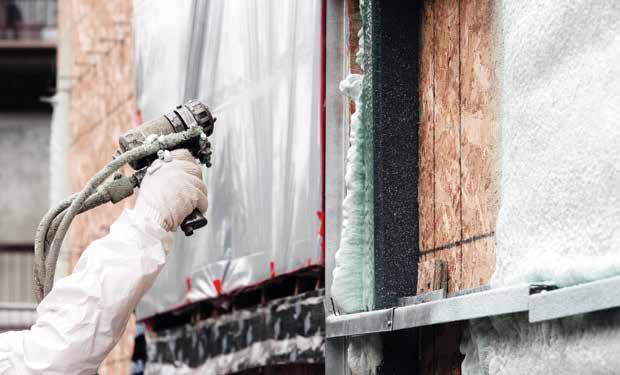
Our spray polyurethane foam insulation reduces air intrusion into homes and buildings, helping to decrease the amount of energy required for heating and cooling. One ton of our Polyurethanes spray polyurethane foam goes into solutions, resulting in:
• 10 tons of CO2e avoided
• 1.2 tons CO2e to build
• 8x return on invested carbon

Improves Energy Efficiency of the Aerospace Sector
Our resins and hardeners can reduce the weight of an airplane by 20% and allow for blended winglets, further improving fuel efficiency. One ton of our Advanced Materials resins and hardeners goes into solutions, resulting in:
• 14K tons CO2e avoided
• 350 tons CO2e to build
• 40x return on invested carbon

Supports Electrification of the Transportation Sector
Our carbonates can improve the efficiency of lithium-ion batteries. One ton of our Performance Products carbonates goes into solutions, resulting in:
• 1.3K tons CO2e avoided
• 160 tons CO2e to build
• 8x return on invested carbon
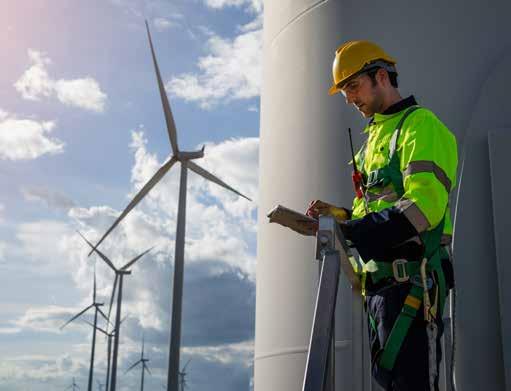
Our specialty amines make the blades of a wind turbine longer, so their operation is more economic. One ton of our Performance Products polyetheramines goes into solutions, resulting in:
• 30K tons of CO2e avoided
• 625 tons CO2e to build
• 48x return on invested carbon
| GRI 3-3 | SASB RT-CH-410a.1 | TCFD Strategy B |
Enriching lives through innovation is more than our motto – it is at the heart of who we are as a company.
For 50 years, our employees have used science and ingenuity to create innovations that play a critical role in the everyday lives of millions of people. We work in deep partnership with our customers to create solutions that help make people’s lives more sustainable, effective, and comfortable. Our products comprise a broad range of chemicals and formulations, which we market globally to a diversified group of consumer and industrial customers.
Our products are used in a wide variety of applications, including adhesives, aerospace, automotive, construction, durable and nondurable consumer products, electronics, insulation, medical, packaging, coatings, power generation, refining, synthetic fiber, and improving textile production processes.
Growth in our differentiated products has been driven by the substitution of our products for other materials and by the level of global economic activity. We work closely with our customers to develop innovations that improve the performance of our products.
Many of our products are designed to improve use-phase resource efficiency, including through fuel additives and lubricants, lightweighting, and improvements to textile production processes.
Proprietary protection of our processes, apparatuses, and other technology and inventions is important to our businesses.
We also rely on unpatented proprietary know-how, along with continuing technological innovation and other trade secrets, to develop and maintain our competitive position.




We own approximately 2,100 active patents and have nearly 1,000 patent applications (including provisionals) currently pending.
High-performing insulation
Smarter, more efficient power grid
Electric vehicle battery solvents and motor encapsulation
Energy Conservation, Alternative Energy, and Storage
Emissions Reduction and Waste Reduction
Wind energy (resins, hardeners, and adhesives)
Lightweighting (transportation, industrial)
Low energy consumption in processing
High-performance polyurethanes panel insulation used in cold chain / food preservation
Polyurethanes pipe insulation used to improve industrial insulation and drive emission reduction
Low-VOC emission products
Cleaner fuels and natural gas treating
Upcycling PET (e.g., plastic bottles) to polyester polyols
Transforming methane to advanced carbon materials and hydrogen (MIRALON®)

SHOKLESS™ systems can help support more consistent performance and a longer service life
As the shift to electric vehicles (EV) accelerates, automotive original equipment manufacturers (OEMs) and battery producers are working hard to bring battery-powered cars to market that charge faster and drive further. Key to delivering this goal is sourcing innovative materials that can help enhance the durability, quality, and performance of key components such as cylindrical lithium-ion-based battery packs.
SHOKLESS™ polyurethane encapsulation foam systems have been developed to support next-generation EV efficiency and safety. Recently selected by a leading automotive manufacturer for use in the batteries powering its EV platform, SHOKLESS™ systems offer a compelling mix of mechanical and thermal characteristics that can aid more consistent battery performance and a longer service life.
Providing advanced structural support, impact resistance, and vibration-dampening capabilities alongside heat management properties, SHOKLESS™ systems can help automotive manufacturers facilitate changes to the design and configuration


Low thermal conductivity, heat dissipation, and dielectric traits help optimize battery design and can facilitate the stable operating conditions needed to maximize battery pack performance.

of battery cells in a pack to achieve better energy efficiency.
Filling the spaces inside battery packs, around individual cells, SHOKLESS™ systems cure quickly, forming a solid protective polyurethane foam. With sensitive components safely encapsulated, their ability to withstand temperature fluctuations, shocks, and vibrations can be enhanced – helping battery manufacturers and OEMs deliver packs with enhanced durability, safety, and long-term reliability.
SHOKLESS™ systems also offer manufacturing advantages. Optimized for use in high-throughput, automated battery production environments, the resins can be dispensed quickly and have a wide processing window for extra handling flexibility.
Diane Langer, Technology Lead at Huntsman Polyurethanes, said: “Battery innovation is at the heart of electric mobility. We are proud to have delivered an encapsulation solution that meets the stringent performance and processing requirements of one of the world’s leading automotive manufacturers – and to be supporting the electric vehicle industry as it accelerates at pace.”
Huntsman currently offers three SHOKLESS™ encapsulation products, at different densities.
For more information go to: https://www.shokless-huntsman.com


Advanced vibrationdampening properties help reduce mechanical stresses and prolong battery durability and lifespan.

Quick-cure systems, which can be easily integrated into battery production lines, support improved throughput and just-intime (JIT) delivery.


A high strength-toweight foam ratio aids EV lightweighting and supports vehicle energy efficiency goals while maximizing the structural integrity of battery packs.
fuel
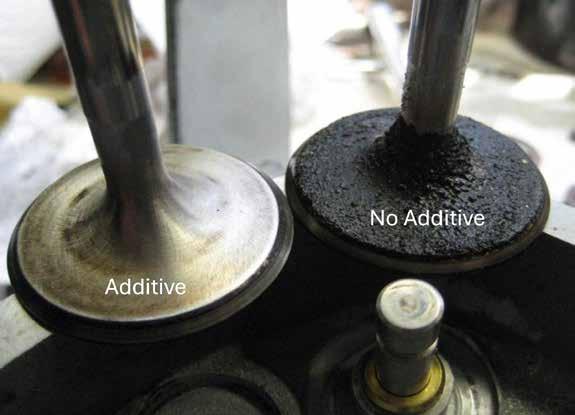
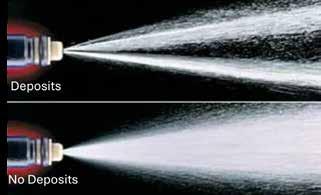
Huntsman partnered with a key customer to develop and commercialize an advanced fuel additive technology that supports improved fuel efficiency, reduced emissions, and measurable progress toward lower-carbon transportation. Leveraging Huntsman’s expertise in specialty amine chemistry, the collaboration resulted in a proprietary polyetheramine-based additive designed to address the increasing performance and emissions challenges associated with modern engine technologies, including gasoline direct injection (GDI) engines.
The high-performance additive improves engine cleanliness and combustion efficiency, enabling fuel economy gains of approximately 3% while reducing emissions such as carbon monoxide and hydrocarbons that affect air quality. At commercial scale, the technology is estimated to save tens of millions of gallons of gasoline annually and prevent more than 1 billion pounds of carbon dioxide emissions each year, demonstrating
meaningful environmental benefits without requiring changes to vehicle hardware or fueling infrastructure.
The project also reflects Huntsman’s commitment to more efficient manufacturing and value chain collaboration. Through an innovative production approach that optimized raw material use and manufacturing steps, the company improved asset efficiency, reduced waste generation, and minimized working capital while ensuring a reliable supply for our customer partner. This efficient manufacturing model not only lowered the environmental footprint of production but also supported scalable growth.
Economically, the solution delivers shared value by helping customers to meet tightening regulatory and OEM requirements while supporting Huntsman’s long-term growth. This collaboration highlights how applied innovation, customer partnership, and disciplined manufacturing can translate core chemical capabilities into solutions that can benefit society, strengthen markets, and advance sustainability goals across the transportation sector.



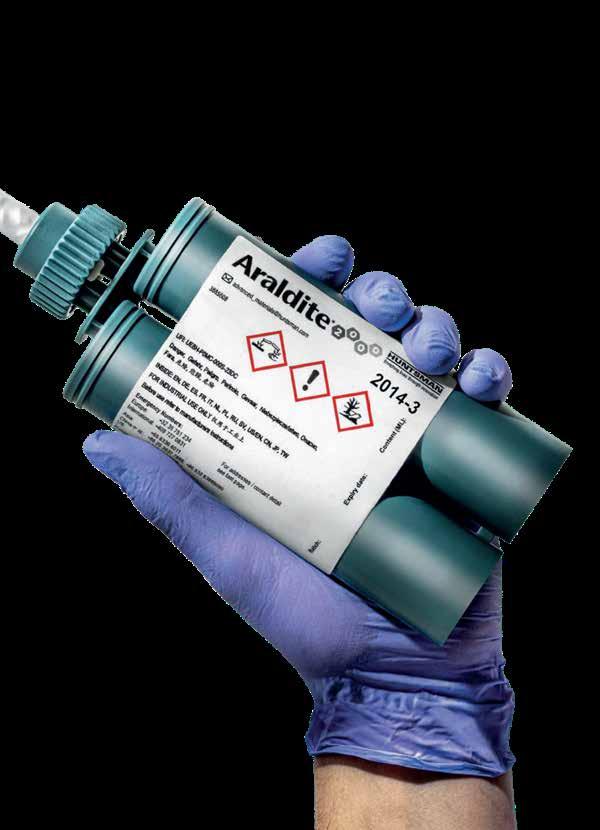
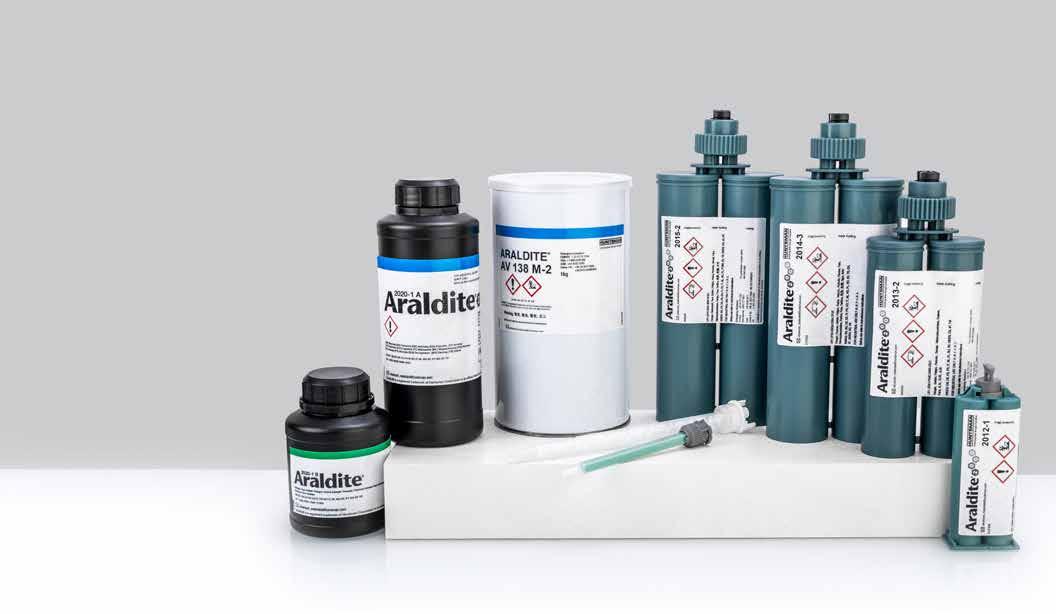
For more than 80 years, ARALDITE® adhesives have set the industry benchmark for reliability and performance, supporting a wide range of applications in transportation, marine, medical, wind energy, and industrial manufacturing. The products are widely used in the production and assembly of buses, trucks, rail vehicles, filtration systems, and more.
As global regulatory initiatives have changed, Huntsman’s Advanced Materials division has worked diligently to reformulate products to stay ahead of regulations and provide innovative solutions to our customers. The division recently launched a new reformulated line of ARALDITE® epoxy adhesives, which are free of both Bisphenol A (BPA) and intentionally added substances classified as Carcinogenic, Mutagenic, or Reprotoxic (CMR), according to the European Union’s Classification, Labeling, and Packaging (CLP) regulation.
“At Huntsman, safety and sustainability are considerations taken into account in everything we do. As one of the first to lead the way in reformulating our range of epoxy adhesives,
coatings, and resins, we’re proud not only to meet the evolving demands of global regulators and our customers but also to help set the standard for innovation in safer, more responsible chemicals,” said David Hatrick, Vice President of Global Innovation & Strategic Marketing for Huntsman Advanced Materials.
With more companies prioritizing safety and environmental responsibility in their applications, demand for low-toxicity products is growing. The reformulated ARALDITE® epoxy products offer the highest safety for workers and operators, free of CMR labeling or components while maintaining the same reliable performance without the need for requalification.
As part of our broader sustainability strategy, Huntsman has also introduced a new Post-Consumer Recycled (PCR) plastic cartridge, which will be incorporated into some products within the new range. This PCR plastic cartridge is expected to reduce CO 2 emissions by up to 36% compared to similar cartridges made from virgin plastic materials.
“The launch of our next-generation ARALDITE® epoxy adhesives underscores Huntsman’s commitment to delivering high-quality, sustainable solutions that help protect both people and the environment,” added Hatrick.

We are Huntsman – a global team of problem-solvers who use chemistry and collaboration to create differentiated material solutions for customers worldwide. Innovation is part of who we are, from product breakthroughs to manufacturing excellence that strengthens performance, reliability, and sustainability.
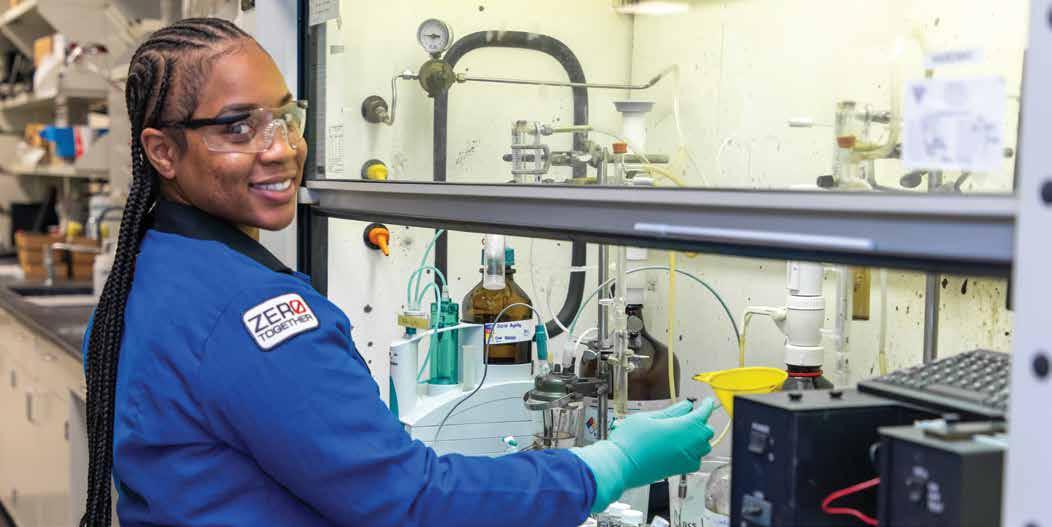
Just as important is how we work: Our Zero Harm culture reflects a commitment to care for one another’s safety and well-being, speak up, and do the right thing – every day. We build capability through practical tools, disciplined routines, and engaged leadership, and we partner with suppliers and local responders to be prepared and resilient.
Beyond our sites, we aim to be a positive presence in the communities where we live and work, contributing time, talent, and resources to help our neighbors thrive.

We Carried the Flame of Zero Harm Across
As we prepared to launch Global Zero Harm Week, we followed the journey of the “Zero Harm torch” as it traveled across our Huntsman sites around the world, symbolizing that we are One Team – One Culture – united in striving for Zero Harm.
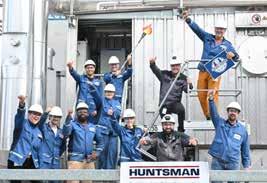

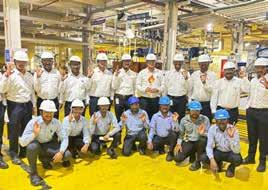
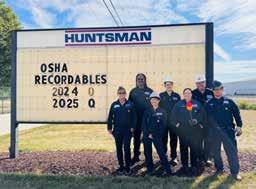

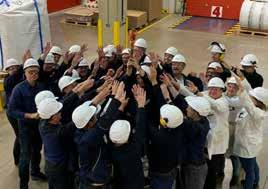
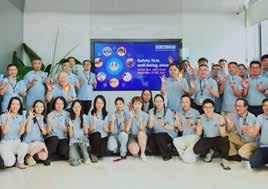
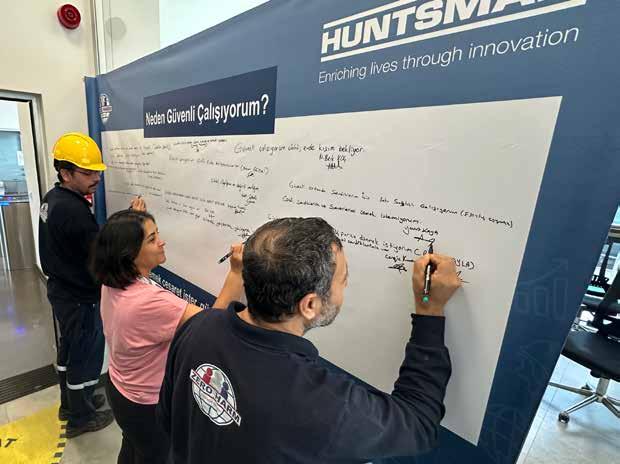
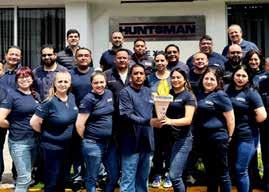
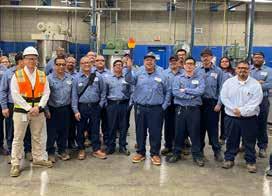
“As a global family, we are committed to excellence, including our commitment to one another’s safety and well-being – every day,” said Brittany Benko, Senior Vice President, EHS and ME&E. In a video to employees, Benko reinforced each associate’s responsibility, “Zero Harm asks us to care, even when it’s inconvenient. It asks leaders to listen, even when it’s uncomfortable. It asks teams to pause, even when deadlines loom. It asks for energy from everyone – the kind that comes from the courage to act and the care to protect.”
Zero Harm is a Huntsman journey built upon the Huntsman values and EHS values. We are focused on creating and advancing a culture of safety across all Huntsman sites. We are ensuring that people at all levels prioritize safety as they plan, make decisions, and take actions.
Our mission is to create a caring and engaged culture by embracing Zero Harm as a value to drive safe operations. We aim to achieve this by empowering everyone at Huntsman sites with the skills, support, and systems needed to work safely and go home each day.
What began years ago as an APAC Zero Harm Week has since grown into a Global Zero Harm Week across the company, reinforcing our shared purpose. In 2025, Huntsman associates – from leadership to the frontline – came together to spotlight safety and celebrate our first Global Zero Harm Week – a moment when every site stood united in our commitment to Zero Harm.
Each location embraced the initiative with its own unique approach – hosting trainings, demonstrations, award ceremonies, team meetings, leadership talks, creative games, and a wide range of other activities.
These efforts reflect our collective commitment to fostering a safe and supportive workplace, where Zero Harm is more than a goal – it’s a mindset.
Across our global sites, associates focused on:
· Personalizing their Zero Harm Commitment: Sharing “Why I work safe” on the pledge banner.
· Zero Harm Tools: 60-second checks, process confirmations, leadership walks, incident learning, and peer dialogue.
· Life Saving Rules & Acute Actions: First aid, fire safety, forklift operations, working at heights, hand safety and PPE.
· Health & Wellness: Mental health topics, health screenings, and nutrition.
· External Partner Engagement: Hospitals, paramedics, fire departments, and suppliers.
Huntsman’s continued investment in Zero Harm demonstrates a firm commitment to embedding safety, responsibility, and sustainability considerations into every facet of our operations, positioning Huntsman for a healthier and safer future for our employees, their families, and our communities.
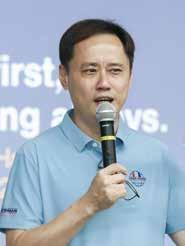
“We are one company, on one Zero Harm journey, united by a common belief that everyone deserves to work safely and return home safely, every day.”
– Leo Law, APAC EHS Director
“It’s about leadership, accountability, and leading by example. Having the courage to care and to speak up.”
– Vera Debontridder, Site Manager, Tienen
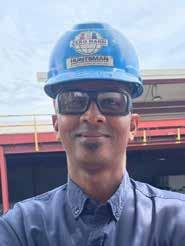

“Zero Harm means a safety culture that I apply to everything I do, no matter where I am.”
– Mario Bechara, Logistics Operator, Cartagena
70%
average open rate on campaign emails
820
average views across three Zero Harm videos
3,992
visits to the Zero Harm Week intranet page over two weeks
Associates shared comments and personal commitments across platforms, demonstrating strong cultural ownership of Zero Harm
Each year, Huntsman teams from across the globe travel to The Woodlands, Texas, each bringing a story of ingenuity, persistence, and purpose to the CEO Awards.
What began more than a decade ago as a celebration of creative thinking has evolved into a showcase of how collaboration and innovation can reshape material solutions and the lives they touch across global markets. This year, six finalist teams – one representing each division – stood out for their groundbreaking work in both Manufacturing Excellence and Product Innovation.
On March 26, six trophies were awarded during a celebratory dinner at the Cynthia Woods Mitchell Pavilion Woodforest Bank Club. More than 120 attendees from across the divisions and corporate functions gathered to applaud, cheer on, and recognize associates for their remarkable achievements.
The Manufacturing Excellence award was presented to Polyurethanes for a project that optimized assets, efficiency, and margins through Mannich polyol consolidation, and the Advanced Materials team took home the Product Innovation award for a project that enabled ultra high-speed computing through Advanced Material solutions.
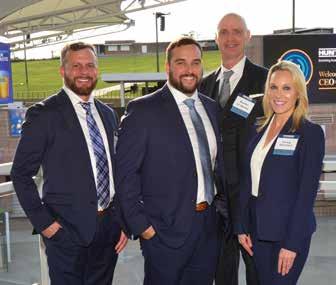
Peter Huntsman, Chairman, President and CEO, announced the winners and was joined on stage by Brittany Benko, Senior Vice President of EHS, Manufacturing, and Engineering and Corporate Sustainability Officer, each divisional president, Jeff Morgheim, Senior Director of Sustainability and EHS Governance, Nanneke de Wolff, Senior Director of Manufacturing Excellence and Engineering, to help celebrate each team.
“This is one of the best days of the year,” said Brittany Benko. “It is a chance to see our very best and brightest teams conquering challenges in both the solutions we create and how we create those solutions with ever improving excellence.”
The day of the awards ceremony, the six finalist teams representing the best of their business divisions, presented to Huntsman’s executive officers. Each team told the story of their project: the challenge, the breakthrough, and the impact. They were joined by a lively give-and-take of questions and answers, with executives leaning in to explore the details, ask tough questions, and spotlight what made each innovation stand out. When the final presentation wrapped, the executive team gathered for an in-depth judging session.
“I truly enjoy the CEO Awards experience. It is a great way to celebrate the creativity, imagination, and tenacity of our teams around the world,” said Jeff Morgheim. “It is a celebration of the human chemistry and magic that is the Huntsman organization.”
The awards ceremony was the culmination of a four-day program that both celebrated the teams’ achievements and enabled collaboration across the global associates. The finalists participated in social events that allowed for networking, learning more about the other team projects, and building camaraderie from the shared experience.
— FIRST PLACE —
Polyurethanes
Optimizing Assets, Efficiency, and Margins through Mannich Polyol Consolidation
Christy Blanchard, Sean Forestier, Martin Tate
SECOND PLACE
Advanced Materials
Growing the Power Business through Operational Excellence
Terry Chen, Perry Choi, Fiona Wang, Jules Xu
THIRD PLACE
Performance Products
RAISE – Conroe Transformation Journey
Jose Garcia, Charles Lyon, Carmen Silva, Andy Stein, Jose Manuel Torres
FIRST PLACE
Advanced Materials
Enabling Ultra High-Speed Computing through Advanced Material Solutions
Stephane Cron, Martin Grasemann, Christof Storz, Vicky Sun, Takashi Umehara
SECOND PLACE
Polyurethanes
Strengthening our Polyols Portfolio for Energy-Saving Insulation Foams
Peter Brookes, Servaas Holvoet, Danny Maldonado, Kai Xi
THIRD PLACE
Performance Products
MARS Rising: 3rd Party Relocation That Secures Supply and Superior Economics
Doug Benedict, Chris Nelli, George Shan, Michael Uehlinger, Chunli Zhao
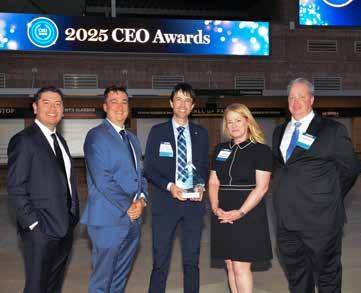
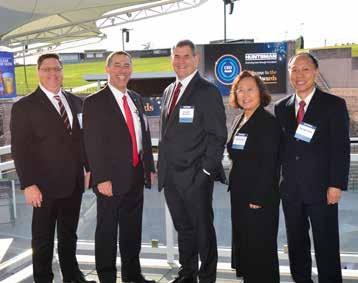
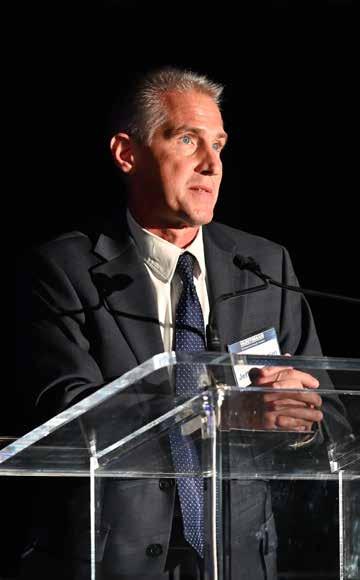
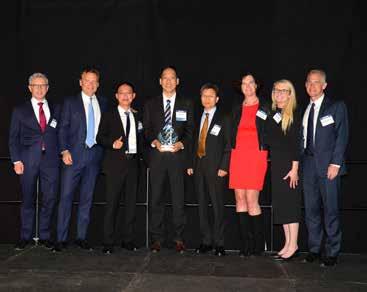


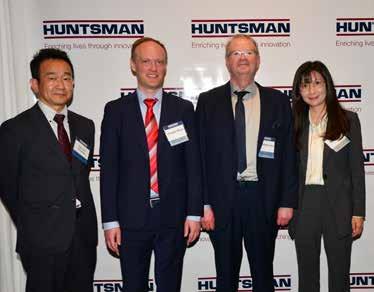

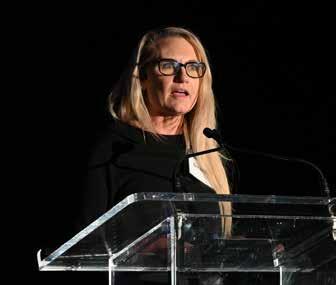
“It’s great to be here with such a remarkable cross-section of our Company. You all represent the very best,” said Peter Huntsman in his welcome and opening remarks to the teams and their colleagues before the winners were announced. “What’s really unique about our Company is you, and our culture of cheering each other on.”

WINNER Polyurethanes
PRESENTING TEAM MEMBERS
Christy Blanchard, Sean Forestier, Martin Tate
AS COMPETITIVE INTENSITY CONTINUES to increase in the polyurethanes industry, the Global Operations team has continued to evaluate opportunities to improve efficiency across the manufacturing footprint. In line with this goal, a cross-functional team assessed multiple Huntsman locations to identify the optimal production strategy for two polyols supplied to the Huntsman Building Solutions (HBS) business.
That work identified an opportunity to consolidate production of both polyester and Mannich polyols at the company’s Houston Port facility and strengthen long-term operating efficiency. Houston Port offered several advantages, including its existing supply position to HBS sites, minimal impact to the overall site risk profile, long-term operating sustainability, and supply dynamics.
The team was tasked to design, construct, and commission Mannich polyol production at Houston Port, with the objective of transitioning an existing polyester polyol reactor (historically dedicated to TEROL®) to produce Mannich. Transitioning this asset required close collaboration among the site team, the Global Excellence Team (GET), the Huntsman Advanced Technology Center (HATC), and Environmental, Health and Safety (EHS) teams.

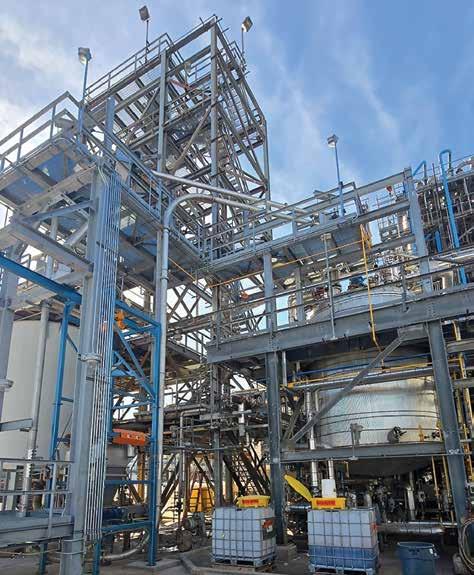
To date, the team has delivered on the following initiatives:
• Improved fixed cost performance by consolidating HBS polyol production from three sites to two
• Reduced the PSM and environmental risk
• Added TEROL® and Mannich polyol production capability at Houston Port through reactor modifications, solids charging, and new tank storage
• Worked closely with Purchasing, GET, EHS, and T&I to support fast project execution and help ensure product quality, compliance, and safety standards
The project began in January 2025, with successful product manufactured in October 2025. The HBS organization is now fully supplied for PDS-100 and Mannich polyols.



FINALIST Advanced Materials
THIS MULTIYEAR INITIATIVE was undertaken to improve the profitability and competitiveness of the Advanced Materials Power business in Asia by addressing operational bottlenecks, reducing avoidable cost, improving product quality, and better aligning teams around disciplined execution. Guided by the divisional 360 Strategy, the Panyu team strengthened planning, production, quality, and cost management in ways that supported measurable business improvement.
From 2023 to 2025, the initiative contributed to approximately $6M of EBITDA improvement through higher throughput, improved cost productivity, and better utilization of existing capacity. Production volume increased by approximately 25%, while cost optimization initiatives delivered structural savings of approximately $400K in 2024 and $800K in 2025. In addition, output from a key product line within the Power portfolio increased materially over a relatively short period, helping maximize use of the existing production line.
Manufacturing
With a focus on cross-functional alignment, the team redesigned Master Production Scheduling and implemented


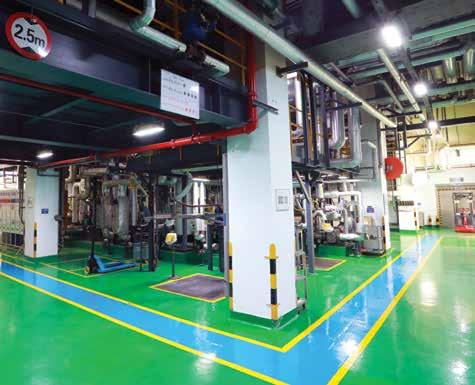
a “No Stop” model to reduce idle time between steps. Through Lean and Six Sigma initiatives, batch cycle time for a key product line improved by approximately 17%. These gains were supported through coordinated collaboration across process development, manufacturing, supply chain, commercial, and supporting functions, reinforcing consistent execution in line with shared business priorities.
Recognizing the importance of product quality to customer experience, the Panyu team focused on reducing foreign object debris (FOD) in the manufacturing process through statistical process control, real-time monitoring, and strengthened 5S discipline, a workplace organization and housekeeping method. These efforts improved product consistency and supported stronger safety performance and cost competitiveness.
The project also connected quarterly financial reviews with active engagement of shop-floor associates to build greater transparency, ownership, and understanding of how daily operating decisions affect business performance. In doing so, the team strengthened its ability to respond to changing market conditions and support the long-term competitiveness of the business.



PRESENTING TEAM MEMBERS
Jose Garcia, Charles Lyon, Carmen Silva, Andy Stein, Jose Manuel Torres
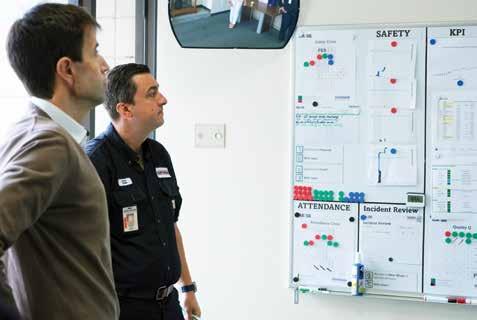
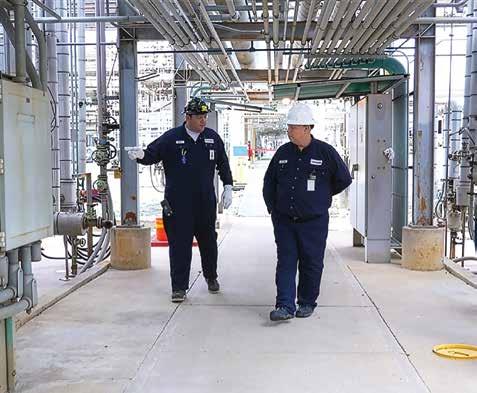
THE CONROE RAISE TRANSFORMATION was undertaken as a focused 18-month effort to improve the site’s core operating performance across safety, reliability, sustainability, and cost discipline. Built on a strengthened Zero Harm culture and guided by Lean principles, the team raised expectations, reinforced accountability, and embedded more consistent operating routines to support even safer, reliable, and efficient performance.
This work helped Conroe achieve a zero OSHA recordable incident rate and a zero Process Safety event rate by January 2026, reflecting durable improvement in both personal and process safety performance.
Operational reliability also advanced as the site shifted from a reactive model to an even more structured and disciplined approach. Clearer ownership and stronger daily routines increased internal Operating Equipment
Effectiveness (OEE) from 81% to 90%, enabling more stable and predictable operations. These gains unlocked 32 additional days of operational capacity and improved overall manufacturing resilience.
Sustainability performance improved significantly. A major steam network turnaround, combined with targeted efficiency measures, reduced steam intensity by 15% –equivalent to 8 million pounds less steam consumption per month – strengthening the site’s long-term energy profile and supporting more efficient resource use.
Conroe also maintained stable cost performance across


2023, 2024, and 2025 despite operating in a high-inflation environment while bringing the new EGRADE® unit online. In addition, an organizational realignment delivered a 26% improvement in employee productivity, enabling the site to meet rising operational demands more efficiently while preserving capability and performance. These gains also reflected the site’s ability to operate with a lean workforce while maintaining safe operations and consistent fixed cost performance.
Together, these results show how disciplined leadership, cultural alignment, and a Lean-driven transformation effort can deliver sustained performance improvement across a complex manufacturing operation.




DATA IS FUNDAMENTAL to contemporary life, and as AI technologies progress rapidly, there is a growing need for data centers capable of supporting ultra-fast computing. Advanced Materials launched this project to develop new ultra-low-loss laminate materials for printed circuit boards used in high-speed computing and data center applications, meeting a growing market need with a scalable new product platform. These laminates, suitable for switching speeds above 224 gigabits per second (Gbps), help maintain efficient and sustainable electrical energy transfer in these advanced systems.
To achieve such challenging performance, the Huntsman team created new hydrocarbon resin structures, expanding into previously unexplored chemistry for the division. A combination of molecular design expertise and insights from marketing and sales enabled the team to translate complex customer requirements into clear technical objectives, guiding the R&D project. Early in the process, the


WINNER Advanced Materials
PRESENTING TEAM MEMBERS
Stephane Cron, Martin Grasemann, Christof Storz, Vicky Sun, Takashi Umehara
team determined that a liquid solution would offer optimal material performance and process compatibility, while also allowing efficient use of Huntsman’s existing manufacturing resources for scalable production. The resulting solution, protected by multiple patents, was two ultra-low-loss products: ARALDITE® LZ 70366 and ARALDITE® LZ 80316.
Collaboration with leading PCB laminate manufacturers in East Asia led to product refinement, sampling, and testing by multiple customers. Despite still being in the R&D phase, the team collected over $4 million in sampling charges from customers to help cover material costs for qualification programs. With current qualifications in place and strong customer pipeline visibility, the program is expected to generate approximately $55 million in cumulative contribution margin (COMA) over the next five years. Huntsman is now qualified with a major manufacturer in several formulations, and our customer is qualifying its laminates with companies investing heavily in AI computing such as Google, Nvidia, and Meta.
The team has also identified further applications for these products in chip coatings and advanced semiconductor packaging, which may provide additional value to Huntsman. AI tools have been deployed to help accelerate development of the next generation of products and will ensure that Huntsman maintains a leading position in the market for extremely low loss laminates. The project demonstrates effective cross-functional collaboration across marketing, sales, R&D, and manufacturing, coordinated by strong project management, and highlights how Huntsman’s advanced material solutions can address complex challenges and deliver value to customers and the company.



PRESENTING TEAM MEMBERS
Peter Brookes, Servaas Holvoet, Danny Maldonado, Kai Xi
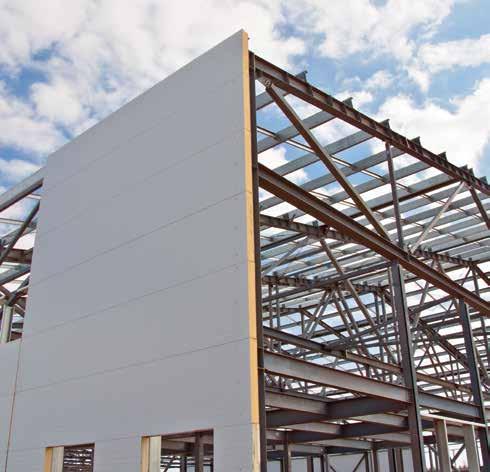
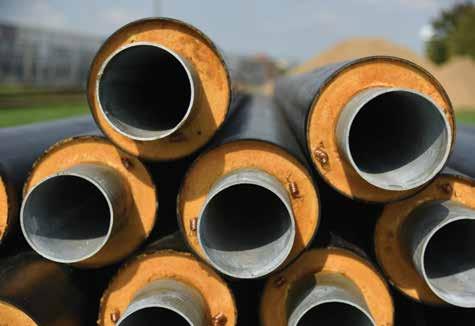
POLYURETHANE IS A HIGHLY EFFECTIVE thermal insulant, providing energy efficiency in homes, commercial buildings, district heating systems, cold stores, and refrigeration.
Insulation foam is produced by combining MDI and polyols, with the polyols (“B side”) providing enhanced thermal properties, improved fire properties, faster reactivity and shorter demold times. As PU insulation technology has matured, HPU recently launched a cross-functional global project team to strengthen our polyols portfolio through formulation, feedstock, sourcing, portfolio, and asset-utilization opportunities.
The team has focused on the following key initiatives:
• Increasing the use of recycled waste-stream feedstocks in proprietary TEROL® polyol production to enhance sustainability and reduce the carbon footprint
• Simplifying the raw materials toolbox used in formulations and streamlining the product offering
• Replacing externally sourced additives with in-house manufactured equivalents and optimizing internal asset utilization


• Maximizing the global use of TEROL® technology and optimizing the use of our global footprint
• Modifying polyol product compositions to reduce the regulatory burden
As a result of these initiatives, we believe we are in a better position to support growth in both MDI and polyol sales across these strategically important insulation applications.


PRESENTING TEAM MEMBERS
Doug Benedict, Chris Nelli, George Shan, Michael Uehlinger, Chunli Zhao
HUNTSMAN, THROUGH ACQUISITION, was the original innovator of the butane to maleic anhydride (“MAn”) technology. Key to that success was the codevelopment of a series of catalysts known collectively as the Maleic Anhydride Reaction System (MARS). This catalyst was toll-manufactured on behalf of Huntsman for many years by a series of owners at the Erie, Pennsylvania, location, until manufacturing ceased there in 2020.
Following Huntsman’s departure from the MAn catalyst market, the two remaining producers of significant size substantially increased prices faced by Huntsman, both in the near term and into the foreseeable future. In addition, these catalysts have not demonstrated superior performance relative to Huntsman’s own MARS catalyst. This project was initiated in response to that market situation, with the objective of reestablishing access to MARS catalyst supply on more competitive and sustainable terms while supporting long-term reliability, operating flexibility, and economics across Huntsman’s MAn reactor network.
To reinitiate MARS production and reintroduce it into the MAn catalyst market, Huntsman concluded a technology license in February 2025 with a foreign venture capital firm seeking to enter production of MAn catalyst using Huntsman’s technology. The license includes the details of




manufacture for the MARS catalyst, which were delivered in full in August 2025. In addition, Huntsman provides support through catalyst evaluations and testing at its HATC MAn pilot plant to help ensure catalyst quality and suitability for use in Huntsman’s MAn reactors.
Additionally, Huntsman negotiated an option to purchase MARS catalyst at a competitive price. This annual option quantity, sufficient to repack one jumbo-sized reactor, can supply Huntsman’s entire network of MAn reactors over their catalyst lifecycles. The ongoing value to Huntsman is expected to derive from the superior butane selectivity of the MARS catalyst, the catalyst’s broader operational and performance benefits including energy savings, and the lower catalyst acquisition cost enabled by more favorable production economics in China. Collectively, these advantages are expected to position MARS as a sustainable long-term solution for Huntsman.



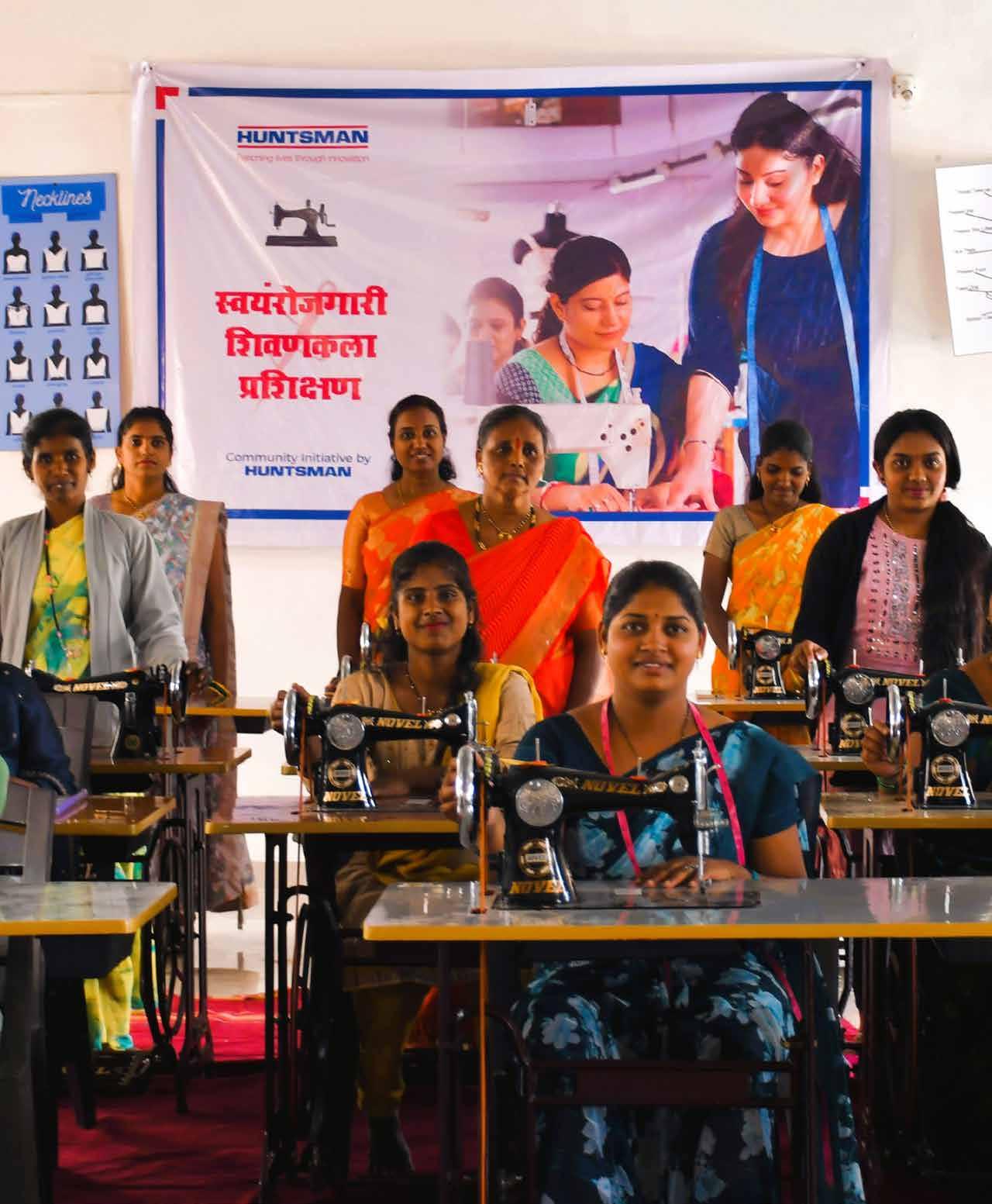
At Huntsman, we believe it is our responsibility to work to support our communities.
We encourage personal involvement from our employees and focus on helping those within our communities. You can find examples of Huntsman investments into our local communities in the Communities section of this report.
The Responsible Care ® program aims to help member companies elevate the safety of their employees, support local communities, and protect the environment while we continue to enhance our operational performance.
At our major sites, we participate in community advisory panels (CAPs) and local emergency planning committees (LEPCs). We also engage with local first responders. Where applicable, we engage with local work councils and other labor organizations.
In addition to the CAP and LEPC forums, our community outreach efforts include our corporate crisis plan and our site emergency response plans, which outline our engagement in the event of an incident or crisis. As a Responsible Care ® company, we also operate a 24/7 Care Line phone number at our company headquarters that community members can call to report concerns. Communities can also access our website for information on our facilities and operations.
We monitor the effectiveness of our community engagement through feedback we receive from our CAP and LEPC activities, as well as through social media monitoring and website analytics. Please refer to “Stakeholder Engagement” in this report.
You can find details regarding our operating locations on our website at Huntsman.com/locations
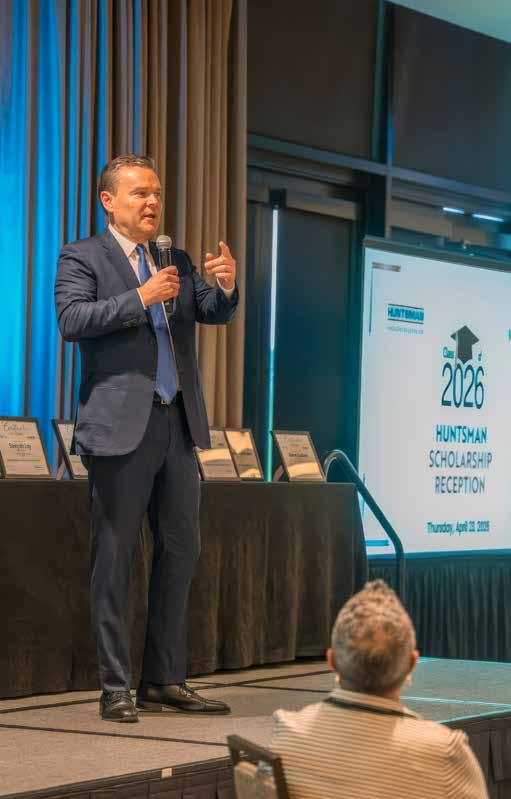
We are committed to strong community relations where we operate. We are a founding member of Responsible Care®, the industry’s environmental, health, safety, and security performance initiative.
We believe sustainability considerations are not only key to the creation and manufacturing of Huntsman products, but are also at the heart of the company’s commitment to making a positive difference for the communities where our employees live and work. We believe supporting the sustainability of local communities is an important focus for our business and our culture. We believe that when our communities thrive, we all benefit.
Huntsman Teams: Making a Difference
Huntsman associates invest their time, talents, and resources with the goal to make the world a better place. The following stories provide a snapshot of the many ways that Huntsman seeks to give back to local communities.
In The Woodlands, Texas, the spirit of giving came alive through two meaningful community efforts that brought employees together in service and generosity.
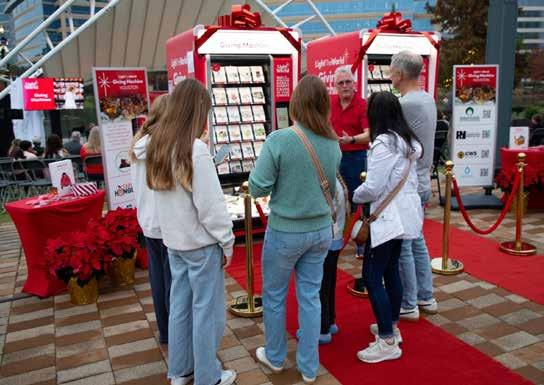
On December 18, our team joined the Light the World Giving Machine initiative, a unique program featuring vending-style kiosks where visitors could purchase life-changing items for individuals and families in need. During “Huntsman Day,” Huntsman doubled the impact by matching every donation dollar for dollar – supporting a range of local and international charities and extending the reach of each contribution.
At the same time, associates embraced the YMCA Angel Tree program as part of Huntsman’s annual Holiday Giving Campaign, fulfilling wish lists for children and families who might otherwise go without. This effort reflects our ongoing commitment to uplifting our neighbors and ensuring every family feels the warmth of the season.
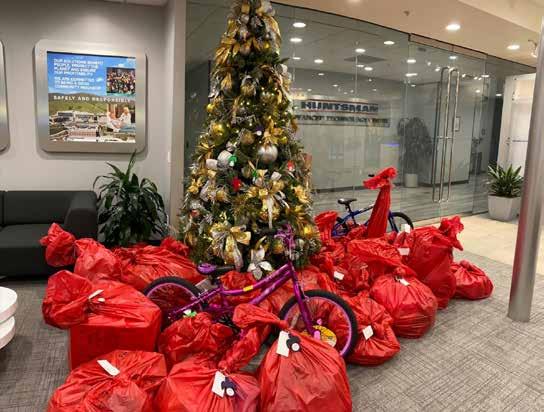
“I’m proud of how our global teams showed up for others this season; we’ll carry that same spirit of accountability, inclusion, and impact into the year ahead.”
–
Wade Rogers, Chief Compliance Officer and Sr. Vice President, Global Human Resources
From March to April 2025, Huntsman China held its sixth annual “Enriching Lives by Steps” walking campaign, encouraging employees to track their daily steps via a mini-program and walk more during breaks and commutes. Originally launched by the Shanghai Campus, where the APAC headquarters is located, the initiative has since gained support and participation from various sites across China, promoting a healthy balance between work and exercise. Adopting a “movement for charity” model, it meant every 5,000 steps logged translated into a 1 RMB (USD 0.15) donation – a simple yet powerful way to link personal well-being with positive social impact.
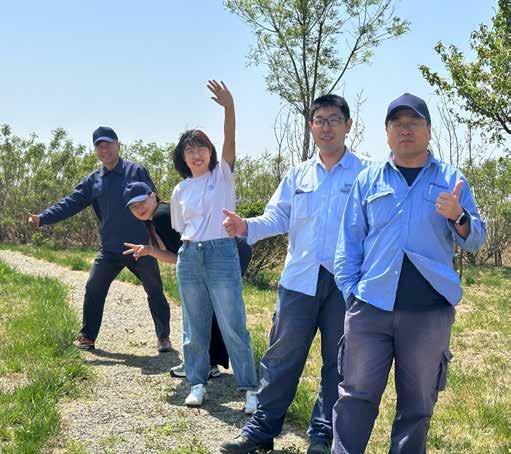
This year, a total of 475 employees in Greater China – including mainland China, Taiwan and Hong Kong – took part in the initiative. Collectively, they walked an impressive 166 million-plus steps, translating to a total fund of RMB 33,312 (USD 4,840). The donation was presented – through Huntsman’s TEROL® site in Taiwan – to the Taoyuan Kuanyin Loving Home, an organization dedicated to improving vocational training and supporting the independence of people with disabilities.
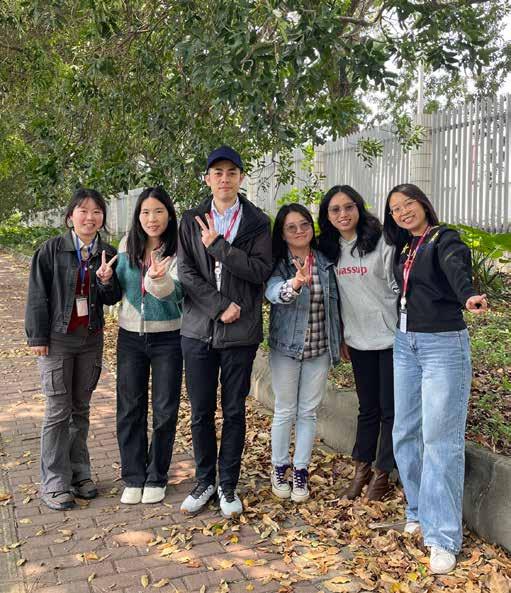
“This campaign is more than walking – it is a true reflection of our team’s compassion and collective spirit. Every step taken by our employees represents care for those in need and our shared mission to enrich lives across Greater China,” said Kathy Miao, Admin Service Manager of Campus Shanghai. Past editions of the walking campaign have directed similar step-based donations to community organizations serving vulnerable groups near different Huntsman sites in China. Beneficiaries have included long-term community partners near the AdMat site in Guangzhou and the Polyurethanes Caojing site in Shanghai.
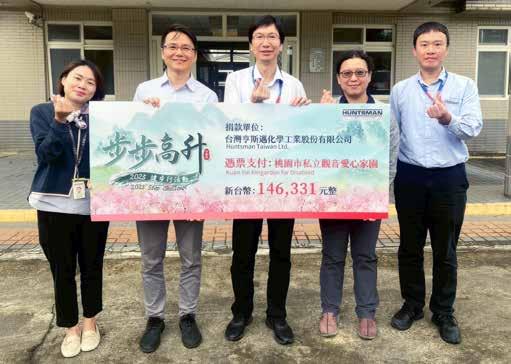
“The
walking campaign has connected health, teamwork, and community engagement. It demonstrates how small, everyday actions can collectively create lasting social value – reinforcing Huntsman’s culture of care and responsibility.”
–
Enshan Sheng, Managing Director, Campus Shanghai
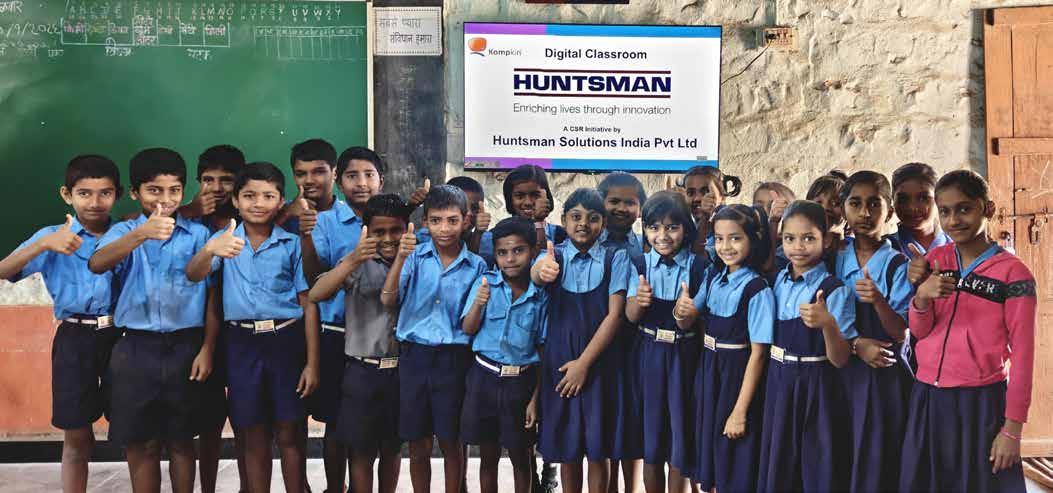
Across India, Huntsman’s social impact efforts focused on long- term community progress through initiatives that seek to enhance learning environments and support practical, workforce - ready capabilities.
New school infrastructure formed a key part of these efforts, including targeted educational support at Bhamchandra School in Maharashtra. Enhancements to internal facilities, library resources, and handwashing amenities benefited approximately 1,600 students from 25 surrounding villages. In parallel, e - learning classrooms were introduced across 50 schools in the region, enhancing digital access and learning outcomes for students in surrounding communities.
Another area of emphasis was vocational and self- employment training. Through these programs, more than 200 individuals were equipped with practical, job - ready skills, supporting employability, independence, and long- term livelihood outcomes.
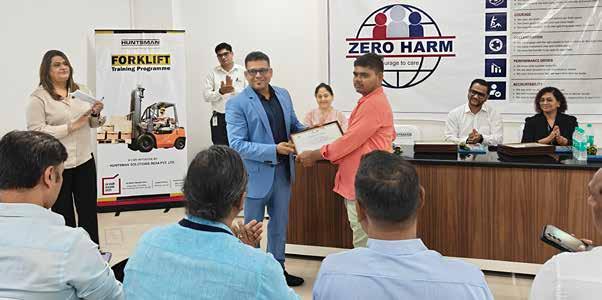
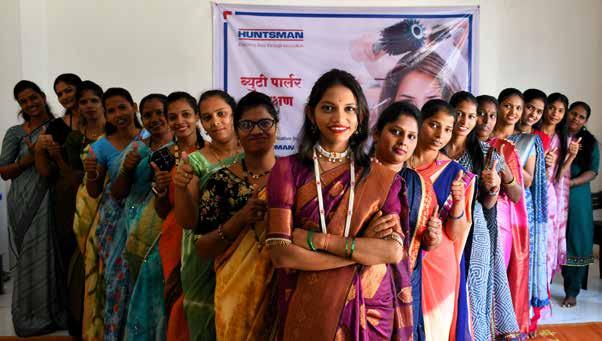
“By strengthening education and expanding access to practical skills, we are contributing to community development that is rooted in local needs and realities. These initiatives seek to help create meaningful, long-term change by enabling individuals and communities in India to build stronger foundations for growth and opportunity.”
– Rajib Kumar, Regional HR Senior Manager - APAC and India CSR Chairman and Director
In Kuala Lumpur (KL), Malaysia, Huntsman continued its commitment to community engagement through meaningful initiatives in partnership with SUKA Society, a local NGO.
During the year, GBS KL associates came together to support residents at government protection shelters in Selangor and Malacca. Through festival-themed Eid al-Fitr and Diwali engagements, volunteers spent time with the residents, fostering connection, creativity, and a sense of belonging. Activities included interactive workshops, group games, shared meals, and the distribution of gifts – creating spaces for learning, expression, and community bonding.

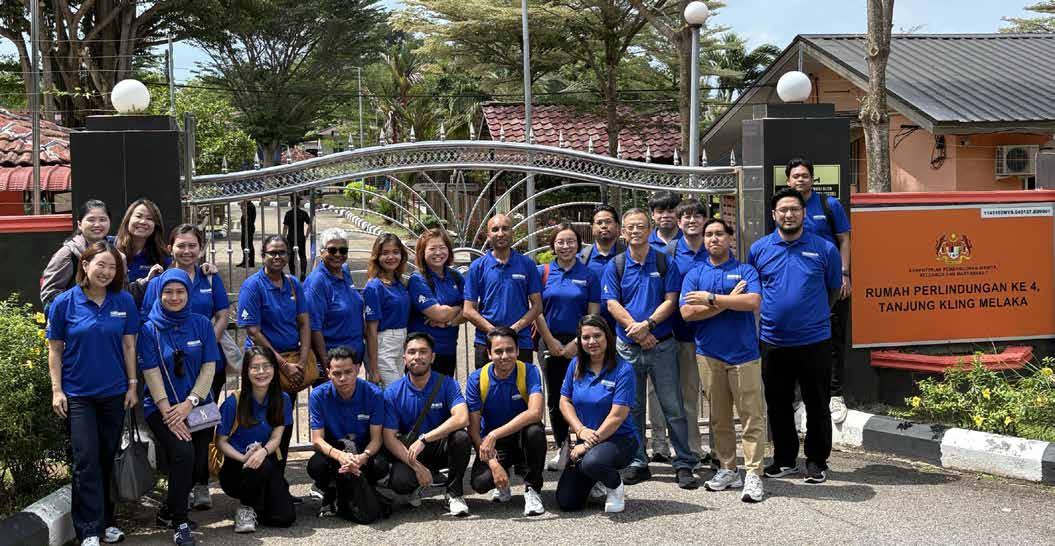
“These initiatives reflect our commitment to social development and inclusion by creating meaningful community impact through education, empowerment, and sustainability. By contributing our time, skills, and compassion, our associates helped foster experiences grounded in respect, cultural understanding, and genuine human connection.”
–
Su-Li Chan, Regional Lead Counsel APAC

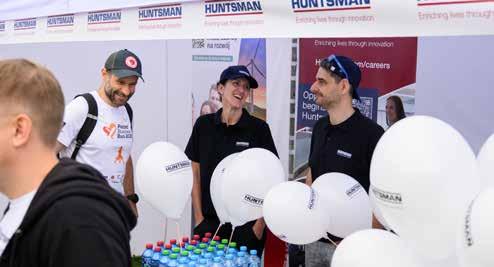

For the third year in a row, Huntsman’s GBS Kraków team proudly took part in the Poland Business Run – both as sponsors and enthusiastic participants. Their involvement went far beyond crossing a finish line; it was about helping others begin again. The annual relay supports individuals with mobility disabilities, including amputees and mastectomy patients, by funding prosthetics, rehabilitation, and specialized equipment. Since 2012, the Foundation behind the run has provided long-term support, education, and awareness to more than 1,000 beneficiaries.
This year, Huntsman volunteers played a vital role behind the scenes, contributing their time, energy, and heartfelt commitment to ensure the event ran smoothly. Many brought along their families, turning the day into a shared celebration of community spirit and compassion. The Talent Acquisition team also made a strong showing – engaging with attendees, sharing Huntsman’s values, and connecting with potential future colleagues who were inspired by the company’s purpose-driven presence.
“As proud sponsors of the Poland Business Run for the third year in a row, watching our team run with purpose filled me with immense pride. It’s our values in motion!”
– Lion Paauwe, Global Business Services Hub Leader

Associates from our Huntsman GBS Costa Rica team stepped beyond the office and into the heart of the community, joining a meaningful volunteer initiative in Barva de Heredia. In partnership with the Environmental Management Department of the Municipality of Barva, the team came together with a shared purpose: to care for the environment and contribute to the well-being of their neighbors.
More than 30 volunteers dedicated their time to improving a 1.2-kilometer stretch leading to the Social Benefit Fund of the National University. The group quickly got to work, rolling up their sleeves for activities that left a visible and lasting impact on the area.
Teams gathered litter and debris along the roadside, cleaned sidewalks to create safer walkways, and sorted recyclable materials to promote sustainable waste management.
By the end of the day, nearly a ton of waste had been removed – turning what began as an ordinary morning into a powerful demonstration of what collective action can achieve.
Volunteers shared that working side by side with colleagues, community members, and local authorities deepened their sense of connection and purpose. The effort not only brightened Barva’s surroundings but also reinforced Huntsman’s ongoing commitment to corporate citizenship and environmental responsibility.
This initiative stands as a reminder that meaningful change often begins locally, with people willing to give their time, energy, and care. Through collaboration and teamwork, our GBS Costa Rica team continues to show how volunteerism can strengthen communities – and inspire others to do the same.
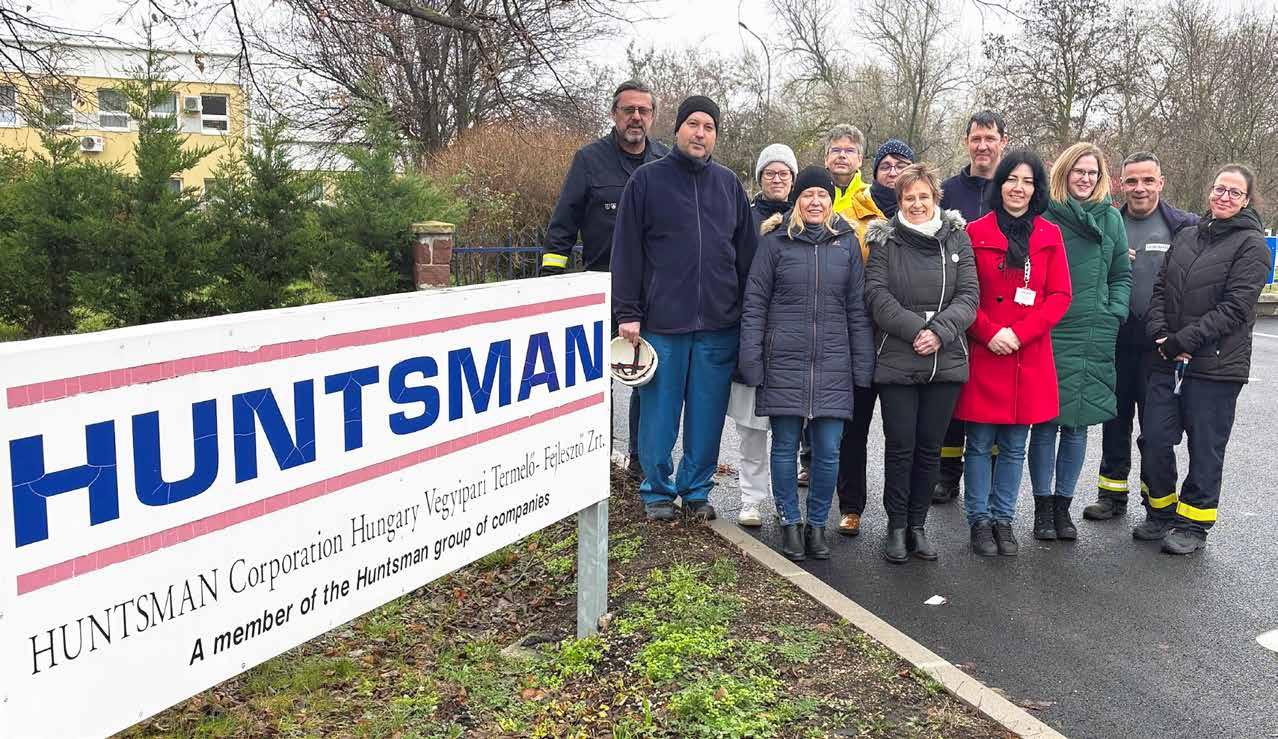
Associates from Huntsman’s Petfurdo site came together with a shared sense of purpose, joining the “Million Steps for Your School” campaign for the first time. The 11-week initiative brought colleagues together around a shared goal: supporting a disadvantaged local school and helping create better opportunities for students.
Fourteen associates committed to participate, turning everyday movement into positive community impact. Throughout the challenge, the team encouraged one another to stay active and engaged, ultimately logging more than 3 million steps. Their combined effort secured 117th place on the corporate leaderboard, demonstrating what can be achieved when people unite behind a common cause.
The campaign concluded on December 7, and each step taken helped move the supported school closer to earning a 1 million HUF prize (about 3,200 USD), funding that can make a meaningful difference in the school’s resources and learning environment. What began as a wellness challenge quickly became a powerful example of how small, consistent actions can add up to meaningful change.
Participants shared that the experience strengthened their sense of connection, not only with one another but also with the community they support. The initiative showcased teamwork, commitment, and the belief that positive impact often starts with simple actions taken together.
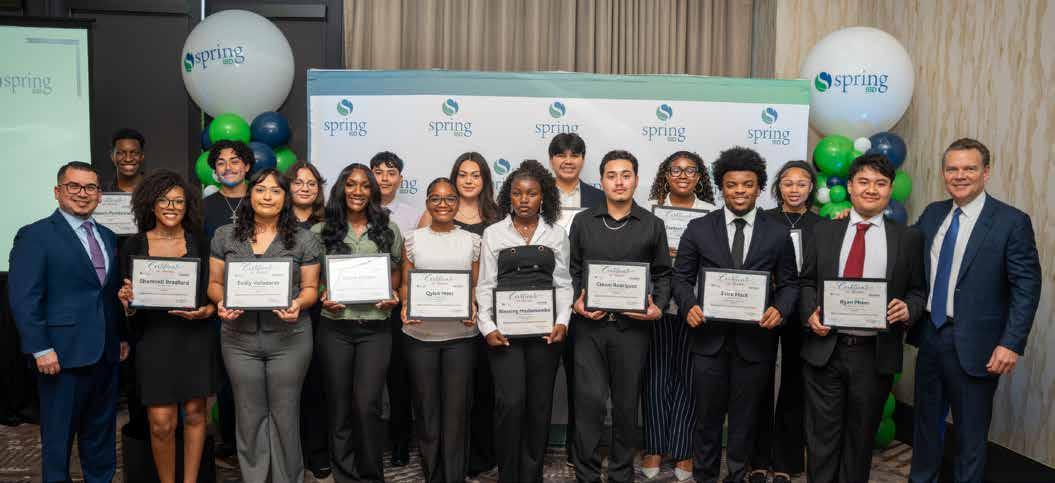
For the sixth consecutive year, Huntsman is investing directly in the next generation of leaders through its partnership with Spring Independent School District (ISD). Established in 2020, the Huntsman Scholarship Program reflects a shared commitment to expanding access to higher education by supporting students pursuing college degrees in science, technology, engineering, mathematics (STEM), and business-related fields.
This year, 16 graduating seniors received $5,000 per year, renewable for up to four years, for a total possible award of $20,000 to help them attend an accredited four-year university. Designed as a direct investment in education, the scholarship supports students at a pivotal transition point as they move from high school to higher education.
“We
have been given the opportunity to invest over a million dollars in future generations. I believe that is the best investment that this company will ever make.”
– Peter Huntsman, Chairman and CEO
Together with Spring ISD’s leadership, this partnership was shaped during the early days of the COVID pandemic to identify the most meaningful ways to support students’ longterm success. Located just down the road from Huntsman’s global headquarters, Spring ISD serves a diverse community of more than 34,000 students across 43 campuses, many of whom face economic challenges that can put higher education out of reach. Huntsman leadership was eager to make a difference in the local community, and that focus on direct, student-centered impact has remained at the heart of the program ever since.
Since these scholarships were first awarded in 2021, 96 Spring ISD students have received nearly $1.2 million in funding
through the program. For district leaders, the impact is reflected not only in these figures but also in meaningful experiences.
For the students recognized, the scholarships represent more than financial support. They offer reassurance, momentum, and the freedom to focus on academic and career goals with fewer obstacles.
“This scholarship means a lot to me. I’ll be able to focus on my academics and not worry about the financial burden on my family.”
– Sarahi Perez, Carl Wunsche Sr. High School
Through ongoing collaboration with Spring ISD, the scholarship program continues to build a legacy that creates opportunity, opens doors, and helps students turn ambition into achievement.
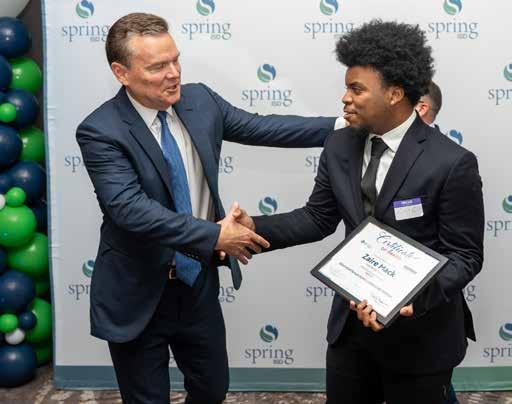

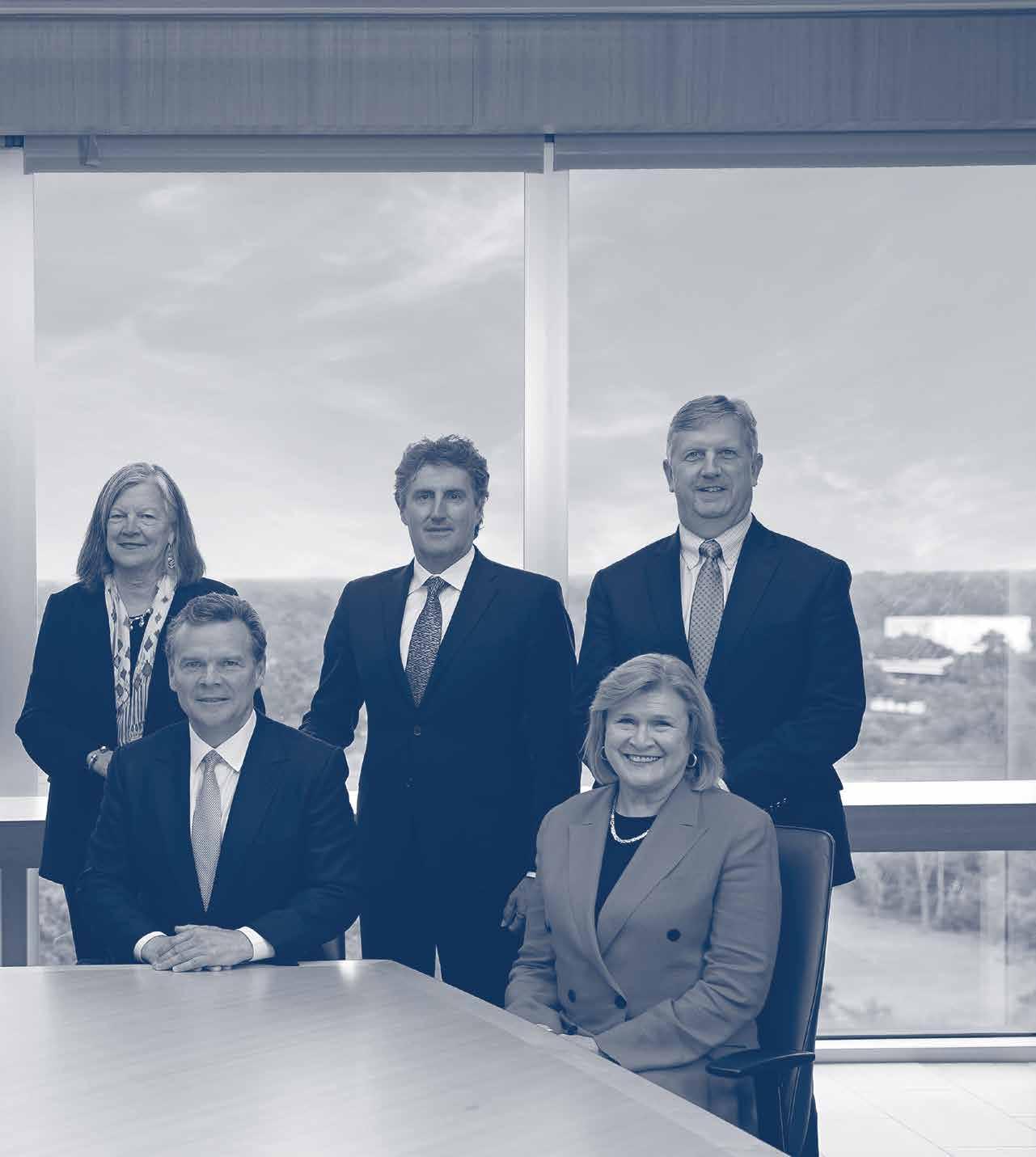
Huntsman has disclosed its sustainability performance since 2010. The following section offers further details on our reporting parameters and provides indices that cross-reference well-known disclosure frameworks.
| GRI 2-9 | GRI 2-10 | GRI 2-11 | GRI 2-12 | CDP 4.1 | TCFD Governance A |
Huntsman’s highest governance body is our Board of Directors. Nine of the 10 members are independent or non-executive. Peter Huntsman serves as the Chairman of the Board, President, and Chief Executive Officer of the Company. As of the issuance of this report, the Board is structured as follows:

Peter R. Huntsman Chairman of the Board, President, and Chief Executive Officer

Daniele Ferrari Director

Dr. Mary C. Beckerle* Director

Sonia Dulá Chair of the Compensation Committee and Director

Jeanne McGovern Chair of the Audit Committee and Director

José Muñoz Director

Cynthia L. Egan Non-Executive Vice Chair of the Board, Chair of the Nominating and Corporate Governance Committee, and Lead Independent Director

David B. Sewell Director

Curtis E. Espeland Director

U.S. Navy Retired Vice Admiral Jan E. Tighe Chair of the Sustainability Committee and Director
In February 2021, the Sustainability Committee was formed, and is chaired by Jan E. Tighe, U.S. Navy Vice Admiral (Retired). More information regarding the Board Sustainability Committee, and the Board’s management of sustainability-related topics, can be found at Guidelines & Ethics : Huntsman Corporation (HUN) .
*Dr. Mary C. Beckerle resigned from the Board effective April 29, 2026.
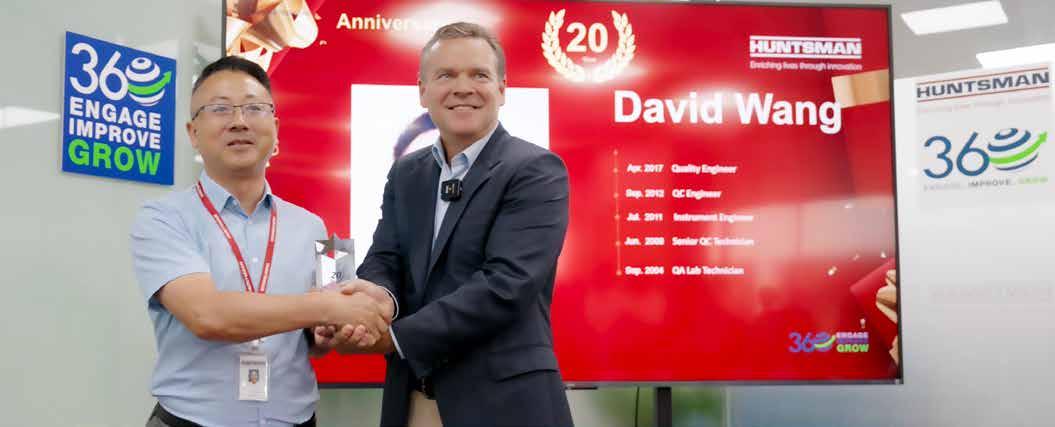
| GRI 2-13 | GRI 2-14 | CDP 4.3 | | TCFD Governance B |
Led by Peter Huntsman, the committee is composed of the executive team along with representatives from key functions.
The committee provides executive direction of the corporate sustainability program and submits regular updates to the board.
Peter R. Huntsman Chairman of the Board, President, and Chief Executive Officer
Philip M. Lister
Executive Vice President and Chief Financial Officer
Amy K. Smedley
Executive Vice President, General Counsel and Secretary
Steen Weien Hansen Division President, Polyurethanes
Jan Buberl Division President, Performance Products
Scott Wright Division President, Advanced Materials
Brittany Benko
Senior Vice President, Environmental, Health and Safety and Manufacturing Excellence, and Corporate Sustainability Officer
R. Wade Rogers
Senior Vice President, Global Human Resources and Chief Compliance Officer
Ivan M. Marcuse
Vice President, Investor Relations and Corporate Development
Jeff Morgheim
Senior Director, Global Sustainability and EHS Governance
| GRI 2-13 | GRI 2-14 | CDP 4.3 | TCFD | | Governance B |
Led by Corporate Sustainability Officer
Brittany Benko, the council is composed of senior representatives from the Company’s divisions and key functions.
The council directs development of the corporate sustainability program and cultivates a common framework for sustainability, helping to ensure strategic alignment among the divisions, functions, and executive team.
Brittany Benko
Senior Vice President, Environmental, Health and Safety and Manufacturing Excellence, and Corporate Sustainability Officer
Todd Bloomfield Vice President, Purchasing
Twila Day Vice President and Chief Information Officer
Ralph DiGuilio* Vice President, Global Research and Development, Performance Products
David Hatrick Vice President, Innovation, Advanced Materials
Ivan M. Marcuse Vice President, Investor Relations and Corporate Development
Bill McPherson
Global HR Director, Corporate Functions
Jeff Morgheim
Senior Director, Global Sustainability and EHS Governance
Pavneet Mumick
Global Vice President, Technology and Innovation, Polyurethanes
Max van der Meer
Vice President
Global Operations and Technology, Polyurethanes
*Ralph DiGuilio elected to retire in early 2026.
At Huntsman, good governance and corporate responsibility are integral parts of our business strategy. The key focus areas of our corporate responsibility program include: our people; our health, safety, and wellness programs; and our environmental stewardship, including our sustainability and product stewardship efforts.
To learn more about our policies, including how we embed our policy commitments, enable the reporting of potential violations of policies, and manage our commitment to compliance with the laws and regulations applicable to our activities, please see our governance disclosures at Governance: Huntsman Corporation (HUN)
| GRI 2-23 | GRI 2-24 | GRI 2-30 | GRI 2-31 | GRI 205-1 | GRI 205-2 | GRI 205-3 |
Huntsman works to ensure that our corporate policies, procedures, and guidance documents align with the Ten Principles of the United Nations Global Compact (UNGC). The table below identifies relevant Huntsman policies, procedures, systems, and actions that illustrate our progress.
Since 2012, our Business Conduct Guidelines make specific reference to the UNGC and our commitment to operating under its standards in all communities where we do business. In addition, Huntsman’s Vendor Code of Conduct applies to all vendors and their employees, agents, and subcontractors.
See also: Huntsman Human Rights Policy.
• The Corporate Ethics and Compliance (E&C) department reports any reported human rights violations to the Audit Committee, which is composed of independent members of the Board of Directors.
• “Speak Up” confidential reporting service for reporting concerns.
• International Trade Compliance risk assessments for at-risk countries.
• Prequalification due diligence of vendors with high-risk profiles.
• Periodic requalification due diligence review of high-risk vendors and all distributors.
• Global EHS standards and procedures.
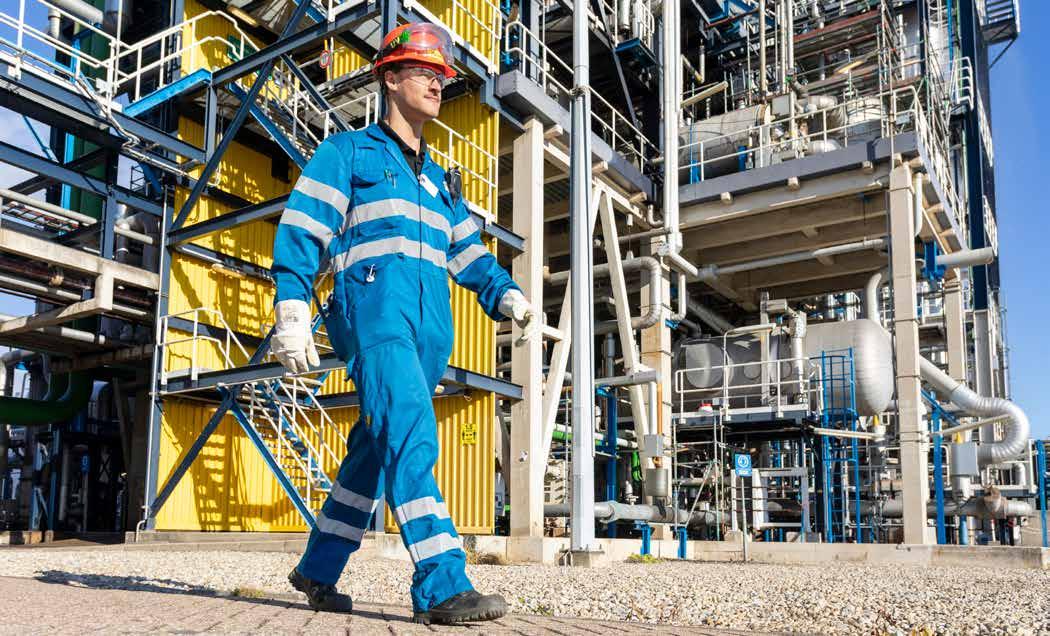
3 Ensuring freedom of association
Associates are ensured freedom of association and are reminded of that right through visible postings at our facilities.
4 Abolition of all forms of forced labor 5 Abolition of child labor
In every region of the world, our Human Resources department is charged with ensuring that direct-hire Huntsman associates have necessary and legally required documentation to establish their identity, legal age, and work status. See also: Huntsman Human Rights Policy.
6 Elimination of discrimination
Huntsman upholds a policy against discrimination, including harassment and retaliation.
Of all Huntsman employees, 41% are covered under collective bargaining agreements, including both union and work councils.
• Huntsman engages in planning to help ensure employees are treated with respect and dignity regarding operational changes that involve a change in staffing levels or otherwise affect employment.
• Standard contract clauses require each vendor to agree that no child or indentured labor is used by the vendor in the performance of its business.
• Periodic E&C combined policy audits conducted for selected sites that include audits on human rights, child labor, and forced labor.
• Ethics and compliance training.
• Online training regarding harassment in the workplace.
U.S. Purchasing groups offer technical assistance in the preparation and submission of bids to Huntsman, which can include small or disadvantaged businesses.
7 Precautionary environmental protection
Huntsman’s EHS Management System includes seven Global EHS Standards and 70 Global EHS Procedures to ensure safe operation at all its facilities.
Our Product Stewardship Standard EHS-700 outlines global requirements to ensure responsible management of EHS issues relating to Huntsman products throughout their lifecycle.
Huntsman’s Environmental Standard EHS-600 outlines global requirements to identify and minimize the environmental impact of our operations and to strive for continuous improvement.
We committed to publish 30+ product safety summaries as part of our Horizon 2025 targets to enhance transparency and provide stakeholders with helpful information.
Huntsman’s Process Safety Standard EHS-400 outlines global requirements to identify and manage risk associated with process safety incidents and their impacts on the environment.
• Our Product Safety and Regulatory Compliance (PSRC) team actively manages product and raw material risk, including hazard communication (such as safety data sheets), compliance, customer risk evaluation, and distribution risk management.
• All Huntsman facilities are required to identify, quantify, and minimize energy use, as well as air, water, and waste releases from routine operations.
Management of Change (MOC) procedures at all facilities require consideration of environmental impacts for new projects and changes in processes.
• Process Hazard Analysis (PHA) procedures identify process safety hazards and the appropriate safeguards to prevent or mitigate impacts to the environment from loss-of-containment events.
In 2025, Huntsman submitted 212 global substance registration dossiers, 129 of which are under REACH.
• As of the end of 2025, we published 31 product safety summaries that are available on our website, delivering our goal of publishing 30 or more by 2025.
8 Initiatives to promote greater environmental responsibility
Huntsman has published our EHS Policy and Commitment on our website, which includes a commitment to the Responsible Care® program and placing care for human health, safety, and the environment at the forefront of everything we do.
Huntsman has developed and published our Horizon 2025 global strategic targets and has launched its Catalyst 2035 in areas of personal and process safety and environmental performance, including production intensity targets in greenhouse gas emissions, energy consumption, hazardous waste disposal, and net water usage.
• We publish our annual Sustainability Report in accordance with the latest GRI Standards (2021) and provide both an SASB index and Task Force on Climate-related Financial Disclosures (TCFD) indices to meet growing stakeholder interests and support our ongoing commitment to transparency.
• We developed a predictive chemical risk tool to identify and evaluate substances of concern.
• Approximately 50% of our sites are ISO 14001 certified.
• In 2025, we completed 18 EHS and Security audits. We have Community Advisory Panels (CAPs) at major facilities.
• We presented CEO Awards for both Product Innovation and Manufacturing Excellence. See 2025 winners and finalists under the Who We Are section.
In our EHS Policy and Commitment, our policy is to place care for human health, safety, and the environment at the forefront of everything we do, and our mission is to provide products and solutions through the applications of science that enrich lives and help create a sustainable future, while doing no harm to people or the environment.
As a member of the American Chemistry Council (ACC), we support ACC’s sustainability principles that commit to achieving measurable reductions in emissions and creating innovative products for a sustainable future and societal benefits.
• We use waste PET in our polyols as raw material to produce polyurethane insulation. We have expanded our TEROL® polyols manufacturing to Taiwan – helping us to meet increasing market demand for recycled content. We upcycle the equivalent of over 845 million PET bottles annually, with the equivalent of over 6,000 recycled bottles used in each home, utilizing our spray foam from the newly created Huntsman Building Solutions (HBS) business.
• Our R&D initiatives reduce volatile organic compounds (VOCs), enable lightweight materials for the automotive and aerospace sectors, increase bio-based content, and improve energy-saving insulation for buildings and refrigerated transport that reduces food waste through the cold chain.
Our Corporate Ethics and Compliance department oversees and supports our compliance with relevant laws, regulations, and related Huntsman policies worldwide.
See also: Huntsman Business Conduct Guidelines, Vendor Code of Conduct
• We have an array of tools for reporting (third-party-run hotline and website for confidential “whistleblower” reporting, dedicated mailbox, monthly communications to all employees, quarterly poster campaigns), investigating, tracking, and correcting ethics, compliance, and corrup
tion allegations.
• We report statistics to the officers and senior leaders monthly, and present detailed overviews to the Audit Committee quarterly.
• We conduct third-party due diligence when adding new vendors to confirm that vendors and representatives comply with all applicable laws and regulations, and with our policies. This due diligence is redone periodically based on a risk matrix evaluation.
We conduct periodic audits at Huntsman sites.


We seek to engage with our stakeholders to identify actual and potential impacts of our operations, and to determine prevention and mitigation responses to potential negative impacts. The following table outlines our stakeholder categories, how we assess their concerns, communicate with stakeholders, and measure engagement effectiveness.
Stakeholder Category Methods to Assess Concerns Communication Channels Methods to Measure Effectiveness Employees
• Human Resources Department
• Employee Helpline
• Regional EHS Directors
• Site Leadership
• Site Leadership
• EHS Scorecards
• Sustainability Report
• Training
• EHS Conferences
• CEO Awards
• Huntsman Intranet
• Global Emails
• Site EHS Leadership
• Management Review
• Employee Surveys
• EHS Scorecards/Targets
• Horizon 2025 Progress Review Contractors
• Regional EHS Directors
• Purchasing/Contracts
Huntsman Board of Directors
• Regular Meetings
• Direct Engagement with Investors
• Annual Stockholder Meeting
• Regional EHS Directors
• Purchasing/Contracts
• EHS Scorecards
• Sustainability Report
• Quarterly Meetings/Reviews
• Investor Analytics Reporting (e.g., MCSI, Sustainalytics, ISS)
• Sustainability Report
• Site EHS Performance Review
• EHS Scorecards/Targets
• Horizon 2025 Progress Review
• Management Review
• EHS Scorecards/Targets
• Horizon 2025 Progress Review Investment Community
• Quarterly Financial Results
• Investor Events
• Disclosures on Climate (CDP-Climate)
• Disclosures on Water (CDP-Water)
• Horizon 2025 Targets
• Investor Ratings
• Management Review
• Horizon 2025 Progress Review
• TCFD Disclosure
Stakeholder Category Methods to Assess Concerns
Customers
• Customer Surveys/ Audits
• Customer Service
• Product Safety Hotline
Suppliers
• Vendor Code of Conduct
• Ethics Screening
• Purchasing/ Contracts
Community (at Large)
• Huntsman Website Contact Link
Community (Near Neighbors)
• Community Advisory Panels (CAPs)
• Chambers of Commerce
• Fire Department Tours
• Local Memberships, such as Local Emergency Planning Committees (LEPCs)
Regulatory Agencies
Government Officials
Chemical Industry Affiliates
• Direct Engagement with Regulators
• Government Affairs Team
• Memberships with National Organizations and Trade Associations (such as ACC)
• ACC, CEFIC, and CPCIF Committee Involvement
Communication Channels Methods to Measure Effectiveness
• Product Information (Material Safety Data Sheets [SDS], Labeling)
• Product Safety Summaries
• Sustainability Report
• Sales Contact
• Vendor Code of Conduct
• Ethics Screening
• Product Safety and Regulatory Compliance (PSRC) Supplier Questionnaire
• Vendor SDS System
• Huntsman Website
• Social Media
• Sustainability Report
• Horizon 2025 Targets
• Corporate Crisis Plan
• Site Emergency Response Plans
• Community Advisory Panels
• Chambers of Commerce
• Fire Department Tours
• Local Emergency Planning Committees
• Phone Contact
• Social Media
• Huntsman Website
• Local Engagements (scholarship programs, Hub center communities in Kraków, Costa Rica, and Kuala Lumpur)
• Direct Engagement with Regulators
• Sustainability Report
• Government Affairs Team
• Sustainability Report
• Membership Reporting (ACC)
• ACC Committee Involvement
• Customer Surveys (Division Communication Teams)
• Supplier ESG-CSR Management System (Under Development)
• Industrial Hygiene Assessments
• Huntsman Website Analytics
• Huntsman Website Feedback Survey
• Feedback During Outreach Activities
• Charitable Activities
• Huntsman Website Analytics
• Direct Feedback
• Direct Feedback
• Trade Shows
• Industry Benchmarking (ACC)

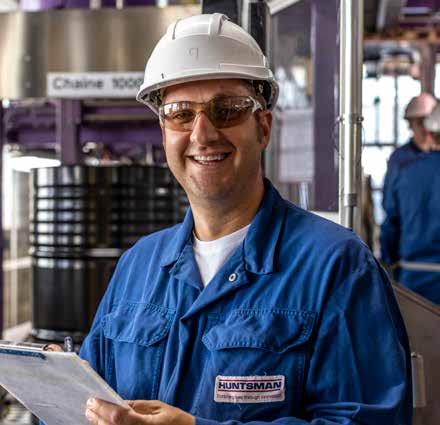
This sustainability context includes our potential impacts to the planet, people (including human rights), and prosperity of our stakeholders.
Huntsman conducts periodic materiality reviews and updates our disclosures accordingly. We apply the 2021 Global Reporting Initiative (GRI) Standards, using an impact-materiality lens that considers the potential impacts of sustainability topics on our stakeholders in the context of our activities, business relationships (including suppliers and customers), and the broader sustainability context of our business.
When assessing the materiality of topics, we considered nearterm and long-term potential impacts, as well as the potential severity and likelihood of outcomes. We also considered both direct and indirect roles that Huntsman could play in influencing these outcomes.
Governance and approval of this process sit with the Huntsman Sustainability Council, Sustainability Committee, and Board Sustainability Committee.
In 2024 and again in 2025, we extended this materiality review to also consider a double-materiality perspective in line with the European Union’s Corporate Sustainability Reporting Directive (EU CSRD). This extension used additional assessment steps and lenses; however, it did not change our list of material topics. Instead, the double-materiality work affirmed the topics identified through our established GRI-aligned process. Accordingly, our topic list remained consistent year over year.
Our review included discussions and consultations with stakeholders and experts (such as customers, internal experts, and management) through our internal risk assessment process, as well as input from employees and investors. We also considered the Sustainability Accounting Standards Board (SASB) standards for the chemical sector, external sustainability ratings organizations, peer benchmarking, and broader trends in our industry and beyond.
These sources help us validate the completeness of our topic set and understand evolving expectations across our value chain.
We apply GRI Disclosure 3-3 to report how we manage each material topic.
1 “Material” and “materiality” as used to discuss climate-related risks and opportunities in this report should not be taken to mean that such information is “material” as understood under the securities or other laws of the U.S. or any other jurisdiction, or as they are used in the context of financial statements or financial reporting.


Our material topics have been organized along the World Economic Forum’s sustainability framework of “Planet, People, Prosperity, and Principles of Governance.”
Please note that “Principles of Governance” is covered both in our discussion of governance for sustainability-related topics (please refer to the “Sustainability Governance” section) and our corporate governance disclosures (please refer to the GRI Index).
There were no changes in material topics from our last Sustainability Report.
• Greenhouse Gases
• Energy Management
• Water Management
• Air Quality
• Waste Management
• Circularity
People
• Workforce Health and Safety
• Process Safety
• Community Relations
• Product Stewardship
• Employee Engagement and Development
• Inclusion and Equal Opportunity
Prosperity
• Reliability
• Cybersecurity
• Product Innovation

Huntsman has disclosed its sustainability performance since 2010.
The following section offers further details on our reporting parameters and provides indices that cross-reference well-known disclosure frameworks.
Huntsman has reported in accordance with the GRI Standards (2021) for the period January 1st through December 31st, 2025, in line with our financial reporting period, unless stated otherwise in the report.
We have provided a consistent treatment of identified material topics and have aligned these topics and other disclosures to the World Economic Forum’s taxonomy of Stakeholder Topics. Huntsman is also reporting in accordance with Sustainability Accounting Standards Board (SASB) standards and the Task Force on Climate-related Financial Disclosures (TCFD) framework and has cross-referenced the CDP Worldwide global disclosure system. We report our sustainability performance on an annual basis.
We include all entities in our financial reporting in our sustainability reporting. The consolidated Huntsman entity list can be found online.
The report includes data related to all Huntsman enterprises where we have operational control (more than 50%) and to joint ventures where we have management control.
The data reported have been obtained primarily from our financial management reporting systems; various human resources information systems; and the Huntsman corporate reporting systems for environmental, health, and safety performance indicators.
We are confident in the overall reliability of the data reported but recognize that some of these data are subject to uncertainty, inherent to limitations associated with measuring, calculating, and estimating data.
Minor corrections to historical data may result from data errors or other valid reasons. Each year, energy consumption and environmental emission estimates are recalculated and revised for all years in the annual sustainability report, as attempts are made to improve both the analyses (by using better methods or data) and the overall usefulness of the report. As a result, figures may include updates to data published in the past.
We make restatements to figures previously reported to
help ensure consistency and enable comparability between reporting periods.
We make restatements when there are material changes in our business or disclosure parameters that could significantly influence the analysis of the changes in our impacts over time. These material changes may arise from but are not limited to:
• Changes in the reporting boundary
• Changes in estimation methodology
• Updates to help ensure data accuracy
• Corrections to data reported in previous reporting periods due to errors or omissions
Our materiality policy, which considers both the significance of the change and the risk of stakeholder misinterpretation, guides these adjustments. For divestments, we adjust our measures in line with our accounting practices for discontinued operations. We recalibrate measures for the entire reporting year and all preceding years for acquisitions and mergers that occur within the reporting year and meet our materiality threshold.
All financial figures disclosed in this report are in U.S. dollars (USD). In this report, “metric tons,” “tons,” “t” and “(t)” all refer to metric tons.
Limited assurance has been provided by a third party for operational greenhouse gas emissions (Scope 1 and Scope 2) and water consumption. A link to the third-party report can be found online.
Please contact us at sustainability@huntsman.com with any questions or comments about this report.
Fatal Work-Related Accidents (Associates) count - - -
Fatal Work-Related Accidents (Contractors) count - - -
Note: The above financial amounts reflect the results from continuing operations for all periods presented and primarily exclude the results of our Textile Effects business, which were reported as discontinued operations beginning in 2022.
1 Reconciliation of non-GAAP financial measures to the most directly comparable GAAP financial measures are provided through the “Non-GAAP Reconciliation” link available in the “Financials” section on our website at www.huntsman.com/ investors.
2 Pursuant to U.S. Securities and Exchange Commission (SEC) regulations, the company accrues liabilities (reserves) relating to anticipated environmental cleanup obligations, site remediation/reclamation and closure costs, and material monetary sanctions (i.e., enforcement penalties), which are probable and can be reasonably estimated.
3 Net debt calculated as total debt, excluding affiliates, less cash of $429 million, $340 million, and $540 million in 2025, 2024, and 2023, respectively.
4 Environmental data is based on 55 manufacturing facilities reporting emissions and energy data.
5 Air emissions are releases of volatile organic compounds (VOCs), carbon monoxide (CO), nitrogen oxides (NOx), sulfur oxides (SOx), particulate matter, and other contaminants.
6 Number of full-time equivalents (FTE) based on annual reported hours worked by contractors in our safety statistics program and 2,000 hours per FTE.

This report is published and available for download on Huntsman’s Sustainability webpage.
In addition to the full report, the sustainability report online experience provides a series of data pull-out reports covering:
· Sustainability Indices · Planet
· People · Prosperity

Using your smartphone or other web-enabled device, scan this QR code to access Huntsman’s online data packets, or visit Huntsman Sustainability Overview: Huntsman Corporation (HUN)


The data and information in this report are presented for informational purposes only. Certain information set forth in this report contains “forward-looking statements” within the meaning of the Private Securities Litigation Reform Act of 1995, Section 27A of the Securities Act of 1933 and Section 21E of the Securities Exchange Act of 1934. All statements other than historical factual information are forward-looking statements, including without limitation statements, express or implied, of belief or expectation or aspirational statements regarding our ESG commitments, targets, goals, initiatives, strategies, and effort and their impact on our business, future financial results, suppliers, customers, and communities; the timing of any of the foregoing; assumptions underlying any of the foregoing; and any other statements that address future events or developments. Forward-looking statements are inherently subject to significant business, economic, competitive, regulatory and other risks and uncertainties, many of which are difficult to predict and beyond Huntsman’s control. All forward-looking statements apply only as of the date made, which if not otherwise stated is the date of this report. We undertake no obligation to publicly update or revise forward-looking statements whether because of new information, future events or otherwise, except as required by applicable law. There are a number of risks, known and unknown, and uncertainties and assumptions that could cause our actual results to differ materially from the projected results expressed or implied by the forward-looking statements contained in or contemplated by this report. Accordingly, investors should not place undue reliance on forward-looking statements as a prediction of actual results or actual performance.
Any forward-looking statements should be considered in light of the risks discussed in our periodic filings with the Securities and Exchange Commission, including our Forms 10-K, 10-Q, and 8-Ks. As further discussed in the “Materiality”
section of this report, the term “material” is used within this report to describe issues that Huntsman, in its sole discretion, determines to be relevant ESG issues that have, or have the potential to have, a substantial effect on its ability to create, preserve, or erode economic value, or environmental and social value for itself and its stakeholders. In this report, terms such as “material” and “materiality” are not being used as they are under the securities or other laws of the U.S. or any other jurisdiction, or as they are used in the context of financial statements and financial reporting. Materiality, for the purposes of this report, should not be read as equating to any use of the word in other reporting or filings by Huntsman. No part of this report shall be taken as a recommendation or a solicitation of an offer to buy or sell any securities in Huntsman.
This report includes information on Huntsman’s program for incorporating ESG considerations across its products and operations. Such program is subject to Huntsman’s fiduciary duties and applicable legal, regulatory, and contractual requirements and is expected to change over time. Additionally, the act of selecting and evaluating material ESG factors is subjective by nature, and the criteria utilized or judgment exercised by Huntsman may not align with the views, beliefs or values, internal policies, or preferred practices of particular investors or other chemical industry participants or with market trends. There are a variety of ESG principles, frameworks, methodologies, and tracking tools; Huntsman’s adoption and adherence to those discussed herein or to any others are expected to vary over time as ESG practices evolve.
Certain information contained herein relating to any goals, targets, intentions, or expectations, including with respect to climate change-related targets, including with respect to net zero targets, and goals and related timelines, is subject to change [other than binding commitments that, if applicable, may have been made in accordance with regulatory
requirements], and no assurance can be given that such goals, targets, intentions, or expectations will be met within the applicable time frames or at all. Similarly, there can be no assurance that Huntsman’s ESG initiatives, policies and procedures as described in this report will continue; such policies and procedures could change, even materially, and Huntsman can determine in its discretion, taking into account any applicable contractual commitments or regulatory requirements, that it is not feasible or practical to implement or complete certain of its ESG initiatives, policies, and procedures based on cost, timing, or other considerations. For example, our GHG emissions and other targets are subject to change in the event of significant or structural changes in Huntsman (including acquisitions, divestiture, mergers, insourcing or outsourcing), key performance indicator methodology changes, or changes in data reported due to improved calculation methodologies or better data accessibility. There is no guarantee that Huntsman will remain a signatory, supporter, or member of any ESG initiatives or other similar industry frameworks listed herein.
Statements about ESG practices within Huntsman’s services and operations do not apply in every instance and depend on factors including, but not limited to, the relevance or implementation status of an ESG initiative to or within services and operations and other factors as determined on a case-by-case basis. Additionally, there can be no assurance that Huntsman will be able to achieve any ESG-related objectives (in the time or manner set forth herein or at all), that its actions will not result in outcomes that could be viewed as having a negative ESG effect, or that any historical trends will continue to occur.
Case studies presented herein have been selected in order to provide illustrative examples of Huntsman’s application of
its ESG program. Descriptions of any ESG achievements or improved practices or outcomes are not necessarily intended to indicate that Huntsman has substantially or directly contributed to such achievements, practices, or outcomes. For instance, Huntsman’s ESG efforts may have been one of many factors contributing to the success described in each of the selected case studies.
In gathering and reporting upon the ESG information contained herein, Huntsman may depend on data, analysis, or recommendations provided by third-party advisors or data sources, which may be incomplete, inaccurate, or out of date. Statistics and metrics provided herein relating to ESG matters (including those related to greenhouse gas emissions) may be estimates, limited due to human error and/or rounding errors when processing the data, and subject to assumptions or developing standards (including Huntsman’s internal standards and policies). Huntsman does not independently verify all ESG information it receives from third-party advisors or data sources, which may be subject to inaccuracies, and it may decide in its discretion not to use certain information or accept certain recommendations. Huntsman makes no representation or warranty, express or implied, with respect to the accuracy, fairness, reasonableness, fitness for use, or completeness of any of the information contained herein, and expressly disclaims any responsibility or liability therefor. Any awards and designations presented herein are the opinion of the respective parties conferring the award or designation and not of Huntsman. There can be no assurance that other providers or surveys would reach the same conclusions as the foregoing.1
1 The inclusion of any third-party firm and/or company names, brands, and/or logos, or links and references to other Internet sites does not imply any affiliation with these firms, companies, or products or services shown on any linked Internet site. None of these firms or companies have endorsed Huntsman or any of its respective affiliates, and links or references are not endorsements of any products or services shown on any linked Internet site.