STRATFORD


SHERRIE ROULSTON
Real Estate Broker
email: sherrieroulston@royallepage.ca
Direct: 519-272-3578
A new pedestrian crossover is coming to Downie Street to improve walkability in the downtown core.
Tom Edge, who lost his sight in 2022, has been pushing for a lighted crosswalk in the downtown core for the past three years. With construction now underway outside the Avon Theatre, that change is finally becoming a reality.
The City of Stratford confirmed that the work will result in a Type B, Level 2 pedestrian crossover (PXO), which includes a rapid-flashing beacon mounted above the crossover sign.
The city aims to have the project substantially completed by the end of next week to minimize disruption to theatre operations.
The tender for the project was approved on April 13. The crossover itself was identified for consideration in both the 2021 Downtown Traffic Study and the 2023 Transportation Master Plan.
“Stratford is a vibrant, walkable city, and there is no better place to experience that than downtown in the summer,” said Taylor Crinklaw, director of infrastructure services with the city.
“To support an active community, council has proactively funded studies and invested in infrastructure improvements that strengthen accessibility and pedestrian safety. This project is one of many identified in the city’s 10-year infrastructure planning forecast.”
For Edge, the need for a safe crossing on Downie Street has been both practical and urgent.
He said navigating the street without traffic signals or accessible crossing features has long been a challenge. Currently, the nearest safe crossing requires walking to Huron Street – a detour, he said, that can



global affairs, international relations and complex world problems, while fostering critical thinking, teamwork and leadership skills necessary for future careers.
Students from all three Stratford high schools, Nancy Campbell Academy, St. Michael Catholic Secondary School and Stratford District Secondary School (SDSS), once again met at the Stratford City Hall auditorium for the second annual Regional Model United Nations (MUN).
This educational simulation of a real United Nations aims to teach students essential skills in diplomacy, public speaking, negotiation and research by simulating UN committees.
MUN also aims to help senior students understand
More than that, Mark Boersen, organizer and teacher at St. Michael Catholic Secondary School, says the program also aims to connect local students and foster a sense of friendship throughout the city.
“Our MUN is really the only venue that allows for all three Stratford high schools to come together and to work together in a diplomatic fashion to try and work through an issue,” he said. “More importantly, I suppose that there is an aspiration that our local MUN builds a stronger community.

have his phone number and contact information?
There is probably only one man in Stratford who has the ability and know-how to get the much-coveted Stanley Cup to the Festival City without being a member of that year’s champions.
John Kastner is known to everyone who has ever picked up a Stratford Beacon Herald newspaper, been in contact with the Stratford-Perth Museum, or had anything to do with any sport in Stratford, especially hockey and baseball.
Kastner was one of the Stratford Sports Wall of Fame inductees at the annual Stratford Minor Sports Council banquet on April 25. He was instrumental in contacting Phil Pritchard, the curator of the Hockey Hall of Fame, and inquiry about him being the evening’s guest speaker –and perhaps bringing the NHL’s top trophy as well.
Who else would know the white-gloved keeper of Lord Stanley well enough to
No one was more humble that evening than Kastner and his fellow inductees, Kevin Aitcheson and Robert Keith “Swede” McCully, who coincidentally all lived on Douglas Street in Stratford at one time.
In his acceptance speech, Kastner reflected on all the accomplishments attributed to him that evening. He felt his biggest contribution was forever reaching out and asking other people to help.
He was always approaching people to coach, convene, join a board, sit on a committee, get auction items, run the bar, sponsor, give money, ask other people for money and, after all that, was surprised when friends would still answer the phone when he called.
He recalled when Pritchard brought the Stanley Cup to Stratford many years ago, when it was called an Evening with Stanley, and ended up raising $75,000 to go toward building the new Rotary Complex on McCarthy Road.



Both Kastner and Martin Ritsma co-chaired that Rotary Complex fundraising campaign at that time. It is still one of the busiest locations in Stratford and Perth County.
Kastner has also been a coach, helped bring Hockey Day in Canada to Stratford, been involved with the Stratford Minor Baseball Association, Rotary Hockey, Ontario Hockey Federation and now Hockey Canada, among other groups.
He said he “was always

flattered to be asked and honoured to be involved.”
“I’m very proud to call Stratford home and to take home this award and felt that there’s hundreds of people whose contributions are integral to this ‘Sports Wall of Fame,’ honour.”

Kastner was the 2026 Wall of Fame Builder, joining Aitcheson, McCully and Oren “Lefty” Price (Wall of Fame Athletes), the 1941 Kist Canadians Jr. B Hockey team and the 1978 Bantam Hishon Sports team (Wall of Fame Teams) on the wall, located at the Rotary Complex.


stratfordtimes@gmail.com
In recognition of Children’s Mental Health Week and Sexual Violence Prevention Month, education, local police services and social service organizations across Huron and Perth counties have come together to launch a new Huron Perth Child and Youth Sexual Violence Support Guide.
This guide is designed to support professionals in responding to disclosures of sexual violence involving children and youth and supports timely, coordinated access to appropriate care.
Developed over three years through extensive community collaboration, the guide includes an easytofollow poster, instructional video and webinar that were disseminated to community agencies and service providers between January and May 2026. Together, these resources provide frontline workers with a consistent workflow that clearly outlines service pathways, the rights of children and youth and available support across both counties.
Statistics Canada reports that youth aged 12 to 17 accounted for 30 per cent of policereported sexual assault victims in 2022, highlighting the increased vulnerability of young people and the urgent need for early, coordinated support. According to the Canadian Centre of Child Protection, one in 10 Canadians is sexually victim-
ized before the age of 18, and that the vast majority of child sexual abuse is never reported, leaving many survivors silent well into adulthood. The Public Health Agency of Canada emphasizes that everyone in Canada deserves to be safe and free from violence, noting that Sexual Violence Prevention Month is a critical opportunity to raise awareness, promote prevention, and support survivors.
This project was made possible through the dedication and partnership of the following organizations:
● Artemis Huron (formerly Huron Women’s Shelter)
● Avon Maitland District School Board
● Huron-Perth Catholic District School Board
● HuronPerth Children’s Aid Society
● Huron and Perth Ontario Provincial Police
● Huron Perth Public Health
● Optimism Place Women’s Shelter and Support Services
● Stratford Police Service
● Victim Services Huron Perth
This guide is intended as a starting point for a consistent, communitywide approach to supporting children and youth under the age of 18 when sexual violence is disclosed. Victim Services Huron Perth, Artemis Huron and Optimism Place will continue to lead and advocate for this work, ensuring the voices and needs of survivors remain at the centre of the community’s response.


























add significant time to even the shortest trip.
“One of the biggest obstacles is being able to cross a street where there is no signal,” said Edge. “Traffic is busy in Stratford. The only places I can cross are at traffic lights or crosswalks – and by that, I mean a lighted crosswalk where there’s a button, flashing lights and a beeping sound to indicate it’s time to walk.”
He said standard-marked crosswalks, such as the one outside city hall, are not usable for him due to the risk that drivers may fail to see or recognize his disability.
Because of that, a trip across the street can turn into a much longer journey.
“It can take me 15 to 20 minutes to walk to a safe crosswalk,” he said. “If I wanted to go somewhere across the street – say Foster’s for dinner – a three-minute walk suddenly becomes a 20-minute walk.”
Edge said the new crossover will benefit more than just those who are blind or visually impaired.
“This doesn’t only benefit those with disabilities, like myself, or someone in a wheelchair,” he said. “It also helps people pushing strollers or using walkers.”
Jamie Pritchard, general manager of the Downtown Stratford Business Improvement Area and local advocate for accessibility, also notes his excitement for the project.
“The BIA is very excited to see the installation of a new crosswalk at Downie and George,” he said. “This important addition will enhance safety and accessibility in our downtown, featuring a pedestrian signal to stop traffic and make crossing easier for everyone – particularly those with accessibility needs. The raised design will also help calm traffic around the clock, contributing to a safer, more welcoming environment for all.”
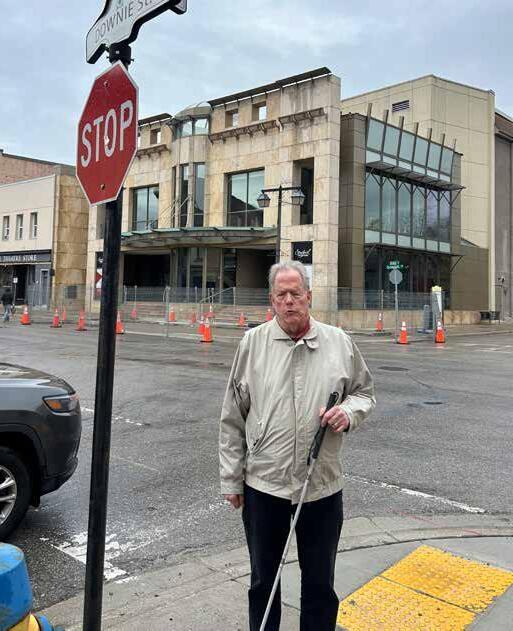
Despite the challenges, Edge said he feels supported by the community and has always been greeted by understanding and friendliness when discussing his
concerns with City staff.
Living on Downie Street, he said he

CITY OF
A rendering provided by the City of Stratford shows the proposed Type B Level 2 pedestrian crossover, which includes a rapid flashing beacon mounted above the crossover sign. The design is part of construction currently underway outside the Avon Theatre on Downie Street and George Street.
enjoys spending time at local businesses, including the Livery Yard, where staff often help him navigate the space. He added that many residents are mindful of his disability, offering help or stepping aside when needed.
As construction continues, Edge has a message for drivers.
“It’s important that everybody knows it exists and to expect it when they’re driving down Downie Street,” he said. “Don’t be surprised by it. Don’t try to beat it. When the lights are flashing, you’ve got to stop – someone may be ready to cross who can’t see you.”
Crinklaw also wants to remind drivers that those who fail to follow the rules at pedestrian crossovers can face fines of up to $1,000 and receive four demerit points.
Stratford Cinemas hopes more people will come out and support the local independent theatre amid its re-opening on Mondays.
As of May 4, Stratford Cinemas is open on Mondays once again. The movie theatre had to shut down on Mondays for a few months starting January 2026.
"We were only having about 10, sometimes 12, sometimes less people on those days and we weren't even covering our staff wages, so we were forced to close on
those days,” said Nadine Shephred, owner/operator of Stratford Cinemas. "There are a number of other days where we did have that same situation but we were hoping to keep it going for the community to be able to support that."
There are a few factors that led to re-opening on Mondays such as post-secondary students returning home to Stratford this spring, Stratford Cinemas experiencing a larger following, and a five-star Google review highly praising the movie theatre but noting that they wished it was open on Mondays.
"We're going to give it a try and see how
it goes,” Shepherd said.
May 4 was the first Monday Stratford Cinemas was open since the New Year.
Shepherd said that attendance was still low, but it will likely take some time for numbers to pick up as the word travels.
"Attendance wasn't great, but it wasn't as bad as it had been so as long as we can pay our staff wages and cover the bills, then we would be able to stay open on those days,” she said.
The film industry is struggling and hasn’t fully recovered in a post-COVID restriction society.
"We do have some really great movies,
so it's not because of the movies currently because we do have some really great options and we do keep trying to change it up so we can bring in a little bit of something for everyone,” Shepherd said.
The weekends are the busier days for Stratford Cinemas compared to weekdays. "Any weekdays, we would love to see people out and be able to support our local movie theatre,” Shepherd said.
Stratford Cinemas is on 551 Huron St. Movie listings can either be found online by visiting www.stratfordcinemas.ca/ now-playing, the Stratford Cinemas Facebook page, or by calling 519-273-6780.
“When our city high school students collaborate and debate, they are not just meeting once and leaving; hopefully, they are forming connections that they can keep developing. I hope, even more than a final resolution, that their MUN is a meaningful experience and will lead to long-term friendships or even joint initiatives amongst the three schools.”
The day is hosted at city hall, which not only lends to the overall structure of the day but also offers an accessible space for all students to join, noted Boersen.
“The space adds gravitas to the day. Plus, city hall allows for an accessibility advantage,” said Boersen. “Our local MUN removes barriers like travel costs and logistics, making it easier for more students to participate. That inclusivity often brings in a wider range of perspectives, which actually improves the quality of discussion.”
This year’s topic was the escalation of conflict involving Iran and regional security. Earlier this year, tensions in the Middle East escalated into direct military confrontation between Iran and the coalition, led by the United States and Israel. Coordinated strikes targeted Iranian military and nuclear facilities, leading to retaliatory attacks and widespread regional instability.
One of the delegates, a Grade 12 student from St. Mike’s, Vincent Macissac, representing the North Atlantic Treaty Organization (NATO), says he has looked forward to MUN and was eager to start negotiations, specifically related to this year’s topic.
“I think the topic was very relevant, especially given what's going on in the world right now,” said Macissac. “We're very polarized. So, something like the Iran war, which is very two-sided, especially with the EU being neutral, you have that middle ground from a lot of countries, and then you have a very proU.S. stance from Israel, and on the other hand, you have very anti-Israeli stances from some countries like Lebanon.”
Delegates were asked to determine how to prevent a regional war, whether international law was violated and what role the UN should play in enforcing peace. Later, they debated and tried to negotiate a resolution addressing key factors such as a ceasefire or de-escalation mechanisms, the protection of civilians and hu-
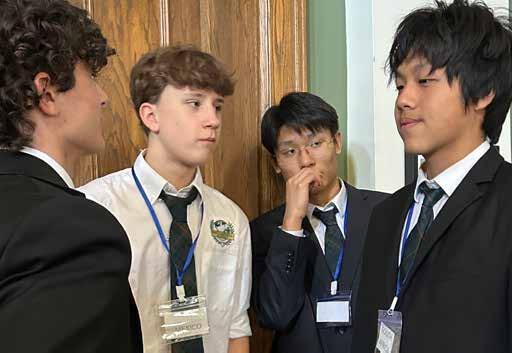
manitarian access, nuclear monitoring, the security of global energy routes and UN peacekeeping missions.
As a standout leader throughout the day, Macissac said he believes his passion for global relations is why he took on more of a speaking role and, by speaking up, he believes he can lead others to do the same.
“I like speaking out and being a leader,” he said. “I'm really passionate about Model UN and things like international relations. I really want to get people interested, and I think playing that leadership role is why I jumped at the chance to talk to different people, build alliances, start conversations, and even debate. This gets other people talking. It gets people emotional.”
At the end of the MUN, students came to a final resolution.
“Delegates reached a resolution at the 11th hour,” said Boersen. “They managed to come together to hammer out a resolution in response to the Iran crisis despite back-and-forth negotiations.
Although the resolution came together at MUN, Boersen said he’s not sure how the resolution would stand up in the real-world United Nations.
“Honestly, I am not sure how their res-
olution would stand up in the real world with very real pressures and political players, but it is the aspiration of the student delegates to try and work things out and come to some sort of understanding,” he said. “As I have said, the UN isn't perfect: It too struggles, and it reflects the world as it is, not as we wish it to be. And that is why their role as delegates is so meaningful and important.”
Macissac also said that aspects of the resolution could have been the same in a real-life UN, but overall, he still believes students have a lot to learn before heading off to the global stage.
“I think there's a lot that we don't know still,” he said. “I don't think it's exactly what the UN would pass, but I do think these learning opportunities give students a great understanding of our world.
“Our world is very polarized right now, and it's super easy to feel overwhelmed with what's going on, and it’s hard to understand. Something like this gives us an opportunity to learn about other places. A

lot of students now don't really have the opportunity to travel, and I think for a lot of people, this is possibly their first experience hearing about different cultures, different laws and different societies.”
“I think it's also great to understand how hard it is to pass something in the UN because I think, as a society, you want to blame politicians or leaders for a lot of stuff. However, when you play that Model UN position, you begin to understand how difficult it is to come together as a community of over 194 countries with completely different interests and come to a resolution that will benefit everybody.”
This realistic experience has given Macissac a taste of public relations, where he sees himself navigating toward it after taking time to travel and returning to St. Mike’s for a fifth year next year, then heading off to university to possibly focus on public relations.
“I would like to do one more semester of school, and then I'd like to do a second semester where I travel and work. More specifically, I'd like to travel to Eastern Europe, somewhere, very niche places. Because I think, honestly, those unheard places tell the greatest stories.
“This might be a little bit of a reach, but I would also like to pass through Ukraine if I could. Just to see what it's like, to be in a country that's facing such hardship, and talk to people who are very passionate about their own culture. I think it'd be a great learning opportunity, too.
“Eventually, I would like to do something where I work for the Canadian government, but abroad, something like a diplomat, or, even better, an ambassador. That's really my dream or my hope for the future.”
By Jake Grant
What term describes a period of temporary economic decline? 2. What planet in our solar system has a longer day than it does a year?
3. How many minutes in a professional football/soccer match?
4. What city is known as the eternal city?
5. What company is the largest self driving taxi fleet in the world?
6. What land mammal has the strongest bite force?
7. What is the largest internal organ in the human body?
8. How many Stanley Cups do the Montreal Canadiens have?
9. Who carved Pinocchio?
10. What is a microscopic bear called?
Editor
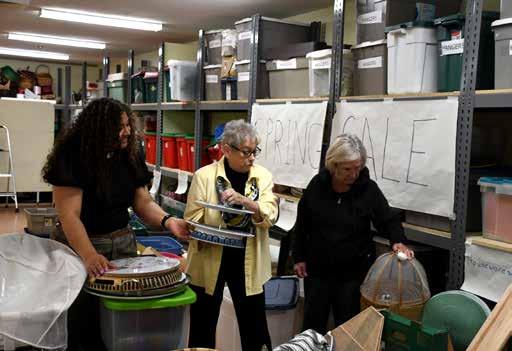
A longtime Stratford church variety sale is returning this month under a new name as Holy Trinity Anglican Church hosts its first spring variety sale since the amalgamation of three local Anglican congregations.
Formerly St. James Anglican Church, Holy Trinity was formed earlier this year when St. James, St. Stephen’s and St. Paul’s came together as one congregation. While the name is new, Holy Trinity Anglican Church Women (ACW) president Karen Haslam said the sale will be familiar to the many community members who have supported it over the years.
“We want to be sure that they know it’s the same sale, but we’re now called Holy Trinity,” Haslam said.
The Holy Trinity variety sale will be held May 28 from 7-9 p.m. and May 29 from 10 a.m. to 3 p.m. at the church, located at the former St. James building. May 28 will serve as the sale’s highly anticipated opening night, when shoppers will have first dibs on all the donated items for sale, and on May 29, the remaining donated items will be reduced to half price before organizers open the floodgates with their toonie-totes offer from 12-1 p.m., when shoppers have the chance to fill a tote bag with as much as they can for only two dollars.
Haslam said the annual sale has long been one of the church’s biggest community events, drawing people from across
ing the church food bank, which will soon move to the former St. Paul’s building, Optimism Place Women’s Shelter, L’Arche Stratford and bursaries for students at Nancy Campbell Academy, whose students also help set up for the sale.
“We’re a community church,” Haslam said. “Our money goes back into the community.”
The sale also serves an important purpose within the church itself, giving longtime members and volunteers a chance to gather, work together and remain connected.
“I’ve always called the St. James sale the biggest social in the church,” Haslam said.
As the newly amalgamated Holy Trinity continues to reintroduce itself to the community, Haslam said the sale is an opportunity for members of all three former congregations to work together on a familiar tradition.
“We’re hoping that it does amalgamate us even more, to get us all to work together,” she said.
Stratford and beyond. After the pandemic forced the church to pause the sale for a time, she said many residents were grateful when it returned.
“A lot of community people rely on the sale and like the sale and line up around the building,” she said.
The sale will include a wide range of donated items, from household items to books, games, toys, electronics, clothes
and more – though organizers are asking that people avoid bringing heavy furniture or anything too large for volunteers to manage.
Donations will be accepted May 12, 13 and 14, and again May 19, 20 and 21, from 9 a.m. to noon at the church.
Proceeds from the sale support both the church and local outreach efforts. Haslam said the Holy Trinity ACW supports a number of community initiatives, includ-
Holy Trinity now offers a range of worship services, including traditional and contemporary services, as well as other forms of gathering intended to serve the wider congregation.
For Haslam, the spring sale is both a continuation of a beloved tradition and one of the first major chances for the new church community to show Stratford who it is becoming.
“It’s interesting that it’s our first sale as a joint church,” she said. “We said it’s going to be what it is. You do what you can.”



STRATFORD TIMES STAFF
stratfordtimes@gmail.com
The City of Stratford has now re-opened some of its seasonal outdoor public washrooms.
That includes the ones at:
• William Allman Memorial Arena (exterior).
• Upper Queen’s Park.
• North Shore of Lake Victoria.
These washrooms will be open daily from 9 a.m. to 9 p.m.
Renovations to the washrooms at SERC off Matilda Street are still being done, as of press time, and those are expected to re-open in the next week or so.
The washrooms at the Anne Hathaway Park splash pad will be available when that facility re-opens for the season later this month.
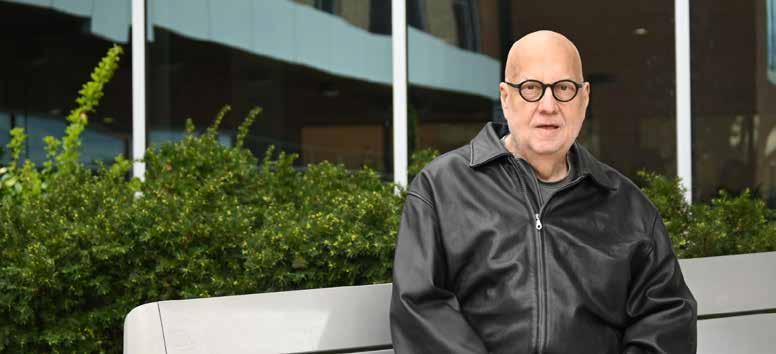
About a decade ago, Michael Fine was dealing with a bad bout of food poisoning that took a turn for the worst – though he didn’t know just how bad a turn it was at the time.
“I thought I had flu, and thought, ‘Oh, you know, I’ll get better,’” Fine told the Times. “It was getting worse and worse and worse. I lost 23 pounds in 11 days. I was admitted to hospital and found out that I was in this acute renal failure, and I was close to death. I had no idea. … It felt like somebody was punching me full stop, 24/7, in the stomach.”
After being admitted to hospital and gradually getting better, Fine continued to have bouts over the years, eventually coming to find he developed early stages of kidney disease as a result of his diabetes. It has progressed over the years to the point where now he needs a transplant or will need a transplant shortly.
The problem is that the wait time for a kidney from a deceased donor can take three to six years.
According to the London Health Sciences Centre (LHSC), where Fine has been receiving care, kidney disease affects more than 40,000 people in Canada. Symptoms include, but are not limited to, fatigue, a bad taste in the mouth, loss of appetite, weakness and difficulty concentrating. While kidney transplants are not the only treatment, it is a prevalent one for the LHSC. In a regional program that serves a population of 1.7 million people, from Sault Ste. Marie to Windsor, 70 kidney transplants occur each year.
Fine’s doctors urged him to start looking for a living kidney donor right away. Kidneys from living donors have become increasingly important for treating endstage kidney disease, according to the LHSC. Not only do they have higher success rates, but they also ensure that more patients can access some form of transplant. It would also significantly shorten Fine’s timeline.
“… If I were to find a living donor today, that speeds everything up,” Fine said. “And I could get a transplant six months
to a year, approximately. But if I wait to get sick enough to go through dialysis and then be eligible for a deceased donor, it could be a year, nine months on average, for my blood type, to wait.”
As noted by the LHSC, the donor's blood type must be compatible with the recipient's blood type. Before donating, the potential donor must undergo an assessment, which usually takes about three to six months for all the test results to become available. Because there is the potential risk of disease transmission from the donor to the recipient, the assessment includes a detailed questionnaire, medical history, physicial exam and blood tests.
Fine is also taking tests in preparation for an eventual surgery. For the last year he has been going through what's called kidney transplant workup: a series of tests, CAT scans, chest X-rays, echocardiograms and blood work to prepare him and his doctors for his eventual surgery. After such an exhaustive process, Fine said he had to “hurry up and wait” as the transplant team reviews all that information.
“You just never know when someone will come forward,” Fine said. “I heard stories of people being in a restaurant
and a waitress overheard a conversation. One day, I was in my apartment building and one of my neighbours asked how I was doing. I said, ‘You know, other than I need a kidney, going okay.’ And she said, ‘Well, you can have mine.’ I thought she was joking, and she was serious. Unfortunately, she wasn't healthy enough. She went through the screening process, but she wasn't healthy enough, so the search continues.
“... There are so many people that are so far worse off than me, and eventually this will play out, and I'm optimistic that I'll get a kidney one way or the other,” Fine said. “… But it's complicated, it's like layers of an onion keep getting revealed to me, little bits of information. The doctors are terrific. My family doctors, I have two family doctors, my nephrologist, the kidney doctor, is amazing. But you know the information comes so slowly, and you have to be very proactive and promote yourself and ask a lot of questions.”
Throughout this process,
Fine said the logistics have been the biggest issue. As a Tavistock resident, he has been having to get treatment in London, a long way away for someone who is dealing with fatigue and other related health issues. Health-care accessibility, he said, is much different in a rural area compared to when he lived in Toronto.
“I'm hopeful that I'll find a donor,” Fine said. “That would be the best thing, best possible outcome, and that would certainly raise my spirits. I try not to look at the long range too much and sort of focus on the interim.”
Anyone interested in inquiring about donating to Fine can reach him at mhf. kidneydonor@gmail.com.

In 1980, Dame Maggie Smith performed in a Stratford Festival production of Much Ado About Nothing. Monica Viani, a teenaged Stratford resident at the time, was in the audience, though it wasn’t until after that she fell in love with what the theatre could do.
“As a teen, a young person growing up here, going to the grocery store and seeing someone like Maggie Smith at the grocery store line up paying for her groceries in jeans and a t-shirt, and then coming to see her on stage, when she had full costume and full everything – to see the transformation in a person – that was really magic,” Viani told the Times. “It was the transformation, the manipulation of the textiles. It was the way textiles had been painted, had been treated. It was the lighting. It was the full transformation of a person into a character. That was really what blew my mind the most at that point in time.”
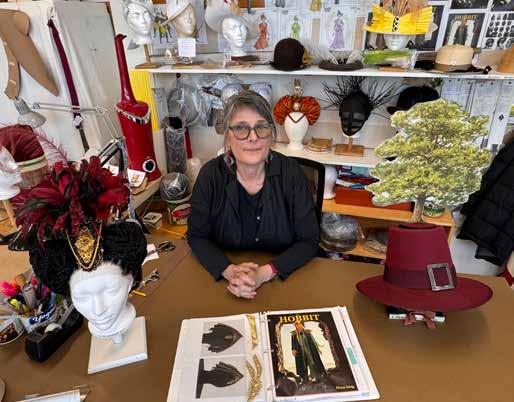
That performance started Viani on a path that eventually led to who she is today: a milliner at the festival with 31 years of experience.
Viani got her start in millinery, the design and construction of hats, at the festival in 1995. After launching her career in office administration and not feeling fulfilled, she decided to return to the place where she first fell in love with theatre, which also happened to be in her hometown. She apprenticed with Jane Shipway in the millinery department.
“I felt like I was coming home to myself,” Viani recalled about those early days. “It was really an interesting feeling
walking through the hallways, because there was just the creativity. The vibe of the wardrobe was something that I had no idea even existed in a workplace. I knew I was looking for something in that world, but I didn't know where it would be or what it would feel like, so coming through the hallways at that time, I was immediately reassured that this is a path that I wanted to pursue.”
From there Viani went to Toronto and worked for a number of live “mega musicals,” most notably being The Nutcracker at the National Ballet of Canada and The Lion King with Mirvish Productions. She continued to work for the festival when the season picked back up, gigging across southwestern Ontario for many years. After SARS and 9/11, the theatre world took a big hit and Viani was laid off from many of her connections in Toronto.
Taking a one-year program through EI, Viani learned how to properly start her own business, which led to her branching out even further, designing for countless productions remotely over the years. Notably, she designed the bonnets for The Handmaids Tale and, coincidentally, prototyped for the world premiere of Something Rotten! on Broadway in 2016.
“And then I came full circle back to Stratford. I was living in Toronto. We were looking to maybe make a change. My folks were getting older. They needed a little bit of assistance, so we thought, let's go back home, and maybe I can help mom and dad and maybe set up shop here.
“... One thing led to another, and here we are,” Viani laughed.
As she explained, designing hats for theatre is much different to hats for everyday use. Not only can the textiles and ma-
terials be quite different – and surprising – but for the stage every hat needs to be a perfect reflection of that character.
“It's almost like when you see someone about to play the piano who's been playing the piano for a very long time,” Viani explained. “And you see them sitting at the piano keys, at the keyboard, and they just take a second and then they get into what they're doing. I think we do that in a way with costumes.
"... We really try to tap into the character and tap into the look and feel of what we're trying to go towards. And I sometimes liken myself, maybe others, to tumbleweeds. We've been tumbleweeding through this for so many years. I've been in this for 30 years now. We have picked up all these skills and all these different ways of doing things, whether it be through experimentation, or from other people, or seeing other people's work, and it's almost like we build by braille now, if that makes sense. Sometimes you're not even thinking about what you're about to do. Your hands just go into it like a pianist.”
One example of how a character’s hat can define them and the world they are in is Viani’s design for The Handmaid’s Tale. Set in a dystopian world where a theocratic, authoritarian government subjugates fertile women for childbearing, Viani designed them to subtly reflect the world itself, while also being suitable for filming so the actresses’ faces are visible.
“The outdoor bonnet is very much set up so that, as the girls are walking beside each other they don’t make eye-contact. They can’t. They can’t make plans ... they’re blinders.”
At the festival, each milliner is assigned
three plays a season, and each production needs dozens, if not hundreds of hats. This year, Viani is returning to Something Rotten!, and working on The Hobbit and The Importance of Being Earnest.
While Viani has already cut her teeth on Something Rotten!, both for the original Broadway production and the festival’s 2024 production of the musical, the other two are big and starkly different visions. The Hobbit needs less pieces, but the pieces are larger and more fantastical. For The Importance of Being Earnest, costume designer Cory Sincennes has a specific vision.
“He's taking the approach of Victorian meets Coco Chanel,” Viani said. "So taking the era and combining modernism with the era. ... We're trying to get sexy, right? So that's going to be interesting. So That's what I really love about the designs.
“... That’s what makes it really exciting,” she continued. “We're all working towards the same vision, which would be the vision of the creative team, of the director and the creative team. So I really enjoy that. ... I really enjoy the variety of reinterpreting the character through the common goal, the commonality of all of us working together through that same goal.”
More than anything, Viani hopes her story and work can inspire the next generation of creatives – the next generation of milliners.
“I hope the story inspires young people – or anyone who (is interested), doesn't have to be a young person,” Viani concluded. “I hope this inspires anyone who is considering a career in the arts to realize that there is a place for them. They just have to find it.”

LISA CHESTER Times Correspondent
For over 50 years, Art in the Park (AITP) has enticed art enthusiasts to visit along the banks of the Avon River where artists congregate to exhibit their work for sale. The juried artwork is on display with their creators often working en plein air, offering direct access to immerse yourself into the piece.
Each winter there is a call to artists to submit their work for judging in order to join the membership exhibiting. This year there were 26 submissions of which 19 were successful bringing new and exciting diversity among the artists.
“I think it’s a really great lineup. A lot of the returning artists are the ones that do well at the park and then we’ve got 19 more artists. There’s a really widespread variety within that and just a lot of different voices. It’s interesting because there’s some artists in the park from all over the world that found themselves in Stratford,” said Michelle Jamieson, AITP media and advertising representative.
Categories of artwork include paintings, woodwork, collage, ceramics, digital, glass, photography, jewellery, fibre, sculptures and printmaking. The digital art category is relatively new and intriguing given the exacting parameters and algorithms used to produce vibrant and imaginative pieces.
“We have some really interesting sculptural artists who are coming to the park who have larger sculptures which is something we don’t always do because you have to bring it in and out. There’s a fellow

named Ben Annett, his sculptural company is called Ben’s Lemonade and all of his pieces are found objects put together,” Jamieson said.
Another sculptor, Harry Kooy, who after a career as an auto mechanic, now spends his time making wire sculptures and copper machines. He is inspired by the natural world, fantasy and the machines of the 19th century.
“There are two artists coming in this year in digital art. One of them is Erik Flock
who is a self-defined geometric algorist. He is inspired by math and the language of light. He creates work using prime squares, radian circles and isosceles triangles. He basically creates an algorithm that he can then use to channel his ideas through,” said Jamieson.
The other digital artist to be on the lookout for is Chris Mercerhill of Stratford who is a generative artist, which he defines as an artist that creates a system of rules and parameters through which a physical art-
work is created. He writes code that generates instructions and coordinates for his robot (a retired 3D printer) to manipulate pens, markers, and paintbrushes to produce paintings and drawings.
“The person I’m most excited to see the artwork in person vs just on the screen, is a young artist named Melissa Passmore. She creates realistic portraiture in combination with mixed media and it’s really captivating,” said Jamieson.
There will, of course, be the returning artists that people seek out year after year; sculptor Sandy Cline, painter Mathias Melume and wood turner David Humphrey, among others. With just over 70 artists in the membership, covering the 11 categories, the diversity of the exhibit is assured.
It is as much of an exhibit as it is a sale, with guests encouraged to simply meander through and welcoming artists willing to share their talent, or give a recommendation or two for dinner.
“Listening to Christopher Cape talk to people coming in really taught me this softness of how to talk to people in a way that isn’t like you’re selling something, but more like speaking to them and it’s an exciting thing to be a part of,” shared Jamieson.
Art in the Park opens May 16, weather permitting, and runs until Sept. 30. It is open Wednesday, Saturday and Sunday from 10 a.m. to 5 p.m. Come July and August, Thursdays are added to the schedule. The exhibit is located along Lakeshore Drive between the Tom Patterson Theatre and the Festival Theatre.
STRATFORD TIMES STAFF
stratfordtimes@gmail.com
The Stratford Symphony Orchestra (SSO) proudly announced its 22nd season on May 2, unveiling its most ambitious program to date. Building on the momentum of a highly successful 21st season, the orchestra will present seven dynamic concerts alongside special collaborations and a world premiere commission.
“After a brilliant season of six mainstage programs as well as collaborations with the Stratford Concert Choir, we are pleased to announce our biggest season to date,” said A.J. Ashley, executive director of SSO, in a media release.
“In addition to our engaging orchestral concerts, we are adding an exciting Venezuelan-based concert, an innovative family-friendly matinee, and the enigmatic, ‘Songs of Stratford,’ composed by our talented music director. None of this would be possible without the enthusiastic support of the Stratford community.”
“To mark 10 years with William Rowson as our music director, we are thrilled to present a new commission, ‘Songs of Stratford,’ he will write for us to celebrate our collaborations with Stratford songwriters,” said Nancy Stotts Jones, chair of the board of directors. This world premiere will be featured in the season finale concert in May.
To celebrate its multi-generational audience and those looking for new ways to engage with orchestral music, it
has Hearing Pictures at an Exhibition. Physical theatre artist Trevor Copp will show audiences how to go beyond passive listening to engage all senses. This spring matinée is supported by the William and Nona Heaslip Foundation which is dedicated to sharing the experience of orchestral music with young listeners.
SSO also has a new collaborative concert with award-winning Latin jazz duo Eliana Cuevas and Jeremy Ledbetter. Known for their electric chemistry and deep musicality, they’ve earned multiple accolades including two U.S. Independent Music Awards and a Canadian Folk Music Award for Best World Music Album. Their newest project brings Venezuelan folk traditions to life with jazz-infused arrangements and original acoustic compositions. Their performances are powerful, playful and emotionally rich. Along with a rich mix of classical masterworks and innovative programming, the new season showcases acclaimed SSO musicians including Laurel Swinden (principal flute) and Gwendolyn Nguyen (principal cello). In the holiday season, it will partner once again with the Stratford Concert Choir in a beloved community tradition: two performances of Handel’s Messiah (Dec. 11 and 12).
2026-2027 season concert lineup:
● Enchanted Landscapes – Sept. 26, 2026.
● Beethoven’s Sixth – Nov. 14, 2026.
● Messiah with the Stratford Concert Choir – Dec. 11 and 12.
● A New Year’s Celebration – Jan.1, 2027.
● A Celtic Celebration with the Allison Lupton Band –Jan. 30, 2027.
● Venezuelan Songs: Eliana Cuevas and Jeremy Ledbetter – March 6, 2027.
● Pictures at an Exhibition – April 10, 2027 (evening).
● Hearing Pictures at an Exhibition – April 10, 2027 (afternoon).
● Songs of Stratford (a world premiere by William Rowson) – May 8, 2027.
For more information and ticket details, please visit the SSO’s website. Season Subscriptions and individual tickets are on sale now online at www.stratfordsymphony.com or by calling 519-271-0990.


STRATFORD TIMES STAFF
stratfordtimes@gmail.com
As Autism Awareness Month comes to a close, the Huron-Perth Catholic District School Board (HPCDSB) is proud to highlight meaningful progress in fostering inclusive and supportive learning environments for all students.
A key focus this year has been the board’s commitment to neurodiversity education. During the 2025-2026 school year, nearly 50 training sessions have been delivered across the system so far, which is an unprecedented milestone that reflects both the demand for and impact of this work.
These sessions take place directly in classrooms and are designed to help students better understand and support one another. In some cases, they involve whole-class activities that build empathy and awareness of the many different ways people experience and interact with the world, such as using alternative communication tools during a shared activity. At other times, sessions are more targeted, helping classmates better understand and
connect with a specific student by focusing on strengths, shared interests and ways to offer meaningful support. A particularly impactful part of this work is when students are supported in leading their own presentations, sharing about themselves in their own voice and helping peers understand who they are. All of these approaches can be powerful and transformative for entire classrooms, helping to create environments where students respect and genuinely embrace one another.
These learning opportunities are also empowering students to become leaders and allies while strengthening peer relationships and fostering a strong sense of belonging across school communities
“The growth we’ve seen this year reflects a shared commitment to inclusion across our schools,” said Jessica Langan, learning coordinator of special education, in a media release from the board. “When students understand and support one another, we create environments of true belonging where everyone can thrive.”
As Autism Awareness Month concludes, the HPCDSB remains committed to continuing this important work by amplifying

ery person is honoured and celebrated.
STRATFORD TIMES STAFF
stratfordtimes@gmail.com
Stratford has long been synonymous with Shakespeare, but a local company is helping redefine what theatre in the city can be.
This summer, Here For Now Theatre returns with a summer season of five contemporary plays, including four world premieres and one Canadian premiere, offering audiences something increasingly rare: the chance to experience new work as it is being created.
At the heart of this work is the company’s intimate, close-up performance space – a small, still-evolving venue that places audiences just feet from the action. In contrast to the scale of the Stratford Festival’s larger stages, this setting allows for a different kind of theatrical experience: immediate, immer-


sive and deeply human.
It also allows for greater artistic risk. Without the demands of large-scale production, artists are able to experiment, push boundaries and develop new work in real time – creating theatre that feels alive, responsive and unfiltered.
The season opens with the world premiere of I Am An Island by acclaimed Canadian playwright Julia Lederer, running May 27 to June 7.
May lives on a tiny island surrounded by friends, family and the occasional martini-swilling ghost. The only problem? May's island is sinking, and she can't get anyone to pay attention.
As May stages a very personal protest to bring attention to this looming disaster, we begin to see her struggles are not just external. What's really sinking here? And can May


do what needs to be done before it's too late?
“I am thrilled to welcome back the singular voice of playwright Julia Lederer for her second Here For Now production,” said artistic director Fiona Mongillo in a media release.
“I Am An Island is a wildly imaginative new play about survival, love and the stories we tell ourselves to make this world livable when we are surrounded by socio-political and environmental forces that feel incomprehensibly large.”
Set on a slowly sinking island where the community refuses to leave, the play follows May as she tries to convince those she loves that staying may not be the same as surviving.
With its vivid theatricality – a martini-holding ghost, a fiancé building hope out of balloons and a chorus that reminds us the island has always been sinking – I Am An Island captures the strange, urgent feeling of living through uncertain times.
While the Stratford Festival draws international attention for large-scale classical productions, Here For Now Theatre is quietly building something different: a home for new Canadian plays, contemporary voices and intimate theatrical experiences.
In a venue where audiences are never far from the performers, every moment lands with heightened immediacy, creating a
shared experience that is both vulnerable and electric.
With four world premieres and one Canadian premiere in a single summer, the company is positioning Stratford not just as a place to revisit great works, but as a place where new ones begin.
The 2026 season continues with:
• LOVE US MOST by Sara Farb, directed by Sabryn Rock (June 17-28). A sharp, funny behind-the-scenes look at three actresses navigating power, gender and ambition inside a production of King Lear.
• GHOSTS OF MY HOUSE by Susanna Fournier, directed by Leora Morris (July 8-19). A darkly comic family story rooted in memory, inheritance and the ghosts we carry with us.
• EARLY GENIUS by Steve Ross, directed by Sheila McCarthy (July 29-Aug. 9). A joyful, fast-paced comedy about four brilliant children and the substitute teacher struggling to keep up.
• SUZANNAH by Jon Fosse, directed by Peter Hinton-Davis (Aug. 19-30) A rare Canadian staging of Nobel Prize-winning playwright Jon Fosse’s intimate portrait of Suzannah Ibsen.
Together, the season reflects a growing appetite for theatre that is immediate, intimate and in conversation with the present moment.















they should be doing, they're thinking before the play actually happens.
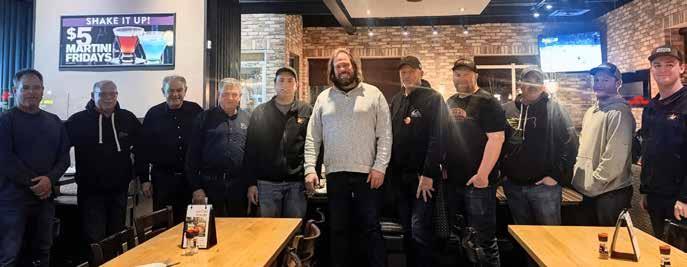
On May 3 and 5, the Stratford 15U Nationals began preparing for the 2026 season at National Stadium.
This year’s 15U team is built on the 2025 14U squad. Led by Jamie Antonio, Mark Price, Corey Goebel and Rob Mogk, the Nationals placed in the top four at the Inter County Baseball Association (ICBA) 14U tournament in Ancaster and secured gold at the Ontario Baseball Association (OBA) 15U B Championships in Kingsville.
Nationals coach Rick Boon, who joined the 14U staff as a consultant last season, highlights that the main objectives for the upcoming season are to boost consistency and baseball IQ, minimize mental errors and improve overall gameplay.
“I think what we want to develop this year is just more consistency to get us to the highest level. We won the (14U) OBA B, which was a feather in our cap. But to be in the ICBA, it's a little tougher league. We want to increase our baseball IQ. We want to make sure that we're doing the little things in the game more carefully and more consistently. That's all,” Boon said.
“Absolutely want to make sure, as the season progresses at the beginning of the year, you expect to have errors made. Human errors are fine. I don't mind that, but the mental errors, we want to cut back on that and make sure that the things that
“We want to make sure that the expectation is to get better every game, which is a cliché, but we want to make sure that every player, because we get players that play in a lot of different positions, we want to make sure that they know what they're supposed to be doing when they move, say, from second base to centre field, while they know what their role is in centre field and not what they were doing at second base.”
This regular season, the Nationals will play in the ICBA 15U Tier-1 division. Over the 24-game regular season, Stratford will compete against the Ancaster Angels, Brantford Red Sox, Cambridge Cubs, Simcoe Giants and two teams from both the Guelph Royals and Waterloo Tigers. The season culminates with the league tournament in Kitchener from Aug. 20 to 23.
In addition to the ICBA, the Nationals are set to compete in various marquee tournaments during the season: the Cardinal Classic at St. Thomas from May 22 to 24, the SMBA 15U tournament from July 17 to 19, and the OBA Qualifier from Aug. 6 to 9. If they qualify through the OBA qualifier, they will also participate in the OBA provincials from Sept. 3 to 6.
Stratford begins their season at home on May 7 at National Stadium with a match against Brantford.









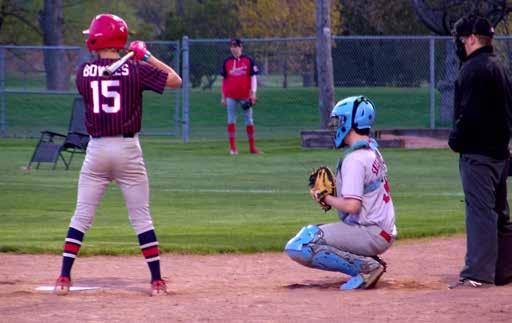
On May 4, the Stratford 18U Nationals opened their regular season against the Hamilton Cardinals at National Stadium.
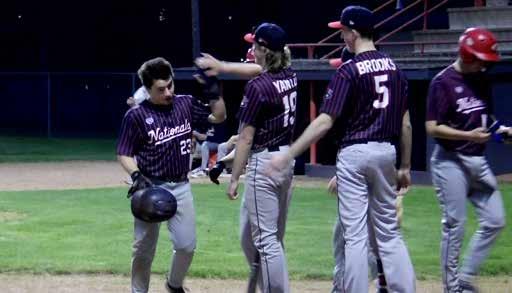
The Nationals fell 15-1 to the Cardinals in six innings, with the game concluding under the league’s “mercy rule.” Starting pitcher Ethan Priestap allowed two runs over three innings, recording five strikeouts, four hits and three walks. Relievers Owen Brooks, Daniel Hovius and Logan MacMillan gave up 12 runs over the next
three innings. Alex Everett scored Stratford’s only run in the fourth inning, offering a highlight in an otherwise difficult opener.
Head coach Mud Grasby noted this was the team’s first game and first outdoor experience, encouraging players to stay positive. He explained that while winning provincials is the ultimate goal, the main focus is player development, team improvement and ensuring players enjoy the season.
“You can't expect much. It's a long season. First time we've been outdoors,

things happen. Just got to get the kids to keep their heads up. That's about it,” Grasby said.
“… Realistically, the expectations are just to watch the kids improve their ball team. Have some fun and win as many games as you can.”
This year’s roster is made up mostly of players from the 2025 15U squad, which reached the 15U Tier-2 Inter County Baseball Association (ICBA) playoffs final. Last season, the 18U team narrowly lost to Guelph in the Ontario Baseball Association (OBA) 18U A finals at National Stadium, earning a silver medal and placing
sixth at the 18U Tier-1 playoffs.
Stratford will play 24 regular-season games in the ICBA Tier-1 18U Division. The Nationals will play against Simcoe, Woodstock, Waterloo, Hamilton, Cambridge, Ancaster, Caledonia, Guelph and two teams from Kitchener. Tournament dates and the ICBA playoffs are yet to be determined.
Stratford heads to Cambridge for their first road game of the season against the Cubs on May 7, followed by a home game back at the National Stadium against the Ancaster Angels on May 11, with the game time set for 7:30 p.m.


GALEN SIMMONS
Regional Editor
INNERchamber will close out one of its most successful seasons to date later this month with a concert that blends music and storytelling to shine a light on a largely overlooked composer.
The Stratford-based chamber-music ensemble’s season finale, Imagining Samuel Coleridge-Taylor, takes place May 24 at Factory163 and features actor and writer Roy Lewis as narrator alongside the INNERchamber ensemble.
Artistic director and violinist Andrew Chung said the concert grew out of a desire to introduce audiences to the work of Samuel Coleridge-Taylor, a celebrated composer in the early 20th century whose music has largely faded from public awareness.
“He was a super talented composer … lauded by the English establishment as a very bright young genius,” Chung said. “And nowadays, not many people have heard of this composer. So, we wanted to shine a light on his work and his story.”
Coleridge-Taylor, a Black British composer of mixed heritage, rose to prominence with works like “The Song of Hiawatha,” which was widely performed for decades and, at one point, rivalled Handel’s “Messiah” in popularity. Despite that success, he died at age 37 without seeing
the full financial rewards of his work.
The May 24 performance will centre around his “Clarinet Quintet,” with additional selections from his “Piano Quintet” and “24 Negro Melodies,” as well as music by Antonin Dvorak.
What sets the concert apart, Chung said, is the narrative element created by Lewis, who has written a script combining historical fact with imagined diary entries and correspondence.
“With Roy’s gifts of writing, what emerged is a little bit of telling the story, but through diary entries and a series of letters,” Chung said. “These are fictional but based on fact.”
Through that lens, Lewis will portray Coleridge-Taylor as well as figures connected to his life and career, including composer Edward Elgar and others from the European and North American musical worlds. The story traces the composer’s journey through a period of major social and political change, including his connections to Black musical traditions in the United States.
The result, Chung said, is a concert experience that weaves together music and storytelling in a way that helps audiences better understand both the composer and the broader historical context of his work.
“There are times when the music operates separately from the

narrative and then other times when it complements it,” Chung said, pointing to moments where live performance underscores key parts of the story.
The concert will also feature a mix of familiar and unexpected elements, including what Chung described as a “Bridgerton medley” woven into the program to offer a fresh take on historical themes.
The finale caps a season Chung described as a breakthrough for the organization, with strong
audience support and sold-out performances at its Factory163 venue.
“Our season has been a tremendous success,” he said. “I don’t know if we’ve ever had a season quite this busy before. Our concerts are all selling out … and there’s just been great buzz the whole season about what we’re doing.”
That level of interest suggests INNERchamber has achieved its longstanding goal of introducing more people to chamber music,
Chung added, noting audiences are increasingly willing to attend performances without knowing exactly what to expect.
“There’s the trust that they will be fully entertained and educated,” he said.
With tickets selling quickly throughout the season, Chung encouraged anyone interested in attending the finale to secure tickets early. For tickets and more information about this concert and INNERchamber, visit www.innerchamber.ca.
more people in the congregation and community to feel connected.”
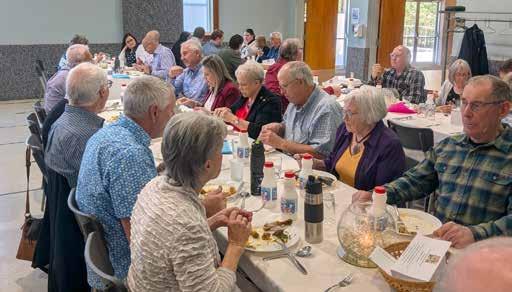
There was a fundraising dinner at Tavistock’s Mennonite Church recently, and besides enjoying a menu that included Syrian cuisine that delighted everyone, all those in attendance were proud to be raising money for their church’s Syrian cause.
Rick Cober-Bauman, a longtime church member, brings his experience as an official with the Mennonite Central Committee and talked about the church’s ongoing efforts to help those fleeing the ongoing Syrian conflict.
He said the fundraising dinner was a small but important part of the multi-year commitment to welcome and support refugees fleeing the violent conflict in Syria over the last decade.
“Many people from the Tavistock Mennonite Congregation continue to donate funds directly,” he said. “Having the family come and share their country’s amazing food and tell stories, is a helpful way for
They also identify with the situation that caused the families to come here in the first place.
Cober-Bauman said they decided to ask Syrian Khaled Al Younes to tell his story because it is a very real and chilling example of how war victimizes children.
“His injuries from an unexploded grenade were a powerful part of motivating the Tavistock Church and area to sponsor his family,” Cober-Bauman said.
Cober-Bauman, who is also a Shakespeare-area farmer himself, wanted to thank not only the people of their own congregation at Tavistock Mennonite Church for taking part in the Syrian meal, and donating generously after hearing the family’s story, but all other friends and neighbours who also came to show support.
The meal netted over $4,500 toward the ongoing cost of supporting the most recent arrivals for one year.
He also offered a huge gratitude to the
Al
family for their excellent food and kitchen skills that allowed those in attendance to enjoy the very finest of Syrian dining.
Donations to this cause are always appreciated. Anyone interested is encouraged to contact Rick Cober-Bauman or the email louiscb3@hotmail.com.
“I
know the paper is free, but can I get a subscription anyways?”
Yes. We understand that some people might like the convenience of the Stratford Times arriving at their home (located near or far) through Canada Post, so we do have subscriptions available for this purpose. The price for a subscription is $77.00
To subscribe, please e-transfer granthavenmedia@gmail.com and include your full mailing address in the comments, or send a cheque with mailing address to Grant Haven Media, PO Box 2310, St. Marys, ON N4X 1A2.

























































Though I’ve been putting it off for a while now, it has recently become quite clear that the time is fast approaching to have a difficult conversation with someone I love.
It’s a conversation that plays out in homes across the country and around the world when the health and wellness of an aging family member reaches the point where it is no longer safe for them to live independently,
and their level of care needs to increase – whether that’s homecare or a move to an assisted-living facility.
How do we have that conversation when this particular family member has made it clear they have no intention of relinquishing their independence, even a little bit, despite our mounting concerns over their ability to manage their medications, keep appointments, cook and clean for themselves, manage their finances, and get regular sleep.
After looking into this topic in some depth and discussing it amongst ourselves, I’d like to share a few helpful tips I’ve come across that may or may not work for others in the same position.
First, it’s important to start with curiosity, not conclusions or demands (a mistake I’ve made in the past). It can be helpful to lead with questions
instead of decisions.
“How are you managing day to day?”
“What’s getting harder than it used to be?”
“Are there things you wish were easier?”
Framing it this way can demonstrate a level of respect and offer your loved one an opportunity to lay out the problems they’re experiencing instead of you making assumptions about their health and quality of life.
And remember to listen to what they say. They may not say outright what they’re struggling with – perhaps downplaying falls, forgetfulness and loneliness – but hesitation, subject changes and making light of something with a joke can be indicators of those struggles.
There will come a time in the conversation when you have to lay out your concerns. It’s important to do so gently while avoiding vague worries. Be spe -
cific without being accusatory.
“I’ve noticed you’ve had a couple of falls lately.”
“I’m worried about you keeping up with meals.”
“It seems like getting to appointments has been harder.”
At this point, frame the issues as a shared problem to solve. It isn’t about taking something away; it’s about finding a way to make life safer, easier and more connected.
“What would help?”
“What would feel comfortable?”
“What matters most to you?”
Remember to acknowledge the loss of independence. Home isn’t just a place; it’s identity, routine and memory. Lay out the wide spectrum of options, from in-home supports for meals, cleaning and personal care to assisted living or nursing-home care if medical needs are more demanding. Once the best option is agreed on, involve
your loved one in the search for the best possible place to call home in an environment where all their needs can be met.
As we’ve learned, this conversation likely won’t take place all at once. It will happen in bits and pieces over weeks or months. Expect hesitation and even resistance. If it helps, bring someone from outside the family like a trusted doctor, homecare worker or close friend into the conversation to help reinforce your concerns in a way that feels less emotional or confrontational.
At the end of the day, the focus of the conversation should be on quality of life, not just safety. Safety is often the trigger for these conversations, but quality of life is what sustains the decision.
Less stress. More social connection. Better access to care. Those are the outcomes to keep returning to.
“This doesn’t only benefit those with disabilities, like myself, or someone in a wheelchair. It also helps people pushing strollers or using walkers ... Don’t be surprised by it. Don’t try to beat it. When the lights are flashing, you’ve got to stop ..."
– Advocate Tom Edge, on the new crosswalk outside the Avon Theatre.

Stewart Grant • stew@granthaven.com
Connor Luczka • connor@granthaven.com Times Reporter


Amanda Nelson • amandajanewriter@gmail.com
Graphic Design / Sales Inquiries
Sarah Cairns • stratfordtimes@gmail.com
Business Development
Heather Dunbar • heather@granthaven.com
Billing Administrator
Cindy Boakes • boakescindy1576@gmail.com
Contributors
Galen Simmons, Spencer Seymour, Julia Schneider, Gary West, Paul Knowles, Emily Stewart, Lisa Chester, Fred Gonder, Sheila Clarke, Irene Roth, Lee Griffi, Stuart Lender, Sydney Goodwin, Patrick D. Burk
36 Water St. St. Marys, ON, PO Box 2310 N4X 1A2 stratfordtimes@gmail.com | 519.655.2341 | granthaven.com

is everywhere – if we let ourselves notice

There is a quiet misconception that awe belongs only to the extraordinary. We imagine it reserved for sweeping mountain vistas, grand cathedrals or life-altering moments that arrive only a handful of times in a lifetime. Awe, we tell ourselves, is rare. Elusive. Something to be sought out in distant places. But what if awe is not rare at all? What if it is everywhere –woven into the fabric of our daily
lives – waiting not to be chased, but simply to be noticed?
At its core, awe is a shift in perception. It is the moment when something takes us out of ourselves, even briefly, and reminds us that we are part of something larger. Psychologists often describe it as an experience that expands our sense of the world and softens the edges of our own concerns. In that sense, awe is less about where we are and more about how we are.
Consider the early morning. Before the rush of the day begins, there is a stillness that often goes unnoticed. The light changes almost imperceptibly, moving from grey to gold. Birds begin their tentative songs. The world, in those few moments, feels suspended between night and day. To pause and truly witness that transition is to experience awe –not in a dramatic sense, but in a quiet, grounding way. Awe also lives in human con-
nection. It is present in the way a loved one listens deeply, without distraction. It is there in shared laughter that seems to dissolve time, or in the simple act of someone reaching out when we need it most. These moments remind us that we are not alone, that we are held – sometimes gently, sometimes powerfully –within a web of relationships. Nature, of course, remains one of the most accessible doorways to awe. But we don’t need to travel far to find it. A single leaf, examined closely, reveals intricate patterns of veins that rival any work of art. The steady rhythm of rain against a window can become a kind of music if we allow ourselves to listen. Even the changing seasons – so familiar we often overlook them –carry a quiet magnificence. The first hint of spring, the fullness of summer, the slow letting go of autumn, the stark beauty of winter – each offers its own invitation to pause and reflect.
Yet, if awe is so readily available, why do we so often miss it?
The answer may lie in the pace of our lives. We move quickly, from one task to the next, our attention fragmented by endless notifications and obligations. We become efficient, productive –and, in the process, less receptive. Awe requires something different from us. It asks us to slow down. To be present. To look, rather than simply see.
Cultivating awe, then, is less about adding something new to our lives and more about removing the barriers that prevent us from experiencing what is already there. It might mean taking a few minutes each day to step outside and notice the sky. It might mean putting away our phones during a conversation and offering our full attention. It might mean allowing ourselves to be moved – by music, by art, by a line in a book – without immediately analyzing or dismissing the feeling.
There is also a kind of humility in awe. When we experience it, we are reminded that we are not the centre of everything. Our worries, while real, are placed within a broader context. This does not diminish our struggles, but it can soften them. Awe has the quiet power to restore perspective, to make space for gratitude, and to reconnect us with a sense of wonder that often fades in adulthood.
In a world that frequently feels overwhelming, awe offers a gentle counterbalance. It does not demand grand gestures or dramatic changes. It simply asks us to pay attention.
And perhaps that is the most hopeful part of all. Awe is not something we have to earn or achieve. It is already here – in the light, in the ordinary, in the fleeting moments that make up our days.
We need only to notice. This small shift can change our lives for the better.
The GTR redevelopment should not be led and funded by the city
The GTR redevelopment should not be led and funded by the city. Leading the Grand Trunk Railroad (GTR) redevelopment as a municipally-run project could potentially be a huge mistake for Stratford. We lack the expertise – the Rotary Complex being the most recent project – the financial capacity and the administrative bandwidth to carry a project that will shape the city’s future. Dreaming big is commendable, but a community of 35,000 cannot shoulder this level of risk. Significant municipal funding could be required with no guarantee of success. Our finances are already strained, with pressing infrastructure needs like road rehabilitation, water and
wastewater upgrades and facility improvements.
A municipality’s primary role is to deliver essential services and local governance, not act as visionary developer. Administration should focus on running the city rather than diverting resources to headline projects. A development of this size would likely require substantial property tax increases while we already pay above-average taxes for Ontario municipalities.
The City of Stratford’s 2026 Asset Management Plan shows an annual $10 million gap to maintain current assets. Adding growth-related capital investments would increase that deficit over the next decade. Planned investments include a library ($26M), police station ($30M), new fire station ($9M), upgrades to public works (not including the GTR) and perhaps a theatre performance space.
Though the library staff should be celebrated for their fine services, books are increasingly digital. An expanded maker space and community areas could be the perfect outreach initiative by leasing affordable unused storefronts.
A police headquarters is not a natural contributor to a creative
neighbourhood. Keeping police services in their existing location and considering the move of the provincial court would be wiser. A police headquarters is not a particularly technologically driven space. $30M for more offices is money not well spent.
The focus for the YMCA should be on a new pool and health services which could be placed in the existing parking lot. Perhaps, housing could be on the upper levels offering an additional source of financing. The existing weight rooms, studio spaces and gym seem more than adequate. The HVAC system is outdated and needs to be addressed.
Stratford already benefits from world-class performance venues offered by the Stratford Festival. Off season community access could be negotiated, and a smaller outdoor amphitheatre be considered as part of the GTR instead of a costly new indoor venue.
According to the Asset Management Plan, the condition of the facilities suggested for replacement is favourable: of police services; 82 per cent fair and better, of library services; 86 per cent good and above and of fire services; 76 per cent good and above. These three areas seem to
be in satisfactory condition with a useful life of many years.
A more realistic approach to the GTR is to issue a request for proposal (RFP) to experienced North American investors and developers. Keep resident priorities, already gathered through multiple feedback session, concise so as not to deter bidders, and retain a reputable international commercial realtor (e.g., CBRE, Cushman & Wakefield, Colliers, Savills) to manage the process.
A developer should be the primary financial backer, providing an upfront payment to the city. Done right, the Grand Trunk could be revenue-positive rather than a drain. Lessons from the previous Lawrence Ryan ownership will help the city negotiate better deals. Potential models include Evergreen Brick Works, Fort Wayne’s Electric Works, Winnipeg’s the Forks and Halifax’s waterfront redevelopment. Moving forward, the focus of the GTR should be on building an innovative world class play-livework neighbourhood. Timing is favourable as the provincial and federal governments are receptive to projects easing housing shortages. Small and mid-sized cities should build attractive
live-work-play neighbourhoods to draw newcomers and relieve pressure on larger urban centres. Stratford is well-placed with strong restaurants, entertainment and recreational assets.
The development should, in part, be aimed at attracting and retaining a younger demographic. The GTR could look to engaging an anchor technology tenant (why not agricultural based?) by offering a world-class neighbourhood appealing to young employees. Proposed amenities might include recreational facilities (a YMCA with an Olympic pool, rehab and performance centre), essential services (grocery store, car rental) and mixed housing (one- to four-bedroom units in higher-density buildings). A natural, treed park and athletic/ community gathering area would further enhance appeal.
The GTR can positively define Stratford’s future and serve as a model for similar cities, but it shouldn’t be a unilateral municipal bet. Designing a world-class community from scratch is not the city’s job as that expertise exists elsewhere. Partnering with specialist developers, even if the city is not the majority partner, limits risk and leverage others’ experience and competencies.

STUART LENDER Times Columnist
Out of all the people who’ve died in my time whom I’ve had the privilege to know, or amongst those I’ve served through my work – if I could speak with just one of them again, I’d like to speak with my grandmother. My Oma. This is not meant to disrespect my mother or father or any other member of my family now departed, but “Omi”, as my brother and I called her, fixed memories into my spongy childhood synapses with a glue everlasting. She died when I was in my 20s. I miss her still.
I remember wishing wholeheartedly and saying so – that Omi should have been present at my wedding, and then again at the birth of the beautiful soul who is my daughter, Anna. She would have so loved her! Ah ... so bittersweet, those two landmark days of new beginnings, and the most immediate example I have of a blood relation sparking joy and sadness at the same time
when thought upon. Anna may not have met Omi but remembers with great fondness still, her own “Oma” – my mom.
I’m guessing that I would be making a different choice from my grandmother, under the umbrella of a different circumstance – the incomprehensible loss of a child.
And I’ve discovered after Anna’s birth, that certain scenarios hit me harder as a father than they did previously, before that title became a reality, before I felt that kind of devotion. I’ve found that there is no way for me to avoid the self-constructed scenes that play out every now and again, of what it must be like to have a child die … well, perhaps that one thought comes especially for me, more often. It is a prevalent reality – a by-product of my work as a funeral director – particularly when young lives make the stories in our news reports or, (unfathomable notion), in more immediate storylines through my work at the funeral home. I know some who will be reading this and who are all too well-versed with that trauma.
And in the wake of any mention of a mass shooting at a school somewhere, or another massacre of children in some foreign country, the crashing wave of sympathy and hope hits hard. In the funeral home I simply can’t utter anything, thank goodness, close to understanding how anyone feels when they are enduring this kind of despair. I remain silently
present.
These situations are as close as I can get:
I recall – my service to two police officers, two decades or more ago, who had their child die overnight from a heart abnormality no one was aware of. Their son was two years old. But this was not their first child. It was their third. The first was a miscarriage, the second a stillbirth, and I met them at this – their third funeral – drained and defeated, as if some dark spirit would not allow them the fruition of their desire to love, nurture and set free another little human being full of energy and unique talents into this world. At the end of that particular funeral, while standing limply at the graveside, the non-parents insisted they offer their financial thanks for all I had done for them. I declined of course, gulping down my emotion, suggesting if they must, a donation to Toronto Sick Kids Hospital in honour of my brother Greg, whom the hospital had saved in infancy many decades ago. A month later I received notification of that donation. Blessings can come of other’s tragedies. So can deep humility. I recall – my distraught wife on the telephone while I was at work, telling me that our baby daughter was “not responding.” I asked her what she meant. She choked out the words: Not eating, not making sounds. She’s sitting on the kitchen floor staring at the ceiling! I dropped ev-
As Shakespeare put it:
There is a tide in the affairs of men, Which taken at the flood, leads on to fortune, Omitted, all the voyage of their life Is bound in shallows and miseries. On such a full sea are we now afloat, And we must take the current when it serves Or lose our ventures.
Shakespeare's Julius Caesar, act four, scene three. John Bush, Stratford. EV workshop May 12
As gas prices skyrocket, rebates up to $5,000 are available for new EVs, and public charging stations are multiplying, there has never been a better time to own or buy an EV. Want to learn more about your EV, or thinking of buying an EV? Wondering how rebates work? What about their driving range? Unsure about how and where to charge? How much do they cost to operate? What about their environmental impacts? Should you go full EV or hybrid? Electrification is local, and it is the future. Bring your questions to the
Electric Vehicle Workshop on Tuesday, May 12 and let us help you know more.
The workshop runs from 7-9 p.m. at the Burnside Agriplex at 353 McCarthy Rd. in Stratford, organized by the energy and environment advisory committee of the City of Stratford. The event is free and all are welcome. There will be a panel of EV owners and experts to provide information, and to answer your questions. If there is enough interest, there is potential for an ongoing EV organization, where EV owners can support each other in their transition to clean energy.
It is important to recognize that transportation in Stratford is responsible for 43 per cent of all our greenhouse gas emissions. The majority of this pollution is from individually-owned gas vehicles. If we want to improve our quality of life, we need to meet the target of 80 per cent low emission vehicles as outlined in Stratford’s Community Climate Action Plan. Driving an EV makes you part of the solution, not the problem. We look forward to seeing you at the Agriplex on May 12. Everyone is welcome.
Felicity Sutcliffe, Stratford.
erything I was doing and raced home to find our baby girl there just as described. Crawling up to her, I called out her name, low at first and then allowing it to rise… “Anna... Anna... ANNA!” – slamming my hand down flat upon the floor next to her. No response at all, not even a jolt. And so began hours upon hours, into the night, of waiting in what felt like a soundless vacuum, at the same hospital that saved my brother so very long ago. The fever, the worry, the preparation for the spinal tap, and all the other possible end-scenarios unrelentingly playing themselves out in our splintered minds. Anna recovered, untouched.
I recall – being the only funeral director available in the funeral home in which I worked, who was unoccupied one afternoon and so, free to embalm a little girl, aged 10. She was completely anonymous to me except for the fact that my own daughter at the time was 10 years of age, also. As fate would have it, the lesson that I live with every day regarding the fragility of life became poignantly clear to me. I was the only director on the floor who had a child of his own. I remember doing that job, embalming that girl, needing to switch out my mask halfway through because it was damp with tears, so very grateful that this was not my own daughter, yet somehow feeling guilty for it.
These vignettes are like novels I’ve read – falling into their
words, lost within their covers, but always recognizing that I am the one who is turning the pages. Aware that I am experiencing someone else's story. Now I am all too aware when I sit on my couch and absorb the flow of the world's news, and I see children, whether starved or slaughtered, come to their end – it is not moroseness or morbidity that creates the moving image in my mind of the death scenario with my own child as the player. It stems from a complete inability to shape what I am seeing into something that makes sense for me. And so, I involuntarily place my beloved into the scenario for some possible semblance of understanding, the feeling of what it must be like. But always for the other. Always the separation. The parent who is not me. And yet still sometimes, I cannot fathom any reason that matches the atrocity.
And it stems too, from gratefulness – that my child is safe in her bed, having been read to, tucked in and kissed on the forehead before she slumbers, while I fret in the next room over what I am witness to on my computer screen. Something unimaginable. Something shocking. Something beyond the capacity of what my heart can carry.
Stuart is a celebrant and the manager of Rutherford Cremation & Funeral Services. It is his privilege to serve, dispel myths, and give information concerning his field of compassionate service.
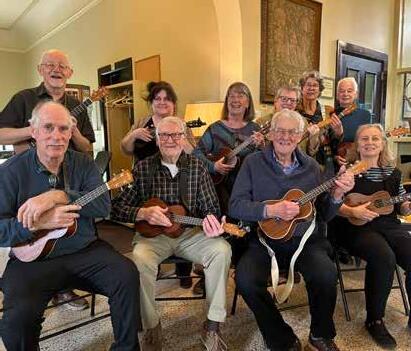
JOHN KASTNER Guest Columnist
The recent April Stratford city council meeting, where a motion about the former Grand Trunk and CNR Repair Shops was passed, was very significant.
Does it rival truly historic city council meetings such as when city council sold, then reneged on the sale of city hall; when it gave in to R. Thomas Orr and said there would be no rail line along the north side of the Avon River/Lake Victoria paving the way for Stratford’s wonderful parks system; or the frugal $125 commitment to Tom Patterson to go forth and pursue what became the Stratford Festival?
Well, hardly, but it was a pivotal decision that ends a decades-long stalemate that included a number of owners, multiple failed plans, countless lawsuits, court orders, a few fires and the second-longest expropriation process in the history of Ontario.
The city became full unencumbered owners of the 18-acre site on the edge of downtown Stratford in June of 2023 and began to poll the public about next steps and as a member of the GTR Ad Hoc committee I was part of that process.
This article is mine alone and doesn’t necessarily reflect the views of everyone on the ad hoc committee, but I can comfortably say that the committee was part of a two-way conversation where it relayed project updates but also heard from the public.
There were two very well-attended public meetings that included subject matter experts, the many ad hoc committee meetings were open to the public as were the city staffs’ three educational sessions for council that led to that pivotal April decision. I spoke to every service club in Stratford, some of them twice or three times, and gave tours of the Shops to Stratford Perth Museum and Stratford Public Library staff, architects, engineers, urban planners and most (not all) city councillors.
Through it all there were a few loud takeaways – “I want to see something in my lifetime; the Shops building itself is fantastic and I’d like to see some or as much as possible saved; it has had an incredible history, influence on this city and my family and there needs to be something that celebrates its incredible history;

there has to be something for the average citizen and; taxes are high enough – we cannot go into unreasonable debt.”
Suddenly, the years-long process came to a head and Coun.
Mark Hunter said that no one from the public or private sector could get serious about the rest of the property until it was clear what the city was going to do visà-vis the Y and the library.
When all that got boiled down into a decision, everyone knows the city voted 9-1 to move ahead with a plan that includes a new library and Y and community space. Now, is it all one building, separate buildings or inside or outside the superstructure?
So far, the city has committed up to $15 million toward a new shared community facility, to be augmented with money from the library, the Y and other sources. The city has also set aside funding to help get site ready for future development, including the work needed to figure out what parts of the Shops can realistically and responsibly be saved.
There will be a tax increase as well but it is one that the city’s CAO and city council feel is within reasonable boundaries –about $1 million a year to help support this project and other big planned projects, including roads and infrastructure.
City staff is coming back with the numbers and council has a series of big decisions to make in addition to the all-in-one or inside-outside determinations.
But those will be just the first of perhaps a generation of decisions made by many councils as the 18-acre property is populated
almost certainly with both private and public interests. Additionally, and important for many citizens of Stratford, the recent decision by city council does not rule out the many features that have been floated over the past few months. Those are still in the mix.
At the penultimate council meeting, the lone councillor who
voted against the motion, said he wanted to see a new police station on the Grand Trunk site. Fact is, that could still happen. Same goes for housing, a farmers’ market, an ice rink, a parking garage, as a home for a steam locomotive or something else that is just at the vision stage.
To steal a quote from Winston Churchill – “Now this is not the end. It is not even the beginning of the end. But it is, perhaps, the end of the beginning.”
Lots to still be decided but at least, as so many members of the public declared over the last twoplus years – “do something.”
My takeaway was this is just the first step and doesn’t mean anything – grand or otherwise –is off the table.

There is no question that the Louvre in Paris, France, is one of the world’s greatest repositories of art. This iconic destination has managed to get into the news a couple of times in recent months, more for the art pieces they were losing than for the art they have.
I have visited the Louvre and done the ridiculous tourist jog past hundreds of pieces of priceless art to gaze over the heads of hundreds of other tourists, all gawping at a small painting called the Mona Lisa. So, this time in Paris, though we strolled around the grounds of the Louvre, we gave the interior a miss, and opted to visit two other art galleries also situated along the Seine River. We were not sorry in the least that we made that choice.
Our initial stop on our very first afternoon in Paris was the Musée d’Orsay. The museum holds the largest collection of Impressionist and Post-Impressionist art anywhere in the world – and yes, much more than in the Louvre.
If you don’t happen to be an art expert, here’s a quick Knowles’ note. Impressionism was an art movement that began in Paris in the late 1800s and continued for several decades. Key figures included Claude Mon-

et, Pierre-Auguste Renoir, Camille Pizarro and Paul Cézanne. Post-Impressionism was an artistic movement in direct and almost immediate response to Impressionism. It too had its roots in France and included such well-known artists as Vincent Van Gogh and Paul Gauguin. While the Impressionists painted natural scenes with a whimsical, misty perspective, the Post-Impressionists moved slightly more toward the abstract, in my less-than-expert opinion. Let’s be clear about that.
There is a Canadian connection here in that the members of the Group of Seven were profoundly influenced by both these movements.
So, the work of these famous artists, most but not all French, was what we wanted to see when we entered the elegant former railway station that is now the Musée d’Orsay. Our wishes were granted, one hundred-fold.
If you love art, or you simply want to experience great art to see if you like it, this is the place to be.
We strolled through the galleries, replete with works by all the artists mentioned above, and many, many more.
And not only did we see paintings by these talented creators, but we also saw many of their very best pieces like “Water Lily Pond” and “Blue Water Lilies” by Claude Monet, and “Dance at the Moulin de la Galette” by Renoir.
The museum is a relatively new attraction in Paris, considering the millennia-long history of this “City of Light.” Conversion from its original purpose as a railway station to an outstanding art gallery was completed only by 1986, when the works of art (2,000 or so paintings and about 600 sculptures) were installed.
Today there are over 3,000 works
at the museum, and they are seen by more than three million visitors each year. That sounds like a lot, but the Louvre sees three times that many and has instigated higher pricing and other measures to actually discourage visitors!
The Musée d’Orsay is located on the Left Bank of the Seine, about a 15-minute walk from the Louvre, which is on the Right Bank. It’s a lovely stroll, as it is to the Orangerie, also on the Right Bank but only a 10-minute walk from the Musée d’Orsay.
The Orangerie is also home to significant Impressionist and Post-Impressionist art, and other important pieces as well. The building itself (like the Musée d’Orsay) was never intended to be an art gallery – it was built in 1852 by Napoleon III as winter storage for the citrus trees that were placed in the Tuileries Gardens in the warmer months,
thus the name “Orangerie.”
The gardens, by the way, stretch from the Orangerie to the grounds of the Louvre – in my opinion, one of the most pleasant walks anywhere.
Horticulture gave way to art in 1921 when the Orangerie was designated as a place where then-living artists could display their work. The good news is Claude Monet was very much alive and productive at that time and, in the end, two amazing, oval rooms were created to house Monet’s extensive murals known as “Nymphéas” or, yet again, “Water Lilies.”
Visiting those rooms is a unique experience, even for the most veteran art connoisseur. You are literally surrounded by the art, drawn into the tranquility of Monet’s water gardens.
In 1966, the era represented by the Orangerie collection was expanded by several decades, as the Jean Walter and Paul Guillaume Collection of modern art was donated to the museum and is now displayed on the lower flower. That gives visitors the opportunity to get up close and personal with paintings by famous artists like Pablo Picasso and Chaïm Soutine. Full disclosure; Soutine’s rather tortured “Portrait of a Man” has become one of my favourite pieces of art. I don’t know what this says about my personal taste. There is no question; Paris is the place to go to see great art, but if works by Monet or Van Gogh are your favourites, skip the Louvre and spend your time at these other two amazing galleries.
Paul Knowles is an author and travel writer, and past-president of the Travel Media Association of Canada. To contact Paul about travel, his books, or speaking engagements, email pknowles@golden.net.
4. Every 5. Largest English dictionary (abbr.)
Very skilled
No more than what is specified
Tire measurement
Forward
Jacob __, American journalist
Former CIA
Middle Eastern nation
Exhausts
South Dakota 23. The complete duration of something
Kids love him 25. Singular
Cod genus 28. Mild yellow Dutch cheese
Resistance unit 30. Ancient kingdom near Dead Sea
Cast out 33. 60-minute periods
35. Most worn 36. European river 37. Atomic mass unit 39. Items of food 42. Body parts 43. Ireland 44. Partner to Pa 46. Sammy __, songwriter 47. Dutch settler
48. Full-grown pike fish
49. Sun or solar disk
50. Minute arachnid
51. From a distance
52. A monthly expense
53. Young women’s association
54. Brazilian state
55. Air freight provider
56. Pointed end of a pen
Ernie is a lovable goofball with a heart as big as his personality! This handsome boy is a little quirky, a little wobbly, and absolutely perfect in his own special way.
Ernie has Wobbler Syndrome, which means he moves through life a little differently than most dogs. His balance can be a bit off, and he may have some mobility challenges, but he doesn't let that stop him from enjoying the things he loves most:
and making people laugh with his silly
Learn more and apply to adopt at

SPONSORED BY:
Adult Learning Programs of Perth, Upstairs at the St. Marys Public Library (700 Church Street North, St. Marys, ON)
Phone: 519-284-4408 | Cell: 226-374-8231
alearning@town.stmarys.on.ca | www.adultlearningperth.ca
Facebook: @AdultLearningProgramsofPerth

STRATFORD SCRABBLE CLUB
Anne Hathawy Residence 480 Downie St., Stratford Meets every Wednesday evening at 7 p.m. for 3 games. Check our website for further details stratfordscrabble.ca
CROKINOLE
Every Tuesday at the Agriplex in the Ritsma Room from 1-4 p.m. Ladies and gentlemen, fingers or sticks. For more information call Oliver Davidson 519-508-5664
STRATFORD ASTRONOMY GROUP MEETINGS
St. Michael Catholic Secondary School, 240 Oakdale Avenue, Stratford
Rear parking lot off Matilda. Room # l104 - 1st Tuesday of each month from September to June. 7-9 p.m.
We are night sky enthusiasts. Everyone is welcome to attend. See our website at https://stratfordastronomy.com/ or call 519-275-4472 for more information
LEARN2SHINE PERFORMANCE CLUB
Monthly on Sundays from 2-4pm at Infinity Dance 451 Erie St. Next meeting May 24. Suitable for everyone in the family aged 7 and up. A chance to sing, dance, say lines. Registration $20+HST/person, with 15% discount if registering 3 or more. www.mckinnamanagement.com
Stratford District Secondary School
428 Forman Ave Parking near the water tower. Saturday, May 9; 9 a.m. -12 p.m.
Cash/cheque only. Come and support your local student growers!
Tuesday May 12; 7-9 p.m.
Stratford Agriplex 353 McCarthy Rd
Hosted by the Energy & Environment Committee of the City of Stratford
Bring your questions about EVs. There will be a panel discussion about rebates, costs, charging, range and environmental impacts. Make your next car electric and join the future. Everyone welcome.
SPRING TEA & BAKE SALE
Sunday, May 24; 2 – 4 pm.
Legion, 804 Ontario St., Stratford
Enjoy dainties, finger sandwiches, tea and great conversation. There are door prizes, surprise prizes and our spring silent auction concludes that day. Tickets are $20 for adults and $10 for kids 12 and under. Call Anne 519-301-0914, Linda 519-276-7959 or the Legion Branch 519-271-4540 to reserve yours today.
HOLY TRINITY VARIETY SALE
St. James Anglican Church, 41 Mornington St, Stratford
First Choice Night
Thursday May 28th, 7:00 PM – 9:00 PM
Super Sale
Friday May 29th 11:00-1:00 PM
Toonie a Tote Hour
Friday May 29th 1:00 PM – 2:00 PM
Drop Off Items Accepted
May 12-13-14
May 19-20-21
9:00 am – 12:00 noon
If you can help - call Karen: 273-5398
PLANT SALE
Saturday, May 23; 10 a.m. - 4 p.m.
Deadline: Tuesday prior at 3 p.m. Contact: stratfordtimes@gmail.com
YOUR EVENTS WITH US! HERE’S HOW :
The Community Calendar is for non-profit organizations to promote their free admission events at no charge. Event listings can include your event name, date, time and location as well as a phone number, email address or website. If your event is not free admission or you would like to include more details than stated above, you have the following options:
Coming Events Word Ad in Classified section (50 word max.) - $10 + hst
Coming Events Boxed Word Ad in Classified section (50 word max.) - $15 + hst
Display Ad - Sizes begin at a classified business card size for $35 + hst
Siloam United Church, 1240 Fanshawe Park Rd. E. The London Orchid Society will be holding an Orchid Plant Sale. Admission $5.00. Contact Daryl 519-6662927 or www.londonorchidsociety.com. We