
































































































STK#139316
STK#193300
By Luke Edwards
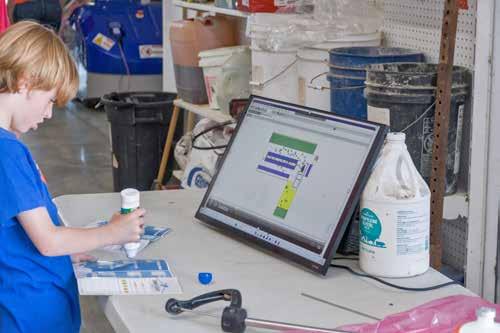
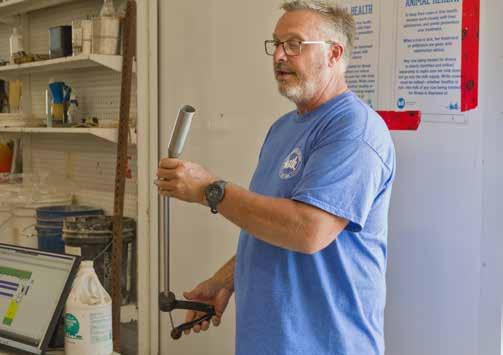
Abigail Chastney came to see the cows, have some ice cream and hang out with her friend Aubrey Terry-Clarke. She wasn’t expecting to get a science lesson in magnetism.
And yet, there she was, learning how farmers use magnets inserted into a cow’s stomach to keep any metal material the cow accidentally ingests from ending up somewhere it can do damage in the animal’s body.
“If there’s metal in the cow, they can collect it,” she said, shortly after the tour through the new robotic barn at Silverholme Holsteins.
They were among the thousands who visited the Smithville operation for this year’s Niagara Dinner on the Dairy event. The popular annual tradition sees one of Niagara’s dairy producers open their doors and show the public what goes into making the milk, cheese and ice cream they enjoy daily.
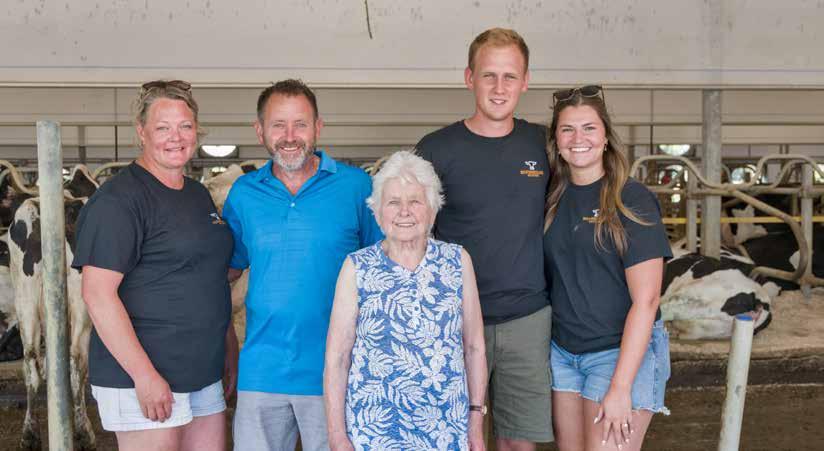
For John DeBoer, who runs Silverholme with his son Brandon, the event was both a culmination of months of hard work planning but also a chance to open people’s eyes about what dairy farming really looks like.
“They get to see where their milk comes from,” he said.
“We love our animals, we care for our animals,” added Brandon.
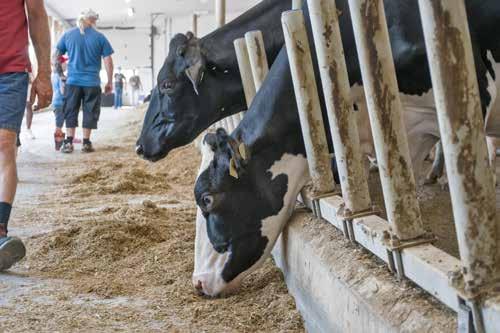
That care was on full display, as Silverholme’s new barn offers plenty of comfort for the 60 Holsteins they milk. An automated robotic milking system allows the cows to be milked whenever they want. The machine connects to the teats quickly and efficiently, milking the cow and then cleaning her off before she heads back out.
Robotic feeders ensure they’ve always got access to food, and another robot cleans up their manure.
Extensive ventilation systems and mist sprayers keep the cattle cool in the summer heat. Even during an extreme heat wave earlier in June, John said the temperature inside the barn remained quite comfortable, as much as 10 C cooler than the outdoors.
The DeBoers installed the new barn two years ago, and John said it’s been a wonderful - if expensive - addition. Like most farmers, John and Brandon remain extremely busy, but now they can focus on other aspects of the farm and be confident the cattle are in good shape.
Visitors to the farm also learned about the strict safety protocols in
place to ensure the milk and dairy products that end up in their glasses or on their plates are healthy and safe. Devices on the property keep an eye out for any irregularities before it gets picked up by the dairy trucks. Traceability is also important, with careful records kept
on both the animals and the milk they produce.
Despite some heavy downpours in the days leading up to the event, the skies cleared up for Dinner on the Dairy, allowing visitors to enjoy the outdoor country air as they chowed down on a burger after the tour.

Publisher
Editor
Business Development
Stewart Grant • stew@granthaven.com
Luke Edwards • luke@granthaven.com
Heather Dunbar • heather@granthaven.com
Graphic Design
Billing Administrator
Jen Gaetan • jen@granthaven.com
Contributor
Ann Marie Chechalk

Erin Parsons • niagarafarmsnewspaper@gmail.com
36 Water St. St. Marys, ON, PO Box 2310 N4X 1A2 niagarafarmsnewspaper@gmail.com | 519-868-1290 | granthaven.com
Restoring small-town journalism, one community at a time!
a time!

By Niagara Farms Staff
A food company that recently opened a brand new facility in Smithville will now have new branding to go with it.
Highland Packers announced the launch of Highland Meat Co., “a new signature brand built for Canadians who appreciate great-tasting, high-quality meat products made close to home,” a press release said.
The Stoney Creek company’s manufacturing and retail site in Smithville opened a year ago. At the time, the company said plans for expansion had been in the works for several years, as they had outgrown their Stoney Creek location.
Highland Meat Co. products will be produced at the Smithville facility.
“Highland Meat Co. represents an exciting new chapter for Highland Packers, while staying true to the values that have guided us from the beginning: quality, craftsmanship, and doing things the right way,” the press release said. “We’re proud to produce products that bring people together around the table and give Canadians another reason to feel good about buying Canadian.”
The release showed photos of hams, wieners and sausages under the Highland Meat Co. branding. It promised real meat made with quality ingredients, traditional smokehouse methods, whole-muscle cuts whenever possible, vacuum-sealed packaging and a consistent quality.






By Luke Edwards
A lot of people visit Niagara wineries each year, but a group of transit experts believe there could be more, and it could be done more safely.
The Canadian Urban Transit Research and Innovation Consortium (CUTRIC) is pitching a trial for a wine shuttle service that would connect workers, students and visitors to several local wineries. With nearly everything in place, proponents are awaiting funding from a provincial transit innovation fund.
“We checked the boxes, we crossed the T’s and dotted the I’s. So now we’re just waiting for approval for the first tranche of money,” said Josipa Petrunic, president and CEO of CUTRIC.
CUTRIC has been around for several years, acting as a non-profit to undertake projects that could advance public transit services in Canada, and working to secure funding to help pay for those projects. Before the Niagara winery
shuttle project, much of CUTRIC’s work focused on hardware and technical projects, like introducing electric or hydrogen powered buses.
The winery pilot, which Petrunic described as more of a social innovation project, is a first of its kind for CUTRIC. But despite being relatively new to this type of work, Petrunic is optimistic.
“We expect it will work. We think there is pent up demand,” she said.
“But as much as we can analyze the stats on ridership of the stations, ridership from local surveys and winery input, it’s still at the end of the day guesswork. It’s informed guesswork, but it’s truly guesswork until you start running it and see actually who gets on board and is willing to pay the fee.”
The project’s focus is threefold. For starters, Petrunic said there are likely a lot of people who would love to visit wineries in the region, but are unable to do so due to lack of mobility. GO Trains and
the like only get people so far, and Niagara Regional Transit doesn’t offer stops at wineries. That leaves people in Niagara who don’t have their own car, or people outside Niagara who come in by GO Train, forced to call a taxi or ride share service. And depending on where they want to go, costs can quickly escalate.
Additionally, Petrunic suspects there’s a subset of people who are either avoiding visiting wineries because they don’t want to drive after a glass of wine, or people who are risking it by getting behind the wheel while inebriated.
A shuttle service could make the roads around wine country safer.
However, it’s not simply a tourism push. The idea for a shuttle service actually grew in large part thanks to Petrunic moving to Niagara and seeing what the lack of transit options for the region’s rural communities means for workers or potential workers. Transportation is limited for the region’s migrant workers or the local student population, and Petrunic said their research suggests many more students from Niagara College, Brock University or even McMaster would love a summer job at a winery if only they had a way to get there.
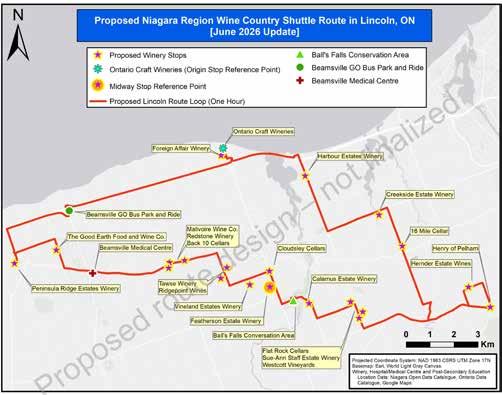
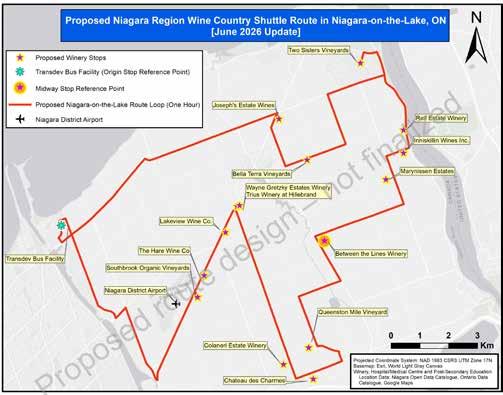
The trial would likely start with one route. Petrunic and her team have worked to model different route options, leaving from GO stations in St. Catharines and Niagara Falls. It’s a balancing act of finding routes that hit as many wineries as possible without having the roundtrip exceed far beyond an hour, which Petrunic said is about the limit for people to use public transit.
Two proposed routes see buses head out from the St. Catharines station to make stops at several wineries in Lincoln, and a sec-
ond would leave from Niagara Falls, hitting wineries in Niagara-on-the-Lake.
Petrunic said they’ve got good buy-in from several wineries and organizations in the industry. Funding would need to come from the sector, from fares, and from government support.
They’ve sought out funding through a provincial transit fund, and are continuing to hope they’ll be able to secure funding that way.
“The idea of that program was to help support and subsidize demonstration or initial new transit projects that serve areas that are underserved, in particular, to advance tourism, the economy, and sustainability goals. So it was a perfect match,” Petrunic said.
Should they get the required funding and start the program, Petrunic said they’d run it for three years and collect data, tweaking or enhancing where needed. If it ends up being successful, she said there’s a future where the service expands beyond wineries to other agritourism offerings.
“Wineries are the proposed starting point for this public shuttle service due to their immediate stated need, and their evident alignment with provincial agricultural growth strategies in the region,” Petrunic said. “However, we will work to invite other agritourism businesses in the area to join the consortium effort moving forward…We truly believe a public mobility service catering to the agritourism industry across Niagara - one that is reasonably priced, low-cost and operates as a non-profit - is critically needed to ensure the agricultural industry of Ontario reaches its full commercial potential within the Canadian economic landscape.”
For more information on the proposed service, visit cutric-crituc. org.

By Luke Edwards
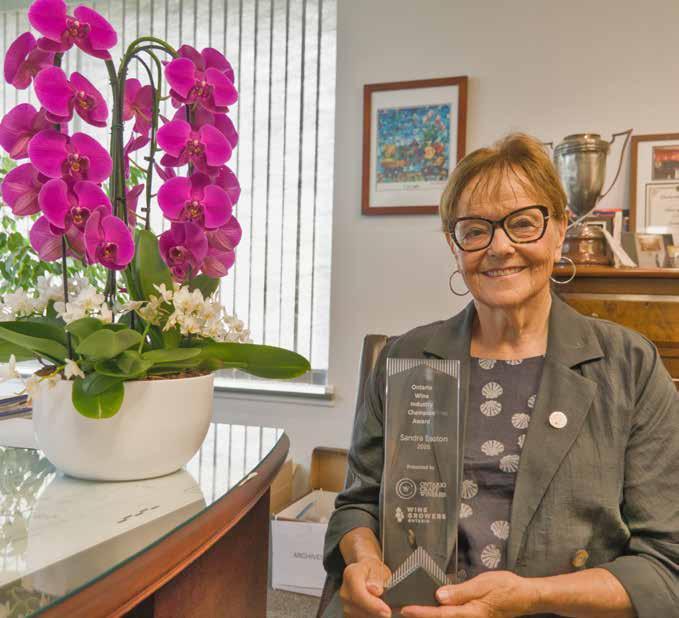
Waffling on a subject has meant the death of many political careers. But for Sandra Easton, there’s one topic where she’ll happily announce a regular change of opinion.
“My favourite winery always seems to be the most recent winery I’ve been to,” the Lincoln mayor said last month.
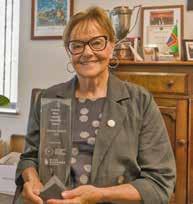
Earlier this summer the Wine Growers of Ontario honoured Easton with the 2026 Wine Champion Award, recognizing her advocacy for one of Lincoln’s and Niagara’s most vital business sectors. The award comes as Easton wraps up her third and final term as Lincoln’s mayor, as she’s said she won’t be seeking re-election.
At that moment, when she was asked about her favourite winery she said it was the recently opened Al Borgo Estates.
“They have some very, very different varieties,” she said, singling out a sparkling that was her new favourite.
“But if you asked me this a few months ago, I would have said my favourite winery is Featherstone,” Easton said.
In announcing Easton as the winner of this year’s Wine Champion award, the Wine Growers of Ontario described her as a leader, a champion of strategic infrastructure investment, and a strong advocate for inter-municipal collaboration.
“Mayor Easton is particularly proud of Lincoln’s thriving and diverse agricultural sector, which remains a cornerstone of the community. From the award-winning vineyards and craft breweries to the innovative greenhouses and farm-to-table ventures, Lincoln’s agricultural industry showcases innovation, resilience, and sustainability,” the announcement said.
“Under her leadership, the town has supported this sector with infrastructure, resources, and partnerships that drive economic growth.”
Easton called it an honour to receive the award, but added it’s a tribute to the hard work of an entire team of staff and councillors at town hall, where she said supporting the local agriculture community has long been a priority.

“It really requires a large number of (people) at all levels in our organization, including council,” she said.
The Town recently completed a process to update its official plan, and once again agriculture was a heavy focus in the plan as it reaffirms their commitment to ensuring Lincoln is a centre for excellence in agriculture.
Easton also referred to the Niagara Wine Supercluster, a model put forward by industry and government officials that envisions the region becoming a wine superpower akin to Napa

Valley or Europe’s premier wine regions. To achieve that, Easton said many sectors - from agriculture to tourism, education to government - need to work together.
Looking forward, the mayor sees the sector continuing to innovate as food security takes a more central role in our lives.
“I think there will be huge innovations in farming, and greenhouses. We don’t really grow (greenhouse) vegetables here now, but the whole issue of food security is certainly one we’re hearing a great deal about,” she said.






By Luke Edwards
A Lincoln artist has used her skills to promote the dozens of roadside stands that dot her community.
Earlier this summer Shelley Szczucki released a map of farmstands in Lincoln, following up on a similar project she did for Niagara wineries several years ago.
“It’s just so nice to have them all in one little spot on the map,” said Szczucki, who sells specially designed maps of various communities as part of her art side job.
The farm stand map was a chance for Szczucki to give back. She grew up in the area, and for a time lived on a farm.
“Basically anybody who’s lived in the area, their first job was on a farm, picking strawberries or picking fruit or something like that,” she said.
Szczucki recalled the incredibly tough work required to operate the farm.
“And I remember specifically telling my mother that I will never marry a farmer. Never, because it was just every single day after school we went outside and tied grapes, and we picked grapes,” she said.
However, it also fostered a deep respect for the farm community and the fruits and vegetables Niagara is able to produce.
“Farmers work so hard, it’s one of those things that people don’t realize how much work goes behind it,” she said.
“This region is just so filled with so much to offer.”
Back in 2019 Szczucki created a map of wineries in the region. It proved popular, and as a regular visitor to a couple local roadside farm stands, she decided to make the new map. She sketched and painted little representations of the stands, and posted her intentions on social media. Immediately feedback started flying in, with commenters suggesting other stands. There were many Szczucki never knew existed.
Eventually, the map ended up with 24 locations throughout Lincoln’s communities. She said the response has been extremely positive.


HildrethFarmMarket
5529GreenlaneRd Beamsville
RomagnoliFarms
4605ThirtyRd Beamsville
4101JohnSt Beamsville
4505LincolnAve Beamsville
SubstrataFarm
4435BartlettRd Beamsville




MonteforteFruitFarms
4636VictoriaAve Vineland
GrandOakCulinaryMarket
4600VictoriaAve Vineland
BizjakFarms
CornerofFirstSt&VictoriaAve Vineland
TheRedBarnFarmMarket
4297JordanRd JordanStation
CherryLane
4230VictoriaAve Vineland
DeansGreens RomagnoliFarms
4403KingSt Beamsville
4107QuarryRd Beamsville
Charlie-BeeHoney
3591MountainRd Beamsville


2625MountainRd StAnns
3985MountainviewRd Beamsville
4189WalkerRd Beamsville
4445MerrittRd Beamsville


KaczmarskiFruitFarms
438015thSt JordanStation
“Everybody was so thankful they were able to have this map,” she said.
Instead of selling the map, she’s offered it up free of charge, as a way to promote those hardworking farmers.
It’s also given her a chance to learn about some new offerings in her own backyard. Several of the stands have unique offerings, or as Szczucki puts it, “the little surprises along the way.”
As for her favourite products to pick up, Szczucki said it’s hard to pick one. She’s always been partial to cherries, but also loves when peach season rolls around.
However, she also enjoys grapes, and not just the ones that get turned into wine. Local table grapes have a taste and texture she said customers won’t find at any grocery store.
“The ones you get right off the vine taste amazing,” she said.
Szczucki’s farm stand map can be downloaded from her website, artbyshelleyszczucki.com, where visitors can also browse some of her maps that are for sale. In the meantime, she’s also working to update her wineries maps, as several new places have opened up in the past few years.

4198JordanRd JordanStation
423515thStreet JordanStation
4114WalkerRd Beamsville
3507CampdenRd Campden
3327ZimmermanRd Lincoln
3881KingSt Lincoln
mapcreatedbyShelleySzczucki@artbyshelleyszczucki.com


By Niagara Farms Staff
The people, buildings and ideas that built Niagara’s agricultural industry will be front and centre this fall at the Brown Homestead.
A four-part speakers series at the historic property begins Thursday, Sept. 3 with a presentation from gardener, artist and former University of Guelph professor and agricultural scientist Deena Errampalli. She’ll discuss the role gardens play in our personal well being, as well as their connection historically to art and architecture.
The series is part of the Brown Homestead’s “Grow @ the Homestead” program, which includes a variety of rural and farming related events and activities. The homestead is the oldest surviving home in St. Catharines.
Remaining speakers and topics for the series include:
Thursday, Sept. 17 - Japanese Canadian Farm Labourers. Historian Stephanie Bangarth will discuss the challenging history of forced Japanese farm labour in southern Ontario that occurred during the Second World War. Bangarth is a professor of history and human rights at King’s University College at Western University.
Thursday, Oct. 1 - All About Barns. Hugh Fraser, well known in local farming circles, will be talking about one of his favourite topics: historic barns. An author of a book on swing beam barns, Fraser will discuss some of the historically relevant barns found in the region, and explain to the audience some of the ways barn building evolved.
Thursday, Oct. 15 - A Farmer’s Perspective Panel Discussion. Moderated by the Homestead’s own Sara Nixon, listen to current Niagara region farmers discuss their industry, how it has changed over the years, current issues they face as well as innovations for the future.
All of the series presentations start at 7 p.m. on their respective days, and run until 8:30. Doors will open at 6 for those who want to take a tour of the home beforehand. There’s no admission fee but registration is required as space is limited.
For more information, or to register, visit the “Grow @ the Homestead” page at thebrownhomestead.ca. It can be found under the “Explore” tab.
By Grant Haven Media Staff
Strathroy’s Robert Anderson is the new head of Agricorp.
Agricorp announced the appointment last month. Anderson, the vice president of operations at Nortera Foods, brings more than 30 years of leadership experience in the food processing sector, says his bio on the Agricorp website.
An agency of the provincial government, Agricorp delivers risk management programs and services to Ontario’s agricultural sector. As chair, Anderson reports to the Ontario Minister of Agriculture, Food and Agribusiness.
At Nortera Foods, Anderson oversees agriculture and operations for growing, processing and packaging canned and frozen vegetables, as well as capital investments, continuous improvement and operational strategy, his bio says.
Anderson is one of eight members on the board. The remaining members include: vicechair Johanna Chevalier (Halton region), John Core (Guelph), Valerie Gilvesy (Tillsonburg), Derek Mendez (Perth), Dominic Morrissey (Pickering-Uxbridge), Greg Vanden Bosch (Dundas) and Joanne Vanderheyden (Strathroy-Caradoc).














By Ann Marie Chechalk
A young Niagara man with close 4-H ties has received national academic recognition.
Matthias Lodewyk won one of this year’s Schulich scholarships. Chosen from a national pool of more than 350,000 graduating high school students, only 100 outstanding students received this year’s scholarship from more than 1,300 nominees who were put forward by their schools.
Recipients pursuing an engineering degree will receive $120,000, while those studying science, technology or mathematics will receive $100,000 to attend one of our 20 partner universities across Canada.
“Schulich Leader Scholarships help Canada’s leading universities identify and support exceptional STEM students with the potential to become tomorrow’s innovators, entrepreneurs and industry leaders. As these scholars develop ground-breaking ideas and create new opportunities, it is important that Canada continues to foster an environment where talent can thrive,” said Judy Schulich, president of the Schulich Foundation.
Lodewyk’s academic advisor, Tricia Maughan selected the young man as the school’s nominee.
“I have always been a homeschooled student,” said Lodewyk, “however when looking at pursuing engineering in post-secondary education, I took most of my grade 12 courses at Great Lakes Christian High School in the past year. We are very grateful to Great Lakes Christian High School for accepting me as a visiting student in my senior year.”
Lodewyk said he believes God gave him a love of learning, curiosity and problem-solving nature.
“In homeschool from an early age I had the liberty to explore and encounter the world around me in creative ways,” he said.
At age 13, he built his own backyard forge and spent many hours exploring the methods of a blacksmith. The next year he built a homemade record player out of a cardboard box and a handful of electronics.
“Progressing through elementary school and into high school, my innovations began to become more refined and recognized, and I found that mechatronics engineering was my passion as it is built on developing and integrating cutting-edge technologies and is an excellent place to be inspired and equipped to create novel innovations,” he said.
Inspired by chemistry and renewable fuel sources, last fall he began work on an electrolyzer that converted H2O into its respective hydrogen and oxygen molecules.
“My ‘hydrogen generator’ allowed the oxygen to be released into the atmosphere but contained and compressed the gaseous hydrogen,” he said.
“As I began to consider hydrogen as a renewable and clean burning fuel source, I realized the modifications necessary to convert a standard small engine to run on such a fuel. I also realized that these modifications could be automated so that the desired fuel could be selected and the necessary adjustments electronically controlled.”
He used the project to compete in the Niagara Region Science and Engineering Fair (NRSEF)
for GLCHS. Lodewyk received recognition there, winning the Accipiter Radar Technologies award for engineering innovation, the OACETT award, the Rotary Club of Niagara-on-the-Lake award, the IEEE prize for basic electricity and magnetism, and the Ontario Power Generation award.
Lodewyk’s advanced physics class at GLCHS also participated in an engineering competition at Canada’s Wonderland.
In this contest teams of two to four students were tasked with building a marble roller coaster and would compete for either the ‘most fun to ride award,’ the ‘top artistic design’ or the ‘best overall roller coaster,’ which was a category based on technical merit.
“On a team with two other Great Lakes students, our roller coaster won the top award of best overall roller coaster in 2026.”
Lodewyk remains grateful for the gifts he’s been given.
“Knowing that all the gifts and talents I have received are gifts from God, I desire to serve Him in my innovating. I realize a huge way innovations can shape the world for good is by providing for those in need,” he said.
“On a medical mission trip in 2025, I saw how a simple innovation called the life straw provided numerous people with clean drinking water; a privilege we often take for granted. This summer I am traveling to Zambia and Zimbabwe to serve others and hopefully find inspiration for innovations that could solve problems and help those in need.”
“One of my passions is solving problems,” said Lodewyk, “and building a business around new technology.”
Western University is known for its engineering program, he said.
“Western Engineering does not just provide world-class academics, but it also develops innovation-ready students through experiential learning. However, Western is also known for its business programs, and it is the balance of creating new and exciting technologies, making them accessible for others and seeing them applied in the real world that also led me to business. I eagerly anticipate the rigorous academics, in addition to the leadership and business opportunities for students of Western University.”
Lodewyk called the scholarship a great honour and privilege to receive.
“When I received this award, I couldn’t contain my joy. The relief from the financial concerns for the coming years of university education was immense, and I am grateful for the opportunities and time this award gives me to work on innovations,” he said.
“I thank God and give Him the glory for this award, as it is by His grace that I am who I am,
and it is His blessings that I steward. I would also like to thank my parents, especially my mom for the years of homeschooling and the ways they have spoken into my life, inspired me to work hard, and put up with the early stages of each of my innovations spread all across the kitchen table.”
A celebration by the family was enjoyed by all as they can’t wait to see what new experiments Lodewyk will participate in as he begins his journey in university.
By Niagara Farms Staff
Niagara’s grape growers will get a chance to listen to a Canadian football legend this fall.
The Grape Growers of Ontario announced Michael “Pinball” Clemons will be the speaker at September’s celebrity luncheon, which marks the opening of the Niagara Grape and Wine Festival.
“We are thrilled to welcome Michael ‘Pinball’ Clemons to Niagara as we celebrate the beginning of the 2026 grape harvest. His extraordinary journey, unwavering optimism, and commitment to making a difference in the lives of others will inspire our growers, industry partners and guests alike.” said GGO CEO Debbie Zimmerman.
Clemons rose to stardom as a running back and return specialist for the Toronto Argonauts. He won the 1990 CFL most outstanding player award before winning his first of three Grey Cups as a player the following year. He holds the CFL record for most career all purpose yards.
After his playing days were over, Clemons got into coaching and front office work, where he’d be a part of another five Grey Cup winning teams. He remains general manager of the Argonauts today.
Off the gridiron, Clemons has been an active philanthropist, creating the Michael “Pinball” Clemons Foundation, which supports disadvantaged youth and helps build schools in developing countries. The work has led to him receiving the Order of Ontario
and Queen Elizabeth II Diamond Jubilee Medal.
He’s known for his boundless energy, unwavering optimism and commitment to excellence.
The luncheon takes place Wednesday, Sept. 16 at 11:30 a.m. at Club Roma in St. Catharines. Ticket order forms are available at grapegrowersofontario.com or by contacting the GGO Board office at 905-688-0990 or info@grapegrowersofontario.com. It marks the start of the Grape and Wine Festival. The day will also see the new grape king installed.
“We look forward to kicking off another great Celebrity Luncheon and celebrating the strength and success of Ontario’s grape and wine industry,” said Kevin Watson, chair of GGO.
The luncheon is once again sponsored by Meridian Credit Union.
“At Meridian, we believe strong relationships build stronger communities. We are proud to continue our partnership with the Grape Growers of Ontario as primary sponsor of the Annual Celebrity Luncheon, an event that recognizes the dedication and resilience of grape growers across the province,” said Stephen Otten, regional vice-president of business banking at Meridian.
“Ontario’s grape and wine sector plays an important role in driving economic growth, creating jobs and enriching communities, and Meridian is honoured to support an industry that contributes so much to our province.”



By Luke Edwards
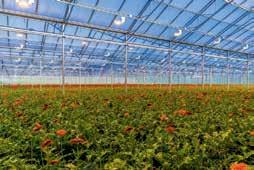
After spending the past few years touring the orchards and vineyards, visitors to next month’s What’s Growing On event will get a chance to learn how food is produced indoors.
Registration is open for Vineland Research and Innovation Centre’s annual What’s Growing On open house, which welcomes the public onto the campus to learn about a specific aspect of the centre’s work. This year the focus is on greenhouse fruit and vegetable production, a timely topic as people become more interested in food sovereignty.
“It’s going to be strictly focused on how we grow more food more reliably, and how greenhouses can be a conduit to that and de-risk Canada’s food supply,” said Nicole De Long, director of business and client development.
There’s more than 4,500 acres of greenhouse vegetable production in Ontario, representing a farmgate value of more than $2 billion, according to stats from the Ontario Greenhouse Vegetable Growers. More than 725 million
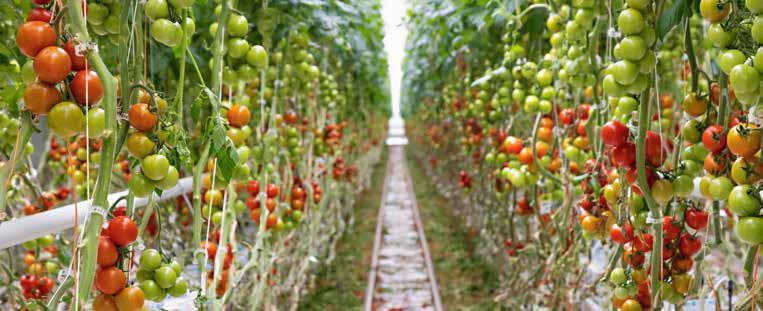
kilograms of produce is created in Ontario greenhouses each year.
Visitors to the event will be taken through multiple stops. The first focuses on how the greenhouse system works, covering highwire crops and how they’re grown, how certain conditions affect performances, yield consistency and variety development.
A second stop looks at technology, and how it’s incorporated into greenhouse production.

From there, visitors will learn about integrated pest management, and how greenhouse operators use biologicals to manage pest and disease.
Finally, visitors will be taken out to the tree culture research project to learn about a new project being supported by a Greenbelt Foundation grant that looks at how used stone wool from greenhouses can be repurposed and used as a soil amendment.
All told, De Long said it should be a great event for anyone curious about food production.
“I think that it’s pretty interesting how they go about doing it in the high wire system and how productive it can be when you do it at large scale. The amount of fruit and veg that comes out of that system is quite interesting and amazing,” she said.
The open house runs from 5:30 to 7 p.m. on Thursday, Sept. 10 at the Vineland campus, 4890 Victoria Ave. North. Details and registration is available online, at vinelandresearch.com/whatsgrowing-on-2026.
Submitted to Niagara Farms
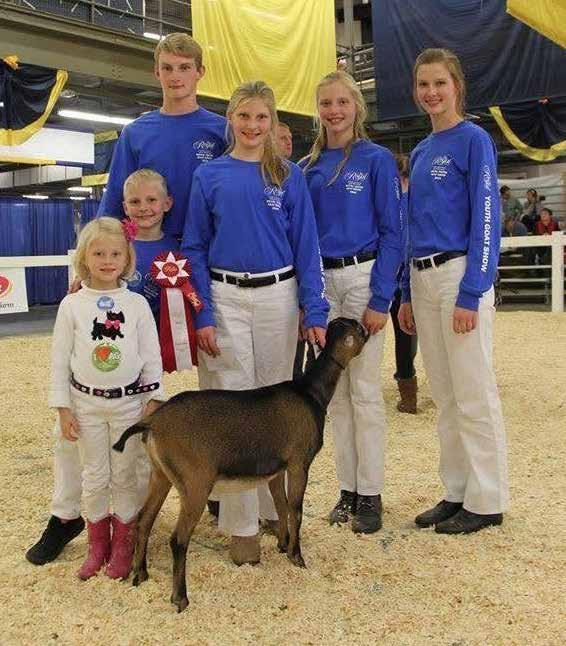
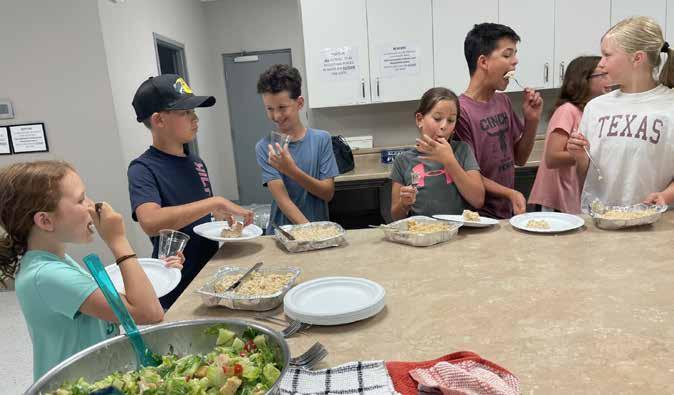
This year the Niagara 4-H Goat club is made up of 18 members from 10 to 20 years of age, so it is a very busy club.
When planning the meeting schedule, the senior members suggested we do a cooking meeting.
A plan was made and the menu selected, as enough stations were needed to keep everyone busy.
Showing the club how to make goat cheese was done by Emily McGee. Becky Jackson helped out with the salad station, as members
cut up cucumbers, tomatoes and lettuce and goat cheese that was already prepared.
Leaders Ann Marie and Andrew supervised the making of the goat stew and goat wraps. Everyone in the club was challenged to peeling carrots and potatoes. To some members this is a new skill they “learned to do by doing.”
It was decided that the best station and the best tasting was the Rice Krispie treat station. Upon judging the four different treats that were made, one was found to have a lot of marshmallows and one group forgot to butter their pan!
A different kind of meeting but fun!


Submitted to Niagara Farms
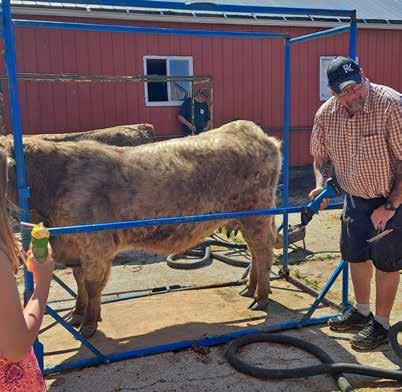
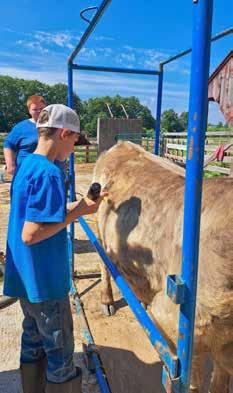
The Niagara 4-H beef club is back!
The beef club is off to an amazing start. Thanks to the Smith family for hosting the first meeting. It was so good to see the older
members teach the younger members all about showing, supplies and how to tie proper knots. Thanks to the Dawson family for hosting the second meeting, and for demonstrating how to wash, dry and clip, and members got to practice on their Galloway cows.
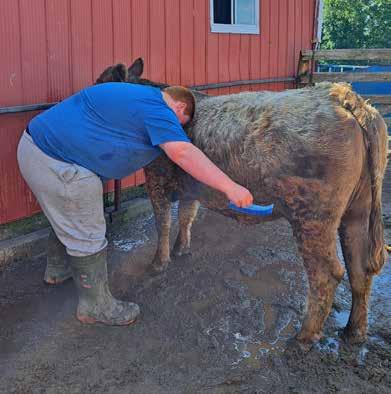
Everyone was in attendance and did a wonderful job. Thank you to our outstanding senior members for leading our juniors! We’re getting fair ready!
We will also be having a practice show at the fairgrounds in August.
Submitted to Niagara Farms
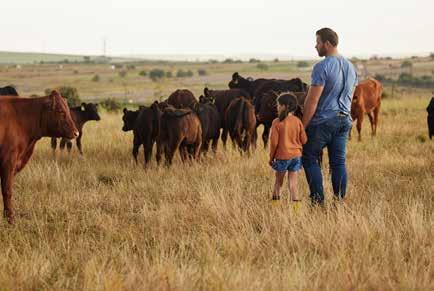
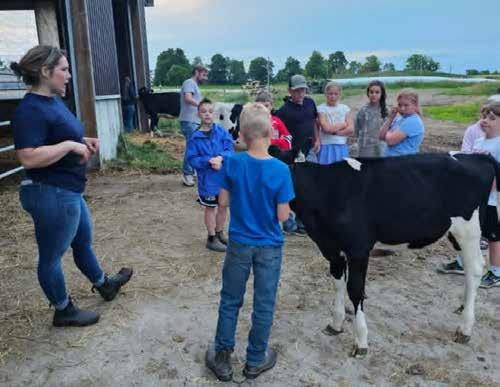
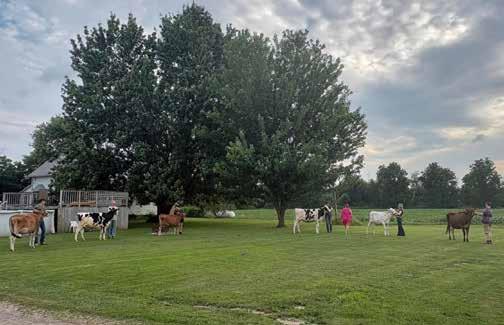
One of the club’s meetings took place at Brookturn Farms. Senior members continued building their judging skills by working through another class of dairy cattle. Junior members learned how to properly tie a halter, the correct way to hold a halter, and how to confidently lead their calves around the show ring.
The Lincoln Dairy Calf Club looks forward to continuing to
build members’ knowledge and confidence as they prepare for the upcoming show season.
They will meet again at Moonlight Holsteins to continue learning more important information.
Members aged 14-plus have the opportunity to show in Woodstock at EastGen, where they will gain important information and knowledge. We wish them all great success.
By Brooklyn Burella
At one of our recent 4-H meetings we started by training our cows and walking them in circles. Then we watched the older 4-H members do showing and what to do, what not to do, and what the judges are looking for in each age group. Next we judged cows by their body features. Finally we played bingo all about cows. Saying the pledge and snacks followed, an important part of 4-H.
We had a great turnout for our third meeting! We learned about the diseases that affect dairy
cows and what we would use to treat them to get our cow healthy again. We also judged a class of four-year-old Jerseys and a class of first cut hay. Everyone is getting so much better at giving reasons! Then we had perfect attendance for our fourth meeting! We had a showmanship demonstration to review all of the basics and stressed the importance of always training your calf like you are in a show ring! Roll call was things to do and not to do in a showmanship class. We then judged a class of second lactation Holsteins and everyone gave reasons!



Jasmine Mint Spritzer with Plums and Peaches
Ingredients
• 2 cups (500 mL) boiling water
• 2 cups (500 mL) room temperature water
• 4 tea bags, Jasmine tea or green tea
• 4 sprigs of fresh Ontario mint
• 3 Ontario plums, pitted and sliced
• 2 Ontario peaches or nectarines, pitted and sliced
• 3 tbsp (45 mL) Ontario maple syrup
• 3 cups (750 mL) ice cubes
• 1 cup (250 mL) chilled soda water
Instructions
In large heatproof container, combine boiling and room temperature waters. Add tea bags; let steep for 20 minutes to 1 hour. Discard tea bags.
Pour tea into glass pitcher. Add mint sprigs, plums, peaches and maple syrup; stir. Cover and refrigerate for up to 2 days.
To serve, place 1/2 cup (125 mL) ice in glass (or enough to fill halfway). Top with tea mixture until three-quarters full, ensuring some fruit and mint sprig in each glass. Top last one-quarter of glass with soda water.
vegetable oil
• 1 tbsp (15 mL) minced fresh gingerroot
• 1/2 tsp (2 mL) sesame oil
Salad:
• 1 pkg (350 g) thin chow mein steamed noodles
• 2 Ontario carrots, diagonally sliced
• 1 Ontario sweet red pepper (such as Sheppard), julienned
• 3 or 4 ripe firm Ontario black or red plums, pitted and slivered
• 4 Ontario green onions, sliced
• 1/2 cup (125 mL) peanuts, optional
• 1/4 cup (50 mL) approx chopped fresh Ontario coriander
• Salt and pepper
Instructions
Dressing: In small bowl, stir together vinegar, soy sauce, chili garlic sauce, vegetable oil, ginger and sesame oil. Set aside.
Salad: In large heatproof bowl, separate noodles; add carrots and red pepper. Cover with boiling water; let stand for 3 to 4 minutes or until noodles are softened. Drain in large colander and return to large bowl. Cut noodles with kitchen scissors to make them easier to toss and eat. Add plums and green onions; pour dressing overtop and toss well. Add peanuts (if using) and coriander; toss again. Taste and season with salt and pepper and more coriander, as needed.
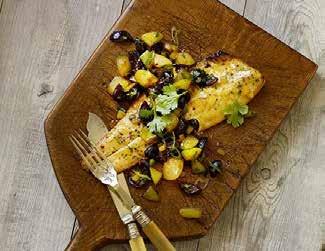
4 Ontario rainbow trout fillets (with skin,
• 1 tbsp (15 mL) Dijon mustard
Plum and Cherry Salsa:
• 1-1/2 cups (375 mL) diced Ontario plums
• 1 cup (250 mL) Ontario sweet cherries, pitted and chopped
• 2 Ontario green onions, thinly sliced
• Half Ontario greenhouse sweet yellow pepper, diced
• 2 tbsp (25 mL) chopped fresh Ontario cilantro
• 1 tbsp (15 mL) finely diced Ontario jalapeño pepper (or to taste)
• 1 tbsp (15 mL) fresh lime juice
• 1/4 tsp (1 mL) salt
• Freshly ground pepper
Instructions
Plum and cherry salsa: In medium bowl, combine plums, cherries, onions, yellow pepper, cilantro, jalapeño pepper to taste, lime juice, salt, and pepper to taste.
Place fillets, skin side down, on foil that has been poked with fork in several places. Sprinkle fillets with pepper to taste. In small bowl, combine honey with mustard; brush over fillets. Place foil on grill over medium-high heat 375˚F (190˚C); grill, covered, for 5 minutes or until fish is opaque and flakes easily when tested with fork. Remove fillets by sliding large spatula between skin and flesh and carefully lift trout, leaving skin on foil. Serve with salsa.

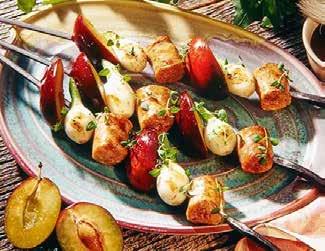
Plum and Sausage Kebabs
Ingredients
• 3/4 lb (375 g) sausages
• 8 small bulb Ontario onions, 2-inch (5 cm) green stem attached
• 4 large Ontario red or blue plums, pitted and quartered
Basting Sauce:
• 1 clove Ontario garlic, chopped
• 2 tbsp (25 mL) vegetable oil
• 2 tbsp (25 mL) balsamic vinegar
• 1 tbsp (15 mL) chopped fresh Ontario thyme or 1 tsp (5 mL) dried
• 1 tsp (5 mL) Dijon-type mustard
• 1 tsp (5 mL) Ontario honey
Instructions
If sausages are raw (like Bratwurst, lamb, turkey or Italian), steam in a little water in covered frying pan, or prick several times, cover with waxed paper and microwave at Medium-High (70% power) for 4 to 6 minutes, turning and rearranging twice. Steam or microwave onions with 2 tbsp (25 mL) water for 2 minutes.
Basting Sauce: Mix together garlic, oil, balsamic vinegar, thyme, mustard, and honey.
Cut sausages into 1-1/2-inch (4 cm) chunks. Alternately thread sausages, plum quarters and onions onto skewers. Place on oiled rack in preheated barbecue over medium heat; grill, brushing with basting sauce, for 3 or 4 minutes per side or until onions are barely tender.

Plum Sorbet
Ingredients
• 3 cups (750 mL) halved pitted Ontario blue or prune plums (about 8 blue or 15 prune)
• 1/2 cup (125 mL) Ontario honey
• 1/4 cup (50 mL) white corn syrup
Instructions
Place plums in medium saucepan. Cover and cook over low heat for about 5 minutes or until starting to release liquid. Uncover, increase heat to medium and simmer, stirring often, for 5 to 10 minutes or until very soft. Let cool.
In blender or food processor, purée until smooth. Transfer to bowl and str in honey and corn syrup; cover and refrigerate for about 2 hours or until very cold.
Stir well and pour into ice-cream maker; freeze according to manufacturer’s directions. Serve immediately or freeze in an airtight container for up to 1 month.




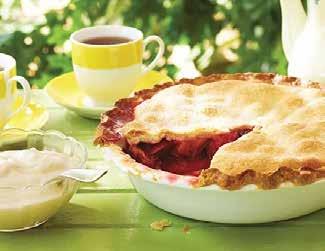
Plum Pie with Maple Crème Fraîche
Ingredients
• 6 cups (1.5 L) quartered pitted Ontario blue plums (about 20)
• 1/4 cup (50 mL) cornstarch
• 1/2 tsp (2 mL) ground cinnamon
• 1/2 cup (125 mL) Ontario maple syrup
• Pastry for single-crust 9 inch (23 cm) pie shell
• Milk and granulated sugar (optional)
Maple Crème Fraiche:
• 1 cup (250 mL) crème fraîche
• 1/4 cup (50 mL) Ontario maple syrup
Instructions
In large bowl, toss plums with cornstarch and cinnamon. Place plum mixture in 9-inch (23 cm) buttered deep-dish pie plate. Pour maple syrup over fruit.
On lightly floured surface, roll out pastry into circle 1-inch (2.5 cm) wider than top of pie plate. Place over plums; tuck overhang under and crimp edges. Cut slits in top of pastry for steam to escape. Brush with milk and sprinkle with sugar, if desired.
Bake on baking sheet in 400°F (200°C) oven 40 to 45 minutes or until filling is bubbling and crust is golden brown; cool.
Maple Crème Fraîche:
In small bowl, combine crème fraîche and maple syrup.


By Luke Edwards
The dirt beneath your feet may all look more or less the same, but take a closer look and there’s an entire world of variety.
Bryan Gilvesy, now CEO of ALUS Canada, started his involvement with the program when he signed up as a participant to the program and then became a member of the Norfolk Partnership Advisory Committee. Bryan and wife Cathy raise Texas longhorns on the YU Ranch, south of Tillsonburg.
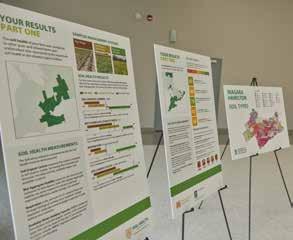
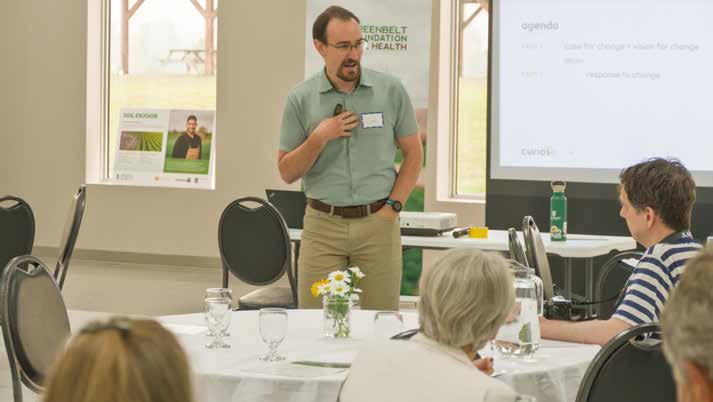
As the Greenbelt Foundation continues efforts to promote soil health on farms in the Greater Golden Horseshoe, experts made a stop in Niagara last month to discuss the results of a two-year soil health study and offer some tips on how farmers can keep their soils in tip top shape to help their own crops as well as local water quality.
One of the key goals of the study was to allow farmers to get a baseline of soil health, and ensure they’re making appropriate comparisons.
“We need to compare clay soils to clay soils and sandy soils to sandy soils,” said Jenny Bower, a research soil scientist with the Soil Health Institute.
The Niagara-Haldimand-Hamilton region has a unique soil makeup, with dozens of soil types throughout. Individual farmers can even be dealing with multiple soil types on a single farm, Bower said.
“You can’t manage your fields if you don’t know what your baseline measurements are,” said the Greenbelt Foundation’s Ryan Carlow, program lead.
Locally, experts took 117 samples on 40 farms during the study. They collected soil from a range of production, including field crops, orchards, fencerow/wooded areas, and hayfields and meadows. They were then split into current management practices of baseline conventional management, areas where soil health practices were being employed and reference areas to
tally we are building value for the farmers of Canada. That means we (farmers) are part of conversations we haven’t been part of for a long
Farmers realize they are part of the solution to a lot of things, like climate change mitigation, biodiversity,
and flood control.”
One of the offshoots of Norfolk’s initial efforts occurred after Prince Edward Island environment George Webster attended the pilot launch in 2008. The island was having an environmental issue at the time and Today, nationally ALUS is approaching 1,000 farmers participating
Officially, ALUS Canada’s mantra now is: “ALUS Canada makes it ardship. ALUS invests in farmers and landowners who are producing acres of clean air, clean water, wildlife habitat
Credit was given to some of the programs largest advocates by Gilvesy. Local MPP
nent since the early days, and introduced a Private Member’s Bill promoting the concept.
moting it there. Bob Sopuck, who was Delta Waterfowl’s western vice-president of policy was an early advocate and became elected as an MP and was the program’s champion on Parliament Hill. Dave Reid co-wrote the
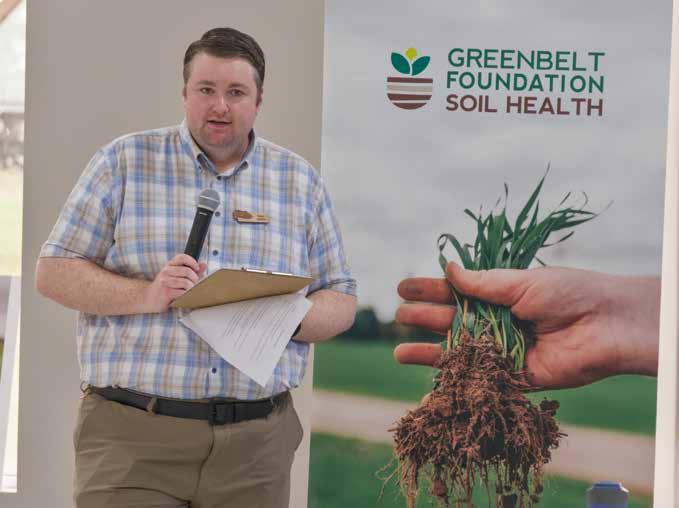
Following a two-year study into soil
offer a glimpse into the potential peak of soil health.
“A big thank you to all the farmers here who let us sample their soils,” Bower said.
The results showed benefits to farmers who incorporate soil health measures. Bower noted some commonalities for fields that scored
sands of people about ALUS at hundreds of speaking engagements across Canada. Recognition for the program has included a Premier’s Ag Innovation Award
Gilvesy is proud ALUS is a farmer-led program and farmers fell they are the program owners.
high: minimizing tillage, using a consistent crop rotation, frequently planting cover crops, and incorporating organic amendments.
“We had a no-till farmer who actually got to that reference bar,” she said.
“People feel they are partners in ALUS,” he said. “It’s the value of developing a grassroots program that recognizes the value of community.”
Continued to page A17



“Practices can be really impactful when used together.”
Adam Hayes, a soil specialist with the Soil Resource Group, offered some tips for farmers. For instance, utilizing cover crops should be done with intention, as different crops will help achieve different goals. Blends can offer the best of all worlds, but can get pricey.
Farmers will also see more benefits if they get their cover crops on as soon as possible after harvest, and leave them on as long as possible.
They should also consider how to terminate the cover crop. Chemical kill is better than tilling, he said, but depending on the situation farmers can also let winter do the work or even harvest the crop for feed.
Organic amendments also help, though farmers need to consider other environmental factors, Hayes said.
Likewise, tillage choices can impact how much carbon is lost from the soil.
In a lot of cases, it can take a long time before soil sampling starts to show improvements. However, Hayes said farmers may see visual changes that signal an improving soil before the samples confirm it. Those who have recently adopted new practices should keep an eye out for increasing worm populations or better water absorption.
“Adding organic matter makes the soil more of a sponge to soak up water, but also store it for the future,” Bower said.
Implementing soil health practices can have the added benefit of improving water quality, Kokulan Vivekananthan, water quality specialist for Ontario Soil and Crop Improvement, said. His research that looked at tile drainage systems and runoff, found phosphorus and nutrients leaving fields. And most of that happens during the non-growing season, offering a further benefit for cover crop utilization.
In a roundtable to wrap up the morning portion Bower recalled talking to a farmer about runoff who said he came to the realization that he was essentially paying to pollute.
“Sometimes a mindshift can also get at this,” she said.
The afternoon session saw Cameron Ogilvie lead a group discussion on change, and implementing best management practices.
More information on the Greenbelt’s soil health research can be found online, at greenbelt.ca/research-report/regional_soil_health_report.
$275/yr $198/yr














By Luke Edwards
Keeping more than 100 hives in good shape with happy bees producing plenty of honey is hard work.
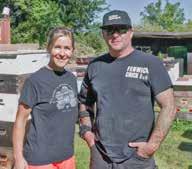
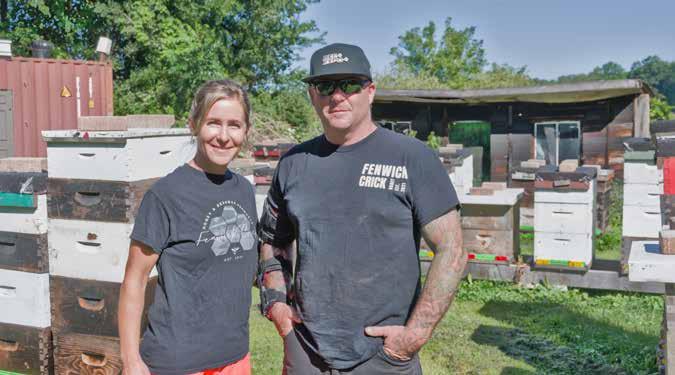
It keeps Shaun Horton busy for many hours outside his regular work as a Diesel mechanic. But there are moments when he and his Fenwick family are reminded of why they run Fenwick Crick Honey. Some of those moments occur regularly: like when a new or returning customer offers praise for the product, or simply when they can enjoy some fresh honey themselves.
But others are rare. And one of those rare moments happened earlier this summer as Shaun and his wife Julie were enjoying a brief period of relaxation one afternoon in their backyard.
Virgin queen bees conduct one mating flight in their lives, as they fly out from the hive and mate with several drones. The queen bee will store millions of sperm in a special organ called the spermatheca and use it to fertilize eggs for the rest of her life.
“We were sitting out back and we could actually see it happening, but I didn’t have my camera,” said Julie, with a laugh.
“It’s something very rare that I don’t think most people ever catch,” added Shaun.
Julie described it as kind of like a dance the queen plays with the drones, who briefly attach during the flight. After finishing the job, the drones die, and when finished the queen returns to the hive, where she’ll live out her days.
The Hortons got into beekeeping seven years ago, starting with six hives. Shaun had some experience, thanks to his grandfather, who kept some hives on his Wellandport farm for a local beekeeper when Shaun was young.
However, he didn’t realize at first just how much work goes into it. But as he learned more and more about the practice - often with the help of the local beekeeping communitythings got better. Slowly they built their hives up to the point where they could sell some honey
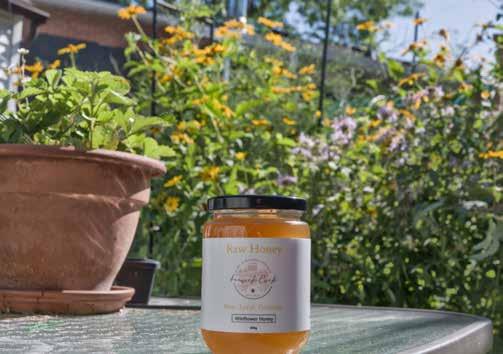
Now, the Hortons have just over 100 hives, and sell raw honey and products out of a stand at their Welland Road property. They also pro-
“We don’t focus on quantity, we focus on quality,” said Shaun.
Some of that requires education both for them and their customers. For instance, Julie said sometimes customers might find what they consider impurities, but is really just the result of them keeping things as natural as possible.
“Our honey is very lightly filtered, so you get wax in the honey,” said Shaun.
To help with the education, Julie has become fairly active on social media. She regularly posts about things that are happening on the farm and answers questions about beekeeping that many people have.
Shaun’s own education in beekeeping has seen him watch countless videos, talk to local beekeepers and attend a Bee Expo in Kentucky. Essentially it comes down to paying close attention, making adjustments before an issue arises, or quickly noticing a problem and adapting.
“The bees tell you what’s happening. You don’t tell them what’s happening,” he said.
But every day and every year is different, so both Julie and Shaun said it’s a neverending learning process.
Despite the hard work and long hours Shaun said beekeeping has a relaxing aspect to it, as well. Spending a few hours after work with the hives can be calming after a stressful day at the shop.
And when that work ends with a spoonful of honey, it’s all worth it.
“For me, it’s fresh out of the hive,” said Shaun, when asked about his favourite way to eat honey.
Sometimes he’ll call Julie down from the house and give her some fresh honey.
“And it’s the best treat you’re ever going to have,” she said.
In addition to being delicious, raw honey can also offer some health benefits. Their son is a high-performance athlete and eats a lot of honey to fuel his training.
The elderberry syrup they sell also has some potential health benefits, helping to support the immune system and providing nutrients and antioxidants.
Beyond enjoying the products themselves, Shaun and Julie said their favourite part of the job is seeing people learn about beekeeping or seeing their products improve the lives of customers.
“That’s more rewarding than any paycheque,” said Shaun.
The couple is working on an expansion of their stand, and hope to open a more substantial storefront later this year.
For more information on the business, visit fenwickcrickhoney.wordpress.com or follow them on Facebook and Instagram, at Fenwick Crick Honey.

By Luke Edwards
As we make our way through August, the organizers of local fall fairs will be ramping up preparations for their local events.
The Niagara and Haldimand regions have plenty of fall fairs on the docket, starting with the West Niagara Fall Fair in early September. Here’s a roundup of the local fair schedule.
West Niagara Fair - Friday, Sept. 11 to Sunday, Sept. 13
While the West Niagara Fair is technically quite young, it continues a more than 150-yearold tradition of agriculture fairs in the area, with the old Lincoln fair starting in 1857 and Smithville’s first fair taking place in 1878. The two agricultural societies merged in 2012, ultimately leading to the new West Niagara Fair.
Agricultural displays, livestock shows, a midway, food and family entertainment all return for this year’s West Niagara Fair.
Details can be found at westniagarafair.ca. The prizebook is available online and entries will be accepted throughout August.
The West Niagara Fairgrounds is located at 7402 Mud St. West.
Binbrook Fall Fair - Friday, Sept. 18 to Sunday, Sept. 20
Now in its 173rd year, the Binbrook Fall Fair coincides with the return of the RAM Rodeo Tour.
The fair runs from Sept. 18 to 20, and this year will take a look at its past as the area prepares to grow for the future. The theme is “Rooted in fun, growing for tomorrow.”
As visitors enjoy the music, food, shows and livestock displays, they’ll also be able to take in the rodeo, which runs Sept. 19 and 20.
Early bird tickets for the fair are available until Sept. 8. For more details, visit binbrookfair.org.
The Binbrook Fairgrounds are located at 2600 Regional Rd. 56.
Wainfleet Fall Fair - Thursday, Sept. 17 to Saturday, Sept. 19
The township’s fair returns this September, taking visitors “from farm to fair.”
That’s the theme of this year’s Wainfleet Fall Fair, which runs Sept. 17-19. With a wide mix of exhibits that should pique the interest of visitors of all kinds.
It kicks off Thursday evening, with an opening parade and truck and tractor pulls, followed by a full day Friday where local schoolchildren can get a taste of farm life, before wrapping up Saturday.
The fair’s exhibitor handbook is available online at wainfleetfallfair.com, along with other details on the fair. It takes place in the village, at 31943 Park St.
Ancaster Fair - Thursday, Sept. 24 to Sunday, Sept. 27
With 2026 being the United Nations’ Year of the Woman Farmer, the Ancaster Fair is paying tribute to the important women in our agricultural system with a 2026 theme of “In her hands: Family, farm and future.
Those with a competitive spirit can test their mettle with the hot sauce eating competition or demolition derby. For those looking for something a little less risky, there’s also a pie eating competition and baby show.
Various livestock and homecraft exhibits will also be shown, and the weekend will be full of music and entertainment.
For more information visit ancasterfair.ca. The fairgrounds are located at 630 Trinity Rd. South, Jerseyville.
Caledonia Fair - Thursday, Oct. 1 to Sunday, Oct. 4
The fair tour wraps up in Caledonia, with that community hosting its annual fall fair from Oct. 1 to 4.
With four days of entertainment, food, competition and more, there promises to be fun for everyone at the fair.
Caledonia’s fairgrounds is located at 151 Caithness St. East. For more information visit caledoniafair.ca.

By Luke Edwards
After trying, and loving, her homemade sourdough bread, friends of Charlene Flikkema encouraged her to start selling loaves. She put four loaves out in the roadside stand in front of her Wainfleet property and posted on social media about it.
They disappeared in a heartbeat.
“So the next week I put out eight loaves, and they all sold,” Larente said.
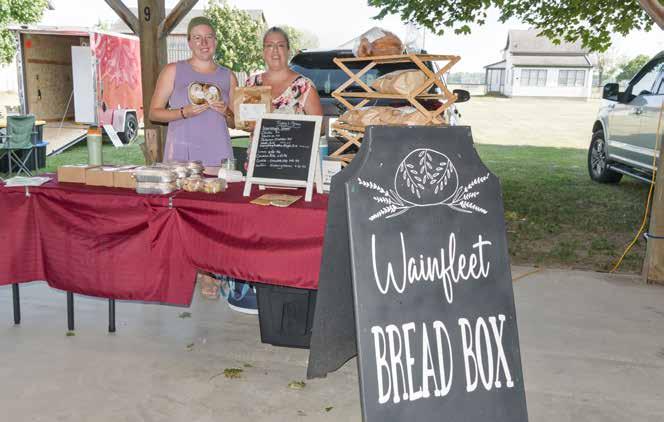
Now she and her daughter Nadine Larente run the Wainfleet Bread Box, selling all things sourdough at their Highway 3 home and weekly at the Wainfleet Farmers Market. They have a wide range of sourdough items from classic and flavoured loaves, to scones, cinnamon rolls and muffins.
What makes them unique from what a shopper might buy in a large scale grocery store is authenticity, Flikkema said. Whereas others might use yeast, or even add artificial sourdough flavouring to give their loaves a sourdough feel, Flikkema and Larente use their own starter and a long fermentation period to get that distinctive taste.
The pair will often branch out and offer specialty treats based on the time of year, such as chocolate peppermint during Christmas.
One of the great things about starting the business and being a regular Wainfleet market vendor is the opportunity it’s afforded them to learn more about the area. They moved to Wainfleet in 2021.
“Meeting new people and getting to know our community,” Flikkema said, when asked about what makes the market special.
While they do specialty loaves - some like the jalapeno cheddar are quite popular - Flikkema said quite often she and Nadine prefer simpler options, like a slice of toast and butter in the morning.
In addition to being regulars at the market, they also take orders. For more information visit wainfleetbreadbox.ca or follow them on Facebook.
By Michelle Seaborn
Here we are again, into August, also affectionately known as the “Dog days of Summer.”
This period begins around July 3 and lasts until about Aug. 11, according to the Old Farmer’s Almanac. It apparently marks the onset of summer heat. This year has proven to be a strange one for many farmers. Sour cherry crops are rumoured to have done very poorly, some apple orchards are showing signs of scab which can certainly be attributed to warm but wet conditions. Peach crops are doing well despite the “rock and roll” weather of this summer. Have you noticed the standing hay fields? Many forage farmers are looking at a lush crop with no consistent dry weather required to cut, dry and bale. Of course, the recent heavy rains followed by another week of rain is not helping the situation. As the old bit of folklore goes: Dog days bright and clear, indicate a happy year. But when accompanied by rain, for better times, our hopes are vain.
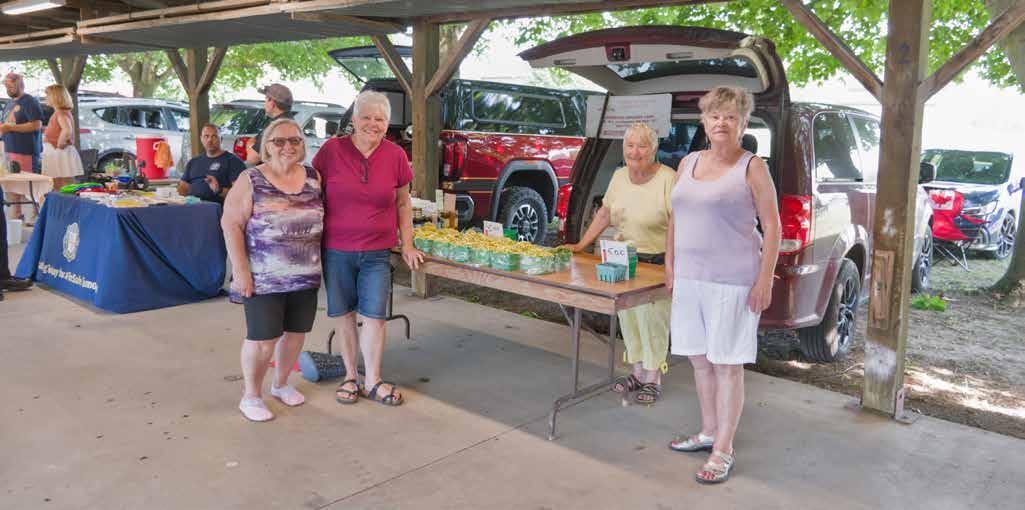
But all is not lost! Wildfire smoke, heavy rains, and very hot humid days in between, have not discouraged shoppers from attending weekly farmers markets. And the market tables are loaded with freshness. Since mid-July we have seen cherries, raspberries, blackberries, blueberries and strawberries, plums of several varieties and apricots add lovely hues of colour to market tables. Add to that the addition of several varieties of peaches, including the novel doughnut peach and now even nectarines are bidding for table space!
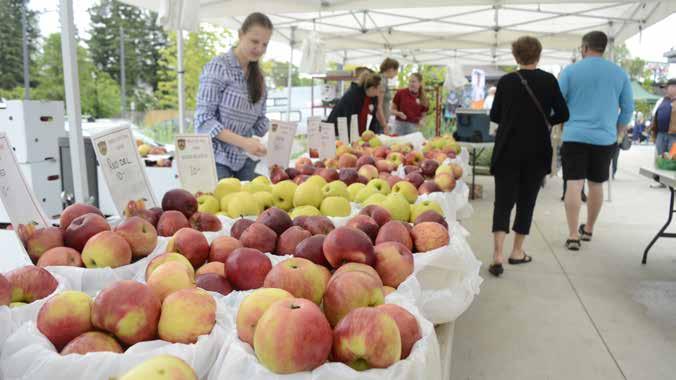
Even though Mother Nature has given us fits and starts of rain, extreme heat and even wildfire smoke, farmers have persevered and local markets are now full of delicious fruits and vegetables. ~ File photo
Vegetables are just as exciting. While some peas are still showing up, they are outnumbered by yellow and green beans, and tomatoes are now both hothouse and field grown, as are cucumbers and colourful peppers. New crop potatoes offer small tasty potatoes and some of the larger varieties are also on tables. Lettuce, cabbage, mushrooms, onions - both cooking and green - and corn are great for cool summer meals.
Most farmers markets also have vendors that offer cut flowers which will brighten up any space. Bread makers are busy providing sourdough breads, bagels, soft pretzels, pizza, doughnuts, dinner rolls and other buns.
There are so many options that a trip to your local farmers market remains the place to find freshness and flavour in abundance. Enjoy!
- Michelle Seaborn is the Grimsby Farmers Market manager
Wainfleet Fall Fair joins district fundraiser, planning several activities in coming months
By Luke Edwards
At Wainfleet’s small but mighty market, visitors can often find a treat of some kind. From sweet desserts to fresh produce, or a handcrafted good of some kind.
But beginning in August they might also find some cold hard cash. Or at least a ticket that leads to some.
This year the Wainfleet Agricultural Society has joined the Fair Fortune Lottery, a 50/50 draw that includes fall fair groups in District 6 of the Ontario Association of Agricultural Societies. Other ag societies participating this year include: West Niagara, Binbrook, Ancaster, Caledonia, Norfolk and Rockton.
“It’s really exciting to be part of this,” said Norma Bird, past president of the Wainfleet Agricultural Society.
Each local group will receive a slice of the funds generated proportionate to how many tickets they sold. So the more tickets sold by Wainfleet or West Niagara, the more funds those groups receive in the end.
Of course, that also raises the chances of someone local winning the prize.
“Wouldn’t it be great if someone from Wainfleet won?” said Norma Bird.
The Wainfleet group hasn’t identified a specific area they’ll use
the money, but said every dollar raised will help make the event the best it can be.
In addition to selling tickets at the weekly Tuesday afternoon Wainfleet market, tickets can be purchased from WAS members, or directly from any of the participating fair groups. Online purchases are also available at rafflebox. ca/raffle/fairfortune/4. They’re $10 apiece, four for $40, 20 for $50, or 100 for $100.
The draw runs right through fair season, and ends Oct. 31. The draw itself will take place in Caledonia. The Caledonia fair group is the licensee for the draw.
WAS member Sharon McMillan said the fundraiser is just another example of how local fair groups collaborate for everyone’s benefit.
“Everyone wants to work together,” she said.
Bird said it’s a constant question of ways to do that.
“How can we support each other,” she said.
And that support goes beyond the ag society. In addition to partnering with the Tuesday afternoon market to sell tickets to the Fair Fortune Lottery, they’ve also teamed up with Minor Bros. Country Living to run a movie night in August. On Tuesday, Aug. 11 families are invited out to the market and to stay afterwards for a showing of Disney Pixar’s Hoppers. The market runs from 3 to 7 p.m. every Tuesday, and the movie night begins at 7:30. Visitors can also enjoy some refreshments and family games and activities.
Later this year there’s also a Fleeter Flock Swap planned, where those who raise backyard chickens, ducks and other poultry can grow their flock or simply meet and chat with other owners. It takes place on Sunday, Oct. 4 from 7 a.m. to 1 p.m. in the poultry barn at 31943 Park St. Admission is $20 for sellers, while buyers and pedestrians can enter for free. Sellers are asked to bring appropriate cages and follow biosecurity best practices. For more information call Jennifer Sutton at 905-9327982.
There was a time when small-town newspapers told the stories that mattered most: the people, the milestones, the challenges, and the triumphs of the community.
At Grant Haven Media, we’re proud to carry on that tradition. Our newspapers are built around truly local content. Written for the community, about the community, by the community.
From council decisions to community events, local businesses to local achievements, we believe every town deserves a strong, independent voice.












The dog days of summer are here. Here are some things in the coming weeks as the summer sun continues to, hopefully, shine down on us.
AUGUST 7 & 8
AUGUST 29 & 30
WEDNESDAY, AUGUST 12
4:30 P.M.
SEPTEMBER 6 - 7
EVENT
SEPTEMBER 10
SEPTEMBER 16
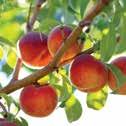
annual peach festivals, bookending the month of August. Things kick off in NOTL, with the two-day festival in Old Town running Friday, Aug. 7 from noon to 7 p.m. and Saturday, Aug 8 from 10 a.m. to 6 p.m. For more information visit . At the end of the month, Winona will celebrate the humble peach with its annual festival, running from Friday, Aug. 29 to Sunday, Aug. 30. For more information visit winonapeach.com.

Federation of Agriculture barbecue on August 12. This year’s event takes place at the Riverside Exhibition Centre in Caledonia, Ontario. Jennifer Schooley will be a guest speaker, discussing women in farming as 2026 is the United Nations’ Year of the Woman Farmer. Her presentation is titled “Yes I farm, yes I’m a girl.” Doors open at 4:30 p.m. and dinner is at 6. Tickets are $25 and must be purchased in advance. HFA members interested in attending can purchase a ticket by e-transfer through or from an HFA director.

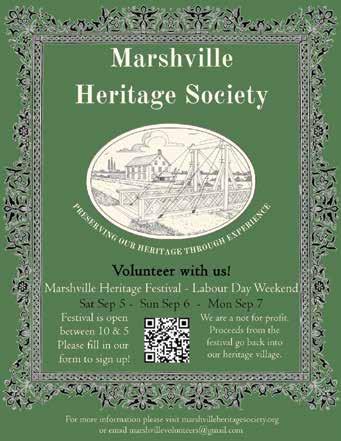
long running Labour Day tradition returns this year, as Wainfleet turns back the clock for the Marshville Heritage Festival. Celebrating life like it once was in the region, Marshville is a tribute to the early families, most of them farmers, who settled in Niagara. With a wide range of old time music, food, volunteers in pioneer outfits and several historic buildings to tour, there’s something for everyone. The festival runs 10 a.m. to 5 p.m. from Saturday. Sept. 5 to Monday, Sept. 7.

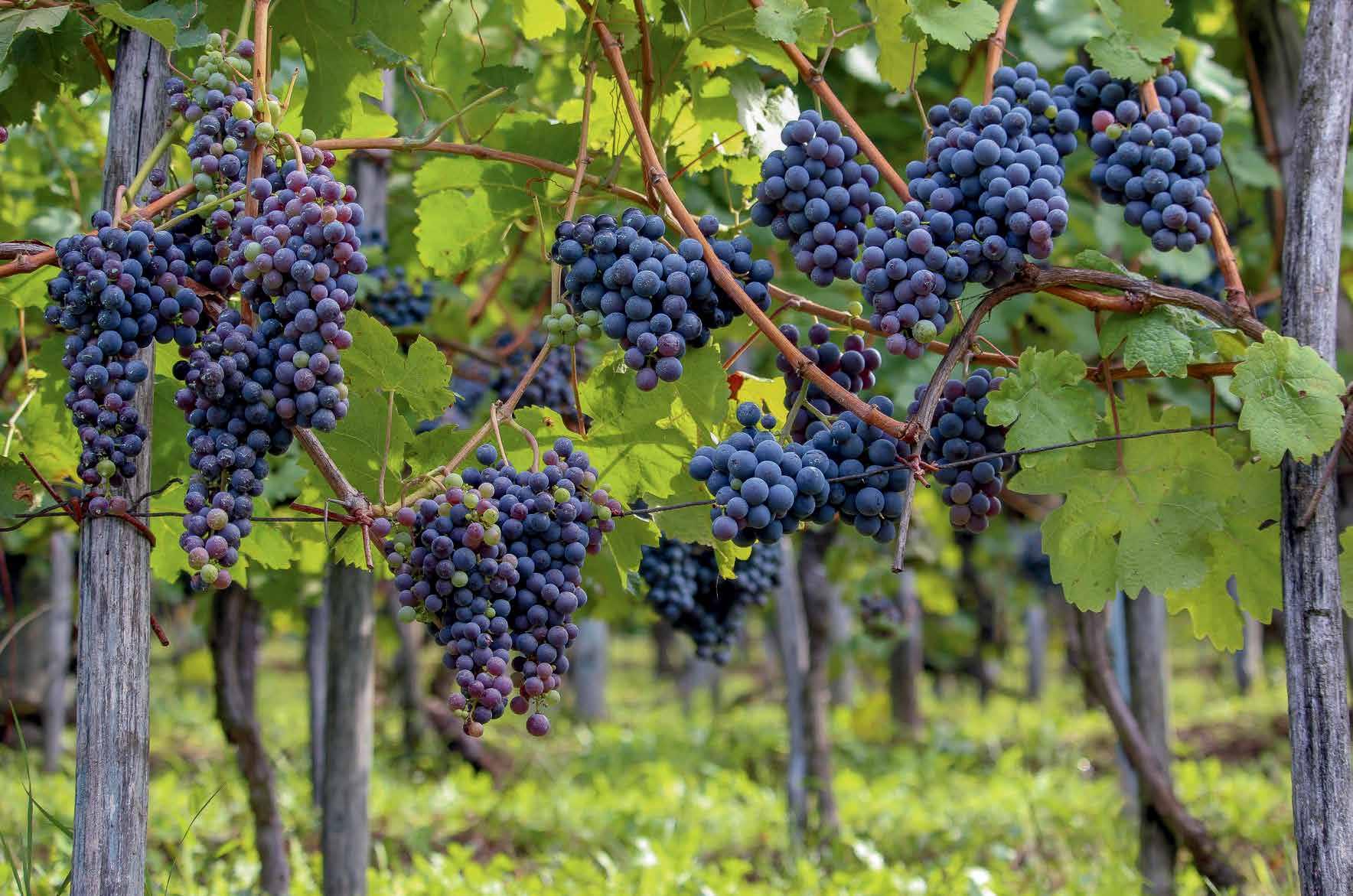
popular day for those interested in the work happening on the campus. And this year’s open house promises inform visitors on a subject that’s very timely and relevant. Registration for the Sept. 10 event opens this month. It takes place Thursday, Sept. 10 from 5:30 to 7 p.m. and will cover how innovation for the commercial greenhouse sector is securing Canada’s food supply. Visit for more details.
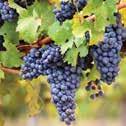
Growers of Ontario luncheon kicks off the annual Niagara Grape and Wine Festival. This year’s luncheon features a presentation from football great Michael “Pinball” Clemons, and will be followed by the installation of the new grape king, and then the grape and wine festival. The festival itself includes three weekends of the Discovery Pass where visitors can visit local wineries for special treats, as well as the main weekend festival at Montebello Park in St. Catharines. Canadian rockers Sloan perform on Thursday, Sept. 24 leading into the weekend. Visit for more information on the luncheon, and for more information on the festival.