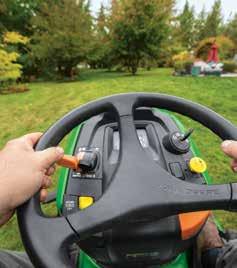
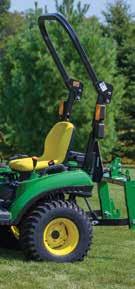
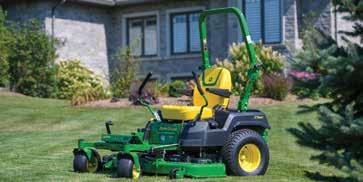
We could try to put it into words for you. We’d use words like
satisfying and comfortable. But to be honest, the experience says it all. You just have to get in the seat. Stop by your local Premier to try for yourself.
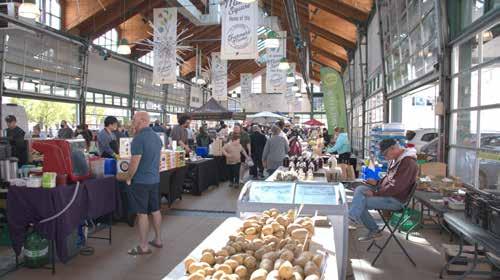
Niagara Farm Day a tradition in the making for young families
Hundreds come out for annual celebration of region’s farming community
By Luke Edwards
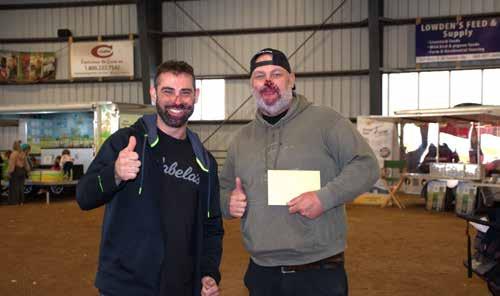
The blue-purple tinge to his beard was all the evidence needed to show how valuable the annual Niagara Farm Day event is for Rob Davidson.
Returning to defend his pie eating crown, the Vineland man was one of several to throw etiquette and good manners to the wind, devouring his blueberry pie as fast as he could. This time, however, it was not fast enough.
“This year, he destroyed me,” Davidson said, pointing to the newly crowned champion Dan Montean standing next to him inside the Richardson Ag Hall at the West Niagara fairgrounds.
It was all in good fun, as the various contests - chicken wing, chocolate milk and pie - offered a different twist on the annual celebration of Niagara’s farming community.
The stained beard was a small price to pay for Davidson to offer his thanks to the region’s farmers as well as the organizers who make farm day a success.
“They work so hard to make it happen,” he said of the organizers. And of the farmers: ‘We wouldn’t be eating if not for them.”
For Montean, he brought his children out to the fairgrounds to check out the animals and learn a bit about farming in Niagara. The contests were an added bit of fun.
“We’re going to make a tradition out of it,” he said.
The annual event returned May 9, welcoming hundreds of visitors under mostly cooperative skies.
Visitors could get up close and personal with livestock, including cattle, goats and some Clydesdales from Roy-a-Lea Farms.
“It’s good to get the public around the animals,” said Heather Spoelstra, who alongside her parents maintain a herd of about 50 Clydesdales up in Binbrook. They’ve been coming to Niagara Farm Day for several years, and Spoelstra said it remains an important day to share their passion for farming with the community.
Clydesdales are becoming a more popular breed of horse, Spoelstra said, in large part thanks to their docile and relaxed nature. For instance, police forces are turning to the breed for their cavalry divisions, as the animals are
Continued to page A4
Publisher
Editor
Business Development
Stewart Grant • stew@granthaven.com
Luke Edwards • luke@granthaven.com
Heather Dunbar • heather@granthaven.com
Graphic Design
Erin Parsons • niagarafarmsnewspaper@gmail.com
Billing Administrator
Jen Gaetan • jen@granthaven.com
Contributor
Ann Marie Chechalk
Restoring small-town journalism, one community at a time!
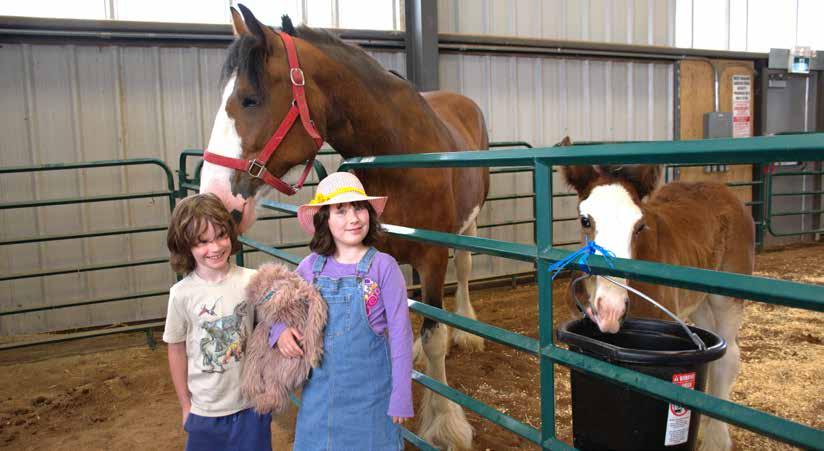
Front page photo: Mia Lesso loved seeing the horses and ponies at Niagara Farm Day. She and her family came to Grassie from St. Catharines to take in the event. She’s pictured here with her brother Henry, who’s getting a playful nudge from Clydesdale Rosie. ~ Luke Edwards photo
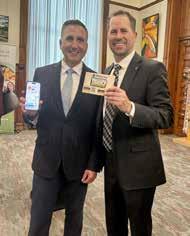
Dan Montean (left) and Rob Davidson pose for a picture after competing in the pie eating contests at last month’s Niagara Farm Day. Defending champion Davidson lost his title this year to Monteau. ~ Luke Edwards photos
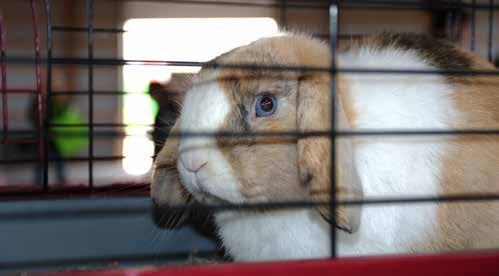
A floppy eared rabbit welcomed visitors to Niagara Farm Day.
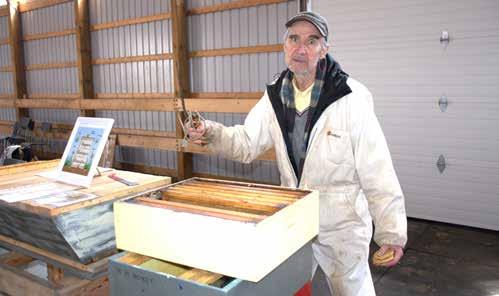
George Dubanow had plenty of fun with visitors, as he showed what goes into beekeeping.
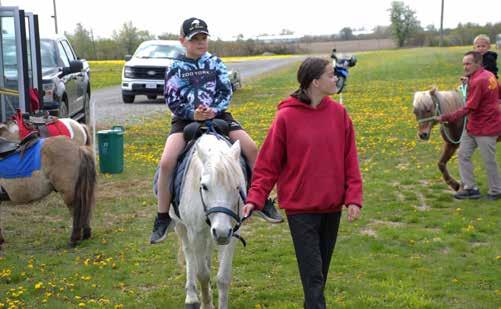
Anthony Robinson goes for a pony ride at Niagara Farm Day.
Continued from page A3
more likely to remain calm in tense situations.
There was no tension at farm day but there was plenty of excitement. Mia Lesso came with her family from St. Catharines, and was eager to meet Rosie and her one-monthold foal Princess.
“I just like animals,” she declared, shortly after Rosie gave her and her brother Henry a playful nudge.
Chris Mullet Koop, president of the Niagara Federation of Agricul-
ture, said the day proved to be a success.
“It’s great to see so many kids and families,” he said. “It’s community building, it’s education, it’s interactive…It keeps people in touch with rural agriculture.”
The event was also just another way to showcase the West Niagara Agricultural Centre, which offers far more beyond the yearly fall fair.
“It’s great to have these facilities right here in West Niagara,” Mullet Koop said.
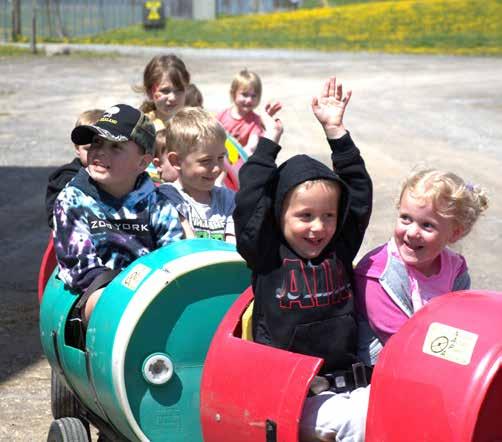
Kids go for a tour of the West Niagara Agricultural Centre, courtesy the Niagara Antique Power Association.
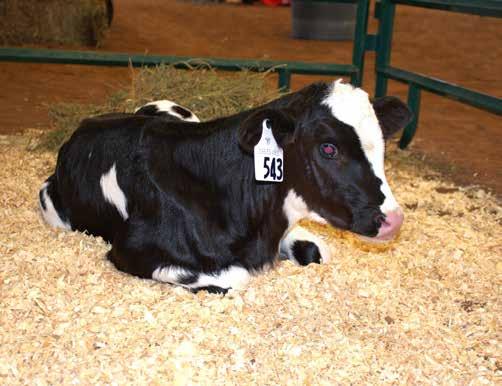
A young Holstein greeted visitors.
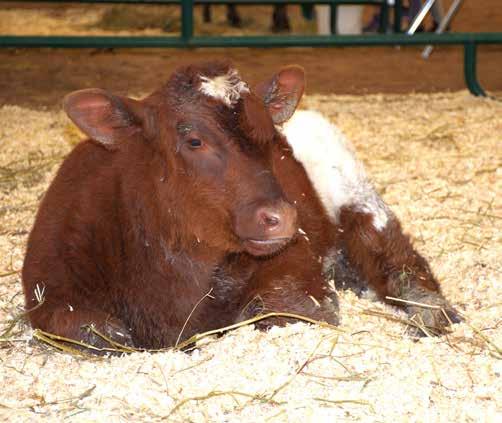
Several young animals, including this calf, were at Niagara Farm Day for visitors to see.
Farmland protection efforts require a holistic approach, report argues
By Luke Edwards
It takes a village to grow a fruit.
When Margaret Zafiriou thinks about protecting valuable farmland, she’s not just thinking about the orchard where the peach is picked or the field where the soybeans are harvested. Those may be the most visible aspects, but it’s only the tip of the iceberg.
“It’s really important to look at it as a system,” said the senior research fellow at the Canadian Agri-food Policy Institute.
Last year the Greenbelt Foundation sought Zafiriou’s help to produce a report looking at the important land use planning document that protects about 2 million acres of land in Ontario, including some of the best remaining farmland the province has to offer. Her report is part of a Visioning the Future of the Greenbelt Series that considers how the Greenbelt should evolve in a changing world.
Protecting farmland is a key part of that, though Zafiriou suggests it’s not as easy as simply restricting development on existing fields and orchards. Not only is there a never-ending balancing act being played between the need to grow and develop and the priority to protect agricultural land. There’s also everything else that goes into making a field, and its harvest productive.
That means equipment, maintenance, inputs, harvesting, and post-harvest processing or value-added propositions. Then there’s the agronomists, researchers and product developers ensuring Ontario’s farmers have the best technology and advancements.
“It’s a symbiotic relationship, they need each other,” she said.
The importance of thinking of it as an entire system has taken on a new focus in the past year as the United States injected uncertainty into the global economy through tariffs to longtime partners like Canada and a general chaos with shifting priorities and partners.
“We keep hearing about a wakeup call,” she said. “That was a wakeup call.”
The report, released this spring, offers several recommendations, with many revolving around Zafiriou’s idea of agriculture as a system. These include a recommendation to “incentivize connectivity and a critical mass of prime farmland, safe from fragmentation, to provide long-term business certainty and maintain economic viability of farms and support farm succession.”
Other recommendations talk about infrastructure, innovation, raising awareness about issues revolving around food sovereignty, and helping promote value-added exports and a more diverse export market.
Zafiriou and her report also point out some aspects particular to Niagara, like the specialty crop designation.
“Almost 9 per cent of Ontario farms are in the Greenbelt. More specifically, it accounts for more than 52 per cent of Ontario’s fruit acreage,
and over 10 per cent of field vegetable acreage,” the report said. “Also 80 per cent of acreage in grapes, peaches, plums, prunes and apricots, are found here, especially in the Niagara region with its locational (i.e., close to cities) and natural advantages and potential for future growth.”
The report also highlights Niagara during its discussion over succession planning.
“In fruit and vegetable growing regions of the Greenbelt, like Niagara, the share of farms with written succession plans, at 12.9 per cent, is only slightly higher than the Ontario average (12.4 per cent), implying more efforts are needed. Fortunately, grower associations in the region are proposing young grower programs and other initiatives to ensure future fruit and vegetable production (JRG Consulting, 2020),” the report said.
Staying grounded
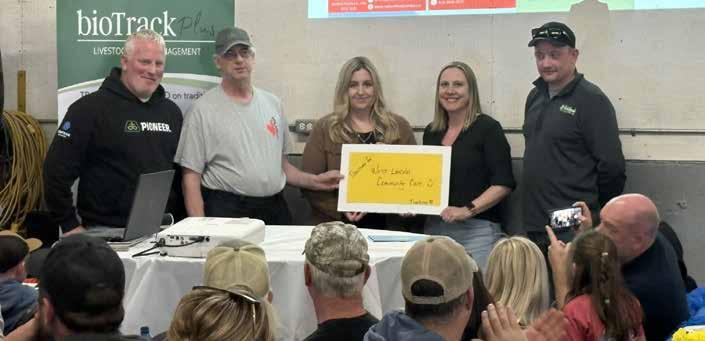
The Beef Farmers of Niagara presented West Lincoln Community Care with $1,000 worth of ground beef at the organization’s spring meeting held in late April at the Harrington Family Farm. Those in attendance heard an update from the OFA, as well as presentations from AgSights Services and Brussels Agri Services Ltd. In the photo, from left: John Sikkens ,Beef Farmers of Niagara vice president; Glen Bronn, Beef Farmers of Niagara president; WLCC’s Sharlene Volpatti and Steph Melo; and Edwin De Jonge, of Highland Packers Ltd. ~ Submitted photo
A new report published by the Greenbelt Foundation with the help of the Canadian Agri-food Policy Institute offers a reminder of the value of protecting farmland in Ontario, especially some of the specialty crop areas like Niagara’s fruit growing region. ~ Greenbelt photos
By Brooklyn Burella
Recently for the 4-H Wainfleet Dairy Club, it was our first night to start the season.
We assigned some roles for the members to help with smooth sailing for our wonderful volunteers. We played some games to get to know each other, with introduction bingo.
After our game we started breaking into small groups taking turns labeling body parts of the cow and their traits. We learned what kinds of 4-H calves we should look for and what the judges are looking for in the show ring. A brief meeting was followed by snacks and drinks.
And then we hit the hay until next time.
By Harper Van Marrum
At our last 4-H poultry club meeting we got to pick a breed of poultry and do some homework on the breed and present it at the next meeting.
Some of the breeds we had presentations were: Muscovy duck, Yokohama chicken, leghorn chicken, ayam cemani chicken and silky chicken.
At this month’s meeting we learned about chicken first aid and it was cool to see all the new things to help them.
Senior members of the Wainfleet 4-H Dairy Club are ready for another exciting year. ~ Submitted photo
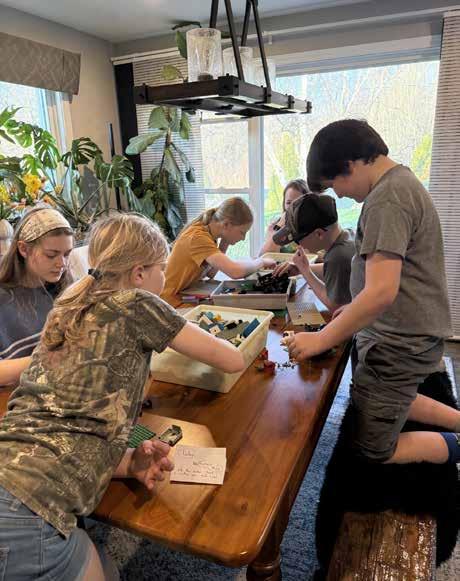
Members of the 4-H poultry club had fun building chicken coops out of Lego. ~ Submitted photo
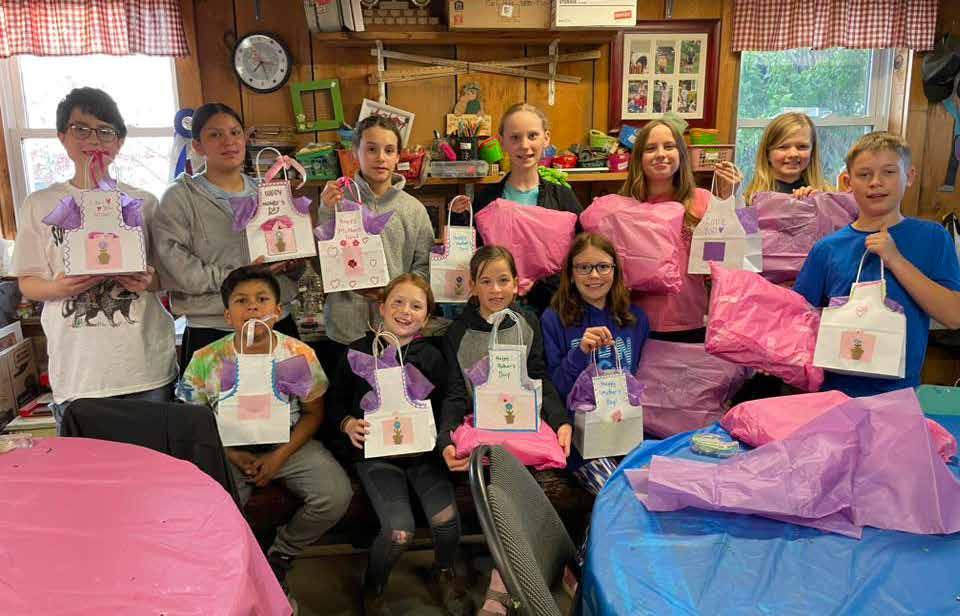
Members of the Niagara 4-H Craft Club have been already working
their fair projects
the West Niagara Fair. They took a break at the May meeting to make some special things for Mother’s Day, a decoupage bottle,
wooden wreath and these fancy gift bags. ~ Submitted photo
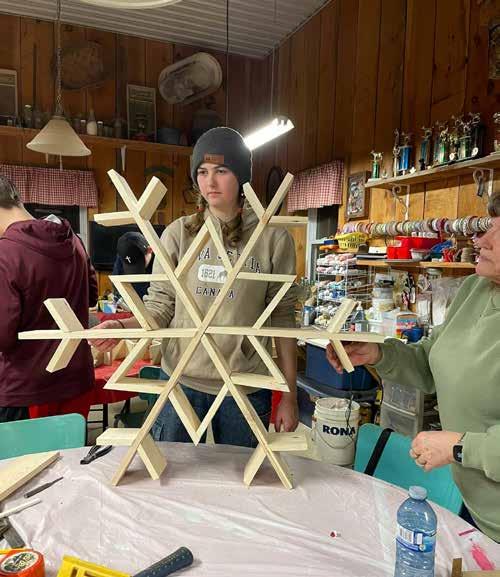
Members of the Senior Craft Club are trying out their woodworking skills this year. They’re starting by making a simple star and then a large snowflake. Abby Knutt is very proficient with her woodworking skills and was the first one to finish her project. ~ Submitted photo
Lincoln Dairy Calf Club kicks off new season with enthusiasm
By: Chloe Mous-Hili
The Lincoln Dairy Calf Club has officially launched its new season, welcoming a vibrant mix of both new members and returning veterans to the fold. This year’s program features a blend of fresh leadership alongside dedicated, returning mentors who are committed to fostering the next generation of dairy enthusiasts.
Thank you to Brad Eggink, Christine Armstrong, Mark Heeringa and Matt Pott for their dedication and commitment.
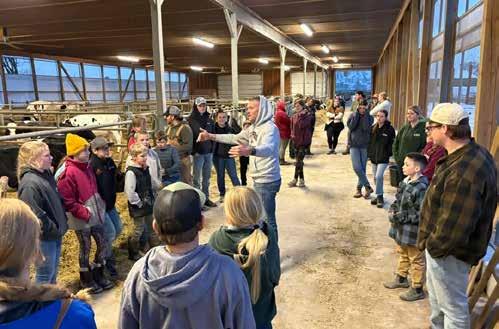
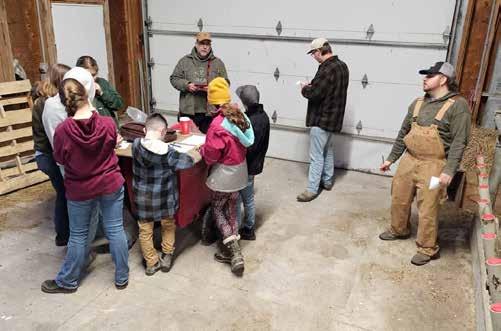
The club held its inaugural meeting of the season on May 5 at 7 p.m. at the picturesque Royal Lynn Holsteins. The energy was palpable as members engaged in ice-breaker challenges designed to help everyone learn names and build camaraderie. Following the
introductions, the group broke into smaller teams to tackle hands-on educational activities. These sessions focused on essential skills such as livestock judging and the critical process of selecting the “perfect” calf, with an emphasis on evaluating proper size and conformation. The evening concluded with a knowledge quiz.
The club is wasting no time in keeping the momentum going.
The next meeting was scheduled for May 26 at 7 p.m., which was to be hosted at Braejan Holsteins. As noted in historical agricultural extension programs, such handson mentorship and peer-to-peer learning are vital for youth development in the dairy industry, mirroring the successful educational frameworks established by programs like the 4-H clubs of the mid-20th century.
A few new faces as 4-H goat club returns
By Benjamin Chechalk
The Niagara 4-H Goat Club is back together.
A few new faces joined us at the meetings to learn “All About goats!” What’s really exciting is all our members own their own goat, with a variety of breeds, so we know the goats will be well trained when it comes to fair time.
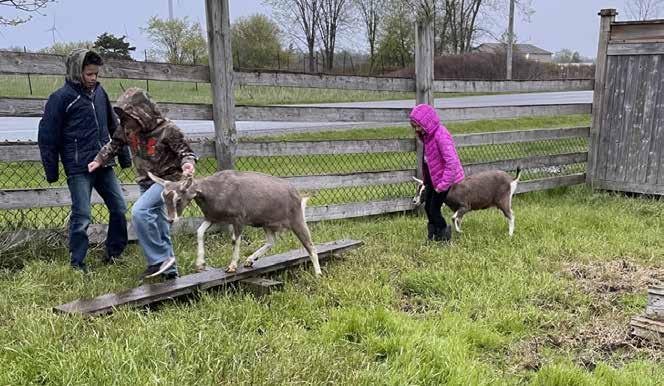
Our leaders suggest we go out every day and sit in the pen with them and let them be curious about us. Then we add a collar and start walking them around. This year we are bringing back the obstacle course that is fun for us and our goats. Together with my friend Katie, we were able to bring out our goats that we trained in 2025. We led them around, up some stairs, over a plank and jumping over a few short jumps. When the goats did it the whole club spontaneously clapped. Learning about breeds, and nutrition and how to show will be at our next meetings.
And you have to have some fun at Goat Club. The snack consisted of a very loud mystery auction. One of the members was lucky and won pickles, I got Cheesies, I don’t like Cheesies that much!
The Lincoln Dairy Calf Club had a strong start to its season, holding its first meeting on May 5. ~ Submitted photos
Members of the Niagara 4-H Goat Club are bringing back the goat obstacle course. They had fun trying out a course at their last meeting. The goats had fun too as they like to climb up things and cooperated very well. ~ Submitted photo
ON Farm Fun goes online
New app seeks to support Ontario’s agritourism industry
By Luke Edwards
Finding your next great adventure picking your own strawberries or getting up close and personal with some barnyard friends is now just a click away.
Agritourism Ontario launched its ON Farm Fun app last month, offering a new way for the province’s agritourism operators to connect with potential customers and visitors. It includes several features aimed at providing a user-friendly experience that will help them plan and expand their excursions.
“With the launch of ON Farm Fun, we’re creating a simple and engaging way for people to explore Ontario’s vibrant agritourism offerings,” said Kevin Vallier, CEO of Agritourism Ontario. “This app helps bridge the gap between urban and rural communities, making it easier for everyone to experience where their food comes from and to support local farms.”
The app has been in the works for a while, as part of Agritourism’s new strategy to expand and support the industry. With more than 800 agritourism operators in the province, the sector is of growing importance to support the overall agricultural economy.
Visitors to the app can view a map that directs them to nearby opportunities, along with a search function that can be filtered by location, activity and seasonal offerings. It also provides real-time updates, curated itineraries and suggested farm trails, as well as contact information and direct links to the farm operations. Notifications can offer reminders for when certain produce comes in season, ideal especially for those crops that only last a few short weeks.
At launch the app offered 79 products to select, 61 activities ranging from u-pick to wagon rides to pumpkin patches,a self-serve planning tool along with kids games.
Vallier said despite some early uncertainty about the usefulness of the app, the reception has been quite positive. They held a soft launch at the Ontario Fruit and Vegetable Convention
in February, where those in the industry could see it in action.
“We were pleasantly surprised with the results,” he said.
When initially pitched, some weren’t sure that another app would be worthwhile.
“When they saw how interactive it was, it was more well received,” he said.
Agritourism Ontario partnered with BitBakery out of Kitchener to develop the app.
“There’s so much magic in our own backyards that we sometimes miss,” BitBakery CEO Wes Worsfold said. “We wanted to make sure the ON Farm Fun app did more than list farms. It is a virtual tour guide for discovering everything from family activities to weekend getaways.”
Provincial Minister of Agricultural, Food and Agribusiness Trevor Jones supported the project and welcomed its launch.
“The ON Farm Fun app is an innovative tool that helps connect people with incredible agritourism experiences that are available across the province,” he said. “We are proud to support the launch of this app which encourages
families to explore, learn and buy local while supporting farm businesses.”
The plan is to review the app after 12 months, to see what works and what needs improvement. During that time, Vallier said he’d welcome any feedback from users.
The app is available for download on iOS and Android devices.
Be respectful when visiting farms this summer
As the busy u-pick and farm tour season gets under way, Vallier’s reminding those visiting farms to be respectful of both the property owners and their fellow visitors.
Each year reports of people sneaking out with loads of produce they didn’t pay for, or going into restricted areas of agritourism locations puts a damper on an otherwise fun and enjoyable summer activity.
Vallier is reminding those visitors to be considerate to ensure everyone has a good time this summer and the farm owners are able to be successful.
Ontario Minister of Agriculture, Food and Agribusiness Trevor Jones was one of the first to download the new ON Farm Fun app created by Agritourism Ontario with the help of BitBakery. He’s pictured here (left) with Agritourism Ontario CEO Kevin Vallier. ~ Agritourism Ontario photo
tally
Slow down, connect and feel accepted at this month’s HSFK open farm
By Niagara Farms Staff
A Fenwick farm is once again opening its doors to give members of the public a chance to relax and give back.
and flood control.”
One of the offshoots of Norfolk’s initial efforts occurred after Prince Edward Island environment George Webster attended the pilot launch in 2008. The island was having an environmental issue at the time and Today, nationally ALUS is approaching 1,000 farmers participating
BnR Stables hosts its annual open farm event on Saturday, June 13 from 1 to 4 p.m. The day features a wide array of farm-related fun, while also acting as a fundraiser for Horse Sense for Kids, a free equine therapy program for Niagara youth.
Bryan Gilvesy, now CEO of ALUS Canada, started his involvement with the program when he signed up as a participant to the program and then became a member of the Norfolk Partnership Advisory Committee. Bryan and wife Cathy raise Texas longhorns on the YU Ranch, south of Tillsonburg.
“Our horses help create a place where children can slow down, connect, and simply feel accepted,” said founder Brenda Langendoen. “Open Farm is a chance for the community to experience that environment firsthand while helping support the horses and programs that make it possible.”
For several years the Langendoens have run an open house style event, also known as Wild West Day. Billed as a relaxing, family-friendly event, visitors can meet with some of the horses on the farm, along with a few of the other barnyard animals who call BnR home.
Horse rides and grooming demos are also available, and there will also be a face painting booth, crafts and games, a photo booth and Mama J’s food truck.
And once again they’ll be holding an online auction that runs from June 7 to 21. It has quickly become one of the event’s highlights. A wide variety of experiences, local getaways, dining packages, family outings and unique gifts that have been donated by local businesses and supporters are up for auction.
These include the “Ultimate Niagara Luxury Escape Package” that includes a two-night stay at the Hilton Fallsview, breakfast for two, dinner
Officially, ALUS Canada’s mantra now is: “ALUS Canada makes it ardship. ALUS invests in farmers and landowners who are producing acres of clean air, clean water, wildlife habitat
Credit was given to some of the programs largest advocates by Gilvesy. Local MPP
nent since the early days, and introduced a Private Member’s Bill promoting the concept.
moting it there. Bob Sopuck, who was Delta Waterfowl’s western vice-president of policy was an early advocate and became elected as an MP and was the program’s champion on Parliament Hill. Dave Reid co-wrote the
sands of people about ALUS at hundreds of speaking engagements across Canada. Recognition for the program has included a Premier’s Ag Innovation Award
and a sightseeing tour with Niagara Helicopters. It’s valued at over $1,700.
Other items include a wine country experience for four. The tour includes lunch or dinner at either Peller Estates or Trius. An afternoon tea for four, courtesy 124 on Queen Hotel & Spa is
Gilvesy is proud ALUS is a farmer-led program and farmers fell they are the program owners.
also up for grabs, along with several restaurant and dining gift cards.
For more information on the auction, visit HSFK.ca.
BnR Stables is located at 2250 Balfour St. in Fenwick.
“People feel they are partners in ALUS,” he said. “It’s the value of developing a grassroots program that recognizes the value of community.”
BnR Stables in Fenwick will once again be opening its doors to visitors this month, welcoming families to an open house that doubles as a fundraiser for the Horse Sense for Kids program run at the stables. ~ Niagara Farms file photo
AgScape marks 35 years, calls for expanded investment in agri-food literacy across Ontario
By Amanda Nelson
AgScape marked its 35th anniversary during its annual general meeting last month, highlighting a renewed focus on strengthening agri-food literacy among Ontario students and expanding programming to address growing workforce needs in the agriculture sector.
The meeting centred on the evolving relationship between public perceptions of agriculture and the sector’s need for a skilled workforce, with leaders noting ongoing challenges in attracting talent due to misconceptions and limited visibility into modern agricultural careers.
Speakers emphasized that while industry partners often engage in research and discussion, there remains a pressing need for qualified individuals to support growth across the agri-food sector.
According to AgScape, its programs - including the Teacher Ambassador Program (TAP) and the Agri Careers Initiative - reached nearly 140,000 students across Ontario over the past year.
The initiatives are designed to integrate agriculture into classroom learning and improve student understanding of food systems and related career pathways.
“This initiative showed what’s possible when education, industry and government align with purpose,” said Amanda Robertson, executive director of AgScape.
“While the projects have concluded, they’ve offered us the opportunity to access parts of the province where we have historically lacked the resources to go and sharpen their responsibility to move from isolated careers exposure to intentional, high quality agri-careers literacy,” she said.
TAP saw record growth through the integration of agriculture into curriculum-based learning, while the Agri Careers Initiative - supported by industry partners - aimed to enhance student understanding of agriculture-related careers.
The organization’s report also calls for increased financial and human resources to meet rising demand, particularly in underserved regions such as the Greater Toronto Area and Northern Ontario.
Robertson said the future of AgScape depends on stronger sector-wide investment and advocacy.
“This is where the sector comes in, not simply as funders, although we absolutely need the dollars, but as champions,” she said. “An investment in AgScape is an investment in equitable education,
in the future workforce and in a generation of students who understand and value agriculture and food.”
Robertson also emphasized a shift in focus from awareness-building to deeper literacy-building within food systems education.
“But literacy is understanding how food systems actually work,” she said. “It’s the ability to understand where food comes from and how it’s produced, processed, distributed.”
She added that students must be able to critically evaluate food systems and see themselves as active participants - as future workers, decision-makers or informed consumers.
“The agri-food sector is modernizing rapidly and facing unprecedented workforce needs, innovation pressures and policy complexities,” Robertson said.
She added that a population that does not understand agriculture cannot meet future challenges, but one that is informed can help strengthen the system.
Robertson said AgScape’s next phase will focus on deepening literacy outcomes across Ontario classrooms.
“This shift from awareness building to literacy building really is AgScape’s next evolution,” she said. “We’re just at the beginning of this work, and AgScape is excited to build, deepen and lead the next chapter of what agri-careers education will look like in Ontario.”
In a press release, AgScape announced its 35th anniversary campaign, “Deep Roots, Bright Futures – Planting for the Next 35 Years,” aimed at expanding agriculture and food education across Ontario.
The organization, founded in 1991, said it now reaches hundreds of thousands of students annually through programs such as TAP, virtual field trips, thinkAG career experiences, and digital learning resources.
AgScape said its programming costs approximately $3.05 per student, allowing the organization to deliver curriculum-linked agriculture education at scale.
As part of the anniversary campaign, it is encouraging supporters to make a symbolic $35 donation to help sustain and expand programming.
“Deep Roots, Bright Futures is about building on that legacy, ensuring every student in Ontario has the opportunity to develop agri-food literacy,” Robertson said in the release.
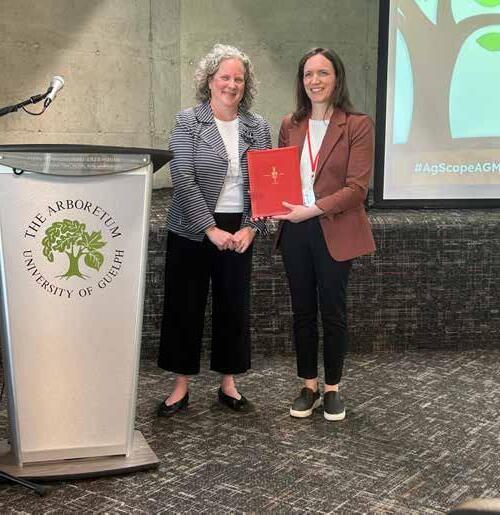
Amanda Robertson, executive director of AgScape, spoke at the organization’s annual general meeting, where leaders marked 35 years of agricultural education programming and outlined future priorities. Pictured, Robertson received a certificate from Sarah Andrews, vice chair, on behalf of the Ontario government, congratulating AgScape on 35 years. ~ Amanda Nelson photo
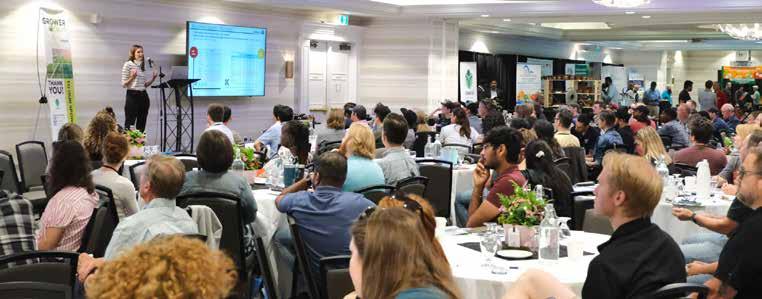
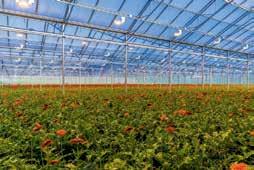
Annual Grower Day a chance for commercial greenhouse growers to learn
By Luke Edwards
An event planned for this month in St. Catharines aims to help commercial greenhouse growers sprout a few new ideas.
Grower Day returns to the Holiday Inn on Ontario Street in the Garden City on Tuesday, June 16. Now in its 31st year, the event was started in Delhi by local grower Mel Sawaya of Sawaya Gardens. Sawaya created the event as a way to share knowledge and raise the abilities of everyone.
“He always said we are better when we work together, the whole industry is better when we work together,” said Amy Kouniakis, editor for Greenhouse Canada, which now presents the event.
Kouniakis called it a selfless act to take the approach Sawaya did, but it was true then and remains true today.
“But he’s right, the industry does work better when everyone comes together.”
The main focus for the event remains the education aspect, with a full day of expert presenters, including researchers from universities, industry groups, along with growers themselves.
While there are plenty of presentations of interest, Kouniakis said a discussion on research conducted by members of the Grbic Lab at Western University on spider mites promises to be interesting. It’ll cover research into species identification, including some populations that have developed resistance to conventional pesticides. Kouniakis said the team has developed a new test that can help growers determine more quickly if a greenhouse has a spider mite species that’s resistant to sprays.
“This research is cutting edge,” she said.
Some familiar names for local growers will also be presenting, including Marco de Leonardis, from Freeman Herbs. He’ll discuss some trials into different potting media.
There will be a small trade show as well, and the day wraps up with a grower panel discussion and some awards for top four under 40 and grower of the year.
Overall, Kouniakis expects an enjoyable and productive day, giv-
ing growers a chance to learn and reconnect with each other.
“A lot of people have described it as kind of a reunion event,” she said.
This year they’ve also created a second Grower Day for Western Canada. It took place on June 2 in Langley, B.C.
The St. Catharines event runs from 9 a.m. to 4 p.m. on Tuesday, June 16. The Holiday Inn is located at 327 Ontario St. For more information, or to register, visit events. annexbusinessmedia.com
Commercial greenhouse growers are invited to attend Grower Day in St. Catharines on June 16. ~ Greenhouse Canada photo
Spoelstras eager to host Breakfast on the Farm
By Luke Edwards
Later this month members of the public will get a chance to tour a unique farm operation in Binbrook.
Roy-a-Lea Farms is one of three sites hosting a Breakfast on the Farm event this summer. Led by Drew and Heather Spoelstra, Roya-Lea offers a mix of beef, dairy and grain. They’ll be welcoming visitors on Saturday, June 13.
”It’s a great unique opportunity to be on a farm that really highlights three of the major commodities in Ontario,” said Christa Ormiston, communications manager for Farm & Food Care Ontario, which organizes the annual Breakfast on the Farm events.
“We’re going to be able to tour people through the dairy farm. There’s also a beef farm on site, as well, and then a large grain operation. So it’s a really unique opportunity for people to see all the different aspects right on one farm.”
A popular event, Breakfast on the Farm gives people a chance to get up and close with farm life and learn about what it takes to raise animals, grow crops and produce the food many of us take for granted. With fewer people having a direct connection to agriculture, the morning offers that connection.
“People will really walk away with a lot more knowledge about food and farming across the province,” said Ormiston.
Not only will visitors be able to ask questions of the Spoelstras, but representatives from several other agriculture groups will also be on hand with display booths and exhibits.
And of course, as the name suggests, breakfast will be served for visitors, who can enjoy a bacon and egg sandwich, milk, and for those who want a little extra treat, some ice cream.
The Spoelstras are a well-known farming family in the region. Drew is president of the Ontario Federation of Agriculture, and in addition to the beef-dairy-grain operation, the family also raises Clydesdale horses.
“It’s a big event for Farm and Food Care and for the ag sector in Ontario,” Spoelstra said.
“It’s a good opportunity to have folks from the urbanized areas, especially around here in Hamilton and the GTA, come out and experience all the things happening on the farm. We’re looking forward to partnering with Farm and Food Care and having a good turnout here on the farm.”
Ormiston said early registration was going well, with more than
Candace is our Farm & Country Horse & Feed Specialist, with over 40 years of hands on experience working with horses of all breeds, disciplines, and life stages. Her passion for equine care has given her strong insight into the unique nutritional needs of each horse, from growing foals to senior companions.
At home, Candace cares for a diverse group of horses, giving her practical, real world experience with a wide range of feeding programs. She is here to help you choose the right feed and nutrition plan to support your horse’s health and performance.
Not sure if your hay is up to standard? For just $30, Candace can evaluate your hay’s quality and nutritional value, giving you confidence in your horse’s diet.
600 tickets sold with a week left in May. Typically they welcome around 1,500 to the events, and with Roy-a-Lea being so close to major urban centres, organizers are expecting a busy day.
Tickets are $5 for adults, while children 12 and under can get in for free.
It runs June 13 from 9 a.m. until 1 p.m., with breakfast being served until noon. It’ll take place rain or shine.
Roy-a-Lea is the first of three locations hosting a Breakfast on
the Farm this year. FCCO tries to spread their events out throughout the province, and have two others planned for western and eastern Ontario. Cranbrook Farms in Brussels, near Goderich, hosts a breakfast on July 25, while River Valley Cattle Co. in Newburgh, near Napanee, hosts their breakfast on Sept. 26.
For more information, including a link to register for tickets, visit farmfoodcareon.org.
Binbrook’s Roy-a-Lea Farms is hosting one of three Breakfast on the Farm events this summer. The Spoelstras will be welcoming visitors to their mixed beef-dairy-grain operation on Saturday, June 13. ~ Submitted photo
Delicious Recipes
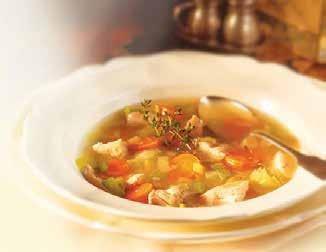
Can you believe it’s been nearly a decade since the last Poultryfest?
For nearly 20 years the annual celebration of the region’s poultry industry was a popular draw each June. However, the festival came to an end after 2017.
That doesn’t mean Niagara’s chicken and egg sector has taken a back seat, though. It remains a key part of agriculture in the peninsula, up there with tender fruit and greenhouses.
And since Poultryfest always took place on the last Saturday in June, this month our recipes pay tribute to those plucky little birds and the farmers who raise them.
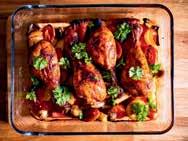
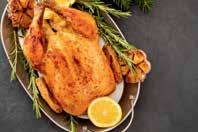
Here are a few chicken recipes courtesy our friends at Foodland Ontario.
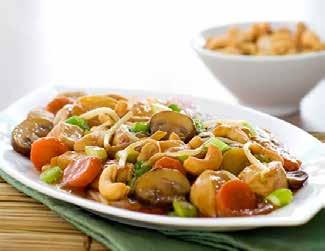
• 1/2 cup (125 mL) drained, canned sliced water chestnuts
• 3/4 cup (175 mL) Ontario bean sprouts
• 1/3 cup (75 mL) sliced green onions
• 1/2 cup (125 mL) unsalted roasted cashews
Sauce:
• 1-1/4 cups (300 mL) chicken broth
• 1/4 cup (50 mL) soy sauce (preferably naturally brewed)
• 2 tbsp (25 mL) cornstarch
• 2 tsp (10 mL) sesame oil (optional)
Instructions
In large nonstick skillet, heat 1 tbsp (15 mL) of the oil over medium heat. Add chicken; cook, stirring often, for 5 to 6 minutes or until lightly browned. Remove with slotted spoon; cover and keep warm.
Add remaining oil to pan. Add carrots and onions; cook, stirring often, for 3 minutes. Stir in mushrooms; cook for 3 minutes. Stir in garlic and ginger; cook for 1 minute. Add broth; cook for 3 minutes or until carrots are tender and broth has evaporated. Stir in cooked chicken and water chestnuts.
Bird’s the word
Sauce: In small bowl, whisk together broth, soy sauce, cornstarch, and sesame oil, if using; pour over contents of skillet. Reduce heat to medium-low; cook, stirring occasionally, for about 4 minutes or until sauce is thickened. Stir in bean sprouts and green onions; cook for 30 seconds. Transfer to serving platter. Sprinkle cashews over top.
• 1/4 cup (50 mL) water mixed with 1 tbsp (15 ml) cornstarch and set aside
Instructions
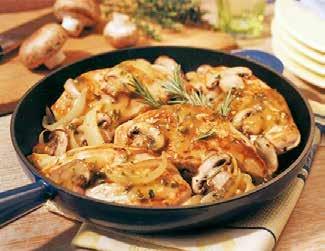
Heat 1 tsp (5 mL) oil in a large non-stick skillet over medium heat. Add the mushrooms, onion and garlic; cook stirring often for 5 minutes or until softened. Remove and set aside.
Heat remaining oil in skillet, add chicken breasts, sauté until golden brown, about 5 minutes. Add vegetables, chicken stock, apple cider, Calvados, thyme, rosemary and salt. Heat to boiling, reduce heat to simmer. Turn chicken pieces over several times during cooking and continue cooking 12 to 14 minutes or until the chicken is tender and juices run clear when pierced with a fork. Transfer chicken to platter, tend with foil. Increase heat to high, reduce liquid by half, about 3 to 5 minutes. Reduce heat to low and whisk in cornstarch mixture. Cook until thick and sauce is clear. Spoon over chicken breasts.
Chicken Bulgur Salad
Ingredients
• 1 cup (250 mL) bulgur
• 1/2 tsp (2 mL) salt (approx.)
• 1-1/2 cups (375 mL) boiling water
• 3 medium Ontario greenhouse tomatoes, seeded and chopped
• Half an Ontario greenhouse cucumber, diced
• 4 green onions, sliced
• 1/2 cup (125 mL) chopped fresh flat-leaf parsley
• 1 cup (250 mL) chopped cooked Ontario chicken
• 1/4 cup (50 mL) olive oil
• 2 tbsp (25 mL) fresh lemon juice
• Pepper and Salt
Instructions
Place bulgur and salt in large bowl. Pour boiling water over and stir; let stand, uncovered, for 30 minutes or until water is absorbed. Add tomatoes, cucumber, green onions, chicken and parsley; toss. Sprinkle with oil and lemon juice; toss to coat. Season to taste with pepper and salt. Serve at room temperature.
Grilled Chicken Berry Salad
Ingredients
Dijon Honey Dressing:
• 3 tbsp (45 mL) each white wine vinegar and extra-virgin olive oil
• 2 tbsp (25 mL) balsamic vinegar
• 1 tbsp (15 mL) Dijon mustard
• 2 cloves garlic, put through garlic press or minced
• 1 tsp (5 mL) Ontario honey
• 1/2 tsp (2 mL) salt
• 1/4 tsp (1 mL) pepper
Salad:
• 3 boneless skinless Ontario chicken breasts
• 3 cups (750 mL) whole wheat rotini pasta
• 2 cups (500 mL) sliced Ontario strawberries
• 2 Ontario green onions, thinly sliced
• 1 large Ontario greenhouse orange or yellow sweet pepper, chopped
• 1/3 cup (75 mL) chopped fresh Ontario basil
• 1/4 cup (50 mL) Ontario Chèvre cheese, crumbled
Instructions
Dijon Honey Dressing: In bowl, whisk together wine vinegar, oil, balsamic vinegar, mustard, garlic, honey, salt and pepper. (Makeahead: can be covered and refrigerated for up to 2 days.)
Salad: Remove 2 tbsp (25 mL) of the dressing and brush both sides of chicken. Place on greased grill over medium-high heat; close lid and grill, turning once, until chicken is no longer pink inside, 10 to 12 minutes. Transfer to cutting board and let stand for 5 minutes. Slice diagonally into thin strips. (Make-ahead: can be covered and refrigerated for up to 24 hours.)
In large pot of boiling salted water, cook pasta until al dente, about 13 minutes. Drain and refresh under cold water. In serving bowl, combine pasta, strawberries, green onions, sweet pepper, basil and chicken; toss with remaining dressing. Sprinkle with cheese; toss again. Taste and adjust seasonings if necessary.
Tip: Use a thermometer to check the internal temperature of cooked chicken. Boneless chicken breasts should reach 170°F (77°C).
Slice white and light green parts of 1 of the leeks into 1-inch (2.5 cm) pieces; place in large saucepan. Add chicken, stock, onion, bay leaf, thyme and peppercorns; bring to boil. Reduce heat, cover and simmer for 30 to 40 minutes. Remove chicken pieces. Strain liquid and discard vegetables and seasonings. Return broth to pot.
Slice white part only of remaining leeks; add to broth along with carrots. Return to boil; reduce heat, cover and simmer for 15 to 20 minutes or until carrots are tender. Debone chicken thighs and cut into bite-size
pieces. Add to soup and heat through. Season to taste with salt and pepper.
Chicken and Mushroom Enchiladas
Ingredients
• 2 Ontario onions, chopped
• 2 cloves Ontario garlic, minced
• 2 cups (500 mL) sliced Ontario mushrooms
• 2 tbsp (25 m L) vegetable oil
• 2 tsp (10 mL) chili powder
• 1/2 tsp (2 mL) each dried oregano and salt
• 2 cups (500 mL) diced cooked Ontario chicken
• 2 cups (500 mL) shredded Ontario cheddar cheese
• 1/3 cup (75 mL) low-fat Ontario sour cream
• 2 cups (500 mL) mild or medium taco sauce
• 10 medium flour tortillas
Instructions
In large skillet, cook onions, garlic and mushrooms in oil over medium-high heat, stirring frequently, until softened, about 5 minutes. Add chili powder, oregano and salt; cook for 15 seconds. Remove from heat. Stir in chicken, 3/4 cup (175 mL) of cheese and sour cream; mix well.
Spread 3/4 cup (175 mL) of the taco sauce in 13 - x 9-inch (3 L) baking dish. Spread about 1/4 cup (50 mL) filling down centre of each tortilla; roll up, folding in ends. Place, seam side down, in dish. Spread remaining taco sauce over top; sprinkle with remaining cheese. (Recipe can be prepared to this point, covered and refrigerated for up to 8 hours. Let stand at room temperature for 30 minutes before baking.)
Cover and bake in 350°F (180°C) oven for 25 to 30 minutes or until heated through.
Garnish: Serve with additional sour cream, salsa and chopped fresh coriander, if desired..
What’s old is new again at Walpole Antique Farm Machinery Association
By Luke Edwards
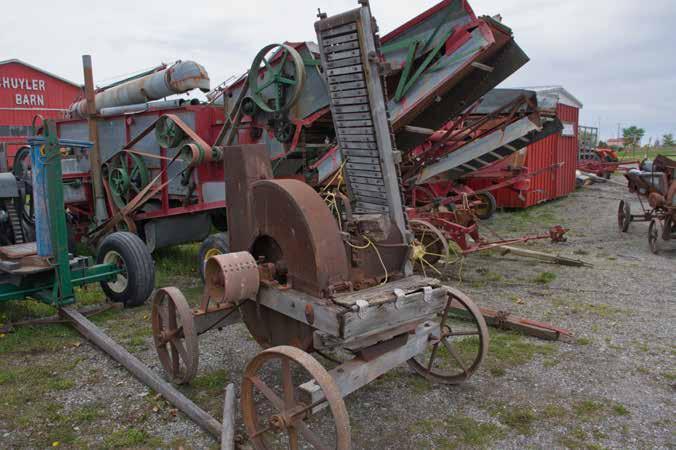
It doesn’t take an expert to see how much farming has changed following a quick walk through the grounds of the Walpole Antique Farm Machinery Association.
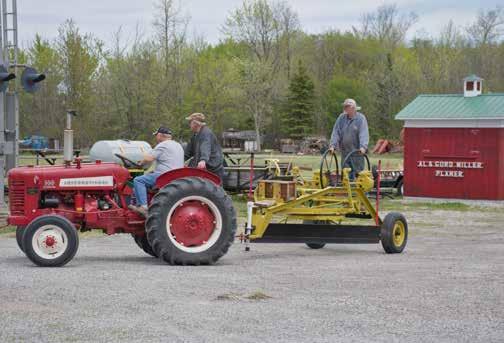
The Jarvis volunteer group maintains a large collection of antique tractors and farm implements, opening the grounds throughout the summer months to give visitors a little taste of yesteryear.
“It keeps the younger generation informed on our antique tractors and traditions,” said Don Crawford, as he and a small team of volunteers got the property spruced up ahead of a May long weekend tour that included WAFMA and a few other stops.
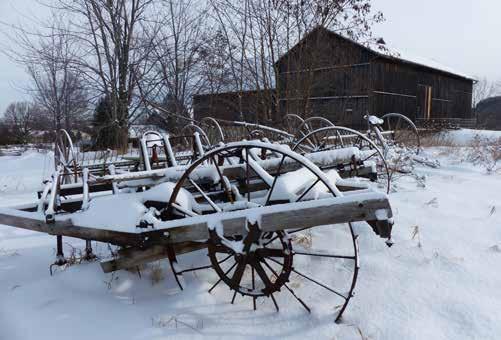
Over more than 20 years the group has acquired quite a collection of equipment and buildings, moving them onto the property, and where possible getting the equipment into working order. Visitors can see just about every make and model of tractor going back several decades. Many have local ties, not just in their previous owner, but in some cases having been manufactured locally.
Some equipment, like the tractors, more or less resemble their contemporary counterparts. However, others look quite foreign to today’s farm operations. Take the antique hay loader on site.
“It’d save guys pitching it in by hand,” said Gary Phibbs.
Then there’s the old threshers and wire-tie balers, that used some good, old-fashioned engineering ingenuity to make the difficult job of farming a little less challenging.
Some of the implements used literal horse power, others used steam engines.
Much of that equipment has been replaced, with single tools doing the job of two or three old machines, and powerful tractors - now equipped with high-tech computer equipment - making farming a continual evolution.
Walking around the grounds reminds Crawford of how times have changed and “how hard you had to work,” back in the older times.
“We owe our grandparents a lot of thanks,” he said.
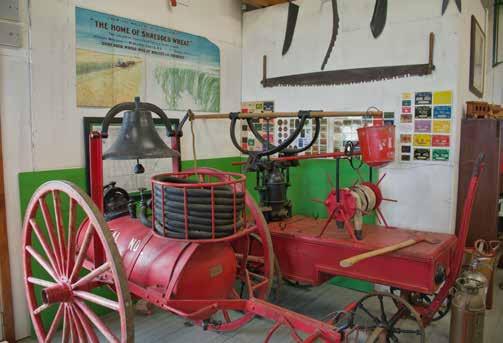
The property is also home to the Jarvis Train Station, which they moved from its former location up the road where Tim Hortons is now located. It includes artifacts from the town’s past, with a focus on the railroad, which for a long time was a vital mode of transportation.
WAFMA maintains about 25 members. Though down from its heyday of around 60, Phibbs said they’re all committed and work hard to make the grounds the best it can be. They welcome any new members who have an interest in old farm equipment, whether they come from an agricultural background or not.
“It’s the fellowship, the history,” said Phibbs. “Always looking for something you don’t see very often.”
The Victoria Day weekend event is a warmup of sorts to the association’s Civic Day weekend celebration. There, visitors will have a chance to see some of the equipment in action, along with a petting zoo, wagon rides, tractor pulls and more. It runs Saturday through Monday, Aug. 1 to 3.
They also hold regular fundraisers, including an oyster supper in March, the May tour, a steak barbecue in June, the August Heritage Days, and a September beef barbecue. There are also barn dances at the property, and it’s been known to host the occasional wedding for members getting married.
Every two years they do a tree planting to honour members who have died.
For more information visit the WAFMA Facebook page or call the president at 519-5872601.
The Walpole Antique Farm Machinery Association maintains a wide collection of tractors and old farm equipment. ~ Luke Edwards photos
A small but committed team of volunteers gets the Jarvis grounds ready each spring for visitors to tour and learn about local farming history.
WAFMA is also home to a train station museum, after volunteers moved the old train station onto the property a few years ago.
Barns store reminders of our agricultural past
Group supports barn preservation efforts in Ontario
By Luke Edwards
There was a time, long before Siri began giving us directions, that certain landmarks offered the best directions.
Instead of being told to “turn left in 500 metres” by a computer, an actual human might direct a wayward traveller to “turn left after you pass the old red barn.” For a long while, barns were among the most stable landmarks to be used when giving directions.
However, in a lot of places, those old buildings are disappearing.
“Sometimes you don’t realize it’s a landmark until it’s gone,” said Hugh Fraser, president of the Ontario Barn Preservation group, a small but dedicated collection of barn enthusiasts from all corners of the province.
Fraser was a natural fit for the non-profit group that formed in 2019. Well known in local farming circles, Fraser has long worked in the agricultural industry and has published a book focusing on swing beam barns.
He joined the group in 2020 and has since worked with a strong collection of people who are committed to preserving farming history in the form of old barns.
“Barns are disappearing so fast. We’ve got to do something,” Fraser said.
There’s a small membership of around 100, though Fraser said the group is more interested in enthusiasm than overall numbers. The directors include people with a wide range of skills and know-how from across the province.
They have several ongoing projects, chief among them is one they call the Your Old Barn Study, which is a database the volunteers are creating to document as many barns as possible in the province. The idea is simply to develop an understanding of what exists in Ontario.
SUMMERTIME
“We’re trying to help people understand what gems they have,” Fraser said.
The Your Old Barn Study is completely separate from any heritage designation efforts. While
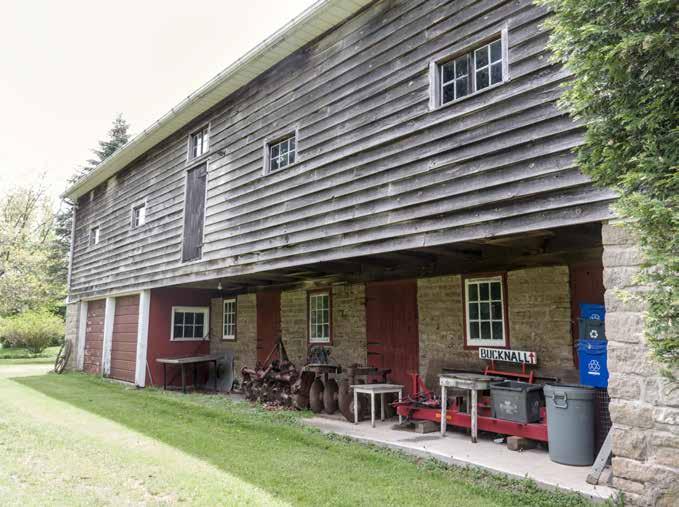
The John Moyer barn on Jim Bucknall’s Campden property includes a unique feature, an overhang on the rear of the barn. The idea was brought up by early settlers from Bucks County. ~ Luke Edwards photo
Fraser said the group will help barn owners with the process when they wish to have a barn designated, otherwise OBP maintains a shield of privacy.
By creating the database, Fraser said they’ll have a baseline of knowledge, while at the same time being able to help owners discover value that may be hidden in their old barns, or help with ways to preserve the old buildings.
“It’s not designate or let it fall down,” Fraser said. On the contrary, there are loads of other options for people who want to protect their piece of history.
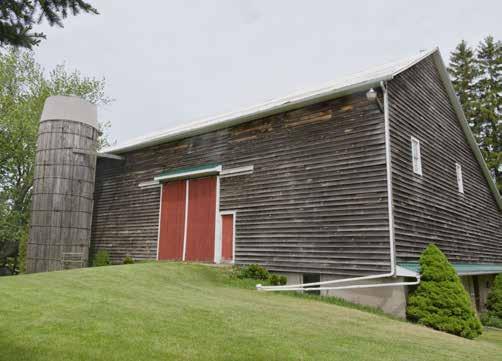
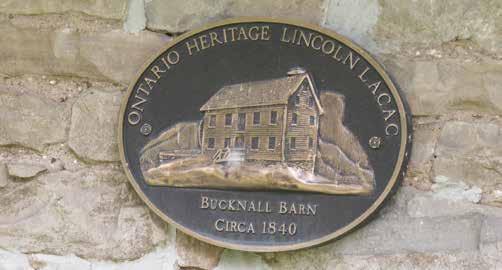
Jim Bucknall’s property in Campden is home to one of those old barns. Dating back to John Moyer in the 1840s, Bucknall and his family have maintained it for several years. It’s no surprise, since Bucknall is also known for his preservation of old farm equipment, including a century-old Sawyer-Massey steam tractor.
The barn includes interesting features such as a rack lifter inside and an overhang area in the rear of the barn, something Bucknall said was unique to Bucks County, Pennsylvania, which is where the Moyers came from.
All told, Bucknall said old barns like the one on his property are a testament to the skill of builders of the day.
“The craftsmanship is just phenomenal,” he said.
Along the same lines as the Your Old Barn study is a barn counting
project, that’s using some technology and modeling to predict how many barns exist and trends on how many are being lost.
A third major project the group is undertaking is a guide being produced that Fraser said could help municipalities and developers. Once complete it will offer tips and advice for barn preservation, ranging from complete restoration and adaptive reuses of old barns, to ways to preserve the wood and materials.
Beyond that, they also are working on creating some 3D models of barns to provide more access for people in cities or those who have mobility issues that make it difficult to move around an old barn.
Playing on the idea of Ted Talks, the group hosts regular Tenon Talks on topics of interest.
This year they’re planning on launching an awards of excellence program to honour those who go the extra mile to preserve barns.
Fraser said it can be surprising just how many people are fans of old barns. His specific fascination is with old swing beam barns, Fraser authored a book on the topic before joining OBP, but he said others become fans for all kinds of reasons. One of the chief reasons, he suspects, is that barns offer a bit of nostalgia, a trip down memory lane to a time when life, at least seemed, not so fast and hectic.
“It reminds them of their childhood,” he said.
For more information on the group, visit ontariobarnpreservation.com.
The barn on Bucknall’s property was built in 1840. ~ Luke Edwards photo
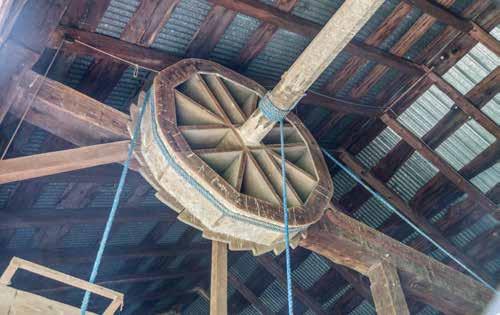
This rack lifter would help farmers throw hay into the mow. ~ Luke Edwards photo
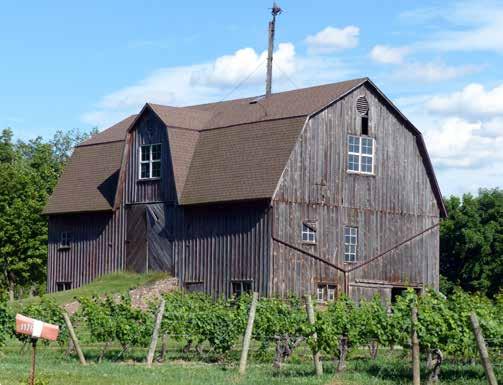
While many have been torn down or fallen into disrepair, several old barns remain standing, like this one in Port Dalhousie. ~ Hugh Fraser photo
Hugh Fraser and the Ontario Barn Preservation group seeks to document and maintain some of the history that comes with barns in the province, some of which are among the oldest surviving buildings in a community. ~ Luke Edwards photo
A swing beam barn at the old agricultural museum in Milton. ~ Hugh Fraser photo
By Luke Edwards
AT THE MARKET
Kazco Crackers keeps it simple
They love being creative, and they love feeding people.
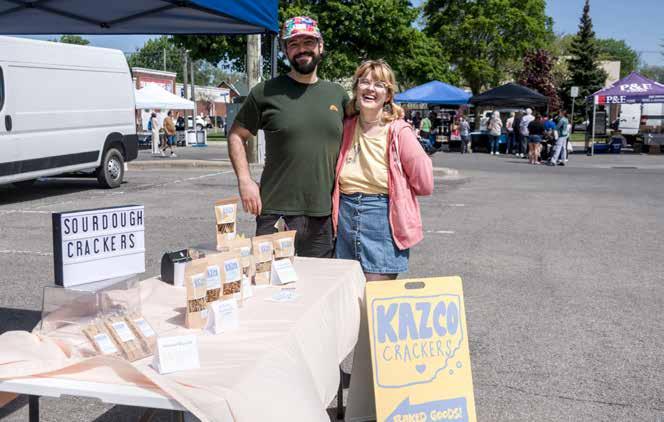
Tamara and Spencer Kazaniwsky-Corish found a way to combine the two in the form of the humble cracker. Since last year the Wainfleet pair have been running Kazco Crackers, and are regulars at both the Port Colborne and Wainfleet farmers’ markets.
“I’ve baked forever, I’ve always been a baker. It’s never been something that I’ve pursued career-wise but I really love to feed people,” Tamara said.
With busy lives that make regular meals not always possible, but with a desire to eat healthy, Tamara and Spencer began looking for options.
The result was Kazco Crackers, a sourdough based cracker that Tamara said is low in salt, sugar, and oils, and high in fibre, with sourdough goodness that can help gut health.
Kazco offers three main cracker types: an all butter cracker, seeded with pumpkin, sunflower and hemp, and then a flax and hemp heart cracker.
And since they’re both artists, quite often the creative juices get flowing, so visitors to the Port Colborne and Wainfleet markets may see sourdough peanut butter cookies, biscotti or some other new creation on any given week.
Currently, their main outlets are the two markets, but Kazco will also take custom orders.
“That’s what we strive for, we want to make people happy,” said Spencer, adding the markets are a perfect place for that.
To nominate a local vender for our
are regular vendors at farmers’ markets in both Port
“We love meeting people, and want to celebrate the joy of life.”
Members of the LGBTQ+ community, Spencer said it’s also important for them to be welcoming and inclusive.
Eventually Tamara said it’d be great to make their cracker venture a full time gig, getting their product into shops or even opening a bricks and mortar store themselves.
based crackers using a small list of quality
In the meantime, visit them at either market, Port Colborne’s runs Friday morning in the downtown market square, while Wainfleet’s runs Tuesdays from 3 to 7 p.m. in the pavilion behind the arena.
For more information, email them at kazcocrackers@gmail.com, or follow them on Instagram, @kazcocrackers.
Very wet May led to many challenges
By Michelle Seaborn
May is a great month for driving down rural roads.
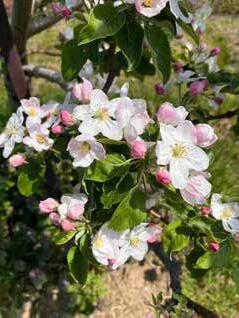
The fruit trees are in blossom, the grass is very green, and new life is evident everywhere. If you are truly lucky you might glimpse a fox family enjoying the new warmer temperatures before scurrying back into forest and brush cover. Bird nests are full of new hatchlings looking for mom’s return, and perennials are starting to poke green heads out of gardens recently departed of snow.
Nurseries have a huge variety of perennials, annuals and trees/ shrubs and it is a great time to plant your gardens.
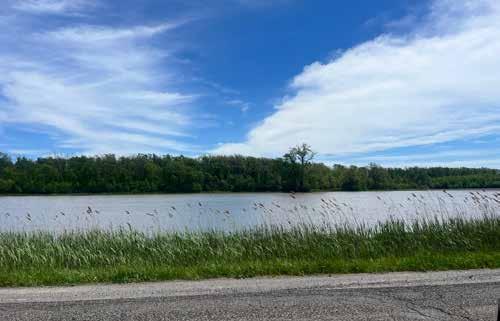
However, Mother Nature shared an abundance of rain last month, and for many farmers, and farm market vendors, this excessive rain has left many fields under water and will ultimately determine what gets planted this year. Forage crops, canola and winter wheat seem to be doing ok, even with the soggy fields.
Market vendors have had similar frustrations as seed beds are often found underwater. The rain has been so frequent, that many have opted to start their plants indoors or in small greenhouses. Farmers’ markets are finding that attendance is a bit lower despite the abundance of early season products and overwintered apples, onions, and some crucifer crops.
However, we are promised some nice weather and early June looks promising.
It is a great time to visit the many farmers’ markets that are opening now and over the next couple weeks. Fresh from the gardens is rhubarb, garlic, asparagus, and early lettuce. Hothouse tomatoes, peppers and cucumbers should be plentiful. Strawberries are right
around the corner, a tasty treat we are all looking forward to. Finish your market basket with fresh breads, eggs, meats, preserves and baked goods. Something for everyone are your local farmers’ markets.
~ Michelle Seaborn is the Grimsby Farmers’ Market manager
Spencer and Tamara Kazaniwsky-Corish
Colborne and Wainfleet, offering up their sourdough
ingredients. ~ Luke Edwards photo
While May has brought out many blossoms and the arrival of perennials, excess rain means many fields were still underwater as the calendar prepared to flip over to June. ~ Michelle Seaborn photos
This year could be the biggest yet for St. Catharines Farmer’s Market
By Luke Edwards
As the St. Catharines Farmer’s Market is looking to grow this year, one of its newest vendors is keeping things small.
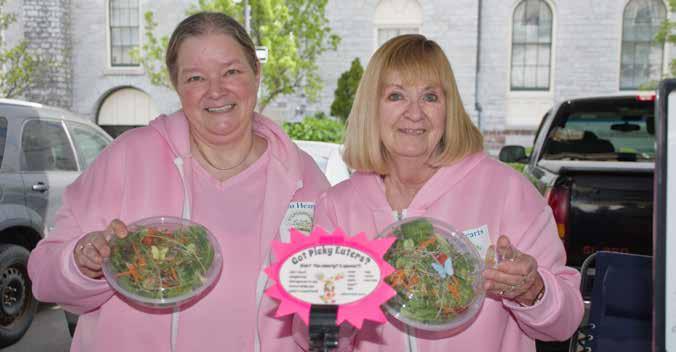
Terri Waugh runs Two Hearts, a small microgreens business with her mom Alice Smith. The pair were among the many vendors set up when the market kicked off its summer season with a special event on Saturday, May 16.
“We wanted to be a part of it,” said Waugh, of the market. She’s been a longtime fan of the market’s friendly and lively atmosphere and was a vendor with a previous business. However, wanting to find something that fit in better, she and her mom started the microgreens operation.
“We love the atmosphere, we love the people,” she said.
Microgreens are a regular part of her own diet, and Waugh said she thought the business could fill a gap at the market. While micro, the greens pack a nutritional punch, she said, and can be used in everything from salads to soups, or dried and ground to be added to other meals like pasta sauces.
Her favourite is broccoli microgreens. Instead of a full head of broccoli, the microgreens offer plenty of goodness in compact form.
“All those nutrients are packed in there,” she said.
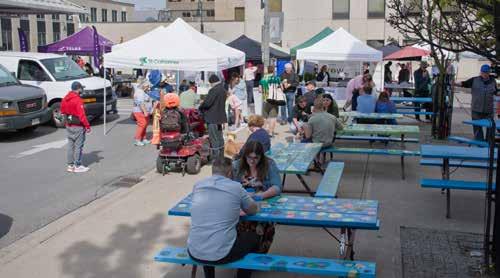
While the St. Catharines market runs year round, each May it expands its offerings as the growing season returns. With this year marking the city’s 150th anniversary, community and market coordinator Deanna Chakarova said this summer’s market is shaping up to be its best yet.
Mayor Mat Siscoe was at the opening event, bringing greetings from the City.
“We’re excited to kick off another season,” he said, pointing out that the market existed
even before the city’s official birth. The market launched in 1848, making this the 178th year.
“It’s got us beat,” Siscoe joked.
That success, he said, is thanks to both the farmers and vendors who work tirelesslessly, as well as the community.
“The market continues to work because the residents support it,” he said, adding that support of local farmers is increasingly important in today’s world.
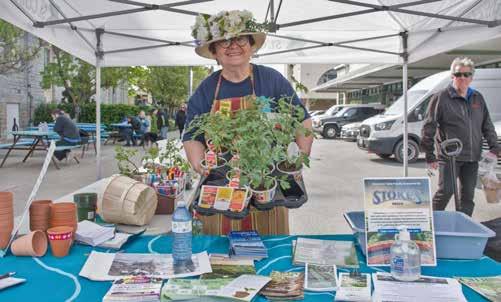
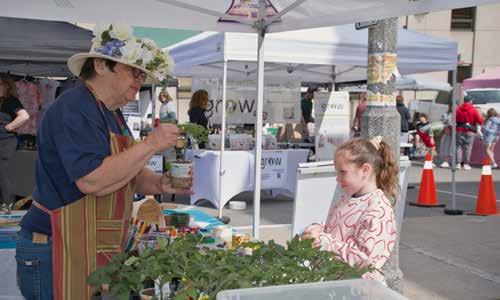
Also back this year is Dena Gelentso, running the discovery table for the 16th year. She grew up on a farm and had a career in education. After retiring she was looking for some way to use her skills, and developed the discovery table, a unique offering where visitors can learn about different aspects related to what they see and buy at the market.
On the opening day event she invited visitors to decorate a pot, then fill it with a tomato or strawberry seedling provided with the help of sponsors Stokes Seeds and Ontario Green.
She also offered some information on the market’s history, or simply had a friendly chat with passersby.
“All ages stop here,” she said.
The spring kickoff, especially with the beautiful weather that accompanied the weekend, was a perfect way to get people into a good mood, she said.
“It’s like magic,” she said. “It’s great to see the vendors, farmers and people.”
The St. Catharines market runs twice a week in market square, downtown. It runs Saturdays from 7 a.m. to 2 p.m. and Thursdays from 8 a.m. to 2 p.m.
Terri Waugh (left) and her mom Alice Smith offer up healthy microgreens at the St. Catharines market. ~ Luke Edwards photos
This year promises to be the best St. Catharines Farmer’s market yet, a lofty goal considered at 178 years, it’s older than the city itself.
Dena Gelentso returned to the St. Catharines market with the discovery table she’s run for 16 years.
5 POINTS 5 POINTS 5 POINTS 5 POINTS
POINTS
POINTS
POINTS 3 POINTS 3 POINTS 3 POINTS
3 POINTS
3 POINTS
2 POINTS
More eyes make fewer pests, public urged to protect against invasive pests
By Luke Edwards
They can catch a ride on shoes, in cars, on plants or in firewood. Some can be seen with the naked eye, while others require a microscope or other forms of detection.
But in any form, invasive pests can do damage to local plants, forests and farmers. Protecting our Canadian economy and food supply requires the commitment of not just the people whose job it is to do these things, but the general public as well.
“We really need everyone to help stop the spread of these pests,” said Diana Mooij, program specialist for Invasive Alien Species, Grains and Oilseed Section with the Canadian Food Inspection Agency.
As farmers were getting ready for another growing season, and plants and forests were coming back to life last month, the United Nations’ International Day of Plant Health offered a reminder of just how important the planet’s flora is to our health and wellbeing. Held every May 12, the CFIA used the day to raise awareness about the threat our plant life faces from pests.
The CFIA may be the “first line of defence,” as Mooij described it, but that doesn’t mean the agency can do it alone. Officials at CFIA do develop regulations and protocols, exert import controls and respond to potential issues.
However, with a large land mass to cover, they can’t be everywhere. That’s why the public is encouraged to be vigilant, take steps to reduce the potential spread of pests, and report sightings.
“Pests are excellent hitchhikers,” Mooij said.
CFIA maintains a strong relationship with farmers and farm industry groups, Mooij said, working with the industry when it develops rules and protocols.
“They want to protect their crops and they don’t want to be a bad neighbour,” she said.
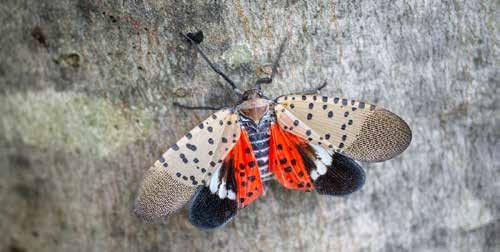
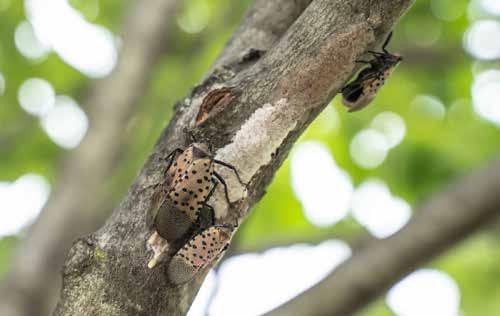
Being proactive is key, and that’s been evident for a pest whose arrival could spell big trouble for Niagara’s grape and wine industry. While an interception was recorded earlier this spring of dead adult spotted lanternflies found in Ontario, Mooij said further inspection found no evidence of the pest at other life stages. That means there
are still no recorded established populations in Canada.
However, Mooij said it’s a matter of when, no if. The pest has spread throughout several regions of the United States. It feeds on several plant species, but are of particular concern to grape growers, where they can arrive from a nearby wooded area and wreak havoc on vines.
Even though it will in all likelihood be a losing battle in the sense that infestation will eventually occur, Mooij, who has taken on the spotted lanternfly file, said delaying its arrival as long as possible is vital.
“Slow the arrival as much as possible to allow the science to catch up,” she said.
There are already some pest control products in development and being registered in Canada, giving local growers a leg up that many of their American counterparts didn’t have when the lanternfly popped up unexpectedly.
The CFIA offers many suggestions to growers and the general public to help control the spread of pests. Farmers who grow crops are encouraged to implement crop biosecurity standards. CFIA maintains guidelines for several crop groups.
Travelers are also discouraged from bringing fruits, vegetables, tubers, seeds, plants or soil back with them, as they all carry pests and those pests may not always be visible. Likewise, those purchasing plants, seeds or plant products online should verify the source and check if a phytosanitary certificate or import permit is required. It may not always be clear on retail websites, though Mooij said potential purchases can be verified through an automated import reference system verification service the CFIA maintains.
Finally, members of the public are encouraged to report sightings of pests like the spotted lanternfly to CFIA. Mooij said they respond to every reported sighting.
According to the CFIA press release, plants provide 98 per cent of the oxygen we breath and 80 per cent of the food we eat. Plantbased sectors in Canada contribute $150 billion of GDP, including $33 billion in grains and oilseeds, $882 million in ornamental flowers, plants and trees, and another $36.2 billion in forestry products.
Officials with the Canadian Food Inspection Agency used International Day of Plant Health to remind the public of their role to play in keeping invasive pests, like the spotted lanternfly, at bay. ~ Government of Canada photos
Program supports the mental health of international workers
By Luke Edwards
Even though in two years they’ve made thousands of connections and supported hundreds of international agricultural workers, Susan Gonzalez and Diana Granobles see much more room for growth.
Gonzalez and Granobles help run the International Agricultural Worker Wellness Program through Agriculture Wellness Ontario. The pilot programs began in 2024 with two locations: Windsor-Essex and Brant-Haldimand-Norfolk. It’s offered in partnership with the Canadian Mental Health Association branches for those two regions.
Similar to the overall goals of AWO - which provides various mental health supports and education for farmers in the province - the IAWWP focuses on the thousands of workers who come from Jamaica, Mexico and elsewhere to those regions every year to work on local farms.
In some ways the challenges faced by farmworkers who live permanently in Ontario and those who are temporary look similar. Stress, loneliness and communication challenges can make life difficult for any farmworker. However, Gonzalez points out that international workers face unique hurdles to overcoming those challenges.
“Talking about international (workers) it’s very, very different, the challenges that they face,” she said.
Those unique aspects include the fact that often there are large groups who work and live together, potentially sharing tight spaces for several months at a time.
Then there are both language and transportation barriers. It can be hard for a person to share their complex mental health concerns with a professional when they have to speak or listen in a language that’s not their first.
At the same time, farmworkers are often housed in remote locations, with limited access to services in towns like Simcoe. Working long hours and often not having their own transportation, workers may only have a brief period each week in which to do their groceries, banking, shopping, and other errands. It can leave little time to meet with a mental health provider.
“It’s very challenging to catch their attention. That’s a reason our workshop must be a space for relaxation, for recreation, and to disconnect, but at the same time, to give some tools, and practical strategies,” said Gonzalez.
The IAWWP is split into three main pillars, similar to the overall AWO programming. The first are workshops that can be provided in various forms to workers. They cover topics like managing stress, understanding loneliness and building community, and teamwork and problem solving. Since the pilot began they’ve provided nearly 40 workshops to more than 600 individuals.
There’s also a workshop geared towards farm owners, covering “practical strategies to strengthen communication, build trust within teams, and support overall well-being in day-to-day farm operations, with consideration for the unique context and experiences of international agricultural workers,” the program page on the CMHA Brant Haldimand Norfolk website says.
A second pillar is the Farmer Wellness Initiative, which is offered to all farmworkers, including in other languages like Spanish.
The final pillar is a resource guide that brings together all the outside resources the IAWWP team can find into one guide for workers to access.
“This program is one excellent connection, because we try to explain not just from the mental health perspective. We promote their wellness. We promote their
wellbeing over all. Because we include several dimensions,” said Granobles.
And while they’ve already made a significant impact - in addition to the 677 individuals who have participated in a workshop, program organizers have also held nearly 200 events, directly engaged around 5,000 international workers and distributed 4,000 resource guides - Gonzalez and Granobles said they’re continually looking for ways to adapt, improve and reach more people.
“I would always like to find new organizations, new ways to create connections,“ said Granobles.
That includes improving connections with farm owners. Some have been very open, for instance last year a farm owner held a barbecue where the IAWWP team could come and offer their workshops and provide information to workers onsite.
However, Granobles and Gonzalez acknowledge it can at times be difficult.
“It’s hard to navigate. So we need to be very careful with that. Because the intention is to help them (farm owners) to provide some tools, not to discover irregularities or anything like that. So we need to gain their trust,” Gonzalez said.
In fact, it’s one area where Gonzalez is keen to learn more.
“This is one of the things that I want to discover. I would like to know how open they are to this idea,” she said.
For Granobles, having that presence in town and being a familiar face is important. She’ll often offer a friendly hello, in Spanish, to workers who are out doing their weekly shopping. When they hear something like, “Hola, como estas?” from Granobles, she said their faces tend to light up.
In fact, she said there’s a liveliness that returns to the Norfolk-Brant-Haldimand region when the workers begin returning for the growing season.
“When the workers start arriving, the dynamic, the energy changes,” she said.
As for the general public, Gonzalez said there remains a gap.
“I think the rest of the population knows that they exist. But there is no integration,” she said.
Events like a welcome back barbecue hosted in May aim to create that integration.
As IAWWP staff continue to adapt the program to better serve its pilot communities, Gonzalez said they hope to be able to expand into new communities.
For more information, visit agriculturewellnessontario.ca.
Staff with Agriculture Wellness Ontario who are running pilot programs for international workers in Windsor-Essex and Brant-Haldimand-Norfolk say international farm workers often face unique challenges when it comes to their mental health and accessing support. ~ Farmphotos.ca photo
Who sits at the council table matters – and farmers need a seat
By Drew Spoelstra
Across Ontario, municipal councils make decisions every day that shape the future of our communities - decisions about land use, infrastructure, services and local economies. With municipal elections coming up this October, there is an important opportunity in front of us: encouraging more farmers and rural leaders to step forward and run for council.
The agriculture and agri-food sector is a cornerstone of Ontario’s economy and rural communities, contributing more than $51 billion to the provincial economy every year. It employs 10 per cent of Ontario’s workforce, drives local business activity, and contributes significantly to municipal tax bases.
Yet too often, the agricultural perspective is missing from the council table when key decisions are being made.
That gap matters.
Many of the issues that directly affect farm businesses are decided at the municipal level. Land use planning determines how farm businesses can grow and expand, or whether prime farmland is protected or lost to development.
Local by-laws can influence how farms operate day to day. Infrastructure decisions - from roads and bridges to drainage and utilities - impact how efficiently farmers can move goods and run their businesses.
Municipal services like childcare, long-term care, emergency response and community facilities all play a role in making rural communities places where Ontarians can live and work.
When those decisions are made without a clear understanding of agriculture, the result can be unintended consequences for farm businesses and the broader food system.
That’s why having strong agricultural voices at the council table is so important.
Farmers bring a practical, solutions-focused perspective. They understand long-term planning, risk management, environmental stewardship and the realities of running a business in a competitive and uncertain environment. They are used to balancing economic, environmental and social priorities - the same balancing act municipal leaders face every day.
They also bring something equally valuable: a direct connection to the land and to food production at a time when many Ontarians are increasingly disconnected from where their food comes from.
This is particularly critical as pressures on farmland continue to grow. Urban expansion, infrastructure development and competing land uses are putting increasing strain on Ontario’s finite supply of prime agricultural
land. Protecting that land base is essential not only for farmers, but for long-term food security and economic resilience across the province.
Encouraging farmers to run for council is one of the most effective ways to ensure those considerations are part of local decision-making - and with municipal elections coming up in Ontario this October, now is the chance to take action.
The Rural Ontario Municipal Association (ROMA) shares many of these sentiments with the OFA. ROMA Chair Christa Lowry emphasizes the long-term value of leadership development in rural communities.
“When we talk about encouraging people to run for council, we are talking about investing in the future of our own backyard. Strong local leadership today helps ensure healthy rural communities, economic resilience, and a sustainable food system for generations to come,” she said.
For those who may be considering it, it’s important to know you don’t need to have all the answers before putting your name forward. Strong municipal leaders come from a wide range of backgrounds, and the most important qualification is a willingness to serve your community and bring your perspective to the table.
There are also resources available to help.
The Ontario Federation of Agriculture has various tools and fact sheets designed to support current and prospective municipal councillors. These resources, ofa.on.ca/resources/encouraging-farmers-to-run-for-municipal-council, help explain how municipal government works, outline key issues affecting agriculture, and provide practical guidance for those interested in running for office.
For any OFA members considering a run for council this fall, OFA’s province-wide Member Service Representative team is also available to connect OFA members with information and support on key issues facing farmers and rural communities.
ROMA is the rural voice of the Association of Municipalities of Ontario (AMO), and AMO has
also developed a suite of resources designed to help Ontarians decide whether to throw their hat in the ring for a municipal council position.
We encourage farmers and rural leaders to think about the role they can play in shaping their communities. Whether it’s putting your name on the ballot, supporting a candidate, or simply starting the conversation, every step helps strengthen local leadership.
Because when agriculture has a voice at the council table, the entire community benefits.
~ Drew Spoelstra is the president of the Ontario Federation of Agriculture
OFA President Drew Spoelstra says the federation is encouraging and supporting farmers running for municipal councils in this fall’s election. ~ OFA photo
AG EVENTS AG EVENTS ON THE HORIZON ON THE HORIZON THE
There’s no shortage of sunlight as we enter June. With the longest day of the year rapidly approaching, people are eager to make the most of it. We all know it’ll fly by. If you’re looking for something to do this summer, here are a few upcoming events
WEDNESDAY, JUNE 10
7 P.M.
SATURDAY,
1 TO
SATURDAY, JUNE 13
9 A.M. TO 1 P.M.
TUESDAY, JUNE 16
FRIDAY, JULY 3 TO SUNDAY JULY 5
REGISTRATION OPENS IN JUNE
embers of the NFA are invited out to a special meeting on Wednesday, June 10 at 7 p.m. The federation is proposing to incorporate as a not-for-profit organization. Members are invited to come to the meeting, where they can learn more about the proposal and vote on whether to go forward with it. Registration is required. Call Maryanne Mous at 905-973-8728 to register. It’s taking place in the Rittenhouse Hall at the Vineland Research and Innovation Centre.
the Horse Sense for Kids program returns to BnR Stables on Saturday, June 13 from 1 to 4 p.m. Families are invited out to the Fenwick farm for an afternoon of horse rides, grooming, face painting, games and food. There’s also an online auction running from June 7 to 21. Admission is free, the farm is located at 2250 Balfour St.
oy-a-Lea Farms in Binbrook is one of the hosts of a Breakfast on the Farm event this summer. Running from 9 a.m. to 1 p.m. on Saturday, June 13, Drew and Heather Spoelstra will welcome visitors onto their mixed farm for a farm fresh breakfast and a tour of their facilities. Children and adults alike can play games, meet the animals and learn about life on the farm. Tickets are $5 for adults, while children get in for free. Visit for details.
ouse Canada is hosting a grower day at the Holiday Inn on Ontario Street in St. Catharines, on Tuesday, June 16. Focusing on ornamental plants, fruits and vegetables, it features a full day trade show and conference. Experts in several areas will be presenting research on topics like pests and pest control, UV light and converting waste into something of value. Registration can be done online through , under the “Grower Day 2026” by Greenhouse Canada event.
e a trip back in time on the Learn Heritage Farm, with the 54th running of the Niagara Antique Power Association show. Running Friday, July 3 to Sunday, July 5, this year’s show theme will be Ford tractors. And organizers are also welcoming special guest Cassidy McEown, from the Netflix series, Rust Valley Restorers. The farm is located at 1957 Wilhelm Rd. in Sherkston. For more information, visit niagaraantiquepower.org.
not until fall, but Vineland Research and Innovation Centre’s What’s Growing On Here event is always a popular day for those interested in the work happening on the campus. And this year’s open house promises to inform visitors on a subject that’s very timely and relevant. Registration for the Sept. 10 event opens this month. It takes place Thursday, Sept. 10 from 5:30 to 7 p.m. and will cover how innovation for the commercial greenhouse sector is securing Canada’s food supply. Visit for more details.