































































































By Luke Edwards
The holidays bring with it many traditions. Some remain constant over the years, others get tweaked and evolve, and still more sometimes crop up out of nowhere. But for Diana Tracey, while the traditions may be great, Christmas means one thing above all.
Family.
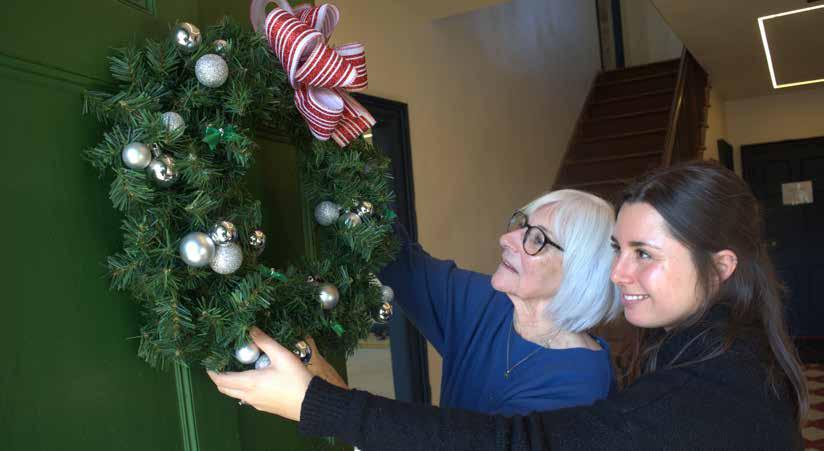
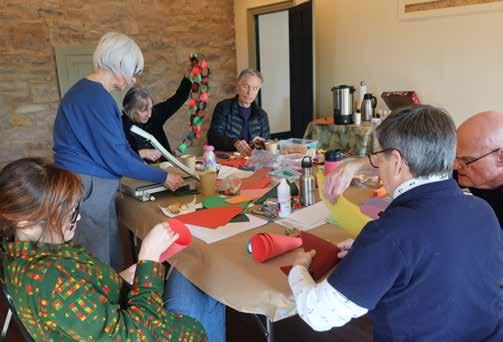
A volunteer for the Brown Homestead in St. Catharines, Tracey has been hard at work in the weeks leading up to Christmas preparing the historic farmhouse for the season. It’s an ideal job for her, connecting her passion for history with her love of the holidays.
“Christmas to me has always had a family feel. It’s a family tradition,” she said late last month as a group of volunteers finished a day of preparations for the homestead’s Christmas programming.
Coming from a military family, Tracey said her childhood didn’t involve big family get-togethers at Christmastime, since they moved around a lot. So when she settled down and started her own family, Tracey wanted to make sure Christmas was that one time of year everyone got together.
In preparation for the Brown Homestead’s Christmas programming - they’ll have a Dec. 6 open house with crafts and three days of candlelight tours later in the month - Tracey researched the history of the home and the four primary families who lived there over the years. Different parts of the house will be decorated to reflect the different eras.
It starts in the main hallway at the entrance with the most recent era: decorations that reflect the modern times. From there visitors will be able to travel to the different rooms and different eras, beginning with an 18th-century German Christmas in tribute to the heritage of John Brown, a Loyalist with German roots. For that room, visitors can expect a simple design with lots of greenery.
His son, Adam Brown, represents the next iteration. With some familiar greenery, this room also includes a Georgian feel. At that time, children would often receive a single gift, usually something handmade, like mitts and a scarf. This is also when Christmas trees first came on the scene, though they were decorated with fruits and gingerbread.
“And other things you could eat,” Tracey said.
This was also the era when trees had real candles on them. Tracey said they’ll also have candles but in the name of safety they won’t be lighting them.
And that’s one of the main ideas of the Brown Homestead and much of their programming. Connecting the past to the present is an ongoing theme with their work.
“You can see the future when you look back on the past,” Tracey said.


Erin
Heather
Business
Graphic
Billing
Contributor Ann

After the Browns came the Chellew family, who lived in the home when the idea of Christmas in the British Commonwealth undertook a drastic change under the Victorian period. Things became more elaborate and many newer traditions have familiar connections to this period. For instance, Tracey said the kissing ball was an earlier version of mistletoe. The balls of greenery would be placed in the home, and eager young gentlemen could pluck a berry from the kissing ball, which would entitle them to one peck on the cheek of a young lady.
“When the berries were gone, there were no more kisses allowed,” Tracey said.
The upstairs of the homestead is decorated to represent the period when the Powers family owned the property. This section has some special meaning for Tracey, since they chose a 1950s Christmas, which harkens back to her childhood. Here visitors can expect lots of tinsel, big stockings and classic toys like old train sets or sleds.
“It’s a connection for me and how I remember Christmas,” Tracey said.

The homestead has two major Christmas programs running this month. The first is a family festive open house on Saturday, Dec. 6 from 10 a.m. to 5 p.m. Visitors can tour the era rooms and make heritage crafts, or enjoy festive treats, hot chocolate and apple cider.
Tickets for the family festive open house are $15 for adults and $5 for kids.
Then, from Thursday, Dec. 11 to Saturday, Dec. 13 the homestead will be offering candlelight Christmas tours. Here, visitors can tour the house in a more in-depth way as guides delve deeper into the history of the home and how its farming families may have celebrated Christmas over the years. The tours run every hour on the hour, lasting about 50 minutes.
Tours begin at 1 p.m. on Thursday and Friday, with the final tour starting at 7 p.m. for those two days. On Saturday, tours begin at 10 a.m., with the last one starting at 4 p.m.
Pre-registration is required. For more information on both events visit thebrownhomestead.ca.
By Luke Edwards
Niagara-on-the-Lake’s unique Christmas celebration returns for its fifth iteration this year.
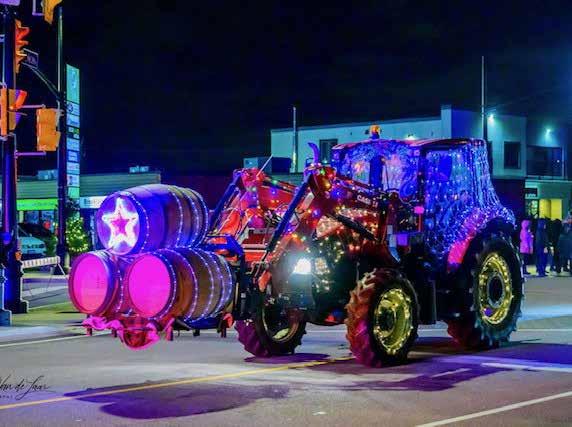
Tractors, sprayers and combines - all decorated for Christmas - will wind their way through Virgil on Thursday, Dec. 11, as the annual tractor parade returns. The event that began as a way to spread some holiday cheer during the COVID-19 pandemic has become a popular rural event.
“We love to see the streets lined,” said Dorothy Wiens, who organized the first tractor parade with her husband and NOTL councillor Erwin Wiens.
“They will be so tickled pink,” she said.
Though given the theme, it might perhaps be more appropriate to say they’ll be tickled John Deere green or New Holland blue. Wiens expects the parade will include somewhere in the neighbourhood of 75 pieces of farm equipment. They had 74 last year and Wiens said it’d be great to see more this year.
There are some new participants to go along with returning farmers. There are also some who are increasing their fleet or bringing in new items to give the parade a fresh look.
“It’s been a great response,” she said, adding the farmers deserve a huge thanks since many of them are still working to get the crops off.
The route for the parade this year will follow a mostly familiar path. It starts and finishes at the Virgil Arena, kicking off at 6 p.m. They’ll head up Four Mile Creek Road to Pleasant Lane and Elden Street before turning left on Penner Street/Line 1 Road. From
there, they cross Niagara Stone Road, turning right on Concession 4, another right on Line 2, before a final jaunt along Four Mile Creek Road back to the arena.
By taking this route, the tractors will pass Pleasant Manor, giving the residents there a chance to share in the holiday cheer.
This year, with the Lions Club and local businesses also helping out, Wiens said they’ll be collecting for the Terry Fox Foundation, Newark Neighbours and the Jamaica Relief Fund. Specially designed cookies, in John Deere green,
Massey red, and New Holland blue will be offered up. Suggested donations of $5 will support the Jamaica Relief Fund. They’ll also be collecting money for Joe Pillitteri’s Team Pillsy Terry Fox team. And then finally, the Vinetech team will be collecting food and toys for Newark Neighbours with their collection of entries designed with a theme related to the Cars movies.
And thanks to the support from the new Foodland being built at Garrison Village, free hot chocolate will be available before the parade at the arena foyer. Wiens encour-
aged the public to come and visit with the local farmers ahead of time, though reminded them to be cognizant of parking as the tractors will need space to get lined up for the parade.
In the meantime, they’ll be accepting entries up to Dec. 9, when the lineup will be finalized. Anyone interested in submitting a last minute entry can contact Wiens at erwinanddorothywiens@gmail.com or call Erwin at 289-687-5551, or Dorothy, 289-687-5552.


By Luke Edwards
The connection between California and Niagara that most people traditionally make is through their respective wine industries. But if a project being organized by a Niagara-on-the-Lake group gets the funding and support it needs, the two regions could share another similarity.
And that similarity is giant farmers. Or, more precisely, giant public art installations that pay homage to farmers.
Called “Thanks for the Meal” - in reference to a line from the 1973 song by Murray McLauchlin called The Farmer’s Song - the project is being spearheaded by the Art Gallery of Niagara-on-the-Lake. It replicates a similar project done in the Salinas Valley in California, which was home to American author John Steinbeck and formed the inspiration for many of his novels’ settings.
“I had the idea many years ago to bring that artwork to our fields,” said Ron Clavier, a NOTL artist and founder of the Art Gallery of NOTL. Clavier’s no stranger to honouring farmers. He created the image that makes up the large mural on the wall of Niagara Orchard and Vineyard Corp. in Virgil.
“They work so hard, really tirelessly, and to our benefit,” he said about why it’s important to him to honour farmers.
Also a big fan of Steinbeck, Clavier took many a trek down to California and the Salinas Valley, where he came across the installations. Created by John Cerney, they’re typically about 16-feet tall, and erected along roadways for passersby to see. It started in Salinas, but has now spread across the United States, featuring little snippets of Americana.
The group’s plan for a gallery goes back several years. However, the COVID-19 pandemic put things on the backburner. As normalcy returned, Clavier said he realized they still had the name registered as a non-profit and were, as far as he could tell, still in good standing. So he and some colleagues started thinking about what they could do. With the town’s strong cultural identity, Clavier said the group believed they could add something else for visitors to enjoy along that same line.
At some point there was an “aha” moment, Clavier recalled, by simply changing one two-letter word for another.
“The art gallery is Niagara-on-the-Lake,” he said.
With the idea of making it a gallery of public outdoor installations, they set out planning the specifics. It had to feature people with a focus on different aspects of farming important to the Niagara area. The group wanted buy-in from the community and Clavier said it’s important for the artwork to be created by a member of the group being depicted.
That led to an early challenge. Clavier said it only made sense to him to start with the region’s first farmers: The Indigenous people who lived here long before any Europeans arrived. However, finding an Indigenous artist who’d be willing to create the artwork at a price the fledgling group could afford was difficult.
However, eventually Clavier was introduced to Raymond Skye, who is known for - among
other things - the Landscape of Nations memorial at Queenston Heights. He put the group in touch with Shayde Skye and a deal was struck.
The debut installation will feature a tribute to the three sisters - corn, beans and squash - which were main staples for many Indigenous groups, who knew the three crops benefited each other.
They soon ran into an issue. For Clavier, it was important that each installation be authentic. He spent years as a scientist, studying the brain and working both in a clinical setting as a psychologist and in academia. So for him, accuracy is important.
As they began to develop the idea of the three sisters installation, Clavier realized that for it to be authentic and historically accurate, the three Indigenous women representing the three crops should be topless. That was, after all, the cultural norm for the time. Clavier worried an art piece of three giant topless women driving into NOTL might be met with some resistance. Fortunately, after discussing it with Skye and Sandy they assured him they could put tops on the women and still be authentic. Just a slight bit of artistic licence for the benefit of the more modest types.
With that part of the plan covered, the group also had to find the right location. And they could have hardly ended up with a better spot for the debut piece of art. St. Davids Hydroponics owns a field on Highway 55 heading into Virgil between Southbrook and Hare wineries. They agreed to host the first installation on that property.
That left some of the fine print and legal details, less exciting but still important, to be ironed out.

At a meeting where Clavier explained the project to a small group of interested community members last month, he said they believed they had all the paperwork in order.
Now they just need to raise some funds. They’ve received some donations and in-kind offers already, including a donation from St. Davids, but Clavier estimates they’ll need another $15,000 or so to get the installations printed, built and erected.
Once they have a proof of concept, Clavier said he believes it will be easier to generate community support and fundraising. At that point they can apply for charity status and issue receipts for income tax purposes. There will also, presumably, be the inherent buzz as people drive by the installations.
The group has also reached out to other institutions like Niagara College. Clavier said staff at the college are eager to offer their support, from trades students helping with construction to media students creating documentaries that could accompany each installation and offer those interested more information on, for instance, Indigenous farming practices.
Other topics Clavier would like to cover include Mennonite farmers, migrant farmworkers, and the area’s wine sector. Each new installation can generate a new discussion, he said.
“Nothing promotes truth like frank, honest, respectful conversation.”
The group hopes to get the funding in place to install the artwork next spring. For more information on how to support the group, email Clavier at eye.to.eye@ronclavier.com. Cheques and money orders made out to The Art Gallery of Niagara on the Lake are accepted, as are cash donations.

By Luke Edwards
Growing up on his family’s cash crop operation in Chatham-Kent, Ryan Handsor was entering new territory as he walked through the lines of apple trees and into the processing facility at Lincoln Line Orchards.
But that was kind of the point for the roughly 30 young people taking part in the Junior Farmers of Ontario Young Farmers Forum. The annual event saw young people listen to presentations from a wide range of speakers, and take in tours of operations like Lincoln Line Orchards, and Summit Station Dairy.
“Seeing what goes into it, it’s really intriguing,” said Handsor as they wrapped up a tour of the Highway 20 orchard and farm market.
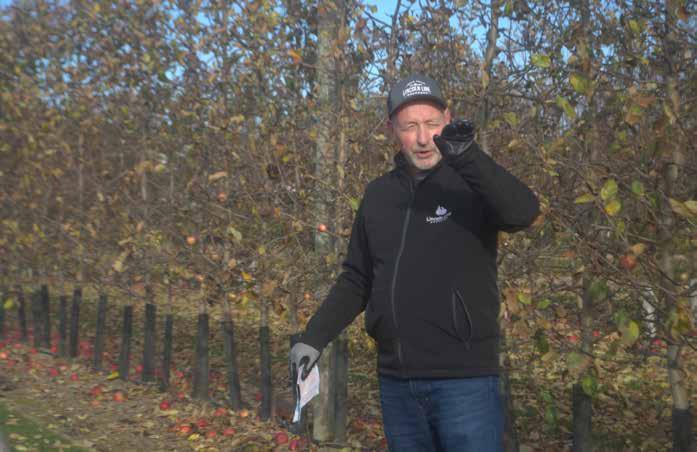
Lincoln Line’s Peter Bosman, who bought the property with his wife Mary back in 1999, provided the tour of the facility. He showed them how they use a trellising system with their trees, which offers better sunlight and air flow for more consistent fruit and better protection against disease. Using this style requires a lot of pruning and care, but the improved sunlight and air flow offsets the increased humidity that can lead to disease for Ontario orchards.
“You get a more consistent colouring as well,” Bosman said.
In the storage facility, he explained the pains they go through to ensure the apples stay fresh and delicious as long as possible. Sensors monitor temperature, but Bosman also uses some old fashioned techniques as backup, in
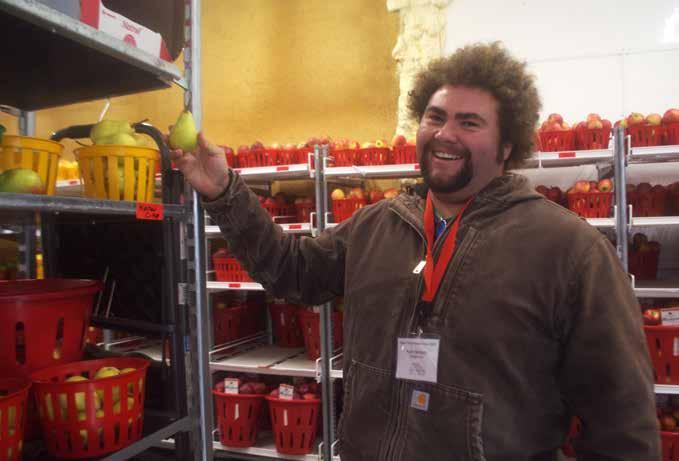
case the sensors get out of whack. In that case, a glass of water is an easy way to tell him if the storage room is below freezing.
Given Lincoln Line runs an onsite market and 85 per cent of their sales are retail, Bosman said


they have a challenge in storing different apple varieties together, since varieties can prefer different storage conditions.





Fortunately, he said some apple varieties mature differently and some taste even better after a few months in storage.
Jordyn Domio, president of JFAO and a Niagara native, said it was another successful year for the forum, as they welcomed young farmers from every corner of the province, both geographically and in terms of farm operations.
“It’s nice to get all the different sectors involved,” she said.
The theme this year was on-farm diversification, and the tour stops provided a great opportunity for first-hand learning, she said.
The forum occurs in conjunction with the Ontario Federation of Agriculture annual general meeting. In addition to the tour, participants heard speakers discuss topics like software and taxes and how they affect the agriculture sector.
For more information on the Junior Farmers, visit jfao.on.ca.
By Niagara Farms Staff
A new program promises to teach Ontario agricultural societies lessons that will help them grow their local fairs and exhibitions.
The Ontario Association of Agricultural Societies made the announcement last month. Through the You Make THE Difference national initiative, every ag society in Ontario will receive access to a 3.5-hour, in-person workshop that offers “practical, results-driven solutions to challenges such as volunteer recruitment, leadership succession, and long-term sustainability.”
Workshops will be tailored to each community’s unique needs, and participants will also have ongoing access to an online learning hub that includes videos, templates and other resources.
“We’re thrilled to bring the You Make THE Difference initiative to Ontario,” said Ontario Association of Agricultural Societies President Heather Owens and Executive Director Vince Brennan in last month’s press release. “This program will strengthen our fairs and agricultural societies, equip our volunteers, and build pride in the communities that make rural life so special. With the leadership of Ian Hill and the support of Fairs.com, we’re ready to make a lasting impact.”
Hill is an award-winning humanitarian, fair and agricultural society advocate with a lengthy career strengthening communities across the continent.

The program launches in February at the OAAS annual convention, and will roll out province by province through April and May.
Previously the program has been implemented in other provinces, including Alberta and New Brunswick, and south of the border in Maine, Michigan and South Carolina.
OAAS represents more than 200 agricultural societies across the province. For more information visit ontarioagsocieties. com.













By Luke Edwards
During a visit to his parents in Niagara a few years ago, Brandon Fiorino was left with a basic question people of a certain age might remember: Where’s the beef?
“A couple years ago I was visiting my parents up here and I was driving around - I wanted to do something for a barbecue - but there were no butcher shops,” Firorino said.
He’d recently become a butcher, after a career in the culinary industry was cut short due to the COVID-19 pandemic. His life long friend Jon McDonald got him into the Healthy Butcher in Toronto.
Unable to find a local butcher shop that could offer what he was looking for, Fiorino realized there was an opportunity.
“So that’s when the idea kind of came up,” he recalled.
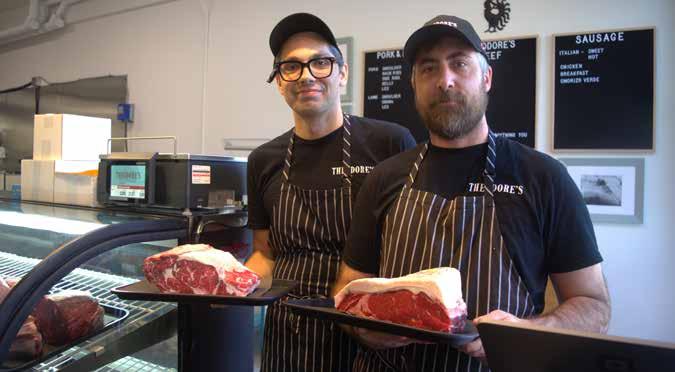
Fast forward a few years, and Theodore’s Artisan Butchers is now providing meat lovers with cuts of beef, lamb, pork and chicken out of their St. Davids shop. Fiorino and McDonald, who met when they were in kindergarten in Woodstock, have teamed up with a goal of bringing back a traditional butcher atmosphere.
“Both Jon and I share a passion of knowing our farmers, knowing where the animals come from, knowing they’re raised well,” Fiorino said. Over the years he said that connection between the customer and the butcher was lost. They wanted to build a shop where people could come in and ask questions, learn about different cuts of meat and where the animals came from.
“We lost that touch, so we wanted to bring that back,” Fiorino said.
Currently, they source their beef and lamb from Beverly Creek Farms up in Millgrove. The farm has its own abattoir and raises their cattle on grass before finishing them on grain.
The pork, meanwhile, comes from a farm in Stratford, and their chicken from a farm in Ancaster. Fiorino said they’re also open to finding other, more local options. The goal is always to find suppliers who treat their animals properly without sacrificing on quality.
And when they do get an animal in, Fiorino said he and McDonald aim for as little waste as possible.
Fortunately, that’s more doable than many may realize.
“There’s so much utility with the animal, you can find so many secondary cuts, so many unique muscles that make a great steak or a great roast,” he said.
“It’s not just the primes that are the highlights of the animal, there’s so much you can get out of the animal.”
In fact, he said his own personal favourite is a bavette steak, which comes from the bottom sirloin. Give it a good sear on both sides in a cast iron pan, and Fiorino said it’s just as good as any prime cut.
Other so-called secondary cuts that are just as good as the ribeyes of the world in the eyes of Fiorino include the Denver steak, which comes from the shoulder.
“It’s essentially a boneless short rib, but these guys make a really awesome steak,” he said.
Another is the Delmonico steak, from the eye of the shoulder close to where the ribeye starts.
“You’re getting like two or three really nice steaks out of it that’s more cost effective. It’s tender, has awesome flavour, awesome texture,” Fiorino said.
For McDonald, his favourite cut of beef is the flat iron, but for his money, a good chicken drumstick is hard to beat. Giving it a good grill after sitting in a marinade is a go-to for McDonald.
Theodore’s launched a holiday product list earlier this month. They also plan to offer other ways to purchase meat, including butcher boxes, as they get more settled. Fiorino said they’re also looking to do some kind of class or workshop where people can go in together on a side of beef and then watch as Fiorino and McDonald show them how the meat is broken down.
The shop is open six days a week. Hours are 10 a.m. to 6 p.m., Tuesday through Friday; 9 a.m. to 5 p.m. on Saturdays; and 9 a.m. to 3 p.m. on Sundays.
They’re located at 1397 York Road. They have a Facebook and Instagram page, as well as a website, theodoresbutchers.com.




By Niagara Farms Staff
Queen’s Park will be serving up some Niagara wines at special events next year.
An annual tradition, each fall the speaker of the legislature hosts a wine tasting event to help select the official wines of Queen’s Park for the following year. This year participants chose three Niagara wines, as well as one from Prince Edward County for 2026.
“As the legacy partner of the Legislature’s wine tasting event, the Grape Growers of Ontario thank the Hon. Speaker Skelly for continuing the tradition of choosing the official VQA wines of the Legislative Assembly for the coming year,” said Matthias Oppenlaender, chair for the Grape Growers of Ontario. “Our agriculture value-added
industry is rooted in the land, and the Grape Growers of Ontario look forward to continuing to work with the Government of Ontario to support Ontario’s grape and wine industry. Congratulations to Harbour Estates Winery, Riverview Cellars Estate Winery, Casa Dea Estates Winery, and Between The Lines Estate Winery on their wines being selected.”
The three Niagara wineries chosen include: Harbour Estates Winery in the sparkling wine category for their 2023 sparkling Riesling, Riverview Cellars Estate Winery in the red wine category for their 2021 Barrel 81, and Between The Lines Estate Winery in the ice wine category for their 2024 Vidal ice wine.
Prince Edward County’s Casa Dea Estates Winery rounded up the selections, getting the honour in the white wine category for its 2022 Pecorino.
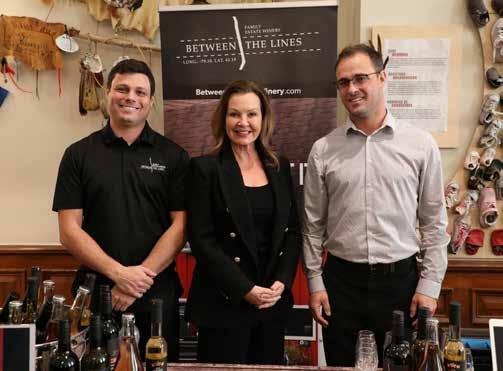
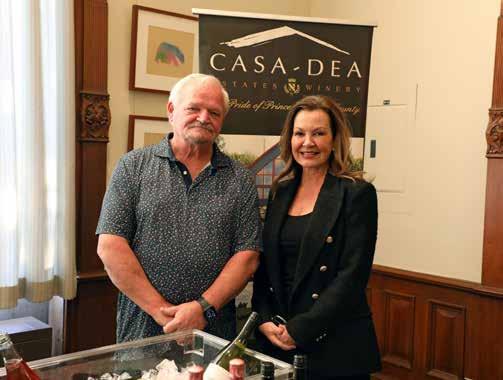
“The wines showcased at this event reflect the connection between 100 per cent Ontario-grown grapes and the winemakers who craft them. We congratulate all of Ontario’s wineries on producing top-quality VQA wines and thank the six wineries who participated in this year’s tasting,” said Debbie Zimmerman, CEO for GGO.
For the wineries, the recognition was a great honour.
“This recognition celebrates the dedication of our family and team, as well as the unique character of our Niagara-on-the-Lake vineyard. We’re proud to share a taste of our terroir with Ontario’s representatives and guests,” said representatives from Riverview Cellars in a statement.
“As a small family estate, this recognition means a great deal to us. Over the past 15 years, we have refined our craft through experimentation, innovation, and a
commitment to inventive winemaking techniques,” said a statement from Between the Lines Winery. “The support of our fellow wineries and the enthusiastic feedback has been truly inspiring. We extend our sincere appreciation to the Legislative Assembly of Ontario for this opportunity and for celebrating wines made from 100 per cent Ontario-grown grapes.”
MPPs took part in the tasting, selecting their favourites from a group of six Ontario VQA wineries.
The Grape Growers of Ontario is the official organization that represents over 475 actively producing farm families of 17,500 acres in the province’s three viticulture areas: Niagara Peninsula, Lake Erie North Shore and Prince Edward County, and emerging regions across Ontario.
By Luke Edwards
Outside the air may have been cool but inside the Backyard Barn it was Summers time.
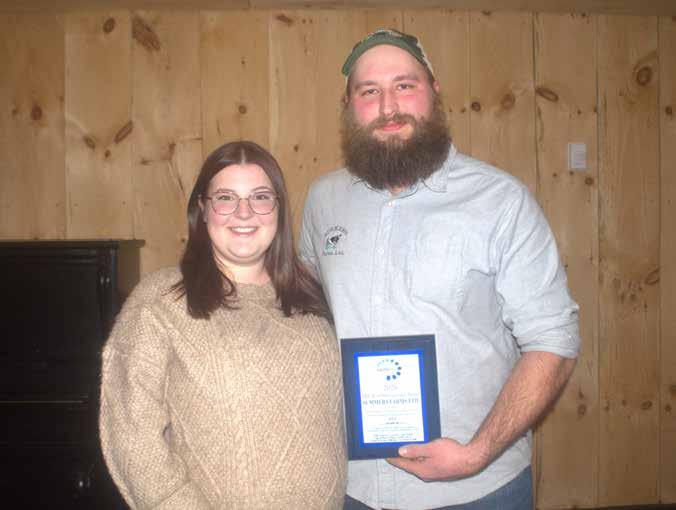
Thorold’s Summers Farm Ltd. was one of the big winners at last month’s Niagara Holstein Club award banquets. The long running annual event is a chance for Niagara’s small but tightknit group of dairy producers to get together and celebrate, and was held this year inside the renovated former barn of Jeremy and Sharlene Huizinga.
“They do a good job, not just today but day in, day out,” said Jan Van Wely, president of the club, about Summers and their fellow dairy producers.
The evening recognized the winners of the 2025 Niagara County Show awards, and also the 2024 milk recording awards. It was in the latter where Summers Farm shone, winning the grand champion cow with Summerstime Alcove Barton, high herd average BCA, DHI herd management, finishing with eight of the top 10 high yearling (including one through four), six of the top 10 high two-year-olds (including one through four), and the high five-year-old. They also had one of 11 cows recognized for gold level longtime production awards, with Summerstime Stanleycup Bee surpassing 100,000 kg of milk.
For Jake Summers, who helps run the family farm with his dad, uncle and cousins, the success is a mix of good fortune and a hard working and talented crew.
“We just got lucky, and we have a good team of people,” the modest sixth-generation farmer said.
Summers Farms milks about 110 Holsteins in a parlour, and Summers said the awards night is a great way to catch up with colleagues, especially since their farm is a fair distance away from many of the other Niagara dairy producers.

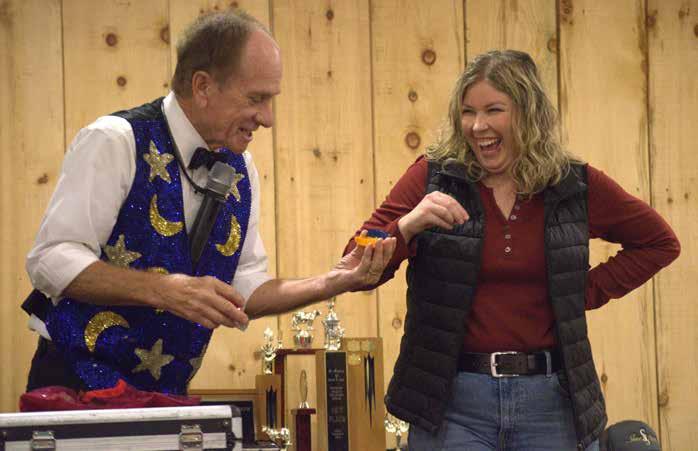
Those in attendance were treated to a catered meal from Chuck Simpson, which was followed by a magic show from Calvin the Magician. The awards began with recognition of this year’s Niagara County show awards.
YOU CAN’T PREDICT THE FUTURE BUT WE CAN HELP PROTECT IT.


“They
not just today but day in, day out,”
Jan Van Wely, president of the Niagara Holstein Club
Winners included: British Marshmallow (Braejan Holsteins) for spring heifer, Spero Valiant Dropbox Crime (Gracehaven Holsteins) for winter heifer, Parfect Hayley (Brookturn Holsteins) for fall heifer, Bullseye Titanic (Feederlane Farms) for summer yearling and reserve junior champion, Bullseye Ladybug (Feederlane Farms) for spring yearling, Valiant Lambda Shanghai-P Rc (Gracehaven Holsteins, Royal Lynn Holsteins) for winter yearling, Jacobs Bruins Cansas (Gracehaven Holsteins, Simon Heeringa) for senior yearling, and Spero Valiant Dropbox Crime (Gracehaven Holsteins) for junior champion.
Brookturn Holsteins won the junior breeders herd while Brookelyn Eggink won the 4-H champion with Spero Valiant Dropbox Crime (Gracehaven Holsteins) and Emily Knutt won reserve 4-H champion with Bullseye Titanic (Feederlane Farms).
In the Breeders Cup, Moonshine Rambo Angela (Moonlight Holsteins) won grand champion, and Alongside Tarot (Feederlane Farms) won reserve champion.
Other recognition included Greenview Holsteins recording most improved BCA and Silverholme achieving the lowest SCC for the 2024 Lactanet awards.
Heeringa wins Holstein club’s scholarship
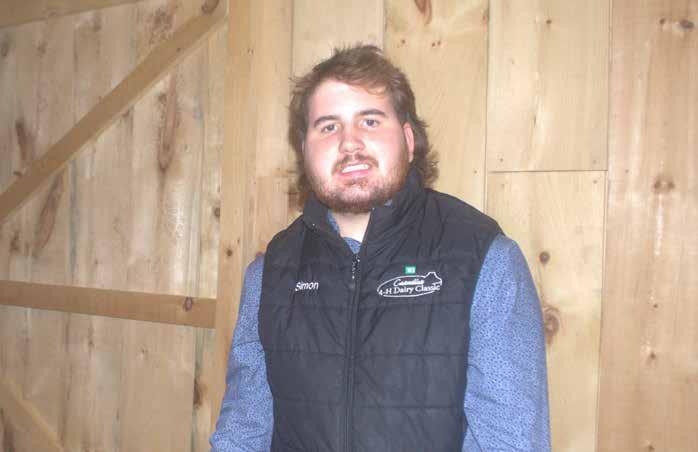
One day he hopes to help develop the next generation of cow, but already Simon Heeringa is helping mould the next generation of ag leaders.
Heeringa won this year’s Niagara Holstein Club scholarship, a prize that will help him as he wraps up his studies at the University of Guelph’s Ridgetown campus, with the goal of one day working in genetics.
“I just love a good, well built cow,” he said.
Heeringa’s been involved with the 4-H club for about nine years, having become a leader in recent years and taking it upon himself to become a solid role model for the younger members.
“My dad was a 4-H leader and I saw it from him, I see the importance (of being a role model),” he said.





By Luke Edwards
When given the opportunity, the vast majority of farmers would do the right thing. When it comes to recycling, it’s the job of Cleanfarms to provide farmers with that opportunity.
The organization, a non-profit producer responsibility organization, is celebrating its 15th anniversary in 2025, though efforts to provide recycling opportunities to the agricultural community go back beyond 2010.
“We call ourselves the blue box for agriculture,” said Barry Friesen, executive director for the organization.
Friesen, once involved with waste collection in Niagara, has been with Cleanfarms since before it officially launched. The organization took over extended producer responsibility duties from CropLife Canada in 2010, expanding both voluntary and regulated recycling and disposal programs geared towards the agricultural sector.
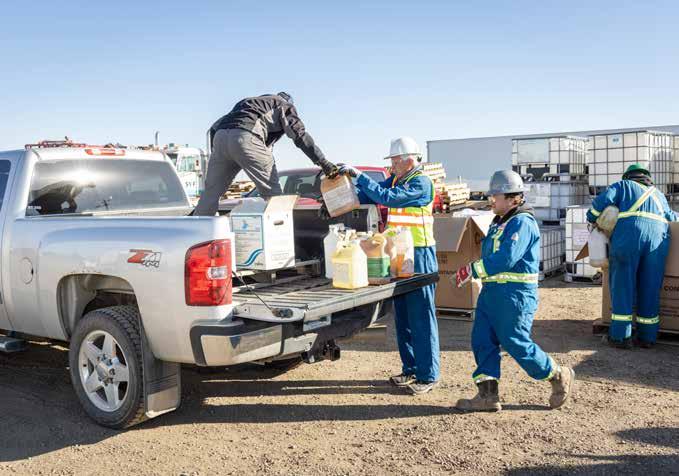
Cleanfarms runs four programs in Ontario, all of which are voluntary. Earlier this fall they hosted collection events across the province - including two in Niagara - for unwanted pesticides and livestock medication. This program is run once every three years and offers farmers a chance to hand over expired, delisted or otherwise unwanted medications and pesticides to hazardous waste collectors to dispose of properly.
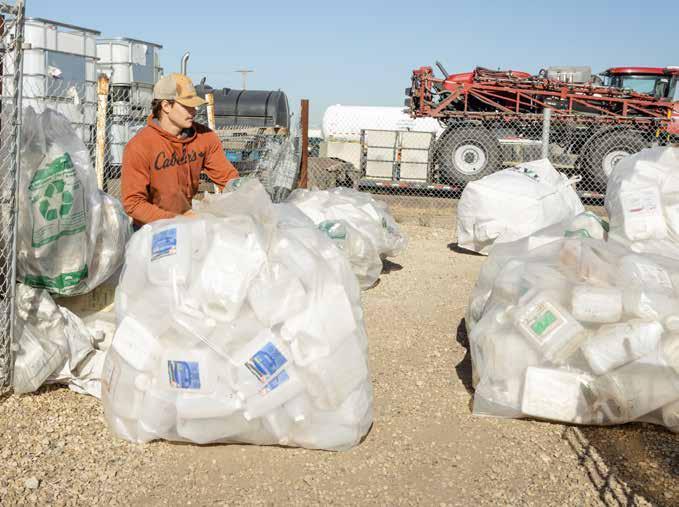
Its three remaining programs in Ontario allows farmers to return bags and containers to retailers, which are then recycled and used to produce other products. Currently Ontario farmers can return the 10-litre, high-density polyethylene containers that are used for pesticides and fertilizers, the larger bulk containers for those items, as well as seed, pesticide and inoculant bags.
“The container program has a very high recovery rate. We estimate in Ontario we probably collect more than 90 per cent of all containers that are put into the market,” said Friesen. “Farmers are great stewards of the environment, they recognize that these materials need to be safely managed.”
Right now, much of the plastic ends up being recycled into pipes.
“Usually it’s drainage tile, perforated pipe that’s used right back on the farm,” Friesen said.
However, that’s not the ultimate goal.
“It’s really great that we can make new pipes out of these old containers but what we really want to see is new containers made out of the old containers,” Friesen said.
“That will be the holy grail for this, is when you buy a container that has your product in it - whether it be a rigid container or a flexible one in a bag - that that bag or that container has a certain recycled content from the old bags or containers.”
Since it follows an extended producer responsibility model, funding for the programs comes directly from the manufacturers. However, Friesen said they’re clear about the fact that the costs indirectly get passed down, so farmers are essentially paying for it.
Still, Friesen said it’s a positive. The more they can recycle and the closer they can get to a circular economy, the better it will be for all.
“It’s just the right thing to do,” he said.
Despite high collection rates for Ontario’s voluntary programs, Friesen said he’d still like to see provinces created regulate programs that will force more sections of the ag industry into recycling programs. Four provinces currently have regulations, with Quebec’s being the most stringent. Programs there cover many more items, like bale and silage wrap, twine, greenhouse film and many more types of plastic bags and containers.
“In the meantime farmers are stuck with these products to dispose of in incinerators or simply
store it on the farm forever,” he said, noting tipping fees at Ontario landfills are increasing as space dwindles.
Having been with Cleanfarms since its inception, Friesen said he fully believes in the program. Not only does it have obvious environmental benefits, but it can also be economically smart since recycling programs creates more jobs than garbage collection.
“I get to protect the environment, I get to create jobs, create livelihoods for people and offer solutions for farmers,” he said.
For more information on the organization, visit cleanfarms.ca.
Q & A with this year’s winner of the Haldimand Federation of Agriculture scholarship
By Luke Edwards
Ask a six-year-old what they want to be when they grow up, and the answers can run the gamut: everything from construction worker to astronaut.
For most kids, that changes multiple times as they get older. But not for Jenessa Lise. The Haldimand native and winner of this year’s Haldimand Federation of Agriculture scholarship has wanted to be a farmer as far back as she can remember, and she has the evidence to prove it. A few years ago she uncovered a picture she drew in Grade 1 where the teacher asked students to draw what they wanted to do when they were adults, and Lise drew a picture of herself next to some cows.
Now, studying Animal Science Technology with a major in livestock studies at Lakeland College in Alberta, Lise is getting closer to fulfilling that dream.
We caught up with Lise in between her busy schedule of classes to ask her about her plans and what it meant to win the scholarship.
Q: What’s your background?
A: I grew up in Hagersville, Haldimand County, on a broiler chicken and cow-calf farm with my parents and three siblings. Growing up, all of us would help my dad move cows, feed cows, and we took turns bottle feeding calves.
My siblings and I all used to fight for who got to run the tractor in the summers, cutting, raking and baling hay - a funny thing to fight about… never rock picking though.
We also spent a few summers in 4-H, showing our cows and participating in other miscellaneous clubs. I spent a lot of time mixing feed in the winters with my dad, learning the rations, weights and importance of quality feed for a herd.
On the broiler side, as kids we always helped clean and set barns, and place chicks. In the last while before leaving for school, I had taken on a more involved role in checking chickens to learn the ins and outs of broiler production and the importance of the analytics in the industry, while gaining the opportunity to improve my knowledge of my home farm.
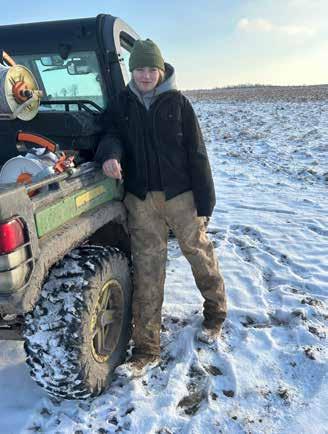
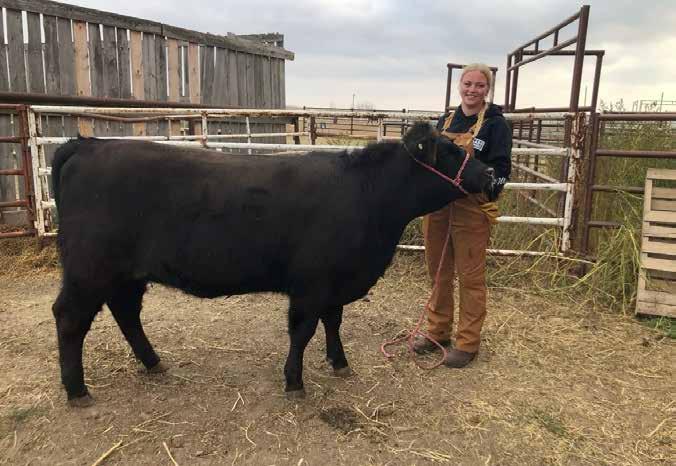
Q: What do you enjoy most about farm life?
A: What I most enjoy about farm life is having the opportunity to feed the world. It is such an amazing thing to be involved in, and is truly inspiring to see the industry grow while being a part of it. Being able to go outside, and be so thankful to see what my parents have built in the world of agriculture is truly a blessing.
Q: Explain the program you’re taking at Lakeland College. What kind of things are you learning, why’d you choose this program?
A: At Lakeland College, I am taking Animal Science Technology, majoring in livestock studies. At the moment, we learn about the anatomy of livestock, range and forage strategies and management, the proper handling and welfare in the industry as well as microeconomics and business communications. Next semester, we will learn about diseases and treatments, business records, as well as production courses and livestock nutrition. We will also be taking an intro to SMF, which is the Student Managed Farm, where students get hands-on experience in their choice of expertise at the farm that is located on campus.
Q: What kind of career do you want to get into when you’re finished school?
A: When I am finished with my studies here at Lakeland, I hope to continue my studies to obtain a Bachelor of Science in Agriculture, majoring in Animal Science. I am planning to enter the growing field of genetics, to improve species health factors and herd quality for farmers all around the world.
Q: How excited were you to win the HFA scholarship, and what does it mean to you to be recognized?
A: I was thrilled to receive the support of the HFA! As a resident of Haldimand, I take pride in being a part of the agricultural community we have in Haldimand. Being supported by the association and people in our community that come together to increase awareness, sustainability, and support the farmers in our community was an honour. I felt so incredibly inspired to head out to Alberta and complete
my studies knowing there are so many people at home who support and believe in me as I make my journey through agricultural studies. With limited options for agricultural studies in Ontario, and such a great program here at Lakeland, having the support from the HFA and farmers in my community to take on a whole new province for my education was truly a gift.
Q: Is there anyone you’d like to shout out for helping you get to this point?
A: I would like to thank my entire family for helping me get to this point. My dad (who may be a little jealous of my program), for encouraging me to look at the programs and follow my dreams. My mom (who may have been weary), for helping me through the ups and downs of deciding and always supporting me. My older brother, who only had to say once how proud he was of me for chasing my biggest dream to have me tear up, and always making me smile. My sister, who may dislike me for leaving, (and be jealous of Alberta), for being my biggest supporter of entering agriculture as a woman. Last but not least, my younger brother, for reminding me how important it is to take chances when you’re young. My grandparents, aunts and uncles have all unconditionally supported me on this journey in so many ways.
But, Henk Lise, my father, encouraged me all throughout the journey without knowing. Watching him work hard to build a sustainable and strong farm in the industry through all the ups and downs was always inspiring. Spending time with him while moving cows and working outside as a child had me adoring the lifestyle of farming from a young age.
In Grade 1, we drew what we wanted to be when we were older, and I drew a picture of a little blonde girl standing with her own cows. Over 10 years later, I found the old book in a bin, and after contemplating what industry I wanted to enter during my high school years, it hit me that all along I wanted to work in agriculture. Every little thing I have done on the farm throughout my life has built me as a human and gotten me to where I am today, and I cannot thank my family for that enough.
By Luke Edwards
To hear Anne Sarfo talk about her peanut butter, she repeatedly and proudly calls it the best, might lead one to think she never needs a shoulder to lean on. But even for the Ghanaian who’s overcome the odds to build a successful global food company, every now and then she still needs a friend to boost her up.
“In times when you want to give up, your sisters are there to support you,” she told a crowd at the Advancing Women’s Conference in Niagara Falls last month.
Held over three days in late November, the conference is an annual event that brings together women in agriculture from around the country. While there they listen to presentations from up-and-coming entrepreneurs, leadership experts, and others. Sarfo and Nelly Elinam Kurd-Marckay, a life long friend and Ghana native who built a successful shea butter business, were among the dozens of presenters. They shared their story of creating businesses in a challenging African society that’s still heavily male dominated. But using traditional knowledge, hard work, and plenty of smarts, they each created businesses that support women and have become successful worldwide.
“A lot of the challenges we face are really daunting, but we don’t let it keep us down,” Sarfo said.
Kurd-Marckay described the situation in Ghana as still very challenging for women. Limited ownership means women can easily lose control of their land if something happens to their husband. Low access to funding and exclusion from decision making also makes it difficult.
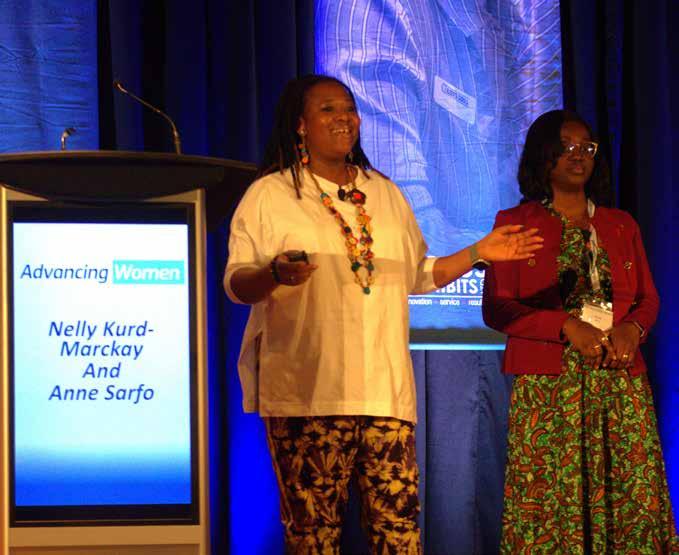
However, by working together, she said women farmers in Ghana can help each other succeed.
“Women are able to come together as one,” she said, describing cooperatives that provide support.
And while they rely on traditional knowledge, Kurd-Marckay explained how experienced farmers can tell the ripeness of a shea nut by the sound it makes in the shell, women in Ghana are also bringing in newer technology to help them do more. New machines for Sarfo allows her to process 100 kilograms of peanuts in six hours, far improved on the five kilograms in eight hours it took her when doing it by hand in her kitchen.
“We’re bridging the gap between tradition and innovation,” she said.
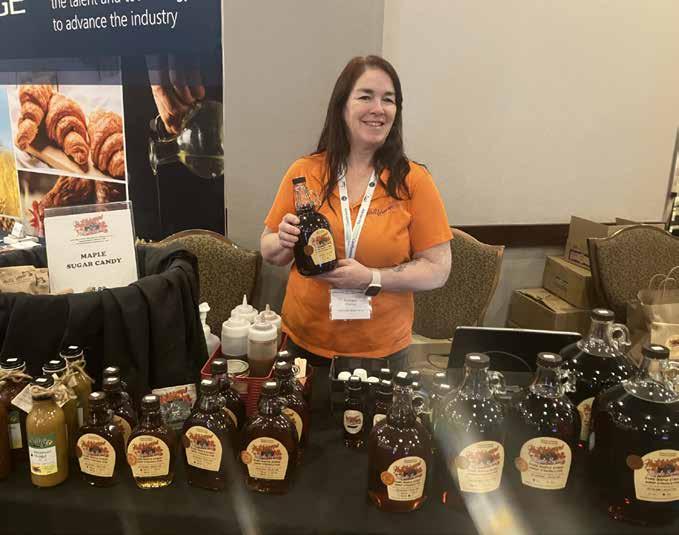
The conference also featured women from closer to home. Michele O’Sullivan runs a maple syrup business with her husband Doug Hutchinson in nearby Oro-Medonte, just north of Barrie, and said the conference was a great way to take a step back from the day-to-day challenges of running a business.
“I think it’s a good reminder to think of the basics,” she said.
Hutchinson Maple Syrup grew mostly from a hobby when they bought the property that includes 22 acres of hardwood bush in 2012.
“We just started as a hobby but got bit by the sugar bug,” said O’Sullivan.
They went from 300 taps to 1,600 and now sell syrup, butter, sugar and maple candies.
One of the things the conference helped remind her of, O’Sullivan said, is that she’s not just selling any old maple syrup.
“I’m selling my syrup,” she said.
AWC organizers host two conferences a year, one in western Canada and the second in eastern Canada, with Niagara Falls having hosted the last several eastern Canada events. For more information visit advancingwomenconference.ca.
By Luke Edwards
There’s a new state-of-the-art home for Niagara College’s Horticultural and Environmental Sciences Innovation Centre.
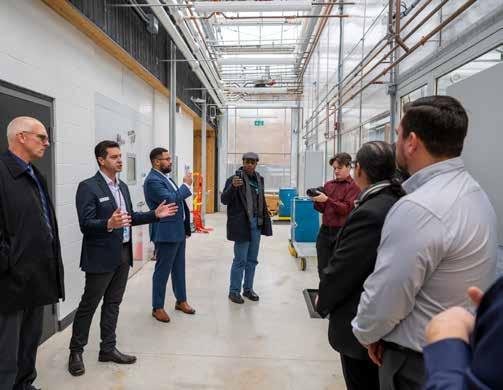
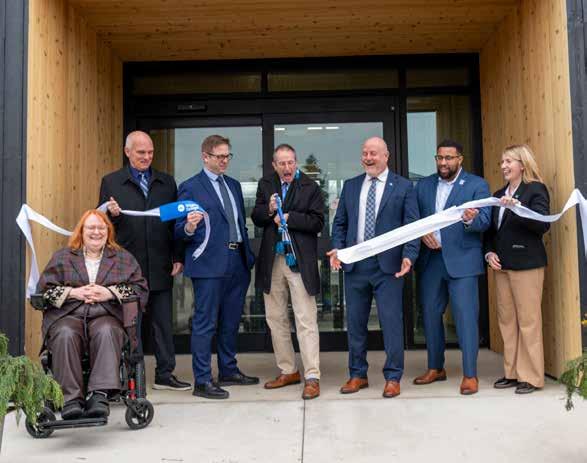
Local dignitaries and college officials celebrated the completion of the new greenhouse on the Daniel J. Patterson campus in Niagara-on-the-Lake last month with a ribbon cutting ceremony. The unveiling marked the culmination of more than two years of construction, and many more years of planning, for a building that will give researchers more space and up-to-date technology to perform their applied research.
“This cutting-edge greenhouse will drive innovation across the Canadian horticultural sector while providing hands-on research and learning opportunities that prepare the next generation of industry leaders,” said Rodney Bierhuizen, president of Flowers Canada (Ontario) and Niagara Greenhouse Growers Committee member.
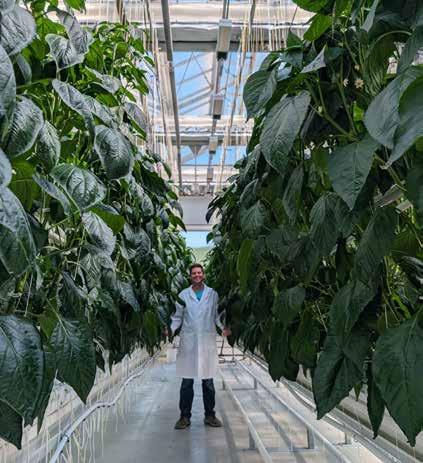
Research has already begun at the newly opened greenhouse. A study of 50 different pepper varieties is comparing how they perform when infected with the fusarium pathogen, a known challenge for many greenhouse vegetable growers. The second phase of the project is scheduled to begin in December.
With 1,260 square metres of research space, HESIC staff will have far more room to conduct their studies, and with a dedicated space - they previously had a limited space in the college’s academically-focused Teaching Greenhouse - be able to be more precise with the research.
Enhanced controls and tools will also help. The new greenhouse includes five individually contained bays, each having its own temperature and lighting controls. LEDs in the bays are spectrum-adjustable, with high-pressure sodium lighting systems that combine to mimic natural lighting or offer controlled lighting.
Ebb and Flood tables provide efficient nutrient delivery, Nutrient Film Technique Systems offer maximum oxygenation at the root zone, and a dedicated highwire bay provides opportunities for research into vertically grown vine crops like tomatoes and cucumbers.
Other features include Hoogendoorn climate controls in the vertical grow room, a Conviron Gen 2000 growth chamber for small-scale tissue culture work, and tools like the Phenospex Trailfinder and DroughtSpotter scales.
All told, the new greenhouse was designed to make it as close as possible to a professional growing environment. Research at the greenhouse will be done with an eye towards commercialization.
“By combining research excellence with real-world industry collaboration, this new facility will help local growers adopt new technologies, improve efficiency, and strengthen Niagara’s leadership in the greenhouse sector in Canada,” said John Boekestyn, chair of Niagara Greenhouse Growers Committee.
Beyond providing a bridge between research and commercialization, the greenhouse will also offer up a space for students. The centre hires students and recent grads to work on the team, giving
them experience and exposure that’s hard to find elsewhere.
Research associate Donna Thien is one such person, graduating in the spring from the college’s greenhouse technician co-op program. She completed her co-op at HESIC last year before getting hired on as a research associate this year.
“I never really considered the possibility of research in the greenhouse industry until HESIC,” she said. “It has broadened my expectations of what could come next, both for myself and the industry.”
Her job at HESIC sees her mixing fertilizers and pesticides, diagnosing diseases and deficiencies, identifying pests and managing high-wire crops.
“At HESIC and across all our innovation centres, our students are leading projects, managing
real-world budgets, and interacting directly with our industry partners to drive innovation forward,” said Marc Nantel, vice-president, research, innovation and strategic enterprises. “Student research assistants gain hands-on experience and technical skills far beyond what’s possible in the classroom, which makes them highly sought after for industry employers.”
The HESIC greenhouse was a $12-million project, with investments from all levels of government. Funding included more than $1.5 million from the Federal Economic Development Agency for Southern Ontario, nearly $900,000 from each of the Canadian Foundation for Innovation and Ontario Research Fund, and $800,000 from Niagara Region Economic Development.
By Luke Edwards
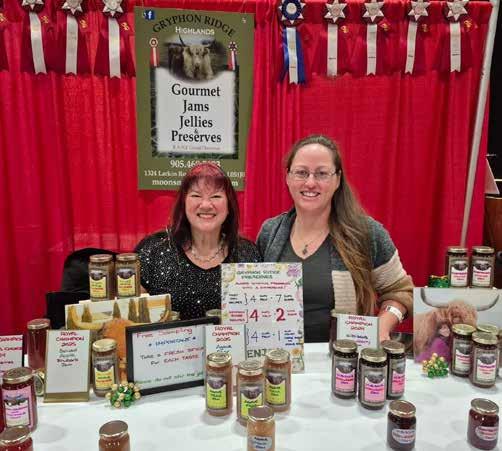
Whether it was back in her cow showing days or her newfound passion for making jam, Kim McQuhae has always found there to be something special about the Royal Agricultural Winter Fair.
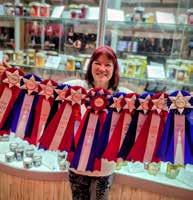
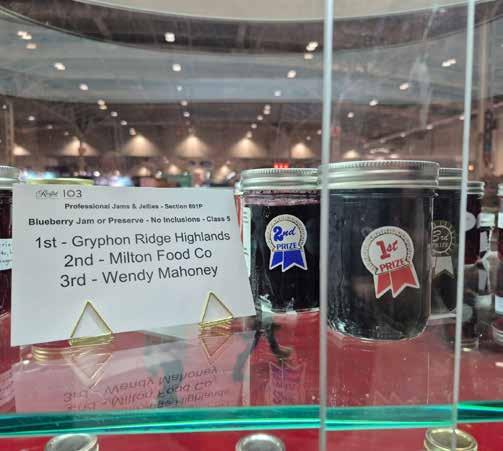
And that seems to be a two-way street, as the Royal has once again recognized the NIagara-on-the-Lake jam maker with a bevy of awards. McQuhae, who runs Gryphon Ridge Highlands where she sells a wide assortment of jams and other preserves, took home the premier jam/jelly exhibitor title in the professional category. A total of five first place finishes, five second place finishes, three third place, four fourth place and two fifth place awards propelled her to the title.
While a successful showing at the Royal isn’t anything new for McQuhae, she said she was still thrilled when she saw the results and got the premier award.
“It’s pretty cool, and exciting,” she said.
While she keeps some animals, including a few Scottish highland cattle, and works off her farm as well, McQuhae is seemingly constantly coming up with new flavour ideas. She prefers to get creative, which is evident given some of her submissions to this year’s Royal: spiced apple rhubarb, agave pear, and lychee almond conserve, to name a few. The lychee almond was among her favourites of this year.
“You can put it on toast, or on a charcuterie board or cheese plate,” she said.

She also entered some jams that included watermelon, a fruit she’s long suggested deserved more attention.
“It’s one of the largest fruits around, why not make something with it?” she said.
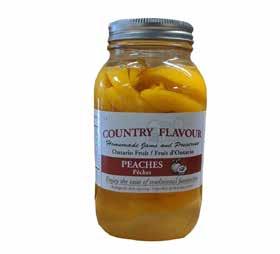
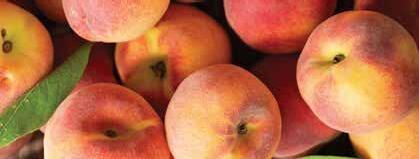
McQuhae also won in the heritage jam category, with her take on an old pink peach preserve recipe.




Before getting into jam making, McQuhae would often bring her highland cattle to Toronto to compete in the cattle shows. With the fair having international appeal, she said it never gets old to win at the Royal.
“It’s an annual tradition. It’s such a prestigious show, you feel proud every time you win there,” she said.
She said the setup this year was wonderful, and as a premier award winner her booth was near some of the other premier winners. It gave
her a chance to meet and chat with some very talented people.
As she offered tastings to visitors, McQuhae received a compliment that was as meaningful as any award.
“They said it was ‘happiness in a jar.’ I’ve never heard it described like that,” McQuhae said.
Though her mind is constantly going through different flavour combinations, McQuhae has at times fallen prey to time. Several times over the years she’s been forced to make last minute
CONNECT with fellow farmers and growers EXPLORE over 3 acres of exhibitors

recipes hoping the jams set ok and turn out. It’s all part of the fun though.
Either way, McQuhae is sure to have some more entries 11 months from now.
“I’ve already got some ideas for next year,” she said.
Gryphon Ridge is a weekly staple at the Niagara-on-the-Lake Farmers’ Market. In the offseason McQuhae can be found at some craft shows, and she’ll open her home store on some weekends. For more information follow the Gryphon Ridge HIghlands Facebook page.
your knowledge from leading industry experts, all in one place
By Luke Edwards
A new report on soil health in the Greater Golden Horseshoe backs up the positive effects of best management practices.
The Greenbelt Foundation released the results of a two-year study into soil health across the Greater Golden Horseshoe. All told, the study looked at 264 fields across the region, with a range of soil types and approaches to soil management.
“The basic findings from our report is that fields that are implementing soil health practices like reduced tillage, having cover crops, using manure where possible, good strong rotation, fields that are implementing those practices do have stronger health indicators across everything we tested,” said Ryan Carlow, a soil health specialist at the Greenbelt Foundation involved with the project. Those improvements included a 12 per cent increase in water holding capacity, 28 per cent increase in soil respiration, 39 per cent increase in mineralizable nitrogen, and a 16 per cent increase in aggregate stability.
Carlow called the conclusions more of a reconfirmation of what
experts already know and believed, but the study nevertheless provided a valuable baseline and proof of concept for ongoing soil health testing and management.
The study measured eight variables - soil organic carbon, soil organic matter, soil organic carbon stock, active carbon, potentially mineralizable nitrogen, respiration, aggregate stability, and available water holding capacity - and how three types of field management affected each measure.
It also took into account different soil types, an important factor in the Niagara and surrounding region, which has a unique clay soil makeup.
“It was important for us to do that intense sampling because we know we can’t compare farmers who are on the sandy soil type to those in Niagara who are on more clay soils, so we needed a good database to make sure we had enough data to compare like soils to each other,” he said.
The test sites were broken into three categories: baseline, soil health practices, and reference. Baseline referred to sites where more conventional farming practices were dominant, such as regular

tillage and no use of cover crops. The soil health practices included sites where tillage was eliminated or reduced, cover crops were used and manure applied where possible. The reference category included sites where the soil hadn’t been touched in 10 years, such as in pastures or in orchards.
Carlow said one of the challenges they faced was actually categorizing each test site. Since the samples came from real world sites on working farms it wasn’t as simple as comparing completely different types of fields. This could actually be read as a good thing, since Carlow said most farmers are at least trying to implement some best management practices in their operations.
“A lot of farmers are kind of in that middle space,” he said.
Given that, the results may not show as drastic differences as some might expect, but they do show improvements across the board.
And it shows that every little effort makes a difference.
“(It can be as) simple as limiting the depth of the tillage tool you’re currently using or if you’re doing two passes in the spring, dropping it down to one pass. All of those little improvements really do help the soil,” he said.
However, he also cautioned farmers shouldn’t necessarily expect immediate changes.
“It is a bit of a process. It’s about five to 10 years from adopting a new practice to seeing a change on the ground in any one of these
indicators, so it will take some time,” Carlow said.
When those impacts are realized, Carlow said farmers will have an easier time during those crucial planting and harvesting periods.
“If you have really healthy soils that can store a lot of water, have good aggregate stability, that can be the difference between getting in to plant your field and not, having to wait another day until it dries out and then you’re delayed again with planting,” he said.
Fortunately, Carlow said he’s noticed a trend in farmers becoming more interested in their soil health, and not just for immediate payoffs.
“A lot of them are interested obviously for economic reasons, trying to make sure they get the best yield and that they’re prepared for those critical windows of harvesting and planting,” he said.
“But another reason we’ve been hearing that farmers are concerned about their soil health is making sure they have land and their fields are in really good shape so they can pass them on to the next generation coming behind them.”
While they aren’t doing any more soil samples currently, Carlow said they are working with colleagues, including Soils at Guelph, to develop a soil sample program farmers can utilize. They’ve also hired a new certified crop advisor who can provide support to farmers.
More information on the study can be found at greenbelt.ca.
Binbrook farmer was acclaimed to the position at the federation’s AGM
By Niagara Farms Staff
A Binbrook farmer will return as the head of the Ontario Federation of Agriculture in 2026.
Bryan Gilvesy, now CEO of ALUS Canada, started his involvement with the program when he signed up as a participant to the program and then became a member of the Norfolk Partnership Advisory Committee. Bryan and wife Cathy raise Texas longhorns on the YU Ranch, south of Tillsonburg.
Drew Spoelstra was acclaimed as president during the organization’s annual general meeting last month. It’ll be his third one-year term at the helm, though following his reappointment Spoelstra stressed a team approach from top to bottom.
“Over the course of the past year, we’ve seen a huge emphasis on taking a team approach to achieve the best results - from ‘buy Canadian’ promotions to political leaders working together to tackle issues like tariffs and interprovincial trade barriers and more,” said Spoelstra. “The work at OFA is also a team approach, from county federations to partners across the sector and beyond, and I appreciate the opportunity to serve as the OFA’s president for another year.”
Spoelstra runs a mixed farm on his family’s Binbrook property, growing crops, raising horses and producing milk and beef. He also has a dealership for Pride Seeds and is a graduate of the Advanced Agricultural Leadership Program.
He’s also represented the Halton, Hamilton/ Wentworth and Niagara region as a board director since 2013.
Also returning to the organization’s leadership team are vice presidents Sara Wood and Ethan Wallace. Wood is a fourth-generation farmer from Perth County, while Wallace farms just outside of Seaforth in western Ontario.
Paul Maurice, a farmer from Penetanguishene in Simcoe County, was re-elected as an ex-
tally we are building value for the farmers of Canada. That means we (farmers) are part of conversations we haven’t been part of for a long time. Farmers realize they are part of the solution to a lot of things, like climate change mitigation, biodiversity, species-at-risk and flood control.”
One of the offshoots of Norfolk’s initial efforts occurred after Prince Edward Island environment George Webster attended the pilot launch in 2008. The island was having an environmental issue at the time and Today, nationally ALUS is approaching 1,000 farmers participating
Officially, ALUS Canada’s mantra now is: “ALUS Canada makes it ardship. ALUS invests in farmers and landowners who are producing acres of clean air, clean water, wildlife habitat
Credit was given to some of the programs largest advocates by Gilvesy. Local MPP
nent since the early days, and introduced a Private Member’s Bill promoting the concept.
moting it there. Bob Sopuck, who was Delta Waterfowl’s western vice-president of policy was an early advocate and became elected as an MP and was the program’s champion on Parliament Hill. Dave Reid co-wrote the
sands of people about ALUS at hundreds of speaking engagements across Canada. Recognition for the program has included a Premier’s Ag Innovation Award
ecutive member. Dashwood’s Terese Van Raay was re-elected to a third three-year term as director-at-large, while Renfrew’s Angela Field secured a one-year director-at-large position.
Gilvesy is proud ALUS is a farmer-led program and farmers fell they are the program owners.
“People feel they are partners in ALUS,” he said. “It’s the value of developing a grassroots program that recognizes the value of community.”
Marnie Wood, a second-generation farmer from Cannington joins the board as a director after Steve Brackenridge retired following a nine-year stint on the board. Meanwhile, the organization welcomed Strathroy’s Maaike Campbell as a new director for Zone 6 - Lambton Middlesex. She was elected to the role earlier this fall, replacing Crispin Colvin, who had served on the board since 2016.


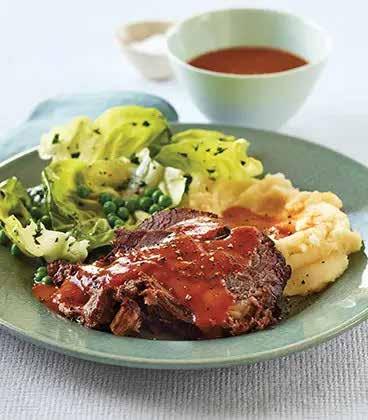
Slow-Cooker Chili Pot Roast
Ingredients
• 3 lb (1.5 kg) Ontario boneless beef pot roast (cross rib, blade)
• 1 tbsp (15 mL) chipotle or regular chili powder
• 1 tsp (5 mL) ground cumin
• Pinch each salt and pepper
• 1 tbsp (15 mL) vegetable oil
• 1 Ontario onion, chopped
• 2 Ontario carrots, diced
• 1 clove garlic, minced
• 1 can (19 oz/540 mL) stewed tomatoes
• 1 tbsp (15 mL) puréed chipotle in adobo sauce
• 1 tbsp (15 mL) each cornstarch and cold water
Instructions
Pat roast dry. In small bowl, combine chili powder, cumin, salt and pepper. Rub into roast. In large nonstick skillet, heat oil over medium heat; brown roast on all sides, then transfer to slow cooker. In same skillet, cook onion, carrots and garlic, stirring occasionally until softened, about 4 minutes. Stir in tomatoes and puréed chipotle; bring to boil. Pour over roast in slow-cooker. Cover and cook for 8 hours on low or until tender.
Place roast on cutting board and cover with foil. Remove cooking liquid and purée in batches in food processor until smooth. Remove 2 cups (500 mL) purée to saucepan. Stir cornstarch with water until smooth. Stir into saucepan and bring to boil over medium-high heat. Reduce
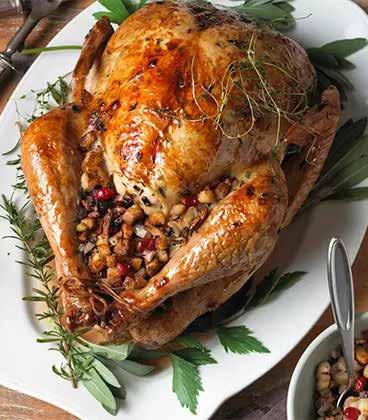
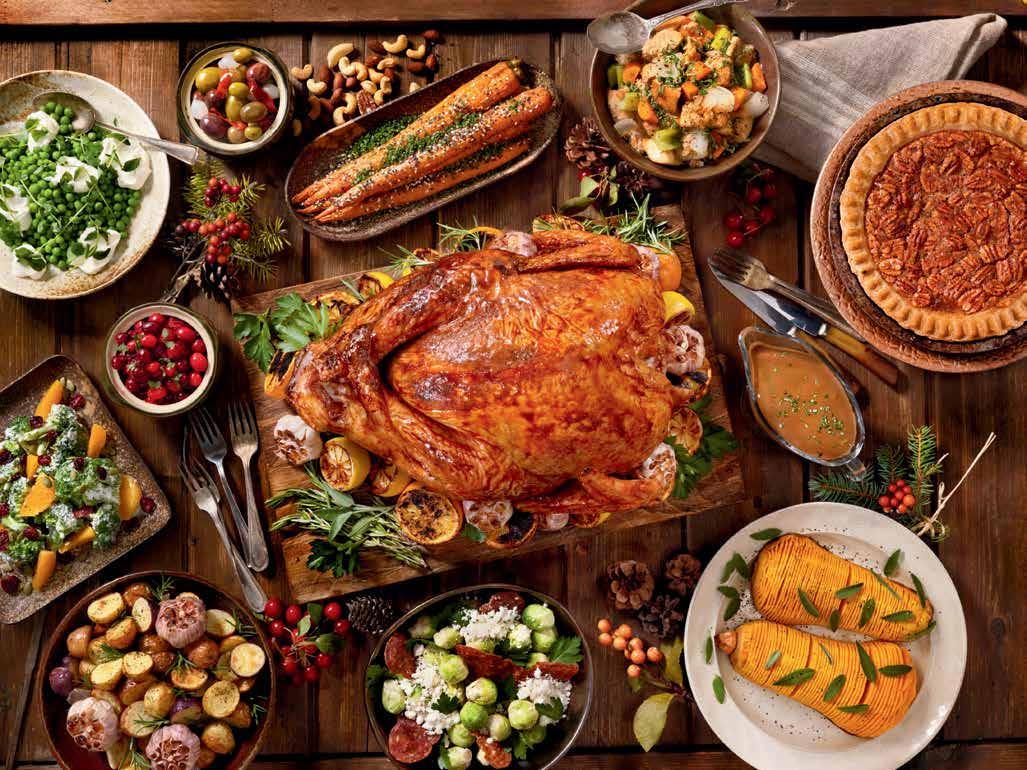
Herb Roast Turkey with Cranberry Pecan Stuffing
Ingredients
• 1 fresh Ontario turkey (10 lb/5 kg)
Stuffing:
• 1/4 cup (50 mL) butter or vegetable oil
• 2 Ontario onions, chopped
• 3/4 cup (175 mL) diced Ontario celery
• 1 clove Ontario garlic, minced
• 8 cups (2 L) dry bread cubes (1/2-inch/2 cm)
• 1 cup (250 mL) pecan pieces, toasted
• 1 cup (250 mL) Ontario cranberries, coarsely chopped
• 1/3 cup (75 mL) chopped fresh Ontario parsley
• 1 tbsp (15 mL) each chopped fresh Ontario sage and summer savory
• 1/4 cup (50 mL) sodium-reduced chicken broth (approx.)
Herb Butter:
• 1/2 cup (125 mL) butter, at room temperature
• 1 tbsp (15 mL) minced Ontario garlic
• 1 tbsp (15 mL) each chopped fresh Ontario rosemary, summer savory and thyme
Instructions
Stuffing: In Dutch oven over medium heat, melt butter. Add onions and celery; cook, stirring often until softened, about 6 minutes. Stir in garlic; cook for 1 minute. Stir in bread cubes to coat well. Remove from heat, stir in pecans, cranberries, parsley, sage and savory. Stir in enough broth to lightly moisten bread. Set aside.
Herb Butter: In small bowl, blend together butter, garlic, rosemary, savory and thyme. Set aside.
Prepare turkey by removing giblets, rinse inside and out; pat dry with paper towel. Fill
neck cavity with some of the stuffing; close and maining stuffing in main cavity. Tie legs together with kitchen string. Get under breast skin with fingers to loosen. Spread 1 to 2 tbsp (15 to 25 mL) herb butter under each side of breast. Spread 2 tbsp (25 mL) over the entire top. Melt
Place turkey on rack in roasting pan; tent with foil, tucking in sides but leaving ends open. Roast in 325°F (160°C) oven for about 3-1/2 hours, basting with melted herb butter. Remove foil to brown during last 30 minutes (cover legs and stuffing with foil if needed). Insert meat thermometer in thickest part of inner thigh, not touching bone. Turkey is done when thermom eter reaches 185°F (85°C). Transfer turkey to large carving board and let stand 15 minutes. Remove stuffing from both cavities into warm serving dish. Make gravy with drippings, if desired.
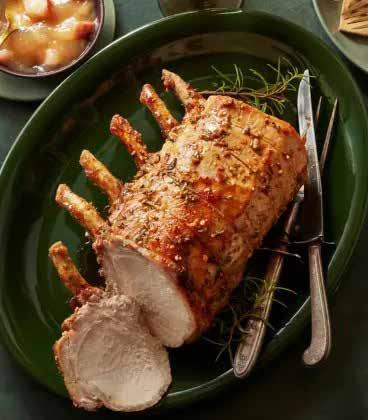
Ingredients
• 3 tbsp (45 mL) vegetable oil
• 1 tbsp (15 mL) chopped fresh Ontario rosemary
• 1 tsp (5 mL) dry mustard
• 2 cloves Ontario garlic, minced
• 1.6 kg Ontario pork loin rib end roast, French rack or boneless
• 1/4 tsp (1 mL) each salt and pepper
• 1 tbsp (15 mL) butter
• 2 cups (250 mL) unpeeled, cubed Ontario apples, such as spartan or idared
• 1 cup (250 mL) Ontario apple cider
• 1 cup (250 mL) chicken broth
• 3 tbsp (45 mL) each cornstarch and cold water
• 2 tbsp (25 mL) Ontario maple syrup
Instructions
In small bowl, make paste with 2 tbsp (25 mL) of the oil, rosemary, mustard and garlic. Set aside.
Pat meat dry. Sprinkle with salt and pepper. In large ovenproof nonstick skillet, heat remaining oil over medium heat; brown roast on all
sides 5 to 8 minutes. Spread herb mixture over the roast.
Roast in 325°F (160°C) oven until thermometer inserted into the thickest part of the roast reads 155°F (68°C), 1 hour 15 minutes to 1 hour 30 minutes. Remove from oven, loosely tent with foil; let stand 10 minutes.
Meanwhile, in large saucepan, melt butter over medium heat. Add apples and cook, stirring often, until apples are tender 5 to 7 minutes. Remove apples to small bowl; set aside. In same saucepan, over medium heat bring cider and broth to boil. In small bowl, whisk together cornstarch and water; whisk into cider mixture. Boil until thickened, about 3 to 5 minutes. Add maple syrup and reserved apples.
Cut meat into slices; serve with apple cider sauce.
Tip: Pork loin is very lean and cooks quickly. Make sure to use a thermometer to get the correct finished temperature.
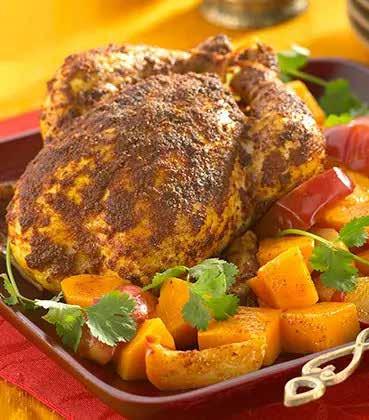
Ingredients
• 3-1/2 lb (1.75 kg) whole roasting Ontario chicken
• 2 tbsp (25 mL) Indian curry paste (either mild or medium)
• 3 cups (750 mL) large chunks peeled Ontario butternut squash (about half a squash)
• Olive oil
• Salt
• 2 Ontario apples
• 2 tbsp (25 mL) chopped fresh Ontario coriander
Instructions
Rinse chicken and pat dry. Line rimmed baking sheet with foil; lightly grease with oil. Spread outside of chicken with curry paste; place on baking sheet. Roast in 350°F (190°C) oven for 40 minutes.
Meanwhile, place squash in medium-size bowl. Drizzle with oil to taste and generous pinches of salt; toss to lightly coat. Baste chicken; surround with squash and stir. Roast for 30 minutes.
Cut apples into quarters; core and peel if desired. Toss lightly with drizzle of oil. Add to squash and stir. Baste chicken; cover any parts that are deep brown with foil. Roast until juices run clear when chicken is pierced, meat thermometer inserted in thigh registers 185°F (85°C) and apples are tender but still hold their shape, 15 to 20 minutes.
Remove chicken to platter; surround with squash and apples. Sprinkle with coriander.
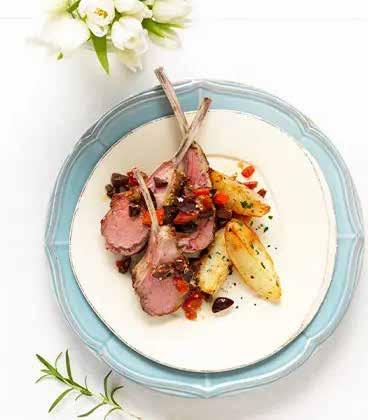
Rack of Lamb with Mediterranean Tapenade
Ingredients
• 2 tbsp (25 mL) olive oil
• 1 tbsp (15 mL) Dijon mustard
• 1 tbsp (15 mL) finely chopped fresh rosemary or 1 tsp (5 mL) dried
• 1 clove garlic, minced
• 2 racks Ontario Lamb (6 to 8 ribs each), trimmed
Tapenade:
• 1 tbsp (15 mL) olive oil
• 1 clove garlic, minced
• 1/2 cup (125 mL) chopped Ontario greenhouse tomatoes
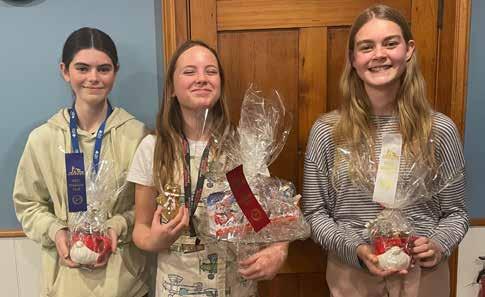
Twelve members of the Niagara 4-H Best of the Bakery Club held their achievement night at the home of leader Lynn Gibson.
Together with co-leader Deanna Bartels they had been baking cookies, cakes, muffins and scones over the past six weeks.
On this evening guest judges Paul Hollywood (a.k.a. Andrew Chechalk) and Prue Leith (a.k.a. Ann Marie Chechalk) were in attendance to taste all the creations.
From cupcakes to cakes, sugar cookies, Hawaiian delight and
buttertarts, the treats were judged on presentation, taste and criteria of a baked good practiced at club meetings.
Taking home the coveted cake plate was Alexis Vanderzanden of St. Anns with her gingerbread men. Second prize went to Zhianna Bacon of Welland with her sugar cookies delightfully decorated, and third prize went to Haven Stec of Jordan with her cookie tree. Parents were all able to sample the goodies and members are already looking forward to a spring club.
• 1/4 cup (50 mL) chopped Ontario roasted red peppers
• 1/4 cup (50 m L) chopped olives
• 2 tbsp (25 mL) chopped capers
Instructions
Tapenade: In small saucepan, heat oil over medium-high heat; sauté garlic, tomatoes and red peppers until softened, about 5 minutes. Add olives and capers; cook for 3 minutes to blend flavours. (Tapenade can be refrigerated in airtight container for up to 3 days; rewarm to serve.)
In large bowl, combine oil, mustard, rosemary and garlic; rub over meaty parts of lamb. Reserve any remaining oil mixture.
In large heavy-bottomed skillet, brown each lamb rack on all sides over high heat, about 1 minute each side. Place in shallow roasting pan; top with any remaining oil mixture. Cover exposed bones with foil to prevent burning. Roast in 450°F (230°C) oven for 20 minutes. Reduce heat to 325°F (160°C); roast for 10 to 15 minutes for medium-rare or until desired doneness. Cut racks into 3 or 4 ribs serving per person. Serve with tapenade.
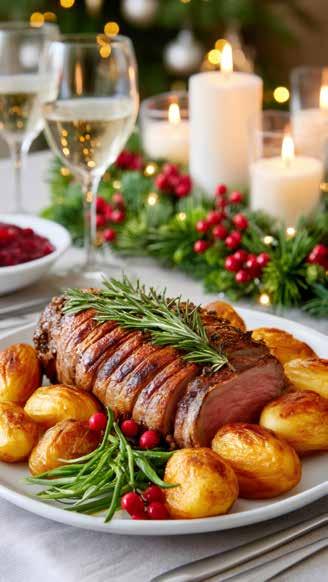
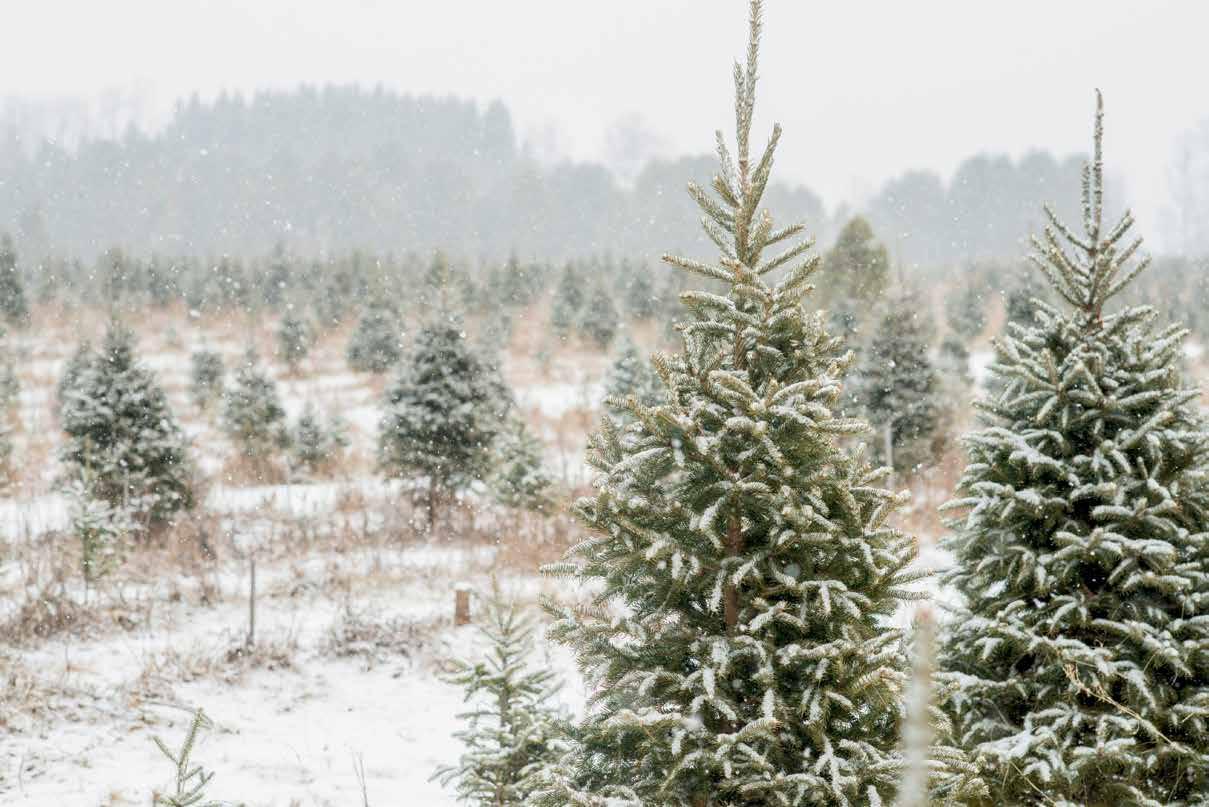
Where did the year go? Holiday season is in full swing as the calendar turns to the final month of 2025. Kids are getting their Christmas wishlists finalized while parents are busy putting up decorations and baking holiday treats. Things may get busy and hectic this time of year, but that’s all the more reason to take a pause, relax and enjoy some ag-related fun. Here are a few things to do this month and later this winter.
4 AND DECEMBER 11, 12 & 13
JANUARY 17-18 AND JANUARY 24-25
REGISTRATION OPENS IN DECEMBER EVENT FEBRUARY 18 & 19

The historic Brown Homestead in St. Catharines will offer a glimpse into holiday history and volunteers have decorated the rural home for Christmas. With thematic rooms covering some of the major eras of the homestead’s history, visitors will have a chance to learn more about how Christmas was celebrated in rural Niagara over the years. A Saturday, Dec. 6 family festive open house that runs from 10 a.m. to 5 p.m. will be followed up with three days of candlelight tours, beginning on Thursday, Dec. 11. For more information visit thebrownhomestead.ca.
It’s quickly become a popular holiday tradition, and on Thursday, Dec. 11 the Niagaraon-the-Lake tractor parade returns. With around 75 decorated tractors and other pieces of farm equipment expected, the parade kicks off at 6 p.m. at the Virgil arena, winding its way through the community and wrapping up back at the arena. In addition to offering some unique rural holiday fun, the parade will also support the Terry Fox Foundation, Jamaica Relief Fund and Newark Neighbours. For more information visit the “Niagara on the Lake Christmas Tractor Parade” Facebook page.

Looking ahead to the new year, wine lovers can take part in a popular winter festival while supporting our local grape growers who produce a uniquely Canadian treat. The Niagara Icewine Festival returns to Niagara-on-the-Lake in January. The Icewine Village will take over Old Town for two weekends, Jan. 17-18 and Jan. 24-25. Visitors can enjoy icewine tastings, culinary pairings and specially created cocktails. A discovery pass is also available for those who want to visit some of the region’s wineries. For more information visit niagarawinefestival.com

OFVC REGISTRATION OPENS
Those eager to get their tickets to February’s Ontario Fruit and Vegetable Convention in Niagara Falls will be able to do so beginning in December. The annual convention returns Feb. 18 and 19 to the Niagara Falls Convention Centre. It features two days of education sessions on a variety of topics, along with a trade show. For more information, or to register, visit ofvc.ca